In The Name Of
God
Neuropsychiatry Lecture
Reza Bidaki
MD. Psychiatrist
Bahman 99
Neurological
Examination
Brief neurological examination
 Clear focal signs
 Cranial nerve abnormalities
Focal motor or sensory deficits
Visual field cut
 Localize a lesion in the nervous system
Neurological Soft Signs
 Integrative sensory functions
 Sensory extinction
 Graphaesthesia
 Motor sequencing acts ; Fist–edge–palm test
 Primitive reflexes such as the pout, snout, grasp and
palmomental
 Mirror movements (movement provoked in the one hand
during a complex unimanual action in the other)
Soft Signs
 Grasp reflex in Frontal Lobe injury
 Soft signs in Elderly , Dementia , Schizophrenia
Eye Examination
 Examination of eye movements and vision can offer several insights
 into the functioning of the nervous system
 Look for square wave jerks, broken saccades, broken smooth
pursuit
 Limitation in upgaze, which can suggest subcortical dementia and
or parkinsonism
 The vestibulo- ocular reflex (VOR) often precipitates symptoms
 in individuals who have suffered concussions
Abnormal eye movements

Progressive supranuclear palsy

Wernicke–Korsakoff syndrome

Whipple’s disease

Corticobasal degeneration

Mitochondrial cytopathies

Cerebellar tumours, causes of raised intracranial pressure,
Creutzfeldt–Jakob disease

Mitochondrial disorders

Huntington’s disease

Niemann–Pick disease type C
Olfactory examination
 Olfactory examination is useful as many patients with inferior,
 even mild, TBI and without clear imaging abnormalities may
have
 olfactory dysfunction, which may be a subtle sign of inferior
frontal
 lobe injury
 For testing, coffee beans and lavender essence are
commonly used
Anosmia
 Subfrontal meningioma
 head injury
 Alzheimer’s disease
 Parkinson’s disease
 Huntington’s disease
Abnormal Movement
 Observe for the presence of abnormal movements
 Note the frequency and amplitude of tremor and whether it is
present at rest
 with posture and/ or action
 Note any involvement of the voice

 Note hypophonia and test for micrographia, both of which may
be subtle signs of a neurodegenerative process
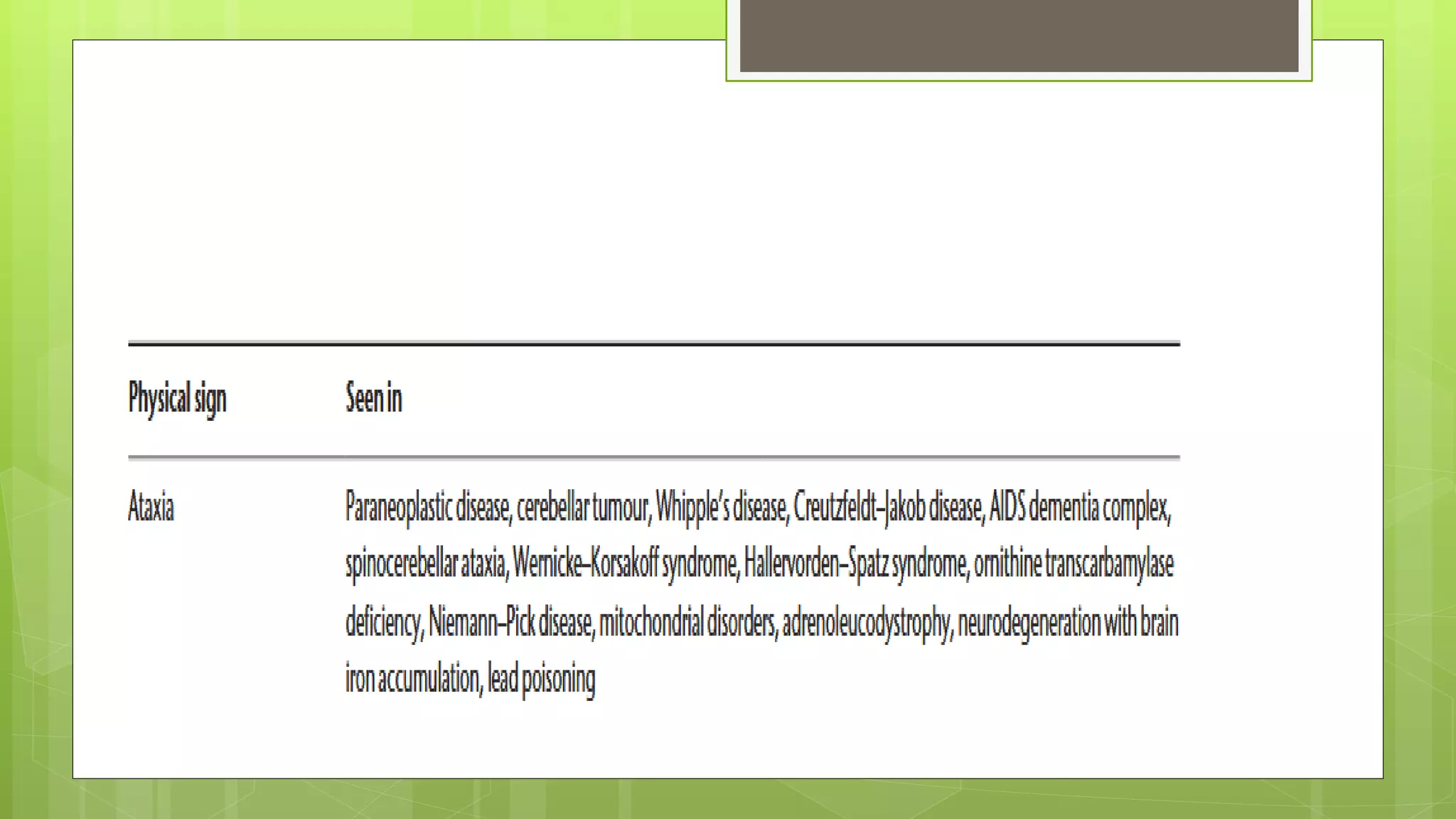
Involuntary movements
 Huntington’s disease
 inherited metabolic disorders including
 Wilson’s disease, Creutzfeldt–Jakob disease, corticobasal
degeneration, systemic lupus erythematosus, Whipple’s
disease, Hallervorden–Spatz syndrome, Lesch–Nyhan
syndrome
Grimacing facial expression
 Wilson’s disease
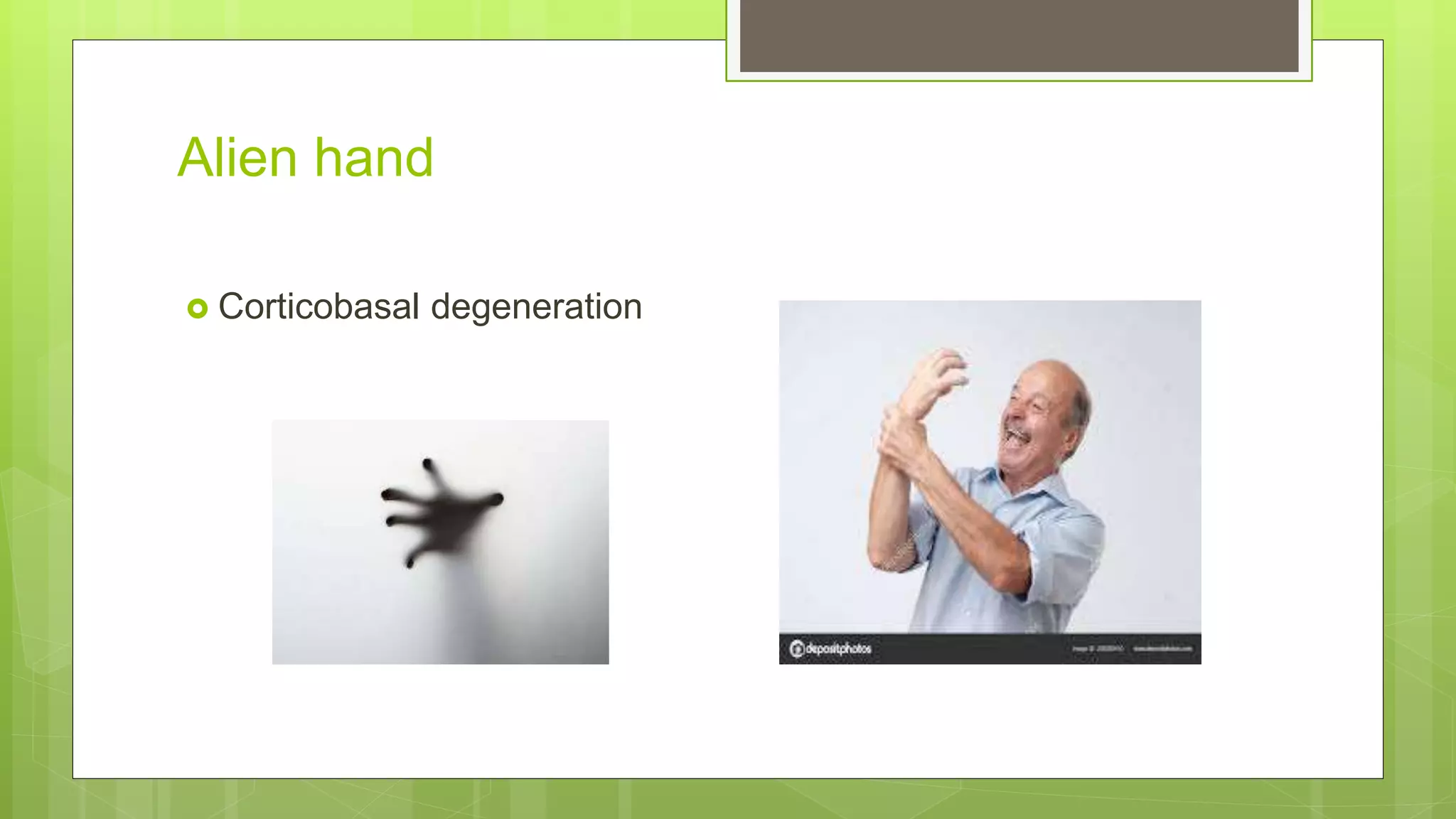
Alien hand
 Corticobasal degeneration
Myoclonus
 Post-anoxia
 Creutzfeldt–Jakob disease
 Alzheimer’s disease
 Subacute sclerosing panencephalitis
 Myoclonic epilepsies
 Hashimoto’s encephalopathy
 Dementia with Lewy bodies
 Corticobasal degeneration (CBD)
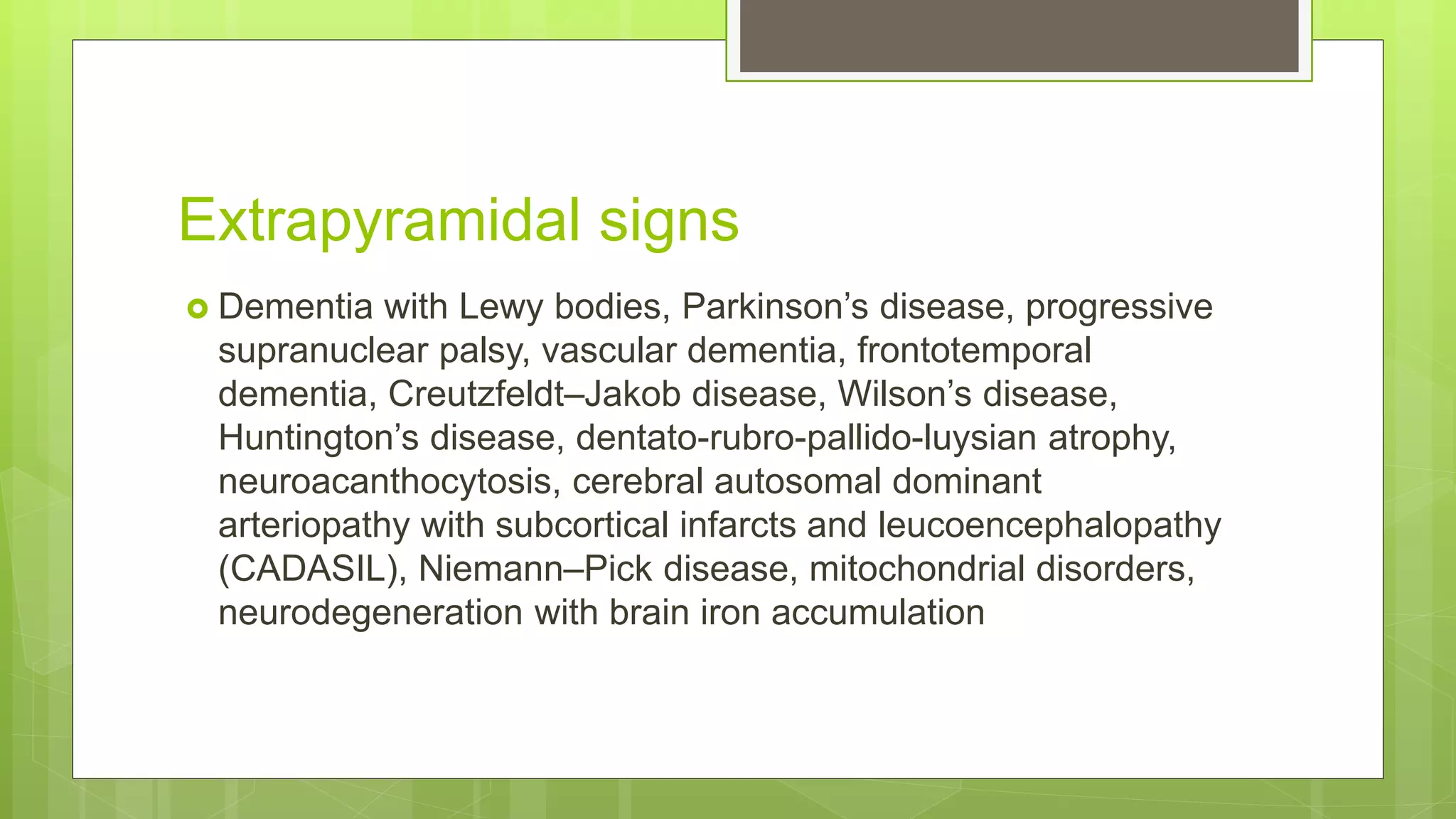
Extrapyramidal signs
 Dementia with Lewy bodies, Parkinson’s disease, progressive
supranuclear palsy, vascular dementia, frontotemporal
dementia, Creutzfeldt–Jakob disease, Wilson’s disease,
Huntington’s disease, dentato-rubro-pallido-luysian atrophy,
neuroacanthocytosis, cerebral autosomal dominant
arteriopathy with subcortical infarcts and leucoencephalopathy
(CADASIL), Niemann–Pick disease, mitochondrial disorders,
neurodegeneration with brain iron accumulation
Hard sign Vs Soft Sign
 Hard signs refer to impairments in basic motor, sensory, and
reflex behaviors. In contrast, “soft” neurological signs (SNS)
are described as nonlocalizing neurological abnormalities that
cannot be related to impairment of a specific brain region or
are not believed to be part of a well-defined neurological
syndrome
Primitive reflexes
 Check for frontal release signs and primitive reflexes (glabellar,
 snout, palmomental, grasp), as well as premotor function via
praxis testing (ask the patient to show how they would light a
match or brush their hair
Hard Signs
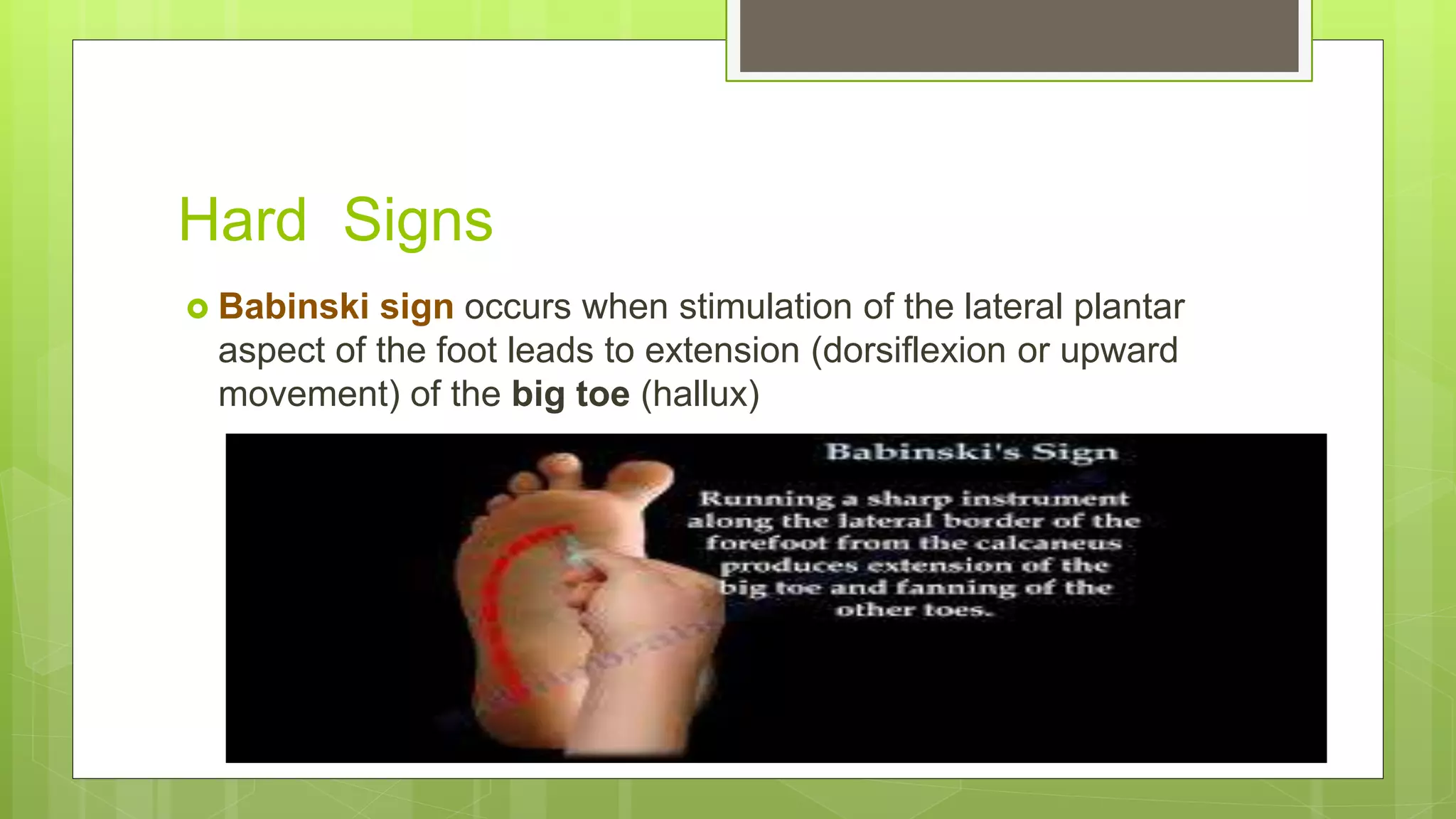
 Babinski sign occurs when stimulation of the lateral plantar
aspect of the foot leads to extension (dorsiflexion or upward
movement) of the big toe (hallux)
Hoffman sign
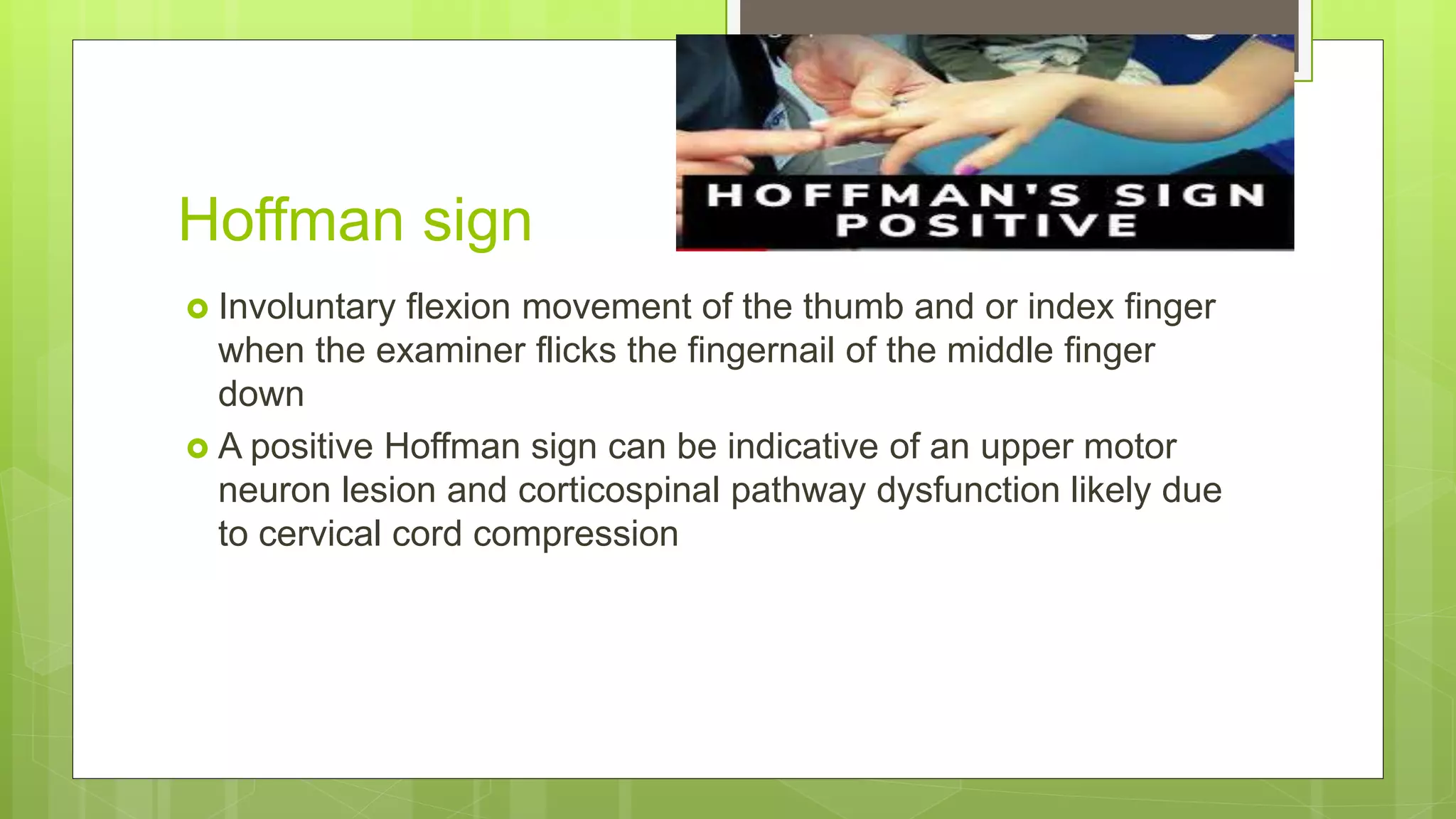
 Involuntary flexion movement of the thumb and or index finger
when the examiner flicks the fingernail of the middle finger
down
 A positive Hoffman sign can be indicative of an upper motor
neuron lesion and corticospinal pathway dysfunction likely due
to cervical cord compression
Additional diagnostic tests
 Carefully chosen additional diagnostic tests, such as imaging
 and spinal fluid analysis, may be needed to clarify the diagnosis
 Magnetic resonance imaging (MRI) of the brain, when available,
 is important in understanding the pattern of any focal atrophy and
 assessing for the presence of leukoencephalopathy
Imaging
 MRI sequences
 Standard T1 and T2 structural sequences, susceptibility weighted imaging (SWI) or gradient echo
 which will detect haemosiderin
 Help in visualizing haemorrhages, including microhaemorrhages
 Amyloid angiopathy
 Diffusion weighted imaging (DWI) and apparent diffusion coefficient (ADC) sequences which will
help rule out any ischaemic or other cytotoxic injury
 Gadolinium MRI contrast is not necessary, unless a mass lesion or significant
 white matter disease is noted, which would benefit from contrast for
 clarification of the aetiology (to rule out active demyelination, for
 example, or better visualize a brain tumor or abscess)
Critical Region
 Softwares, such as NeuroQuant, now allow detailed
automated structural and volumetric analysis of key brain
regions for specific cognitive functions, such as the critical
memory region the hippocampus, for which normative data
are available, allowing comparison of patient total brain and
hippocampal volumes to known norms for comparable age
and education
Positron emission tomography (PET)
Metabolic assessment of the brain
 Single- photon emission computed tomography (SPECT) metabolism of
 brain, based on observations of regional differences in blood flow
 Ioflupane (iodine- 123) injection for DaT Scan, a contrast agent to be
 used with SPECT, can be used for detecting dopamine transporters
 (DaT) in suspected idiopathic PD
 Emerging imaging modalities,
 including PET with amyloid tracers (e.g. Amyvid), sodium scans,
 large- scale intrinsic network analysis via functional MRI [default
 mode network (DMN), salience, etc.] are on the horizon as potentially
 useful clinical tools to help disentangle the aetiology of neuropsychiatric
 Symptoms
EEG
 Paroxysmal spells of behaviour should be evaluated by EEG
 Seizures and interictal electrographic abnormalities can both present
 with agitation, psychosis, and behavioral disturbance, rather
 than with an overt movement disorder such as tonic– clonic movements
 characteristic of a generalized tonic– clonic seizure
 There is little to no utility in performing a routine (brief 30– 45 minutes)
 EEG to assess paroxysmal spells in a patient who is awake and alert
 at the time of examination
 Whenever possible, at least 24- hour continuous EEG should be performed, preferably video EEG,
but
 if not available or cost is too high, a Holter- type (ambulatory) EEG can be performed instead
Polysomnography
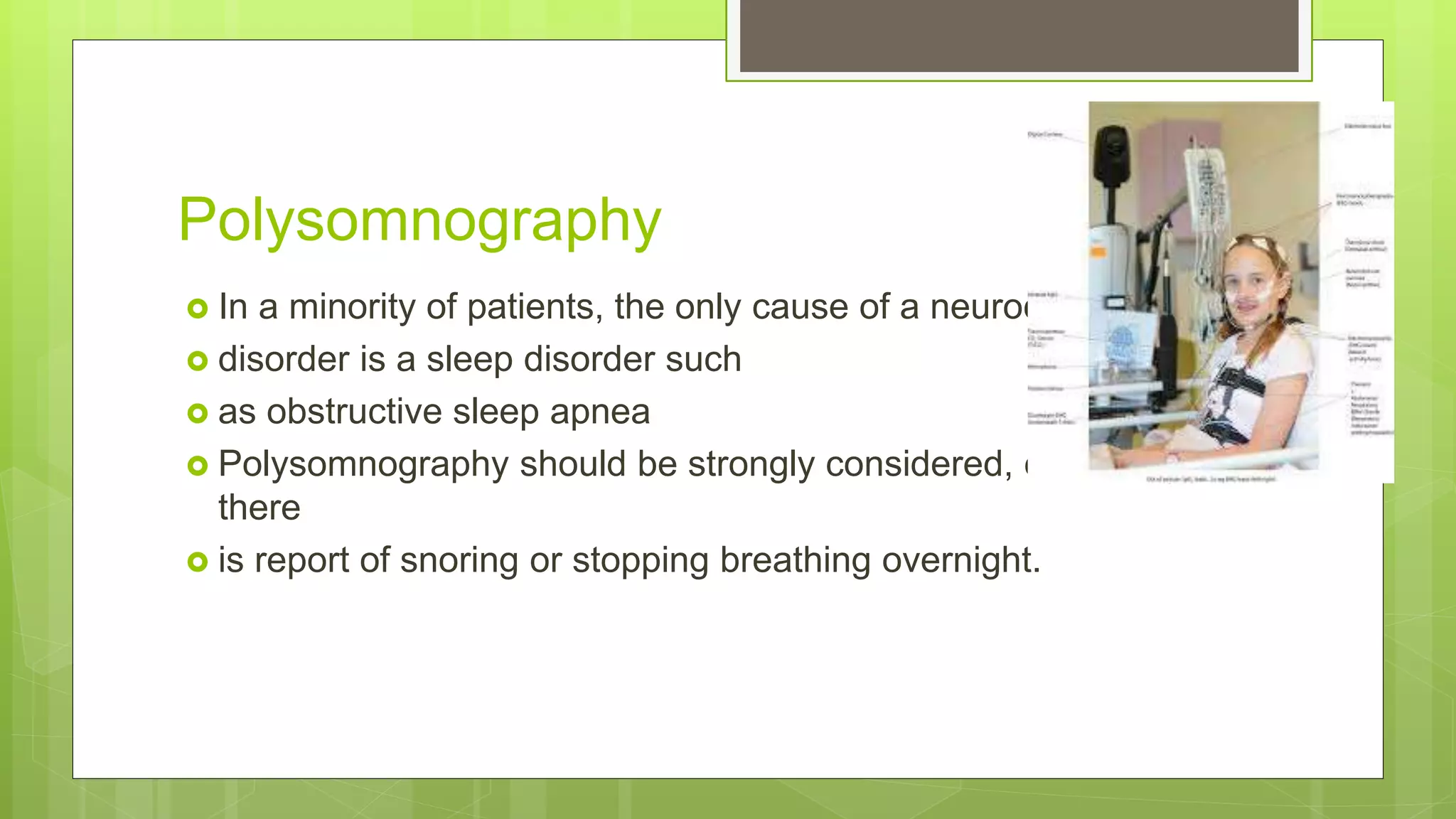
 In a minority of patients, the only cause of a neurocognitive
 disorder is a sleep disorder such
 as obstructive sleep apnea
 Polysomnography should be strongly considered, especially if
there
 is report of snoring or stopping breathing overnight.
CSF
 Cerebrospinal fluid (CSF) analysis is needed to evaluate patients
 whose imaging or clinical examination/ history suggest a possibility
 of infection or an inflammatory process
 Patients with unexplained leukoencephalopathy should always have CSF analysis. CSF and serum
samples can also be sent for a paraneoplastic autoimmune
 antibody panel
 In a minority of patients presenting with neuropsychiatric
 symptoms, the underlying cause is antibody- mediated
 limbic encephalitis that requires immune therapy such as intravenous
 immunoglobulin (IVIG), plasmapheresis, or immunesuppressing
 medications
Special considerations
 Posttraumatic amnesia (PTA)
 Post- traumatic confusional state (PTCS)
 Disorders of consciousness (DOC)
 The examination needs to be tailored to the level of arousal and the
 presence or absence of confusion and/ or delirium (e.g. a patient recovering
 from moderate to severe TBI who is still in MCS will require
 a different clinical approach than an awake, alert patient who
 comes in for evaluation of mood disturbance
Trauma Scales
 Whereas a full interview
 and the scales named earlier are appropriate in an awake, alert
 patient without severe cognitive impairment, patients recovering
 from severe TBI who are still in VS, MCS, or PTA/ PTCS will require
 a tailored examination and different scales for assessment
 [i.e.
 the Coma Recovery Scale (CRS) for patients in VS and MCS
 Orientation Log (O- Log)
 Galveston Orientation and Amnesia
 Test (GOAT)
 CAP for patients in PTA/ PTCS]
TBI and MRI
 Neuroimaging : Type and extent of brain damage; especially
important for assessment of cortical integrity
 MRI more sensitive than CT in detecting cortical damage MRI in
 patients with severe brain injury allows comprehensive assessment
of the primary and secondary insult thus giving an indicator of a
possible long- term prognosis
 Morphological images can now be coupled with metabolic analysis
and white fibre track quantification, thus providing a more precise
assessment of brain lesions
EEG
 EEG To rule out non- convulsive seizures as the cause of
DOC; to identify malignant EEG patterns consistent with poor
outcome: generalized suppression, burst suppression
 with generalized epileptiform activity, and generalized periodic
complexes on a flat background
 Recommend 24- hour monitoring for non- coma, and 48 hours
for coma
Evoked potentials
 Integrity of afferent sensory pathways, including the primary
senses such as hearing, vision, and tactile sensation
 The patient may come to see
 you alone and provide a full history.
 However, with the patient’s
 permission, it is advisable to obtain a collateral history from a close
 relative or a close friend who may be able to provide useful
observations
 that the patient may not be aware of due to their underlying
 neuropsychiatric condition

 Fundamentally important
 Patients with frontal lobe disorders, with poor awareness and insight,
 with memory dysfunction, and those with REM sleep
 disorders where only another person could report the observed
 Symptoms
 Whenever possible, collateral history is important
 The ambulatory encounter consists of a formal interview lasting 30– 60
 minutes, followed by administration of a set of brief cognitive tests
 as part of the neurobehavioural examination
 Finally, a brief neurological physical examination should be performed
Delirium
 Delirium often confounds the mental status of hospitalized
neuropsychiatric patients,
 Detailed descriptive mental status examinations at this stage are
 important
 Once patients demonstrate improvement, they are often
 transitioned to acute neurorehabilitation where the care shifts to
 implementing an aggressive recovery programme, including physical
 and cognitive rehabilitation.
TBI Complications
 Diagnose and treat any complications
 Seizures, infection, and sleep disorders
 Targeted use of pharmacotherapy to optimize
 attention and initiation (methylphenidate, modafinil)
 Arousal of patients in DOC (amantadine)
 Complement aphasia recovery (donepezil)
 Motor recovery after stroke (fluoxetine)

Formulation
 Formulation and diagnosis
 Once data from the neuropsychiatric assessment are gathered
 Clinician must integrate all the information acquired to
formulate
 the differential diagnosis and plan of treatment

Metabolic changes
 PET brain can help reveal early metabolic changes suggestive
 of AD, when the diagnosis is not clear based on neuropsychological
 testing and structural imaging
 Treatment of psychiatric comorbidities remains a high priority to
 help maintain function, as well as because the cognitive disorder
 can be made symptomatically worse by undertreated anxiety
 and depression

 In patients with synucleinopathies, including DLB and
 PD, who are presenting with psychotic features, such as
 hallucinations, or presenting with agitation, antipsychotics
 pose a risk of worsening movement disorder/ extrapyramidal
 side effects superimposed on underlying parkinsonism
 The first- line medications for psychosis in DLB are cholinesterase
 inhibitors
 The first line antipsychotic in patients with synucleinopathies is
 clozapine or the newly FDA- approved selective 5HT2 reverse
 agonist pimavanserin

NMDA antagonist
 Memantine, NMDA antagonist, is FDA approved for
 treatment of moderate to severe AD but is often used
 off- label in the same patient population to treat
 agitation
Mutism
 Following TBI, PTA/ PTCS are a common consequence, lasting
from days to weeks. This is a condition characterized by fluctuation
of cognition and behavior throughout the day, and attention,
memory, and orientation deficits
 Emergence from PTA/ PTCS is typically tracked by one of several
available standardized scales, including the GOAT, Westmead,
or O- Log, amongst others
One scale should be used to track the patient until they meet the criteria for
emergence from PTA/
PTCS
 Need to identify and treat any active neurological
 complications contributing to cognitive and behavioral disturbance
 after TBI
 Commonest such complications include
 seizures, hydrocephalus, and infection
 Limit the use of antipsychotics following TBI, as a prodopaminergic
 neurotransmitter state has been associated with
 better neuropsychiatric outcomes after TBI
 Advise the use of mood stabilizers, valproic acid, or beta blockers as first line
to
 help manage behaviour/ agitation after TBI
Neuropsychiatric assessment
 Neuropsychiatric assessment is aimed at diagnosis and
formulation of treatment for the full spectrum of emotional,
behavioral, and cognitive problems in the presence of a
neurological disorder
 Skill set of a neuropsychiatrist spans psychiatry, neurology,
and
 Diagnosis and treatment of disorders which fall under the
domain of this subspecialty
Neurological. exam oxford bidaki 99  6 bahman

Neurological. exam oxford bidaki 99 6 bahman

  • 1.
    In The NameOf God Neuropsychiatry Lecture Reza Bidaki MD. Psychiatrist Bahman 99
  • 2.
  • 4.
    Brief neurological examination Clear focal signs  Cranial nerve abnormalities Focal motor or sensory deficits Visual field cut  Localize a lesion in the nervous system
  • 5.
    Neurological Soft Signs Integrative sensory functions  Sensory extinction  Graphaesthesia  Motor sequencing acts ; Fist–edge–palm test  Primitive reflexes such as the pout, snout, grasp and palmomental  Mirror movements (movement provoked in the one hand during a complex unimanual action in the other)
  • 6.
    Soft Signs  Graspreflex in Frontal Lobe injury  Soft signs in Elderly , Dementia , Schizophrenia
  • 7.
    Eye Examination  Examinationof eye movements and vision can offer several insights  into the functioning of the nervous system  Look for square wave jerks, broken saccades, broken smooth pursuit  Limitation in upgaze, which can suggest subcortical dementia and or parkinsonism  The vestibulo- ocular reflex (VOR) often precipitates symptoms  in individuals who have suffered concussions
  • 8.
    Abnormal eye movements  Progressivesupranuclear palsy  Wernicke–Korsakoff syndrome  Whipple’s disease  Corticobasal degeneration  Mitochondrial cytopathies  Cerebellar tumours, causes of raised intracranial pressure, Creutzfeldt–Jakob disease  Mitochondrial disorders  Huntington’s disease  Niemann–Pick disease type C
  • 9.
    Olfactory examination  Olfactoryexamination is useful as many patients with inferior,  even mild, TBI and without clear imaging abnormalities may have  olfactory dysfunction, which may be a subtle sign of inferior frontal  lobe injury  For testing, coffee beans and lavender essence are commonly used
  • 10.
    Anosmia  Subfrontal meningioma head injury  Alzheimer’s disease  Parkinson’s disease  Huntington’s disease
  • 11.
    Abnormal Movement  Observefor the presence of abnormal movements  Note the frequency and amplitude of tremor and whether it is present at rest  with posture and/ or action  Note any involvement of the voice 
  • 12.
     Note hypophoniaand test for micrographia, both of which may be subtle signs of a neurodegenerative process
  • 14.
    Involuntary movements  Huntington’sdisease  inherited metabolic disorders including  Wilson’s disease, Creutzfeldt–Jakob disease, corticobasal degeneration, systemic lupus erythematosus, Whipple’s disease, Hallervorden–Spatz syndrome, Lesch–Nyhan syndrome
  • 15.
  • 16.
  • 17.
    Myoclonus  Post-anoxia  Creutzfeldt–Jakobdisease  Alzheimer’s disease  Subacute sclerosing panencephalitis  Myoclonic epilepsies  Hashimoto’s encephalopathy  Dementia with Lewy bodies  Corticobasal degeneration (CBD)
  • 18.
    Extrapyramidal signs  Dementiawith Lewy bodies, Parkinson’s disease, progressive supranuclear palsy, vascular dementia, frontotemporal dementia, Creutzfeldt–Jakob disease, Wilson’s disease, Huntington’s disease, dentato-rubro-pallido-luysian atrophy, neuroacanthocytosis, cerebral autosomal dominant arteriopathy with subcortical infarcts and leucoencephalopathy (CADASIL), Niemann–Pick disease, mitochondrial disorders, neurodegeneration with brain iron accumulation
  • 19.
    Hard sign VsSoft Sign  Hard signs refer to impairments in basic motor, sensory, and reflex behaviors. In contrast, “soft” neurological signs (SNS) are described as nonlocalizing neurological abnormalities that cannot be related to impairment of a specific brain region or are not believed to be part of a well-defined neurological syndrome
  • 20.
    Primitive reflexes  Checkfor frontal release signs and primitive reflexes (glabellar,  snout, palmomental, grasp), as well as premotor function via praxis testing (ask the patient to show how they would light a match or brush their hair
  • 21.
    Hard Signs  Babinskisign occurs when stimulation of the lateral plantar aspect of the foot leads to extension (dorsiflexion or upward movement) of the big toe (hallux)
  • 23.
    Hoffman sign  Involuntaryflexion movement of the thumb and or index finger when the examiner flicks the fingernail of the middle finger down  A positive Hoffman sign can be indicative of an upper motor neuron lesion and corticospinal pathway dysfunction likely due to cervical cord compression
  • 24.
    Additional diagnostic tests Carefully chosen additional diagnostic tests, such as imaging  and spinal fluid analysis, may be needed to clarify the diagnosis  Magnetic resonance imaging (MRI) of the brain, when available,  is important in understanding the pattern of any focal atrophy and  assessing for the presence of leukoencephalopathy
  • 25.
    Imaging  MRI sequences Standard T1 and T2 structural sequences, susceptibility weighted imaging (SWI) or gradient echo  which will detect haemosiderin  Help in visualizing haemorrhages, including microhaemorrhages  Amyloid angiopathy  Diffusion weighted imaging (DWI) and apparent diffusion coefficient (ADC) sequences which will help rule out any ischaemic or other cytotoxic injury  Gadolinium MRI contrast is not necessary, unless a mass lesion or significant  white matter disease is noted, which would benefit from contrast for  clarification of the aetiology (to rule out active demyelination, for  example, or better visualize a brain tumor or abscess)
  • 27.
    Critical Region  Softwares,such as NeuroQuant, now allow detailed automated structural and volumetric analysis of key brain regions for specific cognitive functions, such as the critical memory region the hippocampus, for which normative data are available, allowing comparison of patient total brain and hippocampal volumes to known norms for comparable age and education
  • 28.
    Positron emission tomography(PET) Metabolic assessment of the brain  Single- photon emission computed tomography (SPECT) metabolism of  brain, based on observations of regional differences in blood flow  Ioflupane (iodine- 123) injection for DaT Scan, a contrast agent to be  used with SPECT, can be used for detecting dopamine transporters  (DaT) in suspected idiopathic PD  Emerging imaging modalities,  including PET with amyloid tracers (e.g. Amyvid), sodium scans,  large- scale intrinsic network analysis via functional MRI [default  mode network (DMN), salience, etc.] are on the horizon as potentially  useful clinical tools to help disentangle the aetiology of neuropsychiatric  Symptoms
  • 29.
    EEG  Paroxysmal spellsof behaviour should be evaluated by EEG  Seizures and interictal electrographic abnormalities can both present  with agitation, psychosis, and behavioral disturbance, rather  than with an overt movement disorder such as tonic– clonic movements  characteristic of a generalized tonic– clonic seizure  There is little to no utility in performing a routine (brief 30– 45 minutes)  EEG to assess paroxysmal spells in a patient who is awake and alert  at the time of examination  Whenever possible, at least 24- hour continuous EEG should be performed, preferably video EEG, but  if not available or cost is too high, a Holter- type (ambulatory) EEG can be performed instead
  • 30.
    Polysomnography  In aminority of patients, the only cause of a neurocognitive  disorder is a sleep disorder such  as obstructive sleep apnea  Polysomnography should be strongly considered, especially if there  is report of snoring or stopping breathing overnight.
  • 31.
    CSF  Cerebrospinal fluid(CSF) analysis is needed to evaluate patients  whose imaging or clinical examination/ history suggest a possibility  of infection or an inflammatory process  Patients with unexplained leukoencephalopathy should always have CSF analysis. CSF and serum samples can also be sent for a paraneoplastic autoimmune  antibody panel  In a minority of patients presenting with neuropsychiatric  symptoms, the underlying cause is antibody- mediated  limbic encephalitis that requires immune therapy such as intravenous  immunoglobulin (IVIG), plasmapheresis, or immunesuppressing  medications
  • 32.
    Special considerations  Posttraumaticamnesia (PTA)  Post- traumatic confusional state (PTCS)  Disorders of consciousness (DOC)
  • 33.
     The examinationneeds to be tailored to the level of arousal and the  presence or absence of confusion and/ or delirium (e.g. a patient recovering  from moderate to severe TBI who is still in MCS will require  a different clinical approach than an awake, alert patient who  comes in for evaluation of mood disturbance
  • 34.
    Trauma Scales  Whereasa full interview  and the scales named earlier are appropriate in an awake, alert  patient without severe cognitive impairment, patients recovering  from severe TBI who are still in VS, MCS, or PTA/ PTCS will require  a tailored examination and different scales for assessment  [i.e.  the Coma Recovery Scale (CRS) for patients in VS and MCS  Orientation Log (O- Log)  Galveston Orientation and Amnesia  Test (GOAT)  CAP for patients in PTA/ PTCS]
  • 35.
    TBI and MRI Neuroimaging : Type and extent of brain damage; especially important for assessment of cortical integrity  MRI more sensitive than CT in detecting cortical damage MRI in  patients with severe brain injury allows comprehensive assessment of the primary and secondary insult thus giving an indicator of a possible long- term prognosis  Morphological images can now be coupled with metabolic analysis and white fibre track quantification, thus providing a more precise assessment of brain lesions
  • 36.
    EEG  EEG Torule out non- convulsive seizures as the cause of DOC; to identify malignant EEG patterns consistent with poor outcome: generalized suppression, burst suppression  with generalized epileptiform activity, and generalized periodic complexes on a flat background  Recommend 24- hour monitoring for non- coma, and 48 hours for coma
  • 38.
    Evoked potentials  Integrityof afferent sensory pathways, including the primary senses such as hearing, vision, and tactile sensation
  • 39.
     The patientmay come to see  you alone and provide a full history.  However, with the patient’s  permission, it is advisable to obtain a collateral history from a close  relative or a close friend who may be able to provide useful observations  that the patient may not be aware of due to their underlying  neuropsychiatric condition 
  • 40.
     Fundamentally important Patients with frontal lobe disorders, with poor awareness and insight,  with memory dysfunction, and those with REM sleep  disorders where only another person could report the observed  Symptoms  Whenever possible, collateral history is important  The ambulatory encounter consists of a formal interview lasting 30– 60  minutes, followed by administration of a set of brief cognitive tests  as part of the neurobehavioural examination  Finally, a brief neurological physical examination should be performed
  • 41.
    Delirium  Delirium oftenconfounds the mental status of hospitalized neuropsychiatric patients,  Detailed descriptive mental status examinations at this stage are  important  Once patients demonstrate improvement, they are often  transitioned to acute neurorehabilitation where the care shifts to  implementing an aggressive recovery programme, including physical  and cognitive rehabilitation.
  • 43.
    TBI Complications  Diagnoseand treat any complications  Seizures, infection, and sleep disorders  Targeted use of pharmacotherapy to optimize  attention and initiation (methylphenidate, modafinil)  Arousal of patients in DOC (amantadine)  Complement aphasia recovery (donepezil)  Motor recovery after stroke (fluoxetine) 
  • 44.
    Formulation  Formulation anddiagnosis  Once data from the neuropsychiatric assessment are gathered  Clinician must integrate all the information acquired to formulate  the differential diagnosis and plan of treatment 
  • 45.
    Metabolic changes  PETbrain can help reveal early metabolic changes suggestive  of AD, when the diagnosis is not clear based on neuropsychological  testing and structural imaging  Treatment of psychiatric comorbidities remains a high priority to  help maintain function, as well as because the cognitive disorder  can be made symptomatically worse by undertreated anxiety  and depression 
  • 46.
     In patientswith synucleinopathies, including DLB and  PD, who are presenting with psychotic features, such as  hallucinations, or presenting with agitation, antipsychotics  pose a risk of worsening movement disorder/ extrapyramidal  side effects superimposed on underlying parkinsonism  The first- line medications for psychosis in DLB are cholinesterase  inhibitors  The first line antipsychotic in patients with synucleinopathies is  clozapine or the newly FDA- approved selective 5HT2 reverse  agonist pimavanserin 
  • 47.
    NMDA antagonist  Memantine,NMDA antagonist, is FDA approved for  treatment of moderate to severe AD but is often used  off- label in the same patient population to treat  agitation
  • 48.
  • 49.
     Following TBI,PTA/ PTCS are a common consequence, lasting from days to weeks. This is a condition characterized by fluctuation of cognition and behavior throughout the day, and attention, memory, and orientation deficits  Emergence from PTA/ PTCS is typically tracked by one of several available standardized scales, including the GOAT, Westmead, or O- Log, amongst others One scale should be used to track the patient until they meet the criteria for emergence from PTA/ PTCS
  • 50.
     Need toidentify and treat any active neurological  complications contributing to cognitive and behavioral disturbance  after TBI  Commonest such complications include  seizures, hydrocephalus, and infection  Limit the use of antipsychotics following TBI, as a prodopaminergic  neurotransmitter state has been associated with  better neuropsychiatric outcomes after TBI  Advise the use of mood stabilizers, valproic acid, or beta blockers as first line to  help manage behaviour/ agitation after TBI
  • 51.
    Neuropsychiatric assessment  Neuropsychiatricassessment is aimed at diagnosis and formulation of treatment for the full spectrum of emotional, behavioral, and cognitive problems in the presence of a neurological disorder  Skill set of a neuropsychiatrist spans psychiatry, neurology, and  Diagnosis and treatment of disorders which fall under the domain of this subspecialty