ROLE OF TARGETED THERAPY
IN NEUROENDOCRINE TUMORS
Mohamed Abdulla M.D.
Prof. of Clinical Oncology
Kasr Al-Aini School of Medicine
Cairo University
Target Therapy: Future Directions
Helnan Palestine Hotel
Thursday, 30/04/2015
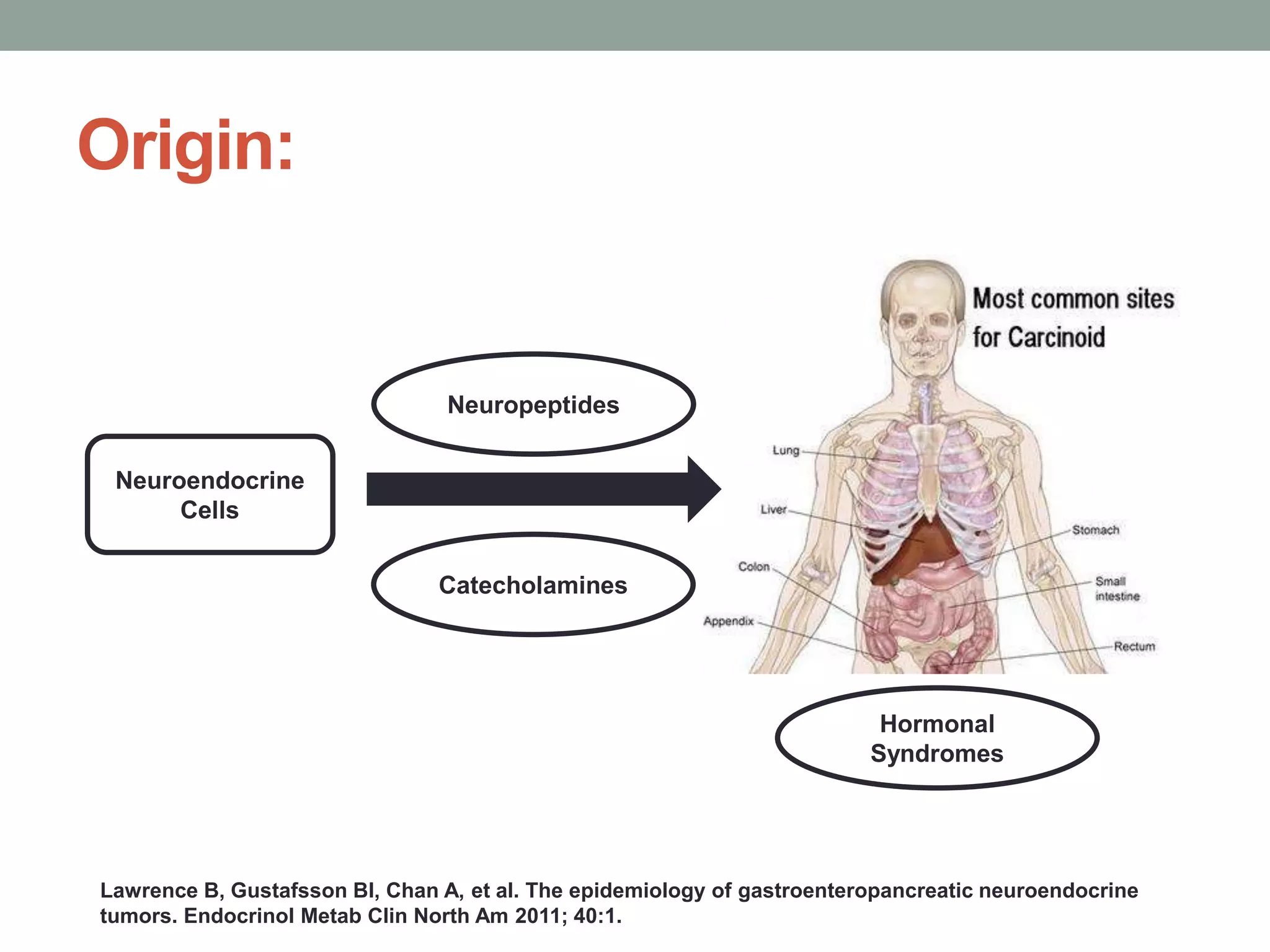
Origin:
Neuroendocrine
Cells
Neuropeptides
Catecholamines
Hormonal
Syndromes
Lawrence B, Gustafsson BI, Chan A, et al. The epidemiology of gastroenteropancreatic neuroendocrine
tumors. Endocrinol Metab Clin North Am 2011; 40:1.
descendin
g colon
(<1%)
sigmoid
colon (-
12%)
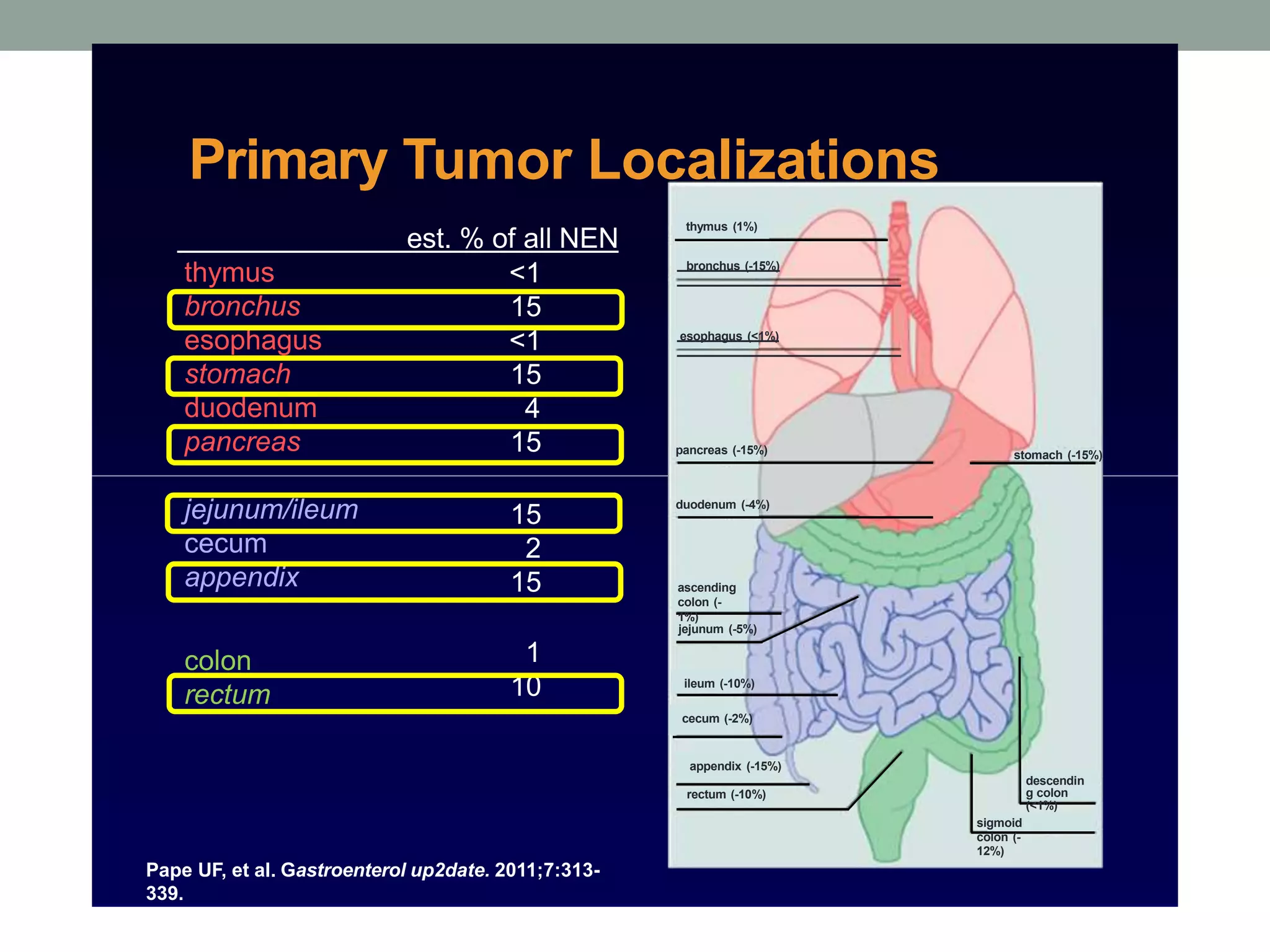
Primary Tumor Localizations
est. % of all NEN
thymus
bronchus
esophagus
stomach
duodenum
pancreas
jejunum/ileum
cecum
appendix
colon
rectum
<1
15
<1
15
4
15
15
2
15
1
10
thymus (1%)
bronchus (-15%)
esophagus (<1%)
pancreas (-15%)
duodenum (-4%)
ascending
colon (-
1%)
jejunum (-5%)
ileum (-10%)
cecum (-2%)
appendix (-15%)
rectum (-10%)
stomach (-15%)
Pape UF, et al. Gastroenterol up2date. 2011;7:313-
339.
2004
2003
2002
2001
2000
1999
1998
1997
1996
1995
1994
1993
1992
1991
1990
1989
1988
1987
1986
1985
1984
1983
1982
1981
1980
1979
1978
1977
1976
1975
1974
1973
0.00
1.00
2.00
3.00
4.00
5.00
6.00
0
100
200
300
400
500
600
Incidenceper100,000-NETs
Incidenceper100,000–Allmalignantneoplasms
All malignant neoplasm
Neuroendocrine tumors
Adapted from: Yao JC, et al. J Clin Oncol. 2008;26(18):3063-3072.
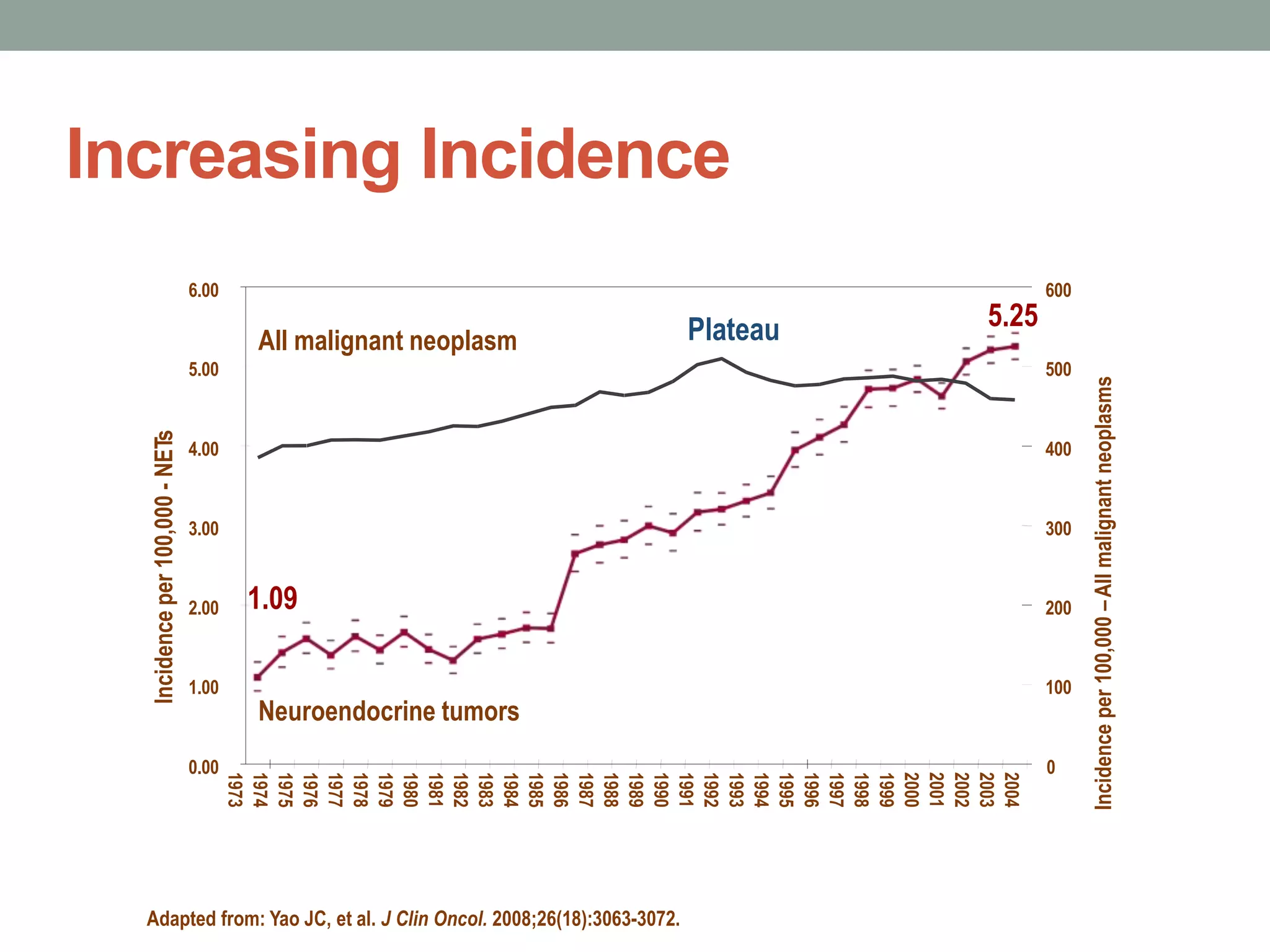
Increasing Incidence
Plateau
1.09
5.25
Incidence of NETs Is Increasing*
5 5
SEER = Surveillance, Epidemiology, and End Results (for malignant NETs)
*Approximate 5-fold increase between 1975 and 2004
Approximate 7-fold increase also evident in Norwegian registry
IncidencePer100,000
1.40
Year
NET Site
1.20
1.00
0.80
0.60
0.40
0.20
0
Lung
Colon
Small intestine
Rectum
Pancreas
Yao JC, Hassan M, Phan A, et al. J Clin Oncol. 2008;26:3063-3072.
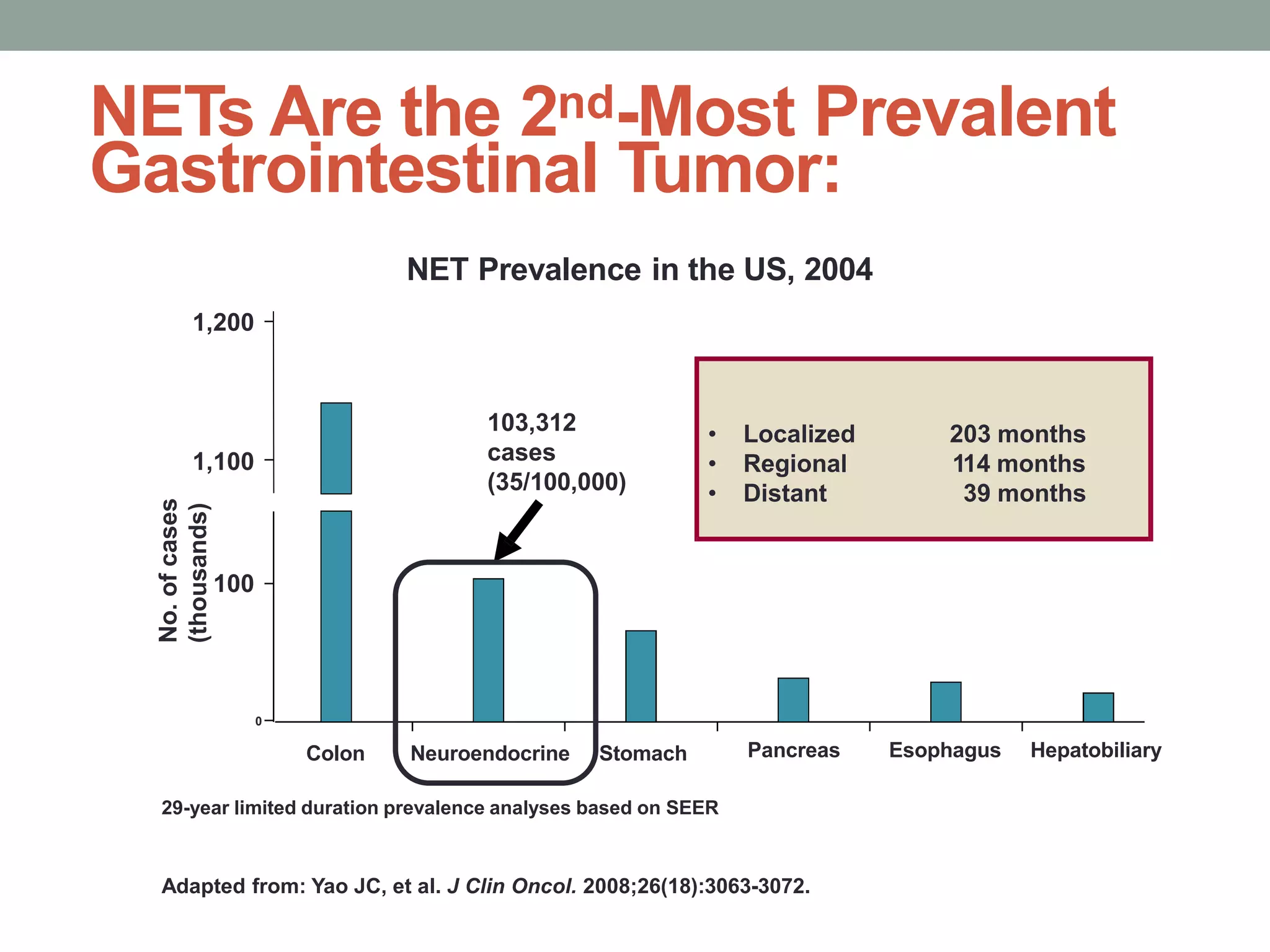
Colon Neuroendocrine Stomach
29-year limited duration prevalence analyses based on SEER
Pancreas Esophagus Hepatobiliary
0
100
1,100
NET Prevalence in the US, 2004
1,200
Median survival (1988 –
2004)103,312
cases
(35/100,000)
No.ofcases
(thousands)
Adapted from: Yao JC, et al. J Clin Oncol. 2008;26(18):3063-3072.
NETs Are the 2nd-Most Prevalent
Gastrointestinal Tumor:
• Localized
• Regional
• Distant
203 months
114 months
39 months
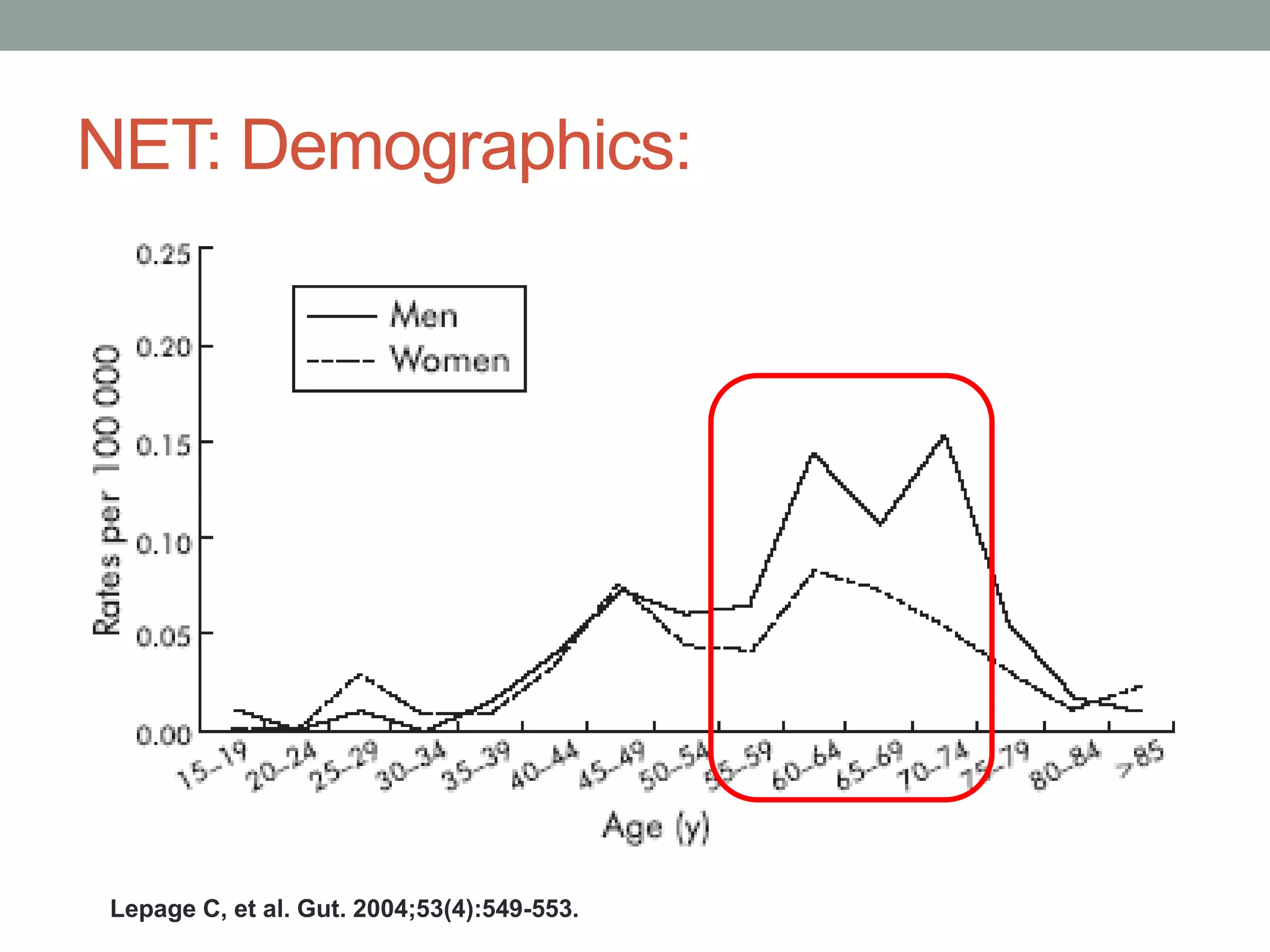
NET: Demographics:
Lepage C, et al. Gut. 2004;53(4):549-553.
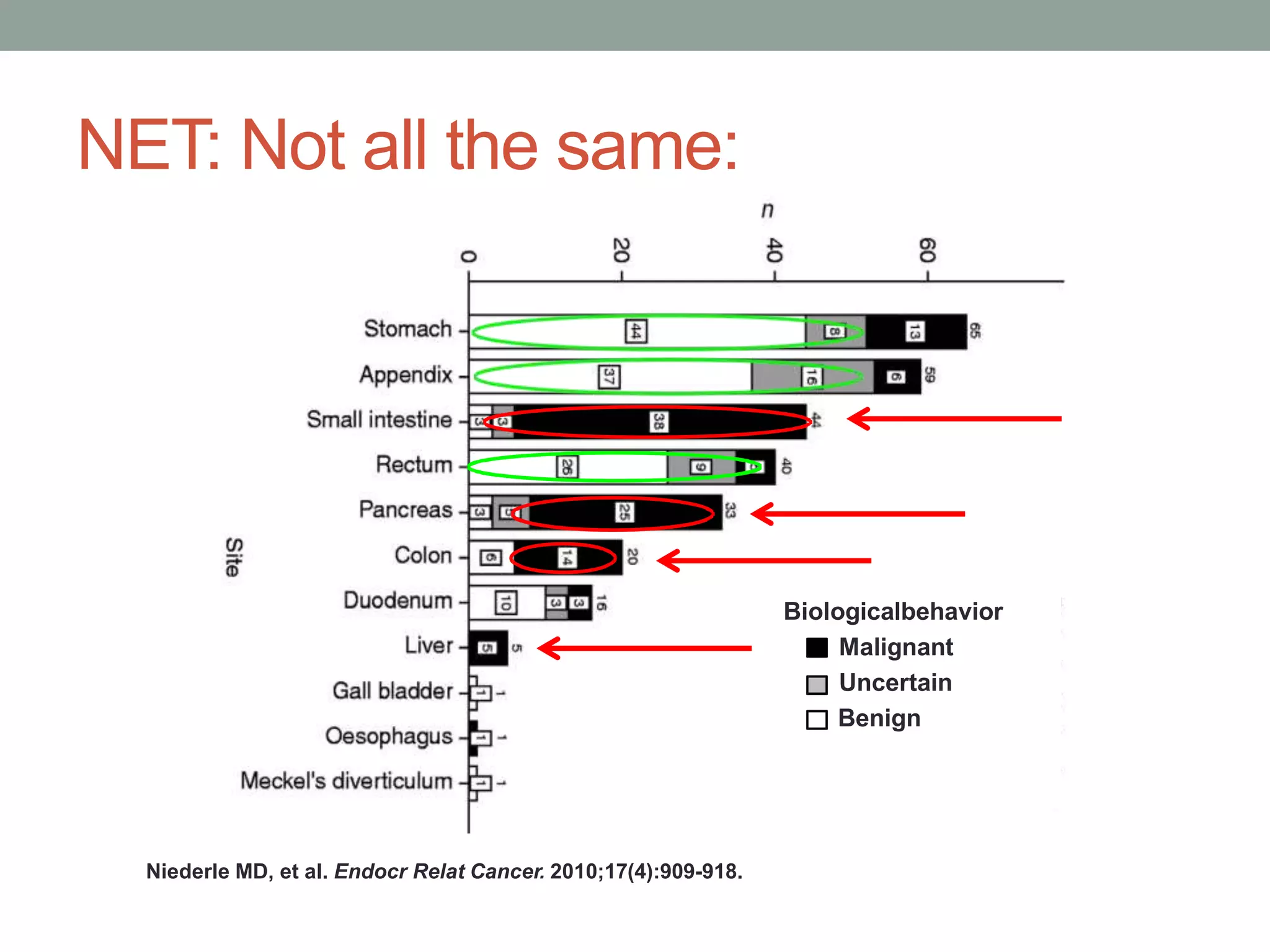
Niederle MD, et al. Endocr Relat Cancer. 2010;17(4):909-918.
Biologicalbehavior
Malignant
Uncertain
Benign
NET: Not all the same:
[TITLE]
Presented By Pamela L. Kunz, MD at 2012Annual Meeting
Key Issues in The Management:
1. How do we define the disease?
Nomenclature, Classification & Pathology.
2. Who needs treatment and when?
Patient Selection.
3. Which treatment and in what sequence?
Treatments.
4. What is the role of combined biologics,
somatostatin analogues, cytotoxics and
biomarkers?
Unanswered Questions.
1.How do we define the disease?
Nomenclature, Classification and
Pathology
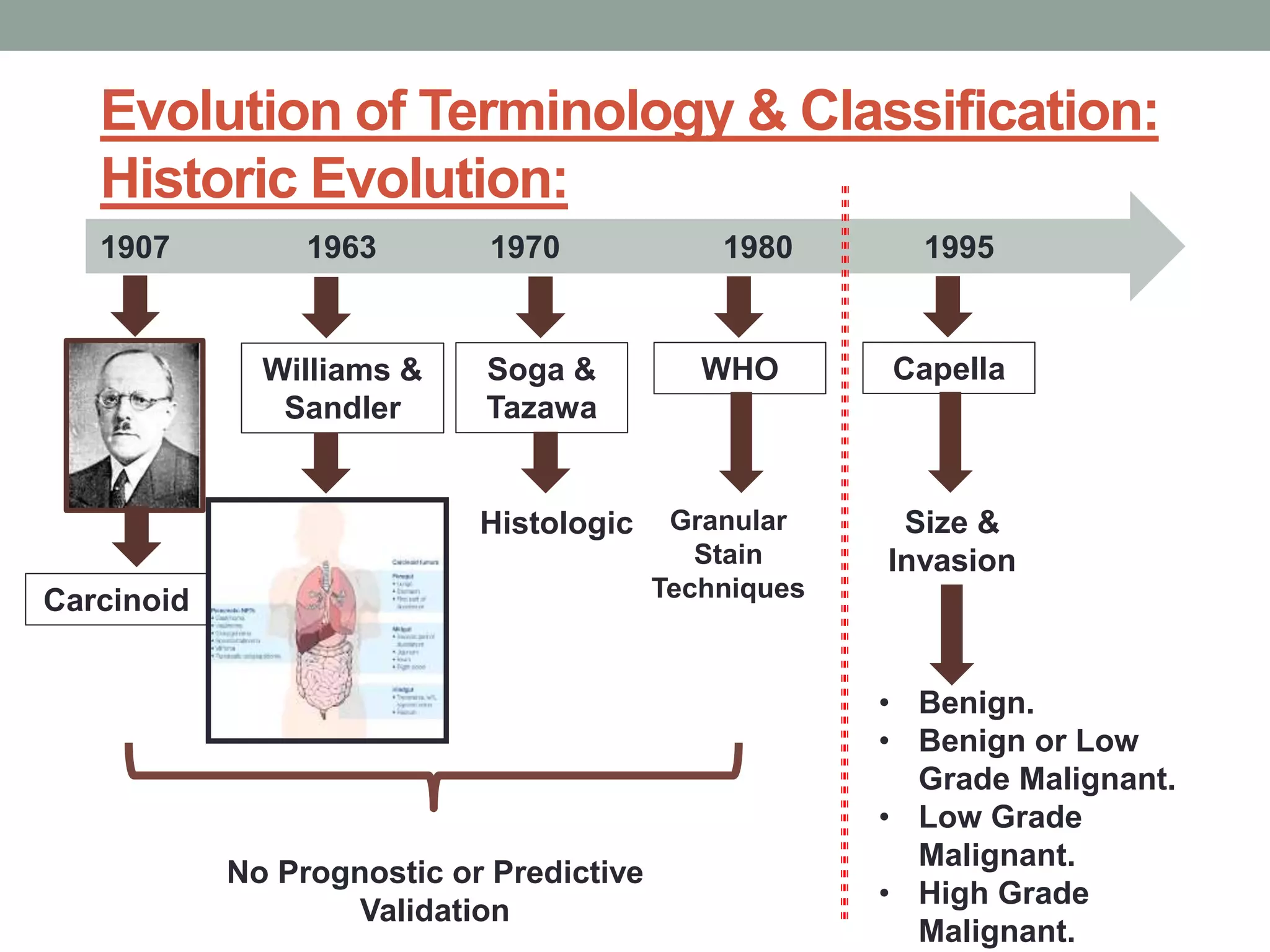
Evolution of Terminology & Classification:
Historic Evolution:
1907 1963 1970 1980 1995
Carcinoid
Williams &
Sandler
Soga &
Tazawa
Histologic
WHO
Granular
Stain
Techniques
Capella
Size &
Invasion
• Benign.
• Benign or Low
Grade Malignant.
• Low Grade
Malignant.
• High Grade
Malignant.
No Prognostic or Predictive
Validation
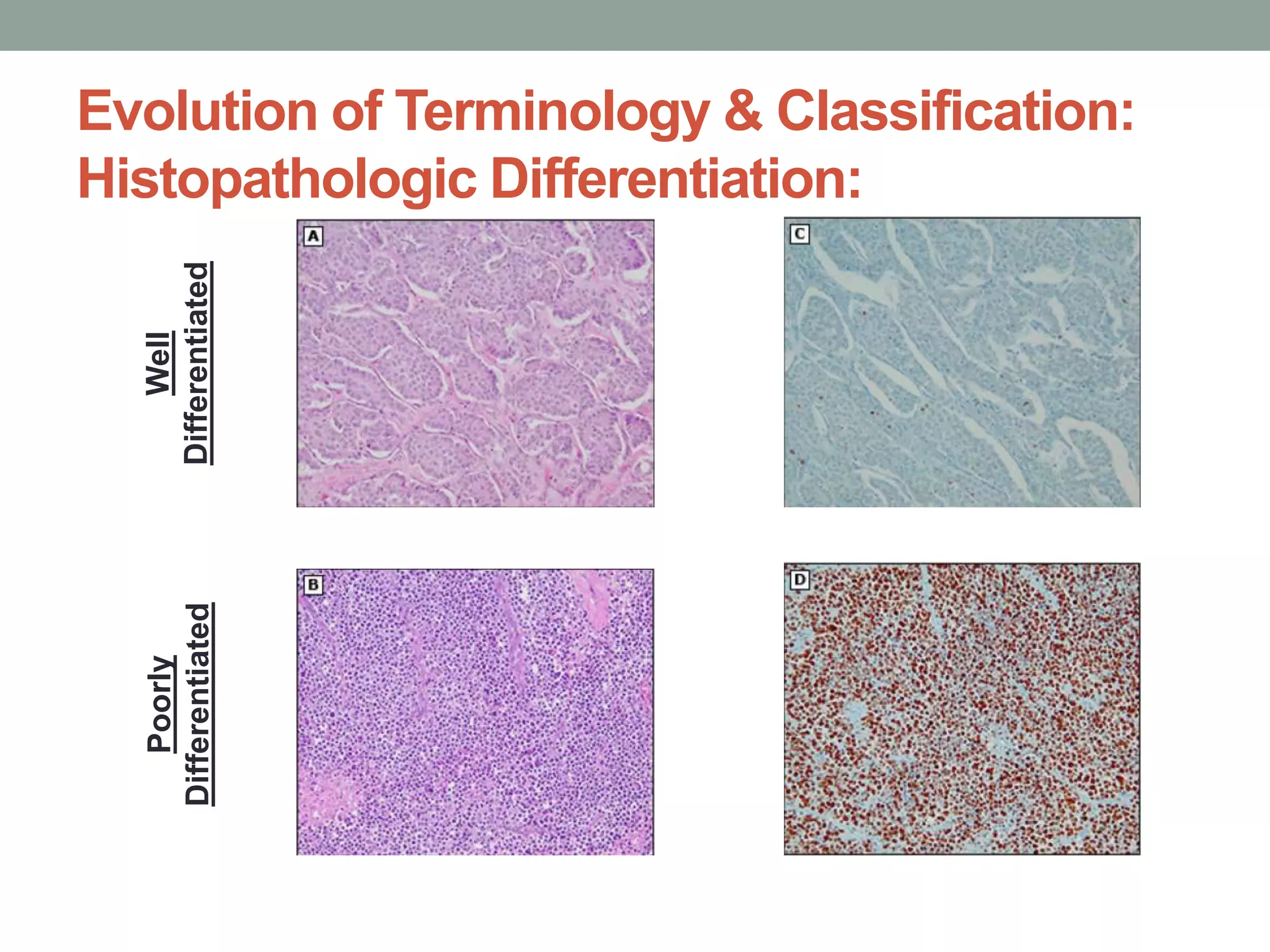
Evolution of Terminology & Classification:
Histopathologic Differentiation:
Well
Differentiated
Poorly
Differentiated
Evolution of Terminology & Classification:
AJCC Criteria of Grading:
Grade Mitotic
Count (per
10 HPF)
Ki 67
Index (%)
G1 < 2 < 2
G2 2 – 20 3 – 20
G3 > 20 > 20
AJCC Cancer Staging Manual, Seventh Edition (2010) published by Springer New York, Inc.
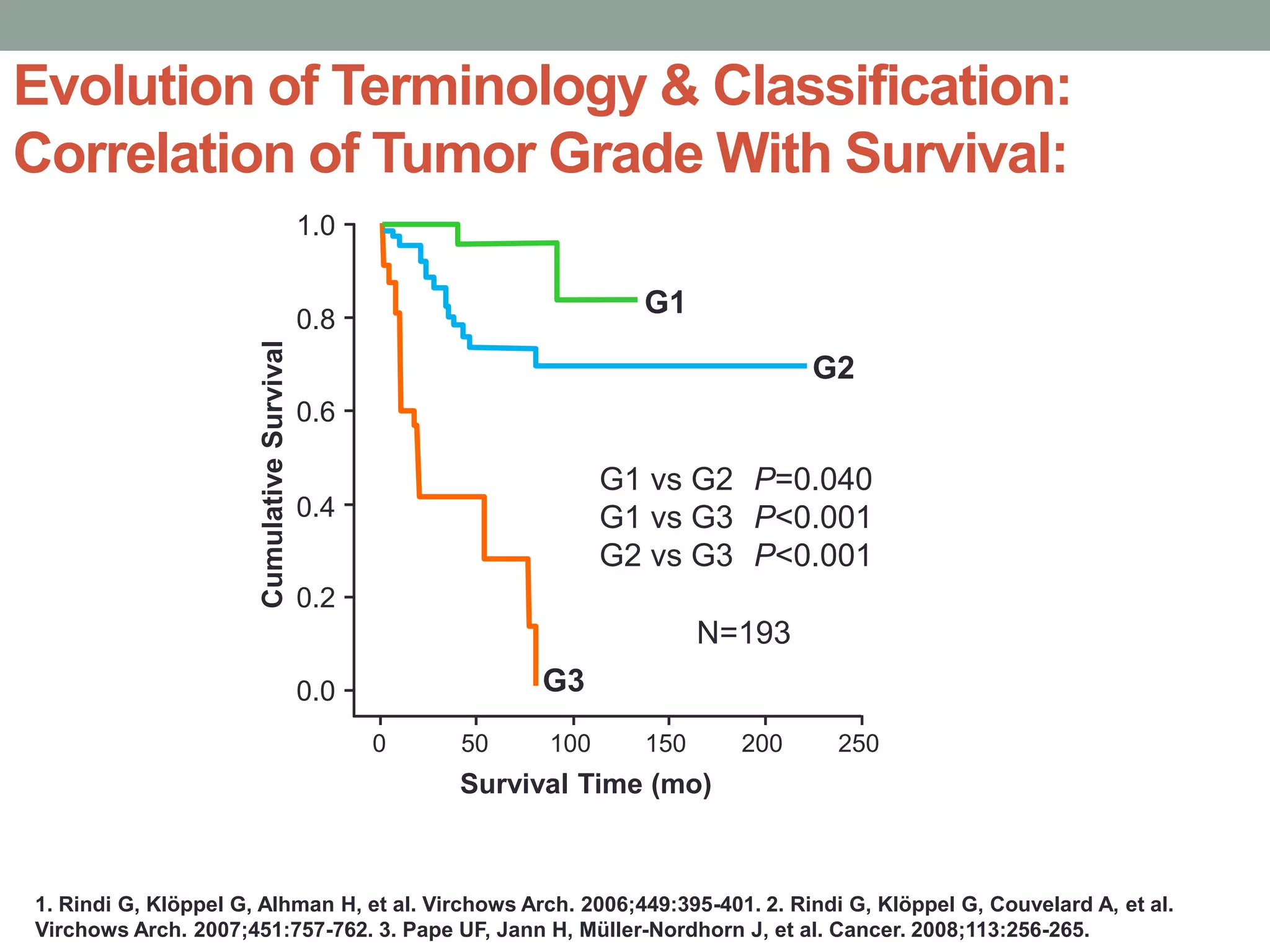
Evolution of Terminology & Classification:
Correlation of Tumor Grade With Survival:
1. Rindi G, Klöppel G, Alhman H, et al. Virchows Arch. 2006;449:395-401. 2. Rindi G, Klöppel G, Couvelard A, et al.
Virchows Arch. 2007;451:757-762. 3. Pape UF, Jann H, Müller-Nordhorn J, et al. Cancer. 2008;113:256-265.
0 50 100 150 200 250
Survival Time (mo)
0.0
0.2
0.4
0.6
0.8
1.0
CumulativeSurvival
G1
G2
G3
G1 vs G2
G1 vs G3
G2 vs G3
P=0.040
P<0.001
P<0.001
N=193
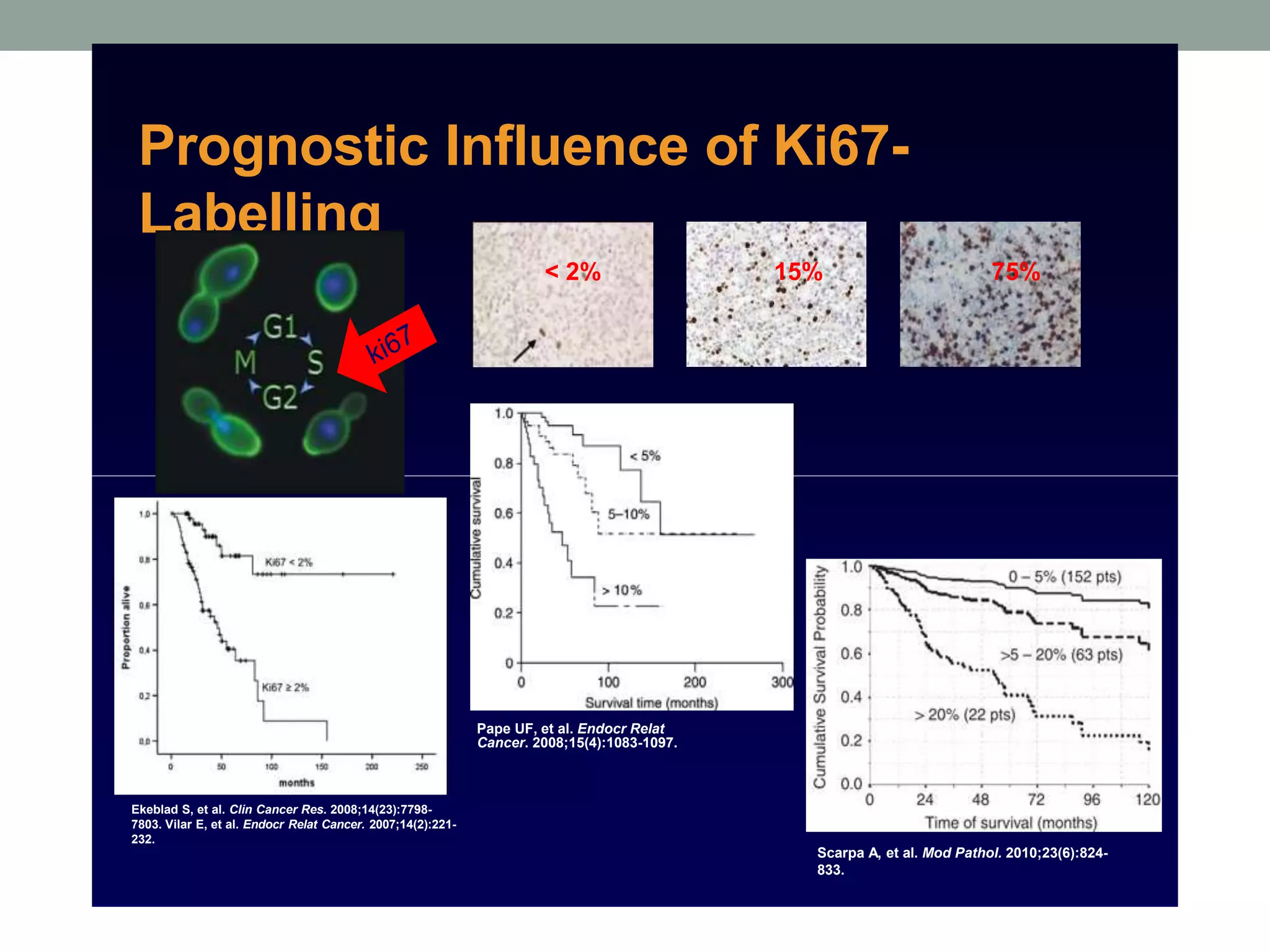
Scarpa A, et al. Mod Pathol. 2010;23(6):824-
833.
Prognostic Influence of Ki67-
Labelling
< 2% 15% 75%
Pape UF, et al. Endocr Relat
Cancer. 2008;15(4):1083-1097.
Ekeblad S, et al. Clin Cancer Res. 2008;14(23):7798-
7803. Vilar E, et al. Endocr Relat Cancer. 2007;14(2):221-
232.
Evolution of Terminology & Classification:
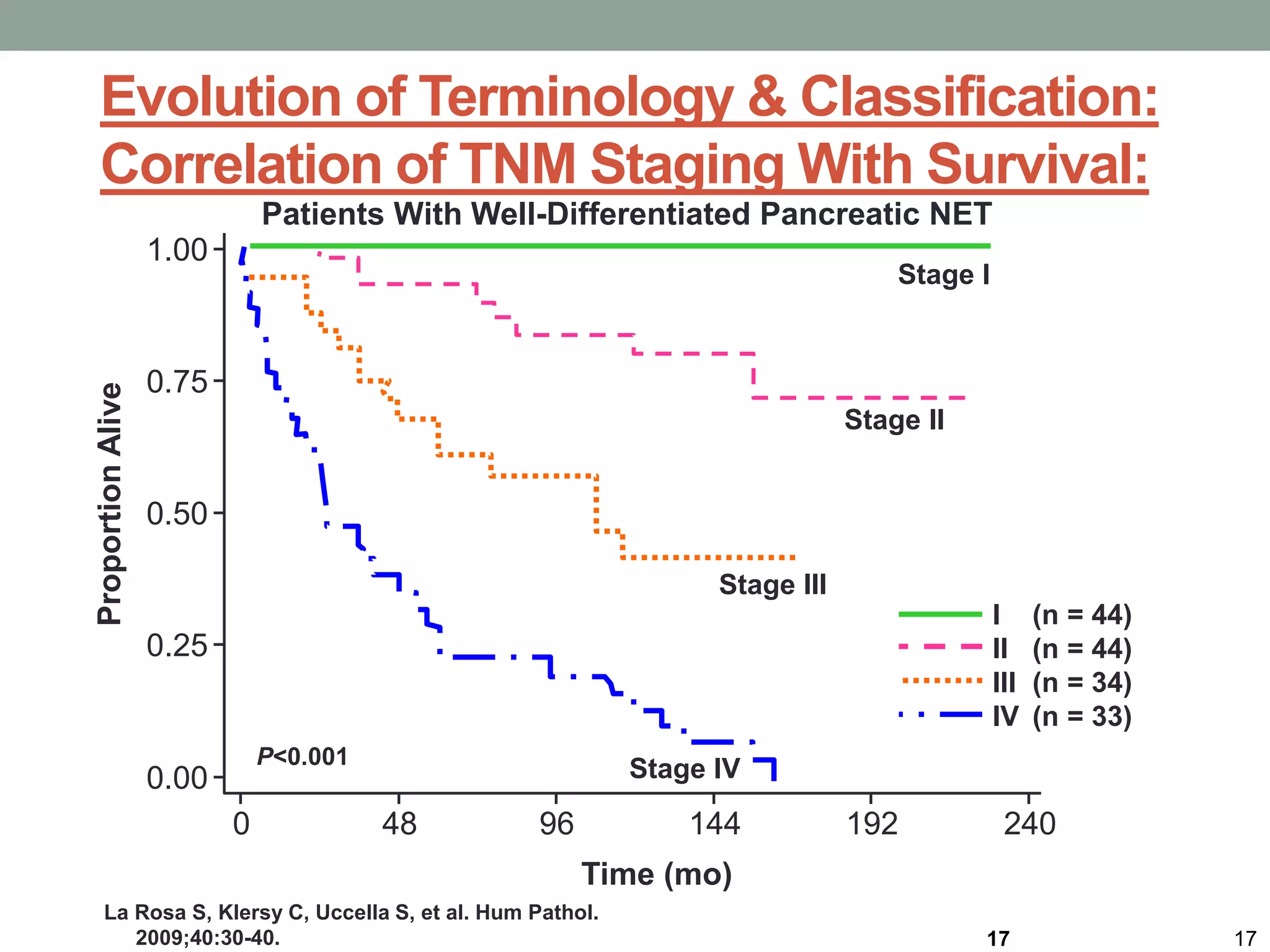
Correlation of TNM Staging With Survival:
17 17
La Rosa S, Klersy C, Uccella S, et al. Hum Pathol.
2009;40:30-40.
Patients With Well-Differentiated Pancreatic NET
Stage I
P<0.001
ProportionAlive
Stage II
Stage III
Stage IV
I (n = 44)
II (n = 44)
III (n = 34)
IV (n = 33)
Time (mo)
0.00
0.25
0.50
0.75
1.00
0 48 96 144 192 240
Evolution of Terminology & Classification:
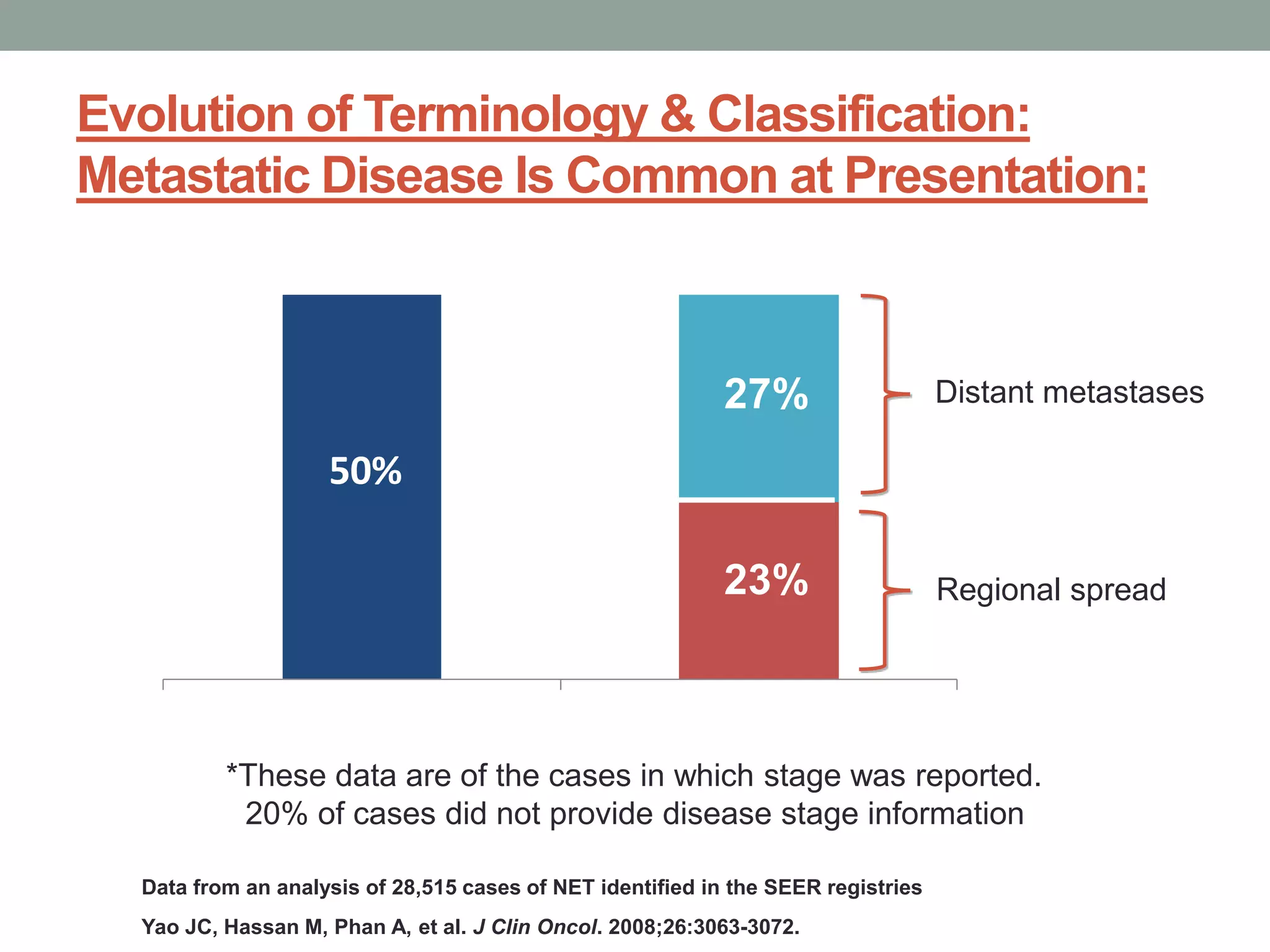
Metastatic Disease Is Common at Presentation:
Localized Metastatic
50%
27%
23%
Distant metastases
Regional spread
Data from an analysis of 28,515 cases of NET identified in the SEER registries
Yao JC, Hassan M, Phan A, et al. J Clin Oncol. 2008;26:3063-3072.
*These data are of the cases in which stage was reported.
20% of cases did not provide disease stage information
Evolution of Terminology & Classification:
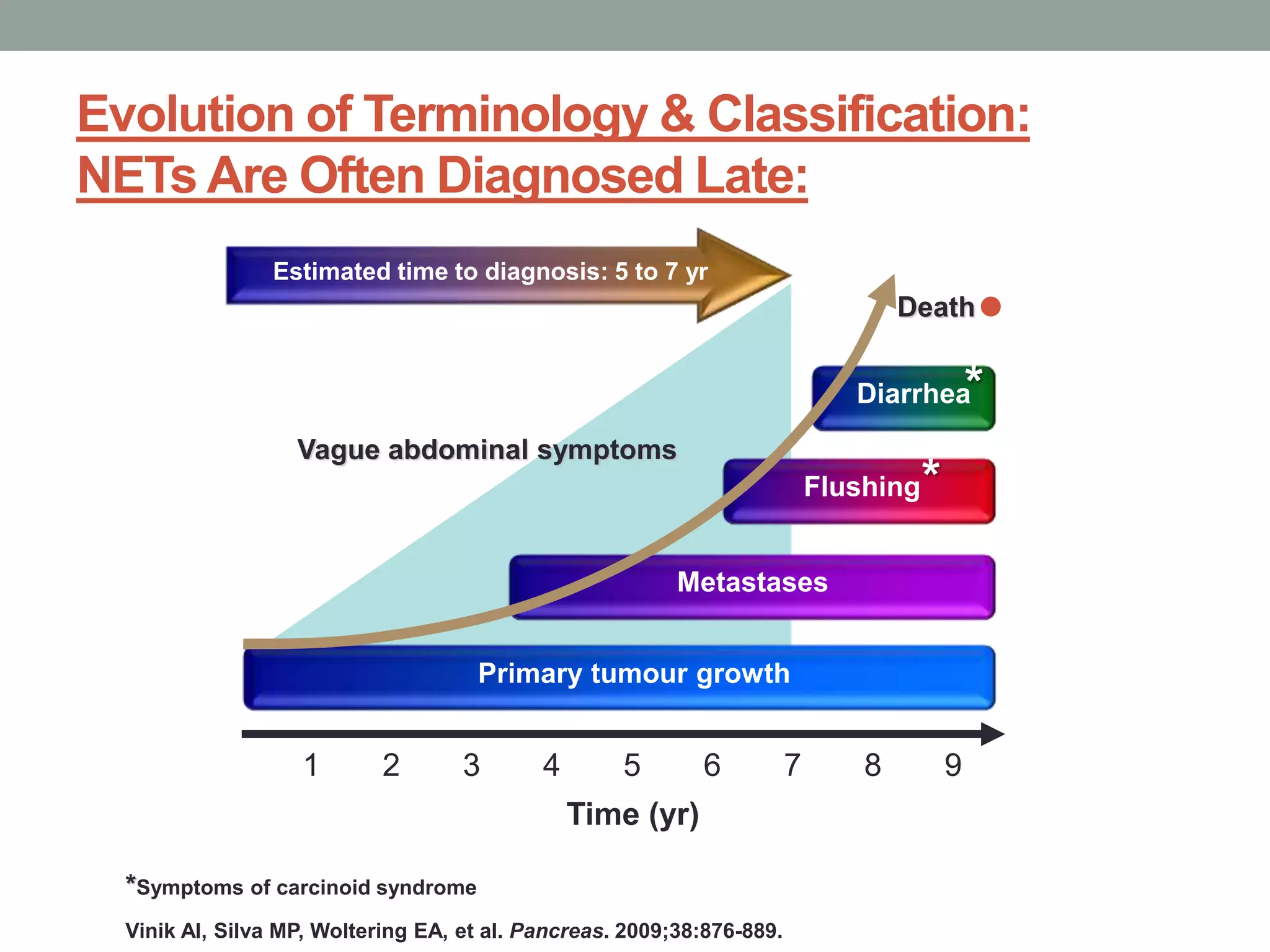
NETs Are Often Diagnosed Late:
Vinik AI, Silva MP, Woltering EA, et al. Pancreas. 2009;38:876-889.
1 2 3 4 5 6 7 8 9
Time (yr)
Primary tumour growth
Metastases
Flushing
Diarrhea
Death
Vague abdominal symptoms
Estimated time to diagnosis: 5 to 7 yr
*
*
*Symptoms of carcinoid syndrome
2. Role of Biomarkers & Imaging:
Pan-neuroendocrine markers
Cytosolic NSE, PGP 9.5
Related to secretory
granules
Chromogranin
Related to synaptic vesicles Synaptophysin, VMAT
Intermediate filaments NF, CK HMW
Adhesion molecules N-CAM
Immunohistochemical NE markers:
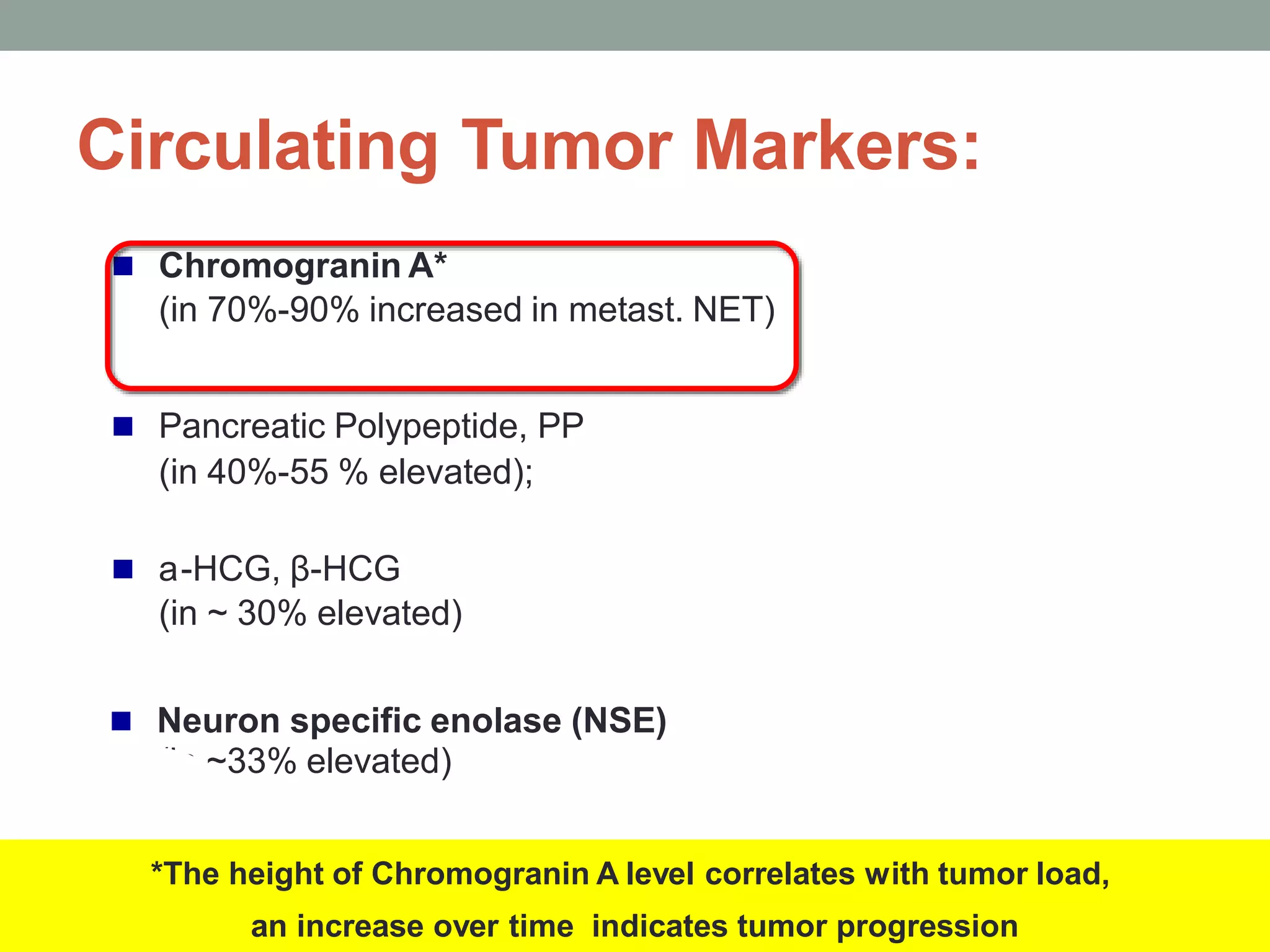
 Chromogranin A*
(in 70%-90% increased in metast. NET)
 Pancreatic Polypeptide, PP
(in 40%-55 % elevated);
 a-HCG, β-HCG
(in ~ 30% elevated)
 Neuron specific enolase (NSE)
(in ~33% elevated)
*The height of Chromogranin A level correlates with tumor load,
an increase over time indicates tumor progression
Circulating Tumor Markers:
CgA correlates with hepatic tumor load
Heigher CgA levels indicate lower survival
Arnold R, et al. Clin Gastroenterol Hepatol. 2008;6(7):820-827
Prognostic Value of CgA:
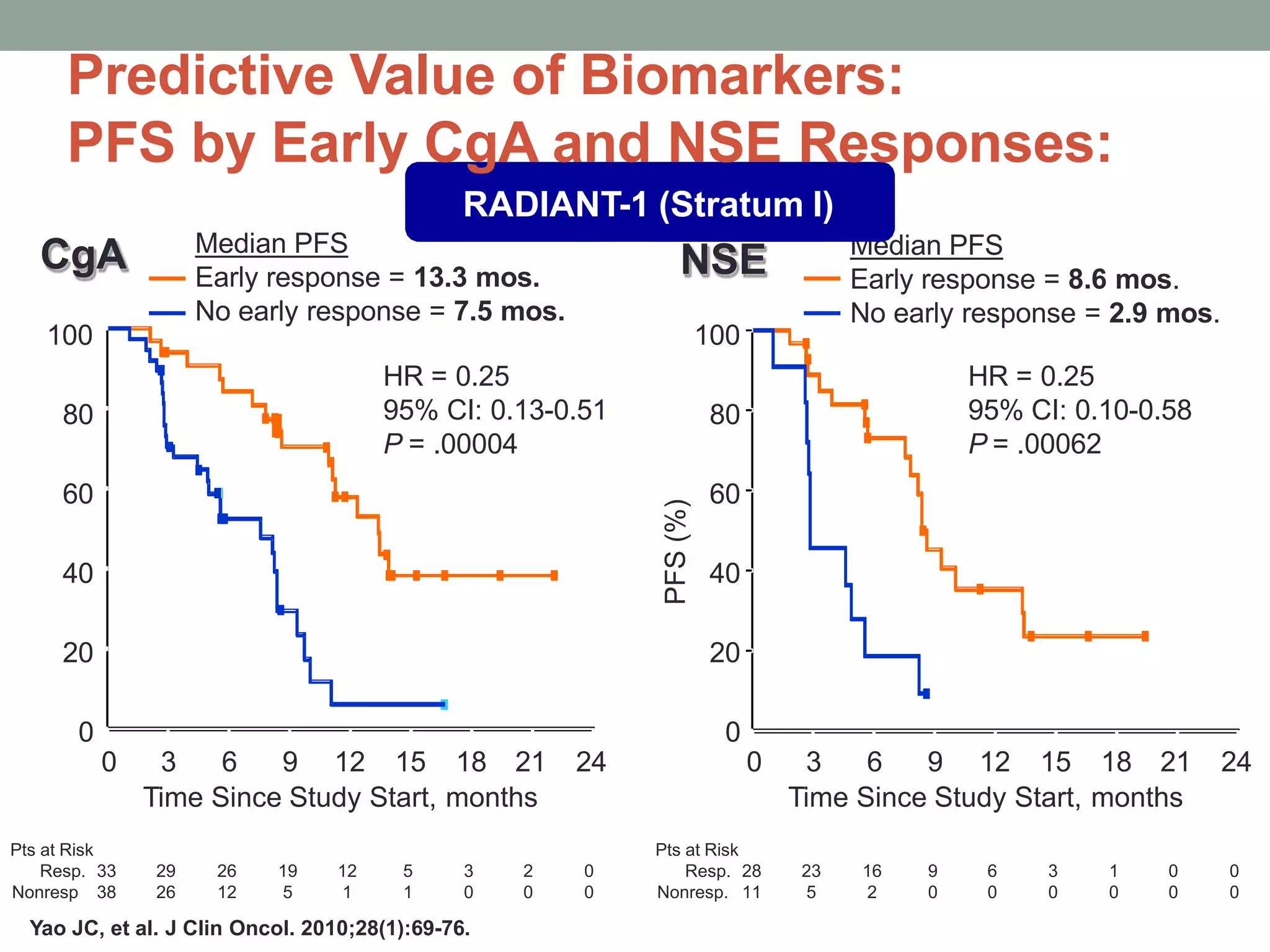
HR = 0.25
95% CI: 0.13-0.51
P = .00004
Median PFS
Early response = 13.3 mos.
No early response = 7.5 mos.
0 3 6 9 12 15 18 21 24 0 3 6 9 12 15 18 21 24
HR = 0.25
95% CI: 0.10-0.58
P = .00062
CgA NSE Median PFS
Early response = 8.6 mos.
No early response = 2.9 mos.
PFS(%)
0
20
40
60
80
100
0
20
40
60
80
100
Time Since Study Start, months Time Since Study Start, months
Pts at Risk Pts at Risk
Resp. 33 29 26 19 12 5 3 2 0 Resp. 28 23 16 9 6 3 1 0 0
Nonresp 38 26 12 5 1 1 0 0 0 Nonresp. 11 5 2 0 0 0 0 0 0
Yao JC, et al. J Clin Oncol. 2010;28(1):69-76.
RADIANT-1 (Stratum I)
Predictive Value of Biomarkers:
PFS by Early CgA and NSE Responses:
Modlin IM, et al. Ann Surg Oncol. 2010;17(9):2427-2443.
PPI
Chronic Atrophic
Gastritis
PPI
H2RAs
Small cell lung cancer
Prostate cancer
Breast cancer
Ovary Cancer
Chronic atrophic gastritis
Pancreatitis
Inflammatory bowel disease
Irritable bowel syndrome
Liver cirrhosis
Chronic hepatitis
Colon cancer
HCC
Pancreatic adenocarcinoma
Pheochromocytoma
Hyperparathyroidism
Pituituary tumors
Medullary thyroid carcinoma
Hyperthyroidism
CgA
ENDOCRINE
DISEASE
GASTRO-
INTESTINAL
DISORDERS
NON-GI
CANCER
Arterial hypertension
Cardiac insufficiency
Acute coronary syndrome
Giant cell arteritis
CARDIOVASCULAR
DISEASE
Systemic rheumatoid arthritis
Systemic inflammatory response syndrome
Chronic bronchitis
Airway obstruction in smokers
INFLAMMATORY
DISEASES
Renal Insufficiency
RENAL DISORDERS
DRUGS
Causes of Chromogranin A Elevation:
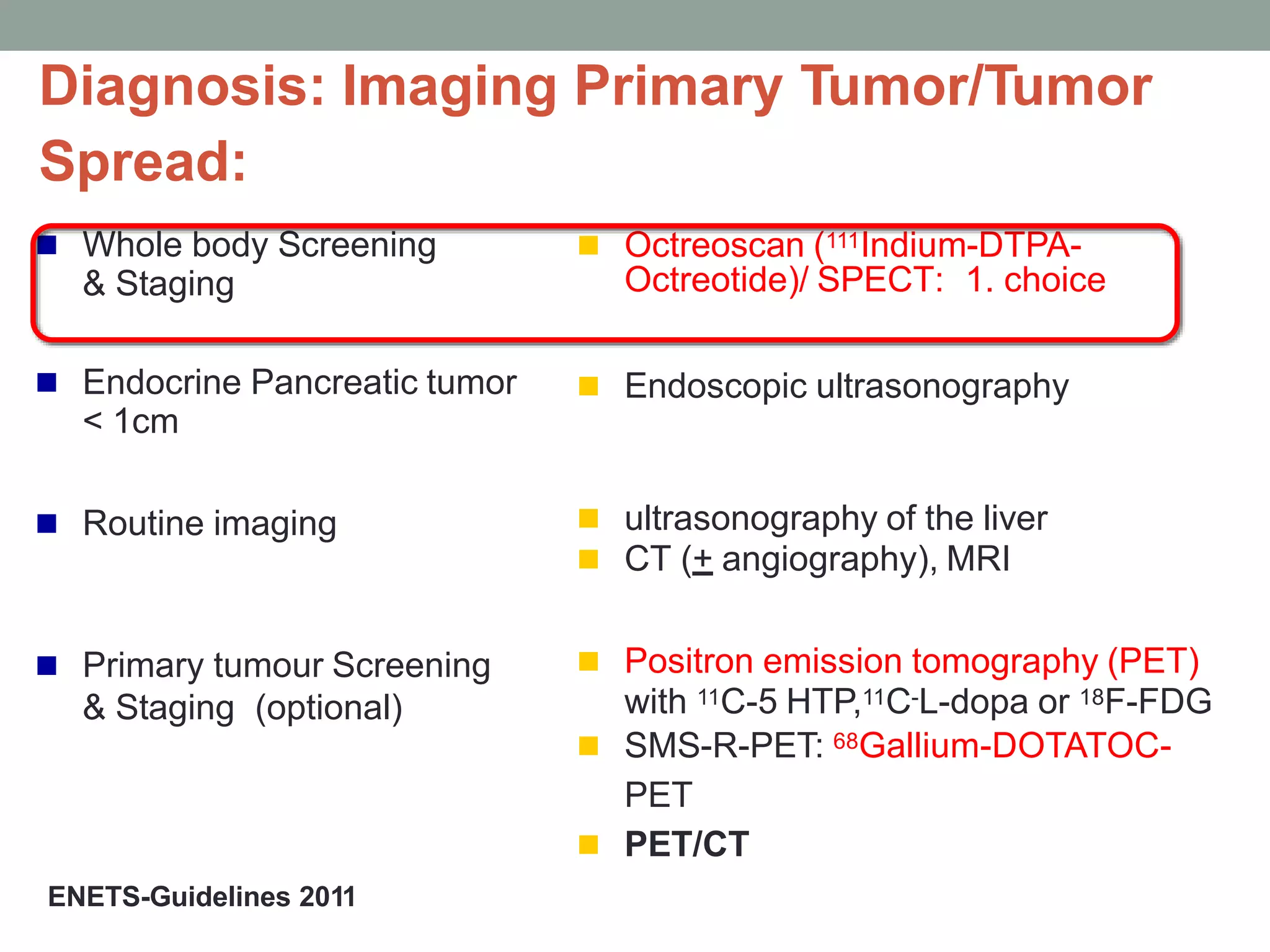
Diagnosis: Imaging Primary Tumor/Tumor
Spread:
 Whole body Screening
& Staging
 Endocrine Pancreatic tumor
< 1cm
 Routine imaging
 Primary tumour Screening
& Staging (optional)
 Octreoscan (111Indium-DTPA-
Octreotide)/ SPECT: 1. choice
 Endoscopic ultrasonography
 ultrasonography of the liver
 CT (+ angiography), MRI
 Positron emission tomography (PET)
with 11C-5 HTP,11C-L-dopa or 18F-FDG
 SMS-R-PET: 68Gallium-DOTATOC-
PET
 PET/CT
ENETS-Guidelines 2011
3. Therapy for Advanced Disease
Therapy of NETs
Three principles
• Control of hormonal
symptoms
• Control of tumor
growth
• Improvement of
survival?
Symptomatic
therapy
Surgical
therapy
Antiproliferative
therapy
• Cure
• Debulking
• Treatment /
Prevention of
complications
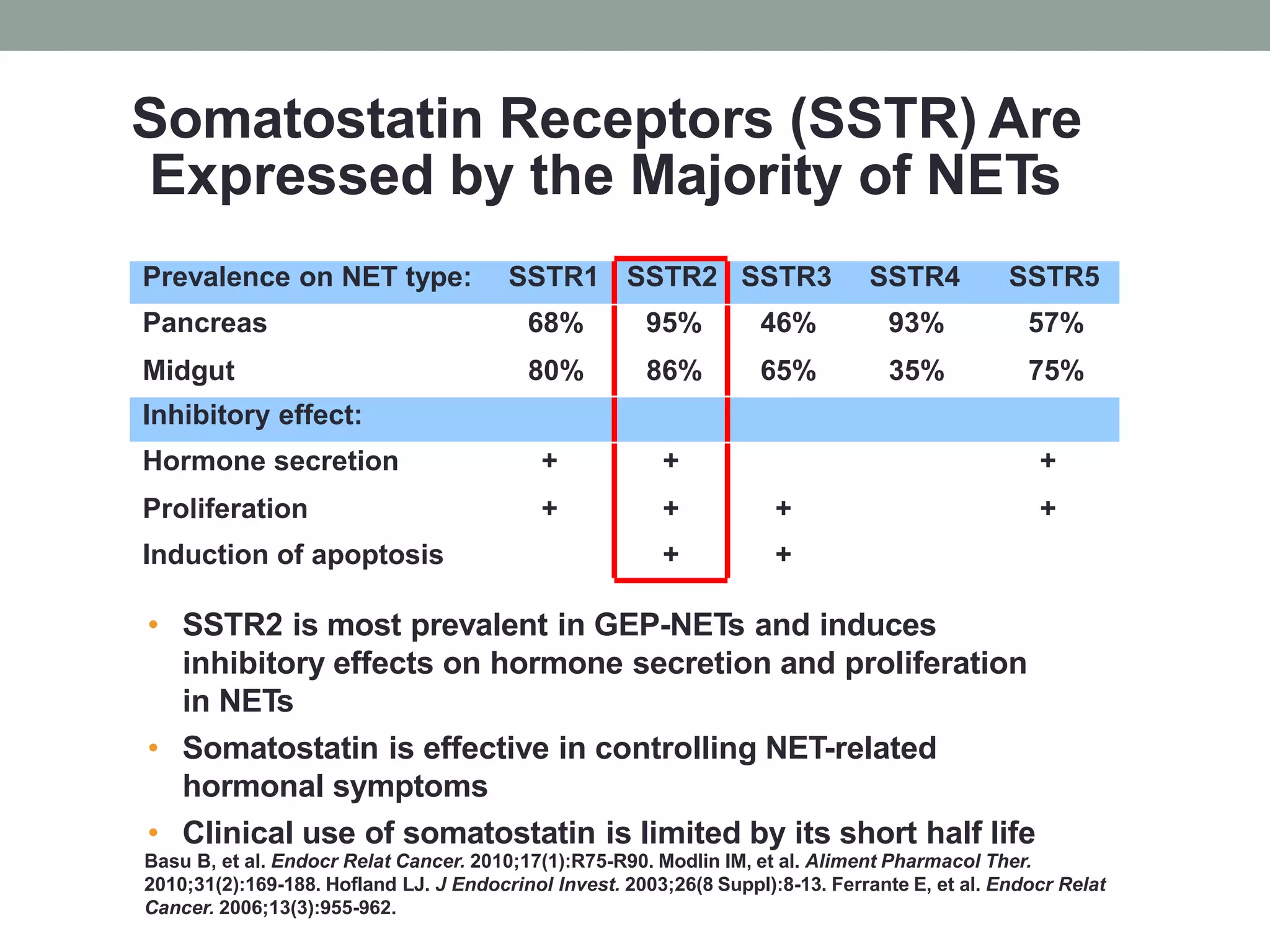
Somatostatin Receptors (SSTR) Are
Expressed by the Majority of NETs
• SSTR2 is most prevalent in GEP-NETs and induces
inhibitory effects on hormone secretion and proliferation
in NETs
• Somatostatin is effective in controlling NET-related
hormonal symptoms
• Clinical use of somatostatin is limited by its short half life
Basu B, et al. Endocr Relat Cancer. 2010;17(1):R75-R90. Modlin IM, et al. Aliment Pharmacol Ther.
2010;31(2):169-188. Hofland LJ. J Endocrinol Invest. 2003;26(8 Suppl):8-13. Ferrante E, et al. Endocr Relat
Cancer. 2006;13(3):955-962.
Prevalence on NET type: SSTR1 SSTR2 SSTR3 SSTR4 SSTR5
Pancreas 68% 95% 46% 93% 57%
Midgut 80% 86% 65% 35% 75%
Inhibitory effect:
Hormone secretion + + +
Proliferation + + + +
Induction of apoptosis + +
• Octreotide and lanreotide show high affinity for the
SSTR2 and are approved for antisecretory treatment in
NETs
LAR, long lasting release
Susini C, et al. Ann Oncol. 2006;17(12):1733-
1742.
Octreotide LAR
(10-30 mg / 28 days im)
Lanreotide
(60-120 mg / 28 days sc)
Octreotide
(2-3 x 50-500 ug sc / d)
Biotherapy of Functional Active NETs
With Somatostatin Analogs (SSA)
S
S
a
l
a
g
l
y
ly asn
s
cys p
h
e
p
h
e
p
h
e tr
p
l
y
s
t
h
r
p
h
e
t
h
r
s
e
r
cys
D-phe c
y
s
phe
l
y
s
c th
y r
s
Octreotide
acetate
D-trp
Thr
-
ol
D-phe c
l
y
s
v
al
c
y
y
s
S
ty
r
s
Lanreotid
e
D-trp
Thr
-
NH2
S
Somatostatin
S
S
Phase III Study of Octreotide LAR:
Patients:
• Well-differentiated
midgut NET
• Treatment-naïve
• Locally inoperable
or metastasized
N = 85
Octreotide LAR
30 mg im/28 days
Placebo
im/28 days
Primary endpoint:
• Median time to tumour progression
Rinke A, Müller HH, Schade-Brittinger C, et al. J Clin Oncol. 2009;27:4656-4663.
1:1
R
A
N
D
O
M
I
Z
E
Secondary endpoints:
•Objective tumour response rate
• Symptom control
• Overall survival
Treatment
until CT/MRI
documented
tumour
progression
or death
Randomized, Double-blind, Placebo-controlled Study
Octreotide LAR 30 mg
Significantly Prolongs TTP:
HR = hazard ratio. PROMID = Placebo-controlled prospective Randomized study on the antiproliferative efficacy of Octreotide LAR in patients
with metastatic neuroendocrine MIDgut tumours; TTP = time to progression
Rinke A, Müller HH, Schade-Brittinger C, et al. J Clin Oncol. 2009;27:4656-4663.
Octreotide LAR vs placebo
HR=0.34 P=0.000072
[95% CI: 0.20–0.59]
Based on conservative ITT analysis
ProportionWithout
Progression
1.0
.75
.50
.25
0
0 6 12 18 24 30 36 42
Time (mo)
48 54 60 66 72 78
Octreotide LAR (n = 42)
Median 14.3 mo
Placebo (n = 43)
Median 6.0 mo
Octreotide LAR 30 mg Extends TTP in Patients With
Functioning and Nonfunctioning Tumours:
0
0.25
0.5
0.75
1
0 6 12 18 24 30 36 42 48 54 60 66 72 78 84 90
0
0.25
0.5
0.75
1
0 6 12 18 24 30 36 42 48 54 60 66 72 78 84 90
Based on the per-protocol analysis
P=0.0008; HR=0.25 (95% CI: 0.10–0.59)
ProportionWithoutProgression
P=0.0007; HR=0.23 (95% CI: 0.09–0.57)
ProportionWithoutProgression
Patients with nonfunctioning tumours Patients with functioning tumours
Time (mo)Time (mo)
Octreotide LAR 30 mg: 17 pts/11 events
Median TTP 14.26 mo
Placebo: 16 pts/14 events
Median TTP 5.45 mo
Octreotide LAR 30 mg: 25 pts/9 events
Median TTP 28.8 mo
Placebo: 27 pts/24 events
Median TTP 5.91 mo
1. Arnold R, Müller H, Schade-Brittinger C, et al. J Clin Oncol. 2009;27(suppl):15s. Abstr 4508.
2. Rinke A, Müller HH, Schade-Brittinger C, et al. J Clin Oncol. 2009;27:4656-4663.
Octreotide LAR: Symptomatic Relief:
J Clin Oncol. 2009, 27:4656-4663.
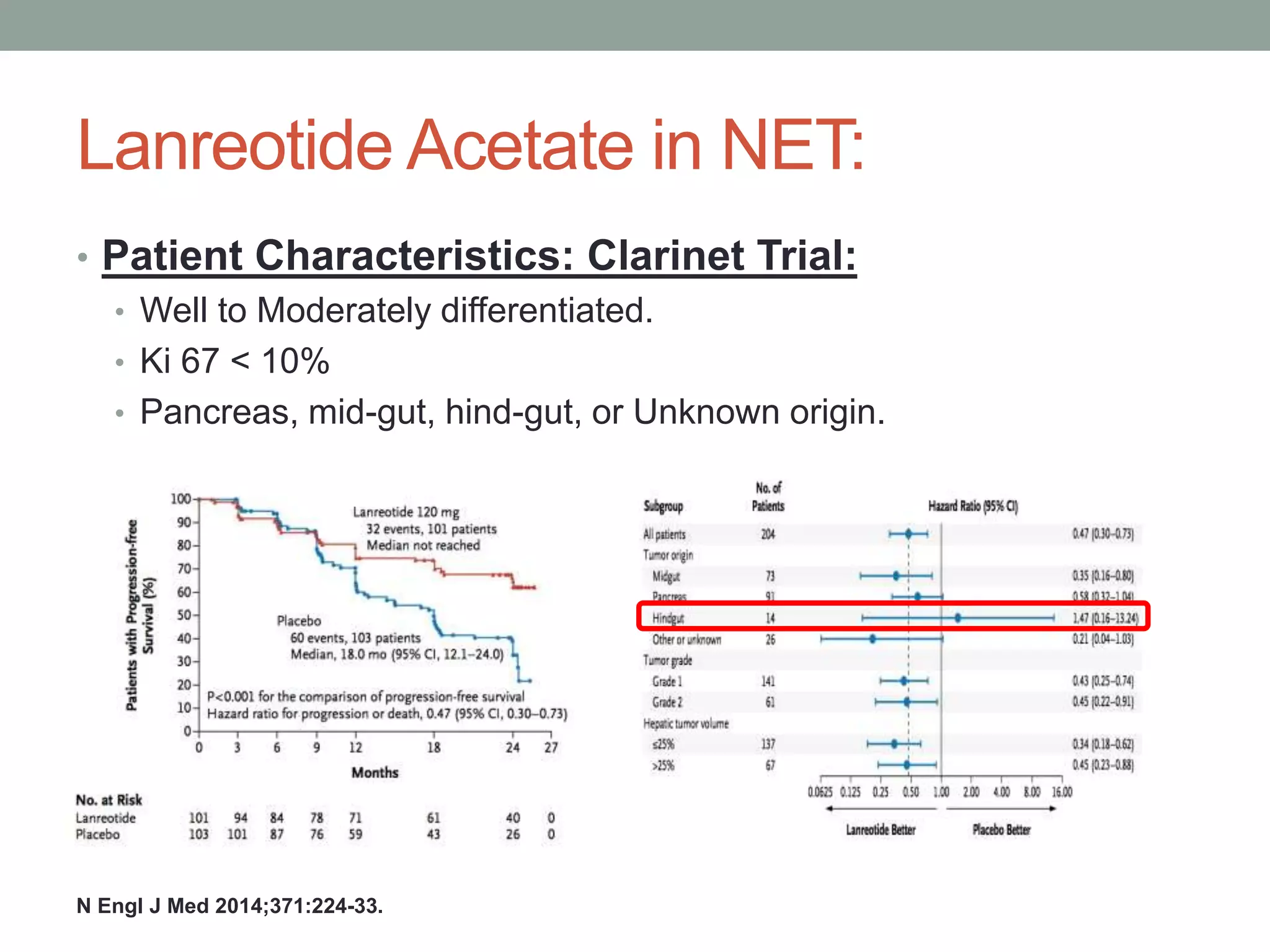
Lanreotide Acetate in NET:
• Patient Characteristics: Clarinet Trial:
• Well to Moderately differentiated.
• Ki 67 < 10%
• Pancreas, mid-gut, hind-gut, or Unknown origin.
N Engl J Med 2014;371:224-33.
The SYM-NET StudyDESIGNASSESSMENTS
A non-interventional cross sectional study to assess SYMptom
control in neuroendocrine tumors (NET)
Non-interventional, cross-sectional study
273 patients suffering from NET, already treated with lanreotide for at least 3
months and with history of diarrhea due to carcinoid syndrome were
enrolled
Subject questionnaires
Investigator review
of medical record
Likert scales
• Patient satisfaction
• Symptom severity
• Perception change
diarrhea
• Feelings about conse-
quences on daily life
QoL
• EORTC C30
• EORTC GI-
NET21
Demography
Medical
history
Treatment with
lanreotide
Diarrhea
Ruszniewski PB, et al. J Clin Oncol. 2014.32(5s): Abstract 411ˆ
characteristics
• At Tt initiation
• Day of visit
Other clinical
data
• At Tt initiation
• Day of visit
Qol = quality of life
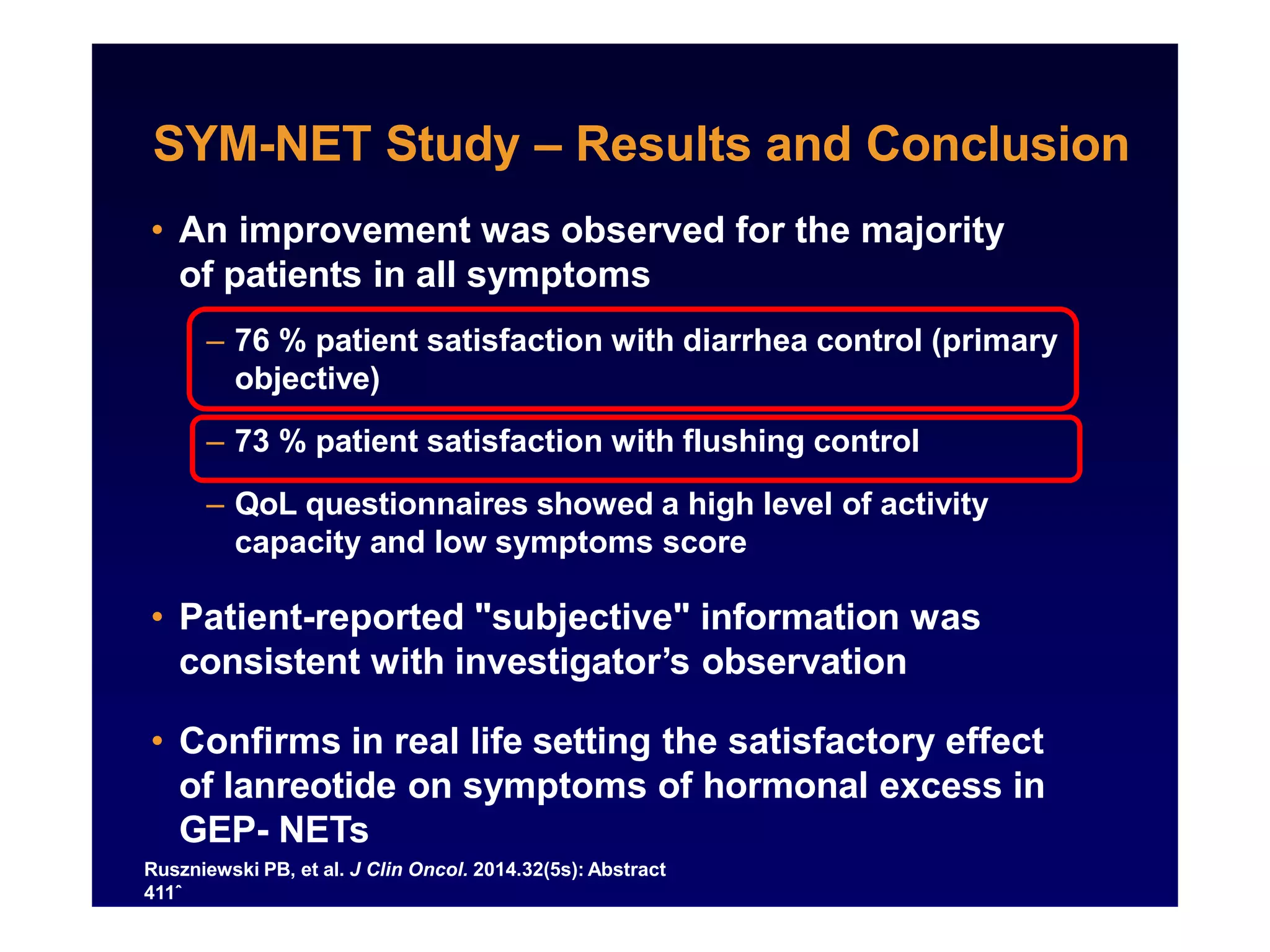
SYM-NET Study – Results and Conclusion
Ruszniewski PB, et al. J Clin Oncol. 2014.32(5s): Abstract
411ˆ
• An improvement was observed for the majority
of patients in all symptoms
– 76 % patient satisfaction with diarrhea control (primary
objective)
– 73 % patient satisfaction with flushing control
– QoL questionnaires showed a high level of activity
capacity and low symptoms score
• Patient-reported "subjective" information was
consistent with investigator’s observation
• Confirms in real life setting the satisfactory effect
of lanreotide on symptoms of hormonal excess in
GEP- NETs
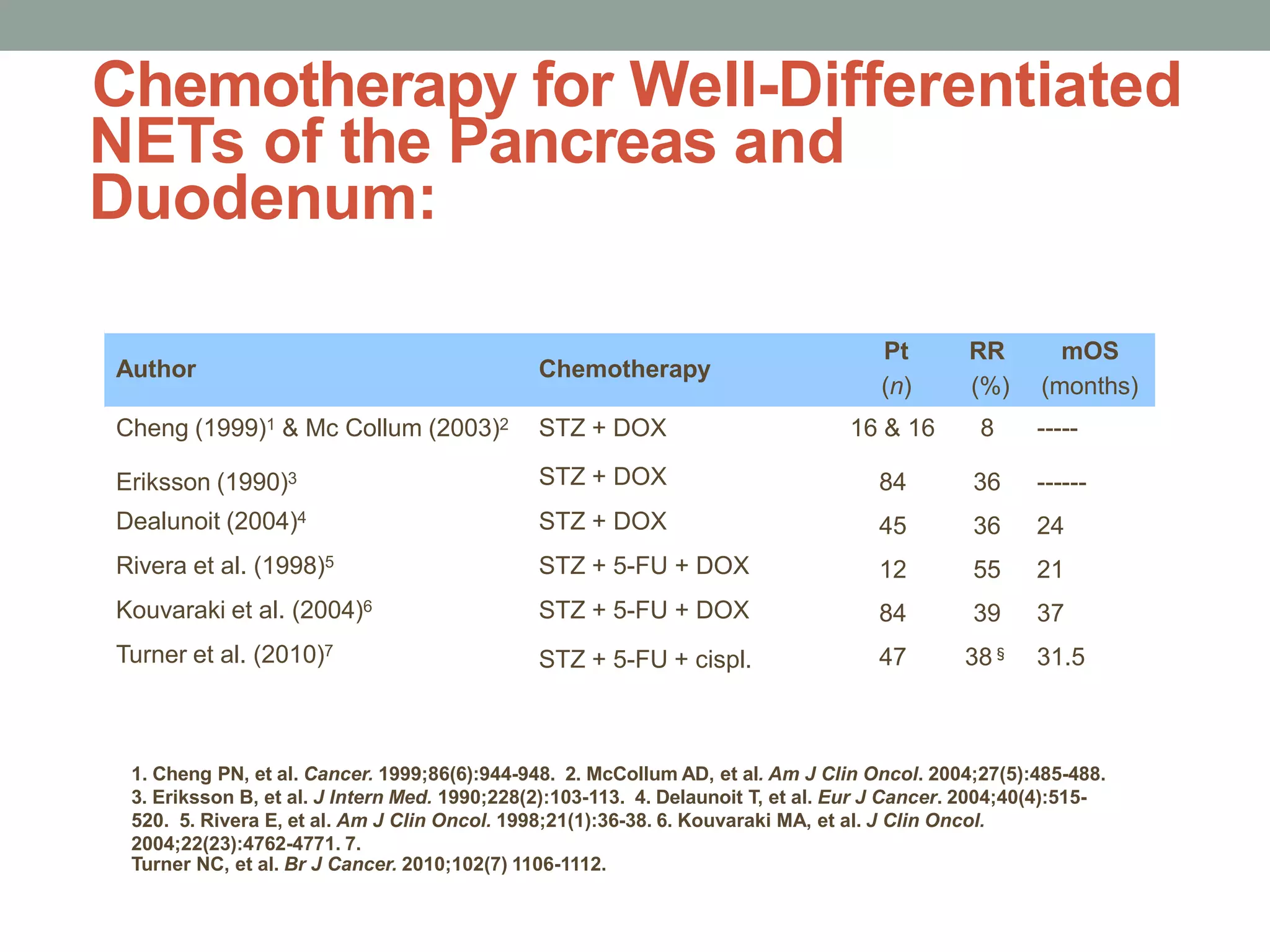
Chemotherapy for Well-Differentiated
NETs of the Pancreas and
Duodenum:
Author
Turner NC, et al. Br J Cancer. 2010;102(7) 1106-1112.
Chemotherapy
Pt
(n)
RR mOS
(%) (months)
Cheng (1999)1 & Mc Collum (2003)2 STZ + DOX 16 & 16 8 -----
Eriksson (1990)3
Dealunoit (2004)4
Rivera et al. (1998)5
Kouvaraki et al. (2004)6
Turner et al. (2010)7
STZ + DOX
STZ + DOX
STZ + 5-FU + DOX
STZ + 5-FU + DOX
STZ + 5-FU + cispl.
84
45
12
84
47
36 ------
36 24
55 21
39 37
38§ 31.5
1. Cheng PN, et al. Cancer. 1999;86(6):944-948. 2. McCollum AD, et al. Am J Clin Oncol. 2004;27(5):485-488.
3. Eriksson B, et al. J Intern Med. 1990;228(2):103-113. 4. Delaunoit T, et al. Eur J Cancer. 2004;40(4):515-
520. 5. Rivera E, et al. Am J Clin Oncol. 1998;21(1):36-38. 6. Kouvaraki MA, et al. J Clin Oncol.
2004;22(23):4762-4771. 7.
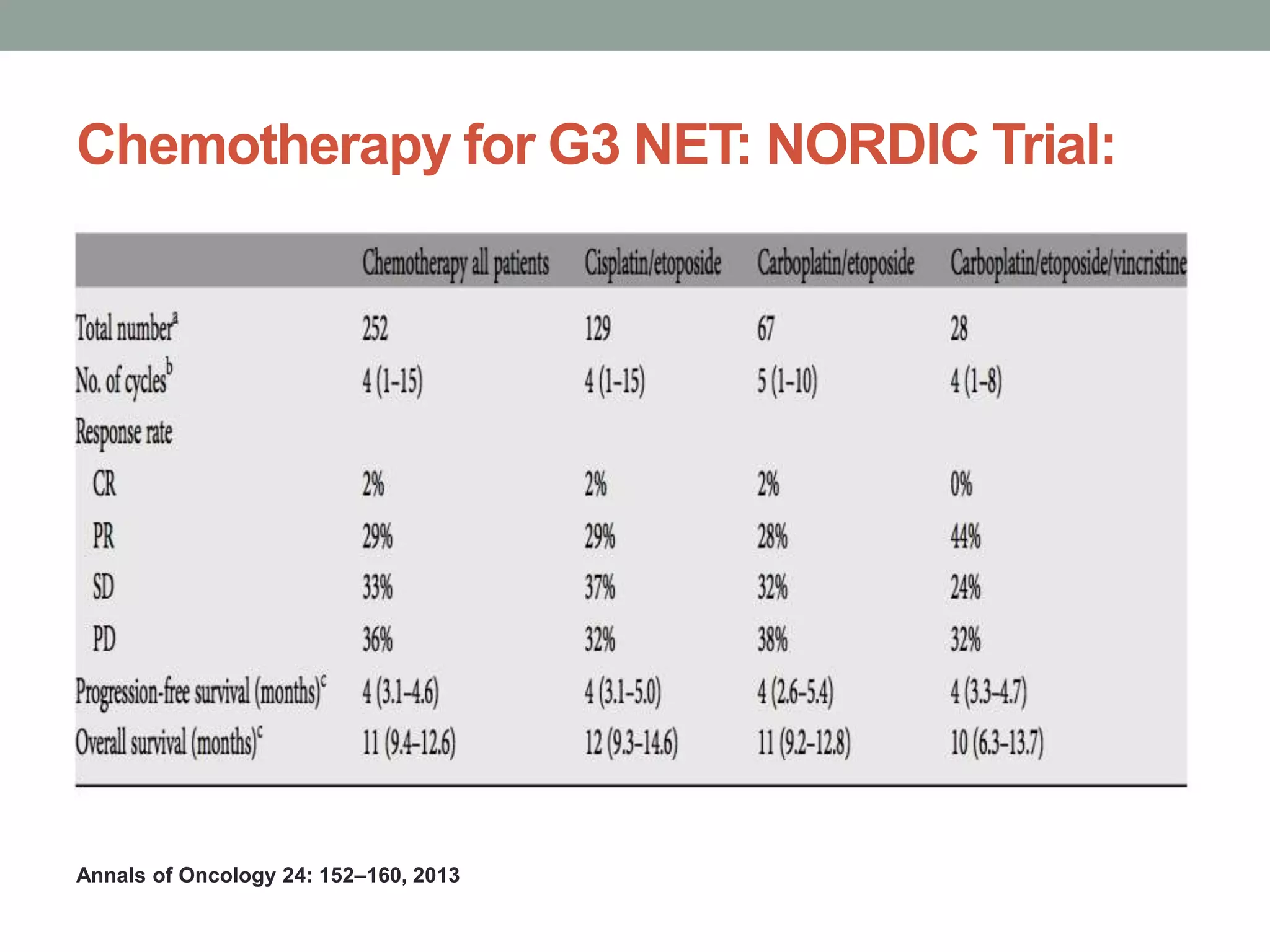
Chemotherapy for G3 NET: NORDIC Trial:
Annals of Oncology 24: 152–160, 2013
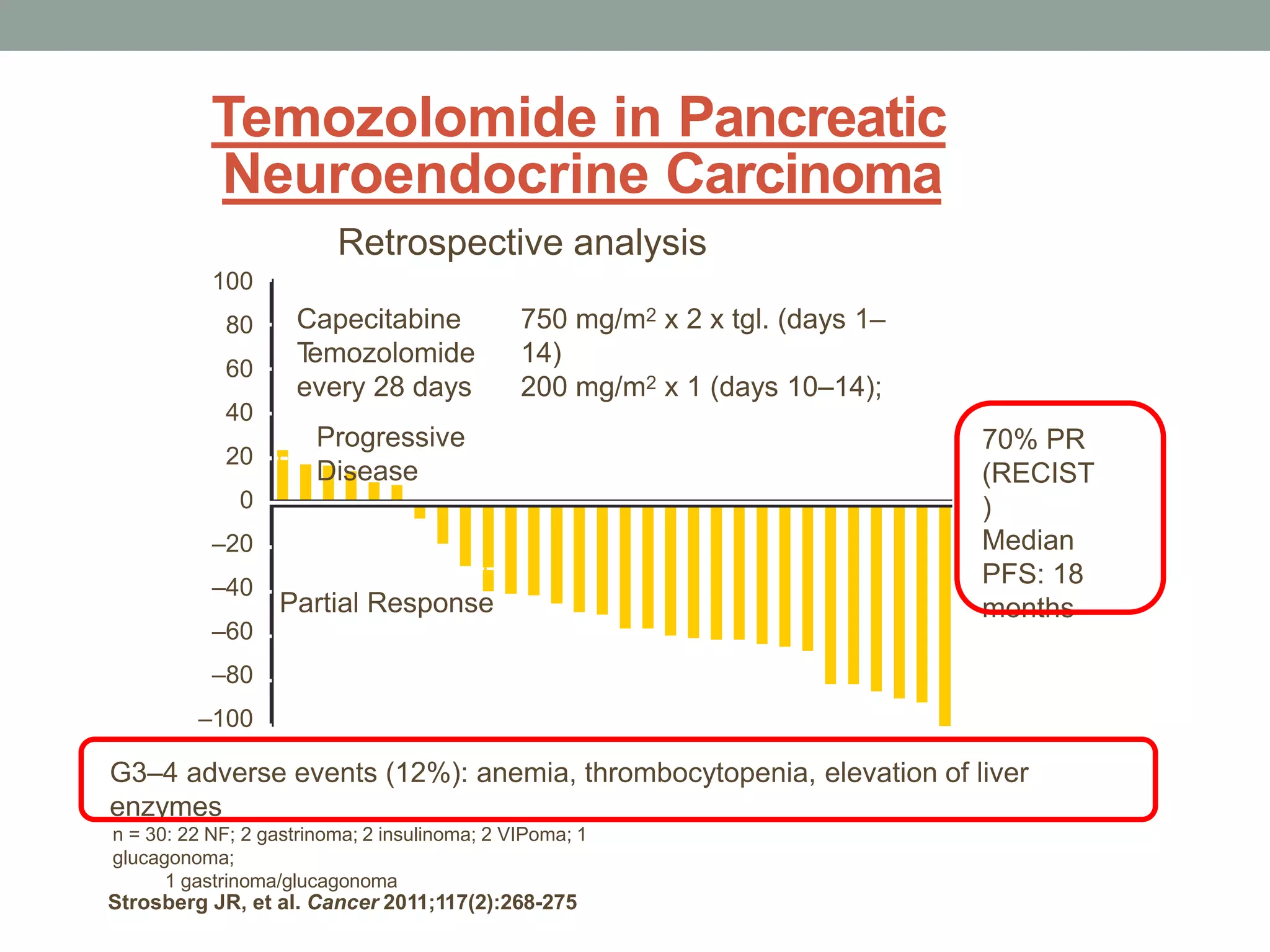
Temozolomide in Pancreatic
Neuroendocrine Carcinoma
Strosberg JR, et al. Cancer 2011;117(2):268-275
Capecitabine
Temozolomide
every 28 days
750 mg/m2 x 2 x tgl. (days 1–
14)
200 mg/m2 x 1 (days 10–14);
n = 30: 22 NF; 2 gastrinoma; 2 insulinoma; 2 VIPoma; 1
glucagonoma;
1 gastrinoma/glucagonoma
70% PR
(RECIST
)
Median
PFS: 18
months
Retrospective analysis
G3–4 adverse events (12%): anemia, thrombocytopenia, elevation of liver
enzymes
100
80
60
40
20
0
–20
–40
–60
–80
–100
Progressive
Disease
Partial Response
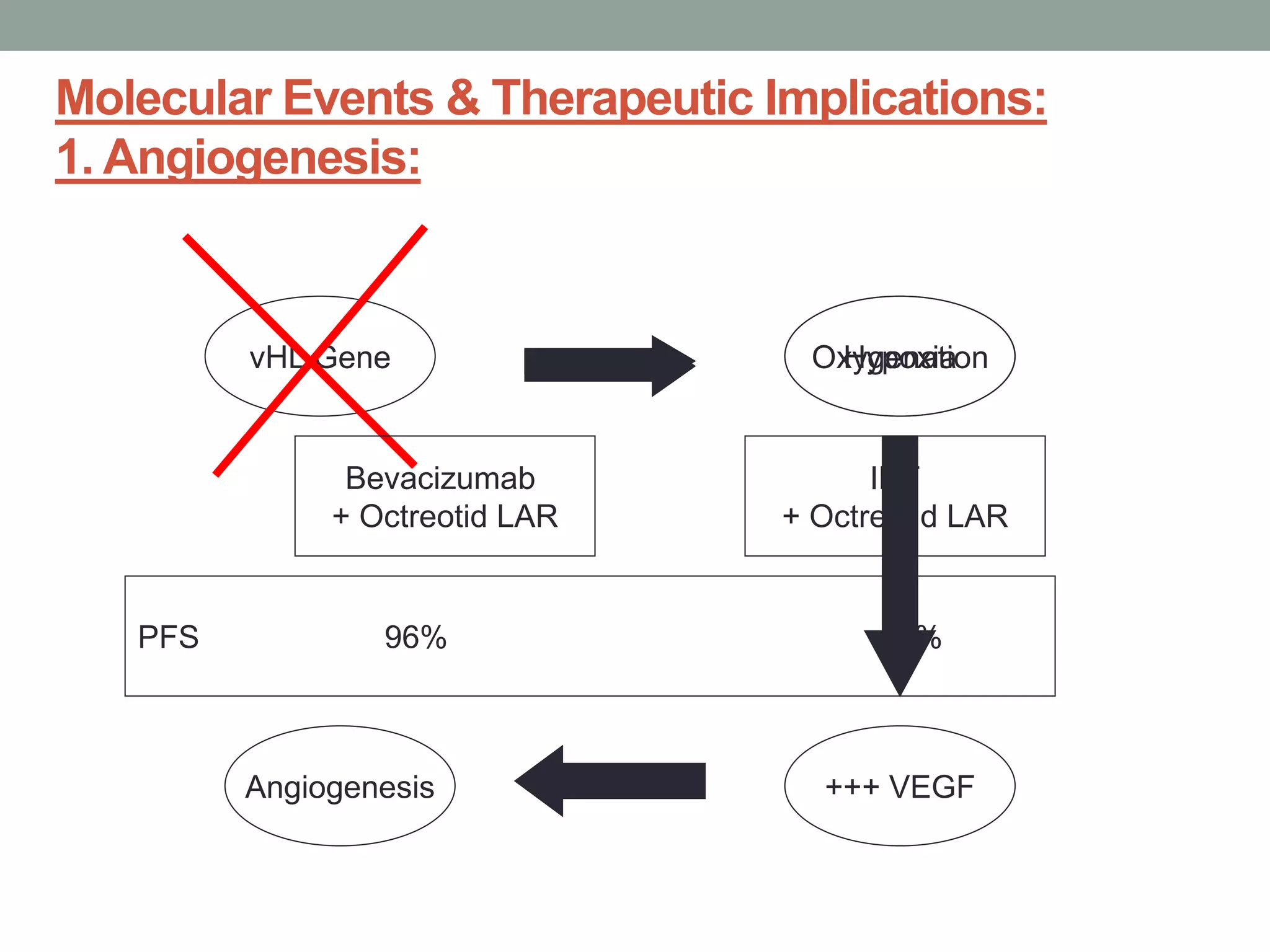
Molecular Events & Therapeutic Implications:
1. Angiogenesis:
vHL Gene OxygenationHypoxia
+++ VEGFAngiogenesis
PFS 96% 68%
Bevacizumab
+ Octreotid LAR
INF
+ Octreotid LAR
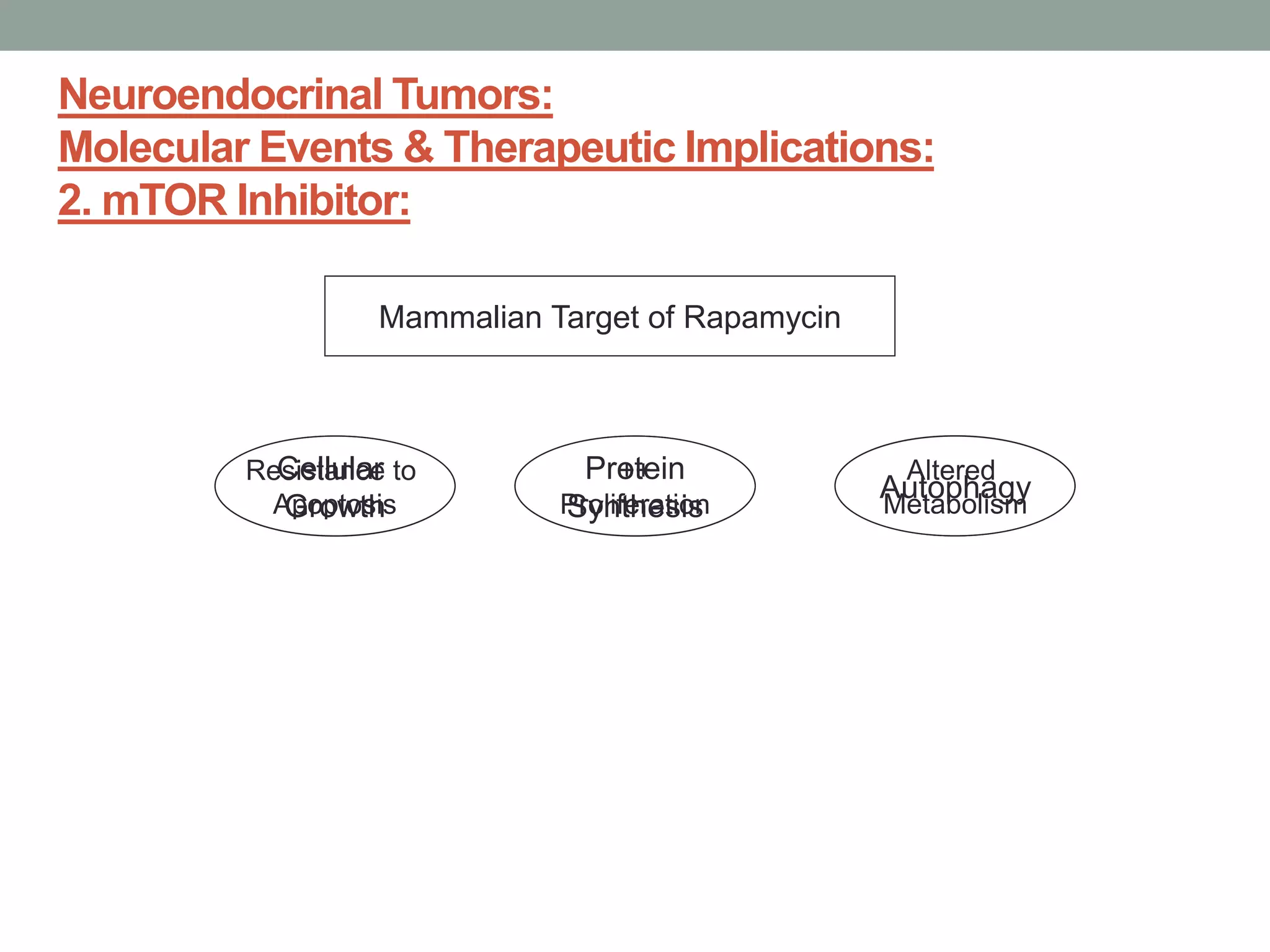
Neuroendocrinal Tumors:
Molecular Events & Therapeutic Implications:
2. mTOR Inhibitor:
Mammalian Target of Rapamycin
Cellular
Growth
Protein
Synthesis
Autophagy
Resistance to
Apoptosis
++
Proliferation
Altered
Metabolism
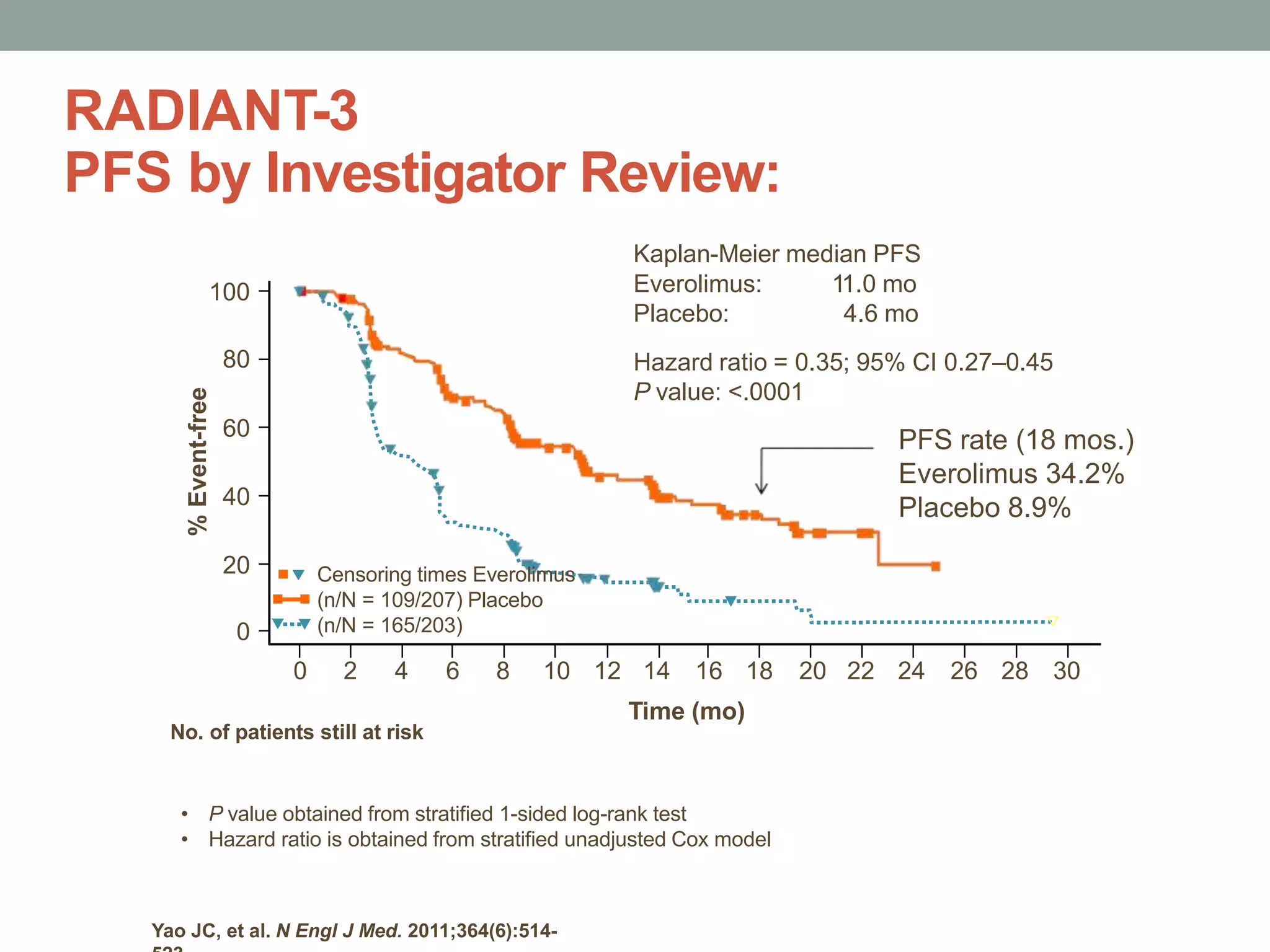
RADIANT-3
PFS by Investigator Review:
• P value obtained from stratified 1-sided log-rank test
• Hazard ratio is obtained from stratified unadjusted Cox model
%Event-free
0 2 4 6 8 10
No. of patients still at risk
Kaplan-Meier median PFS
Everolimus:
Placebo:
11.0 mo
4.6 mo
Hazard ratio = 0.35; 95% CI 0.27–0.45
P value: <.0001
PFS rate (18 mos.)
Everolimus 34.2%
Placebo 8.9%
Yao JC, et al. N Engl J Med. 2011;364(6):514-
12 14 16 18
Time (mo)
100
80
Censoring times Everolimus
(n/N = 109/207) Placebo
(n/N = 165/203)
60
40
20
0
20 22 24 26 28 30
RADIANT-3: Treatment-Related G3/4
AE:
Yao JC, et al. N Engl J Med. 2011;364(6):514-
523.
*Related toxicities grouped for
calculation
Occurring in >10%
Everolimus n = 204
All Grades (%) Grade 3/4 (%)
Placebo n = 203
All Grades (%) Grade 3/4 (%)
Stomatitis* 64 7 17 0
Rash 49 <1 10 0
Diarrhea 34 3 10 0
Fatigue 31 2 14 <1
Nausea 20 2 18 0
Infections* 23 3 6 1
Peripheral edema 20 <1 3 0
Decreased appetite 20 0 7 1
RADIANT-2 Study Design:
Everolimus 10 mg/day +
Octreotide LAR 30 mg/28 days
n = 216
Placebo +
Octreotide LAR 30 mg/28 days
n = 213
Treatment
until disease
progression
R
A
N
D
O
M
I
Z
E
1:1
Multiphasic CT or MRI performed every 12 wk
Crossover
Primary endpoint:
• PFS (RECIST)
Secondary endpoints:
• Tumour response, OS, biomarkers, safety, PK
Enrollment January 2007–May 2008
Phase III, Double-blind, Placebo-controlled Trial
Pavel M, Hainsworth J, Baudin E, et al. Presented at: 35th ESMO Congress; October 8-12, 2010; Milan, Italy. Abstr LBA8.
Patients with advanced NET
(N=429)
• Advanced low- or intermediate-
grade NET
• Radiologic progression <12
months
• History of secretory symptoms
(flushing, diarrhea)
• Prior antitumour therapy allowed
• WHO PS ≤2
PFS by Central Review:*
Time (mo)
No. of patients still at risk
E + O
P + O
216
213
202
202
167
155
129
117
120
106
102
84
81
72
69
65
63
57
56
50
50
42
42
35
33
24
22
18
17
11
11
9
4
3
1
1
1
0
0
0
* Independent adjudicated central review committee
• P-value is obtained from 1-sided log-rank test
• HR is obtained from unadjusted Cox model
E + O = everolimus + octreotide LAR
P + O = placebo + octreotide LAR
0
20
40
60
80
100
0 2 4 6 8 10 12 14 16 18 20 22 24 26 28 30 32 34 36 38
PercentageEvent-free
Kaplan-Meier median PFS
Everolimus + octreotide LAR: 16.4 mo
Placebo + octreotide LAR: 11.3 mo
HR = 0.77; 95% CI (0.59–1.00)
P=0.026
Total events = 223
Censoring times
E + O (n/N = 103/216)
P + O (n/N = 120/213)
Pavel M, Hainsworth J, Baudin E, et al. Presented at: 35th ESMO Congress; October 8-12, 2010; Milan, Italy. Abstr LBA8.
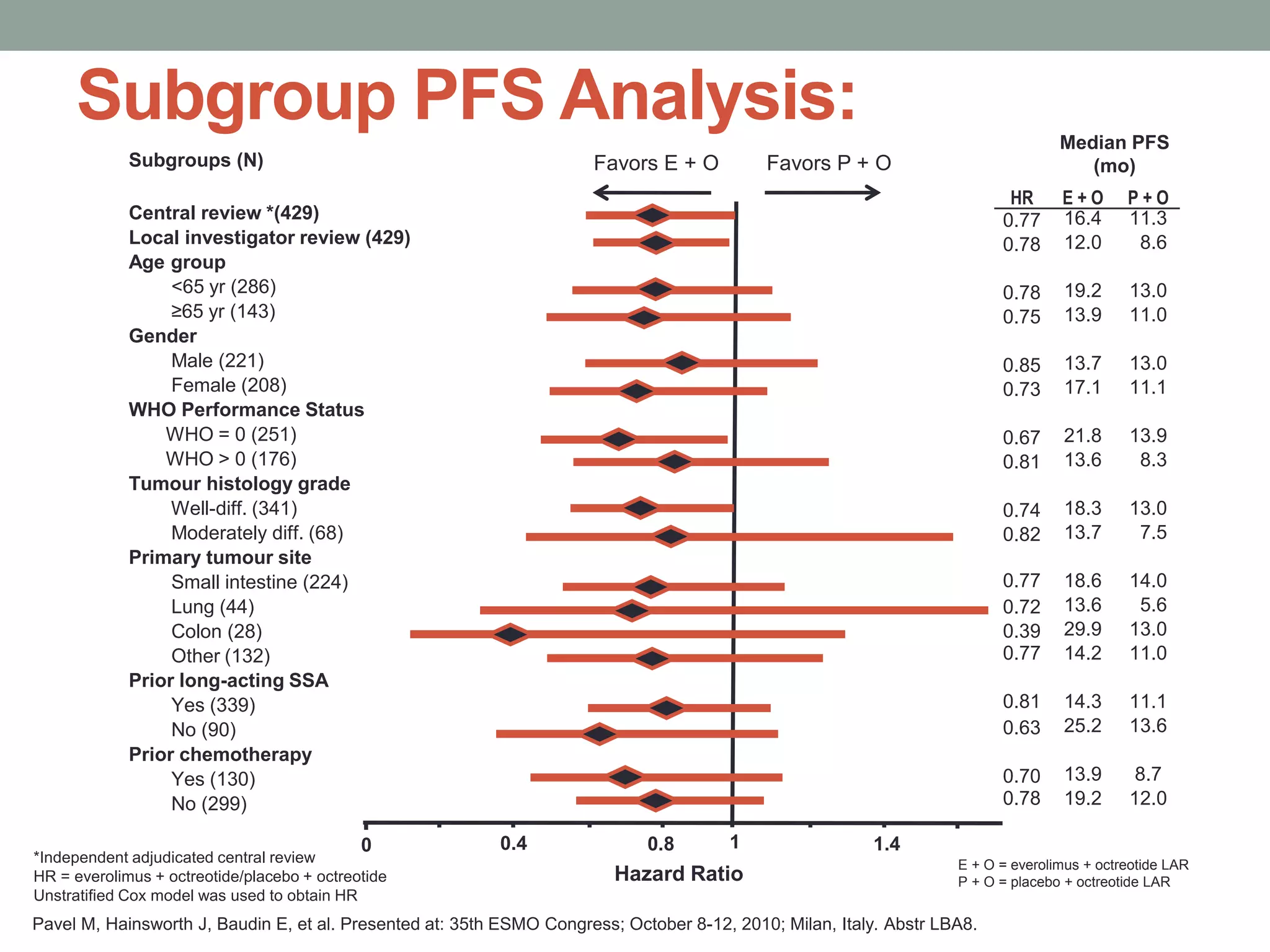
Subgroup PFS Analysis:
*Independent adjudicated central review
HR = everolimus + octreotide/placebo + octreotide
Unstratified Cox model was used to obtain HR
E + O = everolimus + octreotide LAR
P + O = placebo + octreotide LAR
Subgroups (N)
Central review *(429)
Local investigator review (429)
Age group
<65 yr (286)
≥65 yr (143)
Gender
Male (221)
Female (208)
WHO Performance Status
WHO = 0 (251)
WHO > 0 (176)
Tumour histology grade
Well-diff. (341)
Moderately diff. (68)
Primary tumour site
Small intestine (224)
Lung (44)
Colon (28)
Other (132)
Prior long-acting SSA
Yes (339)
No (90)
Prior chemotherapy
Yes (130)
No (299)
HR
Median PFS
(mo)
E + O P + O
0.77 16.4 11.3
0.78 12.0 8.6
0.78 19.2 13.0
0.75 13.9 11.0
0.85 13.7 13.0
0.73 17.1 11.1
0.67 21.8 13.9
0.81 13.6 8.3
0.74 18.3 13.0
0.82 13.7 7.5
0.77 18.6 14.0
0.72 13.6 5.6
0.39 29.9 13.0
0.77 14.2 11.0
0.81 14.3 11.1
0.63 25.2 13.6
0.70 13.9 8.7
0.78 19.2 12.0
Hazard Ratio
Favors E + O Favors P + O
0 10.4 0.8 1.4
Pavel M, Hainsworth J, Baudin E, et al. Presented at: 35th ESMO Congress; October 8-12, 2010; Milan, Italy. Abstr LBA8.
5050
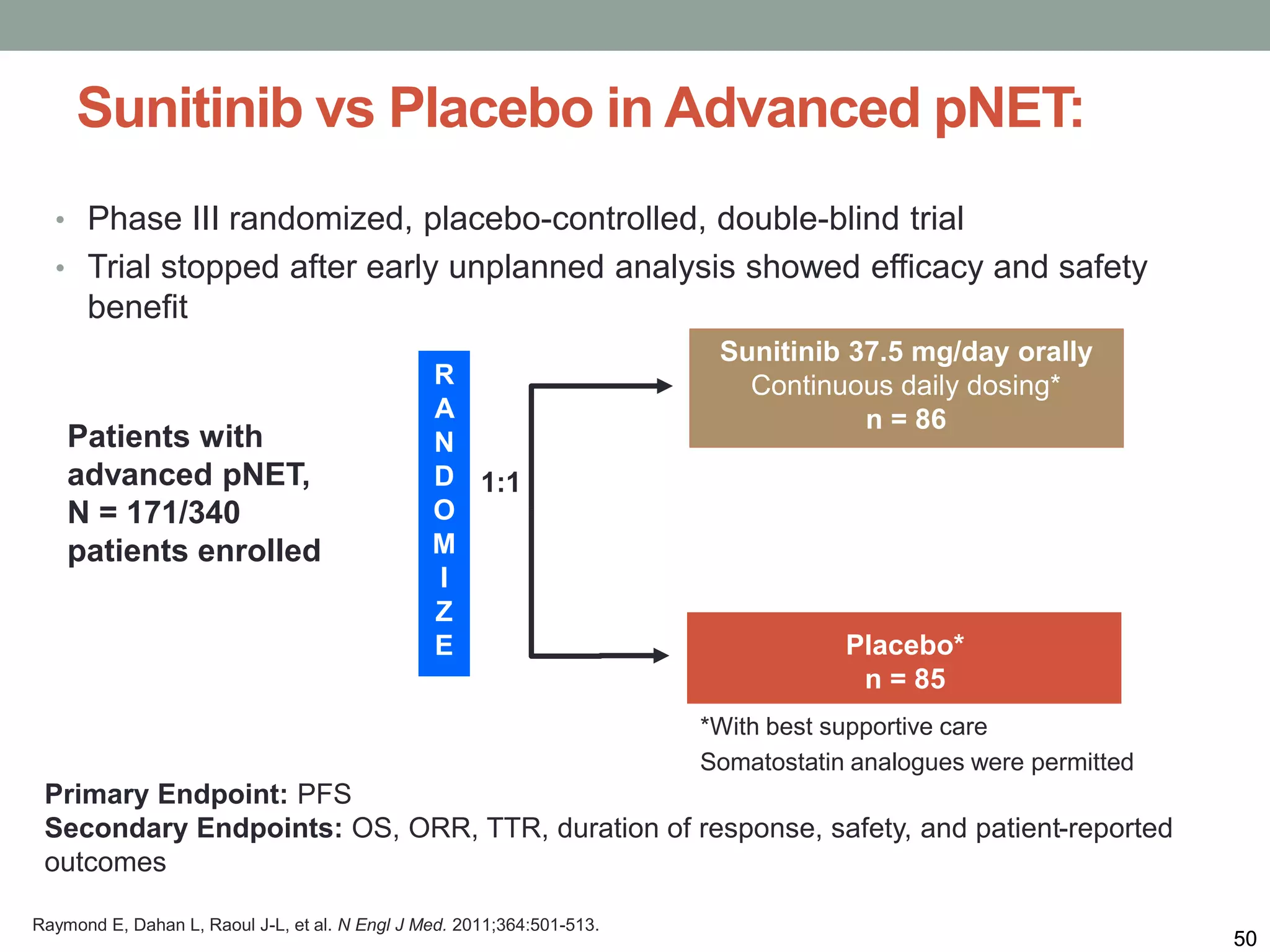
Sunitinib vs Placebo in Advanced pNET:
• Phase III randomized, placebo-controlled, double-blind trial
• Trial stopped after early unplanned analysis showed efficacy and safety
benefit
Primary Endpoint: PFS
Secondary Endpoints: OS, ORR, TTR, duration of response, safety, and patient-reported
outcomes
Patients with
advanced pNET,
N = 171/340
patients enrolled
Sunitinib 37.5 mg/day orally
Continuous daily dosing*
n = 86
Placebo*
n = 85
*With best supportive care
Somatostatin analogues were permitted
Raymond E, Dahan L, Raoul J-L, et al. N Engl J Med. 2011;364:501-513.
1:1
R
A
N
D
O
M
I
Z
E
51 51
0.8
0.6
0.4
0.2
0
1.0
ProportionofPatients
5 10 15 20 250
Sunitinib
39 19 4 0 086Sunitinib
28 7 2 1 085Placebo
Number at risk
Time (mo)
Placebo
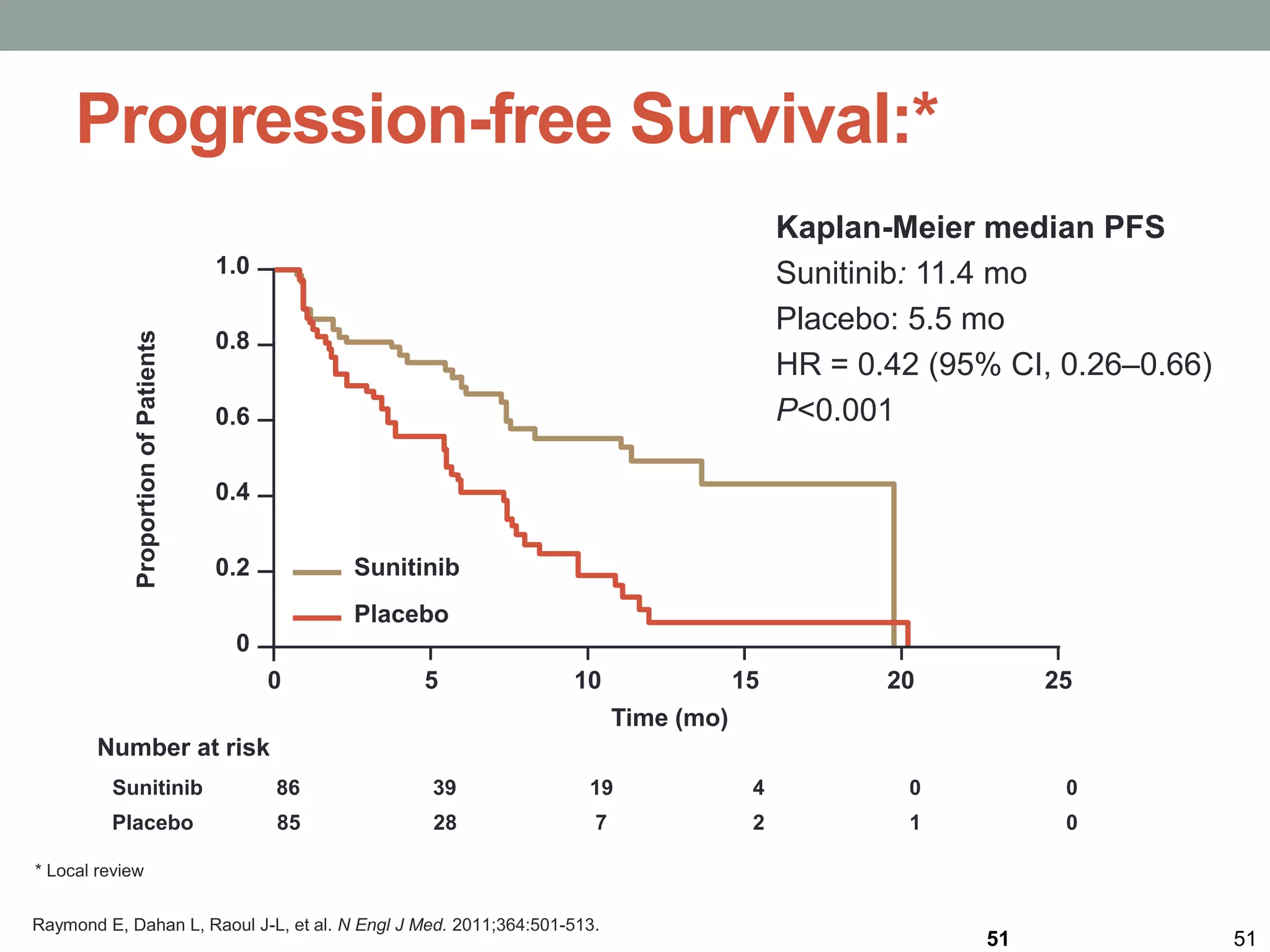
Kaplan-Meier median PFS
Sunitinib: 11.4 mo
Placebo: 5.5 mo
HR = 0.42 (95% CI, 0.26–0.66)
P<0.001
Progression-free Survival:*
Raymond E, Dahan L, Raoul J-L, et al. N Engl J Med. 2011;364:501-513.
* Local review
1.0
PRRT
Objective
response: Stable
disease: Median
survival:
34%
5%
94.6
months
Open phase II study, 1,109 patients
with progressive NET (within 12
months), 2,472 cycles 90Y-DOTA-
TOC-therapy, median follow up 23
months
• Objective response rates 30% - 40%
• Survival benefit in responders likely
• Limitations: safety concerns (renal, bone marrow
toxicity), limited availability, lacking randomized studies
0 2 4 6 8 10
12
Time Since Start of Treatment,
years
14
0.2
0.4
0.6
0.8
OverallSurvival,probability
Imhof A, et al. J Clin Oncol. 2011;29(17):2416-
1423.
No. of
patient
s
No. of
deaths
Median
survival
Hazard
ratio
P
Disease
control
671 280 3.8 years 0.41 vs
progress
<.001
Progress 438 211 1.4 years
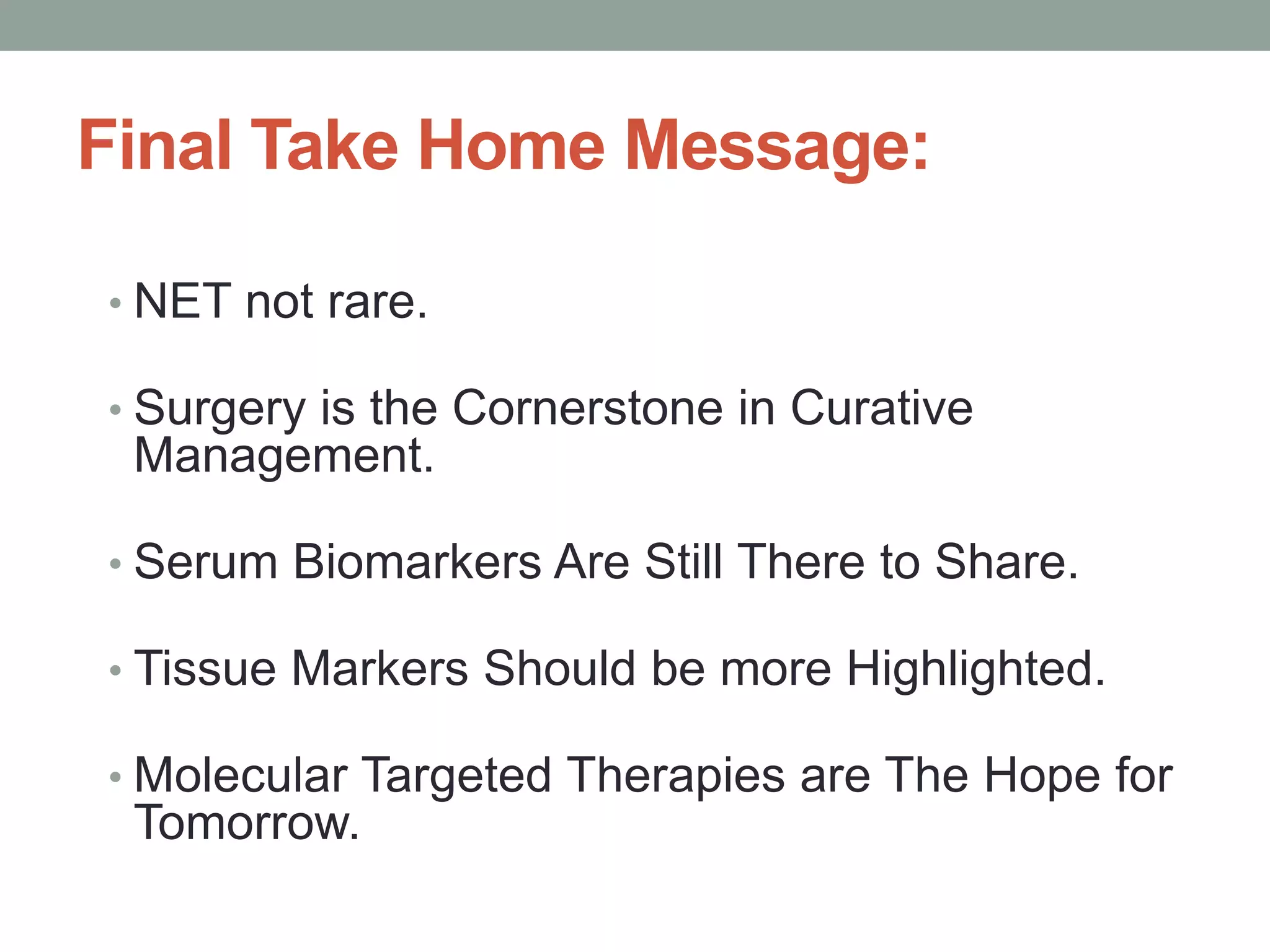
Final Take Home Message:
• NET not rare.
• Surgery is the Cornerstone in Curative
Management.
• Serum Biomarkers Are Still There to Share.
• Tissue Markers Should be more Highlighted.
• Molecular Targeted Therapies are The Hope for
Tomorrow.

Neuroendocrine tumors in 2015

  • 1.
    ROLE OF TARGETEDTHERAPY IN NEUROENDOCRINE TUMORS Mohamed Abdulla M.D. Prof. of Clinical Oncology Kasr Al-Aini School of Medicine Cairo University Target Therapy: Future Directions Helnan Palestine Hotel Thursday, 30/04/2015
  • 2.
    Origin: Neuroendocrine Cells Neuropeptides Catecholamines Hormonal Syndromes Lawrence B, GustafssonBI, Chan A, et al. The epidemiology of gastroenteropancreatic neuroendocrine tumors. Endocrinol Metab Clin North Am 2011; 40:1.
  • 3.
    descendin g colon (<1%) sigmoid colon (- 12%) PrimaryTumor Localizations est. % of all NEN thymus bronchus esophagus stomach duodenum pancreas jejunum/ileum cecum appendix colon rectum <1 15 <1 15 4 15 15 2 15 1 10 thymus (1%) bronchus (-15%) esophagus (<1%) pancreas (-15%) duodenum (-4%) ascending colon (- 1%) jejunum (-5%) ileum (-10%) cecum (-2%) appendix (-15%) rectum (-10%) stomach (-15%) Pape UF, et al. Gastroenterol up2date. 2011;7:313- 339.
  • 4.
  • 5.
    Incidence of NETsIs Increasing* 5 5 SEER = Surveillance, Epidemiology, and End Results (for malignant NETs) *Approximate 5-fold increase between 1975 and 2004 Approximate 7-fold increase also evident in Norwegian registry IncidencePer100,000 1.40 Year NET Site 1.20 1.00 0.80 0.60 0.40 0.20 0 Lung Colon Small intestine Rectum Pancreas Yao JC, Hassan M, Phan A, et al. J Clin Oncol. 2008;26:3063-3072.
  • 6.
    Colon Neuroendocrine Stomach 29-yearlimited duration prevalence analyses based on SEER Pancreas Esophagus Hepatobiliary 0 100 1,100 NET Prevalence in the US, 2004 1,200 Median survival (1988 – 2004)103,312 cases (35/100,000) No.ofcases (thousands) Adapted from: Yao JC, et al. J Clin Oncol. 2008;26(18):3063-3072. NETs Are the 2nd-Most Prevalent Gastrointestinal Tumor: • Localized • Regional • Distant 203 months 114 months 39 months
  • 7.
    NET: Demographics: Lepage C,et al. Gut. 2004;53(4):549-553.
  • 8.
    Niederle MD, etal. Endocr Relat Cancer. 2010;17(4):909-918. Biologicalbehavior Malignant Uncertain Benign NET: Not all the same:
  • 9.
    [TITLE] Presented By PamelaL. Kunz, MD at 2012Annual Meeting
  • 10.
    Key Issues inThe Management: 1. How do we define the disease? Nomenclature, Classification & Pathology. 2. Who needs treatment and when? Patient Selection. 3. Which treatment and in what sequence? Treatments. 4. What is the role of combined biologics, somatostatin analogues, cytotoxics and biomarkers? Unanswered Questions.
  • 11.
    1.How do wedefine the disease? Nomenclature, Classification and Pathology
  • 12.
    Evolution of Terminology& Classification: Historic Evolution: 1907 1963 1970 1980 1995 Carcinoid Williams & Sandler Soga & Tazawa Histologic WHO Granular Stain Techniques Capella Size & Invasion • Benign. • Benign or Low Grade Malignant. • Low Grade Malignant. • High Grade Malignant. No Prognostic or Predictive Validation
  • 13.
    Evolution of Terminology& Classification: Histopathologic Differentiation: Well Differentiated Poorly Differentiated
  • 14.
    Evolution of Terminology& Classification: AJCC Criteria of Grading: Grade Mitotic Count (per 10 HPF) Ki 67 Index (%) G1 < 2 < 2 G2 2 – 20 3 – 20 G3 > 20 > 20 AJCC Cancer Staging Manual, Seventh Edition (2010) published by Springer New York, Inc.
  • 15.
    Evolution of Terminology& Classification: Correlation of Tumor Grade With Survival: 1. Rindi G, Klöppel G, Alhman H, et al. Virchows Arch. 2006;449:395-401. 2. Rindi G, Klöppel G, Couvelard A, et al. Virchows Arch. 2007;451:757-762. 3. Pape UF, Jann H, Müller-Nordhorn J, et al. Cancer. 2008;113:256-265. 0 50 100 150 200 250 Survival Time (mo) 0.0 0.2 0.4 0.6 0.8 1.0 CumulativeSurvival G1 G2 G3 G1 vs G2 G1 vs G3 G2 vs G3 P=0.040 P<0.001 P<0.001 N=193
  • 16.
    Scarpa A, etal. Mod Pathol. 2010;23(6):824- 833. Prognostic Influence of Ki67- Labelling < 2% 15% 75% Pape UF, et al. Endocr Relat Cancer. 2008;15(4):1083-1097. Ekeblad S, et al. Clin Cancer Res. 2008;14(23):7798- 7803. Vilar E, et al. Endocr Relat Cancer. 2007;14(2):221- 232.
  • 17.
    Evolution of Terminology& Classification: Correlation of TNM Staging With Survival: 17 17 La Rosa S, Klersy C, Uccella S, et al. Hum Pathol. 2009;40:30-40. Patients With Well-Differentiated Pancreatic NET Stage I P<0.001 ProportionAlive Stage II Stage III Stage IV I (n = 44) II (n = 44) III (n = 34) IV (n = 33) Time (mo) 0.00 0.25 0.50 0.75 1.00 0 48 96 144 192 240
  • 18.
    Evolution of Terminology& Classification: Metastatic Disease Is Common at Presentation: Localized Metastatic 50% 27% 23% Distant metastases Regional spread Data from an analysis of 28,515 cases of NET identified in the SEER registries Yao JC, Hassan M, Phan A, et al. J Clin Oncol. 2008;26:3063-3072. *These data are of the cases in which stage was reported. 20% of cases did not provide disease stage information
  • 19.
    Evolution of Terminology& Classification: NETs Are Often Diagnosed Late: Vinik AI, Silva MP, Woltering EA, et al. Pancreas. 2009;38:876-889. 1 2 3 4 5 6 7 8 9 Time (yr) Primary tumour growth Metastases Flushing Diarrhea Death Vague abdominal symptoms Estimated time to diagnosis: 5 to 7 yr * * *Symptoms of carcinoid syndrome
  • 20.
    2. Role ofBiomarkers & Imaging:
  • 21.
    Pan-neuroendocrine markers Cytosolic NSE,PGP 9.5 Related to secretory granules Chromogranin Related to synaptic vesicles Synaptophysin, VMAT Intermediate filaments NF, CK HMW Adhesion molecules N-CAM Immunohistochemical NE markers:
  • 22.
     Chromogranin A* (in70%-90% increased in metast. NET)  Pancreatic Polypeptide, PP (in 40%-55 % elevated);  a-HCG, β-HCG (in ~ 30% elevated)  Neuron specific enolase (NSE) (in ~33% elevated) *The height of Chromogranin A level correlates with tumor load, an increase over time indicates tumor progression Circulating Tumor Markers:
  • 23.
    CgA correlates withhepatic tumor load Heigher CgA levels indicate lower survival Arnold R, et al. Clin Gastroenterol Hepatol. 2008;6(7):820-827 Prognostic Value of CgA:
  • 24.
    HR = 0.25 95%CI: 0.13-0.51 P = .00004 Median PFS Early response = 13.3 mos. No early response = 7.5 mos. 0 3 6 9 12 15 18 21 24 0 3 6 9 12 15 18 21 24 HR = 0.25 95% CI: 0.10-0.58 P = .00062 CgA NSE Median PFS Early response = 8.6 mos. No early response = 2.9 mos. PFS(%) 0 20 40 60 80 100 0 20 40 60 80 100 Time Since Study Start, months Time Since Study Start, months Pts at Risk Pts at Risk Resp. 33 29 26 19 12 5 3 2 0 Resp. 28 23 16 9 6 3 1 0 0 Nonresp 38 26 12 5 1 1 0 0 0 Nonresp. 11 5 2 0 0 0 0 0 0 Yao JC, et al. J Clin Oncol. 2010;28(1):69-76. RADIANT-1 (Stratum I) Predictive Value of Biomarkers: PFS by Early CgA and NSE Responses:
  • 25.
    Modlin IM, etal. Ann Surg Oncol. 2010;17(9):2427-2443. PPI Chronic Atrophic Gastritis PPI H2RAs Small cell lung cancer Prostate cancer Breast cancer Ovary Cancer Chronic atrophic gastritis Pancreatitis Inflammatory bowel disease Irritable bowel syndrome Liver cirrhosis Chronic hepatitis Colon cancer HCC Pancreatic adenocarcinoma Pheochromocytoma Hyperparathyroidism Pituituary tumors Medullary thyroid carcinoma Hyperthyroidism CgA ENDOCRINE DISEASE GASTRO- INTESTINAL DISORDERS NON-GI CANCER Arterial hypertension Cardiac insufficiency Acute coronary syndrome Giant cell arteritis CARDIOVASCULAR DISEASE Systemic rheumatoid arthritis Systemic inflammatory response syndrome Chronic bronchitis Airway obstruction in smokers INFLAMMATORY DISEASES Renal Insufficiency RENAL DISORDERS DRUGS Causes of Chromogranin A Elevation:
  • 26.
    Diagnosis: Imaging PrimaryTumor/Tumor Spread:  Whole body Screening & Staging  Endocrine Pancreatic tumor < 1cm  Routine imaging  Primary tumour Screening & Staging (optional)  Octreoscan (111Indium-DTPA- Octreotide)/ SPECT: 1. choice  Endoscopic ultrasonography  ultrasonography of the liver  CT (+ angiography), MRI  Positron emission tomography (PET) with 11C-5 HTP,11C-L-dopa or 18F-FDG  SMS-R-PET: 68Gallium-DOTATOC- PET  PET/CT ENETS-Guidelines 2011
  • 27.
    3. Therapy forAdvanced Disease
  • 28.
    Therapy of NETs Threeprinciples • Control of hormonal symptoms • Control of tumor growth • Improvement of survival? Symptomatic therapy Surgical therapy Antiproliferative therapy • Cure • Debulking • Treatment / Prevention of complications
  • 29.
    Somatostatin Receptors (SSTR)Are Expressed by the Majority of NETs • SSTR2 is most prevalent in GEP-NETs and induces inhibitory effects on hormone secretion and proliferation in NETs • Somatostatin is effective in controlling NET-related hormonal symptoms • Clinical use of somatostatin is limited by its short half life Basu B, et al. Endocr Relat Cancer. 2010;17(1):R75-R90. Modlin IM, et al. Aliment Pharmacol Ther. 2010;31(2):169-188. Hofland LJ. J Endocrinol Invest. 2003;26(8 Suppl):8-13. Ferrante E, et al. Endocr Relat Cancer. 2006;13(3):955-962. Prevalence on NET type: SSTR1 SSTR2 SSTR3 SSTR4 SSTR5 Pancreas 68% 95% 46% 93% 57% Midgut 80% 86% 65% 35% 75% Inhibitory effect: Hormone secretion + + + Proliferation + + + + Induction of apoptosis + +
  • 30.
    • Octreotide andlanreotide show high affinity for the SSTR2 and are approved for antisecretory treatment in NETs LAR, long lasting release Susini C, et al. Ann Oncol. 2006;17(12):1733- 1742. Octreotide LAR (10-30 mg / 28 days im) Lanreotide (60-120 mg / 28 days sc) Octreotide (2-3 x 50-500 ug sc / d) Biotherapy of Functional Active NETs With Somatostatin Analogs (SSA) S S a l a g l y ly asn s cys p h e p h e p h e tr p l y s t h r p h e t h r s e r cys D-phe c y s phe l y s c th y r s Octreotide acetate D-trp Thr - ol D-phe c l y s v al c y y s S ty r s Lanreotid e D-trp Thr - NH2 S Somatostatin S S
  • 31.
    Phase III Studyof Octreotide LAR: Patients: • Well-differentiated midgut NET • Treatment-naïve • Locally inoperable or metastasized N = 85 Octreotide LAR 30 mg im/28 days Placebo im/28 days Primary endpoint: • Median time to tumour progression Rinke A, Müller HH, Schade-Brittinger C, et al. J Clin Oncol. 2009;27:4656-4663. 1:1 R A N D O M I Z E Secondary endpoints: •Objective tumour response rate • Symptom control • Overall survival Treatment until CT/MRI documented tumour progression or death Randomized, Double-blind, Placebo-controlled Study
  • 32.
    Octreotide LAR 30mg Significantly Prolongs TTP: HR = hazard ratio. PROMID = Placebo-controlled prospective Randomized study on the antiproliferative efficacy of Octreotide LAR in patients with metastatic neuroendocrine MIDgut tumours; TTP = time to progression Rinke A, Müller HH, Schade-Brittinger C, et al. J Clin Oncol. 2009;27:4656-4663. Octreotide LAR vs placebo HR=0.34 P=0.000072 [95% CI: 0.20–0.59] Based on conservative ITT analysis ProportionWithout Progression 1.0 .75 .50 .25 0 0 6 12 18 24 30 36 42 Time (mo) 48 54 60 66 72 78 Octreotide LAR (n = 42) Median 14.3 mo Placebo (n = 43) Median 6.0 mo
  • 33.
    Octreotide LAR 30mg Extends TTP in Patients With Functioning and Nonfunctioning Tumours: 0 0.25 0.5 0.75 1 0 6 12 18 24 30 36 42 48 54 60 66 72 78 84 90 0 0.25 0.5 0.75 1 0 6 12 18 24 30 36 42 48 54 60 66 72 78 84 90 Based on the per-protocol analysis P=0.0008; HR=0.25 (95% CI: 0.10–0.59) ProportionWithoutProgression P=0.0007; HR=0.23 (95% CI: 0.09–0.57) ProportionWithoutProgression Patients with nonfunctioning tumours Patients with functioning tumours Time (mo)Time (mo) Octreotide LAR 30 mg: 17 pts/11 events Median TTP 14.26 mo Placebo: 16 pts/14 events Median TTP 5.45 mo Octreotide LAR 30 mg: 25 pts/9 events Median TTP 28.8 mo Placebo: 27 pts/24 events Median TTP 5.91 mo 1. Arnold R, Müller H, Schade-Brittinger C, et al. J Clin Oncol. 2009;27(suppl):15s. Abstr 4508. 2. Rinke A, Müller HH, Schade-Brittinger C, et al. J Clin Oncol. 2009;27:4656-4663.
  • 34.
    Octreotide LAR: SymptomaticRelief: J Clin Oncol. 2009, 27:4656-4663.
  • 35.
    Lanreotide Acetate inNET: • Patient Characteristics: Clarinet Trial: • Well to Moderately differentiated. • Ki 67 < 10% • Pancreas, mid-gut, hind-gut, or Unknown origin. N Engl J Med 2014;371:224-33.
  • 36.
    The SYM-NET StudyDESIGNASSESSMENTS Anon-interventional cross sectional study to assess SYMptom control in neuroendocrine tumors (NET) Non-interventional, cross-sectional study 273 patients suffering from NET, already treated with lanreotide for at least 3 months and with history of diarrhea due to carcinoid syndrome were enrolled Subject questionnaires Investigator review of medical record Likert scales • Patient satisfaction • Symptom severity • Perception change diarrhea • Feelings about conse- quences on daily life QoL • EORTC C30 • EORTC GI- NET21 Demography Medical history Treatment with lanreotide Diarrhea Ruszniewski PB, et al. J Clin Oncol. 2014.32(5s): Abstract 411ˆ characteristics • At Tt initiation • Day of visit Other clinical data • At Tt initiation • Day of visit Qol = quality of life
  • 37.
    SYM-NET Study –Results and Conclusion Ruszniewski PB, et al. J Clin Oncol. 2014.32(5s): Abstract 411ˆ • An improvement was observed for the majority of patients in all symptoms – 76 % patient satisfaction with diarrhea control (primary objective) – 73 % patient satisfaction with flushing control – QoL questionnaires showed a high level of activity capacity and low symptoms score • Patient-reported "subjective" information was consistent with investigator’s observation • Confirms in real life setting the satisfactory effect of lanreotide on symptoms of hormonal excess in GEP- NETs
  • 38.
    Chemotherapy for Well-Differentiated NETsof the Pancreas and Duodenum: Author Turner NC, et al. Br J Cancer. 2010;102(7) 1106-1112. Chemotherapy Pt (n) RR mOS (%) (months) Cheng (1999)1 & Mc Collum (2003)2 STZ + DOX 16 & 16 8 ----- Eriksson (1990)3 Dealunoit (2004)4 Rivera et al. (1998)5 Kouvaraki et al. (2004)6 Turner et al. (2010)7 STZ + DOX STZ + DOX STZ + 5-FU + DOX STZ + 5-FU + DOX STZ + 5-FU + cispl. 84 45 12 84 47 36 ------ 36 24 55 21 39 37 38§ 31.5 1. Cheng PN, et al. Cancer. 1999;86(6):944-948. 2. McCollum AD, et al. Am J Clin Oncol. 2004;27(5):485-488. 3. Eriksson B, et al. J Intern Med. 1990;228(2):103-113. 4. Delaunoit T, et al. Eur J Cancer. 2004;40(4):515- 520. 5. Rivera E, et al. Am J Clin Oncol. 1998;21(1):36-38. 6. Kouvaraki MA, et al. J Clin Oncol. 2004;22(23):4762-4771. 7.
  • 39.
    Chemotherapy for G3NET: NORDIC Trial: Annals of Oncology 24: 152–160, 2013
  • 40.
    Temozolomide in Pancreatic NeuroendocrineCarcinoma Strosberg JR, et al. Cancer 2011;117(2):268-275 Capecitabine Temozolomide every 28 days 750 mg/m2 x 2 x tgl. (days 1– 14) 200 mg/m2 x 1 (days 10–14); n = 30: 22 NF; 2 gastrinoma; 2 insulinoma; 2 VIPoma; 1 glucagonoma; 1 gastrinoma/glucagonoma 70% PR (RECIST ) Median PFS: 18 months Retrospective analysis G3–4 adverse events (12%): anemia, thrombocytopenia, elevation of liver enzymes 100 80 60 40 20 0 –20 –40 –60 –80 –100 Progressive Disease Partial Response
  • 41.
    Molecular Events &Therapeutic Implications: 1. Angiogenesis: vHL Gene OxygenationHypoxia +++ VEGFAngiogenesis PFS 96% 68% Bevacizumab + Octreotid LAR INF + Octreotid LAR
  • 42.
    Neuroendocrinal Tumors: Molecular Events& Therapeutic Implications: 2. mTOR Inhibitor: Mammalian Target of Rapamycin Cellular Growth Protein Synthesis Autophagy Resistance to Apoptosis ++ Proliferation Altered Metabolism
  • 43.
    RADIANT-3 PFS by InvestigatorReview: • P value obtained from stratified 1-sided log-rank test • Hazard ratio is obtained from stratified unadjusted Cox model %Event-free 0 2 4 6 8 10 No. of patients still at risk Kaplan-Meier median PFS Everolimus: Placebo: 11.0 mo 4.6 mo Hazard ratio = 0.35; 95% CI 0.27–0.45 P value: <.0001 PFS rate (18 mos.) Everolimus 34.2% Placebo 8.9% Yao JC, et al. N Engl J Med. 2011;364(6):514- 12 14 16 18 Time (mo) 100 80 Censoring times Everolimus (n/N = 109/207) Placebo (n/N = 165/203) 60 40 20 0 20 22 24 26 28 30
  • 44.
    RADIANT-3: Treatment-Related G3/4 AE: YaoJC, et al. N Engl J Med. 2011;364(6):514- 523. *Related toxicities grouped for calculation Occurring in >10% Everolimus n = 204 All Grades (%) Grade 3/4 (%) Placebo n = 203 All Grades (%) Grade 3/4 (%) Stomatitis* 64 7 17 0 Rash 49 <1 10 0 Diarrhea 34 3 10 0 Fatigue 31 2 14 <1 Nausea 20 2 18 0 Infections* 23 3 6 1 Peripheral edema 20 <1 3 0 Decreased appetite 20 0 7 1
  • 45.
    RADIANT-2 Study Design: Everolimus10 mg/day + Octreotide LAR 30 mg/28 days n = 216 Placebo + Octreotide LAR 30 mg/28 days n = 213 Treatment until disease progression R A N D O M I Z E 1:1 Multiphasic CT or MRI performed every 12 wk Crossover Primary endpoint: • PFS (RECIST) Secondary endpoints: • Tumour response, OS, biomarkers, safety, PK Enrollment January 2007–May 2008 Phase III, Double-blind, Placebo-controlled Trial Pavel M, Hainsworth J, Baudin E, et al. Presented at: 35th ESMO Congress; October 8-12, 2010; Milan, Italy. Abstr LBA8. Patients with advanced NET (N=429) • Advanced low- or intermediate- grade NET • Radiologic progression <12 months • History of secretory symptoms (flushing, diarrhea) • Prior antitumour therapy allowed • WHO PS ≤2
  • 46.
    PFS by CentralReview:* Time (mo) No. of patients still at risk E + O P + O 216 213 202 202 167 155 129 117 120 106 102 84 81 72 69 65 63 57 56 50 50 42 42 35 33 24 22 18 17 11 11 9 4 3 1 1 1 0 0 0 * Independent adjudicated central review committee • P-value is obtained from 1-sided log-rank test • HR is obtained from unadjusted Cox model E + O = everolimus + octreotide LAR P + O = placebo + octreotide LAR 0 20 40 60 80 100 0 2 4 6 8 10 12 14 16 18 20 22 24 26 28 30 32 34 36 38 PercentageEvent-free Kaplan-Meier median PFS Everolimus + octreotide LAR: 16.4 mo Placebo + octreotide LAR: 11.3 mo HR = 0.77; 95% CI (0.59–1.00) P=0.026 Total events = 223 Censoring times E + O (n/N = 103/216) P + O (n/N = 120/213) Pavel M, Hainsworth J, Baudin E, et al. Presented at: 35th ESMO Congress; October 8-12, 2010; Milan, Italy. Abstr LBA8.
  • 47.
    Subgroup PFS Analysis: *Independentadjudicated central review HR = everolimus + octreotide/placebo + octreotide Unstratified Cox model was used to obtain HR E + O = everolimus + octreotide LAR P + O = placebo + octreotide LAR Subgroups (N) Central review *(429) Local investigator review (429) Age group <65 yr (286) ≥65 yr (143) Gender Male (221) Female (208) WHO Performance Status WHO = 0 (251) WHO > 0 (176) Tumour histology grade Well-diff. (341) Moderately diff. (68) Primary tumour site Small intestine (224) Lung (44) Colon (28) Other (132) Prior long-acting SSA Yes (339) No (90) Prior chemotherapy Yes (130) No (299) HR Median PFS (mo) E + O P + O 0.77 16.4 11.3 0.78 12.0 8.6 0.78 19.2 13.0 0.75 13.9 11.0 0.85 13.7 13.0 0.73 17.1 11.1 0.67 21.8 13.9 0.81 13.6 8.3 0.74 18.3 13.0 0.82 13.7 7.5 0.77 18.6 14.0 0.72 13.6 5.6 0.39 29.9 13.0 0.77 14.2 11.0 0.81 14.3 11.1 0.63 25.2 13.6 0.70 13.9 8.7 0.78 19.2 12.0 Hazard Ratio Favors E + O Favors P + O 0 10.4 0.8 1.4 Pavel M, Hainsworth J, Baudin E, et al. Presented at: 35th ESMO Congress; October 8-12, 2010; Milan, Italy. Abstr LBA8.
  • 48.
    5050 Sunitinib vs Placeboin Advanced pNET: • Phase III randomized, placebo-controlled, double-blind trial • Trial stopped after early unplanned analysis showed efficacy and safety benefit Primary Endpoint: PFS Secondary Endpoints: OS, ORR, TTR, duration of response, safety, and patient-reported outcomes Patients with advanced pNET, N = 171/340 patients enrolled Sunitinib 37.5 mg/day orally Continuous daily dosing* n = 86 Placebo* n = 85 *With best supportive care Somatostatin analogues were permitted Raymond E, Dahan L, Raoul J-L, et al. N Engl J Med. 2011;364:501-513. 1:1 R A N D O M I Z E
  • 49.
    51 51 0.8 0.6 0.4 0.2 0 1.0 ProportionofPatients 5 1015 20 250 Sunitinib 39 19 4 0 086Sunitinib 28 7 2 1 085Placebo Number at risk Time (mo) Placebo Kaplan-Meier median PFS Sunitinib: 11.4 mo Placebo: 5.5 mo HR = 0.42 (95% CI, 0.26–0.66) P<0.001 Progression-free Survival:* Raymond E, Dahan L, Raoul J-L, et al. N Engl J Med. 2011;364:501-513. * Local review
  • 50.
    1.0 PRRT Objective response: Stable disease: Median survival: 34% 5% 94.6 months Openphase II study, 1,109 patients with progressive NET (within 12 months), 2,472 cycles 90Y-DOTA- TOC-therapy, median follow up 23 months • Objective response rates 30% - 40% • Survival benefit in responders likely • Limitations: safety concerns (renal, bone marrow toxicity), limited availability, lacking randomized studies 0 2 4 6 8 10 12 Time Since Start of Treatment, years 14 0.2 0.4 0.6 0.8 OverallSurvival,probability Imhof A, et al. J Clin Oncol. 2011;29(17):2416- 1423. No. of patient s No. of deaths Median survival Hazard ratio P Disease control 671 280 3.8 years 0.41 vs progress <.001 Progress 438 211 1.4 years
  • 53.
    Final Take HomeMessage: • NET not rare. • Surgery is the Cornerstone in Curative Management. • Serum Biomarkers Are Still There to Share. • Tissue Markers Should be more Highlighted. • Molecular Targeted Therapies are The Hope for Tomorrow.