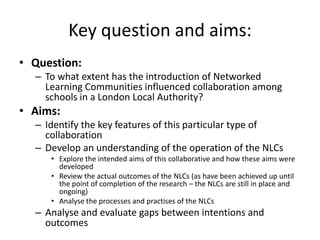
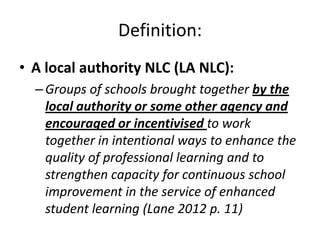
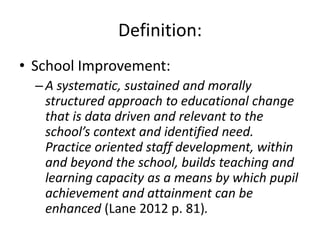
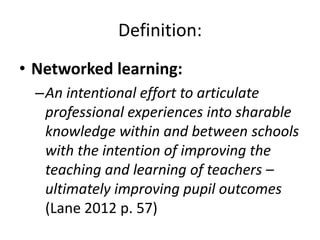
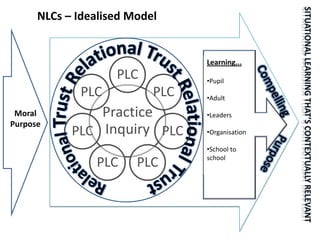
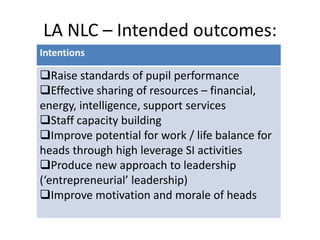
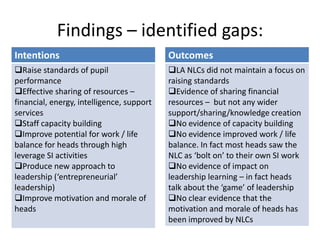
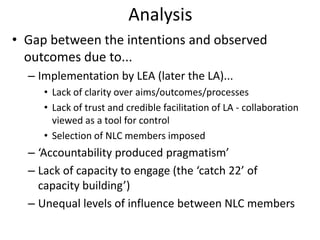
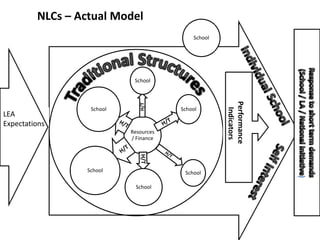
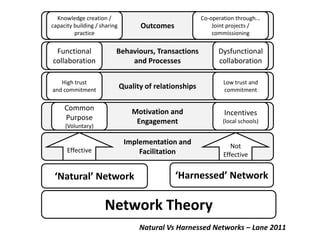
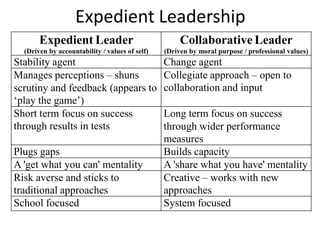
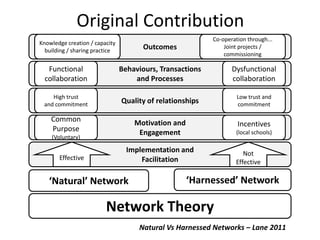
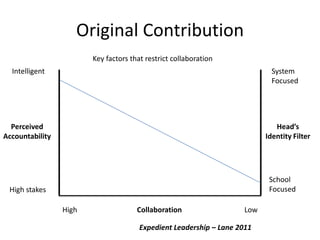
This research examines Networked Learning Communities (NLCs) introduced by a London Local Authority to encourage collaboration among schools. The research aims to identify features of this collaboration, understand how NLCs operate, and analyze gaps between intentions and outcomes. Key findings include that NLCs did not maintain a pupil performance focus or build staff capacity as intended. Collaboration was viewed as a tool for control rather than improvement. Headteachers prioritized expediency over collaboration due to accountability pressures, focusing on short-term success rather than capacity building. The research concludes that incentivized networks fail to achieve deep collaboration and that headteacher identity and expediency hinder the development of collaborative systems.