 The National Capital Region in the
 Philippines is best or commonly known
 as Metro Manila and as far as its
 population goes, it is huge, with more
 than 11 million people in only 636
 square kilometres.
 Is the main financial, commercial and
 educational centre of the Philippines
 and is the region where nearly all who
 travel here has to pass through.
 The National Capital Region not only
 contains the Philippines capital city
 manila, but also thirteen other cities and
 three municipalities so it is no wonder
 that it is the most populous region in the
 Philippines.
 The region is the
 political, economic, social, cultural, an
 d educational center of the Philippines.
 As proclaimed by Presidential Decree
 No. 940, Metro Manila as a whole is the
 Philippines' seat of government while
 the City of Manila is the capital. The
 largest city in the metropolis is Quezon
 City, while the largest business
 district is the Makati Central Business
 District.
The area is bounded by Bulacan to the
north, Rizal to the east, Laguna to the
south and Cavite to the southwest. The
swampy isthmus on which the
western metropolitan area partly lies
has an average elevation of 10 meters.
The eastern area lies on a ridge
gradually rising towards the foothills of
the Sierra Madre and overlooks
the Marikina River valley, which is part
swamp.
 Metro Manila is split between a tropical wet
  and dry climate and a tropical monsoon
  climate. Manila, which features less rainfall
  than Quezon City, has a tropical wet and dry
  climate while Quezon City features a tropical
  monsoon climate. Together with the rest of
  the Philippines, Metro Manila lies entirely
  within the tropics. Its proximity to
  the equator means that the temperature
  range is very small, rarely going lower than
  20C or higher than 38C. However, humidity
  levels are usually very high which makes it
  feel much warmer. It has a distinct, relatively
  short dry season from January through April,
 The City of Manila proper is the national
  capital of the Philippines. The wider
  Metropolitan Manila area is the seat of
  government. The executive and judicial
  branches of government are based in Manila
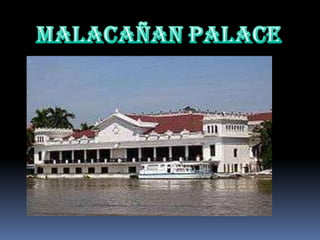
  as represented by Malacañan Palace, the
  official office and residence of the President
  of the Philippines, and the buildings of
  the Supreme Court of the
  Philippines respectively. However, the upper
  house of the legislature, the Senate of the
 In terms of local governance, Metro Manila
  cannot properly be considered a single political
  entity. The cities and municipality comprising it
  are considered the highest level of local
  government with each having their own set of
  separately elected officials. While the cities and
  municipality are independent from each other
  politically, several basic public services, such as
  traffic and flood control, are handled collectively
  by the Metropolitan Manila Development
  Authority (MMDA). The MMDA is headquartered
  in Makati and is headed by the MMDA
  Chairman, an appointee of the President of the
  Philippines, who holds cabinet rank. The
  mayors of the cities and municipality belong to
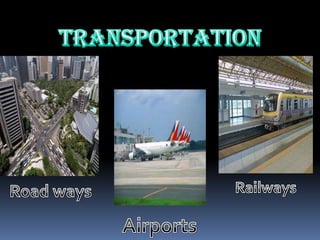
Transportation
 Electricity
    Metro Manila's electricity is generated by
  the state-owned National Power
  Corporation (Napocor) and other
  independent power producers across the
  island of Luzon. It is transmitted by the
  privately-owned National Grid Corporation of
  The Philippines (NGCP) through high tension
  wires. It is distributed by the Manila Electric
  Company (Meralco), the company that holds
  the franchise to distribute electricity to the
 Water
   Metro Manila and its surrounding areas are
 divided into two water concessionaires:
 Maynilad Water (red) and Manila
 Water (blue).
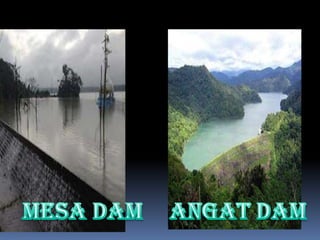
   Metro Manila's tap water is sourced from
 the Angat Dam in Norzagaray, Bulacan. It is
 stored in the Novaliches Reservoir and
 filtered in the La Mesa Dam, both in
 northeast Quezon City. Metro Manila's water
 distribution and sewerage system used to be
 managed by the Metropolitan Water and
 Communications
  For a long time since its founding in 1925,
 the Philippine Long Distance Telephone
 Company (PLDT) was the Philippines' only
 phone carrier.
 Garbage
  Metro Manila produces about 8,400 to 8,600
 tons of garbage each day which is equivalent
 to 25% of the national waste generation.
 Paper wastes account for 17% of the daily
 total while 16% are plastics. Efforts to reduce
 pollution is one of the metropolis' major
 public management concerns especially with
 the closure of some garbage dump sites in
 Greater Manila.
The cities and municipalities within the
    NCR are grouped into the four districts
    as follows:

        #             Alternate Name                 City/Cities
1                The Capital District       Manila

                                            Mandaluyong, Marikina, P
2                Eastern Manila District    asig, Quezon City, and San
                                            Juan

                                            Las
                                            Piñas, Makati, Muntinlupa,
3                Southern Manila District
                                             Parañaque, Pasay, Pateros
                                            , and Taguig

                                            Caloocan, Malabon, Navot
4                CAMANAVA District
                                            as, and Valenzuela
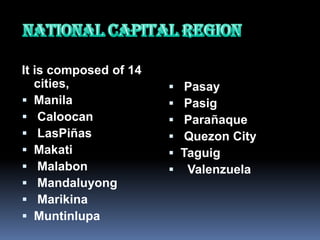
It is composed of 14
   cities,                 Pasay
 Manila                   Pasig
 Caloocan                 Parañaque
 LasPiñas                 Quezon City
 Makati                  Taguig
 Malabon                  Valenzuela
 Mandaluyong
 Marikina
 Muntinlupa
Municipalities:
 Municipality of Pateros
 Navotas
 San Juan
 City Of Manila is a Philippine highly
 urbanized city in First District in
 Region National Capital Region which
 be-longs to the Luzon group of islands.
 City Of Manila is the capital of the
 Philippines.
 The landmark of the father of the
  Philippine Revolution, Andres
  Bonifacio is here.
 The Only Divided City in the
  Philippines.
 Home of the Bamboo Organ, City of Love
  and Progress, Salt Center of Metro
  Manila, Lantern Capital of Metro Manila.
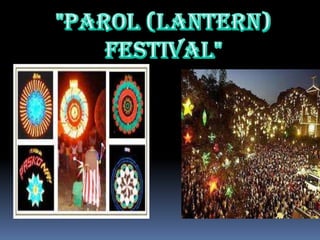
 Las Piñas City is home to unique festivals
  like the "Bamboo Organ Festival",
  "Waterlily Festival", "Bamboo Festival"
  and "Parol (Lantern) Festival".
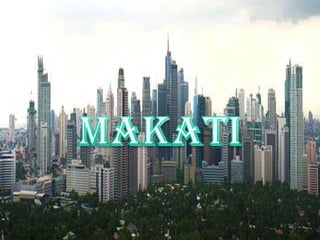
 The Financial Capital of the Philippines,
  the Wall Street of the Philippines.
 The Philippines centre of finance and
  commerce with the odd mega shopping
  centre.
 Makati became the financial center of the
  Philippines during the 1960s. Makati is
  home of the Philippine Stock
  Exchange and the Makati Business Club.
 The City of Malabon is one of the cities
 and municipalities that make up Metro
 Manila in the Philippines. Located just
 north of Manila, the city has a population
 of 353,337 as of 2010.
 Malabon City is famous for the array of food
  delights it offers. Most notable of these is
  Pancit Malabon, a stir-fried noodle dish
  with a distinct yellow-orange color sauce
  that includes patis (fish sauce) and bagoong
  (shrimp paste).
 Home of one of the largest shopping centres in
  Asia – SM Megamall.
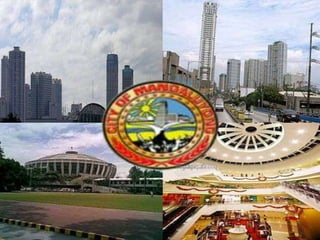
 The City of Mandaluyong is one of
  the cities and municipalities that comprise Metro
  Manila in the Philippines. Located at the
  approximate geographical centre of Metro
  Manila, it is bordered on the west by the
  country's capital, Manila, to the north by San
  Juan City, to the east by Quezon City and Pasig
  City, and by Makati City to the south. Its
  nicknames are "Tiger City of the Philippines",
  "Metro Manila's Heart", and the "Shopping Mall
 A robust and dynamic shoe industry, no
 wonder it is called the Shoe Capital of the
 Philippines
 This where a lot of the rich and famous in
  the National Capital live.
 This city has recently acquired the status
  “most competitive city” and “most
  improve city” in the philippines..
 Dubbed as the "Fishing Capital of the
  Philippines", Navotas is considered to be a
  very important fishing community with
  70% of its population deriving their
  livelihood directly or indirectly from fishing
  and its related industries like fish trading
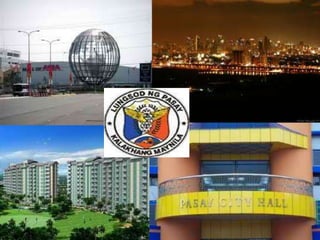
 Pasay City was one of the original four
 cities of Metro Manila. Due to its
 proximity to Manila, it quickly became
 an urban town during the American
 Period.
 Large commercial organizations are
 setting up shop here, the Ortigas Center
 is becoming the “in” place for
 businesses.
 With seating for 2,000 people and
 capacity for another 9,000 to stand, it is
 no wonder the Baclaran Church is the
 most attended in Asia.
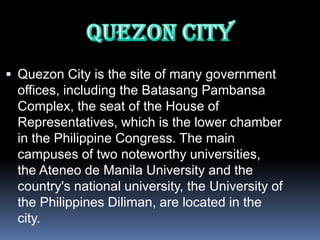
 Quezon City is the site of many government
 offices, including the Batasang Pambansa
 Complex, the seat of the House of
 Representatives, which is the lower chamber
 in the Philippine Congress. The main
 campuses of two noteworthy universities,
 the Ateneo de Manila University and the
 country's national university, the University of
 the Philippines Diliman, are located in the
 city.
 San Juan
 Make sure you come here during the
 feat of St John the Baptist. You
 guessed it the feast involves lots of
 water, usually over everyone!
 The City of San Juan Philippines in
 Metro Manila is named after St. John
 the Baptist who was the person that
 supposedly baptized Jesus Christ
 himself with water. So to commemorate
 this, every June 24, which is the Feast
 Day of St. John the Baptist, people of
 San Juan, Manila celebrate this by
 wetting everyone they see!
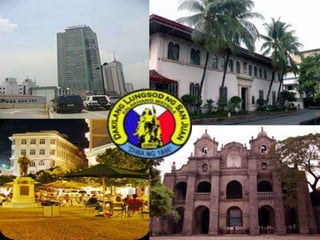
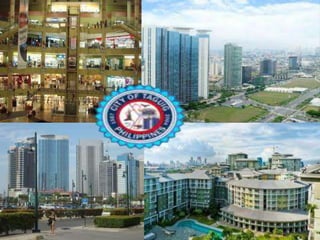
 Taguig City
 Nestled on the shores of
 Laguna de Bay, has a large
 residential population.
For all you beer lovers, this is home to
the San Miguel Brewery.
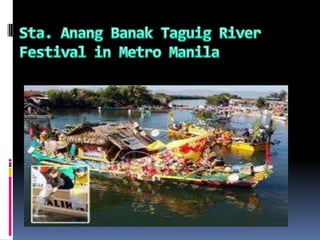
 The Putong Polo Festival features the
 famous putong polo, a native delicacy
 in the town of Polo. The food festival is
 part of the San Diego de Alcala Feast
 Day.
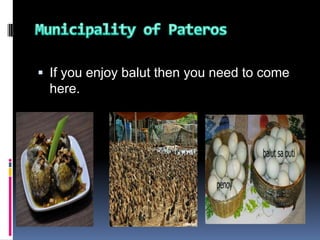
 If you enjoy balut then you need to come
  here.

Ncr ba2.2

  • 2.
     The NationalCapital Region in the Philippines is best or commonly known as Metro Manila and as far as its population goes, it is huge, with more than 11 million people in only 636 square kilometres.
  • 3.
     Is themain financial, commercial and educational centre of the Philippines and is the region where nearly all who travel here has to pass through.
  • 4.
     The NationalCapital Region not only contains the Philippines capital city manila, but also thirteen other cities and three municipalities so it is no wonder that it is the most populous region in the Philippines.
  • 5.
     The regionis the political, economic, social, cultural, an d educational center of the Philippines. As proclaimed by Presidential Decree No. 940, Metro Manila as a whole is the Philippines' seat of government while the City of Manila is the capital. The largest city in the metropolis is Quezon City, while the largest business district is the Makati Central Business District.
  • 6.
    The area isbounded by Bulacan to the north, Rizal to the east, Laguna to the south and Cavite to the southwest. The swampy isthmus on which the western metropolitan area partly lies has an average elevation of 10 meters. The eastern area lies on a ridge gradually rising towards the foothills of the Sierra Madre and overlooks the Marikina River valley, which is part swamp.
  • 7.
     Metro Manilais split between a tropical wet and dry climate and a tropical monsoon climate. Manila, which features less rainfall than Quezon City, has a tropical wet and dry climate while Quezon City features a tropical monsoon climate. Together with the rest of the Philippines, Metro Manila lies entirely within the tropics. Its proximity to the equator means that the temperature range is very small, rarely going lower than 20C or higher than 38C. However, humidity levels are usually very high which makes it feel much warmer. It has a distinct, relatively short dry season from January through April,
  • 8.
     The Cityof Manila proper is the national capital of the Philippines. The wider Metropolitan Manila area is the seat of government. The executive and judicial branches of government are based in Manila as represented by Malacañan Palace, the official office and residence of the President of the Philippines, and the buildings of the Supreme Court of the Philippines respectively. However, the upper house of the legislature, the Senate of the
  • 11.
     In termsof local governance, Metro Manila cannot properly be considered a single political entity. The cities and municipality comprising it are considered the highest level of local government with each having their own set of separately elected officials. While the cities and municipality are independent from each other politically, several basic public services, such as traffic and flood control, are handled collectively by the Metropolitan Manila Development Authority (MMDA). The MMDA is headquartered in Makati and is headed by the MMDA Chairman, an appointee of the President of the Philippines, who holds cabinet rank. The mayors of the cities and municipality belong to
  • 12.
  • 14.
     Electricity Metro Manila's electricity is generated by the state-owned National Power Corporation (Napocor) and other independent power producers across the island of Luzon. It is transmitted by the privately-owned National Grid Corporation of The Philippines (NGCP) through high tension wires. It is distributed by the Manila Electric Company (Meralco), the company that holds the franchise to distribute electricity to the
  • 15.
     Water Metro Manila and its surrounding areas are divided into two water concessionaires: Maynilad Water (red) and Manila Water (blue). Metro Manila's tap water is sourced from the Angat Dam in Norzagaray, Bulacan. It is stored in the Novaliches Reservoir and filtered in the La Mesa Dam, both in northeast Quezon City. Metro Manila's water distribution and sewerage system used to be managed by the Metropolitan Water and
  • 17.
     Communications For a long time since its founding in 1925, the Philippine Long Distance Telephone Company (PLDT) was the Philippines' only phone carrier.
  • 18.
     Garbage Metro Manila produces about 8,400 to 8,600 tons of garbage each day which is equivalent to 25% of the national waste generation. Paper wastes account for 17% of the daily total while 16% are plastics. Efforts to reduce pollution is one of the metropolis' major public management concerns especially with the closure of some garbage dump sites in Greater Manila.
  • 19.
    The cities andmunicipalities within the NCR are grouped into the four districts as follows: # Alternate Name City/Cities 1 The Capital District Manila Mandaluyong, Marikina, P 2 Eastern Manila District asig, Quezon City, and San Juan Las Piñas, Makati, Muntinlupa, 3 Southern Manila District Parañaque, Pasay, Pateros , and Taguig Caloocan, Malabon, Navot 4 CAMANAVA District as, and Valenzuela
  • 20.
    It is composedof 14 cities,  Pasay  Manila  Pasig  Caloocan  Parañaque  LasPiñas  Quezon City  Makati  Taguig  Malabon  Valenzuela  Mandaluyong  Marikina  Muntinlupa
  • 21.
    Municipalities:  Municipality ofPateros  Navotas  San Juan
  • 22.
     City OfManila is a Philippine highly urbanized city in First District in Region National Capital Region which be-longs to the Luzon group of islands. City Of Manila is the capital of the Philippines.
  • 24.
     The landmarkof the father of the Philippine Revolution, Andres Bonifacio is here.  The Only Divided City in the Philippines.
  • 27.
     Home ofthe Bamboo Organ, City of Love and Progress, Salt Center of Metro Manila, Lantern Capital of Metro Manila.  Las Piñas City is home to unique festivals like the "Bamboo Organ Festival", "Waterlily Festival", "Bamboo Festival" and "Parol (Lantern) Festival".
  • 33.
     The FinancialCapital of the Philippines, the Wall Street of the Philippines.  The Philippines centre of finance and commerce with the odd mega shopping centre.  Makati became the financial center of the Philippines during the 1960s. Makati is home of the Philippine Stock Exchange and the Makati Business Club.
  • 35.
     The Cityof Malabon is one of the cities and municipalities that make up Metro Manila in the Philippines. Located just north of Manila, the city has a population of 353,337 as of 2010.
  • 36.
     Malabon Cityis famous for the array of food delights it offers. Most notable of these is Pancit Malabon, a stir-fried noodle dish with a distinct yellow-orange color sauce that includes patis (fish sauce) and bagoong (shrimp paste).
  • 40.
     Home ofone of the largest shopping centres in Asia – SM Megamall.  The City of Mandaluyong is one of the cities and municipalities that comprise Metro Manila in the Philippines. Located at the approximate geographical centre of Metro Manila, it is bordered on the west by the country's capital, Manila, to the north by San Juan City, to the east by Quezon City and Pasig City, and by Makati City to the south. Its nicknames are "Tiger City of the Philippines", "Metro Manila's Heart", and the "Shopping Mall
  • 42.
     A robustand dynamic shoe industry, no wonder it is called the Shoe Capital of the Philippines
  • 44.
     This wherea lot of the rich and famous in the National Capital live.  This city has recently acquired the status “most competitive city” and “most improve city” in the philippines..
  • 46.
     Dubbed asthe "Fishing Capital of the Philippines", Navotas is considered to be a very important fishing community with 70% of its population deriving their livelihood directly or indirectly from fishing and its related industries like fish trading
  • 49.
     Pasay Citywas one of the original four cities of Metro Manila. Due to its proximity to Manila, it quickly became an urban town during the American Period.
  • 51.
     Large commercialorganizations are setting up shop here, the Ortigas Center is becoming the “in” place for businesses.
  • 52.
     With seatingfor 2,000 people and capacity for another 9,000 to stand, it is no wonder the Baclaran Church is the most attended in Asia.
  • 54.
     Quezon Cityis the site of many government offices, including the Batasang Pambansa Complex, the seat of the House of Representatives, which is the lower chamber in the Philippine Congress. The main campuses of two noteworthy universities, the Ateneo de Manila University and the country's national university, the University of the Philippines Diliman, are located in the city.
  • 57.
     San Juan Make sure you come here during the feat of St John the Baptist. You guessed it the feast involves lots of water, usually over everyone!
  • 58.
     The Cityof San Juan Philippines in Metro Manila is named after St. John the Baptist who was the person that supposedly baptized Jesus Christ himself with water. So to commemorate this, every June 24, which is the Feast Day of St. John the Baptist, people of San Juan, Manila celebrate this by wetting everyone they see!
  • 61.
     Taguig City Nestled on the shores of Laguna de Bay, has a large residential population.
  • 64.
    For all youbeer lovers, this is home to the San Miguel Brewery.
  • 65.
     The PutongPolo Festival features the famous putong polo, a native delicacy in the town of Polo. The food festival is part of the San Diego de Alcala Feast Day.
  • 67.
     If youenjoy balut then you need to come here.