
Narmada bachao andolan
Presented by: Kundan jadav (07)
Rohit Patel(31)
1
2
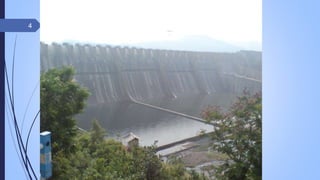
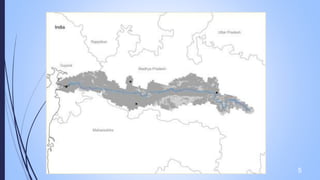
Sardar Sarovar Project
Conceived in the mid-1960s
under Nehru.
Building postponed due to
disagreement between three
states impacted by project:
Madhya Pradesh
Gujarat
Maharashtra
3
4
5
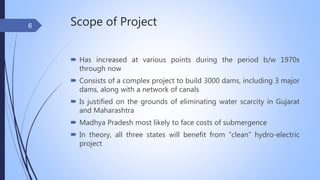
Scope of Project
 Has increased at various points during the period b/w 1970s
through now
 Consists of a complex project to build 3000 dams, including 3 major
dams, along with a network of canals
 Is justified on the grounds of eliminating water scarcity in Gujarat
and Maharashtra
 Madhya Pradesh most likely to face costs of submergence
 In theory, all three states will benefit from “clean” hydro-electric
project
6
Resistance to Project
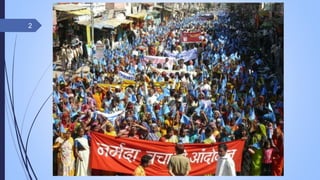
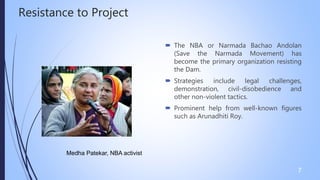
 The NBA or Narmada Bachao Andolan
(Save the Narmada Movement) has
become the primary organization resisting
the Dam.
 Strategies include legal challenges,
demonstration, civil-disobedience and
other non-violent tactics.
 Prominent help from well-known figures
such as Arunadhiti Roy.
7
Medha Patekar, NBA activist
Factors behind NBA challenges
 Will displace 3 million peasants and adivasis whose villages and
farms will be submerged.
 Will not fix water scarcity in Gujarat—only a small portion of
drought-impacted lands would benefit.
 No just compensation has been offered to people already displaced
by project, those who will be displaced as project continues will face
similar issues.
 Cultural impact of re-settlement is a form of supression of adivasi
cultural practices.
 Government disputes these figures.
8
Analyzing the issue of displacement
statistics
 Govt. relies of figures gathered in 1979 that showed 6,147 families
would be displaced.
 By 2001 this number had grown to 41,000 families (roughly 205,000
people).
 Neither set of figures includes people who would be displaced by
canals (157,000) or whose livelihoods would be permanently altered
by 3000 dams—fishermen, peasants, tribals who earn a living from
forest produce, etc…..
 No attempt to keep numbers current as legal challenges drag on.
9
Water use in India
 India has freshwater reserves but two caveats important to
remember.
 Only Northern river systems are perennial, rest are rain-fed
 These data include groundwater that is disappearing in agricultural areas
 32.5% of renewable freshwater is being used annually, this
percentage continues to grow year by year.
 Agricultural sector is the primary user—92%
 Domestic usage is only 5%, while Industry uses 3% of water
sources.
10
11
Developments in 1990s
 By the 1990s the NBA won a series of important victories.
 The World Bank which had funded $450 million for the SS
project agreed to investigate the NBA and Govt. claims.
 In 1992 the Morse report commissioned by the WB indicted
the Indian Govt. for a poorly conceived re-settlement strategy
and concluded that the NBA claims about the permanent
negative impact of resettlement were valid.
 The World bank pulled out of the project and in 1995 work on
the major dam was suspended.
12
Govt. Response
 The Indian Government found other sources of funding and
re-started the project
 The height of the main reservoir was now raised by 80-85 m.
 NBA challenged the govt. again leading to a court battle in
the Supreme Court
 2001 judgment was a stunning blow to NBA
13
2001 Supreme Court Judgment
 Surprising due to the Court’s previous reading of Article 21 of the
constitution supporting right to a clean environment, as well as the courts’
responsiveness to PIL in the past.
 Read Article 21 in a narrower way supporting the government’s right to
continue with the project.
 References to balancing the needs of beneficiaries of the projects v. those
displaced.
 Concerns about “mainstreaming” of adivasis.
 Also recognized compensation based on the 1979 NWDT award.
14
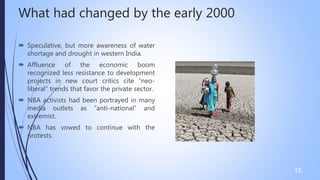
What had changed by the early 2000
 Speculative, but more awareness of water
shortage and drought in western India.
 Affluence of the economic boom
recognized less resistance to development
projects in new court critics cite “neo-
liberal” trends that favor the private sector.
 NBA activists had been portrayed in many
media outlets as “anti-national” and
extremist.
 NBA has vowed to continue with the
protests.
15
16

Nba final

  • 1.
    Narmada bachao andolan Presentedby: Kundan jadav (07) Rohit Patel(31) 1
  • 2.
  • 3.
    Sardar Sarovar Project Conceivedin the mid-1960s under Nehru. Building postponed due to disagreement between three states impacted by project: Madhya Pradesh Gujarat Maharashtra 3
  • 4.
  • 5.
  • 6.
    Scope of Project Has increased at various points during the period b/w 1970s through now  Consists of a complex project to build 3000 dams, including 3 major dams, along with a network of canals  Is justified on the grounds of eliminating water scarcity in Gujarat and Maharashtra  Madhya Pradesh most likely to face costs of submergence  In theory, all three states will benefit from “clean” hydro-electric project 6
  • 7.
    Resistance to Project The NBA or Narmada Bachao Andolan (Save the Narmada Movement) has become the primary organization resisting the Dam.  Strategies include legal challenges, demonstration, civil-disobedience and other non-violent tactics.  Prominent help from well-known figures such as Arunadhiti Roy. 7 Medha Patekar, NBA activist
  • 8.
    Factors behind NBAchallenges  Will displace 3 million peasants and adivasis whose villages and farms will be submerged.  Will not fix water scarcity in Gujarat—only a small portion of drought-impacted lands would benefit.  No just compensation has been offered to people already displaced by project, those who will be displaced as project continues will face similar issues.  Cultural impact of re-settlement is a form of supression of adivasi cultural practices.  Government disputes these figures. 8
  • 9.
    Analyzing the issueof displacement statistics  Govt. relies of figures gathered in 1979 that showed 6,147 families would be displaced.  By 2001 this number had grown to 41,000 families (roughly 205,000 people).  Neither set of figures includes people who would be displaced by canals (157,000) or whose livelihoods would be permanently altered by 3000 dams—fishermen, peasants, tribals who earn a living from forest produce, etc…..  No attempt to keep numbers current as legal challenges drag on. 9
  • 10.
    Water use inIndia  India has freshwater reserves but two caveats important to remember.  Only Northern river systems are perennial, rest are rain-fed  These data include groundwater that is disappearing in agricultural areas  32.5% of renewable freshwater is being used annually, this percentage continues to grow year by year.  Agricultural sector is the primary user—92%  Domestic usage is only 5%, while Industry uses 3% of water sources. 10
  • 11.
  • 12.
    Developments in 1990s By the 1990s the NBA won a series of important victories.  The World Bank which had funded $450 million for the SS project agreed to investigate the NBA and Govt. claims.  In 1992 the Morse report commissioned by the WB indicted the Indian Govt. for a poorly conceived re-settlement strategy and concluded that the NBA claims about the permanent negative impact of resettlement were valid.  The World bank pulled out of the project and in 1995 work on the major dam was suspended. 12
  • 13.
    Govt. Response  TheIndian Government found other sources of funding and re-started the project  The height of the main reservoir was now raised by 80-85 m.  NBA challenged the govt. again leading to a court battle in the Supreme Court  2001 judgment was a stunning blow to NBA 13
  • 14.
    2001 Supreme CourtJudgment  Surprising due to the Court’s previous reading of Article 21 of the constitution supporting right to a clean environment, as well as the courts’ responsiveness to PIL in the past.  Read Article 21 in a narrower way supporting the government’s right to continue with the project.  References to balancing the needs of beneficiaries of the projects v. those displaced.  Concerns about “mainstreaming” of adivasis.  Also recognized compensation based on the 1979 NWDT award. 14
  • 15.
    What had changedby the early 2000  Speculative, but more awareness of water shortage and drought in western India.  Affluence of the economic boom recognized less resistance to development projects in new court critics cite “neo- liberal” trends that favor the private sector.  NBA activists had been portrayed in many media outlets as “anti-national” and extremist.  NBA has vowed to continue with the protests. 15
  • 16.