WORKSHOP
                    ON
         EFFECTIVE COMMUNICATION
                  SKILLS

By Prem Chand
Objectives

• Define and understand communication and the
  communication process

• List and overcome the filters/barriers in a
  communication process

• Practice active listening

• Tips to improve verbal and non verbal
  communication
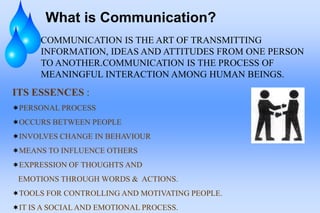
What is Communication?
      COMMUNICATION IS THE ART OF TRANSMITTING
      INFORMATION, IDEAS AND ATTITUDES FROM ONE PERSON
      TO ANOTHER.COMMUNICATION IS THE PROCESS OF
      MEANINGFUL INTERACTION AMONG HUMAN BEINGS.
ITS ESSENCES :
PERSONAL PROCESS
OCCURS BETWEEN PEOPLE
INVOLVES CHANGE IN BEHAVIOUR
MEANS TO INFLUENCE OTHERS
EXPRESSION OF THOUGHTS AND
 EMOTIONS THROUGH WORDS & ACTIONS.
TOOLS FOR CONTROLLING AND MOTIVATING PEOPLE.
IT IS A SOCIAL AND EMOTIONAL PROCESS.
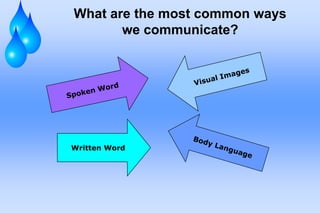
What are the most common ways
       we communicate?


Written Word
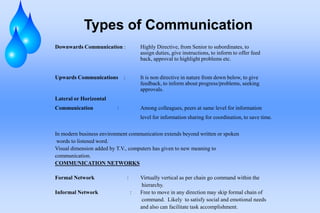
Types of Communication
Downwards Communication :             Highly Directive, from Senior to subordinates, to
                                      assign duties, give instructions, to inform to offer feed
                                      back, approval to highlight problems etc.


Upwards Communications :              It is non directive in nature from down below, to give
                                      feedback, to inform about progress/problems, seeking
                                      approvals.
Lateral or Horizontal
Communication             :           Among colleagues, peers at same level for information
                                      level for information sharing for coordination, to save time.

In modern business environment communication extends beyond written or spoken
 words to listened word.
Visual dimension added by T.V., computers has given to new meaning to
communication.
COMMUNICATION NETWORKS

Formal Network                :       Virtually vertical as per chain go command within the
                                       hierarchy.
Informal Network                  :   Free to move in any direction may skip formal chain of
                                       command. Likely to satisfy social and emotional needs
                                      and also can facilitate task accomplishment.
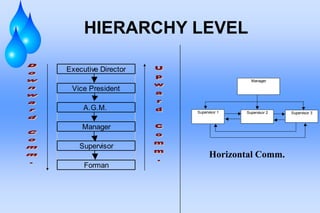
HIERARCHY LEVEL

Executive Director
                                      Manager

 Vice President

     A.G.M.          Supervisor 1   Supervisor 2   Supervisor 3


    Manager

   Supervisor
                           Horizontal Comm.
     Forman
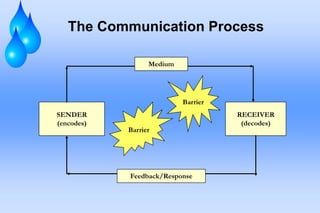
The Communication Process

                  Medium


                           Barrier
SENDER                               RECEIVER
(encodes)                             (decodes)
            Barrier


            Feedback/Response
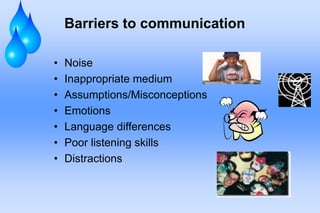
Barriers to communication

•   Noise
•   Inappropriate medium
•   Assumptions/Misconceptions
•   Emotions
•   Language differences
•   Poor listening skills
•   Distractions
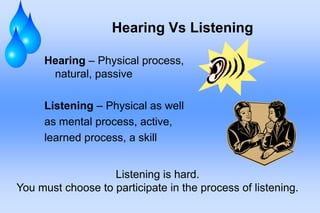
Hearing Vs Listening

     Hearing – Physical process,
      natural, passive

     Listening – Physical as well
     as mental process, active,
     learned process, a skill


                   Listening is hard.
You must choose to participate in the process of listening.
VALUE OF LISTENING
 Listening to others is an elegant art.
 Good listening reflects courtesy and good manners.
 Listening carefully to the instructions of superiors improve competence and
performance.
 The result of poor listening skill could be disastrous in business,
employment and social relations.
Good listening can eliminate a number of imaginary grievances of employees.
Good listening skill can improve social relations and conversation.
Listening is a positive activity rather than a passive or negative activity.
ESSENTIALS OF COMMUNICATION
                         Dos
Always think ahead about what you are going to say.
Use simple words and phrases that are understood by every body.
Increase your knowledge on all subjects you are required to speak.
Speak clearly and audibly.
Check twice with the listener whether you have been understood accurately or not
In case of an interruption, always do a little recap of what has been already said.
Always pay undivided attention to the speaker while listening.
While listening, always make notes of important points.
Always ask for clarification if you have failed to grasp other’s point of view.
Repeat what the speaker has said to check whether you have understood accurately.
ESSENTIALS OF COMMUNICATION
                       DON’Ts
Do not instantly react and mutter something in anger.
Do not use technical terms & terminologies not understood by majority of
people.
Do not speak too fast or too slow.
Do not speak in inaudible surroundings, as you won’t be heard.
Do not assume that every body understands you.
While listening do not glance here and there as it might distract the
speaker.
Do not interrupt the speaker.
Do not jump to the conclusion that you have understood every thing.
How to Improve Existing Level of
               COMMUNICATION?
IMPROVE LANGUAGE.
IMPROVE PRONUNCIATIOON.
WORK ON VOICE MODULATION.
WORK ON BODY LANGUAGE.
READ MORE
LISTEN MORE
AVOID READING OR WATCHING OR LISTENING UNWANTED LITERATURE, GOSSIP, MEDIA
PRESENTATION ETC.
INTERACT WITH QUALITATIVE PEOPLE.
IMPROVE ON YOU TOPIC OF DISCUSSION,
PRACTICE MEDITATION & GOOD THOUGHTS.
THINK AND SPEAK.
DO NOT SPEAK TOO FAST.
USE SIMPLE VOCABULARY.
DO NOT SPEAK ONLY TO IMPRESS SOMEONE.
LOOK PRESENTABLE AND CONFIDENT.
Improving Body Language -
                 Tips
•   Keep appropriate distance
•   Touch only when appropriate
•   Take care of your appearance
•   Be aware - people may give false cues
•   Maintain eye contact
•   Smile genuinely
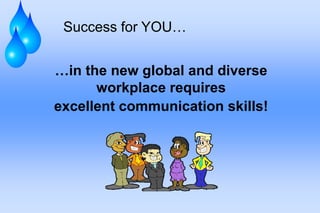
Success for YOU…


…in the new global and diverse
      workplace requires
excellent communication skills!
Questions

Naushi

  • 1.
    WORKSHOP ON EFFECTIVE COMMUNICATION SKILLS By Prem Chand
  • 2.
    Objectives • Define andunderstand communication and the communication process • List and overcome the filters/barriers in a communication process • Practice active listening • Tips to improve verbal and non verbal communication
  • 3.
    What is Communication? COMMUNICATION IS THE ART OF TRANSMITTING INFORMATION, IDEAS AND ATTITUDES FROM ONE PERSON TO ANOTHER.COMMUNICATION IS THE PROCESS OF MEANINGFUL INTERACTION AMONG HUMAN BEINGS. ITS ESSENCES : PERSONAL PROCESS OCCURS BETWEEN PEOPLE INVOLVES CHANGE IN BEHAVIOUR MEANS TO INFLUENCE OTHERS EXPRESSION OF THOUGHTS AND EMOTIONS THROUGH WORDS & ACTIONS. TOOLS FOR CONTROLLING AND MOTIVATING PEOPLE. IT IS A SOCIAL AND EMOTIONAL PROCESS.
  • 4.
    What are themost common ways we communicate? Written Word
  • 5.
    Types of Communication DownwardsCommunication : Highly Directive, from Senior to subordinates, to assign duties, give instructions, to inform to offer feed back, approval to highlight problems etc. Upwards Communications : It is non directive in nature from down below, to give feedback, to inform about progress/problems, seeking approvals. Lateral or Horizontal Communication : Among colleagues, peers at same level for information level for information sharing for coordination, to save time. In modern business environment communication extends beyond written or spoken words to listened word. Visual dimension added by T.V., computers has given to new meaning to communication. COMMUNICATION NETWORKS Formal Network : Virtually vertical as per chain go command within the hierarchy. Informal Network : Free to move in any direction may skip formal chain of command. Likely to satisfy social and emotional needs and also can facilitate task accomplishment.
  • 6.
    HIERARCHY LEVEL Executive Director Manager Vice President A.G.M. Supervisor 1 Supervisor 2 Supervisor 3 Manager Supervisor Horizontal Comm. Forman
  • 7.
    The Communication Process Medium Barrier SENDER RECEIVER (encodes) (decodes) Barrier Feedback/Response
  • 8.
    Barriers to communication • Noise • Inappropriate medium • Assumptions/Misconceptions • Emotions • Language differences • Poor listening skills • Distractions
  • 9.
    Hearing Vs Listening Hearing – Physical process, natural, passive Listening – Physical as well as mental process, active, learned process, a skill Listening is hard. You must choose to participate in the process of listening.
  • 10.
    VALUE OF LISTENING Listening to others is an elegant art.  Good listening reflects courtesy and good manners.  Listening carefully to the instructions of superiors improve competence and performance.  The result of poor listening skill could be disastrous in business, employment and social relations. Good listening can eliminate a number of imaginary grievances of employees. Good listening skill can improve social relations and conversation. Listening is a positive activity rather than a passive or negative activity.
  • 11.
    ESSENTIALS OF COMMUNICATION Dos Always think ahead about what you are going to say. Use simple words and phrases that are understood by every body. Increase your knowledge on all subjects you are required to speak. Speak clearly and audibly. Check twice with the listener whether you have been understood accurately or not In case of an interruption, always do a little recap of what has been already said. Always pay undivided attention to the speaker while listening. While listening, always make notes of important points. Always ask for clarification if you have failed to grasp other’s point of view. Repeat what the speaker has said to check whether you have understood accurately.
  • 12.
    ESSENTIALS OF COMMUNICATION DON’Ts Do not instantly react and mutter something in anger. Do not use technical terms & terminologies not understood by majority of people. Do not speak too fast or too slow. Do not speak in inaudible surroundings, as you won’t be heard. Do not assume that every body understands you. While listening do not glance here and there as it might distract the speaker. Do not interrupt the speaker. Do not jump to the conclusion that you have understood every thing.
  • 13.
    How to ImproveExisting Level of COMMUNICATION? IMPROVE LANGUAGE. IMPROVE PRONUNCIATIOON. WORK ON VOICE MODULATION. WORK ON BODY LANGUAGE. READ MORE LISTEN MORE AVOID READING OR WATCHING OR LISTENING UNWANTED LITERATURE, GOSSIP, MEDIA PRESENTATION ETC. INTERACT WITH QUALITATIVE PEOPLE. IMPROVE ON YOU TOPIC OF DISCUSSION, PRACTICE MEDITATION & GOOD THOUGHTS. THINK AND SPEAK. DO NOT SPEAK TOO FAST. USE SIMPLE VOCABULARY. DO NOT SPEAK ONLY TO IMPRESS SOMEONE. LOOK PRESENTABLE AND CONFIDENT.
  • 14.
    Improving Body Language- Tips • Keep appropriate distance • Touch only when appropriate • Take care of your appearance • Be aware - people may give false cues • Maintain eye contact • Smile genuinely
  • 15.
    Success for YOU… …inthe new global and diverse workplace requires excellent communication skills!
  • 16.