PRESENTED BY
AMITAVA MUKHERJEE
CONCEPT OF MANAGEMENT
THE CONCEPT OF MANAGEMENT CAN BE
EXPLAINED ON THE BASIS OF:
A. TRADITIONAL APPROACH.
B. MODERN APPROACH.
WHAT IS TRADITIONAL AND
MODERN APPROACH OF
MANAGEMENT??
I. TRADITIONAL APPROACH-According to
traditional approach, management means
managing men tactfully to get things done. It is
used to manage the ‘ group of personnel’ in an
organization.
II. MODERN APPROACH- According to the
modern approach management may be defined
as creating the internal environment of an
enterprise where individuals working together in
groups towards the attainment of group goals.
This process involves
planning,organising,directing,controlling to
accomplish the objectives of the organization by
the use of human and non-human resources.
 “Management is a distinct process consisting of
planning,organising, and controlling,
performed to determine and accomplish the
stated objectives by the use of human beings
and other resources.”[GEORGE R. TERRY]
 “Management is the art of knowing what
exactly you want your men to do and seeing
that they do it in the best and cheapest way.”
[F. W. TAYLOR]
i. Management as a process.
ii. Management as an activity.
iii. Management as a discipline.
iv. Management as a system.
v. Management as a hierarchy of authority.
vi. Management as an invisible force.
vii. Management as a group of individuals.
viii. Management as a social process.
ix. Management as an economic resource.
x. Management as a profession.
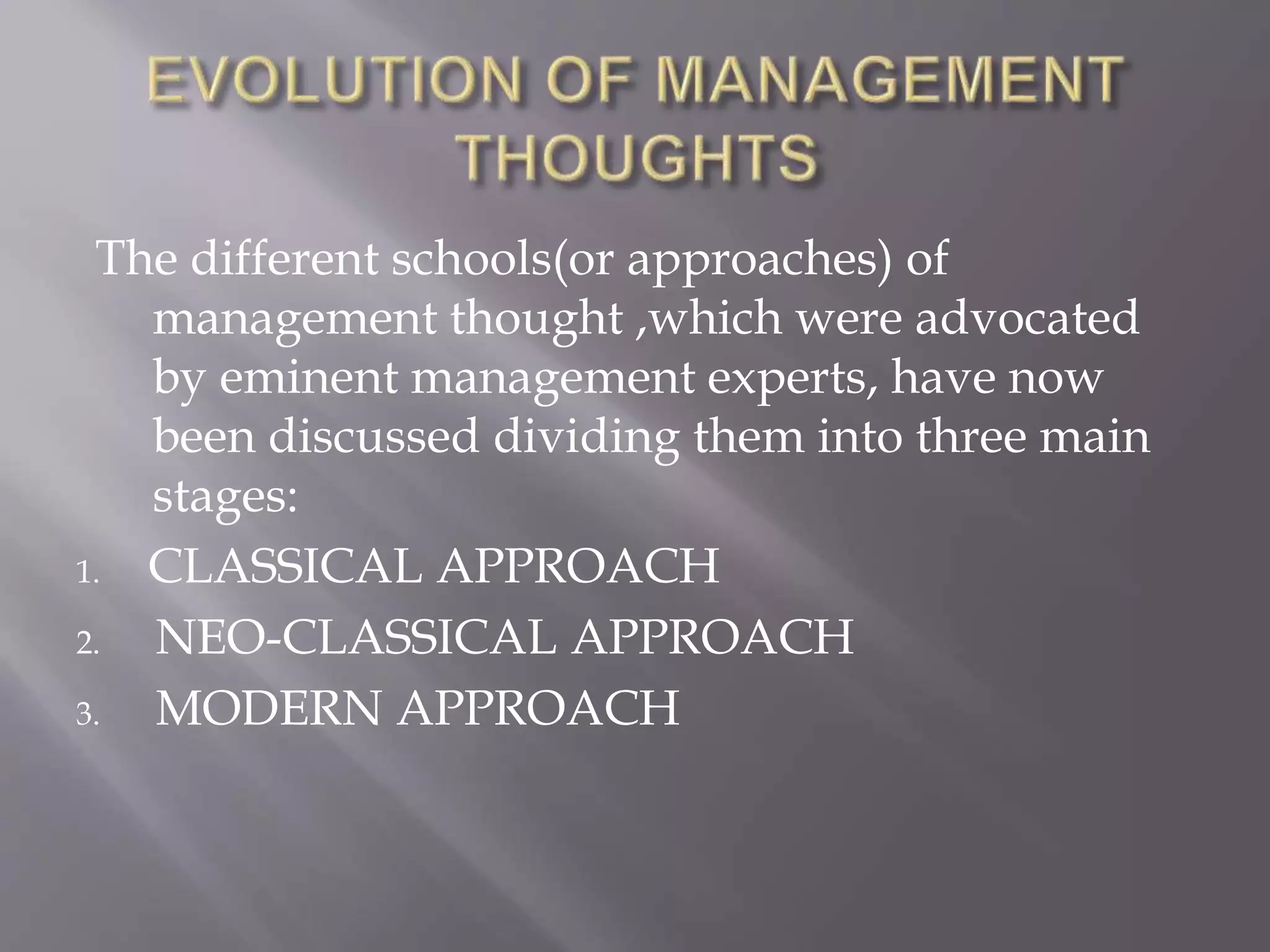
The different schools(or approaches) of
management thought ,which were advocated
by eminent management experts, have now
been discussed dividing them into three main
stages:
1. CLASSICAL APPROACH
2. NEO-CLASSICAL APPROACH
3. MODERN APPROACH
i. Scientific management.
ii. Administrative management.
iii. Bureaucratic management.
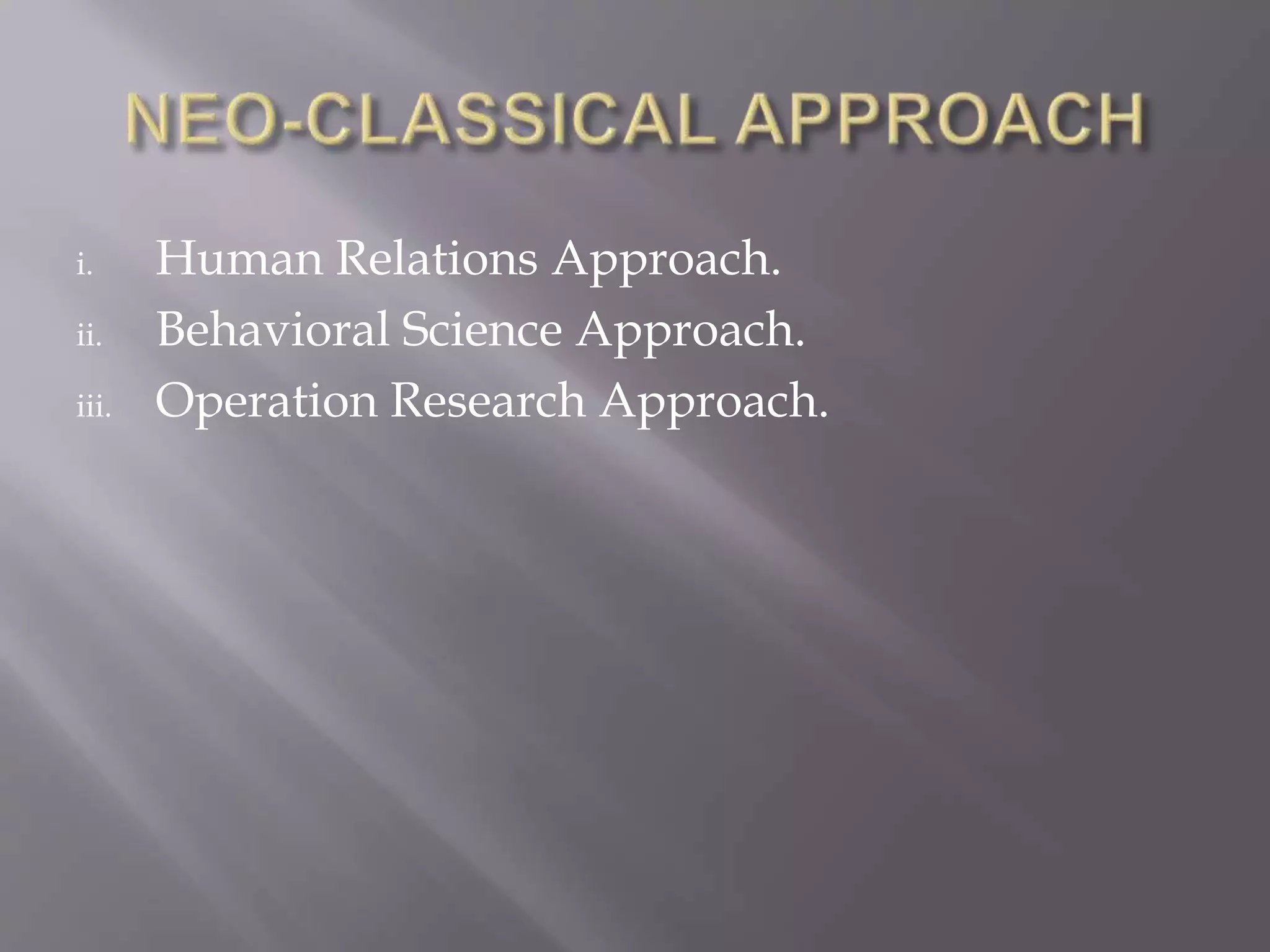
i. Human Relations Approach.
ii. Behavioral Science Approach.
iii. Operation Research Approach.
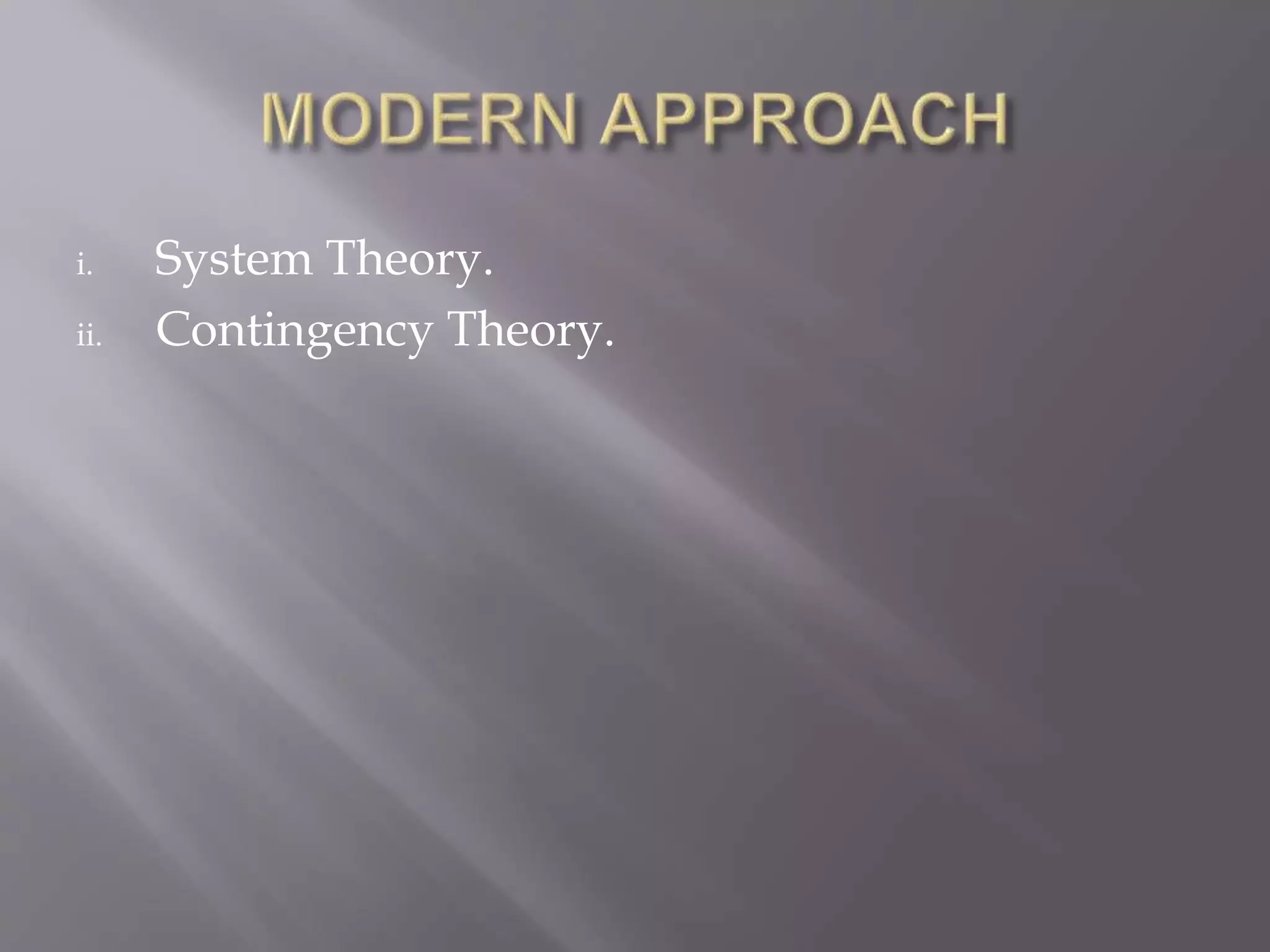
i. System Theory.
ii. Contingency Theory.
F.W TAYLOR is regarded as the father of
scientific management.
 To achieve increased production at reduced
cost
 To standardize methods of working conditions
 To select, train, and educate workmen
scientifically
 To promote teamwork and co-operation among
workmen
 To help the workers in overcoming their
difficulties
 Increase in production and productivity
 Increased wages and incentives to workers
 Better relationship between workers and
employers
 Plentiful supply of cheaper quality goods
 Improvement in the standard of living of the
nation as a whole
 It is an excessively expensive plan
 It takes a long time to be introduced effectively
 It creates the problem of monotony among
workers
 It creates the problem of autocracy
 It is not suitable for small-scale organizations
HENRY FAYOL is regarded as the father of
modern management.
 DIVISION OF WORK
 AUTHORITY AND RESPONSIBILITY
 DISCIPLINE
 UNITY OF COMMAND
 UNITY OF DIRECTION
 SUBORDINATION OF INDIVIDUAL INTEREST TO GENERAL
INTEREST
 FAIR REMUNERATION TO WORKERS
 EFFECTIVE CENTRALIZATION
 SCALAR CHAIN
 ORDER
 EQUITY
 STABILITY IN TENURE OF PERSONNEL
 INITIATIVE
 ESPIRIT DE CORPSE
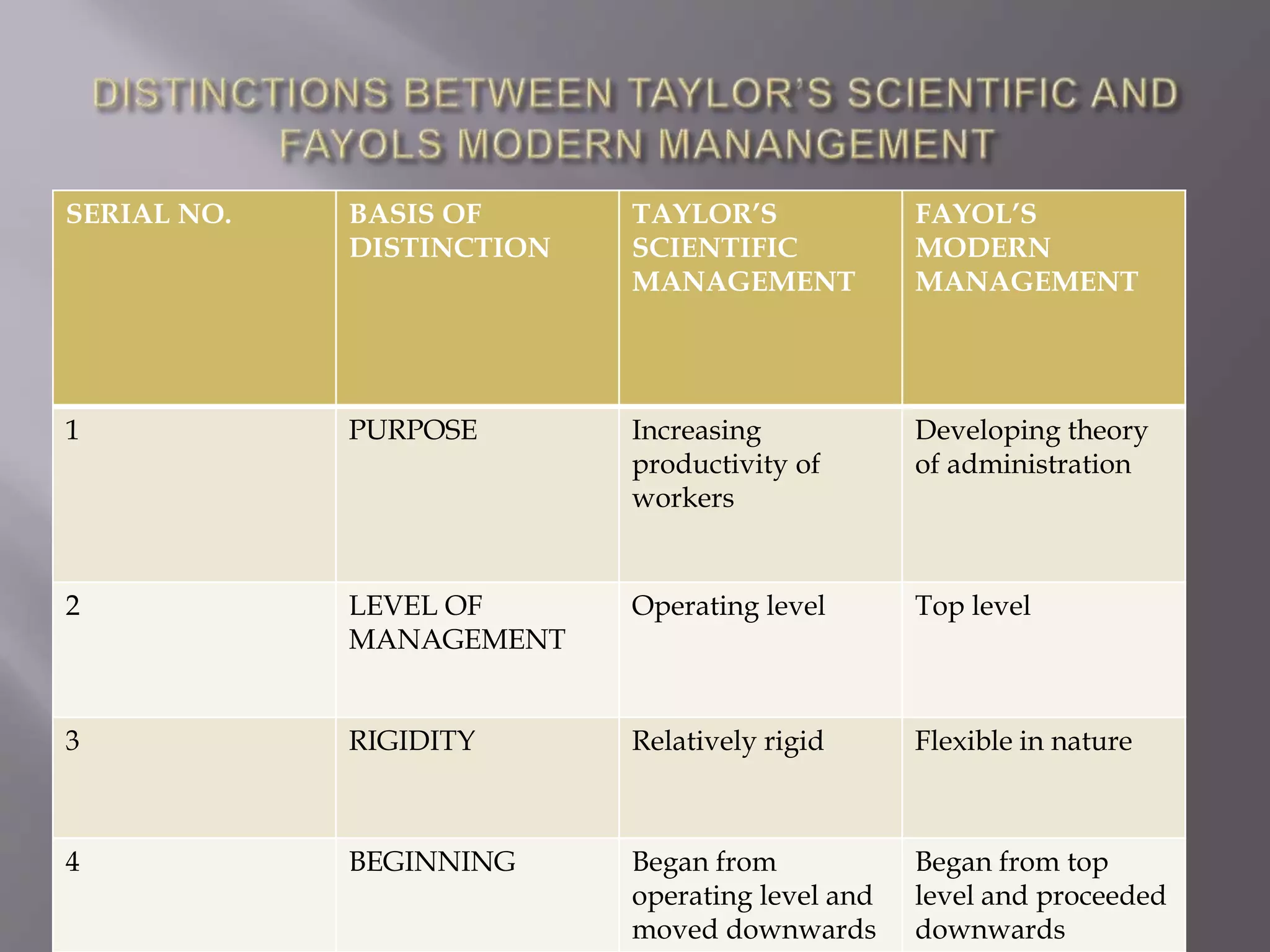
SERIAL NO. BASIS OF
DISTINCTION
TAYLOR’S
SCIENTIFIC
MANAGEMENT
FAYOL’S
MODERN
MANAGEMENT
1 PURPOSE Increasing
productivity of
workers
Developing theory
of administration
2 LEVEL OF
MANAGEMENT
Operating level Top level
3 RIGIDITY Relatively rigid Flexible in nature
4 BEGINNING Began from
operating level and
moved downwards
Began from top
level and proceeded
downwards
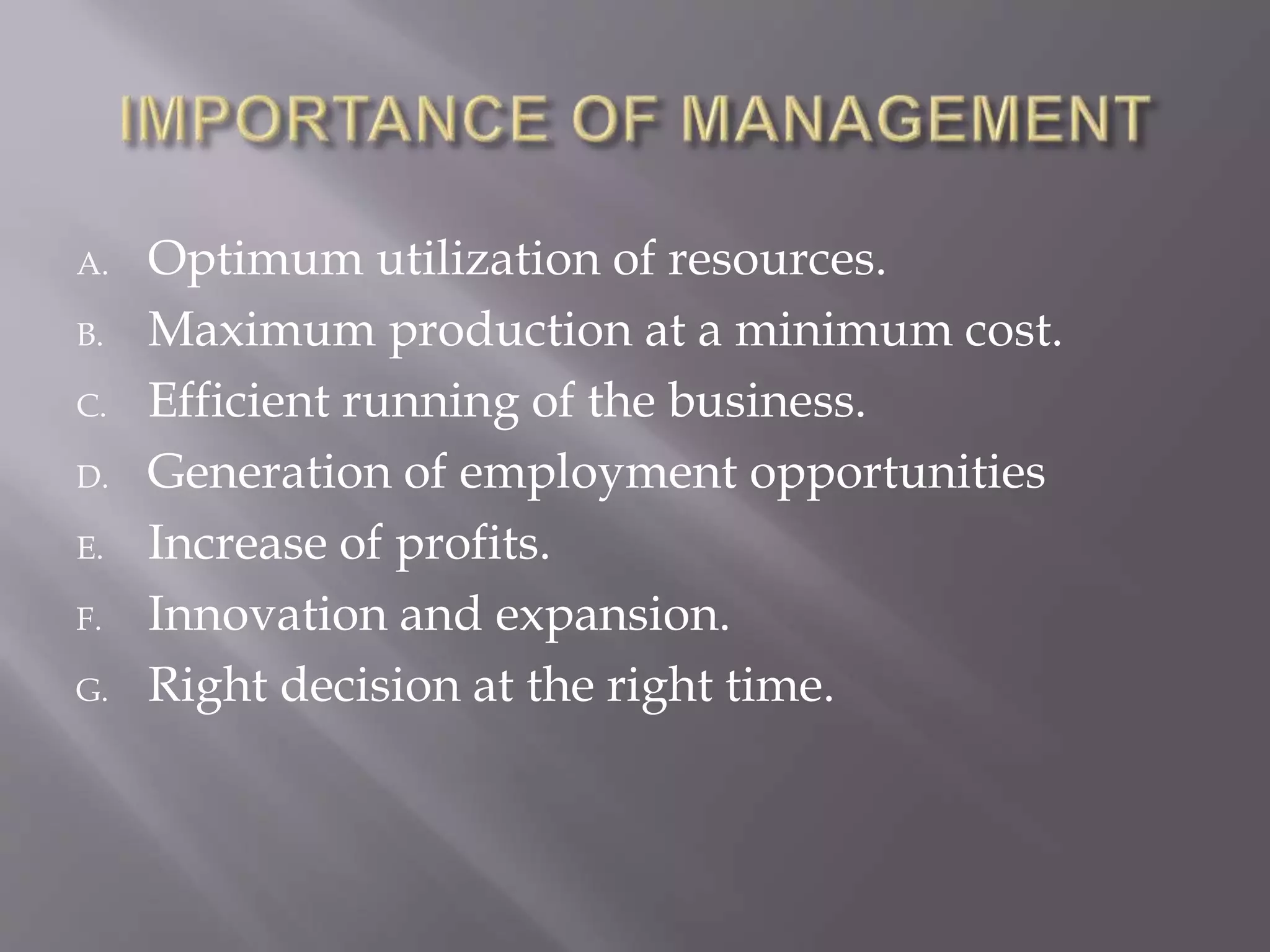
A. Optimum utilization of resources.
B. Maximum production at a minimum cost.
C. Efficient running of the business.
D. Generation of employment opportunities
E. Increase of profits.
F. Innovation and expansion.
G. Right decision at the right time.

NATURE AND SCOPE OF MANAGEMENT

  • 1.
  • 2.
    CONCEPT OF MANAGEMENT THECONCEPT OF MANAGEMENT CAN BE EXPLAINED ON THE BASIS OF: A. TRADITIONAL APPROACH. B. MODERN APPROACH.
  • 3.
    WHAT IS TRADITIONALAND MODERN APPROACH OF MANAGEMENT?? I. TRADITIONAL APPROACH-According to traditional approach, management means managing men tactfully to get things done. It is used to manage the ‘ group of personnel’ in an organization. II. MODERN APPROACH- According to the modern approach management may be defined as creating the internal environment of an enterprise where individuals working together in groups towards the attainment of group goals. This process involves planning,organising,directing,controlling to accomplish the objectives of the organization by the use of human and non-human resources.
  • 4.
     “Management isa distinct process consisting of planning,organising, and controlling, performed to determine and accomplish the stated objectives by the use of human beings and other resources.”[GEORGE R. TERRY]  “Management is the art of knowing what exactly you want your men to do and seeing that they do it in the best and cheapest way.” [F. W. TAYLOR]
  • 5.
    i. Management asa process. ii. Management as an activity. iii. Management as a discipline. iv. Management as a system. v. Management as a hierarchy of authority. vi. Management as an invisible force. vii. Management as a group of individuals. viii. Management as a social process. ix. Management as an economic resource. x. Management as a profession.
  • 6.
    The different schools(orapproaches) of management thought ,which were advocated by eminent management experts, have now been discussed dividing them into three main stages: 1. CLASSICAL APPROACH 2. NEO-CLASSICAL APPROACH 3. MODERN APPROACH
  • 7.
    i. Scientific management. ii.Administrative management. iii. Bureaucratic management.
  • 8.
    i. Human RelationsApproach. ii. Behavioral Science Approach. iii. Operation Research Approach.
  • 9.
    i. System Theory. ii.Contingency Theory.
  • 10.
    F.W TAYLOR isregarded as the father of scientific management.
  • 11.
     To achieveincreased production at reduced cost  To standardize methods of working conditions  To select, train, and educate workmen scientifically  To promote teamwork and co-operation among workmen  To help the workers in overcoming their difficulties
  • 12.
     Increase inproduction and productivity  Increased wages and incentives to workers  Better relationship between workers and employers  Plentiful supply of cheaper quality goods  Improvement in the standard of living of the nation as a whole
  • 13.
     It isan excessively expensive plan  It takes a long time to be introduced effectively  It creates the problem of monotony among workers  It creates the problem of autocracy  It is not suitable for small-scale organizations
  • 14.
    HENRY FAYOL isregarded as the father of modern management.
  • 15.
     DIVISION OFWORK  AUTHORITY AND RESPONSIBILITY  DISCIPLINE  UNITY OF COMMAND  UNITY OF DIRECTION  SUBORDINATION OF INDIVIDUAL INTEREST TO GENERAL INTEREST  FAIR REMUNERATION TO WORKERS  EFFECTIVE CENTRALIZATION  SCALAR CHAIN  ORDER  EQUITY  STABILITY IN TENURE OF PERSONNEL  INITIATIVE  ESPIRIT DE CORPSE
  • 16.
    SERIAL NO. BASISOF DISTINCTION TAYLOR’S SCIENTIFIC MANAGEMENT FAYOL’S MODERN MANAGEMENT 1 PURPOSE Increasing productivity of workers Developing theory of administration 2 LEVEL OF MANAGEMENT Operating level Top level 3 RIGIDITY Relatively rigid Flexible in nature 4 BEGINNING Began from operating level and moved downwards Began from top level and proceeded downwards
  • 17.
    A. Optimum utilizationof resources. B. Maximum production at a minimum cost. C. Efficient running of the business. D. Generation of employment opportunities E. Increase of profits. F. Innovation and expansion. G. Right decision at the right time.