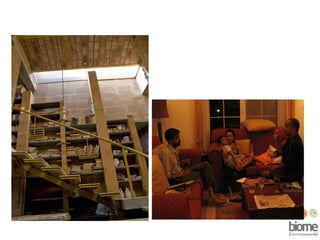








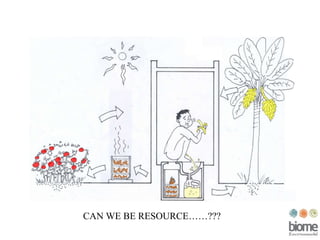







Ecological architecture aims to conserve resources like building materials, water, air, and energy for future generations. It also creates spaces that are aesthetically pleasing to live and work in while being environmentally friendly. Some key aspects of ecological architecture include minimizing the project footprint, reusing materials, implementing rainwater harvesting, and designing roofs that can grow food to address issues like water security, energy needs, and protecting biodiversity.


