NarrativeTheory
Annika Laws - Walsh
Definitions
Narrative = it refers to stories in some old
Narrative Theory = Analyses the way in which media texts
communicate meaning about events.
- Can be applied to range of different media including
film, tv, photographs and magazines
- Internet based media is more problematic though may still
relevant
Wheredowesee/hearstories?
- TV programmes
- Novels or Short Stories
- Films
- Advertisements
- News in papers or on TV and Radio
- Social Media
- Snapchat, Facebook, Youtube
- Through gossip and chat
“OnceUponaTime”
Once = invites the audience into the narrative world,
previously happened/past tense
Upon a time = situates us in a world we know is different to
our own, in a time that is not now.
VladimirPropp(1929)
- Russian theorist who
suggests that there
are a limited number
of character types
that share a function
- When an audience
reads a media text it
develops it deploys
it’s knowledge of
these characters.
VladimirPropp(1929)
Studied folk tales and proposed that it is possible to identify 8 character
roles:
- The Villan
- The hero
- The donor
- Who provides an object with some magic property
- The helper
- Aids the hero
- The princess
- Reward for hero
- Quest at end once hero has faced obsticles
- Her Father
- Father figure
- Judge, lawyer
- The dispatcher
- Who sends hero on it’s way
- The false hero
- The one who causes complications
TzvetanTodorov(1969)
- Bulgarian literary theorist
- Suggested the primary function of the narrative was to
solve a problem and that the characters pass through a
series of stages of a linear narrative where events
follow a chronological order.
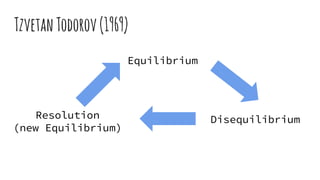
TzvetanTodorov(1969)
Equilibrium
DisequilibriumResolution
(new Equilibrium)
RolandBarthes(1960s)
- Narrative can be broken down into 2 closed or set of
rules to help the reader make sense of it.
- There are two different codes:
- Action Code
- Enigma Code
- Camera shots are used as technical codes to draw the
audience's attention to give them an aspect of narrative,
for example a close up of a ticking clock or a left
behind wallet that the character has dropped to impact
the storyline.
ActionCode
- Something happening to catch audience's attention
- Alert audience something is happening
- Starting of a car
- Flashing lights
- Sirens
- Beeping from heart trace machine in hospital
- To inform the audience someone may be dying
EnigmaCode
- Teases audience by presenting a puzzle of riddle to be
solved.
- Mysterious figure in the opening sequence
- Headlines of new report
- Cover lines in magazines
- He emphasises the active role of reader in creating
meaning and the “culturally formed expectations”
TechnicalCodes
- Anything to do with Mise En Scene
- Shows the audience the narrative through a range of
camera shots.

Narrative theory

  • 1.
  • 2.
    Definitions Narrative = itrefers to stories in some old Narrative Theory = Analyses the way in which media texts communicate meaning about events. - Can be applied to range of different media including film, tv, photographs and magazines - Internet based media is more problematic though may still relevant
  • 3.
    Wheredowesee/hearstories? - TV programmes -Novels or Short Stories - Films - Advertisements - News in papers or on TV and Radio - Social Media - Snapchat, Facebook, Youtube - Through gossip and chat
  • 4.
    “OnceUponaTime” Once = invitesthe audience into the narrative world, previously happened/past tense Upon a time = situates us in a world we know is different to our own, in a time that is not now.
  • 5.
    VladimirPropp(1929) - Russian theoristwho suggests that there are a limited number of character types that share a function - When an audience reads a media text it develops it deploys it’s knowledge of these characters.
  • 6.
    VladimirPropp(1929) Studied folk talesand proposed that it is possible to identify 8 character roles: - The Villan - The hero - The donor - Who provides an object with some magic property - The helper - Aids the hero - The princess - Reward for hero - Quest at end once hero has faced obsticles - Her Father - Father figure - Judge, lawyer - The dispatcher - Who sends hero on it’s way - The false hero - The one who causes complications
  • 7.
    TzvetanTodorov(1969) - Bulgarian literarytheorist - Suggested the primary function of the narrative was to solve a problem and that the characters pass through a series of stages of a linear narrative where events follow a chronological order.
  • 8.
  • 9.
    RolandBarthes(1960s) - Narrative canbe broken down into 2 closed or set of rules to help the reader make sense of it. - There are two different codes: - Action Code - Enigma Code - Camera shots are used as technical codes to draw the audience's attention to give them an aspect of narrative, for example a close up of a ticking clock or a left behind wallet that the character has dropped to impact the storyline.
  • 10.
    ActionCode - Something happeningto catch audience's attention - Alert audience something is happening - Starting of a car - Flashing lights - Sirens - Beeping from heart trace machine in hospital - To inform the audience someone may be dying
  • 11.
    EnigmaCode - Teases audienceby presenting a puzzle of riddle to be solved. - Mysterious figure in the opening sequence - Headlines of new report - Cover lines in magazines - He emphasises the active role of reader in creating meaning and the “culturally formed expectations”
  • 12.
    TechnicalCodes - Anything todo with Mise En Scene - Shows the audience the narrative through a range of camera shots.