Narrative 2
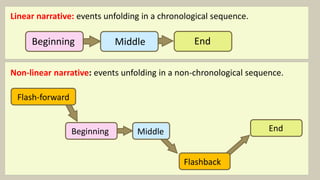
Linear narrative: events unfolding in a chronological sequence.
Beginning
Non-linear narrative: events unfolding in a non-chronological sequence.
Middle End
Beginning Middle End
Flash-forward
Flashback
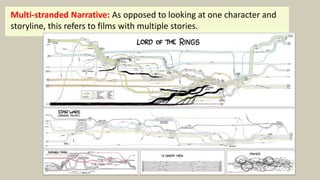
Multi-stranded Narrative: As opposed to looking at one character and
storyline, this refers to films with multiple stories.
Restricted and Unrestricted Narrative:
The amount of information that is
released to the audience. ‘Unrestricted
narrative’ is when the viewers are told
more information than the characters
themselves know. This can be achieved
by showing us scenes that some
characters are unaware of.
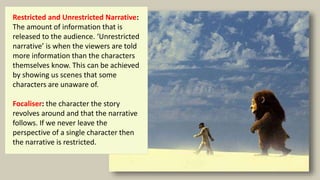
Focaliser: the character the story
revolves around and that the narrative
follows. If we never leave the
perspective of a single character then
the narrative is restricted.
Ellipsis: The compression of time within a film. In order to fit into the industry
standard of film length (usually around 2 hours), films use ellipsis to compress a
story which may occur over many days, weeks or years into a 2-hour film.
A film with a high degree of ellipsis compresses a lot of time into the duration
of the narrative. Boyhood is a 3 hour long film but covers 12 years of a family’s
life.
https://www.youtube.com/
watch?v=Ys-mbHXyWX4
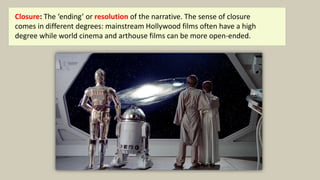
Closure: The ‘ending’ or resolution of the narrative. The sense of closure
comes in different degrees: mainstream Hollywood films often have a high
degree while world cinema and arthouse films can be more open-ended.
The Three-Act Structure
1) ?
2) ?
3) ?
The most conventional form of narrative in film (and one which
is very popular in Hollywood) is the three act structure.
What do you think the three act structure might involve?
The Three-Act Structure
1) Introduction
2) Conflict/problem
3) Resolution
Why do you think there are three parts? Why not two? Why not one?
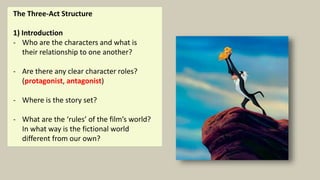
The Three-Act Structure
1) Introduction
- Who are the characters and what is
their relationship to one another?
- Are there any clear character roles?
(protagonist, antagonist)
- Where is the story set?
- What are the ‘rules’ of the film’s world?
In what way is the fictional world
different from our own?
The Three-Act Structure
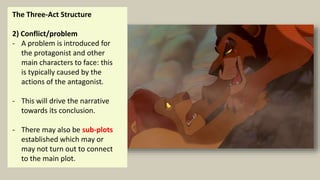
2) Conflict/problem
- A problem is introduced for
the protagonist and other
main characters to face: this
is typically caused by the
actions of the antagonist.
- This will drive the narrative
towards its conclusion.
- There may also be sub-plots
established which may or
may not turn out to connect
to the main plot.
The Three-Act Structure
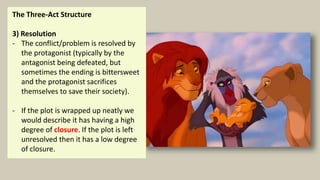
3) Resolution
- The conflict/problem is resolved by
the protagonist (typically by the
antagonist being defeated, but
sometimes the ending is bittersweet
and the protagonist sacrifices
themselves to save their society).
- If the plot is wrapped up neatly we
would describe it has having a high
degree of closure. If the plot is left
unresolved then it has a low degree
of closure.
Can you think of any
films that this structure
does not apply to?
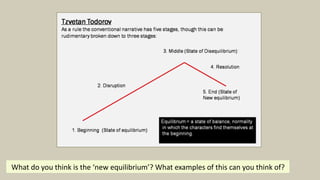
What do you think is the ‘new equilibrium’? What examples of this can you think of?
Macro-features - Quiz
This quiz contains all the
terminology that has been
mentioned over the last few
lessons!
Do ‘Learn’ first, then ‘match’
and ‘asteroids’.
https://quizlet.com/_3lnbin

Film language - narrative 2

  • 1.
  • 2.
    Linear narrative: eventsunfolding in a chronological sequence. Beginning Non-linear narrative: events unfolding in a non-chronological sequence. Middle End Beginning Middle End Flash-forward Flashback
  • 3.
    Multi-stranded Narrative: Asopposed to looking at one character and storyline, this refers to films with multiple stories.
  • 4.
    Restricted and UnrestrictedNarrative: The amount of information that is released to the audience. ‘Unrestricted narrative’ is when the viewers are told more information than the characters themselves know. This can be achieved by showing us scenes that some characters are unaware of. Focaliser: the character the story revolves around and that the narrative follows. If we never leave the perspective of a single character then the narrative is restricted.
  • 5.
    Ellipsis: The compressionof time within a film. In order to fit into the industry standard of film length (usually around 2 hours), films use ellipsis to compress a story which may occur over many days, weeks or years into a 2-hour film. A film with a high degree of ellipsis compresses a lot of time into the duration of the narrative. Boyhood is a 3 hour long film but covers 12 years of a family’s life. https://www.youtube.com/ watch?v=Ys-mbHXyWX4
  • 6.
    Closure: The ‘ending’or resolution of the narrative. The sense of closure comes in different degrees: mainstream Hollywood films often have a high degree while world cinema and arthouse films can be more open-ended.
  • 7.
    The Three-Act Structure 1)? 2) ? 3) ? The most conventional form of narrative in film (and one which is very popular in Hollywood) is the three act structure. What do you think the three act structure might involve?
  • 8.
    The Three-Act Structure 1)Introduction 2) Conflict/problem 3) Resolution Why do you think there are three parts? Why not two? Why not one?
  • 9.
    The Three-Act Structure 1)Introduction - Who are the characters and what is their relationship to one another? - Are there any clear character roles? (protagonist, antagonist) - Where is the story set? - What are the ‘rules’ of the film’s world? In what way is the fictional world different from our own?
  • 10.
    The Three-Act Structure 2)Conflict/problem - A problem is introduced for the protagonist and other main characters to face: this is typically caused by the actions of the antagonist. - This will drive the narrative towards its conclusion. - There may also be sub-plots established which may or may not turn out to connect to the main plot.
  • 11.
    The Three-Act Structure 3)Resolution - The conflict/problem is resolved by the protagonist (typically by the antagonist being defeated, but sometimes the ending is bittersweet and the protagonist sacrifices themselves to save their society). - If the plot is wrapped up neatly we would describe it has having a high degree of closure. If the plot is left unresolved then it has a low degree of closure.
  • 12.
    Can you thinkof any films that this structure does not apply to?
  • 13.
    What do youthink is the ‘new equilibrium’? What examples of this can you think of?
  • 14.
    Macro-features - Quiz Thisquiz contains all the terminology that has been mentioned over the last few lessons! Do ‘Learn’ first, then ‘match’ and ‘asteroids’. https://quizlet.com/_3lnbin