WELCOME
Nepal Open University
Winer batch-2076
Roll No:76155004
Narrative Research Design
By: Khadak Raj Adhikari
Presented by
Khadak Raj Adhikari
M.Phil. Scholar in
Mathematics Education
By: Khadak Raj Adhikari
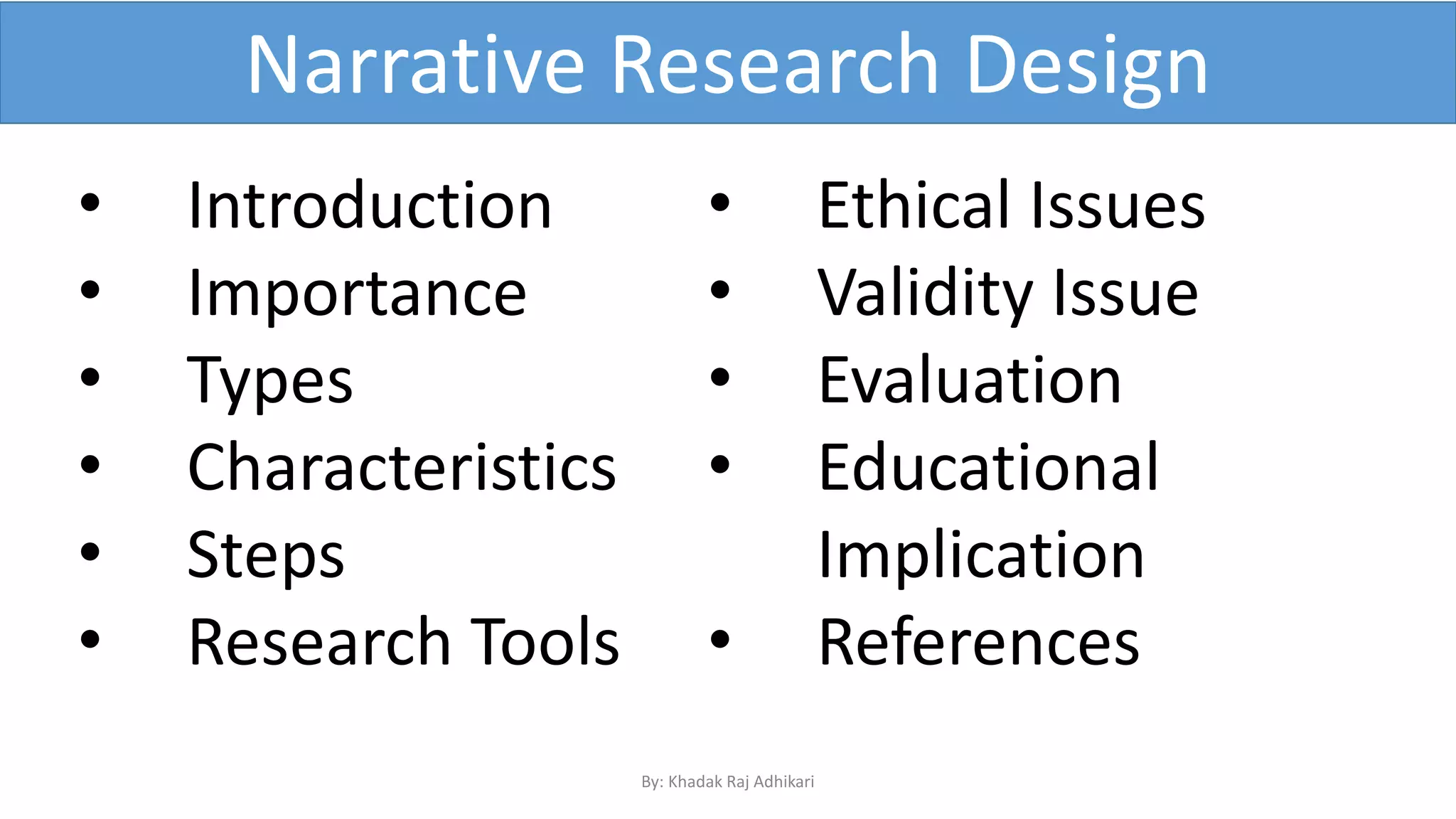
Narrative Research Design
• Introduction
• Importance
• Types
• Characteristics
• Steps
• Research Tools
• Ethical Issues
• Validity Issue
• Evaluation
• Educational
Implication
• References
By: Khadak Raj Adhikari
Introduction
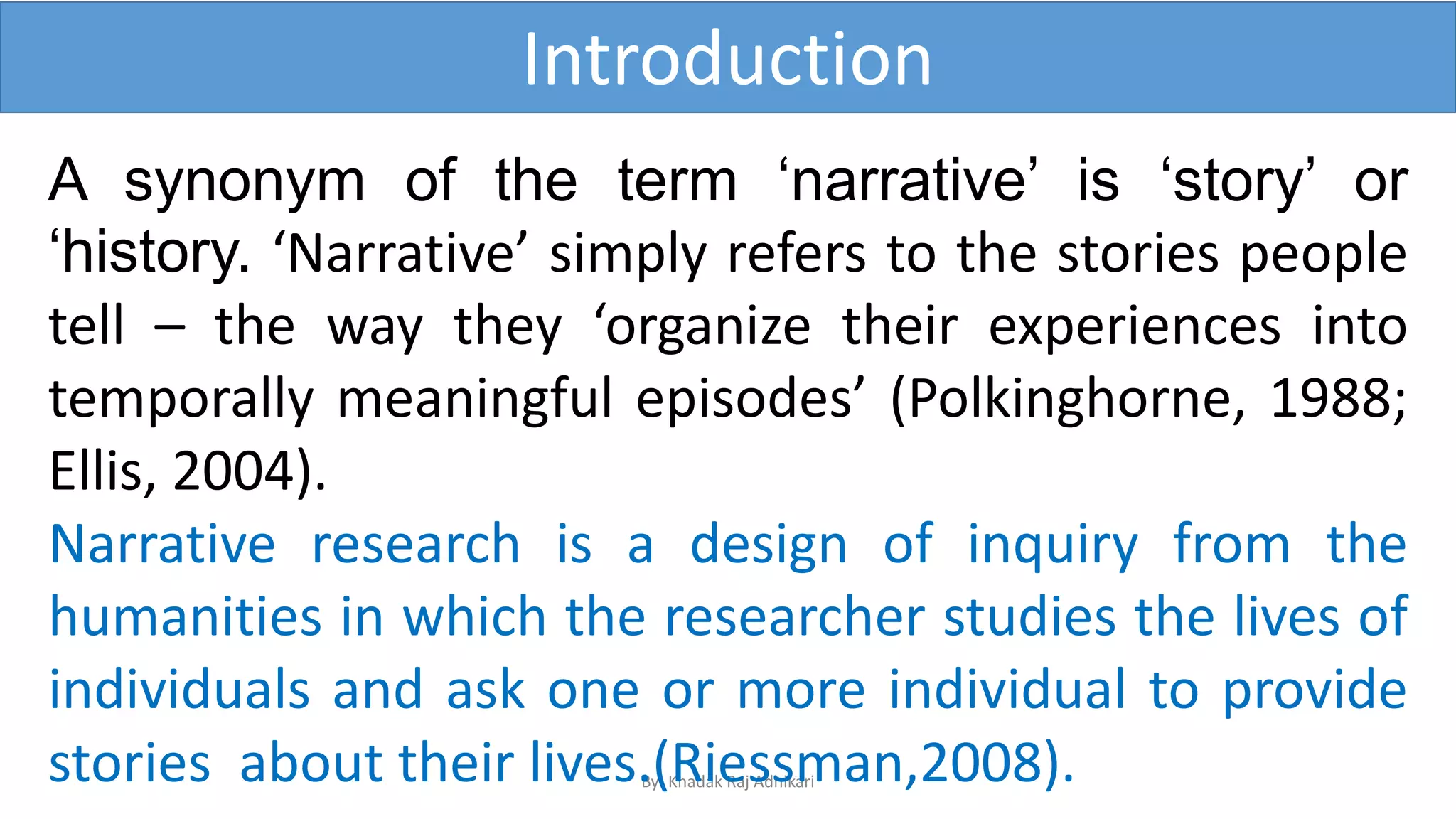
A synonym of the term ‘narrative’ is ‘story’ or
‘history. ‘Narrative’ simply refers to the stories people
tell – the way they ‘organize their experiences into
temporally meaningful episodes’ (Polkinghorne, 1988;
Ellis, 2004).
Narrative research is a design of inquiry from the
humanities in which the researcher studies the lives of
individuals and ask one or more individual to provide
stories about their lives.(Riessman,2008).
By: Khadak Raj Adhikari
Introduction
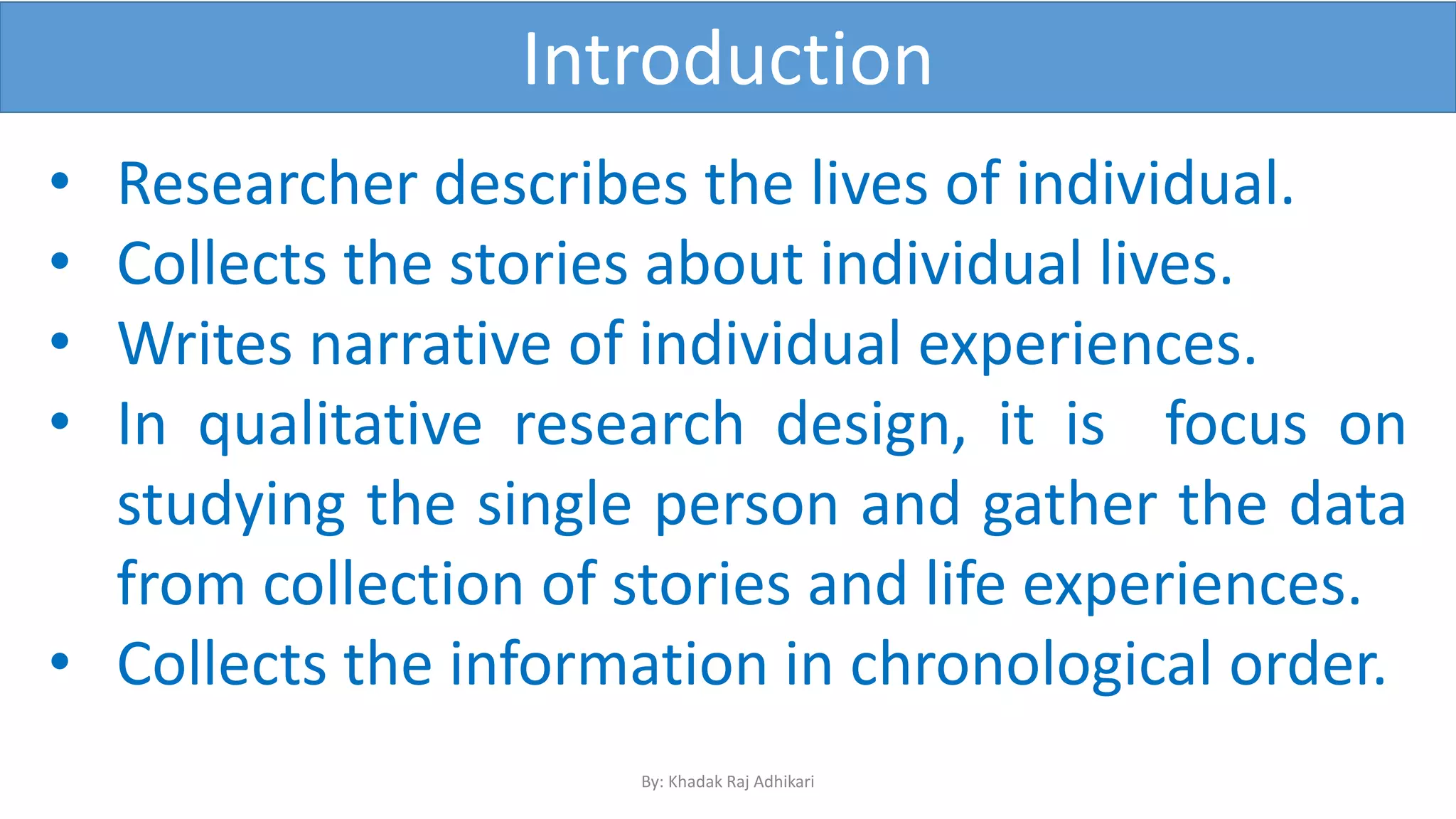
• Researcher describes the lives of individual.
• Collects the stories about individual lives.
• Writes narrative of individual experiences.
• In qualitative research design, it is focus on
studying the single person and gather the data
from collection of stories and life experiences.
• Collects the information in chronological order.
By: Khadak Raj Adhikari
Why Narrative Research Study?
• It is focused on personal information
• Hidden information can be carried out.
• It is important for historical prospective.
• It is emerging.
• Explores educational research
problems by analysing the experience
of a individual.
By: Khadak Raj Adhikari
Types of NR Research design
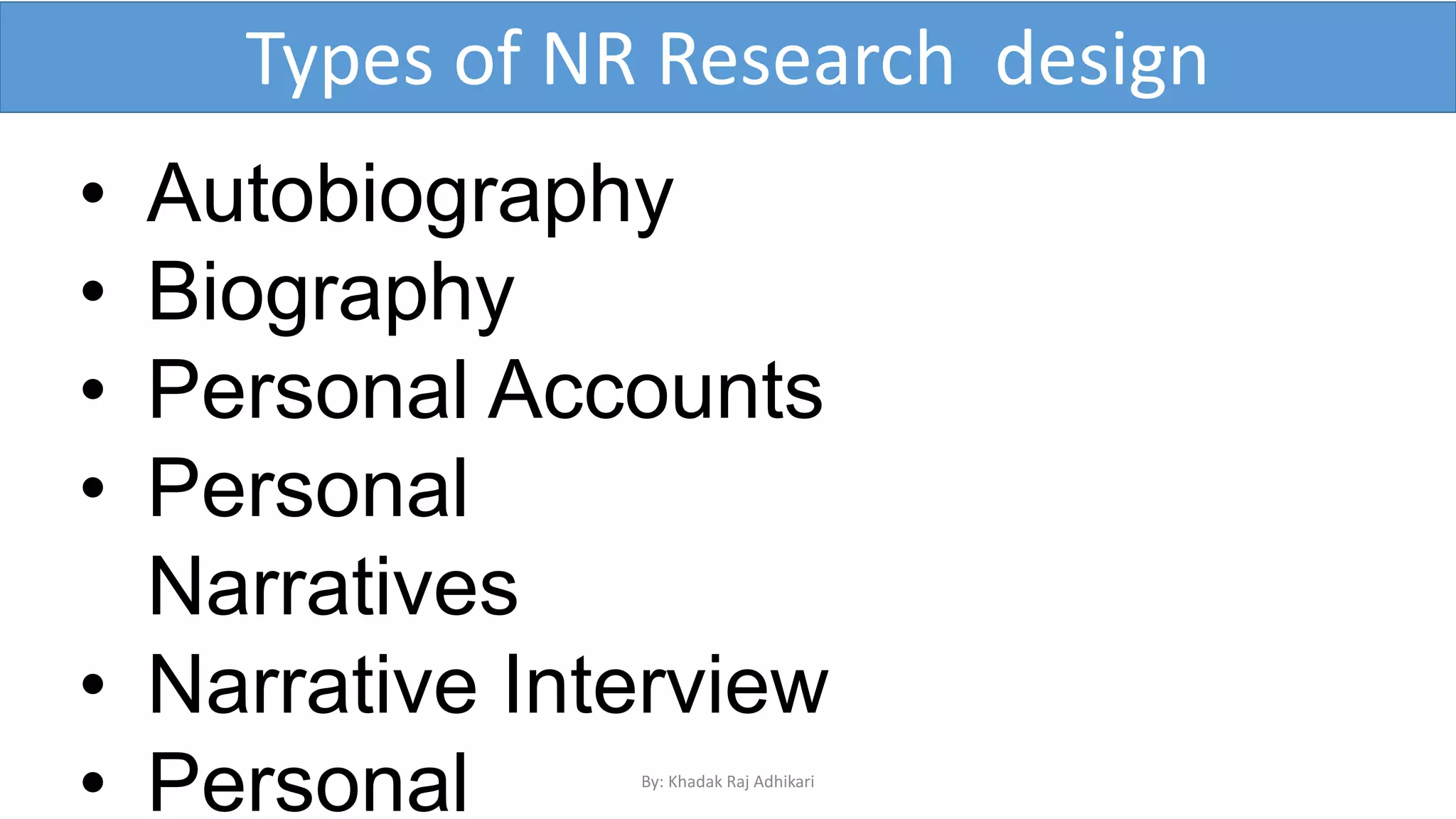
• Autobiography
• Biography
• Personal Accounts
• Personal
Narratives
• Narrative Interview
• Personal
By: Khadak Raj Adhikari
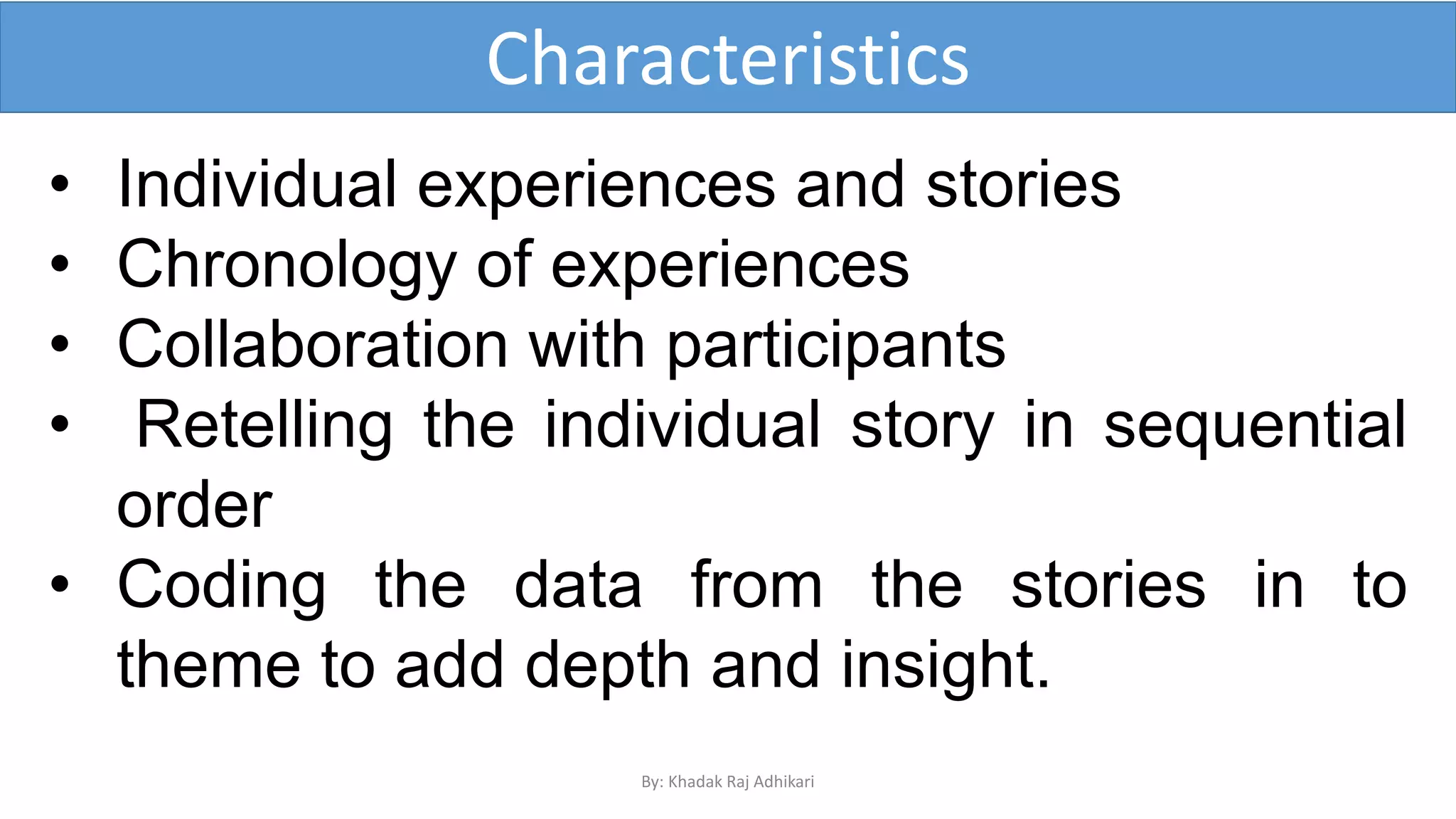
Characteristics
• Individual experiences and stories
• Chronology of experiences
• Collaboration with participants
• Retelling the individual story in sequential
order
• Coding the data from the stories in to
theme to add depth and insight.
By: Khadak Raj Adhikari
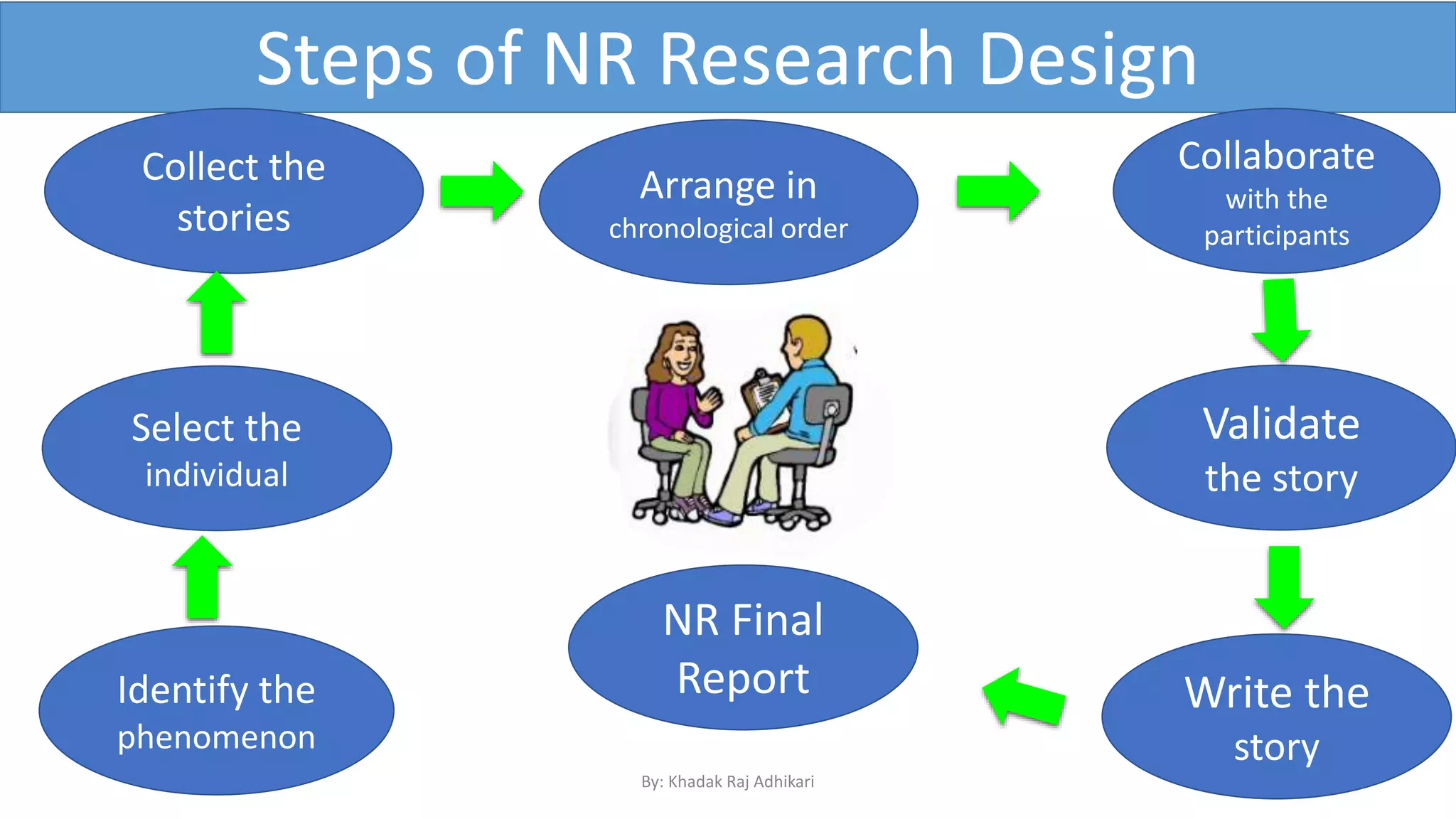
Steps of NR Research Design
Identify the
phenomenon
Collect the
stories
Select the
individual
Arrange in
chronological order
Collaborate
with the
participants
Write the
story
Validate
the story
NR Final
Report
By: Khadak Raj Adhikari
Research Tools
• Observation
• Life story
• Biography
• Life
experiences
By: Khadak Raj Adhikari
Ethical Issue
• Stories may be untrue
• Events may destroy from participants
memory
• Too horrific to tell story.
• Author may lose the voice of participant.
• Participants may fear to tell the story.
• By external pressure participants may hide
the correct story.
By: Khadak Raj Adhikari
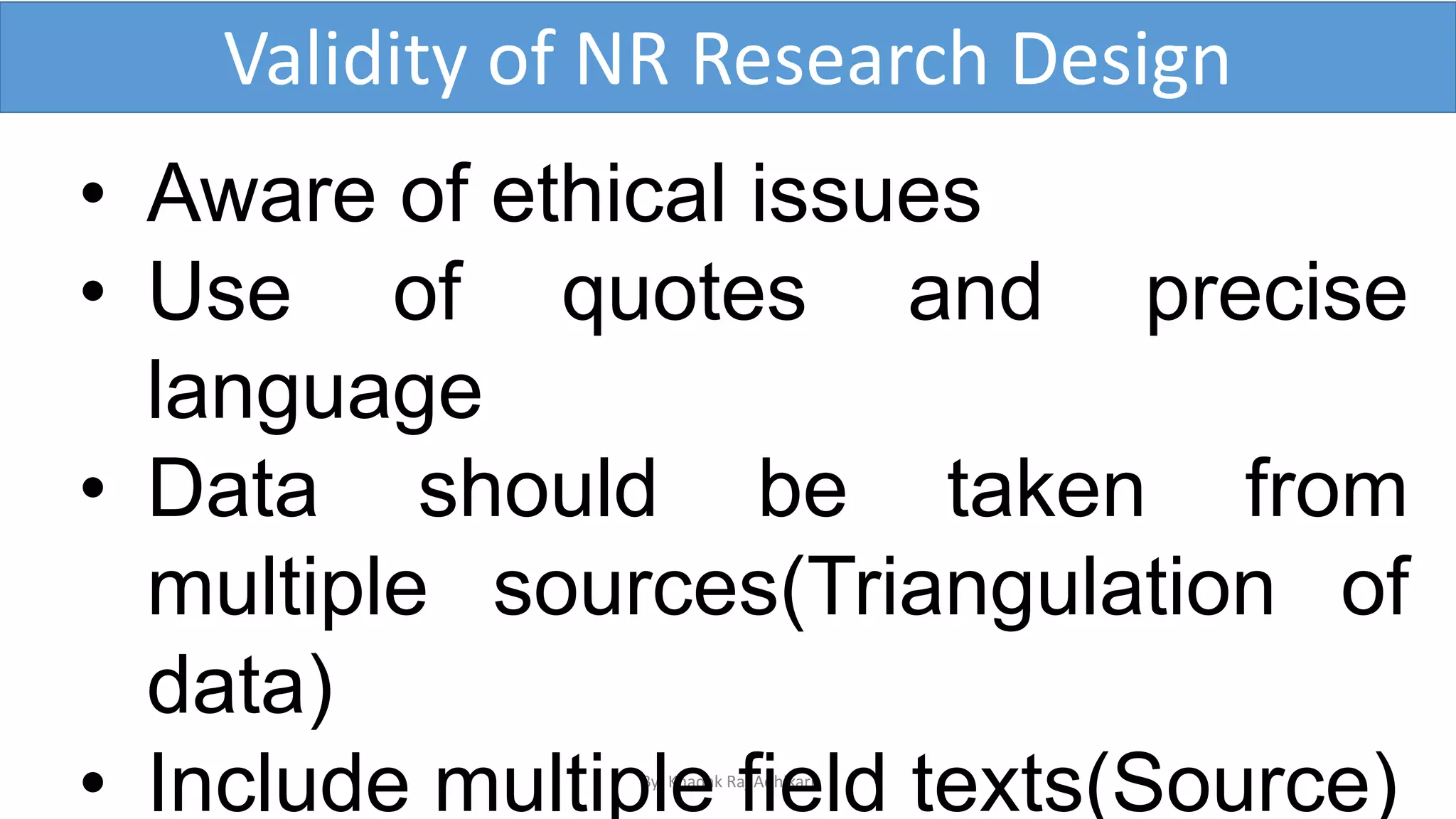
Validity of NR Research Design
• Aware of ethical issues
• Use of quotes and precise
language
• Data should be taken from
multiple sources(Triangulation of
data)
• Include multiple field texts(Source)
By: Khadak Raj Adhikari
Evaluation of NR Research Design
• Focus on single individual
• Report the life experiences of individual
through stories
• Restore the stories in chronological order
• Describe the some details setting of the
theory
• Collaborate with the participants to reflect
the theory
By: Khadak Raj Adhikari
Educational Implication
• Increase teachers
reflection in classroom
• More attention is given what teachers know,
how they think and how they make
classroom decision.
• Teachers story empower the students to talk
about their experiences.
By: Khadak Raj Adhikari
References
• Qualitative Research design(Creswell book pdf)
• https://www.slideshare.net/RahilaKhan6/narrative
-research-design
• https://www.slideshare.net/RahilaKhan6/narrative
-research-design
• https://www.youtube.com/watch?v=Dfc-akqgNn8
• https://www.youtube.com/watch?v=DpaHoEZ8BEY
By: Khadak Raj Adhikari
Thank You!!

Narrative Research Design

  • 1.
    WELCOME Nepal Open University Winerbatch-2076 Roll No:76155004 Narrative Research Design By: Khadak Raj Adhikari Presented by Khadak Raj Adhikari M.Phil. Scholar in Mathematics Education
  • 2.
    By: Khadak RajAdhikari Narrative Research Design • Introduction • Importance • Types • Characteristics • Steps • Research Tools • Ethical Issues • Validity Issue • Evaluation • Educational Implication • References
  • 3.
    By: Khadak RajAdhikari Introduction A synonym of the term ‘narrative’ is ‘story’ or ‘history. ‘Narrative’ simply refers to the stories people tell – the way they ‘organize their experiences into temporally meaningful episodes’ (Polkinghorne, 1988; Ellis, 2004). Narrative research is a design of inquiry from the humanities in which the researcher studies the lives of individuals and ask one or more individual to provide stories about their lives.(Riessman,2008).
  • 4.
    By: Khadak RajAdhikari Introduction • Researcher describes the lives of individual. • Collects the stories about individual lives. • Writes narrative of individual experiences. • In qualitative research design, it is focus on studying the single person and gather the data from collection of stories and life experiences. • Collects the information in chronological order.
  • 5.
    By: Khadak RajAdhikari Why Narrative Research Study? • It is focused on personal information • Hidden information can be carried out. • It is important for historical prospective. • It is emerging. • Explores educational research problems by analysing the experience of a individual.
  • 6.
    By: Khadak RajAdhikari Types of NR Research design • Autobiography • Biography • Personal Accounts • Personal Narratives • Narrative Interview • Personal
  • 7.
    By: Khadak RajAdhikari Characteristics • Individual experiences and stories • Chronology of experiences • Collaboration with participants • Retelling the individual story in sequential order • Coding the data from the stories in to theme to add depth and insight.
  • 8.
    By: Khadak RajAdhikari Steps of NR Research Design Identify the phenomenon Collect the stories Select the individual Arrange in chronological order Collaborate with the participants Write the story Validate the story NR Final Report
  • 9.
    By: Khadak RajAdhikari Research Tools • Observation • Life story • Biography • Life experiences
  • 10.
    By: Khadak RajAdhikari Ethical Issue • Stories may be untrue • Events may destroy from participants memory • Too horrific to tell story. • Author may lose the voice of participant. • Participants may fear to tell the story. • By external pressure participants may hide the correct story.
  • 11.
    By: Khadak RajAdhikari Validity of NR Research Design • Aware of ethical issues • Use of quotes and precise language • Data should be taken from multiple sources(Triangulation of data) • Include multiple field texts(Source)
  • 12.
    By: Khadak RajAdhikari Evaluation of NR Research Design • Focus on single individual • Report the life experiences of individual through stories • Restore the stories in chronological order • Describe the some details setting of the theory • Collaborate with the participants to reflect the theory
  • 13.
    By: Khadak RajAdhikari Educational Implication • Increase teachers reflection in classroom • More attention is given what teachers know, how they think and how they make classroom decision. • Teachers story empower the students to talk about their experiences.
  • 14.
    By: Khadak RajAdhikari References • Qualitative Research design(Creswell book pdf) • https://www.slideshare.net/RahilaKhan6/narrative -research-design • https://www.slideshare.net/RahilaKhan6/narrative -research-design • https://www.youtube.com/watch?v=Dfc-akqgNn8 • https://www.youtube.com/watch?v=DpaHoEZ8BEY
  • 15.
    By: Khadak RajAdhikari Thank You!!