Nanoscience&
Nanotechnology
Steps To the future
Usama Abd Elhafeez
17/8/2018
Last Session
Carbon Allotropes
Classification Of CNTs
CNTs Production Methods
Graphene – Diamond- Graphite
Wet nanotechnology
Nano Fluids - Wet Nanotechnology
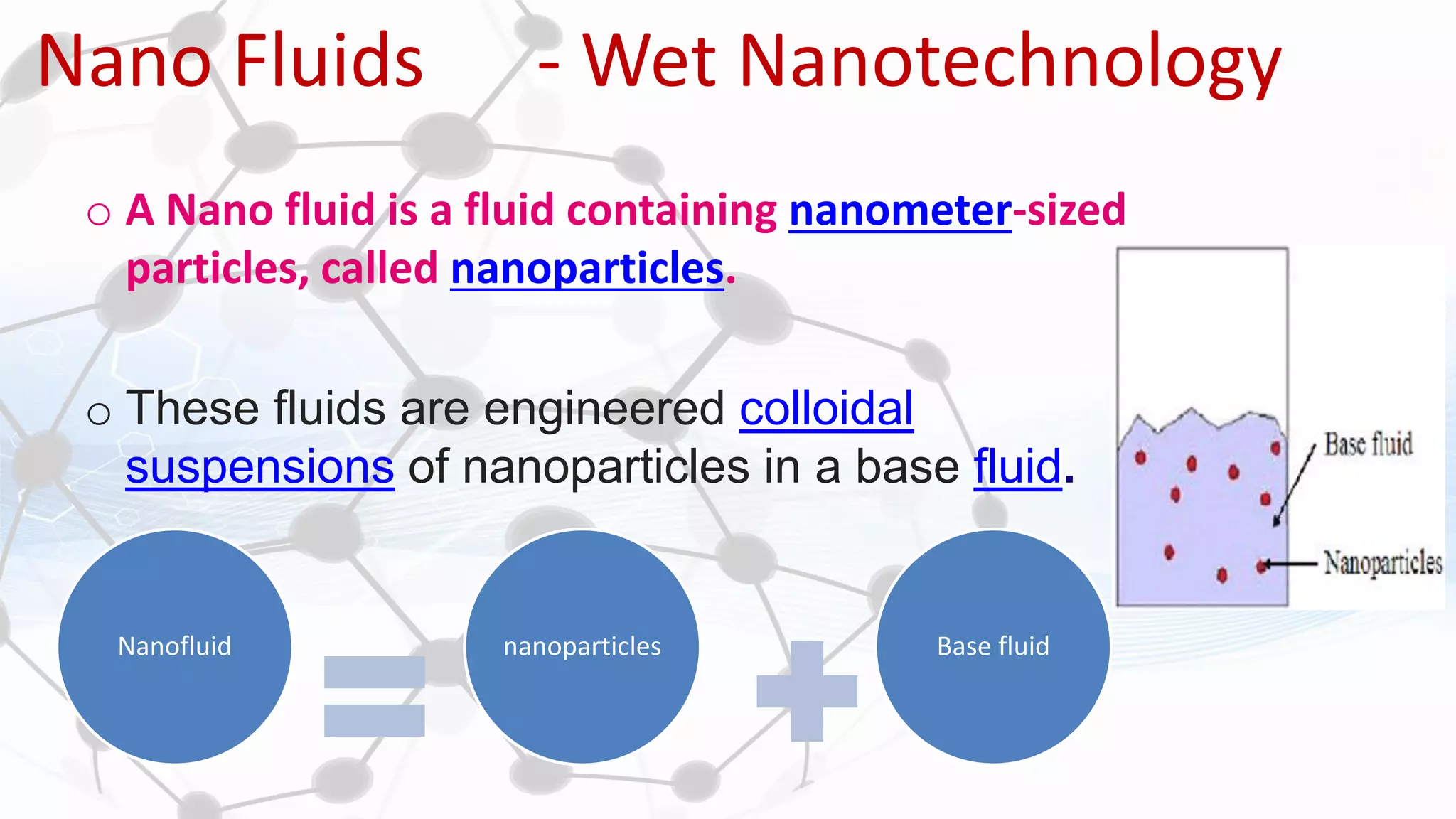
o A Nano fluid is a fluid containing nanometer-sized
particles, called nanoparticles.
o These fluids are engineered colloidal
suspensions of nanoparticles in a base fluid.
Nanofluid nanoparticles Base fluid
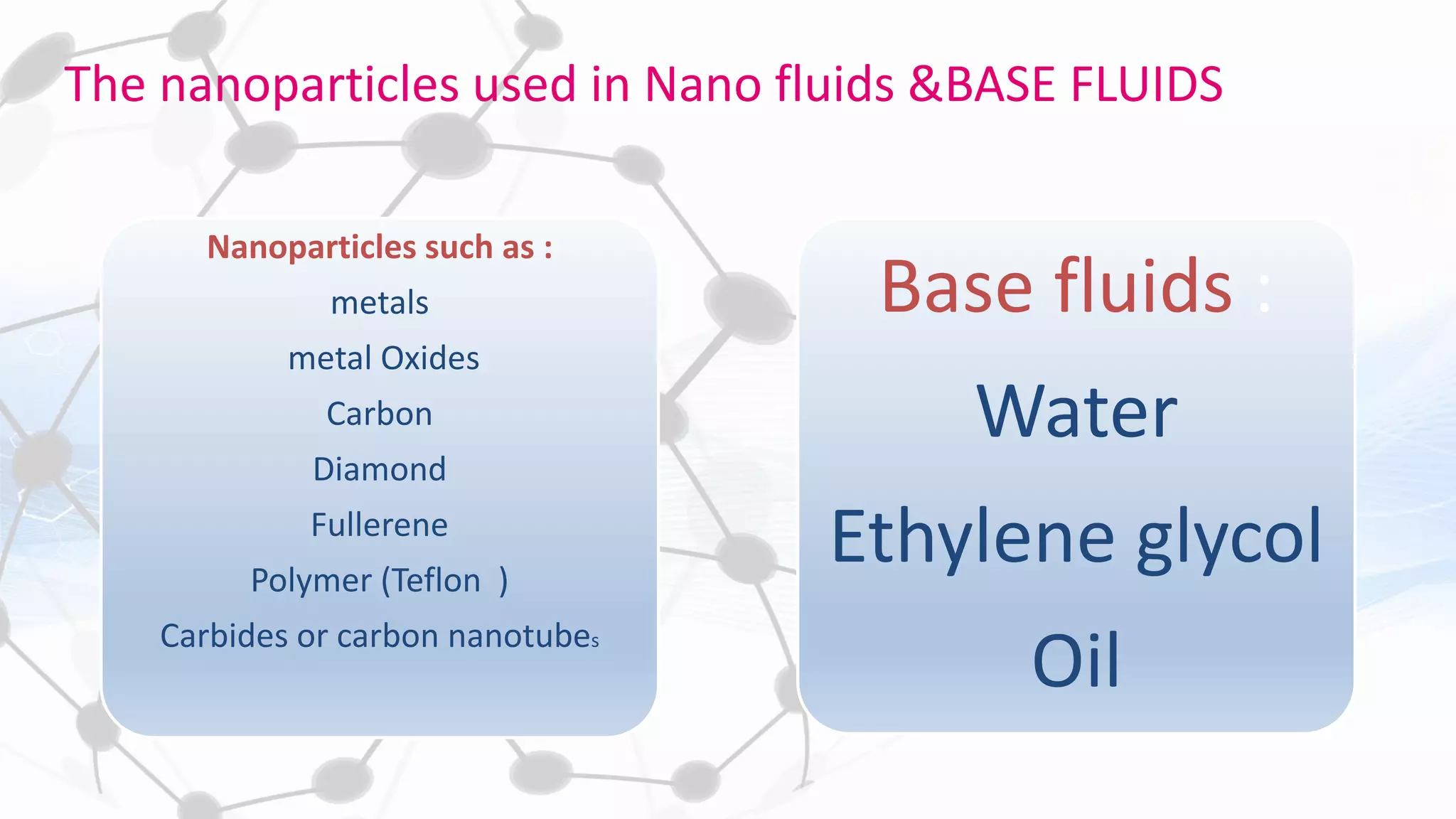
The nanoparticles used in Nano fluids &BASE FLUIDS
Nanoparticles such as :
metals
metal Oxides
Carbon
Diamond
Fullerene
Polymer (Teflon )
Carbides or carbon nanotubes
Base fluids :
Water
Ethylene glycol
Oil
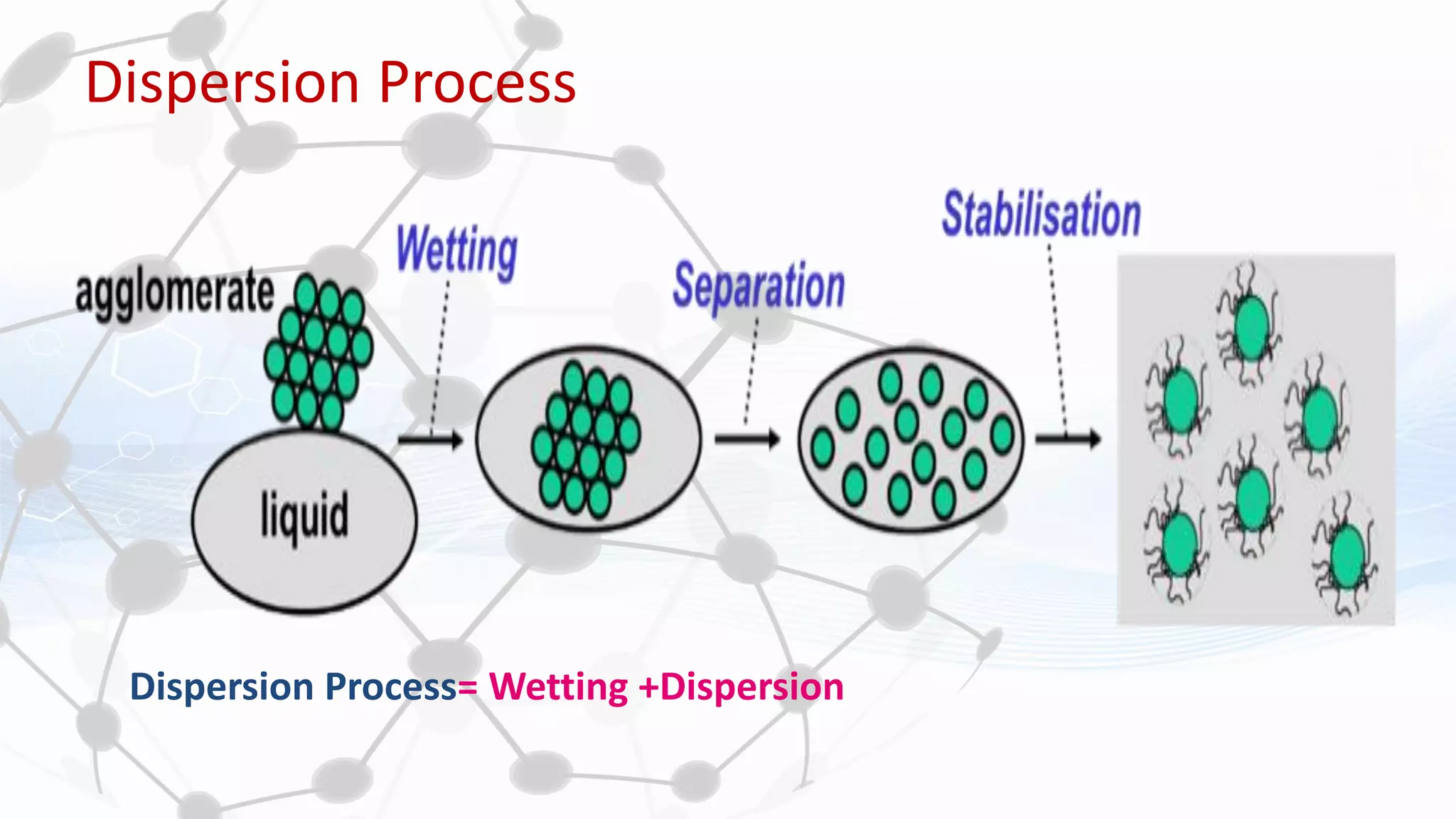
Dispersion Process
Dispersion Process= Wetting +Dispersion
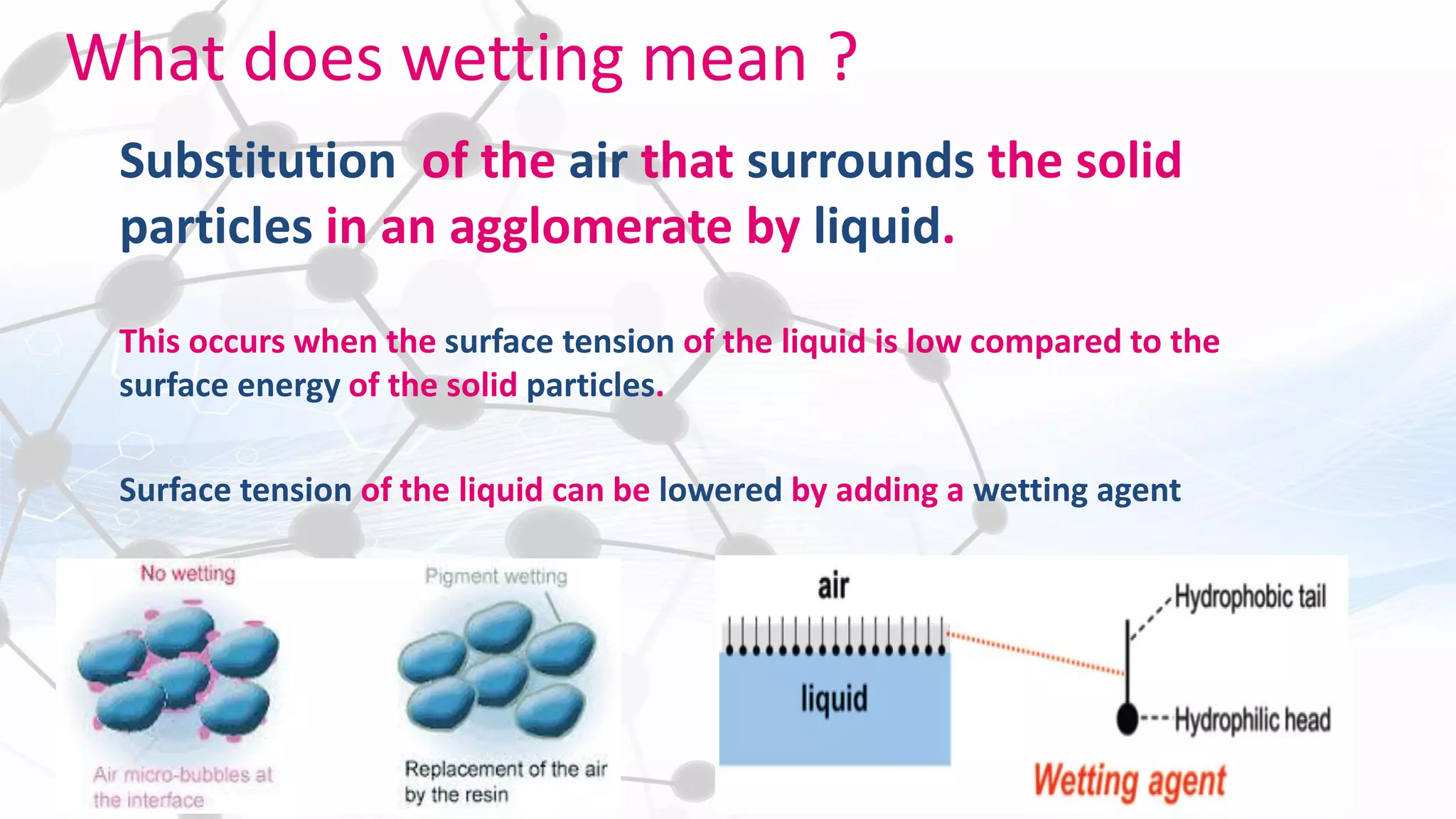
What does wetting mean ?
Substitution of the air that surrounds the solid
particles in an agglomerate by liquid.
This occurs when the surface tension of the liquid is low compared to the
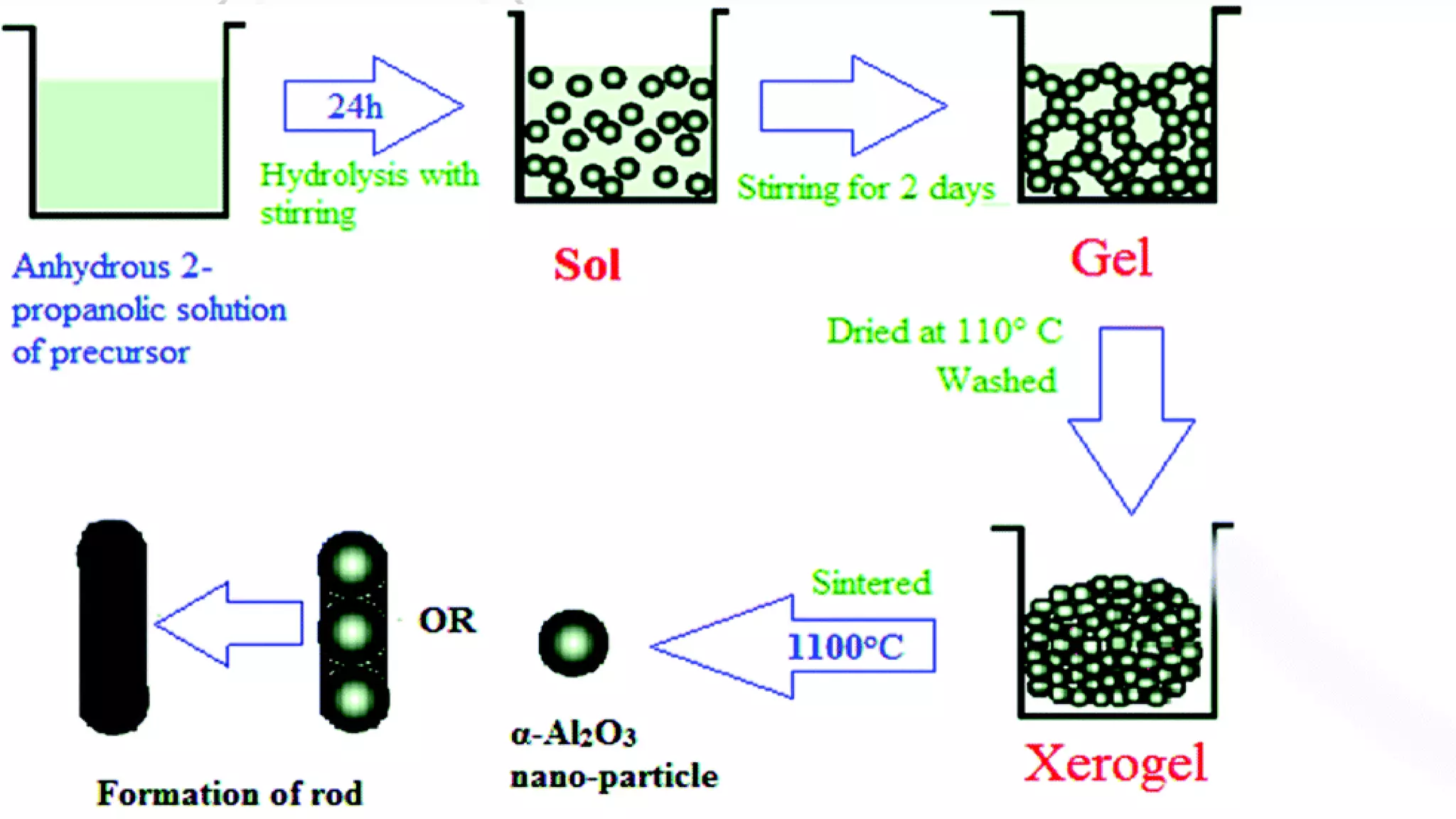
surface energy of the solid particles.
Surface tension of the liquid can be lowered by adding a wetting agent
Stabilization
Stabilization
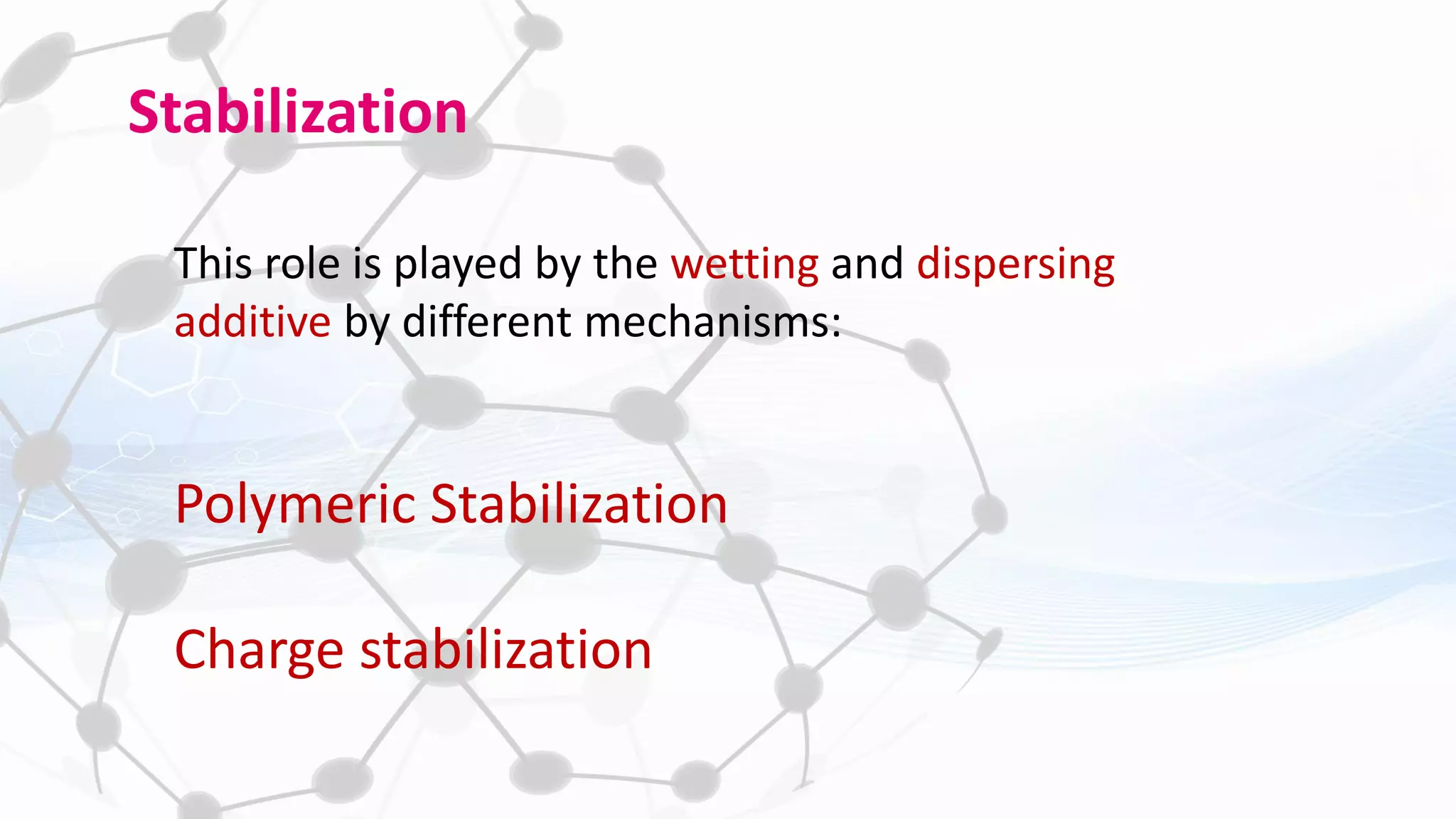
This role is played by the wetting and dispersing
additive by different mechanisms:
Polymeric Stabilization
Charge stabilization
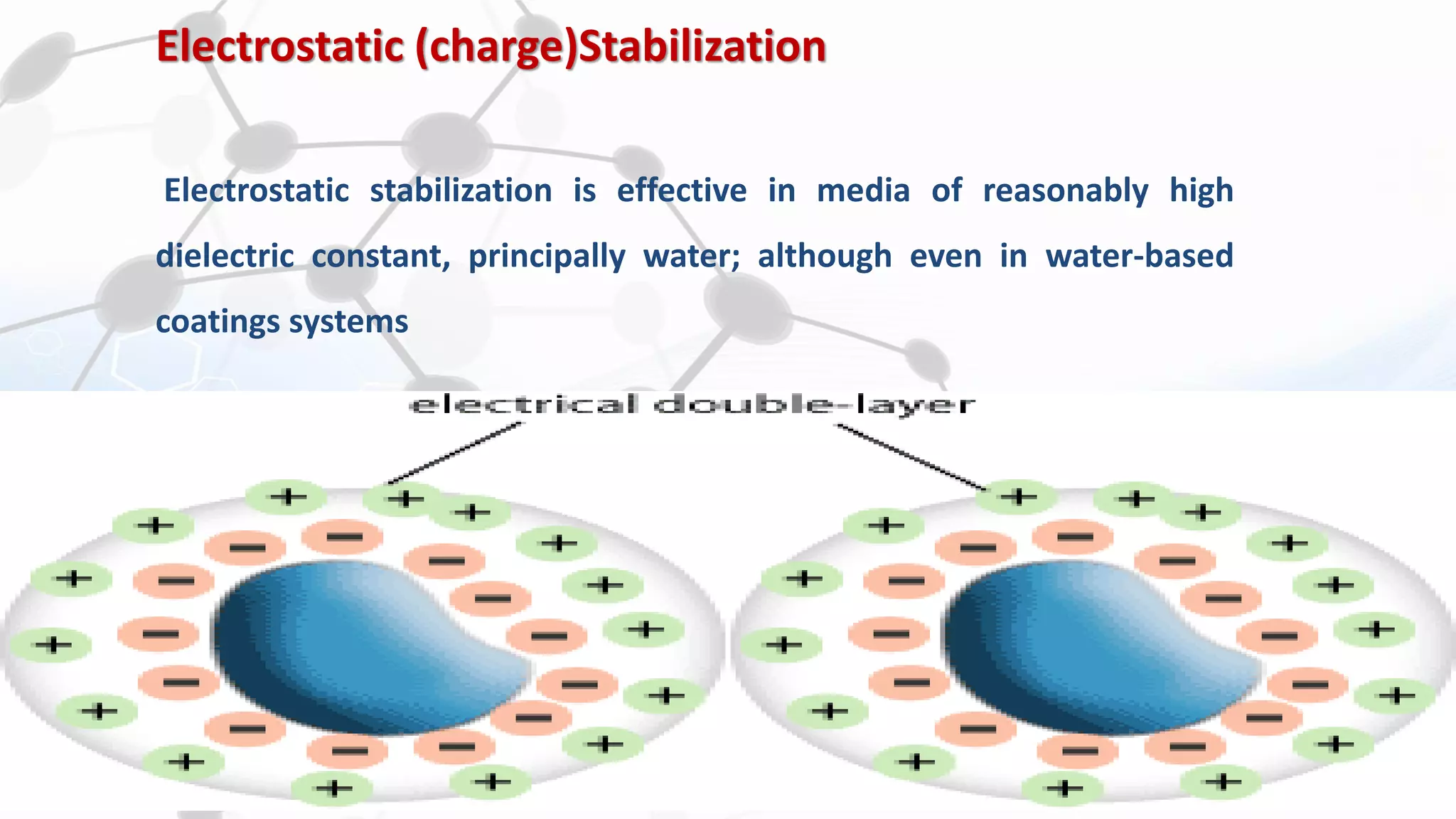
Electrostatic (charge)Stabilization
Electrostatic stabilization is effective in media of reasonably high
dielectric constant, principally water; although even in water-based
coatings systems
Polymeric stabilization
There are two types of polymeric
stabilization:
•Steric stabilization of colloids
•Depletion stabilization of
colloids
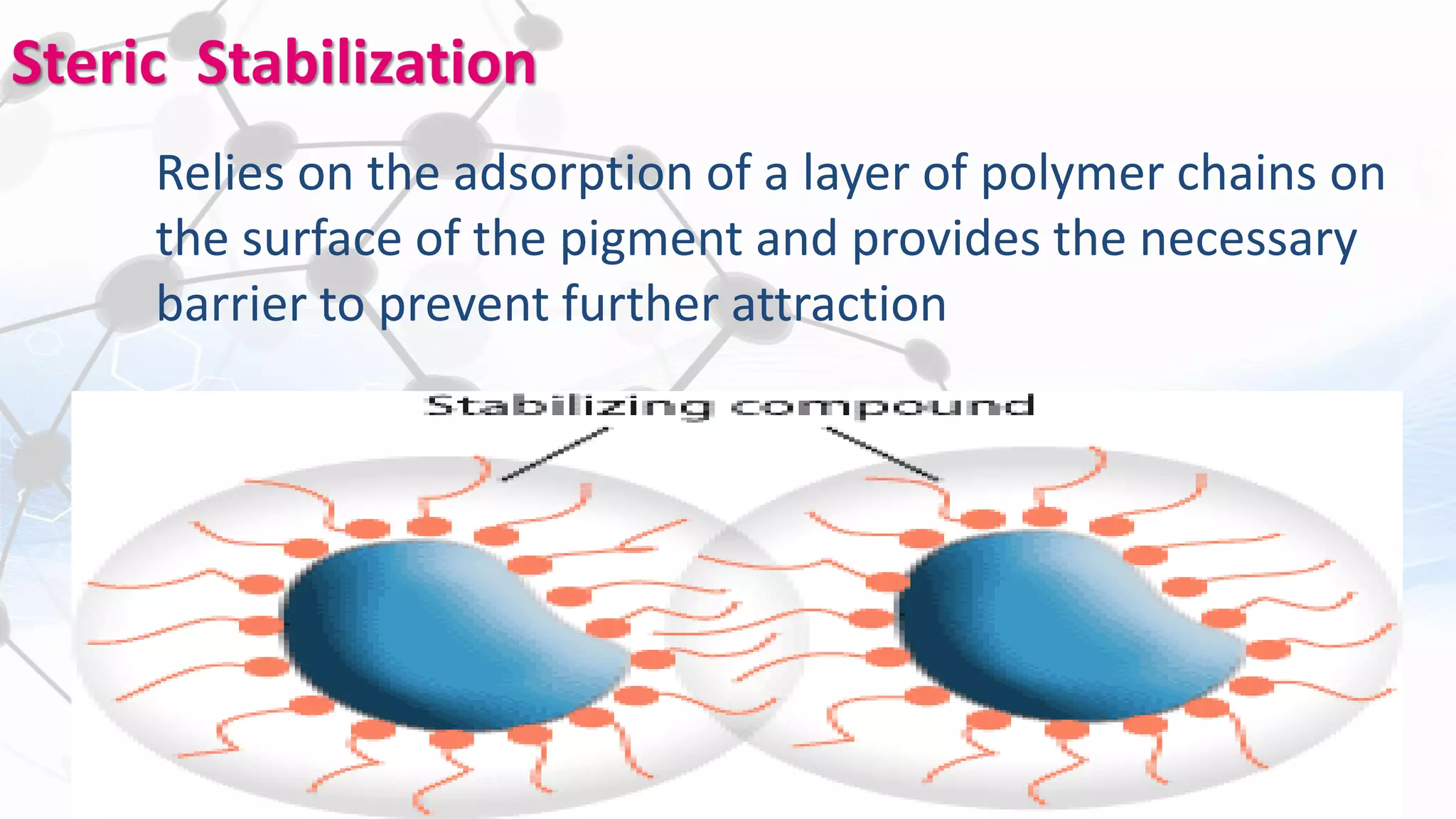
Steric Stabilization
Relies on the adsorption of a layer of polymer chains on
the surface of the pigment and provides the necessary
barrier to prevent further attraction
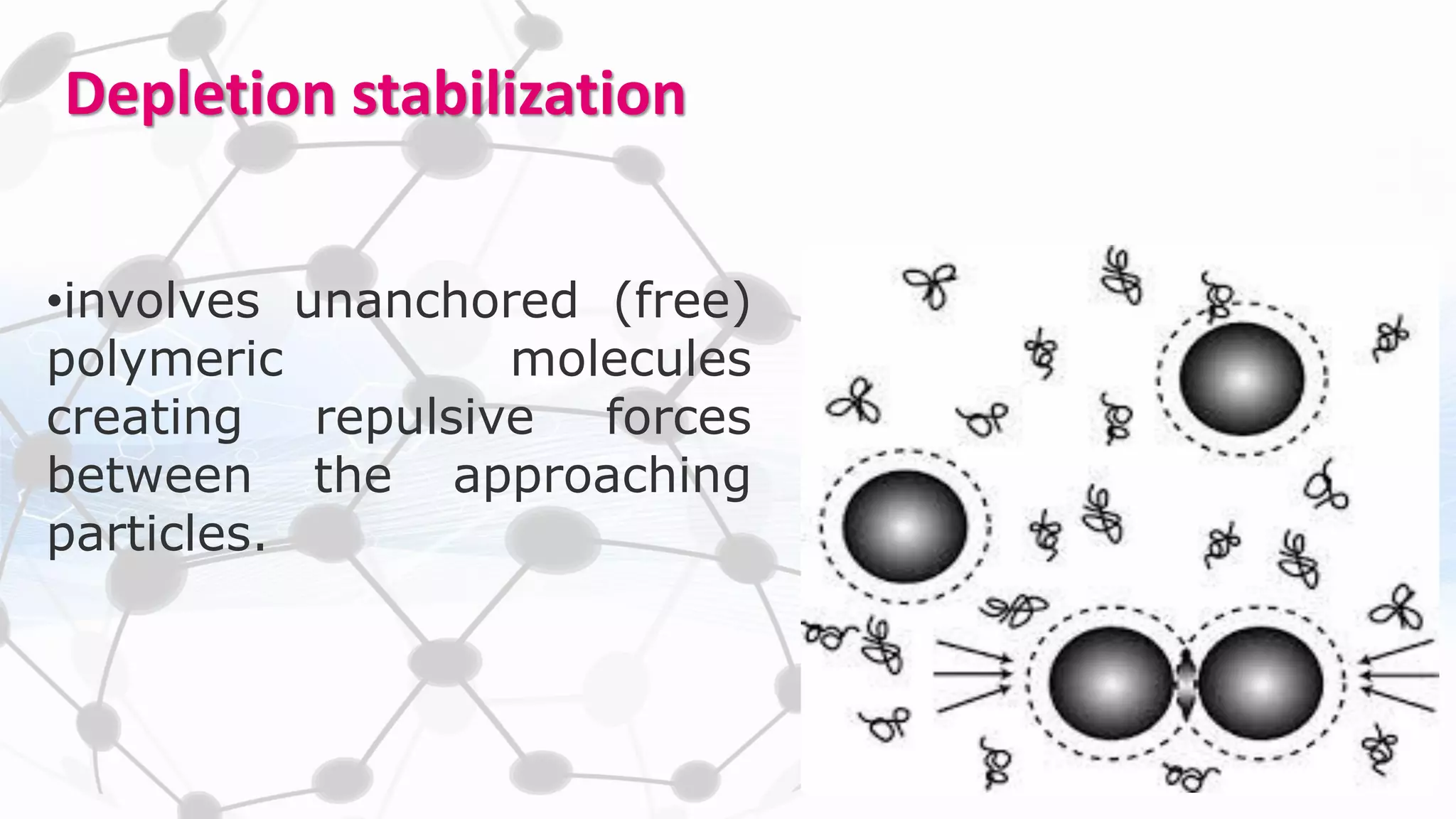
Depletion stabilization
•involves unanchored (free)
polymeric molecules
creating repulsive forces
between the approaching
particles.
Concept of Nano fluids:
Conventional heat transfer fluids have inherently poor thermal
conductivity compared to solids .
Conventional fluids that contain mm or micrometer sized
particle do not work with the”mini atomized” technologies
because they can clog the tiny channels of these device .
.
Concept of Nano fluids:
Nano fluids are a new class of advanced
heat transfer fluids engineered by
dispersing nanoparticles smaller than
100nm in diameter in conventional heat
transfer fluids .
Concept of Nano fluids:
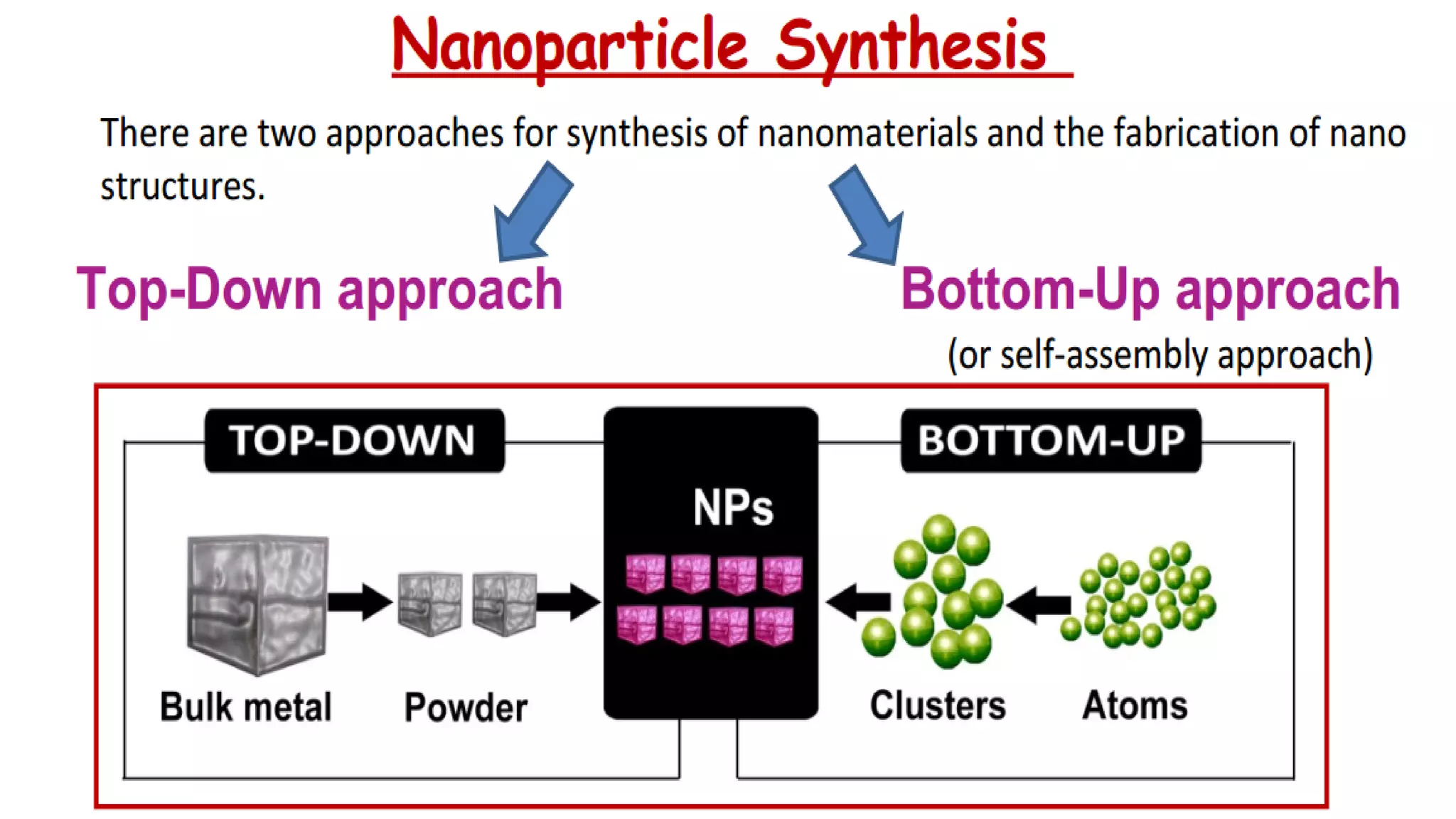
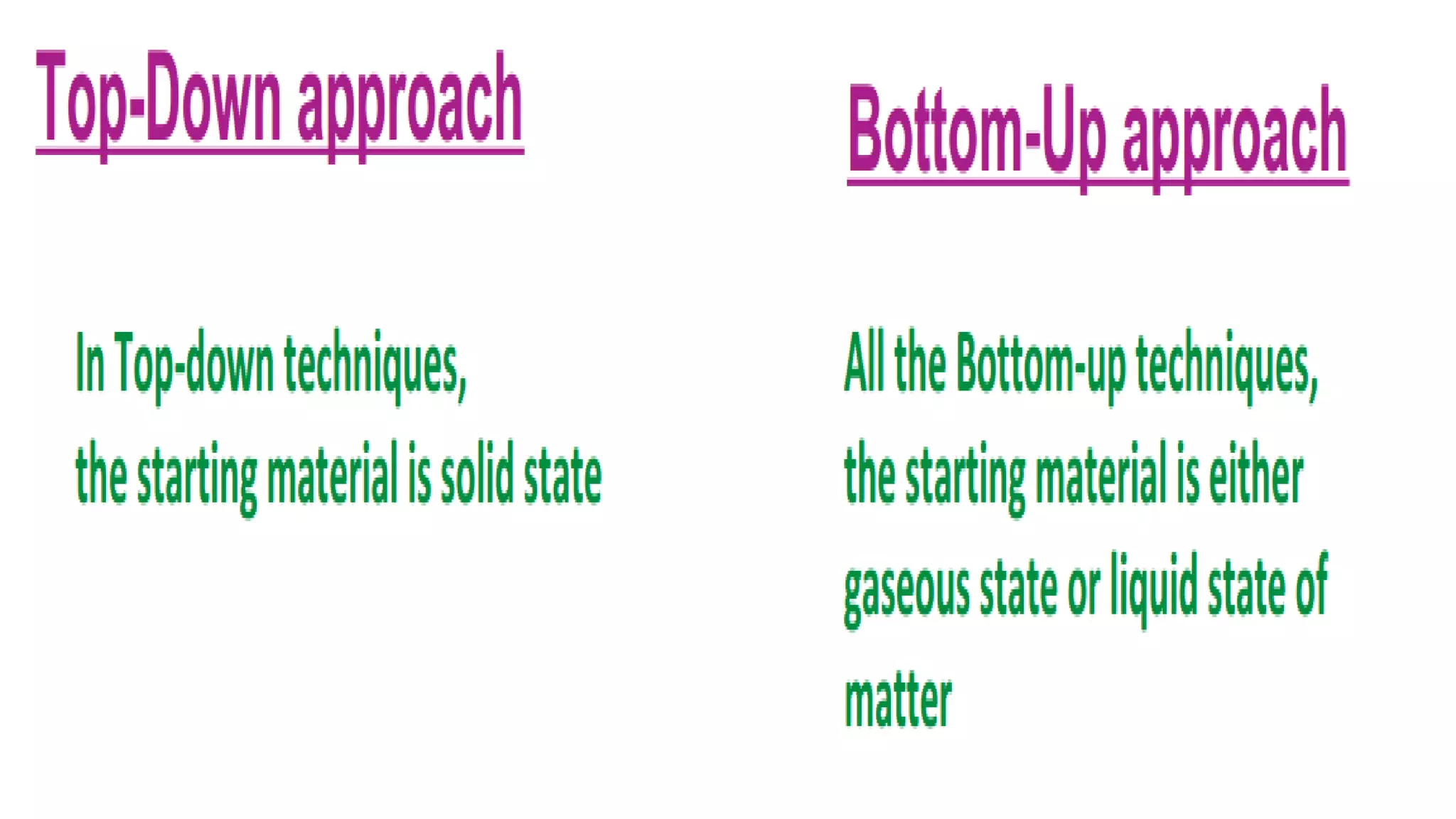
Top -Down
Nano-particles
Bottom-Up
• Getting a small size is not the only requirement.
• It should have
• i. Identical size of all particles (also called mono sized or with uniform size
distribution.
• ii. Identical shape or morphology.
• iii. Identical chemical composition and crystal structure that are desired among
different particles and within individual particles, such as core and composition
must be the same.
• iv. Individually dispersed or mono dispersed i.e., no agglomeration.
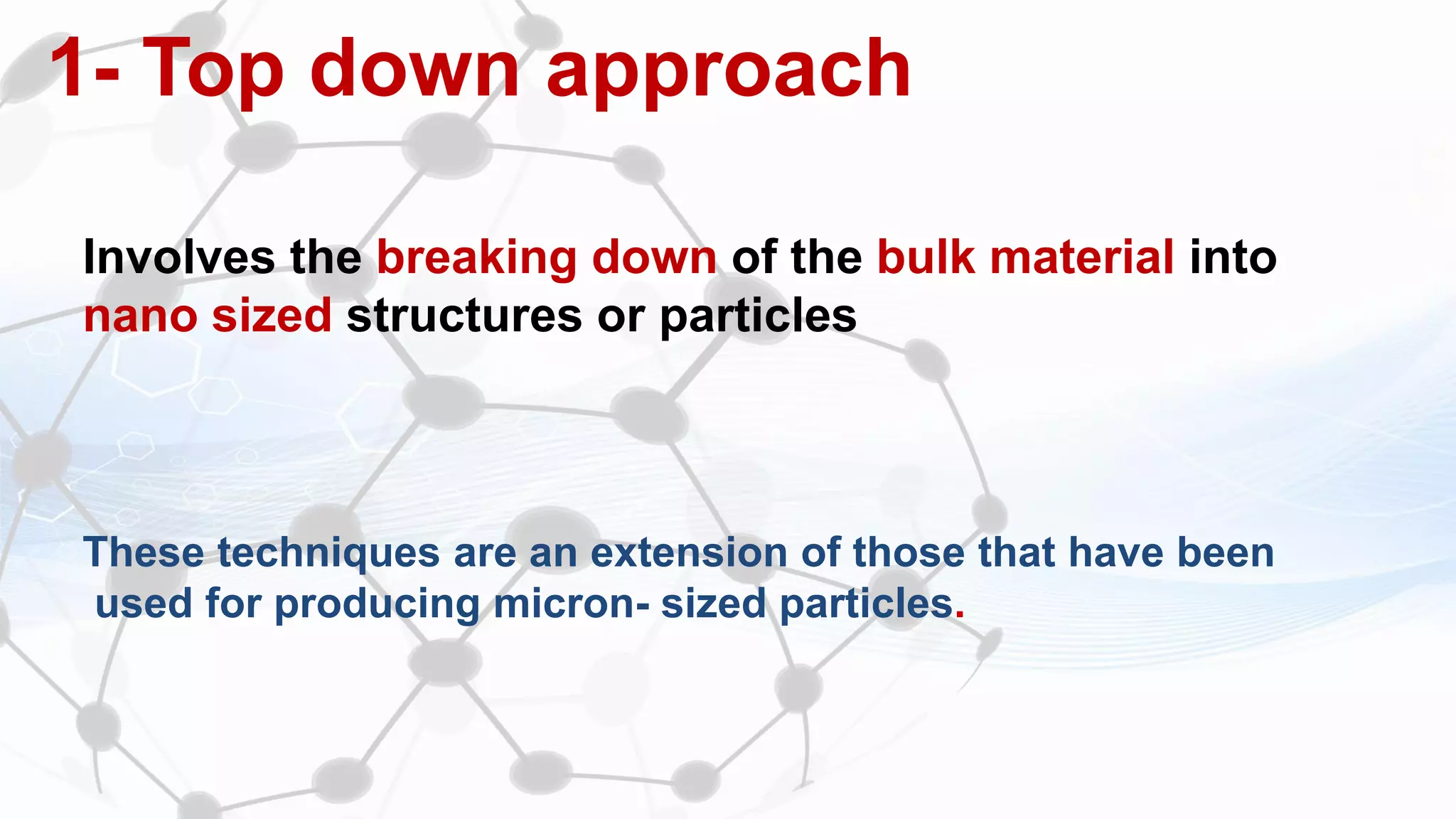
1- Top down approach
Involves the breaking down of the bulk material into
nano sized structures or particles
These techniques are an extension of those that have been
used for producing micron- sized particles.
High-Energy ball mill
Powders with typical
particle diameters of about
50 µm are placed together
with a number of hardened
steel or tungsten carbide
(WC) coated balls in a sealed
container which is shaken or
violently agitated. The most
effective ratio for the ball to
powder masses is 10 to 1.
Factors affect on ball milling process
• Milling Time
• Balls Number
• Balls weight
• Container volume
• Number of rounds per min.
2 T h e ta , d e g re e
2 0 3 0 4 0 5 0 6 0 7 0 8 0
I/Io
5 0 n m
8 9 n m
9 9 n m
1 4 3 n m
2 2 0 n m
Effect of milling on crystalline structure
XRD charts obtained for different
sizes achieved by the
mechanochemical activation reveals
that;
1. The intensity of the peaks increased
and sharpened by decreasing the
crystalline size.
2. The long time milling increases the
contaminants.
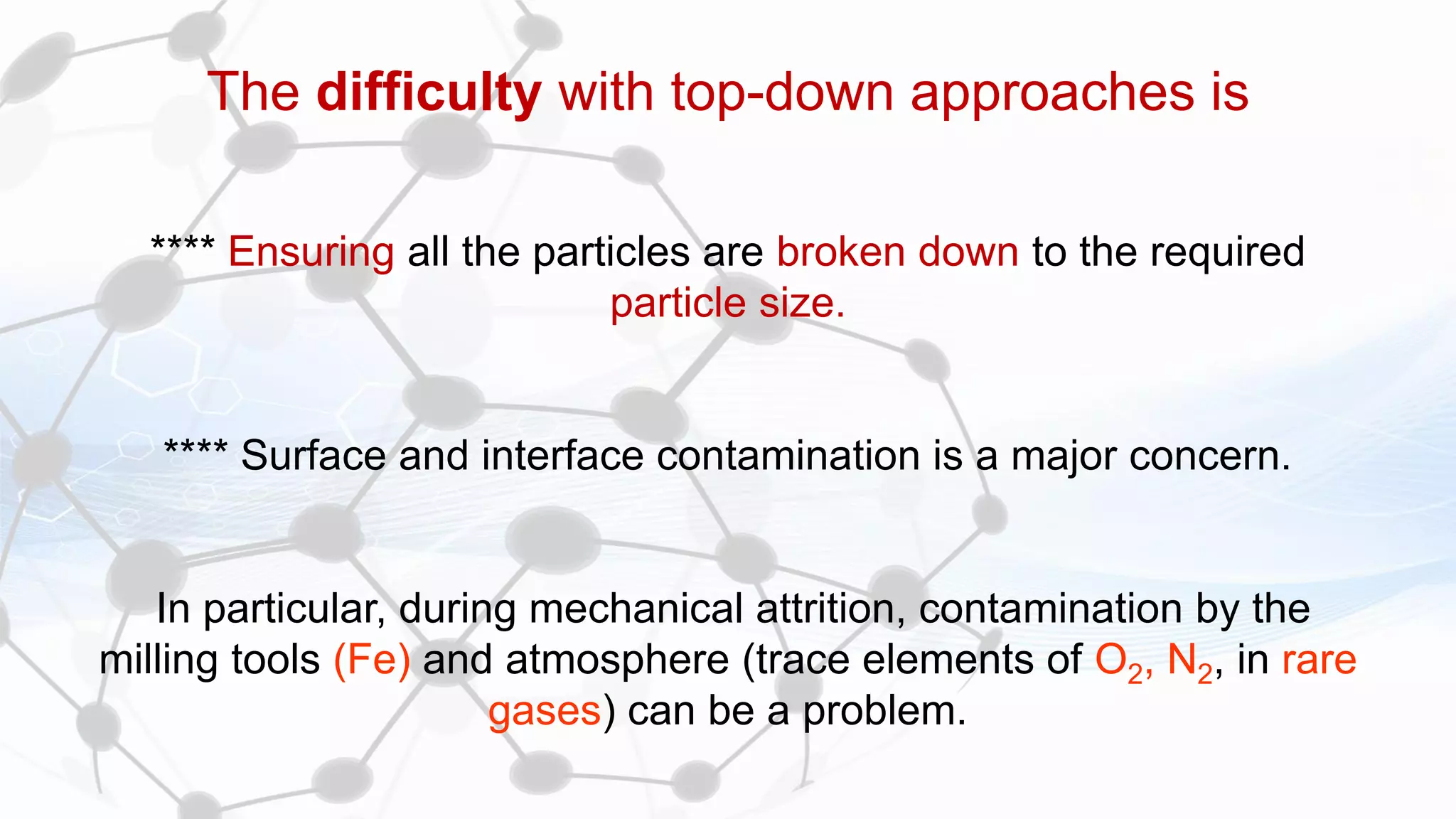
The difficulty with top-down approaches is
**** Ensuring all the particles are broken down to the required
particle size.
**** Surface and interface contamination is a major concern.
In particular, during mechanical attrition, contamination by the
milling tools (Fe) and atmosphere (trace elements of O2, N2, in rare
gases) can be a problem.
Bottom Up
This technique has the potential of
creating less waste and hence the more economical
Bottom up approach refers to the build up of a
material from the bottom: atom-by-atom, molecule-by-
molecule, or cluster-by-cluster.
Bottom Up
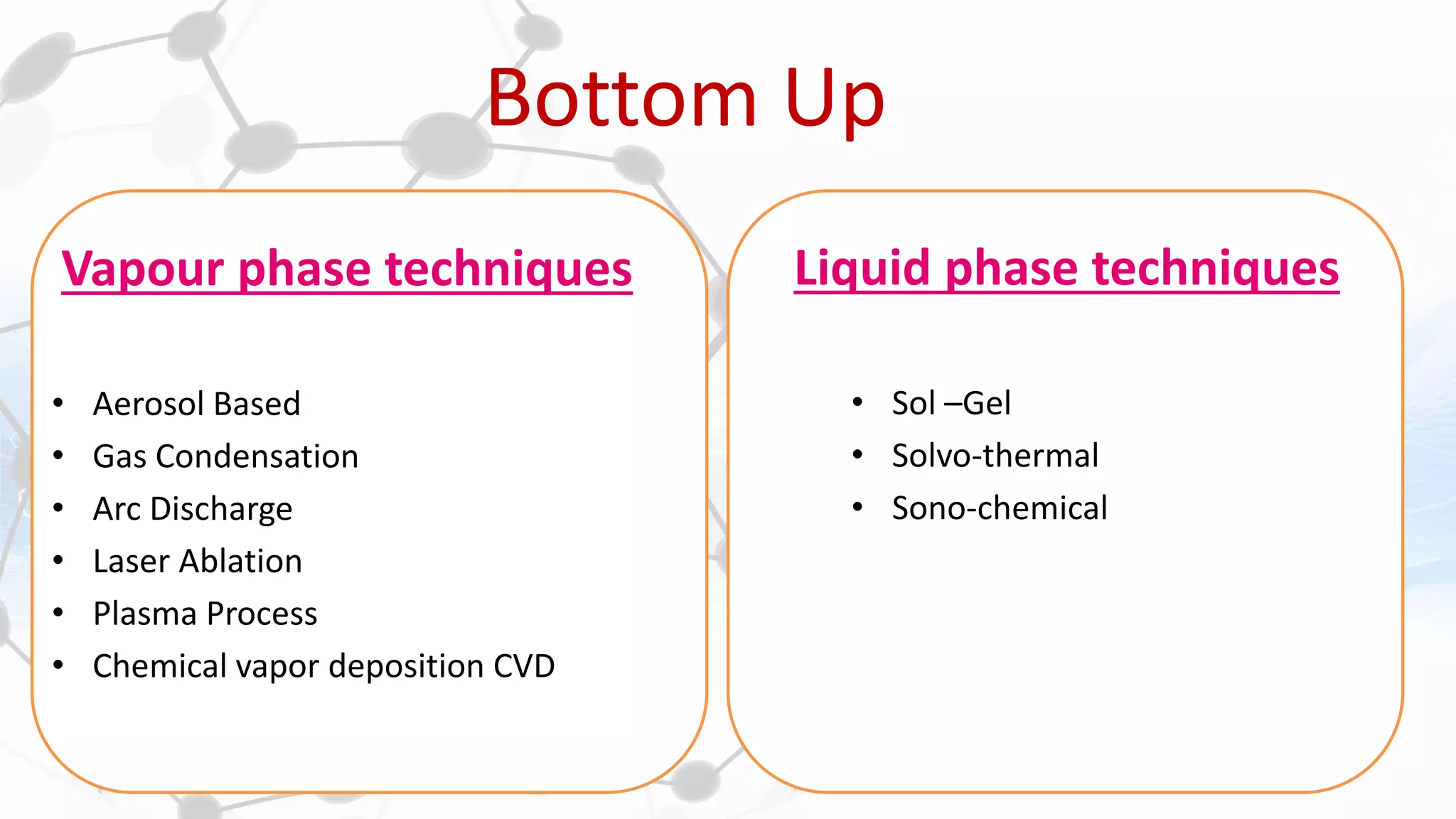
Vapour phase techniques
• Aerosol Based
• Gas Condensation
• Arc Discharge
• Laser Ablation
• Plasma Process
• Chemical vapor deposition CVD
Liquid phase techniques
• Sol –Gel
• Solvo-thermal
• Sono-chemical
- Sol –Gel
- Solvo-thermal
- Sono-chemical
Liquid phase techniques
Sol – Gel
Step 3: Aging of the gel (Syneresis), during which the
polycondensation reactions continue until the gel transforms
into a solid mass,
Step 2: Gelation resulting from the formation of an oxide- or
alcohol- bridged network (the gel)
The sol-gel process can be characterized by a series of distinct steps.
Step 1: Formation of different stable solutions of the alkoxide
or solvated metal precursor (the sol).
Step 4: Drying of the gel
Step 5: Dehydration This is normally achieved by calcining at
temperatures up to 8000C.
Step 6: Densification and decomposition of the gels at high
temperatures (T>800oC).
The pores of the gel network are collapsed, and remaining
organic species are volatilized. The typical steps that are
involved in sol-gel processing are shown in the schematic
diagram below.
SOLVOTHERMAL REACTIONS
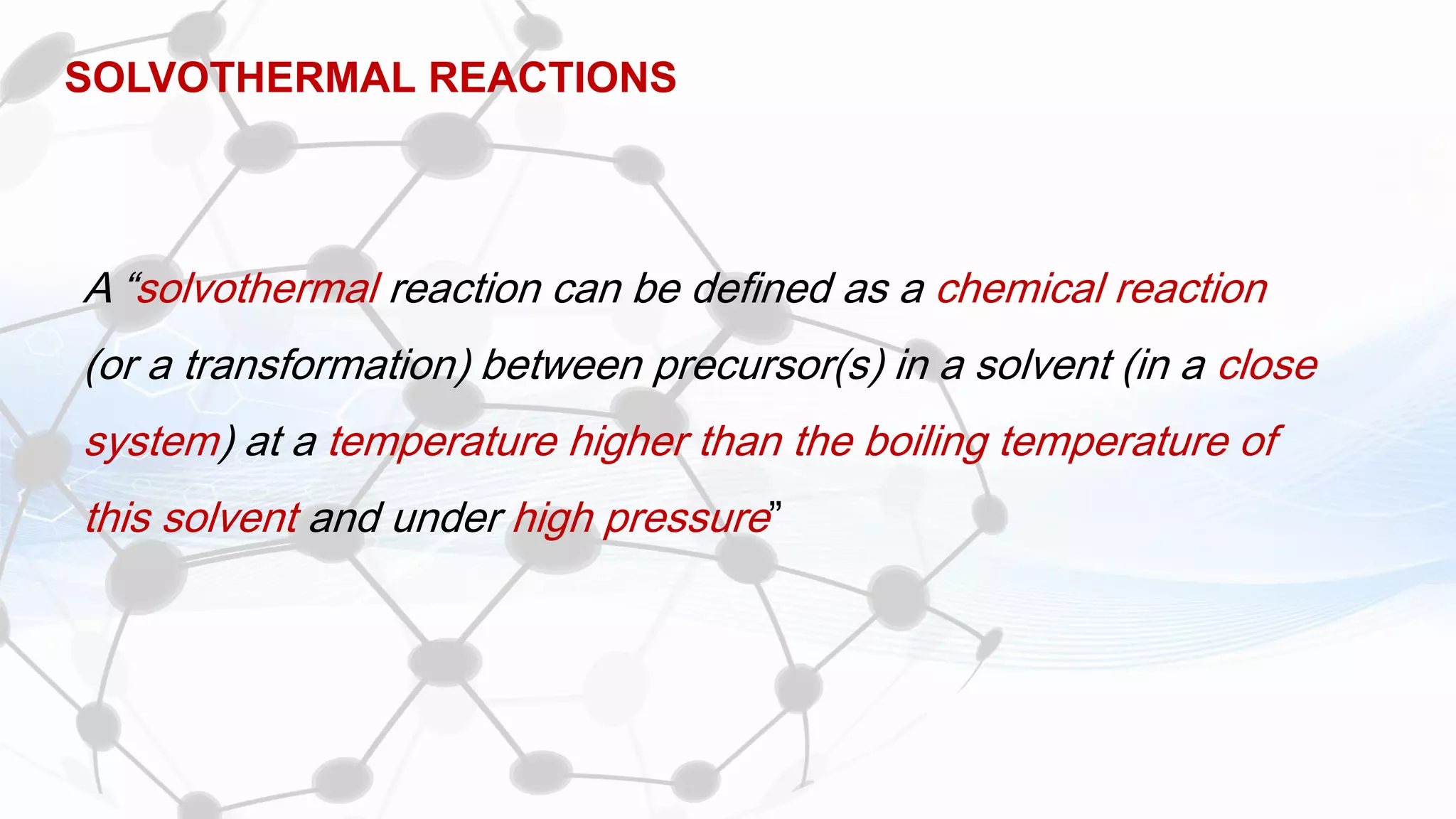
A “solvothermal reaction can be defined as a chemical reaction
(or a transformation) between precursor(s) in a solvent (in a close
system) at a temperature higher than the boiling temperature of
this solvent and under high pressure”
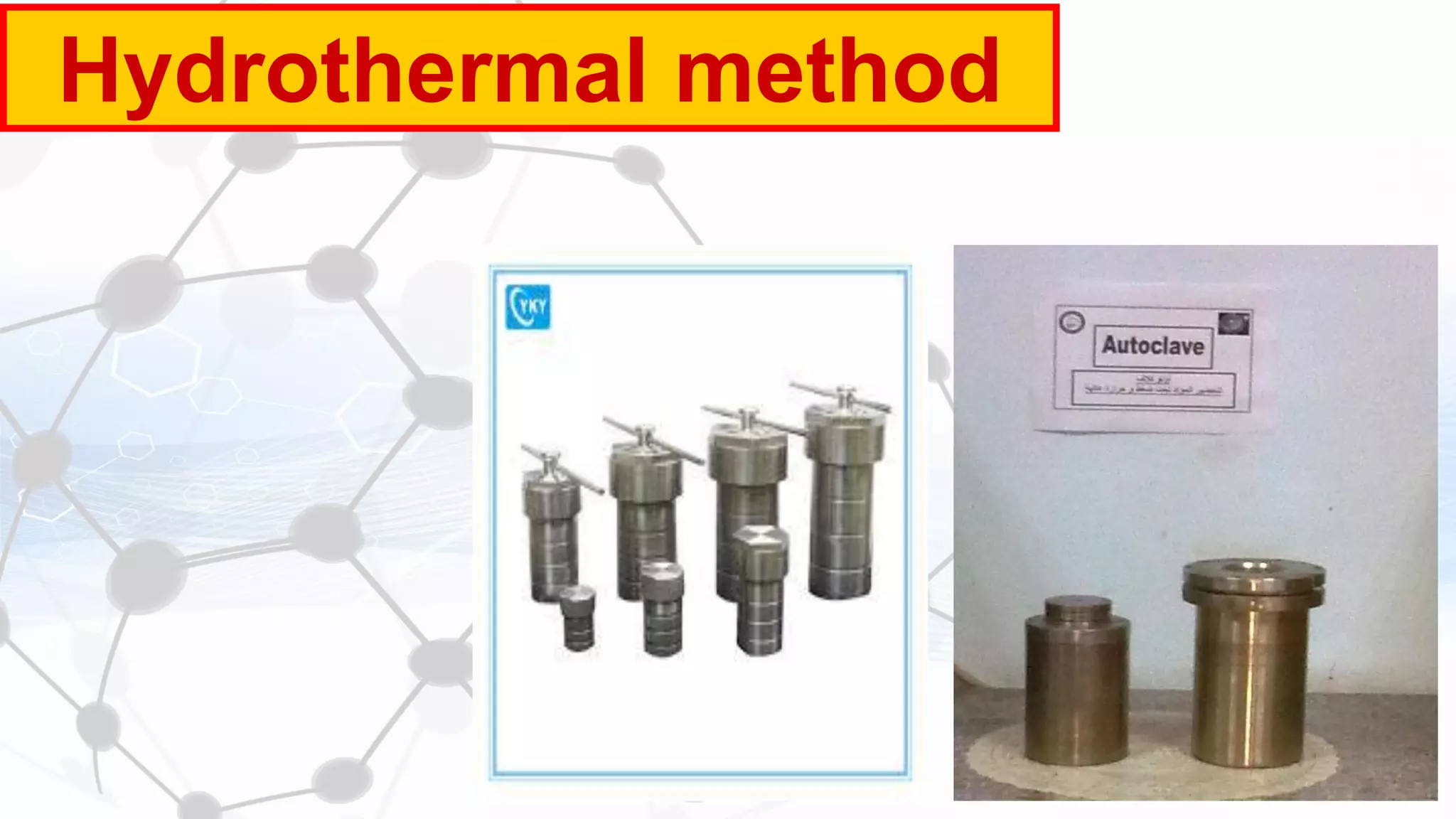
Hydrothermal method
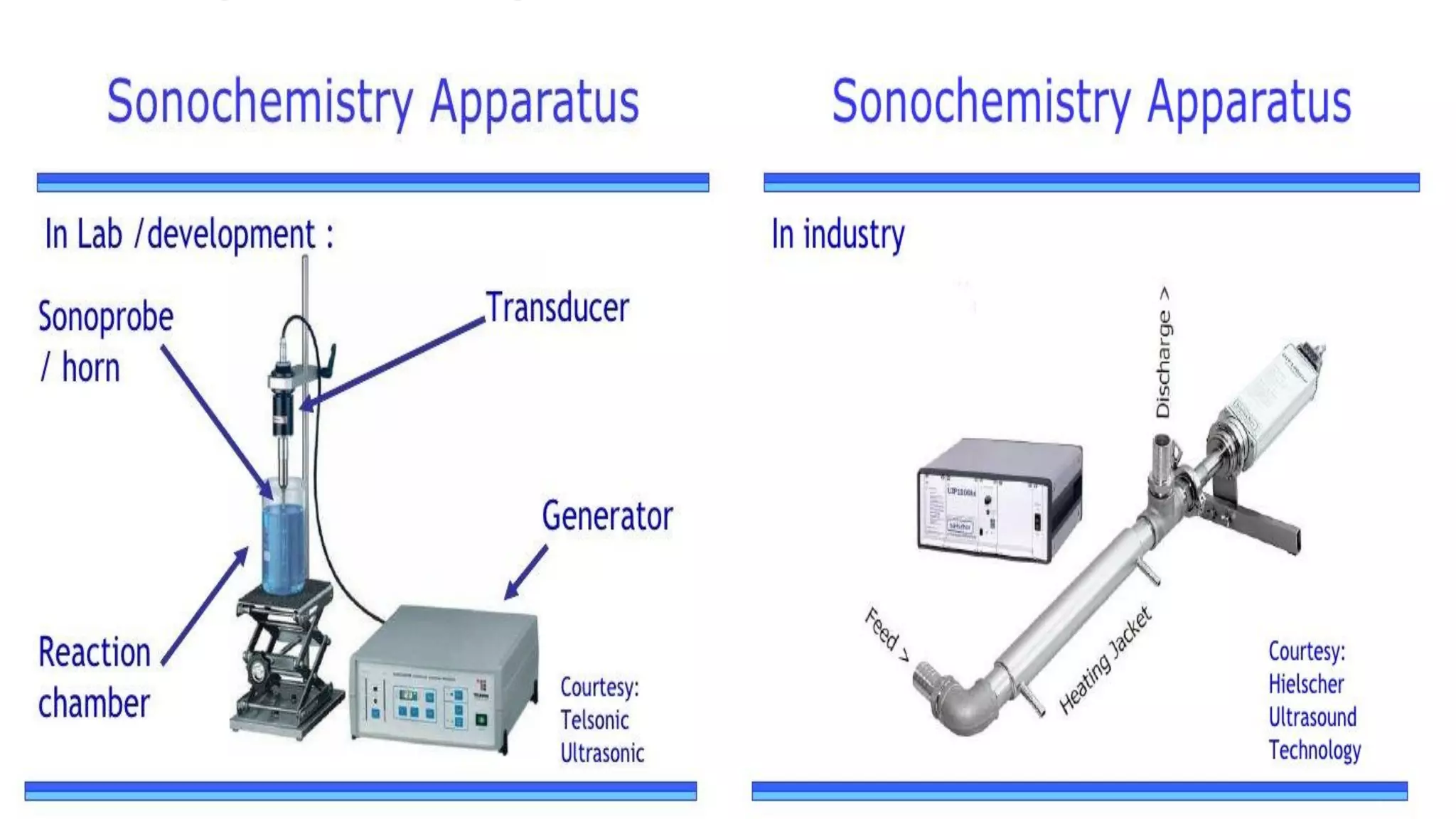
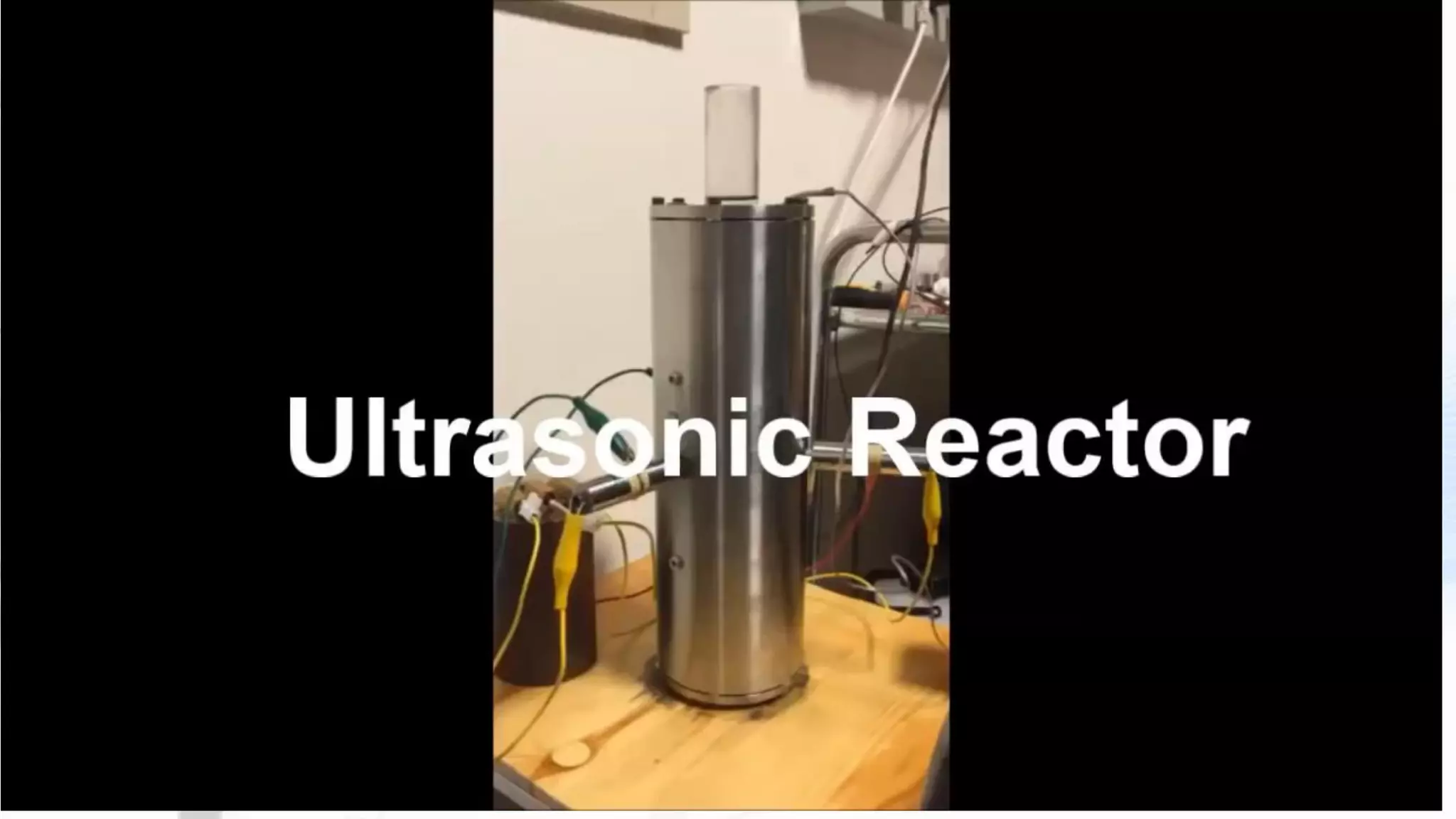
Sonochemistry is the research area in which molecules
undergo chemical reaction due to the application of powerful
ultrasound radiation
The main advantage in conducting sonochemical experiments is that it
is very inexpensive
. This method has been extensively used to produce nanosized materials with
unusual properties, since the unique conditions (very high temperatures (5000 K),
pressures (>20 MPa) and cooling rates (>109 K s1)) facilitate the formation of
smaller particles and different shapes of products compared to other methods
• Vapour phase techniques
• Gas Condensation
• Aerosol Based
• Arc Discharge
• Laser Ablation
• Plasma Process
• Chemical vapor deposition CVD
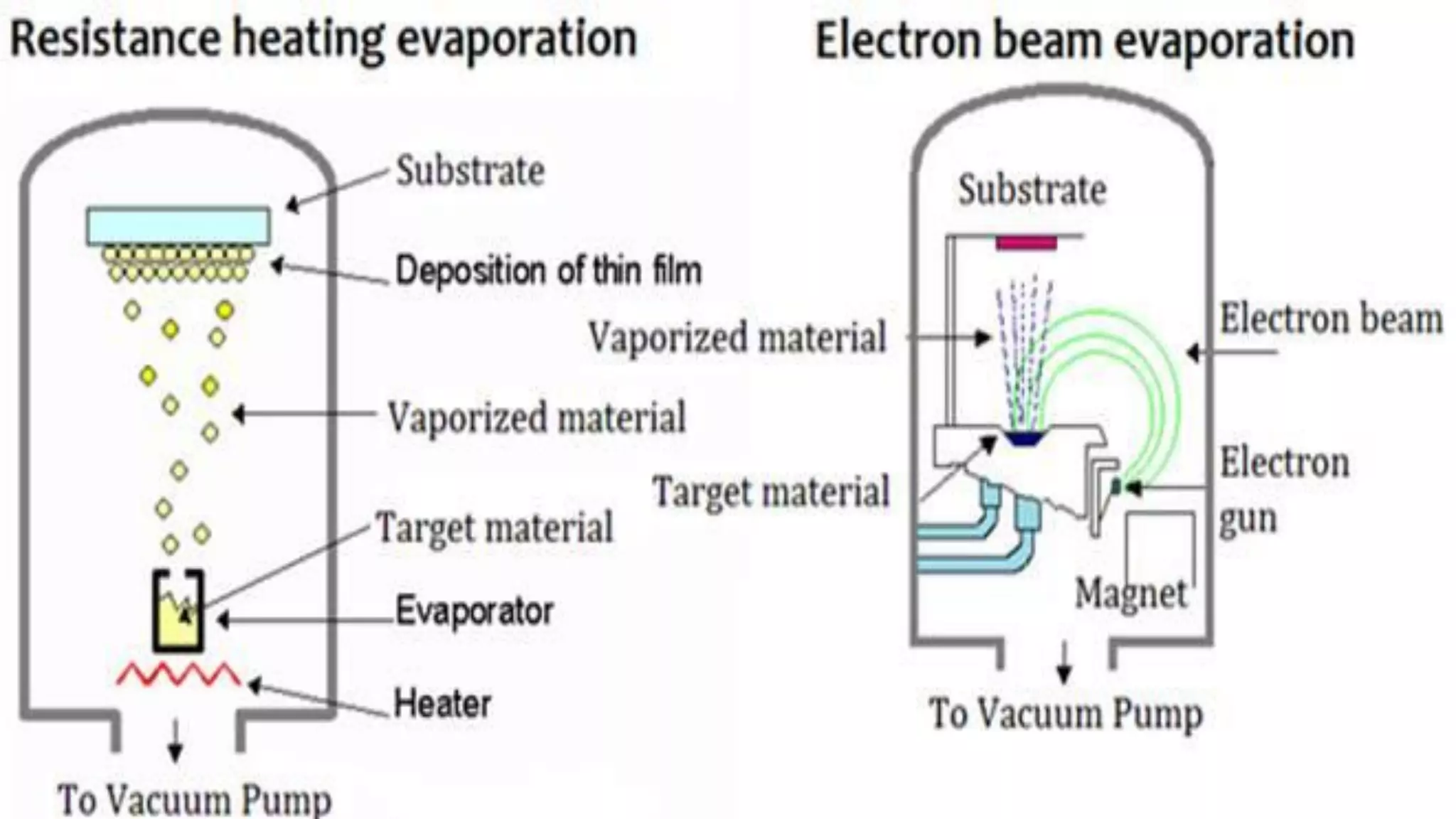
Gas Condensation Processing (GCP)
•Gas condensation was the first technique used to synthesize
nanocrystalline metals and alloys.
• a metallic or inorganic material is vaporized
using thermal evaporation sources;
•Joule heated refractory crucibles,
•electron beam evaporation devices
•sputtering sources in an atmosphere of 1-50
mbar He (or another inert gas like Ar, Ne
• Cluster form in the vicinity of the source by
homogenous nucleation in the gas phase and grow.
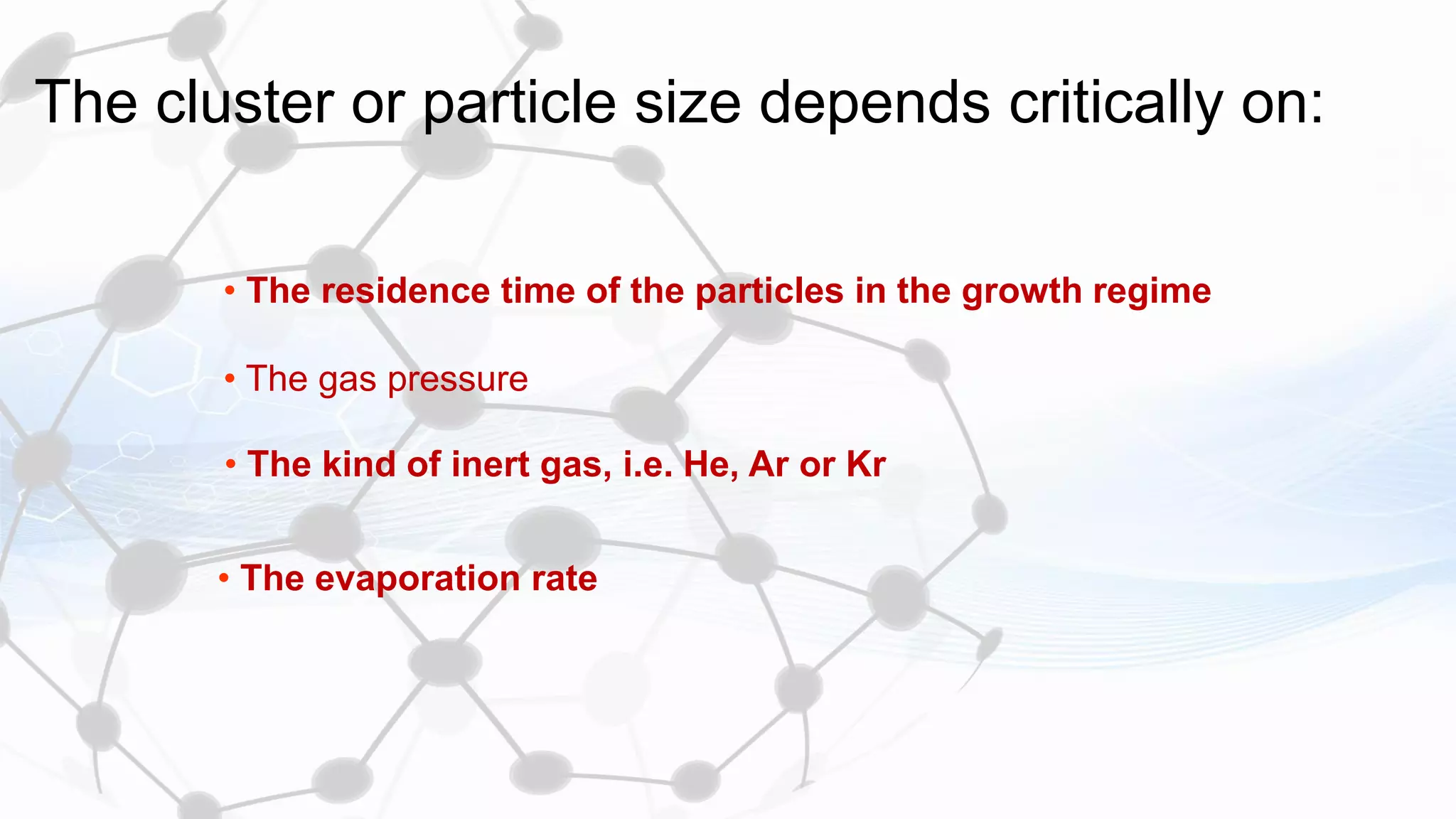
• The evaporation rate
• The kind of inert gas, i.e. He, Ar or Kr
• The gas pressure
The cluster or particle size depends critically on:
• The residence time of the particles in the growth regime
Aerosol Based
An aerosol can be defined as a system of solid or liquid
particles suspended in air or other gaseous environment.
For example, pigments as carbon black particles and titania
were used as reinforcements for car tires and for the
production of paints and plastics, respectively
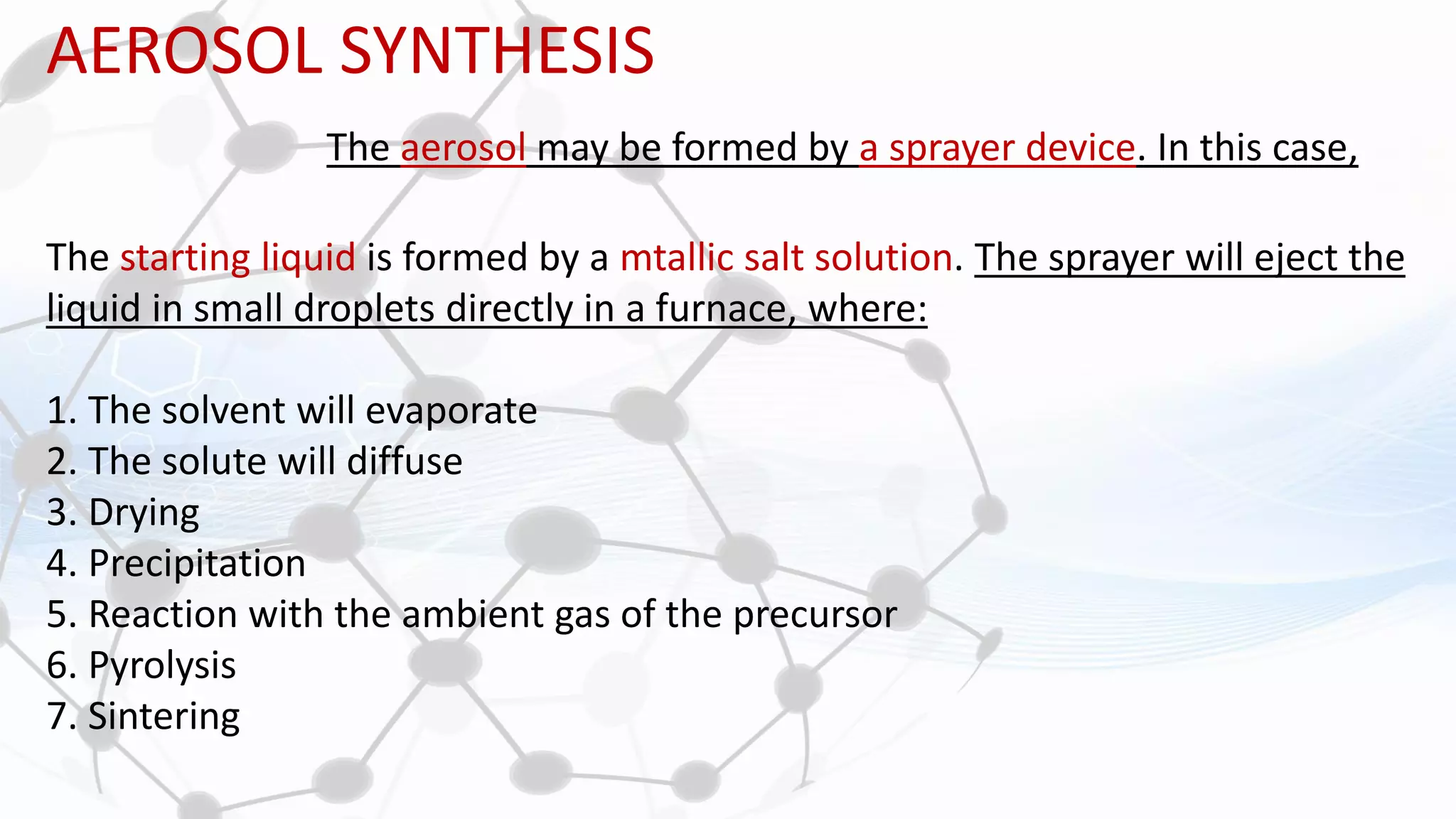
AEROSOL SYNTHESIS
The aerosol may be formed by a sprayer device. In this case,
The starting liquid is formed by a mtallic salt solution. The sprayer will eject the
liquid in small droplets directly in a furnace, where:
1. The solvent will evaporate
2. The solute will diffuse
3. Drying
4. Precipitation
5. Reaction with the ambient gas of the precursor
6. Pyrolysis
7. Sintering
Spray Pyrolysis
Spray Pyrolysis
• In this process a laser beam is used as the primary excitation
source of ablation for generating clusters directly from a solid
sample in a wide variety of applications.
Laser ablation:
• The hot metal vapor is entrained in a
pulsed flow of carrier gas (typically He)
and expanded through a nozzle into a
vacuum.
•Silver Nano Particles
Synthesis of Silver nanoparticles
* Physical approaches
* Chemical approaches
* Biological approaches
A. Physical approaches
1) Evaporation-condensation
2) Laser ablation
B. Chemical approaches
1) Reduction by tri-sodium citrate
2) Reduction by sodium borohydride
3) UV irradiation
4) Gamma irradiation
5) Laser irradiation
6) Microwave irradiation
7) Sonochemical reduction
8) Sonoelectrochemical method
9) Electrochemical method
10) Polysaccharide method
11) Tollens method
C. Biological approaches
1) Synthesis of Ag NPs by bacteria
2) Synthesis of Ag NPs by fungi
3) Synthesis of Ag NPs by plants
1) Evaporation-condensation
 Vaporize the material into gas, and then cool the gas.
a) Using a tube furnace
b) Using a small ceramic heater with a local heating source
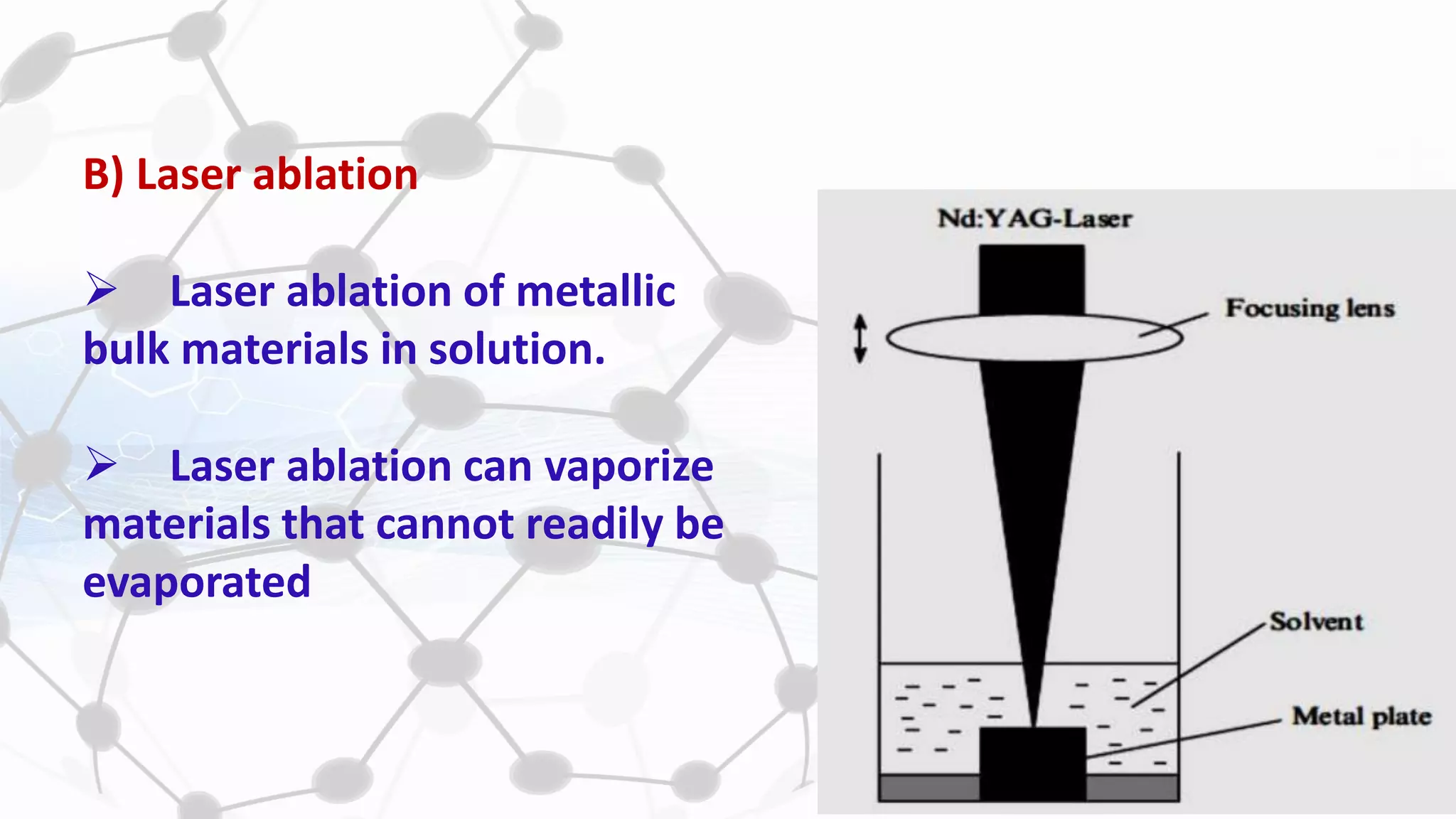
B) Laser ablation
 Laser ablation of metallic
bulk materials in solution.
 Laser ablation can vaporize
materials that cannot readily be
evaporated
B) Chemical approaches
 The most common approach for synthesis of silver
nanoparticles is chemical reduction.
 In general, different reducing agents such as;
Sodium citrate,
Ascorbate,
Sodium borohydride (NaBH4),
Elemental hydrogen,
Polyol process
Tollens reagent
are used for reduction of silver ions.
1) Reduction by tri-sodium citrate
2)
Steps
1. Dissolve 0.09 g AgNO3 in 500 ml water
2. Heating near boiling (95–98°C)
3. Add 1% tri-sodium citrate solution (0.1 g dissolved in 10 ml
water) dropwise, one drop per second
4. Continue heating 95–98°C (near boiling) for 15–90 min.
Yellow color indicates the formation of Ag NPs.
5. Wait until reaching room temperature, and then store in
the dark at 2–8°C
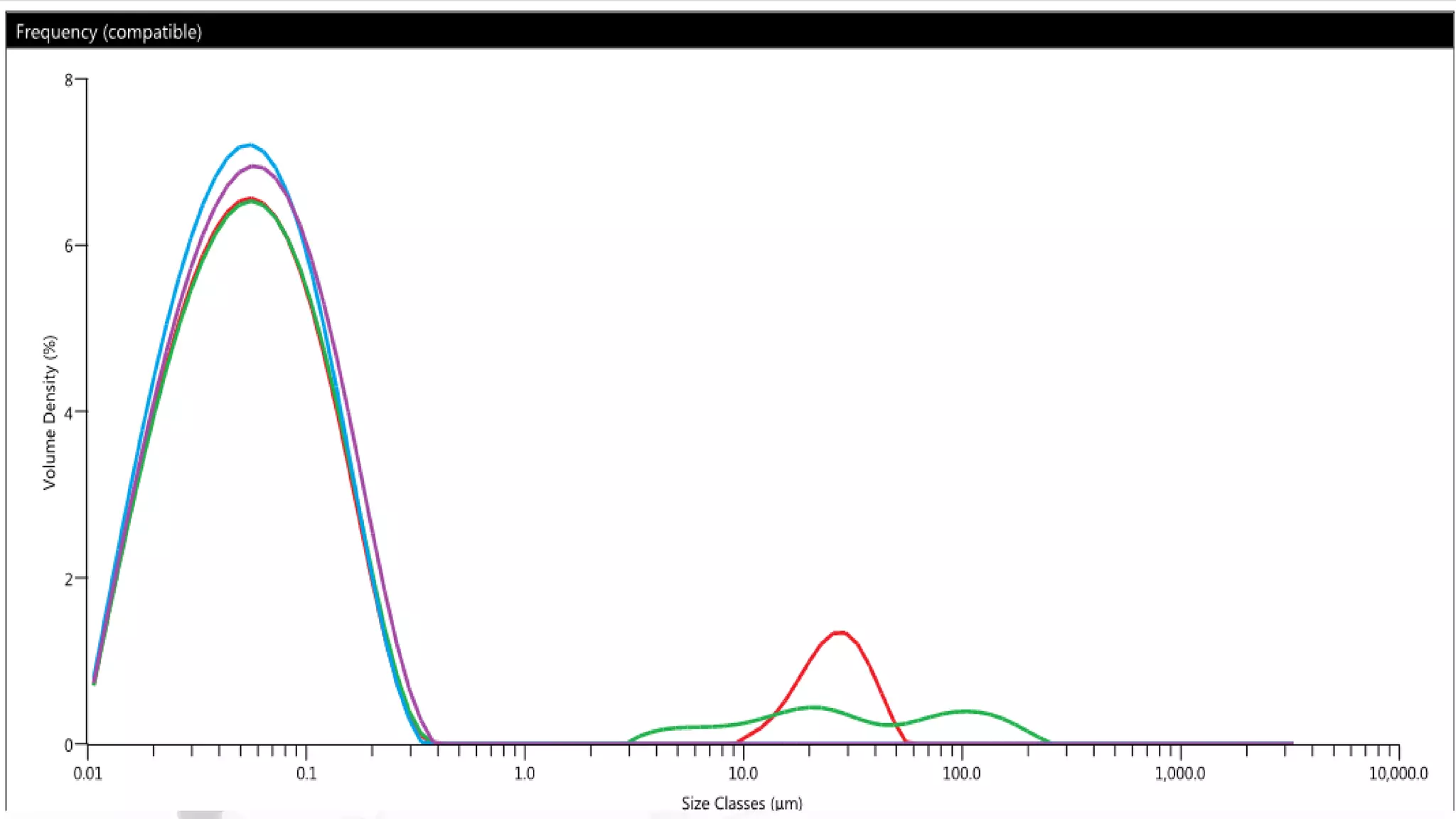
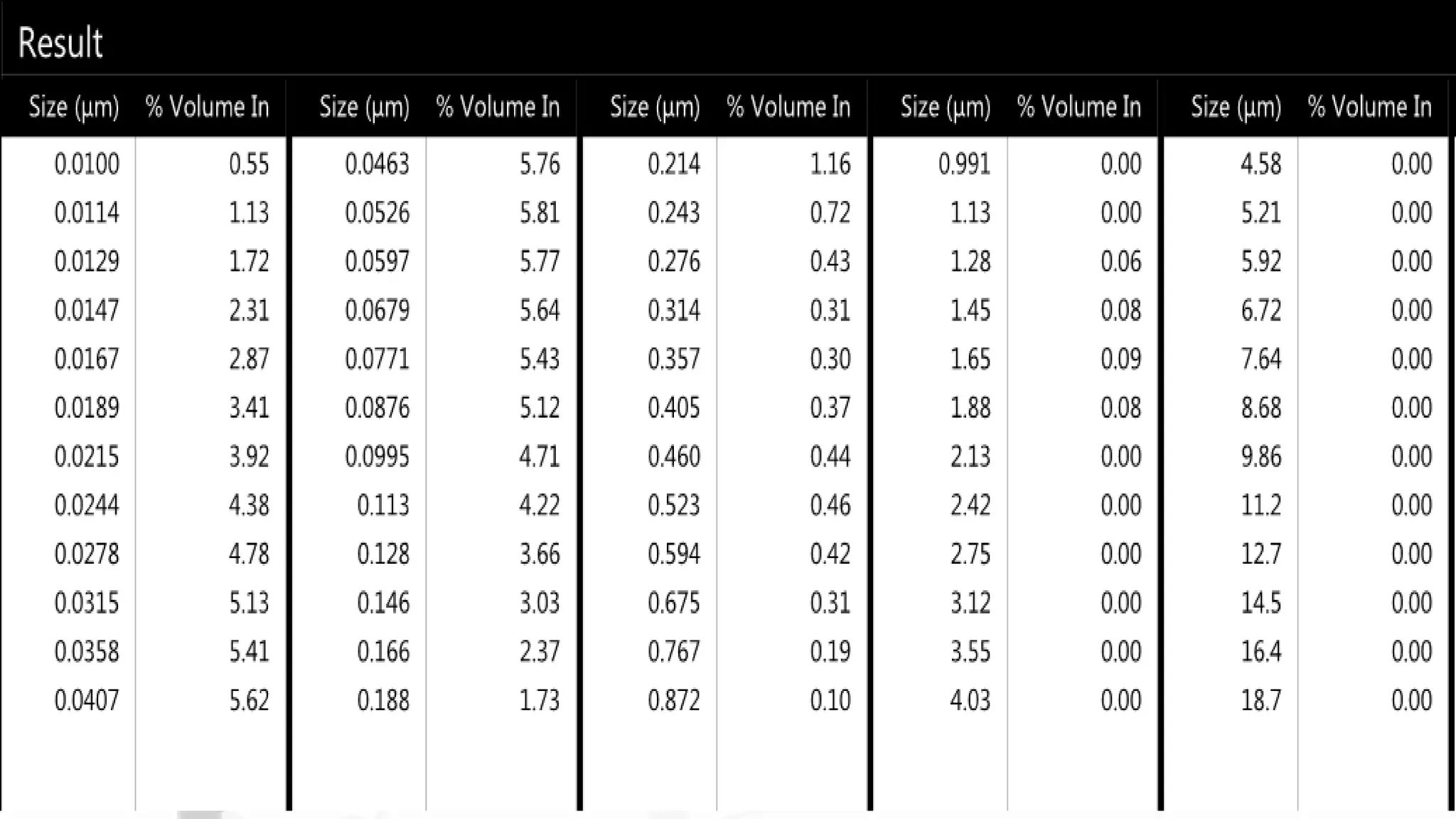
Two types of nanomaterial characterization:
• Spectroscopic methods
i.e. UV-VIS, DLS
• Imaging methods
i.e. TEM, SEM, AFM
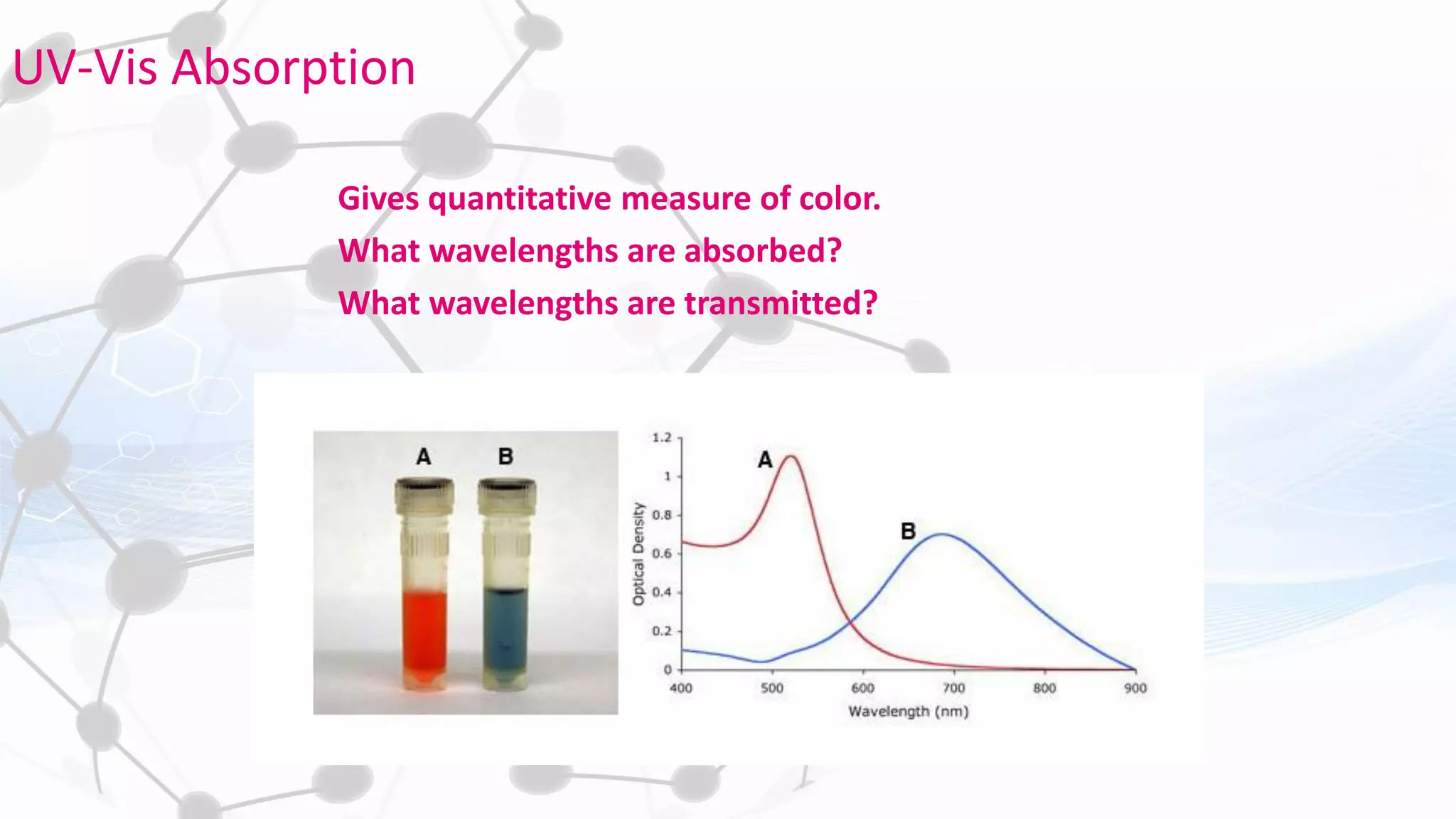
• Color of a nanoparticle solution is
dependent on nanoparticle size.
UV-Vis Absorption
Gives quantitative measure of color.
What wavelengths are absorbed?
What wavelengths are transmitted?
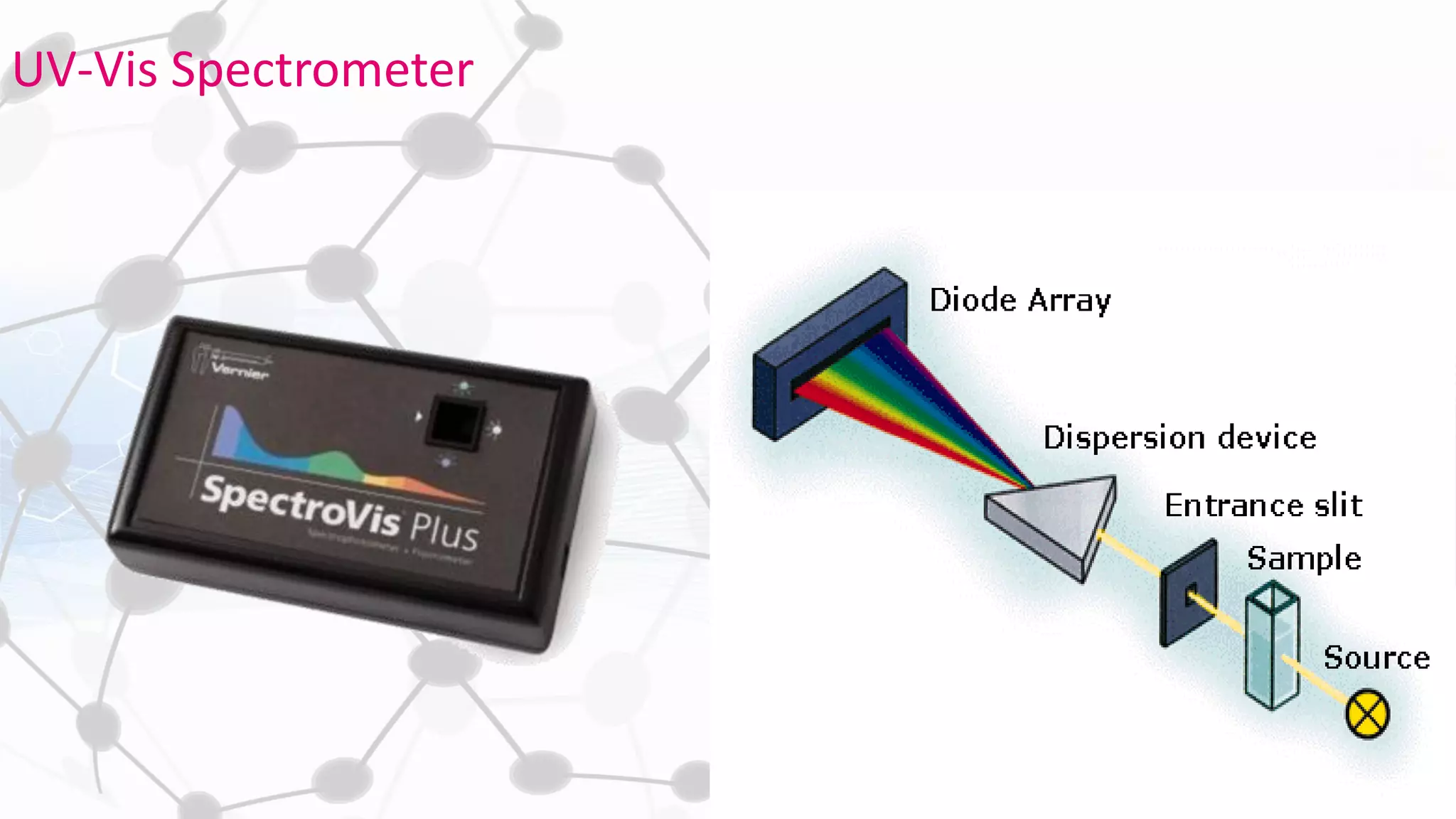
UV-Vis Spectrometer
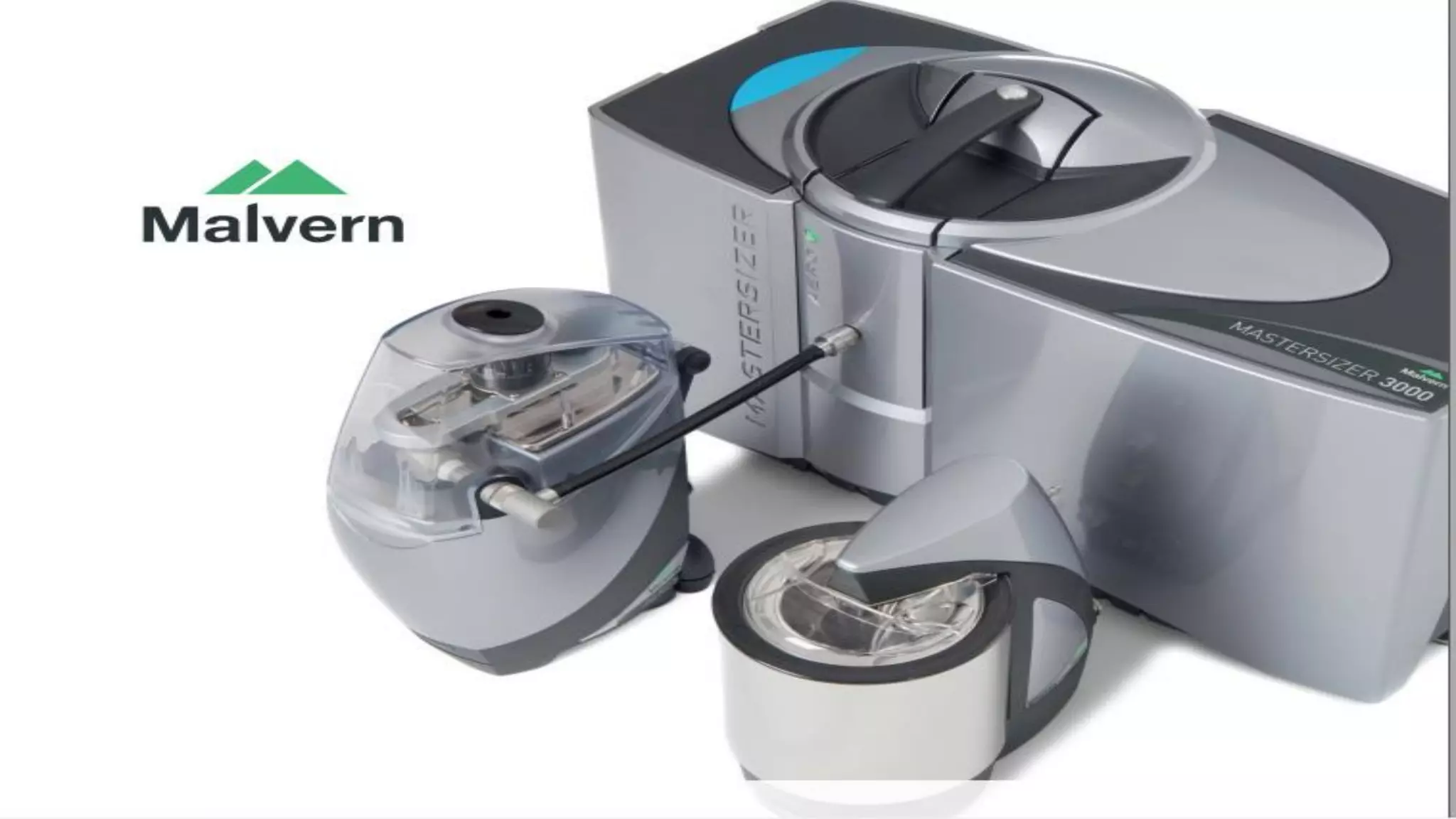
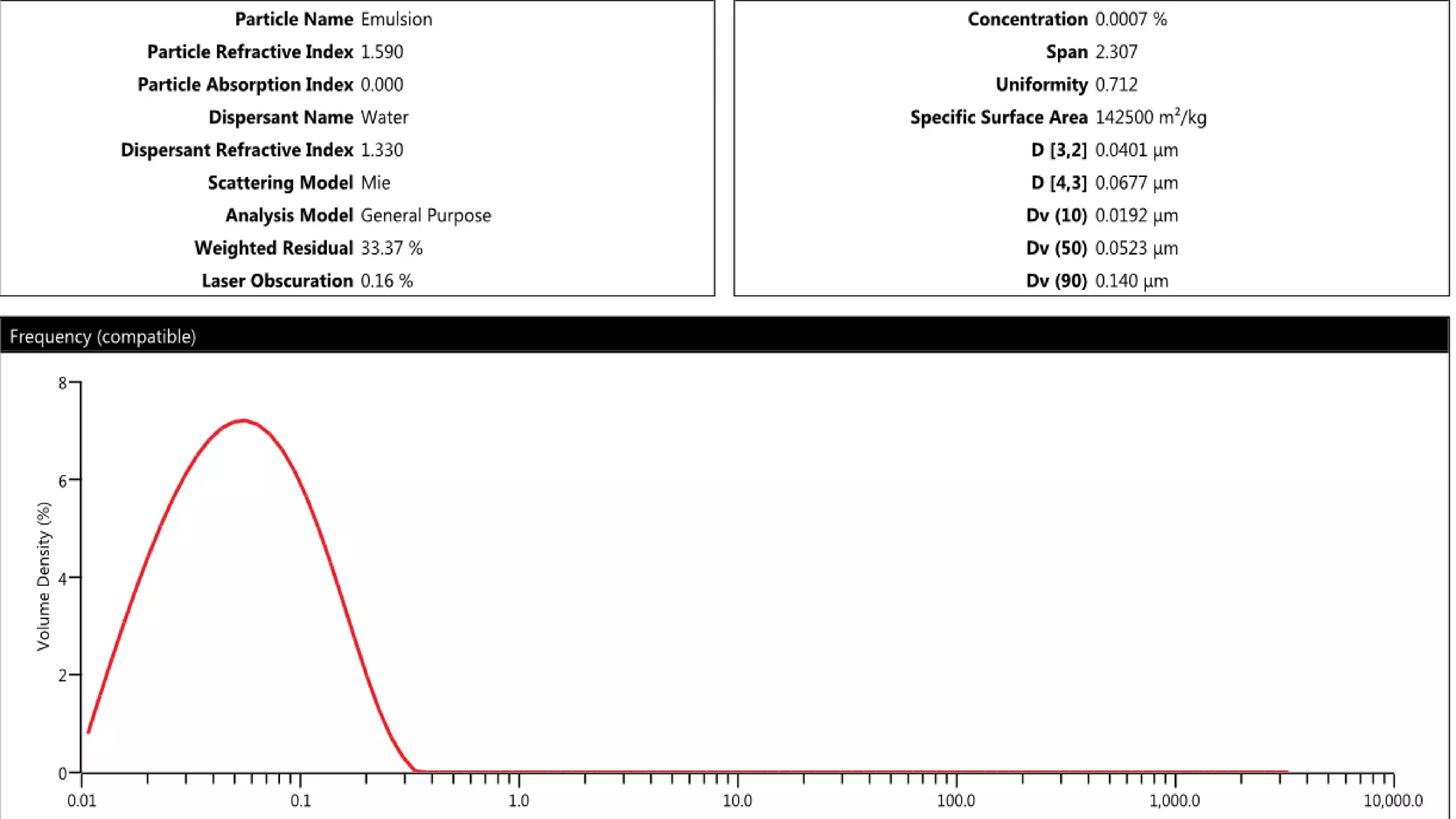
Dynamic Light Scattering (DLS)
• DLS measures the Brownian motion of the
nanoparticles and correlates this to particle size
Imaging Methods
Light (Optical) Microscopy
Electron Microscopy
• TEM
• SEM
Scanning Probe Microscopy
• STM
• AFM
• Profilometry
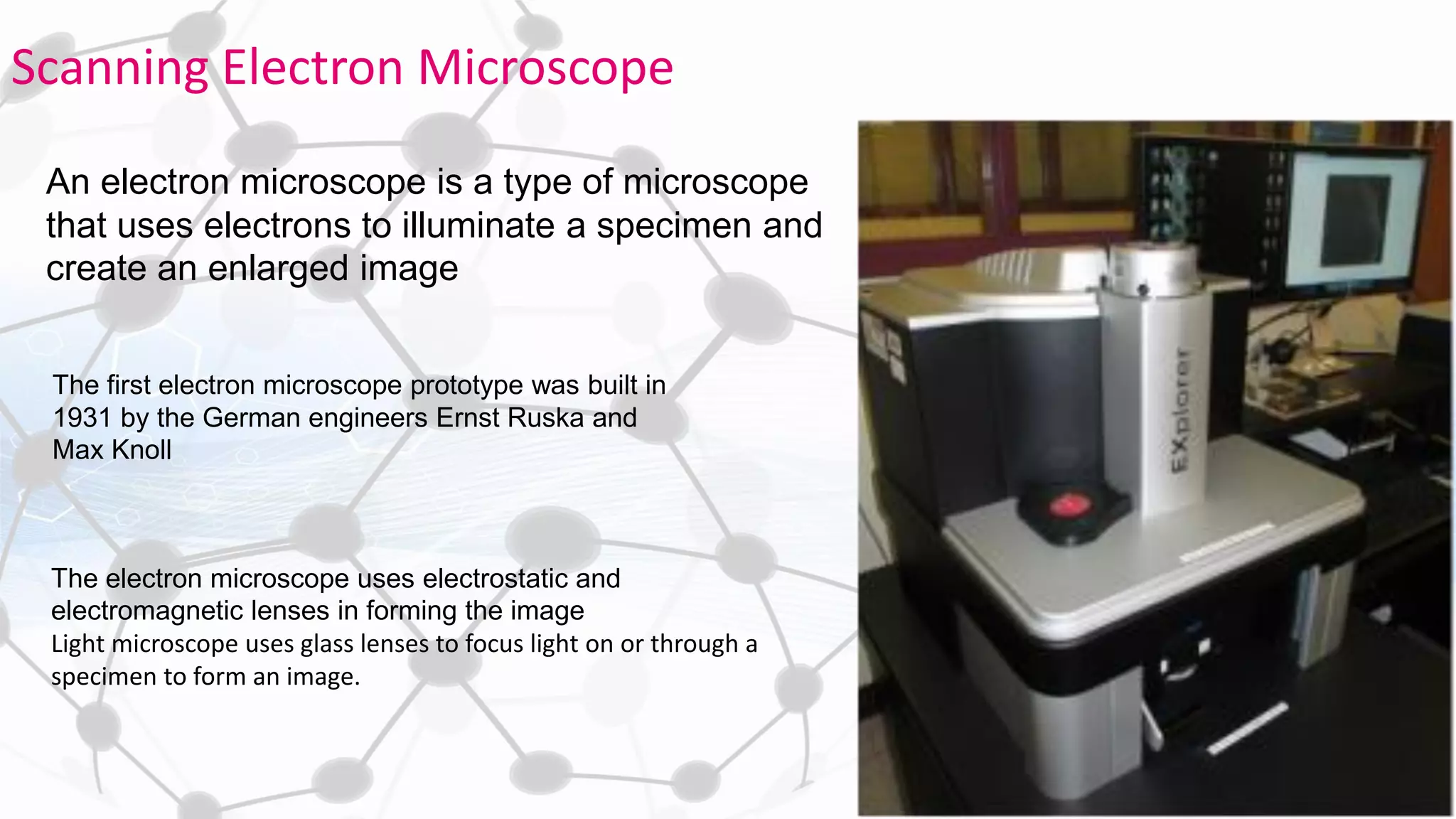
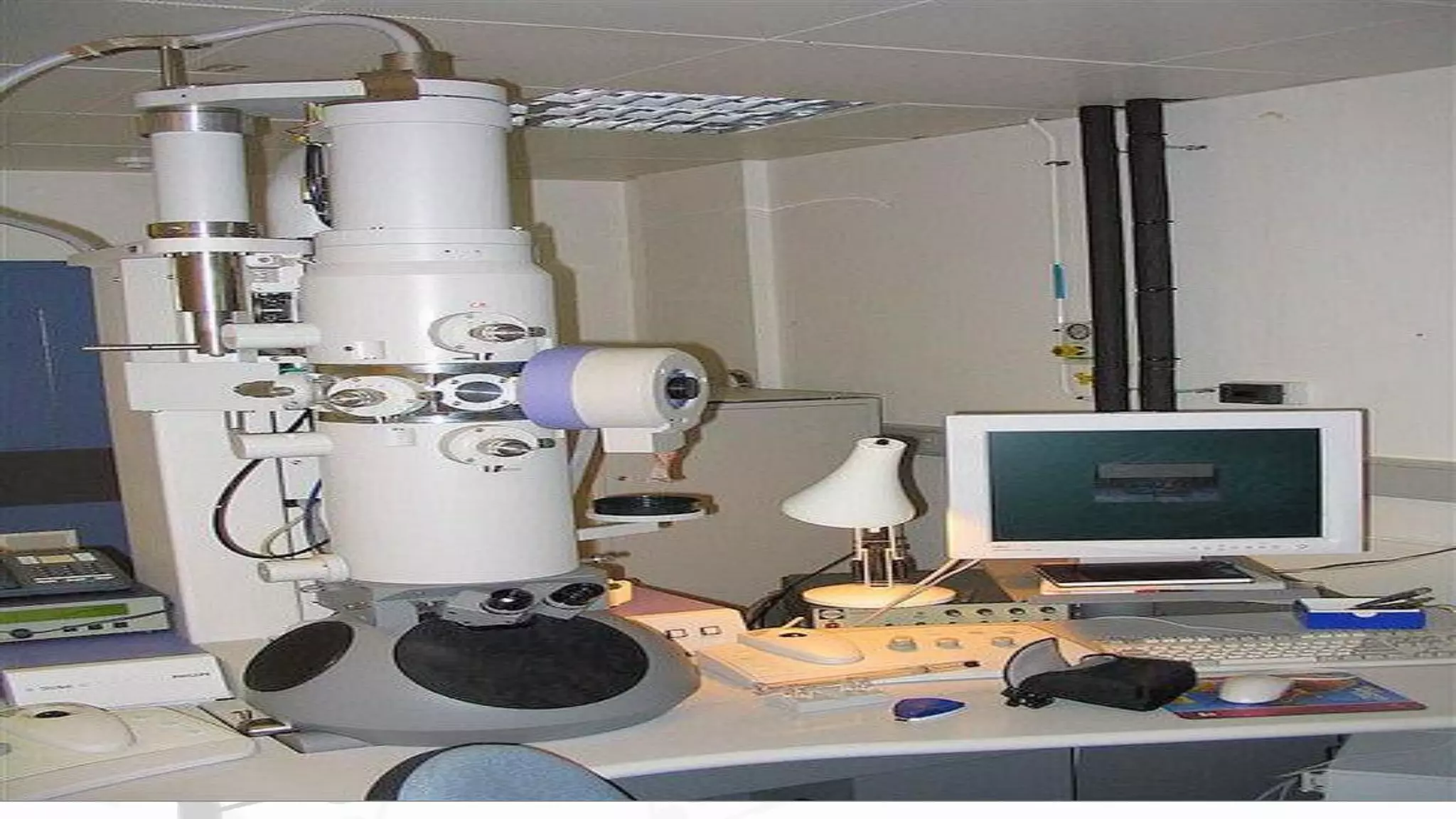
An electron microscope is a type of microscope
that uses electrons to illuminate a specimen and
create an enlarged image
The first electron microscope prototype was built in
1931 by the German engineers Ernst Ruska and
Max Knoll
The electron microscope uses electrostatic and
electromagnetic lenses in forming the image
Light microscope uses glass lenses to focus light on or through a
specimen to form an image.
Scanning Electron Microscope
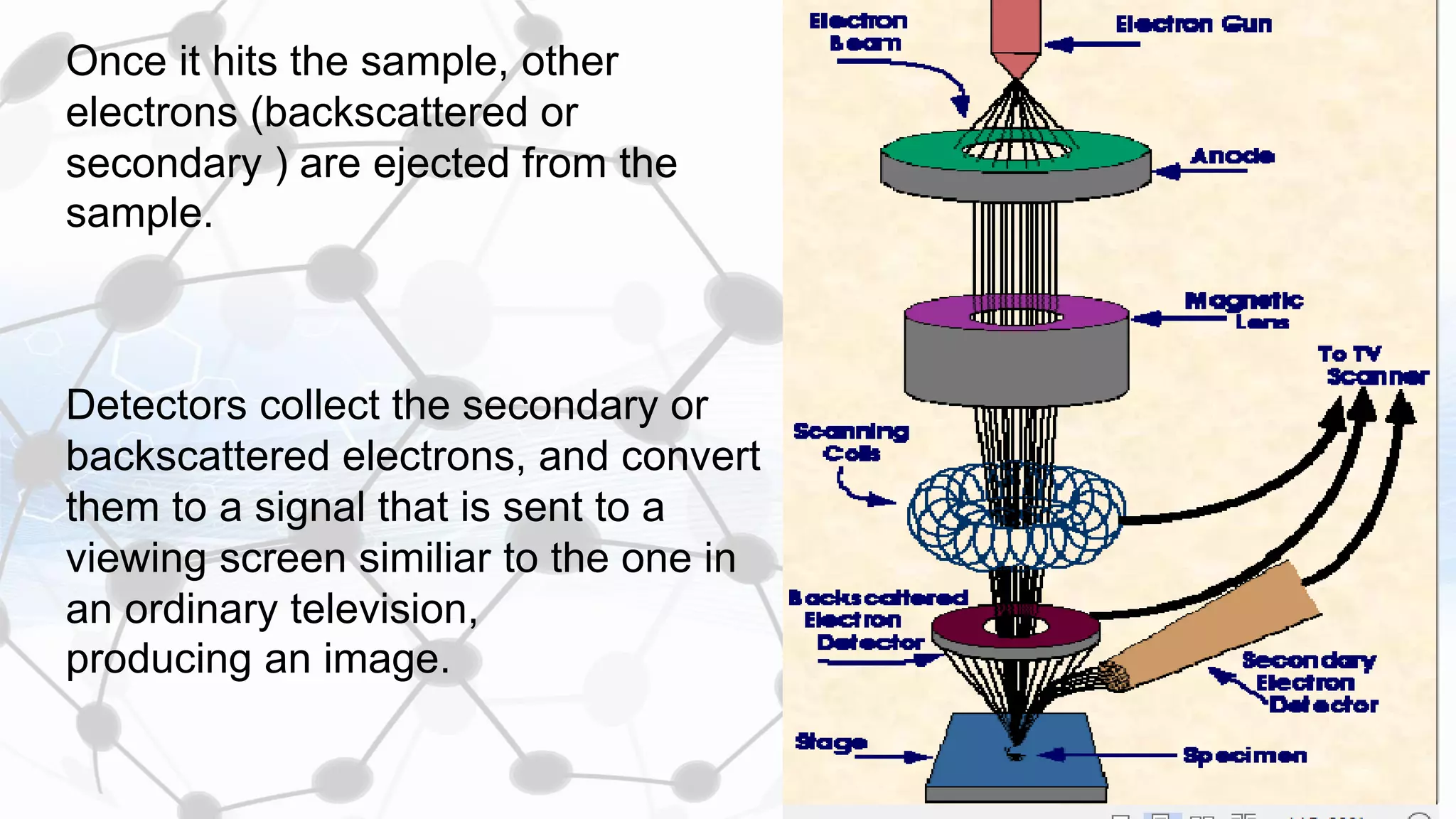
• Scanning Electron Microscope (SEM)
1. e- beam strikes sample and electron
penetrate surface
2. Interactions occur between electrons
and sample
3. Electrons and photons emitted from
sample
4. Emitted e- or photons detected
Once it hits the sample, other
electrons (backscattered or
secondary ) are ejected from the
sample.
Detectors collect the secondary or
backscattered electrons, and convert
them to a signal that is sent to a
viewing screen similiar to the one in
an ordinary television,
producing an image.
Why SEM?
The scanning electron microscope (SEM) uses a focused beam
of high-energy electrons to generate a variety of signals at the
surface of solid specimens.
The signals that derive from electron-sample interactions reveal
information about the sample including :
- external morphology (texture),
- chemical composition,
- crystalline structure ,
- and orientation.
Electron-Sample interactions
Transmission Electron Microscope
• Transmission Electron Microscope (TEM)
1. e-beam strikes sample and is
transmitted through the sample
2. Scattering occurs
3. Un-scattered electrons pass through
sample and are detected
Scanning Probe Microscopy
AFM – Forces between sample and tip
STM – Tunneling current between sample and
tip
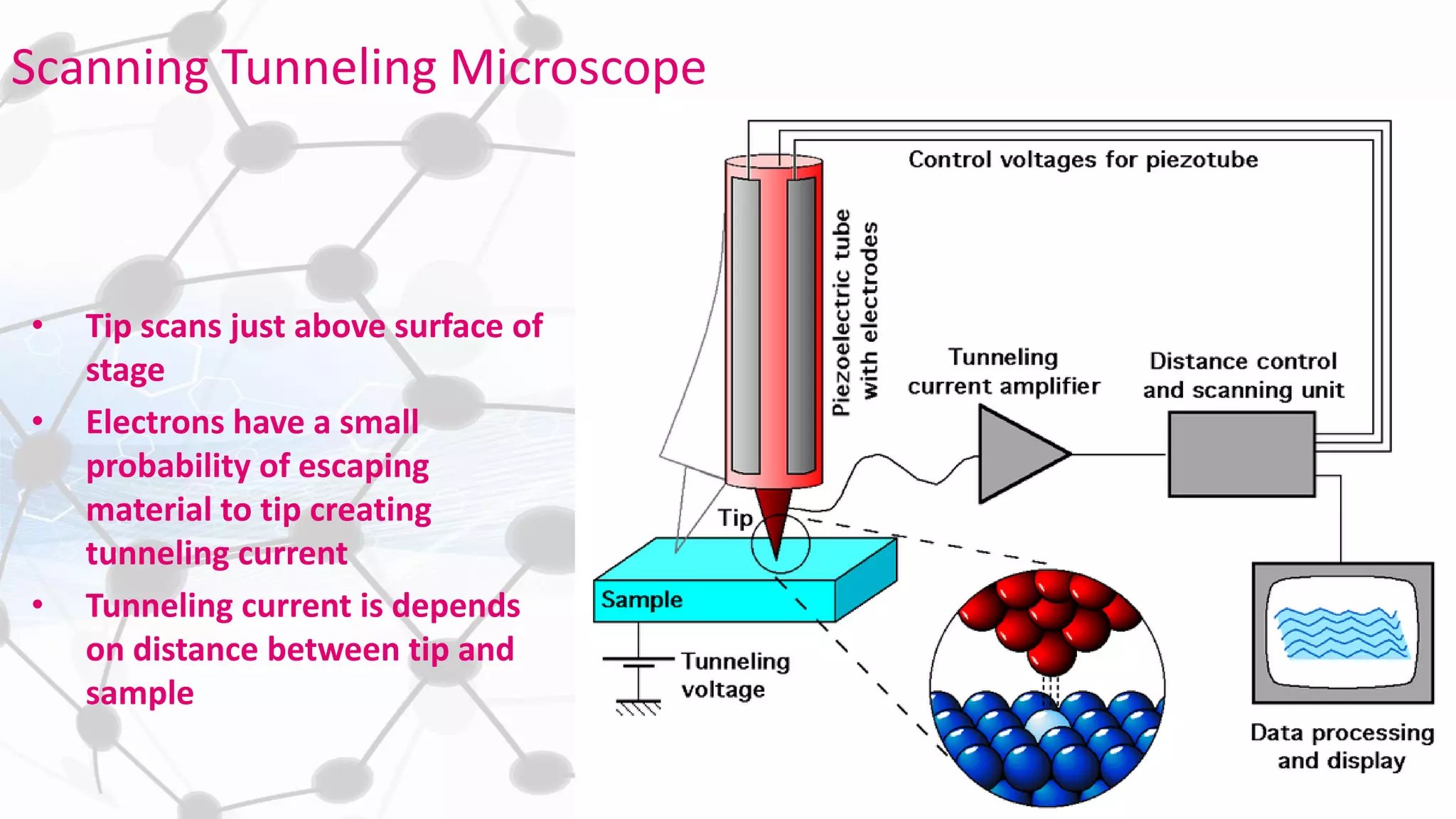
Scanning Tunneling Microscope
• Tip scans just above surface of
stage
• Electrons have a small
probability of escaping
material to tip creating
tunneling current
• Tunneling current is depends
on distance between tip and
sample
• “See” individual atoms
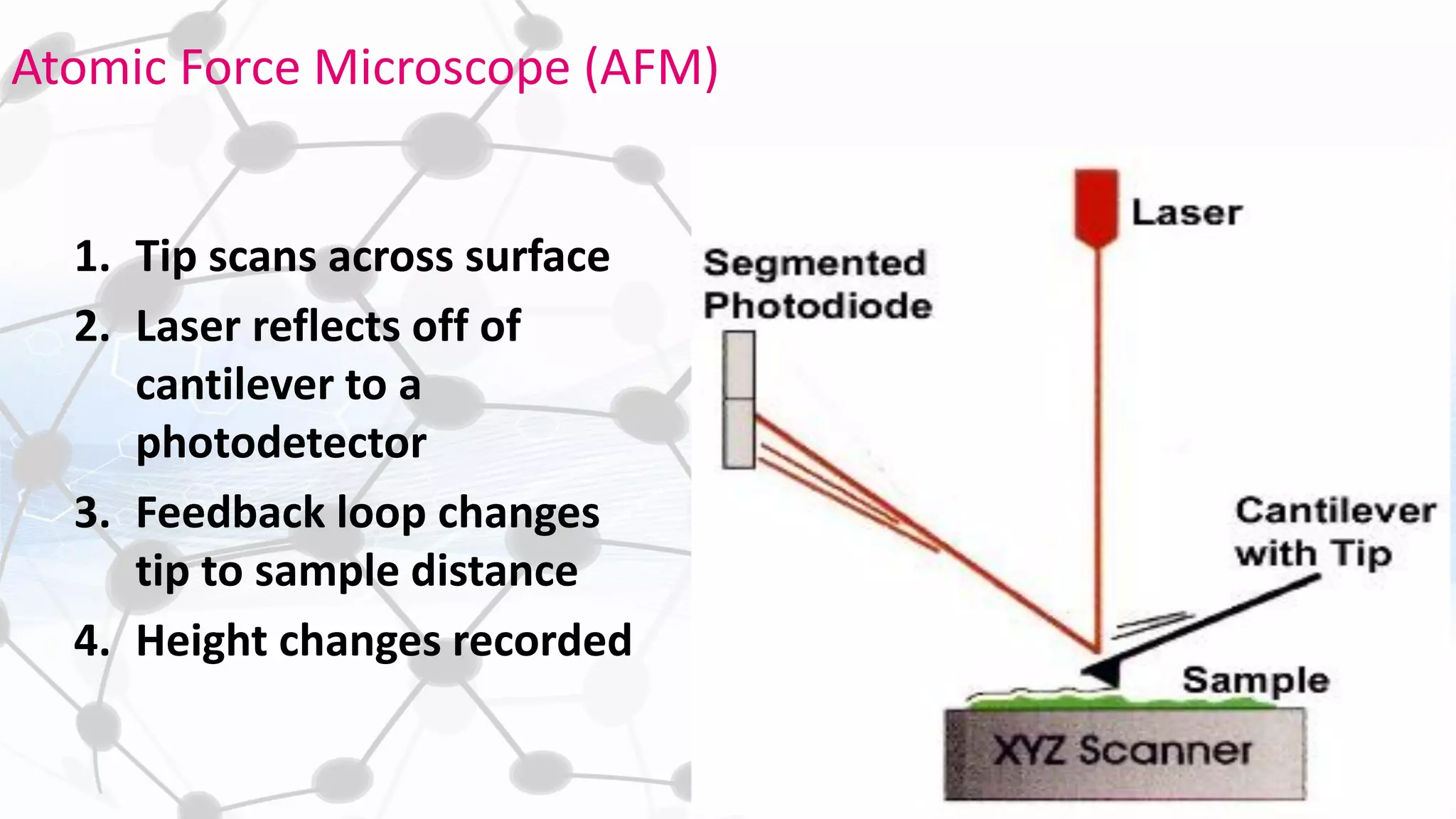
1. Tip scans across surface
2. Laser reflects off of
cantilever to a
photodetector
3. Feedback loop changes
tip to sample distance
4. Height changes recorded
Atomic Force Microscope (AFM)
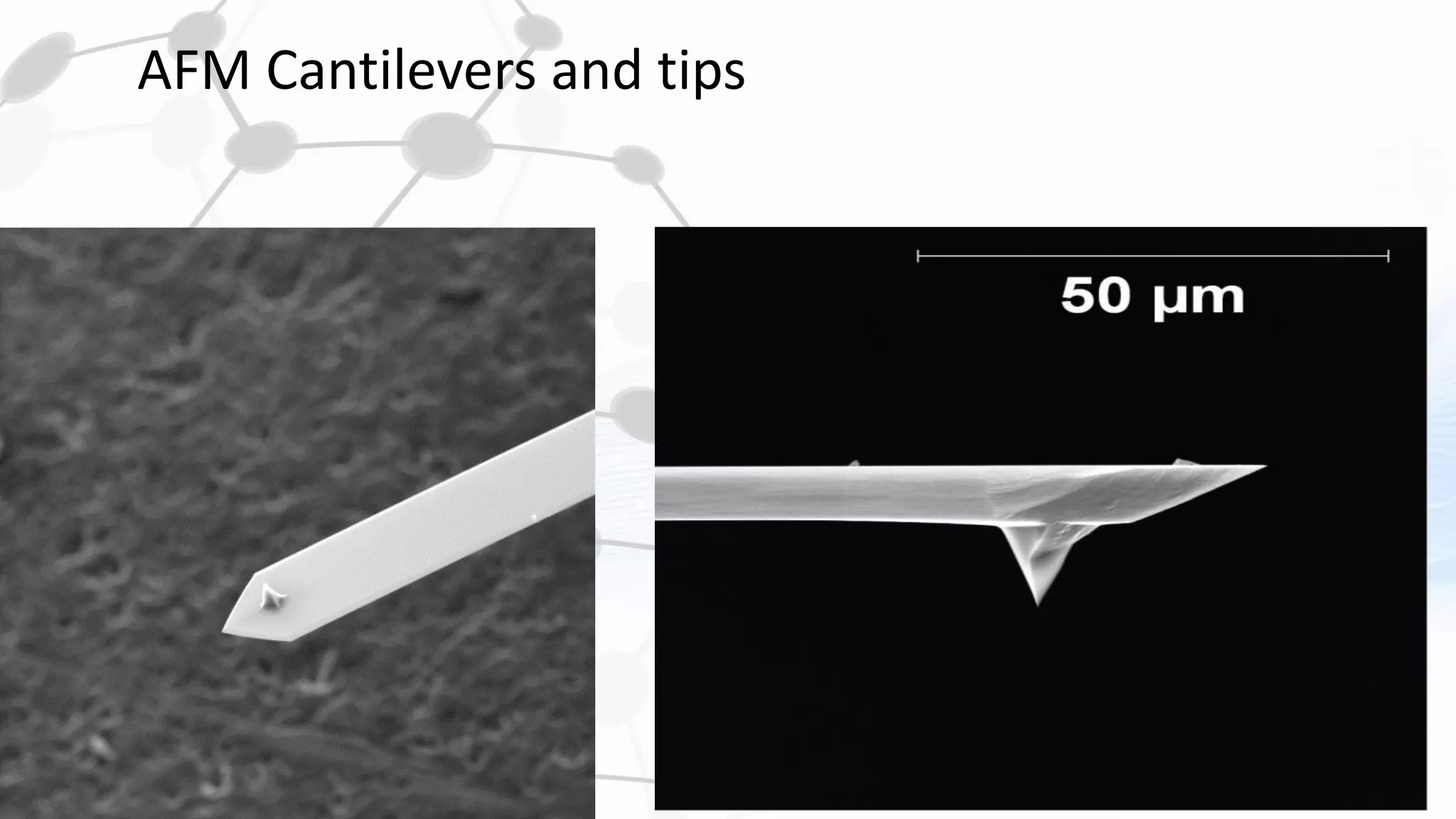
AFM Cantilevers and tips
Nanomaterials & nanotechnology Part 5

Nanomaterials & nanotechnology Part 5

  • 2.
    Nanoscience& Nanotechnology Steps To thefuture Usama Abd Elhafeez 17/8/2018
  • 3.
    Last Session Carbon Allotropes ClassificationOf CNTs CNTs Production Methods Graphene – Diamond- Graphite Wet nanotechnology
  • 4.
    Nano Fluids -Wet Nanotechnology o A Nano fluid is a fluid containing nanometer-sized particles, called nanoparticles. o These fluids are engineered colloidal suspensions of nanoparticles in a base fluid. Nanofluid nanoparticles Base fluid
  • 5.
    The nanoparticles usedin Nano fluids &BASE FLUIDS Nanoparticles such as : metals metal Oxides Carbon Diamond Fullerene Polymer (Teflon ) Carbides or carbon nanotubes Base fluids : Water Ethylene glycol Oil
  • 7.
  • 8.
    What does wettingmean ? Substitution of the air that surrounds the solid particles in an agglomerate by liquid. This occurs when the surface tension of the liquid is low compared to the surface energy of the solid particles. Surface tension of the liquid can be lowered by adding a wetting agent
  • 9.
  • 10.
    Stabilization This role isplayed by the wetting and dispersing additive by different mechanisms: Polymeric Stabilization Charge stabilization
  • 11.
    Electrostatic (charge)Stabilization Electrostatic stabilizationis effective in media of reasonably high dielectric constant, principally water; although even in water-based coatings systems
  • 12.
    Polymeric stabilization There aretwo types of polymeric stabilization: •Steric stabilization of colloids •Depletion stabilization of colloids
  • 13.
    Steric Stabilization Relies onthe adsorption of a layer of polymer chains on the surface of the pigment and provides the necessary barrier to prevent further attraction
  • 14.
    Depletion stabilization •involves unanchored(free) polymeric molecules creating repulsive forces between the approaching particles.
  • 15.
    Concept of Nanofluids: Conventional heat transfer fluids have inherently poor thermal conductivity compared to solids . Conventional fluids that contain mm or micrometer sized particle do not work with the”mini atomized” technologies because they can clog the tiny channels of these device . .
  • 16.
    Concept of Nanofluids: Nano fluids are a new class of advanced heat transfer fluids engineered by dispersing nanoparticles smaller than 100nm in diameter in conventional heat transfer fluids .
  • 17.
  • 23.
  • 24.
    • Getting asmall size is not the only requirement. • It should have • i. Identical size of all particles (also called mono sized or with uniform size distribution. • ii. Identical shape or morphology. • iii. Identical chemical composition and crystal structure that are desired among different particles and within individual particles, such as core and composition must be the same. • iv. Individually dispersed or mono dispersed i.e., no agglomeration.
  • 26.
    1- Top downapproach Involves the breaking down of the bulk material into nano sized structures or particles These techniques are an extension of those that have been used for producing micron- sized particles.
  • 27.
    High-Energy ball mill Powderswith typical particle diameters of about 50 µm are placed together with a number of hardened steel or tungsten carbide (WC) coated balls in a sealed container which is shaken or violently agitated. The most effective ratio for the ball to powder masses is 10 to 1.
  • 30.
    Factors affect onball milling process • Milling Time • Balls Number • Balls weight • Container volume • Number of rounds per min.
  • 31.
    2 T he ta , d e g re e 2 0 3 0 4 0 5 0 6 0 7 0 8 0 I/Io 5 0 n m 8 9 n m 9 9 n m 1 4 3 n m 2 2 0 n m Effect of milling on crystalline structure XRD charts obtained for different sizes achieved by the mechanochemical activation reveals that; 1. The intensity of the peaks increased and sharpened by decreasing the crystalline size. 2. The long time milling increases the contaminants.
  • 32.
    The difficulty withtop-down approaches is **** Ensuring all the particles are broken down to the required particle size. **** Surface and interface contamination is a major concern. In particular, during mechanical attrition, contamination by the milling tools (Fe) and atmosphere (trace elements of O2, N2, in rare gases) can be a problem.
  • 33.
    Bottom Up This techniquehas the potential of creating less waste and hence the more economical Bottom up approach refers to the build up of a material from the bottom: atom-by-atom, molecule-by- molecule, or cluster-by-cluster.
  • 34.
    Bottom Up Vapour phasetechniques • Aerosol Based • Gas Condensation • Arc Discharge • Laser Ablation • Plasma Process • Chemical vapor deposition CVD Liquid phase techniques • Sol –Gel • Solvo-thermal • Sono-chemical
  • 35.
    - Sol –Gel -Solvo-thermal - Sono-chemical Liquid phase techniques
  • 36.
    Sol – Gel Step3: Aging of the gel (Syneresis), during which the polycondensation reactions continue until the gel transforms into a solid mass, Step 2: Gelation resulting from the formation of an oxide- or alcohol- bridged network (the gel) The sol-gel process can be characterized by a series of distinct steps. Step 1: Formation of different stable solutions of the alkoxide or solvated metal precursor (the sol).
  • 37.
    Step 4: Dryingof the gel Step 5: Dehydration This is normally achieved by calcining at temperatures up to 8000C. Step 6: Densification and decomposition of the gels at high temperatures (T>800oC). The pores of the gel network are collapsed, and remaining organic species are volatilized. The typical steps that are involved in sol-gel processing are shown in the schematic diagram below.
  • 40.
    SOLVOTHERMAL REACTIONS A “solvothermalreaction can be defined as a chemical reaction (or a transformation) between precursor(s) in a solvent (in a close system) at a temperature higher than the boiling temperature of this solvent and under high pressure”
  • 41.
  • 44.
    Sonochemistry is theresearch area in which molecules undergo chemical reaction due to the application of powerful ultrasound radiation The main advantage in conducting sonochemical experiments is that it is very inexpensive . This method has been extensively used to produce nanosized materials with unusual properties, since the unique conditions (very high temperatures (5000 K), pressures (>20 MPa) and cooling rates (>109 K s1)) facilitate the formation of smaller particles and different shapes of products compared to other methods
  • 48.
    • Vapour phasetechniques • Gas Condensation • Aerosol Based • Arc Discharge • Laser Ablation • Plasma Process • Chemical vapor deposition CVD
  • 49.
    Gas Condensation Processing(GCP) •Gas condensation was the first technique used to synthesize nanocrystalline metals and alloys. • a metallic or inorganic material is vaporized using thermal evaporation sources; •Joule heated refractory crucibles, •electron beam evaporation devices •sputtering sources in an atmosphere of 1-50 mbar He (or another inert gas like Ar, Ne • Cluster form in the vicinity of the source by homogenous nucleation in the gas phase and grow.
  • 51.
    • The evaporationrate • The kind of inert gas, i.e. He, Ar or Kr • The gas pressure The cluster or particle size depends critically on: • The residence time of the particles in the growth regime
  • 52.
    Aerosol Based An aerosolcan be defined as a system of solid or liquid particles suspended in air or other gaseous environment. For example, pigments as carbon black particles and titania were used as reinforcements for car tires and for the production of paints and plastics, respectively
  • 53.
    AEROSOL SYNTHESIS The aerosolmay be formed by a sprayer device. In this case, The starting liquid is formed by a mtallic salt solution. The sprayer will eject the liquid in small droplets directly in a furnace, where: 1. The solvent will evaporate 2. The solute will diffuse 3. Drying 4. Precipitation 5. Reaction with the ambient gas of the precursor 6. Pyrolysis 7. Sintering
  • 54.
  • 55.
  • 56.
    • In thisprocess a laser beam is used as the primary excitation source of ablation for generating clusters directly from a solid sample in a wide variety of applications. Laser ablation:
  • 57.
    • The hotmetal vapor is entrained in a pulsed flow of carrier gas (typically He) and expanded through a nozzle into a vacuum.
  • 58.
    •Silver Nano Particles Synthesisof Silver nanoparticles * Physical approaches * Chemical approaches * Biological approaches
  • 59.
    A. Physical approaches 1)Evaporation-condensation 2) Laser ablation B. Chemical approaches 1) Reduction by tri-sodium citrate 2) Reduction by sodium borohydride 3) UV irradiation 4) Gamma irradiation 5) Laser irradiation 6) Microwave irradiation 7) Sonochemical reduction 8) Sonoelectrochemical method 9) Electrochemical method 10) Polysaccharide method 11) Tollens method C. Biological approaches 1) Synthesis of Ag NPs by bacteria 2) Synthesis of Ag NPs by fungi 3) Synthesis of Ag NPs by plants
  • 60.
    1) Evaporation-condensation  Vaporizethe material into gas, and then cool the gas. a) Using a tube furnace b) Using a small ceramic heater with a local heating source
  • 61.
    B) Laser ablation Laser ablation of metallic bulk materials in solution.  Laser ablation can vaporize materials that cannot readily be evaporated
  • 62.
    B) Chemical approaches The most common approach for synthesis of silver nanoparticles is chemical reduction.  In general, different reducing agents such as; Sodium citrate, Ascorbate, Sodium borohydride (NaBH4), Elemental hydrogen, Polyol process Tollens reagent are used for reduction of silver ions.
  • 63.
    1) Reduction bytri-sodium citrate 2) Steps 1. Dissolve 0.09 g AgNO3 in 500 ml water 2. Heating near boiling (95–98°C) 3. Add 1% tri-sodium citrate solution (0.1 g dissolved in 10 ml water) dropwise, one drop per second 4. Continue heating 95–98°C (near boiling) for 15–90 min. Yellow color indicates the formation of Ag NPs. 5. Wait until reaching room temperature, and then store in the dark at 2–8°C
  • 64.
    Two types ofnanomaterial characterization: • Spectroscopic methods i.e. UV-VIS, DLS • Imaging methods i.e. TEM, SEM, AFM
  • 65.
    • Color ofa nanoparticle solution is dependent on nanoparticle size.
  • 66.
    UV-Vis Absorption Gives quantitativemeasure of color. What wavelengths are absorbed? What wavelengths are transmitted?
  • 67.
  • 68.
    Dynamic Light Scattering(DLS) • DLS measures the Brownian motion of the nanoparticles and correlates this to particle size
  • 73.
    Imaging Methods Light (Optical)Microscopy Electron Microscopy • TEM • SEM Scanning Probe Microscopy • STM • AFM • Profilometry
  • 74.
    An electron microscopeis a type of microscope that uses electrons to illuminate a specimen and create an enlarged image The first electron microscope prototype was built in 1931 by the German engineers Ernst Ruska and Max Knoll The electron microscope uses electrostatic and electromagnetic lenses in forming the image Light microscope uses glass lenses to focus light on or through a specimen to form an image. Scanning Electron Microscope
  • 75.
    • Scanning ElectronMicroscope (SEM) 1. e- beam strikes sample and electron penetrate surface 2. Interactions occur between electrons and sample 3. Electrons and photons emitted from sample 4. Emitted e- or photons detected
  • 76.
    Once it hitsthe sample, other electrons (backscattered or secondary ) are ejected from the sample. Detectors collect the secondary or backscattered electrons, and convert them to a signal that is sent to a viewing screen similiar to the one in an ordinary television, producing an image.
  • 77.
    Why SEM? The scanningelectron microscope (SEM) uses a focused beam of high-energy electrons to generate a variety of signals at the surface of solid specimens. The signals that derive from electron-sample interactions reveal information about the sample including : - external morphology (texture), - chemical composition, - crystalline structure , - and orientation.
  • 78.
  • 80.
    Transmission Electron Microscope •Transmission Electron Microscope (TEM) 1. e-beam strikes sample and is transmitted through the sample 2. Scattering occurs 3. Un-scattered electrons pass through sample and are detected
  • 82.
    Scanning Probe Microscopy AFM– Forces between sample and tip STM – Tunneling current between sample and tip
  • 83.
    Scanning Tunneling Microscope •Tip scans just above surface of stage • Electrons have a small probability of escaping material to tip creating tunneling current • Tunneling current is depends on distance between tip and sample
  • 84.
  • 85.
    1. Tip scansacross surface 2. Laser reflects off of cantilever to a photodetector 3. Feedback loop changes tip to sample distance 4. Height changes recorded Atomic Force Microscope (AFM)
  • 86.