What is NanotechnologyWhat is Nanotechnology
the study of the controlling of matter on anthe study of the controlling of matter on an
atomic and molecular scale. Generallyatomic and molecular scale. Generally
nanotechnology deals with structuresnanotechnology deals with structures
sized between 1 to 100 nanometer in atsized between 1 to 100 nanometer in at
least one dimension, and involvesleast one dimension, and involves
developing or modifying materials ordeveloping or modifying materials or
devices within that size.devices within that size.
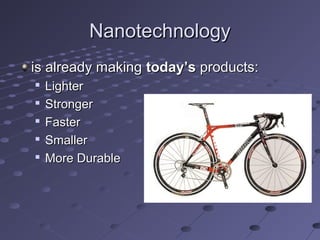
NanotechnologyNanotechnology
is already makingis already making today’stoday’s products:products:

LighterLighter

StrongerStronger

FasterFaster

SmallerSmaller

More DurableMore Durable
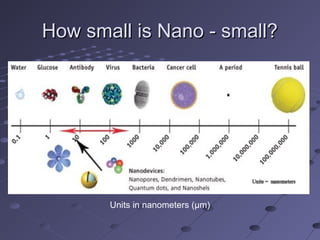
How small is Nano - small?How small is Nano - small?
Units in nanometers (µm)
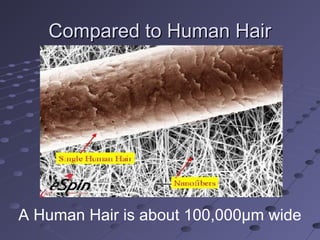
Compared to Human HairCompared to Human Hair
A Human Hair is about 100,000µm wide
Key TermsKey Terms
NonotechnologyNonotechnology
NanometerNanometer
NanotubeNanotube
AtomAtom
Atomic LevelAtomic Level
SystemSystem
Atomic StructureAtomic Structure
Fluence (Laser)Fluence (Laser)
DefectsDefects
DislocationDislocation
MoleculeMolecule
Molecular DynamicsMolecular Dynamics
ComputationalComputational
Materials ScienceMaterials Science
Newton’s Laws ofNewton’s Laws of
MotionMotion
Material SciencesMaterial Sciences
Atomic – level Simulations:Atomic – level Simulations:
Molecular DynamicsMolecular Dynamics
Computational ResearchComputational Research
Dislocation DynamicsDislocation Dynamics
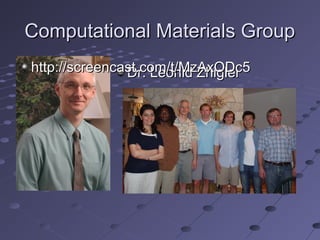
Computational Materials GroupComputational Materials Group
Dr. Leonid ZhigleiDr. Leonid Zhigleihttp://screencast.com/t/MzAxODc5http://screencast.com/t/MzAxODc5
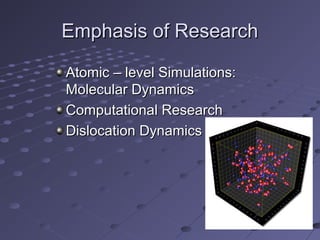
Emphasis of ResearchEmphasis of Research
Atomic – level Simulations:Atomic – level Simulations:
Molecular DynamicsMolecular Dynamics
Computational ResearchComputational Research
Dislocation DynamicsDislocation Dynamics
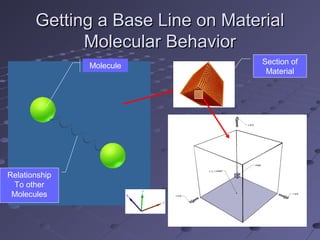
Getting a Base Line on MaterialGetting a Base Line on Material
Molecular BehaviorMolecular Behavior
Molecule
Relationship
To other
Molecules
Section of
Material
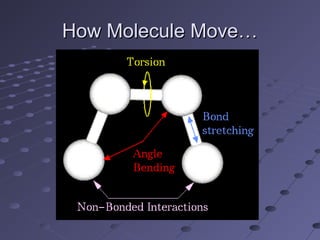
How Molecule Move…How Molecule Move…
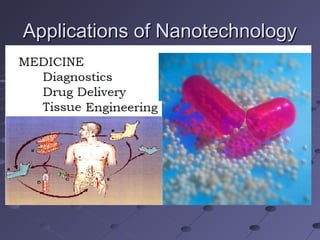
Applications of NanotechnologyApplications of Nanotechnology
Current ApplicationsCurrent Applications
burn and wound dressings, water filtrationburn and wound dressings, water filtration
devices, paints, cosmetics, coatings,devices, paints, cosmetics, coatings,
lubricants, textiles, memory/storagelubricants, textiles, memory/storage
devicesdevices
medical diagnostics, displays, sensors,medical diagnostics, displays, sensors,
drug delivery, composite materials, soliddrug delivery, composite materials, solid
state lighting, bio-materials, nano arrays,state lighting, bio-materials, nano arrays,
more powerful computers, protectivemore powerful computers, protective
armor, chem-bio suits, and chem-bioarmor, chem-bio suits, and chem-bio
sensorssensors
Future ApplicationsFuture Applications
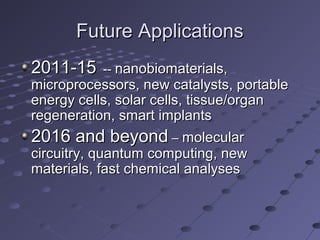
2011-152011-15 ---- nanobiomaterials,nanobiomaterials,
microprocessors, new catalysts, portablemicroprocessors, new catalysts, portable
energy cells, solar cells, tissue/organenergy cells, solar cells, tissue/organ
regeneration, smart implantsregeneration, smart implants
2016 and beyond2016 and beyond –– molecularmolecular
circuitry, quantum computing, newcircuitry, quantum computing, new
materials, fast chemical analysesmaterials, fast chemical analyses
THANKYOU
Nano technology

Nano technology

  • 1.
    What is NanotechnologyWhatis Nanotechnology the study of the controlling of matter on anthe study of the controlling of matter on an atomic and molecular scale. Generallyatomic and molecular scale. Generally nanotechnology deals with structuresnanotechnology deals with structures sized between 1 to 100 nanometer in atsized between 1 to 100 nanometer in at least one dimension, and involvesleast one dimension, and involves developing or modifying materials ordeveloping or modifying materials or devices within that size.devices within that size.
  • 2.
    NanotechnologyNanotechnology is already makingisalready making today’stoday’s products:products:  LighterLighter  StrongerStronger  FasterFaster  SmallerSmaller  More DurableMore Durable
  • 3.
    How small isNano - small?How small is Nano - small? Units in nanometers (µm)
  • 4.
    Compared to HumanHairCompared to Human Hair A Human Hair is about 100,000µm wide
  • 5.
    Key TermsKey Terms NonotechnologyNonotechnology NanometerNanometer NanotubeNanotube AtomAtom AtomicLevelAtomic Level SystemSystem Atomic StructureAtomic Structure Fluence (Laser)Fluence (Laser) DefectsDefects DislocationDislocation MoleculeMolecule Molecular DynamicsMolecular Dynamics ComputationalComputational Materials ScienceMaterials Science Newton’s Laws ofNewton’s Laws of MotionMotion
  • 6.
    Material SciencesMaterial Sciences Atomic– level Simulations:Atomic – level Simulations: Molecular DynamicsMolecular Dynamics Computational ResearchComputational Research Dislocation DynamicsDislocation Dynamics
  • 7.
    Computational Materials GroupComputationalMaterials Group Dr. Leonid ZhigleiDr. Leonid Zhigleihttp://screencast.com/t/MzAxODc5http://screencast.com/t/MzAxODc5
  • 8.
    Emphasis of ResearchEmphasisof Research Atomic – level Simulations:Atomic – level Simulations: Molecular DynamicsMolecular Dynamics Computational ResearchComputational Research Dislocation DynamicsDislocation Dynamics
  • 9.
    Getting a BaseLine on MaterialGetting a Base Line on Material Molecular BehaviorMolecular Behavior Molecule Relationship To other Molecules Section of Material
  • 10.
    How Molecule Move…HowMolecule Move…
  • 11.
  • 12.
    Current ApplicationsCurrent Applications burnand wound dressings, water filtrationburn and wound dressings, water filtration devices, paints, cosmetics, coatings,devices, paints, cosmetics, coatings, lubricants, textiles, memory/storagelubricants, textiles, memory/storage devicesdevices medical diagnostics, displays, sensors,medical diagnostics, displays, sensors, drug delivery, composite materials, soliddrug delivery, composite materials, solid state lighting, bio-materials, nano arrays,state lighting, bio-materials, nano arrays, more powerful computers, protectivemore powerful computers, protective armor, chem-bio suits, and chem-bioarmor, chem-bio suits, and chem-bio sensorssensors
  • 13.
    Future ApplicationsFuture Applications 2011-152011-15---- nanobiomaterials,nanobiomaterials, microprocessors, new catalysts, portablemicroprocessors, new catalysts, portable energy cells, solar cells, tissue/organenergy cells, solar cells, tissue/organ regeneration, smart implantsregeneration, smart implants 2016 and beyond2016 and beyond –– molecularmolecular circuitry, quantum computing, newcircuitry, quantum computing, new materials, fast chemical analysesmaterials, fast chemical analyses
  • 14.