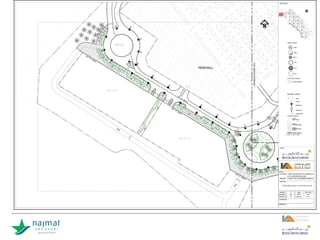
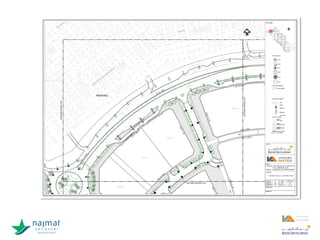
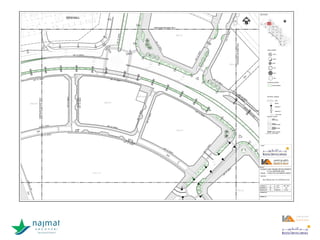
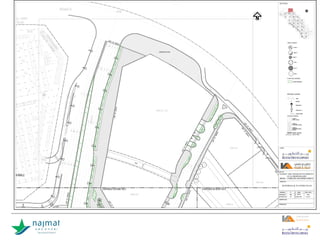
REEM I LA D,
NAJ AT
DEVELOP EN
CONCEPT DESIGN REPORT
Phase 1 - Streetscape
20 December 2015
CONTENTS
Chapter 1 Project Understanding
Chapter 2 Vision, Principles and Goals
Chapter 3 Landscape Design Concept
Chapter 4 Design Elements/Discussions
Appendix UPC Approvals
Chapter 1
Project Understanding
REGIONAL SITE CONTEXT
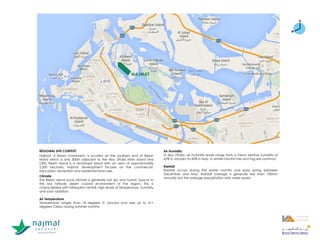
Najmat, A Reem Investment, is located on the southern end of Reem
Island which is only 300m adjacent to the Abu Dhabi Main Island and
CBD. Reem Island is a reclaimed island with an area of approximately
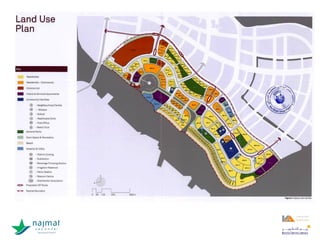
2,200 hectares. Najmat development focuses on the commercial,
education, recreation and residential land-uses.
Climate
The Reem Island local climate is generally hot dry and humid, typical to
the low latitude desert coastal environment of the region. This is
characterized with infrequent rainfall, high levels of temperature, humidity
and solar radiation.
Air Temperature
Temperature ranges from 18 degrees in January and rises up to 41+
degrees Celsius during summer months.
Air Humidity
In Abu Dhabi, air humidity levels range from a mean relative humidity of
63% in January to 42% in May. In winter months mist and fog are common.
Rainfall
Rainfall occurs during the winter months and early spring between
December and May. Rainfall average is generally less than 100mm
annually but the average precipitation rate varies yearly.
NAJMAT
NAJMAT
Abu Dhabi CBD
NAJMAT
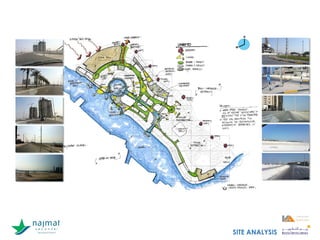
SITE ANALYSIS
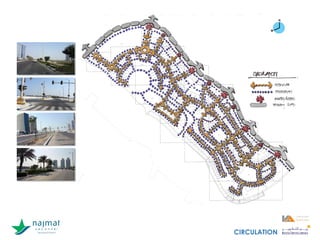
CIRCULATION
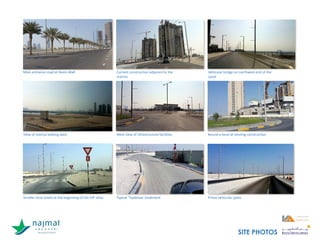
Main entrance road at Reem Mall Current construction adjacent to the
marina
Vehicular bridge on northwest end of the
canal
View of marina looking west West view of infrastructure facilities Round-a-bout at existing construction
Smaller local street at the beginning of the VIP villas Typical “Eyebrow: treatment Prime vehicular spine
SITE PHOTOS
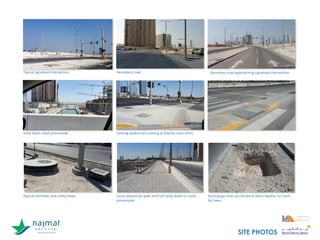
Typical signalized intersection
View down canal promenade Existing pedestrian crossing at Najmat main entry
Typical manholes and utility boxes Canal pedestrian walk and EVA ramp down to canal
promenade
Existing gas lines are buried at 60cm depths, no room
for trees.
SITE PHOTOS
Secondary road Secondary road approaching signalized intersection
Chapter 2
Vision, Principles and Goals
1
1
DESIGN BRIEF
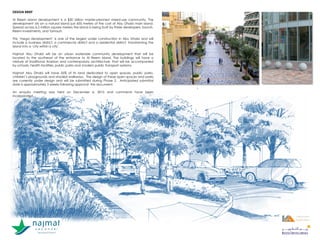
Al Reem Island development is a $30 billion master-planned mixed-use community. The
development sits on a natural island just 600 meters of the cost of Abu Dhabi main island.
Spread across 6.5 million square meters the island is being built by three developers; Sorouh,
Reem Investments, and Tamouh.
This ‘mega development’ is one of the largest under construction in Abu Dhabi and will
include a business district, a commercial district and a residential district, transforming the
island into a ‘city within a city’.
Najmat Abu Dhabi will be an urban waterside community development that will be
located to the southeast of the entrance to Al Reem Island. The buildings will have a
mixture of traditional Arabian and contemporary architecture, that will be accompanied
by schools, health facilities, public parks and modern public transport systems.
Najmat Abu Dhabi will have 55% of its land dedicated to open spaces, public parks,
children’s playgrounds and shaded walkways. The design of these open spaces and parks
are currently under design and will be submitted during Phase 2. Anticipated submittal
date is approximately 3 weeks following approval this document.
An enquiry meeting was held on Decem6er 6, 2015 and comments have been
incorporated.
VISION STATEMENT
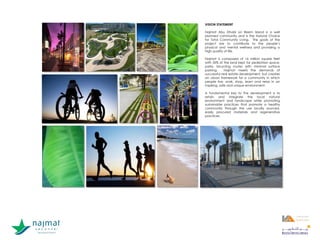
Najmat Abu Dhabi on Reem Island is a well
planned community and is the Natural Choice
for Total Community Living. The goals of the
project are to contribute to the people’s
physical and mental wellness and providing a
high quality of life.
Najmat is composed of 16 million square feet
with 55% of the land kept for pedestrian space,
parks, bicycling routes with minimal surface
parking. Najmat meets the demands of
successful real estate development, but creates
an urban framework for a community in which
people live, work, shop, learn and relax in an
inspiring, safe and unique environment.
A fundamental key to the development is to
retain and integrate the local natural
environment and landscape while promoting
sustainable practices that promote a healthy
community through the use locally sourced,
easily procured materials and regenerative
practices.
1
1
Chapter 3
Landscape Design Concept
Design Approach –
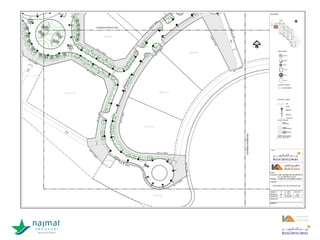
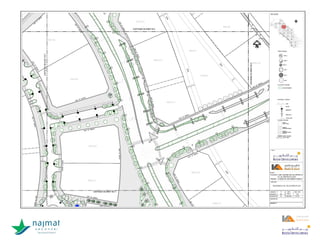
STREETSCAPES
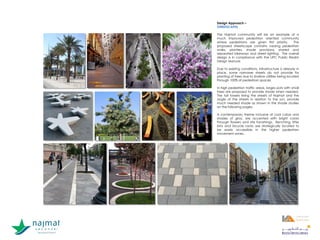
The Najmat community will be an example of a
much improved pedestrian oriented community
where pedestrians are given first priority. The
proposed streetscape contains varying pedestrian
walks, planters, shade provisions, shared and
separated bikeways and street lighting. The overall
design is in compliance with the UPC Public Realm
Design Manual.
Due to existing conditions, infrastructure is already in
place, some narrower streets do not provide for
planting of trees due to shallow utilities being located
through 100% of pedestrian spaces.
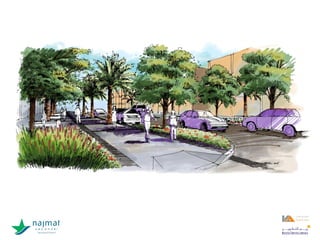
In high pedestrian traffic areas, larges pots with small
trees are proposed to provide shade when needed.
The tall towers lining the streets of Najmat and the
angle of the streets in relation to the sun, provide
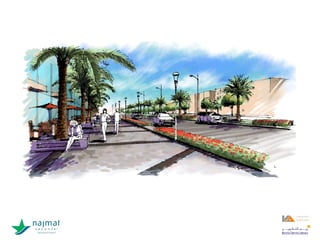
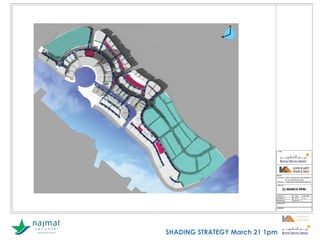
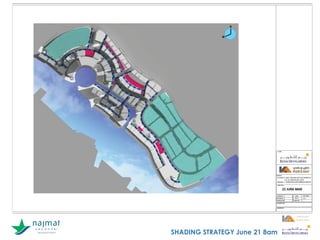
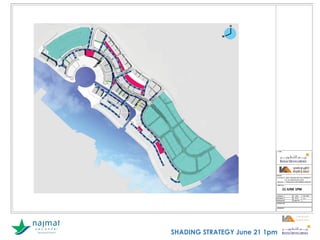
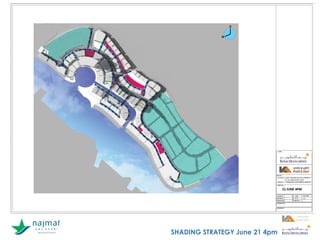
much needed shade as shown in the shade studies
on the following pages.
A contemporary theme inclusive of cool colors and
shades of gray, are accented with bright colors
through flowers and site furnishings. Benching, litter
bins and bicycle racks are strategically located to
be easily accessible in the higher pedestrian
movement zones.
1
1
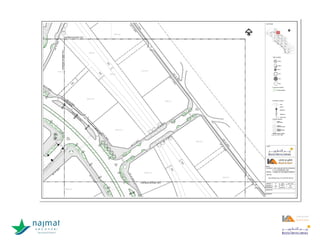
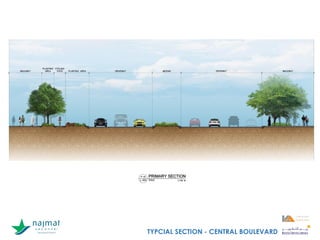
TYPCIAL SECTION - CENTRAL BOULEVARD
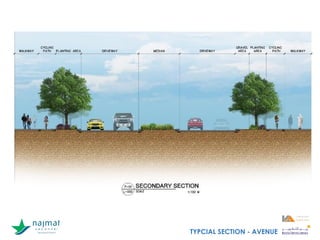
TYPCIAL SECTION - AVENUE
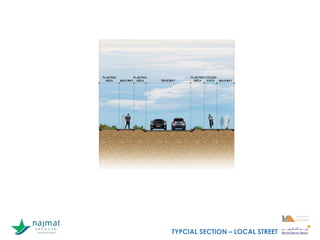
TYPCIAL SECTION – LOCAL STREET
Chapter 4
Design Elements/Discussions
SUSTAINABILITY STRATEGY
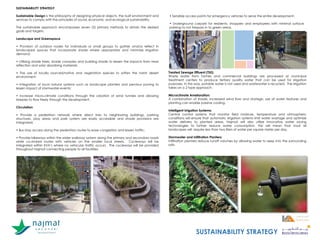
Sustainable Design is the philosophy of designing physical objects, the built environment and
services to comply with the principles of social, economic and ecological sustainability.
The sustainable approach encompasses seven (5) primary methods to obtain the desired
goals and targets:
Landscape and Greenspace
• Provision of outdoor nodes for individuals or small groups to gather and/or reflect in
landscaped spaces that incorporate shade where appropriate and minimize irrigation
demand;
• Utilizing shade trees, shade canopies and building shade to lessen the impacts from heat
reflection and solar absorbing materials;
• The use of locally sourced/native and vegetation species to soften the harsh desert
environment;
• Integration of local natural systems such as landscape planters and pervious paving to
lessen impact of stormwater events;
• Increase micro-climate conditions through the creation of wind tunnels and allowing
breezes to flow freely through the development.
Circulation
• Provide a pedestrian network where direct links to neighboring buildings, parking
structures, play areas and park system are easily accessible and shade provisions are
integrated;
• Bus stop access along the pedestrian routes to ease congestion and lessen traffic;
• Provide bikeways within the wider walkway system along the primary and secondary roads
while co-shared routes with vehicles on the smaller local streets. Cycleways will be
integrated within EVA’s where no vehicular traffic occurs. The cycleways will be provided
throughout Najmat connecting people to all facilities;
• Sensible access points for emergency vehicles to serve the entire development;
• Underground carpark for residents, shoppers and employees with minimal surface
parking to not trespass in to green areas.
SUSTAINABILITY STRATEGY
Treated Sewage Effluent (TSE):
Waste water from homes and commercial buildings are processed at municipal
treatment centers to produce tertiary quality water that can be used for irrigation
purposes. In this way, potable water is not used and wastewater is recycled. The irrigation
takes on a 2 type approach.
Microclimate Amelioration:
A combination of shade, increased wind flow and strategic use of water features and
planting can enable passive cooling.
Intelligent Irrigation Systems:
Central control systems that monitor field moisture, temperature and atmospheric
conditions will ensure that automatic irrigation systems limit water wastage and optimize
water delivery to planted areas. Najmat will also utilize innovative water saving
technologies to further reduce water consumption. This will mean that most all
landscapes will require less than two liters of water per square meter per day.
Stormwater and Infiltration Planters:
Infiltration planters reduce runoff volumes by allowing water to seep into the surrounding
soils.
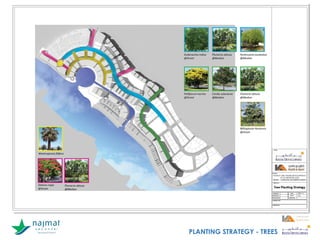
PLANTING STRATEGY - TREES
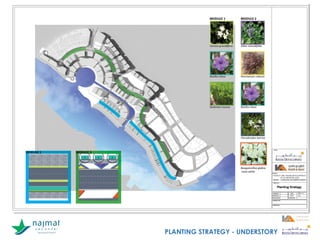
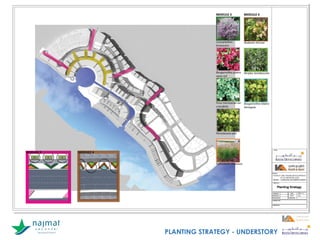
PLANTING STRATEGY - UNDERSTORY
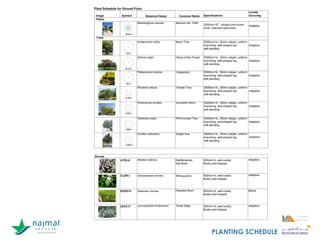
PLANTING SCHEDULE
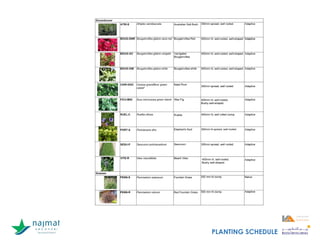
PLANTING SCHEDULE
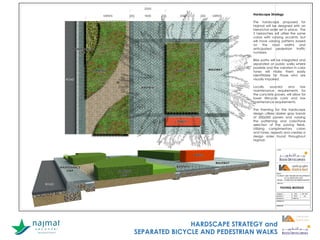
SEPARATED BICYCLE AND PEDESTRIAN WALKS
HARDSCAPE STRATEGY and
Hardscape Strategy
The hardscape proposed for
Najmat will be designed with an
hierarchal order set in place. The
3 heirarchies will utilize the same
colors with varying accents, but
will have varying patterns based
on the road widths and
anticipated pedestrian traffic
numbers.
Bike paths will be integrated and
separated on public walks where
possible and the variation in color
tones will make them easily
identifiable for those who are
visually impaired.
Locally sourced and low
maintenance requirements for
the concrete pavers, will allow for
lower lifecycle costs and low
maintenance requirements.
The theming for the hardscape
design utilizes darker gray bands
of 200x200 pavers and varying
the patterning and color/tone
selection of the paving fields.
Utilizing complimentary colors
and tones, repeats and creates a
design order found throughout
Najmat.
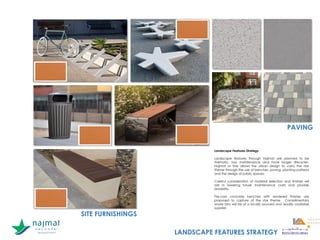
SITE FURNISHINGS
PAVING
Landscape Features Strategy
Landscape features through Najmat are planned to be
thematic, low maintenance and have longer lifecycles.
Najmat or Star allows the urban design to carry the star
theme through the use of benches, paving, planting patterns
and the design of public spaces.
Careful consideration of material selection and finishes will
aid in lowering future maintenance costs and provide
durability.
Pre-cast concrete benches with rendered finishes are
proposed to capture of the star theme. Complimentary
waste bins will be of a locally sourced and readily available
supplier.
LANDSCAPE FEATURES STRATEGY
LIGHTING STRATEGY
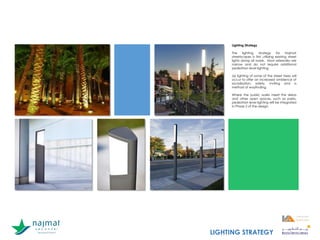
Lighting Strategy
The lighting strategy for Najmat
streetscapes is first utilizing existing street
lights along all roads. Most sidewalks are
narrow and do not require additional
pedestrian level lighting.
Up lighting of some of the street trees will
occur to offer an increased ambience of
socialization, safety, inviting and a
method of wayfinding.
Where the public walks meet the sikkas
and other open spaces, such as parks,
pedestrian level lighting will be integrated
in Phase 2 of the design.
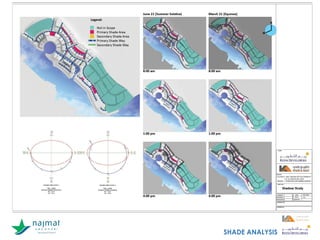
SHADE ANALYSIS
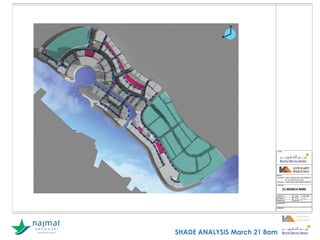
SHADE ANALYSIS March 21 8am
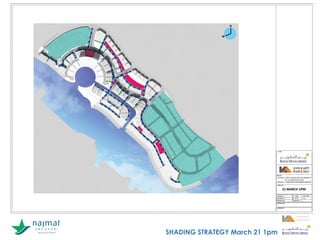
SHADING STRATEGY March 21 1pm
SHADING STRATEGY June 21 8am
SHADING STRATEGY June 21 1pm
SHADING STRATEGY June 21 4pm
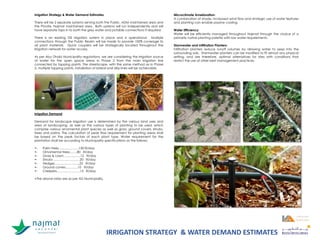
Irrigation Strategy & Water Demand Estimates
There will be 2 separate systems serving both the Public, ADM maintained area and
the Private, Najmat maintained area. Both systems will run independently and will
have separate taps in to both the grey water and potable connections if required.
There is an existing TSE irrigation system in place and is operational. Multiple
connections through the Public Realm will be made to provide 100% coverage to
all plant materials. Quick couplers will be strategically located throughout the
irrigation network for water access.
As per Abu Dhabi Municipality regulations, we are considering the irrigation source
of water for the open space areas in Phase 2 from the main irrigation line
connected by tapping points. The streetscape, with the same method as in Phase
2, multiple tapping points, installation of lateral and drip lines will be achievable.
Irrigation Demand
Demand for landscape irrigation use is determined by the various land uses and
area of landscaping, as well as the various types of planting to be used, which
comprise various ornamental plant species as well as grass, ground covers, shrubs,
trees and palms. The calculation of peak flow requirement for planting areas shall
be based on the peak factors of each plant type. Water requirement for the
plantation shall be according to Municipality specifications as the follows:
•- Palm trees……………….150 lit/day
•- Ornamental trees…….80 lit/day
•- Grass & Lawn…………….12 lit/day
•- Shrubs ………………….…20 lit/day
•- Hedges…………………...25 lit/day
•- Ground covers………...10 lit/day
•- Creepers………………….15 lit/day
•The above rates are as per AD Municipality.
Microclimate Amelioration:
A combination of shade, increased wind flow and strategic use of water features
and planting can enable passive cooling.
Water Efficiency:
Water will be efficiently managed throughout Najmat through the choice of a
primarily native planting palette with low water requirements.
Stormwater and Infiltration Planters:
Infiltration planters reduce runoff volumes by allowing water to seep into the
surrounding soils. Stormwater planters can be modified to fit almost any physical
setting, and are therefore, optimal alternatives for sites with conditions that
restrict the use of other best management practices.
IRRIGATION STRATEGY & WATER DEMAND ESTIMATES
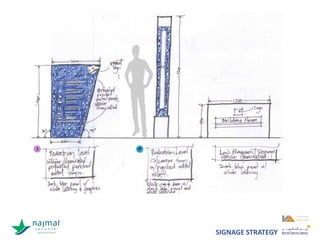
SIGNAGE STRATEGY
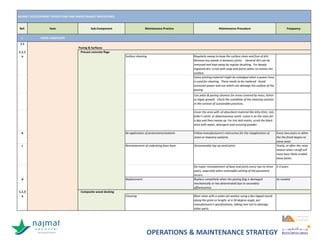
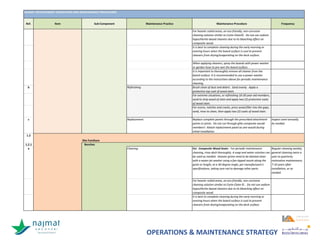
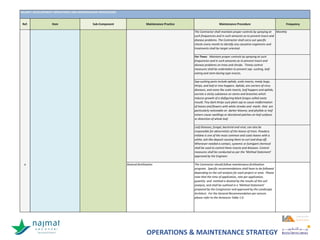
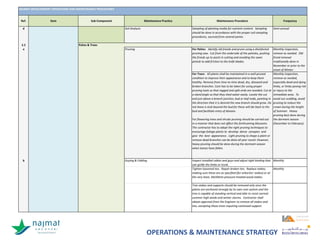
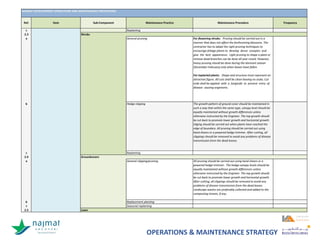
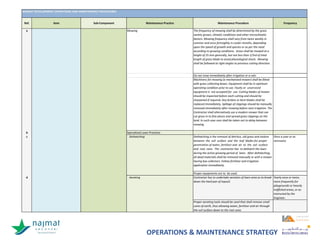
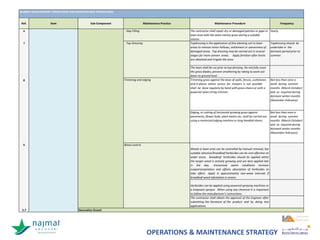
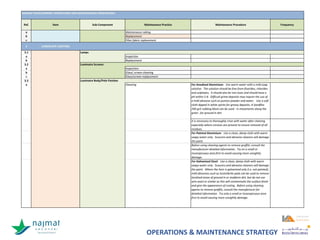
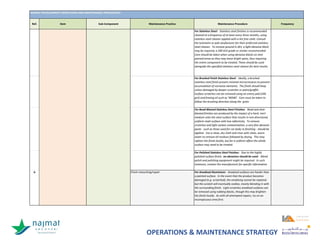
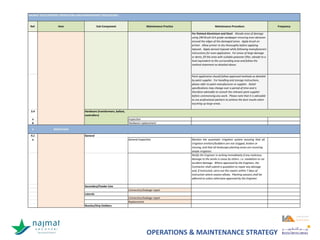
OPERATIONS & MAINTENANCE STRATEGY
APPENDIX
UPC Approval
Najmat Development - Reem Island, Abu Dhabi

Najmat Development - Reem Island, Abu Dhabi

  • 1.
    REEM I LAD, NAJ AT DEVELOP EN CONCEPT DESIGN REPORT Phase 1 - Streetscape 20 December 2015
  • 2.
    CONTENTS Chapter 1 ProjectUnderstanding Chapter 2 Vision, Principles and Goals Chapter 3 Landscape Design Concept Chapter 4 Design Elements/Discussions Appendix UPC Approvals
  • 3.
  • 4.
    REGIONAL SITE CONTEXT Najmat,A Reem Investment, is located on the southern end of Reem Island which is only 300m adjacent to the Abu Dhabi Main Island and CBD. Reem Island is a reclaimed island with an area of approximately 2,200 hectares. Najmat development focuses on the commercial, education, recreation and residential land-uses. Climate The Reem Island local climate is generally hot dry and humid, typical to the low latitude desert coastal environment of the region. This is characterized with infrequent rainfall, high levels of temperature, humidity and solar radiation. Air Temperature Temperature ranges from 18 degrees in January and rises up to 41+ degrees Celsius during summer months. Air Humidity In Abu Dhabi, air humidity levels range from a mean relative humidity of 63% in January to 42% in May. In winter months mist and fog are common. Rainfall Rainfall occurs during the winter months and early spring between December and May. Rainfall average is generally less than 100mm annually but the average precipitation rate varies yearly. NAJMAT NAJMAT Abu Dhabi CBD NAJMAT
  • 6.
  • 7.
  • 8.
    Main entrance roadat Reem Mall Current construction adjacent to the marina Vehicular bridge on northwest end of the canal View of marina looking west West view of infrastructure facilities Round-a-bout at existing construction Smaller local street at the beginning of the VIP villas Typical “Eyebrow: treatment Prime vehicular spine SITE PHOTOS
  • 9.
    Typical signalized intersection Viewdown canal promenade Existing pedestrian crossing at Najmat main entry Typical manholes and utility boxes Canal pedestrian walk and EVA ramp down to canal promenade Existing gas lines are buried at 60cm depths, no room for trees. SITE PHOTOS Secondary road Secondary road approaching signalized intersection
  • 11.
  • 12.
    1 1 DESIGN BRIEF Al ReemIsland development is a $30 billion master-planned mixed-use community. The development sits on a natural island just 600 meters of the cost of Abu Dhabi main island. Spread across 6.5 million square meters the island is being built by three developers; Sorouh, Reem Investments, and Tamouh. This ‘mega development’ is one of the largest under construction in Abu Dhabi and will include a business district, a commercial district and a residential district, transforming the island into a ‘city within a city’. Najmat Abu Dhabi will be an urban waterside community development that will be located to the southeast of the entrance to Al Reem Island. The buildings will have a mixture of traditional Arabian and contemporary architecture, that will be accompanied by schools, health facilities, public parks and modern public transport systems. Najmat Abu Dhabi will have 55% of its land dedicated to open spaces, public parks, children’s playgrounds and shaded walkways. The design of these open spaces and parks are currently under design and will be submitted during Phase 2. Anticipated submittal date is approximately 3 weeks following approval this document. An enquiry meeting was held on Decem6er 6, 2015 and comments have been incorporated.
  • 13.
    VISION STATEMENT Najmat AbuDhabi on Reem Island is a well planned community and is the Natural Choice for Total Community Living. The goals of the project are to contribute to the people’s physical and mental wellness and providing a high quality of life. Najmat is composed of 16 million square feet with 55% of the land kept for pedestrian space, parks, bicycling routes with minimal surface parking. Najmat meets the demands of successful real estate development, but creates an urban framework for a community in which people live, work, shop, learn and relax in an inspiring, safe and unique environment. A fundamental key to the development is to retain and integrate the local natural environment and landscape while promoting sustainable practices that promote a healthy community through the use locally sourced, easily procured materials and regenerative practices. 1 1
  • 14.
  • 15.
    Design Approach – STREETSCAPES TheNajmat community will be an example of a much improved pedestrian oriented community where pedestrians are given first priority. The proposed streetscape contains varying pedestrian walks, planters, shade provisions, shared and separated bikeways and street lighting. The overall design is in compliance with the UPC Public Realm Design Manual. Due to existing conditions, infrastructure is already in place, some narrower streets do not provide for planting of trees due to shallow utilities being located through 100% of pedestrian spaces. In high pedestrian traffic areas, larges pots with small trees are proposed to provide shade when needed. The tall towers lining the streets of Najmat and the angle of the streets in relation to the sun, provide much needed shade as shown in the shade studies on the following pages. A contemporary theme inclusive of cool colors and shades of gray, are accented with bright colors through flowers and site furnishings. Benching, litter bins and bicycle racks are strategically located to be easily accessible in the higher pedestrian movement zones. 1 1
  • 44.
    TYPCIAL SECTION -CENTRAL BOULEVARD
  • 45.
  • 46.
    TYPCIAL SECTION –LOCAL STREET
  • 47.
  • 48.
    SUSTAINABILITY STRATEGY Sustainable Designis the philosophy of designing physical objects, the built environment and services to comply with the principles of social, economic and ecological sustainability. The sustainable approach encompasses seven (5) primary methods to obtain the desired goals and targets: Landscape and Greenspace • Provision of outdoor nodes for individuals or small groups to gather and/or reflect in landscaped spaces that incorporate shade where appropriate and minimize irrigation demand; • Utilizing shade trees, shade canopies and building shade to lessen the impacts from heat reflection and solar absorbing materials; • The use of locally sourced/native and vegetation species to soften the harsh desert environment; • Integration of local natural systems such as landscape planters and pervious paving to lessen impact of stormwater events; • Increase micro-climate conditions through the creation of wind tunnels and allowing breezes to flow freely through the development. Circulation • Provide a pedestrian network where direct links to neighboring buildings, parking structures, play areas and park system are easily accessible and shade provisions are integrated; • Bus stop access along the pedestrian routes to ease congestion and lessen traffic; • Provide bikeways within the wider walkway system along the primary and secondary roads while co-shared routes with vehicles on the smaller local streets. Cycleways will be integrated within EVA’s where no vehicular traffic occurs. The cycleways will be provided throughout Najmat connecting people to all facilities; • Sensible access points for emergency vehicles to serve the entire development; • Underground carpark for residents, shoppers and employees with minimal surface parking to not trespass in to green areas. SUSTAINABILITY STRATEGY Treated Sewage Effluent (TSE): Waste water from homes and commercial buildings are processed at municipal treatment centers to produce tertiary quality water that can be used for irrigation purposes. In this way, potable water is not used and wastewater is recycled. The irrigation takes on a 2 type approach. Microclimate Amelioration: A combination of shade, increased wind flow and strategic use of water features and planting can enable passive cooling. Intelligent Irrigation Systems: Central control systems that monitor field moisture, temperature and atmospheric conditions will ensure that automatic irrigation systems limit water wastage and optimize water delivery to planted areas. Najmat will also utilize innovative water saving technologies to further reduce water consumption. This will mean that most all landscapes will require less than two liters of water per square meter per day. Stormwater and Infiltration Planters: Infiltration planters reduce runoff volumes by allowing water to seep into the surrounding soils.
  • 49.
  • 50.
  • 51.
  • 52.
  • 53.
  • 54.
    SEPARATED BICYCLE ANDPEDESTRIAN WALKS HARDSCAPE STRATEGY and Hardscape Strategy The hardscape proposed for Najmat will be designed with an hierarchal order set in place. The 3 heirarchies will utilize the same colors with varying accents, but will have varying patterns based on the road widths and anticipated pedestrian traffic numbers. Bike paths will be integrated and separated on public walks where possible and the variation in color tones will make them easily identifiable for those who are visually impaired. Locally sourced and low maintenance requirements for the concrete pavers, will allow for lower lifecycle costs and low maintenance requirements. The theming for the hardscape design utilizes darker gray bands of 200x200 pavers and varying the patterning and color/tone selection of the paving fields. Utilizing complimentary colors and tones, repeats and creates a design order found throughout Najmat.
  • 55.
    SITE FURNISHINGS PAVING Landscape FeaturesStrategy Landscape features through Najmat are planned to be thematic, low maintenance and have longer lifecycles. Najmat or Star allows the urban design to carry the star theme through the use of benches, paving, planting patterns and the design of public spaces. Careful consideration of material selection and finishes will aid in lowering future maintenance costs and provide durability. Pre-cast concrete benches with rendered finishes are proposed to capture of the star theme. Complimentary waste bins will be of a locally sourced and readily available supplier. LANDSCAPE FEATURES STRATEGY
  • 56.
    LIGHTING STRATEGY Lighting Strategy Thelighting strategy for Najmat streetscapes is first utilizing existing street lights along all roads. Most sidewalks are narrow and do not require additional pedestrian level lighting. Up lighting of some of the street trees will occur to offer an increased ambience of socialization, safety, inviting and a method of wayfinding. Where the public walks meet the sikkas and other open spaces, such as parks, pedestrian level lighting will be integrated in Phase 2 of the design.
  • 57.
  • 58.
  • 59.
  • 60.
  • 61.
  • 62.
  • 63.
  • 64.
    Irrigation Strategy &Water Demand Estimates There will be 2 separate systems serving both the Public, ADM maintained area and the Private, Najmat maintained area. Both systems will run independently and will have separate taps in to both the grey water and potable connections if required. There is an existing TSE irrigation system in place and is operational. Multiple connections through the Public Realm will be made to provide 100% coverage to all plant materials. Quick couplers will be strategically located throughout the irrigation network for water access. As per Abu Dhabi Municipality regulations, we are considering the irrigation source of water for the open space areas in Phase 2 from the main irrigation line connected by tapping points. The streetscape, with the same method as in Phase 2, multiple tapping points, installation of lateral and drip lines will be achievable. Irrigation Demand Demand for landscape irrigation use is determined by the various land uses and area of landscaping, as well as the various types of planting to be used, which comprise various ornamental plant species as well as grass, ground covers, shrubs, trees and palms. The calculation of peak flow requirement for planting areas shall be based on the peak factors of each plant type. Water requirement for the plantation shall be according to Municipality specifications as the follows: •- Palm trees……………….150 lit/day •- Ornamental trees…….80 lit/day •- Grass & Lawn…………….12 lit/day •- Shrubs ………………….…20 lit/day •- Hedges…………………...25 lit/day •- Ground covers………...10 lit/day •- Creepers………………….15 lit/day •The above rates are as per AD Municipality. Microclimate Amelioration: A combination of shade, increased wind flow and strategic use of water features and planting can enable passive cooling. Water Efficiency: Water will be efficiently managed throughout Najmat through the choice of a primarily native planting palette with low water requirements. Stormwater and Infiltration Planters: Infiltration planters reduce runoff volumes by allowing water to seep into the surrounding soils. Stormwater planters can be modified to fit almost any physical setting, and are therefore, optimal alternatives for sites with conditions that restrict the use of other best management practices. IRRIGATION STRATEGY & WATER DEMAND ESTIMATES
  • 65.
  • 66.
  • 67.
  • 68.
  • 69.
  • 70.
  • 71.
  • 72.
  • 73.
  • 74.
  • 75.
  • 76.
  • 77.
  • 78.
  • 79.
  • 80.