
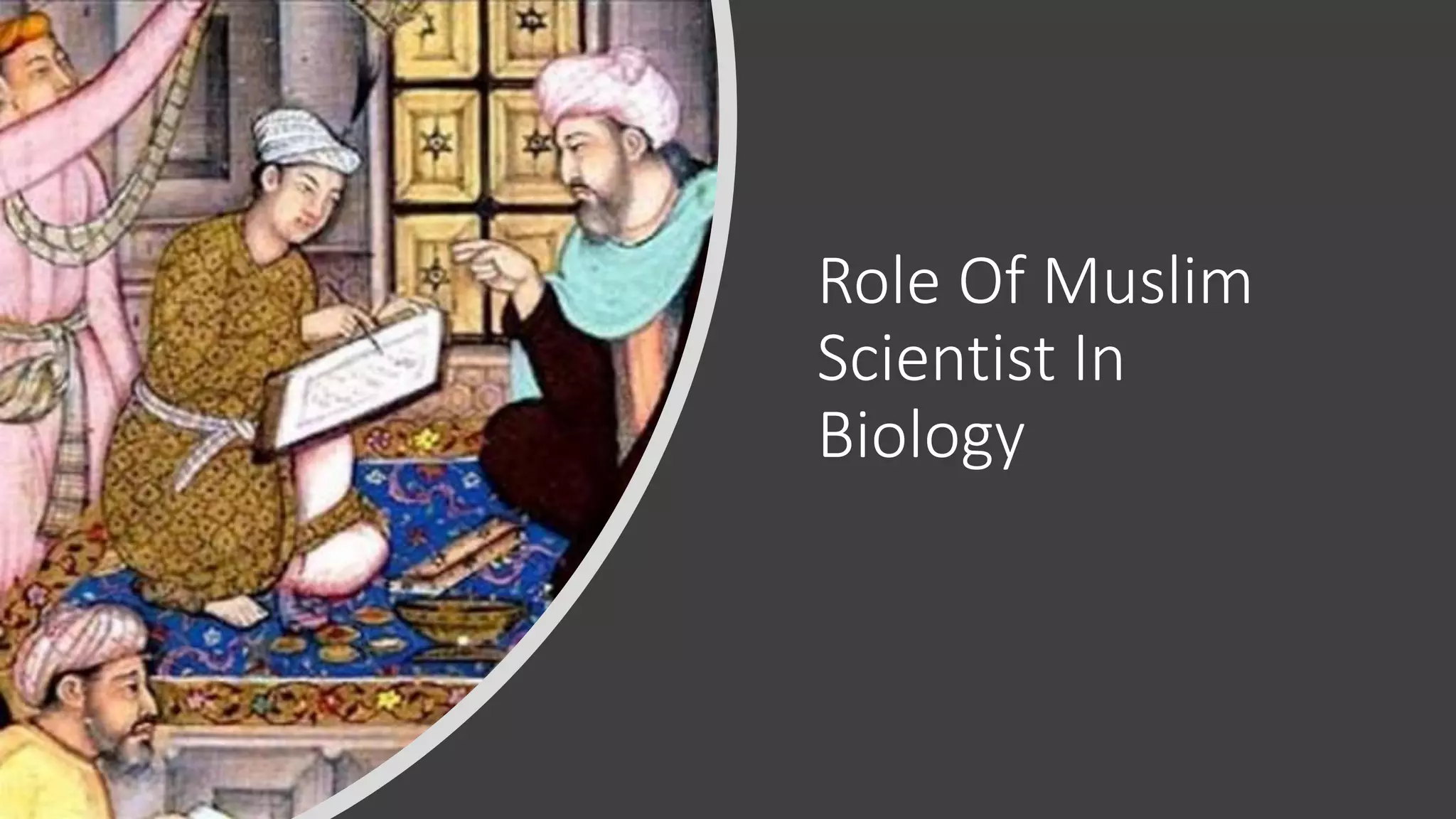


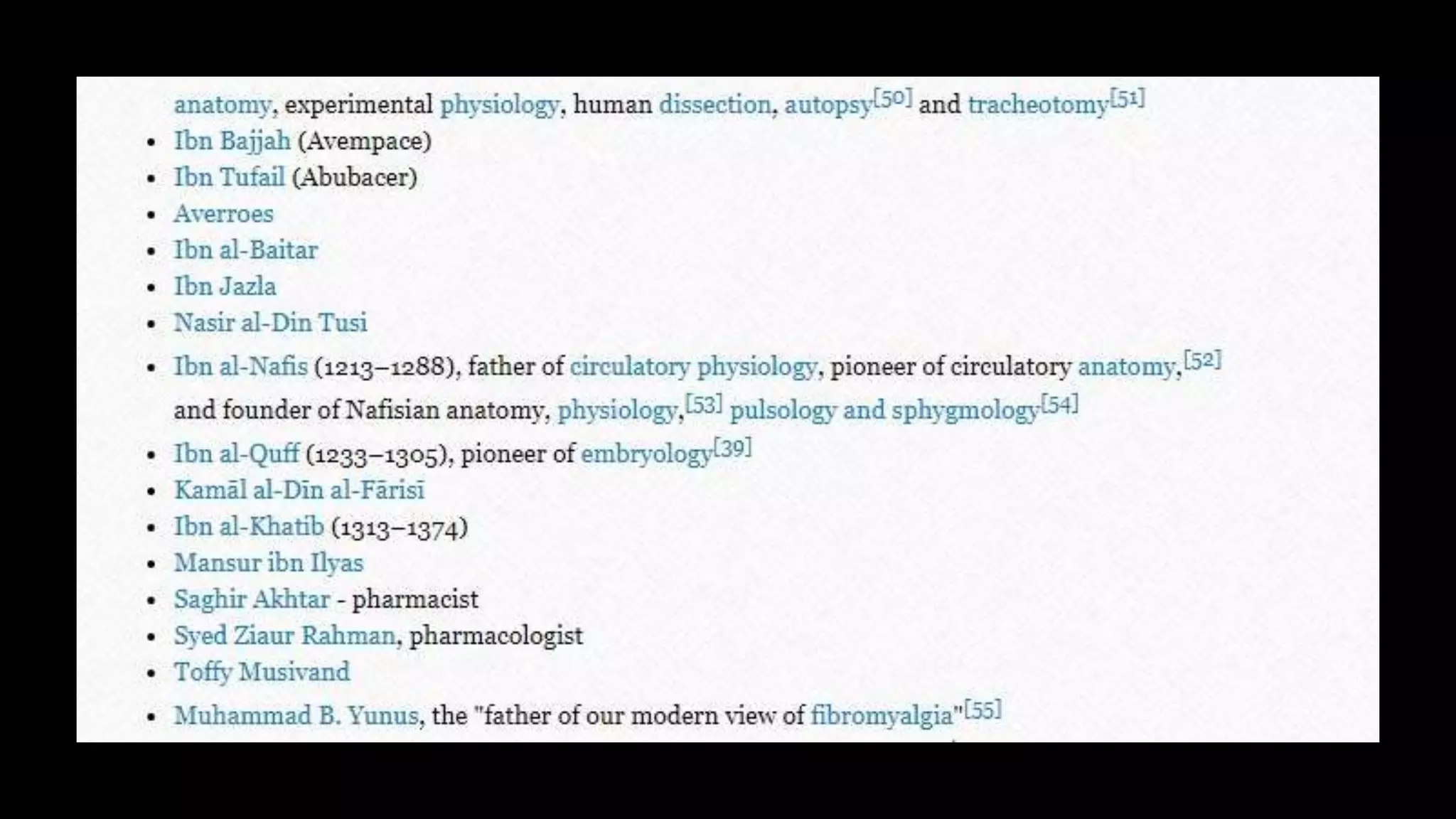
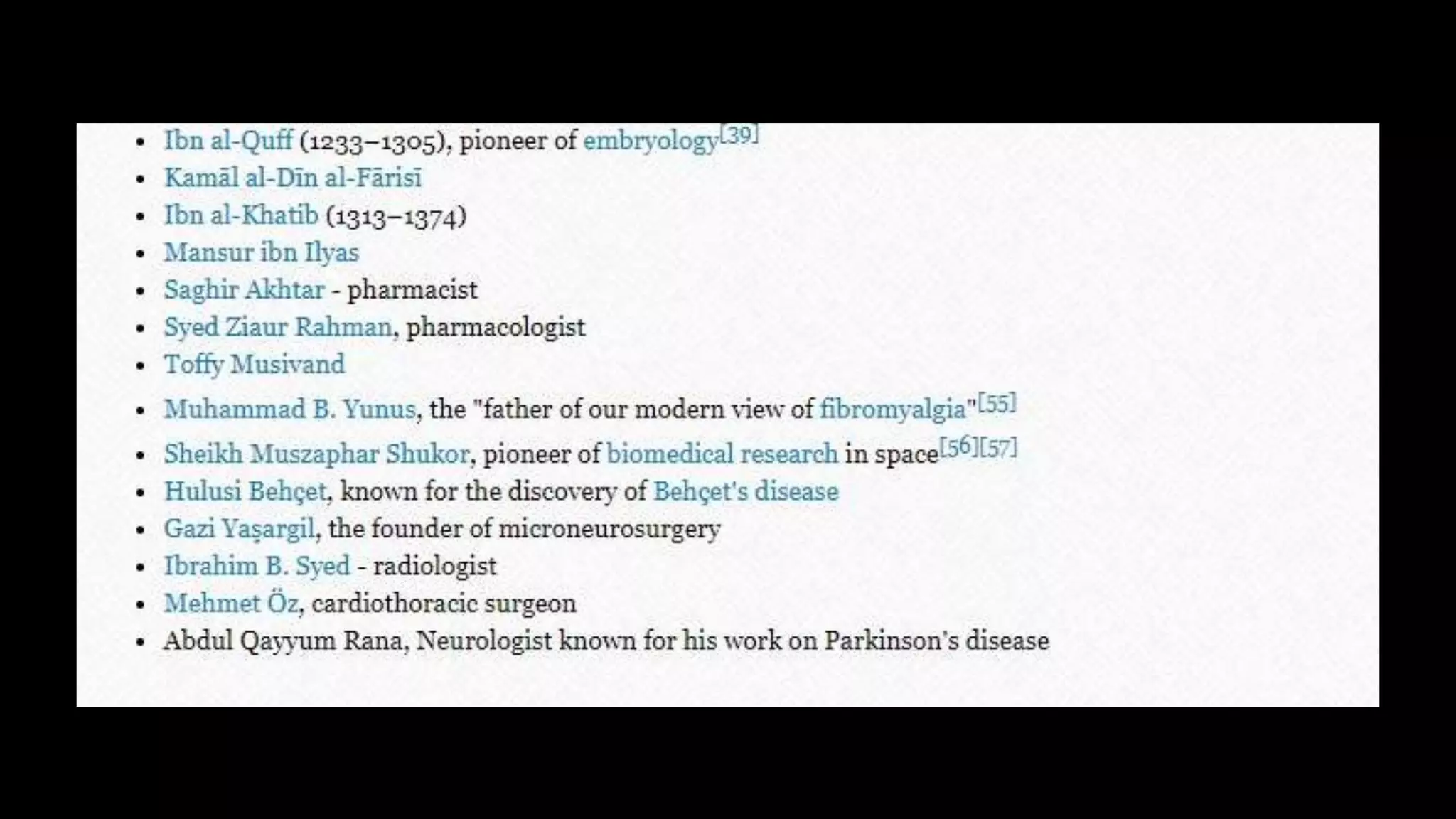
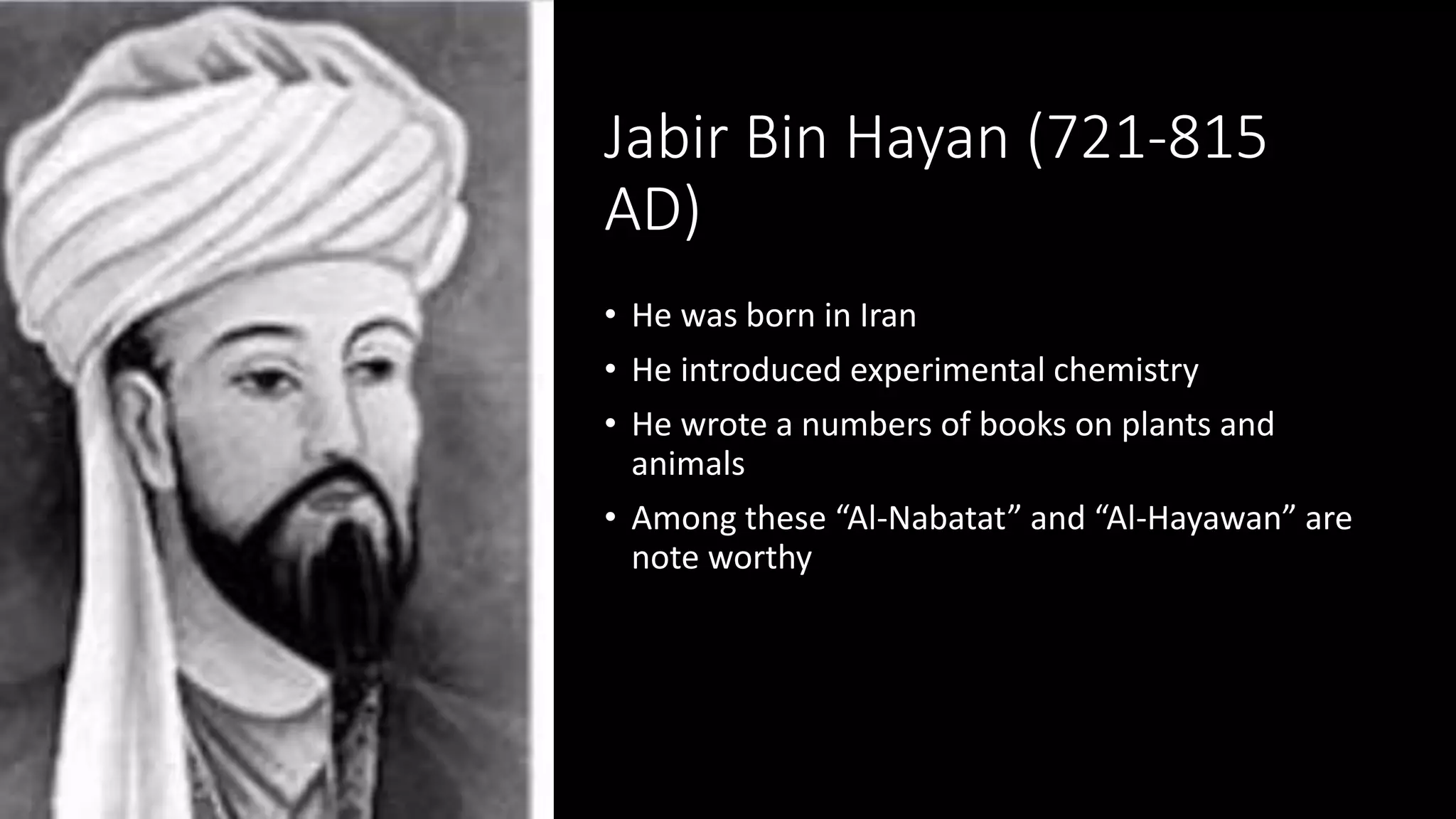
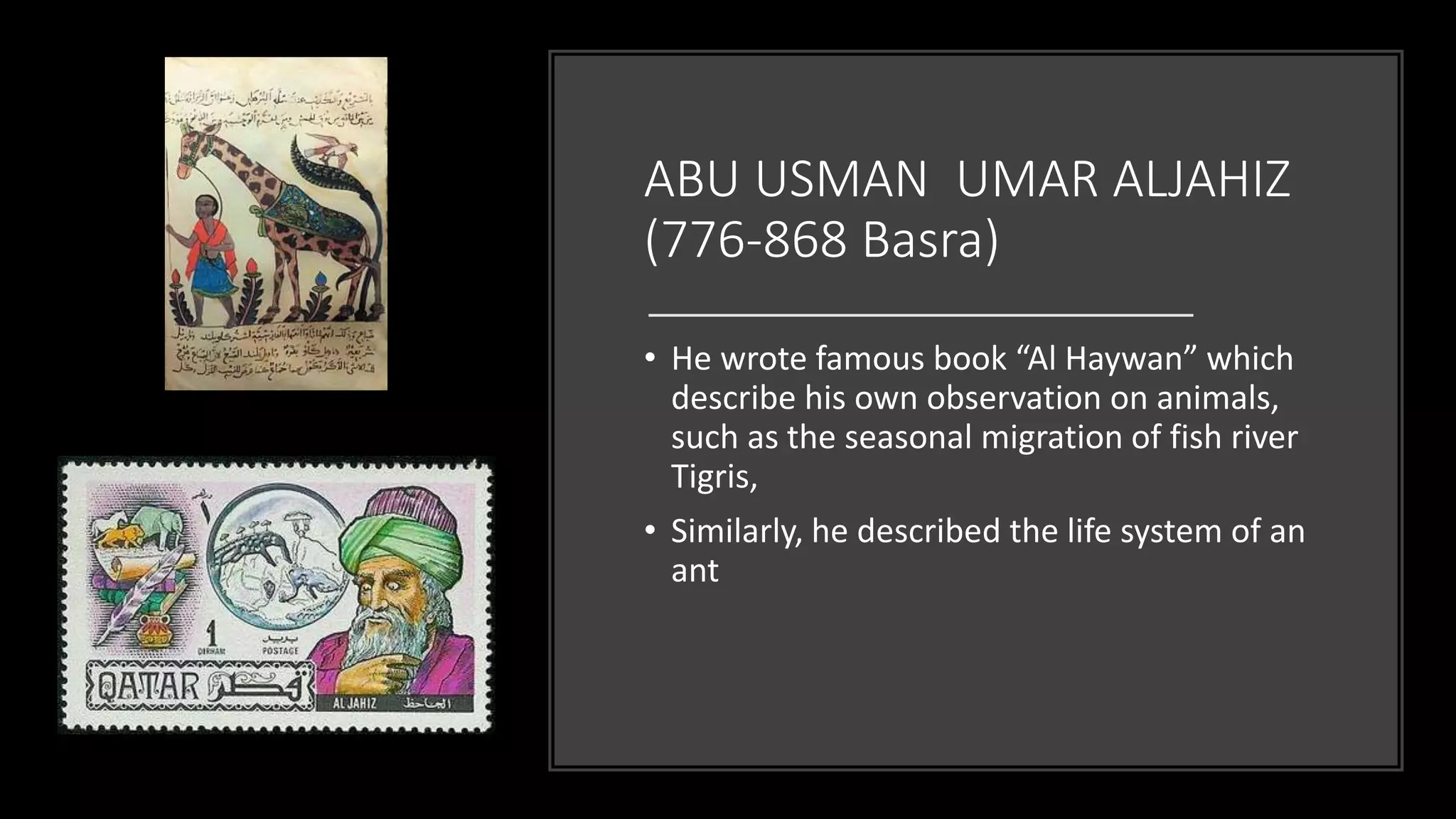


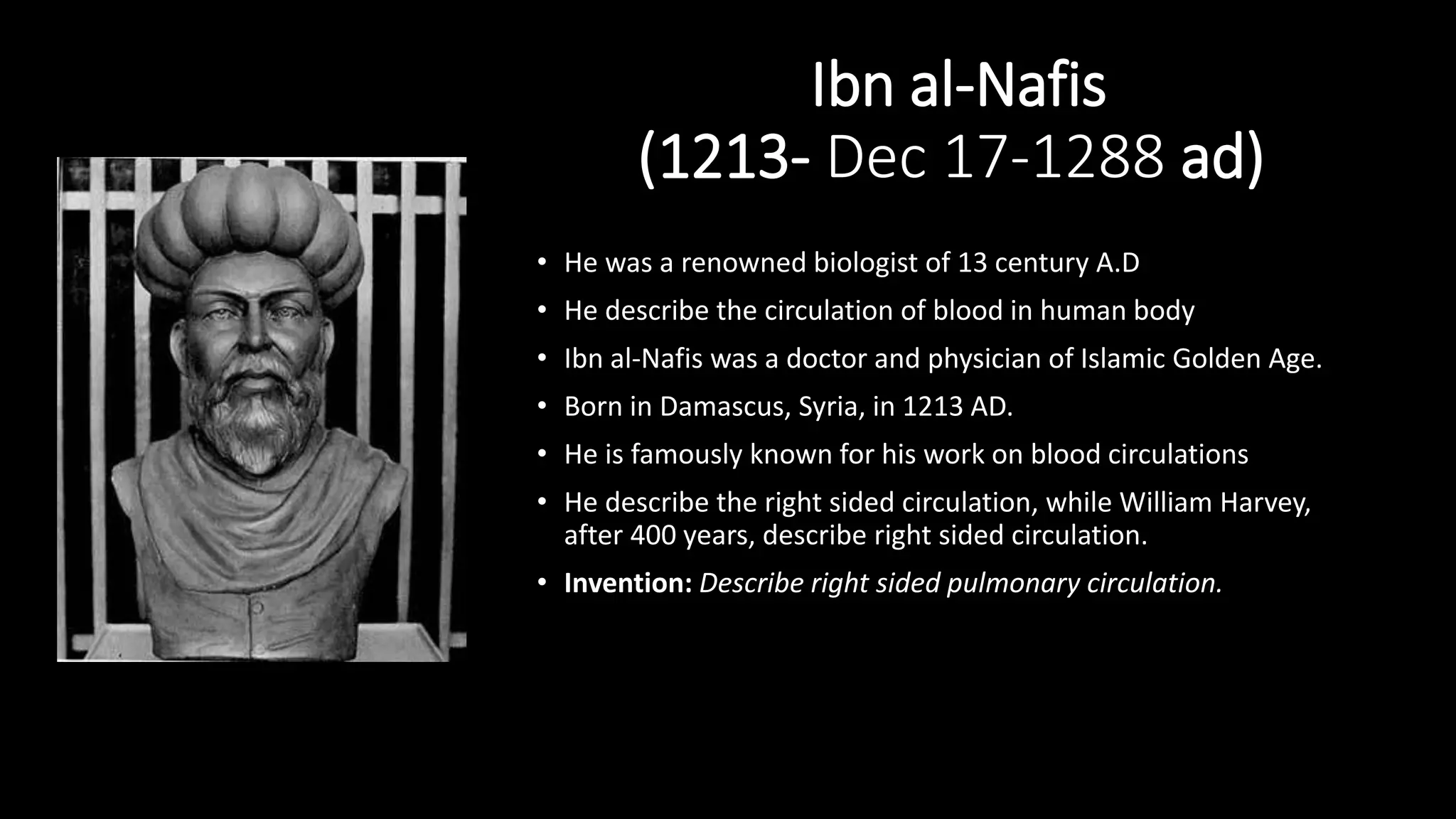


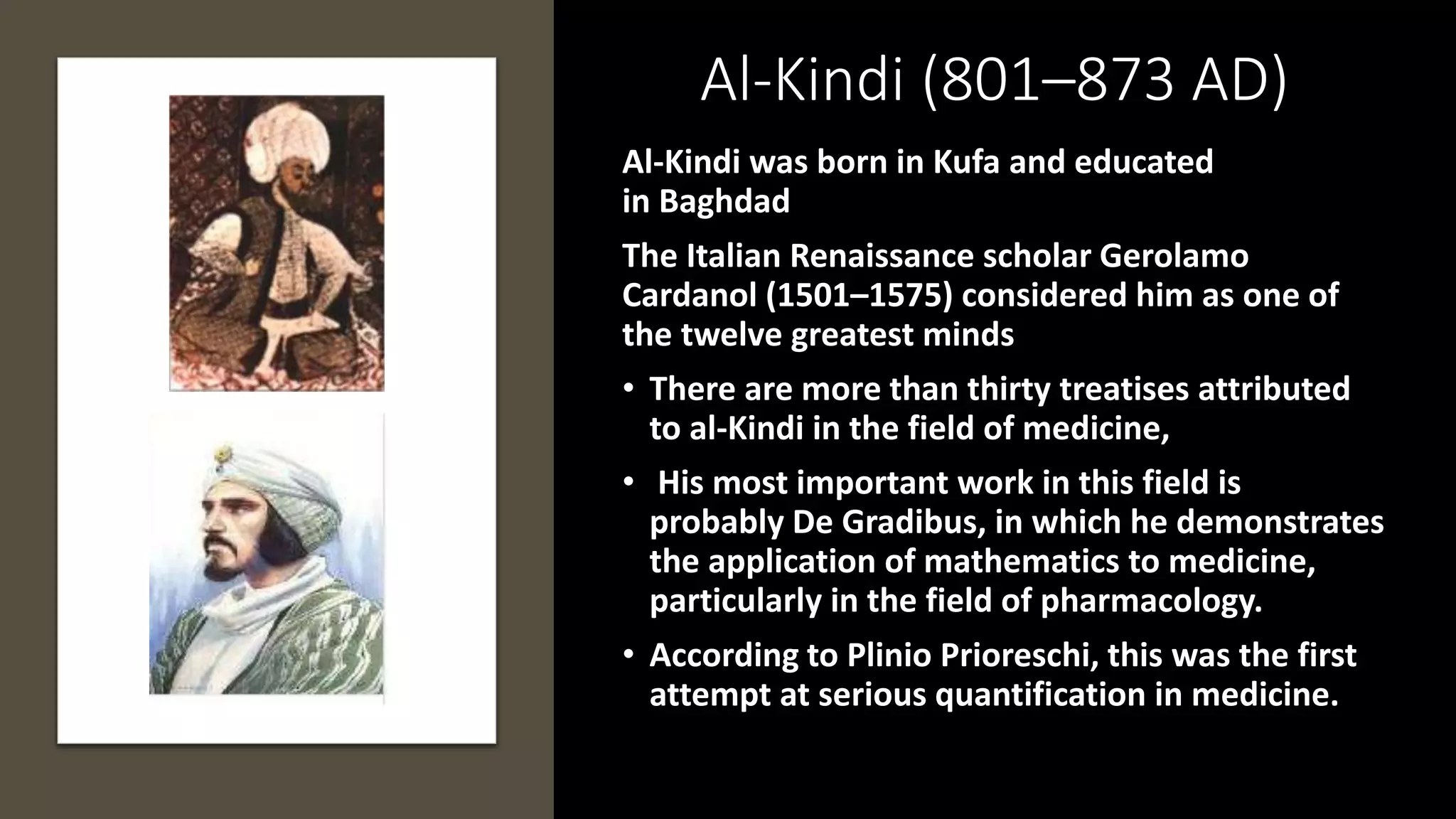
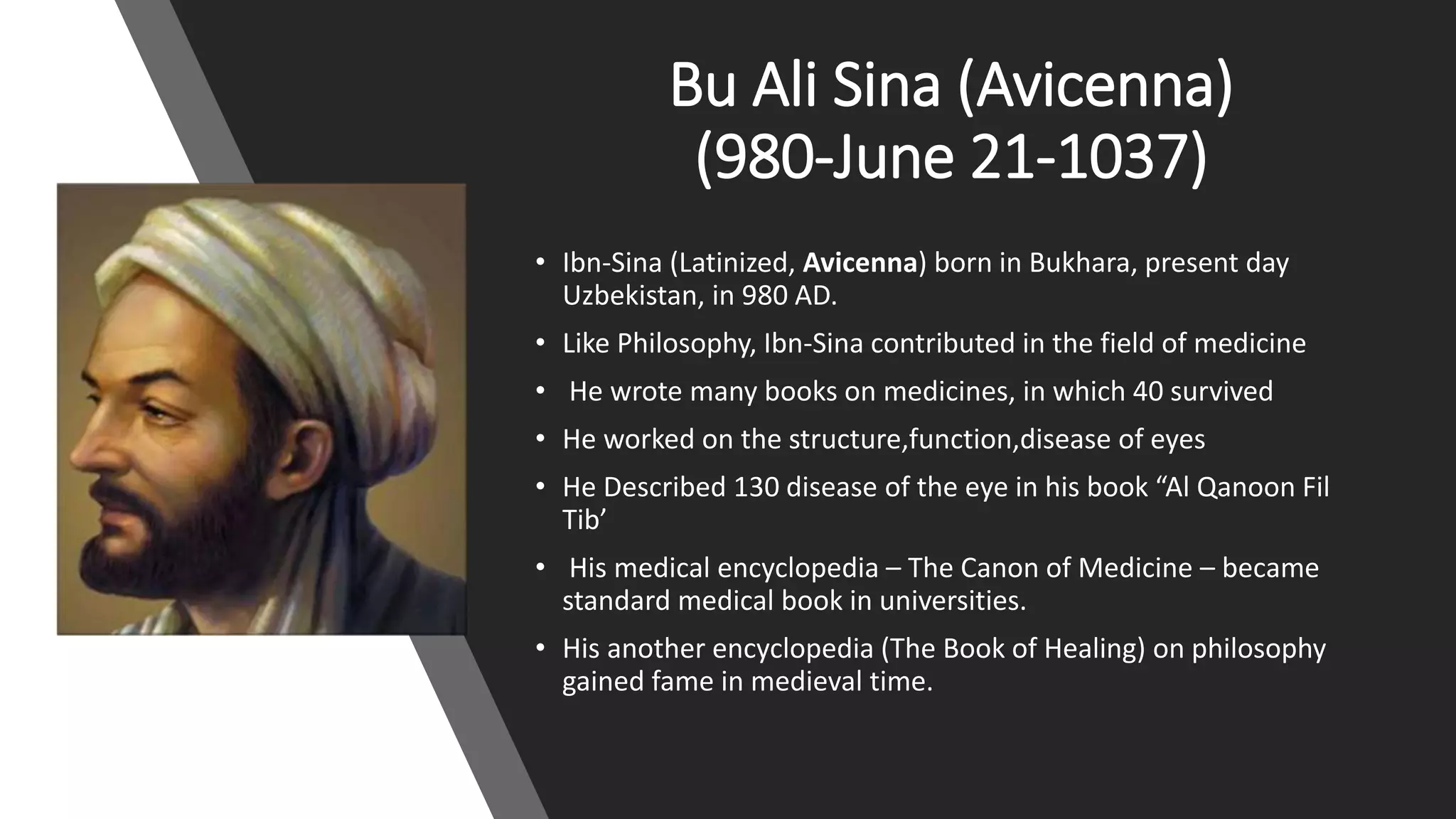


Muslim scientists made many important contributions to biology and medicine between the 8th and 15th centuries. Some of the most notable scientists included Jabir ibn Hayyan who introduced experimental chemistry and wrote about plants and animals, Al-Jahiz who wrote about animal behavior and migration, and Ibn al-Baitar who compiled a botanical encyclopedia listing over 1,400 plants. Other influential Muslim biologists were Al-Razi who made breakthroughs in infectious disease, Ibn al-Nafis who discovered the pulmonary circulation of blood decades before Western scientists, and Ibn Sina whose medical encyclopedia became a standard text for centuries. Overall, Muslim scientists during this period advanced the fields of biology, medicine,


![Islamic medicine 1000 years ahead of its times [from www.metacafe.com]](https://cdn.slidesharecdn.com/ss_thumbnails/islamicmedicine1000yearsaheadofitstimesfromwww-metacafe-com-120510234707-phpapp01-thumbnail.jpg?width=640&height=640&fit=bounds)


