2011 © McGraw-Hill Higher EducationEdited by Carolyn PonceMusic: An Appreciation7th brief Editionby Roger Kamien
Part 1, Chapter 1SoundOur world is filled with soundsSounds can be pleasant or unpleasantHumans are able to focus on specific sounds and ignore sounds that do not interest usSoundBegins as result of a vibrations transmitted through a medium – airImpulses sent to brain for processingMusic: organization of sounds in time
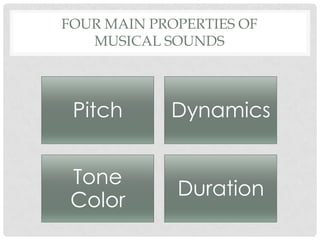
Four main properties of musical sounds
Pitch: Highness or Lowness of A SoundDetermined by frequency of vibrationFast vibration=high pitch; slow vibration=low pitchGenerally, smaller vibrating objects=higher pitchesIn music, definite pitch is a toneTones have specific frequenciese.g., 440 cycles (vibrations) per second = AIrregular vibrations create sounds of indefinite pitch (“thunk”)Interval: distance between 2 tonesNon-western music uses different intervals than Western musicRange: distance between voice or instrument’s highest & lowest possible tones
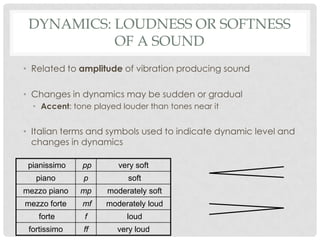
Dynamics: Loudness or softness of a SoundRelated to amplitude of vibration producing soundChanges in dynamics may be sudden or gradualAccent: tone played louder than tones near itItalian terms and symbols used to indicate dynamic level and changes in dynamics
Tone Color: QualityOf a SoundAlso known as Timbre–Quality that distinguishes tonesCan be bright, dark, mellow, etc.Changes in tone color create variety and contrastTone colors add a sense of continuitySpecific melodies with specific tone colorsUnlimited variety of tone colorsComposers frequently blend sounds of instruments to create new tone colorsModern electronic techniques create new tone colors
Listening Outlines, Vocal Music Guides, and the Properties of SoundHelps focus attention on musical events as they occurPreceded by description of the music’s main featuresListening Outline - points out notable musical soundsVocal Music Guide – helps the listener follow the thought, story, or dramaSuggestion: while listening to one passage, look ahead to what is next.
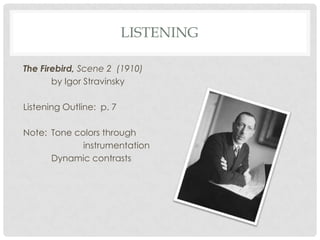
ListeningThe Firebird, Scene 2  (1910)by Igor StravinskyListening Outline:  p. 7Note:	Tone colors through 		instrumentation	Dynamic contrasts
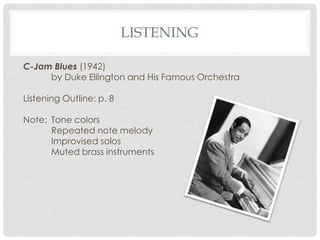
ListeningC-Jam Blues (1942)	by Duke Ellington and His Famous OrchestraListening Outline: p. 8Note: 	Tone colorsRepeated note melodyImprovised solosMuted brass instruments

Musical elements sound

  • 1.
    2011 © McGraw-HillHigher EducationEdited by Carolyn PonceMusic: An Appreciation7th brief Editionby Roger Kamien
  • 2.
    Part 1, Chapter1SoundOur world is filled with soundsSounds can be pleasant or unpleasantHumans are able to focus on specific sounds and ignore sounds that do not interest usSoundBegins as result of a vibrations transmitted through a medium – airImpulses sent to brain for processingMusic: organization of sounds in time
  • 3.
    Four main propertiesof musical sounds
  • 4.
    Pitch: Highness orLowness of A SoundDetermined by frequency of vibrationFast vibration=high pitch; slow vibration=low pitchGenerally, smaller vibrating objects=higher pitchesIn music, definite pitch is a toneTones have specific frequenciese.g., 440 cycles (vibrations) per second = AIrregular vibrations create sounds of indefinite pitch (“thunk”)Interval: distance between 2 tonesNon-western music uses different intervals than Western musicRange: distance between voice or instrument’s highest & lowest possible tones
  • 5.
    Dynamics: Loudness orsoftness of a SoundRelated to amplitude of vibration producing soundChanges in dynamics may be sudden or gradualAccent: tone played louder than tones near itItalian terms and symbols used to indicate dynamic level and changes in dynamics
  • 6.
    Tone Color: QualityOfa SoundAlso known as Timbre–Quality that distinguishes tonesCan be bright, dark, mellow, etc.Changes in tone color create variety and contrastTone colors add a sense of continuitySpecific melodies with specific tone colorsUnlimited variety of tone colorsComposers frequently blend sounds of instruments to create new tone colorsModern electronic techniques create new tone colors
  • 7.
    Listening Outlines, VocalMusic Guides, and the Properties of SoundHelps focus attention on musical events as they occurPreceded by description of the music’s main featuresListening Outline - points out notable musical soundsVocal Music Guide – helps the listener follow the thought, story, or dramaSuggestion: while listening to one passage, look ahead to what is next.
  • 8.
    ListeningThe Firebird, Scene2 (1910)by Igor StravinskyListening Outline: p. 7Note: Tone colors through instrumentation Dynamic contrasts
  • 9.
    ListeningC-Jam Blues (1942) byDuke Ellington and His Famous OrchestraListening Outline: p. 8Note: Tone colorsRepeated note melodyImprovised solosMuted brass instruments