BESTY VARGHESE
Krishna Institute of Medical
Sciences Deemed to be University,
Karad Sciences (Accredited with
NAAC A+ grade with CGPA 3.39)
PHOTO
NURSE PRACTITIONER IN CRITICAL CARE
Objectives
From Herlihy, B. & Maebius, N. (2000). The human body in health and illness. Philadelphia: W.B.
Saunders.
1. Review knowledge of Anatomy & Physiology of Musculoskeletal System
2. Differentiate Normal & Abnormal MSS
3. Focused History Collection & Physical Exam- MUST
 To assess the severity and consequences of the condition
 To make an accurate diagnosis
 To Prevent complications due to late detection
 To construct a clear management plan
NURSE PRACTITIONER IN CRITICAL CARE
 In the very old…
 In the very young…
INTRODUCTION
NURSE PRACTITIONER IN CRITICAL CARE
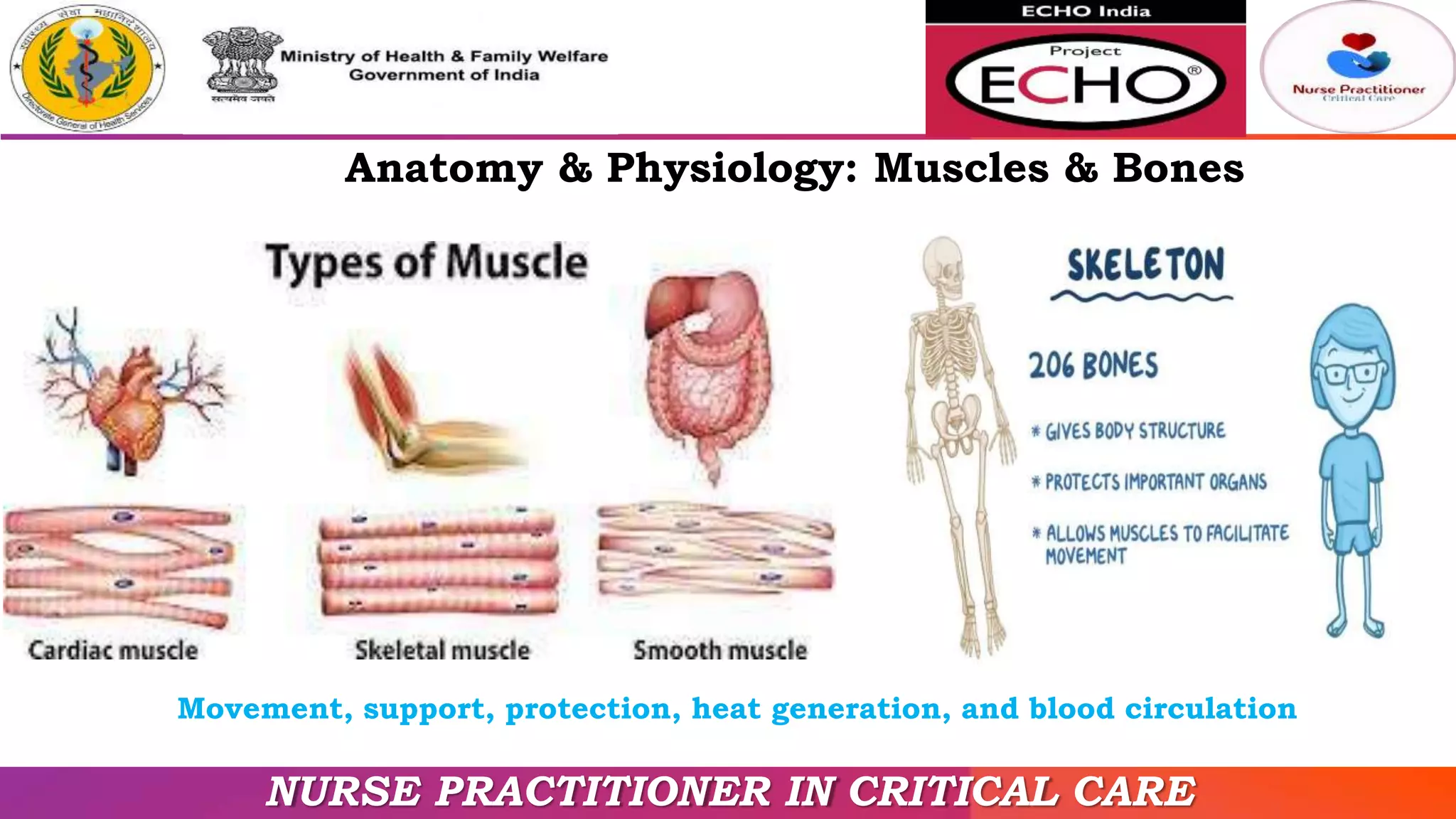
Anatomy & Physiology: Muscles & Bones
Movement, support, protection, heat generation, and blood circulation
NURSE PRACTITIONER IN CRITICAL CARE
From Herlihy, B. & Maebius, N. (2000). The human body in health and illness. Philadelphia: W.B.
Saunders.
The Musculoskeletal Examination
Steps..
1. To perform examination of muscles, bones and joints, use techniques of
inspection, palpation & manipulation.
2. https://www.youtube.com/watch?v=aUMTPa_9qlY
3. On screening examination, no musculoskeletal complaints, ask client to
perform complete active range of motion with each joints or set of joints.
NURSE PRACTITIONER IN CRITICAL CARE
Screening….Musculoskeletal History
Can you locate the pain?
Is the problem symmetrical?
Do you have any pain or stiffness in your muscles, joint or back?
Any H/o gout or arthritis?
Can you dress yourself completely without difficulty?
Can you “walk up and down stairs” without difficulty?
Any clinical abnormal symptoms?(e .g ., rash, fever)?
From Herlihy, B. & Maebius, N. (2000). The human body in health and illness. Philadelphia: W.B.
Saunders.
NURSE PRACTITIONER IN CRITICAL CARE
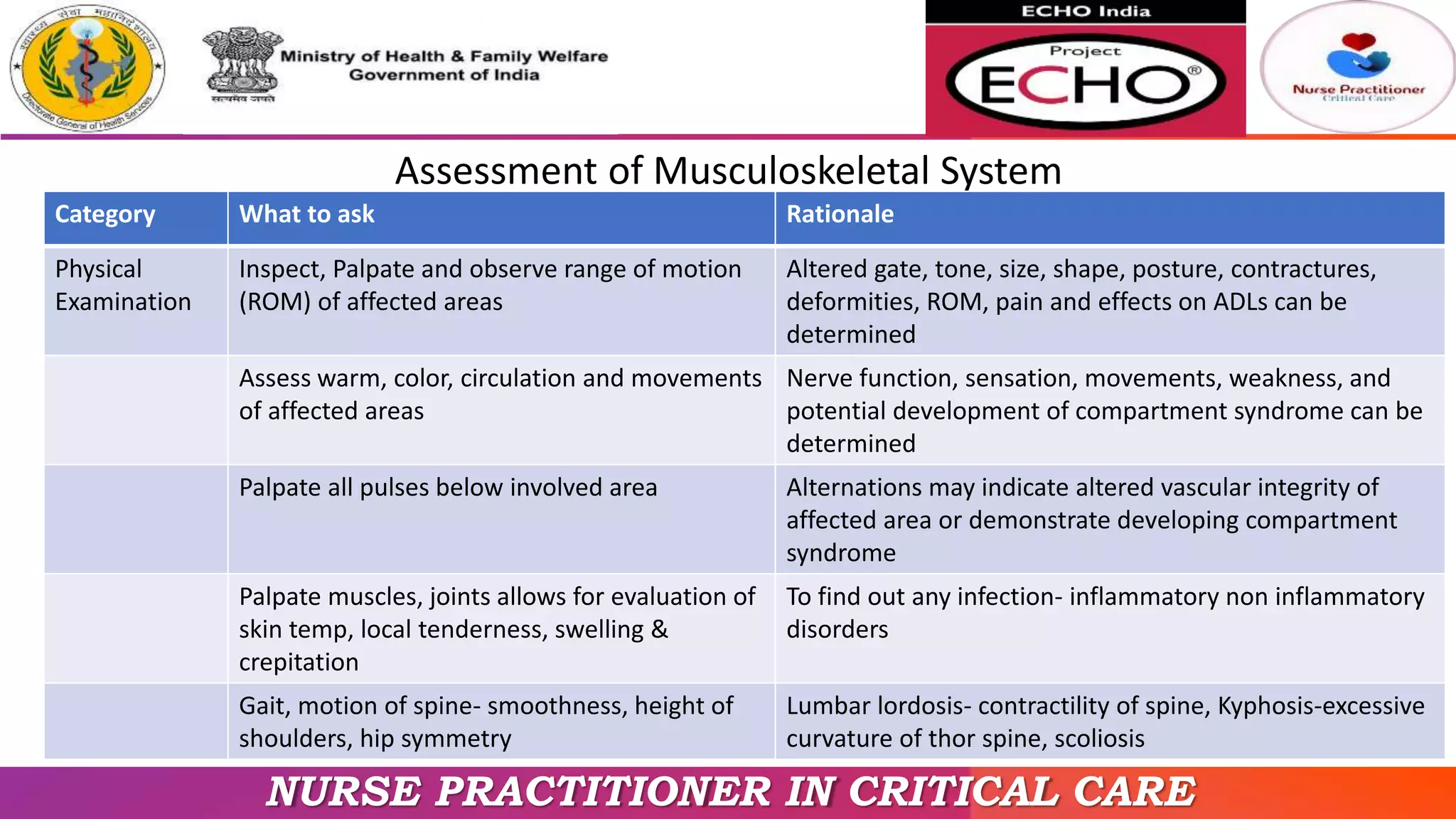
Assessment of Musculoskeletal System
Category What to ask Rationale
Physical
Examination
Inspect, Palpate and observe range of motion
(ROM) of affected areas
Altered gate, tone, size, shape, posture, contractures,
deformities, ROM, pain and effects on ADLs can be
determined
Assess warm, color, circulation and movements
of affected areas
Nerve function, sensation, movements, weakness, and
potential development of compartment syndrome can be
determined
Palpate all pulses below involved area Alternations may indicate altered vascular integrity of
affected area or demonstrate developing compartment
syndrome
Palpate muscles, joints allows for evaluation of
skin temp, local tenderness, swelling &
crepitation
To find out any infection- inflammatory non inflammatory
disorders
Gait, motion of spine- smoothness, height of
shoulders, hip symmetry
Lumbar lordosis- contractility of spine, Kyphosis-excessive
curvature of thor spine, scoliosis
NURSE PRACTITIONER IN CRITICAL CARE
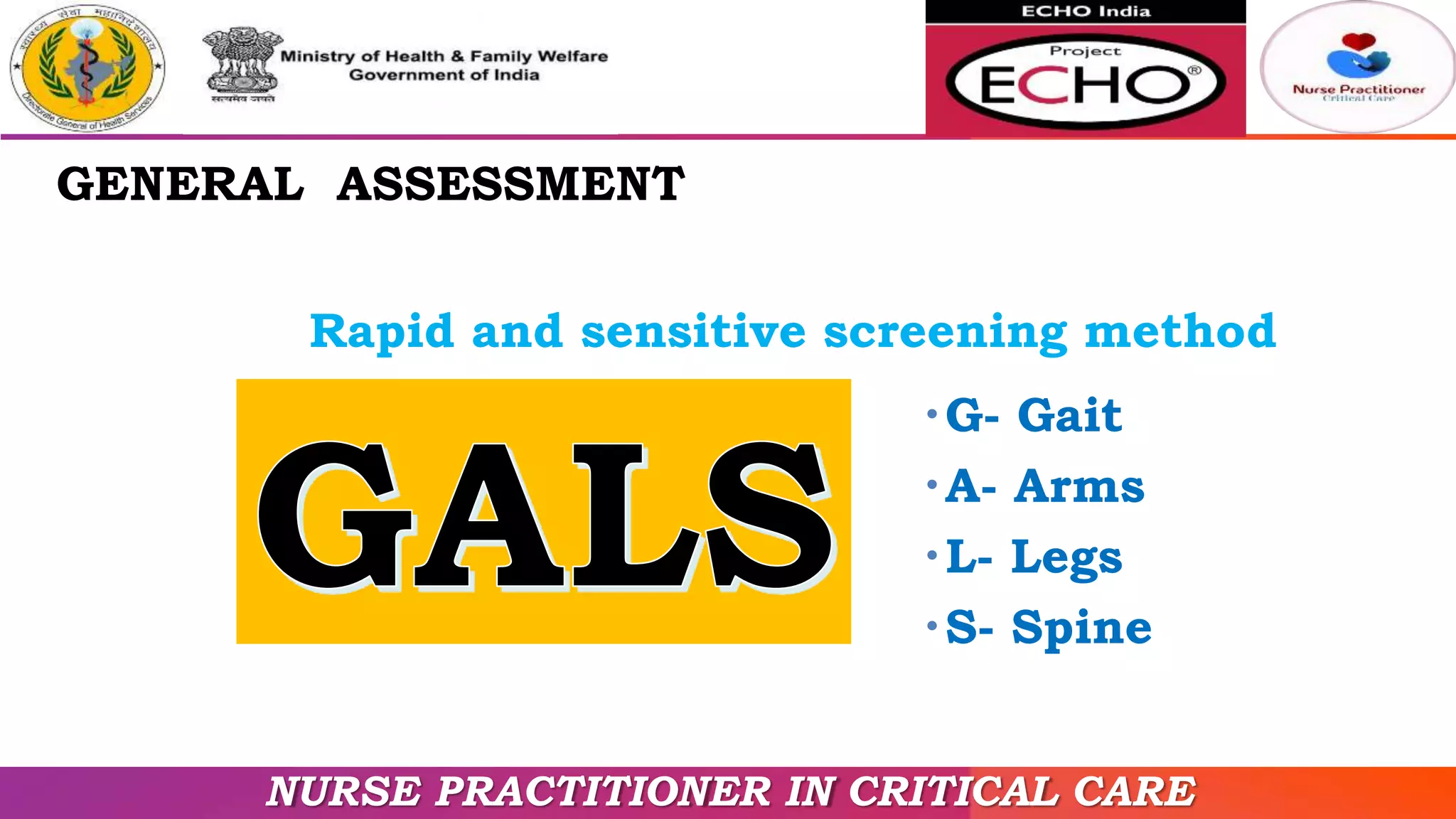
GENERAL ASSESSMENT
Rapid and sensitive screening method
G- Gait
A- Arms
L- Legs
S- Spine
NURSE PRACTITIONER IN CRITICAL CARE
General observation
G- Gait
A-
L-
S-
NURSE PRACTITIONER IN CRITICAL CARE
G-
A- Arms
L-
S-
NURSE PRACTITIONER IN CRITICAL CARE
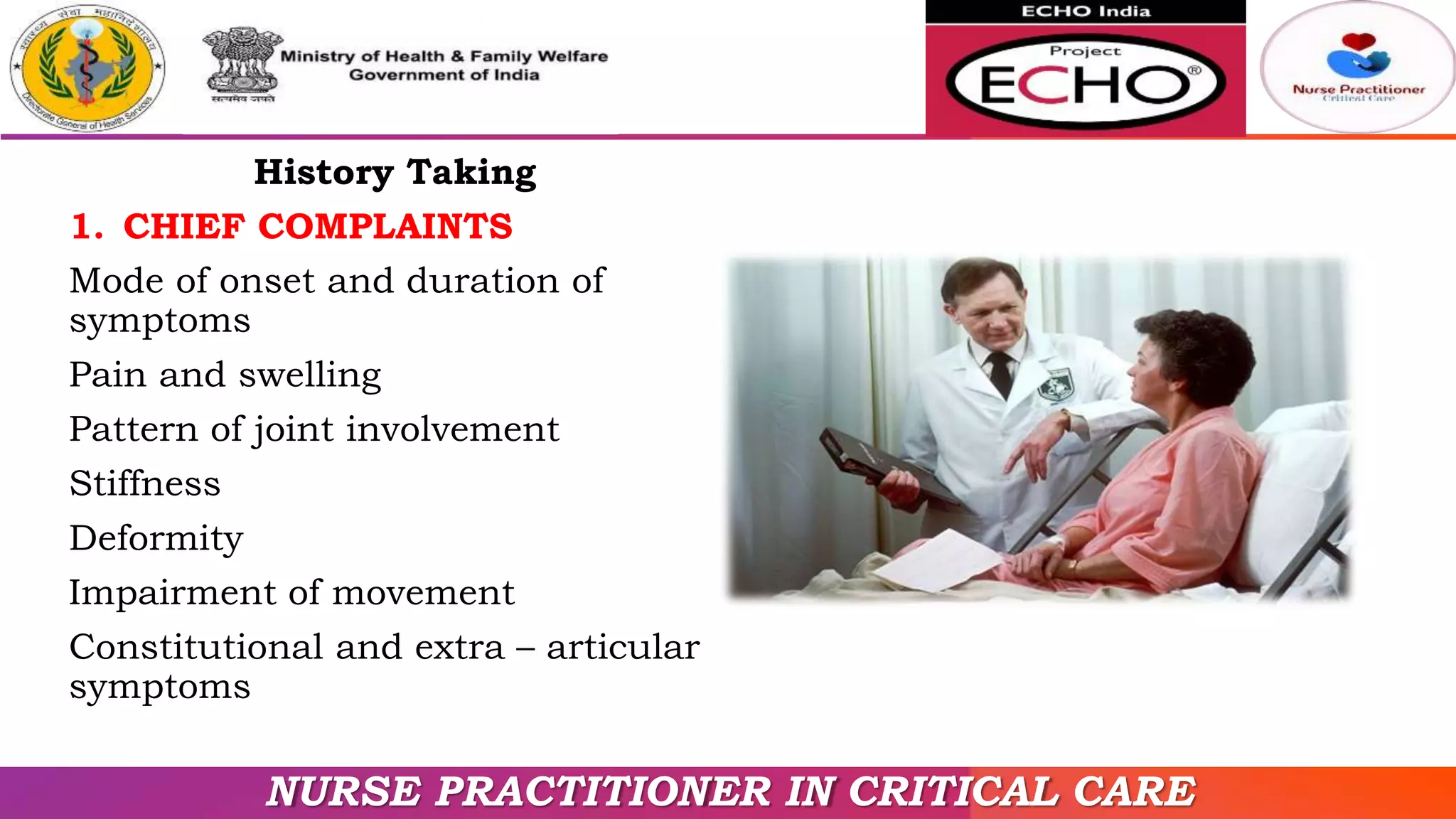
History Taking
1. CHIEF COMPLAINTS
Mode of onset and duration of
symptoms
Pain and swelling
Pattern of joint involvement
Stiffness
Deformity
Impairment of movement
Constitutional and extra – articular
symptoms
NURSE PRACTITIONER IN CRITICAL CARE
History of present illness
Acute onset (duration less
than 6 weeks)
Causes
Gouty arthritis
Septic arthritis
Gradual onset (duration
more than 6 weeks)
Rheumatoid arthritis
Osteoarthritis
Seronegative arthritis
Intermittent attacks of arthritis
Gouty arthritis
Migratory attacks of arthritis
Rheumatic fever
Gonococcal arthritis
Viral arthritis
NURSE PRACTITIONER IN CRITICAL CARE
• Bony pain:
• Continuous aching pain disturbing
sleep
• Joint pain:
• Sharp pain related to posture or
movement associated with stiffness
Assessment of joint pain
• Mode of onset
• Acute/ gradual/intermittent/
migratory / pain disturbing sleep
Pain
NURSE PRACTITIONER IN CRITICAL CARE
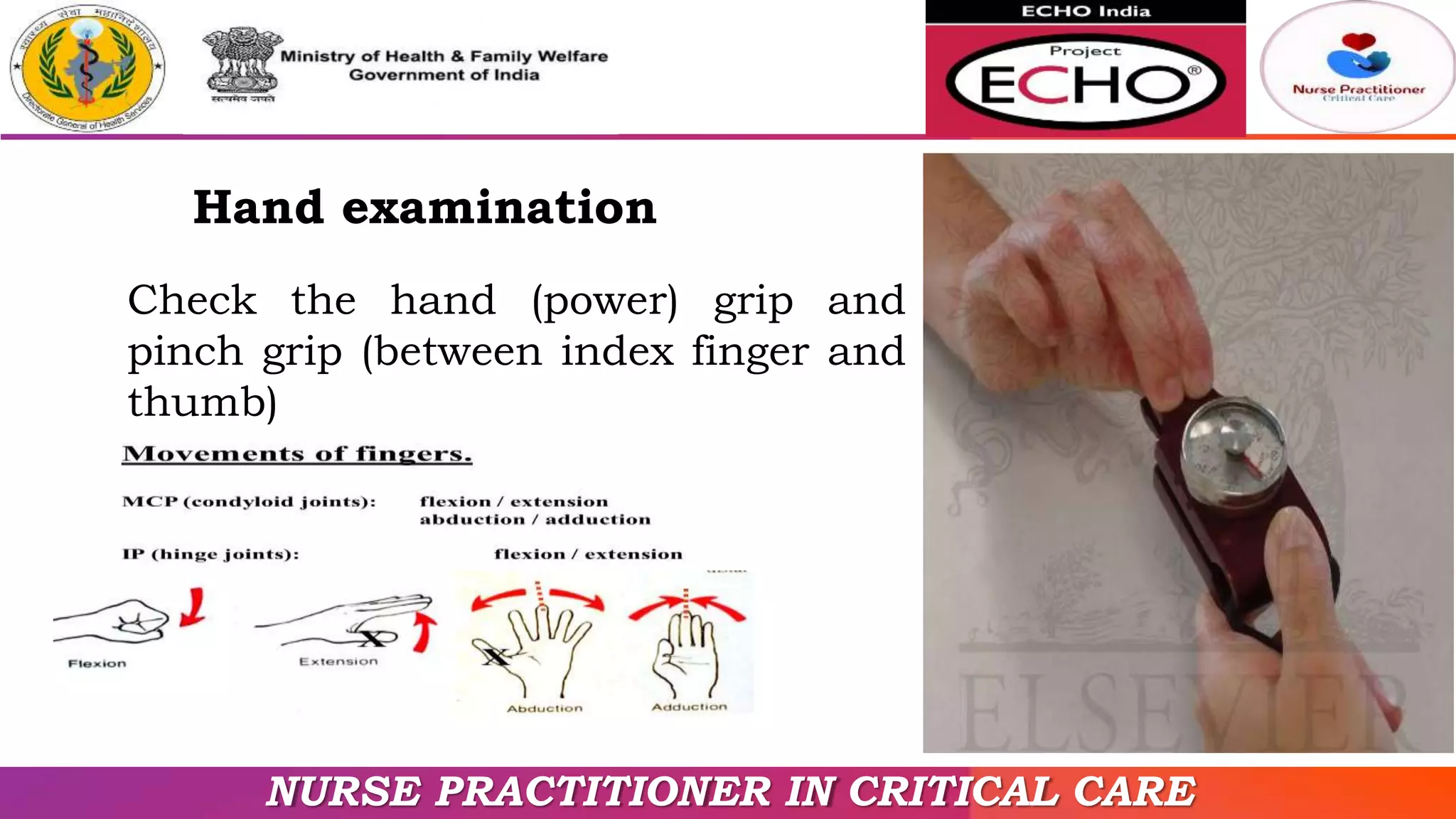
Hand examination
Check the hand (power) grip and
pinch grip (between index finger and
thumb)
NURSE PRACTITIONER IN CRITICAL CARE
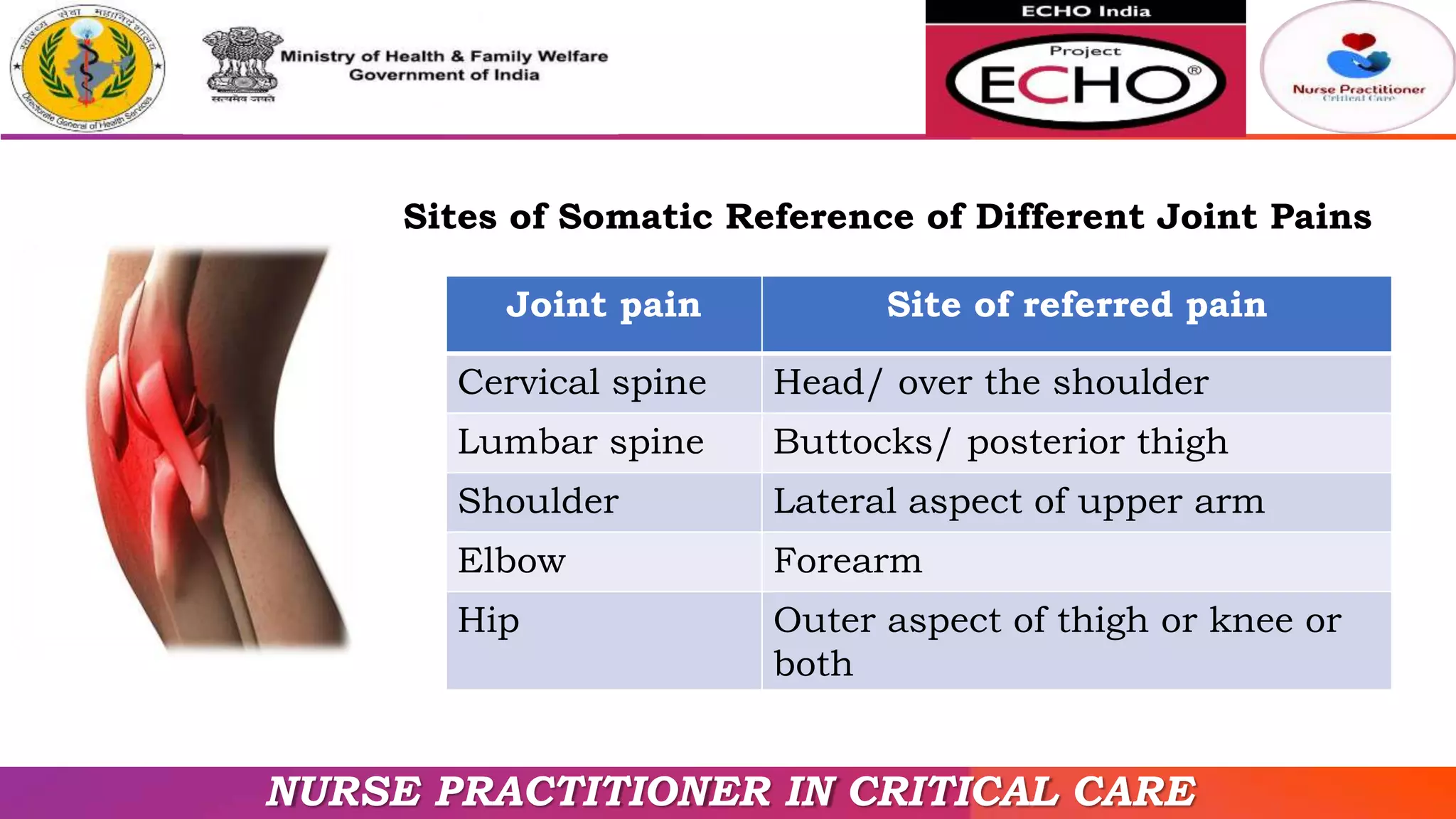
Sites of Somatic Reference of Different Joint Pains
• Joint pain
• Site of referred pain
Joint pain Site of referred pain
Cervical spine Head/ over the shoulder
Lumbar spine Buttocks/ posterior thigh
Shoulder Lateral aspect of upper arm
Elbow Forearm
Hip Outer aspect of thigh or knee or
both
NURSE PRACTITIONER IN CRITICAL CARE
Range of motion (Play Video)
https://www.youtube.com/wa
tch?v=D8sjGPYrtwI&ab_chann
el=TheUpperHand
Measured with a
protracter/goniometer
Assess for active and passive
movement
Physical Examination
NURSE PRACTITIONER IN CRITICAL CARE
Stiffness of joints
Inflammatory arthritis
•Early morning stiffness
persisting for more than 30
minutes
•More than 1 hr- rheumatoid
arthritis
•Stiffness is precipitated by
prolonged rest and lasts
several hrs
•Improves with activity and
anti inflammatory drugs
Non inflammatory arthritis
•Intermittent stiffness
•Stiffness may increase by activity
•Lasts less than one hour
•Stiffness is accompanied only by
pain without other inflammatory
symptoms
•Stiffness may be due to pain and
deformity
NURSE PRACTITIONER IN CRITICAL CARE
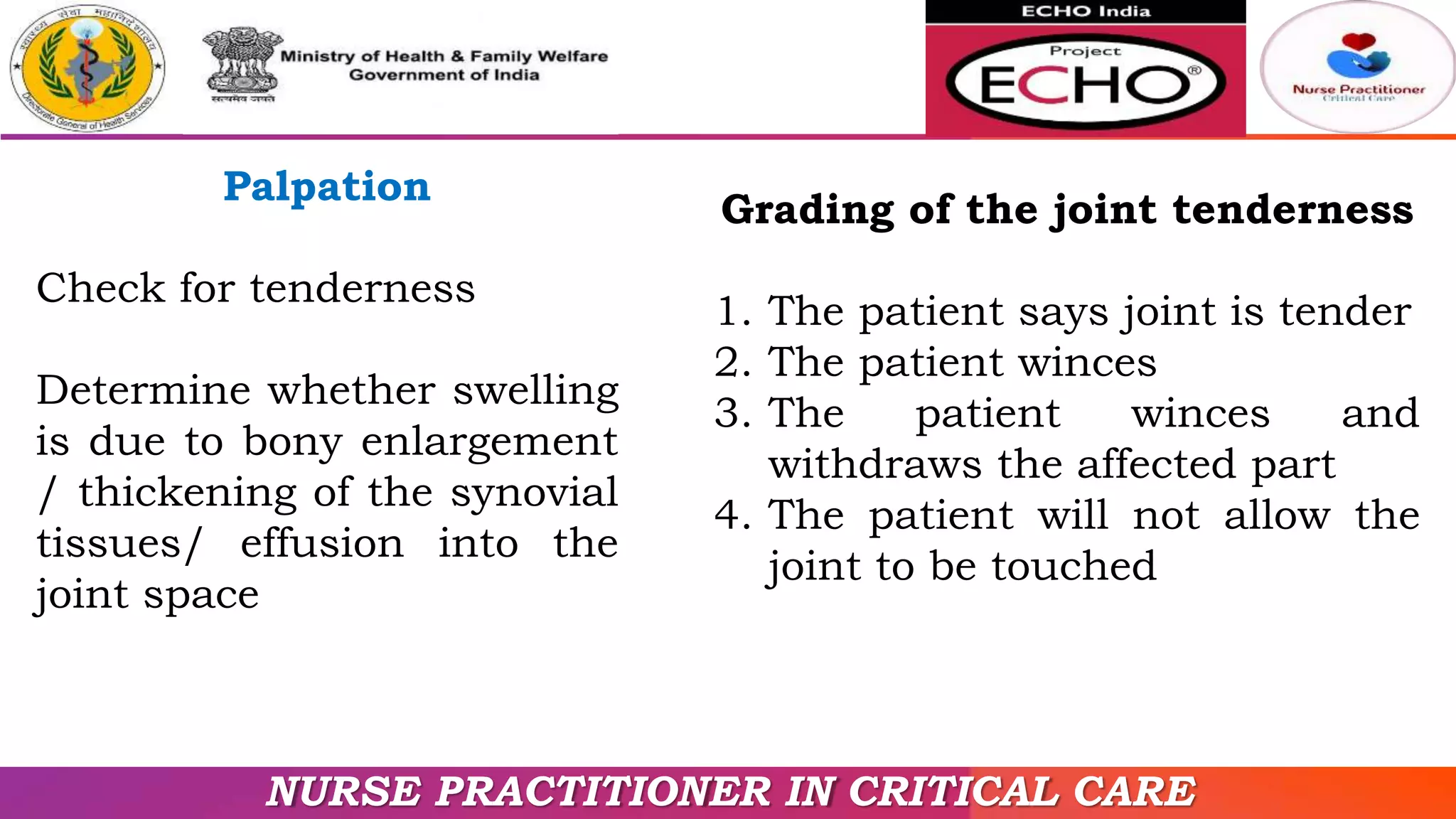
Palpation
Check for tenderness
Determine whether swelling
is due to bony enlargement
/ thickening of the synovial
tissues/ effusion into the
joint space
Grading of the joint tenderness
1. The patient says joint is tender
2. The patient winces
3. The patient winces and
withdraws the affected part
4. The patient will not allow the
joint to be touched
NURSE PRACTITIONER IN CRITICAL CARE
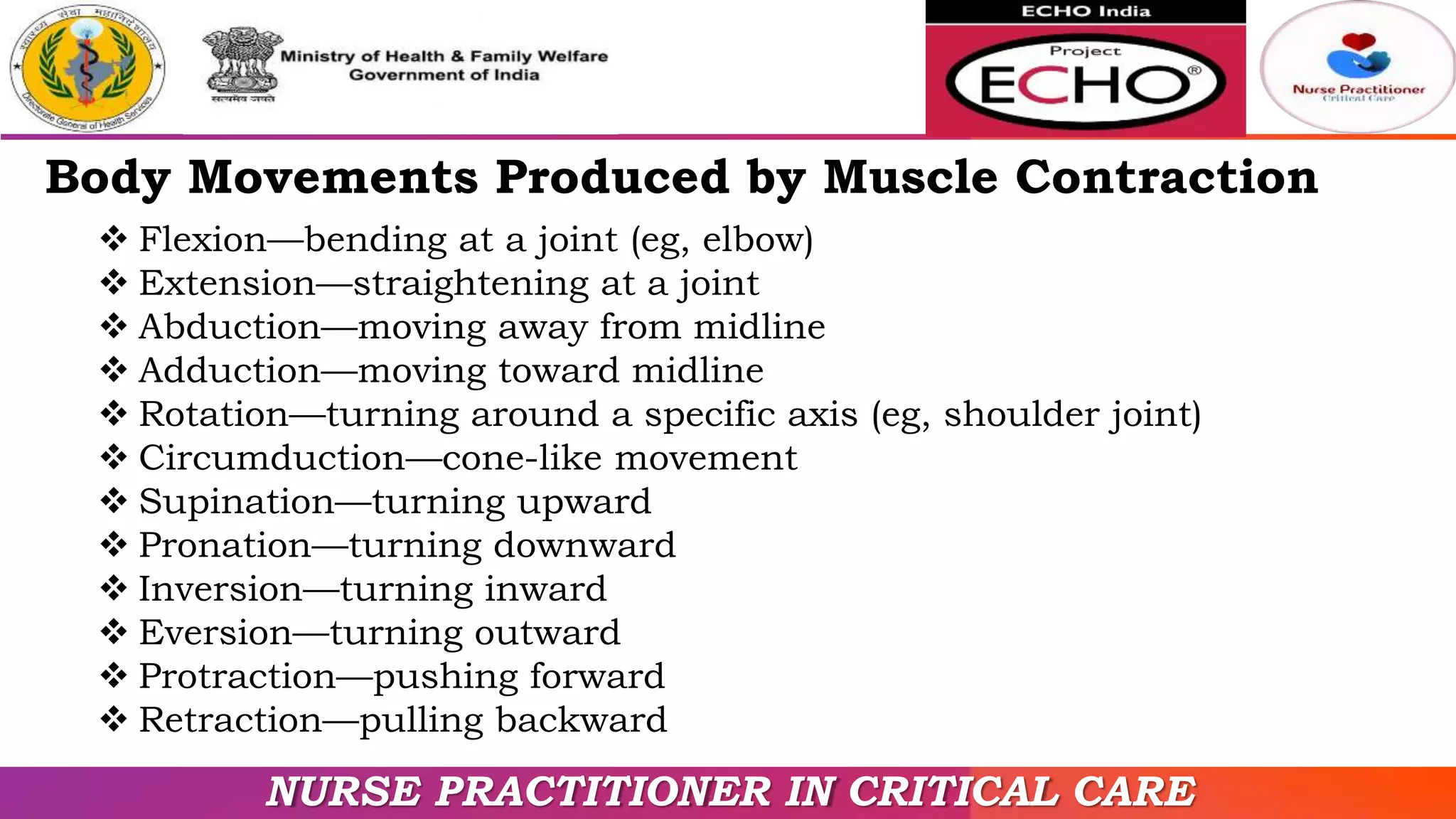
Body Movements Produced by Muscle Contraction
 Flexion—bending at a joint (eg, elbow)
 Extension—straightening at a joint
 Abduction—moving away from midline
 Adduction—moving toward midline
 Rotation—turning around a specific axis (eg, shoulder joint)
 Circumduction—cone-like movement
 Supination—turning upward
 Pronation—turning downward
 Inversion—turning inward
 Eversion—turning outward
 Protraction—pushing forward
 Retraction—pulling backward
NURSE PRACTITIONER IN CRITICAL CARE
G-
A-
L-Legs
S-
• Examine the lower limbs for
swelling, deformities or limb
shortening
• Range of motion
NURSE PRACTITIONER IN CRITICAL CARE
Hip Joint: Normal vs Abnormal
NURSE PRACTITIONER IN CRITICAL CARE
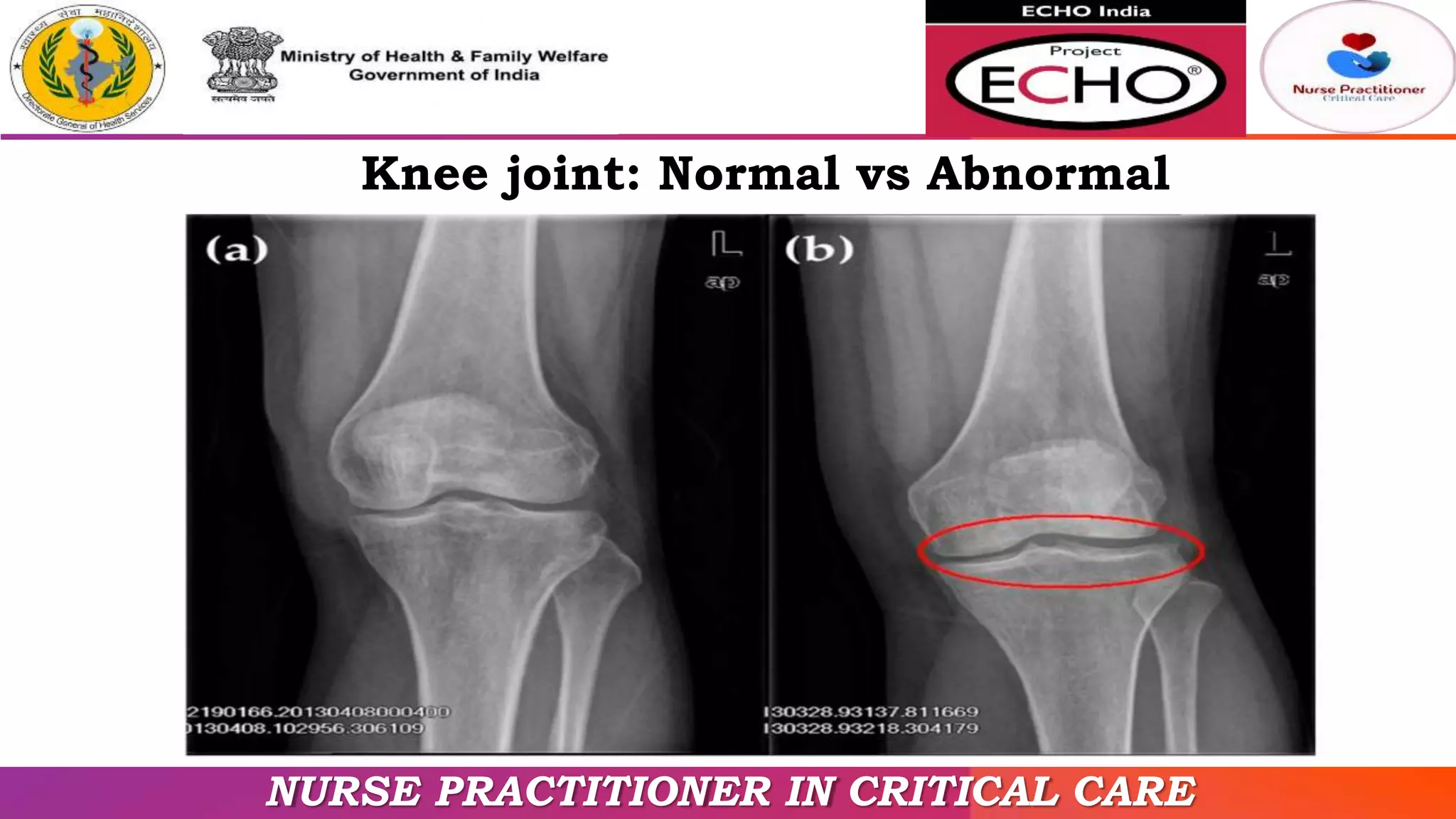
Knee joint: Normal vs Abnormal
NURSE PRACTITIONER IN CRITICAL CARE
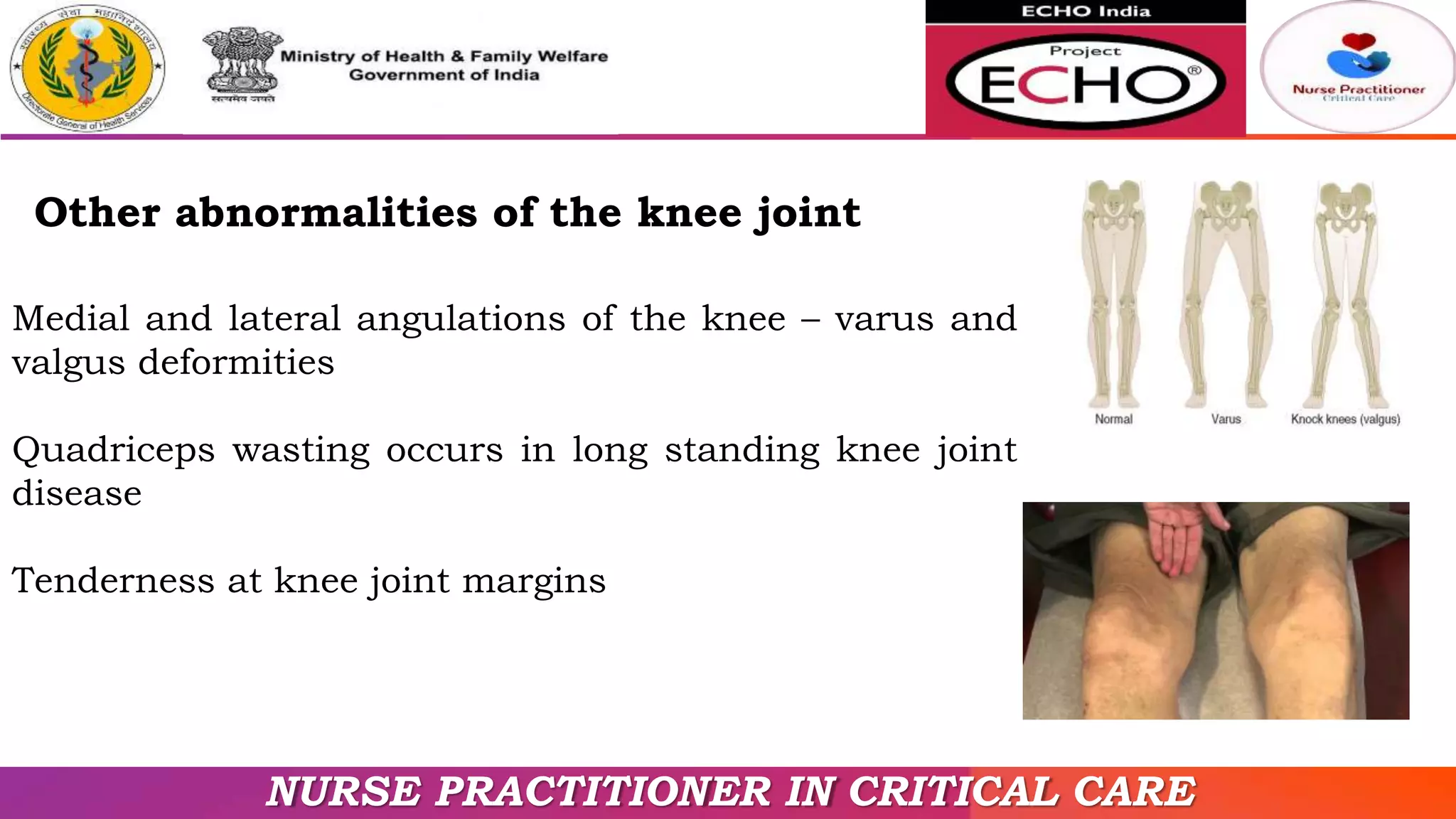
Other abnormalities of the knee joint
Medial and lateral angulations of the knee – varus and
valgus deformities
Quadriceps wasting occurs in long standing knee joint
disease
Tenderness at knee joint margins
NURSE PRACTITIONER IN CRITICAL CARE
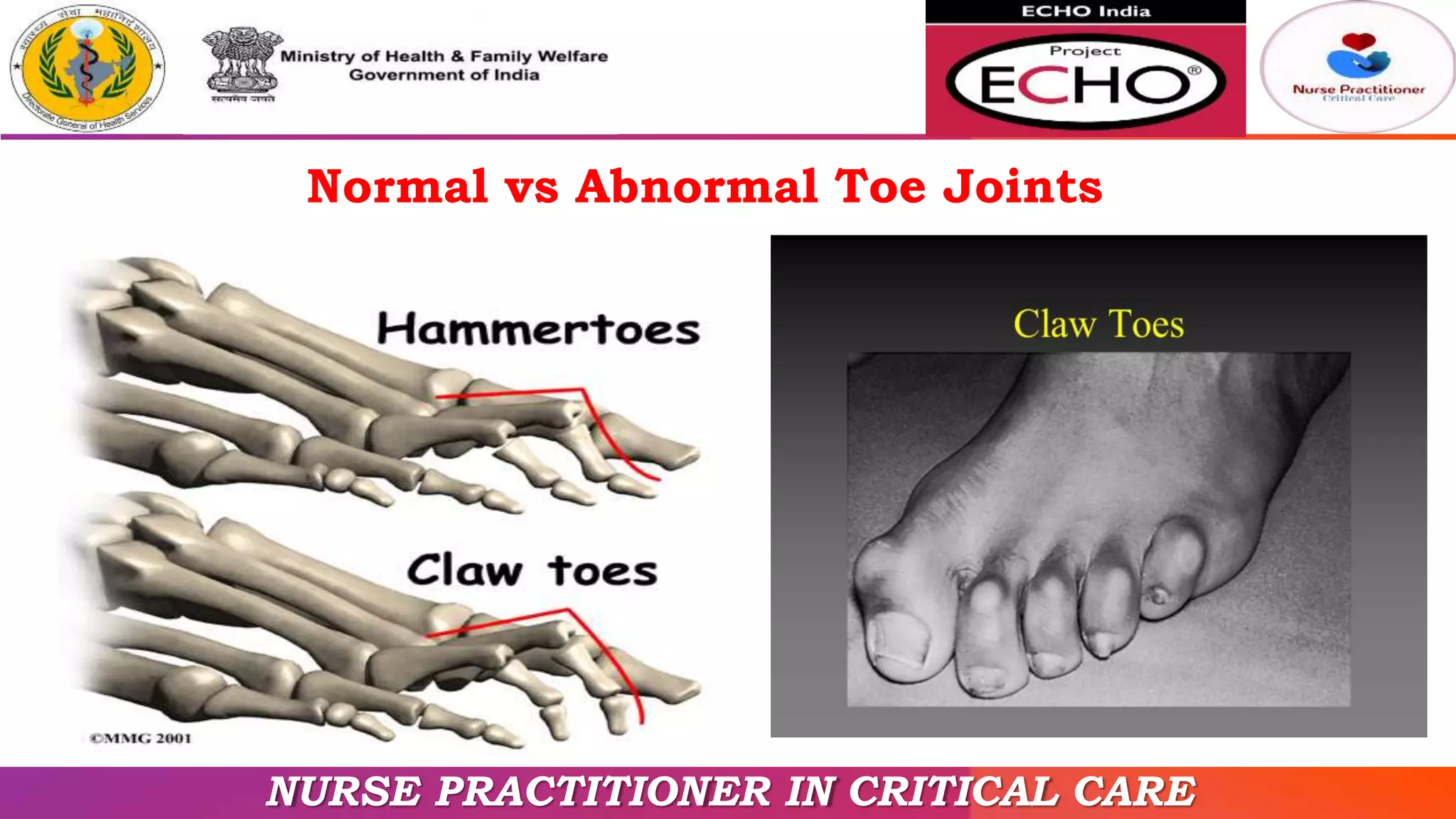
Normal vs Abnormal Toe Joints
NURSE PRACTITIONER IN CRITICAL CARE
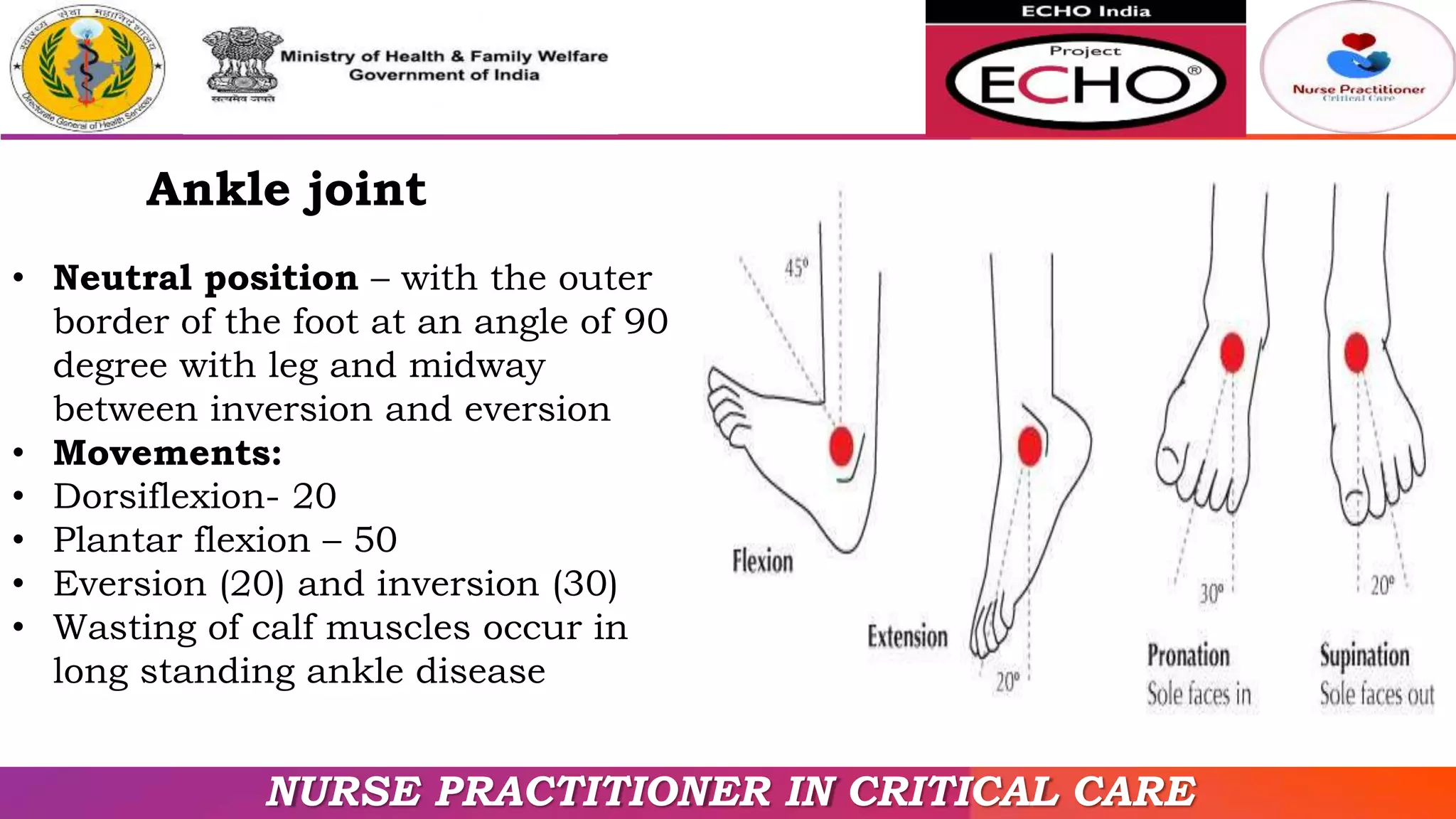
Ankle joint
• Neutral position – with the outer
border of the foot at an angle of 90
degree with leg and midway
between inversion and eversion
• Movements:
• Dorsiflexion- 20
• Plantar flexion – 50
• Eversion (20) and inversion (30)
• Wasting of calf muscles occur in
long standing ankle disease
NURSE PRACTITIONER IN CRITICAL CARE
• Inspection:
• Scoliosis
• Symmetrical paraspinals
• Normal shoulder and gluteal muscle bulk and
symmetry
• Level iliac crests
• Normal cervical and lumbar lordosis
• Movement
G-
A-
L-
S-Spine
NURSE PRACTITIONER IN CRITICAL CARE
The Joints
• “look, feel and move”
• Inspection / palpation /
range of movement
• Compare the corresponding
joints on the two sides of the
body
• Avoid causing undue
discomfort
Inspection :
• Inflammation – redness
with tenderness and
warmth
• Look for swelling and
deformity
• Symmetrical distribution
NURSE PRACTITIONER IN CRITICAL CARE
The bones
• The examination of the bones should
always be directed by information
obtained from the history….
NURSE PRACTITIONER IN CRITICAL CARE
• Look for any
alteration in shape
or outline
• Measure any
shortening
In Paget’s disease…
Bowing of the long bones, particularly tibia and femur, is associated
with bony enlargement, and usually, increased local temperature
Rickets …
Alteration in shape of the bone due to epiphyseal enlargement
Localized swelling of long bone due to infections, cysts or tumors
Spontaneous fracture – secondary carcinoma, multiple myeloma,
generalized osteitis fibrosa cystica or osteogenesis imperfecta
The bones
Inspection
NURSE PRACTITIONER IN CRITICAL CARE
The bones
Palpation
Bone tenderness
Occur in local lesions and injury
Fractures
Long bones- due to trauma
Wrists, hips, and vertebrae- bone
disease
Multiple rib fractures- falls
Without trauma- pathologic
NURSE PRACTITIONER IN CRITICAL CARE
Other Skeletal Trauma
• Dislocation
• Subluxation
• Injuries to Support Structures
• Tendon tear-tendon separates in whole or in part from tissue to which it is attached
• Ligament tear-caused by an extreme motion
• Strain- An excessive stretching of a muscle or tendon
• Sprain- An excessive stretching of a ligament usually caused by a twisting motion
• Avulsion- the action of pulling or tearing away.
• Tendonitis- inflammation of a tendon, most commonly from overuse but also from infection or
rheumatic disease.
• Bursitis- inflammation of a bursa, typically one in a shoulder joint.
• RICE acronym
• Rest
• Ice
• Compression
• Elevation
NURSE PRACTITIONER IN CRITICAL CARE
In Old-OSTEOPOROSIS
DOWAGER’S HUMP OSTEOPOROTIC CHANGES
SEVERE OSTEOPOROSIS
NURSE PRACTITIONER IN CRITICAL CARE
RHEUMATOID ARTHRITIS
From Herlihy, B. & Maebius, N. (2000). The human body in health and illness. Philadelphia: W.B.
Saunders.
MUSCLE ATROPHY SWAN NECK DEFORMITY
From Lemmi FO, Lemmi CAE: Physical assessment findings CD-ROM, Philadelphia, 2000, W.B.
Saunders.
BOUTONNIERE DEFORMITY
NURSE PRACTITIONER IN CRITICAL CARE
Vit D Deficiency related to Ortho
• Vitamin D deficiency can lead to a loss of bone density, which
can contribute to osteoporosis and fractures (broken bones).
Severe vitamin D deficiency can also lead to other diseases. In
children, it can cause rickets.
• Osteomalacia refers to a marked softening of bones- bone
fracture
• Other Vit D absorption problems- Autoimmune disorders,
malabsorption, metabolic disorders/ inborn errors of
metabolism
From Herlihy, B. & Maebius, N. (2000). The human body in health and illness. Philadelphia: W.B.
Saunders.
NURSE PRACTITIONER IN CRITICAL CARE
Sports-Related Injuries- self-inflicted injuries
• Rotator Cuff Tears- A rotator cuff tear often occurs in people who repeatedly
perform the same shoulder motions.
• Epicondylitis (Tennis Elbow)-
• Lateral & Medial Collateral Ligament Injury
• Anterior & Posterior Cruciate Ligament Injury
• Meniscal Injuries- occurring cartilage injuries of the knee.
• Rupture of Achilles Tendon- The Achilles Tendon is the strong fibrous band
that attaches the calf muscles to the calcaneus bone.
• Special Signs of
NURSE PRACTITIONER IN CRITICAL CARE
Infectious Bone Disease: Osteomyelitis
Inflammation of bone caused by infection, generally in the legs, arm or spine.
• Infections can reach bones by travelling through the bloodstream or spreading from nearby tissue.
• Common symptoms include pain, fever and chills.
• Treatment is usually surgery to remove portions of bone that have died. This is followed by strong antibiotics, often by an IV, for at
least six weeks.
• Difficult to treat
• Physical disability
• Bacteria
• Exogenous
• Endogenous
From Herlihy, B. & Maebius, N. (2000). The human body in health and illness. Philadelphia: W.B.
Saunders.
NURSE PRACTITIONER IN CRITICAL CARE
Bone Tumors
A mass of unusual cells growing in a bone. Most bone tumours aren't cancerous.
• Causes of bone tumours include abnormal healing of an injury, inherited conditions and
radiation therapy. They can also be caused by bone cancer or another cancer that has
spread to the bone from other parts of the body.
• A bone tumour may cause a painless mass. Some people have dull, aching pain. In
some cases, minor injury causes a fracture near the tumour.
• Treatments include surgery and radiation. Some non-cancerous tumours go away
without treatment.
From Herlihy, B. & Maebius, N. (2000). The human body in health and illness. Philadelphia: W.B.
Saunders.
NURSE PRACTITIONER IN CRITICAL CARE
COMPLICATIONS If not treated/Identified
Fat embolism
Compartment syndrome
Infection and osteomyelitis
Avascular necrosis
Pulmonary emboli
Venous thrombosis
Delayed union & nonunion
NURSE PRACTITIONER IN CRITICAL CARE
From Herlihy, B. & Maebius, N. (2000). The human body in health and illness. Philadelphia: W.B.
Saunders.
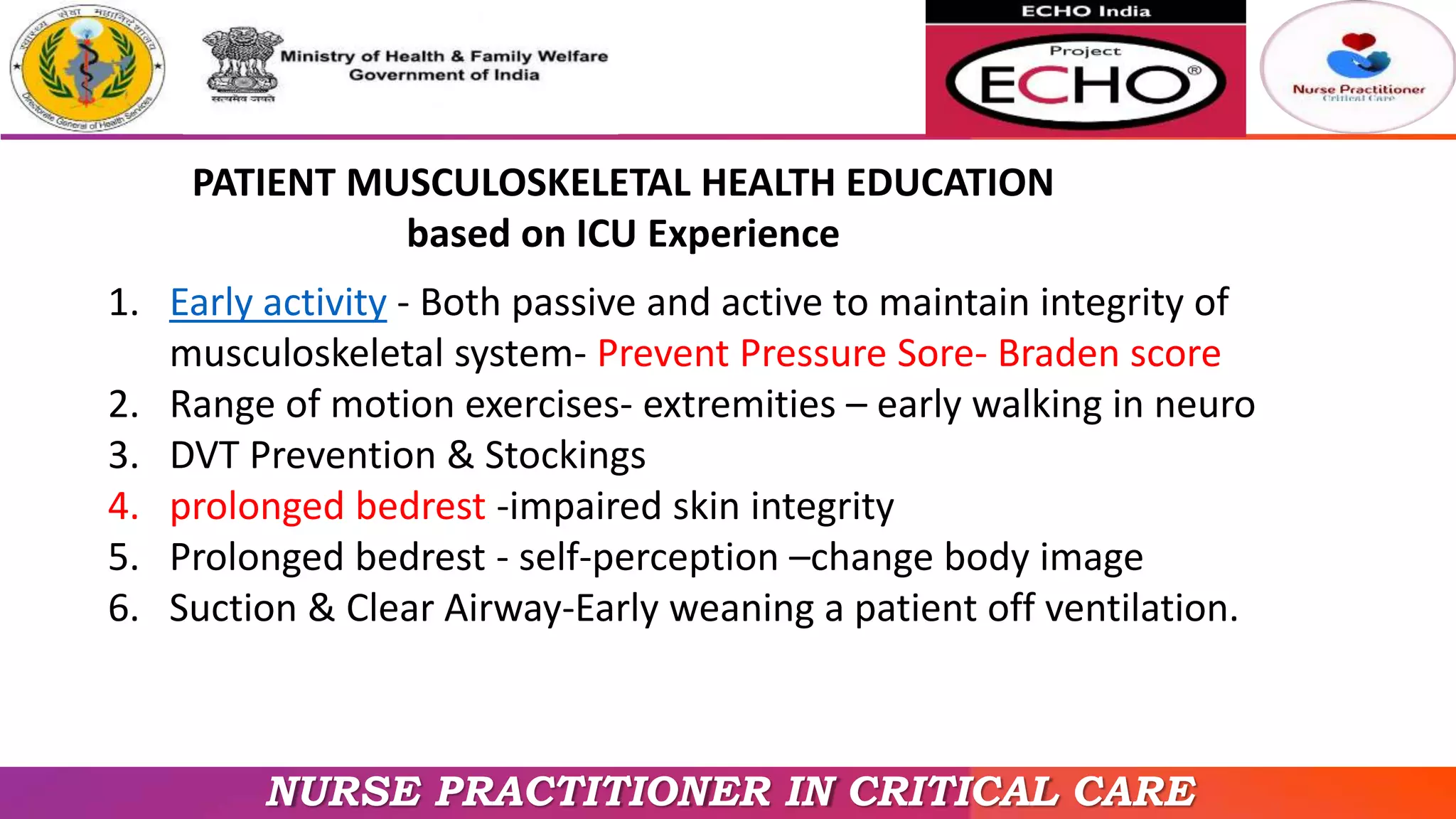
PATIENT MUSCULOSKELETAL HEALTH EDUCATION
based on ICU Experience
1. Early activity - Both passive and active to maintain integrity of
musculoskeletal system- Prevent Pressure Sore- Braden score
2. Range of motion exercises- extremities – early walking in neuro
3. DVT Prevention & Stockings
4. prolonged bedrest -impaired skin integrity
5. Prolonged bedrest - self-perception –change body image
6. Suction & Clear Airway-Early weaning a patient off ventilation.
NURSE PRACTITIONER IN CRITICAL CARE
Common Disorders of Musculoskeletal System- find from H/P Exam
1. 1. Musculoskeletal Injuries- bones, muscles, ligaments, nerves, or
tendons
2. 2. Fractures- Complete, Incomplete, Open/compound, pathological
3. 3. Infection & Osteomylitis
4. 4. Sports Injuries- Sprains, strains, soft tissue injuries, Rotator Cuff Tears-,
Tennis Elbow, Ligament Injury
5. 5. Bone Infection- Osteomylitis
6. 6. Bone tumors
7. 7. Joint disorders- Rhumatoid arthritis, Psoriatric Artritis
From Herlihy, B. & Maebius, N. (2000). The human body in health and illness. Philadelphia: W.B.
Saunders.
NURSE PRACTITIONER IN CRITICAL CARE
In Short
 History & Physical Examination as per age group will lead
exam further to diagnosis & further management
 Eg:- Diagnosis studies as per H/ P
Imaging Procedures- X-ray, CT, MRI
Nuclear Studies-Bone Scan
Endoscopic Studies-Arthroscopy
Other Studies-Arthrocentesis, Electromyography, Biopsy
 Prevent complications due to late detection
 construct a clear management plan
From Herlihy, B. & Maebius, N. (2000). The human body in health and illness. Philadelphia: W.B.
Saunders.
NURSE PRACTITIONER IN CRITICAL CARE
Q/A Session

Musculoskeletal assessment ppt.pptx

  • 1.
    BESTY VARGHESE Krishna Instituteof Medical Sciences Deemed to be University, Karad Sciences (Accredited with NAAC A+ grade with CGPA 3.39) PHOTO
  • 2.
    NURSE PRACTITIONER INCRITICAL CARE Objectives From Herlihy, B. & Maebius, N. (2000). The human body in health and illness. Philadelphia: W.B. Saunders. 1. Review knowledge of Anatomy & Physiology of Musculoskeletal System 2. Differentiate Normal & Abnormal MSS 3. Focused History Collection & Physical Exam- MUST  To assess the severity and consequences of the condition  To make an accurate diagnosis  To Prevent complications due to late detection  To construct a clear management plan
  • 3.
    NURSE PRACTITIONER INCRITICAL CARE  In the very old…  In the very young… INTRODUCTION
  • 4.
    NURSE PRACTITIONER INCRITICAL CARE Anatomy & Physiology: Muscles & Bones Movement, support, protection, heat generation, and blood circulation
  • 5.
    NURSE PRACTITIONER INCRITICAL CARE From Herlihy, B. & Maebius, N. (2000). The human body in health and illness. Philadelphia: W.B. Saunders. The Musculoskeletal Examination Steps.. 1. To perform examination of muscles, bones and joints, use techniques of inspection, palpation & manipulation. 2. https://www.youtube.com/watch?v=aUMTPa_9qlY 3. On screening examination, no musculoskeletal complaints, ask client to perform complete active range of motion with each joints or set of joints.
  • 6.
    NURSE PRACTITIONER INCRITICAL CARE Screening….Musculoskeletal History Can you locate the pain? Is the problem symmetrical? Do you have any pain or stiffness in your muscles, joint or back? Any H/o gout or arthritis? Can you dress yourself completely without difficulty? Can you “walk up and down stairs” without difficulty? Any clinical abnormal symptoms?(e .g ., rash, fever)? From Herlihy, B. & Maebius, N. (2000). The human body in health and illness. Philadelphia: W.B. Saunders.
  • 7.
    NURSE PRACTITIONER INCRITICAL CARE Assessment of Musculoskeletal System Category What to ask Rationale Physical Examination Inspect, Palpate and observe range of motion (ROM) of affected areas Altered gate, tone, size, shape, posture, contractures, deformities, ROM, pain and effects on ADLs can be determined Assess warm, color, circulation and movements of affected areas Nerve function, sensation, movements, weakness, and potential development of compartment syndrome can be determined Palpate all pulses below involved area Alternations may indicate altered vascular integrity of affected area or demonstrate developing compartment syndrome Palpate muscles, joints allows for evaluation of skin temp, local tenderness, swelling & crepitation To find out any infection- inflammatory non inflammatory disorders Gait, motion of spine- smoothness, height of shoulders, hip symmetry Lumbar lordosis- contractility of spine, Kyphosis-excessive curvature of thor spine, scoliosis
  • 8.
    NURSE PRACTITIONER INCRITICAL CARE GENERAL ASSESSMENT Rapid and sensitive screening method G- Gait A- Arms L- Legs S- Spine
  • 9.
    NURSE PRACTITIONER INCRITICAL CARE General observation G- Gait A- L- S-
  • 10.
    NURSE PRACTITIONER INCRITICAL CARE G- A- Arms L- S-
  • 11.
    NURSE PRACTITIONER INCRITICAL CARE History Taking 1. CHIEF COMPLAINTS Mode of onset and duration of symptoms Pain and swelling Pattern of joint involvement Stiffness Deformity Impairment of movement Constitutional and extra – articular symptoms
  • 12.
    NURSE PRACTITIONER INCRITICAL CARE History of present illness Acute onset (duration less than 6 weeks) Causes Gouty arthritis Septic arthritis Gradual onset (duration more than 6 weeks) Rheumatoid arthritis Osteoarthritis Seronegative arthritis Intermittent attacks of arthritis Gouty arthritis Migratory attacks of arthritis Rheumatic fever Gonococcal arthritis Viral arthritis
  • 13.
    NURSE PRACTITIONER INCRITICAL CARE • Bony pain: • Continuous aching pain disturbing sleep • Joint pain: • Sharp pain related to posture or movement associated with stiffness Assessment of joint pain • Mode of onset • Acute/ gradual/intermittent/ migratory / pain disturbing sleep Pain
  • 14.
    NURSE PRACTITIONER INCRITICAL CARE Hand examination Check the hand (power) grip and pinch grip (between index finger and thumb)
  • 15.
    NURSE PRACTITIONER INCRITICAL CARE Sites of Somatic Reference of Different Joint Pains • Joint pain • Site of referred pain Joint pain Site of referred pain Cervical spine Head/ over the shoulder Lumbar spine Buttocks/ posterior thigh Shoulder Lateral aspect of upper arm Elbow Forearm Hip Outer aspect of thigh or knee or both
  • 16.
    NURSE PRACTITIONER INCRITICAL CARE Range of motion (Play Video) https://www.youtube.com/wa tch?v=D8sjGPYrtwI&ab_chann el=TheUpperHand Measured with a protracter/goniometer Assess for active and passive movement Physical Examination
  • 17.
    NURSE PRACTITIONER INCRITICAL CARE Stiffness of joints Inflammatory arthritis •Early morning stiffness persisting for more than 30 minutes •More than 1 hr- rheumatoid arthritis •Stiffness is precipitated by prolonged rest and lasts several hrs •Improves with activity and anti inflammatory drugs Non inflammatory arthritis •Intermittent stiffness •Stiffness may increase by activity •Lasts less than one hour •Stiffness is accompanied only by pain without other inflammatory symptoms •Stiffness may be due to pain and deformity
  • 18.
    NURSE PRACTITIONER INCRITICAL CARE Palpation Check for tenderness Determine whether swelling is due to bony enlargement / thickening of the synovial tissues/ effusion into the joint space Grading of the joint tenderness 1. The patient says joint is tender 2. The patient winces 3. The patient winces and withdraws the affected part 4. The patient will not allow the joint to be touched
  • 19.
    NURSE PRACTITIONER INCRITICAL CARE Body Movements Produced by Muscle Contraction  Flexion—bending at a joint (eg, elbow)  Extension—straightening at a joint  Abduction—moving away from midline  Adduction—moving toward midline  Rotation—turning around a specific axis (eg, shoulder joint)  Circumduction—cone-like movement  Supination—turning upward  Pronation—turning downward  Inversion—turning inward  Eversion—turning outward  Protraction—pushing forward  Retraction—pulling backward
  • 20.
    NURSE PRACTITIONER INCRITICAL CARE G- A- L-Legs S- • Examine the lower limbs for swelling, deformities or limb shortening • Range of motion
  • 21.
    NURSE PRACTITIONER INCRITICAL CARE
  • 22.
    NURSE PRACTITIONER INCRITICAL CARE
  • 23.
    NURSE PRACTITIONER INCRITICAL CARE
  • 24.
    NURSE PRACTITIONER INCRITICAL CARE
  • 25.
    NURSE PRACTITIONER INCRITICAL CARE Hip Joint: Normal vs Abnormal
  • 26.
    NURSE PRACTITIONER INCRITICAL CARE
  • 27.
    NURSE PRACTITIONER INCRITICAL CARE Knee joint: Normal vs Abnormal
  • 28.
    NURSE PRACTITIONER INCRITICAL CARE Other abnormalities of the knee joint Medial and lateral angulations of the knee – varus and valgus deformities Quadriceps wasting occurs in long standing knee joint disease Tenderness at knee joint margins
  • 29.
    NURSE PRACTITIONER INCRITICAL CARE Normal vs Abnormal Toe Joints
  • 30.
    NURSE PRACTITIONER INCRITICAL CARE Ankle joint • Neutral position – with the outer border of the foot at an angle of 90 degree with leg and midway between inversion and eversion • Movements: • Dorsiflexion- 20 • Plantar flexion – 50 • Eversion (20) and inversion (30) • Wasting of calf muscles occur in long standing ankle disease
  • 31.
    NURSE PRACTITIONER INCRITICAL CARE • Inspection: • Scoliosis • Symmetrical paraspinals • Normal shoulder and gluteal muscle bulk and symmetry • Level iliac crests • Normal cervical and lumbar lordosis • Movement G- A- L- S-Spine
  • 32.
    NURSE PRACTITIONER INCRITICAL CARE The Joints • “look, feel and move” • Inspection / palpation / range of movement • Compare the corresponding joints on the two sides of the body • Avoid causing undue discomfort Inspection : • Inflammation – redness with tenderness and warmth • Look for swelling and deformity • Symmetrical distribution
  • 33.
    NURSE PRACTITIONER INCRITICAL CARE The bones • The examination of the bones should always be directed by information obtained from the history….
  • 34.
    NURSE PRACTITIONER INCRITICAL CARE • Look for any alteration in shape or outline • Measure any shortening In Paget’s disease… Bowing of the long bones, particularly tibia and femur, is associated with bony enlargement, and usually, increased local temperature Rickets … Alteration in shape of the bone due to epiphyseal enlargement Localized swelling of long bone due to infections, cysts or tumors Spontaneous fracture – secondary carcinoma, multiple myeloma, generalized osteitis fibrosa cystica or osteogenesis imperfecta The bones Inspection
  • 35.
    NURSE PRACTITIONER INCRITICAL CARE The bones Palpation Bone tenderness Occur in local lesions and injury Fractures Long bones- due to trauma Wrists, hips, and vertebrae- bone disease Multiple rib fractures- falls Without trauma- pathologic
  • 36.
    NURSE PRACTITIONER INCRITICAL CARE
  • 37.
    NURSE PRACTITIONER INCRITICAL CARE
  • 38.
    NURSE PRACTITIONER INCRITICAL CARE Other Skeletal Trauma • Dislocation • Subluxation • Injuries to Support Structures • Tendon tear-tendon separates in whole or in part from tissue to which it is attached • Ligament tear-caused by an extreme motion • Strain- An excessive stretching of a muscle or tendon • Sprain- An excessive stretching of a ligament usually caused by a twisting motion • Avulsion- the action of pulling or tearing away. • Tendonitis- inflammation of a tendon, most commonly from overuse but also from infection or rheumatic disease. • Bursitis- inflammation of a bursa, typically one in a shoulder joint. • RICE acronym • Rest • Ice • Compression • Elevation
  • 39.
    NURSE PRACTITIONER INCRITICAL CARE In Old-OSTEOPOROSIS DOWAGER’S HUMP OSTEOPOROTIC CHANGES SEVERE OSTEOPOROSIS
  • 40.
    NURSE PRACTITIONER INCRITICAL CARE RHEUMATOID ARTHRITIS From Herlihy, B. & Maebius, N. (2000). The human body in health and illness. Philadelphia: W.B. Saunders. MUSCLE ATROPHY SWAN NECK DEFORMITY From Lemmi FO, Lemmi CAE: Physical assessment findings CD-ROM, Philadelphia, 2000, W.B. Saunders. BOUTONNIERE DEFORMITY
  • 41.
    NURSE PRACTITIONER INCRITICAL CARE Vit D Deficiency related to Ortho • Vitamin D deficiency can lead to a loss of bone density, which can contribute to osteoporosis and fractures (broken bones). Severe vitamin D deficiency can also lead to other diseases. In children, it can cause rickets. • Osteomalacia refers to a marked softening of bones- bone fracture • Other Vit D absorption problems- Autoimmune disorders, malabsorption, metabolic disorders/ inborn errors of metabolism From Herlihy, B. & Maebius, N. (2000). The human body in health and illness. Philadelphia: W.B. Saunders.
  • 42.
    NURSE PRACTITIONER INCRITICAL CARE Sports-Related Injuries- self-inflicted injuries • Rotator Cuff Tears- A rotator cuff tear often occurs in people who repeatedly perform the same shoulder motions. • Epicondylitis (Tennis Elbow)- • Lateral & Medial Collateral Ligament Injury • Anterior & Posterior Cruciate Ligament Injury • Meniscal Injuries- occurring cartilage injuries of the knee. • Rupture of Achilles Tendon- The Achilles Tendon is the strong fibrous band that attaches the calf muscles to the calcaneus bone. • Special Signs of
  • 43.
    NURSE PRACTITIONER INCRITICAL CARE Infectious Bone Disease: Osteomyelitis Inflammation of bone caused by infection, generally in the legs, arm or spine. • Infections can reach bones by travelling through the bloodstream or spreading from nearby tissue. • Common symptoms include pain, fever and chills. • Treatment is usually surgery to remove portions of bone that have died. This is followed by strong antibiotics, often by an IV, for at least six weeks. • Difficult to treat • Physical disability • Bacteria • Exogenous • Endogenous From Herlihy, B. & Maebius, N. (2000). The human body in health and illness. Philadelphia: W.B. Saunders.
  • 44.
    NURSE PRACTITIONER INCRITICAL CARE Bone Tumors A mass of unusual cells growing in a bone. Most bone tumours aren't cancerous. • Causes of bone tumours include abnormal healing of an injury, inherited conditions and radiation therapy. They can also be caused by bone cancer or another cancer that has spread to the bone from other parts of the body. • A bone tumour may cause a painless mass. Some people have dull, aching pain. In some cases, minor injury causes a fracture near the tumour. • Treatments include surgery and radiation. Some non-cancerous tumours go away without treatment. From Herlihy, B. & Maebius, N. (2000). The human body in health and illness. Philadelphia: W.B. Saunders.
  • 45.
    NURSE PRACTITIONER INCRITICAL CARE COMPLICATIONS If not treated/Identified Fat embolism Compartment syndrome Infection and osteomyelitis Avascular necrosis Pulmonary emboli Venous thrombosis Delayed union & nonunion
  • 46.
    NURSE PRACTITIONER INCRITICAL CARE From Herlihy, B. & Maebius, N. (2000). The human body in health and illness. Philadelphia: W.B. Saunders. PATIENT MUSCULOSKELETAL HEALTH EDUCATION based on ICU Experience 1. Early activity - Both passive and active to maintain integrity of musculoskeletal system- Prevent Pressure Sore- Braden score 2. Range of motion exercises- extremities – early walking in neuro 3. DVT Prevention & Stockings 4. prolonged bedrest -impaired skin integrity 5. Prolonged bedrest - self-perception –change body image 6. Suction & Clear Airway-Early weaning a patient off ventilation.
  • 47.
    NURSE PRACTITIONER INCRITICAL CARE Common Disorders of Musculoskeletal System- find from H/P Exam 1. 1. Musculoskeletal Injuries- bones, muscles, ligaments, nerves, or tendons 2. 2. Fractures- Complete, Incomplete, Open/compound, pathological 3. 3. Infection & Osteomylitis 4. 4. Sports Injuries- Sprains, strains, soft tissue injuries, Rotator Cuff Tears-, Tennis Elbow, Ligament Injury 5. 5. Bone Infection- Osteomylitis 6. 6. Bone tumors 7. 7. Joint disorders- Rhumatoid arthritis, Psoriatric Artritis From Herlihy, B. & Maebius, N. (2000). The human body in health and illness. Philadelphia: W.B. Saunders.
  • 48.
    NURSE PRACTITIONER INCRITICAL CARE In Short  History & Physical Examination as per age group will lead exam further to diagnosis & further management  Eg:- Diagnosis studies as per H/ P Imaging Procedures- X-ray, CT, MRI Nuclear Studies-Bone Scan Endoscopic Studies-Arthroscopy Other Studies-Arthrocentesis, Electromyography, Biopsy  Prevent complications due to late detection  construct a clear management plan From Herlihy, B. & Maebius, N. (2000). The human body in health and illness. Philadelphia: W.B. Saunders.
  • 49.
    NURSE PRACTITIONER INCRITICAL CARE
  • 50.

Editor's Notes

  • #3 Objectives Review knowledge of Anatomy & Physiology of Musculoskeletal System Differentiate Normal & Abnormal MSS History Collection & Physical Exam To make an accurate diagnosis To assess the severity and consequences of the condition To Prevent complications due to late detection To construct a clear management plan
  • #16 pain felt in a part of the body other than its actual source. Referred pain in arthritis is a complex neurological process caused by the interconnected and sometimes scattered network of nerves.
  • #30  Joint Abnormal Bend in Middle joint of toe
  • #47  Immobilisation may lead to atrophy of muscle and associated structures, leading to a loss in muscle strength and endurance Patients who are confined to bed are prone to contractures and loss of bone mass, with accompanying disuse osteoporosis Patients subject to prolonged bedrest may suffer from impaired skin integrity, resulting in the development of pressure sores Prolonged bedrest may damage aspects of self-perception and body image