M E D I C A L S U R V E I L L A N C E M O N T H L Y R E P O R T
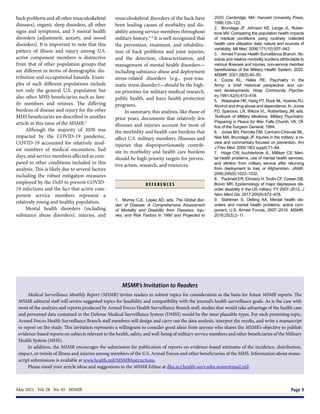
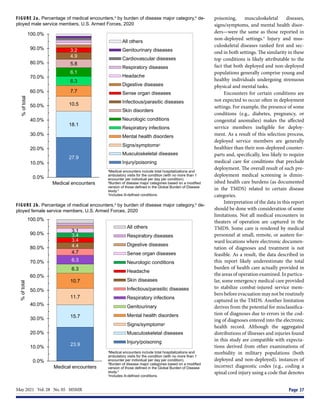
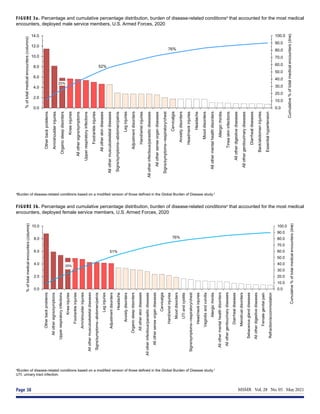
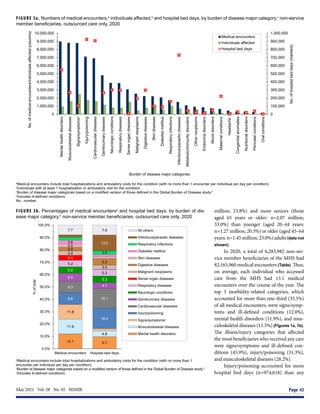
MSMR
A publication of the Armed Forces Health Surveillance Division
MAY 2021
Volume 28
Number 05
PA G E 2 	 Absolute and relative morbidity burdens attributable to various illnesses
and injuries, active component, U.S. Armed Forces, 2020
PA G E 10 	 Hospitalizations, active component, U.S. Armed Forces, 2020
PA G E 18 	 Ambulatory visits, active component, U.S. Armed Forces, 2020
PA G E 26 	 Surveillance snapshot: Illness and injury burdens, reserve component,
U.S. Armed Forces, 2020
PA G E 27 	 Surveillance snapshot: Illness and injury burdens, recruit trainees, U.S.
Armed Forces, 2020
PA G E 28 	 Medical evacuations out of the U.S. Central Command, active and
reserve components, U.S. Armed Forces, 2020
PA G E 34 	 Morbidity burdens attributable to various illnesses and injuries,
deployed active and reserve component service members, U.S. Armed
Forces, 2020
PA G E 40 	 Absolute and relative morbidity burdens attributable to various illnesses
and injuries, non-service member beneficiaries of the Military Health
System, 2020
MSMR  Vol. 28  No. 05  May 2021
Page 2
Absolute and Relative Morbidity Burdens Attributable to Various Illnesses and
Injuries, Active Component, U.S. Armed Forces, 2020
W H AT A R E T H E N E W F I N D I N G S ?
In 2020, as in prior years, the medical con-
ditions associated with the most medical
encounters, the largest number of affected
service members, and the greatest number of
hospital days were in the major categories of
musculoskeletal disorders, injuries, and men-
tal health disorders. Despite the pandemic,
COVID-19 accounted for less than 1% of total
medical encounters and bed days in active
component service members.
W H AT I S T H E I M PA C T O N
R E A D I N E S S A N D F O R C E H E A LT H
P R O T E C T I O N ?
Musculoskeletal disorders, injuries, and men-
tal health disorders detract from service mem-
bers’ individual readiness and deployability
and hinder the ability to execute the missions
of the Armed Forces. Continued focus on en-
hanced measures to prevent and treat such
disorders is warranted.
P
erceptions of the relative impor-
tance of various health conditions
in military populations often deter-
mine the natures, extents, and priorities for
resources applied to primary, secondary,
and tertiary prevention activities. However,
these perceptions are inherently subjective
and may not reflect objective measures of
the relationship between the conditions
and their impacts on health, fitness, mili-
tary operational effectiveness, health care
costs, and so on.
Several classification systems and mor-
bidity measures have been developed to
quantify the “public health burdens” that
are attributable to various illnesses and
injuries in defined populations and set-
tings.1
Not surprisingly, different classifica-
tion systems and morbidity measures lead
to different rankings of illness- and injury-
specific public health burdens.2
For example, in a given population
and setting, the illnesses and injuries that
account for the most hospitalizations are
likely different from those that account for
the most outpatient medical encounters.
The illnesses and injuries that account for
the most medical encounters overall may
differ from those that affect the most indi-
viduals, have the most debilitating or long-
lasting effects, and so on.2
Thus, in a given
population and setting, the classification
system or measure used to quantify con-
dition-specific morbidity burdens shapes
to a large extent the conclusions that may
be drawn regarding the relative impor-
tance of various conditions and, in turn, the
resources that may be indicated to prevent
or minimize their impacts.
This annual summary uses a standard
disease classification system (modified for
use among U.S. military members) and sev-
eral health care burden measures to quan-
tify the impacts of various illnesses and
injuries among members of the active com-
ponent of the U.S. Armed Forces in 2020.
M E T H O D S
The surveillance period was 1 January
through 31 December 2020. The surveil-
lance population included all individu-
als who served in the active component of
the U.S. Army, Navy, Air Force, or Marine
Corps at any time during the surveillance
period. All data used in this analysis were
derived from records routinely maintained
in the Defense Medical Surveillance Sys-
tem (DMSS). These records document
both ambulatory encounters and hospital-
izations of active component members of
the U.S. Armed Forces in fixed military and
civilian (if reimbursed through the Military
Health System [MHS]) treatment facilities
worldwide.
For this analysis, DMSS data for all
inpatient and outpatient medical encoun-
ters of all active component members
during 2020 were summarized according
to the primary (first-listed) diagnosis (if
reported with an International Classifica-
tion of Diseases, 10th Revision [ICD-10]
code between A00 and T88, an ICD-10
code beginning with Z37, or Department
of Defense [DoD] unique personal history
codes DOD0101–DOD0105). For sum-
mary purposes, all illness- and injury-spe-
cific diagnoses (as defined by the ICD-10)
were grouped into 153 burden of disease-
related “conditions” and 25 “categories”
based on a modified version of the classi-
fication system developed for the Global
Burden of Disease (GBD) Study.1
This rep-
resents the addition of 2 new conditions for
the 2020 burden analysis: coronavirus 2019
(COVID-19) and polycystic ovarian syn-
drome. The 2019 MSMR analyses grouped
illness- and injury-specific diagnoses into
151 conditions, which was an increase over
the prior 142 conditions used in previous
MSMR analyses. The increase to 151 con-
ditions in the 2019 analysis was informed
by the review of preliminary results of the
2019 burden analysis which revealed that
within 8 of the 22 “all other” conditions,
large numbers of medical encounters were
attributable to 9 diagnosis codes or groups
of codes (cervicalgia, chronic pain, vagini-
tis and vulvitis, urinary tract infection and
cystitis, deviated nasal septum, tinea skin
infections, constipation, testicular hypo-
function, and gout). Based on this finding,
these diagnosis codes or groups of codes
were broken out and treated as separate
burden of disease-related conditions in the
current analysis.
In general, the GBD system groups
diagnoses with common pathophysiologic
or etiologic bases and/or significant inter-
national health policymaking importance.
In this analysis, some diagnoses that are
grouped into single categories in the GBD
system (e.g., mental health disorders) were
disaggregated to increase the military rel-
evance of the results. Also, injuries were
classified by affected anatomic site rather
than by cause because external causes of
injuries are incompletely reported in mili-
tary outpatient records.
The “morbidity burdens” attributable
to various “conditions” were estimated
May 2021  Vol. 28  No. 05  MSMR	 Page 3
based on the total number of medical
encounters attributable to each condition
(i.e., total hospitalizations and ambulatory
visits for the condition with a limit of 1
encounter per individual per condition per
day), numbers of service members affected
by each condition (i.e., individuals with at
least 1 medical encounter for the condition
during the year), and total bed days during
hospitalizations for each condition.
R E S U LT S
Morbidity burden, by category
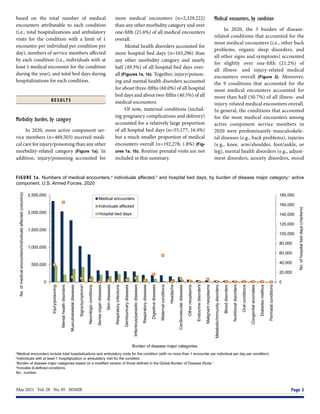
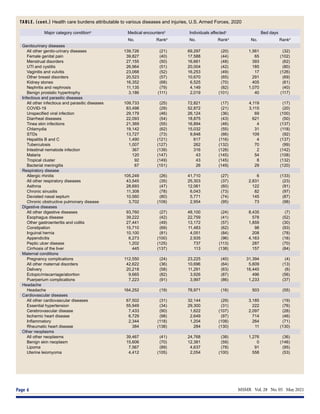
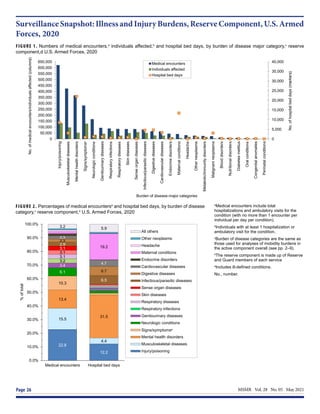
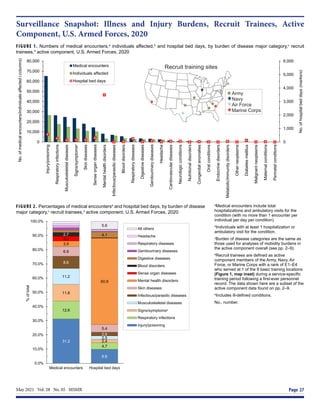
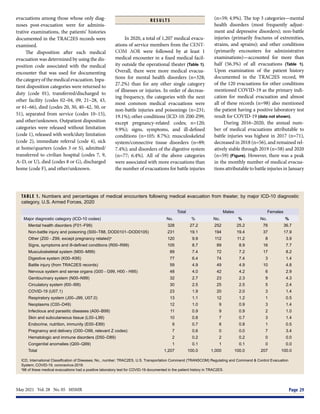
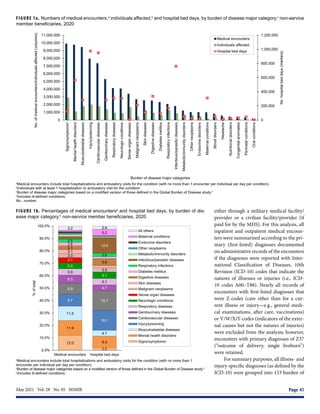
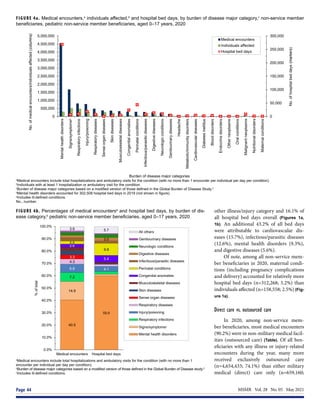
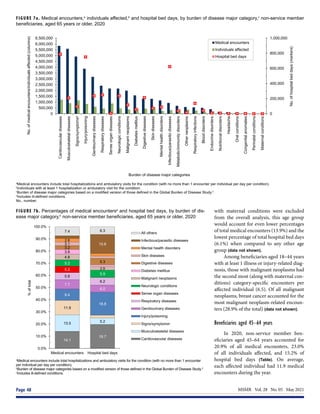
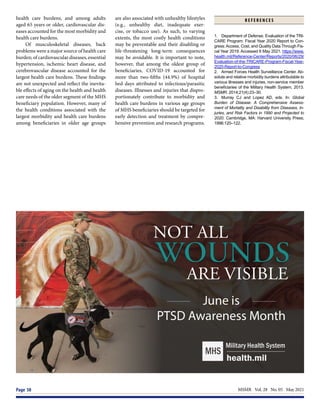
In 2020, more active component ser-
vice members (n=469,503) received medi-
cal care for injury/poisoning than any other
morbidity-related category (Figure 1a). In
addition, injury/poisoning accounted for
more medical encounters (n=2,329,222)
than any other morbidity category and over
one-fifth (21.6%) of all medical encounters
overall.
Mental health disorders accounted for
more hospital bed days (n=165,296) than
any other morbidity category and nearly
half (49.3%) of all hospital bed days over-
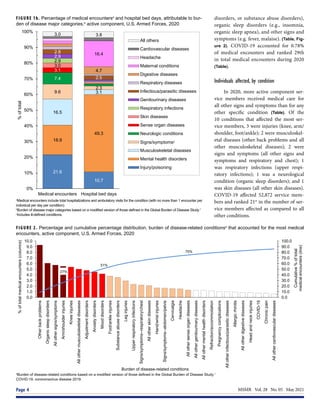
all (Figures 1a, 1b). Together, injury/poison-
ing and mental health disorders accounted
for about three-fifths (60.0%) of all hospital
bed days and about two-fifths (40.5%) of all
medical encounters.
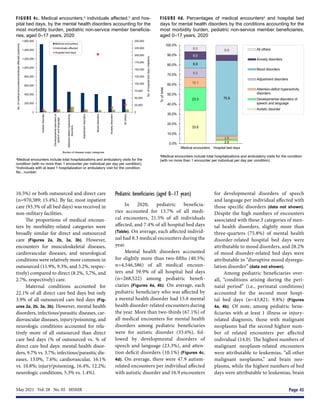
Of note, maternal conditions (includ-
ing pregnancy complications and delivery)
accounted for a relatively large proportion
of all hospital bed days (n=55,177; 16.4%)
but a much smaller proportion of medical
encounters overall (n=192,278; 1.8%) (Fig-
ures 1a, 1b). Routine prenatal visits are not
included in this summary.
Medical encounters, by condition
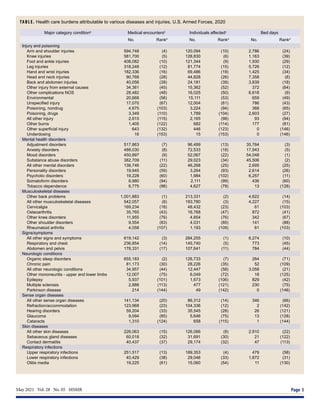
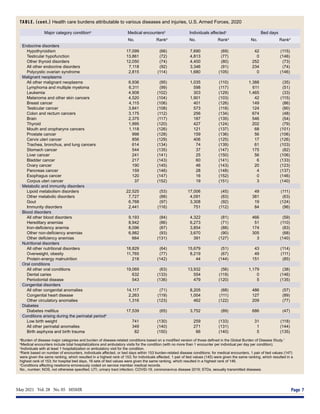
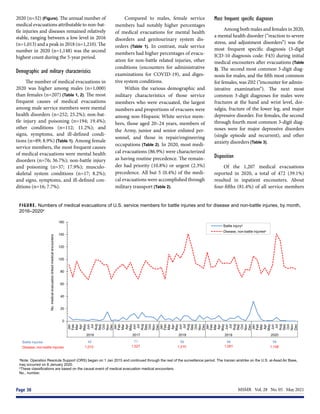
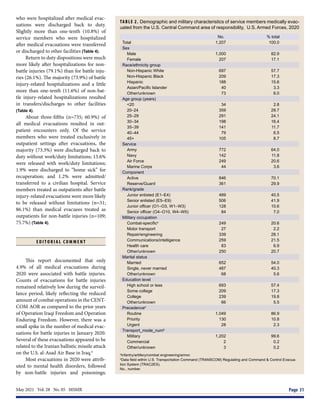
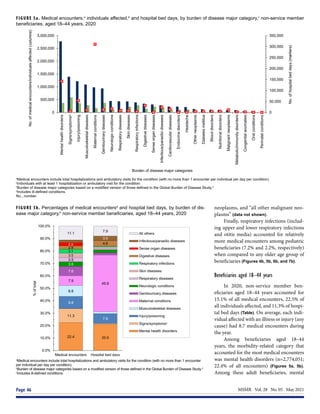
In 2020, the 3 burden of disease-
related conditions that accounted for the
most medical encounters (i.e., other back
problems, organic sleep disorders, and
all other signs and symptoms) accounted
for slightly over one-fifth (21.2%) of
all illness- and injury-related medical
encounters overall (Figure 2). Moreover,
the 9 conditions that accounted for the
most medical encounters accounted for
more than half (50.7%) of all illness- and
injury-related medical encounters overall.
In general, the conditions that accounted
for the most medical encounters among
active component service members in
2020 were predominantly musculoskele-
tal diseases (e.g., back problems), injuries
(e.g., knee, arm/shoulder, foot/ankle, or
leg), mental health disorders (e.g., adjust-
ment disorders, anxiety disorders, mood
FIGURE 1a. Numbers of medical encounters,a
individuals affected,b
and hospital bed days, by burden of disease major category,c
active
component, U.S. Armed Forces, 2020
a
Medical encounters include total hospitalizations and ambulatory visits for the condition (with no more than 1 encounter per individual per day per condition).
b
Individuals with at least 1 hospitalization or ambulatory visit for the condition.
c
Burden of disease major categories based on a modified version of those defined in the Global Burden of Disease Study.1
d
Includes ill-defined conditions.
No., number.
0
20,000
40,000
60,000
80,000
100,000
120,000
140,000
160,000
180,000
0
500,000
1,000,000
1,500,000
2,000,000
2,500,000
Injury/poisoning
Mental
health
disorders
Musculoskeletal
diseases
Signs/symptomsᵈ
Neurologic
conditions
Sense
organ
diseases
Skin
diseases
Respiratory
infections
Genitourinary
diseases
Infectious/parasitic
diseases
Respiratory
diseases
Digestive
diseases
Maternal
conditions
Headache
Cardiovascular
diseases
Other
neoplasms
Endocrine
disorders
Malignant
neoplasms
Metabolic/immunity
disorders
Blood
disorders
Nutritional
disorders
Oral
conditions
Congenital
anomalies
Diabetes
mellitus
Perinatal
conditions
No.
of
hospital
bed
days
(markers)
(
d
e
t
c
e
f
f
a
s
l
a
u
d
i
v
i
d
n
i
/
s
r
e
t
n
u
o
c
n
e
l
a
c
i
d
e
m
f
o
.
o
N
columns)
Burden of disease major categories
Medical encounters
Individuals affected
Hospital bed days
MSMR  Vol. 28  No. 05  May 2021
Page 4
0.0
10.0
20.0
30.0
40.0
50.0
60.0
70.0
80.0
90.0
100.0
0.0
1.0
2.0
3.0
4.0
5.0
6.0
7.0
8.0
9.0
10.0
Other
back
problems
Organic
sleep
disorders
All
other
signs/symptoms
Arm/shoulder
injuries
Knee
injuries
All
other
musculoskeletal
diseases
Adjustment
disorders
Anxiety
disorders
Mood
disorders
Foot/ankle
injuries
Substance
abuse
disorders
Leg
injuries
Upper
respiratory
infections
Signs/symptoms--respiratory/chest
All
other
skin
diseases
Hand/wrist
injuries
Signs/symptoms--abdomen/pelvis
Cervicalgia
Headache
All
other
sense
organ
diseases
All
other
genitourinary
diseases
All
other
mental
health
disorders
Refraction/accommodation
Pregnancy
complications
All
other
infectious/parasitic
diseases
Allergic
rhinitis
All
other
digestive
diseases
Head
and
neck
injuries
COVID-19
Chronic
pain
All
other
cardiovascular
diseases
Cumulative
%
of
total
medical
encounters
(line)
(
s
r
e
t
n
u
o
c
n
e
l
a
c
i
d
e
m
l
a
t
o
t
f
o
%
columns)
Burden of disease-related conditions
27%
51%
75%
FIGURE 1b. Percentage of medical encountersa
and hospital bed days, attributable to bur-
den of disease major categories,b
active component, U.S. Armed Forces, 2020
a
Medical encounters include total hospitalizations and ambulatory visits for the condition (with no more than 1 encounter per
individual per day per condition).
b
Burden of disease major categories based on a modified version of those defined in the Global Burden of Disease Study.1
c
Includes ill-defined conditions.
21.6
10.7
18.9
49.3
16.5
3.1
9.6
2.3
7.4
3.1
3.0
2.9
2.9
2.8
2.5
4.7
16.4
3.0 3.8
0%
10%
20%
30%
40%
50%
60%
70%
80%
90%
100%
Medical encounters Hospital bed days
%
of
total
All others
Cardiovascular diseases
Headache
Maternal conditions
Digestive diseases
Respiratory diseases
Infectious/parasitic diseases
Genitourinary diseases
Respiratory infections
Skin diseases
Sense organ diseases
Neurologic conditions
Signs/symptomsᶜ
Musculoskeletal diseases
Mental health disorders
Injury/poisoning
disorders, or substance abuse disorders),
organic sleep disorders (e.g., insomnia,
organic sleep apnea), and other signs and
symptoms (e.g. fever, malaise). (Table, Fig-
ure 2). COVID-19 accounted for 0.78%
of medical encounters and ranked 29th
in total medical encounters during 2020
(Table).
Individuals affected, by condition
In 2020, more active component ser-
vice members received medical care for
all other signs and symptoms than for any
other specific condition (Table). Of the
10 conditions that affected the most ser-
vice members, 3 were injuries (knee, arm/
shoulder, foot/ankle); 2 were musculoskel-
etal diseases (other back problems and all
other musculoskeletal diseases); 2 were
signs and symptoms (all other signs and
symptoms and respiratory and chest); 1
was respiratory infections (upper respi-
ratory infections); 1 was a neurological
condition (organic sleep disorders); and 1
was skin diseases (all other skin diseases).
COVID-19 affected 52,872 service mem-
bers and ranked 21st
in the number of ser-
vice members affected as compared to all
other conditions.
FIGURE 2. Percentage and cumulative percentage distribution, burden of disease-related conditionsa
that accounted for the most medical
encounters, active component, U.S. Armed Forces, 2020
a
Burden of disease-related conditions based on a modified version of those defined in the Global Burden of Disease Study.1
COVID-19, corononavirus disease 2019.
May 2021  Vol. 28  No. 05  MSMR	 Page 5
TABLE. Health care burdens attributable to various diseases and injuries, U.S. Armed Forces, 2020
Major category conditiona
Medical encountersb
Individuals affectedc
Bed days
No. Rankd
No. Rankd
No. Rankd
Injury and poisoning
Arm and shoulder injuries 594,748 (4) 120,094 (10) 2,786 (24)
Knee injuries 581,700 (5) 128,830 (6) 1,163 (39)
Foot and ankle injuries 408,082 (10) 121,344 (9) 1,930 (29)
Leg injuries 318,248 (12) 81,774 (15) 5,726 (12)
Hand and wrist injuries 182,336 (16) 69,486 (19) 1,425 (34)
Head and neck injuries 90,768 (28) 44,828 (26) 7,358 (8)
Back and abdomen injuries 40,056 (39) 24,181 (39) 3,839 (18)
Other injury from external causes 34,361 (45) 15,362 (52) 372 (64)
Other complications NOS 28,482 (48) 16,025 (50) 6,618 (9)
Environmental 20,668 (56) 15,111 (53) 659 (49)
Unspecified injury 17,070 (67) 12,004 (61) 786 (43)
Poisoning, nondrug 4,675 (103) 3,224 (94) 368 (65)
Poisoning, drugs 3,349 (110) 1,789 (104) 2,603 (27)
All other injury 2,615 (115) 2,165 (98) 93 (94)
Other burns 1,405 (122) 682 (114) 177 (81)
Other superficial injury 643 (132) 446 (123) 0 (146)
Underdosing 16 (153) 15 (153) 0 (146)
Mental health disorders
Adjustment disorders 517,863 (7) 96,499 (13) 35,784 (3)
Anxiety disorders 488,030 (8) 72,533 (18) 17,943 (5)
Mood disorders 450,897 (9) 52,067 (22) 54,048 (1)
Substance abuse disorders 382,709 (11) 29,023 (34) 45,506 (2)
All other mental disorders 138,746 (22) 46,268 (25) 2,695 (25)
Personality disorders 19,945 (59) 3,264 (93) 2,614 (26)
Psychotic disorders 19,228 (60) 1,984 (102) 6,257 (11)
Somatoform disorders 6,980 (94) 2,111 (99) 436 (60)
Tobacco dependence 6,775 (96) 4,627 (79) 13 (128)
Musculoskeletal diseases
Other back problems 1,001,883 (1) 213,331 (2) 4,622 (14)
All other musculoskeletal diseases 542,057 (6) 193,780 (3) 4,227 (15)
Cervicalgia 169,234 (18) 48,432 (23) 61 (103)
Osteoarthritis 35,765 (43) 16,768 (47) 872 (41)
Other knee disorders 11,955 (76) 4,854 (76) 342 (67)
Other shoulder disorders 9,554 (83) 4,031 (85) 141 (88)
Rheumatoid arthritis 4,058 (107) 1,193 (109) 61 (103)
Signs/symptoms
All other signs and symptoms 619,142 (3) 284,255 (1) 6,274 (10)
Respiratory and chest 236,854 (14) 145,740 (5) 773 (45)
Abdomen and pelvis 178,331 (17) 107,641 (11) 784 (44)
Neurologic conditions
Organic sleep disorders 655,183 (2) 126,733 (7) 264 (71)
Chronic pain 81,173 (30) 28,226 (35) 52 (109)
All other neurologic conditions 34,957 (44) 12,447 (58) 3,058 (21)
Other mononeuritis - upper and lower limbs 12,007 (75) 6,049 (72) 18 (125)
Epilepsy 5,937 (101) 1,673 (106) 829 (42)
Multiple sclerosis 2,888 (113) 477 (121) 230 (75)
Parkinson disease 214 (144) 49 (142) 0 (146)
Sense organ diseases
All other sense organ diseases 141,134 (20) 86,312 (14) 346 (66)
Refraction/accommodation 123,968 (23) 104,336 (12) 2 (142)
Hearing disorders 59,204 (33) 35,545 (28) 26 (121)
Glaucoma 9,094 (85) 5,646 (75) 13 (128)
Cataracts 1,310 (124) 658 (115) 1 (144)
Skin diseases
All other skin diseases 226,063 (15) 126,066 (8) 2,910 (22)
Sebaceous gland diseases 60,018 (32) 31,691 (30) 21 (122)
Contact dermatitis 40,437 (37) 29,174 (32) 47 (113)
Respiratory infections
Upper respiratory infections 251,517 (13) 189,353 (4) 479 (58)
Lower respiratory infections 40,429 (38) 29,046 (33) 1,672 (31)
Otitis media 19,225 (61) 15,060 (54) 11 (130)
MSMR  Vol. 28  No. 05  May 2021
Page 6
Major category conditiona
Medical encountersb
Individuals affectedc
Bed days
No. Rankd
No. Rankd
No. Rankd
Genitourinary diseases
All other genito-urinary diseases 139,726 (21) 69,297 (20) 1,561 (32)
Female genital pain 39,827 (40) 17,588 (44) 65 (102)
Menstrual disorders 27,155 (50) 16,661 (48) 393 (62)
UTI and cystitis 26,964 (51) 20,004 (42) 185 (80)
Vaginitis and vulvitis 23,068 (52) 16,253 (49) 17 (126)
Other breast disorders 20,523 (57) 10,670 (65) 291 (69)
Kidney stones 16,352 (68) 6,525 (70) 405 (61)
Nephritis and nephrosis 11,135 (79) 4,149 (82) 1,070 (40)
Benign prostatic hypertrophy 3,186 (111) 2,019 (101) 40 (117)
Infectious and parasitic diseases
All other infectious and parasitic diseases 109,733 (25) 72,821 (17) 4,119 (17)
COVID-19 83,498 (29) 52,872 (21) 3,115 (20)
Unspecified viral infection 29,179 (46) 26,124 (36) 69 (100)
Diarrheal diseases 22,093 (54) 18,875 (43) 621 (50)
Tinea skin infections 21,369 (55) 16,894 (46) 4 (137)
Chlamydia 19,142 (62) 15,032 (55) 31 (118)
STDs 13,727 (73) 9,848 (66) 109 (92)
Hepatitis B and C 1,490 (121) 617 (116) 4 (137)
Tuberculosis 1,007 (127) 262 (132) 70 (99)
Intestinal nematode infection 367 (139) 316 (128) 2 (142)
Malaria 120 (147) 43 (145) 54 (108)
Tropical cluster 92 (149) 43 (145) 8 (132)
Bacterial meningitis 67 (151) 26 (149) 29 (120)
Respiratory disease
Allergic rhinitis 105,249 (26) 41,710 (27) 6 (133)
All other respiratory diseases 43,545 (35) 25,303 (37) 2,831 (23)
Asthma 28,693 (47) 12,061 (60) 122 (91)
Chronic sinusitis 11,308 (78) 6,043 (73) 82 (97)
Deviated nasal septum 10,560 (80) 5,771 (74) 145 (87)
Chronic obstructive pulmonary disease 3,702 (109) 2,954 (95) 73 (98)
Digestive diseases
All other digestive diseases 93,760 (27) 48,100 (24) 8,435 (7)
Esophagus disease 39,222 (42) 22,759 (41) 578 (52)
Other gastroenteritis and colitis 27,441 (49) 13,172 (57) 1,859 (30)
Constipation 15,710 (69) 11,483 (62) 98 (93)
Inguinal hernia 10,100 (81) 4,051 (84) 208 (78)
Appendicitis 6,273 (100) 2,935 (96) 4,163 (16)
Peptic ulcer disease 1,202 (125) 737 (113) 287 (70)
Cirrhosis of the liver 445 (137) 113 (138) 157 (84)
Maternal conditions
Pregnancy complications 112,550 (24) 23,225 (40) 31,394 (4)
All other maternal disorders 42,622 (36) 10,696 (64) 5,609 (13)
Delivery 20,218 (58) 11,291 (63) 16,445 (6)
Ectopic/miscarriage/abortion 9,665 (82) 3,926 (87) 496 (56)
Puerperium complications 7,223 (91) 3,997 (86) 1,233 (37)
Headache
Headache 164,252 (19) 78,971 (16) 503 (55)
Cardiovascular diseases
All other cardiovascular diseases 67,502 (31) 32,144 (29) 3,185 (19)
Essential hypertension 55,949 (34) 29,300 (31) 222 (76)
Cerebrovascular disease 7,433 (90) 1,622 (107) 2,097 (28)
Ischemic heart disease 6,729 (98) 2,649 (97) 714 (46)
Inflammatory 2,344 (118) 1,204 (108) 264 (71)
Rheumatic heart disease 384 (138) 284 (130) 11 (130)
Other neoplasms
All other neoplasms 39,467 (41) 24,768 (38) 1,276 (36)
Benign skin neoplasm 15,606 (70) 12,381 (59) 0 (146)
Lipoma 7,567 (89) 4,637 (78) 91 (95)
Uterine leiomyoma 4,412 (105) 2,054 (100) 558 (53)
TABLE. (cont.) Health care burdens attributable to various diseases and injuries, U.S. Armed Forces, 2020
May 2021  Vol. 28  No. 05  MSMR	 Page 7
Major category conditiona
Medical encountersb
Individuals affectedc
Bed days
No. Rankd
No. Rankd
No. Rankd
Endocrine disorders
Hypothyroidism 17,099 (66) 7,690 (69) 42 (115)
Testicular hypofunction 13,861 (72) 4,813 (77) 0 (146)
Other thyroid disorders 12,050 (74) 4,400 (80) 252 (73)
All other endocrine disorders 7,118 (92) 3,346 (91) 234 (74)
Polycystic ovarian syndrome 2,815 (114) 1,680 (105) 0 (146)
Malignant neoplasms
All other malignant neoplasms 6,936 (95) 1,035 (110) 1,388 (35)
Lymphoma and multiple myeloma 6,311 (99) 598 (117) 611 (51)
Leukemia 4,908 (102) 303 (129) 1,465 (33)
Melanoma and other skin cancers 4,520 (104) 1,901 (103) 42 (115)
Breast cancer 4,115 (106) 401 (126) 149 (86)
Testicular cancer 3,841 (108) 573 (118) 124 (90)
Colon and rectum cancers 3,175 (112) 256 (134) 674 (48)
Brain 2,375 (117) 187 (135) 546 (54)
Thyroid 1,995 (120) 427 (124) 202 (79)
Mouth and oropharynx cancers 1,118 (126) 121 (137) 68 (101)
Prostate cancer 998 (128) 159 (136) 56 (106)
Cervix uteri cancer 856 (129) 406 (125) 17 (126)
Trachea, bronchus, and lung cancers 614 (134) 74 (139) 61 (103)
Stomach cancer 544 (135) 37 (147) 175 (82)
Liver cancer 241 (141) 25 (150) 56 (106)
Bladder cancer 217 (143) 60 (141) 6 (133)
Ovary cancer 190 (145) 46 (143) 20 (123)
Pancreas cancer 159 (146) 28 (148) 4 (137)
Esophagus cancer 120 (147) 16 (152) 0 (146)
Corpus uteri cancer 37 (152) 19 (151) 3 (140)
Metabolic and immunity disorders
Lipoid metabolism disorders 22,525 (53) 17,006 (45) 49 (111)
Other metabolic disorders 7,727 (88) 4,091 (83) 381 (63)
Gout 6,768 (97) 3,308 (92) 19 (124)
Immunity disorders 2,441 (116) 751 (112) 84 (96)
Blood disorders
All other blood disorders 9,193 (84) 4,322 (81) 466 (59)
Hereditary anemias 8,942 (86) 6,273 (71) 51 (110)
Iron-deficiency anemia 8,096 (87) 3,854 (88) 174 (83)
Other non-deficiency anemias 6,982 (93) 3,670 (90) 305 (68)
Other deficiency anemias 664 (131) 391 (127) 3 (140)
Nutritional disorders
All other nutritional disorders 18,829 (64) 15,679 (51) 43 (114)
Overweight, obesity 11,765 (77) 8,219 (67) 49 (111)
Protein-energy malnutrition 218 (142) 44 (144) 151 (85)
Oral conditions
All other oral conditions 19,069 (63) 13,932 (56) 1,179 (38)
Dental caries 632 (133) 554 (119) 0 (146)
Periodontal disease 543 (136) 479 (120) 5 (135)
Congenital disorders
All other congenital anomalies 14,117 (71) 8,205 (68) 486 (57)
Congenital heart disease 2,263 (119) 1,004 (111) 127 (89)
Other circulatory anomalies 1,316 (123) 462 (122) 209 (77)
Diabetes
Diabetes mellitus 17,539 (65) 3,752 (89) 686 (47)
Conditions arising during the perinatal periode
Low birth weight 741 (130) 259 (133) 31 (118)
All other perinatal anomalies 349 (140) 271 (131) 1 (144)
Birth asphyxia and birth trauma 82 (150) 66 (140) 5 (135)
a
Burden of disease major categories and burden of disease-related conditions based on a modified version of those defined in the Global Burden of Disease Study.1
b
Medical encounters include total hospitalizations and ambulatory visits for the condition (with no more than 1 encounter per individual per day per condition).
c
Individuals with at least 1 hospitalization or ambulatory visit for the condition.
d
Rank based on number of encounters, individuals affected, or bed days within 153 burden-related disease conditions; for medical encounters, 1 pair of tied values (147)
were given the same ranking, which resulted in a highest rank of 153; for individuals affected, 1 pair of tied values (145) were given the same ranking, which resulted in a
highest rank of 153; for hospital bed days, 16 sets of tied values were given the same ranking, which resulted in a highest rank of 146.
e
Conditions affecting newborns erroneously coded on service member medical records.
No., number; NOS, not otherwise specified; UTI, urinary tract infection; COVID-19, corononavirus disease 2019; STDs, sexually transmitted diseases.
TABLE. (cont.) Health care burdens attributable to various diseases and injuries, U.S. Armed Forces, 2020
MSMR  Vol. 28  No. 05  May 2021
Page 8
FIGURE 3. Percentage and cumulative percentage distribution, burden of disease-related conditionsa
that accounted for the most hospital
bed days, active component, U.S. Armed Forces, 2020
a
Burden of disease-related conditions based on a modified version of those defined in the Global Burden of Disease Study.1
NOS, not otherwise specified; COVID-19, corononavirus disease 2019.
0.0
10.0
20.0
30.0
40.0
50.0
60.0
70.0
80.0
90.0
100.0
0.0
2.0
4.0
6.0
8.0
10.0
12.0
14.0
16.0
18.0 Mood
disorders
Substance
abuse
disorders
Adjustment
disorders
Pregnancy
complications
Anxiety
disorders
Delivery
All
other
digestive
diseases
Head/neck
injuries
Other
complications
NOS
All
other
signs/symptoms
Psychotic
disorders
Leg
injuries
All
other
maternal
disorders
Other
back
problems
All
other
musculoskeletal
diseases
Appendicitis
All
other
infectious/parasitic
diseases
Back/abdomen
injuries
All
other
cardiovascular
diseases
COVID-19
All
other
neurologic
conditions
All
other
skin
diseases
All
other
respiratory
diseases
Arm/shoulder
injuries
All
other
mental
health
disorders
Personality
disorders
Poisoning,
drugs
Cerebrovascular
disease
Cumulative
%
of
total
bed
days
(line)
(
s
y
a
d
d
e
b
l
a
t
o
t
f
o
%
columns)
Burden of disease-related conditions
30%
75%
50%
Hospital bed days, by condition
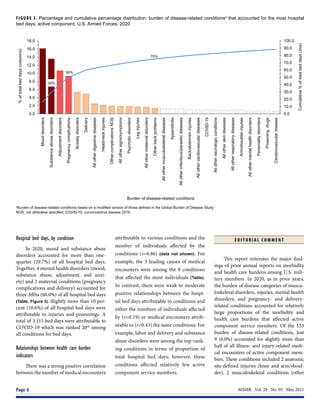
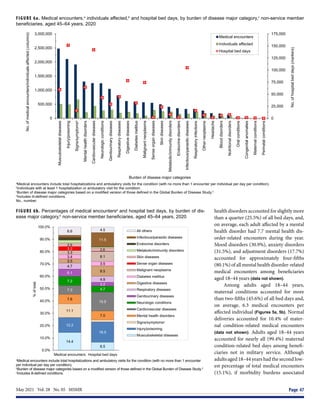
In 2020, mood and substance abuse
disorders accounted for more than one-
quarter (29.7%) of all hospital bed days.
Together, 4 mental health disorders (mood,
substance abuse, adjustment, and anxi-
ety) and 2 maternal conditions (pregnancy
complications and delivery) accounted for
three-fifths (60.0%) of all hospital bed days
(Table, Figure 3). Slightly more than 10 per-
cent (10.6%) of all hospital bed days were
attributable to injuries and poisonings. A
total of 3,115 bed days were attributable to
COVID-19 which was ranked 20th
among
all conditions for bed days.
Relationships between health care burden
indicators
There was a strong positive correlation
between the number of medical encounters
attributable to various conditions and the
number of individuals affected by the
conditions (r=0.86) (data not shown). For
example, the 3 leading causes of medical
encounters were among the 9 conditions
that affected the most individuals (Table).
In contrast, there were weak to moderate
positive relationships between the hospi-
tal bed days attributable to conditions and
either the numbers of individuals affected
by (r=0.19) or medical encounters attrib-
utable to (r=0.43) the same conditions. For
example, labor and delivery and substance
abuse disorders were among the top-rank-
ing conditions in terms of proportion of
total hospital bed days; however, these
conditions affected relatively few active
component service members.
E D I T O R I A L C O M M E N T
This report reiterates the major find-
ings of prior annual reports on morbidity
and health care burdens among U.S. mili-
tary members. In 2020, as in prior years,
the burden of disease categories of muscu-
loskeletal disorders, injuries, mental health
disorders, and pregnancy- and delivery-
related conditions accounted for relatively
large proportions of the morbidity and
health care burdens that affected active
component service members. Of the 153
burden of disease-related conditions, just
9 (6.0%) accounted for slightly more than
half of all illness- and injury-related medi-
cal encounters of active component mem-
bers. These conditions included 2 anatomic
site-defined injuries (knee and arm/shoul-
der), 2 musculoskeletal conditions (other
May 2021  Vol. 28  No. 05  MSMR	 Page 9
back problems and all other musculoskeletal
diseases), organic sleep disorders, all other
signs and symptoms, and 3 mental health
disorders (adjustment, anxiety, and mood
disorders). It is important to note that this
pattern of illness and injury among U.S.
active component members is distinctive
from that of other population groups that
are different in terms of demographic dis-
tribution and occupational hazards. Exam-
ples of such different populations include
not only the general U.S. population but
also other MHS beneficiaries such as fam-
ily members and retirees. The differing
burdens of disease and injury for the other
MHS beneficiaries are described in another
article in this issue of the MSMR.3
Although the majority of 2020 was
impacted by the COVID-19 pandemic,
COVID-19 accounted for relatively mod-
est numbers of medical encounters, bed
days, and service members affected as com-
pared to other conditions included in this
analysis. This is likely due to several factors
including the robust mitigation measures
employed by the DoD to prevent COVID-
19 infections and the fact that active com-
ponent service members represent a
relatively young and healthy population.
Mental health disorders (including
substance abuse disorders), injuries, and
musculoskeletal disorders of the back have
been leading causes of morbidity and dis-
ability among service members throughout
military history.4–9
It is well recognized that
the prevention, treatment, and rehabilita-
tion of back problems and joint injuries,
and the detection, characterization, and
management of mental health disorders—
including substance abuse and deployment
stress-related disorders (e.g., post-trau-
matic stress disorder)—should be the high-
est priorities for military medical research,
public health, and force health protection
programs.
In summary, this analysis, like those of
prior years, documents that relatively few
illnesses and injuries account for most of
the morbidity and health care burdens that
affect U.S. military members. Illnesses and
injuries that disproportionately contrib-
ute to morbidity and health care burdens
should be high-priority targets for preven-
tive action, research, and resources.
R E F E R E N C E S
1.	 Murray CJL, Lopez AD, eds. The Global Bur-
den of Disease: A Comprehensive Assessment
of Mortality and Disability from Diseases, Inju-
ries, and Risk Factors in 1990 and Projected to
2020. Cambridge, MA: Harvard University Press,
1996:120–122.
2.	 Brundage JF, Johnson KE, Lange JL, Ruber-
tone MV. Comparing the population health impacts
of medical conditions using routinely collected
health care utilization data: nature and sources of
variability. Mil Med. 2006;171(10):937–942.
3.	 Armed Forces Health Surveillance Branch. Ab-
solute and relative morbidity burdens attributable to
various illnesses and injuries, non-service member
beneficiaries of the Military Health System, 2020.
MSMR. 2021;28(5):40–50.
4.	 Cozza KL, Hales RE. Psychiatry in the
Army: a brief historical perspective and cur-
rent developments. Hosp Community Psychia-
try.1991;42(4):413–418.
5.	 Watanabe HK, Harig PT, Rock NL, Koshes RJ.
Alcohol and drug abuse and dependence. In: Jones
FD, Sparcino, LR, Wilcox VL, Rotherberg JM, eds.
Textbook of Military Medicine. Military Psychiatry:
Preparing in Peace for War. Falls Church, VA: Of-
fice of the Surgeon General; 1994.
6.	 Jones BH, Perrotta DM, Canham-Chervak ML,
Nee MA, Brundage JF. Injuries in the military: a re-
view and commentary focused on prevention. Am
J Prev Med. 2000;18(3 suppl):71–84.
7.	 Hoge CW, Auchterlonie JL, Milliken CS. Men-
tal health problems, use of mental health services,
and attrition from military service after returning
from deployment to Iraq or Afghanistan. JAMA.
2006;295(9):1023–1032.
8.	 Packnett ER, Elmasry H, Toolin CF, Cowan DB,
Boivin MR. Epidemiology of major depressive dis-
order disability in the US military: FY 2007–2012. J
Nerv Ment Dis. 2017;205(9):672–678.
9.	 Stahlman S, Oetting AA. Mental health dis-
orders and mental health problems, active com-
ponent, U.S. Armed Forces, 2007–2016. MSMR.
2018;25(3):2–11.
MSMR’s Invitation to Readers
Medical Surveillance Monthly Report (MSMR) invites readers to submit topics for consideration as the basis for future MSMR reports. The
MSMR editorial staff will review suggested topics for feasibility and compatibility with the journal’s health surveillance goals. As is the case with
most of the analyses and reports produced by Armed Forces Health Surveillance Branch staff, studies that would take advantage of the health care
and personnel data contained in the Defense Medical Surveillance System (DMSS) would be the most plausible types. For each promising topic,
Armed Forces Health Surveillance Branch staff members will design and carry out the data analysis, interpret the results, and write a manuscript
to report on the study. This invitation represents a willingness to consider good ideas from anyone who shares the MSMR’s objective to publish
evidence-based reports on subjects relevant to the health, safety, and well-being of military service members and other beneficiaries of the Military
Health System (MHS).
In addition, the MSMR encourages the submission for publication of reports on evidence-based estimates of the incidence, distribution,
impact, or trends of illness and injuries among members of the U.S. Armed Forces and other beneficiaries of the MHS. Information about manu-
script submissions is available at www.health.mil/MSMRInstructions.
Please email your article ideas and suggestions to the MSMR Editor at dha.ncr.health-surv.mbx.msmr@mail.mil.
MSMR  Vol. 28  No. 05  May 2021
Page 10
Hospitalizations, Active Component, U.S. Armed Forces, 2020
T
his report documents the frequen-
cies, rates, trends, and distributions of
hospitalizations of active component
members of the U.S. Army, Navy, Air Force,
and Marine Corps during calendar year
2020. Summaries are based on standardized
records of hospitalizations at U.S. military
and non-military (reimbursed care) medical
facilities worldwide. For this report, primary
(first-listed) discharge diagnoses are consid-
ered indicative of the primary reasons for
hospitalizations; summaries are based on the
first 3 digits of the International Classification
of Diseases, 10th Revision, used to report pri-
mary discharge diagnoses. Hospitalizations
not routinely documented with standardized,
automated records (e.g., during field training
exercises or while shipboard) are not centrally
available for health surveillance purposes and
thus are not included in this report.
Frequencies, rates, and trends	
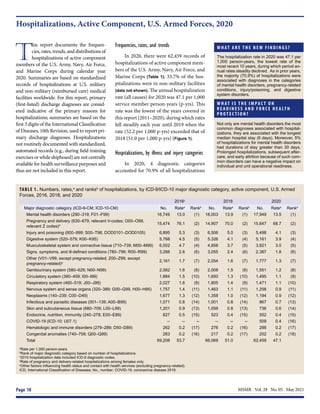
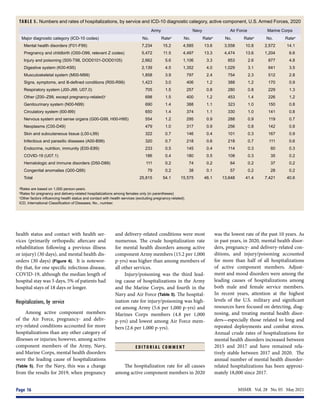
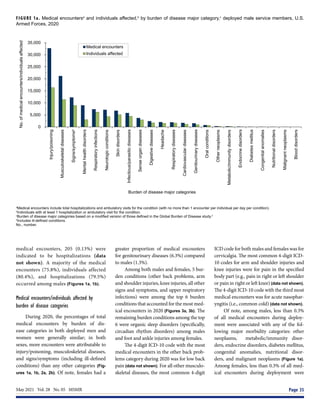
In 2020, there were 62,459 records of
hospitalizations of active component mem-
bers of the U.S. Army, Navy, Air Force, and
Marine Corps (Table 1); 33.7% of the hos-
pitalizations were in non-military facilities
(data not shown). The annual hospitalization
rate (all causes) for 2020 was 47.1 per 1,000
service member person-years (p-yrs). This
rate was the lowest of the years covered in
this report (2011–2020), during which rates
fell steadily each year until 2019 when the
rate (52.2 per 1,000 p-yrs) exceeded that of
2018 (51.0 per 1,000 p-yrs) (Figure 1).
Hospitalizations, by illness and injury categories
In 2020, 4 diagnostic categories
accounted for 70.9% of all hospitalizations
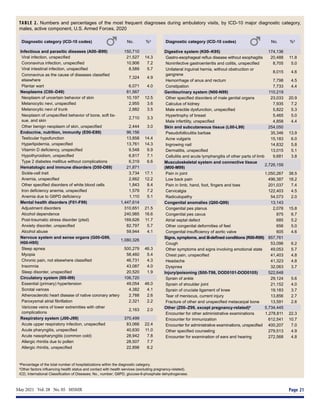
TABLE 1. Numbers, rates,a
and ranksb
of hospitalizations, by ICD-9/ICD-10 major diagnostic category, active component, U.S. Armed
Forces, 2016, 2018, and 2020
2016c
2018 2020
Major diagnostic category (ICD-9-CM; ICD-10-CM) No. Ratea
Rankb
No. Ratea
Rankb
No. Ratea
Rankb
Mental health disorders (290–319; F01–F99) 16,749 13.0 (1) 18,003 13.9 (1) 17,949 13.5 (1)
Pregnancy and delivery (630–679, relevant V-codes; O00–O99,
relevant Z codes)d
15,474 76.1 (2) 14,907 70.0 (2) 15,647 68.7 (2)
Injury and poisoning (800–999; S00–T98, DOD0101–DOD0105) 6,895 5.3 (3) 6,506 5.0 (3) 5,498 4.1 (3)
Digestive system (520–579; K00–K95) 5,768 4.5 (5) 5,326 4.1 (4) 5,161 3.9 (4)
Musculoskeletal system and connective tissue (710–739; M00–M99) 6,002 4.7 (4) 4,858 3.7 (5) 3,921 3.0 (5)
Signs, symptoms, and ill-defined conditions (780–799; R00–R99) 3,288 2.6 (6) 3,055 2.4 (6) 2,387 1.8 (6)
Other (V01–V99, except pregnancy-related; Z00–Z99, except
pregnancy-related)e
2,161 1.7 (7) 2,054 1.6 (7) 1,777 1.3 (7)
Genitourinary system (580–629; N00–N99) 2,082 1.6 (8) 2,008 1.5 (8) 1,551 1.2 (8)
Circulatory system (390–459; I00–I99) 1,884 1.5 (10) 1,650 1.3 (10) 1,495 1.1 (9)
Respiratory system (460–519; J00–J99) 2,027 1.6 (9) 1,805 1.4 (9) 1,471 1.1 (10)
Nervous system and sense organs (320–389; G00–G99, H00–H95) 1,757 1.4 (11) 1,463 1.1 (11) 1,256 0.9 (11)
Neoplasms (140–239; C00–D49) 1,677 1.3 (12) 1,358 1.0 (12) 1,194 0.9 (12)
Infectious and parasitic diseases (001–139; A00–B99) 1,071 0.8 (14) 1,001 0.8 (14) 867 0.7 (13)
Skin and subcutaneous tissue (680–709; L00–L99) 1,201 0.9 (13) 1,059 0.8 (13) 736 0.6 (14)
Endocrine, nutrition, immunity (240–278; E00–E89) 627 0.5 (15) 523 0.4 (15) 552 0.4 (15)
COVID-19 (ICD-10: U07.1) -- -- -- -- -- -- 509 0.4 (16)
Hematologic and immune disorders (279–289; D50–D89) 262 0.2 (17) 276 0.2 (16) 286 0.2 (17)
Congenital anomalies (740–759; Q00–Q99) 283 0.2 (16) 217 0.2 (17) 202 0.2 (18)
Total 69,208 53.7 66,069 51.0 62,459 47.1
a
Rate per 1,000 person-years.
b
Rank of major diagnostic category based on number of hospitalizations.
c
2015 hospitalization data included ICD-9 diagnostic codes.
d
Rate of pregnancy and delivery-related hospitalizations among females only.
e
Other factors influencing health status and contact with health services (excluding pregnancy-related).
ICD, International Classification of Diseases; No., number; COVID-19, coronavirus disease 2019.
W H AT A R E T H E N E W F I N D I N G S ?
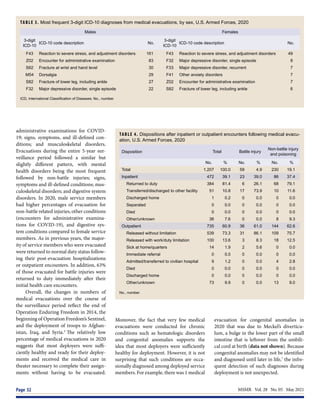
The hospitalization rate in 2020 was 47.1 per
1,000 person-years, the lowest rate of the
most recent 10 years, during which period an-
nual rates steadily declined. As in prior years,
the majority (70.9%) of hospitalizations were
associated with diagnoses in the categories
of mental health disorders, pregnancy-related
conditions, injury/poisoning, and digestive
system disorders.
W H AT I S T H E I M PA C T O N
R E A D I N E S S A N D F O R C E H E A LT H
P R O T E C T I O N ?
Not only are mental health disorders the most
common diagnoses associated with hospital-
izations, they are associated with the longest
median hospital stay (6 days). Moreover, 5%
of hospitalizations for mental health disorders
had durations of stay greater than 30 days.
Prolonged hospitalizations, subsequent after-
care, and early attrition because of such com-
mon disorders can have a negative impact on
individual and unit operational readiness.
May 2021  Vol. 28  No. 05  MSMR	 Page 11
of active component members: mental
health disorders (28.7%), pregnancy- and
delivery-related conditions (25.1%), injury/
poisoning (8.8%), and digestive system dis-
orders (8.3%) (Table 1). Similar to 2016 and
2018, in 2020 there were more hospitaliza-
tions for mental health disorders than for
any other major diagnostic category (per
ICD-10); 2009 was the last year in which
the number of hospitalizations for preg-
nancy- and delivery-related conditions
exceeded the number for mental health dis-
orders (data not shown).
Comparing 2020 to 2016, numbers of
hospitalizations decreased in all major cat-
egories of illnesses and injuries except for
mental health disorders, pregnancy and
delivery, and hematologic and immune
disorders, which increased 7.2%, 1.1%,
and 9.2%, respectively (Table 1). The larg-
est drop in the number of hospitalizations
during 2016–2020 was seen in the category
of “musculoskeletal system and connective
system disorders” (hospitalization differ-
ence, 2016–2020: -2,081; 34.7% decrease).
Hospitalizations, by sex
In 2020, the hospitalization rate (all
causes) among females was more than 3
times that of males (114.8 per 1,000 p-yrs
vs. 32.6 per 1,000 p-yrs, respectively).
Excluding pregnancy and delivery, the rate
of hospitalizations among females (46.1 per
1,000 p-yrs) was 41.6% higher than among
males (data not shown).
Overall hospitalization rates were
higher (i.e., the rate difference [RD] was
greater than 1.0 per 1,000 p-yrs) among
females than males for mental health disor-
ders (female:male, RD: 7.4 per 1,000 p-yrs);
genitourinary disorders (RD: 2.9 per 1,000
p-yrs); and neoplasms (RD: 1.4 per 1,000
p-yrs) (data not shown). With the exception
of pregnancy- and delivery-related condi-
tions, hospitalization rates were similar
among males and females for the remain-
ing 13 major disease-specific categories
(data not shown).
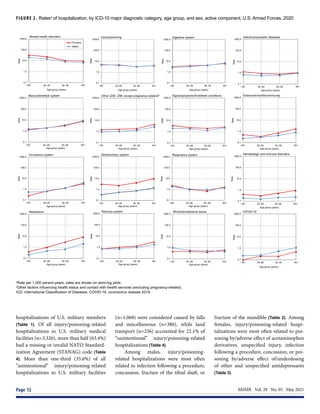
Relationships between age and hospi-
talization rates varied considerably across
illness- and injury-specific categories. For
example, among both males and females,
hospitalization rates generally increased
with age for musculoskeletal system/con-
nective tissue disorders, neoplasms, and
circulatory, genitourinary, digestive, ner-
vous, and endocrine/nutrition/immu-
nity disorders (Figure 2). Among service
members aged 30 years or older, there
was a pronounced difference by sex in the
slopes of the rates of neoplasms, with the
rates among females notably higher than
among males in the same age groups. Rates
decreased with age for mental health dis-
orders but were relatively stable across age
groups for injury/poisoning, signs/symp-
toms/ill-defined conditions, and infec-
tious/parasitic diseases.
Most frequent diagnoses
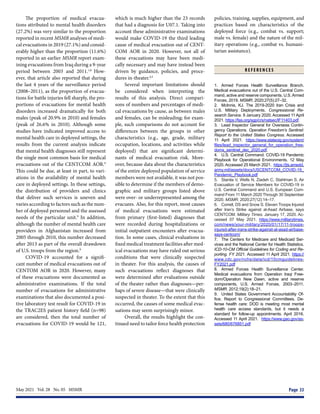
In 2020, adjustment disorder was
the most frequent discharge diagnosis
among males (n=4,433) (Table 2). Alco-
hol dependence (n=2,303), acute appendi-
citis (n=1,197), major depressive disorder
[recurrent, severe without psychotic fea-
tures] (n=1,104), major depressive disor-
der [single episode, unspecified] (n=1,087),
other symptoms and signs involving emo-
tional state (n=542), and post-traumatic
stress disorder (PTSD) (n=523) were the
next 6 most frequent diagnoses in males
(Table 2).
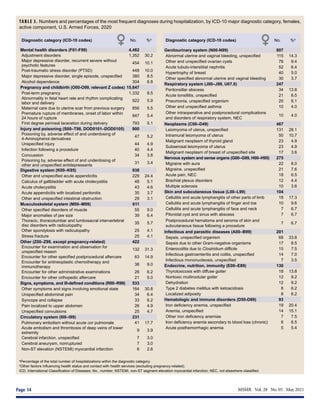
In 2020, the most frequent discharge
diagnosis among females was adjustment
disorder (n=1,352). Pregnancy- and deliv-
ery-related conditions represented the next
5 leading causes of hospitalizations among
females, and this category alone accounted
for 59.7% of all hospitalizations of females
(Table 3). The top 5 discharge diagnoses in
this condition category included post-term
(late) pregnancy (n=1,332), abnormal-
ity in fetal heart rate and rhythm (n=922),
maternal care due to uterine scar from
previous surgery (n=856), premature rup-
ture of membranes [onset of labor within
24 hours of rupture] (n=847), and first
degree perineal laceration during delivery
(n=793). After the top 6 discharge diagno-
ses described above for females, the other
leading causes of hospitalizations among
females were recurrent major depres-
sive disorder without psychotic features
(n=454), PTSD (n=448), major depres-
sive disorder [single episode, unspecified]
(n=380), and alcohol dependence (n=304).
Combined, mental health disorder diagno-
ses accounted for one-sixth (17.1%) of all
hospitalizations of females.
Injury/poisoning
As in the past, in 2020, injury/poi-
soning was the third leading cause of
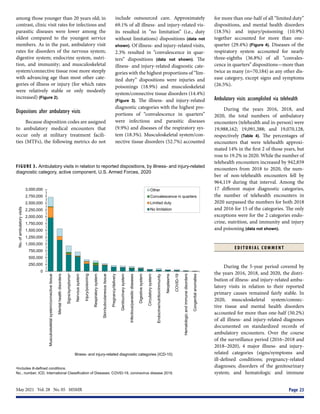
FIGURE 1. Rates of hospitalization, by year, active component, U.S. Armed Forces, 2011–2020
P-yrs, person-years.
0
10
20
30
40
50
60
70
80
2011 2012 2013 2014 2015 2016 2017 2018 2019 2020
Rate
of
hospitalizations
per
1,000
p-yrs
Hospitalizations in U.S. military and non-military medical facilities
Hospitalizations in U.S. military medical facilities only
MSMR  Vol. 28  No. 05  May 2021
Page 12
FIGURE 2. Ratesa
of hospitalization, by ICD-10 major diagnostic category, age group, and sex, active component, U.S. Armed Forces, 2020
a
Rate per 1,000 person-years; rates are shown on semi-log plots.
b
Other factors influencing health status and contact with health services (excluding pregnancy-related).
ICD, International Classification of Diseases; COVID-19, coronavirus disease 2019.
0.1
1.0
10.0
100.0
1000.0
<20 20–29 30–39 40+
Rate
Age group (years)
COVID-19
0.1
1.0
10.0
100.0
1000.0
<20 20–29 30–39 40+
Rate Age group (years)
Injury/poisoning
0.1
1.0
10.0
100.0
1000.0
<20 20–29 30–39 40+
Rate
Age group (years)
Digestive system
0.1
1.0
10.0
100.0
1000.0
<20 20–29 30–39 40+
Rate
Age group (years)
Mental health disorders
Females
Males
0.1
1.0
10.0
100.0
1000.0
<20 20–29 30–39 40+
Rate
Age group (years)
Musculoskeletal system
0.1
1.0
10.0
100.0
1000.0
<20 20–29 30–39 40+
Rate
Age group (years)
Other (Z00 Z99, except pregnancy-related)b
0.1
1.0
10.0
100.0
1000.0
<20 20–29 30–39 40+
Rate
Age group (years)
Signs/symptoms/ill-defined conditions
0.1
1.0
10.0
100.0
1000.0
<20 20–29 30–39 40+
Rate
Age group (years)
Circulatory system
0.1
1.0
10.0
100.0
1000.0
<20 20–29 30–39 40+
Rate
Age group (years)
Genitourinary system
0.1
1.0
10.0
100.0
1000.0
<20 20–29 30–39 40+
Rate
Age group (years)
Respiratory system
0.1
1.0
10.0
100.0
1000.0
<20 20–29 30–39 40+
Rate
Age group (years)
Neoplasms
0.1
1.0
10.0
100.0
1000.0
<20 20–29 30–39 40+
Rate
Age group (years)
Nervous system
0.1
1.0
10.0
100.0
1000.0
<20 20–29 30–39 40+
Rate
Age group (years)
Skin/subcutaneous tissue
0.1
1.0
10.0
100.0
1000.0
<20 20–29 30–39 40+
Rate
Age group (years)
Infectious/parasitic diseases
0.1
1.0
10.0
100.0
1000.0
<20 20–29 30–39 40+
Rate
Age group (years)
Endocrine/nutrition/immunity
0.1
1.0
10.0
100.0
1000.0
<20 20–29 30–39 40+
Rate
Age group (years)
Hematologic and immune disorders
hospitalizations of U.S. military members
(Table 1). Of all injury/poisoning-related
hospitalizations in U.S. military medical
facilities (n=3,326), more than half (63.4%)
had a missing or invalid NATO Standard-
ization Agreement (STANAG) code (Table
4). More than one-third (35.6%) of all
“unintentional” injury/poisoning-related
hospitalizations in U.S. military facilities
(n=1,068) were considered caused by falls
and miscellaneous (n=380), while land
transport (n=236) accounted for 22.1% of
“unintentional” injury/poisoning-related
hospitalizations (Table 4).
Among males, injury/poisoning-
related hospitalizations were most often
related to infection following a procedure,
concussion, fracture of the tibial shaft, or
fracture of the mandible (Table 2). Among
females, injury/poisoning-related hospi-
talizations were most often related to poi-
soning by/adverse effect of acetaminophen
derivatives, unspecified injury, infection
following a procedure, concussion, or poi-
soning by/adverse effect of/underdosing
of other and unspecified antidepressants
(Table 3).
May 2021  Vol. 28  No. 05  MSMR	 Page 13
TABLE 2. Numbers and percentages of the most frequent diagnoses during hospitalization, by ICD-10 major diagnostic category, males,
active component, U.S. Armed Forces, 2020
Diagnostic category (ICD-10 codes) No. %a
Mental health disorders (F01-F99) 13,467
Adjustment disorders 4,433 32.9
Alcohol dependence 2,303 17.1
Major depressive disorder, recurrent severe without
psychotic features
1,104 8.2
Major depressive disorder, single episode, unspecified 1,087 8.1
Post-traumatic stress disorder (PTSD) 523 3.9
Injury and poisoning (S00–T98, DOD0101–DOD0105) 4,598
Infection following a procedure 201 4.4
Concussion 124 2.7
Fracture of shaft of tibia 116 2.5
Fracture of mandible 113 2.5
Heatstroke and sunstroke 113 2.5
Digestive system (K00–K95) 4,223
Other and unspecified acute appendicitis 1,197 28.3
Acute appendicitis with localized peritonitis 258 6.1
Acute pancreatitis, unspecified 172 4.1
Alcohol induced acute pancreatitis 125 3.0
Other and unspecified intestinal obstruction 109 2.6
Musculoskeletal system (M00–M99) 3,310
Other specified disorders of muscle 474 14.3
Thoracic, thoracolumbar and lumbosacral intervertebral
disc disorders with radiculopathy
275 8.3
Spinal stenosis 222 6.7
Other spondylosis with radiculopathy 165 5.0
Major anomalies of jaw size 152 4.6
Other (Z00–Z99, except pregnancy-related) 1,355
Encounter for examination and observation for
unspecified reason
363 26.8
Encounter for antineoplastic chemotherapy and
immunotherapy
189 13.9
Encounter for other specified postprocedural aftercare 173 12.8
Encounter for other orthopedic aftercare 134 9.9
Aftercare following joint replacement surgery 93 6.9
Signs, symptoms, and ill-defined conditions (R00–R99) 1,854
Other symptoms and signs involving emotional state 542 29.2
Syncope and collapse 174 9.4
Other chest pain 121 6.5
Chest pain, unspecified 116 6.3
Unspecified convulsions 93 5.0
Circulatory system (I00–I99) 1,264
Pulmonary embolism without acute cor pulmonale 152 12.0
Non-ST elevation (NSTEMI) myocardial infarction 69 5.5
Unspecified atrial fibrillation and atrial flutter 55 4.4
Paroxysmal atrial fibrillation 53 4.2
Atherosclerotic heart disease of native coronary artery 38 3.0
Genitourinary system (N00–N99) 744
Acute kidney failure, unspecified 167 22.4
Hydronephrosis with renal and ureteral calculous
obstruction
58 7.8
Calculus of ureter 53 7.1
Calculus of kidney 49 6.6
Torsion of testis 39 5.2
Diagnostic category (ICD-10 codes) No. %a
Respiratory system (460–519; J00–J99) 1,224
Pneumonia, unspecified organism 152 12.4
Peritonsillar abscess 98 8.0
Deviated nasal septum 63 5.1
Other pneumothorax and air leak 53 4.3
Acute respiratory failure 51 4.2
Neoplasms (C00–D49) 727
Malignant neoplasm of thyroid gland 40 5.5
Acute lymphoblastic leukemia [ALL] 26 3.6
Malignant neoplasm of prostate 23 3.2
Acute myeloblastic leukemia 23 3.2
Malignant neoplasm of rectum 17 2.3
Nervous system and sense organs (G00–G99, H00–H95) 981
Sleep apnea 73 7.4
Epilepsy, unspecified 64 6.5
Other epilepsy and recurrent seizures 47 4.8
Brachial plexus disorders 47 4.8
Acute pain, NEC 32 3.3
Skin and subcutaneous tissue (L00–L99) 632
Cellulitis and acute lymphangitis of other parts of limb 257 40.7
Cutaneous abscess, furuncle and carbuncle of limb 43 6.8
Cellulitis and acute lymphangitis of face and neck 32 5.1
Pilonidal cyst and sinus with abscess 31 4.9
Cellulitis and acute lymphangitis of finger and toe 28 4.4
Infectious and parasitic diseases (A00–B99) 666
Sepsis, unspecified organism 196 29.4
Other specified sepsis 56 8.4
Infectious gastroenteritis and colitis, unspecified 53 8.0
Infectious mononucleosis, unspecified 36 5.4
Enterocolitis due to Clostridium difficile 28 4.2
Endocrine, nutrition, immunity (E00–E89) 422
Type 2 diabetes mellitus with ketoacidosis 68 16.1
Type 1 diabetes mellitus with ketoacidosis 66 15.6
Dehydration 27 6.4
Hypo-osmolality and hyponatremia 27 6.4
Type 2 diabetes mellitus with other specified complications 26 6.2
Congenital anomalies (Q00–Q99) 141
Meckel's diverticulum (displaced) (hypertrophic) 12 8.5
Other congenital deformities of hip 12 8.5
Atrial septal defect 11 7.8
Arteriovenous malformation of cerebral vessels 10 7.1
Pectus excavatum 9 6.4
Hematologic and immune disorders (D50–D89) 193
Neutropenia, unspecified 27 14.0
Other specified aplastic anemias and other bone
marrow failure syndromes
17 8.8
Immune thrombocytopenic purpura 16 8.3
Iron deficiency anemia, unspecified 14 7.3
Acute posthemorrhagic anemia 12 6.2
a
Percentage of the total number of hospitalizations within the diagnostic category.
b
Other factors influencing health status and contact with health services (excluding pregnancy-related).
ICD, International Classification of Diseases; No., number; NSTEMI, non-ST segment elevation myocardial infarction; NEC, not elsewhere classified.
MSMR  Vol. 28  No. 05  May 2021
Page 14
TABLE 3. Numbers and percentages of the most frequent diagnoses during hospitalization, by ICD-10 major diagnostic category, females,
active component, U.S. Armed Forces, 2020
Diagnostic category (ICD-10 codes) No. %a
Mental health disorders (F01-F99) 4,482
Adjustment disorders 1,352 30.2
Major depressive disorder, recurrent severe without
psychotic features
454 10.1
Post-traumatic stress disorder (PTSD) 448 10.0
Major depressive disorder, single episode, unspecified 380 8.5
Alcohol dependence 304 6.8
Pregnancy and childbirth (O00-O99, relevant Z codes) 15,647
Post-term pregnancy 1,332 8.5
Abnormality in fetal heart rate and rhythm complicating
labor and delivery
922 5.9
Maternal care due to uterine scar from previous surgery 856 5.5
Premature rupture of membranes, onset of labor within
24 hours of rupture
847 5.4
First degree perineal laceration during delivery 793 5.1
Injury and poisoning (S00–T98, DOD0101–DOD0105) 900
Poisoning by, adverse effect of and underdosing of
4-Aminophenol derivatives
47 5.2
Unspecified injury 44 4.9
Infection following a procedure 40 4.4
Concussion 34 3.8
Poisoning by, adverse effect of and underdosing of
other and unspecified antidepressants
31 3.4
Digestive system (K00–K95) 938
Other and unspecified acute appendicitis 229 24.4
Calculus of gallbladder with acute cholecystitis 48 5.1
Acute cholecystitis 43 4.6
Acute appendicitis with localized peritonitis 35 3.7
Other and unspecified intestinal obstruction 29 3.1
Musculoskeletal system (M00–M99) 611
Other specified disorders of muscle 55 9.0
Major anomalies of jaw size 39 6.4
Thoracic, thoracolumbar and lumbosacral intervertebral
disc disorders with radiculopathy
35 5.7
Other spondylosis with radiculopathy 25 4.1
Stress fracture 25 4.1
Other (Z00–Z99, except pregnancy-related) 422
Encounter for examination and observation for
unspecified reason
132 31.3
Encounter for other specified postprocedural aftercare 63 14.9
Encounter for antineoplastic chemotherapy and
immunotherapy
38 9.0
Encounter for other administrative examinations 26 6.2
Encounter for other orthopedic aftercare 21 5.0
Signs, symptoms, and ill-defined conditions (R00–R99) 533
Other symptoms and signs involving emotional state 164 30.8
Unspecified abdominal pain 34 6.4
Syncope and collapse 33 6.2
Pain localized to upper abdomen 26 4.9
Unspecified convulsions 25 4.7
Circulatory system (I00–I99) 231
Pulmonary embolism without acute cor pulmonale 41 17.7
Acute embolism and thrombosis of deep veins of lower
extremity
9 3.9
Cerebral infarction, unspecified 7 3.0
Cerebral aneurysm, nonruptured 7 3.0
Non-ST elevation (NSTEMI) myocardial infarction 6 2.6
Diagnostic category (ICD-10 codes) No. %a
Genitourinary system (N00-N99) 807
Abnormal uterine and vaginal bleeding, unspecified 115 14.3
Other and unspecified ovarian cysts 76 9.4
Acute tubulo-interstitial nephritis 52 6.4
Hypertrophy of breast 40 5.0
Other specified abnormal uterine and vaginal bleeding 30 3.7
Respiratory system (J00–J99, U07.0) 247
Peritonsillar abscess 34 13.8
Acute tonsillitis, unspecified 21 8.5
Pneumonia, unspecified organism 20 8.1
Other and unspecified asthma 10 4.0
Other intraoperative and postprocedural complications
and disorders of respiratory system, NEC
10 4.0
Neoplasms (C00–D49) 467
Leiomyoma of uterus, unspecified 131 28.1
Intramural leiomyoma of uterus 50 10.7
Malignant neoplasm of thyroid gland 23 4.9
Subserosal leiomyoma of uterus 23 4.9
Malignant neoplasm of breast of unspecified site 17 3.6
Nervous system and sense organs (G00–G99, H00–H95) 275
Migraine with aura 22 8.0
Migraine, unspecified 21 7.6
Acute pain, NEC 18 6.5
Brachial plexus disorders 12 4.4
Multiple sclerosis 10 3.6
Skin and subcutaneous tissue (L00–L99) 104
Cellulitis and acute lymphangitis of other parts of limb 18 17.3
Cellulitis and acute lymphangitis of finger and toe 10 9.6
Cellulitis and acute lymphangitis of face and neck 7 6.7
Pilonidal cyst and sinus with abscess 7 6.7
Postprocedural hematoma and seroma of skin and
subcutaneous tissue following a procedure
7 6.7
Infectious and parasitic diseases (A00–B99) 201
Sepsis, unspecified organism 68 33.8
Sepsis due to other Gram-negative organisms 17 8.5
Enterocolitis due to Clostridium difficile 15 7.5
Infectious gastroenteritis and colitis, unspecified 14 7.0
Infectious mononucleosis, unspecified 7 3.5
Endocrine, nutrition, immunity (E00–E89) 130
Thyrotoxicosis with diffuse goiter 18 13.8
Nontoxic multinodular goiter 12 9.2
Dehydration 12 9.2
Type 2 diabetes mellitus with ketoacidosis 8 6.2
Localized adiposity 8 6.2
Hematologic and immune disorders (D50-D89) 93
Iron deficiency anemia, unspecified 19 20.4
Anemia, unspecified 14 15.1
Other iron deficiency anemias 7 7.5
Iron deficiency anemia secondary to blood loss (chronic) 6 6.5
Acute posthemorrhagic anemia 5 5.4
a
Percentage of the total number of hospitalizations within the diagnostic category.
b
Other factors influencing health status and contact with health services (excluding pregnancy-related).
ICD, International Classification of Diseases; No., number; NSTEMI, non-ST segment elevation myocardial infarction; NEC, not elsewhere classified.
May 2021  Vol. 28  No. 05  MSMR	 Page 15
0
2
4
6
8
10
12
14
16
18
20
22
24
26
28
30
32
34
2011 2012 2013 2014 2015 2016 2017 2018 2019 2020
No.
of
days
95th percentile
75th percentile
Median
25th percentile
5th percentile
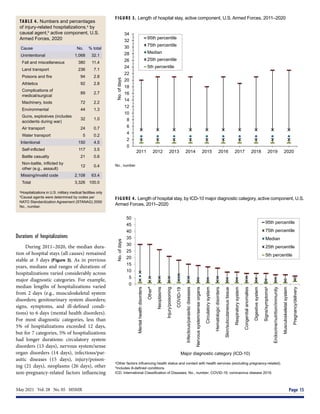
TABLE 4. Numbers and percentages
of injury-related hospitalizations,a
by
causal agent,b
active component, U.S.
Armed Forces, 2020
Cause No. % total
Unintentional 1,068 32.1
Fall and miscellaneous 380 11.4
Land transport 236 7.1
Poisons and fire 94 2.8
Athletics 92 2.8
Complications of
medical/surgical
89 2.7
Machinery, tools 72 2.2
Environmental 44 1.3
Guns, explosives (includes
accidents during war)
32 1.0
Air transport 24 0.7
Water transport 5 0.2
Intentional 150 4.5
Self-inflicted 117 3.5
Battle casualty 21 0.6
Non-battle, inflicted by
other (e.g., assault)
12 0.4
Missing/invalid code 2,108 63.4
Total 3,326 100.0
a
Hospitalizations in U.S. military medical facilities only
b
Causal agents were determined by codes per
NATO Standardization Agreement (STANAG) 2050
No., number.
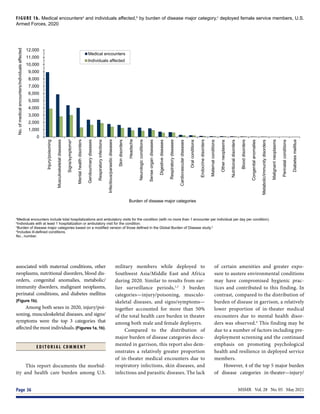
FIGURE 3. Length of hospital stay, active component, U.S. Armed Forces, 2011–2020
FIGURE 4. Length of hospital stay, by ICD-10 major diagnostic category, active component, U.S.
Armed Forces, 2011–2020
No., number.
a
Other factors influencing health status and contact with health services (excluding pregnancy-related).
b
Includes ill-defined conditions.
ICD, International Classification of Diseases; No., number; COVID-19, coronavirus disease 2019.
0
5
10
15
20
25
30
35
40
45
50
s
r
e
d
r
o
s
i
d
h
t
l
a
e
h
l
a
t
n
e
M
Otherª
Neoplasms
Injury/poisoning
COVID-19
Infectious/parasitic
diseases
Nervous
system/sense
organs
Circulatory
system
Hematologic
disorders
Skin/subcutaneous
tissue
Respiratory
system
Congenital
anomalies
Digestive
system
Signs/symptomsᵇ
Endocrine/nutrition/immunity
Musculoskeletal
system
Pregnancy/delivery
No.
of
days
Major diagnostic category (ICD-10)
95th percentile
75th percentile
Median
25th percentile
5th percentile
Durations of hospitalizations
During 2011–2020, the median dura-
tion of hospital stays (all causes) remained
stable at 3 days (Figure 3). As in previous
years, medians and ranges of durations of
hospitalizations varied considerably across
major diagnostic categories. For example,
median lengths of hospitalizations varied
from 2 days (e.g., musculoskeletal system
disorders; genitourinary system disorders;
signs, symptoms, and ill-defined condi-
tions) to 6 days (mental health disorders).
For most diagnostic categories, less than
5% of hospitalizations exceeded 12 days,
but for 7 categories, 5% of hospitalizations
had longer durations: circulatory system
disorders (13 days), nervous system/sense
organ disorders (14 days), infectious/par-
asitic diseases (15 days), injury/poison-
ing (21 days), neoplasms (26 days), other
non-pregnancy-related factors influencing
MSMR  Vol. 28  No. 05  May 2021
Page 16
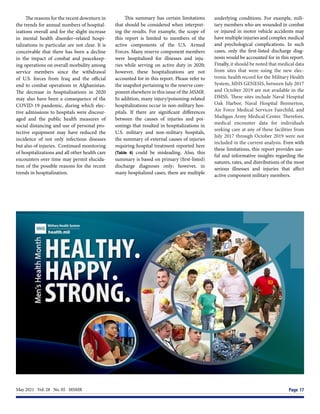
TABLE 5. Numbers and rates of hospitalizations, by service and ICD-10 diagnostic category, active component, U.S. Armed Forces, 2020
Army Navy Air Force Marine Corps
Major diagnostic category (ICD-10 codes) No. Ratea
No. Ratea
No. Ratea
No. Ratea
Mental health disorders (F01-F99) 7,234 15.2 4,585 13.6 3,558 10.8 2,572 14.1
Pregnancy and childbirth (O00-O99, relevant Z codes) 5,472 11.5 4,497 13.3 4,474 13.6 1,204 6.6
Injury and poisoning (S00-T98, DOD0101-DOD0105) 2,662 5.6 1,106 3.3 853 2.6 877 4.8
Digestive system (K00-K95) 2,139 4.5 1,352 4.0 1,029 3.1 641 3.5
Musculoskeletal system (M00-M99) 1,858 3.9 797 2.4 754 2.3 512 2.8
Signs, symptoms, and ill-defined conditions (R00-R99) 1,423 3.0 406 1.2 388 1.2 170 0.9
Respiratory system (J00-J99, U07.0) 705 1.5 257 0.8 280 0.8 229 1.3
Other (Z00–Z99, except pregnancy-related)c
698 1.5 400 1.2 453 1.4 226 1.2
Genitourinary system (N00-N99) 690 1.4 388 1.1 323 1.0 150 0.8
Circulatory system (I00-I99) 650 1.4 374 1.1 330 1.0 141 0.8
Nervous system and sense organs (G00-G99, H00-H95) 554 1.2 295 0.9 288 0.9 119 0.7
Neoplasms (C00-D49) 479 1.0 317 0.9 256 0.8 142 0.8
Skin and subcutaneous tissue (L00-L99) 322 0.7 146 0.4 101 0.3 167 0.9
Infectious and parasitic diseases (A00-B99) 320 0.7 218 0.6 218 0.7 111 0.6
Endocrine, nutrition, immunity (E00-E89) 233 0.5 145 0.4 114 0.3 60 0.3
COVID-19 (U07.1) 186 0.4 180 0.5 108 0.3 35 0.2
Hematologic and immune disorders (D50-D89) 111 0.2 74 0.2 64 0.2 37 0.2
Congenital anomalies (Q00-Q99) 79 0.2 38 0.1 57 0.2 28 0.2
Total 25,815 54.1 15,575 46.1 13,648 41.4 7,421 40.6
a
Rates are based on 1,000 person-years.
b
Rates for pregnancy and delivery-related hospitalizations among females only (in parentheses)
c
Other factors influencing health status and contact with health services (excluding pregnancy-related).
ICD, International Classification of Diseases; No., number.
health status and contact with health ser-
vices (primarily orthopedic aftercare and
rehabilitation following a previous illness
or injury) (30 days), and mental health dis-
orders (30 days) (Figure 4). It is notewor-
thy that, for one specific infectious disease,
COVID-19, although the median length of
hospital stay was 5 days, 5% of patients had
hospital stays of 18 days or longer.
Hospitalizations, by service
Among active component members
of the Air Force, pregnancy- and deliv-
ery-related conditions accounted for more
hospitalizations than any other category of
illnesses or injuries; however, among active
component members of the Army, Navy,
and Marine Corps, mental health disorders
were the leading cause of hospitalizations
(Table 5). For the Navy, this was a change
from the results for 2019, when pregnancy
and delivery-related conditions were most
numerous. The crude hospitalization rate
for mental health disorders among active
component Army members (15.2 per 1,000
p-yrs) was higher than among members of
all other services.
Injury/poisoning was the third lead-
ing cause of hospitalizations in the Army
and the Marine Corps, and fourth in the
Navy and Air Force (Table 5). The hospital-
ization rate for injury/poisoning was high-
est among Army (5.6 per 1,000 p-yrs) and
Marines Corps members (4.8 per 1,000
p-yrs) and lowest among Air Force mem-
bers (2.6 per 1,000 p-yrs).
E D I T O R I A L C O M M E N T
The hospitalization rate for all causes
among active component members in 2020
was the lowest rate of the past 10 years. As
in past years, in 2020, mental health disor-
ders, pregnancy- and delivery-related con-
ditions, and injury/poisoning accounted
for more than half of all hospitalizations
of active component members. Adjust-
ment and mood disorders were among the
leading causes of hospitalizations among
both male and female service members.
In recent years, attention at the highest
levels of the U.S. military and significant
resources have focused on detecting, diag-
nosing, and treating mental health disor-
ders—especially those related to long and
repeated deployments and combat stress.
Annual crude rates of hospitalizations for
mental health disorders increased between
2015 and 2017 and have remained rela-
tively stable between 2017 and 2020. The
annual number of mental health disorder-
related hospitalizations has been approxi-
mately 18,000 since 2017.
May 2021  Vol. 28  No. 05  MSMR	 Page 17
The reasons for the recent downturn in
the trends for annual numbers of hospital-
izations overall and for the slight increase
in mental health disorder–related hospi-
talizations in particular are not clear. It is
conceivable that there has been a decline
in the impact of combat and peacekeep-
ing operations on overall morbidity among
service members since the withdrawal
of U.S. forces from Iraq and the official
end to combat operations in Afghanistan.
The decrease in hospitalizations in 2020
may also have been a consequence of the
COVID-19 pandemic, during which elec-
tive admissions to hospitals were discour-
aged and the public health measures of
social distancing and use of personal pro-
tective equipment may have reduced the
incidence of not only infectious diseases
but also of injuries. Continued monitoring
of hospitalizations and all other health care
encounters over time may permit elucida-
tion of the possible reasons for the recent
trends in hospitalization.
This summary has certain limitations
that should be considered when interpret-
ing the results. For example, the scope of
this report is limited to members of the
active components of the U.S. Armed
Forces. Many reserve component members
were hospitalized for illnesses and inju-
ries while serving on active duty in 2020;
however, these hospitalizations are not
accounted for in this report. Please refer to
the snapshot pertaining to the reserve com-
ponent elsewhere in this issue of the MSMR.
In addition, many injury/poisoning-related
hospitalizations occur in non-military hos-
pitals. If there are significant differences
between the causes of injuries and poi-
sonings that resulted in hospitalizations in
U.S. military and non-military hospitals,
the summary of external causes of injuries
requiring hospital treatment reported here
(Table 4) could be misleading. Also, this
summary is based on primary (first-listed)
discharge diagnoses only; however, in
many hospitalized cases, there are multiple
underlying conditions. For example, mili-
tary members who are wounded in combat
or injured in motor vehicle accidents may
have multiple injuries and complex medical
and psychological complications. In such
cases, only the first-listed discharge diag-
nosis would be accounted for in this report.
Finally, it should be noted that medical data
from sites that were using the new elec-
tronic health record for the Military Health
System, MHS GENESIS, between July 2017
and October 2019 are not available in the
DMSS. These sites include Naval Hospital
Oak Harbor, Naval Hospital Bremerton,
Air Force Medical Services Fairchild, and
Madigan Army Medical Center. Therefore,
medical encounter data for individuals
seeking care at any of these facilities from
July 2017 through October 2019 were not
included in the current analysis. Even with
these limitations, this report provides use-
ful and informative insights regarding the
natures, rates, and distributions of the most
serious illnesses and injuries that affect
active component military members.
MSMR  Vol. 28  No. 05  May 2021
Page 18
T
his report documents the frequen-
cies, rates, trends, and characteris-
tics of ambulatory health care visits
of active component members of the U.S.
Army, Navy, Air Force, and Marine Corps
during 2020. Ambulatory visits of U.S. ser-
vice members in fixed military and non-
military (reimbursed through the Military
Health System [MHS]) medical treatment
facilities are documented with standard-
ized, automated records. These records are
routinely archived for health surveillance
purposes in the Defense Medical Surveil-
lance System (DMSS), which is the source
of data for this report. Ambulatory vis-
its that are not routinely and completely
documented with standardized elec-
tronic records (e.g., during deployments,
field training exercises, or at sea) are not
included in this analysis.
Ambulatory Visits, Active Component, U.S. Armed Forces, 2020
W H AT A R E T H E N E W F I N D I N G S ?
In 2020, the overall numbers and rates of ac-
tive component service member ambulatory
care visits decreased slightly compared to
previous years. Most categories of illness and
injury showed modest declines in numbers
and rates. The proportions of ambulatory care
visits that were accomplished via telehealth
encounters increased to 19% in 2020, com-
pared to 14% in 2016 and 2018.
W H AT I S T H E I M PA C T O N
R E A D I N E S S A N D F O R C E H E A LT H
P R O T E C T I O N ?
The response to the coronavirus pandemic
may have been associated with not only a
decrease in the incidence of disease and in-
jury diagnoses in the service member popu-
lation but also an increase in the proportions
of health care encounters delivered through
telehealth. Lessons learned may guide future
steps in reducing disease and injury inci-
dence in the post-pandemic era.
TABLE 1. Numbers, rates,a
and ranksb
of ambulatory visits, by ICD-9/ICD-10 major diagnostic category, active component, U.S. Armed Forces,
2016, 2018, and 2020
2016c
2018 2020
Major diagnostic category (ICD-9; ICD-10) No. Ratea
Rankb
No. Ratea
Rankb
No. Ratea
Rankb
Other (V01–V99, except pregnancy-related; Z00–Z99, except
pregnancy-related)d
7,568,681 5872.4 (1) 7,155,040 5519.7 (1) 7,831,384 5901.5 (1)
Musculoskeletal system and connective tissue (710–739; M00–M99) 4,399,712 3413.7 (2) 4,240,142 3271.0 (2) 3,575,703 2694.6 (2)
Mental health disorders (290–319; F01–F99) 2,070,773 1606.7 (3) 1,913,176 1475.9 (3) 2,068,706 1558.9 (3)
Nervous system and sense organs (320–389; G00–G99, H00–H95) 1,327,664 1030.1 (4) 1,329,520 1025.7 (4) 1,313,805 990.1 (4)
Signs, symptoms, and ill-defined conditions (780–799; R00–R99) 1,143,051 886.9 (5) 1,166,310 899.7 (5) 1,213,450 914.4 (5)
Injury and poisoning (800–999; S00–T98, DOD0101–DOD0105) 859,750 667.1 (6) 771,839 595.4 (6) 645,599 486.5 (6)
Respiratory system (460–519; J00–J99) 638,271 495.2 (7) 629,983 486.0 (7) 504,666 380.3 (7)
Pregnancy and delivery (630–679, relevant V-codes; O00–
O99, relevant Z codes)e
325,185 1,599.4 (9) 333,532 1,565.1 (9) 343,640 1,508.9 (8)
Skin and subcutaneous tissue (680–709; L00–L99) 393,370 305.2 (8) 380,308 293.4 (8) 343,259 258.7 (9)
Genitourinary system (580–629; N00–N99) 281,184 218.2 (10) 275,770 212.7 (10) 281,369 212.0 (10)
Digestive system (520–579; K00–K95) 248,088 192.5 (11) 232,925 179.7 (11) 224,811 169.4 (11)
Infectious and parasitic diseases (001–139; A00–B99) 247,988 192.4 (12) 225,660 174.1 (12) 208,984 157.5 (12)
Endocrine, nutrition, immunity (240–278; E00–E89) 157,572 122.3 (13) 136,619 105.4 (13) 135,893 102.4 (13)
Circulatory system (390–459; I00–I99) 139,928 108.6 (14) 129,022 99.5 (14) 126,954 95.7 (14)
Neoplasms (140–239; C00–D49) 131,882 102.3 (15) 119,622 92.3 (15) 113,569 85.6 (15)
COVID-19 (ICD-10: U07.1) -- -- -- -- -- -- 83,405 62.9 (16)
Hematologic and immune disorders (279–289; D50–D89) 32,663 25.3 (16) 31,949 24.6 (16) 37,041 27.9 (17)
Congenital anomalies (740–759; Q00–Q99) 22,400 17.4 (17) 19,971 15.4 (17) 17,890 13.5 (18)
Total 19,988,162 15,508.5 19,091,388 14,728.0 19,070,128 14,370.8
a
Rates are based on 1,000 person-years.
b
Rank of major diagnostic category based on number of hospitalizations.
c
2016 ambulatory visit data included ICD-9 diagnostic codes.
d
Other factors influencing health status and contact with health services (excluding pregnancy-related).
e
Rate of pregnancy and delivery-related hospitalizations among females only.
ICD, International Classification of Diseases; No., number.
As in previous MSMR reports, all
records of ambulatory visits of active com-
ponent service members were categorized
according to the first 4 characters of the
International Classification of Diseases, 10th
Revision (ICD-10) codes entered in the pri-
mary (first-listed) diagnostic position of the
visit records.1
In this analysis, a special query
of the DMSS records was performed to dis-
tinguish ambulatory visits that were accom-
plished via “telehealth” encounters (e.g., via
telephone or video teleconference) rather
than in-person encounters. Both types of
encounters were included and not distin-
guished in most of the data summaries, but
trends in the proportions of encounters that
were accomplished via telehealth were exam-
inedbecauseoftheincreaseduseoftelehealth
encounters during the coronavirus 2019
(COVID-19) pandemic.
May 2021  Vol. 28  No. 05  MSMR	 Page 19
FIGURE 1. Rates of ambulatory visits by year, active component, U.S. Armed Forces, 2011–
2020
P-yrs, person-years.
0.0
2,000.0
4,000.0
6,000.0
8,000.0
10,000.0
12,000.0
14,000.0
16,000.0
18,000.0
2011 2012 2013 2014 2015 2016 2017 2018 2019 2020
Rate
per
1,000
p-yrs
Outpatient visits in U.S. military and non-military medical facilities
Outpatient visits in U.S. military medical facilities
Frequencies, rates, and trends
During 2020, there were 19,070,128
reported ambulatory visits of active com-
ponent service members. “Visits” refers
to encounters accomplished via in-person
clinical meetings as well as “telehealth”
encounters. The crude annual rate (all
causes) was 14,370.8 visits per 1,000 per-
son-years (p-yrs) or 14.4 visits per p-yr;
thus, on average, each service member had
approximately 14 ambulatory encounters
during the year (Table 1). The rate of doc-
umented ambulatory visits in 2020 was
4.2% higher than the lowest point in 2011
(13,792.8 per 1,000 p-yrs) and 8.6% lower
than the peak in 2019 (15,718.5 visits per
1,000 p-yrs) (Figure 1). In 2020, 41.1% of
ambulatory visits were classified into the
“other” category (i.e., other factors influ-
encing health status and contact with health
services, excluding pregnancy-related),
which includes health care not related to
a current illness or injury (Table 1). Such
care includes routine and special medical
examinations (e.g., periodic, occupational,
or retirement), therapeutic and rehabilita-
tive treatments for previously diagnosed
illnesses or injuries (e.g., physical therapy),
immunizations, counseling, deployment-
related health assessments, and screening.
In 2020, there were 11,238,744 docu-
mented ambulatory visits for illnesses and
injuries (ICD-10: A00–T88, including rel-
evant pregnancy Z-codes), not including
diagnoses classified as “other,” for a crude
annual rate of illness- and injury-related
visits of approximately 8.5 visits per p-yr
(Table 1). The crude annual rate of ambula-
tory visits for illnesses and injuries in 2020
was slightly lower than the rates in 2018
(9.2 visits per p-yr) and 2016 (9.6 visits per
p-yr).
Ambulatory visits, by diagnostic categories
In 2020, 4 major diagnostic catego-
ries accounted for almost three-quarters
(72.7%) of all illness- and injury-related
ambulatory visits among active component
service members: musculoskeletal system/
connective tissue disorders (31.8%); mental
health disorders (18.4%); disorders of the
nervous system and sense organs (11.7%);
and signs, symptoms, and ill-defined
conditions (10.8%) (Table 1). COVID-19
accounted for 0.44% of the total ambula-
tory visits in 2020.
Between 2016 and 2020, there were
increases in the numbers of visits in 4
major diagnostic categories of illness and
injury and decreases in 12 categories (Table
1). In terms of both the numbers of ambu-
latory visits and the percentage change in
the numbers of visits for illnesses and inju-
ries, the largest increases during 2016–2020
were for signs, symptoms, and ill-defined
conditions (change: +70,399 visits; +6.2%)
and pregnancy and delivery (change:
+18,455; +5.7%). The largest decrease in
numbers of visits between 2016 and 2020
was for musculoskeletal system/connective
tissue disorders (change: -824,009; -18.7%)
(Table 1). The largest percentage decreases
in ambulatory visits during 2016–2020
were for injury and poisoning (change:
-214,151; -24.9%); respiratory system dis-
orders (change: -133,605; -20.9%); con-
genital anomalies (change: -4,510; -20.1%);
infectious and parasitic diseases (change:
-39,004; -15.7%); neoplasms (change:
-18,313; -13.9%); endocrine, nutrition,
and immunity disorders (change: -21,679;
-13.8%); ; and disorders of skin and subcu-
taneous tissue (change: -50,011; -12.7%);
moreover, the rates of ambulatory vis-
its for illnesses and injuries in all of these
categories showed consistent decreases
during the 5-year period (2016–2018 and
2018–2020).
In general, the relative distributions
of ambulatory visits by ICD-10 diagnostic
categories remained stable over the surveil-
lance period (Table 1). In a comparison of
the numbers and rates of visits attributable
to each of the 17 major diagnostic catego-
ries in the 3 years of interest, the rank orders
of 1 pair of categories were exchanged in
2016 and 2018 relative to 2020: pregnancy
and delivery (9th to 8th) and disorders of
skin and subcutaneous tissue (8th to 9th).
COVID-19 was included as a separate diag-
nostic category in 2020 and ranked 16th
in
total visits.
Ambulatory visits, by sex
In 2020, males accounted for nearly
three-fourths (71.9%) of all illness- and
injury-related visits; however, the annual
crude rate among females (13.9 visits per
p-yr) was 88.6% higher than that among
males (7.4 visits per p-yr) (data not shown).
Excluding pregnancy- and delivery-related
visits (which accounted for 10.9% of all
non-Z-coded ambulatory visits among
females), the illness and injury ambulatory
visit rate among females was 12.4 visits per
p-yr. As in the past, rates for illness- and
MSMR  Vol. 28  No. 05  May 2021
Page 20
FIGURE 2. Ratesa
of ambulatory visits, by ICD-10 major diagnostic category, age group, and sex, active component, U.S. Armed Forces, 2020
a
Rate per 1,000 person-years; rates are shown on semi-log plots.
b
Other factors influencing health status and contact with health services (excluding pregnancy-related).
ICD, International Classification of Diseases; COVID-19, coronavirus disease 2019.
0.0
50.0
100.0
150.0
200.0
<20 20–29 30–39 40+
Rate
Age group (years)
COVID-19
0.0
1,000.0
2,000.0
3,000.0
4,000.0
<20 20–29 30–39 40+
Rate
Age group (years)
Mental health disorders
Females
Males
0.0
200.0
400.0
600.0
800.0
1,000.0
<20 20–29 30–39 40+
Rate
Age group (years)
Injury/poisoning
0.0
100.0
200.0
300.0
400.0
<20 20–29 30–39 40+
Rate
Age group (years)
Digestive system
0.0
2,000.0
4,000.0
6,000.0
8,000.0
10,000.0
<20 20–29 30–39 40+
Rate
Age group (years)
Musculoskeletal system/connective tissue
0.0
2,000.0
4,000.0
6,000.0
8,000.0
10,000.0
12,000.0
<20 20–29 30–39 40+
Rate
Age group (years)
Other (Z00-Z99, except pregnancy-related)b
0.0
500.0
1000.0
1500.0
2000.0
2500.0
<20 20–29 30–39 40+
Rate
Age group (years)
Signs/symptoms/ill-defined conditions
0.0
100.0
200.0
300.0
400.0
<20 20–29 30–39 40+
Rate
Age group (years)
Circulatory system
0.0
200.0
400.0
600.0
800.0
1,000.0
<20 20–29 30–39 40+
Rate
Age group (years)
Genitourinary system
0.0
200.0
400.0
600.0
800.0
1,000.0
<20 20–29 30–39 40+
Rate
Age group (years)
Respiratory system
0.0
100.0
200.0
300.0
400.0
500.0
<20 20–29 30–39 40+
Rate
Age group (years)
Neoplasms
0.0
1,000.0
2,000.0
3,000.0
4,000.0
<20 20–29 30–39 40+
Rate
Age group (years)
Nervous system and sense organs
0.0
200.0
400.0
600.0
<20 20–29 30–39 40+
Rate
Age group (years)
Skin/subcutaneous tissue
0.0
20.0
40.0
60.0
80.0
100.0
120.0
140.0
<20 20–29 30–39 40+
Rate
Age group (years)
Hematologic and immune disorders
0.0
100.0
200.0
300.0
400.0
500.0
<20 20–29 30–39 40+
Rate
Age group (years)
Endocrine/nutrition/immunity
0.0
100.0
200.0
300.0
400.0
<20 20–29 30–39 40+
Rate
Age group (years)
Infectious/parasitic diseases
injury-related categories were generally
higher among females than males (Figure 2).
Among all illness- and injury-specific
diagnoses, 3 of the 5 diagnoses with the
largest numbers of ambulatory visits were
the same for males and females. However,
the crude rate (per 1,000 p-yrs) was at least
37% higher among females than males for
these 3 common diagnoses: pain in joint
(female: 1,445.2; male: 955.4; female:male
rate ratio [RR]: 1.51); low back pain
(female: 618.9; male: 451.6; RR: 1.37); and
adjustment disorders (female: 688.8; male:
282.6; RR: 2.44) (data not shown). Five other
diagnoses were among the 10 most com-
mon diagnoses for both males and females:
pain in limb, hand, foot, fingers, and toes;
post-traumatic stress disorder (PTSD);
sleep apnea; alcohol dependence; and cer-
vicalgia. Of note, sleep apnea was the 2nd
most frequent illness- or injury-specific
primary diagnosis during ambulatory vis-
its of males, but it ranked as the 8th most
common diagnosis among females. Among
females, the 7th most common diagnosis
was anxiety disorder, unspecified, which
was the 10th most common diagnosis
among males (Tables 2, 3).
Across diagnostic categories, rela-
tionships between age group and ambula-
tory visit rates were broadly similar among
males and females (Figure 2). For example,
among both males and females, ambula-
tory visit rates for neoplasms and circula-
tory disorders among those aged 40 years
or older were 15 or more times the rates
May 2021  Vol. 28  No. 05  MSMR	 Page 21
a
Percentage of the total number of hospitalizations within the diagnostic category.
b
Other factors influencing health status and contact with health services (excluding pregnancy-related).
ICD, International Classification of Diseases; No., number; G6PD, glucose-6-phosphate dehydrogenase.
TABLE 2. Numbers and percentages of the most frequent diagnoses during ambulatory visits, by ICD-10 major diagnostic category,
males, active component, U.S. Armed Forces, 2020
Diagnostic category (ICD-10 codes) No. %a
Infectious and parasitic diseases (A00–B99) 150,710
Viral infection, unspecified 21,527 14.3
Coronavirus infection, unspecified 10,906 7.2
Viral intestinal infection, unspecified 8,589 5.7
Coronavirus as the cause of diseases classified
elsewhere
7,324 4.9
Plantar wart 6,071 4.0
Neoplasms (C00–D49) 81,567
Neoplasm of uncertain behavior of skin 10,197 12.5
Melanocytic nevi, unspecified 2,955 3.6
Melanocytic nevi of trunk 2,882 3.5
Neoplasm of unspecified behavior of bone, soft tis-
sue, and skin
2,710 3.3
Other benign neoplasm of skin, unspecified 2,444 3.0
Endocrine, nutrition, immunity (E00-E89) 96,156
Testicular hypofunction 13,858 14.4
Hyperlipidemia, unspecified 13,761 14.3
Vitamin D deficiency, unspecified 9,548 9.9
Hypothyroidism, unspecified 6,817 7.1
Type 2 diabetes mellitus without complications 6,319 6.6
Hematologic and immune disorders (D50-D89) 21,871
Sickle-cell trait 3,734 17.1
Anemia, unspecified 2,662 12.2
Other specified disorders of white blood cells 1,843 8.4
Iron deficiency anemia, unspecified 1,579 7.2
Anemia due to G6PD deficiency 1,110 5.1
Mental health disorders (F01-F99) 1,447,614
Adjustment disorders 310,651 21.5
Alcohol dependence 240,985 16.6
Post-traumatic stress disorder (ptsd) 169,626 11.7
Anxiety disorder, unspecified 82,797 5.7
Alcohol abuse 59,944 4.1
Nervous system and sense organs (G00-G99,
H00-H95)
1,080,326
Sleep apnea 500,279 46.3
Myopia 58,460 5.4
Chronic pain, not elsewhere classified 46,731 4.3
Insomnia 43,087 4.0
Sleep disorder, unspecified 20,520 1.9
Circulatory system (I00-I99) 106,720
Essential (primary) hypertension 49,054 46.0
Scrotal varices 4,382 4.1
Atherosclerotic heart disease of native coronary artery 2,788 2.6
Paroxysmal atrial fibrillation 2,321 2.2
Varicose veins of lower extremities with other
complications
2,163 2.0
Respiratory system (J00-J99) 370,499
Acute upper respiratory infection, unspecified 83,066 22.4
Acute pharyngitis, unspecified 40,630 11.0
Acute nasopharyngitis (common cold) 28,942 7.8
Allergic rhinitis due to pollen 28,507 7.7
Allergic rhinitis, unspecified 22,898 6.2
Diagnostic category (ICD-10 codes) No. %a
Digestive system (K00–K95) 174,136
Gastro-esophageal reflux disease without esophagitis 20,488 11.8
Noninfective gastroenteritis and colitis, unspecified 8,705 5.0
Unilateral inguinal hernia, without obstruction or
gangrene
8,015 4.6
Hemorrhage of anus and rectum 7,798 4.5
Constipation 7,733 4.4
Genitourinary system (N00-N99) 110,219
Other specified disorders of male genital organs 23,033 20.9
Calculus of kidney 7,935 7.2
Male erectile dysfunction, unspecified 5,822 5.3
Hypertrophy of breast 5,465 5.0
Male infertility, unspecified 4,858 4.4
Skin and subcutaneous tissue (L00-L99) 254,050
Pseudofolliculitis barbae 35,346 13.9
Acne vulgaris 15,183 6.0
Ingrowing nail 14,832 5.8
Dermatitis, unspecified 13,015 5.1
Cellulitis and acute lymphangitis of other parts of limb 9,681 3.8
Musculoskeletal system and connective tissue
(M00-M99)
2,726,159
Pain in joint 1,050,267 38.5
Low back pain 496,387 18.2
Pain in limb, hand, foot, fingers and toes 201,037 7.4
Cervicalgia 122,403 4.5
Radiculopathy 54,073 2.0
Congenital anomalies (Q00-Q99) 13,143
Congenital pes planus 2,078 15.8
Congenital pes cavus 875 6.7
Atrial septal defect 685 5.2
Other congenital deformities of feet 656 5.0
Congenital insufficiency of aortic valve 605 4.6
Signs, symptoms, and ill-defined conditions (R00-R99) 857,761
Cough 53,096 6.2
Other symptoms and signs involving emotional state 49,053 5.7
Chest pain, unspecified 41,403 4.8
Headache 41,323 4.8
Dyspnea 32,063 3.7
Injury/poisoning (S00-T98, DOD0101-DOD0105) 522,648
Sprain of ankle 29,124 5.6
Sprain of shoulder joint 21,152 4.0
Sprain of cruciate ligament of knee 19,183 3.7
Tear of meniscus, current injury 13,856 2.7
Fracture of other and unspecified metacarpal bone 13,591 2.6
Other (Z00–Z99, except pregnancy-related)b
5,734,445
Encounter for other administrative examinations 1,278,811 22.3
Encounter for immunization 612,541 10.7
Encounter for administrative examinations, unspecified 400,207 7.0
Other specified counseling 279,513 4.9
Encounter for examination of ears and hearing 272,568 4.8
MSMR  Vol. 28  No. 05  May 2021
Page 22
TABLE 3. Numbers and percentages of the most frequent diagnoses during ambulatory visits, by ICD-10 major diagnostic category,
females, active component, U.S. Armed Forces, 2020
Diagnostic category (ICD-10 codes) No. %a
Infectious and parasitic diseases (A00–B99) 58,274
Viral infection, unspecified 7,632 13.1
Candidiasis of vulva and vagina 7,398 12.7
Chlamydial infection of genitourinary tract, unspecified 3,103 5.3
Viral intestinal infection, unspecified 2,983 5.1
Coronavirus infection, unspecified 2,960 5.1
Neoplasms (C00–D49) 32,002
Leiomyoma of uterus, unspecified 3,510 11.0
Neoplasm of uncertain behavior of skin 2,980 9.3
Malignant neoplasm of breast of unspecified site 2,180 6.8
Melanocytic nevi, unspecified 1,044 3.3
Malignant neoplasm of upper-outer quadrant of breast 982 3.1
Endocrine, nutrition, immunity (E00-E89) 39,737
Hypothyroidism, unspecified 6,294 15.8
Vitamin D deficiency, unspecified 6,192 15.6
Polycystic ovarian syndrome 2,813 7.1
Obesity, unspecified 2,120 5.3
Overweight 1,347 3.4
Hematologic and immune disorders (D50-D89) 15,170
Iron deficiency anemia, unspecified 4,574 30.2
Anemia, unspecified 2,787 18.4
Sickle-cell trait 1,784 11.8
Iron deficiency anemia secondary to blood loss
(chronic)
973 6.4
Other specified disorders of white blood cells 703 4.6
Mental health disorders (F01-F99) 621,092
Adjustment disorders 156,859 25.3
Post-traumatic stress disorder (ptsd) 86,217 13.9
Anxiety disorder, unspecified 42,961 6.9
Alcohol dependence 35,678 5.7
Major depressive disorder, recurrent, moderate 31,676 5.1
Nervous system and sense organs (G00-G99,
H00-H95)
233,479
Sleep apnea 37,412 16.0
Myopia 20,043 8.6
Chronic pain, not elsewhere classified 17,400 7.5
Insomnia 13,383 5.7
Migraine with aura 9,011 3.9
Circulatory system (I00-I99) 20,234
Essential (primary) hypertension 6,638 32.8
Varicose veins of lower extremities with other
complications
880 4.3
Pulmonary embolism without acute cor pulmonale 705 3.5
Venous insufficiency (chronic) (peripheral) 613 3.0
Supraventricular tachycardia 604 3.0
Respiratory system (J00-J99) 134,167
Acute upper respiratory infection, unspecified 28,276 21.1
Acute pharyngitis, unspecified 18,108 13.5
Allergic rhinitis due to pollen 11,338 8.5
Acute nasopharyngitis [common cold] 11,076 8.3
Allergic rhinitis, unspecified 8,678 6.5
Diagnostic category (ICD-10 codes) No. %a
Digestive system (K00–K95) 50,675
Constipation 8,135 16.1
Gastro-esophageal reflux disease without esophagitis 4,936 9.7
Noninfective gastroenteritis and colitis, unspecified 3,079 6.1
Hemorrhage of anus and rectum 1,859 3.7
Unspecified hemorrhoids 1,607 3.2
Genitourinary system (N00-N99) 171,150
Acute vaginitis 20,775 12.1
Urinary tract infection, site not specified 14,268 8.3
Other specified noninflammatory disorders of vagina 9,016 5.3
Abnormal uterine and vaginal bleeding, unspecified 8,693 5.1
Female infertility, unspecified 7,612 4.4
Pregnancy and delivery (O00-O99, relevant Z codes) 343,640
Encounter for care and examination of lactating mother 33,816 9.8
Encounter for supervision of normal first pregnancy 31,534 9.2
Encounter for supervision of other normal pregnancy 24,411 7.1
Encounter for routine postpartum follow-up 19,275 5.6
Other specified diseases and conditions complicating
pregnancy, childbirth and the puerperium
14,682 4.3
Skin and subcutaneous tissue (L00-L99) 89,209
Acne vulgaris 13,626 15.3
Dermatitis, unspecified 5,734 6.4
Acne, unspecified 5,292 5.9
Ingrowing nail 2,650 3.0
Urticaria, unspecified 2,347 2.6
Musculoskeletal system and connective tissue
(M00-M99)
849,544
Pain in joint 329,116 38.7
Low back pain 140,947 16.6
Pain in limb, hand, foot, fingers and toes 64,181 7.6
Cervicalgia 46,825 5.5
Stress fracture 20,984 2.5
Signs, symptoms, and ill-defined conditions
(R00-R99)
355,689
Pelvic and perineal pain 24,130 6.8
Headache 21,174 6.0
Other symptoms and signs involving emotional state 18,491 5.2
Unspecified abdominal pain 17,383 4.9
Cough 16,398 4.6
Injury/poisoning (DOD0101-DOD0105) 122,951
Sprain of ankle 9,557 7.8
Sprain of cruciate ligament of knee 3,736 3.0
Concussion 3,495 2.8
Sprain of hip 2,457 2.0
Physical abuse, confirmed 2,438 2.0
Other (Z00–Z99, except pregnancy-related)b
2,096,939
Encounter for other administrative examinations 487,008 23.2
Encounter for administrative examinations, unspecified 170,854 8.1
Encounter for immunization 138,471 6.6
Other specified counseling 135,860 6.5
Persons encountering health services in other
specified circumstances
67,908 3.2
a
Percentage of the total number of hospitalizations within the diagnostic category.
b
Other factors influencing health status and contact with health services (excluding pregnancy-related).
ICD, International Classification of Diseases; No., number.
May 2021  Vol. 28  No. 05  MSMR	 Page 23
FIGURE 3. Ambulatory visits in relation to reported dispositions, by illness- and injury-related
diagnostic category, active component, U.S. Armed Forces, 2020
ᵃIncludes ill-defined conditions.
No., number; ICD, International Classification of Diseases; COVID-19, coronavirus disease 2019.
0
250,000
500,000
750,000
1,000,000
1,250,000
1,500,000
1,750,000
2,000,000
2,250,000
2,500,000
2,750,000
3,000,000
Musculoskeletal
system/connective
tissue
Mental
health
disorders
Signs/symptomsᵃ
Nervous
system
Injury/poisoning
Respiratory
system
Skin/subcutaneous
tissue
Pregnancy/delivery
Genitourinary
system
Infectious/parasitic
diseases
Digestive
system
Circulatory
system
Endocrine/nutrition/immunity
Neoplasms
COVID-19
Hematologic
and
immune
disorders
Congenital
anomalies
No.
of
ambulatory
visits
Other
Convalescence in quarters
Limited duty
No limitation
Illness- and injury-related diagnostic categories (ICD-10)
among those younger than 20 years old; in
contrast, clinic visit rates for infectious and
parasitic diseases were lower among the
oldest compared to the youngest service
members. As in the past, ambulatory visit
rates for disorders of the nervous system;
digestive system; endocrine system, nutri-
tion, and immunity; and musculoskeletal
system/connective tissue rose more steeply
with advancing age than most other cate-
gories of illness or injury (for which rates
were relatively stable or only modestly
increased) (Figure 2).
Dispositions after ambulatory visits
Because disposition codes are assigned
to ambulatory medical encounters that
occur only at military treatment facili-
ties (MTFs), the following metrics do not
include outsourced care. Approximately
69.1% of all illness- and injury-related vis-
its resulted in “no limitation” (i.e., duty
without limitations) dispositions (data not
shown). Of illness- and injury-related visits,
2.3% resulted in “convalescence in quar-
ters” dispositions (data not shown). The
illness- and injury-related diagnostic cate-
gories with the highest proportions of “lim-
ited duty” dispositions were injuries and
poisonings (18.9%) and musculoskeletal
system/connective tissue disorders (14.4%)
(Figure 3). The illness- and injury-related
diagnostic categories with the highest pro-
portions of “convalescence in quarters”
were infectious and parasitic diseases
(9.9%) and diseases of the respiratory sys-
tem (18.3%). Musculoskeletal system/con-
nective tissue disorders (52.7%) accounted
for more than one-half of all “limited duty”
dispositions, and mental health disorders
(18.5%) and injury/poisoning (10.9%)
together accounted for more than one-
quarter (29.4%) (Figure 4). Diseases of the
respiratory system accounted for nearly
three-eighths (36.8%) of all “convales-
cence in quarters” dispositions—more than
twice as many (n=70,184) as any other dis-
ease category, except signs and symptoms
(26.5%).
Ambulatory visits accomplished via telehealth
During the years 2016, 2018, and
2020, the total numbers of ambulatory
encounters (telehealth and in-person) were
19,988,162; 19,091,388; and 19,070,128,
respectively (Table 4). The percentages of
encounters that were telehealth approxi-
mated 14% in the first 2 of those years, but
rose to 19.2% in 2020. While the number of
telehealth encounters increased by 942,859
encounters from 2018 to 2020, the num-
ber of non-telehealth encounters fell by
964,119 during that interval. Among the
17 different major diagnostic categories,
the number of telehealth encounters in
2020 surpassed the numbers for both 2018
and 2016 for 15 of the categories. The only
exceptions were for the 2 categories endo-
crine, nutrition, and immunity and injury
and poisoning (data not shown).
E D I T O R I A L C O M M E N T
During the 5-year period covered by
the years 2016, 2018, and 2020, the distri-
bution of illness- and injury-related ambu-
latory visits in relation to their reported
primary causes remained fairly stable. In
2020, musculoskeletal system/connec-
tive tissue and mental health disorders
accounted for more than one-half (50.2%)
of all illness- and injury-related diagnoses
documented on standardized records of
ambulatory encounters. Over the course
of the surveillance period (2016–2018 and
2018–2020), 4 major illness- and injury-
related categories (signs/symptoms and
ill-defined conditions; pregnancy-related
diagnoses; disorders of the genitourinary
system; and hematologic and immune
MSMR  Vol. 28  No. 05  May 2021
Page 24
FIGURE 4. Percentages of ambulatory visit-related limited duty and convalescence in quar-
ters dispositions attributable to illness- and injury-related diagnostic categories, active com-
ponent, U.S. Armed Forces, 2020
ᵃIncludes ill-defined conditions.
COVID-19, coronavirus disease 2019.
52.7
6.6
18.5
10.9
4
5.2
26.5
2.9
36.8
2.6
4.6
2.6
9.6
3.0
3.4
0.0%
10.0%
20.0%
30.0%
40.0%
50.0%
60.0%
70.0%
80.0%
90.0%
100.0%
Limited duty Convalescence in quarters
%
of
total
All others
COVID-19
Genitourinary system
Digestive system
Infectious/parasitic diseases
Skin/subcutaneous tissue
Nervous system
Respiratory system
Signs/symptomsᵃ
Injury/poisoning
Mental health disorders
Musculoskeletal system/connective
tissue
TABLE 4. Ambulatory health care encounters, telehealth and non-telehealth (in-per-
son), active component service members, U.S. Armed Forces, 2016, 2018, and 2020
2016 2018 2020
No. % No. % No. %
Total 19,988,162 19,091,388 19,070,128
Telehealth encounters 2,700,737 13.5 2,725,734 14.3 3,668,593 19.2
Non-telehealth encounters 17,287,425 86.5 16,365,654 85.7 15,401,535 80.8
No., number.
disorders) showed modest increases in
numbers of ambulatory visits and rates; all
other major illness- and injury-related cat-
egories showed consistent decreases.
One factor that may partially explain
the observed decreases in ambulatory
encounters in 2020 is the COVID-19 pan-
demic which directly affected the health
of many service members who acquired
coronavirus infections. Indirect effects of
the pandemic could be attributed to the
implementation of preventive measures
taken to lessen transmission of the virus.
Such measures included restrictions on
housing, training, and social gatherings, all
of which may have reduced the incidence
of injuries and illnesses in the service mem-
ber population. The reduced incidence
would be reflected in the counts of ambula-
tory visits in the MHS. In addition, during
2020, medical facilities were encouraged to
increase the use of telehealth procedures in
order to reduce the risks of virus transmis-
sion in the health care settings. These tele-
health initiatives may have succeeded in
reducing the incidence of not only coro-
navirus infections but also other infectious
diseases.
During 2016–2020, the relative rank-
ing of injuries and poisonings (rank: 6)
as a primary cause of ambulatory visits
remained stable. However, the numbers
and rates of visits were 16.4% and 18.3%
lower, respectively, in 2020 compared to
2018. Nevertheless, the potential military
operational impacts of various conditions
cannot be assessed by numbers of attribut-
able ambulatory visits alone. For example,
in 2020, injuries and poisonings accounted
for approximately 1 of every 28 ambula-
tory visits overall; however, of ambulatory
visits occurring at MTFs, 20.7% (slightly
more than 1 in 5) had limited duty or “con-
valescence in quarters” dispositions. Of
particular note, in relation to injuries and
musculoskeletal conditions, in 2020 as in
the past, joint and back injuries and other
disorders accounted for large numbers of
ambulatory visits; resources should con-
tinue to be focused on preventing, treating,
and rehabilitating back pain and injuries
among active component members.
It should be noted that the summary
data using the major diagnostic categories
of the ICD-10 system presented in Table 1
deserve as detailed an examination as those
presented in Tables 2 and 3. For example,
the general category identified as “nervous
system” encompasses diseases of the ner-
vous system and the sense organs (eyes and
ears). Results presented in Tables 2 and 3
indicate that the more common diagnoses
in this category refer to sleep disorders, dis-
orders of refraction and accommodation,
and pain disorders. Closer scrutiny reveals
that even though the annual counts of vis-
its for this category decreased slightly from
2016 (n=1,327,664) to 2020 (n=1,313,805),
the counts of diagnoses of the 2 most com-
mon sleep disorders (sleep apnea and
insomnia) rose from 466,577 in 2016 to
594,161 in 2020.
Several limitations should be consid-
ered when interpreting the findings of this
report. For example, ambulatory care that
is delivered by unit medics and at deployed
medical treatment facilities (such as in
May 2021  Vol. 28  No. 05  MSMR	 Page 25
Afghanistan or Iraq or at sea) may not be
documented on standardized, automated
records and thus not archived in the DMSS.
In turn, this summary does not reflect
the experience of active component mili-
tary members overall to the extent that the
natures and rates of illnesses and injuries
may vary between those who are deployed
and those who are not deployed.
In addition, this summary is based
on primary (first-listed) diagnosis codes
reported on ambulatory visit records. As
a result, the current summary discounts
morbidity related to comorbid and compli-
cating conditions that may have been doc-
umented in secondary diagnostic positions
of the health care records. Furthermore,
the accuracy of reported diagnoses likely
varies across conditions, care providers,
treatment facilities, and clinical settings.
Although some specific diagnoses made
during individual encounters may not be
definitive, final, or even correct, summa-
ries of the frequencies, natures, and trends
of ambulatory encounters among active
component members are informative and
potentially useful. For example, the rela-
tively large numbers of ambulatory visits
for mental health disorders in general and
the large numbers of visits for organic sleep
disorders among males, reflect patterns of
responses by the MHS to the effects of com-
bat- and deployment-related stresses on
active component service members.
Also, this report documents all ambu-
latory health care visits but does not pro-
vide estimates of the incidence rates of the
diagnoses described. In contrast to com-
mon, self-limited, and minor illnesses and
injuries that require very little, if any, fol-
low-up or continuing care, illnesses and
injuries that necessitate multiple ambula-
tory visits for evaluation, treatment, and
rehabilitation are overrepresented in this
summary of the ambulatory burden of
health care. Finally, medical data from
sites that were using the new electronic
health record for the Military Health Sys-
tem, MHS GENESIS, between July 2017
and October 2019 were not available in
the DMSS at the time of the analysis. These
sites include Naval Hospital Oak Har-
bor, Naval Hospital Bremerton, Air Force
Medical Services Fairchild, and Madigan
Army Medical Center. Therefore, medi-
cal encounter data for individuals seeking
care at any of these facilities from July 2017
through October 2019 were not included in
the current analysis.
R E F E R E N C E S
1.	 Armed Forces Health Surveillance Branch.
Ambulatory visits, active component, U.S. Armed
Forces, 2016. MSMR. 2017;24(4):16–22.
MSMR  Vol. 28  No. 05  May 2021
Page 26
SurveillanceSnapshot:IllnessandInjuryBurdens,ReserveComponent,U.S.Armed
Forces, 2020
FIGURE 1. Numbers of medical encounters,a
individuals affected,b
and hospital bed days, by burden of disease major category,c
reserve
component,d U.S. Armed Forces, 2020
FIGURE 2. Percentages of medical encountersa
and hospital bed days, by burden of disease
category,c
reserve component,d
U.S. Armed Forces, 2020
0
5,000
10,000
15,000
20,000
25,000
30,000
35,000
40,000
0
50,000
100,000
150,000
200,000
250,000
300,000
350,000
400,000
450,000
500,000
550,000
600,000
650,000
Injury/poisoning
Musculoskeletal
diseases
Mental
health
disorders
Signs/symptomsᵉ
Neurologic
conditions
Genitourinary
diseases
Respiratory
infections
Respiratory
diseases
Skin
diseases
Sense
organ
diseases
Infectious/parasitic
diseases
Digestive
diseases
Cardiovascular
diseases
Endocrine
disorders
Maternal
conditions
Headache
Other
neoplasms
Metabolic/immunity
disorders
Malignant
neoplasms
Blood
disorders
Nutritional
disorders
Diabetes
mellitus
Oral
conditions
Congenital
anomalies
Perinatal
conditions
No.
of
hospital
bed
days
(markers)
No.
of
medical
encounters/individuals
affected
(columns)
Burden of disease major categories
Medical encounters
Individuals affected
Hospital bed days
22.8
12.2
15.5
4.4
13.4
31.5
10.3
6.1
3.4
3.2
3.1
3.1
3.1
2.9
6.5
2.3
6.7
2.3
4.7
19.2
3.2 5.9
0.0%
10.0%
20.0%
30.0%
40.0%
50.0%
60.0%
70.0%
80.0%
90.0%
100.0%
Medical encounters Hospital bed days
%
of
total
All others
Other neoplasms
Headache
Maternal conditions
Endocrine disorders
Cardiovascular diseases
Digestive diseases
Infectious/parasitic diseases
Sense organ diseases
Skin diseases
Respiratory diseases
Respiratory infections
Genitourinary diseases
Neurologic conditions
Signs/symptomsᵉ
Mental health disorders
Musculoskeletal diseases
Injury/poisoning
a
Medical encounters include total
hospitalizations and ambulatory visits for the
condition (with no more than 1 encounter per
individual per day per condition).
b
Individuals with at least 1 hospitalization or
ambulatory visit for the condition.
c
Burden of disease categories are the same as
those used for analyses of mobidity burdens in
the active component overall (see pp. 2–9).
d
The reserve component is made up of Reserve
and Guard members of each service
e
Includes ill-defined conditions.
No., number.
May 2021  Vol. 28  No. 05  MSMR	 Page 27
Surveillance Snapshot: Illness and Injury Burdens, Recruit Trainees, Active
Component, U.S. Armed Forces, 2020
FIGURE 1. Numbers of medical encounters,a
individuals affected,b
and hospital bed days, by burden of disease major category,c
recruit
trainees,d
active component, U.S. Armed Forces, 2020
FIGURE 2. Percentages of medical encountersa
and hospital bed days, by burden of disease
major category,c
recruit trainees,d
active component, U.S. Armed Forces, 2020
a
Medical encounters include total
hospitalizations and ambulatory visits for the
condition (with no more than 1 encounter per
individual per day per condition).
b
Individuals with at least 1 hospitalization or
ambulatory visit for the condition.
c
Burden of disease categories are the same as
those used for analyses of mobidity burdens in
the active component overall (see pp. 2–9).
d
Recruit trainees are defined as active
component members of the Army, Navy, Air
Force, or Marine Corps with a rank of E1–E4
who served at 1 of the 8 basic training locations
(Figure 1, map inset) during a service-specific
training period following a first-ever personnel
record. The data shown here are a subset of the
active component data found on pp. 2–9.
e
Includes ill-defined conditions.
No., number.
0
1,000
2,000
3,000
4,000
5,000
6,000
0
10,000
20,000
30,000
40,000
50,000
60,000
70,000
80,000
Injury/poisoning
Respiratory
infections
Musculoskeletal
diseases
Signs/symptomsᵉ
Skin
diseases
Sense
organ
diseases
Mental
health
disorders
Infectious/parasitic
diseases
Blood
disorders
Respiratory
diseases
Digestive
diseases
Genitourinary
diseases
Headache
Cardiovascular
diseases
Neurologic
conditions
Nutritional
disorders
Congenital
anomalies
Oral
conditions
Endocrine
disorders
Metabolic/immunity
disorders
Other
neoplasms
Diabetes
mellitus
Malignant
neoplasms
Maternal
conditions
Perinatal
conditions
No.
of
hospital
bed
days
(markers)
No.
of
medical
encounters/individuals
affected
(columns)
Burden of disease major categories
Medical encounters
Individuals affected
Hospital bed days
Recruit training sites
Army
Navy
Air Force
Marine Corps
31.2
9.8
12.6
4.7
11.8
2.4
11.2
2.5
8.6
2.6
6.9
5.4
3.9
60.9
3.3
2.7 4.1
5.6
0.0%
10.0%
20.0%
30.0%
40.0%
50.0%
60.0%
70.0%
80.0%
90.0%
100.0%
Medical encounters Hospital bed days
%
of
total
All others
Headache
Respiratory diseases
Genitourinary diseases
Digestive diseases
Blood disorders
Sense organ diseases
Mental health disorders
Skin diseases
Infectious/parasitic diseases
Musculoskeletal diseases
Signs/symptomsᵉ
Respiratory infections
Injury/poisoning
MSMR  Vol. 28  No. 05  May 2021
Page 28
Medical Evacuations out of the U.S. Central Command, Active and Reserve
Components, U.S. Armed Forces, 2020
W H AT A R E T H E N E W F I N D I N G S ?
The numbers of medical evacuations of service
members in 2020 were roughly similar to the
numbers for the previous 4 years. The propor-
tions of evacuations that were due to battle
injuries remained relatively steady during this
period except for a small peak in January 2020.
Evacuations for mental health disorders were
the most common, followed by non-battle injury
and poisoning, and COVID-19.
W H AT I S T H E I M PA C T O N
R E A D I N E S S A N D F O R C E H E A LT H
P R O T E C T I O N ?
Only 1,207 service members were evacu-
ated during 2020, but the process of medical
evacuation of service members to Europe and
CONUS is logistically demanding. The effort
expended to evacuate service members to
sources of definitive, modern health care is a
reassuring investment in the health, welfare,
and importance of the men and women serving
overseas.
A
lthough there have been substan-
tial reductions in combat oper-
ations taking place in the U.S.
Central Command (CENTCOM) area of
responsibility (AOR) in Southwest Asia,1
the number of service members deployed
to the CENTCOM AOR is still significant.
Recent reports indicate that there are about
60–80,000 U.S. troops in the CENTCOM
AOR.2,3
In theaters of operations such as
Afghanistan, most medical care is provided
by deployed military medical personnel;
however, some injuries and illnesses require
medical management outside the opera-
tional theater. In these cases, the affected
individuals are usually transported by air to
a fixed military medical facility in Europe or
the U.S. where the service members receive
the specialized, technically advanced, and/
or prolonged diagnostic, therapeutic, and
rehabilitative care required.
The ongoing pandemic of coronavirus
disease 2019 (COVID-19) has presented
additional challenges to readiness for ser-
vice members stationed in CENTCOM.
According to the May 2020 U.S. CENTCOM
COVID-19 Pandemic Playbook for Opera-
tional Environments, all persons who test
positive for COVID-19 are recommended
to be moved into isolation and prepared for
evacuation out of theater.4
A prior MSMR
report identified 186 air evacuations for
COVID-19 originating from CENTCOM
through the end of September 2020, which
included positive cases and close contacts.5
Medical air transports, or medical evac-
uations, are costly and generally indicative
of serious medical conditions. Some serious
conditions are directly related to partici-
pation in or support of combat operations
(e.g., battle wounds); however, many other
conditions are unrelated to combat and may
be preventable. This report summarizes the
natures, numbers, and trends of conditions
for which male and female military mem-
bers were medically evacuated from CENT-
COM AOR operations during 2020 and
compares them to the previous 4 years.
M E T H O D S
The surveillance period was 1 January
2016 through 31 December 2020. The sur-
veillance population included all members
of the active and reserve components of
the U.S. Army, Navy, Air Force, and Marine
Corps who were deployed to the CENT-
COM AOR during the period. The outcome
of interest in this analysis was medical evac-
uations during the surveillance period from
the CENTCOM AOR (e.g., Afghanistan or
Iraq) to a medical treatment facility out-
side the CENTCOM AOR. Records of all
medical evacuations conducted by the U.S.
Transportation Command (TRANSCOM)
maintained in the TRANSCOM Regulating
and Command & Control Evacuation Sys-
tem (TRAC2ES) were utilized. Evacuations
were included in the analysis if the affected
service member had at least 1 inpatient or
outpatient medical encounter in a perma-
nent military medical facility in the U.S.
or Europe during a time interval extend-
ing from 5 days before to 10 days after the
reported evacuation date.
Medical evacuations included in the
analyses were classified by the causes and
natures of the precipitating medical con-
ditions (based on information reported in
relevant evacuation and medical encoun-
ter records). First, all medical conditions
that resulted in evacuations were classi-
fied as either “battle injuries” or “non-battle
injuries and illnesses” (based on entries in
an indicator field of the TRAC2ES evacua-
tion record). Evacuations due to non-battle
injuries and illnesses were subclassified into
17 illness/injury categories based on Inter-
national Classification of Diseases, 9th and
10th Revisions (ICD-9 and ICD-10, respec-
tively) diagnostic codes reported on the
records of medical encounters after evacua-
tion. In addition, a new category was added
this year for evacuations that resulted in a
diagnosis of COVID-19 (ICD-10: U07.1).
For the purposes of this report, all records of
hospitalizations and ambulatory visits from
5 days before to 10 days after the reported
date of each medical evacuation were identi-
fied. In most cases, the primary (first-listed)
diagnosis for either a hospitalization (if any
occurred) or the earliest ambulatory visit
after evacuation was considered indicative
of the condition responsible for the evacu-
ation. However, if the first-listed diagnos-
tic code specified the external cause (rather
than the nature) of an injury (ICD-9 E-code/
ICD-10 V-, W-, X-, or Y-code) or an encoun-
ter for something other than a current illness
or injury (e.g., observation, medical exam-
ination, or vaccination [ICD-9 V-codes/
ICD-10 Z-codes other than those related to
pregnancy]), then secondary diagnoses that
specified illnesses and injuries (ICD-9: 001–
999/ICD-10: A00–T88) were considered the
likely reasons for the subject evacuations. If
there was no secondary diagnosis or if the
secondary diagnosis also was an external
cause code, the first-listed diagnostic code
of a subsequent encounter was used. To
better understand the reasons for medical
May 2021  Vol. 28  No. 05  MSMR	 Page 29
evacuations among those whose only diag-
noses post-evacuation were for adminis-
trative examinations, the patients’ histories
documented in the TRAC2ES records were
examined.
The disposition after each medical
evacuation was determined by using the dis-
position code associated with the medical
encounter that was used for documenting
thecategoryofthemedicalevacuation.Inpa-
tient disposition categories were returned to
duty (code 01), transferred/discharged to
other facility (codes 02–04, 09, 21–28, 43,
or 61–66), died (codes 20, 30, 40–42, 50, or
51), separated from service (codes 10–15),
and other/unknown. Outpatient disposition
categories were released without limitation
(code 1), released with work/duty limitation
(code 2), immediate referral (code 4), sick
at home/quarters (codes 3 or S), admitted/
transferred to civilian hospital (codes 7, 9,
A–D, or U), died (codes 8 or G), discharged
home (code F), and other/unknown.
R E S U LT S
In 2020, a total of 1,207 medical evacu-
ations of service members from the CENT-
COM AOR were followed by at least 1
medical encounter in a fixed medical facil-
ity outside the operational theater (Table 1).
Overall, there were more medical evacua-
tions for mental health disorders (n=328;
27.2%) than for any other single category
of illnesses or injuries. In order of decreas-
ing frequency, the categories with the next
most common medical evacuations were
non-battle injuries and poisonings (n=231;
19.1%); other conditions (ICD-10: Z00-Z99,
except pregnancy-related codes; n=120;
9.9%); signs, symptoms, and ill-defined
conditions (n=105; 8.7%); musculoskeletal
system/connective tissue disorders (n=89;
7.4%); and disorders of the digestive system
(n=77; 6.4%). All of the above categories
were associated with more evacuations than
the number of evacuations for battle injuries
(n=59; 4.9%). The top 3 categories—mental
health disorders (most frequently adjust-
ment and depressive disorders); non-battle
injuries (primarily fractures of extremities,
strains, and sprains); and other conditions
(primarily encounters for administrative
examinations)—accounted for more than
half (56.3%) of all evacuations (Table 1).
Upon examination of the patient history
documented in the TRAC2ES record, 99
of the 120 evacuations for other conditions
mentioned COVID-19 as the primary indi-
cation for medical evacuation and almost
all of these records (n=98) also mentioned
the patient having a positive laboratory test
result for COVID-19 (data not shown).
During 2016–2020, the annual num-
ber of medical evacuations attributable to
battle injuries was highest in 2017 (n=71),
decreased in 2018 (n=56), and remained rel-
atively stable through 2019 (n=58) and 2020
(n=59) (Figure). However, there was a peak
in the monthly number of medical evacua-
tions attributable to battle injuries in January
TABLE 1. Numbers and percentages of medical encounters following medical evacuation from theater, by major ICD-10 diagnostic
category, U.S. Armed Forces, 2020
Total Males Females
Major diagnostic category (ICD-10 codes) No. % No. % No. %
Mental health disorders (F01–F99) 328 27.2 252 25.2 76 36.7
Non-battle injury and poisoning (S00–T88, DOD0101–DOD0105) 231 19.1 194 19.4 37 17.9
Other (Z00 - Z99, except pregnancy related)a
120 9.9 112 11.2 8 3.9
Signs, symptoms and ill-defined conditions (R00–R99) 105 8.7 89 8.9 16 7.7
Musculoskeletal system (M00–M99) 89 7.4 72 7.2 17 8.2
Digestive system (K00–K95) 77 6.4 74 7.4 3 1.4
Battle injury (from TRAC2ES records) 59 4.9 49 4.9 10 4.8
Nervous system and sense organs (G00 - G99, H00 - H95) 48 4.0 42 4.2 6 2.9
Genitourinary system (N00–N99) 32 2.7 23 2.3 9 4.3
Circulatory system (I00–I99) 30 2.5 25 2.5 5 2.4
COVID-19 (U07.1) 23 1.9 20 2.0 3 1.4
Respiratory system (J00–J99, U07.0) 13 1.1 12 1.2 1 0.5
Neoplasms (C00–D49) 12 1.0 9 0.9 3 1.4
Infectious and parasitic diseases (A00–B99) 11 0.9 9 0.9 2 1.0
Skin and subcutaneous tissue (L00–L99) 10 0.8 7 0.7 3 1.4
Endocrine, nutrition, immunity (E00–E89) 9 0.7 8 0.8 1 0.5
Pregnancy and delivery (O00–O99, relevant Z codes) 7 0.6 0 0.0 7 3.4
Hematologic and immune disorders (D50–D89) 2 0.2 2 0.2 0 0.0
Congenital anomalies (Q00–Q99) 1 0.1 1 0.1 0 0.0
Total 1,207 100.0 1,000 100.0 207 100.0
ICD, International Classification of Diseases; No., number; TRAC2ES, U.S. Transportation Command (TRANSCOM) Regulating and Command & Control Evacuation
System; COVID-19, coronavirus-2019.
a
98 of these medical evacuations had a positive laboratory test for COVID-19 documented in the patient history in TRAC2ES.
MSMR  Vol. 28  No. 05  May 2021
Page 30
2020 (n=32) (Figure). The annual number of
medical evacuations attributable to non-bat-
tle injuries and diseases remained relatively
stable, ranging between a low level in 2016
(n=1,013) and a peak in 2018 (n=1,210). The
number in 2020 (n=1,148) was the second
highest count during the 5-year period.
Demographic and military characteristics
The number of medical evacuations in
2020 was higher among males (n=1,000)
than females (n=207) (Table 1, 2). The most
frequent causes of medical evacuations
among male service members were mental
health disorders (n=252; 25.2%); non-bat-
tle injury and poisoning (n=194; 19.4%);
other conditions (n=112; 11.2%); and
signs, symptoms, and ill-defined condi-
tions (n=89; 8.9%) (Table 1). Among female
service members, the most frequent causes
of medical evacuations were mental health
disorders (n=76; 36.7%); non-battle injury
and poisoning (n=37; 17.9%); musculo-
skeletal system conditions (n=17; 8.2%);
and signs, symptoms, and ill-defined con-
ditions (n=16; 7.7%).
Compared to males, female service
members had notably higher percentages
of medical evacuations for mental health
disorders and genitourinary system dis-
orders (Table 1). In contrast, male service
members had higher percentages of evacu-
ation for non-battle related injuries, other
conditions (encounters for administrative
examinations for COVID-19), and diges-
tive system conditions.
Within the various demographic and
military characteristics of those service
members who were evacuated, the largest
numbers and proportions of evacuees were
among non-Hispanic White service mem-
bers, those aged 20–24 years, members of
the Army, junior and senior enlisted per-
sonnel, and those in repair/engineering
occupations (Table 2). In 2020, most medi-
cal evacuations (86.9%) were characterized
as having routine precedence. The remain-
der had priority (10.8%) or urgent (2.3%)
precedence. All but 5 (0.4%) of the medi-
cal evacuations were accomplished through
military transport (Table 2).
Most frequent specific diagnoses
Among both males and females in 2020,
a mental health disorder (“reaction to severe
stress, and adjustment disorders”) was the
most frequent specific diagnosis (3-digit
ICD-10 diagnosis code: F43) during initial
medical encounters after evacuations (Table
3). The second most common 3-digit diag-
nosis for males, and the fifth most common
for females, was Z02 (“encounter for admin-
istrative examination”). The next most
common 3-digit diagnoses for males were
fractures at the hand and wrist level, dor-
salgia, fracture of the lower leg, and major
depressive disorder. For females, the second
through fourth most common 3-digit diag-
noses were for major depressive disorders
(single episode and recurrent), and other
anxiety disorders (Table 3).
Disposition
Of the 1,207 medical evacuations
reported in 2020, a total of 472 (39.1%)
resulted in inpatient encounters. About
four-fifths (81.4%) of all service members
FIGURE. Numbers of medical evacuations of U.S. service members for battle injuries and for disease and non-battle injuries, by month,
2016–2020a
a
Note: Operation Resolute Support (ORS) began on 1 Jan 2015 and continued through the rest of the surveillance period. The Iranian airstrike on the U.S. al-Asad Air Base,
Iraq occurred on 8 January 2020.
b
These classifications are based on the causal event of medical evacuation medical encounters.
No., number.
0
20
40
60
80
100
120
140
160
Jan
Feb
Mar
Apr
May
Jun
Jul
Aug
Sep
Oct
Nov
Dec
Jan
Feb
Mar
Apr
May
Jun
Jul
Aug
Sep
Oct
Nov
Dec
Jan
Feb
Mar
Apr
May
Jun
Jul
Aug
Sep
Oct
Nov
Dec
Jan
Feb
Mar
Apr
May
Jun
Jul
Aug
Sep
Oct
Nov
Dec
Jan
Feb
Mar
Apr
May
Jun
Jul
Aug
Sep
Oct
Nov
Dec
2016 2017 2018 2019 2020
No.
medical
evacuation-linked
medical
encounters
Battle injuryᵇ
Disease, non-battle injuriesᵇ
1,013 1,027 1,210 1,091 1,148
Battle injuries
Disease, non-battle injuries
42 71 56 58 59
May 2021  Vol. 28  No. 05  MSMR	 Page 31
who were hospitalized after medical evac-
uations were discharged back to duty.
Slightly more than one-tenth (10.8%) of
service members who were hospitalized
after medical evacuations were transferred
or discharged to other facilities (Table 4).
Return to duty dispositions were much
more likely after hospitalizations for non-
battle injuries (79.1%) than for battle inju-
ries (26.1%). The majority (73.9%) of battle
injury-related hospitalizations and a little
more than one-tenth (11.6%) of non-bat-
tle injury-related hospitalizations resulted
in transfers/discharges to other facilities
(Table 4).
About three-fifths (n=735; 60.9%) of
all medical evacuations resulted in out-
patient encounters only. Of the service
members who were treated exclusively in
outpatient settings after evacuations, the
majority (73.3%) were discharged back to
duty without work/duty limitations; 13.6%
were released with work/duty limitations;
1.9% were discharged to “home sick” for
recuperation; and 1.2% were admitted/
transferred to a civilian hospital. Service
members treated as outpatients after battle
injury-related evacuations were more likely
to be released without limitations (n=31;
86.1%) than medical evacuees treated as
outpatients for non-battle injuries (n=109;
75.7%) (Table 4).
E D I T O R I A L C O M M E N T
This report documented that only
4.9% of all medical evacuations during
2020 were associated with battle injuries.
Counts of evacuations for battle injuries
remained relatively low during the surveil-
lance period, likely reflecting the reduced
amount of combat operations in the CENT-
COM AOR as compared to the prior years
of Operation Iraqi Freedom and Operation
Enduring Freedom. However, there was a
small spike in the number of medical evac-
uations for battle injuries in January 2020.
Several of these evacuations appeared to be
related to the Iranian ballistic missile attack
on the U.S. al-Asad Air Base in Iraq.6
Most evacuations in 2020 were attrib-
uted to mental health disorders, followed
by non-battle injuries and poisonings;
TABLE 2. Demographic and military characteristics of service members medically evac-
uated from the U.S. Central Command area of responsibility, U.S. Armed Forces, 2020
No. % total
Total 1,207 100.0
Sex
Male 1,000 82.9
Female 207 17.1
Race/ethnicity group
Non-Hispanic White 697 57.7
Non-Hispanic Black 209 17.3
Hispanic 188 15.6
Asian/Pacific Islander 40 3.3
Other/unknown 73 6.0
Age group (years)
<20 34 2.8
20–24 359 29.7
25–29 291 24.1
30–34 198 16.4
35–39 141 11.7
40–44 79 6.5
45+ 105 8.7
Service
Army 772 64.0
Navy 142 11.8
Air Force 249 20.6
Marine Corps 44 3.6
Component
Active 846 70.1
Reserve/Guard 361 29.9
Rank/grade
Junior enlisted (E1–E4) 489 40.5
Senior enlisted (E5–E9) 506 41.9
Junior officer (O1–O3, W1–W3) 128 10.6
Senior officer (O4–O10, W4–W5) 84 7.0
Military occupation
Combat-specifica
249 20.6
Motor transport 27 2.2
Repair/engineering 339 28.1
Communications/intelligence 259 21.5
Health care 83 6.9
Other/unknown 250 20.7
Marital status
Married 652 54.0
Single, never married 487 40.3
Other/unknown 68 5.6
Education level
High school or less 693 57.4
Some college 209 17.3
College 239 19.8
Other/unknown 66 5.5
Precedenceb
Routine 1,049 86.9
Priority 130 10.8
Urgent 28 2.3
Transport_mode_numb
Military 1,202 99.6
Commercial 2 0.2
Other/unknown 3 0.2
a
Infantry/artillery/combat engineering/armor.
b
Data field within U.S. Transportation Command (TRANSCOM) Regulating and Command & Control Evacua-
tion System (TRAC2ES).
No., number.
MSMR  Vol. 28  No. 05  May 2021
Page 32
administrative examinations for COVID-
19; signs, symptoms, and ill-defined con-
ditions; and musculoskeletal disorders.
Evacuations during the entire 5-year sur-
veillance period followed a similar but
slightly different pattern, with mental
health disorders being the most frequent
followed by non-battle injuries; signs,
symptoms and ill-defined conditions; mus-
culoskeletal disorders; and digestive system
disorders. In 2020, male service members
had higher percentages of evacuation for
non-battle related injuries, other conditions
(encounters for administrative examina-
tions for COVID-19), and digestive sys-
tem conditions compared to female service
members. As in previous years, the major-
ity of service members who were evacuated
were returned to normal duty status follow-
ing their post-evacuation hospitalizations
or outpatient encounters. In addition, 63%
of those evacuated for battle injuries were
returned to duty immediately after their
initial health care encounters.
Overall, the changes in numbers of
medical evacuations over the course of
the surveillance period reflect the end of
Operation Enduring Freedom in 2014, the
beginning of Operation Freedom’s Sentinel,
and the deployment of troops to Afghan-
istan, Iraq, and Syria.3
The relatively low
percentage of medical evacuations in 2020
suggests that most deployers were suffi-
ciently healthy and ready for their deploy-
ments and received the medical care in
theater necessary to complete their assign-
ments without having to be evacuated.
Moreover, the fact that very few medical
evacuations were conducted for chronic
conditions such as hematologic disorders
and congenital anomalies supports the
idea that most deployers were sufficiently
healthy for deployment. However, it is not
surprising that such conditions are occa-
sionally diagnosed among deployed service
members. For example, there was 1 medical
TABLE 3. Most frequent 3-digit ICD-10 diagnoses from medical evacuations, by sex, U.S. Armed Forces, 2020
TABLE 4. Dispositions after inpatient or outpatient encounters following medical evacu-
ation, U.S. Armed Forces, 2020
Males Females
3-digit
ICD-10
ICD-10 code description No.
3-digit
ICD-10
ICD-10 code description No.
F43 Reaction to severe stress, and adjustment disorders 161 F43 Reaction to severe stress, and adjustment disorders 49
Z02 Encounter for administrative examination 83 F32 Major depressive disorder, single episode 8
S62 Fracture at wrist and hand level 30 F33 Major depressive disorder, recurrent 7
M54 Dorsalgia 29 F41 Other anxiety disorders 7
S82 Fracture of lower leg, including ankle 27 Z02 Encounter for administrative examination 7
F32 Major depressive disorder, single episode 22 S82 Fracture of lower leg, including ankle 6
ICD, International Classification of Diseases; No., number.
Disposition Total Battle injury
Non-battle injury
and poisoning
No. % No. % No. %
Total 1,207 100.0 59 4.9 230 19.1
Inpatient 472 39.1 23 39.0 86 37.4
Returned to duty 384 81.4 6 26.1 68 79.1
Transferred/discharged to other facility 51 10.8 17 73.9 10 11.6
Discharged home 1 0.2 0 0.0 0 0.0
Separated 0 0.0 0 0.0 0 0.0
Died 0 0.0 0 0.0 0 0.0
Other/unknown 36 7.6 0 0.0 8 9.3
Outpatient 735 60.9 36 61.0 144 62.6
Released without limitation 539 73.3 31 86.1 109 75.7
Released with work/duty limitation 100 13.6 3 8.3 18 12.5
Sick at home/quarters 14 1.9 2 5.6 0 0.0
Immediate referral 0 0.0 0 0.0 0 0.0
Admitted/transferred to civilian hospital 9 1.2 0 0.0 4 2.8
Died 0 0.0 0 0.0 0 0.0
Discharged home 0 0.0 0 0.0 0 0.0
Other/unknown 73 9.9 0 0.0 13 9.0
No., number.
evacuation for congenital anomalies in
2020 that was due to Meckel’s diverticu-
lum, a bulge in the lower part of the small
intestine that is leftover from the umbili-
cal cord at birth (data not shown). Because
congenital anomalies may not be identified
and diagnosed until later in life,7
the infre-
quent detection of such diagnoses during
deployment is not unexpected.
May 2021  Vol. 28  No. 05  MSMR	 Page 33
The proportion of medical evacua-
tions attributed to mental health disorders
(27.2%) was very similar to the proportion
reported in recent MSMR analyses of medi-
cal evacuations in 2019 (27.1%) and consid-
erably higher than the proportion (11.6%)
reported in an earlier MSMR report exam-
ining evacuations from Iraq during a 9-year
period between 2003 and 2011.1,8
How-
ever, that article also reported that during
the last 4 years of the surveillance period
(2008–2011), as the proportion of evacua-
tions for battle injuries fell sharply, the pro-
portions of evacuations for mental health
disorders increased dramatically for both
males (peak of 20.9% in 2010) and females
(peak of 26.6% in 2010). Although some
studies have indicated improved access to
mental health care in deployed settings, the
results from the current analysis indicate
that mental health diagnoses still represent
the single most common basis for medical
evacuations out of the CENTCOM AOR.9
This could be due, at least in part, to vari-
ations in the availability of mental health
care in deployed settings. In these settings,
the distribution of providers and clinics
that deliver such services is uneven and
varies according to factors such as the num-
ber of deployed personnel and the assessed
needs of the particular unit.9
In addition,
although the number of mental health care
providers in Afghanistan increased from
2005 through 2010, this number decreased
after 2013 as part of the overall drawdown
of U.S. troops from the region.9
COVID-19 accounted for a signifi-
cant number of medical evacuations out of
CENTOM AOR in 2020. However, many
of these evacuations were documented as
administrative examinations. If the total
number of evacuations for administrative
examinations that also documented a posi-
tive laboratory test result for COVID-19 in
the TRAC2ES patient history field (n=98)
are considered, then the total number of
evacuations for COVID-19 would be 121,
which is much higher than the 23 records
that had a diagnosis for U07.1. Taking into
account these administrative examinations
would make COVID-19 the third leading
cause of medical evacuation out of CENT-
COM AOR in 2020. However, not all of
these evacuations may have been medi-
cally necessary and may have instead been
driven by guidance, policies, and proce-
dures in-theater.4,5
Several important limitations should
be considered when interpreting the
results of this analysis. Direct compari-
sons of numbers and percentages of medi-
cal evacuations by cause, as between males
and females, can be misleading; for exam-
ple, such comparisons do not account for
differences between the groups in other
characteristics (e.g., age, grade, military
occupation, locations, and activities while
deployed) that are significant determi-
nants of medical evacuation risk. More-
over, because data about the characteristics
of the entire deployed population of service
members were not available, it was not pos-
sible to determine if the members of demo-
graphic and military groups listed above
were over- or underrepresented among the
evacuees. Also, for this report, most causes
of medical evacuations were estimated
from primary (first-listed) diagnoses that
were recorded during hospitalizations or
initial outpatient encounters after evacua-
tion. In some cases, clinical evaluations in
fixed medical treatment facilities after med-
ical evacuations may have ruled out serious
conditions that were clinically suspected
in theater. For this analysis, the causes of
such evacuations reflect diagnoses that
were determined after evaluations outside
of the theater rather than diagnoses—per-
haps of severe disease—that were clinically
suspected in theater. To the extent that this
occurred, the causes of some medical evac-
uations may seem surprisingly minor.
Overall, the results highlight the con-
tinued need to tailor force health protection
policies, training, supplies, equipment, and
practices based on characteristics of the
deployed force (e.g., combat vs. support;
male vs. female) and the nature of the mil-
itary operations (e.g., combat vs. humani-
tarian assistance).
R E F E R E N C E S
1.	 Armed Forces Health Surveillance Branch.
Medical evacuations out of the U.S. Central Com-
mand, active and reserve components, U.S.Armed
Forces, 2019. MSMR. 2020;27(5):27–32.
2.	 McInnis, KJ. The 2019-2020 Iran Crisis and
U.S. Military Deployments. Congressional Re-
search Service. 9 January 2020. Accessed 11 April
2021. https://fas.org/sgp/crs/natsec/IF11403.pdf.
3.	 Lead Inspector General for Overseas Contin-
gency Operations. Operation Freedom’s Sentinel:
Report to the United States Congress. Accessed
11 April 2021. https://www.stateoig.gov/system/
files/lead_inspector_general_for_operation_free-
doms_sentinel_dec_2020.pdf.
4.	 U.S. Central Command. COVID-19 Pandemic
Playbook for Operational Environments. 12 May
2020. Accessed 25 March 2021. https://jts.amedd.
army.mil/assets/docs/USCENTCOM_COVID-19_
Pandemic_Playbook.pdf
5.	 Stanila V, Wells N, Ziadeh C, Stahlman S. Air
Evacuation of Service Members for COVID-19 in
U.S. Central Command and U.S. European Com-
mand From 11 March 2020 Through 30 September
2020. MSMR. 2020;27(12):14–17.
6.	 Correll, DS and Snow S. Eleven Troops Injured
after Iran’s Strike against al-Asad Airbase, says
CENTCOM. Military Times. January 17, 2020. Ac-
cessed 07 May 2021. https://www.militarytimes.
com/news/your-military/2020/01/17/11-troops-
injured-after-irans-strike-against-al-asad-airbase-
says-centcom/
7.	 The Centers for Medicare and Medicaid Ser-
vices and the National Center for Health Statistics.
ICD-10-CM Official Guidelines for Coding and Re-
porting. FY 2021. Accessed 11 April 2021. https://
www.cdc.gov/nchs/data/icd/10cmguidelines-
FY2021.pdf
8.	 Armed Forces Health Surveillance Center.
Medical evacuations from Operation Iraqi Free-
dom/Operation New Dawn, active and reserve
components, U.S. Armed Forces, 2003–2011.
MSMR. 2012;19(2):18–21.
9.	 United States Government Accountability Of-
fice. Report to Congressional Committees. De-
fense health care: DOD is meeting most mental
health care access standards, but it needs a
standard for follow-up appointments. April 2016.
Accessed 11 April 2021. https://www.gao.gov/as-
sets/680/676851.pdf
MSMR  Vol. 28  No. 05  May 2021
Page 34
Morbidity Burdens Attributable to Various Illnesses and Injuries, Deployed Active
and Reserve Component Service Members, U.S. Armed Forces, 2020
W H AT A R E T H E N E W F I N D I N G S ?
As in previous years, among service mem-
bers deployed during 2020, injury/poisoning,
musculoskeletal diseases and signs/symp-
toms accounted for more than half of the total
health care burden during deployment. The
percentage of encounters attributable to men-
tal health disorders increased slightly over
that observed in 2019 but remained below lev-
els seen in the period 2008-2014. Compared
to garrison disease burden, deployed service
members had relatively higher proportions of
encounters for respiratory infections, skin dis-
eases, and infectious and parasitic diseases.
W H AT I S T H E I M PA C T O N
R E A D I N E S S A N D F O R C E H E A LT H
P R O T E C T I O N ?
Injuries and musculoskeletal diseases ac-
count for the greatest burden of deployed
medical care and continued focus on sur-
veillance and preventive measures for these
health threats is warranted. While deployed,
readiness may be impacted by conditions
associated with austere environmental and
sanitary conditions.
E
very year, the MSMR estimates ill-
ness- and injury-related morbidity
and health care burdens on the U.S.
Armed Forces and the Military Health
System (MHS) using electronic records
of medical encounters from the Defense
Medical Surveillance System (DMSS).
These records document health care
delivered in the fixed medical facilities
of the MHS and in civilian medical facil-
ities when care is paid for by the MHS.
Health care encounters of deployed ser-
vice members are documented in records
that are maintained in the Theater Medi-
cal Data Store (TMDS), which is incorpo-
rated into the DMSS. This report updates
previous analyses examining the dis-
tributions of illnesses and injuries that
accounted for medical encounters (“mor-
bidity burdens”) of active component
members in deployed settings in the U.S.
Central Command (CENTCOM) and the
U.S. Africa Command (AFRICOM) areas
of operations during the 2020 calendar
year.1
M E T H O D S
The surveillance population included
all individuals who served in the active
or reserve components of the U.S. Army,
Navy, Air Force, or Marine Corps and
who had records of health care encoun-
ters captured in the TMDS during the
surveillance period. The analysis was
restricted to encounters where the the-
ater of care specified was CENTCOM or
AFRICOM or where the name of the the-
ater of operation was missing or null; by
default, this excluded encounters in the
U.S. Northern Command, U.S. European
Command, U.S. Indo-Pacific Command,
or U.S. Southern Command theaters of
operations. In addition, TMDS-recorded
medical encounters where the data source
was identified as Shipboard Automated
Medical System (e.g., SAMS, SAMS8,
SAMS9) or where the military treatment
facility descriptor indicated that care was
provided aboard a ship (e.g., USS George
H.W. Bush or USS Dwight D. Eisen-
hower) were excluded from this analy-
sis. Encounters from aeromedical staging
facilities outside of CENTCOM or AFR-
ICOM (e.g., the 779th Medical Group
Aeromedical Staging Facility or the 86th
Contingency Aeromedical Staging Facil-
ity) were also excluded. Inpatient and
outpatient medical encounters were sum-
marized according to the primary (first-
listed) diagnoses (if reported with an
International Classification of Diseases,
9th Revision [ICD-9] code between 001
and 999 or beginning with V27 or with an
International Classification of Diseases,
10th Revision [ICD-10] code between
A00 and T88 or beginning with Z37).
Primary diagnoses that did not corre-
spond to an ICD-9 or ICD-10 code (e.g.,
1XXXX, 4XXXX) were not reported in
this burden analysis.
In tandem with the methodology
described on pages 2–3 of this issue of
the MSMR, all illness- and injury-spe-
cific diagnoses were grouped into 153
burden of disease-related conditions and
25 major categories based on a modi-
fied version of the classification system
developed for the Global Burden of Dis-
ease (GBD) study.2
The morbidity bur-
dens attributable to various conditions
were estimated on the basis of the total
number of medical encounters attrib-
utable to each condition (i.e., total hos-
pitalizations and ambulatory visits for
the condition with a limit of 1 encoun-
ter per individual per condition per day)
and the numbers of service members
affected by the conditions. In general, the
GBD system groups diagnoses with com-
mon pathophysiologic or etiologic bases
and/or significant international health
policymaking importance. For this analy-
sis, some diagnoses that are grouped into
single categories in the GBD system (e.g.,
mental health disorders) were disaggre-
gated. Also, injuries were categorized by
the affected anatomic sites rather than by
causes because external causes of injuries
are not completely reported in TMDS
records. It is important to note that
because the TMDS has not fully transi-
tioned to ICD-10 codes, some ICD-9
codes appear in this analysis.
R E S U LT S
In 2020, a total of 154,203 medi-
cal encounters occurred among 58,440
individuals while deployed to Southwest
Asia/Middle East and Africa. Of the total
May 2021  Vol. 28  No. 05  MSMR	 Page 35
FIGURE 1a. Medical encountersa
and individuals affected,b
by burden of disease major category,c
deployed male service members, U.S.
Armed Forces, 2020
a
Medical encounters include total hospitalizations and ambulatory visits for the condition (with no more than 1 encounter per individual per day per condition).
b
Individuals with at least 1 hospitalization or ambulatory visit for the condition.
c
Burden of disease major categories based on a modified version of those defined in the Global Burden of Disease study.2
d
Includes ill-defined conditions.
No., number.
0
5,000
10,000
15,000
20,000
25,000
30,000
35,000
Injury/poisoning
Musculoskeletal
diseases
Signs/symptomsᵈ
Mental
health
disorders
Respiratory
infections
Neurologic
conditions
Skin
disorders
Infectious/parasitic
diseases
Sense
organ
diseases
Digestive
diseases
Headache
Respiratory
diseases
Cardiovascular
diseases
Genitourinary
diseases
Oral
conditions
Other
neoplasms
Metabolic/immunity
disorders
Endocrine
disorders
Diabetes
mellitus
Congenital
anomalies
Nutritional
disorders
Malignant
neoplasms
Blood
disorders
No.
of
medical
encounters/individuals
affected
Burden of disease major categories
Medical encounters
Individuals affected
medical encounters, 205 (0.13%) were
indicated to be hospitalizations (data
not shown). A majority of the medical
encounters (75.8%), individuals affected
(80.4%), and hospitalizations (79.5%)
occurred among males (Figures 1a, 1b).
Medical encounters/individuals affected by
burden of disease categories
During 2020, the percentages of total
medical encounters by burden of dis-
ease categories in both deployed men and
women were generally similar; in both
sexes, more encounters were attributable to
injury/poisoning, musculoskeletal diseases,
and signs/symptoms (including ill-defined
conditions) than any other categories (Fig-
ures 1a, 1b, 2a, 2b). Of note, females had a
greater proportion of medical encounters
for genitourinary diseases (6.3%) compared
to males (1.3%).
Among both males and females, 5 bur-
den conditions (other back problems, arm
and shoulder injuries, knee injuries, all other
signs and symptoms, and upper respiratory
infections) were among the top 6 burden
conditions that accounted for the most med-
ical encounters in 2020 (Figures 3a, 3b). The
remaining burden conditions among the top
6 were organic sleep disorders (specifically,
circadian rhythm disorders) among males
and foot and ankle injuries among females.
The 4-digit ICD-10 code with the most
medical encounters in the other back prob-
lems category during 2020 was for low back
pain (data not shown). For all other musculo-
skeletal diseases, the most common 4-digit
ICD code for both males and females was for
cervicalgia. The most common 4-digit ICD-
10 codes for arm and shoulder injuries and
knee injuries were for pain in the specified
body part (e.g., pain in right or left shoulder
or pain in right or left knee) (data not shown).
The 4-digit ICD-10 code with the third most
medical encounters was for acute nasophar-
yngitis (i.e., common cold) (data not shown).
Of note, among males, less than 0.3%
of all medical encounters during deploy-
ment were associated with any of the fol-
lowing major morbidity categories: other
neoplasms, metabolic/immunity disor-
ders, endocrine disorders, diabetes mellitus,
congenital anomalies, nutritional disor-
ders, and malignant neoplasms (Figure 1a).
Among females, less than 0.3% of all med-
ical encounters during deployment were
MSMR  Vol. 28  No. 05  May 2021
Page 36
FIGURE 1b. Medical encountersa
and individuals affected,b
by burden of disease major category,c
deployed female service members, U.S.
Armed Forces, 2020
a
Medical encounters include total hospitalizations and ambulatory visits for the condition (with no more than 1 encounter per individual per day per condition).
b
Individuals with at least 1 hospitalization or ambulatory visit for the condition.
c
Burden of disease major categories based on a modified version of those defined in the Global Burden of Disease study.2
d
Includes ill-defined conditions.
No., number.
0
1,000
2,000
3,000
4,000
5,000
6,000
7,000
8,000
9,000
10,000
11,000
12,000 Injury/poisoning
Musculoskeletal
diseases
Signs/symptomsᵈ
Mental
health
disorders
Genitourinary
diseases
Respiratory
infections
Infectious/parasitic
diseases
Skin
disorders
Headache
Neurologic
conditions
Sense
organ
diseases
Digestive
diseases
Respiratory
diseases
Cardiovascular
diseases
Oral
conditions
Endocrine
disorders
Maternal
conditions
Other
neoplasms
Nutritional
disorders
Blood
disorders
Congenital
anomalies
Metabolic/immunity
disorders
Malignant
neoplasms
Perinatal
conditions
Diabetes
mellitus
d
e
t
c
e
f
f
a
s
l
a
u
d
i
v
i
d
n
i
/
s
r
e
t
n
u
o
c
n
e
l
a
c
i
d
e
m
f
o
.
o
N
Burden of disease major categories
Medical encounters
Individuals affected
associated with maternal conditions, other
neoplasms, nutritional disorders, blood dis-
orders, congenital anomalies, metabolic/
immunity disorders, malignant neoplasms,
perinatal conditions, and diabetes mellitus
(Figure 1b).
Among both sexes in 2020, injury/poi-
soning, musculoskeletal diseases, and signs/
symptoms were the top 3 categories that
affectedthemostindividuals.(Figures 1a, 1b).
E D I T O R I A L C O M M E N T
This report documents the morbid-
ity and health care burden among U.S.
military members while deployed to
Southwest Asia/Middle East and Africa
during 2020. Similar to results from ear-
lier surveillance periods,1,3
3 burden
categories—injury/poisoning, musculo-
skeletal diseases, and signs/symptoms—
together accounted for more than 50%
of the total health care burden in theater
among both male and female deployers.
Compared to the distribution of
major burden of disease categories docu-
mented in garrison, this report also dem-
onstrates a relatively greater proportion
of in-theater medical encounters due to
respiratory infections, skin diseases, and
infectious and parasitic diseases. The lack
of certain amenities and greater expo-
sure to austere environmental conditions
may have compromised hygienic prac-
tices and contributed to this finding. In
contrast, compared to the distribution of
burden of disease in garrison, a relatively
lower proportion of in-theater medical
encounters due to mental health disor-
ders was observed.4
This finding may be
due to a number of factors including pre-
deployment screening and the continued
emphasis on promoting psychological
health and resilience in deployed service
members.
However, 4 of the top 5 major burden
of disease categories in-theater—injury/
May 2021  Vol. 28  No. 05  MSMR	 Page 37
FIGURE 2a. Percentage of medical encounters,a
by burden of disease major category,b
de-
ployed male service members, U.S. Armed Forces, 2020
FIGURE 2b. Percentage of medical encounters,a
by burden of disease major category,b
de-
ployed female service members, U.S. Armed Forces, 2020
27.9
18.1
10.5
7.7
6.3
6.1
5.8
4.9
3.2
0.0%
10.0%
20.0%
30.0%
40.0%
50.0%
60.0%
70.0%
80.0%
90.0%
100.0%
Medical encounters
%
of
total
All others
Genitourinary diseases
Cardiovascular diseases
Respiratory diseases
Headache
Digestive diseases
Sense organ diseases
Infectious/parasitic diseases
Skin disorders
Neurologic conditions
Respiratory infections
Mental health disorders
Signs/symptomsᶜ
Musculoskeletal diseases
Injury/poisoning
a
Medical encounters include total hospitalizations and
ambulatory visits for the condition (with no more than 1
encounter per individual per day per condition).
b
Burden of disease major categories based on a modified
version of those defined in the Global Burden of Disease
study.2
c
Includes ill-defined conditions.
23.9
15.7
11.7
10.7
6.3
6.3
4.7
4.4
3.4
3.4
3.1
0.0%
10.0%
20.0%
30.0%
40.0%
50.0%
60.0%
70.0%
80.0%
90.0%
100.0%
Medical encounters
%
of
total
All others
Respiratory diseases
Digestive diseases
Sense organ diseases
Neurologic conditions
Headache
Skin diseases
Infectious/parasitic diseases
Respiratory infections
Genitourinary
Mental health disorders
Signs/symptomsᶜ
Musculoskeletal diseases
Injury/poisoning
a
Medical encounters include total hospitalizations and
ambulatory visits for the condition (with no more than 1
encounter per individual per day per condition).
b
Burden of disease major categories based on a modified
version of those defined in the Global Burden of Disease
study.2
c
Includes ill-defined conditions.
poisoning, musculoskeletal diseases,
signs/symptoms, and mental health disor-
ders—were the same as those reported in
non-deployed settings.4
Injury and mus-
culoskeletal diseases ranked first and sec-
ond in both settings. The similarity in these
top conditions is likely attributable to the
fact that both deployed and non-deployed
populations generally comprise young and
healthy individuals undergoing strenuous
physical and mental tasks.
Encounters for certain conditions are
not expected to occur often in deployment
settings. For example, the presence of some
conditions (e.g., diabetes, pregnancy, or
congenital anomalies) makes the affected
service members ineligible for deploy-
ment. As a result of this selection process,
deployed service members are generally
healthier than their non-deployed counter-
parts and, specifically, less likely to require
medical care for conditions that preclude
deployment. The overall result of such pre-
deployment medical screening is dimin-
ished health care burdens (as documented
in the TMDS) related to certain disease
categories.
Interpretation of the data in this report
should be done with consideration of some
limitations. Not all medical encounters in
theaters of operation are captured in the
TMDS. Some care is rendered by medical
personnel at small, remote, or austere for-
ward locations where electronic documen-
tation of diagnoses and treatment is not
feasible. As a result, the data described in
this report likely underestimate the total
burden of health care actually provided in
the areas of operation examined. In particu-
lar, some emergency medical care provided
to stabilize combat-injured service mem-
bers before evacuation may not be routinely
captured in the TMDS. Another limitation
derives from the potential for misclassifica-
tion of diagnoses due to errors in the cod-
ing of diagnoses entered into the electronic
health record. Although the aggregated
distributions of illnesses and injuries found
in this study are compatible with expecta-
tions derived from other examinations of
morbidity in military populations (both
deployed and non-deployed), instances of
incorrect diagnostic codes (e.g., coding a
spinal cord injury using a code that denotes
MSMR  Vol. 28  No. 05  May 2021
Page 38
0.0
10.0
20.0
30.0
40.0
50.0
60.0
70.0
80.0
90.0
100.0
0.0
2.0
4.0
6.0
8.0
10.0
12.0
14.0
Other
back
problems
Arm/shoulder
injuries
Organic
sleep
disorders
Knee
injuries
All
other
signs/symptoms
Upper
respiratory
infections
Foot/ankle
injuries
All
other
skin
diseases
All
other
musculoskeletal
diseases
Signs/symptoms--abdomen/pelvis
Leg
injuries
Adjustment
disorders
Hand/wrist
injuries
All
other
infectious/parasitic
diseases
All
other
sense
organ
diseases
Signs/symptoms--respiratory/chest
Cervicalgia
Anxiety
disorders
Head/neck
injuries
Headache
Mood
disorders
All
other
mental
health
disorders
Allergic
rhinitis
Tinea
skin
infections
All
other
digestive
diseases
All
other
genitourinary
diseases
Diarrheal
diseases
Back/abdomen
injuries
Essential
hypertension
Cumulative
%
of
total
medical
encounters
(line)
(
s
r
e
t
n
u
o
c
n
e
l
a
c
i
d
e
m
l
a
t
o
t
f
o
%
columns)
Burden of disease-related conditions
52%
76%
25%
FIGURE 3a. Percentage and cumulative percentage distribution, burden of disease-related conditionsa
that accounted for the most medical
encounters, deployed male service members, U.S. Armed Forces, 2020
FIGURE 3b. Percentage and cumulative percentage distribution, burden of disease-related conditionsa
that accounted for the most medical
encounters, deployed female service members, U.S. Armed Forces, 2020
a
Burden of disease-related conditions based on a modified version of those defined in the Global Burden of Disease study.2
0.0
10.0
20.0
30.0
40.0
50.0
60.0
70.0
80.0
90.0
100.0
0.0
2.0
4.0
6.0
8.0
10.0
Other
back
problems
All
other
signs/symptoms
Upper
respiratory
infections
Knee
injuries
Foot/ankle
injuries
Arm/shoulder
injuries
All
other
musculoskeletal
diseases
Signs/symptoms--abdomen/pelvis
Leg
injuries
Adjustment
disorders
Headache
Anxiety
disorders
Organic
sleep
disorders
All
other
skin
diseases
All
other
infectious/parasitic
diseases
All
other
sense
organ
diseases
Cervicalgia
Hand/wrist
injuries
Mood
disorders
UTI
and
cystitis
Signs/symptoms--respiratory/chest
Head/neck
injuries
Vaginitis
and
vulvitis
Allergic
rhinitis
All
other
mental
health
disorders
All
other
genitourinary
diseases
Diarrheal
diseases
Menstrual
disorders
Sebaceous
gland
diseases
All
other
digestive
diseases
Female
genital
pain
Refraction/accommodation
Cumulative
%
of
total
medical
encounters
(line)
(
s
r
e
t
n
u
o
c
n
e
l
a
c
i
d
e
m
l
a
t
o
t
f
o
%
columns)
Burden of disease-related conditions
76%
25%
51%
a
Burden of disease-related conditions based on a modified version of those defined in the Global Burden of Disease study.2
UTI, urinary tract infection.
May 2021  Vol. 28  No. 05  MSMR	 Page 39
the injury was suffered as a birth trauma
rather than using a code indicating injury
in an adult) warrant care in the interpreta-
tion of some findings. Although such cod-
ing errors are not common, their presence
serves as a reminder of the extent to which
this study depends on the capture of accu-
rate information in the sometimes austere
deployment environment in which health
care encounters occur.
R E F E R E N C E S
1.	 Armed Forces Health Surveillance Branch.
Morbidity burdens attributable to various illnesses
and injuries, deployed active and reserve compo-
nent service members, U.S. Armed Forces, 2019.
MSMR. 2020; 27(5): 33–38.
2.	 Murray CJ and Lopez AD, eds. In: Global
Burden of Disease: A Comprehensive Assess-
ment of Mortality and Disability from Diseases, In-
juries, and Risk Factors in 1990 and Projected to
2020. Cambridge, MA: Harvard University Press;
1996:120–122.
3.	 Armed Forces Health Surveillance Branch.
Morbidity burdens attributable to various illnesses
and injuries in deployed (per Theater Medical Data
Store [TMDS]) active and reserve component ser-
vice members, U.S. Armed Forces, 2008–2014.
MSMR. 2015;22(8):17–22.
4.	 Armed Forces Health Surveillance Branch. Ab-
solute and relative morbidity burdens attributable to
various illnesses and injuries, active component,
U.S.Armed Forces, 2020. MSMR. 2021;28(5): 2–9.
MSMR  Vol. 28  No. 05  May 2021
Page 40
Absolute and Relative Morbidity Burdens Attributable to Various Illnesses and
Injuries, Non-service Member Beneficiaries of the Military Health System, 2020
W H AT A R E T H E N E W F I N D I N G S ?
In 2020, mental health disorders accounted
for the largest proportions of the morbid-
ity and health care burdens that affected the
pediatric and younger adult beneficiary age
groups. Among adults aged 45–64 years,
musculoskeletal diseases accounted for the
most morbidity and health care burdens, and
among adults aged 65 years or older, cardio-
vascular diseases accounted for the most. As
in previous years, the results of this analysis
demonstrate that most health care services
in the Military Health System are delivered to
non-service member beneficiaries rather than
to service members.
W H AT I S T H E I M PA C T O N
R E A D I N E S S A N D F O R C E H E A LT H
P R O T E C T I O N ?
Illness and injury among military family mem-
ber dependents may negatively impact ser-
vice members’ readiness and their focus on
the mission by contributing to stress or by
affecting the mental health status of the ser-
vice member. The provision of health care
services to non-service member beneficiaries
is an important benefit that can improve mili-
tary family readiness and, in turn, improve the
overall readiness of the force.
I
ndividuals who are eligible for care
through the Military Health System
(MHS) (“beneficiaries”) include active
component service members and their eli-
gible family members, activated National
Guard and Reserve service members and
their eligible family members, and retirees
and their eligible family members. In fiscal
year 2019, there were approximately 9.57
million beneficiaries eligible for health care
in the MHS: 1.40 million active duty and
activated reserve component service mem-
bers, 1.66 million active duty family mem-
bers, 190,000 Guard/Reserve members,
810,000 Guard/Reserve family members,
and 5.51 million retirees and their family
members.1
Some beneficiaries of MHS care
do not enroll in the health care plans pro-
vided by the MHS (e.g., they use insurance
through their own employment), and some
of those who are enrolled do not seek care
through the MHS.
MHS beneficiaries may receive care
from resources provided directly by the
Uniformed Services (i.e., military medical
treatment facilities [MTFs]) or from civil-
ian health care resources (i.e., outsourced
[purchased] care) that supplement direct
military medical care.1
In 2020, approxi-
mately 6.28 million non-service member
beneficiaries utilized inpatient or outpa-
tient services provided by the MHS (data
source: the Defense Medical Surveillance
System [DMSS]).
Since 1998, the MSMR has published
annual summaries of the numbers and
rates of hospitalizations and outpatient
medical encounters to assess the health care
burdens of 16 categories of illnesses and
injuries among active component military
members. Beginning in 2001, the MSMR
complemented those summaries with
annual reports on the combined health care
burden of both inpatient and outpatient
care for 25 categories of health care. Since
then, the MSMR’s annual burden issue has
contained a report on hospital care, ambu-
latory care, and the overall burden of care
each for active component service mem-
bers. In 2014, for the first time and using
similar methodology, the MSMR published
a report that quantified the health care bur-
den for illnesses and injuries among non-
service members in calendar year 2013.2
The current report represents an update
and provides a summary of care provided
to non-service members in the MHS dur-
ing calendar year 2020. Health care bur-
den estimates are stratified by direct versus
outsourced care and across 4 age groups of
health care recipients.
M E T H O D S
The surveillance period was 1 Jan-
uary through 31 December 2020. The
surveillance population included all non-
service member beneficiaries of the MHS
who had at least 1 hospitalization or out-
patient medical encounter during 2020
TABLE. Medical encounters,a
individuals affected,b
and hospital bed days, by source and age
group, non-service member beneficiaries, 2020
Medical
encounters
Individuals
affected
Hospital bed
days
Medical
encounters
per
individual
affected
No.
%
total
No.
%
total
No.
%
total
All non-service
member beneficiaries
82,165,960 --- 6,283,982 --- 6,040,345 --- 13.1
Source
Direct care only 8,029,056 9.8 659,160 10.5 406,559 6.7 n/a
Outsourced care only 74,136,904 90.2 4,654,433 74.1 5,633,786 93.3 n/a
Direct and outsourced care n/a n/a 970,389 15.4 n/a n/a n/a
Age groupc
0–17 years 11,236,430 13.7 1,350,529 21.5 448,418 7.4 8.3
18–44 years 12,376,592 15.1 1,416,484 22.5 680,173 11.3 8.7
45–64 years 17,188,968 20.9 1,446,057 23.0 915,790 15.2 11.9
65 years or older 41,363,957 50.3 2,070,901 33.0 3,995,964 66.2 20.0
a
Medical encounters include total hospitalizations and ambulatory visits for the condition (with no more than 1
encounter per individual per day per condition).
b
Individuals with at least 1 hospitalization or ambulatory visit for the condition.
c
Information on age was missing for 11 individuals.
May 2021  Vol. 28  No. 05  MSMR	 Page 41
either through a military medical facility/
provider or a civilian facility/provider (if
paid for by the MHS). For this analysis, all
inpatient and outpatient medical encoun-
ters were summarized according to the pri-
mary (first-listed) diagnoses documented
on administrative records of the encounters
if the diagnoses were reported with Inter-
national Classification of Diseases, 10th
Revision (ICD-10) codes that indicate the
natures of illnesses or injuries (i.e., ICD-
10 codes A00–T88). Nearly all records of
encounters with first-listed diagnoses that
were Z-codes (care other than for a cur-
rent illness or injury—e.g., general medi-
cal examinations, after care, vaccinations)
or V/W/X/Y-codes (indicators of the exter-
nal causes but not the natures of injuries)
were excluded from the analysis; however,
encounters with primary diagnoses of Z37
(“outcome of delivery, single liveborn”)
were retained.
For summary purposes, all illness- and
injury-specific diagnoses (as defined by the
ICD-10) were grouped into 153 burden of
a
Medical encounters include total hospitalizations and ambulatory visits for the condition (with no more than 1 encounter per individual per day per condition).
b
Individuals with at least 1 hospitalization or ambulatory visit for the condition.
c
Burden of disease major categories based on a modified version of those defined in the Global Burden of Disease study.3
d
Includes ill-defined conditions.
No., number.
FIGURE 1a. Numbers of medical encounters,a
individuals affected,b
and hospital bed days, by burden of disease major category,c
non-service
member beneficiaries, 2020
FIGURE 1b. Percentages of medical encountersa
and hospital bed days, by burden of dis-
ease major category,b
non-service member beneficiaries, 2020
0
200,000
400,000
600,000
800,000
1,000,000
1,200,000
0
1,000,000
2,000,000
3,000,000
4,000,000
5,000,000
6,000,000
7,000,000
8,000,000
9,000,000
10,000,000
11,000,000
Signs/symptomsᵈ
Mental
health
disorders
Musculoskeletal
diseases
Injury/poisoning
Cardiovascular
diseases
Genitourinary
diseases
Respiratory
diseases
Neurologic
conditions
Sense
organ
diseases
Malignant
neoplasms
Skin
diseases
Digestive
diseases
Diabetes
mellitus
Respiratory
infections
Infectious/parasitic
diseases
Metabolic/immunity
disorders
Other
neoplasms
Endocrine
disorders
Maternal
conditions
Blood
disorders
Headache
Nutritional
disorders
Congenital
anomalies
Perinatal
conditions
Oral
conditions
No.
hospital
bed
days
(markers)
No.
of
medical
encounters/individuals
affected
(columns)
Burden of disease major categories
Medical encounters
Individuals affected
Hospital bed days
12.0
2.0
11.9
9.3
11.5
4.7
9.7
16.1
8.9
15.7
6.5
4.7
5.0
5.1
5.0
5.1
4.1
3.3
3.5
3.1
3.1
5.6
2.8
2.5
2.8
12.6
5.2
3.2 2.6
0.0%
10.0%
20.0%
30.0%
40.0%
50.0%
60.0%
70.0%
80.0%
90.0%
100.0%
Medical encounters Hospital bed days
%
of
total
All others
Maternal conditions
Endocrine disorders
Other neoplasms
Metabolic/immunity disorders
Infectious/parasitic diseases
Respiratory infections
Diabetes mellitus
Digestive diseases
Skin diseases
Malignant neoplasms
Sense organ diseases
Neurologic conditions
Respiratory diseases
Genitourinary diseases
Cardiovascular diseases
Injury/poisoning
Musculoskeletal diseases
Mental health disorders
Signs/symptomsᶜ
a
Medical encounters include total hospitalizations and ambulatory visits for the condition (with no more than 1
encounter per individual per day per condition).
b
Burden of disease major categories based on a modified version of those defined in the Global Burden of Disease study.3
c
Includes ill-defined conditions.
MSMR  Vol. 28  No. 05  May 2021
Page 42
disease-related conditions and 25 major
categories based on a modified version
of the classification system developed for
the Global Burden of Disease Study.3
The
methodology for summarizing absolute
and relative morbidity burdens is described
on page 2 of this issue of the MSMR.
Results were stratified by source of health
care (direct [military treatment facilities]
vs outsourced [non-military medical facili-
ties]) and by age group (0–17 years, 18–44
years, 45–64 years, and 65 years or older).
For the purposes of the analysis of morbid-
ity burdens within the youngest age group,
developmental disorders were classified as
“mental health” disorders.
R E S U LT S
In the population of non-service mem-
ber MHS care recipients in 2020, there were
more females (56.9%) than males (43.1%);
more infants, children, and adolescents
(those younger than 20 years old: n=1.49
FIGURE 2a. Numbers of medical encounters,a
individuals affected,b
and hospital bed days, by burden of disease major category,c
non-service
member beneficiaries, direct care only, 2020
FIGURE 2b. Percentages of medical encountersa
and hospital bed days, by burden of dis-
ease major category,b
non-service member beneficiaries, direct care only, 2020
0
10,000
20,000
30,000
40,000
50,000
60,000
70,000
80,000
90,000
100,000
0
200,000
400,000
600,000
800,000
1,000,000
1,200,000
Signs/symptomsᵈ
Injury/poisoning
Mental
health
disorders
Musculoskeletal
diseases
Genitourinary
diseases
Cardiovascular
diseases
Skin
diseases
Maternal
conditions
Respiratory
infections
Sense
organ
diseases
Respiratory
diseases
Infectious/parasitic
diseases
Digestive
diseases
Diabetes
mellitus
Neurologic
conditions
Malignant
neoplasms
Endocrine
disorders
Metabolic/immunity
disorders
Headache
Other
neoplasms
Nutritional
disorders
Blood
disorders
Congenital
anomalies
Perinatal
conditions
Oral
conditions
No.
of
hospital
bed
days
(markers)
No.
of
medical
encounters/individuals
affected
(columns)
Burden of disease major categories
Medical encounters
Individuals affected
Hospital bed days
a
Medical encounters include total hospitalizations and ambulatory visits for the condition (with no more than 1 encounter per individual per day per condition).
b
Individuals with at least 1 hospitalization or ambulatory visit for the condition.
c
Burden of disease major categories based on a modified version of those defined in the Global Burden of Disease study.3
d
Includes ill-defined conditions.
No., number.
13.9
4.4
10.6
12.2
9.9
3.7
8.2
4.0
6.4
5.0
5.7
10.8
4.4
4.3
22.1
4.3
4.0
3.7
3.2
3.6
7.6
3.5
9.6
3.2
2.7
3.8
9.6
6.2
0.0%
10.0%
20.0%
30.0%
40.0%
50.0%
60.0%
70.0%
80.0%
90.0%
100.0%
Medical encounters Hospital bed days
%
of
total
All others
Malignant neoplasms
Neurologic conditions
Diabetes mellitus
Digestive diseases
Infectious/parasitic diseases
Respiratory diseases
Sense organ diseases
Respiratory infections
Maternal conditions
Skin diseases
Cardiovascular diseases
Genitourinary diseases
Musculoskeletal diseases
Mental health disorders
Injury/poisoning
Signs/symptomsᶜ
a
Medical encounters include total hospitalizations and ambulatory visits for the condition (with no more than 1
encounter per individual per day per condition).
b
Burden of disease major categories based on a modified version of those defined in the Global Burden of Disease study.3
c
Includes ill-defined conditions.
May 2021  Vol. 28  No. 05  MSMR	 Page 43
million; 23.8%) and more seniors (those
aged 65 years or older: n=2.07 million;
33.0%) than younger (aged 20–44 years:
n=1.27 million; 20.3%) or older (aged 45–64
years: n=1.45 million; 23.0%) adults (data not
shown).
In 2020, a total of 6,283,982 non-ser-
vice member beneficiaries of the MHS had
82,165,960 medical encounters (Table). Thus,
on average, each individual who accessed
care from the MHS had 13.1 medical
encounters over the course of the year. The
top 3 morbidity-related categories, which
accounted for more than one-third (35.5%)
of all medical encounters, were signs/symp-
toms and ill-defined conditions (12.0%),
mental health disorders (11.9%), and mus-
culoskeletal diseases (11.5%) (Figures 1a, 1b).
The illness/injury categories that affected
the most beneficiaries who received any care
were signs/symptoms and ill-defined con-
ditions (45.9%), injury/poisoning (31.3%),
and musculoskeletal diseases (28.2%).
Injury/poisoning accounted for more
hospital bed days (n=974,618) than any
FIGURE 3a. Numbers of medical encounters,a
individuals affected,b
and hospital bed days, by burden of disease major category,c
non-service
member beneficiaries, outsourced care only, 2020
FIGURE 3b. Percentages of medical encountersa
and hospital bed days, by burden of dis-
ease major category,b
non-service member beneficiaries, outsourced care only, 2020
a
Medical encounters include total hospitalizations and ambulatory visits for the condition (with no more than 1 encounter per individual per day per condition).
b
Individuals with at least 1 hospitalization or ambulatory visit for the condition.
c
Burden of disease major categories based on a modified version of those defined in the Global Burden of Disease study.3
d
Includes ill-defined conditions.
No., number.
a
Medical encounters include total hospitalizations and ambulatory visits for the condition (with no more than 1
encounter per individual per day per condition).
b
Burden of disease major categories based on a modified version of those defined in the Global Burden of Disease study.3
c
Includes ill-defined conditions.
0
100,000
200,000
300,000
400,000
500,000
600,000
700,000
800,000
900,000
1,000,000
0
1,000,000
2,000,000
3,000,000
4,000,000
5,000,000
6,000,000
7,000,000
8,000,000
9,000,000
10,000,000
Mental
health
disorders
Musculoskeletal
diseases
Signs/symptomsᵈ
Injury/poisoning
Cardiovascular
diseases
Genitourinary
diseases
Neurologic
conditions
Respiratory
diseases
Sense
organ
diseases
Malignant
neoplasms
Digestive
diseases
Skin
diseases
Diabetes
mellitus
Respiratory
infections
Infectious/parasitic
diseases
Metabolic/immunity
disorders
Other
neoplasms
Endocrine
disorders
Blood
disorders
Maternal
conditions
Headache
Congenital
anomalies
Nutritional
disorders
Perinatal
conditions
Oral
conditions
No.
of
hospital
bed
days
(markers)
No.
of
medical
encounters/individuals
affected
(columns)
Burden of disease major categories
Medical encounters
Individuals affected
Hospital bed days
12.1 9.7
11.9
4.8
11.8
9.6
16.4
9.3
16.1
6.5
4.7
5.2
5.3
5.2
5.3
4.1
3.4
3.5
3.0
5.3
3.0
2.8
2.8
13.0
7.7 7.9
0.0%
10.0%
20.0%
30.0%
40.0%
50.0%
60.0%
70.0%
80.0%
90.0%
100.0%
Medical encounters Hospital bed days
%
of
total
All others
Infectious/parasitic diseases
Respiratory infections
Diabetes mellitus
Skin diseases
Digestive diseases
Malignant neoplasms
Sense organ diseases
Respiratory diseases
Neurologic conditions
Genitourinary diseases
Cardiovascular diseases
Injury/poisoning
Signs/symptomsᶜ
Musculoskeletal diseases
Mental health disorders
MSMR  Vol. 28  No. 05  May 2021
Page 44
FIGURE 4a. Medical encounters,a
individuals affected,b
and hospital bed days, by burden of disease major category,c
non-service member
beneficiaries, pediatric non-service member beneficiaries, aged 0–17 years, 2020
FIGURE 4b. Percentages of medical encountersa
and hospital bed days, by burden of dis-
ease category,b
pediatric non-service member beneficiaries, aged 0–17 years, 2020
0
50,000
100,000
150,000
200,000
250,000
300,000
0
500,000
1,000,000
1,500,000
2,000,000
2,500,000
3,000,000
3,500,000
4,000,000
4,500,000
5,000,000
Mental
health
disorders
Signs/symptomsᵈ
Respiratory
infections
Injury/poisoning
Respiratory
diseases
Sense
organ
diseases
Skin
diseases
Musculoskeletal
diseases
Congenital
anomalies
Perinatal
conditions
Infectious/parasitic
diseases
Digestive
diseases
Neurologic
conditions
Genitourinary
diseases
Headache
Metabolic/immunity
disorders
Cardiovascular
diseases
Diabetes
mellitus
Blood
disorders
Endocrine
disorders
Other
neoplasms
Oral
conditions
Malignant
neoplasms
Nutritional
disorders
Maternal
conditions
No.
of
hospital
bed
days
(markers)
(
d
e
t
c
e
f
f
a
s
l
a
u
d
i
v
i
d
n
i
/
s
r
e
t
n
u
o
c
n
e
l
a
c
i
d
e
m
f
o
.
o
N
columns)
Burden of disease major categories
Medical encounters
Individuals affected
Hospital bed days
40.5
59.9
14.9
7.2
6.8 4.1
4.3
3.3
2.6
5.4
2.5
9.8
3.0
3.6 5.7
0.0%
10.0%
20.0%
30.0%
40.0%
50.0%
60.0%
70.0%
80.0%
90.0%
100.0%
Medical encounters Hospital bed days
%
of
total
All others
Genitourinary diseases
Neurologic conditions
Digestive diseases
Infectious/parasitic diseases
Perinatal conditions
Congenital anomalies
Musculoskeletal diseases
Skin diseases
Sense organ diseases
Respiratory diseases
Injury/poisoning
Respiratory infections
Signs/symptomsᶜ
Mental health disorders
a
Medical encounters include total hospitalizations and ambulatory visits for the condition (with no more than 1
encounter per individual per day per condition).
b
Burden of disease major categories based on a modified version of those defined in the Global Burden of Disease study.3
c
Includes ill-defined conditions.
a
Medical encounters include total hospitalizations and ambulatory visits for the condition (with no more than 1 encounter per individual per day per condition).
b
Individuals with at least 1 hospitalization or ambulatory visit for the condition.
c
Burden of disease major categories based on a modified version of those defined in the Global Burden of Disease Study.3
d
Mental health disorders accounted for 302,508 hospital bed days in 2019 (not shown in figure).
e
Includes ill-defined conditions.
No., number.
other illness/injury category and 16.1% of
all hospital bed days overall (Figures 1a,
1b). An additional 43.2% of all bed days
were attributable to cardiovascular dis-
eases (15.7%), infectious/parasitic diseases
(12.6%), mental health disorders (9.3%),
and digestive diseases (5.6%).
Of note, among all non-service mem-
ber beneficiaries in 2020, maternal condi-
tions (including pregnancy complications
and delivery) accounted for relatively more
hospital bed days (n=312,268; 5.2%) than
individuals affected (n=158,558; 2.5%) (Fig-
ure 1a).
Direct care vs. outsourced care
In 2020, among non-service mem-
ber beneficiaries, most medical encounters
(90.2%) were in non-military medical facil-
ities (outsourced care) (Table). Of all ben-
eficiaries with any illness or injury-related
encounters during the year, many more
received exclusively outsourced care
(n=4,654,433; 74.1%) than either military
medical (direct) care only (n=659,160;
May 2021  Vol. 28  No. 05  MSMR	 Page 45
FIGURE 4c. Medical encounters,a
individuals affected,b
and hos-
pital bed days, by the mental health disorders accounting for the
most morbidity burden, pediatric non-service member beneficia-
ries, aged 0–17 years, 2020
FIGURE 4d. Percentages of medical encountersa
and hospital bed
days for mental health disorders by the conditions accounting for the
most morbidity burden, pediatric non-service member beneficiaries,
aged 0–17 years, 2020
a
Medical encounters include total hospitalizations and ambulatory visits for the
condition (with no more than 1 encounter per individual per day per condition).
b
Individuals with at least 1 hospitalization or ambulatory visit for the condition.
No., number.
a
Medical encounters include total hospitalizations and ambulatory visits for the condition
(with no more than 1 encounter per individual per day per condition).
0
25,000
50,000
75,000
100,000
125,000
150,000
175,000
200,000
225,000
250,000
0
200,000
400,000
600,000
800,000
1,000,000
1,200,000
1,400,000
1,600,000
Autistic
disorder
Developmental
disorders
of
speech
and
language
Attention-deficit
hyperactivity
disorders
Adjustment
disorders
Mood
disorders
Anxiety
disorders
All
others
No.
of
hospital
bed
days
(markers)
No.
of
medical
encounters/individuals
affected
(columns)
Burden of disease major categories
Medical encounters
Individuals affected
Hospital bed days
33.6
2.9
23.3
10.1
2.8
9.5
8.9
75.8
8.0
6.5 9.9
0.0%
10.0%
20.0%
30.0%
40.0%
50.0%
60.0%
70.0%
80.0%
90.0%
100.0%
Medical encounters Hospital bed days
%
of
total
All others
Anxiety disorders
Mood disorders
Adjustment disorders
Attention-deficit hyperactivity
disorders
Developmental disorders of
speech and language
Autistic disorder
10.5%) or both outsourced and direct care
(n=970,389; 15.4%). By far, most inpatient
care (93.3% of all bed days) was received in
non-military facilities.
The proportions of medical encoun-
ters by morbidity-related categories were
broadly similar for direct and outsourced
care (Figures 2a, 2b, 3a, 3b). However,
encounters for musculoskeletal diseases,
cardiovascular diseases, and neurological
conditions were relatively more common in
outsourced (11.9%, 9.3%, and 5.2%, respec-
tively) compared to direct (8.2%, 5,7%, and
2.7%, respectively) care.
Maternal conditions accounted for
22.1% of all direct care bed days but only
3.9% of all outsourced care bed days (Fig-
ures 2a, 2b, 3a, 3b). However, mental health
disorders, infectious/parasitic diseases, car-
diovascular diseases, injury/poisoning, and
neurologic conditions accounted for rela-
tively more of all outsourced than direct
care bed days (% of outsourced vs. % of
direct care bed days: mental health disor-
ders, 9.7% vs. 3.7%; infectious/parasitic dis-
eases, 13.0%, 7.6%; cardiovascular, 16.1%
vs. 10.8%; injury/poisoning, 16.4%, 12.2%;
neurologic conditions, 5.3% vs. 1.4%).
Pediatric beneficiaries (aged 0–17 years)
In 2020, pediatric beneficia-
ries accounted for 13.7% of all medi-
cal encounters, 21.5% of all individuals
affected, and 7.4% of all hospital bed days
(Table). On average, each affected individ-
ual had 8.3 medical encounters during the
year.
Mental health disorders accounted
for slightly more than two-fifths (40.5%;
n=4,546,586) of all medical encoun-
ters and 59.9% of all hospital bed days
(n=268,522) among pediatric benefi-
ciaries (Figures 4a, 4b). On average, each
pediatric beneficiary who was affected by
a mental health disorder had 15.8 mental
health disorder-related encounters during
the year. More than two-thirds (67.1%) of
all medical encounters for mental health
disorders among pediatric beneficiaries
were for autistic disorder (33.6%), fol-
lowed by developmental disorders of
speech and language (23.3%), and atten-
tion deficit disorders (10.1%) (Figures 4c,
4d). On average, there were 47.9 autism-
related encounters per individual affected
with autistic disorder and 16.9 encounters
for developmental disorders of speech
and language per individual affected with
those specific disorders (data not shown).
Despite the high numbers of encounters
associated with these 3 categories of men-
tal health disorders, slightly more than
three-quarters (75.8%) of mental health
disorder-related hospital bed days were
attributable to mood disorders, and 28.2%
of mood disorder-related bed days were
attributable to “disruptive mood dysregu-
lation disorder” (data not shown).
Among pediatric beneficiaries over-
all, “conditions arising during the peri-
natal period” (i.e., perinatal conditions)
accounted for the second most hospi-
tal bed days (n=43,821; 9.8%) (Figures
4a, 4b). Of note, among pediatric bene-
ficiaries with at least 1 illness or injury-
related diagnosis, those with malignant
neoplasms had the second highest num-
ber of related encounters per affected
individual (14.0). The highest numbers of
malignant neoplasm-related encounters
were attributable to leukemias, “all other
malignant neoplasms,” and brain neo-
plasms, while the highest numbers of bed
days were attributable to leukemias, brain
MSMR  Vol. 28  No. 05  May 2021
Page 46
FIGURE 5a. Medical encounters,a
individuals affected,b
and hospital bed days, by burden of disease major category,c
non-service member
beneficiaries, aged 18–44 years, 2020
FIGURE 5b. Percentages of medical encountersa
and hospital bed days, by burden of dis-
ease major category,b
non-service member beneficiaries, aged 18–44 years, 2020
a
Medical encounters include total hospitalizations and ambulatory visits for the condition (with no more than 1 encounter
per individual per day per condition).
b
Burden of disease major categories based on a modified version of those defined in the Global Burden of Disease Study.3
c
Includes ill-defined conditions.
a
Medical encounters include total hospitalizations and ambulatory visits for the condition (with no more than 1 encounter per individual per day per condition).
b
Individuals with at least 1 hospitalization or ambulatory visit for the condition.
c
Burden of disease major categories based on a modified version of those defined in the Global Burden of Disease Study.3
d
Includes ill-defined conditions.
No., number.
0
50,000
100,000
150,000
200,000
250,000
300,000
350,000
0
500,000
1,000,000
1,500,000
2,000,000
2,500,000
3,000,000
Mental
health
disorders
Signs/symptomsᵈ
Injury/poisoning
Musculoskeletal
diseases
Maternal
conditions
Genitourinary
diseases
Neurologic
conditions
Respiratory
diseases
Skin
diseases
Respiratory
infections
Digestive
diseases
Sense
organ
diseases
Infectious/parasitic
diseases
Cardiovascular
diseases
Endocrine
disorders
Headache
Other
neoplasms
Diabetes
mellitus
Blood
disorders
Nutritional
disorders
Malignant
neoplasms
Metabolic/immunity
disorders
Congenital
anomalies
Oral
conditions
Perinatal
conditions
No.
of
hospital
bed
days
(markers)
(
d
e
t
c
e
f
f
a
s
l
a
u
d
i
v
i
d
n
i
/
s
r
e
t
n
u
o
c
n
e
l
a
c
i
d
e
m
f
o
.
o
N
columns)
Burden of disease major categories
22.4 20.9
11.3
9.8
7.9
8.8
7.9
45.6
7.6
3.6
3.5
3.5
3.1
2.8
4.6
2.5
3.5
11.1
7.9
0.0%
10.0%
20.0%
30.0%
40.0%
50.0%
60.0%
70.0%
80.0%
90.0%
100.0%
Medical encounters Hospital bed days
%
of
total
All others
Infectious/parasitic diseases
Sense organ diseases
Digestive diseases
Respiratory infections
Skin diseases
Respiratory diseases
Neurologic conditions
Genitourinary diseases
Maternal conditions
Musculoskeletal diseases
Injury/poisoning
Signs/symptomsᶜ
Mental health disorders
neoplasms, and “all other malignant neo-
plasms” (data not shown).
Finally, respiratory infections (includ-
ing upper and lower respiratory infections
and otitis media) accounted for relatively
more medical encounters among pediatric
beneficiaries (7.2% and 2.2%, respectively)
when compared to any older age group of
beneficiaries (Figures 4b, 5b, 6b, and 7b).
Beneficiaries aged 18–44 years
In 2020, non-service member ben-
eficiaries aged 18–44 years accounted for
15.1% of all medical encounters, 22.5% of
all individuals affected, and 11.3% of hospi-
tal bed days (Table). On average, each indi-
vidual affected with an illness or injury (any
cause) had 8.7 medical encounters during
the year.
Among beneficiaries aged 18–44
years, the morbidity-related category that
accounted for the most medical encounters
was mental health disorders (n=2,774,051;
22.4% of all encounters) (Figures 5a, 5b).
Among these adult beneficiaries, mental
May 2021  Vol. 28  No. 05  MSMR	 Page 47
FIGURE 6a. Medical encounters,a
individuals affected,b
and hospital bed days, by burden of disease major category,c
non-service member
beneficiaries, aged 45–64 years, 2020
FIGURE 6b. Percentages of medical encountersa
and hospital bed days, by burden of dis-
ease major category,b
non-service member beneficiaries, aged 45–64 years, 2020
a
Medical encounters include total hospitalizations and ambulatory visits for the condition (with no more than 1 encounter per individual per day per condition).
b
Individuals with at least 1 hospitalization or ambulatory visit for the condition.
c
Burden of disease major categories based on a modified version of those defined in the Global Burden of Disease Study.3
d
Includes ill-defined conditions.
No., number.
0
25,000
50,000
75,000
100,000
125,000
150,000
175,000
0
500,000
1,000,000
1,500,000
2,000,000
2,500,000
3,000,000
Musculoskeletal
diseases
Injury/poisoning
Signs/symptomsᵈ
Mental
health
disorders
Cardiovascular
diseases
Neurologic
conditions
Genitourinary
diseases
Respiratory
diseases
Digestive
diseases
Diabetes
mellitus
Malignant
neoplasms
Sense
organ
diseases
Skin
diseases
Metabolic/immunity
disorders
Endocrine
disorders
Infectious/parasitic
diseases
Respiratory
infections
Other
neoplasms
Headache
Blood
disorders
Nutritional
disorders
Oral
conditions
Congenital
anomalies
Maternal
conditions
Perinatal
conditions
No.
of
hospital
bed
days
(markers)
(
d
e
t
c
e
f
f
a
s
l
a
u
d
i
v
i
d
n
i
/
s
r
e
t
n
u
o
c
n
e
l
a
c
i
d
e
m
f
o
.
o
N
columns)
Burden of disease major categories
Medical encounters
Individuals affected
Hospital bed days
14.4
6.5
12.2
16.5
11.1
7.6
7.0
7.3
15.5
7.2
4.7
6.1
3.2
4.7
4.9
3.5
8.5
3.4
3.5
3.3
8.1
3.2
2.9
2.6
11.5
6.6 4.5
0.0%
10.0%
20.0%
30.0%
40.0%
50.0%
60.0%
70.0%
80.0%
90.0%
100.0%
Medical encounters Hospital bed days
%
of
total
All others
Infectious/parasitic diseases
Endocrine disorders
Metabolic/immunity disorders
Skin diseases
Sense organ diseases
Malignant neoplasms
Diabetes mellitus
Digestive diseases
Respiratory diseases
Genitourinary diseases
Neurologic conditions
Cardiovascular diseases
Mental health disorders
Signs/symptomsᶜ
Injury/poisoning
Musculoskeletal diseases
a
Medical encounters include total hospitalizations and ambulatory visits for the condition (with no more than 1 encounter
per individual per day per condition).
b
Burden of disease major categories based on a modified version of those defined in the Global Burden of Disease Study.3
c
Includes ill-defined conditions.
health disorders accounted for slightly more
than a quarter (25.5%) of all bed days, and,
on average, each adult affected by a mental
health disorder had 7.7 mental health dis-
order-related encounters during the year.
Mood disorders (30.9%), anxiety disorders
(31.5%), and adjustment disorders (17.7%)
accounted for approximately four-fifths
(80.1%) of all mental health disorder-related
medical encounters among beneficiaries
aged 18–44 years (data not shown).
Among adults aged 18–44 years,
maternal conditions accounted for more
than two-fifths (45.6%) of all bed days and,
on average, 6.3 medical encounters per
affected individual (Figures 5a, 5b). Normal
deliveries accounted for 10.4% of mater-
nal condition-related medical encounters
(data not shown). Adults aged 18–44 years
accounted for nearly all (99.4%) maternal
condition-related bed days among benefi-
ciaries not in military service. Although
adults aged 18–44 years had the second low-
est percentage of total medical encounters
(15.1%), if morbidity burdens associated
MSMR  Vol. 28  No. 05  May 2021
Page 48
FIGURE 7a. Medical encounters,a
individuals affected,b
and hospital bed days, by burden of disease major category,c
non-service member
beneficiaries, aged 65 years or older, 2020
FIGURE 7b. Percentages of medical encountersa
and hospital bed days, by burden of dis-
ease major category,b
non-service member beneficiaries, aged 65 years or older, 2020
a
Medical encounters include total hospitalizations and ambulatory visits for the condition (with no more than 1 encounter
per individual per day per condition).
b
Burden of disease major categories based on a modified version of those defined in the Global Burden of Disease Study.3
c
Includes ill-defined conditions.
a
Medical encounters include total hospitalizations and ambulatory visits for the condition (with no more than 1 encounter per individual per day per condition).
b
Individuals with at least 1 hospitalization or ambulatory visit for the condition.
c
Burden of disease major categories based on a modified version of those defined in the Global Burden of Disease Study.3
d
Includes ill-defined conditions.
No., number.
0
200,000
400,000
600,000
800,000
1,000,000
0
500,000
1,000,000
1,500,000
2,000,000
2,500,000
3,000,000
3,500,000
4,000,000
4,500,000
5,000,000
5,500,000
6,000,000
6,500,000
Cardiovascular
diseases
Musculoskeletal
diseases
Signs/symptomsᵈ
Injury/poisoning
Genitourinary
diseases
Respiratory
diseases
Sense
organ
diseases
Neurologic
conditions
Malignant
neoplasms
Diabetes
mellitus
Digestive
diseases
Skin
diseases
Mental
health
disorders
Infectious/parasitic
diseases
Metabolic/immunity
disorders
Other
neoplasms
Respiratory
infections
Blood
disorders
Endocrine
disorders
Nutritional
disorders
Headache
Oral
conditions
Congenital
anomalies
Perinatal
conditions
Maternal
conditions
No.
of
hospital
bed
days
(markers)
(
d
e
t
c
e
f
f
a
s
l
a
u
d
i
v
i
d
n
i
/
s
r
e
t
n
u
o
c
n
e
l
a
c
i
d
e
m
f
o
.
o
N
columns)
Burden of disease major categories
Medical encounters
Individuals affected
Hospital bed days
14.1
19.7
13.5 5.2
11.9
9.4
18.8
7.7
6.0
5.8
6.2
5.2
5.2
5.9
4.8
2.9
3.8
3.2
5.3
3.1
2.8
15.6
7.4 6.3
0.0%
10.0%
20.0%
30.0%
40.0%
50.0%
60.0%
70.0%
80.0%
90.0%
100.0%
Medical encounters Hospital bed days
%
of
total
All others
Infectious/parasitic diseases
Mental health disorders
Skin diseases
Digestive diseases
Diabetes mellitus
Malignant neoplasms
Neurologic conditions
Sense organ diseases
Respiratory diseases
Genitourinary diseases
Injury/poisoning
Signs/symptomsᶜ
Musculoskeletal diseases
Cardiovascular diseases
with maternal conditions were excluded
from the overall analysis, this age group
would account for even lower percentages
of total medical encounters (13.9%) and the
lowest percentage of total hospital bed days
(6.1%) when compared to any other age
group (data not shown).
Among beneficiaries aged 18–44 years
with at least 1 illness or injury-related diag-
nosis, those with malignant neoplasms had
the second most (along with maternal con-
ditions) category-specific encounters per
affected individual (6.5). Of all malignant
neoplasms, breast cancer accounted for the
most malignant neoplasm-related encoun-
ters (28.9% of the total) (data not shown).
Beneficiaries aged 45–64 years
In 2020, non-service member ben-
eficiaries aged 45–64 years accounted for
20.9% of all medical encounters, 23.0%
of all individuals affected, and 15.2% of
hospital bed days (Table). On average,
each affected individual had 11.9 medical
encounters during the year.
May 2021  Vol. 28  No. 05  MSMR	 Page 49
Of all morbidity-related categories,
musculoskeletal diseases accounted for the
most medical encounters (n=2,476,302;
14.4%) among older adult beneficiaries
(Figures 6a, 6b). In addition, in this age
group, back problems accounted for 43.9%
of all musculoskeletal disease-related
encounters (data not shown). Injury/poison-
ing accounted for more hospital bed days
(16.5% of the total) than any other cate-
gory of illnesses or injuries, and other com-
plications not otherwise specified (NOS)
and leg injuries accounted for 44.5% and
18.9%, respectively, of all injury/poisoning-
related bed days (data not shown). Digestive
diseases accounted for a larger percentage
(8.5%) of total hospital bed days among
beneficiaries in this age group compared to
those in the other age groups.
The most medical encounters per
affected individual were associated with
malignant neoplasms (6.5), mental health
disorders (6.2), musculoskeletal diseases
(4.9), neurologic conditions (4.6), injury/
poisoning (4.3), respiratory diseases
(4.3), and maternal conditions (4.2) (Fig-
ures 6a, 6b). Malignant neoplasms (8.1%)
accounted for a larger proportion of total
bed days among beneficiaries aged 45–64
years than among the other age groups of
beneficiaries. Breast cancer accounted for
nearly one quarter (24.1 %) of all malignant
neoplasm-related encounters among older
adult beneficiaries (data not shown).
Beneficiaries aged 65 years or older
In 2020, non-service member benefi-
ciaries aged 65 years or older accounted
for approximately half (50.3%) of all medi-
cal encounters, nearly one-third (33.0%) of
all individuals affected, and approximately
two-thirds (66.2%) of hospital bed days
(Table 1). On average, each affected individ-
ual had 20.0 medical encounters during the
year.
Of all morbidity-related categories,
musculoskeletal diseases (n=5,832,066;
14.1%) and cardiovascular diseases
(n=5,579,928; 13.5%) accounted for the
most medical encounters, but cardiovas-
cular diseases accounted for the most
bed days (788,950 days; 19.7%) (Figures
7a, 7b). Back problems accounted for a
little more than one-third (35.8%) of all
musculoskeletal disease-related medi-
cal encounters and 37.0% of hospital bed
days (data not shown). Taken together,
essential hypertension (26.8%), ischemic
heart disease (13.7%), and cerebrovascu-
lar disease (10.0%) accounted for slightly
more than half (50.5%) of all cardiovas-
cular disease-related medical encounters,
and cerebrovascular disease accounted
for over one-third (33.7%) of all cardio-
vascular disease-related bed days (data not
shown).
Among the oldest age group of bene-
ficiaries, the most medical encounters per
affected individual were associated with
musculoskeletal diseases (6.3), malig-
nant neoplasms (5.8), respiratory diseases
(5.8), respiratory diseases (5.6), diseases
of the genitourinary system (5.4), mental
health disorders (5.1), and cardiovascu-
lar diseases (4.9) (Figure 7a). In this age
group, melanomas and other skin cancers
(19.6%); prostate cancer (14.5%); breast
cancer (12.3%); and trachea, bronchus,
and lung cancers (10.1%) accounted for
more than half (56.5%) of all malignant
neoplasm-related encounters (data not
shown). Chronic obstructive pulmonary
disease accounted for nearly one-third of
all medical encounters (32.4%) and 21.4%
of all bed days attributable to respiratory
diseases (data not shown).
Infectious and parasitic diseases
(15.6%) accounted for a larger propor-
tion of total bed days among the oldest age
group compared to the other age groups of
beneficiaries (Figures 7a, 7b). Coronavirus
disease 2019 (COVID-19) accounted for
more than one-quarter (27.4%) of infec-
tious/parasitic-related medical encounters
and 44.9% of hospital bed days (data not
shown). In contrast to infectious/parasitic
diseases, mental health disorders accounted
for smaller percentages of medical encoun-
ters (2.8%) and bed days (2.2%) among the
oldest age group compared to the younger
age groups.
E D I T O R I A L C O M M E N T
This report documents that a large
majority of the health care services for
current illness and injury (excluding
encounters with diagnoses identified by
Z-codes) that are provided through the
MHS to non-service member beneficia-
ries are delivered in non-military medi-
cal facilities (i.e., outsourced [purchased]
care). The report also documents that there
are pronounced differences in the types of
morbidity and the natures of the care pro-
vided for evaluation and treatment across
age groups of beneficiaries. Of particular
note, individuals aged 65 years or older
—33.0% of all non-service member ben-
eficiaries—accounted for approximately
half (50.3%) of all medical encounters and
two-thirds (66.2%) of all hospital bed days
delivered to all such beneficiaries.
In 2020, as in previous years, men-
tal health disorders accounted for the
largest proportions of the morbidity and
health care burdens that affected the pedi-
atric (aged 0–17 years) and younger adult
(aged 18–44 years) beneficiary age groups.
Developmental disorders were a signifi-
cant driver of health care utilization among
pediatric beneficiaries with 67.1% of medi-
cal encounters for mental health disorders
attributable to autistic disorder, devel-
opmental speech/language disorders, or
attention-deficit hyperactivity disorders. Of
particular note, children affected by autis-
tic disorder had, on average, 47.9 autism-
related encounters each during the 1-year
surveillance period.
Although mental health disorders
also accounted for more medical encoun-
ters among young adult (18–44 years) ben-
eficiaries than any other major category of
illnesses or injuries, the proportion of all
encounters attributable to mental health
disorders was markedly lower among
young adult (22.4%) than pediatric (40.5%)
beneficiaries. Also, as expected, the men-
tal health disorders that accounted for the
largest health care burdens among younger
adults (18–44 years)—mood, anxiety, and
adjustment disorders—differed from those
that most affected the pediatric age group.
It is not surprising that the highest
numbers and proportions of hospital bed
days among adults aged 18–44 years were for
maternal conditions because this age group
encompasses nearly all women of childbear-
ing age. Among older adults (aged 45–64
years), musculoskeletal diseases were the
greatest contributors to morbidity and
MSMR  Vol. 28  No. 05  May 2021
Page 50
health care burdens, and among adults
aged 65 years or older, cardiovascular dis-
eases accounted for the most morbidity and
health care burdens.
Of musculoskeletal diseases, back
problems were a major source of health care
burden; of cardiovascular diseases, essential
hypertension, ischemic heart disease, and
cerebrovascular disease accounted for the
largest health care burdens. These findings
are not unexpected and reflect the inevita-
ble effects of aging on the health and health
care needs of the older segment of the MHS
beneficiary population. However, many of
the health conditions associated with the
largest morbidity and health care burdens
among beneficiaries in older age groups
are also associated with unhealthy lifestyles
(e.g., unhealthy diet, inadequate exer-
cise, or tobacco use). As such, to varying
extents, the most costly health conditions
may be preventable and their disabling or
life-threatening long-term consequences
may be avoidable. It is important to note,
however, that among the oldest group of
beneficiaries, COVID-19 accounted for
more than two-fifths (44.9%) of hospital
bed days attributed to infectious/parasitic
diseases. Illnesses and injuries that dispro-
portionately contribute to morbidity and
health care burdens in various age groups
of MHS beneficiaries should be targeted for
early detection and treatment by compre-
hensive prevention and research programs.
R E F E R E N C E S
1.	 Department of Defense. Evaluation of the TRI-
CARE Program: Fiscal Year 2020 Report to Con-
gress:Access, Cost, and Quality Data Through Fis-
cal Year 2019. Accessed 6 May 2021. https://www.
health.mil/Reference-Center/Reports/2020/06/29/
Evaluation-of-the-TRICARE-Program-Fiscal-Year-
2020-Report-to-Congress
2.	 Armed Forces Health Surveillance Center. Ab-
solute and relative morbidity burdens attributable to
various illnesses and injuries, non-service member
beneficiaries of the Military Health System, 2013.
MSMR. 2014;21(4):23–30.
3.	 Murray CJ and Lopez AD, eds. In: Global
Burden of Disease: A Comprehensive Assess-
ment of Mortality and Disability from Diseases, In-
juries, and Risk Factors in 1990 and Projected to
2020. Cambridge, MA: Harvard University Press;
1996:120–122.
May 2021  Vol. 28  No. 05  MSMR	 Page 51
BUSTING PTSD MYTHS
Fact: While not everyone who experiences trauma will develop Posttraumatic Stress
Disorder, it is a common invisible wound.
1in5
active duty service
members show signs
of a psychological
health concern
7to 8%
of people will
experience PTSD
at some point in
their lives
10to14%
of service members
who served in Iraq
and/or Afghanistan
have developed PTSD
5 MYTHS & FACTS ABOUT PTSD
Seeking help is a sign of strength, but the myths about PTSD can
discourage service members from taking the first step.
MYTH: PTSD is always
combat-related
FACT:
PTSD can be caused by many
types of traumatic experiences
like house fires, car accidents
and sexual assaults.
MYTH: Service members with PTSD
all have the same symptoms
FACT:
Everybody experiences PTSD
differently. Symptoms vary
in intensity and can include
nightmares, flashbacks and
trouble concentrating.
MYTH: Only service members
experience PTSD
FACT:
Anyone who faces a traumatic
event can develop PTSD. It
can affect people of any age,
gender, race or income level.
MYTH: Service members can never
recover from PTSD
FACT:
PTSD is treatable and getting help
early can significantly improve
your symptoms. PTSD can recur,
but treatment can make you feel in
control and give you tools to cope.
MYTH: Getting help for PTSD will hurt
my ability to get or maintain a
security clearance
FACT:
Most service members who seek
help from a psychological health
professional are able to get or
maintain a clearance.
SEEK
CARE
PTSD symptoms may not appear until months or years later1. If you have gone through trauma and
are experiencing anger, trouble sleeping, nightmares, intrusive memories, sadness or other concerns,
seek care as these may be signs of PTSD. Contact a health care provider to assess your symptoms and
discuss treatment options.
WANT TO LEARN MORE?
Psychological Health
Resource Center
Call/Chat with a health
resource consultant 24/7 at
866-966-1020
Military Crisis Line
Call 800-273-8255 and press 1,
or chat online at
veteranscrisisline.net/get-help/chat
for confidential help
National Center
for PTSD
Visit ptsd.va.gov for PTSD
treatment and care options
Connect with Us
on Social Media
 facebook.com/realwarriors
 twitter.com/realwarriors
1
https://www.ptsd.va.gov/understand/what/ptsd_basics.asp
Medical Surveillance Monthly Report (MSMR)
Armed Forces Health Surveillance Division
11800 Tech Road, Suite 220
Silver Spring, MD 20904
Acting Chief, Armed Forces Health Surveillance Division
Jose L. Sanchez, MD, MPH
Editor
Francis L. O’Donnell, MD, MPH
Contributing Editors
Leslie L. Clark, PhD, MS
Shauna Stahlman, PhD, MPH
Writer/Editor
Valerie F. Williams, MA, MS
Managing/Production Editor
Valerie F. Williams, MA, MS
Data Analysis
Stephen Taubman, PhD
Kayli M. Hiban, MPH
Layout/Design
Darrell Olson
Editorial Oversight
CAPT Natalie Y. Wells, MD, MPH (USN)
Mark V. Rubertone, MD, MPH
MEDICAL SURVEILLANCE MONTHLY REPORT (MSMR),incontinuouspublication
since 1995, is produced by the Armed Forces Health Surveillance Division (AFHSD).
AFHSD is a designated public health authority within the Defense Health Agency. The
MSMR provides evidence-based estimates of the incidence, distribution, impact, and
trends of illness and injuries among U.S. military members and associated populations.
Most reports in the MSMR are based on summaries of medical administrative data
that are routinely provided to the AFHSD and integrated into the Defense Medical
Surveillance System for health surveillance purposes.
Archive: Past issues of the MSMR are available as downloadable PDF files at www.
health.mil/MSMRArchives.
OnlineSubscriptions:Submitsubscriptionrequestsatwww.health.mil/MSMRSubscribe. 
Editorial Inquiries: Call (301) 319-3240 or email dha.ncr.health-surv.mbx.msmr@
mail.mil.
Instructions for Authors: Information about article submissions is provided at www.
health.mil/MSMRInstructions.
All material in the MSMR is in the public domain and may be used and reprinted
without permission. Citation formats are available  at  www.health.mil/MSMR.
Opinions and assertions expressed in the MSMR should not be construed as reflecting
official views, policies, or positions of the Department of Defense or the United States
Government.
Follow us:
  www.facebook.com/AFHSBPAGE
  http://twitter.com/AFHSBPAGE
ISSN 2158-0111 (print)
ISSN 2152-8217 (online)

DOD 2020 Health of the Force

  • 1.
    M E DI C A L S U R V E I L L A N C E M O N T H L Y R E P O R T MSMR A publication of the Armed Forces Health Surveillance Division MAY 2021 Volume 28 Number 05 PA G E 2 Absolute and relative morbidity burdens attributable to various illnesses and injuries, active component, U.S. Armed Forces, 2020 PA G E 10 Hospitalizations, active component, U.S. Armed Forces, 2020 PA G E 18 Ambulatory visits, active component, U.S. Armed Forces, 2020 PA G E 26 Surveillance snapshot: Illness and injury burdens, reserve component, U.S. Armed Forces, 2020 PA G E 27 Surveillance snapshot: Illness and injury burdens, recruit trainees, U.S. Armed Forces, 2020 PA G E 28 Medical evacuations out of the U.S. Central Command, active and reserve components, U.S. Armed Forces, 2020 PA G E 34 Morbidity burdens attributable to various illnesses and injuries, deployed active and reserve component service members, U.S. Armed Forces, 2020 PA G E 40 Absolute and relative morbidity burdens attributable to various illnesses and injuries, non-service member beneficiaries of the Military Health System, 2020
  • 2.
    MSMR  Vol. 28 No. 05  May 2021 Page 2 Absolute and Relative Morbidity Burdens Attributable to Various Illnesses and Injuries, Active Component, U.S. Armed Forces, 2020 W H AT A R E T H E N E W F I N D I N G S ? In 2020, as in prior years, the medical con- ditions associated with the most medical encounters, the largest number of affected service members, and the greatest number of hospital days were in the major categories of musculoskeletal disorders, injuries, and men- tal health disorders. Despite the pandemic, COVID-19 accounted for less than 1% of total medical encounters and bed days in active component service members. W H AT I S T H E I M PA C T O N R E A D I N E S S A N D F O R C E H E A LT H P R O T E C T I O N ? Musculoskeletal disorders, injuries, and men- tal health disorders detract from service mem- bers’ individual readiness and deployability and hinder the ability to execute the missions of the Armed Forces. Continued focus on en- hanced measures to prevent and treat such disorders is warranted. P erceptions of the relative impor- tance of various health conditions in military populations often deter- mine the natures, extents, and priorities for resources applied to primary, secondary, and tertiary prevention activities. However, these perceptions are inherently subjective and may not reflect objective measures of the relationship between the conditions and their impacts on health, fitness, mili- tary operational effectiveness, health care costs, and so on. Several classification systems and mor- bidity measures have been developed to quantify the “public health burdens” that are attributable to various illnesses and injuries in defined populations and set- tings.1 Not surprisingly, different classifica- tion systems and morbidity measures lead to different rankings of illness- and injury- specific public health burdens.2 For example, in a given population and setting, the illnesses and injuries that account for the most hospitalizations are likely different from those that account for the most outpatient medical encounters. The illnesses and injuries that account for the most medical encounters overall may differ from those that affect the most indi- viduals, have the most debilitating or long- lasting effects, and so on.2 Thus, in a given population and setting, the classification system or measure used to quantify con- dition-specific morbidity burdens shapes to a large extent the conclusions that may be drawn regarding the relative impor- tance of various conditions and, in turn, the resources that may be indicated to prevent or minimize their impacts. This annual summary uses a standard disease classification system (modified for use among U.S. military members) and sev- eral health care burden measures to quan- tify the impacts of various illnesses and injuries among members of the active com- ponent of the U.S. Armed Forces in 2020. M E T H O D S The surveillance period was 1 January through 31 December 2020. The surveil- lance population included all individu- als who served in the active component of the U.S. Army, Navy, Air Force, or Marine Corps at any time during the surveillance period. All data used in this analysis were derived from records routinely maintained in the Defense Medical Surveillance Sys- tem (DMSS). These records document both ambulatory encounters and hospital- izations of active component members of the U.S. Armed Forces in fixed military and civilian (if reimbursed through the Military Health System [MHS]) treatment facilities worldwide. For this analysis, DMSS data for all inpatient and outpatient medical encoun- ters of all active component members during 2020 were summarized according to the primary (first-listed) diagnosis (if reported with an International Classifica- tion of Diseases, 10th Revision [ICD-10] code between A00 and T88, an ICD-10 code beginning with Z37, or Department of Defense [DoD] unique personal history codes DOD0101–DOD0105). For sum- mary purposes, all illness- and injury-spe- cific diagnoses (as defined by the ICD-10) were grouped into 153 burden of disease- related “conditions” and 25 “categories” based on a modified version of the classi- fication system developed for the Global Burden of Disease (GBD) Study.1 This rep- resents the addition of 2 new conditions for the 2020 burden analysis: coronavirus 2019 (COVID-19) and polycystic ovarian syn- drome. The 2019 MSMR analyses grouped illness- and injury-specific diagnoses into 151 conditions, which was an increase over the prior 142 conditions used in previous MSMR analyses. The increase to 151 con- ditions in the 2019 analysis was informed by the review of preliminary results of the 2019 burden analysis which revealed that within 8 of the 22 “all other” conditions, large numbers of medical encounters were attributable to 9 diagnosis codes or groups of codes (cervicalgia, chronic pain, vagini- tis and vulvitis, urinary tract infection and cystitis, deviated nasal septum, tinea skin infections, constipation, testicular hypo- function, and gout). Based on this finding, these diagnosis codes or groups of codes were broken out and treated as separate burden of disease-related conditions in the current analysis. In general, the GBD system groups diagnoses with common pathophysiologic or etiologic bases and/or significant inter- national health policymaking importance. In this analysis, some diagnoses that are grouped into single categories in the GBD system (e.g., mental health disorders) were disaggregated to increase the military rel- evance of the results. Also, injuries were classified by affected anatomic site rather than by cause because external causes of injuries are incompletely reported in mili- tary outpatient records. The “morbidity burdens” attributable to various “conditions” were estimated
  • 3.
    May 2021  Vol.28  No. 05  MSMR Page 3 based on the total number of medical encounters attributable to each condition (i.e., total hospitalizations and ambulatory visits for the condition with a limit of 1 encounter per individual per condition per day), numbers of service members affected by each condition (i.e., individuals with at least 1 medical encounter for the condition during the year), and total bed days during hospitalizations for each condition. R E S U LT S Morbidity burden, by category In 2020, more active component ser- vice members (n=469,503) received medi- cal care for injury/poisoning than any other morbidity-related category (Figure 1a). In addition, injury/poisoning accounted for more medical encounters (n=2,329,222) than any other morbidity category and over one-fifth (21.6%) of all medical encounters overall. Mental health disorders accounted for more hospital bed days (n=165,296) than any other morbidity category and nearly half (49.3%) of all hospital bed days over- all (Figures 1a, 1b). Together, injury/poison- ing and mental health disorders accounted for about three-fifths (60.0%) of all hospital bed days and about two-fifths (40.5%) of all medical encounters. Of note, maternal conditions (includ- ing pregnancy complications and delivery) accounted for a relatively large proportion of all hospital bed days (n=55,177; 16.4%) but a much smaller proportion of medical encounters overall (n=192,278; 1.8%) (Fig- ures 1a, 1b). Routine prenatal visits are not included in this summary. Medical encounters, by condition In 2020, the 3 burden of disease- related conditions that accounted for the most medical encounters (i.e., other back problems, organic sleep disorders, and all other signs and symptoms) accounted for slightly over one-fifth (21.2%) of all illness- and injury-related medical encounters overall (Figure 2). Moreover, the 9 conditions that accounted for the most medical encounters accounted for more than half (50.7%) of all illness- and injury-related medical encounters overall. In general, the conditions that accounted for the most medical encounters among active component service members in 2020 were predominantly musculoskele- tal diseases (e.g., back problems), injuries (e.g., knee, arm/shoulder, foot/ankle, or leg), mental health disorders (e.g., adjust- ment disorders, anxiety disorders, mood FIGURE 1a. Numbers of medical encounters,a individuals affected,b and hospital bed days, by burden of disease major category,c active component, U.S. Armed Forces, 2020 a Medical encounters include total hospitalizations and ambulatory visits for the condition (with no more than 1 encounter per individual per day per condition). b Individuals with at least 1 hospitalization or ambulatory visit for the condition. c Burden of disease major categories based on a modified version of those defined in the Global Burden of Disease Study.1 d Includes ill-defined conditions. No., number. 0 20,000 40,000 60,000 80,000 100,000 120,000 140,000 160,000 180,000 0 500,000 1,000,000 1,500,000 2,000,000 2,500,000 Injury/poisoning Mental health disorders Musculoskeletal diseases Signs/symptomsᵈ Neurologic conditions Sense organ diseases Skin diseases Respiratory infections Genitourinary diseases Infectious/parasitic diseases Respiratory diseases Digestive diseases Maternal conditions Headache Cardiovascular diseases Other neoplasms Endocrine disorders Malignant neoplasms Metabolic/immunity disorders Blood disorders Nutritional disorders Oral conditions Congenital anomalies Diabetes mellitus Perinatal conditions No. of hospital bed days (markers) ( d e t c e f f a s l a u d i v i d n i / s r e t n u o c n e l a c i d e m f o . o N columns) Burden of disease major categories Medical encounters Individuals affected Hospital bed days
  • 4.
    MSMR  Vol. 28 No. 05  May 2021 Page 4 0.0 10.0 20.0 30.0 40.0 50.0 60.0 70.0 80.0 90.0 100.0 0.0 1.0 2.0 3.0 4.0 5.0 6.0 7.0 8.0 9.0 10.0 Other back problems Organic sleep disorders All other signs/symptoms Arm/shoulder injuries Knee injuries All other musculoskeletal diseases Adjustment disorders Anxiety disorders Mood disorders Foot/ankle injuries Substance abuse disorders Leg injuries Upper respiratory infections Signs/symptoms--respiratory/chest All other skin diseases Hand/wrist injuries Signs/symptoms--abdomen/pelvis Cervicalgia Headache All other sense organ diseases All other genitourinary diseases All other mental health disorders Refraction/accommodation Pregnancy complications All other infectious/parasitic diseases Allergic rhinitis All other digestive diseases Head and neck injuries COVID-19 Chronic pain All other cardiovascular diseases Cumulative % of total medical encounters (line) ( s r e t n u o c n e l a c i d e m l a t o t f o % columns) Burden of disease-related conditions 27% 51% 75% FIGURE 1b. Percentage of medical encountersa and hospital bed days, attributable to bur- den of disease major categories,b active component, U.S. Armed Forces, 2020 a Medical encounters include total hospitalizations and ambulatory visits for the condition (with no more than 1 encounter per individual per day per condition). b Burden of disease major categories based on a modified version of those defined in the Global Burden of Disease Study.1 c Includes ill-defined conditions. 21.6 10.7 18.9 49.3 16.5 3.1 9.6 2.3 7.4 3.1 3.0 2.9 2.9 2.8 2.5 4.7 16.4 3.0 3.8 0% 10% 20% 30% 40% 50% 60% 70% 80% 90% 100% Medical encounters Hospital bed days % of total All others Cardiovascular diseases Headache Maternal conditions Digestive diseases Respiratory diseases Infectious/parasitic diseases Genitourinary diseases Respiratory infections Skin diseases Sense organ diseases Neurologic conditions Signs/symptomsᶜ Musculoskeletal diseases Mental health disorders Injury/poisoning disorders, or substance abuse disorders), organic sleep disorders (e.g., insomnia, organic sleep apnea), and other signs and symptoms (e.g. fever, malaise). (Table, Fig- ure 2). COVID-19 accounted for 0.78% of medical encounters and ranked 29th in total medical encounters during 2020 (Table). Individuals affected, by condition In 2020, more active component ser- vice members received medical care for all other signs and symptoms than for any other specific condition (Table). Of the 10 conditions that affected the most ser- vice members, 3 were injuries (knee, arm/ shoulder, foot/ankle); 2 were musculoskel- etal diseases (other back problems and all other musculoskeletal diseases); 2 were signs and symptoms (all other signs and symptoms and respiratory and chest); 1 was respiratory infections (upper respi- ratory infections); 1 was a neurological condition (organic sleep disorders); and 1 was skin diseases (all other skin diseases). COVID-19 affected 52,872 service mem- bers and ranked 21st in the number of ser- vice members affected as compared to all other conditions. FIGURE 2. Percentage and cumulative percentage distribution, burden of disease-related conditionsa that accounted for the most medical encounters, active component, U.S. Armed Forces, 2020 a Burden of disease-related conditions based on a modified version of those defined in the Global Burden of Disease Study.1 COVID-19, corononavirus disease 2019.
  • 5.
    May 2021  Vol.28  No. 05  MSMR Page 5 TABLE. Health care burdens attributable to various diseases and injuries, U.S. Armed Forces, 2020 Major category conditiona Medical encountersb Individuals affectedc Bed days No. Rankd No. Rankd No. Rankd Injury and poisoning Arm and shoulder injuries 594,748 (4) 120,094 (10) 2,786 (24) Knee injuries 581,700 (5) 128,830 (6) 1,163 (39) Foot and ankle injuries 408,082 (10) 121,344 (9) 1,930 (29) Leg injuries 318,248 (12) 81,774 (15) 5,726 (12) Hand and wrist injuries 182,336 (16) 69,486 (19) 1,425 (34) Head and neck injuries 90,768 (28) 44,828 (26) 7,358 (8) Back and abdomen injuries 40,056 (39) 24,181 (39) 3,839 (18) Other injury from external causes 34,361 (45) 15,362 (52) 372 (64) Other complications NOS 28,482 (48) 16,025 (50) 6,618 (9) Environmental 20,668 (56) 15,111 (53) 659 (49) Unspecified injury 17,070 (67) 12,004 (61) 786 (43) Poisoning, nondrug 4,675 (103) 3,224 (94) 368 (65) Poisoning, drugs 3,349 (110) 1,789 (104) 2,603 (27) All other injury 2,615 (115) 2,165 (98) 93 (94) Other burns 1,405 (122) 682 (114) 177 (81) Other superficial injury 643 (132) 446 (123) 0 (146) Underdosing 16 (153) 15 (153) 0 (146) Mental health disorders Adjustment disorders 517,863 (7) 96,499 (13) 35,784 (3) Anxiety disorders 488,030 (8) 72,533 (18) 17,943 (5) Mood disorders 450,897 (9) 52,067 (22) 54,048 (1) Substance abuse disorders 382,709 (11) 29,023 (34) 45,506 (2) All other mental disorders 138,746 (22) 46,268 (25) 2,695 (25) Personality disorders 19,945 (59) 3,264 (93) 2,614 (26) Psychotic disorders 19,228 (60) 1,984 (102) 6,257 (11) Somatoform disorders 6,980 (94) 2,111 (99) 436 (60) Tobacco dependence 6,775 (96) 4,627 (79) 13 (128) Musculoskeletal diseases Other back problems 1,001,883 (1) 213,331 (2) 4,622 (14) All other musculoskeletal diseases 542,057 (6) 193,780 (3) 4,227 (15) Cervicalgia 169,234 (18) 48,432 (23) 61 (103) Osteoarthritis 35,765 (43) 16,768 (47) 872 (41) Other knee disorders 11,955 (76) 4,854 (76) 342 (67) Other shoulder disorders 9,554 (83) 4,031 (85) 141 (88) Rheumatoid arthritis 4,058 (107) 1,193 (109) 61 (103) Signs/symptoms All other signs and symptoms 619,142 (3) 284,255 (1) 6,274 (10) Respiratory and chest 236,854 (14) 145,740 (5) 773 (45) Abdomen and pelvis 178,331 (17) 107,641 (11) 784 (44) Neurologic conditions Organic sleep disorders 655,183 (2) 126,733 (7) 264 (71) Chronic pain 81,173 (30) 28,226 (35) 52 (109) All other neurologic conditions 34,957 (44) 12,447 (58) 3,058 (21) Other mononeuritis - upper and lower limbs 12,007 (75) 6,049 (72) 18 (125) Epilepsy 5,937 (101) 1,673 (106) 829 (42) Multiple sclerosis 2,888 (113) 477 (121) 230 (75) Parkinson disease 214 (144) 49 (142) 0 (146) Sense organ diseases All other sense organ diseases 141,134 (20) 86,312 (14) 346 (66) Refraction/accommodation 123,968 (23) 104,336 (12) 2 (142) Hearing disorders 59,204 (33) 35,545 (28) 26 (121) Glaucoma 9,094 (85) 5,646 (75) 13 (128) Cataracts 1,310 (124) 658 (115) 1 (144) Skin diseases All other skin diseases 226,063 (15) 126,066 (8) 2,910 (22) Sebaceous gland diseases 60,018 (32) 31,691 (30) 21 (122) Contact dermatitis 40,437 (37) 29,174 (32) 47 (113) Respiratory infections Upper respiratory infections 251,517 (13) 189,353 (4) 479 (58) Lower respiratory infections 40,429 (38) 29,046 (33) 1,672 (31) Otitis media 19,225 (61) 15,060 (54) 11 (130)
  • 6.
    MSMR  Vol. 28 No. 05  May 2021 Page 6 Major category conditiona Medical encountersb Individuals affectedc Bed days No. Rankd No. Rankd No. Rankd Genitourinary diseases All other genito-urinary diseases 139,726 (21) 69,297 (20) 1,561 (32) Female genital pain 39,827 (40) 17,588 (44) 65 (102) Menstrual disorders 27,155 (50) 16,661 (48) 393 (62) UTI and cystitis 26,964 (51) 20,004 (42) 185 (80) Vaginitis and vulvitis 23,068 (52) 16,253 (49) 17 (126) Other breast disorders 20,523 (57) 10,670 (65) 291 (69) Kidney stones 16,352 (68) 6,525 (70) 405 (61) Nephritis and nephrosis 11,135 (79) 4,149 (82) 1,070 (40) Benign prostatic hypertrophy 3,186 (111) 2,019 (101) 40 (117) Infectious and parasitic diseases All other infectious and parasitic diseases 109,733 (25) 72,821 (17) 4,119 (17) COVID-19 83,498 (29) 52,872 (21) 3,115 (20) Unspecified viral infection 29,179 (46) 26,124 (36) 69 (100) Diarrheal diseases 22,093 (54) 18,875 (43) 621 (50) Tinea skin infections 21,369 (55) 16,894 (46) 4 (137) Chlamydia 19,142 (62) 15,032 (55) 31 (118) STDs 13,727 (73) 9,848 (66) 109 (92) Hepatitis B and C 1,490 (121) 617 (116) 4 (137) Tuberculosis 1,007 (127) 262 (132) 70 (99) Intestinal nematode infection 367 (139) 316 (128) 2 (142) Malaria 120 (147) 43 (145) 54 (108) Tropical cluster 92 (149) 43 (145) 8 (132) Bacterial meningitis 67 (151) 26 (149) 29 (120) Respiratory disease Allergic rhinitis 105,249 (26) 41,710 (27) 6 (133) All other respiratory diseases 43,545 (35) 25,303 (37) 2,831 (23) Asthma 28,693 (47) 12,061 (60) 122 (91) Chronic sinusitis 11,308 (78) 6,043 (73) 82 (97) Deviated nasal septum 10,560 (80) 5,771 (74) 145 (87) Chronic obstructive pulmonary disease 3,702 (109) 2,954 (95) 73 (98) Digestive diseases All other digestive diseases 93,760 (27) 48,100 (24) 8,435 (7) Esophagus disease 39,222 (42) 22,759 (41) 578 (52) Other gastroenteritis and colitis 27,441 (49) 13,172 (57) 1,859 (30) Constipation 15,710 (69) 11,483 (62) 98 (93) Inguinal hernia 10,100 (81) 4,051 (84) 208 (78) Appendicitis 6,273 (100) 2,935 (96) 4,163 (16) Peptic ulcer disease 1,202 (125) 737 (113) 287 (70) Cirrhosis of the liver 445 (137) 113 (138) 157 (84) Maternal conditions Pregnancy complications 112,550 (24) 23,225 (40) 31,394 (4) All other maternal disorders 42,622 (36) 10,696 (64) 5,609 (13) Delivery 20,218 (58) 11,291 (63) 16,445 (6) Ectopic/miscarriage/abortion 9,665 (82) 3,926 (87) 496 (56) Puerperium complications 7,223 (91) 3,997 (86) 1,233 (37) Headache Headache 164,252 (19) 78,971 (16) 503 (55) Cardiovascular diseases All other cardiovascular diseases 67,502 (31) 32,144 (29) 3,185 (19) Essential hypertension 55,949 (34) 29,300 (31) 222 (76) Cerebrovascular disease 7,433 (90) 1,622 (107) 2,097 (28) Ischemic heart disease 6,729 (98) 2,649 (97) 714 (46) Inflammatory 2,344 (118) 1,204 (108) 264 (71) Rheumatic heart disease 384 (138) 284 (130) 11 (130) Other neoplasms All other neoplasms 39,467 (41) 24,768 (38) 1,276 (36) Benign skin neoplasm 15,606 (70) 12,381 (59) 0 (146) Lipoma 7,567 (89) 4,637 (78) 91 (95) Uterine leiomyoma 4,412 (105) 2,054 (100) 558 (53) TABLE. (cont.) Health care burdens attributable to various diseases and injuries, U.S. Armed Forces, 2020
  • 7.
    May 2021  Vol.28  No. 05  MSMR Page 7 Major category conditiona Medical encountersb Individuals affectedc Bed days No. Rankd No. Rankd No. Rankd Endocrine disorders Hypothyroidism 17,099 (66) 7,690 (69) 42 (115) Testicular hypofunction 13,861 (72) 4,813 (77) 0 (146) Other thyroid disorders 12,050 (74) 4,400 (80) 252 (73) All other endocrine disorders 7,118 (92) 3,346 (91) 234 (74) Polycystic ovarian syndrome 2,815 (114) 1,680 (105) 0 (146) Malignant neoplasms All other malignant neoplasms 6,936 (95) 1,035 (110) 1,388 (35) Lymphoma and multiple myeloma 6,311 (99) 598 (117) 611 (51) Leukemia 4,908 (102) 303 (129) 1,465 (33) Melanoma and other skin cancers 4,520 (104) 1,901 (103) 42 (115) Breast cancer 4,115 (106) 401 (126) 149 (86) Testicular cancer 3,841 (108) 573 (118) 124 (90) Colon and rectum cancers 3,175 (112) 256 (134) 674 (48) Brain 2,375 (117) 187 (135) 546 (54) Thyroid 1,995 (120) 427 (124) 202 (79) Mouth and oropharynx cancers 1,118 (126) 121 (137) 68 (101) Prostate cancer 998 (128) 159 (136) 56 (106) Cervix uteri cancer 856 (129) 406 (125) 17 (126) Trachea, bronchus, and lung cancers 614 (134) 74 (139) 61 (103) Stomach cancer 544 (135) 37 (147) 175 (82) Liver cancer 241 (141) 25 (150) 56 (106) Bladder cancer 217 (143) 60 (141) 6 (133) Ovary cancer 190 (145) 46 (143) 20 (123) Pancreas cancer 159 (146) 28 (148) 4 (137) Esophagus cancer 120 (147) 16 (152) 0 (146) Corpus uteri cancer 37 (152) 19 (151) 3 (140) Metabolic and immunity disorders Lipoid metabolism disorders 22,525 (53) 17,006 (45) 49 (111) Other metabolic disorders 7,727 (88) 4,091 (83) 381 (63) Gout 6,768 (97) 3,308 (92) 19 (124) Immunity disorders 2,441 (116) 751 (112) 84 (96) Blood disorders All other blood disorders 9,193 (84) 4,322 (81) 466 (59) Hereditary anemias 8,942 (86) 6,273 (71) 51 (110) Iron-deficiency anemia 8,096 (87) 3,854 (88) 174 (83) Other non-deficiency anemias 6,982 (93) 3,670 (90) 305 (68) Other deficiency anemias 664 (131) 391 (127) 3 (140) Nutritional disorders All other nutritional disorders 18,829 (64) 15,679 (51) 43 (114) Overweight, obesity 11,765 (77) 8,219 (67) 49 (111) Protein-energy malnutrition 218 (142) 44 (144) 151 (85) Oral conditions All other oral conditions 19,069 (63) 13,932 (56) 1,179 (38) Dental caries 632 (133) 554 (119) 0 (146) Periodontal disease 543 (136) 479 (120) 5 (135) Congenital disorders All other congenital anomalies 14,117 (71) 8,205 (68) 486 (57) Congenital heart disease 2,263 (119) 1,004 (111) 127 (89) Other circulatory anomalies 1,316 (123) 462 (122) 209 (77) Diabetes Diabetes mellitus 17,539 (65) 3,752 (89) 686 (47) Conditions arising during the perinatal periode Low birth weight 741 (130) 259 (133) 31 (118) All other perinatal anomalies 349 (140) 271 (131) 1 (144) Birth asphyxia and birth trauma 82 (150) 66 (140) 5 (135) a Burden of disease major categories and burden of disease-related conditions based on a modified version of those defined in the Global Burden of Disease Study.1 b Medical encounters include total hospitalizations and ambulatory visits for the condition (with no more than 1 encounter per individual per day per condition). c Individuals with at least 1 hospitalization or ambulatory visit for the condition. d Rank based on number of encounters, individuals affected, or bed days within 153 burden-related disease conditions; for medical encounters, 1 pair of tied values (147) were given the same ranking, which resulted in a highest rank of 153; for individuals affected, 1 pair of tied values (145) were given the same ranking, which resulted in a highest rank of 153; for hospital bed days, 16 sets of tied values were given the same ranking, which resulted in a highest rank of 146. e Conditions affecting newborns erroneously coded on service member medical records. No., number; NOS, not otherwise specified; UTI, urinary tract infection; COVID-19, corononavirus disease 2019; STDs, sexually transmitted diseases. TABLE. (cont.) Health care burdens attributable to various diseases and injuries, U.S. Armed Forces, 2020
  • 8.
    MSMR  Vol. 28 No. 05  May 2021 Page 8 FIGURE 3. Percentage and cumulative percentage distribution, burden of disease-related conditionsa that accounted for the most hospital bed days, active component, U.S. Armed Forces, 2020 a Burden of disease-related conditions based on a modified version of those defined in the Global Burden of Disease Study.1 NOS, not otherwise specified; COVID-19, corononavirus disease 2019. 0.0 10.0 20.0 30.0 40.0 50.0 60.0 70.0 80.0 90.0 100.0 0.0 2.0 4.0 6.0 8.0 10.0 12.0 14.0 16.0 18.0 Mood disorders Substance abuse disorders Adjustment disorders Pregnancy complications Anxiety disorders Delivery All other digestive diseases Head/neck injuries Other complications NOS All other signs/symptoms Psychotic disorders Leg injuries All other maternal disorders Other back problems All other musculoskeletal diseases Appendicitis All other infectious/parasitic diseases Back/abdomen injuries All other cardiovascular diseases COVID-19 All other neurologic conditions All other skin diseases All other respiratory diseases Arm/shoulder injuries All other mental health disorders Personality disorders Poisoning, drugs Cerebrovascular disease Cumulative % of total bed days (line) ( s y a d d e b l a t o t f o % columns) Burden of disease-related conditions 30% 75% 50% Hospital bed days, by condition In 2020, mood and substance abuse disorders accounted for more than one- quarter (29.7%) of all hospital bed days. Together, 4 mental health disorders (mood, substance abuse, adjustment, and anxi- ety) and 2 maternal conditions (pregnancy complications and delivery) accounted for three-fifths (60.0%) of all hospital bed days (Table, Figure 3). Slightly more than 10 per- cent (10.6%) of all hospital bed days were attributable to injuries and poisonings. A total of 3,115 bed days were attributable to COVID-19 which was ranked 20th among all conditions for bed days. Relationships between health care burden indicators There was a strong positive correlation between the number of medical encounters attributable to various conditions and the number of individuals affected by the conditions (r=0.86) (data not shown). For example, the 3 leading causes of medical encounters were among the 9 conditions that affected the most individuals (Table). In contrast, there were weak to moderate positive relationships between the hospi- tal bed days attributable to conditions and either the numbers of individuals affected by (r=0.19) or medical encounters attrib- utable to (r=0.43) the same conditions. For example, labor and delivery and substance abuse disorders were among the top-rank- ing conditions in terms of proportion of total hospital bed days; however, these conditions affected relatively few active component service members. E D I T O R I A L C O M M E N T This report reiterates the major find- ings of prior annual reports on morbidity and health care burdens among U.S. mili- tary members. In 2020, as in prior years, the burden of disease categories of muscu- loskeletal disorders, injuries, mental health disorders, and pregnancy- and delivery- related conditions accounted for relatively large proportions of the morbidity and health care burdens that affected active component service members. Of the 153 burden of disease-related conditions, just 9 (6.0%) accounted for slightly more than half of all illness- and injury-related medi- cal encounters of active component mem- bers. These conditions included 2 anatomic site-defined injuries (knee and arm/shoul- der), 2 musculoskeletal conditions (other
  • 9.
    May 2021  Vol.28  No. 05  MSMR Page 9 back problems and all other musculoskeletal diseases), organic sleep disorders, all other signs and symptoms, and 3 mental health disorders (adjustment, anxiety, and mood disorders). It is important to note that this pattern of illness and injury among U.S. active component members is distinctive from that of other population groups that are different in terms of demographic dis- tribution and occupational hazards. Exam- ples of such different populations include not only the general U.S. population but also other MHS beneficiaries such as fam- ily members and retirees. The differing burdens of disease and injury for the other MHS beneficiaries are described in another article in this issue of the MSMR.3 Although the majority of 2020 was impacted by the COVID-19 pandemic, COVID-19 accounted for relatively mod- est numbers of medical encounters, bed days, and service members affected as com- pared to other conditions included in this analysis. This is likely due to several factors including the robust mitigation measures employed by the DoD to prevent COVID- 19 infections and the fact that active com- ponent service members represent a relatively young and healthy population. Mental health disorders (including substance abuse disorders), injuries, and musculoskeletal disorders of the back have been leading causes of morbidity and dis- ability among service members throughout military history.4–9 It is well recognized that the prevention, treatment, and rehabilita- tion of back problems and joint injuries, and the detection, characterization, and management of mental health disorders— including substance abuse and deployment stress-related disorders (e.g., post-trau- matic stress disorder)—should be the high- est priorities for military medical research, public health, and force health protection programs. In summary, this analysis, like those of prior years, documents that relatively few illnesses and injuries account for most of the morbidity and health care burdens that affect U.S. military members. Illnesses and injuries that disproportionately contrib- ute to morbidity and health care burdens should be high-priority targets for preven- tive action, research, and resources. R E F E R E N C E S 1. Murray CJL, Lopez AD, eds. The Global Bur- den of Disease: A Comprehensive Assessment of Mortality and Disability from Diseases, Inju- ries, and Risk Factors in 1990 and Projected to 2020. Cambridge, MA: Harvard University Press, 1996:120–122. 2. Brundage JF, Johnson KE, Lange JL, Ruber- tone MV. Comparing the population health impacts of medical conditions using routinely collected health care utilization data: nature and sources of variability. Mil Med. 2006;171(10):937–942. 3. Armed Forces Health Surveillance Branch. Ab- solute and relative morbidity burdens attributable to various illnesses and injuries, non-service member beneficiaries of the Military Health System, 2020. MSMR. 2021;28(5):40–50. 4. Cozza KL, Hales RE. Psychiatry in the Army: a brief historical perspective and cur- rent developments. Hosp Community Psychia- try.1991;42(4):413–418. 5. Watanabe HK, Harig PT, Rock NL, Koshes RJ. Alcohol and drug abuse and dependence. In: Jones FD, Sparcino, LR, Wilcox VL, Rotherberg JM, eds. Textbook of Military Medicine. Military Psychiatry: Preparing in Peace for War. Falls Church, VA: Of- fice of the Surgeon General; 1994. 6. Jones BH, Perrotta DM, Canham-Chervak ML, Nee MA, Brundage JF. Injuries in the military: a re- view and commentary focused on prevention. Am J Prev Med. 2000;18(3 suppl):71–84. 7. Hoge CW, Auchterlonie JL, Milliken CS. Men- tal health problems, use of mental health services, and attrition from military service after returning from deployment to Iraq or Afghanistan. JAMA. 2006;295(9):1023–1032. 8. Packnett ER, Elmasry H, Toolin CF, Cowan DB, Boivin MR. Epidemiology of major depressive dis- order disability in the US military: FY 2007–2012. J Nerv Ment Dis. 2017;205(9):672–678. 9. Stahlman S, Oetting AA. Mental health dis- orders and mental health problems, active com- ponent, U.S. Armed Forces, 2007–2016. MSMR. 2018;25(3):2–11. MSMR’s Invitation to Readers Medical Surveillance Monthly Report (MSMR) invites readers to submit topics for consideration as the basis for future MSMR reports. The MSMR editorial staff will review suggested topics for feasibility and compatibility with the journal’s health surveillance goals. As is the case with most of the analyses and reports produced by Armed Forces Health Surveillance Branch staff, studies that would take advantage of the health care and personnel data contained in the Defense Medical Surveillance System (DMSS) would be the most plausible types. For each promising topic, Armed Forces Health Surveillance Branch staff members will design and carry out the data analysis, interpret the results, and write a manuscript to report on the study. This invitation represents a willingness to consider good ideas from anyone who shares the MSMR’s objective to publish evidence-based reports on subjects relevant to the health, safety, and well-being of military service members and other beneficiaries of the Military Health System (MHS). In addition, the MSMR encourages the submission for publication of reports on evidence-based estimates of the incidence, distribution, impact, or trends of illness and injuries among members of the U.S. Armed Forces and other beneficiaries of the MHS. Information about manu- script submissions is available at www.health.mil/MSMRInstructions. Please email your article ideas and suggestions to the MSMR Editor at dha.ncr.health-surv.mbx.msmr@mail.mil.
  • 10.
    MSMR  Vol. 28 No. 05  May 2021 Page 10 Hospitalizations, Active Component, U.S. Armed Forces, 2020 T his report documents the frequen- cies, rates, trends, and distributions of hospitalizations of active component members of the U.S. Army, Navy, Air Force, and Marine Corps during calendar year 2020. Summaries are based on standardized records of hospitalizations at U.S. military and non-military (reimbursed care) medical facilities worldwide. For this report, primary (first-listed) discharge diagnoses are consid- ered indicative of the primary reasons for hospitalizations; summaries are based on the first 3 digits of the International Classification of Diseases, 10th Revision, used to report pri- mary discharge diagnoses. Hospitalizations not routinely documented with standardized, automated records (e.g., during field training exercises or while shipboard) are not centrally available for health surveillance purposes and thus are not included in this report. Frequencies, rates, and trends In 2020, there were 62,459 records of hospitalizations of active component mem- bers of the U.S. Army, Navy, Air Force, and Marine Corps (Table 1); 33.7% of the hos- pitalizations were in non-military facilities (data not shown). The annual hospitalization rate (all causes) for 2020 was 47.1 per 1,000 service member person-years (p-yrs). This rate was the lowest of the years covered in this report (2011–2020), during which rates fell steadily each year until 2019 when the rate (52.2 per 1,000 p-yrs) exceeded that of 2018 (51.0 per 1,000 p-yrs) (Figure 1). Hospitalizations, by illness and injury categories In 2020, 4 diagnostic categories accounted for 70.9% of all hospitalizations TABLE 1. Numbers, rates,a and ranksb of hospitalizations, by ICD-9/ICD-10 major diagnostic category, active component, U.S. Armed Forces, 2016, 2018, and 2020 2016c 2018 2020 Major diagnostic category (ICD-9-CM; ICD-10-CM) No. Ratea Rankb No. Ratea Rankb No. Ratea Rankb Mental health disorders (290–319; F01–F99) 16,749 13.0 (1) 18,003 13.9 (1) 17,949 13.5 (1) Pregnancy and delivery (630–679, relevant V-codes; O00–O99, relevant Z codes)d 15,474 76.1 (2) 14,907 70.0 (2) 15,647 68.7 (2) Injury and poisoning (800–999; S00–T98, DOD0101–DOD0105) 6,895 5.3 (3) 6,506 5.0 (3) 5,498 4.1 (3) Digestive system (520–579; K00–K95) 5,768 4.5 (5) 5,326 4.1 (4) 5,161 3.9 (4) Musculoskeletal system and connective tissue (710–739; M00–M99) 6,002 4.7 (4) 4,858 3.7 (5) 3,921 3.0 (5) Signs, symptoms, and ill-defined conditions (780–799; R00–R99) 3,288 2.6 (6) 3,055 2.4 (6) 2,387 1.8 (6) Other (V01–V99, except pregnancy-related; Z00–Z99, except pregnancy-related)e 2,161 1.7 (7) 2,054 1.6 (7) 1,777 1.3 (7) Genitourinary system (580–629; N00–N99) 2,082 1.6 (8) 2,008 1.5 (8) 1,551 1.2 (8) Circulatory system (390–459; I00–I99) 1,884 1.5 (10) 1,650 1.3 (10) 1,495 1.1 (9) Respiratory system (460–519; J00–J99) 2,027 1.6 (9) 1,805 1.4 (9) 1,471 1.1 (10) Nervous system and sense organs (320–389; G00–G99, H00–H95) 1,757 1.4 (11) 1,463 1.1 (11) 1,256 0.9 (11) Neoplasms (140–239; C00–D49) 1,677 1.3 (12) 1,358 1.0 (12) 1,194 0.9 (12) Infectious and parasitic diseases (001–139; A00–B99) 1,071 0.8 (14) 1,001 0.8 (14) 867 0.7 (13) Skin and subcutaneous tissue (680–709; L00–L99) 1,201 0.9 (13) 1,059 0.8 (13) 736 0.6 (14) Endocrine, nutrition, immunity (240–278; E00–E89) 627 0.5 (15) 523 0.4 (15) 552 0.4 (15) COVID-19 (ICD-10: U07.1) -- -- -- -- -- -- 509 0.4 (16) Hematologic and immune disorders (279–289; D50–D89) 262 0.2 (17) 276 0.2 (16) 286 0.2 (17) Congenital anomalies (740–759; Q00–Q99) 283 0.2 (16) 217 0.2 (17) 202 0.2 (18) Total 69,208 53.7 66,069 51.0 62,459 47.1 a Rate per 1,000 person-years. b Rank of major diagnostic category based on number of hospitalizations. c 2015 hospitalization data included ICD-9 diagnostic codes. d Rate of pregnancy and delivery-related hospitalizations among females only. e Other factors influencing health status and contact with health services (excluding pregnancy-related). ICD, International Classification of Diseases; No., number; COVID-19, coronavirus disease 2019. W H AT A R E T H E N E W F I N D I N G S ? The hospitalization rate in 2020 was 47.1 per 1,000 person-years, the lowest rate of the most recent 10 years, during which period an- nual rates steadily declined. As in prior years, the majority (70.9%) of hospitalizations were associated with diagnoses in the categories of mental health disorders, pregnancy-related conditions, injury/poisoning, and digestive system disorders. W H AT I S T H E I M PA C T O N R E A D I N E S S A N D F O R C E H E A LT H P R O T E C T I O N ? Not only are mental health disorders the most common diagnoses associated with hospital- izations, they are associated with the longest median hospital stay (6 days). Moreover, 5% of hospitalizations for mental health disorders had durations of stay greater than 30 days. Prolonged hospitalizations, subsequent after- care, and early attrition because of such com- mon disorders can have a negative impact on individual and unit operational readiness.
  • 11.
    May 2021  Vol.28  No. 05  MSMR Page 11 of active component members: mental health disorders (28.7%), pregnancy- and delivery-related conditions (25.1%), injury/ poisoning (8.8%), and digestive system dis- orders (8.3%) (Table 1). Similar to 2016 and 2018, in 2020 there were more hospitaliza- tions for mental health disorders than for any other major diagnostic category (per ICD-10); 2009 was the last year in which the number of hospitalizations for preg- nancy- and delivery-related conditions exceeded the number for mental health dis- orders (data not shown). Comparing 2020 to 2016, numbers of hospitalizations decreased in all major cat- egories of illnesses and injuries except for mental health disorders, pregnancy and delivery, and hematologic and immune disorders, which increased 7.2%, 1.1%, and 9.2%, respectively (Table 1). The larg- est drop in the number of hospitalizations during 2016–2020 was seen in the category of “musculoskeletal system and connective system disorders” (hospitalization differ- ence, 2016–2020: -2,081; 34.7% decrease). Hospitalizations, by sex In 2020, the hospitalization rate (all causes) among females was more than 3 times that of males (114.8 per 1,000 p-yrs vs. 32.6 per 1,000 p-yrs, respectively). Excluding pregnancy and delivery, the rate of hospitalizations among females (46.1 per 1,000 p-yrs) was 41.6% higher than among males (data not shown). Overall hospitalization rates were higher (i.e., the rate difference [RD] was greater than 1.0 per 1,000 p-yrs) among females than males for mental health disor- ders (female:male, RD: 7.4 per 1,000 p-yrs); genitourinary disorders (RD: 2.9 per 1,000 p-yrs); and neoplasms (RD: 1.4 per 1,000 p-yrs) (data not shown). With the exception of pregnancy- and delivery-related condi- tions, hospitalization rates were similar among males and females for the remain- ing 13 major disease-specific categories (data not shown). Relationships between age and hospi- talization rates varied considerably across illness- and injury-specific categories. For example, among both males and females, hospitalization rates generally increased with age for musculoskeletal system/con- nective tissue disorders, neoplasms, and circulatory, genitourinary, digestive, ner- vous, and endocrine/nutrition/immu- nity disorders (Figure 2). Among service members aged 30 years or older, there was a pronounced difference by sex in the slopes of the rates of neoplasms, with the rates among females notably higher than among males in the same age groups. Rates decreased with age for mental health dis- orders but were relatively stable across age groups for injury/poisoning, signs/symp- toms/ill-defined conditions, and infec- tious/parasitic diseases. Most frequent diagnoses In 2020, adjustment disorder was the most frequent discharge diagnosis among males (n=4,433) (Table 2). Alco- hol dependence (n=2,303), acute appendi- citis (n=1,197), major depressive disorder [recurrent, severe without psychotic fea- tures] (n=1,104), major depressive disor- der [single episode, unspecified] (n=1,087), other symptoms and signs involving emo- tional state (n=542), and post-traumatic stress disorder (PTSD) (n=523) were the next 6 most frequent diagnoses in males (Table 2). In 2020, the most frequent discharge diagnosis among females was adjustment disorder (n=1,352). Pregnancy- and deliv- ery-related conditions represented the next 5 leading causes of hospitalizations among females, and this category alone accounted for 59.7% of all hospitalizations of females (Table 3). The top 5 discharge diagnoses in this condition category included post-term (late) pregnancy (n=1,332), abnormal- ity in fetal heart rate and rhythm (n=922), maternal care due to uterine scar from previous surgery (n=856), premature rup- ture of membranes [onset of labor within 24 hours of rupture] (n=847), and first degree perineal laceration during delivery (n=793). After the top 6 discharge diagno- ses described above for females, the other leading causes of hospitalizations among females were recurrent major depres- sive disorder without psychotic features (n=454), PTSD (n=448), major depres- sive disorder [single episode, unspecified] (n=380), and alcohol dependence (n=304). Combined, mental health disorder diagno- ses accounted for one-sixth (17.1%) of all hospitalizations of females. Injury/poisoning As in the past, in 2020, injury/poi- soning was the third leading cause of FIGURE 1. Rates of hospitalization, by year, active component, U.S. Armed Forces, 2011–2020 P-yrs, person-years. 0 10 20 30 40 50 60 70 80 2011 2012 2013 2014 2015 2016 2017 2018 2019 2020 Rate of hospitalizations per 1,000 p-yrs Hospitalizations in U.S. military and non-military medical facilities Hospitalizations in U.S. military medical facilities only
  • 12.
    MSMR  Vol. 28 No. 05  May 2021 Page 12 FIGURE 2. Ratesa of hospitalization, by ICD-10 major diagnostic category, age group, and sex, active component, U.S. Armed Forces, 2020 a Rate per 1,000 person-years; rates are shown on semi-log plots. b Other factors influencing health status and contact with health services (excluding pregnancy-related). ICD, International Classification of Diseases; COVID-19, coronavirus disease 2019. 0.1 1.0 10.0 100.0 1000.0 <20 20–29 30–39 40+ Rate Age group (years) COVID-19 0.1 1.0 10.0 100.0 1000.0 <20 20–29 30–39 40+ Rate Age group (years) Injury/poisoning 0.1 1.0 10.0 100.0 1000.0 <20 20–29 30–39 40+ Rate Age group (years) Digestive system 0.1 1.0 10.0 100.0 1000.0 <20 20–29 30–39 40+ Rate Age group (years) Mental health disorders Females Males 0.1 1.0 10.0 100.0 1000.0 <20 20–29 30–39 40+ Rate Age group (years) Musculoskeletal system 0.1 1.0 10.0 100.0 1000.0 <20 20–29 30–39 40+ Rate Age group (years) Other (Z00 Z99, except pregnancy-related)b 0.1 1.0 10.0 100.0 1000.0 <20 20–29 30–39 40+ Rate Age group (years) Signs/symptoms/ill-defined conditions 0.1 1.0 10.0 100.0 1000.0 <20 20–29 30–39 40+ Rate Age group (years) Circulatory system 0.1 1.0 10.0 100.0 1000.0 <20 20–29 30–39 40+ Rate Age group (years) Genitourinary system 0.1 1.0 10.0 100.0 1000.0 <20 20–29 30–39 40+ Rate Age group (years) Respiratory system 0.1 1.0 10.0 100.0 1000.0 <20 20–29 30–39 40+ Rate Age group (years) Neoplasms 0.1 1.0 10.0 100.0 1000.0 <20 20–29 30–39 40+ Rate Age group (years) Nervous system 0.1 1.0 10.0 100.0 1000.0 <20 20–29 30–39 40+ Rate Age group (years) Skin/subcutaneous tissue 0.1 1.0 10.0 100.0 1000.0 <20 20–29 30–39 40+ Rate Age group (years) Infectious/parasitic diseases 0.1 1.0 10.0 100.0 1000.0 <20 20–29 30–39 40+ Rate Age group (years) Endocrine/nutrition/immunity 0.1 1.0 10.0 100.0 1000.0 <20 20–29 30–39 40+ Rate Age group (years) Hematologic and immune disorders hospitalizations of U.S. military members (Table 1). Of all injury/poisoning-related hospitalizations in U.S. military medical facilities (n=3,326), more than half (63.4%) had a missing or invalid NATO Standard- ization Agreement (STANAG) code (Table 4). More than one-third (35.6%) of all “unintentional” injury/poisoning-related hospitalizations in U.S. military facilities (n=1,068) were considered caused by falls and miscellaneous (n=380), while land transport (n=236) accounted for 22.1% of “unintentional” injury/poisoning-related hospitalizations (Table 4). Among males, injury/poisoning- related hospitalizations were most often related to infection following a procedure, concussion, fracture of the tibial shaft, or fracture of the mandible (Table 2). Among females, injury/poisoning-related hospi- talizations were most often related to poi- soning by/adverse effect of acetaminophen derivatives, unspecified injury, infection following a procedure, concussion, or poi- soning by/adverse effect of/underdosing of other and unspecified antidepressants (Table 3).
  • 13.
    May 2021  Vol.28  No. 05  MSMR Page 13 TABLE 2. Numbers and percentages of the most frequent diagnoses during hospitalization, by ICD-10 major diagnostic category, males, active component, U.S. Armed Forces, 2020 Diagnostic category (ICD-10 codes) No. %a Mental health disorders (F01-F99) 13,467 Adjustment disorders 4,433 32.9 Alcohol dependence 2,303 17.1 Major depressive disorder, recurrent severe without psychotic features 1,104 8.2 Major depressive disorder, single episode, unspecified 1,087 8.1 Post-traumatic stress disorder (PTSD) 523 3.9 Injury and poisoning (S00–T98, DOD0101–DOD0105) 4,598 Infection following a procedure 201 4.4 Concussion 124 2.7 Fracture of shaft of tibia 116 2.5 Fracture of mandible 113 2.5 Heatstroke and sunstroke 113 2.5 Digestive system (K00–K95) 4,223 Other and unspecified acute appendicitis 1,197 28.3 Acute appendicitis with localized peritonitis 258 6.1 Acute pancreatitis, unspecified 172 4.1 Alcohol induced acute pancreatitis 125 3.0 Other and unspecified intestinal obstruction 109 2.6 Musculoskeletal system (M00–M99) 3,310 Other specified disorders of muscle 474 14.3 Thoracic, thoracolumbar and lumbosacral intervertebral disc disorders with radiculopathy 275 8.3 Spinal stenosis 222 6.7 Other spondylosis with radiculopathy 165 5.0 Major anomalies of jaw size 152 4.6 Other (Z00–Z99, except pregnancy-related) 1,355 Encounter for examination and observation for unspecified reason 363 26.8 Encounter for antineoplastic chemotherapy and immunotherapy 189 13.9 Encounter for other specified postprocedural aftercare 173 12.8 Encounter for other orthopedic aftercare 134 9.9 Aftercare following joint replacement surgery 93 6.9 Signs, symptoms, and ill-defined conditions (R00–R99) 1,854 Other symptoms and signs involving emotional state 542 29.2 Syncope and collapse 174 9.4 Other chest pain 121 6.5 Chest pain, unspecified 116 6.3 Unspecified convulsions 93 5.0 Circulatory system (I00–I99) 1,264 Pulmonary embolism without acute cor pulmonale 152 12.0 Non-ST elevation (NSTEMI) myocardial infarction 69 5.5 Unspecified atrial fibrillation and atrial flutter 55 4.4 Paroxysmal atrial fibrillation 53 4.2 Atherosclerotic heart disease of native coronary artery 38 3.0 Genitourinary system (N00–N99) 744 Acute kidney failure, unspecified 167 22.4 Hydronephrosis with renal and ureteral calculous obstruction 58 7.8 Calculus of ureter 53 7.1 Calculus of kidney 49 6.6 Torsion of testis 39 5.2 Diagnostic category (ICD-10 codes) No. %a Respiratory system (460–519; J00–J99) 1,224 Pneumonia, unspecified organism 152 12.4 Peritonsillar abscess 98 8.0 Deviated nasal septum 63 5.1 Other pneumothorax and air leak 53 4.3 Acute respiratory failure 51 4.2 Neoplasms (C00–D49) 727 Malignant neoplasm of thyroid gland 40 5.5 Acute lymphoblastic leukemia [ALL] 26 3.6 Malignant neoplasm of prostate 23 3.2 Acute myeloblastic leukemia 23 3.2 Malignant neoplasm of rectum 17 2.3 Nervous system and sense organs (G00–G99, H00–H95) 981 Sleep apnea 73 7.4 Epilepsy, unspecified 64 6.5 Other epilepsy and recurrent seizures 47 4.8 Brachial plexus disorders 47 4.8 Acute pain, NEC 32 3.3 Skin and subcutaneous tissue (L00–L99) 632 Cellulitis and acute lymphangitis of other parts of limb 257 40.7 Cutaneous abscess, furuncle and carbuncle of limb 43 6.8 Cellulitis and acute lymphangitis of face and neck 32 5.1 Pilonidal cyst and sinus with abscess 31 4.9 Cellulitis and acute lymphangitis of finger and toe 28 4.4 Infectious and parasitic diseases (A00–B99) 666 Sepsis, unspecified organism 196 29.4 Other specified sepsis 56 8.4 Infectious gastroenteritis and colitis, unspecified 53 8.0 Infectious mononucleosis, unspecified 36 5.4 Enterocolitis due to Clostridium difficile 28 4.2 Endocrine, nutrition, immunity (E00–E89) 422 Type 2 diabetes mellitus with ketoacidosis 68 16.1 Type 1 diabetes mellitus with ketoacidosis 66 15.6 Dehydration 27 6.4 Hypo-osmolality and hyponatremia 27 6.4 Type 2 diabetes mellitus with other specified complications 26 6.2 Congenital anomalies (Q00–Q99) 141 Meckel's diverticulum (displaced) (hypertrophic) 12 8.5 Other congenital deformities of hip 12 8.5 Atrial septal defect 11 7.8 Arteriovenous malformation of cerebral vessels 10 7.1 Pectus excavatum 9 6.4 Hematologic and immune disorders (D50–D89) 193 Neutropenia, unspecified 27 14.0 Other specified aplastic anemias and other bone marrow failure syndromes 17 8.8 Immune thrombocytopenic purpura 16 8.3 Iron deficiency anemia, unspecified 14 7.3 Acute posthemorrhagic anemia 12 6.2 a Percentage of the total number of hospitalizations within the diagnostic category. b Other factors influencing health status and contact with health services (excluding pregnancy-related). ICD, International Classification of Diseases; No., number; NSTEMI, non-ST segment elevation myocardial infarction; NEC, not elsewhere classified.
  • 14.
    MSMR  Vol. 28 No. 05  May 2021 Page 14 TABLE 3. Numbers and percentages of the most frequent diagnoses during hospitalization, by ICD-10 major diagnostic category, females, active component, U.S. Armed Forces, 2020 Diagnostic category (ICD-10 codes) No. %a Mental health disorders (F01-F99) 4,482 Adjustment disorders 1,352 30.2 Major depressive disorder, recurrent severe without psychotic features 454 10.1 Post-traumatic stress disorder (PTSD) 448 10.0 Major depressive disorder, single episode, unspecified 380 8.5 Alcohol dependence 304 6.8 Pregnancy and childbirth (O00-O99, relevant Z codes) 15,647 Post-term pregnancy 1,332 8.5 Abnormality in fetal heart rate and rhythm complicating labor and delivery 922 5.9 Maternal care due to uterine scar from previous surgery 856 5.5 Premature rupture of membranes, onset of labor within 24 hours of rupture 847 5.4 First degree perineal laceration during delivery 793 5.1 Injury and poisoning (S00–T98, DOD0101–DOD0105) 900 Poisoning by, adverse effect of and underdosing of 4-Aminophenol derivatives 47 5.2 Unspecified injury 44 4.9 Infection following a procedure 40 4.4 Concussion 34 3.8 Poisoning by, adverse effect of and underdosing of other and unspecified antidepressants 31 3.4 Digestive system (K00–K95) 938 Other and unspecified acute appendicitis 229 24.4 Calculus of gallbladder with acute cholecystitis 48 5.1 Acute cholecystitis 43 4.6 Acute appendicitis with localized peritonitis 35 3.7 Other and unspecified intestinal obstruction 29 3.1 Musculoskeletal system (M00–M99) 611 Other specified disorders of muscle 55 9.0 Major anomalies of jaw size 39 6.4 Thoracic, thoracolumbar and lumbosacral intervertebral disc disorders with radiculopathy 35 5.7 Other spondylosis with radiculopathy 25 4.1 Stress fracture 25 4.1 Other (Z00–Z99, except pregnancy-related) 422 Encounter for examination and observation for unspecified reason 132 31.3 Encounter for other specified postprocedural aftercare 63 14.9 Encounter for antineoplastic chemotherapy and immunotherapy 38 9.0 Encounter for other administrative examinations 26 6.2 Encounter for other orthopedic aftercare 21 5.0 Signs, symptoms, and ill-defined conditions (R00–R99) 533 Other symptoms and signs involving emotional state 164 30.8 Unspecified abdominal pain 34 6.4 Syncope and collapse 33 6.2 Pain localized to upper abdomen 26 4.9 Unspecified convulsions 25 4.7 Circulatory system (I00–I99) 231 Pulmonary embolism without acute cor pulmonale 41 17.7 Acute embolism and thrombosis of deep veins of lower extremity 9 3.9 Cerebral infarction, unspecified 7 3.0 Cerebral aneurysm, nonruptured 7 3.0 Non-ST elevation (NSTEMI) myocardial infarction 6 2.6 Diagnostic category (ICD-10 codes) No. %a Genitourinary system (N00-N99) 807 Abnormal uterine and vaginal bleeding, unspecified 115 14.3 Other and unspecified ovarian cysts 76 9.4 Acute tubulo-interstitial nephritis 52 6.4 Hypertrophy of breast 40 5.0 Other specified abnormal uterine and vaginal bleeding 30 3.7 Respiratory system (J00–J99, U07.0) 247 Peritonsillar abscess 34 13.8 Acute tonsillitis, unspecified 21 8.5 Pneumonia, unspecified organism 20 8.1 Other and unspecified asthma 10 4.0 Other intraoperative and postprocedural complications and disorders of respiratory system, NEC 10 4.0 Neoplasms (C00–D49) 467 Leiomyoma of uterus, unspecified 131 28.1 Intramural leiomyoma of uterus 50 10.7 Malignant neoplasm of thyroid gland 23 4.9 Subserosal leiomyoma of uterus 23 4.9 Malignant neoplasm of breast of unspecified site 17 3.6 Nervous system and sense organs (G00–G99, H00–H95) 275 Migraine with aura 22 8.0 Migraine, unspecified 21 7.6 Acute pain, NEC 18 6.5 Brachial plexus disorders 12 4.4 Multiple sclerosis 10 3.6 Skin and subcutaneous tissue (L00–L99) 104 Cellulitis and acute lymphangitis of other parts of limb 18 17.3 Cellulitis and acute lymphangitis of finger and toe 10 9.6 Cellulitis and acute lymphangitis of face and neck 7 6.7 Pilonidal cyst and sinus with abscess 7 6.7 Postprocedural hematoma and seroma of skin and subcutaneous tissue following a procedure 7 6.7 Infectious and parasitic diseases (A00–B99) 201 Sepsis, unspecified organism 68 33.8 Sepsis due to other Gram-negative organisms 17 8.5 Enterocolitis due to Clostridium difficile 15 7.5 Infectious gastroenteritis and colitis, unspecified 14 7.0 Infectious mononucleosis, unspecified 7 3.5 Endocrine, nutrition, immunity (E00–E89) 130 Thyrotoxicosis with diffuse goiter 18 13.8 Nontoxic multinodular goiter 12 9.2 Dehydration 12 9.2 Type 2 diabetes mellitus with ketoacidosis 8 6.2 Localized adiposity 8 6.2 Hematologic and immune disorders (D50-D89) 93 Iron deficiency anemia, unspecified 19 20.4 Anemia, unspecified 14 15.1 Other iron deficiency anemias 7 7.5 Iron deficiency anemia secondary to blood loss (chronic) 6 6.5 Acute posthemorrhagic anemia 5 5.4 a Percentage of the total number of hospitalizations within the diagnostic category. b Other factors influencing health status and contact with health services (excluding pregnancy-related). ICD, International Classification of Diseases; No., number; NSTEMI, non-ST segment elevation myocardial infarction; NEC, not elsewhere classified.
  • 15.
    May 2021  Vol.28  No. 05  MSMR Page 15 0 2 4 6 8 10 12 14 16 18 20 22 24 26 28 30 32 34 2011 2012 2013 2014 2015 2016 2017 2018 2019 2020 No. of days 95th percentile 75th percentile Median 25th percentile 5th percentile TABLE 4. Numbers and percentages of injury-related hospitalizations,a by causal agent,b active component, U.S. Armed Forces, 2020 Cause No. % total Unintentional 1,068 32.1 Fall and miscellaneous 380 11.4 Land transport 236 7.1 Poisons and fire 94 2.8 Athletics 92 2.8 Complications of medical/surgical 89 2.7 Machinery, tools 72 2.2 Environmental 44 1.3 Guns, explosives (includes accidents during war) 32 1.0 Air transport 24 0.7 Water transport 5 0.2 Intentional 150 4.5 Self-inflicted 117 3.5 Battle casualty 21 0.6 Non-battle, inflicted by other (e.g., assault) 12 0.4 Missing/invalid code 2,108 63.4 Total 3,326 100.0 a Hospitalizations in U.S. military medical facilities only b Causal agents were determined by codes per NATO Standardization Agreement (STANAG) 2050 No., number. FIGURE 3. Length of hospital stay, active component, U.S. Armed Forces, 2011–2020 FIGURE 4. Length of hospital stay, by ICD-10 major diagnostic category, active component, U.S. Armed Forces, 2011–2020 No., number. a Other factors influencing health status and contact with health services (excluding pregnancy-related). b Includes ill-defined conditions. ICD, International Classification of Diseases; No., number; COVID-19, coronavirus disease 2019. 0 5 10 15 20 25 30 35 40 45 50 s r e d r o s i d h t l a e h l a t n e M Otherª Neoplasms Injury/poisoning COVID-19 Infectious/parasitic diseases Nervous system/sense organs Circulatory system Hematologic disorders Skin/subcutaneous tissue Respiratory system Congenital anomalies Digestive system Signs/symptomsᵇ Endocrine/nutrition/immunity Musculoskeletal system Pregnancy/delivery No. of days Major diagnostic category (ICD-10) 95th percentile 75th percentile Median 25th percentile 5th percentile Durations of hospitalizations During 2011–2020, the median dura- tion of hospital stays (all causes) remained stable at 3 days (Figure 3). As in previous years, medians and ranges of durations of hospitalizations varied considerably across major diagnostic categories. For example, median lengths of hospitalizations varied from 2 days (e.g., musculoskeletal system disorders; genitourinary system disorders; signs, symptoms, and ill-defined condi- tions) to 6 days (mental health disorders). For most diagnostic categories, less than 5% of hospitalizations exceeded 12 days, but for 7 categories, 5% of hospitalizations had longer durations: circulatory system disorders (13 days), nervous system/sense organ disorders (14 days), infectious/par- asitic diseases (15 days), injury/poison- ing (21 days), neoplasms (26 days), other non-pregnancy-related factors influencing
  • 16.
    MSMR  Vol. 28 No. 05  May 2021 Page 16 TABLE 5. Numbers and rates of hospitalizations, by service and ICD-10 diagnostic category, active component, U.S. Armed Forces, 2020 Army Navy Air Force Marine Corps Major diagnostic category (ICD-10 codes) No. Ratea No. Ratea No. Ratea No. Ratea Mental health disorders (F01-F99) 7,234 15.2 4,585 13.6 3,558 10.8 2,572 14.1 Pregnancy and childbirth (O00-O99, relevant Z codes) 5,472 11.5 4,497 13.3 4,474 13.6 1,204 6.6 Injury and poisoning (S00-T98, DOD0101-DOD0105) 2,662 5.6 1,106 3.3 853 2.6 877 4.8 Digestive system (K00-K95) 2,139 4.5 1,352 4.0 1,029 3.1 641 3.5 Musculoskeletal system (M00-M99) 1,858 3.9 797 2.4 754 2.3 512 2.8 Signs, symptoms, and ill-defined conditions (R00-R99) 1,423 3.0 406 1.2 388 1.2 170 0.9 Respiratory system (J00-J99, U07.0) 705 1.5 257 0.8 280 0.8 229 1.3 Other (Z00–Z99, except pregnancy-related)c 698 1.5 400 1.2 453 1.4 226 1.2 Genitourinary system (N00-N99) 690 1.4 388 1.1 323 1.0 150 0.8 Circulatory system (I00-I99) 650 1.4 374 1.1 330 1.0 141 0.8 Nervous system and sense organs (G00-G99, H00-H95) 554 1.2 295 0.9 288 0.9 119 0.7 Neoplasms (C00-D49) 479 1.0 317 0.9 256 0.8 142 0.8 Skin and subcutaneous tissue (L00-L99) 322 0.7 146 0.4 101 0.3 167 0.9 Infectious and parasitic diseases (A00-B99) 320 0.7 218 0.6 218 0.7 111 0.6 Endocrine, nutrition, immunity (E00-E89) 233 0.5 145 0.4 114 0.3 60 0.3 COVID-19 (U07.1) 186 0.4 180 0.5 108 0.3 35 0.2 Hematologic and immune disorders (D50-D89) 111 0.2 74 0.2 64 0.2 37 0.2 Congenital anomalies (Q00-Q99) 79 0.2 38 0.1 57 0.2 28 0.2 Total 25,815 54.1 15,575 46.1 13,648 41.4 7,421 40.6 a Rates are based on 1,000 person-years. b Rates for pregnancy and delivery-related hospitalizations among females only (in parentheses) c Other factors influencing health status and contact with health services (excluding pregnancy-related). ICD, International Classification of Diseases; No., number. health status and contact with health ser- vices (primarily orthopedic aftercare and rehabilitation following a previous illness or injury) (30 days), and mental health dis- orders (30 days) (Figure 4). It is notewor- thy that, for one specific infectious disease, COVID-19, although the median length of hospital stay was 5 days, 5% of patients had hospital stays of 18 days or longer. Hospitalizations, by service Among active component members of the Air Force, pregnancy- and deliv- ery-related conditions accounted for more hospitalizations than any other category of illnesses or injuries; however, among active component members of the Army, Navy, and Marine Corps, mental health disorders were the leading cause of hospitalizations (Table 5). For the Navy, this was a change from the results for 2019, when pregnancy and delivery-related conditions were most numerous. The crude hospitalization rate for mental health disorders among active component Army members (15.2 per 1,000 p-yrs) was higher than among members of all other services. Injury/poisoning was the third lead- ing cause of hospitalizations in the Army and the Marine Corps, and fourth in the Navy and Air Force (Table 5). The hospital- ization rate for injury/poisoning was high- est among Army (5.6 per 1,000 p-yrs) and Marines Corps members (4.8 per 1,000 p-yrs) and lowest among Air Force mem- bers (2.6 per 1,000 p-yrs). E D I T O R I A L C O M M E N T The hospitalization rate for all causes among active component members in 2020 was the lowest rate of the past 10 years. As in past years, in 2020, mental health disor- ders, pregnancy- and delivery-related con- ditions, and injury/poisoning accounted for more than half of all hospitalizations of active component members. Adjust- ment and mood disorders were among the leading causes of hospitalizations among both male and female service members. In recent years, attention at the highest levels of the U.S. military and significant resources have focused on detecting, diag- nosing, and treating mental health disor- ders—especially those related to long and repeated deployments and combat stress. Annual crude rates of hospitalizations for mental health disorders increased between 2015 and 2017 and have remained rela- tively stable between 2017 and 2020. The annual number of mental health disorder- related hospitalizations has been approxi- mately 18,000 since 2017.
  • 17.
    May 2021  Vol.28  No. 05  MSMR Page 17 The reasons for the recent downturn in the trends for annual numbers of hospital- izations overall and for the slight increase in mental health disorder–related hospi- talizations in particular are not clear. It is conceivable that there has been a decline in the impact of combat and peacekeep- ing operations on overall morbidity among service members since the withdrawal of U.S. forces from Iraq and the official end to combat operations in Afghanistan. The decrease in hospitalizations in 2020 may also have been a consequence of the COVID-19 pandemic, during which elec- tive admissions to hospitals were discour- aged and the public health measures of social distancing and use of personal pro- tective equipment may have reduced the incidence of not only infectious diseases but also of injuries. Continued monitoring of hospitalizations and all other health care encounters over time may permit elucida- tion of the possible reasons for the recent trends in hospitalization. This summary has certain limitations that should be considered when interpret- ing the results. For example, the scope of this report is limited to members of the active components of the U.S. Armed Forces. Many reserve component members were hospitalized for illnesses and inju- ries while serving on active duty in 2020; however, these hospitalizations are not accounted for in this report. Please refer to the snapshot pertaining to the reserve com- ponent elsewhere in this issue of the MSMR. In addition, many injury/poisoning-related hospitalizations occur in non-military hos- pitals. If there are significant differences between the causes of injuries and poi- sonings that resulted in hospitalizations in U.S. military and non-military hospitals, the summary of external causes of injuries requiring hospital treatment reported here (Table 4) could be misleading. Also, this summary is based on primary (first-listed) discharge diagnoses only; however, in many hospitalized cases, there are multiple underlying conditions. For example, mili- tary members who are wounded in combat or injured in motor vehicle accidents may have multiple injuries and complex medical and psychological complications. In such cases, only the first-listed discharge diag- nosis would be accounted for in this report. Finally, it should be noted that medical data from sites that were using the new elec- tronic health record for the Military Health System, MHS GENESIS, between July 2017 and October 2019 are not available in the DMSS. These sites include Naval Hospital Oak Harbor, Naval Hospital Bremerton, Air Force Medical Services Fairchild, and Madigan Army Medical Center. Therefore, medical encounter data for individuals seeking care at any of these facilities from July 2017 through October 2019 were not included in the current analysis. Even with these limitations, this report provides use- ful and informative insights regarding the natures, rates, and distributions of the most serious illnesses and injuries that affect active component military members.
  • 18.
    MSMR  Vol. 28 No. 05  May 2021 Page 18 T his report documents the frequen- cies, rates, trends, and characteris- tics of ambulatory health care visits of active component members of the U.S. Army, Navy, Air Force, and Marine Corps during 2020. Ambulatory visits of U.S. ser- vice members in fixed military and non- military (reimbursed through the Military Health System [MHS]) medical treatment facilities are documented with standard- ized, automated records. These records are routinely archived for health surveillance purposes in the Defense Medical Surveil- lance System (DMSS), which is the source of data for this report. Ambulatory vis- its that are not routinely and completely documented with standardized elec- tronic records (e.g., during deployments, field training exercises, or at sea) are not included in this analysis. Ambulatory Visits, Active Component, U.S. Armed Forces, 2020 W H AT A R E T H E N E W F I N D I N G S ? In 2020, the overall numbers and rates of ac- tive component service member ambulatory care visits decreased slightly compared to previous years. Most categories of illness and injury showed modest declines in numbers and rates. The proportions of ambulatory care visits that were accomplished via telehealth encounters increased to 19% in 2020, com- pared to 14% in 2016 and 2018. W H AT I S T H E I M PA C T O N R E A D I N E S S A N D F O R C E H E A LT H P R O T E C T I O N ? The response to the coronavirus pandemic may have been associated with not only a decrease in the incidence of disease and in- jury diagnoses in the service member popu- lation but also an increase in the proportions of health care encounters delivered through telehealth. Lessons learned may guide future steps in reducing disease and injury inci- dence in the post-pandemic era. TABLE 1. Numbers, rates,a and ranksb of ambulatory visits, by ICD-9/ICD-10 major diagnostic category, active component, U.S. Armed Forces, 2016, 2018, and 2020 2016c 2018 2020 Major diagnostic category (ICD-9; ICD-10) No. Ratea Rankb No. Ratea Rankb No. Ratea Rankb Other (V01–V99, except pregnancy-related; Z00–Z99, except pregnancy-related)d 7,568,681 5872.4 (1) 7,155,040 5519.7 (1) 7,831,384 5901.5 (1) Musculoskeletal system and connective tissue (710–739; M00–M99) 4,399,712 3413.7 (2) 4,240,142 3271.0 (2) 3,575,703 2694.6 (2) Mental health disorders (290–319; F01–F99) 2,070,773 1606.7 (3) 1,913,176 1475.9 (3) 2,068,706 1558.9 (3) Nervous system and sense organs (320–389; G00–G99, H00–H95) 1,327,664 1030.1 (4) 1,329,520 1025.7 (4) 1,313,805 990.1 (4) Signs, symptoms, and ill-defined conditions (780–799; R00–R99) 1,143,051 886.9 (5) 1,166,310 899.7 (5) 1,213,450 914.4 (5) Injury and poisoning (800–999; S00–T98, DOD0101–DOD0105) 859,750 667.1 (6) 771,839 595.4 (6) 645,599 486.5 (6) Respiratory system (460–519; J00–J99) 638,271 495.2 (7) 629,983 486.0 (7) 504,666 380.3 (7) Pregnancy and delivery (630–679, relevant V-codes; O00– O99, relevant Z codes)e 325,185 1,599.4 (9) 333,532 1,565.1 (9) 343,640 1,508.9 (8) Skin and subcutaneous tissue (680–709; L00–L99) 393,370 305.2 (8) 380,308 293.4 (8) 343,259 258.7 (9) Genitourinary system (580–629; N00–N99) 281,184 218.2 (10) 275,770 212.7 (10) 281,369 212.0 (10) Digestive system (520–579; K00–K95) 248,088 192.5 (11) 232,925 179.7 (11) 224,811 169.4 (11) Infectious and parasitic diseases (001–139; A00–B99) 247,988 192.4 (12) 225,660 174.1 (12) 208,984 157.5 (12) Endocrine, nutrition, immunity (240–278; E00–E89) 157,572 122.3 (13) 136,619 105.4 (13) 135,893 102.4 (13) Circulatory system (390–459; I00–I99) 139,928 108.6 (14) 129,022 99.5 (14) 126,954 95.7 (14) Neoplasms (140–239; C00–D49) 131,882 102.3 (15) 119,622 92.3 (15) 113,569 85.6 (15) COVID-19 (ICD-10: U07.1) -- -- -- -- -- -- 83,405 62.9 (16) Hematologic and immune disorders (279–289; D50–D89) 32,663 25.3 (16) 31,949 24.6 (16) 37,041 27.9 (17) Congenital anomalies (740–759; Q00–Q99) 22,400 17.4 (17) 19,971 15.4 (17) 17,890 13.5 (18) Total 19,988,162 15,508.5 19,091,388 14,728.0 19,070,128 14,370.8 a Rates are based on 1,000 person-years. b Rank of major diagnostic category based on number of hospitalizations. c 2016 ambulatory visit data included ICD-9 diagnostic codes. d Other factors influencing health status and contact with health services (excluding pregnancy-related). e Rate of pregnancy and delivery-related hospitalizations among females only. ICD, International Classification of Diseases; No., number. As in previous MSMR reports, all records of ambulatory visits of active com- ponent service members were categorized according to the first 4 characters of the International Classification of Diseases, 10th Revision (ICD-10) codes entered in the pri- mary (first-listed) diagnostic position of the visit records.1 In this analysis, a special query of the DMSS records was performed to dis- tinguish ambulatory visits that were accom- plished via “telehealth” encounters (e.g., via telephone or video teleconference) rather than in-person encounters. Both types of encounters were included and not distin- guished in most of the data summaries, but trends in the proportions of encounters that were accomplished via telehealth were exam- inedbecauseoftheincreaseduseoftelehealth encounters during the coronavirus 2019 (COVID-19) pandemic.
  • 19.
    May 2021  Vol.28  No. 05  MSMR Page 19 FIGURE 1. Rates of ambulatory visits by year, active component, U.S. Armed Forces, 2011– 2020 P-yrs, person-years. 0.0 2,000.0 4,000.0 6,000.0 8,000.0 10,000.0 12,000.0 14,000.0 16,000.0 18,000.0 2011 2012 2013 2014 2015 2016 2017 2018 2019 2020 Rate per 1,000 p-yrs Outpatient visits in U.S. military and non-military medical facilities Outpatient visits in U.S. military medical facilities Frequencies, rates, and trends During 2020, there were 19,070,128 reported ambulatory visits of active com- ponent service members. “Visits” refers to encounters accomplished via in-person clinical meetings as well as “telehealth” encounters. The crude annual rate (all causes) was 14,370.8 visits per 1,000 per- son-years (p-yrs) or 14.4 visits per p-yr; thus, on average, each service member had approximately 14 ambulatory encounters during the year (Table 1). The rate of doc- umented ambulatory visits in 2020 was 4.2% higher than the lowest point in 2011 (13,792.8 per 1,000 p-yrs) and 8.6% lower than the peak in 2019 (15,718.5 visits per 1,000 p-yrs) (Figure 1). In 2020, 41.1% of ambulatory visits were classified into the “other” category (i.e., other factors influ- encing health status and contact with health services, excluding pregnancy-related), which includes health care not related to a current illness or injury (Table 1). Such care includes routine and special medical examinations (e.g., periodic, occupational, or retirement), therapeutic and rehabilita- tive treatments for previously diagnosed illnesses or injuries (e.g., physical therapy), immunizations, counseling, deployment- related health assessments, and screening. In 2020, there were 11,238,744 docu- mented ambulatory visits for illnesses and injuries (ICD-10: A00–T88, including rel- evant pregnancy Z-codes), not including diagnoses classified as “other,” for a crude annual rate of illness- and injury-related visits of approximately 8.5 visits per p-yr (Table 1). The crude annual rate of ambula- tory visits for illnesses and injuries in 2020 was slightly lower than the rates in 2018 (9.2 visits per p-yr) and 2016 (9.6 visits per p-yr). Ambulatory visits, by diagnostic categories In 2020, 4 major diagnostic catego- ries accounted for almost three-quarters (72.7%) of all illness- and injury-related ambulatory visits among active component service members: musculoskeletal system/ connective tissue disorders (31.8%); mental health disorders (18.4%); disorders of the nervous system and sense organs (11.7%); and signs, symptoms, and ill-defined conditions (10.8%) (Table 1). COVID-19 accounted for 0.44% of the total ambula- tory visits in 2020. Between 2016 and 2020, there were increases in the numbers of visits in 4 major diagnostic categories of illness and injury and decreases in 12 categories (Table 1). In terms of both the numbers of ambu- latory visits and the percentage change in the numbers of visits for illnesses and inju- ries, the largest increases during 2016–2020 were for signs, symptoms, and ill-defined conditions (change: +70,399 visits; +6.2%) and pregnancy and delivery (change: +18,455; +5.7%). The largest decrease in numbers of visits between 2016 and 2020 was for musculoskeletal system/connective tissue disorders (change: -824,009; -18.7%) (Table 1). The largest percentage decreases in ambulatory visits during 2016–2020 were for injury and poisoning (change: -214,151; -24.9%); respiratory system dis- orders (change: -133,605; -20.9%); con- genital anomalies (change: -4,510; -20.1%); infectious and parasitic diseases (change: -39,004; -15.7%); neoplasms (change: -18,313; -13.9%); endocrine, nutrition, and immunity disorders (change: -21,679; -13.8%); ; and disorders of skin and subcu- taneous tissue (change: -50,011; -12.7%); moreover, the rates of ambulatory vis- its for illnesses and injuries in all of these categories showed consistent decreases during the 5-year period (2016–2018 and 2018–2020). In general, the relative distributions of ambulatory visits by ICD-10 diagnostic categories remained stable over the surveil- lance period (Table 1). In a comparison of the numbers and rates of visits attributable to each of the 17 major diagnostic catego- ries in the 3 years of interest, the rank orders of 1 pair of categories were exchanged in 2016 and 2018 relative to 2020: pregnancy and delivery (9th to 8th) and disorders of skin and subcutaneous tissue (8th to 9th). COVID-19 was included as a separate diag- nostic category in 2020 and ranked 16th in total visits. Ambulatory visits, by sex In 2020, males accounted for nearly three-fourths (71.9%) of all illness- and injury-related visits; however, the annual crude rate among females (13.9 visits per p-yr) was 88.6% higher than that among males (7.4 visits per p-yr) (data not shown). Excluding pregnancy- and delivery-related visits (which accounted for 10.9% of all non-Z-coded ambulatory visits among females), the illness and injury ambulatory visit rate among females was 12.4 visits per p-yr. As in the past, rates for illness- and
  • 20.
    MSMR  Vol. 28 No. 05  May 2021 Page 20 FIGURE 2. Ratesa of ambulatory visits, by ICD-10 major diagnostic category, age group, and sex, active component, U.S. Armed Forces, 2020 a Rate per 1,000 person-years; rates are shown on semi-log plots. b Other factors influencing health status and contact with health services (excluding pregnancy-related). ICD, International Classification of Diseases; COVID-19, coronavirus disease 2019. 0.0 50.0 100.0 150.0 200.0 <20 20–29 30–39 40+ Rate Age group (years) COVID-19 0.0 1,000.0 2,000.0 3,000.0 4,000.0 <20 20–29 30–39 40+ Rate Age group (years) Mental health disorders Females Males 0.0 200.0 400.0 600.0 800.0 1,000.0 <20 20–29 30–39 40+ Rate Age group (years) Injury/poisoning 0.0 100.0 200.0 300.0 400.0 <20 20–29 30–39 40+ Rate Age group (years) Digestive system 0.0 2,000.0 4,000.0 6,000.0 8,000.0 10,000.0 <20 20–29 30–39 40+ Rate Age group (years) Musculoskeletal system/connective tissue 0.0 2,000.0 4,000.0 6,000.0 8,000.0 10,000.0 12,000.0 <20 20–29 30–39 40+ Rate Age group (years) Other (Z00-Z99, except pregnancy-related)b 0.0 500.0 1000.0 1500.0 2000.0 2500.0 <20 20–29 30–39 40+ Rate Age group (years) Signs/symptoms/ill-defined conditions 0.0 100.0 200.0 300.0 400.0 <20 20–29 30–39 40+ Rate Age group (years) Circulatory system 0.0 200.0 400.0 600.0 800.0 1,000.0 <20 20–29 30–39 40+ Rate Age group (years) Genitourinary system 0.0 200.0 400.0 600.0 800.0 1,000.0 <20 20–29 30–39 40+ Rate Age group (years) Respiratory system 0.0 100.0 200.0 300.0 400.0 500.0 <20 20–29 30–39 40+ Rate Age group (years) Neoplasms 0.0 1,000.0 2,000.0 3,000.0 4,000.0 <20 20–29 30–39 40+ Rate Age group (years) Nervous system and sense organs 0.0 200.0 400.0 600.0 <20 20–29 30–39 40+ Rate Age group (years) Skin/subcutaneous tissue 0.0 20.0 40.0 60.0 80.0 100.0 120.0 140.0 <20 20–29 30–39 40+ Rate Age group (years) Hematologic and immune disorders 0.0 100.0 200.0 300.0 400.0 500.0 <20 20–29 30–39 40+ Rate Age group (years) Endocrine/nutrition/immunity 0.0 100.0 200.0 300.0 400.0 <20 20–29 30–39 40+ Rate Age group (years) Infectious/parasitic diseases injury-related categories were generally higher among females than males (Figure 2). Among all illness- and injury-specific diagnoses, 3 of the 5 diagnoses with the largest numbers of ambulatory visits were the same for males and females. However, the crude rate (per 1,000 p-yrs) was at least 37% higher among females than males for these 3 common diagnoses: pain in joint (female: 1,445.2; male: 955.4; female:male rate ratio [RR]: 1.51); low back pain (female: 618.9; male: 451.6; RR: 1.37); and adjustment disorders (female: 688.8; male: 282.6; RR: 2.44) (data not shown). Five other diagnoses were among the 10 most com- mon diagnoses for both males and females: pain in limb, hand, foot, fingers, and toes; post-traumatic stress disorder (PTSD); sleep apnea; alcohol dependence; and cer- vicalgia. Of note, sleep apnea was the 2nd most frequent illness- or injury-specific primary diagnosis during ambulatory vis- its of males, but it ranked as the 8th most common diagnosis among females. Among females, the 7th most common diagnosis was anxiety disorder, unspecified, which was the 10th most common diagnosis among males (Tables 2, 3). Across diagnostic categories, rela- tionships between age group and ambula- tory visit rates were broadly similar among males and females (Figure 2). For example, among both males and females, ambula- tory visit rates for neoplasms and circula- tory disorders among those aged 40 years or older were 15 or more times the rates
  • 21.
    May 2021  Vol.28  No. 05  MSMR Page 21 a Percentage of the total number of hospitalizations within the diagnostic category. b Other factors influencing health status and contact with health services (excluding pregnancy-related). ICD, International Classification of Diseases; No., number; G6PD, glucose-6-phosphate dehydrogenase. TABLE 2. Numbers and percentages of the most frequent diagnoses during ambulatory visits, by ICD-10 major diagnostic category, males, active component, U.S. Armed Forces, 2020 Diagnostic category (ICD-10 codes) No. %a Infectious and parasitic diseases (A00–B99) 150,710 Viral infection, unspecified 21,527 14.3 Coronavirus infection, unspecified 10,906 7.2 Viral intestinal infection, unspecified 8,589 5.7 Coronavirus as the cause of diseases classified elsewhere 7,324 4.9 Plantar wart 6,071 4.0 Neoplasms (C00–D49) 81,567 Neoplasm of uncertain behavior of skin 10,197 12.5 Melanocytic nevi, unspecified 2,955 3.6 Melanocytic nevi of trunk 2,882 3.5 Neoplasm of unspecified behavior of bone, soft tis- sue, and skin 2,710 3.3 Other benign neoplasm of skin, unspecified 2,444 3.0 Endocrine, nutrition, immunity (E00-E89) 96,156 Testicular hypofunction 13,858 14.4 Hyperlipidemia, unspecified 13,761 14.3 Vitamin D deficiency, unspecified 9,548 9.9 Hypothyroidism, unspecified 6,817 7.1 Type 2 diabetes mellitus without complications 6,319 6.6 Hematologic and immune disorders (D50-D89) 21,871 Sickle-cell trait 3,734 17.1 Anemia, unspecified 2,662 12.2 Other specified disorders of white blood cells 1,843 8.4 Iron deficiency anemia, unspecified 1,579 7.2 Anemia due to G6PD deficiency 1,110 5.1 Mental health disorders (F01-F99) 1,447,614 Adjustment disorders 310,651 21.5 Alcohol dependence 240,985 16.6 Post-traumatic stress disorder (ptsd) 169,626 11.7 Anxiety disorder, unspecified 82,797 5.7 Alcohol abuse 59,944 4.1 Nervous system and sense organs (G00-G99, H00-H95) 1,080,326 Sleep apnea 500,279 46.3 Myopia 58,460 5.4 Chronic pain, not elsewhere classified 46,731 4.3 Insomnia 43,087 4.0 Sleep disorder, unspecified 20,520 1.9 Circulatory system (I00-I99) 106,720 Essential (primary) hypertension 49,054 46.0 Scrotal varices 4,382 4.1 Atherosclerotic heart disease of native coronary artery 2,788 2.6 Paroxysmal atrial fibrillation 2,321 2.2 Varicose veins of lower extremities with other complications 2,163 2.0 Respiratory system (J00-J99) 370,499 Acute upper respiratory infection, unspecified 83,066 22.4 Acute pharyngitis, unspecified 40,630 11.0 Acute nasopharyngitis (common cold) 28,942 7.8 Allergic rhinitis due to pollen 28,507 7.7 Allergic rhinitis, unspecified 22,898 6.2 Diagnostic category (ICD-10 codes) No. %a Digestive system (K00–K95) 174,136 Gastro-esophageal reflux disease without esophagitis 20,488 11.8 Noninfective gastroenteritis and colitis, unspecified 8,705 5.0 Unilateral inguinal hernia, without obstruction or gangrene 8,015 4.6 Hemorrhage of anus and rectum 7,798 4.5 Constipation 7,733 4.4 Genitourinary system (N00-N99) 110,219 Other specified disorders of male genital organs 23,033 20.9 Calculus of kidney 7,935 7.2 Male erectile dysfunction, unspecified 5,822 5.3 Hypertrophy of breast 5,465 5.0 Male infertility, unspecified 4,858 4.4 Skin and subcutaneous tissue (L00-L99) 254,050 Pseudofolliculitis barbae 35,346 13.9 Acne vulgaris 15,183 6.0 Ingrowing nail 14,832 5.8 Dermatitis, unspecified 13,015 5.1 Cellulitis and acute lymphangitis of other parts of limb 9,681 3.8 Musculoskeletal system and connective tissue (M00-M99) 2,726,159 Pain in joint 1,050,267 38.5 Low back pain 496,387 18.2 Pain in limb, hand, foot, fingers and toes 201,037 7.4 Cervicalgia 122,403 4.5 Radiculopathy 54,073 2.0 Congenital anomalies (Q00-Q99) 13,143 Congenital pes planus 2,078 15.8 Congenital pes cavus 875 6.7 Atrial septal defect 685 5.2 Other congenital deformities of feet 656 5.0 Congenital insufficiency of aortic valve 605 4.6 Signs, symptoms, and ill-defined conditions (R00-R99) 857,761 Cough 53,096 6.2 Other symptoms and signs involving emotional state 49,053 5.7 Chest pain, unspecified 41,403 4.8 Headache 41,323 4.8 Dyspnea 32,063 3.7 Injury/poisoning (S00-T98, DOD0101-DOD0105) 522,648 Sprain of ankle 29,124 5.6 Sprain of shoulder joint 21,152 4.0 Sprain of cruciate ligament of knee 19,183 3.7 Tear of meniscus, current injury 13,856 2.7 Fracture of other and unspecified metacarpal bone 13,591 2.6 Other (Z00–Z99, except pregnancy-related)b 5,734,445 Encounter for other administrative examinations 1,278,811 22.3 Encounter for immunization 612,541 10.7 Encounter for administrative examinations, unspecified 400,207 7.0 Other specified counseling 279,513 4.9 Encounter for examination of ears and hearing 272,568 4.8
  • 22.
    MSMR  Vol. 28 No. 05  May 2021 Page 22 TABLE 3. Numbers and percentages of the most frequent diagnoses during ambulatory visits, by ICD-10 major diagnostic category, females, active component, U.S. Armed Forces, 2020 Diagnostic category (ICD-10 codes) No. %a Infectious and parasitic diseases (A00–B99) 58,274 Viral infection, unspecified 7,632 13.1 Candidiasis of vulva and vagina 7,398 12.7 Chlamydial infection of genitourinary tract, unspecified 3,103 5.3 Viral intestinal infection, unspecified 2,983 5.1 Coronavirus infection, unspecified 2,960 5.1 Neoplasms (C00–D49) 32,002 Leiomyoma of uterus, unspecified 3,510 11.0 Neoplasm of uncertain behavior of skin 2,980 9.3 Malignant neoplasm of breast of unspecified site 2,180 6.8 Melanocytic nevi, unspecified 1,044 3.3 Malignant neoplasm of upper-outer quadrant of breast 982 3.1 Endocrine, nutrition, immunity (E00-E89) 39,737 Hypothyroidism, unspecified 6,294 15.8 Vitamin D deficiency, unspecified 6,192 15.6 Polycystic ovarian syndrome 2,813 7.1 Obesity, unspecified 2,120 5.3 Overweight 1,347 3.4 Hematologic and immune disorders (D50-D89) 15,170 Iron deficiency anemia, unspecified 4,574 30.2 Anemia, unspecified 2,787 18.4 Sickle-cell trait 1,784 11.8 Iron deficiency anemia secondary to blood loss (chronic) 973 6.4 Other specified disorders of white blood cells 703 4.6 Mental health disorders (F01-F99) 621,092 Adjustment disorders 156,859 25.3 Post-traumatic stress disorder (ptsd) 86,217 13.9 Anxiety disorder, unspecified 42,961 6.9 Alcohol dependence 35,678 5.7 Major depressive disorder, recurrent, moderate 31,676 5.1 Nervous system and sense organs (G00-G99, H00-H95) 233,479 Sleep apnea 37,412 16.0 Myopia 20,043 8.6 Chronic pain, not elsewhere classified 17,400 7.5 Insomnia 13,383 5.7 Migraine with aura 9,011 3.9 Circulatory system (I00-I99) 20,234 Essential (primary) hypertension 6,638 32.8 Varicose veins of lower extremities with other complications 880 4.3 Pulmonary embolism without acute cor pulmonale 705 3.5 Venous insufficiency (chronic) (peripheral) 613 3.0 Supraventricular tachycardia 604 3.0 Respiratory system (J00-J99) 134,167 Acute upper respiratory infection, unspecified 28,276 21.1 Acute pharyngitis, unspecified 18,108 13.5 Allergic rhinitis due to pollen 11,338 8.5 Acute nasopharyngitis [common cold] 11,076 8.3 Allergic rhinitis, unspecified 8,678 6.5 Diagnostic category (ICD-10 codes) No. %a Digestive system (K00–K95) 50,675 Constipation 8,135 16.1 Gastro-esophageal reflux disease without esophagitis 4,936 9.7 Noninfective gastroenteritis and colitis, unspecified 3,079 6.1 Hemorrhage of anus and rectum 1,859 3.7 Unspecified hemorrhoids 1,607 3.2 Genitourinary system (N00-N99) 171,150 Acute vaginitis 20,775 12.1 Urinary tract infection, site not specified 14,268 8.3 Other specified noninflammatory disorders of vagina 9,016 5.3 Abnormal uterine and vaginal bleeding, unspecified 8,693 5.1 Female infertility, unspecified 7,612 4.4 Pregnancy and delivery (O00-O99, relevant Z codes) 343,640 Encounter for care and examination of lactating mother 33,816 9.8 Encounter for supervision of normal first pregnancy 31,534 9.2 Encounter for supervision of other normal pregnancy 24,411 7.1 Encounter for routine postpartum follow-up 19,275 5.6 Other specified diseases and conditions complicating pregnancy, childbirth and the puerperium 14,682 4.3 Skin and subcutaneous tissue (L00-L99) 89,209 Acne vulgaris 13,626 15.3 Dermatitis, unspecified 5,734 6.4 Acne, unspecified 5,292 5.9 Ingrowing nail 2,650 3.0 Urticaria, unspecified 2,347 2.6 Musculoskeletal system and connective tissue (M00-M99) 849,544 Pain in joint 329,116 38.7 Low back pain 140,947 16.6 Pain in limb, hand, foot, fingers and toes 64,181 7.6 Cervicalgia 46,825 5.5 Stress fracture 20,984 2.5 Signs, symptoms, and ill-defined conditions (R00-R99) 355,689 Pelvic and perineal pain 24,130 6.8 Headache 21,174 6.0 Other symptoms and signs involving emotional state 18,491 5.2 Unspecified abdominal pain 17,383 4.9 Cough 16,398 4.6 Injury/poisoning (DOD0101-DOD0105) 122,951 Sprain of ankle 9,557 7.8 Sprain of cruciate ligament of knee 3,736 3.0 Concussion 3,495 2.8 Sprain of hip 2,457 2.0 Physical abuse, confirmed 2,438 2.0 Other (Z00–Z99, except pregnancy-related)b 2,096,939 Encounter for other administrative examinations 487,008 23.2 Encounter for administrative examinations, unspecified 170,854 8.1 Encounter for immunization 138,471 6.6 Other specified counseling 135,860 6.5 Persons encountering health services in other specified circumstances 67,908 3.2 a Percentage of the total number of hospitalizations within the diagnostic category. b Other factors influencing health status and contact with health services (excluding pregnancy-related). ICD, International Classification of Diseases; No., number.
  • 23.
    May 2021  Vol.28  No. 05  MSMR Page 23 FIGURE 3. Ambulatory visits in relation to reported dispositions, by illness- and injury-related diagnostic category, active component, U.S. Armed Forces, 2020 ᵃIncludes ill-defined conditions. No., number; ICD, International Classification of Diseases; COVID-19, coronavirus disease 2019. 0 250,000 500,000 750,000 1,000,000 1,250,000 1,500,000 1,750,000 2,000,000 2,250,000 2,500,000 2,750,000 3,000,000 Musculoskeletal system/connective tissue Mental health disorders Signs/symptomsᵃ Nervous system Injury/poisoning Respiratory system Skin/subcutaneous tissue Pregnancy/delivery Genitourinary system Infectious/parasitic diseases Digestive system Circulatory system Endocrine/nutrition/immunity Neoplasms COVID-19 Hematologic and immune disorders Congenital anomalies No. of ambulatory visits Other Convalescence in quarters Limited duty No limitation Illness- and injury-related diagnostic categories (ICD-10) among those younger than 20 years old; in contrast, clinic visit rates for infectious and parasitic diseases were lower among the oldest compared to the youngest service members. As in the past, ambulatory visit rates for disorders of the nervous system; digestive system; endocrine system, nutri- tion, and immunity; and musculoskeletal system/connective tissue rose more steeply with advancing age than most other cate- gories of illness or injury (for which rates were relatively stable or only modestly increased) (Figure 2). Dispositions after ambulatory visits Because disposition codes are assigned to ambulatory medical encounters that occur only at military treatment facili- ties (MTFs), the following metrics do not include outsourced care. Approximately 69.1% of all illness- and injury-related vis- its resulted in “no limitation” (i.e., duty without limitations) dispositions (data not shown). Of illness- and injury-related visits, 2.3% resulted in “convalescence in quar- ters” dispositions (data not shown). The illness- and injury-related diagnostic cate- gories with the highest proportions of “lim- ited duty” dispositions were injuries and poisonings (18.9%) and musculoskeletal system/connective tissue disorders (14.4%) (Figure 3). The illness- and injury-related diagnostic categories with the highest pro- portions of “convalescence in quarters” were infectious and parasitic diseases (9.9%) and diseases of the respiratory sys- tem (18.3%). Musculoskeletal system/con- nective tissue disorders (52.7%) accounted for more than one-half of all “limited duty” dispositions, and mental health disorders (18.5%) and injury/poisoning (10.9%) together accounted for more than one- quarter (29.4%) (Figure 4). Diseases of the respiratory system accounted for nearly three-eighths (36.8%) of all “convales- cence in quarters” dispositions—more than twice as many (n=70,184) as any other dis- ease category, except signs and symptoms (26.5%). Ambulatory visits accomplished via telehealth During the years 2016, 2018, and 2020, the total numbers of ambulatory encounters (telehealth and in-person) were 19,988,162; 19,091,388; and 19,070,128, respectively (Table 4). The percentages of encounters that were telehealth approxi- mated 14% in the first 2 of those years, but rose to 19.2% in 2020. While the number of telehealth encounters increased by 942,859 encounters from 2018 to 2020, the num- ber of non-telehealth encounters fell by 964,119 during that interval. Among the 17 different major diagnostic categories, the number of telehealth encounters in 2020 surpassed the numbers for both 2018 and 2016 for 15 of the categories. The only exceptions were for the 2 categories endo- crine, nutrition, and immunity and injury and poisoning (data not shown). E D I T O R I A L C O M M E N T During the 5-year period covered by the years 2016, 2018, and 2020, the distri- bution of illness- and injury-related ambu- latory visits in relation to their reported primary causes remained fairly stable. In 2020, musculoskeletal system/connec- tive tissue and mental health disorders accounted for more than one-half (50.2%) of all illness- and injury-related diagnoses documented on standardized records of ambulatory encounters. Over the course of the surveillance period (2016–2018 and 2018–2020), 4 major illness- and injury- related categories (signs/symptoms and ill-defined conditions; pregnancy-related diagnoses; disorders of the genitourinary system; and hematologic and immune
  • 24.
    MSMR  Vol. 28 No. 05  May 2021 Page 24 FIGURE 4. Percentages of ambulatory visit-related limited duty and convalescence in quar- ters dispositions attributable to illness- and injury-related diagnostic categories, active com- ponent, U.S. Armed Forces, 2020 ᵃIncludes ill-defined conditions. COVID-19, coronavirus disease 2019. 52.7 6.6 18.5 10.9 4 5.2 26.5 2.9 36.8 2.6 4.6 2.6 9.6 3.0 3.4 0.0% 10.0% 20.0% 30.0% 40.0% 50.0% 60.0% 70.0% 80.0% 90.0% 100.0% Limited duty Convalescence in quarters % of total All others COVID-19 Genitourinary system Digestive system Infectious/parasitic diseases Skin/subcutaneous tissue Nervous system Respiratory system Signs/symptomsᵃ Injury/poisoning Mental health disorders Musculoskeletal system/connective tissue TABLE 4. Ambulatory health care encounters, telehealth and non-telehealth (in-per- son), active component service members, U.S. Armed Forces, 2016, 2018, and 2020 2016 2018 2020 No. % No. % No. % Total 19,988,162 19,091,388 19,070,128 Telehealth encounters 2,700,737 13.5 2,725,734 14.3 3,668,593 19.2 Non-telehealth encounters 17,287,425 86.5 16,365,654 85.7 15,401,535 80.8 No., number. disorders) showed modest increases in numbers of ambulatory visits and rates; all other major illness- and injury-related cat- egories showed consistent decreases. One factor that may partially explain the observed decreases in ambulatory encounters in 2020 is the COVID-19 pan- demic which directly affected the health of many service members who acquired coronavirus infections. Indirect effects of the pandemic could be attributed to the implementation of preventive measures taken to lessen transmission of the virus. Such measures included restrictions on housing, training, and social gatherings, all of which may have reduced the incidence of injuries and illnesses in the service mem- ber population. The reduced incidence would be reflected in the counts of ambula- tory visits in the MHS. In addition, during 2020, medical facilities were encouraged to increase the use of telehealth procedures in order to reduce the risks of virus transmis- sion in the health care settings. These tele- health initiatives may have succeeded in reducing the incidence of not only coro- navirus infections but also other infectious diseases. During 2016–2020, the relative rank- ing of injuries and poisonings (rank: 6) as a primary cause of ambulatory visits remained stable. However, the numbers and rates of visits were 16.4% and 18.3% lower, respectively, in 2020 compared to 2018. Nevertheless, the potential military operational impacts of various conditions cannot be assessed by numbers of attribut- able ambulatory visits alone. For example, in 2020, injuries and poisonings accounted for approximately 1 of every 28 ambula- tory visits overall; however, of ambulatory visits occurring at MTFs, 20.7% (slightly more than 1 in 5) had limited duty or “con- valescence in quarters” dispositions. Of particular note, in relation to injuries and musculoskeletal conditions, in 2020 as in the past, joint and back injuries and other disorders accounted for large numbers of ambulatory visits; resources should con- tinue to be focused on preventing, treating, and rehabilitating back pain and injuries among active component members. It should be noted that the summary data using the major diagnostic categories of the ICD-10 system presented in Table 1 deserve as detailed an examination as those presented in Tables 2 and 3. For example, the general category identified as “nervous system” encompasses diseases of the ner- vous system and the sense organs (eyes and ears). Results presented in Tables 2 and 3 indicate that the more common diagnoses in this category refer to sleep disorders, dis- orders of refraction and accommodation, and pain disorders. Closer scrutiny reveals that even though the annual counts of vis- its for this category decreased slightly from 2016 (n=1,327,664) to 2020 (n=1,313,805), the counts of diagnoses of the 2 most com- mon sleep disorders (sleep apnea and insomnia) rose from 466,577 in 2016 to 594,161 in 2020. Several limitations should be consid- ered when interpreting the findings of this report. For example, ambulatory care that is delivered by unit medics and at deployed medical treatment facilities (such as in
  • 25.
    May 2021  Vol.28  No. 05  MSMR Page 25 Afghanistan or Iraq or at sea) may not be documented on standardized, automated records and thus not archived in the DMSS. In turn, this summary does not reflect the experience of active component mili- tary members overall to the extent that the natures and rates of illnesses and injuries may vary between those who are deployed and those who are not deployed. In addition, this summary is based on primary (first-listed) diagnosis codes reported on ambulatory visit records. As a result, the current summary discounts morbidity related to comorbid and compli- cating conditions that may have been doc- umented in secondary diagnostic positions of the health care records. Furthermore, the accuracy of reported diagnoses likely varies across conditions, care providers, treatment facilities, and clinical settings. Although some specific diagnoses made during individual encounters may not be definitive, final, or even correct, summa- ries of the frequencies, natures, and trends of ambulatory encounters among active component members are informative and potentially useful. For example, the rela- tively large numbers of ambulatory visits for mental health disorders in general and the large numbers of visits for organic sleep disorders among males, reflect patterns of responses by the MHS to the effects of com- bat- and deployment-related stresses on active component service members. Also, this report documents all ambu- latory health care visits but does not pro- vide estimates of the incidence rates of the diagnoses described. In contrast to com- mon, self-limited, and minor illnesses and injuries that require very little, if any, fol- low-up or continuing care, illnesses and injuries that necessitate multiple ambula- tory visits for evaluation, treatment, and rehabilitation are overrepresented in this summary of the ambulatory burden of health care. Finally, medical data from sites that were using the new electronic health record for the Military Health Sys- tem, MHS GENESIS, between July 2017 and October 2019 were not available in the DMSS at the time of the analysis. These sites include Naval Hospital Oak Har- bor, Naval Hospital Bremerton, Air Force Medical Services Fairchild, and Madigan Army Medical Center. Therefore, medi- cal encounter data for individuals seeking care at any of these facilities from July 2017 through October 2019 were not included in the current analysis. R E F E R E N C E S 1. Armed Forces Health Surveillance Branch. Ambulatory visits, active component, U.S. Armed Forces, 2016. MSMR. 2017;24(4):16–22.
  • 26.
    MSMR  Vol. 28 No. 05  May 2021 Page 26 SurveillanceSnapshot:IllnessandInjuryBurdens,ReserveComponent,U.S.Armed Forces, 2020 FIGURE 1. Numbers of medical encounters,a individuals affected,b and hospital bed days, by burden of disease major category,c reserve component,d U.S. Armed Forces, 2020 FIGURE 2. Percentages of medical encountersa and hospital bed days, by burden of disease category,c reserve component,d U.S. Armed Forces, 2020 0 5,000 10,000 15,000 20,000 25,000 30,000 35,000 40,000 0 50,000 100,000 150,000 200,000 250,000 300,000 350,000 400,000 450,000 500,000 550,000 600,000 650,000 Injury/poisoning Musculoskeletal diseases Mental health disorders Signs/symptomsᵉ Neurologic conditions Genitourinary diseases Respiratory infections Respiratory diseases Skin diseases Sense organ diseases Infectious/parasitic diseases Digestive diseases Cardiovascular diseases Endocrine disorders Maternal conditions Headache Other neoplasms Metabolic/immunity disorders Malignant neoplasms Blood disorders Nutritional disorders Diabetes mellitus Oral conditions Congenital anomalies Perinatal conditions No. of hospital bed days (markers) No. of medical encounters/individuals affected (columns) Burden of disease major categories Medical encounters Individuals affected Hospital bed days 22.8 12.2 15.5 4.4 13.4 31.5 10.3 6.1 3.4 3.2 3.1 3.1 3.1 2.9 6.5 2.3 6.7 2.3 4.7 19.2 3.2 5.9 0.0% 10.0% 20.0% 30.0% 40.0% 50.0% 60.0% 70.0% 80.0% 90.0% 100.0% Medical encounters Hospital bed days % of total All others Other neoplasms Headache Maternal conditions Endocrine disorders Cardiovascular diseases Digestive diseases Infectious/parasitic diseases Sense organ diseases Skin diseases Respiratory diseases Respiratory infections Genitourinary diseases Neurologic conditions Signs/symptomsᵉ Mental health disorders Musculoskeletal diseases Injury/poisoning a Medical encounters include total hospitalizations and ambulatory visits for the condition (with no more than 1 encounter per individual per day per condition). b Individuals with at least 1 hospitalization or ambulatory visit for the condition. c Burden of disease categories are the same as those used for analyses of mobidity burdens in the active component overall (see pp. 2–9). d The reserve component is made up of Reserve and Guard members of each service e Includes ill-defined conditions. No., number.
  • 27.
    May 2021  Vol.28  No. 05  MSMR Page 27 Surveillance Snapshot: Illness and Injury Burdens, Recruit Trainees, Active Component, U.S. Armed Forces, 2020 FIGURE 1. Numbers of medical encounters,a individuals affected,b and hospital bed days, by burden of disease major category,c recruit trainees,d active component, U.S. Armed Forces, 2020 FIGURE 2. Percentages of medical encountersa and hospital bed days, by burden of disease major category,c recruit trainees,d active component, U.S. Armed Forces, 2020 a Medical encounters include total hospitalizations and ambulatory visits for the condition (with no more than 1 encounter per individual per day per condition). b Individuals with at least 1 hospitalization or ambulatory visit for the condition. c Burden of disease categories are the same as those used for analyses of mobidity burdens in the active component overall (see pp. 2–9). d Recruit trainees are defined as active component members of the Army, Navy, Air Force, or Marine Corps with a rank of E1–E4 who served at 1 of the 8 basic training locations (Figure 1, map inset) during a service-specific training period following a first-ever personnel record. The data shown here are a subset of the active component data found on pp. 2–9. e Includes ill-defined conditions. No., number. 0 1,000 2,000 3,000 4,000 5,000 6,000 0 10,000 20,000 30,000 40,000 50,000 60,000 70,000 80,000 Injury/poisoning Respiratory infections Musculoskeletal diseases Signs/symptomsᵉ Skin diseases Sense organ diseases Mental health disorders Infectious/parasitic diseases Blood disorders Respiratory diseases Digestive diseases Genitourinary diseases Headache Cardiovascular diseases Neurologic conditions Nutritional disorders Congenital anomalies Oral conditions Endocrine disorders Metabolic/immunity disorders Other neoplasms Diabetes mellitus Malignant neoplasms Maternal conditions Perinatal conditions No. of hospital bed days (markers) No. of medical encounters/individuals affected (columns) Burden of disease major categories Medical encounters Individuals affected Hospital bed days Recruit training sites Army Navy Air Force Marine Corps 31.2 9.8 12.6 4.7 11.8 2.4 11.2 2.5 8.6 2.6 6.9 5.4 3.9 60.9 3.3 2.7 4.1 5.6 0.0% 10.0% 20.0% 30.0% 40.0% 50.0% 60.0% 70.0% 80.0% 90.0% 100.0% Medical encounters Hospital bed days % of total All others Headache Respiratory diseases Genitourinary diseases Digestive diseases Blood disorders Sense organ diseases Mental health disorders Skin diseases Infectious/parasitic diseases Musculoskeletal diseases Signs/symptomsᵉ Respiratory infections Injury/poisoning
  • 28.
    MSMR  Vol. 28 No. 05  May 2021 Page 28 Medical Evacuations out of the U.S. Central Command, Active and Reserve Components, U.S. Armed Forces, 2020 W H AT A R E T H E N E W F I N D I N G S ? The numbers of medical evacuations of service members in 2020 were roughly similar to the numbers for the previous 4 years. The propor- tions of evacuations that were due to battle injuries remained relatively steady during this period except for a small peak in January 2020. Evacuations for mental health disorders were the most common, followed by non-battle injury and poisoning, and COVID-19. W H AT I S T H E I M PA C T O N R E A D I N E S S A N D F O R C E H E A LT H P R O T E C T I O N ? Only 1,207 service members were evacu- ated during 2020, but the process of medical evacuation of service members to Europe and CONUS is logistically demanding. The effort expended to evacuate service members to sources of definitive, modern health care is a reassuring investment in the health, welfare, and importance of the men and women serving overseas. A lthough there have been substan- tial reductions in combat oper- ations taking place in the U.S. Central Command (CENTCOM) area of responsibility (AOR) in Southwest Asia,1 the number of service members deployed to the CENTCOM AOR is still significant. Recent reports indicate that there are about 60–80,000 U.S. troops in the CENTCOM AOR.2,3 In theaters of operations such as Afghanistan, most medical care is provided by deployed military medical personnel; however, some injuries and illnesses require medical management outside the opera- tional theater. In these cases, the affected individuals are usually transported by air to a fixed military medical facility in Europe or the U.S. where the service members receive the specialized, technically advanced, and/ or prolonged diagnostic, therapeutic, and rehabilitative care required. The ongoing pandemic of coronavirus disease 2019 (COVID-19) has presented additional challenges to readiness for ser- vice members stationed in CENTCOM. According to the May 2020 U.S. CENTCOM COVID-19 Pandemic Playbook for Opera- tional Environments, all persons who test positive for COVID-19 are recommended to be moved into isolation and prepared for evacuation out of theater.4 A prior MSMR report identified 186 air evacuations for COVID-19 originating from CENTCOM through the end of September 2020, which included positive cases and close contacts.5 Medical air transports, or medical evac- uations, are costly and generally indicative of serious medical conditions. Some serious conditions are directly related to partici- pation in or support of combat operations (e.g., battle wounds); however, many other conditions are unrelated to combat and may be preventable. This report summarizes the natures, numbers, and trends of conditions for which male and female military mem- bers were medically evacuated from CENT- COM AOR operations during 2020 and compares them to the previous 4 years. M E T H O D S The surveillance period was 1 January 2016 through 31 December 2020. The sur- veillance population included all members of the active and reserve components of the U.S. Army, Navy, Air Force, and Marine Corps who were deployed to the CENT- COM AOR during the period. The outcome of interest in this analysis was medical evac- uations during the surveillance period from the CENTCOM AOR (e.g., Afghanistan or Iraq) to a medical treatment facility out- side the CENTCOM AOR. Records of all medical evacuations conducted by the U.S. Transportation Command (TRANSCOM) maintained in the TRANSCOM Regulating and Command & Control Evacuation Sys- tem (TRAC2ES) were utilized. Evacuations were included in the analysis if the affected service member had at least 1 inpatient or outpatient medical encounter in a perma- nent military medical facility in the U.S. or Europe during a time interval extend- ing from 5 days before to 10 days after the reported evacuation date. Medical evacuations included in the analyses were classified by the causes and natures of the precipitating medical con- ditions (based on information reported in relevant evacuation and medical encoun- ter records). First, all medical conditions that resulted in evacuations were classi- fied as either “battle injuries” or “non-battle injuries and illnesses” (based on entries in an indicator field of the TRAC2ES evacua- tion record). Evacuations due to non-battle injuries and illnesses were subclassified into 17 illness/injury categories based on Inter- national Classification of Diseases, 9th and 10th Revisions (ICD-9 and ICD-10, respec- tively) diagnostic codes reported on the records of medical encounters after evacua- tion. In addition, a new category was added this year for evacuations that resulted in a diagnosis of COVID-19 (ICD-10: U07.1). For the purposes of this report, all records of hospitalizations and ambulatory visits from 5 days before to 10 days after the reported date of each medical evacuation were identi- fied. In most cases, the primary (first-listed) diagnosis for either a hospitalization (if any occurred) or the earliest ambulatory visit after evacuation was considered indicative of the condition responsible for the evacu- ation. However, if the first-listed diagnos- tic code specified the external cause (rather than the nature) of an injury (ICD-9 E-code/ ICD-10 V-, W-, X-, or Y-code) or an encoun- ter for something other than a current illness or injury (e.g., observation, medical exam- ination, or vaccination [ICD-9 V-codes/ ICD-10 Z-codes other than those related to pregnancy]), then secondary diagnoses that specified illnesses and injuries (ICD-9: 001– 999/ICD-10: A00–T88) were considered the likely reasons for the subject evacuations. If there was no secondary diagnosis or if the secondary diagnosis also was an external cause code, the first-listed diagnostic code of a subsequent encounter was used. To better understand the reasons for medical
  • 29.
    May 2021  Vol.28  No. 05  MSMR Page 29 evacuations among those whose only diag- noses post-evacuation were for adminis- trative examinations, the patients’ histories documented in the TRAC2ES records were examined. The disposition after each medical evacuation was determined by using the dis- position code associated with the medical encounter that was used for documenting thecategoryofthemedicalevacuation.Inpa- tient disposition categories were returned to duty (code 01), transferred/discharged to other facility (codes 02–04, 09, 21–28, 43, or 61–66), died (codes 20, 30, 40–42, 50, or 51), separated from service (codes 10–15), and other/unknown. Outpatient disposition categories were released without limitation (code 1), released with work/duty limitation (code 2), immediate referral (code 4), sick at home/quarters (codes 3 or S), admitted/ transferred to civilian hospital (codes 7, 9, A–D, or U), died (codes 8 or G), discharged home (code F), and other/unknown. R E S U LT S In 2020, a total of 1,207 medical evacu- ations of service members from the CENT- COM AOR were followed by at least 1 medical encounter in a fixed medical facil- ity outside the operational theater (Table 1). Overall, there were more medical evacua- tions for mental health disorders (n=328; 27.2%) than for any other single category of illnesses or injuries. In order of decreas- ing frequency, the categories with the next most common medical evacuations were non-battle injuries and poisonings (n=231; 19.1%); other conditions (ICD-10: Z00-Z99, except pregnancy-related codes; n=120; 9.9%); signs, symptoms, and ill-defined conditions (n=105; 8.7%); musculoskeletal system/connective tissue disorders (n=89; 7.4%); and disorders of the digestive system (n=77; 6.4%). All of the above categories were associated with more evacuations than the number of evacuations for battle injuries (n=59; 4.9%). The top 3 categories—mental health disorders (most frequently adjust- ment and depressive disorders); non-battle injuries (primarily fractures of extremities, strains, and sprains); and other conditions (primarily encounters for administrative examinations)—accounted for more than half (56.3%) of all evacuations (Table 1). Upon examination of the patient history documented in the TRAC2ES record, 99 of the 120 evacuations for other conditions mentioned COVID-19 as the primary indi- cation for medical evacuation and almost all of these records (n=98) also mentioned the patient having a positive laboratory test result for COVID-19 (data not shown). During 2016–2020, the annual num- ber of medical evacuations attributable to battle injuries was highest in 2017 (n=71), decreased in 2018 (n=56), and remained rel- atively stable through 2019 (n=58) and 2020 (n=59) (Figure). However, there was a peak in the monthly number of medical evacua- tions attributable to battle injuries in January TABLE 1. Numbers and percentages of medical encounters following medical evacuation from theater, by major ICD-10 diagnostic category, U.S. Armed Forces, 2020 Total Males Females Major diagnostic category (ICD-10 codes) No. % No. % No. % Mental health disorders (F01–F99) 328 27.2 252 25.2 76 36.7 Non-battle injury and poisoning (S00–T88, DOD0101–DOD0105) 231 19.1 194 19.4 37 17.9 Other (Z00 - Z99, except pregnancy related)a 120 9.9 112 11.2 8 3.9 Signs, symptoms and ill-defined conditions (R00–R99) 105 8.7 89 8.9 16 7.7 Musculoskeletal system (M00–M99) 89 7.4 72 7.2 17 8.2 Digestive system (K00–K95) 77 6.4 74 7.4 3 1.4 Battle injury (from TRAC2ES records) 59 4.9 49 4.9 10 4.8 Nervous system and sense organs (G00 - G99, H00 - H95) 48 4.0 42 4.2 6 2.9 Genitourinary system (N00–N99) 32 2.7 23 2.3 9 4.3 Circulatory system (I00–I99) 30 2.5 25 2.5 5 2.4 COVID-19 (U07.1) 23 1.9 20 2.0 3 1.4 Respiratory system (J00–J99, U07.0) 13 1.1 12 1.2 1 0.5 Neoplasms (C00–D49) 12 1.0 9 0.9 3 1.4 Infectious and parasitic diseases (A00–B99) 11 0.9 9 0.9 2 1.0 Skin and subcutaneous tissue (L00–L99) 10 0.8 7 0.7 3 1.4 Endocrine, nutrition, immunity (E00–E89) 9 0.7 8 0.8 1 0.5 Pregnancy and delivery (O00–O99, relevant Z codes) 7 0.6 0 0.0 7 3.4 Hematologic and immune disorders (D50–D89) 2 0.2 2 0.2 0 0.0 Congenital anomalies (Q00–Q99) 1 0.1 1 0.1 0 0.0 Total 1,207 100.0 1,000 100.0 207 100.0 ICD, International Classification of Diseases; No., number; TRAC2ES, U.S. Transportation Command (TRANSCOM) Regulating and Command & Control Evacuation System; COVID-19, coronavirus-2019. a 98 of these medical evacuations had a positive laboratory test for COVID-19 documented in the patient history in TRAC2ES.
  • 30.
    MSMR  Vol. 28 No. 05  May 2021 Page 30 2020 (n=32) (Figure). The annual number of medical evacuations attributable to non-bat- tle injuries and diseases remained relatively stable, ranging between a low level in 2016 (n=1,013) and a peak in 2018 (n=1,210). The number in 2020 (n=1,148) was the second highest count during the 5-year period. Demographic and military characteristics The number of medical evacuations in 2020 was higher among males (n=1,000) than females (n=207) (Table 1, 2). The most frequent causes of medical evacuations among male service members were mental health disorders (n=252; 25.2%); non-bat- tle injury and poisoning (n=194; 19.4%); other conditions (n=112; 11.2%); and signs, symptoms, and ill-defined condi- tions (n=89; 8.9%) (Table 1). Among female service members, the most frequent causes of medical evacuations were mental health disorders (n=76; 36.7%); non-battle injury and poisoning (n=37; 17.9%); musculo- skeletal system conditions (n=17; 8.2%); and signs, symptoms, and ill-defined con- ditions (n=16; 7.7%). Compared to males, female service members had notably higher percentages of medical evacuations for mental health disorders and genitourinary system dis- orders (Table 1). In contrast, male service members had higher percentages of evacu- ation for non-battle related injuries, other conditions (encounters for administrative examinations for COVID-19), and diges- tive system conditions. Within the various demographic and military characteristics of those service members who were evacuated, the largest numbers and proportions of evacuees were among non-Hispanic White service mem- bers, those aged 20–24 years, members of the Army, junior and senior enlisted per- sonnel, and those in repair/engineering occupations (Table 2). In 2020, most medi- cal evacuations (86.9%) were characterized as having routine precedence. The remain- der had priority (10.8%) or urgent (2.3%) precedence. All but 5 (0.4%) of the medi- cal evacuations were accomplished through military transport (Table 2). Most frequent specific diagnoses Among both males and females in 2020, a mental health disorder (“reaction to severe stress, and adjustment disorders”) was the most frequent specific diagnosis (3-digit ICD-10 diagnosis code: F43) during initial medical encounters after evacuations (Table 3). The second most common 3-digit diag- nosis for males, and the fifth most common for females, was Z02 (“encounter for admin- istrative examination”). The next most common 3-digit diagnoses for males were fractures at the hand and wrist level, dor- salgia, fracture of the lower leg, and major depressive disorder. For females, the second through fourth most common 3-digit diag- noses were for major depressive disorders (single episode and recurrent), and other anxiety disorders (Table 3). Disposition Of the 1,207 medical evacuations reported in 2020, a total of 472 (39.1%) resulted in inpatient encounters. About four-fifths (81.4%) of all service members FIGURE. Numbers of medical evacuations of U.S. service members for battle injuries and for disease and non-battle injuries, by month, 2016–2020a a Note: Operation Resolute Support (ORS) began on 1 Jan 2015 and continued through the rest of the surveillance period. The Iranian airstrike on the U.S. al-Asad Air Base, Iraq occurred on 8 January 2020. b These classifications are based on the causal event of medical evacuation medical encounters. No., number. 0 20 40 60 80 100 120 140 160 Jan Feb Mar Apr May Jun Jul Aug Sep Oct Nov Dec Jan Feb Mar Apr May Jun Jul Aug Sep Oct Nov Dec Jan Feb Mar Apr May Jun Jul Aug Sep Oct Nov Dec Jan Feb Mar Apr May Jun Jul Aug Sep Oct Nov Dec Jan Feb Mar Apr May Jun Jul Aug Sep Oct Nov Dec 2016 2017 2018 2019 2020 No. medical evacuation-linked medical encounters Battle injuryᵇ Disease, non-battle injuriesᵇ 1,013 1,027 1,210 1,091 1,148 Battle injuries Disease, non-battle injuries 42 71 56 58 59
  • 31.
    May 2021  Vol.28  No. 05  MSMR Page 31 who were hospitalized after medical evac- uations were discharged back to duty. Slightly more than one-tenth (10.8%) of service members who were hospitalized after medical evacuations were transferred or discharged to other facilities (Table 4). Return to duty dispositions were much more likely after hospitalizations for non- battle injuries (79.1%) than for battle inju- ries (26.1%). The majority (73.9%) of battle injury-related hospitalizations and a little more than one-tenth (11.6%) of non-bat- tle injury-related hospitalizations resulted in transfers/discharges to other facilities (Table 4). About three-fifths (n=735; 60.9%) of all medical evacuations resulted in out- patient encounters only. Of the service members who were treated exclusively in outpatient settings after evacuations, the majority (73.3%) were discharged back to duty without work/duty limitations; 13.6% were released with work/duty limitations; 1.9% were discharged to “home sick” for recuperation; and 1.2% were admitted/ transferred to a civilian hospital. Service members treated as outpatients after battle injury-related evacuations were more likely to be released without limitations (n=31; 86.1%) than medical evacuees treated as outpatients for non-battle injuries (n=109; 75.7%) (Table 4). E D I T O R I A L C O M M E N T This report documented that only 4.9% of all medical evacuations during 2020 were associated with battle injuries. Counts of evacuations for battle injuries remained relatively low during the surveil- lance period, likely reflecting the reduced amount of combat operations in the CENT- COM AOR as compared to the prior years of Operation Iraqi Freedom and Operation Enduring Freedom. However, there was a small spike in the number of medical evac- uations for battle injuries in January 2020. Several of these evacuations appeared to be related to the Iranian ballistic missile attack on the U.S. al-Asad Air Base in Iraq.6 Most evacuations in 2020 were attrib- uted to mental health disorders, followed by non-battle injuries and poisonings; TABLE 2. Demographic and military characteristics of service members medically evac- uated from the U.S. Central Command area of responsibility, U.S. Armed Forces, 2020 No. % total Total 1,207 100.0 Sex Male 1,000 82.9 Female 207 17.1 Race/ethnicity group Non-Hispanic White 697 57.7 Non-Hispanic Black 209 17.3 Hispanic 188 15.6 Asian/Pacific Islander 40 3.3 Other/unknown 73 6.0 Age group (years) <20 34 2.8 20–24 359 29.7 25–29 291 24.1 30–34 198 16.4 35–39 141 11.7 40–44 79 6.5 45+ 105 8.7 Service Army 772 64.0 Navy 142 11.8 Air Force 249 20.6 Marine Corps 44 3.6 Component Active 846 70.1 Reserve/Guard 361 29.9 Rank/grade Junior enlisted (E1–E4) 489 40.5 Senior enlisted (E5–E9) 506 41.9 Junior officer (O1–O3, W1–W3) 128 10.6 Senior officer (O4–O10, W4–W5) 84 7.0 Military occupation Combat-specifica 249 20.6 Motor transport 27 2.2 Repair/engineering 339 28.1 Communications/intelligence 259 21.5 Health care 83 6.9 Other/unknown 250 20.7 Marital status Married 652 54.0 Single, never married 487 40.3 Other/unknown 68 5.6 Education level High school or less 693 57.4 Some college 209 17.3 College 239 19.8 Other/unknown 66 5.5 Precedenceb Routine 1,049 86.9 Priority 130 10.8 Urgent 28 2.3 Transport_mode_numb Military 1,202 99.6 Commercial 2 0.2 Other/unknown 3 0.2 a Infantry/artillery/combat engineering/armor. b Data field within U.S. Transportation Command (TRANSCOM) Regulating and Command & Control Evacua- tion System (TRAC2ES). No., number.
  • 32.
    MSMR  Vol. 28 No. 05  May 2021 Page 32 administrative examinations for COVID- 19; signs, symptoms, and ill-defined con- ditions; and musculoskeletal disorders. Evacuations during the entire 5-year sur- veillance period followed a similar but slightly different pattern, with mental health disorders being the most frequent followed by non-battle injuries; signs, symptoms and ill-defined conditions; mus- culoskeletal disorders; and digestive system disorders. In 2020, male service members had higher percentages of evacuation for non-battle related injuries, other conditions (encounters for administrative examina- tions for COVID-19), and digestive sys- tem conditions compared to female service members. As in previous years, the major- ity of service members who were evacuated were returned to normal duty status follow- ing their post-evacuation hospitalizations or outpatient encounters. In addition, 63% of those evacuated for battle injuries were returned to duty immediately after their initial health care encounters. Overall, the changes in numbers of medical evacuations over the course of the surveillance period reflect the end of Operation Enduring Freedom in 2014, the beginning of Operation Freedom’s Sentinel, and the deployment of troops to Afghan- istan, Iraq, and Syria.3 The relatively low percentage of medical evacuations in 2020 suggests that most deployers were suffi- ciently healthy and ready for their deploy- ments and received the medical care in theater necessary to complete their assign- ments without having to be evacuated. Moreover, the fact that very few medical evacuations were conducted for chronic conditions such as hematologic disorders and congenital anomalies supports the idea that most deployers were sufficiently healthy for deployment. However, it is not surprising that such conditions are occa- sionally diagnosed among deployed service members. For example, there was 1 medical TABLE 3. Most frequent 3-digit ICD-10 diagnoses from medical evacuations, by sex, U.S. Armed Forces, 2020 TABLE 4. Dispositions after inpatient or outpatient encounters following medical evacu- ation, U.S. Armed Forces, 2020 Males Females 3-digit ICD-10 ICD-10 code description No. 3-digit ICD-10 ICD-10 code description No. F43 Reaction to severe stress, and adjustment disorders 161 F43 Reaction to severe stress, and adjustment disorders 49 Z02 Encounter for administrative examination 83 F32 Major depressive disorder, single episode 8 S62 Fracture at wrist and hand level 30 F33 Major depressive disorder, recurrent 7 M54 Dorsalgia 29 F41 Other anxiety disorders 7 S82 Fracture of lower leg, including ankle 27 Z02 Encounter for administrative examination 7 F32 Major depressive disorder, single episode 22 S82 Fracture of lower leg, including ankle 6 ICD, International Classification of Diseases; No., number. Disposition Total Battle injury Non-battle injury and poisoning No. % No. % No. % Total 1,207 100.0 59 4.9 230 19.1 Inpatient 472 39.1 23 39.0 86 37.4 Returned to duty 384 81.4 6 26.1 68 79.1 Transferred/discharged to other facility 51 10.8 17 73.9 10 11.6 Discharged home 1 0.2 0 0.0 0 0.0 Separated 0 0.0 0 0.0 0 0.0 Died 0 0.0 0 0.0 0 0.0 Other/unknown 36 7.6 0 0.0 8 9.3 Outpatient 735 60.9 36 61.0 144 62.6 Released without limitation 539 73.3 31 86.1 109 75.7 Released with work/duty limitation 100 13.6 3 8.3 18 12.5 Sick at home/quarters 14 1.9 2 5.6 0 0.0 Immediate referral 0 0.0 0 0.0 0 0.0 Admitted/transferred to civilian hospital 9 1.2 0 0.0 4 2.8 Died 0 0.0 0 0.0 0 0.0 Discharged home 0 0.0 0 0.0 0 0.0 Other/unknown 73 9.9 0 0.0 13 9.0 No., number. evacuation for congenital anomalies in 2020 that was due to Meckel’s diverticu- lum, a bulge in the lower part of the small intestine that is leftover from the umbili- cal cord at birth (data not shown). Because congenital anomalies may not be identified and diagnosed until later in life,7 the infre- quent detection of such diagnoses during deployment is not unexpected.
  • 33.
    May 2021  Vol.28  No. 05  MSMR Page 33 The proportion of medical evacua- tions attributed to mental health disorders (27.2%) was very similar to the proportion reported in recent MSMR analyses of medi- cal evacuations in 2019 (27.1%) and consid- erably higher than the proportion (11.6%) reported in an earlier MSMR report exam- ining evacuations from Iraq during a 9-year period between 2003 and 2011.1,8 How- ever, that article also reported that during the last 4 years of the surveillance period (2008–2011), as the proportion of evacua- tions for battle injuries fell sharply, the pro- portions of evacuations for mental health disorders increased dramatically for both males (peak of 20.9% in 2010) and females (peak of 26.6% in 2010). Although some studies have indicated improved access to mental health care in deployed settings, the results from the current analysis indicate that mental health diagnoses still represent the single most common basis for medical evacuations out of the CENTCOM AOR.9 This could be due, at least in part, to vari- ations in the availability of mental health care in deployed settings. In these settings, the distribution of providers and clinics that deliver such services is uneven and varies according to factors such as the num- ber of deployed personnel and the assessed needs of the particular unit.9 In addition, although the number of mental health care providers in Afghanistan increased from 2005 through 2010, this number decreased after 2013 as part of the overall drawdown of U.S. troops from the region.9 COVID-19 accounted for a signifi- cant number of medical evacuations out of CENTOM AOR in 2020. However, many of these evacuations were documented as administrative examinations. If the total number of evacuations for administrative examinations that also documented a posi- tive laboratory test result for COVID-19 in the TRAC2ES patient history field (n=98) are considered, then the total number of evacuations for COVID-19 would be 121, which is much higher than the 23 records that had a diagnosis for U07.1. Taking into account these administrative examinations would make COVID-19 the third leading cause of medical evacuation out of CENT- COM AOR in 2020. However, not all of these evacuations may have been medi- cally necessary and may have instead been driven by guidance, policies, and proce- dures in-theater.4,5 Several important limitations should be considered when interpreting the results of this analysis. Direct compari- sons of numbers and percentages of medi- cal evacuations by cause, as between males and females, can be misleading; for exam- ple, such comparisons do not account for differences between the groups in other characteristics (e.g., age, grade, military occupation, locations, and activities while deployed) that are significant determi- nants of medical evacuation risk. More- over, because data about the characteristics of the entire deployed population of service members were not available, it was not pos- sible to determine if the members of demo- graphic and military groups listed above were over- or underrepresented among the evacuees. Also, for this report, most causes of medical evacuations were estimated from primary (first-listed) diagnoses that were recorded during hospitalizations or initial outpatient encounters after evacua- tion. In some cases, clinical evaluations in fixed medical treatment facilities after med- ical evacuations may have ruled out serious conditions that were clinically suspected in theater. For this analysis, the causes of such evacuations reflect diagnoses that were determined after evaluations outside of the theater rather than diagnoses—per- haps of severe disease—that were clinically suspected in theater. To the extent that this occurred, the causes of some medical evac- uations may seem surprisingly minor. Overall, the results highlight the con- tinued need to tailor force health protection policies, training, supplies, equipment, and practices based on characteristics of the deployed force (e.g., combat vs. support; male vs. female) and the nature of the mil- itary operations (e.g., combat vs. humani- tarian assistance). R E F E R E N C E S 1. Armed Forces Health Surveillance Branch. Medical evacuations out of the U.S. Central Com- mand, active and reserve components, U.S.Armed Forces, 2019. MSMR. 2020;27(5):27–32. 2. McInnis, KJ. The 2019-2020 Iran Crisis and U.S. Military Deployments. Congressional Re- search Service. 9 January 2020. Accessed 11 April 2021. https://fas.org/sgp/crs/natsec/IF11403.pdf. 3. Lead Inspector General for Overseas Contin- gency Operations. Operation Freedom’s Sentinel: Report to the United States Congress. Accessed 11 April 2021. https://www.stateoig.gov/system/ files/lead_inspector_general_for_operation_free- doms_sentinel_dec_2020.pdf. 4. U.S. Central Command. COVID-19 Pandemic Playbook for Operational Environments. 12 May 2020. Accessed 25 March 2021. https://jts.amedd. army.mil/assets/docs/USCENTCOM_COVID-19_ Pandemic_Playbook.pdf 5. Stanila V, Wells N, Ziadeh C, Stahlman S. Air Evacuation of Service Members for COVID-19 in U.S. Central Command and U.S. European Com- mand From 11 March 2020 Through 30 September 2020. MSMR. 2020;27(12):14–17. 6. Correll, DS and Snow S. Eleven Troops Injured after Iran’s Strike against al-Asad Airbase, says CENTCOM. Military Times. January 17, 2020. Ac- cessed 07 May 2021. https://www.militarytimes. com/news/your-military/2020/01/17/11-troops- injured-after-irans-strike-against-al-asad-airbase- says-centcom/ 7. The Centers for Medicare and Medicaid Ser- vices and the National Center for Health Statistics. ICD-10-CM Official Guidelines for Coding and Re- porting. FY 2021. Accessed 11 April 2021. https:// www.cdc.gov/nchs/data/icd/10cmguidelines- FY2021.pdf 8. Armed Forces Health Surveillance Center. Medical evacuations from Operation Iraqi Free- dom/Operation New Dawn, active and reserve components, U.S. Armed Forces, 2003–2011. MSMR. 2012;19(2):18–21. 9. United States Government Accountability Of- fice. Report to Congressional Committees. De- fense health care: DOD is meeting most mental health care access standards, but it needs a standard for follow-up appointments. April 2016. Accessed 11 April 2021. https://www.gao.gov/as- sets/680/676851.pdf
  • 34.
    MSMR  Vol. 28 No. 05  May 2021 Page 34 Morbidity Burdens Attributable to Various Illnesses and Injuries, Deployed Active and Reserve Component Service Members, U.S. Armed Forces, 2020 W H AT A R E T H E N E W F I N D I N G S ? As in previous years, among service mem- bers deployed during 2020, injury/poisoning, musculoskeletal diseases and signs/symp- toms accounted for more than half of the total health care burden during deployment. The percentage of encounters attributable to men- tal health disorders increased slightly over that observed in 2019 but remained below lev- els seen in the period 2008-2014. Compared to garrison disease burden, deployed service members had relatively higher proportions of encounters for respiratory infections, skin dis- eases, and infectious and parasitic diseases. W H AT I S T H E I M PA C T O N R E A D I N E S S A N D F O R C E H E A LT H P R O T E C T I O N ? Injuries and musculoskeletal diseases ac- count for the greatest burden of deployed medical care and continued focus on sur- veillance and preventive measures for these health threats is warranted. While deployed, readiness may be impacted by conditions associated with austere environmental and sanitary conditions. E very year, the MSMR estimates ill- ness- and injury-related morbidity and health care burdens on the U.S. Armed Forces and the Military Health System (MHS) using electronic records of medical encounters from the Defense Medical Surveillance System (DMSS). These records document health care delivered in the fixed medical facilities of the MHS and in civilian medical facil- ities when care is paid for by the MHS. Health care encounters of deployed ser- vice members are documented in records that are maintained in the Theater Medi- cal Data Store (TMDS), which is incorpo- rated into the DMSS. This report updates previous analyses examining the dis- tributions of illnesses and injuries that accounted for medical encounters (“mor- bidity burdens”) of active component members in deployed settings in the U.S. Central Command (CENTCOM) and the U.S. Africa Command (AFRICOM) areas of operations during the 2020 calendar year.1 M E T H O D S The surveillance population included all individuals who served in the active or reserve components of the U.S. Army, Navy, Air Force, or Marine Corps and who had records of health care encoun- ters captured in the TMDS during the surveillance period. The analysis was restricted to encounters where the the- ater of care specified was CENTCOM or AFRICOM or where the name of the the- ater of operation was missing or null; by default, this excluded encounters in the U.S. Northern Command, U.S. European Command, U.S. Indo-Pacific Command, or U.S. Southern Command theaters of operations. In addition, TMDS-recorded medical encounters where the data source was identified as Shipboard Automated Medical System (e.g., SAMS, SAMS8, SAMS9) or where the military treatment facility descriptor indicated that care was provided aboard a ship (e.g., USS George H.W. Bush or USS Dwight D. Eisen- hower) were excluded from this analy- sis. Encounters from aeromedical staging facilities outside of CENTCOM or AFR- ICOM (e.g., the 779th Medical Group Aeromedical Staging Facility or the 86th Contingency Aeromedical Staging Facil- ity) were also excluded. Inpatient and outpatient medical encounters were sum- marized according to the primary (first- listed) diagnoses (if reported with an International Classification of Diseases, 9th Revision [ICD-9] code between 001 and 999 or beginning with V27 or with an International Classification of Diseases, 10th Revision [ICD-10] code between A00 and T88 or beginning with Z37). Primary diagnoses that did not corre- spond to an ICD-9 or ICD-10 code (e.g., 1XXXX, 4XXXX) were not reported in this burden analysis. In tandem with the methodology described on pages 2–3 of this issue of the MSMR, all illness- and injury-spe- cific diagnoses were grouped into 153 burden of disease-related conditions and 25 major categories based on a modi- fied version of the classification system developed for the Global Burden of Dis- ease (GBD) study.2 The morbidity bur- dens attributable to various conditions were estimated on the basis of the total number of medical encounters attrib- utable to each condition (i.e., total hos- pitalizations and ambulatory visits for the condition with a limit of 1 encoun- ter per individual per condition per day) and the numbers of service members affected by the conditions. In general, the GBD system groups diagnoses with com- mon pathophysiologic or etiologic bases and/or significant international health policymaking importance. For this analy- sis, some diagnoses that are grouped into single categories in the GBD system (e.g., mental health disorders) were disaggre- gated. Also, injuries were categorized by the affected anatomic sites rather than by causes because external causes of injuries are not completely reported in TMDS records. It is important to note that because the TMDS has not fully transi- tioned to ICD-10 codes, some ICD-9 codes appear in this analysis. R E S U LT S In 2020, a total of 154,203 medi- cal encounters occurred among 58,440 individuals while deployed to Southwest Asia/Middle East and Africa. Of the total
  • 35.
    May 2021  Vol.28  No. 05  MSMR Page 35 FIGURE 1a. Medical encountersa and individuals affected,b by burden of disease major category,c deployed male service members, U.S. Armed Forces, 2020 a Medical encounters include total hospitalizations and ambulatory visits for the condition (with no more than 1 encounter per individual per day per condition). b Individuals with at least 1 hospitalization or ambulatory visit for the condition. c Burden of disease major categories based on a modified version of those defined in the Global Burden of Disease study.2 d Includes ill-defined conditions. No., number. 0 5,000 10,000 15,000 20,000 25,000 30,000 35,000 Injury/poisoning Musculoskeletal diseases Signs/symptomsᵈ Mental health disorders Respiratory infections Neurologic conditions Skin disorders Infectious/parasitic diseases Sense organ diseases Digestive diseases Headache Respiratory diseases Cardiovascular diseases Genitourinary diseases Oral conditions Other neoplasms Metabolic/immunity disorders Endocrine disorders Diabetes mellitus Congenital anomalies Nutritional disorders Malignant neoplasms Blood disorders No. of medical encounters/individuals affected Burden of disease major categories Medical encounters Individuals affected medical encounters, 205 (0.13%) were indicated to be hospitalizations (data not shown). A majority of the medical encounters (75.8%), individuals affected (80.4%), and hospitalizations (79.5%) occurred among males (Figures 1a, 1b). Medical encounters/individuals affected by burden of disease categories During 2020, the percentages of total medical encounters by burden of dis- ease categories in both deployed men and women were generally similar; in both sexes, more encounters were attributable to injury/poisoning, musculoskeletal diseases, and signs/symptoms (including ill-defined conditions) than any other categories (Fig- ures 1a, 1b, 2a, 2b). Of note, females had a greater proportion of medical encounters for genitourinary diseases (6.3%) compared to males (1.3%). Among both males and females, 5 bur- den conditions (other back problems, arm and shoulder injuries, knee injuries, all other signs and symptoms, and upper respiratory infections) were among the top 6 burden conditions that accounted for the most med- ical encounters in 2020 (Figures 3a, 3b). The remaining burden conditions among the top 6 were organic sleep disorders (specifically, circadian rhythm disorders) among males and foot and ankle injuries among females. The 4-digit ICD-10 code with the most medical encounters in the other back prob- lems category during 2020 was for low back pain (data not shown). For all other musculo- skeletal diseases, the most common 4-digit ICD code for both males and females was for cervicalgia. The most common 4-digit ICD- 10 codes for arm and shoulder injuries and knee injuries were for pain in the specified body part (e.g., pain in right or left shoulder or pain in right or left knee) (data not shown). The 4-digit ICD-10 code with the third most medical encounters was for acute nasophar- yngitis (i.e., common cold) (data not shown). Of note, among males, less than 0.3% of all medical encounters during deploy- ment were associated with any of the fol- lowing major morbidity categories: other neoplasms, metabolic/immunity disor- ders, endocrine disorders, diabetes mellitus, congenital anomalies, nutritional disor- ders, and malignant neoplasms (Figure 1a). Among females, less than 0.3% of all med- ical encounters during deployment were
  • 36.
    MSMR  Vol. 28 No. 05  May 2021 Page 36 FIGURE 1b. Medical encountersa and individuals affected,b by burden of disease major category,c deployed female service members, U.S. Armed Forces, 2020 a Medical encounters include total hospitalizations and ambulatory visits for the condition (with no more than 1 encounter per individual per day per condition). b Individuals with at least 1 hospitalization or ambulatory visit for the condition. c Burden of disease major categories based on a modified version of those defined in the Global Burden of Disease study.2 d Includes ill-defined conditions. No., number. 0 1,000 2,000 3,000 4,000 5,000 6,000 7,000 8,000 9,000 10,000 11,000 12,000 Injury/poisoning Musculoskeletal diseases Signs/symptomsᵈ Mental health disorders Genitourinary diseases Respiratory infections Infectious/parasitic diseases Skin disorders Headache Neurologic conditions Sense organ diseases Digestive diseases Respiratory diseases Cardiovascular diseases Oral conditions Endocrine disorders Maternal conditions Other neoplasms Nutritional disorders Blood disorders Congenital anomalies Metabolic/immunity disorders Malignant neoplasms Perinatal conditions Diabetes mellitus d e t c e f f a s l a u d i v i d n i / s r e t n u o c n e l a c i d e m f o . o N Burden of disease major categories Medical encounters Individuals affected associated with maternal conditions, other neoplasms, nutritional disorders, blood dis- orders, congenital anomalies, metabolic/ immunity disorders, malignant neoplasms, perinatal conditions, and diabetes mellitus (Figure 1b). Among both sexes in 2020, injury/poi- soning, musculoskeletal diseases, and signs/ symptoms were the top 3 categories that affectedthemostindividuals.(Figures 1a, 1b). E D I T O R I A L C O M M E N T This report documents the morbid- ity and health care burden among U.S. military members while deployed to Southwest Asia/Middle East and Africa during 2020. Similar to results from ear- lier surveillance periods,1,3 3 burden categories—injury/poisoning, musculo- skeletal diseases, and signs/symptoms— together accounted for more than 50% of the total health care burden in theater among both male and female deployers. Compared to the distribution of major burden of disease categories docu- mented in garrison, this report also dem- onstrates a relatively greater proportion of in-theater medical encounters due to respiratory infections, skin diseases, and infectious and parasitic diseases. The lack of certain amenities and greater expo- sure to austere environmental conditions may have compromised hygienic prac- tices and contributed to this finding. In contrast, compared to the distribution of burden of disease in garrison, a relatively lower proportion of in-theater medical encounters due to mental health disor- ders was observed.4 This finding may be due to a number of factors including pre- deployment screening and the continued emphasis on promoting psychological health and resilience in deployed service members. However, 4 of the top 5 major burden of disease categories in-theater—injury/
  • 37.
    May 2021  Vol.28  No. 05  MSMR Page 37 FIGURE 2a. Percentage of medical encounters,a by burden of disease major category,b de- ployed male service members, U.S. Armed Forces, 2020 FIGURE 2b. Percentage of medical encounters,a by burden of disease major category,b de- ployed female service members, U.S. Armed Forces, 2020 27.9 18.1 10.5 7.7 6.3 6.1 5.8 4.9 3.2 0.0% 10.0% 20.0% 30.0% 40.0% 50.0% 60.0% 70.0% 80.0% 90.0% 100.0% Medical encounters % of total All others Genitourinary diseases Cardiovascular diseases Respiratory diseases Headache Digestive diseases Sense organ diseases Infectious/parasitic diseases Skin disorders Neurologic conditions Respiratory infections Mental health disorders Signs/symptomsᶜ Musculoskeletal diseases Injury/poisoning a Medical encounters include total hospitalizations and ambulatory visits for the condition (with no more than 1 encounter per individual per day per condition). b Burden of disease major categories based on a modified version of those defined in the Global Burden of Disease study.2 c Includes ill-defined conditions. 23.9 15.7 11.7 10.7 6.3 6.3 4.7 4.4 3.4 3.4 3.1 0.0% 10.0% 20.0% 30.0% 40.0% 50.0% 60.0% 70.0% 80.0% 90.0% 100.0% Medical encounters % of total All others Respiratory diseases Digestive diseases Sense organ diseases Neurologic conditions Headache Skin diseases Infectious/parasitic diseases Respiratory infections Genitourinary Mental health disorders Signs/symptomsᶜ Musculoskeletal diseases Injury/poisoning a Medical encounters include total hospitalizations and ambulatory visits for the condition (with no more than 1 encounter per individual per day per condition). b Burden of disease major categories based on a modified version of those defined in the Global Burden of Disease study.2 c Includes ill-defined conditions. poisoning, musculoskeletal diseases, signs/symptoms, and mental health disor- ders—were the same as those reported in non-deployed settings.4 Injury and mus- culoskeletal diseases ranked first and sec- ond in both settings. The similarity in these top conditions is likely attributable to the fact that both deployed and non-deployed populations generally comprise young and healthy individuals undergoing strenuous physical and mental tasks. Encounters for certain conditions are not expected to occur often in deployment settings. For example, the presence of some conditions (e.g., diabetes, pregnancy, or congenital anomalies) makes the affected service members ineligible for deploy- ment. As a result of this selection process, deployed service members are generally healthier than their non-deployed counter- parts and, specifically, less likely to require medical care for conditions that preclude deployment. The overall result of such pre- deployment medical screening is dimin- ished health care burdens (as documented in the TMDS) related to certain disease categories. Interpretation of the data in this report should be done with consideration of some limitations. Not all medical encounters in theaters of operation are captured in the TMDS. Some care is rendered by medical personnel at small, remote, or austere for- ward locations where electronic documen- tation of diagnoses and treatment is not feasible. As a result, the data described in this report likely underestimate the total burden of health care actually provided in the areas of operation examined. In particu- lar, some emergency medical care provided to stabilize combat-injured service mem- bers before evacuation may not be routinely captured in the TMDS. Another limitation derives from the potential for misclassifica- tion of diagnoses due to errors in the cod- ing of diagnoses entered into the electronic health record. Although the aggregated distributions of illnesses and injuries found in this study are compatible with expecta- tions derived from other examinations of morbidity in military populations (both deployed and non-deployed), instances of incorrect diagnostic codes (e.g., coding a spinal cord injury using a code that denotes
  • 38.
    MSMR  Vol. 28 No. 05  May 2021 Page 38 0.0 10.0 20.0 30.0 40.0 50.0 60.0 70.0 80.0 90.0 100.0 0.0 2.0 4.0 6.0 8.0 10.0 12.0 14.0 Other back problems Arm/shoulder injuries Organic sleep disorders Knee injuries All other signs/symptoms Upper respiratory infections Foot/ankle injuries All other skin diseases All other musculoskeletal diseases Signs/symptoms--abdomen/pelvis Leg injuries Adjustment disorders Hand/wrist injuries All other infectious/parasitic diseases All other sense organ diseases Signs/symptoms--respiratory/chest Cervicalgia Anxiety disorders Head/neck injuries Headache Mood disorders All other mental health disorders Allergic rhinitis Tinea skin infections All other digestive diseases All other genitourinary diseases Diarrheal diseases Back/abdomen injuries Essential hypertension Cumulative % of total medical encounters (line) ( s r e t n u o c n e l a c i d e m l a t o t f o % columns) Burden of disease-related conditions 52% 76% 25% FIGURE 3a. Percentage and cumulative percentage distribution, burden of disease-related conditionsa that accounted for the most medical encounters, deployed male service members, U.S. Armed Forces, 2020 FIGURE 3b. Percentage and cumulative percentage distribution, burden of disease-related conditionsa that accounted for the most medical encounters, deployed female service members, U.S. Armed Forces, 2020 a Burden of disease-related conditions based on a modified version of those defined in the Global Burden of Disease study.2 0.0 10.0 20.0 30.0 40.0 50.0 60.0 70.0 80.0 90.0 100.0 0.0 2.0 4.0 6.0 8.0 10.0 Other back problems All other signs/symptoms Upper respiratory infections Knee injuries Foot/ankle injuries Arm/shoulder injuries All other musculoskeletal diseases Signs/symptoms--abdomen/pelvis Leg injuries Adjustment disorders Headache Anxiety disorders Organic sleep disorders All other skin diseases All other infectious/parasitic diseases All other sense organ diseases Cervicalgia Hand/wrist injuries Mood disorders UTI and cystitis Signs/symptoms--respiratory/chest Head/neck injuries Vaginitis and vulvitis Allergic rhinitis All other mental health disorders All other genitourinary diseases Diarrheal diseases Menstrual disorders Sebaceous gland diseases All other digestive diseases Female genital pain Refraction/accommodation Cumulative % of total medical encounters (line) ( s r e t n u o c n e l a c i d e m l a t o t f o % columns) Burden of disease-related conditions 76% 25% 51% a Burden of disease-related conditions based on a modified version of those defined in the Global Burden of Disease study.2 UTI, urinary tract infection.
  • 39.
    May 2021  Vol.28  No. 05  MSMR Page 39 the injury was suffered as a birth trauma rather than using a code indicating injury in an adult) warrant care in the interpreta- tion of some findings. Although such cod- ing errors are not common, their presence serves as a reminder of the extent to which this study depends on the capture of accu- rate information in the sometimes austere deployment environment in which health care encounters occur. R E F E R E N C E S 1. Armed Forces Health Surveillance Branch. Morbidity burdens attributable to various illnesses and injuries, deployed active and reserve compo- nent service members, U.S. Armed Forces, 2019. MSMR. 2020; 27(5): 33–38. 2. Murray CJ and Lopez AD, eds. In: Global Burden of Disease: A Comprehensive Assess- ment of Mortality and Disability from Diseases, In- juries, and Risk Factors in 1990 and Projected to 2020. Cambridge, MA: Harvard University Press; 1996:120–122. 3. Armed Forces Health Surveillance Branch. Morbidity burdens attributable to various illnesses and injuries in deployed (per Theater Medical Data Store [TMDS]) active and reserve component ser- vice members, U.S. Armed Forces, 2008–2014. MSMR. 2015;22(8):17–22. 4. Armed Forces Health Surveillance Branch. Ab- solute and relative morbidity burdens attributable to various illnesses and injuries, active component, U.S.Armed Forces, 2020. MSMR. 2021;28(5): 2–9.
  • 40.
    MSMR  Vol. 28 No. 05  May 2021 Page 40 Absolute and Relative Morbidity Burdens Attributable to Various Illnesses and Injuries, Non-service Member Beneficiaries of the Military Health System, 2020 W H AT A R E T H E N E W F I N D I N G S ? In 2020, mental health disorders accounted for the largest proportions of the morbid- ity and health care burdens that affected the pediatric and younger adult beneficiary age groups. Among adults aged 45–64 years, musculoskeletal diseases accounted for the most morbidity and health care burdens, and among adults aged 65 years or older, cardio- vascular diseases accounted for the most. As in previous years, the results of this analysis demonstrate that most health care services in the Military Health System are delivered to non-service member beneficiaries rather than to service members. W H AT I S T H E I M PA C T O N R E A D I N E S S A N D F O R C E H E A LT H P R O T E C T I O N ? Illness and injury among military family mem- ber dependents may negatively impact ser- vice members’ readiness and their focus on the mission by contributing to stress or by affecting the mental health status of the ser- vice member. The provision of health care services to non-service member beneficiaries is an important benefit that can improve mili- tary family readiness and, in turn, improve the overall readiness of the force. I ndividuals who are eligible for care through the Military Health System (MHS) (“beneficiaries”) include active component service members and their eli- gible family members, activated National Guard and Reserve service members and their eligible family members, and retirees and their eligible family members. In fiscal year 2019, there were approximately 9.57 million beneficiaries eligible for health care in the MHS: 1.40 million active duty and activated reserve component service mem- bers, 1.66 million active duty family mem- bers, 190,000 Guard/Reserve members, 810,000 Guard/Reserve family members, and 5.51 million retirees and their family members.1 Some beneficiaries of MHS care do not enroll in the health care plans pro- vided by the MHS (e.g., they use insurance through their own employment), and some of those who are enrolled do not seek care through the MHS. MHS beneficiaries may receive care from resources provided directly by the Uniformed Services (i.e., military medical treatment facilities [MTFs]) or from civil- ian health care resources (i.e., outsourced [purchased] care) that supplement direct military medical care.1 In 2020, approxi- mately 6.28 million non-service member beneficiaries utilized inpatient or outpa- tient services provided by the MHS (data source: the Defense Medical Surveillance System [DMSS]). Since 1998, the MSMR has published annual summaries of the numbers and rates of hospitalizations and outpatient medical encounters to assess the health care burdens of 16 categories of illnesses and injuries among active component military members. Beginning in 2001, the MSMR complemented those summaries with annual reports on the combined health care burden of both inpatient and outpatient care for 25 categories of health care. Since then, the MSMR’s annual burden issue has contained a report on hospital care, ambu- latory care, and the overall burden of care each for active component service mem- bers. In 2014, for the first time and using similar methodology, the MSMR published a report that quantified the health care bur- den for illnesses and injuries among non- service members in calendar year 2013.2 The current report represents an update and provides a summary of care provided to non-service members in the MHS dur- ing calendar year 2020. Health care bur- den estimates are stratified by direct versus outsourced care and across 4 age groups of health care recipients. M E T H O D S The surveillance period was 1 Jan- uary through 31 December 2020. The surveillance population included all non- service member beneficiaries of the MHS who had at least 1 hospitalization or out- patient medical encounter during 2020 TABLE. Medical encounters,a individuals affected,b and hospital bed days, by source and age group, non-service member beneficiaries, 2020 Medical encounters Individuals affected Hospital bed days Medical encounters per individual affected No. % total No. % total No. % total All non-service member beneficiaries 82,165,960 --- 6,283,982 --- 6,040,345 --- 13.1 Source Direct care only 8,029,056 9.8 659,160 10.5 406,559 6.7 n/a Outsourced care only 74,136,904 90.2 4,654,433 74.1 5,633,786 93.3 n/a Direct and outsourced care n/a n/a 970,389 15.4 n/a n/a n/a Age groupc 0–17 years 11,236,430 13.7 1,350,529 21.5 448,418 7.4 8.3 18–44 years 12,376,592 15.1 1,416,484 22.5 680,173 11.3 8.7 45–64 years 17,188,968 20.9 1,446,057 23.0 915,790 15.2 11.9 65 years or older 41,363,957 50.3 2,070,901 33.0 3,995,964 66.2 20.0 a Medical encounters include total hospitalizations and ambulatory visits for the condition (with no more than 1 encounter per individual per day per condition). b Individuals with at least 1 hospitalization or ambulatory visit for the condition. c Information on age was missing for 11 individuals.
  • 41.
    May 2021  Vol.28  No. 05  MSMR Page 41 either through a military medical facility/ provider or a civilian facility/provider (if paid for by the MHS). For this analysis, all inpatient and outpatient medical encoun- ters were summarized according to the pri- mary (first-listed) diagnoses documented on administrative records of the encounters if the diagnoses were reported with Inter- national Classification of Diseases, 10th Revision (ICD-10) codes that indicate the natures of illnesses or injuries (i.e., ICD- 10 codes A00–T88). Nearly all records of encounters with first-listed diagnoses that were Z-codes (care other than for a cur- rent illness or injury—e.g., general medi- cal examinations, after care, vaccinations) or V/W/X/Y-codes (indicators of the exter- nal causes but not the natures of injuries) were excluded from the analysis; however, encounters with primary diagnoses of Z37 (“outcome of delivery, single liveborn”) were retained. For summary purposes, all illness- and injury-specific diagnoses (as defined by the ICD-10) were grouped into 153 burden of a Medical encounters include total hospitalizations and ambulatory visits for the condition (with no more than 1 encounter per individual per day per condition). b Individuals with at least 1 hospitalization or ambulatory visit for the condition. c Burden of disease major categories based on a modified version of those defined in the Global Burden of Disease study.3 d Includes ill-defined conditions. No., number. FIGURE 1a. Numbers of medical encounters,a individuals affected,b and hospital bed days, by burden of disease major category,c non-service member beneficiaries, 2020 FIGURE 1b. Percentages of medical encountersa and hospital bed days, by burden of dis- ease major category,b non-service member beneficiaries, 2020 0 200,000 400,000 600,000 800,000 1,000,000 1,200,000 0 1,000,000 2,000,000 3,000,000 4,000,000 5,000,000 6,000,000 7,000,000 8,000,000 9,000,000 10,000,000 11,000,000 Signs/symptomsᵈ Mental health disorders Musculoskeletal diseases Injury/poisoning Cardiovascular diseases Genitourinary diseases Respiratory diseases Neurologic conditions Sense organ diseases Malignant neoplasms Skin diseases Digestive diseases Diabetes mellitus Respiratory infections Infectious/parasitic diseases Metabolic/immunity disorders Other neoplasms Endocrine disorders Maternal conditions Blood disorders Headache Nutritional disorders Congenital anomalies Perinatal conditions Oral conditions No. hospital bed days (markers) No. of medical encounters/individuals affected (columns) Burden of disease major categories Medical encounters Individuals affected Hospital bed days 12.0 2.0 11.9 9.3 11.5 4.7 9.7 16.1 8.9 15.7 6.5 4.7 5.0 5.1 5.0 5.1 4.1 3.3 3.5 3.1 3.1 5.6 2.8 2.5 2.8 12.6 5.2 3.2 2.6 0.0% 10.0% 20.0% 30.0% 40.0% 50.0% 60.0% 70.0% 80.0% 90.0% 100.0% Medical encounters Hospital bed days % of total All others Maternal conditions Endocrine disorders Other neoplasms Metabolic/immunity disorders Infectious/parasitic diseases Respiratory infections Diabetes mellitus Digestive diseases Skin diseases Malignant neoplasms Sense organ diseases Neurologic conditions Respiratory diseases Genitourinary diseases Cardiovascular diseases Injury/poisoning Musculoskeletal diseases Mental health disorders Signs/symptomsᶜ a Medical encounters include total hospitalizations and ambulatory visits for the condition (with no more than 1 encounter per individual per day per condition). b Burden of disease major categories based on a modified version of those defined in the Global Burden of Disease study.3 c Includes ill-defined conditions.
  • 42.
    MSMR  Vol. 28 No. 05  May 2021 Page 42 disease-related conditions and 25 major categories based on a modified version of the classification system developed for the Global Burden of Disease Study.3 The methodology for summarizing absolute and relative morbidity burdens is described on page 2 of this issue of the MSMR. Results were stratified by source of health care (direct [military treatment facilities] vs outsourced [non-military medical facili- ties]) and by age group (0–17 years, 18–44 years, 45–64 years, and 65 years or older). For the purposes of the analysis of morbid- ity burdens within the youngest age group, developmental disorders were classified as “mental health” disorders. R E S U LT S In the population of non-service mem- ber MHS care recipients in 2020, there were more females (56.9%) than males (43.1%); more infants, children, and adolescents (those younger than 20 years old: n=1.49 FIGURE 2a. Numbers of medical encounters,a individuals affected,b and hospital bed days, by burden of disease major category,c non-service member beneficiaries, direct care only, 2020 FIGURE 2b. Percentages of medical encountersa and hospital bed days, by burden of dis- ease major category,b non-service member beneficiaries, direct care only, 2020 0 10,000 20,000 30,000 40,000 50,000 60,000 70,000 80,000 90,000 100,000 0 200,000 400,000 600,000 800,000 1,000,000 1,200,000 Signs/symptomsᵈ Injury/poisoning Mental health disorders Musculoskeletal diseases Genitourinary diseases Cardiovascular diseases Skin diseases Maternal conditions Respiratory infections Sense organ diseases Respiratory diseases Infectious/parasitic diseases Digestive diseases Diabetes mellitus Neurologic conditions Malignant neoplasms Endocrine disorders Metabolic/immunity disorders Headache Other neoplasms Nutritional disorders Blood disorders Congenital anomalies Perinatal conditions Oral conditions No. of hospital bed days (markers) No. of medical encounters/individuals affected (columns) Burden of disease major categories Medical encounters Individuals affected Hospital bed days a Medical encounters include total hospitalizations and ambulatory visits for the condition (with no more than 1 encounter per individual per day per condition). b Individuals with at least 1 hospitalization or ambulatory visit for the condition. c Burden of disease major categories based on a modified version of those defined in the Global Burden of Disease study.3 d Includes ill-defined conditions. No., number. 13.9 4.4 10.6 12.2 9.9 3.7 8.2 4.0 6.4 5.0 5.7 10.8 4.4 4.3 22.1 4.3 4.0 3.7 3.2 3.6 7.6 3.5 9.6 3.2 2.7 3.8 9.6 6.2 0.0% 10.0% 20.0% 30.0% 40.0% 50.0% 60.0% 70.0% 80.0% 90.0% 100.0% Medical encounters Hospital bed days % of total All others Malignant neoplasms Neurologic conditions Diabetes mellitus Digestive diseases Infectious/parasitic diseases Respiratory diseases Sense organ diseases Respiratory infections Maternal conditions Skin diseases Cardiovascular diseases Genitourinary diseases Musculoskeletal diseases Mental health disorders Injury/poisoning Signs/symptomsᶜ a Medical encounters include total hospitalizations and ambulatory visits for the condition (with no more than 1 encounter per individual per day per condition). b Burden of disease major categories based on a modified version of those defined in the Global Burden of Disease study.3 c Includes ill-defined conditions.
  • 43.
    May 2021  Vol.28  No. 05  MSMR Page 43 million; 23.8%) and more seniors (those aged 65 years or older: n=2.07 million; 33.0%) than younger (aged 20–44 years: n=1.27 million; 20.3%) or older (aged 45–64 years: n=1.45 million; 23.0%) adults (data not shown). In 2020, a total of 6,283,982 non-ser- vice member beneficiaries of the MHS had 82,165,960 medical encounters (Table). Thus, on average, each individual who accessed care from the MHS had 13.1 medical encounters over the course of the year. The top 3 morbidity-related categories, which accounted for more than one-third (35.5%) of all medical encounters, were signs/symp- toms and ill-defined conditions (12.0%), mental health disorders (11.9%), and mus- culoskeletal diseases (11.5%) (Figures 1a, 1b). The illness/injury categories that affected the most beneficiaries who received any care were signs/symptoms and ill-defined con- ditions (45.9%), injury/poisoning (31.3%), and musculoskeletal diseases (28.2%). Injury/poisoning accounted for more hospital bed days (n=974,618) than any FIGURE 3a. Numbers of medical encounters,a individuals affected,b and hospital bed days, by burden of disease major category,c non-service member beneficiaries, outsourced care only, 2020 FIGURE 3b. Percentages of medical encountersa and hospital bed days, by burden of dis- ease major category,b non-service member beneficiaries, outsourced care only, 2020 a Medical encounters include total hospitalizations and ambulatory visits for the condition (with no more than 1 encounter per individual per day per condition). b Individuals with at least 1 hospitalization or ambulatory visit for the condition. c Burden of disease major categories based on a modified version of those defined in the Global Burden of Disease study.3 d Includes ill-defined conditions. No., number. a Medical encounters include total hospitalizations and ambulatory visits for the condition (with no more than 1 encounter per individual per day per condition). b Burden of disease major categories based on a modified version of those defined in the Global Burden of Disease study.3 c Includes ill-defined conditions. 0 100,000 200,000 300,000 400,000 500,000 600,000 700,000 800,000 900,000 1,000,000 0 1,000,000 2,000,000 3,000,000 4,000,000 5,000,000 6,000,000 7,000,000 8,000,000 9,000,000 10,000,000 Mental health disorders Musculoskeletal diseases Signs/symptomsᵈ Injury/poisoning Cardiovascular diseases Genitourinary diseases Neurologic conditions Respiratory diseases Sense organ diseases Malignant neoplasms Digestive diseases Skin diseases Diabetes mellitus Respiratory infections Infectious/parasitic diseases Metabolic/immunity disorders Other neoplasms Endocrine disorders Blood disorders Maternal conditions Headache Congenital anomalies Nutritional disorders Perinatal conditions Oral conditions No. of hospital bed days (markers) No. of medical encounters/individuals affected (columns) Burden of disease major categories Medical encounters Individuals affected Hospital bed days 12.1 9.7 11.9 4.8 11.8 9.6 16.4 9.3 16.1 6.5 4.7 5.2 5.3 5.2 5.3 4.1 3.4 3.5 3.0 5.3 3.0 2.8 2.8 13.0 7.7 7.9 0.0% 10.0% 20.0% 30.0% 40.0% 50.0% 60.0% 70.0% 80.0% 90.0% 100.0% Medical encounters Hospital bed days % of total All others Infectious/parasitic diseases Respiratory infections Diabetes mellitus Skin diseases Digestive diseases Malignant neoplasms Sense organ diseases Respiratory diseases Neurologic conditions Genitourinary diseases Cardiovascular diseases Injury/poisoning Signs/symptomsᶜ Musculoskeletal diseases Mental health disorders
  • 44.
    MSMR  Vol. 28 No. 05  May 2021 Page 44 FIGURE 4a. Medical encounters,a individuals affected,b and hospital bed days, by burden of disease major category,c non-service member beneficiaries, pediatric non-service member beneficiaries, aged 0–17 years, 2020 FIGURE 4b. Percentages of medical encountersa and hospital bed days, by burden of dis- ease category,b pediatric non-service member beneficiaries, aged 0–17 years, 2020 0 50,000 100,000 150,000 200,000 250,000 300,000 0 500,000 1,000,000 1,500,000 2,000,000 2,500,000 3,000,000 3,500,000 4,000,000 4,500,000 5,000,000 Mental health disorders Signs/symptomsᵈ Respiratory infections Injury/poisoning Respiratory diseases Sense organ diseases Skin diseases Musculoskeletal diseases Congenital anomalies Perinatal conditions Infectious/parasitic diseases Digestive diseases Neurologic conditions Genitourinary diseases Headache Metabolic/immunity disorders Cardiovascular diseases Diabetes mellitus Blood disorders Endocrine disorders Other neoplasms Oral conditions Malignant neoplasms Nutritional disorders Maternal conditions No. of hospital bed days (markers) ( d e t c e f f a s l a u d i v i d n i / s r e t n u o c n e l a c i d e m f o . o N columns) Burden of disease major categories Medical encounters Individuals affected Hospital bed days 40.5 59.9 14.9 7.2 6.8 4.1 4.3 3.3 2.6 5.4 2.5 9.8 3.0 3.6 5.7 0.0% 10.0% 20.0% 30.0% 40.0% 50.0% 60.0% 70.0% 80.0% 90.0% 100.0% Medical encounters Hospital bed days % of total All others Genitourinary diseases Neurologic conditions Digestive diseases Infectious/parasitic diseases Perinatal conditions Congenital anomalies Musculoskeletal diseases Skin diseases Sense organ diseases Respiratory diseases Injury/poisoning Respiratory infections Signs/symptomsᶜ Mental health disorders a Medical encounters include total hospitalizations and ambulatory visits for the condition (with no more than 1 encounter per individual per day per condition). b Burden of disease major categories based on a modified version of those defined in the Global Burden of Disease study.3 c Includes ill-defined conditions. a Medical encounters include total hospitalizations and ambulatory visits for the condition (with no more than 1 encounter per individual per day per condition). b Individuals with at least 1 hospitalization or ambulatory visit for the condition. c Burden of disease major categories based on a modified version of those defined in the Global Burden of Disease Study.3 d Mental health disorders accounted for 302,508 hospital bed days in 2019 (not shown in figure). e Includes ill-defined conditions. No., number. other illness/injury category and 16.1% of all hospital bed days overall (Figures 1a, 1b). An additional 43.2% of all bed days were attributable to cardiovascular dis- eases (15.7%), infectious/parasitic diseases (12.6%), mental health disorders (9.3%), and digestive diseases (5.6%). Of note, among all non-service mem- ber beneficiaries in 2020, maternal condi- tions (including pregnancy complications and delivery) accounted for relatively more hospital bed days (n=312,268; 5.2%) than individuals affected (n=158,558; 2.5%) (Fig- ure 1a). Direct care vs. outsourced care In 2020, among non-service mem- ber beneficiaries, most medical encounters (90.2%) were in non-military medical facil- ities (outsourced care) (Table). Of all ben- eficiaries with any illness or injury-related encounters during the year, many more received exclusively outsourced care (n=4,654,433; 74.1%) than either military medical (direct) care only (n=659,160;
  • 45.
    May 2021  Vol.28  No. 05  MSMR Page 45 FIGURE 4c. Medical encounters,a individuals affected,b and hos- pital bed days, by the mental health disorders accounting for the most morbidity burden, pediatric non-service member beneficia- ries, aged 0–17 years, 2020 FIGURE 4d. Percentages of medical encountersa and hospital bed days for mental health disorders by the conditions accounting for the most morbidity burden, pediatric non-service member beneficiaries, aged 0–17 years, 2020 a Medical encounters include total hospitalizations and ambulatory visits for the condition (with no more than 1 encounter per individual per day per condition). b Individuals with at least 1 hospitalization or ambulatory visit for the condition. No., number. a Medical encounters include total hospitalizations and ambulatory visits for the condition (with no more than 1 encounter per individual per day per condition). 0 25,000 50,000 75,000 100,000 125,000 150,000 175,000 200,000 225,000 250,000 0 200,000 400,000 600,000 800,000 1,000,000 1,200,000 1,400,000 1,600,000 Autistic disorder Developmental disorders of speech and language Attention-deficit hyperactivity disorders Adjustment disorders Mood disorders Anxiety disorders All others No. of hospital bed days (markers) No. of medical encounters/individuals affected (columns) Burden of disease major categories Medical encounters Individuals affected Hospital bed days 33.6 2.9 23.3 10.1 2.8 9.5 8.9 75.8 8.0 6.5 9.9 0.0% 10.0% 20.0% 30.0% 40.0% 50.0% 60.0% 70.0% 80.0% 90.0% 100.0% Medical encounters Hospital bed days % of total All others Anxiety disorders Mood disorders Adjustment disorders Attention-deficit hyperactivity disorders Developmental disorders of speech and language Autistic disorder 10.5%) or both outsourced and direct care (n=970,389; 15.4%). By far, most inpatient care (93.3% of all bed days) was received in non-military facilities. The proportions of medical encoun- ters by morbidity-related categories were broadly similar for direct and outsourced care (Figures 2a, 2b, 3a, 3b). However, encounters for musculoskeletal diseases, cardiovascular diseases, and neurological conditions were relatively more common in outsourced (11.9%, 9.3%, and 5.2%, respec- tively) compared to direct (8.2%, 5,7%, and 2.7%, respectively) care. Maternal conditions accounted for 22.1% of all direct care bed days but only 3.9% of all outsourced care bed days (Fig- ures 2a, 2b, 3a, 3b). However, mental health disorders, infectious/parasitic diseases, car- diovascular diseases, injury/poisoning, and neurologic conditions accounted for rela- tively more of all outsourced than direct care bed days (% of outsourced vs. % of direct care bed days: mental health disor- ders, 9.7% vs. 3.7%; infectious/parasitic dis- eases, 13.0%, 7.6%; cardiovascular, 16.1% vs. 10.8%; injury/poisoning, 16.4%, 12.2%; neurologic conditions, 5.3% vs. 1.4%). Pediatric beneficiaries (aged 0–17 years) In 2020, pediatric beneficia- ries accounted for 13.7% of all medi- cal encounters, 21.5% of all individuals affected, and 7.4% of all hospital bed days (Table). On average, each affected individ- ual had 8.3 medical encounters during the year. Mental health disorders accounted for slightly more than two-fifths (40.5%; n=4,546,586) of all medical encoun- ters and 59.9% of all hospital bed days (n=268,522) among pediatric benefi- ciaries (Figures 4a, 4b). On average, each pediatric beneficiary who was affected by a mental health disorder had 15.8 mental health disorder-related encounters during the year. More than two-thirds (67.1%) of all medical encounters for mental health disorders among pediatric beneficiaries were for autistic disorder (33.6%), fol- lowed by developmental disorders of speech and language (23.3%), and atten- tion deficit disorders (10.1%) (Figures 4c, 4d). On average, there were 47.9 autism- related encounters per individual affected with autistic disorder and 16.9 encounters for developmental disorders of speech and language per individual affected with those specific disorders (data not shown). Despite the high numbers of encounters associated with these 3 categories of men- tal health disorders, slightly more than three-quarters (75.8%) of mental health disorder-related hospital bed days were attributable to mood disorders, and 28.2% of mood disorder-related bed days were attributable to “disruptive mood dysregu- lation disorder” (data not shown). Among pediatric beneficiaries over- all, “conditions arising during the peri- natal period” (i.e., perinatal conditions) accounted for the second most hospi- tal bed days (n=43,821; 9.8%) (Figures 4a, 4b). Of note, among pediatric bene- ficiaries with at least 1 illness or injury- related diagnosis, those with malignant neoplasms had the second highest num- ber of related encounters per affected individual (14.0). The highest numbers of malignant neoplasm-related encounters were attributable to leukemias, “all other malignant neoplasms,” and brain neo- plasms, while the highest numbers of bed days were attributable to leukemias, brain
  • 46.
    MSMR  Vol. 28 No. 05  May 2021 Page 46 FIGURE 5a. Medical encounters,a individuals affected,b and hospital bed days, by burden of disease major category,c non-service member beneficiaries, aged 18–44 years, 2020 FIGURE 5b. Percentages of medical encountersa and hospital bed days, by burden of dis- ease major category,b non-service member beneficiaries, aged 18–44 years, 2020 a Medical encounters include total hospitalizations and ambulatory visits for the condition (with no more than 1 encounter per individual per day per condition). b Burden of disease major categories based on a modified version of those defined in the Global Burden of Disease Study.3 c Includes ill-defined conditions. a Medical encounters include total hospitalizations and ambulatory visits for the condition (with no more than 1 encounter per individual per day per condition). b Individuals with at least 1 hospitalization or ambulatory visit for the condition. c Burden of disease major categories based on a modified version of those defined in the Global Burden of Disease Study.3 d Includes ill-defined conditions. No., number. 0 50,000 100,000 150,000 200,000 250,000 300,000 350,000 0 500,000 1,000,000 1,500,000 2,000,000 2,500,000 3,000,000 Mental health disorders Signs/symptomsᵈ Injury/poisoning Musculoskeletal diseases Maternal conditions Genitourinary diseases Neurologic conditions Respiratory diseases Skin diseases Respiratory infections Digestive diseases Sense organ diseases Infectious/parasitic diseases Cardiovascular diseases Endocrine disorders Headache Other neoplasms Diabetes mellitus Blood disorders Nutritional disorders Malignant neoplasms Metabolic/immunity disorders Congenital anomalies Oral conditions Perinatal conditions No. of hospital bed days (markers) ( d e t c e f f a s l a u d i v i d n i / s r e t n u o c n e l a c i d e m f o . o N columns) Burden of disease major categories 22.4 20.9 11.3 9.8 7.9 8.8 7.9 45.6 7.6 3.6 3.5 3.5 3.1 2.8 4.6 2.5 3.5 11.1 7.9 0.0% 10.0% 20.0% 30.0% 40.0% 50.0% 60.0% 70.0% 80.0% 90.0% 100.0% Medical encounters Hospital bed days % of total All others Infectious/parasitic diseases Sense organ diseases Digestive diseases Respiratory infections Skin diseases Respiratory diseases Neurologic conditions Genitourinary diseases Maternal conditions Musculoskeletal diseases Injury/poisoning Signs/symptomsᶜ Mental health disorders neoplasms, and “all other malignant neo- plasms” (data not shown). Finally, respiratory infections (includ- ing upper and lower respiratory infections and otitis media) accounted for relatively more medical encounters among pediatric beneficiaries (7.2% and 2.2%, respectively) when compared to any older age group of beneficiaries (Figures 4b, 5b, 6b, and 7b). Beneficiaries aged 18–44 years In 2020, non-service member ben- eficiaries aged 18–44 years accounted for 15.1% of all medical encounters, 22.5% of all individuals affected, and 11.3% of hospi- tal bed days (Table). On average, each indi- vidual affected with an illness or injury (any cause) had 8.7 medical encounters during the year. Among beneficiaries aged 18–44 years, the morbidity-related category that accounted for the most medical encounters was mental health disorders (n=2,774,051; 22.4% of all encounters) (Figures 5a, 5b). Among these adult beneficiaries, mental
  • 47.
    May 2021  Vol.28  No. 05  MSMR Page 47 FIGURE 6a. Medical encounters,a individuals affected,b and hospital bed days, by burden of disease major category,c non-service member beneficiaries, aged 45–64 years, 2020 FIGURE 6b. Percentages of medical encountersa and hospital bed days, by burden of dis- ease major category,b non-service member beneficiaries, aged 45–64 years, 2020 a Medical encounters include total hospitalizations and ambulatory visits for the condition (with no more than 1 encounter per individual per day per condition). b Individuals with at least 1 hospitalization or ambulatory visit for the condition. c Burden of disease major categories based on a modified version of those defined in the Global Burden of Disease Study.3 d Includes ill-defined conditions. No., number. 0 25,000 50,000 75,000 100,000 125,000 150,000 175,000 0 500,000 1,000,000 1,500,000 2,000,000 2,500,000 3,000,000 Musculoskeletal diseases Injury/poisoning Signs/symptomsᵈ Mental health disorders Cardiovascular diseases Neurologic conditions Genitourinary diseases Respiratory diseases Digestive diseases Diabetes mellitus Malignant neoplasms Sense organ diseases Skin diseases Metabolic/immunity disorders Endocrine disorders Infectious/parasitic diseases Respiratory infections Other neoplasms Headache Blood disorders Nutritional disorders Oral conditions Congenital anomalies Maternal conditions Perinatal conditions No. of hospital bed days (markers) ( d e t c e f f a s l a u d i v i d n i / s r e t n u o c n e l a c i d e m f o . o N columns) Burden of disease major categories Medical encounters Individuals affected Hospital bed days 14.4 6.5 12.2 16.5 11.1 7.6 7.0 7.3 15.5 7.2 4.7 6.1 3.2 4.7 4.9 3.5 8.5 3.4 3.5 3.3 8.1 3.2 2.9 2.6 11.5 6.6 4.5 0.0% 10.0% 20.0% 30.0% 40.0% 50.0% 60.0% 70.0% 80.0% 90.0% 100.0% Medical encounters Hospital bed days % of total All others Infectious/parasitic diseases Endocrine disorders Metabolic/immunity disorders Skin diseases Sense organ diseases Malignant neoplasms Diabetes mellitus Digestive diseases Respiratory diseases Genitourinary diseases Neurologic conditions Cardiovascular diseases Mental health disorders Signs/symptomsᶜ Injury/poisoning Musculoskeletal diseases a Medical encounters include total hospitalizations and ambulatory visits for the condition (with no more than 1 encounter per individual per day per condition). b Burden of disease major categories based on a modified version of those defined in the Global Burden of Disease Study.3 c Includes ill-defined conditions. health disorders accounted for slightly more than a quarter (25.5%) of all bed days, and, on average, each adult affected by a mental health disorder had 7.7 mental health dis- order-related encounters during the year. Mood disorders (30.9%), anxiety disorders (31.5%), and adjustment disorders (17.7%) accounted for approximately four-fifths (80.1%) of all mental health disorder-related medical encounters among beneficiaries aged 18–44 years (data not shown). Among adults aged 18–44 years, maternal conditions accounted for more than two-fifths (45.6%) of all bed days and, on average, 6.3 medical encounters per affected individual (Figures 5a, 5b). Normal deliveries accounted for 10.4% of mater- nal condition-related medical encounters (data not shown). Adults aged 18–44 years accounted for nearly all (99.4%) maternal condition-related bed days among benefi- ciaries not in military service. Although adults aged 18–44 years had the second low- est percentage of total medical encounters (15.1%), if morbidity burdens associated
  • 48.
    MSMR  Vol. 28 No. 05  May 2021 Page 48 FIGURE 7a. Medical encounters,a individuals affected,b and hospital bed days, by burden of disease major category,c non-service member beneficiaries, aged 65 years or older, 2020 FIGURE 7b. Percentages of medical encountersa and hospital bed days, by burden of dis- ease major category,b non-service member beneficiaries, aged 65 years or older, 2020 a Medical encounters include total hospitalizations and ambulatory visits for the condition (with no more than 1 encounter per individual per day per condition). b Burden of disease major categories based on a modified version of those defined in the Global Burden of Disease Study.3 c Includes ill-defined conditions. a Medical encounters include total hospitalizations and ambulatory visits for the condition (with no more than 1 encounter per individual per day per condition). b Individuals with at least 1 hospitalization or ambulatory visit for the condition. c Burden of disease major categories based on a modified version of those defined in the Global Burden of Disease Study.3 d Includes ill-defined conditions. No., number. 0 200,000 400,000 600,000 800,000 1,000,000 0 500,000 1,000,000 1,500,000 2,000,000 2,500,000 3,000,000 3,500,000 4,000,000 4,500,000 5,000,000 5,500,000 6,000,000 6,500,000 Cardiovascular diseases Musculoskeletal diseases Signs/symptomsᵈ Injury/poisoning Genitourinary diseases Respiratory diseases Sense organ diseases Neurologic conditions Malignant neoplasms Diabetes mellitus Digestive diseases Skin diseases Mental health disorders Infectious/parasitic diseases Metabolic/immunity disorders Other neoplasms Respiratory infections Blood disorders Endocrine disorders Nutritional disorders Headache Oral conditions Congenital anomalies Perinatal conditions Maternal conditions No. of hospital bed days (markers) ( d e t c e f f a s l a u d i v i d n i / s r e t n u o c n e l a c i d e m f o . o N columns) Burden of disease major categories Medical encounters Individuals affected Hospital bed days 14.1 19.7 13.5 5.2 11.9 9.4 18.8 7.7 6.0 5.8 6.2 5.2 5.2 5.9 4.8 2.9 3.8 3.2 5.3 3.1 2.8 15.6 7.4 6.3 0.0% 10.0% 20.0% 30.0% 40.0% 50.0% 60.0% 70.0% 80.0% 90.0% 100.0% Medical encounters Hospital bed days % of total All others Infectious/parasitic diseases Mental health disorders Skin diseases Digestive diseases Diabetes mellitus Malignant neoplasms Neurologic conditions Sense organ diseases Respiratory diseases Genitourinary diseases Injury/poisoning Signs/symptomsᶜ Musculoskeletal diseases Cardiovascular diseases with maternal conditions were excluded from the overall analysis, this age group would account for even lower percentages of total medical encounters (13.9%) and the lowest percentage of total hospital bed days (6.1%) when compared to any other age group (data not shown). Among beneficiaries aged 18–44 years with at least 1 illness or injury-related diag- nosis, those with malignant neoplasms had the second most (along with maternal con- ditions) category-specific encounters per affected individual (6.5). Of all malignant neoplasms, breast cancer accounted for the most malignant neoplasm-related encoun- ters (28.9% of the total) (data not shown). Beneficiaries aged 45–64 years In 2020, non-service member ben- eficiaries aged 45–64 years accounted for 20.9% of all medical encounters, 23.0% of all individuals affected, and 15.2% of hospital bed days (Table). On average, each affected individual had 11.9 medical encounters during the year.
  • 49.
    May 2021  Vol.28  No. 05  MSMR Page 49 Of all morbidity-related categories, musculoskeletal diseases accounted for the most medical encounters (n=2,476,302; 14.4%) among older adult beneficiaries (Figures 6a, 6b). In addition, in this age group, back problems accounted for 43.9% of all musculoskeletal disease-related encounters (data not shown). Injury/poison- ing accounted for more hospital bed days (16.5% of the total) than any other cate- gory of illnesses or injuries, and other com- plications not otherwise specified (NOS) and leg injuries accounted for 44.5% and 18.9%, respectively, of all injury/poisoning- related bed days (data not shown). Digestive diseases accounted for a larger percentage (8.5%) of total hospital bed days among beneficiaries in this age group compared to those in the other age groups. The most medical encounters per affected individual were associated with malignant neoplasms (6.5), mental health disorders (6.2), musculoskeletal diseases (4.9), neurologic conditions (4.6), injury/ poisoning (4.3), respiratory diseases (4.3), and maternal conditions (4.2) (Fig- ures 6a, 6b). Malignant neoplasms (8.1%) accounted for a larger proportion of total bed days among beneficiaries aged 45–64 years than among the other age groups of beneficiaries. Breast cancer accounted for nearly one quarter (24.1 %) of all malignant neoplasm-related encounters among older adult beneficiaries (data not shown). Beneficiaries aged 65 years or older In 2020, non-service member benefi- ciaries aged 65 years or older accounted for approximately half (50.3%) of all medi- cal encounters, nearly one-third (33.0%) of all individuals affected, and approximately two-thirds (66.2%) of hospital bed days (Table 1). On average, each affected individ- ual had 20.0 medical encounters during the year. Of all morbidity-related categories, musculoskeletal diseases (n=5,832,066; 14.1%) and cardiovascular diseases (n=5,579,928; 13.5%) accounted for the most medical encounters, but cardiovas- cular diseases accounted for the most bed days (788,950 days; 19.7%) (Figures 7a, 7b). Back problems accounted for a little more than one-third (35.8%) of all musculoskeletal disease-related medi- cal encounters and 37.0% of hospital bed days (data not shown). Taken together, essential hypertension (26.8%), ischemic heart disease (13.7%), and cerebrovascu- lar disease (10.0%) accounted for slightly more than half (50.5%) of all cardiovas- cular disease-related medical encounters, and cerebrovascular disease accounted for over one-third (33.7%) of all cardio- vascular disease-related bed days (data not shown). Among the oldest age group of bene- ficiaries, the most medical encounters per affected individual were associated with musculoskeletal diseases (6.3), malig- nant neoplasms (5.8), respiratory diseases (5.8), respiratory diseases (5.6), diseases of the genitourinary system (5.4), mental health disorders (5.1), and cardiovascu- lar diseases (4.9) (Figure 7a). In this age group, melanomas and other skin cancers (19.6%); prostate cancer (14.5%); breast cancer (12.3%); and trachea, bronchus, and lung cancers (10.1%) accounted for more than half (56.5%) of all malignant neoplasm-related encounters (data not shown). Chronic obstructive pulmonary disease accounted for nearly one-third of all medical encounters (32.4%) and 21.4% of all bed days attributable to respiratory diseases (data not shown). Infectious and parasitic diseases (15.6%) accounted for a larger propor- tion of total bed days among the oldest age group compared to the other age groups of beneficiaries (Figures 7a, 7b). Coronavirus disease 2019 (COVID-19) accounted for more than one-quarter (27.4%) of infec- tious/parasitic-related medical encounters and 44.9% of hospital bed days (data not shown). In contrast to infectious/parasitic diseases, mental health disorders accounted for smaller percentages of medical encoun- ters (2.8%) and bed days (2.2%) among the oldest age group compared to the younger age groups. E D I T O R I A L C O M M E N T This report documents that a large majority of the health care services for current illness and injury (excluding encounters with diagnoses identified by Z-codes) that are provided through the MHS to non-service member beneficia- ries are delivered in non-military medi- cal facilities (i.e., outsourced [purchased] care). The report also documents that there are pronounced differences in the types of morbidity and the natures of the care pro- vided for evaluation and treatment across age groups of beneficiaries. Of particular note, individuals aged 65 years or older —33.0% of all non-service member ben- eficiaries—accounted for approximately half (50.3%) of all medical encounters and two-thirds (66.2%) of all hospital bed days delivered to all such beneficiaries. In 2020, as in previous years, men- tal health disorders accounted for the largest proportions of the morbidity and health care burdens that affected the pedi- atric (aged 0–17 years) and younger adult (aged 18–44 years) beneficiary age groups. Developmental disorders were a signifi- cant driver of health care utilization among pediatric beneficiaries with 67.1% of medi- cal encounters for mental health disorders attributable to autistic disorder, devel- opmental speech/language disorders, or attention-deficit hyperactivity disorders. Of particular note, children affected by autis- tic disorder had, on average, 47.9 autism- related encounters each during the 1-year surveillance period. Although mental health disorders also accounted for more medical encoun- ters among young adult (18–44 years) ben- eficiaries than any other major category of illnesses or injuries, the proportion of all encounters attributable to mental health disorders was markedly lower among young adult (22.4%) than pediatric (40.5%) beneficiaries. Also, as expected, the men- tal health disorders that accounted for the largest health care burdens among younger adults (18–44 years)—mood, anxiety, and adjustment disorders—differed from those that most affected the pediatric age group. It is not surprising that the highest numbers and proportions of hospital bed days among adults aged 18–44 years were for maternal conditions because this age group encompasses nearly all women of childbear- ing age. Among older adults (aged 45–64 years), musculoskeletal diseases were the greatest contributors to morbidity and
  • 50.
    MSMR  Vol. 28 No. 05  May 2021 Page 50 health care burdens, and among adults aged 65 years or older, cardiovascular dis- eases accounted for the most morbidity and health care burdens. Of musculoskeletal diseases, back problems were a major source of health care burden; of cardiovascular diseases, essential hypertension, ischemic heart disease, and cerebrovascular disease accounted for the largest health care burdens. These findings are not unexpected and reflect the inevita- ble effects of aging on the health and health care needs of the older segment of the MHS beneficiary population. However, many of the health conditions associated with the largest morbidity and health care burdens among beneficiaries in older age groups are also associated with unhealthy lifestyles (e.g., unhealthy diet, inadequate exer- cise, or tobacco use). As such, to varying extents, the most costly health conditions may be preventable and their disabling or life-threatening long-term consequences may be avoidable. It is important to note, however, that among the oldest group of beneficiaries, COVID-19 accounted for more than two-fifths (44.9%) of hospital bed days attributed to infectious/parasitic diseases. Illnesses and injuries that dispro- portionately contribute to morbidity and health care burdens in various age groups of MHS beneficiaries should be targeted for early detection and treatment by compre- hensive prevention and research programs. R E F E R E N C E S 1. Department of Defense. Evaluation of the TRI- CARE Program: Fiscal Year 2020 Report to Con- gress:Access, Cost, and Quality Data Through Fis- cal Year 2019. Accessed 6 May 2021. https://www. health.mil/Reference-Center/Reports/2020/06/29/ Evaluation-of-the-TRICARE-Program-Fiscal-Year- 2020-Report-to-Congress 2. Armed Forces Health Surveillance Center. Ab- solute and relative morbidity burdens attributable to various illnesses and injuries, non-service member beneficiaries of the Military Health System, 2013. MSMR. 2014;21(4):23–30. 3. Murray CJ and Lopez AD, eds. In: Global Burden of Disease: A Comprehensive Assess- ment of Mortality and Disability from Diseases, In- juries, and Risk Factors in 1990 and Projected to 2020. Cambridge, MA: Harvard University Press; 1996:120–122.
  • 51.
    May 2021  Vol.28  No. 05  MSMR Page 51 BUSTING PTSD MYTHS Fact: While not everyone who experiences trauma will develop Posttraumatic Stress Disorder, it is a common invisible wound. 1in5 active duty service members show signs of a psychological health concern 7to 8% of people will experience PTSD at some point in their lives 10to14% of service members who served in Iraq and/or Afghanistan have developed PTSD 5 MYTHS & FACTS ABOUT PTSD Seeking help is a sign of strength, but the myths about PTSD can discourage service members from taking the first step. MYTH: PTSD is always combat-related FACT: PTSD can be caused by many types of traumatic experiences like house fires, car accidents and sexual assaults. MYTH: Service members with PTSD all have the same symptoms FACT: Everybody experiences PTSD differently. Symptoms vary in intensity and can include nightmares, flashbacks and trouble concentrating. MYTH: Only service members experience PTSD FACT: Anyone who faces a traumatic event can develop PTSD. It can affect people of any age, gender, race or income level. MYTH: Service members can never recover from PTSD FACT: PTSD is treatable and getting help early can significantly improve your symptoms. PTSD can recur, but treatment can make you feel in control and give you tools to cope. MYTH: Getting help for PTSD will hurt my ability to get or maintain a security clearance FACT: Most service members who seek help from a psychological health professional are able to get or maintain a clearance. SEEK CARE PTSD symptoms may not appear until months or years later1. If you have gone through trauma and are experiencing anger, trouble sleeping, nightmares, intrusive memories, sadness or other concerns, seek care as these may be signs of PTSD. Contact a health care provider to assess your symptoms and discuss treatment options. WANT TO LEARN MORE? Psychological Health Resource Center Call/Chat with a health resource consultant 24/7 at 866-966-1020 Military Crisis Line Call 800-273-8255 and press 1, or chat online at veteranscrisisline.net/get-help/chat for confidential help National Center for PTSD Visit ptsd.va.gov for PTSD treatment and care options Connect with Us on Social Media  facebook.com/realwarriors  twitter.com/realwarriors 1 https://www.ptsd.va.gov/understand/what/ptsd_basics.asp
  • 52.
    Medical Surveillance MonthlyReport (MSMR) Armed Forces Health Surveillance Division 11800 Tech Road, Suite 220 Silver Spring, MD 20904 Acting Chief, Armed Forces Health Surveillance Division Jose L. Sanchez, MD, MPH Editor Francis L. O’Donnell, MD, MPH Contributing Editors Leslie L. Clark, PhD, MS Shauna Stahlman, PhD, MPH Writer/Editor Valerie F. Williams, MA, MS Managing/Production Editor Valerie F. Williams, MA, MS Data Analysis Stephen Taubman, PhD Kayli M. Hiban, MPH Layout/Design Darrell Olson Editorial Oversight CAPT Natalie Y. Wells, MD, MPH (USN) Mark V. Rubertone, MD, MPH MEDICAL SURVEILLANCE MONTHLY REPORT (MSMR),incontinuouspublication since 1995, is produced by the Armed Forces Health Surveillance Division (AFHSD). AFHSD is a designated public health authority within the Defense Health Agency. The MSMR provides evidence-based estimates of the incidence, distribution, impact, and trends of illness and injuries among U.S. military members and associated populations. Most reports in the MSMR are based on summaries of medical administrative data that are routinely provided to the AFHSD and integrated into the Defense Medical Surveillance System for health surveillance purposes. Archive: Past issues of the MSMR are available as downloadable PDF files at www. health.mil/MSMRArchives. OnlineSubscriptions:Submitsubscriptionrequestsatwww.health.mil/MSMRSubscribe.  Editorial Inquiries: Call (301) 319-3240 or email dha.ncr.health-surv.mbx.msmr@ mail.mil. Instructions for Authors: Information about article submissions is provided at www. health.mil/MSMRInstructions. All material in the MSMR is in the public domain and may be used and reprinted without permission. Citation formats are available  at  www.health.mil/MSMR. Opinions and assertions expressed in the MSMR should not be construed as reflecting official views, policies, or positions of the Department of Defense or the United States Government. Follow us:   www.facebook.com/AFHSBPAGE   http://twitter.com/AFHSBPAGE ISSN 2158-0111 (print) ISSN 2152-8217 (online)