Create a healthier force for tomorrow.
HEALTH
FORCE
OF THE ARNG
2019
Introduction
Health Metrics
Performance Triad
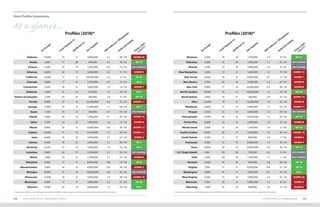
State/Territory Profile Summaries
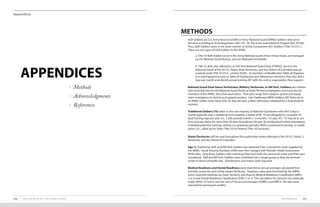
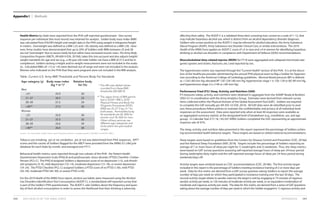
Appendices
4
11
40
45
106
CONTENTS
1
INTRODUCTION 32 2019 HEALTH OF THE ARNG FORCE REPORT
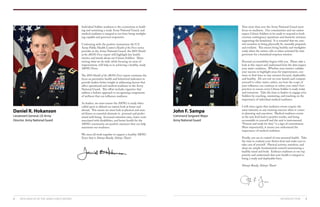
John F. Sampa
Command Sergeant Major
Army National Guard
Now more than ever the Army National Guard must
focus on readiness. Our communities and our nation
expect Citizen Soldiers to be ready to respond to both
overseas contingency operations and domestic missions
supporting the homeland. It is essential that we com-
mit ourselves to being physically fit, mentally prepared,
and resilient. This means being healthy and warfighter
ready when the nation calls or when activated by state
governors for a homeland response mission.
Personal accountability begins with you. Please take a
look at this report and understand how the data impact
your state’s readiness. Whether your metrics validate
your success or highlight areas for improvement, con-
tinue to find ways to stay mission-focused, deployable,
and healthy. Do not rest on your laurels and compare
yourself to other states; rather, see how the scope of
your influence can continue to refine your state’s best
practices to ensure every Citizen Soldier is ready today
and tomorrow. Take the time as leaders to engage your
Soldiers by coaching, mentoring, and teaching on the
importance of individual medical readiness.
I will stress again that readiness events require the
same intensity as any training exercise when it comes
to planning and execution. Medical readiness events
at the unit level lead to positive results, and being
accountable to yourself and the unit is instrumental.
“Present and ready for duty” is a sign of commitment.
More importantly, it means you understand the
importance of medical readiness.
Finally, you are in control of your personal health. Take
the time to evaluate your fitness level and make sure to
take care of yourself. Physical activity, nutrition, and
sleep are simple fundamentals toward maintaining a
healthy mind and body. Embrace readiness as our top
priority and understand that your health is integral to
being a ready and deployable force.
Always Ready, Always There!
Daniel R. Hokanson
Lieutenant General, US Army
Director, Army National Guard
Individual Soldier readiness is the cornerstone to build-
ing and sustaining a ready Army National Guard, and
medical readiness is integral to our force being warfight-
ing-capable and governor-responsive.
Continuing with the positive momentum the U.S.
Army Public Health Center’s Health of the Force series
provides to the Army National Guard, the 2019 Health
of the ARNG Force report will highlight key health
metrics and trends about our Citizen Soldiers. Main-
taining what we do well, while focusing on areas of
improvement, will help us in achieving a healthy, ready
ARNG Force.
The 2019 Health of the ARNG Force report continues the
focus on preventive health and behavioral indicators to
provide leaders better insight in addressing factors that
affect operational and medical readiness in the Army
National Guard. This effort includes vignettes that
address a holistic approach to recognizing components
of wellness that can influence readiness.
As leaders, we must ensure the ARNG is ready when
called upon to defend our nation both at home and
abroad. This means we must look at physical and men-
tal fitness as essential elements to personal and profes-
sional well-being. Increased retention rates, lower costs
associated with disabilities, and better health for the
ARNG community are positive measures that can help
maximize our readiness.
We must all work together to support a healthy ARNG
Force that is Always Ready, Always There!
“
”
INTRODUCTION 54 2019 HEALTH OF THE ARNG FORCE REPORT
The 2019 Health of the U.S. Army
National Guard Force Report
Roles of ARNG Soldiers
ARNG Data Availability
Welcome to the 2019 Health of the U.S. Army National Guard (ARNG) Force report, which presents health surveil-
lance data from fiscal year 2018 (FY18; 01 OCT 17 to 30 SEP 18). Similar to the U.S. Army Active Component
(AC) Health of the Force (HOF) report, this publication describes State, Territory, and area population health
metrics for ARNG Soldiers based on national leading health indicators and military-relevant measures of health
readiness. Soldier readiness has been identified as the U.S. Army’s number one priority, and medical readiness
is a key component of readiness for both the AC and ARNG. The HOF aims to report on current Soldier health
and offers suggestions/resources for how Soldier readiness could be improved by understanding the impact of
select health factors. 
The Citizen Soldiers of the ARNG face numerous health challenges, some of which are distinct from those of
the AC population. Due to the unique roles in which ARNG Soldiers serve, and their limited time spent in uni-
form (thus limiting their access to TRICARE coverage), the majority of ARNG Soldiers have more in common
with civilian populations than with their AC counterparts.
The majority of ARNG members (84%) are Traditional Soldiers (TS), i.e., those who are obligated to complete
39 total training days per year (2 drill days/month x 12 months + 15 days annual training (AT)). TS are, on aver-
age, younger than Active Guard Reserve (AGR) Soldiers or National Guard dual-status technicians (Military
Technicians, known as Mil Techs) and must manage the demands of civilian careers and educational pursuits
while fulfilling their annual ARNG duties. While TS enjoy educational benefits and monetary compensation
based on their 39 total training days, their service in the ARNG does not include the benefit of access to either
TRICARE or state-sponsored health insurance.
The professional backbone of the ARNG force is comprised of AGR Soldiers who serve full-time, in the same
manner as AC Soldiers, according to Army Regulation (AR) 135–18 (DA, 2019a). There are two types of AGR
Soldiers:  
· Title 10 AGR Soldiers serve in the Army National Guard of the United States, which is managed by the
National Guard Bureau, and are deployable worldwide. 	  
· Title 32 AGR Soldiers (Full Time National Guard Duty, FTNGD) serve in the National Guard units of the
50 U.S. States, 3 Territories, and the District of Columbia (referred to as “State/Territory” throughout this
report) and are deployable within them. 
In addition to their full-time jobs, AGR Soldiers must complete the standard 39 total training days per year with
the unit or organization they support, as required of TS. Like their AC counterparts, AGR Soldiers are covered
by TRICARE PRIME health insurance. 
ARNG Mil Techs are civilians who work full-time for the National Guard as State employees, providing conti-
nuity and expertise in specialized military occupations. Though employed full-time by the State, Mil Techs must
also complete the standard 39 training days per year required of ARNG TS (unless otherwise mobilized for a
State/Federal mission). As full-time employees of their respective States, ARNG Mil Techs have the benefit of
access to state-sponsored health insurance plans.
The data sources used to describe AC Soldiers’ health and readiness status are not generally applicable to ARNG
Soldiers, as no unified collection system of individual medical data currently exists. The 2019 Health of the ARNG
Force report relies on administrative data collected and maintained independently by the ARNG Bureau and
on self-reported information collected through the Department of Defense (DOD) Periodic Health Assessment
(PHA). (DOD, 2016) during each Soldier’s annual medical exam. Available data describe ARNG Soldiers in
terms of their roles as AGR/Mil Techs or Traditional Soldiers. The AGR and Mil Techs groups were combined
for analysis and reporting as members of both groups are employed full-time, year-round; fulfill similar ARNG
roles/duties; and have similar access to continuous health insurance (TRICARE or state-sponsored health insur-
ance) provided by the ARNG or State. Differences in Soldier age distribution between TS and AGR/Mil Techs
are important to consider when assessing differences in the health status and healthcare needs/services of these
two populations. It may not be appropriate to make direct comparisons between the health status and outcomes
reported here and those reported for AC Soldiers. 
This Health of the ARNG Force edition describes ongoing efforts by the ARNG to improve the health and read-
iness of ARNG Soldiers at the organization and State levels. The data described in this report, coupled with
information from ongoing health promotion efforts, create a valuable tool with which leaders at all levels can pin-
point challenges and identify possible solutions. It is hoped that the 2019 Health of the ARNG Force may facilitate
informed decisions that ultimately improve the readiness and health of ARNG Soldiers, Civilians, and Families.
With all the changes nearly four centuries have
brought with them, what has made the National
Guard great remains the same—that’s our people.
—LTG Daniel R. Hokanson
Director, U.S. Army National Guard
INTRODUCTION 76 2019 HEALTH OF THE ARNG FORCE REPORT
DEMOGRAPHICS
Age
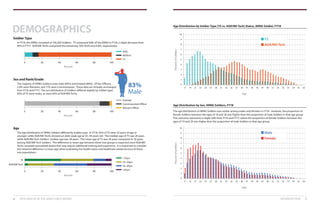
The age distribution of ARNG Soldiers differed by Soldier type. In FY18, 42% of TS were 25 years of age or
younger, while AGR/Mil Techs showed an older peak age at 35–44 years old. The median age of TS was 26 years
while AGR/Mil Tech Soldiers’ median age was 38 years. The mean age of TS was 29 years compared to 39 years
among AGR/Mil Tech Soldiers. The difference in mean age between these two groups is expected since AGR/Mil
Techs complete specialized duties that may require additional training and experience. It is important to consider
this inherent difference in mean age when evaluating the health status and healthcare needs/services of these
two populations.
0 20 40 60 100
0 20 40 60
80
80 100
<25yrs
25–34yrs
35–44yrs
≥45yrs
Soldier Type
In FY18, the ARNG consisted of 335,204 Soldiers. TS comprised 84% of the ARNG in FY18, a slight decrease from
85% in FY17. AGR/Mil Techs comprised the remaining 16% (9.0% and 6.8%, respectively).
0 20 40 60 100
0 20 40 60 100
0 20 40 60
80
80
80 100
AGR
MilTech
TS
TS
AGR/Mil Tech
0
17 19 21 23 25 27 29 31 33 35 37 39 41 43 45 47 49 51 53 55 57 59 61 63
1
2
3
5
7
9
4
6
8
10
TS
AGR/Mil Tech
0
17 19 21 23 25 27 29 31 33 35 37 39 41 43 45 47 49 51 53 55 57 59 61 63
1
2
3
5
7
9
4
6
8
10
Male
Female
Age Distribution by Soldier Type (TS vs. AGR/Mil Tech) Status, ARNG Soldier, FY18
Age Distribution by Sex, ARNG Soldiers, FY18
Age
Percent
Percent
Percent
Age
PercentofSoldiersPercentofSoldiers
The age distribution of ARNG Soldiers was similar among males and females in FY18. However, the proportion of
female Soldiers between the ages of 18 and 26 was higher than the proportion of male Soldiers in that age group.
This outcome represents a slight shift from FY16 and FY17, where the proportion of female Soldiers between the
ages of 19 and 29 was higher than the proportion of male Soldiers in that age group.
Sex and Rank/Grade
The majority of ARNG Soldiers were male (83%) and Enlisted (86%). Of the Officers,
2.6% were Warrants, and 11% were Commissioned. These data are virtually unchanged
from FY16 and FY17. The sex distribution of Soldiers differed slightly by Soldier type:
82% of TS were males, as were 83% of AGR/Mil Techs.
0 20 40 60 100
0 20 40 60 100
0 20 40 60
80
80
80 100
Enlisted
Commissioned Officer
Warrant Officer
83%
Male
INTRODUCTION 98 2019 HEALTH OF THE ARNG FORCE REPORT
Education Level
Educational attainment can serve as an
important proxy measure for socioeconomic
status, which directly influences overall
health. The ARNG offers education benefits
and incentives to its Soldiers to further their
professional development and enable them
to better complete their ARNG missions. In
FY18, 58% of ARNG Soldiers had earned a
high school diploma or equivalent as their
highest level of education, while 40% of
ARNG Soldiers had pursued post-secondary
education.
Race/Ethnicity
In FY18, the racial/ethnic composition of the ARNG force was primarily White (79%) followed by Black (16%), Asian
(4.0%), American Indian (1.1%), and Other (0.3%). Additionally, most ARNG Soldiers (90%) self-identified as Non-
Hispanic.
Percent
Percent
Race/Ethnicity Distribution, ARNG Soldiers, FY18
DEMOGRAPHICS (cont.)
HEALTH METRICS
0
20
40
100
60
80
10
90
Non-
Hispanic
Hispanic
0
20
40
100
60
80
78.5
4.0
16.1
1.1 0.3
White Black Asian American
Indian
Other
Percent
Educational Attainment, ARNG Soldiers, FY18
FY18 SUMMARY STATISTICS
Dental Readiness
Of ARNG Soldiers, 93% were dentally ready or partially
dentally ready for deployment (Dental Readiness Classifi-
cation (DRC) 1 or 2).
Hearing (Significant Threshold Shift)
In FY18, 6.1% of ARNG Soldiers experienced a new
hearing injury.
Behavioral Health
Among TS, 3.8% endorsed symptoms consistent with
depression, and 5.1% endorsed symptoms of posttrau-
matic stress disorder (PTSD). Among AGR/Mil Tech
Soldiers, 4.1% endorsed symptoms consistent with
depression, and 6.7% endorsed symptoms consistent
with PTSD.
Drug Use
In FY18, 1.8% of ARNG Soldiers tested positive for illegal
drug use.
Tobacco Use
Among TS, 13% smoked tobacco, and 13% used smoke-
less tobacco; among AGR/Mil Tech Soldiers, 13% smoked
tobacco, and 15% used smokeless tobacco.
Obesity and Overweight
In FY18, 26% and 48% of male ARNG Soldiers were
obese and overweight, respectively, while 13% and 39%
of female ARNG Soldiers were obese and overweight,
respectively. Among TS, 24% were classified as obese
and 47% were overweight. Among AGR/Mil Tech
Soldiers, 32% were classified as obese, and 53% were
overweight.
Flagged for Weight
Of ARNG Soldiers, 4.9% were flagged for weight in FY18.
Army Physical Fitness Test (APFT) Failure
Of ARNG Soldiers, 13% failed the APFT in FY18.
When possible, HOF metrics are reported in terms of ARNG Soldier type (AGR/Mil Tech or TS).
Data by Soldier type were not available for all metrics in this report.
Medical Readiness
Of ARNG Soldiers, 87% were medically ready for deploy-
ment within 72 hours (Medical Readiness Classification
(MRC) 1 or 2).
FY18 SUMMARY STATISTICS (cont.)
Hazardous Alcohol Use
Among TS, 5.8% were classified as exhibiting hazardous
levels of alcohol use, while 5.2% of AGR/Mil Techs were
classified as exhibiting hazardous levels of alcohol use.
Hypertension
Hypertension was diagnosed in 6.0% of ARNG Soldiers in
FY18. Of these diagnoses, 4.6% were among TS, and 13%
were among AGR/Mil Tech Soldiers.
Performance Triad
Sleep
Among ARNG Soldiers, 49% reported getting 7 or
more hours of sleep per night on weeknights, and
76% achieved this target on weekends.
	 Activity
Among ARNG Soldiers, 76% reported engaging
in 2 or more days of resistance training per week,
and 84% achieved adequate moderate and/or
vigorous aerobic activity each week.
	 Nutrition
Among ARNG Soldiers, 35% reported eating two
or more servings of fruit per day, and 46% report-
ed eating two or more servings of vegetables per
day.
ARNG Health Index Scores
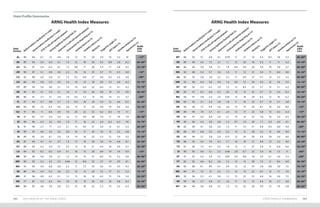
Health metrics included in this report were compiled into
a weighted ARNG Health Index Score that summarizes
and ranks the overall health of ARNG Soldiers in each
State/Territory. While health indices provide a measure of
health that helps identify populations that could benefit
from health prevention measures, aggregate indices may
hide some of the driving factors and social determinants
of health. Healthcare decision- and policy-makers must
further review individual measures that comprise the
index in order to identify and effectively target key out-
comes or behaviors that are the most significant health
and readiness detractors for each State/Territory.
0
20
40
100
60
80
2.8
19.1
57.5
15.6
5.0
Less than
HS Diploma
HS Diploma/
Equivalent
Some College Baccalaureate
Degree
Advanced
Degree
The Chief Surgeon of the U.S. ARNG has identi-
fied medical readiness as the leading public health
priority for the ARNG. Presented in this report are
data on overall Soldier medical readiness, as well as
metrics on Force health factors and outcomes that
can directly impact Soldier medical readiness. This
report seeks to serve as a tool for ARNG leaders at
all levels to identify and track some of the underly-
ing factors and conditions impacting Soldier health
and readiness. Once armed with this actionable
knowledge, ARNG leaders can create interven-
tion programs, policies, and procedures to improve
individual Soldier health and the readiness of the
overall Force to ensure success of the current and
future dual mission of the ARNG.
Overview
INTRODUCTION 11
2019 Health of the ARNG
Force Metrics:
• Medical and Dental Readiness
• Hearing
• Behavioral Health
• Drug Use and Testing
• Hazardous Alcohol Use
• Tobacco Use
• Obesity and Overweight
• Flagged for Weight
• APFT Failure
• Hypertension
HEALTH METRICS
Medical readiness is a key part of the overall Soldier readiness priority for both the AC and the ARNG.
To enable commanders to manage their forces, each Soldier is assigned an MRC. Soldiers classified in
MRC1 or MRC2 status are medically ready and deployable. Soldiers in MRC3 status are not medically
ready to deploy. Soldiers classified in MRC4 status have either missed or are overdue for a mandatory
medical exam and thus are not medically ready to deploy.  
Dental readiness is a vital part of Soldier overall medical readiness. Soldiers that are classified as DRC1
or DRC2 are dentally ready and immediately deployable. Soldiers with a DRC3 or DRC4 classification
are not dentally ready to deploy. DRC3 status is assigned due to a dental condition that requires urgent or
emergent treatment. A DRC4 classification is assigned to Soldiers delinquent or overdue for their annual
dental exam. 
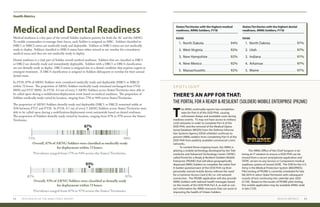
In FY18, 87% of ARNG Soldiers were considered medically ready and deployable (MRC1 or MRC2)
within 72 hours. The proportion of ARNG Soldiers medically ready remained unchanged from FY16
(86%) and FY17 (86%). In FY18, 4.4 out of every 5 ARNG Soldiers across States/Territories were able to
be called upon during a mobilization/deployment event based on medical readiness. The proportion of
Soldiers medically ready varied by location, ranging from 77% to 94% across States/Territories.  
The proportion of ARNG Soldiers dentally ready and deployable (DRC1 or DRC2) remained stable at
93% between FY17 and FY18. In FY18, 4.7 out of every 5 ARNG Soldiers across States/Territories were
able to be called upon during a mobilization/deployment event nationwide based on dental readiness.
The proportion of Soldiers dentally ready varied by location, ranging from 87% to 97% across the States/
Territories.
1. North Dakota	 94%
2. West Virginia	92%
3. New Hampshire	92%
4. New Mexico	92%
5. Massachusetts	92%
1. North Dakota	 97%
2. Utah	97%
3. Indiana	97%
4. Arkansas	97%
5. Maine	97%
Health Metrics
Medical and Dental Readiness
Overall, 93% of ARNG Soldiers were classified as dentally ready
for deployment within 72 hours.
Prevalence ranged from 87% to 97% across the States/Territories.
Overall, 87% of ARNG Soldiers were classified as medically ready
for deployment within 72 hours.
Prevalence ranged from 77% to 94% across the States/Territories.
93%
87% 97%
87%
77% 94%
HEALTH METRICS 1312 2019 HEALTH OF THE ARNG FORCE REPORT
States/Territories with the highest medical
readiness, ARNG Soldiers, FY18
States/Territories with the highest dental
readiness, ARNG Soldiers, FY18
RANK RANK
THERE’S AN APP FOR THAT:
THE PORTAL FOR A READY & RESILIENT (SOLDIER) MOBILE ENTERPRISE (PR2ME)
S P O T L I G H T
T
he ARNG continually reports low completion
rates for Part A of the DOD PHA, causing
unforeseen delays and avoidable costs during
readiness events. TS may not have access to military
(.mil) networks in order to complete Part A of the
DOD PHA, and the removal of the Medical Opera-
tional Database (MODS) from the Defense Informa-
tion Systems Agency (DISA) whitelist continues to
prevent ARNG soldiers from completing Part A of the
DOD PHA from publicly available commercial (.com)
networks.
	 To combat these ongoing issues, the ARNG is
piloting a mobile technology developed by the Tele-
medicine and Advanced Technology Center (TATRC)
called Portal for a Ready & Resilient (Soldier) Mobile
Enterprise (PR2ME) that will allow geographically
dispersed ARNG Soldiers to complete the entire Part
A Soldier questionnaire of the DOD PHA via their
personally-owned mobile device without the need
for a Common Access Card (CAC) or .mil network
connection. The PR2ME application will also provide
ARNG Soldiers with tailored health messages based
on the results of the DOD PHA Part A, as well as con-
tact information for ARNG resources that can assist in
improving the health of Citizen Soldiers.
	 The ARNG Office of the Chief Surgeon is tai-
loring an IT solution to ensure a DOD PHA can be
moved from a secure smartphone application and
TATRC servers to any Service or Component medical
readiness system of record (SOR). The SOR for the U.S.
Army is the Medical Protection System (MEDPROS).
Pilot testing of PR2ME is currently scheduled for late
fall 2019 in select State/Territories with subsequent
rounds of test continuing into calendar year 2020
(CY20). Based on the results of PR2ME pilot testing,
this mobile application may be available ARNG-wide
in late CY20.
Hearing
Hearing is an important requirement for Soldier performance, as it affects both survivability and lethality
and is essential in all Soldier environments. Good hearing preserves situational awareness for critical
communication abilities and improves communication responses, crucial to success on the battle-
field. Critical communication abilities include acoustic stealth, detection, localization, and identification
tasks. Hearing Readiness (HR) is an essential component of medical readiness and is monitored via the
MEDPROS through information from the Defense Occupational and Environmental Health Readiness
System - Hearing Conservation (DOEHRS-HC) surveillance hearing test data. DOEHRS-HC is the
tri-Service surveillance hearing test SOR. The DOEHRS-HC supports prevention of significant hear-
ing loss through early detection of changes in hearing due to exposure to hazardous noise or ototoxic
chemicals. The Army Hearing Program (AHP) is a hearing loss prevention program that incorporates
noise hazard identification, engineering controls, monitoring audiometry, hearing protection use, hearing
health education, and command enforcement.
Health Metrics
Overall, 6.1% of ARNG Soldiers experienced a new case of Significant Threshold
Shift (STS), or decreased hearing.
Prevalence ranged from 2.4% to 12% across the States and Territories.
6.1%
2.4% 12%
1. North Dakota	 92%
2. Utah	92%
3. Alaska	90%
4. Idaho	88%
5. Maine	87%
States/Territories with the Highest Rate of
Hearing Readiness, ARNG Soldiers, FY18
RANK
Percent New Cases Positive STS, ARNG Soldiers, FY14–18
Percent Positive STS Follow-up Hearing Test Compliance,
ARNG Soldiers, FY14–18
Prevalence of Hearing Profiles, ARNG Soldiers, FY14–18
Prevalence of Hearing Readiness Classifications,
ARNG Soldiers, FY17–18
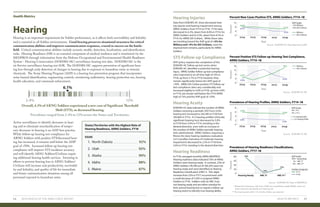
Data from DOEHRS-HC show decreased hear-
ing injuries and hearing impairment among
ARNG Soldiers from FY14 to FY18. FY18 rates
decreased to 6.3%, down from 8.0% in FY14, for
ARNG Soldiers and to 4.3%, down from 8.1% in
FY14, for ARNG DA Civilians. While these rates
are trending toward the AHP goal of <3% for
Military and <4% for DA Civilians, room for
improvement remains, particularly for ARNG
Soldiers.
AHP policy requires the completion of the
DOEHRS-HC follow-up test series when
DOEHRS-HC identifies a potential hearing
injury. ARNG Soldier follow-up test compliance
rates improved to an all-time high of 15% in
FY18, up from 5.7% in FY14; however, they
remain significantly below the AHP goal of
>70%. ARNG DA Civilian positive STS follow-up
test compliance rates vary considerably and
increased slightly to 4.9% in FY18, up from 4.0%
in FY14, yet remain well below the FY16 ARNG
high of 13% and the AHP goal of >70%.
DOEHRS-HC data indicate the number of ARNG
Soldiers receiving a periodic (DD Form 2216)
hearing test increased to 242,189 in FY18 from
183,864 in FY14. H-2 hearing profiles (clinically
significant hearing loss) decreased to 5.0%
in FY18 from 5.9% in FY14, trending in the
desired direction, even with an increase in
the number of ARNG Soldier periodic hearing
tests administered. ARNG Soldiers requiring a
fitness-for-duty hearing readiness evaluation
(≥H-3 profiles indicative of moderate hearing
impairment) decreased to 2.3% in FY18 from
3.0% in FY14, trending in the desired direction.
In FY18, averaged monthly ARNG MEDPROS
Hearing readiness data indicated 75% of ARNG
Soldiers were hearing ready. In contrast, 23% of
ARNG Soldiers (78,198 out of 336,241) were not
hearing ready and were identified as Hearing
Readiness Classification (HRC) 4. This slight
increase from 22% in FY17 occurred even with
a small decrease of 5,593 in assigned ARNG
Soldiers in FY18. Soldiers with an HRC 4 are
not hearing ready and are either overdue for
their annual hearing test or require a follow-up
hearing test(s) to identify true hearing ability.
Hearing Injuries
STS Follow-up Compliance
Hearing Acuity
Hearing Readiness
HEALTH METRICS 1514 2019 HEALTH OF THE ARNG FORCE REPORT
PercentPercentPercentPercent
Year
Year
Year
0
FY14 FY15 FY16 FY17 FY18
8
4
12 AHP Goals:
<3% Military
<4% DA Civilians
Military
DA Civilians
6.3%
8.0%
4.3%
8.1%
0
FY14 FY15 FY16 FY17 FY18
8
4
12
16 Military
DA Civilians
15%
5.7%
4.9%
4.0%
0
FY14 FY15 FY16 FY17 FY18
4
2
6
8 AHP Goals:
3% - H-2
2% ≥ H-3
H-2 Hearing Profiles
≥ H-3 Hearing Profiles
5.0%
5.9%
2.3%
3.0%
0
Hearing Ready HRC 3* HRC 4**
40
60
20
80
FY17
FY18
AHP Goals:
90% - Hearing Ready
1% - HRC 3*
6% - HRC 4**
Soldiers Assigned:
75%
1.8%
23%
Source: DOEHRS-HC Data Repository (DR)
Source: DOEHRS-HC DR
Source: DOEHRS-HC Data in MEDPROS
* Needs full evaluation; DA Form 3349 not completed; needs MAR2; does not 	
meet retention standards w/o hearing aid
** No hearing test within 12 months; follow-up required
Active surveillance to identify decreases in hear-
ing and to eliminate misclassification of tempo-
rary decreases in hearing is an AHP best practice.
While follow-up hearing test compliance for
ARNG Soldiers with positive STS/decreased hear-
ing has increased, it remains well below the AHP
goal of >70%. Increased follow-up hearing test
compliance will improve STS incidence accuracy
and will identify ARNG Soldiers/Civilians requir-
ing additional hearing health services. Investing in
efforts to prevent hearing loss in ARNG Soldiers/
Civilians will increase unit productivity, survivabil-
ity and lethality, and quality of life for immediate
and future communication situations among all
personnel exposed to hazardous noise.
BEST RANKING STATES/TERRITORIES
States/Territories are not rank-ordered for behavioral health conditions because higher
percentages of Soldiers endorsing symptoms of behavioral health disorders may, in fact, reflect
lower levels of stigma and higher levels of self-awareness among Soldiers. Identifying behavioral
health concerns early and encouraging Soldiers to seek treatment are priority goals of the
ARNG and lead to better long-term outcomes. Soldiers who do not receive timely treatment for
behavioral health concerns are at risk for negative outcomes and decreased readiness.
Health Metrics
HEALTH METRICS 1716 2019 HEALTH OF THE ARNG FORCE REPORT
Behavioral Health
The cumulative effect of Soldier and Civilian life stressors can be profound on the psychological well-
being and condition of ARNG Soldiers, their Families, and the community at large. As a response to
these cumulative stressors, ARNG Soldiers are at risk of developing behavioral health disorders such as
PTSD, depression, and substance use disorder. The impacts of undiagnosed and untreated behavioral
health disorders among ARNG Soldiers can be extremely detrimental to the Force, potentially resulting
in increased levels of medical boarding and early discharge, and potentially associated with suicidal behav-
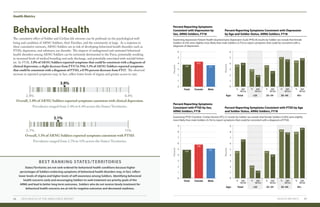
ior. In FY18, 3.8% of ARNG Soldiers reported symptoms that could be consistent with a diagnosis of
clinical depression, a slight decrease from FY17 (4.5%); 5.1% of ARNG Soldiers reported symptoms
that could be consistent with a diagnosis of PTSD, a 0.9% percent decrease from FY17. The observed
increase in reported symptoms may, in fact, reflect lower levels of stigma and greater access to care.
Overall, 3.8% of ARNG Soldiers reported symptoms consistent with clinical depression.
Prevalence ranged from 2.4% to 6.4% across the States/Territories.
Overall, 5.1% of ARNG Soldiers reported symptoms consistent with PTSD.
Prevalence ranged from 2.7% to 11% across the States/Territories.
3.8%
2.4% 6.4%
5.1%
2.7% 11%
0
1
2
4
3
6
5
Female
4.3
Male
3.7
Total
3.8
Percent Reporting Symptoms
Consistent with Depression by
Sex, ARNG Soldiers, FY18
Percent Reporting Symptoms
Consistent with PTSD by Sex,
ARNG Soldiers, FY18
Percent Reporting Symptoms Consistent with Depression
by Age and Soldier Status, ARNG Soldiers, FY18
Percent Reporting Symptoms Consistent with PTSD by Age
and Soldier Status, ARNG Soldiers, FY18
PercentPercent
PercentPercent
0
1
2
3
4
5
Age:
6
TS TS
<25
3.0
2.0
25–34
TS AGR/
MilTech
3.7
2.7
35–44
TS AGR/
MilTech
5.1
4.7
45+
4.5
4.9
Total
TS AGR/
MilTech
AGR/
MilTech
AGR/
MilTech
3.8
4.1
0
1
2
4
3
6
7
8
9
5
Female
5.8
Male
5.1
Total
4.9
0
1
2
3
4
5
Age:
7
8
9
6
TS TS
<25
2.2
1.3
25–34
TS AGR/
MilTech
4.7
4.1
35–44
TS AGR/
MilTech
8.4
7.9
45+
8.0
8.7
Total
TS AGR/
MilTech
AGR/
MilTech
AGR/
MilTech
4.7
6.7
Examining depression Patient Health Questionnaire Depression Scale (PHQ-8) results by Soldier sex reveals that female
Soldiers (4.3%) were slightly more likely than male Soldiers (3.7%) to report symptoms that could be consistent with a
diagnosis of depression.
Examining PTSD Checklist–Civilian Version (PCL-C) results by Soldier sex reveals that female Soldiers (5.8%) were slightly
more likely than male Soldiers (5.1%) to report symptoms that could be consistent with a diagnosis of PTSD.
HEALTH METRICS 1918 2019 HEALTH OF THE ARNG FORCE REPORT
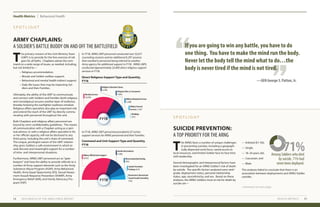
SUICIDE PREVENTION:
A TOP PRIORITY FOR THE ARNG
T
he ARNG faces a number of unique challenges
in preventing suicides, including a geograph-
ically dispersed work force, varied access to
local resources, and limited Soldier face-to-face time
with leadership.
Several demographic and interpersonal factors have
been investigated for an ARNG Soldier’s risk of death
by suicide. The specific factors analyzed were rank/
grade, deployment status, personal relationship
status, age, race/ethnicity, and sex. Based on these
analyses, the ARNG Soldiers most at risk for death by
suicide are—
— Enlisted (E1–E4),
— Single,
— 18–24 years old,
— Caucasian, and
— Male.
The analyses failed to conclude that there is an
association between deployments and ARNG Soldier
suicides.
Among Soldiers who died
by suicide, 71% had
never been deployed.
S P O T L I G H T
“
”
If you are going to win any battle, you have to do
one thing. You have to make the mind run the body.
Never let the body tell the mind what to do…the
body is never tired if the mind is not tired.
—GEN George S. Patton, Jr.
continued on next page...
ARMY CHAPLAINS:
A SOLDIER’S BATTLE BUDDY ON AND OFF THE BATTLEFIELD
S P O T L I G H T
T
he primary mission of the Unit Ministry Team
(UMT) is to provide for the free exercise of reli-
gion for all faiths. Chaplains advise the com-
mand on a wide range of issues, as needed, including,
but not limited to—
	 • Religious accommodation.
	 • Morale and Soldier welfare support.
	 • Behavioral and mental health indirect support.
	 • Daily life issues that may be impacting Sol-	
	 diers and their Families.
Ultimately, the ability of the UMT to communicate
and connect with Soldiers and Families (both religious
and nonreligious) ensures another layer of resilience,
thereby fostering the warfighter readiness mindset.
Religious affairs specialists also play an important role
and extend the reach of the UMT by directly commu-
nicating with personnel throughout the unit.
Both Chaplains and religious affairs personnel are
bound by strict confidentiality guidelines. This means
all communication with a Chaplain acting as a spiri-
tual advisor, or with a religious affairs specialist in his
or her official capacity, will not be disclosed to any
third party, including the unit’s chain of command.
The unique, privileged nature of the UMT relation-
ship gives Soldiers a safe environment in which to
seek discreet and meaningful support for a number
of intra- and interpersonal situations.
Furthermore, ARNG UMT personnel act as “gate-
keepers” and have the ability to provide referrals to a
number of Army support elements such as the Army
Substance Abuse Program (ASAP), Army Behavioral
Health, Army Equal Opportunity (EO), Sexual Harass-
ment Assault Response Prevention (SHARP), Army
Emergency Relief (AER), and Family Advocacy Pro-
gram (FAP).
In FY18, ARNG UMT personnel conducted over 52,017
counseling sessions and an additional 8,297 sessions
that resulted in personnel being referred to another
Army agency for additional support in FY18. ARNG UMTs
conducted approximately 25,000 direct religious support
services in FY18.
In FY18, ARNG UMT personnel provided 8,127 active
support services for ARNG personnel and their Families.
Direct Religious Support Type and Quantity,
FY18
Command and Unit Support Type and Quantity,
FY18
FY18
Worship Services
(16,939)
Military Official Event Support
(4,932)
Religious Rites or Sacraments
(1,865)
Religious Education Classes
(3,240)
Military Memorial Services
(1,288)
Military Funeral
Services (1,181)
Weddings
(314)
FY18
Health Metrics Behavioral Health
Suicide Interventions
(1,508)
Moral LeadershipTraining
(919)
Restricted or Unrestricted
Sexual Assault Counseling
(154)
Suicide Prevention
Trainings (614)
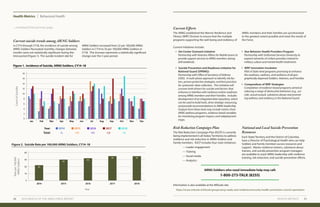
Figure 1. Incidence of Suicide, ARNG Soldiers, CY14–18
HEALTH METRICS 2120 2019 HEALTH OF THE ARNG FORCE REPORT
0
Jan Feb Mar Apr May Jun Jul Aug Sep Oct Nov Dec
2
6
8
16
18
12
4
10
14
Year:
Total:
2016 20172014
76
2015
104 109 120
2018
118
CountofSuicides
Current Initiatives include:
l Vet Center Outreach Initiative
Partnership with Veterans Affairs for Mobile teams to
provide support services to ARNG members during
drill weekends.
l Suicide Prevention and Readiness Initiative for
National Guard (SPRING):
Partnership with Office of Secretary of Defense
(OSD). A multi-phase approach to identify risk fac-
tors, proven protective strategies, and best practices
for systematic data collection. This initiative will
uncover both drivers for suicide and factors that
enhance or interfere with resilience and/or readiness
among ARNG members and their Families. Includes
development of an integrated data repository, which
can be used to build tools, drive strategic resourcing,
and provide recommendations to ARNG leadership.
Outputs from these tools may include metrics from
ARNG wellness programs, evidence-based variables
for monitoring program impact, and redeployment
maps.
Risk Reduction Campaign Plan
The Risk Reduction Campaign Plan (R2CP) is currently
being implemented in all States/Territories to address
resilience and risk reduction in ARNG Soldiers and
Family members. R2CP includes four main initiatives:
		 — Leader engagement
		 — Training
		 — Social media
		 — Analytics
Rateper100,000
ARNGSoldiers
Figure 2. Suicide Rate per 100,000 ARNG Soldiers, CY14–18
0
10
20
30
40
2014 2015 2016 2017 2018
22
30
32
35 35
National and Local Suicide Prevention
Resources
Each State/Territory and the District of Columbia
have a Director of Psychological Health who can help
Soldiers and Family members access resources and
support. Master resilience trainers, substance abuse
trainers, and suicide prevention program managers
are available to assist ARNG leadership with resilience
training, risk reduction, and suicide prevention efforts.
ARNG Soldiers who need immediate help may call:
1-800-273-TALK (8255)
Information is also available at the MilSuite site:
https://www.milsuite.mil/book/groups/arng-ready-and-resilientcommunity-health-promotion-council-operations
In CY14 through CY18, the incidence of suicide among
ARNG Soldiers fluctuated monthly; changes between
months were not statistically significant during this
time period (Figure 1). The suicide incident rate for
ARNG Soldiers increased from 22 per 100,000 ARNG
Soldiers in CY14 to 35 per 100,000 ARNG Soldiers in
CY18. This increase represents a statistically significant
change over the 5-year period.
Current suicide trends among ARNG Soldiers
...continued from previous page
Year
l Star Behavior Health Providers Program
Partnership with Uniformed Services University to
expand networks of civilian providers trained in
military culture and mental health treatments
l WRF Innovation Incubator
Pilot of State-level programs promising to enhance
the readiness, wellness, and resilience of all geo-
graphically dispersed Soldiers, Veterans, and Families
l Compendium of WRF Strategies
Compilation of evidence-based programs aimed at
reducing a range of destructive behaviors (e.g., sui-
cide, sexual assault, substance abuse) and promot-
ing wellness and resiliency in the National Guard.
Current Efforts
The ARNG established the Warrior Resilience and
Fitness (WRF) Division to ensure that the multiple
programs supporting the well-being and resiliency of
ARNG members and their Families are synchronized
to the greatest extent possible and meet the needs of
the Force.
Health Metrics Behavioral Health
HEALTH METRICS 23
UNIT RISK INVENTORY
HELPS MITIGATE HIGH-RISK BEHAVIORS
S P O T L I G H T
• Alcohol/drug use
• Command factors
• Stress levels
• Self perceptions
• Relationships
Approximately two-thirds of TS are 29 years of age or
younger, and a majority of these Soldiers fall into a high-
risk behavior age group (18 to 25 years) (DOD, 2014).
High-risk behaviors are destructive and can lead to
decreased Soldier and unit readiness. Unit commanders
can use the Unit Risk Inventory (URI), a 53-item Soldier
questionnaire, to identify and reduce high-risk behaviors
(DOD, 2019c). The URI assesses the following areas:
The Unit Risk Inventory—
• Is an Army-approved Command
Climate Survey.
• Is designed for company-level use.
• Screens for high-risk behaviors and
attitudes that compromise unit
readiness.
• Can be completed in 30 minutes.
• Incurs no cost to installations or
units.
• Safe sex practices
• Child/spouse abuse
• Violence/crimes
• Suicidal indicators
• Financial problems
When a high-risk Soldier is identified, the unit com-
mander is informed immediately and is advised to brief
the Soldier on available resources. Results of the URI
can be used to inform the development of a unit Risk
Mitigation Plan (RMP). The RMP provides proposed unit
education and early interventions using available ARNG,
State, and local resources. Contracted staff support URI
survey administration and analysis and help develop
unit RMPs.
As of FY18, approximately 160,000 ARNG Soldiers had
taken the URI. State leadership is encouraged to utilize
the surveys to identify and promote programs and initia-
tives that mitigate Soldiers’high-risk behaviors.
For information on the URI, or to acquire a state-specific
roll-up report, contact the State’s or Territory’s Alcohol
and Drug Control Officer. For additional information
about the URI, contact the Army G1’s Resilience and Risk
Reduction Branch at usarmy.pentagon.hqda-dcs-g-1.
mbx.urisurvey-acsap@mail.mil.
Installation
Prevention
Team
URI Process
Data Collection
and Analysis
Command
Consultation
Intervention
Delivery
22 2019 HEALTH OF THE ARNG FORCE REPORT
Musculoskeletal duty-related injuries (MDRI) are inju-
ries that occur while ARNG Soldiers are in an active
drilling status. In FY18, approximately 6,900 MDRI
were reported and logged in the Medical Electronic
Data (for) Care History and Readiness Tracking (MED-
CHART) system.
Male Soldiers accounted for 81% of all MDRI; however,
when MDRI rates are examined by sex, female Soldiers
(2,300 per 100,000 Soldiers) have a higher rate of
MDRI than males (2,000 per 100,000 Soldiers). This
point is consistent with the paradigm that females
generally have lower aerobic endurance and muscular
strength—both of which are risk factors for injury—
compared to men. When males and females possess
Top Duty-Related Injuries, ARNG Soldiers, FY18
Percent
MUSCULOSKELETAL DUTY-RELATED INJURIES
similar aerobic endurance and muscular strength, the
injury risk is similar (Anderson et al., 2017).
Sprains can be described as injuries to ligaments or
joints, whereas strains are injuries to tendons or mus-
cles. Sprains and strains accounted for approximately
one-third (36%) of all MDRI among ARNG Soldiers
in FY18, with female Soldiers (37%) experiencing
slightly higher incidence than male Soldiers (36%).
Approximately half of strains and sprains occurred in
the lower extremities, consistent with multiple studies
of military and other physically active populations
(Cowan et al., 1993; Gardner, et al., 1998; Jones et al.,
1993; Jones, Cowan et al., 1993; Jones et al., 1992;
Jones et al., 1989).
S P O T L I G H T
Female
Male
After strains/sprains (36%), the next most common MDRI reported by ARNG Soldiers in FY18 were fractures (14%), pain
(7.3%), tears (4.9%), contusions (3.7%), and concussions (2.7%). The proportions of tears, contusions, and concussions were
similar between males (5.2%, 3.6%, and 2.5%, respectively) and females (3.7%, 4.4%, and 3.6%, respectively). The burden
of fractures differed slightly between males (13%) and females (17%); this difference was not statistically significant. More
information on duty-related injuries can be found in AR 600-8-4 (DA, 2019b).
Injury
Health Metrics Behavioral Health
0
10
20
30
40
37
36
17
13
9.8
6.7
3.7
5.2
4.4 3.6 3.6
2.5
Strains/Sprains Fractures Pain Tears Contusions Concussions
354,067
Samples Tested
Illicit-Positive
Rate
0.0
0.5
1.0
1.5
2.0
2.5
341,157
Samples Tested
365,440
Samples Tested
366,313
Samples Tested
2016 2017
318,533
Samples Tested
201820152014
Health Metrics
HEALTH METRICS 2524 2019 HEALTH OF THE ARNG FORCE REPORT
Drug Use and Testing
The use of illicit drugs and the abuse of alcohol are inconsistent with the military’s standards of conduct
and professionalism and can negatively impact the Army mission. 
Drug testing is an important tool to assist in the identification and prevention of Soldier drug abuse. AR
600–85 (DA, 2016a) provides applicable guidance for drug testing in the ARNG. Unit commanders ran-
domly select and test 10% of their unit each month, or 25% of their unit each quarter, for illicit substances
and alcohol abuse.
Overall, 1.8% of ARNG Soldiers tested positive for illicit drug use.
Prevalence ranged from 0.41% to 4.1% across the States/Territories.
1.8%
0.41% 4.1%
1. North Dakota	 0.41%
2. U.S. Virgin Islands	0.46%
3. Maryland	0.66%
4. Montana	0.70%
5. South Dakota	0.71%
States/Territories with the Lowest Rate of Illicit-
Positive Drug Results, ARNG Soldiers, FY18
RANK
In FY18, the ARNG tested more than 320,000 urine specimens for drugs; 1.8% of ARNG Soldiers tested
positive for illicit drugs. For comparison, the Army AC illicit-positive drug rate was 1.1%. ARNG Sol-
diers not on Active Status accounted for the majority of illicit-positive results (99%). The percentage of
ARNG Soldiers who tested positive for illicit drugs varied by State/Territory and ranged from 0.41%–
4.1%.
Illicit-Positive Rate, ARNG Soldiers, CY14–18
Percent
Percent Illicit-Positive Results by Drug, ARNG Soldiers, FY18
0 10 20 30 40 50 60 70 80 90 100
THC
Cocaine
d-Amphetamine
d-Methamphetamine
Oxycodone
Benzodiazepines
Hydrocodone
Other*
84%
10%
5.9%
3.0%
1.8%
1.5%
1.0%
0.8%
*Other=Heroin, Codeine, Designer Amphetamine, Morphine, Synthetic Cannabinoids, Steroids
Prevention Resources
The ARNG has increased its drug prevention and test-
ing efforts to reduce illicit-positive rates. The ARNG
conducts a 2-hour annual Army Sustance Abuse Program
(ASAP) training for TS and a 4-hour annual ASAP train-
ing for full-time members. Each State/Territory ASAP
makes a list of resources and points of contact available to
ARNG Soldiers. Each State/Territory and many indi-
vidual counties have unique levels of resources available
for ARNG Soldier access. The ARNG has also expanded
testing and prevention training in Recruit Sustainment
Program units to reduce drug use in the high-risk age
group of 18–25 years.
Treatment Challenges
TS who test positive for illicit substances during ARNG
drug tests are required to undergo a substance abuse
assessment and are referred to a State provider. Soldiers
who require counseling or treatment must participate at
their own expense unless the State/Territory has available
resources. Full-time AGR or long-term Active Duty for
Operational Support (ADOS) Soldiers in the ARNG have
TRICARE insurance and may seek an assessment and
any required treatment services through their assigned
providers. Full-time ARNG members living within driv-
ing distance of an Army medical treatment facilities with
a substance abuse program may access that program.
Percent
Use the following behavioral health treatment facilities locator for help with substance abuse/
addiction and/or mental health: https://www.findtreatment.samhsa.gov/.mil.
Soldiers who need help with a substance abuse problem should contact their local ASAP office.
Tetrahydrocannabinol (THC), the main psychoactive ingredient in marijuana, continues to be the most frequently detected
illicit drug in ARNG Soldiers, accounting for 84% of all illicit-positive results.
Health Metrics
26 2019 HEALTH OF THE ARNG FORCE REPORT
Hazardous alcohol use precedes both short- and long-term adverse alcohol-related outcomes. Short-term
outcomes include driving under the influence (DUI) charges, sexual contact that increases risk of sexually
transmitted infections and unintended/unwanted pregnancy, increased violence, and increased injuries.
Long-term hazardous alcohol use can lead to increased risk of high blood pressure, heart disease, stroke,
liver disease, and digestive problems; increased risk of certain cancers; behavioral health problems; and
social problems, including lost productivity, family problems, and unemployment.
For the 2019 Health of the ARNG Force report, alcohol use habits were measured using the Alcohol Use
Disorders Identification Test-Consumption (AUDIT-C), a standardized self-reported survey that is part of
the Soldier’s PHA questionnaire. The AUDIT-C asks Soldiers about the frequency and quantity of their
alcohol consumption in order to assess the likelihood that their drinking is adversely affecting their safety.
The AUDIT-C is a validated three-item screening tool, scored on a scale of 1–12, that may indicate
hazardous alcohol use, which is distinct from an alcohol dependency disorder diagnosis. Soldiers who
screen positive on the AUDIT-C may be referred for alcohol education, the ASAP, Army Substance Use
Disorder Clinical Care, or similar interventions. An AUDIT-C score of ≥5 in males and ≥4 in females is
considered optimal for identifying hazardous drinking or alcohol use disorders in compliance with DOD
recommendations.
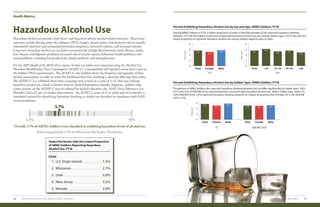
Overall, 5.7% of ARNG Soldiers were classified as exhibiting hazardous levels of alcohol use.
Rates ranged from 1.5% to 16% across the States/Territories.
5.7%
1.5% 16%
1. U.S. Virgin Islands	 1.5%
2. Wisconsin	2.7%
3. Utah	3.0%
4. New Jersey	3.2%
5. Nevada	3.9%
States/Territories with the Lowest Proportion
of ARNG Soldiers Reporting Hazardous
Alcohol Use, FY18
RANK
Hazardous Alcohol Use
Percent Exhibiting Hazardous Alcohol Use by Sex and Age, ARNG Soldiers, FY18
Percent Exhibiting Hazardous Alcohol Use by Soldier Type, ARNG Soldiers, FY18
Among ARNG Soldiers in FY18, a higher proportion of males (5.8%) than females (5.2%) reported hazardous drinking
behavior. In FY18, the highest proportion of reported hazardous alcohol use was among Soldiers ages <25 (6.3%), with the
lowest proportion of reported hazardous alcohol use among Soldiers aged 45 years or older.
The percent of ARNG Soldiers who reported hazardous drinking behavior did not differ significantly by Soldier type: 5.8%
of TS and 5.2% of AGR/Mil Techs reported behavior consistent with hazardous alcohol use. Within Soldier type, males (TS:
5.9%; AGR/Mil Techs: 5.3%) reported hazardous drinking behavior at a higher proportion than Females (TS: 5.2%; AGR/Mil
Techs: 5.1%).
Percent
Percent
AgeSex
Percent
0
2
4
6
10
8
Female
5.2
Male
5.8
Total
5.7
0
2
4
6
Female
5.2
Male
5.9
Total Female MaleTotal
5.8
5.1 5.35.2
TS AGR/MILTECH
HEALTH METRICS 27
0
2
4
6
10
8
<25
6.3
25–34
5.4
35–44
5.7
≥45
5.0
Total
5.7
SMOKINGTOBACCO SMOKELESSTOBACCO
<25 25–34 35–44 ≥45Total
5
0
10
15
<25 25–34 35–44 ≥45Total
5
0
10
15
13
11
13
14
12
13 13
14
13
12
Tobacco Use
Use of tobacco products negatively impacts Soldier readiness by increasing healthcare costs and the inci-
dence of illness, absenteeism, and premature death (DA, 2015).
A more immediate effect of tobacco use on Soldier health and readiness is a demonstrated increased risk
of injury in smokers compared to non-smokers. The relationship between tobacco use and injury may
be due to an individual’s compromised ability to repair damaged tissues. The PHA, completed annually
by Soldiers, contains several self-reported tobacco-related questions (DOD, 2016). Because the PHA is
conducted as part of a physical exam which determines an individual’s ability to deploy, many Soldiers
may not report their tobacco usage to avoid potential negative attention. In addition, nicotine is known
to increase alertness, and some Soldiers believe tobacco use enhances their ability to survive in austere
environments.
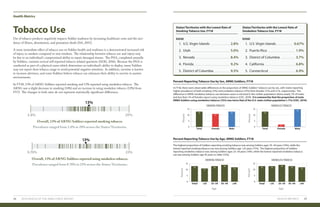
In FY18, 13% of ARNG Soldiers reported smoking and 13% reported using smokeless tobacco. The
ARNG saw a slight decrease in smoking (14%) and an increase in using smokeless tobacco (12%) from
FY17. The changes in both rates do not represent statistically significant differences.
Overall, 13% of ARNG Soldiers reported smoking tobacco.
Prevalence ranged from 2.8% to 20% across the States/Territories.
Overall, 13% of ARNG Soldiers reported using smokeless tobacco.
Prevalence ranged from 0.70% to 23% across the States/Territories.
13%
2.8% 20%
0.70% 23%
13%
Health Metrics
HEALTH METRICS 2928 2019 HEALTH OF THE ARNG FORCE REPORT
1. U.S. Virgin Islands	 2.8%
2. Utah	5.0%
3. Nevada	8.4%
4. Florida	9.2%
5. District of Columbia	9.5%
1. U.S. Virgin Islands	 0.67%
2. Puerto Rico	 1.9%
3. District of Columbia	3.7%
4. California	6.8%
5. Connecticut	6.9%
States/Territories with the Lowest Rate of
Smoking Tobacco Use, FY18
States/Territories with the Lowest Rate of
Smokeless Tobacco Use, FY18
RANK RANK
Percent Reporting Tobacco Use by Sex, ARNG Soldiers, FY18
Percent Reporting Tobacco Use by Age, ARNG Soldiers, FY18
Percent
Percent
Age
Percent
Age
In FY18, there were observable differences in the proportion of ARNG Soldiers’ tobacco use by sex, with males reporting
higher prevalence of both smoking (13%) and smokeless tobacco (15%) than females (11% and 2.1%, respectively). The
difference in ARNG smokeless tobacco use between sexes is mirrored in the civilian population where nearly 7% of males
and less than 1% of females report using smokeless tobacco (CDC, 2019). It is noteworthy that the proportion of male
ARNG Soldiers using smokeless tobacco (15%) was twice that of the U.S. male civilian population (~7%) (CDC, 2019).
The highest proportion of Soldiers reporting smoking tobacco was among Soldiers ages 35–44 years (14%), while the
lowest reported smoking tobacco use was among Soldiers age <25 years (11%). The highest proportion of Soldiers
reporting smokeless tobacco was among Soldiers ages 25–34 years (14%), while the lowest reported smokeless tobacco
use was among Soldiers age 45 years or older (12%).
SMOKELESSTOBACCOSMOKINGTOBACCO
Female MaleTotal
5
0
10
15
Female MaleTotal
5
0
10
15
13
2.1
15
13
11
13
Percent
Health Metrics
HEALTH METRICS 3130 2019 HEALTH OF THE ARNG FORCE REPORT
Obesity and Overweight
Soldier body composition has a direct influence on the health and readiness of the ARNG Force. Body
compositions in the high overweight to obese range can reduce physical functioning and performance,
as well as well as Soldier mental and physical well-being and overall quality of life. As citizen Soldiers,
ARNG members face a unique challenge in balancing their ARNG duties with the function of everyday
civilian life (civilian employment, education, and family life) while still striving to maintain and conform
to ARNG body composition standards.  
The Centers for Disease Control and Prevention (CDC) categorizes Body Mass Index (BMI) into ranges
for normal (less than 25), overweight (at least 25 but less than 30), and obese (30 or above), derived from
the general U.S. adult population, to correlate with risk of chronic disease. However, Army studies have
demonstrated that up to 20% of Soldiers with BMIs between 25 and 28 (classified as low overweight) are
not “overweight” due to excess body fat but rather have increased muscle mass which may be a protective
factor against injury. AR 600-9, The Army Body Composition Program (ABCP) (DA 2019d), takes this into
account and also adjusts height/weight standards for age and sex (e.g., a 40-year old male Soldier can have
a BMI of 27.5 and be in compliance). Adjusted BMI cut points are described in “Flagged for Weight” on
page 34 of this report.
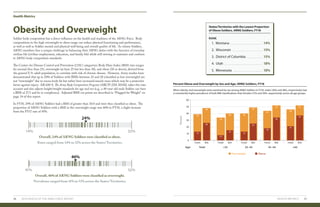
In FY18, 24% of ARNG Soldiers had a BMI of greater than 30.0 and were thus classified as obese. The
proportion of ARNG Soldiers with a BMI in the overweight range was 46% in FY18, a slight increase
from the FY17 rate of 45%.
Overall, 46% of ARNG Soldiers were classified as overweight.
Prevalence ranged from 41% to 52% across the States/Territories.
Overall, 24% of ARNG Soldiers were classified as obese.
Rates ranged from 14% to 32% across the States/Territories.
46%
41% 52%
24%
14% 32%
1. Montana	 14%
2. Wisconsin	15%
3. District of Columbia	15%
4. Utah	18%
5. Minnesota	18%
States/Territories with the Lowest Proportion
of Obese Soldiers, ARNG Soldiers, FY18
RANK
Percent Obese and Overweight by Sex and Age, ARNG Soldiers, FY18
Percent
ObeseOverweight
0
10
30
20
40
50
60
49
25
52
34
52
37
TotalAge:
Female Male Female Male Female Male Female Male Female Male
<25 25–34 35–44 ≥45
34
7.7
40
13
44
18
46
21
39
13
48
26
40
15
When obesity and overweight were examined by sex among ARNG Soldiers in FY18, males (26% and 48%, respectively) had
a consistently higher prevalence of both BMI classifications than females (13% and 39%, respectively) across all age groups.
HEALTH METRICS 33
0
10
20
30
40
50
60
TS AGR/
Mil Tech
<25Age: 25–34 35–44Total
TS AGR/
Mil Tech
TS AGR/
Mil Tech
TS AGR/
Mil Tech
TS AGR/
Mil Tech
≥45
Percent
Weight Status by Age and Soldier Type, Female ARNG Soldiers, FY18
Health Metrics Obesity and Overweight
32 2019 HEALTH OF THE ARNG FORCE REPORT
Percent
Weight Status by Age and Soldier Type, Male ARNG Soldiers, FY18
0
10
20
30
40
50
60
TS AGR/
Mil Tech
<25Age: 25–34 35–44Total
TS AGR/
Mil Tech
TS AGR/
Mil Tech
TS AGR/
Mil Tech
TS AGR/
Mil Tech
≥45
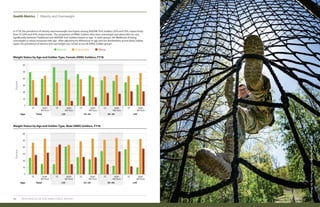
In FY18, the prevalence of obesity and overweight was higher among AGR/Mil Tech Soldiers (32% and 53%, respectively)
than TS (24% and 47%, respectively). The proportion of ARNG Soldiers who were overweight and obese did not vary
significantly between Traditional and AGR/Mil Tech Soldiers based on age. In both groups, the likelihood of being
overweight or obese increased with age. After adjusting for differences in age and sex distributions across these Soldier
types, the prevalence of obesity and overweight was similar across all ARNG Soldier groups.
ObeseNormal Overweight
(U.S.ArmyNationalGuardPhotobyBoWriston)
Health Metrics
HEALTH METRICS 3534 2019 HEALTH OF THE ARNG FORCE REPORT
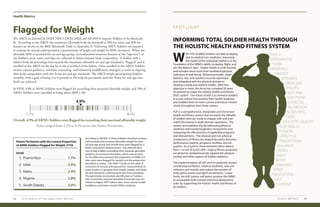
Flagged for Weight
The ABCP, as directed by DODI 1308.3 (DOD, 2002) and AR 600-9, requires Soldiers to be physically
fit. According to the ABCP, the maximum allowable body fat threshold is 26% for males and 36% for
females (as shown in the BMI Thresholds Table in Appendix I). Following APFT, Soldiers are required
to undergo bi-annual anthropometric measurements of height and weight for BMI calculation. When the
allowable BMI is exceeded for sex and age group, circumferential measures (known as the “tape test”) of
the Soldier’s neck, waist, and hips are collected to better estimate body composition. A Soldier with a
relative body fat percentage that exceeds the maximum allowable sex and age standard is “flagged” and is
enrolled in the ABCP on the day he or she is notified of the failure. Once enrolled in the ABCP, Soldiers
receive exercise guidance, nutrition counseling, and behavioral modification strategies to assist in aligning
their body composition with the Army sex and age standards. The ABCP weighs participating Soldiers
monthly, with a goal of losing 3 to 8 pounds or 1% body fat per month until the Army sex and age stan-
dards are achieved. 
In FY18, 4.9% of ARNG Soldiers were flagged for exceeding their maximal allowable weight, and 24% of
ARNG Soldiers were classified as being obese (BMI ≥ 30).
Overall, 4.9% of ARNG Soldiers were flagged for exceeding their maximal allowable weight.
Rates ranged from 1.7% to 8.1% across the States/Territories.
4.9%
1.7% 8.1%
1. Puerto Rico	 1.7%
2. Utah	2.4%
3. Idaho	2.4%
4. Virginia	2.8%
5. South Dakota	3.0%
States/Territories with the Lowest Proportion
of ARNG Soldiers Flagged for Weight, FY18
RANK
According to AR 600–9, those Soldiers classified as obese
had exceeded the maximal allowable weight for their
sex and age group and should have been flagged for a
body composition measurement. The ultimate deci-
sion to flag Soldiers exceeding their maximal allowable
weight is at command discretion, which may account
for the difference between the proportion of ARNG Sol-
diers who were flagged for weight and the proportion
identified as obese. The ABCP is built on the ideal of
consistent bi-annual anthropometric measurements to
assist Soldiers in gauging their height, weight, and body
fat and ultimately conforming to the Army standards.
The potentially inconsistent identification of Soldiers
who exceed the maximal allowable threshold may con-
tribute to higher APFT failure rates, more chronic health
conditions, and lower overall Soldier readiness.
INFORMING TOTAL SOLDIER HEALTH THROUGH
THE HOLISTIC HEALTH AND FITNESS SYSTEM
S P O T L I G H T
W
ith 13% of ARNG Soldiers not able to deploy
due to medical non-readiness, improving
the health of the individual Soldier is at the
foundation of the ARNG’s ability to deploy, flight, and
win the Nation’s wars. Soldier health is multi-faceted
and includes much more than traditional physical
indicators of well-being. Behavioral health, stead-
fastness, rest, and nutrition must be optimized
and integrated with the physical domain to
develop a ready and resilient Soldier. With this
objective in mind, the Army has compiled 30 years
of research to create the Holistic Health and Fitness
(H2F) system. The vision of H2F is to immerse Soldiers
in a new culture that sustains their health readiness
and enables them to meet current and future mission
needs throughout their Army careers.
H2F is a comprehensive, integrated, and immersive
health and fitness system that increases the lethality
of Soldiers who are ready to engage with and over-
match the enemy in multi-domain operations. The
system accomplishes this by addressing physical
readiness and mental toughness components and
measuring the effectiveness of applicable programs
and interventions. The physical and non-physical
components of fitness are shaped by policy, doctrine,
performance experts, programs, facilities, and ed-
ucation. As a system, these elements (often absent
from—or out of synch with—legacy fitness programs)
are aimed to comprehensively support the physical,
mental, and other aspects of Soldier readiness.
The implementation of H2F aims to positively impact
overall physical fitness, medical readiness, and unit
cohesion and morale; and reduce the number of
indiscipline events and ABCP enrollments. Collec-
tively, the H2F system will better position the ARNG
to accomplish both combat and local deployment
tasks by supporting the holistic health and fitness of
its Soldiers.
PEACE
INTEGRATIVE
FOOD
MINERALS
ENERGY
VITAMINS
MEDICINE
FRUITS
NATURAL
EMOTIONS
EXERCISE
NUTRITION
SCIENTIFIC
HOPE
HOLISTIC HEALTH
VEGETABLES
FITNESS
LIFESTYLE
TRADITIONAL
BALANCE
HERBS
MIND
BODY
TRAINING
SPIRIT
PREVENTION
DIET
CHANGE
Health Metrics
HEALTH METRICS 3736 2019 HEALTH OF THE ARNG FORCE REPORT
Army Physical Fitness Test Failures
Physical fitness is one of the cornerstones of military service and Soldier readiness. Soldiers must possess
a high level of physical fitness and endurance in order to perform physically demanding tasks in both
garrison and deployment conditions. ARNG Soldiers face a unique challenge in maintaining and improv-
ing their physical fitness while balancing the demands of everyday civilian life. The APFT is designed to
assess Soldiers’ muscular strength, endurance, and cardiorespiratory fitness. The current APFT assesses
Soldiers performance in three events: 2 minutes of push-ups, 2 minutes of sit-ups, and a 2-mile run. The
APFT is age- and sex-adjusted and is scored within a range of 0 to 100 per event. To pass the APFT, a
minimum score of 60 is required for each event.
In FY18, 13% of ARNG Soldiers failed the APFT, a slight increase from the FY17 rate of 12%. The FY18
APFT failure rates varied by State/Territory, ranging from 5.1% to 19%.
Overall, 13% of ARNG Soldiers failed the Army Physical Fitness Test.
Rates ranged from 5.1% to 19% across the States/Territories.
13%
5.1% 19%
1. Utah	 5.1%
2. Puerto Rico	5.3%
3. Idaho	6.2%
4. Colorado	7.3%
5. South Dakota	7.6%
States/Territories with the Lowest Proportion
of ARNG Soldiers who Failed the APFT, FY18
RANK
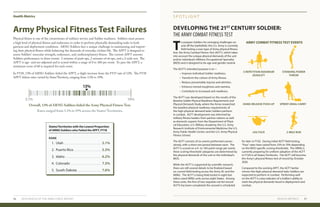
DEVELOPING THE 21ST
CENTURY SOLDIER:
THE ARMY COMBAT FITNESS TEST
S P O T L I G H T
T
o prepare Soldiers for emerging challenges on
and off the battlefield, the U.S. Army is currently
field testing a new type of Army physical fitness
test, the Army Combat Fitness Test (ACFT), which takes
into account the unique physical demands of the unit
and/or individual’s Military Occupational Specialty
(MOS) and is designed to be age and gender neutral.
The ACFT’s intended purpose is to—
	 • Improve individual Soldier readiness.
	 • Transform the culture of Army fitness.
	 • Reduce preventable injuries and attrition.
	 • Enhance mental toughness and stamina.
	 • Contribute to increased unit readiness.
The ACFT was developed based on the results of the
Baseline Soldier Physical Readiness Requirements and
Physical Demands Study, where the Army researched
the baseline physical-readiness requirements of
the high-physical-demand tasks Soldiers perform
in combat. ACFT development was informed by
military fitness leaders from partner nations as well
as domestic experts from the Department of Physi-
cal Education, U.S. Military Academy; the U.S. Army
Research Institute of Environmental Medicine; the U.S.
Army Public Health Center; and the U.S. Army Physical
Fitness School.
The ACFT consists of six events performed consec-
utively, with a short rest period between each. The
ACFT is scored on a 0- to 100-point range per event;
three scoring threshold categories are determined by
the physical demands of the unit or the individual’s
MOS.
While the ACFT is supported by scientific research,
there are still several details to be finalized based
on current field testing across the Army AC and the
ARNG. The ACFT is being field tested in eight bat-
talion-sized ARNG units across eight States. Among
these units, the first of two requisite not-for-record
ACFTs has been completed; the second is scheduled
for later in FY20. During initial ACFT field testing,
“Pass” rates have varied from 23% to 70% depending
on the MOS-specific scoring thresholds. The ARNG is
currently preparing for uniform adoption of the ACFT
in FY20 in all States/Territories. The ACFT will become
the Army’s physical fitness test of record by October
2020.
Compared to the existing APFT, the ACFT better
mirrors the high-physical-demand tasks Soldiers are
expected to perform in combat. Performing well
on the ACFT is a key indicator of a Soldier’s ability to
meet the physical demands faced in deployment and
combat.
ARMY COMBAT FITNESS TEST EVENTS
3-REPETITION MAXIMUM
DEADLIFT
HAND-RELEASE PUSH-UP
LEG TUCK
STANDING POWER
THROW
SPRINT-DRAG-CARRY
2-MILE RUN
Health Metrics
HEALTH METRICS 3938 2019 HEALTH OF THE ARNG FORCE REPORT
Hypertension, or high blood pressure, usually has no warning signs or symptoms. As a result, many
people do not realize they have hypertension until they undergo a blood pressure screening. High blood
pressure can greatly diminish health and increase one’s risk for heart disease, stroke, and premature death.
Several unhealthy behaviors, including tobacco use, eating foods high in sodium and low in potassium,
insufficient physical activity, excessive weight, and excessive alcohol consumption can increase risk for
developing hypertension. Cardiovascular health is a key component of a Soldier’s holistic health and is an
ARNG priority for overall Soldier health and readiness. One area that shows the ARNG’s dedication to
overall cardiovascular health is the APFT. Another is measuring blood pressure—a quick, painless, stan-
dard diagnostic screening that all Soldiers undergo during their annual PHA physical exam. Strategies
for keeping blood pressure levels in a healthy range (<120/<80) usually involve reducing dietary sodium,
engaging in daily physical activity, quitting smoking, and potentially taking medication.
Hypertension
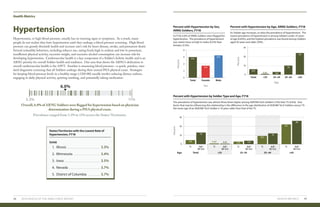
Overall, 6.0% of ARNG Soldiers were flagged for hypertension based on physician
determination during a PHA physical exam.
Prevalence ranged from 3.3% to 11% across the States/Territories.
6.0%
3.3% 11%
Percent with Hypertension by Age, ARNG Soldiers, FY18
Percent
Age
0
10
20
30
<25
0.83
25–34
3.0
35–44
10
≥45
24
Total
6.0
As Soldier age increases, so does the prevalence of hypertension. The
lowest prevalence of hypertension is among Soldiers under 25 years
of age (0.83%), and the highest prevalence was found among Soldiers
aged 45 years and older (24%).
The prevalence of hypertension was almost three times higher among AGR/Mil Tech Soldiers (13%) than TS (4.6%). One
factor that may be influencing this relationship is the difference in the age distribution of AGR/Mil Tech Soldiers versus TS:
the mean age of an AGR/Mil Tech Soldier is 10 years older than that of the TS.
Percent with Hypertension by Sex,
ARNG Soldiers, FY18
Percent
Sex
In FY18, 6.0% of ARNG Soldiers were flagged for
hypertension. The prevalence of hypertension
was nearly twice as high in males (6.5%) than
females (3.5%).
0
2
4
6
8
Female
3.5
Male
6.5
Total
6.0
Percent with Hypertension by Soldier Type and Age, FY18
0
10
20
30
TS AGR/
Mil Tech
<25TotalAge: 25–34 35–44 ≥45
TS AGR/
Mil Tech
TS AGR/
Mil Tech
TS AGR/
Mil Tech
TS AGR/
Mil Tech
0.83 0.65 3.9
9.2
12
4.6
13
22
26
2.9
Percent
1. Illinois	 3.3%
2. Minnesota	3.4%
3. Iowa	3.5%
4. Nevada	3.7%
5. District of Columbia	3.7%
States/Territories with the Lowest Rate of
Hypertension, FY18
RANK
PERFORMANCE TRIAD 4140 2019 HEALTH OF THE ARNG FORCE
Total <25 25–34 35–44 ≥45
0
10
20
50
Percent
30
40
Age
49 49 50 5049 49 47 48 5148
Percent Meeting Weeknight Sleep Target by Sex and Age, ARNG Soldiers, CY18
Percent Meeting Weekend Night Sleep Target by Sex and Age, ARNG Soldiers, CY18
Sleep
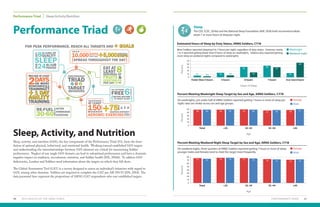
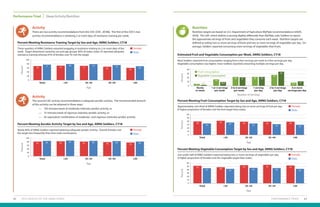
The CDC (CDC, 2018a) and the National Sleep Foundation (NSF, 2018) both recommend adults
attain 7 or more hours of sleep per night.
On weekend nights, three-quarters of ARNG Soldiers reported getting 7 hours or more of sleep;
younger males and females tend to meet the target more frequently.
On weeknights, just under half of ARNG Soldiers reported getting 7 hours or more of sleep per
night; rates are similar across sex and age groups.
Performance Triad
Estimated Hours of Sleep by Duty Status, ARNG Soldiers, CY18
Most Soldiers reported sleeping 6 to 7 hours per night, regardless of duty status. However, nearly
1 in 3 reported getting fewer than 6 hours of sleep on weeknights. Soldiers also reported getting
more sleep on weekend nights compared to weeknights.
Female
Female
Male
Male
Total <25 25–34 35–44 ≥45
0
10
20
50
Percent
30
40
60
70
80
Age
77 78 78 7775 76 74 73 7372
Fewer than 5 hours 5 hours 6 hours 7 hours 8 or more hours
0
10
20
50
Percent
30
40
Hours of Sleep
5.9 15
32
3.0 145.1 13
45
31
36
Weeknight
Weekend night
Sleep, Activity, and Nutrition
Sleep, activity, and nutrition (SAN), the key components of the Performance Triad (P3), form the foun-
dation of optimal physical, behavioral, and emotional health. Working toward established SAN targets
and understanding the interrelationships between SAN elements are critical for maximizing Soldier
performance. Neglect of any single SAN domain can lead to suboptimal performance and have a dramatic
negative impact on readiness, recruitment, retention, and Soldier health (DA, 2016b). To address SAN
deficiencies, Leaders and Soldiers need information about the targets on which they fall short.
The Global Assessment Tool (GAT) is a survey designed to assess an individual’s behaviors with regard to
SAN, among other domains. Soldiers are required to complete the GAT per AR 350-53 (DA, 2014). The
data presented here represent the proportions of ARNG GAT respondents who met established targets.
Performance Triad Sleep/Activity/Nutrition
PERFORMANCE TRIAD 4342 2019 HEALTH OF THE ARNG FORCE
Percent Meeting Fruit Consumption Target by Sex and Age, ARNG Soldiers, CY18
Percent Meeting Vegetable Consumption Target by Sex and Age, ARNG Soldiers, CY18
Performance Triad Sleep/Activity/Nutrition
Activity
There are two activity recommendations from the CDC (CDC, 2018b). The first of the CDC’s two
activity recommendations is attaining 2 or more days of resistance training per week.
Activity
The second CDC activity recommendation is adequate aerobic activity. The recommended amount
of this activity can be attained in three ways:
	 — 150 minutes/week of moderate-intensity aerobic activity, or
	 — 75 minutes/week of vigorous-intensity aerobic activity, or
	 — An equivalent combination of moderate- and vigorous-intensity aerobic activity.
Approximately one-third of ARNG Soldiers reported eating two or more servings of fruit per day.
A higher proportion of females met the fruit target than males.
Just under half of ARNG Soldiers reported eating two or more servings of vegetables per day.
A higher proportion of females met the vegetable target than males.
Total <25 25–34 35–44 ≥45
0
20
Percent
40
60
100
80
Age
70 72
80
71
77 79
67
75
69
61
Percent Meeting Resistance Training Target by Sex and Age, ARNG Soldiers, CY18
Three-quarters of ARNG Soldiers reported engaging in resistance training on 2 or more days of the
week. Target attainment varied by sex and age groups: 80% of males under 25 reported adequate
resistance training whereas 61% of females over 45 met the target.
Total <25 25–34 35–44 ≥45
0
40
Percent
60
80
100
20
Age
81
87
8185 83 86
78 84 8276
Percent Meeting Aerobic Activity Target by Sex and Age, ARNG Soldiers, CY18
Nearly 85% of ARNG Soldiers reported attaining adequate aerobic activity. Overall, females met
the target less frequently than their male counterparts.
Female
Female
Female
Female
Male
Male
Male
Male
Nutrition
Nutrition targets are based on U.S. Department of Agriculture MyPlate recommendations (USDA,
2018). The GAT, which defines a serving slightly differently than MyPlate, asks Soldiers to report
the approximate servings of fruits and vegetables they consume each week. Nutrition targets are
defined as eating two or more servings of fruits and two or more servings of vegetables per day. On
average, Soldiers reported consuming more servings of vegetables than fruits.
Total <25 25–34 35–44 ≥45
0
10
Percent
20
30
60
50
40
Age
40 42
37 39
34 34
39
32 30
39
Total <25 25–34 35–44 ≥45
0
10
Percent
20
30
60
50
40
Age
52
48
43
54
45 46
55
46 43
53
Estimated Fruit and Vegetable Consumption per Week, ARNG Soldiers, CY18
Most Soldiers reported fruit consumption ranging from a few servings per week to a few servings per day.
Vegetable consumption was higher; more Soldiers reported consuming multiple servings per day.
Rarely
or never
1 or 2 servings
per week
3 to 6 servings
per week
1 serving
per day
2 to 3 servings
per day
4 or more
servings per day
0
10
20
40
Percent
30
Number of Servings
5.0
2.4
16
22 22
27
8.09.2
21 22
35
11
Fruit Consumption
Vegetable Consumption
STATE PROFILE SUMMARIES 4544 2019 HEALTH OF THE ARNG FORCE
Performance Triad Sleep/Activity/Nutrition Profile Summaries
1.	Utah
2.	 Rhode Island
3.	 U.S. Virgin Islands
4.	 District of Columbia
5.	California
6.	Nevada
7.	 South Dakota
8.	Wisconsin
9.	Montana
10.	 Puerto Rico
11.	 New Jersey
12.	Colorado
13.	Arizona
14.	Connecticut
15.	Idaho
16.	Ohio
17.	Wyoming
18.	Alaska
19.	Maryland
20.	 New York
21.	Virginia
22.	Florida
23.	Iowa
24.	Pennsylvania
25.	Nebraska
26.	Missouri
27.	Mississippi
28.	Vermont
29.	Delaware
30.	Hawaii
31.	 North Dakota
32.	Maine
33.	Kentucky
34.	 North Carolina
35.	Texas
36.	Massachusetts
37.	 New Hampshire
38.	Minnesota
39.	Illinois
40.	Kansas
41.	 West Virginia
42.	Tennessee
43.	Washington
44.	Indiana
45.	Michigan
46.	 South Carolina
47.	 New Mexico
48.	Georgia
49.	Alabama
50.	Oregon
51.	Arkansas
52.	Oklahoma
53.	Louisiana
54.	Guam
ARNG Health Index Scores take into account measures of Medical Readiness, Dental Readiness,
Hearing Readiness, PTSD, Depression, Illicit Substance Use, Hazardous Alcohol Use, Tobacco
Use,Obesity, APFT Failures, and Hypertension.
ARNG Health Index Ranking
by State and Territory
Percent Meeting SAN Targets, ARNG Soldiers, 2018:
49% attained 7 or more hours of sleep on
weeknights.
76% attained 7 or more hours of sleep on
weekend nights.
76% engaged in resistance training 2 or more
days per week.
84% achieved adequate moderate and/or
vigorous aerobic activity targets.
35% ate 2 or more servings of fruits per day.
46% ate 2 or more servings of vegetables per day.
Profile (2018)*
End-Strength: 10,000 (19% Female) AGR/Mil Tech: 17%
State Population: 4,900,000 (2.1 ARNG Soldiers per 1,000 population)
ARNG Health Index Ranking: 49 / 54
Change in Ranking from FY17:
Profile (2018)*
End-Strength: 1,600 (17% Female) AGR/Mil Tech: 38%
State Population: 740,000 (2.2 ARNG Soldiers per 1,000 population)
ARNG Health Index Ranking: 18 / 54
Change in Ranking from FY17:
Alabama
Army National Guard
Alaska
Army National Guard
Profile Summaries
STATE PROFILE SUMMARIES 4746 2019 HEALTH OF THE ARNG FORCE
ARNG Health Index Score*** <10th percentile ARNG Health Index Score*** 60–69th percentile
ARNG HEALTH INDEX MEASURES** ARNG HEALTH INDEX MEASURES**
PERFORMANCE TRIAD MEASURES PERFORMANCE TRIAD MEASURES
7+ hours of sleep per day (weeknights)
7+ hours of sleep per day (weekends)
2+ days per week of resistance training
150+ minutes per week of aerobic activity (weighted†
)
2+ servings of fruit per day
2+ servings of vegetables per day
7+ hours of sleep per day (weeknights)
7+ hours of sleep per day (weekends)
2+ days per week of resistance training
150+ minutes per week of aerobic activity (weighted†
)
2+ servings of fruit per day
2+ servings of vegetables per day
0 020 2040 4060 6080 80100 100
Percent Percent
Percent Meeting: Percent Meeting:S/T S/T
47% 49%
71% 79%
72% 75%
81% 85%
29% 32%
41% 43%
49% 49%
76% 76%
76% 76%
84% 84%
35% 35%
46% 46%
ARNG ARNG
ARNG
Overall
ARNG
Overall
State/Territory (S/T)
ARNG
State/Territory (S/T)
ARNG
MEASURE VALUE
AVERAGE
ARNG VALUE
ARNG VALUE
RANGE
Medical readiness classification (% ready) 89 88 77–94
Dental readiness classification (% ready) 94 94 87–97
Hearing (% with significant threshold shift) 12 6.1 2.4–12
PTSD (% with self-reported symptoms) 6.1 5.1 2.7–11
Depression (% with self-reported symptoms) 4.4 3.8 2.0–6.4
Tested positive for illegal drug use (%) 1.8 1.8 0.41–4.1
Hazardous alcohol use (%) 5.2 5.7 1.5–16
Smoking tobacco use (%) 13 13 2.8–20
Smokeless tobacco use (%) 15 13 0.7–23
Obesity (%) 24 24 14–32
Flagged for weight (%) 3.4 4.9 1.7–8.1
APFT failure (%) 14 13 5.1–19
Hypertension (%) 10 6.0 3.3–11
MEASURE VALUE
AVERAGE
ARNG VALUE
ARNG VALUE
RANGE
Medical readiness classification (% ready) 89 88 77–94
Dental readiness classification (% ready) 94 94 87–97
Hearing (% with significant threshold shift) 6.4 6.1 2.4–12
PTSD (% with self-reported symptoms) 5.0 5.1 2.7–11
Depression (% with self-reported symptoms) 4.1 3.8 2.0–6.4
Tested positive for illegal drug use (%) 1.4 1.8 0.41–4.1
Hazardous alcohol use (%) 5.0 5.7 1.5–16
Smoking tobacco use (%) 12 13 2.8–20
Smokeless tobacco use (%) 18 13 0.7–23
Obesity (%) 20 24 14–32
Flagged for weight (%) 4.5 4.9 1.7–8.1
APFT failure (%) 8.8 13 5.1–19
Hypertension (%) 8.2 6.0 3.3–11
DOWN 20 UP 17
* Population statistics provide approximations of ARNG Soldiers based on time assigned; refer to Appendix I for details.
** See Appendix I for details regarding measure computations.
***The Health Index Score is a composite of all listed measures in relation to the ARNG averages; percentile ranges represent where a State/Territory ranks
	 (higher percentiles reflect better ranking installations).
† Please see page 42 for a description of the aerobic activity target.
* Population statistics provide approximations of ARNG Soldiers based on time assigned; refer to Appendix I for details.
** See Appendix I for details regarding measure computations.
***The Health Index Score is a composite of all listed measures in relation to the ARNG averages; percentile ranges represent where a State/Territory ranks
	 (higher percentiles reflect better ranking installations).
† Please see page 42 for a description of the aerobic activity target.
Profile Summaries
STATE PROFILE SUMMARIES 4948 2019 HEALTH OF THE ARNG FORCE
Profile (2018)*
End-Strength: 5,200 (19% Female) AGR/Mil Tech: 17%
State Population: 7,200,000 (0.7 ARNG Soldiers per 1,000 population)
ARNG Health Index Ranking: 13 / 54
Change in Ranking from FY17:
Profile (2018)*
End-Strength: 6,600 (16% Female) AGR/Mil Tech: 15%
State Population: 3,000,000 (2.2 ARNG Soldiers per 1,000 population)
ARNG Health Index Ranking: 51 / 54
Change in Ranking from FY17:
Arizona
Army National Guard
Arkansas
Army National Guard
ARNG Health Index Score*** 70–79th percentile ARNG Health Index Score*** <10th percentile
ARNG HEALTH INDEX MEASURES** ARNG HEALTH INDEX MEASURES**
PERFORMANCE TRIAD MEASURES PERFORMANCE TRIAD MEASURES
7+ hours of sleep per day (weeknights)
7+ hours of sleep per day (weekends)
2+ days per week of resistance training
150+ minutes per week of aerobic activity (weighted†
)
2+ servings of fruit per day
2+ servings of vegetables per day
7+ hours of sleep per day (weeknights)
7+ hours of sleep per day (weekends)
2+ days per week of resistance training
150+ minutes per week of aerobic activity (weighted†
)
2+ servings of fruit per day
2+ servings of vegetables per day
0 020 2040 4060 6080 80100 100
Percent Percent
Percent Meeting: Percent Meeting:S/T S/T
48% 50%
76% 76%
78% 76%
87% 85%
34% 33%
46% 46%
ARNG ARNG
ARNG
Overall
ARNG
Overall
State/Territory (S/T)
ARNG
State/Territory (S/T)
ARNG
MEASURE VALUE
AVERAGE
ARNG VALUE
ARNG VALUE
RANGE
Medical readiness classification (% ready) 85 88 77–94
Dental readiness classification (% ready) 91 94 87–97
Hearing (% with significant threshold shift) 6.3 6.1 2.4–12
PTSD (% with self-reported symptoms) 5.4 5.1 2.7–11
Depression (% with self-reported symptoms) 4.1 3.8 2.0–6.4
Tested positive for illegal drug use (%) 1.2 1.8 0.41–4.1
Hazardous alcohol use (%) 5.8 5.7 1.5–16
Smoking tobacco use (%) 9.9 13 2.8–20
Smokeless tobacco use (%) 11 13 0.7–23
Obesity (%) 20 24 14–32
Flagged for weight (%) 3.3 4.9 1.7–8.1
APFT failure (%) 11 13 5.1–19
Hypertension (%) 4.5 6.0 3.3–11
MEASURE VALUE
AVERAGE
ARNG VALUE
ARNG VALUE
RANGE
Medical readiness classification (% ready) 90 88 77–94
Dental readiness classification (% ready) 97 94 87–97
Hearing (% with significant threshold shift) 6.9 6.1 2.4–12
PTSD (% with self-reported symptoms) 5.1 5.1 2.7–11
Depression (% with self-reported symptoms) 4.0 3.8 2.0–6.4
Tested positive for illegal drug use (%) 2.5 1.8 0.41–4.1
Hazardous alcohol use (%) 6.3 5.7 1.5–16
Smoking tobacco use (%) 16 13 2.8–20
Smokeless tobacco use (%) 16 13 0.7–23
Obesity (%) 26 24 14–32
Flagged for weight (%) 5.7 4.9 1.7–8.1
APFT failure (%) 15 13 5.1–19
Hypertension (%) 6.9 6.0 3.3–11
49% 49%
76% 76%
76% 76%
84% 84%
35% 35%
46% 46%
* Population statistics provide approximations of ARNG Soldiers based on time assigned; refer to Appendix I for details.
** See Appendix I for details regarding measure computations.
***The Health Index Score is a composite of all listed measures in relation to the ARNG averages; percentile ranges represent where a State/Territory ranks
	 (higher percentiles reflect better ranking installations).
† Please see page 42 for a description of the aerobic activity target.
* Population statistics provide approximations of ARNG Soldiers based on time assigned; refer to Appendix I for details.
** See Appendix I for details regarding measure computations.
***The Health Index Score is a composite of all listed measures in relation to the ARNG averages; percentile ranges represent where a State/Territory ranks
	 (higher percentiles reflect better ranking installations).
† Please see page 42 for a description of the aerobic activity target.
NO CHANGE DOWN 3
Profile Summaries
STATE PROFILE SUMMARIES 5150 2019 HEALTH OF THE ARNG FORCE
Profile (2018)*
End-Strength: 13,000 (17% Female) AGR/Mil Tech: 17%
State Population: 40,000,000 (0.3 ARNG Soldiers per 1,000 population)
ARNG Health Index Ranking: 5 / 54
Change in Ranking from FY17:
Profile (2018)*
End-Strength: 3,800 (17% Female) AGR/Mil Tech: 21%
State Population: 5,700,000 (0.7 ARNG Soldiers per 1,000 population)
ARNG Health Index Ranking: 12 / 54
Change in Ranking from FY17:
California
Army National Guard
Colorado
Army National Guard
ARNG Health Index Score*** ≥90th percentile ARNG Health Index Score*** 70–79th percentile
ARNG HEALTH INDEX MEASURES** ARNG HEALTH INDEX MEASURES**
MEASURE VALUE
AVERAGE
ARNG VALUE
ARNG VALUE
RANGE
Medical readiness classification (% ready) 82 88 77–94
Dental readiness classification (% ready) 88 94 87–97
Hearing (% with significant threshold shift) 5.8 6.1 2.4–12
PTSD (% with self-reported symptoms) 5.0 5.1 2.7–11
Depression (% with self-reported symptoms) 3.7 3.8 2.0–6.4
Tested positive for illegal drug use (%) 1.5 1.8 0.41–4.1
Hazardous alcohol use (%) 4.2 5.7 1.5–16
Smoking tobacco use (%) 9.5 13 2.8–20
Smokeless tobacco use (%) 6.8 13 0.7–23
Obesity (%) 27 24 14–32
Flagged for weight (%) 4.0 4.9 1.7–8.1
APFT failure (%) 9.2 13 5.1–19
Hypertension (%) 4.9 6.0 3.3–11
MEASURE VALUE
AVERAGE
ARNG VALUE
ARNG VALUE
RANGE
Medical readiness classification (% ready) 86 88 77–94
Dental readiness classification (% ready) 95 94 87–97
Hearing (% with significant threshold shift) 5.5 6.1 2.4–12
PTSD (% with self-reported symptoms) 5.8 5.1 2.7–11
Depression (% with self-reported symptoms) 3.9 3.8 2.0–6.4
Tested positive for illegal drug use (%) 1.4 1.8 0.41–4.1
Hazardous alcohol use (%) 5.0 5.7 1.5–16
Smoking tobacco use (%) 10 13 2.8–20
Smokeless tobacco use (%) 14 13 0.7–23
Obesity (%) 18 24 14–32
Flagged for weight (%) 3.0 4.9 1.7–8.1
APFT failure (%) 7.3 13 5.1–19
Hypertension (%) 6.2 6.0 3.3–11
UP 4
PERFORMANCE TRIAD MEASURES PERFORMANCE TRIAD MEASURES
7+ hours of sleep per day (weeknights)
7+ hours of sleep per day (weekends)
2+ days per week of resistance training
150+ minutes per week of aerobic activity (weighted†
)
2+ servings of fruit per day
2+ servings of vegetables per day
7+ hours of sleep per day (weeknights)
7+ hours of sleep per day (weekends)
2+ days per week of resistance training
150+ minutes per week of aerobic activity (weighted†
)
2+ servings of fruit per day
2+ servings of vegetables per day
0 020 2040 4060 6080 80100 100
Percent Percent
Percent Meeting: Percent Meeting:S/T S/T
46% 52%
75% 80%
78% 80%
86% 86%
37% 38%
49% 51%
ARNG ARNG
ARNG
Overall
ARNG
Overall
State/Territory (S/T)
ARNG
State/Territory (S/T)
ARNG
49% 49%
76% 76%
76% 76%
84% 84%
35% 35%
46% 46%
* Population statistics provide approximations of ARNG Soldiers based on time assigned; refer to Appendix I for details.
** See Appendix I for details regarding measure computations.
***The Health Index Score is a composite of all listed measures in relation to the ARNG averages; percentile ranges represent where a State/Territory ranks
	 (higher percentiles reflect better ranking installations).
† Please see page 42 for a description of the aerobic activity target.
* Population statistics provide approximations of ARNG Soldiers based on time assigned; refer to Appendix I for details.
** See Appendix I for details regarding measure computations.
***The Health Index Score is a composite of all listed measures in relation to the ARNG averages; percentile ranges represent where a State/Territory ranks
	 (higher percentiles reflect better ranking installations).
† Please see page 42 for a description of the aerobic activity target.
UP 37
Profile Summaries
STATE PROFILE SUMMARIES 5352 2019 HEALTH OF THE ARNG FORCE
Profile (2018)*
End-Strength: 3,500 (18% Female) AGR/Mil Tech: 22%
State Population: 3,600,000 (1.0 ARNG Soldiers per 1,000 population)
ARNG Health Index Ranking: 14 / 54
Change in Ranking from FY17:
Profile (2018)*
End-Strength: 1,500 (21% Female) AGR/Mil Tech: 23%
State Population: 970,000 (1.6 ARNG Soldiers per 1,000 population)
ARNG Health Index Ranking: 29 / 54
Change in Ranking from FY17:
Connecticut
Army National Guard
Delaware
Army National Guard
ARNG Health Index Score*** 70–79th percentile ARNG Health Index Score*** 40–49th percentile
ARNG HEALTH INDEX MEASURES** ARNG HEALTH INDEX MEASURES**
MEASURE VALUE
AVERAGE
ARNG VALUE
ARNG VALUE
RANGE
Medical readiness classification (% ready) 89 88 77–94
Dental readiness classification (% ready) 94 94 87–97
Hearing (% with significant threshold shift) 4.0 6.1 2.4–12
PTSD (% with self-reported symptoms) 5.0 5.1 2.7–11
Depression (% with self-reported symptoms) 3.1 3.8 2.0–6.4
Tested positive for illegal drug use (%) 1.3 1.8 0.41–4.1
Hazardous alcohol use (%) 4.1 5.7 1.5–16
Smoking tobacco use (%) 10 13 2.8–20
Smokeless tobacco use (%) 6.9 13 0.7–23
Obesity (%) 22 24 14–32
Flagged for weight (%) 6.4 4.9 1.7–8.1
APFT failure (%) 12 13 5.1–19
Hypertension (%) 4.2 6.0 3.3–11
MEASURE VALUE
AVERAGE
ARNG VALUE
ARNG VALUE
RANGE
Medical readiness classification (% ready) 90 88 77–94
Dental readiness classification (% ready) 95 94 87–97
Hearing (% with significant threshold shift) 5.4 6.1 2.4–12
PTSD (% with self-reported symptoms) 4.1 5.1 2.7–11
Depression (% with self-reported symptoms) 3.1 3.8 2.0–6.4
Tested positive for illegal drug use (%) 1.6 1.8 0.41–4.1
Hazardous alcohol use (%) 4.1 5.7 1.5–16
Smoking tobacco use (%) 11 13 2.8–20
Smokeless tobacco use (%) 7.6 13 0.7–23
Obesity (%) 26 24 14–32
Flagged for weight (%) 4.8 4.9 1.7–8.1
APFT failure (%) 14 13 5.1–19
Hypertension (%) 9.9 6.0 3.3–11
PERFORMANCE TRIAD MEASURES PERFORMANCE TRIAD MEASURES
7+ hours of sleep per day (weeknights)
7+ hours of sleep per day (weekends)
2+ days per week of resistance training
150+ minutes per week of aerobic activity (weighted†
)
2+ servings of fruit per day
2+ servings of vegetables per day
7+ hours of sleep per day (weeknights)
7+ hours of sleep per day (weekends)
2+ days per week of resistance training
150+ minutes per week of aerobic activity (weighted†
)
2+ servings of fruit per day
2+ servings of vegetables per day
0 020 2040 4060 6080 80100 100
Percent Percent
Percent Meeting: Percent Meeting:S/T S/T
53% 52%
77% 76%
76% 76%
83% 82%
35% 35%
45% 43%
ARNG ARNG
ARNG
Overall
ARNG
Overall
State/Territory (S/T)
ARNG
State/Territory (S/T)
ARNG
49% 49%
76% 76%
76% 76%
84% 84%
35% 35%
46% 46%
* Population statistics provide approximations of ARNG Soldiers based on time assigned; refer to Appendix I for details.
** See Appendix I for details regarding measure computations.
***The Health Index Score is a composite of all listed measures in relation to the ARNG averages; percentile ranges represent where a State/Territory ranks
	 (higher percentiles reflect better ranking installations).
† Please see page 42 for a description of the aerobic activity target.
* Population statistics provide approximations of ARNG Soldiers based on time assigned; refer to Appendix I for details.
** See Appendix I for details regarding measure computations.
***The Health Index Score is a composite of all listed measures in relation to the ARNG averages; percentile ranges represent where a State/Territory ranks
	 (higher percentiles reflect better ranking installations).
† Please see page 42 for a description of the aerobic activity target.
DOWN 7 UP 3
Profile Summaries
STATE PROFILE SUMMARIES 5554 2019 HEALTH OF THE ARNG FORCE
Profile (2018)*
End-Strength: 1,300 (29% Female) AGR/Mil Tech: 22%
State Population: 700,000 (1.8 ARNG Soldiers per 1,000 population)
ARNG Health Index Ranking: 4 / 54
Change in Ranking from FY17:
Profile (2018)*
End-Strength: 9,300 (17% Female) AGR/Mil Tech: 15%
State Population: 21,000,000 (0.4 ARNG Soldiers per 1,000 population)
ARNG Health Index Ranking: 22 / 54
Change in Ranking from FY17:
District of Columbia
Army National Guard
Florida
Army National Guard
ARNG Health Index Score*** ≥90th percentile ARNG Health Index Score*** 50–59th percentile
ARNG HEALTH INDEX MEASURES** ARNG HEALTH INDEX MEASURES**
MEASURE VALUE
AVERAGE
ARNG VALUE
ARNG VALUE
RANGE
Medical readiness classification (% ready) 86 88 77–94
Dental readiness classification (% ready) 91 94 87–97
Hearing (% with significant threshold shift) 5.1 6.1 2.4–12
PTSD (% with self-reported symptoms) 3.7 5.1 2.7–11
Depression (% with self-reported symptoms) 2.8 3.8 2.0–6.4
Tested positive for illegal drug use (%) 1.4 1.8 0.41–4.1
Hazardous alcohol use (%) 5.1 5.7 1.5–16
Smoking tobacco use (%) 9.5 13 2.8–20
Smokeless tobacco use (%) 3.7 13 0.7–23
Obesity (%) 15 24 14–32
Flagged for weight (%) 4.0 4.9 1.7–8.1
APFT failure (%) 14 13 5.1–19
Hypertension (%) 3.7 6.0 3.3–11
MEASURE VALUE
AVERAGE
ARNG VALUE
ARNG VALUE
RANGE
Medical readiness classification (% ready) 87 88 77–94
Dental readiness classification (% ready) 94 94 87–97
Hearing (% with significant threshold shift) 9.8 6.1 2.4–12
PTSD (% with self-reported symptoms) 4.7 5.1 2.7–11
Depression (% with self-reported symptoms) 3.7 3.8 2.0–6.4
Tested positive for illegal drug use (%) 1.3 1.8 0.41–4.1
Hazardous alcohol use (%) 4.6 5.7 1.5–16
Smoking tobacco use (%) 9.2 13 2.8–20
Smokeless tobacco use (%) 10 13 0.7–23
Obesity (%) 24 24 14–32
Flagged for weight (%) 3.4 4.9 1.7–8.1
APFT failure (%) 12 13 5.1–19
Hypertension (%) 6.5 6.0 3.3–11
UP 19
PERFORMANCE TRIAD MEASURES PERFORMANCE TRIAD MEASURES
7+ hours of sleep per day (weeknights)
7+ hours of sleep per day (weekends)
2+ days per week of resistance training
150+ minutes per week of aerobic activity (weighted†
)
2+ servings of fruit per day
2+ servings of vegetables per day
7+ hours of sleep per day (weeknights)
7+ hours of sleep per day (weekends)
2+ days per week of resistance training
150+ minutes per week of aerobic activity (weighted†
)
2+ servings of fruit per day
2+ servings of vegetables per day
0 020 2040 4060 6080 80100 100
Percent Percent
Percent Meeting: Percent Meeting:S/T S/T
45% 50%
73% 74%
75% 79%
81% 86%
38% 36%
51% 48%
ARNG ARNG
ARNG
Overall
ARNG
Overall
State/Territory (S/T)
ARNG
State/Territory (S/T)
ARNG
49% 49%
76% 76%
76% 76%
84% 84%
35% 35%
46% 46%
* Population statistics provide approximations of ARNG Soldiers based on time assigned; refer to Appendix I for details.
** See Appendix I for details regarding measure computations.
***The Health Index Score is a composite of all listed measures in relation to the ARNG averages; percentile ranges represent where a State/Territory ranks
	 (higher percentiles reflect better ranking installations).
† Please see page 42 for a description of the aerobic activity target.
* Population statistics provide approximations of ARNG Soldiers based on time assigned; refer to Appendix I for details.
** See Appendix I for details regarding measure computations.
***The Health Index Score is a composite of all listed measures in relation to the ARNG averages; percentile ranges represent where a State/Territory ranks
	 (higher percentiles reflect better ranking installations).
† Please see page 42 for a description of the aerobic activity target.
DOWN 11
Profile Summaries
STATE PROFILE SUMMARIES 5756 2019 HEALTH OF THE ARNG FORCE
Profile (2018)*
End-Strength: 11,000 (23% Female) AGR/Mil Tech: 12%
State Population: 11,000,000 (1.1 ARNG Soldiers per 1,000 population)
ARNG Health Index Ranking: 48 / 54
Change in Ranking from FY17:
Profile (2018)*
End-Strength: 1,100 (19% Female) AGR/Mil Tech: 21%
State Population: 160,000 (6.7 ARNG Soldiers per 1,000 population)
ARNG Health Index Ranking: 54 / 54
Change in Ranking from FY17:
Georgia
Army National Guard
Guam
Army National Guard
ARNG Health Index Score*** 10–19th percentile ARNG Health Index Score*** <10th percentile
ARNG HEALTH INDEX MEASURES** ARNG HEALTH INDEX MEASURES**
MEASURE VALUE
AVERAGE
ARNG VALUE
ARNG VALUE
RANGE
Medical readiness classification (% ready) 84 88 77–94
Dental readiness classification (% ready) 90 94 87–97
Hearing (% with significant threshold shift) 6.5 6.1 2.4–12
PTSD (% with self-reported symptoms) 7.2 5.1 2.7–11
Depression (% with self-reported symptoms) 5.6 3.8 2.0–6.4
Tested positive for illegal drug use (%) 2.6 1.8 0.41–4.1
Hazardous alcohol use (%) 6.4 5.7 1.5–16
Smoking tobacco use (%) 13 13 2.8–20
Smokeless tobacco use (%) 12 13 0.7–23
Obesity (%) 24 24 14–32
Flagged for weight (%) 4.0 4.9 1.7–8.1
APFT failure (%) 14 13 5.1–19
Hypertension (%) 6.9 6.0 3.3–11
MEASURE VALUE
AVERAGE
ARNG VALUE
ARNG VALUE
RANGE
Medical readiness classification (% ready) 91 88 77–94
Dental readiness classification (% ready) 96 94 87–97
Hearing (% with significant threshold shift) 8.4 6.1 2.4–12
PTSD (% with self-reported symptoms) 11 5.1 2.7–11
Depression (% with self-reported symptoms) 5.9 3.8 2.0–6.4
Tested positive for illegal drug use (%) 1.0 1.8 0.41–4.1
Hazardous alcohol use (%) 16 5.7 1.5–16
Smoking tobacco use (%) 20 13 2.8–20
Smokeless tobacco use (%) 22 13 0.7–23
Obesity (%) 32 24 14–32
Flagged for weight (%) 4.2 4.9 1.7–8.1
APFT failure (%) 8.5 13 5.1–19
Hypertension (%) 7.1 6.0 3.3–11
PERFORMANCE TRIAD MEASURES PERFORMANCE TRIAD MEASURES
7+ hours of sleep per day (weeknights)
7+ hours of sleep per day (weekends)
2+ days per week of resistance training
150+ minutes per week of aerobic activity (weighted†
)
2+ servings of fruit per day
2+ servings of vegetables per day
7+ hours of sleep per day (weeknights)
7+ hours of sleep per day (weekends)
2+ days per week of resistance training
150+ minutes per week of aerobic activity (weighted†
)
2+ servings of fruit per day
2+ servings of vegetables per day
0 020 2040 4060 6080 80100 100
Percent Percent
Percent Meeting: Percent Meeting:S/T S/T
44% 29%
72% 57%
76% 79%
84% 88%
37% 30%
48% 40%
ARNG ARNG
ARNG
Overall
ARNG
Overall
State/Territory (S/T)
ARNG
State/Territory (S/T)
ARNG
49% 49%
76% 76%
76% 76%
84% 84%
35% 35%
46% 46%
* Population statistics provide approximations of ARNG Soldiers based on time assigned; refer to Appendix I for details.
** See Appendix I for details regarding measure computations.
***The Health Index Score is a composite of all listed measures in relation to the ARNG averages; percentile ranges represent where a State/Territory ranks
	 (higher percentiles reflect better ranking installations).
† Please see page 42 for a description of the aerobic activity target.
* Population statistics provide approximations of ARNG Soldiers based on time assigned; refer to Appendix I for details.
** See Appendix I for details regarding measure computations.
***The Health Index Score is a composite of all listed measures in relation to the ARNG averages; percentile ranges represent where a State/Territory ranks
	 (higher percentiles reflect better ranking installations).
† Please see page 42 for a description of the aerobic activity target.
UP 1 NO CHANGE
Profile Summaries
STATE PROFILE SUMMARIES 5958 2019 HEALTH OF THE ARNG FORCE
Profile (2018)*
End-Strength: 3,000 (18% Female) AGR/Mil Tech: 16%
State Population: 1,400,000 (2.1 ARNG Soldiers per 1,000 population)
ARNG Health Index Ranking: 30 / 54
Change in Ranking from FY17:
Profile (2018)*
End-Strength: 3,100 (14% Female) AGR/Mil Tech: 27%
State Population: 1,800,000 (1.8 ARNG Soldiers per 1,000 population)
ARNG Health Index Ranking: 15 / 54
Change in Ranking from FY17:
Hawaii
Army National Guard
Idaho
Army National Guard
ARNG Health Index Score*** 40–49th percentile ARNG Health Index Score*** 70–79th percentile
ARNG HEALTH INDEX MEASURES** ARNG HEALTH INDEX MEASURES**
MEASURE VALUE
AVERAGE
ARNG VALUE
ARNG VALUE
RANGE
Medical readiness classification (% ready) 91 88 77–94
Dental readiness classification (% ready) 95 94 87–97
Hearing (% with significant threshold shift) 5.4 6.1 2.4–12
PTSD (% with self-reported symptoms) 3.7 5.1 2.7–11
Depression (% with self-reported symptoms) 3.4 3.8 2.0–6.4
Tested positive for illegal drug use (%) 1.6 1.8 0.41–4.1
Hazardous alcohol use (%) 7.9 5.7 1.5–16
Smoking tobacco use (%) 12 13 2.8–20
Smokeless tobacco use (%) 9.4 13 0.7–23
Obesity (%) 28 24 14–32
Flagged for weight (%) 3.4 4.9 1.7–8.1
APFT failure (%) 11 13 5.1–19
Hypertension (%) 7.4 6.0 3.3–11
MEASURE VALUE
AVERAGE
ARNG VALUE
ARNG VALUE
RANGE
Medical readiness classification (% ready) 89 88 77–94
Dental readiness classification (% ready) 96 94 87–97
Hearing (% with significant threshold shift)) 3.0 6.1 2.4–12
PTSD (% with self-reported symptoms) 5.3 5.1 2.7–11
Depression (% with self-reported symptoms) 4.0 3.8 2.0–6.4
Tested positive for illegal drug use (%) 1.4 1.8 0.41–4.1
Hazardous alcohol use (%) 6.3 5.7 1.5–16
Smoking tobacco use (%) 11 13 2.8–20
Smokeless tobacco use (%) 16 13 0.7–23
Obesity (%) 22 24 14–32
Flagged for weight (%) 2.4 4.9 1.7–8.1
APFT failure (%) 6.2 13 5.1–19
Hypertension (%) 7.0 6.0 3.3–11
DOWN 6
PERFORMANCE TRIAD MEASURES PERFORMANCE TRIAD MEASURES
7+ hours of sleep per day (weeknights)
7+ hours of sleep per day (weekends)
2+ days per week of resistance training
150+ minutes per week of aerobic activity (weighted†
)
2+ servings of fruit per day
2+ servings of vegetables per day
7+ hours of sleep per day (weeknights)
7+ hours of sleep per day (weekends)
2+ days per week of resistance training
150+ minutes per week of aerobic activity (weighted†
)
2+ servings of fruit per day
2+ servings of vegetables per day
0 020 2040 4060 6080 80100 100
Percent Percent
Percent Meeting: Percent Meeting:S/T S/T
41% 47%
70% 78%
76% 76%
83% 86%
30% 29%
41% 45%
ARNG ARNG
ARNG
Overall
ARNG
Overall
State/Territory (S/T)
ARNG
State/Territory (S/T)
ARNG
49% 49%
76% 76%
76% 76%
84% 84%
35% 35%
46% 46%
* Population statistics provide approximations of ARNG Soldiers based on time assigned; refer to Appendix I for details.
** See Appendix I for details regarding measure computations.
***The Health Index Score is a composite of all listed measures in relation to the ARNG averages; percentile ranges represent where a State/Territory ranks
	 (higher percentiles reflect better ranking installations).
† Please see page 42 for a description of the aerobic activity target.
* Population statistics provide approximations of ARNG Soldiers based on time assigned; refer to Appendix I for details.
** See Appendix I for details regarding measure computations.
***The Health Index Score is a composite of all listed measures in relation to the ARNG averages; percentile ranges represent where a State/Territory ranks
	 (higher percentiles reflect better ranking installations).
† Please see page 42 for a description of the aerobic activity target.
DOWN 16
Profile Summaries
STATE PROFILE SUMMARIES 6160 2019 HEALTH OF THE ARNG FORCE
Profile (2018)*
End-Strength: 9,900 (20% Female) AGR/Mil Tech: 12%
State Population: 13,000,000 (0.8 ARNG Soldiers per 1,000 population)
ARNG Health Index Ranking: 39 / 54
Change in Ranking from FY17:
Profile (2018)*
End-Strength: 12,000 (17% Female) AGR/Mil Tech: 13%
State Population: 6,700,000 (1.7 ARNG Soldiers per 1,000 population)
ARNG Health Index Ranking: 44 / 54
Change in Ranking from FY17:
Illinois
Army National Guard
Indiana
Army National Guard
ARNG Health Index Score*** 20–29th percentile ARNG Health Index Score*** 10–19th percentile
ARNG HEALTH INDEX MEASURES** ARNG HEALTH INDEX MEASURES**
MEASURE VALUE
AVERAGE
ARNG VALUE
ARNG VALUE
RANGE
Medical readiness classification (% ready) 91 88 77–94
Dental readiness classification (% ready) 96 94 87–97
Hearing (% with significant threshold shift) 11 6.1 2.4–12
PTSD (% with self-reported symptoms) 2.7 5.1 2.7–11
Depression (% with self-reported symptoms) 2.3 3.8 2.0–6.4
Tested positive for illegal drug use (%) 2.1 1.8 0.41–4.1
Hazardous alcohol use (%) 6.1 5.7 1.5–16
Smoking tobacco use (%) 13 13 2.8–20
Smokeless tobacco use (%) 9.4 13 0.7–23
Obesity (%) 21 24 14–32
Flagged for weight (%) 3.4 4.9 1.7–8.1
APFT failure (%) 12 13 5.1–19
Hypertension (%) 3.3 6.0 3.3–11
MEASURE VALUE
AVERAGE
ARNG VALUE
ARNG VALUE
RANGE
Medical readiness classification (% ready) 89 88 77–94
Dental readiness classification (% ready) 97 94 87–97
Hearing (% with significant threshold shift) 3.4 6.1 2.4–12
PTSD (% with self-reported symptoms) 4.0 5.1 2.7–11
Depression (% with self-reported symptoms) 3.5 3.8 2.0–6.4
Tested positive for illegal drug use (%) 3.8 1.8 0.41–4.1
Hazardous alcohol use (%) 5.5 5.7 1.5–16
Smoking tobacco use (%) 16 13 2.8–20
Smokeless tobacco use (%) 17 13 0.7–23
Obesity (%) 24 24 14–32
Flagged for weight (%) 7.6 4.9 1.7–8.1
APFT failure (%) 15 13 5.1–19
Hypertension (%) 4.8 6.0 3.3–11
DOWN 13 DOWN 11
PERFORMANCE TRIAD MEASURES PERFORMANCE TRIAD MEASURES
7+ hours of sleep per day (weeknights)
7+ hours of sleep per day (weekends)
2+ days per week of resistance training
150+ minutes per week of aerobic activity (weighted†
)
2+ servings of fruit per day
2+ servings of vegetables per day
7+ hours of sleep per day (weeknights)
7+ hours of sleep per day (weekends)
2+ days per week of resistance training
150+ minutes per week of aerobic activity (weighted†
)
2+ servings of fruit per day
2+ servings of vegetables per day
0 020 2040 4060 6080 80100 100
Percent Percent
Percent Meeting: Percent Meeting:S/T S/T
51% 49%
77% 77%
78% 75%
85% 86%
37% 37%
46% 47%
ARNG ARNG
ARNG
Overall
ARNG
Overall
State/Territory (S/T)
ARNG
State/Territory (S/T)
ARNG
49% 49%
76% 76%
76% 76%
84% 84%
35% 35%
46% 46%
* Population statistics provide approximations of ARNG Soldiers based on time assigned; refer to Appendix I for details.
** See Appendix I for details regarding measure computations.
***The Health Index Score is a composite of all listed measures in relation to the ARNG averages; percentile ranges represent where a State/Territory ranks
	 (higher percentiles reflect better ranking installations).
† Please see page 42 for a description of the aerobic activity target.
* Population statistics provide approximations of ARNG Soldiers based on time assigned; refer to Appendix I for details.
** See Appendix I for details regarding measure computations.
***The Health Index Score is a composite of all listed measures in relation to the ARNG averages; percentile ranges represent where a State/Territory ranks
	 (higher percentiles reflect better ranking installations).
† Please see page 42 for a description of the aerobic activity target.
Profile Summaries
STATE PROFILE SUMMARIES 6362 2019 HEALTH OF THE ARNG FORCE
Profile (2018)*
End-Strength: 6,600 (16% Female) AGR/Mil Tech: 16%
State Population: 3,200,000 (2.1 ARNG Soldiers per 1,000 population)
ARNG Health Index Ranking: 23 / 54
Change in Ranking from FY17:
Profile (2018)*
End-Strength: 4,300 (15% Female) AGR/Mil Tech: 21%
State Population: 2,900,000 (1.5 ARNG Soldiers per 1,000 population)
ARNG Health Index Ranking: 40 / 54
Change in Ranking from FY17:
Iowa
Army National Guard
Kansas
Army National Guard
ARNG Health Index Score*** 50–59th percentile ARNG Health Index Score*** 20–29th percentile
ARNG HEALTH INDEX MEASURES** ARNG HEALTH INDEX MEASURES**
MEASURE VALUE
AVERAGE
ARNG VALUE
ARNG VALUE
RANGE
Medical readiness classification (% ready) 89 88 77–94
Dental readiness classification (% ready) 95 94 87–97
Hearing (% with significant threshold shift) 6.1 6.1 2.4–12
PTSD (% with self-reported symptoms) 3.4 5.1 2.7–11
Depression (% with self-reported symptoms) 2.4 3.8 2.0–6.4
Tested positive for illegal drug use (%) 1.4 1.8 0.41–4.1
Hazardous alcohol use (%) 5.9 5.7 1.5–16
Smoking tobacco use (%) 14 13 2.8–20
Smokeless tobacco use (%) 18 13 0.7–23
Obesity (%) 22 24 14–32
Flagged for weight (%) 5.3 4.9 1.7–8.1
APFT failure (%) 12 13 5.1–19
Hypertension (%) 3.5 6.0 3.3–11
MEASURE VALUE
AVERAGE
ARNG VALUE
ARNG VALUE
RANGE
Medical readiness classification (% ready) 87 88 77–94
Dental readiness classification (% ready) 94 94 87–97
Hearing (% with significant threshold shift) 4.1 6.1 2.4–12
PTSD (% with self-reported symptoms) 4.7 5.1 2.7–11
Depression (% with self-reported symptoms) 3.7 3.8 2.0–6.4
Tested positive for illegal drug use (%) 1.3 1.8 0.41–4.1
Hazardous alcohol use (%) 6.8 5.7 1.5–16
Smoking tobacco use (%) 17 13 2.8–20
Smokeless tobacco use (%) 19 13 0.7–23
Obesity (%) 30 24 14–32
Flagged for weight (%) 7.8 4.9 1.7–8.1
APFT failure (%) 14 13 5.1–19
Hypertension (%) 8.1 6.0 3.3–11
DOWN 4
PERFORMANCE TRIAD MEASURES PERFORMANCE TRIAD MEASURES
7+ hours of sleep per day (weeknights)
7+ hours of sleep per day (weekends)
2+ days per week of resistance training
150+ minutes per week of aerobic activity (weighted†
)
2+ servings of fruit per day
2+ servings of vegetables per day
7+ hours of sleep per day (weeknights)
7+ hours of sleep per day (weekends)
2+ days per week of resistance training
150+ minutes per week of aerobic activity (weighted†
)
2+ servings of fruit per day
2+ servings of vegetables per day
0 020 2040 4060 6080 80100 100
Percent Percent
Percent Meeting: Percent Meeting:S/T S/T
53% 46%
78% 73%
74% 73%
85% 82%
34% 29%
43% 43%
ARNG ARNG
ARNG
Overall
ARNG
Overall
State/Territory (S/T)
ARNG
State/Territory (S/T)
ARNG
49% 49%
76% 76%
76% 76%
84% 84%
35% 35%
46% 46%
* Population statistics provide approximations of ARNG Soldiers based on time assigned; refer to Appendix I for details.
** See Appendix I for details regarding measure computations.
***The Health Index Score is a composite of all listed measures in relation to the ARNG averages; percentile ranges represent where a State/Territory ranks
	 (higher percentiles reflect better ranking installations).
† Please see page 42 for a description of the aerobic activity target.
* Population statistics provide approximations of ARNG Soldiers based on time assigned; refer to Appendix I for details.
** See Appendix I for details regarding measure computations.
***The Health Index Score is a composite of all listed measures in relation to the ARNG averages; percentile ranges represent where a State/Territory ranks
	 (higher percentiles reflect better ranking installations).
† Please see page 42 for a description of the aerobic activity target.
UP 3
Profile Summaries
STATE PROFILE SUMMARIES 6564 2019 HEALTH OF THE ARNG FORCE
Profile (2018)*
End-Strength: 6,500 (13% Female) AGR/Mil Tech: 16%
State Population: 4,500,000 (1.4 ARNG Soldiers per 1,000 population)
ARNG Health Index Ranking: 33 / 54
Change in Ranking from FY17:
Profile (2018)*
End-Strength: 9,800 (22% Female) AGR/Mil Tech: 15%
State Population: 4,700,000 (2.1 ARNG Soldiers per 1,000 population)
ARNG Health Index Ranking: 53 / 54
Change in Ranking from FY17:
Kentucky
Army National Guard
Louisiana
Army National Guard
ARNG Health Index Score*** 30–39th percentile ARNG Health Index Score*** <10th percentile
ARNG HEALTH INDEX MEASURES** ARNG HEALTH INDEX MEASURES**
MEASURE VALUE
AVERAGE
ARNG VALUE
ARNG VALUE
RANGE
Medical readiness classification (% ready) 88 88 77–94
Dental readiness classification (% ready) 94 94 87–97
Hearing (% with significant threshold shift) 5.4 6.1 2.4–12
PTSD (% with self-reported symptoms) 4.2 5.1 2.7–11
Depression (% with self-reported symptoms) 3.1 3.8 2.0–6.4
Tested positive for illegal drug use (%) 2.0 1.8 0.41–4.1
Hazardous alcohol use (%) 4.9 5.7 1.5–16
Smoking tobacco use (%) 13 13 2.8–20
Smokeless tobacco use (%) 19 13 0.7–23
Obesity (%) 21 24 14–32
Flagged for weight (%) 4.4 4.9 1.7–8.1
APFT failure (%) 16 13 5.1–19
Hypertension (%) 5.7 6.0 3.3–11
MEASURE VALUE
AVERAGE
ARNG VALUE
ARNG VALUE
RANGE
Medical readiness classification (% ready) 84 88 77–94
Dental readiness classification (% ready) 92 94 87–97
Hearing (% with significant threshold shift) 8.5 6.1 2.4–12
PTSD (% with self-reported symptoms) 8.2 5.1 2.7–11
Depression (% with self-reported symptoms) 6.4 3.8 2.0–6.4
Tested positive for illegal drug use (%) 4.1 1.8 0.41–4.1
Hazardous alcohol use (%) 7.4 5.7 1.5–16
Smoking tobacco use (%) 18 13 2.8–20
Smokeless tobacco use (%) 13 13 0.7–23
Obesity (%) 26 24 14–32
Flagged for weight (%) 4.9 4.9 1.7–8.1
APFT failure (%) 19 13 5.1–19
Hypertension (%) 6.9 6.0 3.3–11
UP 4
PERFORMANCE TRIAD MEASURES PERFORMANCE TRIAD MEASURES
7+ hours of sleep per day (weeknights)
7+ hours of sleep per day (weekends)
2+ days per week of resistance training
150+ minutes per week of aerobic activity (weighted†
)
2+ servings of fruit per day
2+ servings of vegetables per day
7+ hours of sleep per day (weeknights)
7+ hours of sleep per day (weekends)
2+ days per week of resistance training
150+ minutes per week of aerobic activity (weighted†
)
2+ servings of fruit per day
2+ servings of vegetables per day
0 020 2040 4060 6080 80100 100
Percent Percent
Percent Meeting: Percent Meeting:S/T S/T
48% 45%
74% 72%
76% 72%
85% 85%
34% 34%
46% 45%
ARNG ARNG
ARNG
Overall
ARNG
Overall
State/Territory (S/T)
ARNG
State/Territory (S/T)
ARNG
49% 49%
76% 76%
76% 76%
84% 84%
35% 35%
46% 46%
* Population statistics provide approximations of ARNG Soldiers based on time assigned; refer to Appendix I for details.
** See Appendix I for details regarding measure computations.
***The Health Index Score is a composite of all listed measures in relation to the ARNG averages; percentile ranges represent where a State/Territory ranks
	 (higher percentiles reflect better ranking installations).
† Please see page 42 for a description of the aerobic activity target.
* Population statistics provide approximations of ARNG Soldiers based on time assigned; refer to Appendix I for details.
** See Appendix I for details regarding measure computations.
***The Health Index Score is a composite of all listed measures in relation to the ARNG averages; percentile ranges represent where a State/Territory ranks
	 (higher percentiles reflect better ranking installations).
† Please see page 42 for a description of the aerobic activity target.
NO CHANGE
Profile Summaries
STATE PROFILE SUMMARIES 6766 2019 HEALTH OF THE ARNG FORCE
Profile (2018)*
End-Strength: 1,900 (14% Female) AGR/Mil Tech: 21%
State Population: 1,300,000 (1.5 ARNG Soldiers per 1,000 population)
ARNG Health Index Ranking: 32 / 54
Change in Ranking from FY17:
Profile (2018)*
End-Strength: 4,600 (17% Female) AGR/Mil Tech: 17%
State Population: 6,000,000 (0.8 ARNG Soldiers per 1,000 population)
ARNG Health Index Ranking: 19 / 54
Change in Ranking from FY17:
Maine
Army National Guard
Maryland
Army National Guard
ARNG Health Index Score*** 40–49th percentile ARNG Health Index Score*** 60–69th percentile
ARNG HEALTH INDEX MEASURES** ARNG HEALTH INDEX MEASURES**
MEASURE VALUE
AVERAGE
ARNG VALUE
ARNG VALUE
RANGE
Medical readiness classification (% ready) 90 88 77–94
Dental readiness classification (% ready) 97 94 87–97
Hearing (% with significant threshold shift) 3.9 6.1 2.4–12
PTSD (% with self-reported symptoms) 4.9 5.1 2.7–11
Depression (% with self-reported symptoms) 3.1 3.8 2.0–6.4
Tested positive for illegal drug use (%) 1.2 1.8 0.41–4.1
Hazardous alcohol use (%) 5.2 5.7 1.5–16
Smoking tobacco use (%) 14 13 2.8–20
Smokeless tobacco use (%) 14 13 0.7–23
Obesity (%) 27 24 14–32
Flagged for weight (%) 6.0 4.9 1.7–8.1
APFT failure (%) 13 13 5.1–19
Hypertension (%) 6.0 6.0 3.3–11
MEASURE VALUE
AVERAGE
ARNG VALUE
ARNG VALUE
RANGE
Medical readiness classification (% ready) 90 88 77–94
Dental readiness classification (% ready) 95 94 87–97
Hearing (% with significant threshold shift) 4.2 6.1 2.4–12
PTSD (% with self-reported symptoms) 5.2 5.1 2.7–11
Depression (% with self-reported symptoms) 3.3 3.8 2.0–6.4
Tested positive for illegal drug use (%) 0.66 1.8 0.41–4.1
Hazardous alcohol use (%) 4.9 5.7 1.5–16
Smoking tobacco use (%) 12 13 2.8–20
Smokeless tobacco use (%) 8.0 13 0.7–23
Obesity (%) 23 24 14–32
Flagged for weight (%) 3.7 4.9 1.7–8.1
APFT failure (%) 10 13 5.1–19
Hypertension (%) 9.1 6.0 3.3–11
DOWN 8 UP 8
PERFORMANCE TRIAD MEASURES PERFORMANCE TRIAD MEASURES
7+ hours of sleep per day (weeknights)
7+ hours of sleep per day (weekends)
2+ days per week of resistance training
150+ minutes per week of aerobic activity (weighted†
)
2+ servings of fruit per day
2+ servings of vegetables per day
7+ hours of sleep per day (weeknights)
7+ hours of sleep per day (weekends)
2+ days per week of resistance training
150+ minutes per week of aerobic activity (weighted†
)
2+ servings of fruit per day
2+ servings of vegetables per day
0 020 2040 4060 6080 80100 100
Percent Percent
Percent Meeting: Percent Meeting:S/T S/T
51% 44%
74% 76%
72% 77%
82% 84%
37% 38%
50% 52%
ARNG ARNG
ARNG
Overall
ARNG
Overall
State/Territory (S/T)
ARNG
State/Territory (S/T)
ARNG
49% 49%
76% 76%
76% 76%
84% 84%
35% 35%
46% 46%
* Population statistics provide approximations of ARNG Soldiers based on time assigned; refer to Appendix I for details.
** See Appendix I for details regarding measure computations.
***The Health Index Score is a composite of all listed measures in relation to the ARNG averages; percentile ranges represent where a State/Territory ranks
	 (higher percentiles reflect better ranking installations).
† Please see page 42 for a description of the aerobic activity target.
* Population statistics provide approximations of ARNG Soldiers based on time assigned; refer to Appendix I for details.
** See Appendix I for details regarding measure computations.
***The Health Index Score is a composite of all listed measures in relation to the ARNG averages; percentile ranges represent where a State/Territory ranks
	 (higher percentiles reflect better ranking installations).
† Please see page 42 for a description of the aerobic activity target.
Profile Summaries
STATE PROFILE SUMMARIES 6968 2019 HEALTH OF THE ARNG FORCE
Profile (2018)*
End-Strength: 5,900 (16% Female) AGR/Mil Tech: 15%
State Population: 6,900,000 (0.9 ARNG Soldiers per 1,000 population)
ARNG Health Index Ranking: 36 / 54
Change in Ranking from FY17:
Profile (2018)*
End-Strength: 8,000 (17% Female) AGR/Mil Tech: 16%
State Population: 10,000,000 (0.8 ARNG Soldiers per 1,000 population)
ARNG Health Index Ranking: 45 / 54
Change in Ranking from FY17:
Massachusetts
Army National Guard
Michigan
Army National Guard
ARNG Health Index Score*** 30–39th percentile ARNG Health Index Score*** 10–19th percentile
ARNG HEALTH INDEX MEASURES** ARNG HEALTH INDEX MEASURES**
MEASURE VALUE
AVERAGE
ARNG VALUE
ARNG VALUE
RANGE
Medical readiness classification (% ready) 92 88 77–94
Dental readiness classification (% ready) 95 94 87–97
Hearing (% with significant threshold shift) 6.8 6.1 2.4–12
PTSD (% with self-reported symptoms) 5.0 5.1 2.7–11
Depression (% with self-reported symptoms) 3.0 3.8 2.0–6.4
Tested positive for illegal drug use (%) 2.2 1.8 0.41–4.1
Hazardous alcohol use (%) 5.5 5.7 1.5–16
Smoking tobacco use (%) 11 13 2.8–20
Smokeless tobacco use (%) 7.2 13 0.7–23
Obesity (%) 25 24 14–32
Flagged for weight (%) 5.6 4.9 1.7–8.1
APFT failure (%) 13 13 5.1–19
Hypertension (%) 4.2 6.0 3.3–11
MEASURE VALUE
AVERAGE
ARNG VALUE
ARNG VALUE
RANGE
Medical readiness classification (% ready) 89 88 77–94
Dental readiness classification (% ready) 94 94 87–97
Hearing (% with significant threshold shift) 6.3 6.1 2.4–12
PTSD (% with self-reported symptoms) 4.4 5.1 2.7–11
Depression (% with self-reported symptoms) 3.6 3.8 2.0–6.4
Tested positive for illegal drug use (%) 2.3 1.8 0.41–4.1
Hazardous alcohol use (%) 5.1 5.7 1.5–16
Smoking tobacco use (%) 15 13 2.8–20
Smokeless tobacco use (%) 15 13 0.7–23
Obesity (%) 24 24 14–32
Flagged for weight (%) 7.2 4.9 1.7–8.1
APFT failure (%) 17 13 5.1–19
Hypertension (%) 5.3 6.0 3.3–11
DOWN 2
PERFORMANCE TRIAD MEASURES PERFORMANCE TRIAD MEASURES
7+ hours of sleep per day (weeknights)
7+ hours of sleep per day (weekends)
2+ days per week of resistance training
150+ minutes per week of aerobic activity (weighted†
)
2+ servings of fruit per day
2+ servings of vegetables per day
7+ hours of sleep per day (weeknights)
7+ hours of sleep per day (weekends)
2+ days per week of resistance training
150+ minutes per week of aerobic activity (weighted†
)
2+ servings of fruit per day
2+ servings of vegetables per day
0 020 2040 4060 6080 80100 100
Percent Percent
Percent Meeting: Percent Meeting:S/T S/T
50% 47%
75% 75%
78% 72%
84% 83%
37% 35%
49% 43%
ARNG ARNG
ARNG
Overall
ARNG
Overall
State/Territory (S/T)
ARNG
State/Territory (S/T)
ARNG
49% 49%
76% 76%
76% 76%
84% 84%
35% 35%
46% 46%
* Population statistics provide approximations of ARNG Soldiers based on time assigned; refer to Appendix I for details.
** See Appendix I for details regarding measure computations.
***The Health Index Score is a composite of all listed measures in relation to the ARNG averages; percentile ranges represent where a State/Territory ranks
	 (higher percentiles reflect better ranking installations).
† Please see page 42 for a description of the aerobic activity target.
* Population statistics provide approximations of ARNG Soldiers based on time assigned; refer to Appendix I for details.
** See Appendix I for details regarding measure computations.
***The Health Index Score is a composite of all listed measures in relation to the ARNG averages; percentile ranges represent where a State/Territory ranks
	 (higher percentiles reflect better ranking installations).
† Please see page 42 for a description of the aerobic activity target.
NO CHANGE
Profile Summaries
STATE PROFILE SUMMARIES 7170 2019 HEALTH OF THE ARNG FORCE
Profile (2018)*
End-Strength: 11,000 (18% Female) AGR/Mil Tech: 12%
State Population: 5,600,000 (1.9 ARNG Soldiers per 1,000 population)
ARNG Health Index Ranking: 38 / 54
Change in Ranking from FY17:
Profile (2018)*
End-Strength: 9,600 (17% Female) AGR/Mil Tech: 17%
State Population: 3,000,000 (3.2 ARNG Soldiers per 1,000 population)
ARNG Health Index Ranking: 27 / 54
Change in Ranking from FY17:
Minnesota
Army National Guard
Mississippi
Army National Guard
ARNG Health Index Score*** 20–29th percentile ARNG Health Index Score*** 50–59th percentile
ARNG HEALTH INDEX MEASURES** ARNG HEALTH INDEX MEASURES**
MEASURE VALUE
AVERAGE
ARNG VALUE
ARNG VALUE
RANGE
Medical readiness classification (% ready) 91 88 77–94
Dental readiness classification (% ready) 96 94 87–97
Hearing (% with significant threshold shift) 6.5 6.1 2.4–12
PTSD (% with self-reported symptoms) 4.0 5.1 2.7–11
Depression (% with self-reported symptoms) 3.1 3.8 2.0–6.4
Tested positive for illegal drug use (%) 1.2 1.8 0.41–4.1
Hazardous alcohol use (%) 7.4 5.7 1.5–16
Smoking tobacco use (%) 13 13 2.8–20
Smokeless tobacco use (%) 17 13 0.7–23
Obesity (%) 18 24 14–32
Flagged for weight (%) 6.5 4.9 1.7–8.1
APFT failure (%) 15 13 5.1–19
Hypertension (%) 3.4 6.0 3.3–11
MEASURE VALUE
AVERAGE
ARNG VALUE
ARNG VALUE
RANGE
Medical readiness classification (% ready) 77 88 77–94
Dental readiness classification (% ready) 87 94 87–97
Hearing (% with significant threshold shift) 6.2 6.1 2.4–12
PTSD (% with self-reported symptoms) 5.2 5.1 2.7–11
Depression (% with self-reported symptoms) 4.4 3.8 2.0–6.4
Tested positive for illegal drug use (%) 1.9 1.8 0.41–4.1
Hazardous alcohol use (%) 4.8 5.7 1.5–16
Smoking tobacco use (%) 16 13 2.8–20
Smokeless tobacco use (%) 15 13 0.7–23
Obesity (%) 29 24 14–32
Flagged for weight (%) 3.9 4.9 1.7–8.1
APFT failure (%) 16 13 5.1–19
Hypertension (%) 8.2 6.0 3.3–11
DOWN 10 UP 24
PERFORMANCE TRIAD MEASURES PERFORMANCE TRIAD MEASURES
7+ hours of sleep per day (weeknights)
7+ hours of sleep per day (weekends)
2+ days per week of resistance training
150+ minutes per week of aerobic activity (weighted†
)
2+ servings of fruit per day
2+ servings of vegetables per day
7+ hours of sleep per day (weeknights)
7+ hours of sleep per day (weekends)
2+ days per week of resistance training
150+ minutes per week of aerobic activity (weighted†
)
2+ servings of fruit per day
2+ servings of vegetables per day
0 020 2040 4060 6080 80100 100
Percent Percent
Percent Meeting: Percent Meeting:S/T S/T
52% 49%
80% 71%
73% 78%
83% 85%
34% 35%
42% 47%
ARNG ARNG
ARNG
Overall
ARNG
Overall
State/Territory (S/T)
ARNG
State/Territory (S/T)
ARNG
49% 49%
76% 76%
76% 76%
84% 84%
35% 35%
46% 46%
* Population statistics provide approximations of ARNG Soldiers based on time assigned; refer to Appendix I for details.
** See Appendix I for details regarding measure computations.
***The Health Index Score is a composite of all listed measures in relation to the ARNG averages; percentile ranges represent where a State/Territory ranks
	 (higher percentiles reflect better ranking installations).
† Please see page 42 for a description of the aerobic activity target.
* Population statistics provide approximations of ARNG Soldiers based on time assigned; refer to Appendix I for details.
** See Appendix I for details regarding measure computations.
***The Health Index Score is a composite of all listed measures in relation to the ARNG averages; percentile ranges represent where a State/Territory ranks
	 (higher percentiles reflect better ranking installations).
† Please see page 42 for a description of the aerobic activity target.
Profile Summaries
STATE PROFILE SUMMARIES 7372 2019 HEALTH OF THE ARNG FORCE
Profile (2018)*
End-Strength: 9,200 (16% Female) AGR/Mil Tech: 16%
State Population: 6,000,000 (1.5 ARNG Soldiers per 1,000 population)
ARNG Health Index Ranking: 26 / 54
Change in Ranking from FY17:
Profile (2018)*
End-Strength: 2,500 (18% Female) AGR/Mil Tech: 19%
State Population: 1,100,000 (2.3 ARNG Soldiers per 1,000 population)
ARNG Health Index Ranking: 9 / 54
Change in Ranking from FY17:
Missouri
Army National Guard
Montana
Army National Guard
ARNG Health Index Score*** 50–59th percentile ARNG Health Index Score*** 80–89th percentile
ARNG HEALTH INDEX MEASURES** ARNG HEALTH INDEX MEASURES**
MEASURE VALUE
AVERAGE
ARNG VALUE
ARNG VALUE
RANGE
Medical readiness classification (% ready) 86 88 77–94
Dental readiness classification (% ready) 93 94 87–97
Hearing (% with significant threshold shift) 7.0 6.1 2.4–12
PTSD (% with self-reported symptoms) 3.6 5.1 2.7–11
Depression (% with self-reported symptoms) 2.8 3.8 2.0–6.4
Tested positive for illegal drug use (%) 2.2 1.8 0.41–4.1
Hazardous alcohol use (%) 5.5 5.7 1.5–16
Smoking tobacco use (%) 15 13 2.8–20
Smokeless tobacco use (%) 18 13 0.7–23
Obesity (%) 23 24 14–32
Flagged for weight (%) 5.3 4.9 1.7–8.1
APFT failure (%) 15 13 5.1–19
Hypertension (%) 6.3 6.0 3.3–11
MEASURE VALUE
AVERAGE
ARNG VALUE
ARNG VALUE
RANGE
Medical readiness classification (% ready) 86 88 77–94
Dental readiness classification (% ready) 93 94 87–97
Hearing (% with significant threshold shift)) 4.9 6.1 2.4–12
PTSD (% with self-reported symptoms) 5.1 5.1 2.7–11
Depression (% with self-reported symptoms) 4.1 3.8 2.0–6.4
Tested positive for illegal drug use (%) 0.70 1.8 0.41–4.1
Hazardous alcohol use (%) 7.8 5.7 1.5–16
Smoking tobacco use (%) 11 13 2.8–20
Smokeless tobacco use (%) 21 13 0.7–23
Obesity (%) 14 24 14–32
Flagged for weight (%) 4.3 4.9 1.7–8.1
APFT failure (%) 8.5 13 5.1–19
Hypertension (%) 5.3 6.0 3.3–11
UP 4 UP 11
PERFORMANCE TRIAD MEASURES PERFORMANCE TRIAD MEASURES
7+ hours of sleep per day (weeknights)
7+ hours of sleep per day (weekends)
2+ days per week of resistance training
150+ minutes per week of aerobic activity (weighted†
)
2+ servings of fruit per day
2+ servings of vegetables per day
7+ hours of sleep per day (weeknights)
7+ hours of sleep per day (weekends)
2+ days per week of resistance training
150+ minutes per week of aerobic activity (weighted†
)
2+ servings of fruit per day
2+ servings of vegetables per day
0 020 2040 4060 6080 80100 100
Percent Percent
Percent Meeting: Percent Meeting:S/T S/T
54% 54%
78% 79%
76% 75%
85% 88%
36% 33%
51% 42%
ARNG ARNG
ARNG
Overall
ARNG
Overall
State/Territory (S/T)
ARNG
State/Territory (S/T)
ARNG
49% 49%
76% 76%
76% 76%
84% 84%
35% 35%
46% 46%
* Population statistics provide approximations of ARNG Soldiers based on time assigned; refer to Appendix I for details.
** See Appendix I for details regarding measure computations.
***The Health Index Score is a composite of all listed measures in relation to the ARNG averages; percentile ranges represent where a State/Territory ranks
	 (higher percentiles reflect better ranking installations).
† Please see page 42 for a description of the aerobic activity target.
* Population statistics provide approximations of ARNG Soldiers based on time assigned; refer to Appendix I for details.
** See Appendix I for details regarding measure computations.
***The Health Index Score is a composite of all listed measures in relation to the ARNG averages; percentile ranges represent where a State/Territory ranks
	 (higher percentiles reflect better ranking installations).
† Please see page 42 for a description of the aerobic activity target.
Profile Summaries
STATE PROFILE SUMMARIES 7574 2019 HEALTH OF THE ARNG FORCE
Profile (2018)*
End-Strength: 3,200 (15% Female) AGR/Mil Tech: 20%
State Population: 1,900,000 (1.7 ARNG Soldiers per 1,000 population)
ARNG Health Index Ranking: 25 / 54
Change in Ranking from FY17:
Profile (2018)*
End-Strength: 3,100 (22% Female) AGR/Mil Tech: 16%
State Population: 3,000,000 (1.0 ARNG Soldiers per 1,000 population)
ARNG Health Index Ranking: 6 / 54
Change in Ranking from FY17:
Nebraska
Army National Guard
Nevada
Army National Guard
ARNG Health Index Score*** 50–59th percentile ARNG Health Index Score*** 80–89th percentile
ARNG HEALTH INDEX MEASURES** ARNG HEALTH INDEX MEASURES**
MEASURE VALUE
AVERAGE
ARNG VALUE
ARNG VALUE
RANGE
Medical readiness classification (% ready) 89 88 77–94
Dental readiness classification (% ready) 94 94 87–97
Hearing (% with significant threshold shift) 7.2 6.1 2.4–12
PTSD (% with self-reported symptoms) 4.5 5.1 2.7–11
Depression (% with self-reported symptoms) 3.1 3.8 2.0–6.4
Tested positive for illegal drug use (%) 1.1 1.8 0.41–4.1
Hazardous alcohol use (%) 11 5.7 1.5–16
Smoking tobacco use (%) 12 13 2.8–20
Smokeless tobacco use (%) 20 13 0.7–23
Obesity (%) 18 24 14–32
Flagged for weight (%) 5.3 4.9 1.7–8.1
APFT failure (%) 11 13 5.1–19
Hypertension (%) 4.2 6.0 3.3–11
MEASURE VALUE
AVERAGE
ARNG VALUE
ARNG VALUE
RANGE
Medical readiness classification (% ready) 86 88 77–94
Dental readiness classification (% ready) 94 94 87–97
Hearing (% with significant threshold shift) 3.4 6.1 2.4–12
PTSD (% with self-reported symptoms) 3.9 5.1 2.7–11
Depression (% with self-reported symptoms) 3.1 3.8 2.0–6.4
Tested positive for illegal drug use (%) 1.4 1.8 0.41–4.1
Hazardous alcohol use (%) 3.9 5.7 1.5–16
Smoking tobacco use (%) 8.4 13 2.8–20
Smokeless tobacco use (%) 9.4 13 0.7–23
Obesity (%) 20 24 14–32
Flagged for weight (%) 5.0 4.9 1.7–8.1
APFT failure (%) 10 13 5.1–19
Hypertension (%) 3.7 6.0 3.3–11
NO CHANGE
PERFORMANCE TRIAD MEASURES PERFORMANCE TRIAD MEASURES
7+ hours of sleep per day (weeknights)
7+ hours of sleep per day (weekends)
2+ days per week of resistance training
150+ minutes per week of aerobic activity (weighted†
)
2+ servings of fruit per day
2+ servings of vegetables per day
7+ hours of sleep per day (weeknights)
7+ hours of sleep per day (weekends)
2+ days per week of resistance training
150+ minutes per week of aerobic activity (weighted†
)
2+ servings of fruit per day
2+ servings of vegetables per day
0 020 2040 4060 6080 80100 100
Percent Percent
Percent Meeting: Percent Meeting:S/T S/T
52% 51%
77% 78%
75% 80%
83% 86%
34% 35%
44% 43%
ARNG ARNG
ARNG
Overall
ARNG
Overall
State/Territory (S/T)
ARNG
State/Territory (S/T)
ARNG
49% 49%
76% 76%
76% 76%
84% 84%
35% 35%
46% 46%
* Population statistics provide approximations of ARNG Soldiers based on time assigned; refer to Appendix I for details.
** See Appendix I for details regarding measure computations.
***The Health Index Score is a composite of all listed measures in relation to the ARNG averages; percentile ranges represent where a State/Territory ranks
	 (higher percentiles reflect better ranking installations).
† Please see page 42 for a description of the aerobic activity target.
* Population statistics provide approximations of ARNG Soldiers based on time assigned; refer to Appendix I for details.
** See Appendix I for details regarding measure computations.
***The Health Index Score is a composite of all listed measures in relation to the ARNG averages; percentile ranges represent where a State/Territory ranks
	 (higher percentiles reflect better ranking installations).
† Please see page 42 for a description of the aerobic activity target.
NO CHANGE
Profile Summaries
STATE PROFILE SUMMARIES 7776 2019 HEALTH OF THE ARNG FORCE
Profile (2018)*
End-Strength: 1,600 (13% Female) AGR/Mil Tech: 21%
State Population: 1,400,000 (1.2 ARNG Soldiers per 1,000 population)
ARNG Health Index Ranking: 37 / 54
Change in Ranking from FY17:
Profile (2018)*
End-Strength: 6,000 (18% Female) AGR/Mil Tech: 15%
State Population: 8,900,000 (0.7 ARNG Soldiers per 1,000 population)
ARNG Health Index Ranking: 11 / 54
Change in Ranking from FY17:
New Hampshire
Army National Guard
New Jersey
Army National Guard
ARNG Health Index Score*** 30–39th percentile ARNG Health Index Score*** 80–89th percentile
ARNG HEALTH INDEX MEASURES** ARNG HEALTH INDEX MEASURES**
MEASURE VALUE
AVERAGE
ARNG VALUE
ARNG VALUE
RANGE
Medical readiness classification (% ready) 92 88 77–94
Dental readiness classification (% ready) 96 94 87–97
Hearing (% with significant threshold shift) 5.7 6.1 2.4–12
PTSD (% with self-reported symptoms) 5.2 5.1 2.7–11
Depression (% with self-reported symptoms) 3.4 3.8 2.0–6.4
Tested positive for illegal drug use (%) 1.4 1.8 0.41–4.1
Hazardous alcohol use (%) 8.4 5.7 1.5–16
Smoking tobacco use (%) 11 13 2.8–20
Smokeless tobacco use (%) 12 13 0.7–23
Obesity (%) 21 24 14–32
Flagged for weight (%) 3.4 4.9 1.7–8.1
APFT failure (%) 11 13 5.1–19
Hypertension (%) 4.6 6.0 3.3–11
MEASURE VALUE
AVERAGE
ARNG VALUE
ARNG VALUE
RANGE
Medical readiness classification (% ready) 85 88 77–94
Dental readiness classification (% ready) 93 94 87–97
Hearing (% with significant threshold shift) 3.6 6.1 2.4–12
PTSD (% with self-reported symptoms) 2.8 5.1 2.7–11
Depression (% with self-reported symptoms) 2.5 3.8 2.0–6.4
Tested positive for illegal drug use (%) 2.2 1.8 0.41–4.1
Hazardous alcohol use (%) 3.2 5.7 1.5–16
Smoking tobacco use (%) 11 13 2.8–20
Smokeless tobacco use (%) 6.9 13 0.7–23
Obesity (%) 27 24 14–32
Flagged for weight (%) 4.7 4.9 1.7–8.1
APFT failure (%) 13 13 5.1–19
Hypertension (%) 5.5 6.0 3.3–11
DOWN 15 DOWN 1
PERFORMANCE TRIAD MEASURES PERFORMANCE TRIAD MEASURES
7+ hours of sleep per day (weeknights)
7+ hours of sleep per day (weekends)
2+ days per week of resistance training
150+ minutes per week of aerobic activity (weighted†
)
2+ servings of fruit per day
2+ servings of vegetables per day
7+ hours of sleep per day (weeknights)
7+ hours of sleep per day (weekends)
2+ days per week of resistance training
150+ minutes per week of aerobic activity (weighted†
)
2+ servings of fruit per day
2+ servings of vegetables per day
0 020 2040 4060 6080 80100 100
Percent Percent
Percent Meeting: Percent Meeting:S/T S/T
51% 51%
76% 77%
74% 80%
85% 87%
38% 38%
48% 48%
ARNG ARNG
ARNG
Overall
ARNG
Overall
State/Territory (S/T)
ARNG
State/Territory (S/T)
ARNG
49% 49%
76% 76%
76% 76%
84% 84%
35% 35%
46% 46%
* Population statistics provide approximations of ARNG Soldiers based on time assigned; refer to Appendix I for details.
** See Appendix I for details regarding measure computations.
***The Health Index Score is a composite of all listed measures in relation to the ARNG averages; percentile ranges represent where a State/Territory ranks
	 (higher percentiles reflect better ranking installations).
† Please see page 42 for a description of the aerobic activity target.
* Population statistics provide approximations of ARNG Soldiers based on time assigned; refer to Appendix I for details.
** See Appendix I for details regarding measure computations.
***The Health Index Score is a composite of all listed measures in relation to the ARNG averages; percentile ranges represent where a State/Territory ranks
	 (higher percentiles reflect better ranking installations).
† Please see page 42 for a description of the aerobic activity target.
Profile Summaries
STATE PROFILE SUMMARIES 7978 2019 HEALTH OF THE ARNG FORCE
Profile (2018)*
End-Strength: 2,700 (20% Female) AGR/Mil Tech: 16%
State Population: 2,100,000 (1.3 ARNG Soldiers per 1,000 population)
ARNG Health Index Ranking: 47 / 54
Change in Ranking from FY17:
Profile (2018)*
End-Strength: 9,900 (17% Female) AGR/Mil Tech: 14%
State Population: 20,000,000 (0.5 ARNG Soldiers per 1,000 population)
ARNG Health Index Ranking: 20 / 54
Change in Ranking from FY17:
New Mexico
Army National Guard
New York
Army National Guard
ARNG Health Index Score*** 10–19th percentile ARNG Health Index Score*** 60–69th percentile
ARNG HEALTH INDEX MEASURES** ARNG HEALTH INDEX MEASURES**
MEASURE VALUE
AVERAGE
ARNG VALUE
ARNG VALUE
RANGE
Medical readiness classification (% ready) 92 88 77–94
Dental readiness classification (% ready) 96 94 87–97
Hearing (% with significant threshold shift) 5.0 6.1 2.4–12
PTSD (% with self-reported symptoms) 6.4 5.1 2.7–11
Depression (% with self-reported symptoms) 4.4 3.8 2.0–6.4
Tested positive for illegal drug use (%) 1.4 1.8 0.41–4.1
Hazardous alcohol use (%) 7.4 5.7 1.5–16
Smoking tobacco use (%) 9.9 13 2.8–20
Smokeless tobacco use (%) 13 13 0.7–23
Obesity (%) 24 24 14–32
Flagged for weight (%) 4.3 4.9 1.7–8.1
APFT failure (%) 12 13 5.1–19
Hypertension (%) 5.5 6.0 3.3–11
MEASURE VALUE
AVERAGE
ARNG VALUE
ARNG VALUE
RANGE
Medical readiness classification (% ready) 88 88 77–94
Dental readiness classification (% ready) 95 94 87–97
Hearing (% with significant threshold shift) 6.2 6.1 2.4–12
PTSD (% with self-reported symptoms) 3.5 5.1 2.7–11
Depression (% with self-reported symptoms) 2.9 3.8 2.0–6.4
Tested positive for illegal drug use (%) 1.5 1.8 0.41–4.1
Hazardous alcohol use (%) 5.1 5.7 1.5–16
Smoking tobacco use (%) 13 13 2.8–20
Smokeless tobacco use (%) 8.5 13 0.7–23
Obesity (%) 25 24 14–32
Flagged for weight (%) 5.7 4.9 1.7–8.1
APFT failure (%) 13 13 5.1–19
Hypertension (%) 4.2 6.0 3.3–11
DOWN 8 DOWN 8
PERFORMANCE TRIAD MEASURES PERFORMANCE TRIAD MEASURES
7+ hours of sleep per day (weeknights)
7+ hours of sleep per day (weekends)
2+ days per week of resistance training
150+ minutes per week of aerobic activity (weighted†
)
2+ servings of fruit per day
2+ servings of vegetables per day
7+ hours of sleep per day (weeknights)
7+ hours of sleep per day (weekends)
2+ days per week of resistance training
150+ minutes per week of aerobic activity (weighted†
)
2+ servings of fruit per day
2+ servings of vegetables per day
0 020 2040 4060 6080 80100 100
Percent Percent
Percent Meeting: Percent Meeting:S/T S/T
51% 48%
75% 76%
82% 77%
88% 84%
33% 37%
43% 47%
ARNG ARNG
ARNG
Overall
ARNG
Overall
State/Territory (S/T)
ARNG
State/Territory (S/T)
ARNG
49% 49%
76% 76%
76% 76%
84% 84%
35% 35%
46% 46%
* Population statistics provide approximations of ARNG Soldiers based on time assigned; refer to Appendix I for details.
** See Appendix I for details regarding measure computations.
***The Health Index Score is a composite of all listed measures in relation to the ARNG averages; percentile ranges represent where a State/Territory ranks
	 (higher percentiles reflect better ranking installations).
† Please see page 42 for a description of the aerobic activity target.
* Population statistics provide approximations of ARNG Soldiers based on time assigned; refer to Appendix I for details.
** See Appendix I for details regarding measure computations.
***The Health Index Score is a composite of all listed measures in relation to the ARNG averages; percentile ranges represent where a State/Territory ranks
	 (higher percentiles reflect better ranking installations).
† Please see page 42 for a description of the aerobic activity target.
Profile Summaries
STATE PROFILE SUMMARIES 8180 2019 HEALTH OF THE ARNG FORCE
Profile (2018)*
End-Strength: 10,000 (19% Female) AGR/Mil Tech: 15%
State Population: 10,000,000 (1.0 ARNG Soldiers per 1,000 population)
ARNG Health Index Ranking: 34 / 54
Change in Ranking from FY17:
Profile (2018)*
End-Strength: 2,900 (19% Female) AGR/Mil Tech: 21%
State Population: 760,000 (3.8 ARNG Soldiers per 1,000 population)
ARNG Health Index Ranking: 31 / 54
Change in Ranking from FY17:
North Carolina
Army National Guard
North Dakota
Army National Guard
ARNG Health Index Score*** 30–39th percentile ARNG Health Index Score*** 40–49th percentile
ARNG HEALTH INDEX MEASURES** ARNG HEALTH INDEX MEASURES**
MEASURE VALUE
AVERAGE
ARNG VALUE
ARNG VALUE
RANGE
Medical readiness classification (% ready) 85 88 77–94
Dental readiness classification (% ready) 91 94 87–97
Hearing (% with significant threshold shift) 6.8 6.1 2.4–12
PTSD (% with self-reported symptoms) 6.2 5.1 2.7–11
Depression (% with self-reported symptoms) 4.3 3.8 2.0–6.4
Tested positive for illegal drug use (%) 2.0 1.8 0.41–4.1
Hazardous alcohol use (%) 5.4 5.7 1.5–16
Smoking tobacco use (%) 13 13 2.8–20
Smokeless tobacco use (%) 13 13 0.7–23
Obesity (%) 25 24 14–32
Flagged for weight (%) 4.7 4.9 1.7–8.1
APFT failure (%) 13 13 5.1–19
Hypertension (%) 6.2 6.0 3.3–11
MEASURE VALUE
AVERAGE
ARNG VALUE
ARNG VALUE
RANGE
Medical readiness classification (% ready) 94 88 77–94
Dental readiness classification (% ready) 97 94 87–97
Hearing (% with significant threshold shift) 2.5 6.1 2.4–12
PTSD (% with self-reported symptoms) 3.8 5.1 2.7–11
Depression (% with self-reported symptoms) 2.4 3.8 2.0–6.4
Tested positive for illegal drug use (%) 0.41 1.8 0.41–4.1
Hazardous alcohol use (%) 10 5.7 1.5–16
Smoking tobacco use (%) 13 13 2.8–20
Smokeless tobacco use (%) 18 13 0.7–23
Obesity (%) 24 24 14–32
Flagged for weight (%) 6.5 4.9 1.7–8.1
APFT failure (%) 12 13 5.1–19
Hypertension (%) 6.2 6.0 3.3–11
UP 10 DOWN 14
PERFORMANCE TRIAD MEASURES PERFORMANCE TRIAD MEASURES
7+ hours of sleep per day (weeknights)
7+ hours of sleep per day (weekends)
2+ days per week of resistance training
150+ minutes per week of aerobic activity (weighted†
)
2+ servings of fruit per day
2+ servings of vegetables per day
7+ hours of sleep per day (weeknights)
7+ hours of sleep per day (weekends)
2+ days per week of resistance training
150+ minutes per week of aerobic activity (weighted†
)
2+ servings of fruit per day
2+ servings of vegetables per day
0 020 2040 4060 6080 80100 100
Percent Percent
Percent Meeting: Percent Meeting:S/T S/T
48% 56%
74% 80%
77% 68%
84% 82%
36% 33%
48% 43%
ARNG ARNG
ARNG
Overall
ARNG
Overall
State/Territory (S/T)
ARNG
State/Territory (S/T)
ARNG
49% 49%
76% 76%
76% 76%
84% 84%
35% 35%
46% 46%
* Population statistics provide approximations of ARNG Soldiers based on time assigned; refer to Appendix I for details.
** See Appendix I for details regarding measure computations.
***The Health Index Score is a composite of all listed measures in relation to the ARNG averages; percentile ranges represent where a State/Territory ranks
	 (higher percentiles reflect better ranking installations).
† Please see page 42 for a description of the aerobic activity target.
* Population statistics provide approximations of ARNG Soldiers based on time assigned; refer to Appendix I for details.
** See Appendix I for details regarding measure computations.
***The Health Index Score is a composite of all listed measures in relation to the ARNG averages; percentile ranges represent where a State/Territory ranks
	 (higher percentiles reflect better ranking installations).
† Please see page 42 for a description of the aerobic activity target.
Profile Summaries
STATE PROFILE SUMMARIES 8382 2019 HEALTH OF THE ARNG FORCE
Profile (2018)*
End-Strength: 12,000 (19% Female) AGR/Mil Tech: 12%
State Population: 12,000,000 (1.0 ARNG Soldiers per 1,000 population)
ARNG Health Index Ranking: 16 / 54
Change in Ranking from FY17:
Profile (2018)*
End-Strength: 6,600 (17% Female) AGR/Mil Tech: 15%
State Population: 3,900,000 (1.7 ARNG Soldiers per 1,000 population)
ARNG Health Index Ranking: 52 / 54
Change in Ranking from FY17:
Ohio
Army National Guard
Oklahoma
Army National Guard
ARNG Health Index Score*** 70–79th percentile ARNG Health Index Score*** <10th percentile
ARNG HEALTH INDEX MEASURES** ARNG HEALTH INDEX MEASURES**
MEASURE VALUE
AVERAGE
ARNG VALUE
ARNG VALUE
RANGE
Medical readiness classification (% ready) 85 88 77–94
Dental readiness classification (% ready) 93 94 87–97
Hearing (% with significant threshold shift) 5.2 6.1 2.4–12
PTSD (% with self-reported symptoms) 3.1 5.1 2.7–11
Depression (% with self-reported symptoms) 2.9 3.8 2.0–6.4
Tested positive for illegal drug use (%) 1.8 1.8 0.41–4.1
Hazardous alcohol use (%) 5.1 5.7 1.5–16
Smoking tobacco use (%) 11 13 2.8–20
Smokeless tobacco use (%) 16 13 0.7–23
Obesity (%) 22 24 14–32
Flagged for weight (%) 4.7 4.9 1.7–8.1
APFT failure (%) 13 13 5.1–19
Hypertension (%) 3.8 6.0 3.3–11
MEASURE VALUE
AVERAGE
ARNG VALUE
ARNG VALUE
RANGE
Medical readiness classification (% ready) 90 88 77–94
Dental readiness classification (% ready) 96 94 87–97
Hearing (% with significant threshold shift) 4.9 6.1 2.4–12
PTSD (% with self-reported symptoms) 7.3 5.1 2.7–11
Depression (% with self-reported symptoms) 5.0 3.8 2.0–6.4
Tested positive for illegal drug use (%) 2.6 1.8 0.41–4.1
Hazardous alcohol use (%) 5.6 5.7 1.5–16
Smoking tobacco use (%) 13 13 2.8–20
Smokeless tobacco use (%) 19 13 0.7–23
Obesity (%) 24 24 14–32
Flagged for weight (%) 8.1 4.9 1.7–8.1
APFT failure (%) 16 13 5.1–19
Hypertension (%) 8.0 6.0 3.3–11
DOWN 8 DOWN 11
PERFORMANCE TRIAD MEASURES PERFORMANCE TRIAD MEASURES
7+ hours of sleep per day (weeknights)
7+ hours of sleep per day (weekends)
2+ days per week of resistance training
150+ minutes per week of aerobic activity (weighted†
)
2+ servings of fruit per day
2+ servings of vegetables per day
7+ hours of sleep per day (weeknights)
7+ hours of sleep per day (weekends)
2+ days per week of resistance training
150+ minutes per week of aerobic activity (weighted†
)
2+ servings of fruit per day
2+ servings of vegetables per day
0 020 2040 4060 6080 80100 100
Percent Percent
Percent Meeting: Percent Meeting:S/T S/T
51% 46%
78% 73%
78% 74%
86% 83%
37% 30%
48% 44%
ARNG ARNG
ARNG
Overall
ARNG
Overall
State/Territory (S/T)
ARNG
State/Territory (S/T)
ARNG
49% 49%
76% 76%
76% 76%
84% 84%
35% 35%
46% 46%
* Population statistics provide approximations of ARNG Soldiers based on time assigned; refer to Appendix I for details.
** See Appendix I for details regarding measure computations.
***The Health Index Score is a composite of all listed measures in relation to the ARNG averages; percentile ranges represent where a State/Territory ranks
	 (higher percentiles reflect better ranking installations).
† Please see page 42 for a description of the aerobic activity target.
* Population statistics provide approximations of ARNG Soldiers based on time assigned; refer to Appendix I for details.
** See Appendix I for details regarding measure computations.
***The Health Index Score is a composite of all listed measures in relation to the ARNG averages; percentile ranges represent where a State/Territory ranks
	 (higher percentiles reflect better ranking installations).
† Please see page 42 for a description of the aerobic activity target.
Profile Summaries
STATE PROFILE SUMMARIES 8584 2019 HEALTH OF THE ARNG FORCE
Profile (2018)*
End-Strength: 5,500 (15% Female) AGR/Mil Tech: 16%
State Population: 4,200,000 (1.3 ARNG Soldiers per 1,000 population)
ARNG Health Index Ranking: 50 / 54
Change in Ranking from FY17:
Profile (2018)*
End-Strength: 15,000 (18% Female) AGR/Mil Tech: 15%
State Population: 13,000,000 (1.2 ARNG Soldiers per 1,000 population)
ARNG Health Index Ranking: 24 / 54
Change in Ranking from FY17:
Oregon
Army National Guard
Pennsylvania
Army National Guard
ARNG Health Index Score*** <10th percentile ARNG Health Index Score*** 50–59th percentile
ARNG HEALTH INDEX MEASURES** ARNG HEALTH INDEX MEASURES**
MEASURE VALUE
AVERAGE
ARNG VALUE
ARNG VALUE
RANGE
Medical readiness classification (% ready) 89 88 77–94
Dental readiness classification (% ready) 94 94 87–97
Hearing (% with significant threshold shift) 5.7 6.1 2.4–12
PTSD (% with self-reported symptoms) 7.9 5.1 2.7–11
Depression (% with self-reported symptoms) 6.1 3.8 2.0–6.4
Tested positive for illegal drug use (%) 2.4 1.8 0.41–4.1
Hazardous alcohol use (%) 8.5 5.7 1.5–16
Smoking tobacco use (%) 12 13 2.8–20
Smokeless tobacco use (%) 17 13 0.7–23
Obesity (%) 23 24 14–32
Flagged for weight (%) 5.8 4.9 1.7–8.1
APFT failure (%) 13 13 5.1–19
Hypertension (%) 6.3 6.0 3.3–11
MEASURE VALUE
AVERAGE
ARNG VALUE
ARNG VALUE
RANGE
Medical readiness classification (% ready) 84 88 77–94
Dental readiness classification (% ready) 91 94 87–97
Hearing (% with significant threshold shift) 6.4 6.1 2.4–12
PTSD (% with self-reported symptoms) 3.9 5.1 2.7–11
Depression (% with self-reported symptoms) 3.4 3.8 2.0–6.4
Tested positive for illegal drug use (%) 2.1 1.8 0.41–4.1
Hazardous alcohol use (%) 5.0 5.7 1.5–16
Smoking tobacco use (%) 14 13 2.8–20
Smokeless tobacco use (%) 14 13 0.7–23
Obesity (%) 23 24 14–32
Flagged for weight (%) 5.6 4.9 1.7–8.1
APFT failure (%) 16 13 5.1–19
Hypertension (%) 4.5 6.0 3.3–11
UP 16
PERFORMANCE TRIAD MEASURES PERFORMANCE TRIAD MEASURES
7+ hours of sleep per day (weeknights)
7+ hours of sleep per day (weekends)
2+ days per week of resistance training
150+ minutes per week of aerobic activity (weighted†
)
2+ servings of fruit per day
2+ servings of vegetables per day
7+ hours of sleep per day (weeknights)
7+ hours of sleep per day (weekends)
2+ days per week of resistance training
150+ minutes per week of aerobic activity (weighted†
)
2+ servings of fruit per day
2+ servings of vegetables per day
0 020 2040 4060 6080 80100 100
Percent Percent
Percent Meeting: Percent Meeting:S/T S/T
48% 52%
74% 77%
73% 76%
82% 84%
32% 35%
44% 46%
ARNG ARNG
ARNG
Overall
ARNG
Overall
State/Territory (S/T)
ARNG
State/Territory (S/T)
ARNG
49% 49%
76% 76%
76% 76%
84% 84%
35% 35%
46% 46%
* Population statistics provide approximations of ARNG Soldiers based on time assigned; refer to Appendix I for details.
** See Appendix I for details regarding measure computations.
***The Health Index Score is a composite of all listed measures in relation to the ARNG averages; percentile ranges represent where a State/Territory ranks
	 (higher percentiles reflect better ranking installations).
† Please see page 42 for a description of the aerobic activity target.
* Population statistics provide approximations of ARNG Soldiers based on time assigned; refer to Appendix I for details.
** See Appendix I for details regarding measure computations.
***The Health Index Score is a composite of all listed measures in relation to the ARNG averages; percentile ranges represent where a State/Territory ranks
	 (higher percentiles reflect better ranking installations).
† Please see page 42 for a description of the aerobic activity target.
NO CHANGE
Profile Summaries
STATE PROFILE SUMMARIES 8786 2019 HEALTH OF THE ARNG FORCE
Profile (2018)*
End-Strength: 6,000 (13% Female) AGR/Mil Tech: 15%
State Population: 3,200,000 (1.9 ARNG Soldiers per 1,000 population)
ARNG Health Index Ranking: 10 / 54
Change in Ranking from FY17:
Profile (2018)*
End-Strength: 2,000 (15% Female) AGR/Mil Tech: 20%
State Population: 1,100,000 (1.9 ARNG Soldiers per 1,000 population)
ARNG Health Index Ranking: 2 / 54
Change in Ranking from FY17:
Puerto Rico
Army National Guard
Rhode Island
Army National Guard
ARNG Health Index Score*** 80–89th percentile ARNG Health Index Score*** ≥90th percentile
ARNG HEALTH INDEX MEASURES** ARNG HEALTH INDEX MEASURES**
MEASURE VALUE
AVERAGE
ARNG VALUE
ARNG VALUE
RANGE
Medical readiness classification (% ready) 90 88 77–94
Dental readiness classification (% ready) 96 94 87–97
Hearing (% with significant threshold shift) 3.9 6.1 2.4–12
PTSD (% with self-reported symptoms) 4.2 5.1 2.7–11
Depression (% with self-reported symptoms) 3.6 3.8 2.0–6.4
Tested positive for illegal drug use (%) 1.2 1.8 0.41–4.1
Hazardous alcohol use (%) 4.4 5.7 1.5–16
Smoking tobacco use (%) 9.7 13 2.8–20
Smokeless tobacco use (%) 1.9 13 0.7–23
Obesity (%) 29 24 14–32
Flagged for weight (%) 1.7 4.9 1.7–8.1
APFT failure (%) 5.3 13 5.1–19
Hypertension (%) 9.1 6.0 3.3–11
MEASURE VALUE
AVERAGE
ARNG VALUE
ARNG VALUE
RANGE
Medical readiness classification (% ready) 82 88 77–94
Dental readiness classification (% ready) 90 94 87–97
Hearing (% with significant threshold shift) 5.8 6.1 2.4–12
PTSD (% with self-reported symptoms) 4.1 5.1 2.7–11
Depression (% with self-reported symptoms) 2.0 3.8 2.0–6.4
Tested positive for illegal drug use (%) 1.3 1.8 0.41–4.1
Hazardous alcohol use (%) 6.8 5.7 1.5–16
Smoking tobacco use (%) 11 13 2.8–20
Smokeless tobacco use (%) 7.5 13 0.7–23
Obesity (%) 21 24 14–32
Flagged for weight (%) 4.8 4.9 1.7–8.1
APFT failure (%) 9.3 13 5.1–19
Hypertension (%) 4.9 6.0 3.3–11
DOWN 8 UP 16
PERFORMANCE TRIAD MEASURES PERFORMANCE TRIAD MEASURES
7+ hours of sleep per day (weeknights)
7+ hours of sleep per day (weekends)
2+ days per week of resistance training
150+ minutes per week of aerobic activity (weighted†
)
2+ servings of fruit per day
2+ servings of vegetables per day
7+ hours of sleep per day (weeknights)
7+ hours of sleep per day (weekends)
2+ days per week of resistance training
150+ minutes per week of aerobic activity (weighted†
)
2+ servings of fruit per day
2+ servings of vegetables per day
0 020 2040 4060 6080 80100 100
Percent Percent
Percent Meeting: Percent Meeting:S/T S/T
49% 47%
75% 70%
78% 76%
81% 87%
32% 36%
35% 49%
ARNG ARNG
ARNG
Overall
ARNG
Overall
State/Territory (S/T)
ARNG
State/Territory (S/T)
ARNG
49% 49%
76% 76%
76% 76%
84% 84%
35% 35%
46% 46%
* Population statistics provide approximations of ARNG Soldiers based on time assigned; refer to Appendix I for details.
** See Appendix I for details regarding measure computations.
***The Health Index Score is a composite of all listed measures in relation to the ARNG averages; percentile ranges represent where a State/Territory ranks
	 (higher percentiles reflect better ranking installations).
† Please see page 42 for a description of the aerobic activity target.
* Population statistics provide approximations of ARNG Soldiers based on time assigned; refer to Appendix I for details.
** See Appendix I for details regarding measure computations.
***The Health Index Score is a composite of all listed measures in relation to the ARNG averages; percentile ranges represent where a State/Territory ranks
	 (higher percentiles reflect better ranking installations).
† Please see page 42 for a description of the aerobic activity target.
Profile Summaries
STATE PROFILE SUMMARIES 8988 2019 HEALTH OF THE ARNG FORCE
Profile (2018)*
End-Strength: 9,300 (20% Female) AGR/Mil Tech: 17%
State Population: 5,100,000 (1.8 ARNG Soldiers per 1,000 population)
ARNG Health Index Ranking: 46 / 54
Change in Ranking from FY17:
Profile (2018)*
End-Strength: 3,200 (17% Female) AGR/Mil Tech: 17%
State Population: 880,000 (3.6 ARNG Soldiers per 1,000 population)
ARNG Health Index Ranking: 7 / 54
Change in Ranking from FY17:
South Carolina
Army National Guard
South Dakota
Army National Guard
ARNG Health Index Score*** 10–19th percentile ARNG Health Index Score*** 80–89th percentile
ARNG HEALTH INDEX MEASURES** ARNG HEALTH INDEX MEASURES**
MEASURE VALUE
AVERAGE
ARNG VALUE
ARNG VALUE
RANGE
Medical readiness classification (% ready) 88 88 77–94
Dental readiness classification (% ready) 93 94 87–97
Hearing (% with significant threshold shift) 3.5 6.1 2.4–12
PTSD (% with self-reported symptoms) 6.8 5.1 2.7–11
Depression (% with self-reported symptoms) 4.4 3.8 2.0–6.4
Tested positive for illegal drug use (%) 2.2 1.8 0.41–4.1
Hazardous alcohol use (%) 4.6 5.7 1.5–16
Smoking tobacco use (%) 13 13 2.8–20
Smokeless tobacco use (%) 12 13 0.7–23
Obesity (%) 28 24 14–32
Flagged for weight (%) 5.5 4.9 1.7–8.1
APFT failure (%) 15 13 5.1–19
Hypertension (%) 8.0 6.0 3.3–11
MEASURE VALUE
AVERAGE
ARNG VALUE
ARNG VALUE
RANGE
Medical readiness classification (% ready) 89 88 77–94
Dental readiness classification (% ready) 96 94 87–97
Hearing (% with significant threshold shift) 3.8 6.1 2.4–12
PTSD (% with self-reported symptoms) 3.1 5.1 2.7–11
Depression (% with self-reported symptoms) 2.4 3.8 2.0–6.4
Tested positive for illegal drug use (%) 0.71 1.8 0.41–4.1
Hazardous alcohol use (%) 5.0 5.7 1.5–16
Smoking tobacco use (%) 12 13 2.8–20
Smokeless tobacco use (%) 20 13 0.7–23
Obesity (%) 20 24 14–32
Flagged for weight (%) 3.4 4.9 1.7–8.1
APFT failure (%) 7.6 13 5.1–19
Hypertension (%) 6.6 6.0 3.3–11
DOWN 10 DOWN 3
PERFORMANCE TRIAD MEASURES PERFORMANCE TRIAD MEASURES
7+ hours of sleep per day (weeknights)
7+ hours of sleep per day (weekends)
2+ days per week of resistance training
150+ minutes per week of aerobic activity (weighted†
)
2+ servings of fruit per day
2+ servings of vegetables per day
7+ hours of sleep per day (weeknights)
7+ hours of sleep per day (weekends)
2+ days per week of resistance training
150+ minutes per week of aerobic activity (weighted†
)
2+ servings of fruit per day
2+ servings of vegetables per day
0 020 2040 4060 6080 80100 100
Percent Percent
Percent Meeting: Percent Meeting:S/T S/T
48% 56%
73% 78%
74% 70%
82% 81%
33% 27%
45% 39%
ARNG ARNG
ARNG
Overall
ARNG
Overall
State/Territory (S/T)
ARNG
State/Territory (S/T)
ARNG
49% 49%
76% 76%
76% 76%
84% 84%
35% 35%
46% 46%
* Population statistics provide approximations of ARNG Soldiers based on time assigned; refer to Appendix I for details.
** See Appendix I for details regarding measure computations.
***The Health Index Score is a composite of all listed measures in relation to the ARNG averages; percentile ranges represent where a State/Territory ranks
	 (higher percentiles reflect better ranking installations).
† Please see page 42 for a description of the aerobic activity target.
* Population statistics provide approximations of ARNG Soldiers based on time assigned; refer to Appendix I for details.
** See Appendix I for details regarding measure computations.
***The Health Index Score is a composite of all listed measures in relation to the ARNG averages; percentile ranges represent where a State/Territory ranks
	 (higher percentiles reflect better ranking installations).
† Please see page 42 for a description of the aerobic activity target.
Profile Summaries
STATE PROFILE SUMMARIES 9190 2019 HEALTH OF THE ARNG FORCE
Profile (2018)*
End-Strength: 9,100 (15% Female) AGR/Mil Tech: 15%
State Population: 6,800,000 (1.3 ARNG Soldiers per 1,000 population)
ARNG Health Index Ranking: 42 / 54
Change in Ranking from FY17:
Profile (2018)*
End-Strength: 18,000 (18% Female) AGR/Mil Tech: 14%
State Population: 29,000,000 (0.6 ARNG Soldiers per 1,000 population)
ARNG Health Index Ranking: 35 / 54
Change in Ranking from FY17:
Tennessee
Army National Guard
Texas
Army National Guard
ARNG Health Index Score*** 20–29th percentile ARNG Health Index Score*** 30–39th percentile
ARNG HEALTH INDEX MEASURES** ARNG HEALTH INDEX MEASURES**
MEASURE VALUE
AVERAGE
ARNG VALUE
ARNG VALUE
RANGE
Medical readiness classification (% ready) 86 88 77–94
Dental readiness classification (% ready) 92 94 87–97
Hearing (% with significant threshold shift) 7.4 6.1 2.4–12
PTSD (% with self-reported symptoms) 5.4 5.1 2.7–11
Depression (% with self-reported symptoms) 4.3 3.8 2.0–6.4
Tested positive for illegal drug use (%) 1.7 1.8 0.41–4.1
Hazardous alcohol use (%) 5.2 5.7 1.5–16
Smoking tobacco use (%) 16 13 2.8–20
Smokeless tobacco use (%) 19 13 0.7–23
Obesity (%) 27 24 14–32
Flagged for weight (%) 4.9 4.9 1.7–8.1
APFT failure (%) 13 13 5.1–19
Hypertension (%) 9.6 6.0 3.3–11
MEASURE VALUE
AVERAGE
ARNG VALUE
ARNG VALUE
RANGE
Medical readiness classification (% ready) 81 88 77–94
Dental readiness classification (% ready) 90 94 87–97
Hearing (% with significant threshold shift) 6.7 6.1 2.4–12
PTSD (% with self-reported symptoms) 7.3 5.1 2.7–11
Depression (% with self-reported symptoms) 5.5 3.8 2.0–6.4
Tested positive for illegal drug use (%) 1.8 1.8 0.41–4.1
Hazardous alcohol use (%) 6.8 5.7 1.5–16
Smoking tobacco use (%) 12 13 2.8–20
Smokeless tobacco use (%) 11 13 0.7–23
Obesity (%) 27 24 14–32
Flagged for weight (%) 5.0 4.9 1.7–8.1
APFT failure (%) 11 13 5.1–19
Hypertension (%) 6.6 6.0 3.3–11
DOWN 4 UP 17
PERFORMANCE TRIAD MEASURES PERFORMANCE TRIAD MEASURES
7+ hours of sleep per day (weeknights)
7+ hours of sleep per day (weekends)
2+ days per week of resistance training
150+ minutes per week of aerobic activity (weighted†
)
2+ servings of fruit per day
2+ servings of vegetables per day
7+ hours of sleep per day (weeknights)
7+ hours of sleep per day (weekends)
2+ days per week of resistance training
150+ minutes per week of aerobic activity (weighted†
)
2+ servings of fruit per day
2+ servings of vegetables per day
0 020 2040 4060 6080 80100 100
Percent Percent
Percent Meeting: Percent Meeting:S/T S/T
50% 44%
74% 73%
75% 78%
84% 86%
33% 37%
47% 49%
ARNG ARNG
ARNG
Overall
ARNG
Overall
State/Territory (S/T)
ARNG
State/Territory (S/T)
ARNG
49% 49%
76% 76%
76% 76%
84% 84%
35% 35%
46% 46%
* Population statistics provide approximations of ARNG Soldiers based on time assigned; refer to Appendix I for details.
** See Appendix I for details regarding measure computations.
***The Health Index Score is a composite of all listed measures in relation to the ARNG averages; percentile ranges represent where a State/Territory ranks
	 (higher percentiles reflect better ranking installations).
† Please see page 42 for a description of the aerobic activity target.
* Population statistics provide approximations of ARNG Soldiers based on time assigned; refer to Appendix I for details.
** See Appendix I for details regarding measure computations.
***The Health Index Score is a composite of all listed measures in relation to the ARNG averages; percentile ranges represent where a State/Territory ranks
	 (higher percentiles reflect better ranking installations).
† Please see page 42 for a description of the aerobic activity target.
Profile Summaries
STATE PROFILE SUMMARIES 9392 2019 HEALTH OF THE ARNG FORCE
Profile (2018)*
End-Strength: 660 (39% Female) AGR/Mil Tech: 30%
State Population: 100,000 (6.3 ARNG Soldiers per 1,000 population)
ARNG Health Index Ranking: 3 / 54
Change in Ranking from FY17:
Profile (2018)*
End-Strength: 5,500 (9.9% Female) AGR/Mil Tech: 18%
State Population: 3,200,000 (1.7 ARNG Soldiers per 1,000 population)
ARNG Health Index Ranking: 1 / 54
Change in Ranking from FY17:
U.S. Virgin Islands
Army National Guard
Utah
Army National Guard
ARNG Health Index Score*** ≥90th percentile ARNG Health Index Score*** ≥90th percentile
ARNG HEALTH INDEX MEASURES** ARNG HEALTH INDEX MEASURES**
MEASURE VALUE
AVERAGE
ARNG VALUE
ARNG VALUE
RANGE
Medical readiness classification (% ready) 90 88 77–94
Dental readiness classification (% ready) 95 94 87–97
Hearing (% with significant threshold shift) 5.1 6.1 2.4–12
PTSD (% with self-reported symptoms) 4.6 5.1 2.7–11
Depression (% with self-reported symptoms) 2.3 3.8 2.0–6.4
Tested positive for illegal drug use (%) 0.46 1.8 0.41–4.1
Hazardous alcohol use (%) 1.5 5.7 1.5–16
Smoking tobacco use (%) 2.8 13 2.8–20
Smokeless tobacco use (%) 0.7 13 0.7–23
Obesity (%) 26 24 14–32
Flagged for weight (%) 5.4 4.9 1.7–8.1
APFT failure (%) 16 13 5.1–19
Hypertension (%) 11 6.0 3.3–11
MEASURE VALUE
AVERAGE
ARNG VALUE
ARNG VALUE
RANGE
Medical readiness classification (% ready) 91 88 77–94
Dental readiness classification (% ready) 97 94 87–97
Hearing (% with significant threshold shift) 2.4 6.1 2.4–12
PTSD (% with self-reported symptoms) 4.2 5.1 2.7–11
Depression (% with self-reported symptoms) 3.3 3.8 2.0–6.4
Tested positive for illegal drug use (%) 0.81 1.8 0.41–4.1
Hazardous alcohol use (%) 3.0 5.7 1.5–16
Smoking tobacco use (%) 5.0 13 2.8–20
Smokeless tobacco use (%) 8.8 13 0.7–23
Obesity (%) 18 24 14–32
Flagged for weight (%) 2.4 4.9 1.7–8.1
APFT failure (%) 5.1 13 5.1–19
Hypertension (%) 5.3 6.0 3.3–11
NO CHANGE NO CHANGE
PERFORMANCE TRIAD MEASURES PERFORMANCE TRIAD MEASURES
7+ hours of sleep per day (weeknights)
7+ hours of sleep per day (weekends)
2+ days per week of resistance training
150+ minutes per week of aerobic activity (weighted†
)
2+ servings of fruit per day
2+ servings of vegetables per day
7+ hours of sleep per day (weeknights)
7+ hours of sleep per day (weekends)
2+ days per week of resistance training
150+ minutes per week of aerobic activity (weighted†
)
2+ servings of fruit per day
2+ servings of vegetables per day
0 020 2040 4060 6080 80100 100
Percent Percent
Percent Meeting: Percent Meeting:S/T S/T
50% 50%
73% 80%
66% 80%
77% 87%
31% 35%
35% 46%
ARNG ARNG
ARNG
Overall
ARNG
Overall
State/Territory (S/T)
ARNG
State/Territory (S/T)
ARNG
49% 49%
76% 76%
76% 76%
84% 84%
35% 35%
46% 46%
* Population statistics provide approximations of ARNG Soldiers based on time assigned; refer to Appendix I for details.
** See Appendix I for details regarding measure computations.
***The Health Index Score is a composite of all listed measures in relation to the ARNG averages; percentile ranges represent where a State/Territory ranks
	 (higher percentiles reflect better ranking installations).
† Please see page 42 for a description of the aerobic activity target.
* Population statistics provide approximations of ARNG Soldiers based on time assigned; refer to Appendix I for details.
** See Appendix I for details regarding measure computations.
***The Health Index Score is a composite of all listed measures in relation to the ARNG averages; percentile ranges represent where a State/Territory ranks
	 (higher percentiles reflect better ranking installations).
† Please see page 42 for a description of the aerobic activity target.
Profile Summaries
STATE PROFILE SUMMARIES 9594 2019 HEALTH OF THE ARNG FORCE
Profile (2018)*
End-Strength: 2,400 (14% Female) AGR/Mil Tech: 20%
State Population: 630,000 (3.8 ARNG Soldiers per 1,000 population)
ARNG Health Index Ranking: 28 / 54
Change in Ranking from FY17:
Profile (2018)*
End-Strength: 7,700 (17% Female) AGR/Mil Tech: 17%
State Population: 8,500,000 (0.8 ARNG Soldiers per 1,000 population)
ARNG Health Index Ranking: 21 / 54
Change in Ranking from FY17:
Vermont
Army National Guard
Virginia
Army National Guard
ARNG Health Index Score*** 40–49th percentile ARNG Health Index Score*** 70–79th percentile
ARNG HEALTH INDEX MEASURES** ARNG HEALTH INDEX MEASURES**
MEASURE VALUE
AVERAGE
ARNG VALUE
ARNG VALUE
RANGE
Medical readiness classification (% ready) 85 88 77–94
Dental readiness classification (% ready) 92 94 87–97
Hearing (% with significant threshold shift) 8.2 6.1 2.4–12
PTSD (% with self-reported symptoms) 4.6 5.1 2.7–11
Depression (% with self-reported symptoms) 3.6 3.8 2.0–6.4
Tested positive for illegal drug use (%) 1.5 1.8 0.41–4.1
Smoking tobacco use (%) 13 13 2.8–20
Smokeless tobacco use (%) 14 13 0.7–23
Obesity (%) 28 24 14–32
Flagged for weight (%) 7.3 4.9 1.7–8.1
APFT failure (%) 11 13 5.1–19
Hazardous alcohol use (%) 8.4 5.7 1.5–16
Hypertension (%) 6.9 6.0 3.3–11
MEASURE VALUE
AVERAGE
ARNG VALUE
ARNG VALUE
RANGE
Medical readiness classification (% ready) 83 88 77–94
Dental readiness classification (% ready) 89 94 87–97
Hearing (% with significant threshold shift) XX 6.1 2.4–12
PTSD (% with self-reported symptoms) 6.1 5.1 2.7–11
Depression (% with self-reported symptoms) 4.1 3.8 2.0–6.4
Tested positive for illegal drug use (%) 2.4 1.8 0.41–4.1
Hazardous alcohol use (%) 7.0 5.7 1.5–16
Smoking tobacco use (%) 12 13 2.8–20
Smokeless tobacco use (%) 12 13 0.7–23
Obesity (%) 25 24 14–32
Flagged for weight (%) 2.8 4.9 1.7–8.1
APFT failure (%) 9.8 13 5.1–19
Hypertension (%) 7.5 6.0 3.3–11
UP 18 UP 10
PERFORMANCE TRIAD MEASURES PERFORMANCE TRIAD MEASURES
7+ hours of sleep per day (weeknights)
7+ hours of sleep per day (weekends)
2+ days per week of resistance training
150+ minutes per week of aerobic activity (weighted†
)
2+ servings of fruit per day
2+ servings of vegetables per day
7+ hours of sleep per day (weeknights)
7+ hours of sleep per day (weekends)
2+ days per week of resistance training
150+ minutes per week of aerobic activity (weighted†
)
2+ servings of fruit per day
2+ servings of vegetables per day
0 020 2040 4060 6080 80100 100
Percent Percent
Percent Meeting: Percent Meeting:S/T S/T
50% 45%
77% 75%
70% 77%
81% 85%
32% 38%
46% 51%
ARNG ARNG
ARNG
Overall
ARNG
Overall
State/Territory (S/T)
ARNG
State/Territory (S/T)
ARNG
49% 49%
76% 76%
76% 76%
84% 84%
35% 35%
46% 46%
* Population statistics provide approximations of ARNG Soldiers based on time assigned; refer to Appendix I for details.
** See Appendix I for details regarding measure computations.
***The Health Index Score is a composite of all listed measures in relation to the ARNG averages; percentile ranges represent where a State/Territory ranks
	 (higher percentiles reflect better ranking installations).
† Please see page 42 for a description of the aerobic activity target.
* Population statistics provide approximations of ARNG Soldiers based on time assigned; refer to Appendix I for details.
** See Appendix I for details regarding measure computations.
***The Health Index Score is a composite of all listed measures in relation to the ARNG averages; percentile ranges represent where a State/Territory ranks
	 (higher percentiles reflect better ranking installations).
† Please see page 42 for a description of the aerobic activity target.
Profile (2018)*
End-Strength: 5,600 (16% Female) AGR/Mil Tech: 15%
State Population: 7,500,000 (0.7 ARNG Soldiers per 1,000 population)
ARNG Health Index Ranking: 43 / 54
Change in Ranking from FY17:
Profile (2018)*
End-Strength: 4,100 (13% Female) AGR/Mil Tech: 19%
State Population: 1,800,000 (2.3 ARNG Soldiers per 1,000 population)
ARNG Health Index Ranking: 41 / 54
Change in Ranking from FY17:
Profile Summaries
STATE PROFILE SUMMARIES 9796 2019 HEALTH OF THE ARNG FORCE
Washington
Army National Guard
West Virginia
Army National Guard
ARNG Health Index Score*** 20–29th percentile ARNG Health Index Score*** 20–29th percentile
ARNG HEALTH INDEX MEASURES** ARNG HEALTH INDEX MEASURES**
MEASURE VALUE
AVERAGE
ARNG VALUE
ARNG VALUE
RANGE
Medical readiness classification (% ready) 84 88 77–94
Dental readiness classification (% ready) 91 94 87–97
Hearing (% with significant threshold shift) 12 6.1 2.4–12
PTSD (% with self-reported symptoms) 7.2 5.1 2.7–11
Depression (% with self-reported symptoms) 5.3 3.8 2.0–6.4
Tested positive for illegal drug use (%) 1.3 1.8 0.41–4.1
Hazardous alcohol use (%) 7.1 5.7 1.5–16
Smoking tobacco use (%) 12 13 2.8–20
Smokeless tobacco use (%) 13 13 0.7–23
Obesity (%) 22 24 14–32
Flagged for weight (%) 6.7 4.9 1.7–8.1
APFT failure (%) 12 13 5.1–19
Hypertension (%) 7.4 6.0 3.3–11
MEASURE VALUE
AVERAGE
ARNG VALUE
ARNG VALUE
RANGE
Medical readiness classification (% ready) 92 88 77–94
Dental readiness classification (% ready) 96 94 87–97
Hearing (% with significant threshold shift) 4.1 6.1 2.4–12
PTSD (% with self-reported symptoms) 5.2 5.1 2.7–11
Depression (% with self-reported symptoms) 3.6 3.8 2.0–6.4
Tested positive for illegal drug use (%) 1.2 1.8 0.41–4.1
Smoking tobacco use (%) 13 13 2.8–20
Smokeless tobacco use (%) 23 13 0.7–23
Obesity (%) 23 24 14–32
Flagged for weight (%) 6.0 4.9 1.7–8.1
APFT failure (%) 16 13 5.1–19
Hazardous alcohol use (%) 5.6 5.7 1.5–16
Hypertension (%) 7.5 6.0 3.3–11
DOWN 20UP 4
PERFORMANCE TRIAD MEASURES PERFORMANCE TRIAD MEASURES
7+ hours of sleep per day (weeknights)
7+ hours of sleep per day (weekends)
2+ days per week of resistance training
150+ minutes per week of aerobic activity (weighted†
)
2+ servings of fruit per day
2+ servings of vegetables per day
7+ hours of sleep per day (weeknights)
7+ hours of sleep per day (weekends)
2+ days per week of resistance training
150+ minutes per week of aerobic activity (weighted†
)
2+ servings of fruit per day
2+ servings of vegetables per day
0 020 2040 4060 6080 80100 100
Percent Percent
Percent Meeting: Percent Meeting:S/T S/T
43% 50%
77% 75%
75% 78%
84% 85%
36% 31%
48% 45%
ARNG ARNG
ARNG
Overall
ARNG
Overall
State/Territory (S/T)
ARNG
State/Territory (S/T)
ARNG
49% 49%
76% 76%
76% 76%
84% 84%
35% 35%
46% 46%
* Population statistics provide approximations of ARNG Soldiers based on time assigned; refer to Appendix I for details.
** See Appendix I for details regarding measure computations.
***The Health Index Score is a composite of all listed measures in relation to the ARNG averages; percentile ranges represent where a State/Territory ranks
	 (higher percentiles reflect better ranking installations).
† Please see page 42 for a description of the aerobic activity target.
* Population statistics provide approximations of ARNG Soldiers based on time assigned; refer to Appendix I for details.
** See Appendix I for details regarding measure computations.
***The Health Index Score is a composite of all listed measures in relation to the ARNG averages; percentile ranges represent where a State/Territory ranks
	 (higher percentiles reflect better ranking installations).
† Please see page 42 for a description of the aerobic activity target.
Profile Summaries
STATE PROFILE SUMMARIES 9998 2019 HEALTH OF THE ARNG FORCE
Profile (2018)*
End-Strength: 7,200 (20% Female) AGR/Mil Tech: 14%
State Population: 5,800,000 (1.2 ARNG Soldiers per 1,000 population)
ARNG Health Index Ranking: 8 / 54
Change in Ranking from FY17:
Profile (2018)*
End-Strength: 1,500 (15% Female) AGR/Mil Tech: 22%
State Population: 580,000 (2.6 ARNG Soldiers per 1,000 population)
ARNG Health Index Ranking: 17 / 54
Change in Ranking from FY17:
Wisconsin
Army National Guard
Wyoming
Army National Guard
ARNG Health Index Score*** 80–89th percentile ARNG Health Index Score*** 60–69th percentile
ARNG HEALTH INDEX MEASURES** ARNG HEALTH INDEX MEASURES**
MEASURE VALUE
AVERAGE
ARNG VALUE
ARNG VALUE
RANGE
Medical readiness classification (% ready) 90 88 77–94
Dental readiness classification (% ready) 96 94 87–97
Hearing (% with significant threshold shift) 5.8 6.1 2.4–12
PTSD (% with self-reported symptoms) 2.7 5.1 2.7–11
Depression (% with self-reported symptoms) 2.1 3.8 2.0–6.4
Tested positive for illegal drug use (%) 1.6 1.8 0.41–4.1
Hazardous alcohol use (%) 2.7 5.7 1.5–16
Smoking tobacco use (%) 11 13 2.8–20
Smokeless tobacco use (%) 13 13 0.7–23
Obesity (%) 15 24 14–32
Flagged for weight (%) 4.4 4.9 1.7–8.1
APFT failure (%) 10 13 5.1–19
Hypertension (%) 4.0 6.0 3.3–11
MEASURE VALUE
AVERAGE
ARNG VALUE
ARNG VALUE
RANGE
Medical readiness classification (% ready) 86 88 77–94
Dental readiness classification (% ready) 94 94 87–97
Hearing (% with significant threshold shift) 4.9 6.1 2.4–12
PTSD (% with self-reported symptoms) 5.0 5.1 2.7–11
Depression (% with self-reported symptoms) 3.1 3.8 2.0–6.4
Tested positive for illegal drug use (%) 1.2 1.8 0.41–4.1
Hazardous alcohol use (%) 7.4 5.7 1.5–16
Smoking tobacco use (%) 13 13 2.8–20
Smokeless tobacco use (%) 22 13 0.7–23
Obesity (%) 20 24 14–32
Flagged for weight (%) 4.9 4.9 1.7–8.1
APFT failure (%) 12 13 5.1–19
Hypertension (%) 5.8 6.0 3.3–11
DOWN 3 DOWN 2
PERFORMANCE TRIAD MEASURES PERFORMANCE TRIAD MEASURES
7+ hours of sleep per day (weeknights)
7+ hours of sleep per day (weekends)
2+ days per week of resistance training
150+ minutes per week of aerobic activity (weighted†
)
2+ servings of fruit per day
2+ servings of vegetables per day
7+ hours of sleep per day (weeknights)
7+ hours of sleep per day (weekends)
2+ days per week of resistance training
150+ minutes per week of aerobic activity (weighted†
)
2+ servings of fruit per day
2+ servings of vegetables per day
0 020 2040 4060 6080 80100 100
Percent Percent
Percent Meeting: Percent Meeting:S/T S/T
54% 51%
79% 76%
74% 77%
84% 84%
39% 31%
48% 43%
ARNG ARNG
ARNG
Overall
ARNG
Overall
State/Territory (S/T)
ARNG
State/Territory (S/T)
ARNG
49% 49%
76% 76%
76% 76%
84% 84%
35% 35%
46% 46%
* Population statistics provide approximations of ARNG Soldiers based on time assigned; refer to Appendix I for details.
** See Appendix I for details regarding measure computations.
***The Health Index Score is a composite of all listed measures in relation to the ARNG averages; percentile ranges represent where a State/Territory ranks
	 (higher percentiles reflect better ranking installations).
† Please see page 42 for a description of the aerobic activity target.
* Population statistics provide approximations of ARNG Soldiers based on time assigned; refer to Appendix I for details.
** See Appendix I for details regarding measure computations.
***The Health Index Score is a composite of all listed measures in relation to the ARNG averages; percentile ranges represent where a State/Territory ranks
	 (higher percentiles reflect better ranking installations).
† Please see page 42 for a description of the aerobic activity target.
Alabama 10,000 19 17 4,900,000 2.1 49 / 54 DOWN 20
Alaska 1,600 17 38 740,000 2.2 18 / 54 UP 17
Arizona 5,200 16 19 7,200,000 0.7 13 / 54 NO CHANGE
Arkansas 6,600 16 15 3,000,000 2.2 51 / 54 DOWN 3
California 13,000 17 17 40,000,000 0.3 5 / 54 UP 37
Colorado 3,800 17 21 5,700,000 0.7 12 / 54 UP 4
Connecticut 3,500 18 22 3,600,000 1.0 14 / 54 DOWN 7
Delaware 1,500 21 23 970,000 1.6 29 / 54 UP 3
District of Columbia 1,300 29 22 700,000 1.8 4 / 54 UP 19
Florida 9,300 17 15 21,000,000 0.4 22 / 54 DOWN 11
Georgia 11,000 23 12 11,000,000 1.1 48 / 54 UP 1
Guam 1,100 19 21 160,000 6.7 54 / 54 NO CHANGE
Hawaii 3,000 18 16 1,400,000 2.1 30 / 54 DOWN 16
Idaho 3,100 14 27 1,800,000 1.8 15 / 54 DOWN 6
Illinois 9,900 20 12 13,000,000 0.8 39 / 54 DOWN 13
Indiana 12,000 17 13 6,700,000 1.7 44 / 54 DOWN 11
Iowa 6,600 16 16 3,200,000 2.1 23 / 54 DOWN 4
Kansas 4,300 15 21 2,900,000 1.5 40 / 54 UP 3
Kentucky 6,500 13 16 4,500,000 1.4 33 / 54 UP 4
Louisiana 9,800 22 15 4,700,000 2.1 53 / 54 NO CHANGE
Maine 1,900 14 21 1,300,000 1.5 32 / 54 DOWN 8
Maryland 4,600 17 17 6,000,000 0.8 19 / 54 UP 8
Massachusetts 5,900 16 15 6,900,000 0.9 36 / 54 DOWN 2
Michigan 8,000 17 16 10,000,000 0.8 45 / 54 NO CHANGE
Minnesota 11,000 18 12 5,600,000 1.9 38 / 54 DOWN 10
Mississippi 9,600 17 17 3,000,000 3.2 27 / 54 UP 24
Missouri 9,200 16 16 6,000,000 1.5 26 / 54 UP 4
Montana 2,500 18 19 1,100,000 2.3 9 / 54 UP 11
Nebraska 3,200 15 20 1,900,000 1.7 25 / 54 NO CHANGE
Nevada 3,100 22 16 3,000,000 1.0 6 / 54 NO CHANGE
New Hampshire 1,600 13 21 1,400,000 1.2 37 / 54 DOWN 15
New Jersey 6,000 18 15 8,900,000 0.7 11 / 54 DOWN 1
New Mexico 2,700 20 16 2,100,000 1.3 47 / 54 DOWN 8
New York 9,900 17 14 20,000,000 0.5 20 / 54 DOWN 8
North Carolina 10,000 19 15 10,000,000 1.0 34 / 54 UP 10
North Dakota 2,900 19 21 760,000 3.8 31 / 54 DOWN 14
Ohio 12,000 19 12 12,000,000 1.0 16 / 54 DOWN 8
Oklahoma 6,600 17 15 3,900,000 1.7 52 / 54 DOWN 11
Oregon 5,500 15 16 4,200,000 1.3 50 / 54 NO CHANGE
Pennsylvania 15,000 18 15 13,000,000 1.2 24 / 54 UP 16
Puerto Rico 6,000 13 15 3,200,000 1.9 10 / 54 DOWN 8
Rhode Island 2,000 15 20 1,100,000 1.9 2 / 54 UP 16
South Carolina 9,300 20 17 5,100,000 1.8 46 / 54 DOWN 10
South Dakota 3,200 17 17 880,000 3.6 7 / 54 DOWN 3
Tennessee 9,100 15 15 6,800,000 1.3 42 / 54 DOWN 4
Texas 18,000 18 14 29,000,000 0.6 35 / 54 UP 17
U.S. Virgin Islands 660 39 30 100,000 6.3 3 / 54 NO CHANGE
Utah 5,500 9.9 18 3,200,000 1.7 1 / 54 NO CHANGE
Vermont 2,400 14 20 630,000 3.8 28 / 54 UP 18
Virginia 7,700 17 17 8,500,000 0.8 21 / 54 UP 10
Washington 5,600 16 15 7,500,000 0.7 43 / 54 UP 4
West Virginia 4,100 13 19 1,800,000 2.3 41 / 54 DOWN 20
Wisconsin 7,200 20 14 5,800,000 1.2 8 / 54 DOWN 3
Wyoming 1,500 15 22 580,000 2.6 17 / 54 DOWN 2
End-Strength
End-Strength
AGR/MilTech(%)
AGR/MilTech(%)
FemalePopulation(%)
FemalePopulation(%)
StatePopulation
StatePopulation
ARNGSoldiersper1,000population
HealthIndexRanking
HealthIndexRanking
ChangeinRank
fromFY17
ChangeinRank
fromFY17
Profiles (2018)*
At a glance...
Profiles (2018)*
State Profile Summaries
100 2019 HEALTH OF THE ARNG FORCE STATE PROFILE SUMMARIES 101
* Population statistics provide approximations of ARNG Soldiers based on time assigned; refer to Appendix I for details. * Population statistics provide approximations of ARNG Soldiers based on time assigned; refer to Appendix I for details.
ARNG Health Index Measures ARNG Health Index Measures
AL 89 94 6.1 12 4.4 1.8 13 15 24 3.4 14 5.2 10
AK 89 94 5.0 6.4 4.1 1.4 12 18 20 4.5 8.8 5.0 8.2
AZ 85 91 5.4 6.3 4.1 1.2 9.9 11 20 3.3 11 5.8 4.5
AR 90 97 5.1 6.9 4.0 2.5 16 16 25 5.7 15 6.3 6.9
CA 82 88 5.0 5.8 3.7 1.5 9.5 6.8 27 4.0 9.2 4.2 4.9
CO 86 95 5.8 5.5 3.9 1.4 10 14 18 3.0 7.3 5.0 6.2
CT 89 94 5.0 4.0 3.1 1.3 10 6.9 22 6.4 12 4.1 4.2
DE 90 95 4.1 5.4 3.1 1.6 11 7.6 26 4.8 14 4.1 9.9
DC 86 91 3.7 5.1 2.8 1.4 9.5 3.7 15 4.0 14 5.1 3.7
FL 87 94 4.7 9.8 3.7 1.3 9.2 10 24 3.4 12 4.6 6.5
GA 84 90 7.2 6.5 5.6 2.6 13 12 24 4.0 14 6.4 6.9
GU 91 96 11 8.4 5.9 1.0 20 22 32 4.2 8.5 16 7.1
HI 91 95 3.7 5.4 3.4 1.6 12 9.4 28 3.4 11 7.9 7.4
ID 89 96 5.3 3.0 4.0 1.4 11 16 22 2.4 6.2 6.3 7.0
IL 91 96 2.7 11 2.3 2.1 13 9.4 21 3.4 12 6.1 3.3
IN 89 97 4.0 3.4 3.5 3.8 16 17 24 7.6 15 5.5 4.8
IA 89 95 3.4 6.1 2.4 1.4 14 18 22 5.3 12 5.9 3.5
KS 87 94 4.7 4.1 3.7 1.3 17 19 30 7.8 14 6.8 8.1
KY 88 94 4.2 5.4 3.1 2.0 13 19 21 4.4 16 4.9 5.7
LA 84 92 8.2 8.5 6.4 4.1 18 13 26 4.9 19 7.4 6.9
ME 90 96 4.9 3.9 3.1 1.2 14 14 27 6.0 13 5.2 6.0
MD 90 95 5.2 4.2 3.3 0.66 12 8.0 23 3.7 10 4.9 9.1
MA 92 95 5.0 6.8 3.0 2.2 11 7.2 25 5.6 13 5.5 4.2
MI 89 94 4.4 6.3 3.6 2.3 15 15 24 7.2 17 5.1 5.3
MN 91 96 4.0 6.5 3.1 1.2 13 18 18 6.5 15 7.4 3.4
MS 77 87 5.2 6.2 4.4 1.9 16 15 29 3.9 16 4.8 8.2
MO 86 92 3.6 7.0 2.8 2.2 15 18 23 5.3 15 5.5 6.3
MT 86 93 5.1 4.9 4.1 0.70 11 21 14 4.3 8.5 7.8 5.3
NE 89 94 4.5 7.2 3.1 1.1 12 20 18 5.3 11 11 4.2
NV 86 94 3.9 3.4 3.1 1.4 8.4 9.4 20 5.0 10 3.9 3.7
NH 92 96 5.2 5.7 3.4 1.4 11 12 21 3.4 11 8.4 4.6
NJ 85 93 2.8 3.6 2.5 2.2 11 6.9 27 4.7 13 3.2 5.5
NM 92 96 6.4 5.0 4.4 1.4 9.9 13 24 4.3 12 7.4 5.5
NY 88 95 3.5 6.2 2.9 1.5 13 8.5 25 5.7 12 5.1 4.2
NC 85 91 6.2 6.8 4.3 2.0 13 13 25 4.7 13 5.4 6.2
ND 94 97 3.8 2.5 2.4 0.41 13 18 24 6.5 12 10 6.2
OH 85 93 3.1 5.2 2.9 1.8 11 16 22 4.7 13 5.1 3.8
OK 90 96 7.3 4.9 5.0 2.6 13 19 24 8.1 16 5.6 8.0
OR 89 94 7.9 5.7 6.1 2.4 12 17 23 5.8 13 8.5 6.3
PA 84 91 3.9 6.4 3.4 2.1 14 14 23 5.6 16 5.0 4.5
PR 90 96 4.2 3.9 3.6 1.2 9.7 1.9 29 1.7 5.3 4.4 9.1
RI 82 90 4.1 5.8 2.0 1.3 11 7.5 21 4.8 9.3 6.8 4.9
SC 88 93 6.8 3.5 4.4 2.2 13 12 28 5.5 15 4.6 8.0
SD 89 96 3.1 3.8 2.4 0.71 12 20 20 3.4 7.6 5.0 6.6
TN 86 92 5.4 7.4 4.3 1.7 16 19 27 4.9 13 5.2 9.6
TX 81 90 7.3 6.7 5.5 1.8 12 11 27 5.0 11 6.8 6.6
VI 90 95 4.6 5.1 2.3 0.46 2.8 0.7 25 5.4 16 1.5 11
UT 91 97 4.2 2.4 3.3 0.81 5.0 8.8 18 2.4 5.1 3.0 5.3
VT 85 92 4.6 8.2 3.6 1.5 13 14 28 7.3 11 8.4 6.9
VA 83 89 6.1 XX 4.1 2.4 12 12 25 2.8 9.8 7.0 7.5
WA 84 91 7.2 12 5.3 1.3 12 13 22 6.7 12 7.1 7.4
WV 92 96 5.2 4.1 3.6 1.2 13 23 23 6.0 16 5.6 7.5
WI 90 96 2.7 5.8 2.1 1.6 11 13 15 4.4 10 2.7 4.0
WY 86 94 5.0 4.9 3.1 1.2 13 22 20 4.9 12 7.4 5.8
<10th
60–69th
70–79th
<10th
≥90th
70–79th
70–79th
40–49th
≥90th
50–59th
10–19th
<10th
40–49th
70–79th
20–29th
10–19th
50–59th
20–29th
30–39th
<10th
40–49th
60–69th
30–39th
10–19th
20–29th
50–59th
50–59th
80–89th
50–59th
80–89th
30–39th
80–89th
10–19th
60–69th
30–39th
40–49th
70–79th
<10th
<10th
50–59th
80–89th
≥90th
10–19th
80–89th
20–29th
30–39th
≥90th
≥90th
40–49th
70–79th
20–29th
20–29th
80–89th
60–69th
Medicalreadinessclassification(%ready)
Dentalreadinessclassification(%ready)
HearingSignificantThresholdShift(%)
PTSD(%withself-reportedsymptoms)
Depression(%withself-reportedsymptoms)
Testedpositiveforillegaldruguse(%)
Smokingtobaccouse(%)
Smokelesstobaccouse(%)
Obesity(%)
Obesity(%)
Flaggedforweight(%)
Flaggedforweight(%)
APFTfailure(%)
APFTfailure(%)
Hazardousalcoholuse(%)
Hypertension(%)
Hypertension(%)
Health
Index
Score
Health
Index
Score
State/
Territory
State/
Territory
State Profile Summaries
102 2019 HEALTH OF THE ARNG FORCE STATE PROFILE SUMMARIES 103
State Profile Summaries
104 2019 HEALTH OF THE ARNG FORCE
* Please see page 42 for a description of the aerobic activity target. * Please see page 42 for a description of the aerobic activity target.
STATE PROFILE SUMMARIES 105
Performance Triad Measures Performance Triad Measures
AL 47 71 72 81 29 41
AK 49 79 75 85 32 43
AZ 48 76 78 87 34 46
AR 50 76 76 85 33 46
CA 46 75 78 86 37 49
CO 52 80 80 86 38 51
CT 53 77 76 83 35 45
DE 52 76 76 82 35 43
DC 45 73 75 81 38 51
FL 50 74 79 86 36 48
GA 44 72 76 84 37 48
GU 29 57 79 88 30 40
HI 41 70 76 83 30 41
ID 47 78 76 86 29 45
IL 51 77 78 85 37 46
IN 49 77 75 86 37 47
IA 53 78 74 85 34 43
KS 46 73 73 82 29 43
KY 48 74 76 85 34 46
LA 45 72 72 85 34 45
ME 51 74 72 82 37 50
MD 44 76 77 84 38 52
MA 50 75 78 84 37 49
MI 47 75 72 83 35 43
MN 52 80 73 83 34 42
MS 49 71 78 85 35 47
MO 54 78 76 85 36 51
MT 54 79 75 88 33 42
NE 52 77 75 83 34 44
NV 51 78 80 86 35 43
NH 51 76 74 85 38 48
NJ 51 77 80 87 38 48
NM 51 75 82 88 33 43
NY 48 76 77 84 37 47
NC 48 74 77 84 36 48
ND 56 80 68 82 33 43
OH 51 78 78 86 37 48
OK 46 73 74 83 30 44
OR 48 74 73 82 32 44
PA 52 77 76 84 35 46
PR 49 75 78 81 32 35
RI 47 70 76 87 36 49
SC 48 73 74 82 33 45
SD 56 78 70 81 27 39
TN 50 74 75 84 33 47
TX 44 73 78 86 37 49
VI 50 73 66 77 31 35
UT 50 80 80 87 35 46
VT 50 77 70 81 32 46
VA 45 75 77 85 38 51
WA 43 77 75 84 36 48
WV 50 75 78 85 31 45
WI 54 79 74 84 39 48
WY 51 76 77 84 31 43
ARNG 49 76 76 84 35 46 ARNG 49 76 76 84 35 46
State/
Territory
State/
Territory
2+ servings of
vegetables per day
(%)
2+ servings of
vegetables per day
(%)
2+ servings of
fruits per day
(%)
2+ servings of
fruits per day
(%)
2+ days per week of
resistance training
(%)
2+ days per week of
resistance training
(%)
7+ hours of sleep
[weekends] (%)
7+ hours of sleep
[weekends] (%)
7+ hours of sleep
[weeknights] (%)
7+ hours of sleep
[weeknights] (%)
150+ minutes per week
of aerobic activity*
(%)
150+ minutes per week
of aerobic activity *
(%)
APPENDICES
l Methods
l Acknowledgments
l References
Appendices
APPENDICES 107106 2019 HEALTH OF THE ARNG FORCE
METHODS
AGR Soldiers are U.S. Army Reserve (USAR) or Army National Guard (ARNG) Soldiers who serve
full-time according to Army Regulation (AR) 135–18, The Active Guard Reserve Program (DA, 2019a).
Thus, AGR Soldiers serve in the same manner as Active Component (AC) Soldiers (Title 10 U.S.C.).
There are two types of AGR Soldiers in the ARNG: 
a. Title 10 AGR Soldiers serve in the Army National Guard of the United States, are managed
by the National Guard Bureau, and are deployed worldwide.	
b. Title 32 AGR, also referred to as Full Time National Guard Duty (FTNGD), serve in the
National Guard of the 50 U.S. States, three Territories, and the District of Columbia and are
covered under Title 32 U.S.C., section 502(f). As members of Modification Table of Organiza-
tion and Equipment units or Table of Distribution and Allowances elements, they also drill 2
days per month and attend annual training (AT) with the unit or organization they support. 
National Guard Dual-Status Technicians (Military Technician, or Mil Tech, Soldiers) are civilians
who work full-time for the National Guard (hired as State/Territory employees) and must also be
members of the ARNG, thus their dual status. Their jobs range from weapon system and equip-
ment maintainers to clerical and support workers. Like Traditional ARNG Soldiers, Mil Techs are in
an ARNG Soldier duty status only 39 days per year (unless otherwise mobilized for a State/Federal
mission). 
Traditional Soldiers (TS) refers to the vast majority of National Guardsmen who drill 2 days a
month (typically over a weekend) and complete 2 weeks of AT. TS are obligated to complete 39
total training days per year (i.e., 2 drill periods/month x 12 months +15 days AT). TS may be in uni-
form and pay status for more than 39 days throughout the year for professional school attendance,
mandatory/elective training, military occupational specialty (MOS) sustainment training, or mobili-
zation (i.e., called up for State (Title 32) or Federal (Title 10) missions). 
States/Territories will be used throughout this publication when referring to the 50 U.S. States, 3
Territories, and the District of Columbia. 
Age for Traditional, AGR, and Mil Tech Soldiers was obtained from a personnel roster supplied by
the ARNG. Social Security Numbers (SSN) were then merged with Periodic Health Assessment
(PHA) data. Only those Soldiers with matching SSNs from both the personnel roster and PHA were
considered. AGR and Mil Tech Soldiers were combined into a single group as they are deemed
similar in terms of health risks. Distributions and means were reported. 
Medical Readiness and Dental Readiness were reported as annual averages calculated from
monthly counts for each of the States/Territories. Readiness data were furnished by the ARNG,
which reported readiness by State, Territory, and Area for Medical Readiness Classification (MRC)
3 or 4; and Dental Readiness Classification (DRC) 3 or 4. The calculation for“percent not medically
ready within 72 hours”was the sum of the annual averages of MRC3 and MRC4. No data were
reported for permanent profiles.
 
Health Metrics by State were reported from the PHA self-reported questionnaire. One survey
response per individual (the most recent) was retained for analysis. Soldier body mass index (BMI)
was calculated from PULHES height and weight data in the PHA using weight in kilograms/height
in meters. Overweight was defined as a BMI ≥25 and <30; obesity was defined as a BMI ≥30. How-
ever, Army studies have demonstrated that up to 20% of Soldiers with BMIs between 25 and 28
are not“overweight”due to excess body fat but rather have increased muscle mass. The Army Body
Composition Program (ABCP), AR 600-9 (DA, 2019d), takes this into account and also adjusts height/
weight standards for age and sex (e.g., a 40-year old male Soldier can have a BMI of 27.5 and be in
compliance). Soldiers lacking a height and/or weight measurement were not included in the analy-
sis. Calculated BMIs of <12 or >45 were deemed out of range and were not included in the analysis.
Women who indicated on the PHA that they were pregnant were not included in the BMI analysis.
Tobacco use (smoking: yes or no; smokeless: yes or no) was determined from PHA responses. APFT
scores and the counts of Soldiers flagged for the ABCP were provided from the ARNG G1 LifeCycle
database for each State by month, and averaged over FY17.
Behavioral health metrics were reported through two subsets of the PHA: the Patient Health
Questionnaire Depression Scale (PHQ-8) and posttraumatic stress disorder (PTSD) Checklist–Civilian
Version (PCL-C). The PHQ-8 assigned Soldiers a depression score of no depression (<5), sub-thresh-
old symptoms (5–9), mild depression (10–14), moderate depression (15–18), or severe depression
(19–24). The PTSD Checklist (PCL-C) assigned Soldiers a PTSD score of no PTSD (<30), mild PTSD
(30–39), moderate PTSD (40–49), or severe PTSD (≥50).
For the 2019 Health of the ARNG Force report, alcohol use habits were measured using the Alcohol
Use Disorders Identification Test-Consumption (AUDIT-C), a standardized self-reported survey that
is part of the Soldier’s PHA questionnaire. The AUDIT-C asks Soldiers about the frequency and quan-
tity of their alcohol consumption in order to assess the likelihood that their drinking is adversely
Appendix I Methods
Table. Current U.S. Army BMI Thresholds and Percent Body Fat Standards
Age category (y) Body mass index
(kg • m–2
)*
Relative body
fat (%)
Men
<21 25.9 20
21–27 26.5 22
28–39 27.2 24
>40** 27.5 26
Women
<21 25.0 30
21–27 25.3 32
28–39 25.6 34
>40** 26.0 36
* The AR uses tabled values
rounded from these BMI
thresholds (AR 600–9).
** The upper limits of BMI permit-
ted in DODI 1308.3, DOD
Physical Fitness and Body Fat
Programs Procedures (DOD,
2002) are 25–27.5 kg • m–2
for
both sexes. Permissible body
fat standards are 26–36% for
women and 18–26% for men.
Other military services use
different age categories and
limits within the permissible
ranges.
Source: U.S. Army Public Health Center, Injury Prevention Division. Compiled based on AR 600–9 and DODI 1308.3.
APPENDICES 109108 2019 HEALTH OF THE ARNG FORCE
affecting their safety. The AUDIT-C is a validated three-item screening tool, scored on a scale of 1–12, that
may indicate hazardous alcohol use, which is distinct from an alcohol dependency disorder diagnosis.
Soldiers who screen positive on the AUDIT-C may be referred for alcohol education, the Army Substance
Abuse Program (ASAP), Army Substance Use Disorder Clinical Care, or similar interventions. The 2019
Health of the ARNG Force applies an AUDIT-C score of ≥5 in men and ≥4 in women for identifying hazardous
drinking or alcohol use disorders in compliance with Department of Defense (DOD) recommendations. 
Musculoskeletal duty-related injuries (MDRI) for FY18 were aggregated and collapsed into broad cate-
gories (sprains and strains, fractures, etc.) and reported by sex. 
The hypertension metric was reported through the“Current Health”section of the PHA. It is at the discre-
tion of the healthcare provider administering the annual PHA physical exam to flag a Soldier for hyperten-
sion according to the American College of Cardiology guidelines. (Normal blood pressure (BP) is defined
as <120/<80 mm Hg; elevated BP 120-129/<80 mm Hg; hypertension stage 1 is 130–139 or 80–89 mm Hg,
and hypertension stage 2 is ≥140 or ≥90 mm Hg).
Performance Triad (P3)/ Sleep, Activity, and Nutrition (SAN)
P3 measures (sleep, activity, and nutrition) were obtained in aggregate from the SHARP Ready & Resilient
(SR2)-G1 in coordination with the Army Analytics Group. Estimates were derived from relevant survey
items collected within the Physical Domain of the Global Assessment Tool (GAT). Soldiers are required
to complete the GAT annually per AR 350–53 (DA, 2014). All GAT data were de-identified prior to anal-
ysis; these procedures follow policies to maintain the confidentiality and privacy of all individual-level
responses on the assessment. Data were reported only when at least 40 responses were available as
an aggregated summary statistic at the designated level of breakdown (e.g., installation, sex, and age
group). In Calendar Year (CY) 18, 142,347 ARNG Soldiers completed the GAT, representing an approximate
response rate of 47%.
The sleep, activity, and nutrition data presented in this report represent the percentage of Soldiers achiev-
ing recommended health behavior targets. These targets are based on vetted national recommendations.
Sleep targets were based on guidelines from the Centers for Disease Control and Prevention (CDC, 2018a)
and the National Sleep Foundation (NSF, 2018). Targets include the percentage of Soldiers reporting an
average of 7 or more hours of sleep per night for 1) weeknights and 2) weekends. Thus, the sleep metrics
were based on GAT survey questions assessing self-reported average hours of sleep per 24-hour period
during weeknights/duty nights and the self-reported average hours of sleep per 24-hour period during
weekends/days off.
Activity targets were similarly based on CDC recommendations (CDC, 2018b). The first activity target
included in this report is the percentage of Soldiers meeting resistance training of 2 or more days per
week. Data for this metric are derived from a GAT survey question asking Soldiers to report the average
number of days per week on which they participated in resistance training over the last 30 days. The
second activity target relates to aerobic exercise; the target is met by engaging in 75 minutes of vigorous
aerobic activity per week, or 150 minutes of moderate activity per week, or an equivalent combination of
moderate and vigorous activity per week. The data for this metric are derived from a series of GAT questions
asking about the average number of days per week in which the Soldier engaged in 1) vigorous activity and
Appendix I Methods
APPENDICES 111110 2019 HEALTH OF THE ARNG FORCE
The Health of the ARNG Force report was completed by U.S. Army Public Health Center (APHC)
staff. It was a collaborative endeavor undertaken by the team members acknowledged.
Health of the ARNG Force Working Group Health of the ARNG Force Contributors
Health of the ARNG Force Advisors
Amy Millikan Bell, MD, MPH
Health of the Force Chair
APHC Medical Advisor
Matthew Beymer, PhD, MPH
Health of the Force Editor-in-Chief
Epidemiologist
Defense Health Agency
Jason Embrey
Health of the Force Senior Designer
Visual Information Specialist
Visual Information Division
Christopher Hill, MPH, CPH
Health of the ARNG Force Project Manager
Epidemiologist
Behavioral Health & Social Outcomes Program
Matthew Inscore, MPH
Epidemiologist
Disease Epidemiology Program
Nikki Jordan, MPH
Epidemiologist
Disease Epidemiology Program
Ashleigh McCabe, MPH
Epidemiologist
Injury Prevention Program
Anne Quirin, General Dynamics Information Technology
Health of the Force Technical Editor
Publication Management Division
Lisa Ruth, PhD
Health of the Force Product Manager
Population Health Reporting Program
Louise Valentine, MPH, CHES, EP-C
ORISE Research Fellow
Public Health Communication Directorate
George (Ginn) White
Health of the Force Product Advisor
Public Health Communication Directorate
Shaina Zobel
Health of the Force Project Operations
Population Health Reporting Program
MAJ Frank Analla
Substance Abuse Program Manager
ARNG Soldier & Family Support Division
Jill Brown, PhD
Public Health Scientist
Public Health Assessment Division
Abimbola Daferiogho, MPH
Epidemiologist
Public Health Assessment Division
CH (MAJ) Paul Douglas
Executive Officer
ARNG Staff Chaplains Office
Tyson Grier, MS
Kinesiologist
Injury Prevention Program
LTC Charles Neumann
Chief, Medical Readiness
ARNG Office of the Chief Surgeon
Michelle Phillips
Visual Information Specialist
Visual Information Division
CW2 Felton Screen
Data Team Technician, ARNG Personnel Programs
Manpower & Resources Division
Alexander Zook, MS, PE
Environmental Engineer
Environmental Health Engineering Division
LTC Tim H Cho, MD, MPH
Chief, Preventive Medicine
ARNG Office of the Chief Surgeon
John McGowen
Health Promotion Officer
ARNG Office of the Chief Surgeon
COL Michael Pelzner, MD, FAAP
ARNG Chief Surgeon
ARNG Office of the Chief Surgeon
ACKNOWLEDGMENTS
2019 Health of the Force
AHI Metric
Weight (%)
MRC 10
DRC 10
Hearing 10
Obesity 10
APFT Failure 10
Hypertension 5
Illicit Drug Positive 5
Smoking Tobacco Use 5
Smokeless Tobacco Use 5
Hazardous Drinking 10
PTSD 10
Depression 10
2) moderate activity in the last 30 days, and the average number of minutes per day during which
Soldiers engaged in these activities.
Nutrition targets were based on the United States Department of Agriculture (USDA) MyPlate rec-
ommendations (USDA, 2018). Targets for fruit and vegetable consumption were included here as
the percentage of Soldiers eating two or more servings of fruits and vegetables per day. The data
for these metrics are based on GAT survey questions asking Soldiers to report the average servings
of fruits and vegetables they consume per day, respectively, over the last 30 days.
ARNG Health Index (AHI)
Health indices are widely used to gauge the overall health of populations. They offer an evidence-
based tool for comparing a broad range of metrics across communities and can help inform com-
munity health needs assessments. Indices are also useful for ranking, which has proven effective in
stimulating community interest and driving health improvement. 
The 13 core measures included in this report were prioritized as leading health indicators for the
ARNG Soldier population based on the prevalence of the condition or factor, the potential health or
readiness impact, the preventability of the condition or factor, the validity of the data, the support-
ing evidence, and the importance to Army leadership. 
In generating an AHI, the 12 selected indicators were stan-
dardized to the ARNG average using Z-scores. When pos-
sible, indicators were adjusted by age and sex prior to the
standardization to allow more valid comparisons. The indi-
cators were weighted and then collated into an overall AHI.
While health indices provide a comprehensive measure
of health which may help identify populations that could
potentially benefit from enhanced public health prevention
measures, aggregate indices may hide some of the driving
factors. Healthcare decisionmakers must further review indi-
vidual measures that comprise the index in order to identify
and effectively target key outcomes or behaviors that are
the most significant health and readiness detractors for each
State/Territory.
Appendix I References
APPENDICES 113112 2019 HEALTH OF THE ARNG FORCE
Anderson, M.K., T. Grier, E.O. Dada, M. Canham-Chervak, and B.H. Jones. 2017. The Role of Gender and Physical
Performance on Injuries: An Army Study. Am J Prev Med, 52(5):e131–e138.
Centers for Disease Control and Prevention (CDC). 2019. Smokeless Tobacco Use in the United States,
https://www.cdc.gov/tobacco/data_statistics/fact_sheets/smokeless/use_us/index.htm
(accessed 5 December 2019).
CDC. 2018a. Sleep and Sleep Disorders, https://www.cdc.gov/sleep/index.html (accessed 5 December 2019).
CDC. 2018b. How much physical activity do adults need?
https://www.cdc.gov/physicalactivity/basics/adults/index.htm (accessed 5 December 2019).
Cowan, D.N., B.H. Jones, and J.R. Robinson. 1993. Foot morphologic characteristics and risk of exercise-related
injury. Arch Fam Med, 2(7):773–7.
Department of the Army (DA). 2019a. Regulation 135–18, The Active Guard Reserve Program, https://www.army-
pubs.army.mil
DA. 2019b. Regulation 600–8–4, Line of Duty Policy, Procedures, and Investigations, https://armypubs.army.mil
DA. 2019c. Unit Risk Inventory Survey helps gauge readiness, resilience, https://www.army.mil/article/227528/unit_
risk_inventory_survey_helps_gauge_readiness_resilience (accessed 5 December 2019).
DA. 2019d. Regulation 600–9, The Army Body Composition Program, https://armypubs.army.mil/
DA. 2016a. Regulation 600–85, The Army Substance Abuse Program, https://armypubs.army.mil/
DA. 2016b. Health.mil website. Performance Triad, https://armymedicine.health.mil/Performance-Triad (accessed
5 December 2019).
DA. 2015. Regulation 600–63, Army Health Promotion, https://armypubs.army.mil
DA. 2014. Regulation 350–53, Comprehensive Soldier and Family Fitness, https://armypubs.army.mil/
Department of Defense (DOD). 2016. Form 3024, Annual Periodic Health Assessment, https://www.esd.whs.mil/
DOD, Office of the Deputy Assistant Secretary of Defense. 2014. Military Community and Family Policy. 2014
Demographics. Profile of the Military Community, http://download.militaryonesource.mil/12038/MOS/
Reports/2014-Demographics-Report.pdf
DOD. 2002. Instruction 1308.3, DoD Physical Fitness and Body Fat Programs Procedures, https://www.esd.whs.mil/
Gardner, L.I., J.E. Dziados, B.H. Jones, J.F. Brundage, J.M. Harris, R. Sullivan, and P. Gill. 1988. Prevention of lower
extremity stress fractures: a controlled trial of a shock absorbent insole. Am J Public Health, 78(12):1563–7.
Jones, B.H., M.W. Bovee, J.M. Harris 3rd, and D.N. Cowan. 1993. Intrinsic risk factors for exercise-related injuries
among male and female army trainees. Am J Sports Med, 21(5):705–10.
Jones, B.H. D.N. Cowan, J.P. Tomlinson, J.R. Robinson, D.W. Polly, and P.N. Frykman. 1993. Epidemiology of injuries
associated with physical training among young men in the army. Med Sci Sports Exerc, 25(2):197–203.
REFERENCES
Jones, B.H., M.W. Bovee, and J.J. Knapik. 1992. Associations among body composition, physical fitness, and injury
in men and women army trainees. In: Marriott, B.M. and J. Grumstrup-Scott, eds. Body Composition and
Physical Performance. Washington, DC: The National Academies Press.
Jones, B.H., J.McA. Harris, T.N. Vinh, and C. Rubin. 1989. Exercise-induced stress fractures and stress reactions of
bone: epidemiology, etiology, and classification. Exerc Sport Sci Rev, 17(1):379-421.
National Sleep Foundation (NSF). NSF website. 2018. https://sleepfoundation.org/
(accessed 5 December 2019).
U.S. Department of Agriculture (USDA). 2018. Choose MyPlate website, https://www.choosemyplate.gov/
(accessed 5 December 2019).
HEALTH OF THE ARNG FORCE REPORT
2019

2019 health of-the-arng-force report

  • 1.
    Create a healthierforce for tomorrow. HEALTH FORCE OF THE ARNG 2019
  • 2.
    Introduction Health Metrics Performance Triad State/TerritoryProfile Summaries Appendices 4 11 40 45 106 CONTENTS 1
  • 3.
    INTRODUCTION 32 2019HEALTH OF THE ARNG FORCE REPORT John F. Sampa Command Sergeant Major Army National Guard Now more than ever the Army National Guard must focus on readiness. Our communities and our nation expect Citizen Soldiers to be ready to respond to both overseas contingency operations and domestic missions supporting the homeland. It is essential that we com- mit ourselves to being physically fit, mentally prepared, and resilient. This means being healthy and warfighter ready when the nation calls or when activated by state governors for a homeland response mission. Personal accountability begins with you. Please take a look at this report and understand how the data impact your state’s readiness. Whether your metrics validate your success or highlight areas for improvement, con- tinue to find ways to stay mission-focused, deployable, and healthy. Do not rest on your laurels and compare yourself to other states; rather, see how the scope of your influence can continue to refine your state’s best practices to ensure every Citizen Soldier is ready today and tomorrow. Take the time as leaders to engage your Soldiers by coaching, mentoring, and teaching on the importance of individual medical readiness. I will stress again that readiness events require the same intensity as any training exercise when it comes to planning and execution. Medical readiness events at the unit level lead to positive results, and being accountable to yourself and the unit is instrumental. “Present and ready for duty” is a sign of commitment. More importantly, it means you understand the importance of medical readiness. Finally, you are in control of your personal health. Take the time to evaluate your fitness level and make sure to take care of yourself. Physical activity, nutrition, and sleep are simple fundamentals toward maintaining a healthy mind and body. Embrace readiness as our top priority and understand that your health is integral to being a ready and deployable force. Always Ready, Always There! Daniel R. Hokanson Lieutenant General, US Army Director, Army National Guard Individual Soldier readiness is the cornerstone to build- ing and sustaining a ready Army National Guard, and medical readiness is integral to our force being warfight- ing-capable and governor-responsive. Continuing with the positive momentum the U.S. Army Public Health Center’s Health of the Force series provides to the Army National Guard, the 2019 Health of the ARNG Force report will highlight key health metrics and trends about our Citizen Soldiers. Main- taining what we do well, while focusing on areas of improvement, will help us in achieving a healthy, ready ARNG Force. The 2019 Health of the ARNG Force report continues the focus on preventive health and behavioral indicators to provide leaders better insight in addressing factors that affect operational and medical readiness in the Army National Guard. This effort includes vignettes that address a holistic approach to recognizing components of wellness that can influence readiness. As leaders, we must ensure the ARNG is ready when called upon to defend our nation both at home and abroad. This means we must look at physical and men- tal fitness as essential elements to personal and profes- sional well-being. Increased retention rates, lower costs associated with disabilities, and better health for the ARNG community are positive measures that can help maximize our readiness. We must all work together to support a healthy ARNG Force that is Always Ready, Always There!
  • 4.
    “ ” INTRODUCTION 54 2019HEALTH OF THE ARNG FORCE REPORT The 2019 Health of the U.S. Army National Guard Force Report Roles of ARNG Soldiers ARNG Data Availability Welcome to the 2019 Health of the U.S. Army National Guard (ARNG) Force report, which presents health surveil- lance data from fiscal year 2018 (FY18; 01 OCT 17 to 30 SEP 18). Similar to the U.S. Army Active Component (AC) Health of the Force (HOF) report, this publication describes State, Territory, and area population health metrics for ARNG Soldiers based on national leading health indicators and military-relevant measures of health readiness. Soldier readiness has been identified as the U.S. Army’s number one priority, and medical readiness is a key component of readiness for both the AC and ARNG. The HOF aims to report on current Soldier health and offers suggestions/resources for how Soldier readiness could be improved by understanding the impact of select health factors.  The Citizen Soldiers of the ARNG face numerous health challenges, some of which are distinct from those of the AC population. Due to the unique roles in which ARNG Soldiers serve, and their limited time spent in uni- form (thus limiting their access to TRICARE coverage), the majority of ARNG Soldiers have more in common with civilian populations than with their AC counterparts. The majority of ARNG members (84%) are Traditional Soldiers (TS), i.e., those who are obligated to complete 39 total training days per year (2 drill days/month x 12 months + 15 days annual training (AT)). TS are, on aver- age, younger than Active Guard Reserve (AGR) Soldiers or National Guard dual-status technicians (Military Technicians, known as Mil Techs) and must manage the demands of civilian careers and educational pursuits while fulfilling their annual ARNG duties. While TS enjoy educational benefits and monetary compensation based on their 39 total training days, their service in the ARNG does not include the benefit of access to either TRICARE or state-sponsored health insurance. The professional backbone of the ARNG force is comprised of AGR Soldiers who serve full-time, in the same manner as AC Soldiers, according to Army Regulation (AR) 135–18 (DA, 2019a). There are two types of AGR Soldiers:   · Title 10 AGR Soldiers serve in the Army National Guard of the United States, which is managed by the National Guard Bureau, and are deployable worldwide.   · Title 32 AGR Soldiers (Full Time National Guard Duty, FTNGD) serve in the National Guard units of the 50 U.S. States, 3 Territories, and the District of Columbia (referred to as “State/Territory” throughout this report) and are deployable within them.  In addition to their full-time jobs, AGR Soldiers must complete the standard 39 total training days per year with the unit or organization they support, as required of TS. Like their AC counterparts, AGR Soldiers are covered by TRICARE PRIME health insurance.  ARNG Mil Techs are civilians who work full-time for the National Guard as State employees, providing conti- nuity and expertise in specialized military occupations. Though employed full-time by the State, Mil Techs must also complete the standard 39 training days per year required of ARNG TS (unless otherwise mobilized for a State/Federal mission). As full-time employees of their respective States, ARNG Mil Techs have the benefit of access to state-sponsored health insurance plans. The data sources used to describe AC Soldiers’ health and readiness status are not generally applicable to ARNG Soldiers, as no unified collection system of individual medical data currently exists. The 2019 Health of the ARNG Force report relies on administrative data collected and maintained independently by the ARNG Bureau and on self-reported information collected through the Department of Defense (DOD) Periodic Health Assessment (PHA). (DOD, 2016) during each Soldier’s annual medical exam. Available data describe ARNG Soldiers in terms of their roles as AGR/Mil Techs or Traditional Soldiers. The AGR and Mil Techs groups were combined for analysis and reporting as members of both groups are employed full-time, year-round; fulfill similar ARNG roles/duties; and have similar access to continuous health insurance (TRICARE or state-sponsored health insur- ance) provided by the ARNG or State. Differences in Soldier age distribution between TS and AGR/Mil Techs are important to consider when assessing differences in the health status and healthcare needs/services of these two populations. It may not be appropriate to make direct comparisons between the health status and outcomes reported here and those reported for AC Soldiers.  This Health of the ARNG Force edition describes ongoing efforts by the ARNG to improve the health and read- iness of ARNG Soldiers at the organization and State levels. The data described in this report, coupled with information from ongoing health promotion efforts, create a valuable tool with which leaders at all levels can pin- point challenges and identify possible solutions. It is hoped that the 2019 Health of the ARNG Force may facilitate informed decisions that ultimately improve the readiness and health of ARNG Soldiers, Civilians, and Families. With all the changes nearly four centuries have brought with them, what has made the National Guard great remains the same—that’s our people. —LTG Daniel R. Hokanson Director, U.S. Army National Guard
  • 5.
    INTRODUCTION 76 2019HEALTH OF THE ARNG FORCE REPORT DEMOGRAPHICS Age The age distribution of ARNG Soldiers differed by Soldier type. In FY18, 42% of TS were 25 years of age or younger, while AGR/Mil Techs showed an older peak age at 35–44 years old. The median age of TS was 26 years while AGR/Mil Tech Soldiers’ median age was 38 years. The mean age of TS was 29 years compared to 39 years among AGR/Mil Tech Soldiers. The difference in mean age between these two groups is expected since AGR/Mil Techs complete specialized duties that may require additional training and experience. It is important to consider this inherent difference in mean age when evaluating the health status and healthcare needs/services of these two populations. 0 20 40 60 100 0 20 40 60 80 80 100 <25yrs 25–34yrs 35–44yrs ≥45yrs Soldier Type In FY18, the ARNG consisted of 335,204 Soldiers. TS comprised 84% of the ARNG in FY18, a slight decrease from 85% in FY17. AGR/Mil Techs comprised the remaining 16% (9.0% and 6.8%, respectively). 0 20 40 60 100 0 20 40 60 100 0 20 40 60 80 80 80 100 AGR MilTech TS TS AGR/Mil Tech 0 17 19 21 23 25 27 29 31 33 35 37 39 41 43 45 47 49 51 53 55 57 59 61 63 1 2 3 5 7 9 4 6 8 10 TS AGR/Mil Tech 0 17 19 21 23 25 27 29 31 33 35 37 39 41 43 45 47 49 51 53 55 57 59 61 63 1 2 3 5 7 9 4 6 8 10 Male Female Age Distribution by Soldier Type (TS vs. AGR/Mil Tech) Status, ARNG Soldier, FY18 Age Distribution by Sex, ARNG Soldiers, FY18 Age Percent Percent Percent Age PercentofSoldiersPercentofSoldiers The age distribution of ARNG Soldiers was similar among males and females in FY18. However, the proportion of female Soldiers between the ages of 18 and 26 was higher than the proportion of male Soldiers in that age group. This outcome represents a slight shift from FY16 and FY17, where the proportion of female Soldiers between the ages of 19 and 29 was higher than the proportion of male Soldiers in that age group. Sex and Rank/Grade The majority of ARNG Soldiers were male (83%) and Enlisted (86%). Of the Officers, 2.6% were Warrants, and 11% were Commissioned. These data are virtually unchanged from FY16 and FY17. The sex distribution of Soldiers differed slightly by Soldier type: 82% of TS were males, as were 83% of AGR/Mil Techs. 0 20 40 60 100 0 20 40 60 100 0 20 40 60 80 80 80 100 Enlisted Commissioned Officer Warrant Officer 83% Male
  • 6.
    INTRODUCTION 98 2019HEALTH OF THE ARNG FORCE REPORT Education Level Educational attainment can serve as an important proxy measure for socioeconomic status, which directly influences overall health. The ARNG offers education benefits and incentives to its Soldiers to further their professional development and enable them to better complete their ARNG missions. In FY18, 58% of ARNG Soldiers had earned a high school diploma or equivalent as their highest level of education, while 40% of ARNG Soldiers had pursued post-secondary education. Race/Ethnicity In FY18, the racial/ethnic composition of the ARNG force was primarily White (79%) followed by Black (16%), Asian (4.0%), American Indian (1.1%), and Other (0.3%). Additionally, most ARNG Soldiers (90%) self-identified as Non- Hispanic. Percent Percent Race/Ethnicity Distribution, ARNG Soldiers, FY18 DEMOGRAPHICS (cont.) HEALTH METRICS 0 20 40 100 60 80 10 90 Non- Hispanic Hispanic 0 20 40 100 60 80 78.5 4.0 16.1 1.1 0.3 White Black Asian American Indian Other Percent Educational Attainment, ARNG Soldiers, FY18 FY18 SUMMARY STATISTICS Dental Readiness Of ARNG Soldiers, 93% were dentally ready or partially dentally ready for deployment (Dental Readiness Classifi- cation (DRC) 1 or 2). Hearing (Significant Threshold Shift) In FY18, 6.1% of ARNG Soldiers experienced a new hearing injury. Behavioral Health Among TS, 3.8% endorsed symptoms consistent with depression, and 5.1% endorsed symptoms of posttrau- matic stress disorder (PTSD). Among AGR/Mil Tech Soldiers, 4.1% endorsed symptoms consistent with depression, and 6.7% endorsed symptoms consistent with PTSD. Drug Use In FY18, 1.8% of ARNG Soldiers tested positive for illegal drug use. Tobacco Use Among TS, 13% smoked tobacco, and 13% used smoke- less tobacco; among AGR/Mil Tech Soldiers, 13% smoked tobacco, and 15% used smokeless tobacco. Obesity and Overweight In FY18, 26% and 48% of male ARNG Soldiers were obese and overweight, respectively, while 13% and 39% of female ARNG Soldiers were obese and overweight, respectively. Among TS, 24% were classified as obese and 47% were overweight. Among AGR/Mil Tech Soldiers, 32% were classified as obese, and 53% were overweight. Flagged for Weight Of ARNG Soldiers, 4.9% were flagged for weight in FY18. Army Physical Fitness Test (APFT) Failure Of ARNG Soldiers, 13% failed the APFT in FY18. When possible, HOF metrics are reported in terms of ARNG Soldier type (AGR/Mil Tech or TS). Data by Soldier type were not available for all metrics in this report. Medical Readiness Of ARNG Soldiers, 87% were medically ready for deploy- ment within 72 hours (Medical Readiness Classification (MRC) 1 or 2). FY18 SUMMARY STATISTICS (cont.) Hazardous Alcohol Use Among TS, 5.8% were classified as exhibiting hazardous levels of alcohol use, while 5.2% of AGR/Mil Techs were classified as exhibiting hazardous levels of alcohol use. Hypertension Hypertension was diagnosed in 6.0% of ARNG Soldiers in FY18. Of these diagnoses, 4.6% were among TS, and 13% were among AGR/Mil Tech Soldiers. Performance Triad Sleep Among ARNG Soldiers, 49% reported getting 7 or more hours of sleep per night on weeknights, and 76% achieved this target on weekends. Activity Among ARNG Soldiers, 76% reported engaging in 2 or more days of resistance training per week, and 84% achieved adequate moderate and/or vigorous aerobic activity each week. Nutrition Among ARNG Soldiers, 35% reported eating two or more servings of fruit per day, and 46% report- ed eating two or more servings of vegetables per day. ARNG Health Index Scores Health metrics included in this report were compiled into a weighted ARNG Health Index Score that summarizes and ranks the overall health of ARNG Soldiers in each State/Territory. While health indices provide a measure of health that helps identify populations that could benefit from health prevention measures, aggregate indices may hide some of the driving factors and social determinants of health. Healthcare decision- and policy-makers must further review individual measures that comprise the index in order to identify and effectively target key out- comes or behaviors that are the most significant health and readiness detractors for each State/Territory. 0 20 40 100 60 80 2.8 19.1 57.5 15.6 5.0 Less than HS Diploma HS Diploma/ Equivalent Some College Baccalaureate Degree Advanced Degree
  • 7.
    The Chief Surgeonof the U.S. ARNG has identi- fied medical readiness as the leading public health priority for the ARNG. Presented in this report are data on overall Soldier medical readiness, as well as metrics on Force health factors and outcomes that can directly impact Soldier medical readiness. This report seeks to serve as a tool for ARNG leaders at all levels to identify and track some of the underly- ing factors and conditions impacting Soldier health and readiness. Once armed with this actionable knowledge, ARNG leaders can create interven- tion programs, policies, and procedures to improve individual Soldier health and the readiness of the overall Force to ensure success of the current and future dual mission of the ARNG. Overview INTRODUCTION 11 2019 Health of the ARNG Force Metrics: • Medical and Dental Readiness • Hearing • Behavioral Health • Drug Use and Testing • Hazardous Alcohol Use • Tobacco Use • Obesity and Overweight • Flagged for Weight • APFT Failure • Hypertension HEALTH METRICS
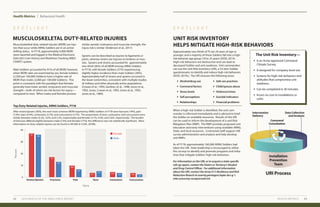
  • 8.
    Medical readiness isa key part of the overall Soldier readiness priority for both the AC and the ARNG. To enable commanders to manage their forces, each Soldier is assigned an MRC. Soldiers classified in MRC1 or MRC2 status are medically ready and deployable. Soldiers in MRC3 status are not medically ready to deploy. Soldiers classified in MRC4 status have either missed or are overdue for a mandatory medical exam and thus are not medically ready to deploy.   Dental readiness is a vital part of Soldier overall medical readiness. Soldiers that are classified as DRC1 or DRC2 are dentally ready and immediately deployable. Soldiers with a DRC3 or DRC4 classification are not dentally ready to deploy. DRC3 status is assigned due to a dental condition that requires urgent or emergent treatment. A DRC4 classification is assigned to Soldiers delinquent or overdue for their annual dental exam.  In FY18, 87% of ARNG Soldiers were considered medically ready and deployable (MRC1 or MRC2) within 72 hours. The proportion of ARNG Soldiers medically ready remained unchanged from FY16 (86%) and FY17 (86%). In FY18, 4.4 out of every 5 ARNG Soldiers across States/Territories were able to be called upon during a mobilization/deployment event based on medical readiness. The proportion of Soldiers medically ready varied by location, ranging from 77% to 94% across States/Territories.   The proportion of ARNG Soldiers dentally ready and deployable (DRC1 or DRC2) remained stable at 93% between FY17 and FY18. In FY18, 4.7 out of every 5 ARNG Soldiers across States/Territories were able to be called upon during a mobilization/deployment event nationwide based on dental readiness. The proportion of Soldiers dentally ready varied by location, ranging from 87% to 97% across the States/ Territories. 1. North Dakota 94% 2. West Virginia 92% 3. New Hampshire 92% 4. New Mexico 92% 5. Massachusetts 92% 1. North Dakota 97% 2. Utah 97% 3. Indiana 97% 4. Arkansas 97% 5. Maine 97% Health Metrics Medical and Dental Readiness Overall, 93% of ARNG Soldiers were classified as dentally ready for deployment within 72 hours. Prevalence ranged from 87% to 97% across the States/Territories. Overall, 87% of ARNG Soldiers were classified as medically ready for deployment within 72 hours. Prevalence ranged from 77% to 94% across the States/Territories. 93% 87% 97% 87% 77% 94% HEALTH METRICS 1312 2019 HEALTH OF THE ARNG FORCE REPORT States/Territories with the highest medical readiness, ARNG Soldiers, FY18 States/Territories with the highest dental readiness, ARNG Soldiers, FY18 RANK RANK THERE’S AN APP FOR THAT: THE PORTAL FOR A READY & RESILIENT (SOLDIER) MOBILE ENTERPRISE (PR2ME) S P O T L I G H T T he ARNG continually reports low completion rates for Part A of the DOD PHA, causing unforeseen delays and avoidable costs during readiness events. TS may not have access to military (.mil) networks in order to complete Part A of the DOD PHA, and the removal of the Medical Opera- tional Database (MODS) from the Defense Informa- tion Systems Agency (DISA) whitelist continues to prevent ARNG soldiers from completing Part A of the DOD PHA from publicly available commercial (.com) networks. To combat these ongoing issues, the ARNG is piloting a mobile technology developed by the Tele- medicine and Advanced Technology Center (TATRC) called Portal for a Ready & Resilient (Soldier) Mobile Enterprise (PR2ME) that will allow geographically dispersed ARNG Soldiers to complete the entire Part A Soldier questionnaire of the DOD PHA via their personally-owned mobile device without the need for a Common Access Card (CAC) or .mil network connection. The PR2ME application will also provide ARNG Soldiers with tailored health messages based on the results of the DOD PHA Part A, as well as con- tact information for ARNG resources that can assist in improving the health of Citizen Soldiers. The ARNG Office of the Chief Surgeon is tai- loring an IT solution to ensure a DOD PHA can be moved from a secure smartphone application and TATRC servers to any Service or Component medical readiness system of record (SOR). The SOR for the U.S. Army is the Medical Protection System (MEDPROS). Pilot testing of PR2ME is currently scheduled for late fall 2019 in select State/Territories with subsequent rounds of test continuing into calendar year 2020 (CY20). Based on the results of PR2ME pilot testing, this mobile application may be available ARNG-wide in late CY20.
  • 9.
    Hearing Hearing is animportant requirement for Soldier performance, as it affects both survivability and lethality and is essential in all Soldier environments. Good hearing preserves situational awareness for critical communication abilities and improves communication responses, crucial to success on the battle- field. Critical communication abilities include acoustic stealth, detection, localization, and identification tasks. Hearing Readiness (HR) is an essential component of medical readiness and is monitored via the MEDPROS through information from the Defense Occupational and Environmental Health Readiness System - Hearing Conservation (DOEHRS-HC) surveillance hearing test data. DOEHRS-HC is the tri-Service surveillance hearing test SOR. The DOEHRS-HC supports prevention of significant hear- ing loss through early detection of changes in hearing due to exposure to hazardous noise or ototoxic chemicals. The Army Hearing Program (AHP) is a hearing loss prevention program that incorporates noise hazard identification, engineering controls, monitoring audiometry, hearing protection use, hearing health education, and command enforcement. Health Metrics Overall, 6.1% of ARNG Soldiers experienced a new case of Significant Threshold Shift (STS), or decreased hearing. Prevalence ranged from 2.4% to 12% across the States and Territories. 6.1% 2.4% 12% 1. North Dakota 92% 2. Utah 92% 3. Alaska 90% 4. Idaho 88% 5. Maine 87% States/Territories with the Highest Rate of Hearing Readiness, ARNG Soldiers, FY18 RANK Percent New Cases Positive STS, ARNG Soldiers, FY14–18 Percent Positive STS Follow-up Hearing Test Compliance, ARNG Soldiers, FY14–18 Prevalence of Hearing Profiles, ARNG Soldiers, FY14–18 Prevalence of Hearing Readiness Classifications, ARNG Soldiers, FY17–18 Data from DOEHRS-HC show decreased hear- ing injuries and hearing impairment among ARNG Soldiers from FY14 to FY18. FY18 rates decreased to 6.3%, down from 8.0% in FY14, for ARNG Soldiers and to 4.3%, down from 8.1% in FY14, for ARNG DA Civilians. While these rates are trending toward the AHP goal of <3% for Military and <4% for DA Civilians, room for improvement remains, particularly for ARNG Soldiers. AHP policy requires the completion of the DOEHRS-HC follow-up test series when DOEHRS-HC identifies a potential hearing injury. ARNG Soldier follow-up test compliance rates improved to an all-time high of 15% in FY18, up from 5.7% in FY14; however, they remain significantly below the AHP goal of >70%. ARNG DA Civilian positive STS follow-up test compliance rates vary considerably and increased slightly to 4.9% in FY18, up from 4.0% in FY14, yet remain well below the FY16 ARNG high of 13% and the AHP goal of >70%. DOEHRS-HC data indicate the number of ARNG Soldiers receiving a periodic (DD Form 2216) hearing test increased to 242,189 in FY18 from 183,864 in FY14. H-2 hearing profiles (clinically significant hearing loss) decreased to 5.0% in FY18 from 5.9% in FY14, trending in the desired direction, even with an increase in the number of ARNG Soldier periodic hearing tests administered. ARNG Soldiers requiring a fitness-for-duty hearing readiness evaluation (≥H-3 profiles indicative of moderate hearing impairment) decreased to 2.3% in FY18 from 3.0% in FY14, trending in the desired direction. In FY18, averaged monthly ARNG MEDPROS Hearing readiness data indicated 75% of ARNG Soldiers were hearing ready. In contrast, 23% of ARNG Soldiers (78,198 out of 336,241) were not hearing ready and were identified as Hearing Readiness Classification (HRC) 4. This slight increase from 22% in FY17 occurred even with a small decrease of 5,593 in assigned ARNG Soldiers in FY18. Soldiers with an HRC 4 are not hearing ready and are either overdue for their annual hearing test or require a follow-up hearing test(s) to identify true hearing ability. Hearing Injuries STS Follow-up Compliance Hearing Acuity Hearing Readiness HEALTH METRICS 1514 2019 HEALTH OF THE ARNG FORCE REPORT PercentPercentPercentPercent Year Year Year 0 FY14 FY15 FY16 FY17 FY18 8 4 12 AHP Goals: <3% Military <4% DA Civilians Military DA Civilians 6.3% 8.0% 4.3% 8.1% 0 FY14 FY15 FY16 FY17 FY18 8 4 12 16 Military DA Civilians 15% 5.7% 4.9% 4.0% 0 FY14 FY15 FY16 FY17 FY18 4 2 6 8 AHP Goals: 3% - H-2 2% ≥ H-3 H-2 Hearing Profiles ≥ H-3 Hearing Profiles 5.0% 5.9% 2.3% 3.0% 0 Hearing Ready HRC 3* HRC 4** 40 60 20 80 FY17 FY18 AHP Goals: 90% - Hearing Ready 1% - HRC 3* 6% - HRC 4** Soldiers Assigned: 75% 1.8% 23% Source: DOEHRS-HC Data Repository (DR) Source: DOEHRS-HC DR Source: DOEHRS-HC DR Source: DOEHRS-HC Data in MEDPROS * Needs full evaluation; DA Form 3349 not completed; needs MAR2; does not meet retention standards w/o hearing aid ** No hearing test within 12 months; follow-up required Active surveillance to identify decreases in hear- ing and to eliminate misclassification of tempo- rary decreases in hearing is an AHP best practice. While follow-up hearing test compliance for ARNG Soldiers with positive STS/decreased hear- ing has increased, it remains well below the AHP goal of >70%. Increased follow-up hearing test compliance will improve STS incidence accuracy and will identify ARNG Soldiers/Civilians requir- ing additional hearing health services. Investing in efforts to prevent hearing loss in ARNG Soldiers/ Civilians will increase unit productivity, survivabil- ity and lethality, and quality of life for immediate and future communication situations among all personnel exposed to hazardous noise.
  • 10.
    BEST RANKING STATES/TERRITORIES States/Territoriesare not rank-ordered for behavioral health conditions because higher percentages of Soldiers endorsing symptoms of behavioral health disorders may, in fact, reflect lower levels of stigma and higher levels of self-awareness among Soldiers. Identifying behavioral health concerns early and encouraging Soldiers to seek treatment are priority goals of the ARNG and lead to better long-term outcomes. Soldiers who do not receive timely treatment for behavioral health concerns are at risk for negative outcomes and decreased readiness. Health Metrics HEALTH METRICS 1716 2019 HEALTH OF THE ARNG FORCE REPORT Behavioral Health The cumulative effect of Soldier and Civilian life stressors can be profound on the psychological well- being and condition of ARNG Soldiers, their Families, and the community at large. As a response to these cumulative stressors, ARNG Soldiers are at risk of developing behavioral health disorders such as PTSD, depression, and substance use disorder. The impacts of undiagnosed and untreated behavioral health disorders among ARNG Soldiers can be extremely detrimental to the Force, potentially resulting in increased levels of medical boarding and early discharge, and potentially associated with suicidal behav- ior. In FY18, 3.8% of ARNG Soldiers reported symptoms that could be consistent with a diagnosis of clinical depression, a slight decrease from FY17 (4.5%); 5.1% of ARNG Soldiers reported symptoms that could be consistent with a diagnosis of PTSD, a 0.9% percent decrease from FY17. The observed increase in reported symptoms may, in fact, reflect lower levels of stigma and greater access to care. Overall, 3.8% of ARNG Soldiers reported symptoms consistent with clinical depression. Prevalence ranged from 2.4% to 6.4% across the States/Territories. Overall, 5.1% of ARNG Soldiers reported symptoms consistent with PTSD. Prevalence ranged from 2.7% to 11% across the States/Territories. 3.8% 2.4% 6.4% 5.1% 2.7% 11% 0 1 2 4 3 6 5 Female 4.3 Male 3.7 Total 3.8 Percent Reporting Symptoms Consistent with Depression by Sex, ARNG Soldiers, FY18 Percent Reporting Symptoms Consistent with PTSD by Sex, ARNG Soldiers, FY18 Percent Reporting Symptoms Consistent with Depression by Age and Soldier Status, ARNG Soldiers, FY18 Percent Reporting Symptoms Consistent with PTSD by Age and Soldier Status, ARNG Soldiers, FY18 PercentPercent PercentPercent 0 1 2 3 4 5 Age: 6 TS TS <25 3.0 2.0 25–34 TS AGR/ MilTech 3.7 2.7 35–44 TS AGR/ MilTech 5.1 4.7 45+ 4.5 4.9 Total TS AGR/ MilTech AGR/ MilTech AGR/ MilTech 3.8 4.1 0 1 2 4 3 6 7 8 9 5 Female 5.8 Male 5.1 Total 4.9 0 1 2 3 4 5 Age: 7 8 9 6 TS TS <25 2.2 1.3 25–34 TS AGR/ MilTech 4.7 4.1 35–44 TS AGR/ MilTech 8.4 7.9 45+ 8.0 8.7 Total TS AGR/ MilTech AGR/ MilTech AGR/ MilTech 4.7 6.7 Examining depression Patient Health Questionnaire Depression Scale (PHQ-8) results by Soldier sex reveals that female Soldiers (4.3%) were slightly more likely than male Soldiers (3.7%) to report symptoms that could be consistent with a diagnosis of depression. Examining PTSD Checklist–Civilian Version (PCL-C) results by Soldier sex reveals that female Soldiers (5.8%) were slightly more likely than male Soldiers (5.1%) to report symptoms that could be consistent with a diagnosis of PTSD.
  • 11.
    HEALTH METRICS 19182019 HEALTH OF THE ARNG FORCE REPORT SUICIDE PREVENTION: A TOP PRIORITY FOR THE ARNG T he ARNG faces a number of unique challenges in preventing suicides, including a geograph- ically dispersed work force, varied access to local resources, and limited Soldier face-to-face time with leadership. Several demographic and interpersonal factors have been investigated for an ARNG Soldier’s risk of death by suicide. The specific factors analyzed were rank/ grade, deployment status, personal relationship status, age, race/ethnicity, and sex. Based on these analyses, the ARNG Soldiers most at risk for death by suicide are— — Enlisted (E1–E4), — Single, — 18–24 years old, — Caucasian, and — Male. The analyses failed to conclude that there is an association between deployments and ARNG Soldier suicides. Among Soldiers who died by suicide, 71% had never been deployed. S P O T L I G H T “ ” If you are going to win any battle, you have to do one thing. You have to make the mind run the body. Never let the body tell the mind what to do…the body is never tired if the mind is not tired. —GEN George S. Patton, Jr. continued on next page... ARMY CHAPLAINS: A SOLDIER’S BATTLE BUDDY ON AND OFF THE BATTLEFIELD S P O T L I G H T T he primary mission of the Unit Ministry Team (UMT) is to provide for the free exercise of reli- gion for all faiths. Chaplains advise the com- mand on a wide range of issues, as needed, including, but not limited to— • Religious accommodation. • Morale and Soldier welfare support. • Behavioral and mental health indirect support. • Daily life issues that may be impacting Sol- diers and their Families. Ultimately, the ability of the UMT to communicate and connect with Soldiers and Families (both religious and nonreligious) ensures another layer of resilience, thereby fostering the warfighter readiness mindset. Religious affairs specialists also play an important role and extend the reach of the UMT by directly commu- nicating with personnel throughout the unit. Both Chaplains and religious affairs personnel are bound by strict confidentiality guidelines. This means all communication with a Chaplain acting as a spiri- tual advisor, or with a religious affairs specialist in his or her official capacity, will not be disclosed to any third party, including the unit’s chain of command. The unique, privileged nature of the UMT relation- ship gives Soldiers a safe environment in which to seek discreet and meaningful support for a number of intra- and interpersonal situations. Furthermore, ARNG UMT personnel act as “gate- keepers” and have the ability to provide referrals to a number of Army support elements such as the Army Substance Abuse Program (ASAP), Army Behavioral Health, Army Equal Opportunity (EO), Sexual Harass- ment Assault Response Prevention (SHARP), Army Emergency Relief (AER), and Family Advocacy Pro- gram (FAP). In FY18, ARNG UMT personnel conducted over 52,017 counseling sessions and an additional 8,297 sessions that resulted in personnel being referred to another Army agency for additional support in FY18. ARNG UMTs conducted approximately 25,000 direct religious support services in FY18. In FY18, ARNG UMT personnel provided 8,127 active support services for ARNG personnel and their Families. Direct Religious Support Type and Quantity, FY18 Command and Unit Support Type and Quantity, FY18 FY18 Worship Services (16,939) Military Official Event Support (4,932) Religious Rites or Sacraments (1,865) Religious Education Classes (3,240) Military Memorial Services (1,288) Military Funeral Services (1,181) Weddings (314) FY18 Health Metrics Behavioral Health Suicide Interventions (1,508) Moral LeadershipTraining (919) Restricted or Unrestricted Sexual Assault Counseling (154) Suicide Prevention Trainings (614)
  • 12.
    Figure 1. Incidenceof Suicide, ARNG Soldiers, CY14–18 HEALTH METRICS 2120 2019 HEALTH OF THE ARNG FORCE REPORT 0 Jan Feb Mar Apr May Jun Jul Aug Sep Oct Nov Dec 2 6 8 16 18 12 4 10 14 Year: Total: 2016 20172014 76 2015 104 109 120 2018 118 CountofSuicides Current Initiatives include: l Vet Center Outreach Initiative Partnership with Veterans Affairs for Mobile teams to provide support services to ARNG members during drill weekends. l Suicide Prevention and Readiness Initiative for National Guard (SPRING): Partnership with Office of Secretary of Defense (OSD). A multi-phase approach to identify risk fac- tors, proven protective strategies, and best practices for systematic data collection. This initiative will uncover both drivers for suicide and factors that enhance or interfere with resilience and/or readiness among ARNG members and their Families. Includes development of an integrated data repository, which can be used to build tools, drive strategic resourcing, and provide recommendations to ARNG leadership. Outputs from these tools may include metrics from ARNG wellness programs, evidence-based variables for monitoring program impact, and redeployment maps. Risk Reduction Campaign Plan The Risk Reduction Campaign Plan (R2CP) is currently being implemented in all States/Territories to address resilience and risk reduction in ARNG Soldiers and Family members. R2CP includes four main initiatives: — Leader engagement — Training — Social media — Analytics Rateper100,000 ARNGSoldiers Figure 2. Suicide Rate per 100,000 ARNG Soldiers, CY14–18 0 10 20 30 40 2014 2015 2016 2017 2018 22 30 32 35 35 National and Local Suicide Prevention Resources Each State/Territory and the District of Columbia have a Director of Psychological Health who can help Soldiers and Family members access resources and support. Master resilience trainers, substance abuse trainers, and suicide prevention program managers are available to assist ARNG leadership with resilience training, risk reduction, and suicide prevention efforts. ARNG Soldiers who need immediate help may call: 1-800-273-TALK (8255) Information is also available at the MilSuite site: https://www.milsuite.mil/book/groups/arng-ready-and-resilientcommunity-health-promotion-council-operations In CY14 through CY18, the incidence of suicide among ARNG Soldiers fluctuated monthly; changes between months were not statistically significant during this time period (Figure 1). The suicide incident rate for ARNG Soldiers increased from 22 per 100,000 ARNG Soldiers in CY14 to 35 per 100,000 ARNG Soldiers in CY18. This increase represents a statistically significant change over the 5-year period. Current suicide trends among ARNG Soldiers ...continued from previous page Year l Star Behavior Health Providers Program Partnership with Uniformed Services University to expand networks of civilian providers trained in military culture and mental health treatments l WRF Innovation Incubator Pilot of State-level programs promising to enhance the readiness, wellness, and resilience of all geo- graphically dispersed Soldiers, Veterans, and Families l Compendium of WRF Strategies Compilation of evidence-based programs aimed at reducing a range of destructive behaviors (e.g., sui- cide, sexual assault, substance abuse) and promot- ing wellness and resiliency in the National Guard. Current Efforts The ARNG established the Warrior Resilience and Fitness (WRF) Division to ensure that the multiple programs supporting the well-being and resiliency of ARNG members and their Families are synchronized to the greatest extent possible and meet the needs of the Force. Health Metrics Behavioral Health
  • 13.
    HEALTH METRICS 23 UNITRISK INVENTORY HELPS MITIGATE HIGH-RISK BEHAVIORS S P O T L I G H T • Alcohol/drug use • Command factors • Stress levels • Self perceptions • Relationships Approximately two-thirds of TS are 29 years of age or younger, and a majority of these Soldiers fall into a high- risk behavior age group (18 to 25 years) (DOD, 2014). High-risk behaviors are destructive and can lead to decreased Soldier and unit readiness. Unit commanders can use the Unit Risk Inventory (URI), a 53-item Soldier questionnaire, to identify and reduce high-risk behaviors (DOD, 2019c). The URI assesses the following areas: The Unit Risk Inventory— • Is an Army-approved Command Climate Survey. • Is designed for company-level use. • Screens for high-risk behaviors and attitudes that compromise unit readiness. • Can be completed in 30 minutes. • Incurs no cost to installations or units. • Safe sex practices • Child/spouse abuse • Violence/crimes • Suicidal indicators • Financial problems When a high-risk Soldier is identified, the unit com- mander is informed immediately and is advised to brief the Soldier on available resources. Results of the URI can be used to inform the development of a unit Risk Mitigation Plan (RMP). The RMP provides proposed unit education and early interventions using available ARNG, State, and local resources. Contracted staff support URI survey administration and analysis and help develop unit RMPs. As of FY18, approximately 160,000 ARNG Soldiers had taken the URI. State leadership is encouraged to utilize the surveys to identify and promote programs and initia- tives that mitigate Soldiers’high-risk behaviors. For information on the URI, or to acquire a state-specific roll-up report, contact the State’s or Territory’s Alcohol and Drug Control Officer. For additional information about the URI, contact the Army G1’s Resilience and Risk Reduction Branch at usarmy.pentagon.hqda-dcs-g-1. mbx.urisurvey-acsap@mail.mil. Installation Prevention Team URI Process Data Collection and Analysis Command Consultation Intervention Delivery 22 2019 HEALTH OF THE ARNG FORCE REPORT Musculoskeletal duty-related injuries (MDRI) are inju- ries that occur while ARNG Soldiers are in an active drilling status. In FY18, approximately 6,900 MDRI were reported and logged in the Medical Electronic Data (for) Care History and Readiness Tracking (MED- CHART) system. Male Soldiers accounted for 81% of all MDRI; however, when MDRI rates are examined by sex, female Soldiers (2,300 per 100,000 Soldiers) have a higher rate of MDRI than males (2,000 per 100,000 Soldiers). This point is consistent with the paradigm that females generally have lower aerobic endurance and muscular strength—both of which are risk factors for injury— compared to men. When males and females possess Top Duty-Related Injuries, ARNG Soldiers, FY18 Percent MUSCULOSKELETAL DUTY-RELATED INJURIES similar aerobic endurance and muscular strength, the injury risk is similar (Anderson et al., 2017). Sprains can be described as injuries to ligaments or joints, whereas strains are injuries to tendons or mus- cles. Sprains and strains accounted for approximately one-third (36%) of all MDRI among ARNG Soldiers in FY18, with female Soldiers (37%) experiencing slightly higher incidence than male Soldiers (36%). Approximately half of strains and sprains occurred in the lower extremities, consistent with multiple studies of military and other physically active populations (Cowan et al., 1993; Gardner, et al., 1998; Jones et al., 1993; Jones, Cowan et al., 1993; Jones et al., 1992; Jones et al., 1989). S P O T L I G H T Female Male After strains/sprains (36%), the next most common MDRI reported by ARNG Soldiers in FY18 were fractures (14%), pain (7.3%), tears (4.9%), contusions (3.7%), and concussions (2.7%). The proportions of tears, contusions, and concussions were similar between males (5.2%, 3.6%, and 2.5%, respectively) and females (3.7%, 4.4%, and 3.6%, respectively). The burden of fractures differed slightly between males (13%) and females (17%); this difference was not statistically significant. More information on duty-related injuries can be found in AR 600-8-4 (DA, 2019b). Injury Health Metrics Behavioral Health 0 10 20 30 40 37 36 17 13 9.8 6.7 3.7 5.2 4.4 3.6 3.6 2.5 Strains/Sprains Fractures Pain Tears Contusions Concussions
  • 14.
    354,067 Samples Tested Illicit-Positive Rate 0.0 0.5 1.0 1.5 2.0 2.5 341,157 Samples Tested 365,440 SamplesTested 366,313 Samples Tested 2016 2017 318,533 Samples Tested 201820152014 Health Metrics HEALTH METRICS 2524 2019 HEALTH OF THE ARNG FORCE REPORT Drug Use and Testing The use of illicit drugs and the abuse of alcohol are inconsistent with the military’s standards of conduct and professionalism and can negatively impact the Army mission.  Drug testing is an important tool to assist in the identification and prevention of Soldier drug abuse. AR 600–85 (DA, 2016a) provides applicable guidance for drug testing in the ARNG. Unit commanders ran- domly select and test 10% of their unit each month, or 25% of their unit each quarter, for illicit substances and alcohol abuse. Overall, 1.8% of ARNG Soldiers tested positive for illicit drug use. Prevalence ranged from 0.41% to 4.1% across the States/Territories. 1.8% 0.41% 4.1% 1. North Dakota 0.41% 2. U.S. Virgin Islands 0.46% 3. Maryland 0.66% 4. Montana 0.70% 5. South Dakota 0.71% States/Territories with the Lowest Rate of Illicit- Positive Drug Results, ARNG Soldiers, FY18 RANK In FY18, the ARNG tested more than 320,000 urine specimens for drugs; 1.8% of ARNG Soldiers tested positive for illicit drugs. For comparison, the Army AC illicit-positive drug rate was 1.1%. ARNG Sol- diers not on Active Status accounted for the majority of illicit-positive results (99%). The percentage of ARNG Soldiers who tested positive for illicit drugs varied by State/Territory and ranged from 0.41%– 4.1%. Illicit-Positive Rate, ARNG Soldiers, CY14–18 Percent Percent Illicit-Positive Results by Drug, ARNG Soldiers, FY18 0 10 20 30 40 50 60 70 80 90 100 THC Cocaine d-Amphetamine d-Methamphetamine Oxycodone Benzodiazepines Hydrocodone Other* 84% 10% 5.9% 3.0% 1.8% 1.5% 1.0% 0.8% *Other=Heroin, Codeine, Designer Amphetamine, Morphine, Synthetic Cannabinoids, Steroids Prevention Resources The ARNG has increased its drug prevention and test- ing efforts to reduce illicit-positive rates. The ARNG conducts a 2-hour annual Army Sustance Abuse Program (ASAP) training for TS and a 4-hour annual ASAP train- ing for full-time members. Each State/Territory ASAP makes a list of resources and points of contact available to ARNG Soldiers. Each State/Territory and many indi- vidual counties have unique levels of resources available for ARNG Soldier access. The ARNG has also expanded testing and prevention training in Recruit Sustainment Program units to reduce drug use in the high-risk age group of 18–25 years. Treatment Challenges TS who test positive for illicit substances during ARNG drug tests are required to undergo a substance abuse assessment and are referred to a State provider. Soldiers who require counseling or treatment must participate at their own expense unless the State/Territory has available resources. Full-time AGR or long-term Active Duty for Operational Support (ADOS) Soldiers in the ARNG have TRICARE insurance and may seek an assessment and any required treatment services through their assigned providers. Full-time ARNG members living within driv- ing distance of an Army medical treatment facilities with a substance abuse program may access that program. Percent Use the following behavioral health treatment facilities locator for help with substance abuse/ addiction and/or mental health: https://www.findtreatment.samhsa.gov/.mil. Soldiers who need help with a substance abuse problem should contact their local ASAP office. Tetrahydrocannabinol (THC), the main psychoactive ingredient in marijuana, continues to be the most frequently detected illicit drug in ARNG Soldiers, accounting for 84% of all illicit-positive results.
  • 15.
    Health Metrics 26 2019HEALTH OF THE ARNG FORCE REPORT Hazardous alcohol use precedes both short- and long-term adverse alcohol-related outcomes. Short-term outcomes include driving under the influence (DUI) charges, sexual contact that increases risk of sexually transmitted infections and unintended/unwanted pregnancy, increased violence, and increased injuries. Long-term hazardous alcohol use can lead to increased risk of high blood pressure, heart disease, stroke, liver disease, and digestive problems; increased risk of certain cancers; behavioral health problems; and social problems, including lost productivity, family problems, and unemployment. For the 2019 Health of the ARNG Force report, alcohol use habits were measured using the Alcohol Use Disorders Identification Test-Consumption (AUDIT-C), a standardized self-reported survey that is part of the Soldier’s PHA questionnaire. The AUDIT-C asks Soldiers about the frequency and quantity of their alcohol consumption in order to assess the likelihood that their drinking is adversely affecting their safety. The AUDIT-C is a validated three-item screening tool, scored on a scale of 1–12, that may indicate hazardous alcohol use, which is distinct from an alcohol dependency disorder diagnosis. Soldiers who screen positive on the AUDIT-C may be referred for alcohol education, the ASAP, Army Substance Use Disorder Clinical Care, or similar interventions. An AUDIT-C score of ≥5 in males and ≥4 in females is considered optimal for identifying hazardous drinking or alcohol use disorders in compliance with DOD recommendations. Overall, 5.7% of ARNG Soldiers were classified as exhibiting hazardous levels of alcohol use. Rates ranged from 1.5% to 16% across the States/Territories. 5.7% 1.5% 16% 1. U.S. Virgin Islands 1.5% 2. Wisconsin 2.7% 3. Utah 3.0% 4. New Jersey 3.2% 5. Nevada 3.9% States/Territories with the Lowest Proportion of ARNG Soldiers Reporting Hazardous Alcohol Use, FY18 RANK Hazardous Alcohol Use Percent Exhibiting Hazardous Alcohol Use by Sex and Age, ARNG Soldiers, FY18 Percent Exhibiting Hazardous Alcohol Use by Soldier Type, ARNG Soldiers, FY18 Among ARNG Soldiers in FY18, a higher proportion of males (5.8%) than females (5.2%) reported hazardous drinking behavior. In FY18, the highest proportion of reported hazardous alcohol use was among Soldiers ages <25 (6.3%), with the lowest proportion of reported hazardous alcohol use among Soldiers aged 45 years or older. The percent of ARNG Soldiers who reported hazardous drinking behavior did not differ significantly by Soldier type: 5.8% of TS and 5.2% of AGR/Mil Techs reported behavior consistent with hazardous alcohol use. Within Soldier type, males (TS: 5.9%; AGR/Mil Techs: 5.3%) reported hazardous drinking behavior at a higher proportion than Females (TS: 5.2%; AGR/Mil Techs: 5.1%). Percent Percent AgeSex Percent 0 2 4 6 10 8 Female 5.2 Male 5.8 Total 5.7 0 2 4 6 Female 5.2 Male 5.9 Total Female MaleTotal 5.8 5.1 5.35.2 TS AGR/MILTECH HEALTH METRICS 27 0 2 4 6 10 8 <25 6.3 25–34 5.4 35–44 5.7 ≥45 5.0 Total 5.7
  • 16.
    SMOKINGTOBACCO SMOKELESSTOBACCO <25 25–3435–44 ≥45Total 5 0 10 15 <25 25–34 35–44 ≥45Total 5 0 10 15 13 11 13 14 12 13 13 14 13 12 Tobacco Use Use of tobacco products negatively impacts Soldier readiness by increasing healthcare costs and the inci- dence of illness, absenteeism, and premature death (DA, 2015). A more immediate effect of tobacco use on Soldier health and readiness is a demonstrated increased risk of injury in smokers compared to non-smokers. The relationship between tobacco use and injury may be due to an individual’s compromised ability to repair damaged tissues. The PHA, completed annually by Soldiers, contains several self-reported tobacco-related questions (DOD, 2016). Because the PHA is conducted as part of a physical exam which determines an individual’s ability to deploy, many Soldiers may not report their tobacco usage to avoid potential negative attention. In addition, nicotine is known to increase alertness, and some Soldiers believe tobacco use enhances their ability to survive in austere environments. In FY18, 13% of ARNG Soldiers reported smoking and 13% reported using smokeless tobacco. The ARNG saw a slight decrease in smoking (14%) and an increase in using smokeless tobacco (12%) from FY17. The changes in both rates do not represent statistically significant differences. Overall, 13% of ARNG Soldiers reported smoking tobacco. Prevalence ranged from 2.8% to 20% across the States/Territories. Overall, 13% of ARNG Soldiers reported using smokeless tobacco. Prevalence ranged from 0.70% to 23% across the States/Territories. 13% 2.8% 20% 0.70% 23% 13% Health Metrics HEALTH METRICS 2928 2019 HEALTH OF THE ARNG FORCE REPORT 1. U.S. Virgin Islands 2.8% 2. Utah 5.0% 3. Nevada 8.4% 4. Florida 9.2% 5. District of Columbia 9.5% 1. U.S. Virgin Islands 0.67% 2. Puerto Rico 1.9% 3. District of Columbia 3.7% 4. California 6.8% 5. Connecticut 6.9% States/Territories with the Lowest Rate of Smoking Tobacco Use, FY18 States/Territories with the Lowest Rate of Smokeless Tobacco Use, FY18 RANK RANK Percent Reporting Tobacco Use by Sex, ARNG Soldiers, FY18 Percent Reporting Tobacco Use by Age, ARNG Soldiers, FY18 Percent Percent Age Percent Age In FY18, there were observable differences in the proportion of ARNG Soldiers’ tobacco use by sex, with males reporting higher prevalence of both smoking (13%) and smokeless tobacco (15%) than females (11% and 2.1%, respectively). The difference in ARNG smokeless tobacco use between sexes is mirrored in the civilian population where nearly 7% of males and less than 1% of females report using smokeless tobacco (CDC, 2019). It is noteworthy that the proportion of male ARNG Soldiers using smokeless tobacco (15%) was twice that of the U.S. male civilian population (~7%) (CDC, 2019). The highest proportion of Soldiers reporting smoking tobacco was among Soldiers ages 35–44 years (14%), while the lowest reported smoking tobacco use was among Soldiers age <25 years (11%). The highest proportion of Soldiers reporting smokeless tobacco was among Soldiers ages 25–34 years (14%), while the lowest reported smokeless tobacco use was among Soldiers age 45 years or older (12%). SMOKELESSTOBACCOSMOKINGTOBACCO Female MaleTotal 5 0 10 15 Female MaleTotal 5 0 10 15 13 2.1 15 13 11 13 Percent
  • 17.
    Health Metrics HEALTH METRICS3130 2019 HEALTH OF THE ARNG FORCE REPORT Obesity and Overweight Soldier body composition has a direct influence on the health and readiness of the ARNG Force. Body compositions in the high overweight to obese range can reduce physical functioning and performance, as well as well as Soldier mental and physical well-being and overall quality of life. As citizen Soldiers, ARNG members face a unique challenge in balancing their ARNG duties with the function of everyday civilian life (civilian employment, education, and family life) while still striving to maintain and conform to ARNG body composition standards.   The Centers for Disease Control and Prevention (CDC) categorizes Body Mass Index (BMI) into ranges for normal (less than 25), overweight (at least 25 but less than 30), and obese (30 or above), derived from the general U.S. adult population, to correlate with risk of chronic disease. However, Army studies have demonstrated that up to 20% of Soldiers with BMIs between 25 and 28 (classified as low overweight) are not “overweight” due to excess body fat but rather have increased muscle mass which may be a protective factor against injury. AR 600-9, The Army Body Composition Program (ABCP) (DA 2019d), takes this into account and also adjusts height/weight standards for age and sex (e.g., a 40-year old male Soldier can have a BMI of 27.5 and be in compliance). Adjusted BMI cut points are described in “Flagged for Weight” on page 34 of this report. In FY18, 24% of ARNG Soldiers had a BMI of greater than 30.0 and were thus classified as obese. The proportion of ARNG Soldiers with a BMI in the overweight range was 46% in FY18, a slight increase from the FY17 rate of 45%. Overall, 46% of ARNG Soldiers were classified as overweight. Prevalence ranged from 41% to 52% across the States/Territories. Overall, 24% of ARNG Soldiers were classified as obese. Rates ranged from 14% to 32% across the States/Territories. 46% 41% 52% 24% 14% 32% 1. Montana 14% 2. Wisconsin 15% 3. District of Columbia 15% 4. Utah 18% 5. Minnesota 18% States/Territories with the Lowest Proportion of Obese Soldiers, ARNG Soldiers, FY18 RANK Percent Obese and Overweight by Sex and Age, ARNG Soldiers, FY18 Percent ObeseOverweight 0 10 30 20 40 50 60 49 25 52 34 52 37 TotalAge: Female Male Female Male Female Male Female Male Female Male <25 25–34 35–44 ≥45 34 7.7 40 13 44 18 46 21 39 13 48 26 40 15 When obesity and overweight were examined by sex among ARNG Soldiers in FY18, males (26% and 48%, respectively) had a consistently higher prevalence of both BMI classifications than females (13% and 39%, respectively) across all age groups.
  • 18.
    HEALTH METRICS 33 0 10 20 30 40 50 60 TSAGR/ Mil Tech <25Age: 25–34 35–44Total TS AGR/ Mil Tech TS AGR/ Mil Tech TS AGR/ Mil Tech TS AGR/ Mil Tech ≥45 Percent Weight Status by Age and Soldier Type, Female ARNG Soldiers, FY18 Health Metrics Obesity and Overweight 32 2019 HEALTH OF THE ARNG FORCE REPORT Percent Weight Status by Age and Soldier Type, Male ARNG Soldiers, FY18 0 10 20 30 40 50 60 TS AGR/ Mil Tech <25Age: 25–34 35–44Total TS AGR/ Mil Tech TS AGR/ Mil Tech TS AGR/ Mil Tech TS AGR/ Mil Tech ≥45 In FY18, the prevalence of obesity and overweight was higher among AGR/Mil Tech Soldiers (32% and 53%, respectively) than TS (24% and 47%, respectively). The proportion of ARNG Soldiers who were overweight and obese did not vary significantly between Traditional and AGR/Mil Tech Soldiers based on age. In both groups, the likelihood of being overweight or obese increased with age. After adjusting for differences in age and sex distributions across these Soldier types, the prevalence of obesity and overweight was similar across all ARNG Soldier groups. ObeseNormal Overweight (U.S.ArmyNationalGuardPhotobyBoWriston)
  • 19.
    Health Metrics HEALTH METRICS3534 2019 HEALTH OF THE ARNG FORCE REPORT Flagged for Weight The ABCP, as directed by DODI 1308.3 (DOD, 2002) and AR 600-9, requires Soldiers to be physically fit. According to the ABCP, the maximum allowable body fat threshold is 26% for males and 36% for females (as shown in the BMI Thresholds Table in Appendix I). Following APFT, Soldiers are required to undergo bi-annual anthropometric measurements of height and weight for BMI calculation. When the allowable BMI is exceeded for sex and age group, circumferential measures (known as the “tape test”) of the Soldier’s neck, waist, and hips are collected to better estimate body composition. A Soldier with a relative body fat percentage that exceeds the maximum allowable sex and age standard is “flagged” and is enrolled in the ABCP on the day he or she is notified of the failure. Once enrolled in the ABCP, Soldiers receive exercise guidance, nutrition counseling, and behavioral modification strategies to assist in aligning their body composition with the Army sex and age standards. The ABCP weighs participating Soldiers monthly, with a goal of losing 3 to 8 pounds or 1% body fat per month until the Army sex and age stan- dards are achieved.  In FY18, 4.9% of ARNG Soldiers were flagged for exceeding their maximal allowable weight, and 24% of ARNG Soldiers were classified as being obese (BMI ≥ 30). Overall, 4.9% of ARNG Soldiers were flagged for exceeding their maximal allowable weight. Rates ranged from 1.7% to 8.1% across the States/Territories. 4.9% 1.7% 8.1% 1. Puerto Rico 1.7% 2. Utah 2.4% 3. Idaho 2.4% 4. Virginia 2.8% 5. South Dakota 3.0% States/Territories with the Lowest Proportion of ARNG Soldiers Flagged for Weight, FY18 RANK According to AR 600–9, those Soldiers classified as obese had exceeded the maximal allowable weight for their sex and age group and should have been flagged for a body composition measurement. The ultimate deci- sion to flag Soldiers exceeding their maximal allowable weight is at command discretion, which may account for the difference between the proportion of ARNG Sol- diers who were flagged for weight and the proportion identified as obese. The ABCP is built on the ideal of consistent bi-annual anthropometric measurements to assist Soldiers in gauging their height, weight, and body fat and ultimately conforming to the Army standards. The potentially inconsistent identification of Soldiers who exceed the maximal allowable threshold may con- tribute to higher APFT failure rates, more chronic health conditions, and lower overall Soldier readiness. INFORMING TOTAL SOLDIER HEALTH THROUGH THE HOLISTIC HEALTH AND FITNESS SYSTEM S P O T L I G H T W ith 13% of ARNG Soldiers not able to deploy due to medical non-readiness, improving the health of the individual Soldier is at the foundation of the ARNG’s ability to deploy, flight, and win the Nation’s wars. Soldier health is multi-faceted and includes much more than traditional physical indicators of well-being. Behavioral health, stead- fastness, rest, and nutrition must be optimized and integrated with the physical domain to develop a ready and resilient Soldier. With this objective in mind, the Army has compiled 30 years of research to create the Holistic Health and Fitness (H2F) system. The vision of H2F is to immerse Soldiers in a new culture that sustains their health readiness and enables them to meet current and future mission needs throughout their Army careers. H2F is a comprehensive, integrated, and immersive health and fitness system that increases the lethality of Soldiers who are ready to engage with and over- match the enemy in multi-domain operations. The system accomplishes this by addressing physical readiness and mental toughness components and measuring the effectiveness of applicable programs and interventions. The physical and non-physical components of fitness are shaped by policy, doctrine, performance experts, programs, facilities, and ed- ucation. As a system, these elements (often absent from—or out of synch with—legacy fitness programs) are aimed to comprehensively support the physical, mental, and other aspects of Soldier readiness. The implementation of H2F aims to positively impact overall physical fitness, medical readiness, and unit cohesion and morale; and reduce the number of indiscipline events and ABCP enrollments. Collec- tively, the H2F system will better position the ARNG to accomplish both combat and local deployment tasks by supporting the holistic health and fitness of its Soldiers. PEACE INTEGRATIVE FOOD MINERALS ENERGY VITAMINS MEDICINE FRUITS NATURAL EMOTIONS EXERCISE NUTRITION SCIENTIFIC HOPE HOLISTIC HEALTH VEGETABLES FITNESS LIFESTYLE TRADITIONAL BALANCE HERBS MIND BODY TRAINING SPIRIT PREVENTION DIET CHANGE
  • 20.
    Health Metrics HEALTH METRICS3736 2019 HEALTH OF THE ARNG FORCE REPORT Army Physical Fitness Test Failures Physical fitness is one of the cornerstones of military service and Soldier readiness. Soldiers must possess a high level of physical fitness and endurance in order to perform physically demanding tasks in both garrison and deployment conditions. ARNG Soldiers face a unique challenge in maintaining and improv- ing their physical fitness while balancing the demands of everyday civilian life. The APFT is designed to assess Soldiers’ muscular strength, endurance, and cardiorespiratory fitness. The current APFT assesses Soldiers performance in three events: 2 minutes of push-ups, 2 minutes of sit-ups, and a 2-mile run. The APFT is age- and sex-adjusted and is scored within a range of 0 to 100 per event. To pass the APFT, a minimum score of 60 is required for each event. In FY18, 13% of ARNG Soldiers failed the APFT, a slight increase from the FY17 rate of 12%. The FY18 APFT failure rates varied by State/Territory, ranging from 5.1% to 19%. Overall, 13% of ARNG Soldiers failed the Army Physical Fitness Test. Rates ranged from 5.1% to 19% across the States/Territories. 13% 5.1% 19% 1. Utah 5.1% 2. Puerto Rico 5.3% 3. Idaho 6.2% 4. Colorado 7.3% 5. South Dakota 7.6% States/Territories with the Lowest Proportion of ARNG Soldiers who Failed the APFT, FY18 RANK DEVELOPING THE 21ST CENTURY SOLDIER: THE ARMY COMBAT FITNESS TEST S P O T L I G H T T o prepare Soldiers for emerging challenges on and off the battlefield, the U.S. Army is currently field testing a new type of Army physical fitness test, the Army Combat Fitness Test (ACFT), which takes into account the unique physical demands of the unit and/or individual’s Military Occupational Specialty (MOS) and is designed to be age and gender neutral. The ACFT’s intended purpose is to— • Improve individual Soldier readiness. • Transform the culture of Army fitness. • Reduce preventable injuries and attrition. • Enhance mental toughness and stamina. • Contribute to increased unit readiness. The ACFT was developed based on the results of the Baseline Soldier Physical Readiness Requirements and Physical Demands Study, where the Army researched the baseline physical-readiness requirements of the high-physical-demand tasks Soldiers perform in combat. ACFT development was informed by military fitness leaders from partner nations as well as domestic experts from the Department of Physi- cal Education, U.S. Military Academy; the U.S. Army Research Institute of Environmental Medicine; the U.S. Army Public Health Center; and the U.S. Army Physical Fitness School. The ACFT consists of six events performed consec- utively, with a short rest period between each. The ACFT is scored on a 0- to 100-point range per event; three scoring threshold categories are determined by the physical demands of the unit or the individual’s MOS. While the ACFT is supported by scientific research, there are still several details to be finalized based on current field testing across the Army AC and the ARNG. The ACFT is being field tested in eight bat- talion-sized ARNG units across eight States. Among these units, the first of two requisite not-for-record ACFTs has been completed; the second is scheduled for later in FY20. During initial ACFT field testing, “Pass” rates have varied from 23% to 70% depending on the MOS-specific scoring thresholds. The ARNG is currently preparing for uniform adoption of the ACFT in FY20 in all States/Territories. The ACFT will become the Army’s physical fitness test of record by October 2020. Compared to the existing APFT, the ACFT better mirrors the high-physical-demand tasks Soldiers are expected to perform in combat. Performing well on the ACFT is a key indicator of a Soldier’s ability to meet the physical demands faced in deployment and combat. ARMY COMBAT FITNESS TEST EVENTS 3-REPETITION MAXIMUM DEADLIFT HAND-RELEASE PUSH-UP LEG TUCK STANDING POWER THROW SPRINT-DRAG-CARRY 2-MILE RUN
  • 21.
    Health Metrics HEALTH METRICS3938 2019 HEALTH OF THE ARNG FORCE REPORT Hypertension, or high blood pressure, usually has no warning signs or symptoms. As a result, many people do not realize they have hypertension until they undergo a blood pressure screening. High blood pressure can greatly diminish health and increase one’s risk for heart disease, stroke, and premature death. Several unhealthy behaviors, including tobacco use, eating foods high in sodium and low in potassium, insufficient physical activity, excessive weight, and excessive alcohol consumption can increase risk for developing hypertension. Cardiovascular health is a key component of a Soldier’s holistic health and is an ARNG priority for overall Soldier health and readiness. One area that shows the ARNG’s dedication to overall cardiovascular health is the APFT. Another is measuring blood pressure—a quick, painless, stan- dard diagnostic screening that all Soldiers undergo during their annual PHA physical exam. Strategies for keeping blood pressure levels in a healthy range (<120/<80) usually involve reducing dietary sodium, engaging in daily physical activity, quitting smoking, and potentially taking medication. Hypertension Overall, 6.0% of ARNG Soldiers were flagged for hypertension based on physician determination during a PHA physical exam. Prevalence ranged from 3.3% to 11% across the States/Territories. 6.0% 3.3% 11% Percent with Hypertension by Age, ARNG Soldiers, FY18 Percent Age 0 10 20 30 <25 0.83 25–34 3.0 35–44 10 ≥45 24 Total 6.0 As Soldier age increases, so does the prevalence of hypertension. The lowest prevalence of hypertension is among Soldiers under 25 years of age (0.83%), and the highest prevalence was found among Soldiers aged 45 years and older (24%). The prevalence of hypertension was almost three times higher among AGR/Mil Tech Soldiers (13%) than TS (4.6%). One factor that may be influencing this relationship is the difference in the age distribution of AGR/Mil Tech Soldiers versus TS: the mean age of an AGR/Mil Tech Soldier is 10 years older than that of the TS. Percent with Hypertension by Sex, ARNG Soldiers, FY18 Percent Sex In FY18, 6.0% of ARNG Soldiers were flagged for hypertension. The prevalence of hypertension was nearly twice as high in males (6.5%) than females (3.5%). 0 2 4 6 8 Female 3.5 Male 6.5 Total 6.0 Percent with Hypertension by Soldier Type and Age, FY18 0 10 20 30 TS AGR/ Mil Tech <25TotalAge: 25–34 35–44 ≥45 TS AGR/ Mil Tech TS AGR/ Mil Tech TS AGR/ Mil Tech TS AGR/ Mil Tech 0.83 0.65 3.9 9.2 12 4.6 13 22 26 2.9 Percent 1. Illinois 3.3% 2. Minnesota 3.4% 3. Iowa 3.5% 4. Nevada 3.7% 5. District of Columbia 3.7% States/Territories with the Lowest Rate of Hypertension, FY18 RANK
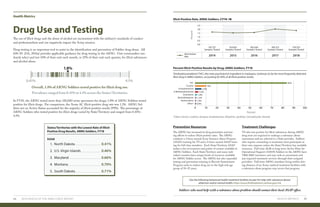
  • 22.
    PERFORMANCE TRIAD 41402019 HEALTH OF THE ARNG FORCE Total <25 25–34 35–44 ≥45 0 10 20 50 Percent 30 40 Age 49 49 50 5049 49 47 48 5148 Percent Meeting Weeknight Sleep Target by Sex and Age, ARNG Soldiers, CY18 Percent Meeting Weekend Night Sleep Target by Sex and Age, ARNG Soldiers, CY18 Sleep The CDC (CDC, 2018a) and the National Sleep Foundation (NSF, 2018) both recommend adults attain 7 or more hours of sleep per night. On weekend nights, three-quarters of ARNG Soldiers reported getting 7 hours or more of sleep; younger males and females tend to meet the target more frequently. On weeknights, just under half of ARNG Soldiers reported getting 7 hours or more of sleep per night; rates are similar across sex and age groups. Performance Triad Estimated Hours of Sleep by Duty Status, ARNG Soldiers, CY18 Most Soldiers reported sleeping 6 to 7 hours per night, regardless of duty status. However, nearly 1 in 3 reported getting fewer than 6 hours of sleep on weeknights. Soldiers also reported getting more sleep on weekend nights compared to weeknights. Female Female Male Male Total <25 25–34 35–44 ≥45 0 10 20 50 Percent 30 40 60 70 80 Age 77 78 78 7775 76 74 73 7372 Fewer than 5 hours 5 hours 6 hours 7 hours 8 or more hours 0 10 20 50 Percent 30 40 Hours of Sleep 5.9 15 32 3.0 145.1 13 45 31 36 Weeknight Weekend night Sleep, Activity, and Nutrition Sleep, activity, and nutrition (SAN), the key components of the Performance Triad (P3), form the foun- dation of optimal physical, behavioral, and emotional health. Working toward established SAN targets and understanding the interrelationships between SAN elements are critical for maximizing Soldier performance. Neglect of any single SAN domain can lead to suboptimal performance and have a dramatic negative impact on readiness, recruitment, retention, and Soldier health (DA, 2016b). To address SAN deficiencies, Leaders and Soldiers need information about the targets on which they fall short. The Global Assessment Tool (GAT) is a survey designed to assess an individual’s behaviors with regard to SAN, among other domains. Soldiers are required to complete the GAT per AR 350-53 (DA, 2014). The data presented here represent the proportions of ARNG GAT respondents who met established targets. Performance Triad Sleep/Activity/Nutrition
  • 23.
    PERFORMANCE TRIAD 43422019 HEALTH OF THE ARNG FORCE Percent Meeting Fruit Consumption Target by Sex and Age, ARNG Soldiers, CY18 Percent Meeting Vegetable Consumption Target by Sex and Age, ARNG Soldiers, CY18 Performance Triad Sleep/Activity/Nutrition Activity There are two activity recommendations from the CDC (CDC, 2018b). The first of the CDC’s two activity recommendations is attaining 2 or more days of resistance training per week. Activity The second CDC activity recommendation is adequate aerobic activity. The recommended amount of this activity can be attained in three ways: — 150 minutes/week of moderate-intensity aerobic activity, or — 75 minutes/week of vigorous-intensity aerobic activity, or — An equivalent combination of moderate- and vigorous-intensity aerobic activity. Approximately one-third of ARNG Soldiers reported eating two or more servings of fruit per day. A higher proportion of females met the fruit target than males. Just under half of ARNG Soldiers reported eating two or more servings of vegetables per day. A higher proportion of females met the vegetable target than males. Total <25 25–34 35–44 ≥45 0 20 Percent 40 60 100 80 Age 70 72 80 71 77 79 67 75 69 61 Percent Meeting Resistance Training Target by Sex and Age, ARNG Soldiers, CY18 Three-quarters of ARNG Soldiers reported engaging in resistance training on 2 or more days of the week. Target attainment varied by sex and age groups: 80% of males under 25 reported adequate resistance training whereas 61% of females over 45 met the target. Total <25 25–34 35–44 ≥45 0 40 Percent 60 80 100 20 Age 81 87 8185 83 86 78 84 8276 Percent Meeting Aerobic Activity Target by Sex and Age, ARNG Soldiers, CY18 Nearly 85% of ARNG Soldiers reported attaining adequate aerobic activity. Overall, females met the target less frequently than their male counterparts. Female Female Female Female Male Male Male Male Nutrition Nutrition targets are based on U.S. Department of Agriculture MyPlate recommendations (USDA, 2018). The GAT, which defines a serving slightly differently than MyPlate, asks Soldiers to report the approximate servings of fruits and vegetables they consume each week. Nutrition targets are defined as eating two or more servings of fruits and two or more servings of vegetables per day. On average, Soldiers reported consuming more servings of vegetables than fruits. Total <25 25–34 35–44 ≥45 0 10 Percent 20 30 60 50 40 Age 40 42 37 39 34 34 39 32 30 39 Total <25 25–34 35–44 ≥45 0 10 Percent 20 30 60 50 40 Age 52 48 43 54 45 46 55 46 43 53 Estimated Fruit and Vegetable Consumption per Week, ARNG Soldiers, CY18 Most Soldiers reported fruit consumption ranging from a few servings per week to a few servings per day. Vegetable consumption was higher; more Soldiers reported consuming multiple servings per day. Rarely or never 1 or 2 servings per week 3 to 6 servings per week 1 serving per day 2 to 3 servings per day 4 or more servings per day 0 10 20 40 Percent 30 Number of Servings 5.0 2.4 16 22 22 27 8.09.2 21 22 35 11 Fruit Consumption Vegetable Consumption
  • 24.
    STATE PROFILE SUMMARIES4544 2019 HEALTH OF THE ARNG FORCE Performance Triad Sleep/Activity/Nutrition Profile Summaries 1. Utah 2. Rhode Island 3. U.S. Virgin Islands 4. District of Columbia 5. California 6. Nevada 7. South Dakota 8. Wisconsin 9. Montana 10. Puerto Rico 11. New Jersey 12. Colorado 13. Arizona 14. Connecticut 15. Idaho 16. Ohio 17. Wyoming 18. Alaska 19. Maryland 20. New York 21. Virginia 22. Florida 23. Iowa 24. Pennsylvania 25. Nebraska 26. Missouri 27. Mississippi 28. Vermont 29. Delaware 30. Hawaii 31. North Dakota 32. Maine 33. Kentucky 34. North Carolina 35. Texas 36. Massachusetts 37. New Hampshire 38. Minnesota 39. Illinois 40. Kansas 41. West Virginia 42. Tennessee 43. Washington 44. Indiana 45. Michigan 46. South Carolina 47. New Mexico 48. Georgia 49. Alabama 50. Oregon 51. Arkansas 52. Oklahoma 53. Louisiana 54. Guam ARNG Health Index Scores take into account measures of Medical Readiness, Dental Readiness, Hearing Readiness, PTSD, Depression, Illicit Substance Use, Hazardous Alcohol Use, Tobacco Use,Obesity, APFT Failures, and Hypertension. ARNG Health Index Ranking by State and Territory Percent Meeting SAN Targets, ARNG Soldiers, 2018: 49% attained 7 or more hours of sleep on weeknights. 76% attained 7 or more hours of sleep on weekend nights. 76% engaged in resistance training 2 or more days per week. 84% achieved adequate moderate and/or vigorous aerobic activity targets. 35% ate 2 or more servings of fruits per day. 46% ate 2 or more servings of vegetables per day.
  • 25.
    Profile (2018)* End-Strength: 10,000(19% Female) AGR/Mil Tech: 17% State Population: 4,900,000 (2.1 ARNG Soldiers per 1,000 population) ARNG Health Index Ranking: 49 / 54 Change in Ranking from FY17: Profile (2018)* End-Strength: 1,600 (17% Female) AGR/Mil Tech: 38% State Population: 740,000 (2.2 ARNG Soldiers per 1,000 population) ARNG Health Index Ranking: 18 / 54 Change in Ranking from FY17: Alabama Army National Guard Alaska Army National Guard Profile Summaries STATE PROFILE SUMMARIES 4746 2019 HEALTH OF THE ARNG FORCE ARNG Health Index Score*** <10th percentile ARNG Health Index Score*** 60–69th percentile ARNG HEALTH INDEX MEASURES** ARNG HEALTH INDEX MEASURES** PERFORMANCE TRIAD MEASURES PERFORMANCE TRIAD MEASURES 7+ hours of sleep per day (weeknights) 7+ hours of sleep per day (weekends) 2+ days per week of resistance training 150+ minutes per week of aerobic activity (weighted† ) 2+ servings of fruit per day 2+ servings of vegetables per day 7+ hours of sleep per day (weeknights) 7+ hours of sleep per day (weekends) 2+ days per week of resistance training 150+ minutes per week of aerobic activity (weighted† ) 2+ servings of fruit per day 2+ servings of vegetables per day 0 020 2040 4060 6080 80100 100 Percent Percent Percent Meeting: Percent Meeting:S/T S/T 47% 49% 71% 79% 72% 75% 81% 85% 29% 32% 41% 43% 49% 49% 76% 76% 76% 76% 84% 84% 35% 35% 46% 46% ARNG ARNG ARNG Overall ARNG Overall State/Territory (S/T) ARNG State/Territory (S/T) ARNG MEASURE VALUE AVERAGE ARNG VALUE ARNG VALUE RANGE Medical readiness classification (% ready) 89 88 77–94 Dental readiness classification (% ready) 94 94 87–97 Hearing (% with significant threshold shift) 12 6.1 2.4–12 PTSD (% with self-reported symptoms) 6.1 5.1 2.7–11 Depression (% with self-reported symptoms) 4.4 3.8 2.0–6.4 Tested positive for illegal drug use (%) 1.8 1.8 0.41–4.1 Hazardous alcohol use (%) 5.2 5.7 1.5–16 Smoking tobacco use (%) 13 13 2.8–20 Smokeless tobacco use (%) 15 13 0.7–23 Obesity (%) 24 24 14–32 Flagged for weight (%) 3.4 4.9 1.7–8.1 APFT failure (%) 14 13 5.1–19 Hypertension (%) 10 6.0 3.3–11 MEASURE VALUE AVERAGE ARNG VALUE ARNG VALUE RANGE Medical readiness classification (% ready) 89 88 77–94 Dental readiness classification (% ready) 94 94 87–97 Hearing (% with significant threshold shift) 6.4 6.1 2.4–12 PTSD (% with self-reported symptoms) 5.0 5.1 2.7–11 Depression (% with self-reported symptoms) 4.1 3.8 2.0–6.4 Tested positive for illegal drug use (%) 1.4 1.8 0.41–4.1 Hazardous alcohol use (%) 5.0 5.7 1.5–16 Smoking tobacco use (%) 12 13 2.8–20 Smokeless tobacco use (%) 18 13 0.7–23 Obesity (%) 20 24 14–32 Flagged for weight (%) 4.5 4.9 1.7–8.1 APFT failure (%) 8.8 13 5.1–19 Hypertension (%) 8.2 6.0 3.3–11 DOWN 20 UP 17 * Population statistics provide approximations of ARNG Soldiers based on time assigned; refer to Appendix I for details. ** See Appendix I for details regarding measure computations. ***The Health Index Score is a composite of all listed measures in relation to the ARNG averages; percentile ranges represent where a State/Territory ranks (higher percentiles reflect better ranking installations). † Please see page 42 for a description of the aerobic activity target. * Population statistics provide approximations of ARNG Soldiers based on time assigned; refer to Appendix I for details. ** See Appendix I for details regarding measure computations. ***The Health Index Score is a composite of all listed measures in relation to the ARNG averages; percentile ranges represent where a State/Territory ranks (higher percentiles reflect better ranking installations). † Please see page 42 for a description of the aerobic activity target.
  • 26.
    Profile Summaries STATE PROFILESUMMARIES 4948 2019 HEALTH OF THE ARNG FORCE Profile (2018)* End-Strength: 5,200 (19% Female) AGR/Mil Tech: 17% State Population: 7,200,000 (0.7 ARNG Soldiers per 1,000 population) ARNG Health Index Ranking: 13 / 54 Change in Ranking from FY17: Profile (2018)* End-Strength: 6,600 (16% Female) AGR/Mil Tech: 15% State Population: 3,000,000 (2.2 ARNG Soldiers per 1,000 population) ARNG Health Index Ranking: 51 / 54 Change in Ranking from FY17: Arizona Army National Guard Arkansas Army National Guard ARNG Health Index Score*** 70–79th percentile ARNG Health Index Score*** <10th percentile ARNG HEALTH INDEX MEASURES** ARNG HEALTH INDEX MEASURES** PERFORMANCE TRIAD MEASURES PERFORMANCE TRIAD MEASURES 7+ hours of sleep per day (weeknights) 7+ hours of sleep per day (weekends) 2+ days per week of resistance training 150+ minutes per week of aerobic activity (weighted† ) 2+ servings of fruit per day 2+ servings of vegetables per day 7+ hours of sleep per day (weeknights) 7+ hours of sleep per day (weekends) 2+ days per week of resistance training 150+ minutes per week of aerobic activity (weighted† ) 2+ servings of fruit per day 2+ servings of vegetables per day 0 020 2040 4060 6080 80100 100 Percent Percent Percent Meeting: Percent Meeting:S/T S/T 48% 50% 76% 76% 78% 76% 87% 85% 34% 33% 46% 46% ARNG ARNG ARNG Overall ARNG Overall State/Territory (S/T) ARNG State/Territory (S/T) ARNG MEASURE VALUE AVERAGE ARNG VALUE ARNG VALUE RANGE Medical readiness classification (% ready) 85 88 77–94 Dental readiness classification (% ready) 91 94 87–97 Hearing (% with significant threshold shift) 6.3 6.1 2.4–12 PTSD (% with self-reported symptoms) 5.4 5.1 2.7–11 Depression (% with self-reported symptoms) 4.1 3.8 2.0–6.4 Tested positive for illegal drug use (%) 1.2 1.8 0.41–4.1 Hazardous alcohol use (%) 5.8 5.7 1.5–16 Smoking tobacco use (%) 9.9 13 2.8–20 Smokeless tobacco use (%) 11 13 0.7–23 Obesity (%) 20 24 14–32 Flagged for weight (%) 3.3 4.9 1.7–8.1 APFT failure (%) 11 13 5.1–19 Hypertension (%) 4.5 6.0 3.3–11 MEASURE VALUE AVERAGE ARNG VALUE ARNG VALUE RANGE Medical readiness classification (% ready) 90 88 77–94 Dental readiness classification (% ready) 97 94 87–97 Hearing (% with significant threshold shift) 6.9 6.1 2.4–12 PTSD (% with self-reported symptoms) 5.1 5.1 2.7–11 Depression (% with self-reported symptoms) 4.0 3.8 2.0–6.4 Tested positive for illegal drug use (%) 2.5 1.8 0.41–4.1 Hazardous alcohol use (%) 6.3 5.7 1.5–16 Smoking tobacco use (%) 16 13 2.8–20 Smokeless tobacco use (%) 16 13 0.7–23 Obesity (%) 26 24 14–32 Flagged for weight (%) 5.7 4.9 1.7–8.1 APFT failure (%) 15 13 5.1–19 Hypertension (%) 6.9 6.0 3.3–11 49% 49% 76% 76% 76% 76% 84% 84% 35% 35% 46% 46% * Population statistics provide approximations of ARNG Soldiers based on time assigned; refer to Appendix I for details. ** See Appendix I for details regarding measure computations. ***The Health Index Score is a composite of all listed measures in relation to the ARNG averages; percentile ranges represent where a State/Territory ranks (higher percentiles reflect better ranking installations). † Please see page 42 for a description of the aerobic activity target. * Population statistics provide approximations of ARNG Soldiers based on time assigned; refer to Appendix I for details. ** See Appendix I for details regarding measure computations. ***The Health Index Score is a composite of all listed measures in relation to the ARNG averages; percentile ranges represent where a State/Territory ranks (higher percentiles reflect better ranking installations). † Please see page 42 for a description of the aerobic activity target. NO CHANGE DOWN 3
  • 27.
    Profile Summaries STATE PROFILESUMMARIES 5150 2019 HEALTH OF THE ARNG FORCE Profile (2018)* End-Strength: 13,000 (17% Female) AGR/Mil Tech: 17% State Population: 40,000,000 (0.3 ARNG Soldiers per 1,000 population) ARNG Health Index Ranking: 5 / 54 Change in Ranking from FY17: Profile (2018)* End-Strength: 3,800 (17% Female) AGR/Mil Tech: 21% State Population: 5,700,000 (0.7 ARNG Soldiers per 1,000 population) ARNG Health Index Ranking: 12 / 54 Change in Ranking from FY17: California Army National Guard Colorado Army National Guard ARNG Health Index Score*** ≥90th percentile ARNG Health Index Score*** 70–79th percentile ARNG HEALTH INDEX MEASURES** ARNG HEALTH INDEX MEASURES** MEASURE VALUE AVERAGE ARNG VALUE ARNG VALUE RANGE Medical readiness classification (% ready) 82 88 77–94 Dental readiness classification (% ready) 88 94 87–97 Hearing (% with significant threshold shift) 5.8 6.1 2.4–12 PTSD (% with self-reported symptoms) 5.0 5.1 2.7–11 Depression (% with self-reported symptoms) 3.7 3.8 2.0–6.4 Tested positive for illegal drug use (%) 1.5 1.8 0.41–4.1 Hazardous alcohol use (%) 4.2 5.7 1.5–16 Smoking tobacco use (%) 9.5 13 2.8–20 Smokeless tobacco use (%) 6.8 13 0.7–23 Obesity (%) 27 24 14–32 Flagged for weight (%) 4.0 4.9 1.7–8.1 APFT failure (%) 9.2 13 5.1–19 Hypertension (%) 4.9 6.0 3.3–11 MEASURE VALUE AVERAGE ARNG VALUE ARNG VALUE RANGE Medical readiness classification (% ready) 86 88 77–94 Dental readiness classification (% ready) 95 94 87–97 Hearing (% with significant threshold shift) 5.5 6.1 2.4–12 PTSD (% with self-reported symptoms) 5.8 5.1 2.7–11 Depression (% with self-reported symptoms) 3.9 3.8 2.0–6.4 Tested positive for illegal drug use (%) 1.4 1.8 0.41–4.1 Hazardous alcohol use (%) 5.0 5.7 1.5–16 Smoking tobacco use (%) 10 13 2.8–20 Smokeless tobacco use (%) 14 13 0.7–23 Obesity (%) 18 24 14–32 Flagged for weight (%) 3.0 4.9 1.7–8.1 APFT failure (%) 7.3 13 5.1–19 Hypertension (%) 6.2 6.0 3.3–11 UP 4 PERFORMANCE TRIAD MEASURES PERFORMANCE TRIAD MEASURES 7+ hours of sleep per day (weeknights) 7+ hours of sleep per day (weekends) 2+ days per week of resistance training 150+ minutes per week of aerobic activity (weighted† ) 2+ servings of fruit per day 2+ servings of vegetables per day 7+ hours of sleep per day (weeknights) 7+ hours of sleep per day (weekends) 2+ days per week of resistance training 150+ minutes per week of aerobic activity (weighted† ) 2+ servings of fruit per day 2+ servings of vegetables per day 0 020 2040 4060 6080 80100 100 Percent Percent Percent Meeting: Percent Meeting:S/T S/T 46% 52% 75% 80% 78% 80% 86% 86% 37% 38% 49% 51% ARNG ARNG ARNG Overall ARNG Overall State/Territory (S/T) ARNG State/Territory (S/T) ARNG 49% 49% 76% 76% 76% 76% 84% 84% 35% 35% 46% 46% * Population statistics provide approximations of ARNG Soldiers based on time assigned; refer to Appendix I for details. ** See Appendix I for details regarding measure computations. ***The Health Index Score is a composite of all listed measures in relation to the ARNG averages; percentile ranges represent where a State/Territory ranks (higher percentiles reflect better ranking installations). † Please see page 42 for a description of the aerobic activity target. * Population statistics provide approximations of ARNG Soldiers based on time assigned; refer to Appendix I for details. ** See Appendix I for details regarding measure computations. ***The Health Index Score is a composite of all listed measures in relation to the ARNG averages; percentile ranges represent where a State/Territory ranks (higher percentiles reflect better ranking installations). † Please see page 42 for a description of the aerobic activity target. UP 37
  • 28.
    Profile Summaries STATE PROFILESUMMARIES 5352 2019 HEALTH OF THE ARNG FORCE Profile (2018)* End-Strength: 3,500 (18% Female) AGR/Mil Tech: 22% State Population: 3,600,000 (1.0 ARNG Soldiers per 1,000 population) ARNG Health Index Ranking: 14 / 54 Change in Ranking from FY17: Profile (2018)* End-Strength: 1,500 (21% Female) AGR/Mil Tech: 23% State Population: 970,000 (1.6 ARNG Soldiers per 1,000 population) ARNG Health Index Ranking: 29 / 54 Change in Ranking from FY17: Connecticut Army National Guard Delaware Army National Guard ARNG Health Index Score*** 70–79th percentile ARNG Health Index Score*** 40–49th percentile ARNG HEALTH INDEX MEASURES** ARNG HEALTH INDEX MEASURES** MEASURE VALUE AVERAGE ARNG VALUE ARNG VALUE RANGE Medical readiness classification (% ready) 89 88 77–94 Dental readiness classification (% ready) 94 94 87–97 Hearing (% with significant threshold shift) 4.0 6.1 2.4–12 PTSD (% with self-reported symptoms) 5.0 5.1 2.7–11 Depression (% with self-reported symptoms) 3.1 3.8 2.0–6.4 Tested positive for illegal drug use (%) 1.3 1.8 0.41–4.1 Hazardous alcohol use (%) 4.1 5.7 1.5–16 Smoking tobacco use (%) 10 13 2.8–20 Smokeless tobacco use (%) 6.9 13 0.7–23 Obesity (%) 22 24 14–32 Flagged for weight (%) 6.4 4.9 1.7–8.1 APFT failure (%) 12 13 5.1–19 Hypertension (%) 4.2 6.0 3.3–11 MEASURE VALUE AVERAGE ARNG VALUE ARNG VALUE RANGE Medical readiness classification (% ready) 90 88 77–94 Dental readiness classification (% ready) 95 94 87–97 Hearing (% with significant threshold shift) 5.4 6.1 2.4–12 PTSD (% with self-reported symptoms) 4.1 5.1 2.7–11 Depression (% with self-reported symptoms) 3.1 3.8 2.0–6.4 Tested positive for illegal drug use (%) 1.6 1.8 0.41–4.1 Hazardous alcohol use (%) 4.1 5.7 1.5–16 Smoking tobacco use (%) 11 13 2.8–20 Smokeless tobacco use (%) 7.6 13 0.7–23 Obesity (%) 26 24 14–32 Flagged for weight (%) 4.8 4.9 1.7–8.1 APFT failure (%) 14 13 5.1–19 Hypertension (%) 9.9 6.0 3.3–11 PERFORMANCE TRIAD MEASURES PERFORMANCE TRIAD MEASURES 7+ hours of sleep per day (weeknights) 7+ hours of sleep per day (weekends) 2+ days per week of resistance training 150+ minutes per week of aerobic activity (weighted† ) 2+ servings of fruit per day 2+ servings of vegetables per day 7+ hours of sleep per day (weeknights) 7+ hours of sleep per day (weekends) 2+ days per week of resistance training 150+ minutes per week of aerobic activity (weighted† ) 2+ servings of fruit per day 2+ servings of vegetables per day 0 020 2040 4060 6080 80100 100 Percent Percent Percent Meeting: Percent Meeting:S/T S/T 53% 52% 77% 76% 76% 76% 83% 82% 35% 35% 45% 43% ARNG ARNG ARNG Overall ARNG Overall State/Territory (S/T) ARNG State/Territory (S/T) ARNG 49% 49% 76% 76% 76% 76% 84% 84% 35% 35% 46% 46% * Population statistics provide approximations of ARNG Soldiers based on time assigned; refer to Appendix I for details. ** See Appendix I for details regarding measure computations. ***The Health Index Score is a composite of all listed measures in relation to the ARNG averages; percentile ranges represent where a State/Territory ranks (higher percentiles reflect better ranking installations). † Please see page 42 for a description of the aerobic activity target. * Population statistics provide approximations of ARNG Soldiers based on time assigned; refer to Appendix I for details. ** See Appendix I for details regarding measure computations. ***The Health Index Score is a composite of all listed measures in relation to the ARNG averages; percentile ranges represent where a State/Territory ranks (higher percentiles reflect better ranking installations). † Please see page 42 for a description of the aerobic activity target. DOWN 7 UP 3
  • 29.
    Profile Summaries STATE PROFILESUMMARIES 5554 2019 HEALTH OF THE ARNG FORCE Profile (2018)* End-Strength: 1,300 (29% Female) AGR/Mil Tech: 22% State Population: 700,000 (1.8 ARNG Soldiers per 1,000 population) ARNG Health Index Ranking: 4 / 54 Change in Ranking from FY17: Profile (2018)* End-Strength: 9,300 (17% Female) AGR/Mil Tech: 15% State Population: 21,000,000 (0.4 ARNG Soldiers per 1,000 population) ARNG Health Index Ranking: 22 / 54 Change in Ranking from FY17: District of Columbia Army National Guard Florida Army National Guard ARNG Health Index Score*** ≥90th percentile ARNG Health Index Score*** 50–59th percentile ARNG HEALTH INDEX MEASURES** ARNG HEALTH INDEX MEASURES** MEASURE VALUE AVERAGE ARNG VALUE ARNG VALUE RANGE Medical readiness classification (% ready) 86 88 77–94 Dental readiness classification (% ready) 91 94 87–97 Hearing (% with significant threshold shift) 5.1 6.1 2.4–12 PTSD (% with self-reported symptoms) 3.7 5.1 2.7–11 Depression (% with self-reported symptoms) 2.8 3.8 2.0–6.4 Tested positive for illegal drug use (%) 1.4 1.8 0.41–4.1 Hazardous alcohol use (%) 5.1 5.7 1.5–16 Smoking tobacco use (%) 9.5 13 2.8–20 Smokeless tobacco use (%) 3.7 13 0.7–23 Obesity (%) 15 24 14–32 Flagged for weight (%) 4.0 4.9 1.7–8.1 APFT failure (%) 14 13 5.1–19 Hypertension (%) 3.7 6.0 3.3–11 MEASURE VALUE AVERAGE ARNG VALUE ARNG VALUE RANGE Medical readiness classification (% ready) 87 88 77–94 Dental readiness classification (% ready) 94 94 87–97 Hearing (% with significant threshold shift) 9.8 6.1 2.4–12 PTSD (% with self-reported symptoms) 4.7 5.1 2.7–11 Depression (% with self-reported symptoms) 3.7 3.8 2.0–6.4 Tested positive for illegal drug use (%) 1.3 1.8 0.41–4.1 Hazardous alcohol use (%) 4.6 5.7 1.5–16 Smoking tobacco use (%) 9.2 13 2.8–20 Smokeless tobacco use (%) 10 13 0.7–23 Obesity (%) 24 24 14–32 Flagged for weight (%) 3.4 4.9 1.7–8.1 APFT failure (%) 12 13 5.1–19 Hypertension (%) 6.5 6.0 3.3–11 UP 19 PERFORMANCE TRIAD MEASURES PERFORMANCE TRIAD MEASURES 7+ hours of sleep per day (weeknights) 7+ hours of sleep per day (weekends) 2+ days per week of resistance training 150+ minutes per week of aerobic activity (weighted† ) 2+ servings of fruit per day 2+ servings of vegetables per day 7+ hours of sleep per day (weeknights) 7+ hours of sleep per day (weekends) 2+ days per week of resistance training 150+ minutes per week of aerobic activity (weighted† ) 2+ servings of fruit per day 2+ servings of vegetables per day 0 020 2040 4060 6080 80100 100 Percent Percent Percent Meeting: Percent Meeting:S/T S/T 45% 50% 73% 74% 75% 79% 81% 86% 38% 36% 51% 48% ARNG ARNG ARNG Overall ARNG Overall State/Territory (S/T) ARNG State/Territory (S/T) ARNG 49% 49% 76% 76% 76% 76% 84% 84% 35% 35% 46% 46% * Population statistics provide approximations of ARNG Soldiers based on time assigned; refer to Appendix I for details. ** See Appendix I for details regarding measure computations. ***The Health Index Score is a composite of all listed measures in relation to the ARNG averages; percentile ranges represent where a State/Territory ranks (higher percentiles reflect better ranking installations). † Please see page 42 for a description of the aerobic activity target. * Population statistics provide approximations of ARNG Soldiers based on time assigned; refer to Appendix I for details. ** See Appendix I for details regarding measure computations. ***The Health Index Score is a composite of all listed measures in relation to the ARNG averages; percentile ranges represent where a State/Territory ranks (higher percentiles reflect better ranking installations). † Please see page 42 for a description of the aerobic activity target. DOWN 11
  • 30.
    Profile Summaries STATE PROFILESUMMARIES 5756 2019 HEALTH OF THE ARNG FORCE Profile (2018)* End-Strength: 11,000 (23% Female) AGR/Mil Tech: 12% State Population: 11,000,000 (1.1 ARNG Soldiers per 1,000 population) ARNG Health Index Ranking: 48 / 54 Change in Ranking from FY17: Profile (2018)* End-Strength: 1,100 (19% Female) AGR/Mil Tech: 21% State Population: 160,000 (6.7 ARNG Soldiers per 1,000 population) ARNG Health Index Ranking: 54 / 54 Change in Ranking from FY17: Georgia Army National Guard Guam Army National Guard ARNG Health Index Score*** 10–19th percentile ARNG Health Index Score*** <10th percentile ARNG HEALTH INDEX MEASURES** ARNG HEALTH INDEX MEASURES** MEASURE VALUE AVERAGE ARNG VALUE ARNG VALUE RANGE Medical readiness classification (% ready) 84 88 77–94 Dental readiness classification (% ready) 90 94 87–97 Hearing (% with significant threshold shift) 6.5 6.1 2.4–12 PTSD (% with self-reported symptoms) 7.2 5.1 2.7–11 Depression (% with self-reported symptoms) 5.6 3.8 2.0–6.4 Tested positive for illegal drug use (%) 2.6 1.8 0.41–4.1 Hazardous alcohol use (%) 6.4 5.7 1.5–16 Smoking tobacco use (%) 13 13 2.8–20 Smokeless tobacco use (%) 12 13 0.7–23 Obesity (%) 24 24 14–32 Flagged for weight (%) 4.0 4.9 1.7–8.1 APFT failure (%) 14 13 5.1–19 Hypertension (%) 6.9 6.0 3.3–11 MEASURE VALUE AVERAGE ARNG VALUE ARNG VALUE RANGE Medical readiness classification (% ready) 91 88 77–94 Dental readiness classification (% ready) 96 94 87–97 Hearing (% with significant threshold shift) 8.4 6.1 2.4–12 PTSD (% with self-reported symptoms) 11 5.1 2.7–11 Depression (% with self-reported symptoms) 5.9 3.8 2.0–6.4 Tested positive for illegal drug use (%) 1.0 1.8 0.41–4.1 Hazardous alcohol use (%) 16 5.7 1.5–16 Smoking tobacco use (%) 20 13 2.8–20 Smokeless tobacco use (%) 22 13 0.7–23 Obesity (%) 32 24 14–32 Flagged for weight (%) 4.2 4.9 1.7–8.1 APFT failure (%) 8.5 13 5.1–19 Hypertension (%) 7.1 6.0 3.3–11 PERFORMANCE TRIAD MEASURES PERFORMANCE TRIAD MEASURES 7+ hours of sleep per day (weeknights) 7+ hours of sleep per day (weekends) 2+ days per week of resistance training 150+ minutes per week of aerobic activity (weighted† ) 2+ servings of fruit per day 2+ servings of vegetables per day 7+ hours of sleep per day (weeknights) 7+ hours of sleep per day (weekends) 2+ days per week of resistance training 150+ minutes per week of aerobic activity (weighted† ) 2+ servings of fruit per day 2+ servings of vegetables per day 0 020 2040 4060 6080 80100 100 Percent Percent Percent Meeting: Percent Meeting:S/T S/T 44% 29% 72% 57% 76% 79% 84% 88% 37% 30% 48% 40% ARNG ARNG ARNG Overall ARNG Overall State/Territory (S/T) ARNG State/Territory (S/T) ARNG 49% 49% 76% 76% 76% 76% 84% 84% 35% 35% 46% 46% * Population statistics provide approximations of ARNG Soldiers based on time assigned; refer to Appendix I for details. ** See Appendix I for details regarding measure computations. ***The Health Index Score is a composite of all listed measures in relation to the ARNG averages; percentile ranges represent where a State/Territory ranks (higher percentiles reflect better ranking installations). † Please see page 42 for a description of the aerobic activity target. * Population statistics provide approximations of ARNG Soldiers based on time assigned; refer to Appendix I for details. ** See Appendix I for details regarding measure computations. ***The Health Index Score is a composite of all listed measures in relation to the ARNG averages; percentile ranges represent where a State/Territory ranks (higher percentiles reflect better ranking installations). † Please see page 42 for a description of the aerobic activity target. UP 1 NO CHANGE
  • 31.
    Profile Summaries STATE PROFILESUMMARIES 5958 2019 HEALTH OF THE ARNG FORCE Profile (2018)* End-Strength: 3,000 (18% Female) AGR/Mil Tech: 16% State Population: 1,400,000 (2.1 ARNG Soldiers per 1,000 population) ARNG Health Index Ranking: 30 / 54 Change in Ranking from FY17: Profile (2018)* End-Strength: 3,100 (14% Female) AGR/Mil Tech: 27% State Population: 1,800,000 (1.8 ARNG Soldiers per 1,000 population) ARNG Health Index Ranking: 15 / 54 Change in Ranking from FY17: Hawaii Army National Guard Idaho Army National Guard ARNG Health Index Score*** 40–49th percentile ARNG Health Index Score*** 70–79th percentile ARNG HEALTH INDEX MEASURES** ARNG HEALTH INDEX MEASURES** MEASURE VALUE AVERAGE ARNG VALUE ARNG VALUE RANGE Medical readiness classification (% ready) 91 88 77–94 Dental readiness classification (% ready) 95 94 87–97 Hearing (% with significant threshold shift) 5.4 6.1 2.4–12 PTSD (% with self-reported symptoms) 3.7 5.1 2.7–11 Depression (% with self-reported symptoms) 3.4 3.8 2.0–6.4 Tested positive for illegal drug use (%) 1.6 1.8 0.41–4.1 Hazardous alcohol use (%) 7.9 5.7 1.5–16 Smoking tobacco use (%) 12 13 2.8–20 Smokeless tobacco use (%) 9.4 13 0.7–23 Obesity (%) 28 24 14–32 Flagged for weight (%) 3.4 4.9 1.7–8.1 APFT failure (%) 11 13 5.1–19 Hypertension (%) 7.4 6.0 3.3–11 MEASURE VALUE AVERAGE ARNG VALUE ARNG VALUE RANGE Medical readiness classification (% ready) 89 88 77–94 Dental readiness classification (% ready) 96 94 87–97 Hearing (% with significant threshold shift)) 3.0 6.1 2.4–12 PTSD (% with self-reported symptoms) 5.3 5.1 2.7–11 Depression (% with self-reported symptoms) 4.0 3.8 2.0–6.4 Tested positive for illegal drug use (%) 1.4 1.8 0.41–4.1 Hazardous alcohol use (%) 6.3 5.7 1.5–16 Smoking tobacco use (%) 11 13 2.8–20 Smokeless tobacco use (%) 16 13 0.7–23 Obesity (%) 22 24 14–32 Flagged for weight (%) 2.4 4.9 1.7–8.1 APFT failure (%) 6.2 13 5.1–19 Hypertension (%) 7.0 6.0 3.3–11 DOWN 6 PERFORMANCE TRIAD MEASURES PERFORMANCE TRIAD MEASURES 7+ hours of sleep per day (weeknights) 7+ hours of sleep per day (weekends) 2+ days per week of resistance training 150+ minutes per week of aerobic activity (weighted† ) 2+ servings of fruit per day 2+ servings of vegetables per day 7+ hours of sleep per day (weeknights) 7+ hours of sleep per day (weekends) 2+ days per week of resistance training 150+ minutes per week of aerobic activity (weighted† ) 2+ servings of fruit per day 2+ servings of vegetables per day 0 020 2040 4060 6080 80100 100 Percent Percent Percent Meeting: Percent Meeting:S/T S/T 41% 47% 70% 78% 76% 76% 83% 86% 30% 29% 41% 45% ARNG ARNG ARNG Overall ARNG Overall State/Territory (S/T) ARNG State/Territory (S/T) ARNG 49% 49% 76% 76% 76% 76% 84% 84% 35% 35% 46% 46% * Population statistics provide approximations of ARNG Soldiers based on time assigned; refer to Appendix I for details. ** See Appendix I for details regarding measure computations. ***The Health Index Score is a composite of all listed measures in relation to the ARNG averages; percentile ranges represent where a State/Territory ranks (higher percentiles reflect better ranking installations). † Please see page 42 for a description of the aerobic activity target. * Population statistics provide approximations of ARNG Soldiers based on time assigned; refer to Appendix I for details. ** See Appendix I for details regarding measure computations. ***The Health Index Score is a composite of all listed measures in relation to the ARNG averages; percentile ranges represent where a State/Territory ranks (higher percentiles reflect better ranking installations). † Please see page 42 for a description of the aerobic activity target. DOWN 16
  • 32.
    Profile Summaries STATE PROFILESUMMARIES 6160 2019 HEALTH OF THE ARNG FORCE Profile (2018)* End-Strength: 9,900 (20% Female) AGR/Mil Tech: 12% State Population: 13,000,000 (0.8 ARNG Soldiers per 1,000 population) ARNG Health Index Ranking: 39 / 54 Change in Ranking from FY17: Profile (2018)* End-Strength: 12,000 (17% Female) AGR/Mil Tech: 13% State Population: 6,700,000 (1.7 ARNG Soldiers per 1,000 population) ARNG Health Index Ranking: 44 / 54 Change in Ranking from FY17: Illinois Army National Guard Indiana Army National Guard ARNG Health Index Score*** 20–29th percentile ARNG Health Index Score*** 10–19th percentile ARNG HEALTH INDEX MEASURES** ARNG HEALTH INDEX MEASURES** MEASURE VALUE AVERAGE ARNG VALUE ARNG VALUE RANGE Medical readiness classification (% ready) 91 88 77–94 Dental readiness classification (% ready) 96 94 87–97 Hearing (% with significant threshold shift) 11 6.1 2.4–12 PTSD (% with self-reported symptoms) 2.7 5.1 2.7–11 Depression (% with self-reported symptoms) 2.3 3.8 2.0–6.4 Tested positive for illegal drug use (%) 2.1 1.8 0.41–4.1 Hazardous alcohol use (%) 6.1 5.7 1.5–16 Smoking tobacco use (%) 13 13 2.8–20 Smokeless tobacco use (%) 9.4 13 0.7–23 Obesity (%) 21 24 14–32 Flagged for weight (%) 3.4 4.9 1.7–8.1 APFT failure (%) 12 13 5.1–19 Hypertension (%) 3.3 6.0 3.3–11 MEASURE VALUE AVERAGE ARNG VALUE ARNG VALUE RANGE Medical readiness classification (% ready) 89 88 77–94 Dental readiness classification (% ready) 97 94 87–97 Hearing (% with significant threshold shift) 3.4 6.1 2.4–12 PTSD (% with self-reported symptoms) 4.0 5.1 2.7–11 Depression (% with self-reported symptoms) 3.5 3.8 2.0–6.4 Tested positive for illegal drug use (%) 3.8 1.8 0.41–4.1 Hazardous alcohol use (%) 5.5 5.7 1.5–16 Smoking tobacco use (%) 16 13 2.8–20 Smokeless tobacco use (%) 17 13 0.7–23 Obesity (%) 24 24 14–32 Flagged for weight (%) 7.6 4.9 1.7–8.1 APFT failure (%) 15 13 5.1–19 Hypertension (%) 4.8 6.0 3.3–11 DOWN 13 DOWN 11 PERFORMANCE TRIAD MEASURES PERFORMANCE TRIAD MEASURES 7+ hours of sleep per day (weeknights) 7+ hours of sleep per day (weekends) 2+ days per week of resistance training 150+ minutes per week of aerobic activity (weighted† ) 2+ servings of fruit per day 2+ servings of vegetables per day 7+ hours of sleep per day (weeknights) 7+ hours of sleep per day (weekends) 2+ days per week of resistance training 150+ minutes per week of aerobic activity (weighted† ) 2+ servings of fruit per day 2+ servings of vegetables per day 0 020 2040 4060 6080 80100 100 Percent Percent Percent Meeting: Percent Meeting:S/T S/T 51% 49% 77% 77% 78% 75% 85% 86% 37% 37% 46% 47% ARNG ARNG ARNG Overall ARNG Overall State/Territory (S/T) ARNG State/Territory (S/T) ARNG 49% 49% 76% 76% 76% 76% 84% 84% 35% 35% 46% 46% * Population statistics provide approximations of ARNG Soldiers based on time assigned; refer to Appendix I for details. ** See Appendix I for details regarding measure computations. ***The Health Index Score is a composite of all listed measures in relation to the ARNG averages; percentile ranges represent where a State/Territory ranks (higher percentiles reflect better ranking installations). † Please see page 42 for a description of the aerobic activity target. * Population statistics provide approximations of ARNG Soldiers based on time assigned; refer to Appendix I for details. ** See Appendix I for details regarding measure computations. ***The Health Index Score is a composite of all listed measures in relation to the ARNG averages; percentile ranges represent where a State/Territory ranks (higher percentiles reflect better ranking installations). † Please see page 42 for a description of the aerobic activity target.
  • 33.
    Profile Summaries STATE PROFILESUMMARIES 6362 2019 HEALTH OF THE ARNG FORCE Profile (2018)* End-Strength: 6,600 (16% Female) AGR/Mil Tech: 16% State Population: 3,200,000 (2.1 ARNG Soldiers per 1,000 population) ARNG Health Index Ranking: 23 / 54 Change in Ranking from FY17: Profile (2018)* End-Strength: 4,300 (15% Female) AGR/Mil Tech: 21% State Population: 2,900,000 (1.5 ARNG Soldiers per 1,000 population) ARNG Health Index Ranking: 40 / 54 Change in Ranking from FY17: Iowa Army National Guard Kansas Army National Guard ARNG Health Index Score*** 50–59th percentile ARNG Health Index Score*** 20–29th percentile ARNG HEALTH INDEX MEASURES** ARNG HEALTH INDEX MEASURES** MEASURE VALUE AVERAGE ARNG VALUE ARNG VALUE RANGE Medical readiness classification (% ready) 89 88 77–94 Dental readiness classification (% ready) 95 94 87–97 Hearing (% with significant threshold shift) 6.1 6.1 2.4–12 PTSD (% with self-reported symptoms) 3.4 5.1 2.7–11 Depression (% with self-reported symptoms) 2.4 3.8 2.0–6.4 Tested positive for illegal drug use (%) 1.4 1.8 0.41–4.1 Hazardous alcohol use (%) 5.9 5.7 1.5–16 Smoking tobacco use (%) 14 13 2.8–20 Smokeless tobacco use (%) 18 13 0.7–23 Obesity (%) 22 24 14–32 Flagged for weight (%) 5.3 4.9 1.7–8.1 APFT failure (%) 12 13 5.1–19 Hypertension (%) 3.5 6.0 3.3–11 MEASURE VALUE AVERAGE ARNG VALUE ARNG VALUE RANGE Medical readiness classification (% ready) 87 88 77–94 Dental readiness classification (% ready) 94 94 87–97 Hearing (% with significant threshold shift) 4.1 6.1 2.4–12 PTSD (% with self-reported symptoms) 4.7 5.1 2.7–11 Depression (% with self-reported symptoms) 3.7 3.8 2.0–6.4 Tested positive for illegal drug use (%) 1.3 1.8 0.41–4.1 Hazardous alcohol use (%) 6.8 5.7 1.5–16 Smoking tobacco use (%) 17 13 2.8–20 Smokeless tobacco use (%) 19 13 0.7–23 Obesity (%) 30 24 14–32 Flagged for weight (%) 7.8 4.9 1.7–8.1 APFT failure (%) 14 13 5.1–19 Hypertension (%) 8.1 6.0 3.3–11 DOWN 4 PERFORMANCE TRIAD MEASURES PERFORMANCE TRIAD MEASURES 7+ hours of sleep per day (weeknights) 7+ hours of sleep per day (weekends) 2+ days per week of resistance training 150+ minutes per week of aerobic activity (weighted† ) 2+ servings of fruit per day 2+ servings of vegetables per day 7+ hours of sleep per day (weeknights) 7+ hours of sleep per day (weekends) 2+ days per week of resistance training 150+ minutes per week of aerobic activity (weighted† ) 2+ servings of fruit per day 2+ servings of vegetables per day 0 020 2040 4060 6080 80100 100 Percent Percent Percent Meeting: Percent Meeting:S/T S/T 53% 46% 78% 73% 74% 73% 85% 82% 34% 29% 43% 43% ARNG ARNG ARNG Overall ARNG Overall State/Territory (S/T) ARNG State/Territory (S/T) ARNG 49% 49% 76% 76% 76% 76% 84% 84% 35% 35% 46% 46% * Population statistics provide approximations of ARNG Soldiers based on time assigned; refer to Appendix I for details. ** See Appendix I for details regarding measure computations. ***The Health Index Score is a composite of all listed measures in relation to the ARNG averages; percentile ranges represent where a State/Territory ranks (higher percentiles reflect better ranking installations). † Please see page 42 for a description of the aerobic activity target. * Population statistics provide approximations of ARNG Soldiers based on time assigned; refer to Appendix I for details. ** See Appendix I for details regarding measure computations. ***The Health Index Score is a composite of all listed measures in relation to the ARNG averages; percentile ranges represent where a State/Territory ranks (higher percentiles reflect better ranking installations). † Please see page 42 for a description of the aerobic activity target. UP 3
  • 34.
    Profile Summaries STATE PROFILESUMMARIES 6564 2019 HEALTH OF THE ARNG FORCE Profile (2018)* End-Strength: 6,500 (13% Female) AGR/Mil Tech: 16% State Population: 4,500,000 (1.4 ARNG Soldiers per 1,000 population) ARNG Health Index Ranking: 33 / 54 Change in Ranking from FY17: Profile (2018)* End-Strength: 9,800 (22% Female) AGR/Mil Tech: 15% State Population: 4,700,000 (2.1 ARNG Soldiers per 1,000 population) ARNG Health Index Ranking: 53 / 54 Change in Ranking from FY17: Kentucky Army National Guard Louisiana Army National Guard ARNG Health Index Score*** 30–39th percentile ARNG Health Index Score*** <10th percentile ARNG HEALTH INDEX MEASURES** ARNG HEALTH INDEX MEASURES** MEASURE VALUE AVERAGE ARNG VALUE ARNG VALUE RANGE Medical readiness classification (% ready) 88 88 77–94 Dental readiness classification (% ready) 94 94 87–97 Hearing (% with significant threshold shift) 5.4 6.1 2.4–12 PTSD (% with self-reported symptoms) 4.2 5.1 2.7–11 Depression (% with self-reported symptoms) 3.1 3.8 2.0–6.4 Tested positive for illegal drug use (%) 2.0 1.8 0.41–4.1 Hazardous alcohol use (%) 4.9 5.7 1.5–16 Smoking tobacco use (%) 13 13 2.8–20 Smokeless tobacco use (%) 19 13 0.7–23 Obesity (%) 21 24 14–32 Flagged for weight (%) 4.4 4.9 1.7–8.1 APFT failure (%) 16 13 5.1–19 Hypertension (%) 5.7 6.0 3.3–11 MEASURE VALUE AVERAGE ARNG VALUE ARNG VALUE RANGE Medical readiness classification (% ready) 84 88 77–94 Dental readiness classification (% ready) 92 94 87–97 Hearing (% with significant threshold shift) 8.5 6.1 2.4–12 PTSD (% with self-reported symptoms) 8.2 5.1 2.7–11 Depression (% with self-reported symptoms) 6.4 3.8 2.0–6.4 Tested positive for illegal drug use (%) 4.1 1.8 0.41–4.1 Hazardous alcohol use (%) 7.4 5.7 1.5–16 Smoking tobacco use (%) 18 13 2.8–20 Smokeless tobacco use (%) 13 13 0.7–23 Obesity (%) 26 24 14–32 Flagged for weight (%) 4.9 4.9 1.7–8.1 APFT failure (%) 19 13 5.1–19 Hypertension (%) 6.9 6.0 3.3–11 UP 4 PERFORMANCE TRIAD MEASURES PERFORMANCE TRIAD MEASURES 7+ hours of sleep per day (weeknights) 7+ hours of sleep per day (weekends) 2+ days per week of resistance training 150+ minutes per week of aerobic activity (weighted† ) 2+ servings of fruit per day 2+ servings of vegetables per day 7+ hours of sleep per day (weeknights) 7+ hours of sleep per day (weekends) 2+ days per week of resistance training 150+ minutes per week of aerobic activity (weighted† ) 2+ servings of fruit per day 2+ servings of vegetables per day 0 020 2040 4060 6080 80100 100 Percent Percent Percent Meeting: Percent Meeting:S/T S/T 48% 45% 74% 72% 76% 72% 85% 85% 34% 34% 46% 45% ARNG ARNG ARNG Overall ARNG Overall State/Territory (S/T) ARNG State/Territory (S/T) ARNG 49% 49% 76% 76% 76% 76% 84% 84% 35% 35% 46% 46% * Population statistics provide approximations of ARNG Soldiers based on time assigned; refer to Appendix I for details. ** See Appendix I for details regarding measure computations. ***The Health Index Score is a composite of all listed measures in relation to the ARNG averages; percentile ranges represent where a State/Territory ranks (higher percentiles reflect better ranking installations). † Please see page 42 for a description of the aerobic activity target. * Population statistics provide approximations of ARNG Soldiers based on time assigned; refer to Appendix I for details. ** See Appendix I for details regarding measure computations. ***The Health Index Score is a composite of all listed measures in relation to the ARNG averages; percentile ranges represent where a State/Territory ranks (higher percentiles reflect better ranking installations). † Please see page 42 for a description of the aerobic activity target. NO CHANGE
  • 35.
    Profile Summaries STATE PROFILESUMMARIES 6766 2019 HEALTH OF THE ARNG FORCE Profile (2018)* End-Strength: 1,900 (14% Female) AGR/Mil Tech: 21% State Population: 1,300,000 (1.5 ARNG Soldiers per 1,000 population) ARNG Health Index Ranking: 32 / 54 Change in Ranking from FY17: Profile (2018)* End-Strength: 4,600 (17% Female) AGR/Mil Tech: 17% State Population: 6,000,000 (0.8 ARNG Soldiers per 1,000 population) ARNG Health Index Ranking: 19 / 54 Change in Ranking from FY17: Maine Army National Guard Maryland Army National Guard ARNG Health Index Score*** 40–49th percentile ARNG Health Index Score*** 60–69th percentile ARNG HEALTH INDEX MEASURES** ARNG HEALTH INDEX MEASURES** MEASURE VALUE AVERAGE ARNG VALUE ARNG VALUE RANGE Medical readiness classification (% ready) 90 88 77–94 Dental readiness classification (% ready) 97 94 87–97 Hearing (% with significant threshold shift) 3.9 6.1 2.4–12 PTSD (% with self-reported symptoms) 4.9 5.1 2.7–11 Depression (% with self-reported symptoms) 3.1 3.8 2.0–6.4 Tested positive for illegal drug use (%) 1.2 1.8 0.41–4.1 Hazardous alcohol use (%) 5.2 5.7 1.5–16 Smoking tobacco use (%) 14 13 2.8–20 Smokeless tobacco use (%) 14 13 0.7–23 Obesity (%) 27 24 14–32 Flagged for weight (%) 6.0 4.9 1.7–8.1 APFT failure (%) 13 13 5.1–19 Hypertension (%) 6.0 6.0 3.3–11 MEASURE VALUE AVERAGE ARNG VALUE ARNG VALUE RANGE Medical readiness classification (% ready) 90 88 77–94 Dental readiness classification (% ready) 95 94 87–97 Hearing (% with significant threshold shift) 4.2 6.1 2.4–12 PTSD (% with self-reported symptoms) 5.2 5.1 2.7–11 Depression (% with self-reported symptoms) 3.3 3.8 2.0–6.4 Tested positive for illegal drug use (%) 0.66 1.8 0.41–4.1 Hazardous alcohol use (%) 4.9 5.7 1.5–16 Smoking tobacco use (%) 12 13 2.8–20 Smokeless tobacco use (%) 8.0 13 0.7–23 Obesity (%) 23 24 14–32 Flagged for weight (%) 3.7 4.9 1.7–8.1 APFT failure (%) 10 13 5.1–19 Hypertension (%) 9.1 6.0 3.3–11 DOWN 8 UP 8 PERFORMANCE TRIAD MEASURES PERFORMANCE TRIAD MEASURES 7+ hours of sleep per day (weeknights) 7+ hours of sleep per day (weekends) 2+ days per week of resistance training 150+ minutes per week of aerobic activity (weighted† ) 2+ servings of fruit per day 2+ servings of vegetables per day 7+ hours of sleep per day (weeknights) 7+ hours of sleep per day (weekends) 2+ days per week of resistance training 150+ minutes per week of aerobic activity (weighted† ) 2+ servings of fruit per day 2+ servings of vegetables per day 0 020 2040 4060 6080 80100 100 Percent Percent Percent Meeting: Percent Meeting:S/T S/T 51% 44% 74% 76% 72% 77% 82% 84% 37% 38% 50% 52% ARNG ARNG ARNG Overall ARNG Overall State/Territory (S/T) ARNG State/Territory (S/T) ARNG 49% 49% 76% 76% 76% 76% 84% 84% 35% 35% 46% 46% * Population statistics provide approximations of ARNG Soldiers based on time assigned; refer to Appendix I for details. ** See Appendix I for details regarding measure computations. ***The Health Index Score is a composite of all listed measures in relation to the ARNG averages; percentile ranges represent where a State/Territory ranks (higher percentiles reflect better ranking installations). † Please see page 42 for a description of the aerobic activity target. * Population statistics provide approximations of ARNG Soldiers based on time assigned; refer to Appendix I for details. ** See Appendix I for details regarding measure computations. ***The Health Index Score is a composite of all listed measures in relation to the ARNG averages; percentile ranges represent where a State/Territory ranks (higher percentiles reflect better ranking installations). † Please see page 42 for a description of the aerobic activity target.
  • 36.
    Profile Summaries STATE PROFILESUMMARIES 6968 2019 HEALTH OF THE ARNG FORCE Profile (2018)* End-Strength: 5,900 (16% Female) AGR/Mil Tech: 15% State Population: 6,900,000 (0.9 ARNG Soldiers per 1,000 population) ARNG Health Index Ranking: 36 / 54 Change in Ranking from FY17: Profile (2018)* End-Strength: 8,000 (17% Female) AGR/Mil Tech: 16% State Population: 10,000,000 (0.8 ARNG Soldiers per 1,000 population) ARNG Health Index Ranking: 45 / 54 Change in Ranking from FY17: Massachusetts Army National Guard Michigan Army National Guard ARNG Health Index Score*** 30–39th percentile ARNG Health Index Score*** 10–19th percentile ARNG HEALTH INDEX MEASURES** ARNG HEALTH INDEX MEASURES** MEASURE VALUE AVERAGE ARNG VALUE ARNG VALUE RANGE Medical readiness classification (% ready) 92 88 77–94 Dental readiness classification (% ready) 95 94 87–97 Hearing (% with significant threshold shift) 6.8 6.1 2.4–12 PTSD (% with self-reported symptoms) 5.0 5.1 2.7–11 Depression (% with self-reported symptoms) 3.0 3.8 2.0–6.4 Tested positive for illegal drug use (%) 2.2 1.8 0.41–4.1 Hazardous alcohol use (%) 5.5 5.7 1.5–16 Smoking tobacco use (%) 11 13 2.8–20 Smokeless tobacco use (%) 7.2 13 0.7–23 Obesity (%) 25 24 14–32 Flagged for weight (%) 5.6 4.9 1.7–8.1 APFT failure (%) 13 13 5.1–19 Hypertension (%) 4.2 6.0 3.3–11 MEASURE VALUE AVERAGE ARNG VALUE ARNG VALUE RANGE Medical readiness classification (% ready) 89 88 77–94 Dental readiness classification (% ready) 94 94 87–97 Hearing (% with significant threshold shift) 6.3 6.1 2.4–12 PTSD (% with self-reported symptoms) 4.4 5.1 2.7–11 Depression (% with self-reported symptoms) 3.6 3.8 2.0–6.4 Tested positive for illegal drug use (%) 2.3 1.8 0.41–4.1 Hazardous alcohol use (%) 5.1 5.7 1.5–16 Smoking tobacco use (%) 15 13 2.8–20 Smokeless tobacco use (%) 15 13 0.7–23 Obesity (%) 24 24 14–32 Flagged for weight (%) 7.2 4.9 1.7–8.1 APFT failure (%) 17 13 5.1–19 Hypertension (%) 5.3 6.0 3.3–11 DOWN 2 PERFORMANCE TRIAD MEASURES PERFORMANCE TRIAD MEASURES 7+ hours of sleep per day (weeknights) 7+ hours of sleep per day (weekends) 2+ days per week of resistance training 150+ minutes per week of aerobic activity (weighted† ) 2+ servings of fruit per day 2+ servings of vegetables per day 7+ hours of sleep per day (weeknights) 7+ hours of sleep per day (weekends) 2+ days per week of resistance training 150+ minutes per week of aerobic activity (weighted† ) 2+ servings of fruit per day 2+ servings of vegetables per day 0 020 2040 4060 6080 80100 100 Percent Percent Percent Meeting: Percent Meeting:S/T S/T 50% 47% 75% 75% 78% 72% 84% 83% 37% 35% 49% 43% ARNG ARNG ARNG Overall ARNG Overall State/Territory (S/T) ARNG State/Territory (S/T) ARNG 49% 49% 76% 76% 76% 76% 84% 84% 35% 35% 46% 46% * Population statistics provide approximations of ARNG Soldiers based on time assigned; refer to Appendix I for details. ** See Appendix I for details regarding measure computations. ***The Health Index Score is a composite of all listed measures in relation to the ARNG averages; percentile ranges represent where a State/Territory ranks (higher percentiles reflect better ranking installations). † Please see page 42 for a description of the aerobic activity target. * Population statistics provide approximations of ARNG Soldiers based on time assigned; refer to Appendix I for details. ** See Appendix I for details regarding measure computations. ***The Health Index Score is a composite of all listed measures in relation to the ARNG averages; percentile ranges represent where a State/Territory ranks (higher percentiles reflect better ranking installations). † Please see page 42 for a description of the aerobic activity target. NO CHANGE
  • 37.
    Profile Summaries STATE PROFILESUMMARIES 7170 2019 HEALTH OF THE ARNG FORCE Profile (2018)* End-Strength: 11,000 (18% Female) AGR/Mil Tech: 12% State Population: 5,600,000 (1.9 ARNG Soldiers per 1,000 population) ARNG Health Index Ranking: 38 / 54 Change in Ranking from FY17: Profile (2018)* End-Strength: 9,600 (17% Female) AGR/Mil Tech: 17% State Population: 3,000,000 (3.2 ARNG Soldiers per 1,000 population) ARNG Health Index Ranking: 27 / 54 Change in Ranking from FY17: Minnesota Army National Guard Mississippi Army National Guard ARNG Health Index Score*** 20–29th percentile ARNG Health Index Score*** 50–59th percentile ARNG HEALTH INDEX MEASURES** ARNG HEALTH INDEX MEASURES** MEASURE VALUE AVERAGE ARNG VALUE ARNG VALUE RANGE Medical readiness classification (% ready) 91 88 77–94 Dental readiness classification (% ready) 96 94 87–97 Hearing (% with significant threshold shift) 6.5 6.1 2.4–12 PTSD (% with self-reported symptoms) 4.0 5.1 2.7–11 Depression (% with self-reported symptoms) 3.1 3.8 2.0–6.4 Tested positive for illegal drug use (%) 1.2 1.8 0.41–4.1 Hazardous alcohol use (%) 7.4 5.7 1.5–16 Smoking tobacco use (%) 13 13 2.8–20 Smokeless tobacco use (%) 17 13 0.7–23 Obesity (%) 18 24 14–32 Flagged for weight (%) 6.5 4.9 1.7–8.1 APFT failure (%) 15 13 5.1–19 Hypertension (%) 3.4 6.0 3.3–11 MEASURE VALUE AVERAGE ARNG VALUE ARNG VALUE RANGE Medical readiness classification (% ready) 77 88 77–94 Dental readiness classification (% ready) 87 94 87–97 Hearing (% with significant threshold shift) 6.2 6.1 2.4–12 PTSD (% with self-reported symptoms) 5.2 5.1 2.7–11 Depression (% with self-reported symptoms) 4.4 3.8 2.0–6.4 Tested positive for illegal drug use (%) 1.9 1.8 0.41–4.1 Hazardous alcohol use (%) 4.8 5.7 1.5–16 Smoking tobacco use (%) 16 13 2.8–20 Smokeless tobacco use (%) 15 13 0.7–23 Obesity (%) 29 24 14–32 Flagged for weight (%) 3.9 4.9 1.7–8.1 APFT failure (%) 16 13 5.1–19 Hypertension (%) 8.2 6.0 3.3–11 DOWN 10 UP 24 PERFORMANCE TRIAD MEASURES PERFORMANCE TRIAD MEASURES 7+ hours of sleep per day (weeknights) 7+ hours of sleep per day (weekends) 2+ days per week of resistance training 150+ minutes per week of aerobic activity (weighted† ) 2+ servings of fruit per day 2+ servings of vegetables per day 7+ hours of sleep per day (weeknights) 7+ hours of sleep per day (weekends) 2+ days per week of resistance training 150+ minutes per week of aerobic activity (weighted† ) 2+ servings of fruit per day 2+ servings of vegetables per day 0 020 2040 4060 6080 80100 100 Percent Percent Percent Meeting: Percent Meeting:S/T S/T 52% 49% 80% 71% 73% 78% 83% 85% 34% 35% 42% 47% ARNG ARNG ARNG Overall ARNG Overall State/Territory (S/T) ARNG State/Territory (S/T) ARNG 49% 49% 76% 76% 76% 76% 84% 84% 35% 35% 46% 46% * Population statistics provide approximations of ARNG Soldiers based on time assigned; refer to Appendix I for details. ** See Appendix I for details regarding measure computations. ***The Health Index Score is a composite of all listed measures in relation to the ARNG averages; percentile ranges represent where a State/Territory ranks (higher percentiles reflect better ranking installations). † Please see page 42 for a description of the aerobic activity target. * Population statistics provide approximations of ARNG Soldiers based on time assigned; refer to Appendix I for details. ** See Appendix I for details regarding measure computations. ***The Health Index Score is a composite of all listed measures in relation to the ARNG averages; percentile ranges represent where a State/Territory ranks (higher percentiles reflect better ranking installations). † Please see page 42 for a description of the aerobic activity target.
  • 38.
    Profile Summaries STATE PROFILESUMMARIES 7372 2019 HEALTH OF THE ARNG FORCE Profile (2018)* End-Strength: 9,200 (16% Female) AGR/Mil Tech: 16% State Population: 6,000,000 (1.5 ARNG Soldiers per 1,000 population) ARNG Health Index Ranking: 26 / 54 Change in Ranking from FY17: Profile (2018)* End-Strength: 2,500 (18% Female) AGR/Mil Tech: 19% State Population: 1,100,000 (2.3 ARNG Soldiers per 1,000 population) ARNG Health Index Ranking: 9 / 54 Change in Ranking from FY17: Missouri Army National Guard Montana Army National Guard ARNG Health Index Score*** 50–59th percentile ARNG Health Index Score*** 80–89th percentile ARNG HEALTH INDEX MEASURES** ARNG HEALTH INDEX MEASURES** MEASURE VALUE AVERAGE ARNG VALUE ARNG VALUE RANGE Medical readiness classification (% ready) 86 88 77–94 Dental readiness classification (% ready) 93 94 87–97 Hearing (% with significant threshold shift) 7.0 6.1 2.4–12 PTSD (% with self-reported symptoms) 3.6 5.1 2.7–11 Depression (% with self-reported symptoms) 2.8 3.8 2.0–6.4 Tested positive for illegal drug use (%) 2.2 1.8 0.41–4.1 Hazardous alcohol use (%) 5.5 5.7 1.5–16 Smoking tobacco use (%) 15 13 2.8–20 Smokeless tobacco use (%) 18 13 0.7–23 Obesity (%) 23 24 14–32 Flagged for weight (%) 5.3 4.9 1.7–8.1 APFT failure (%) 15 13 5.1–19 Hypertension (%) 6.3 6.0 3.3–11 MEASURE VALUE AVERAGE ARNG VALUE ARNG VALUE RANGE Medical readiness classification (% ready) 86 88 77–94 Dental readiness classification (% ready) 93 94 87–97 Hearing (% with significant threshold shift)) 4.9 6.1 2.4–12 PTSD (% with self-reported symptoms) 5.1 5.1 2.7–11 Depression (% with self-reported symptoms) 4.1 3.8 2.0–6.4 Tested positive for illegal drug use (%) 0.70 1.8 0.41–4.1 Hazardous alcohol use (%) 7.8 5.7 1.5–16 Smoking tobacco use (%) 11 13 2.8–20 Smokeless tobacco use (%) 21 13 0.7–23 Obesity (%) 14 24 14–32 Flagged for weight (%) 4.3 4.9 1.7–8.1 APFT failure (%) 8.5 13 5.1–19 Hypertension (%) 5.3 6.0 3.3–11 UP 4 UP 11 PERFORMANCE TRIAD MEASURES PERFORMANCE TRIAD MEASURES 7+ hours of sleep per day (weeknights) 7+ hours of sleep per day (weekends) 2+ days per week of resistance training 150+ minutes per week of aerobic activity (weighted† ) 2+ servings of fruit per day 2+ servings of vegetables per day 7+ hours of sleep per day (weeknights) 7+ hours of sleep per day (weekends) 2+ days per week of resistance training 150+ minutes per week of aerobic activity (weighted† ) 2+ servings of fruit per day 2+ servings of vegetables per day 0 020 2040 4060 6080 80100 100 Percent Percent Percent Meeting: Percent Meeting:S/T S/T 54% 54% 78% 79% 76% 75% 85% 88% 36% 33% 51% 42% ARNG ARNG ARNG Overall ARNG Overall State/Territory (S/T) ARNG State/Territory (S/T) ARNG 49% 49% 76% 76% 76% 76% 84% 84% 35% 35% 46% 46% * Population statistics provide approximations of ARNG Soldiers based on time assigned; refer to Appendix I for details. ** See Appendix I for details regarding measure computations. ***The Health Index Score is a composite of all listed measures in relation to the ARNG averages; percentile ranges represent where a State/Territory ranks (higher percentiles reflect better ranking installations). † Please see page 42 for a description of the aerobic activity target. * Population statistics provide approximations of ARNG Soldiers based on time assigned; refer to Appendix I for details. ** See Appendix I for details regarding measure computations. ***The Health Index Score is a composite of all listed measures in relation to the ARNG averages; percentile ranges represent where a State/Territory ranks (higher percentiles reflect better ranking installations). † Please see page 42 for a description of the aerobic activity target.
  • 39.
    Profile Summaries STATE PROFILESUMMARIES 7574 2019 HEALTH OF THE ARNG FORCE Profile (2018)* End-Strength: 3,200 (15% Female) AGR/Mil Tech: 20% State Population: 1,900,000 (1.7 ARNG Soldiers per 1,000 population) ARNG Health Index Ranking: 25 / 54 Change in Ranking from FY17: Profile (2018)* End-Strength: 3,100 (22% Female) AGR/Mil Tech: 16% State Population: 3,000,000 (1.0 ARNG Soldiers per 1,000 population) ARNG Health Index Ranking: 6 / 54 Change in Ranking from FY17: Nebraska Army National Guard Nevada Army National Guard ARNG Health Index Score*** 50–59th percentile ARNG Health Index Score*** 80–89th percentile ARNG HEALTH INDEX MEASURES** ARNG HEALTH INDEX MEASURES** MEASURE VALUE AVERAGE ARNG VALUE ARNG VALUE RANGE Medical readiness classification (% ready) 89 88 77–94 Dental readiness classification (% ready) 94 94 87–97 Hearing (% with significant threshold shift) 7.2 6.1 2.4–12 PTSD (% with self-reported symptoms) 4.5 5.1 2.7–11 Depression (% with self-reported symptoms) 3.1 3.8 2.0–6.4 Tested positive for illegal drug use (%) 1.1 1.8 0.41–4.1 Hazardous alcohol use (%) 11 5.7 1.5–16 Smoking tobacco use (%) 12 13 2.8–20 Smokeless tobacco use (%) 20 13 0.7–23 Obesity (%) 18 24 14–32 Flagged for weight (%) 5.3 4.9 1.7–8.1 APFT failure (%) 11 13 5.1–19 Hypertension (%) 4.2 6.0 3.3–11 MEASURE VALUE AVERAGE ARNG VALUE ARNG VALUE RANGE Medical readiness classification (% ready) 86 88 77–94 Dental readiness classification (% ready) 94 94 87–97 Hearing (% with significant threshold shift) 3.4 6.1 2.4–12 PTSD (% with self-reported symptoms) 3.9 5.1 2.7–11 Depression (% with self-reported symptoms) 3.1 3.8 2.0–6.4 Tested positive for illegal drug use (%) 1.4 1.8 0.41–4.1 Hazardous alcohol use (%) 3.9 5.7 1.5–16 Smoking tobacco use (%) 8.4 13 2.8–20 Smokeless tobacco use (%) 9.4 13 0.7–23 Obesity (%) 20 24 14–32 Flagged for weight (%) 5.0 4.9 1.7–8.1 APFT failure (%) 10 13 5.1–19 Hypertension (%) 3.7 6.0 3.3–11 NO CHANGE PERFORMANCE TRIAD MEASURES PERFORMANCE TRIAD MEASURES 7+ hours of sleep per day (weeknights) 7+ hours of sleep per day (weekends) 2+ days per week of resistance training 150+ minutes per week of aerobic activity (weighted† ) 2+ servings of fruit per day 2+ servings of vegetables per day 7+ hours of sleep per day (weeknights) 7+ hours of sleep per day (weekends) 2+ days per week of resistance training 150+ minutes per week of aerobic activity (weighted† ) 2+ servings of fruit per day 2+ servings of vegetables per day 0 020 2040 4060 6080 80100 100 Percent Percent Percent Meeting: Percent Meeting:S/T S/T 52% 51% 77% 78% 75% 80% 83% 86% 34% 35% 44% 43% ARNG ARNG ARNG Overall ARNG Overall State/Territory (S/T) ARNG State/Territory (S/T) ARNG 49% 49% 76% 76% 76% 76% 84% 84% 35% 35% 46% 46% * Population statistics provide approximations of ARNG Soldiers based on time assigned; refer to Appendix I for details. ** See Appendix I for details regarding measure computations. ***The Health Index Score is a composite of all listed measures in relation to the ARNG averages; percentile ranges represent where a State/Territory ranks (higher percentiles reflect better ranking installations). † Please see page 42 for a description of the aerobic activity target. * Population statistics provide approximations of ARNG Soldiers based on time assigned; refer to Appendix I for details. ** See Appendix I for details regarding measure computations. ***The Health Index Score is a composite of all listed measures in relation to the ARNG averages; percentile ranges represent where a State/Territory ranks (higher percentiles reflect better ranking installations). † Please see page 42 for a description of the aerobic activity target. NO CHANGE
  • 40.
    Profile Summaries STATE PROFILESUMMARIES 7776 2019 HEALTH OF THE ARNG FORCE Profile (2018)* End-Strength: 1,600 (13% Female) AGR/Mil Tech: 21% State Population: 1,400,000 (1.2 ARNG Soldiers per 1,000 population) ARNG Health Index Ranking: 37 / 54 Change in Ranking from FY17: Profile (2018)* End-Strength: 6,000 (18% Female) AGR/Mil Tech: 15% State Population: 8,900,000 (0.7 ARNG Soldiers per 1,000 population) ARNG Health Index Ranking: 11 / 54 Change in Ranking from FY17: New Hampshire Army National Guard New Jersey Army National Guard ARNG Health Index Score*** 30–39th percentile ARNG Health Index Score*** 80–89th percentile ARNG HEALTH INDEX MEASURES** ARNG HEALTH INDEX MEASURES** MEASURE VALUE AVERAGE ARNG VALUE ARNG VALUE RANGE Medical readiness classification (% ready) 92 88 77–94 Dental readiness classification (% ready) 96 94 87–97 Hearing (% with significant threshold shift) 5.7 6.1 2.4–12 PTSD (% with self-reported symptoms) 5.2 5.1 2.7–11 Depression (% with self-reported symptoms) 3.4 3.8 2.0–6.4 Tested positive for illegal drug use (%) 1.4 1.8 0.41–4.1 Hazardous alcohol use (%) 8.4 5.7 1.5–16 Smoking tobacco use (%) 11 13 2.8–20 Smokeless tobacco use (%) 12 13 0.7–23 Obesity (%) 21 24 14–32 Flagged for weight (%) 3.4 4.9 1.7–8.1 APFT failure (%) 11 13 5.1–19 Hypertension (%) 4.6 6.0 3.3–11 MEASURE VALUE AVERAGE ARNG VALUE ARNG VALUE RANGE Medical readiness classification (% ready) 85 88 77–94 Dental readiness classification (% ready) 93 94 87–97 Hearing (% with significant threshold shift) 3.6 6.1 2.4–12 PTSD (% with self-reported symptoms) 2.8 5.1 2.7–11 Depression (% with self-reported symptoms) 2.5 3.8 2.0–6.4 Tested positive for illegal drug use (%) 2.2 1.8 0.41–4.1 Hazardous alcohol use (%) 3.2 5.7 1.5–16 Smoking tobacco use (%) 11 13 2.8–20 Smokeless tobacco use (%) 6.9 13 0.7–23 Obesity (%) 27 24 14–32 Flagged for weight (%) 4.7 4.9 1.7–8.1 APFT failure (%) 13 13 5.1–19 Hypertension (%) 5.5 6.0 3.3–11 DOWN 15 DOWN 1 PERFORMANCE TRIAD MEASURES PERFORMANCE TRIAD MEASURES 7+ hours of sleep per day (weeknights) 7+ hours of sleep per day (weekends) 2+ days per week of resistance training 150+ minutes per week of aerobic activity (weighted† ) 2+ servings of fruit per day 2+ servings of vegetables per day 7+ hours of sleep per day (weeknights) 7+ hours of sleep per day (weekends) 2+ days per week of resistance training 150+ minutes per week of aerobic activity (weighted† ) 2+ servings of fruit per day 2+ servings of vegetables per day 0 020 2040 4060 6080 80100 100 Percent Percent Percent Meeting: Percent Meeting:S/T S/T 51% 51% 76% 77% 74% 80% 85% 87% 38% 38% 48% 48% ARNG ARNG ARNG Overall ARNG Overall State/Territory (S/T) ARNG State/Territory (S/T) ARNG 49% 49% 76% 76% 76% 76% 84% 84% 35% 35% 46% 46% * Population statistics provide approximations of ARNG Soldiers based on time assigned; refer to Appendix I for details. ** See Appendix I for details regarding measure computations. ***The Health Index Score is a composite of all listed measures in relation to the ARNG averages; percentile ranges represent where a State/Territory ranks (higher percentiles reflect better ranking installations). † Please see page 42 for a description of the aerobic activity target. * Population statistics provide approximations of ARNG Soldiers based on time assigned; refer to Appendix I for details. ** See Appendix I for details regarding measure computations. ***The Health Index Score is a composite of all listed measures in relation to the ARNG averages; percentile ranges represent where a State/Territory ranks (higher percentiles reflect better ranking installations). † Please see page 42 for a description of the aerobic activity target.
  • 41.
    Profile Summaries STATE PROFILESUMMARIES 7978 2019 HEALTH OF THE ARNG FORCE Profile (2018)* End-Strength: 2,700 (20% Female) AGR/Mil Tech: 16% State Population: 2,100,000 (1.3 ARNG Soldiers per 1,000 population) ARNG Health Index Ranking: 47 / 54 Change in Ranking from FY17: Profile (2018)* End-Strength: 9,900 (17% Female) AGR/Mil Tech: 14% State Population: 20,000,000 (0.5 ARNG Soldiers per 1,000 population) ARNG Health Index Ranking: 20 / 54 Change in Ranking from FY17: New Mexico Army National Guard New York Army National Guard ARNG Health Index Score*** 10–19th percentile ARNG Health Index Score*** 60–69th percentile ARNG HEALTH INDEX MEASURES** ARNG HEALTH INDEX MEASURES** MEASURE VALUE AVERAGE ARNG VALUE ARNG VALUE RANGE Medical readiness classification (% ready) 92 88 77–94 Dental readiness classification (% ready) 96 94 87–97 Hearing (% with significant threshold shift) 5.0 6.1 2.4–12 PTSD (% with self-reported symptoms) 6.4 5.1 2.7–11 Depression (% with self-reported symptoms) 4.4 3.8 2.0–6.4 Tested positive for illegal drug use (%) 1.4 1.8 0.41–4.1 Hazardous alcohol use (%) 7.4 5.7 1.5–16 Smoking tobacco use (%) 9.9 13 2.8–20 Smokeless tobacco use (%) 13 13 0.7–23 Obesity (%) 24 24 14–32 Flagged for weight (%) 4.3 4.9 1.7–8.1 APFT failure (%) 12 13 5.1–19 Hypertension (%) 5.5 6.0 3.3–11 MEASURE VALUE AVERAGE ARNG VALUE ARNG VALUE RANGE Medical readiness classification (% ready) 88 88 77–94 Dental readiness classification (% ready) 95 94 87–97 Hearing (% with significant threshold shift) 6.2 6.1 2.4–12 PTSD (% with self-reported symptoms) 3.5 5.1 2.7–11 Depression (% with self-reported symptoms) 2.9 3.8 2.0–6.4 Tested positive for illegal drug use (%) 1.5 1.8 0.41–4.1 Hazardous alcohol use (%) 5.1 5.7 1.5–16 Smoking tobacco use (%) 13 13 2.8–20 Smokeless tobacco use (%) 8.5 13 0.7–23 Obesity (%) 25 24 14–32 Flagged for weight (%) 5.7 4.9 1.7–8.1 APFT failure (%) 13 13 5.1–19 Hypertension (%) 4.2 6.0 3.3–11 DOWN 8 DOWN 8 PERFORMANCE TRIAD MEASURES PERFORMANCE TRIAD MEASURES 7+ hours of sleep per day (weeknights) 7+ hours of sleep per day (weekends) 2+ days per week of resistance training 150+ minutes per week of aerobic activity (weighted† ) 2+ servings of fruit per day 2+ servings of vegetables per day 7+ hours of sleep per day (weeknights) 7+ hours of sleep per day (weekends) 2+ days per week of resistance training 150+ minutes per week of aerobic activity (weighted† ) 2+ servings of fruit per day 2+ servings of vegetables per day 0 020 2040 4060 6080 80100 100 Percent Percent Percent Meeting: Percent Meeting:S/T S/T 51% 48% 75% 76% 82% 77% 88% 84% 33% 37% 43% 47% ARNG ARNG ARNG Overall ARNG Overall State/Territory (S/T) ARNG State/Territory (S/T) ARNG 49% 49% 76% 76% 76% 76% 84% 84% 35% 35% 46% 46% * Population statistics provide approximations of ARNG Soldiers based on time assigned; refer to Appendix I for details. ** See Appendix I for details regarding measure computations. ***The Health Index Score is a composite of all listed measures in relation to the ARNG averages; percentile ranges represent where a State/Territory ranks (higher percentiles reflect better ranking installations). † Please see page 42 for a description of the aerobic activity target. * Population statistics provide approximations of ARNG Soldiers based on time assigned; refer to Appendix I for details. ** See Appendix I for details regarding measure computations. ***The Health Index Score is a composite of all listed measures in relation to the ARNG averages; percentile ranges represent where a State/Territory ranks (higher percentiles reflect better ranking installations). † Please see page 42 for a description of the aerobic activity target.
  • 42.
    Profile Summaries STATE PROFILESUMMARIES 8180 2019 HEALTH OF THE ARNG FORCE Profile (2018)* End-Strength: 10,000 (19% Female) AGR/Mil Tech: 15% State Population: 10,000,000 (1.0 ARNG Soldiers per 1,000 population) ARNG Health Index Ranking: 34 / 54 Change in Ranking from FY17: Profile (2018)* End-Strength: 2,900 (19% Female) AGR/Mil Tech: 21% State Population: 760,000 (3.8 ARNG Soldiers per 1,000 population) ARNG Health Index Ranking: 31 / 54 Change in Ranking from FY17: North Carolina Army National Guard North Dakota Army National Guard ARNG Health Index Score*** 30–39th percentile ARNG Health Index Score*** 40–49th percentile ARNG HEALTH INDEX MEASURES** ARNG HEALTH INDEX MEASURES** MEASURE VALUE AVERAGE ARNG VALUE ARNG VALUE RANGE Medical readiness classification (% ready) 85 88 77–94 Dental readiness classification (% ready) 91 94 87–97 Hearing (% with significant threshold shift) 6.8 6.1 2.4–12 PTSD (% with self-reported symptoms) 6.2 5.1 2.7–11 Depression (% with self-reported symptoms) 4.3 3.8 2.0–6.4 Tested positive for illegal drug use (%) 2.0 1.8 0.41–4.1 Hazardous alcohol use (%) 5.4 5.7 1.5–16 Smoking tobacco use (%) 13 13 2.8–20 Smokeless tobacco use (%) 13 13 0.7–23 Obesity (%) 25 24 14–32 Flagged for weight (%) 4.7 4.9 1.7–8.1 APFT failure (%) 13 13 5.1–19 Hypertension (%) 6.2 6.0 3.3–11 MEASURE VALUE AVERAGE ARNG VALUE ARNG VALUE RANGE Medical readiness classification (% ready) 94 88 77–94 Dental readiness classification (% ready) 97 94 87–97 Hearing (% with significant threshold shift) 2.5 6.1 2.4–12 PTSD (% with self-reported symptoms) 3.8 5.1 2.7–11 Depression (% with self-reported symptoms) 2.4 3.8 2.0–6.4 Tested positive for illegal drug use (%) 0.41 1.8 0.41–4.1 Hazardous alcohol use (%) 10 5.7 1.5–16 Smoking tobacco use (%) 13 13 2.8–20 Smokeless tobacco use (%) 18 13 0.7–23 Obesity (%) 24 24 14–32 Flagged for weight (%) 6.5 4.9 1.7–8.1 APFT failure (%) 12 13 5.1–19 Hypertension (%) 6.2 6.0 3.3–11 UP 10 DOWN 14 PERFORMANCE TRIAD MEASURES PERFORMANCE TRIAD MEASURES 7+ hours of sleep per day (weeknights) 7+ hours of sleep per day (weekends) 2+ days per week of resistance training 150+ minutes per week of aerobic activity (weighted† ) 2+ servings of fruit per day 2+ servings of vegetables per day 7+ hours of sleep per day (weeknights) 7+ hours of sleep per day (weekends) 2+ days per week of resistance training 150+ minutes per week of aerobic activity (weighted† ) 2+ servings of fruit per day 2+ servings of vegetables per day 0 020 2040 4060 6080 80100 100 Percent Percent Percent Meeting: Percent Meeting:S/T S/T 48% 56% 74% 80% 77% 68% 84% 82% 36% 33% 48% 43% ARNG ARNG ARNG Overall ARNG Overall State/Territory (S/T) ARNG State/Territory (S/T) ARNG 49% 49% 76% 76% 76% 76% 84% 84% 35% 35% 46% 46% * Population statistics provide approximations of ARNG Soldiers based on time assigned; refer to Appendix I for details. ** See Appendix I for details regarding measure computations. ***The Health Index Score is a composite of all listed measures in relation to the ARNG averages; percentile ranges represent where a State/Territory ranks (higher percentiles reflect better ranking installations). † Please see page 42 for a description of the aerobic activity target. * Population statistics provide approximations of ARNG Soldiers based on time assigned; refer to Appendix I for details. ** See Appendix I for details regarding measure computations. ***The Health Index Score is a composite of all listed measures in relation to the ARNG averages; percentile ranges represent where a State/Territory ranks (higher percentiles reflect better ranking installations). † Please see page 42 for a description of the aerobic activity target.
  • 43.
    Profile Summaries STATE PROFILESUMMARIES 8382 2019 HEALTH OF THE ARNG FORCE Profile (2018)* End-Strength: 12,000 (19% Female) AGR/Mil Tech: 12% State Population: 12,000,000 (1.0 ARNG Soldiers per 1,000 population) ARNG Health Index Ranking: 16 / 54 Change in Ranking from FY17: Profile (2018)* End-Strength: 6,600 (17% Female) AGR/Mil Tech: 15% State Population: 3,900,000 (1.7 ARNG Soldiers per 1,000 population) ARNG Health Index Ranking: 52 / 54 Change in Ranking from FY17: Ohio Army National Guard Oklahoma Army National Guard ARNG Health Index Score*** 70–79th percentile ARNG Health Index Score*** <10th percentile ARNG HEALTH INDEX MEASURES** ARNG HEALTH INDEX MEASURES** MEASURE VALUE AVERAGE ARNG VALUE ARNG VALUE RANGE Medical readiness classification (% ready) 85 88 77–94 Dental readiness classification (% ready) 93 94 87–97 Hearing (% with significant threshold shift) 5.2 6.1 2.4–12 PTSD (% with self-reported symptoms) 3.1 5.1 2.7–11 Depression (% with self-reported symptoms) 2.9 3.8 2.0–6.4 Tested positive for illegal drug use (%) 1.8 1.8 0.41–4.1 Hazardous alcohol use (%) 5.1 5.7 1.5–16 Smoking tobacco use (%) 11 13 2.8–20 Smokeless tobacco use (%) 16 13 0.7–23 Obesity (%) 22 24 14–32 Flagged for weight (%) 4.7 4.9 1.7–8.1 APFT failure (%) 13 13 5.1–19 Hypertension (%) 3.8 6.0 3.3–11 MEASURE VALUE AVERAGE ARNG VALUE ARNG VALUE RANGE Medical readiness classification (% ready) 90 88 77–94 Dental readiness classification (% ready) 96 94 87–97 Hearing (% with significant threshold shift) 4.9 6.1 2.4–12 PTSD (% with self-reported symptoms) 7.3 5.1 2.7–11 Depression (% with self-reported symptoms) 5.0 3.8 2.0–6.4 Tested positive for illegal drug use (%) 2.6 1.8 0.41–4.1 Hazardous alcohol use (%) 5.6 5.7 1.5–16 Smoking tobacco use (%) 13 13 2.8–20 Smokeless tobacco use (%) 19 13 0.7–23 Obesity (%) 24 24 14–32 Flagged for weight (%) 8.1 4.9 1.7–8.1 APFT failure (%) 16 13 5.1–19 Hypertension (%) 8.0 6.0 3.3–11 DOWN 8 DOWN 11 PERFORMANCE TRIAD MEASURES PERFORMANCE TRIAD MEASURES 7+ hours of sleep per day (weeknights) 7+ hours of sleep per day (weekends) 2+ days per week of resistance training 150+ minutes per week of aerobic activity (weighted† ) 2+ servings of fruit per day 2+ servings of vegetables per day 7+ hours of sleep per day (weeknights) 7+ hours of sleep per day (weekends) 2+ days per week of resistance training 150+ minutes per week of aerobic activity (weighted† ) 2+ servings of fruit per day 2+ servings of vegetables per day 0 020 2040 4060 6080 80100 100 Percent Percent Percent Meeting: Percent Meeting:S/T S/T 51% 46% 78% 73% 78% 74% 86% 83% 37% 30% 48% 44% ARNG ARNG ARNG Overall ARNG Overall State/Territory (S/T) ARNG State/Territory (S/T) ARNG 49% 49% 76% 76% 76% 76% 84% 84% 35% 35% 46% 46% * Population statistics provide approximations of ARNG Soldiers based on time assigned; refer to Appendix I for details. ** See Appendix I for details regarding measure computations. ***The Health Index Score is a composite of all listed measures in relation to the ARNG averages; percentile ranges represent where a State/Territory ranks (higher percentiles reflect better ranking installations). † Please see page 42 for a description of the aerobic activity target. * Population statistics provide approximations of ARNG Soldiers based on time assigned; refer to Appendix I for details. ** See Appendix I for details regarding measure computations. ***The Health Index Score is a composite of all listed measures in relation to the ARNG averages; percentile ranges represent where a State/Territory ranks (higher percentiles reflect better ranking installations). † Please see page 42 for a description of the aerobic activity target.
  • 44.
    Profile Summaries STATE PROFILESUMMARIES 8584 2019 HEALTH OF THE ARNG FORCE Profile (2018)* End-Strength: 5,500 (15% Female) AGR/Mil Tech: 16% State Population: 4,200,000 (1.3 ARNG Soldiers per 1,000 population) ARNG Health Index Ranking: 50 / 54 Change in Ranking from FY17: Profile (2018)* End-Strength: 15,000 (18% Female) AGR/Mil Tech: 15% State Population: 13,000,000 (1.2 ARNG Soldiers per 1,000 population) ARNG Health Index Ranking: 24 / 54 Change in Ranking from FY17: Oregon Army National Guard Pennsylvania Army National Guard ARNG Health Index Score*** <10th percentile ARNG Health Index Score*** 50–59th percentile ARNG HEALTH INDEX MEASURES** ARNG HEALTH INDEX MEASURES** MEASURE VALUE AVERAGE ARNG VALUE ARNG VALUE RANGE Medical readiness classification (% ready) 89 88 77–94 Dental readiness classification (% ready) 94 94 87–97 Hearing (% with significant threshold shift) 5.7 6.1 2.4–12 PTSD (% with self-reported symptoms) 7.9 5.1 2.7–11 Depression (% with self-reported symptoms) 6.1 3.8 2.0–6.4 Tested positive for illegal drug use (%) 2.4 1.8 0.41–4.1 Hazardous alcohol use (%) 8.5 5.7 1.5–16 Smoking tobacco use (%) 12 13 2.8–20 Smokeless tobacco use (%) 17 13 0.7–23 Obesity (%) 23 24 14–32 Flagged for weight (%) 5.8 4.9 1.7–8.1 APFT failure (%) 13 13 5.1–19 Hypertension (%) 6.3 6.0 3.3–11 MEASURE VALUE AVERAGE ARNG VALUE ARNG VALUE RANGE Medical readiness classification (% ready) 84 88 77–94 Dental readiness classification (% ready) 91 94 87–97 Hearing (% with significant threshold shift) 6.4 6.1 2.4–12 PTSD (% with self-reported symptoms) 3.9 5.1 2.7–11 Depression (% with self-reported symptoms) 3.4 3.8 2.0–6.4 Tested positive for illegal drug use (%) 2.1 1.8 0.41–4.1 Hazardous alcohol use (%) 5.0 5.7 1.5–16 Smoking tobacco use (%) 14 13 2.8–20 Smokeless tobacco use (%) 14 13 0.7–23 Obesity (%) 23 24 14–32 Flagged for weight (%) 5.6 4.9 1.7–8.1 APFT failure (%) 16 13 5.1–19 Hypertension (%) 4.5 6.0 3.3–11 UP 16 PERFORMANCE TRIAD MEASURES PERFORMANCE TRIAD MEASURES 7+ hours of sleep per day (weeknights) 7+ hours of sleep per day (weekends) 2+ days per week of resistance training 150+ minutes per week of aerobic activity (weighted† ) 2+ servings of fruit per day 2+ servings of vegetables per day 7+ hours of sleep per day (weeknights) 7+ hours of sleep per day (weekends) 2+ days per week of resistance training 150+ minutes per week of aerobic activity (weighted† ) 2+ servings of fruit per day 2+ servings of vegetables per day 0 020 2040 4060 6080 80100 100 Percent Percent Percent Meeting: Percent Meeting:S/T S/T 48% 52% 74% 77% 73% 76% 82% 84% 32% 35% 44% 46% ARNG ARNG ARNG Overall ARNG Overall State/Territory (S/T) ARNG State/Territory (S/T) ARNG 49% 49% 76% 76% 76% 76% 84% 84% 35% 35% 46% 46% * Population statistics provide approximations of ARNG Soldiers based on time assigned; refer to Appendix I for details. ** See Appendix I for details regarding measure computations. ***The Health Index Score is a composite of all listed measures in relation to the ARNG averages; percentile ranges represent where a State/Territory ranks (higher percentiles reflect better ranking installations). † Please see page 42 for a description of the aerobic activity target. * Population statistics provide approximations of ARNG Soldiers based on time assigned; refer to Appendix I for details. ** See Appendix I for details regarding measure computations. ***The Health Index Score is a composite of all listed measures in relation to the ARNG averages; percentile ranges represent where a State/Territory ranks (higher percentiles reflect better ranking installations). † Please see page 42 for a description of the aerobic activity target. NO CHANGE
  • 45.
    Profile Summaries STATE PROFILESUMMARIES 8786 2019 HEALTH OF THE ARNG FORCE Profile (2018)* End-Strength: 6,000 (13% Female) AGR/Mil Tech: 15% State Population: 3,200,000 (1.9 ARNG Soldiers per 1,000 population) ARNG Health Index Ranking: 10 / 54 Change in Ranking from FY17: Profile (2018)* End-Strength: 2,000 (15% Female) AGR/Mil Tech: 20% State Population: 1,100,000 (1.9 ARNG Soldiers per 1,000 population) ARNG Health Index Ranking: 2 / 54 Change in Ranking from FY17: Puerto Rico Army National Guard Rhode Island Army National Guard ARNG Health Index Score*** 80–89th percentile ARNG Health Index Score*** ≥90th percentile ARNG HEALTH INDEX MEASURES** ARNG HEALTH INDEX MEASURES** MEASURE VALUE AVERAGE ARNG VALUE ARNG VALUE RANGE Medical readiness classification (% ready) 90 88 77–94 Dental readiness classification (% ready) 96 94 87–97 Hearing (% with significant threshold shift) 3.9 6.1 2.4–12 PTSD (% with self-reported symptoms) 4.2 5.1 2.7–11 Depression (% with self-reported symptoms) 3.6 3.8 2.0–6.4 Tested positive for illegal drug use (%) 1.2 1.8 0.41–4.1 Hazardous alcohol use (%) 4.4 5.7 1.5–16 Smoking tobacco use (%) 9.7 13 2.8–20 Smokeless tobacco use (%) 1.9 13 0.7–23 Obesity (%) 29 24 14–32 Flagged for weight (%) 1.7 4.9 1.7–8.1 APFT failure (%) 5.3 13 5.1–19 Hypertension (%) 9.1 6.0 3.3–11 MEASURE VALUE AVERAGE ARNG VALUE ARNG VALUE RANGE Medical readiness classification (% ready) 82 88 77–94 Dental readiness classification (% ready) 90 94 87–97 Hearing (% with significant threshold shift) 5.8 6.1 2.4–12 PTSD (% with self-reported symptoms) 4.1 5.1 2.7–11 Depression (% with self-reported symptoms) 2.0 3.8 2.0–6.4 Tested positive for illegal drug use (%) 1.3 1.8 0.41–4.1 Hazardous alcohol use (%) 6.8 5.7 1.5–16 Smoking tobacco use (%) 11 13 2.8–20 Smokeless tobacco use (%) 7.5 13 0.7–23 Obesity (%) 21 24 14–32 Flagged for weight (%) 4.8 4.9 1.7–8.1 APFT failure (%) 9.3 13 5.1–19 Hypertension (%) 4.9 6.0 3.3–11 DOWN 8 UP 16 PERFORMANCE TRIAD MEASURES PERFORMANCE TRIAD MEASURES 7+ hours of sleep per day (weeknights) 7+ hours of sleep per day (weekends) 2+ days per week of resistance training 150+ minutes per week of aerobic activity (weighted† ) 2+ servings of fruit per day 2+ servings of vegetables per day 7+ hours of sleep per day (weeknights) 7+ hours of sleep per day (weekends) 2+ days per week of resistance training 150+ minutes per week of aerobic activity (weighted† ) 2+ servings of fruit per day 2+ servings of vegetables per day 0 020 2040 4060 6080 80100 100 Percent Percent Percent Meeting: Percent Meeting:S/T S/T 49% 47% 75% 70% 78% 76% 81% 87% 32% 36% 35% 49% ARNG ARNG ARNG Overall ARNG Overall State/Territory (S/T) ARNG State/Territory (S/T) ARNG 49% 49% 76% 76% 76% 76% 84% 84% 35% 35% 46% 46% * Population statistics provide approximations of ARNG Soldiers based on time assigned; refer to Appendix I for details. ** See Appendix I for details regarding measure computations. ***The Health Index Score is a composite of all listed measures in relation to the ARNG averages; percentile ranges represent where a State/Territory ranks (higher percentiles reflect better ranking installations). † Please see page 42 for a description of the aerobic activity target. * Population statistics provide approximations of ARNG Soldiers based on time assigned; refer to Appendix I for details. ** See Appendix I for details regarding measure computations. ***The Health Index Score is a composite of all listed measures in relation to the ARNG averages; percentile ranges represent where a State/Territory ranks (higher percentiles reflect better ranking installations). † Please see page 42 for a description of the aerobic activity target.
  • 46.
    Profile Summaries STATE PROFILESUMMARIES 8988 2019 HEALTH OF THE ARNG FORCE Profile (2018)* End-Strength: 9,300 (20% Female) AGR/Mil Tech: 17% State Population: 5,100,000 (1.8 ARNG Soldiers per 1,000 population) ARNG Health Index Ranking: 46 / 54 Change in Ranking from FY17: Profile (2018)* End-Strength: 3,200 (17% Female) AGR/Mil Tech: 17% State Population: 880,000 (3.6 ARNG Soldiers per 1,000 population) ARNG Health Index Ranking: 7 / 54 Change in Ranking from FY17: South Carolina Army National Guard South Dakota Army National Guard ARNG Health Index Score*** 10–19th percentile ARNG Health Index Score*** 80–89th percentile ARNG HEALTH INDEX MEASURES** ARNG HEALTH INDEX MEASURES** MEASURE VALUE AVERAGE ARNG VALUE ARNG VALUE RANGE Medical readiness classification (% ready) 88 88 77–94 Dental readiness classification (% ready) 93 94 87–97 Hearing (% with significant threshold shift) 3.5 6.1 2.4–12 PTSD (% with self-reported symptoms) 6.8 5.1 2.7–11 Depression (% with self-reported symptoms) 4.4 3.8 2.0–6.4 Tested positive for illegal drug use (%) 2.2 1.8 0.41–4.1 Hazardous alcohol use (%) 4.6 5.7 1.5–16 Smoking tobacco use (%) 13 13 2.8–20 Smokeless tobacco use (%) 12 13 0.7–23 Obesity (%) 28 24 14–32 Flagged for weight (%) 5.5 4.9 1.7–8.1 APFT failure (%) 15 13 5.1–19 Hypertension (%) 8.0 6.0 3.3–11 MEASURE VALUE AVERAGE ARNG VALUE ARNG VALUE RANGE Medical readiness classification (% ready) 89 88 77–94 Dental readiness classification (% ready) 96 94 87–97 Hearing (% with significant threshold shift) 3.8 6.1 2.4–12 PTSD (% with self-reported symptoms) 3.1 5.1 2.7–11 Depression (% with self-reported symptoms) 2.4 3.8 2.0–6.4 Tested positive for illegal drug use (%) 0.71 1.8 0.41–4.1 Hazardous alcohol use (%) 5.0 5.7 1.5–16 Smoking tobacco use (%) 12 13 2.8–20 Smokeless tobacco use (%) 20 13 0.7–23 Obesity (%) 20 24 14–32 Flagged for weight (%) 3.4 4.9 1.7–8.1 APFT failure (%) 7.6 13 5.1–19 Hypertension (%) 6.6 6.0 3.3–11 DOWN 10 DOWN 3 PERFORMANCE TRIAD MEASURES PERFORMANCE TRIAD MEASURES 7+ hours of sleep per day (weeknights) 7+ hours of sleep per day (weekends) 2+ days per week of resistance training 150+ minutes per week of aerobic activity (weighted† ) 2+ servings of fruit per day 2+ servings of vegetables per day 7+ hours of sleep per day (weeknights) 7+ hours of sleep per day (weekends) 2+ days per week of resistance training 150+ minutes per week of aerobic activity (weighted† ) 2+ servings of fruit per day 2+ servings of vegetables per day 0 020 2040 4060 6080 80100 100 Percent Percent Percent Meeting: Percent Meeting:S/T S/T 48% 56% 73% 78% 74% 70% 82% 81% 33% 27% 45% 39% ARNG ARNG ARNG Overall ARNG Overall State/Territory (S/T) ARNG State/Territory (S/T) ARNG 49% 49% 76% 76% 76% 76% 84% 84% 35% 35% 46% 46% * Population statistics provide approximations of ARNG Soldiers based on time assigned; refer to Appendix I for details. ** See Appendix I for details regarding measure computations. ***The Health Index Score is a composite of all listed measures in relation to the ARNG averages; percentile ranges represent where a State/Territory ranks (higher percentiles reflect better ranking installations). † Please see page 42 for a description of the aerobic activity target. * Population statistics provide approximations of ARNG Soldiers based on time assigned; refer to Appendix I for details. ** See Appendix I for details regarding measure computations. ***The Health Index Score is a composite of all listed measures in relation to the ARNG averages; percentile ranges represent where a State/Territory ranks (higher percentiles reflect better ranking installations). † Please see page 42 for a description of the aerobic activity target.
  • 47.
    Profile Summaries STATE PROFILESUMMARIES 9190 2019 HEALTH OF THE ARNG FORCE Profile (2018)* End-Strength: 9,100 (15% Female) AGR/Mil Tech: 15% State Population: 6,800,000 (1.3 ARNG Soldiers per 1,000 population) ARNG Health Index Ranking: 42 / 54 Change in Ranking from FY17: Profile (2018)* End-Strength: 18,000 (18% Female) AGR/Mil Tech: 14% State Population: 29,000,000 (0.6 ARNG Soldiers per 1,000 population) ARNG Health Index Ranking: 35 / 54 Change in Ranking from FY17: Tennessee Army National Guard Texas Army National Guard ARNG Health Index Score*** 20–29th percentile ARNG Health Index Score*** 30–39th percentile ARNG HEALTH INDEX MEASURES** ARNG HEALTH INDEX MEASURES** MEASURE VALUE AVERAGE ARNG VALUE ARNG VALUE RANGE Medical readiness classification (% ready) 86 88 77–94 Dental readiness classification (% ready) 92 94 87–97 Hearing (% with significant threshold shift) 7.4 6.1 2.4–12 PTSD (% with self-reported symptoms) 5.4 5.1 2.7–11 Depression (% with self-reported symptoms) 4.3 3.8 2.0–6.4 Tested positive for illegal drug use (%) 1.7 1.8 0.41–4.1 Hazardous alcohol use (%) 5.2 5.7 1.5–16 Smoking tobacco use (%) 16 13 2.8–20 Smokeless tobacco use (%) 19 13 0.7–23 Obesity (%) 27 24 14–32 Flagged for weight (%) 4.9 4.9 1.7–8.1 APFT failure (%) 13 13 5.1–19 Hypertension (%) 9.6 6.0 3.3–11 MEASURE VALUE AVERAGE ARNG VALUE ARNG VALUE RANGE Medical readiness classification (% ready) 81 88 77–94 Dental readiness classification (% ready) 90 94 87–97 Hearing (% with significant threshold shift) 6.7 6.1 2.4–12 PTSD (% with self-reported symptoms) 7.3 5.1 2.7–11 Depression (% with self-reported symptoms) 5.5 3.8 2.0–6.4 Tested positive for illegal drug use (%) 1.8 1.8 0.41–4.1 Hazardous alcohol use (%) 6.8 5.7 1.5–16 Smoking tobacco use (%) 12 13 2.8–20 Smokeless tobacco use (%) 11 13 0.7–23 Obesity (%) 27 24 14–32 Flagged for weight (%) 5.0 4.9 1.7–8.1 APFT failure (%) 11 13 5.1–19 Hypertension (%) 6.6 6.0 3.3–11 DOWN 4 UP 17 PERFORMANCE TRIAD MEASURES PERFORMANCE TRIAD MEASURES 7+ hours of sleep per day (weeknights) 7+ hours of sleep per day (weekends) 2+ days per week of resistance training 150+ minutes per week of aerobic activity (weighted† ) 2+ servings of fruit per day 2+ servings of vegetables per day 7+ hours of sleep per day (weeknights) 7+ hours of sleep per day (weekends) 2+ days per week of resistance training 150+ minutes per week of aerobic activity (weighted† ) 2+ servings of fruit per day 2+ servings of vegetables per day 0 020 2040 4060 6080 80100 100 Percent Percent Percent Meeting: Percent Meeting:S/T S/T 50% 44% 74% 73% 75% 78% 84% 86% 33% 37% 47% 49% ARNG ARNG ARNG Overall ARNG Overall State/Territory (S/T) ARNG State/Territory (S/T) ARNG 49% 49% 76% 76% 76% 76% 84% 84% 35% 35% 46% 46% * Population statistics provide approximations of ARNG Soldiers based on time assigned; refer to Appendix I for details. ** See Appendix I for details regarding measure computations. ***The Health Index Score is a composite of all listed measures in relation to the ARNG averages; percentile ranges represent where a State/Territory ranks (higher percentiles reflect better ranking installations). † Please see page 42 for a description of the aerobic activity target. * Population statistics provide approximations of ARNG Soldiers based on time assigned; refer to Appendix I for details. ** See Appendix I for details regarding measure computations. ***The Health Index Score is a composite of all listed measures in relation to the ARNG averages; percentile ranges represent where a State/Territory ranks (higher percentiles reflect better ranking installations). † Please see page 42 for a description of the aerobic activity target.
  • 48.
    Profile Summaries STATE PROFILESUMMARIES 9392 2019 HEALTH OF THE ARNG FORCE Profile (2018)* End-Strength: 660 (39% Female) AGR/Mil Tech: 30% State Population: 100,000 (6.3 ARNG Soldiers per 1,000 population) ARNG Health Index Ranking: 3 / 54 Change in Ranking from FY17: Profile (2018)* End-Strength: 5,500 (9.9% Female) AGR/Mil Tech: 18% State Population: 3,200,000 (1.7 ARNG Soldiers per 1,000 population) ARNG Health Index Ranking: 1 / 54 Change in Ranking from FY17: U.S. Virgin Islands Army National Guard Utah Army National Guard ARNG Health Index Score*** ≥90th percentile ARNG Health Index Score*** ≥90th percentile ARNG HEALTH INDEX MEASURES** ARNG HEALTH INDEX MEASURES** MEASURE VALUE AVERAGE ARNG VALUE ARNG VALUE RANGE Medical readiness classification (% ready) 90 88 77–94 Dental readiness classification (% ready) 95 94 87–97 Hearing (% with significant threshold shift) 5.1 6.1 2.4–12 PTSD (% with self-reported symptoms) 4.6 5.1 2.7–11 Depression (% with self-reported symptoms) 2.3 3.8 2.0–6.4 Tested positive for illegal drug use (%) 0.46 1.8 0.41–4.1 Hazardous alcohol use (%) 1.5 5.7 1.5–16 Smoking tobacco use (%) 2.8 13 2.8–20 Smokeless tobacco use (%) 0.7 13 0.7–23 Obesity (%) 26 24 14–32 Flagged for weight (%) 5.4 4.9 1.7–8.1 APFT failure (%) 16 13 5.1–19 Hypertension (%) 11 6.0 3.3–11 MEASURE VALUE AVERAGE ARNG VALUE ARNG VALUE RANGE Medical readiness classification (% ready) 91 88 77–94 Dental readiness classification (% ready) 97 94 87–97 Hearing (% with significant threshold shift) 2.4 6.1 2.4–12 PTSD (% with self-reported symptoms) 4.2 5.1 2.7–11 Depression (% with self-reported symptoms) 3.3 3.8 2.0–6.4 Tested positive for illegal drug use (%) 0.81 1.8 0.41–4.1 Hazardous alcohol use (%) 3.0 5.7 1.5–16 Smoking tobacco use (%) 5.0 13 2.8–20 Smokeless tobacco use (%) 8.8 13 0.7–23 Obesity (%) 18 24 14–32 Flagged for weight (%) 2.4 4.9 1.7–8.1 APFT failure (%) 5.1 13 5.1–19 Hypertension (%) 5.3 6.0 3.3–11 NO CHANGE NO CHANGE PERFORMANCE TRIAD MEASURES PERFORMANCE TRIAD MEASURES 7+ hours of sleep per day (weeknights) 7+ hours of sleep per day (weekends) 2+ days per week of resistance training 150+ minutes per week of aerobic activity (weighted† ) 2+ servings of fruit per day 2+ servings of vegetables per day 7+ hours of sleep per day (weeknights) 7+ hours of sleep per day (weekends) 2+ days per week of resistance training 150+ minutes per week of aerobic activity (weighted† ) 2+ servings of fruit per day 2+ servings of vegetables per day 0 020 2040 4060 6080 80100 100 Percent Percent Percent Meeting: Percent Meeting:S/T S/T 50% 50% 73% 80% 66% 80% 77% 87% 31% 35% 35% 46% ARNG ARNG ARNG Overall ARNG Overall State/Territory (S/T) ARNG State/Territory (S/T) ARNG 49% 49% 76% 76% 76% 76% 84% 84% 35% 35% 46% 46% * Population statistics provide approximations of ARNG Soldiers based on time assigned; refer to Appendix I for details. ** See Appendix I for details regarding measure computations. ***The Health Index Score is a composite of all listed measures in relation to the ARNG averages; percentile ranges represent where a State/Territory ranks (higher percentiles reflect better ranking installations). † Please see page 42 for a description of the aerobic activity target. * Population statistics provide approximations of ARNG Soldiers based on time assigned; refer to Appendix I for details. ** See Appendix I for details regarding measure computations. ***The Health Index Score is a composite of all listed measures in relation to the ARNG averages; percentile ranges represent where a State/Territory ranks (higher percentiles reflect better ranking installations). † Please see page 42 for a description of the aerobic activity target.
  • 49.
    Profile Summaries STATE PROFILESUMMARIES 9594 2019 HEALTH OF THE ARNG FORCE Profile (2018)* End-Strength: 2,400 (14% Female) AGR/Mil Tech: 20% State Population: 630,000 (3.8 ARNG Soldiers per 1,000 population) ARNG Health Index Ranking: 28 / 54 Change in Ranking from FY17: Profile (2018)* End-Strength: 7,700 (17% Female) AGR/Mil Tech: 17% State Population: 8,500,000 (0.8 ARNG Soldiers per 1,000 population) ARNG Health Index Ranking: 21 / 54 Change in Ranking from FY17: Vermont Army National Guard Virginia Army National Guard ARNG Health Index Score*** 40–49th percentile ARNG Health Index Score*** 70–79th percentile ARNG HEALTH INDEX MEASURES** ARNG HEALTH INDEX MEASURES** MEASURE VALUE AVERAGE ARNG VALUE ARNG VALUE RANGE Medical readiness classification (% ready) 85 88 77–94 Dental readiness classification (% ready) 92 94 87–97 Hearing (% with significant threshold shift) 8.2 6.1 2.4–12 PTSD (% with self-reported symptoms) 4.6 5.1 2.7–11 Depression (% with self-reported symptoms) 3.6 3.8 2.0–6.4 Tested positive for illegal drug use (%) 1.5 1.8 0.41–4.1 Smoking tobacco use (%) 13 13 2.8–20 Smokeless tobacco use (%) 14 13 0.7–23 Obesity (%) 28 24 14–32 Flagged for weight (%) 7.3 4.9 1.7–8.1 APFT failure (%) 11 13 5.1–19 Hazardous alcohol use (%) 8.4 5.7 1.5–16 Hypertension (%) 6.9 6.0 3.3–11 MEASURE VALUE AVERAGE ARNG VALUE ARNG VALUE RANGE Medical readiness classification (% ready) 83 88 77–94 Dental readiness classification (% ready) 89 94 87–97 Hearing (% with significant threshold shift) XX 6.1 2.4–12 PTSD (% with self-reported symptoms) 6.1 5.1 2.7–11 Depression (% with self-reported symptoms) 4.1 3.8 2.0–6.4 Tested positive for illegal drug use (%) 2.4 1.8 0.41–4.1 Hazardous alcohol use (%) 7.0 5.7 1.5–16 Smoking tobacco use (%) 12 13 2.8–20 Smokeless tobacco use (%) 12 13 0.7–23 Obesity (%) 25 24 14–32 Flagged for weight (%) 2.8 4.9 1.7–8.1 APFT failure (%) 9.8 13 5.1–19 Hypertension (%) 7.5 6.0 3.3–11 UP 18 UP 10 PERFORMANCE TRIAD MEASURES PERFORMANCE TRIAD MEASURES 7+ hours of sleep per day (weeknights) 7+ hours of sleep per day (weekends) 2+ days per week of resistance training 150+ minutes per week of aerobic activity (weighted† ) 2+ servings of fruit per day 2+ servings of vegetables per day 7+ hours of sleep per day (weeknights) 7+ hours of sleep per day (weekends) 2+ days per week of resistance training 150+ minutes per week of aerobic activity (weighted† ) 2+ servings of fruit per day 2+ servings of vegetables per day 0 020 2040 4060 6080 80100 100 Percent Percent Percent Meeting: Percent Meeting:S/T S/T 50% 45% 77% 75% 70% 77% 81% 85% 32% 38% 46% 51% ARNG ARNG ARNG Overall ARNG Overall State/Territory (S/T) ARNG State/Territory (S/T) ARNG 49% 49% 76% 76% 76% 76% 84% 84% 35% 35% 46% 46% * Population statistics provide approximations of ARNG Soldiers based on time assigned; refer to Appendix I for details. ** See Appendix I for details regarding measure computations. ***The Health Index Score is a composite of all listed measures in relation to the ARNG averages; percentile ranges represent where a State/Territory ranks (higher percentiles reflect better ranking installations). † Please see page 42 for a description of the aerobic activity target. * Population statistics provide approximations of ARNG Soldiers based on time assigned; refer to Appendix I for details. ** See Appendix I for details regarding measure computations. ***The Health Index Score is a composite of all listed measures in relation to the ARNG averages; percentile ranges represent where a State/Territory ranks (higher percentiles reflect better ranking installations). † Please see page 42 for a description of the aerobic activity target.
  • 50.
    Profile (2018)* End-Strength: 5,600(16% Female) AGR/Mil Tech: 15% State Population: 7,500,000 (0.7 ARNG Soldiers per 1,000 population) ARNG Health Index Ranking: 43 / 54 Change in Ranking from FY17: Profile (2018)* End-Strength: 4,100 (13% Female) AGR/Mil Tech: 19% State Population: 1,800,000 (2.3 ARNG Soldiers per 1,000 population) ARNG Health Index Ranking: 41 / 54 Change in Ranking from FY17: Profile Summaries STATE PROFILE SUMMARIES 9796 2019 HEALTH OF THE ARNG FORCE Washington Army National Guard West Virginia Army National Guard ARNG Health Index Score*** 20–29th percentile ARNG Health Index Score*** 20–29th percentile ARNG HEALTH INDEX MEASURES** ARNG HEALTH INDEX MEASURES** MEASURE VALUE AVERAGE ARNG VALUE ARNG VALUE RANGE Medical readiness classification (% ready) 84 88 77–94 Dental readiness classification (% ready) 91 94 87–97 Hearing (% with significant threshold shift) 12 6.1 2.4–12 PTSD (% with self-reported symptoms) 7.2 5.1 2.7–11 Depression (% with self-reported symptoms) 5.3 3.8 2.0–6.4 Tested positive for illegal drug use (%) 1.3 1.8 0.41–4.1 Hazardous alcohol use (%) 7.1 5.7 1.5–16 Smoking tobacco use (%) 12 13 2.8–20 Smokeless tobacco use (%) 13 13 0.7–23 Obesity (%) 22 24 14–32 Flagged for weight (%) 6.7 4.9 1.7–8.1 APFT failure (%) 12 13 5.1–19 Hypertension (%) 7.4 6.0 3.3–11 MEASURE VALUE AVERAGE ARNG VALUE ARNG VALUE RANGE Medical readiness classification (% ready) 92 88 77–94 Dental readiness classification (% ready) 96 94 87–97 Hearing (% with significant threshold shift) 4.1 6.1 2.4–12 PTSD (% with self-reported symptoms) 5.2 5.1 2.7–11 Depression (% with self-reported symptoms) 3.6 3.8 2.0–6.4 Tested positive for illegal drug use (%) 1.2 1.8 0.41–4.1 Smoking tobacco use (%) 13 13 2.8–20 Smokeless tobacco use (%) 23 13 0.7–23 Obesity (%) 23 24 14–32 Flagged for weight (%) 6.0 4.9 1.7–8.1 APFT failure (%) 16 13 5.1–19 Hazardous alcohol use (%) 5.6 5.7 1.5–16 Hypertension (%) 7.5 6.0 3.3–11 DOWN 20UP 4 PERFORMANCE TRIAD MEASURES PERFORMANCE TRIAD MEASURES 7+ hours of sleep per day (weeknights) 7+ hours of sleep per day (weekends) 2+ days per week of resistance training 150+ minutes per week of aerobic activity (weighted† ) 2+ servings of fruit per day 2+ servings of vegetables per day 7+ hours of sleep per day (weeknights) 7+ hours of sleep per day (weekends) 2+ days per week of resistance training 150+ minutes per week of aerobic activity (weighted† ) 2+ servings of fruit per day 2+ servings of vegetables per day 0 020 2040 4060 6080 80100 100 Percent Percent Percent Meeting: Percent Meeting:S/T S/T 43% 50% 77% 75% 75% 78% 84% 85% 36% 31% 48% 45% ARNG ARNG ARNG Overall ARNG Overall State/Territory (S/T) ARNG State/Territory (S/T) ARNG 49% 49% 76% 76% 76% 76% 84% 84% 35% 35% 46% 46% * Population statistics provide approximations of ARNG Soldiers based on time assigned; refer to Appendix I for details. ** See Appendix I for details regarding measure computations. ***The Health Index Score is a composite of all listed measures in relation to the ARNG averages; percentile ranges represent where a State/Territory ranks (higher percentiles reflect better ranking installations). † Please see page 42 for a description of the aerobic activity target. * Population statistics provide approximations of ARNG Soldiers based on time assigned; refer to Appendix I for details. ** See Appendix I for details regarding measure computations. ***The Health Index Score is a composite of all listed measures in relation to the ARNG averages; percentile ranges represent where a State/Territory ranks (higher percentiles reflect better ranking installations). † Please see page 42 for a description of the aerobic activity target.
  • 51.
    Profile Summaries STATE PROFILESUMMARIES 9998 2019 HEALTH OF THE ARNG FORCE Profile (2018)* End-Strength: 7,200 (20% Female) AGR/Mil Tech: 14% State Population: 5,800,000 (1.2 ARNG Soldiers per 1,000 population) ARNG Health Index Ranking: 8 / 54 Change in Ranking from FY17: Profile (2018)* End-Strength: 1,500 (15% Female) AGR/Mil Tech: 22% State Population: 580,000 (2.6 ARNG Soldiers per 1,000 population) ARNG Health Index Ranking: 17 / 54 Change in Ranking from FY17: Wisconsin Army National Guard Wyoming Army National Guard ARNG Health Index Score*** 80–89th percentile ARNG Health Index Score*** 60–69th percentile ARNG HEALTH INDEX MEASURES** ARNG HEALTH INDEX MEASURES** MEASURE VALUE AVERAGE ARNG VALUE ARNG VALUE RANGE Medical readiness classification (% ready) 90 88 77–94 Dental readiness classification (% ready) 96 94 87–97 Hearing (% with significant threshold shift) 5.8 6.1 2.4–12 PTSD (% with self-reported symptoms) 2.7 5.1 2.7–11 Depression (% with self-reported symptoms) 2.1 3.8 2.0–6.4 Tested positive for illegal drug use (%) 1.6 1.8 0.41–4.1 Hazardous alcohol use (%) 2.7 5.7 1.5–16 Smoking tobacco use (%) 11 13 2.8–20 Smokeless tobacco use (%) 13 13 0.7–23 Obesity (%) 15 24 14–32 Flagged for weight (%) 4.4 4.9 1.7–8.1 APFT failure (%) 10 13 5.1–19 Hypertension (%) 4.0 6.0 3.3–11 MEASURE VALUE AVERAGE ARNG VALUE ARNG VALUE RANGE Medical readiness classification (% ready) 86 88 77–94 Dental readiness classification (% ready) 94 94 87–97 Hearing (% with significant threshold shift) 4.9 6.1 2.4–12 PTSD (% with self-reported symptoms) 5.0 5.1 2.7–11 Depression (% with self-reported symptoms) 3.1 3.8 2.0–6.4 Tested positive for illegal drug use (%) 1.2 1.8 0.41–4.1 Hazardous alcohol use (%) 7.4 5.7 1.5–16 Smoking tobacco use (%) 13 13 2.8–20 Smokeless tobacco use (%) 22 13 0.7–23 Obesity (%) 20 24 14–32 Flagged for weight (%) 4.9 4.9 1.7–8.1 APFT failure (%) 12 13 5.1–19 Hypertension (%) 5.8 6.0 3.3–11 DOWN 3 DOWN 2 PERFORMANCE TRIAD MEASURES PERFORMANCE TRIAD MEASURES 7+ hours of sleep per day (weeknights) 7+ hours of sleep per day (weekends) 2+ days per week of resistance training 150+ minutes per week of aerobic activity (weighted† ) 2+ servings of fruit per day 2+ servings of vegetables per day 7+ hours of sleep per day (weeknights) 7+ hours of sleep per day (weekends) 2+ days per week of resistance training 150+ minutes per week of aerobic activity (weighted† ) 2+ servings of fruit per day 2+ servings of vegetables per day 0 020 2040 4060 6080 80100 100 Percent Percent Percent Meeting: Percent Meeting:S/T S/T 54% 51% 79% 76% 74% 77% 84% 84% 39% 31% 48% 43% ARNG ARNG ARNG Overall ARNG Overall State/Territory (S/T) ARNG State/Territory (S/T) ARNG 49% 49% 76% 76% 76% 76% 84% 84% 35% 35% 46% 46% * Population statistics provide approximations of ARNG Soldiers based on time assigned; refer to Appendix I for details. ** See Appendix I for details regarding measure computations. ***The Health Index Score is a composite of all listed measures in relation to the ARNG averages; percentile ranges represent where a State/Territory ranks (higher percentiles reflect better ranking installations). † Please see page 42 for a description of the aerobic activity target. * Population statistics provide approximations of ARNG Soldiers based on time assigned; refer to Appendix I for details. ** See Appendix I for details regarding measure computations. ***The Health Index Score is a composite of all listed measures in relation to the ARNG averages; percentile ranges represent where a State/Territory ranks (higher percentiles reflect better ranking installations). † Please see page 42 for a description of the aerobic activity target.
  • 52.
    Alabama 10,000 1917 4,900,000 2.1 49 / 54 DOWN 20 Alaska 1,600 17 38 740,000 2.2 18 / 54 UP 17 Arizona 5,200 16 19 7,200,000 0.7 13 / 54 NO CHANGE Arkansas 6,600 16 15 3,000,000 2.2 51 / 54 DOWN 3 California 13,000 17 17 40,000,000 0.3 5 / 54 UP 37 Colorado 3,800 17 21 5,700,000 0.7 12 / 54 UP 4 Connecticut 3,500 18 22 3,600,000 1.0 14 / 54 DOWN 7 Delaware 1,500 21 23 970,000 1.6 29 / 54 UP 3 District of Columbia 1,300 29 22 700,000 1.8 4 / 54 UP 19 Florida 9,300 17 15 21,000,000 0.4 22 / 54 DOWN 11 Georgia 11,000 23 12 11,000,000 1.1 48 / 54 UP 1 Guam 1,100 19 21 160,000 6.7 54 / 54 NO CHANGE Hawaii 3,000 18 16 1,400,000 2.1 30 / 54 DOWN 16 Idaho 3,100 14 27 1,800,000 1.8 15 / 54 DOWN 6 Illinois 9,900 20 12 13,000,000 0.8 39 / 54 DOWN 13 Indiana 12,000 17 13 6,700,000 1.7 44 / 54 DOWN 11 Iowa 6,600 16 16 3,200,000 2.1 23 / 54 DOWN 4 Kansas 4,300 15 21 2,900,000 1.5 40 / 54 UP 3 Kentucky 6,500 13 16 4,500,000 1.4 33 / 54 UP 4 Louisiana 9,800 22 15 4,700,000 2.1 53 / 54 NO CHANGE Maine 1,900 14 21 1,300,000 1.5 32 / 54 DOWN 8 Maryland 4,600 17 17 6,000,000 0.8 19 / 54 UP 8 Massachusetts 5,900 16 15 6,900,000 0.9 36 / 54 DOWN 2 Michigan 8,000 17 16 10,000,000 0.8 45 / 54 NO CHANGE Minnesota 11,000 18 12 5,600,000 1.9 38 / 54 DOWN 10 Mississippi 9,600 17 17 3,000,000 3.2 27 / 54 UP 24 Missouri 9,200 16 16 6,000,000 1.5 26 / 54 UP 4 Montana 2,500 18 19 1,100,000 2.3 9 / 54 UP 11 Nebraska 3,200 15 20 1,900,000 1.7 25 / 54 NO CHANGE Nevada 3,100 22 16 3,000,000 1.0 6 / 54 NO CHANGE New Hampshire 1,600 13 21 1,400,000 1.2 37 / 54 DOWN 15 New Jersey 6,000 18 15 8,900,000 0.7 11 / 54 DOWN 1 New Mexico 2,700 20 16 2,100,000 1.3 47 / 54 DOWN 8 New York 9,900 17 14 20,000,000 0.5 20 / 54 DOWN 8 North Carolina 10,000 19 15 10,000,000 1.0 34 / 54 UP 10 North Dakota 2,900 19 21 760,000 3.8 31 / 54 DOWN 14 Ohio 12,000 19 12 12,000,000 1.0 16 / 54 DOWN 8 Oklahoma 6,600 17 15 3,900,000 1.7 52 / 54 DOWN 11 Oregon 5,500 15 16 4,200,000 1.3 50 / 54 NO CHANGE Pennsylvania 15,000 18 15 13,000,000 1.2 24 / 54 UP 16 Puerto Rico 6,000 13 15 3,200,000 1.9 10 / 54 DOWN 8 Rhode Island 2,000 15 20 1,100,000 1.9 2 / 54 UP 16 South Carolina 9,300 20 17 5,100,000 1.8 46 / 54 DOWN 10 South Dakota 3,200 17 17 880,000 3.6 7 / 54 DOWN 3 Tennessee 9,100 15 15 6,800,000 1.3 42 / 54 DOWN 4 Texas 18,000 18 14 29,000,000 0.6 35 / 54 UP 17 U.S. Virgin Islands 660 39 30 100,000 6.3 3 / 54 NO CHANGE Utah 5,500 9.9 18 3,200,000 1.7 1 / 54 NO CHANGE Vermont 2,400 14 20 630,000 3.8 28 / 54 UP 18 Virginia 7,700 17 17 8,500,000 0.8 21 / 54 UP 10 Washington 5,600 16 15 7,500,000 0.7 43 / 54 UP 4 West Virginia 4,100 13 19 1,800,000 2.3 41 / 54 DOWN 20 Wisconsin 7,200 20 14 5,800,000 1.2 8 / 54 DOWN 3 Wyoming 1,500 15 22 580,000 2.6 17 / 54 DOWN 2 End-Strength End-Strength AGR/MilTech(%) AGR/MilTech(%) FemalePopulation(%) FemalePopulation(%) StatePopulation StatePopulation ARNGSoldiersper1,000population ARNGSoldiersper1,000population HealthIndexRanking HealthIndexRanking ChangeinRank fromFY17 ChangeinRank fromFY17 Profiles (2018)* At a glance... Profiles (2018)* State Profile Summaries 100 2019 HEALTH OF THE ARNG FORCE STATE PROFILE SUMMARIES 101 * Population statistics provide approximations of ARNG Soldiers based on time assigned; refer to Appendix I for details. * Population statistics provide approximations of ARNG Soldiers based on time assigned; refer to Appendix I for details.
  • 53.
    ARNG Health IndexMeasures ARNG Health Index Measures AL 89 94 6.1 12 4.4 1.8 13 15 24 3.4 14 5.2 10 AK 89 94 5.0 6.4 4.1 1.4 12 18 20 4.5 8.8 5.0 8.2 AZ 85 91 5.4 6.3 4.1 1.2 9.9 11 20 3.3 11 5.8 4.5 AR 90 97 5.1 6.9 4.0 2.5 16 16 25 5.7 15 6.3 6.9 CA 82 88 5.0 5.8 3.7 1.5 9.5 6.8 27 4.0 9.2 4.2 4.9 CO 86 95 5.8 5.5 3.9 1.4 10 14 18 3.0 7.3 5.0 6.2 CT 89 94 5.0 4.0 3.1 1.3 10 6.9 22 6.4 12 4.1 4.2 DE 90 95 4.1 5.4 3.1 1.6 11 7.6 26 4.8 14 4.1 9.9 DC 86 91 3.7 5.1 2.8 1.4 9.5 3.7 15 4.0 14 5.1 3.7 FL 87 94 4.7 9.8 3.7 1.3 9.2 10 24 3.4 12 4.6 6.5 GA 84 90 7.2 6.5 5.6 2.6 13 12 24 4.0 14 6.4 6.9 GU 91 96 11 8.4 5.9 1.0 20 22 32 4.2 8.5 16 7.1 HI 91 95 3.7 5.4 3.4 1.6 12 9.4 28 3.4 11 7.9 7.4 ID 89 96 5.3 3.0 4.0 1.4 11 16 22 2.4 6.2 6.3 7.0 IL 91 96 2.7 11 2.3 2.1 13 9.4 21 3.4 12 6.1 3.3 IN 89 97 4.0 3.4 3.5 3.8 16 17 24 7.6 15 5.5 4.8 IA 89 95 3.4 6.1 2.4 1.4 14 18 22 5.3 12 5.9 3.5 KS 87 94 4.7 4.1 3.7 1.3 17 19 30 7.8 14 6.8 8.1 KY 88 94 4.2 5.4 3.1 2.0 13 19 21 4.4 16 4.9 5.7 LA 84 92 8.2 8.5 6.4 4.1 18 13 26 4.9 19 7.4 6.9 ME 90 96 4.9 3.9 3.1 1.2 14 14 27 6.0 13 5.2 6.0 MD 90 95 5.2 4.2 3.3 0.66 12 8.0 23 3.7 10 4.9 9.1 MA 92 95 5.0 6.8 3.0 2.2 11 7.2 25 5.6 13 5.5 4.2 MI 89 94 4.4 6.3 3.6 2.3 15 15 24 7.2 17 5.1 5.3 MN 91 96 4.0 6.5 3.1 1.2 13 18 18 6.5 15 7.4 3.4 MS 77 87 5.2 6.2 4.4 1.9 16 15 29 3.9 16 4.8 8.2 MO 86 92 3.6 7.0 2.8 2.2 15 18 23 5.3 15 5.5 6.3 MT 86 93 5.1 4.9 4.1 0.70 11 21 14 4.3 8.5 7.8 5.3 NE 89 94 4.5 7.2 3.1 1.1 12 20 18 5.3 11 11 4.2 NV 86 94 3.9 3.4 3.1 1.4 8.4 9.4 20 5.0 10 3.9 3.7 NH 92 96 5.2 5.7 3.4 1.4 11 12 21 3.4 11 8.4 4.6 NJ 85 93 2.8 3.6 2.5 2.2 11 6.9 27 4.7 13 3.2 5.5 NM 92 96 6.4 5.0 4.4 1.4 9.9 13 24 4.3 12 7.4 5.5 NY 88 95 3.5 6.2 2.9 1.5 13 8.5 25 5.7 12 5.1 4.2 NC 85 91 6.2 6.8 4.3 2.0 13 13 25 4.7 13 5.4 6.2 ND 94 97 3.8 2.5 2.4 0.41 13 18 24 6.5 12 10 6.2 OH 85 93 3.1 5.2 2.9 1.8 11 16 22 4.7 13 5.1 3.8 OK 90 96 7.3 4.9 5.0 2.6 13 19 24 8.1 16 5.6 8.0 OR 89 94 7.9 5.7 6.1 2.4 12 17 23 5.8 13 8.5 6.3 PA 84 91 3.9 6.4 3.4 2.1 14 14 23 5.6 16 5.0 4.5 PR 90 96 4.2 3.9 3.6 1.2 9.7 1.9 29 1.7 5.3 4.4 9.1 RI 82 90 4.1 5.8 2.0 1.3 11 7.5 21 4.8 9.3 6.8 4.9 SC 88 93 6.8 3.5 4.4 2.2 13 12 28 5.5 15 4.6 8.0 SD 89 96 3.1 3.8 2.4 0.71 12 20 20 3.4 7.6 5.0 6.6 TN 86 92 5.4 7.4 4.3 1.7 16 19 27 4.9 13 5.2 9.6 TX 81 90 7.3 6.7 5.5 1.8 12 11 27 5.0 11 6.8 6.6 VI 90 95 4.6 5.1 2.3 0.46 2.8 0.7 25 5.4 16 1.5 11 UT 91 97 4.2 2.4 3.3 0.81 5.0 8.8 18 2.4 5.1 3.0 5.3 VT 85 92 4.6 8.2 3.6 1.5 13 14 28 7.3 11 8.4 6.9 VA 83 89 6.1 XX 4.1 2.4 12 12 25 2.8 9.8 7.0 7.5 WA 84 91 7.2 12 5.3 1.3 12 13 22 6.7 12 7.1 7.4 WV 92 96 5.2 4.1 3.6 1.2 13 23 23 6.0 16 5.6 7.5 WI 90 96 2.7 5.8 2.1 1.6 11 13 15 4.4 10 2.7 4.0 WY 86 94 5.0 4.9 3.1 1.2 13 22 20 4.9 12 7.4 5.8 <10th 60–69th 70–79th <10th ≥90th 70–79th 70–79th 40–49th ≥90th 50–59th 10–19th <10th 40–49th 70–79th 20–29th 10–19th 50–59th 20–29th 30–39th <10th 40–49th 60–69th 30–39th 10–19th 20–29th 50–59th 50–59th 80–89th 50–59th 80–89th 30–39th 80–89th 10–19th 60–69th 30–39th 40–49th 70–79th <10th <10th 50–59th 80–89th ≥90th 10–19th 80–89th 20–29th 30–39th ≥90th ≥90th 40–49th 70–79th 20–29th 20–29th 80–89th 60–69th Medicalreadinessclassification(%ready) Medicalreadinessclassification(%ready) Dentalreadinessclassification(%ready) Dentalreadinessclassification(%ready) HearingSignificantThresholdShift(%) HearingSignificantThresholdShift(%) PTSD(%withself-reportedsymptoms) PTSD(%withself-reportedsymptoms) Depression(%withself-reportedsymptoms) Depression(%withself-reportedsymptoms) Testedpositiveforillegaldruguse(%) Testedpositiveforillegaldruguse(%) Smokingtobaccouse(%) Smokingtobaccouse(%) Smokelesstobaccouse(%) Smokelesstobaccouse(%) Obesity(%) Obesity(%) Flaggedforweight(%) Flaggedforweight(%) APFTfailure(%) APFTfailure(%) Hazardousalcoholuse(%) Hazardousalcoholuse(%) Hypertension(%) Hypertension(%) Health Index Score Health Index Score State/ Territory State/ Territory State Profile Summaries 102 2019 HEALTH OF THE ARNG FORCE STATE PROFILE SUMMARIES 103
  • 54.
    State Profile Summaries 1042019 HEALTH OF THE ARNG FORCE * Please see page 42 for a description of the aerobic activity target. * Please see page 42 for a description of the aerobic activity target. STATE PROFILE SUMMARIES 105 Performance Triad Measures Performance Triad Measures AL 47 71 72 81 29 41 AK 49 79 75 85 32 43 AZ 48 76 78 87 34 46 AR 50 76 76 85 33 46 CA 46 75 78 86 37 49 CO 52 80 80 86 38 51 CT 53 77 76 83 35 45 DE 52 76 76 82 35 43 DC 45 73 75 81 38 51 FL 50 74 79 86 36 48 GA 44 72 76 84 37 48 GU 29 57 79 88 30 40 HI 41 70 76 83 30 41 ID 47 78 76 86 29 45 IL 51 77 78 85 37 46 IN 49 77 75 86 37 47 IA 53 78 74 85 34 43 KS 46 73 73 82 29 43 KY 48 74 76 85 34 46 LA 45 72 72 85 34 45 ME 51 74 72 82 37 50 MD 44 76 77 84 38 52 MA 50 75 78 84 37 49 MI 47 75 72 83 35 43 MN 52 80 73 83 34 42 MS 49 71 78 85 35 47 MO 54 78 76 85 36 51 MT 54 79 75 88 33 42 NE 52 77 75 83 34 44 NV 51 78 80 86 35 43 NH 51 76 74 85 38 48 NJ 51 77 80 87 38 48 NM 51 75 82 88 33 43 NY 48 76 77 84 37 47 NC 48 74 77 84 36 48 ND 56 80 68 82 33 43 OH 51 78 78 86 37 48 OK 46 73 74 83 30 44 OR 48 74 73 82 32 44 PA 52 77 76 84 35 46 PR 49 75 78 81 32 35 RI 47 70 76 87 36 49 SC 48 73 74 82 33 45 SD 56 78 70 81 27 39 TN 50 74 75 84 33 47 TX 44 73 78 86 37 49 VI 50 73 66 77 31 35 UT 50 80 80 87 35 46 VT 50 77 70 81 32 46 VA 45 75 77 85 38 51 WA 43 77 75 84 36 48 WV 50 75 78 85 31 45 WI 54 79 74 84 39 48 WY 51 76 77 84 31 43 ARNG 49 76 76 84 35 46 ARNG 49 76 76 84 35 46 State/ Territory State/ Territory 2+ servings of vegetables per day (%) 2+ servings of vegetables per day (%) 2+ servings of fruits per day (%) 2+ servings of fruits per day (%) 2+ days per week of resistance training (%) 2+ days per week of resistance training (%) 7+ hours of sleep [weekends] (%) 7+ hours of sleep [weekends] (%) 7+ hours of sleep [weeknights] (%) 7+ hours of sleep [weeknights] (%) 150+ minutes per week of aerobic activity* (%) 150+ minutes per week of aerobic activity * (%)
  • 55.
    APPENDICES l Methods l Acknowledgments lReferences Appendices APPENDICES 107106 2019 HEALTH OF THE ARNG FORCE METHODS AGR Soldiers are U.S. Army Reserve (USAR) or Army National Guard (ARNG) Soldiers who serve full-time according to Army Regulation (AR) 135–18, The Active Guard Reserve Program (DA, 2019a). Thus, AGR Soldiers serve in the same manner as Active Component (AC) Soldiers (Title 10 U.S.C.). There are two types of AGR Soldiers in the ARNG:  a. Title 10 AGR Soldiers serve in the Army National Guard of the United States, are managed by the National Guard Bureau, and are deployed worldwide. b. Title 32 AGR, also referred to as Full Time National Guard Duty (FTNGD), serve in the National Guard of the 50 U.S. States, three Territories, and the District of Columbia and are covered under Title 32 U.S.C., section 502(f). As members of Modification Table of Organiza- tion and Equipment units or Table of Distribution and Allowances elements, they also drill 2 days per month and attend annual training (AT) with the unit or organization they support.  National Guard Dual-Status Technicians (Military Technician, or Mil Tech, Soldiers) are civilians who work full-time for the National Guard (hired as State/Territory employees) and must also be members of the ARNG, thus their dual status. Their jobs range from weapon system and equip- ment maintainers to clerical and support workers. Like Traditional ARNG Soldiers, Mil Techs are in an ARNG Soldier duty status only 39 days per year (unless otherwise mobilized for a State/Federal mission).  Traditional Soldiers (TS) refers to the vast majority of National Guardsmen who drill 2 days a month (typically over a weekend) and complete 2 weeks of AT. TS are obligated to complete 39 total training days per year (i.e., 2 drill periods/month x 12 months +15 days AT). TS may be in uni- form and pay status for more than 39 days throughout the year for professional school attendance, mandatory/elective training, military occupational specialty (MOS) sustainment training, or mobili- zation (i.e., called up for State (Title 32) or Federal (Title 10) missions).  States/Territories will be used throughout this publication when referring to the 50 U.S. States, 3 Territories, and the District of Columbia.  Age for Traditional, AGR, and Mil Tech Soldiers was obtained from a personnel roster supplied by the ARNG. Social Security Numbers (SSN) were then merged with Periodic Health Assessment (PHA) data. Only those Soldiers with matching SSNs from both the personnel roster and PHA were considered. AGR and Mil Tech Soldiers were combined into a single group as they are deemed similar in terms of health risks. Distributions and means were reported.  Medical Readiness and Dental Readiness were reported as annual averages calculated from monthly counts for each of the States/Territories. Readiness data were furnished by the ARNG, which reported readiness by State, Territory, and Area for Medical Readiness Classification (MRC) 3 or 4; and Dental Readiness Classification (DRC) 3 or 4. The calculation for“percent not medically ready within 72 hours”was the sum of the annual averages of MRC3 and MRC4. No data were reported for permanent profiles.  
  • 56.
    Health Metrics byState were reported from the PHA self-reported questionnaire. One survey response per individual (the most recent) was retained for analysis. Soldier body mass index (BMI) was calculated from PULHES height and weight data in the PHA using weight in kilograms/height in meters. Overweight was defined as a BMI ≥25 and <30; obesity was defined as a BMI ≥30. How- ever, Army studies have demonstrated that up to 20% of Soldiers with BMIs between 25 and 28 are not“overweight”due to excess body fat but rather have increased muscle mass. The Army Body Composition Program (ABCP), AR 600-9 (DA, 2019d), takes this into account and also adjusts height/ weight standards for age and sex (e.g., a 40-year old male Soldier can have a BMI of 27.5 and be in compliance). Soldiers lacking a height and/or weight measurement were not included in the analy- sis. Calculated BMIs of <12 or >45 were deemed out of range and were not included in the analysis. Women who indicated on the PHA that they were pregnant were not included in the BMI analysis. Tobacco use (smoking: yes or no; smokeless: yes or no) was determined from PHA responses. APFT scores and the counts of Soldiers flagged for the ABCP were provided from the ARNG G1 LifeCycle database for each State by month, and averaged over FY17. Behavioral health metrics were reported through two subsets of the PHA: the Patient Health Questionnaire Depression Scale (PHQ-8) and posttraumatic stress disorder (PTSD) Checklist–Civilian Version (PCL-C). The PHQ-8 assigned Soldiers a depression score of no depression (<5), sub-thresh- old symptoms (5–9), mild depression (10–14), moderate depression (15–18), or severe depression (19–24). The PTSD Checklist (PCL-C) assigned Soldiers a PTSD score of no PTSD (<30), mild PTSD (30–39), moderate PTSD (40–49), or severe PTSD (≥50). For the 2019 Health of the ARNG Force report, alcohol use habits were measured using the Alcohol Use Disorders Identification Test-Consumption (AUDIT-C), a standardized self-reported survey that is part of the Soldier’s PHA questionnaire. The AUDIT-C asks Soldiers about the frequency and quan- tity of their alcohol consumption in order to assess the likelihood that their drinking is adversely Appendix I Methods Table. Current U.S. Army BMI Thresholds and Percent Body Fat Standards Age category (y) Body mass index (kg • m–2 )* Relative body fat (%) Men <21 25.9 20 21–27 26.5 22 28–39 27.2 24 >40** 27.5 26 Women <21 25.0 30 21–27 25.3 32 28–39 25.6 34 >40** 26.0 36 * The AR uses tabled values rounded from these BMI thresholds (AR 600–9). ** The upper limits of BMI permit- ted in DODI 1308.3, DOD Physical Fitness and Body Fat Programs Procedures (DOD, 2002) are 25–27.5 kg • m–2 for both sexes. Permissible body fat standards are 26–36% for women and 18–26% for men. Other military services use different age categories and limits within the permissible ranges. Source: U.S. Army Public Health Center, Injury Prevention Division. Compiled based on AR 600–9 and DODI 1308.3. APPENDICES 109108 2019 HEALTH OF THE ARNG FORCE affecting their safety. The AUDIT-C is a validated three-item screening tool, scored on a scale of 1–12, that may indicate hazardous alcohol use, which is distinct from an alcohol dependency disorder diagnosis. Soldiers who screen positive on the AUDIT-C may be referred for alcohol education, the Army Substance Abuse Program (ASAP), Army Substance Use Disorder Clinical Care, or similar interventions. The 2019 Health of the ARNG Force applies an AUDIT-C score of ≥5 in men and ≥4 in women for identifying hazardous drinking or alcohol use disorders in compliance with Department of Defense (DOD) recommendations.  Musculoskeletal duty-related injuries (MDRI) for FY18 were aggregated and collapsed into broad cate- gories (sprains and strains, fractures, etc.) and reported by sex.  The hypertension metric was reported through the“Current Health”section of the PHA. It is at the discre- tion of the healthcare provider administering the annual PHA physical exam to flag a Soldier for hyperten- sion according to the American College of Cardiology guidelines. (Normal blood pressure (BP) is defined as <120/<80 mm Hg; elevated BP 120-129/<80 mm Hg; hypertension stage 1 is 130–139 or 80–89 mm Hg, and hypertension stage 2 is ≥140 or ≥90 mm Hg). Performance Triad (P3)/ Sleep, Activity, and Nutrition (SAN) P3 measures (sleep, activity, and nutrition) were obtained in aggregate from the SHARP Ready & Resilient (SR2)-G1 in coordination with the Army Analytics Group. Estimates were derived from relevant survey items collected within the Physical Domain of the Global Assessment Tool (GAT). Soldiers are required to complete the GAT annually per AR 350–53 (DA, 2014). All GAT data were de-identified prior to anal- ysis; these procedures follow policies to maintain the confidentiality and privacy of all individual-level responses on the assessment. Data were reported only when at least 40 responses were available as an aggregated summary statistic at the designated level of breakdown (e.g., installation, sex, and age group). In Calendar Year (CY) 18, 142,347 ARNG Soldiers completed the GAT, representing an approximate response rate of 47%. The sleep, activity, and nutrition data presented in this report represent the percentage of Soldiers achiev- ing recommended health behavior targets. These targets are based on vetted national recommendations. Sleep targets were based on guidelines from the Centers for Disease Control and Prevention (CDC, 2018a) and the National Sleep Foundation (NSF, 2018). Targets include the percentage of Soldiers reporting an average of 7 or more hours of sleep per night for 1) weeknights and 2) weekends. Thus, the sleep metrics were based on GAT survey questions assessing self-reported average hours of sleep per 24-hour period during weeknights/duty nights and the self-reported average hours of sleep per 24-hour period during weekends/days off. Activity targets were similarly based on CDC recommendations (CDC, 2018b). The first activity target included in this report is the percentage of Soldiers meeting resistance training of 2 or more days per week. Data for this metric are derived from a GAT survey question asking Soldiers to report the average number of days per week on which they participated in resistance training over the last 30 days. The second activity target relates to aerobic exercise; the target is met by engaging in 75 minutes of vigorous aerobic activity per week, or 150 minutes of moderate activity per week, or an equivalent combination of moderate and vigorous activity per week. The data for this metric are derived from a series of GAT questions asking about the average number of days per week in which the Soldier engaged in 1) vigorous activity and
  • 57.
    Appendix I Methods APPENDICES111110 2019 HEALTH OF THE ARNG FORCE The Health of the ARNG Force report was completed by U.S. Army Public Health Center (APHC) staff. It was a collaborative endeavor undertaken by the team members acknowledged. Health of the ARNG Force Working Group Health of the ARNG Force Contributors Health of the ARNG Force Advisors Amy Millikan Bell, MD, MPH Health of the Force Chair APHC Medical Advisor Matthew Beymer, PhD, MPH Health of the Force Editor-in-Chief Epidemiologist Defense Health Agency Jason Embrey Health of the Force Senior Designer Visual Information Specialist Visual Information Division Christopher Hill, MPH, CPH Health of the ARNG Force Project Manager Epidemiologist Behavioral Health & Social Outcomes Program Matthew Inscore, MPH Epidemiologist Disease Epidemiology Program Nikki Jordan, MPH Epidemiologist Disease Epidemiology Program Ashleigh McCabe, MPH Epidemiologist Injury Prevention Program Anne Quirin, General Dynamics Information Technology Health of the Force Technical Editor Publication Management Division Lisa Ruth, PhD Health of the Force Product Manager Population Health Reporting Program Louise Valentine, MPH, CHES, EP-C ORISE Research Fellow Public Health Communication Directorate George (Ginn) White Health of the Force Product Advisor Public Health Communication Directorate Shaina Zobel Health of the Force Project Operations Population Health Reporting Program MAJ Frank Analla Substance Abuse Program Manager ARNG Soldier & Family Support Division Jill Brown, PhD Public Health Scientist Public Health Assessment Division Abimbola Daferiogho, MPH Epidemiologist Public Health Assessment Division CH (MAJ) Paul Douglas Executive Officer ARNG Staff Chaplains Office Tyson Grier, MS Kinesiologist Injury Prevention Program LTC Charles Neumann Chief, Medical Readiness ARNG Office of the Chief Surgeon Michelle Phillips Visual Information Specialist Visual Information Division CW2 Felton Screen Data Team Technician, ARNG Personnel Programs Manpower & Resources Division Alexander Zook, MS, PE Environmental Engineer Environmental Health Engineering Division LTC Tim H Cho, MD, MPH Chief, Preventive Medicine ARNG Office of the Chief Surgeon John McGowen Health Promotion Officer ARNG Office of the Chief Surgeon COL Michael Pelzner, MD, FAAP ARNG Chief Surgeon ARNG Office of the Chief Surgeon ACKNOWLEDGMENTS 2019 Health of the Force AHI Metric Weight (%) MRC 10 DRC 10 Hearing 10 Obesity 10 APFT Failure 10 Hypertension 5 Illicit Drug Positive 5 Smoking Tobacco Use 5 Smokeless Tobacco Use 5 Hazardous Drinking 10 PTSD 10 Depression 10 2) moderate activity in the last 30 days, and the average number of minutes per day during which Soldiers engaged in these activities. Nutrition targets were based on the United States Department of Agriculture (USDA) MyPlate rec- ommendations (USDA, 2018). Targets for fruit and vegetable consumption were included here as the percentage of Soldiers eating two or more servings of fruits and vegetables per day. The data for these metrics are based on GAT survey questions asking Soldiers to report the average servings of fruits and vegetables they consume per day, respectively, over the last 30 days. ARNG Health Index (AHI) Health indices are widely used to gauge the overall health of populations. They offer an evidence- based tool for comparing a broad range of metrics across communities and can help inform com- munity health needs assessments. Indices are also useful for ranking, which has proven effective in stimulating community interest and driving health improvement.  The 13 core measures included in this report were prioritized as leading health indicators for the ARNG Soldier population based on the prevalence of the condition or factor, the potential health or readiness impact, the preventability of the condition or factor, the validity of the data, the support- ing evidence, and the importance to Army leadership.  In generating an AHI, the 12 selected indicators were stan- dardized to the ARNG average using Z-scores. When pos- sible, indicators were adjusted by age and sex prior to the standardization to allow more valid comparisons. The indi- cators were weighted and then collated into an overall AHI. While health indices provide a comprehensive measure of health which may help identify populations that could potentially benefit from enhanced public health prevention measures, aggregate indices may hide some of the driving factors. Healthcare decisionmakers must further review indi- vidual measures that comprise the index in order to identify and effectively target key outcomes or behaviors that are the most significant health and readiness detractors for each State/Territory.
  • 58.
    Appendix I References APPENDICES113112 2019 HEALTH OF THE ARNG FORCE Anderson, M.K., T. Grier, E.O. Dada, M. Canham-Chervak, and B.H. Jones. 2017. The Role of Gender and Physical Performance on Injuries: An Army Study. Am J Prev Med, 52(5):e131–e138. Centers for Disease Control and Prevention (CDC). 2019. Smokeless Tobacco Use in the United States, https://www.cdc.gov/tobacco/data_statistics/fact_sheets/smokeless/use_us/index.htm (accessed 5 December 2019). CDC. 2018a. Sleep and Sleep Disorders, https://www.cdc.gov/sleep/index.html (accessed 5 December 2019). CDC. 2018b. How much physical activity do adults need? https://www.cdc.gov/physicalactivity/basics/adults/index.htm (accessed 5 December 2019). Cowan, D.N., B.H. Jones, and J.R. Robinson. 1993. Foot morphologic characteristics and risk of exercise-related injury. Arch Fam Med, 2(7):773–7. Department of the Army (DA). 2019a. Regulation 135–18, The Active Guard Reserve Program, https://www.army- pubs.army.mil DA. 2019b. Regulation 600–8–4, Line of Duty Policy, Procedures, and Investigations, https://armypubs.army.mil DA. 2019c. Unit Risk Inventory Survey helps gauge readiness, resilience, https://www.army.mil/article/227528/unit_ risk_inventory_survey_helps_gauge_readiness_resilience (accessed 5 December 2019). DA. 2019d. Regulation 600–9, The Army Body Composition Program, https://armypubs.army.mil/ DA. 2016a. Regulation 600–85, The Army Substance Abuse Program, https://armypubs.army.mil/ DA. 2016b. Health.mil website. Performance Triad, https://armymedicine.health.mil/Performance-Triad (accessed 5 December 2019). DA. 2015. Regulation 600–63, Army Health Promotion, https://armypubs.army.mil DA. 2014. Regulation 350–53, Comprehensive Soldier and Family Fitness, https://armypubs.army.mil/ Department of Defense (DOD). 2016. Form 3024, Annual Periodic Health Assessment, https://www.esd.whs.mil/ DOD, Office of the Deputy Assistant Secretary of Defense. 2014. Military Community and Family Policy. 2014 Demographics. Profile of the Military Community, http://download.militaryonesource.mil/12038/MOS/ Reports/2014-Demographics-Report.pdf DOD. 2002. Instruction 1308.3, DoD Physical Fitness and Body Fat Programs Procedures, https://www.esd.whs.mil/ Gardner, L.I., J.E. Dziados, B.H. Jones, J.F. Brundage, J.M. Harris, R. Sullivan, and P. Gill. 1988. Prevention of lower extremity stress fractures: a controlled trial of a shock absorbent insole. Am J Public Health, 78(12):1563–7. Jones, B.H., M.W. Bovee, J.M. Harris 3rd, and D.N. Cowan. 1993. Intrinsic risk factors for exercise-related injuries among male and female army trainees. Am J Sports Med, 21(5):705–10. Jones, B.H. D.N. Cowan, J.P. Tomlinson, J.R. Robinson, D.W. Polly, and P.N. Frykman. 1993. Epidemiology of injuries associated with physical training among young men in the army. Med Sci Sports Exerc, 25(2):197–203. REFERENCES Jones, B.H., M.W. Bovee, and J.J. Knapik. 1992. Associations among body composition, physical fitness, and injury in men and women army trainees. In: Marriott, B.M. and J. Grumstrup-Scott, eds. Body Composition and Physical Performance. Washington, DC: The National Academies Press. Jones, B.H., J.McA. Harris, T.N. Vinh, and C. Rubin. 1989. Exercise-induced stress fractures and stress reactions of bone: epidemiology, etiology, and classification. Exerc Sport Sci Rev, 17(1):379-421. National Sleep Foundation (NSF). NSF website. 2018. https://sleepfoundation.org/ (accessed 5 December 2019). U.S. Department of Agriculture (USDA). 2018. Choose MyPlate website, https://www.choosemyplate.gov/ (accessed 5 December 2019).
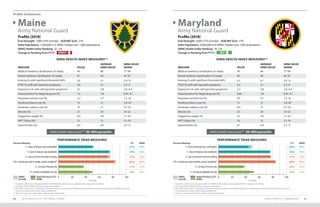
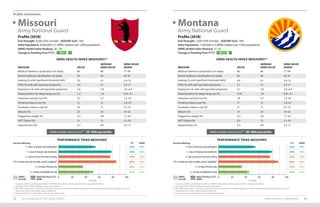
  • 59.
    HEALTH OF THEARNG FORCE REPORT 2019