Create a healthier force for tomorrow.
HEALTH
FORCE
OF THE
2019
— U.S.Army Public Health Center —
Approved for public release,
distribution unlimited.
Introduction and Demographics
Medical Metrics
Environmental Health Indicators
Performance Triad
Installation Health Index, Rankings, and Profiles
Appendices
2
15
54
74
84
140
CONTENTS
INTRODUCTION 1
INTRODUCTION 32 2019 HEALTH OF THE FORCE REPORT
Our Purpose
Empower Army senior leaders with knowledge and
context to improve Army health and Soldier readiness.
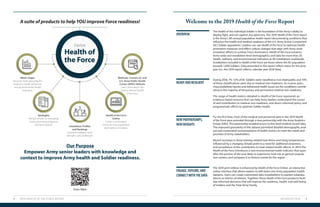
A suite of products to help YOU improve Force readiness!
Metric Pages
Discover more about health
readiness, health behaviors,
and environmental health
indicators.
Spotlights
Review articles on emerging
issues, promising programs,
and local actions.
Installation Profiles
and Rankings
Explore installation-level
strengths and challenges.
Methods, Contact Us, and
U.S. Army Public Health
Center (APHC) Website
Learn more about the
science behind Health
of the Force.
Health of the Force
Online
Create customizable
charts for your population
and metrics of interest.
Explore
Health of
the Force
Scan Here
Welcome to the 2019 Health of the Force Report
OVERVIEW
READYANDRESILIENT
NEWPARTNERSHIPS,
NEWINSIGHTS
ENGAGE,EXPLORE,AND
CONNECTWITHTHEDATA
The health of the individual Soldier is the foundation of the Army’s ability to
deploy, fight, and win against any adversary. The 2019 Health of the Force report
is the Army’s 5th annual population health report documenting conditions that
influence the health and medical readiness of the U.S. Army Active Component
(AC) Soldier population. Leaders can use Health of the Force to optimize health
promotion measures and effect culture changes that align with Army mod-
ernization efforts to achieve Force dominance. Health of the Force presents
Army-wide and installation-level demographics and data for more than 20
health, wellness, and environmental indicators at 40 installations worldwide.
Installations included in Health of the Force are those where the AC population
exceeds 1,000 Soldiers. Data presented in this report reflect status for the prior
year (i.e., the 2019 report reflects calendar year 2018 data).
During 2018, 7%–12% of AC Soldiers were classified as non-deployable, and 70%
of these classifications were due to medical non-readiness. As in prior years,
musculoskeletal injuries and behavioral health issues are the conditions contrib-
uting to the majority of temporary and permanent medical non-readiness.
The range of health metrics detailed in Health of the Force represents an
evidence-based resource that can help Army leaders understand the causes
of and contributors to medical non-readiness, and direct informed policy and
programmatic efforts to optimize Soldier health.
For the first time, most of the medical and personnel data in the 2019 Health
of the Force were provided through a new partnership with the Army Analytics
Group (AAG). This partnership enabled access to line-level medical record data.
The improved granularity of this dataset permitted detailed demographic anal-
ysis and customized summarizations of health metrics to meet the needs and
priorities of Army stakeholders.
Recent increases in Army training-related heat illness and rising temperatures
influenced by a changing climate point to a need for additional awareness
and surveillance of the contributors to heat-related health effects. In 2019, the
Health of the Force introduces a new environmental health indicator that quan-
tifies the portion of the year likely to experience heat risk at garrison popula-
tion centers, and compares it to historic trends for the region.
The 2019 print edition is enhanced by Health of the Force Online, an interactive
online interface that allows readers to drill down into Army population health
datasets. Users can create customized data visualizations to explore subpopu-
lations or metrics of interest. Together, these Health of the Force products facili-
tate informed decisions that will improve the readiness, health, and well-being
of Soldiers and the Total Army Family.
INTRODUCTION 54 2019 HEALTH OF THE FORCE REPORT
ARMY PUBLIC HEALTH:
A FORCE MULTIPLIER IN MULTI-DOMAIN OPERATIONS
S P O T L I G H T
T
HE U.S. ARMY IS FACING A CHANGING CHAR-
acter of war. This challenge necessitates a rapid,
revolutionary response involving modernization
and a new operational concept. Multi-Domain Oper-
ations (MDO), the Army’s new operational concept,
asserts that the Army is now in constant competition
worldwide, both as an institution and as a Force. Its
success depends on its ability to embrace the ambigu-
ous and the unknown. To become a more lethal Force,
Soldiers, as well as their equipment, must modernize.
Army Public Health is uniquely-positioned to play an
integral part in meeting this challenge.
Army Public Health brings the synergy of multiple
health domains to confront the complex and even
chaotic challenges of the Army’s future fight. Com-
prehensive, anticipatory interventions are required
to reduce the impact of injury and prepare the Force
to remain agile and resilient in changing conditions.
Proper sleep, exercise, and nutrition sustain and
strengthen the modern Soldier for optimal performance.
However, potential hazards also accompany modern-
ization priorities. Long-range precision fires, next-gen-
eration vehicles, and vertical lift platforms can possess
known and emerging hazards. Army Public Health is
a vital member of the cross-functional team helping
to identify potential occupational hazards early in the
acquisition cycle to mitigate Soldier exposure and
enhance performance. For example, Soldier exposures
to vibration and non-neutral postures in combat
vehicles risk spinal injury and musculoskeletal fatigue.
Army Public Health is working closely with program
managers to improve designs for future systems. In
addition, sound levels from a shoulder-fired weapon
system (such as the AT-4) are sufficiently loud to
rupture the eardrum and cause irreparable hearing
damage to unprotected or poorly protected Soldiers.
Proper use of hearing protection in both training and
combat when using these weapons is critical to Sol-
dier hearing health.
The unforgiving nature of combat and uncertain inter-
national environment demand an integrated health
approach that is adaptive and flexible. Army Public
Health strives to deliver optimal preventive and risk
mitigation services as a force multiplier in MDO.
Behavioral Health
Chronic Disease
Injury
Obesity
….
↓
Poor air quality
2 sday /year
0.65 mg/L
Day-
High
Lyme disease risk
High
Fort (Example)
….
↓
The Lyme disease risk indicator shows
vector risk using Army and municipal tick
surveillance data.
Health metric and population filters allow for dynamic changes to charts and graphs.
https://tiny.army.mil/r/tMG6/
0%
5%
10%
15%
Percent
ONLINE
HEALTH
FORCE
OF THE
Hover over charts and graphs to get insight into the data and measurements.
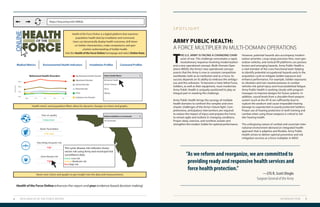
Health of the Force Online is a digital platform that examines
population health data by installation and command.
Users can dynamically display health outcomes, drill down
on Soldier characteristics, make comparisons, and gain
a better understanding of Soldier health.
Visit the Health of the Force Online homepage and select Online Data.
”As we reform and reorganize, we are committed to
providing ready and responsive health services and
force health protection.”
—LTG R. Scott Dingle
Surgeon General of the Army
Report Highlights
2019 HEALTH OF THE FORCE DEMOGRAPHICS:
INJURY
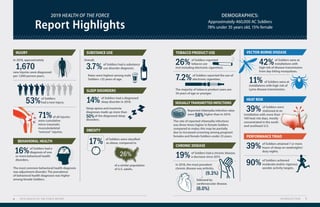
In 2018, approximately
of Soldiers
had a new injury.
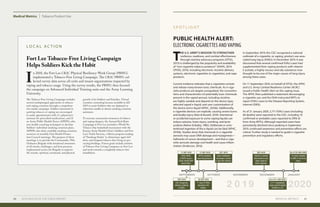
new injuries were diagnosed
per 1,000 person-years.
1,670
53%
71%of all injuries
were cumulative
micro-traumatic
musculoskeletal
“overuse” injuries.
39%
HEAT RISK
of Soldiers were
stationed at an
installation with more than
100 heat risk days, mostly
concentrated in the south
and southeast U.S.
INTRODUCTION 76 2019 HEALTH OF THE FORCE REPORT
of Soldiers were at
installations with
high risk of disease transmission
from day-biting mosquitoes.
of Soldiers were at
installations with high risk of
Lyme disease transmission.
42%
11%
VECTOR-BORNE DISEASE
BEHAVIORAL HEALTH
of Soldiers had a
diagnosis of one
or more behavioral health
disorders.
The most common behavioral health diagnosis
was adjustment disorder. The prevalence
of behavioral health diagnoses was higher
among female Soldiers.
16%
OBESITY
of a similar population
of U.S. adults.
26%
17% of Soldiers were classified
as obese, compared to
SUBSTANCE USE
of Soldiers had a substance
use disorder diagnosis.
Overall,
Rates were highest among male
Soldiers <25 years of age.
3.7%
SLEEP DISORDERS
of Soldiers had a diagnosed
sleep disorder in 2018.
Sleep apnea and insomnia
diagnoses made up more than
50%of the diagnosed sleep
disorders.
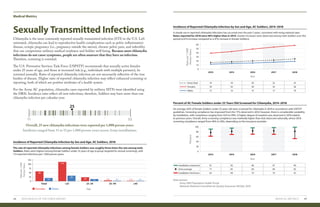
14% SEXUALLYTRANSMITTED INFECTIONS
Reported chlamydia infection rates
were 58%higher than in 2014.
The rate of reported chlamydia infections
was three times higher in female Soldiers
compared to males; this may be partially
due to increased screening among pregnant
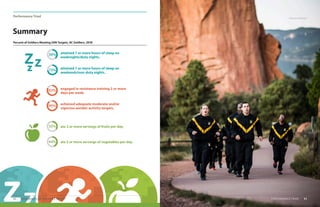
females and female Soldiers under 25 years. PERFORMANCE TRIAD
of Soldiers attained 7 or more
hours of sleep on weeknights/
duty nights.
of Soldiers achieved
moderate and/or vigorous
aerobic activity targets.
39%
90%
Z
z
z
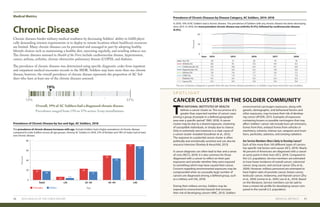
CHRONIC DISEASE
In 2018, the most prevalent
chronic disease was arthritis,
followed by
cardiovascular disease.
of Soldiers had a chronic disease,
a decrease since 2015.19%
(9.3%)
(6.0%)
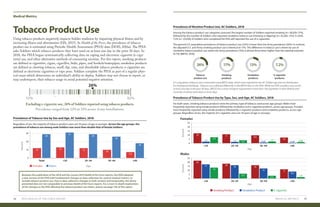
TOBACCO PRODUCT USE
of Soldiers reported the use of
electronic cigarettes.
The majority of tobacco product users are
34 years of age or younger.
7.2%
26%of Soldiers reported
tobacco use
(not including electronic cigarettes).
Approximately 460,000 AC Soldiers
78% under 35 years old, 15% female
INTRODUCTION 98 2019 HEALTH OF THE FORCE REPORT
Demographics
POPULATION DISTRIBUTIONS
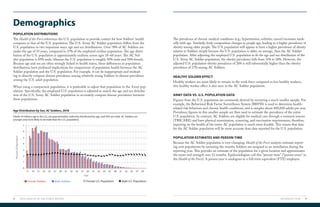
The Health of the Force references the U.S. population to provide context for how Soldiers’ health
compares to that of the U.S. population. The U.S. Army AC Soldier population differs from the
U.S. population in two important ways: age and sex distributions. Over 78% of AC Soldiers are
under the age of 35 years, compared to 37% of the employed civilian population. The age distri-
bution of the U.S. population is approximately uniform across ages 18–60 years. The AC Sol-
dier population is 85% male, whereas the U.S. population is roughly 50% male and 50% female.
Because age and sex are often strongly linked to health status, these differences in population
distributions have profound implications for comparisons of population health between the AC
Soldier population and the U.S. population. For example, it can be inappropriate and mislead-
ing to directly compare disease prevalence among relatively young Soldiers to disease prevalence
among the U.S. adult population.
When using a comparison population, it is preferable to adjust that population to the Army pop-
ulation. Specifically, the employed U.S. population is adjusted to match the age and sex distribu-
tion of the U.S. Army AC Soldier population to accurately compare disease prevalence between
these populations.
HEALTHY SOLDIER EFFECT
Healthy workers are more likely to remain in the work force compared to less healthy workers;
this healthy worker effect is also seen in the AC Soldier population.
ARMY DATA VS. U.S. POPULATION DATA
Figures from the U.S. population are commonly derived by surveying a much smaller sample. For
example, the Behavioral Risk Factor Surveillance System (BRFSS) is used to determine health-
related risk behaviors and chronic health conditions, and it samples about 400,000 adults per year.
Prevalence figures in this smaller sample are then used to estimate the prevalence of the entire
U.S. population. In contrast, AC Soldiers are eligible for medical care through a common insurer
(TRICARE) and have physical examination, screening, and vaccination requirements; therefore,
reporting on the health of the entire AC population is much more feasible. This means that data
for the AC Soldier population will be more accurate than data reported for the U.S. population.
POPULATION ESTIMATES AND PERSON-TIME
Because the AC Soldier population is ever-changing, Health of the Force analysts estimate report-
ing unit populations by summing the months Soldiers are assigned to an installation during the
reporting year. This provides an estimate of the population for a given location and approximates
the mean end strength over 12 months. Epidemiologists call this “person-time” (“person-years” in
the Health of the Force). A person-year is analogous to a full-time equivalent (FTE) employee.
The prevalence of chronic medical conditions (e.g., hypertension, arthritis, cancer) increases mark-
edly with age. Similarly, body composition changes as people age, leading to a higher prevalence of
obesity among older people. The U.S. population will appear to have a higher prevalence of obesity
relative to Soldiers simply because the U.S. population is older, on average, than the AC Soldier
population. After adjusting the employed U.S. population to fit the age and sex distribution of the
U.S. Army AC Soldier population, the obesity prevalence falls from 31% to 26%. However, the
adjusted U.S. population obesity prevalence of 26% is still substantially higher than the obesity
prevalence of 17% among AC Soldiers.
Age Distribution by Sex, AC Soldiers, 2018
Adults of military age in the U.S. are approximately uniformly distributed by age, and 50% are male. AC Soldiers are
younger and more likely to be male than the U.S. population.
0
17 19 21 23 25 27 29 31 33 35 37 39 41 43 45 47 49 51 53 55 57 59
1
2
3
5
4
6
7
PercentofPopulation
Age
Female Soldiers Male Soldiers Female U.S. Population Male U.S. Population
10 2019 HEALTH OF THE FORCE REPORT
BETTER INITIATIVES. HEALTHIER FORCE.
MOVING FROM INTUITION-BASED TO EVIDENCE-BASED
PROGRAM DECISION-MAKING
S P O T L I G H T
T
HERE’S TRUTH IN DATA! LEADERS THROUGH-
out the Army use the Health of the Force report
to identify areas in which they are doing well
and opportunities to improve the readiness, health,
and well-being of their Soldiers and the Total Army
Family. If a potential concern is identified, how can
leaders develop and implement a solution that will
likely have a positive impact? How do they know if
these initiatives are effective?
The APHC, along with the U.S. Army SHARP Ready &
Resilient Directorate (SR2), recently released the U.S.
Army’s Ready and Resilient Initiative Evaluation Process
(IEP Guide) (APHC, 2019a). The IEP is an initiative
planning, evaluation, and review process that will help
Army leaders develop and expand effective initiatives
aimed at improving the health of the Total Army Family.
The IEP Guide was created based on best practices
from the fields of business, public health, strategic
planning, and prevention science. It uses concepts
from public health and the Military Decision Making
Process (MDMP) to allow readers with different
educational backgrounds and experiences to leverage
their current knowledge and skills when developing,
implementing, and evaluating initiatives. The Guide
is constructed using a modular format so users can
go directly to the component most relevant for
their phase of initiative development. Each section
includes a rationale, instructions, tools, examples,
templates, and external resources.
The IEP Guide is available to anyone who is interested
in developing, implementing, or expanding an ini-
tiative to improve the health, readiness, or resilience
of an Army population. The Guide will walk initiative
developers through each stage of initiative planning,
with tools they can use to document the initiative’s
development, implementation, and evaluation activ-
ities. The Guide can help ensure the initiative is well
planned, is a good steward of resources, collects the
right data, and provides evidence to determine its
effectiveness. The IEP Guide’s systematic planning
process allows leaders at all Army levels to make
evidence-based resource decisions when considering
whether an initiative should be implemented, main-
tained, or expanded.
Leaders who need to make a decision about an ini-
tiative or are looking to develop and implement a
solution to any challenge identified within this report
can use the IEP Guide to ensure their initiative leads to
a healthier Force.
INTRODUCTION 11
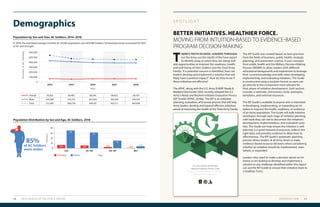
Population by Sex and Year, AC Soldiers, 2014–2018
Population Distribution by Sex and Age, AC Soldiers, 2018
In 2018, the estimated average monthly AC Soldier population was 463,698 Soldiers. Enlisted personnel accounted for 80%
of AC end strength.
Demographics
0
100,000
200,000
300,000
400,000
500,000
600,000
2014 2015 2016 2017 2018
Female
Male
Total
68,652
395,059
463,711
69,274
394,424
463,698
68,184
401,003
469,187
70,302
441,088
511,389
60,485
416,274
484,759
Year
NumberofACSoldiers
<25 25–34 35–44 45+
0
10
20
40
30
6.4 5.6
31
2.4
35
15
0.6
3.8
Age
Percent
85%
of AC Soldiers
were males
Females Males
EPIDEMIOLOGICAL CONSULTATIONS:
INVESTIGATING EMERGING THREATS TO THE
ARMY’S HEALTH
S P O T L I G H T
T
HE U.S. ARMY PUBLIC HEALTH CENTER
(APHC) conducts Epidemiological Consulta-
tions (EPICONs) to provide expert advice and
assistance for medical situations impacting readiness
or public health across the Army. During an EPICON,
a problem (e.g., infectious disease outbreak, environ-
mental health issue, or other emerging health risk) is
verified through consideration of a differential list of
potential causes, and recommendations are gener-
ated to remedy and prevent the problem.
	
Multi-disciplinary EPICON teams are strategically
staffed based on the nature, scope, and urgency of
the mission and can contain personnel with expertise
in medicine, epidemiology, public health, psychology,
social work, sociology, public health nursing, or data
management. Consultation services include advice or
direct participation in the steps of the epidemiologic
investigation process (e.g., design, data collection,
data entry, analysis, and interpretation). Investigation
services can include, but are not limited to, review
and analysis of Army administrative data, interviews,
surveys, focus groups, and geospatial analysis. The
scope of EPICON activities includes investigation of
infectious and occupational diseases; behavioral and
social health; chronic diseases; injuries; environmental
exposures and diseases; and other acute and chronic
conditions of public health interest. As a consulta-
tion service, the EPICON team is not responsible or
accountable for managing the public health situation
but instead offers possible solutions in the form of
actionable recommendations for control and/or pre-
vention of public health issues.
	
EPICONs are typically requested by line leaders or
commanders when there is a perceived increase in
disease, injury, or a behavioral health outcome that
negatively impacts Soldier health and readiness.
As an entity of the U.S. Army Medical Command
(MEDCOM), the APHC does not have the authority to
conduct EPICONs without a formal tasking. Requests
for EPICONs should originate through the senior com-
mander and be routed through the U.S. Army Medical
Command, Office of the Surgeon General to initiate a
formal tasking to the APHC.
12 2019 HEALTH OF THE FORCE REPORT
BITE BACK:
YOUR DENTAL CARIES RISKS
S P O T L I G H T
O
RAL HEALTH IS COMPROMISED BY THE
presence of dental caries, more commonly
known as tooth decay. Tooth decay is a pre-
ventable yet highly prevalent chronic disease caused
by a breakdown of tooth structure as a result of the
acid produced by bacteria. Identification of those at
high risk of tooth decay is an effective means of pre-
venting and controlling this disease. An assessment
of a Soldier’s risk of tooth decay is performed at the
periodic dental examination. Multiple factors deter-
mine a Soldier’s risk, including oral hygiene habits,
diet, tobacco use, salivary flow, and clinical signs that
tooth decay is or has been present.
	
The High Caries Risk (HCR) program is designed to
identify and address individual risk factors for future
tooth decay. Enrollment and participation in this
program is voluntary for Soldiers determined to be
at high risk of developing tooth decay; however,
high-risk patients are strongly encouraged to take
advantage of it. The HCR program offers a multitude
of services, the first of which is a dietary analysis
that identifies a Soldier’s specific risk factors as they
relate to food and beverage consumption, hydration,
tobacco product use type and amount, and sleep
adequacy. A history of inadequate sleep may be a
sign of sleep apnea and accompanied by symptoms
which increase the risk of developing tooth decay
including dry mouth or bruxism (teeth grinding).
Once specific risk factors have been identified, the
Soldier will receive nutrition counseling. The dental
provider will review the habits that are increasing
the Soldier’s risk of dental decay and suggest ways
to improve them. Other methods of intervention and
prevention included in this program are professional
fluoride varnish treatments, sealants on at-risk tooth
surfaces, prescription fluoride and antimicrobial
products, and an explanation of the disease etiol-
ogy. Upon completing the program, the Soldier will
receive a dental decay risk re-assessment.
	
The focus of the HCR program is to identify and
address a Soldier’s individual dental decay risk fac-
tors to prevent the disease before it starts. Disease
prevention is just one of many strategies used to
improve and sustain the dental readiness and oral
health of the Force. Improving the oral health of the
Force will strengthen the health of the Nation.
INTRODUCTION 13
Taking the first step towards reducing the risk of dental decay.
“People are always my #1 priority.We must take care
of our people and treat each other with dignity
and respect. It is our people who will deliver on our
readiness, modernization, and reform efforts.”
—General James C. McConville
Chief of Staff of the Army
U.S.Armyphoto,APHC
After adding the helicopter to the “Vibration Exposure”
vignette, I thought it kind of strange to have back to back
images of choppers in the report. As much as I love this
photo, I am considering swapping it out for something
else just for a change of subject matter.
U.S. Army photo
Medical Metrics
INJURY
TOBACCO PRODUCT USE
BEHAVIORAL HEALTH
HEAT ILLNESS
HEARING
SUBSTANCE USE
SLEEP DISORDERS
OBESITY
SEXUALLY TRANSMITTED INFECTIONS
CHRONIC DISEASE
Year
Age
Medical Metrics
Injury
Injury is a significant contributor to the Army’s healthcare burden, impacting medical readiness
and Soldier health. Injuries were defined as damage or interruption of body tissue function
caused by an energy transfer that exceeds tissue tolerance suddenly (acute trauma) or gradually
(cumulative micro-trauma) (APHC, 2017a). Each year, over half of all Soldiers experience an
injury or injury-related musculoskeletal (MSK) condition, accounting for approximately 2
million medical encounters and roughly 10 million days of limited duty. In Health of the Force,
injury incidence was estimated using specific diagnostic codes from inpatient and outpatient
medical encounter records in the Military Health System Data Repository (MDR). Cumulative
micro-traumatic MSK injuries are referred to as “overuse” injuries.
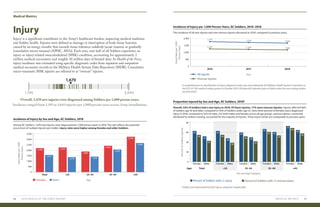
Incidence of Injury by Sex and Age, AC Soldiers, 2018
Among AC Soldiers, 1,670 new injuries were diagnosed per 1,000 person-years in 2018. The rate reflects the potential
occurrence of multiple injuries per Soldier. Injury rates were higher among females and older Soldiers.
InjuryRateper1,000
Person-Years
Overall, 1,670 new injuries were diagnosed among Soldiers per 1,000 person-years.
Incidence ranged from 1,195 to 3,043 injuries per 1,000 person-years across Army installations.
1,670
1,195 3,043
Total <25 25–34 35–44 ≥45
0
500
1,000
2,000
3,000
1,500
2,500
3,500
2,198 2,263
1,894
1,577
1,4181,379
2,453
2,074
2,664
3,246
MEDICAL METRICS 1716 2019 HEALTH OF THE FORCE REPORT
Incidence of Injury per 1,000 Person-Years, AC Soldiers, 2016–2018
The incidence of all new injuries and new overuse injuries decreased in 2018, compared to previous years.  
InjuryRateper1,000
Person-Years
2016 2017 2018
0
500
1,000
1,500
2,000
1,777
1,257
1,716
1,219
1,670
1,185
All injuries
Overuse injuries
Proportion Injured by Sex and Age, AC Soldiers, 2018*
Overall, 53% of Soldiers had a new injury in 2018. Of these injuries, 71% were overuse injuries. Injuries affected 66%
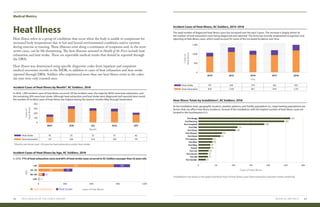
of Soldiers age 45 and older, compared to 50% of Soldiers under age 25. Sixty-three percent of females had a diagnosed
injury in 2018, compared to 52% of males. For both males and females across all age groups, overuse injuries, commonly
attributed to military training, accounted for the majority of injuries. These injury trends are comparable to previous years.
Percent of Soldiers with ≥1 injury Percent of Soldiers with ≥1 overuse injuryPercentofSoldiersInjured
Sex and Age Category
Total <25 25–34 35–44 ≥45
0
20
40
60
80
63
55
52
43
63
55
48
39
60
52 50
42
67
61 61
54
73
69
65
58
Age:
Females Males Females Males Females Males Females Males Females Males
*Soldiers are represented in both injury categories if applicable.
A comprehensive re-classification of injury diagnosis codes was necessitated by the Military Health System’s transition to
the ICD-10-CM medical coding system in October 2015. All three full calendar years of data under the new coding system
are presented.
Females Males
Medical Metrics Injury
MEDICAL METRICS 1918 2019 HEALTH OF THE FORCE REPORT
OCCUPATIONAL PHYSICAL ASSESSMENT TEST
AND INJURY RISK
REPORT CHARACTERIZES INJURY
IN TRAINEE POPULATIONS
S P O T L I G H TS P O T L I G H T
I
N 2017, THE U.S. ARMY IMPLEMENTED THE
Occupational Physical Assessment Test (OPAT) for
all recruits (HQDA, 2016). The OPAT is a 4-event
battery of physical fitness assessments that sets min-
imum fitness standards for entry into the Army and
for each military occupational specialty (MOS). The
OPAT is a tool that matches recruits with an MOS for
which they should be physically qualified by the end
of Initial Entry Training (IET) (i.e., BCT and OSUT).
	
Each Army MOS was assigned a physical demand
category (PDC) of Heavy (highest PDC), Significant, or
Moderate (lowest passable PDC) based on the MOS’s
physically demanding tasks. OPAT fitness standards
were established for each PDC. To begin their IET,
recruits must meet at least the Moderate PDC stan-
dard on each OPAT event, thus establishing a mini-
mum fitness standard for both entry into the Army
and for each MOS.
	
Studies show lower injury risks for trainees and Sol-
diers with higher levels of physical fitness, particularly
aerobic fitness (Knapik et al., 2001). Training to pass
the OPAT at the required PDC may have a positive
impact on training-related injury rates through fitness
improvement, especially during IET. Additionally,
OPAT implementation may reduce overall injury rates
because recruits are matched with the MOS for which
they should be physically qualified by the end of IET.
	
The APHC and TRADOC monitor the association of
OPAT performance during recruitment with injury
risk during IET. For example, injuries during BCT were
identified from the electronic health records for train-
ees who took the OPAT before starting BCT in 2017.
For both sexes, the percentage of injured trainees
increased as OPAT performance decreased from the
I
NJURY RATES AMONG ARMY TRAINEES HAVE
historically been 1.3 to 1.7 times higher than rates
for AC Soldiers (APHC, 2018). To better understand
injuries in the trainee population, the Training-Related
Injury Report (TRIR) was developed in the early 2000s
to monitor monthly Basic Combat Training (BCT)
injury rates at Forts Benning, Jackson, Leonard Wood,
and Sill.
The TRIR focuses on the most common MSK injuries in
training populations (i.e., injuries affecting the lower
back and lower extremities) and initially provided
monthly rates by sex for each installation. In 2018,
the APHC collaborated with the U.S. Army Training
and Doctrine Command (TRADOC) Surgeon’s Office,
The Office of the Surgeon General (OTSG) Physical
Performance Service Line, and the Armed Forces
Health Surveillance Branch (AFHSB) of the Defense
Health Agency (DHA) to enhance this monitoring tool
by reporting TRIR metrics by training cycle. These
metrics were reported for each BCT cycle at all four
installations and for the One Station Unit Training
(OSUT) cycles conducted at Forts Benning and Leon-
ard Wood.
The new Quarterly TRIR provides the proportion of
trainees (males and females separately) that were
injured during each training cycle of BCT and OSUT
at each training center. Data visualizations in the
Heavy PDC standard to the Moderate PDC standard
(see figure). Among males, trainees who met only
the Significant and Moderate PDC standards had
statistically significant higher injury risks (19% and
23% higher, respectively) compared to trainees who
met the Heavy PDC standard. Among females, train-
ees who met the Moderate PDC standard had a 7%
higher injury risk compared to trainees who met the
Heavy PDC standard (APHC, 2018).
Quarterly TRIR allow leaders to monitor training cycle-
based and battalion-level injury incidence (proportion
of trainees that were injured) for the most recent
quarter and the previous 12 months. By providing
more actionable metrics, the new format allows
leaders to compare injury rates across cycles, units,
and installations.
	
Figures 1 and 2 are examples of BCT installation- and
battalion-level statistical process control charts,
respectively, from the Quarterly TRIR. They show
the proportion of trainees that were injured in each
training cycle conducted between July 2018 and June
2019. Cycles with data points at or above the red line
had statistically significantly larger proportions of
injured trainees compared to the sex-specific 2017
mean for all BCT cycles (2 standard deviations (2SD)
above the mean). Training units with large propor-
tions of injured trainees in consecutive training
cycles, such as Battalion Y, should prioritize strategic
initiatives to reduce injuries. Data at or below the
green line represent significantly smaller proportions
of injured trainees compared to the sex-specific
mean for training cycles (2SD below the mean). Any
initiatives implemented to achieve these smaller
proportions of injured Soldiers, such as changes to
training intensity or participation in other strategic
injury reduction initiatives, should be shared with
leaders in other training units (Schuh et al., 2017).
Notes:
Increased risk of injury presented within PDC bars was calculated
from the risk ratio (RR), comparing the percentage of injured train-
ees in the designated PDC to the Heavy PDC within sex. RRs (95%
confidence interval) were as follows:
•	 Females (Significant): 1.04 (0.97–1.12).
•	 Females (Moderate): 1.07 (1.00–1.15).
•	 Males (Significant): 1.19 (1.12–1.27).
•	 Males (Moderate): 1.23 (1.15–1.31).
Heavy
Percent Injured Baseline Mean 2SD higher than BCT mean 2SD lower than BCT mean
Significant Moderate
InjuryRiskRatio
(ComparedtoHeavyPDC)
ProportionInjured
ProportionInjured Increased Injury Risk in BCT by Overall OPAT
Performance, Fiscal Year (FY)18
Injured Female Soldiers by BCT Training Cycle,
Installation X, July 2018–June 2019
Injured Male Soldiers by BCT Training Cycle,
Battalion Y, July 2018–June 2019
20
40
0
60
80
July
2018
June
2019
10
20
30
0
40
50
July
2018
June
2019
0.5
1.0
0.0
1.5
Females
(n=3,852)
Males
(n=13,060)
1.00
1.19 1.23
1.00 1.04 1.07
MEDICAL METRICS 21
Medical Metrics Injury
20 2019 HEALTH OF THE FORCE REPORT
WHO REPORTS THE “MOS”T LOW BACK PAIN?
S P O T L I G H T
M
SK CONDITIONS RELATED TO EXPOSURE
to force, vibration, non-neutral postures,
duration, and repetition during occupa-
tional tasks can lead to discomfort and acute or
chronic disability. Back injuries have high incidence
and high associated costs and are frequently linked to
exposure to occupational hazards. From 2016 through
2018, low back pain had the highest number of asso-
ciated encounters and costs of all diagnoses for AC
Soldiers (with the exception of encounters associated
with immunizations and periodic health assessment
office visits).
	
Even physically fit Soldiers may face undue risk of
MSK discomfort and injury in physically demanding
jobs. Occupational work-related MSK hazards are
present in many Soldier job tasks. Ergonomic changes
to designs or equipment may reduce some injury
burden (Hollander & Bell, 2010). Evaluating Soldier
exposure to external ergonomic risk factors, as well
as preventing injury through job task assessment
and equipment or job redesign, can reduce overall
exposure and minimize the occurrence and severity
of injury and discomfort. Such actions support the
Army’s environment, safety, and occupational health
(ESOH) strategy of enhancing mission effectiveness
and resilience by ensuring that physical environment
and work processes protect Soldiers, Civilians, and
Families (DA, 2017a).
	
When considering only conditions of the MSK sys-
tem and connective tissue, the five MOS groups with
the highest number of Soldier encounters for MSK
conditions, and highest percentage of the population
with reported encounters, were Supply Administra-
tion, Motor Vehicle Operators, Automotive (general),
Medical Care and Treatment (general), and Infantry
(general). For each of these MOSs, low back pain was
the most frequent MSK diagnosis (see figure).
Percent of
Occupational Group
Percent of Occupational Group with Encounters
by Body Part, 2018
Data were extracted from the Military Health System
Management and Reporting Tool.
Pain in right hip
Pain in ankles Pain in shoulders
Pain in knees Neck pain
Low back pain
10 20 300 40 50 60
Infantry (General)
Motor Vehicle Operators
Automotive (General)
Medical Care
and Treatment (General)
Supply Administration
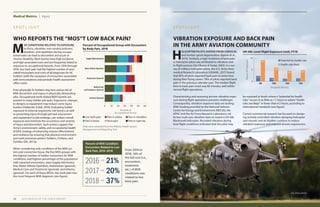
VIBRATION EXPOSURE AND BACK PAIN
IN THE ARMY AVIATION COMMUNITY
S P O T L I G H T
H
ELICOPTER PILOTS SUFFER FROM CERVICAL
and lumbar spinal degeneration (Byeon et al.,
2013). Similarly, a high incidence of back pain
in helicopter pilots was attributed to vibration and
in-flight posture (De Oliveira & Nadal, 2005). In a sur-
vey of military helicopter pilots, the U.S. Army Aero-
medical Research Laboratory (USAARL, 2017) found
that 85% of pilots reported back pain at some time
during their flying career; 78% of pilots reported back
pain in the previous calendar year. The median flight
time to back pain onset was 60 minutes, well within
normal flight operations.
	
Characterizing and assessing aircrew vibration expo-
sure during flight operations presents challenges.
Consequently, vibration exposure data are lacking.
With funding provided by the National Defense
Center for Energy and Environment (NDCEE), the
APHC and the Air Force Research Laboratory col-
lected multi-axis vibration data on board a UH-60L
Blackhawk helicopter. Recorded vibration during
level flight conditions indicated that the pilot may
Airspeed (Knots)
HoursofExposure
UH-60L Level Flight Exposure Limit, FY18
Potential for health risks
Health risks likely
5
0
10
100 120 14580
2.3
9.1
1.4
5.8
1.1
4.5
1.2
4.7
be exposed to levels where a “potential for health
risks” occurs in as little as 1.1 hours or where “health
risks are likely” in fewer than 4.5 hours, according to
international standards (see figure).
	
Current commercial research has focused on design-
ing actively controlled vibration damping helicopter
seat mounts and air bladder cushions to reduce
vibration exposure and improve aircrew ergonomics.
From 2016 to
2018, 16% of
the full cost (i.e.,
encounters,
treatment,
etc.) of MSK
conditions was
related to low
back pain.
U.S. Army photo
21%2016
2017 20%
2018 37%
Percent of MSK Condition
Encounters Related to Low
Back Pain, 2016–2018
Percent
Age
Medical Metrics
MEDICAL METRICS 2322 2019 HEALTH OF THE FORCE REPORT
Behavioral Health
The stressors of military life can strongly influence the psychological well-being of Soldiers and
their Families. Behavioral health (BH) conditions, particularly when unrecognized and untreated,
can lead to medical non-readiness, early discharge from the Army, suicidal behavior, and many
other outcomes.
The prevalence of BH disorders was estimated using specific diagnostic codes from inpatient and
outpatient medical encounter records in the MDR. In 2018, 16% of Soldiers had a diagnosis of
one or more BH disorders, which include adjustment disorder, mood disorder, anxiety disorder,
posttraumatic stress disorder (PTSD), substance use disorders (SUDs), personality disorders, and
psychoses.
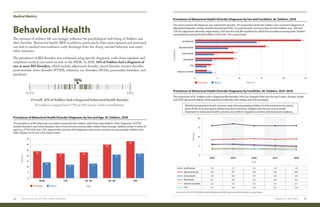
Prevalence of Behavioral Health Disorder Diagnoses by Sex and Age, AC Soldiers, 2018
The prevalence of BH diagnoses was higher among female Soldiers (24%) than male Soldiers (14%). Diagnoses of PTSD,
anxiety disorders, and mood disorders were more common among older Soldiers than younger Soldiers (under 35 years of
age) (e.g., PTSD 8.0% and 1.4%, respectively), whereas SUD diagnoses were more common among younger Soldiers than
older Soldiers (4.1% and 2.2%, respectively).
Females
Females
Males
Males
Overall, 16% of Soldiers had a diagnosed behavioral health disorder.
Prevalence ranged from 9.5% to 24% across Army installations.
16%
9.5% 24%
Total <25 25–34 35–44 ≥45
0
5
10
20
30
15
25
35
24
22 23
14
1312
30
21 22
33
Percent
Prevalence of Behavioral Health Disorder Diagnoses by Sex and Condition, AC Soldiers, 2018
The most common BH diagnosis was adjustment disorder. The proportion of female Soldiers who received a diagnosis of
adjustment disorder, anxiety disorder (excluding PTSD), or mood disorder was twice that of male Soldiers (e.g., 16% and
7.5% for adjustment disorder, respectively). SUD was the only BH condition for which the prevalence among male Soldiers
exceeded that among female Soldiers (3.9% and 2.7%, respectively).
Condition
Any BH disorder
Adjustment disorder
Anxiety disorder
Mood disorder
PTSD
Substance use disorder
2550 10 15 20
24
14
16
7.5
8.8
4.3
8.7
3.9
3.7
2.6
2.7
3.9
Prevalence of Behavioral Health Disorder Diagnoses by Condition, AC Soldiers, 2014–2018
The proportion of AC Soldiers with a diagnosed BH disorder (16%) has changed little over the last 5 years. Anxiety, mood,
and PTSD decreased slightly, while adjustment disorder held steady, and SUD increased.
Percent
0
5
10
15
20
2014 2015 2016 2017 2018
Any BH disorder 16 161616 17
Adjustment disorder 8.6 8.88.98.4 8.7
Mood disorder 4.9 4.65.26.1 5.8
Anxiety disorder 5.3 5.05.75.9 6.0
PTSD 3.1 2.83.53.7 3.6
Substance use disorder 3.7 3.73.33.2 3.3
Year
Less than 1% of AC Soldiers were diagnosed with a personality disorder or psychosis.
Identifying behavioral health concerns early and encouraging Soldiers to seek treatment are priority
goals of the Army and lead to better long-term outcomes. Soldiers who do not receive timely
treatment for behavioral health concerns are at risk for negative outcomes and decreased readiness.
ADDRESSING THE STIGMA OF BEHAVIORAL
HEALTH TO IMPROVE SOLDIER READINESS
S P O T L I G H T
D
ESPITE MANY EFFORTS TO IMPROVE ACCESS
to behavioral health treatment, barriers
remain, and Soldiers may not seek care when
they need it. Barriers to care include stigma (e.g.,
perceptions that one will be seen as weak), organiza-
tional barriers (e.g., appointment availability, work/
mission priorities), and negative perceptions that
Soldiers may have about the utility or the effec-
tiveness of treatment (Adler et al., 2015; Hoge et.
al., 2014). In response, the Department of Defense
(DOD) and the Army have initiated numerous
programs to enhance access and reduce behavioral
health stigma (Hoge et al., 2016).
	
One of the key messages for Soldiers and leaders is
that seeking care is a sign of strength that can sup-
port a Soldier’s career, marriage, relationships, or life
goals. Providers are trained to maintain a balance
between the requirements (legal and ethical) to
provide high-quality, confidential care and the orga-
nizational and unit mission needs for a ready Force.
If a behavioral health condition interferes with a
Soldier’s ability to complete the mission, or there are
serious safety concerns, specific requirements man-
date that clinicians provide limited information to the
commander about duty restrictions (e.g., reducing
nighttime duty to stabilize sleep, or restricting access
to weapons) through the eProfile system to ensure
that both the Soldier and the unit receive appropriate
levels of support. Most behavioral healthcare visits do
not result in lost duty days or the need for eProfiles,
but rather enable Soldiers to receive the support they
need to maintain health and wellness.
	
Many factors can lead to lower or higher utilization of
behavioral healthcare services. For example, stigma
reduction efforts have led to marked increases in
utilization, so in some ways, a higher number of visits
may reflect improved access and reduced barriers.
Installations with high rates of behavioral healthcare
visits may also have larger numbers of personnel
who have deployed to war zones or are the site
of tertiary facilities that provide care to seriously
wounded Soldiers. Of Soldiers with a behavioral
health diagnosis, 1.6% received treatment at inpa-
tient care facilities, and 16% received treatment at
outpatient care facilities.
	
Health of the Force does not rank installations by
behavioral health data. In 2019, these data were
removed from the Installation Health Index (IHI)
score, not as a reflection of the level of importance of
behavioral health to overall Soldier health, but rather
because clinical utilization rates themselves are a
poor indicator of population health, and to avoid con-
tributing to existing behavioral health stigma. Behav-
ioral health concerns are common among Soldiers,
and their seeking treatment when needed is often
the most effective way to support career or life goals
and Force readiness.
Medical Metrics Behavioral Health
MEDICAL METRICS 2524 2019 HEALTH OF THE FORCE REPORT
Wiesbaden CR2C Leverages Process-based
Courses of Action for Senior Leaders
L O C A L A C T I O N
T
he Wiesbaden Senior Responsible Officer (SRO) chairs the U.S. Army
Garrison (USAG) Wiesbaden Commander’s Ready and Resilient Council
(CR2C). The CR2C consists of three working groups—family/social, phys-
ical/emotional, and spiritual/ethical—representing five resiliency dimensions. The
SRO focused these working groups by identifying three priorities: creating a ready
and resilient community, reducing high-risk behaviors, and supporting Army Families.
Priority determination was influenced by the Community Strengths and Themes
Assessment (CSTA), subordinate commander feedback via the CR2C and associated
working groups, and U.S. Army Europe CR2C priorities.
Each working group must consider how its
initiatives meet these priorities and complement
the other working groups. For example, the
physical/emotional working group not only
focuses on medical and behavioral health
but also includes the dining facility and the
physical fitness center director for nutrition
and physical readiness expertise, respectively.
Tenant activity commanders chair the working
groups, thus enabling commander input, creat-
ing community buy-in, and providing appropri-
ate subject matter expertise.
The USAG Wiesbaden CR2C utilized the most
recent CSTA to identify the areas the commu-
nity had indicated as needing special focus or
attention. The working groups then applied the
CSTA findings to their respective areas to cre-
ate process-driven initiatives whose progress
is monitored each quarter through the APHC
Impact Tracker. A quarterly CR2C Steering
Committee meeting chaired by the Garrison
Commander served as an In-progress Review,
and the CR2C, chaired by the SRO, reviewed
final general officer guidance and comments.
The USAG Wiesbaden CR2C leverages these
tools to facilitate a process-based method that
provides senior officers and commanders with
courses of action tailored to promote the health
of the Force across the community. For exam-
ple, the Wiesbaden CR2C Physical/Emotional
Working Group is using the Army Combat
Fitness Test (ACFT) transition as an action
plan to develop educational materials with
exercises to show Soldiers how to better prepare
for the ACFT.
The utilization of the CSTA helped identify
areas that would benefit from additional focus
by giving a voice to—and creating a partner-
ship with—the USAG Wiesbaden community.
The CSTA is a critical component of a process
that is designed to be community-driven and
community-focused.
59%
10%
Of total lost duty days due to medical conditions,
are due to MSK injury
temporary profiles, and
are due to BH
temporary profiles
(Jones et al., 2019).
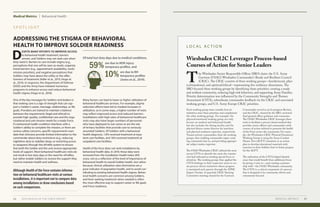
Although Health of the Force contains informa-
tion on behavioral healthcare visits at various
installations, it is important not to compare data
among installations or draw conclusions based
on such comparisons.
/ / / / / / / / / / / / / / / / / / / / / / / / / / / / / / / / / / / / / / / / / / / / / / / / / / / / / / / / / / / / / / / / / / / / / / / / / / / / / / / / / / / / / /
/ / / / / / / / / / / / / / / / / / / / / / / / / / / / / / / / / / / / / / / / / / / / / / / / / / / / / / / / / / / / / / / / / / / / / / / / / / / / / / / / / / / / / /
PREVENTING SEXUAL VIOLENCE AND SEXUAL
HARASSMENT IN THE U.S. ARMY
SOLDIER USE OF PORNOGRAPHY CORRELATES
WITH INTIMATE PARTNER VIOLENCE
S P O T L I G H T S P O T L I G H T
S
EXUAL VIOLENCE IS A SERIOUS PUBLIC HEALTH
problem that affects millions of people in the
U.S. each year. Sexual violence can happen
to anyone, regardless of age, sexual orientation, or
gender identity. According to the Centers for Disease
Control and Prevention (CDC), more than one in three
females and nearly one in four males experience sex-
ual violence during their lifetime (CDC, 2019a).
	
Sexual violence has a devastating impact on sur-
vivors. Research shows the risk of sexual violence
increases significantly when a precursor such as
sexual harassment is condoned or goes unrecog-
nized (DOD, 2019a). DOD and U.S. Army studies
indicate that approximately 30% of sexual assaults are
accompanied by sexual harassment before or after
the assault. The attitudes and behaviors that enable
harassment also foster more egregious acts.
	
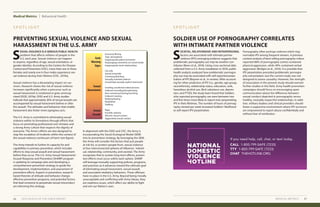
The U.S. Army is committed to eliminating sexual
violence within its formations through efforts that
focus on promoting professional unit climates and
a strong Army culture that respects the dignity of
everyone. The Army’s efforts are also designed to
stop the escalation of incidents within the context of
the sexual violence continuum of harm (see figure).
	
The Army intends to further its capacity for and
capabilities in primary prevention, which includes
efforts to stop sexual assault and sexual harassment
before they occur. The U.S. Army Sexual Harassment/
Assault Response and Prevention (SHARP) program
is updating its campaign plan and developing a
comprehensive prevention strategy to guide the
development, implementation, and assessment of
prevention efforts. Experts in prevention, research-
based theories of attitude and behavior change,
effective prevention programs, and potential factors
that lead someone to perpetrate sexual misconduct
are informing this strategy.
S
OCIETAL, RELATIONSHIP, AND INTRAPERSONAL
factors are associated with intimate partner
violence (IPV); emerging evidence suggests that
problematic pornography use may be another con-
tributor (Brem et al., 2018). Using cross-sectional data
collected from a U.S. Army installation in 2018, public
health analysts analyzed how problematic pornogra-
phy use may be associated with self-reported perpe-
tration of IPV (Beymer et al., in review). After account-
ing for other predictors of IPV (i.e., gender, age group,
race/ethnicity, relationship status, education, rank,
hazardous alcohol use, illicit substance use, depres-
sion, and PTSD), the study team found that Soldiers
who reported pornography use were between two
and five times more likely to report ever perpetrating
IPV in their lifetimes. The number of hours of pornog-
raphy viewed per week increased Soldiers’ likelihood
to self-report IPV perpetration.
	
	
In alignment with the DOD and CDC, the Army is
incorporating the Social-Ecological Model (SEM)
into its prevention strategy. By leveraging the SEM,
the Army will consider the factors that put people
at risk for, or protect people from, sexual violence
at four interconnected spheres of influence: individ-
ual, relationship, community, and societal. The Army
recognizes that to sustain long-term effects, preven-
tion efforts must occur within each sphere. SHARP
will leverage mutually supporting policies, programs,
and practices as it advances toward the ultimate goal
of eliminating sexual harassment, sexual assault,
and associated retaliatory behaviors. These offenses
have no place in the U.S. Army. Beyond being morally
unacceptable and conflicting with Army Values, they
are readiness issues, which affect our ability to fight
and win our Nation’s wars.
Pornography often portrays violence which may
normalize IPV among frequent viewers. A previous
content analysis of best-selling pornography videos
reported 88% of pornography scenes contained
physical aggression, while 49% contained verbal
aggression (Bridges et al., 2010). It is possible that
IPV perpetration preceded problematic pornogra-
phy consumption, but the current study was not
designed to assess causality. However, the strength
of association in the present study should warrant
further studies in this field. Army health promotion
campaigns should focus on encouraging open
communication about the difference between
sexual conduct depicted in pornography versus
healthy, mutually-respectful relationships. In addi-
tion, military leaders and clinical providers should
foster a supportive environment where IPV survivors
are empowered to report abuse confidentially and
without fear of retribution.
Medical Metrics Behavioral Health
MEDICAL METRICS 2726 2019 HEALTH OF THE FORCE REPORT
If you need help, call, chat, or text today.
CALL 1-800-799-SAFE (7233)
TTY 1-800-799-SAFE (7233)
CHAT THEHOTLINE.ORG
Early
Warning
Signs
Sexual
Harassment
Sexual
Assault
Excessive flirting
Toxic atmosphere
Inappropriate jokes/comments
Disparaging comments on social media
Inappropriate work relationships
Cat calls
Sexual innuendo
Cornering/blocking
Sexually oriented cadence
Unsolicited sexually explicit text/email
Sending unsolicited naked pictures
Indecent recording/broadcasting
Non-consensual kissing/touching
Indecent viewing
Bullying/hazing
Retaliation
Stalking
Rape
Forcible sodomy
Abusive sexual contact
Aggravated sexual contact
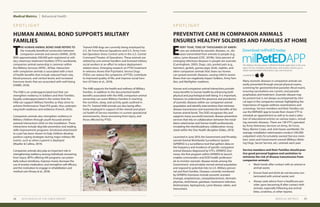
HUMAN ANIMAL BOND SUPPORTS MILITARY
FAMILIES
PREVENTIVE CARE IN COMPANION ANIMALS
ENSURES HEALTHY SOLDIERS AND FAMILIES AT HOME
S P O T L I G H T S P O T L I G H T
T
HE HUMAN ANIMAL BOND (HAB) REFERS TO
the mutually beneficial connection between
companion animals and owners (AVMA, 2019).
With approximately 500,000 pets registered at mili-
tary veterinary treatment facilities (VTFs) worldwide,
companion animal ownership is common within
the Military Services (APHC, 2016a). Interaction
with companion animals is associated with a host
of health benefits that include reduced heart rate,
blood pressure, and cortisol levels; and increased
hormone levels that are associated with well-being
(HABRI, 2018).
	
The HAB is an underappreciated tool that can
strengthen resiliency in Soldiers and their Families.
Equally underappreciated is the notion that the
HAB can support Military Families as they strive to
achieve Performance Triad (P3) goals, thus underpin-
ning both readiness and resilience (French, 2016).
	
Companion animals also strengthen resiliency in
Military children through youth-focused animal-
assisted interactions (AAI) on the installation. These
interactions include dog bite prevention and reading
skills improvement programs. Emotional attachment
to a pet has been shown to help children develop
positive coping strategies during major military life
events, such as when a parent is deployed
(Mueller & Callina, 2014).
	
Companion animals also play an important role in
strengthening resiliency among individuals recovering
from injury. MTFs offering AAI programs can poten-
tially reduce loneliness, improve mood, decrease the
use of anxiety medication, and strengthen self-efficacy
and the motivation to engage in rehabilitation and
medical care (Hosey et al., 2018).
	
E
VERY YEAR, TENS OF THOUSANDS OF AMERI-
cans are sickened by zoonotic diseases, i.e., dis-
eases transmitted from animals to people (e.g.,
rabies, Lyme disease) (CDC, 2019b). Sixty percent of
emerging infectious diseases in people are zoonotic
(Cunningham, 2005). Dogs, cats, pocket pets (e.g.,
hamsters, gerbils, guinea pigs), birds, reptiles, and
other companion animals that share our homes
can spread zoonotic diseases, causing mild to severe
illness that can negatively impact Soldiers, Army Fam-
ilies, and Warfighter readiness.
	
Human and companion animal interactions provide
many benefits to human health by enhancing both
physical and psychological well-being. It is important,
however, to understand the presence and prevalence
of zoonotic diseases within our companion animal
population and identify interventions that minimize
disease transmission and maximize the benefits of the
human-animal bond. The DOD recognizes this and
supports many successful zoonotic disease prevention
services that rely on collaboration between the instal-
lation veterinarian and human health professionals,
emulating the interdisciplinary collaboration recog-
nized within the One Health discipline (Gibbs, 2014).
	
Launched in June 2019, the Government and Privately-
owned Animal Worldwide Surveillance System
(GPAWSS) is a surveillance tool that gathers data on
the frequency and incidence of specific companion
animal diseases diagnosed by VTFs. GPAWSS-Zoo-
noses, the first program within GPAWSS to launch,
enables commanders and DOD health profession-
als to monitor zoonotic disease trends among the
Government- and privately-owned animal population
and respond to potential risks to U.S. Military person-
nel and their Families. Diseases currently monitored
by GPAWSS-Zoonoses include zoonotic acariasis
(mange), anaplasmosis, campylobacteriosis, dermato-
phytosis, ehrlichiosis, giardiasis, hookworm infection,
leishmaniasis, leptospirosis, Lyme disease, rabies, and
toxocariasis.
	
Trained HAB dogs are currently being employed by
U.S. Air Force Rescue Squadrons and U.S. Army Com-
bat Operation Stress Control units in the U.S. Central
Command Theater of Operations. These animals are
utilized by unit animal handlers and licensed military
social workers in an effort to reduce deployment-
related stress. Emerging research on PTSD treatment
in veterans shows that Psychiatric Service Dogs
(PSDs) can reduce the symptoms of PTSD, contribute
to improved quality of life, and improve social func-
tion (O’Haire et al., 2018).
	
The HAB supports the health and wellness of Military
Families. In addition to the documented health
benefits associated with the HAB, companion animal
ownership can assist Military Families in reaching
the nutrition, sleep, and activity goals outlined in
the P3. Trained HAB animals are also being effec-
tively employed in support of the mental and physi-
cal health of Service members in current operational
environments, those recovering from injury, and
those affected by PTSD.
Medical Metrics Behavioral Health
MEDICAL METRICS 2928 2019 HEALTH OF THE FORCE REPORT
Many zoonotic diseases in companion animals are
easily prevented through annual physical exams,
screening for gastrointestinal parasites (fecal exam),
ensuring vaccinations are current, and parasite
prophylaxis and treatment. Zoonotic disease may
be present but is not always accompanied by clini-
cal signs in the companion animal, highlighting the
importance of regular wellness examinations and
screenings. Service members and their Families can
use the MilPetED app to locate their closest VTF to
schedule an appointment as well as to read a selec-
tion of educational articles on various topics, includ-
ing zoonotic diseases. There are 138 VTFs operated
by Army Veterinary Services on Army, Air Force,
Navy, Marine Corps, and Joint bases worldwide. On
average, installation veterinarians conduct 330,000
outpatient visits for privately-owned (Service mem-
bers’ pets) and Government-owned (Military Work-
ing Dogs, Secret Service, etc.) animals each year.
	
Service members and their Families should prac-
tice good personal hygiene and sanitation to
minimize the risk of disease transmission from
companion animals:
•	 Wash hands after contact with an animal or
animal waste;
•	 Ensure food and drink do not become con-
taminated with animal waste; and
•	 Always seek advice from a healthcare pro-
vider upon becoming ill after contact with
animals, especially following any animal
bites, scratches, or other injuries.
milPetEDAPP
Available for
Download milPetED today
The Military Pet Education (milPetED) Mobile application is the one
place Service members, beneficiaries, and retirees need to go to
obtain animal health information, tips, and resources.
U.S.Armyphoto,APHC
Medical Metrics
MEDICAL METRICS 3130 2019 HEALTH OF THE FORCE REPORT
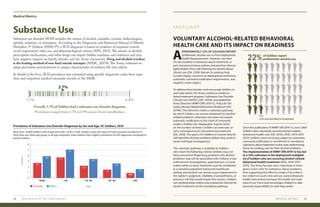
Prevalence of Substance Use Disorder Diagnoses by Sex and Age, AC Soldiers, 2018
More than 18,000 Soldiers were diagnosed with a SUD in 2018. Soldiers under the age of 25 had a greater prevalence of
SUDs than any other age group. In all age categories, male Soldiers had a higher prevalence of SUD diagnoses compared to
female Soldiers.
Age
Overall, 3.7% of Soldiers had a substance use disorder diagnosis.
Prevalence ranged from 1.7% to 6.9% across Army installations.
3.7%
1.7% 6.9%
Substance Use
Substance use disorder (SUD) includes the misuse of alcohol, cannabis, cocaine, hallucinogens,
opioids, sedatives, or stimulants. According to the Diagnostic and Statistical Manual of Mental
Disorders, 5th
Edition (DSM-5®), a SUD diagnosis is based on evidence of impaired control,
social impairment, risky use, and pharmacological criteria (APA, 2013). The misuse of alcohol,
prescription medications, and other drugs can impact Soldier readiness and resilience and may
have negative impacts on family, friends, and the Army community. Drug and alcohol overdose
is the leading method of non-fatal suicide attempts (APHC, 2017b). The Army continues to
adapt prevention and treatment to unique characteristics of military life and culture.
In Health of the Force, SUD prevalence was estimated using specific diagnostic codes from inpa-
tient and outpatient medical encounter records in the MDR.
Total <25 25–34 35–44 ≥45
0
1
2
4
6
3
5
2.7
3.7
2.2
3.9
3.4
5.1
1.5
2.6
1.6
0.89
Percent
Females Males
VOLUNTARY ALCOHOL-RELATED BEHAVIORAL
HEALTH CARE AND ITS IMPACT ON READINESS
S P O T L I G H T
A
PPROXIMATELY 22% OF SOLDIERS REPORT
problematic alcohol use on Post-Deployment
Health Reassessments. However, less than
2% are enrolled in substance abuse treatment, in
part, because previous policies and practices discour-
aged Soldiers from self-referring for alcohol abuse
clinical care (DA, 2018). Barriers to seeking help
include stigma, concerns on deployment restrictions,
automatic command notification requirements, and
negative career impact.
	
To address these barriers and encourage Soldiers to
seek help earlier, the Army created an evidence-
based treatment program, Substance Use Disorder
Clinical Care (SUDCC) (DA, 2019a), and published
Army Directive (ARMY DIR) 2019-12, Policy for Vol-
untary Alcohol-Related Behavioral Healthcare (DA,
2019b). This directive creates a voluntary pathway
by which Soldiers can receive treatment for alcohol-
related problems. Voluntary care does not require
automatic notification to the chain of command,
render a Soldier non-deployable, impose limits
on the number of times a Soldier can seek care, or
carry consequences for discontinuing treatment
(DA, 2018). The goal is for Soldiers to receive help for
self-identified alcohol problems before they result in
career and legal consequences.
	
The voluntary pathway is available to Soldiers
who meet the following criteria: Soldiers may not
have concurrent illegal drug problems; the alcohol
problems may not be associated with military or law
enforcement investigations, apprehension, or intox-
ication while on duty; treatment must be completed
in a standard outpatient behavioral healthcare
setting; and alcohol use cannot cause impairment to
the Soldier’s judgment, reliability, trustworthiness, or
present a risk that would impact the mission. Soldiers
not meeting these criteria may instead be referred for
alcohol treatment via the mandatory pathway.
	
Since the publication of ARMY DIR 2019-12, over 5,800
Soldiers have voluntarily received alcohol-related
behavioral health care (DA, 2019c; DHA, 2019; DOT,
2019). Soldiers cited not being subject to automatic
command notification or enrollment in mandatory
substance abuse treatment as the main determining
factor for seeking care for their alcohol problems.
The implementation of ARMY DIR 2019-12 has led
to a 34% reduction in the deployment ineligibil-
ity of Soldiers who are receiving alcohol-related
behavioral health treatment (DHA, 2019; DOT,
2019). The Army has also seen a decrease in emer-
gency room visits for substance abuse problems,
thus supporting the effort to create a Force that is
less reliant on acute crisis services. Early behavioral
health intervention increases the health and read-
iness of our Force and encourages Soldiers to take
personal responsibility to seek help earlier.
22%of Soldiers report
problematic alcohol use.
<2% are enrolled in treatment.
}
Age
Overall, 14% of Soldiers had a diagnosed sleep disorder.
Prevalence ranged from 8.0% to 24% across Army installations.
14%
8.0% 24%
Sleep Disorders
High-quality sleep is critical to Soldier readiness and mission success. A good night’s sleep can
help increase productivity and decrease the risk of accidents, errors, and injuries. Sleep disorders
that can impair readiness and function, including sleep apnea, insomnia, hypersomnia, circadian
rhythm sleep disorder, and narcolepsy were assessed in Health of the Force.
The prevalence of sleep disorders was determined using specific diagnostic codes from inpatient
and outpatient medical encounter records in the MDR. Soldiers may have more than one sleep
disorder; however, the overall prevalence of sleep disorders represents the proportion of AC Sol-
diers who have at least one of the sleep disorders assessed.
Medical Metrics
MEDICAL METRICS 3332 2019 HEALTH OF THE FORCE REPORT
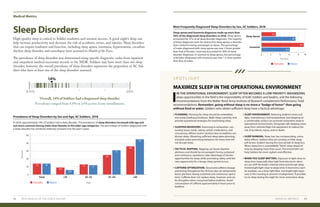
Prevalence of Sleep Disorders by Sex and Age, AC Soldiers, 2018
In 2018, approximately 14% of Soldiers had a sleep disorder. The prevalence of sleep disorders increased with age and
was more common among males than females in the older age categories. The percentage of Soldiers diagnosed with
a sleep disorder has remained relatively constant over the past 5 years.
Percent
Total <25 25–34 35–44 ≥45
0
10
20
40
30
50
14
9.0
1314
12
5.8
25
31
45
36
Females
Females
Males
Males
Most Frequently Diagnosed Sleep Disorders by Sex, AC Soldiers, 2018
Sleep apnea and insomnia diagnoses made up more than
50% of the diagnosed sleep disorders in 2018. Sleep apnea
accounted for 37% of all sleep disorder diagnoses. The majority
of these diagnoses were for obstructive sleep apnea, a disorder
that is linked to being overweight or obese. The percentage
of males diagnosed with sleep apnea was over 2 times greater
than that of females. Insomnia accounted for 36% of sleep
disorder diagnoses. In contrast to sleep apnea, the percentage
of females diagnosed with insomnia was over 1.5 times greater
than that of males.
Percent
0 108642
Sleep Apnea
3.3
Insomnia
90
7.8
9.7
6.5
MAXIMIZE SLEEP IN THE OPERATIONAL ENVIRONMENT
S P O T L I G H T
I
IN THE OPERATIONAL ENVIRONMENT, SLEEP OFTEN BECOMES A LOW PRIORITY. MAXIMIZING
sleep opportunities in the field is the responsibility of both Soldiers and leaders, and the following
recommendations from the Walter Reed Army Institute of Research complement Performance Triad
recommendations. Remember, going without sleep is no more a “badge of honor” than going
without food or water. Soldiers who obtain sufficient sleep have a tactical advantage.
» PLANNING. Planning for sleep should be embedded
into troop-leading procedures. Make sleep a priority, and
provide operational strategies for maximizing sleep.
» SLEEPING BEHAVIORS. Exercising to exhaustion, con-
suming heavy meals, taking certain medications, and
consuming caffeine and/or alcohol close to bedtime can
disrupt sleep. Obtaining sufficient sleep takes planning;
schedule wake-promoting behaviors for times that will
not disrupt sleep.
» TACTICAL NAPPING. Napping can boost daytime
alertness and should be encouraged. During sustained
and continuous operations, take advantage of shorter
opportunities for sleep while promoting safety until the
next opportunity for a longer sleep period occurs.
» CAFFEINE OPTIMIZATION. Structured caffeine dosage
and timing throughout the 24-hour day can temporarily
boost alertness during sustained and continuous opera-
tions. Caffeine does not replace sleep, however, and can
be disruptive when consumed before bedtime. Avoid
consumption of caffeine approximately 6 hours prior to
bedtime.
» SLEEP ENVIRONMENT. Reducing ambient noise and
light, maintaining a cool temperature, and sleeping on
a comfortable surface can promote restorative sleep in
operational environments. Designate safe sleeping areas
away from vehicles/high-risk equipment to reduce the
risk of accidents, injury, and/or death.
» SLEEP BANKING. Sleep loss has compounding, cumu-
lative effects. Soldiers who are running on little sleep
will be less resilient during the next period of sleep loss.
When sleep loss is unavoidable,“bank”sleep ahead of
time by sleeping more than usual. This investment can
help Soldiers be more vigilant and effective.
» WHEN YOU SLEEP MATTERS. Exposure to light close to
sleep time (especially blue light from electronic devic-
es) can shift the body’s internal clock and disrupt sleep.
Avoid bright light close to sleep time; if electronics can’t
be avoided, use a blue-light filter. Get bright light expo-
sure in the morning to prevent misalignment. If possible,
try to sleep during the night for more restorative sleep.
26%
Overall, 17% of Soldiers were classified as obese.
Prevalence ranged from 11% to 25% across Army installations.
In comparison, 26% of a similar population
of U.S. adults were classified as obese.*
17%
11% 25%
Obesity
Body Mass Index (BMI) is used to characterize body fat in adults by dividing weight in kilograms
by the square of height in meters. The measurements used to calculate BMI are non-invasive
and inexpensive to obtain. The CDC defines BMI greater than 18.5 but less than 25 as “normal
weight”; BMI greater than or equal to 25 but less than 30 as “overweight”; and BMI greater than
or equal to 30 as “obese.” While BMI does not differentiate between lean and fat mass, BMIs of
≥30 typically indicate excess body fat.
BMI should be interpreted with caution because it does not always provide a good estimate of
body fat. The relationship between BMI and body fat is influenced by age and sex. Among males,
especially younger males, BMI is more highly correlated with lean muscle mass than percent
body fat. As males and females age, they tend to lose muscle mass, and percent body fat increases.
Males and females of a given height and weight will have the same calculated BMI; however,
females will have, on average, a higher percent body fat compared to males.
Medical Metrics
MEDICAL METRICS 3534 2019 HEALTH OF THE FORCE REPORT
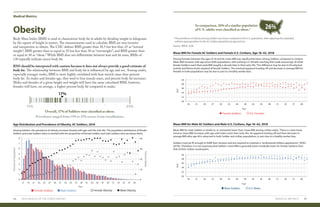
Mean BMI for Female AC Soldiers and Female U.S. Civilians, Age 18–62, 2018
Mean BMI for Male AC Soldiers and Male U.S. Civilians, Age 18–62, 2018
Among females between the ages of 18 and 64, mean BMI was significantly lower among Soldiers compared to civilians.
Mean BMI increases with age across both populations, with working U.S. females reaching their peak around age 30 while
female Soldiers reach their peak BMI roughly a decade later in their early 40s. This difference may be due to the physical
activity and fitness levels required of female Soldiers. The eventual apparent leveling off and decrease in average BMI for
females in both populations may be due in part to a healthy worker bias.
Mean BMI for male Soldiers is similar to, or somewhat lower than, mean BMI among civilian males. There is a clear linear
trend as mean BMI increases with age until males reach their early 40s. An apparent leveling off and then decrease in
average BMI after age 40 is observed in both Soldier and civilian populations, in part due to a healthy worker bias.
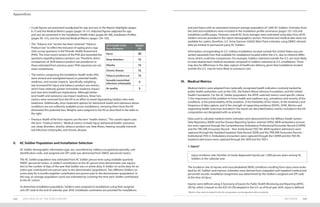
Soldiers must be fit enough to fulfill their missions and are required to maintain a “professional military appearance” (DOD,
2017b). Therefore, it is not surprising that Soldiers’ mean BMI is generally lower (markedly lower for female Soldiers) than
that of their civilian counterparts.
BMIBMI
Age
Age
Female Soldiers
Male Soldiers
U.S. Females
U.S. Males
Age Distribution and Prevalence of Obesity, AC Soldiers, 2018
Among Soldiers, the prevalence of obesity increases linearly with age until the mid-40s. The population distribution of female
Soldiers and male Soldiers (bars) is overlaid with the proportion of female Soldiers and male Soldiers who are obese (dots).
0
17 19 21 23 25 27 29 31 33 35 37 39 41 43 45 47 49 51 53 55 57 59
1
2
3
5
7
4
6
8
0
10
20
30
40
PercentofPopulation
PercentObese
Age
Female Soldiers Male Soldiers Male ObesityFemale Obesity
18 21 24 27 30 33 36 39 42 45 48 51 54 57 60
22
20
26
24
30
28
22
20
26
24
30
28
18 21 24 27 30 33 36 39 42 45 48 51 54 57 60
* The prevalence of obesity among Soldiers was lower compared to the U.S. population, after adjusting the employed,
military-age population to the AC Soldier population by age and sex.
Source: BRFSS, 2018
36 2019 HEALTH OF THE FORCE REPORT
Medical Metrics Obesity
Fort Meade Improves Soldier Health
through Synchronization of Services
L O C A L A C T I O N
B
ased on obesity data presented in 2019 at the CR2C (APHC, 2019b),
the leadership at Fort Meade’s Kimbrough Ambulatory Care Center
established a priority to synchronize the Army Wellness Center (AWC)
and Operational Medicine.
As a result, the AWC and Operational Medi-
cine will be co-located within the Kimbrough
Campus. Improving the location proximity
for these services encourages and improves
synchronized operations and optimizes access
to care. As Operational Medicine focuses
on periodic health assessments and medical
readiness, the AWC staff is expanding health
education services that focus on sleep, exercise,
and nutrition by providing Performance Triad
coaching materials, conducting individual
fitness assessments, providing Service members
and Family members with personalized plans
that support individual health and wellness
goals (e.g., weight loss, muscle and strength
increases, and improved eating habits), leading
health and wellness training to reduce stress,
and partnering with fitness trainers to support
implementation of the ACFT. Through sus-
tained collaboration with installation command
teams, the Fort Meade AWC continues to
focus on promoting health, building resilience,
and increasing readiness.
(Opposite page) Fort Meade Army Wellness Center staff (from left to right) Michael
Crossett, Shelby Beattie, Ursula Ulery, Andrea Navarro, and Fort Meade MEDDAC
Commander COL James D. Burk cut the ribbon to officially celebrate the opening of
the AWC’s new location during a ceremony on 31 January 2020. The new location
allows an expansion of services and capabilities to Service Members, Retirees,
Family members, and DOD Civilians with a focus on performance improvement
and injury prevention. Since its launch in 2013, Fort Meade’s AWC has helped
approximately 7,000 Service Members and more than 3,000 Family members
and DOD Civilians. (U.S. Army photo by Michelle Gonzalez)
Tobacco Product Use
Using tobacco products negatively impacts Soldier readiness by impairing physical fitness and by
increasing illness and absenteeism (DA, 2015). In Health of the Force, the prevalence of tobacco
product use is estimated using Periodic Health Assessment (PHA) data (DOD, 2016a). The PHA
asks Soldiers which tobacco products they have used on at least one day in the prior 30 days. In
2018, the PHA began systematically collecting data on vaping and electronic cigarette (e-ciga-
rette) use, and other alternative methods of consuming nicotine. For this report, smoking products
are defined as cigarettes, cigars, cigarillos, bidis, pipes, and hookah/waterpipes; smokeless products
are defined as chewing tobacco, snuff, dip, snus, and dissolvable tobacco products; e-cigarettes are
defined as electronic cigarettes or vape pens. Soldiers complete the PHA as part of a regular phys-
ical exam which determines an individual’s ability to deploy. Soldiers may not choose to report, or
may underreport, their tobacco usage to avoid potential negative attention.
Medical Metrics
MEDICAL METRICS 3938 2019 HEALTH OF THE FORCE REPORT
Prevalence of Nicotine Product Use, AC Soldiers, 2018
Among the tobacco product use categories assessed, the largest number of Soldiers reported smoking (n= 58,029; 17%),
followed by the number of Soldiers who reported smokeless tobacco use (chewing or dipping) (n= 43,282; 13%). In 2018,
7.2% (n= 25,056) of Soldiers who completed the PHA self-reported the use of e-cigarettes.
The general U.S. population prevalence of tobacco product use (22%) is lower than the Army prevalence (26%). In contrast,
the adjusted U.S. and Army smoking product use is identical at 17%. The difference in tobacco use is driven by use of
smokeless tobacco product use where the Army prevalence (13%) is almost three times higher than the national estimate
(4.7%) (BRFSS, 2018).
Prevalence of Tobacco Use by Sex and Age, AC Soldiers, 2018
Prevalence of Tobacco Product Use by Type, Sex, and Age, AC Soldiers, 2018
Regardless of sex, the majority of tobacco product users are 34 years of age or younger. Across the age groups, the
prevalence of tobacco use among male Soldiers was more than double that of female Soldiers.
For both sexes, smoking tobacco products were the primary type of tobacco used across age groups. Males most
frequently reported using smoke products followed by smokeless and e-cigarette products, across age groups. Females
most frequently reported using smoke products followed by e-cigarette products and smokeless products, across age
groups. Regardless of sex, the majority of e-cigarette users are 34 years of age or younger.
Age
Age
Age
Females
Males
Percent
PercentPercent
Females Males
Excluding e-cigarette use, 26% of Soldiers reported using tobacco products.
Prevalence ranged from 12% to 32% across Army installations.
26%
12% 32%
U.S. population tobacco use is estimated using BRFSS data, which were adjusted to the AC Soldier age and sex distribution
for employed individuals. Tobacco use is defined differently in the BRFSS than in the PHA. While the PHA considers any use for
at least one day in the past 30 days, BRFSS has a more stringent requirement (more than 100 cigarettes in their lifetime and
currently smoking some days or every day).
26% 17% 13% 7.2%
Tobacco
product use
Smoking
products
Smokeless
products
E-cigarette
products
<25 25–34 35–44 ≥45
0
5
15
10
20
25
12
1.5
7.3
11
1.3 3.2
9.6
0.60 1.7
7.0
0.30 0.90
<25 25–34 35–44 ≥45
0
5
15
10
20
25
22
17
13
18
16
5.5
16
12
3.2
11
8.3
1.4
Smoking Product Smokeless Product E-cigarette
Total <25 25–34 35–44 ≥45
0
10
20
30
12 13 12
29 29
31
10
26
18
7.3
Between the publication of the 2018 and the current 2019 Health of the Force reports, the DOD adopted
a new version of the PHA with fundamental changes to data collection for several medical metrics, to
include tobacco product use. Due to data collection changes in both content and temporality, the above
presented data are not comparable to previous Health of the Force reports. For a more in-depth explanation
of the changes to the PHA affecting the tobacco product use metric, please see page 146 of this report.
Medical Metrics Tobacco Product Use
MEDICAL METRICS 4140 2019 HEALTH OF THE FORCE REPORT
PUBLIC HEALTH ALERT:
ELECTRONIC CIGARETTES AND VAPING
S P O T L I G H T
T
HE U.S. ARMY’S MISSION TO STRENGTHEN
resilience, readiness, and combat effectiveness
through stamina advocacy programs (OTSG,
2013) is challenged by the popularity and availability
of “non-cigarette tobacco products” (DHHS, 2014;
CPHSS, 2014), including electronic nicotine delivery
systems, electronic cigarettes (e-cigarettes), and vape
products.
Current evidence indicates that e-cigarettes contain
and release many known toxic chemicals. As e-ciga-
rette products are largely unregulated, the concentra-
tions and characteristics of potentially toxic chemicals
present in the vaped aerosol, including nicotine,
are highly variable and depend on the device type,
selected vaped e-liquid, and user customization of
the device and e-liquid (APHC, 2016b). Additionally,
e-cigarette devices can explode, causing severe burns
and bodily injury (Katz & Russell, 2019). Intentional
or accidental exposure to some vaping liquids can
induce seizures, brain injury, vomiting, and lactic
acidosis (Kelner & Bailey, 1985). Deliberate or unin-
tentional ingestion of the e-liquid can be fatal (APHC,
2016b). Studies show that chemicals in e-cigarette
aerosols may cause DNA damage and mutagenesis—
hallmarks of cancer development—and that e-ciga-
rette aerosols damage oral health and cause inflam-
mation (Anderson, 2016).
In September 2019, the CDC recognized a national
outbreak of e-cigarette, or vaping, product use-asso-
ciated lung injury (EVALI). In December 2019, it was
discovered that several confirmed EVALI cases had
supplemented their vaping products with vitamin
E acetate, a highly viscous and oily substance now
thought to be one of the major causes of lung injury
among these cases.
On 11 September 2019, on behalf of OTSG, the APHC
and U.S. Army Combat Readiness Center (ACRC)
issued a Public Health Alert on the vaping issue.
The APHC then published a statement discouraging
e-cigarette use, and the DHA instructed MTFs to
report EVALI cases to the Disease Reporting System,
internet (DRSi).
As of 21 January 2020, 2,711 EVALI cases (including
60 deaths) were reported to the CDC, including 10
confirmed or probable cases reported to DRSi (6
from Army MTFs). Although reported cases have
persistently declined since peaking in September
2019, continued awareness and prevention efforts are
critical. Further study is needed to guide e-cigarette
prevention and regulatory efforts.
Fort Lee Tobacco-Free Living Campaign
Helps Soldiers Kick the Habit
L O C A L A C T I O N
I
n 2018, the Fort Lee CR2C Physical Resiliency Work Group (PRWG)
implemented a Tobacco-Free Living Campaign. The CR2C PRWG col-
lected survey data across all units and tenant organizations impacted by
vaping and tobacco usage. Using the survey results, the PRWG then focused
the campaign on Advanced Individual Training units and the Army Learning
University.
The Tobacco-Free Living Campaign includes
several multipronged approaches to tobacco
and vaping cessation through a comprehen-
sive media campaign. Soldiers interested in
quitting tobacco or vaping are encouraged
to make appointments with 1) a physician’s
assistant for prescribed medications, and 2)
an Army Public Health Nurse (APHN), who
uses health-coaching techniques to develop
Soldiers’ individual smoking cessation plans.
APHNs also share available smoking cessation
resources at monthly Unit Health Promo-
tion Council meetings. The purpose of these
meetings is to provide the Commander, 59th
Ordnance Brigade with situational awareness
of all trends, challenges, and best practices
implemented across the Brigade to improve
the morale, spiritual, emotional, and physical
growth of its Soldiers and Families. Virtual
cessation counseling became available in fall
2019 to assist Soldiers who are deployed or
otherwise unable to obtain smoking cessation
assistance.
To increase community awareness of tobacco
and vaping dangers, the Annual Kick Butts
Campaign at Fort Lee included a World No
Tobacco Day basketball tournament with the
Kenner Army Health Clinic’s Soldiers and Fort
Lee’s Youth Services, a library program reading
of “Smoking Stinks” to elementary-aged chil-
dren, and frequent tobacco-free living in-pro-
cessing briefings. Future goals include creation
of Tobacco-Free Living Campuses on Fort Lee
and work towards a completely tobacco-free
installation.
OTSG, APHC,
& ACRC issue a
Public Health Alert
about EVALI.
11 SEP 2019
APHC publishes
reporting guidance.
17 SEP 2019
1st
case of EVALI
reported in AC
Soldier.
26 SEP 2019
Some installation
exchanges remove
e-cigs from shelves.
OCT 2019
Vitamin E acetate
discovered as one
likely cause of
EVALI outbreak.
DEC 2019
10 cases reported
to DRSi: 6 are Army
cases.
As of 29 JAN 2020
CDC recognizes
national outbreak
of EVALI.
SEP 2019
2,711 hospitalized
cases and 60 deaths
of EVALI in U.S.
As of 21 JAN 2020
SEPTEMBER OCTOBER NOVEMBER DECEMBER JANUARY
20202 0 19
0
500
1,000
1,500
2014 2015 2016 2017 2018
Heat exhaustion
Heat stroke
870
197
1,109
246
961
214
944
262
1,197
302
Heat Illness
Heat illness refers to a group of conditions that occur when the body is unable to compensate for
increased body temperatures due to hot and humid environmental conditions and/or exertion
during exercise or training. These illnesses exist along a continuum of symptoms and, in the most
severe cases, can be life threatening. The heat illnesses assessed in Health of the Force include heat
exhaustion and heat stroke. These are reportable medical events that should be reported through
the DRSi.
Heat illness was determined using specific diagnostic codes from inpatient and outpatient
medical encounter records in the MDR, in addition to cases of heat exhaustion and heat stroke
reported through DRSi. Soldiers who experienced more than one heat illness event in the calen-
dar year were only counted once.
Medical Metrics
MEDICAL METRICS 4342 2019 HEALTH OF THE FORCE REPORT
Incident Cases of Heat Illness by Month*, AC Soldiers, 2018
Incident Cases of Heat Illness, AC Soldiers, 2014–2018
Heat Illness Totals by Installation*, AC Soldiers, 2018
Incident Cases of Heat Illness by Age, AC Soldiers, 2018
In 2018, 1,499 incident cases of heat illness occurred. Of the incident cases, the majority (80%) were heat exhaustion, and
the remaining 20% were heat stroke. Although heat exhaustion and heat stroke were diagnosed and reported year-round,
the number of incident cases of heat illness was highest during the warmer months (May through September).
The total number of diagnosed heat illness cases has increased over the past 5 years. This increase is largely driven by
the number of heat exhaustion cases being diagnosed and reported. The Army has recently emphasized recognition and
reporting of heat illness cases, which could account for some of the increased incidence over time.
At the installation level, geographic location, weather patterns, and Soldier population (i.e., large training populations) are
factors that can affect heat illness incidence. Several of the installations with the highest number of heat illness cases are
located in the Southeastern U.S.
In 2018, 71% of heat exhaustion cases and 60% of heat stroke cases occurred in AC Soldiers younger than 25 years old.
*Months not shown had <20 cases for heat exhaustion and/or heat stroke.
*Installations not shown in the graph had fewer than 20 heat illness cases (heat exhaustion and heat stroke combined).
0
100
200
300
400
MAY JUN JUL AUG SEP
Heat exhaustion
Heat stroke
127
45
295
55
254
52
239
57
170
42
Month
Year
Cases of Heat Illness
Casesof
HeatIllness
Casesof
HeatIllness
Age
0 300 600 900 1200
<25
25–34
35–44
≥45
855
287
47
182
97
22
8,1
Fort Bragg
Fort Benning
Fort Campbell
Fort Polk
Fort Drum
Fort Stewart
Fort Hood
Fort Jackson
Fort Bliss
Fort Riley
Hawaii
Fort Lee
Fort Carson
Fort Sill
Fort Gordon
300500 100 150 200 250
263
246
189
112
106
68
63
41
40
34
34
29
27
27
21
Heat exhaustion Heat stroke
44 2019 HEALTH OF THE FORCE REPORT
Medical Metrics Heat Illness
INNOVATIVE MOBILE APPLICATION
KEEPS SOLDIERS HYDRATED
S P O T L I G H T
P
ROVIDING AN ADEQUATE SUPPLY OF DRINKING
water to Soldiers in field training or contingency
operations can require tremendous manpower,
vehicle space, and fuel consumption. These factors
make water transport one of the largest military logis-
tical supply burdens. The U.S. Army Research Institute
of Environmental Medicine (USARIEM), in collaboration
with MIT-Lincoln Laboratory and the U.S. Army Medical
Materiel Development Activity, developed the Soldier
Water Estimation Tool (SWET), a mobile application that
provides Army leadership with a simple and flexible
way to predict the water needs of groups of Soldiers.
Decades of USARIEM research led to the development
and validation of an equation that accurately predicts
sweat losses (i.e., water needs) over a range of environ-
ments, activities, and clothing characteristics. The SWET
integrates this equation into a mobile application with
simple, multiple-choice user inputs for activity level,
clothing, and cloud cover; and manual entry of exact
values for temperature and relative humidity. The SWET
“Mission Planner” tool estimates the total drinking water
needs for a unit based on mission duration and number
of personnel. The SWET App is currently available on the
TRADOC App Gateway and the Nett Warrior system.
MEDICAL METRICS 45
U.S.ArmyPhoto,APHC
Medical Metrics
MEDICAL METRICS 4746 2019 HEALTH OF THE FORCE REPORT
Hearing
Good hearing preserves situational awareness for critical communication abilities (e.g., acous-
tic stealth, detection, localization, and identification), and improves communication responses
that are crucial to success on the battlefield. Hearing readiness is an essential component of
medical readiness and is monitored via the Medical Protection System (MEDPROS) using
Defense Occupational and Environmental Health Readiness System – Hearing Conservation
(DOEHRS-HC) hearing test data. Hearing metrics are utilized by the Army Hearing Program
(AHP) to monitor hearing injuries and hearing readiness among AC Soldiers.
Percent New Significant Threshold Shifts, AC Soldiers, 2014–2018
Percent Not Hearing Ready (HRC 4), AC Soldiers, 2016–2018
Prevalence of Hearing Profiles, AC Soldiers, 2014–2018
Hearing injuries decreased slightly from 2014 to 2018. In 2018, 3.9% of AC Soldiers experienced a significant threshold shift
(STS), or decreased hearing, in one or both ears when compared to their baseline hearing test. This is a slight increase from
2017, and above the AHP hearing injury goal of less than 3% of Soldiers.
In 2018, 6.4% of AC Soldiers were not “hearing ready” due to being assigned a Hearing Readiness Classification 4 (HRC 4).
This is a decrease from 2017 and just above the AHP goal of 6%. AC Soldiers who are not “hearing ready” are either overdue
for their annual hearing test, require follow-up hearing testing to identify their true hearing ability, or missed the follow-up
test window.
The prevalence of hearing profiles among AC Soldiers continues to decline. AC Soldiers with a projected H-2 hearing profile
(clinically significant hearing loss) decreased from 3.4% in 2014 to 2.8% in 2018. AC Soldiers with a projected ≥H-3 hearing
profile (indicative of moderate hearing loss and requiring a fitness-for-duty hearing readiness evaluation) decreased from
1.1% in 2014 to 0.81% in 2018.
Percent
Percent
Percent
Year
Year
Year
Source: DOEHRS-HC Data Repository
Source: MEDPROS
Source: DOEHRS-HC Data Repository
0
2014 2015 2016 2017 2018
2
4
6
3.7 3.94.24.2 4.6
0
2016 2017 2018
2
4
6
8
7.8
6.4
4.1
0
2014 2015 2016 2017 2018
2
4
6
AHP Goals: 3% (H-2) 2% (≥H-3)
2.9 2.83.13.4 3.2
0.85 0.810.951.1 1.1
H-2 ≥H-3
Hearing is a requirement for Soldier performance, affecting both survivability
and lethality. Soldiers are susceptible to noise-induced hearing loss (NIHL),
in part, because such injuries are typically painless, progressive, permanent,
and lacking the immediacy of an open wound, a pulled muscle, or an eye
injury. That said, NIHL is preventable! Prevention occurs with the use of
noise control engineering, monitoring audiometry, appropriate hearing
protection, hearing health education, and AHP command enforcement.
Hearing injuries impact mission performance during garrison activities,
deployments, active training, and combat.
Contact your unit Hearing Program Officer, installation AHP manager,
Regional Health Command Audiology Consultant, or the APHC’s AHP for
assistance. What you hear—or don’t hear—matters!
Medical Metrics
MEDICAL METRICS 4948 2019 HEALTH OF THE FORCE REPORT
Sexually Transmitted Infections
Chlamydia is the most commonly reported sexually transmitted infection (STI) in the U.S. Left
untreated, chlamydia can lead to reproductive health complications such as pelvic inflammatory
disease, ectopic pregnancy (i.e., pregnancy outside the uterus), chronic pelvic pain, and infertility
that can compromise military medical readiness and Soldier well-being. Because most chlamydia
infections do not cause symptoms, people are often unaware that they have an infection.
Therefore, screening is essential.
The U.S. Preventive Services Task Force (USPSTF) recommends that sexually active females
under 25 years of age, and those at increased risk (e.g., individuals with multiple partners), be
screened annually. Rates of reported chlamydia infection are not necessarily reflective of the true
burden of disease. Higher rates of reported chlamydia infection may reflect enhanced screening or
reporting, both of which are positive attributes of a health system.
For the Army AC population, chlamydia cases reported by military MTFs were identified using
the DRSi. Incidence rates reflect all new infections; therefore, Soldiers may have more than one
chlamydia infection per calendar year.
Overall, 25 new chlamydia infections were reported per 1,000 person-years.
Incidence ranged from 11 to 52 per 1,000 person-years across Army installations.
25
11 52
Incidence of Reported Chlamydia Infection by Sex and Age, AC Soldiers, 2018
Incidence of Reported Chlamydia Infection by Sex and Age, AC Soldiers, 2014–2018
Percent of AC Female Soldiers under 25 Years Old Screened for Chlamydia, 2014–2018
The rate of reported chlamydia infections among female Soldiers was roughly three times the rate among male
Soldiers. Rates were highest among female Soldiers under 25 years of age (a group targeted for annual screening), with
114 reported infections per 1,000 person-years.
A steady rise in reported chlamydia infections has occurred over the past 5 years, consistent with rising national rates.
Rates reported for 2018 were 58% higher than in 2014. Greater increases were observed among male Soldiers over this
period (a 61% increase compared to a 47% increase in female Soldiers).
On average, 82% of female Soldiers under 25 years old were screened for chlamydia in 2018 in accordance with USPSTF
guidelines. Screening compliance has improved from the 77% observed in 2014; however, there is considerable variability
by installation, with compliance ranging from 52% to 99%. A higher degree of variation was observed in 2018 relative
to previous years. Overall, Army screening compliance was markedly higher than that observed nationally, where 2018
screening compliance ranged from 48% to 58%, depending on the insurance provider.
Age
Total <25 25–34 35–44 ≥45
0
25
50
125
100
75
58
114
2319 13
33
4.6 3.1 2.32.5
Rateper1,000
Person-Years
Females Males
0
60
10
20
30
40
50
2014 2015 2016 2017 2018
Females
Males
Army Total
54
17
22
58
19
25
49
15
20
39
12
16
43
14
18
Rateper1,000
Person-Years
Year
0
20
40
60
80
100
2014 2015 2016 2017 2018
Army average 84 828477 82
Installation minimum 70 527062 69
Installation maximum 97 999691 95
Percent
Year
Data sources:
	 Army: MHS Population Health Portal
	 National: National Committee for Quality Assurance (NCQA), 2018
Medical Metrics
MEDICAL METRICS 5150 2019 HEALTH OF THE FORCE REPORT
Chronic Disease
Chronic diseases hinder military medical readiness by decreasing Soldiers’ ability to fulfill physi-
cally demanding mission requirements or to deploy to remote locations where healthcare resources
are limited. Many chronic diseases can be prevented and managed in part by adopting healthy
lifestyle choices such as maintaining a healthy diet, exercising regularly, and avoiding tobacco use.
The chronic diseases assessed in Health of the Force include cardiovascular disease, hypertension,
cancer, asthma, arthritis, chronic obstructive pulmonary disease (COPD), and diabetes.
The prevalence of chronic diseases was determined using specific diagnostic codes from inpatient
and outpatient medical encounter records in the MDR. Soldiers may have more than one chronic
disease; however, the overall prevalence of chronic disease represents the proportion of AC Sol-
diers who have at least one of the chronic diseases assessed.
Overall, 19% of AC Soldiers had a diagnosed chronic disease.
Prevalence ranged from 13% to 37% across Army installations.
19%
13% 37%
Prevalence of Chronic Disease by Sex and Age, AC Soldiers, 2018
The prevalence of chronic disease increases with age. Female Soldiers had a higher prevalence of chronic disease
compared to male Soldiers across all age groups. Among AC Soldiers in 2018, 21% of females and 18% of males had at least
one chronic disease.
Age
Percent
Percent
Females Males
Total <25 25–34 35–44 ≥45
0
20
40
60
80
21
6.4
23
18 17
3.9
50
44
69
73
Prevalence of Chronic Diseases by Disease Category, AC Soldiers, 2014–2018
In 2018, 19% of AC Soldiers had a chronic disease. The prevalence of Soldiers with any chronic disease has been decreasing
since 2015. In 2018, the most prevalent chronic disease was arthritis (9.3%), followed by cardiovascular disease
(6.0%).
CANCER CLUSTERS IN THE SOLDIER COMMUNITY
S P O T L I G H T
T
HE NATIONAL INSTITUTES OF HEALTH
defines a cancer cluster as “the occurrence of a
greater than expected number of cancer cases
among a group of people in a defined geographic
area over a specific period” (NIH, 2018). A cancer
cluster may be due to a shared exposure, clustering
of susceptible individuals, or simply due to chance.
Only in extremely rare instances is a clear cause of
a cancer cluster revealed (Goodman et al., 2012).
The response to a potential cancer cluster is often
politically and emotionally sensitive and can also be
resource intensive (Sharkey & Hauschild, 2013).
	
A cancer diagnosis can often lead to fear and a sense
of crisis (NCCS, 2019). It is also common for those
diagnosed with a cancer to reflect on their past
exposures and wonder whether they were exposed
to something which may have caused their cancer.
Concern regarding environmental exposures may be
compounded when an unusually large number of
cancers are diagnosed among a defined group, such
as a military unit (VA, 2019).
	
During their military service, Soldiers may be
exposed to environmental hazards that increase
their risk of developing cancers (NRC, 2013). Soldiers’
environmental carcinogen exposures, along with
genetic, demographic, and behavioral factors and
other exposures, may increase their risk of develop-
ing cancer (ATSDR, 2011). Examples of exposures
containing known or possible carcinogens that may
affect Soldiers’ cancer risk include burn pit emissions,
fumes from fires, exhaust fumes from vehicles or
machinery, solvents, intense sun, weapons and muni-
tions, pesticides, asbestos, and ionizing radiation.
Are Service Members More Likely to Develop Cancer?
Each of the more than 100 different types of cancers
has specific risk factors and causes (ACS, 2019). Nearly
40 percent of Americans are diagnosed with a cancer
at some point in their lives (ACS, 2019). Compared to
the U.S. population, Service members are estimated
to have lower incidence of overall cancer, colorectal
cancer, lung cancer, and cervical cancer (Zhu et al.,
2009). However, military personnel are estimated to
have higher rates of prostate cancer, breast cancer,
testicular cancer, melanoma, and thyroid cancer (Zhu
et al., 2009; Levine et al., 2005; Lea et al., 2014). Based
on the literature, Service members can be said to
have a mixed risk profile for developing cancer com-
pared to the overall U.S. population.
The sum of disease categories is greater than the any chronic disease prevalence, as Soldiers may have more than one condition.
0
10
20
2014Year: 2015 2016 2017 2018
Any (%) 19 192020 21
Cardiovascular (%) 6.1 6.06.56.4 6.8
Hypertension (%) 5.8 5.66.26.5 6.4
Arthritis (%) 9.4 9.39.58.6 9.1
Asthma (%) 2.6 2.52.72.6 2.6
COPD (%) 1.1 1.01.31.4 1.4
Diabetes (%) 0.3 0.30.50.5 0.5
Cancer (%) 0.4 0.40.40.3 0.4
Medical Metrics
52 2019 HEALTH OF THE FORCE REPORT MEDICAL METRICS 53
MEASLES VACCINATIONS SUPPORT
TOTAL ARMY HEALTH
MEDICAL SURVEILLANCE EXAMS:
KEEPING THE WORKFORCE ON THE JOB
S P O T L I G H T S P O T L I G H T
M
EASLES IS A HIGHLY CONTAGIOUS VIRAL
illness spread to others through coughing or
sneezing. Measles can remain in the air or on
surfaces for as long as 2 hours, and an infected per-
son can potentially infect 12 to 18 other people in a
susceptible population (CDC, 2015 and 2019c; Guerra
et al., 2017). Vaccination is necessary to maintain
herd immunity, which offers protection from disease
for those who cannot be vaccinated due to age
limitations or medical contraindications. Given the
U.S. Army’s compliance with current immunization
policies, Soldiers are at minimal risk of contracting
measles. However, Army beneficiaries and DOD Civil-
ians who are not fully vaccinated may be susceptible
to the measles virus due to an ongoing outbreak of
the disease.
	
Per the CDC, from 1 January to 31 December 2019,
there were 1,282 individual measles cases confirmed
in 31 states. This represents the largest measles
outbreak in the U.S. since 1992 and since measles was
declared to be eliminated in 2000 (CDC, 2019c). More
than 75% of the cases in 2019 were linked to outbreaks
in New York.
	
Symptoms of measles vary widely but may include
high fever and rash, as well as cough, runny nose, and
red, watery eyes. Measles-related complications may
include ear infections, diarrhea, pneumonia, brain
swelling, and seizures. In the most severe cases, mea-
sles can be fatal (CDC, 2015).
	
O
CCUPATIONAL HEALTH (OH) IS AN INTE-
grated discipline dedicated to the well-being
and safety of employees in the workplace.
For the Army, the OH focus is on clinical and public
health programs and services aimed at protecting
the health of the Total Army Workforce. The Army
Occupational Health Program (AOHP) influences
global force readiness by assessing workers’ health to
ensure physical and psychological fitness sufficient
to perform essential job functions. AOHP clinicians
routinely assess workers for detectable pre-clinical
disease that may arise from exposure to potentially
hazardous chemical, biological, and radiological
sources, and from other workplace hazards. The
Army’s generating and operational forces comprise
populations at greatest risk to health from workplace
and environmental factors.
	
The Occupational Safety and Health Administration
(OSHA) mandates and enforces safety and health
standards (including noise and respiratory protec-
tion measures) for workplace hazards and requires
medical surveillance examinations for exposures
to specified hazards such as various chemicals and
heavy metals. The purpose of the AOHP medical
surveillance examination is to detect any occupational
illnesses or diseases caused by OSHA-regulated haz-
ards in the workplace.
	
The CDC recommends children receive two doses
of the live measles-mumps-rubella (MMR) vaccine
unless they have allergies or other prohibitive medi-
cal conditions. The first dose is administered between
ages 12 and 15 months. The second dose is admin-
istered between ages 4 and 6 years. The majority of
persons who receive two doses of live MMR vaccine
are protected for life from becoming infected with
the measles virus (CDC, 2015, 2019d).
	
The most vulnerable beneficiaries are children too
young to be immunized (aged <12 months), those not
immunized completely (aged <4 years), and benefi-
ciaries with medical conditions which preclude their
receiving the MMR vaccine. Additionally, Family mem-
bers, such as foreign-born spouses who were not
subject to the U.S. immunization schedule as children,
are considered vulnerable to measles. Some adults
who received early versions of the vaccine between
1963 and 1968 did not receive the live vaccine that is
administered today. Prior to 1989, only one dose of
the live vaccine was recommended. According to the
CDC, early versions of the vaccine are not as effective
as the current vaccine, and many U.S. adults did not
receive a second dose (CDC, 2019d). Adult beneficia-
ries who previously received insufficient or incom-
plete vaccinations, particularly Army Family members
and DOD Civilians who are planning to travel interna-
tionally, may benefit from discussing re-vaccination
with their healthcare provider.
The system of record for workplace hazard exposure
data is the Defense Occupational and Environmen-
tal Health Readiness System-Industrial Hygiene
(DOEHRS-IH). For 2018, DOEHRS-IH was queried to
identify workers exposed to the following OSHA-reg-
ulated hazards across all Army installations:
	
The DOEHRS-IH query identified 13,439 OSHA-reg-
ulated hazards to which workers are exposed. To
reduce or eliminate exposure, medical surveillance
exams are recommended for workers exposed to
OSHA-regulated hazards. These recommendations
are based on quantitative and/or qualitative sampling
of each workplace by industrial hygienists at the
installation; both the sampling and the recommenda-
tions are reported in the DOEHRS-IH. 		
Army OH clinics reported that 91% of workers Army-
wide received the recommended medical surveillance
exams. Although the compliance for completing
medical surveillance met the green target of >90%
across the enterprise, the AOHP goal remains to
further increase medical surveillance and compliance
reporting by all installations. To optimize worker
safety and well-being, supervisors should work
directly with OH, safety, and IH departments to
ensure 100% compliance.
1,282
cases
31
states
•	 1,2-Dibromo-3-Chloropropane
(DBCP)
•	 Acrylonitrile (Vinyl Cyanide)
•	 Chromic Acid/Chromium (VI)
•	 Antineoplastic Drugs
•	 Arsenic
•	 Asbestos CurrentWorker
•	 AudiometricTesting
(Civilians Only)
•	 HazardousWasteWorkers
and Emergency Responders
•	 1,3-Butadiene
•	 Cadmium (Current Exposure)
•	 Benzene
•	 Ethylene Oxide
•	 Formaldehyde
•	 Lead (Inorganic)
•	 Methylene Chloride
(Dichloromethane)
•	 Respirator User
•	 Silica (Crystalline)
Medical Surveillance Exam Compliance,
Total Army Workforce, 2018
Each Regional Health Command (RHC) met or exceeded
the compliance target of 90% for OSHA-mandated medical
surveillance examinations.
Percent
0 10080604020
Total Army 91
RHC-E 99
RHC-P 97
RHC-C 91
RHC-A 90
U.S. Army photo
AIR QUALITY
MOSQUITO-BORNE DISEASE
WATER FLUORIDATION
HEAT RISK
DRINKING WATER QUALITY
TICK-BORNE DISEASE
SOLID WASTE DIVERSION
Environmental
Health Indicators
Environmental Health Indicators
ENVIRONMENTAL HEALTH INDICATORS 5756 2019 HEALTH OF THE FORCE REPORT
Air Quality
The air quality environmental health indicator (EHI) shows the frequency of outdoor air pollution in
proximity to Army installations. It is quantified as the annual number of days when outdoor air pollution
levels near the installation were deemed unhealthy for some or all of the general public (i.e., days when
the U.S. Environmental Protection Agency (EPA) Air Quality Index (AQI) was greater than 100).
Poor air quality can contribute to both acute and chronic health effects for personnel who train, work,
exercise, or reside in an affected area. A growing body of evidence implicates air pollution in a range
of health conditions including cardiovascular and respiratory disease, cancer, type 2 diabetes, adult
cognitive decline, childhood obesity, and adverse birth outcomes (Bowe et al., 2018; Chen et al., 2017;
Alderete et al., 2017; Sapoka et al., 2010). The air pollutants responsible for the majority of poor air qual-
ity days are ground-level ozone and fine particulate matter known as PM2.5
.
Outdoor air pollution levels are measured at monitoring stations operated by State and Federal environ-
mental authorities. Using these data, the EPA publishes a daily AQI for over 1,000 counties in the U.S.
The EPA AQI was used to determine the number of poor air quality days for Army installations located
within the U.S. For installations outside the U.S., proximal air quality data were obtained from host
nation environmental authorities and converted to the EPA AQI to determine the number of poor air
quality days per year.
Distribution of Army Installations by Air Quality Status, 2018
Distribution of Army Population by Air Quality Status, 2018
The chart shows the number of poor air quality days at selected Army installations in 2018. Annual poor air quality days
ranged from 0 to 130 days/year, with the greatest number of days occurring at installations in South Korea.
The chart shows the distribution of the AC Soldier population by the number of poor air quality days experienced at
selected installations in 2018.
17
51.2%
12
26.8%
6
6.6%
7
15.4%
≤5 days/year
≤5 days/year
6–20 days/year
6–20 days/year
≥21 days/year
≥21 days/year
No data
No data
Counties Designated “Nonattainment” for Clean Air Act’s National Ambient Air Quality Standards (NAAQS)
Map: EPA, 2019a
(as of November 2019)
Number of NAAQS
Violated
6 NAAQS
3 NAAQS
5 NAAQS
2 NAAQS
4 NAAQS
1 NAAQS
What’s Happening at Army Installations? Where to Find Air Quality Information?
As in prior years, most poor air quality days at U.S.
installations were due to ground level ozone, which
is elevated seasonally between May and September.
Exceptions occurred at Joint Base Lewis-McChord
(JBLM) and Fort Wainwright, both of which experienced
high levels of PM2.5
. High PM2.5
at JBLM was due to
drifting smoke from regional wildfires. At Fort Wain-
wright, PM2.5
levels were high in winter months due to
wood-burning stoves and fireplaces. The map shows
U.S. areas that persistently fail to meet one or more
Federal health-based air quality standards.
In Germany and Japan, most poor air quality days
were due to ground level ozone. In contrast, the ma-
jority of poor air quality days in Italy and South Korea
were due to PM2.5
. Although 2018 monitoring data
were unavailable for USAG Vicenza, air quality con-
ditions there are unlikely to have improved from the
2014–2017 average of 110 poor air quality days/year.
Seasonal influx of naturally occurring fine particles, as
well as industrial and vehicular activity, are responsi-
ble for air quality conditions in South Korea. Between
2015 and 2018, South Korea installations experienced a
range of 51 to 179 poor air quality days/year.
The EPA’s AirNow website provides real-time air
pollution levels in the U.S., along with health pre-
cautions based on the pollutant level and affected
population (https://www.airnow.gov). Air pollution
data for locations outside the U.S. are available at
the World Air Quality Index website (http://aqicn.
org/). This website aggregates real-time air pollu-
tion data published by international environmental
authorities and converts it to the EPA AQI. Users can
obtain an AQI value for a location of interest and
match it to the associated health precautions at the
AirNow website.
U.S.-based installation
Installation outside the U.S.
Environmental Health Indicators
ENVIRONMENTAL HEALTH INDICATORS 5958 2019 HEALTH OF THE FORCE REPORT
DrinkingWater Quality
The drinking water quality EHI reflects whether community water systems (CWS) serving Army installa-
tions comply with health-based standards promulgated in the National Primary Drinking Water Regula-
tions (NPDWR). These standards protect against acute and non-acute health effects. Acute health effects
are those that present shortly after exposure to a contaminant (e.g., hemorrhagic diarrhea caused by
E. coli). Non-acute health effects result from repeated exposure to a contaminant over a longer period of
time (e.g., kidney disease caused by inorganic mercury).
Drinking water has a direct and critical impact on human health and Soldier readiness. Exposure to a
contaminated water supply through drinking, bathing, or recreation can lead to acute and chronic illness.
Secondary effects can include loss of confidence in the water supply and increased waste from bottled
water (often provided as an alternate water supply during a water emergency).
Water systems are required to monitor for multiple contaminants to ensure a healthy water supply and
compliance with the NPDWR. Monitoring frequency depends on the contaminant, and results are
reported to the local environmental authority. NPDWR compliance data for CWS serving Army garrisons
come from an annual environmental data survey conducted by the Deputy Chief of Staff, G-9, Envi-
ronmental Division, as well as information from the EPA Safe Drinking Water Information System
(SDWIS) and Consumer Confidence Reports (CCRs) prepared by local water purveyors.
Distribution of Army Installations by Drinking Water Quality Status, FY18
Distribution of Army Population by Water Quality Status, FY18
The chart shows occurrence of health-based water quality violations at selected Army installations in FY18. Standards
violated in FY18 included the Surface Water Treatment Rule (SWTR), Lead and Copper Rule, and the Stage 2 Disinfectants/
Disinfection Byproduct Rule (D/DBPR).
The chart shows the distribution of the Soldier population by occurrence of health-based water quality violations at
selected Army installations in FY18.
38
92.1%
4
7.9%
No health-based
violation
No health-based
violation
Non-acute
violation
Non-acute
violation
Acute
violation
Acute
violation
No data
No data
When compared to CWS across the U.S., the Army has
performed favorably since FY16. In FY18, 92.1% of the
AC Soldier population at installations tracked in Health
of the Force were served by CWS with no health-based
violations, compared to the national value of 91.1%
(EPA, 2019b). Health-based violations were reported
at four Army installations in FY18. All were violations
of non-acute health effects standards. The copper
action level was exceeded at USAGs Humphreys and
Wiesbaden. This was a repeat violation for USAG
Wiesbaden at Clay Kaserne. The water at USAG
Bavaria–Garmisch was not properly chlorinated,
which constituted a violation of the SWTR. Fort Riley
reported elevated trihalomethanes, which violated
the Stage 2 D/DBPR. Trihalomethanes can occur when
disinfectant chlorine reacts with naturally occurring
organic matter in water.
What’s Happening at Army Installations? Population Served by CWS with No Reported
Health-Based Violations
Government Owned/Leased Army Family
Housing Units and Outlets Sampled for Lead in
Drinking Water, 2016–2019
Housing Units
Drinking Water Outlets
U.S.-based installation
Installation outside the U.S.
Consumers can learn more about their
water quality in the annual Consumer
Confidence Report for their CWS, or at
the EPA SDWIS (https://www.epa.gov/
enviro/sdwis-overview).
ARMY CAMPAIGN TO PREVENT LEAD IN DRINKING WATER
S P O T L I G H T
I
N 2013, THE U.S. ARMY INSTALLATION MANAGE-
ment Command (IMCOM) began a campaign to
protect the health of Army communities by moni-
toring and eliminating lead in drinking water systems
(IMCOM, 2013). This initial effort has been converted to
an enduring surveillance mission to evaluate drinking
water at all Army high risk facilities (e.g., child develop-
ment centers, youth centers, schools) and government
owned/leased Army Family Housing (AFH) units on a
5-year cycle, with a goal of sampling 20% of inventory
every year (IMCOM, 2018). Interim results from the
current cycle are shown for AFH units.
Between 2016–2019, 15% of sampled AFH units had
at least one water outlet that exceeded the EPA lead
action level of 15 parts per billion (ppb). Lead concen-
trations greater than 15 ppb were present in 14% of
the samples collected from drinking water outlets
(i.e., kitchen or bathroom faucets). Outlets where
water exceeded the EPA action level were removed
from service or remediated. Replacement water
supplies were provided when necessary to ensure
safe water for consumers.
Elevated
(>15ppb)
Sampled Inventory
0 5,000 10,000 15,000
1,116
7,675
14,279
0 5,000 10,000 15,000
1,442
10,204
U.S.
(2018)
Army
(FY18)
92%91%
Environmental Health Indicators
ENVIRONMENTAL HEALTH INDICATORS 6160 2019 HEALTH OF THE FORCE REPORT
Water Fluoridation
The water fluoridation EHI reports the annual average fluoride concentration in the drinking water at
Army installations. Scientific evidence supports the benefits of fluoride in drinking water to help prevent
dental decay in people of all ages, including adults. Poor dental health can lead to medically non-ready
Soldiers.
Army community water systems (CWS) are subject to fluoridation standards set by military, public health,
and environmental authorities. Current Army regulations require drinking water supplies to be “optimally
fluoridated.” Optimal fluoridation refers to the CDC- and U.S. Public Health Service (PHS)-recommended
fluoride level of 0.7 milligrams/liter (mg/L). Although fluoride can occur naturally in the environment,
most CWS must be supplemented to achieve optimal fluoridation. The maximum fluoride level permitted
by the Safe Drinking Water Act (SDWA) is 4.0 mg/L.
To ensure optimally fluoridated water and compliance with the SDWA, water suppliers monitor fluoride
levels throughout the year and report to the local environmental authority. Data on fluoride levels in
Army CWS come from an annual environmental data survey conducted by the Deputy Chief of Staff,
G-9, Environmental Division, and SDWA-mandated CCRs.
Distribution of Army Installations by Water Fluoridation Status, FY18
Distribution of Army Population by Water Fluoridation Status, FY18
The chart shows average fluoride concentration in drinking water at selected Army installations in FY18. Fluoride
concentrations ranged from 0–1.5 mg/L. The number of installations providing optimally fluoridated drinking water
decreased from 21 in FY17 to 17 in FY18.
The chart shows the distribution of the Soldier population by average fluoride concentration in drinking water at selected
Army installations in FY18.
17
38.9%
22
58.3%
3
2.8%
0.7–2.0 mg/L
0.7–2.0 mg/L
<0.7 mg/L or
2.1–4.0 mg/L
<0.7 mg/L or
2.1–4.0 mg/L
>4.0 mg/L
>4.0 mg/L
No data
No data
The CDC uses the Water Fluoridation Reporting Sys-
tem to monitor nationwide water fluoridation for oral
health objectives in Healthy People 2020 (HP2020).
The current objective is for 79.6% of the U.S. popula-
tion served by CWS to receive optimally fluoridated
water by 2020. In 2016, 72.8% of the U.S. popula-
tion served by CWS received optimally fluoridated
water. Based on data available at the time of this
report, 38.9% of the surveyed AC Soldier popu-
lation received optimally fluoridated water. The
proportion of the Army population receiving optimally
fluoridated water in FY18 is slightly lower than FY17
(46%) and continues to lag behind the U.S. population.
Most of the water suppliers for the Army CWS exam-
ined in this report are privatized (50%) or Army-owned/
Army-operated (26%). The chart to the right shows
the distribution of Army water suppliers for surveyed
installations, and whether those suppliers provided
optimally fluoridated drinking water for their garrisons
in FY18. Data were not available on fluoride levels for
three Army installations located outside the U.S.
How Does the Army Compare?
In 2018, the CDC proposed an operational control
range of 0.6–1.0 mg/L for water systems that adjust
the fluoride level in drinking water. This range pro-
vides flexibility by preserving the benefits of water
fluoridation at the lower level while mitigating the
potential for dental fluorosis at the higher level.
Allowing for an operational control range (rather
than a singular target) should improve water systems’
ability to demonstrate compliance, and facilitate the
public health goal of preventing dental caries. A final
decision on the proposed range had not been issued
as of December 2019.
New! CDC Proposes Control Range for
Optimal Fluoridation
• The CDC’s “My Water’s Fluoride” (https://nccd.cdc.
gov/DOH_MWF/Default/Default.aspx) provides
access to a community’s drinking water fluoridation
status, the number of people served by the system,
and the water source.
•	 Army Community Resource Guides have weblinks
to the CCRs for each garrison. The CCR is an annual
report card on drinking water factors, including
fluoride levels and SDWA compliance. Go to:
https://crg.amedd.army.mil
Further Information
Population Receiving Optimally Fluoridated
Water
Installation Fluoridation Status by Water
Supplier, FY18
0.7–2.0 mg/L <0.7 mg/L or
2.1–3.9 mg/L
≥4.0 mg/L No Data
0 5 10 15 20 25
Privatized
Army-owned
Army-operated
Army-owned
Contractor-operated
Purchased
Other
3
2 3
1 1
5 4 2
6 14 1
Army Installations
U.S.-based installation
Installation outside the U.S.
Army
(FY18)
U.S.
(2016)
HP2020 Goal
73% 80%
39%
Solid Waste Diversion
The solid waste diversion EHI measures the extent to which Army installations reduce the amount of
waste disposed in landfills and incinerators, thereby reducing health risks from waste contaminants released
into air, surface water, and drinking water sources. Diversion, which is the recovery and beneficial use of
would-be wastes, can take the form of recycling, composting, or donating. The solid waste diversion rate
is calculated as the mass of diverted waste divided by the mass of the total waste stream (diverted plus dis-
posed), and is expressed as a percentage.
Contaminants resulting from waste disposal can become health hazards via surface runoff, landfill leachate,
and air emissions that can contain dioxins, chlorinated organics, heavy metals, and endocrine-disrupting
chemicals, among others. Improperly managed waste can exacerbate the rise of illnesses such as diarrhea
and acute respiratory infections (Simmons, 2016). When present in drinking water sources at concen-
trations exceeding regulatory levels, waste-derived contaminants have been linked to health effects such
as anemia; immune deficiencies; reproductive difficulties; liver, kidney, or nervous system damage; bone
disease; and increased cancer risk (EPA, 2019c).
Solid waste diversion data are obtained from the Solid Waste Annual Reporting for the Web (SWARWeb)
database. Operated by the Deputy Chief of Staff, G-9, Energy and Facilities Engineering, SWARWeb is
the Army system of record for waste generation data. Installations generating more than 1 ton of non-
hazardous solid waste per day report facility tonnage for waste, recycling, and other diversion efforts on a
semiannual basis. These and other SWARWeb data are used to compute metrics for the DOD’s Integrated
Solid Waste Management Measures of Merit, reported by fiscal year.
Distribution of Army Installations by Solid Waste Diversion Rate, FY18
Distribution of Army Installations by Solid Waste Disposal, FY18
The chart shows the solid waste diversion rate at selected Army installations in FY18. Waste diversion includes recycling,
composting, and donating discarded materials. Green status indicates that an installation met or exceeded the DOD solid
waste diversion goal of 50%. Waste diversion rates ranged from 0–100%.
The chart shows solid waste disposal rate at selected Army installations during FY18. Overall, Army installations discarded
over 700 million pounds of solid waste in FY18, an increase of more than 23 million pounds from the previous year.
Approximately 1 in every 500 tons of waste entering U.S. landfills and incinerators was generated by the Army.
FY18 Solid Waste Disposal (million pounds/year)
20 13 5 4
Environmental Health Indicators
ENVIRONMENTAL HEALTH INDICATORS 6362 2019 HEALTH OF THE FORCE REPORT
25–49%≥50% ≤24% No Data
The FY18 Army average solid waste diversion rate was
44%, a decrease from FY17’s rate of 46%. This decline
is likely due to weakening worldwide recycling mar-
kets and a lack of monetary incentives for recycling
programs. Overall, the DOD struggled to meet its
diversion goal of 50%, achieving 40% diversion in
FY18. For perspective, the U.S. EPA’s most recent
estimate of the U.S. solid waste diversion rate is
35.2% (EPA, 2019d). The average diversion per-
centage worldwide is only 19% (Kaza, 2018).
Waste has far-reaching effects on human and environ-
mental health. Waste-related contamination contrib-
utes to global pollutant levels, and diseases caused
by pollution were responsible for 9 million premature
deaths in 2015, representing 16% of total global
mortality (Landrigan, 2018). Beyond the direct health
impacts, the management (and mismanagement)
of waste impacts food and drinking water sources,
economic growth, and the well-being of vulnerable
populations. The solution lies in a sustainable life cycle
approach to material management that includes smart
purchasing, maximizing waste recovery and diversion,
and disposal practices that minimize environmental
and health impacts.
How Do We Stack Up? The Global Burden of Waste
“
”
At the local and regional levels, inadequate waste
collection, improper disposal, and inappropriate
siting of facilities can have negative impacts on
environmental and public health. At a global scale,
solid waste contributes to climate change and is one
of the largest sources of pollution in oceans.
—WhataWaste2.0:AGlobalSnapshotofSolidWasteManagementto2050
World Bank Group
U.S.-based installation
Installation outside the U.S.
0 4010 20 30
ArmyDODU.S.World
DIVERSION PERCENTAGE COMPARISONS
44%40%35%19%
HP2020 Goal = 36.5%
DOD Goal = 50%
Environmental Health Indicators
ENVIRONMENTAL HEALTH INDICATORS 6564 2019 HEALTH OF THE FORCE REPORT
Tick-borne Disease
The tick-borne disease EHI reflects Lyme disease risk at Army installations. Lyme disease risk is defined
as low, moderate, or high risk of coming into contact with a Lyme vector tick that is infected with the
agent of Lyme disease. These ticks can be found on and around Army installations, and Soldiers can be
bitten while working or recreating on-post, or when spending time outside in tick habitat off-post.
Lyme disease is the most common vector-borne disease in the U.S., with over 300,000 new cases estimated
each year. Bites from blacklegged ticks (also called “deer ticks”) cause the majority of Lyme disease cases
in the U.S. Ticks capable of transmitting Lyme disease are found worldwide, so the risk is present abroad
as well as at home. Lyme and many other tick-borne diseases have similar symptoms, such as fever, head-
ache, rash, and fatigue, which can make them difficult to diagnose. If left untreated, Lyme disease can
cause joint inflammation, memory problems, and even heart failure.
The DOD Human Tick Test Kit Program (HTTKP) is a free tick identification and testing service avail-
able to DOD-affiliated personnel; approximately 3,000 ticks are submitted each year. Lyme disease risk
data come from the HTTKP and from environmental tick surveillance conducted by the Army Regional
Public Health Commands. Installations with “No Data” did not participate in the HTTKP in 2018, and
no Army environmental surveillance data were available for that year. Additional data were obtained from
the CDC and scientific literature (Eisen et al., 2016; Li et al., 2019; Im et al., 2019).
Distribution of Army Installations by Lyme Disease Risk, 2018
Presence of Lyme Disease Vector Ticks and Risk of Lyme Disease at Selected U.S. Army Installations
Distribution of Army Population by Lyme Disease Risk, 2018
The chart shows the risk of Lyme disease at selected Army installations in 2018. Many installations with a low Lyme disease
risk have elevated risks of other tick-borne diseases such as ehrlichiosis and a red meat allergy that have been associated
with the bite of the lone star tick, which is common in the southeast U.S.
The risk of coming into contact with a Lyme vector tick that is infected with the agent of Lyme disease varies tremendously
based on climate, habitat, and wildlife communities present at an Army installation. In the U.S., Soldiers at installations
in the northeast and mid-Atlantic are at greatest risk of contracting Lyme disease.
The chart shows the distribution of the AC Soldier population by risk of Lyme disease at selected Army installations in 2018.
The absence of HTTKP and Army tick surveillance data in 2018 has resulted in a failure to characterize 37% of the
Soldier population for risk of exposure to Lyme disease.
8
17.7%
10
34.5%
9
10.7%
15
37.1%
Low Risk
Low Risk
Moderate Risk
Moderate Risk
High Risk
High Risk
No Data
No Data
Lyme Disease
Risk Level
Presence of Lyme
Vector Ticks
No HTTKP Data
Established
Low
Reported
Moderate
No records
High
ASIAN LONGHORNED TICK:
A NEW ARRIVAL AND POTENTIAL THREAT
S P O T L I G H T
I
T’S CREEPY, IT’S HERE TO STAY, AND A SINGLE
female can lay thousands of eggs—without ever
mating with a male. The Asian longhorned tick is
native to East Asia, where it is a major livestock pest
and has been found to transmit pathogens that can
make humans and animals sick (USDA, 2019a). It was
first documented in the U.S. in 2017 and has now been
identified in 11 states across the eastern U.S. (USDA,
2019b). It’s not known if these ticks can transmit the
agent of Lyme disease or other pathogens found in
the U.S., as the speed and extent of their spread are
still being discovered. Ticks found biting Army per-
sonnel should be submitted to the HTTKP for identi-
fication and testing. Access the HTTKP at https://tiny.
army.mil/r/nn5LK/HTTKP.
U.S.-based installation
Installation outside the U.S.
Asian longhorned tick adult female. Without specialized training,
it is difficult to discern these small, brown, nondescript ticks from
native tick species.
U.S. Army photo, APHC
Mosquito-borne Disease
The mosquito-borne disease EHI reflects the risk of being infected with dengue, chikungunya, and Zika
viruses carried by day-biting Aedes mosquitoes at Army installations. The warming global climate is
increasing the range where mosquitoes can live and thrive, as well as the portion of the year when they
are active and able to transmit disease (Reinhold et al., 2018; Kamal et al., 2018). This metric combines
parameters characterizing the window of vector activity and disease transmission, local presence of vec-
tors, and human case confirmation (local and travel-related) into a site-specific risk index.
Health impacts from Aedes mosquitoes range from debilitating infection and birth defects to allergic
reaction and dermatitis. Mosquito-borne pathogens often circulate in mosquito populations long before
human cases occur. Because of this, robust vector surveillance at the installation level is necessary to
create an early warning system for mosquito-borne disease threats. Since the majority of mosquito-
borne diseases have no vaccines, bite avoidance is the most important method of prevention.
Data used to derive the parameters summarized into the mosquito-borne disease EHI came from a vari-
ety of sources. These sources included state-of-the-art models on mosquito species behavior, community
surveillance reports on mosquito populations, human case confirmation, and local daily weather reports
provided by the U.S. Air Force 14th
Weather Squadron.
Environmental Health Indicators
ENVIRONMENTAL HEALTH INDICATORS 6766 2019 HEALTH OF THE FORCE REPORT
Distribution of Army Installations by Mosquito-borne Disease Risk, 2018
Distribution of Army Population by Mosquito-borne Disease Risk, 2018
The chart shows the risk of Aedes mosquito-borne disease at selected Army installations in 2018. While the Ae. albopictus
mosquito is more likely to be found in cooler climates than its vector counterpart, Ae. aegypti, the presence of both species
in an area greatly increases the risk of disease transmission.
The chart shows the distribution of the AC Soldier population by risk of Aedes mosquito-borne disease at selected Army
installations in 2018. Although a majority of installations are at moderate risk, a preponderance of the Soldier population is
at high risk for disease transmission from day-biting mosquitoes.
6
18.9%
25
39.6%
11
41.5%
Low Risk
Low Risk
Moderate Risk
Moderate Risk
High Risk
High Risk
No Data
No Data
Mosquito-borne Disease Risk and Transmission Days
The icons on the risk map indicate an installation’s risk of disease (Zika, chikungunya, or dengue) transmission by day-
biting Aedes mosquitoes. The number in the icon represents the number of days per year that day-biting mosquitoes are
likely to be active and able to transmit a disease-causing pathogen. The portion of the year when mosquitoes are active
corresponds to when heightened surveillance and prevention efforts should occur.
U.S.-based installation
Installation outside the U.S.
Risk of Disease Transmission
by Aedes Mosquitoes
Mosquito Distribution
Aedes aegypti
Aedes albopictus
Low
Moderate
High
THE DOD INSECT REPELLENT SYSTEM
Wear a permethrin-treated
uniform.
Use DOD-approved
insect repellent.
Button your cuffs,
and tuck in your shirt.
Sleep in a bed net.
Tuck your trousers
into your boots.
Make those bugs sad!
Illustrationsby:RachelSterschic,Knowesis
19 356
10
New graphics are part
of the transformation
of health information
for digital platforms.
In 2020, the DOD In-
sect Repellent System
will be available as a
short animation on
social media to reach
wider audiences and
offer guidance in
formats that reach
today’s Soldier.
61
50
36
10
92 75
95
17
86
88
70
130
126
138
135
138
140
108
140
4
62
86
72
73
63
30
137
127
0
Heat Risk
The heat risk EHI reflects the portion of the year when outdoor conditions heighten the risk of heat-
related health impacts. A heat risk day occurs when the National Weather Service (NWS) heat index is
greater than 90 degrees Fahrenheit (°F) for one or more hours during a day. Heat index reflects outdoor
temperature and relative humidity, which are well-established as the principal environmental agents of
heat illness (Mora et al., 2017). The EHI reports the number of heat risk days per year in proximity to an
Army installation, and whether the year of interest is consistent with the prior decade.
In the U.S., 4 of the 5 hottest years on record have occurred since 2012, and annual average temperatures
are projected to increase by at least 2.5°F over the next 3 decades (USGCRP, 2017). The frequency, per-
sistence, and magnitude of temperature rise has made heat the leading cause of weather-related fatalities
in the U.S. over the last 30 years (NWS, 2018). Further, annual rates of heat illness across all military
services have risen every year from 2014–2018, including a 39% rise for the AC Army during this
interval (AFHSB, 2019). Additional health consequences anticipated due to rising temperatures include
increases in outdoor air pollution, seasonal allergens, and weather-related mental health stress (USGCRP,
2016).
Outdoor temperature, relative humidity, and the associated heat index used to characterize the area-wide
heat risk to an installation were acquired from weather stations in closest proximity to the population cen-
ter of the installation. Weather data were provided by the U.S. Air Force 14th
Weather Squadron. Historic
heat index at the county level was obtained from scientific literature (Dahl, 2019).
Environmental Health Indicators
ENVIRONMENTAL HEALTH INDICATORS 6968 2019 HEALTH OF THE FORCE REPORT
Distribution of Army Installations by Heat Risk Days, 2018
Distribution of Army Population by Heat Risk Days, 2018
Of the selected Army installations tracked in this report, 10 experienced more than 100 heat risk days in 2018, mostly
concentrated in the south and southeast U.S. Heat risk days ranged from 0–140 days/year in 2018.
The chart shows the distribution of the Soldier population by number of heat risk days at selected Army installations
in 2018. Although most installations experienced less than 100 heat risk days per year, nearly 40% of Soldiers were
stationed at an installation with more than 100 heat risk days in 2018.
19.5% 8.8% 4.9% 28.2% 38.6%
0 20 40 60 80 100 120 140140
COMPLETE
≤10
days/year
11–25
days/year
26–50
days/year
51–100
days/year
>100
days/year
2018 Heat Risk Days at Army Installations
Annual days with one or more hours when Heat Index is above 90°F.
Many factors influence the amount of heat
a person experiences and how the body
copes. Some of these include weather
conditions such as temperature, humidity,
wind speed, and cloud cover. Heat risk is
further influenced by clothing burden and
activity level. Army doctrine for manag-
ing operational heat risk can be found
in Technical Bulletin, Medical (TB MED)
507, Heat Stress Control and Heat Casualty
Management (DA, 2003), which provides
guidance to gauge and manage heat risk
during training and operational activities.
Site-specific heat risk can be evaluated
with the wet bulb globe temperature
(WBGT) index kit. Knowing the WBGT index
and task workload, leaders can manage
heat risk by directing appropriate work/
rest cycles and fluid intakes according to
TB MED 507 guidelines.
Managing Operational Heat Risk
Heat
Category
WBGT
Index
(ºF)
Easy Work
(250 W)
Moderate Work
(425 W)
Heavy Work
(600 W)
Very Heavy Work
(800 W)
Work/
Rest
(mins)
Water
Intake
(qt/hr)
Work/
Rest
(mins)
Water
Intake
(qt/hr)
Work/
Rest
(mins)
Water
Intake
(qt/hr)
Work/
Rest
(mins)
Water
Intake
(qt/hr)
1 78–81.9 NL ½ NL ¾ 40/20 ¾ 20/40 1
2 82–84.9 NL ½ NL ¾ 30/30 1 15/45 1
3 85–87.9 NL ¾ NL ¾ 30/30 1 10/50 1
4 88–89.9 NL ¾ 50/10 ¾ 20/40 1 10/50 1
5 >90 NL 1 20/40 1 15/45 1 10/50 1
Fluid Replacement and Work/Rest Guidelines for Training in Warm and Hot Environments
NL = no limit to work per hour (up to 4 continuous hours).
Average Days per year with Heat
Index above 90°F (1971–2000)
0 26–50
1–10 51–100
11–25 101–203
2018 Heat Risk Days compared to
recent 10-year average (2007–2017)
Greater than 10-year average
Similar to 10-year average
Less than 10-year average
0
62
72
63
127
137
30
40
0
50
61
70
17
135
138
138
108
73 86
36
17
140
140
130
86
126
92 75
88
95
10
50
61
70
OUR THIRST FOR CONVENIENCE EFFECTS OF THE CHANGING CLIMATE
ON MILITARY READINESS
S P O T L I G H T S P O T L I G H T
E
ACH YEAR, AMERICANS BUY AND CONSUME
more containerized beverages, particularly
water, in disposable plastic bottles. In 2016,
U.S. bottled water consumption surpassed that of
carbonated drinks for the first time, reaching 12.8
billion gallons (IBWA, 2019). Of great concern is what
happens after the beverage is consumed. Nearly
two out of every three single-use beverage con-
tainers sold in the U.S. are discarded as trash or
litter, including 2 million tons of plastic bottles
per year (Gitlitz, 2013). Concerns like these prompted
the House Armed Services Committee to request
DOD studies on expenditures and wastes related to
single-use plastic water bottles in an early version
of the 2020 National Defense Authorization Act. The
request was not included in the final version of the
law, but indicates that Congress is concerned about
implications for DOD.
Global production of plastics exceeds 320 million
tons per year, 40% of which is single-use packaging.
An estimated 86% of plastic packaging waste evades
recycling streams and is eventually released to the
environment (Villano, 2019). Compounding this issue
is a globally weakened market for plastic recycling.
For almost three decades, China accepted 45% of the
world’s plastic, but in 2018 imposed stricter contam-
ination standards that all but ended the U.S.’s ability
to recycle its plastic discards. Prior to those restrictions,
A
CCORDING TO THE LATEST NATIONAL CLI-
mate Assessment, Earth’s climate is now
changing faster than at any point in history.
The impacts of climate change are already being felt
in the U.S. and are projected to intensify in the future
(Jay et al., 2018). Early evidence of these impacts is
manifested in rising sea levels and temperatures, and
the increasing frequency, severity, and duration of
extreme weather events. Climate change has direct
implications for national security in the form of
threats to critical infrastructure; instability in the avail-
ability of water, food, and energy; and the embold-
ening of adversaries in affected geostrategic environ-
ments. In recognition of these implications, the 2018
NDAA directed the DOD to evaluate vulnerabilities to
military infrastructure and operations resulting from
climate change (Public Law, 2017).
	
The DOD has begun to characterize climate-induced
vulnerabilities at priority military bases for five specific
impacts: flooding, drought, desertification, wildfire,
and thawing permafrost (see table). Initial screen-
ings indicate that two-thirds of the bases studied
are vulnerable to recurrent flooding, and more
than half are vulnerable to drought (DOD, 2019b).
	
the U.S. sent 693 million metric tons of plastic waste
to China per year (Halder, 2019). This will likely lead to
greater amounts of plastic recyclables being littered
or disposed in landfills.
	
The disposal of plastics is a public health and envi-
ronmental concern, due to plastics littering water-
ways, accumulating in all levels of the ocean, and
making their way into the food chain—including
the seafood that we consume in our diet (Sharma &
Chatterjee, 2017). It is estimated that by 2025, about
250 million tons of accumulated plastic waste will
find their way to aquatic and marine environments
(FAOUN, 2017).
	
Consumers are beginning to choose environmen-
tally-conscious solutions such as reusable beverage
containers. For its part, the Army provides bulk water
supplies and personal hydration systems when fea-
sible. However, a new health hazard may be emerg-
ing: bacterial contamination from reusable water
bottles. Microbes that originate in saliva can grow
in unwashed bottles. A recent study examined 90
reusable bottles and found coliform bacteria, includ-
ing E. coli, which can cause stomach illnesses (Sun et
al., 2017). The solution? Just as dishes and utensils are
washed after each use, water bottles should also be
washed with soap and hot water after each use, or at
least daily.
Beyond the infrastructure and resource consequences
associated with climate change, human health
threats are also anticipated. The U.S. Global Change
Research Program (USGCRP) has identified the
following as examples of climate impacts on human
health (Crimmins et al., 2016):
•	 Extreme heat.
•	 Worsened air quality.
•	 Contaminated water supplies.
•	 Expansion of habitat and transmission
conditions for vector-borne diseases.
•	 Increases in food-related infections.
•	 Mental health stress due to climate-related
traumatic events.
As climate effects intensify, medical surveillance sys-
tems such as the DRSi will be critical to the preserva-
tion of military health readiness. MTFs should ensure
their public health personnel are trained on proper
utilization of reportable medical events and submit
timely reports through the DRSi.
Environmental Health Indicators
ENVIRONMENTAL HEALTH INDICATORS 7170 2019 HEALTH OF THE FORCE REPORT
Climate Vulnerabilities Currently Experienced by Military Installations
U.S. Plastics Generation and Recycling Rates, 1960–2015
“I would say the effects of climate change are things we have to consider at the strategic,
operational, and tactical level and all of our military operations in the future.”
—General Mark A. Milley
in testimony to the House Armed Services Committee, 2 April 2019
Service
Installations
Evaluated
Number of Installations that Experience a Climate Vulnerability
Recurrent
Flooding
Drought Desertification Wildfire
Thawing
Permafrost
Air Force 36 20 20 4 32 -
Army 21 15 5 2 4 1
Navy 18 16 18 - - -
0
10
20
30
40
1960 1970 1980 1990 2000 2005 2010 2014 2015
Plastics Recycled (tons)
Plastics Generated (tons)
<5,000
<5,000
<5,000
<5,000
20,000
6,666,667
370,000
16,818,182
1,480,000
25,517,241
1,780,000
29,180,328
2,500,000
31,250,000
3,190,000
33,229,167
3,140,000
34,505,495
Year
MillionTons
ofMaterial
Source: EPA, 2018
Environmental Health Indicators
ENVIRONMENTAL HEALTH INDICATORS 7372 2019 HEALTH OF THE FORCE REPORT
ARMY CAMPAIGN TO MANAGE LEAD HAZARDSGOOD HEALTH INCLUDES HEALTHY HOMES
S P O T L I G H TS P O T L I G H T
L
EAD IS A NATURALLY OCCURRING METAL BUT
can present an environmental and health hazard
if it contaminates air, water, soil, or dust. Lead
exposure can cause behavior changes and learning
deficits in children and put adults at risk for high
blood pressure, heart disease, kidney disease, and
reduced fertility (ATSDR, 2019). Children are at higher
risk of lead exposure because of more frequent
hand-to-mouth behavior. They are also more sus-
ceptible to the harmful effects of lead since the brain
is in a period of rapid development during childhood.
	
The most common exposure to lead results from
inhalation or accidental ingestion of contaminated
household dust or outdoor soil due to flaking or dete-
riorated lead-based paint. Other potential sources
of lead exposure include contaminated drinking
water, occupational settings (e.g., firing ranges, auto
and plumbing repair, welding and soldering trades),
hobbies that involve the use of leaded materials (e.g.,
hunting shot, fishing sinkers, pottery dyes or glazes),
as well as some foreign-made toys, ceramics, cosmet-
ics, and packaged foods.
	
T
HE ESSENTIAL ELEMENTS OF PERSONAL
health go beyond medical intervention and
choices regarding sleep, physical activity, and
nutrition. Health status also depends on the quality
of the environments where we work, live, play, and
raise our families. According to a nationwide survey
commissioned by the EPA, Americans spend as much
as 87% of their lives indoors, including about 69% in
their residence (Klepeis et al., 2001).
In 2018, MEDCOM directed that elevated blood lead
level (eBLL) be managed as a reportable medical
event for children 6 years of age and younger (OTSG/
MEDCOM, 2018). Although no safe lead level has
been identified for children, the CDC established a
reference BLL of 5 micrograms per deciliter (µg/dL) as
a threshold to trigger additional medical monitoring
(CDC, 2012). Army Medicine tracks cases of pediatric
eBLL through the DRSi, and monitors clinical labora-
tory data systems for additional cases that may not
have been reported. Estimates for the prevalence of
eBLL in young Army Family members and U.S. chil-
dren are shown in the graphic.
	
To further track and control lead hazards at the enter-
prise level, MEDCOM established the Lead Hazard
Management and Control Plan (MEDCOM, 2019) in
January 2019. This initiative includes assessment and
reporting of medical and environmental surveillance
related to potential lead exposures experienced by
Army Families.
The quality of these environments can affect both
health and readiness and requires the sustained
attention of Army leadership. The health influence
of a home depends on factors such as safe drinking
water, properly functioning heating and cooling, and
reduction of hazards such as mold, lead-based paint,
asbestos, radon, and pests. These are some of the key
issues raised in the 2019 Department of the Army (DA)
Inspector General’s report examining the quality of
Army housing (DA, 2019d), as well as by Soldiers and
Army Families in recent surveys and forums.
In response, MEDCOM created the Housing Environ-
mental Health Response Registry (HEHRR) to address
health or safety concerns of current and former resi-
dents of Army housing. Army Families were invited to
enroll in April 2019. The HEHRR is designed to serve as
Elevated Blood Lead Level in Selected Populations (≥5µg/dL)
U.S. Citizens: Where They Spend Their Time
Composite Health Care System (CHCS), 2019
Federal Interagency Forum on Child and Family Statistics, 2019
EstimatedPrevalence(%)
2014 2015 2016 2017 2018 2013–2016
0.0
0.2
0.4
0.8
0.6
1.0
1.0 0.97
0.42
0.46
0.41
0.90
Army Family Members Tested in the
Military Health System, Ages 0–6
U.S. Children,
Ages 1–5
“The Army expects a lot from their Soldiers
and Families and really to maximize the
readiness of our Soldiers, they must know
that the Army is caring for their Families.”
—General James C. McConville
Army Chief of Staff
a 2-way exchange of information: to provide environ-
mental health hazard information to Army Families
and to obtain information from Families to assist
them in seeking medical care for housing-related
health concerns. More information on the HEHRR can
be found on the APHC website or by calling the Regis-
try hotline at 1-800-984-8523.
The HEHRR is just one component of the comprehen-
sive Housing Campaign Plan rolled out by IMCOM
in September 2019 (IMCOM, 2019). The Plan involves
multiple lines of effort, including regular Town Hall
meetings with Army housing residents, enhanced
housing manager accountability and responsiveness,
and additional measures to ensure that Soldiers and
their Families enjoy safe and healthy living conditions.
86.9% 7.6% 5.5%
Indoor (residence, office/factory, bar/restaurant, other indoor) Outdoor Vehicle
PERFORMANCE TRIAD 7574 2019 HEALTH OF THE FORCE REPORT
SLEEP
ACTIVITY
NUTRITION
Performance Triad
Sleep, activity, and nutrition (SAN), also known as the Performance
Triad (P3), work together as the pillars of optimal physical, behavioral,
and emotional health. Neglect of any single SAN domain can lead to
suboptimal performance and, in some cases, injury. The interrelation-
ships between SAN elements is critical for maximizing Soldier perfor-
mance—Soldiers need to have balanced nutrients to fuel their physical
activity and physical activity can impact the amount and quality of
sleep. To address SAN deficiencies, leaders and Soldiers need informa-
tion about the targets on which they fall short.
The Global Assessment Tool (GAT) is a survey designed to assess a num-
ber of health domains to include self-reported SAN behaviors. Soldiers
are required to complete the GAT annually per AR 350-53, Compre-
hensive Soldier and Family Fitness (DA, 2014). The data presented here
represent the proportions of Army Soldier GAT respondents meeting
expert-defined targets during calendar year 2018.
U.S. Army photo
PERFORMANCE TRIAD 77
Percent of Soldiers Meeting Weeknight/Duty Night Sleep Target by Sex and Age, AC Soldiers, 2018
Sleep
On weeknights/duty nights, just over 1 in 3 Army Soldiers are getting the target 7 or more hours of sleep per night; there is
no difference in proportions of male and female Soldiers attaining the target.
Percent of Soldiers Meeting Weekend/Non-Duty Night Sleep Target by Sex and Age, AC Soldiers,
2018
During the weekend/non-duty nights, more Soldiers report sufficient sleep. On weekends/non-duty nights, almost 3 out of
4 Army Soldiers are getting the target of 7 or more hours of sleep; rates are similar across sex and age groups.
Both the CDC (CDC, 2017) and the National Sleep Foundation (NSF, 2020)
recommend adults attain 7 or more hours of sleep per night.
On the GAT, Soldiers report the approximate hours of sleep they get, on
average, during weeknights/duty nights and weekends/non-duty nights.
Most Soldiers report 6–7 hours of sleep during weeknights/duty nights.
Total <25 25–34 35–44 ≥45
0
20
40
60
80
39 40 39 4039 40
35 38 41
34
Total <25 25–34 35–44 ≥45
0
20
40
80
60
73 76 75 7473 74
66 67 6763
PercentPercentPercent
Age
Hours of Sleep
Age
76 2019 HEALTH OF THE FORCE REPORT
Females Males
Females Males
Performance Triad
BLUE LIGHT:
TOO MUCH OF A GOOD THING
S P O T L I G H T
J
UST LIKE PLANTS, HUMANS NEED LIGHT TO
maintain good health. There are a number of
physiological processes that require light, such
as maintaining circadian rhythms (sleep-wake cycle),
Vitamin D production, and healthy bones. Exposure
to blue light, however, may be too much of a “good
thing.” From 2000 to 2009, the diagnosis of insomnia
in AC Soldier population increased 19-fold. This is sig-
nificant because insomnia is associated with anxiety,
depression, PTSD, chronic pain, alcohol abuse, and
suicide (AMEDD, 2018).
Sunlight, specifically the blue wavelength compo-
nent of light, controls part of our circadian rhythm.
Photoreceptors in the eye absorb the blue wave-
lengths. This absorption decreases melatonin release,
resulting in an increase in alertness, attention, and
mood. However, light emitting diodes (LEDs) contain
a higher level of the blue spectrum than the typical
incandescent bulb historically used in home and work
environments. Therefore, the use of handheld devices
or other electronics with LED-based displays before
sleeping inhibits an individual’s melatonin release.
This action may delay sleep onset, degrade sleep
quality, and impair next-day alertness. A recent study
reported that exposure to LED e-readers at bedtime
may negatively affect sleep and circadian rhythm
(Chang et al., 2015). Poor sleep can contribute to a
decrease in concentration, impaired memory, and
decreased physical and mental performance (AMEDD,
2018). Although somewhat controversial, some stud-
ies suggest that poor sleep caused by the reduction
in melatonin production can contribute to chronic
diseases such as depression, diabetes, certain types of
cancers, and cardiovascular problems (Rea et al., 2010).
Recently, researchers reaffirmed their position that
blue light (at very high levels) from LED lighting does
cause health effects (Holick, 2016).
Manufacturers of devices using LED-based displays
have attempted to ameliorate the issue by allowing
the user to attach an external blue light filter to the
screen or turn on an internal “blue light filter,” either
of which will decrease the amount of blue light.
Another widely accepted solution is refraining from
using LED devices at least 2 hours before going to
sleep. A more controversial solution that may prove
beneficial is the use of special blue-blocking eyewear
or lens coatings. A recent U.S. Marine Corps study
found that blue light-blocking glasses provide signif-
icant improvements in alertness and mood and may
provide improvements in sleep quality (Werner, 2017).
According to Army researchers, when Soldiers get less
than 7–8 hours of sleep, their performance degrades;
getting only 4–6 hours of sleep has demonstrated
a 10–15% decrease in Soldier performance (AMEDD,
2018). Since less than 5% of Soldiers can sustain
performance on less than 7–8 hours of sleep per day
(AMEDD, 2018), ensuring good sleep habits and mini-
mizing blue light exposure before bedtime are essen-
tial for maintaining good performance.
Estimated Hours of Sleep by Duty Status, AC Soldiers, 2018
Most Soldiers reported sleeping 6 to 7 hours per night, regardless of duty status. However, nearly 1 in 3 reported getting
less than 6 hours of sleep on weeknights/duty nights. Soldiers also reported getting more sleep on weekend/non-duty
nights compared to weeknights/duty nights.
4 hours or less 5 hours 6 hours 7 hours 8 or more hours
0
10
20
30
50
40
7 16
33
5
19
9
27
10
45
29
Weeknight/Duty Night
Weekend/Non-Duty Night
Activity
There are two activity recommendations from the CDC (CDC, 2020). The first is
attaining 2 or more days per week of resistance training. The second activity
recommendation is adequate aerobic activity. The amount of activity can be
attained in three ways:
— 150 minutes a week of moderate-intensity aerobic activity, or
— 75 minutes a week of vigorous-intensity aerobic activity, or
— an equivalent combination of moderate- and vigorous-intensity aerobic
activity.
Females Males
Percent of Soldiers Meeting Resistance Training Target by Sex and Age, AC Soldiers, 2018
Relative Performance on Physical Fitness Tests and WTBDs by Sex, AC Soldiers, 2014
Percent of Soldiers Meeting Aerobic Activity Target by Sex and Age, AC Soldiers, 2018
More than 4 out of 5 Army Soldiers are engaging in resistance training on 2 or more days of the week. Target
attainment varied by sex and age groups: 85% of male Soldiers under age 25 are getting adequate resistance training.
Approximately nine out of ten Army Soldiers are attaining adequate aerobic activity; overall, female Soldiers are
meeting the target less frequently.
Total <25 25–34 35–44 ≥45
0
25
50
75
100
79 81 85 8084 85 73 81 7772
Total <25 25–34 35–44 ≥45
0
25
50
75
100
87 88 90 8790 91
85 89 8984
Percent
RelativePerformance
(vs.lowestBMItertile)
Percent
Age
Age
PERFORMANCE TRIAD 7978 2019 HEALTH OF THE FORCE REPORT
Females Males
Performance Triad
IMPACT OF BMI AND PHYSICAL FITNESS
ON WARRIOR TASKS AND BATTLE DRILLS
PERFORMANCE
S P O T L I G H T
W
ARRIOR TASKS AND BATTLE DRILLS
(WTBD) are tasks that include obstacle nav-
igation, casualty drag/evacuation, and estab-
lishing a fighting position. All Soldiers must success-
fully master WTBD as they are vital for Soldier combat
survivability. In addition to performing these core
tasks, Soldiers must also meet stringent requirements
for body fat composition. Specifically, Soldiers must
pass biannual sex- and age-adjusted weight-for-height
screening standards based on BMI values (body mass
divided by height squared, kg/m2
). Failure to meet
these screening standards requires conditional body
fat assessments known as Tape Tests, as described in
AR 600–9 (DA, 2019e).
Studies show that Soldiers with higher BMIs complete
the Army Physical Fitness Test (APFT) 2-mile run more
slowly, indicating a lower aerobic capacity. Conversely,
Soldiers with higher BMIs perform better on fitness
tests of muscular strength (i.e., lift heavier weights)
and power (i.e., move external objects farther and/
or faster) (Pierce et al., 2017). These components of
fitness are critical to performing WTBDs. When Soldiers
were divided into three equally sized groupings, or
tertiles, from lowest to highest BMI, Soldiers in the
two highest BMI tertiles (including overweight (25–30
kg/m2
) and obese (≥30 kg/m2
)) outperformed Soldiers
in the lowest BMI tertile (normal weight (18.5–24.9 kg/
m2)) on fitness tests relevant to WTBD performance,
such as the sled drag, bench press, deadlift, and
power throw (Pierce et al., 2017) (see figure). Addi-
tionally, Soldiers in the three BMI tertiles had similar
completion times for a 1-mile loaded ruck march and
an obstacle course that included four WTBDs.
Tradeoffs exist between higher BMI and physical
performance. Soldiers may not meet strict body com-
position standards/guidelines but may still excel on
physical fitness components related to the execution
of WTBDs. The outstanding question for the Army is
“How do you balance body composition and physical
fitness standards to optimize readiness and retention
of Soldiers?”
Performance of middle and high BMI tertiles was compared to the lowest BMI tertile; asterisks indicate where there is a
significant difference compared to the lowest BMI tertile.
Source: Pierce et al., 2017
Lowest BMI
tertile
Middle BMI
tertile
Highest BMI
tertile
Sled Drag Bench Press Deadlift Power Throw APFT 2MR WTBD
Obstacle Course
1 mile
Ruck March
0.0
0.5
1.0
1.5
Females Males Females Males Females Males Females Males Females Males Females Males Females Males
** *
**
* ** ** * ***
Brisk walking
Recreational swimming
General yard work / Home repair
Bicycling (less than 10mph)
Low-impact excercise classes
Running
Lap swimming
Heavy yard work (digging, shoveling)
Biking (over 10mph)
High-intensity interval training (HIIT)
VIGOROUS-INTENSITYMODERATE-INTENSITY
Nutrition
On the GAT, Soldiers report the approximate servings of fruits and vegetables
they consume each week. Most Soldiers report fruit consumption ranging from
a few servings per week to a few servings per day. Vegetable consumption is a
bit higher, with more Soldiers reporting multiple servings per day.
The targets as reported here (USDA, 2019c) are defined as eating two or more
servings of fruits and two or more servings of vegetables per day.
PERFORMANCE TRIAD 8180 2019 HEALTH OF THE FORCE REPORT
Performance Triad
Females
Females
Males
Males
Percent of Soldiers Meeting Fruit Consumption Target by Sex and Age, AC Soldiers, 2018
Percent of Soldiers Meeting Vegetable Consumption Target by Sex and Age, AC Soldiers, 2018
More than 1 in 3 Soldiers ate two or more servings of fruit per day. A higher proportion of female Soldiers met the fruit
target than male Soldiers.
Almost 1 in 2 Soldiers ate two or more servings of vegetables per day. A higher proportion of female Soldiers met the
vegetable target than male Soldiers.
Total <25 25–34 35–44 ≥45
0
20
40
60
46
40 42
49
44 45
52
44 45
54
PercentPercent
Age
Age
Total <25 25–34 35–44 ≥45
0
20
40
60
37 35 36 3734 34
40
32 33
42
60%
50%
40%
30%
20%
10%
0
41%
>8 hrs
SLEEP
5–7 hrs
SLEEP
<4 hrs
SLEEP
42%
54% 54%
64% 65%
PercentInjured
Poor sleep results in
decreased likelihood
of passing the APFT
in the top quartile.
Army researchers
found that as sleep
duration increases,
the risk for MSK
injury decreases
(Grier et al., 2019).
MSKINJURYRISK
SLEEPDURATION
SLEEP
Source: Grier et al., 2019
ACTIVITY
Varying physical activity
enhances endurance
and reduces injury risk.
MSKINJURYRISK
OPTIMALAEROBICFITNESS
&STRENGTH
As Soldiers’ aerobic
fitness improves, their
risk for sustaining a
MSK injury decreases
(Grier et al., 2019).
Balanced fitness programs
prepare Soldiers for combat
and reduce injury.
Unhealthy eating and weight gain contribute to injury
risk. In 2018, 10% of AC Soldiers were flagged for failing
to meet body composition standards. The obesity
prevalence was 17%.
Soldiers who do not meet
the AR 600-9 weight
for height standards are
at an increased risk for
MSK injury.NUTRITION
18 22 26 30 34 38 42 46 50 54 58 62
0
10
20
BMI
AGE
30
For more information, please visit: https://p3.amedd.army.mil
OPTIMIZE SLEEP, ACTIVITY, AND NUTRITION TO
DECREASE INJURY AND IMPROVE PERFORMANCE
S P O T L I G H T
Females
Females
Males
Males
Estimated Fruit and Vegetable Consumption per Week, AC Soldiers, 2018
Most Soldiers reported fruit consumption ranging from 3 to 6 servings per week to 2 to 3 servings per day. Vegetable
consumption was higher than fruit consumption; more Soldiers reported consuming 2 to 3 servings per day.
Percent
Number of Servings
Rarely
or never
1 or 2 servings
per week
3 to 6 servings
per week
1 serving
per day
2 to 3 servings
per day
4 or more
servings per day
0
10
20
30
6.0
3.5
15
22 22
26
8.710
21 21
32
12
Fruit Consumption
Vegetable Consumption
AR600-9WEIGHTFORHEIGHT
STANDARDS
Proportion of Soldiers Injured by Sex and Sleep Duration,
AC Soldiers, 2018
Mean BMI, AC Soldiers, 2018
Performance Triad
39% attained 7 or more hours of sleep on
weeknights/duty nights.
73% attained 7 or more hours of sleep on
weekends/non-duty nights.
83% engaged in resistance training 2 or more
days per week.
90% achieved adequate moderate and/or
vigorous aerobic activity targets.
35% ate 2 or more servings of fruits per day.
44% ate 2 or more servings of vegetables per day.
Summary
Percent of Soldiers Meeting SAN Targets, AC Soldiers, 2018
P3-related photo or quote
PERFORMANCE TRIAD 83
Photo by Pat Molnar
82 2019 HEALTH OF THE FORCE REPORT
Installation Health Index
84 2019 HEALTH OF THE FORCE REPORT
Installation Health Index
The Health of the Force presents metrics with the intent of revealing actionable interpretations
of health data. The Installation Health Index (IHI) is a composite measure that can be used to
gauge the health of installation populations. The purpose of the IHI is to motivate discussions
about successes and challenges that can be leveraged across the Force.
The IHI combines installation-specific metric scores, each calculated by contrasting the installa-
tion’s metric value to the average value for the installations evaluated (subsequently referred to as
Army average). It also incorporates the number of poor air quality days, an environmental health
metric. The IHI consists of two components: a score and a percentile.
The IHI incorporates age- and sex-adjusted val-
ues for six medical metrics (injury, sleep disorders,
chronic disease, obesity, tobacco product use,
STI), and installation air quality. The weights given
to each metric for calculation of the IHI are shown
here.
How should IHI be interpreted?
IHI Score IHI Percentile
The IHI is a global installation health indicator defined as a weighted average
of z-scores corresponding to six installation medical metric values and an
installation air quality score. IHI scores are standardized such that a score
of zero represents the average across the 40 Army installations included in
the 2018 Health of the Force; positive scores are above average, and negative
scores are below average.
The percentile for a given installation is
the probability of having an IHI equal to,
or lower than that installation’s IHI.
Higher IHI scores reflect comparatively better installation health. IHI scores
less than -2 (i.e., more than 2 standard deviations below the average) are
color-coded in red. IHI scores between -1 and -2 (i.e. between 1 and 2 standard
deviations below the average) are color-coded in yellow; IHI scores ≥ 1 (i.e. ≥1
standard deviation above the average) are color-coded in green.
Higher IHI percentiles reflect more
favorable installation health relative to
other installations.
• Injury (30%)
• Obesity (BMI) (15%)
• Sleep disorders (15%)
• Chronic disease (15%)
• Tobacco use (15%)
• Sexually transmitted infections (chlamydia) (5%)
• Air quality (5%)
Ranking by Installation Health Index Score
IHI score (z-score)
-2.5 -1.5-2.0 -0.5-1.0 0.0 0.5 1.0 1.5 2.0 2.5
Fort Belvoir (-0.8)
JB Langley-Eustis (-1.4)
Fort Leavenworth (-1.3)
Fort Hood (-1.1)
Fort Sill (-1.9)
Fort Irwin (-1.1)
Fort Meade (-0.8)
Fort Polk (-1.4)
Fort Lee (-1.2)
Fort Gordon (-0.6)
Fort Stewart (-0.6)
Fort Leonard Wood (-0.5)
Fort Knox (-0.9)
JB San Antonio (0.1)
Fort Drum (-0.4)
Fort Bliss (-0.1)
Fort Jackson (-0.7)
Fort Benning (-0.5)
Fort Campbell (0.2)
Hawaii (0.3)
Fort Riley (-0.2)
Fort Wainwright (-0.5)
Fort Huachuca (0.7)
Presidio of Monterey (1.2)
Fort Rucker (0.2)
Fort Carson (0.6)
JB Myer-Henderson Hall (1.8)
JB Elmendorf-Richardson (0.4)
Fort Bragg (0.8)
USAG West Point (2.1)
USAG Rheinland-Pfalz (-0.5)
USAG Wiesbaden (-0.3)
USAG Daegu (1.0)
USAG Yongsan (0.9)
USAG Bavaria (0.8)
USAG Humphreys (0.8)
USAG Stuttgart (1.0)
USAG Red Cloud (1.2)
USAG Vicenza (1.6)
Japan (1.6)
The ranking order is based on unrounded scores. U.S.-based installations and installations outside the U.S. are ranked separately.
COLOR CODE KEY:
= Better than the Army average by 1 or more SD
= Worse than the Army average by 1 or more SD
GREEN
AMBER
RED
NO COLOR ADDED
= Worse than the Army average by 2 or more SD
= About the same as the Army average
INSTALLATION HEALTH INDEX 85
Installations Outside the U.S.
U.S.-based Installations
5016 84 98 99.920.1
1-1
Average
-2-3 2 3 IHI Score
Percentile
See the Methods Appendix for more information
on the IHI.
IHI should not be compared with prior years due to changes in data sources and methodology (e.g., new weighting, new metric
inclusion criteria, new tobacco use definitions, etc).
86 2019 HEALTH OF THE FORCE REPORT RANKING 87
Injury
Incidence of Injuries per 1,000 person-years, adjusted average (and range) for
the 40-installations presented, 2018
Chronic Disease
Chronic Disease Prevalence, adjusted average (and range) for the
40-installations presented, 2018
USAGWest Point
Fort Carson
JB Myer-Henderson Hall
Fort Riley
Fort Bliss
FortWainwright
Fort Polk
Fort Stewart
Fort Hood
Fort Campbell
Fort Bragg
Fort Drum
Fort Belvoir
Hawaii
Fort Irwin
JB Elmendorf-Richardson
Presidio of Monterey
Fort Huachuca
Fort Meade
Fort Knox
JB San Antonio
Fort Gordon
Fort Rucker
Fort Leavenworth
Fort Sill
JB Langley-Eustis
Fort Benning
Fort LeonardWood
Fort Lee
Fort Jackson
Fort Bragg
Presidio
Fort Campbell
Fort Jackson
JB Myer-Henderson Hall
Fort Bliss
Fort Carson
JB Elmendorf-Richardson
Fort Drum
Fort LeonardWood
Fort Rucker
Fort Irwin
Fort Gordon
FortWainwright
Hawaii
Fort Riley
USAGWest Point
Fort Benning
Fort Hood
Fort Huachuca
Fort Sill
Fort Lee
JB Langley-Eustis
Fort Meade
Fort Stewart
JB San Antonio
Fort Leavenworth
Fort Knox
Fort Belvoir
Fort Polk
____________________________
____________________________
____________________________
____________________________
____________________________
____________________________
____________________________
____________________________
____________________________
____________________________
____________________________
____________________________
____________________________
____________________________
____________________________
____________________________
____________________________
____________________________
____________________________
____________________________
____________________________
____________________________
____________________________
____________________________
____________________________
____________________________
____________________________
____________________________
____________________________
____________________________
____________________________
____________________________
____________________________
____________________________
____________________________
____________________________
____________________________
____________________________
____________________________
____________________________
____________________________
____________________________
____________________________
____________________________
____________________________
____________________________
____________________________
____________________________
____________________________
____________________________
____________________________
____________________________
____________________________
____________________________
____________________________
____________________________
____________________________
____________________________
____________________________
____________________________
____________________________
____________________________
____________________________
____________________________
____________________________
____________________________
____________________________
____________________________
____________________________
____________________________
____________________________
____________________________
____________________________
____________________________
____________________________
____________________________
____________________________
____________________________
____________________________
____________________________
Japan
USAG Red Cloud
USAGVicenza
USAG Humphreys
USAG Daegu
USAG Stuttgart
USAG Bavaria
USAGYongsan
USAGWiesbaden
USAG Rheinland-Pfalz
USAGVicenza
Japan
USAG Humphreys
USAG Red Cloud
USAG Bavaria
USAGYongsan
USAG Daegu
USAG Stuttgart
USAG Rheinland-Pfalz
USAGWiesbaden
1,189 17%2,660 25%
ArmyAverage
ArmyAverage
Rankings
by Medical
Metrics
Installation Health Index
The health data used to rank installations are
adjusted by age and sex to allow for a more accurate
comparison of health outcomes throughout the
Force. Installations outside of the U.S. are ranked
separately from U.S.-based installations due to
differences which may bias their comparison with
U.S.-based installations.
 
Red, amber, and green color coding symbolizes
installation health status compared to the average
across Health of the Force installations.
____________________________
____________________________
____________________________
____________________________
____________________________
____________________________
____________________________
____________________________
____________________________
____________________________
Obesity
Obesity Prevalence, adjusted average (and range) for the 40-installations
presented, 2018
JB Myer-Henderson Hall
Fort Huachuca
Presidio of Monterey
JB Elmendorf-Richardson
Fort Carson
Fort Benning
Fort Rucker
JB San Antonio
Fort LeonardWood
Fort Jackson
USAGWest Point
Hawaii
Fort Bragg
Fort Bliss
Fort Riley
Fort Lee
FortWainwright
Fort Campbell
Fort Irwin
Fort Knox
Fort Polk
Fort Stewart
Fort Hood
Fort Sill
Fort Belvoir
Fort Leavenworth
Fort Drum
JB Langley-Eustis
Fort Meade
Fort Gordon
____________________________
____________________________
____________________________
____________________________
____________________________
____________________________
____________________________
____________________________
____________________________
____________________________
____________________________
____________________________
____________________________
____________________________
____________________________
____________________________
____________________________
____________________________
____________________________
____________________________
____________________________
____________________________
____________________________
____________________________
____________________________
____________________________
____________________________
____________________________
____________________________
____________________________
USAGVicenza
USAG Stuttgart
USAG Daegu
USAG Red Cloud
USAG Bavaria
USAG Humphreys
USAGYongsan
USAG Rheinland-Pfalz
USAGWiesbaden
Japan
14% 23%
ArmyAverage
The ranking order is based on adjusted,
unrounded rates. U.S.-based installations
and installations outside the U.S. are ranked
separately.
COLOR CODE KEY:
GREEN
AMBER
RED
NO COLOR ADDED
Better than the average of the 40
installations presented by 1 or more SD
Worse than the average of the 40
installations presented by 1 or more SD
Worse than the average of the 40
installations presented by 2 or more SD
About the same as the
Army average
20%1,699 17%
Installation Profiles
____________________________
____________________________
____________________________
____________________________
____________________________
____________________________
____________________________
____________________________
____________________________
____________________________
____________________________
____________________________
____________________________
____________________________
____________________________
____________________________
____________________________
____________________________
____________________________
____________________________
88 2019 HEALTH OF THE FORCE REPORT
Installation Health Index
E-cigarette Use
E-cigaretteUse,adjustedaverage(andrange)forthe40-installationspresented,
2018(Note:E-cigaretteuseisnotincorporatedintotheinstallationhealthindex
calculations)
Tobacco Product Use
TobaccoUse,excludinge-cigarettes,adjustedaverage(andrange)forthe
40-installationspresented,2018
Fort Benning
Fort Rucker
Fort Jackson
USAGWest Point
Fort Leavenworth
JB San Antonio
Fort LeonardWood
Fort Belvoir
JB Elmendorf-Richardson
Fort Bragg
Fort Polk
Fort Knox
Fort Campbell
Hawaii
Fort Drum
FortWainwright
Fort Irwin
Fort Lee
Fort Stewart
Fort Bliss
Fort Carson
Fort Riley
Presidio of Monterey
JB Langley-Eustis
Fort Hood
Fort Sill
Fort Gordon
Fort Huachuca
Fort Meade
JB Myer-Henderson Hall
USAGWest Point
JB San Antonio
Fort Meade
Fort Rucker
Presidio of Monterey
Fort Gordon
Fort Belvoir
Hawaii
Fort Huachuca
Fort Lee
JB Myer-Henderson Hall
Fort Jackson
JB Langley-Eustis
Fort Leavenworth
Fort Knox
Fort LeonardWood
Fort Benning
Fort Bragg
Fort Bliss
JB Elmendorf-Richardson
Fort Hood
Fort Drum
Fort Stewart
Fort Campbell
Fort Irwin
Fort Carson
Fort Riley
FortWainwright
Fort Sill
Fort Polk
____________________________
____________________________
____________________________
____________________________
____________________________
____________________________
____________________________
____________________________
____________________________
____________________________
____________________________
____________________________
____________________________
____________________________
____________________________
____________________________
____________________________
____________________________
____________________________
____________________________
____________________________
____________________________
____________________________
____________________________
____________________________
____________________________
____________________________
____________________________
____________________________
____________________________
____________________________
____________________________
____________________________
____________________________
____________________________
____________________________
____________________________
____________________________
____________________________
____________________________
____________________________
____________________________
____________________________
____________________________
____________________________
____________________________
____________________________
____________________________
____________________________
____________________________
____________________________
____________________________
____________________________
____________________________
____________________________
____________________________
____________________________
____________________________
____________________________
____________________________
USAGVicenza
USAG Stuttgart
USAG Bavaria
USAGWiesbaden
Japan
USAG Rheinland-Pfalz
USAG Red Cloud
USAGYongsan
USAG Daegu
USAG Humphreys
USAG Daegu
Japan
USAG Stuttgart
USAGYongsan
USAG Rheinland-Pfalz
USAGWiesbaden
USAG Humphreys
USAGVicenza
USAG Red Cloud
USAG Bavaria
3.3%15% 11%31%
ArmyAverage
ArmyAverage
INSTALLATION PROFILES 89
1. Crude values are not adjusted by age and sex.
2. Adjusted values are weighted averages of crude age- and sex-specific frequencies, where the
weights are the proportions of Soldiers in the corresponding age and sex categories of the
2015 Army AC population. By using a common adjustment standard such as this, we are able
to make valid comparisons across installations because it controls for age and sex differences
in the population which might influence crude rates.
3. The Army values represent crude values for the entire Army, and the ranges represent crude
values for the 40 installations included in the report.
4.EHI color coding (green, amber, and red) indicates metric status at the affected installation.
Green denotes the desired condition.
5. The IHI is a standardized weighted average of scores corresponding to six medical metrics
and an air quality metric. The percentile reflects the approximate probability of having an
IHI equal to or lower than the installation’s IHI. Higher percentiles reflect better installation
health. Green indicates better than the Army average by 1 or more SD; no color added (i.e.,
gray) indicates about the same as the Army average (between -0.9 SD and 0.9 SD); amber
indicates worse than the Army average by 1 or more SD.
6. Air quality status was imputed from the surrounding Air Quality Control Region.
7. Air quality status was imputed from prior year data.
* Medical metric values were not displayed if <20 cases were reported or when the reporting
compliance was estimated to be <50%. However, every installation met the reporting
compliance threshold for the reporting year.
U.S. Army photo
The below footnotes pertain to the installation profiles found on pages 91 through 137.
7.1%25%
INSTALLATION PROFILES 9190 2019 HEALTH OF THE FORCE REPORT
Installation Profiles U.S.
Footnotes: See page 89.
Fort Belvoir
Demographics: Approximately 3,300 AC Soldiers
	 48% under 35 years old, 24% female
Main Healthcare Facility: Fort Belvoir Community Hospital
Virginia
INSTALLATION ARMY
PERFORMANCE TRIAD MEASURES
Installation Army
ENVIRONMENTAL HEALTH INDICATORS4
1 day/year
Poor air quality:
51%
Solid waste diversion rate:
0 days/year
Poor water quality:
Moderate
Mosquito-borne disease risk:
0.70 mg/L
Water fluoridation:
High
Lyme disease risk:
70 days/year
Heat risk:
77%
2+ days per week of resistance training
86%
150+ minutes per week of aerobic activity
38%
2+ servings of fruits per day
49%
2+ servings of vegetables per day
42%
7+ hours of sleep (weeknight/duty night)
75%
7+ hours of sleep (weekend or non-duty night)
0 20 40 60 80 100
Percent
83%
90%
35%
44%
39%
73%
MEDICAL METRICS
Crude
Value1
Adjusted
Value2 Value Range3
Injury (rate per 1,000) 1,896 1,693 1,670 1,195–3,043
Behavioral health (%) 24 21 16 10–24
Substance use disorder (%) 2.7 3.4 3.7 1.7–6.9
Sleep disorder (%) 24 18 14 8.0–24
Obesity (%) 24 20 17 11–25
Tobacco product use (%) 17 21 26 12–32
STIs: Chlamydia infection (rate per 1,000) 15 24 25 11–52
Chronic disease (%) 37 25 19 13–37
Installation Health Index Score5
: -0.8 (<20th
percentile)
U.S. Installations
INSTALLATION PROFILES 9392 2019 HEALTH OF THE FORCE REPORT
Footnotes: See page 89. Footnotes: See page 89.
Installation Profiles U.S.
MEDICAL METRICS
Crude
Value1
Adjusted
Value2 Value Range3
Injury (rate per 1,000) 2,121 2,211 1,670 1,195–3,043
Behavioral health (%) 13 16 16 10–24
Substance use disorder (%) 2.3 2.4 3.7 1.7–6.9
Sleep disorder (%) 9.9 14 14 8.0–24
Obesity (%) 11 15 17 11–25
Tobacco product use (%) 28 27 26 12–32
STIs: Chlamydia infection (rate per 1,000) 12 15 25 11–52
Chronic disease (%) 15 21 19 13–37
Fort Benning
Demographics: Approximately 17,000 AC Soldiers
	 84% under 35 years old, 7% female
Main Healthcare Facility: Martin Army Community Hospital
INSTALLATION ARMY
PERFORMANCE TRIAD MEASURES
Installation Army
ENVIRONMENTAL HEALTH INDICATORS4
0 days/year
Poor air quality:
24%
Solid waste diversion rate:
0 days/year
Poor water quality:
High
Mosquito-borne disease risk:
0.61 mg/L
Water fluoridation:
Moderate
Lyme disease risk:
140 days/year
Heat risk:
86% 83%
2+ days per week of resistance training
91% 90%
150+ minutes per week of aerobic activity
39% 35%
2+ servings of fruits per day
47% 44%
2+ servings of vegetables per day
39% 39%
7+ hours of sleep (weeknight/duty night)
74% 73%
7+ hours of sleep (weekend or non-duty night)
0 20 40 60 80 100
Percent
Georgia
Installation Health Index Score5
: -0.5 (30–39th
percentile)
Fort Bliss
Demographics: Approximately 26,000 AC Soldiers
	 82% under 35 years old, 14% female
Main Healthcare Facility: William Beaumont Army Medical Center
Texas
INSTALLATION ARMY
MEDICAL METRICS
Crude
Value1
Adjusted
Value2 Value Range3
Injury (rate per 1,000) 1,504 1,566 1,670 1,195–3,043
Behavioral health (%) 18 19 16 10–24
Substance use disorder (%) 4.6 4.3 3.7 1.7–6.9
Sleep disorder (%) 14 17 14 8.0–24
Obesity (%) 17 17 17 11–25
Tobacco product use (%) 28 27 26 12–32
STIs: Chlamydia infection (rate per 1,000) 33 29 25 11–52
Chronic disease (%) 15 19 19 13–37
PERFORMANCE TRIAD MEASURES
Installation Army
ENVIRONMENTAL HEALTH INDICATORS4
17 days/year
Poor air quality:
40%
Solid waste diversion rate:
0 days/year
Poor water quality:
Moderate
Mosquito-borne disease risk:
0.84 mg/L
Water fluoridation:
No Data
Lyme disease risk:
88 days/year
Heat risk:
81%
2+ days per week of resistance training
89%
150+ minutes per week of aerobic activity
31%
2+ servings of fruits per day
42%
2+ servings of vegetables per day
36%
7+ hours of sleep (weeknight/duty night)
68%
7+ hours of sleep (weekend or non-duty night)
0 20 40 60 80 100
Percent
83%
90%
35%
44%
39%
73%
Installation Health Index Score5
: -0.1 (40–49th
percentile)
INSTALLATION PROFILES 9594 2019 HEALTH OF THE FORCE REPORT
Footnotes: See page 89. Footnotes: See page 89.
Installation Profiles U.S.
MEDICAL METRICS
Crude
Value1
Adjusted
Value2 Value Range3
Injury (rate per 1,000) 1,571 1,616 1,670 1,195–3,043
Behavioral health (%) 12 12 16 10–24
Substance use disorder (%) 4.0 3.9 3.7 1.7–6.9
Sleep disorder (%) 12 13 14 8.0–24
Obesity (%) 17 17 17 11–25
Tobacco product use (%) 28 27 26 12–32
STIs: Chlamydia infection (rate per 1,000) 24 24 25 11–52
Chronic disease (%) 16 17 19 13–37
Fort Bragg
Demographics: Approximately 45,000 AC Soldiers
	 80% under 35 years old, 12% female
Main Healthcare Facility: Womack Army Medical Center
North Carolina
INSTALLATION ARMY
PERFORMANCE TRIAD MEASURES
Installation Army
ENVIRONMENTAL HEALTH INDICATORS4
0 days/year
Poor air quality:
33%
Solid waste diversion rate:
0 days/year
Poor water quality:
High
Mosquito-borne disease risk:
0.54 mg/L
Water fluoridation:
Moderate
Lyme disease risk:
108 days/year
Heat risk:
84% 83%
2+ days per week of resistance training
90% 90%
150+ minutes per week of aerobic activity
33% 35%
2+ servings of fruits per day
46% 44%
2+ servings of vegetables per day
39% 39%
7+ hours of sleep (weeknight/duty night)
70% 73%
7+ hours of sleep (weekend or non-duty night)
0 20 40 60 80 100
Percent
Installation Health Index Score5
: 0.8 (70–79th
percentile)
Fort Campbell
Demographics: Approximately 27,000 AC Soldiers
	 86% under 35 years old, 12% female
Main Healthcare Facility: Blanchfield Army Community Hospital
Kentucky
Tennessee
INSTALLATION ARMY
MEDICAL METRICS
Crude
Value1
Adjusted
Value2 Value Range3
Injury (rate per 1,000) 1,538 1,615 1,670 1,195–3,043
Behavioral health (%) 15 16 16 10–24
Substance use disorder (%) 3.9 3.5 3.7 1.7–6.9
Sleep disorder (%) 12 15 14 8.0–24
Obesity (%) 17 18 17 11–25
Tobacco product use (%) 30 29 26 12–32
STIs: Chlamydia infection (rate per 1,000) 23 20 25 11–52
Chronic disease (%) 14 18 19 13–37
PERFORMANCE TRIAD MEASURES
Installation Army
ENVIRONMENTAL HEALTH INDICATORS4
0 days/year
Poor air quality:
34%
Solid waste diversion rate:
0 days/year
Poor water quality:
Moderate
Mosquito-borne disease risk:
0.60 mg/L
Water fluoridation:
Low
Lyme disease risk:
86 days/year
Heat risk:
83%
2+ days per week of resistance training
90%
150+ minutes per week of aerobic activity
31%
2+ servings of fruits per day
43%
2+ servings of vegetables per day
39%
7+ hours of sleep (weeknight/duty night)
69%
7+ hours of sleep (weekend or non-duty night)
0 20 40 60 80 100
Percent
83%
90%
35%
44%
39%
73%
Installation Health Index Score5
: 0.2 (50–59th
percentile)
INSTALLATION PROFILES 9796 2019 HEALTH OF THE FORCE REPORT
Footnotes: See page 89. Footnotes: See page 89.
Installation Profiles U.S.
MEDICAL METRICS
Crude
Value1
Adjusted
Value2 Value Range3
Injury (rate per 1,000) 1,312 1,390 1,670 1,195–3,043
Behavioral health (%) 14 14 16 10–24
Substance use disorder (%) 3.9 3.7 3.7 1.7–6.9
Sleep disorder (%) 12 14 14 8.0–24
Obesity (%) 15 15 17 11–25
Tobacco product use (%) 31 30 26 12–32
STIs: Chlamydia infection (rate per 1,000) 25 22 25 11–52
Chronic disease (%) 15 19 19 13–37
Fort Carson
Demographics: Approximately 25,000 AC Soldiers
	 85% under 35 years old, 14% female
Main Healthcare Facility: Evans Army Community Hospital
Colorado
INSTALLATION ARMY
PERFORMANCE TRIAD MEASURES
Installation Army
ENVIRONMENTAL HEALTH INDICATORS4
8 days/year
Poor air quality:
45%
Solid waste diversion rate:
0 days/year
Poor water quality:
Low
Mosquito-borne disease risk:
0.41 mg/L
Water fluoridation:
No Data
Lyme disease risk:
4 days/year
Heat risk:
83% 83%
2+ days per week of resistance training
90% 90%
150+ minutes per week of aerobic activity
32% 35%
2+ servings of fruits per day
43% 44%
2+ servings of vegetables per day
40% 39%
7+ hours of sleep (weeknight/duty night)
70% 73%
7+ hours of sleep (weekend or non-duty night)
0 20 40 60 80 100
Percent
Installation Health Index Score5
: 0.6 (70–79th
percentile)
Fort Drum
Demographics: Approximately 15,000 AC Soldiers
	 86% under 35 years old, 12% female
Main Healthcare Facility: Guthrie Army Health Clinic
New York
INSTALLATION ARMY
MEDICAL METRICS
Crude
Value1
Adjusted
Value2 Value Range3
Injury (rate per 1,000) 1,526 1,644 1,670 1,195–3,043
Behavioral health (%) 15 16 16 10–24
Substance use disorder (%) 4.3 3.7 3.7 1.7–6.9
Sleep disorder (%) 12 14 14 8.0–24
Obesity (%) 18 20 17 11–25
Tobacco product use (%) 29 28 26 12–32
STIs: Chlamydia infection (rate per 1,000) 46 39 25 11–52
Chronic disease (%) 14 20 19 13–37
PERFORMANCE TRIAD MEASURES
Installation Army
ENVIRONMENTAL HEALTH INDICATORS4
2 days/year
Poor air quality:
59%
Solid waste diversion rate:
0 days/year
Poor water quality:
Low
Mosquito-borne disease risk:
0.70 mg/L
Water fluoridation:
High
Lyme disease risk:
17 days/year
Heat risk:
Percent
82%
2+ days per week of resistance training
90%
150+ minutes per week of aerobic activity
32%
2+ servings of fruits per day
42%
2+ servings of vegetables per day
37%
7+ hours of sleep (weeknight/duty night)
70%
7+ hours of sleep (weekend or non-duty night)
0 20 40 60 80 100
Percent
83%
90%
35%
44%
39%
73%
Installation Health Index Score5
: -0.4 (30–39th
percentile)
INSTALLATION PROFILES 9998 2019 HEALTH OF THE FORCE REPORT
Footnotes: See page 89. Footnotes: See page 89.
Installation Profiles U.S.
MEDICAL METRICS
Crude
Value1
Adjusted
Value2 Value Range3
Injury (rate per 1,000) 1,940 1,897 1,670 1,195–3,043
Behavioral health (%) 17 17 16 10–24
Substance use disorder (%) 3.1 3.1 3.7 1.7–6.9
Sleep disorder (%) 14 14 14 8.0–24
Obesity (%) 22 23 17 11–25
Tobacco product use (%) 19 20 26 12–32
STIs: Chlamydia infection (rate per 1,000) 17 15 25 11–52
Chronic disease (%) 19 20 19 13–37
Fort Gordon
Demographics: Approximately 9,000 AC Soldiers
	 76% under 35 years old, 19% female
Main Healthcare Facility: Dwight D. EisenhowerArmy Medical Center
Georgia
INSTALLATION ARMY
PERFORMANCE TRIAD MEASURES
Installation Army
ENVIRONMENTAL HEALTH INDICATORS4
6 days/year
Poor air quality:
22%
Solid waste diversion rate:
0 days/year
Poor water quality:
High
Mosquito-borne disease risk:
0.72 mg/L
Water fluoridation:
No Data
Lyme disease risk:
140 days/year
Heat risk:
81% 83%
2+ days per week of resistance training
89% 90%
150+ minutes per week of aerobic activity
33% 35%
2+ servings of fruits per day
43% 44%
2+ servings of vegetables per day
36% 39%
7+ hours of sleep (weeknight/duty night)
73% 73%
7+ hours of sleep (weekend or non-duty night)
0 20 40 60 80 100
Percent
Installation Health Index Score5
: -0.6 (20–29th
percentile)
Fort Hood
Demographics: Approximately 36,000 AC Soldiers
	 83% under 35 years old, 17% female
Main Healthcare Facility: Carl R. Darnall Army Medical Center
Texas
INSTALLATION ARMY
MEDICAL METRICS
Crude
Value1
Adjusted
Value2 Value Range3
Injury (rate per 1,000) 1,530 1,603 1,670 1,195–3,043
Behavioral health (%) 19 19 16 10–24
Substance use disorder (%) 5.4 5.0 3.7 1.7–6.9
Sleep disorder (%) 17 19 14 8.0–24
Obesity (%) 18 19 17 11–25
Tobacco product use (%) 28 28 26 12–32
STIs: Chlamydia infection (rate per 1,000) 36 29 25 11–52
Chronic disease (%) 17 21 19 13–37
PERFORMANCE TRIAD MEASURES
Installation Army
ENVIRONMENTAL HEALTH INDICATORS4
5 days/year
Poor air quality:
53%
Solid waste diversion rate:
0 days/year
Poor water quality:
High
Mosquito-borne disease risk:
0.21 mg/L
Water fluoridation:
No Data
Lyme disease risk:
127 days/year
Heat risk:
81%
2+ days per week of resistance training
89%
150+ minutes per week of aerobic activity
31%
2+ servings of fruits per day
41%
2+ servings of vegetables per day
34%
7+ hours of sleep (weeknight/duty night)
67%
7+ hours of sleep (weekend or non-duty night)
0 20 40 60 80 100
Percent
83%
90%
35%
44%
39%
73%
Installation Health Index Score5
: -1.1 (<20th
percentile)
INSTALLATION PROFILES 101100 2019 HEALTH OF THE FORCE REPORT
Footnotes: See page 89. Footnotes: See page 89.
Installation Profiles U.S.
MEDICAL METRICS
Crude
Value1
Adjusted
Value2 Value Range3
Injury (rate per 1,000) 1,785 1,770 1,670 1,195–3,043
Behavioral health (%) 11 11 16 10–24
Substance use disorder (%) 2.4 2.4 3.7 1.7–6.9
Sleep disorder (%) 12 13 14 8.0–24
Obesity (%) 13 14 17 11–25
Tobacco product use (%) 21 22 26 12–32
STIs: Chlamydia infection (rate per 1,000) 17 15 25 11–52
Chronic disease (%) 19 21 19 13–37
Fort Huachuca
Demographics: Approximately 4,000 AC Soldiers
	 78% under 35 years old, 17% female
Main Healthcare Facility: Raymond W. Bliss Army Health Clinic
Arizona
INSTALLATION ARMY
PERFORMANCE TRIAD MEASURES
Installation Army
ENVIRONMENTAL HEALTH INDICATORS4
0 days/year
Poor air quality:
0%
Solid waste diversion rate:
0 days/year
Poor water quality:
Moderate
Mosquito-borne disease risk:
0.70 mg/L
Water fluoridation:
Low
Lyme disease risk:
30 days/year
Heat risk:
83% 83%
2+ days per week of resistance training
91% 90%
150+ minutes per week of aerobic activity
30% 35%
2+ servings of fruits per day
41% 44%
2+ servings of vegetables per day
41% 39%
7+ hours of sleep (weeknight/duty night)
78% 73%
7+ hours of sleep (weekend or non-duty night)
0 20 40 60 80 100
Percent
Installation Health Index Score5
: 0.7 (70–79th
percentile)
Fort Irwin
Demographics: Approximately 4,200 AC Soldiers
	 78% under 35 years old, 14% female
Main Healthcare Facility: Weed Army Community Hospital
California
INSTALLATION ARMY
MEDICAL METRICS
Crude
Value1
Adjusted
Value2 Value Range3
Injury (rate per 1,000) 1,724 1,735 1,670 1,195–3,043
Behavioral health (%) 18 18 16 10–24
Substance use disorder (%) 6.9 6.5 3.7 1.7–6.9
Sleep disorder (%) 17 18 14 8.0–24
Obesity (%) 18 18 17 11–25
Tobacco product use (%) 30 30 26 12–32
STIs: Chlamydia infection (rate per 1,000) 37 34 25 11–52
Chronic disease (%) 18 20 19 13–37
PERFORMANCE TRIAD MEASURES
Installation Army
ENVIRONMENTAL HEALTH INDICATORS4
55 days/year
Poor air quality:
30%
Solid waste diversion rate:
0 days/year
Poor water quality:
Moderate
Mosquito-borne disease risk:
1.51 mg/L
Water fluoridation:
No Data
Lyme disease risk:
95 days/year
Heat risk:
81%
2+ days per week of resistance training
91%
150+ minutes per week of aerobic activity
32%
2+ servings of fruits per day
44%
2+ servings of vegetables per day
38%
7+ hours of sleep (weeknight/duty night)
69%
7+ hours of sleep (weekend or non-duty night)
0 20 40 60 80 100
Percent
83%
90%
35%
44%
39%
73%
Installation Health Index Score5
: -1.1 (<20th
percentile)
INSTALLATION PROFILES 103102 2019 HEALTH OF THE FORCE REPORT
Footnotes: See page 89. Footnotes: See page 89.
Installation Profiles U.S.
MEDICAL METRICS
Crude
Value1
Adjusted
Value2 Value Range3
Injury (rate per 1,000) 3,043 2,660 1,670 1,195–3,043
Behavioral health (%) 16 16 16 10–24
Substance use disorder (%) 1.7 2.1 3.7 1.7–6.9
Sleep disorder (%) 8.0 12 14 8.0–24
Obesity (%) 11 16 17 11–25
Tobacco product use (%) 21 23 26 12–32
STIs: Chlamydia infection (rate per 1,000) 36 22 25 11–52
Chronic disease (%) 13 18 19 13–37
Fort Jackson
Demographics: Approximately 6,700 AC Soldiers
	 81% under 35 years old, 28% female
Main Healthcare Facility: Moncrief Army Health Clinic
South Carolina
INSTALLATION ARMY
PERFORMANCE TRIAD MEASURES
Installation Army
ENVIRONMENTAL HEALTH INDICATORS5
1 day/year
Poor air quality:
29%
Solid waste diversion rate:
0 days/year
Poor water quality:
High
Mosquito-borne disease risk:
0.63 mg/L
Water fluoridation:
Low
Lyme disease risk:
138 days/year
Heat risk:
83% 83%
2+ days per week of resistance training
89% 90%
150+ minutes per week of aerobic activity
37% 35%
2+ servings of fruits per day
43% 44%
2+ servings of vegetables per day
39% 39%
7+ hours of sleep (weeknight/duty night)
73% 73%
7+ hours of sleep (weekend or non-duty night)
0 20 40 60 80 100
Percent
Installation Health Index Score5
: -0.7 (20–29th
percentile)
Fort Knox
Demographics: Approximately 4,100 AC Soldiers
	 64% under 35 years old, 22% female
Main Healthcare Facility: Ireland Army Community Hospital
Kentucky
INSTALLATION ARMY
MEDICAL METRICS
Crude
Value1
Adjusted
Value2 Value Range3
Injury (rate per 1,000) 2,057 1,819 1,670 1,195–3,043
Behavioral health (%) 19 17 16 10–24
Substance use disorder (%) 2.7 2.8 3.7 1.7–6.9
Sleep disorder (%) 21 17 14 8.0–24
Obesity (%) 23 18 17 11–25
Tobacco product use (%) 23 25 26 12–32
STIs: Chlamydia infection (rate per 1,000) 14 14 25 11–52
Chronic disease (%) 31 24 19 13–37
PERFORMANCE TRIAD MEASURES
Installation Army
ENVIRONMENTAL HEALTH INDICATORS5
0 days/year
Poor air quality:
43%
Solid waste diversion rate:
0 days/year
Poor water quality:
Moderate
Mosquito-borne disease risk:
0.65 mg/L
Water fluoridation:
Low
Lyme disease risk:
63 days/year
Heat risk:
86%
2+ days per week of resistance training
92%
150+ minutes per week of aerobic activity
40%
2+ servings of fruits per day
53%
2+ servings of vegetables per day
48%
7+ hours of sleep (weeknight/duty night)
86%
7+ hours of sleep (weekend or non-duty night)
0 20 40 60 80 100
Percent
83%
90%
35%
44%
39%
73%
Installation Health Index Score5
: -0.9 (<20th
percentile)
INSTALLATION PROFILES 105104 2019 HEALTH OF THE FORCE REPORT
Footnotes: See page 89. Footnotes: See page 89.
Installation Profiles U.S.
MEDICAL METRICS
Crude
Value1
Adjusted
Value2 Value Range3
Injury (rate per 1,000) 2,264 2,120 1,670 1,195–3,043
Behavioral health (%) 18 18 16 10–24
Substance use disorder (%) 2.6 3.7 3.7 1.7–6.9
Sleep disorder (%) 18 14 14 8.0–24
Obesity (%) 24 20 17 11–25
Tobacco product use (%) 21 24 17 12–32
STIs: Chlamydia infection (rate per 1,000) 16 28 25 11–52
Chronic disease (%) 33 24 19 13–37
Fort Leavenworth
Demographics: Approximately 3,300 AC Soldiers
	 54% under 35 years old, 16% female
Main Healthcare Facility: Munson Army Health Center
Kansas
INSTALLATION ARMY
PERFORMANCE TRIAD MEASURES
Installation Army
ENVIRONMENTAL HEALTH INDICATORS4
0 days/year
Poor air quality:
26%
Solid waste diversion rate:
0 days/year
Poor water quality:
Moderate
Mosquito-borne disease risk:
0.57 mg/L
Water fluoridation:
Low
Lyme disease risk:
75 days/year
Heat risk:
80% 83%
2+ days per week of resistance training
92% 90%
150+ minutes per week of aerobic activity
39% 35%
2+ servings of fruits per day
49% 44%
2+ servings of vegetables per day
41% 39%
7+ hours of sleep (weeknight/duty night)
73% 73%
7+ hours of sleep (weekend or non-duty night)
0 20 40 60 80 100
Percent
Installation Health Index Score5
: -1.3 (<20th
percentile)
Fort Lee
Demographics: Approximately 7,400 AC Soldiers
	 78% under 35 years old, 23% female
Main Healthcare Facility: Kenner Army Health Clinic
Virginia
INSTALLATION ARMY
MEDICAL METRICS
Crude
Value1
Adjusted
Value2 Value Range3
Injury (rate per 1,000) 2,445 2,322 1,670 1,195–3,043
Behavioral health (%) 17 18 16 10–24
Substance use disorder (%) 2.2 2.5 3.7 1.7–6.9
Sleep disorder (%) 14 16 14 8.0–24
Obesity (%) 13 18 17 11–25
Tobacco product use (%) 21 22 17 12–32
STIs: Chlamydia infection (rate per 1,000) 13 9.6 25 11–52
Chronic disease (%) 18 22 19 13–37
PERFORMANCE TRIAD MEASURES
Installation Army
ENVIRONMENTAL HEALTH INDICATORS4
No Data6
Poor air quality:
51%
Solid waste diversion rate:
0 days/year
Poor water quality:
Moderate
Mosquito-borne disease risk:
0.67 mg/L
Water fluoridation:
Moderate
Lyme disease risk:
73 days/year
Heat risk:
81%
2+ days per week of resistance training
88%
150+ minutes per week of aerobic activity
34%
2+ servings of fruits per day
40%
2+ servings of vegetables per day
37%
7+ hours of sleep (weeknight/duty night)
70%
7+ hours of sleep (weekend or non-duty night)
0 20 40 60 80 100
Percent
83%
90%
35%
44%
39%
73%
Installation Health Index Score5
: -1.2 (<20th
percentile)
INSTALLATION PROFILES 107106 2019 HEALTH OF THE FORCE REPORT
Footnotes: See page 89. Footnotes: See page 89.
Installation Profiles U.S.
MEDICAL METRICS
Crude
Value1
Adjusted
Value2 Value Range3
Injury (rate per 1,000) 2,273 2,213 1,670 1,195–3,043
Behavioral health (%) 14 16 16 10–24
Substance use disorder (%) 2.4 2.6 3.7 1.7–6.9
Sleep disorder (%) 10 14 14 8.0–24
Obesity (%) 12 16 17 11–25
Tobacco product use (%) 26 27 26 12–32
STIs: Chlamydia infection (rate per 1,000) 13 11 25 11–52
Chronic disease (%) 14 20 19 13–37
Fort Leonard Wood
Demographics: Approximately 7,800 AC Soldiers
	 82% under 35 years old, 18% female
Main Healthcare Facility: General Leonard Wood Army Community Hospital
Missouri
INSTALLATION ARMY
PERFORMANCE TRIAD MEASURES
Installation Army
ENVIRONMENTAL HEALTH INDICATORS4
No Data6
Poor air quality:
51%
Solid waste diversion rate:
0 days/year
Poor water quality:
Moderate
Mosquito-borne disease risk:
0.78 mg/L
Water fluoridation:
Moderate
Lyme disease risk:
72 days/year
Heat risk:
84% 83%
2+ days per week of resistance training
90% 90%
150+ minutes per week of aerobic activity
34% 35%
2+ servings of fruits per day
41% 44%
2+ servings of vegetables per day
39% 39%
7+ hours of sleep (weeknight/duty night)
74% 73%
7+ hours of sleep (weekend or non-duty night)
0 20 40 60 80 100
Percent
Installation Health Index Score5
: -0.5 (20–29th
percentile)
Fort Meade
Demographics: Approximately 4,000 AC Soldiers
	 63% under 35 years old, 20% female
Main Healthcare Facility: Kimbrough Ambulatory Care Center
Maryland
INSTALLATION ARMY
MEDICAL METRICS
Crude
Value1
Adjusted
Value2 Value Range3
Injury (rate per 1,000) 1,890 1,789 1,670 1,195–3,043
Behavioral health (%) 19 18 16 10–24
Substance use disorder (%) 2.2 2.7 3.7 1.7–6.9
Sleep disorder (%) 20 17 14 8.0–24
Obesity (%) 25 22 17 11–25
Tobacco product use (%) 17 18 26 12–32
STIs: Chlamydia infection (rate per 1,000) 12 15 25 11–52
Chronic disease (%) 29 22 19 13–37
PERFORMANCE TRIAD MEASURES
Installation Army
ENVIRONMENTAL HEALTH INDICATORS4
9 days/year
Poor air quality:
47%
Solid waste diversion rate:
0 days/year
Poor water quality:
Moderate
Mosquito-borne disease risk:
0.71 mg/L
Water fluoridation:
High
Lyme disease risk:
50 days/year
Heat risk:
Percent
79%
2+ days per week of resistance training
87%
150+ minutes per week of aerobic activity
34%
2+ servings of fruits per day
47%
2+ servings of vegetables per day
42%
7+ hours of sleep (weeknight/duty night)
73%
7+ hours of sleep (weekend or non-duty night)
0 20 40 60 80 100
Percent
83%
90%
35%
44%
39%
73%
Installation Health Index Score5
: -0.8 (20–29th
percentile)
INSTALLATION PROFILES 109108 2019 HEALTH OF THE FORCE REPORT
Footnotes: See page 89. Footnotes: See page 89.
Installation Profiles U.S.
MEDICAL METRICS
Crude
Value1
Adjusted
Value2 Value Range3
Injury (rate per 1,000) 1,517 1,590 1,670 1,195–3,043
Behavioral health (%) 18 19 16 10–24
Substance use disorder (%) 5.0 4.6 3.7 1.7–6.9
Sleep disorder (%) 15 14 14 8.0–24
Obesity (%) 17 18 17 11–25
Tobacco product use (%) 32 31 26 12–32
STIs: Chlamydia infection (rate per 1,000) 29 25 25 11–52
Chronic disease (%) 20 25 19 13–37
Fort Polk
Demographics: Approximately 7,900 AC Soldiers
	 83% under 35 years old, 12% female
Main Healthcare Facility: Bayne-Jones Army Community Hospital
Louisiana
INSTALLATION ARMY
PERFORMANCE TRIAD MEASURES
Installation Army
ENVIRONMENTAL HEALTH INDICATORS4
No Data6
Poor air quality:
59%
Solid waste diversion rate:
0 days/year
Poor water quality:
High
Mosquito-borne disease risk:
0.90 mg/L
Water fluoridation:
No Data
Lyme disease risk:
135 days/year
Heat risk:
82% 83%
2+ days per week of resistance training
89% 90%
150+ minutes per week of aerobic activity
31% 35%
2+ servings of fruits per day
41% 44%
2+ servings of vegetables per day
36% 39%
7+ hours of sleep (weeknight/duty night)
68% 73%
7+ hours of sleep (weekend or non-duty night)
0 20 40 60 80 100
Percent
Installation Health Index Score5
: -1.4 (<20th
percentile)
Fort Riley
Demographics: Approximately 15,000 AC Soldiers
	 86% under 35 years old, 13% female
Main Healthcare Facility: Irwin Army Community Hospital
Kansas
INSTALLATION ARMY
MEDICAL METRICS
Crude
Value1
Adjusted
Value2 Value Range3
Injury (rate per 1,000) 1,404 1,523 1,670 1,195–3,043
Behavioral health (%) 16 17 16 10–24
Substance use disorder (%) 5.3 4.8 3.7 1.7–6.9
Sleep disorder (%) 12 15 14 8.0–24
Obesity (%) 16 17 17 11–25
Tobacco product use (%) 30 30 26 12–32
STIs: Chlamydia infection (rate per 1,000) 35 29 25 11–52
Chronic disease (%) 15 21 19 13–37
PERFORMANCE TRIAD MEASURES
Installation Army
ENVIRONMENTAL HEALTH INDICATORS4
No Data6
Poor air quality:
44%
Solid waste diversion rate:
75 days/year
Poor water quality:
Moderate
Mosquito-borne disease risk:
0.56 mg/L
Water fluoridation:
Low
Lyme disease risk:
92 days/year
Heat risk:
81%
2+ days per week of resistance training
89%
150+ minutes per week of aerobic activity
30%
2+ servings of fruits per day
41%
2+ servings of vegetables per day
37%
7+ hours of sleep (weeknight/duty night)
68%
7+ hours of sleep (weekend or non-duty night)
0 20 40 60 80 100
Percent
83%
90%
35%
44%
39%
73%
Installation Health Index Score5
: -0.2 (40–49th
percentile)
INSTALLATION PROFILES 111110 2019 HEALTH OF THE FORCE REPORT
Footnotes: See page 89. Footnotes: See page 89.
Installation Profiles U.S.
MEDICAL METRICS
Crude
Value1
Adjusted
Value2 Value Range3
Injury (rate per 1,000) 2,114 1,957 1,670 1,195–3,043
Behavioral health (%) 11 10 16 10–24
Substance use disorder (%) 1.7 1.8 3.7 1.7–6.9
Sleep disorder (%) 19 16 14 8.0–24
Obesity (%) 17 15 17 11–25
Tobacco product use (%) 19 19 26 12–32
STIs: Chlamydia infection (rate per 1,000) 13 14 25 11–52
Chronic disease (%) 23 20 19 13–37
Fort Rucker
Demographics: Approximately 2,900 AC Soldiers
	 66% under 35 years old, 14% female
Main Healthcare Facility: Lyster Army Health Center
Alabama
INSTALLATION ARMY
PERFORMANCE TRIAD MEASURES
Installation Army
ENVIRONMENTAL HEALTH INDICATORS4
No Data6
Poor air quality:
63%
Solid waste diversion rate:
0 days/year
Poor water quality:
High
Mosquito-borne disease risk:
0.65 mg/L
Water fluoridation:
No Data
Lyme disease risk:
138 days/year
Heat risk:
83% 83%
2+ days per week of resistance training
88% 90%
150+ minutes per week of aerobic activity
36% 35%
2+ servings of fruits per day
50% 44%
2+ servings of vegetables per day
55% 39%
7+ hours of sleep (weeknight/duty night)
82% 73%
7+ hours of sleep (weekend or non-duty night)
0 20 40 60 80 100
Percent
Installation Health Index Score5
: 0.2 (50–59th
percentile)
Fort Sill
Demographics: Approximately 10,000 AC Soldiers
	 84% under 35 years old, 15% female
Main Healthcare Facility: Reynolds Army Community Hospital
Oklahoma
INSTALLATION ARMY
MEDICAL METRICS
Crude
Value1
Adjusted
Value2 Value Range3
Injury (rate per 1,000) 2,106 2,156 1,670 1,195–3,043
Behavioral health (%) 20 21 16 10–24
Substance use disorder (%) 3.7 3.7 3.7 1.7–6.9
Sleep disorder (%) 15 19 14 8.0–24
Obesity (%) 16 20 17 11–25
Tobacco product use (%) 30 30 26 12–32
STIs: Chlamydia infection (rate per 1,000) 19 17 25 11–52
Chronic disease (%) 16 21 19 13–37
PERFORMANCE TRIAD MEASURES
Installation Army
ENVIRONMENTAL HEALTH INDICATORS4
4 days/year
Poor air quality:
96%
Solid waste diversion rate:
0 days/year
Poor water quality:
Moderate
Mosquito-borne disease risk:
0.58 mg/L
Water fluoridation:
Low
Lyme disease risk:
126 days/year
Heat risk:
84%
2+ days per week of resistance training
91%
150+ minutes per week of aerobic activity
33%
2+ servings of fruits per day
41%
2+ servings of vegetables per day
40%
7+ hours of sleep (weeknight/duty night)
79%
7+ hours of sleep (weekend or non-duty night)
0 20 40 60 80 100
Percent
83%
90%
35%
44%
39%
73%
Installation Health Index Score5
: -1.9 (<20th
percentile)
INSTALLATION PROFILES 113112 2019 HEALTH OF THE FORCE REPORT
Footnotes: See page 89. Footnotes: See page 89.
Installation Profiles U.S.
MEDICAL METRICS
Crude
Value1
Adjusted
Value2 Value Range3
Injury (rate per 1,000) 1,520 1,599 1,670 1,195–3,043
Behavioral health (%) 19 20 16 10–24
Substance use disorder (%) 4.5 4.2 3.7 1.7–6.9
Sleep disorder (%) 13 16 14 8.0–24
Obesity (%) 17 18 17 11–25
Tobacco product use (%) 29 29 26 12–32
STIs: Chlamydia infection (rate per 1,000) 23 20 25 11–52
Chronic disease (%) 18 23 19 13–37
Fort Stewart
Demographics: Approximately 20,000 AC Soldiers
	 84% under 35 years old, 15% female
Main Healthcare Facility: Winn Army Community Hospital
Georgia
INSTALLATION ARMY
PERFORMANCE TRIAD MEASURES
Installation Army
ENVIRONMENTAL HEALTH INDICATORS4
No Data6
Poor air quality:
59%
Solid waste diversion rate:
0 days/year
Poor water quality:
High
Mosquito-borne disease risk:
0.98 mg/L
Water fluoridation:
Moderate
Lyme disease risk:
130 days/year
Heat risk:
82% 83%
2+ days per week of resistance training
89% 90%
150+ minutes per week of aerobic activity
31% 35%
2+ servings of fruits per day
41% 44%
2+ servings of vegetables per day
36% 39%
7+ hours of sleep (weeknight/duty night)
67% 73%
7+ hours of sleep (weekend or non-duty night)
0 20 40 60 80 100
Percent
Installation Health Index Score5
: -0.6 (20–29th
percentile)
Fort Wainwright
Demographics: Approximately 7,500 AC Soldiers
	 88% under 35 years old, 10% female
Main Healthcare Facility: Bassett Army Community Hospital
Alaska
INSTALLATION ARMY
MEDICAL METRICS
Crude
Value1
Adjusted
Value2 Value Range3
Injury (rate per 1,000) 1,440 1,567 1,670 1,195–3,043
Behavioral health (%) 14 15 16 10–24
Substance use disorder (%) 4.8 4.2 3.7 1.7–6.9
Sleep disorder (%) 12 16 14 8.0–24
Obesity (%) 15 18 17 11–25
Tobacco product use (%) 32 30 26 12–32
STIs: Chlamydia infection (rate per 1,000) 29 24 25 11–52
Chronic disease (%) 13 21 19 13–37
PERFORMANCE TRIAD MEASURES
Installation Army
ENVIRONMENTAL HEALTH INDICATORS4
30 days/year
Poor air quality:
4%
Solid waste diversion rate:
0 days/year
Poor water quality:
Low
Mosquito-borne disease risk:
0.30 mg/L
Water fluoridation:
No Data
Lyme disease risk:
0 days/year
Heat risk:
82%
2+ days per week of resistance training
90%
150+ minutes per week of aerobic activity
31%
2+ servings of fruits per day
43%
2+ servings of vegetables per day
37%
7+ hours of sleep (weeknight/duty night)
69%
7+ hours of sleep (weekend or non-duty night)
0 20 40 60 80 100
Percent
83%
90%
35%
44%
39%
73%
Installation Health Index Score5
: -0.5 (30–39th
percentile)
INSTALLATION PROFILES 115114 2019 HEALTH OF THE FORCE REPORT
JB Elmendorf-
RichardsonDemographics: Approximately 4,700 AC Soldiers
	 88% under 35 years old, 9% female
Main Healthcare Facility: Joint Base Elmendorf-Richardson Health and Wellness Center
Footnotes: See page 89. Footnotes: See page 89.
Alaska
INSTALLATION ARMY
MEDICAL METRICS
Crude
Value1
Adjusted
Value2 Value Range3
Injury (rate per 1,000) 1,600 1,754 1,670 1,195–3,043
Behavioral health (%) 9.5 11 16 10–24
Substance use disorder (%) 2.5 2.4 3.7 1.7–6.9
Sleep disorder (%) 11 14 14 8.0–24
Obesity (%) 14 15 17 11–25
Tobacco product use (%) 29 28 26 12–32
STIs: Chlamydia infection (rate per 1,000) 26 22 25 11–52
Chronic disease (%) 13 19 19 13–37
Installation Profiles U.S.
PERFORMANCE TRIAD MEASURES
Installation Army
ENVIRONMENTAL HEALTH INDICATORS4
0 days/year
Poor air quality:
20%
Solid waste diversion rate:
0 days/year
Poor water quality:
Low
Mosquito-borne disease risk:
0.58 mg/L
Water fluoridation:
No Data
Lyme disease risk:
0 days/year
Heat risk:
84%
2+ days per week of resistance training
91%
150+ minutes per week of aerobic activity
34%
2+ servings of fruits per day
45%
2+ servings of vegetables per day
38%
7+ hours of sleep (weeknight/duty night)
70%
7+ hours of sleep (weekend or non-duty night)
0 20 40 60 80 100
Percent
83%
90%
35%
44%
39%
73%
MEDICAL METRICS
Crude
Value1
Adjusted
Value2 Value Range3
Injury (rate per 1,000) 1,703 1,701 1,670 1,195–3,043
Behavioral health (%) 16 16 16 10–24
Substance use disorder (%) 3.3 3.3 3.7 1.7–6.9
Sleep disorder (%) 14 15 14 8.0–24
Obesity (%) 17 17 17 11–25
Tobacco product use (%) 21 21 26 12–32
STIs: Chlamydia infection (rate per 1,000) 35 34 25 11–52
Chronic disease (%) 20 21 19 13–37
Hawaii
Demographics: Approximately 21,000 AC Soldiers
	 78% under 35 years old, 18% female
Main Healthcare Facility: Tripler Army Medical Center and Schofield Barracks Health Clinic
Hawaii
INSTALLATION ARMY
PERFORMANCE TRIAD MEASURES
Installation Army
ENVIRONMENTAL HEALTH INDICATORS4
0 days/year
Poor air quality:
29%
Solid waste diversion rate:
0 days/year
Poor water quality:
High
Mosquito-borne disease risk:
0.70 mg/L
Water fluoridation:
No Data
Lyme disease risk:
17 days/year
Heat risk:
81% 83%
2+ days per week of resistance training
89% 90%
150+ minutes per week of aerobic activity
33% 35%
2+ servings of fruits per day
45% 44%
2+ servings of vegetables per day
39% 39%
7+ hours of sleep (weeknight/duty night)
69% 73%
7+ hours of sleep (weekend or non-duty night)
0 20 40 60 80 100
Percent
Installation Health Index Score5
: 0.3 (60–69th
percentile) Installation Health Index Score5
: 0.4 (60–69th
percentile)
INSTALLATION PROFILES 117116 2019 HEALTH OF THE FORCE REPORT
Footnotes: See page 89. Footnotes: See page 89.
Installation Profiles U.S.
MEDICAL METRICS
Crude
Value1
Adjusted
Value2 Value Range3
Injury (rate per 1,000) 2,235 2,200 1,670 1,195–3,043
Behavioral health (%) 18 18 16 10–24
Substance use disorder (%) 2.9 3.0 3.7 1.7–6.9
Sleep disorder (%) 16 16 14 8.0–24
Obesity (%) 22 21 17 11–25
Tobacco product use (%) 23 24 26 12–32
STIs: Chlamydia infection (rate per 1,000) 17 16 25 11–52
Chronic disease (%) 22 22 19 13–37
JB Langley-Eustis
Demographics: Approximately 5,300 AC Soldiers
	 72% under 35 years old, 15% female
Main Healthcare Facility: McDonald Army Health Clinic
Virginia
INSTALLATION ARMY
PERFORMANCE TRIAD MEASURES
Installation Army
ENVIRONMENTAL HEALTH INDICATORS4
0 days/year
Poor air quality:
No Data
Solid waste diversion rate:
0 days/year
Poor water quality:
Moderate
Mosquito-borne disease risk:
0.84 mg/L
Water fluoridation:
Moderate
Lyme disease risk:
86 days/year
Heat risk:
81% 83%
2+ days per week of resistance training
89% 90%
150+ minutes per week of aerobic activity
33% 35%
2+ servings of fruits per day
42% 44%
2+ servings of vegetables per day
41% 39%
7+ hours of sleep (weeknight/duty night)
72% 73%
7+ hours of sleep (weekend or non-duty night)
0 20 40 60 80 100
Percent
Installation Health Index Score5
: -1.4 (<20th
percentile)
Demographics: Approximately 2,000 AC Soldiers
	 78% under 35 years old, 11% female
Main Healthcare Facility: Andrew Rader Army Health Clinic
Virginia
INSTALLATION ARMY
MEDICAL METRICS
Crude
Value1
Adjusted
Value2 Value Range3
Injury (rate per 1,000) 1,391 1,403 1,670 1,195–3,043
Behavioral health (%) 18 18 16 10–24
Substance use disorder (%) 5.1 4.5 3.7 1.7–6.9
Sleep disorder (%) 11 12 14 8.0–24
Obesity (%) 15 14 17 11–25
Tobacco product use (%) 24 23 26 12–32
STIs: Chlamydia infection (rate per 1,000) 17 18 25 11–52
Chronic disease (%) 16 18 19 13–37
JB Myer-
Henderson Hall
PERFORMANCE TRIAD MEASURES
Installation Army
ENVIRONMENTAL HEALTH INDICATORS4
1 day/year
Poor air quality:
96%
Solid waste diversion rate:
0 days/year
Poor water quality:
High
Mosquito-borne disease risk:
0.70 mg/L
Water fluoridation:
High
Lyme disease risk:
61 days/year
Heat risk:
81%
2+ days per week of resistance training
89%
150+ minutes per week of aerobic activity
41%
2+ servings of fruits per day
55%
2+ servings of vegetables per day
44%
7+ hours of sleep (weeknight/duty night)
77%
7+ hours of sleep (weekend or non-duty night)
0 20 40 60 80 100
Percent
83%
90%
35%
44%
39%
73%
Installation Health Index Score5
: 1.8 (≥90th
percentile)
INSTALLATION PROFILES 119118 2019 HEALTH OF THE FORCE REPORT
Footnotes: See page 89. Footnotes: See page 89.
Installation Profiles U.S.
MEDICAL METRICS
Crude
Value1
Adjusted
Value2 Value Range3
Injury (rate per 1,000) 2,051 1,825 1,670 1,195–3,043
Behavioral health (%) 21 19 16 10–24
Substance use disorder (%) 2.4 2.7 3.7 1.7–6.9
Sleep disorder (%) 20 17 14 8.0–24
Obesity (%) 16 15 17 11–25
Tobacco product use (%) 13 15 26 12–32
STIs: Chlamydia infection (rate per 1,000) 11 12 25 11–52
Chronic disease (%) 29 23 19 13–37
JB San Antonio
Demographics: Approximately 8,500 AC Soldiers
	 63% under 35 years old, 29% female
Main Healthcare Facility: San Antonio Military Medical Center
Texas
INSTALLATION ARMY
PERFORMANCE TRIAD MEASURES
Installation Army
ENVIRONMENTAL HEALTH INDICATORS4
11 days/year
Poor air quality:
No Data
Solid waste diversion rate:
0 days/year
Poor water quality:
High
Mosquito-borne disease risk:
0.48 mg/L
Water fluoridation:
Moderate
Lyme disease risk:
137 days/year
Heat risk:
81% 83%
2+ days per week of resistance training
88% 90%
150+ minutes per week of aerobic activity
39% 35%
2+ servings of fruits per day
51% 44%
2+ servings of vegetables per day
43% 39%
7+ hours of sleep (weeknight/duty night)
79% 73%
7+ hours of sleep (weekend or non-duty night)
0 20 40 60 80 100
Percent
Installation Health Index Score5
: 0.1 (50–59th
percentile)
Presidio of Monterey
Demographics: Approximately 1,000 AC Soldiers
	 80% under 35 years old, 23% female
Main Healthcare Facility: Presidio of Monterey Army Health Clinic
California
INSTALLATION ARMY
PERFORMANCE TRIAD MEASURES
Installation Army
ENVIRONMENTAL HEALTH INDICATORS4
7 days/year
Poor air quality:
39%
Solid waste diversion rate:
0 days/year
Poor water quality:
Low
Mosquito-borne disease risk:
0.22 mg/L
Water fluoridation:
Moderate
Lyme disease risk:
0 days/year
Heat risk:
84%
2+ days per week of resistance training
90%
150+ minutes per week of aerobic activity
39%
2+ servings of fruits per day
55%
2+ servings of vegetables per day
46%
7+ hours of sleep (weeknight/duty night)
84%
7+ hours of sleep (weekend or non-duty night)
0 20 40 60 80 100
Percent
83%
90%
35%
44%
39%
73%
MEDICAL METRICS
Crude
Value1
Adjusted
Value2 Value Range3
Injury (rate per 1,000) 1,781 1,765 1,670 1,195–3,043
Behavioral health (%) 20 20 16 10–24
Substance use disorder (%) 2.7 2.9 3.7 1.7–6.9
Sleep disorder (%) 11 12 14 8.0–24
Obesity (%) 15 14 17 11–25
Tobacco product use (%) 18 19 26 12–32
STIs: Chlamydia infection (rate per 1,000) Data suppressed* 25 11–52
Chronic disease (%) 17 18 19 13–37
Installation Health Index Score5
: 1.2 (80–89th
percentile)
INSTALLATION PROFILES 121120 2019 HEALTH OF THE FORCE REPORT
Footnotes: See page 89.
Personnel and medical data were not available for cadets; estimates are limited to permanent party AC Soldiers.
Installation Profiles U.S.
Army-Europe
Installations Outside 		
	 the United States
Army-Pacific
MEDICAL METRICS
Crude
Value1
Adjusted
Value2 Value Range3
Injury (rate per 1,000) 1,485 1,383 1,670 1,195–3,043
Behavioral health (%) 12 11 16 10–24
Substance use disorder (%) 2.0 2.0 3.7 1.7–6.9
Sleep disorder (%) 12 9.3 14 8.0–24
Obesity (%) 17 16 17 11–25
Tobacco product use (%) 12 15 26 12–32
STIs: Chlamydia infection (rate per 1,000) Data suppressed* 25 11–52
Chronic disease (%) 25 21 19 13–37
USAG West Point
Demographics: Approximately 1,600 AC Soldiers
	 61% under 35 years old, 19% female
Main Healthcare Facility: Keller Army Community Hospital
New York
INSTALLATION ARMY
PERFORMANCE TRIAD MEASURES
Installation Army
ENVIRONMENTAL HEALTH INDICATORS4
1 day/year
Poor air quality:
No Data
Solid waste diversion rate:
0 days/year
Poor water quality:
Moderate
Mosquito-borne disease risk:
0.40 mg/L
Water fluoridation:
No Data
Lyme disease risk:
47 days/year
Heat risk:
80% 83%
2+ days per week of resistance training
88% 90%
150+ minutes per week of aerobic activity
40% 35%
2+ servings of fruits per day
56% 44%
2+ servings of vegetables per day
49% 39%
7+ hours of sleep (weeknight/duty night)
82% 73%
7+ hours of sleep (weekend or non-duty night)
0 20 40 60 80 100
Percent
Installation Health Index Score5
: 2.1 (≥90th
percentile)
122 2019 HEALTH OF THE FORCE REPORT
Installation Profiles Outside the U.S.
INSTALLATION PROFILES 123
Footnotes: See page 89. Footnotes: See page 89.
MEDICAL METRICS
Crude
Value1
Adjusted
Value2 Value Range3
Injury (rate per 1,000) 1,195 1,189 1,670 1,195–3,043
Behavioral health (%) 13 13 16 10–24
Substance use disorder (%) 2.4 2.5 3.7 1.7–6.9
Sleep disorder (%) 8.0 7.9 14 8.0–24
Obesity (%) 23 22 17 11–25
Tobacco product use (%) 23 23 26 12–32
STIs: Chlamydia infection (rate per 1,000) Data suppressed* 25 11–52
Chronic disease (%) 17 17 19 13–37
Japan
Demographics: Approximately 2,600 AC Soldiers
	 74% under 35 years old, 13% female
Main Healthcare Facility: The BG Crawford F. Sams U.S. Army Health Clinic
INSTALLATION ARMY
JAPAN
PERFORMANCE TRIAD MEASURES
Installation Army
ENVIRONMENTAL HEALTH INDICATORS4
19 days/year
Poor air quality:
57%
Solid waste diversion rate:
0 days/year
Poor water quality:
Moderate
Mosquito-borne disease risk:
0.81 mg/L
Water fluoridation:
No Data
Lyme disease risk:
56 days/year
Heat risk:
81% 83%
2+ days per week of resistance training
88% 90%
150+ minutes per week of aerobic activity
33% 35%
2+ servings of fruits per day
47% 44%
2+ servings of vegetables per day
39% 39%
7+ hours of sleep (weeknight/duty night)
70% 73%
7+ hours of sleep (weekend or non-duty night)
0 20 40 60 80 100
Percent
Installation Health Index Score5
: 1.6 (≥90th
percentile)
USAG Bavaria
Demographics: Approximately 9,600 AC Soldiers
	 85% under 35 years old, 10% female
Main Healthcare Facility: U.S. Army Health Clinic Grafenwoehr
INSTALLATION ARMY
MEDICAL METRICS
Crude
Value1
Adjusted
Value2 Value Range3
Injury (rate per 1,000) 1,350 1,428 1,670 1,195–3,043
Behavioral health (%) 15 15 16 10–24
Substance use disorder (%) 5.1 4.5 3.7 1.7–6.9
Sleep disorder (%) 11 13 14 8.0–24
Obesity (%) 15 16 17 11–25
Tobacco product use (%) 31 30 26 12–32
STIs: Chlamydia infection (rate per 1,000) 29 26 25 11–52
Chronic disease (%) 14 18 19 13–37
GERMANY
PERFORMANCE TRIAD MEASURES
Installation Army
ENVIRONMENTAL HEALTH INDICATORS4
4 days/year
Poor air quality:
59%
Solid waste diversion rate:
365 days/year
Poor water quality:
Moderate
Mosquito-borne disease risk:
0.69 mg/L
Water fluoridation:
High
Lyme disease risk:
5 days/year
Heat risk:
84%
2+ days per week of resistance training
90%
150+ minutes per week of aerobic activity
33%
2+ servings of fruits per day
43%
2+ servings of vegetables per day
40%
7+ hours of sleep (weeknight/duty night)
70%
7+ hours of sleep (weekend or non-duty night)
0 20 40 60 80 100
Percent
83%
90%
35%
44%
39%
73%
Installation Health Index Score5
: 0.8 (70–79th
percentile)
124 2019 HEALTH OF THE FORCE REPORT
Installation Profiles Outside the U.S.
INSTALLATION PROFILES 125
Footnotes: See page 89. Footnotes: See page 89.
MEDICAL METRICS
Crude
Value1
Adjusted
Value2 Value Range3
Injury (rate per 1,000) 1,452 1,389 1,670 1,195–3,043
Behavioral health (%) 14 13 16 10–24
Substance use disorder (%) 2.8 2.8 3.7 1.7–6.9
Sleep disorder (%) 13 12 14 8.0–24
Obesity (%) 15 15 17 11–25
Tobacco product use (%) 21 22 26 12–32
STIs: Chlamydia infection (rate per 1,000) 52 46 25 11–52
Chronic disease (%) 19 19 19 13–37
USAG Daegu
Demographics: Approximately 2,100 AC Soldiers
	 72% under 35 years old, 22% female
Main Healthcare Facility: Wood Army Health Clinic
INSTALLATION ARMY
SOUTH
KOREA
PERFORMANCE TRIAD MEASURES
Installation Army
ENVIRONMENTAL HEALTH INDICATORS4
100 days/year
Poor air quality:
68%
Solid waste diversion rate:
0 days/year
Poor water quality:
Moderate
Mosquito-borne disease risk:
No Data
Water fluoridation:
No Data
Lyme disease risk:
56 days/year
Heat risk:
80% 83%
2+ days per week of resistance training
89% 90%
150+ minutes per week of aerobic activity
30% 35%
2+ servings of fruits per day
40% 44%
2+ servings of vegetables per day
33% 39%
7+ hours of sleep (weeknight/duty night)
70% 73%
7+ hours of sleep (weekend or non-duty night)
0 20 40 60 80 100
Percent
Installation Health Index Score5
: 1.0 (80–89th
percentile)
USAG Humphreys
Demographics: Approximately 6,900 AC Soldiers
	 80% under 35 years old, 16% female
Main Healthcare Facility: Humphreys Jenkins Medical Clinic
INSTALLATION ARMY
MEDICAL METRICS
Crude
Value1
Adjusted
Value2 Value Range3
Injury (rate per 1,000) 1,382 1,388 1,670 1,195–3,043
Behavioral health (%) 13 13 16 10–24
Substance use disorder (%) 3.4 3.2 3.7 1.7–6.9
Sleep disorder (%) 11 12 14 8.0–24
Obesity (%) 16 16 17 11–25
Tobacco product use (%) 27 27 26 12–32
STIs: Chlamydia infection (rate per 1,000) 50 42 25 11–52
Chronic disease (%) 14 17 19 13–37
SOUTH
KOREA
PERFORMANCE TRIAD MEASURES
Installation Army
ENVIRONMENTAL HEALTH INDICATORS4
76 days/year
Poor air quality:
68%
Solid waste diversion rate:
3 days/year
Poor water quality:
Moderate
Mosquito-borne disease risk:
0.15 mg/L
Water fluoridation:
Moderate
Lyme disease risk:
58 days/year
Heat risk:
81%
2+ days per week of resistance training
88%
150+ minutes per week of aerobic activity
30%
2+ servings of fruits per day
40%
2+ servings of vegetables per day
39%
7+ hours of sleep (weeknight/duty night)
70%
7+ hours of sleep (weekend or non-duty night)
0 20 40 60 80 100
Percent
83%
90%
35%
44%
39%
73%
Installation Health Index Score5
: 0.8 (70–79th
percentile)
126 2019 HEALTH OF THE FORCE REPORT
Installation Profiles Outside the U.S.
INSTALLATION PROFILES 127
Demographics: Approximately 6,500 AC Soldiers
	 74% under 35 years old, 21% female
Main Healthcare Facilities: Kleber Health Clinic (aka U.S. Army Health Clinic Kaiserslautern);
		 Landstuhl Regional Medical Center
Footnotes: See page 89. Footnotes: See page 89.
INSTALLATION ARMY
MEDICAL METRICS
Crude
Value1
Adjusted
Value2 Value Range3
Injury (rate per 1,000) 1,513 1,473 1,670 1,195–3,043
Behavioral health (%) 19 18 16 10–24
Substance use disorder (%) 4.6 4.7 3.7 1.7–6.9
Sleep disorder (%) 19 19 14 8.0–24
Obesity (%) 20 19 17 11–25
Tobacco product use (%) 24 25 26 12–32
STIs: Chlamydia infection (rate per 1,000) 30 28 25 11–52
Chronic disease (%) 22 21 19 13–37
USAG Rheinland-Pfalz GERMANY
PERFORMANCE TRIAD MEASURES
Installation Army
ENVIRONMENTAL HEALTH INDICATORS4
13 days/year
Poor air quality:
70%
Solid waste diversion rate:
0 days/year
Poor water quality:
Moderate
Mosquito-borne disease risk:
No Data
Water fluoridation:
High
Lyme disease risk:
1 days/year
Heat risk:
79%
2+ days per week of resistance training
88%
150+ minutes per week of aerobic activity
34%
2+ servings of fruits per day
44%
2+ servings of vegetables per day
37%
7+ hours of sleep (weeknight/duty night)
69%
7+ hours of sleep (weekend or non-duty night)
0 20 40 60 80 100
Percent
83%
90%
35%
44%
39%
73%
MEDICAL METRICS
Crude
Value1
Adjusted
Value2 Value Range3
Injury (rate per 1,000) 1,301 1,307 1,670 1,195–3,043
Behavioral health (%) 14 14 16 10–24
Substance use disorder (%) 4.5 4.2 3.7 1.7–6.9
Sleep disorder (%) 10 11 14 8.0–24
Obesity (%) 15 16 17 11–25
Tobacco product use (%) 27 27 26 12–32
STIs: Chlamydia infection (rate per 1,000) 27 24 25 11–52
Chronic disease (%) 16 18 19 13–37
USAG Red Cloud
Demographics: Approximately 3,200 AC Soldiers
	 78% under 35 years old, 15% female
Main Healthcare Facility: Camp Red Cloud Troop Medical Clinic
INSTALLATION ARMY
SOUTH
KOREA
PERFORMANCE TRIAD MEASURES
Installation Army
ENVIRONMENTAL HEALTH INDICATORS4
130 days/year
Poor air quality:
100%
Solid waste diversion rate:
0 days/year
Poor water quality:
Moderate
Mosquito-borne disease risk:
No Data
Water fluoridation:
No Data
Lyme disease risk:
42 days/year
Heat risk:
80% 83%
2+ days per week of resistance training
89% 90%
150+ minutes per week of aerobic activity
29% 35%
2+ servings of fruits per day
40% 44%
2+ servings of vegetables per day
31% 39%
7+ hours of sleep (weeknight/duty night)
65% 73%
7+ hours of sleep (weekend or non-duty night)
0 20 40 60 80 100
Percent
Installation Health Index Score5
: 1.2 (80–89th
percentile) Installation Health Index Score5
: -0.5 (30–39th
percentile)
128 2019 HEALTH OF THE FORCE REPORT
Installation Profiles Outside the U.S.
INSTALLATION PROFILES 129
Footnotes: See page 89. Footnotes: See page 89.
MEDICAL METRICS
Crude
Value1
Adjusted
Value2 Value Range3
Injury (rate per 1,000) 1,482 1,393 1,670 1,195–3,043
Behavioral health (%) 15 15 16 10–24
Substance use disorder (%) 3.5 4.1 3.7 1.7–6.9
Sleep disorder (%) 17 13 14 8.0–24
Obesity (%) 18 15 17 11–25
Tobacco product use (%) 22 23 26 12–32
STIs: Chlamydia infection (rate per 1,000) 14 19 25 11–52
Chronic disease (%) 27 20 19 13–37
USAG Stuttgart
Demographics: Approximately 1,800 AC Soldiers
	 58% under 35 years old, 11% female
Main Healthcare Facility: The Stuttgart Army Health Clinic
INSTALLATION ARMY
GERMANY
PERFORMANCE TRIAD MEASURES
Installation Army
ENVIRONMENTAL HEALTH INDICATORS4
15 days/year
Poor air quality:
55%
Solid waste diversion rate:
0 days/year
Poor water quality:
Moderate
Mosquito-borne disease risk:
0.80 mg/L
Water fluoridation:
High
Lyme disease risk:
3 day/year
Heat risk:
81% 83%
2+ days per week of resistance training
88% 90%
150+ minutes per week of aerobic activity
34% 35%
2+ servings of fruits per day
48% 44%
2+ servings of vegetables per day
39% 39%
7+ hours of sleep (weeknight/duty night)
70% 73%
7+ hours of sleep (weekend or non-duty night)
0 20 40 60 80 100
Percent
Installation Health Index Score5
: 1.0 (80–89th
percentile)
USAG Vicenza
Demographics: Approximately 3,700 AC Soldiers
	 81% under 35 years old, 9% female
Main Healthcare Facility: Vicenza Army Health Clinic
INSTALLATION ARMY
MEDICAL METRICS
Crude
Value1
Adjusted
Value2 Value Range3
Injury (rate per 1,000) 1,330 1,383 1,670 1,195–3,043
Behavioral health (%) 15 15 16 10–24
Substance use disorder (%) 5.7 5.2 3.7 1.7–6.9
Sleep disorder (%) 11 12 14 8.0–24
Obesity (%) 15 15 17 11–25
Tobacco product use (%) 28 27 26 12–32
STIs: Chlamydia infection (rate per 1,000) 12 11 25 11–52
Chronic disease (%) 14 17 19 13–37
ITALY
PERFORMANCE TRIAD MEASURES
Installation Army
ENVIRONMENTAL HEALTH INDICATORS4
No Data7
Poor air quality:
55%
Solid waste diversion rate:
0 days/year
Poor water quality:
Moderate
Mosquito-borne disease risk:
0.10 mg/L
Water fluoridation:
Low
Lyme disease risk:
47 days/year
Heat risk:
84%
2+ days per week of resistance training
89%
150+ minutes per week of aerobic activity
34%
2+ servings of fruits per day
48%
2+ servings of vegetables per day
38%
7+ hours of sleep (weeknight/duty night)
70%
7+ hours of sleep (weekend or non-duty night)
0 20 40 60 80 100
Percent
83%
90%
35%
44%
39%
73%
Installation Health Index Score5
: 1.6 (≥90th
percentile)
130 2019 HEALTH OF THE FORCE REPORT
Installation Profiles Outside the U.S.
INSTALLATION PROFILES 131
Footnotes: See page 89. Footnotes: See page 89.
MEDICAL METRICS
Crude
Value1
Adjusted
Value2 Value Range3
Injury (rate per 1,000) 1,491 1,463 1,670 1,195–3,043
Behavioral health (%) 20 19 16 10–24
Substance use disorder (%) 3.1 3.2 3.7 1.7–6.9
Sleep disorder (%) 16 16 14 8.0–24
Obesity (%) 21 20 17 11–25
Tobacco product use (%) 25 25 26 12–32
STIs: Chlamydia infection (rate per 1,000) 21 23 25 11–52
Chronic disease (%) 22 21 19 13–37
USAG WiesbadenDemographics: Approximately 1,500 AC Soldiers
	 72% under 35 years old, 18% female
Main Healthcare Facilities: U.S. Army Health Clinic Wiesbaden;
		 Landstuhl Regional Medical Center
INSTALLATION ARMY
GERMANY
PERFORMANCE TRIAD MEASURES
Installation Army
ENVIRONMENTAL HEALTH INDICATORS4
18 days/year
Poor air quality:
52%
Solid waste diversion rate:
344 days/year
Poor water quality:
Moderate
Mosquito-borne disease risk:
0.00 mg/L
Water fluoridation:
High
Lyme disease risk:
11 days/year
Heat risk:
Percent
79% 83%
2+ days per week of resistance training
87% 90%
150+ minutes per week of aerobic activity
32% 35%
2+ servings of fruits per day
45% 44%
2+ servings of vegetables per day
39% 39%
7+ hours of sleep (weeknight/duty night)
70% 73%
7+ hours of sleep (weekend or non-duty night)
0 20 40 60 80 100
Percent
Installation Health Index Score5
: -0.3 (40–49th
percentile)
USAG Yongsan
Demographics: Approximately 4,000 AC Soldiers
	 73% under 35 years old, 17% female
Main Healthcare Facility: USAG Yongsan Hospital
INSTALLATION ARMY
MEDICAL METRICS
Crude
Value1
Adjusted
Value2 Value Range3
Injury (rate per 1,000) 1,493 1,461 1,670 1,195–3,043
Behavioral health (%) 15 14 16 10–24
Substance use disorder (%) 4.0 4.0 3.7 1.7–6.9
Sleep disorder (%) 13 13 14 8.0–24
Obesity (%) 17 17 17 11–25
Tobacco product use (%) 23 24 26 12–32
STIs: Chlamydia infection (rate per 1,000) 14 14 25 11–52
Chronic disease (%) 19 18 19 13–37
SOUTH
KOREA
PERFORMANCE TRIAD MEASURES
Installation Army
ENVIRONMENTAL HEALTH INDICATORS4
78 days/year
Poor air quality:
No Data
Solid waste diversion rate:
0 days/year
Poor water quality:
Moderate
Mosquito-borne disease risk:
0.97 mg/L
Water fluoridation:
No Data
Lyme disease risk:
42 days/year
Heat risk:
81%
2+ days per week of resistance training
88%
150+ minutes per week of aerobic activity
30%
2+ servings of fruits per day
43%
2+ servings of vegetables per day
39%
7+ hours of sleep (weeknight/duty night)
70%
7+ hours of sleep (weekend or non-duty night)
0 20 40 60 80 100
Percent
83%
90%
35%
44%
39%
73%
Installation Health Index Score5
: 0.9 (80–89th
percentile)
Installation Profile Summaries
132 2019 HEALTH OF THE FORCE INSTALLATION PROFILE SUMMARIES 133
Fort Belvoir 3,300 24 48
Fort Benning 17,000 7.0 84
Fort Bliss 26,000 14 82
Fort Bragg 45,000 12 80
Fort Campbell 27,000 12 86
Fort Carson 25,000 14 85
Fort Drum 15,000 12 86
Fort Gordon 9,000 19 76
Fort Hood 36,000 17 83
Fort Huachuca 4,000 17 78
Fort Irwin 4,200 14 78
Fort Jackson 6,700 27 81
Fort Knox 4,100 16 64
Fort Leavenworth 3,300 16 54
Fort Lee 7,400 23 78
Fort Leonard Wood 7,800 18 82
Fort Meade 4,000 20 63
Fort Polk 7,900 12 83
Fort Riley 15,000 13 86
Fort Rucker 2,900 14 66
Fort Sill 10,000 15 84
Fort Stewart 20,000 15 84
Fort Wainwright 7,500 10 88
Hawaii 21,000 18 78
JB Elmendorf-Richardson 4,700 9.0 88
JB Langley-Eustis 5,300 15 72
JB Myer-Henderson Hall 2,000 11 78
JB San Antonio 8,500 30 63
Presidio of Monterey 1,000 23 80
USAG West Point 1,600 19 61
INSTALLATIONS OUTSIDE THE UNITED STATES
Japan 2,600 13 74
USAG Bavaria 9,600 10 85
USAG Daegu 2,100 22 72
USAG Humphreys 6,900 16 80
USAG Red Cloud 3,200 15 78
USAG Rheinland-Pfalz 6,500 21 74
USAG Stuttgart 1,800 11 58
USAG Vicenza 3,700 9.0 81
USAG Wiesbaden 1,500 18 72
USAG Yongsan 4,000 17 73
End-strength End-strength
Female
population (%)
Female
population (%)
Under 35
years old (%)
Under 35
years old (%)
Profiles (2018) Profiles (2018)
At a glance...
Installation Profile Summaries
134 2019 HEALTH OF THE FORCE INSTALLATION PROFILE SUMMARIES 135
Fort Belvoir 1,693 3.4 18 20 21 24 25
Fort Benning 2,211 2.4 14 15 27 15 21
Fort Bliss 1,566 4.3 17 17 27 29 19
Fort Bragg 1,616 3.9 13 17 27 24 17
Fort Campbell 1,615 3.5 15 18 29 20 18
Fort Carson 1,390 3.7 14 15 30 22 19
Fort Drum 1,644 3.7 14 20 28 39 20
Fort Gordon 1,897 3.1 14 23 20 15 20
Fort Hood 1,603 5.0 19 19 28 29 21
Fort Huachuca 1,770 2.4 13 14 22 15 21
Fort Irwin 1,735 6.5 18 18 30 34 20
Fort Jackson 2,660 2.1 12 16 23 22 18
Fort Knox 1,819 2.8 17 18 25 14 24
Fort Leavenworth 2,120 3.7 14 20 24 28 24
Fort Lee 2,322 2.5 16 18 22 10 22
Fort Leonard Wood 2,213 2.6 14 16 27 11 20
Fort Meade 1,789 2.7 17 22 18 15 22
Fort Polk 1,590 4.6 14 18 31 25 25
Fort Riley 1,404 4.8 15 17 30 29 21
Fort Rucker 2,114 1.8 16 15 19 14 20
Fort Sill 2,156 3.7 19 20 30 17 21
Fort Stewart 1,520 4.2 16 18 29 20 23
Fort Wainwright 1,567 4.2 16 18 30 24 21
Hawaii 1,701 3.3 15 17 21 34 21
JB Elmendorf-Richardson 1,754 2.4 14 15 28 22 19
JB Langley-Eustis 2,200 3.0 16 21 24 16 22
JB Myer-Henderson Hall 1,403 4.5 12 14 23 18 18
JB San Antonio 1,824 2.7 17 15 15 12 23
Presidio of Monterey 1,765 2.9 12 14 19 DataSupressed* 18
USAG West Point 1,383 2.0 9 18 15 DataSupressed* 21
INSTALLATIONS OUTSIDE THE UNITED STATES
Japan 1,189 2.5 8 22 23 DataSupressed* 17
USAG Bavaria 1,428 4.5 13 16 30 26 18
USAG Daegu 1,389 2.8 12 15 23 47 19
USAG Humphreys 1,388 3.2 12 16 27 42 17
USAG Red Cloud 1,307 4.2 11 16 27 24 18
USAG Rheinland-Pfalz 1,473 4.7 19 19 25 28 21
USAG Stuttgart 1,393 4.1 13 15 23 19 20
USAG Vicenza 1,383 5.2 12 15 27 11 17
USAG Wiesbaden 1,463 3.2 16 20 25 23 21
USAG Yongsan 1,461 4.0 13 17 24 14 18
Injury(rateper1,000)
Sleepdisorder(%)
Sleepdisorder(%)
Substanceusedisorder(%)
Obesity(%)
Obesity(%)
STIs:Chlamydiainfection(rateper1,000)
Tobaccoproductuse(%)
Chronicdisease(%)
Chronicdisease(%)
Footnotes: See page 89. Footnotes: See page 89.
Selected Medical Metrics Selected Medical Metrics
Army 1,699 3.5 15 17 25 22 20 Army 1,699 3.5 15 17 22 22 20
Presented values are adjusted for age and sex Presented values are adjusted for age and sex
Fort Belvoir 1 0 0.70 51 Moderate High 70
Fort Benning 0 0 0.61 24 High Moderate 140
Fort Bliss 17 0 0.84 40 Moderate No Data 88
Fort Bragg 0 0 0.54 33 High Moderate 108
Fort Campbell 0 0 0.60 34 Moderate Low 86
Fort Carson 8 0 0.41 45 Low No Data 4
Fort Drum 2 0 0.70 59 Low High 17
Fort Gordon 6 0 0.72 22 High No Data 140
Fort Hood 5 0 0.21 53 High No Data 127
Fort Huachuca 0 0 0.70 0 Moderate Low 30
Fort Irwin 55 0 1.5 30 Moderate No Data 95
Fort Jackson 1 0 0.63 29 High Low 138
Fort Knox 0 0 065 43 Moderate Low 36
Fort Leavenworth 0 0 0.57 26 Moderate Low 75
Fort Lee No Data 0 0.67 51 Moderate Moderate 73
Fort Leonard Wood No Data 0 0.78 51 Moderate Moderate 72
Fort Meade 9 0 0.71 47 Moderate High 50
Fort Polk No Data 0 0.90 59 High No Data 135
Fort Riley No Data 75 0.56 44 Moderate Low 92
Fort Rucker No Data 0 0.65 63 High No Data 138
Fort Sill 4 0 0.58 96 Moderate Low 126
Fort Stewart No Data 0 0.98 59 High Moderate 130
Fort Wainwright 30 0 0.30 4 Low No Data 0
Hawaii 0 0 0.70 29 High No Data 17
JB Elmendorf-Richardson 0 0 0.58 20 Low No Data 0
JB Langley-Eustis 0 0 0.84 No Data Moderate Moderate 86
JB Myer-Henderson Hall 1 0 0.70 96 High High 61
JB San Antonio 11 0 0.48 No Data High Moderate 137
Presidio of Monterey 7 0 0.22 39 Low Moderate 0
USAG West Point 1 0 0.40 No Data Moderate No Data 36
INSTALLATIONS OUTSIDE THE UNITED STATES
Japan 19 0 0.81 57 Moderate No Data 56
USAG Bavaria 4 365 0.69 59 Moderate High 5
USAG Daegu 100 0 No Data 68 Moderate No Data 56
USAG Humphreys 76 3 0.15 68 Moderate Moderate 58
USAG Red Cloud 130 0 No Data 100 Moderate No Data 42
USAG Rheinland-Pfalz 13 0 No Data 70 Moderate High 1
USAG Stuttgart 15 0 0.80 55 Moderate High 3
USAG Vicenza No Data 0 0.10 55 Moderate Low 47
USAG Wiesbaden 18 344 0 52 Moderate High 11
USAG Yongsan 78 0 0.97 No Data Moderate No Data 42
136 2019 HEALTH OF THE FORCE INSTALLATION PROFILE SUMMARIES 137
Installation Profile Summaries
Poorairquality(daysperyear)
Poorwaterquality(daysperyear)
Solidwastediversionrate(%)
Waterfluoridation(mg/L)
Mosquito-bornediseaserisk
Lymediseaserisk
Lymediseaserisk
Heatrisk(daysperyear)
Environmental Health Indicators Environmental Health Indicators
Footnotes: See page 89. Footnotes: See page 89.
Fort Belvoir 42 75 77 86 38 49
Fort Benning 39 74 86 91 39 47
Fort Bliss 36 68 81 89 31 42
Fort Bragg 39 70 84 90 33 46
Fort Campbell 39 69 83 90 31 43
Fort Carson 40 70 83 90 32 43
Fort Drum 37 70 82 90 32 42
Fort Gordon 36 73 81 89 33 43
Fort Hood 34 67 81 89 31 41
Fort Huachuca 41 78 83 91 30 41
Fort Irwin 38 69 81 91 32 44
Fort Jackson 39 73 83 89 37 43
Fort Knox 48 86 86 92 40 53
Fort Leavenworth 41 73 80 92 39 49
Fort Lee 37 70 81 88 34 40
Fort Leonard Wood 39 74 84 90 34 41
Fort Meade 42 73 79 87 34 47
Fort Polk 36 68 82 89 31 41
Fort Riley 37 68 81 89 30 41
Fort Rucker 55 82 83 88 36 50
Fort Sill 40 79 84 91 33 41
Fort Stewart 36 67 82 89 31 41
Fort Wainwright 37 69 82 90 31 43
Hawaii 39 69 81 89 33 45
JB Elmendorf-Richardson 38 70 84 91 34 45
JB Langley-Eustis 41 72 81 89 33 42
JB Myer-Henderson Hall 44 77 81 89 41 55
JB San Antonio 43 79 81 88 39 51
Presidio of Monterey 46 84 84 90 39 55
USAG West Point 49 82 80 88 40 56
INSTALLATIONS OUTSIDE THE UNITED STATES
Japan 39 70 81 88 33 47
USAG Bavaria 40 70 84 90 33 43
USAG Daegu 33 70 80 89 30 40
USAG Humphreys 39 70 81 88 30 40
USAG Red Cloud 31 65 80 89 29 40
USAG Rheinland-Pfalz 37 69 79 88 34 44
USAG Stuttgart 39 70 81 88 34 48
USAG Vicenza 38 70 84 89 34 48
USAG Wiesbaden 39 70 79 87 32 45
USAG Yongsan 39 70 81 88 30 43
138 2019 HEALTH OF THE FORCE INSTALLATION PROFILE SUMMARIES 139
Installation Profile Summaries
7+hoursofsleep[weeknights](%)
7+hoursofsleep[weekends](%)
150+minutesperweek
ofaerobicactivity*(%)
150+minutesperweek
ofaerobicactivity*(%)
2+daysperweekof
resistancetraining(%)
2+daysperweek
ofresistancetraining(%)
2+servingsoffruitsperday(%)
2+servingsofvegetablesperday(%)
Army 39 73 83 90 35 44 Army 39 73 83 90 35 44
Performance Triad Performance Triad
APPENDICES
•	 Methods
•	 Acknowledgments
•	 References
•	 Acronyms and Abbreviations
•	 Index
Appendices
METHODS 141140 2019 HEALTH OF THE FORCE REPORT
METHODS
I.	 Methodological and Data Updates
The 2019 edition of Health of the Force includes methodological and data updates which limit direct
comparison to prior reports. Changes that affected more than one metric are summarized below,
and metric-specific changes are included in subsequent sections.
•	 The most notable change with this iteration of the Health of the Force report was the use
of the Army Analytics Group (AAG) as the medical encounter and personnel data provider.
Last year, the Armed Forces Health Surveillance Branch (AFHSB) provided these data to
the U.S. Army Public Health Center (APHC). While this change improved the APHC’s ana-
lytic capability, differences in data processing between data providers may have affected
the results generated for metrics derived from medical data (i.e., injury, behavioral health,
substance use, sleep disorders, obesity, and chronic disease). However, both the AAG and
AFHSB rely on the same data sources (i.e., Military Health System [MHS] Data Repository
[MDR] and Defense Manpower Data Center [DMDC]).
•	 Deployed personnel were not excluded from analyses for the 2019 Health of the Force
report, as was the case in previous editions. In 2018, DMDC reported data quality issues
with the Contingency Tracking System, which precluded accurate identification of
deployed Soldiers. Although operational tempo was low in 2018, the inability to identify
and exclude deployed personnel from analyses may result in underestimation of inci-
dence measures. Some installations may have been impacted more than others by this
change in methodology.
•	 As with the 2018 edition of the report, Joint Base Lewis-McChord (JBLM) was excluded
due to its transition to MHS Genesis in the fall of 2017. JBLM population statistics that were
unaffected by the MHS Genesis implementation are reported as part of the Army Active
Component (AC) community demographics and the environmental health indicators (EHIs).
•	 Soldiers’ age was calculated as the difference between the first day of the calendar year
(January 01, 2018) and the Soldier’s date of birth, rather than using the midpoint of the
year, as was done in previous years. This change allowed us to stabilize the age categories
across all data sources.
•	 When appropriate, multi-year trend charts were included to provide historical Army-wide
estimates. For these presentations, medical metrics for prior years were reanalyzed using
the same methodology and data provider used for the 2018 metrics. Medical metrics may
differ from the corresponding estimates presented in previous Health of the Force edi-
tions. For the most part, 5-year trends are reported (2014–2018); however, injury data were
restricted to 3 calendar years (2016–2018) due to the October 2015 International Classifica-
tion of Diseases, 10th
revision, Clinical Modification (ICD-10-CM) conversion. The ICD-CM-10
medical diagnosis codes used as the foundation for the APHC injury taxonomy and injury
definition are updated annually by the World Health Organization and the Centers for
Disease Control and Prevention (CDC) (APHC, 2017a).
•	 Crude figures are presented (unadjusted for age and sex) in the Report Highlights (pages
6–7) and the Medical Metrics pages (pages 14–51). Adjusted figures (adjusted for age
and sex) are presented in the Installation Health Index (pages 84–88), Installation Profiles
(pages 90–131), and the Selected Medical Metrics (pages 134–135).
•	 The “Tobacco Use” section has been renamed “Tobacco
Product Use” to reflect the inclusion of vaping and e-ciga-
rette survey questions in the Periodic Health Assessment
(PHA). The most recent version of the PHA also reworded the
questions regarding tobacco product use. Therefore, direct
comparisons of 2018 tobacco product use prevalence to
those estimated from previous years’ PHA responses are not
exact comparisons.
•	 The metrics comprising the Installation Health Index (IHI)
were revised and reweighted based on potential health,
readiness, and mission impacts. Specifically, weighting
was increased for injury and tobacco product use metrics,
which have relatively greater immediate readiness impact
and near-term healthcare implications. Although behav-
ioral health and substance use impact readiness, these two
metrics were removed from the IHI in an effort to avoid stigmatizing Soldiers who seek
treatment. Additionally, since treatment options for behavioral health and substance abuse
conditions are not uniformly available across installations, removing them from the IHI
eliminated this potential bias. Weights were assigned to the IHI as described in the table to
the right.
•	 Previous Health of the Force reports use the term "health metrics." The current report uses
the term "medical metrics." Medical metrics include injury, behavioral health, substance
use, sleep disorders, obesity, tobacco product use, heat illness, hearing, sexually transmit-
ted infections (chlamydia), and chronic disease.
II.	 AC Soldier Population and Installation Selection
AC Soldier demographic information (age, sex, race/ethnicity, military occupational specialty, unit
identification code, and assigned unit ZIP code) was abstracted from DMDC personnel rosters.
The AC Soldier population was estimated from AC Soldier person-time using available quarterly
DMDC personnel rosters. A soldier’s contribution to the AC person-time denominator was equiva-
lent to the number of days of the year that Soldier was on active duty. A Soldier on active duty for an
entire year contributed one person-year to the denominator (population). Two different Soldiers on
active duty for 6 months together contributed one person-year to the denominator (population). In
this way, an average population count was estimated by counting the time each Soldier contributed
to the AC cohort.
To determine installation population, Soldiers were assigned to installations using their assigned
unit ZIP code at the end of calendar year 2018. Installation summaries are provided for installations
Appendices
METHODS 143142 2019 HEALTH OF THE FORCE REPORT
and joint bases with an estimated minimum average population of 1,000 AC Soldiers. Estimates from
the selected installations were included in the installation profile summaries (pages 132–133) and
installation profile pages. However, overall AC Army averages were estimated using data from all AC
Soldiers and are provided in the report demographics section. Personnel and medical data were not
available for cadets; therefore, U.S. Army Garrison (USAG) West Point estimates using DMDC-derived
data are limited to permanent party AC Soldiers.
Information corresponding to U.S. military installations located outside the United States was pre-
sented separately from that available for installations located within the U.S., due to inherent differ-
ences which could bias comparisons. For example, Soldiers stationed outside the U.S. are more likely
to meet deployment medical standards compared to Soldiers stationed at U.S. installations. There
may also be differences in the data capture of healthcare delivery, given that installations located
outside the U.S. may be more likely to outsource care.
III.	 Medical Metrics
Medical metrics were adapted from nationally recognized health indicators routinely tracked by
public health authorities such as the CDC, the Robert Wood Johnson Foundation, and the United
Health Foundation. For the AC Soldier population, the APHC-selected metrics used specific criteria:
1) the importance of the problem to Force health and readiness (e.g., prevalence and severity of the
condition), 2) the preventability of the problem, 3) the feasibility of the metric, 4) the timeliness and
frequency of data capture, and 5) the strength of supporting evidence (DHHS, 2018). Metrics and
supporting health outcomes included in the report are described below; metrics included in the IHI
computation are designated with an asterisk.
Data used to calculate medical metric estimates were abstracted from the Military Health System
Data Repository (MDR) and the Disease Reporting System, internet (DRSi). MDR ambulatory encoun-
ters were captured through the Comprehensive Ambula­tory Professional Encounter Record (CAPER)
and the TRICARE Encounter Record – Non-Institutional (TED-NI). MDR inpatient admissions were
captured through the Standard Inpatient Data Record (SIDR) and the TRICARE Encounter Record –
Institutional (TED-I). Ambulatory encounters were captured through the CAPER and the TED-NI.
Inpatient admissions were captured through the SIDR and the TED-I.
1. Injury*
Injury incidence rate: Number of newly diagnosed injuries per 1,000 person-years among AC
Soldiers in the calendar year
The incidence rate of injuries and musculoskeletal (MSK) conditions resulting from injury were evalu-
ated for AC Soldiers and trainees. Estimates were derived from outpatient and inpatient medical and
personnel records. Installation assignment was determined by the Soldier’s assigned unit ZIP code
at the time of injury.
Injuries were defined using A Taxonomy of Injuries for Public Health Monitoring and Reporting (APHC,
2017a), which is based on the ICD-10-CM adopted in the U.S. as of fiscal year 2016. Injury is defined
*Metrics that were included in the IHI computation are designated with an asterisk.
2019 Health of the
Force IHI Metric
Weight
(%)
Injury 30
Sleep disorders 15
Obesity 15
Chronic disease 15
Tobacco product use 15
Sexually transmitted
infections (chlamydia)
5
Air quality 5
as any damage to, or interruption of, body tissue caused by an energy transfer (energy may be
mechanical, thermal, nuclear, electrical, or chemical). Injury diagnoses include those for traumatic
injuries (ICD-10-CM S- and selected T-codes) and for injury-related MSK conditions (selected ICD-
10-CM M-codes).
Initial medical encounters with injury diagnosis codes included in the case definition were counted;
follow-up visits less than 60 days apart were excluded. After 60 days, a medical encounter with a
qualifying diagnosis was counted as a new injury. Rates per 1,000 person-years were computed
based on Soldier person-time. The percentage of Soldiers who received at least one new injury diag-
nosis during the calendar year was also reported by age and sex.
2. Behavioral Health
Behavioral health disorder prevalence: Percentage of AC Soldiers with at least one qualifying
behavioral health diagnosis in the calendar year or in the previous year
The annual prevalence of seven sets of diagnosed behavioral health disorders of interest (adjustment
disorders, mood disorders, anxiety, posttraumatic stress disorder (PTSD), substance use disorders,
personality disorders, and psychoses) among AC Soldiers and trainees was estimated from ICD-10-CM
diagnosis codes identified in Soldiers’ medical records. Case definitions established by the APHC
were applied for the seven disorders of interest. Soldiers could have one or more diagnosed behav-
ioral health conditions. A composite measure, "any behavioral health disorder", included Soldiers
with any of these disorder diagnoses. Installation assignment was determined by the Soldier’s last
assigned unit ZIP code for calendar year 2018.
The case definition used for this year’s report included a change from previous years; in prior
reports, Soldiers who had ever had a qualifying behavioral health diagnosis recorded in their
military medical record were considered prevalent cases. For this report, the look-back period for
existing cases was limited to 12 months in order to more accurately reflect the percentage of Sol-
diers with current diagnoses.
The prevalence of substance use disorders, a subcomponent of the behavioral health disorder mea-
sure, was evaluated for AC Soldiers and trainees. Disorder categories, which include alcohol; opioids;
cannabis; sedatives; cocaine; other stimulants; hallucinogens; inhalants; and other psychoactive
substance-related disorders, are presented in aggregate. As with the broader behavioral health
disorder metric, substance use disorder prevalence was estimated using ICD-10-CM diagnosis codes
identified in the Soldier’s medical records. Installation assignment was determined by the Soldier’s
last assigned unit ZIP code for calendar year 2018.
3. Sleep Disorders*
Sleep disorder prevalence: Percentage of AC Soldiers with at least one qualifying sleep disorder
diagnosis in the calendar year
Sleep disorders were defined as a diagnosis of one of the following conditions: insomnia, hyper-
somnia, circadian rhythm sleep disorder, sleep apnea, narcolepsy and cataplexy, parasomnia, and
sleep-related movement disorders. The prevalence of sleep disorders among AC Soldiers and
trainees was estimated from ICD-10-CM diagnosis codes identified in the Soldier’s medical records.
Installation assignment was determined by the Soldier’s last assigned unit ZIP code for calendar year
2018.
4. Obesity*
Obesity prevalence: Percentage of AC Soldiers with a body mass index (BMI) greater than or
equal to 30
BMI was calculated from height and weight measurements obtained from the Clinical Data Reposi-
tory Vitals module captured during outpatient medical encounters for AC Soldiers and trainees. Sol-
diers’ installation assignments were based on the last assigned unit ZIP code for calendar year 2018.
•	 Obese: BMI ≥30
•	 High Overweight: BMI ≥27.5 and <30
•	 Low Overweight: BMI ≥25 and <27.5
•	 Normal Weight: BMI ≥18.5 and <25
•	 Underweight: BMI <18.5
BMI was not calculated for females who had a pregnancy-related diagnosis code in their ambulatory
record or who were assigned a pregnancy-related Medicare Severity Diagnosis Related Group code
in their inpatient record in 2018. Mean BMI for AC Soldiers was compared to that of employed U.S.
population by sex and age (18–65).
The prevalence of obesity was calculated for AC Soldiers and compared to the employed U.S. pop-
ulation adjusted for the age and sex distribution of the 2015 Army AC population. Readily available
survey data from the Behavioral Risk Factor Surveillance System (BRFSS) were used for the analysis of
the U.S. population.
5. Tobacco Product Use*
Tobacco product use prevalence: Percentage of AC Soldiers who reported having used at least
one tobacco product in the 30 days prior to completing the PHA
Tobacco product use data were obtained from the PHA, which is used to collect self-reported infor-
mation on respondents’ current smoking behavior, use of smokeless tobacco, and e-cigarette use.
Installation assignment was determined by the Soldier’s last assigned unit ZIP code for calendar year
2018.
METHODS 145144 2019 HEALTH OF THE FORCE REPORT
Appendices
Tobacco product use among the U.S. population, aged 18–64 years, was compared to that of the
AC Soldier population by adjusting national prevalence estimates to the 2015 AC Soldier age and
sex distribution. Readily available survey data from the BRFSS were used for the analysis of the
U.S. population. Tobacco product use questions in the 2018 PHA were modified to collect more
detailed information regarding the types of tobacco used, including e-cigarette/vaping informa-
tion. Questions were also reworded to include any use within the past 30 days. This broader defini-
tion of current tobacco product use may have resulted in the inclusion of casual users in addition
to the frequent users identified in prior assessments. To be categorized as a tobacco product user
in national surveys such as the BRFSS, the respondent must meet a designated use threshold (e.g.,
100 cigarettes) and self-report current use, as opposed to any use in the past 30 days. Therefore, AC
Soldier tobacco product use prevalence estimates may be inflated relative to U.S. estimates. Com-
parisons of 2018 PHA data to historical PHA data and to national data should be interpreted with
caution.
6. Heat Illness
Heat illness cases: Number of AC Soldiers who had one or more qualifying heat exhaustion
or heat stroke diagnoses, or who were reported as a case of heat exhaustion or heat stroke
through the DRSi in the calendar year
Heat illnesses among AC Soldiers and trainees were reported based on incident cases identified
in the Defense Health Agency’s Weather-related Injury Repository, which captures a selection of
ICD-10-CM codes in inpatient and outpatient medical encounter records and medical event reports
of heat exhaustion and heat stroke through the DRSi. The diagnostic codes used to identify heat
illnesses were adapted from standard case definitions of heat exhaustion and heat stroke estab-
lished by the AFHSB. Soldiers were counted as an incident case if they had an initial encounter for
a heat illness within that calendar year. Soldiers with only a follow-up or sequelae visit for a heat
illness within a calendar year were excluded. This differs from how heat illness cases were counted
in the last edition of the Health of the Force. Consistent with the AFHSB case definition, Soldiers were
considered an incident case only once per calendar year. Installation assignment was determined by
the Soldier’s assigned unit ZIP code at the time of the heat illness event.
7. Hearing
Hearing injury incidence: Percentage of AC Soldiers with a new significant threshold shift (STS)
in the calendar year
Hearing loss prevalence: Percentage of AC Soldiers with a clinically significant hearing loss and/
or requiring a fitness-for-duty hearing readiness evaluation
Not hearing ready: Percentage of AC Soldiers who are overdue for their annual hearing test, are
in need of a follow-up hearing test, or have missed a follow-up hearing test window
Army hearing loss and injury data were obtained from the system of record, the Defense Occupa-
tional and Environmental Health System – Hearing Conservation (DOEHRS-HC) Data Repository
utilized by the Medical Protection System (MEDPROS). Hearing injury and hearing readiness classifi-
cation metrics are updated on a monthly basis in the Strategic Management System (SMS). Projected
hearing profile metrics are updated in SMS on an annual basis. Hearing metrics were compared to
goals established by the Army Hearing Program.
8. Sexually Transmitted Infections (Chlamydia)*
Sexually transmitted infections (Chlamydia) incidence rate: Number of new chlamydia infec-
tions reported through DRSi per 1,000 person-years among AC Soldiers in the calendar year
The incidence of reported chlamydia infections was evaluated for AC Soldiers and trainees. Instal-
lation assignment was based on the location of the medical treatment facility (MTF) reporting the
infection. New or incident infections were identified from medical event reports submitted through
the DRSi using case definitions published by the AFHSB. Incident case reports were counted;
follow-up reports less than 30 days apart were excluded. After 30 days, follow-up reports were
counted as a new infection. STI rates per 1,000 Soldiers were computed using Soldier person-time.
Chlamydia infection rates for installations with fewer than 20 cases were not reported and were
excluded from the IHI computation since small case counts limit the reliability of the estimates. Poor
reporting compliance (<50%) was also considered as an exclusion criteria; however, all installations
met the reporting threshold. Reporting compliance was determined by the Navy and Marine Corps
Public Health Center, which manages the DRSi.
Data extracted from the MHS Population Health Portal in Carepoint were used to examine annual
chlamydia screening among MHS-enrolled female AC Soldiers under age 25. The screening esti-
mates contextualize the reported rates and identify areas for improvement.
9. Chronic Disease*
Chronic disease prevalence: Percentage of AC Soldiers with at least one qualifying new or
existing chronic disease diagnosis in the calendar year
The prevalence of seven chronic conditions of interest (asthma, arthritis, chronic obstructive pulmo-
nary disease (COPD), cancer, diabetes, cardiovascular conditions, and hypertension) among AC Sol-
diers and trainees was estimated from ICD-10-CM diagnosis codes identified in the Soldier’s medical
records. Prevalent cases of chronic conditions were identified by diagnoses at any point within the
window of available medical encounter data (2010–2018). Soldiers with one or more of the selected
conditions were identified for the analysis, and Army-level trends were provided for each diagnostic
subset. Installation assignment was determined by the Soldier’s assigned unit ZIP code at the end of
calendar year 2018.
IV.	 Performance Triad
Performance Triad (P3) metrics reflect the percentage of Soldiers meeting national sleep, activity, and
nutrition (SAN) guidelines (e.g., CDC, National Sleep Foundation (NSF)). P3 measures were obtained
in aggregate from the Army Resiliency Directorate (ARD) in coordination with AAG. Estimates were
derived from relevant survey items collected within the Physical Domain of the Global Assessment
Tool (GAT). Soldiers are required to complete the GAT annually per Army Regulation (AR) 350–53
(DA, 2014). In 2018, 66% of AC Soldiers completed the GAT. P3 data were reported as an aggregated
METHODS 147146 2019 HEALTH OF THE FORCE REPORT
Appendices
METHODS 149148 2019 HEALTH OF THE FORCE REPORT
Appendices
Targets for fruit and vegetable consumption were analyzed as the percentage of Soldiers eating
2 or more servings of fruits and vegetables per day. The data for these metrics are based on GAT
survey questions asking Soldiers to report the average number of fruit and vegetable servings they
consumed per day, over the last 30 days. Due to differences in how servings of fruits and vegetables
are quantified and how consumption frequencies are listed, both MyPlate and GAT servings are
described in the table below.
MyPlateGAT
Fruits
Fresh, frozen, canned or dried, or
100% fruit juices. A serving is 1 cup of
fruit or ½ cup of fruit juice.
1 cup of fruit or 100% fruit juice, or ½
cup of dried fruit can be considered
as 1 cup from the Fruit Group.
Vegetables
Fresh, frozen, canned, cooked, or raw.
A serving is 1 cup of raw vegetables
or ½ cup of cooked vegetables.
1 cup of raw or cooked vegetables or
vegetable juice, or 2 cups of raw leafy
greens can be considered as 1 cup
from the Vegetable Group.
V. Environmental Health Indicators (EHIs)
EHIs are calculated for Army installations and joint bases with an estimated minimum average pop-
ulation of 1,000 AC Soldiers. This includes the 40 installations shown in the Installation Profiles as
well as JBLM (environmental data are not affected by the MHS Genesis exclusion). Aberdeen Proving
Ground (APG) is also reported as a legacy installation because it has had a population above 1,000
AC Soldiers in the recent past. Furthermore, APG is included due to significance of regional environ-
mental exposures.
1. Air Quality*
The metric for air quality is the number of days in a calendar year when ambient air pollution near
an Army installation violates a short-term (≤24 hours) U.S. National Ambient Air Quality Standard
(NAAQS). For U.S. installations, the number of poor air quality days was obtained from Air Quality
Index (AQI) Reports and Daily Data summaries on the Environmental Protection Agency (EPA) Air
Data website. The AQI is a location-specific, daily numerical index derived from air pollution mea-
surements obtained at State- and Federally-operated air monitoring stations throughout the U.S. An
AQI score greater than 100 denotes a poor air quality day during which local air pollution levels vio-
lated a short-term NAAQS and the air quality is considered unhealthy for some or all of the general
public. Poor air quality days for a U.S. Army installation were calculated as the sum of all days in a
calendar year when the local AQI score was greater than 100. Air monitoring data were not available
from State or Federal regulatory authorities in the airsheds where the following U.S. Army installa-
tions are located: Fort Lee, Fort Leonard Wood, Fort Polk, Fort Riley, Fort Rucker, and Fort Stewart.
For the purpose of the IHI computation, missing installation values were set to 0 because the lack of
an air monitoring station was deemed indicative of low risk/need.
For installations outside the U.S., poor air quality days were determined by converting air monitor-
ing data representative of the installation airshed to a daily AQI based on the relevant short-term
NAAQS. Days when the AQI was greater than 100 were summed to determine the annual number of
poor air quality days. Air monitoring data were obtained from the Air Quality e-Reporting database
summary statistic when at least 40 responses were available per stratum (e.g., installation, sex, and
age group).
1. Sleep
Sleep targets were based on CDC and NSF guidelines. Targets include the percentage of Soldiers
reporting 7 or more hours of sleep per night on average. Hours of sleep were reported separately for
(a) weeknights/duty nights and (b) weekends/non-duty nights because research indicates significant
differences in behavior between these two duty statuses. Sleep metrics were based on GAT survey
questions assessing self-reported average hours of sleep per 24-hour period during weeknights/
duty nights and self-reported average hours of sleep per 24-hour period during weekends/days off.
2. Activity
Activity targets were similarly based on CDC recommendations. The first activity target included in
this report is the percentage of Soldiers meeting the resistance training recommendation of 2 or
more days per week. Data for this metric were derived from a GAT survey question asking Soldiers to
report the average number of days per week in which they participated in resistance training in the
last 30 days. The second activity target relates to aerobic exercise; the target may be met by per-
forming either 75 minutes of vigorous aerobic activity per week, 150 minutes of moderate activity
per week, or an equivalent combination of moderate and vigorous activity. The equivalent com-
bination is based on a formula in which vigorous activity is more heavily weighted than moderate
activity. The data for this metric are derived from a series of GAT questions asking about the average
number of days per week in which the Soldier engaged in (a) vigorous activity and (b) moderate
activity in the last 30 days, and the average number of minutes per day in which they engaged in
these activity levels.
3. Nutrition
Nutrition targets were based on the U.S. Department of Agriculture (USDA) MyPlate recommenda-
tions* summarized in the table below.
*	 These amounts are appropriate for individuals who participate in less than 30 minutes of physical
activity (beyond normal daily activities) per day. Individuals who are more physically active may
be able to consume higher quantities while staying within calorie needs.
Females
19–30 years old 2 cups 2.5 cups
31–50 years old 1.5 cups 2.5 cups
51+ years old 1.5 cups 2 cups
Males
19–30 years old 2 cups 3 cups
31–50 years old 2 cups 3 cups
51+ years old 2 cups 2.5 cups
Age Fruits Vegetables
METHODS 151150 2019 HEALTH OF THE FORCE REPORT
Appendices
at the European Environment Agency for installations in Germany and Italy, and host nation envi-
ronmental authorities for installations in Japan and South Korea. Historic data from the prior year for
USAG Vicenza were used for the IHI computation when the 2018 data were unavailable. The use of
historical data for this installation was reasonable because USAG Vicenza consistently had elevated
poor air quality days.
Green, amber, and red thresholds were established to create an awareness of air quality status in the
affected community and to encourage participation in the behavior modifications recommended
by public health authorities on days when air quality is degraded. The desired status is fewer poor
air quality days.
•	 Green: ≤ 5 poor air quality days per year
•	 Amber: 6–20 poor air quality days per year
•	 Red: ≥ 21 poor air quality days per year
2. Drinking Water Quality
The metric for drinking water quality is whether an Army population has been exposed to drink-
ing water from the installation’s potable water system that failed to meet a health-based standard
promulgated under the Safe Drinking Water Act (SDWA). Data on violations of health-based drink-
ing water standards in the potable water systems serving Army installations were obtained from
the semi-annual data calls for Army environmental data issued by Deputy Chief of Staff, G-9, Envi-
ronmental Division. If there was uncertainty in these data, details of the violation were verified by
discussion with garrison environmental staff. Additional references used to verify the occurrence of
drinking water violations included the EPA Safe Drinking Water Information System (SDWIS) data-
base and the annual Consumer Confidence Report (CCR) for the potable water system(s) serving
the installation. The CCR is an EPA-mandated report published by a water purveyor for the purpose
of informing consumers about their local drinking water quality. Green, amber, and red thresholds
were established for the purpose of creating awareness of water quality status in the affected com-
munity. The desired status is no violation of any health-based drinking water standard.
•	 Green: No violation of any federal health-based drinking water standard
•	 Amber: Violation of a drinking water standard for non-acute health effects when
population exposure has occurred
•	 Red: Violation of a drinking water standard for acute health effects when population
exposure has occurred
3. Water Fluoridation
The metric for water fluoridation is the annual average concentration of fluoride in the potable
water provided to an Army installation. This concentration is compared to the CDC-recommended
optimal fluoride concentration of 0.7 mg/L, the SDWA secondary maximum contaminant level
(SMCL) for fluoride of 2.0 mg/L, and the maximum contaminant level (MCL) of 4.0 mg/L. Fluoride
concentration data for potable water systems serving Army installations were obtained from the
Deputy Chief of Staff, G-9, Environmental Division. Installations that treat their own potable water
monitor fluoride levels at least annually and compile this information in reports submitted to the
responsible water regulatory authority. For installations that purchase potable water, fluoride data
were obtained from the annual CCR for community water systems serving the installation.
Green, amber, and red thresholds were established to create awareness of water quality status in the
affected community. A fluoride concentration of 0.7 mg/L is the desired status. A fluoride concentra-
tion greater than 4.0 mg/L is a violation of the SDWA MCL.
•	 Green: Average fluoride concentration is 0.7–2.0 mg/L
•	 Amber: Average fluoride concentration is less than 0.7 mg/L or from 2.1-4.0 mg/L
•	 Red: Any fluoride concentration >4.0 mg/L
4. Solid Waste Diversion
The metric for solid waste diversion evaluates the quantity of installation non-hazardous solid waste
that is diverted from a disposal facility by means such as recycling, composting, mulching, and
donating. It is calculated as the mass of diverted waste divided by the mass of the total waste stream
(diverted plus disposed), and expressed as a percentage.
Installation solid waste diversion rate data were obtained from the Solid Waste Annual Reporting for
the Web (SWARWeb), which is operated by the Deputy Chief of Staff (DCS), G-9, Energy and Facilities
Engineering. The database is accessed through the DCS G-9 portal under the Installation Manage-
ment Applications Resource Center (IMARC). SWARWeb tracks solid waste collection, disposal, and
recycling efforts at installation and Command/HQ levels. Installation solid waste managers report
their facility’s tonnage for waste, recycling, and other diversion efforts to the database semiannually.
SWARWeb calculates the installation solid waste diversion rate in accordance with the DOD Solid
Waste Measures of Merit (MOM) in DODI 4715.23 (DOD, 2016b), and provides comprehensive MOM
summary reports. For quality assurance, detailed reports for specific installations are reviewed,
and installations are contacted directly to verify data integrity, spot anomalies, and analyze waste
generation details. The solid waste diversion rate excludes waste generated from privatized housing
and from construction and demolition activities.
Army installations that are part of joint bases where the Army is not the lead Service do not have a
SWARWeb reporting requirement. Solid waste disposal tonnage and diversion rate from Joint Base
Elmendorf-Richardson (JBER) were obtained directly from the Chief, Environmental Quality at JBER.
The APHC was unable to obtain solid waste information from the other joint bases for FY18.
Green, amber, and red thresholds have been established for the purpose of creating awareness of
solid waste management practices and tracking conformance with the current DOD solid waste
diversion percentage goal. A diversion percentage ≥ 50% is the desired status, as stated in the DOD
Strategic Sustainability Performance Plan (2016).
•	 Green: ≥ 50% solid waste diversion rate
•	 Amber: 25–49% solid waste diversion rate
•	 Red: ≤ 24% solid waste diversion rate
METHODS 153152 2019 HEALTH OF THE FORCE REPORT
Appendices
The criteria used to compute the index scores are presented below.
Variables for Mosquito-borne Disease Risk Index Risk Score
Percent of total transmission days (TTD) per year
0 – 0% TTD
1 – 0% < TTD ≤ 25%
2 – 25% < TTD ≤ 50%
3 – TTD > 50%
0 to 3
Percent of high transmission days (HTD) per year
0 – 0% HTD
1 – 0% < HTD ≤ 25%
2 – 25% < HTD ≤ 50%
3 – HTD > 50%
0 to 3
Aedes aegypti species presence
0 – No recorded presence
2 – Collection record of presence
0 or 2
Aedes albopictus species presence
0 – No recorded presence
2 – Collection record of presence
0 or 2
Human cases of Zika, dengue & chikungunya (separate scores)
+0 – No reported local or imported human cases
+0.5 – Reported imported human case
+0.5 – Reported local human case
0 to 1
6. Tick-borne Disease
The metric for tick-borne disease is an index reflecting the risk of coming into contact with a Lyme
vector tick (i.e., the blacklegged tick Ixodes scapularis or the Western blacklegged tick Ixodes pacifi-
cus) that is infected with the agent of Lyme disease at an Army installation. The metric reflects a
combination of county/state Lyme vector surveillance reports from public health authorities (such
as the CDC), scientific literature, and data from the DOD Human Tick Test Kit Program (HTTKP) or a
Regional Public Health Command. Ticks are voluntarily submitted to the HTTKP after being found
attached to (biting) Active Duty, Reserve, or Retired personnel from all branches of military ser-
vice; DOD Civilians; and Family members. For each Army installation, an index ranging from 0 to 5
indicates the risk of coming into contact with a Lyme vector tick infected with the agent of Lyme
disease. If no data were available from either the HTTKP or a Regional Public Health Command, the
installation received a score of “ND” or “No Data.”
5. Mosquito-borne Disease
The metric for mosquito-borne disease reflects the risk of being infected with dengue, chikungunya,
and Zika viruses from day-biting mosquitoes (Aedes aegypti and Aedes albopictus) at an Army instal-
lation. The risk estimate is calculated by combining applied modeling methods for the number of
total and high transmission days per year, likelihood an installation has certain mosquito species,
and the presence of local and imported cases of dengue, chikungunya, and Zika.
Indices ranging from 0 to 13 indicate the risk of contact with a dengue, chikungunya, or Zika-com-
petent mosquito vector (day-biting mosquito) at each Army installation. An index score of 0–4
represents negligible or low risk. A score of 4.5–8.5 represents a moderate risk and suggests that the
mosquito species may be present, but disease transmission may be low or underreported. A score of
9–13 represents a high risk where the mosquito vector is endemic, and potential for disease trans-
mission is high on an installation.
Green, amber, and red categories have been established for the purpose of creating awareness of
selected mosquito-borne disease risks in the affected community and to encourage participation in
recommended behavior modifications, such as elimination of breeding and harborage sites, use of
screens and self-closing doors, and the use of personal protective measures when active outdoors
(DOD Insect Repellent System: permethrin-treated clothing, repellent on exposed skin, and proper
wear of uniform).
•	 Green: Risk index score of 0–4.0; no or low risk of contacting day-biting mosquitoes
•	 Amber: Risk index score of 4.5–8.5; moderate risk of contacting day-biting mosquitoes
•	 Red: Risk index score of 9.0–13; high risk of contacting day-biting mosquitoes
METHODS 155154 2019 HEALTH OF THE FORCE REPORT
Appendices
The criteria used to compute the index scores are presented below.
Variables for Tick-borne Disease Risk Index Risk Score
Installation was in the CDC predicted range for either Lyme vector tick species
(I. scapularis or I. pacificus), as published by Eisen et al., 2016.
0 - No Lyme vector tick present,
1 - Lyme vector tick reported,
2 - Lyme vector tick established
0 to 2
The CDC has documented cases of Lyme disease within the last 10 years from
within the county where the installation is located (CDC, 2017e).
0 - False
1 - True
0 or 1
Human-biting ticks submitted to the HTTKP (or a Regional Public Health
Command) in 2018 were identified as Lyme vector ticks.
0 - False
1 - True
0 or 1
Lyme vector ticks submitted to the HTTKP (or a Regional Public Health
Command) in 2018 were positive for Lyme disease pathogen.
0 - False
1 - True
0 or 1
Green, amber, and red categories have been established for the purpose of creating awareness of
Lyme disease risk in the affected community, and to encourage participation in surveillance pro-
grams such as the HTTKP and in the recommended behavior modifications, such as conducting
tick-checks, using repellent, and adhering to the DOD Insect Repellent System.
•	 Green: Index score of 0–1; no or low risk of contacting a Lyme vector tick
•	 Amber: Index score of 2–3; moderate risk of contacting a Lyme vector tick
•	 Red: Index score of 4–5; high risk of contacting a Lyme vector tick
7. Heat Risk
The metric for heat risk reflects the portion of the year when outdoor temperatures heighten the
risk of heat-related health impacts, and whether the year of interest is consistent with or different
from the prior 10-year period. Heat risk days are calculated as the number of days in a calendar year
with at least 1 hour when the heat index is above 90⁰F. This corresponds to an outdoor heat status
of “Extreme Caution” as classified by the National Weather Service.
Hourly measurements for outdoor temperature and relative humidity are obtained from land-based
airport weather stations in closest proximity to installation cantonment areas or population centers.
Using these data, the U.S. Air Force 14th
Weather Squadron computes hourly heat index values for
each location of interest. Annual heat risk days are calculated for the year of interest and each of the
10 years prior to the year of interest. The mean and standard deviation (SD) for the prior 10 years are
calculated. Annual heat risk days for the year of interest are compared to the prior 10-year average
± 1 SD to show whether the year of interest is consistent with the prior decade, or if the year of inter-
est trended higher or lower than the recent past.
VI. Installation Health Index (IHI)
Health indices are widely used to gauge the overall health of populations. Such indices can be used
to rank communities (e.g., installations) relative to each other, which can drive community interest
and motivate improvements in public health. Healthcare and public health decision makers should
take care to review individual measures that comprise these indices in order to identify and effec-
tively target key outcomes or behaviors that have the most significant adverse effects on health and
readiness for each installation.
The core metrics included in this report were prioritized for inclusion and weighting in the IHI cal-
culation based jointly on the prevalence of the condition or factor, the potential health or readiness
impact, the preventability of the condition or factor, the validity of the data, supporting evidence,
and the importance to Army leadership. Although behavioral health impacts readiness, the behav-
ioral health medical metric was not included in the IHI for 2018 to avoid stigmatizing Soldiers who
seek treatment, and because treatment options for behavioral health conditions are not uniformly
available across all installations.
In generating an IHI, six selected medical metrics (injury, obesity, sleep disorders, chronic disease,
tobacco product use, and STIs [chlamydia]) for each included installation were individually standard-
ized to the average across these installations using z-scores. The medical metrics were adjusted by
age and sex prior to standardization to allow more valid comparisons. Z-scores follow a standard
normal distribution, and reflect the number of standard deviations (amount of variation in data val-
ues for a given metric) the installation is from the average for that medical metric. Values above the
average have positive z-scores, while values below the average have negative z-scores.
The IHI also includes one installation environmental health metric – number of poor air quality
days. The poor air quality days data are not normally distributed, and vary widely by geographic
location, particularly for installations outside the U.S., where the number of poor air quality days
were especially high relative to the mean across all installations. Accordingly, the number of poor air
quality days at each installation was scored as follows for use in calculating the IHI: installations with
missing or non-reported air quality data received an air quality score of 0, and thus do not affect the
IHI score; installations with no reported poor air quality days received an air quality score of 2, the
highest (best) possible score; installations with between 1 and 4 poor air quality days received an air
quality score of 1; installations with between 5 and 20 poor air quality days received an air quality
score of -1; and installations with greater than 20 poor air quality days received an air quality score
of -2, the lowest (worst) possible score. These categories align with those used in the Environmental
Health Indicator – Air Quality section of Health of the Force.
METHODS 157156 2019 HEALTH OF THE FORCE REPORT
Appendices
Normally Distributed Data Curve
5016 84 98 99.920.1
1-1
Average
-2-3 2 3 IHI Score
Percentile
Each installation’s IHI is a standardized score (z-score) calculated by pooling the metric-specific
scores for that installation. Metric-specific scores were weighted to prioritize readiness detractors,
as follows: injury–30%, sleep disorders–15%, obesity–15%, chronic disease–15%, tobacco product
use–15%, STI (chlamydia)–5%, and air quality–5%. The resulting weighted averages of these metrics
were then standardized using the mean and standard deviation across all installations presented in
Health of the Force to create the IHI score for each installation.
For ease of interpretation, the IHI is presented as a percentile as well as a z-score. The IHI percentile is
equal to the area under the standard normal probability distribution for each installation’s IHI score.
The IHI percentiles are categorized as follows: <20%, 20–29%, 30–39%, 40–49%, 50–59%, 60–69%,
70–79%, 80–89%, and ≥90%. Higher percentiles reflect more favorable health status.
VII.	 Installation Profile Summaries
The installation profile summary pages report population estimates, and age and sex distributions.
Population estimates were derived from person-time calculated from DMDC personnel rosters.
Person-time, which is analogous to Full-Time Equivalents (FTE), estimates the average number of
Soldiers at an installation during the year. Installation assignments for AC Soldiers and trainees
(excluding cadets) were determined by unit ZIP code.
Installations with a high turnover, such as those with a large trainee population, may not be accus-
tomed to calculating their population size in this way. These estimates are intended to be a frame of
reference and do not necessarily correspond to the population evaluated for each metric included
in the installation profile summary and report.
VIII.	Data Limitations
•	 Methodology and data source changes from prior Health of the Force reports prevent
direct comparisons of measures across the reports. Updated trend charts are provided
for affected metrics, and additional details regarding installation demographics and met-
ric components are included to provide clarity.
•	 Higher estimates for a metric may not be indicative of a problem but rather may reflect a
greater emphasis on detection and treatment.
•	 Composite measures or indices may mask important differences seen at the individual
metric level. It is important to examine the components for which more targeted preven-
tion programs can be developed.
•	 Personnel and medical data for cadets were not available; therefore, USAG West Point
estimates using DMDC-derived data are limited to permanent party AC Soldiers.
•	 Metrics based on ICD-10-CM codes entered in patient medical records are subject to cod-
ing errors. Estimates may also be conservative given that individuals may not seek care
or may choose to seek care outside the MHS or the TRICARE claims network.
•	 The BMI averages reported in Health of the Force accurately estimate population statistics,
but may not be appropriate for smaller units and are not intended for individual Soldier
assessment.
•	 Measures based on self-reported data (GAT and PHA) are limited to a subset of the popu-
lation (i.e., survey respondents) and may be prone to biases.
•	 The STI (chlamydia) and heat illness metrics rely on reporting compliance. STI (chlamydia)
estimates are conservative given the high proportion of asymptomatic infections that
are undetected.
•	 GAT data used for the P3 measures were aggregated across demographic strata, and
counts below 40 were not reported. Thus, age and sex adjustments for the installations
were not possible.
•	 The Air Quality EHI relies on outdoor ambient air monitoring data that were deemed
representative of air pollution levels experienced by the population working and living in
the locale where the Army installation is situated. The metric does not reflect exposures
from indoor air pollution sources.
•	 The Solid Waste Diversion EHI relies on SWARWeb solid waste generation and diversion
data that may reflect estimates rather than the actual weight of materials.
•	 The Mosquito-borne Disease EHI relies on mosquito specimens acquired by installations
and forwarded to the supporting Public Health Command Region for identification
and pathogen testing. Robustness of the risk characterizations is dependent upon
installation surveillance programs collecting specimens and ensuring delivery to the
supporting region for identification and testing.
Appendices
Appendices
ACKNOWLEDGMENTS 159158 2019 HEALTH OF THE FORCE REPORT
•	 The Tick-borne Disease EHI relies on tick specimens submitted to the DOD HTTKP for
identification and pathogen testing. Robustness of the risk estimate is dependent upon
installation populations submitting human ticks to the HTTKP for analysis.
Suggested citation
U.S. Army Public Health Center. 2020. 2019 Health of the Force, [ https://phc.amedd.army.mil/topics/campaigns/hof ].
Joseph Abraham, ScD1
Health of the Force Senior Epidemiologist
Clinical Public Health and Epidemiology Directorate
Amy Millikan Bell, MD, MPH1
Health of the Force Chair
APHC Medical Advisor
Matthew Beymer, PhD, MPH1,2,5
Health of the Force Editor-in-Chief
Armed Forces Health Surveillance Branch
Jill Brown, PhD1
Health of the Force Sleep, Activity, and Nutrition Team Lead
Public Health Assessment Division
Jason Embrey1
Health of the Force Senior Designer
Visual Information Division
Andrew Fiore1,3
ORISE Fellow
Population Health Reporting Program
Christopher Hill, MPH, CPH1
Epidemiologist
Behavioral and Social Health Outcomes Program
Matthew Inscore, MPH1
Health of the Force Chief Epidemiologist
Disease Epidemiology Program
Nikki Jordan, MPH1
Senior Epidemiologist
Disease Epidemiology Program
Alexis Maule, PhD1,2,7
Epidemiologist
Armed Forces Health Surveillance Branch
Lisa Polyak, MSE, MHS1
Health of the Force Environmental Health Metrics Team Lead
Directorate of Environmental Health Sciences and Engineering
Anne Quirin1,5
Health of the Force Technical Editor
Publication Management Division
Lisa Ruth, PhD1
Health of the Force Product Manager
Population Health Reporting Program
George (Ginn) White1
Health of the Force Product Advisor
Public Health Communication Directorate
Shaina Zobel1
Health of the Force Project Operations
Population Health Reporting Program
Health of the Force
Working Group
ACKNOWLEDGMENTS
160 2019 HEALTH OF THE FORCE REPORT
Appendices
ACKNOWLEDGMENTS 161
Health of the Force
Content Developers
Health of the Force
Data Analysts
Ihsan Abdur-Rahman, MPH1
Epidemiologist
Behavioral and Social Health Outcomes Program
Jerry Arnold1
Visual Information Specialist
Visual Information Division
Heather Bayko, MPH1,5
Epidemiologist
One Health Division
Tina Burke, PhD6
Chief, Sleep Research Team
Center for Military Psychiatry and Neurosciences 		
Research Division
Charsey Cherry, DrPH1,5
Biostatistician/Epidemiologist III
Public Health Assessment Division
Steven Chervak, MS, CPE1
Ergonomist
Industrial Hygiene Field Services
Jay Clasing, PhD, OTR/L, CPE1
Vision Scientist
Tri-Service Vision Conservation and Readiness Program
Anna Courie, RN, MS, PHNA-BC1
Health Promotion Policy and Evaluation Officer
Health Promotion Operations Division
MAJ M. Todd French, DVM, MPH, DACVPM14
Deputy Chief, Food Protection Branch
Division of Veterinary Science
Keith Hauret, MSPH, MPT1
Epidemiologist
Injury Prevention Program
MAJ Christa Hirleman, DMD, MS1
Public Health Dentist
Disease Epidemiology Program
Charles Hoge, MD4,6
Senior Scientist
Behavioral Health Division, Healthcare Delivery, G-3/5/7
Julianna Kebisek, MPH1,2,5
Disease Epidemiologist
Armed Forces Health Surveillance Branch
Sara Birkmire1
Biologist
Environmental Health Engineering Division
Alfonza Brown, MPH1
Epidemiologist	
Disease Epidemiology Division
Stephanie Cinkovich, PhD1
Chief, Vector Data Management and Analysis Branch
Entomological Sciences Division
Abimbola Daferiogho, MPH1,5
Biostatistician/Epidemiologist II
Public Health Assessment Division
Devi Deane-Polyak1,3
ORISE Summer Intern
Environmental Health Engineering Division
Leeann Domanico, MS, CCC-A1
Hearing Conservation Consultant
Army Hearing Program
Kelly Gibson, MPH1
Epidemiologist	
Disease Epidemiology Program
Ashleigh McCabe, MPH1,2
Epidemiologist
Armed Forces Health Surveillance Branch
Robyn Nadolny, PhD1
Biologist
Tick-Borne Disease Laboratory
Jerrica Nichols1,2
Behavioral Health Epidemiologist
Armed Forces Health Surveillance Branch
Catherine Rappole, MPH1,8
Epidemiologist
Injury Prevention Program
Anna Schuh Renner, PhD1
Safety Engineer
Injury Prevention Program
Jill Londagin, MFT4
Program Director-Clinical Substance Abuse
Behavioral Health Division, Healthcare Delivery, G-3/5/7
Kelsey McCoskey, MS, OTR/L, CPE, CSPHP1
Ergonomist
Industrial Hygiene Field Services Division
Joseph Pierce, PhD1
Health Scientist
Injury Prevention Program
Michelle Phillips1
Visual Information Specialist
Visual Information Division
Keesha Powell1,2,7
Data Technician
Armed Forces Health Surveillance Branch
M. C. Ross, PhD, MEd, MPPA1,3
ORISE Established Fellow
Behavioral and Social Health Outcomes Program
Renita Shoffner, BSN, RN, COHN-S1
Occupational Health Nurse Consultant
Occupational Medicine Program
John Graham Snodgrass1
Visual Information Specialist
Visual Information Division
COL Michele Soltis, MD, MPH4
Preventive Medicine Staff Officer
Public Health Directorate, Deputy Chief of Staff
for Public Health
Louise Valentine, MPH, CHES, ACSM EP-C1,3
ORISE Research Fellow
Public Health Communication Directorate
Sheldon Waugh, MSc, PhD1
Epidemiologist
One Health Division
Marc Williams, PhD, Fellow AAAAI1
Biologist
Health Effects Division
Steven Witt, EHS1
Health Risk Communication Specialist
Health Risk Communication Division
Alexander Zook, MS, EIT1
Health of the Force Digital Team Consultant
Environmental Health Engineering Division
Patricia Rippey1
Environmental Scientist
Environmental Health Sciences Division
Anita Spiess1
Epidemiologist
Behavioral and Social Health Outcomes Program
LTC Michael Superior, MD, MPH1
Manager
Disease Epidemiology Program
Larry Webber, LEHS1
Environmental Protection Specialist
Environmental Health Engineering Division
Appendices
162 2019 HEALTH OF THE FORCE REPORT REFERENCES 163
Health of the Force
Steering Committee
Health of the Force
Contributors
Dr. Amy Millikan Bell1
Dr. Steven Cersovsky1
Dr. Michelle Chervak1
Dr. Stephanie Cinkovich1
Ms. Anna Courie1
Ms. Nikki Jordan1
Ms. Kelsey McCoskey1
Ms. Jerrica Nichols1,2
MAJ Tamara Osgood1
LTC Sara Mullaney1
Mr. Todd Richards1
Dr. Lisa Ruth1
Mr. George (Ginn) White1
Dr. Amy Adler6
Ms. Kirsten Anke1
Ms. LeWonnie Belcher9
Ms. Marcella Birk1
Mr. Steven Clarke1
Ms. Ellyce Cook1
Ms. Elizabeth Davis13
Mr. Nathan Evans9
Ms. Ashley Fahle Gonzalez9
Dr. John Foubert9
Mr. Donald Goddard1
Ms. JoJuan (JoJo) Huber1
Dr. Brantley Jarvis1,8
Dr. Ericka Jenifer1
Dr. John Kaiser12
Ms. Wendy LaRoche1
Mr. William Monk1
LTC Sara Beth Mullaney1
Dr. John Pentikis1
Ms. Rosanne Radavich1
Ms. Cynthia Rice11
Mr. Scott Schiffhauer5,10
Ms. Jessica Sharkey1
Ms. Carrie Shult1
Ms. Cindy Smith1
Ms. Laura Tourdot1
Ms. Gail Wolcott10
1	 U.S. Army Public Health Center
2	 Defense Health Agency
3	 Oak Ridge Institute for Science and Education
4	 Office of The Surgeon General
5	 General Dynamics Information Technology
6	 Walter Reed Army Institute of Research
7	 Cherokee Nation Strategic Programs
8	 Knowesis, Inc.
9	 Headquarters, Department of the Army, G-1
10	 U.S. Army Medical Materiel Development Activity
11	 Kenner Army Health Clinic, Fort Lee, Virginia
12	 USAG Wiesbaden
13	 Office of People Analytics
14	 U.S. Army Medical Center of Excellence
Adler A.B., T.W. Britt, L.A. Riviere, P.Y. Kim, and J.L. Thomas. 2015. Longitudinal determinates of mental health
treatment-seeking by US soldiers. Br J Psych 207(4):346–450.
Alderete, T.L., R. Habre, C.M. Toledo-Corral, et al. 2017. Longitudinal associations between ambient air
pollution with insulin sensitivity, β-cell function, and adiposity in Los Angeles Latino children. Diabetes,
66(7):1789–1796.
Agency for Toxic Substances and Disease Registry (ATSDR). 2019. Toxicological Profile for Lead. (Draft for Public
Comment). Atlanta, GA: U.S. Department of Health and Human Services, Public Health Service.
ATSDR. 2011. Chemicals, Cancer, and You,
https://www.atsdr.cdc.gov/emes/public/docs/Chemicals,%20Cancer,%20and%20You%20FS.pdf
American Cancer Society (ACS). 2019. Cancer Clusters,
https://www.cancer.org/cancer/cancer-causes/general-info/cancer-clusters.html
American Psychiatric Association (APA). 2013. Substance-Related and Addictive Disorders. In: APA, ed.
Diagnostic and Statistical Manual of Mental Disorders, Fifth Edition,
https://dsm.psychiatryonline.org/doi/10.1176/appi.books.9780890425596.dsm16 (accessed 2 October 2018).
American Veterinary Medical Association (AVMA). 2019. Human-Animal Bond,
https://www.avma.org/KB/Resources/Reference/human-animal-bond/Pages/Human-Animal-Bond-AVMA.
aspx (accessed 23 June 2019).
Anderson, C., A. Majeste, J. Hanus, and S. Wang. 2016. E-cigarette aerosol exposure induces reactive oxygen
species, DNA damage, and cell death in vascular endothelial cells. Toxicol Sci 154(2):332–340.
Armed Forces Health Surveillance Branch (AFHSB). 2019. Update: Heat Illness, Active Component, U.S. Armed
Forces, 2018. MSMR 26(4).
Behavioral Risk Factor Surveillance System (BRFSS). 2018. 2018 BRFSS Survey Data and Documentation,
https://www.cdc.gov/brfss/annual_data/annual_2018.html (accessed 7 February 2020).
Beymer, M.R., C.G. Hill, M.A. Perry, et al. Problematic Pornography Use and Intimate Partner Violence among a
Sample of United States Army Soldiers in 2018: A Cross-Sectional Study. Arch Sex Behav (in review).
Black, M., K. Basile, M. Breiding, et al. 2011. National Intimate Partner and Sexual Violence Survey (NISVS): 2010
Summary Report. Centers for Disease Control and Prevention website,
https://www.cdc.gov/violenceprevention/pdf/NISVS_Report2010-a.pdf. (accessed 20 June 2019).
Bowe, B., Y. Xie, T. Li, Y. Yan, H. Xian, and Z. Al-Aly. 2018. The 2016 global and national burden of diabetes
mellitus attributable to PM2.5
air pollution. Lancet Glob Health, 2:e301–312.
Bridges, A.J., R. Wosnitzer, E. Scharrer, C. Sun, and R. Liberman. 2010. Aggression and sexual behavior in best-
selling pornography videos: a content analysis update. Violence Against Women 16(10):1065–1085. doi:
10.1177/1077801210382866.
Byeon, J.H., J.W. Kim, H.J. Jeong, et al. 2013. Degenerative changes of spine in helicopter pilots. Ann Rehabil
Med 2013;37(5):706–712.
REFERENCES
Appendices
Center for Public Health Systems Science (CPHSS) and the Tobacco Control Legal Consortium. 2014. Pricing
Policy: A Tobacco Control Guide. St. Louis, Missouri.
Centers for Disease Control and Prevention (CDC). 2020. How much physical activity do adults need?
https://www.cdc.gov/physicalactivity/basics/adults/index.htm (accessed January 2020).
CDC. 2019a. Preventing Sexual Violence,
https://www.cdc.gov/violenceprevention/sexualviolence/fastfact.html (accessed 11 October 2019).
CDC. 2019b. Zoonotic Diseases,
https://www.cdc.gov/onehealth/basics/zoonotic-diseases.html (accessed 22 July 2019).
CDC. 2019c. Measles (Rubeola),
https://www.cdc.gov/measles/index.html (accessed 19 September 2019).
CDC. 2019d. Measles Cases and Outbreaks,
https://www.cdc.gov/measles/cases-outbreaks.html (accessed 29 January 2020).
CDC. 2017. How much sleep do I need?
https://www.cdc.gov/sleep/about_sleep/how_much_sleep.html (accessed 24 October 2019).
CDC. 2015. Measles. In: Hamborsky, J., A. Kroger, and C. Wolfe, eds. Epidemiology and Prevention of Vaccine-
Preventable Diseases. 13th
Edition, https://www.cdc.gov/vaccines/pubs/pinkbook/meas.html (accessed 19
September 2019).
CDC. 2012. Low Level Lead Exposure Harms Children: A Renewed Call for Primary Prevention, Report of the Advisory
Committee on Childhood Lead Poisoning Prevention,
https://www.cdc.gov/nceh/lead/acclpp/Final_Document_030712.pdf (accessed 26 November 2019).
CDC/NIOSH. 2012. Cancer Clusters,
https://www.cdc.gov/niosh/topics/cancer/clusters.html
Chang, A.M., D. Aeschback, J.F. Duffy, and C.A. Czeisler. 2015. Evening Use of Light-Emitting e-Readers
Negatively Affects Sleep, Circadian Timing, and Next-Morning Alertness. PNAS 112(4):1232–7.
Chen, H., J.C. Kwong, R. Copes, et al. 2017. Exposure to ambient air pollution and the incidence of dementia: A
population-based cohort study. Environ Int 108:271–277.
Code of Federal Regulations. 2019. Title 40, Part 141, National Primary Drinking Water Regulations, Subpart I –
Control of Lead and Copper,
https://www.ecfr.gov/cgi-bin/ECFR?page=browse
Composite Health Care System (CHCS). 2019. Health Level 7, Chemistry Data System. Falls Church, Virginia:
Defense Health Agency.
Crimmins, A., J. Balbus, J.L. Gamble, et al., eds. 2016. The Impacts of Climate Change on Human Health in the
United States: A Scientific Assessment, http://dx.doi.org/10.7930/J0R49NQX (accessed 22 October 2019).
Cunningham, A.A. 2005. A walk on the wild side—emerging wildlife diseases. BMJ 331(7527):1214–15.
Dahl, K., and S. Udvardy. 2019. US Military on the Front Lines of Extreme Heat,
https://www.ucsusa.org/resources/us-military-bases-risk-extreme-heat (accessed 13 February 2020).
164 2019 HEALTH OF THE FORCE REPORT REFERENCES 165
Defense Health Agency. 2019. Military Health System Management Analysis and Reporting Tool (M2),
https://www.health.mil/Military-Health-Topics/Technology/Clinical-Support/Military-Health-System-
Management-Analysis-and-Reporting-Tool (accessed September 2019).
De Oliveira, C.G., and J. Nadal. 2005. Transmissibility of helicopter vibration in the spines of pilots in flight. Aviat
Space Environ Med 76:576–580.
Department of the Army (DA). Office of The Surgeon General. 2019a. Information Brief, Army Substance Abuse
Program into Substance Use Disorder Clinical Care within the Behavioral Health System of Care. Presented by
Jill Londagin, Program Director, Substance Use Disorder Clinical Care. Falls Church, Virginia.
DA. 2019b. Directive 2019-12, Policy for Voluntary Alcohol-Related Behavioral Healthcare,
https://armypubs.army.mil/epubs/DR_pubs/DR_a/pdf/web/ARN16186_AD2019-12_Web_Final.pdf
DA. 2019c. New option to treat alcohol addiction early,
https://www.army.mil/article/220022/new_option_to_treat_alcohol_addiction_early (accessed 29
November 2019).
DA. 2019d. Inspector General Special Interest Item Assessment of the Residential Communities Initiatives (RCI), 14
February–22 March 2019, Report ID-1903. Washington, D.C.
DA. 2019e. Regulation 600–9, The Army Body Composition Program, https://armypubs.army.mil
DA. Office of The Surgeon General. 2018. Information Brief, Transforming Substance Use Disorders Clinical Care
within the Army. Presented by Jill Londagin, Program Director, Substance Use Disorder Clinical Care. Falls
Church, Virginia.
DA. 2017a. Office of the Assistant Secretary of the Army for Installations, Energy and Environment. Army
Environment, Safety, and Occupational Health Strategy 2025,
www.army.mil/e2/c/downloads/472081.pdf (accessed 19 November 2019).
DA. 2017b. Regulation 670–1, Wear and Appearance of Army Uniforms and Insignia,
https://armypubs.army.mil
DA. 2015. Regulation 600–63, Army Health Promotion,
https://armypubs.army.mil
DA. 2014. Regulation 350–53, Comprehensive Soldier and Family Fitness,
https://armypubs.army.mil
DA. 2003. Technical Bulletin, Medical (TB MED) 507, Heat Stress Control and Heat Casualty Management [AFPAM
48-152(I)],
https://armypubs.army.mil
Department of Defense (DOD). 2019a. Department of Defense Annual Report on Sexual Assault in the Military
Fiscal Year 2018,
https://www.sapr.mil/reports (accessed 11 October 2019).
DOD. 2019b. Office of the Under Secretary of Defense for Acquisition and Sustainment. Report on Effects of a
Changing Climate to the Department of Defense,
https://media.defense.gov/2019/Jan/29/2002084200/-1/-1/1/CLIMATE-CHANGE-REPORT-2019.PDF (accessed
22 October 2019).
DOD. 2016a. Form 3024, Annual Periodic Health Assessment,
http://www.esd.whs.mil/dd
Appendices
DOD. 2016b. Department of Defense Instruction (DODI) 4715.23, Integrated Recycling and Solid Waste
Management. Change 1, August 31, 2018;
https://www.esd.whs.mil
DOD. 2015. FY15 DoD Solid Waste Diversion Fact Sheet,
https://www.denix.osd.mil/iswm/home/ (accessed 27 September 2018).
DOD. 2007. Department of Defense Task Force on Mental Health. An achievable vision: Report of the Department
of Defense Task Force on Mental Health. Falls Church, VA: Defense Health Board.
Department of Health and Human Services (DHHS). 2018. Healthy People 2020,
https://www.healthypeople.gov/ (accessed 27 August 2018).
DHHS. 2014. The Health Consequences of Smoking—50 Years of Progress. A Report of the Surgeon General,
https://www.ncbi.nlm.nih.gov/books/NBK179276/pdf/Bookshelf_NBK179276.pdf (accessed 28 August 2019).
Department of Veterans Affairs (VA). 2019. Camp Lejeune: Past Water Contamination,
https://www.publichealth.va.gov/exposures/camp-lejeune/
Eisen, R.J., and L. Eisen. 2018. The Blacklegged Tick, Ixodes scapularis: An Increasing Public Health Concern.
Trends Parasitol 34(4):295–309.
Eisen, R.J., L. Eisen, and C.B. Beard. 2016. County-scale distribution of Ixodes scapularis and Ixodes pacificus
(Acari: Ixodidae) in the continental United States. J Med Entomol, 53(2):349–386.
Federal Interagency Forum on Child and Family Statistics. 2019. America’s Children: Key National Indicators of
Well-Being. Washington, DC: U.S. Government Printing Office.
Food and Agriculture Organization of the United Nations (FAOUN). 2017. FAO Fisheries and Aquaculture
Technical Paper No. 615, Microplastics in fisheries and aquaculture: Status of knowledge on their occurrence
and implications for aquatic organisms and food safety,
http://www.fao.org/in-action/globefish/fishery-information/resource-detail/en/c/1043135/ (accessed 22
August 2019).
French, M.T. 2016. Animal-assisted health and the Performance Triad. US Army Med Dep J (3-16) 99–108.
Gibbs, E.P.J. 2014. The evolution of One Health: a decade of progress and challenges for the future. Vet Rec
174(4):85–91.
Gitlitz, J. 2013. Bottled Up: Beverage Container Recycling Stagnates (2000–2010). In: Container Recycling
Institute, U.S. Container Recycling Rates and Trends, 2013.
http://www.container-recycling.org/ (accessed April 2019).
Goodman, M., J.S. Naiman, D. Goodman, and J.S. LaKind. 2012. Cancer clusters in the USA: What do the last
twenty years of state and federal investigations tell us? Crit Rev Toxicol 42(6):474–490.
Guerra, F.M., S. Bolotin, G. Lim, et al. 2017. The basic reproduction number (R0
) of measles: a systematic review.
Lancet Infect Dis 17(12)e420–428.
Halder, B. 2019. A plastic recycling revolution is brewing in China. OZY. April 22, 2019,
https://www.ozy.com/acumen/a-plastic-recycling-revolution-is-brewing-in-china/93680/ (accessed 15
October 2019).
Harvard Medical School Harvard Health Publishing website. 2012; updated 2018. Blue light has a dark side,
https://www.health.harvard.edu/staying-healthy/blue-light-has-a-dark-side (accessed 10 July 2019).
166 2019 HEALTH OF THE FORCE REPORT REFERENCES 167
Headquarters, Department of the Army (HQDA). Execution Order (EXORD) 071-17, December 2016, subject:
Accessions Occupational Physical Assessment Test Implementation. Washington, D.C.
Hoge C.W., S.H. Grossman, J.L. Auchterlonie, L.A. Riviere, C.S. Milliken, and J.E. Wilk. 2014. PTSD treatment for
soldiers after combat deployment: low utilization of mental health care and reasons for dropout. Psychiatr
Serv 65(8):997–1004.
Hoge C.W., C.G. Ivany, E.A. Brusher, et al. 2016. Transformation of mental health care for U.S. soldiers
and families during the Iraq and Afghanistan wars: where science and politics intersect. Am J Psych
173:334–343.
Holick, M.F. 2016. Biological Effects of Sunlight, Ultraviolet Radiation, Visible Light, Infrared Radiation and
Vitamin D for Health. Anticancer Res 36(3):1345–1356.
Hollander, I.E., and N.S. Bell. 2010. Physically demanding jobs and occupational injury and disability in the U.S.
Army. Mil Med 175(10):705–712.
Hosey, M.M., J. Jaskulski, S.T. Wegener, L.L. Chlan, and D.M. Needham. 2018. Animal-assisted intervention in the
ICU: a tool for humanization. Crit Care 22(1):22.
Human Animal Bond Research Institute (HABRI). 2018. The Science Behind the Human-Animal Bond.
https://habri.org/research/ (accessed 9 October 2018).
Im, J.H., J. Baek, A. Durey, H. Yoon Kwon, M. Chung, and J. Lee. 2019. Current status of tick-borne diseases in
South Korea. Vector-Borne and Zoonotic Diseases, 19(4):225–233.
International Bottled Water Association (IBWA). 2019. Bottled Water Market.
https://www.bottledwater.org/economics/bottled-water-market (accessed October 2019).
Ismail, A., M. Tellez, N. Pitts, et al. 2013. Caries Management pathways preserve dental tissues and promote oral
health. Community Dent Oral Epidemiol 41(1):e12–40. doi: 10.1111/cdoe.12024.
Jay, A., D.R. Reidmiller, C.W. Avery, et al. 2018. Overview. In: Reidmiller, D.R., C.W. Avery, D.R. Easterling, et al, eds.
Impacts, Risks, and Adaptation in the United States: Fourth National Climate Assessment, Volume II,
https://nca2018.globalchange.gov/chapter/1/ (accessed 22 October 2019).
Jones B., T. Hoover, M. Chervak, O. Rivera, and L. Mitvalsky. 2019. Increasing readiness through injury
prevention. Association of the United States Army (AUSA) 2019 Annual Meeting, Washington, D.C., October
2019.
Kamal M., M.A. Kenawy, M.H. Rady, A.S. Khaled, and A.M. Samy. 2018. Mapping the global potential
distributions of two arboviral vectors Aedes aegypti and Ae. Albopictus under changing climate. PLoS ONE
13(12): e0210122.
Katz, M.G., and K.W. Russell. 2019. Injury from E-Cigarette Explosion. N Engl J Med 380(25):2460 (case report).
Kaza, S., L.C. Yao, P. Bhada-Tata, F. Van Woerden. 2018. What a Waste 2.0: A Global Snapshot of Solid Waste
Management to 2050,
https://openknowledge.worldbank.org/handle/10986/30317 (accessed 13 February 2020).
Kelner, M.J., and D.N. Bailey. 1985. Propylene glycol as a cause of lactic acidosis. J Analyt Toxicol 9(1):40–42.
Klepeis N.E., W.C. Nelson, W.R. Ott, et al. 2001. The National Human Activity Pattern Survey (NHAPS): A resource
for assessing exposure to environmental pollutants. J Expo Anal Environ Epidemiol 11(3):231–252.
Knapik J.J., M. Sharp, M. Canham-Chervak, K. Hauret, J. Patton, and B.H. Jones. 2001. Risk factors for training-
related injuries among men and women in basic combat training. Med Sci Sports Exerc 33(6):946–954.
Landrigan, P.J., R. Fuller, N.J.R. Acosta, et al. 2018. The Lancet Commission on Pollution and Health. Lancet
391(10119):462–512.
Lea, C.S., J.T. Efird, A.E. Toland, et al. 2014. Melanoma incidence rates in active duty military personnel
compared with a population-based registry in the United States, 2000–2007. Mil Med 179(3):247–253.
Levine, P.H., H.A. Young, S.J. Simmens, et al. 2005. Is testicular cancer related to Gulf War deployment? Evidence
from a pilot population-based study of Gulf War era veterans and cancer registries. Mil Med 170(2):149–153.
Li, S., L. Gilbert, S.O. Van Wambeke, J. Yu, B.V. Purse, and P.A. Harrison. 2019. Lyme disease risks in Europe under
multiple drivers of change. Environ Health Perspect 127(6):067010-1–067010-13.
Mora, C., B. Dousset, I.R. Caldwell, et al. 2017. Global Risk of Deadly Heat, Nature Climate Change 7:501–506.
Mueller, M.K. and K.S. Callina. 2014. Human-Animal Interaction as a Context for Thriving and Coping in Military-
Connected Youth: The Role of Pets during Deployment. Appl Dev Sci 18(4):214–223.
National Coalition for Cancer Survivorship (NCCS). 2019. Cancer is a Crisis,
https://www.canceradvocacy.org/resources/remaining-hopeful/cancer-is-a-crisis/
National Institutes of Health (NIH) National Cancer Institute. 2018. Cancer Clusters,
https://www.cancer.gov/about-cancer/causes-prevention/risk/substances/cancer-clusters-fact-sheet
National Research Council (NRC) of the National Academies. 2013. Potential Health Risks to DOD Firing-Range
Personnel from Recurrent Lead Exposure. Chapter 5, Cancer Effects,
https://www.ncbi.nlm.nih.gov/books/NBK206969/
National Sleep Foundation (NSF). 2020. How much sleep do we really need?
https:// https://www.sleepfoundation.org/articles/how-much-sleep-do-we-really-need (accessed January
2020).
National Weather Service (NWS). 2018. Weather Related Fatality and Injury Statistics,
https://www.weather.gov/hazstat/ (accessed 28 October 2019).
Office of The Surgeon General (OTSG). 2013. Army Medicine 2020 Campaign Plan, Version 2. Falls Church, Virginia.
O'Haire, M.E. and K.E. Rodriguez. 2018. Preliminary efficacy of service dogs as a complementary treatment for
post-traumatic stress disorder in military members and veterans. J Consult Clin Psychol 86(2):179
OTSG/MEDCOM. 2018. Policy Memorandum 18-064, subject: Preventing Childhood Lead Exposure – Lead Hazard
Management, 17 October 2018; expires 17 October 2020. Joint Base San Antonio, Texas.
Pierce, J.R., D.W. DeGroot, T.L. Grier, et al. 2017. Body mass index predicts selected physical fitness attributes but
is not associated with performance on military relevant tasks in U.S. Army Soldiers. J Sci Med Sport 20(suppl
4):S79–84.
Public Law 115–91—DEC. 12, 2017, National Defense Authorization Act for Fiscal Year 2018.
https://www.congress.gov/115/plaws/publ91/PLAW-115publ91.pdf (accessed 22 October 2019)
Rea M.S., M.G. Figueiro, A. Bierman, and J.D. Bullough. 2010. Circadian light. J Circadian Rhythms 8(1):2.
Reinhold, J.M., C.R. Lazzari, and C. Lahondère. 2018. Effects of the Environmental Temperature on Aedes aegypti
and Aedes albopictus Mosquitoes: A Review. Insects 9(4):158.
Appendices
168 2019 HEALTH OF THE FORCE REPORT REFERENCES 169
Sapoka, A., A.P. Chelikowsky, K.E. Nachman, and B. Ritz. 2010. Exposure to particulate matter and adverse birth
outcomes: A comprehensive review and meta-analysis. Air Qual Atmos Health, 5(4):1–13.
Schuh, A., M. Canham-Chervak, and B.H. Jones. 2017. Statistical process control charts for monitoring military
injuries. Inj Prev 23(6):416–422.
Sharkey, J.M., and V.D. Hauschild. 2013. Addressing Cancer Clusters in the US Army. US Army Med Dep J,
Apr–Jun:31–34.
Sharma, S. and S. Chatterjee. 2017. Microplastic pollution, a threat to marine ecosystem and human health: a
short review. Environ Sci Pollut Res Int 24(27):21530–21547.
Simmons, A.M. 2016, April 21–22. The world’s trash crisis, and why many Americans are oblivious. Los Angeles
Times,
http://www.latimes.com/world/global-development/la-fg-global-trash-20160422-20160421-snap-
htmlstory.html (accessed May 2018).
Sun, X., K. Jooho Kim, C. Behnke, et al. 2017. The Cleanliness of Reusable Water Bottles: How Contamination
Levels are Affected by Bottle Usage and Cleaning Behaviors of Bottle Owners. Food Protection Trends
37(6):392–402.
U.S. Army Aeromedical Research Laboratory (USAARL). 2017. Back Pain in the U.S. Army Aviation Community.
USAARL Report Number 2017-13; Prepared by Kelley, A., J. MacDonnell, D. Grigley, J. Campbell, J. Pavelites,
T. Cho, and S. Gaydos,
https://www.usaarl.army.mil/TechReports/2017-13.pdf (accessed 27 August 2019).
U.S. Army Dental Command (DENCOM). Memorandum, subject: U.S. Army Dental Command (DENCOM) Policy
Letter 5-2, High Caries Risk Program (HCR), 27 July 2013,
https://dencom.srmc-portal.amedd.army.mil/ (accessed 23 August 2019).
U.S. Army Dental Directorate. 2017. United States Army Dental Care System Clinical Practice Guidelines,
https://dencom.srmc-portal.amedd.army.mil/ (accessed 23 August 2019).
U.S. Army Installation Management Command (IMCOM). 2019. Operations Order 19-082, Installation
Management Command (IMCOM) Housing Campaign Plan, 27 September 2019. Joint Base San Antonio, Texas.
IMCOM. 2018. Operations Order 18-109, Sampling for Drinking Water. Sampling at High Risk Facilities and Army
Family Housing, 9 August 2018. Joint Base San Antonio, Texas.
IMCOM. 2013. Operations Order 13-163, Drinking Water Sampling in High Risk Facilities, 24 June 2013. Joint Base
San Antonio, Texas.
U.S. Army Medical Command (MEDCOM). 2019. Operations Order 19-29, Lead Hazard Management Control Plan –
Preventing Childhood Lead Exposure, 31 January 2019. Joint Base San Antonio, Texas.
U.S. Army Medical Department (AMEDD) Performance Triad (P3) website. 2018. What to Know about Sleep
Deficiency,
https://p3.amedd.army.mil/performance-learning-center/sleep/what-to-know-about-sleep-deficiency
(accessed 9 July 2019).
U.S. Army Public Health Center (APHC). 2019a. U.S. Army’s Ready and Resilient Initiative Evaluation Process Guide,
https://phc.amedd.army.mil/PHC%20Resource%20Library/TG382_IEPGuide2019.pdf
APHC. 2019b. 2018 Health of the Force,
https://phc.amedd.army.mil/topics/campaigns/hof.
Appendices
170 2019 HEALTH OF THE FORCE REPORT REFERENCES 171
APHC. 2018. Public Health Report Number S.0047783-17, Injury Surveillance and Longitudinal Studies for Gender
Integration in the Army; Second Annual Assessment, 2017. Prepared by Hauret, K.G., M. Canham-Chervak, A.
Schuh-Renner, E. Dada, B. Taylor, R. Pierce, and B.H. Jones. Aberdeen Proving Ground, Maryland.
APHC. 2017a. Public Health Information Paper No. 12-01-0717, A Taxonomy of Injuries for Public Health
Monitoring and Reporting,
http://www.dtic.mil/docs/citations/AD1039481
APHC. 2017b. Surveillance of Suicidal Behavior Publication (SSBP), January through December 2016.
https://phc.amedd.army.mil/topics/healthsurv/bhe/Pages/ssbp.aspx.
APHC. 2016a. Facility Assignments Statistics Report (Central).
https://rovr.csd.disa.mil/ (accessed 29 February 2016).
APHC. 2016b. Toxicology Report No. S.0011891-16, Human Health Effects of Electronic Cigarettes: Technical
Review of the Literature and Public Health Impact. Prepared by M.A. Williams. Aberdeen Proving Ground,
Maryland.
U.S. Department of Agriculture (USDA). 2019a. Monitoring Haemaphysalis longicornis, the Asian longhorned
tick, populations in the United States,
https://www.aphis.usda.gov/animal_health/animal_diseases/tick/downloads/h-longicornis-response-
plan_usda.pdf (accessed 19 September 2019).
USDA. 2019b. National Haemaphysalis longicornis (Asian longhorned tick) Situation Report,
https://www.aphis.usda.gov/animal_health/animal_diseases/tick/downloads/longhorned-tick-sitrep.pdf
(accessed 19 September 2019).
USDA. 2019c. Choose My Plate website,
https://www.choosemyplate.gov/MyPlate (accessed 24 October 2019).
U.S. Department of Transportation. 2019. Drug and Alcohol Monitoring and Information System (DAMIS),
https://damis.dot.gov (accessed September 2019).
U.S. Environmental Protection Agency (EPA). 2019a. Green Book National Area and County-Level Multi-Pollutant
Information, National Multi-Pollutant County Maps,
https://www.epa.gov/green-book/green-book-national-area-and-county-level-multi-pollutant-
information (accessed 15 December 2019).
EPA. 2019b. Drinking Water Performance and Results Report,
https://www.epa.gov/ground-water-and-drinking-water/drinking-water-performance-and-results-report
(accessed 29 October 2019).
EPA. 2019c. National Primary Drinking Water Regulations,
https://www.epa.gov/ground-water-and-drinking-water/national-primary-drinking-water-regulations
(accessed June 2019).
EPA. 2019d. Frequent Questions regarding EPA’s Facts and Figures about Materials, Waste and Recycling,
https://www.epa.gov/facts-and-figures-about-materials-waste-and-recycling/frequent-questions-
regarding-epas-facts-and#RecyclingRate (accessed June 2019).
EPA. 2018. Advancing Sustainable Materials Management: 2015 Tables and Figures. In: Assessing Trends in
Material Generation, Recycling, Composting, Combustion with Energy Recovery and Landfilling in the United
States, July 25, 2018,
https://www.epa.gov/sites/production/files/2018-07/documents/smm_2015_tables_and_
figures_07252018_fnl_508_0.pdf (accessed October 2019).
EPA. 2018. Report on the Environment. Population Served by Community Water Systems with No Reported Violations
of Health-Based Standards,
https://cfpub.epa.gov/roe/indicator.cfm?i=45#3 (accessed 29 October 2019)
U.S. Global Change Research Program (USGCRP). 2017. Climate Science Special Report: Fourth National Climate
Assessment, Volume I. Wuebbles, D.J., D.W. Fahey, K.A. Hibbard, D.J. Dokken, B.C. Stewart, and T.K. Maycock,
eds. Washington, D.C.: USGCRP.
USGCRP. 2016. The Impacts of Climate Change on Human Health in the United States: A Scientific Assessment.
Crimmins, A., J. Balbus, J.L. Gamble, C.B. Beard, J.E. Bell, D. Dodgen, et al., eds. Washington, D.C.: USGCRP.
U.S. House of Representatives, 116th
Congress. 2019. House Report 116-120, National Defense Authorization Act
for Fiscal Year 2020,
https://www.congress.gov/bill/116th-congress/house-bill/2500 (accessed 22 August 2019).
Villano, M. 2019. Why Recyclable Single-Use Water Bottles + Other Plastics Are A Plague on Our Planet. The
Daily Beast. February 22, 2019.
https://www.thedailybeast.com/why-recyclable-single-use-water-bottles-other-plastics-are-a-plague-on-
our-planet (accessed 15 October 2019).
Werner, B. 2017. Navy Seeks Better Sleep for Crews with New Rest Guidelines, Special Glasses. USNI News. 28
December 2017,
https://news.usni.org/2017/12/28/navy-seeks-better-sleep-for-crews-with-new-rest-guidelines-special-
glasses (accessed 17 October 2019).
Zhu, K., S.S. Devesa, H. Wu, et al. 2009. Cancer incidence in the U.S. military population: comparison with rates
from the SEER program. Cancer Epidemiol Biomarkers Prev, 18(6):1740–1745.
AAG – Army Analytics Group
AARL – U.S. Army Aeromedical Research Laboratory
AC – Active Component
ACFT – Army Combat Fitness Test
ACOM – Army Command
ACRC – U.S. Army Combat Readiness Center
AFH – Army Family Housing
AFHSB – Armed Forces Health Surveillance Branch
AHP – Army Hearing Program
AMEDD – U.S. Army Medical Department
AOHP – Army Occupational Health Program
APFT – Army Physical Fitness Test
APHC – U.S. Army Public Health Center
APHN – Army Public Health Nurse
AQI – Air Quality Index
AR – Army Regulation
ARD – Army Resiliency Directorate
ARMY DIR – Army Directive
ARNG – Army National Guard
ASAP – Army Substance Abuse Program
AWC – Army Wellness Center
BCT – Basic Combat Training
BH – Behavioral Health
BMI – Body Mass Index
CCR – Consumer Confidence Report
CDC – U.S. Centers for Disease Control and Prevention
CHCS – Composite Health Care System
COPD – Chronic Obstructive Pulmonary Disease
CR2C – Commander’s Ready and Resilient Council
CSTA – Community Strengths and Themes Assessment
CWS – Community Water System
CY – Calendar Year
DA – Department of the Army
DA Pam –Department of the Army pamphlet
ACRONYMS AND ABBREVIATIONS
D/DBPR – Disinfectants/Disinfection Byproduct Rule
DHA – Defense Health Agency
DHHS – U.S. Department of Health and Human Services
DMDC – Defense Manpower Data Center
DOD – Department of Defense
DODI – Department of Defense Instruction
DOEHRS – Defense Occupational and Environmental 	
Health Readiness System
DOEHRS-HC – Defense Occupational and Environmental
Health Readiness System – Hearing
Conservation
DOEHRS-IH – Defense Occupational and
Environmental Health Readiness System –
Industrial Hygiene
DPW – Department of Public Works
DRC – Dental Readiness Classification
DRSi – Disease Reporting System, internet
DSM – Dental Sleep Medicine
DSM-5 – Diagnostic and Statistical Manual of Mental
Disorders
eBLL – Elevated Blood Lead Level
e-cig – Electronic Cigarette
EHI – Environmental Health Indicator
EPA – U.S. Environmental Protection Agency
EPICON – Epidemiological Consultation
EVALI – E-cigarette, or Vaping, Product Use-associated
Lung Injury
FEHB – Federal Employees Health Benefits
FTE – Full-Time Equivalent
FY – Fiscal Year
GAT – Global Assessment Tool
HCR – High Caries Risk
HEHRR – Housing Environmental Health
Response Registry
HP2020 – Healthy People 2020
HQDA – Headquarters, Department of the Army
HRC – Hearing Readiness Classification
HTD – High Transmission Day(s)
HTTKP – Human Tick Test Kit Program
ICD-10-CM – International Classification of Diseases,
Tenth Revision, Clinical Modification
IEP – Initiative Evaluation Process
IET – Initial Entry Training
IHI – Installation Health Index
IMCOM – U.S. Army Installation Management Command
IPV – Intimate Partner Violence
JBER – Joint Base Elmendorf-Richardson
JBLE – Joint Base Langley-Eustis
JBLM – Joint Base Lewis-McChord
JBSA – Joint Base San Antonio
JCS – Joint Chiefs of Staff
LED – Light-Emitting Diode
µg/dL - Micrograms Per Deciliter
MCL – Maximum Contaminant Level
MDMP – Military Decision Making Process
MDO – Multi-Domain Operations
MDR – Medical Data Repository
MEDCOM – U.S. Army Medical Command
MEDPROS – Medical Protection System
mg/L – Milligrams Per Liter
MHS – Military Health System
MOM – Measure(s) of Merit
MOS – Military Occupational Specialty
MRC – Medical Readiness Classification
MSK - Musculoskeletal
MTF – Medical Treatment Facility
NAAQS – National Ambient Air Quality Standards
NCQA – National Committee for Quality Assurance
NDCEE – National Defense Center for Energy and
Environment
NIDA – National Institute on Drug Abuse
NIHL – Noise-Induced Hearing Loss
NPDWR – National Primary Drinking Water Regulations
NSF – National Sleep Foundation
NWS – National Weather Service
OH – Occupational Health
OPAT – Occupational Physical Assessment Test
OSA – Obstructive Sleep Apnea
OSHA – Occupational Safety and Health Administration
OSUT – One Station Unit Training
OTSG – Office of The Surgeon General
P3 – Performance Triad
PDC – Physical Demand Category
PHA – Periodic Health Assessment
PHS – U.S. Public Health Service
PM2.5
– Fine Particulate Matter
ppb – Parts Per Billion
PRWG – Physical Resiliency Working Group
PT – Physical Training
PTSD – Posttraumatic Stress Disorder
PWS – Public Water System
R2 – Ready and Resilient
RHC – Regional Health Command
RHC-A – Regional Health Command – Atlantic
RHC-C – Regional Health Command – Central
RHC-E – Regional Health Command – Europe
RHC-P – Regional Health Command – Pacific
RR – Risk Ratio
SAN – Sleep, Activity, and Nutrition
SD – Standard Deviation
SDWA – Safe Drinking Water Act
SDWIS – EPA Safe Drinking Water Information System
SEM – Social-Ecological Model
SHARP – Sexual Harassment/Assault Response and
		 Prevention
SMS – Strategic Management System
172 2019 HEALTH OF THE FORCE REPORT ACRONYMS AND ABBREVIATIONS 173
Appendices
Appendices
174 2019 HEALTH OF THE FORCE REPORT INDEX 175
SR2 – U.S. Army SHARP Ready & Resilient Directorate
SRO – Senior Responsible Officer
STI – Sexually Transmitted Infection
STS – Significant Threshold Shift
SUD – Substance Abuse Disorder
SUDCC – Substance Use Disorder Clinical Care
SWARWeb – Solid Waste Annual Reporting for the Web
SWET – Soldier Water Estimation Tool
SWTR – Surface Water Treatment Rule
TB MED – Technical Bulletin, Medical
TRADOC – U.S. Army Training and Doctrine Command
TRIR – Training-Related Injury Report
TTD – Total Transmission Days
USAG – U.S. Army Garrison
USARAK – U.S. Army Alaska
USARIEM – U.S. Army Research Institute for Environmental
Medicine
USDA – U.S. Department of Agriculture
USGCRP – U.S. Global Change Research Program
USPSTF – U.S. Preventive Services Task Force
UV – Ultraviolet
WBGT – Wet-Bulb Globe Temperature
WHO – World Health Organization
WTBD – Warrior Tasks and Battle Drills
INDEX
A
Activity. (See Performance Triad (P3).)
Adjustment disorders (See Behavioral health.)
Air quality. (See Environment.)
	 Ozone, 56–57
	 Particulate matter, 56
Air Quality Index (AQI), 56–57, 149–150
Alcohol. (See Substance use.)
Anxiety. (See Behavioral health.)
Armed Forces Health Surveillance Branch
	 (AFHSB), 18, 68, 141, 146–147
Army Analytics Group (AAG), 3, 141, 147
Army Hearing Program (AHP), 46–47, 146
Army Physical Fitness Test (APFT), 79, 81
Arthritis. (See Chronic disease.)
Asthma. (See Chronic disease.)
Army Regulations, 60
Army Wellness Center (AWC), 36–37
B
Behavioral health (BH), 3, 6, 22–29, 31, 91–131, 141–142,
	 144, 155
	 Adjustment disorders, 6, 22–23, 144
	 Anxiety, 22–23, 28, 77, 144
	 Depression, 27, 77
	 Mood disorders, 22–23, 144
	 Personality disorders, 22–23, 144
	 Posttraumatic stress disorder (PTSD), 22–23, 27–28, 	
		 77, 144
	 Psychosis, 22–23, 144
	 Rates by installation, 91–131
	 Stigma, 24, 31, 142, 155
	 Substance use disorders, 6, 22–23, 30–31, 91–131, 	
		 134–137, 144
	 Behavioral Risk Factor Surveillance System (BRFSS), 	
		 9, 35, 39, 145–146
Blue light exposure, 33, 77
Body Mass Index (BMI), 34–35, 79, 81, 84, 145, 157
C
Cancer (see also Chronic disease), 9, 41, 50–51, 56, 62, 77, 147
Cannabis. (See Substance use.)
Cardiovascular disease. (See Chronic disease.)
Chlamydia. (See Sexually transmitted infection.)
Chronic disease, 7, 12–13, 50–51, 77, 84, 87, 91–131, 141–142, 	
	 147, 155, 156
	 Arthritis, 7, 9, 50–51, 147
	 Asthma, 50–51, 147
	 Cancer, 9, 41, 50–51, 56, 62, 77, 147
	 Cardiovascular disease, 7, 50–51
	 Chronic obstructive pulmonary disease (COPD), 	
		 50–51, 147
	 Dental caries, 13, 61
	 Diabetes, 50–51, 56, 77, 147
	 Hypertension, 9, 50–51, 147
	 Rates by installation, 91–131
Cigarette. (See Tobacco.)
Climate change. (See Environment.)
Clinical Data Repository, 145
Cocaine. (See Substance use.)
Commander’s Ready and Resilient Council
	 (CR2C), 25, 36, 40
Community Resource Guide, 61
Community Strengths and Themes Assessment
	 (CSTA), 25
Community Water System (CWS), 58–61, 151
Consumer Confidence Report (CCR), 58–61, 150–151
D
Defense Health Agency (DHA), 18, 41, 146
Defense Occupational and Environmental
	 Health Readiness System (DOEHRS), 46, 53, 146
Demographics, 7–10
	 Age, 8–10, 91–131
	 Population, 8–10, 91–131
	 Sex, 8–10, 91–131
Dental health, 13, 60–61
Diabetes (See Chronic disease.)
Disease Reporting System, internet (DRSi), 41–42, 48, 71, 73, 	
	 143, 146–147
DOEHRS-Hearing Conservation (DOEHRS-HC), 46, 146
DOEHRS-Industrial Hygiene (DOEHRS-IH), 53
Drinking water quality. (See Environment.)
E
Environment, 54–73, 91–131
	 Aedes aegypti, 66–67, 152–153
	 Aedes albopictus, 66–67, 152–153
176 2019 HEALTH OF THE FORCE REPORT
Appendices
INDEX 177
	 Air quality, 56–57, 71, 84, 91–131, 136–137, 142,
		 149–150, 155–157
	 Rates by installation, 91–131, 136–137
	 Air Quality Index (AQI), 56–57, 149
	 Asian longhorned tick, 65
	 Chikungunya virus, 66–67, 152–153
	 Climate change, 3, 63, 71,
	 Day-biting mosquito, 7, 66–67, 152
	 Dengue, 66–67, 152–153
	 Drinking water, 45, 58–63, 73, 150
	 Drinking water quality, 58–59, 150
	 Environmental Health Indicator, 3, 56–73, 91–131,
		 136–137, 149, 155
		 By installation, 91–131, 136–137
	 Heat Risk, 3, 7, 68–69, 91–131, 136–137, 154
		 Risk by Installation, 91–131, 136–137
	 Human Tick Test Kit Program (HTTKP), 64–65,
		 153–154, 158
	 Ixodes pacificus, 153
	 Ixodes scapularis, 153
	 Lyme disease, 7, 29, 64–65, 91–131, 136–137, 153–154
		 Risk by installation, 91–131, 136–137
	 Mosquito-borne disease, 7, 66–67, 91–131, 136–137, 		
		 152–153, 157
		 Risk by installation, 91–131, 136–137
	 Ozone, 56–57
	 Particulate matter, 56
	 Solid waste diversion, 62–63, 91–131, 136–137,
		 151, 157
		 Rates by installation, 91–131, 136–137
	 Tick-borne disease, 7, 64–65, 153–154, 158
	 Water fluoridation, 60–61, 91–131, 136–137, 150–151
		 By installation, 91–131, 136–137
	 Zika virus, 66–67, 152–153
Environmental Health Indicator. (See Environment.)
Epidemiological Consultations (EPICONs), 12
F
Fort Belvoir, 85–88, 91, 132, 134, 136, 138
Fort Benning, 18, 43, 85–88, 92, 132, 134, 136, 138
Fort Bliss, 43, 85–88, 93, 132, 134, 136, 138
Fort Bragg, 43, 85–88, 94, 132, 134, 136, 138
Fort Campbell, 43, 85–88, 95, 132, 134, 136, 138
Fort Carson, 43, 85–88, 96, 132, 134, 136, 138
Fort Drum, 43, 85–88, 97, 132, 134, 136, 138
Fort Eustis. (See JB Langley-Eustis.)
Fort Gordon, 43, 85–88, 98, 132, 134, 136, 138
Fort Hood, 43, 85–88, 99, 132, 134, 136, 138
Fort Huachuca, 85–88, 100, 132, 134, 136, 138
Fort Irwin, 85–88, 101, 132, 134, 136, 138
Fort Jackson, 18, 43, 85–88, 102, 132, 134, 136, 138
Fort Knox, 85–88, 103, 132, 134, 136, 138
Fort Leavenworth, 85–88, 104, 132, 134, 136, 138
Fort Lee, 40, 43, 85–88, 105, 132, 134, 136, 138, 150
Fort Leonard Wood, 18, 85–88, 106, 132, 134, 136, 138, 149
Fort Lewis. (See JB Lewis-McChord.)
Fort Meade, 36–37, 85–88, 107, 132, 134, 136, 138
Fort Myer. (See JB Myer-Henderson Hall.)
Fort Polk, 43, 85–88, 108, 132, 134, 136, 138, 149
Fort Sam Houston. (See JB San Antonio.)
Fort Richardson. (See JB Elmendorf-Richardson.)
Fort Riley, 43, 59, 85–88, 109, 132, 134, 136, 138, 149
Fort Rucker, 85–88, 110, 132, 134, 136, 138, 149
Fort Sill, 18, 43, 85–88, 111, 132, 134, 136, 138
Fort Stewart, 43, 85–88, 112, 133, 135, 137, 139, 149
Fort Wainwright, 57, 85–88, 113, 133, 135, 137, 139
G
Global Assessment Tool (GAT), 75–76, 80, 147–149, 157
H
Hawaii, 43, 85–88, 114, 133, 135, 137, 139
Hearing, 46–47, 142, 146
	 Hearing Readiness Classification (HRC), 47, 146
	 Significant threshold shift (STS), 46, 146
Heat illness, 3, 42–43, 68, 142, 146, 157
	 Heat exhaustion, 42–43, 146
	 Heat stroke, 42–43, 146
Heat Risk (See Environment.)
Housing, 59, 72, 151
Human Tick Test Kit Program (HTTKP). (See Environment.)
Hypertension. (See Chronic disease.)
I
IIllness, heat-related. (See Heat illness.)
Initiative Evaluation Process (IEP), 11
Injury, 5–6, 16–21, 24, 28, 33, 37, 41, 46–47, 75, 81, 84, 86, 	
	 91–131, 134–135, 141–144, 146, 155–156
	 Hearing (See Hearing.)
	 Musculoskeletal (MSK), 3, 5–6, 16, 18, 20, 24, 81, 143
	 Rates by installation, 86, 91–131, 134–135
Installation Health Index (IHI), 24, 84–88, 91–131, 142, 155	
	 Ranking by installation, 85
	 z-score, 84–85, 155–156
		 By installation, 91–131
Installation Management Command (IMCOM), 59, 72
International Classification of Diseases, Tenth Revision, 	
	 Clinical Modification (ICD-10-CM), 141, 143–147, 157 	
Ixodes pacificus (See Environment.)
Ixodes scapularis (See Environment.)
J
Japan, 57, 85–88, 122, 133, 135, 137, 139, 150
JB Elmendorf-Richardson, 85–88, 115, 133, 135, 137, 139, 151
JB Langley-Eustis, 85–88, 116, 133, 135, 137, 139
JB Lewis-McChord, 57, 141, 149
JB Myer-Henderson Hall, 85–88, 117, 133, 135, 137, 139
JB San Antonio, 85–88, 118, 133, 135, 137, 139
K
No entries.
L
Lyme disease. (See Environment.)
M
Maximum Contaminant Level (MCL), 150–151
Marijuana. (See Substance use.)
Measles, 52
Medical Protection System (MEDPROS), 46, 146
Medical Treatment Facility (MTF), 20, 28, 41, 48, 71, 147
Military Health System (MHS), 16, 22, 30, 32, 42, 50, 73, 141, 	
	 143, 147, 149, 157
Military Health System Data Repository (MDR), 16, 22, 30,
	 32, 42, 50, 141, 143
Military Health System Genesis, 141, 149
Military Health System Population Health Portal, 147
Mood disorders. (See Behavioral health.)
Mosquito-borne disease. (See Environment.)
Multi-Domain Operations (MDO), 5
Musculoskeletal injury. (See Injury.)
N
Nutrition. (See Performance Triad (P3).)
O
Obesity, 6, 9, 33–37, 56, 81, 84, 87, 91–131, 134–135, 141–142, 	
	 145, 155–156
	 Body composition, 9, 79
	 Overweight, 34, 79, 145
	 Rates by installation, 87, 91–131, 134–135
Occupational health, 20, 53
Occupational Physical Assessment Test (OPAT), 19
Office of the Surgeon General (OTSG), 12, 18, 41
Online, Health of the Force, 3–4
Opioid. (See Substance use.)
P
Particulate matter. (See Environment.)
Performance Triad (P3), 7, 28, 33, 36, 74–82, 91–131,
	 138–139, 147–149
	 Activity, 7, 28, 45, 69, 72, 75, 78, 81–82, 91–131,
	 138–139, 147–148
	 Measures by installation, 91–131, 138–139
	 Nutrition, 5, 9, 13, 25, 28, 36, 72, 75, 77, 80–82,
	 91–131, 136–137, 147–148
	 Sleep, 5–7, 13, 24, 28, 32–33, 36, 72, 75–77, 81–82, 	
	 84, 91–131, 134–135, 138–139, 141–142, 144–145, 	
	 147–148, 155–156
Periodic health assessment (PHA), 20, 36, 38–39, 142,
	 145–146, 157
Personality disorders. (See Behavioral health.)
Posttraumatic Stress Disorder (PTSD).
	 (See Behavioral health.)
Presidio of Monterey, 85–88, 119, 133, 135, 137, 139
Psychosis. (See Behavioral health.)
Q
No entries.
R
Resistance training. (See Performance Triad (P3).)
S
Safety, 20, 24, 33, 53, 72
Appendices
178 2019 HEALTH OF THE FORCE REPORT
Sexually transmitted infection (STI), 7, 48–49, 84, 91–131, 	
	 134–135, 142, 147, 155–157	
	 Chlamydia, 7, 48–49, 84, 91–131, 134–135, 142, 147, 	
	 155–157
	 Rates by installation, 91–131, 134–135
Sexual violence, 26
Safe Drinking Water Act (SDWA), 60–61, 150–151
Safe Drinking Water Information System (SDWIS),
	 58–59, 150
Sleep. (See Performance Triad (P3).)
Sleep disorders, 6, 32–33, 84, 91–131, 134–135, 141–142, 	
	 144–145, 155–156
	 Obstructive sleep apnea (OSA), 33
	 Rates by installation, 91–131, 134–135
Smokeless tobacco. (See Tobacco product use.)
Smoking. (See Tobacco product use.)
Solid waste diversion. (See Environment.)
Substance use, 6, 22–23, 27, 30–31, 91–131, 134–135, 141–142,	
	 144
	 Alcohol, 27, 30–31, 33, 77, 144
	 Cannabis, 30, 144
	 Cocaine, 30, 144
	 Disorders, 6, 22–23, 30–31, 91–131, 134–135, 144
	 Hallucinogens, 30, 144
	 Opioid, 30, 144
	 Rates by installation, 80–129, 134–135
	 Sedatives, 30, 144
	 Stimulants, 30, 144
	 Voluntary treatment, 31
T
Tick-borne disease. (See Environment.)
Tobacco product use, 7, 38–41, 91–131, 142, 145–146, 	
	 155–156
	 E-cigarettes, 38–39, 41, 88, 142, 145–146
	 Smokeless, 38–39, 145
	 Smoking, 39–40, 145
	 Rates by installation, 91–131
	 Vaping, 38, 40–41, 142, 146
Training and Doctrine Command (TRADOC), 18–19, 45
U
U.S. Army Medical Command (MEDCOM), 12, 72–73
U.S. Army Public Health Center (APHC), 12, 18–19, 21, 25, 41, 	
	 47, 72, 141, 143–144, 151
U.S. Centers for Disease Control and Prevention (CDC),
	 26–27, 34, 41, 52, 60–61, 64, 73, 76, 78, 141, 143, 	
	 147–148, 150, 153–154
USAG Bavaria, 59, 85–88, 123, 133, 135, 137, 139
USAG Daegu, 85–88, 124, 133, 135, 137, 139
USAG Humphreys, 85–88, 125, 133, 135, 137, 139
USAG Red Cloud, 85–88, 126, 133, 135, 137, 139
USAG Rheinland-Pfalz, 85–88, 127, 133, 135, 137, 139
USAG Stuttgart, 85–88, 128, 133, 135, 137, 139
USAG Vicenza, 57, 85–88, 129, 133, 135, 137, 139
USAG West Point, 85–88, 120, 133, 135, 137, 139, 143, 157
USAG Wiesbaden, 85–88, 130, 133, 135, 137, 139
USAG Yongsan, 85–88, 131, 133, 135, 137, 139
V
Vaping. (See Tobacco product use.)
Vector-borne disease. (See Environment.)
Veterinary treatment facilities (VTFs), 28–29
W
Water fluoridation (See Environment.)
West Nile virus (See Environment.)
X,Y
No entries.
Z
Zika virus. (See Environment.)
z-score. (See Installation Health Index (IHI).)
HEALTH OF THE FORCE REPORT
2019
Visit us at https://phc.amedd.army.mil/topics/campaigns/hof

Army 2019 Health of the Force

  • 1.
    Create a healthierforce for tomorrow. HEALTH FORCE OF THE 2019 — U.S.Army Public Health Center — Approved for public release, distribution unlimited.
  • 2.
    Introduction and Demographics MedicalMetrics Environmental Health Indicators Performance Triad Installation Health Index, Rankings, and Profiles Appendices 2 15 54 74 84 140 CONTENTS INTRODUCTION 1
  • 3.
    INTRODUCTION 32 2019HEALTH OF THE FORCE REPORT Our Purpose Empower Army senior leaders with knowledge and context to improve Army health and Soldier readiness. A suite of products to help YOU improve Force readiness! Metric Pages Discover more about health readiness, health behaviors, and environmental health indicators. Spotlights Review articles on emerging issues, promising programs, and local actions. Installation Profiles and Rankings Explore installation-level strengths and challenges. Methods, Contact Us, and U.S. Army Public Health Center (APHC) Website Learn more about the science behind Health of the Force. Health of the Force Online Create customizable charts for your population and metrics of interest. Explore Health of the Force Scan Here Welcome to the 2019 Health of the Force Report OVERVIEW READYANDRESILIENT NEWPARTNERSHIPS, NEWINSIGHTS ENGAGE,EXPLORE,AND CONNECTWITHTHEDATA The health of the individual Soldier is the foundation of the Army’s ability to deploy, fight, and win against any adversary. The 2019 Health of the Force report is the Army’s 5th annual population health report documenting conditions that influence the health and medical readiness of the U.S. Army Active Component (AC) Soldier population. Leaders can use Health of the Force to optimize health promotion measures and effect culture changes that align with Army mod- ernization efforts to achieve Force dominance. Health of the Force presents Army-wide and installation-level demographics and data for more than 20 health, wellness, and environmental indicators at 40 installations worldwide. Installations included in Health of the Force are those where the AC population exceeds 1,000 Soldiers. Data presented in this report reflect status for the prior year (i.e., the 2019 report reflects calendar year 2018 data). During 2018, 7%–12% of AC Soldiers were classified as non-deployable, and 70% of these classifications were due to medical non-readiness. As in prior years, musculoskeletal injuries and behavioral health issues are the conditions contrib- uting to the majority of temporary and permanent medical non-readiness. The range of health metrics detailed in Health of the Force represents an evidence-based resource that can help Army leaders understand the causes of and contributors to medical non-readiness, and direct informed policy and programmatic efforts to optimize Soldier health. For the first time, most of the medical and personnel data in the 2019 Health of the Force were provided through a new partnership with the Army Analytics Group (AAG). This partnership enabled access to line-level medical record data. The improved granularity of this dataset permitted detailed demographic anal- ysis and customized summarizations of health metrics to meet the needs and priorities of Army stakeholders. Recent increases in Army training-related heat illness and rising temperatures influenced by a changing climate point to a need for additional awareness and surveillance of the contributors to heat-related health effects. In 2019, the Health of the Force introduces a new environmental health indicator that quan- tifies the portion of the year likely to experience heat risk at garrison popula- tion centers, and compares it to historic trends for the region. The 2019 print edition is enhanced by Health of the Force Online, an interactive online interface that allows readers to drill down into Army population health datasets. Users can create customized data visualizations to explore subpopu- lations or metrics of interest. Together, these Health of the Force products facili- tate informed decisions that will improve the readiness, health, and well-being of Soldiers and the Total Army Family.
  • 4.
    INTRODUCTION 54 2019HEALTH OF THE FORCE REPORT ARMY PUBLIC HEALTH: A FORCE MULTIPLIER IN MULTI-DOMAIN OPERATIONS S P O T L I G H T T HE U.S. ARMY IS FACING A CHANGING CHAR- acter of war. This challenge necessitates a rapid, revolutionary response involving modernization and a new operational concept. Multi-Domain Oper- ations (MDO), the Army’s new operational concept, asserts that the Army is now in constant competition worldwide, both as an institution and as a Force. Its success depends on its ability to embrace the ambigu- ous and the unknown. To become a more lethal Force, Soldiers, as well as their equipment, must modernize. Army Public Health is uniquely-positioned to play an integral part in meeting this challenge. Army Public Health brings the synergy of multiple health domains to confront the complex and even chaotic challenges of the Army’s future fight. Com- prehensive, anticipatory interventions are required to reduce the impact of injury and prepare the Force to remain agile and resilient in changing conditions. Proper sleep, exercise, and nutrition sustain and strengthen the modern Soldier for optimal performance. However, potential hazards also accompany modern- ization priorities. Long-range precision fires, next-gen- eration vehicles, and vertical lift platforms can possess known and emerging hazards. Army Public Health is a vital member of the cross-functional team helping to identify potential occupational hazards early in the acquisition cycle to mitigate Soldier exposure and enhance performance. For example, Soldier exposures to vibration and non-neutral postures in combat vehicles risk spinal injury and musculoskeletal fatigue. Army Public Health is working closely with program managers to improve designs for future systems. In addition, sound levels from a shoulder-fired weapon system (such as the AT-4) are sufficiently loud to rupture the eardrum and cause irreparable hearing damage to unprotected or poorly protected Soldiers. Proper use of hearing protection in both training and combat when using these weapons is critical to Sol- dier hearing health. The unforgiving nature of combat and uncertain inter- national environment demand an integrated health approach that is adaptive and flexible. Army Public Health strives to deliver optimal preventive and risk mitigation services as a force multiplier in MDO. Behavioral Health Chronic Disease Injury Obesity …. ↓ Poor air quality 2 sday /year 0.65 mg/L Day- High Lyme disease risk High Fort (Example) …. ↓ The Lyme disease risk indicator shows vector risk using Army and municipal tick surveillance data. Health metric and population filters allow for dynamic changes to charts and graphs. https://tiny.army.mil/r/tMG6/ 0% 5% 10% 15% Percent ONLINE HEALTH FORCE OF THE Hover over charts and graphs to get insight into the data and measurements. Health of the Force Online is a digital platform that examines population health data by installation and command. Users can dynamically display health outcomes, drill down on Soldier characteristics, make comparisons, and gain a better understanding of Soldier health. Visit the Health of the Force Online homepage and select Online Data. ”As we reform and reorganize, we are committed to providing ready and responsive health services and force health protection.” —LTG R. Scott Dingle Surgeon General of the Army
  • 5.
    Report Highlights 2019 HEALTHOF THE FORCE DEMOGRAPHICS: INJURY In 2018, approximately of Soldiers had a new injury. new injuries were diagnosed per 1,000 person-years. 1,670 53% 71%of all injuries were cumulative micro-traumatic musculoskeletal “overuse” injuries. 39% HEAT RISK of Soldiers were stationed at an installation with more than 100 heat risk days, mostly concentrated in the south and southeast U.S. INTRODUCTION 76 2019 HEALTH OF THE FORCE REPORT of Soldiers were at installations with high risk of disease transmission from day-biting mosquitoes. of Soldiers were at installations with high risk of Lyme disease transmission. 42% 11% VECTOR-BORNE DISEASE BEHAVIORAL HEALTH of Soldiers had a diagnosis of one or more behavioral health disorders. The most common behavioral health diagnosis was adjustment disorder. The prevalence of behavioral health diagnoses was higher among female Soldiers. 16% OBESITY of a similar population of U.S. adults. 26% 17% of Soldiers were classified as obese, compared to SUBSTANCE USE of Soldiers had a substance use disorder diagnosis. Overall, Rates were highest among male Soldiers <25 years of age. 3.7% SLEEP DISORDERS of Soldiers had a diagnosed sleep disorder in 2018. Sleep apnea and insomnia diagnoses made up more than 50%of the diagnosed sleep disorders. 14% SEXUALLYTRANSMITTED INFECTIONS Reported chlamydia infection rates were 58%higher than in 2014. The rate of reported chlamydia infections was three times higher in female Soldiers compared to males; this may be partially due to increased screening among pregnant females and female Soldiers under 25 years. PERFORMANCE TRIAD of Soldiers attained 7 or more hours of sleep on weeknights/ duty nights. of Soldiers achieved moderate and/or vigorous aerobic activity targets. 39% 90% Z z z CHRONIC DISEASE In 2018, the most prevalent chronic disease was arthritis, followed by cardiovascular disease. of Soldiers had a chronic disease, a decrease since 2015.19% (9.3%) (6.0%) TOBACCO PRODUCT USE of Soldiers reported the use of electronic cigarettes. The majority of tobacco product users are 34 years of age or younger. 7.2% 26%of Soldiers reported tobacco use (not including electronic cigarettes). Approximately 460,000 AC Soldiers 78% under 35 years old, 15% female
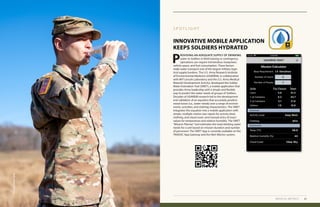
  • 6.
    INTRODUCTION 98 2019HEALTH OF THE FORCE REPORT Demographics POPULATION DISTRIBUTIONS The Health of the Force references the U.S. population to provide context for how Soldiers’ health compares to that of the U.S. population. The U.S. Army AC Soldier population differs from the U.S. population in two important ways: age and sex distributions. Over 78% of AC Soldiers are under the age of 35 years, compared to 37% of the employed civilian population. The age distri- bution of the U.S. population is approximately uniform across ages 18–60 years. The AC Sol- dier population is 85% male, whereas the U.S. population is roughly 50% male and 50% female. Because age and sex are often strongly linked to health status, these differences in population distributions have profound implications for comparisons of population health between the AC Soldier population and the U.S. population. For example, it can be inappropriate and mislead- ing to directly compare disease prevalence among relatively young Soldiers to disease prevalence among the U.S. adult population. When using a comparison population, it is preferable to adjust that population to the Army pop- ulation. Specifically, the employed U.S. population is adjusted to match the age and sex distribu- tion of the U.S. Army AC Soldier population to accurately compare disease prevalence between these populations. HEALTHY SOLDIER EFFECT Healthy workers are more likely to remain in the work force compared to less healthy workers; this healthy worker effect is also seen in the AC Soldier population. ARMY DATA VS. U.S. POPULATION DATA Figures from the U.S. population are commonly derived by surveying a much smaller sample. For example, the Behavioral Risk Factor Surveillance System (BRFSS) is used to determine health- related risk behaviors and chronic health conditions, and it samples about 400,000 adults per year. Prevalence figures in this smaller sample are then used to estimate the prevalence of the entire U.S. population. In contrast, AC Soldiers are eligible for medical care through a common insurer (TRICARE) and have physical examination, screening, and vaccination requirements; therefore, reporting on the health of the entire AC population is much more feasible. This means that data for the AC Soldier population will be more accurate than data reported for the U.S. population. POPULATION ESTIMATES AND PERSON-TIME Because the AC Soldier population is ever-changing, Health of the Force analysts estimate report- ing unit populations by summing the months Soldiers are assigned to an installation during the reporting year. This provides an estimate of the population for a given location and approximates the mean end strength over 12 months. Epidemiologists call this “person-time” (“person-years” in the Health of the Force). A person-year is analogous to a full-time equivalent (FTE) employee. The prevalence of chronic medical conditions (e.g., hypertension, arthritis, cancer) increases mark- edly with age. Similarly, body composition changes as people age, leading to a higher prevalence of obesity among older people. The U.S. population will appear to have a higher prevalence of obesity relative to Soldiers simply because the U.S. population is older, on average, than the AC Soldier population. After adjusting the employed U.S. population to fit the age and sex distribution of the U.S. Army AC Soldier population, the obesity prevalence falls from 31% to 26%. However, the adjusted U.S. population obesity prevalence of 26% is still substantially higher than the obesity prevalence of 17% among AC Soldiers. Age Distribution by Sex, AC Soldiers, 2018 Adults of military age in the U.S. are approximately uniformly distributed by age, and 50% are male. AC Soldiers are younger and more likely to be male than the U.S. population. 0 17 19 21 23 25 27 29 31 33 35 37 39 41 43 45 47 49 51 53 55 57 59 1 2 3 5 4 6 7 PercentofPopulation Age Female Soldiers Male Soldiers Female U.S. Population Male U.S. Population
  • 7.
    10 2019 HEALTHOF THE FORCE REPORT BETTER INITIATIVES. HEALTHIER FORCE. MOVING FROM INTUITION-BASED TO EVIDENCE-BASED PROGRAM DECISION-MAKING S P O T L I G H T T HERE’S TRUTH IN DATA! LEADERS THROUGH- out the Army use the Health of the Force report to identify areas in which they are doing well and opportunities to improve the readiness, health, and well-being of their Soldiers and the Total Army Family. If a potential concern is identified, how can leaders develop and implement a solution that will likely have a positive impact? How do they know if these initiatives are effective? The APHC, along with the U.S. Army SHARP Ready & Resilient Directorate (SR2), recently released the U.S. Army’s Ready and Resilient Initiative Evaluation Process (IEP Guide) (APHC, 2019a). The IEP is an initiative planning, evaluation, and review process that will help Army leaders develop and expand effective initiatives aimed at improving the health of the Total Army Family. The IEP Guide was created based on best practices from the fields of business, public health, strategic planning, and prevention science. It uses concepts from public health and the Military Decision Making Process (MDMP) to allow readers with different educational backgrounds and experiences to leverage their current knowledge and skills when developing, implementing, and evaluating initiatives. The Guide is constructed using a modular format so users can go directly to the component most relevant for their phase of initiative development. Each section includes a rationale, instructions, tools, examples, templates, and external resources. The IEP Guide is available to anyone who is interested in developing, implementing, or expanding an ini- tiative to improve the health, readiness, or resilience of an Army population. The Guide will walk initiative developers through each stage of initiative planning, with tools they can use to document the initiative’s development, implementation, and evaluation activ- ities. The Guide can help ensure the initiative is well planned, is a good steward of resources, collects the right data, and provides evidence to determine its effectiveness. The IEP Guide’s systematic planning process allows leaders at all Army levels to make evidence-based resource decisions when considering whether an initiative should be implemented, main- tained, or expanded. Leaders who need to make a decision about an ini- tiative or are looking to develop and implement a solution to any challenge identified within this report can use the IEP Guide to ensure their initiative leads to a healthier Force. INTRODUCTION 11 Population by Sex and Year, AC Soldiers, 2014–2018 Population Distribution by Sex and Age, AC Soldiers, 2018 In 2018, the estimated average monthly AC Soldier population was 463,698 Soldiers. Enlisted personnel accounted for 80% of AC end strength. Demographics 0 100,000 200,000 300,000 400,000 500,000 600,000 2014 2015 2016 2017 2018 Female Male Total 68,652 395,059 463,711 69,274 394,424 463,698 68,184 401,003 469,187 70,302 441,088 511,389 60,485 416,274 484,759 Year NumberofACSoldiers <25 25–34 35–44 45+ 0 10 20 40 30 6.4 5.6 31 2.4 35 15 0.6 3.8 Age Percent 85% of AC Soldiers were males Females Males
  • 8.
    EPIDEMIOLOGICAL CONSULTATIONS: INVESTIGATING EMERGINGTHREATS TO THE ARMY’S HEALTH S P O T L I G H T T HE U.S. ARMY PUBLIC HEALTH CENTER (APHC) conducts Epidemiological Consulta- tions (EPICONs) to provide expert advice and assistance for medical situations impacting readiness or public health across the Army. During an EPICON, a problem (e.g., infectious disease outbreak, environ- mental health issue, or other emerging health risk) is verified through consideration of a differential list of potential causes, and recommendations are gener- ated to remedy and prevent the problem. Multi-disciplinary EPICON teams are strategically staffed based on the nature, scope, and urgency of the mission and can contain personnel with expertise in medicine, epidemiology, public health, psychology, social work, sociology, public health nursing, or data management. Consultation services include advice or direct participation in the steps of the epidemiologic investigation process (e.g., design, data collection, data entry, analysis, and interpretation). Investigation services can include, but are not limited to, review and analysis of Army administrative data, interviews, surveys, focus groups, and geospatial analysis. The scope of EPICON activities includes investigation of infectious and occupational diseases; behavioral and social health; chronic diseases; injuries; environmental exposures and diseases; and other acute and chronic conditions of public health interest. As a consulta- tion service, the EPICON team is not responsible or accountable for managing the public health situation but instead offers possible solutions in the form of actionable recommendations for control and/or pre- vention of public health issues. EPICONs are typically requested by line leaders or commanders when there is a perceived increase in disease, injury, or a behavioral health outcome that negatively impacts Soldier health and readiness. As an entity of the U.S. Army Medical Command (MEDCOM), the APHC does not have the authority to conduct EPICONs without a formal tasking. Requests for EPICONs should originate through the senior com- mander and be routed through the U.S. Army Medical Command, Office of the Surgeon General to initiate a formal tasking to the APHC. 12 2019 HEALTH OF THE FORCE REPORT BITE BACK: YOUR DENTAL CARIES RISKS S P O T L I G H T O RAL HEALTH IS COMPROMISED BY THE presence of dental caries, more commonly known as tooth decay. Tooth decay is a pre- ventable yet highly prevalent chronic disease caused by a breakdown of tooth structure as a result of the acid produced by bacteria. Identification of those at high risk of tooth decay is an effective means of pre- venting and controlling this disease. An assessment of a Soldier’s risk of tooth decay is performed at the periodic dental examination. Multiple factors deter- mine a Soldier’s risk, including oral hygiene habits, diet, tobacco use, salivary flow, and clinical signs that tooth decay is or has been present. The High Caries Risk (HCR) program is designed to identify and address individual risk factors for future tooth decay. Enrollment and participation in this program is voluntary for Soldiers determined to be at high risk of developing tooth decay; however, high-risk patients are strongly encouraged to take advantage of it. The HCR program offers a multitude of services, the first of which is a dietary analysis that identifies a Soldier’s specific risk factors as they relate to food and beverage consumption, hydration, tobacco product use type and amount, and sleep adequacy. A history of inadequate sleep may be a sign of sleep apnea and accompanied by symptoms which increase the risk of developing tooth decay including dry mouth or bruxism (teeth grinding). Once specific risk factors have been identified, the Soldier will receive nutrition counseling. The dental provider will review the habits that are increasing the Soldier’s risk of dental decay and suggest ways to improve them. Other methods of intervention and prevention included in this program are professional fluoride varnish treatments, sealants on at-risk tooth surfaces, prescription fluoride and antimicrobial products, and an explanation of the disease etiol- ogy. Upon completing the program, the Soldier will receive a dental decay risk re-assessment. The focus of the HCR program is to identify and address a Soldier’s individual dental decay risk fac- tors to prevent the disease before it starts. Disease prevention is just one of many strategies used to improve and sustain the dental readiness and oral health of the Force. Improving the oral health of the Force will strengthen the health of the Nation. INTRODUCTION 13 Taking the first step towards reducing the risk of dental decay. “People are always my #1 priority.We must take care of our people and treat each other with dignity and respect. It is our people who will deliver on our readiness, modernization, and reform efforts.” —General James C. McConville Chief of Staff of the Army U.S.Armyphoto,APHC
  • 9.
    After adding thehelicopter to the “Vibration Exposure” vignette, I thought it kind of strange to have back to back images of choppers in the report. As much as I love this photo, I am considering swapping it out for something else just for a change of subject matter. U.S. Army photo Medical Metrics INJURY TOBACCO PRODUCT USE BEHAVIORAL HEALTH HEAT ILLNESS HEARING SUBSTANCE USE SLEEP DISORDERS OBESITY SEXUALLY TRANSMITTED INFECTIONS CHRONIC DISEASE
  • 10.
    Year Age Medical Metrics Injury Injury isa significant contributor to the Army’s healthcare burden, impacting medical readiness and Soldier health. Injuries were defined as damage or interruption of body tissue function caused by an energy transfer that exceeds tissue tolerance suddenly (acute trauma) or gradually (cumulative micro-trauma) (APHC, 2017a). Each year, over half of all Soldiers experience an injury or injury-related musculoskeletal (MSK) condition, accounting for approximately 2 million medical encounters and roughly 10 million days of limited duty. In Health of the Force, injury incidence was estimated using specific diagnostic codes from inpatient and outpatient medical encounter records in the Military Health System Data Repository (MDR). Cumulative micro-traumatic MSK injuries are referred to as “overuse” injuries. Incidence of Injury by Sex and Age, AC Soldiers, 2018 Among AC Soldiers, 1,670 new injuries were diagnosed per 1,000 person-years in 2018. The rate reflects the potential occurrence of multiple injuries per Soldier. Injury rates were higher among females and older Soldiers. InjuryRateper1,000 Person-Years Overall, 1,670 new injuries were diagnosed among Soldiers per 1,000 person-years. Incidence ranged from 1,195 to 3,043 injuries per 1,000 person-years across Army installations. 1,670 1,195 3,043 Total <25 25–34 35–44 ≥45 0 500 1,000 2,000 3,000 1,500 2,500 3,500 2,198 2,263 1,894 1,577 1,4181,379 2,453 2,074 2,664 3,246 MEDICAL METRICS 1716 2019 HEALTH OF THE FORCE REPORT Incidence of Injury per 1,000 Person-Years, AC Soldiers, 2016–2018 The incidence of all new injuries and new overuse injuries decreased in 2018, compared to previous years.   InjuryRateper1,000 Person-Years 2016 2017 2018 0 500 1,000 1,500 2,000 1,777 1,257 1,716 1,219 1,670 1,185 All injuries Overuse injuries Proportion Injured by Sex and Age, AC Soldiers, 2018* Overall, 53% of Soldiers had a new injury in 2018. Of these injuries, 71% were overuse injuries. Injuries affected 66% of Soldiers age 45 and older, compared to 50% of Soldiers under age 25. Sixty-three percent of females had a diagnosed injury in 2018, compared to 52% of males. For both males and females across all age groups, overuse injuries, commonly attributed to military training, accounted for the majority of injuries. These injury trends are comparable to previous years. Percent of Soldiers with ≥1 injury Percent of Soldiers with ≥1 overuse injuryPercentofSoldiersInjured Sex and Age Category Total <25 25–34 35–44 ≥45 0 20 40 60 80 63 55 52 43 63 55 48 39 60 52 50 42 67 61 61 54 73 69 65 58 Age: Females Males Females Males Females Males Females Males Females Males *Soldiers are represented in both injury categories if applicable. A comprehensive re-classification of injury diagnosis codes was necessitated by the Military Health System’s transition to the ICD-10-CM medical coding system in October 2015. All three full calendar years of data under the new coding system are presented. Females Males
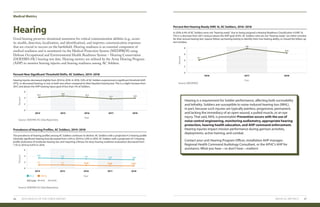
  • 11.
    Medical Metrics Injury MEDICALMETRICS 1918 2019 HEALTH OF THE FORCE REPORT OCCUPATIONAL PHYSICAL ASSESSMENT TEST AND INJURY RISK REPORT CHARACTERIZES INJURY IN TRAINEE POPULATIONS S P O T L I G H TS P O T L I G H T I N 2017, THE U.S. ARMY IMPLEMENTED THE Occupational Physical Assessment Test (OPAT) for all recruits (HQDA, 2016). The OPAT is a 4-event battery of physical fitness assessments that sets min- imum fitness standards for entry into the Army and for each military occupational specialty (MOS). The OPAT is a tool that matches recruits with an MOS for which they should be physically qualified by the end of Initial Entry Training (IET) (i.e., BCT and OSUT). Each Army MOS was assigned a physical demand category (PDC) of Heavy (highest PDC), Significant, or Moderate (lowest passable PDC) based on the MOS’s physically demanding tasks. OPAT fitness standards were established for each PDC. To begin their IET, recruits must meet at least the Moderate PDC stan- dard on each OPAT event, thus establishing a mini- mum fitness standard for both entry into the Army and for each MOS. Studies show lower injury risks for trainees and Sol- diers with higher levels of physical fitness, particularly aerobic fitness (Knapik et al., 2001). Training to pass the OPAT at the required PDC may have a positive impact on training-related injury rates through fitness improvement, especially during IET. Additionally, OPAT implementation may reduce overall injury rates because recruits are matched with the MOS for which they should be physically qualified by the end of IET. The APHC and TRADOC monitor the association of OPAT performance during recruitment with injury risk during IET. For example, injuries during BCT were identified from the electronic health records for train- ees who took the OPAT before starting BCT in 2017. For both sexes, the percentage of injured trainees increased as OPAT performance decreased from the I NJURY RATES AMONG ARMY TRAINEES HAVE historically been 1.3 to 1.7 times higher than rates for AC Soldiers (APHC, 2018). To better understand injuries in the trainee population, the Training-Related Injury Report (TRIR) was developed in the early 2000s to monitor monthly Basic Combat Training (BCT) injury rates at Forts Benning, Jackson, Leonard Wood, and Sill. The TRIR focuses on the most common MSK injuries in training populations (i.e., injuries affecting the lower back and lower extremities) and initially provided monthly rates by sex for each installation. In 2018, the APHC collaborated with the U.S. Army Training and Doctrine Command (TRADOC) Surgeon’s Office, The Office of the Surgeon General (OTSG) Physical Performance Service Line, and the Armed Forces Health Surveillance Branch (AFHSB) of the Defense Health Agency (DHA) to enhance this monitoring tool by reporting TRIR metrics by training cycle. These metrics were reported for each BCT cycle at all four installations and for the One Station Unit Training (OSUT) cycles conducted at Forts Benning and Leon- ard Wood. The new Quarterly TRIR provides the proportion of trainees (males and females separately) that were injured during each training cycle of BCT and OSUT at each training center. Data visualizations in the Heavy PDC standard to the Moderate PDC standard (see figure). Among males, trainees who met only the Significant and Moderate PDC standards had statistically significant higher injury risks (19% and 23% higher, respectively) compared to trainees who met the Heavy PDC standard. Among females, train- ees who met the Moderate PDC standard had a 7% higher injury risk compared to trainees who met the Heavy PDC standard (APHC, 2018). Quarterly TRIR allow leaders to monitor training cycle- based and battalion-level injury incidence (proportion of trainees that were injured) for the most recent quarter and the previous 12 months. By providing more actionable metrics, the new format allows leaders to compare injury rates across cycles, units, and installations. Figures 1 and 2 are examples of BCT installation- and battalion-level statistical process control charts, respectively, from the Quarterly TRIR. They show the proportion of trainees that were injured in each training cycle conducted between July 2018 and June 2019. Cycles with data points at or above the red line had statistically significantly larger proportions of injured trainees compared to the sex-specific 2017 mean for all BCT cycles (2 standard deviations (2SD) above the mean). Training units with large propor- tions of injured trainees in consecutive training cycles, such as Battalion Y, should prioritize strategic initiatives to reduce injuries. Data at or below the green line represent significantly smaller proportions of injured trainees compared to the sex-specific mean for training cycles (2SD below the mean). Any initiatives implemented to achieve these smaller proportions of injured Soldiers, such as changes to training intensity or participation in other strategic injury reduction initiatives, should be shared with leaders in other training units (Schuh et al., 2017). Notes: Increased risk of injury presented within PDC bars was calculated from the risk ratio (RR), comparing the percentage of injured train- ees in the designated PDC to the Heavy PDC within sex. RRs (95% confidence interval) were as follows: • Females (Significant): 1.04 (0.97–1.12). • Females (Moderate): 1.07 (1.00–1.15). • Males (Significant): 1.19 (1.12–1.27). • Males (Moderate): 1.23 (1.15–1.31). Heavy Percent Injured Baseline Mean 2SD higher than BCT mean 2SD lower than BCT mean Significant Moderate InjuryRiskRatio (ComparedtoHeavyPDC) ProportionInjured ProportionInjured Increased Injury Risk in BCT by Overall OPAT Performance, Fiscal Year (FY)18 Injured Female Soldiers by BCT Training Cycle, Installation X, July 2018–June 2019 Injured Male Soldiers by BCT Training Cycle, Battalion Y, July 2018–June 2019 20 40 0 60 80 July 2018 June 2019 10 20 30 0 40 50 July 2018 June 2019 0.5 1.0 0.0 1.5 Females (n=3,852) Males (n=13,060) 1.00 1.19 1.23 1.00 1.04 1.07
  • 12.
    MEDICAL METRICS 21 MedicalMetrics Injury 20 2019 HEALTH OF THE FORCE REPORT WHO REPORTS THE “MOS”T LOW BACK PAIN? S P O T L I G H T M SK CONDITIONS RELATED TO EXPOSURE to force, vibration, non-neutral postures, duration, and repetition during occupa- tional tasks can lead to discomfort and acute or chronic disability. Back injuries have high incidence and high associated costs and are frequently linked to exposure to occupational hazards. From 2016 through 2018, low back pain had the highest number of asso- ciated encounters and costs of all diagnoses for AC Soldiers (with the exception of encounters associated with immunizations and periodic health assessment office visits). Even physically fit Soldiers may face undue risk of MSK discomfort and injury in physically demanding jobs. Occupational work-related MSK hazards are present in many Soldier job tasks. Ergonomic changes to designs or equipment may reduce some injury burden (Hollander & Bell, 2010). Evaluating Soldier exposure to external ergonomic risk factors, as well as preventing injury through job task assessment and equipment or job redesign, can reduce overall exposure and minimize the occurrence and severity of injury and discomfort. Such actions support the Army’s environment, safety, and occupational health (ESOH) strategy of enhancing mission effectiveness and resilience by ensuring that physical environment and work processes protect Soldiers, Civilians, and Families (DA, 2017a). When considering only conditions of the MSK sys- tem and connective tissue, the five MOS groups with the highest number of Soldier encounters for MSK conditions, and highest percentage of the population with reported encounters, were Supply Administra- tion, Motor Vehicle Operators, Automotive (general), Medical Care and Treatment (general), and Infantry (general). For each of these MOSs, low back pain was the most frequent MSK diagnosis (see figure). Percent of Occupational Group Percent of Occupational Group with Encounters by Body Part, 2018 Data were extracted from the Military Health System Management and Reporting Tool. Pain in right hip Pain in ankles Pain in shoulders Pain in knees Neck pain Low back pain 10 20 300 40 50 60 Infantry (General) Motor Vehicle Operators Automotive (General) Medical Care and Treatment (General) Supply Administration VIBRATION EXPOSURE AND BACK PAIN IN THE ARMY AVIATION COMMUNITY S P O T L I G H T H ELICOPTER PILOTS SUFFER FROM CERVICAL and lumbar spinal degeneration (Byeon et al., 2013). Similarly, a high incidence of back pain in helicopter pilots was attributed to vibration and in-flight posture (De Oliveira & Nadal, 2005). In a sur- vey of military helicopter pilots, the U.S. Army Aero- medical Research Laboratory (USAARL, 2017) found that 85% of pilots reported back pain at some time during their flying career; 78% of pilots reported back pain in the previous calendar year. The median flight time to back pain onset was 60 minutes, well within normal flight operations. Characterizing and assessing aircrew vibration expo- sure during flight operations presents challenges. Consequently, vibration exposure data are lacking. With funding provided by the National Defense Center for Energy and Environment (NDCEE), the APHC and the Air Force Research Laboratory col- lected multi-axis vibration data on board a UH-60L Blackhawk helicopter. Recorded vibration during level flight conditions indicated that the pilot may Airspeed (Knots) HoursofExposure UH-60L Level Flight Exposure Limit, FY18 Potential for health risks Health risks likely 5 0 10 100 120 14580 2.3 9.1 1.4 5.8 1.1 4.5 1.2 4.7 be exposed to levels where a “potential for health risks” occurs in as little as 1.1 hours or where “health risks are likely” in fewer than 4.5 hours, according to international standards (see figure). Current commercial research has focused on design- ing actively controlled vibration damping helicopter seat mounts and air bladder cushions to reduce vibration exposure and improve aircrew ergonomics. From 2016 to 2018, 16% of the full cost (i.e., encounters, treatment, etc.) of MSK conditions was related to low back pain. U.S. Army photo 21%2016 2017 20% 2018 37% Percent of MSK Condition Encounters Related to Low Back Pain, 2016–2018
  • 13.
    Percent Age Medical Metrics MEDICAL METRICS2322 2019 HEALTH OF THE FORCE REPORT Behavioral Health The stressors of military life can strongly influence the psychological well-being of Soldiers and their Families. Behavioral health (BH) conditions, particularly when unrecognized and untreated, can lead to medical non-readiness, early discharge from the Army, suicidal behavior, and many other outcomes. The prevalence of BH disorders was estimated using specific diagnostic codes from inpatient and outpatient medical encounter records in the MDR. In 2018, 16% of Soldiers had a diagnosis of one or more BH disorders, which include adjustment disorder, mood disorder, anxiety disorder, posttraumatic stress disorder (PTSD), substance use disorders (SUDs), personality disorders, and psychoses. Prevalence of Behavioral Health Disorder Diagnoses by Sex and Age, AC Soldiers, 2018 The prevalence of BH diagnoses was higher among female Soldiers (24%) than male Soldiers (14%). Diagnoses of PTSD, anxiety disorders, and mood disorders were more common among older Soldiers than younger Soldiers (under 35 years of age) (e.g., PTSD 8.0% and 1.4%, respectively), whereas SUD diagnoses were more common among younger Soldiers than older Soldiers (4.1% and 2.2%, respectively). Females Females Males Males Overall, 16% of Soldiers had a diagnosed behavioral health disorder. Prevalence ranged from 9.5% to 24% across Army installations. 16% 9.5% 24% Total <25 25–34 35–44 ≥45 0 5 10 20 30 15 25 35 24 22 23 14 1312 30 21 22 33 Percent Prevalence of Behavioral Health Disorder Diagnoses by Sex and Condition, AC Soldiers, 2018 The most common BH diagnosis was adjustment disorder. The proportion of female Soldiers who received a diagnosis of adjustment disorder, anxiety disorder (excluding PTSD), or mood disorder was twice that of male Soldiers (e.g., 16% and 7.5% for adjustment disorder, respectively). SUD was the only BH condition for which the prevalence among male Soldiers exceeded that among female Soldiers (3.9% and 2.7%, respectively). Condition Any BH disorder Adjustment disorder Anxiety disorder Mood disorder PTSD Substance use disorder 2550 10 15 20 24 14 16 7.5 8.8 4.3 8.7 3.9 3.7 2.6 2.7 3.9 Prevalence of Behavioral Health Disorder Diagnoses by Condition, AC Soldiers, 2014–2018 The proportion of AC Soldiers with a diagnosed BH disorder (16%) has changed little over the last 5 years. Anxiety, mood, and PTSD decreased slightly, while adjustment disorder held steady, and SUD increased. Percent 0 5 10 15 20 2014 2015 2016 2017 2018 Any BH disorder 16 161616 17 Adjustment disorder 8.6 8.88.98.4 8.7 Mood disorder 4.9 4.65.26.1 5.8 Anxiety disorder 5.3 5.05.75.9 6.0 PTSD 3.1 2.83.53.7 3.6 Substance use disorder 3.7 3.73.33.2 3.3 Year Less than 1% of AC Soldiers were diagnosed with a personality disorder or psychosis. Identifying behavioral health concerns early and encouraging Soldiers to seek treatment are priority goals of the Army and lead to better long-term outcomes. Soldiers who do not receive timely treatment for behavioral health concerns are at risk for negative outcomes and decreased readiness.
  • 14.
    ADDRESSING THE STIGMAOF BEHAVIORAL HEALTH TO IMPROVE SOLDIER READINESS S P O T L I G H T D ESPITE MANY EFFORTS TO IMPROVE ACCESS to behavioral health treatment, barriers remain, and Soldiers may not seek care when they need it. Barriers to care include stigma (e.g., perceptions that one will be seen as weak), organiza- tional barriers (e.g., appointment availability, work/ mission priorities), and negative perceptions that Soldiers may have about the utility or the effec- tiveness of treatment (Adler et al., 2015; Hoge et. al., 2014). In response, the Department of Defense (DOD) and the Army have initiated numerous programs to enhance access and reduce behavioral health stigma (Hoge et al., 2016). One of the key messages for Soldiers and leaders is that seeking care is a sign of strength that can sup- port a Soldier’s career, marriage, relationships, or life goals. Providers are trained to maintain a balance between the requirements (legal and ethical) to provide high-quality, confidential care and the orga- nizational and unit mission needs for a ready Force. If a behavioral health condition interferes with a Soldier’s ability to complete the mission, or there are serious safety concerns, specific requirements man- date that clinicians provide limited information to the commander about duty restrictions (e.g., reducing nighttime duty to stabilize sleep, or restricting access to weapons) through the eProfile system to ensure that both the Soldier and the unit receive appropriate levels of support. Most behavioral healthcare visits do not result in lost duty days or the need for eProfiles, but rather enable Soldiers to receive the support they need to maintain health and wellness. Many factors can lead to lower or higher utilization of behavioral healthcare services. For example, stigma reduction efforts have led to marked increases in utilization, so in some ways, a higher number of visits may reflect improved access and reduced barriers. Installations with high rates of behavioral healthcare visits may also have larger numbers of personnel who have deployed to war zones or are the site of tertiary facilities that provide care to seriously wounded Soldiers. Of Soldiers with a behavioral health diagnosis, 1.6% received treatment at inpa- tient care facilities, and 16% received treatment at outpatient care facilities. Health of the Force does not rank installations by behavioral health data. In 2019, these data were removed from the Installation Health Index (IHI) score, not as a reflection of the level of importance of behavioral health to overall Soldier health, but rather because clinical utilization rates themselves are a poor indicator of population health, and to avoid con- tributing to existing behavioral health stigma. Behav- ioral health concerns are common among Soldiers, and their seeking treatment when needed is often the most effective way to support career or life goals and Force readiness. Medical Metrics Behavioral Health MEDICAL METRICS 2524 2019 HEALTH OF THE FORCE REPORT Wiesbaden CR2C Leverages Process-based Courses of Action for Senior Leaders L O C A L A C T I O N T he Wiesbaden Senior Responsible Officer (SRO) chairs the U.S. Army Garrison (USAG) Wiesbaden Commander’s Ready and Resilient Council (CR2C). The CR2C consists of three working groups—family/social, phys- ical/emotional, and spiritual/ethical—representing five resiliency dimensions. The SRO focused these working groups by identifying three priorities: creating a ready and resilient community, reducing high-risk behaviors, and supporting Army Families. Priority determination was influenced by the Community Strengths and Themes Assessment (CSTA), subordinate commander feedback via the CR2C and associated working groups, and U.S. Army Europe CR2C priorities. Each working group must consider how its initiatives meet these priorities and complement the other working groups. For example, the physical/emotional working group not only focuses on medical and behavioral health but also includes the dining facility and the physical fitness center director for nutrition and physical readiness expertise, respectively. Tenant activity commanders chair the working groups, thus enabling commander input, creat- ing community buy-in, and providing appropri- ate subject matter expertise. The USAG Wiesbaden CR2C utilized the most recent CSTA to identify the areas the commu- nity had indicated as needing special focus or attention. The working groups then applied the CSTA findings to their respective areas to cre- ate process-driven initiatives whose progress is monitored each quarter through the APHC Impact Tracker. A quarterly CR2C Steering Committee meeting chaired by the Garrison Commander served as an In-progress Review, and the CR2C, chaired by the SRO, reviewed final general officer guidance and comments. The USAG Wiesbaden CR2C leverages these tools to facilitate a process-based method that provides senior officers and commanders with courses of action tailored to promote the health of the Force across the community. For exam- ple, the Wiesbaden CR2C Physical/Emotional Working Group is using the Army Combat Fitness Test (ACFT) transition as an action plan to develop educational materials with exercises to show Soldiers how to better prepare for the ACFT. The utilization of the CSTA helped identify areas that would benefit from additional focus by giving a voice to—and creating a partner- ship with—the USAG Wiesbaden community. The CSTA is a critical component of a process that is designed to be community-driven and community-focused. 59% 10% Of total lost duty days due to medical conditions, are due to MSK injury temporary profiles, and are due to BH temporary profiles (Jones et al., 2019). Although Health of the Force contains informa- tion on behavioral healthcare visits at various installations, it is important not to compare data among installations or draw conclusions based on such comparisons. / / / / / / / / / / / / / / / / / / / / / / / / / / / / / / / / / / / / / / / / / / / / / / / / / / / / / / / / / / / / / / / / / / / / / / / / / / / / / / / / / / / / / / / / / / / / / / / / / / / / / / / / / / / / / / / / / / / / / / / / / / / / / / / / / / / / / / / / / / / / / / / / / / / / / / / / / / / / / / / / / / / / / / / / / / / /
  • 15.
    PREVENTING SEXUAL VIOLENCEAND SEXUAL HARASSMENT IN THE U.S. ARMY SOLDIER USE OF PORNOGRAPHY CORRELATES WITH INTIMATE PARTNER VIOLENCE S P O T L I G H T S P O T L I G H T S EXUAL VIOLENCE IS A SERIOUS PUBLIC HEALTH problem that affects millions of people in the U.S. each year. Sexual violence can happen to anyone, regardless of age, sexual orientation, or gender identity. According to the Centers for Disease Control and Prevention (CDC), more than one in three females and nearly one in four males experience sex- ual violence during their lifetime (CDC, 2019a). Sexual violence has a devastating impact on sur- vivors. Research shows the risk of sexual violence increases significantly when a precursor such as sexual harassment is condoned or goes unrecog- nized (DOD, 2019a). DOD and U.S. Army studies indicate that approximately 30% of sexual assaults are accompanied by sexual harassment before or after the assault. The attitudes and behaviors that enable harassment also foster more egregious acts. The U.S. Army is committed to eliminating sexual violence within its formations through efforts that focus on promoting professional unit climates and a strong Army culture that respects the dignity of everyone. The Army’s efforts are also designed to stop the escalation of incidents within the context of the sexual violence continuum of harm (see figure). The Army intends to further its capacity for and capabilities in primary prevention, which includes efforts to stop sexual assault and sexual harassment before they occur. The U.S. Army Sexual Harassment/ Assault Response and Prevention (SHARP) program is updating its campaign plan and developing a comprehensive prevention strategy to guide the development, implementation, and assessment of prevention efforts. Experts in prevention, research- based theories of attitude and behavior change, effective prevention programs, and potential factors that lead someone to perpetrate sexual misconduct are informing this strategy. S OCIETAL, RELATIONSHIP, AND INTRAPERSONAL factors are associated with intimate partner violence (IPV); emerging evidence suggests that problematic pornography use may be another con- tributor (Brem et al., 2018). Using cross-sectional data collected from a U.S. Army installation in 2018, public health analysts analyzed how problematic pornogra- phy use may be associated with self-reported perpe- tration of IPV (Beymer et al., in review). After account- ing for other predictors of IPV (i.e., gender, age group, race/ethnicity, relationship status, education, rank, hazardous alcohol use, illicit substance use, depres- sion, and PTSD), the study team found that Soldiers who reported pornography use were between two and five times more likely to report ever perpetrating IPV in their lifetimes. The number of hours of pornog- raphy viewed per week increased Soldiers’ likelihood to self-report IPV perpetration. In alignment with the DOD and CDC, the Army is incorporating the Social-Ecological Model (SEM) into its prevention strategy. By leveraging the SEM, the Army will consider the factors that put people at risk for, or protect people from, sexual violence at four interconnected spheres of influence: individ- ual, relationship, community, and societal. The Army recognizes that to sustain long-term effects, preven- tion efforts must occur within each sphere. SHARP will leverage mutually supporting policies, programs, and practices as it advances toward the ultimate goal of eliminating sexual harassment, sexual assault, and associated retaliatory behaviors. These offenses have no place in the U.S. Army. Beyond being morally unacceptable and conflicting with Army Values, they are readiness issues, which affect our ability to fight and win our Nation’s wars. Pornography often portrays violence which may normalize IPV among frequent viewers. A previous content analysis of best-selling pornography videos reported 88% of pornography scenes contained physical aggression, while 49% contained verbal aggression (Bridges et al., 2010). It is possible that IPV perpetration preceded problematic pornogra- phy consumption, but the current study was not designed to assess causality. However, the strength of association in the present study should warrant further studies in this field. Army health promotion campaigns should focus on encouraging open communication about the difference between sexual conduct depicted in pornography versus healthy, mutually-respectful relationships. In addi- tion, military leaders and clinical providers should foster a supportive environment where IPV survivors are empowered to report abuse confidentially and without fear of retribution. Medical Metrics Behavioral Health MEDICAL METRICS 2726 2019 HEALTH OF THE FORCE REPORT If you need help, call, chat, or text today. CALL 1-800-799-SAFE (7233) TTY 1-800-799-SAFE (7233) CHAT THEHOTLINE.ORG Early Warning Signs Sexual Harassment Sexual Assault Excessive flirting Toxic atmosphere Inappropriate jokes/comments Disparaging comments on social media Inappropriate work relationships Cat calls Sexual innuendo Cornering/blocking Sexually oriented cadence Unsolicited sexually explicit text/email Sending unsolicited naked pictures Indecent recording/broadcasting Non-consensual kissing/touching Indecent viewing Bullying/hazing Retaliation Stalking Rape Forcible sodomy Abusive sexual contact Aggravated sexual contact
  • 16.
    HUMAN ANIMAL BONDSUPPORTS MILITARY FAMILIES PREVENTIVE CARE IN COMPANION ANIMALS ENSURES HEALTHY SOLDIERS AND FAMILIES AT HOME S P O T L I G H T S P O T L I G H T T HE HUMAN ANIMAL BOND (HAB) REFERS TO the mutually beneficial connection between companion animals and owners (AVMA, 2019). With approximately 500,000 pets registered at mili- tary veterinary treatment facilities (VTFs) worldwide, companion animal ownership is common within the Military Services (APHC, 2016a). Interaction with companion animals is associated with a host of health benefits that include reduced heart rate, blood pressure, and cortisol levels; and increased hormone levels that are associated with well-being (HABRI, 2018). The HAB is an underappreciated tool that can strengthen resiliency in Soldiers and their Families. Equally underappreciated is the notion that the HAB can support Military Families as they strive to achieve Performance Triad (P3) goals, thus underpin- ning both readiness and resilience (French, 2016). Companion animals also strengthen resiliency in Military children through youth-focused animal- assisted interactions (AAI) on the installation. These interactions include dog bite prevention and reading skills improvement programs. Emotional attachment to a pet has been shown to help children develop positive coping strategies during major military life events, such as when a parent is deployed (Mueller & Callina, 2014). Companion animals also play an important role in strengthening resiliency among individuals recovering from injury. MTFs offering AAI programs can poten- tially reduce loneliness, improve mood, decrease the use of anxiety medication, and strengthen self-efficacy and the motivation to engage in rehabilitation and medical care (Hosey et al., 2018). E VERY YEAR, TENS OF THOUSANDS OF AMERI- cans are sickened by zoonotic diseases, i.e., dis- eases transmitted from animals to people (e.g., rabies, Lyme disease) (CDC, 2019b). Sixty percent of emerging infectious diseases in people are zoonotic (Cunningham, 2005). Dogs, cats, pocket pets (e.g., hamsters, gerbils, guinea pigs), birds, reptiles, and other companion animals that share our homes can spread zoonotic diseases, causing mild to severe illness that can negatively impact Soldiers, Army Fam- ilies, and Warfighter readiness. Human and companion animal interactions provide many benefits to human health by enhancing both physical and psychological well-being. It is important, however, to understand the presence and prevalence of zoonotic diseases within our companion animal population and identify interventions that minimize disease transmission and maximize the benefits of the human-animal bond. The DOD recognizes this and supports many successful zoonotic disease prevention services that rely on collaboration between the instal- lation veterinarian and human health professionals, emulating the interdisciplinary collaboration recog- nized within the One Health discipline (Gibbs, 2014). Launched in June 2019, the Government and Privately- owned Animal Worldwide Surveillance System (GPAWSS) is a surveillance tool that gathers data on the frequency and incidence of specific companion animal diseases diagnosed by VTFs. GPAWSS-Zoo- noses, the first program within GPAWSS to launch, enables commanders and DOD health profession- als to monitor zoonotic disease trends among the Government- and privately-owned animal population and respond to potential risks to U.S. Military person- nel and their Families. Diseases currently monitored by GPAWSS-Zoonoses include zoonotic acariasis (mange), anaplasmosis, campylobacteriosis, dermato- phytosis, ehrlichiosis, giardiasis, hookworm infection, leishmaniasis, leptospirosis, Lyme disease, rabies, and toxocariasis. Trained HAB dogs are currently being employed by U.S. Air Force Rescue Squadrons and U.S. Army Com- bat Operation Stress Control units in the U.S. Central Command Theater of Operations. These animals are utilized by unit animal handlers and licensed military social workers in an effort to reduce deployment- related stress. Emerging research on PTSD treatment in veterans shows that Psychiatric Service Dogs (PSDs) can reduce the symptoms of PTSD, contribute to improved quality of life, and improve social func- tion (O’Haire et al., 2018). The HAB supports the health and wellness of Military Families. In addition to the documented health benefits associated with the HAB, companion animal ownership can assist Military Families in reaching the nutrition, sleep, and activity goals outlined in the P3. Trained HAB animals are also being effec- tively employed in support of the mental and physi- cal health of Service members in current operational environments, those recovering from injury, and those affected by PTSD. Medical Metrics Behavioral Health MEDICAL METRICS 2928 2019 HEALTH OF THE FORCE REPORT Many zoonotic diseases in companion animals are easily prevented through annual physical exams, screening for gastrointestinal parasites (fecal exam), ensuring vaccinations are current, and parasite prophylaxis and treatment. Zoonotic disease may be present but is not always accompanied by clini- cal signs in the companion animal, highlighting the importance of regular wellness examinations and screenings. Service members and their Families can use the MilPetED app to locate their closest VTF to schedule an appointment as well as to read a selec- tion of educational articles on various topics, includ- ing zoonotic diseases. There are 138 VTFs operated by Army Veterinary Services on Army, Air Force, Navy, Marine Corps, and Joint bases worldwide. On average, installation veterinarians conduct 330,000 outpatient visits for privately-owned (Service mem- bers’ pets) and Government-owned (Military Work- ing Dogs, Secret Service, etc.) animals each year. Service members and their Families should prac- tice good personal hygiene and sanitation to minimize the risk of disease transmission from companion animals: • Wash hands after contact with an animal or animal waste; • Ensure food and drink do not become con- taminated with animal waste; and • Always seek advice from a healthcare pro- vider upon becoming ill after contact with animals, especially following any animal bites, scratches, or other injuries. milPetEDAPP Available for Download milPetED today The Military Pet Education (milPetED) Mobile application is the one place Service members, beneficiaries, and retirees need to go to obtain animal health information, tips, and resources. U.S.Armyphoto,APHC
  • 17.
    Medical Metrics MEDICAL METRICS3130 2019 HEALTH OF THE FORCE REPORT Prevalence of Substance Use Disorder Diagnoses by Sex and Age, AC Soldiers, 2018 More than 18,000 Soldiers were diagnosed with a SUD in 2018. Soldiers under the age of 25 had a greater prevalence of SUDs than any other age group. In all age categories, male Soldiers had a higher prevalence of SUD diagnoses compared to female Soldiers. Age Overall, 3.7% of Soldiers had a substance use disorder diagnosis. Prevalence ranged from 1.7% to 6.9% across Army installations. 3.7% 1.7% 6.9% Substance Use Substance use disorder (SUD) includes the misuse of alcohol, cannabis, cocaine, hallucinogens, opioids, sedatives, or stimulants. According to the Diagnostic and Statistical Manual of Mental Disorders, 5th Edition (DSM-5®), a SUD diagnosis is based on evidence of impaired control, social impairment, risky use, and pharmacological criteria (APA, 2013). The misuse of alcohol, prescription medications, and other drugs can impact Soldier readiness and resilience and may have negative impacts on family, friends, and the Army community. Drug and alcohol overdose is the leading method of non-fatal suicide attempts (APHC, 2017b). The Army continues to adapt prevention and treatment to unique characteristics of military life and culture. In Health of the Force, SUD prevalence was estimated using specific diagnostic codes from inpa- tient and outpatient medical encounter records in the MDR. Total <25 25–34 35–44 ≥45 0 1 2 4 6 3 5 2.7 3.7 2.2 3.9 3.4 5.1 1.5 2.6 1.6 0.89 Percent Females Males VOLUNTARY ALCOHOL-RELATED BEHAVIORAL HEALTH CARE AND ITS IMPACT ON READINESS S P O T L I G H T A PPROXIMATELY 22% OF SOLDIERS REPORT problematic alcohol use on Post-Deployment Health Reassessments. However, less than 2% are enrolled in substance abuse treatment, in part, because previous policies and practices discour- aged Soldiers from self-referring for alcohol abuse clinical care (DA, 2018). Barriers to seeking help include stigma, concerns on deployment restrictions, automatic command notification requirements, and negative career impact. To address these barriers and encourage Soldiers to seek help earlier, the Army created an evidence- based treatment program, Substance Use Disorder Clinical Care (SUDCC) (DA, 2019a), and published Army Directive (ARMY DIR) 2019-12, Policy for Vol- untary Alcohol-Related Behavioral Healthcare (DA, 2019b). This directive creates a voluntary pathway by which Soldiers can receive treatment for alcohol- related problems. Voluntary care does not require automatic notification to the chain of command, render a Soldier non-deployable, impose limits on the number of times a Soldier can seek care, or carry consequences for discontinuing treatment (DA, 2018). The goal is for Soldiers to receive help for self-identified alcohol problems before they result in career and legal consequences. The voluntary pathway is available to Soldiers who meet the following criteria: Soldiers may not have concurrent illegal drug problems; the alcohol problems may not be associated with military or law enforcement investigations, apprehension, or intox- ication while on duty; treatment must be completed in a standard outpatient behavioral healthcare setting; and alcohol use cannot cause impairment to the Soldier’s judgment, reliability, trustworthiness, or present a risk that would impact the mission. Soldiers not meeting these criteria may instead be referred for alcohol treatment via the mandatory pathway. Since the publication of ARMY DIR 2019-12, over 5,800 Soldiers have voluntarily received alcohol-related behavioral health care (DA, 2019c; DHA, 2019; DOT, 2019). Soldiers cited not being subject to automatic command notification or enrollment in mandatory substance abuse treatment as the main determining factor for seeking care for their alcohol problems. The implementation of ARMY DIR 2019-12 has led to a 34% reduction in the deployment ineligibil- ity of Soldiers who are receiving alcohol-related behavioral health treatment (DHA, 2019; DOT, 2019). The Army has also seen a decrease in emer- gency room visits for substance abuse problems, thus supporting the effort to create a Force that is less reliant on acute crisis services. Early behavioral health intervention increases the health and read- iness of our Force and encourages Soldiers to take personal responsibility to seek help earlier. 22%of Soldiers report problematic alcohol use. <2% are enrolled in treatment. }
  • 18.
    Age Overall, 14% ofSoldiers had a diagnosed sleep disorder. Prevalence ranged from 8.0% to 24% across Army installations. 14% 8.0% 24% Sleep Disorders High-quality sleep is critical to Soldier readiness and mission success. A good night’s sleep can help increase productivity and decrease the risk of accidents, errors, and injuries. Sleep disorders that can impair readiness and function, including sleep apnea, insomnia, hypersomnia, circadian rhythm sleep disorder, and narcolepsy were assessed in Health of the Force. The prevalence of sleep disorders was determined using specific diagnostic codes from inpatient and outpatient medical encounter records in the MDR. Soldiers may have more than one sleep disorder; however, the overall prevalence of sleep disorders represents the proportion of AC Sol- diers who have at least one of the sleep disorders assessed. Medical Metrics MEDICAL METRICS 3332 2019 HEALTH OF THE FORCE REPORT Prevalence of Sleep Disorders by Sex and Age, AC Soldiers, 2018 In 2018, approximately 14% of Soldiers had a sleep disorder. The prevalence of sleep disorders increased with age and was more common among males than females in the older age categories. The percentage of Soldiers diagnosed with a sleep disorder has remained relatively constant over the past 5 years. Percent Total <25 25–34 35–44 ≥45 0 10 20 40 30 50 14 9.0 1314 12 5.8 25 31 45 36 Females Females Males Males Most Frequently Diagnosed Sleep Disorders by Sex, AC Soldiers, 2018 Sleep apnea and insomnia diagnoses made up more than 50% of the diagnosed sleep disorders in 2018. Sleep apnea accounted for 37% of all sleep disorder diagnoses. The majority of these diagnoses were for obstructive sleep apnea, a disorder that is linked to being overweight or obese. The percentage of males diagnosed with sleep apnea was over 2 times greater than that of females. Insomnia accounted for 36% of sleep disorder diagnoses. In contrast to sleep apnea, the percentage of females diagnosed with insomnia was over 1.5 times greater than that of males. Percent 0 108642 Sleep Apnea 3.3 Insomnia 90 7.8 9.7 6.5 MAXIMIZE SLEEP IN THE OPERATIONAL ENVIRONMENT S P O T L I G H T I IN THE OPERATIONAL ENVIRONMENT, SLEEP OFTEN BECOMES A LOW PRIORITY. MAXIMIZING sleep opportunities in the field is the responsibility of both Soldiers and leaders, and the following recommendations from the Walter Reed Army Institute of Research complement Performance Triad recommendations. Remember, going without sleep is no more a “badge of honor” than going without food or water. Soldiers who obtain sufficient sleep have a tactical advantage. » PLANNING. Planning for sleep should be embedded into troop-leading procedures. Make sleep a priority, and provide operational strategies for maximizing sleep. » SLEEPING BEHAVIORS. Exercising to exhaustion, con- suming heavy meals, taking certain medications, and consuming caffeine and/or alcohol close to bedtime can disrupt sleep. Obtaining sufficient sleep takes planning; schedule wake-promoting behaviors for times that will not disrupt sleep. » TACTICAL NAPPING. Napping can boost daytime alertness and should be encouraged. During sustained and continuous operations, take advantage of shorter opportunities for sleep while promoting safety until the next opportunity for a longer sleep period occurs. » CAFFEINE OPTIMIZATION. Structured caffeine dosage and timing throughout the 24-hour day can temporarily boost alertness during sustained and continuous opera- tions. Caffeine does not replace sleep, however, and can be disruptive when consumed before bedtime. Avoid consumption of caffeine approximately 6 hours prior to bedtime. » SLEEP ENVIRONMENT. Reducing ambient noise and light, maintaining a cool temperature, and sleeping on a comfortable surface can promote restorative sleep in operational environments. Designate safe sleeping areas away from vehicles/high-risk equipment to reduce the risk of accidents, injury, and/or death. » SLEEP BANKING. Sleep loss has compounding, cumu- lative effects. Soldiers who are running on little sleep will be less resilient during the next period of sleep loss. When sleep loss is unavoidable,“bank”sleep ahead of time by sleeping more than usual. This investment can help Soldiers be more vigilant and effective. » WHEN YOU SLEEP MATTERS. Exposure to light close to sleep time (especially blue light from electronic devic- es) can shift the body’s internal clock and disrupt sleep. Avoid bright light close to sleep time; if electronics can’t be avoided, use a blue-light filter. Get bright light expo- sure in the morning to prevent misalignment. If possible, try to sleep during the night for more restorative sleep.
  • 19.
    26% Overall, 17% ofSoldiers were classified as obese. Prevalence ranged from 11% to 25% across Army installations. In comparison, 26% of a similar population of U.S. adults were classified as obese.* 17% 11% 25% Obesity Body Mass Index (BMI) is used to characterize body fat in adults by dividing weight in kilograms by the square of height in meters. The measurements used to calculate BMI are non-invasive and inexpensive to obtain. The CDC defines BMI greater than 18.5 but less than 25 as “normal weight”; BMI greater than or equal to 25 but less than 30 as “overweight”; and BMI greater than or equal to 30 as “obese.” While BMI does not differentiate between lean and fat mass, BMIs of ≥30 typically indicate excess body fat. BMI should be interpreted with caution because it does not always provide a good estimate of body fat. The relationship between BMI and body fat is influenced by age and sex. Among males, especially younger males, BMI is more highly correlated with lean muscle mass than percent body fat. As males and females age, they tend to lose muscle mass, and percent body fat increases. Males and females of a given height and weight will have the same calculated BMI; however, females will have, on average, a higher percent body fat compared to males. Medical Metrics MEDICAL METRICS 3534 2019 HEALTH OF THE FORCE REPORT Mean BMI for Female AC Soldiers and Female U.S. Civilians, Age 18–62, 2018 Mean BMI for Male AC Soldiers and Male U.S. Civilians, Age 18–62, 2018 Among females between the ages of 18 and 64, mean BMI was significantly lower among Soldiers compared to civilians. Mean BMI increases with age across both populations, with working U.S. females reaching their peak around age 30 while female Soldiers reach their peak BMI roughly a decade later in their early 40s. This difference may be due to the physical activity and fitness levels required of female Soldiers. The eventual apparent leveling off and decrease in average BMI for females in both populations may be due in part to a healthy worker bias. Mean BMI for male Soldiers is similar to, or somewhat lower than, mean BMI among civilian males. There is a clear linear trend as mean BMI increases with age until males reach their early 40s. An apparent leveling off and then decrease in average BMI after age 40 is observed in both Soldier and civilian populations, in part due to a healthy worker bias. Soldiers must be fit enough to fulfill their missions and are required to maintain a “professional military appearance” (DOD, 2017b). Therefore, it is not surprising that Soldiers’ mean BMI is generally lower (markedly lower for female Soldiers) than that of their civilian counterparts. BMIBMI Age Age Female Soldiers Male Soldiers U.S. Females U.S. Males Age Distribution and Prevalence of Obesity, AC Soldiers, 2018 Among Soldiers, the prevalence of obesity increases linearly with age until the mid-40s. The population distribution of female Soldiers and male Soldiers (bars) is overlaid with the proportion of female Soldiers and male Soldiers who are obese (dots). 0 17 19 21 23 25 27 29 31 33 35 37 39 41 43 45 47 49 51 53 55 57 59 1 2 3 5 7 4 6 8 0 10 20 30 40 PercentofPopulation PercentObese Age Female Soldiers Male Soldiers Male ObesityFemale Obesity 18 21 24 27 30 33 36 39 42 45 48 51 54 57 60 22 20 26 24 30 28 22 20 26 24 30 28 18 21 24 27 30 33 36 39 42 45 48 51 54 57 60 * The prevalence of obesity among Soldiers was lower compared to the U.S. population, after adjusting the employed, military-age population to the AC Soldier population by age and sex. Source: BRFSS, 2018
  • 20.
    36 2019 HEALTHOF THE FORCE REPORT Medical Metrics Obesity Fort Meade Improves Soldier Health through Synchronization of Services L O C A L A C T I O N B ased on obesity data presented in 2019 at the CR2C (APHC, 2019b), the leadership at Fort Meade’s Kimbrough Ambulatory Care Center established a priority to synchronize the Army Wellness Center (AWC) and Operational Medicine. As a result, the AWC and Operational Medi- cine will be co-located within the Kimbrough Campus. Improving the location proximity for these services encourages and improves synchronized operations and optimizes access to care. As Operational Medicine focuses on periodic health assessments and medical readiness, the AWC staff is expanding health education services that focus on sleep, exercise, and nutrition by providing Performance Triad coaching materials, conducting individual fitness assessments, providing Service members and Family members with personalized plans that support individual health and wellness goals (e.g., weight loss, muscle and strength increases, and improved eating habits), leading health and wellness training to reduce stress, and partnering with fitness trainers to support implementation of the ACFT. Through sus- tained collaboration with installation command teams, the Fort Meade AWC continues to focus on promoting health, building resilience, and increasing readiness. (Opposite page) Fort Meade Army Wellness Center staff (from left to right) Michael Crossett, Shelby Beattie, Ursula Ulery, Andrea Navarro, and Fort Meade MEDDAC Commander COL James D. Burk cut the ribbon to officially celebrate the opening of the AWC’s new location during a ceremony on 31 January 2020. The new location allows an expansion of services and capabilities to Service Members, Retirees, Family members, and DOD Civilians with a focus on performance improvement and injury prevention. Since its launch in 2013, Fort Meade’s AWC has helped approximately 7,000 Service Members and more than 3,000 Family members and DOD Civilians. (U.S. Army photo by Michelle Gonzalez)
  • 21.
    Tobacco Product Use Usingtobacco products negatively impacts Soldier readiness by impairing physical fitness and by increasing illness and absenteeism (DA, 2015). In Health of the Force, the prevalence of tobacco product use is estimated using Periodic Health Assessment (PHA) data (DOD, 2016a). The PHA asks Soldiers which tobacco products they have used on at least one day in the prior 30 days. In 2018, the PHA began systematically collecting data on vaping and electronic cigarette (e-ciga- rette) use, and other alternative methods of consuming nicotine. For this report, smoking products are defined as cigarettes, cigars, cigarillos, bidis, pipes, and hookah/waterpipes; smokeless products are defined as chewing tobacco, snuff, dip, snus, and dissolvable tobacco products; e-cigarettes are defined as electronic cigarettes or vape pens. Soldiers complete the PHA as part of a regular phys- ical exam which determines an individual’s ability to deploy. Soldiers may not choose to report, or may underreport, their tobacco usage to avoid potential negative attention. Medical Metrics MEDICAL METRICS 3938 2019 HEALTH OF THE FORCE REPORT Prevalence of Nicotine Product Use, AC Soldiers, 2018 Among the tobacco product use categories assessed, the largest number of Soldiers reported smoking (n= 58,029; 17%), followed by the number of Soldiers who reported smokeless tobacco use (chewing or dipping) (n= 43,282; 13%). In 2018, 7.2% (n= 25,056) of Soldiers who completed the PHA self-reported the use of e-cigarettes. The general U.S. population prevalence of tobacco product use (22%) is lower than the Army prevalence (26%). In contrast, the adjusted U.S. and Army smoking product use is identical at 17%. The difference in tobacco use is driven by use of smokeless tobacco product use where the Army prevalence (13%) is almost three times higher than the national estimate (4.7%) (BRFSS, 2018). Prevalence of Tobacco Use by Sex and Age, AC Soldiers, 2018 Prevalence of Tobacco Product Use by Type, Sex, and Age, AC Soldiers, 2018 Regardless of sex, the majority of tobacco product users are 34 years of age or younger. Across the age groups, the prevalence of tobacco use among male Soldiers was more than double that of female Soldiers. For both sexes, smoking tobacco products were the primary type of tobacco used across age groups. Males most frequently reported using smoke products followed by smokeless and e-cigarette products, across age groups. Females most frequently reported using smoke products followed by e-cigarette products and smokeless products, across age groups. Regardless of sex, the majority of e-cigarette users are 34 years of age or younger. Age Age Age Females Males Percent PercentPercent Females Males Excluding e-cigarette use, 26% of Soldiers reported using tobacco products. Prevalence ranged from 12% to 32% across Army installations. 26% 12% 32% U.S. population tobacco use is estimated using BRFSS data, which were adjusted to the AC Soldier age and sex distribution for employed individuals. Tobacco use is defined differently in the BRFSS than in the PHA. While the PHA considers any use for at least one day in the past 30 days, BRFSS has a more stringent requirement (more than 100 cigarettes in their lifetime and currently smoking some days or every day). 26% 17% 13% 7.2% Tobacco product use Smoking products Smokeless products E-cigarette products <25 25–34 35–44 ≥45 0 5 15 10 20 25 12 1.5 7.3 11 1.3 3.2 9.6 0.60 1.7 7.0 0.30 0.90 <25 25–34 35–44 ≥45 0 5 15 10 20 25 22 17 13 18 16 5.5 16 12 3.2 11 8.3 1.4 Smoking Product Smokeless Product E-cigarette Total <25 25–34 35–44 ≥45 0 10 20 30 12 13 12 29 29 31 10 26 18 7.3 Between the publication of the 2018 and the current 2019 Health of the Force reports, the DOD adopted a new version of the PHA with fundamental changes to data collection for several medical metrics, to include tobacco product use. Due to data collection changes in both content and temporality, the above presented data are not comparable to previous Health of the Force reports. For a more in-depth explanation of the changes to the PHA affecting the tobacco product use metric, please see page 146 of this report.
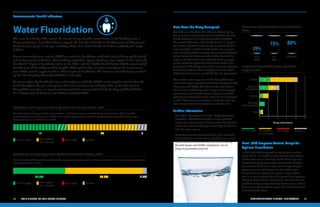
  • 22.
    Medical Metrics TobaccoProduct Use MEDICAL METRICS 4140 2019 HEALTH OF THE FORCE REPORT PUBLIC HEALTH ALERT: ELECTRONIC CIGARETTES AND VAPING S P O T L I G H T T HE U.S. ARMY’S MISSION TO STRENGTHEN resilience, readiness, and combat effectiveness through stamina advocacy programs (OTSG, 2013) is challenged by the popularity and availability of “non-cigarette tobacco products” (DHHS, 2014; CPHSS, 2014), including electronic nicotine delivery systems, electronic cigarettes (e-cigarettes), and vape products. Current evidence indicates that e-cigarettes contain and release many known toxic chemicals. As e-ciga- rette products are largely unregulated, the concentra- tions and characteristics of potentially toxic chemicals present in the vaped aerosol, including nicotine, are highly variable and depend on the device type, selected vaped e-liquid, and user customization of the device and e-liquid (APHC, 2016b). Additionally, e-cigarette devices can explode, causing severe burns and bodily injury (Katz & Russell, 2019). Intentional or accidental exposure to some vaping liquids can induce seizures, brain injury, vomiting, and lactic acidosis (Kelner & Bailey, 1985). Deliberate or unin- tentional ingestion of the e-liquid can be fatal (APHC, 2016b). Studies show that chemicals in e-cigarette aerosols may cause DNA damage and mutagenesis— hallmarks of cancer development—and that e-ciga- rette aerosols damage oral health and cause inflam- mation (Anderson, 2016). In September 2019, the CDC recognized a national outbreak of e-cigarette, or vaping, product use-asso- ciated lung injury (EVALI). In December 2019, it was discovered that several confirmed EVALI cases had supplemented their vaping products with vitamin E acetate, a highly viscous and oily substance now thought to be one of the major causes of lung injury among these cases. On 11 September 2019, on behalf of OTSG, the APHC and U.S. Army Combat Readiness Center (ACRC) issued a Public Health Alert on the vaping issue. The APHC then published a statement discouraging e-cigarette use, and the DHA instructed MTFs to report EVALI cases to the Disease Reporting System, internet (DRSi). As of 21 January 2020, 2,711 EVALI cases (including 60 deaths) were reported to the CDC, including 10 confirmed or probable cases reported to DRSi (6 from Army MTFs). Although reported cases have persistently declined since peaking in September 2019, continued awareness and prevention efforts are critical. Further study is needed to guide e-cigarette prevention and regulatory efforts. Fort Lee Tobacco-Free Living Campaign Helps Soldiers Kick the Habit L O C A L A C T I O N I n 2018, the Fort Lee CR2C Physical Resiliency Work Group (PRWG) implemented a Tobacco-Free Living Campaign. The CR2C PRWG col- lected survey data across all units and tenant organizations impacted by vaping and tobacco usage. Using the survey results, the PRWG then focused the campaign on Advanced Individual Training units and the Army Learning University. The Tobacco-Free Living Campaign includes several multipronged approaches to tobacco and vaping cessation through a comprehen- sive media campaign. Soldiers interested in quitting tobacco or vaping are encouraged to make appointments with 1) a physician’s assistant for prescribed medications, and 2) an Army Public Health Nurse (APHN), who uses health-coaching techniques to develop Soldiers’ individual smoking cessation plans. APHNs also share available smoking cessation resources at monthly Unit Health Promo- tion Council meetings. The purpose of these meetings is to provide the Commander, 59th Ordnance Brigade with situational awareness of all trends, challenges, and best practices implemented across the Brigade to improve the morale, spiritual, emotional, and physical growth of its Soldiers and Families. Virtual cessation counseling became available in fall 2019 to assist Soldiers who are deployed or otherwise unable to obtain smoking cessation assistance. To increase community awareness of tobacco and vaping dangers, the Annual Kick Butts Campaign at Fort Lee included a World No Tobacco Day basketball tournament with the Kenner Army Health Clinic’s Soldiers and Fort Lee’s Youth Services, a library program reading of “Smoking Stinks” to elementary-aged chil- dren, and frequent tobacco-free living in-pro- cessing briefings. Future goals include creation of Tobacco-Free Living Campuses on Fort Lee and work towards a completely tobacco-free installation. OTSG, APHC, & ACRC issue a Public Health Alert about EVALI. 11 SEP 2019 APHC publishes reporting guidance. 17 SEP 2019 1st case of EVALI reported in AC Soldier. 26 SEP 2019 Some installation exchanges remove e-cigs from shelves. OCT 2019 Vitamin E acetate discovered as one likely cause of EVALI outbreak. DEC 2019 10 cases reported to DRSi: 6 are Army cases. As of 29 JAN 2020 CDC recognizes national outbreak of EVALI. SEP 2019 2,711 hospitalized cases and 60 deaths of EVALI in U.S. As of 21 JAN 2020 SEPTEMBER OCTOBER NOVEMBER DECEMBER JANUARY 20202 0 19
  • 23.
    0 500 1,000 1,500 2014 2015 20162017 2018 Heat exhaustion Heat stroke 870 197 1,109 246 961 214 944 262 1,197 302 Heat Illness Heat illness refers to a group of conditions that occur when the body is unable to compensate for increased body temperatures due to hot and humid environmental conditions and/or exertion during exercise or training. These illnesses exist along a continuum of symptoms and, in the most severe cases, can be life threatening. The heat illnesses assessed in Health of the Force include heat exhaustion and heat stroke. These are reportable medical events that should be reported through the DRSi. Heat illness was determined using specific diagnostic codes from inpatient and outpatient medical encounter records in the MDR, in addition to cases of heat exhaustion and heat stroke reported through DRSi. Soldiers who experienced more than one heat illness event in the calen- dar year were only counted once. Medical Metrics MEDICAL METRICS 4342 2019 HEALTH OF THE FORCE REPORT Incident Cases of Heat Illness by Month*, AC Soldiers, 2018 Incident Cases of Heat Illness, AC Soldiers, 2014–2018 Heat Illness Totals by Installation*, AC Soldiers, 2018 Incident Cases of Heat Illness by Age, AC Soldiers, 2018 In 2018, 1,499 incident cases of heat illness occurred. Of the incident cases, the majority (80%) were heat exhaustion, and the remaining 20% were heat stroke. Although heat exhaustion and heat stroke were diagnosed and reported year-round, the number of incident cases of heat illness was highest during the warmer months (May through September). The total number of diagnosed heat illness cases has increased over the past 5 years. This increase is largely driven by the number of heat exhaustion cases being diagnosed and reported. The Army has recently emphasized recognition and reporting of heat illness cases, which could account for some of the increased incidence over time. At the installation level, geographic location, weather patterns, and Soldier population (i.e., large training populations) are factors that can affect heat illness incidence. Several of the installations with the highest number of heat illness cases are located in the Southeastern U.S. In 2018, 71% of heat exhaustion cases and 60% of heat stroke cases occurred in AC Soldiers younger than 25 years old. *Months not shown had <20 cases for heat exhaustion and/or heat stroke. *Installations not shown in the graph had fewer than 20 heat illness cases (heat exhaustion and heat stroke combined). 0 100 200 300 400 MAY JUN JUL AUG SEP Heat exhaustion Heat stroke 127 45 295 55 254 52 239 57 170 42 Month Year Cases of Heat Illness Cases of Heat Illness Casesof HeatIllness Casesof HeatIllness Age 0 300 600 900 1200 <25 25–34 35–44 ≥45 855 287 47 182 97 22 8,1 Fort Bragg Fort Benning Fort Campbell Fort Polk Fort Drum Fort Stewart Fort Hood Fort Jackson Fort Bliss Fort Riley Hawaii Fort Lee Fort Carson Fort Sill Fort Gordon 300500 100 150 200 250 263 246 189 112 106 68 63 41 40 34 34 29 27 27 21 Heat exhaustion Heat stroke
  • 24.
    44 2019 HEALTHOF THE FORCE REPORT Medical Metrics Heat Illness INNOVATIVE MOBILE APPLICATION KEEPS SOLDIERS HYDRATED S P O T L I G H T P ROVIDING AN ADEQUATE SUPPLY OF DRINKING water to Soldiers in field training or contingency operations can require tremendous manpower, vehicle space, and fuel consumption. These factors make water transport one of the largest military logis- tical supply burdens. The U.S. Army Research Institute of Environmental Medicine (USARIEM), in collaboration with MIT-Lincoln Laboratory and the U.S. Army Medical Materiel Development Activity, developed the Soldier Water Estimation Tool (SWET), a mobile application that provides Army leadership with a simple and flexible way to predict the water needs of groups of Soldiers. Decades of USARIEM research led to the development and validation of an equation that accurately predicts sweat losses (i.e., water needs) over a range of environ- ments, activities, and clothing characteristics. The SWET integrates this equation into a mobile application with simple, multiple-choice user inputs for activity level, clothing, and cloud cover; and manual entry of exact values for temperature and relative humidity. The SWET “Mission Planner” tool estimates the total drinking water needs for a unit based on mission duration and number of personnel. The SWET App is currently available on the TRADOC App Gateway and the Nett Warrior system. MEDICAL METRICS 45 U.S.ArmyPhoto,APHC
  • 25.
    Medical Metrics MEDICAL METRICS4746 2019 HEALTH OF THE FORCE REPORT Hearing Good hearing preserves situational awareness for critical communication abilities (e.g., acous- tic stealth, detection, localization, and identification), and improves communication responses that are crucial to success on the battlefield. Hearing readiness is an essential component of medical readiness and is monitored via the Medical Protection System (MEDPROS) using Defense Occupational and Environmental Health Readiness System – Hearing Conservation (DOEHRS-HC) hearing test data. Hearing metrics are utilized by the Army Hearing Program (AHP) to monitor hearing injuries and hearing readiness among AC Soldiers. Percent New Significant Threshold Shifts, AC Soldiers, 2014–2018 Percent Not Hearing Ready (HRC 4), AC Soldiers, 2016–2018 Prevalence of Hearing Profiles, AC Soldiers, 2014–2018 Hearing injuries decreased slightly from 2014 to 2018. In 2018, 3.9% of AC Soldiers experienced a significant threshold shift (STS), or decreased hearing, in one or both ears when compared to their baseline hearing test. This is a slight increase from 2017, and above the AHP hearing injury goal of less than 3% of Soldiers. In 2018, 6.4% of AC Soldiers were not “hearing ready” due to being assigned a Hearing Readiness Classification 4 (HRC 4). This is a decrease from 2017 and just above the AHP goal of 6%. AC Soldiers who are not “hearing ready” are either overdue for their annual hearing test, require follow-up hearing testing to identify their true hearing ability, or missed the follow-up test window. The prevalence of hearing profiles among AC Soldiers continues to decline. AC Soldiers with a projected H-2 hearing profile (clinically significant hearing loss) decreased from 3.4% in 2014 to 2.8% in 2018. AC Soldiers with a projected ≥H-3 hearing profile (indicative of moderate hearing loss and requiring a fitness-for-duty hearing readiness evaluation) decreased from 1.1% in 2014 to 0.81% in 2018. Percent Percent Percent Year Year Year Source: DOEHRS-HC Data Repository Source: MEDPROS Source: DOEHRS-HC Data Repository 0 2014 2015 2016 2017 2018 2 4 6 3.7 3.94.24.2 4.6 0 2016 2017 2018 2 4 6 8 7.8 6.4 4.1 0 2014 2015 2016 2017 2018 2 4 6 AHP Goals: 3% (H-2) 2% (≥H-3) 2.9 2.83.13.4 3.2 0.85 0.810.951.1 1.1 H-2 ≥H-3 Hearing is a requirement for Soldier performance, affecting both survivability and lethality. Soldiers are susceptible to noise-induced hearing loss (NIHL), in part, because such injuries are typically painless, progressive, permanent, and lacking the immediacy of an open wound, a pulled muscle, or an eye injury. That said, NIHL is preventable! Prevention occurs with the use of noise control engineering, monitoring audiometry, appropriate hearing protection, hearing health education, and AHP command enforcement. Hearing injuries impact mission performance during garrison activities, deployments, active training, and combat. Contact your unit Hearing Program Officer, installation AHP manager, Regional Health Command Audiology Consultant, or the APHC’s AHP for assistance. What you hear—or don’t hear—matters!
  • 26.
    Medical Metrics MEDICAL METRICS4948 2019 HEALTH OF THE FORCE REPORT Sexually Transmitted Infections Chlamydia is the most commonly reported sexually transmitted infection (STI) in the U.S. Left untreated, chlamydia can lead to reproductive health complications such as pelvic inflammatory disease, ectopic pregnancy (i.e., pregnancy outside the uterus), chronic pelvic pain, and infertility that can compromise military medical readiness and Soldier well-being. Because most chlamydia infections do not cause symptoms, people are often unaware that they have an infection. Therefore, screening is essential. The U.S. Preventive Services Task Force (USPSTF) recommends that sexually active females under 25 years of age, and those at increased risk (e.g., individuals with multiple partners), be screened annually. Rates of reported chlamydia infection are not necessarily reflective of the true burden of disease. Higher rates of reported chlamydia infection may reflect enhanced screening or reporting, both of which are positive attributes of a health system. For the Army AC population, chlamydia cases reported by military MTFs were identified using the DRSi. Incidence rates reflect all new infections; therefore, Soldiers may have more than one chlamydia infection per calendar year. Overall, 25 new chlamydia infections were reported per 1,000 person-years. Incidence ranged from 11 to 52 per 1,000 person-years across Army installations. 25 11 52 Incidence of Reported Chlamydia Infection by Sex and Age, AC Soldiers, 2018 Incidence of Reported Chlamydia Infection by Sex and Age, AC Soldiers, 2014–2018 Percent of AC Female Soldiers under 25 Years Old Screened for Chlamydia, 2014–2018 The rate of reported chlamydia infections among female Soldiers was roughly three times the rate among male Soldiers. Rates were highest among female Soldiers under 25 years of age (a group targeted for annual screening), with 114 reported infections per 1,000 person-years. A steady rise in reported chlamydia infections has occurred over the past 5 years, consistent with rising national rates. Rates reported for 2018 were 58% higher than in 2014. Greater increases were observed among male Soldiers over this period (a 61% increase compared to a 47% increase in female Soldiers). On average, 82% of female Soldiers under 25 years old were screened for chlamydia in 2018 in accordance with USPSTF guidelines. Screening compliance has improved from the 77% observed in 2014; however, there is considerable variability by installation, with compliance ranging from 52% to 99%. A higher degree of variation was observed in 2018 relative to previous years. Overall, Army screening compliance was markedly higher than that observed nationally, where 2018 screening compliance ranged from 48% to 58%, depending on the insurance provider. Age Total <25 25–34 35–44 ≥45 0 25 50 125 100 75 58 114 2319 13 33 4.6 3.1 2.32.5 Rateper1,000 Person-Years Females Males 0 60 10 20 30 40 50 2014 2015 2016 2017 2018 Females Males Army Total 54 17 22 58 19 25 49 15 20 39 12 16 43 14 18 Rateper1,000 Person-Years Year 0 20 40 60 80 100 2014 2015 2016 2017 2018 Army average 84 828477 82 Installation minimum 70 527062 69 Installation maximum 97 999691 95 Percent Year Data sources: Army: MHS Population Health Portal National: National Committee for Quality Assurance (NCQA), 2018
  • 27.
    Medical Metrics MEDICAL METRICS5150 2019 HEALTH OF THE FORCE REPORT Chronic Disease Chronic diseases hinder military medical readiness by decreasing Soldiers’ ability to fulfill physi- cally demanding mission requirements or to deploy to remote locations where healthcare resources are limited. Many chronic diseases can be prevented and managed in part by adopting healthy lifestyle choices such as maintaining a healthy diet, exercising regularly, and avoiding tobacco use. The chronic diseases assessed in Health of the Force include cardiovascular disease, hypertension, cancer, asthma, arthritis, chronic obstructive pulmonary disease (COPD), and diabetes. The prevalence of chronic diseases was determined using specific diagnostic codes from inpatient and outpatient medical encounter records in the MDR. Soldiers may have more than one chronic disease; however, the overall prevalence of chronic disease represents the proportion of AC Sol- diers who have at least one of the chronic diseases assessed. Overall, 19% of AC Soldiers had a diagnosed chronic disease. Prevalence ranged from 13% to 37% across Army installations. 19% 13% 37% Prevalence of Chronic Disease by Sex and Age, AC Soldiers, 2018 The prevalence of chronic disease increases with age. Female Soldiers had a higher prevalence of chronic disease compared to male Soldiers across all age groups. Among AC Soldiers in 2018, 21% of females and 18% of males had at least one chronic disease. Age Percent Percent Females Males Total <25 25–34 35–44 ≥45 0 20 40 60 80 21 6.4 23 18 17 3.9 50 44 69 73 Prevalence of Chronic Diseases by Disease Category, AC Soldiers, 2014–2018 In 2018, 19% of AC Soldiers had a chronic disease. The prevalence of Soldiers with any chronic disease has been decreasing since 2015. In 2018, the most prevalent chronic disease was arthritis (9.3%), followed by cardiovascular disease (6.0%). CANCER CLUSTERS IN THE SOLDIER COMMUNITY S P O T L I G H T T HE NATIONAL INSTITUTES OF HEALTH defines a cancer cluster as “the occurrence of a greater than expected number of cancer cases among a group of people in a defined geographic area over a specific period” (NIH, 2018). A cancer cluster may be due to a shared exposure, clustering of susceptible individuals, or simply due to chance. Only in extremely rare instances is a clear cause of a cancer cluster revealed (Goodman et al., 2012). The response to a potential cancer cluster is often politically and emotionally sensitive and can also be resource intensive (Sharkey & Hauschild, 2013). A cancer diagnosis can often lead to fear and a sense of crisis (NCCS, 2019). It is also common for those diagnosed with a cancer to reflect on their past exposures and wonder whether they were exposed to something which may have caused their cancer. Concern regarding environmental exposures may be compounded when an unusually large number of cancers are diagnosed among a defined group, such as a military unit (VA, 2019). During their military service, Soldiers may be exposed to environmental hazards that increase their risk of developing cancers (NRC, 2013). Soldiers’ environmental carcinogen exposures, along with genetic, demographic, and behavioral factors and other exposures, may increase their risk of develop- ing cancer (ATSDR, 2011). Examples of exposures containing known or possible carcinogens that may affect Soldiers’ cancer risk include burn pit emissions, fumes from fires, exhaust fumes from vehicles or machinery, solvents, intense sun, weapons and muni- tions, pesticides, asbestos, and ionizing radiation. Are Service Members More Likely to Develop Cancer? Each of the more than 100 different types of cancers has specific risk factors and causes (ACS, 2019). Nearly 40 percent of Americans are diagnosed with a cancer at some point in their lives (ACS, 2019). Compared to the U.S. population, Service members are estimated to have lower incidence of overall cancer, colorectal cancer, lung cancer, and cervical cancer (Zhu et al., 2009). However, military personnel are estimated to have higher rates of prostate cancer, breast cancer, testicular cancer, melanoma, and thyroid cancer (Zhu et al., 2009; Levine et al., 2005; Lea et al., 2014). Based on the literature, Service members can be said to have a mixed risk profile for developing cancer com- pared to the overall U.S. population. The sum of disease categories is greater than the any chronic disease prevalence, as Soldiers may have more than one condition. 0 10 20 2014Year: 2015 2016 2017 2018 Any (%) 19 192020 21 Cardiovascular (%) 6.1 6.06.56.4 6.8 Hypertension (%) 5.8 5.66.26.5 6.4 Arthritis (%) 9.4 9.39.58.6 9.1 Asthma (%) 2.6 2.52.72.6 2.6 COPD (%) 1.1 1.01.31.4 1.4 Diabetes (%) 0.3 0.30.50.5 0.5 Cancer (%) 0.4 0.40.40.3 0.4
  • 28.
    Medical Metrics 52 2019HEALTH OF THE FORCE REPORT MEDICAL METRICS 53 MEASLES VACCINATIONS SUPPORT TOTAL ARMY HEALTH MEDICAL SURVEILLANCE EXAMS: KEEPING THE WORKFORCE ON THE JOB S P O T L I G H T S P O T L I G H T M EASLES IS A HIGHLY CONTAGIOUS VIRAL illness spread to others through coughing or sneezing. Measles can remain in the air or on surfaces for as long as 2 hours, and an infected per- son can potentially infect 12 to 18 other people in a susceptible population (CDC, 2015 and 2019c; Guerra et al., 2017). Vaccination is necessary to maintain herd immunity, which offers protection from disease for those who cannot be vaccinated due to age limitations or medical contraindications. Given the U.S. Army’s compliance with current immunization policies, Soldiers are at minimal risk of contracting measles. However, Army beneficiaries and DOD Civil- ians who are not fully vaccinated may be susceptible to the measles virus due to an ongoing outbreak of the disease. Per the CDC, from 1 January to 31 December 2019, there were 1,282 individual measles cases confirmed in 31 states. This represents the largest measles outbreak in the U.S. since 1992 and since measles was declared to be eliminated in 2000 (CDC, 2019c). More than 75% of the cases in 2019 were linked to outbreaks in New York. Symptoms of measles vary widely but may include high fever and rash, as well as cough, runny nose, and red, watery eyes. Measles-related complications may include ear infections, diarrhea, pneumonia, brain swelling, and seizures. In the most severe cases, mea- sles can be fatal (CDC, 2015). O CCUPATIONAL HEALTH (OH) IS AN INTE- grated discipline dedicated to the well-being and safety of employees in the workplace. For the Army, the OH focus is on clinical and public health programs and services aimed at protecting the health of the Total Army Workforce. The Army Occupational Health Program (AOHP) influences global force readiness by assessing workers’ health to ensure physical and psychological fitness sufficient to perform essential job functions. AOHP clinicians routinely assess workers for detectable pre-clinical disease that may arise from exposure to potentially hazardous chemical, biological, and radiological sources, and from other workplace hazards. The Army’s generating and operational forces comprise populations at greatest risk to health from workplace and environmental factors. The Occupational Safety and Health Administration (OSHA) mandates and enforces safety and health standards (including noise and respiratory protec- tion measures) for workplace hazards and requires medical surveillance examinations for exposures to specified hazards such as various chemicals and heavy metals. The purpose of the AOHP medical surveillance examination is to detect any occupational illnesses or diseases caused by OSHA-regulated haz- ards in the workplace. The CDC recommends children receive two doses of the live measles-mumps-rubella (MMR) vaccine unless they have allergies or other prohibitive medi- cal conditions. The first dose is administered between ages 12 and 15 months. The second dose is admin- istered between ages 4 and 6 years. The majority of persons who receive two doses of live MMR vaccine are protected for life from becoming infected with the measles virus (CDC, 2015, 2019d). The most vulnerable beneficiaries are children too young to be immunized (aged <12 months), those not immunized completely (aged <4 years), and benefi- ciaries with medical conditions which preclude their receiving the MMR vaccine. Additionally, Family mem- bers, such as foreign-born spouses who were not subject to the U.S. immunization schedule as children, are considered vulnerable to measles. Some adults who received early versions of the vaccine between 1963 and 1968 did not receive the live vaccine that is administered today. Prior to 1989, only one dose of the live vaccine was recommended. According to the CDC, early versions of the vaccine are not as effective as the current vaccine, and many U.S. adults did not receive a second dose (CDC, 2019d). Adult beneficia- ries who previously received insufficient or incom- plete vaccinations, particularly Army Family members and DOD Civilians who are planning to travel interna- tionally, may benefit from discussing re-vaccination with their healthcare provider. The system of record for workplace hazard exposure data is the Defense Occupational and Environmen- tal Health Readiness System-Industrial Hygiene (DOEHRS-IH). For 2018, DOEHRS-IH was queried to identify workers exposed to the following OSHA-reg- ulated hazards across all Army installations: The DOEHRS-IH query identified 13,439 OSHA-reg- ulated hazards to which workers are exposed. To reduce or eliminate exposure, medical surveillance exams are recommended for workers exposed to OSHA-regulated hazards. These recommendations are based on quantitative and/or qualitative sampling of each workplace by industrial hygienists at the installation; both the sampling and the recommenda- tions are reported in the DOEHRS-IH. Army OH clinics reported that 91% of workers Army- wide received the recommended medical surveillance exams. Although the compliance for completing medical surveillance met the green target of >90% across the enterprise, the AOHP goal remains to further increase medical surveillance and compliance reporting by all installations. To optimize worker safety and well-being, supervisors should work directly with OH, safety, and IH departments to ensure 100% compliance. 1,282 cases 31 states • 1,2-Dibromo-3-Chloropropane (DBCP) • Acrylonitrile (Vinyl Cyanide) • Chromic Acid/Chromium (VI) • Antineoplastic Drugs • Arsenic • Asbestos CurrentWorker • AudiometricTesting (Civilians Only) • HazardousWasteWorkers and Emergency Responders • 1,3-Butadiene • Cadmium (Current Exposure) • Benzene • Ethylene Oxide • Formaldehyde • Lead (Inorganic) • Methylene Chloride (Dichloromethane) • Respirator User • Silica (Crystalline) Medical Surveillance Exam Compliance, Total Army Workforce, 2018 Each Regional Health Command (RHC) met or exceeded the compliance target of 90% for OSHA-mandated medical surveillance examinations. Percent 0 10080604020 Total Army 91 RHC-E 99 RHC-P 97 RHC-C 91 RHC-A 90
  • 29.
    U.S. Army photo AIRQUALITY MOSQUITO-BORNE DISEASE WATER FLUORIDATION HEAT RISK DRINKING WATER QUALITY TICK-BORNE DISEASE SOLID WASTE DIVERSION Environmental Health Indicators
  • 30.
    Environmental Health Indicators ENVIRONMENTALHEALTH INDICATORS 5756 2019 HEALTH OF THE FORCE REPORT Air Quality The air quality environmental health indicator (EHI) shows the frequency of outdoor air pollution in proximity to Army installations. It is quantified as the annual number of days when outdoor air pollution levels near the installation were deemed unhealthy for some or all of the general public (i.e., days when the U.S. Environmental Protection Agency (EPA) Air Quality Index (AQI) was greater than 100). Poor air quality can contribute to both acute and chronic health effects for personnel who train, work, exercise, or reside in an affected area. A growing body of evidence implicates air pollution in a range of health conditions including cardiovascular and respiratory disease, cancer, type 2 diabetes, adult cognitive decline, childhood obesity, and adverse birth outcomes (Bowe et al., 2018; Chen et al., 2017; Alderete et al., 2017; Sapoka et al., 2010). The air pollutants responsible for the majority of poor air qual- ity days are ground-level ozone and fine particulate matter known as PM2.5 . Outdoor air pollution levels are measured at monitoring stations operated by State and Federal environ- mental authorities. Using these data, the EPA publishes a daily AQI for over 1,000 counties in the U.S. The EPA AQI was used to determine the number of poor air quality days for Army installations located within the U.S. For installations outside the U.S., proximal air quality data were obtained from host nation environmental authorities and converted to the EPA AQI to determine the number of poor air quality days per year. Distribution of Army Installations by Air Quality Status, 2018 Distribution of Army Population by Air Quality Status, 2018 The chart shows the number of poor air quality days at selected Army installations in 2018. Annual poor air quality days ranged from 0 to 130 days/year, with the greatest number of days occurring at installations in South Korea. The chart shows the distribution of the AC Soldier population by the number of poor air quality days experienced at selected installations in 2018. 17 51.2% 12 26.8% 6 6.6% 7 15.4% ≤5 days/year ≤5 days/year 6–20 days/year 6–20 days/year ≥21 days/year ≥21 days/year No data No data Counties Designated “Nonattainment” for Clean Air Act’s National Ambient Air Quality Standards (NAAQS) Map: EPA, 2019a (as of November 2019) Number of NAAQS Violated 6 NAAQS 3 NAAQS 5 NAAQS 2 NAAQS 4 NAAQS 1 NAAQS What’s Happening at Army Installations? Where to Find Air Quality Information? As in prior years, most poor air quality days at U.S. installations were due to ground level ozone, which is elevated seasonally between May and September. Exceptions occurred at Joint Base Lewis-McChord (JBLM) and Fort Wainwright, both of which experienced high levels of PM2.5 . High PM2.5 at JBLM was due to drifting smoke from regional wildfires. At Fort Wain- wright, PM2.5 levels were high in winter months due to wood-burning stoves and fireplaces. The map shows U.S. areas that persistently fail to meet one or more Federal health-based air quality standards. In Germany and Japan, most poor air quality days were due to ground level ozone. In contrast, the ma- jority of poor air quality days in Italy and South Korea were due to PM2.5 . Although 2018 monitoring data were unavailable for USAG Vicenza, air quality con- ditions there are unlikely to have improved from the 2014–2017 average of 110 poor air quality days/year. Seasonal influx of naturally occurring fine particles, as well as industrial and vehicular activity, are responsi- ble for air quality conditions in South Korea. Between 2015 and 2018, South Korea installations experienced a range of 51 to 179 poor air quality days/year. The EPA’s AirNow website provides real-time air pollution levels in the U.S., along with health pre- cautions based on the pollutant level and affected population (https://www.airnow.gov). Air pollution data for locations outside the U.S. are available at the World Air Quality Index website (http://aqicn. org/). This website aggregates real-time air pollu- tion data published by international environmental authorities and converts it to the EPA AQI. Users can obtain an AQI value for a location of interest and match it to the associated health precautions at the AirNow website. U.S.-based installation Installation outside the U.S.
  • 31.
    Environmental Health Indicators ENVIRONMENTALHEALTH INDICATORS 5958 2019 HEALTH OF THE FORCE REPORT DrinkingWater Quality The drinking water quality EHI reflects whether community water systems (CWS) serving Army installa- tions comply with health-based standards promulgated in the National Primary Drinking Water Regula- tions (NPDWR). These standards protect against acute and non-acute health effects. Acute health effects are those that present shortly after exposure to a contaminant (e.g., hemorrhagic diarrhea caused by E. coli). Non-acute health effects result from repeated exposure to a contaminant over a longer period of time (e.g., kidney disease caused by inorganic mercury). Drinking water has a direct and critical impact on human health and Soldier readiness. Exposure to a contaminated water supply through drinking, bathing, or recreation can lead to acute and chronic illness. Secondary effects can include loss of confidence in the water supply and increased waste from bottled water (often provided as an alternate water supply during a water emergency). Water systems are required to monitor for multiple contaminants to ensure a healthy water supply and compliance with the NPDWR. Monitoring frequency depends on the contaminant, and results are reported to the local environmental authority. NPDWR compliance data for CWS serving Army garrisons come from an annual environmental data survey conducted by the Deputy Chief of Staff, G-9, Envi- ronmental Division, as well as information from the EPA Safe Drinking Water Information System (SDWIS) and Consumer Confidence Reports (CCRs) prepared by local water purveyors. Distribution of Army Installations by Drinking Water Quality Status, FY18 Distribution of Army Population by Water Quality Status, FY18 The chart shows occurrence of health-based water quality violations at selected Army installations in FY18. Standards violated in FY18 included the Surface Water Treatment Rule (SWTR), Lead and Copper Rule, and the Stage 2 Disinfectants/ Disinfection Byproduct Rule (D/DBPR). The chart shows the distribution of the Soldier population by occurrence of health-based water quality violations at selected Army installations in FY18. 38 92.1% 4 7.9% No health-based violation No health-based violation Non-acute violation Non-acute violation Acute violation Acute violation No data No data When compared to CWS across the U.S., the Army has performed favorably since FY16. In FY18, 92.1% of the AC Soldier population at installations tracked in Health of the Force were served by CWS with no health-based violations, compared to the national value of 91.1% (EPA, 2019b). Health-based violations were reported at four Army installations in FY18. All were violations of non-acute health effects standards. The copper action level was exceeded at USAGs Humphreys and Wiesbaden. This was a repeat violation for USAG Wiesbaden at Clay Kaserne. The water at USAG Bavaria–Garmisch was not properly chlorinated, which constituted a violation of the SWTR. Fort Riley reported elevated trihalomethanes, which violated the Stage 2 D/DBPR. Trihalomethanes can occur when disinfectant chlorine reacts with naturally occurring organic matter in water. What’s Happening at Army Installations? Population Served by CWS with No Reported Health-Based Violations Government Owned/Leased Army Family Housing Units and Outlets Sampled for Lead in Drinking Water, 2016–2019 Housing Units Drinking Water Outlets U.S.-based installation Installation outside the U.S. Consumers can learn more about their water quality in the annual Consumer Confidence Report for their CWS, or at the EPA SDWIS (https://www.epa.gov/ enviro/sdwis-overview). ARMY CAMPAIGN TO PREVENT LEAD IN DRINKING WATER S P O T L I G H T I N 2013, THE U.S. ARMY INSTALLATION MANAGE- ment Command (IMCOM) began a campaign to protect the health of Army communities by moni- toring and eliminating lead in drinking water systems (IMCOM, 2013). This initial effort has been converted to an enduring surveillance mission to evaluate drinking water at all Army high risk facilities (e.g., child develop- ment centers, youth centers, schools) and government owned/leased Army Family Housing (AFH) units on a 5-year cycle, with a goal of sampling 20% of inventory every year (IMCOM, 2018). Interim results from the current cycle are shown for AFH units. Between 2016–2019, 15% of sampled AFH units had at least one water outlet that exceeded the EPA lead action level of 15 parts per billion (ppb). Lead concen- trations greater than 15 ppb were present in 14% of the samples collected from drinking water outlets (i.e., kitchen or bathroom faucets). Outlets where water exceeded the EPA action level were removed from service or remediated. Replacement water supplies were provided when necessary to ensure safe water for consumers. Elevated (>15ppb) Sampled Inventory 0 5,000 10,000 15,000 1,116 7,675 14,279 0 5,000 10,000 15,000 1,442 10,204 U.S. (2018) Army (FY18) 92%91%
  • 32.
    Environmental Health Indicators ENVIRONMENTALHEALTH INDICATORS 6160 2019 HEALTH OF THE FORCE REPORT Water Fluoridation The water fluoridation EHI reports the annual average fluoride concentration in the drinking water at Army installations. Scientific evidence supports the benefits of fluoride in drinking water to help prevent dental decay in people of all ages, including adults. Poor dental health can lead to medically non-ready Soldiers. Army community water systems (CWS) are subject to fluoridation standards set by military, public health, and environmental authorities. Current Army regulations require drinking water supplies to be “optimally fluoridated.” Optimal fluoridation refers to the CDC- and U.S. Public Health Service (PHS)-recommended fluoride level of 0.7 milligrams/liter (mg/L). Although fluoride can occur naturally in the environment, most CWS must be supplemented to achieve optimal fluoridation. The maximum fluoride level permitted by the Safe Drinking Water Act (SDWA) is 4.0 mg/L. To ensure optimally fluoridated water and compliance with the SDWA, water suppliers monitor fluoride levels throughout the year and report to the local environmental authority. Data on fluoride levels in Army CWS come from an annual environmental data survey conducted by the Deputy Chief of Staff, G-9, Environmental Division, and SDWA-mandated CCRs. Distribution of Army Installations by Water Fluoridation Status, FY18 Distribution of Army Population by Water Fluoridation Status, FY18 The chart shows average fluoride concentration in drinking water at selected Army installations in FY18. Fluoride concentrations ranged from 0–1.5 mg/L. The number of installations providing optimally fluoridated drinking water decreased from 21 in FY17 to 17 in FY18. The chart shows the distribution of the Soldier population by average fluoride concentration in drinking water at selected Army installations in FY18. 17 38.9% 22 58.3% 3 2.8% 0.7–2.0 mg/L 0.7–2.0 mg/L <0.7 mg/L or 2.1–4.0 mg/L <0.7 mg/L or 2.1–4.0 mg/L >4.0 mg/L >4.0 mg/L No data No data The CDC uses the Water Fluoridation Reporting Sys- tem to monitor nationwide water fluoridation for oral health objectives in Healthy People 2020 (HP2020). The current objective is for 79.6% of the U.S. popula- tion served by CWS to receive optimally fluoridated water by 2020. In 2016, 72.8% of the U.S. popula- tion served by CWS received optimally fluoridated water. Based on data available at the time of this report, 38.9% of the surveyed AC Soldier popu- lation received optimally fluoridated water. The proportion of the Army population receiving optimally fluoridated water in FY18 is slightly lower than FY17 (46%) and continues to lag behind the U.S. population. Most of the water suppliers for the Army CWS exam- ined in this report are privatized (50%) or Army-owned/ Army-operated (26%). The chart to the right shows the distribution of Army water suppliers for surveyed installations, and whether those suppliers provided optimally fluoridated drinking water for their garrisons in FY18. Data were not available on fluoride levels for three Army installations located outside the U.S. How Does the Army Compare? In 2018, the CDC proposed an operational control range of 0.6–1.0 mg/L for water systems that adjust the fluoride level in drinking water. This range pro- vides flexibility by preserving the benefits of water fluoridation at the lower level while mitigating the potential for dental fluorosis at the higher level. Allowing for an operational control range (rather than a singular target) should improve water systems’ ability to demonstrate compliance, and facilitate the public health goal of preventing dental caries. A final decision on the proposed range had not been issued as of December 2019. New! CDC Proposes Control Range for Optimal Fluoridation • The CDC’s “My Water’s Fluoride” (https://nccd.cdc. gov/DOH_MWF/Default/Default.aspx) provides access to a community’s drinking water fluoridation status, the number of people served by the system, and the water source. • Army Community Resource Guides have weblinks to the CCRs for each garrison. The CCR is an annual report card on drinking water factors, including fluoride levels and SDWA compliance. Go to: https://crg.amedd.army.mil Further Information Population Receiving Optimally Fluoridated Water Installation Fluoridation Status by Water Supplier, FY18 0.7–2.0 mg/L <0.7 mg/L or 2.1–3.9 mg/L ≥4.0 mg/L No Data 0 5 10 15 20 25 Privatized Army-owned Army-operated Army-owned Contractor-operated Purchased Other 3 2 3 1 1 5 4 2 6 14 1 Army Installations U.S.-based installation Installation outside the U.S. Army (FY18) U.S. (2016) HP2020 Goal 73% 80% 39%
  • 33.
    Solid Waste Diversion Thesolid waste diversion EHI measures the extent to which Army installations reduce the amount of waste disposed in landfills and incinerators, thereby reducing health risks from waste contaminants released into air, surface water, and drinking water sources. Diversion, which is the recovery and beneficial use of would-be wastes, can take the form of recycling, composting, or donating. The solid waste diversion rate is calculated as the mass of diverted waste divided by the mass of the total waste stream (diverted plus dis- posed), and is expressed as a percentage. Contaminants resulting from waste disposal can become health hazards via surface runoff, landfill leachate, and air emissions that can contain dioxins, chlorinated organics, heavy metals, and endocrine-disrupting chemicals, among others. Improperly managed waste can exacerbate the rise of illnesses such as diarrhea and acute respiratory infections (Simmons, 2016). When present in drinking water sources at concen- trations exceeding regulatory levels, waste-derived contaminants have been linked to health effects such as anemia; immune deficiencies; reproductive difficulties; liver, kidney, or nervous system damage; bone disease; and increased cancer risk (EPA, 2019c). Solid waste diversion data are obtained from the Solid Waste Annual Reporting for the Web (SWARWeb) database. Operated by the Deputy Chief of Staff, G-9, Energy and Facilities Engineering, SWARWeb is the Army system of record for waste generation data. Installations generating more than 1 ton of non- hazardous solid waste per day report facility tonnage for waste, recycling, and other diversion efforts on a semiannual basis. These and other SWARWeb data are used to compute metrics for the DOD’s Integrated Solid Waste Management Measures of Merit, reported by fiscal year. Distribution of Army Installations by Solid Waste Diversion Rate, FY18 Distribution of Army Installations by Solid Waste Disposal, FY18 The chart shows the solid waste diversion rate at selected Army installations in FY18. Waste diversion includes recycling, composting, and donating discarded materials. Green status indicates that an installation met or exceeded the DOD solid waste diversion goal of 50%. Waste diversion rates ranged from 0–100%. The chart shows solid waste disposal rate at selected Army installations during FY18. Overall, Army installations discarded over 700 million pounds of solid waste in FY18, an increase of more than 23 million pounds from the previous year. Approximately 1 in every 500 tons of waste entering U.S. landfills and incinerators was generated by the Army. FY18 Solid Waste Disposal (million pounds/year) 20 13 5 4 Environmental Health Indicators ENVIRONMENTAL HEALTH INDICATORS 6362 2019 HEALTH OF THE FORCE REPORT 25–49%≥50% ≤24% No Data The FY18 Army average solid waste diversion rate was 44%, a decrease from FY17’s rate of 46%. This decline is likely due to weakening worldwide recycling mar- kets and a lack of monetary incentives for recycling programs. Overall, the DOD struggled to meet its diversion goal of 50%, achieving 40% diversion in FY18. For perspective, the U.S. EPA’s most recent estimate of the U.S. solid waste diversion rate is 35.2% (EPA, 2019d). The average diversion per- centage worldwide is only 19% (Kaza, 2018). Waste has far-reaching effects on human and environ- mental health. Waste-related contamination contrib- utes to global pollutant levels, and diseases caused by pollution were responsible for 9 million premature deaths in 2015, representing 16% of total global mortality (Landrigan, 2018). Beyond the direct health impacts, the management (and mismanagement) of waste impacts food and drinking water sources, economic growth, and the well-being of vulnerable populations. The solution lies in a sustainable life cycle approach to material management that includes smart purchasing, maximizing waste recovery and diversion, and disposal practices that minimize environmental and health impacts. How Do We Stack Up? The Global Burden of Waste “ ” At the local and regional levels, inadequate waste collection, improper disposal, and inappropriate siting of facilities can have negative impacts on environmental and public health. At a global scale, solid waste contributes to climate change and is one of the largest sources of pollution in oceans. —WhataWaste2.0:AGlobalSnapshotofSolidWasteManagementto2050 World Bank Group U.S.-based installation Installation outside the U.S. 0 4010 20 30 ArmyDODU.S.World DIVERSION PERCENTAGE COMPARISONS 44%40%35%19% HP2020 Goal = 36.5% DOD Goal = 50%
  • 34.
    Environmental Health Indicators ENVIRONMENTALHEALTH INDICATORS 6564 2019 HEALTH OF THE FORCE REPORT Tick-borne Disease The tick-borne disease EHI reflects Lyme disease risk at Army installations. Lyme disease risk is defined as low, moderate, or high risk of coming into contact with a Lyme vector tick that is infected with the agent of Lyme disease. These ticks can be found on and around Army installations, and Soldiers can be bitten while working or recreating on-post, or when spending time outside in tick habitat off-post. Lyme disease is the most common vector-borne disease in the U.S., with over 300,000 new cases estimated each year. Bites from blacklegged ticks (also called “deer ticks”) cause the majority of Lyme disease cases in the U.S. Ticks capable of transmitting Lyme disease are found worldwide, so the risk is present abroad as well as at home. Lyme and many other tick-borne diseases have similar symptoms, such as fever, head- ache, rash, and fatigue, which can make them difficult to diagnose. If left untreated, Lyme disease can cause joint inflammation, memory problems, and even heart failure. The DOD Human Tick Test Kit Program (HTTKP) is a free tick identification and testing service avail- able to DOD-affiliated personnel; approximately 3,000 ticks are submitted each year. Lyme disease risk data come from the HTTKP and from environmental tick surveillance conducted by the Army Regional Public Health Commands. Installations with “No Data” did not participate in the HTTKP in 2018, and no Army environmental surveillance data were available for that year. Additional data were obtained from the CDC and scientific literature (Eisen et al., 2016; Li et al., 2019; Im et al., 2019). Distribution of Army Installations by Lyme Disease Risk, 2018 Presence of Lyme Disease Vector Ticks and Risk of Lyme Disease at Selected U.S. Army Installations Distribution of Army Population by Lyme Disease Risk, 2018 The chart shows the risk of Lyme disease at selected Army installations in 2018. Many installations with a low Lyme disease risk have elevated risks of other tick-borne diseases such as ehrlichiosis and a red meat allergy that have been associated with the bite of the lone star tick, which is common in the southeast U.S. The risk of coming into contact with a Lyme vector tick that is infected with the agent of Lyme disease varies tremendously based on climate, habitat, and wildlife communities present at an Army installation. In the U.S., Soldiers at installations in the northeast and mid-Atlantic are at greatest risk of contracting Lyme disease. The chart shows the distribution of the AC Soldier population by risk of Lyme disease at selected Army installations in 2018. The absence of HTTKP and Army tick surveillance data in 2018 has resulted in a failure to characterize 37% of the Soldier population for risk of exposure to Lyme disease. 8 17.7% 10 34.5% 9 10.7% 15 37.1% Low Risk Low Risk Moderate Risk Moderate Risk High Risk High Risk No Data No Data Lyme Disease Risk Level Presence of Lyme Vector Ticks No HTTKP Data Established Low Reported Moderate No records High ASIAN LONGHORNED TICK: A NEW ARRIVAL AND POTENTIAL THREAT S P O T L I G H T I T’S CREEPY, IT’S HERE TO STAY, AND A SINGLE female can lay thousands of eggs—without ever mating with a male. The Asian longhorned tick is native to East Asia, where it is a major livestock pest and has been found to transmit pathogens that can make humans and animals sick (USDA, 2019a). It was first documented in the U.S. in 2017 and has now been identified in 11 states across the eastern U.S. (USDA, 2019b). It’s not known if these ticks can transmit the agent of Lyme disease or other pathogens found in the U.S., as the speed and extent of their spread are still being discovered. Ticks found biting Army per- sonnel should be submitted to the HTTKP for identi- fication and testing. Access the HTTKP at https://tiny. army.mil/r/nn5LK/HTTKP. U.S.-based installation Installation outside the U.S. Asian longhorned tick adult female. Without specialized training, it is difficult to discern these small, brown, nondescript ticks from native tick species. U.S. Army photo, APHC
  • 35.
    Mosquito-borne Disease The mosquito-bornedisease EHI reflects the risk of being infected with dengue, chikungunya, and Zika viruses carried by day-biting Aedes mosquitoes at Army installations. The warming global climate is increasing the range where mosquitoes can live and thrive, as well as the portion of the year when they are active and able to transmit disease (Reinhold et al., 2018; Kamal et al., 2018). This metric combines parameters characterizing the window of vector activity and disease transmission, local presence of vec- tors, and human case confirmation (local and travel-related) into a site-specific risk index. Health impacts from Aedes mosquitoes range from debilitating infection and birth defects to allergic reaction and dermatitis. Mosquito-borne pathogens often circulate in mosquito populations long before human cases occur. Because of this, robust vector surveillance at the installation level is necessary to create an early warning system for mosquito-borne disease threats. Since the majority of mosquito- borne diseases have no vaccines, bite avoidance is the most important method of prevention. Data used to derive the parameters summarized into the mosquito-borne disease EHI came from a vari- ety of sources. These sources included state-of-the-art models on mosquito species behavior, community surveillance reports on mosquito populations, human case confirmation, and local daily weather reports provided by the U.S. Air Force 14th Weather Squadron. Environmental Health Indicators ENVIRONMENTAL HEALTH INDICATORS 6766 2019 HEALTH OF THE FORCE REPORT Distribution of Army Installations by Mosquito-borne Disease Risk, 2018 Distribution of Army Population by Mosquito-borne Disease Risk, 2018 The chart shows the risk of Aedes mosquito-borne disease at selected Army installations in 2018. While the Ae. albopictus mosquito is more likely to be found in cooler climates than its vector counterpart, Ae. aegypti, the presence of both species in an area greatly increases the risk of disease transmission. The chart shows the distribution of the AC Soldier population by risk of Aedes mosquito-borne disease at selected Army installations in 2018. Although a majority of installations are at moderate risk, a preponderance of the Soldier population is at high risk for disease transmission from day-biting mosquitoes. 6 18.9% 25 39.6% 11 41.5% Low Risk Low Risk Moderate Risk Moderate Risk High Risk High Risk No Data No Data Mosquito-borne Disease Risk and Transmission Days The icons on the risk map indicate an installation’s risk of disease (Zika, chikungunya, or dengue) transmission by day- biting Aedes mosquitoes. The number in the icon represents the number of days per year that day-biting mosquitoes are likely to be active and able to transmit a disease-causing pathogen. The portion of the year when mosquitoes are active corresponds to when heightened surveillance and prevention efforts should occur. U.S.-based installation Installation outside the U.S. Risk of Disease Transmission by Aedes Mosquitoes Mosquito Distribution Aedes aegypti Aedes albopictus Low Moderate High THE DOD INSECT REPELLENT SYSTEM Wear a permethrin-treated uniform. Use DOD-approved insect repellent. Button your cuffs, and tuck in your shirt. Sleep in a bed net. Tuck your trousers into your boots. Make those bugs sad! Illustrationsby:RachelSterschic,Knowesis 19 356 10 New graphics are part of the transformation of health information for digital platforms. In 2020, the DOD In- sect Repellent System will be available as a short animation on social media to reach wider audiences and offer guidance in formats that reach today’s Soldier.
  • 36.
    61 50 36 10 92 75 95 17 86 88 70 130 126 138 135 138 140 108 140 4 62 86 72 73 63 30 137 127 0 Heat Risk Theheat risk EHI reflects the portion of the year when outdoor conditions heighten the risk of heat- related health impacts. A heat risk day occurs when the National Weather Service (NWS) heat index is greater than 90 degrees Fahrenheit (°F) for one or more hours during a day. Heat index reflects outdoor temperature and relative humidity, which are well-established as the principal environmental agents of heat illness (Mora et al., 2017). The EHI reports the number of heat risk days per year in proximity to an Army installation, and whether the year of interest is consistent with the prior decade. In the U.S., 4 of the 5 hottest years on record have occurred since 2012, and annual average temperatures are projected to increase by at least 2.5°F over the next 3 decades (USGCRP, 2017). The frequency, per- sistence, and magnitude of temperature rise has made heat the leading cause of weather-related fatalities in the U.S. over the last 30 years (NWS, 2018). Further, annual rates of heat illness across all military services have risen every year from 2014–2018, including a 39% rise for the AC Army during this interval (AFHSB, 2019). Additional health consequences anticipated due to rising temperatures include increases in outdoor air pollution, seasonal allergens, and weather-related mental health stress (USGCRP, 2016). Outdoor temperature, relative humidity, and the associated heat index used to characterize the area-wide heat risk to an installation were acquired from weather stations in closest proximity to the population cen- ter of the installation. Weather data were provided by the U.S. Air Force 14th Weather Squadron. Historic heat index at the county level was obtained from scientific literature (Dahl, 2019). Environmental Health Indicators ENVIRONMENTAL HEALTH INDICATORS 6968 2019 HEALTH OF THE FORCE REPORT Distribution of Army Installations by Heat Risk Days, 2018 Distribution of Army Population by Heat Risk Days, 2018 Of the selected Army installations tracked in this report, 10 experienced more than 100 heat risk days in 2018, mostly concentrated in the south and southeast U.S. Heat risk days ranged from 0–140 days/year in 2018. The chart shows the distribution of the Soldier population by number of heat risk days at selected Army installations in 2018. Although most installations experienced less than 100 heat risk days per year, nearly 40% of Soldiers were stationed at an installation with more than 100 heat risk days in 2018. 19.5% 8.8% 4.9% 28.2% 38.6% 0 20 40 60 80 100 120 140140 COMPLETE ≤10 days/year 11–25 days/year 26–50 days/year 51–100 days/year >100 days/year 2018 Heat Risk Days at Army Installations Annual days with one or more hours when Heat Index is above 90°F. Many factors influence the amount of heat a person experiences and how the body copes. Some of these include weather conditions such as temperature, humidity, wind speed, and cloud cover. Heat risk is further influenced by clothing burden and activity level. Army doctrine for manag- ing operational heat risk can be found in Technical Bulletin, Medical (TB MED) 507, Heat Stress Control and Heat Casualty Management (DA, 2003), which provides guidance to gauge and manage heat risk during training and operational activities. Site-specific heat risk can be evaluated with the wet bulb globe temperature (WBGT) index kit. Knowing the WBGT index and task workload, leaders can manage heat risk by directing appropriate work/ rest cycles and fluid intakes according to TB MED 507 guidelines. Managing Operational Heat Risk Heat Category WBGT Index (ºF) Easy Work (250 W) Moderate Work (425 W) Heavy Work (600 W) Very Heavy Work (800 W) Work/ Rest (mins) Water Intake (qt/hr) Work/ Rest (mins) Water Intake (qt/hr) Work/ Rest (mins) Water Intake (qt/hr) Work/ Rest (mins) Water Intake (qt/hr) 1 78–81.9 NL ½ NL ¾ 40/20 ¾ 20/40 1 2 82–84.9 NL ½ NL ¾ 30/30 1 15/45 1 3 85–87.9 NL ¾ NL ¾ 30/30 1 10/50 1 4 88–89.9 NL ¾ 50/10 ¾ 20/40 1 10/50 1 5 >90 NL 1 20/40 1 15/45 1 10/50 1 Fluid Replacement and Work/Rest Guidelines for Training in Warm and Hot Environments NL = no limit to work per hour (up to 4 continuous hours). Average Days per year with Heat Index above 90°F (1971–2000) 0 26–50 1–10 51–100 11–25 101–203 2018 Heat Risk Days compared to recent 10-year average (2007–2017) Greater than 10-year average Similar to 10-year average Less than 10-year average 0 62 72 63 127 137 30 40 0 50 61 70 17 135 138 138 108 73 86 36 17 140 140 130 86 126 92 75 88 95 10 50 61 70
  • 37.
    OUR THIRST FORCONVENIENCE EFFECTS OF THE CHANGING CLIMATE ON MILITARY READINESS S P O T L I G H T S P O T L I G H T E ACH YEAR, AMERICANS BUY AND CONSUME more containerized beverages, particularly water, in disposable plastic bottles. In 2016, U.S. bottled water consumption surpassed that of carbonated drinks for the first time, reaching 12.8 billion gallons (IBWA, 2019). Of great concern is what happens after the beverage is consumed. Nearly two out of every three single-use beverage con- tainers sold in the U.S. are discarded as trash or litter, including 2 million tons of plastic bottles per year (Gitlitz, 2013). Concerns like these prompted the House Armed Services Committee to request DOD studies on expenditures and wastes related to single-use plastic water bottles in an early version of the 2020 National Defense Authorization Act. The request was not included in the final version of the law, but indicates that Congress is concerned about implications for DOD. Global production of plastics exceeds 320 million tons per year, 40% of which is single-use packaging. An estimated 86% of plastic packaging waste evades recycling streams and is eventually released to the environment (Villano, 2019). Compounding this issue is a globally weakened market for plastic recycling. For almost three decades, China accepted 45% of the world’s plastic, but in 2018 imposed stricter contam- ination standards that all but ended the U.S.’s ability to recycle its plastic discards. Prior to those restrictions, A CCORDING TO THE LATEST NATIONAL CLI- mate Assessment, Earth’s climate is now changing faster than at any point in history. The impacts of climate change are already being felt in the U.S. and are projected to intensify in the future (Jay et al., 2018). Early evidence of these impacts is manifested in rising sea levels and temperatures, and the increasing frequency, severity, and duration of extreme weather events. Climate change has direct implications for national security in the form of threats to critical infrastructure; instability in the avail- ability of water, food, and energy; and the embold- ening of adversaries in affected geostrategic environ- ments. In recognition of these implications, the 2018 NDAA directed the DOD to evaluate vulnerabilities to military infrastructure and operations resulting from climate change (Public Law, 2017). The DOD has begun to characterize climate-induced vulnerabilities at priority military bases for five specific impacts: flooding, drought, desertification, wildfire, and thawing permafrost (see table). Initial screen- ings indicate that two-thirds of the bases studied are vulnerable to recurrent flooding, and more than half are vulnerable to drought (DOD, 2019b). the U.S. sent 693 million metric tons of plastic waste to China per year (Halder, 2019). This will likely lead to greater amounts of plastic recyclables being littered or disposed in landfills. The disposal of plastics is a public health and envi- ronmental concern, due to plastics littering water- ways, accumulating in all levels of the ocean, and making their way into the food chain—including the seafood that we consume in our diet (Sharma & Chatterjee, 2017). It is estimated that by 2025, about 250 million tons of accumulated plastic waste will find their way to aquatic and marine environments (FAOUN, 2017). Consumers are beginning to choose environmen- tally-conscious solutions such as reusable beverage containers. For its part, the Army provides bulk water supplies and personal hydration systems when fea- sible. However, a new health hazard may be emerg- ing: bacterial contamination from reusable water bottles. Microbes that originate in saliva can grow in unwashed bottles. A recent study examined 90 reusable bottles and found coliform bacteria, includ- ing E. coli, which can cause stomach illnesses (Sun et al., 2017). The solution? Just as dishes and utensils are washed after each use, water bottles should also be washed with soap and hot water after each use, or at least daily. Beyond the infrastructure and resource consequences associated with climate change, human health threats are also anticipated. The U.S. Global Change Research Program (USGCRP) has identified the following as examples of climate impacts on human health (Crimmins et al., 2016): • Extreme heat. • Worsened air quality. • Contaminated water supplies. • Expansion of habitat and transmission conditions for vector-borne diseases. • Increases in food-related infections. • Mental health stress due to climate-related traumatic events. As climate effects intensify, medical surveillance sys- tems such as the DRSi will be critical to the preserva- tion of military health readiness. MTFs should ensure their public health personnel are trained on proper utilization of reportable medical events and submit timely reports through the DRSi. Environmental Health Indicators ENVIRONMENTAL HEALTH INDICATORS 7170 2019 HEALTH OF THE FORCE REPORT Climate Vulnerabilities Currently Experienced by Military Installations U.S. Plastics Generation and Recycling Rates, 1960–2015 “I would say the effects of climate change are things we have to consider at the strategic, operational, and tactical level and all of our military operations in the future.” —General Mark A. Milley in testimony to the House Armed Services Committee, 2 April 2019 Service Installations Evaluated Number of Installations that Experience a Climate Vulnerability Recurrent Flooding Drought Desertification Wildfire Thawing Permafrost Air Force 36 20 20 4 32 - Army 21 15 5 2 4 1 Navy 18 16 18 - - - 0 10 20 30 40 1960 1970 1980 1990 2000 2005 2010 2014 2015 Plastics Recycled (tons) Plastics Generated (tons) <5,000 <5,000 <5,000 <5,000 20,000 6,666,667 370,000 16,818,182 1,480,000 25,517,241 1,780,000 29,180,328 2,500,000 31,250,000 3,190,000 33,229,167 3,140,000 34,505,495 Year MillionTons ofMaterial Source: EPA, 2018
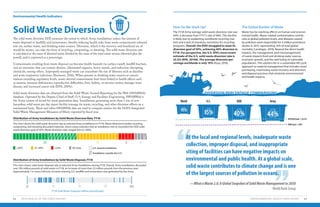
  • 38.
    Environmental Health Indicators ENVIRONMENTALHEALTH INDICATORS 7372 2019 HEALTH OF THE FORCE REPORT ARMY CAMPAIGN TO MANAGE LEAD HAZARDSGOOD HEALTH INCLUDES HEALTHY HOMES S P O T L I G H TS P O T L I G H T L EAD IS A NATURALLY OCCURRING METAL BUT can present an environmental and health hazard if it contaminates air, water, soil, or dust. Lead exposure can cause behavior changes and learning deficits in children and put adults at risk for high blood pressure, heart disease, kidney disease, and reduced fertility (ATSDR, 2019). Children are at higher risk of lead exposure because of more frequent hand-to-mouth behavior. They are also more sus- ceptible to the harmful effects of lead since the brain is in a period of rapid development during childhood. The most common exposure to lead results from inhalation or accidental ingestion of contaminated household dust or outdoor soil due to flaking or dete- riorated lead-based paint. Other potential sources of lead exposure include contaminated drinking water, occupational settings (e.g., firing ranges, auto and plumbing repair, welding and soldering trades), hobbies that involve the use of leaded materials (e.g., hunting shot, fishing sinkers, pottery dyes or glazes), as well as some foreign-made toys, ceramics, cosmet- ics, and packaged foods. T HE ESSENTIAL ELEMENTS OF PERSONAL health go beyond medical intervention and choices regarding sleep, physical activity, and nutrition. Health status also depends on the quality of the environments where we work, live, play, and raise our families. According to a nationwide survey commissioned by the EPA, Americans spend as much as 87% of their lives indoors, including about 69% in their residence (Klepeis et al., 2001). In 2018, MEDCOM directed that elevated blood lead level (eBLL) be managed as a reportable medical event for children 6 years of age and younger (OTSG/ MEDCOM, 2018). Although no safe lead level has been identified for children, the CDC established a reference BLL of 5 micrograms per deciliter (µg/dL) as a threshold to trigger additional medical monitoring (CDC, 2012). Army Medicine tracks cases of pediatric eBLL through the DRSi, and monitors clinical labora- tory data systems for additional cases that may not have been reported. Estimates for the prevalence of eBLL in young Army Family members and U.S. chil- dren are shown in the graphic. To further track and control lead hazards at the enter- prise level, MEDCOM established the Lead Hazard Management and Control Plan (MEDCOM, 2019) in January 2019. This initiative includes assessment and reporting of medical and environmental surveillance related to potential lead exposures experienced by Army Families. The quality of these environments can affect both health and readiness and requires the sustained attention of Army leadership. The health influence of a home depends on factors such as safe drinking water, properly functioning heating and cooling, and reduction of hazards such as mold, lead-based paint, asbestos, radon, and pests. These are some of the key issues raised in the 2019 Department of the Army (DA) Inspector General’s report examining the quality of Army housing (DA, 2019d), as well as by Soldiers and Army Families in recent surveys and forums. In response, MEDCOM created the Housing Environ- mental Health Response Registry (HEHRR) to address health or safety concerns of current and former resi- dents of Army housing. Army Families were invited to enroll in April 2019. The HEHRR is designed to serve as Elevated Blood Lead Level in Selected Populations (≥5µg/dL) U.S. Citizens: Where They Spend Their Time Composite Health Care System (CHCS), 2019 Federal Interagency Forum on Child and Family Statistics, 2019 EstimatedPrevalence(%) 2014 2015 2016 2017 2018 2013–2016 0.0 0.2 0.4 0.8 0.6 1.0 1.0 0.97 0.42 0.46 0.41 0.90 Army Family Members Tested in the Military Health System, Ages 0–6 U.S. Children, Ages 1–5 “The Army expects a lot from their Soldiers and Families and really to maximize the readiness of our Soldiers, they must know that the Army is caring for their Families.” —General James C. McConville Army Chief of Staff a 2-way exchange of information: to provide environ- mental health hazard information to Army Families and to obtain information from Families to assist them in seeking medical care for housing-related health concerns. More information on the HEHRR can be found on the APHC website or by calling the Regis- try hotline at 1-800-984-8523. The HEHRR is just one component of the comprehen- sive Housing Campaign Plan rolled out by IMCOM in September 2019 (IMCOM, 2019). The Plan involves multiple lines of effort, including regular Town Hall meetings with Army housing residents, enhanced housing manager accountability and responsiveness, and additional measures to ensure that Soldiers and their Families enjoy safe and healthy living conditions. 86.9% 7.6% 5.5% Indoor (residence, office/factory, bar/restaurant, other indoor) Outdoor Vehicle
  • 39.
    PERFORMANCE TRIAD 75742019 HEALTH OF THE FORCE REPORT SLEEP ACTIVITY NUTRITION Performance Triad Sleep, activity, and nutrition (SAN), also known as the Performance Triad (P3), work together as the pillars of optimal physical, behavioral, and emotional health. Neglect of any single SAN domain can lead to suboptimal performance and, in some cases, injury. The interrelation- ships between SAN elements is critical for maximizing Soldier perfor- mance—Soldiers need to have balanced nutrients to fuel their physical activity and physical activity can impact the amount and quality of sleep. To address SAN deficiencies, leaders and Soldiers need informa- tion about the targets on which they fall short. The Global Assessment Tool (GAT) is a survey designed to assess a num- ber of health domains to include self-reported SAN behaviors. Soldiers are required to complete the GAT annually per AR 350-53, Compre- hensive Soldier and Family Fitness (DA, 2014). The data presented here represent the proportions of Army Soldier GAT respondents meeting expert-defined targets during calendar year 2018. U.S. Army photo
  • 40.
    PERFORMANCE TRIAD 77 Percentof Soldiers Meeting Weeknight/Duty Night Sleep Target by Sex and Age, AC Soldiers, 2018 Sleep On weeknights/duty nights, just over 1 in 3 Army Soldiers are getting the target 7 or more hours of sleep per night; there is no difference in proportions of male and female Soldiers attaining the target. Percent of Soldiers Meeting Weekend/Non-Duty Night Sleep Target by Sex and Age, AC Soldiers, 2018 During the weekend/non-duty nights, more Soldiers report sufficient sleep. On weekends/non-duty nights, almost 3 out of 4 Army Soldiers are getting the target of 7 or more hours of sleep; rates are similar across sex and age groups. Both the CDC (CDC, 2017) and the National Sleep Foundation (NSF, 2020) recommend adults attain 7 or more hours of sleep per night. On the GAT, Soldiers report the approximate hours of sleep they get, on average, during weeknights/duty nights and weekends/non-duty nights. Most Soldiers report 6–7 hours of sleep during weeknights/duty nights. Total <25 25–34 35–44 ≥45 0 20 40 60 80 39 40 39 4039 40 35 38 41 34 Total <25 25–34 35–44 ≥45 0 20 40 80 60 73 76 75 7473 74 66 67 6763 PercentPercentPercent Age Hours of Sleep Age 76 2019 HEALTH OF THE FORCE REPORT Females Males Females Males Performance Triad BLUE LIGHT: TOO MUCH OF A GOOD THING S P O T L I G H T J UST LIKE PLANTS, HUMANS NEED LIGHT TO maintain good health. There are a number of physiological processes that require light, such as maintaining circadian rhythms (sleep-wake cycle), Vitamin D production, and healthy bones. Exposure to blue light, however, may be too much of a “good thing.” From 2000 to 2009, the diagnosis of insomnia in AC Soldier population increased 19-fold. This is sig- nificant because insomnia is associated with anxiety, depression, PTSD, chronic pain, alcohol abuse, and suicide (AMEDD, 2018). Sunlight, specifically the blue wavelength compo- nent of light, controls part of our circadian rhythm. Photoreceptors in the eye absorb the blue wave- lengths. This absorption decreases melatonin release, resulting in an increase in alertness, attention, and mood. However, light emitting diodes (LEDs) contain a higher level of the blue spectrum than the typical incandescent bulb historically used in home and work environments. Therefore, the use of handheld devices or other electronics with LED-based displays before sleeping inhibits an individual’s melatonin release. This action may delay sleep onset, degrade sleep quality, and impair next-day alertness. A recent study reported that exposure to LED e-readers at bedtime may negatively affect sleep and circadian rhythm (Chang et al., 2015). Poor sleep can contribute to a decrease in concentration, impaired memory, and decreased physical and mental performance (AMEDD, 2018). Although somewhat controversial, some stud- ies suggest that poor sleep caused by the reduction in melatonin production can contribute to chronic diseases such as depression, diabetes, certain types of cancers, and cardiovascular problems (Rea et al., 2010). Recently, researchers reaffirmed their position that blue light (at very high levels) from LED lighting does cause health effects (Holick, 2016). Manufacturers of devices using LED-based displays have attempted to ameliorate the issue by allowing the user to attach an external blue light filter to the screen or turn on an internal “blue light filter,” either of which will decrease the amount of blue light. Another widely accepted solution is refraining from using LED devices at least 2 hours before going to sleep. A more controversial solution that may prove beneficial is the use of special blue-blocking eyewear or lens coatings. A recent U.S. Marine Corps study found that blue light-blocking glasses provide signif- icant improvements in alertness and mood and may provide improvements in sleep quality (Werner, 2017). According to Army researchers, when Soldiers get less than 7–8 hours of sleep, their performance degrades; getting only 4–6 hours of sleep has demonstrated a 10–15% decrease in Soldier performance (AMEDD, 2018). Since less than 5% of Soldiers can sustain performance on less than 7–8 hours of sleep per day (AMEDD, 2018), ensuring good sleep habits and mini- mizing blue light exposure before bedtime are essen- tial for maintaining good performance. Estimated Hours of Sleep by Duty Status, AC Soldiers, 2018 Most Soldiers reported sleeping 6 to 7 hours per night, regardless of duty status. However, nearly 1 in 3 reported getting less than 6 hours of sleep on weeknights/duty nights. Soldiers also reported getting more sleep on weekend/non-duty nights compared to weeknights/duty nights. 4 hours or less 5 hours 6 hours 7 hours 8 or more hours 0 10 20 30 50 40 7 16 33 5 19 9 27 10 45 29 Weeknight/Duty Night Weekend/Non-Duty Night
  • 41.
    Activity There are twoactivity recommendations from the CDC (CDC, 2020). The first is attaining 2 or more days per week of resistance training. The second activity recommendation is adequate aerobic activity. The amount of activity can be attained in three ways: — 150 minutes a week of moderate-intensity aerobic activity, or — 75 minutes a week of vigorous-intensity aerobic activity, or — an equivalent combination of moderate- and vigorous-intensity aerobic activity. Females Males Percent of Soldiers Meeting Resistance Training Target by Sex and Age, AC Soldiers, 2018 Relative Performance on Physical Fitness Tests and WTBDs by Sex, AC Soldiers, 2014 Percent of Soldiers Meeting Aerobic Activity Target by Sex and Age, AC Soldiers, 2018 More than 4 out of 5 Army Soldiers are engaging in resistance training on 2 or more days of the week. Target attainment varied by sex and age groups: 85% of male Soldiers under age 25 are getting adequate resistance training. Approximately nine out of ten Army Soldiers are attaining adequate aerobic activity; overall, female Soldiers are meeting the target less frequently. Total <25 25–34 35–44 ≥45 0 25 50 75 100 79 81 85 8084 85 73 81 7772 Total <25 25–34 35–44 ≥45 0 25 50 75 100 87 88 90 8790 91 85 89 8984 Percent RelativePerformance (vs.lowestBMItertile) Percent Age Age PERFORMANCE TRIAD 7978 2019 HEALTH OF THE FORCE REPORT Females Males Performance Triad IMPACT OF BMI AND PHYSICAL FITNESS ON WARRIOR TASKS AND BATTLE DRILLS PERFORMANCE S P O T L I G H T W ARRIOR TASKS AND BATTLE DRILLS (WTBD) are tasks that include obstacle nav- igation, casualty drag/evacuation, and estab- lishing a fighting position. All Soldiers must success- fully master WTBD as they are vital for Soldier combat survivability. In addition to performing these core tasks, Soldiers must also meet stringent requirements for body fat composition. Specifically, Soldiers must pass biannual sex- and age-adjusted weight-for-height screening standards based on BMI values (body mass divided by height squared, kg/m2 ). Failure to meet these screening standards requires conditional body fat assessments known as Tape Tests, as described in AR 600–9 (DA, 2019e). Studies show that Soldiers with higher BMIs complete the Army Physical Fitness Test (APFT) 2-mile run more slowly, indicating a lower aerobic capacity. Conversely, Soldiers with higher BMIs perform better on fitness tests of muscular strength (i.e., lift heavier weights) and power (i.e., move external objects farther and/ or faster) (Pierce et al., 2017). These components of fitness are critical to performing WTBDs. When Soldiers were divided into three equally sized groupings, or tertiles, from lowest to highest BMI, Soldiers in the two highest BMI tertiles (including overweight (25–30 kg/m2 ) and obese (≥30 kg/m2 )) outperformed Soldiers in the lowest BMI tertile (normal weight (18.5–24.9 kg/ m2)) on fitness tests relevant to WTBD performance, such as the sled drag, bench press, deadlift, and power throw (Pierce et al., 2017) (see figure). Addi- tionally, Soldiers in the three BMI tertiles had similar completion times for a 1-mile loaded ruck march and an obstacle course that included four WTBDs. Tradeoffs exist between higher BMI and physical performance. Soldiers may not meet strict body com- position standards/guidelines but may still excel on physical fitness components related to the execution of WTBDs. The outstanding question for the Army is “How do you balance body composition and physical fitness standards to optimize readiness and retention of Soldiers?” Performance of middle and high BMI tertiles was compared to the lowest BMI tertile; asterisks indicate where there is a significant difference compared to the lowest BMI tertile. Source: Pierce et al., 2017 Lowest BMI tertile Middle BMI tertile Highest BMI tertile Sled Drag Bench Press Deadlift Power Throw APFT 2MR WTBD Obstacle Course 1 mile Ruck March 0.0 0.5 1.0 1.5 Females Males Females Males Females Males Females Males Females Males Females Males Females Males ** * ** * ** ** * *** Brisk walking Recreational swimming General yard work / Home repair Bicycling (less than 10mph) Low-impact excercise classes Running Lap swimming Heavy yard work (digging, shoveling) Biking (over 10mph) High-intensity interval training (HIIT) VIGOROUS-INTENSITYMODERATE-INTENSITY
  • 42.
    Nutrition On the GAT,Soldiers report the approximate servings of fruits and vegetables they consume each week. Most Soldiers report fruit consumption ranging from a few servings per week to a few servings per day. Vegetable consumption is a bit higher, with more Soldiers reporting multiple servings per day. The targets as reported here (USDA, 2019c) are defined as eating two or more servings of fruits and two or more servings of vegetables per day. PERFORMANCE TRIAD 8180 2019 HEALTH OF THE FORCE REPORT Performance Triad Females Females Males Males Percent of Soldiers Meeting Fruit Consumption Target by Sex and Age, AC Soldiers, 2018 Percent of Soldiers Meeting Vegetable Consumption Target by Sex and Age, AC Soldiers, 2018 More than 1 in 3 Soldiers ate two or more servings of fruit per day. A higher proportion of female Soldiers met the fruit target than male Soldiers. Almost 1 in 2 Soldiers ate two or more servings of vegetables per day. A higher proportion of female Soldiers met the vegetable target than male Soldiers. Total <25 25–34 35–44 ≥45 0 20 40 60 46 40 42 49 44 45 52 44 45 54 PercentPercent Age Age Total <25 25–34 35–44 ≥45 0 20 40 60 37 35 36 3734 34 40 32 33 42 60% 50% 40% 30% 20% 10% 0 41% >8 hrs SLEEP 5–7 hrs SLEEP <4 hrs SLEEP 42% 54% 54% 64% 65% PercentInjured Poor sleep results in decreased likelihood of passing the APFT in the top quartile. Army researchers found that as sleep duration increases, the risk for MSK injury decreases (Grier et al., 2019). MSKINJURYRISK SLEEPDURATION SLEEP Source: Grier et al., 2019 ACTIVITY Varying physical activity enhances endurance and reduces injury risk. MSKINJURYRISK OPTIMALAEROBICFITNESS &STRENGTH As Soldiers’ aerobic fitness improves, their risk for sustaining a MSK injury decreases (Grier et al., 2019). Balanced fitness programs prepare Soldiers for combat and reduce injury. Unhealthy eating and weight gain contribute to injury risk. In 2018, 10% of AC Soldiers were flagged for failing to meet body composition standards. The obesity prevalence was 17%. Soldiers who do not meet the AR 600-9 weight for height standards are at an increased risk for MSK injury.NUTRITION 18 22 26 30 34 38 42 46 50 54 58 62 0 10 20 BMI AGE 30 For more information, please visit: https://p3.amedd.army.mil OPTIMIZE SLEEP, ACTIVITY, AND NUTRITION TO DECREASE INJURY AND IMPROVE PERFORMANCE S P O T L I G H T Females Females Males Males Estimated Fruit and Vegetable Consumption per Week, AC Soldiers, 2018 Most Soldiers reported fruit consumption ranging from 3 to 6 servings per week to 2 to 3 servings per day. Vegetable consumption was higher than fruit consumption; more Soldiers reported consuming 2 to 3 servings per day. Percent Number of Servings Rarely or never 1 or 2 servings per week 3 to 6 servings per week 1 serving per day 2 to 3 servings per day 4 or more servings per day 0 10 20 30 6.0 3.5 15 22 22 26 8.710 21 21 32 12 Fruit Consumption Vegetable Consumption AR600-9WEIGHTFORHEIGHT STANDARDS Proportion of Soldiers Injured by Sex and Sleep Duration, AC Soldiers, 2018 Mean BMI, AC Soldiers, 2018
  • 43.
    Performance Triad 39% attained7 or more hours of sleep on weeknights/duty nights. 73% attained 7 or more hours of sleep on weekends/non-duty nights. 83% engaged in resistance training 2 or more days per week. 90% achieved adequate moderate and/or vigorous aerobic activity targets. 35% ate 2 or more servings of fruits per day. 44% ate 2 or more servings of vegetables per day. Summary Percent of Soldiers Meeting SAN Targets, AC Soldiers, 2018 P3-related photo or quote PERFORMANCE TRIAD 83 Photo by Pat Molnar 82 2019 HEALTH OF THE FORCE REPORT
  • 44.
    Installation Health Index 842019 HEALTH OF THE FORCE REPORT Installation Health Index The Health of the Force presents metrics with the intent of revealing actionable interpretations of health data. The Installation Health Index (IHI) is a composite measure that can be used to gauge the health of installation populations. The purpose of the IHI is to motivate discussions about successes and challenges that can be leveraged across the Force. The IHI combines installation-specific metric scores, each calculated by contrasting the installa- tion’s metric value to the average value for the installations evaluated (subsequently referred to as Army average). It also incorporates the number of poor air quality days, an environmental health metric. The IHI consists of two components: a score and a percentile. The IHI incorporates age- and sex-adjusted val- ues for six medical metrics (injury, sleep disorders, chronic disease, obesity, tobacco product use, STI), and installation air quality. The weights given to each metric for calculation of the IHI are shown here. How should IHI be interpreted? IHI Score IHI Percentile The IHI is a global installation health indicator defined as a weighted average of z-scores corresponding to six installation medical metric values and an installation air quality score. IHI scores are standardized such that a score of zero represents the average across the 40 Army installations included in the 2018 Health of the Force; positive scores are above average, and negative scores are below average. The percentile for a given installation is the probability of having an IHI equal to, or lower than that installation’s IHI. Higher IHI scores reflect comparatively better installation health. IHI scores less than -2 (i.e., more than 2 standard deviations below the average) are color-coded in red. IHI scores between -1 and -2 (i.e. between 1 and 2 standard deviations below the average) are color-coded in yellow; IHI scores ≥ 1 (i.e. ≥1 standard deviation above the average) are color-coded in green. Higher IHI percentiles reflect more favorable installation health relative to other installations. • Injury (30%) • Obesity (BMI) (15%) • Sleep disorders (15%) • Chronic disease (15%) • Tobacco use (15%) • Sexually transmitted infections (chlamydia) (5%) • Air quality (5%) Ranking by Installation Health Index Score IHI score (z-score) -2.5 -1.5-2.0 -0.5-1.0 0.0 0.5 1.0 1.5 2.0 2.5 Fort Belvoir (-0.8) JB Langley-Eustis (-1.4) Fort Leavenworth (-1.3) Fort Hood (-1.1) Fort Sill (-1.9) Fort Irwin (-1.1) Fort Meade (-0.8) Fort Polk (-1.4) Fort Lee (-1.2) Fort Gordon (-0.6) Fort Stewart (-0.6) Fort Leonard Wood (-0.5) Fort Knox (-0.9) JB San Antonio (0.1) Fort Drum (-0.4) Fort Bliss (-0.1) Fort Jackson (-0.7) Fort Benning (-0.5) Fort Campbell (0.2) Hawaii (0.3) Fort Riley (-0.2) Fort Wainwright (-0.5) Fort Huachuca (0.7) Presidio of Monterey (1.2) Fort Rucker (0.2) Fort Carson (0.6) JB Myer-Henderson Hall (1.8) JB Elmendorf-Richardson (0.4) Fort Bragg (0.8) USAG West Point (2.1) USAG Rheinland-Pfalz (-0.5) USAG Wiesbaden (-0.3) USAG Daegu (1.0) USAG Yongsan (0.9) USAG Bavaria (0.8) USAG Humphreys (0.8) USAG Stuttgart (1.0) USAG Red Cloud (1.2) USAG Vicenza (1.6) Japan (1.6) The ranking order is based on unrounded scores. U.S.-based installations and installations outside the U.S. are ranked separately. COLOR CODE KEY: = Better than the Army average by 1 or more SD = Worse than the Army average by 1 or more SD GREEN AMBER RED NO COLOR ADDED = Worse than the Army average by 2 or more SD = About the same as the Army average INSTALLATION HEALTH INDEX 85 Installations Outside the U.S. U.S.-based Installations 5016 84 98 99.920.1 1-1 Average -2-3 2 3 IHI Score Percentile See the Methods Appendix for more information on the IHI. IHI should not be compared with prior years due to changes in data sources and methodology (e.g., new weighting, new metric inclusion criteria, new tobacco use definitions, etc).
  • 45.
    86 2019 HEALTHOF THE FORCE REPORT RANKING 87 Injury Incidence of Injuries per 1,000 person-years, adjusted average (and range) for the 40-installations presented, 2018 Chronic Disease Chronic Disease Prevalence, adjusted average (and range) for the 40-installations presented, 2018 USAGWest Point Fort Carson JB Myer-Henderson Hall Fort Riley Fort Bliss FortWainwright Fort Polk Fort Stewart Fort Hood Fort Campbell Fort Bragg Fort Drum Fort Belvoir Hawaii Fort Irwin JB Elmendorf-Richardson Presidio of Monterey Fort Huachuca Fort Meade Fort Knox JB San Antonio Fort Gordon Fort Rucker Fort Leavenworth Fort Sill JB Langley-Eustis Fort Benning Fort LeonardWood Fort Lee Fort Jackson Fort Bragg Presidio Fort Campbell Fort Jackson JB Myer-Henderson Hall Fort Bliss Fort Carson JB Elmendorf-Richardson Fort Drum Fort LeonardWood Fort Rucker Fort Irwin Fort Gordon FortWainwright Hawaii Fort Riley USAGWest Point Fort Benning Fort Hood Fort Huachuca Fort Sill Fort Lee JB Langley-Eustis Fort Meade Fort Stewart JB San Antonio Fort Leavenworth Fort Knox Fort Belvoir Fort Polk ____________________________ ____________________________ ____________________________ ____________________________ ____________________________ ____________________________ ____________________________ ____________________________ ____________________________ ____________________________ ____________________________ ____________________________ ____________________________ ____________________________ ____________________________ ____________________________ ____________________________ ____________________________ ____________________________ ____________________________ ____________________________ ____________________________ ____________________________ ____________________________ ____________________________ ____________________________ ____________________________ ____________________________ ____________________________ ____________________________ ____________________________ ____________________________ ____________________________ ____________________________ ____________________________ ____________________________ ____________________________ ____________________________ ____________________________ ____________________________ ____________________________ ____________________________ ____________________________ ____________________________ ____________________________ ____________________________ ____________________________ ____________________________ ____________________________ ____________________________ ____________________________ ____________________________ ____________________________ ____________________________ ____________________________ ____________________________ ____________________________ ____________________________ ____________________________ ____________________________ ____________________________ ____________________________ ____________________________ ____________________________ ____________________________ ____________________________ ____________________________ ____________________________ ____________________________ ____________________________ ____________________________ ____________________________ ____________________________ ____________________________ ____________________________ ____________________________ ____________________________ ____________________________ ____________________________ ____________________________ Japan USAG Red Cloud USAGVicenza USAG Humphreys USAG Daegu USAG Stuttgart USAG Bavaria USAGYongsan USAGWiesbaden USAG Rheinland-Pfalz USAGVicenza Japan USAG Humphreys USAG Red Cloud USAG Bavaria USAGYongsan USAG Daegu USAG Stuttgart USAG Rheinland-Pfalz USAGWiesbaden 1,189 17%2,660 25% ArmyAverage ArmyAverage Rankings by Medical Metrics Installation Health Index The health data used to rank installations are adjusted by age and sex to allow for a more accurate comparison of health outcomes throughout the Force. Installations outside of the U.S. are ranked separately from U.S.-based installations due to differences which may bias their comparison with U.S.-based installations.   Red, amber, and green color coding symbolizes installation health status compared to the average across Health of the Force installations. ____________________________ ____________________________ ____________________________ ____________________________ ____________________________ ____________________________ ____________________________ ____________________________ ____________________________ ____________________________ Obesity Obesity Prevalence, adjusted average (and range) for the 40-installations presented, 2018 JB Myer-Henderson Hall Fort Huachuca Presidio of Monterey JB Elmendorf-Richardson Fort Carson Fort Benning Fort Rucker JB San Antonio Fort LeonardWood Fort Jackson USAGWest Point Hawaii Fort Bragg Fort Bliss Fort Riley Fort Lee FortWainwright Fort Campbell Fort Irwin Fort Knox Fort Polk Fort Stewart Fort Hood Fort Sill Fort Belvoir Fort Leavenworth Fort Drum JB Langley-Eustis Fort Meade Fort Gordon ____________________________ ____________________________ ____________________________ ____________________________ ____________________________ ____________________________ ____________________________ ____________________________ ____________________________ ____________________________ ____________________________ ____________________________ ____________________________ ____________________________ ____________________________ ____________________________ ____________________________ ____________________________ ____________________________ ____________________________ ____________________________ ____________________________ ____________________________ ____________________________ ____________________________ ____________________________ ____________________________ ____________________________ ____________________________ ____________________________ USAGVicenza USAG Stuttgart USAG Daegu USAG Red Cloud USAG Bavaria USAG Humphreys USAGYongsan USAG Rheinland-Pfalz USAGWiesbaden Japan 14% 23% ArmyAverage The ranking order is based on adjusted, unrounded rates. U.S.-based installations and installations outside the U.S. are ranked separately. COLOR CODE KEY: GREEN AMBER RED NO COLOR ADDED Better than the average of the 40 installations presented by 1 or more SD Worse than the average of the 40 installations presented by 1 or more SD Worse than the average of the 40 installations presented by 2 or more SD About the same as the Army average 20%1,699 17%
  • 46.
    Installation Profiles ____________________________ ____________________________ ____________________________ ____________________________ ____________________________ ____________________________ ____________________________ ____________________________ ____________________________ ____________________________ ____________________________ ____________________________ ____________________________ ____________________________ ____________________________ ____________________________ ____________________________ ____________________________ ____________________________ ____________________________ 88 2019HEALTH OF THE FORCE REPORT Installation Health Index E-cigarette Use E-cigaretteUse,adjustedaverage(andrange)forthe40-installationspresented, 2018(Note:E-cigaretteuseisnotincorporatedintotheinstallationhealthindex calculations) Tobacco Product Use TobaccoUse,excludinge-cigarettes,adjustedaverage(andrange)forthe 40-installationspresented,2018 Fort Benning Fort Rucker Fort Jackson USAGWest Point Fort Leavenworth JB San Antonio Fort LeonardWood Fort Belvoir JB Elmendorf-Richardson Fort Bragg Fort Polk Fort Knox Fort Campbell Hawaii Fort Drum FortWainwright Fort Irwin Fort Lee Fort Stewart Fort Bliss Fort Carson Fort Riley Presidio of Monterey JB Langley-Eustis Fort Hood Fort Sill Fort Gordon Fort Huachuca Fort Meade JB Myer-Henderson Hall USAGWest Point JB San Antonio Fort Meade Fort Rucker Presidio of Monterey Fort Gordon Fort Belvoir Hawaii Fort Huachuca Fort Lee JB Myer-Henderson Hall Fort Jackson JB Langley-Eustis Fort Leavenworth Fort Knox Fort LeonardWood Fort Benning Fort Bragg Fort Bliss JB Elmendorf-Richardson Fort Hood Fort Drum Fort Stewart Fort Campbell Fort Irwin Fort Carson Fort Riley FortWainwright Fort Sill Fort Polk ____________________________ ____________________________ ____________________________ ____________________________ ____________________________ ____________________________ ____________________________ ____________________________ ____________________________ ____________________________ ____________________________ ____________________________ ____________________________ ____________________________ ____________________________ ____________________________ ____________________________ ____________________________ ____________________________ ____________________________ ____________________________ ____________________________ ____________________________ ____________________________ ____________________________ ____________________________ ____________________________ ____________________________ ____________________________ ____________________________ ____________________________ ____________________________ ____________________________ ____________________________ ____________________________ ____________________________ ____________________________ ____________________________ ____________________________ ____________________________ ____________________________ ____________________________ ____________________________ ____________________________ ____________________________ ____________________________ ____________________________ ____________________________ ____________________________ ____________________________ ____________________________ ____________________________ ____________________________ ____________________________ ____________________________ ____________________________ ____________________________ ____________________________ ____________________________ ____________________________ USAGVicenza USAG Stuttgart USAG Bavaria USAGWiesbaden Japan USAG Rheinland-Pfalz USAG Red Cloud USAGYongsan USAG Daegu USAG Humphreys USAG Daegu Japan USAG Stuttgart USAGYongsan USAG Rheinland-Pfalz USAGWiesbaden USAG Humphreys USAGVicenza USAG Red Cloud USAG Bavaria 3.3%15% 11%31% ArmyAverage ArmyAverage INSTALLATION PROFILES 89 1. Crude values are not adjusted by age and sex. 2. Adjusted values are weighted averages of crude age- and sex-specific frequencies, where the weights are the proportions of Soldiers in the corresponding age and sex categories of the 2015 Army AC population. By using a common adjustment standard such as this, we are able to make valid comparisons across installations because it controls for age and sex differences in the population which might influence crude rates. 3. The Army values represent crude values for the entire Army, and the ranges represent crude values for the 40 installations included in the report. 4.EHI color coding (green, amber, and red) indicates metric status at the affected installation. Green denotes the desired condition. 5. The IHI is a standardized weighted average of scores corresponding to six medical metrics and an air quality metric. The percentile reflects the approximate probability of having an IHI equal to or lower than the installation’s IHI. Higher percentiles reflect better installation health. Green indicates better than the Army average by 1 or more SD; no color added (i.e., gray) indicates about the same as the Army average (between -0.9 SD and 0.9 SD); amber indicates worse than the Army average by 1 or more SD. 6. Air quality status was imputed from the surrounding Air Quality Control Region. 7. Air quality status was imputed from prior year data. * Medical metric values were not displayed if <20 cases were reported or when the reporting compliance was estimated to be <50%. However, every installation met the reporting compliance threshold for the reporting year. U.S. Army photo The below footnotes pertain to the installation profiles found on pages 91 through 137. 7.1%25%
  • 47.
    INSTALLATION PROFILES 91902019 HEALTH OF THE FORCE REPORT Installation Profiles U.S. Footnotes: See page 89. Fort Belvoir Demographics: Approximately 3,300 AC Soldiers 48% under 35 years old, 24% female Main Healthcare Facility: Fort Belvoir Community Hospital Virginia INSTALLATION ARMY PERFORMANCE TRIAD MEASURES Installation Army ENVIRONMENTAL HEALTH INDICATORS4 1 day/year Poor air quality: 51% Solid waste diversion rate: 0 days/year Poor water quality: Moderate Mosquito-borne disease risk: 0.70 mg/L Water fluoridation: High Lyme disease risk: 70 days/year Heat risk: 77% 2+ days per week of resistance training 86% 150+ minutes per week of aerobic activity 38% 2+ servings of fruits per day 49% 2+ servings of vegetables per day 42% 7+ hours of sleep (weeknight/duty night) 75% 7+ hours of sleep (weekend or non-duty night) 0 20 40 60 80 100 Percent 83% 90% 35% 44% 39% 73% MEDICAL METRICS Crude Value1 Adjusted Value2 Value Range3 Injury (rate per 1,000) 1,896 1,693 1,670 1,195–3,043 Behavioral health (%) 24 21 16 10–24 Substance use disorder (%) 2.7 3.4 3.7 1.7–6.9 Sleep disorder (%) 24 18 14 8.0–24 Obesity (%) 24 20 17 11–25 Tobacco product use (%) 17 21 26 12–32 STIs: Chlamydia infection (rate per 1,000) 15 24 25 11–52 Chronic disease (%) 37 25 19 13–37 Installation Health Index Score5 : -0.8 (<20th percentile) U.S. Installations
  • 48.
    INSTALLATION PROFILES 93922019 HEALTH OF THE FORCE REPORT Footnotes: See page 89. Footnotes: See page 89. Installation Profiles U.S. MEDICAL METRICS Crude Value1 Adjusted Value2 Value Range3 Injury (rate per 1,000) 2,121 2,211 1,670 1,195–3,043 Behavioral health (%) 13 16 16 10–24 Substance use disorder (%) 2.3 2.4 3.7 1.7–6.9 Sleep disorder (%) 9.9 14 14 8.0–24 Obesity (%) 11 15 17 11–25 Tobacco product use (%) 28 27 26 12–32 STIs: Chlamydia infection (rate per 1,000) 12 15 25 11–52 Chronic disease (%) 15 21 19 13–37 Fort Benning Demographics: Approximately 17,000 AC Soldiers 84% under 35 years old, 7% female Main Healthcare Facility: Martin Army Community Hospital INSTALLATION ARMY PERFORMANCE TRIAD MEASURES Installation Army ENVIRONMENTAL HEALTH INDICATORS4 0 days/year Poor air quality: 24% Solid waste diversion rate: 0 days/year Poor water quality: High Mosquito-borne disease risk: 0.61 mg/L Water fluoridation: Moderate Lyme disease risk: 140 days/year Heat risk: 86% 83% 2+ days per week of resistance training 91% 90% 150+ minutes per week of aerobic activity 39% 35% 2+ servings of fruits per day 47% 44% 2+ servings of vegetables per day 39% 39% 7+ hours of sleep (weeknight/duty night) 74% 73% 7+ hours of sleep (weekend or non-duty night) 0 20 40 60 80 100 Percent Georgia Installation Health Index Score5 : -0.5 (30–39th percentile) Fort Bliss Demographics: Approximately 26,000 AC Soldiers 82% under 35 years old, 14% female Main Healthcare Facility: William Beaumont Army Medical Center Texas INSTALLATION ARMY MEDICAL METRICS Crude Value1 Adjusted Value2 Value Range3 Injury (rate per 1,000) 1,504 1,566 1,670 1,195–3,043 Behavioral health (%) 18 19 16 10–24 Substance use disorder (%) 4.6 4.3 3.7 1.7–6.9 Sleep disorder (%) 14 17 14 8.0–24 Obesity (%) 17 17 17 11–25 Tobacco product use (%) 28 27 26 12–32 STIs: Chlamydia infection (rate per 1,000) 33 29 25 11–52 Chronic disease (%) 15 19 19 13–37 PERFORMANCE TRIAD MEASURES Installation Army ENVIRONMENTAL HEALTH INDICATORS4 17 days/year Poor air quality: 40% Solid waste diversion rate: 0 days/year Poor water quality: Moderate Mosquito-borne disease risk: 0.84 mg/L Water fluoridation: No Data Lyme disease risk: 88 days/year Heat risk: 81% 2+ days per week of resistance training 89% 150+ minutes per week of aerobic activity 31% 2+ servings of fruits per day 42% 2+ servings of vegetables per day 36% 7+ hours of sleep (weeknight/duty night) 68% 7+ hours of sleep (weekend or non-duty night) 0 20 40 60 80 100 Percent 83% 90% 35% 44% 39% 73% Installation Health Index Score5 : -0.1 (40–49th percentile)
  • 49.
    INSTALLATION PROFILES 95942019 HEALTH OF THE FORCE REPORT Footnotes: See page 89. Footnotes: See page 89. Installation Profiles U.S. MEDICAL METRICS Crude Value1 Adjusted Value2 Value Range3 Injury (rate per 1,000) 1,571 1,616 1,670 1,195–3,043 Behavioral health (%) 12 12 16 10–24 Substance use disorder (%) 4.0 3.9 3.7 1.7–6.9 Sleep disorder (%) 12 13 14 8.0–24 Obesity (%) 17 17 17 11–25 Tobacco product use (%) 28 27 26 12–32 STIs: Chlamydia infection (rate per 1,000) 24 24 25 11–52 Chronic disease (%) 16 17 19 13–37 Fort Bragg Demographics: Approximately 45,000 AC Soldiers 80% under 35 years old, 12% female Main Healthcare Facility: Womack Army Medical Center North Carolina INSTALLATION ARMY PERFORMANCE TRIAD MEASURES Installation Army ENVIRONMENTAL HEALTH INDICATORS4 0 days/year Poor air quality: 33% Solid waste diversion rate: 0 days/year Poor water quality: High Mosquito-borne disease risk: 0.54 mg/L Water fluoridation: Moderate Lyme disease risk: 108 days/year Heat risk: 84% 83% 2+ days per week of resistance training 90% 90% 150+ minutes per week of aerobic activity 33% 35% 2+ servings of fruits per day 46% 44% 2+ servings of vegetables per day 39% 39% 7+ hours of sleep (weeknight/duty night) 70% 73% 7+ hours of sleep (weekend or non-duty night) 0 20 40 60 80 100 Percent Installation Health Index Score5 : 0.8 (70–79th percentile) Fort Campbell Demographics: Approximately 27,000 AC Soldiers 86% under 35 years old, 12% female Main Healthcare Facility: Blanchfield Army Community Hospital Kentucky Tennessee INSTALLATION ARMY MEDICAL METRICS Crude Value1 Adjusted Value2 Value Range3 Injury (rate per 1,000) 1,538 1,615 1,670 1,195–3,043 Behavioral health (%) 15 16 16 10–24 Substance use disorder (%) 3.9 3.5 3.7 1.7–6.9 Sleep disorder (%) 12 15 14 8.0–24 Obesity (%) 17 18 17 11–25 Tobacco product use (%) 30 29 26 12–32 STIs: Chlamydia infection (rate per 1,000) 23 20 25 11–52 Chronic disease (%) 14 18 19 13–37 PERFORMANCE TRIAD MEASURES Installation Army ENVIRONMENTAL HEALTH INDICATORS4 0 days/year Poor air quality: 34% Solid waste diversion rate: 0 days/year Poor water quality: Moderate Mosquito-borne disease risk: 0.60 mg/L Water fluoridation: Low Lyme disease risk: 86 days/year Heat risk: 83% 2+ days per week of resistance training 90% 150+ minutes per week of aerobic activity 31% 2+ servings of fruits per day 43% 2+ servings of vegetables per day 39% 7+ hours of sleep (weeknight/duty night) 69% 7+ hours of sleep (weekend or non-duty night) 0 20 40 60 80 100 Percent 83% 90% 35% 44% 39% 73% Installation Health Index Score5 : 0.2 (50–59th percentile)
  • 50.
    INSTALLATION PROFILES 97962019 HEALTH OF THE FORCE REPORT Footnotes: See page 89. Footnotes: See page 89. Installation Profiles U.S. MEDICAL METRICS Crude Value1 Adjusted Value2 Value Range3 Injury (rate per 1,000) 1,312 1,390 1,670 1,195–3,043 Behavioral health (%) 14 14 16 10–24 Substance use disorder (%) 3.9 3.7 3.7 1.7–6.9 Sleep disorder (%) 12 14 14 8.0–24 Obesity (%) 15 15 17 11–25 Tobacco product use (%) 31 30 26 12–32 STIs: Chlamydia infection (rate per 1,000) 25 22 25 11–52 Chronic disease (%) 15 19 19 13–37 Fort Carson Demographics: Approximately 25,000 AC Soldiers 85% under 35 years old, 14% female Main Healthcare Facility: Evans Army Community Hospital Colorado INSTALLATION ARMY PERFORMANCE TRIAD MEASURES Installation Army ENVIRONMENTAL HEALTH INDICATORS4 8 days/year Poor air quality: 45% Solid waste diversion rate: 0 days/year Poor water quality: Low Mosquito-borne disease risk: 0.41 mg/L Water fluoridation: No Data Lyme disease risk: 4 days/year Heat risk: 83% 83% 2+ days per week of resistance training 90% 90% 150+ minutes per week of aerobic activity 32% 35% 2+ servings of fruits per day 43% 44% 2+ servings of vegetables per day 40% 39% 7+ hours of sleep (weeknight/duty night) 70% 73% 7+ hours of sleep (weekend or non-duty night) 0 20 40 60 80 100 Percent Installation Health Index Score5 : 0.6 (70–79th percentile) Fort Drum Demographics: Approximately 15,000 AC Soldiers 86% under 35 years old, 12% female Main Healthcare Facility: Guthrie Army Health Clinic New York INSTALLATION ARMY MEDICAL METRICS Crude Value1 Adjusted Value2 Value Range3 Injury (rate per 1,000) 1,526 1,644 1,670 1,195–3,043 Behavioral health (%) 15 16 16 10–24 Substance use disorder (%) 4.3 3.7 3.7 1.7–6.9 Sleep disorder (%) 12 14 14 8.0–24 Obesity (%) 18 20 17 11–25 Tobacco product use (%) 29 28 26 12–32 STIs: Chlamydia infection (rate per 1,000) 46 39 25 11–52 Chronic disease (%) 14 20 19 13–37 PERFORMANCE TRIAD MEASURES Installation Army ENVIRONMENTAL HEALTH INDICATORS4 2 days/year Poor air quality: 59% Solid waste diversion rate: 0 days/year Poor water quality: Low Mosquito-borne disease risk: 0.70 mg/L Water fluoridation: High Lyme disease risk: 17 days/year Heat risk: Percent 82% 2+ days per week of resistance training 90% 150+ minutes per week of aerobic activity 32% 2+ servings of fruits per day 42% 2+ servings of vegetables per day 37% 7+ hours of sleep (weeknight/duty night) 70% 7+ hours of sleep (weekend or non-duty night) 0 20 40 60 80 100 Percent 83% 90% 35% 44% 39% 73% Installation Health Index Score5 : -0.4 (30–39th percentile)
  • 51.
    INSTALLATION PROFILES 99982019 HEALTH OF THE FORCE REPORT Footnotes: See page 89. Footnotes: See page 89. Installation Profiles U.S. MEDICAL METRICS Crude Value1 Adjusted Value2 Value Range3 Injury (rate per 1,000) 1,940 1,897 1,670 1,195–3,043 Behavioral health (%) 17 17 16 10–24 Substance use disorder (%) 3.1 3.1 3.7 1.7–6.9 Sleep disorder (%) 14 14 14 8.0–24 Obesity (%) 22 23 17 11–25 Tobacco product use (%) 19 20 26 12–32 STIs: Chlamydia infection (rate per 1,000) 17 15 25 11–52 Chronic disease (%) 19 20 19 13–37 Fort Gordon Demographics: Approximately 9,000 AC Soldiers 76% under 35 years old, 19% female Main Healthcare Facility: Dwight D. EisenhowerArmy Medical Center Georgia INSTALLATION ARMY PERFORMANCE TRIAD MEASURES Installation Army ENVIRONMENTAL HEALTH INDICATORS4 6 days/year Poor air quality: 22% Solid waste diversion rate: 0 days/year Poor water quality: High Mosquito-borne disease risk: 0.72 mg/L Water fluoridation: No Data Lyme disease risk: 140 days/year Heat risk: 81% 83% 2+ days per week of resistance training 89% 90% 150+ minutes per week of aerobic activity 33% 35% 2+ servings of fruits per day 43% 44% 2+ servings of vegetables per day 36% 39% 7+ hours of sleep (weeknight/duty night) 73% 73% 7+ hours of sleep (weekend or non-duty night) 0 20 40 60 80 100 Percent Installation Health Index Score5 : -0.6 (20–29th percentile) Fort Hood Demographics: Approximately 36,000 AC Soldiers 83% under 35 years old, 17% female Main Healthcare Facility: Carl R. Darnall Army Medical Center Texas INSTALLATION ARMY MEDICAL METRICS Crude Value1 Adjusted Value2 Value Range3 Injury (rate per 1,000) 1,530 1,603 1,670 1,195–3,043 Behavioral health (%) 19 19 16 10–24 Substance use disorder (%) 5.4 5.0 3.7 1.7–6.9 Sleep disorder (%) 17 19 14 8.0–24 Obesity (%) 18 19 17 11–25 Tobacco product use (%) 28 28 26 12–32 STIs: Chlamydia infection (rate per 1,000) 36 29 25 11–52 Chronic disease (%) 17 21 19 13–37 PERFORMANCE TRIAD MEASURES Installation Army ENVIRONMENTAL HEALTH INDICATORS4 5 days/year Poor air quality: 53% Solid waste diversion rate: 0 days/year Poor water quality: High Mosquito-borne disease risk: 0.21 mg/L Water fluoridation: No Data Lyme disease risk: 127 days/year Heat risk: 81% 2+ days per week of resistance training 89% 150+ minutes per week of aerobic activity 31% 2+ servings of fruits per day 41% 2+ servings of vegetables per day 34% 7+ hours of sleep (weeknight/duty night) 67% 7+ hours of sleep (weekend or non-duty night) 0 20 40 60 80 100 Percent 83% 90% 35% 44% 39% 73% Installation Health Index Score5 : -1.1 (<20th percentile)
  • 52.
    INSTALLATION PROFILES 1011002019 HEALTH OF THE FORCE REPORT Footnotes: See page 89. Footnotes: See page 89. Installation Profiles U.S. MEDICAL METRICS Crude Value1 Adjusted Value2 Value Range3 Injury (rate per 1,000) 1,785 1,770 1,670 1,195–3,043 Behavioral health (%) 11 11 16 10–24 Substance use disorder (%) 2.4 2.4 3.7 1.7–6.9 Sleep disorder (%) 12 13 14 8.0–24 Obesity (%) 13 14 17 11–25 Tobacco product use (%) 21 22 26 12–32 STIs: Chlamydia infection (rate per 1,000) 17 15 25 11–52 Chronic disease (%) 19 21 19 13–37 Fort Huachuca Demographics: Approximately 4,000 AC Soldiers 78% under 35 years old, 17% female Main Healthcare Facility: Raymond W. Bliss Army Health Clinic Arizona INSTALLATION ARMY PERFORMANCE TRIAD MEASURES Installation Army ENVIRONMENTAL HEALTH INDICATORS4 0 days/year Poor air quality: 0% Solid waste diversion rate: 0 days/year Poor water quality: Moderate Mosquito-borne disease risk: 0.70 mg/L Water fluoridation: Low Lyme disease risk: 30 days/year Heat risk: 83% 83% 2+ days per week of resistance training 91% 90% 150+ minutes per week of aerobic activity 30% 35% 2+ servings of fruits per day 41% 44% 2+ servings of vegetables per day 41% 39% 7+ hours of sleep (weeknight/duty night) 78% 73% 7+ hours of sleep (weekend or non-duty night) 0 20 40 60 80 100 Percent Installation Health Index Score5 : 0.7 (70–79th percentile) Fort Irwin Demographics: Approximately 4,200 AC Soldiers 78% under 35 years old, 14% female Main Healthcare Facility: Weed Army Community Hospital California INSTALLATION ARMY MEDICAL METRICS Crude Value1 Adjusted Value2 Value Range3 Injury (rate per 1,000) 1,724 1,735 1,670 1,195–3,043 Behavioral health (%) 18 18 16 10–24 Substance use disorder (%) 6.9 6.5 3.7 1.7–6.9 Sleep disorder (%) 17 18 14 8.0–24 Obesity (%) 18 18 17 11–25 Tobacco product use (%) 30 30 26 12–32 STIs: Chlamydia infection (rate per 1,000) 37 34 25 11–52 Chronic disease (%) 18 20 19 13–37 PERFORMANCE TRIAD MEASURES Installation Army ENVIRONMENTAL HEALTH INDICATORS4 55 days/year Poor air quality: 30% Solid waste diversion rate: 0 days/year Poor water quality: Moderate Mosquito-borne disease risk: 1.51 mg/L Water fluoridation: No Data Lyme disease risk: 95 days/year Heat risk: 81% 2+ days per week of resistance training 91% 150+ minutes per week of aerobic activity 32% 2+ servings of fruits per day 44% 2+ servings of vegetables per day 38% 7+ hours of sleep (weeknight/duty night) 69% 7+ hours of sleep (weekend or non-duty night) 0 20 40 60 80 100 Percent 83% 90% 35% 44% 39% 73% Installation Health Index Score5 : -1.1 (<20th percentile)
  • 53.
    INSTALLATION PROFILES 1031022019 HEALTH OF THE FORCE REPORT Footnotes: See page 89. Footnotes: See page 89. Installation Profiles U.S. MEDICAL METRICS Crude Value1 Adjusted Value2 Value Range3 Injury (rate per 1,000) 3,043 2,660 1,670 1,195–3,043 Behavioral health (%) 16 16 16 10–24 Substance use disorder (%) 1.7 2.1 3.7 1.7–6.9 Sleep disorder (%) 8.0 12 14 8.0–24 Obesity (%) 11 16 17 11–25 Tobacco product use (%) 21 23 26 12–32 STIs: Chlamydia infection (rate per 1,000) 36 22 25 11–52 Chronic disease (%) 13 18 19 13–37 Fort Jackson Demographics: Approximately 6,700 AC Soldiers 81% under 35 years old, 28% female Main Healthcare Facility: Moncrief Army Health Clinic South Carolina INSTALLATION ARMY PERFORMANCE TRIAD MEASURES Installation Army ENVIRONMENTAL HEALTH INDICATORS5 1 day/year Poor air quality: 29% Solid waste diversion rate: 0 days/year Poor water quality: High Mosquito-borne disease risk: 0.63 mg/L Water fluoridation: Low Lyme disease risk: 138 days/year Heat risk: 83% 83% 2+ days per week of resistance training 89% 90% 150+ minutes per week of aerobic activity 37% 35% 2+ servings of fruits per day 43% 44% 2+ servings of vegetables per day 39% 39% 7+ hours of sleep (weeknight/duty night) 73% 73% 7+ hours of sleep (weekend or non-duty night) 0 20 40 60 80 100 Percent Installation Health Index Score5 : -0.7 (20–29th percentile) Fort Knox Demographics: Approximately 4,100 AC Soldiers 64% under 35 years old, 22% female Main Healthcare Facility: Ireland Army Community Hospital Kentucky INSTALLATION ARMY MEDICAL METRICS Crude Value1 Adjusted Value2 Value Range3 Injury (rate per 1,000) 2,057 1,819 1,670 1,195–3,043 Behavioral health (%) 19 17 16 10–24 Substance use disorder (%) 2.7 2.8 3.7 1.7–6.9 Sleep disorder (%) 21 17 14 8.0–24 Obesity (%) 23 18 17 11–25 Tobacco product use (%) 23 25 26 12–32 STIs: Chlamydia infection (rate per 1,000) 14 14 25 11–52 Chronic disease (%) 31 24 19 13–37 PERFORMANCE TRIAD MEASURES Installation Army ENVIRONMENTAL HEALTH INDICATORS5 0 days/year Poor air quality: 43% Solid waste diversion rate: 0 days/year Poor water quality: Moderate Mosquito-borne disease risk: 0.65 mg/L Water fluoridation: Low Lyme disease risk: 63 days/year Heat risk: 86% 2+ days per week of resistance training 92% 150+ minutes per week of aerobic activity 40% 2+ servings of fruits per day 53% 2+ servings of vegetables per day 48% 7+ hours of sleep (weeknight/duty night) 86% 7+ hours of sleep (weekend or non-duty night) 0 20 40 60 80 100 Percent 83% 90% 35% 44% 39% 73% Installation Health Index Score5 : -0.9 (<20th percentile)
  • 54.
    INSTALLATION PROFILES 1051042019 HEALTH OF THE FORCE REPORT Footnotes: See page 89. Footnotes: See page 89. Installation Profiles U.S. MEDICAL METRICS Crude Value1 Adjusted Value2 Value Range3 Injury (rate per 1,000) 2,264 2,120 1,670 1,195–3,043 Behavioral health (%) 18 18 16 10–24 Substance use disorder (%) 2.6 3.7 3.7 1.7–6.9 Sleep disorder (%) 18 14 14 8.0–24 Obesity (%) 24 20 17 11–25 Tobacco product use (%) 21 24 17 12–32 STIs: Chlamydia infection (rate per 1,000) 16 28 25 11–52 Chronic disease (%) 33 24 19 13–37 Fort Leavenworth Demographics: Approximately 3,300 AC Soldiers 54% under 35 years old, 16% female Main Healthcare Facility: Munson Army Health Center Kansas INSTALLATION ARMY PERFORMANCE TRIAD MEASURES Installation Army ENVIRONMENTAL HEALTH INDICATORS4 0 days/year Poor air quality: 26% Solid waste diversion rate: 0 days/year Poor water quality: Moderate Mosquito-borne disease risk: 0.57 mg/L Water fluoridation: Low Lyme disease risk: 75 days/year Heat risk: 80% 83% 2+ days per week of resistance training 92% 90% 150+ minutes per week of aerobic activity 39% 35% 2+ servings of fruits per day 49% 44% 2+ servings of vegetables per day 41% 39% 7+ hours of sleep (weeknight/duty night) 73% 73% 7+ hours of sleep (weekend or non-duty night) 0 20 40 60 80 100 Percent Installation Health Index Score5 : -1.3 (<20th percentile) Fort Lee Demographics: Approximately 7,400 AC Soldiers 78% under 35 years old, 23% female Main Healthcare Facility: Kenner Army Health Clinic Virginia INSTALLATION ARMY MEDICAL METRICS Crude Value1 Adjusted Value2 Value Range3 Injury (rate per 1,000) 2,445 2,322 1,670 1,195–3,043 Behavioral health (%) 17 18 16 10–24 Substance use disorder (%) 2.2 2.5 3.7 1.7–6.9 Sleep disorder (%) 14 16 14 8.0–24 Obesity (%) 13 18 17 11–25 Tobacco product use (%) 21 22 17 12–32 STIs: Chlamydia infection (rate per 1,000) 13 9.6 25 11–52 Chronic disease (%) 18 22 19 13–37 PERFORMANCE TRIAD MEASURES Installation Army ENVIRONMENTAL HEALTH INDICATORS4 No Data6 Poor air quality: 51% Solid waste diversion rate: 0 days/year Poor water quality: Moderate Mosquito-borne disease risk: 0.67 mg/L Water fluoridation: Moderate Lyme disease risk: 73 days/year Heat risk: 81% 2+ days per week of resistance training 88% 150+ minutes per week of aerobic activity 34% 2+ servings of fruits per day 40% 2+ servings of vegetables per day 37% 7+ hours of sleep (weeknight/duty night) 70% 7+ hours of sleep (weekend or non-duty night) 0 20 40 60 80 100 Percent 83% 90% 35% 44% 39% 73% Installation Health Index Score5 : -1.2 (<20th percentile)
  • 55.
    INSTALLATION PROFILES 1071062019 HEALTH OF THE FORCE REPORT Footnotes: See page 89. Footnotes: See page 89. Installation Profiles U.S. MEDICAL METRICS Crude Value1 Adjusted Value2 Value Range3 Injury (rate per 1,000) 2,273 2,213 1,670 1,195–3,043 Behavioral health (%) 14 16 16 10–24 Substance use disorder (%) 2.4 2.6 3.7 1.7–6.9 Sleep disorder (%) 10 14 14 8.0–24 Obesity (%) 12 16 17 11–25 Tobacco product use (%) 26 27 26 12–32 STIs: Chlamydia infection (rate per 1,000) 13 11 25 11–52 Chronic disease (%) 14 20 19 13–37 Fort Leonard Wood Demographics: Approximately 7,800 AC Soldiers 82% under 35 years old, 18% female Main Healthcare Facility: General Leonard Wood Army Community Hospital Missouri INSTALLATION ARMY PERFORMANCE TRIAD MEASURES Installation Army ENVIRONMENTAL HEALTH INDICATORS4 No Data6 Poor air quality: 51% Solid waste diversion rate: 0 days/year Poor water quality: Moderate Mosquito-borne disease risk: 0.78 mg/L Water fluoridation: Moderate Lyme disease risk: 72 days/year Heat risk: 84% 83% 2+ days per week of resistance training 90% 90% 150+ minutes per week of aerobic activity 34% 35% 2+ servings of fruits per day 41% 44% 2+ servings of vegetables per day 39% 39% 7+ hours of sleep (weeknight/duty night) 74% 73% 7+ hours of sleep (weekend or non-duty night) 0 20 40 60 80 100 Percent Installation Health Index Score5 : -0.5 (20–29th percentile) Fort Meade Demographics: Approximately 4,000 AC Soldiers 63% under 35 years old, 20% female Main Healthcare Facility: Kimbrough Ambulatory Care Center Maryland INSTALLATION ARMY MEDICAL METRICS Crude Value1 Adjusted Value2 Value Range3 Injury (rate per 1,000) 1,890 1,789 1,670 1,195–3,043 Behavioral health (%) 19 18 16 10–24 Substance use disorder (%) 2.2 2.7 3.7 1.7–6.9 Sleep disorder (%) 20 17 14 8.0–24 Obesity (%) 25 22 17 11–25 Tobacco product use (%) 17 18 26 12–32 STIs: Chlamydia infection (rate per 1,000) 12 15 25 11–52 Chronic disease (%) 29 22 19 13–37 PERFORMANCE TRIAD MEASURES Installation Army ENVIRONMENTAL HEALTH INDICATORS4 9 days/year Poor air quality: 47% Solid waste diversion rate: 0 days/year Poor water quality: Moderate Mosquito-borne disease risk: 0.71 mg/L Water fluoridation: High Lyme disease risk: 50 days/year Heat risk: Percent 79% 2+ days per week of resistance training 87% 150+ minutes per week of aerobic activity 34% 2+ servings of fruits per day 47% 2+ servings of vegetables per day 42% 7+ hours of sleep (weeknight/duty night) 73% 7+ hours of sleep (weekend or non-duty night) 0 20 40 60 80 100 Percent 83% 90% 35% 44% 39% 73% Installation Health Index Score5 : -0.8 (20–29th percentile)
  • 56.
    INSTALLATION PROFILES 1091082019 HEALTH OF THE FORCE REPORT Footnotes: See page 89. Footnotes: See page 89. Installation Profiles U.S. MEDICAL METRICS Crude Value1 Adjusted Value2 Value Range3 Injury (rate per 1,000) 1,517 1,590 1,670 1,195–3,043 Behavioral health (%) 18 19 16 10–24 Substance use disorder (%) 5.0 4.6 3.7 1.7–6.9 Sleep disorder (%) 15 14 14 8.0–24 Obesity (%) 17 18 17 11–25 Tobacco product use (%) 32 31 26 12–32 STIs: Chlamydia infection (rate per 1,000) 29 25 25 11–52 Chronic disease (%) 20 25 19 13–37 Fort Polk Demographics: Approximately 7,900 AC Soldiers 83% under 35 years old, 12% female Main Healthcare Facility: Bayne-Jones Army Community Hospital Louisiana INSTALLATION ARMY PERFORMANCE TRIAD MEASURES Installation Army ENVIRONMENTAL HEALTH INDICATORS4 No Data6 Poor air quality: 59% Solid waste diversion rate: 0 days/year Poor water quality: High Mosquito-borne disease risk: 0.90 mg/L Water fluoridation: No Data Lyme disease risk: 135 days/year Heat risk: 82% 83% 2+ days per week of resistance training 89% 90% 150+ minutes per week of aerobic activity 31% 35% 2+ servings of fruits per day 41% 44% 2+ servings of vegetables per day 36% 39% 7+ hours of sleep (weeknight/duty night) 68% 73% 7+ hours of sleep (weekend or non-duty night) 0 20 40 60 80 100 Percent Installation Health Index Score5 : -1.4 (<20th percentile) Fort Riley Demographics: Approximately 15,000 AC Soldiers 86% under 35 years old, 13% female Main Healthcare Facility: Irwin Army Community Hospital Kansas INSTALLATION ARMY MEDICAL METRICS Crude Value1 Adjusted Value2 Value Range3 Injury (rate per 1,000) 1,404 1,523 1,670 1,195–3,043 Behavioral health (%) 16 17 16 10–24 Substance use disorder (%) 5.3 4.8 3.7 1.7–6.9 Sleep disorder (%) 12 15 14 8.0–24 Obesity (%) 16 17 17 11–25 Tobacco product use (%) 30 30 26 12–32 STIs: Chlamydia infection (rate per 1,000) 35 29 25 11–52 Chronic disease (%) 15 21 19 13–37 PERFORMANCE TRIAD MEASURES Installation Army ENVIRONMENTAL HEALTH INDICATORS4 No Data6 Poor air quality: 44% Solid waste diversion rate: 75 days/year Poor water quality: Moderate Mosquito-borne disease risk: 0.56 mg/L Water fluoridation: Low Lyme disease risk: 92 days/year Heat risk: 81% 2+ days per week of resistance training 89% 150+ minutes per week of aerobic activity 30% 2+ servings of fruits per day 41% 2+ servings of vegetables per day 37% 7+ hours of sleep (weeknight/duty night) 68% 7+ hours of sleep (weekend or non-duty night) 0 20 40 60 80 100 Percent 83% 90% 35% 44% 39% 73% Installation Health Index Score5 : -0.2 (40–49th percentile)
  • 57.
    INSTALLATION PROFILES 1111102019 HEALTH OF THE FORCE REPORT Footnotes: See page 89. Footnotes: See page 89. Installation Profiles U.S. MEDICAL METRICS Crude Value1 Adjusted Value2 Value Range3 Injury (rate per 1,000) 2,114 1,957 1,670 1,195–3,043 Behavioral health (%) 11 10 16 10–24 Substance use disorder (%) 1.7 1.8 3.7 1.7–6.9 Sleep disorder (%) 19 16 14 8.0–24 Obesity (%) 17 15 17 11–25 Tobacco product use (%) 19 19 26 12–32 STIs: Chlamydia infection (rate per 1,000) 13 14 25 11–52 Chronic disease (%) 23 20 19 13–37 Fort Rucker Demographics: Approximately 2,900 AC Soldiers 66% under 35 years old, 14% female Main Healthcare Facility: Lyster Army Health Center Alabama INSTALLATION ARMY PERFORMANCE TRIAD MEASURES Installation Army ENVIRONMENTAL HEALTH INDICATORS4 No Data6 Poor air quality: 63% Solid waste diversion rate: 0 days/year Poor water quality: High Mosquito-borne disease risk: 0.65 mg/L Water fluoridation: No Data Lyme disease risk: 138 days/year Heat risk: 83% 83% 2+ days per week of resistance training 88% 90% 150+ minutes per week of aerobic activity 36% 35% 2+ servings of fruits per day 50% 44% 2+ servings of vegetables per day 55% 39% 7+ hours of sleep (weeknight/duty night) 82% 73% 7+ hours of sleep (weekend or non-duty night) 0 20 40 60 80 100 Percent Installation Health Index Score5 : 0.2 (50–59th percentile) Fort Sill Demographics: Approximately 10,000 AC Soldiers 84% under 35 years old, 15% female Main Healthcare Facility: Reynolds Army Community Hospital Oklahoma INSTALLATION ARMY MEDICAL METRICS Crude Value1 Adjusted Value2 Value Range3 Injury (rate per 1,000) 2,106 2,156 1,670 1,195–3,043 Behavioral health (%) 20 21 16 10–24 Substance use disorder (%) 3.7 3.7 3.7 1.7–6.9 Sleep disorder (%) 15 19 14 8.0–24 Obesity (%) 16 20 17 11–25 Tobacco product use (%) 30 30 26 12–32 STIs: Chlamydia infection (rate per 1,000) 19 17 25 11–52 Chronic disease (%) 16 21 19 13–37 PERFORMANCE TRIAD MEASURES Installation Army ENVIRONMENTAL HEALTH INDICATORS4 4 days/year Poor air quality: 96% Solid waste diversion rate: 0 days/year Poor water quality: Moderate Mosquito-borne disease risk: 0.58 mg/L Water fluoridation: Low Lyme disease risk: 126 days/year Heat risk: 84% 2+ days per week of resistance training 91% 150+ minutes per week of aerobic activity 33% 2+ servings of fruits per day 41% 2+ servings of vegetables per day 40% 7+ hours of sleep (weeknight/duty night) 79% 7+ hours of sleep (weekend or non-duty night) 0 20 40 60 80 100 Percent 83% 90% 35% 44% 39% 73% Installation Health Index Score5 : -1.9 (<20th percentile)
  • 58.
    INSTALLATION PROFILES 1131122019 HEALTH OF THE FORCE REPORT Footnotes: See page 89. Footnotes: See page 89. Installation Profiles U.S. MEDICAL METRICS Crude Value1 Adjusted Value2 Value Range3 Injury (rate per 1,000) 1,520 1,599 1,670 1,195–3,043 Behavioral health (%) 19 20 16 10–24 Substance use disorder (%) 4.5 4.2 3.7 1.7–6.9 Sleep disorder (%) 13 16 14 8.0–24 Obesity (%) 17 18 17 11–25 Tobacco product use (%) 29 29 26 12–32 STIs: Chlamydia infection (rate per 1,000) 23 20 25 11–52 Chronic disease (%) 18 23 19 13–37 Fort Stewart Demographics: Approximately 20,000 AC Soldiers 84% under 35 years old, 15% female Main Healthcare Facility: Winn Army Community Hospital Georgia INSTALLATION ARMY PERFORMANCE TRIAD MEASURES Installation Army ENVIRONMENTAL HEALTH INDICATORS4 No Data6 Poor air quality: 59% Solid waste diversion rate: 0 days/year Poor water quality: High Mosquito-borne disease risk: 0.98 mg/L Water fluoridation: Moderate Lyme disease risk: 130 days/year Heat risk: 82% 83% 2+ days per week of resistance training 89% 90% 150+ minutes per week of aerobic activity 31% 35% 2+ servings of fruits per day 41% 44% 2+ servings of vegetables per day 36% 39% 7+ hours of sleep (weeknight/duty night) 67% 73% 7+ hours of sleep (weekend or non-duty night) 0 20 40 60 80 100 Percent Installation Health Index Score5 : -0.6 (20–29th percentile) Fort Wainwright Demographics: Approximately 7,500 AC Soldiers 88% under 35 years old, 10% female Main Healthcare Facility: Bassett Army Community Hospital Alaska INSTALLATION ARMY MEDICAL METRICS Crude Value1 Adjusted Value2 Value Range3 Injury (rate per 1,000) 1,440 1,567 1,670 1,195–3,043 Behavioral health (%) 14 15 16 10–24 Substance use disorder (%) 4.8 4.2 3.7 1.7–6.9 Sleep disorder (%) 12 16 14 8.0–24 Obesity (%) 15 18 17 11–25 Tobacco product use (%) 32 30 26 12–32 STIs: Chlamydia infection (rate per 1,000) 29 24 25 11–52 Chronic disease (%) 13 21 19 13–37 PERFORMANCE TRIAD MEASURES Installation Army ENVIRONMENTAL HEALTH INDICATORS4 30 days/year Poor air quality: 4% Solid waste diversion rate: 0 days/year Poor water quality: Low Mosquito-borne disease risk: 0.30 mg/L Water fluoridation: No Data Lyme disease risk: 0 days/year Heat risk: 82% 2+ days per week of resistance training 90% 150+ minutes per week of aerobic activity 31% 2+ servings of fruits per day 43% 2+ servings of vegetables per day 37% 7+ hours of sleep (weeknight/duty night) 69% 7+ hours of sleep (weekend or non-duty night) 0 20 40 60 80 100 Percent 83% 90% 35% 44% 39% 73% Installation Health Index Score5 : -0.5 (30–39th percentile)
  • 59.
    INSTALLATION PROFILES 1151142019 HEALTH OF THE FORCE REPORT JB Elmendorf- RichardsonDemographics: Approximately 4,700 AC Soldiers 88% under 35 years old, 9% female Main Healthcare Facility: Joint Base Elmendorf-Richardson Health and Wellness Center Footnotes: See page 89. Footnotes: See page 89. Alaska INSTALLATION ARMY MEDICAL METRICS Crude Value1 Adjusted Value2 Value Range3 Injury (rate per 1,000) 1,600 1,754 1,670 1,195–3,043 Behavioral health (%) 9.5 11 16 10–24 Substance use disorder (%) 2.5 2.4 3.7 1.7–6.9 Sleep disorder (%) 11 14 14 8.0–24 Obesity (%) 14 15 17 11–25 Tobacco product use (%) 29 28 26 12–32 STIs: Chlamydia infection (rate per 1,000) 26 22 25 11–52 Chronic disease (%) 13 19 19 13–37 Installation Profiles U.S. PERFORMANCE TRIAD MEASURES Installation Army ENVIRONMENTAL HEALTH INDICATORS4 0 days/year Poor air quality: 20% Solid waste diversion rate: 0 days/year Poor water quality: Low Mosquito-borne disease risk: 0.58 mg/L Water fluoridation: No Data Lyme disease risk: 0 days/year Heat risk: 84% 2+ days per week of resistance training 91% 150+ minutes per week of aerobic activity 34% 2+ servings of fruits per day 45% 2+ servings of vegetables per day 38% 7+ hours of sleep (weeknight/duty night) 70% 7+ hours of sleep (weekend or non-duty night) 0 20 40 60 80 100 Percent 83% 90% 35% 44% 39% 73% MEDICAL METRICS Crude Value1 Adjusted Value2 Value Range3 Injury (rate per 1,000) 1,703 1,701 1,670 1,195–3,043 Behavioral health (%) 16 16 16 10–24 Substance use disorder (%) 3.3 3.3 3.7 1.7–6.9 Sleep disorder (%) 14 15 14 8.0–24 Obesity (%) 17 17 17 11–25 Tobacco product use (%) 21 21 26 12–32 STIs: Chlamydia infection (rate per 1,000) 35 34 25 11–52 Chronic disease (%) 20 21 19 13–37 Hawaii Demographics: Approximately 21,000 AC Soldiers 78% under 35 years old, 18% female Main Healthcare Facility: Tripler Army Medical Center and Schofield Barracks Health Clinic Hawaii INSTALLATION ARMY PERFORMANCE TRIAD MEASURES Installation Army ENVIRONMENTAL HEALTH INDICATORS4 0 days/year Poor air quality: 29% Solid waste diversion rate: 0 days/year Poor water quality: High Mosquito-borne disease risk: 0.70 mg/L Water fluoridation: No Data Lyme disease risk: 17 days/year Heat risk: 81% 83% 2+ days per week of resistance training 89% 90% 150+ minutes per week of aerobic activity 33% 35% 2+ servings of fruits per day 45% 44% 2+ servings of vegetables per day 39% 39% 7+ hours of sleep (weeknight/duty night) 69% 73% 7+ hours of sleep (weekend or non-duty night) 0 20 40 60 80 100 Percent Installation Health Index Score5 : 0.3 (60–69th percentile) Installation Health Index Score5 : 0.4 (60–69th percentile)
  • 60.
    INSTALLATION PROFILES 1171162019 HEALTH OF THE FORCE REPORT Footnotes: See page 89. Footnotes: See page 89. Installation Profiles U.S. MEDICAL METRICS Crude Value1 Adjusted Value2 Value Range3 Injury (rate per 1,000) 2,235 2,200 1,670 1,195–3,043 Behavioral health (%) 18 18 16 10–24 Substance use disorder (%) 2.9 3.0 3.7 1.7–6.9 Sleep disorder (%) 16 16 14 8.0–24 Obesity (%) 22 21 17 11–25 Tobacco product use (%) 23 24 26 12–32 STIs: Chlamydia infection (rate per 1,000) 17 16 25 11–52 Chronic disease (%) 22 22 19 13–37 JB Langley-Eustis Demographics: Approximately 5,300 AC Soldiers 72% under 35 years old, 15% female Main Healthcare Facility: McDonald Army Health Clinic Virginia INSTALLATION ARMY PERFORMANCE TRIAD MEASURES Installation Army ENVIRONMENTAL HEALTH INDICATORS4 0 days/year Poor air quality: No Data Solid waste diversion rate: 0 days/year Poor water quality: Moderate Mosquito-borne disease risk: 0.84 mg/L Water fluoridation: Moderate Lyme disease risk: 86 days/year Heat risk: 81% 83% 2+ days per week of resistance training 89% 90% 150+ minutes per week of aerobic activity 33% 35% 2+ servings of fruits per day 42% 44% 2+ servings of vegetables per day 41% 39% 7+ hours of sleep (weeknight/duty night) 72% 73% 7+ hours of sleep (weekend or non-duty night) 0 20 40 60 80 100 Percent Installation Health Index Score5 : -1.4 (<20th percentile) Demographics: Approximately 2,000 AC Soldiers 78% under 35 years old, 11% female Main Healthcare Facility: Andrew Rader Army Health Clinic Virginia INSTALLATION ARMY MEDICAL METRICS Crude Value1 Adjusted Value2 Value Range3 Injury (rate per 1,000) 1,391 1,403 1,670 1,195–3,043 Behavioral health (%) 18 18 16 10–24 Substance use disorder (%) 5.1 4.5 3.7 1.7–6.9 Sleep disorder (%) 11 12 14 8.0–24 Obesity (%) 15 14 17 11–25 Tobacco product use (%) 24 23 26 12–32 STIs: Chlamydia infection (rate per 1,000) 17 18 25 11–52 Chronic disease (%) 16 18 19 13–37 JB Myer- Henderson Hall PERFORMANCE TRIAD MEASURES Installation Army ENVIRONMENTAL HEALTH INDICATORS4 1 day/year Poor air quality: 96% Solid waste diversion rate: 0 days/year Poor water quality: High Mosquito-borne disease risk: 0.70 mg/L Water fluoridation: High Lyme disease risk: 61 days/year Heat risk: 81% 2+ days per week of resistance training 89% 150+ minutes per week of aerobic activity 41% 2+ servings of fruits per day 55% 2+ servings of vegetables per day 44% 7+ hours of sleep (weeknight/duty night) 77% 7+ hours of sleep (weekend or non-duty night) 0 20 40 60 80 100 Percent 83% 90% 35% 44% 39% 73% Installation Health Index Score5 : 1.8 (≥90th percentile)
  • 61.
    INSTALLATION PROFILES 1191182019 HEALTH OF THE FORCE REPORT Footnotes: See page 89. Footnotes: See page 89. Installation Profiles U.S. MEDICAL METRICS Crude Value1 Adjusted Value2 Value Range3 Injury (rate per 1,000) 2,051 1,825 1,670 1,195–3,043 Behavioral health (%) 21 19 16 10–24 Substance use disorder (%) 2.4 2.7 3.7 1.7–6.9 Sleep disorder (%) 20 17 14 8.0–24 Obesity (%) 16 15 17 11–25 Tobacco product use (%) 13 15 26 12–32 STIs: Chlamydia infection (rate per 1,000) 11 12 25 11–52 Chronic disease (%) 29 23 19 13–37 JB San Antonio Demographics: Approximately 8,500 AC Soldiers 63% under 35 years old, 29% female Main Healthcare Facility: San Antonio Military Medical Center Texas INSTALLATION ARMY PERFORMANCE TRIAD MEASURES Installation Army ENVIRONMENTAL HEALTH INDICATORS4 11 days/year Poor air quality: No Data Solid waste diversion rate: 0 days/year Poor water quality: High Mosquito-borne disease risk: 0.48 mg/L Water fluoridation: Moderate Lyme disease risk: 137 days/year Heat risk: 81% 83% 2+ days per week of resistance training 88% 90% 150+ minutes per week of aerobic activity 39% 35% 2+ servings of fruits per day 51% 44% 2+ servings of vegetables per day 43% 39% 7+ hours of sleep (weeknight/duty night) 79% 73% 7+ hours of sleep (weekend or non-duty night) 0 20 40 60 80 100 Percent Installation Health Index Score5 : 0.1 (50–59th percentile) Presidio of Monterey Demographics: Approximately 1,000 AC Soldiers 80% under 35 years old, 23% female Main Healthcare Facility: Presidio of Monterey Army Health Clinic California INSTALLATION ARMY PERFORMANCE TRIAD MEASURES Installation Army ENVIRONMENTAL HEALTH INDICATORS4 7 days/year Poor air quality: 39% Solid waste diversion rate: 0 days/year Poor water quality: Low Mosquito-borne disease risk: 0.22 mg/L Water fluoridation: Moderate Lyme disease risk: 0 days/year Heat risk: 84% 2+ days per week of resistance training 90% 150+ minutes per week of aerobic activity 39% 2+ servings of fruits per day 55% 2+ servings of vegetables per day 46% 7+ hours of sleep (weeknight/duty night) 84% 7+ hours of sleep (weekend or non-duty night) 0 20 40 60 80 100 Percent 83% 90% 35% 44% 39% 73% MEDICAL METRICS Crude Value1 Adjusted Value2 Value Range3 Injury (rate per 1,000) 1,781 1,765 1,670 1,195–3,043 Behavioral health (%) 20 20 16 10–24 Substance use disorder (%) 2.7 2.9 3.7 1.7–6.9 Sleep disorder (%) 11 12 14 8.0–24 Obesity (%) 15 14 17 11–25 Tobacco product use (%) 18 19 26 12–32 STIs: Chlamydia infection (rate per 1,000) Data suppressed* 25 11–52 Chronic disease (%) 17 18 19 13–37 Installation Health Index Score5 : 1.2 (80–89th percentile)
  • 62.
    INSTALLATION PROFILES 1211202019 HEALTH OF THE FORCE REPORT Footnotes: See page 89. Personnel and medical data were not available for cadets; estimates are limited to permanent party AC Soldiers. Installation Profiles U.S. Army-Europe Installations Outside the United States Army-Pacific MEDICAL METRICS Crude Value1 Adjusted Value2 Value Range3 Injury (rate per 1,000) 1,485 1,383 1,670 1,195–3,043 Behavioral health (%) 12 11 16 10–24 Substance use disorder (%) 2.0 2.0 3.7 1.7–6.9 Sleep disorder (%) 12 9.3 14 8.0–24 Obesity (%) 17 16 17 11–25 Tobacco product use (%) 12 15 26 12–32 STIs: Chlamydia infection (rate per 1,000) Data suppressed* 25 11–52 Chronic disease (%) 25 21 19 13–37 USAG West Point Demographics: Approximately 1,600 AC Soldiers 61% under 35 years old, 19% female Main Healthcare Facility: Keller Army Community Hospital New York INSTALLATION ARMY PERFORMANCE TRIAD MEASURES Installation Army ENVIRONMENTAL HEALTH INDICATORS4 1 day/year Poor air quality: No Data Solid waste diversion rate: 0 days/year Poor water quality: Moderate Mosquito-borne disease risk: 0.40 mg/L Water fluoridation: No Data Lyme disease risk: 47 days/year Heat risk: 80% 83% 2+ days per week of resistance training 88% 90% 150+ minutes per week of aerobic activity 40% 35% 2+ servings of fruits per day 56% 44% 2+ servings of vegetables per day 49% 39% 7+ hours of sleep (weeknight/duty night) 82% 73% 7+ hours of sleep (weekend or non-duty night) 0 20 40 60 80 100 Percent Installation Health Index Score5 : 2.1 (≥90th percentile)
  • 63.
    122 2019 HEALTHOF THE FORCE REPORT Installation Profiles Outside the U.S. INSTALLATION PROFILES 123 Footnotes: See page 89. Footnotes: See page 89. MEDICAL METRICS Crude Value1 Adjusted Value2 Value Range3 Injury (rate per 1,000) 1,195 1,189 1,670 1,195–3,043 Behavioral health (%) 13 13 16 10–24 Substance use disorder (%) 2.4 2.5 3.7 1.7–6.9 Sleep disorder (%) 8.0 7.9 14 8.0–24 Obesity (%) 23 22 17 11–25 Tobacco product use (%) 23 23 26 12–32 STIs: Chlamydia infection (rate per 1,000) Data suppressed* 25 11–52 Chronic disease (%) 17 17 19 13–37 Japan Demographics: Approximately 2,600 AC Soldiers 74% under 35 years old, 13% female Main Healthcare Facility: The BG Crawford F. Sams U.S. Army Health Clinic INSTALLATION ARMY JAPAN PERFORMANCE TRIAD MEASURES Installation Army ENVIRONMENTAL HEALTH INDICATORS4 19 days/year Poor air quality: 57% Solid waste diversion rate: 0 days/year Poor water quality: Moderate Mosquito-borne disease risk: 0.81 mg/L Water fluoridation: No Data Lyme disease risk: 56 days/year Heat risk: 81% 83% 2+ days per week of resistance training 88% 90% 150+ minutes per week of aerobic activity 33% 35% 2+ servings of fruits per day 47% 44% 2+ servings of vegetables per day 39% 39% 7+ hours of sleep (weeknight/duty night) 70% 73% 7+ hours of sleep (weekend or non-duty night) 0 20 40 60 80 100 Percent Installation Health Index Score5 : 1.6 (≥90th percentile) USAG Bavaria Demographics: Approximately 9,600 AC Soldiers 85% under 35 years old, 10% female Main Healthcare Facility: U.S. Army Health Clinic Grafenwoehr INSTALLATION ARMY MEDICAL METRICS Crude Value1 Adjusted Value2 Value Range3 Injury (rate per 1,000) 1,350 1,428 1,670 1,195–3,043 Behavioral health (%) 15 15 16 10–24 Substance use disorder (%) 5.1 4.5 3.7 1.7–6.9 Sleep disorder (%) 11 13 14 8.0–24 Obesity (%) 15 16 17 11–25 Tobacco product use (%) 31 30 26 12–32 STIs: Chlamydia infection (rate per 1,000) 29 26 25 11–52 Chronic disease (%) 14 18 19 13–37 GERMANY PERFORMANCE TRIAD MEASURES Installation Army ENVIRONMENTAL HEALTH INDICATORS4 4 days/year Poor air quality: 59% Solid waste diversion rate: 365 days/year Poor water quality: Moderate Mosquito-borne disease risk: 0.69 mg/L Water fluoridation: High Lyme disease risk: 5 days/year Heat risk: 84% 2+ days per week of resistance training 90% 150+ minutes per week of aerobic activity 33% 2+ servings of fruits per day 43% 2+ servings of vegetables per day 40% 7+ hours of sleep (weeknight/duty night) 70% 7+ hours of sleep (weekend or non-duty night) 0 20 40 60 80 100 Percent 83% 90% 35% 44% 39% 73% Installation Health Index Score5 : 0.8 (70–79th percentile)
  • 64.
    124 2019 HEALTHOF THE FORCE REPORT Installation Profiles Outside the U.S. INSTALLATION PROFILES 125 Footnotes: See page 89. Footnotes: See page 89. MEDICAL METRICS Crude Value1 Adjusted Value2 Value Range3 Injury (rate per 1,000) 1,452 1,389 1,670 1,195–3,043 Behavioral health (%) 14 13 16 10–24 Substance use disorder (%) 2.8 2.8 3.7 1.7–6.9 Sleep disorder (%) 13 12 14 8.0–24 Obesity (%) 15 15 17 11–25 Tobacco product use (%) 21 22 26 12–32 STIs: Chlamydia infection (rate per 1,000) 52 46 25 11–52 Chronic disease (%) 19 19 19 13–37 USAG Daegu Demographics: Approximately 2,100 AC Soldiers 72% under 35 years old, 22% female Main Healthcare Facility: Wood Army Health Clinic INSTALLATION ARMY SOUTH KOREA PERFORMANCE TRIAD MEASURES Installation Army ENVIRONMENTAL HEALTH INDICATORS4 100 days/year Poor air quality: 68% Solid waste diversion rate: 0 days/year Poor water quality: Moderate Mosquito-borne disease risk: No Data Water fluoridation: No Data Lyme disease risk: 56 days/year Heat risk: 80% 83% 2+ days per week of resistance training 89% 90% 150+ minutes per week of aerobic activity 30% 35% 2+ servings of fruits per day 40% 44% 2+ servings of vegetables per day 33% 39% 7+ hours of sleep (weeknight/duty night) 70% 73% 7+ hours of sleep (weekend or non-duty night) 0 20 40 60 80 100 Percent Installation Health Index Score5 : 1.0 (80–89th percentile) USAG Humphreys Demographics: Approximately 6,900 AC Soldiers 80% under 35 years old, 16% female Main Healthcare Facility: Humphreys Jenkins Medical Clinic INSTALLATION ARMY MEDICAL METRICS Crude Value1 Adjusted Value2 Value Range3 Injury (rate per 1,000) 1,382 1,388 1,670 1,195–3,043 Behavioral health (%) 13 13 16 10–24 Substance use disorder (%) 3.4 3.2 3.7 1.7–6.9 Sleep disorder (%) 11 12 14 8.0–24 Obesity (%) 16 16 17 11–25 Tobacco product use (%) 27 27 26 12–32 STIs: Chlamydia infection (rate per 1,000) 50 42 25 11–52 Chronic disease (%) 14 17 19 13–37 SOUTH KOREA PERFORMANCE TRIAD MEASURES Installation Army ENVIRONMENTAL HEALTH INDICATORS4 76 days/year Poor air quality: 68% Solid waste diversion rate: 3 days/year Poor water quality: Moderate Mosquito-borne disease risk: 0.15 mg/L Water fluoridation: Moderate Lyme disease risk: 58 days/year Heat risk: 81% 2+ days per week of resistance training 88% 150+ minutes per week of aerobic activity 30% 2+ servings of fruits per day 40% 2+ servings of vegetables per day 39% 7+ hours of sleep (weeknight/duty night) 70% 7+ hours of sleep (weekend or non-duty night) 0 20 40 60 80 100 Percent 83% 90% 35% 44% 39% 73% Installation Health Index Score5 : 0.8 (70–79th percentile)
  • 65.
    126 2019 HEALTHOF THE FORCE REPORT Installation Profiles Outside the U.S. INSTALLATION PROFILES 127 Demographics: Approximately 6,500 AC Soldiers 74% under 35 years old, 21% female Main Healthcare Facilities: Kleber Health Clinic (aka U.S. Army Health Clinic Kaiserslautern); Landstuhl Regional Medical Center Footnotes: See page 89. Footnotes: See page 89. INSTALLATION ARMY MEDICAL METRICS Crude Value1 Adjusted Value2 Value Range3 Injury (rate per 1,000) 1,513 1,473 1,670 1,195–3,043 Behavioral health (%) 19 18 16 10–24 Substance use disorder (%) 4.6 4.7 3.7 1.7–6.9 Sleep disorder (%) 19 19 14 8.0–24 Obesity (%) 20 19 17 11–25 Tobacco product use (%) 24 25 26 12–32 STIs: Chlamydia infection (rate per 1,000) 30 28 25 11–52 Chronic disease (%) 22 21 19 13–37 USAG Rheinland-Pfalz GERMANY PERFORMANCE TRIAD MEASURES Installation Army ENVIRONMENTAL HEALTH INDICATORS4 13 days/year Poor air quality: 70% Solid waste diversion rate: 0 days/year Poor water quality: Moderate Mosquito-borne disease risk: No Data Water fluoridation: High Lyme disease risk: 1 days/year Heat risk: 79% 2+ days per week of resistance training 88% 150+ minutes per week of aerobic activity 34% 2+ servings of fruits per day 44% 2+ servings of vegetables per day 37% 7+ hours of sleep (weeknight/duty night) 69% 7+ hours of sleep (weekend or non-duty night) 0 20 40 60 80 100 Percent 83% 90% 35% 44% 39% 73% MEDICAL METRICS Crude Value1 Adjusted Value2 Value Range3 Injury (rate per 1,000) 1,301 1,307 1,670 1,195–3,043 Behavioral health (%) 14 14 16 10–24 Substance use disorder (%) 4.5 4.2 3.7 1.7–6.9 Sleep disorder (%) 10 11 14 8.0–24 Obesity (%) 15 16 17 11–25 Tobacco product use (%) 27 27 26 12–32 STIs: Chlamydia infection (rate per 1,000) 27 24 25 11–52 Chronic disease (%) 16 18 19 13–37 USAG Red Cloud Demographics: Approximately 3,200 AC Soldiers 78% under 35 years old, 15% female Main Healthcare Facility: Camp Red Cloud Troop Medical Clinic INSTALLATION ARMY SOUTH KOREA PERFORMANCE TRIAD MEASURES Installation Army ENVIRONMENTAL HEALTH INDICATORS4 130 days/year Poor air quality: 100% Solid waste diversion rate: 0 days/year Poor water quality: Moderate Mosquito-borne disease risk: No Data Water fluoridation: No Data Lyme disease risk: 42 days/year Heat risk: 80% 83% 2+ days per week of resistance training 89% 90% 150+ minutes per week of aerobic activity 29% 35% 2+ servings of fruits per day 40% 44% 2+ servings of vegetables per day 31% 39% 7+ hours of sleep (weeknight/duty night) 65% 73% 7+ hours of sleep (weekend or non-duty night) 0 20 40 60 80 100 Percent Installation Health Index Score5 : 1.2 (80–89th percentile) Installation Health Index Score5 : -0.5 (30–39th percentile)
  • 66.
    128 2019 HEALTHOF THE FORCE REPORT Installation Profiles Outside the U.S. INSTALLATION PROFILES 129 Footnotes: See page 89. Footnotes: See page 89. MEDICAL METRICS Crude Value1 Adjusted Value2 Value Range3 Injury (rate per 1,000) 1,482 1,393 1,670 1,195–3,043 Behavioral health (%) 15 15 16 10–24 Substance use disorder (%) 3.5 4.1 3.7 1.7–6.9 Sleep disorder (%) 17 13 14 8.0–24 Obesity (%) 18 15 17 11–25 Tobacco product use (%) 22 23 26 12–32 STIs: Chlamydia infection (rate per 1,000) 14 19 25 11–52 Chronic disease (%) 27 20 19 13–37 USAG Stuttgart Demographics: Approximately 1,800 AC Soldiers 58% under 35 years old, 11% female Main Healthcare Facility: The Stuttgart Army Health Clinic INSTALLATION ARMY GERMANY PERFORMANCE TRIAD MEASURES Installation Army ENVIRONMENTAL HEALTH INDICATORS4 15 days/year Poor air quality: 55% Solid waste diversion rate: 0 days/year Poor water quality: Moderate Mosquito-borne disease risk: 0.80 mg/L Water fluoridation: High Lyme disease risk: 3 day/year Heat risk: 81% 83% 2+ days per week of resistance training 88% 90% 150+ minutes per week of aerobic activity 34% 35% 2+ servings of fruits per day 48% 44% 2+ servings of vegetables per day 39% 39% 7+ hours of sleep (weeknight/duty night) 70% 73% 7+ hours of sleep (weekend or non-duty night) 0 20 40 60 80 100 Percent Installation Health Index Score5 : 1.0 (80–89th percentile) USAG Vicenza Demographics: Approximately 3,700 AC Soldiers 81% under 35 years old, 9% female Main Healthcare Facility: Vicenza Army Health Clinic INSTALLATION ARMY MEDICAL METRICS Crude Value1 Adjusted Value2 Value Range3 Injury (rate per 1,000) 1,330 1,383 1,670 1,195–3,043 Behavioral health (%) 15 15 16 10–24 Substance use disorder (%) 5.7 5.2 3.7 1.7–6.9 Sleep disorder (%) 11 12 14 8.0–24 Obesity (%) 15 15 17 11–25 Tobacco product use (%) 28 27 26 12–32 STIs: Chlamydia infection (rate per 1,000) 12 11 25 11–52 Chronic disease (%) 14 17 19 13–37 ITALY PERFORMANCE TRIAD MEASURES Installation Army ENVIRONMENTAL HEALTH INDICATORS4 No Data7 Poor air quality: 55% Solid waste diversion rate: 0 days/year Poor water quality: Moderate Mosquito-borne disease risk: 0.10 mg/L Water fluoridation: Low Lyme disease risk: 47 days/year Heat risk: 84% 2+ days per week of resistance training 89% 150+ minutes per week of aerobic activity 34% 2+ servings of fruits per day 48% 2+ servings of vegetables per day 38% 7+ hours of sleep (weeknight/duty night) 70% 7+ hours of sleep (weekend or non-duty night) 0 20 40 60 80 100 Percent 83% 90% 35% 44% 39% 73% Installation Health Index Score5 : 1.6 (≥90th percentile)
  • 67.
    130 2019 HEALTHOF THE FORCE REPORT Installation Profiles Outside the U.S. INSTALLATION PROFILES 131 Footnotes: See page 89. Footnotes: See page 89. MEDICAL METRICS Crude Value1 Adjusted Value2 Value Range3 Injury (rate per 1,000) 1,491 1,463 1,670 1,195–3,043 Behavioral health (%) 20 19 16 10–24 Substance use disorder (%) 3.1 3.2 3.7 1.7–6.9 Sleep disorder (%) 16 16 14 8.0–24 Obesity (%) 21 20 17 11–25 Tobacco product use (%) 25 25 26 12–32 STIs: Chlamydia infection (rate per 1,000) 21 23 25 11–52 Chronic disease (%) 22 21 19 13–37 USAG WiesbadenDemographics: Approximately 1,500 AC Soldiers 72% under 35 years old, 18% female Main Healthcare Facilities: U.S. Army Health Clinic Wiesbaden; Landstuhl Regional Medical Center INSTALLATION ARMY GERMANY PERFORMANCE TRIAD MEASURES Installation Army ENVIRONMENTAL HEALTH INDICATORS4 18 days/year Poor air quality: 52% Solid waste diversion rate: 344 days/year Poor water quality: Moderate Mosquito-borne disease risk: 0.00 mg/L Water fluoridation: High Lyme disease risk: 11 days/year Heat risk: Percent 79% 83% 2+ days per week of resistance training 87% 90% 150+ minutes per week of aerobic activity 32% 35% 2+ servings of fruits per day 45% 44% 2+ servings of vegetables per day 39% 39% 7+ hours of sleep (weeknight/duty night) 70% 73% 7+ hours of sleep (weekend or non-duty night) 0 20 40 60 80 100 Percent Installation Health Index Score5 : -0.3 (40–49th percentile) USAG Yongsan Demographics: Approximately 4,000 AC Soldiers 73% under 35 years old, 17% female Main Healthcare Facility: USAG Yongsan Hospital INSTALLATION ARMY MEDICAL METRICS Crude Value1 Adjusted Value2 Value Range3 Injury (rate per 1,000) 1,493 1,461 1,670 1,195–3,043 Behavioral health (%) 15 14 16 10–24 Substance use disorder (%) 4.0 4.0 3.7 1.7–6.9 Sleep disorder (%) 13 13 14 8.0–24 Obesity (%) 17 17 17 11–25 Tobacco product use (%) 23 24 26 12–32 STIs: Chlamydia infection (rate per 1,000) 14 14 25 11–52 Chronic disease (%) 19 18 19 13–37 SOUTH KOREA PERFORMANCE TRIAD MEASURES Installation Army ENVIRONMENTAL HEALTH INDICATORS4 78 days/year Poor air quality: No Data Solid waste diversion rate: 0 days/year Poor water quality: Moderate Mosquito-borne disease risk: 0.97 mg/L Water fluoridation: No Data Lyme disease risk: 42 days/year Heat risk: 81% 2+ days per week of resistance training 88% 150+ minutes per week of aerobic activity 30% 2+ servings of fruits per day 43% 2+ servings of vegetables per day 39% 7+ hours of sleep (weeknight/duty night) 70% 7+ hours of sleep (weekend or non-duty night) 0 20 40 60 80 100 Percent 83% 90% 35% 44% 39% 73% Installation Health Index Score5 : 0.9 (80–89th percentile)
  • 68.
    Installation Profile Summaries 1322019 HEALTH OF THE FORCE INSTALLATION PROFILE SUMMARIES 133 Fort Belvoir 3,300 24 48 Fort Benning 17,000 7.0 84 Fort Bliss 26,000 14 82 Fort Bragg 45,000 12 80 Fort Campbell 27,000 12 86 Fort Carson 25,000 14 85 Fort Drum 15,000 12 86 Fort Gordon 9,000 19 76 Fort Hood 36,000 17 83 Fort Huachuca 4,000 17 78 Fort Irwin 4,200 14 78 Fort Jackson 6,700 27 81 Fort Knox 4,100 16 64 Fort Leavenworth 3,300 16 54 Fort Lee 7,400 23 78 Fort Leonard Wood 7,800 18 82 Fort Meade 4,000 20 63 Fort Polk 7,900 12 83 Fort Riley 15,000 13 86 Fort Rucker 2,900 14 66 Fort Sill 10,000 15 84 Fort Stewart 20,000 15 84 Fort Wainwright 7,500 10 88 Hawaii 21,000 18 78 JB Elmendorf-Richardson 4,700 9.0 88 JB Langley-Eustis 5,300 15 72 JB Myer-Henderson Hall 2,000 11 78 JB San Antonio 8,500 30 63 Presidio of Monterey 1,000 23 80 USAG West Point 1,600 19 61 INSTALLATIONS OUTSIDE THE UNITED STATES Japan 2,600 13 74 USAG Bavaria 9,600 10 85 USAG Daegu 2,100 22 72 USAG Humphreys 6,900 16 80 USAG Red Cloud 3,200 15 78 USAG Rheinland-Pfalz 6,500 21 74 USAG Stuttgart 1,800 11 58 USAG Vicenza 3,700 9.0 81 USAG Wiesbaden 1,500 18 72 USAG Yongsan 4,000 17 73 End-strength End-strength Female population (%) Female population (%) Under 35 years old (%) Under 35 years old (%) Profiles (2018) Profiles (2018) At a glance...
  • 69.
    Installation Profile Summaries 1342019 HEALTH OF THE FORCE INSTALLATION PROFILE SUMMARIES 135 Fort Belvoir 1,693 3.4 18 20 21 24 25 Fort Benning 2,211 2.4 14 15 27 15 21 Fort Bliss 1,566 4.3 17 17 27 29 19 Fort Bragg 1,616 3.9 13 17 27 24 17 Fort Campbell 1,615 3.5 15 18 29 20 18 Fort Carson 1,390 3.7 14 15 30 22 19 Fort Drum 1,644 3.7 14 20 28 39 20 Fort Gordon 1,897 3.1 14 23 20 15 20 Fort Hood 1,603 5.0 19 19 28 29 21 Fort Huachuca 1,770 2.4 13 14 22 15 21 Fort Irwin 1,735 6.5 18 18 30 34 20 Fort Jackson 2,660 2.1 12 16 23 22 18 Fort Knox 1,819 2.8 17 18 25 14 24 Fort Leavenworth 2,120 3.7 14 20 24 28 24 Fort Lee 2,322 2.5 16 18 22 10 22 Fort Leonard Wood 2,213 2.6 14 16 27 11 20 Fort Meade 1,789 2.7 17 22 18 15 22 Fort Polk 1,590 4.6 14 18 31 25 25 Fort Riley 1,404 4.8 15 17 30 29 21 Fort Rucker 2,114 1.8 16 15 19 14 20 Fort Sill 2,156 3.7 19 20 30 17 21 Fort Stewart 1,520 4.2 16 18 29 20 23 Fort Wainwright 1,567 4.2 16 18 30 24 21 Hawaii 1,701 3.3 15 17 21 34 21 JB Elmendorf-Richardson 1,754 2.4 14 15 28 22 19 JB Langley-Eustis 2,200 3.0 16 21 24 16 22 JB Myer-Henderson Hall 1,403 4.5 12 14 23 18 18 JB San Antonio 1,824 2.7 17 15 15 12 23 Presidio of Monterey 1,765 2.9 12 14 19 DataSupressed* 18 USAG West Point 1,383 2.0 9 18 15 DataSupressed* 21 INSTALLATIONS OUTSIDE THE UNITED STATES Japan 1,189 2.5 8 22 23 DataSupressed* 17 USAG Bavaria 1,428 4.5 13 16 30 26 18 USAG Daegu 1,389 2.8 12 15 23 47 19 USAG Humphreys 1,388 3.2 12 16 27 42 17 USAG Red Cloud 1,307 4.2 11 16 27 24 18 USAG Rheinland-Pfalz 1,473 4.7 19 19 25 28 21 USAG Stuttgart 1,393 4.1 13 15 23 19 20 USAG Vicenza 1,383 5.2 12 15 27 11 17 USAG Wiesbaden 1,463 3.2 16 20 25 23 21 USAG Yongsan 1,461 4.0 13 17 24 14 18 Injury(rateper1,000) Injury(rateper1,000) Sleepdisorder(%) Sleepdisorder(%) Substanceusedisorder(%) Substanceusedisorder(%) Obesity(%) Obesity(%) STIs:Chlamydiainfection(rateper1,000) STIs:Chlamydiainfection(rateper1,000) Tobaccoproductuse(%) Tobaccoproductuse(%) Chronicdisease(%) Chronicdisease(%) Footnotes: See page 89. Footnotes: See page 89. Selected Medical Metrics Selected Medical Metrics Army 1,699 3.5 15 17 25 22 20 Army 1,699 3.5 15 17 22 22 20 Presented values are adjusted for age and sex Presented values are adjusted for age and sex
  • 70.
    Fort Belvoir 10 0.70 51 Moderate High 70 Fort Benning 0 0 0.61 24 High Moderate 140 Fort Bliss 17 0 0.84 40 Moderate No Data 88 Fort Bragg 0 0 0.54 33 High Moderate 108 Fort Campbell 0 0 0.60 34 Moderate Low 86 Fort Carson 8 0 0.41 45 Low No Data 4 Fort Drum 2 0 0.70 59 Low High 17 Fort Gordon 6 0 0.72 22 High No Data 140 Fort Hood 5 0 0.21 53 High No Data 127 Fort Huachuca 0 0 0.70 0 Moderate Low 30 Fort Irwin 55 0 1.5 30 Moderate No Data 95 Fort Jackson 1 0 0.63 29 High Low 138 Fort Knox 0 0 065 43 Moderate Low 36 Fort Leavenworth 0 0 0.57 26 Moderate Low 75 Fort Lee No Data 0 0.67 51 Moderate Moderate 73 Fort Leonard Wood No Data 0 0.78 51 Moderate Moderate 72 Fort Meade 9 0 0.71 47 Moderate High 50 Fort Polk No Data 0 0.90 59 High No Data 135 Fort Riley No Data 75 0.56 44 Moderate Low 92 Fort Rucker No Data 0 0.65 63 High No Data 138 Fort Sill 4 0 0.58 96 Moderate Low 126 Fort Stewart No Data 0 0.98 59 High Moderate 130 Fort Wainwright 30 0 0.30 4 Low No Data 0 Hawaii 0 0 0.70 29 High No Data 17 JB Elmendorf-Richardson 0 0 0.58 20 Low No Data 0 JB Langley-Eustis 0 0 0.84 No Data Moderate Moderate 86 JB Myer-Henderson Hall 1 0 0.70 96 High High 61 JB San Antonio 11 0 0.48 No Data High Moderate 137 Presidio of Monterey 7 0 0.22 39 Low Moderate 0 USAG West Point 1 0 0.40 No Data Moderate No Data 36 INSTALLATIONS OUTSIDE THE UNITED STATES Japan 19 0 0.81 57 Moderate No Data 56 USAG Bavaria 4 365 0.69 59 Moderate High 5 USAG Daegu 100 0 No Data 68 Moderate No Data 56 USAG Humphreys 76 3 0.15 68 Moderate Moderate 58 USAG Red Cloud 130 0 No Data 100 Moderate No Data 42 USAG Rheinland-Pfalz 13 0 No Data 70 Moderate High 1 USAG Stuttgart 15 0 0.80 55 Moderate High 3 USAG Vicenza No Data 0 0.10 55 Moderate Low 47 USAG Wiesbaden 18 344 0 52 Moderate High 11 USAG Yongsan 78 0 0.97 No Data Moderate No Data 42 136 2019 HEALTH OF THE FORCE INSTALLATION PROFILE SUMMARIES 137 Installation Profile Summaries Poorairquality(daysperyear) Poorairquality(daysperyear) Poorwaterquality(daysperyear) Poorwaterquality(daysperyear) Solidwastediversionrate(%) Solidwastediversionrate(%) Waterfluoridation(mg/L) Waterfluoridation(mg/L) Mosquito-bornediseaserisk Mosquito-bornediseaserisk Lymediseaserisk Lymediseaserisk Heatrisk(daysperyear) Heatrisk(daysperyear) Environmental Health Indicators Environmental Health Indicators Footnotes: See page 89. Footnotes: See page 89.
  • 71.
    Fort Belvoir 4275 77 86 38 49 Fort Benning 39 74 86 91 39 47 Fort Bliss 36 68 81 89 31 42 Fort Bragg 39 70 84 90 33 46 Fort Campbell 39 69 83 90 31 43 Fort Carson 40 70 83 90 32 43 Fort Drum 37 70 82 90 32 42 Fort Gordon 36 73 81 89 33 43 Fort Hood 34 67 81 89 31 41 Fort Huachuca 41 78 83 91 30 41 Fort Irwin 38 69 81 91 32 44 Fort Jackson 39 73 83 89 37 43 Fort Knox 48 86 86 92 40 53 Fort Leavenworth 41 73 80 92 39 49 Fort Lee 37 70 81 88 34 40 Fort Leonard Wood 39 74 84 90 34 41 Fort Meade 42 73 79 87 34 47 Fort Polk 36 68 82 89 31 41 Fort Riley 37 68 81 89 30 41 Fort Rucker 55 82 83 88 36 50 Fort Sill 40 79 84 91 33 41 Fort Stewart 36 67 82 89 31 41 Fort Wainwright 37 69 82 90 31 43 Hawaii 39 69 81 89 33 45 JB Elmendorf-Richardson 38 70 84 91 34 45 JB Langley-Eustis 41 72 81 89 33 42 JB Myer-Henderson Hall 44 77 81 89 41 55 JB San Antonio 43 79 81 88 39 51 Presidio of Monterey 46 84 84 90 39 55 USAG West Point 49 82 80 88 40 56 INSTALLATIONS OUTSIDE THE UNITED STATES Japan 39 70 81 88 33 47 USAG Bavaria 40 70 84 90 33 43 USAG Daegu 33 70 80 89 30 40 USAG Humphreys 39 70 81 88 30 40 USAG Red Cloud 31 65 80 89 29 40 USAG Rheinland-Pfalz 37 69 79 88 34 44 USAG Stuttgart 39 70 81 88 34 48 USAG Vicenza 38 70 84 89 34 48 USAG Wiesbaden 39 70 79 87 32 45 USAG Yongsan 39 70 81 88 30 43 138 2019 HEALTH OF THE FORCE INSTALLATION PROFILE SUMMARIES 139 Installation Profile Summaries 7+hoursofsleep[weeknights](%) 7+hoursofsleep[weeknights](%) 7+hoursofsleep[weekends](%) 7+hoursofsleep[weekends](%) 150+minutesperweek ofaerobicactivity*(%) 150+minutesperweek ofaerobicactivity*(%) 2+daysperweekof resistancetraining(%) 2+daysperweek ofresistancetraining(%) 2+servingsoffruitsperday(%) 2+servingsoffruitsperday(%) 2+servingsofvegetablesperday(%) 2+servingsofvegetablesperday(%) Army 39 73 83 90 35 44 Army 39 73 83 90 35 44 Performance Triad Performance Triad
  • 72.
    APPENDICES • Methods • Acknowledgments • References • Acronyms and Abbreviations • Index Appendices METHODS 141140 2019 HEALTH OF THE FORCE REPORT METHODS I. Methodological and Data Updates The 2019 edition of Health of the Force includes methodological and data updates which limit direct comparison to prior reports. Changes that affected more than one metric are summarized below, and metric-specific changes are included in subsequent sections. • The most notable change with this iteration of the Health of the Force report was the use of the Army Analytics Group (AAG) as the medical encounter and personnel data provider. Last year, the Armed Forces Health Surveillance Branch (AFHSB) provided these data to the U.S. Army Public Health Center (APHC). While this change improved the APHC’s ana- lytic capability, differences in data processing between data providers may have affected the results generated for metrics derived from medical data (i.e., injury, behavioral health, substance use, sleep disorders, obesity, and chronic disease). However, both the AAG and AFHSB rely on the same data sources (i.e., Military Health System [MHS] Data Repository [MDR] and Defense Manpower Data Center [DMDC]). • Deployed personnel were not excluded from analyses for the 2019 Health of the Force report, as was the case in previous editions. In 2018, DMDC reported data quality issues with the Contingency Tracking System, which precluded accurate identification of deployed Soldiers. Although operational tempo was low in 2018, the inability to identify and exclude deployed personnel from analyses may result in underestimation of inci- dence measures. Some installations may have been impacted more than others by this change in methodology. • As with the 2018 edition of the report, Joint Base Lewis-McChord (JBLM) was excluded due to its transition to MHS Genesis in the fall of 2017. JBLM population statistics that were unaffected by the MHS Genesis implementation are reported as part of the Army Active Component (AC) community demographics and the environmental health indicators (EHIs). • Soldiers’ age was calculated as the difference between the first day of the calendar year (January 01, 2018) and the Soldier’s date of birth, rather than using the midpoint of the year, as was done in previous years. This change allowed us to stabilize the age categories across all data sources. • When appropriate, multi-year trend charts were included to provide historical Army-wide estimates. For these presentations, medical metrics for prior years were reanalyzed using the same methodology and data provider used for the 2018 metrics. Medical metrics may differ from the corresponding estimates presented in previous Health of the Force edi- tions. For the most part, 5-year trends are reported (2014–2018); however, injury data were restricted to 3 calendar years (2016–2018) due to the October 2015 International Classifica- tion of Diseases, 10th revision, Clinical Modification (ICD-10-CM) conversion. The ICD-CM-10 medical diagnosis codes used as the foundation for the APHC injury taxonomy and injury definition are updated annually by the World Health Organization and the Centers for Disease Control and Prevention (CDC) (APHC, 2017a).
  • 73.
    • Crude figuresare presented (unadjusted for age and sex) in the Report Highlights (pages 6–7) and the Medical Metrics pages (pages 14–51). Adjusted figures (adjusted for age and sex) are presented in the Installation Health Index (pages 84–88), Installation Profiles (pages 90–131), and the Selected Medical Metrics (pages 134–135). • The “Tobacco Use” section has been renamed “Tobacco Product Use” to reflect the inclusion of vaping and e-ciga- rette survey questions in the Periodic Health Assessment (PHA). The most recent version of the PHA also reworded the questions regarding tobacco product use. Therefore, direct comparisons of 2018 tobacco product use prevalence to those estimated from previous years’ PHA responses are not exact comparisons. • The metrics comprising the Installation Health Index (IHI) were revised and reweighted based on potential health, readiness, and mission impacts. Specifically, weighting was increased for injury and tobacco product use metrics, which have relatively greater immediate readiness impact and near-term healthcare implications. Although behav- ioral health and substance use impact readiness, these two metrics were removed from the IHI in an effort to avoid stigmatizing Soldiers who seek treatment. Additionally, since treatment options for behavioral health and substance abuse conditions are not uniformly available across installations, removing them from the IHI eliminated this potential bias. Weights were assigned to the IHI as described in the table to the right. • Previous Health of the Force reports use the term "health metrics." The current report uses the term "medical metrics." Medical metrics include injury, behavioral health, substance use, sleep disorders, obesity, tobacco product use, heat illness, hearing, sexually transmit- ted infections (chlamydia), and chronic disease. II. AC Soldier Population and Installation Selection AC Soldier demographic information (age, sex, race/ethnicity, military occupational specialty, unit identification code, and assigned unit ZIP code) was abstracted from DMDC personnel rosters. The AC Soldier population was estimated from AC Soldier person-time using available quarterly DMDC personnel rosters. A soldier’s contribution to the AC person-time denominator was equiva- lent to the number of days of the year that Soldier was on active duty. A Soldier on active duty for an entire year contributed one person-year to the denominator (population). Two different Soldiers on active duty for 6 months together contributed one person-year to the denominator (population). In this way, an average population count was estimated by counting the time each Soldier contributed to the AC cohort. To determine installation population, Soldiers were assigned to installations using their assigned unit ZIP code at the end of calendar year 2018. Installation summaries are provided for installations Appendices METHODS 143142 2019 HEALTH OF THE FORCE REPORT and joint bases with an estimated minimum average population of 1,000 AC Soldiers. Estimates from the selected installations were included in the installation profile summaries (pages 132–133) and installation profile pages. However, overall AC Army averages were estimated using data from all AC Soldiers and are provided in the report demographics section. Personnel and medical data were not available for cadets; therefore, U.S. Army Garrison (USAG) West Point estimates using DMDC-derived data are limited to permanent party AC Soldiers. Information corresponding to U.S. military installations located outside the United States was pre- sented separately from that available for installations located within the U.S., due to inherent differ- ences which could bias comparisons. For example, Soldiers stationed outside the U.S. are more likely to meet deployment medical standards compared to Soldiers stationed at U.S. installations. There may also be differences in the data capture of healthcare delivery, given that installations located outside the U.S. may be more likely to outsource care. III. Medical Metrics Medical metrics were adapted from nationally recognized health indicators routinely tracked by public health authorities such as the CDC, the Robert Wood Johnson Foundation, and the United Health Foundation. For the AC Soldier population, the APHC-selected metrics used specific criteria: 1) the importance of the problem to Force health and readiness (e.g., prevalence and severity of the condition), 2) the preventability of the problem, 3) the feasibility of the metric, 4) the timeliness and frequency of data capture, and 5) the strength of supporting evidence (DHHS, 2018). Metrics and supporting health outcomes included in the report are described below; metrics included in the IHI computation are designated with an asterisk. Data used to calculate medical metric estimates were abstracted from the Military Health System Data Repository (MDR) and the Disease Reporting System, internet (DRSi). MDR ambulatory encoun- ters were captured through the Comprehensive Ambula­tory Professional Encounter Record (CAPER) and the TRICARE Encounter Record – Non-Institutional (TED-NI). MDR inpatient admissions were captured through the Standard Inpatient Data Record (SIDR) and the TRICARE Encounter Record – Institutional (TED-I). Ambulatory encounters were captured through the CAPER and the TED-NI. Inpatient admissions were captured through the SIDR and the TED-I. 1. Injury* Injury incidence rate: Number of newly diagnosed injuries per 1,000 person-years among AC Soldiers in the calendar year The incidence rate of injuries and musculoskeletal (MSK) conditions resulting from injury were evalu- ated for AC Soldiers and trainees. Estimates were derived from outpatient and inpatient medical and personnel records. Installation assignment was determined by the Soldier’s assigned unit ZIP code at the time of injury. Injuries were defined using A Taxonomy of Injuries for Public Health Monitoring and Reporting (APHC, 2017a), which is based on the ICD-10-CM adopted in the U.S. as of fiscal year 2016. Injury is defined *Metrics that were included in the IHI computation are designated with an asterisk. 2019 Health of the Force IHI Metric Weight (%) Injury 30 Sleep disorders 15 Obesity 15 Chronic disease 15 Tobacco product use 15 Sexually transmitted infections (chlamydia) 5 Air quality 5
  • 74.
    as any damageto, or interruption of, body tissue caused by an energy transfer (energy may be mechanical, thermal, nuclear, electrical, or chemical). Injury diagnoses include those for traumatic injuries (ICD-10-CM S- and selected T-codes) and for injury-related MSK conditions (selected ICD- 10-CM M-codes). Initial medical encounters with injury diagnosis codes included in the case definition were counted; follow-up visits less than 60 days apart were excluded. After 60 days, a medical encounter with a qualifying diagnosis was counted as a new injury. Rates per 1,000 person-years were computed based on Soldier person-time. The percentage of Soldiers who received at least one new injury diag- nosis during the calendar year was also reported by age and sex. 2. Behavioral Health Behavioral health disorder prevalence: Percentage of AC Soldiers with at least one qualifying behavioral health diagnosis in the calendar year or in the previous year The annual prevalence of seven sets of diagnosed behavioral health disorders of interest (adjustment disorders, mood disorders, anxiety, posttraumatic stress disorder (PTSD), substance use disorders, personality disorders, and psychoses) among AC Soldiers and trainees was estimated from ICD-10-CM diagnosis codes identified in Soldiers’ medical records. Case definitions established by the APHC were applied for the seven disorders of interest. Soldiers could have one or more diagnosed behav- ioral health conditions. A composite measure, "any behavioral health disorder", included Soldiers with any of these disorder diagnoses. Installation assignment was determined by the Soldier’s last assigned unit ZIP code for calendar year 2018. The case definition used for this year’s report included a change from previous years; in prior reports, Soldiers who had ever had a qualifying behavioral health diagnosis recorded in their military medical record were considered prevalent cases. For this report, the look-back period for existing cases was limited to 12 months in order to more accurately reflect the percentage of Sol- diers with current diagnoses. The prevalence of substance use disorders, a subcomponent of the behavioral health disorder mea- sure, was evaluated for AC Soldiers and trainees. Disorder categories, which include alcohol; opioids; cannabis; sedatives; cocaine; other stimulants; hallucinogens; inhalants; and other psychoactive substance-related disorders, are presented in aggregate. As with the broader behavioral health disorder metric, substance use disorder prevalence was estimated using ICD-10-CM diagnosis codes identified in the Soldier’s medical records. Installation assignment was determined by the Soldier’s last assigned unit ZIP code for calendar year 2018. 3. Sleep Disorders* Sleep disorder prevalence: Percentage of AC Soldiers with at least one qualifying sleep disorder diagnosis in the calendar year Sleep disorders were defined as a diagnosis of one of the following conditions: insomnia, hyper- somnia, circadian rhythm sleep disorder, sleep apnea, narcolepsy and cataplexy, parasomnia, and sleep-related movement disorders. The prevalence of sleep disorders among AC Soldiers and trainees was estimated from ICD-10-CM diagnosis codes identified in the Soldier’s medical records. Installation assignment was determined by the Soldier’s last assigned unit ZIP code for calendar year 2018. 4. Obesity* Obesity prevalence: Percentage of AC Soldiers with a body mass index (BMI) greater than or equal to 30 BMI was calculated from height and weight measurements obtained from the Clinical Data Reposi- tory Vitals module captured during outpatient medical encounters for AC Soldiers and trainees. Sol- diers’ installation assignments were based on the last assigned unit ZIP code for calendar year 2018. • Obese: BMI ≥30 • High Overweight: BMI ≥27.5 and <30 • Low Overweight: BMI ≥25 and <27.5 • Normal Weight: BMI ≥18.5 and <25 • Underweight: BMI <18.5 BMI was not calculated for females who had a pregnancy-related diagnosis code in their ambulatory record or who were assigned a pregnancy-related Medicare Severity Diagnosis Related Group code in their inpatient record in 2018. Mean BMI for AC Soldiers was compared to that of employed U.S. population by sex and age (18–65). The prevalence of obesity was calculated for AC Soldiers and compared to the employed U.S. pop- ulation adjusted for the age and sex distribution of the 2015 Army AC population. Readily available survey data from the Behavioral Risk Factor Surveillance System (BRFSS) were used for the analysis of the U.S. population. 5. Tobacco Product Use* Tobacco product use prevalence: Percentage of AC Soldiers who reported having used at least one tobacco product in the 30 days prior to completing the PHA Tobacco product use data were obtained from the PHA, which is used to collect self-reported infor- mation on respondents’ current smoking behavior, use of smokeless tobacco, and e-cigarette use. Installation assignment was determined by the Soldier’s last assigned unit ZIP code for calendar year 2018. METHODS 145144 2019 HEALTH OF THE FORCE REPORT Appendices
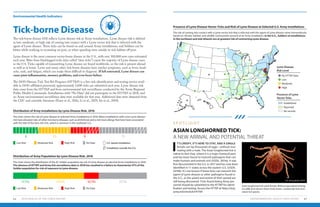
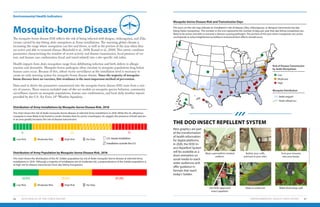
  • 75.
    Tobacco product useamong the U.S. population, aged 18–64 years, was compared to that of the AC Soldier population by adjusting national prevalence estimates to the 2015 AC Soldier age and sex distribution. Readily available survey data from the BRFSS were used for the analysis of the U.S. population. Tobacco product use questions in the 2018 PHA were modified to collect more detailed information regarding the types of tobacco used, including e-cigarette/vaping informa- tion. Questions were also reworded to include any use within the past 30 days. This broader defini- tion of current tobacco product use may have resulted in the inclusion of casual users in addition to the frequent users identified in prior assessments. To be categorized as a tobacco product user in national surveys such as the BRFSS, the respondent must meet a designated use threshold (e.g., 100 cigarettes) and self-report current use, as opposed to any use in the past 30 days. Therefore, AC Soldier tobacco product use prevalence estimates may be inflated relative to U.S. estimates. Com- parisons of 2018 PHA data to historical PHA data and to national data should be interpreted with caution. 6. Heat Illness Heat illness cases: Number of AC Soldiers who had one or more qualifying heat exhaustion or heat stroke diagnoses, or who were reported as a case of heat exhaustion or heat stroke through the DRSi in the calendar year Heat illnesses among AC Soldiers and trainees were reported based on incident cases identified in the Defense Health Agency’s Weather-related Injury Repository, which captures a selection of ICD-10-CM codes in inpatient and outpatient medical encounter records and medical event reports of heat exhaustion and heat stroke through the DRSi. The diagnostic codes used to identify heat illnesses were adapted from standard case definitions of heat exhaustion and heat stroke estab- lished by the AFHSB. Soldiers were counted as an incident case if they had an initial encounter for a heat illness within that calendar year. Soldiers with only a follow-up or sequelae visit for a heat illness within a calendar year were excluded. This differs from how heat illness cases were counted in the last edition of the Health of the Force. Consistent with the AFHSB case definition, Soldiers were considered an incident case only once per calendar year. Installation assignment was determined by the Soldier’s assigned unit ZIP code at the time of the heat illness event. 7. Hearing Hearing injury incidence: Percentage of AC Soldiers with a new significant threshold shift (STS) in the calendar year Hearing loss prevalence: Percentage of AC Soldiers with a clinically significant hearing loss and/ or requiring a fitness-for-duty hearing readiness evaluation Not hearing ready: Percentage of AC Soldiers who are overdue for their annual hearing test, are in need of a follow-up hearing test, or have missed a follow-up hearing test window Army hearing loss and injury data were obtained from the system of record, the Defense Occupa- tional and Environmental Health System – Hearing Conservation (DOEHRS-HC) Data Repository utilized by the Medical Protection System (MEDPROS). Hearing injury and hearing readiness classifi- cation metrics are updated on a monthly basis in the Strategic Management System (SMS). Projected hearing profile metrics are updated in SMS on an annual basis. Hearing metrics were compared to goals established by the Army Hearing Program. 8. Sexually Transmitted Infections (Chlamydia)* Sexually transmitted infections (Chlamydia) incidence rate: Number of new chlamydia infec- tions reported through DRSi per 1,000 person-years among AC Soldiers in the calendar year The incidence of reported chlamydia infections was evaluated for AC Soldiers and trainees. Instal- lation assignment was based on the location of the medical treatment facility (MTF) reporting the infection. New or incident infections were identified from medical event reports submitted through the DRSi using case definitions published by the AFHSB. Incident case reports were counted; follow-up reports less than 30 days apart were excluded. After 30 days, follow-up reports were counted as a new infection. STI rates per 1,000 Soldiers were computed using Soldier person-time. Chlamydia infection rates for installations with fewer than 20 cases were not reported and were excluded from the IHI computation since small case counts limit the reliability of the estimates. Poor reporting compliance (<50%) was also considered as an exclusion criteria; however, all installations met the reporting threshold. Reporting compliance was determined by the Navy and Marine Corps Public Health Center, which manages the DRSi. Data extracted from the MHS Population Health Portal in Carepoint were used to examine annual chlamydia screening among MHS-enrolled female AC Soldiers under age 25. The screening esti- mates contextualize the reported rates and identify areas for improvement. 9. Chronic Disease* Chronic disease prevalence: Percentage of AC Soldiers with at least one qualifying new or existing chronic disease diagnosis in the calendar year The prevalence of seven chronic conditions of interest (asthma, arthritis, chronic obstructive pulmo- nary disease (COPD), cancer, diabetes, cardiovascular conditions, and hypertension) among AC Sol- diers and trainees was estimated from ICD-10-CM diagnosis codes identified in the Soldier’s medical records. Prevalent cases of chronic conditions were identified by diagnoses at any point within the window of available medical encounter data (2010–2018). Soldiers with one or more of the selected conditions were identified for the analysis, and Army-level trends were provided for each diagnostic subset. Installation assignment was determined by the Soldier’s assigned unit ZIP code at the end of calendar year 2018. IV. Performance Triad Performance Triad (P3) metrics reflect the percentage of Soldiers meeting national sleep, activity, and nutrition (SAN) guidelines (e.g., CDC, National Sleep Foundation (NSF)). P3 measures were obtained in aggregate from the Army Resiliency Directorate (ARD) in coordination with AAG. Estimates were derived from relevant survey items collected within the Physical Domain of the Global Assessment Tool (GAT). Soldiers are required to complete the GAT annually per Army Regulation (AR) 350–53 (DA, 2014). In 2018, 66% of AC Soldiers completed the GAT. P3 data were reported as an aggregated METHODS 147146 2019 HEALTH OF THE FORCE REPORT Appendices
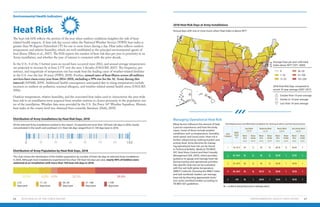
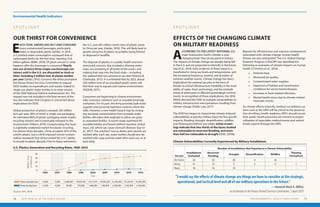
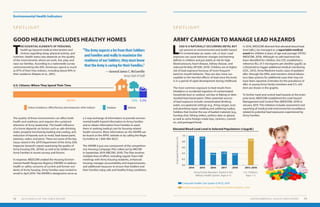
  • 76.
    METHODS 149148 2019HEALTH OF THE FORCE REPORT Appendices Targets for fruit and vegetable consumption were analyzed as the percentage of Soldiers eating 2 or more servings of fruits and vegetables per day. The data for these metrics are based on GAT survey questions asking Soldiers to report the average number of fruit and vegetable servings they consumed per day, over the last 30 days. Due to differences in how servings of fruits and vegetables are quantified and how consumption frequencies are listed, both MyPlate and GAT servings are described in the table below. MyPlateGAT Fruits Fresh, frozen, canned or dried, or 100% fruit juices. A serving is 1 cup of fruit or ½ cup of fruit juice. 1 cup of fruit or 100% fruit juice, or ½ cup of dried fruit can be considered as 1 cup from the Fruit Group. Vegetables Fresh, frozen, canned, cooked, or raw. A serving is 1 cup of raw vegetables or ½ cup of cooked vegetables. 1 cup of raw or cooked vegetables or vegetable juice, or 2 cups of raw leafy greens can be considered as 1 cup from the Vegetable Group. V. Environmental Health Indicators (EHIs) EHIs are calculated for Army installations and joint bases with an estimated minimum average pop- ulation of 1,000 AC Soldiers. This includes the 40 installations shown in the Installation Profiles as well as JBLM (environmental data are not affected by the MHS Genesis exclusion). Aberdeen Proving Ground (APG) is also reported as a legacy installation because it has had a population above 1,000 AC Soldiers in the recent past. Furthermore, APG is included due to significance of regional environ- mental exposures. 1. Air Quality* The metric for air quality is the number of days in a calendar year when ambient air pollution near an Army installation violates a short-term (≤24 hours) U.S. National Ambient Air Quality Standard (NAAQS). For U.S. installations, the number of poor air quality days was obtained from Air Quality Index (AQI) Reports and Daily Data summaries on the Environmental Protection Agency (EPA) Air Data website. The AQI is a location-specific, daily numerical index derived from air pollution mea- surements obtained at State- and Federally-operated air monitoring stations throughout the U.S. An AQI score greater than 100 denotes a poor air quality day during which local air pollution levels vio- lated a short-term NAAQS and the air quality is considered unhealthy for some or all of the general public. Poor air quality days for a U.S. Army installation were calculated as the sum of all days in a calendar year when the local AQI score was greater than 100. Air monitoring data were not available from State or Federal regulatory authorities in the airsheds where the following U.S. Army installa- tions are located: Fort Lee, Fort Leonard Wood, Fort Polk, Fort Riley, Fort Rucker, and Fort Stewart. For the purpose of the IHI computation, missing installation values were set to 0 because the lack of an air monitoring station was deemed indicative of low risk/need. For installations outside the U.S., poor air quality days were determined by converting air monitor- ing data representative of the installation airshed to a daily AQI based on the relevant short-term NAAQS. Days when the AQI was greater than 100 were summed to determine the annual number of poor air quality days. Air monitoring data were obtained from the Air Quality e-Reporting database summary statistic when at least 40 responses were available per stratum (e.g., installation, sex, and age group). 1. Sleep Sleep targets were based on CDC and NSF guidelines. Targets include the percentage of Soldiers reporting 7 or more hours of sleep per night on average. Hours of sleep were reported separately for (a) weeknights/duty nights and (b) weekends/non-duty nights because research indicates significant differences in behavior between these two duty statuses. Sleep metrics were based on GAT survey questions assessing self-reported average hours of sleep per 24-hour period during weeknights/ duty nights and self-reported average hours of sleep per 24-hour period during weekends/days off. 2. Activity Activity targets were similarly based on CDC recommendations. The first activity target included in this report is the percentage of Soldiers meeting the resistance training recommendation of 2 or more days per week. Data for this metric were derived from a GAT survey question asking Soldiers to report the average number of days per week in which they participated in resistance training in the last 30 days. The second activity target relates to aerobic exercise; the target may be met by per- forming either 75 minutes of vigorous aerobic activity per week, 150 minutes of moderate activity per week, or an equivalent combination of moderate and vigorous activity. The equivalent com- bination is based on a formula in which vigorous activity is more heavily weighted than moderate activity. The data for this metric are derived from a series of GAT questions asking about the average number of days per week in which the Soldier engaged in (a) vigorous activity and (b) moderate activity in the last 30 days, and the average number of minutes per day in which they engaged in these activity levels. 3. Nutrition Nutrition targets were based on the U.S. Department of Agriculture (USDA) MyPlate recommenda- tions* summarized in the table below. * These amounts are appropriate for individuals who participate in less than 30 minutes of physical activity (beyond normal daily activities) per day. Individuals who are more physically active may be able to consume higher quantities while staying within calorie needs. Females 19–30 years old 2 cups 2.5 cups 31–50 years old 1.5 cups 2.5 cups 51+ years old 1.5 cups 2 cups Males 19–30 years old 2 cups 3 cups 31–50 years old 2 cups 3 cups 51+ years old 2 cups 2.5 cups Age Fruits Vegetables
  • 77.
    METHODS 151150 2019HEALTH OF THE FORCE REPORT Appendices at the European Environment Agency for installations in Germany and Italy, and host nation envi- ronmental authorities for installations in Japan and South Korea. Historic data from the prior year for USAG Vicenza were used for the IHI computation when the 2018 data were unavailable. The use of historical data for this installation was reasonable because USAG Vicenza consistently had elevated poor air quality days. Green, amber, and red thresholds were established to create an awareness of air quality status in the affected community and to encourage participation in the behavior modifications recommended by public health authorities on days when air quality is degraded. The desired status is fewer poor air quality days. • Green: ≤ 5 poor air quality days per year • Amber: 6–20 poor air quality days per year • Red: ≥ 21 poor air quality days per year 2. Drinking Water Quality The metric for drinking water quality is whether an Army population has been exposed to drink- ing water from the installation’s potable water system that failed to meet a health-based standard promulgated under the Safe Drinking Water Act (SDWA). Data on violations of health-based drink- ing water standards in the potable water systems serving Army installations were obtained from the semi-annual data calls for Army environmental data issued by Deputy Chief of Staff, G-9, Envi- ronmental Division. If there was uncertainty in these data, details of the violation were verified by discussion with garrison environmental staff. Additional references used to verify the occurrence of drinking water violations included the EPA Safe Drinking Water Information System (SDWIS) data- base and the annual Consumer Confidence Report (CCR) for the potable water system(s) serving the installation. The CCR is an EPA-mandated report published by a water purveyor for the purpose of informing consumers about their local drinking water quality. Green, amber, and red thresholds were established for the purpose of creating awareness of water quality status in the affected com- munity. The desired status is no violation of any health-based drinking water standard. • Green: No violation of any federal health-based drinking water standard • Amber: Violation of a drinking water standard for non-acute health effects when population exposure has occurred • Red: Violation of a drinking water standard for acute health effects when population exposure has occurred 3. Water Fluoridation The metric for water fluoridation is the annual average concentration of fluoride in the potable water provided to an Army installation. This concentration is compared to the CDC-recommended optimal fluoride concentration of 0.7 mg/L, the SDWA secondary maximum contaminant level (SMCL) for fluoride of 2.0 mg/L, and the maximum contaminant level (MCL) of 4.0 mg/L. Fluoride concentration data for potable water systems serving Army installations were obtained from the Deputy Chief of Staff, G-9, Environmental Division. Installations that treat their own potable water monitor fluoride levels at least annually and compile this information in reports submitted to the responsible water regulatory authority. For installations that purchase potable water, fluoride data were obtained from the annual CCR for community water systems serving the installation. Green, amber, and red thresholds were established to create awareness of water quality status in the affected community. A fluoride concentration of 0.7 mg/L is the desired status. A fluoride concentra- tion greater than 4.0 mg/L is a violation of the SDWA MCL. • Green: Average fluoride concentration is 0.7–2.0 mg/L • Amber: Average fluoride concentration is less than 0.7 mg/L or from 2.1-4.0 mg/L • Red: Any fluoride concentration >4.0 mg/L 4. Solid Waste Diversion The metric for solid waste diversion evaluates the quantity of installation non-hazardous solid waste that is diverted from a disposal facility by means such as recycling, composting, mulching, and donating. It is calculated as the mass of diverted waste divided by the mass of the total waste stream (diverted plus disposed), and expressed as a percentage. Installation solid waste diversion rate data were obtained from the Solid Waste Annual Reporting for the Web (SWARWeb), which is operated by the Deputy Chief of Staff (DCS), G-9, Energy and Facilities Engineering. The database is accessed through the DCS G-9 portal under the Installation Manage- ment Applications Resource Center (IMARC). SWARWeb tracks solid waste collection, disposal, and recycling efforts at installation and Command/HQ levels. Installation solid waste managers report their facility’s tonnage for waste, recycling, and other diversion efforts to the database semiannually. SWARWeb calculates the installation solid waste diversion rate in accordance with the DOD Solid Waste Measures of Merit (MOM) in DODI 4715.23 (DOD, 2016b), and provides comprehensive MOM summary reports. For quality assurance, detailed reports for specific installations are reviewed, and installations are contacted directly to verify data integrity, spot anomalies, and analyze waste generation details. The solid waste diversion rate excludes waste generated from privatized housing and from construction and demolition activities. Army installations that are part of joint bases where the Army is not the lead Service do not have a SWARWeb reporting requirement. Solid waste disposal tonnage and diversion rate from Joint Base Elmendorf-Richardson (JBER) were obtained directly from the Chief, Environmental Quality at JBER. The APHC was unable to obtain solid waste information from the other joint bases for FY18. Green, amber, and red thresholds have been established for the purpose of creating awareness of solid waste management practices and tracking conformance with the current DOD solid waste diversion percentage goal. A diversion percentage ≥ 50% is the desired status, as stated in the DOD Strategic Sustainability Performance Plan (2016). • Green: ≥ 50% solid waste diversion rate • Amber: 25–49% solid waste diversion rate • Red: ≤ 24% solid waste diversion rate
  • 78.
    METHODS 153152 2019HEALTH OF THE FORCE REPORT Appendices The criteria used to compute the index scores are presented below. Variables for Mosquito-borne Disease Risk Index Risk Score Percent of total transmission days (TTD) per year 0 – 0% TTD 1 – 0% < TTD ≤ 25% 2 – 25% < TTD ≤ 50% 3 – TTD > 50% 0 to 3 Percent of high transmission days (HTD) per year 0 – 0% HTD 1 – 0% < HTD ≤ 25% 2 – 25% < HTD ≤ 50% 3 – HTD > 50% 0 to 3 Aedes aegypti species presence 0 – No recorded presence 2 – Collection record of presence 0 or 2 Aedes albopictus species presence 0 – No recorded presence 2 – Collection record of presence 0 or 2 Human cases of Zika, dengue & chikungunya (separate scores) +0 – No reported local or imported human cases +0.5 – Reported imported human case +0.5 – Reported local human case 0 to 1 6. Tick-borne Disease The metric for tick-borne disease is an index reflecting the risk of coming into contact with a Lyme vector tick (i.e., the blacklegged tick Ixodes scapularis or the Western blacklegged tick Ixodes pacifi- cus) that is infected with the agent of Lyme disease at an Army installation. The metric reflects a combination of county/state Lyme vector surveillance reports from public health authorities (such as the CDC), scientific literature, and data from the DOD Human Tick Test Kit Program (HTTKP) or a Regional Public Health Command. Ticks are voluntarily submitted to the HTTKP after being found attached to (biting) Active Duty, Reserve, or Retired personnel from all branches of military ser- vice; DOD Civilians; and Family members. For each Army installation, an index ranging from 0 to 5 indicates the risk of coming into contact with a Lyme vector tick infected with the agent of Lyme disease. If no data were available from either the HTTKP or a Regional Public Health Command, the installation received a score of “ND” or “No Data.” 5. Mosquito-borne Disease The metric for mosquito-borne disease reflects the risk of being infected with dengue, chikungunya, and Zika viruses from day-biting mosquitoes (Aedes aegypti and Aedes albopictus) at an Army instal- lation. The risk estimate is calculated by combining applied modeling methods for the number of total and high transmission days per year, likelihood an installation has certain mosquito species, and the presence of local and imported cases of dengue, chikungunya, and Zika. Indices ranging from 0 to 13 indicate the risk of contact with a dengue, chikungunya, or Zika-com- petent mosquito vector (day-biting mosquito) at each Army installation. An index score of 0–4 represents negligible or low risk. A score of 4.5–8.5 represents a moderate risk and suggests that the mosquito species may be present, but disease transmission may be low or underreported. A score of 9–13 represents a high risk where the mosquito vector is endemic, and potential for disease trans- mission is high on an installation. Green, amber, and red categories have been established for the purpose of creating awareness of selected mosquito-borne disease risks in the affected community and to encourage participation in recommended behavior modifications, such as elimination of breeding and harborage sites, use of screens and self-closing doors, and the use of personal protective measures when active outdoors (DOD Insect Repellent System: permethrin-treated clothing, repellent on exposed skin, and proper wear of uniform). • Green: Risk index score of 0–4.0; no or low risk of contacting day-biting mosquitoes • Amber: Risk index score of 4.5–8.5; moderate risk of contacting day-biting mosquitoes • Red: Risk index score of 9.0–13; high risk of contacting day-biting mosquitoes
  • 79.
    METHODS 155154 2019HEALTH OF THE FORCE REPORT Appendices The criteria used to compute the index scores are presented below. Variables for Tick-borne Disease Risk Index Risk Score Installation was in the CDC predicted range for either Lyme vector tick species (I. scapularis or I. pacificus), as published by Eisen et al., 2016. 0 - No Lyme vector tick present, 1 - Lyme vector tick reported, 2 - Lyme vector tick established 0 to 2 The CDC has documented cases of Lyme disease within the last 10 years from within the county where the installation is located (CDC, 2017e). 0 - False 1 - True 0 or 1 Human-biting ticks submitted to the HTTKP (or a Regional Public Health Command) in 2018 were identified as Lyme vector ticks. 0 - False 1 - True 0 or 1 Lyme vector ticks submitted to the HTTKP (or a Regional Public Health Command) in 2018 were positive for Lyme disease pathogen. 0 - False 1 - True 0 or 1 Green, amber, and red categories have been established for the purpose of creating awareness of Lyme disease risk in the affected community, and to encourage participation in surveillance pro- grams such as the HTTKP and in the recommended behavior modifications, such as conducting tick-checks, using repellent, and adhering to the DOD Insect Repellent System. • Green: Index score of 0–1; no or low risk of contacting a Lyme vector tick • Amber: Index score of 2–3; moderate risk of contacting a Lyme vector tick • Red: Index score of 4–5; high risk of contacting a Lyme vector tick 7. Heat Risk The metric for heat risk reflects the portion of the year when outdoor temperatures heighten the risk of heat-related health impacts, and whether the year of interest is consistent with or different from the prior 10-year period. Heat risk days are calculated as the number of days in a calendar year with at least 1 hour when the heat index is above 90⁰F. This corresponds to an outdoor heat status of “Extreme Caution” as classified by the National Weather Service. Hourly measurements for outdoor temperature and relative humidity are obtained from land-based airport weather stations in closest proximity to installation cantonment areas or population centers. Using these data, the U.S. Air Force 14th Weather Squadron computes hourly heat index values for each location of interest. Annual heat risk days are calculated for the year of interest and each of the 10 years prior to the year of interest. The mean and standard deviation (SD) for the prior 10 years are calculated. Annual heat risk days for the year of interest are compared to the prior 10-year average ± 1 SD to show whether the year of interest is consistent with the prior decade, or if the year of inter- est trended higher or lower than the recent past. VI. Installation Health Index (IHI) Health indices are widely used to gauge the overall health of populations. Such indices can be used to rank communities (e.g., installations) relative to each other, which can drive community interest and motivate improvements in public health. Healthcare and public health decision makers should take care to review individual measures that comprise these indices in order to identify and effec- tively target key outcomes or behaviors that have the most significant adverse effects on health and readiness for each installation. The core metrics included in this report were prioritized for inclusion and weighting in the IHI cal- culation based jointly on the prevalence of the condition or factor, the potential health or readiness impact, the preventability of the condition or factor, the validity of the data, supporting evidence, and the importance to Army leadership. Although behavioral health impacts readiness, the behav- ioral health medical metric was not included in the IHI for 2018 to avoid stigmatizing Soldiers who seek treatment, and because treatment options for behavioral health conditions are not uniformly available across all installations. In generating an IHI, six selected medical metrics (injury, obesity, sleep disorders, chronic disease, tobacco product use, and STIs [chlamydia]) for each included installation were individually standard- ized to the average across these installations using z-scores. The medical metrics were adjusted by age and sex prior to standardization to allow more valid comparisons. Z-scores follow a standard normal distribution, and reflect the number of standard deviations (amount of variation in data val- ues for a given metric) the installation is from the average for that medical metric. Values above the average have positive z-scores, while values below the average have negative z-scores. The IHI also includes one installation environmental health metric – number of poor air quality days. The poor air quality days data are not normally distributed, and vary widely by geographic location, particularly for installations outside the U.S., where the number of poor air quality days were especially high relative to the mean across all installations. Accordingly, the number of poor air quality days at each installation was scored as follows for use in calculating the IHI: installations with missing or non-reported air quality data received an air quality score of 0, and thus do not affect the IHI score; installations with no reported poor air quality days received an air quality score of 2, the highest (best) possible score; installations with between 1 and 4 poor air quality days received an air quality score of 1; installations with between 5 and 20 poor air quality days received an air quality score of -1; and installations with greater than 20 poor air quality days received an air quality score of -2, the lowest (worst) possible score. These categories align with those used in the Environmental Health Indicator – Air Quality section of Health of the Force.
  • 80.
    METHODS 157156 2019HEALTH OF THE FORCE REPORT Appendices Normally Distributed Data Curve 5016 84 98 99.920.1 1-1 Average -2-3 2 3 IHI Score Percentile Each installation’s IHI is a standardized score (z-score) calculated by pooling the metric-specific scores for that installation. Metric-specific scores were weighted to prioritize readiness detractors, as follows: injury–30%, sleep disorders–15%, obesity–15%, chronic disease–15%, tobacco product use–15%, STI (chlamydia)–5%, and air quality–5%. The resulting weighted averages of these metrics were then standardized using the mean and standard deviation across all installations presented in Health of the Force to create the IHI score for each installation. For ease of interpretation, the IHI is presented as a percentile as well as a z-score. The IHI percentile is equal to the area under the standard normal probability distribution for each installation’s IHI score. The IHI percentiles are categorized as follows: <20%, 20–29%, 30–39%, 40–49%, 50–59%, 60–69%, 70–79%, 80–89%, and ≥90%. Higher percentiles reflect more favorable health status. VII. Installation Profile Summaries The installation profile summary pages report population estimates, and age and sex distributions. Population estimates were derived from person-time calculated from DMDC personnel rosters. Person-time, which is analogous to Full-Time Equivalents (FTE), estimates the average number of Soldiers at an installation during the year. Installation assignments for AC Soldiers and trainees (excluding cadets) were determined by unit ZIP code. Installations with a high turnover, such as those with a large trainee population, may not be accus- tomed to calculating their population size in this way. These estimates are intended to be a frame of reference and do not necessarily correspond to the population evaluated for each metric included in the installation profile summary and report. VIII. Data Limitations • Methodology and data source changes from prior Health of the Force reports prevent direct comparisons of measures across the reports. Updated trend charts are provided for affected metrics, and additional details regarding installation demographics and met- ric components are included to provide clarity. • Higher estimates for a metric may not be indicative of a problem but rather may reflect a greater emphasis on detection and treatment. • Composite measures or indices may mask important differences seen at the individual metric level. It is important to examine the components for which more targeted preven- tion programs can be developed. • Personnel and medical data for cadets were not available; therefore, USAG West Point estimates using DMDC-derived data are limited to permanent party AC Soldiers. • Metrics based on ICD-10-CM codes entered in patient medical records are subject to cod- ing errors. Estimates may also be conservative given that individuals may not seek care or may choose to seek care outside the MHS or the TRICARE claims network. • The BMI averages reported in Health of the Force accurately estimate population statistics, but may not be appropriate for smaller units and are not intended for individual Soldier assessment. • Measures based on self-reported data (GAT and PHA) are limited to a subset of the popu- lation (i.e., survey respondents) and may be prone to biases. • The STI (chlamydia) and heat illness metrics rely on reporting compliance. STI (chlamydia) estimates are conservative given the high proportion of asymptomatic infections that are undetected. • GAT data used for the P3 measures were aggregated across demographic strata, and counts below 40 were not reported. Thus, age and sex adjustments for the installations were not possible. • The Air Quality EHI relies on outdoor ambient air monitoring data that were deemed representative of air pollution levels experienced by the population working and living in the locale where the Army installation is situated. The metric does not reflect exposures from indoor air pollution sources. • The Solid Waste Diversion EHI relies on SWARWeb solid waste generation and diversion data that may reflect estimates rather than the actual weight of materials. • The Mosquito-borne Disease EHI relies on mosquito specimens acquired by installations and forwarded to the supporting Public Health Command Region for identification and pathogen testing. Robustness of the risk characterizations is dependent upon installation surveillance programs collecting specimens and ensuring delivery to the supporting region for identification and testing. Appendices
  • 81.
    Appendices ACKNOWLEDGMENTS 159158 2019HEALTH OF THE FORCE REPORT • The Tick-borne Disease EHI relies on tick specimens submitted to the DOD HTTKP for identification and pathogen testing. Robustness of the risk estimate is dependent upon installation populations submitting human ticks to the HTTKP for analysis. Suggested citation U.S. Army Public Health Center. 2020. 2019 Health of the Force, [ https://phc.amedd.army.mil/topics/campaigns/hof ]. Joseph Abraham, ScD1 Health of the Force Senior Epidemiologist Clinical Public Health and Epidemiology Directorate Amy Millikan Bell, MD, MPH1 Health of the Force Chair APHC Medical Advisor Matthew Beymer, PhD, MPH1,2,5 Health of the Force Editor-in-Chief Armed Forces Health Surveillance Branch Jill Brown, PhD1 Health of the Force Sleep, Activity, and Nutrition Team Lead Public Health Assessment Division Jason Embrey1 Health of the Force Senior Designer Visual Information Division Andrew Fiore1,3 ORISE Fellow Population Health Reporting Program Christopher Hill, MPH, CPH1 Epidemiologist Behavioral and Social Health Outcomes Program Matthew Inscore, MPH1 Health of the Force Chief Epidemiologist Disease Epidemiology Program Nikki Jordan, MPH1 Senior Epidemiologist Disease Epidemiology Program Alexis Maule, PhD1,2,7 Epidemiologist Armed Forces Health Surveillance Branch Lisa Polyak, MSE, MHS1 Health of the Force Environmental Health Metrics Team Lead Directorate of Environmental Health Sciences and Engineering Anne Quirin1,5 Health of the Force Technical Editor Publication Management Division Lisa Ruth, PhD1 Health of the Force Product Manager Population Health Reporting Program George (Ginn) White1 Health of the Force Product Advisor Public Health Communication Directorate Shaina Zobel1 Health of the Force Project Operations Population Health Reporting Program Health of the Force Working Group ACKNOWLEDGMENTS
  • 82.
    160 2019 HEALTHOF THE FORCE REPORT Appendices ACKNOWLEDGMENTS 161 Health of the Force Content Developers Health of the Force Data Analysts Ihsan Abdur-Rahman, MPH1 Epidemiologist Behavioral and Social Health Outcomes Program Jerry Arnold1 Visual Information Specialist Visual Information Division Heather Bayko, MPH1,5 Epidemiologist One Health Division Tina Burke, PhD6 Chief, Sleep Research Team Center for Military Psychiatry and Neurosciences Research Division Charsey Cherry, DrPH1,5 Biostatistician/Epidemiologist III Public Health Assessment Division Steven Chervak, MS, CPE1 Ergonomist Industrial Hygiene Field Services Jay Clasing, PhD, OTR/L, CPE1 Vision Scientist Tri-Service Vision Conservation and Readiness Program Anna Courie, RN, MS, PHNA-BC1 Health Promotion Policy and Evaluation Officer Health Promotion Operations Division MAJ M. Todd French, DVM, MPH, DACVPM14 Deputy Chief, Food Protection Branch Division of Veterinary Science Keith Hauret, MSPH, MPT1 Epidemiologist Injury Prevention Program MAJ Christa Hirleman, DMD, MS1 Public Health Dentist Disease Epidemiology Program Charles Hoge, MD4,6 Senior Scientist Behavioral Health Division, Healthcare Delivery, G-3/5/7 Julianna Kebisek, MPH1,2,5 Disease Epidemiologist Armed Forces Health Surveillance Branch Sara Birkmire1 Biologist Environmental Health Engineering Division Alfonza Brown, MPH1 Epidemiologist Disease Epidemiology Division Stephanie Cinkovich, PhD1 Chief, Vector Data Management and Analysis Branch Entomological Sciences Division Abimbola Daferiogho, MPH1,5 Biostatistician/Epidemiologist II Public Health Assessment Division Devi Deane-Polyak1,3 ORISE Summer Intern Environmental Health Engineering Division Leeann Domanico, MS, CCC-A1 Hearing Conservation Consultant Army Hearing Program Kelly Gibson, MPH1 Epidemiologist Disease Epidemiology Program Ashleigh McCabe, MPH1,2 Epidemiologist Armed Forces Health Surveillance Branch Robyn Nadolny, PhD1 Biologist Tick-Borne Disease Laboratory Jerrica Nichols1,2 Behavioral Health Epidemiologist Armed Forces Health Surveillance Branch Catherine Rappole, MPH1,8 Epidemiologist Injury Prevention Program Anna Schuh Renner, PhD1 Safety Engineer Injury Prevention Program Jill Londagin, MFT4 Program Director-Clinical Substance Abuse Behavioral Health Division, Healthcare Delivery, G-3/5/7 Kelsey McCoskey, MS, OTR/L, CPE, CSPHP1 Ergonomist Industrial Hygiene Field Services Division Joseph Pierce, PhD1 Health Scientist Injury Prevention Program Michelle Phillips1 Visual Information Specialist Visual Information Division Keesha Powell1,2,7 Data Technician Armed Forces Health Surveillance Branch M. C. Ross, PhD, MEd, MPPA1,3 ORISE Established Fellow Behavioral and Social Health Outcomes Program Renita Shoffner, BSN, RN, COHN-S1 Occupational Health Nurse Consultant Occupational Medicine Program John Graham Snodgrass1 Visual Information Specialist Visual Information Division COL Michele Soltis, MD, MPH4 Preventive Medicine Staff Officer Public Health Directorate, Deputy Chief of Staff for Public Health Louise Valentine, MPH, CHES, ACSM EP-C1,3 ORISE Research Fellow Public Health Communication Directorate Sheldon Waugh, MSc, PhD1 Epidemiologist One Health Division Marc Williams, PhD, Fellow AAAAI1 Biologist Health Effects Division Steven Witt, EHS1 Health Risk Communication Specialist Health Risk Communication Division Alexander Zook, MS, EIT1 Health of the Force Digital Team Consultant Environmental Health Engineering Division Patricia Rippey1 Environmental Scientist Environmental Health Sciences Division Anita Spiess1 Epidemiologist Behavioral and Social Health Outcomes Program LTC Michael Superior, MD, MPH1 Manager Disease Epidemiology Program Larry Webber, LEHS1 Environmental Protection Specialist Environmental Health Engineering Division
  • 83.
    Appendices 162 2019 HEALTHOF THE FORCE REPORT REFERENCES 163 Health of the Force Steering Committee Health of the Force Contributors Dr. Amy Millikan Bell1 Dr. Steven Cersovsky1 Dr. Michelle Chervak1 Dr. Stephanie Cinkovich1 Ms. Anna Courie1 Ms. Nikki Jordan1 Ms. Kelsey McCoskey1 Ms. Jerrica Nichols1,2 MAJ Tamara Osgood1 LTC Sara Mullaney1 Mr. Todd Richards1 Dr. Lisa Ruth1 Mr. George (Ginn) White1 Dr. Amy Adler6 Ms. Kirsten Anke1 Ms. LeWonnie Belcher9 Ms. Marcella Birk1 Mr. Steven Clarke1 Ms. Ellyce Cook1 Ms. Elizabeth Davis13 Mr. Nathan Evans9 Ms. Ashley Fahle Gonzalez9 Dr. John Foubert9 Mr. Donald Goddard1 Ms. JoJuan (JoJo) Huber1 Dr. Brantley Jarvis1,8 Dr. Ericka Jenifer1 Dr. John Kaiser12 Ms. Wendy LaRoche1 Mr. William Monk1 LTC Sara Beth Mullaney1 Dr. John Pentikis1 Ms. Rosanne Radavich1 Ms. Cynthia Rice11 Mr. Scott Schiffhauer5,10 Ms. Jessica Sharkey1 Ms. Carrie Shult1 Ms. Cindy Smith1 Ms. Laura Tourdot1 Ms. Gail Wolcott10 1 U.S. Army Public Health Center 2 Defense Health Agency 3 Oak Ridge Institute for Science and Education 4 Office of The Surgeon General 5 General Dynamics Information Technology 6 Walter Reed Army Institute of Research 7 Cherokee Nation Strategic Programs 8 Knowesis, Inc. 9 Headquarters, Department of the Army, G-1 10 U.S. Army Medical Materiel Development Activity 11 Kenner Army Health Clinic, Fort Lee, Virginia 12 USAG Wiesbaden 13 Office of People Analytics 14 U.S. Army Medical Center of Excellence Adler A.B., T.W. Britt, L.A. Riviere, P.Y. Kim, and J.L. Thomas. 2015. Longitudinal determinates of mental health treatment-seeking by US soldiers. Br J Psych 207(4):346–450. Alderete, T.L., R. Habre, C.M. Toledo-Corral, et al. 2017. Longitudinal associations between ambient air pollution with insulin sensitivity, β-cell function, and adiposity in Los Angeles Latino children. Diabetes, 66(7):1789–1796. Agency for Toxic Substances and Disease Registry (ATSDR). 2019. Toxicological Profile for Lead. (Draft for Public Comment). Atlanta, GA: U.S. Department of Health and Human Services, Public Health Service. ATSDR. 2011. Chemicals, Cancer, and You, https://www.atsdr.cdc.gov/emes/public/docs/Chemicals,%20Cancer,%20and%20You%20FS.pdf American Cancer Society (ACS). 2019. Cancer Clusters, https://www.cancer.org/cancer/cancer-causes/general-info/cancer-clusters.html American Psychiatric Association (APA). 2013. Substance-Related and Addictive Disorders. In: APA, ed. Diagnostic and Statistical Manual of Mental Disorders, Fifth Edition, https://dsm.psychiatryonline.org/doi/10.1176/appi.books.9780890425596.dsm16 (accessed 2 October 2018). American Veterinary Medical Association (AVMA). 2019. Human-Animal Bond, https://www.avma.org/KB/Resources/Reference/human-animal-bond/Pages/Human-Animal-Bond-AVMA. aspx (accessed 23 June 2019). Anderson, C., A. Majeste, J. Hanus, and S. Wang. 2016. E-cigarette aerosol exposure induces reactive oxygen species, DNA damage, and cell death in vascular endothelial cells. Toxicol Sci 154(2):332–340. Armed Forces Health Surveillance Branch (AFHSB). 2019. Update: Heat Illness, Active Component, U.S. Armed Forces, 2018. MSMR 26(4). Behavioral Risk Factor Surveillance System (BRFSS). 2018. 2018 BRFSS Survey Data and Documentation, https://www.cdc.gov/brfss/annual_data/annual_2018.html (accessed 7 February 2020). Beymer, M.R., C.G. Hill, M.A. Perry, et al. Problematic Pornography Use and Intimate Partner Violence among a Sample of United States Army Soldiers in 2018: A Cross-Sectional Study. Arch Sex Behav (in review). Black, M., K. Basile, M. Breiding, et al. 2011. National Intimate Partner and Sexual Violence Survey (NISVS): 2010 Summary Report. Centers for Disease Control and Prevention website, https://www.cdc.gov/violenceprevention/pdf/NISVS_Report2010-a.pdf. (accessed 20 June 2019). Bowe, B., Y. Xie, T. Li, Y. Yan, H. Xian, and Z. Al-Aly. 2018. The 2016 global and national burden of diabetes mellitus attributable to PM2.5 air pollution. Lancet Glob Health, 2:e301–312. Bridges, A.J., R. Wosnitzer, E. Scharrer, C. Sun, and R. Liberman. 2010. Aggression and sexual behavior in best- selling pornography videos: a content analysis update. Violence Against Women 16(10):1065–1085. doi: 10.1177/1077801210382866. Byeon, J.H., J.W. Kim, H.J. Jeong, et al. 2013. Degenerative changes of spine in helicopter pilots. Ann Rehabil Med 2013;37(5):706–712. REFERENCES
  • 84.
    Appendices Center for PublicHealth Systems Science (CPHSS) and the Tobacco Control Legal Consortium. 2014. Pricing Policy: A Tobacco Control Guide. St. Louis, Missouri. Centers for Disease Control and Prevention (CDC). 2020. How much physical activity do adults need? https://www.cdc.gov/physicalactivity/basics/adults/index.htm (accessed January 2020). CDC. 2019a. Preventing Sexual Violence, https://www.cdc.gov/violenceprevention/sexualviolence/fastfact.html (accessed 11 October 2019). CDC. 2019b. Zoonotic Diseases, https://www.cdc.gov/onehealth/basics/zoonotic-diseases.html (accessed 22 July 2019). CDC. 2019c. Measles (Rubeola), https://www.cdc.gov/measles/index.html (accessed 19 September 2019). CDC. 2019d. Measles Cases and Outbreaks, https://www.cdc.gov/measles/cases-outbreaks.html (accessed 29 January 2020). CDC. 2017. How much sleep do I need? https://www.cdc.gov/sleep/about_sleep/how_much_sleep.html (accessed 24 October 2019). CDC. 2015. Measles. In: Hamborsky, J., A. Kroger, and C. Wolfe, eds. Epidemiology and Prevention of Vaccine- Preventable Diseases. 13th Edition, https://www.cdc.gov/vaccines/pubs/pinkbook/meas.html (accessed 19 September 2019). CDC. 2012. Low Level Lead Exposure Harms Children: A Renewed Call for Primary Prevention, Report of the Advisory Committee on Childhood Lead Poisoning Prevention, https://www.cdc.gov/nceh/lead/acclpp/Final_Document_030712.pdf (accessed 26 November 2019). CDC/NIOSH. 2012. Cancer Clusters, https://www.cdc.gov/niosh/topics/cancer/clusters.html Chang, A.M., D. Aeschback, J.F. Duffy, and C.A. Czeisler. 2015. Evening Use of Light-Emitting e-Readers Negatively Affects Sleep, Circadian Timing, and Next-Morning Alertness. PNAS 112(4):1232–7. Chen, H., J.C. Kwong, R. Copes, et al. 2017. Exposure to ambient air pollution and the incidence of dementia: A population-based cohort study. Environ Int 108:271–277. Code of Federal Regulations. 2019. Title 40, Part 141, National Primary Drinking Water Regulations, Subpart I – Control of Lead and Copper, https://www.ecfr.gov/cgi-bin/ECFR?page=browse Composite Health Care System (CHCS). 2019. Health Level 7, Chemistry Data System. Falls Church, Virginia: Defense Health Agency. Crimmins, A., J. Balbus, J.L. Gamble, et al., eds. 2016. The Impacts of Climate Change on Human Health in the United States: A Scientific Assessment, http://dx.doi.org/10.7930/J0R49NQX (accessed 22 October 2019). Cunningham, A.A. 2005. A walk on the wild side—emerging wildlife diseases. BMJ 331(7527):1214–15. Dahl, K., and S. Udvardy. 2019. US Military on the Front Lines of Extreme Heat, https://www.ucsusa.org/resources/us-military-bases-risk-extreme-heat (accessed 13 February 2020). 164 2019 HEALTH OF THE FORCE REPORT REFERENCES 165 Defense Health Agency. 2019. Military Health System Management Analysis and Reporting Tool (M2), https://www.health.mil/Military-Health-Topics/Technology/Clinical-Support/Military-Health-System- Management-Analysis-and-Reporting-Tool (accessed September 2019). De Oliveira, C.G., and J. Nadal. 2005. Transmissibility of helicopter vibration in the spines of pilots in flight. Aviat Space Environ Med 76:576–580. Department of the Army (DA). Office of The Surgeon General. 2019a. Information Brief, Army Substance Abuse Program into Substance Use Disorder Clinical Care within the Behavioral Health System of Care. Presented by Jill Londagin, Program Director, Substance Use Disorder Clinical Care. Falls Church, Virginia. DA. 2019b. Directive 2019-12, Policy for Voluntary Alcohol-Related Behavioral Healthcare, https://armypubs.army.mil/epubs/DR_pubs/DR_a/pdf/web/ARN16186_AD2019-12_Web_Final.pdf DA. 2019c. New option to treat alcohol addiction early, https://www.army.mil/article/220022/new_option_to_treat_alcohol_addiction_early (accessed 29 November 2019). DA. 2019d. Inspector General Special Interest Item Assessment of the Residential Communities Initiatives (RCI), 14 February–22 March 2019, Report ID-1903. Washington, D.C. DA. 2019e. Regulation 600–9, The Army Body Composition Program, https://armypubs.army.mil DA. Office of The Surgeon General. 2018. Information Brief, Transforming Substance Use Disorders Clinical Care within the Army. Presented by Jill Londagin, Program Director, Substance Use Disorder Clinical Care. Falls Church, Virginia. DA. 2017a. Office of the Assistant Secretary of the Army for Installations, Energy and Environment. Army Environment, Safety, and Occupational Health Strategy 2025, www.army.mil/e2/c/downloads/472081.pdf (accessed 19 November 2019). DA. 2017b. Regulation 670–1, Wear and Appearance of Army Uniforms and Insignia, https://armypubs.army.mil DA. 2015. Regulation 600–63, Army Health Promotion, https://armypubs.army.mil DA. 2014. Regulation 350–53, Comprehensive Soldier and Family Fitness, https://armypubs.army.mil DA. 2003. Technical Bulletin, Medical (TB MED) 507, Heat Stress Control and Heat Casualty Management [AFPAM 48-152(I)], https://armypubs.army.mil Department of Defense (DOD). 2019a. Department of Defense Annual Report on Sexual Assault in the Military Fiscal Year 2018, https://www.sapr.mil/reports (accessed 11 October 2019). DOD. 2019b. Office of the Under Secretary of Defense for Acquisition and Sustainment. Report on Effects of a Changing Climate to the Department of Defense, https://media.defense.gov/2019/Jan/29/2002084200/-1/-1/1/CLIMATE-CHANGE-REPORT-2019.PDF (accessed 22 October 2019). DOD. 2016a. Form 3024, Annual Periodic Health Assessment, http://www.esd.whs.mil/dd
  • 85.
    Appendices DOD. 2016b. Departmentof Defense Instruction (DODI) 4715.23, Integrated Recycling and Solid Waste Management. Change 1, August 31, 2018; https://www.esd.whs.mil DOD. 2015. FY15 DoD Solid Waste Diversion Fact Sheet, https://www.denix.osd.mil/iswm/home/ (accessed 27 September 2018). DOD. 2007. Department of Defense Task Force on Mental Health. An achievable vision: Report of the Department of Defense Task Force on Mental Health. Falls Church, VA: Defense Health Board. Department of Health and Human Services (DHHS). 2018. Healthy People 2020, https://www.healthypeople.gov/ (accessed 27 August 2018). DHHS. 2014. The Health Consequences of Smoking—50 Years of Progress. A Report of the Surgeon General, https://www.ncbi.nlm.nih.gov/books/NBK179276/pdf/Bookshelf_NBK179276.pdf (accessed 28 August 2019). Department of Veterans Affairs (VA). 2019. Camp Lejeune: Past Water Contamination, https://www.publichealth.va.gov/exposures/camp-lejeune/ Eisen, R.J., and L. Eisen. 2018. The Blacklegged Tick, Ixodes scapularis: An Increasing Public Health Concern. Trends Parasitol 34(4):295–309. Eisen, R.J., L. Eisen, and C.B. Beard. 2016. County-scale distribution of Ixodes scapularis and Ixodes pacificus (Acari: Ixodidae) in the continental United States. J Med Entomol, 53(2):349–386. Federal Interagency Forum on Child and Family Statistics. 2019. America’s Children: Key National Indicators of Well-Being. Washington, DC: U.S. Government Printing Office. Food and Agriculture Organization of the United Nations (FAOUN). 2017. FAO Fisheries and Aquaculture Technical Paper No. 615, Microplastics in fisheries and aquaculture: Status of knowledge on their occurrence and implications for aquatic organisms and food safety, http://www.fao.org/in-action/globefish/fishery-information/resource-detail/en/c/1043135/ (accessed 22 August 2019). French, M.T. 2016. Animal-assisted health and the Performance Triad. US Army Med Dep J (3-16) 99–108. Gibbs, E.P.J. 2014. The evolution of One Health: a decade of progress and challenges for the future. Vet Rec 174(4):85–91. Gitlitz, J. 2013. Bottled Up: Beverage Container Recycling Stagnates (2000–2010). In: Container Recycling Institute, U.S. Container Recycling Rates and Trends, 2013. http://www.container-recycling.org/ (accessed April 2019). Goodman, M., J.S. Naiman, D. Goodman, and J.S. LaKind. 2012. Cancer clusters in the USA: What do the last twenty years of state and federal investigations tell us? Crit Rev Toxicol 42(6):474–490. Guerra, F.M., S. Bolotin, G. Lim, et al. 2017. The basic reproduction number (R0 ) of measles: a systematic review. Lancet Infect Dis 17(12)e420–428. Halder, B. 2019. A plastic recycling revolution is brewing in China. OZY. April 22, 2019, https://www.ozy.com/acumen/a-plastic-recycling-revolution-is-brewing-in-china/93680/ (accessed 15 October 2019). Harvard Medical School Harvard Health Publishing website. 2012; updated 2018. Blue light has a dark side, https://www.health.harvard.edu/staying-healthy/blue-light-has-a-dark-side (accessed 10 July 2019). 166 2019 HEALTH OF THE FORCE REPORT REFERENCES 167 Headquarters, Department of the Army (HQDA). Execution Order (EXORD) 071-17, December 2016, subject: Accessions Occupational Physical Assessment Test Implementation. Washington, D.C. Hoge C.W., S.H. Grossman, J.L. Auchterlonie, L.A. Riviere, C.S. Milliken, and J.E. Wilk. 2014. PTSD treatment for soldiers after combat deployment: low utilization of mental health care and reasons for dropout. Psychiatr Serv 65(8):997–1004. Hoge C.W., C.G. Ivany, E.A. Brusher, et al. 2016. Transformation of mental health care for U.S. soldiers and families during the Iraq and Afghanistan wars: where science and politics intersect. Am J Psych 173:334–343. Holick, M.F. 2016. Biological Effects of Sunlight, Ultraviolet Radiation, Visible Light, Infrared Radiation and Vitamin D for Health. Anticancer Res 36(3):1345–1356. Hollander, I.E., and N.S. Bell. 2010. Physically demanding jobs and occupational injury and disability in the U.S. Army. Mil Med 175(10):705–712. Hosey, M.M., J. Jaskulski, S.T. Wegener, L.L. Chlan, and D.M. Needham. 2018. Animal-assisted intervention in the ICU: a tool for humanization. Crit Care 22(1):22. Human Animal Bond Research Institute (HABRI). 2018. The Science Behind the Human-Animal Bond. https://habri.org/research/ (accessed 9 October 2018). Im, J.H., J. Baek, A. Durey, H. Yoon Kwon, M. Chung, and J. Lee. 2019. Current status of tick-borne diseases in South Korea. Vector-Borne and Zoonotic Diseases, 19(4):225–233. International Bottled Water Association (IBWA). 2019. Bottled Water Market. https://www.bottledwater.org/economics/bottled-water-market (accessed October 2019). Ismail, A., M. Tellez, N. Pitts, et al. 2013. Caries Management pathways preserve dental tissues and promote oral health. Community Dent Oral Epidemiol 41(1):e12–40. doi: 10.1111/cdoe.12024. Jay, A., D.R. Reidmiller, C.W. Avery, et al. 2018. Overview. In: Reidmiller, D.R., C.W. Avery, D.R. Easterling, et al, eds. Impacts, Risks, and Adaptation in the United States: Fourth National Climate Assessment, Volume II, https://nca2018.globalchange.gov/chapter/1/ (accessed 22 October 2019). Jones B., T. Hoover, M. Chervak, O. Rivera, and L. Mitvalsky. 2019. Increasing readiness through injury prevention. Association of the United States Army (AUSA) 2019 Annual Meeting, Washington, D.C., October 2019. Kamal M., M.A. Kenawy, M.H. Rady, A.S. Khaled, and A.M. Samy. 2018. Mapping the global potential distributions of two arboviral vectors Aedes aegypti and Ae. Albopictus under changing climate. PLoS ONE 13(12): e0210122. Katz, M.G., and K.W. Russell. 2019. Injury from E-Cigarette Explosion. N Engl J Med 380(25):2460 (case report). Kaza, S., L.C. Yao, P. Bhada-Tata, F. Van Woerden. 2018. What a Waste 2.0: A Global Snapshot of Solid Waste Management to 2050, https://openknowledge.worldbank.org/handle/10986/30317 (accessed 13 February 2020). Kelner, M.J., and D.N. Bailey. 1985. Propylene glycol as a cause of lactic acidosis. J Analyt Toxicol 9(1):40–42. Klepeis N.E., W.C. Nelson, W.R. Ott, et al. 2001. The National Human Activity Pattern Survey (NHAPS): A resource for assessing exposure to environmental pollutants. J Expo Anal Environ Epidemiol 11(3):231–252.
  • 86.
    Knapik J.J., M.Sharp, M. Canham-Chervak, K. Hauret, J. Patton, and B.H. Jones. 2001. Risk factors for training- related injuries among men and women in basic combat training. Med Sci Sports Exerc 33(6):946–954. Landrigan, P.J., R. Fuller, N.J.R. Acosta, et al. 2018. The Lancet Commission on Pollution and Health. Lancet 391(10119):462–512. Lea, C.S., J.T. Efird, A.E. Toland, et al. 2014. Melanoma incidence rates in active duty military personnel compared with a population-based registry in the United States, 2000–2007. Mil Med 179(3):247–253. Levine, P.H., H.A. Young, S.J. Simmens, et al. 2005. Is testicular cancer related to Gulf War deployment? Evidence from a pilot population-based study of Gulf War era veterans and cancer registries. Mil Med 170(2):149–153. Li, S., L. Gilbert, S.O. Van Wambeke, J. Yu, B.V. Purse, and P.A. Harrison. 2019. Lyme disease risks in Europe under multiple drivers of change. Environ Health Perspect 127(6):067010-1–067010-13. Mora, C., B. Dousset, I.R. Caldwell, et al. 2017. Global Risk of Deadly Heat, Nature Climate Change 7:501–506. Mueller, M.K. and K.S. Callina. 2014. Human-Animal Interaction as a Context for Thriving and Coping in Military- Connected Youth: The Role of Pets during Deployment. Appl Dev Sci 18(4):214–223. National Coalition for Cancer Survivorship (NCCS). 2019. Cancer is a Crisis, https://www.canceradvocacy.org/resources/remaining-hopeful/cancer-is-a-crisis/ National Institutes of Health (NIH) National Cancer Institute. 2018. Cancer Clusters, https://www.cancer.gov/about-cancer/causes-prevention/risk/substances/cancer-clusters-fact-sheet National Research Council (NRC) of the National Academies. 2013. Potential Health Risks to DOD Firing-Range Personnel from Recurrent Lead Exposure. Chapter 5, Cancer Effects, https://www.ncbi.nlm.nih.gov/books/NBK206969/ National Sleep Foundation (NSF). 2020. How much sleep do we really need? https:// https://www.sleepfoundation.org/articles/how-much-sleep-do-we-really-need (accessed January 2020). National Weather Service (NWS). 2018. Weather Related Fatality and Injury Statistics, https://www.weather.gov/hazstat/ (accessed 28 October 2019). Office of The Surgeon General (OTSG). 2013. Army Medicine 2020 Campaign Plan, Version 2. Falls Church, Virginia. O'Haire, M.E. and K.E. Rodriguez. 2018. Preliminary efficacy of service dogs as a complementary treatment for post-traumatic stress disorder in military members and veterans. J Consult Clin Psychol 86(2):179 OTSG/MEDCOM. 2018. Policy Memorandum 18-064, subject: Preventing Childhood Lead Exposure – Lead Hazard Management, 17 October 2018; expires 17 October 2020. Joint Base San Antonio, Texas. Pierce, J.R., D.W. DeGroot, T.L. Grier, et al. 2017. Body mass index predicts selected physical fitness attributes but is not associated with performance on military relevant tasks in U.S. Army Soldiers. J Sci Med Sport 20(suppl 4):S79–84. Public Law 115–91—DEC. 12, 2017, National Defense Authorization Act for Fiscal Year 2018. https://www.congress.gov/115/plaws/publ91/PLAW-115publ91.pdf (accessed 22 October 2019) Rea M.S., M.G. Figueiro, A. Bierman, and J.D. Bullough. 2010. Circadian light. J Circadian Rhythms 8(1):2. Reinhold, J.M., C.R. Lazzari, and C. Lahondère. 2018. Effects of the Environmental Temperature on Aedes aegypti and Aedes albopictus Mosquitoes: A Review. Insects 9(4):158. Appendices 168 2019 HEALTH OF THE FORCE REPORT REFERENCES 169 Sapoka, A., A.P. Chelikowsky, K.E. Nachman, and B. Ritz. 2010. Exposure to particulate matter and adverse birth outcomes: A comprehensive review and meta-analysis. Air Qual Atmos Health, 5(4):1–13. Schuh, A., M. Canham-Chervak, and B.H. Jones. 2017. Statistical process control charts for monitoring military injuries. Inj Prev 23(6):416–422. Sharkey, J.M., and V.D. Hauschild. 2013. Addressing Cancer Clusters in the US Army. US Army Med Dep J, Apr–Jun:31–34. Sharma, S. and S. Chatterjee. 2017. Microplastic pollution, a threat to marine ecosystem and human health: a short review. Environ Sci Pollut Res Int 24(27):21530–21547. Simmons, A.M. 2016, April 21–22. The world’s trash crisis, and why many Americans are oblivious. Los Angeles Times, http://www.latimes.com/world/global-development/la-fg-global-trash-20160422-20160421-snap- htmlstory.html (accessed May 2018). Sun, X., K. Jooho Kim, C. Behnke, et al. 2017. The Cleanliness of Reusable Water Bottles: How Contamination Levels are Affected by Bottle Usage and Cleaning Behaviors of Bottle Owners. Food Protection Trends 37(6):392–402. U.S. Army Aeromedical Research Laboratory (USAARL). 2017. Back Pain in the U.S. Army Aviation Community. USAARL Report Number 2017-13; Prepared by Kelley, A., J. MacDonnell, D. Grigley, J. Campbell, J. Pavelites, T. Cho, and S. Gaydos, https://www.usaarl.army.mil/TechReports/2017-13.pdf (accessed 27 August 2019). U.S. Army Dental Command (DENCOM). Memorandum, subject: U.S. Army Dental Command (DENCOM) Policy Letter 5-2, High Caries Risk Program (HCR), 27 July 2013, https://dencom.srmc-portal.amedd.army.mil/ (accessed 23 August 2019). U.S. Army Dental Directorate. 2017. United States Army Dental Care System Clinical Practice Guidelines, https://dencom.srmc-portal.amedd.army.mil/ (accessed 23 August 2019). U.S. Army Installation Management Command (IMCOM). 2019. Operations Order 19-082, Installation Management Command (IMCOM) Housing Campaign Plan, 27 September 2019. Joint Base San Antonio, Texas. IMCOM. 2018. Operations Order 18-109, Sampling for Drinking Water. Sampling at High Risk Facilities and Army Family Housing, 9 August 2018. Joint Base San Antonio, Texas. IMCOM. 2013. Operations Order 13-163, Drinking Water Sampling in High Risk Facilities, 24 June 2013. Joint Base San Antonio, Texas. U.S. Army Medical Command (MEDCOM). 2019. Operations Order 19-29, Lead Hazard Management Control Plan – Preventing Childhood Lead Exposure, 31 January 2019. Joint Base San Antonio, Texas. U.S. Army Medical Department (AMEDD) Performance Triad (P3) website. 2018. What to Know about Sleep Deficiency, https://p3.amedd.army.mil/performance-learning-center/sleep/what-to-know-about-sleep-deficiency (accessed 9 July 2019). U.S. Army Public Health Center (APHC). 2019a. U.S. Army’s Ready and Resilient Initiative Evaluation Process Guide, https://phc.amedd.army.mil/PHC%20Resource%20Library/TG382_IEPGuide2019.pdf APHC. 2019b. 2018 Health of the Force, https://phc.amedd.army.mil/topics/campaigns/hof.
  • 87.
    Appendices 170 2019 HEALTHOF THE FORCE REPORT REFERENCES 171 APHC. 2018. Public Health Report Number S.0047783-17, Injury Surveillance and Longitudinal Studies for Gender Integration in the Army; Second Annual Assessment, 2017. Prepared by Hauret, K.G., M. Canham-Chervak, A. Schuh-Renner, E. Dada, B. Taylor, R. Pierce, and B.H. Jones. Aberdeen Proving Ground, Maryland. APHC. 2017a. Public Health Information Paper No. 12-01-0717, A Taxonomy of Injuries for Public Health Monitoring and Reporting, http://www.dtic.mil/docs/citations/AD1039481 APHC. 2017b. Surveillance of Suicidal Behavior Publication (SSBP), January through December 2016. https://phc.amedd.army.mil/topics/healthsurv/bhe/Pages/ssbp.aspx. APHC. 2016a. Facility Assignments Statistics Report (Central). https://rovr.csd.disa.mil/ (accessed 29 February 2016). APHC. 2016b. Toxicology Report No. S.0011891-16, Human Health Effects of Electronic Cigarettes: Technical Review of the Literature and Public Health Impact. Prepared by M.A. Williams. Aberdeen Proving Ground, Maryland. U.S. Department of Agriculture (USDA). 2019a. Monitoring Haemaphysalis longicornis, the Asian longhorned tick, populations in the United States, https://www.aphis.usda.gov/animal_health/animal_diseases/tick/downloads/h-longicornis-response- plan_usda.pdf (accessed 19 September 2019). USDA. 2019b. National Haemaphysalis longicornis (Asian longhorned tick) Situation Report, https://www.aphis.usda.gov/animal_health/animal_diseases/tick/downloads/longhorned-tick-sitrep.pdf (accessed 19 September 2019). USDA. 2019c. Choose My Plate website, https://www.choosemyplate.gov/MyPlate (accessed 24 October 2019). U.S. Department of Transportation. 2019. Drug and Alcohol Monitoring and Information System (DAMIS), https://damis.dot.gov (accessed September 2019). U.S. Environmental Protection Agency (EPA). 2019a. Green Book National Area and County-Level Multi-Pollutant Information, National Multi-Pollutant County Maps, https://www.epa.gov/green-book/green-book-national-area-and-county-level-multi-pollutant- information (accessed 15 December 2019). EPA. 2019b. Drinking Water Performance and Results Report, https://www.epa.gov/ground-water-and-drinking-water/drinking-water-performance-and-results-report (accessed 29 October 2019). EPA. 2019c. National Primary Drinking Water Regulations, https://www.epa.gov/ground-water-and-drinking-water/national-primary-drinking-water-regulations (accessed June 2019). EPA. 2019d. Frequent Questions regarding EPA’s Facts and Figures about Materials, Waste and Recycling, https://www.epa.gov/facts-and-figures-about-materials-waste-and-recycling/frequent-questions- regarding-epas-facts-and#RecyclingRate (accessed June 2019). EPA. 2018. Advancing Sustainable Materials Management: 2015 Tables and Figures. In: Assessing Trends in Material Generation, Recycling, Composting, Combustion with Energy Recovery and Landfilling in the United States, July 25, 2018, https://www.epa.gov/sites/production/files/2018-07/documents/smm_2015_tables_and_ figures_07252018_fnl_508_0.pdf (accessed October 2019). EPA. 2018. Report on the Environment. Population Served by Community Water Systems with No Reported Violations of Health-Based Standards, https://cfpub.epa.gov/roe/indicator.cfm?i=45#3 (accessed 29 October 2019) U.S. Global Change Research Program (USGCRP). 2017. Climate Science Special Report: Fourth National Climate Assessment, Volume I. Wuebbles, D.J., D.W. Fahey, K.A. Hibbard, D.J. Dokken, B.C. Stewart, and T.K. Maycock, eds. Washington, D.C.: USGCRP. USGCRP. 2016. The Impacts of Climate Change on Human Health in the United States: A Scientific Assessment. Crimmins, A., J. Balbus, J.L. Gamble, C.B. Beard, J.E. Bell, D. Dodgen, et al., eds. Washington, D.C.: USGCRP. U.S. House of Representatives, 116th Congress. 2019. House Report 116-120, National Defense Authorization Act for Fiscal Year 2020, https://www.congress.gov/bill/116th-congress/house-bill/2500 (accessed 22 August 2019). Villano, M. 2019. Why Recyclable Single-Use Water Bottles + Other Plastics Are A Plague on Our Planet. The Daily Beast. February 22, 2019. https://www.thedailybeast.com/why-recyclable-single-use-water-bottles-other-plastics-are-a-plague-on- our-planet (accessed 15 October 2019). Werner, B. 2017. Navy Seeks Better Sleep for Crews with New Rest Guidelines, Special Glasses. USNI News. 28 December 2017, https://news.usni.org/2017/12/28/navy-seeks-better-sleep-for-crews-with-new-rest-guidelines-special- glasses (accessed 17 October 2019). Zhu, K., S.S. Devesa, H. Wu, et al. 2009. Cancer incidence in the U.S. military population: comparison with rates from the SEER program. Cancer Epidemiol Biomarkers Prev, 18(6):1740–1745.
  • 88.
    AAG – ArmyAnalytics Group AARL – U.S. Army Aeromedical Research Laboratory AC – Active Component ACFT – Army Combat Fitness Test ACOM – Army Command ACRC – U.S. Army Combat Readiness Center AFH – Army Family Housing AFHSB – Armed Forces Health Surveillance Branch AHP – Army Hearing Program AMEDD – U.S. Army Medical Department AOHP – Army Occupational Health Program APFT – Army Physical Fitness Test APHC – U.S. Army Public Health Center APHN – Army Public Health Nurse AQI – Air Quality Index AR – Army Regulation ARD – Army Resiliency Directorate ARMY DIR – Army Directive ARNG – Army National Guard ASAP – Army Substance Abuse Program AWC – Army Wellness Center BCT – Basic Combat Training BH – Behavioral Health BMI – Body Mass Index CCR – Consumer Confidence Report CDC – U.S. Centers for Disease Control and Prevention CHCS – Composite Health Care System COPD – Chronic Obstructive Pulmonary Disease CR2C – Commander’s Ready and Resilient Council CSTA – Community Strengths and Themes Assessment CWS – Community Water System CY – Calendar Year DA – Department of the Army DA Pam –Department of the Army pamphlet ACRONYMS AND ABBREVIATIONS D/DBPR – Disinfectants/Disinfection Byproduct Rule DHA – Defense Health Agency DHHS – U.S. Department of Health and Human Services DMDC – Defense Manpower Data Center DOD – Department of Defense DODI – Department of Defense Instruction DOEHRS – Defense Occupational and Environmental Health Readiness System DOEHRS-HC – Defense Occupational and Environmental Health Readiness System – Hearing Conservation DOEHRS-IH – Defense Occupational and Environmental Health Readiness System – Industrial Hygiene DPW – Department of Public Works DRC – Dental Readiness Classification DRSi – Disease Reporting System, internet DSM – Dental Sleep Medicine DSM-5 – Diagnostic and Statistical Manual of Mental Disorders eBLL – Elevated Blood Lead Level e-cig – Electronic Cigarette EHI – Environmental Health Indicator EPA – U.S. Environmental Protection Agency EPICON – Epidemiological Consultation EVALI – E-cigarette, or Vaping, Product Use-associated Lung Injury FEHB – Federal Employees Health Benefits FTE – Full-Time Equivalent FY – Fiscal Year GAT – Global Assessment Tool HCR – High Caries Risk HEHRR – Housing Environmental Health Response Registry HP2020 – Healthy People 2020 HQDA – Headquarters, Department of the Army HRC – Hearing Readiness Classification HTD – High Transmission Day(s) HTTKP – Human Tick Test Kit Program ICD-10-CM – International Classification of Diseases, Tenth Revision, Clinical Modification IEP – Initiative Evaluation Process IET – Initial Entry Training IHI – Installation Health Index IMCOM – U.S. Army Installation Management Command IPV – Intimate Partner Violence JBER – Joint Base Elmendorf-Richardson JBLE – Joint Base Langley-Eustis JBLM – Joint Base Lewis-McChord JBSA – Joint Base San Antonio JCS – Joint Chiefs of Staff LED – Light-Emitting Diode µg/dL - Micrograms Per Deciliter MCL – Maximum Contaminant Level MDMP – Military Decision Making Process MDO – Multi-Domain Operations MDR – Medical Data Repository MEDCOM – U.S. Army Medical Command MEDPROS – Medical Protection System mg/L – Milligrams Per Liter MHS – Military Health System MOM – Measure(s) of Merit MOS – Military Occupational Specialty MRC – Medical Readiness Classification MSK - Musculoskeletal MTF – Medical Treatment Facility NAAQS – National Ambient Air Quality Standards NCQA – National Committee for Quality Assurance NDCEE – National Defense Center for Energy and Environment NIDA – National Institute on Drug Abuse NIHL – Noise-Induced Hearing Loss NPDWR – National Primary Drinking Water Regulations NSF – National Sleep Foundation NWS – National Weather Service OH – Occupational Health OPAT – Occupational Physical Assessment Test OSA – Obstructive Sleep Apnea OSHA – Occupational Safety and Health Administration OSUT – One Station Unit Training OTSG – Office of The Surgeon General P3 – Performance Triad PDC – Physical Demand Category PHA – Periodic Health Assessment PHS – U.S. Public Health Service PM2.5 – Fine Particulate Matter ppb – Parts Per Billion PRWG – Physical Resiliency Working Group PT – Physical Training PTSD – Posttraumatic Stress Disorder PWS – Public Water System R2 – Ready and Resilient RHC – Regional Health Command RHC-A – Regional Health Command – Atlantic RHC-C – Regional Health Command – Central RHC-E – Regional Health Command – Europe RHC-P – Regional Health Command – Pacific RR – Risk Ratio SAN – Sleep, Activity, and Nutrition SD – Standard Deviation SDWA – Safe Drinking Water Act SDWIS – EPA Safe Drinking Water Information System SEM – Social-Ecological Model SHARP – Sexual Harassment/Assault Response and Prevention SMS – Strategic Management System 172 2019 HEALTH OF THE FORCE REPORT ACRONYMS AND ABBREVIATIONS 173 Appendices
  • 89.
    Appendices 174 2019 HEALTHOF THE FORCE REPORT INDEX 175 SR2 – U.S. Army SHARP Ready & Resilient Directorate SRO – Senior Responsible Officer STI – Sexually Transmitted Infection STS – Significant Threshold Shift SUD – Substance Abuse Disorder SUDCC – Substance Use Disorder Clinical Care SWARWeb – Solid Waste Annual Reporting for the Web SWET – Soldier Water Estimation Tool SWTR – Surface Water Treatment Rule TB MED – Technical Bulletin, Medical TRADOC – U.S. Army Training and Doctrine Command TRIR – Training-Related Injury Report TTD – Total Transmission Days USAG – U.S. Army Garrison USARAK – U.S. Army Alaska USARIEM – U.S. Army Research Institute for Environmental Medicine USDA – U.S. Department of Agriculture USGCRP – U.S. Global Change Research Program USPSTF – U.S. Preventive Services Task Force UV – Ultraviolet WBGT – Wet-Bulb Globe Temperature WHO – World Health Organization WTBD – Warrior Tasks and Battle Drills INDEX A Activity. (See Performance Triad (P3).) Adjustment disorders (See Behavioral health.) Air quality. (See Environment.) Ozone, 56–57 Particulate matter, 56 Air Quality Index (AQI), 56–57, 149–150 Alcohol. (See Substance use.) Anxiety. (See Behavioral health.) Armed Forces Health Surveillance Branch (AFHSB), 18, 68, 141, 146–147 Army Analytics Group (AAG), 3, 141, 147 Army Hearing Program (AHP), 46–47, 146 Army Physical Fitness Test (APFT), 79, 81 Arthritis. (See Chronic disease.) Asthma. (See Chronic disease.) Army Regulations, 60 Army Wellness Center (AWC), 36–37 B Behavioral health (BH), 3, 6, 22–29, 31, 91–131, 141–142, 144, 155 Adjustment disorders, 6, 22–23, 144 Anxiety, 22–23, 28, 77, 144 Depression, 27, 77 Mood disorders, 22–23, 144 Personality disorders, 22–23, 144 Posttraumatic stress disorder (PTSD), 22–23, 27–28, 77, 144 Psychosis, 22–23, 144 Rates by installation, 91–131 Stigma, 24, 31, 142, 155 Substance use disorders, 6, 22–23, 30–31, 91–131, 134–137, 144 Behavioral Risk Factor Surveillance System (BRFSS), 9, 35, 39, 145–146 Blue light exposure, 33, 77 Body Mass Index (BMI), 34–35, 79, 81, 84, 145, 157 C Cancer (see also Chronic disease), 9, 41, 50–51, 56, 62, 77, 147 Cannabis. (See Substance use.) Cardiovascular disease. (See Chronic disease.) Chlamydia. (See Sexually transmitted infection.) Chronic disease, 7, 12–13, 50–51, 77, 84, 87, 91–131, 141–142, 147, 155, 156 Arthritis, 7, 9, 50–51, 147 Asthma, 50–51, 147 Cancer, 9, 41, 50–51, 56, 62, 77, 147 Cardiovascular disease, 7, 50–51 Chronic obstructive pulmonary disease (COPD), 50–51, 147 Dental caries, 13, 61 Diabetes, 50–51, 56, 77, 147 Hypertension, 9, 50–51, 147 Rates by installation, 91–131 Cigarette. (See Tobacco.) Climate change. (See Environment.) Clinical Data Repository, 145 Cocaine. (See Substance use.) Commander’s Ready and Resilient Council (CR2C), 25, 36, 40 Community Resource Guide, 61 Community Strengths and Themes Assessment (CSTA), 25 Community Water System (CWS), 58–61, 151 Consumer Confidence Report (CCR), 58–61, 150–151 D Defense Health Agency (DHA), 18, 41, 146 Defense Occupational and Environmental Health Readiness System (DOEHRS), 46, 53, 146 Demographics, 7–10 Age, 8–10, 91–131 Population, 8–10, 91–131 Sex, 8–10, 91–131 Dental health, 13, 60–61 Diabetes (See Chronic disease.) Disease Reporting System, internet (DRSi), 41–42, 48, 71, 73, 143, 146–147 DOEHRS-Hearing Conservation (DOEHRS-HC), 46, 146 DOEHRS-Industrial Hygiene (DOEHRS-IH), 53 Drinking water quality. (See Environment.) E Environment, 54–73, 91–131 Aedes aegypti, 66–67, 152–153 Aedes albopictus, 66–67, 152–153
  • 90.
    176 2019 HEALTHOF THE FORCE REPORT Appendices INDEX 177 Air quality, 56–57, 71, 84, 91–131, 136–137, 142, 149–150, 155–157 Rates by installation, 91–131, 136–137 Air Quality Index (AQI), 56–57, 149 Asian longhorned tick, 65 Chikungunya virus, 66–67, 152–153 Climate change, 3, 63, 71, Day-biting mosquito, 7, 66–67, 152 Dengue, 66–67, 152–153 Drinking water, 45, 58–63, 73, 150 Drinking water quality, 58–59, 150 Environmental Health Indicator, 3, 56–73, 91–131, 136–137, 149, 155 By installation, 91–131, 136–137 Heat Risk, 3, 7, 68–69, 91–131, 136–137, 154 Risk by Installation, 91–131, 136–137 Human Tick Test Kit Program (HTTKP), 64–65, 153–154, 158 Ixodes pacificus, 153 Ixodes scapularis, 153 Lyme disease, 7, 29, 64–65, 91–131, 136–137, 153–154 Risk by installation, 91–131, 136–137 Mosquito-borne disease, 7, 66–67, 91–131, 136–137, 152–153, 157 Risk by installation, 91–131, 136–137 Ozone, 56–57 Particulate matter, 56 Solid waste diversion, 62–63, 91–131, 136–137, 151, 157 Rates by installation, 91–131, 136–137 Tick-borne disease, 7, 64–65, 153–154, 158 Water fluoridation, 60–61, 91–131, 136–137, 150–151 By installation, 91–131, 136–137 Zika virus, 66–67, 152–153 Environmental Health Indicator. (See Environment.) Epidemiological Consultations (EPICONs), 12 F Fort Belvoir, 85–88, 91, 132, 134, 136, 138 Fort Benning, 18, 43, 85–88, 92, 132, 134, 136, 138 Fort Bliss, 43, 85–88, 93, 132, 134, 136, 138 Fort Bragg, 43, 85–88, 94, 132, 134, 136, 138 Fort Campbell, 43, 85–88, 95, 132, 134, 136, 138 Fort Carson, 43, 85–88, 96, 132, 134, 136, 138 Fort Drum, 43, 85–88, 97, 132, 134, 136, 138 Fort Eustis. (See JB Langley-Eustis.) Fort Gordon, 43, 85–88, 98, 132, 134, 136, 138 Fort Hood, 43, 85–88, 99, 132, 134, 136, 138 Fort Huachuca, 85–88, 100, 132, 134, 136, 138 Fort Irwin, 85–88, 101, 132, 134, 136, 138 Fort Jackson, 18, 43, 85–88, 102, 132, 134, 136, 138 Fort Knox, 85–88, 103, 132, 134, 136, 138 Fort Leavenworth, 85–88, 104, 132, 134, 136, 138 Fort Lee, 40, 43, 85–88, 105, 132, 134, 136, 138, 150 Fort Leonard Wood, 18, 85–88, 106, 132, 134, 136, 138, 149 Fort Lewis. (See JB Lewis-McChord.) Fort Meade, 36–37, 85–88, 107, 132, 134, 136, 138 Fort Myer. (See JB Myer-Henderson Hall.) Fort Polk, 43, 85–88, 108, 132, 134, 136, 138, 149 Fort Sam Houston. (See JB San Antonio.) Fort Richardson. (See JB Elmendorf-Richardson.) Fort Riley, 43, 59, 85–88, 109, 132, 134, 136, 138, 149 Fort Rucker, 85–88, 110, 132, 134, 136, 138, 149 Fort Sill, 18, 43, 85–88, 111, 132, 134, 136, 138 Fort Stewart, 43, 85–88, 112, 133, 135, 137, 139, 149 Fort Wainwright, 57, 85–88, 113, 133, 135, 137, 139 G Global Assessment Tool (GAT), 75–76, 80, 147–149, 157 H Hawaii, 43, 85–88, 114, 133, 135, 137, 139 Hearing, 46–47, 142, 146 Hearing Readiness Classification (HRC), 47, 146 Significant threshold shift (STS), 46, 146 Heat illness, 3, 42–43, 68, 142, 146, 157 Heat exhaustion, 42–43, 146 Heat stroke, 42–43, 146 Heat Risk (See Environment.) Housing, 59, 72, 151 Human Tick Test Kit Program (HTTKP). (See Environment.) Hypertension. (See Chronic disease.) I IIllness, heat-related. (See Heat illness.) Initiative Evaluation Process (IEP), 11 Injury, 5–6, 16–21, 24, 28, 33, 37, 41, 46–47, 75, 81, 84, 86, 91–131, 134–135, 141–144, 146, 155–156 Hearing (See Hearing.) Musculoskeletal (MSK), 3, 5–6, 16, 18, 20, 24, 81, 143 Rates by installation, 86, 91–131, 134–135 Installation Health Index (IHI), 24, 84–88, 91–131, 142, 155 Ranking by installation, 85 z-score, 84–85, 155–156 By installation, 91–131 Installation Management Command (IMCOM), 59, 72 International Classification of Diseases, Tenth Revision, Clinical Modification (ICD-10-CM), 141, 143–147, 157 Ixodes pacificus (See Environment.) Ixodes scapularis (See Environment.) J Japan, 57, 85–88, 122, 133, 135, 137, 139, 150 JB Elmendorf-Richardson, 85–88, 115, 133, 135, 137, 139, 151 JB Langley-Eustis, 85–88, 116, 133, 135, 137, 139 JB Lewis-McChord, 57, 141, 149 JB Myer-Henderson Hall, 85–88, 117, 133, 135, 137, 139 JB San Antonio, 85–88, 118, 133, 135, 137, 139 K No entries. L Lyme disease. (See Environment.) M Maximum Contaminant Level (MCL), 150–151 Marijuana. (See Substance use.) Measles, 52 Medical Protection System (MEDPROS), 46, 146 Medical Treatment Facility (MTF), 20, 28, 41, 48, 71, 147 Military Health System (MHS), 16, 22, 30, 32, 42, 50, 73, 141, 143, 147, 149, 157 Military Health System Data Repository (MDR), 16, 22, 30, 32, 42, 50, 141, 143 Military Health System Genesis, 141, 149 Military Health System Population Health Portal, 147 Mood disorders. (See Behavioral health.) Mosquito-borne disease. (See Environment.) Multi-Domain Operations (MDO), 5 Musculoskeletal injury. (See Injury.) N Nutrition. (See Performance Triad (P3).) O Obesity, 6, 9, 33–37, 56, 81, 84, 87, 91–131, 134–135, 141–142, 145, 155–156 Body composition, 9, 79 Overweight, 34, 79, 145 Rates by installation, 87, 91–131, 134–135 Occupational health, 20, 53 Occupational Physical Assessment Test (OPAT), 19 Office of the Surgeon General (OTSG), 12, 18, 41 Online, Health of the Force, 3–4 Opioid. (See Substance use.) P Particulate matter. (See Environment.) Performance Triad (P3), 7, 28, 33, 36, 74–82, 91–131, 138–139, 147–149 Activity, 7, 28, 45, 69, 72, 75, 78, 81–82, 91–131, 138–139, 147–148 Measures by installation, 91–131, 138–139 Nutrition, 5, 9, 13, 25, 28, 36, 72, 75, 77, 80–82, 91–131, 136–137, 147–148 Sleep, 5–7, 13, 24, 28, 32–33, 36, 72, 75–77, 81–82, 84, 91–131, 134–135, 138–139, 141–142, 144–145, 147–148, 155–156 Periodic health assessment (PHA), 20, 36, 38–39, 142, 145–146, 157 Personality disorders. (See Behavioral health.) Posttraumatic Stress Disorder (PTSD). (See Behavioral health.) Presidio of Monterey, 85–88, 119, 133, 135, 137, 139 Psychosis. (See Behavioral health.) Q No entries. R Resistance training. (See Performance Triad (P3).) S Safety, 20, 24, 33, 53, 72
  • 91.
    Appendices 178 2019 HEALTHOF THE FORCE REPORT Sexually transmitted infection (STI), 7, 48–49, 84, 91–131, 134–135, 142, 147, 155–157 Chlamydia, 7, 48–49, 84, 91–131, 134–135, 142, 147, 155–157 Rates by installation, 91–131, 134–135 Sexual violence, 26 Safe Drinking Water Act (SDWA), 60–61, 150–151 Safe Drinking Water Information System (SDWIS), 58–59, 150 Sleep. (See Performance Triad (P3).) Sleep disorders, 6, 32–33, 84, 91–131, 134–135, 141–142, 144–145, 155–156 Obstructive sleep apnea (OSA), 33 Rates by installation, 91–131, 134–135 Smokeless tobacco. (See Tobacco product use.) Smoking. (See Tobacco product use.) Solid waste diversion. (See Environment.) Substance use, 6, 22–23, 27, 30–31, 91–131, 134–135, 141–142, 144 Alcohol, 27, 30–31, 33, 77, 144 Cannabis, 30, 144 Cocaine, 30, 144 Disorders, 6, 22–23, 30–31, 91–131, 134–135, 144 Hallucinogens, 30, 144 Opioid, 30, 144 Rates by installation, 80–129, 134–135 Sedatives, 30, 144 Stimulants, 30, 144 Voluntary treatment, 31 T Tick-borne disease. (See Environment.) Tobacco product use, 7, 38–41, 91–131, 142, 145–146, 155–156 E-cigarettes, 38–39, 41, 88, 142, 145–146 Smokeless, 38–39, 145 Smoking, 39–40, 145 Rates by installation, 91–131 Vaping, 38, 40–41, 142, 146 Training and Doctrine Command (TRADOC), 18–19, 45 U U.S. Army Medical Command (MEDCOM), 12, 72–73 U.S. Army Public Health Center (APHC), 12, 18–19, 21, 25, 41, 47, 72, 141, 143–144, 151 U.S. Centers for Disease Control and Prevention (CDC), 26–27, 34, 41, 52, 60–61, 64, 73, 76, 78, 141, 143, 147–148, 150, 153–154 USAG Bavaria, 59, 85–88, 123, 133, 135, 137, 139 USAG Daegu, 85–88, 124, 133, 135, 137, 139 USAG Humphreys, 85–88, 125, 133, 135, 137, 139 USAG Red Cloud, 85–88, 126, 133, 135, 137, 139 USAG Rheinland-Pfalz, 85–88, 127, 133, 135, 137, 139 USAG Stuttgart, 85–88, 128, 133, 135, 137, 139 USAG Vicenza, 57, 85–88, 129, 133, 135, 137, 139 USAG West Point, 85–88, 120, 133, 135, 137, 139, 143, 157 USAG Wiesbaden, 85–88, 130, 133, 135, 137, 139 USAG Yongsan, 85–88, 131, 133, 135, 137, 139 V Vaping. (See Tobacco product use.) Vector-borne disease. (See Environment.) Veterinary treatment facilities (VTFs), 28–29 W Water fluoridation (See Environment.) West Nile virus (See Environment.) X,Y No entries. Z Zika virus. (See Environment.) z-score. (See Installation Health Index (IHI).)
  • 92.
    HEALTH OF THEFORCE REPORT 2019 Visit us at https://phc.amedd.army.mil/topics/campaigns/hof