Miss Fiona Stewart
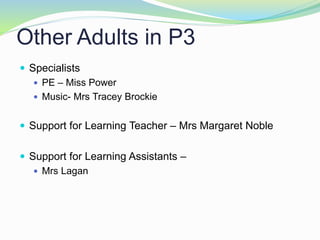
Other Adults in P3
 Specialists
 PE – Miss Power
 Music- Mrs Tracey Brockie
 Support for Learning Teacher – Mrs Margaret Noble
 Support for Learning Assistants –
 Mrs Lagan
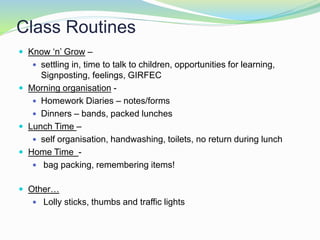
Class Routines
 Know ‘n’ Grow –
 settling in, time to talk to children, opportunities for learning,
Signposting, feelings, GIRFEC
 Morning organisation -
 Homework Diaries – notes/forms
 Dinners – bands, packed lunches
 Lunch Time –
 self organisation, handwashing, toilets, no return during lunch
 Home Time -
 bag packing, remembering items!
 Other…
 Lolly sticks, thumbs and traffic lights
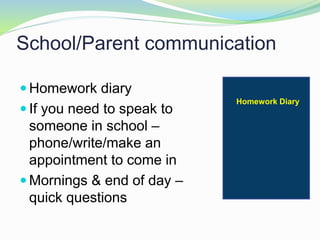
School/Parent communication
 Homework diary
 If you need to speak to
someone in school –
phone/write/make an
appointment to come in
 Mornings & end of day –
quick questions
Homework Diary
Class Organisation
 Learning Organisation
 Whole class activities
 Group Task
 Following directed activities
 Seating
 Children have a different learning partner each week.
These change on a Monday using lolly sticks.
 Children’s trays – own items
 Class Responsibilities – library, jackets, packed lunches
etc
Behaviour, Responsibilities & Rewards
 Living Our Values – whole school
 Respect, Trust, Courage, Tolerance, Justice, Happiness,
Caring, Hope, Love & Peace
 Star of The Week
 one pupil each week with specific reason given
 focus on values and effort.
 Contracts – class rules
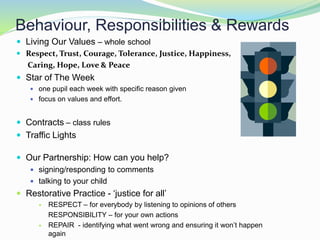
 Traffic Lights
 Our Partnership: How can you help?
 signing/responding to comments
 talking to your child
 Restorative Practice - ‘justice for all’
 RESPECT – for everybody by listening to opinions of others
RESPONSIBILITY – for your own actions
 REPAIR - identifying what went wrong and ensuring it won’t happen
again
Restorative Practices
 Its about ‘justice for all’
 Whole school approach by all staff and pupils
 RESPECT – for everybody by listening to opinions of others
 RESPONSIBILITY – for your own actions
 REPAIR – identifying what went wrong and ensuring it won’t
happen again
 What happened?
 Who has been affected?
 How can we find a way forward?
 How can we do things differently in the future?
• Takes time but it’s worth it!
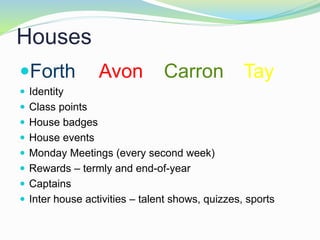
Houses
Forth Avon Carron Tay
 Identity
 Class points
 House badges
 House events
 Monday Meetings (every second week)
 Rewards – termly and end-of-year
 Captains
 Inter house activities – talent shows, quizzes, sports
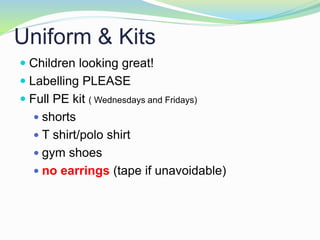
Uniform & Kits
 Children looking great!
 Labelling PLEASE
 Full PE kit ( Wednesdays and Fridays)
 shorts
 T shirt/polo shirt
 gym shoes
 no earrings (tape if unavoidable)
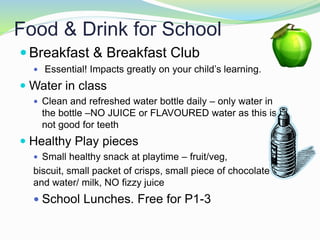
Food & Drink for School
 Breakfast & Breakfast Club
 Essential! Impacts greatly on your child’s learning.
 Water in class
 Clean and refreshed water bottle daily – only water in
the bottle –NO JUICE or FLAVOURED water as this is
not good for teeth
 Healthy Play pieces
 Small healthy snack at playtime – fruit/veg,
biscuit, small packet of crisps, small piece of chocolate
and water/ milk, NO fizzy juice
 School Lunches. Free for P1-3
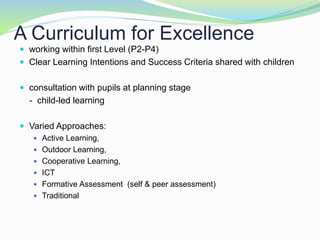
A Curriculum for Excellence
 working within first Level (P2-P4)
 Clear Learning Intentions and Success Criteria shared with children
 consultation with pupils at planning stage
- child-led learning
 Varied Approaches:
 Active Learning,
 Outdoor Learning,
 Cooperative Learning,
 ICT
 Formative Assessment (self & peer assessment)
 Traditional
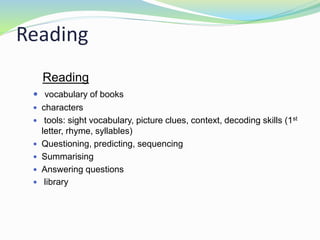
Reading
Reading
 vocabulary of books
 characters
 tools: sight vocabulary, picture clues, context, decoding skills (1st
letter, rhyme, syllables)
 Questioning, predicting, sequencing
 Summarising
 Answering questions
 library
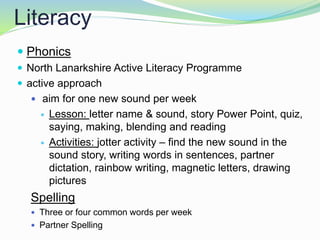
Literacy
 Phonics
 North Lanarkshire Active Literacy Programme
 active approach
 aim for one new sound per week
 Lesson: letter name & sound, story Power Point, quiz,
saying, making, blending and reading
 Activities: jotter activity – find the new sound in the
sound story, writing words in sentences, partner
dictation, rainbow writing, magnetic letters, drawing
pictures
Spelling
 Three or four common words per week
 Partner Spelling
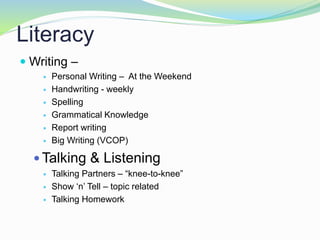
Literacy
 Writing –
 Personal Writing – At the Weekend
 Handwriting - weekly
 Spelling
 Grammatical Knowledge
 Report writing
 Big Writing (VCOP)
 Talking & Listening
 Talking Partners – “knee-to-knee”
 Show ‘n’ Tell – topic related
 Talking Homework
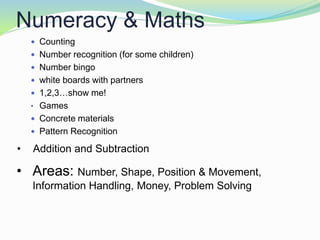
Numeracy & Maths
 Counting
 Number recognition (for some children)
 Number bingo
 white boards with partners
 1,2,3…show me!
• Games
 Concrete materials
 Pattern Recognition
• Areas: Number, Shape, Position & Movement,
Information Handling, Money, Problem Solving
• Addition and Subtraction
P3 Homework
5 elements:
 common words
 Sound of the week - words
 reading
 number & maths
 General knowledge
Attendance
 Time keeping is very good
 If your child is unwell or off as a result of an injury –
phone the school and let us know but also provide a
note, for our records, when your child returns to
school
 For appointments such as dentist/doctor you should
let us know the date and time in advance and it is
your duty to bring your child back to school
afterwards if possible
Family time
 Come along and join in with class activities.
There will be a different theme each month.
 One Friday each month from 2.15pm till 2.45pm
 Please enter and exit the building by the front
door and make sure you sign in and out (Health
& Safety)
 Your child will be happy to see you!
Snap Shot Week
 Children will complete all work in the snap shot jotter
over the course of the week.
 It will then be sent home for parents to see how their
children are progressing.
 Parents to sign the jotter and send it back to school so
that it can be used in the next snap shot week.
 Allows you to see how children are progressing and
some of the work that they are covering in class.
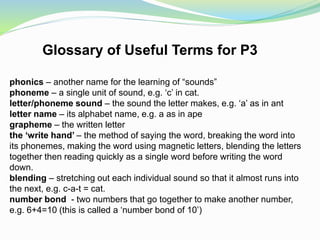
phonics – another name for the learning of “sounds”
phoneme – a single unit of sound, e.g. ‘c’ in cat.
letter/phoneme sound – the sound the letter makes, e.g. ‘a’ as in ant
letter name – its alphabet name, e.g. a as in ape
grapheme – the written letter
the ‘write hand’ – the method of saying the word, breaking the word into
its phonemes, making the word using magnetic letters, blending the letters
together then reading quickly as a single word before writing the word
down.
blending – stretching out each individual sound so that it almost runs into
the next, e.g. c-a-t = cat.
number bond - two numbers that go together to make another number,
e.g. 6+4=10 (this is called a ‘number bond of 10’)
Glossary of Useful Terms for P3
Any questions?
And finally …
Please leave some feedback on a post-it.
Evaluation forms will be emailed and a link will be
posted on twitter and leave it in the tray outside the
classroom.
Your feedback and suggestions are important to us
and help us get it right for you and your child.
Many thanks!

Mrs Stewart P3

  • 1.
  • 2.
    Other Adults inP3  Specialists  PE – Miss Power  Music- Mrs Tracey Brockie  Support for Learning Teacher – Mrs Margaret Noble  Support for Learning Assistants –  Mrs Lagan
  • 3.
    Class Routines  Know‘n’ Grow –  settling in, time to talk to children, opportunities for learning, Signposting, feelings, GIRFEC  Morning organisation -  Homework Diaries – notes/forms  Dinners – bands, packed lunches  Lunch Time –  self organisation, handwashing, toilets, no return during lunch  Home Time -  bag packing, remembering items!  Other…  Lolly sticks, thumbs and traffic lights
  • 4.
    School/Parent communication  Homeworkdiary  If you need to speak to someone in school – phone/write/make an appointment to come in  Mornings & end of day – quick questions Homework Diary
  • 5.
    Class Organisation  LearningOrganisation  Whole class activities  Group Task  Following directed activities  Seating  Children have a different learning partner each week. These change on a Monday using lolly sticks.  Children’s trays – own items  Class Responsibilities – library, jackets, packed lunches etc
  • 6.
    Behaviour, Responsibilities &Rewards  Living Our Values – whole school  Respect, Trust, Courage, Tolerance, Justice, Happiness, Caring, Hope, Love & Peace  Star of The Week  one pupil each week with specific reason given  focus on values and effort.  Contracts – class rules  Traffic Lights  Our Partnership: How can you help?  signing/responding to comments  talking to your child  Restorative Practice - ‘justice for all’  RESPECT – for everybody by listening to opinions of others RESPONSIBILITY – for your own actions  REPAIR - identifying what went wrong and ensuring it won’t happen again
  • 7.
    Restorative Practices  Itsabout ‘justice for all’  Whole school approach by all staff and pupils  RESPECT – for everybody by listening to opinions of others  RESPONSIBILITY – for your own actions  REPAIR – identifying what went wrong and ensuring it won’t happen again  What happened?  Who has been affected?  How can we find a way forward?  How can we do things differently in the future? • Takes time but it’s worth it!
  • 8.
    Houses Forth Avon CarronTay  Identity  Class points  House badges  House events  Monday Meetings (every second week)  Rewards – termly and end-of-year  Captains  Inter house activities – talent shows, quizzes, sports
  • 9.
    Uniform & Kits Children looking great!  Labelling PLEASE  Full PE kit ( Wednesdays and Fridays)  shorts  T shirt/polo shirt  gym shoes  no earrings (tape if unavoidable)
  • 10.
    Food & Drinkfor School  Breakfast & Breakfast Club  Essential! Impacts greatly on your child’s learning.  Water in class  Clean and refreshed water bottle daily – only water in the bottle –NO JUICE or FLAVOURED water as this is not good for teeth  Healthy Play pieces  Small healthy snack at playtime – fruit/veg, biscuit, small packet of crisps, small piece of chocolate and water/ milk, NO fizzy juice  School Lunches. Free for P1-3
  • 11.
    A Curriculum forExcellence  working within first Level (P2-P4)  Clear Learning Intentions and Success Criteria shared with children  consultation with pupils at planning stage - child-led learning  Varied Approaches:  Active Learning,  Outdoor Learning,  Cooperative Learning,  ICT  Formative Assessment (self & peer assessment)  Traditional
  • 12.
    Reading Reading  vocabulary ofbooks  characters  tools: sight vocabulary, picture clues, context, decoding skills (1st letter, rhyme, syllables)  Questioning, predicting, sequencing  Summarising  Answering questions  library
  • 13.
    Literacy  Phonics  NorthLanarkshire Active Literacy Programme  active approach  aim for one new sound per week  Lesson: letter name & sound, story Power Point, quiz, saying, making, blending and reading  Activities: jotter activity – find the new sound in the sound story, writing words in sentences, partner dictation, rainbow writing, magnetic letters, drawing pictures Spelling  Three or four common words per week  Partner Spelling
  • 14.
    Literacy  Writing – Personal Writing – At the Weekend  Handwriting - weekly  Spelling  Grammatical Knowledge  Report writing  Big Writing (VCOP)  Talking & Listening  Talking Partners – “knee-to-knee”  Show ‘n’ Tell – topic related  Talking Homework
  • 15.
    Numeracy & Maths Counting  Number recognition (for some children)  Number bingo  white boards with partners  1,2,3…show me! • Games  Concrete materials  Pattern Recognition • Areas: Number, Shape, Position & Movement, Information Handling, Money, Problem Solving • Addition and Subtraction
  • 16.
    P3 Homework 5 elements: common words  Sound of the week - words  reading  number & maths  General knowledge
  • 17.
    Attendance  Time keepingis very good  If your child is unwell or off as a result of an injury – phone the school and let us know but also provide a note, for our records, when your child returns to school  For appointments such as dentist/doctor you should let us know the date and time in advance and it is your duty to bring your child back to school afterwards if possible
  • 18.
    Family time  Comealong and join in with class activities. There will be a different theme each month.  One Friday each month from 2.15pm till 2.45pm  Please enter and exit the building by the front door and make sure you sign in and out (Health & Safety)  Your child will be happy to see you!
  • 19.
    Snap Shot Week Children will complete all work in the snap shot jotter over the course of the week.  It will then be sent home for parents to see how their children are progressing.  Parents to sign the jotter and send it back to school so that it can be used in the next snap shot week.  Allows you to see how children are progressing and some of the work that they are covering in class.
  • 20.
    phonics – anothername for the learning of “sounds” phoneme – a single unit of sound, e.g. ‘c’ in cat. letter/phoneme sound – the sound the letter makes, e.g. ‘a’ as in ant letter name – its alphabet name, e.g. a as in ape grapheme – the written letter the ‘write hand’ – the method of saying the word, breaking the word into its phonemes, making the word using magnetic letters, blending the letters together then reading quickly as a single word before writing the word down. blending – stretching out each individual sound so that it almost runs into the next, e.g. c-a-t = cat. number bond - two numbers that go together to make another number, e.g. 6+4=10 (this is called a ‘number bond of 10’) Glossary of Useful Terms for P3
  • 21.
  • 22.
    And finally … Pleaseleave some feedback on a post-it. Evaluation forms will be emailed and a link will be posted on twitter and leave it in the tray outside the classroom. Your feedback and suggestions are important to us and help us get it right for you and your child. Many thanks!