Mouth Ulcers
What is Mouth Ulcer?
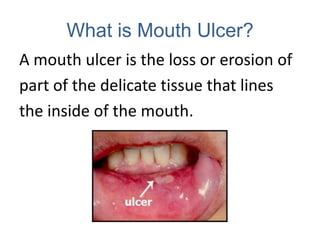
A mouth ulcer is the loss or erosion of
part of the delicate tissue that lines
the inside of the mouth.
Symptoms
• A round sore or sores inside the mouth
• Swollen skin around the sores
• Tenderness
• Problems with chewing or toothbrushing
  because of the tenderness
• Irritation of the sores by salty, spicy or sour
  foods
• Loss of appetite
Causes
• Accidental biting of the cheek
• Injury from a toothbrush (such as slipping while
  brushing)
• Constant rubbing against misaligned or sharp
  teeth
• Constant rubbing against dentures or braces
• Poor oral hygiene
• Burns from eating hot food
• Irritation from strong antiseptics, such as a
  mouthwash
Causes
• Oral thrush infection
• Herpes simplex viral infection (cold sore)
• Reaction to certain drugs, such as chemotherapeutic
  agents
• Autoimmune diseases (for example, lichen planus)
• Syphilis infection
• A range of other infections including hand-foot-mouth
  syndrome
• Certain diseases including tuberculosis, AIDS, diabetes
  mellitus and inflammatory bowel disease
• Cancer of the lip
Treatment
Most mouth ulcers are harmless and resolve by
themselves in a few days.

Other types of mouth ulcers, such as the
aphthous variety or those caused by herpes
simplex infection, need medical treatment.

It isn’t possible to speed the recovery of ulcers,
but the symptoms can be managed and the risk
of complications reduced.
Treatment
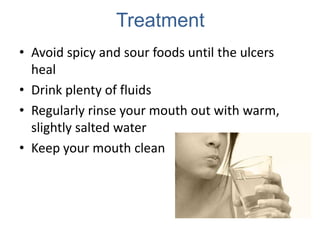
• Avoid spicy and sour foods until the ulcers
  heal
• Drink plenty of fluids
• Regularly rinse your mouth out with warm,
  slightly salted water
• Keep your mouth clean
Treatment
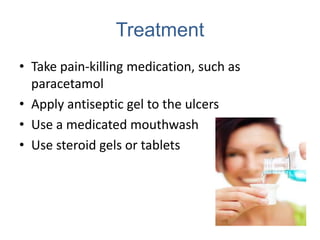
• Take pain-killing medication, such as
  paracetamol
• Apply antiseptic gel to the ulcers
• Use a medicated mouthwash
• Use steroid gels or tablets
Treatment
• Treat aphthous ulcers with anti-inflammatory
  drugs
• Treat ulcers caused by the herpes simplex
  virus with anti-viral drugs
• Treat oral thrush with anti-fungal drugs
• Immunosuppressant drugs are sometimes
  required
Prevention
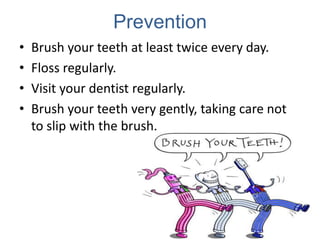
•   Brush your teeth at least twice every day.
•   Floss regularly.
•   Visit your dentist regularly.
•   Brush your teeth very gently, taking care not
    to slip with the brush.
Prevention
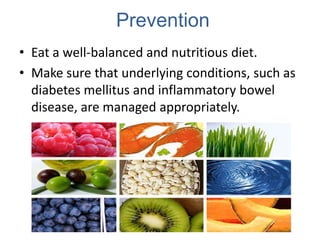
• Eat a well-balanced and nutritious diet.
• Make sure that underlying conditions, such as
  diabetes mellitus and inflammatory bowel
  disease, are managed appropriately.
Things to remember
• The most common cause is mechanical injury,
  such as accidentally biting your cheek.
• In most cases, mouth ulcers are harmless and
  resolve by themselves in a few days without
  the need for medical treatment.
• If your mouth ulcers don’t clear up within a
  few days, or if you are troubled by frequent
  attacks, see your doctor.

Mouth ulcers

  • 1.
  • 2.
    What is MouthUlcer? A mouth ulcer is the loss or erosion of part of the delicate tissue that lines the inside of the mouth.
  • 3.
    Symptoms • A roundsore or sores inside the mouth • Swollen skin around the sores • Tenderness • Problems with chewing or toothbrushing because of the tenderness • Irritation of the sores by salty, spicy or sour foods • Loss of appetite
  • 4.
    Causes • Accidental bitingof the cheek • Injury from a toothbrush (such as slipping while brushing) • Constant rubbing against misaligned or sharp teeth • Constant rubbing against dentures or braces • Poor oral hygiene • Burns from eating hot food • Irritation from strong antiseptics, such as a mouthwash
  • 5.
    Causes • Oral thrushinfection • Herpes simplex viral infection (cold sore) • Reaction to certain drugs, such as chemotherapeutic agents • Autoimmune diseases (for example, lichen planus) • Syphilis infection • A range of other infections including hand-foot-mouth syndrome • Certain diseases including tuberculosis, AIDS, diabetes mellitus and inflammatory bowel disease • Cancer of the lip
  • 6.
  • 7.
    Most mouth ulcersare harmless and resolve by themselves in a few days. Other types of mouth ulcers, such as the aphthous variety or those caused by herpes simplex infection, need medical treatment. It isn’t possible to speed the recovery of ulcers, but the symptoms can be managed and the risk of complications reduced.
  • 8.
    Treatment • Avoid spicyand sour foods until the ulcers heal • Drink plenty of fluids • Regularly rinse your mouth out with warm, slightly salted water • Keep your mouth clean
  • 9.
    Treatment • Take pain-killingmedication, such as paracetamol • Apply antiseptic gel to the ulcers • Use a medicated mouthwash • Use steroid gels or tablets
  • 10.
    Treatment • Treat aphthousulcers with anti-inflammatory drugs • Treat ulcers caused by the herpes simplex virus with anti-viral drugs • Treat oral thrush with anti-fungal drugs • Immunosuppressant drugs are sometimes required
  • 11.
    Prevention • Brush your teeth at least twice every day. • Floss regularly. • Visit your dentist regularly. • Brush your teeth very gently, taking care not to slip with the brush.
  • 12.
    Prevention • Eat awell-balanced and nutritious diet. • Make sure that underlying conditions, such as diabetes mellitus and inflammatory bowel disease, are managed appropriately.
  • 13.
    Things to remember •The most common cause is mechanical injury, such as accidentally biting your cheek. • In most cases, mouth ulcers are harmless and resolve by themselves in a few days without the need for medical treatment. • If your mouth ulcers don’t clear up within a few days, or if you are troubled by frequent attacks, see your doctor.