TOPIC:- COMMON PROBLEMS ASSOCIATED WITH
ORAL CAVITY
UTTARANCHAL UNIVERSITY, PREM NAGAR,
DEHRADUN, 248001, UTTARAKHAND.
UTTARANCHAL INSTITUTE OF
PHARMACEUTICAL SCIENCES
MADE BY:- PRAMESH PANWAR
DENTAL
PROBLEMS
BAD
BREATH
DENTAL
CARIES
(TOOTH
DECAY)
PERIODON
TAL
DISEASE
DRY
MOUTH
BAD
BREATH
TOOTH
SENSITIVIT
Y
CANKER
SORES
(APHTHOU
S ULCERS)
GINGIVITIS
HERPES
SIMPLEX
VIRUS
(COLD
SORES)
TOOTH
EROSION
COMMON
PROBLEMS
ASSOCIATED WITH
ORAL CAVITY
BAD BREATH / HALITOSIS
• It is commonly known as "halitosis"
• Bad oral hygiene
• Food particles stuck in the teeth can be broken down by bacteria,
leading to the production of sulfur compounds, which cause bad
breath, also known as halitosis
• Cause:
• Poor Oral Hygiene: The most common cause is food particles,
bacteria, and plaque buildup.
• Dry Mouth: Reduced saliva production, often caused by
dehydration or certain medications, can contribute.
• Diet: Certain foods like garlic, onions, and spicy foods can cause
temporary bad breath.
• Medical Conditions: Chronic conditions like sinus infections,
GERD, or diabetes can contribute to halitosis.
• Treatment:
• Improved Oral Hygiene: Brushing, flossing, and tongue
scraping can reduce bad breath.
• Mouthwash: Antibacterial mouthwashes can temporarily
reduce odor-causing bacteria.
• Hydration: Drinking plenty of water helps maintain saliva
flow and cleanse the mouth.
• Medical Consultation: If halitosis persists, consulting a
healthcare provider to address any underlying conditions is
recommended.
Bad breath, also known as halitosis, is an unpleasant odor emanating from the
mouth. It can be a temporary issue or a persistent problem, affecting personal
confidence and social interactions
DENTAL CARRIES (TOOTH DECAY)
• Cause: Bacterial Plaque: Dental caries are caused by the accumulation
of bacterial plaque on the teeth. Streptococcus mutans is the primary
bacterium responsible for tooth decay.
• Sugary Foods: Frequent consumption of sugary and acidic foods and
drinks can lead to the production of acids by bacteria, which demineralize
the enamel.
• Poor Oral Hygiene: Inadequate brushing and flossing allow plaque to
build up.
Dental caries, commonly known as tooth decay or cavities, is a process where the
hard tissues of the teeth are damaged by acids produced by bacteria in the mouth. If
left untreated, it can lead to pain, infection, and even tooth loss
Treatment:
•Fluoride Treatment: Fluoride strengthens tooth enamel and can help
reverse early decay.
•Fillings: If decay has progressed, the affected area is cleaned and filled with
materials like composite resin or amalgam.
•Root Canal: In severe cases where the decay has reached the tooth pulp, a
root canal may be necessary.
Prevention: Regular brushing with fluoride toothpaste, flossing, and
professional cleanings can prevent caries
PERIODONTAL DISEASE
• Cause:
• Untreated Gingivitis: Periodontitis is a severe form of gum disease that
occurs when gingivitis is not treated.
• Smoking: Tobacco use is a significant risk factor for periodontitis.
• Genetic Predisposition: Some individuals are more genetically prone to
severe gum disease.
• Systemic Conditions: Conditions like diabetes can increase the risk of
periodontitis.
Periodontal disease, also known as gum disease, is a serious infection of the
gums and the structures that support the teeth. It begins with inflammation
of the gums (gingivitis) and can progress to affect the bone that surrounds
and supports the teeth. If left untreated, periodontal disease can lead to
tooth loss
Treatment:
•Scaling and Root Planing: Deep cleaning procedures to remove tartar from
above and below the gum line.
•Antibiotics: Systemic or localized antibiotics may be used to control
bacterial infection.
•Surgical Treatments: In severe cases, surgery such as flap surgery or bone
grafting may be necessary.
Maintenance: Regular periodontal maintenance and improved home care
are critical to managing the disease.
DRY MOUTH
• Cause:
• Medications: Many medications, including antihistamines and
antidepressants, can cause dry mouth.
• Medical Conditions: Conditions like Sjögren's syndrome, diabetes, and
stroke can reduce saliva production.
• Radiation Therapy: Radiation treatment for head and neck cancers can
damage salivary glands.
Dry mouth, also known as xerostomia, is a condition where the salivary
glands in the mouth do not produce enough saliva to keep the mouth moist.
Saliva is essential for maintaining oral health, aiding in digestion, and
protecting teeth from decay.
Treatment:
•Hydration: Drinking water and chewing sugar-free gum can stimulate
saliva production.
•Saliva Substitutes: Over-the-counter saliva substitutes can provide relief.
•Medications: Prescription medications like pilocarpine may stimulate saliva
production.
Oral Care: Regular brushing and use of fluoride toothpaste help prevent
decay and other complications.
TOOTH SENSITIVITY
• Cause:
• Exposed Dentin: Tooth sensitivity is often caused by the exposure of the
dentin, the layer beneath the enamel.
• Gum Recession: Receding gums due to aging or improper brushing
exposes the tooth roots.
• Erosion: Acidic foods, drinks, or gastroesophageal reflux disease (GERD)
can erode enamel.
Tooth sensitivity, also known as dentin hypersensitivity, is a common dental
condition where teeth experience pain or discomfort in response to certain stimuli,
such as hot, cold, sweet, or acidic foods and drinks, or even breathing in cold air.
Treatment:
•Desensitizing Toothpaste: Toothpaste containing potassium nitrate or
stannous fluoride can reduce sensitivity.
•Fluoride Treatment: Professional fluoride treatments can strengthen
enamel.
•Bonding Agents: Dentists may apply bonding agents to cover exposed
dentin.
Surgical Grafting: In severe cases, gum grafting may cover exposed roots.
CANKER SORES (APHTHOUS ULCERS)
• Cause:
• Unknown: The exact cause is unknown, but factors include stress,
hormonal changes, food allergies, and nutritional deficiencies.
• Trauma: Minor injuries from dental work, aggressive brushing, or
accidental biting can trigger sores.
• Systemic Conditions: Certain conditions like Crohn's disease or celiac
disease can increase the risk.
Canker sores, also known as aphthous ulcers, are small, painful ulcers that occur
inside the mouth, on the inner cheeks, lips, tongue, or gums. Unlike cold sores,
they are not contagious and typically heal on their own within one to two weeks.
Treatment:
•Topical Treatments: Over-the-counter creams or gels containing benzocaine
can provide relief.
•Mouth Rinses: Antimicrobial mouth rinses or corticosteroid rinses can reduce
inflammation.
•Dietary Changes: Avoiding trigger foods and ensuring adequate intake of
vitamins and minerals can help.
•Prescription Medication: In severe cases, systemic corticosteroids may be
prescribed
GINGIVITIS
• Cause:
• Plaque Buildup: Gingivitis is the inflammation of the gums caused by
plaque accumulation at the gumline.
• Poor Oral Hygiene: Failure to remove plaque through brushing and
flossing leads to gingivitis.
• Hormonal Changes: Pregnancy, menstruation, and other hormonal
changes can increase the risk of gingivitis.
• Medications: Certain medications that reduce saliva flow can contribute
to gum disease.
•Gingivitis is a common and mild form of gum disease that causes
inflammation, redness, and swelling of the gums. It is the earliest stage of
periodontal disease and, if left untreated, can progress to more severe
conditions like periodontitis
Treatment:
•Improved Oral Hygiene: Brushing twice a day and flossing daily can
reverse gingivitis.
•Professional Cleaning: Regular dental cleanings remove plaque and tartar
that can’t be removed by brushing.
•Antibacterial Mouthwash: Chlorhexidine or other medicated
mouthwashes can reduce bacteria.
HERPES SIMPLEX VIRUS
(COLD SORES)
• Cause:
• Herpes Simplex Virus Type 1 (HSV-1): The primary cause of cold
sores, transmitted through close contact.
• Triggers: Sun exposure, stress, fever, or trauma can reactivate the
virus.
• Treatment:
• Antiviral Medication: Topical or oral antiviral drugs like acyclovir
can shorten the duration of an outbreak.
• Pain Relievers: Over-the-counter pain relievers can reduce
discomfort.
• Lip Balm with Sunscreen: Protects against UV rays that can trigger
an outbreak.
• Avoid Triggers: Identifying and avoiding personal triggers can
reduce the frequency of outbreaks
Herpes Simplex Virus (HSV) is a common viral infection that causes
cold sores, also known as fever blisters. These are small, fluid-filled
blisters that typically appear on or around the lips but can also occur
in other areas of the face or inside the mouth.
TOOTH EROSION
• Causes:
• Dietary Acids: Frequent consumption of acidic foods and
beverages like citrus fruits, sodas, and vinegar can wear away
enamel.
• Gastroesophageal Reflux Disease (GERD): Stomach acids
that reach the mouth due to acid reflux can contribute to
enamel erosion.
• Dry Mouth (Xerostomia): Reduced saliva flow decreases the
natural buffering and cleansing action in the mouth, increasing
the risk of erosion.
• Bulimia: Repeated vomiting introduces stomach acids into the
mouth, leading to significant enamel loss..
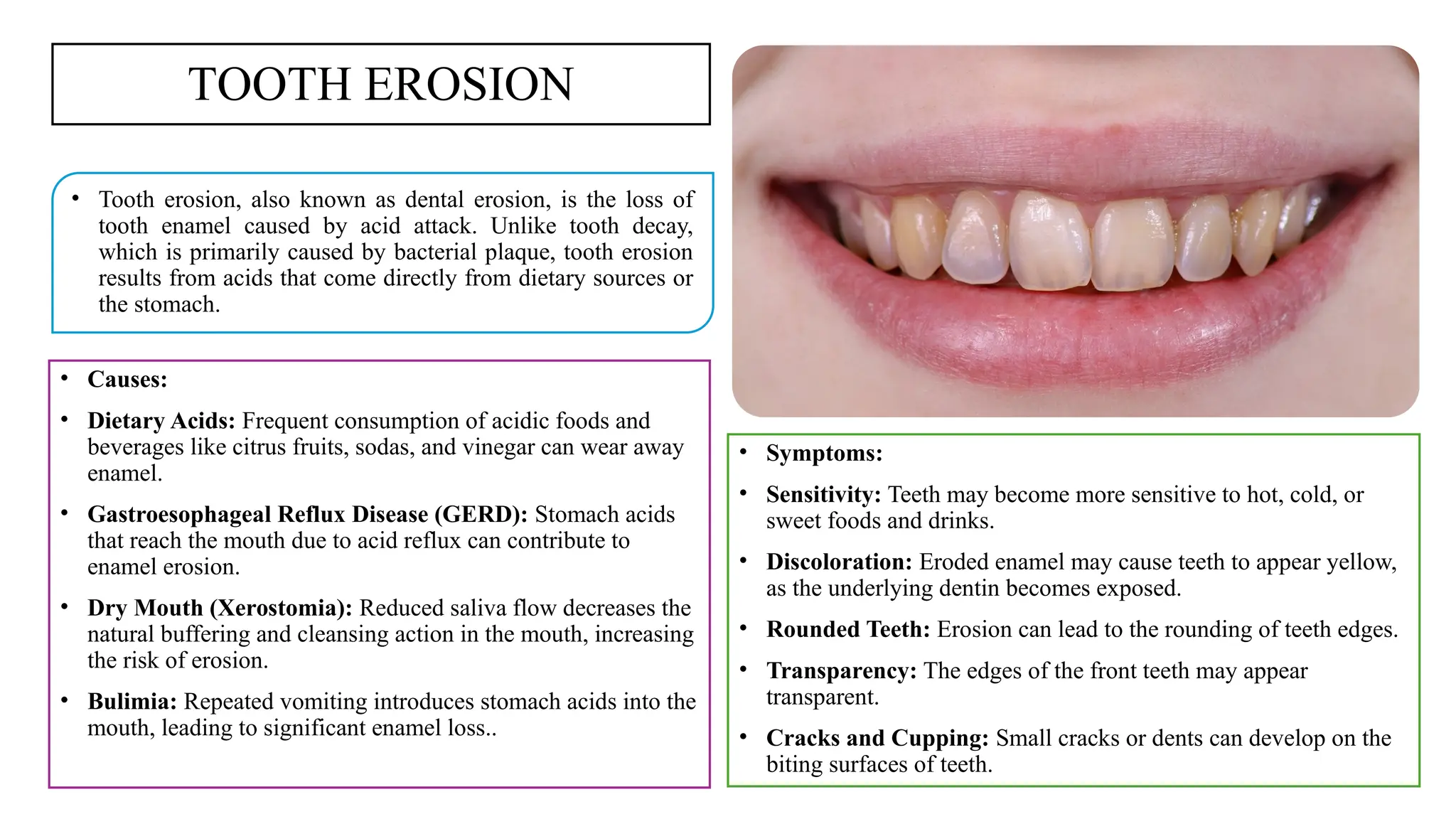
• Tooth erosion, also known as dental erosion, is the loss of
tooth enamel caused by acid attack. Unlike tooth decay,
which is primarily caused by bacterial plaque, tooth erosion
results from acids that come directly from dietary sources or
the stomach.
• Symptoms:
• Sensitivity: Teeth may become more sensitive to hot, cold, or
sweet foods and drinks.
• Discoloration: Eroded enamel may cause teeth to appear yellow,
as the underlying dentin becomes exposed.
• Rounded Teeth: Erosion can lead to the rounding of teeth edges.
• Transparency: The edges of the front teeth may appear
transparent.
• Cracks and Cupping: Small cracks or dents can develop on the
biting surfaces of teeth.
• Treatment:
• Fluoride Treatments: Professional fluoride treatments can help
strengthen remaining enamel.
• Dental Bonding: Resin materials can be applied to cover eroded areas.
• Crowns or Veneers: In cases of severe erosion, crowns or veneers may
be necessary to restore the tooth's structure and appearance.
• Dietary Changes: Reducing the intake of acidic foods and drinks,
using a straw for acidic beverages, and rinsing the mouth with water
after consuming acidic substances can help prevent further erosion.
• Saliva Substitutes: Products that stimulate saliva flow or saliva
substitutes can help protect teeth from erosion.
• Conclusion
• Maintaining good oral hygiene, a healthy diet, and regular dental
check-ups are essential in preventing and managing common oral
cavity problems. Early intervention and treatment can prevent
complications and promote long-term oral health.

Common problems associated with oral cavities.pptx

  • 1.
    TOPIC:- COMMON PROBLEMSASSOCIATED WITH ORAL CAVITY UTTARANCHAL UNIVERSITY, PREM NAGAR, DEHRADUN, 248001, UTTARAKHAND. UTTARANCHAL INSTITUTE OF PHARMACEUTICAL SCIENCES MADE BY:- PRAMESH PANWAR
  • 2.
  • 3.
    BAD BREATH /HALITOSIS • It is commonly known as "halitosis" • Bad oral hygiene • Food particles stuck in the teeth can be broken down by bacteria, leading to the production of sulfur compounds, which cause bad breath, also known as halitosis • Cause: • Poor Oral Hygiene: The most common cause is food particles, bacteria, and plaque buildup. • Dry Mouth: Reduced saliva production, often caused by dehydration or certain medications, can contribute. • Diet: Certain foods like garlic, onions, and spicy foods can cause temporary bad breath. • Medical Conditions: Chronic conditions like sinus infections, GERD, or diabetes can contribute to halitosis. • Treatment: • Improved Oral Hygiene: Brushing, flossing, and tongue scraping can reduce bad breath. • Mouthwash: Antibacterial mouthwashes can temporarily reduce odor-causing bacteria. • Hydration: Drinking plenty of water helps maintain saliva flow and cleanse the mouth. • Medical Consultation: If halitosis persists, consulting a healthcare provider to address any underlying conditions is recommended. Bad breath, also known as halitosis, is an unpleasant odor emanating from the mouth. It can be a temporary issue or a persistent problem, affecting personal confidence and social interactions
  • 4.
    DENTAL CARRIES (TOOTHDECAY) • Cause: Bacterial Plaque: Dental caries are caused by the accumulation of bacterial plaque on the teeth. Streptococcus mutans is the primary bacterium responsible for tooth decay. • Sugary Foods: Frequent consumption of sugary and acidic foods and drinks can lead to the production of acids by bacteria, which demineralize the enamel. • Poor Oral Hygiene: Inadequate brushing and flossing allow plaque to build up. Dental caries, commonly known as tooth decay or cavities, is a process where the hard tissues of the teeth are damaged by acids produced by bacteria in the mouth. If left untreated, it can lead to pain, infection, and even tooth loss Treatment: •Fluoride Treatment: Fluoride strengthens tooth enamel and can help reverse early decay. •Fillings: If decay has progressed, the affected area is cleaned and filled with materials like composite resin or amalgam. •Root Canal: In severe cases where the decay has reached the tooth pulp, a root canal may be necessary. Prevention: Regular brushing with fluoride toothpaste, flossing, and professional cleanings can prevent caries
  • 5.
    PERIODONTAL DISEASE • Cause: •Untreated Gingivitis: Periodontitis is a severe form of gum disease that occurs when gingivitis is not treated. • Smoking: Tobacco use is a significant risk factor for periodontitis. • Genetic Predisposition: Some individuals are more genetically prone to severe gum disease. • Systemic Conditions: Conditions like diabetes can increase the risk of periodontitis. Periodontal disease, also known as gum disease, is a serious infection of the gums and the structures that support the teeth. It begins with inflammation of the gums (gingivitis) and can progress to affect the bone that surrounds and supports the teeth. If left untreated, periodontal disease can lead to tooth loss Treatment: •Scaling and Root Planing: Deep cleaning procedures to remove tartar from above and below the gum line. •Antibiotics: Systemic or localized antibiotics may be used to control bacterial infection. •Surgical Treatments: In severe cases, surgery such as flap surgery or bone grafting may be necessary. Maintenance: Regular periodontal maintenance and improved home care are critical to managing the disease.
  • 6.
    DRY MOUTH • Cause: •Medications: Many medications, including antihistamines and antidepressants, can cause dry mouth. • Medical Conditions: Conditions like Sjögren's syndrome, diabetes, and stroke can reduce saliva production. • Radiation Therapy: Radiation treatment for head and neck cancers can damage salivary glands. Dry mouth, also known as xerostomia, is a condition where the salivary glands in the mouth do not produce enough saliva to keep the mouth moist. Saliva is essential for maintaining oral health, aiding in digestion, and protecting teeth from decay. Treatment: •Hydration: Drinking water and chewing sugar-free gum can stimulate saliva production. •Saliva Substitutes: Over-the-counter saliva substitutes can provide relief. •Medications: Prescription medications like pilocarpine may stimulate saliva production. Oral Care: Regular brushing and use of fluoride toothpaste help prevent decay and other complications.
  • 7.
    TOOTH SENSITIVITY • Cause: •Exposed Dentin: Tooth sensitivity is often caused by the exposure of the dentin, the layer beneath the enamel. • Gum Recession: Receding gums due to aging or improper brushing exposes the tooth roots. • Erosion: Acidic foods, drinks, or gastroesophageal reflux disease (GERD) can erode enamel. Tooth sensitivity, also known as dentin hypersensitivity, is a common dental condition where teeth experience pain or discomfort in response to certain stimuli, such as hot, cold, sweet, or acidic foods and drinks, or even breathing in cold air. Treatment: •Desensitizing Toothpaste: Toothpaste containing potassium nitrate or stannous fluoride can reduce sensitivity. •Fluoride Treatment: Professional fluoride treatments can strengthen enamel. •Bonding Agents: Dentists may apply bonding agents to cover exposed dentin. Surgical Grafting: In severe cases, gum grafting may cover exposed roots.
  • 8.
    CANKER SORES (APHTHOUSULCERS) • Cause: • Unknown: The exact cause is unknown, but factors include stress, hormonal changes, food allergies, and nutritional deficiencies. • Trauma: Minor injuries from dental work, aggressive brushing, or accidental biting can trigger sores. • Systemic Conditions: Certain conditions like Crohn's disease or celiac disease can increase the risk. Canker sores, also known as aphthous ulcers, are small, painful ulcers that occur inside the mouth, on the inner cheeks, lips, tongue, or gums. Unlike cold sores, they are not contagious and typically heal on their own within one to two weeks. Treatment: •Topical Treatments: Over-the-counter creams or gels containing benzocaine can provide relief. •Mouth Rinses: Antimicrobial mouth rinses or corticosteroid rinses can reduce inflammation. •Dietary Changes: Avoiding trigger foods and ensuring adequate intake of vitamins and minerals can help. •Prescription Medication: In severe cases, systemic corticosteroids may be prescribed
  • 9.
    GINGIVITIS • Cause: • PlaqueBuildup: Gingivitis is the inflammation of the gums caused by plaque accumulation at the gumline. • Poor Oral Hygiene: Failure to remove plaque through brushing and flossing leads to gingivitis. • Hormonal Changes: Pregnancy, menstruation, and other hormonal changes can increase the risk of gingivitis. • Medications: Certain medications that reduce saliva flow can contribute to gum disease. •Gingivitis is a common and mild form of gum disease that causes inflammation, redness, and swelling of the gums. It is the earliest stage of periodontal disease and, if left untreated, can progress to more severe conditions like periodontitis Treatment: •Improved Oral Hygiene: Brushing twice a day and flossing daily can reverse gingivitis. •Professional Cleaning: Regular dental cleanings remove plaque and tartar that can’t be removed by brushing. •Antibacterial Mouthwash: Chlorhexidine or other medicated mouthwashes can reduce bacteria.
  • 10.
    HERPES SIMPLEX VIRUS (COLDSORES) • Cause: • Herpes Simplex Virus Type 1 (HSV-1): The primary cause of cold sores, transmitted through close contact. • Triggers: Sun exposure, stress, fever, or trauma can reactivate the virus. • Treatment: • Antiviral Medication: Topical or oral antiviral drugs like acyclovir can shorten the duration of an outbreak. • Pain Relievers: Over-the-counter pain relievers can reduce discomfort. • Lip Balm with Sunscreen: Protects against UV rays that can trigger an outbreak. • Avoid Triggers: Identifying and avoiding personal triggers can reduce the frequency of outbreaks Herpes Simplex Virus (HSV) is a common viral infection that causes cold sores, also known as fever blisters. These are small, fluid-filled blisters that typically appear on or around the lips but can also occur in other areas of the face or inside the mouth.
  • 11.
    TOOTH EROSION • Causes: •Dietary Acids: Frequent consumption of acidic foods and beverages like citrus fruits, sodas, and vinegar can wear away enamel. • Gastroesophageal Reflux Disease (GERD): Stomach acids that reach the mouth due to acid reflux can contribute to enamel erosion. • Dry Mouth (Xerostomia): Reduced saliva flow decreases the natural buffering and cleansing action in the mouth, increasing the risk of erosion. • Bulimia: Repeated vomiting introduces stomach acids into the mouth, leading to significant enamel loss.. • Tooth erosion, also known as dental erosion, is the loss of tooth enamel caused by acid attack. Unlike tooth decay, which is primarily caused by bacterial plaque, tooth erosion results from acids that come directly from dietary sources or the stomach. • Symptoms: • Sensitivity: Teeth may become more sensitive to hot, cold, or sweet foods and drinks. • Discoloration: Eroded enamel may cause teeth to appear yellow, as the underlying dentin becomes exposed. • Rounded Teeth: Erosion can lead to the rounding of teeth edges. • Transparency: The edges of the front teeth may appear transparent. • Cracks and Cupping: Small cracks or dents can develop on the biting surfaces of teeth.
  • 12.
    • Treatment: • FluorideTreatments: Professional fluoride treatments can help strengthen remaining enamel. • Dental Bonding: Resin materials can be applied to cover eroded areas. • Crowns or Veneers: In cases of severe erosion, crowns or veneers may be necessary to restore the tooth's structure and appearance. • Dietary Changes: Reducing the intake of acidic foods and drinks, using a straw for acidic beverages, and rinsing the mouth with water after consuming acidic substances can help prevent further erosion. • Saliva Substitutes: Products that stimulate saliva flow or saliva substitutes can help protect teeth from erosion. • Conclusion • Maintaining good oral hygiene, a healthy diet, and regular dental check-ups are essential in preventing and managing common oral cavity problems. Early intervention and treatment can prevent complications and promote long-term oral health.