GURU NANAK DEV ENGINEERING
COLLEGE,BIDAR.
ARM MC & ES
MODULE-3
Embedded System Components
By
Prof.Shilpa Biradar
Asst.Prof. ECE Dept.
GNDEC,Bidar.
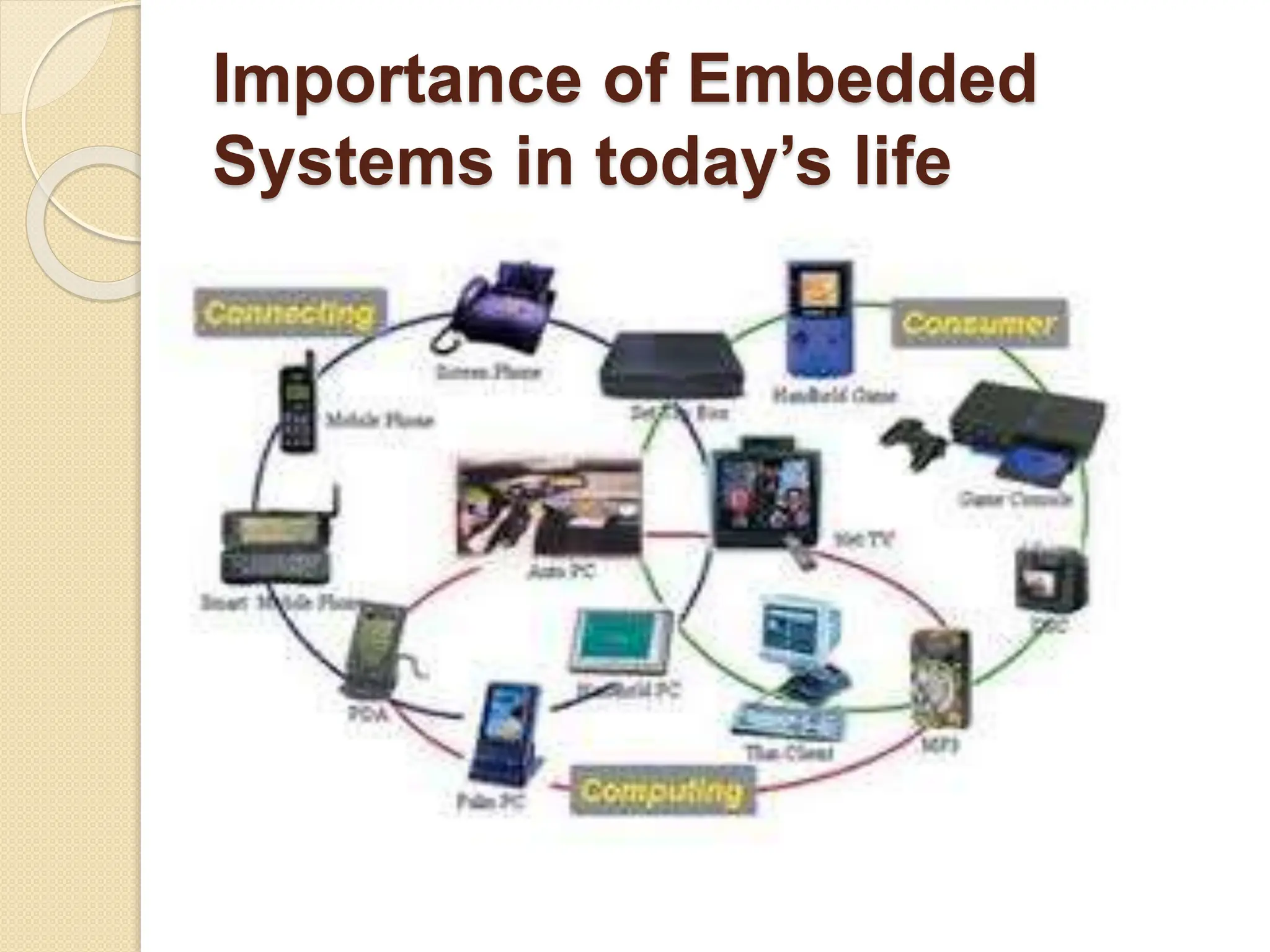
Importance of Embedded
Systems in today’s life
Introduction to Embedded System
What is an Embedded System?
An Electronic/Electro mechanical system which is designed to
perform a specific function and is a combination of both
hardware and firmware (Software)
E.g. Electronic Toys, Mobile Handsets, Washing Machines, Air
Conditioners, Automotive Control Units, Set Top Box, DVD
Player etc…
An embedded system is microcontroller or microprocessor
based system which is designed to perform specific task.
Embedded Systems are:
 Unique in character and behavior
 With specialized hardware and software
Introduction to Embedded System
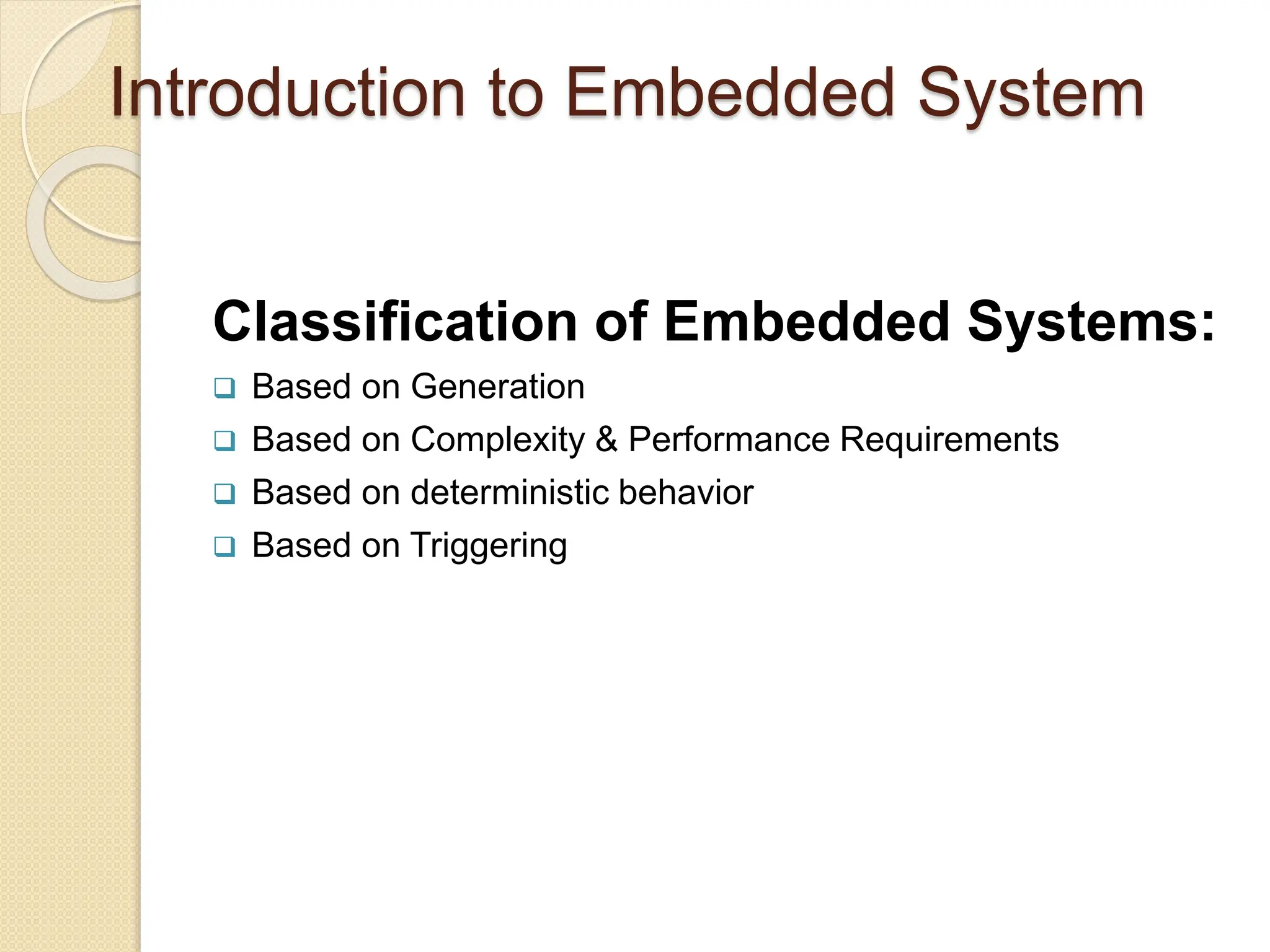
Classification of Embedded Systems:
 Based on Generation
 Based on Complexity & Performance Requirements
 Based on deterministic behavior
 Based on Triggering
Introduction to Embedded System
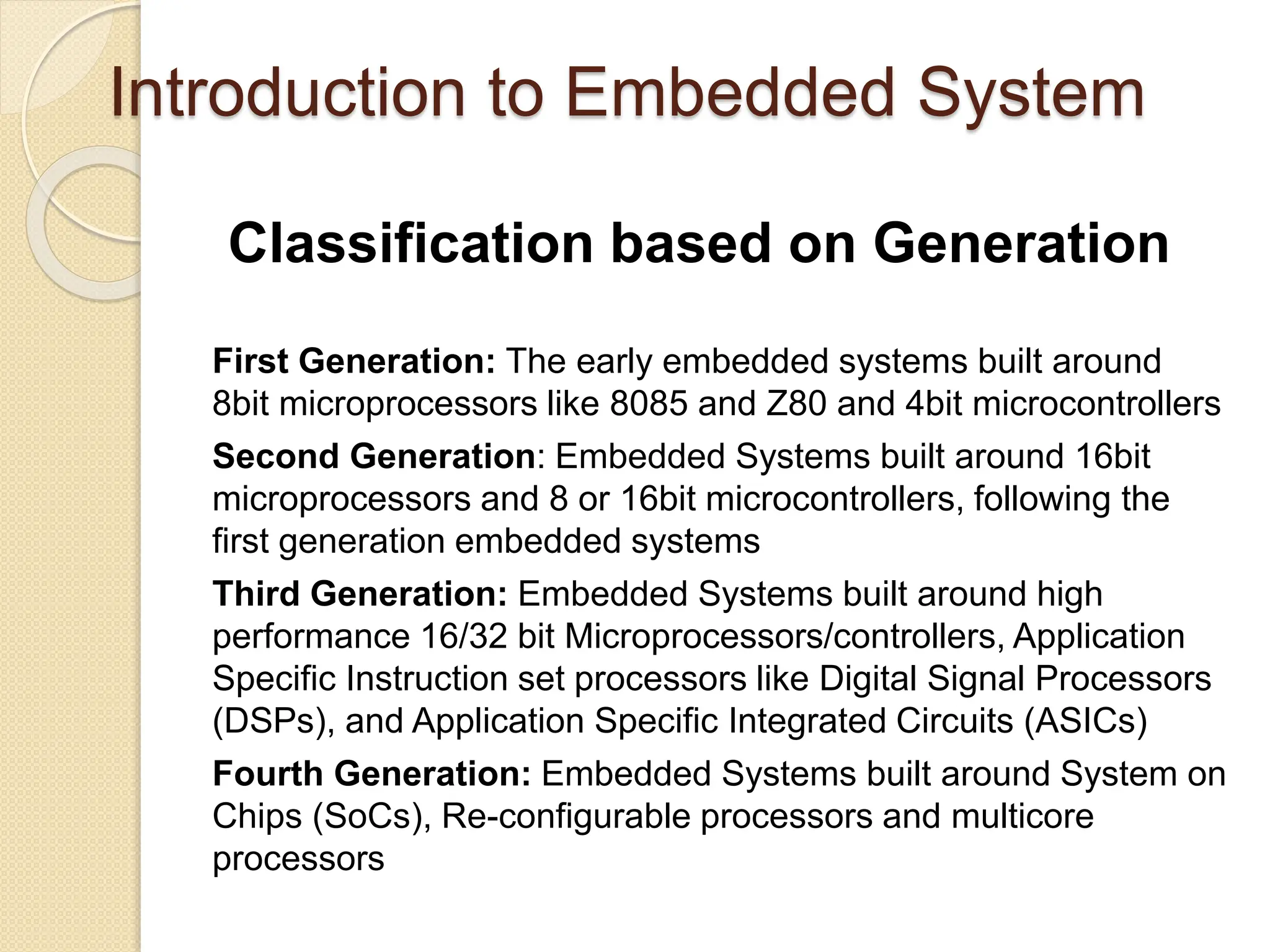
Classification based on Generation
First Generation: The early embedded systems built around
8bit microprocessors like 8085 and Z80 and 4bit microcontrollers
Second Generation: Embedded Systems built around 16bit
microprocessors and 8 or 16bit microcontrollers, following the
first generation embedded systems
Third Generation: Embedded Systems built around high
performance 16/32 bit Microprocessors/controllers, Application
Specific Instruction set processors like Digital Signal Processors
(DSPs), and Application Specific Integrated Circuits (ASICs)
Fourth Generation: Embedded Systems built around System on
Chips (SoCs), Re-configurable processors and multicore
processors
Introduction to Embedded System
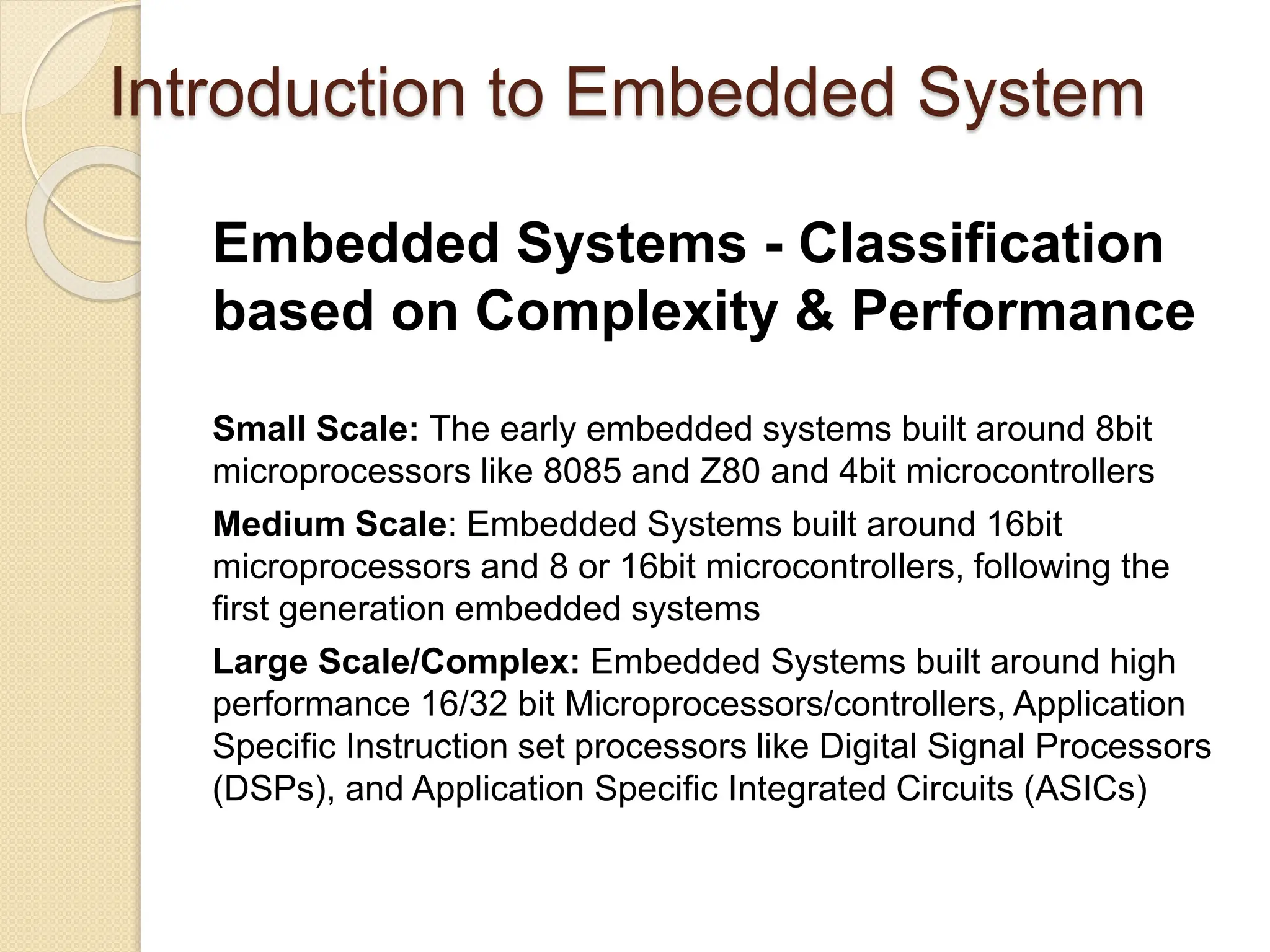
Embedded Systems - Classification
based on Complexity & Performance
Small Scale: The early embedded systems built around 8bit
microprocessors like 8085 and Z80 and 4bit microcontrollers
Medium Scale: Embedded Systems built around 16bit
microprocessors and 8 or 16bit microcontrollers, following the
first generation embedded systems
Large Scale/Complex: Embedded Systems built around high
performance 16/32 bit Microprocessors/controllers, Application
Specific Instruction set processors like Digital Signal Processors
(DSPs), and Application Specific Integrated Circuits (ASICs)
Introduction to Embedded System
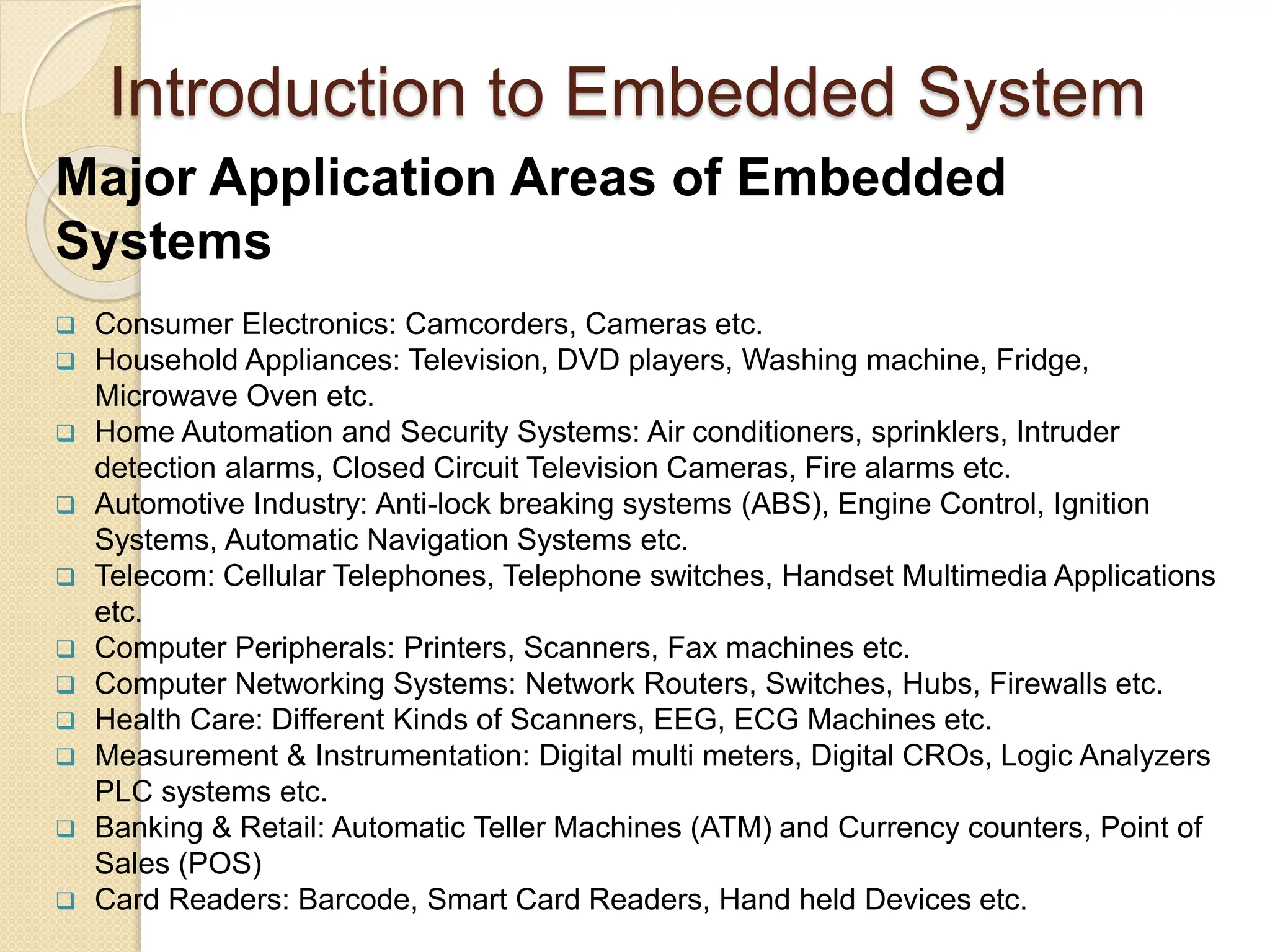
Major Application Areas of Embedded
Systems
 Consumer Electronics: Camcorders, Cameras etc.
 Household Appliances: Television, DVD players, Washing machine, Fridge,
Microwave Oven etc.
 Home Automation and Security Systems: Air conditioners, sprinklers, Intruder
detection alarms, Closed Circuit Television Cameras, Fire alarms etc.
 Automotive Industry: Anti-lock breaking systems (ABS), Engine Control, Ignition
Systems, Automatic Navigation Systems etc.
 Telecom: Cellular Telephones, Telephone switches, Handset Multimedia Applications
etc.
 Computer Peripherals: Printers, Scanners, Fax machines etc.
 Computer Networking Systems: Network Routers, Switches, Hubs, Firewalls etc.
 Health Care: Different Kinds of Scanners, EEG, ECG Machines etc.
 Measurement & Instrumentation: Digital multi meters, Digital CROs, Logic Analyzers
PLC systems etc.
 Banking & Retail: Automatic Teller Machines (ATM) and Currency counters, Point of
Sales (POS)
 Card Readers: Barcode, Smart Card Readers, Hand held Devices etc.
Assignment Questions
1.What is an embedded system?
Explain different applications of ES.
2.Classify and explain different
embedded sytems with an example for
each.
Session 2
Purpose of Embedded Systems
Each Embedded Systems is designed to
serve the purpose of any one or a
combination of the following tasks.
Data Collection/Storage/Representation
Data Communication
Data (Signal) Processing
Monitoring
Control
Application Specific User Interface

MOULE 3 lecture 1 embedded systems design

  • 1.
    GURU NANAK DEVENGINEERING COLLEGE,BIDAR.
  • 2.
    ARM MC &ES MODULE-3 Embedded System Components By Prof.Shilpa Biradar Asst.Prof. ECE Dept. GNDEC,Bidar.
  • 3.
  • 4.
    Introduction to EmbeddedSystem What is an Embedded System? An Electronic/Electro mechanical system which is designed to perform a specific function and is a combination of both hardware and firmware (Software) E.g. Electronic Toys, Mobile Handsets, Washing Machines, Air Conditioners, Automotive Control Units, Set Top Box, DVD Player etc… An embedded system is microcontroller or microprocessor based system which is designed to perform specific task. Embedded Systems are:  Unique in character and behavior  With specialized hardware and software
  • 5.
    Introduction to EmbeddedSystem Classification of Embedded Systems:  Based on Generation  Based on Complexity & Performance Requirements  Based on deterministic behavior  Based on Triggering
  • 6.
    Introduction to EmbeddedSystem Classification based on Generation First Generation: The early embedded systems built around 8bit microprocessors like 8085 and Z80 and 4bit microcontrollers Second Generation: Embedded Systems built around 16bit microprocessors and 8 or 16bit microcontrollers, following the first generation embedded systems Third Generation: Embedded Systems built around high performance 16/32 bit Microprocessors/controllers, Application Specific Instruction set processors like Digital Signal Processors (DSPs), and Application Specific Integrated Circuits (ASICs) Fourth Generation: Embedded Systems built around System on Chips (SoCs), Re-configurable processors and multicore processors
  • 7.
    Introduction to EmbeddedSystem Embedded Systems - Classification based on Complexity & Performance Small Scale: The early embedded systems built around 8bit microprocessors like 8085 and Z80 and 4bit microcontrollers Medium Scale: Embedded Systems built around 16bit microprocessors and 8 or 16bit microcontrollers, following the first generation embedded systems Large Scale/Complex: Embedded Systems built around high performance 16/32 bit Microprocessors/controllers, Application Specific Instruction set processors like Digital Signal Processors (DSPs), and Application Specific Integrated Circuits (ASICs)
  • 8.
    Introduction to EmbeddedSystem Major Application Areas of Embedded Systems  Consumer Electronics: Camcorders, Cameras etc.  Household Appliances: Television, DVD players, Washing machine, Fridge, Microwave Oven etc.  Home Automation and Security Systems: Air conditioners, sprinklers, Intruder detection alarms, Closed Circuit Television Cameras, Fire alarms etc.  Automotive Industry: Anti-lock breaking systems (ABS), Engine Control, Ignition Systems, Automatic Navigation Systems etc.  Telecom: Cellular Telephones, Telephone switches, Handset Multimedia Applications etc.  Computer Peripherals: Printers, Scanners, Fax machines etc.  Computer Networking Systems: Network Routers, Switches, Hubs, Firewalls etc.  Health Care: Different Kinds of Scanners, EEG, ECG Machines etc.  Measurement & Instrumentation: Digital multi meters, Digital CROs, Logic Analyzers PLC systems etc.  Banking & Retail: Automatic Teller Machines (ATM) and Currency counters, Point of Sales (POS)  Card Readers: Barcode, Smart Card Readers, Hand held Devices etc.
  • 9.
    Assignment Questions 1.What isan embedded system? Explain different applications of ES. 2.Classify and explain different embedded sytems with an example for each.
  • 10.
    Session 2 Purpose ofEmbedded Systems Each Embedded Systems is designed to serve the purpose of any one or a combination of the following tasks. Data Collection/Storage/Representation Data Communication Data (Signal) Processing Monitoring Control Application Specific User Interface