Mortality Variations in Kenya
1
1.0 INTRODUCTION
Kenya has an unusually rich set of national-level demographic data which allow estimation of mortality
rates for about the last 30 years. Earlier data (before around 1950) were based on crude estimates for
small areas collected during the 1920s and 1930s for other purposes.
Mortality, commonly on the agenda of public health and international development agencies, has received
renewed attention as a part of the United Nation’s Millennium Development Goals. Approximately 10
million infants and children under five years of age die each year,with large variations in under-five
mortality rates,and trends, across regions and countries, not to mention over 500,000 women globally
who die every year due to maternal causes. Childhood mortality rates have declined all over the world in
the last fifty-five years. Between the end of World War II and early 1970’s, child death rates even in the
developing countries were reduced by half (Valin, 1976). A great deal of these gains was achieved
through interventions targeted at communicable diseases (diarrhea, respiratory infections, malaria,
measles and other immunization childhood infections).
However in the 1970’s the worldwide progress was not maintained and infant mortality rates rose
especially in Africa. It was noticed that disease-oriented vertical programs were not effective alone.
Maternal, environmental, behavioral and socio-economic factors were recognized as additional important
determinants of infant survival. Despite the broad approach towards child health, the decline in child
mortality in Africa has been slower since 1980 than in the 1960s and 1970s. Of the thirty countries with
the world’s highest child mortality rates,twenty-seven are in sub-Saharan Africa (UNICEF,1999).The
region’s under-five mortality was in 1998 173 per 1000 live births (UNICEF, 2000) compared to the
minimum goal of 70/1000 internationally adopted in the 1990 World Summit for Children.
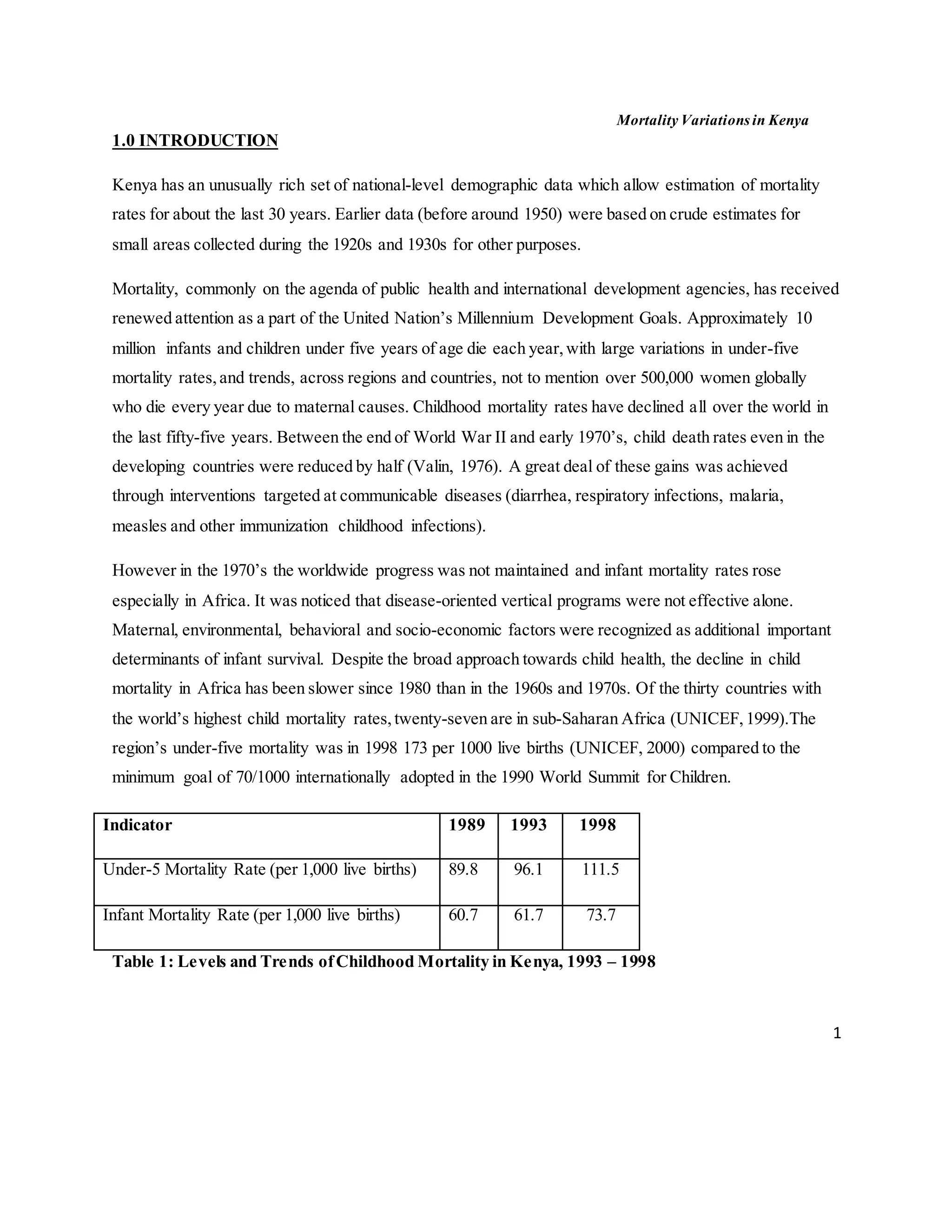
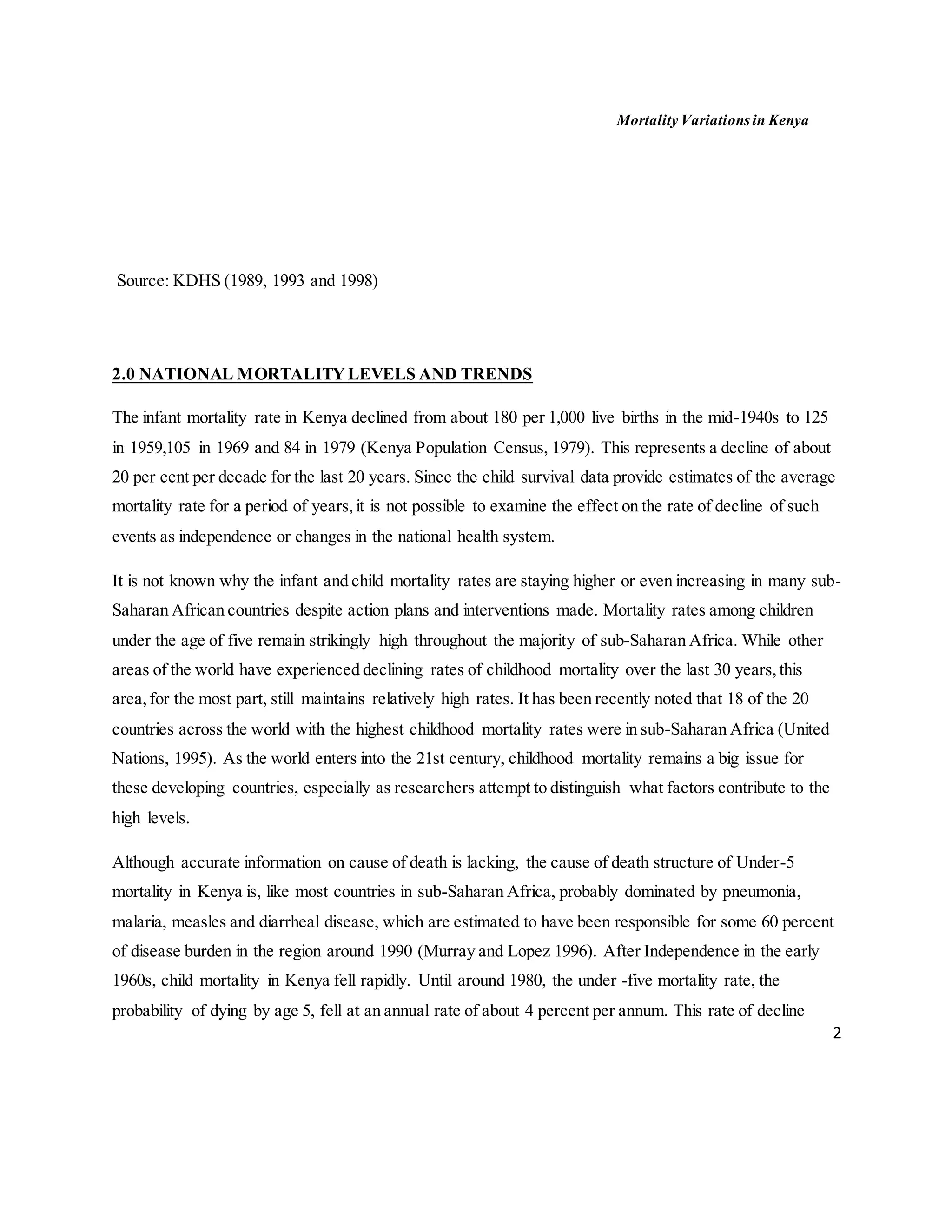
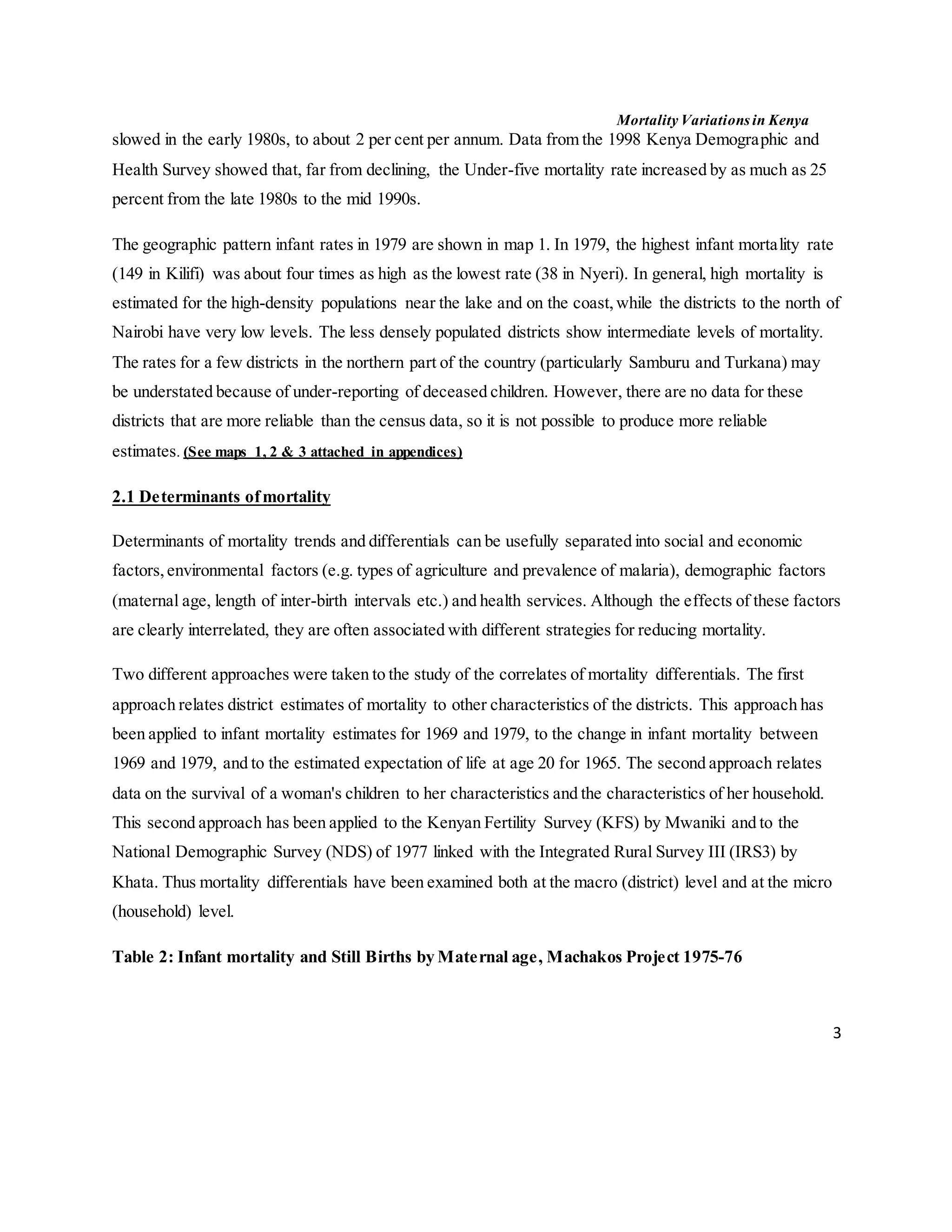
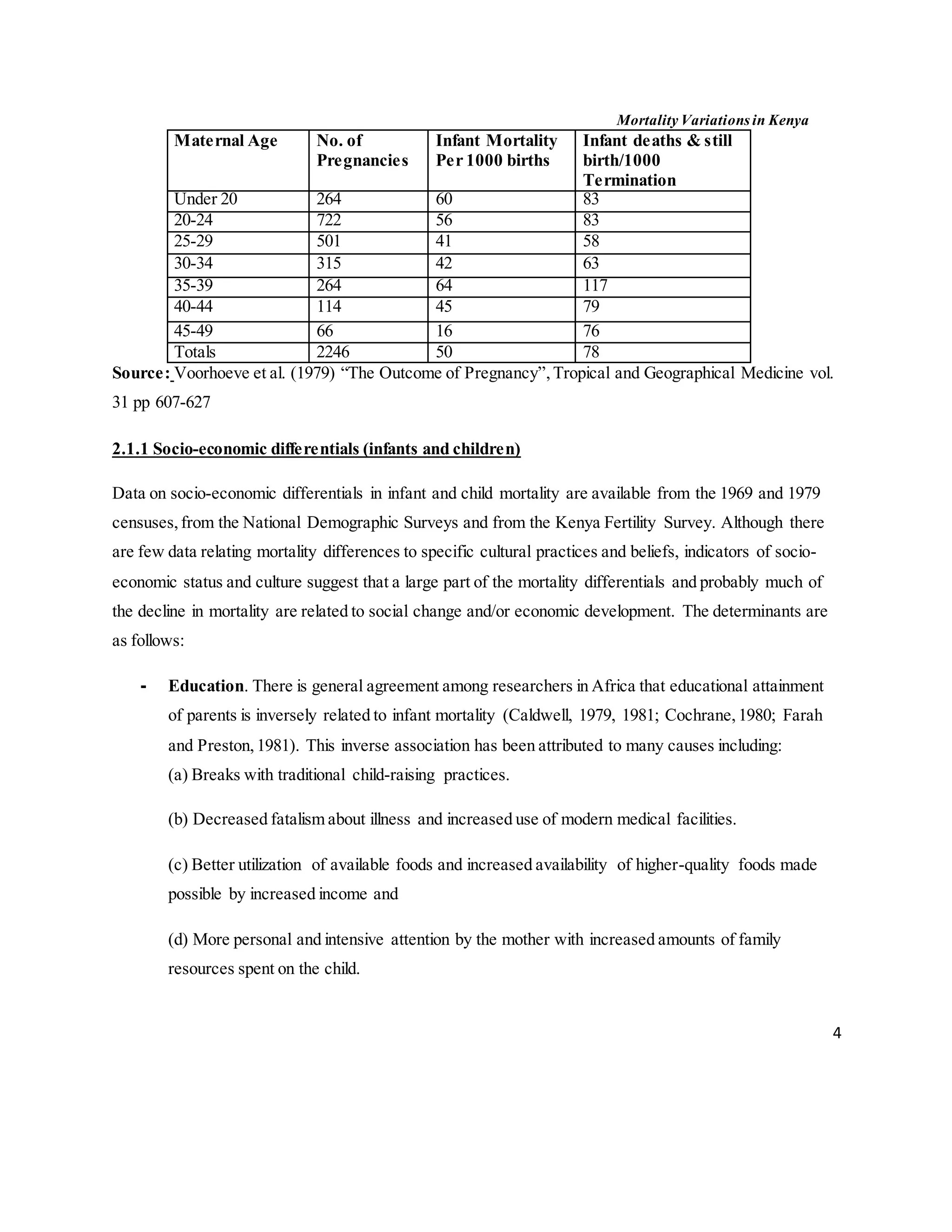
Indicator 1989 1993 1998
Under-5 Mortality Rate (per 1,000 live births) 89.8 96.1 111.5
Infant Mortality Rate (per 1,000 live births) 60.7 61.7 73.7
Table 1: Levels and Trends ofChildhood Mortality in Kenya, 1993 – 1998
Mortality Variations in Kenya
2
Source: KDHS (1989, 1993 and 1998)
2.0 NATIONAL MORTALITYLEVELS AND TRENDS
The infant mortality rate in Kenya declined from about 180 per 1,000 live births in the mid-1940s to 125
in 1959,105 in 1969 and 84 in 1979 (Kenya Population Census, 1979). This represents a decline of about
20 per cent per decade for the last 20 years. Since the child survival data provide estimates of the average
mortality rate for a period of years,it is not possible to examine the effect on the rate of decline of such
events as independence or changes in the national health system.
It is not known why the infant and child mortality rates are staying higher or even increasing in many sub-
Saharan African countries despite action plans and interventions made. Mortality rates among children
under the age of five remain strikingly high throughout the majority of sub-Saharan Africa. While other
areas of the world have experienced declining rates of childhood mortality over the last 30 years,this
area,for the most part, still maintains relatively high rates. It has been recently noted that 18 of the 20
countries across the world with the highest childhood mortality rates were in sub-Saharan Africa (United
Nations, 1995). As the world enters into the 21st century, childhood mortality remains a big issue for
these developing countries, especially as researchers attempt to distinguish what factors contribute to the
high levels.
Although accurate information on cause of death is lacking, the cause of death structure of Under-5
mortality in Kenya is, like most countries in sub-Saharan Africa, probably dominated by pneumonia,
malaria, measles and diarrheal disease, which are estimated to have been responsible for some 60 percent
of disease burden in the region around 1990 (Murray and Lopez 1996). After Independence in the early
1960s, child mortality in Kenya fell rapidly. Until around 1980, the under -five mortality rate, the
probability of dying by age 5, fell at an annual rate of about 4 percent per annum. This rate of decline
Mortality Variations in Kenya
3
slowed in the early 1980s, to about 2 per cent per annum. Data from the 1998 Kenya Demographic and
Health Survey showed that, far from declining, the Under-five mortality rate increased by as much as 25
percent from the late 1980s to the mid 1990s.
The geographic pattern infant rates in 1979 are shown in map 1. In 1979, the highest infant mortality rate
(149 in Kilifi) was about four times as high as the lowest rate (38 in Nyeri). In general, high mortality is
estimated for the high-density populations near the lake and on the coast,while the districts to the north of
Nairobi have very low levels. The less densely populated districts show intermediate levels of mortality.
The rates for a few districts in the northern part of the country (particularly Samburu and Turkana) may
be understated because of under-reporting of deceased children. However, there are no data for these
districts that are more reliable than the census data, so it is not possible to produce more reliable
estimates. (See maps 1, 2 & 3 attached in appendices)
2.1 Determinants ofmortality
Determinants of mortality trends and differentials can be usefully separated into social and economic
factors,environmental factors (e.g. types of agriculture and prevalence of malaria), demographic factors
(maternal age, length of inter-birth intervals etc.) and health services. Although the effects of these factors
are clearly interrelated, they are often associated with different strategies for reducing mortality.
Two different approaches were taken to the study of the correlates of mortality differentials. The first
approach relates district estimates of mortality to other characteristics of the districts. This approach has
been applied to infant mortality estimates for 1969 and 1979, to the change in infant mortality between
1969 and 1979, and to the estimated expectation of life at age 20 for 1965. The second approach relates
data on the survival of a woman's children to her characteristics and the characteristics of her household.
This second approach has been applied to the Kenyan Fertility Survey (KFS) by Mwaniki and to the
National Demographic Survey (NDS) of 1977 linked with the Integrated Rural Survey III (IRS3) by
Khata. Thus mortality differentials have been examined both at the macro (district) level and at the micro
(household) level.
Table 2: Infant mortality and Still Births by Maternal age, Machakos Project 1975-76
Mortality Variations in Kenya
4
Maternal Age No. of
Pregnancies
Infant Mortality
Per 1000 births
Infant deaths & still
birth/1000
Termination
Under 20 264 60 83
20-24 722 56 83
25-29 501 41 58
30-34 315 42 63
35-39 264 64 117
40-44 114 45 79
45-49 66 16 76
Totals 2246 50 78
Source: Voorhoeve et al. (1979) “The Outcome of Pregnancy”,Tropical and Geographical Medicine vol.
31 pp 607-627
2.1.1 Socio-economic differentials (infants and children)
Data on socio-economic differentials in infant and child mortality are available from the 1969 and 1979
censuses,from the National Demographic Surveys and from the Kenya Fertility Survey. Although there
are few data relating mortality differences to specific cultural practices and beliefs, indicators of socio-
economic status and culture suggest that a large part of the mortality differentials and probably much of
the decline in mortality are related to social change and/or economic development. The determinants are
as follows:
- Education. There is general agreement among researchers in Africa that educational attainment
of parents is inversely related to infant mortality (Caldwell, 1979, 1981; Cochrane,1980; Farah
and Preston,1981). This inverse association has been attributed to many causes including:
(a) Breaks with traditional child-raising practices.
(b) Decreased fatalism about illness and increased use of modern medical facilities.
(c) Better utilization of available foods and increased availability of higher-quality foods made
possible by increased income and
(d) More personal and intensive attention by the mother with increased amounts of family
resources spent on the child.
Mortality Variations in Kenya
5
Differences in child mortality by mother's education are apparent in almost every analysis of
mortality differentials in Kenya. For example, in both the 1969 and 1979 censuses the more
educated women in every age group reported a lower proportion deceased among their children.
Despite the clear relationship between education and child mortality, it is not clear why education
is related to child survival.
- Union status. One important cultural difference among groups in Kenya is the prevalence of
polygamy. Studies in other parts of Africa have demonstrated differences in infant and child
mortality by type of union although the reasons for such differentials are not always clear.
Polygamy might be related statistically to income differences,is often less common in urban
areas,and may be related to religious and other cultural differences. The data on child survival
and union status for Kenya refer to the woman’s current status and to the number of wives of the
current husband of the child’s mother. Since widowhood and marriage are common, the mother’s
current union status maybe different from her status from the time of her births and her current
husband may not be the father of all her children.
- Mother's place ofwork. The Kenya Fertility Survey data allow analysis of infant and child
mortality differentials by the mother's place of work since her first union. It would be reasonable
to hypothesize that this variable would affect child survival through differences in income, child
feeding practices and possibly through increased use of modern medical care. However,after
controlling for such other factors as mother's education, area of residence and father's occupation,
there are no significant differences in child mortality by mother's place of work. This finding may
be the result of conflicting influences such as increased bottle feeding and increased use of
medical facilities by working mothers. The complex interactions between mother's employment
outside the home and child mortality have not yet been studied in Kenya.
- Religious identification. Although the infant mortality rate calculated from the Kenya Fertility
Survey maternity histories shows higher mortality for Moslems, there no difference between
Moslems and Catholics. Protestants still show slightly lower mortality (about 4 percent);
however, they are not significantly different from Catholics.
- Ethnic group and tribe. The tribal affiliations entered in the regression analysis of the Kenya
Fertility Survey probably represent cultural differences which are not related to education and
Mortality Variations in Kenya
6
income variables. Although the tribal groups tend to be located in specific parts of the country,
the regional variables absorb most of the geographic differentials.
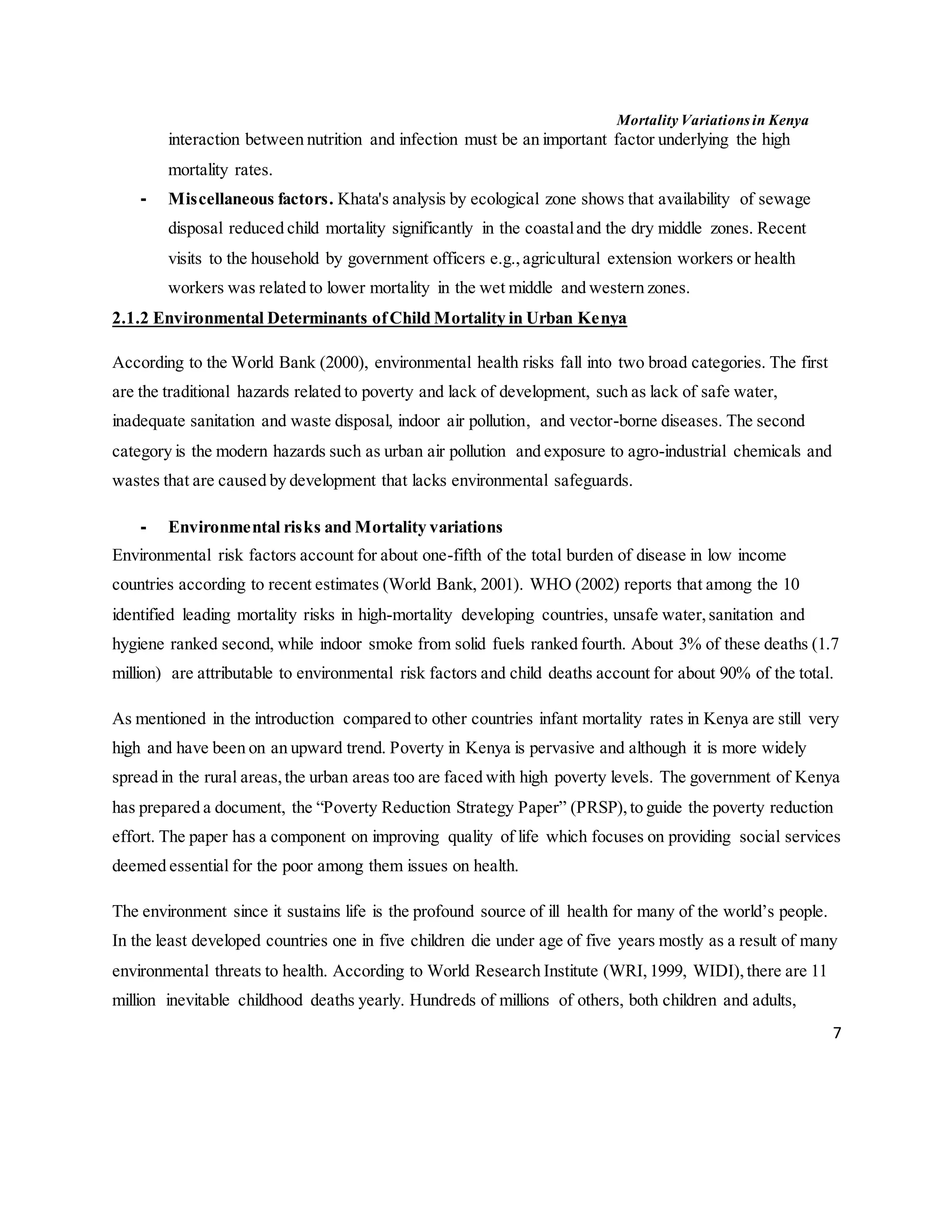
- Father's occupation. The Kenya Fertility Survey provides information about the occupation of
the mother's current husband. The occupation group that has the highest mortality is the
agricultural workers who work at home; their children suffer a mortality rate 57 per cent higher
than that of professionals even after controlling for maternal differences. Children of self-
employed agricultural workers and paid production workers both have mortality rates about 10
per cent higher than other children. Differences among all other occupation groups become
insignificant, although this might be partially due to small sample sizes for some of the groups.
Differences by father's occupation probably reflect income differentials although they are also
related Western Bantu once the regional differences have been to differences in culture and in
proximity to medical facilities and urban centers.
Table 3: Infant and Child Mortality by father’s occupation, Kenya Fertility Survey, 1977-78
Occupation Infant
Mortality Rate
Mortality
ages 1-4
Professional, Clerical 59 41
Housework, Services 93 58
Sales, Skilled, Unskilled 93 71
Farmer, Agriculture 96 75
No Work 100 69
Source:Kenya Fertility Survey, 1977-78
- Nutritional status ofchildren. Malnutrition is often proposed as an important link between child
mortality and socio-economic status since the causes of deaths in Kenya suggests that the
Mortality Variations in Kenya
7
interaction between nutrition and infection must be an important factor underlying the high
mortality rates.
- Miscellaneous factors. Khata's analysis by ecological zone shows that availability of sewage
disposal reduced child mortality significantly in the coastaland the dry middle zones. Recent
visits to the household by government officers e.g.,agricultural extension workers or health
workers was related to lower mortality in the wet middle and western zones.
2.1.2 Environmental Determinants ofChild Mortality in Urban Kenya
According to the World Bank (2000), environmental health risks fall into two broad categories. The first
are the traditional hazards related to poverty and lack of development, such as lack of safe water,
inadequate sanitation and waste disposal, indoor air pollution, and vector-borne diseases. The second
category is the modern hazards such as urban air pollution and exposure to agro-industrial chemicals and
wastes that are caused by development that lacks environmental safeguards.
- Environmental risks and Mortality variations
Environmental risk factors account for about one-fifth of the total burden of disease in low income
countries according to recent estimates (World Bank, 2001). WHO (2002) reports that among the 10
identified leading mortality risks in high-mortality developing countries, unsafe water,sanitation and
hygiene ranked second, while indoor smoke from solid fuels ranked fourth. About 3% of these deaths (1.7
million) are attributable to environmental risk factors and child deaths account for about 90% of the total.
As mentioned in the introduction compared to other countries infant mortality rates in Kenya are still very
high and have been on an upward trend. Poverty in Kenya is pervasive and although it is more widely
spread in the rural areas,the urban areas too are faced with high poverty levels. The government of Kenya
has prepared a document, the “Poverty Reduction Strategy Paper” (PRSP),to guide the poverty reduction
effort. The paper has a component on improving quality of life which focuses on providing social services
deemed essential for the poor among them issues on health.
The environment since it sustains life is the profound source of ill health for many of the world’s people.
In the least developed countries one in five children die under age of five years mostly as a result of many
environmental threats to health. According to World Research Institute (WRI,1999, WIDI), there are 11
million inevitable childhood deaths yearly. Hundreds of millions of others, both children and adults,
Mortality Variations in Kenya
8
suffer ill health and disability that undermine their quality of life and hopes for the future. These
environmental health threats stem mostly from traditional problems that are long solved in the wealthier
countries, such as lack of clean water,sanitation, adequate housing and protection from mosquitoes and
other insect and animal disease vectors.
Poverty also influences health because it largely determines an individual’s environmental risks, as well
as access to resources to dealwith those risks. In Kenya,many live in situations that imperil their health
through steady exposure to biological pathogens in the immediate environment. Many people live I dingy
slums such as Kibera slums that are without adequate shelter or in unacceptable housing, with lack of
access to safe water and adequate sanitation, all of which are essentialfor good hygiene. Unable to afford
clean fuels, the poor rely instead on biomass fuels for cooking and heating. Inside the smoky dwellings in
rural areas,air pollution is often higher than it is outdoors in the world’s most congested cities.
Such problems, historically considered rural, have now become urban as well, as sprawling slum
settlements surround Kenya's major cities. Risks are compounded in these peri-urban settlements, where
garbage collection is often nonexistent and drainage tends to be poor, creating ideal conditions for insects
and other disease vectors.
Overcrowding increases the risk of disease transmission. Even among the poor, certain groups are more at
risk than others. Women and children are more likely than men to be exposed to indoor air pollution from
biomass fuels, because women spend many hours a day indoors near an open fire, often cooking with a
child strapped on their backs. In developing countries, the poorest strata are often excluded from the
benefits of emerging prosperity and may also face a disproportionate share of health risks related to
economic growth. Urban slums may be located near major roads, factories, or dumpsites, for instance,
exposing residents to higher levels of air pollution or to the risks of industrial accidents.
2.1.3 Maternal and child healthcare
Maternal mortality refers to the death of a woman while pregnant within 42 days of termination of
pregnancy, irrespective of duration and site of the pregnancy from any causes related to or aggravated by
the pregnancy or its management but not from accidental or incidental causes.
Mortality Variations in Kenya
9
Over 500,000 women globally die every year due to maternal causes,and half of global maternal deaths
occur in Sub-Saharan Africa. The 2010 maternal mortality rate per 100,000 births for Kenya is 530, yet
has been shown to be as high as 1000 in North Eastern province, for example.
Women under 24 years of age are especially vulnerable because of the risk of developing complications
during pregnancy and childbirth. Kenya’s health infrastructure suffers from urban-rural and regional
imbalances, lack of investment, and a personnel shortage, with, for example, one doctor for 10,150 people
as at 2010.
Determinants of maternal mortality
The determinants influencing maternal mortality and morbidity can be categorized under three
domains: proximate, intermediate, and contextual.
- Proximate determinants: these refer to those factors that are mostly closely linked to
maternal mortality. More specifically, these include pregnancy itself and the development
of pregnancy and birth-related or postpartum complications, as well as their management.
Based on verbal autopsy reports from women in Nairobi slums, it was noted that most
maternal deaths are directly attributed to complications such as hemorrhage, sepsis,
eclampsia, or unsafe abortions. Conversely, indirect causes of mortality were noted to be
malaria, anemia, or TB/HIV/AIDS, among others.
- Intermediate determinants: these include those determinants related to the access to
quality care services, particularly barriers to care such as: health system barriers (e.g.
health infrastructure), financial barriers, and information barriers. For example, interview
data of women aged 12–54 from the Nairobi Urban Health and Demographic
Surveillance System (NUHDSS); found that the high cost of formal delivery services in
hospitals, as well as the cost transportation to these facilities presented formidable
barriers to accessing obstetric care. Other intermediate determinants include reproductive
Mortality Variations in Kenya
10
health behavior, such as receiving antenatal care––a strong predictor of later use of
formal, skilled care––, and women’s health and nutritional status.
- Contextual determinants: these refer primarily to the influence of political
commitment––policy formulation, for example––, infrastructure, and women’s
socioeconomic status, including education, income, and autonomy. With regards to
political will, a highly contested issue is the legalization of abortion. The current
restrictions on abortions have led to many women receiving the procedure illegally and
often via untrained staff. These operations have been estimated to contribute to over 30%
of maternal mortalities in Kenya.
Infrastructure refers not only to the unavailability of services in some areas, but also the
inaccessibility issues that many women face. In reference to maternal education, women
with greater education are more likely to have and receive knowledge about the benefits
of skilled care and preventative action—antenatal care use, for example. In addition,
these women are also more likely to have access to financial resources and health
insurance, as well as being in a better position to discuss the use of household income.
This increased decision-making power is matched with a more egalitarian relationship
with their husband and an increased sense of self-worth and self-confidence. Income is
another strong predictor influencing skilled care use, in particular, the ability to pay for
delivery at modern facilities.
Women living in households unable to pay for the costs of transportation, medications,
and provider fees are significantly less likely to pursue delivery services at skilled
facilities. The impact of income level also influences other socio-cultural determinants.
For instance, low-income communities are more likely to hold traditional views about
birthing, opting away from skilled care use. Similarly, they are also more likely to give
women less autonomy in making household and healthcare-related decisions. Thus, these
women are not only unable to receive money for care from husbands––who often place
Mortality Variations in Kenya
11
greater emphasis on the purchase of food and other items––but are also much less able to
demand formal care.
2.1.4 Genetic Variations
Human populations are polymorphic for many loci. The inhabitants of different regions of the
earth can be characterized on the basis of the relative gene frequencies. These gene frequencies
have been associated with certain characteristics such as diseases and well being in general. This
kind of relationship has not been exploited in many developing countries for the management
and prevention of diseases.
Study results have shown that there is association between allele frequencies of ABO blood
group system and disease and also mortality rates. It also shows that populations which had high
mortality rate many years back have also high infection rates of emerging diseases such as HIV.
The trends of mortality rates and HIV infection among Kenyan ethnic groups associated with
allelic frequencies in ABO blood group system.
Molecular genetics has a great deal to offer tropical medicine in understanding the population
genetics and dynamics of both infectious and non-infectious diseases. It is therefore important to
understand the genetics of a population for better management of diseases that may alter
mortality variations.
3.0 CONCLUSION
To conclude, the state might cope with mortality rates by ensuring the following measures:
(i) access to basic environmental services: safe water, sanitation, source of
cooking fuel,
(ii) region-various urban areas,
(iii) give much attention to mother’s education,
(iv) designate the moral law through religion, and
(v) Proper method of wealth quintile.
Mortality Variations in Kenya
12
This will help to present broad patterns of child mortality, by household socio-environment
status, in urban areas of Kenya. To identify the environmental determinants of child mortality,
controlling for other covariates (such as maternal education, access to health services, and
incomes) in the urban areas of Kenya.
To quantify the health benefits in urban Kenya, measured by reduction in child mortality rates, of
policy interventions through a simulation exercise will be addressed by a policy simulation
exercise by predicting the deaths averted per 100 births as a result of universal access to the basic
environmental services. The interventions to be considered will include, but not limited to, urban
areas universal access to piped water, toilet facilities, clean cooking fuels, electricity, and female
primary education.
The above suggestions of policy changes are important for prioritizing public investments in
order to maximize social benefits for given resources, in particular in the context of achieving the
targets set by the Millennium Development Goals (MDGs) on child mortality and the
environment. The targets on child mortality are to reduce them by one third of their 1990 levels
by the year 2015.
4.0 REFERENCES
African Journal of Health Sciences Vol. 17, No. 3-4, July-December 2010
Caldwell, J. (1979). Education as a factor in mortality decline; an examination of Nigerian data:
Population Studies 33(3):395-414. And (1981) Maternal education as a factor in child mortality: World
Health Forum 1(1):75-78.
Charlotte & Liambila (2004) Safe motherhood Demonstration Project Western Province
Cochrane, Susan H. (1980). The effects of education on health: World Bank, 1980 (World Bank Staff
Working Paper No. 405.)
CIDA 2011 www.cida.org.ca/acdicida/ACDI-CIDA.nsf/eng/JUD-41183252-2NL
Epuu (2010), Determinant of maternal morbidity and mortality Turkana County of Kenya
Mortality Variations in Kenya
13
Farah A. and S. Preston (1981), Child mortality differentials in Sudan; University of Pennsylvania:
Population Studies Center. African Working Paper No. 7.
Hill A. V. (1999), Genetics of infectious disease resistance. Current opinion in genetics and development
6: 348-353
Kenya Country Profile: Library of Congress Federal Research Division June 2007.
Kenya Population Census, 1979
Khata,P. (1983), Personal communication.
Kiriga et al. (2011), Effects of maternal mortality on Gross Domestic Product in the WHO African region.
Murray C .J .L. and A. Lopez (Eds.), (1996): The Global Burden of Disease:A comprehensive
assessment of mortality from diseases, injuries and risk factors in 1990 and projected to 2020. Cambridge,
Massachusetts:Harvard University Press.
Ochako et al. (2011) Utilization of maternal health services among young women in Kenya. Insights from
the Kenya Demographic and Health Survey, 2003
WDI, the World Bank Online Database
World Bank, (2001) “Health and Environment”, Background paper for the World Bank Environment
Strategy, Washington, D.C
World Health Organization, (2002), the World Health Report 2002, WHO, Geneva
WHO 2012 www.who.int%2Fhealthinfo%2Fstatistics%2Findmaternalmortality%2Fen%2Findex.html
WRI (World Resources Institute) (1999). World Resources (1998-99): Environmental Change and Human
Health

Mortality variations in Kenya

  • 1.
    Mortality Variations inKenya 1 1.0 INTRODUCTION Kenya has an unusually rich set of national-level demographic data which allow estimation of mortality rates for about the last 30 years. Earlier data (before around 1950) were based on crude estimates for small areas collected during the 1920s and 1930s for other purposes. Mortality, commonly on the agenda of public health and international development agencies, has received renewed attention as a part of the United Nation’s Millennium Development Goals. Approximately 10 million infants and children under five years of age die each year,with large variations in under-five mortality rates,and trends, across regions and countries, not to mention over 500,000 women globally who die every year due to maternal causes. Childhood mortality rates have declined all over the world in the last fifty-five years. Between the end of World War II and early 1970’s, child death rates even in the developing countries were reduced by half (Valin, 1976). A great deal of these gains was achieved through interventions targeted at communicable diseases (diarrhea, respiratory infections, malaria, measles and other immunization childhood infections). However in the 1970’s the worldwide progress was not maintained and infant mortality rates rose especially in Africa. It was noticed that disease-oriented vertical programs were not effective alone. Maternal, environmental, behavioral and socio-economic factors were recognized as additional important determinants of infant survival. Despite the broad approach towards child health, the decline in child mortality in Africa has been slower since 1980 than in the 1960s and 1970s. Of the thirty countries with the world’s highest child mortality rates,twenty-seven are in sub-Saharan Africa (UNICEF,1999).The region’s under-five mortality was in 1998 173 per 1000 live births (UNICEF, 2000) compared to the minimum goal of 70/1000 internationally adopted in the 1990 World Summit for Children. Indicator 1989 1993 1998 Under-5 Mortality Rate (per 1,000 live births) 89.8 96.1 111.5 Infant Mortality Rate (per 1,000 live births) 60.7 61.7 73.7 Table 1: Levels and Trends ofChildhood Mortality in Kenya, 1993 – 1998
  • 2.
    Mortality Variations inKenya 2 Source: KDHS (1989, 1993 and 1998) 2.0 NATIONAL MORTALITYLEVELS AND TRENDS The infant mortality rate in Kenya declined from about 180 per 1,000 live births in the mid-1940s to 125 in 1959,105 in 1969 and 84 in 1979 (Kenya Population Census, 1979). This represents a decline of about 20 per cent per decade for the last 20 years. Since the child survival data provide estimates of the average mortality rate for a period of years,it is not possible to examine the effect on the rate of decline of such events as independence or changes in the national health system. It is not known why the infant and child mortality rates are staying higher or even increasing in many sub- Saharan African countries despite action plans and interventions made. Mortality rates among children under the age of five remain strikingly high throughout the majority of sub-Saharan Africa. While other areas of the world have experienced declining rates of childhood mortality over the last 30 years,this area,for the most part, still maintains relatively high rates. It has been recently noted that 18 of the 20 countries across the world with the highest childhood mortality rates were in sub-Saharan Africa (United Nations, 1995). As the world enters into the 21st century, childhood mortality remains a big issue for these developing countries, especially as researchers attempt to distinguish what factors contribute to the high levels. Although accurate information on cause of death is lacking, the cause of death structure of Under-5 mortality in Kenya is, like most countries in sub-Saharan Africa, probably dominated by pneumonia, malaria, measles and diarrheal disease, which are estimated to have been responsible for some 60 percent of disease burden in the region around 1990 (Murray and Lopez 1996). After Independence in the early 1960s, child mortality in Kenya fell rapidly. Until around 1980, the under -five mortality rate, the probability of dying by age 5, fell at an annual rate of about 4 percent per annum. This rate of decline
  • 3.
    Mortality Variations inKenya 3 slowed in the early 1980s, to about 2 per cent per annum. Data from the 1998 Kenya Demographic and Health Survey showed that, far from declining, the Under-five mortality rate increased by as much as 25 percent from the late 1980s to the mid 1990s. The geographic pattern infant rates in 1979 are shown in map 1. In 1979, the highest infant mortality rate (149 in Kilifi) was about four times as high as the lowest rate (38 in Nyeri). In general, high mortality is estimated for the high-density populations near the lake and on the coast,while the districts to the north of Nairobi have very low levels. The less densely populated districts show intermediate levels of mortality. The rates for a few districts in the northern part of the country (particularly Samburu and Turkana) may be understated because of under-reporting of deceased children. However, there are no data for these districts that are more reliable than the census data, so it is not possible to produce more reliable estimates. (See maps 1, 2 & 3 attached in appendices) 2.1 Determinants ofmortality Determinants of mortality trends and differentials can be usefully separated into social and economic factors,environmental factors (e.g. types of agriculture and prevalence of malaria), demographic factors (maternal age, length of inter-birth intervals etc.) and health services. Although the effects of these factors are clearly interrelated, they are often associated with different strategies for reducing mortality. Two different approaches were taken to the study of the correlates of mortality differentials. The first approach relates district estimates of mortality to other characteristics of the districts. This approach has been applied to infant mortality estimates for 1969 and 1979, to the change in infant mortality between 1969 and 1979, and to the estimated expectation of life at age 20 for 1965. The second approach relates data on the survival of a woman's children to her characteristics and the characteristics of her household. This second approach has been applied to the Kenyan Fertility Survey (KFS) by Mwaniki and to the National Demographic Survey (NDS) of 1977 linked with the Integrated Rural Survey III (IRS3) by Khata. Thus mortality differentials have been examined both at the macro (district) level and at the micro (household) level. Table 2: Infant mortality and Still Births by Maternal age, Machakos Project 1975-76
  • 4.
    Mortality Variations inKenya 4 Maternal Age No. of Pregnancies Infant Mortality Per 1000 births Infant deaths & still birth/1000 Termination Under 20 264 60 83 20-24 722 56 83 25-29 501 41 58 30-34 315 42 63 35-39 264 64 117 40-44 114 45 79 45-49 66 16 76 Totals 2246 50 78 Source: Voorhoeve et al. (1979) “The Outcome of Pregnancy”,Tropical and Geographical Medicine vol. 31 pp 607-627 2.1.1 Socio-economic differentials (infants and children) Data on socio-economic differentials in infant and child mortality are available from the 1969 and 1979 censuses,from the National Demographic Surveys and from the Kenya Fertility Survey. Although there are few data relating mortality differences to specific cultural practices and beliefs, indicators of socio- economic status and culture suggest that a large part of the mortality differentials and probably much of the decline in mortality are related to social change and/or economic development. The determinants are as follows: - Education. There is general agreement among researchers in Africa that educational attainment of parents is inversely related to infant mortality (Caldwell, 1979, 1981; Cochrane,1980; Farah and Preston,1981). This inverse association has been attributed to many causes including: (a) Breaks with traditional child-raising practices. (b) Decreased fatalism about illness and increased use of modern medical facilities. (c) Better utilization of available foods and increased availability of higher-quality foods made possible by increased income and (d) More personal and intensive attention by the mother with increased amounts of family resources spent on the child.
  • 5.
    Mortality Variations inKenya 5 Differences in child mortality by mother's education are apparent in almost every analysis of mortality differentials in Kenya. For example, in both the 1969 and 1979 censuses the more educated women in every age group reported a lower proportion deceased among their children. Despite the clear relationship between education and child mortality, it is not clear why education is related to child survival. - Union status. One important cultural difference among groups in Kenya is the prevalence of polygamy. Studies in other parts of Africa have demonstrated differences in infant and child mortality by type of union although the reasons for such differentials are not always clear. Polygamy might be related statistically to income differences,is often less common in urban areas,and may be related to religious and other cultural differences. The data on child survival and union status for Kenya refer to the woman’s current status and to the number of wives of the current husband of the child’s mother. Since widowhood and marriage are common, the mother’s current union status maybe different from her status from the time of her births and her current husband may not be the father of all her children. - Mother's place ofwork. The Kenya Fertility Survey data allow analysis of infant and child mortality differentials by the mother's place of work since her first union. It would be reasonable to hypothesize that this variable would affect child survival through differences in income, child feeding practices and possibly through increased use of modern medical care. However,after controlling for such other factors as mother's education, area of residence and father's occupation, there are no significant differences in child mortality by mother's place of work. This finding may be the result of conflicting influences such as increased bottle feeding and increased use of medical facilities by working mothers. The complex interactions between mother's employment outside the home and child mortality have not yet been studied in Kenya. - Religious identification. Although the infant mortality rate calculated from the Kenya Fertility Survey maternity histories shows higher mortality for Moslems, there no difference between Moslems and Catholics. Protestants still show slightly lower mortality (about 4 percent); however, they are not significantly different from Catholics. - Ethnic group and tribe. The tribal affiliations entered in the regression analysis of the Kenya Fertility Survey probably represent cultural differences which are not related to education and
  • 6.
    Mortality Variations inKenya 6 income variables. Although the tribal groups tend to be located in specific parts of the country, the regional variables absorb most of the geographic differentials. - Father's occupation. The Kenya Fertility Survey provides information about the occupation of the mother's current husband. The occupation group that has the highest mortality is the agricultural workers who work at home; their children suffer a mortality rate 57 per cent higher than that of professionals even after controlling for maternal differences. Children of self- employed agricultural workers and paid production workers both have mortality rates about 10 per cent higher than other children. Differences among all other occupation groups become insignificant, although this might be partially due to small sample sizes for some of the groups. Differences by father's occupation probably reflect income differentials although they are also related Western Bantu once the regional differences have been to differences in culture and in proximity to medical facilities and urban centers. Table 3: Infant and Child Mortality by father’s occupation, Kenya Fertility Survey, 1977-78 Occupation Infant Mortality Rate Mortality ages 1-4 Professional, Clerical 59 41 Housework, Services 93 58 Sales, Skilled, Unskilled 93 71 Farmer, Agriculture 96 75 No Work 100 69 Source:Kenya Fertility Survey, 1977-78 - Nutritional status ofchildren. Malnutrition is often proposed as an important link between child mortality and socio-economic status since the causes of deaths in Kenya suggests that the
  • 7.
    Mortality Variations inKenya 7 interaction between nutrition and infection must be an important factor underlying the high mortality rates. - Miscellaneous factors. Khata's analysis by ecological zone shows that availability of sewage disposal reduced child mortality significantly in the coastaland the dry middle zones. Recent visits to the household by government officers e.g.,agricultural extension workers or health workers was related to lower mortality in the wet middle and western zones. 2.1.2 Environmental Determinants ofChild Mortality in Urban Kenya According to the World Bank (2000), environmental health risks fall into two broad categories. The first are the traditional hazards related to poverty and lack of development, such as lack of safe water, inadequate sanitation and waste disposal, indoor air pollution, and vector-borne diseases. The second category is the modern hazards such as urban air pollution and exposure to agro-industrial chemicals and wastes that are caused by development that lacks environmental safeguards. - Environmental risks and Mortality variations Environmental risk factors account for about one-fifth of the total burden of disease in low income countries according to recent estimates (World Bank, 2001). WHO (2002) reports that among the 10 identified leading mortality risks in high-mortality developing countries, unsafe water,sanitation and hygiene ranked second, while indoor smoke from solid fuels ranked fourth. About 3% of these deaths (1.7 million) are attributable to environmental risk factors and child deaths account for about 90% of the total. As mentioned in the introduction compared to other countries infant mortality rates in Kenya are still very high and have been on an upward trend. Poverty in Kenya is pervasive and although it is more widely spread in the rural areas,the urban areas too are faced with high poverty levels. The government of Kenya has prepared a document, the “Poverty Reduction Strategy Paper” (PRSP),to guide the poverty reduction effort. The paper has a component on improving quality of life which focuses on providing social services deemed essential for the poor among them issues on health. The environment since it sustains life is the profound source of ill health for many of the world’s people. In the least developed countries one in five children die under age of five years mostly as a result of many environmental threats to health. According to World Research Institute (WRI,1999, WIDI), there are 11 million inevitable childhood deaths yearly. Hundreds of millions of others, both children and adults,
  • 8.
    Mortality Variations inKenya 8 suffer ill health and disability that undermine their quality of life and hopes for the future. These environmental health threats stem mostly from traditional problems that are long solved in the wealthier countries, such as lack of clean water,sanitation, adequate housing and protection from mosquitoes and other insect and animal disease vectors. Poverty also influences health because it largely determines an individual’s environmental risks, as well as access to resources to dealwith those risks. In Kenya,many live in situations that imperil their health through steady exposure to biological pathogens in the immediate environment. Many people live I dingy slums such as Kibera slums that are without adequate shelter or in unacceptable housing, with lack of access to safe water and adequate sanitation, all of which are essentialfor good hygiene. Unable to afford clean fuels, the poor rely instead on biomass fuels for cooking and heating. Inside the smoky dwellings in rural areas,air pollution is often higher than it is outdoors in the world’s most congested cities. Such problems, historically considered rural, have now become urban as well, as sprawling slum settlements surround Kenya's major cities. Risks are compounded in these peri-urban settlements, where garbage collection is often nonexistent and drainage tends to be poor, creating ideal conditions for insects and other disease vectors. Overcrowding increases the risk of disease transmission. Even among the poor, certain groups are more at risk than others. Women and children are more likely than men to be exposed to indoor air pollution from biomass fuels, because women spend many hours a day indoors near an open fire, often cooking with a child strapped on their backs. In developing countries, the poorest strata are often excluded from the benefits of emerging prosperity and may also face a disproportionate share of health risks related to economic growth. Urban slums may be located near major roads, factories, or dumpsites, for instance, exposing residents to higher levels of air pollution or to the risks of industrial accidents. 2.1.3 Maternal and child healthcare Maternal mortality refers to the death of a woman while pregnant within 42 days of termination of pregnancy, irrespective of duration and site of the pregnancy from any causes related to or aggravated by the pregnancy or its management but not from accidental or incidental causes.
  • 9.
    Mortality Variations inKenya 9 Over 500,000 women globally die every year due to maternal causes,and half of global maternal deaths occur in Sub-Saharan Africa. The 2010 maternal mortality rate per 100,000 births for Kenya is 530, yet has been shown to be as high as 1000 in North Eastern province, for example. Women under 24 years of age are especially vulnerable because of the risk of developing complications during pregnancy and childbirth. Kenya’s health infrastructure suffers from urban-rural and regional imbalances, lack of investment, and a personnel shortage, with, for example, one doctor for 10,150 people as at 2010. Determinants of maternal mortality The determinants influencing maternal mortality and morbidity can be categorized under three domains: proximate, intermediate, and contextual. - Proximate determinants: these refer to those factors that are mostly closely linked to maternal mortality. More specifically, these include pregnancy itself and the development of pregnancy and birth-related or postpartum complications, as well as their management. Based on verbal autopsy reports from women in Nairobi slums, it was noted that most maternal deaths are directly attributed to complications such as hemorrhage, sepsis, eclampsia, or unsafe abortions. Conversely, indirect causes of mortality were noted to be malaria, anemia, or TB/HIV/AIDS, among others. - Intermediate determinants: these include those determinants related to the access to quality care services, particularly barriers to care such as: health system barriers (e.g. health infrastructure), financial barriers, and information barriers. For example, interview data of women aged 12–54 from the Nairobi Urban Health and Demographic Surveillance System (NUHDSS); found that the high cost of formal delivery services in hospitals, as well as the cost transportation to these facilities presented formidable barriers to accessing obstetric care. Other intermediate determinants include reproductive
  • 10.
    Mortality Variations inKenya 10 health behavior, such as receiving antenatal care––a strong predictor of later use of formal, skilled care––, and women’s health and nutritional status. - Contextual determinants: these refer primarily to the influence of political commitment––policy formulation, for example––, infrastructure, and women’s socioeconomic status, including education, income, and autonomy. With regards to political will, a highly contested issue is the legalization of abortion. The current restrictions on abortions have led to many women receiving the procedure illegally and often via untrained staff. These operations have been estimated to contribute to over 30% of maternal mortalities in Kenya. Infrastructure refers not only to the unavailability of services in some areas, but also the inaccessibility issues that many women face. In reference to maternal education, women with greater education are more likely to have and receive knowledge about the benefits of skilled care and preventative action—antenatal care use, for example. In addition, these women are also more likely to have access to financial resources and health insurance, as well as being in a better position to discuss the use of household income. This increased decision-making power is matched with a more egalitarian relationship with their husband and an increased sense of self-worth and self-confidence. Income is another strong predictor influencing skilled care use, in particular, the ability to pay for delivery at modern facilities. Women living in households unable to pay for the costs of transportation, medications, and provider fees are significantly less likely to pursue delivery services at skilled facilities. The impact of income level also influences other socio-cultural determinants. For instance, low-income communities are more likely to hold traditional views about birthing, opting away from skilled care use. Similarly, they are also more likely to give women less autonomy in making household and healthcare-related decisions. Thus, these women are not only unable to receive money for care from husbands––who often place
  • 11.
    Mortality Variations inKenya 11 greater emphasis on the purchase of food and other items––but are also much less able to demand formal care. 2.1.4 Genetic Variations Human populations are polymorphic for many loci. The inhabitants of different regions of the earth can be characterized on the basis of the relative gene frequencies. These gene frequencies have been associated with certain characteristics such as diseases and well being in general. This kind of relationship has not been exploited in many developing countries for the management and prevention of diseases. Study results have shown that there is association between allele frequencies of ABO blood group system and disease and also mortality rates. It also shows that populations which had high mortality rate many years back have also high infection rates of emerging diseases such as HIV. The trends of mortality rates and HIV infection among Kenyan ethnic groups associated with allelic frequencies in ABO blood group system. Molecular genetics has a great deal to offer tropical medicine in understanding the population genetics and dynamics of both infectious and non-infectious diseases. It is therefore important to understand the genetics of a population for better management of diseases that may alter mortality variations. 3.0 CONCLUSION To conclude, the state might cope with mortality rates by ensuring the following measures: (i) access to basic environmental services: safe water, sanitation, source of cooking fuel, (ii) region-various urban areas, (iii) give much attention to mother’s education, (iv) designate the moral law through religion, and (v) Proper method of wealth quintile.
  • 12.
    Mortality Variations inKenya 12 This will help to present broad patterns of child mortality, by household socio-environment status, in urban areas of Kenya. To identify the environmental determinants of child mortality, controlling for other covariates (such as maternal education, access to health services, and incomes) in the urban areas of Kenya. To quantify the health benefits in urban Kenya, measured by reduction in child mortality rates, of policy interventions through a simulation exercise will be addressed by a policy simulation exercise by predicting the deaths averted per 100 births as a result of universal access to the basic environmental services. The interventions to be considered will include, but not limited to, urban areas universal access to piped water, toilet facilities, clean cooking fuels, electricity, and female primary education. The above suggestions of policy changes are important for prioritizing public investments in order to maximize social benefits for given resources, in particular in the context of achieving the targets set by the Millennium Development Goals (MDGs) on child mortality and the environment. The targets on child mortality are to reduce them by one third of their 1990 levels by the year 2015. 4.0 REFERENCES African Journal of Health Sciences Vol. 17, No. 3-4, July-December 2010 Caldwell, J. (1979). Education as a factor in mortality decline; an examination of Nigerian data: Population Studies 33(3):395-414. And (1981) Maternal education as a factor in child mortality: World Health Forum 1(1):75-78. Charlotte & Liambila (2004) Safe motherhood Demonstration Project Western Province Cochrane, Susan H. (1980). The effects of education on health: World Bank, 1980 (World Bank Staff Working Paper No. 405.) CIDA 2011 www.cida.org.ca/acdicida/ACDI-CIDA.nsf/eng/JUD-41183252-2NL Epuu (2010), Determinant of maternal morbidity and mortality Turkana County of Kenya
  • 13.
    Mortality Variations inKenya 13 Farah A. and S. Preston (1981), Child mortality differentials in Sudan; University of Pennsylvania: Population Studies Center. African Working Paper No. 7. Hill A. V. (1999), Genetics of infectious disease resistance. Current opinion in genetics and development 6: 348-353 Kenya Country Profile: Library of Congress Federal Research Division June 2007. Kenya Population Census, 1979 Khata,P. (1983), Personal communication. Kiriga et al. (2011), Effects of maternal mortality on Gross Domestic Product in the WHO African region. Murray C .J .L. and A. Lopez (Eds.), (1996): The Global Burden of Disease:A comprehensive assessment of mortality from diseases, injuries and risk factors in 1990 and projected to 2020. Cambridge, Massachusetts:Harvard University Press. Ochako et al. (2011) Utilization of maternal health services among young women in Kenya. Insights from the Kenya Demographic and Health Survey, 2003 WDI, the World Bank Online Database World Bank, (2001) “Health and Environment”, Background paper for the World Bank Environment Strategy, Washington, D.C World Health Organization, (2002), the World Health Report 2002, WHO, Geneva WHO 2012 www.who.int%2Fhealthinfo%2Fstatistics%2Findmaternalmortality%2Fen%2Findex.html WRI (World Resources Institute) (1999). World Resources (1998-99): Environmental Change and Human Health