The European Students’ Union
REPRESENTING STUDENTS SINCE 1982
Liva Vikmane - Vice President, ESU
MOOC and student mobility
Maastricht Innovation days 2017
1/02/17
Maastricht
“Profile” of a mobile student
Any ideas?
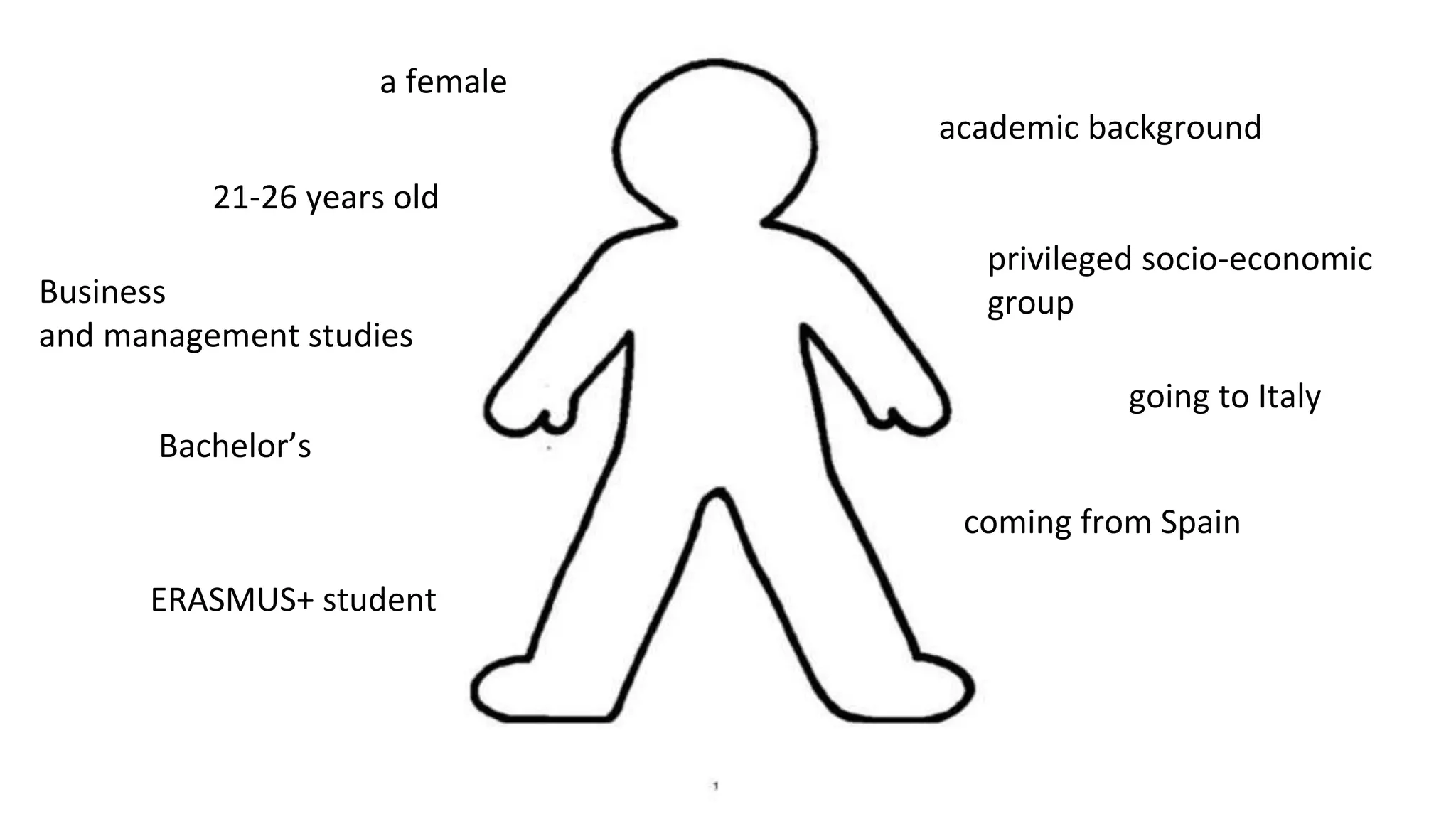
a female
21-26 years old
Bachelor’s
Business
and management studies
academic background
privileged socio-economic
group
ERASMUS+ student
going to Italy
coming from Spain
Some numbers
65% of mobile students are female
80% of mobile students are in the age group 21-26
55% are studying in their 1st cycles
21% are studying business-related programmes
47% come from non-academic background
the majority comes from privileged socio-economic background
most of them are involved in ERASMUS+ programmes
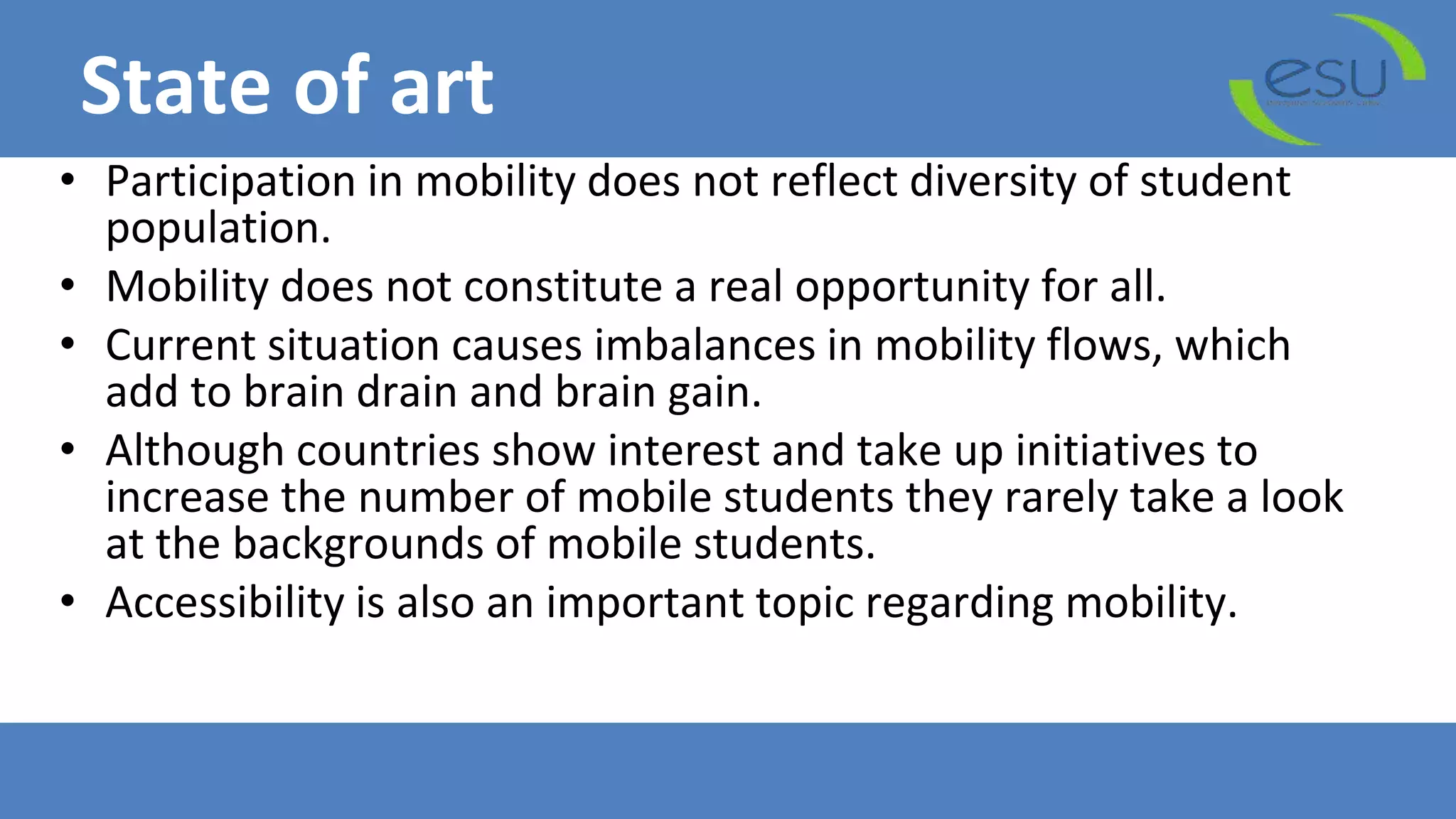
State of art
• Participation in mobility does not reflect diversity of student
population.
• Mobility does not constitute a real opportunity for all.
• Current situation causes imbalances in mobility flows, which
add to brain drain and brain gain.
• Although countries show interest and take up initiatives to
increase the number of mobile students they rarely take a look
at the backgrounds of mobile students.
• Accessibility is also an important topic regarding mobility.
So can digitalisation and e-learning help?
Objective - what do we want to achieve?
Participation of diverse students in HE and in mobility - first we should
be asking why some groups of students are not mobile
Diversification of learning methods - Student centred learning
Support and interaction in e-learning
Why drop-out rates are that high?
Important to remain trustful and critical dialogue between students
and teachers
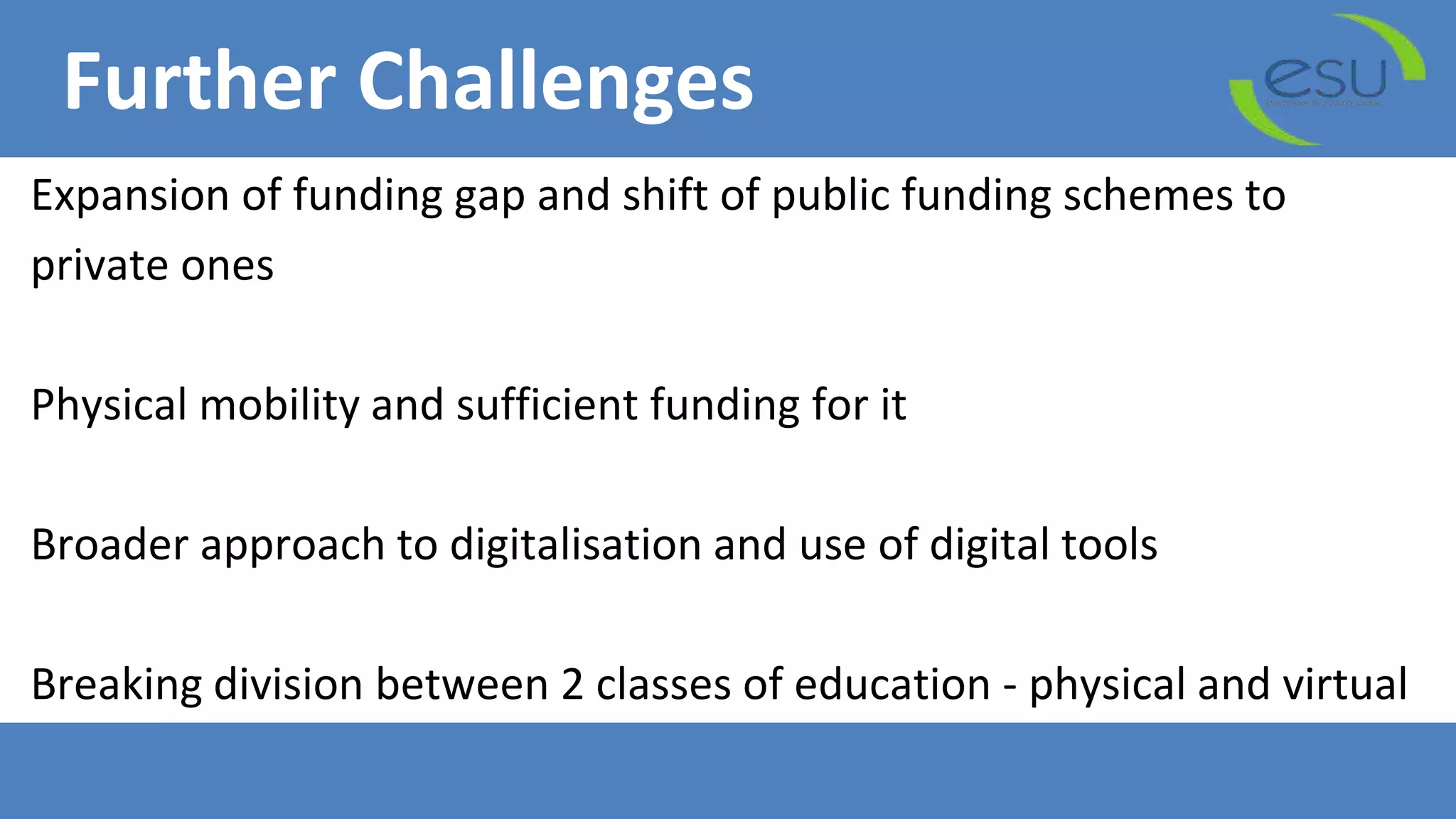
Further Challenges
Expansion of funding gap and shift of public funding schemes to
private ones
Physical mobility and sufficient funding for it
Broader approach to digitalisation and use of digital tools
Breaking division between 2 classes of education - physical and virtual
Further Challenges
Online courses that are part of the curriculum in university vs openly
accessible:
- Quality assurance
- Recognition
- Perception of 2nd class education
Conclusions
E-learning can support mobility and access to education, but it requires a lot
of work and resources!
Clear quality assurance procedures need to be in place in order to foster the
recognition of e-learning and help preventing a two class education system.
Foster use of blended learning, use e-learning as a complement in diverse
forms and not only in order to totally replace the face-to-face education.
Support teachers through trainings in e-learning – especially regarding the
accessibility of it. Students shall be trained in the use of e-learning as well.
The European Students’ Union
Rue de l’ Industrie 10 · 1000 Brussels, Belgium · Tel: +32 2 502 23 62 · Fax: +32 2 706 48 26 · www.esu-online.org
European Students’ Union
@ESUtwt
Liva Vikmane
Vice President
European Students’ Union
liva@esu-online.org
Thank you!

MOOC and student mobility (MID2017)

  • 1.
    The European Students’Union REPRESENTING STUDENTS SINCE 1982 Liva Vikmane - Vice President, ESU MOOC and student mobility Maastricht Innovation days 2017 1/02/17 Maastricht
  • 2.
    “Profile” of amobile student Any ideas?
  • 3.
    a female 21-26 yearsold Bachelor’s Business and management studies academic background privileged socio-economic group ERASMUS+ student going to Italy coming from Spain
  • 4.
    Some numbers 65% ofmobile students are female 80% of mobile students are in the age group 21-26 55% are studying in their 1st cycles 21% are studying business-related programmes 47% come from non-academic background the majority comes from privileged socio-economic background most of them are involved in ERASMUS+ programmes
  • 5.
    State of art •Participation in mobility does not reflect diversity of student population. • Mobility does not constitute a real opportunity for all. • Current situation causes imbalances in mobility flows, which add to brain drain and brain gain. • Although countries show interest and take up initiatives to increase the number of mobile students they rarely take a look at the backgrounds of mobile students. • Accessibility is also an important topic regarding mobility.
  • 6.
    So can digitalisationand e-learning help? Objective - what do we want to achieve? Participation of diverse students in HE and in mobility - first we should be asking why some groups of students are not mobile Diversification of learning methods - Student centred learning
  • 7.
    Support and interactionin e-learning Why drop-out rates are that high? Important to remain trustful and critical dialogue between students and teachers
  • 8.
    Further Challenges Expansion offunding gap and shift of public funding schemes to private ones Physical mobility and sufficient funding for it Broader approach to digitalisation and use of digital tools Breaking division between 2 classes of education - physical and virtual
  • 9.
    Further Challenges Online coursesthat are part of the curriculum in university vs openly accessible: - Quality assurance - Recognition - Perception of 2nd class education
  • 10.
    Conclusions E-learning can supportmobility and access to education, but it requires a lot of work and resources! Clear quality assurance procedures need to be in place in order to foster the recognition of e-learning and help preventing a two class education system. Foster use of blended learning, use e-learning as a complement in diverse forms and not only in order to totally replace the face-to-face education. Support teachers through trainings in e-learning – especially regarding the accessibility of it. Students shall be trained in the use of e-learning as well.
  • 11.
    The European Students’Union Rue de l’ Industrie 10 · 1000 Brussels, Belgium · Tel: +32 2 502 23 62 · Fax: +32 2 706 48 26 · www.esu-online.org European Students’ Union @ESUtwt Liva Vikmane Vice President European Students’ Union liva@esu-online.org Thank you!