4 “C”s 4 learning
Collaborative (Working together)
Collaborative abilities.
 Allocating resources and responsibilities.
Brainstorming ideas in a group.
Decision-making strategies.
Delegating.
Evaluating the products processes and
members of group.
Cont…………
 Goal settings.
Leading a group.
Managing time.
Resolving conflicts.
Team building.
Critical thinking
 An activity of left brain.
 Focused on careful analysis of something to better understanding it.
 Helps to evaluate ideas.
 Involves logical thinking and reasoning.
 Leads to develop other skills.
 Mainly about correct thinking.
 To meet the challenges of adapting to our constantly
changing workforce.
Critical thinking abilities
 Analyzing.
 Arguing.
 Classifying.
 Comparing and contrasting.
 Defining.
 Describing.
 Evaluating.
 Explaining.
 Tracking cause and effect.
Creativity
o Expensive, open-ended inventions and discovery of possibilities.
o Brainstorming ideas.
o Creating something.
o Designing something.
o Entertaining others.
o Imagining ideas.
o Improvising a solution.
o Overturning something.
o Problem solving.
o Questioning actively.
Creativity abilities
 Use wide range of ideas.
 Create a new or worthwhile idea.
 Elaborate, refine, analyze and evaluate.
 Develop.
 Be open and responsive.
 Demonstrate originality and inventiveness.
 View failure as an opportunity to learn.
 Act on creative ideas.
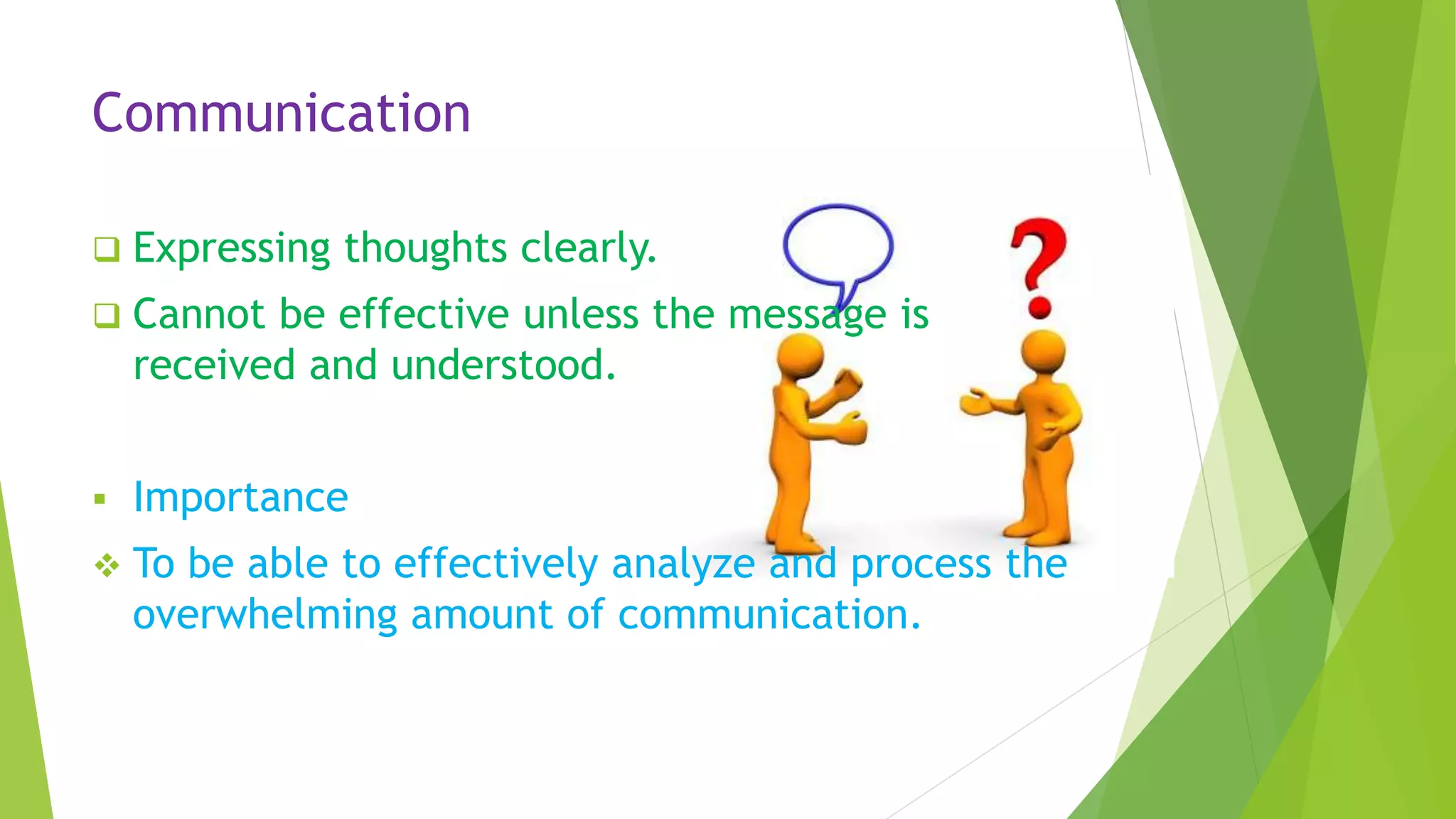
Communication
 Expressing thoughts clearly.
 Cannot be effective unless the message is
received and understood.
 Importance
 To be able to effectively analyze and process the
overwhelming amount of communication.
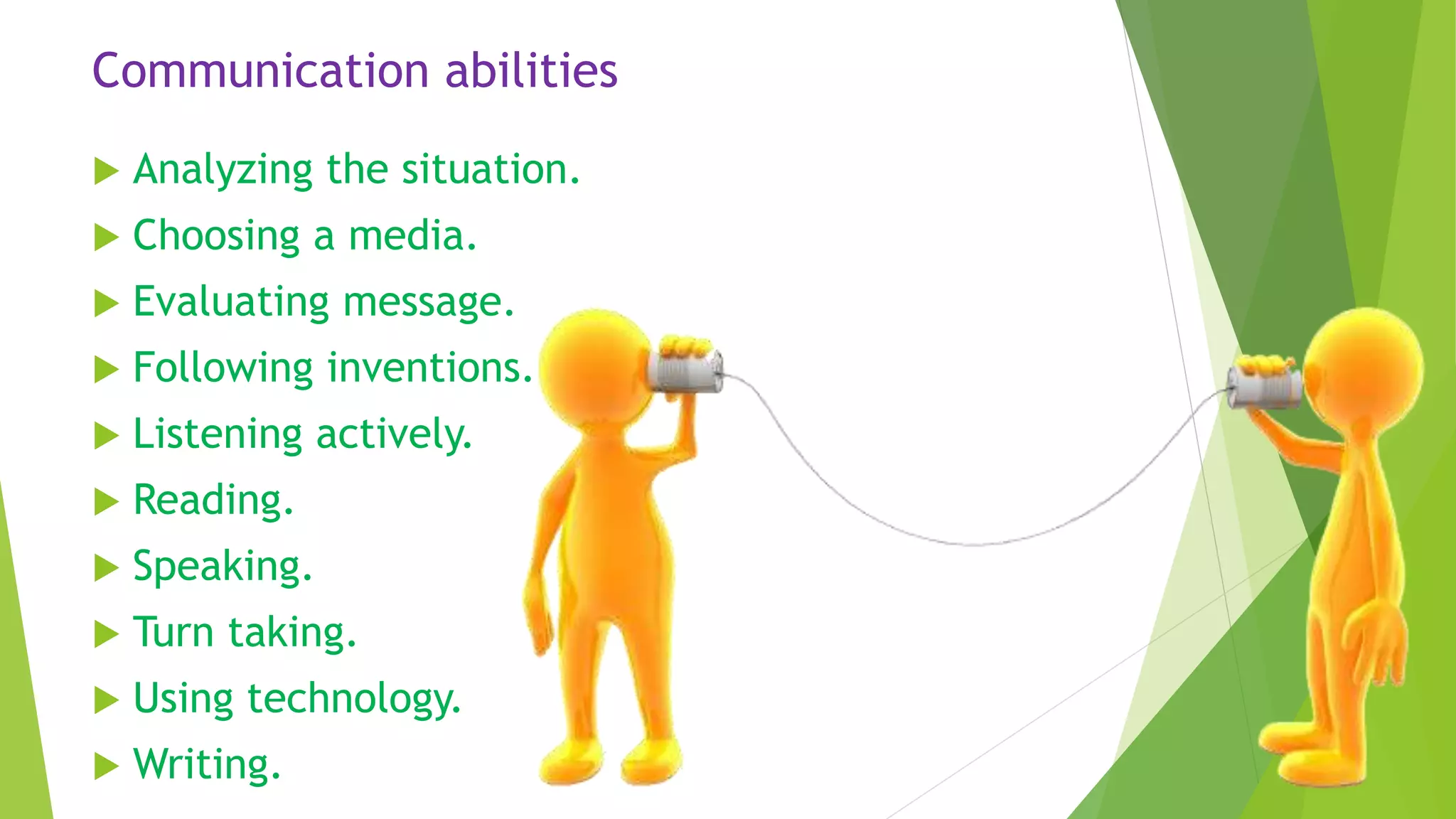
Communication abilities
 Analyzing the situation.
 Choosing a media.
 Evaluating message.
 Following inventions.
 Listening actively.
 Reading.
 Speaking.
 Turn taking.
 Using technology.
 Writing.
Thank You!

Mohamed mansoor

  • 1.
    4 “C”s 4learning
  • 2.
    Collaborative (Working together) Collaborativeabilities.  Allocating resources and responsibilities. Brainstorming ideas in a group. Decision-making strategies. Delegating. Evaluating the products processes and members of group.
  • 3.
    Cont…………  Goal settings. Leadinga group. Managing time. Resolving conflicts. Team building.
  • 4.
    Critical thinking  Anactivity of left brain.  Focused on careful analysis of something to better understanding it.  Helps to evaluate ideas.  Involves logical thinking and reasoning.  Leads to develop other skills.  Mainly about correct thinking.  To meet the challenges of adapting to our constantly changing workforce.
  • 5.
    Critical thinking abilities Analyzing.  Arguing.  Classifying.  Comparing and contrasting.  Defining.  Describing.  Evaluating.  Explaining.  Tracking cause and effect.
  • 6.
    Creativity o Expensive, open-endedinventions and discovery of possibilities. o Brainstorming ideas. o Creating something. o Designing something. o Entertaining others. o Imagining ideas. o Improvising a solution. o Overturning something. o Problem solving. o Questioning actively.
  • 7.
    Creativity abilities  Usewide range of ideas.  Create a new or worthwhile idea.  Elaborate, refine, analyze and evaluate.  Develop.  Be open and responsive.  Demonstrate originality and inventiveness.  View failure as an opportunity to learn.  Act on creative ideas.
  • 8.
    Communication  Expressing thoughtsclearly.  Cannot be effective unless the message is received and understood.  Importance  To be able to effectively analyze and process the overwhelming amount of communication.
  • 9.
    Communication abilities  Analyzingthe situation.  Choosing a media.  Evaluating message.  Following inventions.  Listening actively.  Reading.  Speaking.  Turn taking.  Using technology.  Writing.
  • 10.