MODULE 3 Writing n Exposition or Discussion on a Familiar Issue to Include Key Structural Elements and Language Features
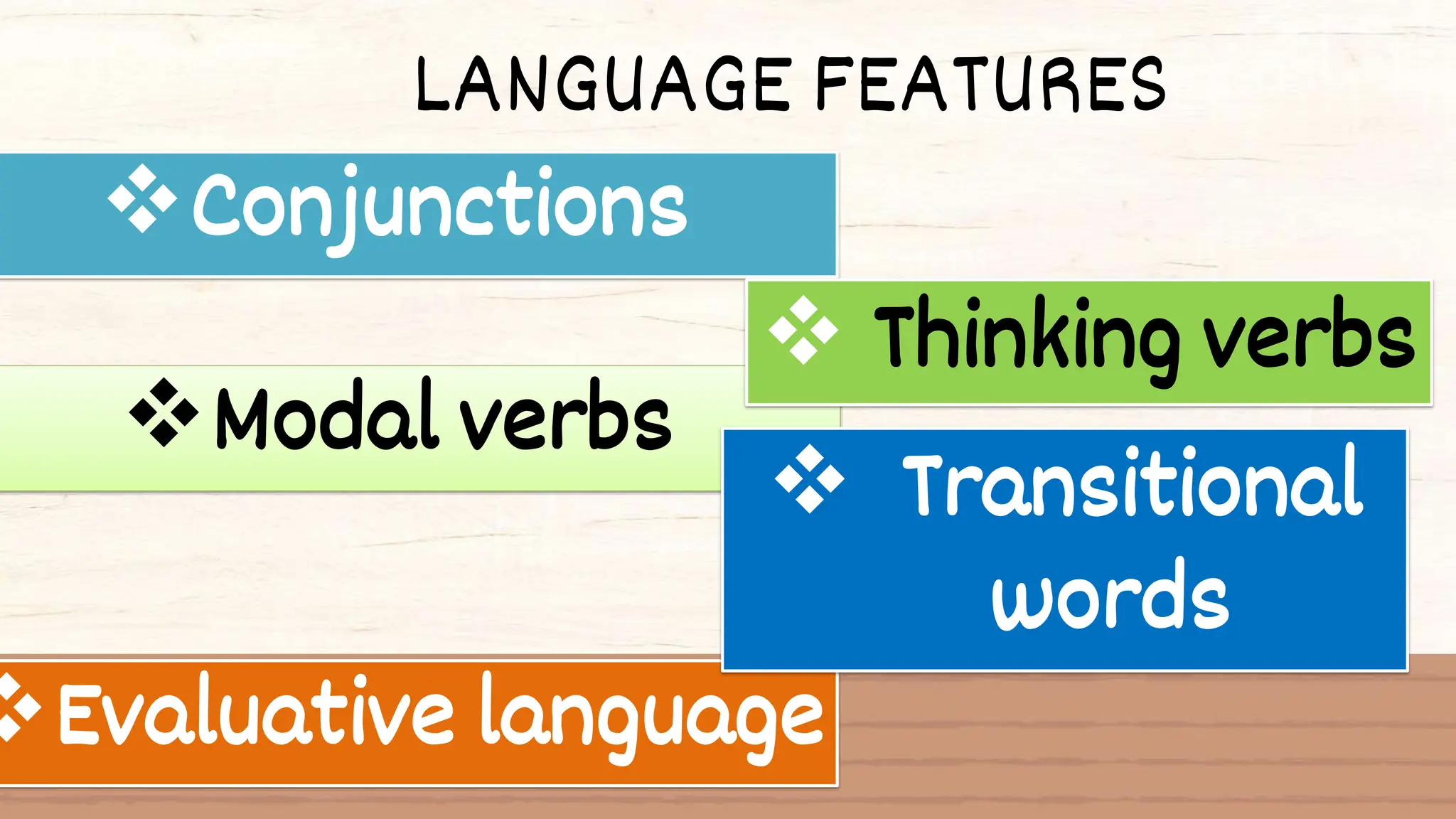
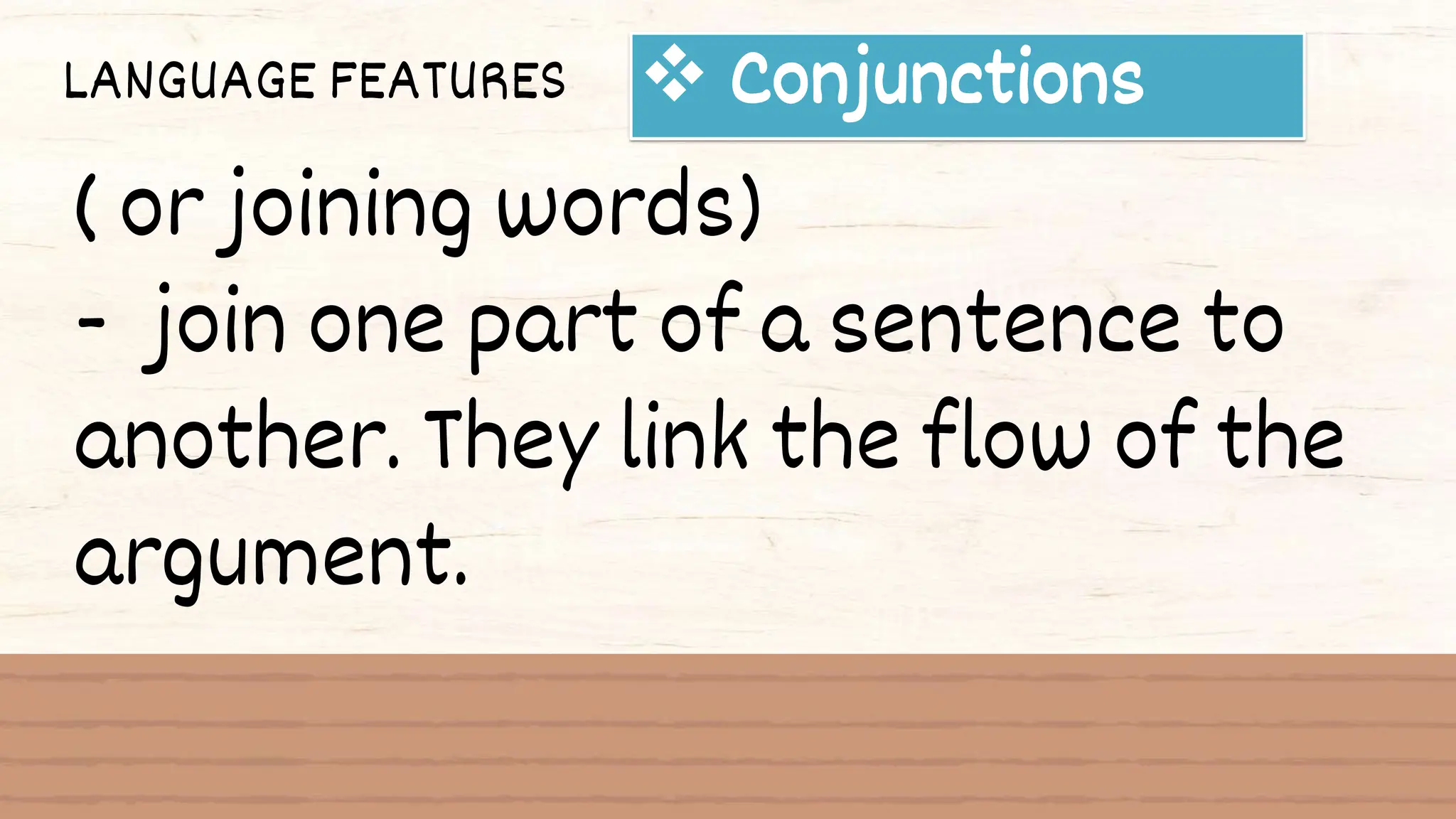
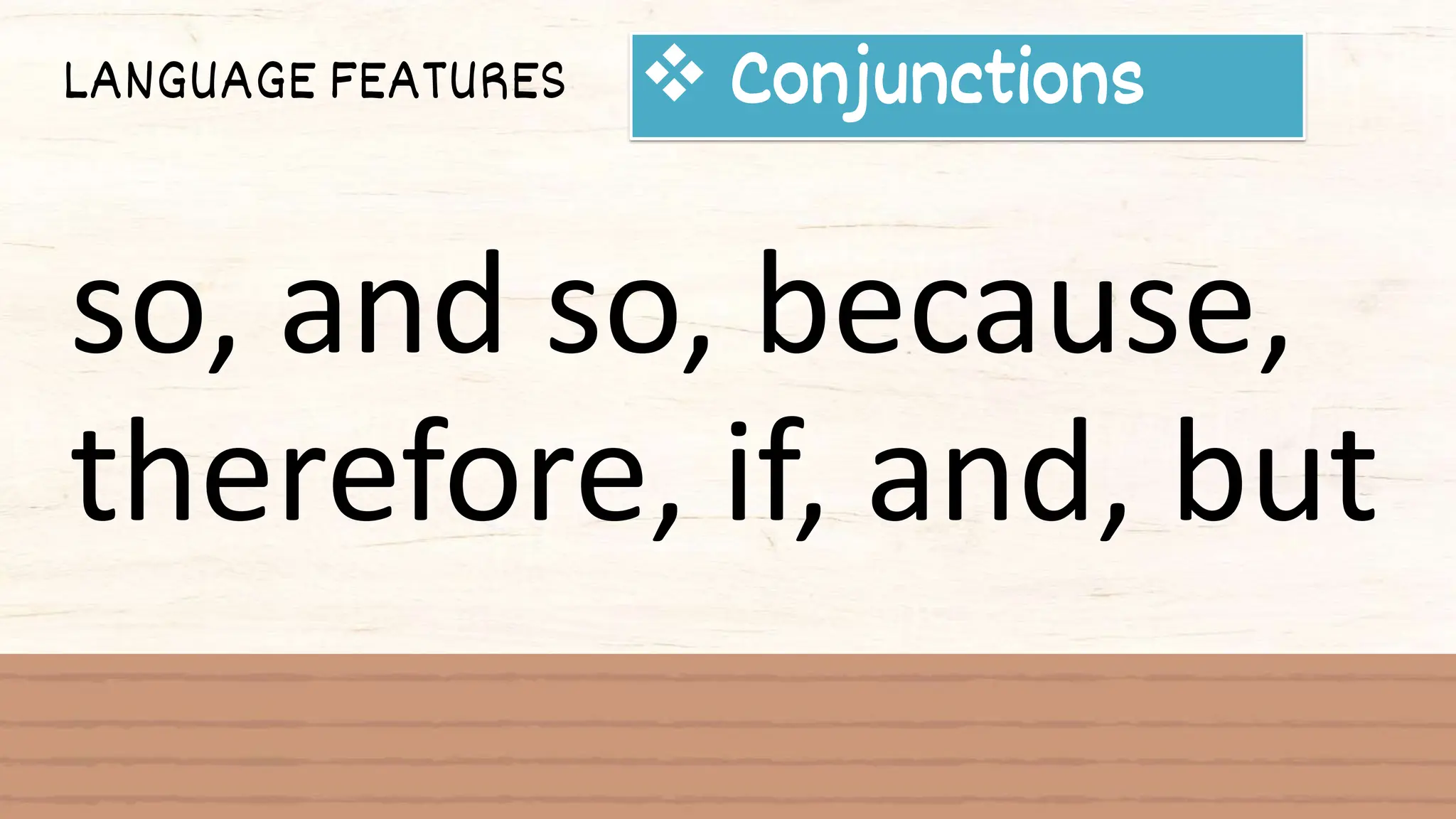
The document defines and discusses exposition, which presents an argument to persuade the reader. It notes that exposition can be in the form of an essay, speech, or editorial. The document outlines the typical structure of exposition, including an introduction stating the position, arguments to support it, and a reinforcement of the position. It also identifies common language features used in exposition, such as conjunctions, modal verbs, evaluative language, thinking verbs, and transitional words to logically link the argument.
Exposition can bepresented as:
Essay is a short formal piece of writing
dealing with a single subject. It is
typically written to try to persuade the
reader using selected research
evidence.
8.
Exposition can bepresented as:
Editorial is an article in a
newspaper or other periodical or on
a website presenting the opinion of
the publisher, writer, or editor.
9.
Exposition can bepresented as:
Speech is a formal
address or discourse
delivered to an
audience.
10.
In order towrite a good exposition, one should include key
structural elements and language features
STRUCTURE OF
AN EXPOSITION
11.
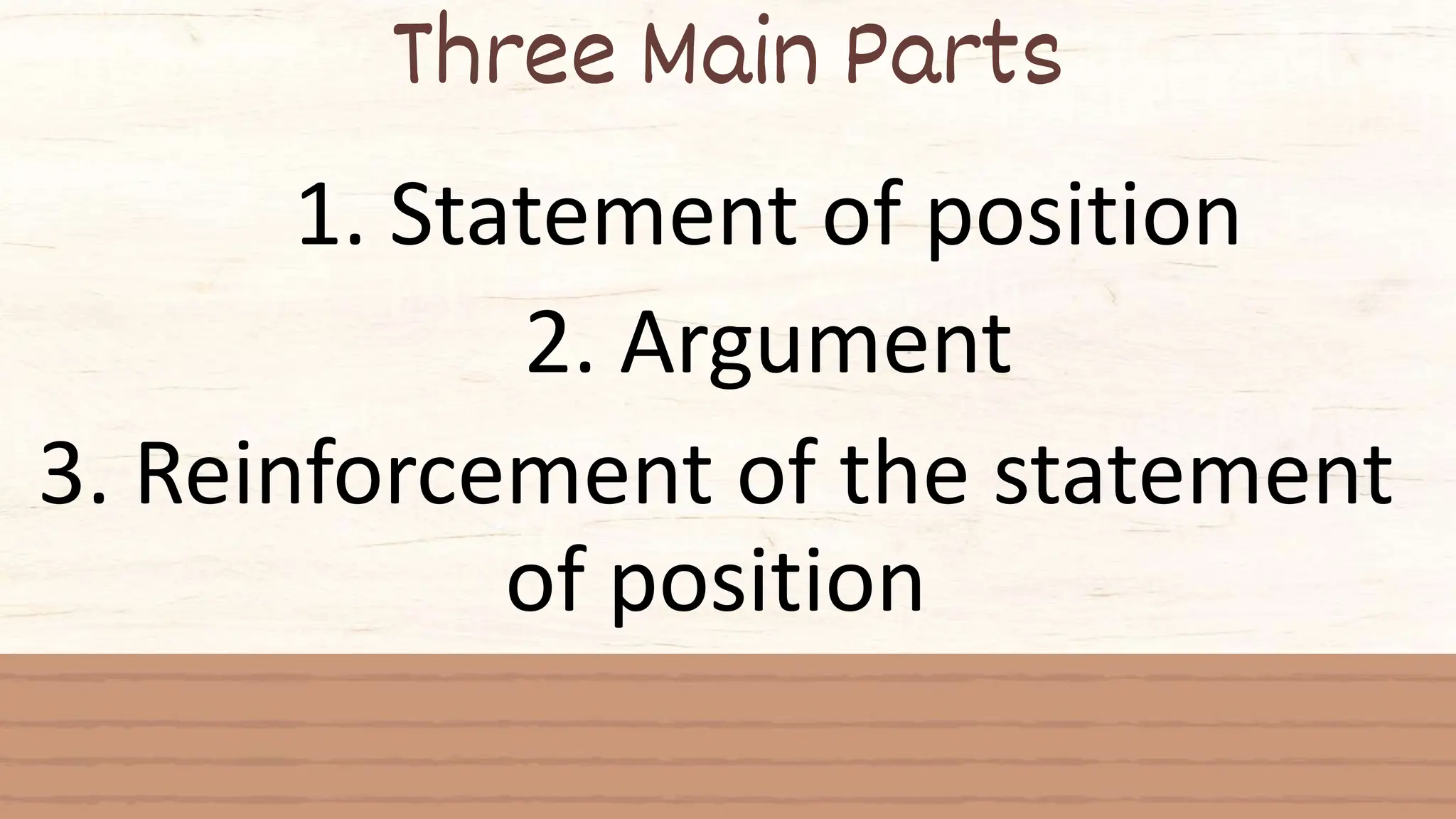
Three Main Parts
1.Statement of position
2. Argument
3. Reinforcement of the statement
of position
12.
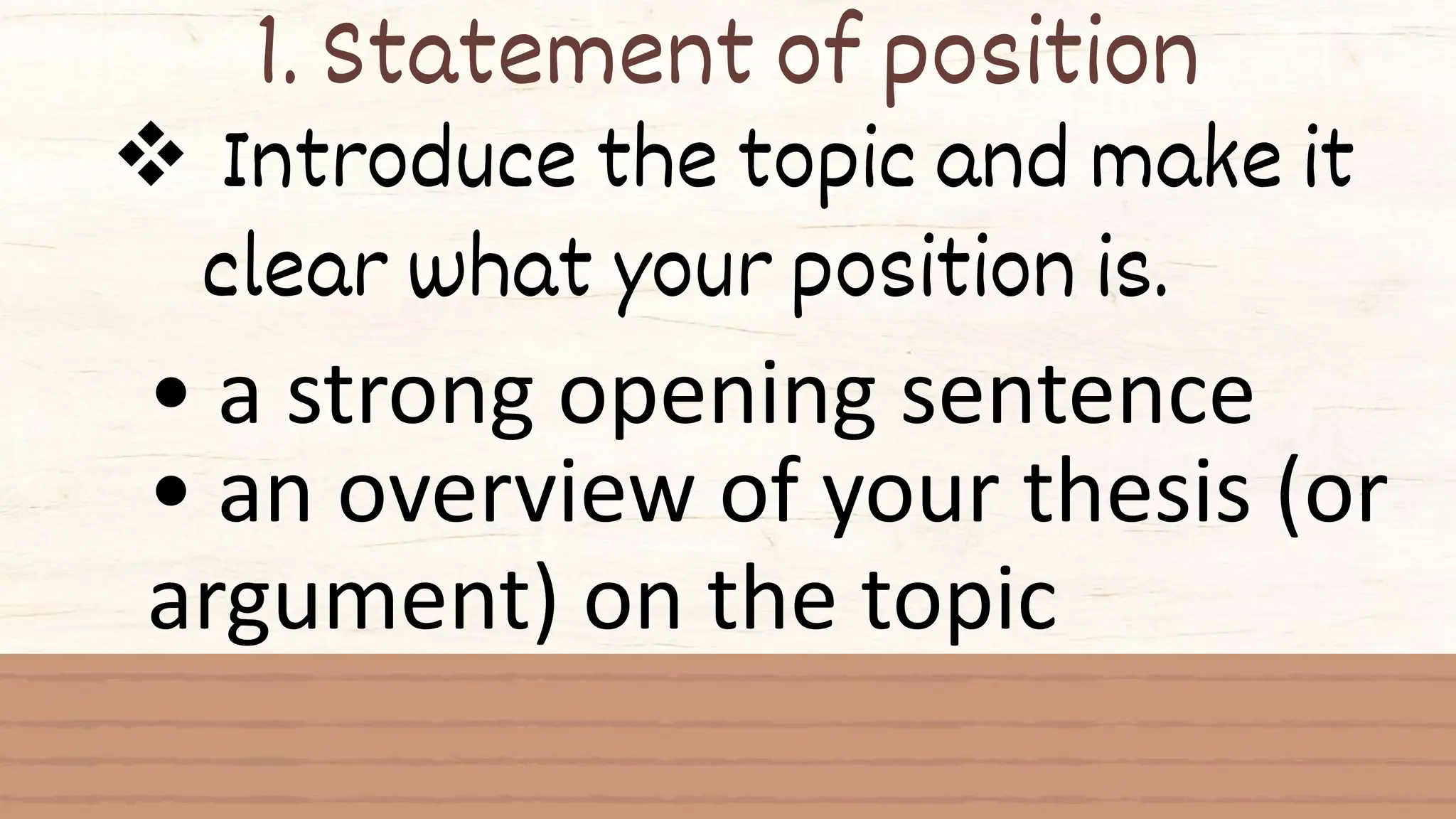
1. Statement ofposition
Introduce the topic and make it
clear what your position is.
• a strong opening sentence
• an overview of your thesis (or
argument) on the topic
13.
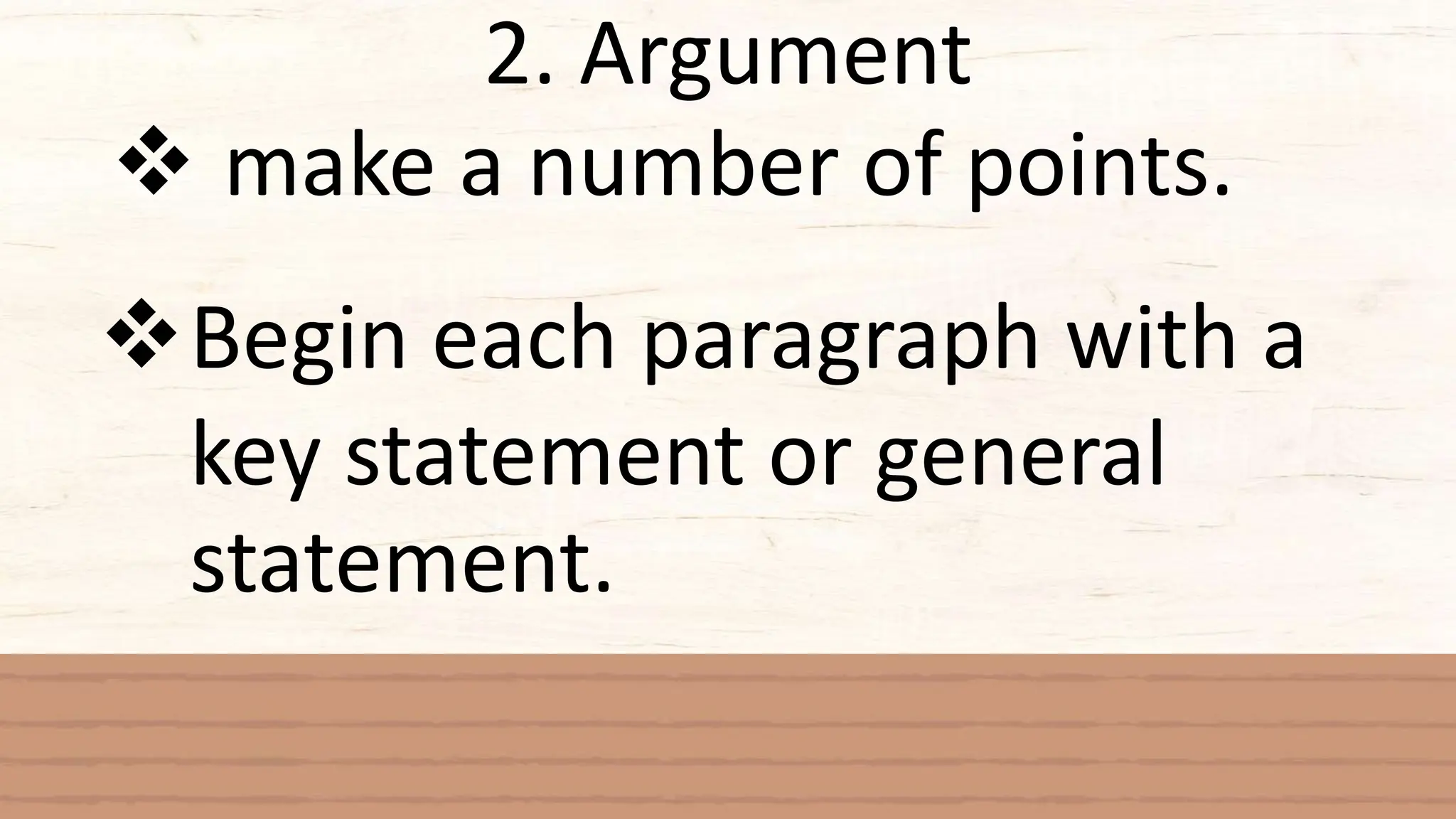
2. Argument
makea number of points.
Begin each paragraph with a
key statement or general
statement.
14.
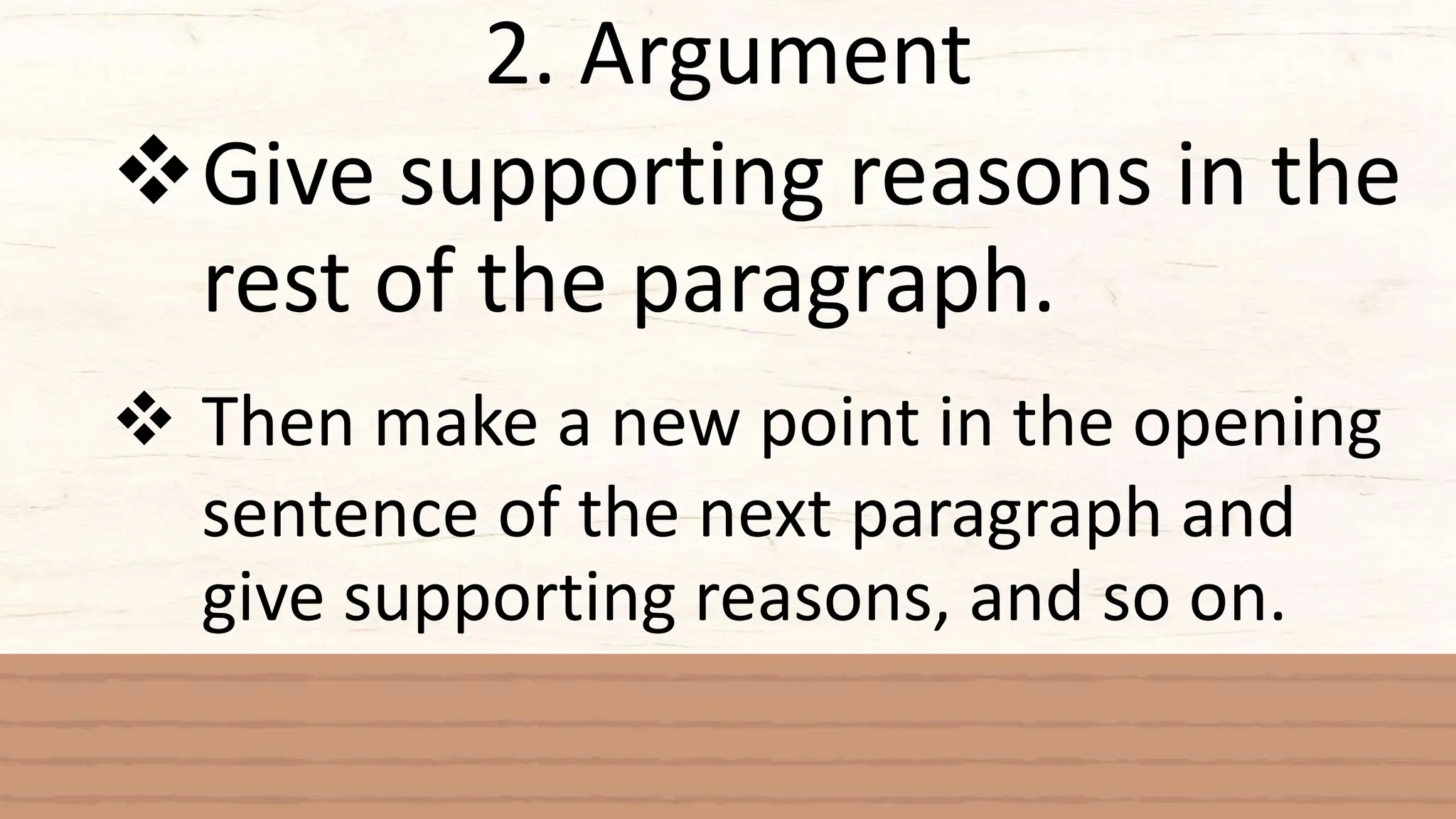
2. Argument
Give supportingreasons in the
rest of the paragraph.
Then make a new point in the opening
sentence of the next paragraph and
give supporting reasons, and so on.
15.
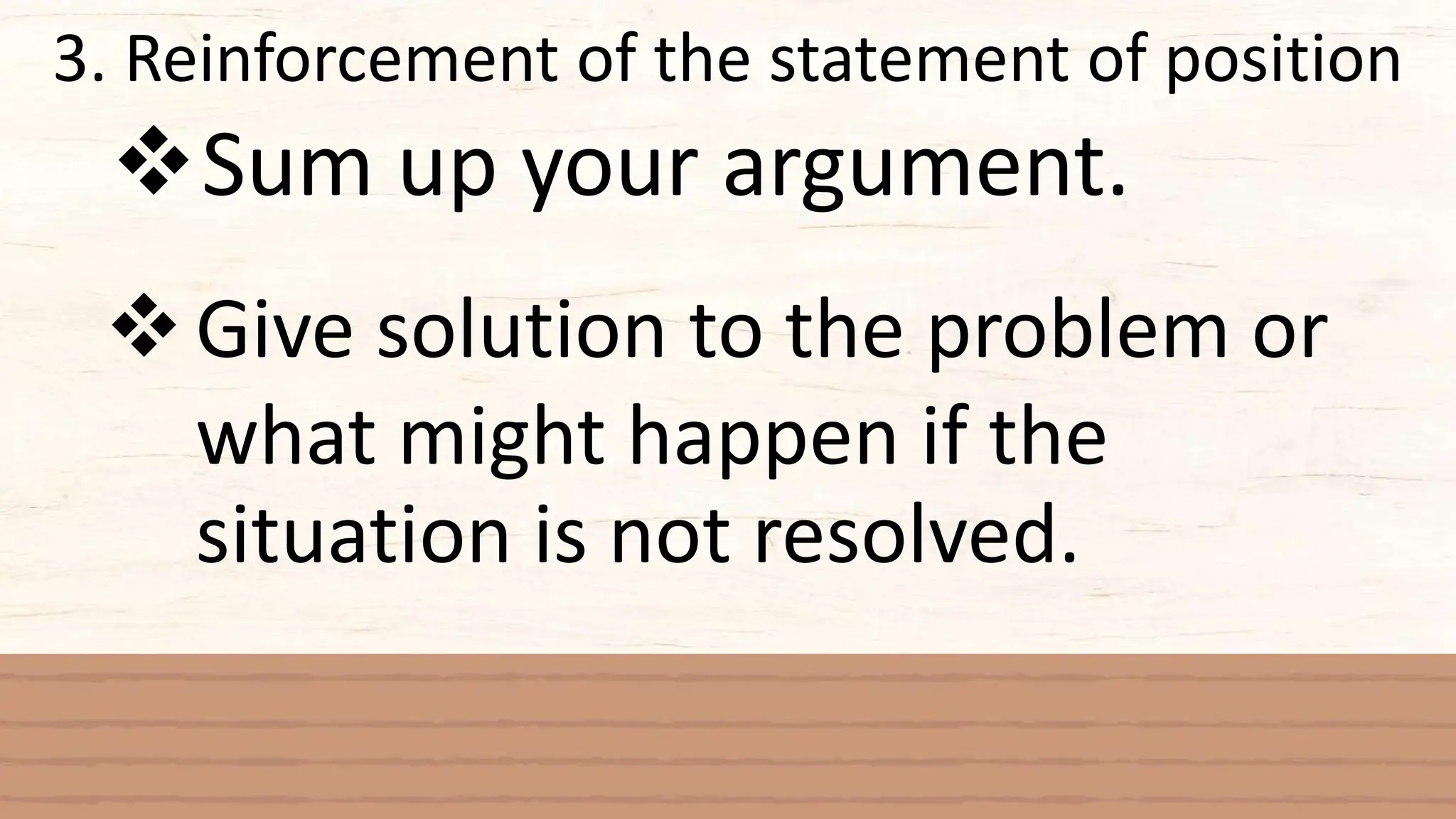
3. Reinforcement ofthe statement of position
Sum up your argument.
Give solution to the problem or
what might happen if the
situation is not resolved.















![Argumentative Essay [Autosaved].pptxasdf](https://cdn.slidesharecdn.com/ss_thumbnails/argumentativeessayautosaved-251123231228-be72e8ed-thumbnail.jpg?width=640&height=640&fit=bounds)


