







The Use of a Modernized ExtracorporealLife Support System: A Case SeriesDr. Anthony Shackelford DHA, CCP, CCTAssistant ProfessorCardiovascular Perfusion ProgramMedical University of South CarolinaCharleston, South Carolina
Foreword2
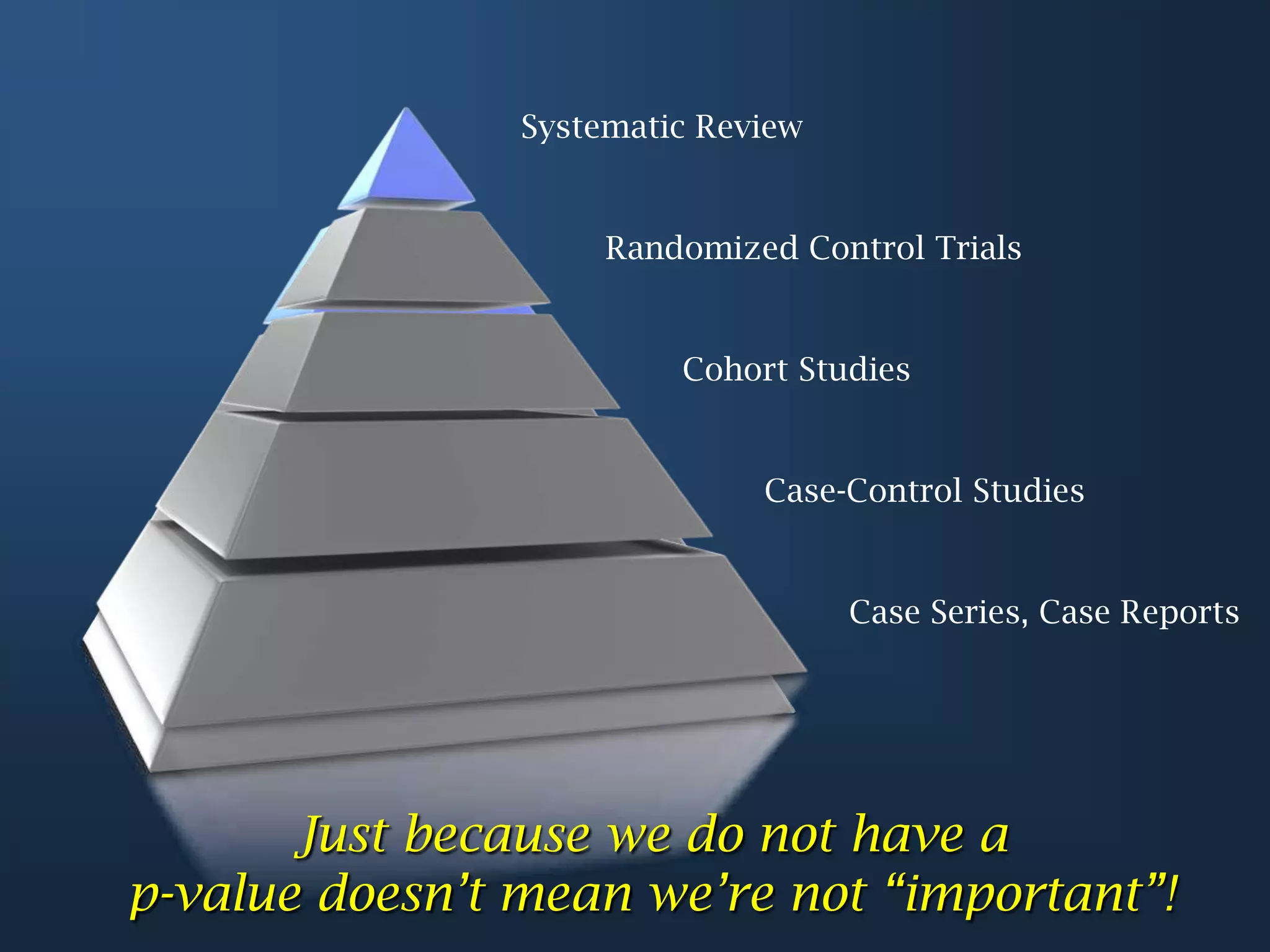
Systematic ReviewRandomized Control TrialsCohort StudiesCase-Control StudiesCase Series, Case ReportsJust because we do not have a p-value doesn’t mean we’re not “important”!
	Florida Perfusion Society Board and MembersGreat Job !!Let’s Give an Applause!!4
Disclaimer5I have no contractual or financial affiliations with any of the manufactures of any of the devices mentioned in presentation
Case Review6
Patient A: Clinical Presentation45 year old female Caucasian PharmacistPresented to outside facility ER with fever 104º F2 Week history of Flu-like symptomsCough, Congestion, ache and painWide ECG ComplexThought to be V-TachSTEMI protocol initiated Taken to Cardiac Cath LabLater Diagnosed as Viral Myocarditis7
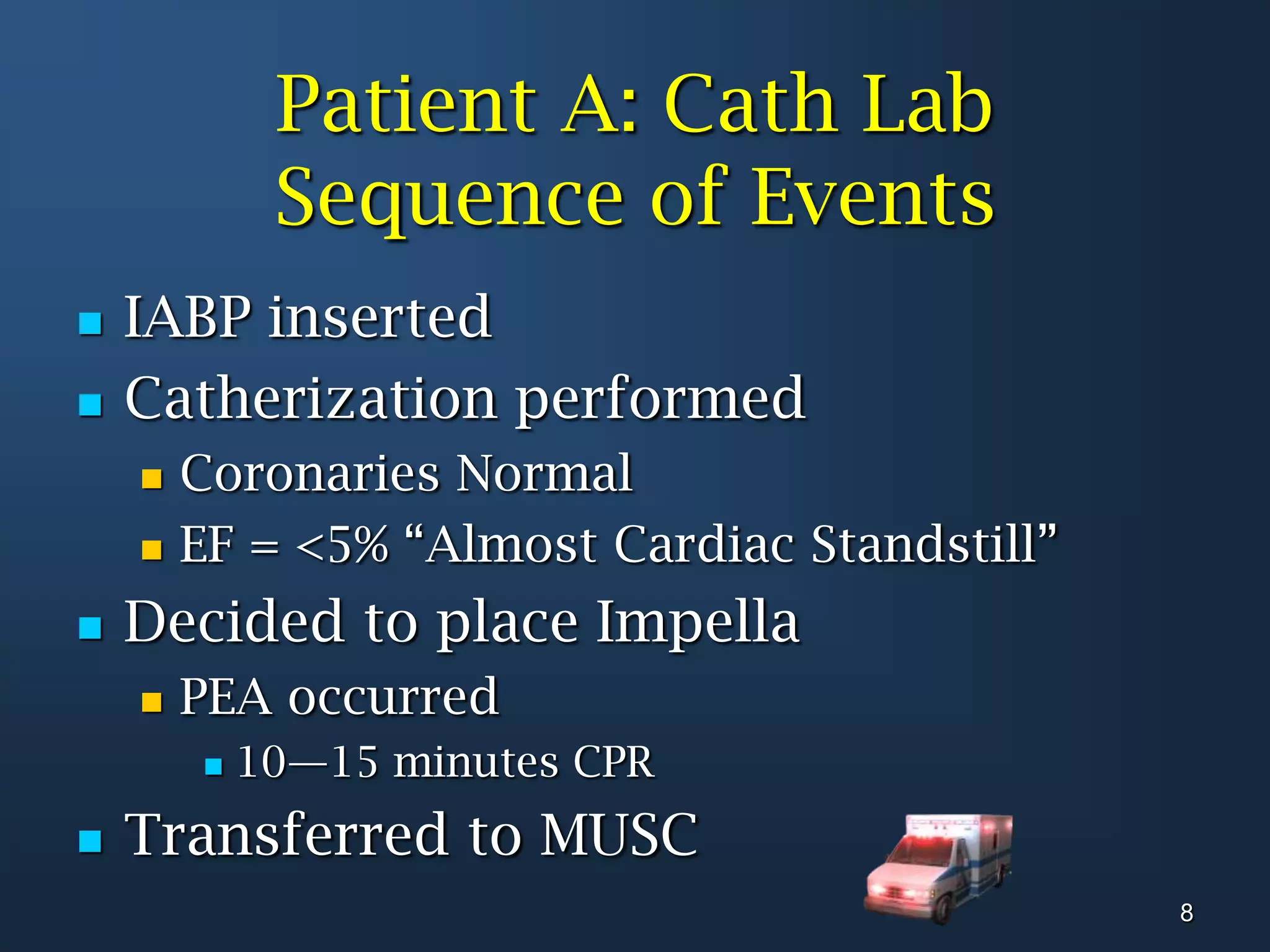
Patient A: Cath Lab Sequence of EventsIABP insertedCatherization performed Coronaries NormalEF = <5% “Almost Cardiac Standstill”Decided to place ImpellaPEA occurred 	10—15 minutes CPRTransferred to MUSC8
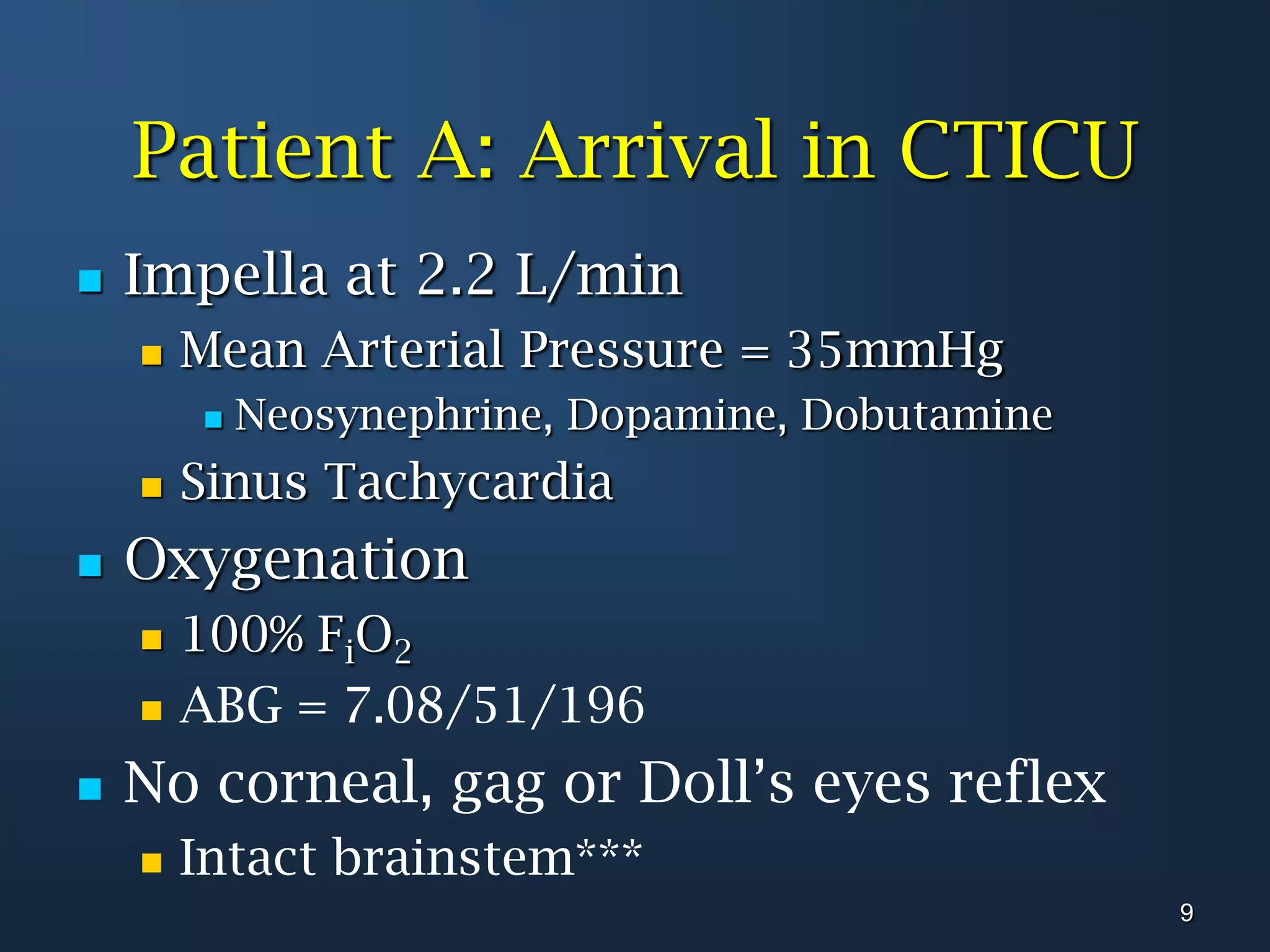
Patient A: Arrival in CTICUImpella at 2.2 L/minMean Arterial Pressure = 35mmHgNeosynephrine, Dopamine, DobutamineSinus TachycardiaOxygenation100% FiO2ABG = 7.08/51/196No corneal, gag or Doll’s eyes reflex Intact brainstem***9
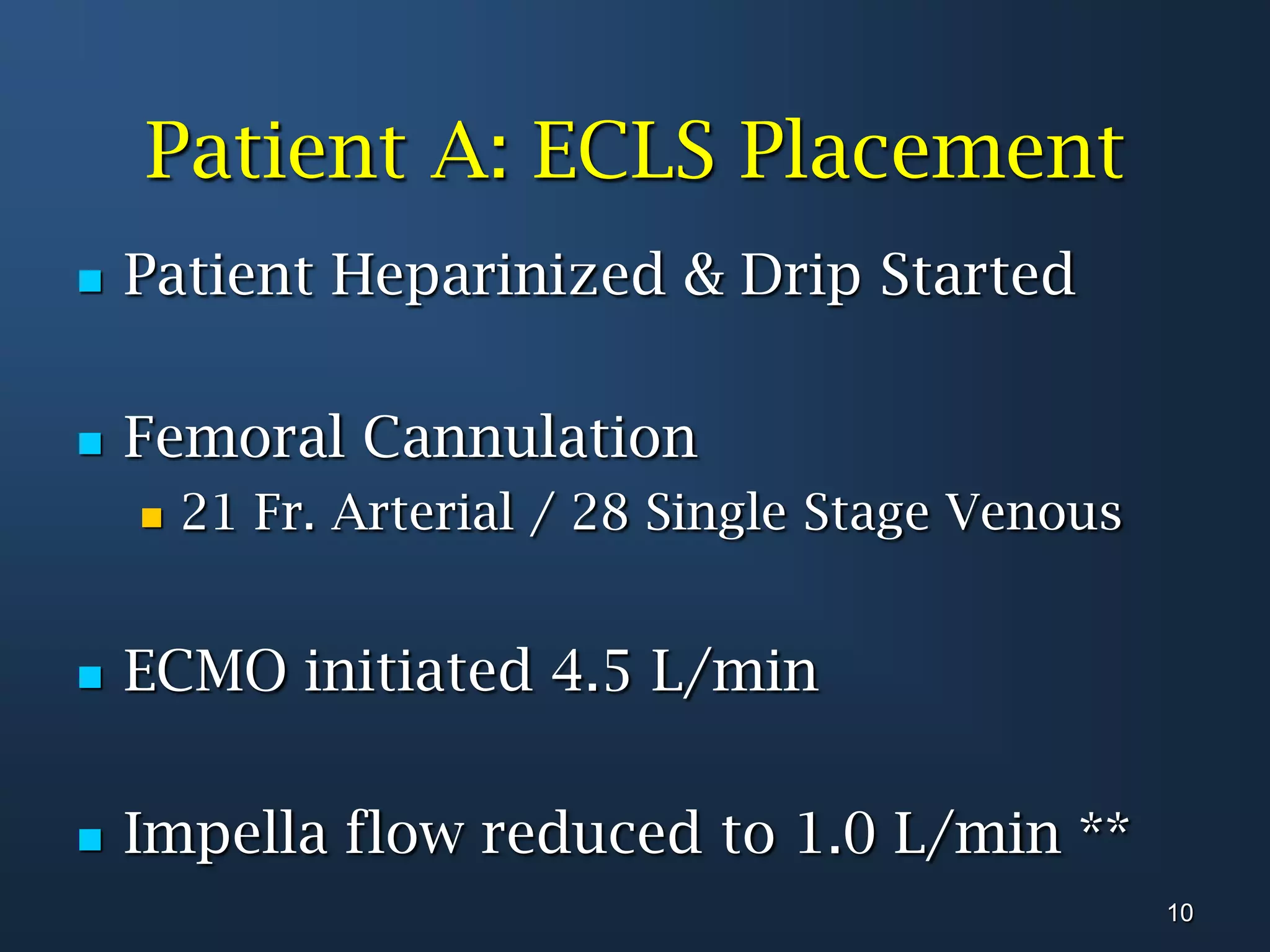
Patient A: ECLS PlacementPatient Heparinized & Drip StartedFemoral Cannulation21 Fr. Arterial / 28 Single Stage VenousECMO initiated 4.5 L/minImpella flow reduced to 1.0 L/min **10
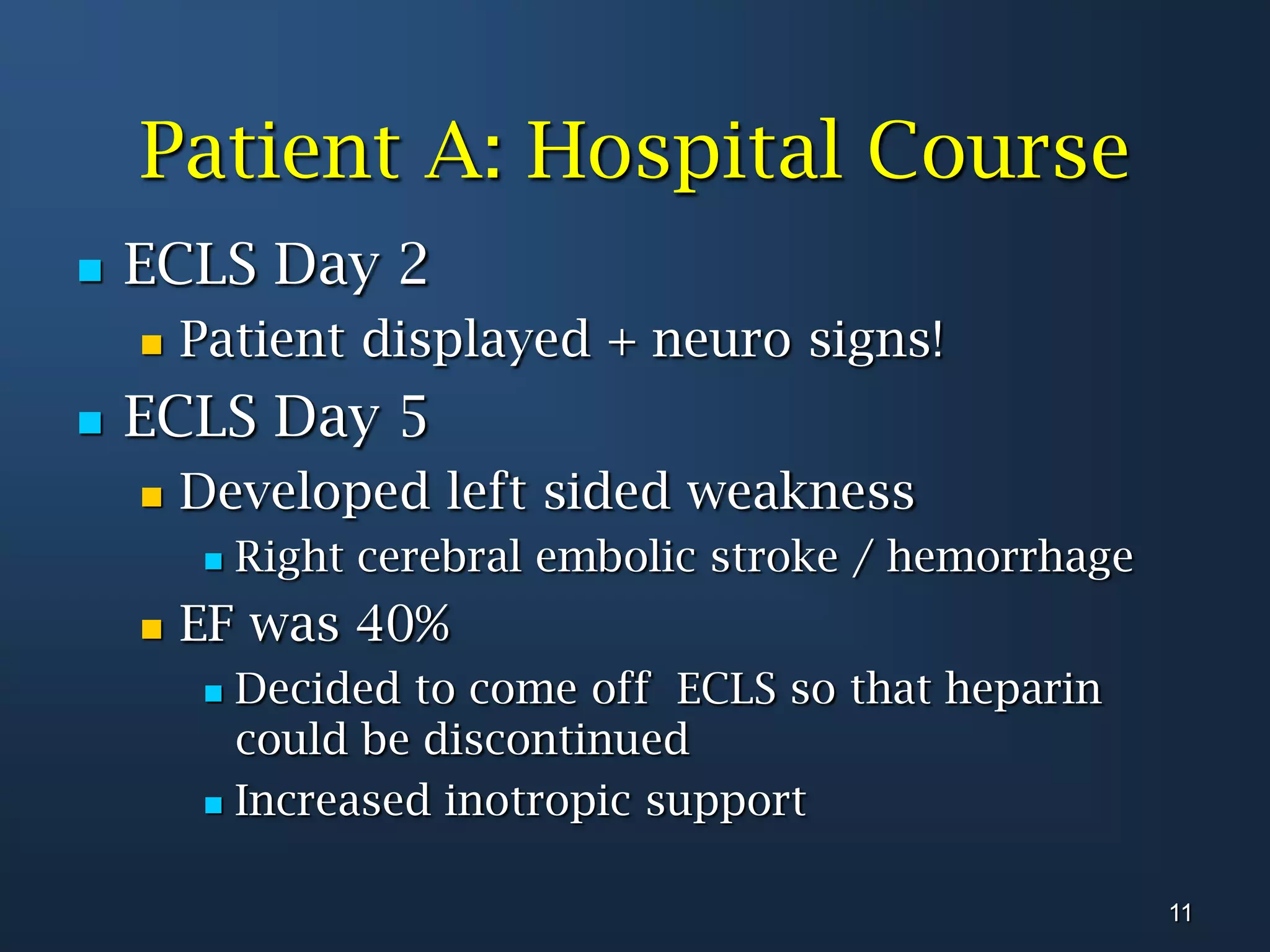
Patient A: Hospital CourseECLS Day 2 Patient displayed + neuro signs!ECLS Day 5Developed left sided weaknessRight cerebral embolic stroke / hemorrhageEF was 40%Decided to come off  ECLS so that heparin could be discontinuedIncreased inotropic support11
Patient A: OutcomeDisplayed some memory deficits continued to resolve over hospital courseEF = 40%-50% at day 12 of hospital stay.Day 14 - discharged to home.12
Patient B: Clinical Presentation62 y/o Female Caucasian Radiology Technologist at outside facilityAt work in Orthopedic office complaining chest pain Hx reflux for several daysEMS called and transfers patient to ER13
Patient B: Sequence of EventsUpon Arrival to ER Cardiac Arrest – V-FibDefibrillated multiple timesTransferred to Cath LabCardiac Catherization performed Anterior MIEF = 10% - 15%100% LADPatient Arrested during DES placement14
Patient B: Sequence of EventsCPR performedPerfusion Notified ECLS Primed and InitiatedBiomedicus and PrimoxPt. was transferred to our facility and switched to our ECLS system.15
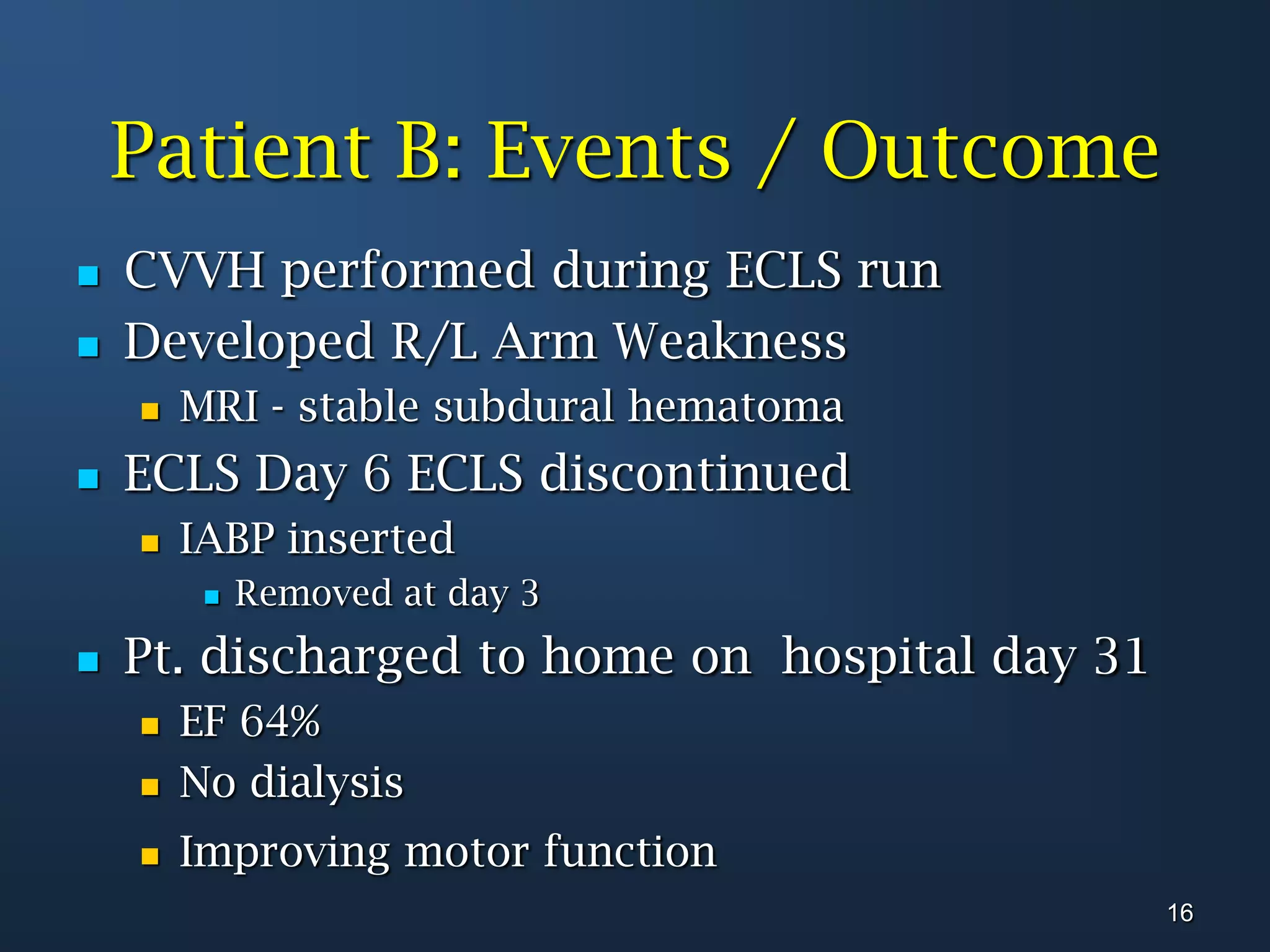
Patient B: Events / OutcomeCVVH performed during ECLS runDevelopedR/L Arm Weakness MRI - stable subdural hematomaECLS Day 6 ECLS discontinuedIABP insertedRemoved at day 3Pt. discharged to home on  hospital day 31EF 64%No dialysisImproving motor function16
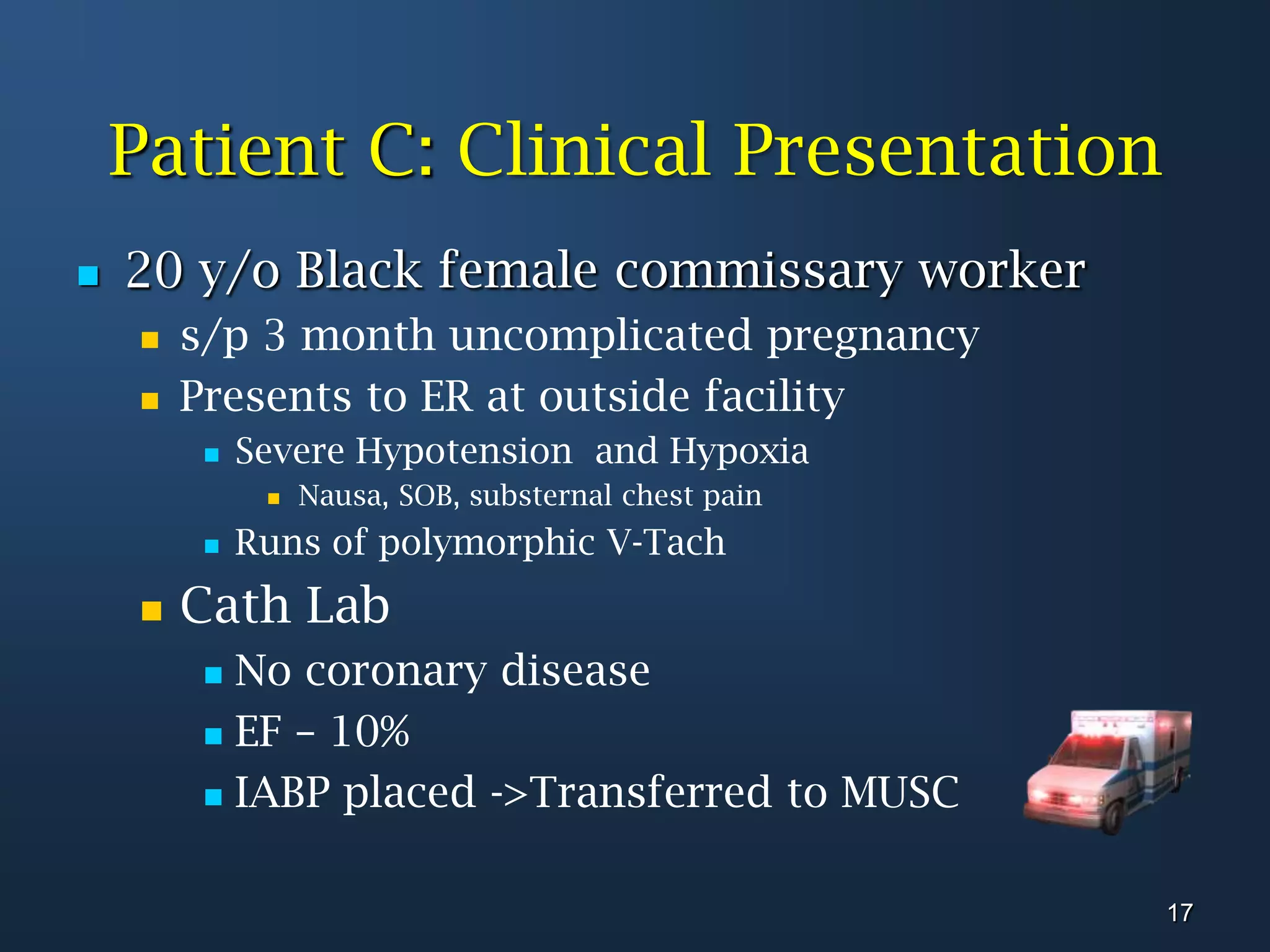
Patient C: Clinical Presentation20 y/o Black female commissary workers/p 3 month uncomplicated pregnancyPresents to ER at outside facility Severe Hypotension  and HypoxiaNausa, SOB, substernal chest painRuns of polymorphic V-TachCath LabNo coronary diseaseEF – 10%IABP placed ->Transferred to MUSC17
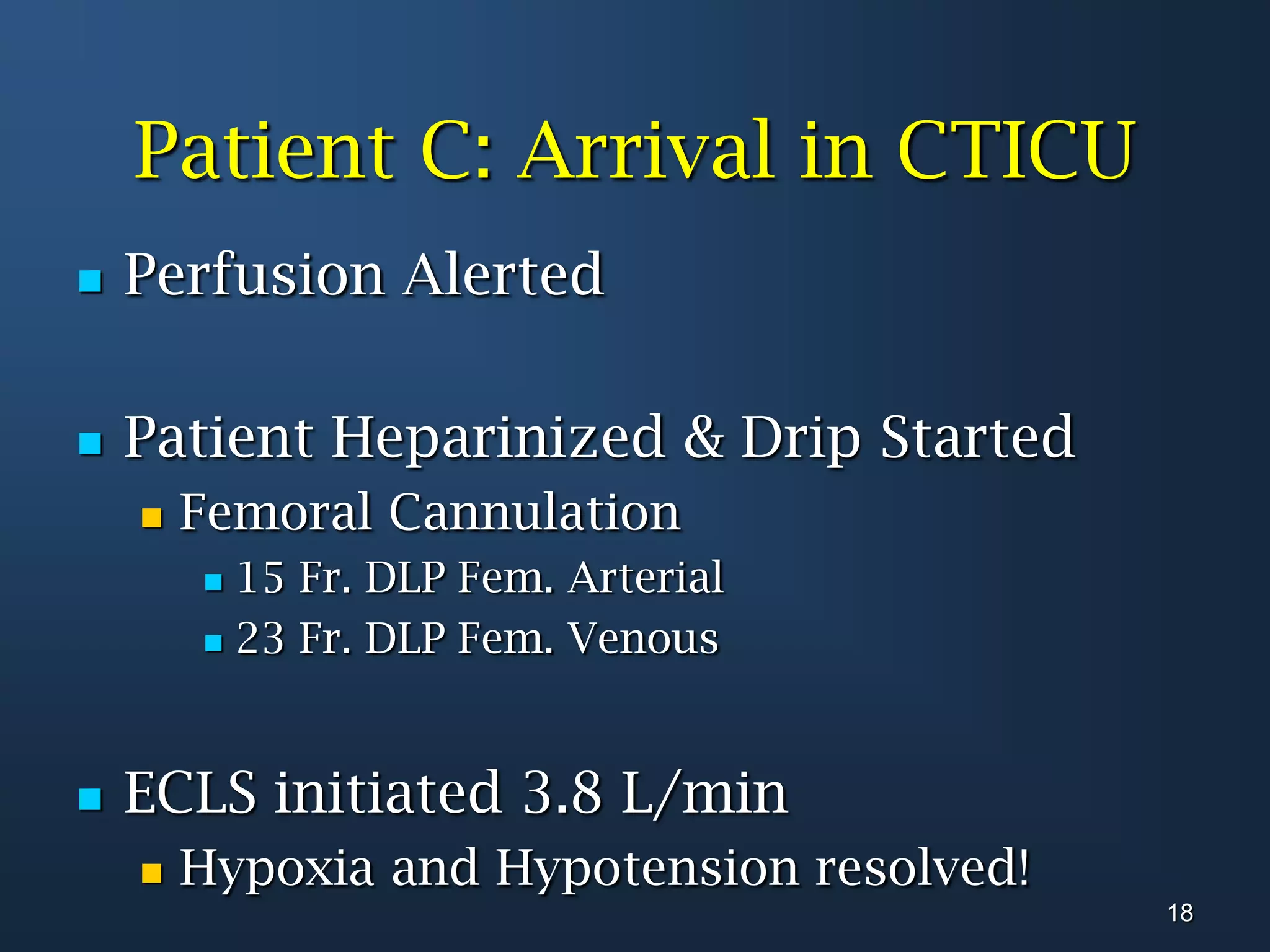
Patient C: Arrival in CTICUPerfusion Alerted Patient Heparinized & Drip StartedFemoral Cannulation15 Fr. DLP Fem. Arterial23 Fr. DLP Fem. VenousECLS initiated 3.8 L/minHypoxia and Hypotension resolved!18
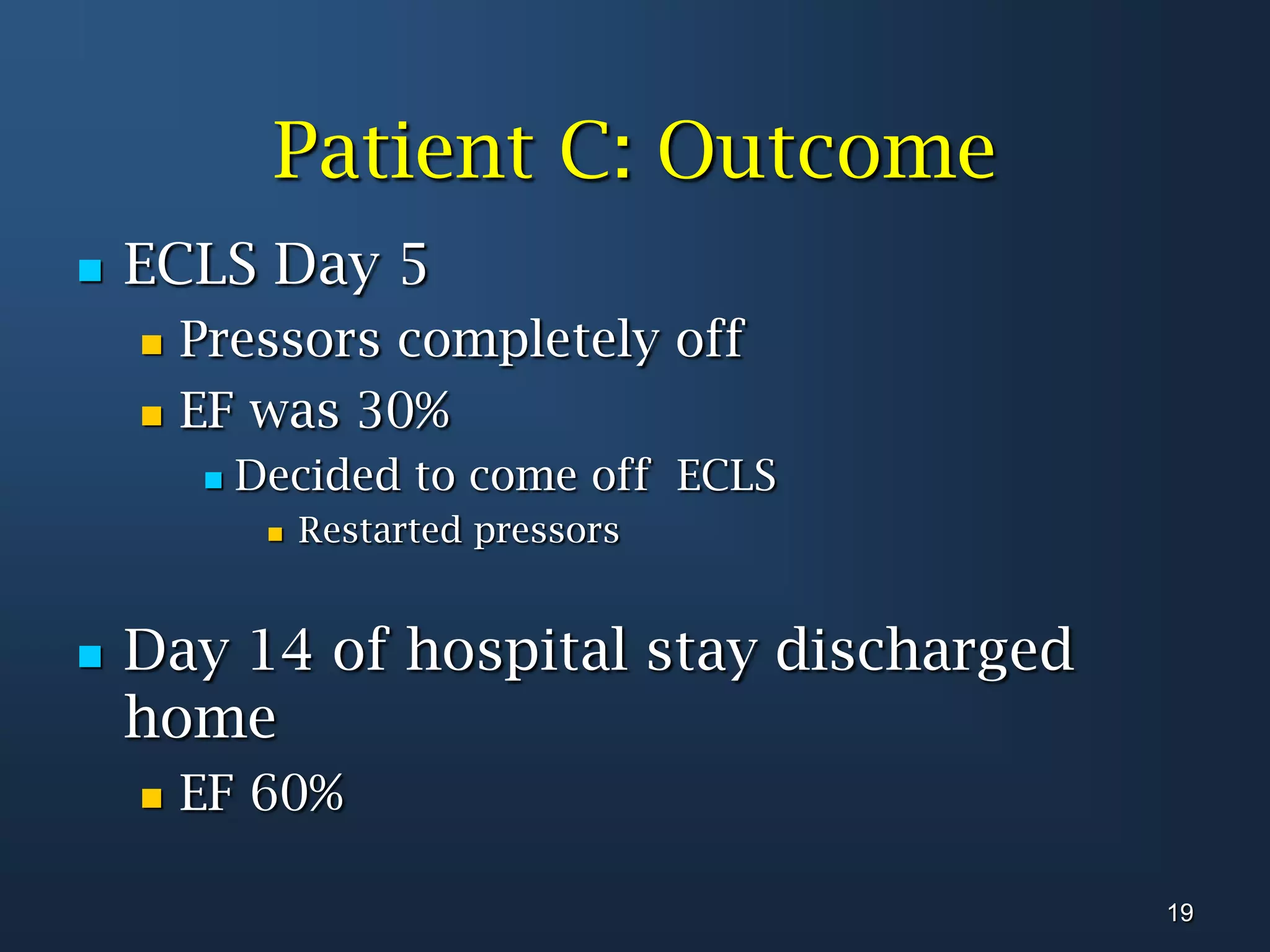
Patient C: OutcomeECLS Day 5Pressors completely offEF was 30%Decided to come off  ECLSRestarted pressorsDay 14 of hospital stay discharged homeEF 60%19
Keys to SuccessAggressive DiagnosticsCollaborationMedicine/Cardiology/ER/SurgeryEarly & Aggressive InterventionsRight Team /Right Equipment20
Review of our Circuit21
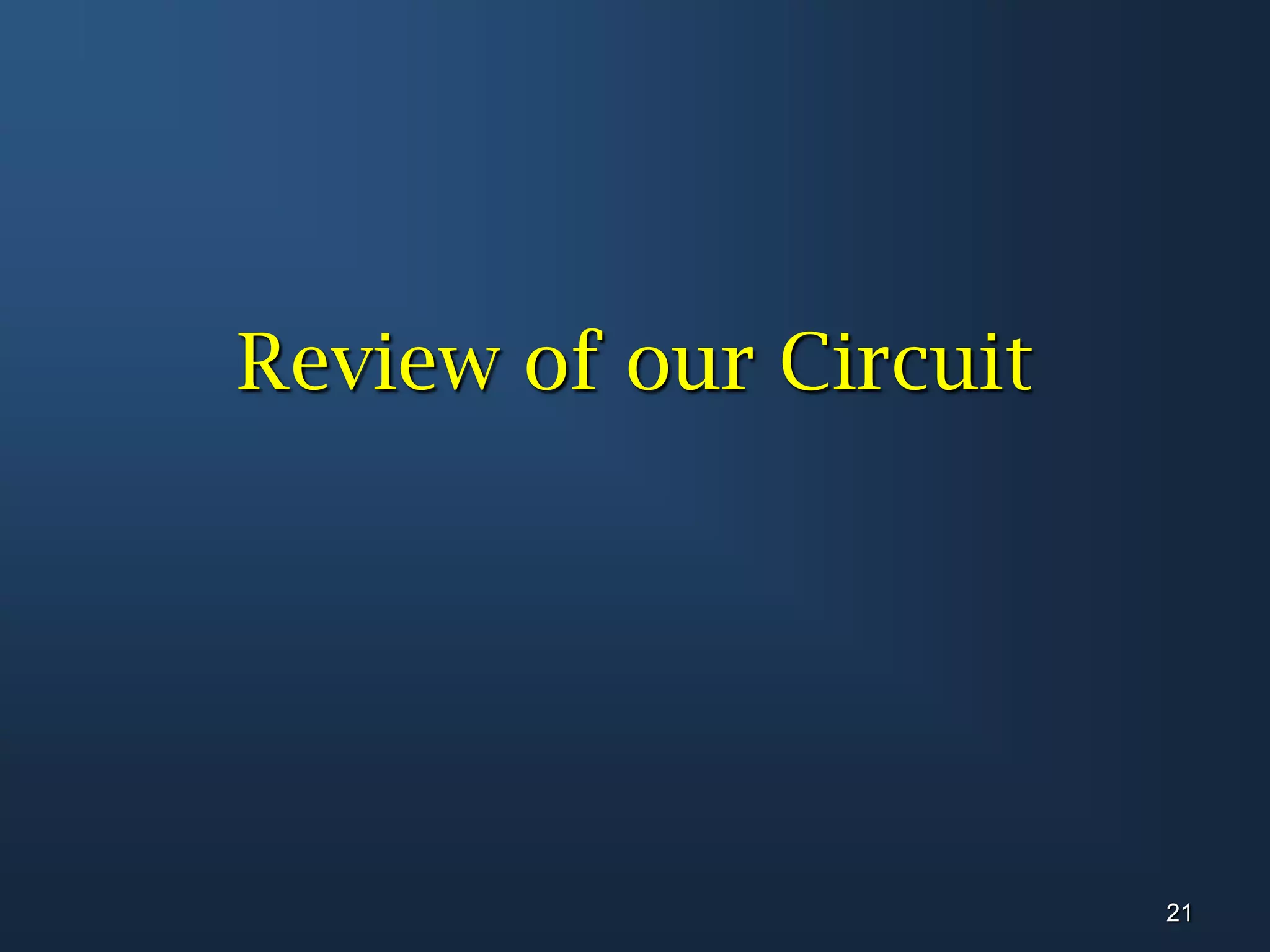
Well First Meet the Old One22
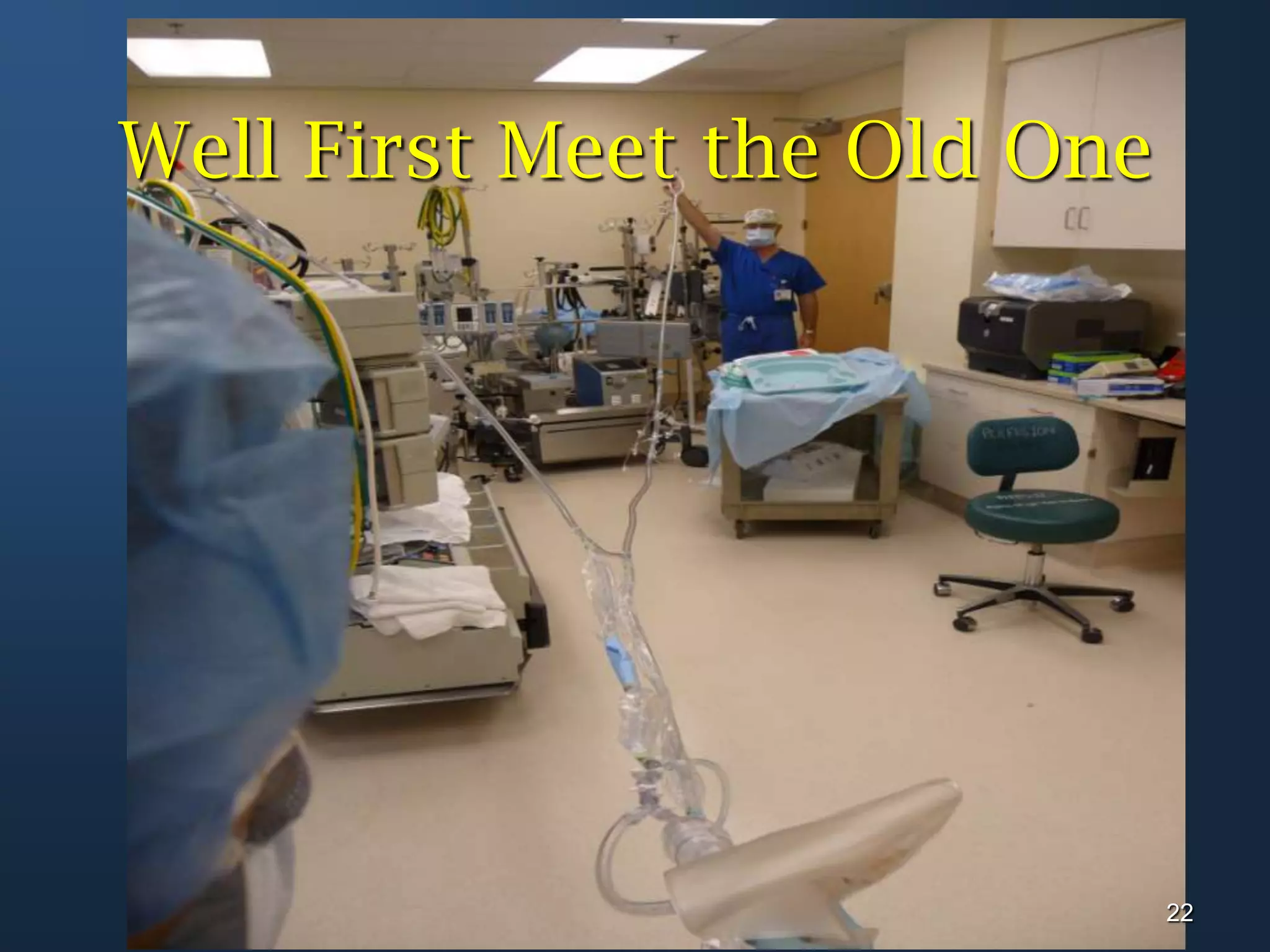
Our Idea is Nothing New23
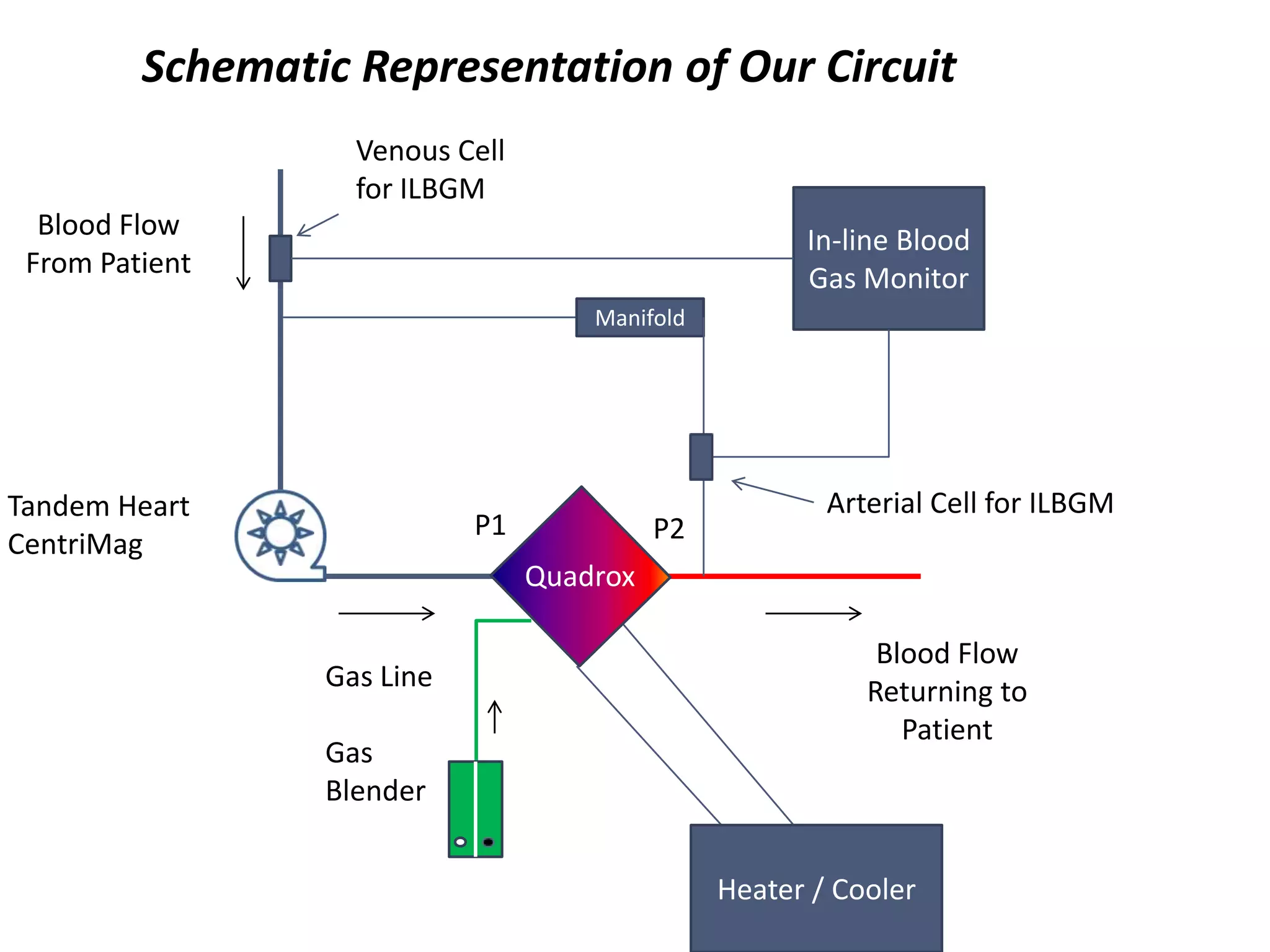
Schematic Representation of Our CircuitVenous Cell for ILBGMIn-line Blood Gas MonitorBlood FlowFrom PatientManifoldQuadroxArterial Cell for ILBGMTandem HeartCentriMagP1P2Blood FlowReturning to PatientGas LineGas BlenderHeater / Cooler
A word about ourstaffing model25
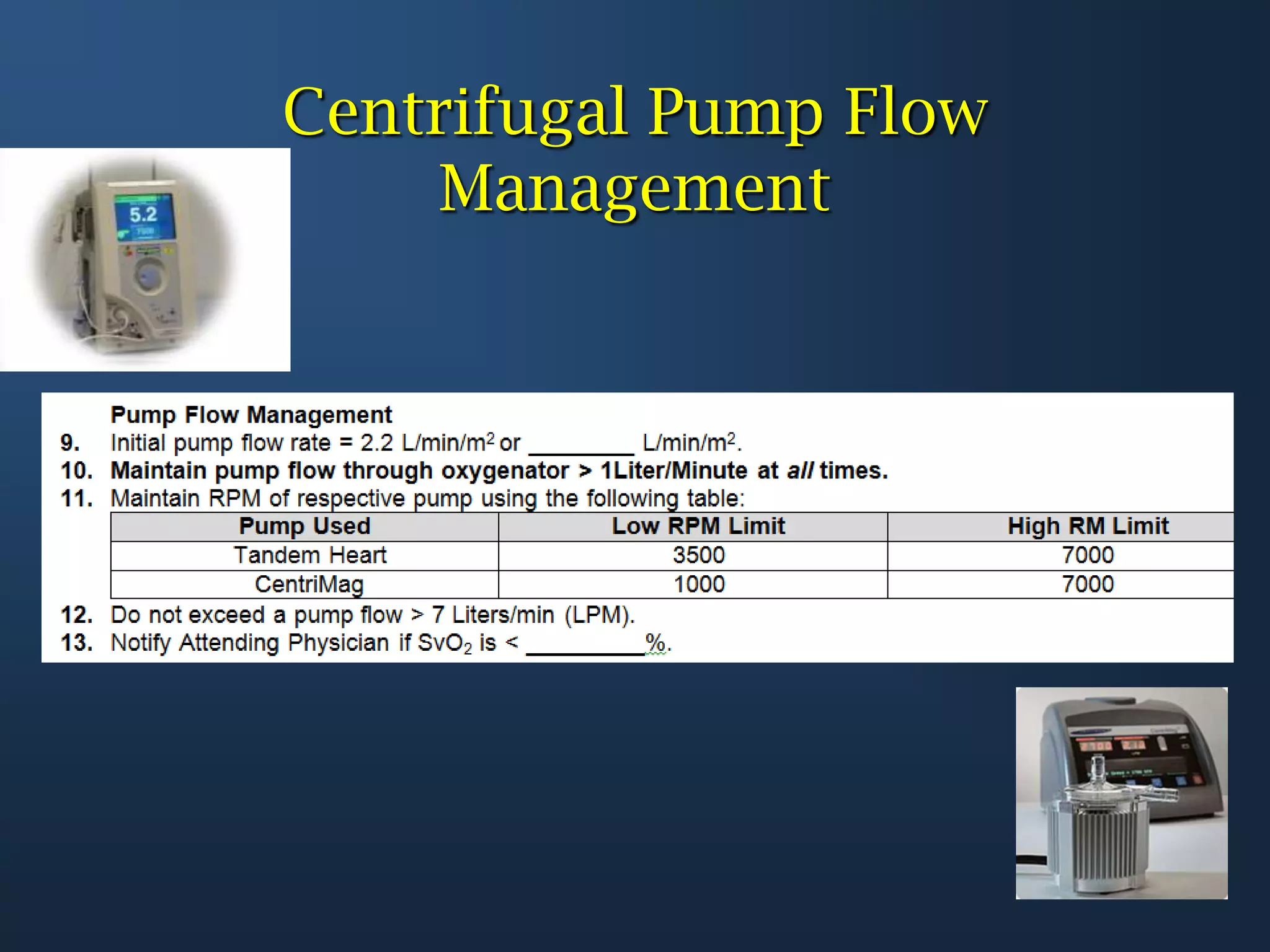
Centrifugal Pump Flow Management
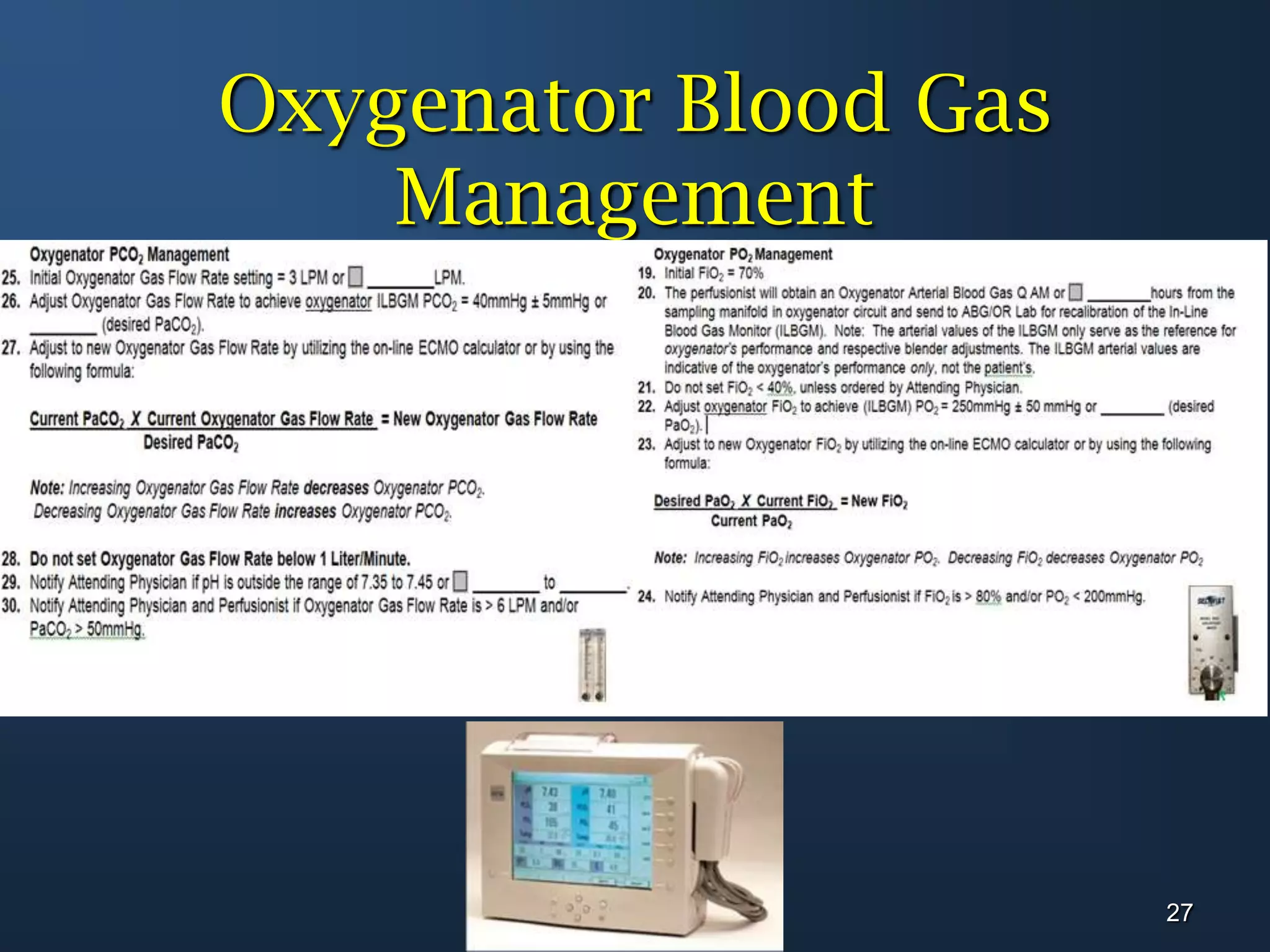
Oxygenator Blood Gas Management27
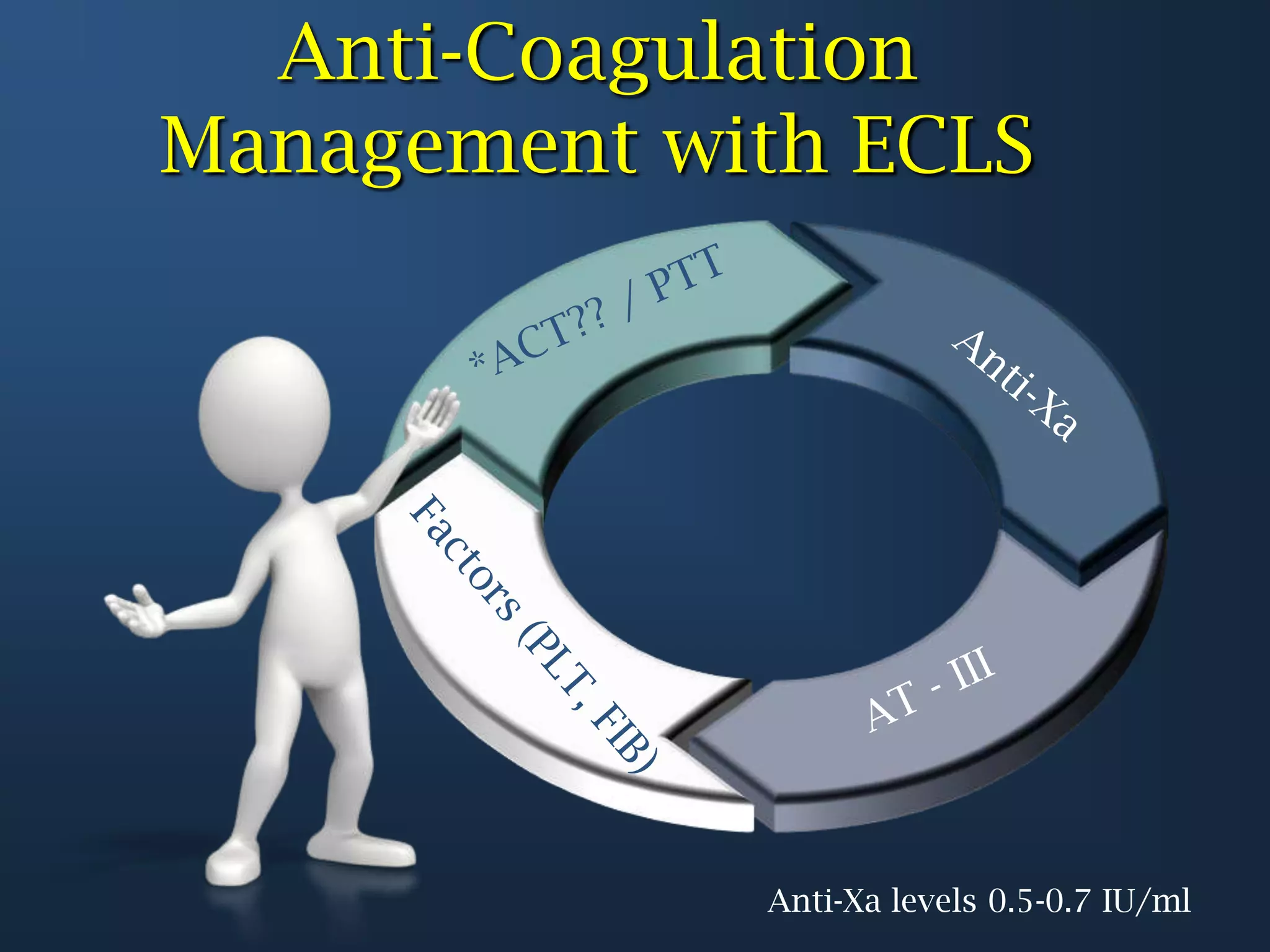
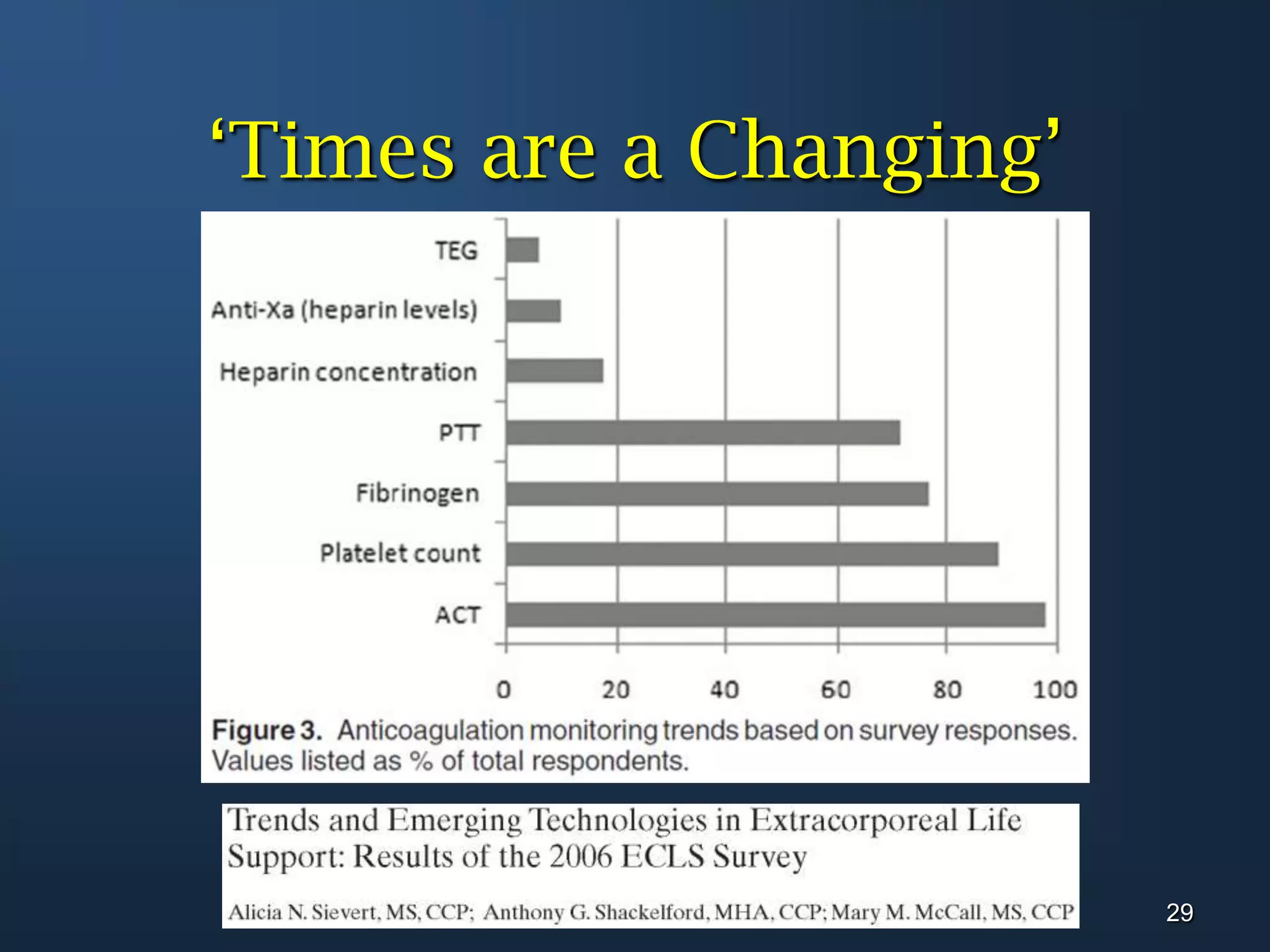
Anti-Coagulation Management with ECLS*ACT?? / PTTAnti-XaFactors (PLT, FIB)AT - IIIAnti-Xa levels 0.5-0.7 IU/ml
‘Times are a Changing’29
Perfusion Near-By30
The Future???32
200533
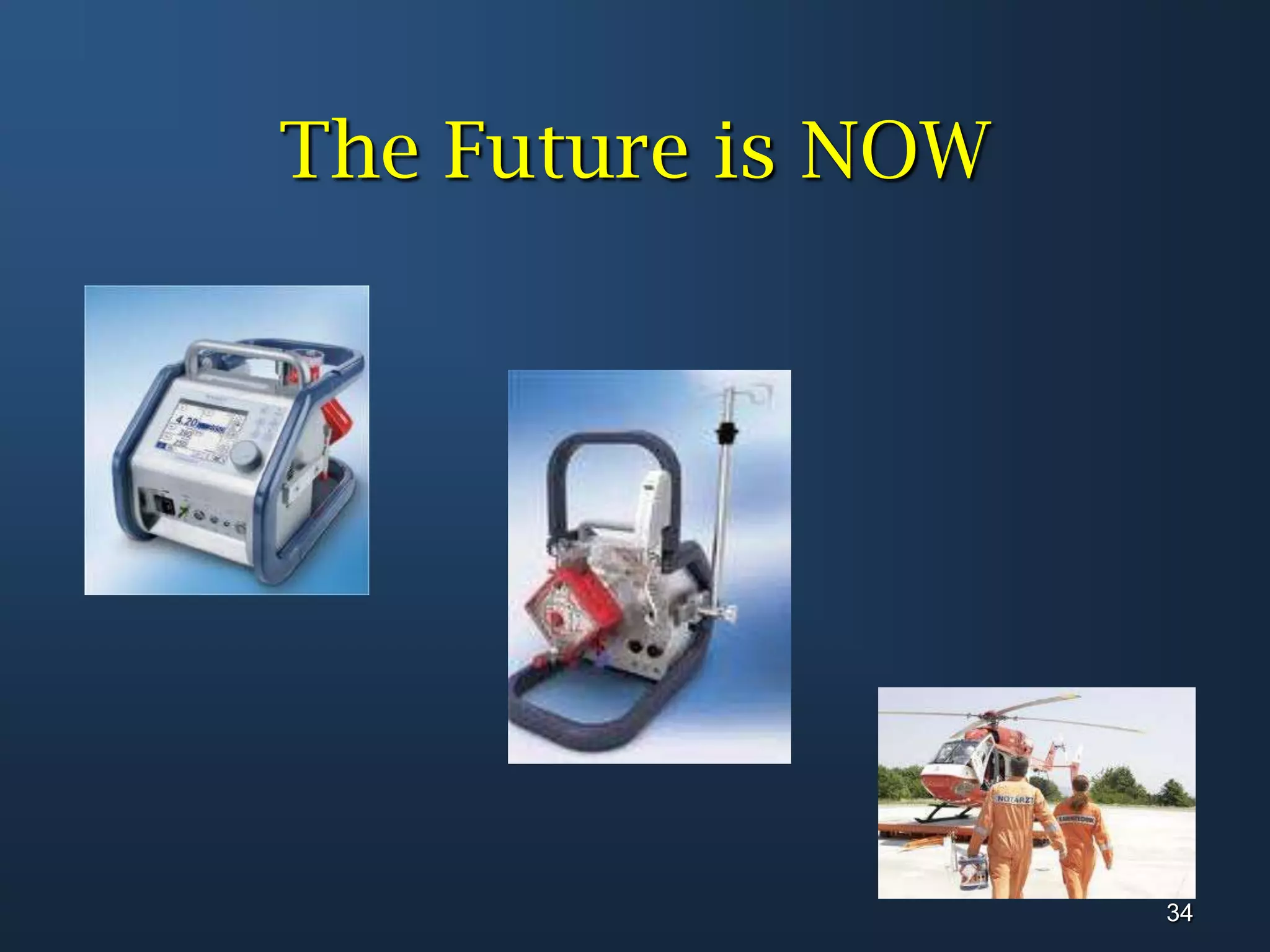
The Future is NOW34
Are there any opportunities left given the advancement of technology?35
If we improve they will come!The hemodynamic stability that CPB provides is still attractive to surgeonsConsider OPCAB v PADCAB scenarioBottom Line: Improve Our Technologyall toolsContinue to market our Skills & Expertise!36
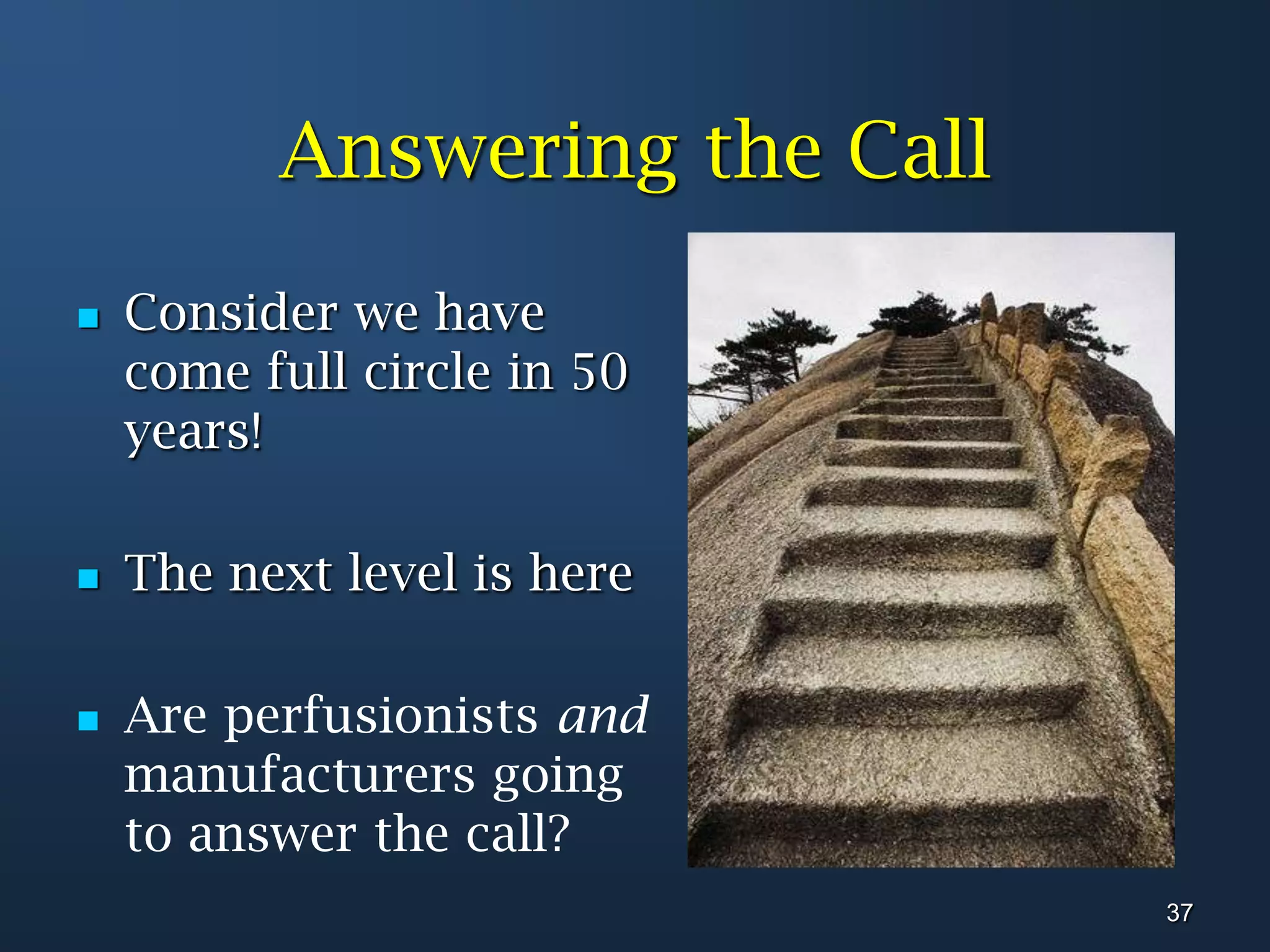
Answering the CallConsider we have come full circle in 50 years!The next level is hereAre perfusionistsand manufacturers going to answer the call? 37
Conclusion / RecommendationsThis case series describes our successful use of a modernized ECLS system and model. Given many of the traditional challenges associated with ECLS have been eliminated or greatly reduced it is recommended that any adult cardiac center should consider having a modernized ECLS system readily available as part of their arsenal for treatment of patients with emergent cardiac and/or pulmonary deficiencies.38
Questions39shackela@musc.edu
Good to Be Back!40
Thank You41

Modernized ECMO Case Series Shackelford

  • 1.
    The Use ofa Modernized ExtracorporealLife Support System: A Case SeriesDr. Anthony Shackelford DHA, CCP, CCTAssistant ProfessorCardiovascular Perfusion ProgramMedical University of South CarolinaCharleston, South Carolina
  • 2.
  • 3.
    Systematic ReviewRandomized ControlTrialsCohort StudiesCase-Control StudiesCase Series, Case ReportsJust because we do not have a p-value doesn’t mean we’re not “important”!
  • 4.
    Florida Perfusion SocietyBoard and MembersGreat Job !!Let’s Give an Applause!!4
  • 5.
    Disclaimer5I have nocontractual or financial affiliations with any of the manufactures of any of the devices mentioned in presentation
  • 6.
  • 7.
    Patient A: ClinicalPresentation45 year old female Caucasian PharmacistPresented to outside facility ER with fever 104º F2 Week history of Flu-like symptomsCough, Congestion, ache and painWide ECG ComplexThought to be V-TachSTEMI protocol initiated Taken to Cardiac Cath LabLater Diagnosed as Viral Myocarditis7
  • 8.
    Patient A: CathLab Sequence of EventsIABP insertedCatherization performed Coronaries NormalEF = <5% “Almost Cardiac Standstill”Decided to place ImpellaPEA occurred 10—15 minutes CPRTransferred to MUSC8
  • 9.
    Patient A: Arrivalin CTICUImpella at 2.2 L/minMean Arterial Pressure = 35mmHgNeosynephrine, Dopamine, DobutamineSinus TachycardiaOxygenation100% FiO2ABG = 7.08/51/196No corneal, gag or Doll’s eyes reflex Intact brainstem***9
  • 10.
    Patient A: ECLSPlacementPatient Heparinized & Drip StartedFemoral Cannulation21 Fr. Arterial / 28 Single Stage VenousECMO initiated 4.5 L/minImpella flow reduced to 1.0 L/min **10
  • 11.
    Patient A: HospitalCourseECLS Day 2 Patient displayed + neuro signs!ECLS Day 5Developed left sided weaknessRight cerebral embolic stroke / hemorrhageEF was 40%Decided to come off ECLS so that heparin could be discontinuedIncreased inotropic support11
  • 12.
    Patient A: OutcomeDisplayedsome memory deficits continued to resolve over hospital courseEF = 40%-50% at day 12 of hospital stay.Day 14 - discharged to home.12
  • 13.
    Patient B: ClinicalPresentation62 y/o Female Caucasian Radiology Technologist at outside facilityAt work in Orthopedic office complaining chest pain Hx reflux for several daysEMS called and transfers patient to ER13
  • 14.
    Patient B: Sequenceof EventsUpon Arrival to ER Cardiac Arrest – V-FibDefibrillated multiple timesTransferred to Cath LabCardiac Catherization performed Anterior MIEF = 10% - 15%100% LADPatient Arrested during DES placement14
  • 15.
    Patient B: Sequenceof EventsCPR performedPerfusion Notified ECLS Primed and InitiatedBiomedicus and PrimoxPt. was transferred to our facility and switched to our ECLS system.15
  • 16.
    Patient B: Events/ OutcomeCVVH performed during ECLS runDevelopedR/L Arm Weakness MRI - stable subdural hematomaECLS Day 6 ECLS discontinuedIABP insertedRemoved at day 3Pt. discharged to home on hospital day 31EF 64%No dialysisImproving motor function16
  • 17.
    Patient C: ClinicalPresentation20 y/o Black female commissary workers/p 3 month uncomplicated pregnancyPresents to ER at outside facility Severe Hypotension and HypoxiaNausa, SOB, substernal chest painRuns of polymorphic V-TachCath LabNo coronary diseaseEF – 10%IABP placed ->Transferred to MUSC17
  • 18.
    Patient C: Arrivalin CTICUPerfusion Alerted Patient Heparinized & Drip StartedFemoral Cannulation15 Fr. DLP Fem. Arterial23 Fr. DLP Fem. VenousECLS initiated 3.8 L/minHypoxia and Hypotension resolved!18
  • 19.
    Patient C: OutcomeECLSDay 5Pressors completely offEF was 30%Decided to come off ECLSRestarted pressorsDay 14 of hospital stay discharged homeEF 60%19
  • 20.
    Keys to SuccessAggressiveDiagnosticsCollaborationMedicine/Cardiology/ER/SurgeryEarly & Aggressive InterventionsRight Team /Right Equipment20
  • 21.
    Review of ourCircuit21
  • 22.
    Well First Meetthe Old One22
  • 23.
    Our Idea isNothing New23
  • 24.
    Schematic Representation ofOur CircuitVenous Cell for ILBGMIn-line Blood Gas MonitorBlood FlowFrom PatientManifoldQuadroxArterial Cell for ILBGMTandem HeartCentriMagP1P2Blood FlowReturning to PatientGas LineGas BlenderHeater / Cooler
  • 25.
    A word aboutourstaffing model25
  • 26.
  • 27.
  • 28.
    Anti-Coagulation Management withECLS*ACT?? / PTTAnti-XaFactors (PLT, FIB)AT - IIIAnti-Xa levels 0.5-0.7 IU/ml
  • 29.
    ‘Times are aChanging’29
  • 30.
  • 32.
  • 33.
  • 34.
  • 35.
    Are there anyopportunities left given the advancement of technology?35
  • 36.
    If we improvethey will come!The hemodynamic stability that CPB provides is still attractive to surgeonsConsider OPCAB v PADCAB scenarioBottom Line: Improve Our Technologyall toolsContinue to market our Skills & Expertise!36
  • 37.
    Answering the CallConsiderwe have come full circle in 50 years!The next level is hereAre perfusionistsand manufacturers going to answer the call? 37
  • 38.
    Conclusion / RecommendationsThiscase series describes our successful use of a modernized ECLS system and model. Given many of the traditional challenges associated with ECLS have been eliminated or greatly reduced it is recommended that any adult cardiac center should consider having a modernized ECLS system readily available as part of their arsenal for treatment of patients with emergent cardiac and/or pulmonary deficiencies.38
  • 39.
  • 40.
    Good to BeBack!40
  • 41.

Editor's Notes

  • #10 Given the pateints age and known cardiopulmonary support sequence of events it was decided that ECMO should be provided
  • #11 Decompress the LV
  • #14 Septicemia, Acute Renal Failure, Liver Failure, Hypothyroidism
  • #18 Fulminant Viral Myocarditis CHF
  • #19 Decompress the LV
  • #37 Given the hemodynamic security that CPB provides for the patient it is logical how CPB would be desirable in a procedure such as AAVC implantation. It should be noted that some centers that are using CPB are using a modified miniaturized extracorporeal circuit. This makes sense given the minimal need for a venous reservoir. Furthermore in this particular case the patient did have a marked reduction in the hematocrit and therefore the patient would probably more than likely have benefited from a circuit with a lower prime. Also it is noteworthy to add that a new subsets of patients are being added to the collective of patients who would substantially benefit from a miniaturized and more physiologically invisible extracorporeal circuit.
  • #38 Much recent discussion has been on the future of the profession and its sustainability. Less we forget how the heart lung machine came into existence? It is the author’s opinion that in one aspect nothing has changed. Just as over 50 years ago there was a subset of the population that needed an improvement in medical care, in this case a technology called extracorporeal circulation. Now again a subset of the population is calling for an improvement in medical care, in this case improving the technology of extracorporeal circulation. So we have just come to a new precipice and these patients are asking us to rise up and step unto the new plain and deliver a higher level of care. Perhaps these patients and this procedure will be the tipping point to help drive further research into improved extracorporeal circuits. Are perfusionists and manufacturers going to answer their call?