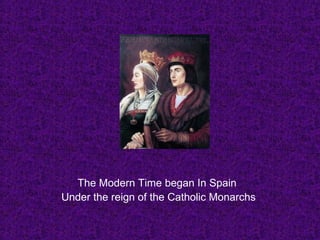
The Modern Time began In Spain
Under the reign of the Catholic Monarchs
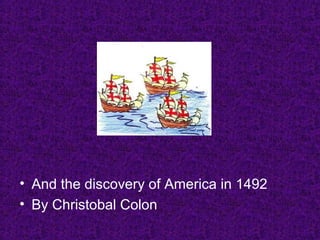
• And the discovery of America in 1492
• By Christobal Colon
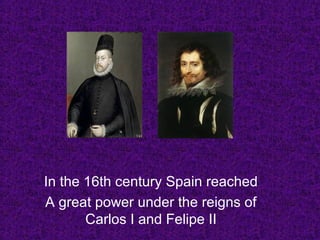
In the 16th century Spain reached
A great power under the reigns of
Carlos I and Felipe II
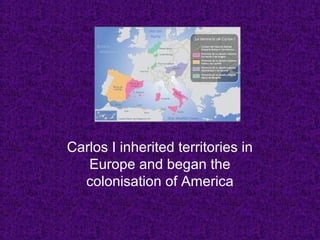
Carlos I inherited territories in
Europe and began the
colonisation of America
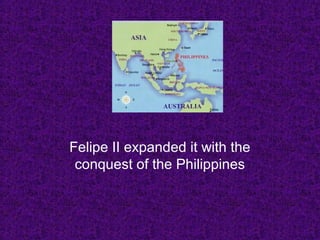
Felipe II expanded it with the
conquest of the Philippines
The 17th century was a period of
crisis in which:
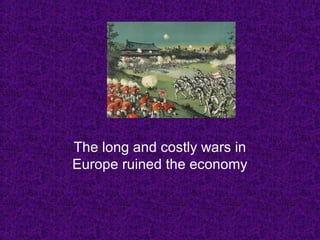
The long and costly wars in
Europe ruined the economy
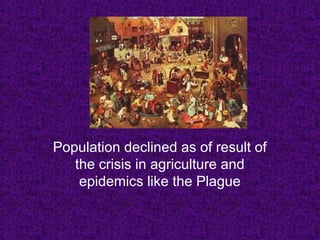
Population declined as of result of
the crisis in agriculture and
epidemics like the Plague
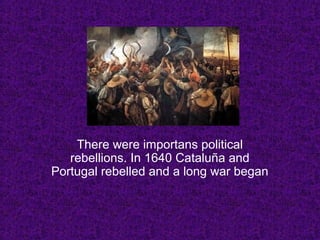
There were importans political
rebellions. In 1640 Cataluña and
Portugal rebelled and a long war began
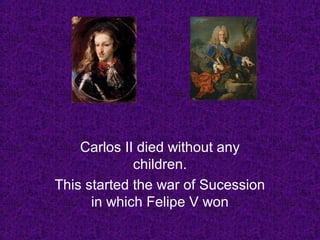
Carlos II died without any
children.
This started the war of Sucession
in which Felipe V won
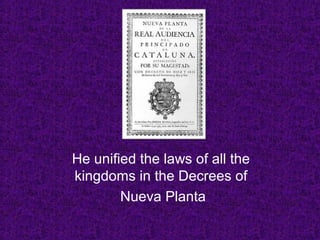
He unified the laws of all the
kingdoms in the Decrees of
Nueva Planta
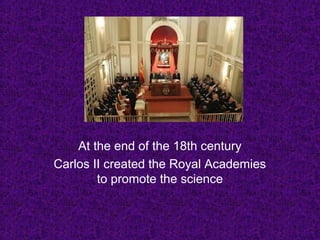
At the end of the 18th century
Carlos II created the Royal Academies
to promote the science
And the Royal Factories to help
the economy
There were a clear division
between social groups in Spain,
in which
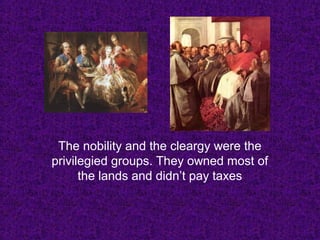
The nobility and the cleargy were the
privilegied groups. They owned most of
the lands and didn’t pay taxes
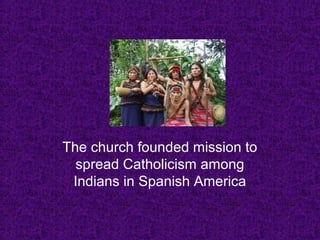
The church founded mission to
spread Catholicism among
Indians in Spanish America
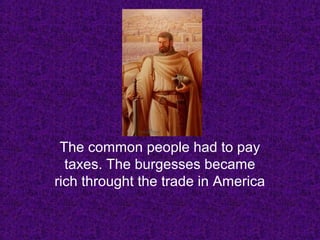
The common people had to pay
taxes. The burgesses became
rich throught the trade in America
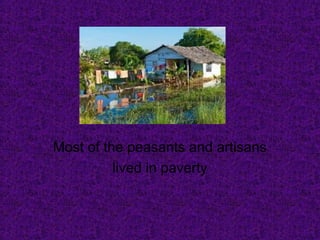
Most of the peasants and artisans
lived in paverty
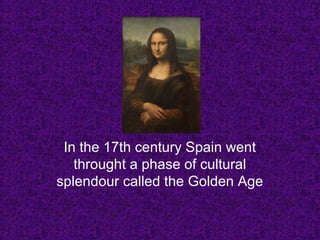
In the 17th century Spain went
throught a phase of cultural
splendour called the Golden Age
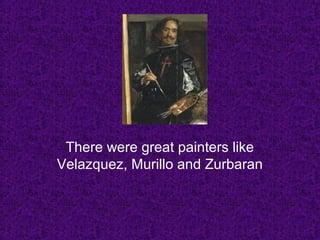
There were great painters like
Velazquez, Murillo and Zurbaran
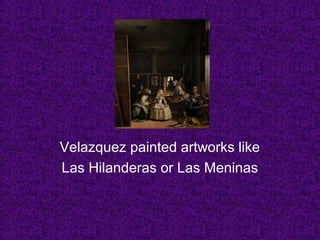
Velazquez painted artworks like
Las Hilanderas or Las Meninas
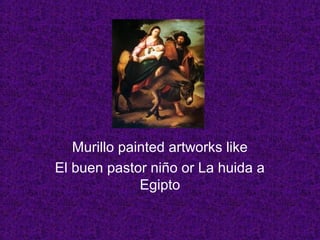
Murillo painted artworks like
El buen pastor niño or La huida a
Egipto
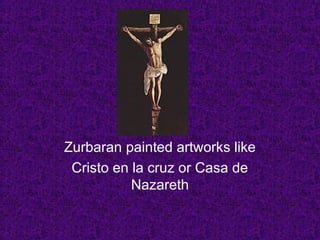
Zurbaran painted artworks like
Cristo en la cruz or Casa de
Nazareth
In literature there were importants
authors like Lopez de Vega,
Cervantes, Góngora and Quebedo
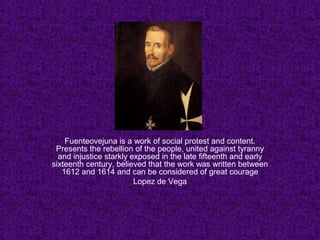
Fuenteovejuna is a work of social protest and content.
Presents the rebellion of the people, united against tyranny
and injustice starkly exposed in the late fifteenth and early
sixteenth century, believed that the work was written between
1612 and 1614 and can be considered of great courage
Lopez de Vega
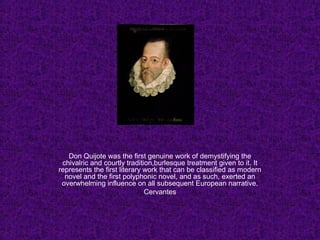
Don Quijote was the first genuine work of demystifying the
chivalric and courtly tradition,burlesque treatment given to it. It
represents the first literary work that can be classified as modern
novel and the first polyphonic novel, and as such, exerted an
overwhelming influence on all subsequent European narrative.
Cervantes
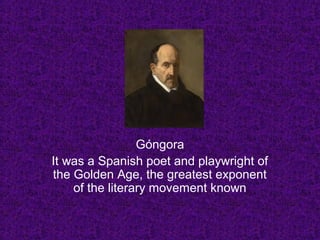
Góngora
It was a Spanish poet and playwright of
the Golden Age, the greatest exponent
of the literary movement known
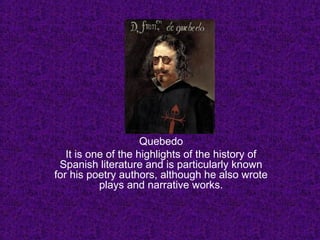
Quebedo
It is one of the highlights of the history of
Spanish literature and is particularly known
for his poetry authors, although he also wrote
plays and narrative works.

Modern times

  • 2.
    The Modern Timebegan In Spain Under the reign of the Catholic Monarchs
  • 3.
    • And thediscovery of America in 1492 • By Christobal Colon
  • 4.
    In the 16thcentury Spain reached A great power under the reigns of Carlos I and Felipe II
  • 5.
    Carlos I inheritedterritories in Europe and began the colonisation of America
  • 6.
    Felipe II expandedit with the conquest of the Philippines
  • 7.
    The 17th centurywas a period of crisis in which:
  • 8.
    The long andcostly wars in Europe ruined the economy
  • 9.
    Population declined asof result of the crisis in agriculture and epidemics like the Plague
  • 10.
    There were importanspolitical rebellions. In 1640 Cataluña and Portugal rebelled and a long war began
  • 11.
    Carlos II diedwithout any children. This started the war of Sucession in which Felipe V won
  • 12.
    He unified thelaws of all the kingdoms in the Decrees of Nueva Planta
  • 13.
    At the endof the 18th century Carlos II created the Royal Academies to promote the science
  • 14.
    And the RoyalFactories to help the economy
  • 15.
    There were aclear division between social groups in Spain, in which
  • 16.
    The nobility andthe cleargy were the privilegied groups. They owned most of the lands and didn’t pay taxes
  • 17.
    The church foundedmission to spread Catholicism among Indians in Spanish America
  • 18.
    The common peoplehad to pay taxes. The burgesses became rich throught the trade in America
  • 19.
    Most of thepeasants and artisans lived in paverty
  • 20.
    In the 17thcentury Spain went throught a phase of cultural splendour called the Golden Age
  • 21.
    There were greatpainters like Velazquez, Murillo and Zurbaran
  • 22.
    Velazquez painted artworkslike Las Hilanderas or Las Meninas
  • 23.
    Murillo painted artworkslike El buen pastor niño or La huida a Egipto
  • 24.
    Zurbaran painted artworkslike Cristo en la cruz or Casa de Nazareth
  • 25.
    In literature therewere importants authors like Lopez de Vega, Cervantes, Góngora and Quebedo
  • 26.
    Fuenteovejuna is awork of social protest and content. Presents the rebellion of the people, united against tyranny and injustice starkly exposed in the late fifteenth and early sixteenth century, believed that the work was written between 1612 and 1614 and can be considered of great courage Lopez de Vega
  • 27.
    Don Quijote wasthe first genuine work of demystifying the chivalric and courtly tradition,burlesque treatment given to it. It represents the first literary work that can be classified as modern novel and the first polyphonic novel, and as such, exerted an overwhelming influence on all subsequent European narrative. Cervantes
  • 28.
    Góngora It was aSpanish poet and playwright of the Golden Age, the greatest exponent of the literary movement known
  • 29.
    Quebedo It is oneof the highlights of the history of Spanish literature and is particularly known for his poetry authors, although he also wrote plays and narrative works.