SOFTWARE DEVELOPMENT
METHODS
Software
Process Models
Software
Development
Process Models
Waterfall model
Software
Process
Models
Waterfall
Model
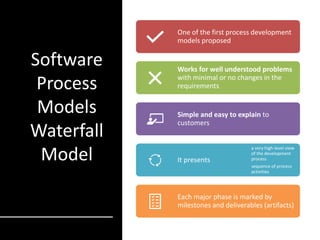
One of the first process development
models proposed
Works for well understood problems
with minimal or no changes in the
requirements
Simple and easy to explain to
customers
It presents
a very high-level view
of the development
process
sequence of process
activities
Each major phase is marked by
milestones and deliverables (artifacts)
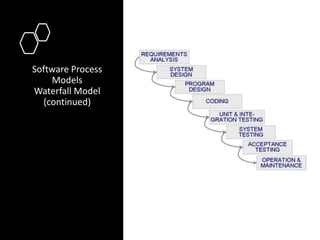
Software Process
Models
Waterfall Model
(continued)
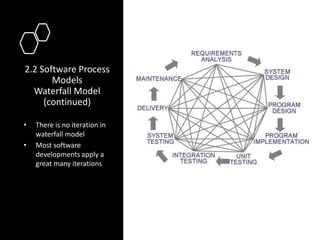
2.2 Software Process
Models
Waterfall Model
(continued)
• There is no iteration in
waterfall model
• Most software
developments apply a
great many iterations
Software
Process
Models
Drawbacks
of The
Waterfall
Model
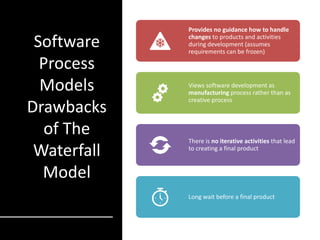
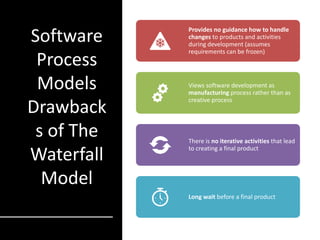
Provides no guidance how to handle
changes to products and activities
during development (assumes
requirements can be frozen)
Views software development as
manufacturing process rather than as
creative process
There is no iterative activities that lead
to creating a final product
Long wait before a final product
Software
Process
Models
Drawback
s of The
Waterfall
Model
Provides no guidance how to handle
changes to products and activities
during development (assumes
requirements can be frozen)
Views software development as
manufacturing process rather than as
creative process
There is no iterative activities that lead
to creating a final product
Long wait before a final product
2.2
Software
Process
Models
Waterfall
Model with
Prototype
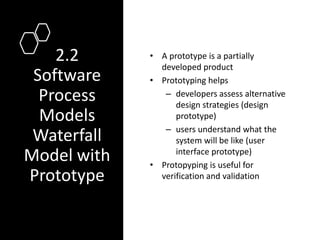
• A prototype is a partially
developed product
• Prototyping helps
– developers assess alternative
design strategies (design
prototype)
– users understand what the
system will be like (user
interface prototype)
• Protopyping is useful for
verification and validation
Software Process
Models
Waterfall Model with
Prototype
(continued)
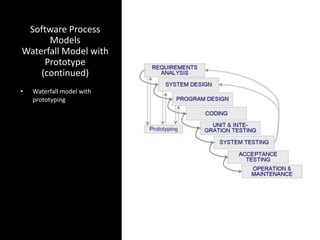
• Waterfall model with
prototyping
Software
Process Models
Software
Development
Process Models
Waterfall model
V MODEL
2.2
Software
Process
Models
V Model
A variation of the
waterfall model
Uses unit testing to verify
procedural design
Uses integration testing to
verify architectural
(system) design
Uses acceptance testing
to validate the
requirements
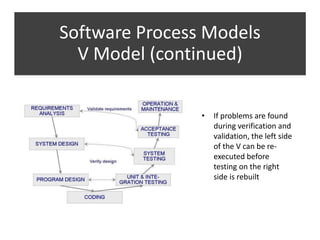
Software Process Models
V Model (continued)
• If problems are found
during verification and
validation, the left side
of the V can be re-
executed before
testing on the right
side is rebuilt
Software
Process Models
Software
Development
Process Models
Waterfall model
V MODEL
Prototyping
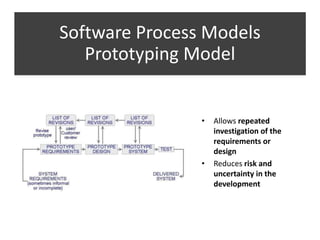
Software Process Models
Prototyping Model
• Allows repeated
investigation of the
requirements or
design
• Reduces risk and
uncertainty in the
development
Software
Process Models
Software
Development
Process Models
Waterfall model
V MODEL
Prototyping
Operational Specification Model
2.2 Software Process Models
Operational Specificiation Model
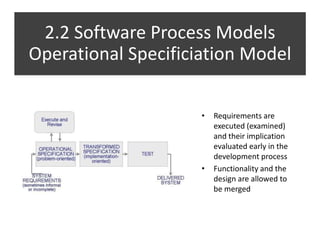
• Requirements are
executed (examined)
and their implication
evaluated early in the
development process
• Functionality and the
design are allowed to
be merged
Software
Process Models
Software
Development
Process Models
Waterfall model
V MODEL
Prototyping
Transformational Model
Software Process
Models
Transformational
Model
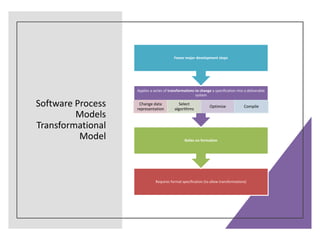
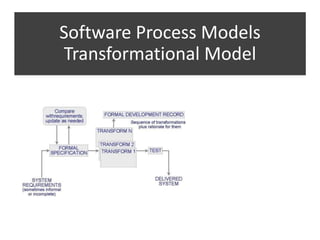
Requires formal specification (to allow transformations)
Relies on formalism
Applies a series of transformations to change a specification into a deliverable
system
Change data
representation
Select
algorithms
Optimize Compile
Fewer major development steps
Software Process Models
Transformational Model
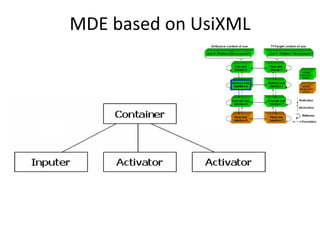
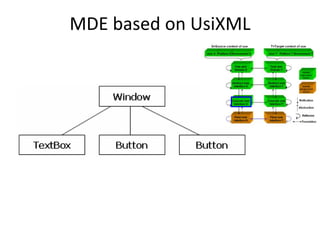
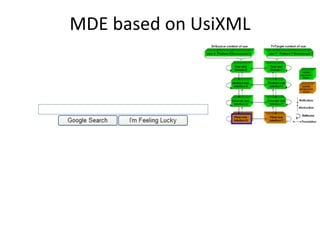
MDE based on UsiXML
MDE based on UsiXML
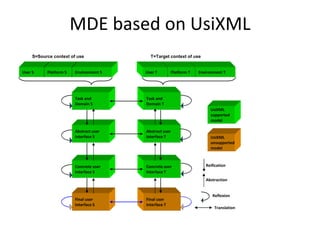
Reification
Translation
Environment T
Final User
Interface T
Concrete User
Interface T
Task and
Domain T
Abstract User
Interface T
T=Target context of use
Concrete User
Interface S
Final User
Interface S
Task and
Domain S
Abstract User
Interface S
S=Source context of use
Abstraction
Reflexion
User S Platform S Environment S Platform T
User T
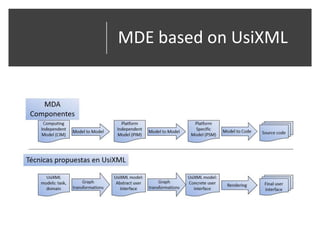
Computing
Independent
Model (CIM)
Platform Independent
Model (PIM)
Platform Specific
Model (PSM)
Final code
Models
UsiXML Language
Step-wise method
Software tools
support
involves
described
in
UI Development methodology
Industrial applications Public applications
Standardisation actions:
W3C, OASIS, MAUSE,
ISO 24744
is applied on
is submitted to
Cameleon Reference Framework [Calv03]
Reification
Reification
Translation
Translation
Environment T
Environment T
Final User
Interface T
Concrete User
Interface T
Task and
Domain T
Abstract User
Interface T
T=Target context of use
Concrete User
Interface S
Final User
Interface S
Task and
Domain S
Abstract User
Interface S
S=Source context of use
Abstraction
Abstraction
Reflexion
Reflexion
User S Platform S
Platform S Environment S
Environment S Platform T
Platform T
User T
Computing
Independent
Model (CIM)
Platform Independent
Model (PIM)
Platform Specific
Model (PSM)
Final code
Models
UsiXML Language
Step-wise method
Software tools
support
involves
described
in
UI Development methodology
Industrial applications Public applications
Standardisation actions:
W3C, OASIS, MAUSE,
ISO 24744
is applied on
is submitted to
Cameleon Reference Framework [Calv03]
Environment T
Final user
Interface T
Concrete user
Interface T
Task and
Domain T
Abstract user
Interface T
T=Target context of use
Concrete user
Interface S
Final user
Interface S
Task and
Domain S
Abstract user
Interface S
S=Source context of use
Reification
Abstraction
Reflexion
Translation
UsiXML
unsupported
model
UsiXML
supported
model
User S Platform S Environment S Platform T
User T
MDE based on UsiXML
MDE based on UsiXML
MDE based on UsiXML
MDE based on UsiXML
MDE based on UsiXML
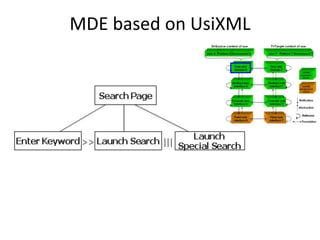
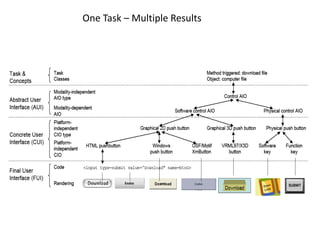
One Task – Multiple Results
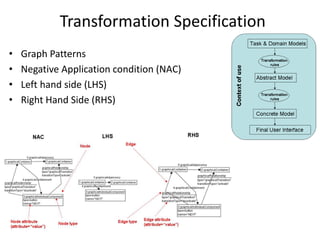
Transformation Specification
• Graph Patterns
• Negative Application condition (NAC)
• Left hand side (LHS)
• Right Hand Side (RHS)
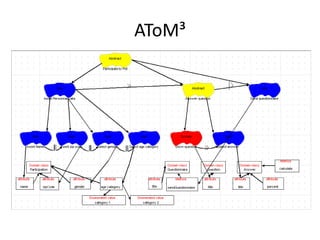
AToM³
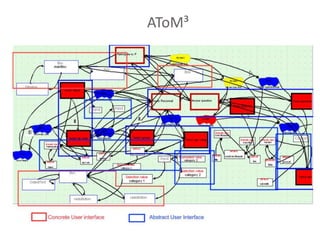
AToM³
Software
Process Models
Software
Development
Process Models
Waterfall model
V MODEL
Prototyping
Transformational Model
Phased Development: increments and Iterations
Software
Process
Models
Phased
Development:
Increments
and Iterations
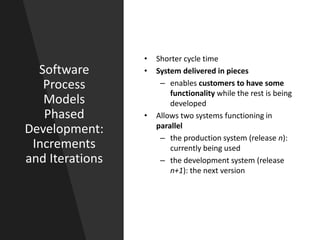
• Shorter cycle time
• System delivered in pieces
– enables customers to have some
functionality while the rest is being
developed
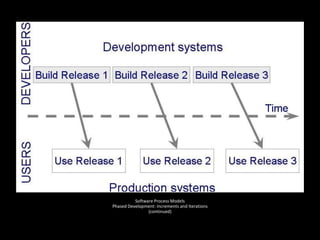
• Allows two systems functioning in
parallel
– the production system (release n):
currently being used
– the development system (release
n+1): the next version
Software Process Models
Phased Development: Increments and Iterations
(continued)
Software Process Models
Phased Development: Increments and Iterations
(continued)
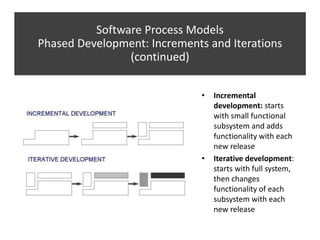
• Incremental
development: starts
with small functional
subsystem and adds
functionality with each
new release
• Iterative development:
starts with full system,
then changes
functionality of each
subsystem with each
new release
2.2 Software
Process
Models
Phased
Development:
Increments
and Iterations
(continued)
• Phased development is desirable for
several reasons
– Training can begin early, even
though some functions are missing
– Markets can be created early for
functionality that has never before
been offered
– Frequent releases allow developers
to fix unanticipated problems
globaly and quickly
– The development team can focus on
different areas of expertise with
different releases
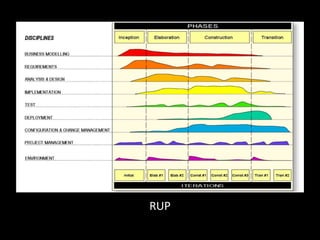
RUP
Software
Process Models
Software
Development
Process Models
Waterfall model
V MODEL
Prototyping
Transformational Model
Phased Development: increments and Iterations
Spiral Model
Software
Process
Models
Spiral
Model
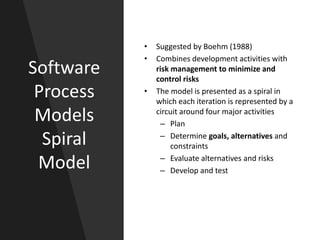
• Suggested by Boehm (1988)
• Combines development activities with
risk management to minimize and
control risks
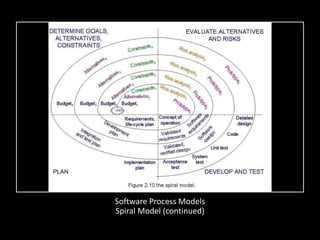
• The model is presented as a spiral in
which each iteration is represented by a
circuit around four major activities
– Plan
– Determine goals, alternatives and
constraints
– Evaluate alternatives and risks
– Develop and test
Software Process Models
Spiral Model (continued)

Modelos de desarrollo de software