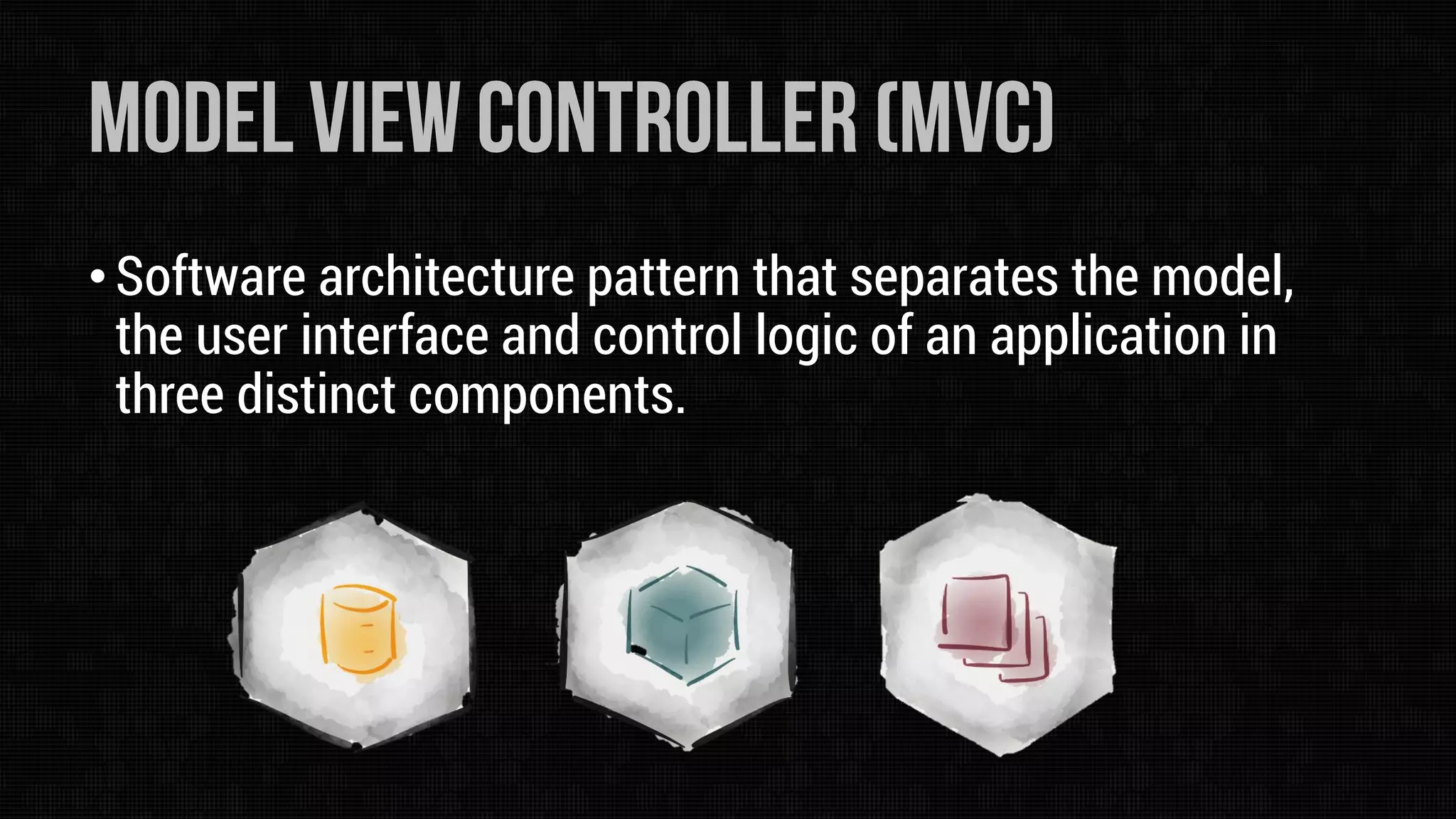
• Software architecture pattern that separates the model,
the user interface and control logic of an application in
three distinct components.
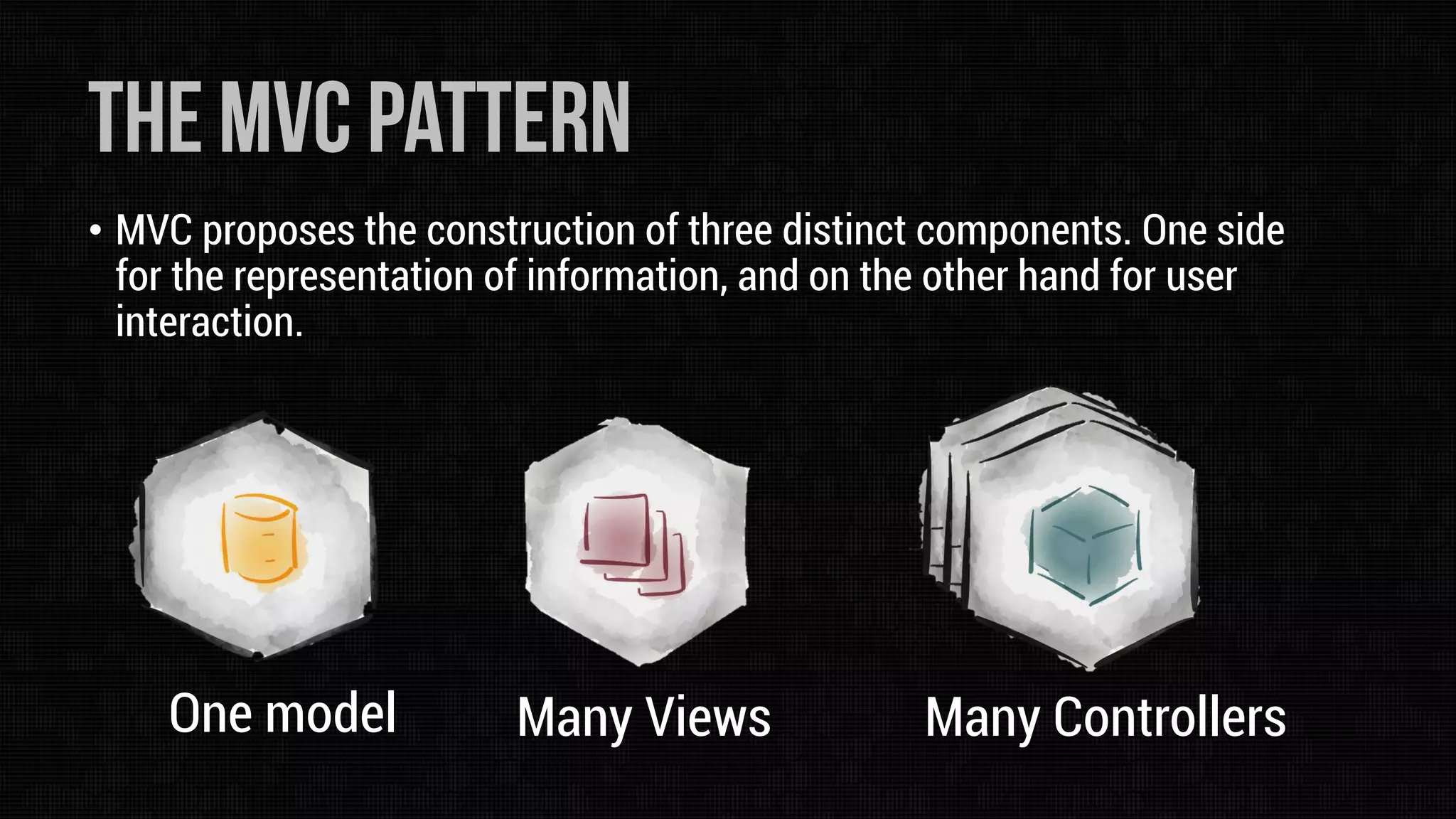
• MVC proposes the construction of three distinct components. One side
for the representation of information, and on the other hand for user
interaction.

One model

Many Views

Many Controllers
The Model
Representation of domain data.
Business logic
Persistence mechanism

The View
User Interface
Interaction elements

The Controller
Intermediary between Model and View
It maps user actions – model actions
Select the view and provide
information to itself
It is the specific representation of the
information with which the system
operates. Logic ensures the integrity of
data and allows to derive it.
Represents the model in a suitable format to interact and access the data,
usually called "User Interface" (GUI Java, HTML, XML).
It is the link between the view and the model, is responsible for receiving
and responding to events, typically user actions and invokes changes on
the model and probably in the view.
• Organization
• Rapid Application Development
• Reusing Code
• Parallel development
• It presents the same information in different ways.
• The views and application behavior should reflect the
manipulations of the data immediately.
• It allows different user interface standards or port it to other
environments where the application code should not be
affected.
• This model is not new, it was introduced in 1987 in the Smalltalk
programming language.
• With the boom of Web applications, it has proven to be a
programming mode that fits quite well with the internet, being
both the model and the controller executed server side, and the
view on the client side executed.
Control Flow
1.
2.
3.
4.

5.

The user performs an action on the interface.
The controller takes the input event.
The controller notifies the user action to the model,
which may involve a change of state of the model.
It generates a new view. The view takes the data
model.
The user interface waits for another user interaction,
which starts a new cycle.
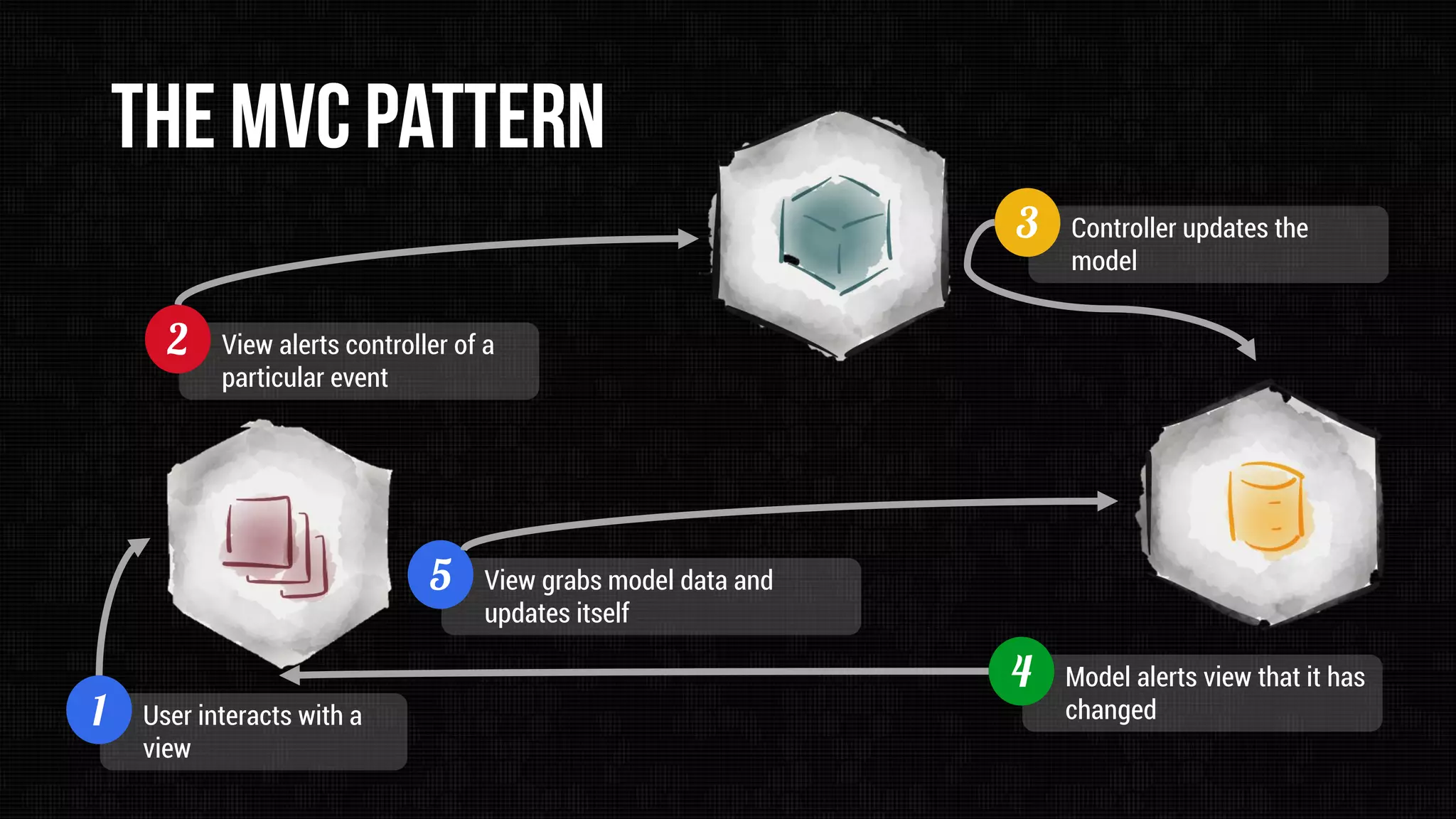
Controller updates the
model
View alerts controller of a
particular event

View grabs model data and
updates itself

User interacts with a
view

Model alerts view that it has
changed
• It applies to all types of systems
• And technologies (Java, Ruby, Python, Perl, Flex, SmallTalk,. Net, etc..)
• Model: The model is made by the developer.
• View: Set of objects of classes that inherit from
java.awt.Component.
• Controller: The controller is the event processing thread, which
captures and propagates the event to the view and the model.
Treatment classes of events (sometimes as anonymous classes)
that implement EventListener type interfaces (ActionListener,
MouseListener, WindowListener, etc..).
Software Engineer
Instituto Tecnológico de Sonora
Sonora, México
@javierhumaran

Model View Controller (MVC)

  • 2.
    • Software architecturepattern that separates the model, the user interface and control logic of an application in three distinct components.
  • 3.
    • MVC proposesthe construction of three distinct components. One side for the representation of information, and on the other hand for user interaction. One model Many Views Many Controllers
  • 4.
    The Model Representation ofdomain data. Business logic Persistence mechanism The View User Interface Interaction elements The Controller Intermediary between Model and View It maps user actions – model actions Select the view and provide information to itself
  • 5.
    It is thespecific representation of the information with which the system operates. Logic ensures the integrity of data and allows to derive it.
  • 6.
    Represents the modelin a suitable format to interact and access the data, usually called "User Interface" (GUI Java, HTML, XML).
  • 7.
    It is thelink between the view and the model, is responsible for receiving and responding to events, typically user actions and invokes changes on the model and probably in the view.
  • 8.
    • Organization • RapidApplication Development • Reusing Code • Parallel development • It presents the same information in different ways. • The views and application behavior should reflect the manipulations of the data immediately. • It allows different user interface standards or port it to other environments where the application code should not be affected.
  • 9.
    • This modelis not new, it was introduced in 1987 in the Smalltalk programming language. • With the boom of Web applications, it has proven to be a programming mode that fits quite well with the internet, being both the model and the controller executed server side, and the view on the client side executed.
  • 10.
    Control Flow 1. 2. 3. 4. 5. The userperforms an action on the interface. The controller takes the input event. The controller notifies the user action to the model, which may involve a change of state of the model. It generates a new view. The view takes the data model. The user interface waits for another user interaction, which starts a new cycle.
  • 11.
    Controller updates the model Viewalerts controller of a particular event View grabs model data and updates itself User interacts with a view Model alerts view that it has changed
  • 12.
    • It appliesto all types of systems • And technologies (Java, Ruby, Python, Perl, Flex, SmallTalk,. Net, etc..)
  • 13.
    • Model: Themodel is made by the developer. • View: Set of objects of classes that inherit from java.awt.Component. • Controller: The controller is the event processing thread, which captures and propagates the event to the view and the model. Treatment classes of events (sometimes as anonymous classes) that implement EventListener type interfaces (ActionListener, MouseListener, WindowListener, etc..).
  • 14.
    Software Engineer Instituto Tecnológicode Sonora Sonora, México @javierhumaran