T
THREATS
• Workload Stress
• Technological Changes
• Field Changes
• Family Management
O
OPPORTUNITIES
• Career Advancement
• Networking
• Emerging Technologies
• Sharing Knowledge and
Experience
W
WEAKNESSES
• Old School
• Not a strict person
• Informal
• Time Constraints
S
STRENGTHS
• Extensive Experience
• Technical Skills
• Leadership
• Educational Background
• Adaptable
Nuruddin Bin Razali
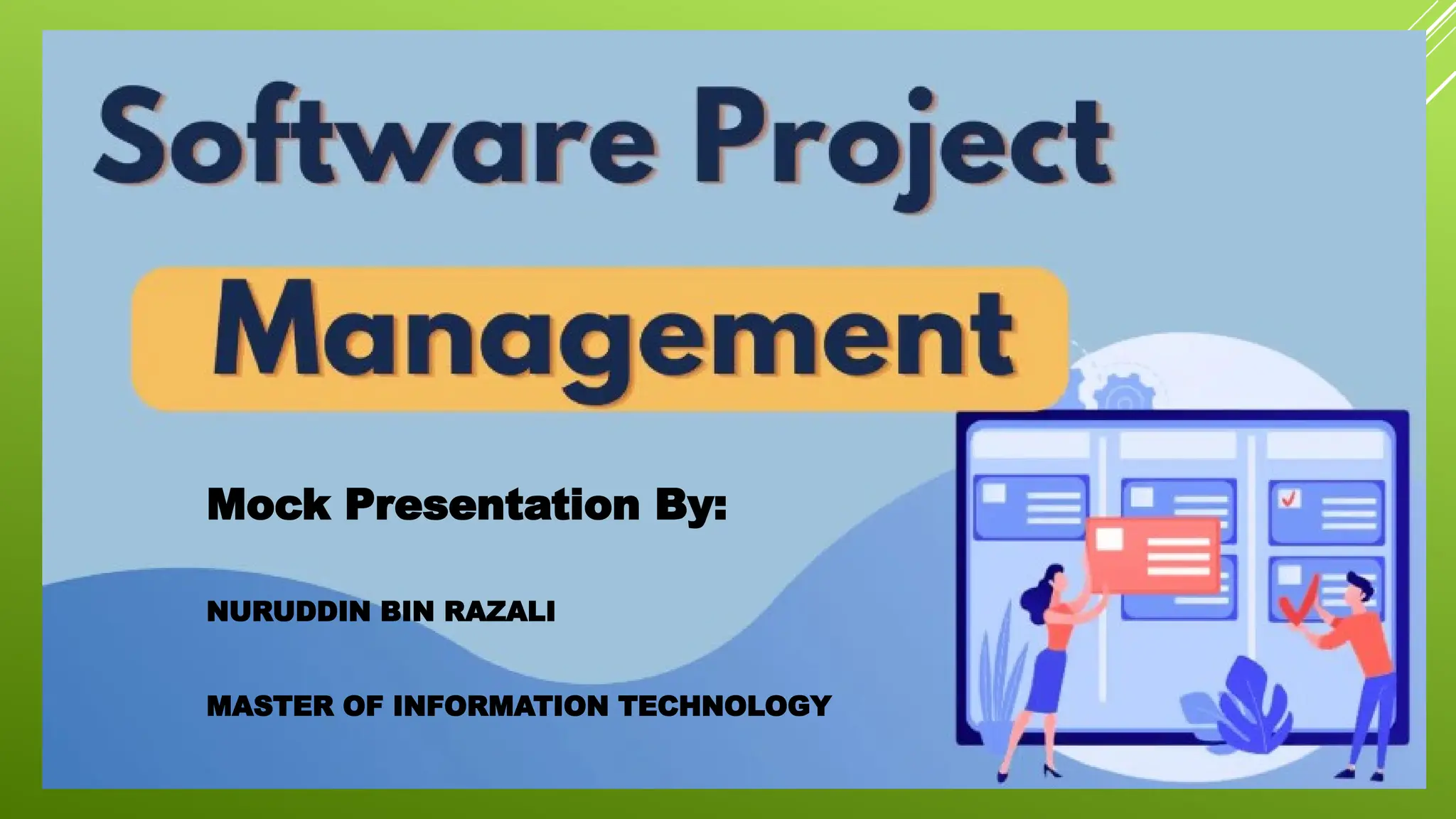
Mock Presentation By:
NURUDDIN BIN RAZALI
MASTER OF INFORMATION TECHNOLOGY
WHAT IS SOFTWARE PROJECT MANAGEMENT?
Software project management is the process of planning,
organizing, and overseeing the development of software
projects by using specialized methodologies and tools.
It involves managing resources, time, risks and tasks to
ensure that the project is completed successfully and
meets its goals.
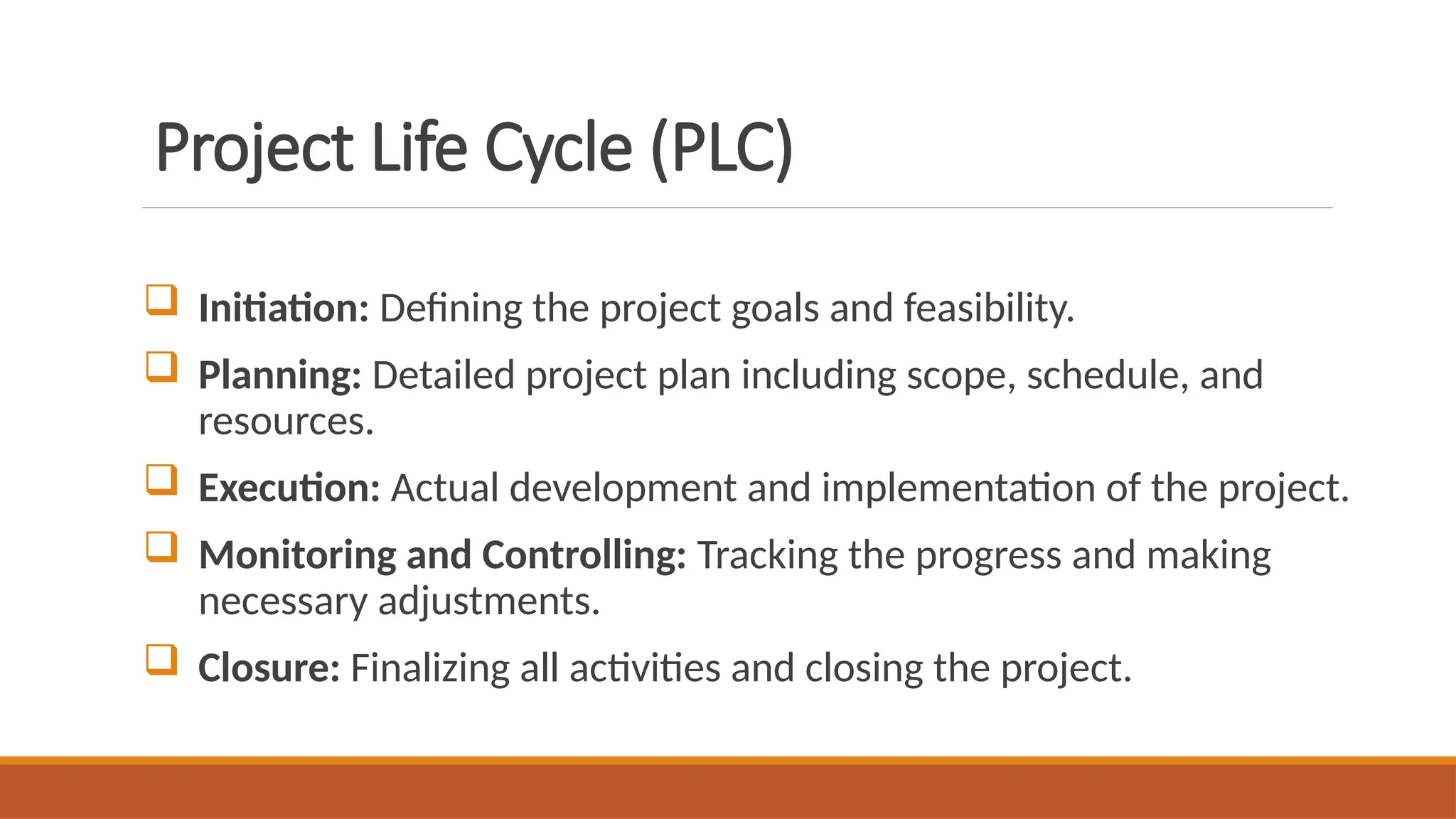
Project Life Cycle (PLC)
 Initiation: Defining the project goals and feasibility.
 Planning: Detailed project plan including scope, schedule, and
resources.
 Execution: Actual development and implementation of the project.
 Monitoring and Controlling: Tracking the progress and making
necessary adjustments.
 Closure: Finalizing all activities and closing the project.
PLC vs SDLC
Project life cycle is a part of Software Development Life Cycle (SDLC), the Project
Life Cycle outlines the general phases of managing a project from start to finish,
while the SDLC details the specific stages involved in developing a software.
vs
Inside Project Life Cycles (PLC)
• MONITOR THE
PROGRESS
• MANAGE CHANGES
• QUALITY CONTROL
• RISK MANAGEMENT
• COST MANAGEMENT
• COMMUNICATIONS
• ISSUE MANAGEMENT
Key Roles in a
Project
Stakeholders:
•Individuals or groups with an interest in the project outcomes.
Project Manager:
•Responsible for planning, executing, and closing the project.
Development Team:
•Responsible for building the software.
PLANNING AND SCHEDULING
Effective planning and scheduling are essential for the success of any software project.They ensure that tasks
are completed on time, within budget, and meet the required quality standards.
Key Points:
• Define Objectives: Clearly outline the project's goals.
• Break DownTasks: Divide the project into manageable activities.
• CreateTimeline: Develop a timeline to schedule tasks.
• Allocate Resources: Assign the necessary people, equipment, and materials.
• Set Deadlines: Establish specific deadlines to keep the project on track.
• Identify Dependencies: Determine tasks that depend on the completion of other tasks.
• UseTools: Utilize tools like Gantt charts or PERT charts for visualization and tracking.
Risk Management
Risk management involves identifying potential risks, analyzing their
impact, planning mitigation strategies, and monitoring risks throughout
the project.
•Identification: Recognize potential risks.
•Analysis: Evaluate the likelihood and impact.
•Mitigation: Plan and implement measures to reduce risks.
•Monitoring: Continuously track and manage risks.
Why is Risk Management Important?
Proactive Approach, Minimizes Impact and Increases
QUALITY MANAGEMENT
Quality management ensures the software projects deliver high-quality products that meet
customer expectations. it involves careful planning, assurance, and control activities to
maintain and improve quality throughout the project lifecycle.
Processes:
•Quality Planning: Define quality standards.
•Quality Assurance: Ensure processes are followed correctly.
•Quality Control: Monitor specific project results to ensure compliance with quality standards.
Why is Quality Management Important?: Customer Satisfaction, Cost Efficiency, Reputation and Compliance
Tools and Techniques
Common Used Tools:
 Project Management Software: MS Project, OpenProject, JIRA.
 Version Control Systems: Git, SVN.
 Collaboration Tools: Slack, Trello.
Tips on How To Manage Software Projects
Credit : TetvaSoft
NURUDDINBINRAZALI
nuruddin.razali@gmail.com
¡THANK YOU!

Mock Presentation on Software Project Management.pptx

  • 1.
    T THREATS • Workload Stress •Technological Changes • Field Changes • Family Management O OPPORTUNITIES • Career Advancement • Networking • Emerging Technologies • Sharing Knowledge and Experience W WEAKNESSES • Old School • Not a strict person • Informal • Time Constraints S STRENGTHS • Extensive Experience • Technical Skills • Leadership • Educational Background • Adaptable Nuruddin Bin Razali
  • 2.
    Mock Presentation By: NURUDDINBIN RAZALI MASTER OF INFORMATION TECHNOLOGY
  • 3.
    WHAT IS SOFTWAREPROJECT MANAGEMENT? Software project management is the process of planning, organizing, and overseeing the development of software projects by using specialized methodologies and tools. It involves managing resources, time, risks and tasks to ensure that the project is completed successfully and meets its goals.
  • 4.
    Project Life Cycle(PLC)  Initiation: Defining the project goals and feasibility.  Planning: Detailed project plan including scope, schedule, and resources.  Execution: Actual development and implementation of the project.  Monitoring and Controlling: Tracking the progress and making necessary adjustments.  Closure: Finalizing all activities and closing the project.
  • 5.
    PLC vs SDLC Projectlife cycle is a part of Software Development Life Cycle (SDLC), the Project Life Cycle outlines the general phases of managing a project from start to finish, while the SDLC details the specific stages involved in developing a software. vs
  • 6.
    Inside Project LifeCycles (PLC) • MONITOR THE PROGRESS • MANAGE CHANGES • QUALITY CONTROL • RISK MANAGEMENT • COST MANAGEMENT • COMMUNICATIONS • ISSUE MANAGEMENT
  • 7.
    Key Roles ina Project Stakeholders: •Individuals or groups with an interest in the project outcomes. Project Manager: •Responsible for planning, executing, and closing the project. Development Team: •Responsible for building the software.
  • 8.
    PLANNING AND SCHEDULING Effectiveplanning and scheduling are essential for the success of any software project.They ensure that tasks are completed on time, within budget, and meet the required quality standards. Key Points: • Define Objectives: Clearly outline the project's goals. • Break DownTasks: Divide the project into manageable activities. • CreateTimeline: Develop a timeline to schedule tasks. • Allocate Resources: Assign the necessary people, equipment, and materials. • Set Deadlines: Establish specific deadlines to keep the project on track. • Identify Dependencies: Determine tasks that depend on the completion of other tasks. • UseTools: Utilize tools like Gantt charts or PERT charts for visualization and tracking.
  • 9.
    Risk Management Risk managementinvolves identifying potential risks, analyzing their impact, planning mitigation strategies, and monitoring risks throughout the project. •Identification: Recognize potential risks. •Analysis: Evaluate the likelihood and impact. •Mitigation: Plan and implement measures to reduce risks. •Monitoring: Continuously track and manage risks. Why is Risk Management Important? Proactive Approach, Minimizes Impact and Increases
  • 10.
    QUALITY MANAGEMENT Quality managementensures the software projects deliver high-quality products that meet customer expectations. it involves careful planning, assurance, and control activities to maintain and improve quality throughout the project lifecycle. Processes: •Quality Planning: Define quality standards. •Quality Assurance: Ensure processes are followed correctly. •Quality Control: Monitor specific project results to ensure compliance with quality standards. Why is Quality Management Important?: Customer Satisfaction, Cost Efficiency, Reputation and Compliance
  • 11.
    Tools and Techniques CommonUsed Tools:  Project Management Software: MS Project, OpenProject, JIRA.  Version Control Systems: Git, SVN.  Collaboration Tools: Slack, Trello.
  • 12.
    Tips on HowTo Manage Software Projects Credit : TetvaSoft
  • 13.