Mobile
Phone
Addiction
Contents
 Definition of mobile phone addiction?
 Prevalence of mobile phone addiction
 Cause of mobile addiction
 Symptoms of mobile phone addiction
 Impact on health
 How to overcome
Definition of mobile phone addiction
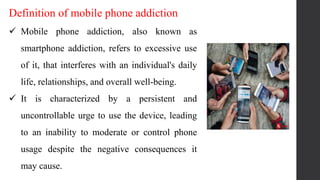
 Mobile phone addiction, also known as
smartphone addiction, refers to excessive use
of it, that interferes with an individual's daily
life, relationships, and overall well-being.
 It is characterized by a persistent and
uncontrollable urge to use the device, leading
to an inability to moderate or control phone
usage despite the negative consequences it
may cause.
 People addicted to mobile phones often
exhibit behaviors such as constantly checking
their devices and feeling anxious or irritable
when separated from their phones.
A Condition in which an individual does not
have control over what they are doing, taking,
or using.
Ex: Alcohol, Cigarette, Drugs, Video Games &
Technology Addiction
Prevalence of mobile phone addiction
 Studies have indicated that mobile phone addiction is a global concern
and its prevalence varies across different countries and populations.
 The prevalence rates reported in various studies can also vary
depending on the criteria used to define and measure addiction.
 Mobile phone addiction is a growing concern in India. A study
published in 2019 reported that around 39% of Indian adolescents
were at risk of developing mobile phone addiction.
 In the United States, a study published in 2019 estimated that
approximately 23% of young adults aged 18-24 showed signs of
mobile phone addiction.
 Various European countries have reported prevalence rates ranging
from 2% to 34% among adolescents and young adults.
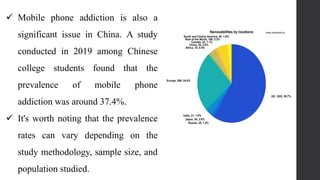
 Mobile phone addiction is also a
significant issue in China. A study
conducted in 2019 among Chinese
college students found that the
prevalence of mobile phone
addiction was around 37.4%.
 It's worth noting that the prevalence
rates can vary depending on the
study methodology, sample size, and
population studied.
Cause of mobile addiction
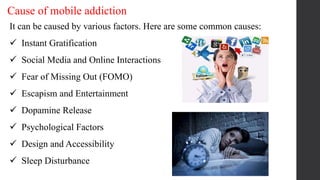
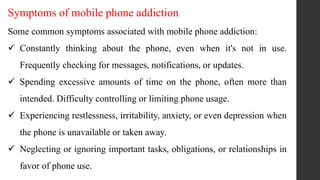
It can be caused by various factors. Here are some common causes:
 Instant Gratification
 Social Media and Online Interactions
 Fear of Missing Out (FOMO)
 Escapism and Entertainment
 Dopamine Release
 Psychological Factors
 Design and Accessibility
 Sleep Disturbance
Symptoms of mobile phone addiction
Some common symptoms associated with mobile phone addiction:
 Constantly thinking about the phone, even when it's not in use.
Frequently checking for messages, notifications, or updates.
 Spending excessive amounts of time on the phone, often more than
intended. Difficulty controlling or limiting phone usage.
 Experiencing restlessness, irritability, anxiety, or even depression when
the phone is unavailable or taken away.
 Neglecting or ignoring important tasks, obligations, or relationships in
favor of phone use.
 Forgetting appointments, missing deadlines,
or neglecting social interactions.
 Phone use interferes with daily activities
such as work, school, hobbies, or personal
relationships.
 Neglecting self-care or losing track of time
due to excessive phone use.
Impact on health
 Excessive mobile phone use can lead to a sedentary lifestyle,
contributing to various health problems such as obesity,
cardiovascular issues, and musculoskeletal disorders.
 Spending long hours hunched over a phone can cause neck and back
pain, text neck, and repetitive strain injuries.
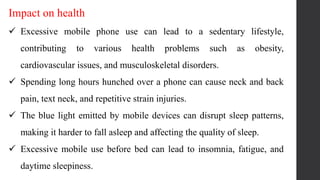
 The blue light emitted by mobile devices can disrupt sleep patterns,
making it harder to fall asleep and affecting the quality of sleep.
 Excessive mobile use before bed can lead to insomnia, fatigue, and
daytime sleepiness.
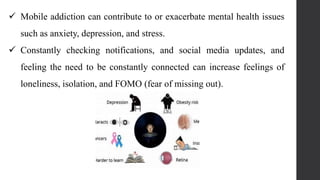
 Mobile addiction can contribute to or exacerbate mental health issues
such as anxiety, depression, and stress.
 Constantly checking notifications, and social media updates, and
feeling the need to be constantly connected can increase feelings of
loneliness, isolation, and FOMO (fear of missing out).
How to overcome from mobile addiction
Overcoming addiction to mobile phones can be challenging, but with
dedication and the right strategies, it is definitely possible.
 Develop a specific plan to help you reduce your phone usage
gradually.
 Start by identifying the activities that are most important to you and
allocate dedicated time for them. This might include hobbies,
exercise, spending time with loved ones, or pursuing personal goals.
 Define clear goals for yourself regarding your mobile phone usage.
 Determine how much time you want to spend on your phone each day
and establish boundaries for when and where you will use it.
 Acknowledge that you have an addiction and that it is negatively
impacting your life.
 Understand the reasons why you want to change and the benefits of
reducing your phone usage.
Conclusion
In conclusion, mobile addiction has become a prevalent issue in
today's society. The widespread use of smartphones and the
increasing availability of mobile applications have contributed to the
addictive nature of these devices. While mobile phones offer
numerous benefits and convenience, excessive usage can have
detrimental effects on an individual’s physical, mental, and social
well-being. Physically, mobile addiction can lead to sedentary
lifestyles, as people spend long hours hunched over their phones,
resulting in poor posture and musculoskeletal problems.
Excessive screen time also disrupts sleep patterns, leading to sleep
deprivation and related health issues. Additionally, constant exposure to
the blue light emitted by mobile screens can negatively impact eye
health. The constant need for stimulation and instant gratification that
mobile devices provide can lead to a lack of focus and productivity in
other areas of life. Furthermore, the constant influx of notifications,
messages, and social media updates can create a sense of FOMO (fear of
missing out) and contribute to feelings of loneliness and isolation.

mobile addiction.pptx

  • 1.
  • 2.
    Contents  Definition ofmobile phone addiction?  Prevalence of mobile phone addiction  Cause of mobile addiction  Symptoms of mobile phone addiction  Impact on health  How to overcome
  • 3.
    Definition of mobilephone addiction  Mobile phone addiction, also known as smartphone addiction, refers to excessive use of it, that interferes with an individual's daily life, relationships, and overall well-being.  It is characterized by a persistent and uncontrollable urge to use the device, leading to an inability to moderate or control phone usage despite the negative consequences it may cause.
  • 4.
     People addictedto mobile phones often exhibit behaviors such as constantly checking their devices and feeling anxious or irritable when separated from their phones. A Condition in which an individual does not have control over what they are doing, taking, or using. Ex: Alcohol, Cigarette, Drugs, Video Games & Technology Addiction
  • 5.
    Prevalence of mobilephone addiction  Studies have indicated that mobile phone addiction is a global concern and its prevalence varies across different countries and populations.  The prevalence rates reported in various studies can also vary depending on the criteria used to define and measure addiction.  Mobile phone addiction is a growing concern in India. A study published in 2019 reported that around 39% of Indian adolescents were at risk of developing mobile phone addiction.
  • 6.
     In theUnited States, a study published in 2019 estimated that approximately 23% of young adults aged 18-24 showed signs of mobile phone addiction.  Various European countries have reported prevalence rates ranging from 2% to 34% among adolescents and young adults.
  • 7.
     Mobile phoneaddiction is also a significant issue in China. A study conducted in 2019 among Chinese college students found that the prevalence of mobile phone addiction was around 37.4%.  It's worth noting that the prevalence rates can vary depending on the study methodology, sample size, and population studied.
  • 8.
    Cause of mobileaddiction It can be caused by various factors. Here are some common causes:  Instant Gratification  Social Media and Online Interactions  Fear of Missing Out (FOMO)  Escapism and Entertainment  Dopamine Release  Psychological Factors  Design and Accessibility  Sleep Disturbance
  • 9.
    Symptoms of mobilephone addiction Some common symptoms associated with mobile phone addiction:  Constantly thinking about the phone, even when it's not in use. Frequently checking for messages, notifications, or updates.  Spending excessive amounts of time on the phone, often more than intended. Difficulty controlling or limiting phone usage.  Experiencing restlessness, irritability, anxiety, or even depression when the phone is unavailable or taken away.  Neglecting or ignoring important tasks, obligations, or relationships in favor of phone use.
  • 10.
     Forgetting appointments,missing deadlines, or neglecting social interactions.  Phone use interferes with daily activities such as work, school, hobbies, or personal relationships.  Neglecting self-care or losing track of time due to excessive phone use.
  • 11.
    Impact on health Excessive mobile phone use can lead to a sedentary lifestyle, contributing to various health problems such as obesity, cardiovascular issues, and musculoskeletal disorders.  Spending long hours hunched over a phone can cause neck and back pain, text neck, and repetitive strain injuries.  The blue light emitted by mobile devices can disrupt sleep patterns, making it harder to fall asleep and affecting the quality of sleep.  Excessive mobile use before bed can lead to insomnia, fatigue, and daytime sleepiness.
  • 12.
     Mobile addictioncan contribute to or exacerbate mental health issues such as anxiety, depression, and stress.  Constantly checking notifications, and social media updates, and feeling the need to be constantly connected can increase feelings of loneliness, isolation, and FOMO (fear of missing out).
  • 13.
    How to overcomefrom mobile addiction Overcoming addiction to mobile phones can be challenging, but with dedication and the right strategies, it is definitely possible.  Develop a specific plan to help you reduce your phone usage gradually.  Start by identifying the activities that are most important to you and allocate dedicated time for them. This might include hobbies, exercise, spending time with loved ones, or pursuing personal goals.  Define clear goals for yourself regarding your mobile phone usage.
  • 14.
     Determine howmuch time you want to spend on your phone each day and establish boundaries for when and where you will use it.  Acknowledge that you have an addiction and that it is negatively impacting your life.  Understand the reasons why you want to change and the benefits of reducing your phone usage.
  • 15.
    Conclusion In conclusion, mobileaddiction has become a prevalent issue in today's society. The widespread use of smartphones and the increasing availability of mobile applications have contributed to the addictive nature of these devices. While mobile phones offer numerous benefits and convenience, excessive usage can have detrimental effects on an individual’s physical, mental, and social well-being. Physically, mobile addiction can lead to sedentary lifestyles, as people spend long hours hunched over their phones, resulting in poor posture and musculoskeletal problems.
  • 16.
    Excessive screen timealso disrupts sleep patterns, leading to sleep deprivation and related health issues. Additionally, constant exposure to the blue light emitted by mobile screens can negatively impact eye health. The constant need for stimulation and instant gratification that mobile devices provide can lead to a lack of focus and productivity in other areas of life. Furthermore, the constant influx of notifications, messages, and social media updates can create a sense of FOMO (fear of missing out) and contribute to feelings of loneliness and isolation.