Multinational Corporations in the Developing World
—  U.S. President Abraham Lincoln, Nov. 21, 1864 (letter to Col. William F. Elkins) Ref: “The Lincoln Encyclopedia”, Archer H. Shaw (Macmillan, 1950, NY) “ I see in the near future a crisis approaching that unnerves me and causes me to tremble for the safety of my country. ... corporations have been enthroned and an era of corruption in high places will follow, and the money power of the country will endeavour to prolong its reign by working upon the prejudices of the people until all wealth is aggregated in a few hands and the Republic is destroyed.” Fact: Of the 100 largest economies in the world, 51 are corporations while only 49 are countries, based on a comparison of corporate sales and country GDPs
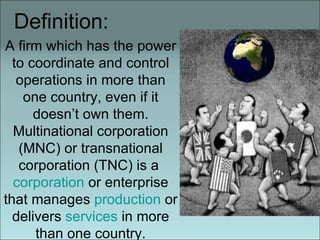
Definition: A firm which has the power to coordinate and control operations in more than one country, even if it doesn’t own them. Multinational corporation (MNC) or transnational corporation (TNC) is a  corporation  or enterprise that manages  production  or delivers  services  in more than one country.
MNC’s Structure Horizontally integrated multinational corporations  manage production establishments located in different countries to produce the same or similar products. (example:  McDonald's )  Vertically integrated multinational corporations  manage production establishment in certain country/countries to produce products that serve as input to its production establishments in other country/countries. (example:  Adidas  or  Nike, Inc. )  Diversified multinational corporations  manage production establishments located in different countries that are neither horizontally nor vertically nor straight, nor non-straight integrated. (example:  Best Western  or  Hilton Hotels )  Multinational corporations can be divided into 3 broad groups according to the configuration of their production facilities:
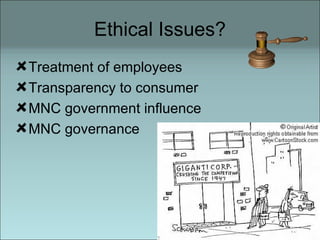
Ethical Issues? Treatment of employees Transparency to consumer MNC government influence MNC governance
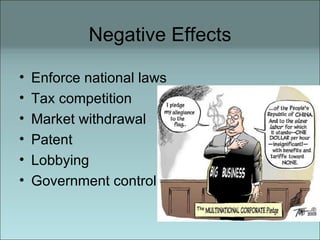
Negative Effects Enforce national laws Tax competition  Market withdrawal Patent Lobbying Government control
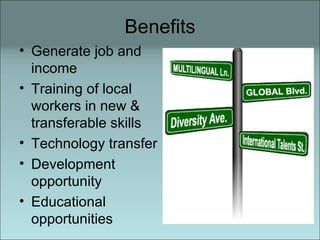
Benefits Generate job and income Training of local workers in new & transferable skills Technology transfer  Development opportunity  Educational opportunities
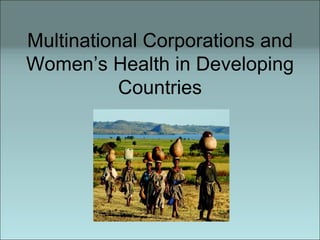
Multinational Corporations and Women’s Health in Developing Countries
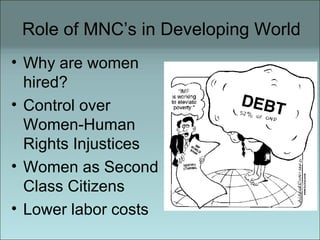
Role of MNC’s in Developing World Why are women hired? Control over Women-Human Rights Injustices Women as Second Class Citizens Lower labor costs
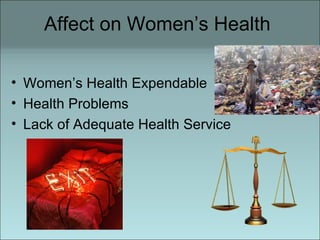
Affect on Women’s Health  Women’s Health Expendable Health Problems  Lack of Adequate Health Service
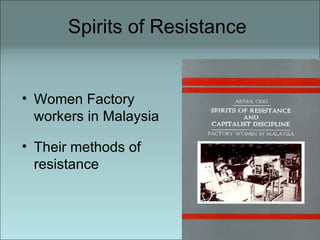
Spirits of Resistance  Women Factory workers in Malaysia Their methods of resistance
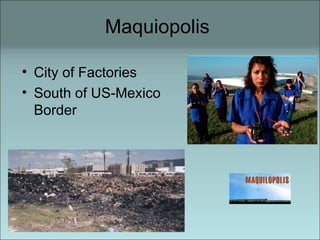
Maquiopolis  City of Factories South of US-Mexico Border
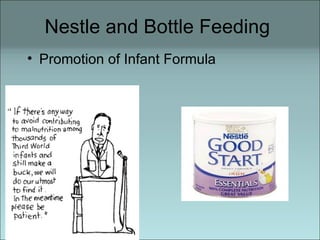
Nestle and Bottle Feeding  Promotion of Infant Formula
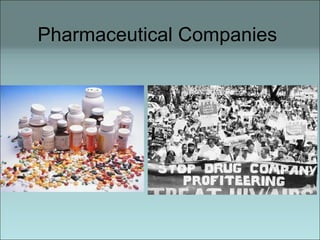
Pharmaceutical Companies
Top 10 Drug Companies Johnson and Johnson Pfizer Bayer GlaxoSmithKline Novartis Sanofi-Aventis Hoffmann- La Roche AstraZeneca Merck & Co. Abbott Laboratories
Pfizer Unapproved Drug “Trovan” given to children suffering from cholera, measles, and bacterial meningitis in 1996.  5 children died Lawsuit claims drug given without parental consent and that Pfizer was using outbreak to test their drug “ Panel Faults Pfizer in '96 Clinical Trial In Nigeria” - washingtonpost.com May 7, 2006
Novartis Challenged India’s patent law which allows India to refuse recognition of re-patenting of modified drugs.  Court rules that lawsuit was a threat to those suffering from HIV, Cancers, and Diabetes and those who are too poor to afford medications “ India's cheap drugs under patent threat” BBC Feb 5, 2007
Hoffmann- La Roche Accused of monopolizing the production of oseltamivir (avian influenza drug).  Philippine Health Secretary said drug is stockpiled in 1st world and not easily available in countries that need it most in SE Asia. Hoffmann-La Roche allowed other companies to produce oseltamavir on 10/20/05 “ Why Roche Released Tamiflu” Time Oct 19, 2005
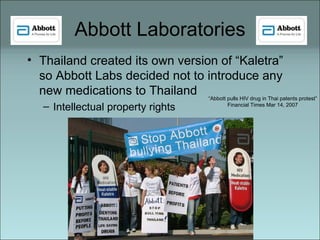
Abbott Laboratories Thailand created its own version of “Kaletra” so Abbott Labs decided not to introduce any new medications to Thailand Intellectual property rights  “ Abbott pulls HIV drug in Thai patents protest” Financial Times Mar 14, 2007
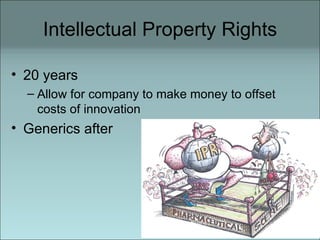
Intellectual Property Rights 20 years Allow for company to make money to offset costs of innovation Generics after
Doha  TRIPS (Trade-Related Aspects of Intellectual Property Rights) WTO commitment to promoting health 2001, the Doha Declaration’s goal was to reaffirm WTO members going around patent laws for public health purposes/emergencies. “ Doha Declaration explained”-WTO http://www.wto.org/english/tratop_e/dda_e/dohaexplained_e.htm
Economic  …
 
A Look At The Economics… In-depth inquiry into multinational company investment in developing countries 14 in-depth sector case studies focusing on 4 major developing economies:  China, India, Brazil and Mexico Foreign Direct Investment (FDI) 5 sectors: automotive, consumer electronics, food retail, retail banking and information technology/business process offshoring
Findings Capital, technology and a range of skills Improved standards of living    prices,    quality goods and more choice    productivity and output led to an    in national income Muted impact on employment
Impact On Host Countries: If investment motivated by search for lower wage cost locations…    sector productivity, output, employment and standards of living If investment motivated by interest in expanding their market in host country… Could be positive, but often came at cost to incumbent, less productive companies
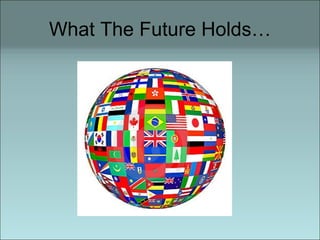
What The Future Holds…
Conclusion This topic is an enormous topic, it includes such issues as economics, globalization, migration, women’s health, environmental health, human rights, policy, conflict & politics, just to name a few…
Summary Description & Definition of the Issue Ways MNC’s Can Effect Women’s Health Example: Pharmaceuticals Economics
Bad News… There are a lot of companies out there taking advantage of the local populations and environment.
Good News… Every single day people are becoming activists and social entrepreneurs.  People are changing the way they think about business and the “bottom line”.  This is the direction we need to move in!
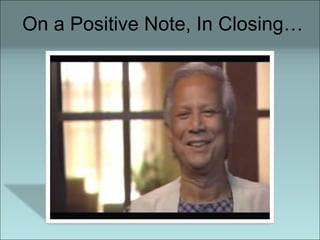
On a Positive Note, In Closing…
Further Resources… http://fora.tv/ http://portico.bl.uk/bipc/previous.html http://www.anitaroddick.com/topics.php http://iamanactivist.org/DoSomething.aspx http://www.socialenterprise.org.uk/ http://www.internationalistmagazine.com/ http://www.mckinsey.com/mgi/ http://yaleglobal.yale.edu/globalization/ http://www.globalissues.org/ http://www.naomiklein.org/main

MNCs Presentation

  • 1.
    Multinational Corporations inthe Developing World
  • 2.
    — U.S.President Abraham Lincoln, Nov. 21, 1864 (letter to Col. William F. Elkins) Ref: “The Lincoln Encyclopedia”, Archer H. Shaw (Macmillan, 1950, NY) “ I see in the near future a crisis approaching that unnerves me and causes me to tremble for the safety of my country. ... corporations have been enthroned and an era of corruption in high places will follow, and the money power of the country will endeavour to prolong its reign by working upon the prejudices of the people until all wealth is aggregated in a few hands and the Republic is destroyed.” Fact: Of the 100 largest economies in the world, 51 are corporations while only 49 are countries, based on a comparison of corporate sales and country GDPs
  • 3.
    Definition: A firmwhich has the power to coordinate and control operations in more than one country, even if it doesn’t own them. Multinational corporation (MNC) or transnational corporation (TNC) is a corporation or enterprise that manages production or delivers services in more than one country.
  • 4.
    MNC’s Structure Horizontallyintegrated multinational corporations manage production establishments located in different countries to produce the same or similar products. (example: McDonald's ) Vertically integrated multinational corporations manage production establishment in certain country/countries to produce products that serve as input to its production establishments in other country/countries. (example: Adidas or Nike, Inc. ) Diversified multinational corporations manage production establishments located in different countries that are neither horizontally nor vertically nor straight, nor non-straight integrated. (example: Best Western or Hilton Hotels ) Multinational corporations can be divided into 3 broad groups according to the configuration of their production facilities:
  • 5.
    Ethical Issues? Treatmentof employees Transparency to consumer MNC government influence MNC governance
  • 6.
    Negative Effects Enforcenational laws Tax competition Market withdrawal Patent Lobbying Government control
  • 7.
    Benefits Generate joband income Training of local workers in new & transferable skills Technology transfer Development opportunity Educational opportunities
  • 8.
    Multinational Corporations andWomen’s Health in Developing Countries
  • 9.
    Role of MNC’sin Developing World Why are women hired? Control over Women-Human Rights Injustices Women as Second Class Citizens Lower labor costs
  • 10.
    Affect on Women’sHealth Women’s Health Expendable Health Problems Lack of Adequate Health Service
  • 11.
    Spirits of Resistance Women Factory workers in Malaysia Their methods of resistance
  • 12.
    Maquiopolis Cityof Factories South of US-Mexico Border
  • 13.
    Nestle and BottleFeeding Promotion of Infant Formula
  • 14.
  • 15.
    Top 10 DrugCompanies Johnson and Johnson Pfizer Bayer GlaxoSmithKline Novartis Sanofi-Aventis Hoffmann- La Roche AstraZeneca Merck & Co. Abbott Laboratories
  • 16.
    Pfizer Unapproved Drug“Trovan” given to children suffering from cholera, measles, and bacterial meningitis in 1996. 5 children died Lawsuit claims drug given without parental consent and that Pfizer was using outbreak to test their drug “ Panel Faults Pfizer in '96 Clinical Trial In Nigeria” - washingtonpost.com May 7, 2006
  • 17.
    Novartis Challenged India’spatent law which allows India to refuse recognition of re-patenting of modified drugs. Court rules that lawsuit was a threat to those suffering from HIV, Cancers, and Diabetes and those who are too poor to afford medications “ India's cheap drugs under patent threat” BBC Feb 5, 2007
  • 18.
    Hoffmann- La RocheAccused of monopolizing the production of oseltamivir (avian influenza drug). Philippine Health Secretary said drug is stockpiled in 1st world and not easily available in countries that need it most in SE Asia. Hoffmann-La Roche allowed other companies to produce oseltamavir on 10/20/05 “ Why Roche Released Tamiflu” Time Oct 19, 2005
  • 19.
    Abbott Laboratories Thailandcreated its own version of “Kaletra” so Abbott Labs decided not to introduce any new medications to Thailand Intellectual property rights “ Abbott pulls HIV drug in Thai patents protest” Financial Times Mar 14, 2007
  • 20.
    Intellectual Property Rights20 years Allow for company to make money to offset costs of innovation Generics after
  • 21.
    Doha TRIPS(Trade-Related Aspects of Intellectual Property Rights) WTO commitment to promoting health 2001, the Doha Declaration’s goal was to reaffirm WTO members going around patent laws for public health purposes/emergencies. “ Doha Declaration explained”-WTO http://www.wto.org/english/tratop_e/dda_e/dohaexplained_e.htm
  • 22.
  • 23.
  • 24.
    A Look AtThe Economics… In-depth inquiry into multinational company investment in developing countries 14 in-depth sector case studies focusing on 4 major developing economies: China, India, Brazil and Mexico Foreign Direct Investment (FDI) 5 sectors: automotive, consumer electronics, food retail, retail banking and information technology/business process offshoring
  • 25.
    Findings Capital, technologyand a range of skills Improved standards of living  prices,  quality goods and more choice  productivity and output led to an  in national income Muted impact on employment
  • 26.
    Impact On HostCountries: If investment motivated by search for lower wage cost locations…  sector productivity, output, employment and standards of living If investment motivated by interest in expanding their market in host country… Could be positive, but often came at cost to incumbent, less productive companies
  • 27.
  • 28.
    Conclusion This topicis an enormous topic, it includes such issues as economics, globalization, migration, women’s health, environmental health, human rights, policy, conflict & politics, just to name a few…
  • 29.
    Summary Description &Definition of the Issue Ways MNC’s Can Effect Women’s Health Example: Pharmaceuticals Economics
  • 30.
    Bad News… Thereare a lot of companies out there taking advantage of the local populations and environment.
  • 31.
    Good News… Everysingle day people are becoming activists and social entrepreneurs. People are changing the way they think about business and the “bottom line”. This is the direction we need to move in!
  • 32.
    On a PositiveNote, In Closing…
  • 33.
    Further Resources… http://fora.tv/http://portico.bl.uk/bipc/previous.html http://www.anitaroddick.com/topics.php http://iamanactivist.org/DoSomething.aspx http://www.socialenterprise.org.uk/ http://www.internationalistmagazine.com/ http://www.mckinsey.com/mgi/ http://yaleglobal.yale.edu/globalization/ http://www.globalissues.org/ http://www.naomiklein.org/main