Future Shock for Libraries:  The Re-emergence of Orality Ruth Ann Jones, Special Collections Cataloger Ranti Junus, Systems Librarian for Electronic Resources Michigan State University Libraries
What to expect today? A chance to reflect instead of react Examine larger trends No 5-point solutions
Setting the stage: How scholars (and others) communicated 100 years ago
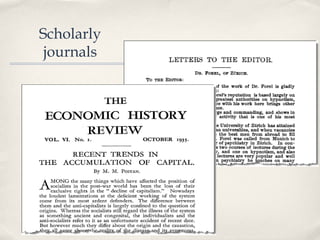
Scholarly journals
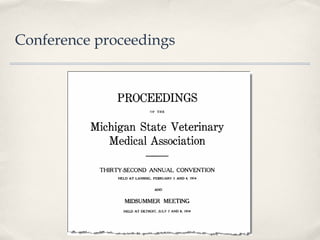
Conference proceedings
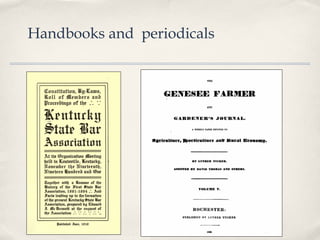
Handbooks and  periodicals
Fast forward Scholarly communications now include: Scholarly communications now include: Scholarly communications now include:
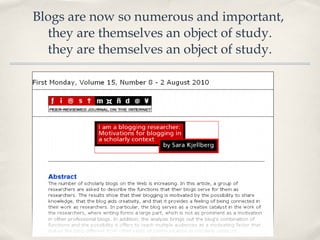
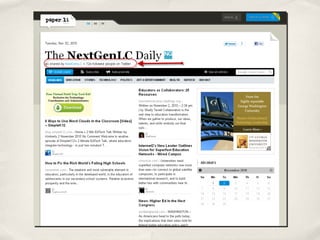
math education blog Blogs
Blogs are now so numerous and important,  they are themselves an object of study. they are themselves an object of study.
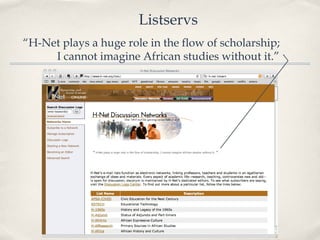
Listservs “ H-Net plays a huge role in the flow of scholarship;  I cannot imagine African studies without it.”
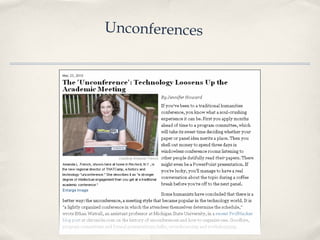
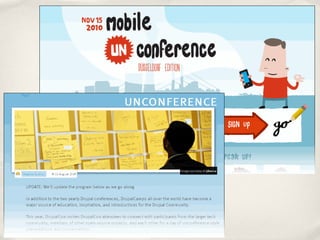
unconference announcement Unconferences
 
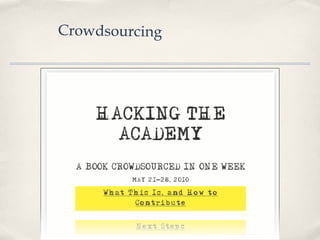
Hacking the Academy screenshot Crowdsourcing
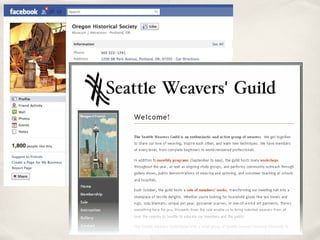
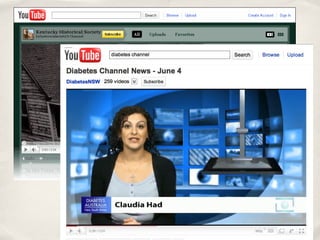
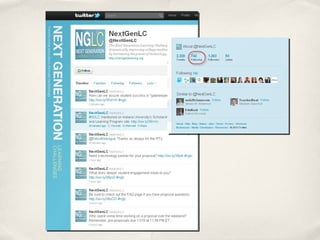
State and local organizations live online too:
 
state history society facebook
Why think about changes in communication? They affect library collection-building! Linguistics offers a theoretical framework to understand how communication methods are changing Computer science offers collection-building tools of the future
What’s happening? It’s more than technology.
Linguistics researcher Robin Tolmach Lakoff: the shift to orality the shift to orality the shift to orality
“ It is generally acknowledged  that written and oral communication involve very different kinds of strategies: what works orally does not work in print, and vice versa.” and vice versa.” and vice versa.” and vice versa.” and vice versa.”
“ In the past several hundred years…  we have been in the thrall of an assumption that written communication is primary and preferable.” primary and preferable.” primary and preferable.” primary and preferable.” primary and preferable.”
“ For various reasons, some social, some technological, we are at present  in the process of shifting...” in the process of shifting...” in the process of shifting...”
“ ...so that we prefer and respond most appropriately to communication s in any mode couched in  an oral framework.” an oral framework.” an oral framework.” an oral framework.”
Lakoff, Robin Tolmach. “Some of My Favorite Writers are Literate: The Mingling of Oral and Literate Strategies in Written Communication.” In  Spoken and Written Language: Exploring Orality and Literacy.  Deborah Tannen, ed. Norwood, N.J. : Ablex, 1982 Deborah Tannen, ed. Norwood, N.J. : Ablex, 1982 Deborah Tannen, ed. Norwood, N.J. : Ablex, 1982
How do linguists  understand the difference between printed communication and oral communication?
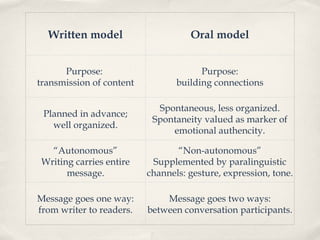
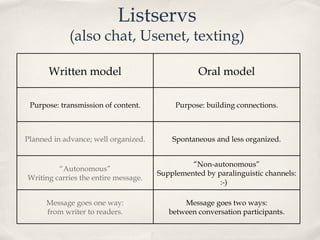
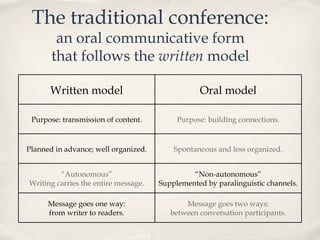
Written model Oral model Purpose:  transmission of content Purpose: building connections Planned in advance; well organized. Spontaneous, less organized. Spontaneity valued as marker of emotional authencity. “ Autonomous” Writing carries entire message. “ Non-autonomous” Supplemented by paralinguistic channels: gesture, expression, tone. Message goes one way: from writer to readers. Message goes two ways: between conversation participants.
Do new forms of communication follow the oral model?
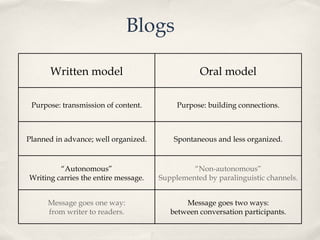
Blogs Written model Oral model Purpose: transmission of content. Purpose: building connections. Planned in advance; well organized. Spontaneous and less organized. “ Autonomous” Writing carries the entire message. “ Non-autonomous” Supplemented by paralinguistic channels. Message goes one way: from writer to readers. Message goes two ways: between conversation participants.
Listservs (also chat, Usenet, texting) Written model Oral model Purpose: transmission of content. Purpose: building connections. Planned in advance; well organized. Spontaneous and less organized. “ Autonomous” Writing carries the entire message. “ Non-autonomous” Supplemented by paralinguistic channels: :-)  Message goes one way: from writer to readers. Message goes two ways: between conversation participants.
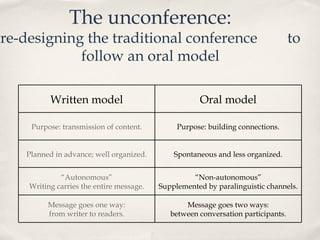
Some modes of oral communication have traditionally imitated print , but are evolving more purely  oral  forms. forms. forms.
The traditional conference: an oral communicative form that follows the  written  model Written model Oral model Purpose: transmission of content. Purpose: building connections. Planned in advance; well organized. Spontaneous and less organized. “ Autonomous” Writing carries the entire message. “ Non-autonomous” Supplemented by paralinguistic channels. Message goes one way: from writer to readers. Message goes two ways: between conversation participants.
The unconference: re-designing the traditional conference  to follow an oral model Written model Oral model Purpose: transmission of content. Purpose: building connections. Planned in advance; well organized. Spontaneous and less organized. “ Autonomous” Writing carries the entire message. “ Non-autonomous” Supplemented by paralinguistic channels. Message goes one way: from writer to readers. Message goes two ways: between conversation participants.
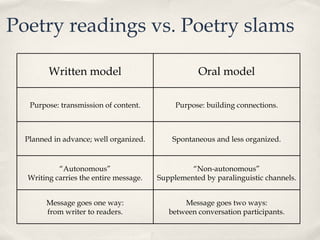
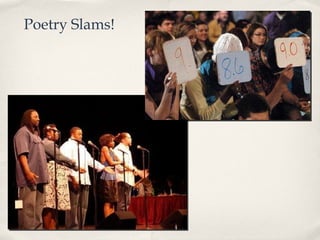
Poetry Slams!
Poetry readings vs. Poetry slams Written model Oral model Purpose: transmission of content. Purpose: building connections. Planned in advance; well organized. Spontaneous and less organized. “ Autonomous” Writing carries the entire message. “ Non-autonomous” Supplemented by paralinguistic channels. Message goes one way: from writer to readers. Message goes two ways: between conversation participants.
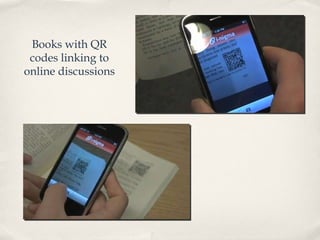
Books with QR codes linking to online discussions
Books with QR codes Written model Oral model Purpose: transmission of content. Purpose: building connections. Planned in advance; well organized. Spontaneous but less organized. “ Autonomous” Writing carries the entire message. “ Non-autonomous” Supplemented by paralinguistic channels. Message goes one way: from writer to readers. Message goes two ways: between conversation participants.
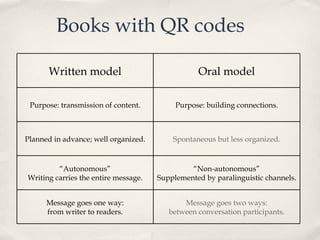
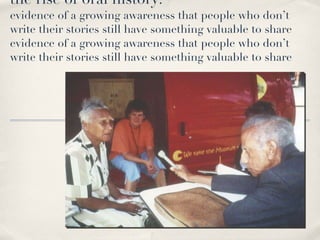
the rise of oral history: evidence of a growing awareness that people who don’t write their stories still have something valuable to share evidence of a growing awareness that people who don’t write their stories still have something valuable to share
one last look at the oral model... much of the information we will have to preserve and organize in the future will have these characteristics purpose: building connections spontaneous and less organized supplemented by paralinguistic channels conversations going in all directions
WHAT GIVES?
Digital publishing is becoming simply publishing To many producers, content is the central asset
Collective memory is what we are preserving: and this is digital memory And it may or may not be encoded in the structured and meaningful way
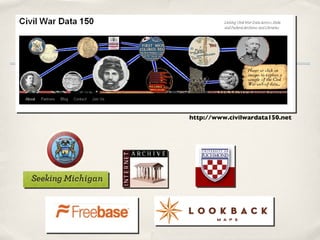
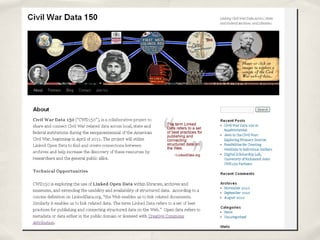
http://www.civilwardata150.net
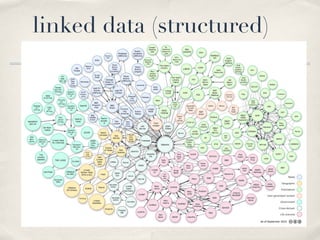
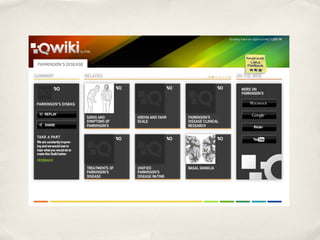
linked data (structured)
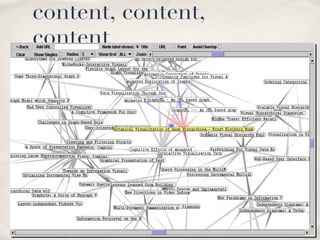
content, content, content
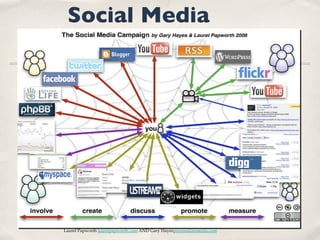
Social Media Laurel Papworth  laurelpapworth.com  AND Gary Hayes personalizemedia.com  
 
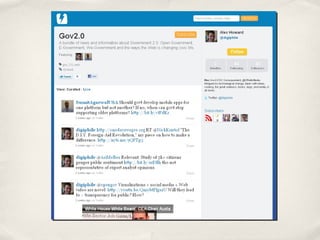
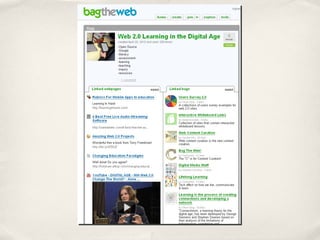
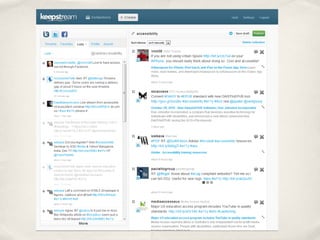
Self curation tools


Auto-populate


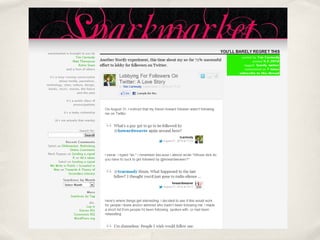
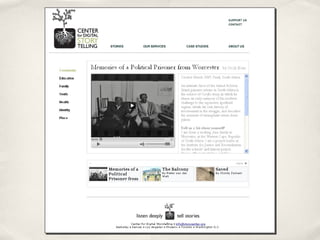
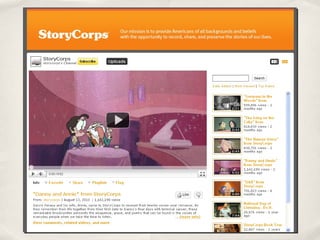
Story Telling


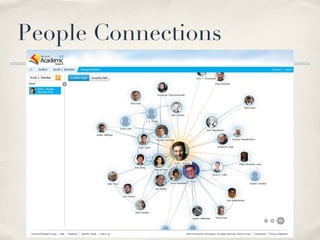
People Connections


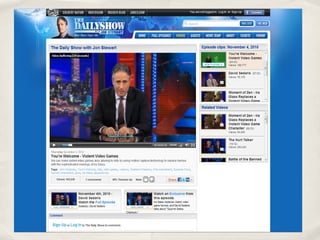
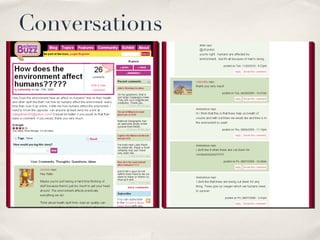
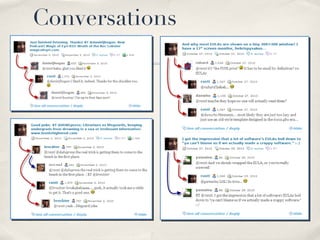
Conversations
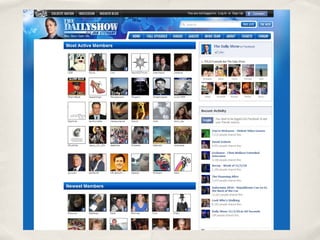
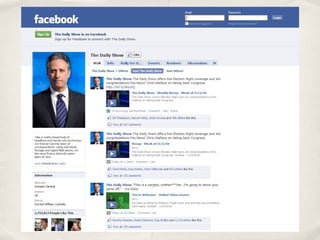
Conversations
We are experiencing a shift from preferring written communication styles  to preferring oral communication styles. to preferring oral communication styles. to preferring oral communication styles.
We will need to organize and preserve information with these characteristics: multiple, simultaneous channels of communication (multimedia) a high volume of relatively unorganized information, due partly to the preference for spontaneity (self-curation, auto-population and data mining all become critical) users who want to make personal connections across broader and broader groups (the semantic web becomes critical) discourse will take place in multi-directional conversations which have to be preserved
Questions and discussion

Mla final in powerpoint

  • 1.
    Future Shock forLibraries: The Re-emergence of Orality Ruth Ann Jones, Special Collections Cataloger Ranti Junus, Systems Librarian for Electronic Resources Michigan State University Libraries
  • 2.
    What to expecttoday? A chance to reflect instead of react Examine larger trends No 5-point solutions
  • 3.
    Setting the stage:How scholars (and others) communicated 100 years ago
  • 4.
  • 5.
  • 6.
    Handbooks and periodicals
  • 7.
    Fast forward Scholarlycommunications now include: Scholarly communications now include: Scholarly communications now include:
  • 8.
  • 9.
    Blogs are nowso numerous and important, they are themselves an object of study. they are themselves an object of study.
  • 10.
    Listservs “ H-Netplays a huge role in the flow of scholarship; I cannot imagine African studies without it.”
  • 11.
  • 12.
  • 13.
    Hacking the Academyscreenshot Crowdsourcing
  • 14.
    State and localorganizations live online too:
  • 15.
  • 16.
  • 17.
    Why think aboutchanges in communication? They affect library collection-building! Linguistics offers a theoretical framework to understand how communication methods are changing Computer science offers collection-building tools of the future
  • 18.
    What’s happening? It’smore than technology.
  • 19.
    Linguistics researcher RobinTolmach Lakoff: the shift to orality the shift to orality the shift to orality
  • 20.
    “ It isgenerally acknowledged that written and oral communication involve very different kinds of strategies: what works orally does not work in print, and vice versa.” and vice versa.” and vice versa.” and vice versa.” and vice versa.”
  • 21.
    “ In thepast several hundred years… we have been in the thrall of an assumption that written communication is primary and preferable.” primary and preferable.” primary and preferable.” primary and preferable.” primary and preferable.”
  • 22.
    “ For variousreasons, some social, some technological, we are at present in the process of shifting...” in the process of shifting...” in the process of shifting...”
  • 23.
    “ ...so thatwe prefer and respond most appropriately to communication s in any mode couched in an oral framework.” an oral framework.” an oral framework.” an oral framework.”
  • 24.
    Lakoff, Robin Tolmach.“Some of My Favorite Writers are Literate: The Mingling of Oral and Literate Strategies in Written Communication.” In Spoken and Written Language: Exploring Orality and Literacy. Deborah Tannen, ed. Norwood, N.J. : Ablex, 1982 Deborah Tannen, ed. Norwood, N.J. : Ablex, 1982 Deborah Tannen, ed. Norwood, N.J. : Ablex, 1982
  • 25.
    How do linguists understand the difference between printed communication and oral communication?
  • 26.
    Written model Oralmodel Purpose: transmission of content Purpose: building connections Planned in advance; well organized. Spontaneous, less organized. Spontaneity valued as marker of emotional authencity. “ Autonomous” Writing carries entire message. “ Non-autonomous” Supplemented by paralinguistic channels: gesture, expression, tone. Message goes one way: from writer to readers. Message goes two ways: between conversation participants.
  • 27.
    Do new formsof communication follow the oral model?
  • 28.
    Blogs Written modelOral model Purpose: transmission of content. Purpose: building connections. Planned in advance; well organized. Spontaneous and less organized. “ Autonomous” Writing carries the entire message. “ Non-autonomous” Supplemented by paralinguistic channels. Message goes one way: from writer to readers. Message goes two ways: between conversation participants.
  • 29.
    Listservs (also chat,Usenet, texting) Written model Oral model Purpose: transmission of content. Purpose: building connections. Planned in advance; well organized. Spontaneous and less organized. “ Autonomous” Writing carries the entire message. “ Non-autonomous” Supplemented by paralinguistic channels: :-) Message goes one way: from writer to readers. Message goes two ways: between conversation participants.
  • 30.
    Some modes oforal communication have traditionally imitated print , but are evolving more purely oral forms. forms. forms.
  • 31.
    The traditional conference:an oral communicative form that follows the written model Written model Oral model Purpose: transmission of content. Purpose: building connections. Planned in advance; well organized. Spontaneous and less organized. “ Autonomous” Writing carries the entire message. “ Non-autonomous” Supplemented by paralinguistic channels. Message goes one way: from writer to readers. Message goes two ways: between conversation participants.
  • 32.
    The unconference: re-designingthe traditional conference to follow an oral model Written model Oral model Purpose: transmission of content. Purpose: building connections. Planned in advance; well organized. Spontaneous and less organized. “ Autonomous” Writing carries the entire message. “ Non-autonomous” Supplemented by paralinguistic channels. Message goes one way: from writer to readers. Message goes two ways: between conversation participants.
  • 33.
  • 34.
    Poetry readings vs.Poetry slams Written model Oral model Purpose: transmission of content. Purpose: building connections. Planned in advance; well organized. Spontaneous and less organized. “ Autonomous” Writing carries the entire message. “ Non-autonomous” Supplemented by paralinguistic channels. Message goes one way: from writer to readers. Message goes two ways: between conversation participants.
  • 35.
    Books with QRcodes linking to online discussions
  • 36.
    Books with QRcodes Written model Oral model Purpose: transmission of content. Purpose: building connections. Planned in advance; well organized. Spontaneous but less organized. “ Autonomous” Writing carries the entire message. “ Non-autonomous” Supplemented by paralinguistic channels. Message goes one way: from writer to readers. Message goes two ways: between conversation participants.
  • 37.
    the rise oforal history: evidence of a growing awareness that people who don’t write their stories still have something valuable to share evidence of a growing awareness that people who don’t write their stories still have something valuable to share
  • 38.
    one last lookat the oral model... much of the information we will have to preserve and organize in the future will have these characteristics purpose: building connections spontaneous and less organized supplemented by paralinguistic channels conversations going in all directions
  • 39.
  • 40.
    Digital publishing isbecoming simply publishing To many producers, content is the central asset
  • 41.
    Collective memory iswhat we are preserving: and this is digital memory And it may or may not be encoded in the structured and meaningful way
  • 42.
  • 43.
  • 44.
  • 45.
    Social Media LaurelPapworth  laurelpapworth.com  AND Gary Hayes personalizemedia.com  
  • 46.
  • 47.
  • 48.
  • 49.
  • 50.
  • 51.
  • 52.
  • 53.
  • 54.
  • 55.
  • 56.
  • 57.
  • 58.
  • 59.
  • 60.
  • 61.
  • 62.
  • 63.
  • 64.
  • 65.
  • 66.
  • 67.
    We are experiencinga shift from preferring written communication styles to preferring oral communication styles. to preferring oral communication styles. to preferring oral communication styles.
  • 68.
    We will needto organize and preserve information with these characteristics: multiple, simultaneous channels of communication (multimedia) a high volume of relatively unorganized information, due partly to the preference for spontaneity (self-curation, auto-population and data mining all become critical) users who want to make personal connections across broader and broader groups (the semantic web becomes critical) discourse will take place in multi-directional conversations which have to be preserved
  • 69.

Editor's Notes

  • #43 http://www.civilwardata150.net/ CWD150 “is a collaborative project to share and connect civil war related data” “… uses Linked Data to enable the public to help make connections between disparate sets of data publicly available on the web.” Read the article from RWW on this project http://www.readwriteweb.com/arc hives/lookbackmaps_-_building_a_location-based_time_mach.php Also the blog from LookBackMap s http://lookbackmaps.net/blog/2010/09/01/announcing-new-website-for-civil-war-data-150-project/
  • #44 Linked Data: These are the databases that are feeding each other. http://richard.cyganiak.de/2007/10/lod/lod-datasets_2010-09-22_colored.html Definition of linked data ( http://linkeddata.org ): It is “about using the Web to connect related data that wasn’t previousl y linked”
  • #45 Article citation is an example of linking with a context. It’s not exactly a linked data, but shows how one article relates to the other in a semi structured way. Each article has its own URI; each citation has its own URI as well, which then used as a link. This particular image is created by CiteSeer, an autonomous citation indexing. See http://citeseer.ist.psu.edu for more info.
  • #46 Content creation and sharing made easy by social media application.
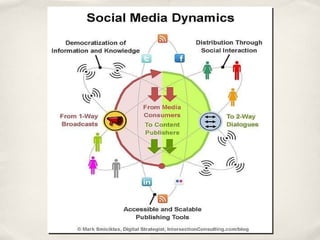
  • #47 See http://www.intersectionconsulting.com/blog/?p=735
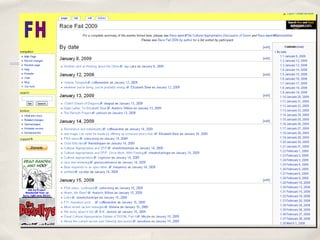
  • #49 Wiki tend to be de facto of creating documents as well as collecting links.
  • #50 Curated.by ( http://www.curated.by/ ) allows users to “collect and organize tweets into topic based streams that can be shared or embedded anywhere” This is sort of the “delicious” service ( http://www.delicious.c om ) for twitter.
  • #51 BagTheWeb ( http://bagtheweb.com ) allows users to “ collect, publish, and share curated Web content in a simple and exciting way. Web content forms content networks, users form social networks, and content and social networks further connect.”
  • #52 Keepstream ( http://keepstream.com/ ) allows one to curate content from social media (twitter, facebook) and other link of interest, and embed it to one’s website or blog.
  • #59 Story telling Storify ( http://storify.com/ ) allows you to pull content streams from social web like twitter, flickr, and youtube video and create a strory. See the FAQ ( http://storify.com/ faq ) for more info.
  • #62 See another example at http://academic.research.microsoft.com/VisualExplorer.aspx#2402354 Also, read article by Monica Sharma “ Unraveling the Dynamics of Digital Library Community:  A Social Network Analysis Approach”, http://www.ieee-tcdl.org/Bulletin/current/Sharma/sharma.html