Diary or Megaphone?
The pragmatic mode of weblogs

           Cornelius Puschmann, PhD
      Heinrich-Heine University Düsseldorf

         cornelius.puschmann@uni-duesseldorf.de

                    http://ynada.com/

 Language in the (New) Media: Technologies and Ideologies
          University of Washington, Seattle, WA
                    4 September 2009
Context

●   I'm a postdoc researcher in English linguistics at the University of
Düsseldorf
●   PhD thesis “The corporate blog as an emerging genre of computer-
mediated communication” (in press, Göttingen U Press)
●   interested in pragmatics, genre/register studies, CMC, corpus
linguistics
An sample of prior research on blogs

●   linguistics: Herring, Hendricks
●   ethnography: Nardi et al, Gumbrecht
●   sociology/social psychology: Schmidt, Döring
●   individual (trait) psychology: Nowson, Pennebaker
●   less attention from linguists than synchronous CMC
●   continuation of blogs and blog research in microblogging
●   new direction of research (not just on blogs): status reporting, “trivial
tweeting”, communicative ambience
Research questions

Three research questions arose in the course of my PhD project:
1) What factors shape the linguistic form of blog entries?
2) What linguistic features of blogs are constituting/universal?
3) How can the relationship between blogger and (implicit) blog reader
be described?
RQ 1: What factors shape the linguistic form
of blog entries?

Channel
●   asynchrony
●   permanence
●   open multiplicity
●   interactivity
RQ 1: What factors shape the linguistic form
of blog entries?

Genre
●   antecedent genres (diary, journal, log book, editorial, ...)
●   discourse community (teenagers, lawyers, mothers, linguists, ...)
●   communicative purpose (artistic expression, political debate,
celebrity gossip, personal knowledge management, ...)


Situation
●   availability of metadata (time of utterance, identity of the speaker)
●   diachrony (back-reference via self-linking)
RQ 2: What linguistic features of blogs are
constituting/universal?
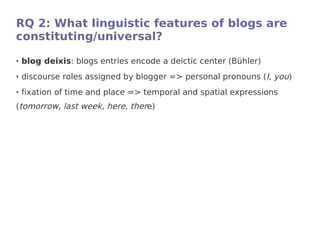
●   blog deixis: blogs entries encode a deictic center (Bühler)
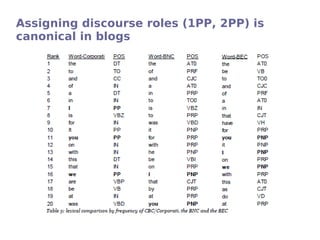
●   discourse roles assigned by blogger => personal pronouns (I, you)
●   fixation of time and place => temporal and spatial expressions
(tomorrow, last week, here, there)
Assigning discourse roles (1PP, 2PP) is
canonical in blogs
RQ 2: How can the relationship between
blogger and (implicit) blog reader be
described?
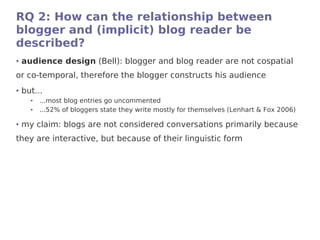
●   audience design (Bell): blogger and blog reader are not cospatial
or co-temporal, therefore the blogger constructs his audience
●   but...
      ●   ...most blog entries go uncommented
      ●   ...52% of bloggers state they write mostly for themselves (Lenhart & Fox 2006)

●   my claim: blogs are not considered conversations primarily because
they are interactive, but because of their linguistic form
Information structure and cooperation in
blogs with different audience designs

speaker-centric blogging:
“time wont let anyone forget the past, nor the sorrows... one could
only hide it deep within... n hope the pain will nv surface again [...]”


hearer-centric blogging:
“When I teach trademark law classes, I always advise that students
select strong protectable marks, and the class invariably balks
because they want to select marks that suggest or connote something
about the goods or services at issue [...]”
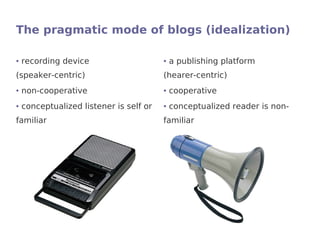
The pragmatic mode of blogs (idealization)

●   recording device                     ●   a publishing platform
(speaker-centric)                        (hearer-centric)
●   non-cooperative                      ●   cooperative
●   conceptualized listener is self or   ●   conceptualized reader is non-
familiar                                 familiar
Moving beyond blogs...
Misunderstanding online communication

●   a recent study by Pear Analytics classified 40% of Twitter
communication as “pointless babble”
●   we heard similar criticism of blogging when it first emerged
●   does is the mismatch between expectations (of some people) and
actual use explicable?
A cognitive approach to online
communication
●   our interaction with digital information is a highly symbolical process
●   problems such as information overload, transgression of
private/public borders etc are often the result of conceptual mismatch,
i.e.
       ●   if the Net is “a digital library” who makes sure only “quality content” goes in?
       ●   If the Net is a series of tubes, can't the tubes get clogged sometimes?
       ●   If what we put online is public, doesn't that mean that everybody will see it?

●   how can we describe online communication without relying on
metaphor?
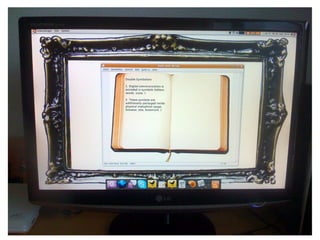
Changing metaphors?

Object Web                              Discourse Web
●   alternative physical space filled   ●   people in perpetual
with objects (cyberspace,               communicative situation(s)
information superhighway)               ([social] networks)
●   is entered from the outside (log    ●   always on
in/out)                                 ●   extension of physical (and social,
●   is used to move symbolical          cultural) reality
representations of information          ●   things there are “locationless”
around (email, files)                   (Google Wave, cloud computing)
●   discourse is conceptually written   ●   discourse is conceptually oral
●   we're alone there                   ●   we're not alone there
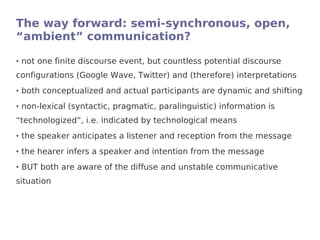
The way forward: semi-synchronous, open,
“ambient” communication?
●   not one finite discourse event, but countless potential discourse
configurations (Google Wave, Twitter) and (therefore) interpretations
●   both conceptualized and actual participants are dynamic and shifting
●   non-lexical (syntactic, pragmatic, paralinguistic) information is
“technologized”, i.e. indicated by technological means
●   the speaker anticipates a listener and reception from the message
●   the hearer infers a speaker and intention from the message
●   BUT both are aware of the diffuse and unstable communicative
situation
Thanks for listening!
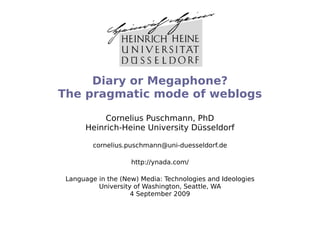
Diary or Megaphone?
The pragmatic mode of weblogs

           Cornelius Puschmann, PhD
      Heinrich-Heine University Düsseldorf

         cornelius.puschmann@uni-duesseldorf.de

                    http://ynada.com/

 Language in the (New) Media: Technologies and Ideologies
          University of Washington, Seattle, WA
                    4 September 2009

Diary or Megaphone?

  • 1.
    Diary or Megaphone? Thepragmatic mode of weblogs Cornelius Puschmann, PhD Heinrich-Heine University Düsseldorf cornelius.puschmann@uni-duesseldorf.de http://ynada.com/ Language in the (New) Media: Technologies and Ideologies University of Washington, Seattle, WA 4 September 2009
  • 2.
    Context ● I'm a postdoc researcher in English linguistics at the University of Düsseldorf ● PhD thesis “The corporate blog as an emerging genre of computer- mediated communication” (in press, Göttingen U Press) ● interested in pragmatics, genre/register studies, CMC, corpus linguistics
  • 3.
    An sample ofprior research on blogs ● linguistics: Herring, Hendricks ● ethnography: Nardi et al, Gumbrecht ● sociology/social psychology: Schmidt, Döring ● individual (trait) psychology: Nowson, Pennebaker ● less attention from linguists than synchronous CMC ● continuation of blogs and blog research in microblogging ● new direction of research (not just on blogs): status reporting, “trivial tweeting”, communicative ambience
  • 4.
    Research questions Three researchquestions arose in the course of my PhD project: 1) What factors shape the linguistic form of blog entries? 2) What linguistic features of blogs are constituting/universal? 3) How can the relationship between blogger and (implicit) blog reader be described?
  • 6.
    RQ 1: Whatfactors shape the linguistic form of blog entries? Channel ● asynchrony ● permanence ● open multiplicity ● interactivity
  • 7.
    RQ 1: Whatfactors shape the linguistic form of blog entries? Genre ● antecedent genres (diary, journal, log book, editorial, ...) ● discourse community (teenagers, lawyers, mothers, linguists, ...) ● communicative purpose (artistic expression, political debate, celebrity gossip, personal knowledge management, ...) Situation ● availability of metadata (time of utterance, identity of the speaker) ● diachrony (back-reference via self-linking)
  • 8.
    RQ 2: Whatlinguistic features of blogs are constituting/universal? ● blog deixis: blogs entries encode a deictic center (Bühler) ● discourse roles assigned by blogger => personal pronouns (I, you) ● fixation of time and place => temporal and spatial expressions (tomorrow, last week, here, there)
  • 9.
    Assigning discourse roles(1PP, 2PP) is canonical in blogs
  • 10.
    RQ 2: Howcan the relationship between blogger and (implicit) blog reader be described? ● audience design (Bell): blogger and blog reader are not cospatial or co-temporal, therefore the blogger constructs his audience ● but... ● ...most blog entries go uncommented ● ...52% of bloggers state they write mostly for themselves (Lenhart & Fox 2006) ● my claim: blogs are not considered conversations primarily because they are interactive, but because of their linguistic form
  • 11.
    Information structure andcooperation in blogs with different audience designs speaker-centric blogging: “time wont let anyone forget the past, nor the sorrows... one could only hide it deep within... n hope the pain will nv surface again [...]” hearer-centric blogging: “When I teach trademark law classes, I always advise that students select strong protectable marks, and the class invariably balks because they want to select marks that suggest or connote something about the goods or services at issue [...]”
  • 12.
    The pragmatic modeof blogs (idealization) ● recording device ● a publishing platform (speaker-centric) (hearer-centric) ● non-cooperative ● cooperative ● conceptualized listener is self or ● conceptualized reader is non- familiar familiar
  • 13.
  • 14.
    Misunderstanding online communication ● a recent study by Pear Analytics classified 40% of Twitter communication as “pointless babble” ● we heard similar criticism of blogging when it first emerged ● does is the mismatch between expectations (of some people) and actual use explicable?
  • 15.
    A cognitive approachto online communication ● our interaction with digital information is a highly symbolical process ● problems such as information overload, transgression of private/public borders etc are often the result of conceptual mismatch, i.e. ● if the Net is “a digital library” who makes sure only “quality content” goes in? ● If the Net is a series of tubes, can't the tubes get clogged sometimes? ● If what we put online is public, doesn't that mean that everybody will see it? ● how can we describe online communication without relying on metaphor?
  • 17.
    Changing metaphors? Object Web Discourse Web ● alternative physical space filled ● people in perpetual with objects (cyberspace, communicative situation(s) information superhighway) ([social] networks) ● is entered from the outside (log ● always on in/out) ● extension of physical (and social, ● is used to move symbolical cultural) reality representations of information ● things there are “locationless” around (email, files) (Google Wave, cloud computing) ● discourse is conceptually written ● discourse is conceptually oral ● we're alone there ● we're not alone there
  • 18.
    The way forward:semi-synchronous, open, “ambient” communication? ● not one finite discourse event, but countless potential discourse configurations (Google Wave, Twitter) and (therefore) interpretations ● both conceptualized and actual participants are dynamic and shifting ● non-lexical (syntactic, pragmatic, paralinguistic) information is “technologized”, i.e. indicated by technological means ● the speaker anticipates a listener and reception from the message ● the hearer infers a speaker and intention from the message ● BUT both are aware of the diffuse and unstable communicative situation
  • 19.
  • 20.
    Diary or Megaphone? Thepragmatic mode of weblogs Cornelius Puschmann, PhD Heinrich-Heine University Düsseldorf cornelius.puschmann@uni-duesseldorf.de http://ynada.com/ Language in the (New) Media: Technologies and Ideologies University of Washington, Seattle, WA 4 September 2009