

Mixing Business processes
        & Social                        software


             By Gaurab Banerji
             Collaboration Strategist
             Tibco Software Singapore
Where
                   to start
     a social      platform
rollout   in your organization
             and   how?
unlike other business software, where users
             usually see immediate results,
 social software requires users
         time, effort
    to contribute

& meaningful content
                      to produce value
social software is

unstructured and
therefore needs
       clearly defined
business use cases
                     to succeed
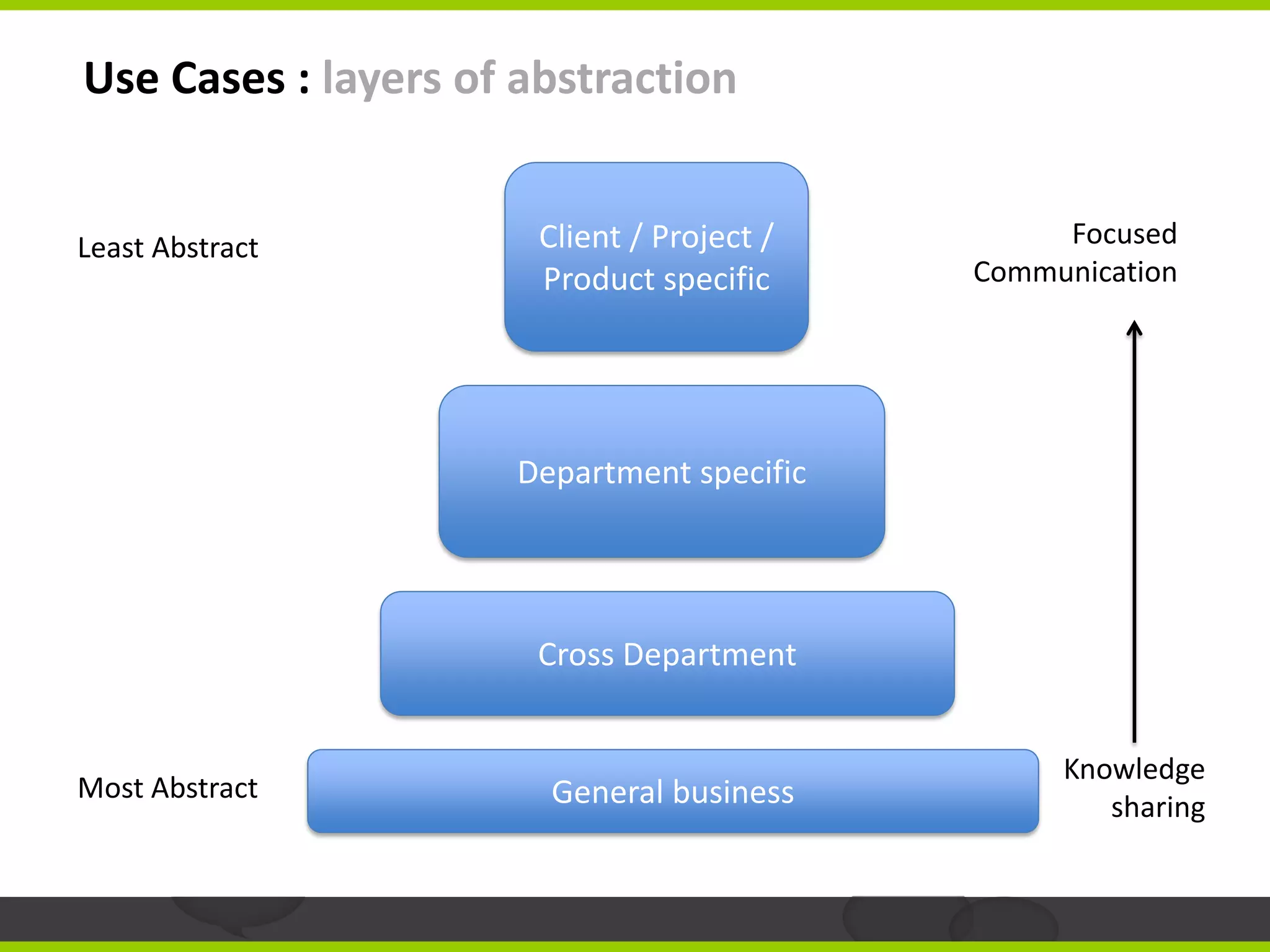
Use Cases : layers of abstraction


Least Abstract        Client / Project /        Focused
                      Product specific     Communication


                     Department specific


                      Cross Department


                                                Knowledge
Most Abstract          General business            sharing
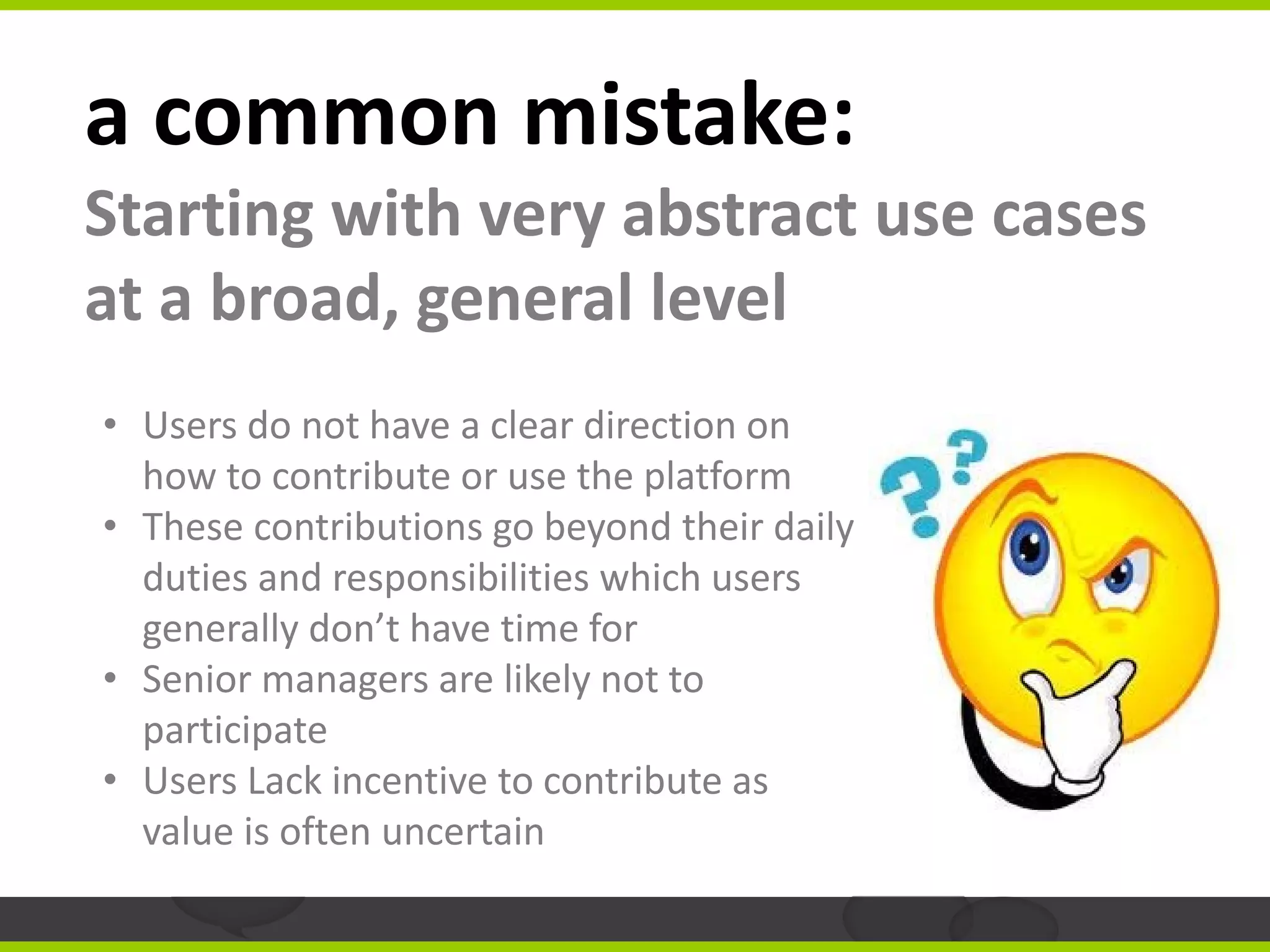
a common mistake:
Starting with very abstract use cases
at a broad, general level
• Users do not have a clear direction on
  how to contribute or use the platform
• These contributions go beyond their daily
  duties and responsibilities which users
  generally don’t have time for
• Senior managers are likely not to
  participate
• Users Lack incentive to contribute as
  value is often uncertain
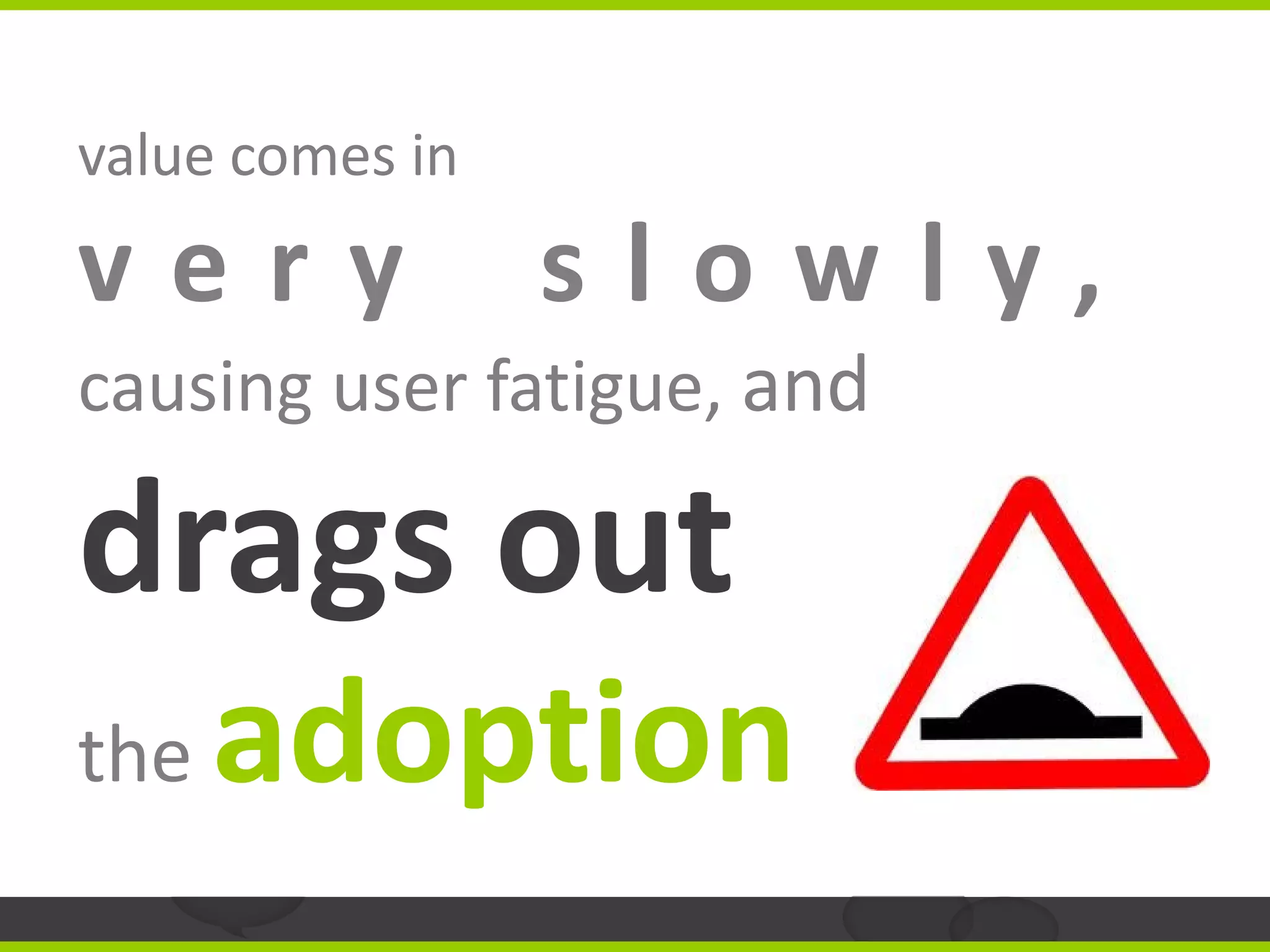
value comes in
very             slowly,
causing user fatigue, and

drags out
the   adoption
so   how
do you create
immediate value
      in such a platform?
a better approach: start
at the core
 • Start adoption at the core where abstraction is at its
   lowest level
 • Identify simple, frequently used business processes that
   can be ported into the platform
 • Engage senior managers and business champions to
   drive the processes in the platform with users
define   intra-group and
             inter-group
business processes
                to focus on
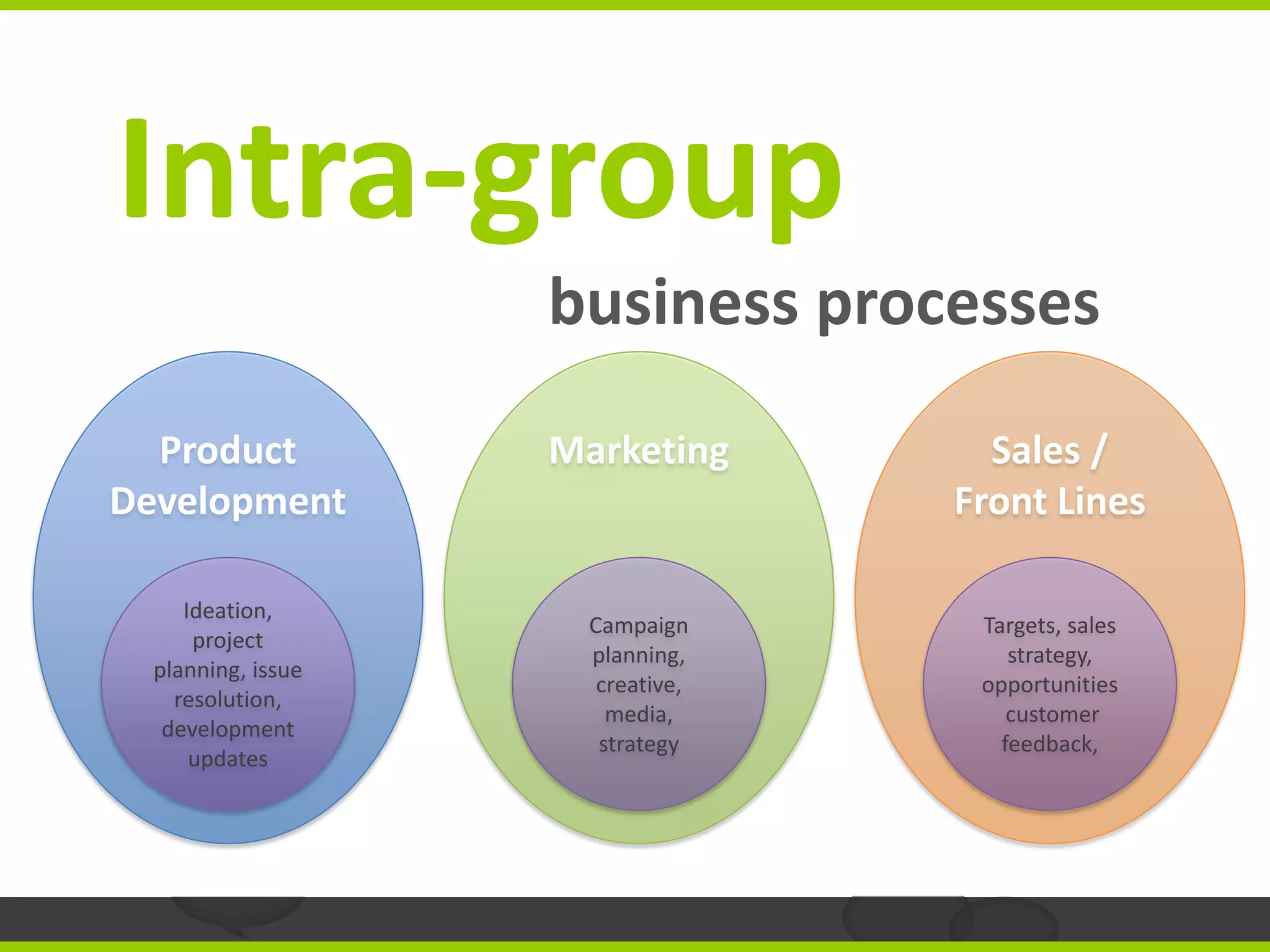
Intra-group
                    business processes
  Product           Marketing        Sales /
Development                        Front Lines

     Ideation,
                      Campaign      Targets, sales
      project
                      planning,        strategy,
  planning, issue
                       creative,    opportunities
    resolution,
                        media,         customer
   development
                       strategy       feedback,
      updates
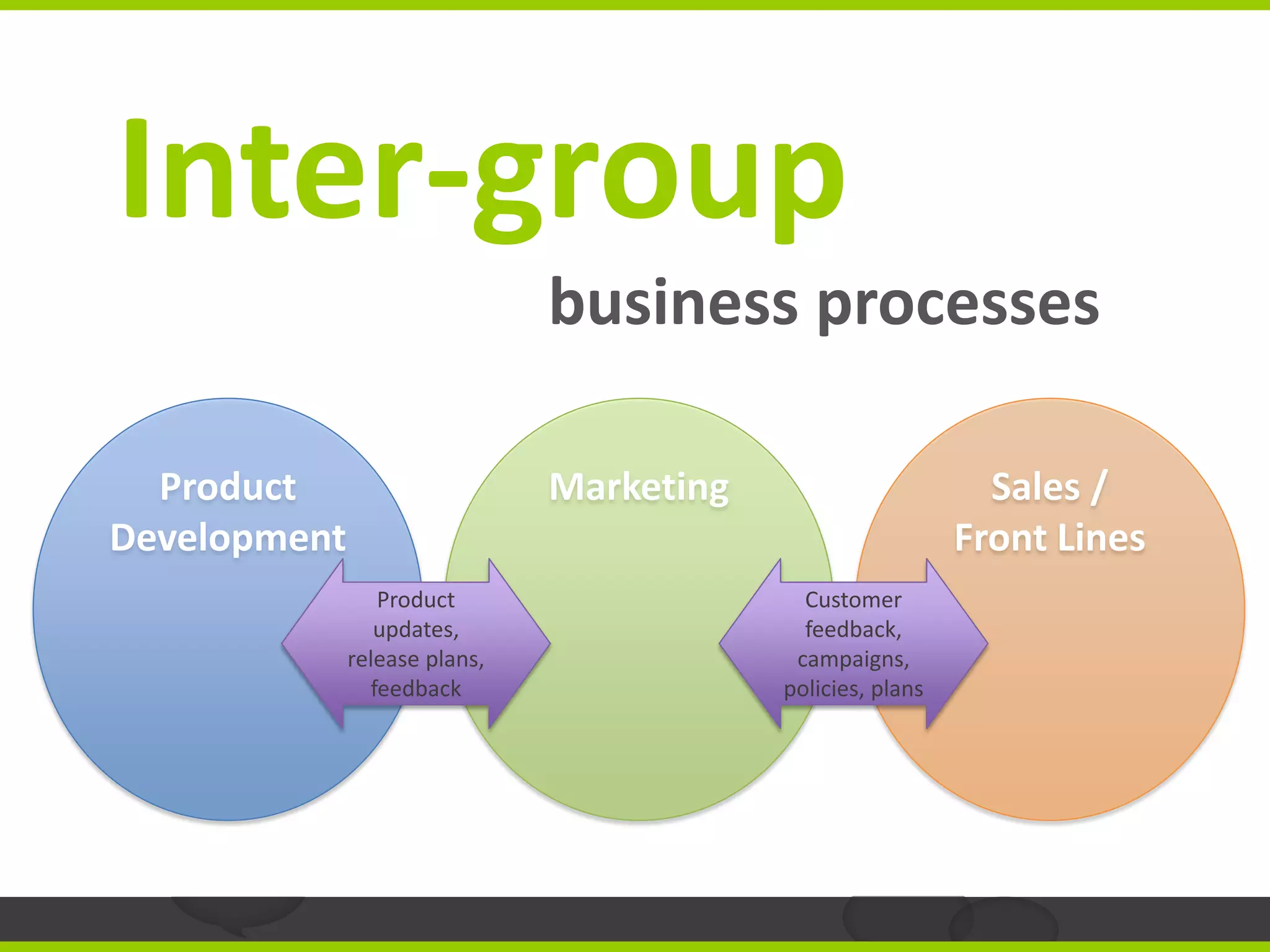
Inter-group
                               business processes

  Product                      Marketing                       Sales /
Development                                                  Front Lines
                 Product                     Customer
                 updates,                    feedback,
              release plans,                campaigns,
                feedback                   policies, plans
start with
deep use cases
 at the   core      of
           each group
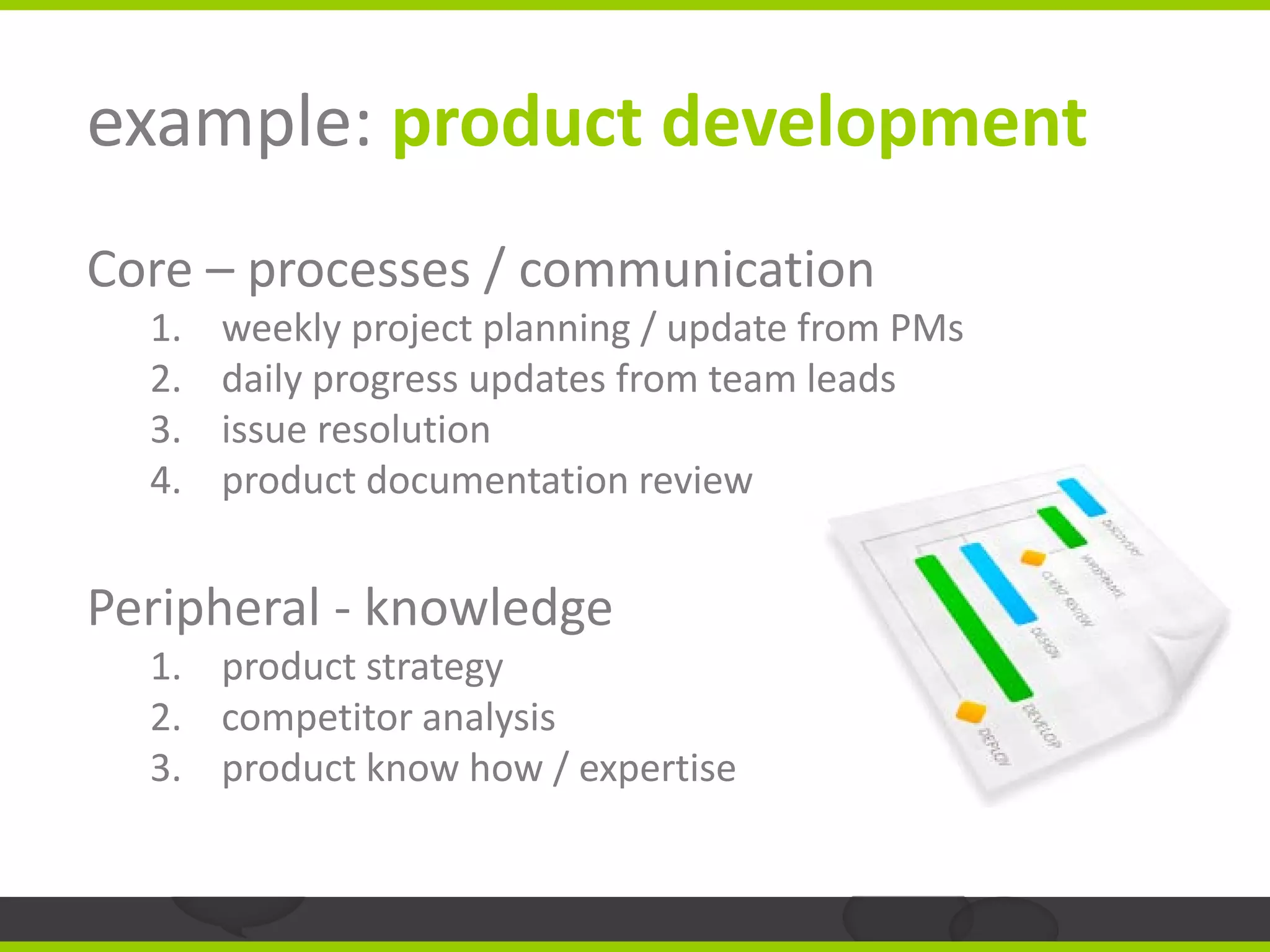
example: product development
Core – processes / communication
  1.   weekly project planning / update from PMs
  2.   daily progress updates from team leads
  3.   issue resolution
  4.   product documentation review


Peripheral - knowledge
  1. product strategy
  2. competitor analysis
  3. product know how / expertise
example: prod. dev. & marketing
Core – processes
  1. sharing market requirements / reports
  2. defining product positioning / strategy
  3. specifying product features

Peripheral – knowledge
  1. competitor information
  2. market trends
the result:
 • Users know how and what to contribute during early days
 • Sustainable content is created without the need to go
   beyond everyday activities and busy schedules
 • Users see immediate value through effective
   communication
 • Engagement occurs at all levels
 • Adoption starts spreading immediately as more teams start
   to port business processes to tibbr
 • Inter-group uses cases start to develop
 • Longer term value emerges as content builds up and
   peripheral use cases develop
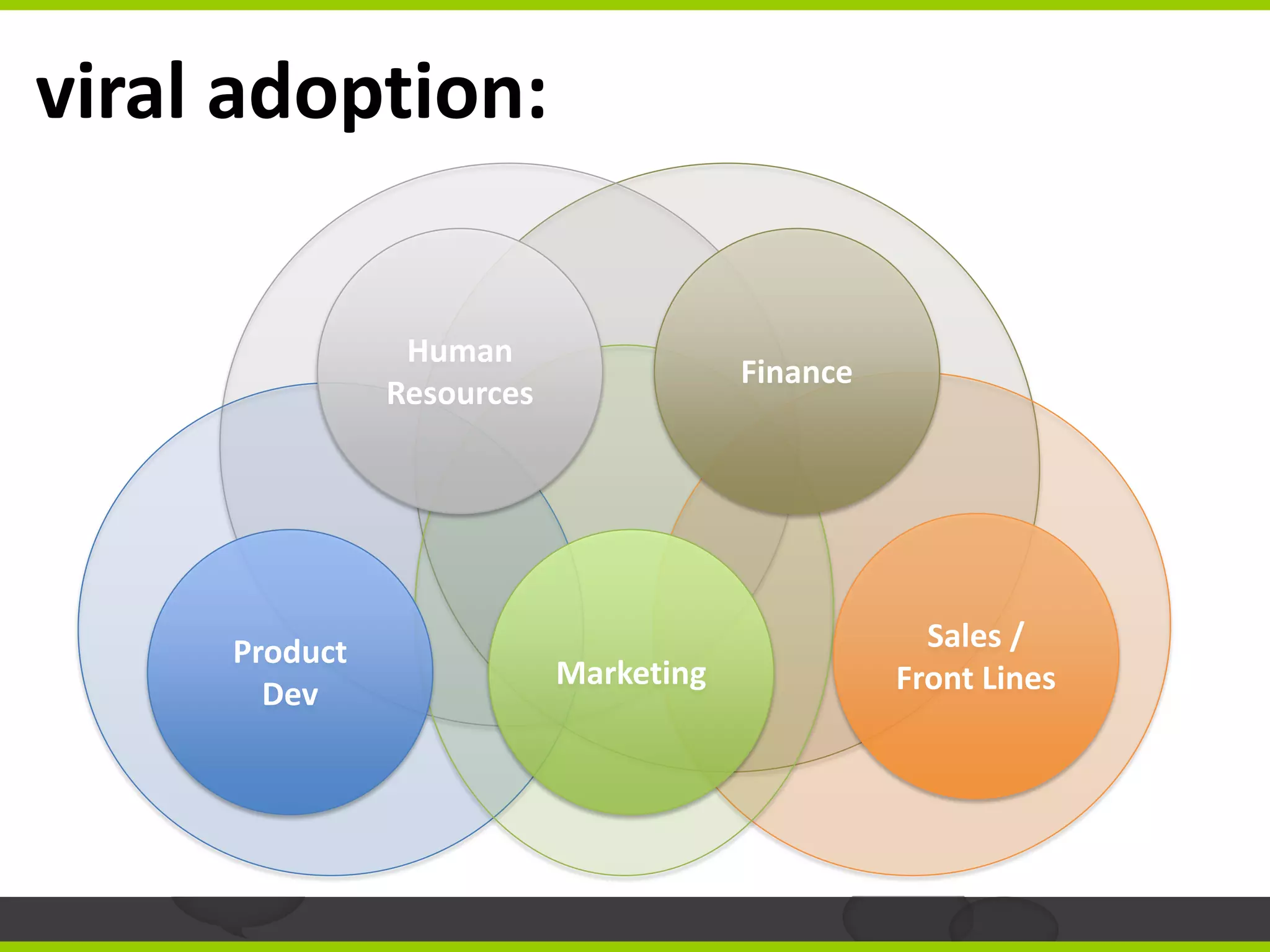
viral adoption:

                Human
                                       Finance
               Resources


     Product                                       Sales /
                           Marketing             Front Lines
       Dev
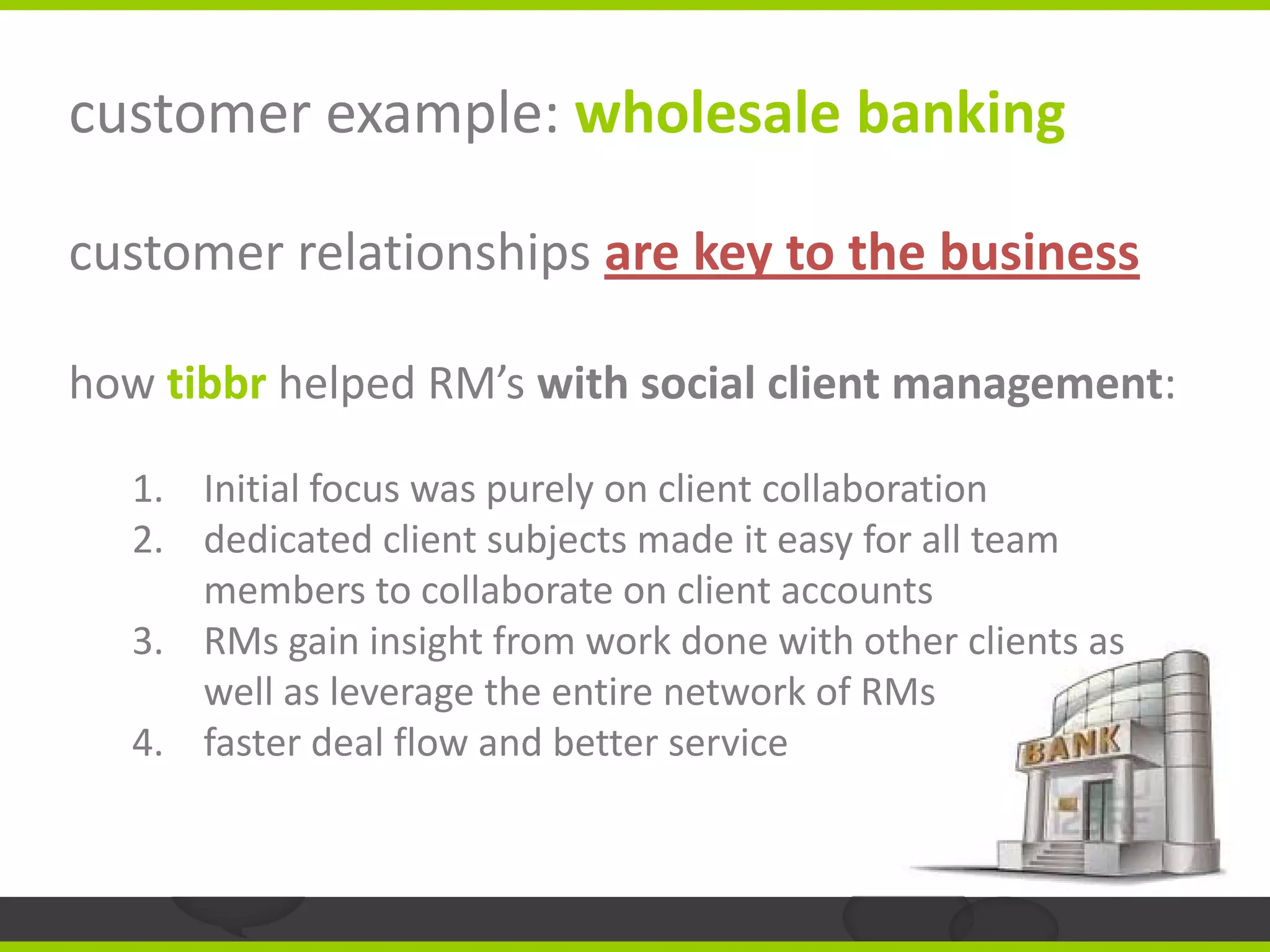
customer example: wholesale banking

customer relationships are key to the business

how tibbr helped RM’s with social client management:

  1. Initial focus was purely on client collaboration
  2. dedicated client subjects made it easy for all team
     members to collaborate on client accounts
  3. RMs gain insight from work done with other clients as
     well as leverage the entire network of RMs
  4. faster deal flow and better service
where appropriate,
integrate key
events from
external systems that
support core business processes
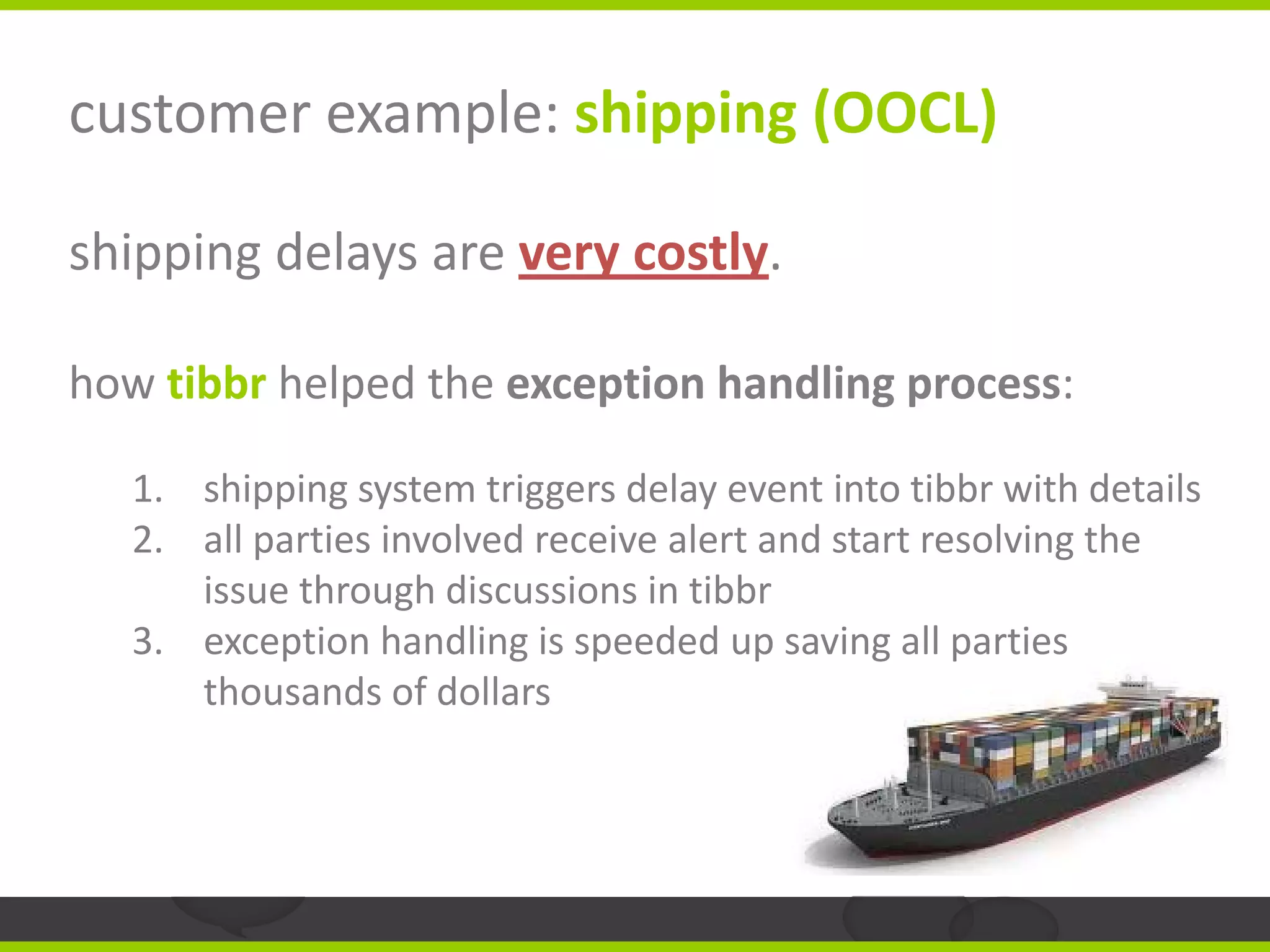
customer example: shipping (OOCL)

shipping delays are very costly.

how tibbr helped the exception handling process:

   1. shipping system triggers delay event into tibbr with details
   2. all parties involved receive alert and start resolving the
      issue through discussions in tibbr
   3. exception handling is speeded up saving all parties
      thousands of dollars
Where
                   to start
     a social      platform
rollout   in your organization
             and   how?
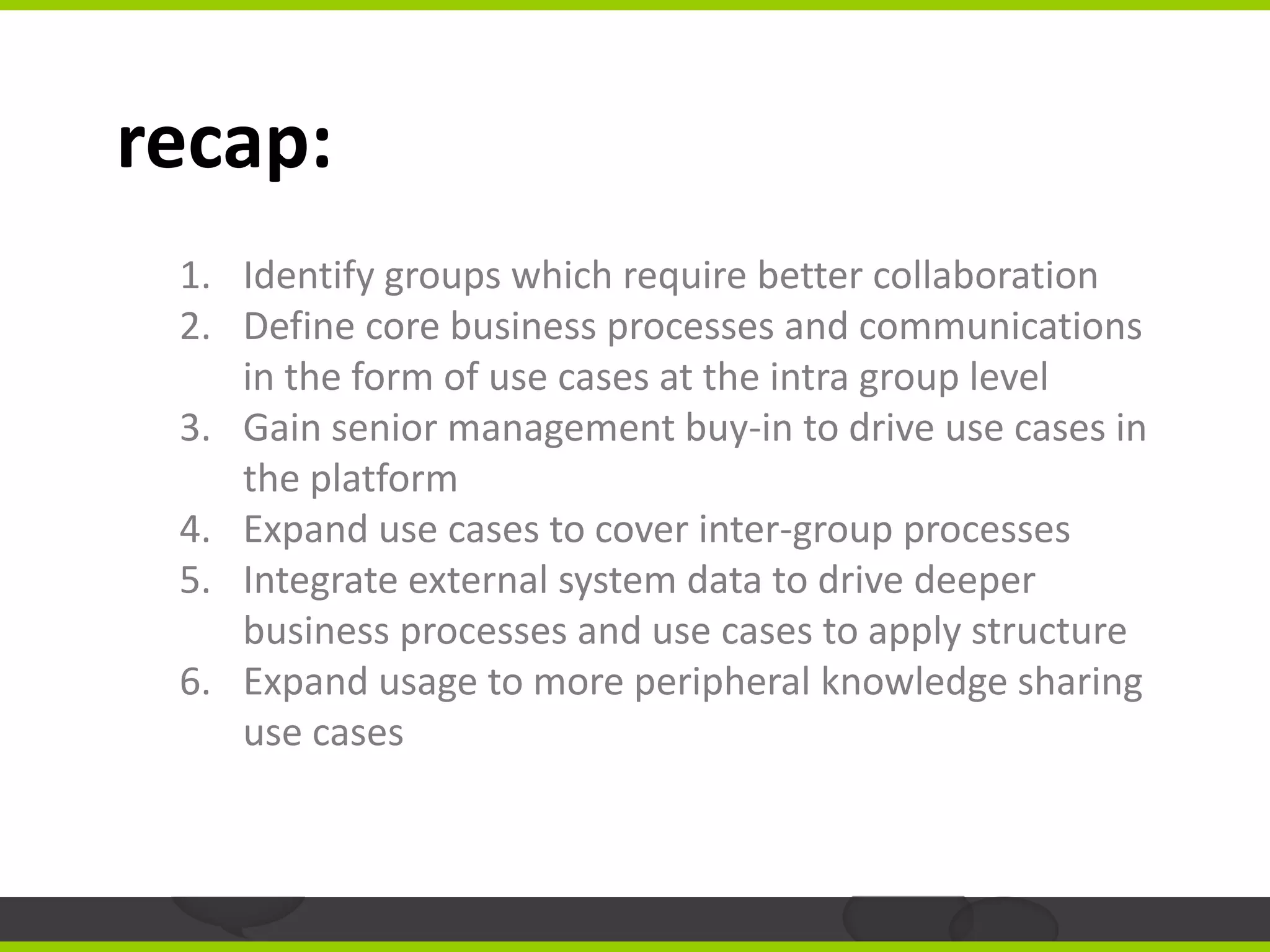
recap:
 1. Identify groups which require better collaboration
 2. Define core business processes and communications
    in the form of use cases at the intra group level
 3. Gain senior management buy-in to drive use cases in
    the platform
 4. Expand use cases to cover inter-group processes
 5. Integrate external system data to drive deeper
    business processes and use cases to apply structure
 6. Expand usage to more peripheral knowledge sharing
    use cases
Thank You
  Q&A
     By Gaurab Banerji
     Collaboration Strategist
     Tibco Software Singapore

Mixing Business Processes & Social Software

  • 1.
    Mixing Business processes & Social software By Gaurab Banerji Collaboration Strategist Tibco Software Singapore
  • 2.
    Where to start a social platform rollout in your organization and how?
  • 3.
    unlike other businesssoftware, where users usually see immediate results, social software requires users time, effort to contribute & meaningful content to produce value
  • 4.
    social software is unstructuredand therefore needs clearly defined business use cases to succeed
  • 5.
    Use Cases :layers of abstraction Least Abstract Client / Project / Focused Product specific Communication Department specific Cross Department Knowledge Most Abstract General business sharing
  • 6.
    a common mistake: Startingwith very abstract use cases at a broad, general level • Users do not have a clear direction on how to contribute or use the platform • These contributions go beyond their daily duties and responsibilities which users generally don’t have time for • Senior managers are likely not to participate • Users Lack incentive to contribute as value is often uncertain
  • 7.
    value comes in very slowly, causing user fatigue, and drags out the adoption
  • 8.
    so how do you create immediate value in such a platform?
  • 9.
    a better approach:start at the core • Start adoption at the core where abstraction is at its lowest level • Identify simple, frequently used business processes that can be ported into the platform • Engage senior managers and business champions to drive the processes in the platform with users
  • 10.
    define intra-group and inter-group business processes to focus on
  • 11.
    Intra-group business processes Product Marketing Sales / Development Front Lines Ideation, Campaign Targets, sales project planning, strategy, planning, issue creative, opportunities resolution, media, customer development strategy feedback, updates
  • 12.
    Inter-group business processes Product Marketing Sales / Development Front Lines Product Customer updates, feedback, release plans, campaigns, feedback policies, plans
  • 13.
    start with deep usecases at the core of each group
  • 14.
    example: product development Core– processes / communication 1. weekly project planning / update from PMs 2. daily progress updates from team leads 3. issue resolution 4. product documentation review Peripheral - knowledge 1. product strategy 2. competitor analysis 3. product know how / expertise
  • 15.
    example: prod. dev.& marketing Core – processes 1. sharing market requirements / reports 2. defining product positioning / strategy 3. specifying product features Peripheral – knowledge 1. competitor information 2. market trends
  • 16.
    the result: •Users know how and what to contribute during early days • Sustainable content is created without the need to go beyond everyday activities and busy schedules • Users see immediate value through effective communication • Engagement occurs at all levels • Adoption starts spreading immediately as more teams start to port business processes to tibbr • Inter-group uses cases start to develop • Longer term value emerges as content builds up and peripheral use cases develop
  • 17.
    viral adoption: Human Finance Resources Product Sales / Marketing Front Lines Dev
  • 18.
    customer example: wholesalebanking customer relationships are key to the business how tibbr helped RM’s with social client management: 1. Initial focus was purely on client collaboration 2. dedicated client subjects made it easy for all team members to collaborate on client accounts 3. RMs gain insight from work done with other clients as well as leverage the entire network of RMs 4. faster deal flow and better service
  • 19.
    where appropriate, integrate key eventsfrom external systems that support core business processes
  • 20.
    customer example: shipping(OOCL) shipping delays are very costly. how tibbr helped the exception handling process: 1. shipping system triggers delay event into tibbr with details 2. all parties involved receive alert and start resolving the issue through discussions in tibbr 3. exception handling is speeded up saving all parties thousands of dollars
  • 21.
    Where to start a social platform rollout in your organization and how?
  • 22.
    recap: 1. Identifygroups which require better collaboration 2. Define core business processes and communications in the form of use cases at the intra group level 3. Gain senior management buy-in to drive use cases in the platform 4. Expand use cases to cover inter-group processes 5. Integrate external system data to drive deeper business processes and use cases to apply structure 6. Expand usage to more peripheral knowledge sharing use cases
  • 23.
    Thank You Q&A By Gaurab Banerji Collaboration Strategist Tibco Software Singapore