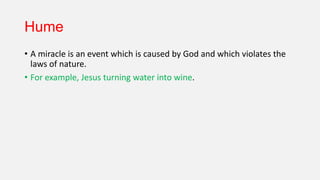
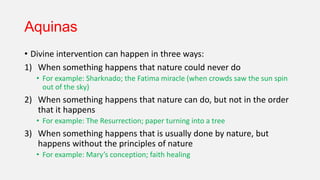
There are differing definitions of what constitutes a miracle. Hume defined it as an event caused by God that violates the laws of nature, like Jesus turning water into wine. Aquinas defined it as divine intervention that involves nature doing something it could never do, doing something out of order, or happening without natural principles, like faith healing. Swinburne defined it as an event caused by God violating natural laws with religious significance. Holland proposed coincidence miracles that do not violate natural laws but are seen as religiously significant, like a driver having a heart attack to stop before hitting a trapped child. Arguments against miracles include that laws of nature are based on experience, testimony is unreliable, and miracles do not address the problem