Mining in the
Municipality of Tampakan:
  risks and alternatives
                         Justice and Peace Desk
                 Social Action Center, Diocese of Marbel
                           With Arturo Boquiren
                     Assistant Professor, Economics
                   University of the Philippines-Baguio


            Sr. Pat Babiera                        Fr. Romeo Catedral
  Coordinator, Justice and Peace Desk                    Director


                                                                        1
Key results: Benefits from mining


                                    2
3
4
5
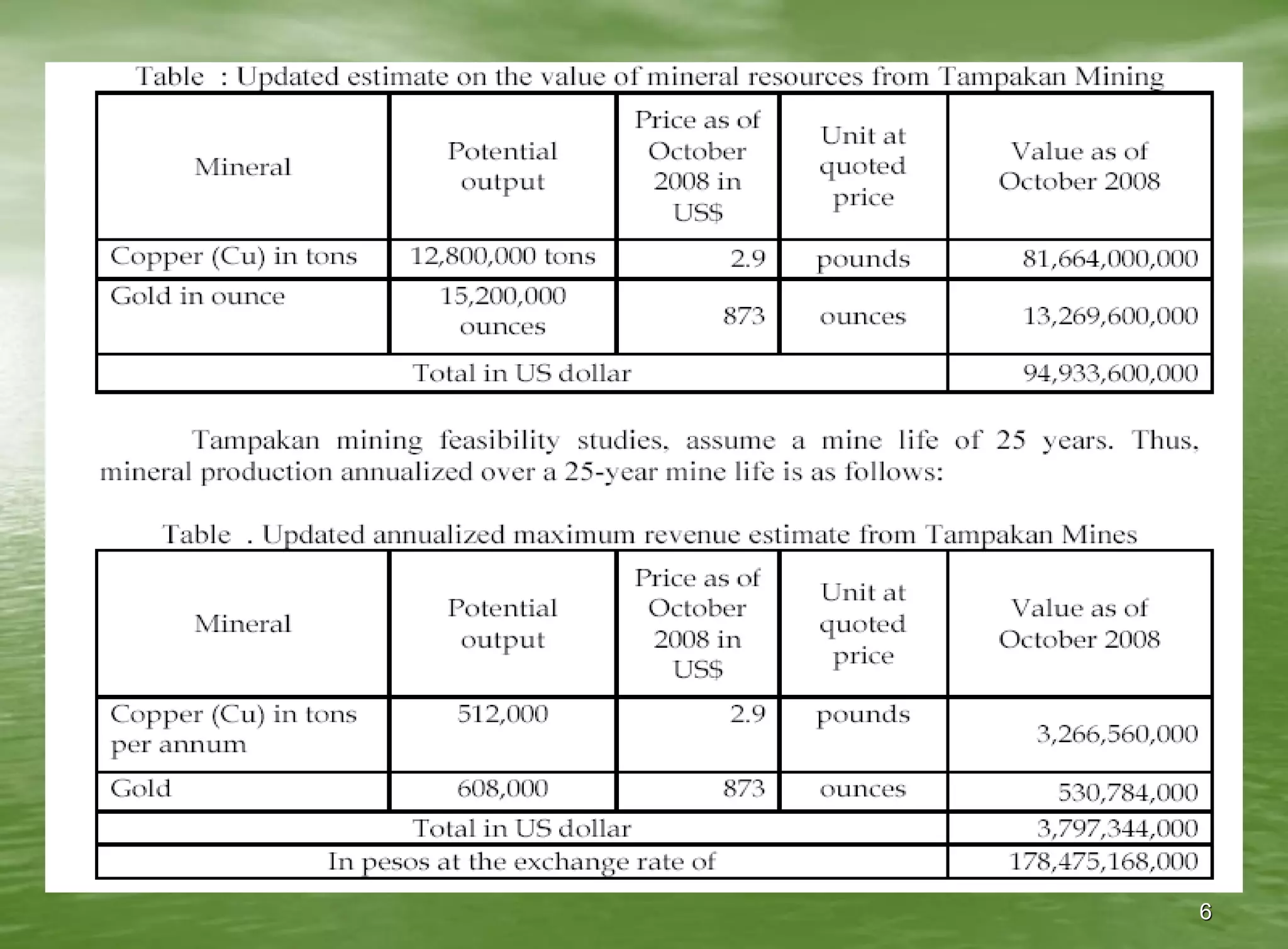
6
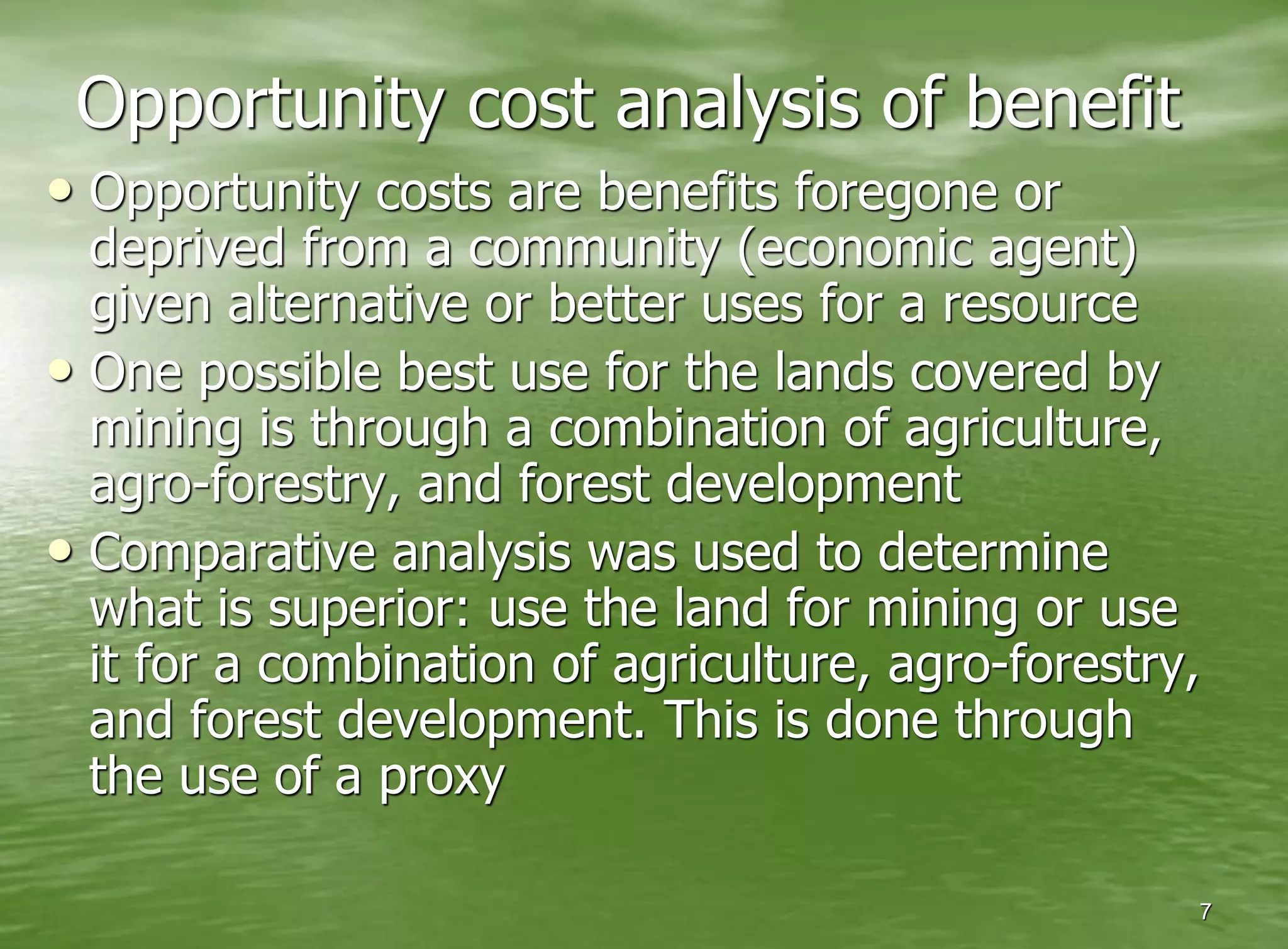
Opportunity cost analysis of benefit
• Opportunity costs are benefits foregone or
  deprived from a community (economic agent)
  given alternative or better uses for a resource
• One possible best use for the lands covered by
  mining is through a combination of agriculture,
  agro-forestry, and forest development
• Comparative analysis was used to determine
  what is superior: use the land for mining or use
  it for a combination of agriculture, agro-forestry,
  and forest development. This is done through
  the use of a proxy

                                                    7
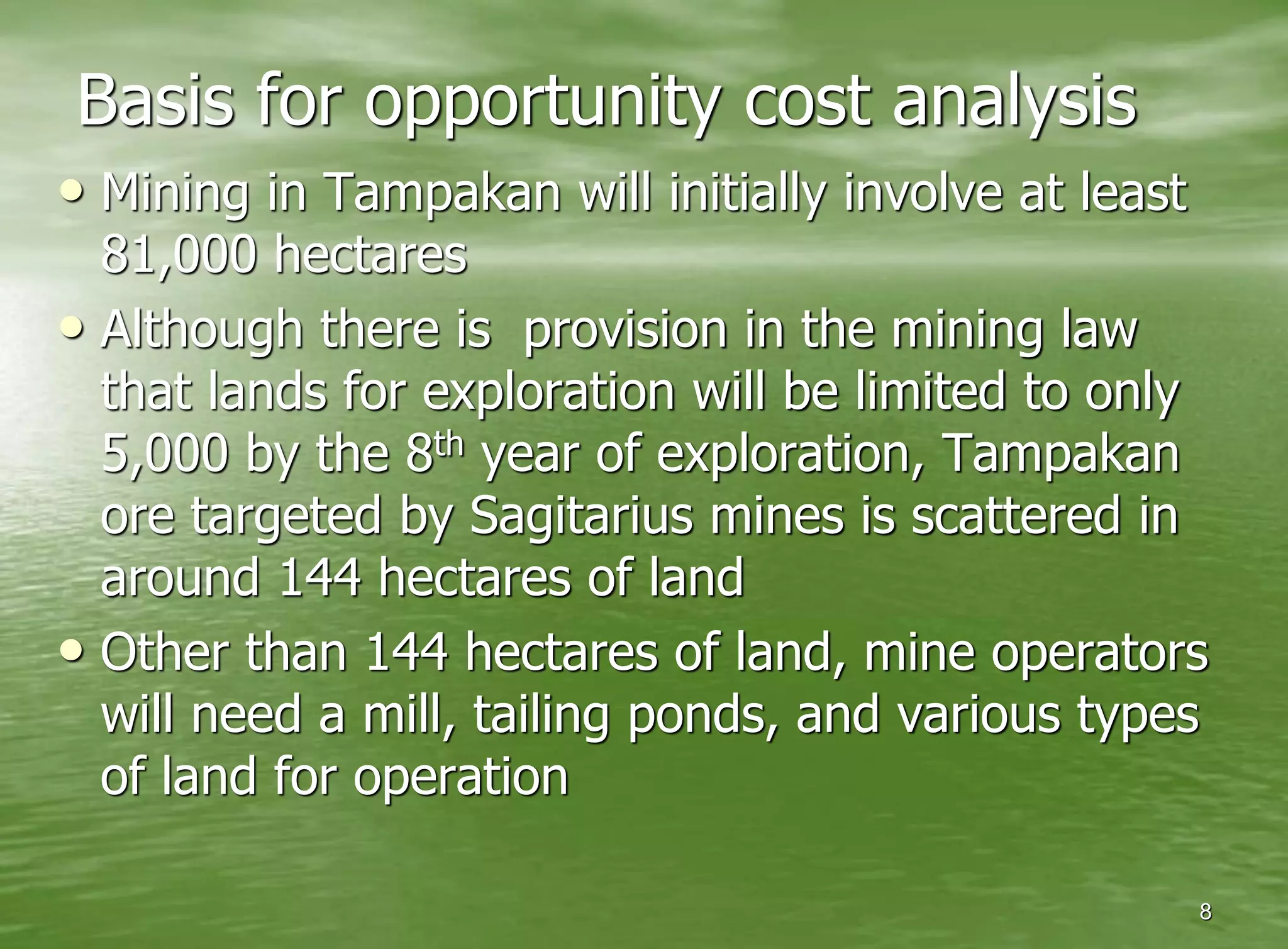
Basis for opportunity cost analysis
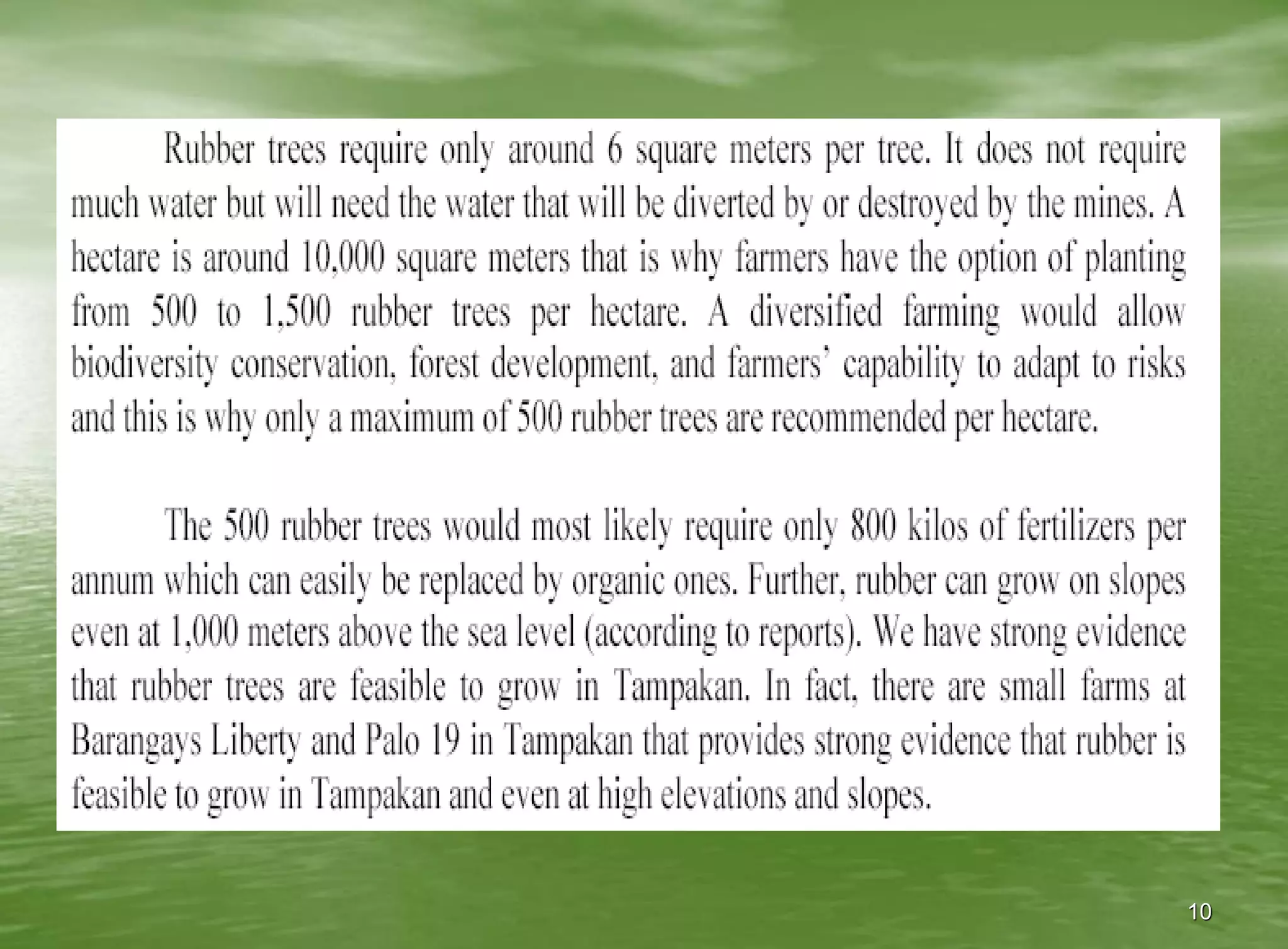
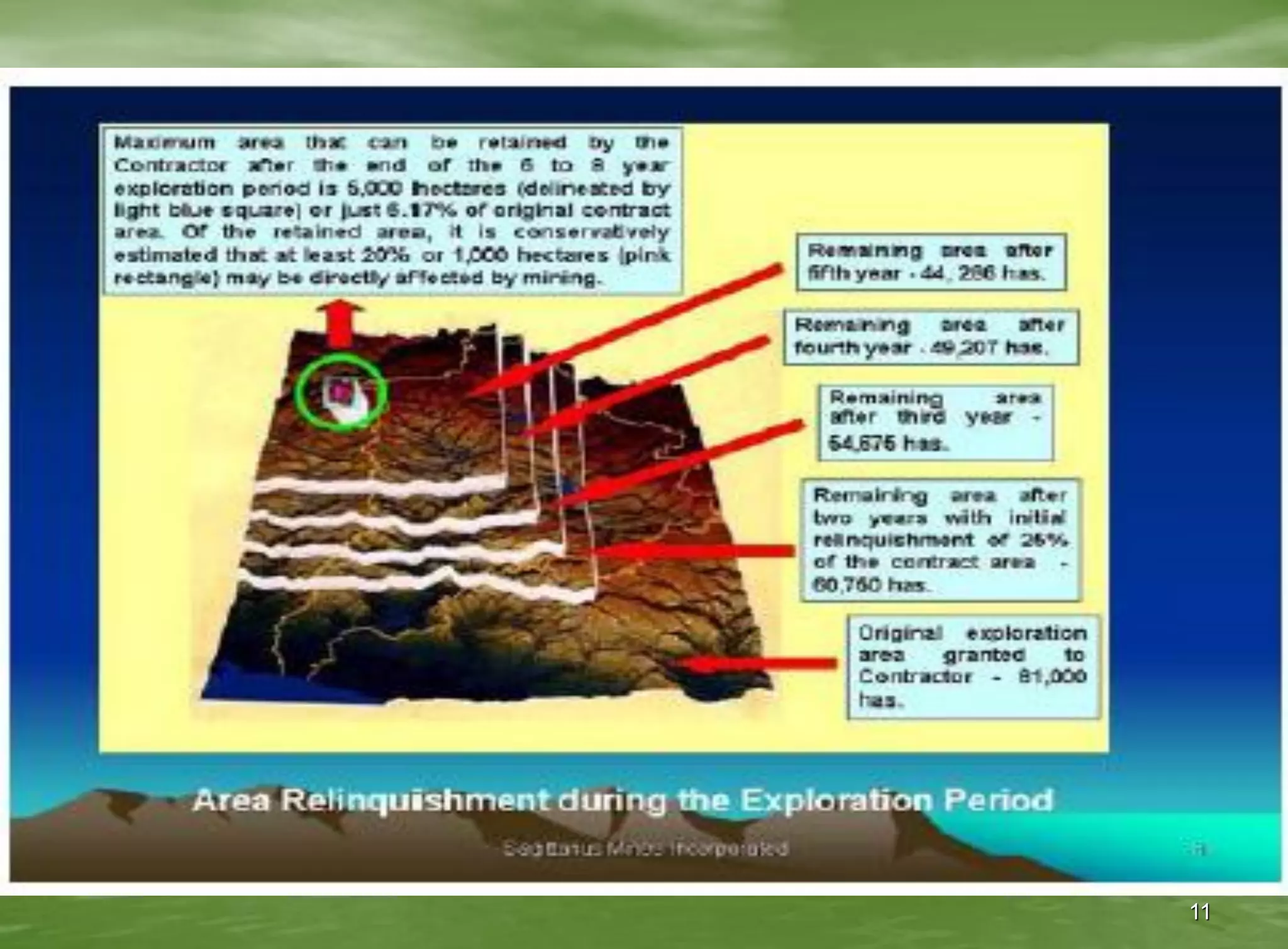
• Mining in Tampakan will initially involve at least
  81,000 hectares
• Although there is provision in the mining law
  that lands for exploration will be limited to only
  5,000 by the 8 th year of exploration, Tampakan

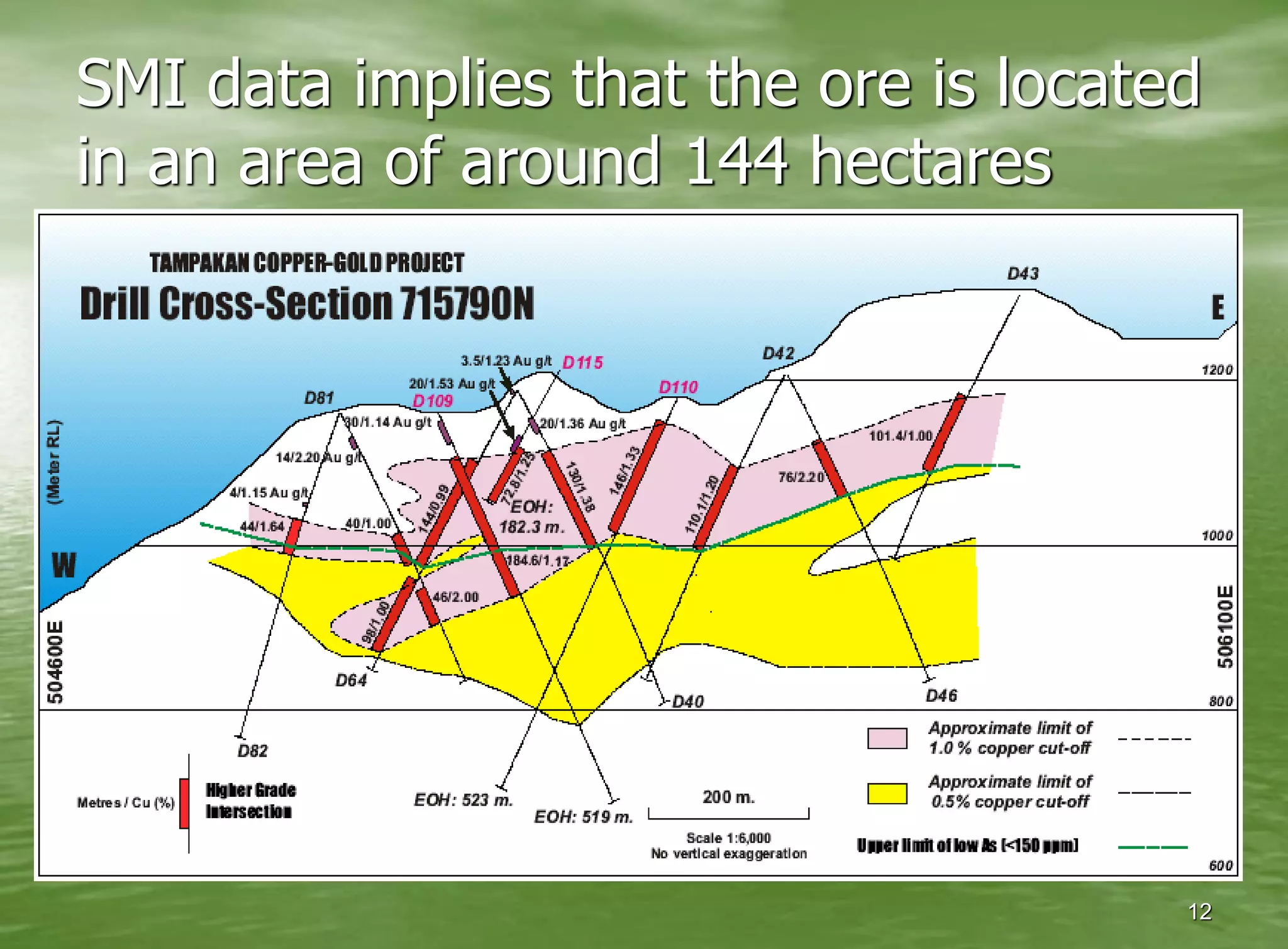
  ore targeted by Sagitarius mines is scattered in
  around 144 hectares of land
• Other than 144 hectares of land, mine operators
  will need a mill, tailing ponds, and various types
  of land for operation

                                                       8
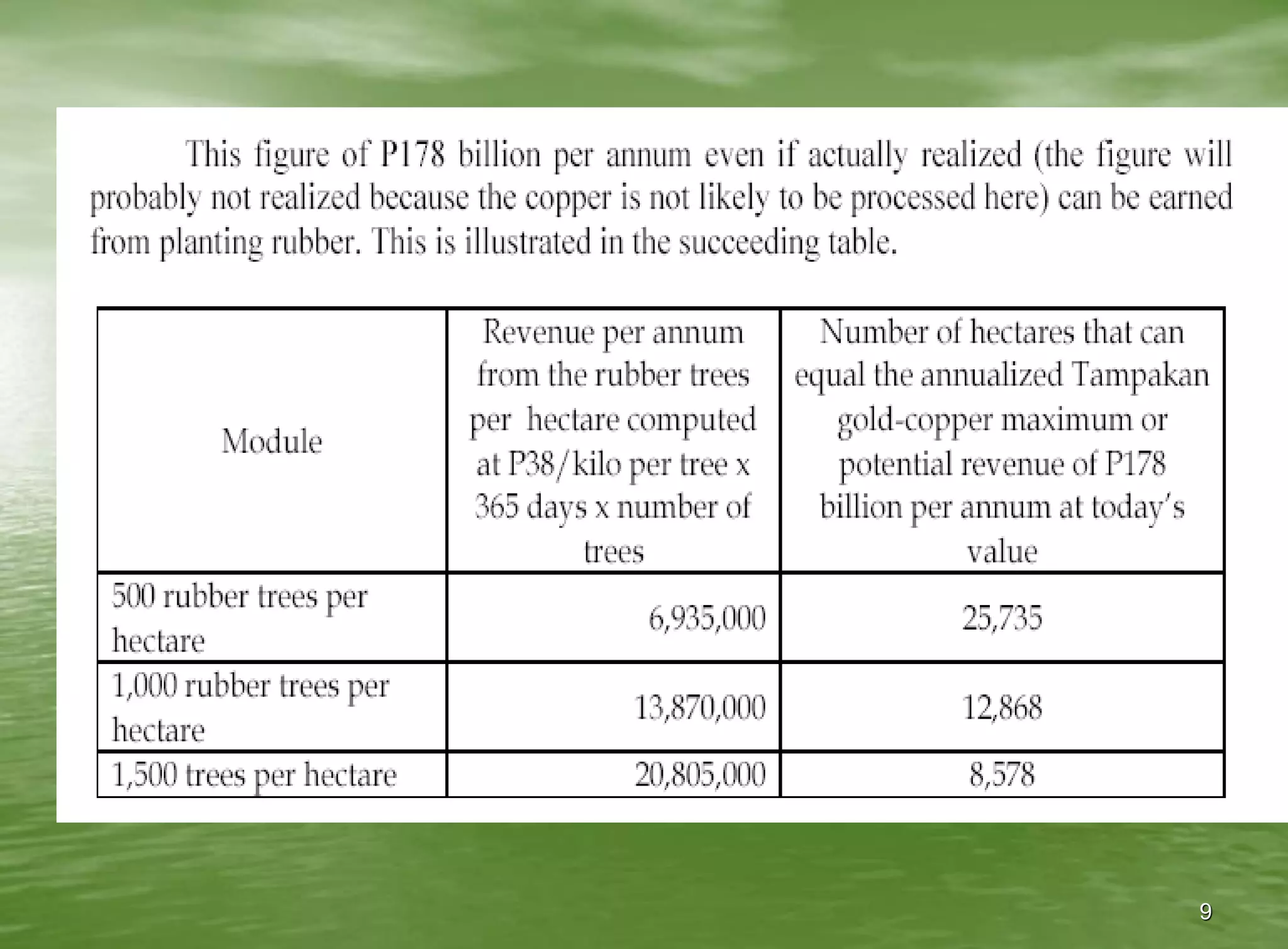
9
10
11
SMI data implies that the ore is located
in an area of around 144 hectares


                                       12
Implication
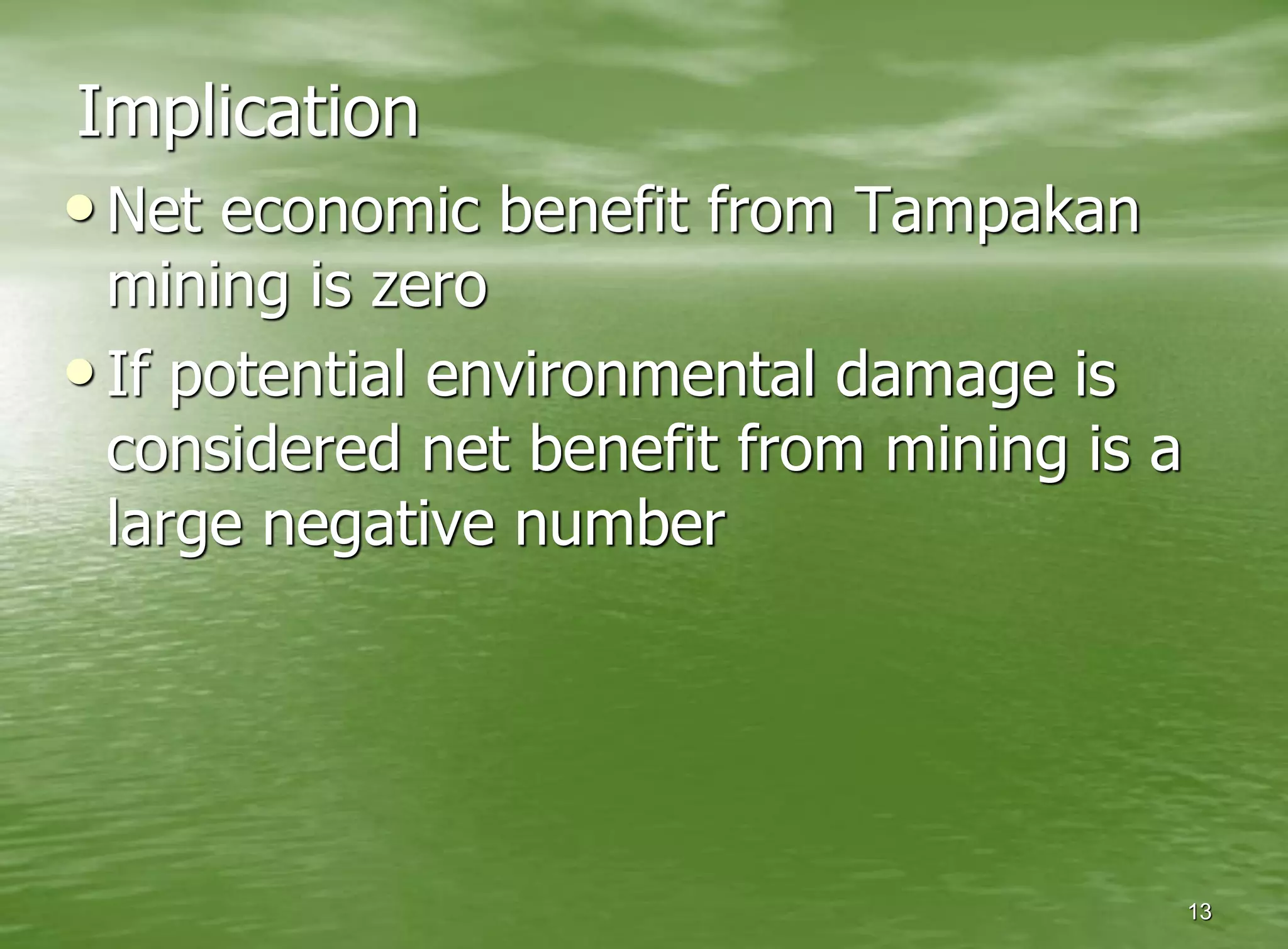
• Net economic benefit from Tampakan
  mining is zero
• If potential environmental damage is
  considered net benefit from mining is a
  large negative number


                                            13
Risks of mining
in municipality of
   Tampakan


                     14
Comparison: Philex and Tampakan
• Philex milled 311 million metric tons of ore between
    1955 to 2006
•   Today, Philex will mill 54 million metric tons in six
    years or around 9 million metric tons per annum
•   Tampakan mining will mill 2.2 billion metric tons in
    25 years implying 88 million metric tons per annum
    or more than 10 times of Philex mining from 1955
    to 2008
•   Thus, Tampakan mining is unprecedented and more
    than 10 times the environmental impact and risks of
    Philex mining
                                                       15
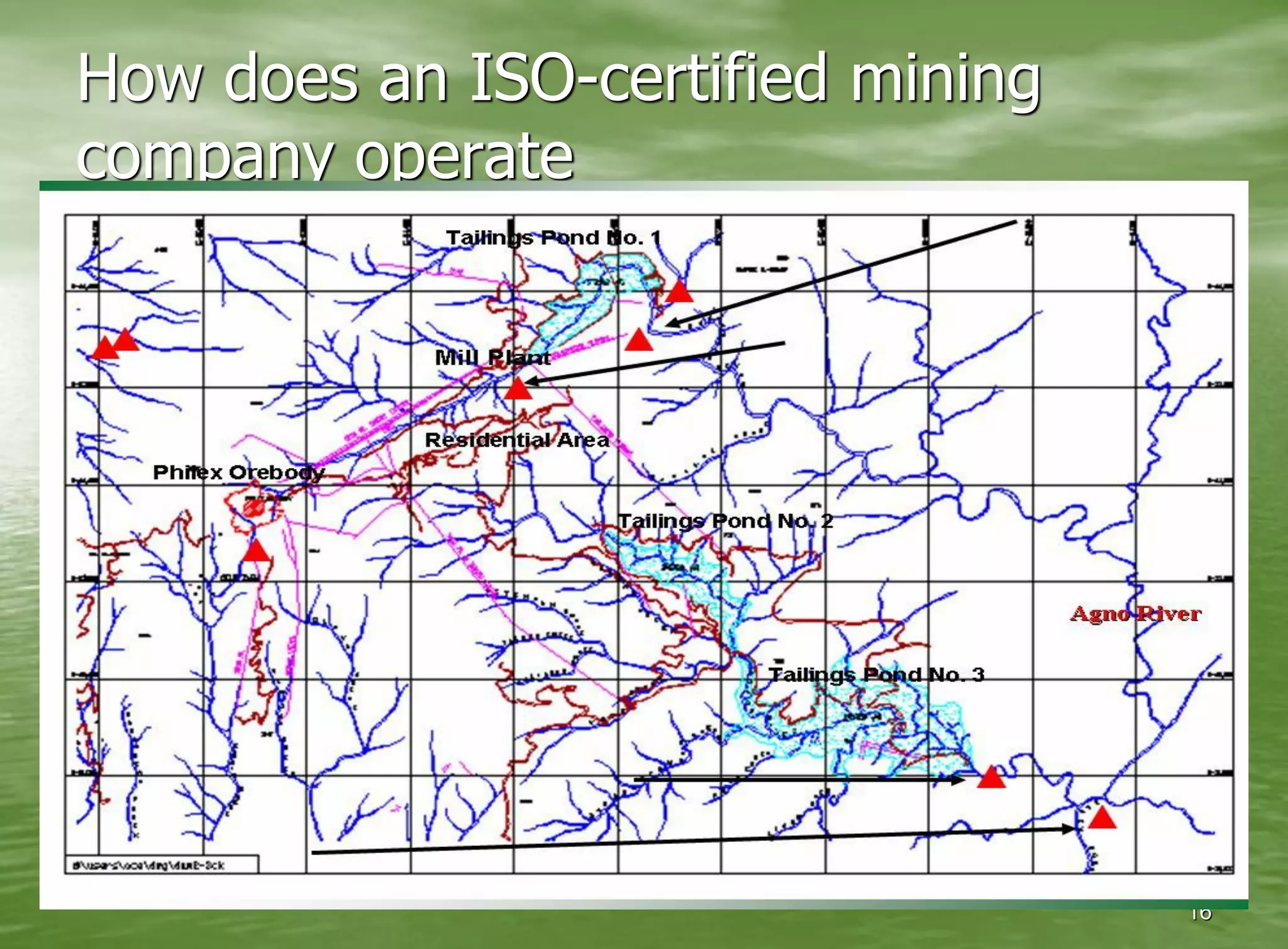
How does an ISO-certified mining
company operate


                                   16
Like Philex, Tampakan mining will
require not only the area for ore
mining but also land for the following
• Space for the mined ore
• Milling
• Tailing ponds
• Company facilities
• Public relations facilities
• Dams (tailing ponds must be linked to rivers
 that have dams preferably for environmental
 damage controls)

                                                 17
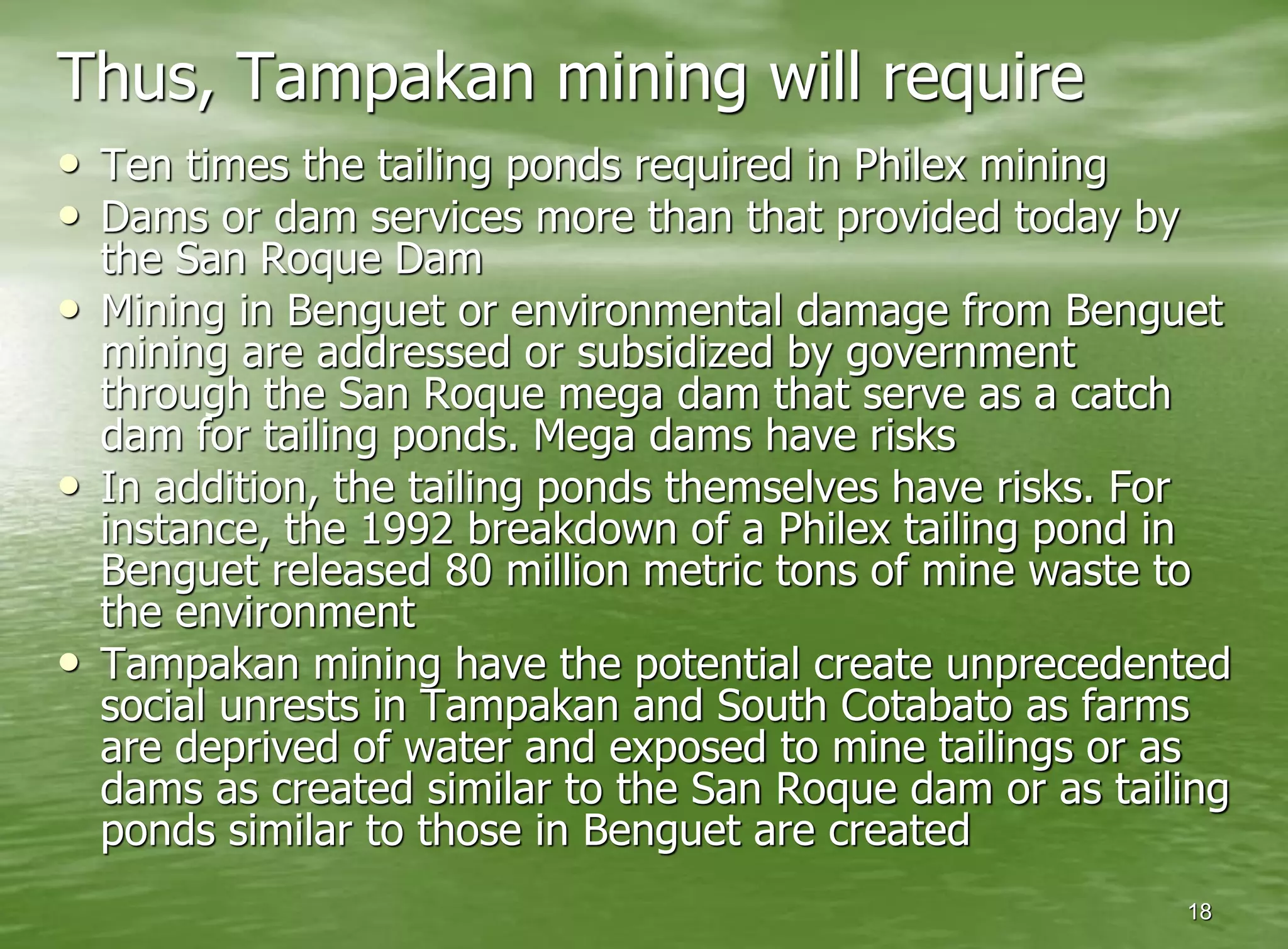
Thus, Tampakan mining will require
• Ten times the tailing ponds required in Philex mining
• Dams or dam services more than that provided today by
    the San Roque Dam
•   Mining in Benguet or environmental damage from Benguet
    mining are addressed or subsidized by government
    through the San Roque mega dam that serve as a catch
    dam for tailing ponds. Mega dams have risks
•   In addition, the tailing ponds themselves have risks. For
    instance, the 1992 breakdown of a Philex tailing pond in
    Benguet released 80 million metric tons of mine waste to
    the environment
•   Tampakan mining have the potential create unprecedented
    social unrests in Tampakan and South Cotabato as farms
    are deprived of water and exposed to mine tailings or as
    dams as created similar to the San Roque dam or as tailing
    ponds similar to those in Benguet are created
                                                           18
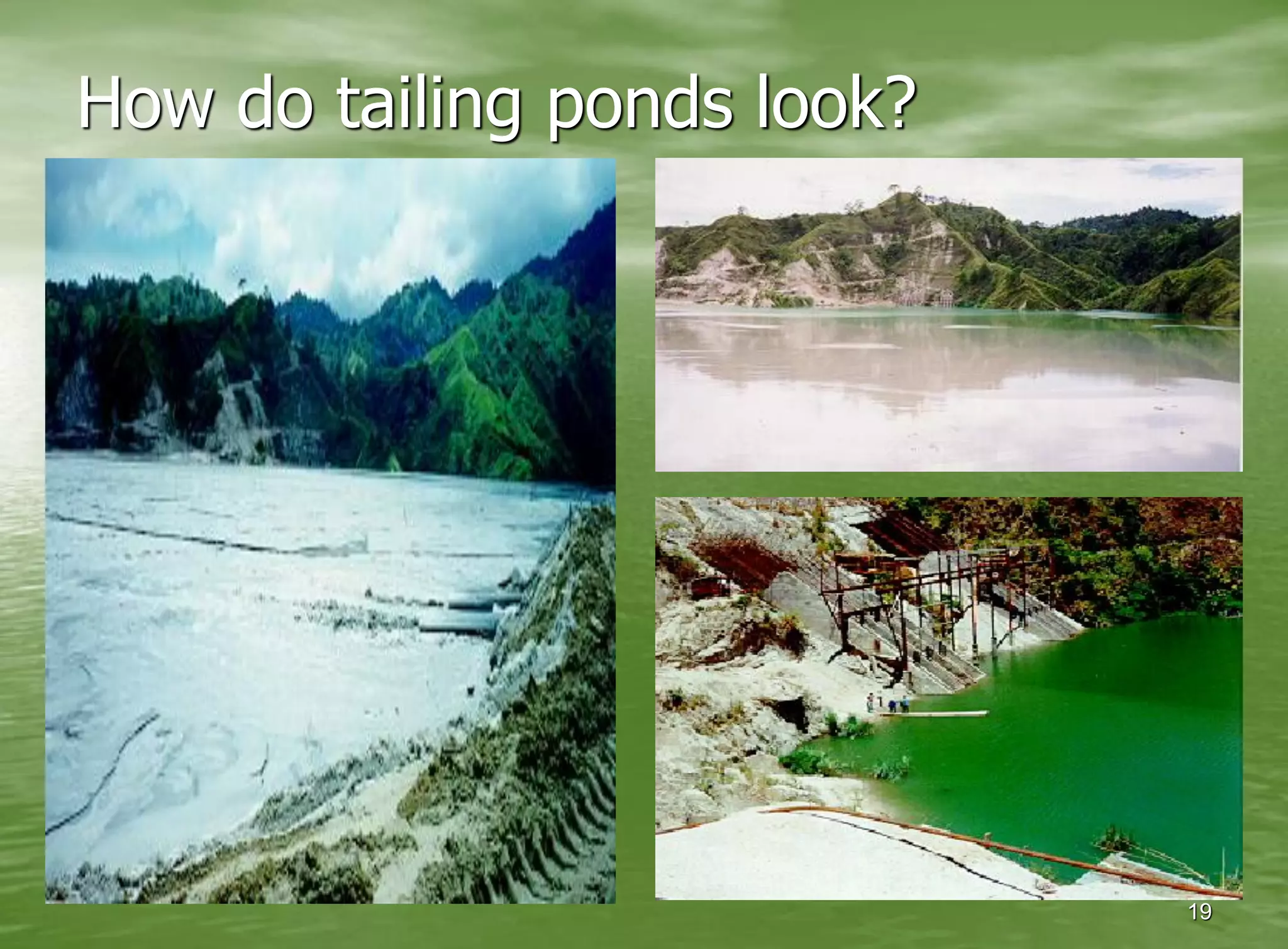
How do tailing ponds look?


                             19
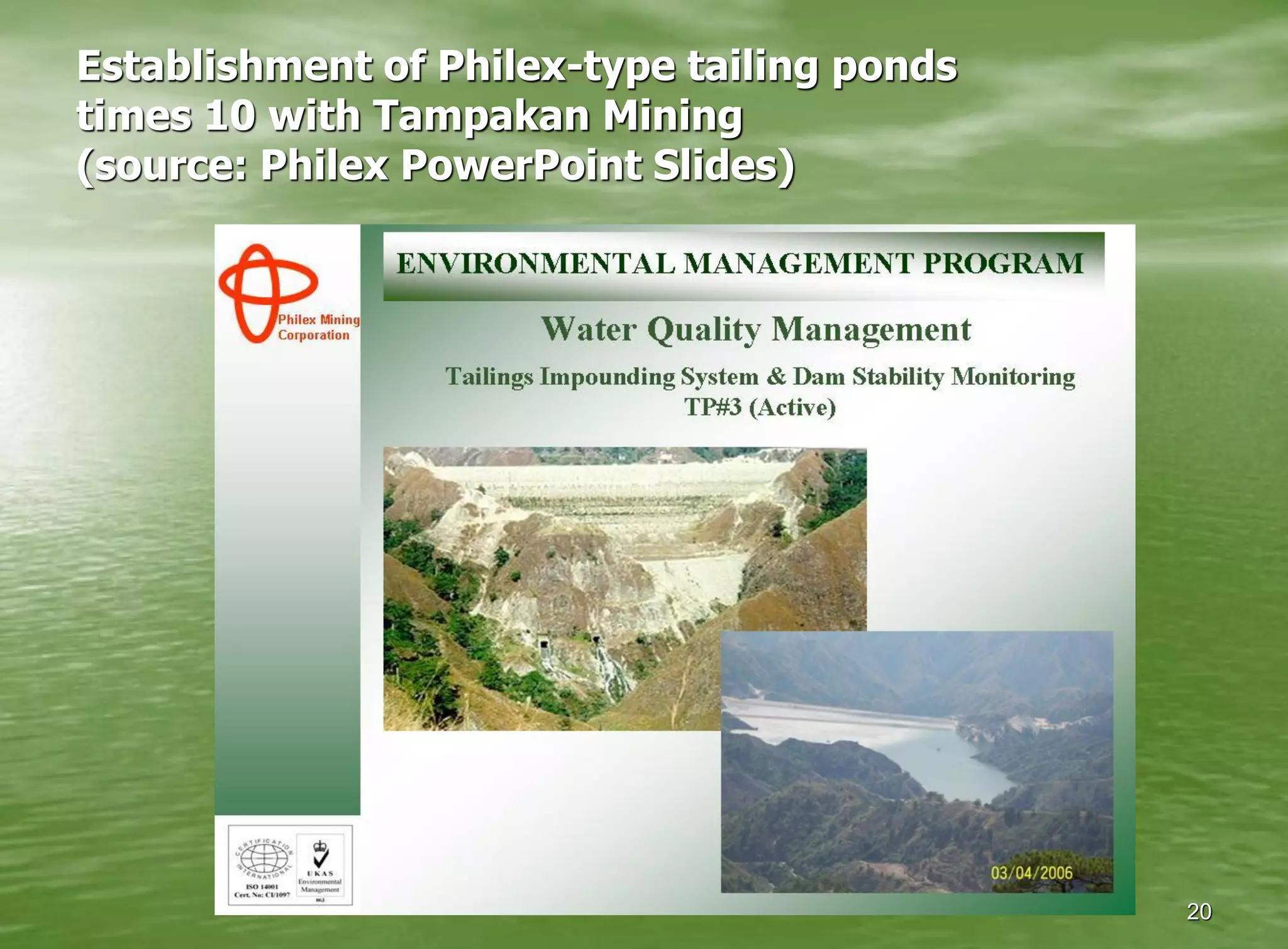
Establishment of Philex-type tailing ponds
times 10 with Tampakan Mining
(source: Philex PowerPoint Slides)


                                             20
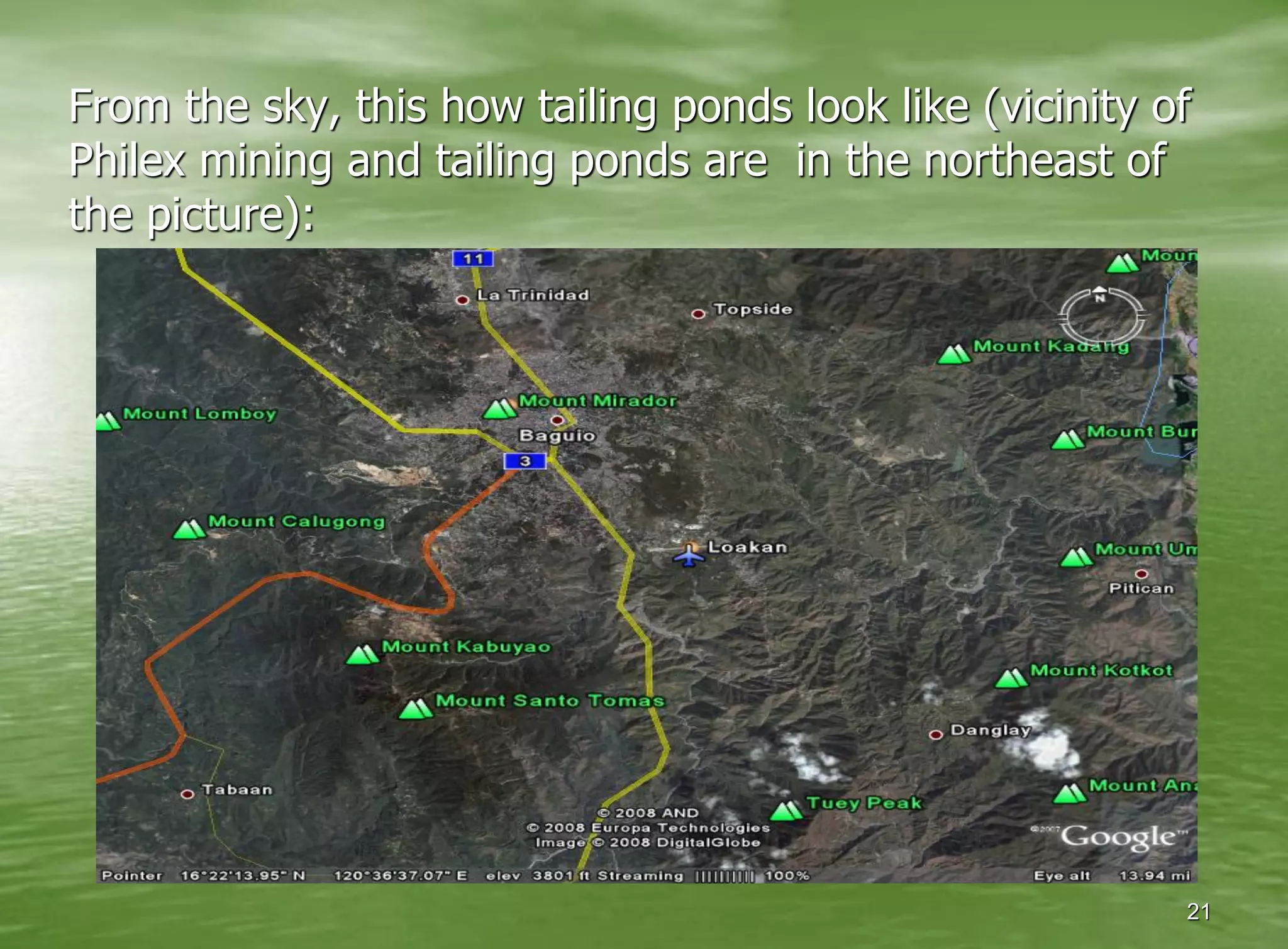
From the sky, this how tailing ponds look like (vicinity of
Philex mining and tailing ponds are in the northeast of
the picture):


                                                          21
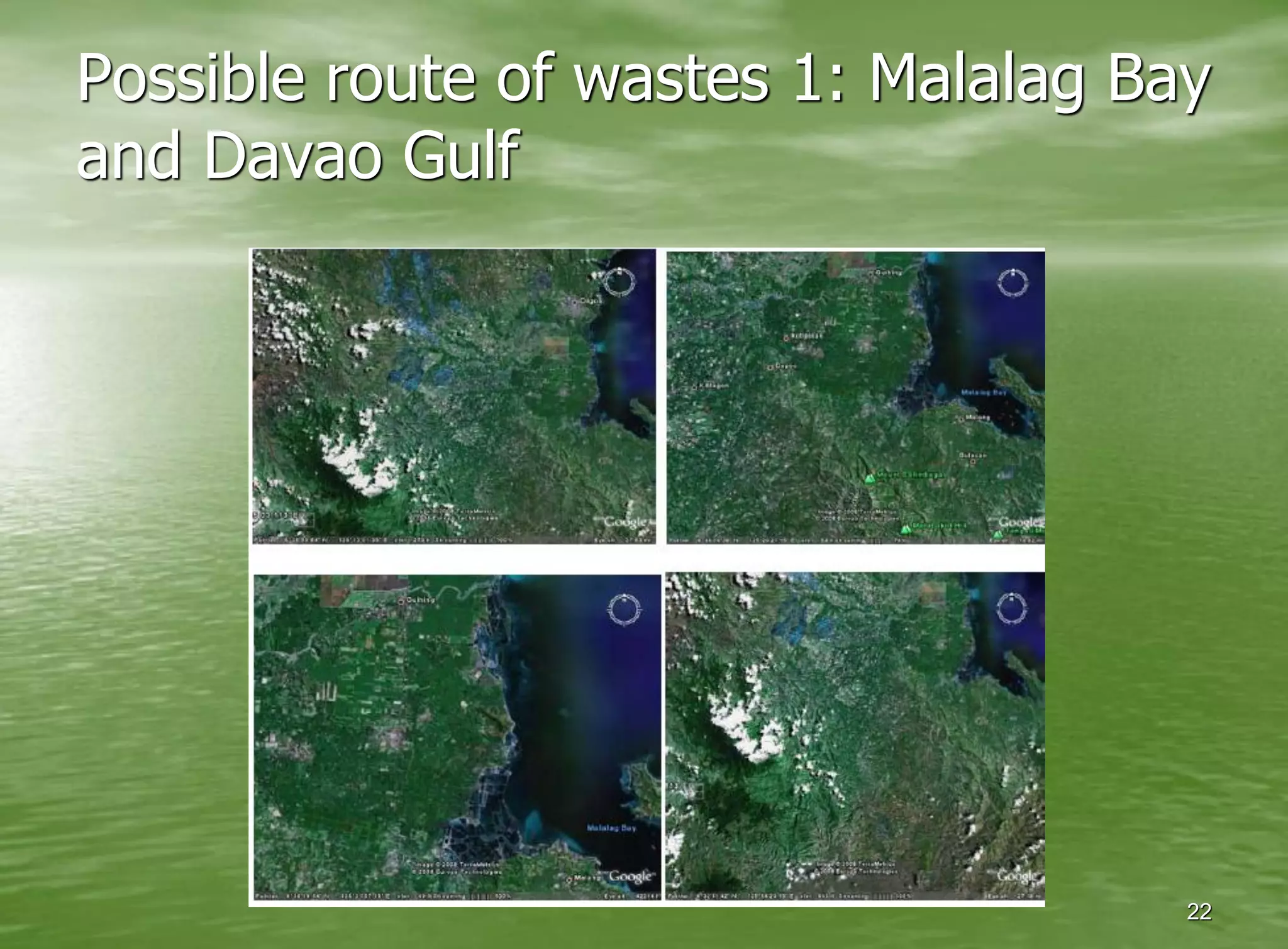
Possible route of wastes 1: Malalag Bay
and Davao Gulf


                                      22
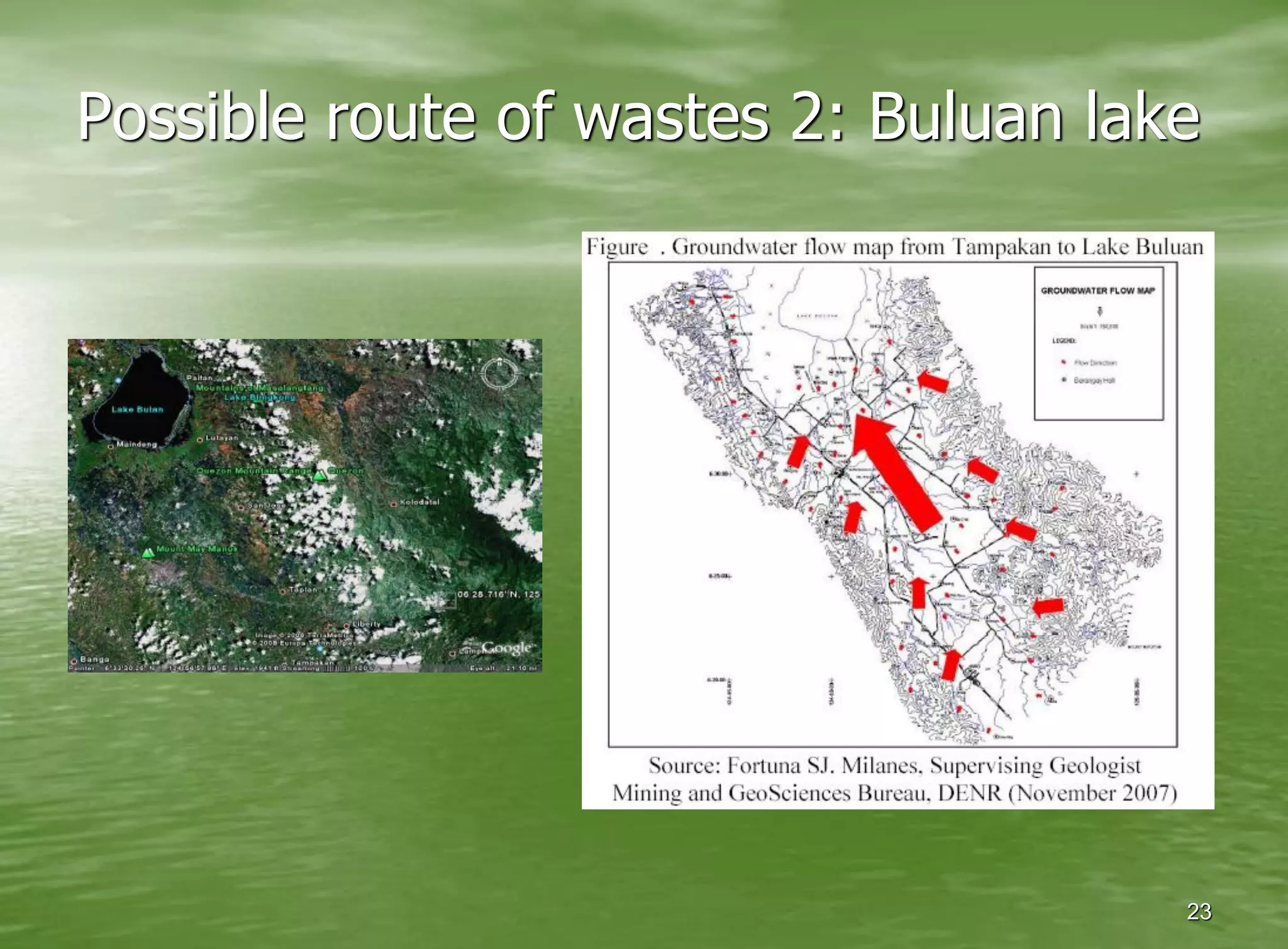
Possible route of wastes 2: Buluan lake


                                      23
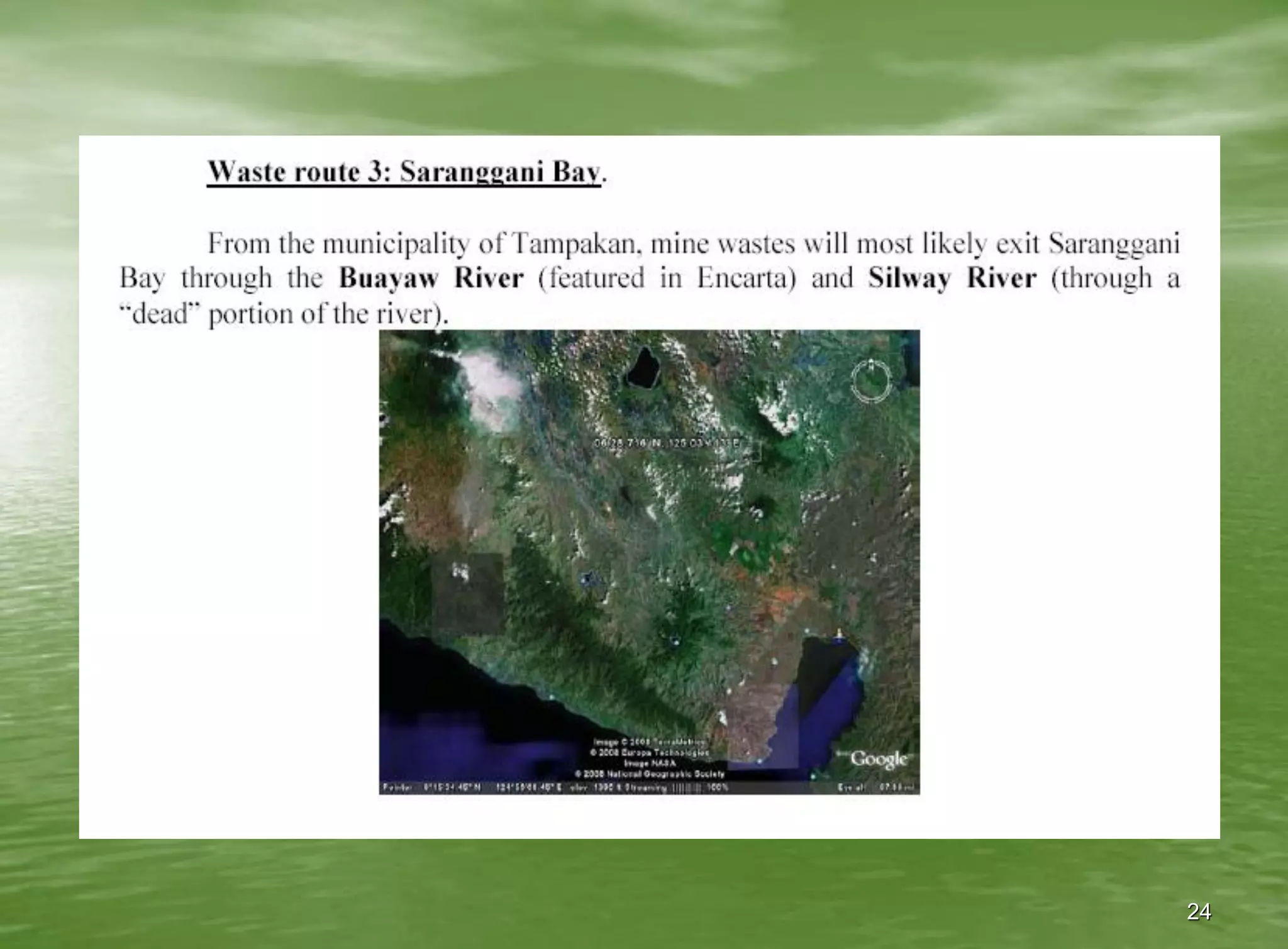
24
Implications:
• Tampakan mining threatens the tuna industry of
    Gensan that generates around P15 billion annually
    and the multi-million fish industries of Lake Buluan
    and Malalag Bay and Davao Gulf
•   Thousands of hectares of farmlands are threatened
    with mine wastes from 88 million metric tons of ore
    annually
•   Farms will be deprived of water that will be used by
    mining companies and as water tables are disturbed
    or rerouted
•   Given that net benefits from mining is already zero
    as alternatives exist that can provide incomes
    comparable to Tampakan mining, the above implies
    that the net benefits from mining is a large negative
    number
                                                            25
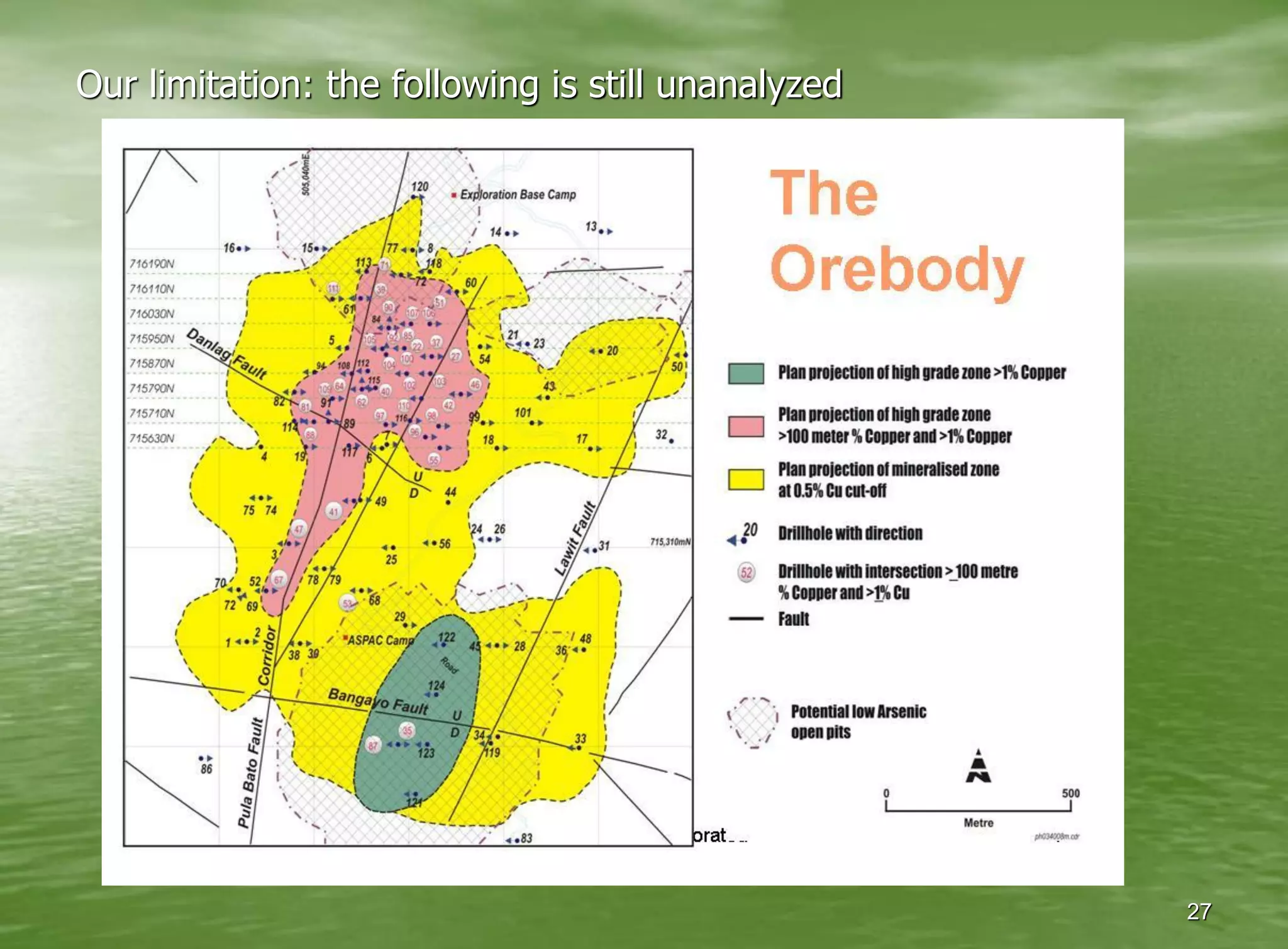
Our limitation: the following is still unanalyzed


                                                    27

Mining in the Municipality of Tampakan:Risks and Alternatives

  • 1.
    Mining in the Municipalityof Tampakan: risks and alternatives Justice and Peace Desk Social Action Center, Diocese of Marbel With Arturo Boquiren Assistant Professor, Economics University of the Philippines-Baguio Sr. Pat Babiera Fr. Romeo Catedral Coordinator, Justice and Peace Desk Director 1
  • 2.
    Key results: Benefitsfrom mining 2
  • 3.
  • 4.
  • 5.
  • 6.
  • 7.
    Opportunity cost analysisof benefit • Opportunity costs are benefits foregone or deprived from a community (economic agent) given alternative or better uses for a resource • One possible best use for the lands covered by mining is through a combination of agriculture, agro-forestry, and forest development • Comparative analysis was used to determine what is superior: use the land for mining or use it for a combination of agriculture, agro-forestry, and forest development. This is done through the use of a proxy 7
  • 8.
    Basis for opportunitycost analysis • Mining in Tampakan will initially involve at least 81,000 hectares • Although there is provision in the mining law that lands for exploration will be limited to only 5,000 by the 8 th year of exploration, Tampakan ore targeted by Sagitarius mines is scattered in around 144 hectares of land • Other than 144 hectares of land, mine operators will need a mill, tailing ponds, and various types of land for operation 8
  • 9.
  • 10.
  • 11.
  • 12.
    SMI data impliesthat the ore is located in an area of around 144 hectares 12
  • 13.
    Implication • Net economicbenefit from Tampakan mining is zero • If potential environmental damage is considered net benefit from mining is a large negative number 13
  • 14.
    Risks of mining inmunicipality of Tampakan 14
  • 15.
    Comparison: Philex andTampakan • Philex milled 311 million metric tons of ore between 1955 to 2006 • Today, Philex will mill 54 million metric tons in six years or around 9 million metric tons per annum • Tampakan mining will mill 2.2 billion metric tons in 25 years implying 88 million metric tons per annum or more than 10 times of Philex mining from 1955 to 2008 • Thus, Tampakan mining is unprecedented and more than 10 times the environmental impact and risks of Philex mining 15
  • 16.
    How does anISO-certified mining company operate 16
  • 17.
    Like Philex, Tampakanmining will require not only the area for ore mining but also land for the following • Space for the mined ore • Milling • Tailing ponds • Company facilities • Public relations facilities • Dams (tailing ponds must be linked to rivers that have dams preferably for environmental damage controls) 17
  • 18.
    Thus, Tampakan miningwill require • Ten times the tailing ponds required in Philex mining • Dams or dam services more than that provided today by the San Roque Dam • Mining in Benguet or environmental damage from Benguet mining are addressed or subsidized by government through the San Roque mega dam that serve as a catch dam for tailing ponds. Mega dams have risks • In addition, the tailing ponds themselves have risks. For instance, the 1992 breakdown of a Philex tailing pond in Benguet released 80 million metric tons of mine waste to the environment • Tampakan mining have the potential create unprecedented social unrests in Tampakan and South Cotabato as farms are deprived of water and exposed to mine tailings or as dams as created similar to the San Roque dam or as tailing ponds similar to those in Benguet are created 18
  • 19.
    How do tailingponds look? 19
  • 20.
    Establishment of Philex-typetailing ponds times 10 with Tampakan Mining (source: Philex PowerPoint Slides) 20
  • 21.
    From the sky,this how tailing ponds look like (vicinity of Philex mining and tailing ponds are in the northeast of the picture): 21
  • 22.
    Possible route ofwastes 1: Malalag Bay and Davao Gulf 22
  • 23.
    Possible route ofwastes 2: Buluan lake 23
  • 24.
  • 25.
    Implications: • Tampakan miningthreatens the tuna industry of Gensan that generates around P15 billion annually and the multi-million fish industries of Lake Buluan and Malalag Bay and Davao Gulf • Thousands of hectares of farmlands are threatened with mine wastes from 88 million metric tons of ore annually • Farms will be deprived of water that will be used by mining companies and as water tables are disturbed or rerouted • Given that net benefits from mining is already zero as alternatives exist that can provide incomes comparable to Tampakan mining, the above implies that the net benefits from mining is a large negative number 25
  • 26.
    Our limitation: thefollowing is still unanalyzed 27