Millennials
        Kaitlin Heenehan
          Jordan King

Residential Leadership Community
             11.27.12
Quiz
What is a generation?
“Peer personality”- shared events in formative
years (ages 10-18) have impact

“We are what we experienced together”

 “ A generation is also defined as a series of
 birth cohorts who share a common location in
 history and a common peer persona that
 reflects their collective identity as well as a
 sense of having shared experiences” (Strauss
 in Lowery, 2001)
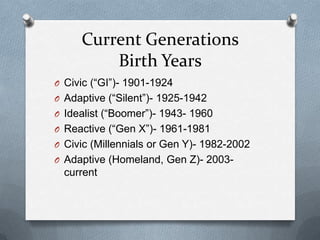
Current Generations
         Birth Years
O Civic (“GI”)- 1901-1924
O Adaptive (“Silent”)- 1925-1942
O Idealist (“Boomer”)- 1943- 1960
O Reactive (“Gen X”)- 1961-1981
O Civic (Millennials or Gen Y)- 1982-2002
O Adaptive (Homeland, Gen Z)- 2003-
  current
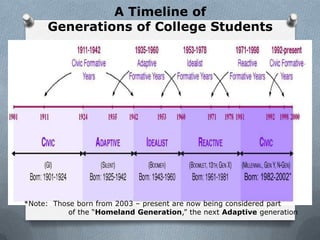
A Timeline of
     Generations of College Students


*Note: Those born from 2003 – present are now being considered part
           of the “Homeland Generation,” the next Adaptive generation
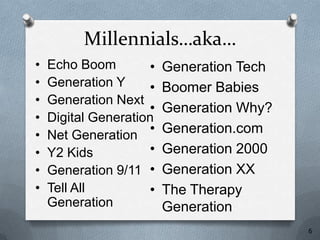
Millennials…aka…
•   Echo Boom        •   Generation Tech
•   Generation Y     •   Boomer Babies
•   Generation Next
                     •   Generation Why?
•   Digital Generation
•   Net Generation   •   Generation.com
•   Y2 Kids          •   Generation 2000
•   Generation 9/11 •    Generation XX
•   Tell All         •   The Therapy
    Generation           Generation
                                           6
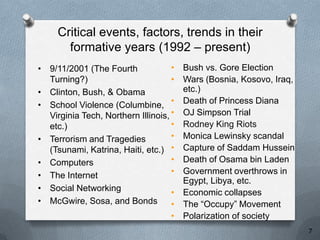
Critical events, factors, trends in their
       formative years (1992 – present)
• 9/11/2001 (The Fourth             • Bush vs. Gore Election
  Turning?)                         • Wars (Bosnia, Kosovo, Iraq,
• Clinton, Bush, & Obama              etc.)
• School Violence (Columbine, •       Death of Princess Diana
  Virginia Tech, Northern Illinois, • OJ Simpson Trial
  etc.)                             • Rodney King Riots
• Terrorism and Tragedies           • Monica Lewinsky scandal
  (Tsunami, Katrina, Haiti, etc.) •   Capture of Saddam Hussein
• Computers                         • Death of Osama bin Laden
• The Internet                      • Government overthrows in
                                      Egypt, Libya, etc.
• Social Networking                 • Economic collapses
• McGwire, Sosa, and Bonds          • The “Occupy” Movement
                                    • Polarization of society
                                                                    7
Characteristics of Millennials


Mainly from the CIRP (Cooperative
Institutional Research Program) study done
by HERI (Higher Education Research
Institute) at UCLA
Academics
Philosophy for education

Challenges
O Arrive late, skip, or leave early
O Sleep in class or are bored in class
O Spend less than 10 hours per week
  studying
O Text/Tweet/Surf in Class
O Disrupt class with cell phone use
Social Activism
O Civic Minded
  O More volunteerism in high school
  O Local and Global
Pressure
O Overwhelmed and depressed


O Physical Appearance/Modesty


O Ambitious and driven to achieve
  O 76% rate their drive to achieve above
    average
  O 73% see chief benefit of college as
    increasing earning power
Parental Involvement
“The ways students learned to fend for
themselves developmentally-by building up
problem-solving skills and coping skills-
have been undermined with the attention to
supporting them and the immediate contact
with parents at all times.”

(Denise Hayes, President of the
Association for University and College
Counseling Center Dirs.)
Social Life
O Too busy
O Fear intimacy
O Avoid traditional dating (travel in
  groups/packs)
O Casual sexual relationships (not
  emotional)
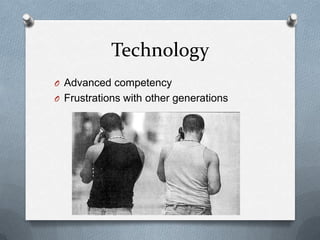
Technology
O Advanced competency
O Frustrations with other generations
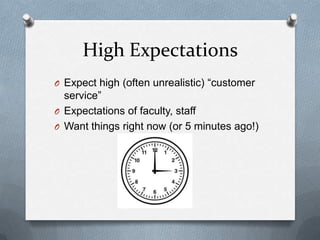
High Expectations
O Expect high (often unrealistic) “customer
  service”
O Expectations of faculty, staff
O Want things right now (or 5 minutes ago!)
Team-oriented
O Like to work in groups
O Travel in packs
Follow the rules
O Not linked with morality
O About not getting caught
  O 70% of college students admit to cheating
    at least once (Center for Academic
    Integrity)
Group Work
Millennials LOVE working in groups!! 

Task:
If you could redefine the millennial
generation, what would you keep and what
would you throw away?
The Lost Generation
https://www.youtube.com/watch
        ?v=42E2fAWM6rA
Civic-minded
O Return to this part of the generation cycle
O Believe they can change the world
O Optimistic about future
Now what?
How can we work with other generations
and help them understand us?
References
Lowery, J.W. (2001). The millennials come to campus: John
  Wesley Lowery talks to William Strauss. About Campus, Jul.
  – Aug., 6-12.

Pryor, J.H. (2010). The American freshman: National Norms for
Fall 2010. Los Angeles: Higher Education Research Institute,
UCLA.

Spencer, E. (2011). Understanding and working with the
millennials. Blacksburg, VA.

Strauss, W. & Howe, N. (1992) Generations: The history of
America’s future, 1584 to 2069. New York: Morrow.

Strauss, W., & Howe, N. (1997). The fourth turning: An American
prophecy. New York: Broadway Books.
Questions?
Feel free to email us too if you have follow
up questions!

kheenehan@vt.edu
jtking@vt.edu

Millennials Presentation for Residential Leadership Community

  • 1.
    Millennials Kaitlin Heenehan Jordan King Residential Leadership Community 11.27.12
  • 2.
  • 3.
    What is ageneration? “Peer personality”- shared events in formative years (ages 10-18) have impact “We are what we experienced together” “ A generation is also defined as a series of birth cohorts who share a common location in history and a common peer persona that reflects their collective identity as well as a sense of having shared experiences” (Strauss in Lowery, 2001)
  • 4.
    Current Generations Birth Years O Civic (“GI”)- 1901-1924 O Adaptive (“Silent”)- 1925-1942 O Idealist (“Boomer”)- 1943- 1960 O Reactive (“Gen X”)- 1961-1981 O Civic (Millennials or Gen Y)- 1982-2002 O Adaptive (Homeland, Gen Z)- 2003- current
  • 5.
    A Timeline of Generations of College Students *Note: Those born from 2003 – present are now being considered part of the “Homeland Generation,” the next Adaptive generation
  • 6.
    Millennials…aka… • Echo Boom • Generation Tech • Generation Y • Boomer Babies • Generation Next • Generation Why? • Digital Generation • Net Generation • Generation.com • Y2 Kids • Generation 2000 • Generation 9/11 • Generation XX • Tell All • The Therapy Generation Generation 6
  • 7.
    Critical events, factors,trends in their formative years (1992 – present) • 9/11/2001 (The Fourth • Bush vs. Gore Election Turning?) • Wars (Bosnia, Kosovo, Iraq, • Clinton, Bush, & Obama etc.) • School Violence (Columbine, • Death of Princess Diana Virginia Tech, Northern Illinois, • OJ Simpson Trial etc.) • Rodney King Riots • Terrorism and Tragedies • Monica Lewinsky scandal (Tsunami, Katrina, Haiti, etc.) • Capture of Saddam Hussein • Computers • Death of Osama bin Laden • The Internet • Government overthrows in Egypt, Libya, etc. • Social Networking • Economic collapses • McGwire, Sosa, and Bonds • The “Occupy” Movement • Polarization of society 7
  • 8.
    Characteristics of Millennials Mainlyfrom the CIRP (Cooperative Institutional Research Program) study done by HERI (Higher Education Research Institute) at UCLA
  • 9.
    Academics Philosophy for education Challenges OArrive late, skip, or leave early O Sleep in class or are bored in class O Spend less than 10 hours per week studying O Text/Tweet/Surf in Class O Disrupt class with cell phone use
  • 10.
    Social Activism O CivicMinded O More volunteerism in high school O Local and Global
  • 11.
    Pressure O Overwhelmed anddepressed O Physical Appearance/Modesty O Ambitious and driven to achieve O 76% rate their drive to achieve above average O 73% see chief benefit of college as increasing earning power
  • 12.
    Parental Involvement “The waysstudents learned to fend for themselves developmentally-by building up problem-solving skills and coping skills- have been undermined with the attention to supporting them and the immediate contact with parents at all times.” (Denise Hayes, President of the Association for University and College Counseling Center Dirs.)
  • 14.
    Social Life O Toobusy O Fear intimacy O Avoid traditional dating (travel in groups/packs) O Casual sexual relationships (not emotional)
  • 15.
    Technology O Advanced competency OFrustrations with other generations
  • 16.
    High Expectations O Expecthigh (often unrealistic) “customer service” O Expectations of faculty, staff O Want things right now (or 5 minutes ago!)
  • 17.
    Team-oriented O Like towork in groups O Travel in packs
  • 18.
    Follow the rules ONot linked with morality O About not getting caught O 70% of college students admit to cheating at least once (Center for Academic Integrity)
  • 19.
    Group Work Millennials LOVEworking in groups!!  Task: If you could redefine the millennial generation, what would you keep and what would you throw away?
  • 20.
  • 21.
    Civic-minded O Return tothis part of the generation cycle O Believe they can change the world O Optimistic about future
  • 22.
    Now what? How canwe work with other generations and help them understand us?
  • 23.
    References Lowery, J.W. (2001).The millennials come to campus: John Wesley Lowery talks to William Strauss. About Campus, Jul. – Aug., 6-12. Pryor, J.H. (2010). The American freshman: National Norms for Fall 2010. Los Angeles: Higher Education Research Institute, UCLA. Spencer, E. (2011). Understanding and working with the millennials. Blacksburg, VA. Strauss, W. & Howe, N. (1992) Generations: The history of America’s future, 1584 to 2069. New York: Morrow. Strauss, W., & Howe, N. (1997). The fourth turning: An American prophecy. New York: Broadway Books.
  • 24.
    Questions? Feel free toemail us too if you have follow up questions! kheenehan@vt.edu jtking@vt.edu

Editor's Notes

  • #2 Kaitlin
  • #3 Kaitlin
  • #4 Jordan (including social awakening/etc from those slides)
  • #5 Kaitlin- general overview of each
  • #6 Kaitlin
  • #7 Jordan- many names (don’t like to be labeled or put in a box)Kaitlin- ask them about strengths?
  • #8 Jordan- ask them about these and then follow up with discussion about media/role models on tv
  • #9 Kaitlin- introduce this and explain how we aren’t stereotyping, we are generalizing here
  • #10 Jordan-Ask, why did you come to college? Link to quizMention that this was why you were late, to prove a point “be a millennial”
  • #11 Kaitlin
  • #12 Jordan
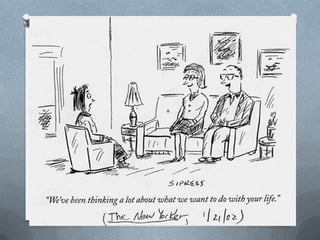
  • #13 Kaitlin- helicopter parents, cartoon, etc.
  • #15 Jordan
  • #16 Jordan- ask about texting behaviors- give that stat!
  • #17 Kaitlin- faculty won’t respond to emails at 3am usually
  • #18 Kaitlin
  • #19 Jordan
  • #20 Both will explain
  • #21 Kaitlin
  • #22 Kaitlin
  • #23 Jordan- lead them in a discussion, Kaitlin will chime in