FD Title
https://learn.extension.org/events/3346
All Hands on Deck! Developing Culturally Alert
Communication in Relationships
Thanks for joining us! We will get started soon.
While you’re waiting you can get handouts etc. by following the link below.
1
Connecting military family service providers
and Cooperative Extension professionals to research
and to each other through engaging online learning opportunities
militaryfamilies.extension.org
MFLN Intro
Sign up for webinar email notifications at militaryfamilies.extension.org/webinars2
FD Title
https://learn.extension.org/events/3346
All Hands on Deck! Developing Culturally Alert
Communication in Relationships
3
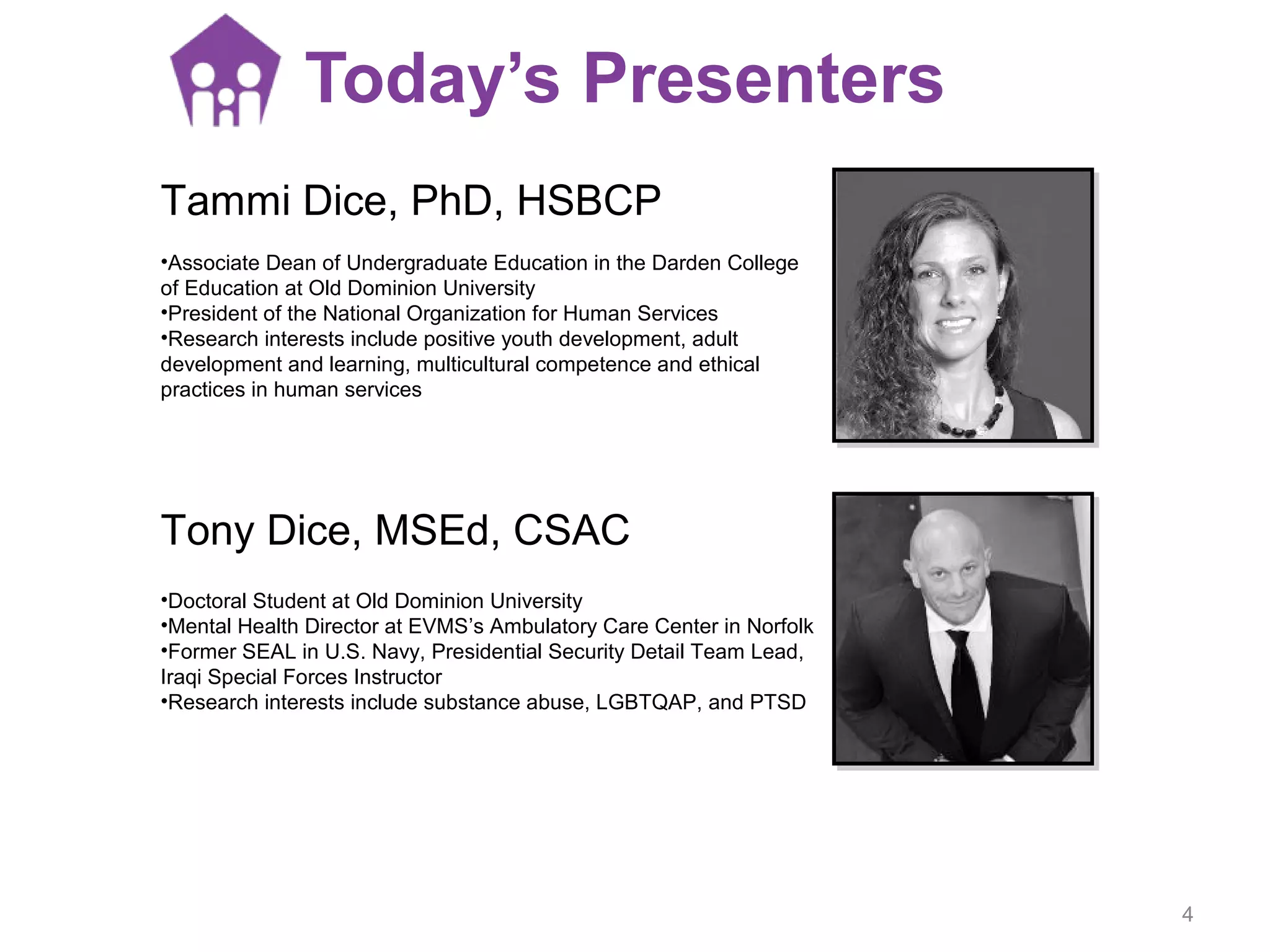
Tammi Dice, PhD, HSBCP
•Associate Dean of Undergraduate Education in the Darden College
of Education at Old Dominion University
•President of the National Organization for Human Services
•Research interests include positive youth development, adult
development and learning, multicultural competence and ethical
practices in human services
Today’s Presenters
Tony Dice, MSEd, CSAC
•Doctoral Student at Old Dominion University
•Mental Health Director at EVMS’s Ambulatory Care Center in Norfolk
•Former SEAL in U.S. Navy, Presidential Security Detail Team Lead,
Iraqi Special Forces Instructor
•Research interests include substance abuse, LGBTQAP, and PTSD
4
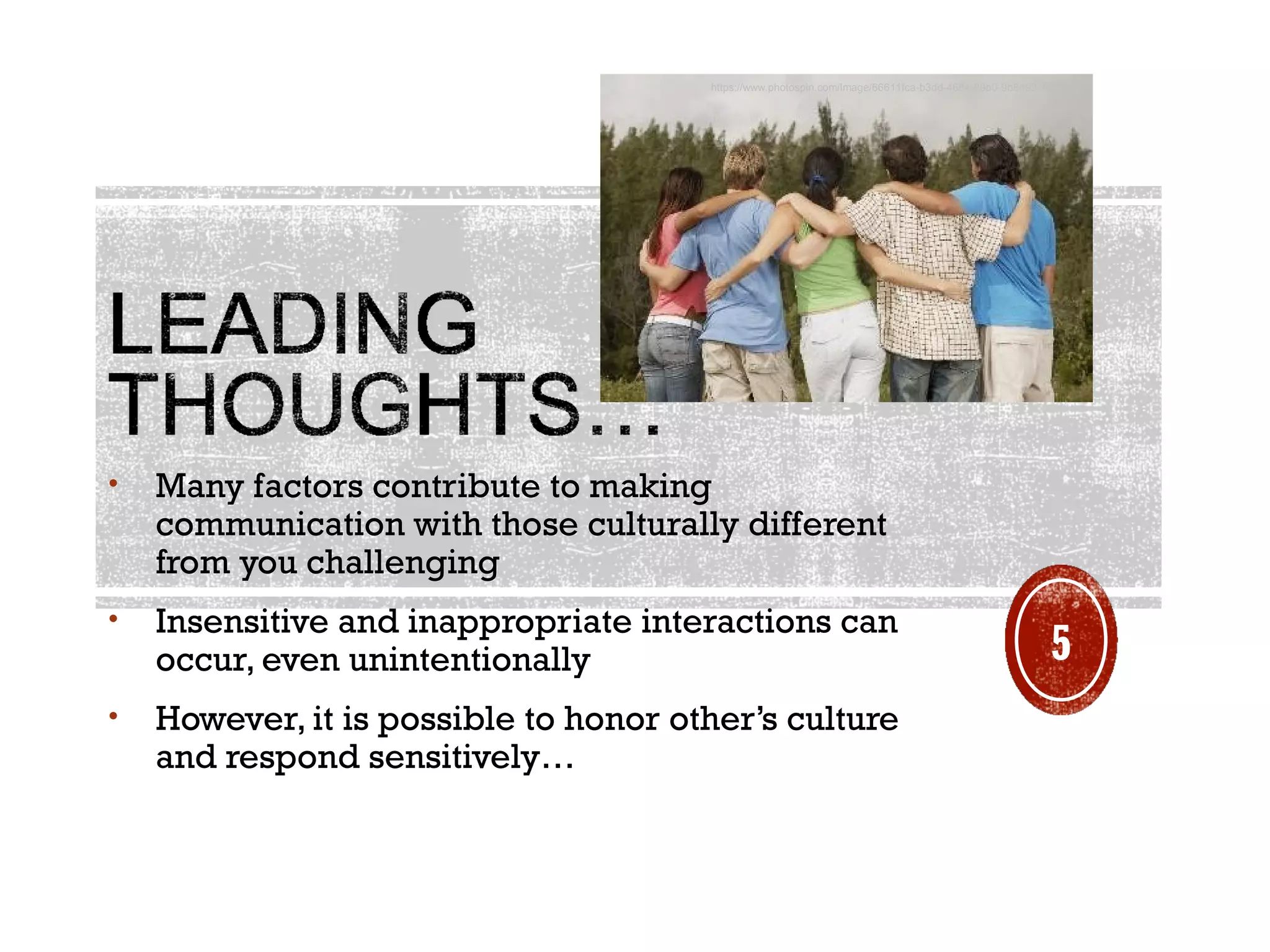
• Many factors contribute to making
communication with those culturally different
from you challenging 
• Insensitive and inappropriate interactions can
occur, even unintentionally  
• However, it is possible to honor other’s culture
and respond sensitively…
https://www.photospin.com/Image/66611fca-b3dd-4684-89b0-9b8d92792dd7
5
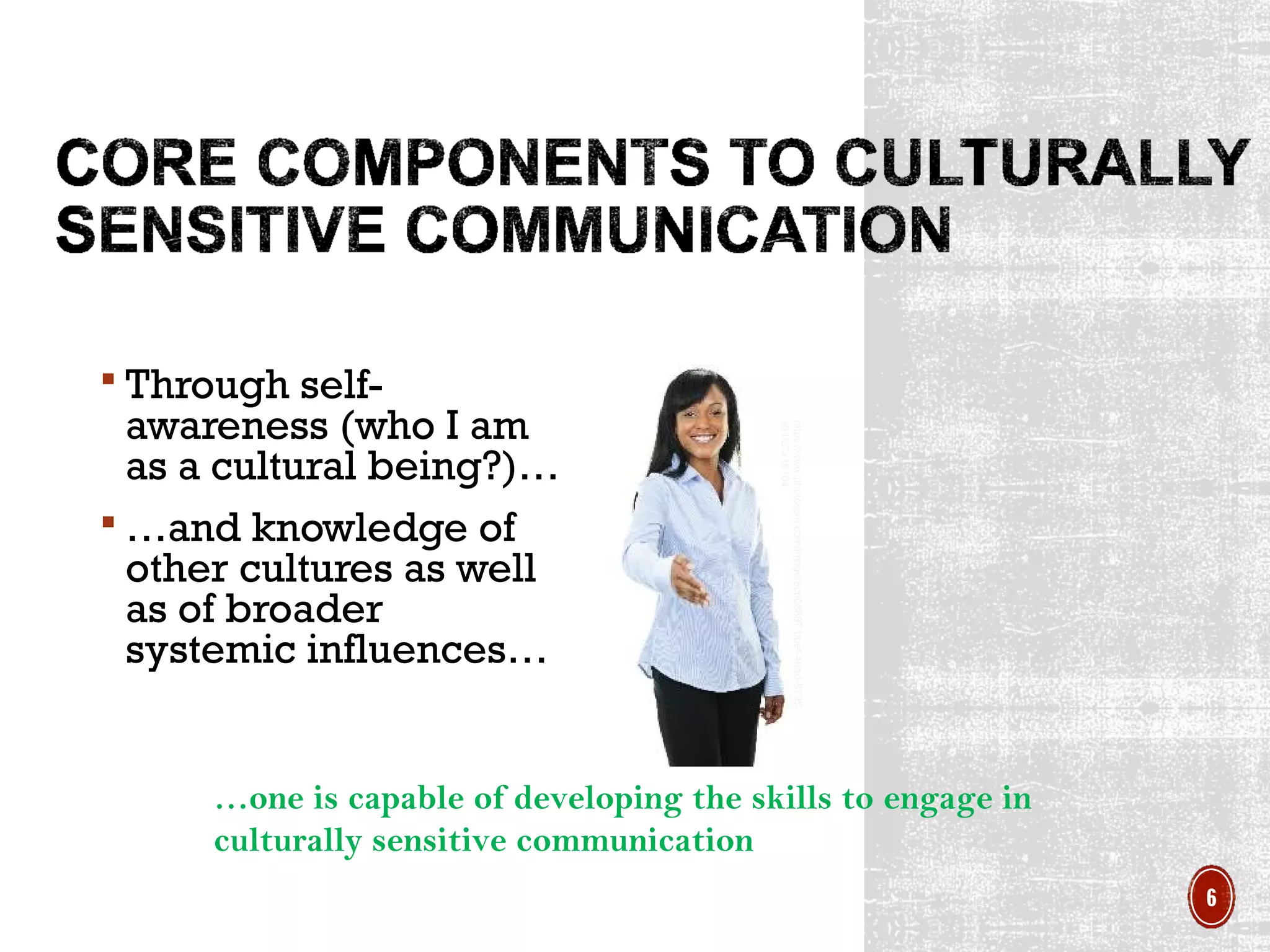
…one is capable of developing the skills to engage in
culturally sensitive communication
 Through self-
awareness (who I am
as a cultural being?)…
 …and knowledge of
other cultures as well
as of broader
systemic influences…
https://www.photospin.com/Image/5cb08697-bbef-40ad-8795-
e31fc7a15104
6
7
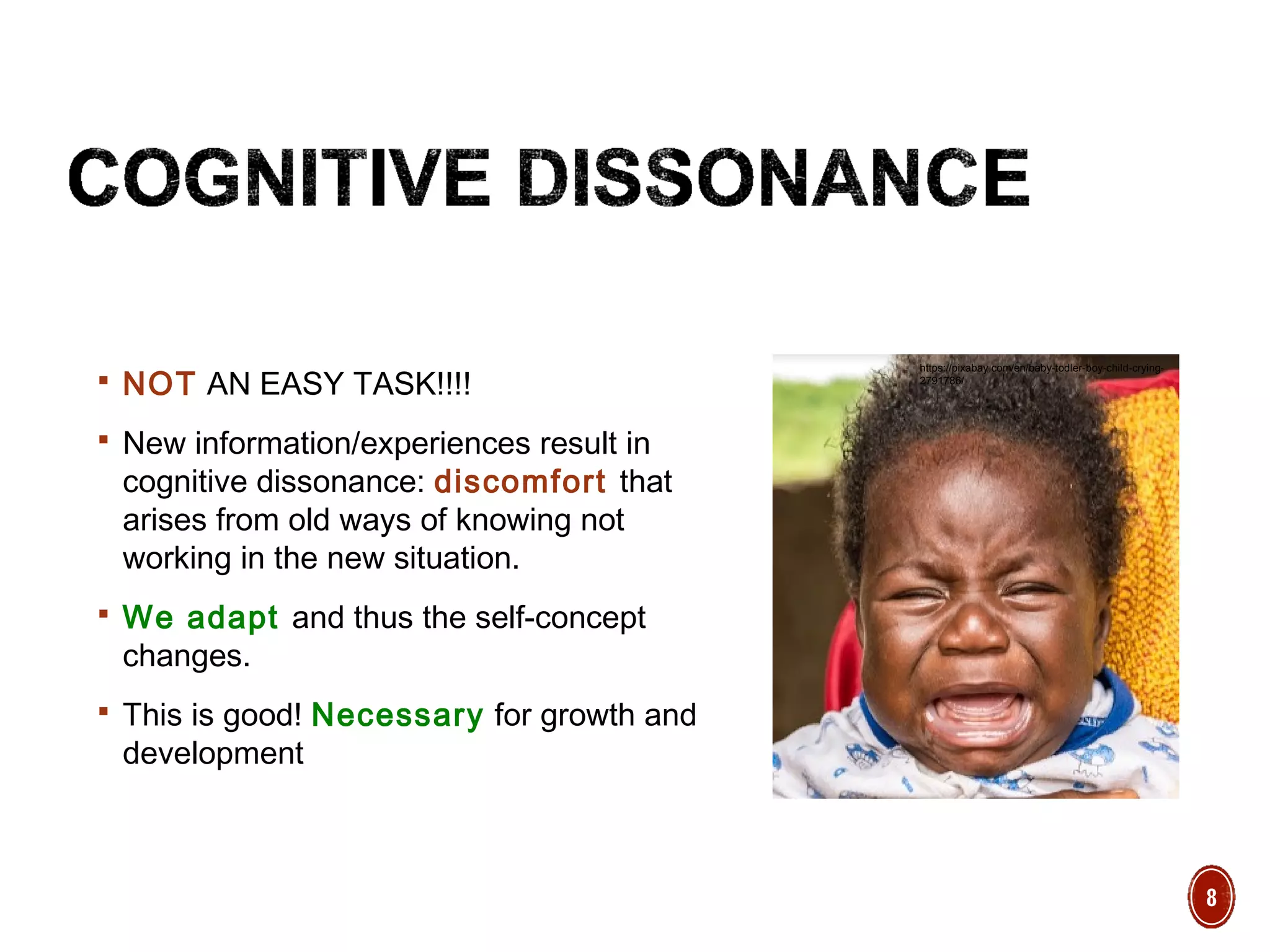
 NOT AN EASY TASK!!!!
 New information/experiences result in
cognitive dissonance: discomfort that
arises from old ways of knowing not
working in the new situation.
 We adapt and thus the self-concept
changes.
 This is good! Necessary for growth and
development
https://pixabay.com/en/baby-todler-boy-child-crying-
2791786/
8
Intersectionality
[in-ter-sek-shuh-nal-i-tee]
n. “treating factors of
identity as
interconnected”
(Garcia, 2015)
Religious/
Spiritual
Identity
Economic
Background
Ethnic/
Racial
Identity
Sexual
Identity
Age
Ability/
Disability
Geography
Language
(Neukrug, 2014)
9
 Identities exist simultaneously (i.e. gender and ethnicity and class, etc.) and are
intertwined (e.g. have an impact in everyday life)
 Most have a combo of marginalized and privileged intersecting identities- BOTH
important to consider!
 Multiple marginalized intersecting identities can contribute to even greater
challenges/obstacles (e.g. black, poor, and gay)
(Mens-Verhulst & Radtke, 2008)
https://pixabay.com/en/fabric-texture-color-pattern-2642229/
10
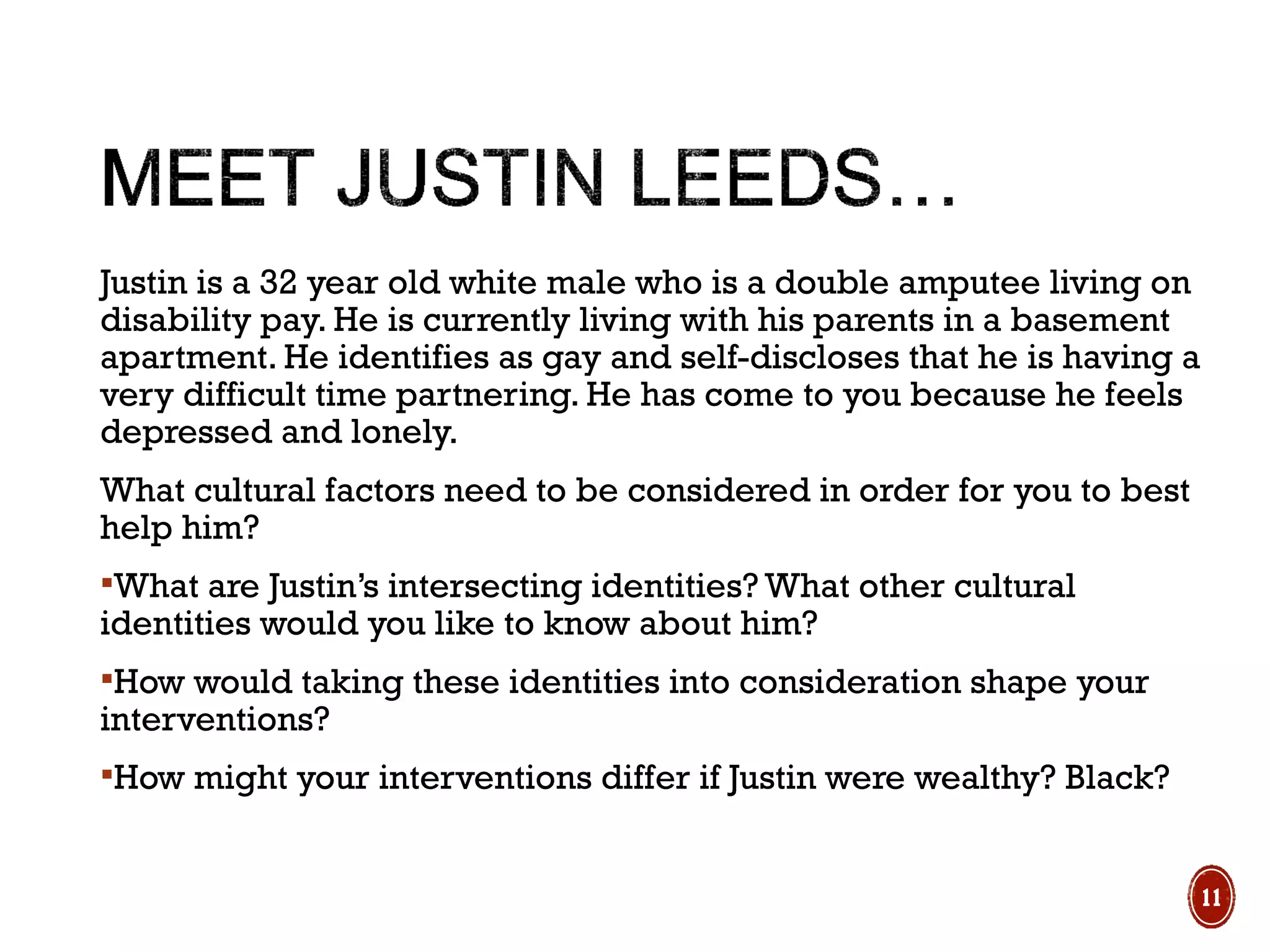
Justin is a 32 year old white male who is a double amputee living on
disability pay. He is currently living with his parents in a basement
apartment. He identifies as gay and self-discloses that he is having a
very difficult time partnering. He has come to you because he feels
depressed and lonely.
What cultural factors need to be considered in order for you to best
help him?
What are Justin’s intersecting identities? What other cultural
identities would you like to know about him?
How would taking these identities into consideration shape your
interventions?
How might your interventions differ if Justin were wealthy? Black?
11
 By acknowledging the
challenges of holding
marginalized identities
 We stop subscribing to
the Myth of Meritocracy
 Which helps us to avoid
engaging in intentional and
unintentional discrimination
12
• Understand your own multi-faceted identity
• The more self-understanding you have, the more
comfortable you will be interacting with diverse others
• Assist Clients in exploring their identities
• Encourage and validate discussion of feelings related to
identity
• Make room for strong emotions
• Allow strong emotions to fuel learning
(Sue, 2016)
13
What
about you?
Take a
moment to
note your
areas of
advantage
and
disadvantage
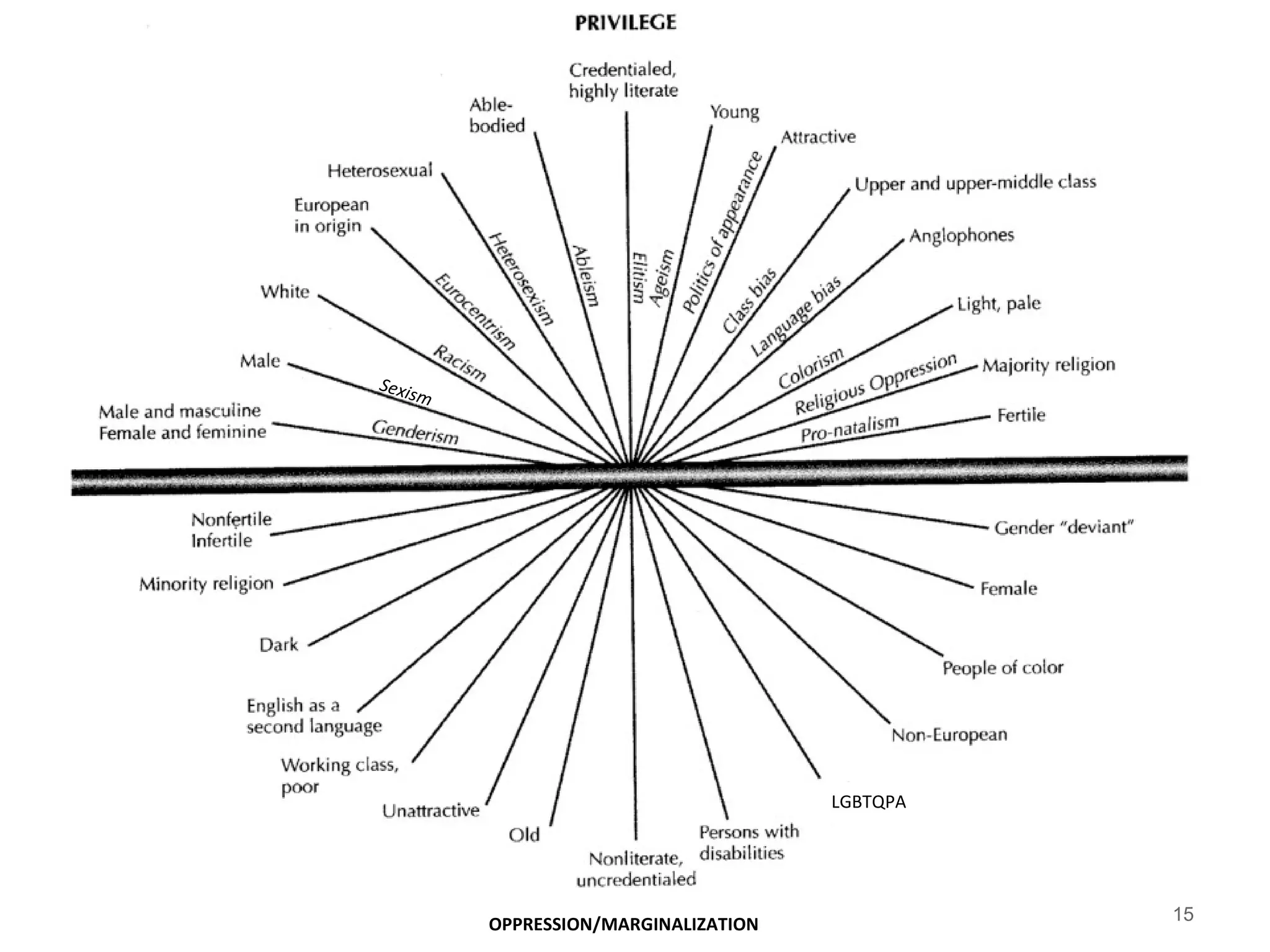
ACTIVITY
Refer to identities slide
Label how you identify yourself
Note where identities fall on the axes
Consider your experiences resulting
from this combination of identities
Consider experiences of others with
differing identities
14
OPPRESSION/MARGINALIZATION
Sexism
LGBTQPA
15
15
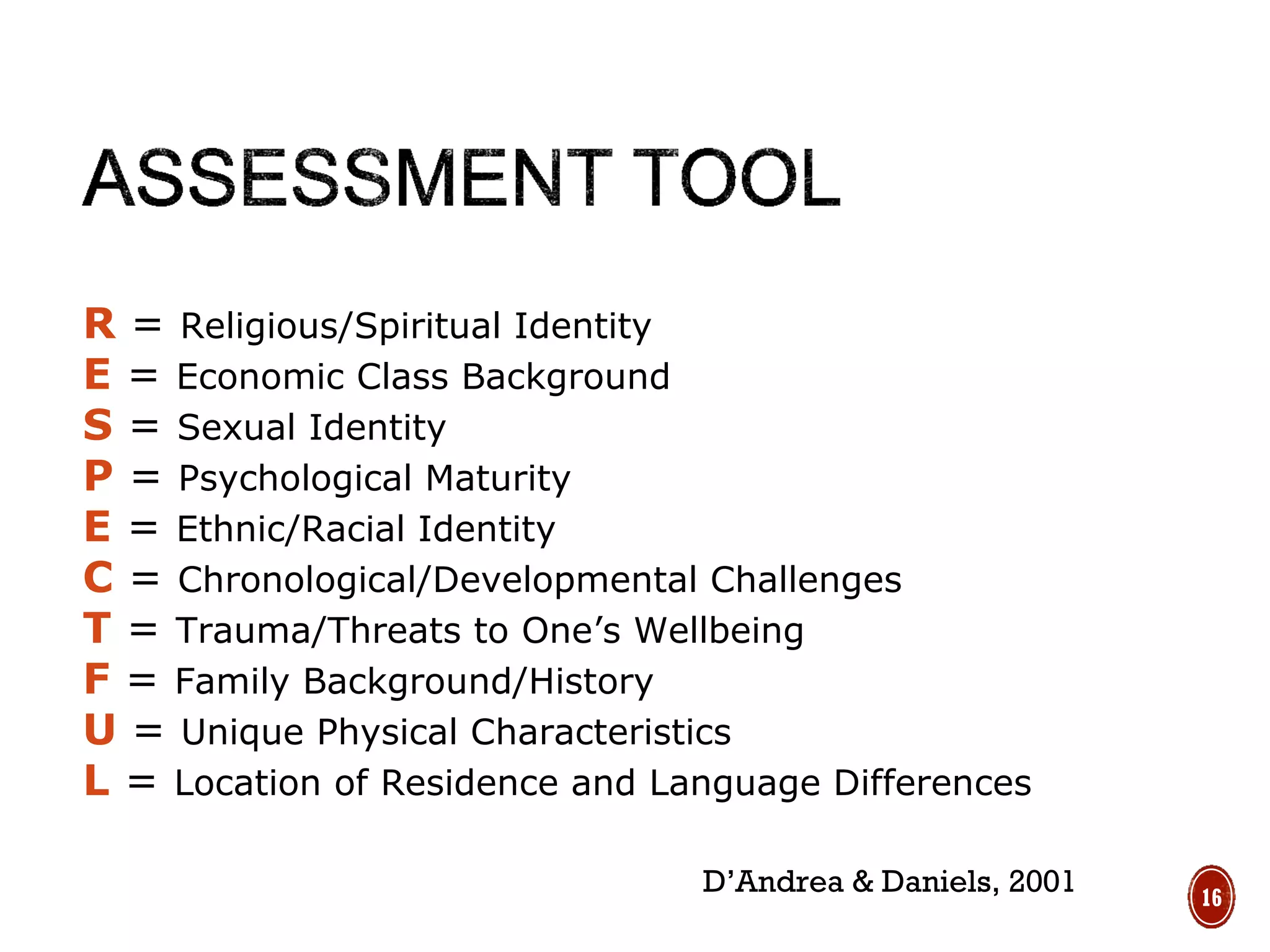
R = Religious/Spiritual Identity
E = Economic Class Background
S = Sexual Identity
P = Psychological Maturity
E = Ethnic/Racial Identity
C = Chronological/Developmental Challenges
T = Trauma/Threats to One’s Wellbeing
F = Family Background/History
U = Unique Physical Characteristics
L = Location of Residence and Language Differences
D’Andrea & Daniels, 2001 16
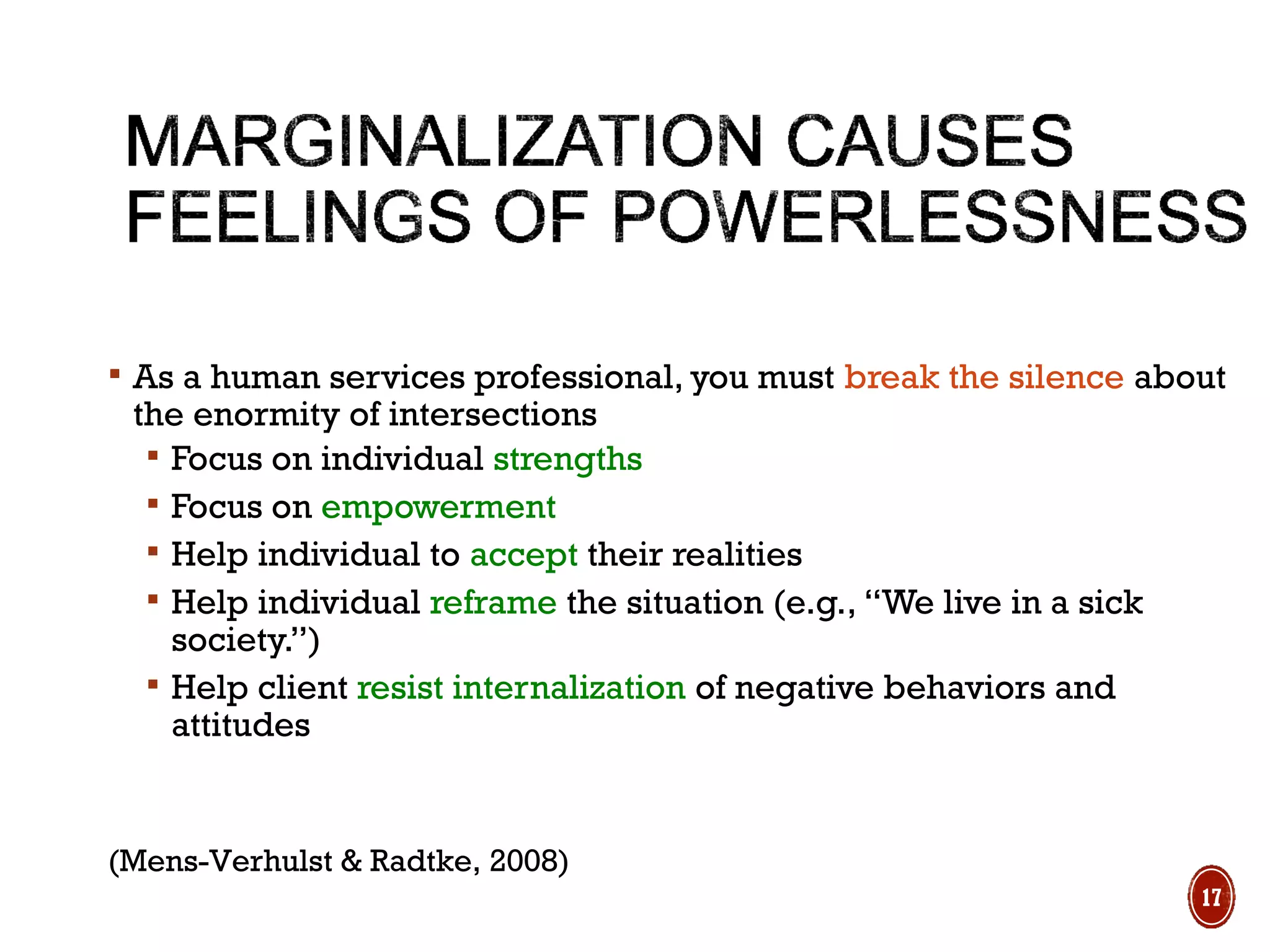
 As a human services professional, you must break the silence about
the enormity of intersections
 Focus on individual strengths
 Focus on empowerment
 Help individual to accept their realities
 Help individual reframe the situation (e.g., “We live in a sick
society.”)
 Help client resist internalization of negative behaviors and
attitudes
(Mens-Verhulst & Radtke, 2008)
17
18
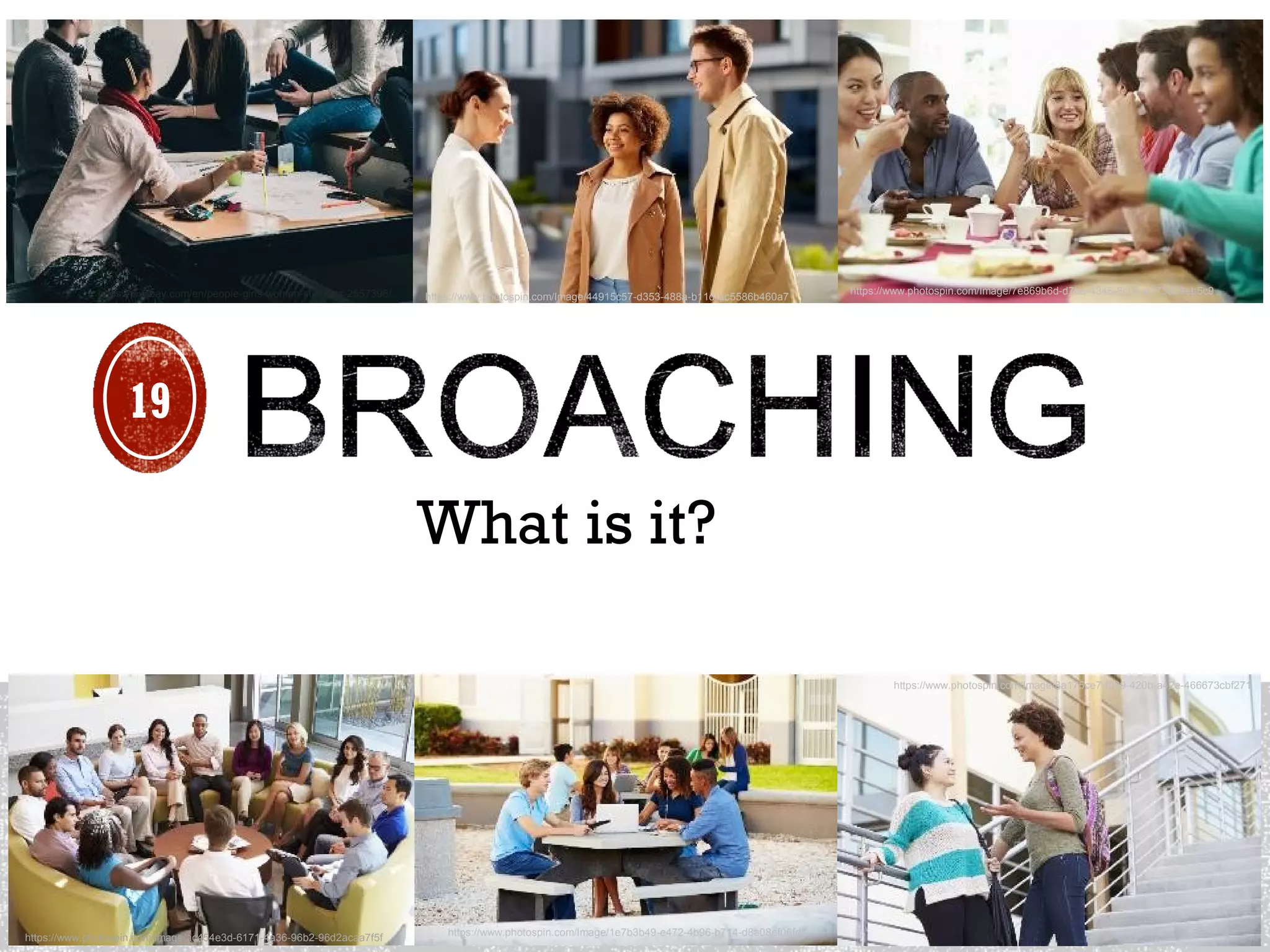
What is it?
https://www.photospin.com/Image/7e869b6d-d7be-4346-8c04-a373d29eb5c9
https://www.photospin.com/Image/44915c57-d353-488a-b11d-ac5586b460a7https://pixabay.com/en/people-girls-women-students-2557396/
https://www.photospin.com/Image/ac454e3d-6171-4a36-96b2-96d2acaa7f5f
https://www.photospin.com/Image/1e7b3b49-e472-4b96-b714-d8a08ef06fd1
https://www.photospin.com/Image/3a175ce7-f029-420b-a42e-466673cbf271
19
• Not easy...but valuable!
• Helps to clarify how an individual identifies
• Helps to clarify communication norms
• Helps to establish authentic relationship
20
https://www.pexels.com/photo/adult-beard-beverage-blur-590516/
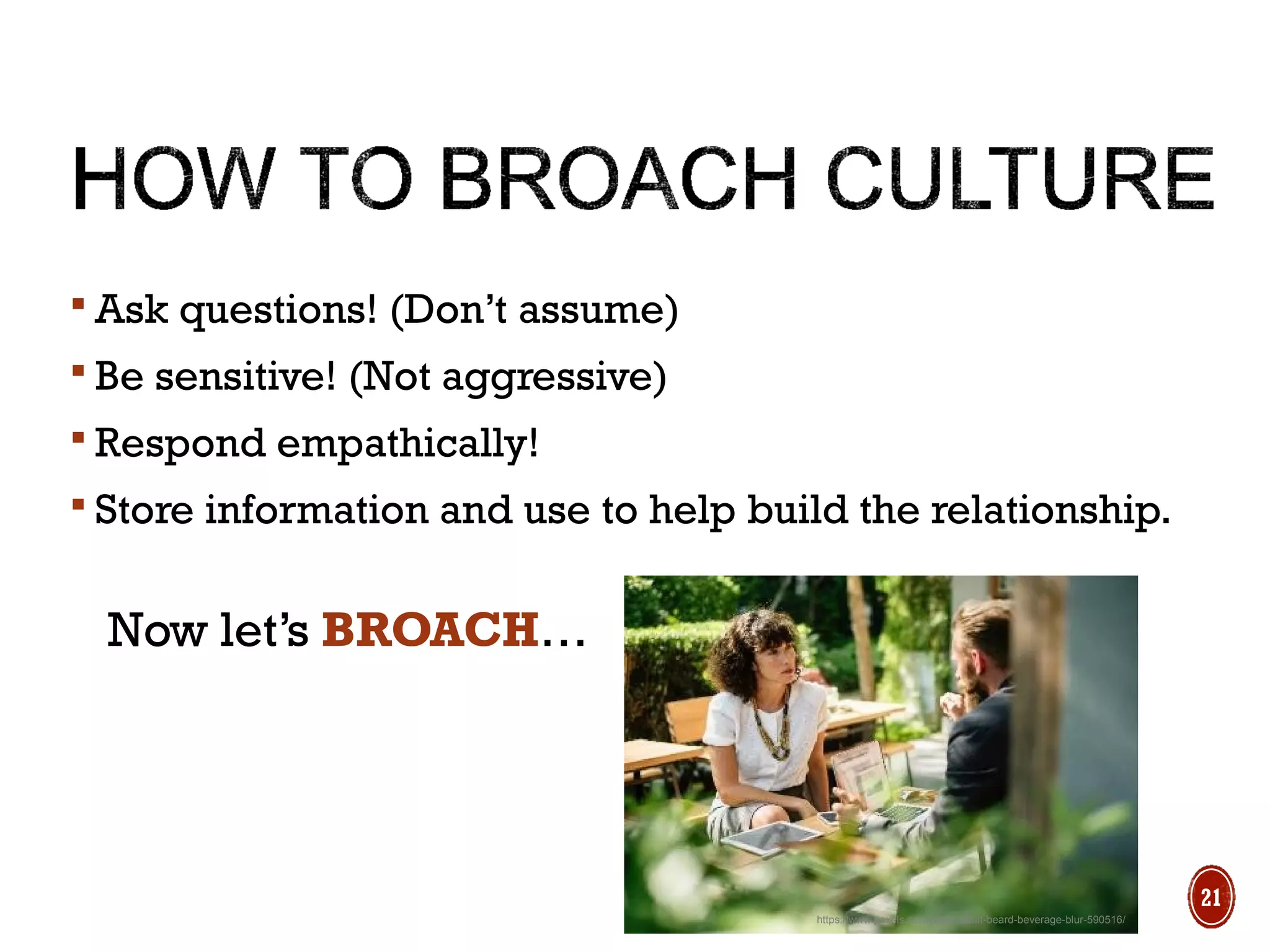
 Ask questions! (Don’t assume)
 Be sensitive! (Not aggressive)
 Respond empathically!
 Store information and use to help build the relationship.
Now let’s BROACH…
21
Practice
makes
perfect!
Just because
it feels
awkward
doesn’t mean
it’s not
important!
ACTIVITY
Refer to Broaching slide
Consider statements you would
feel comfortable using
Observe demonstration
Recognize the need to PRACTICE!
22
23
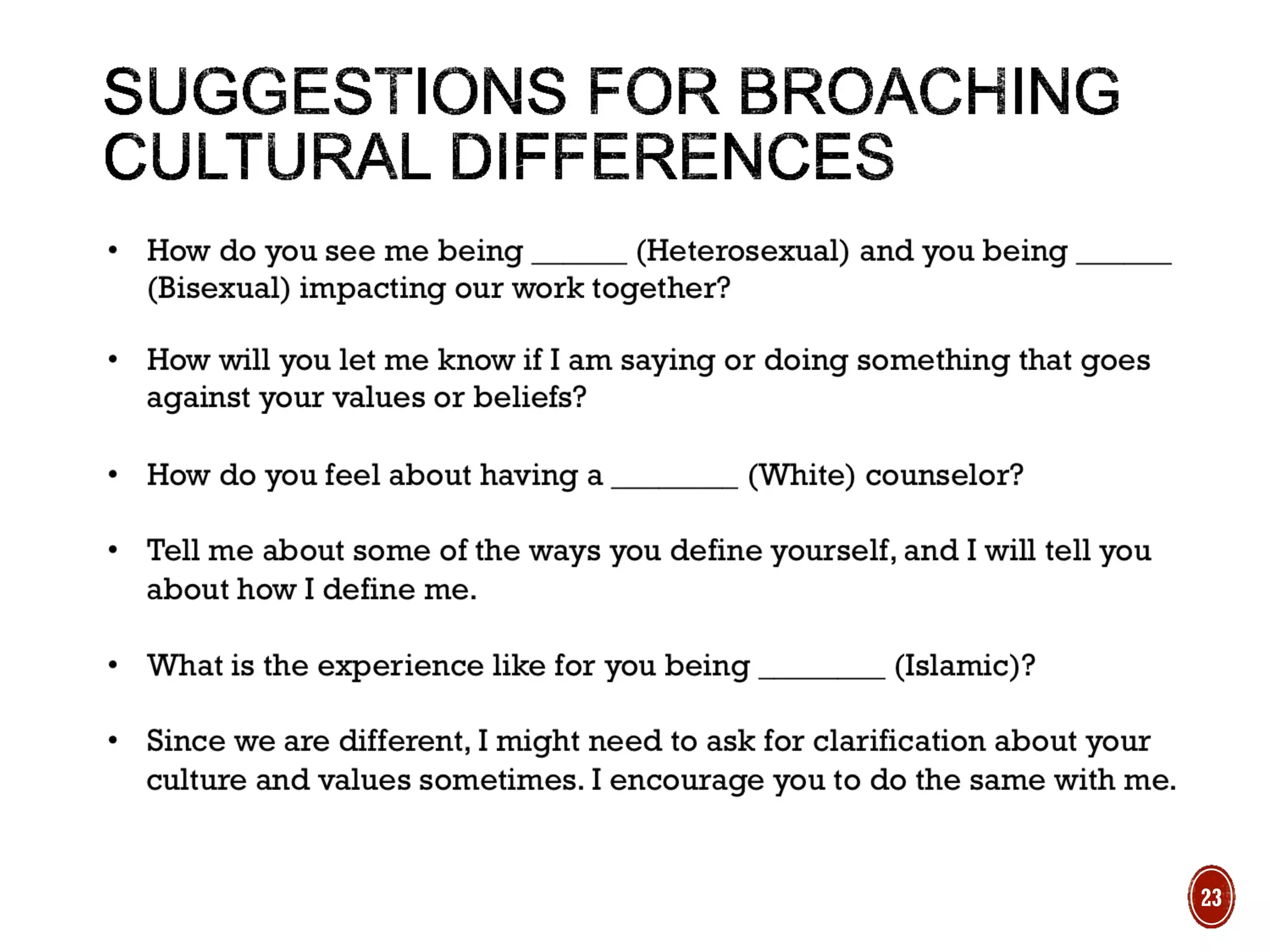
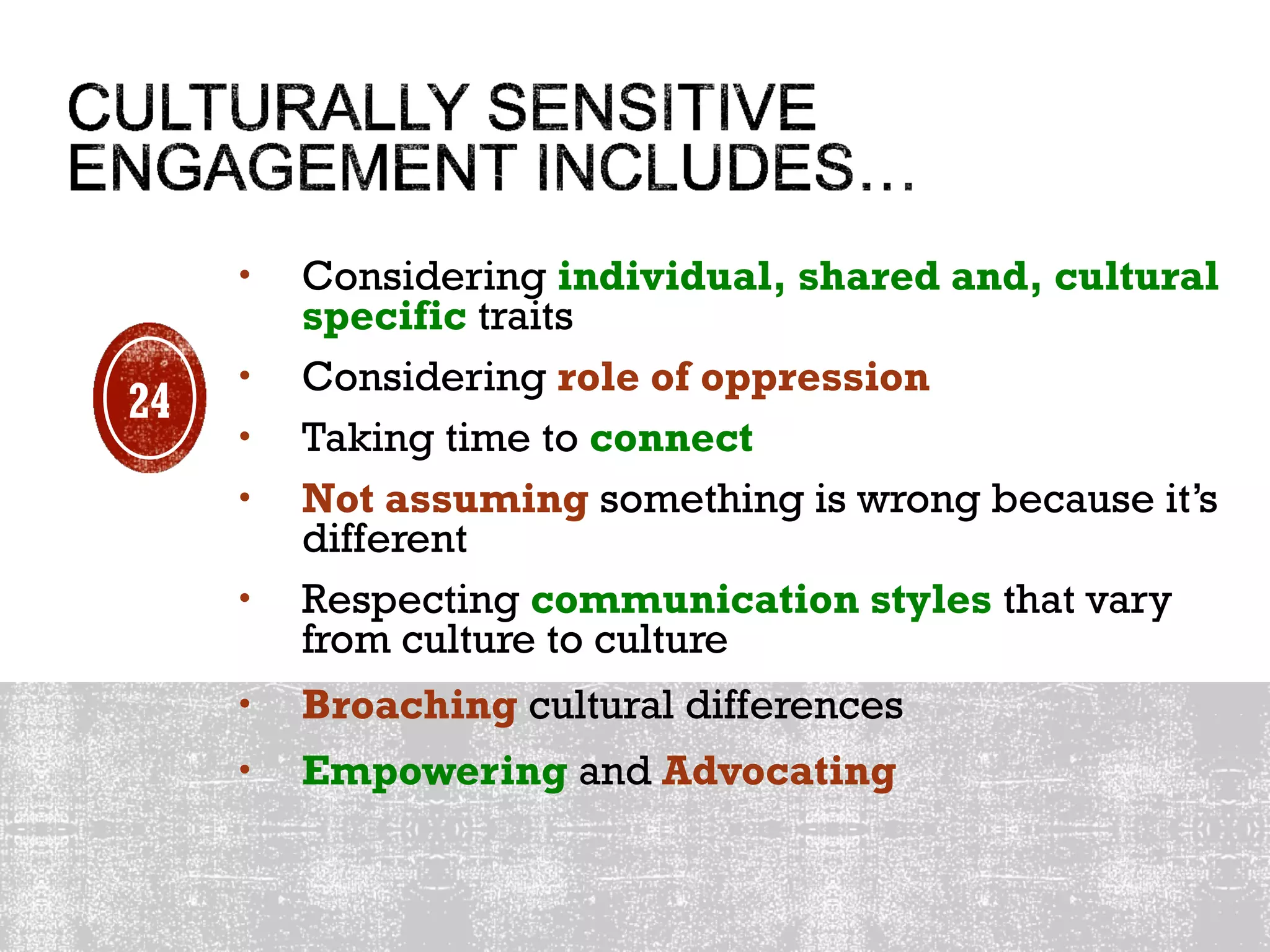
• Considering individual, shared and, cultural
specific traits
• Considering role of oppression
• Taking time to connect
• Not assuming something is wrong because it’s
different
• Respecting communication styles that vary
from culture to culture
• Broaching cultural differences
• Empowering and Advocating
24
“Active support of something,
such as a cause.”
(Brown & Trusty, 2005;The American Heritage Dictionary of the English Language, 4th
ed., 2000)
25
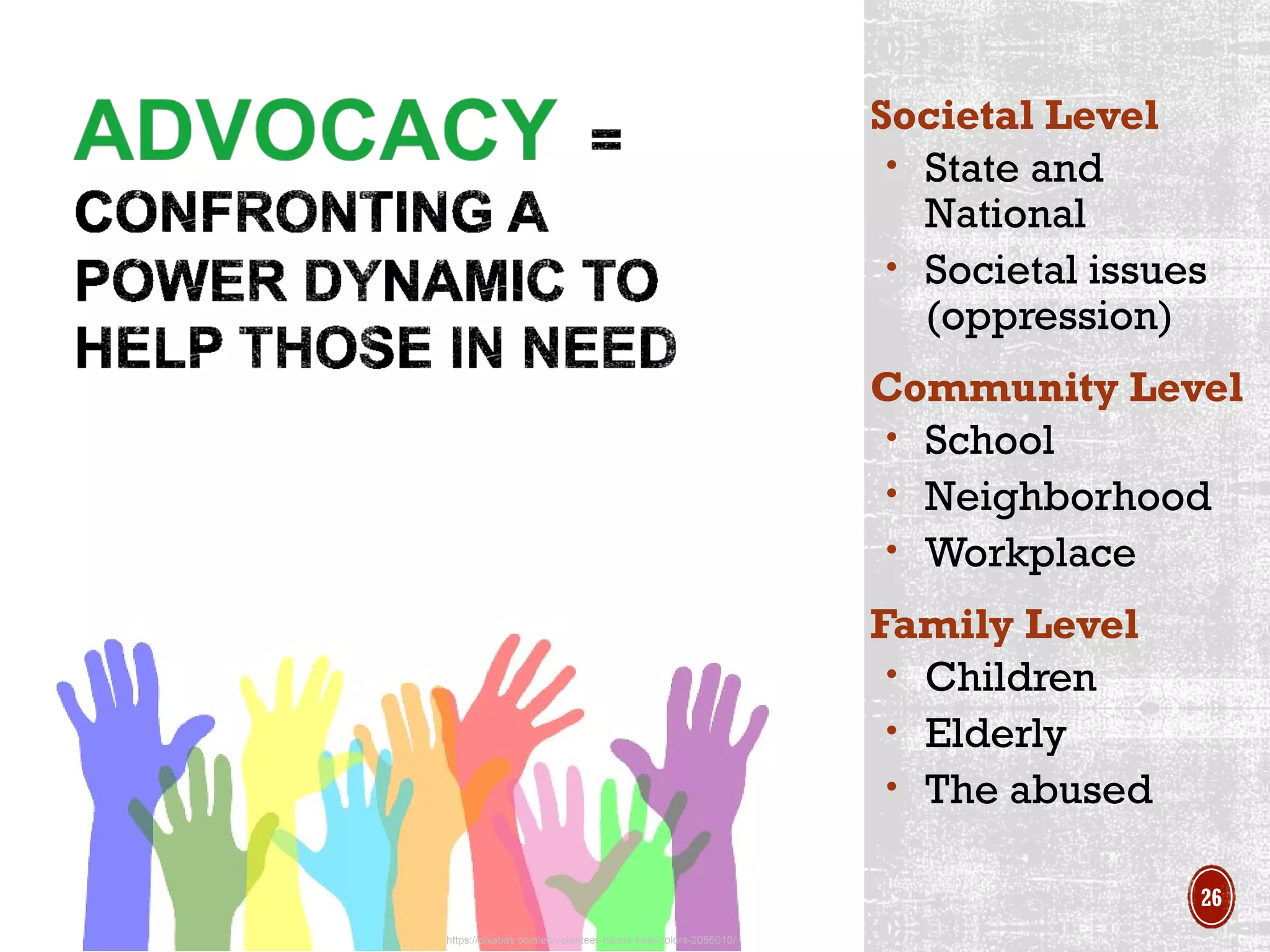
Societal Level
• State and
National
• Societal issues
(oppression)
Community Level
• School
• Neighborhood
• Workplace
Family Level
• Children
• Elderly
• The abused
https://pixabay.com/en/volunteer-hands-help-colors-2055010/
26
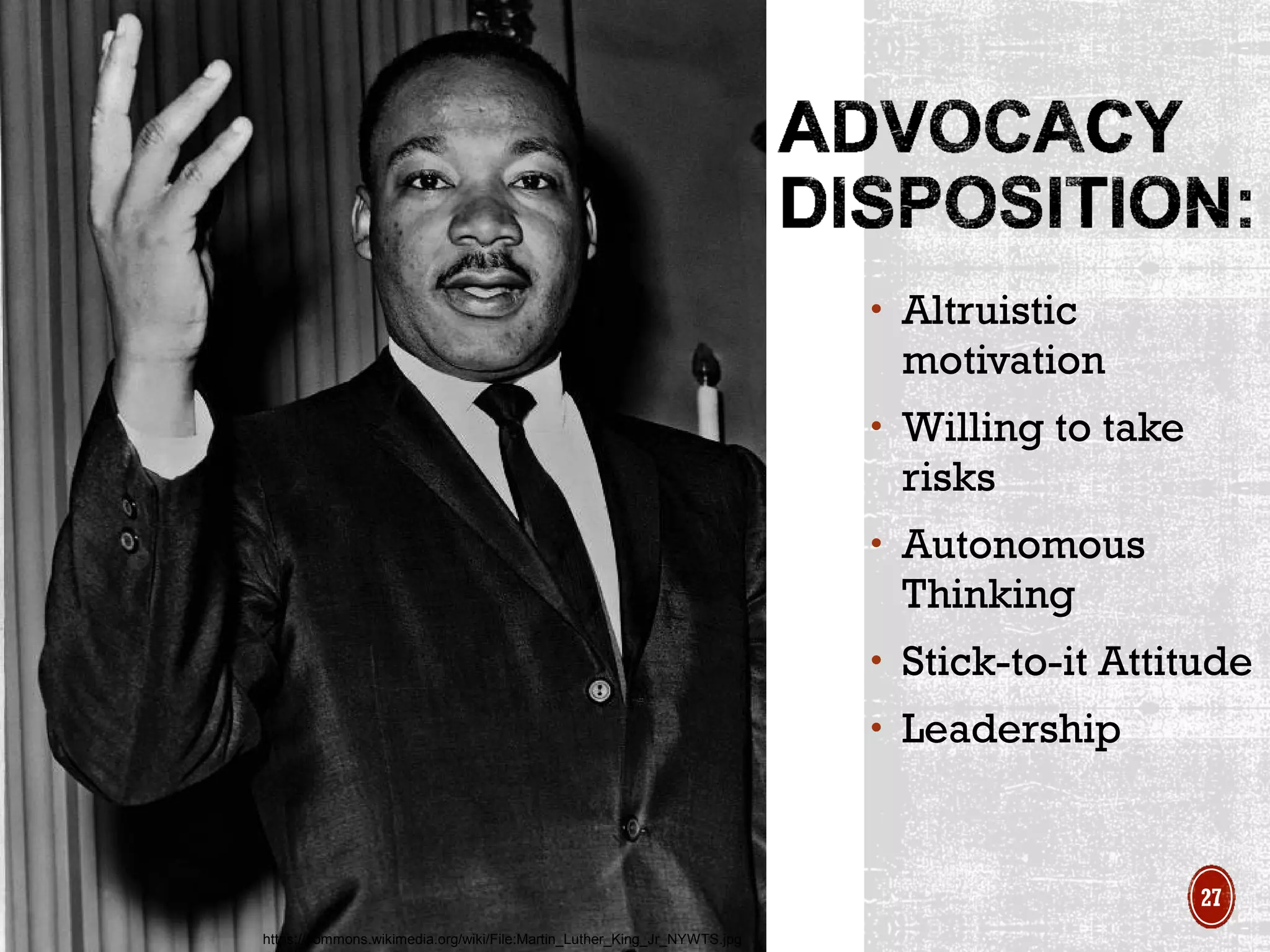
• Altruistic
motivation
• Willing to take
risks
• Autonomous
Thinking
• Stick-to-it Attitude
• Leadership
https://commons.wikimedia.org/wiki/File:Martin_Luther_King_Jr_NYWTS.jpg
27
What to Know
• Systems Theory
• Policies and Laws
• Resources (People, Programs, Agencies, Associations)
28
• Identify the issue
• Prepare a team
• Articulate goals
• Target areas of
influence
• Choose strategies
• Create a plan
• Design
infrastructure
• Evaluate
https://www.photospin.com/Image/6ef574f1-95de-4722-9614-3fc06e86aafb
29
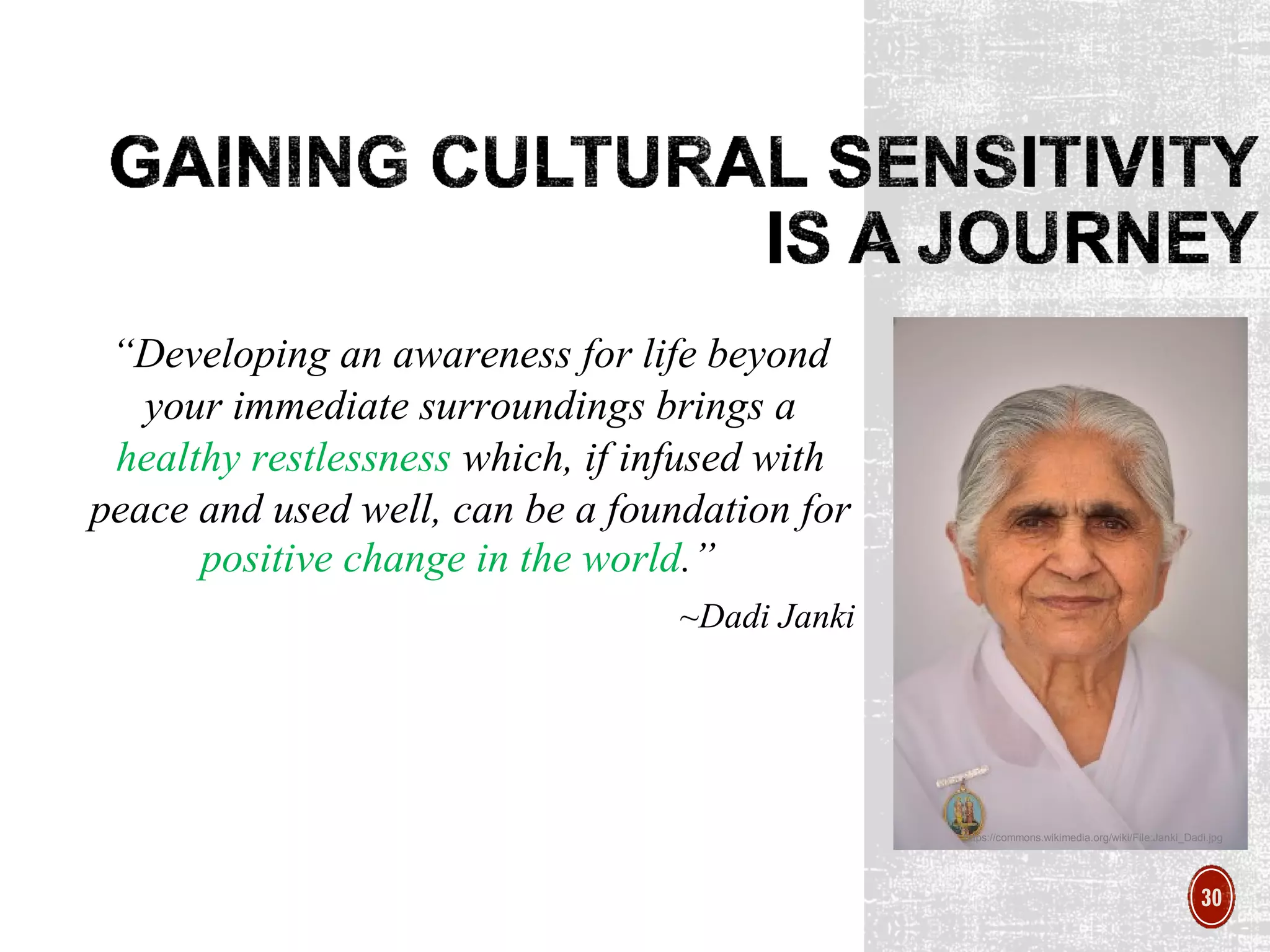
“Developing an awareness for life beyond
your immediate surroundings brings a
healthy restlessness which, if infused with
peace and used well, can be a foundation for
positive change in the world.”
~Dadi Janki
https://commons.wikimedia.org/wiki/File:Janki_Dadi.jpg
30
Connect with MFLN Family Development Online!
MFLN @MilitaryFamilies
MFLN Family Development @mflnfd
To subscribe to our MFLN Family Development newsletter send an email to:
MFLNfamilydevelopment@gmail.com with the Subject: Subscribe
FD social media
iTunes: Anchored. Podcast Series
31
Evaluation and
Continuing Education Credits
MFLN Family Development is offering 1.5 CEUs for
today’s webinar.
Please complete the evaluation and post test at:
https://vte.co1.qualtrics.com/jfe/form/SV_6yFld6FmLFyOvRz
Must pass post-test with an 80% or higher to receive
certificate.
32
Family Development
Upcoming Event
Family Finances Series: Separation &
Single Parenting in the Military
• Tuesday, July 10th
• 11:00 AM Eastern
• https://learn.extension.org/events/3305
For more information on MFLN Family Development, go to:
https://militaryfamilies.extension.org/family-development/
33
militaryfamilies.extension.org/webinars

All Hands on Deck! Developing Culturally Alert Communication in Relationships

  • 1.
    FD Title https://learn.extension.org/events/3346 All Handson Deck! Developing Culturally Alert Communication in Relationships Thanks for joining us! We will get started soon. While you’re waiting you can get handouts etc. by following the link below. 1
  • 2.
    Connecting military familyservice providers and Cooperative Extension professionals to research and to each other through engaging online learning opportunities militaryfamilies.extension.org MFLN Intro Sign up for webinar email notifications at militaryfamilies.extension.org/webinars2
  • 3.
    FD Title https://learn.extension.org/events/3346 All Handson Deck! Developing Culturally Alert Communication in Relationships 3
  • 4.
    Tammi Dice, PhD,HSBCP •Associate Dean of Undergraduate Education in the Darden College of Education at Old Dominion University •President of the National Organization for Human Services •Research interests include positive youth development, adult development and learning, multicultural competence and ethical practices in human services Today’s Presenters Tony Dice, MSEd, CSAC •Doctoral Student at Old Dominion University •Mental Health Director at EVMS’s Ambulatory Care Center in Norfolk •Former SEAL in U.S. Navy, Presidential Security Detail Team Lead, Iraqi Special Forces Instructor •Research interests include substance abuse, LGBTQAP, and PTSD 4
  • 5.
    • Many factorscontribute to making communication with those culturally different from you challenging  • Insensitive and inappropriate interactions can occur, even unintentionally   • However, it is possible to honor other’s culture and respond sensitively… https://www.photospin.com/Image/66611fca-b3dd-4684-89b0-9b8d92792dd7 5
  • 6.
    …one is capableof developing the skills to engage in culturally sensitive communication  Through self- awareness (who I am as a cultural being?)…  …and knowledge of other cultures as well as of broader systemic influences… https://www.photospin.com/Image/5cb08697-bbef-40ad-8795- e31fc7a15104 6
  • 7.
  • 8.
     NOT ANEASY TASK!!!!  New information/experiences result in cognitive dissonance: discomfort that arises from old ways of knowing not working in the new situation.  We adapt and thus the self-concept changes.  This is good! Necessary for growth and development https://pixabay.com/en/baby-todler-boy-child-crying- 2791786/ 8
  • 9.
    Intersectionality [in-ter-sek-shuh-nal-i-tee] n. “treating factorsof identity as interconnected” (Garcia, 2015) Religious/ Spiritual Identity Economic Background Ethnic/ Racial Identity Sexual Identity Age Ability/ Disability Geography Language (Neukrug, 2014) 9
  • 10.
     Identities existsimultaneously (i.e. gender and ethnicity and class, etc.) and are intertwined (e.g. have an impact in everyday life)  Most have a combo of marginalized and privileged intersecting identities- BOTH important to consider!  Multiple marginalized intersecting identities can contribute to even greater challenges/obstacles (e.g. black, poor, and gay) (Mens-Verhulst & Radtke, 2008) https://pixabay.com/en/fabric-texture-color-pattern-2642229/ 10
  • 11.
    Justin is a32 year old white male who is a double amputee living on disability pay. He is currently living with his parents in a basement apartment. He identifies as gay and self-discloses that he is having a very difficult time partnering. He has come to you because he feels depressed and lonely. What cultural factors need to be considered in order for you to best help him? What are Justin’s intersecting identities? What other cultural identities would you like to know about him? How would taking these identities into consideration shape your interventions? How might your interventions differ if Justin were wealthy? Black? 11
  • 12.
     By acknowledgingthe challenges of holding marginalized identities  We stop subscribing to the Myth of Meritocracy  Which helps us to avoid engaging in intentional and unintentional discrimination 12
  • 13.
    • Understand yourown multi-faceted identity • The more self-understanding you have, the more comfortable you will be interacting with diverse others • Assist Clients in exploring their identities • Encourage and validate discussion of feelings related to identity • Make room for strong emotions • Allow strong emotions to fuel learning (Sue, 2016) 13
  • 14.
    What about you? Take a momentto note your areas of advantage and disadvantage ACTIVITY Refer to identities slide Label how you identify yourself Note where identities fall on the axes Consider your experiences resulting from this combination of identities Consider experiences of others with differing identities 14
  • 15.
  • 16.
    R = Religious/SpiritualIdentity E = Economic Class Background S = Sexual Identity P = Psychological Maturity E = Ethnic/Racial Identity C = Chronological/Developmental Challenges T = Trauma/Threats to One’s Wellbeing F = Family Background/History U = Unique Physical Characteristics L = Location of Residence and Language Differences D’Andrea & Daniels, 2001 16
  • 17.
     As ahuman services professional, you must break the silence about the enormity of intersections  Focus on individual strengths  Focus on empowerment  Help individual to accept their realities  Help individual reframe the situation (e.g., “We live in a sick society.”)  Help client resist internalization of negative behaviors and attitudes (Mens-Verhulst & Radtke, 2008) 17
  • 18.
  • 19.
  • 20.
    • Not easy...butvaluable! • Helps to clarify how an individual identifies • Helps to clarify communication norms • Helps to establish authentic relationship 20
  • 21.
    https://www.pexels.com/photo/adult-beard-beverage-blur-590516/  Ask questions!(Don’t assume)  Be sensitive! (Not aggressive)  Respond empathically!  Store information and use to help build the relationship. Now let’s BROACH… 21
  • 22.
    Practice makes perfect! Just because it feels awkward doesn’tmean it’s not important! ACTIVITY Refer to Broaching slide Consider statements you would feel comfortable using Observe demonstration Recognize the need to PRACTICE! 22
  • 23.
  • 24.
    • Considering individual,shared and, cultural specific traits • Considering role of oppression • Taking time to connect • Not assuming something is wrong because it’s different • Respecting communication styles that vary from culture to culture • Broaching cultural differences • Empowering and Advocating 24
  • 25.
    “Active support ofsomething, such as a cause.” (Brown & Trusty, 2005;The American Heritage Dictionary of the English Language, 4th ed., 2000) 25
  • 26.
    Societal Level • Stateand National • Societal issues (oppression) Community Level • School • Neighborhood • Workplace Family Level • Children • Elderly • The abused https://pixabay.com/en/volunteer-hands-help-colors-2055010/ 26
  • 27.
    • Altruistic motivation • Willingto take risks • Autonomous Thinking • Stick-to-it Attitude • Leadership https://commons.wikimedia.org/wiki/File:Martin_Luther_King_Jr_NYWTS.jpg 27
  • 28.
    What to Know •Systems Theory • Policies and Laws • Resources (People, Programs, Agencies, Associations) 28
  • 29.
    • Identify theissue • Prepare a team • Articulate goals • Target areas of influence • Choose strategies • Create a plan • Design infrastructure • Evaluate https://www.photospin.com/Image/6ef574f1-95de-4722-9614-3fc06e86aafb 29
  • 30.
    “Developing an awarenessfor life beyond your immediate surroundings brings a healthy restlessness which, if infused with peace and used well, can be a foundation for positive change in the world.” ~Dadi Janki https://commons.wikimedia.org/wiki/File:Janki_Dadi.jpg 30
  • 31.
    Connect with MFLNFamily Development Online! MFLN @MilitaryFamilies MFLN Family Development @mflnfd To subscribe to our MFLN Family Development newsletter send an email to: MFLNfamilydevelopment@gmail.com with the Subject: Subscribe FD social media iTunes: Anchored. Podcast Series 31
  • 32.
    Evaluation and Continuing EducationCredits MFLN Family Development is offering 1.5 CEUs for today’s webinar. Please complete the evaluation and post test at: https://vte.co1.qualtrics.com/jfe/form/SV_6yFld6FmLFyOvRz Must pass post-test with an 80% or higher to receive certificate. 32
  • 33.
    Family Development Upcoming Event FamilyFinances Series: Separation & Single Parenting in the Military • Tuesday, July 10th • 11:00 AM Eastern • https://learn.extension.org/events/3305 For more information on MFLN Family Development, go to: https://militaryfamilies.extension.org/family-development/ 33
  • 34.

Editor's Notes

  • #3 Coral www.extension.org/militaryfamilies Webinar notifications www.extension.org/62831
  • #8 -ethically obligated to work for social justice, provide culturally responsive helping services, ensure equal access and equality for all -can harm client otherwise- minimize impact of social forces, interpret normal cultural behaviors as pathological, make them dislike counseling
  • #9 Tell my students the Whitman quote: this class will challenge you to re-examine all you have been taught in home, school or church… allow self to perspective-take and empathize
  • #10 -so we begin by recognizing that it is not sufficient to be monoculturally competent (seeing only one primary cultural component of an individual), but rather recognizing that all relationships are multicultural, because every individual consists of multiple intersecting cultural identities -this can help us to relate because we can see where we overlap with others and share experience, and also challenges us to be open to understanding the experiences of others not like us, particularly when we hold positions of privilege compared to the individual with whom we are interacting
  • #13 -denial and minimization are forms of discriminiation
  • #15 -So let’s look at ourselves!
  • #19 -Been talking about our self awareness of our own identities, assessing our clients’ identities and how that impacts our work with them, but what about how our clients perceive us and the impact that has on our work with them?
  • #20 One way to address this is through Broaching. What is it?
  • #23 -So let’s look at ourselves!
  • #28 Communication, collaboration, conflict-mangement