Persys Medical Group Specializes in
Manufacturing, Marketing & Distributing
Innovative Lifesaving Medical Devices
Worldwide Over 20 Years
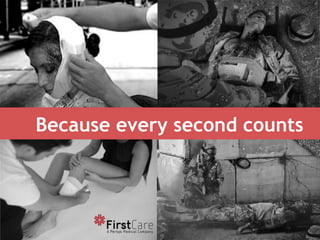
Because every second counts
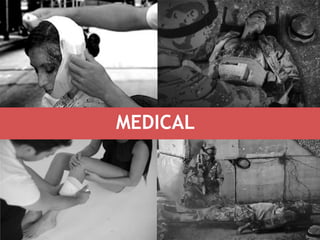
MEDICAL
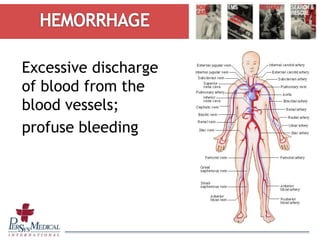
Excessive discharge
of blood from the
blood vessels;
profuse bleeding
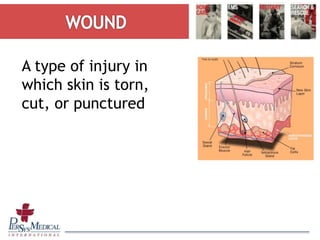
A type of injury in
which skin is torn,
cut, or punctured
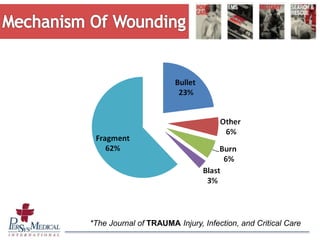
*The Journal of TRAUMA Injury, Infection, and Critical Care
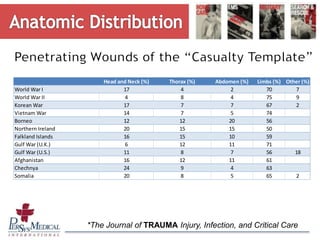
Head and Neck (%) Thorax (%) Abdomen (%) Limbs (%) Other (%)
World War I 17 4 2 70 7
World War II 4 8 4 75 9
Korean War 17 7 7 67 2
Vietnam War 14 7 5 74
Borneo 12 12 20 56
Northern Ireland 20 15 15 50
Falkland Islands 16 15 10 59
Gulf War (U.K.) 6 12 11 71
Gulf War (U.S.) 11 8 7 56 18
Afghanistan 16 12 11 61
Chechnya 24 9 4 63
Somalia 20 8 5 65 2
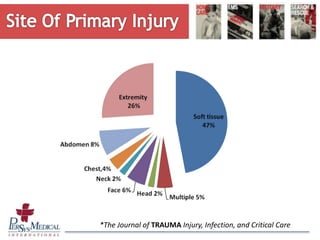
*The Journal of TRAUMA Injury, Infection, and Critical Care
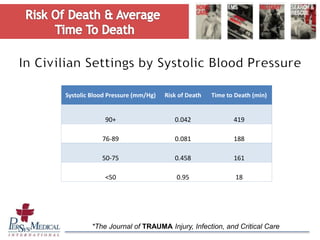
Systolic Blood Pressure (mm/Hg) Risk of Death Time to Death (min)
90+ 0.042 419
76-89 0.081 188
50-75 0.458 161
<50 0.95 18
*The Journal of TRAUMA Injury, Infection, and Critical Care
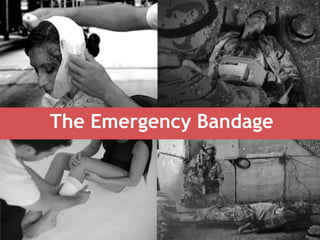
The Emergency Bandage
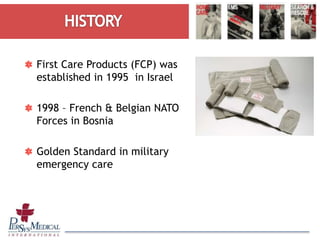
First Care Products (FCP) was
established in 1995 in Israel
1998 – French & Belgian NATO
Forces in Bosnia
Golden Standard in military
emergency care
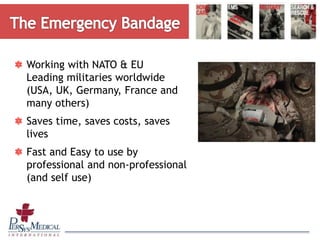
Working with NATO & EU
Leading militaries worldwide
(USA, UK, Germany, France and
many others)
Saves time, saves costs, saves
lives
Fast and Easy to use by
professional and non-professional
(and self use)
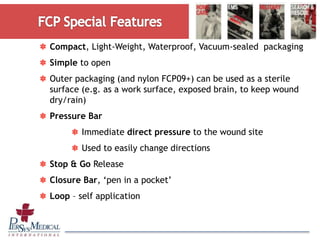
Compact, Light-Weight, Waterproof, Vacuum-sealed packaging
Simple to open
Outer packaging (and nylon FCP09+) can be used as a sterile
surface (e.g. as a work surface, exposed brain, to keep wound
dry/rain)
Pressure Bar
Immediate direct pressure to the wound site
Used to easily change directions
Stop & Go Release
Closure Bar, ‘pen in a pocket’
Loop – self application
5 available bandages
New bandages: FCP-19, FCP-29, and T3
Clinical paper
Emergency bandage training
5 available FCP Emergency Bandages:
1. FCP-01 – 10cm x 450cm (when stretched) Direct Pressure Dressing
2. FCP-07 – 10cm x 450cm Direct Pressure Dressing w/ 2nd mobile pad
3. FCP-02 – 15cm x 450cm Direct Pressure Dressing
4. FCP-05 – 15cm x 450cm Direct Pressure Dressing w/ 2nd mobile pad
5. FCP-09+ – 30cm x 600cm Abdominal/Large Area Wound Dressing,
‘The Multi Bandage’
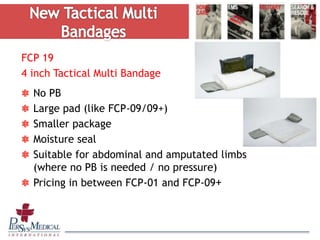
FCP 19
4 inch Tactical Multi Bandage
No PB
Large pad (like FCP-09/09+)
Smaller package
Moisture seal
Suitable for abdominal and amputated limbs
(where no PB is needed / no pressure)
Pricing in between FCP-01 and FCP-09+
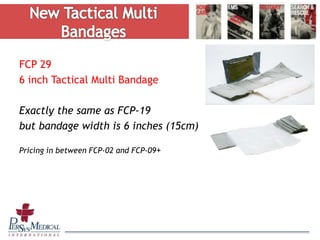
FCP 29
6 inch Tactical Multi Bandage
Exactly the same as FCP-19
but bandage width is 6 inches (15cm)
Pricing in between FCP-02 and FCP-09+
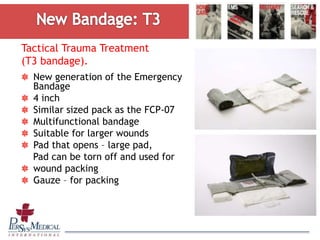
Tactical Trauma Treatment
(T3 bandage).
New generation of the Emergency
Bandage
4 inch
Similar sized pack as the FCP-07
Multifunctional bandage
Suitable for larger wounds
Pad that opens – large pad,
Pad can be torn off and used for
wound packing
Gauze – for packing
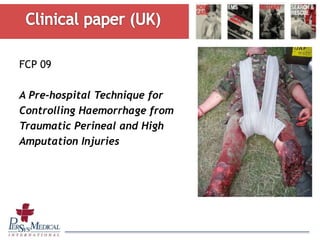
FCP 09
A Pre-hospital Technique for
Controlling Haemorrhage from
Traumatic Perineal and High
Amputation Injuries
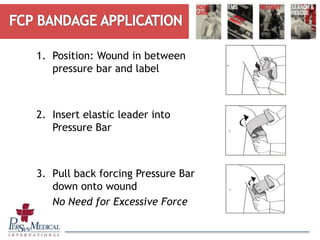
1. Position: Wound in between
pressure bar and label
2. Insert elastic leader into
Pressure Bar
3. Pull back forcing Pressure Bar
down onto wound
No Need for Excessive Force
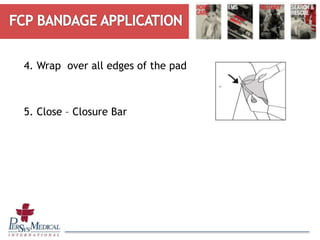
4. Wrap over all edges of the pad
5. Close – Closure Bar
Work Close
Ensure bandaging is done above and below PB to ensure
pressure and sterility of wound
Closure Bar – Like a pen in a pocket – one side is enough
Blood on edges, use Additional Pressure (3 stages)
1. Standard, if bleeding continues:
2. Optional: Single/candy twist, if bleeding continues:
3. Twists – tourniquet effect
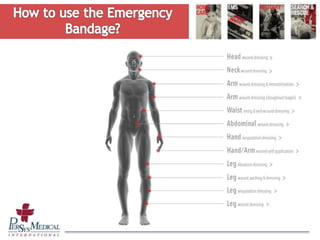
Arm:
1. Standard, if bleeding continues:
2. Single twist, if bleeding continues:
3. Twists – tourniquet effect
• Fixate leader – chest, neck
• Self application
• Shrapnel - Locate pressure bar proximally
Head: when training it can slip, use corners of Pressure Bar
to change directions
Neck: different method using the inner corners of PB.
Trachea
Leg, Entry / Exit wounds: PB on exit wound, 2nd pad
can also be used for packing (form pad into a ball)
Abdominal (with plastic barrier): moisten, no
pressure, burns / exposed organs
Amputations (without plastic barrier): if tourniquet
isn’t available
Applies immediate pressure on the wound to stop
bleeding
Flexible - used on difficult wound sites
Increase pressure when needed (3 stages)
Can be used to change direction
Saves time, saves money, saves lives
Questions?

Military hemorrhage control presentation

  • 1.
    Persys Medical GroupSpecializes in Manufacturing, Marketing & Distributing Innovative Lifesaving Medical Devices Worldwide Over 20 Years
  • 2.
  • 3.
  • 4.
    Excessive discharge of bloodfrom the blood vessels; profuse bleeding
  • 5.
    A type ofinjury in which skin is torn, cut, or punctured
  • 6.
    *The Journal ofTRAUMA Injury, Infection, and Critical Care
  • 7.
    *The Journal ofTRAUMA Injury, Infection, and Critical Care
  • 8.
    Head and Neck(%) Thorax (%) Abdomen (%) Limbs (%) Other (%) World War I 17 4 2 70 7 World War II 4 8 4 75 9 Korean War 17 7 7 67 2 Vietnam War 14 7 5 74 Borneo 12 12 20 56 Northern Ireland 20 15 15 50 Falkland Islands 16 15 10 59 Gulf War (U.K.) 6 12 11 71 Gulf War (U.S.) 11 8 7 56 18 Afghanistan 16 12 11 61 Chechnya 24 9 4 63 Somalia 20 8 5 65 2 *The Journal of TRAUMA Injury, Infection, and Critical Care
  • 9.
    Systolic Blood Pressure(mm/Hg) Risk of Death Time to Death (min) 90+ 0.042 419 76-89 0.081 188 50-75 0.458 161 <50 0.95 18 *The Journal of TRAUMA Injury, Infection, and Critical Care
  • 10.
  • 11.
    First Care Products(FCP) was established in 1995 in Israel 1998 – French & Belgian NATO Forces in Bosnia Golden Standard in military emergency care
  • 12.
    Working with NATO& EU Leading militaries worldwide (USA, UK, Germany, France and many others) Saves time, saves costs, saves lives Fast and Easy to use by professional and non-professional (and self use)
  • 13.
    Compact, Light-Weight, Waterproof,Vacuum-sealed packaging Simple to open Outer packaging (and nylon FCP09+) can be used as a sterile surface (e.g. as a work surface, exposed brain, to keep wound dry/rain) Pressure Bar Immediate direct pressure to the wound site Used to easily change directions Stop & Go Release Closure Bar, ‘pen in a pocket’ Loop – self application
  • 14.
    5 available bandages Newbandages: FCP-19, FCP-29, and T3 Clinical paper Emergency bandage training
  • 15.
    5 available FCPEmergency Bandages: 1. FCP-01 – 10cm x 450cm (when stretched) Direct Pressure Dressing 2. FCP-07 – 10cm x 450cm Direct Pressure Dressing w/ 2nd mobile pad 3. FCP-02 – 15cm x 450cm Direct Pressure Dressing 4. FCP-05 – 15cm x 450cm Direct Pressure Dressing w/ 2nd mobile pad 5. FCP-09+ – 30cm x 600cm Abdominal/Large Area Wound Dressing, ‘The Multi Bandage’
  • 16.
    FCP 19 4 inchTactical Multi Bandage No PB Large pad (like FCP-09/09+) Smaller package Moisture seal Suitable for abdominal and amputated limbs (where no PB is needed / no pressure) Pricing in between FCP-01 and FCP-09+
  • 17.
    FCP 29 6 inchTactical Multi Bandage Exactly the same as FCP-19 but bandage width is 6 inches (15cm) Pricing in between FCP-02 and FCP-09+
  • 18.
    Tactical Trauma Treatment (T3bandage). New generation of the Emergency Bandage 4 inch Similar sized pack as the FCP-07 Multifunctional bandage Suitable for larger wounds Pad that opens – large pad, Pad can be torn off and used for wound packing Gauze – for packing
  • 19.
    FCP 09 A Pre-hospitalTechnique for Controlling Haemorrhage from Traumatic Perineal and High Amputation Injuries
  • 21.
    1. Position: Woundin between pressure bar and label 2. Insert elastic leader into Pressure Bar 3. Pull back forcing Pressure Bar down onto wound No Need for Excessive Force
  • 22.
    4. Wrap overall edges of the pad 5. Close – Closure Bar
  • 23.
    Work Close Ensure bandagingis done above and below PB to ensure pressure and sterility of wound Closure Bar – Like a pen in a pocket – one side is enough Blood on edges, use Additional Pressure (3 stages) 1. Standard, if bleeding continues: 2. Optional: Single/candy twist, if bleeding continues: 3. Twists – tourniquet effect
  • 24.
    Arm: 1. Standard, ifbleeding continues: 2. Single twist, if bleeding continues: 3. Twists – tourniquet effect • Fixate leader – chest, neck • Self application • Shrapnel - Locate pressure bar proximally Head: when training it can slip, use corners of Pressure Bar to change directions Neck: different method using the inner corners of PB. Trachea
  • 25.
    Leg, Entry /Exit wounds: PB on exit wound, 2nd pad can also be used for packing (form pad into a ball) Abdominal (with plastic barrier): moisten, no pressure, burns / exposed organs Amputations (without plastic barrier): if tourniquet isn’t available
  • 26.
    Applies immediate pressureon the wound to stop bleeding Flexible - used on difficult wound sites Increase pressure when needed (3 stages) Can be used to change direction Saves time, saves money, saves lives
  • 27.

Editor's Notes

  • #17 Changes need to be made – labels, definition, size of moisture seal etc
  • #18 Changes need to be made – labels, definition, size of moisture seal etc
  • #19 Pricing not finalized yet. Packaging and label not finalized yet. Brochure needed. Patent pending