4 Pics 1 Word
Let’s Play!
_ O V _ _ N T
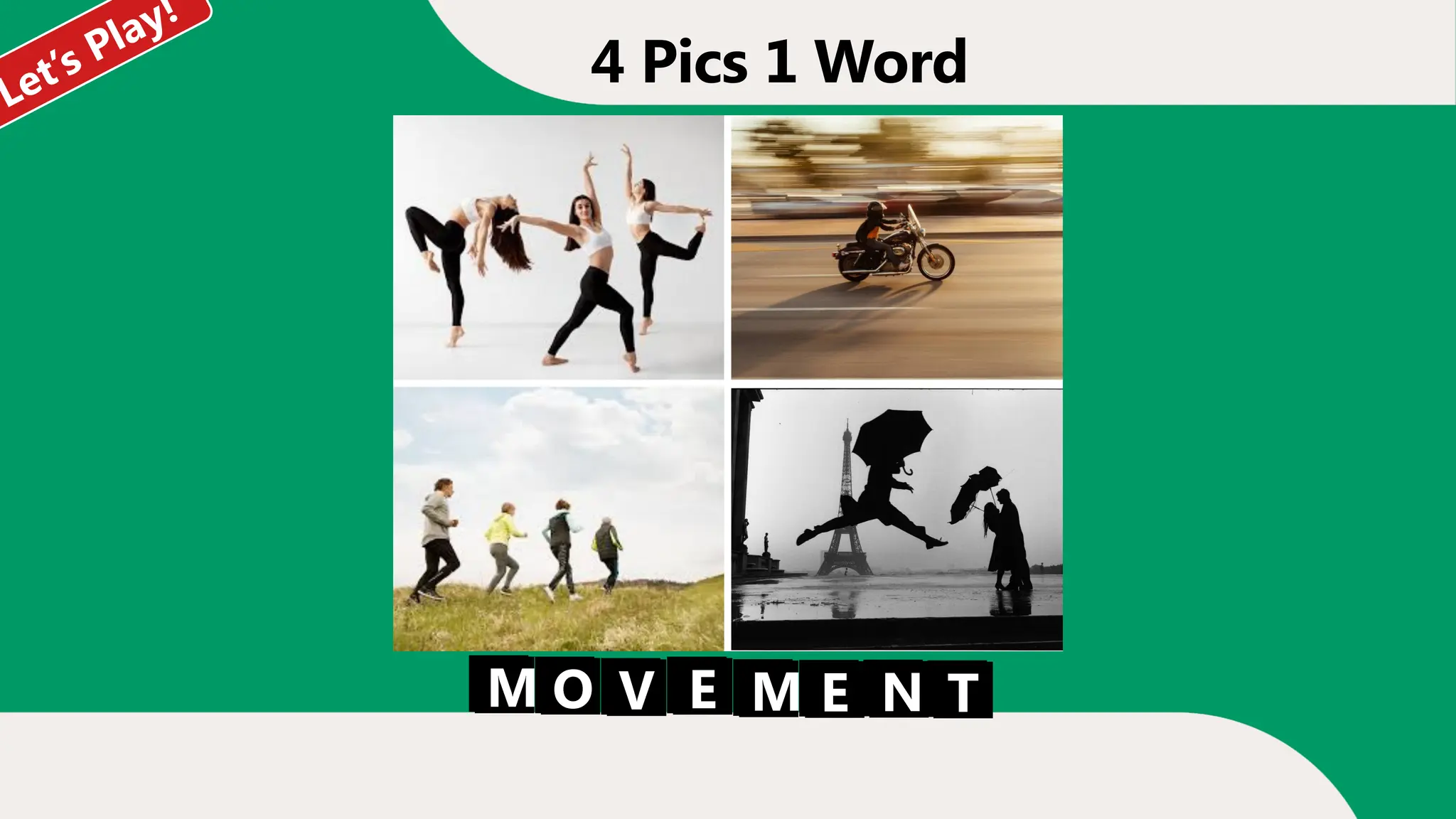
M O V E M E N T
4 Pics 1 Word
Let’s Play!
_ O T _ A T
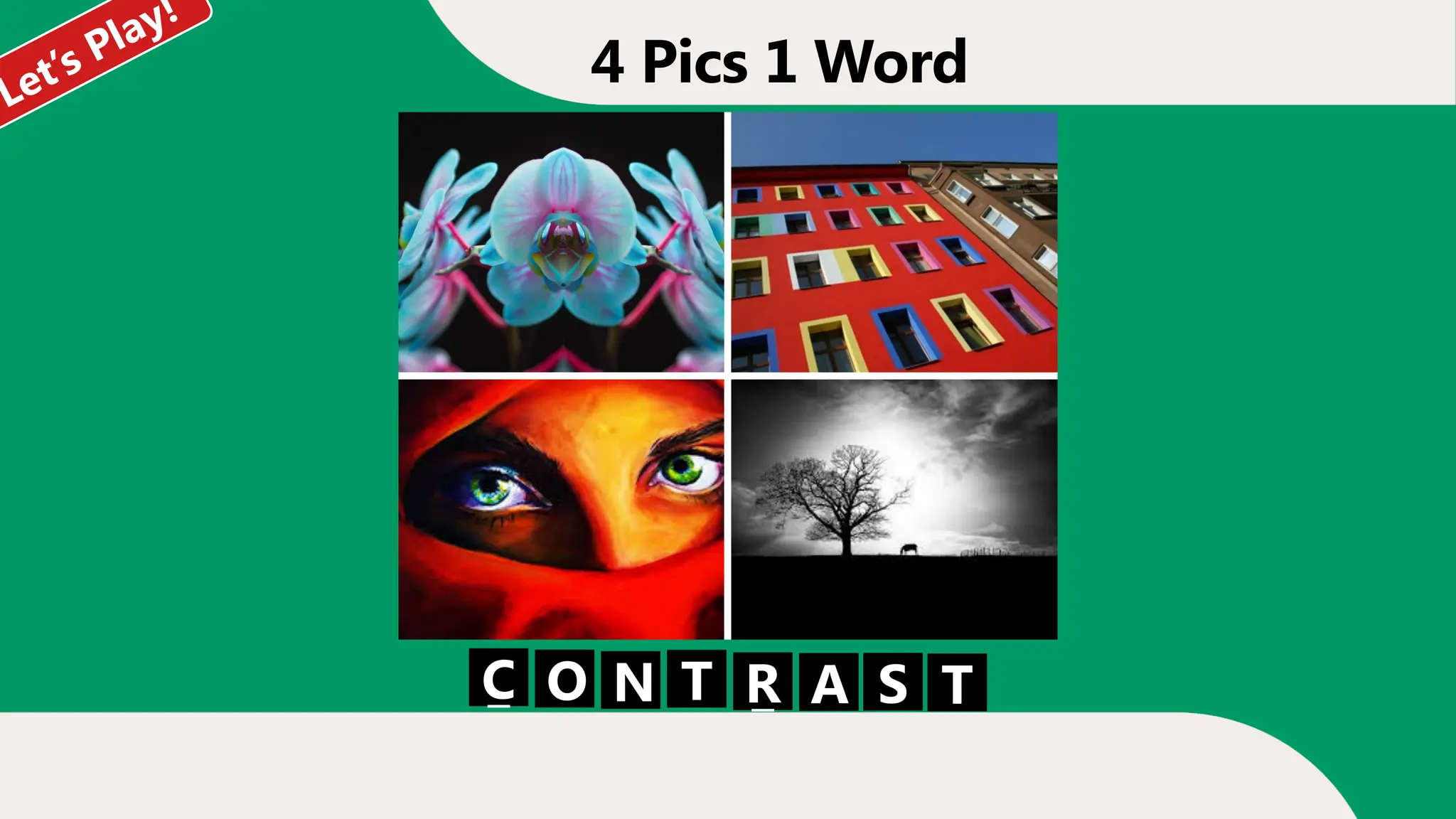
C O N T R A S T
4 Pics 1 Word
Let’s Play!
_ _ O _ O _ _ I O _
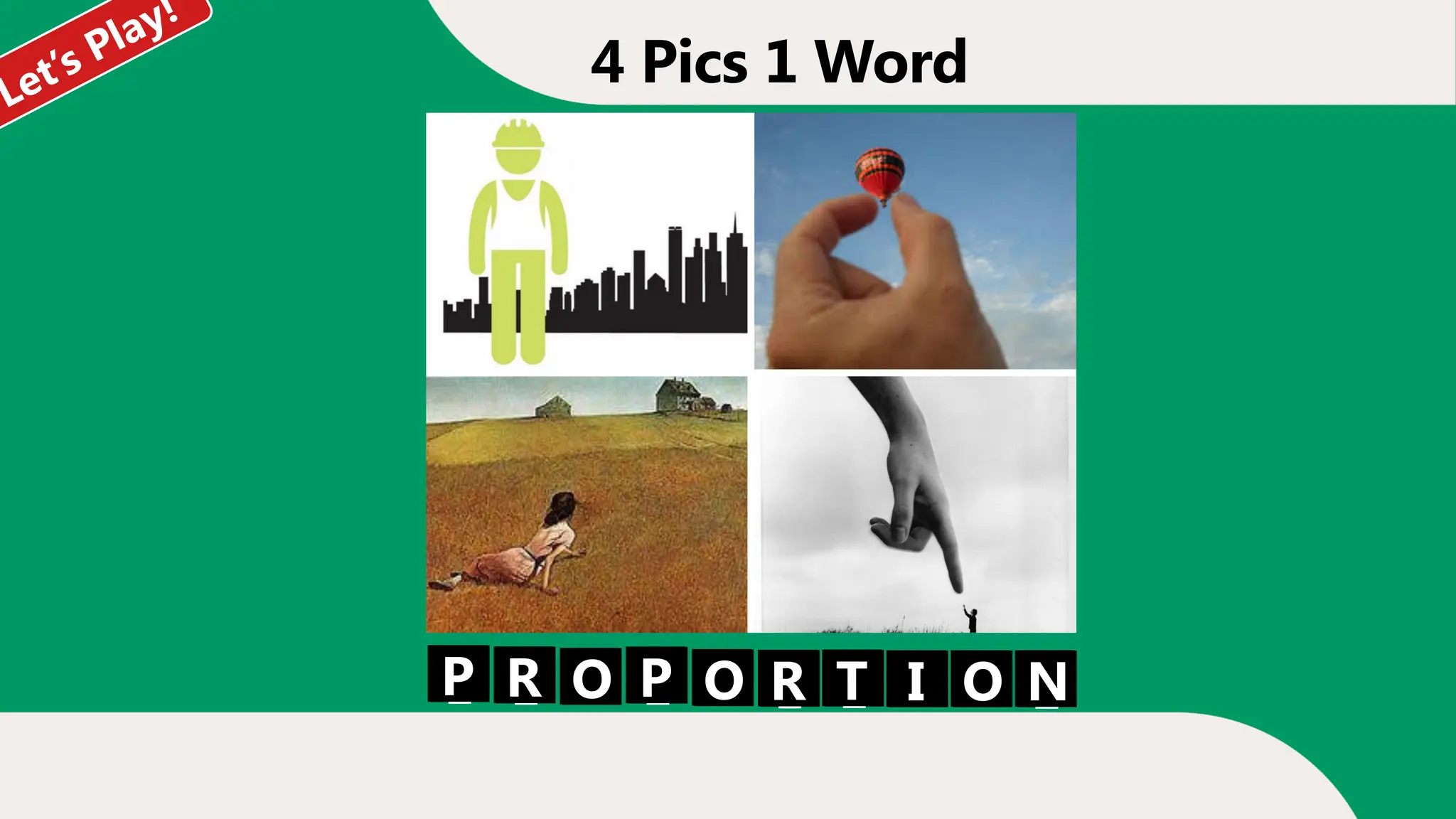
P R O P O R T I O N
4 Pics 1 Word
Let’s Play!
_ E E T _ T _ _ N
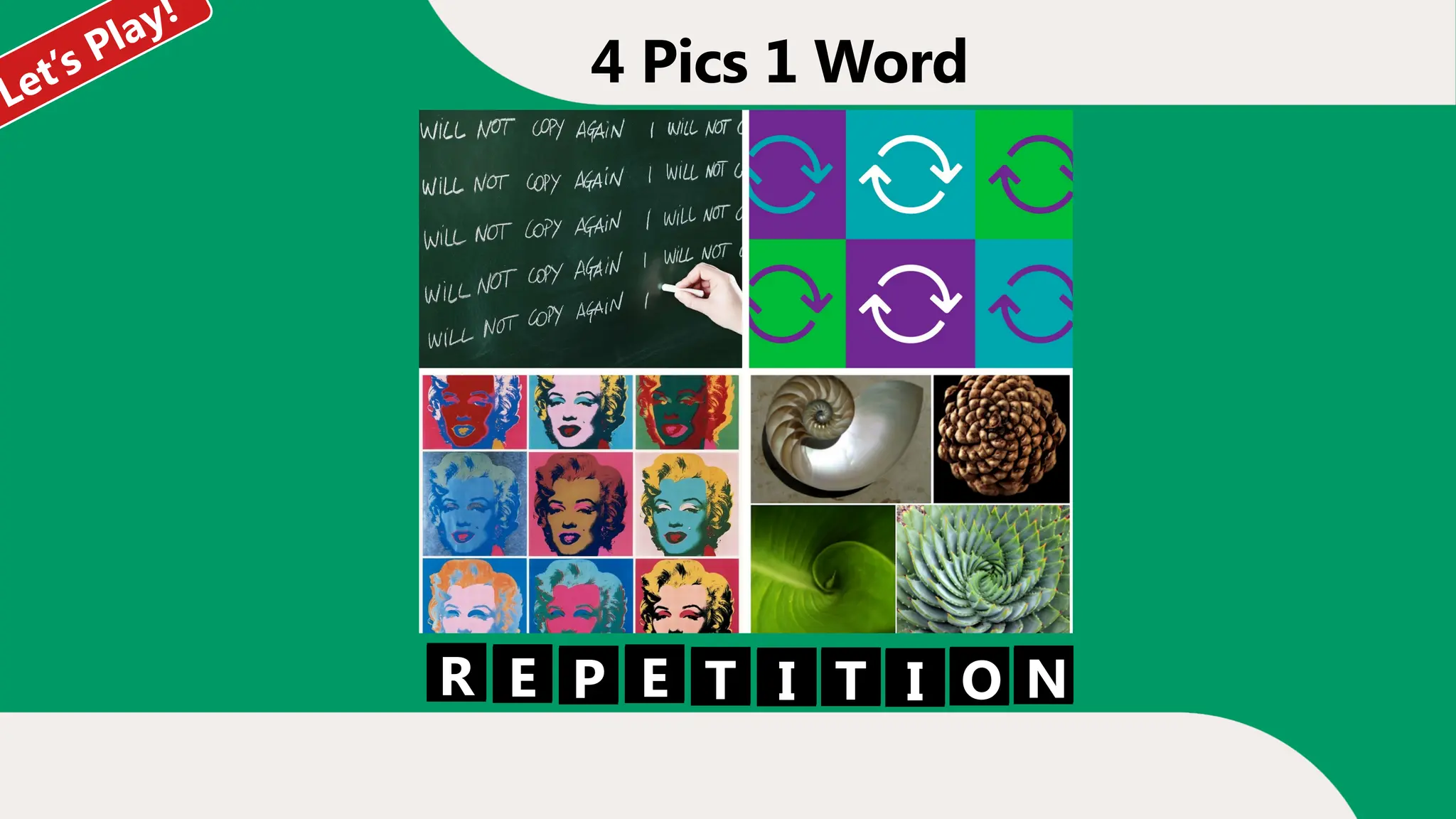
R E P E T I T I O N
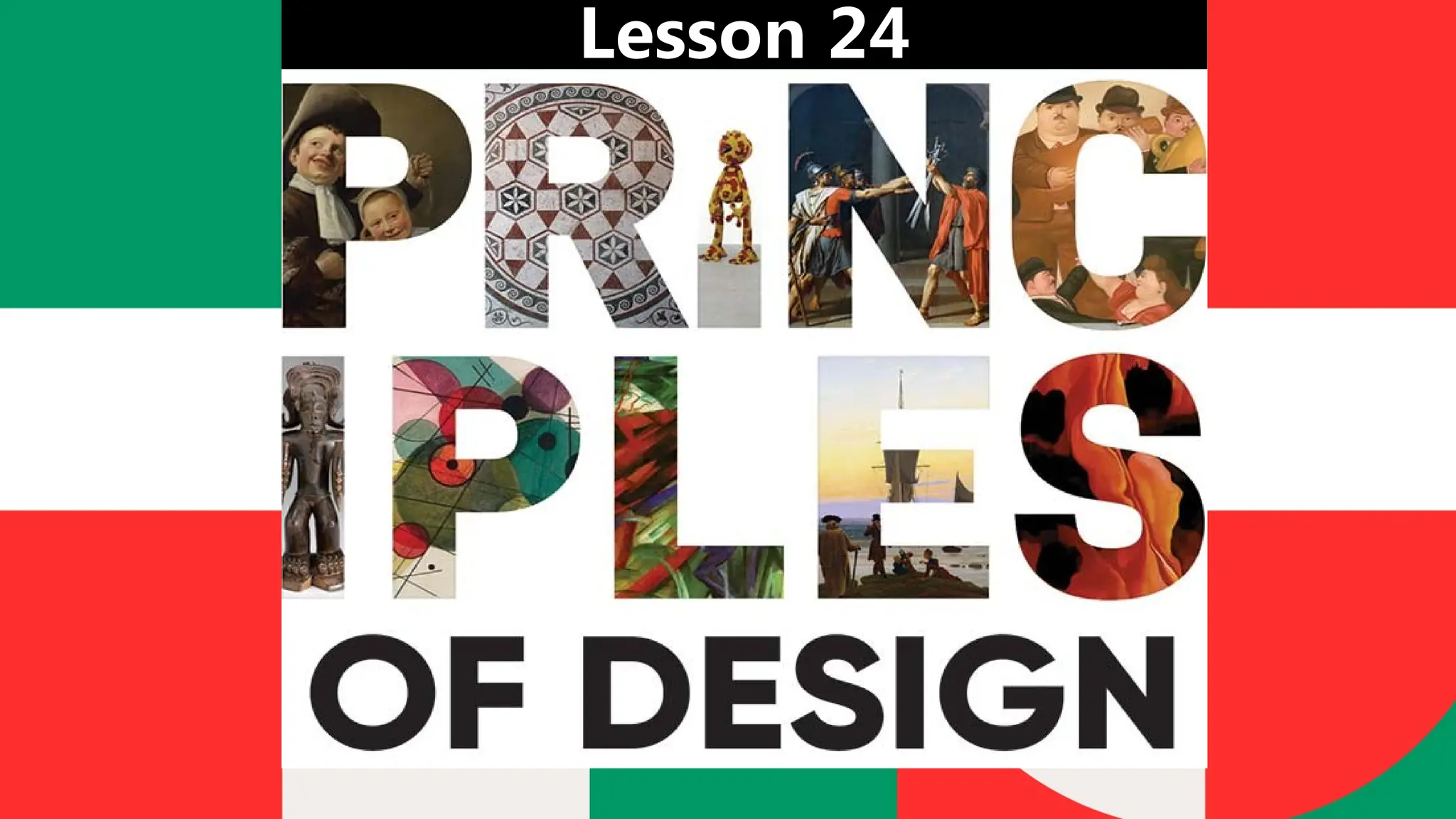
Lesson 24
Objectives
1.Recognize the visual design
principles.
2.Evaluate and assess a creative visual
media form according to the
following:
a. Dominant element of the design.
b.Visual design principle/s.
3.Appreciate the value of a good design
and its importance in our lives.
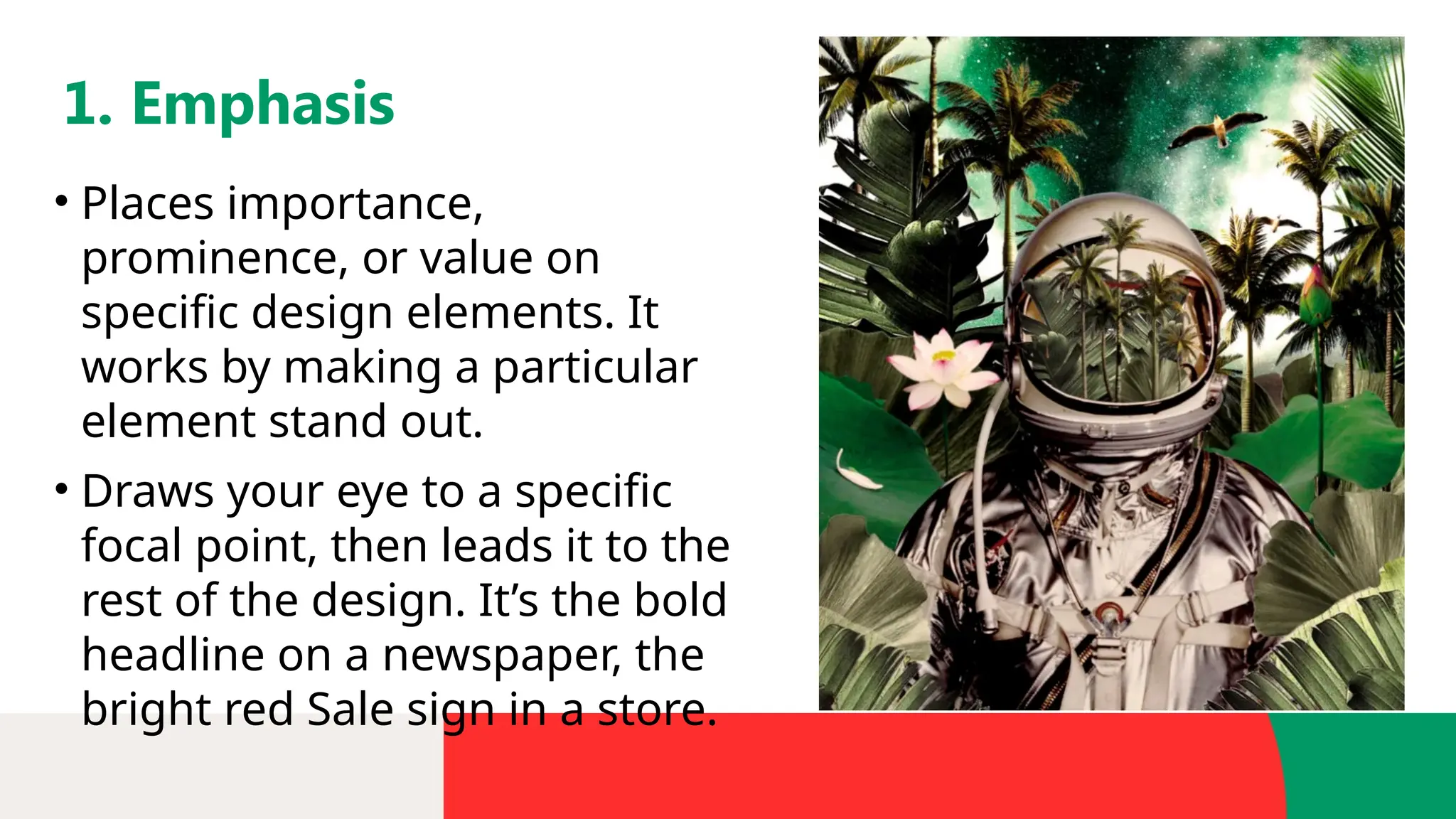
1. Emphasis
• Places importance,
prominence, or value on
specific design elements. It
works by making a particular
element stand out.
• Draws your eye to a specific
focal point, then leads it to the
rest of the design. It’s the bold
headline on a newspaper, the
bright red Sale sign in a store.
2. Balance and alignment
• Creates a feeling of
equilibrium. It’s all about
equalizing the visual weight of
elements in a design. Think of
it like a seesaw; you need to
distribute elements to create a
sense of stability.
• There are two types of balance:
A. Symmetrical balance
B. Asymmetrical balance
Symmetrical balance
• known as formal balance, is when elements are mirrored on
either side of a central line, or around a central point. It’s like a
butterfly with its identical wings. This type of balance often
brings about feelings of stability, formality, and orderliness.
Asymmetrical balance
• also known as informal balance, works by balancing various
elements with different visual weights. With asymmetry, the
sides are not identical, but the resulting composition is still
balanced. Asymmetrical balance tends to create a feeling of
modernity, dynamism, and interest.
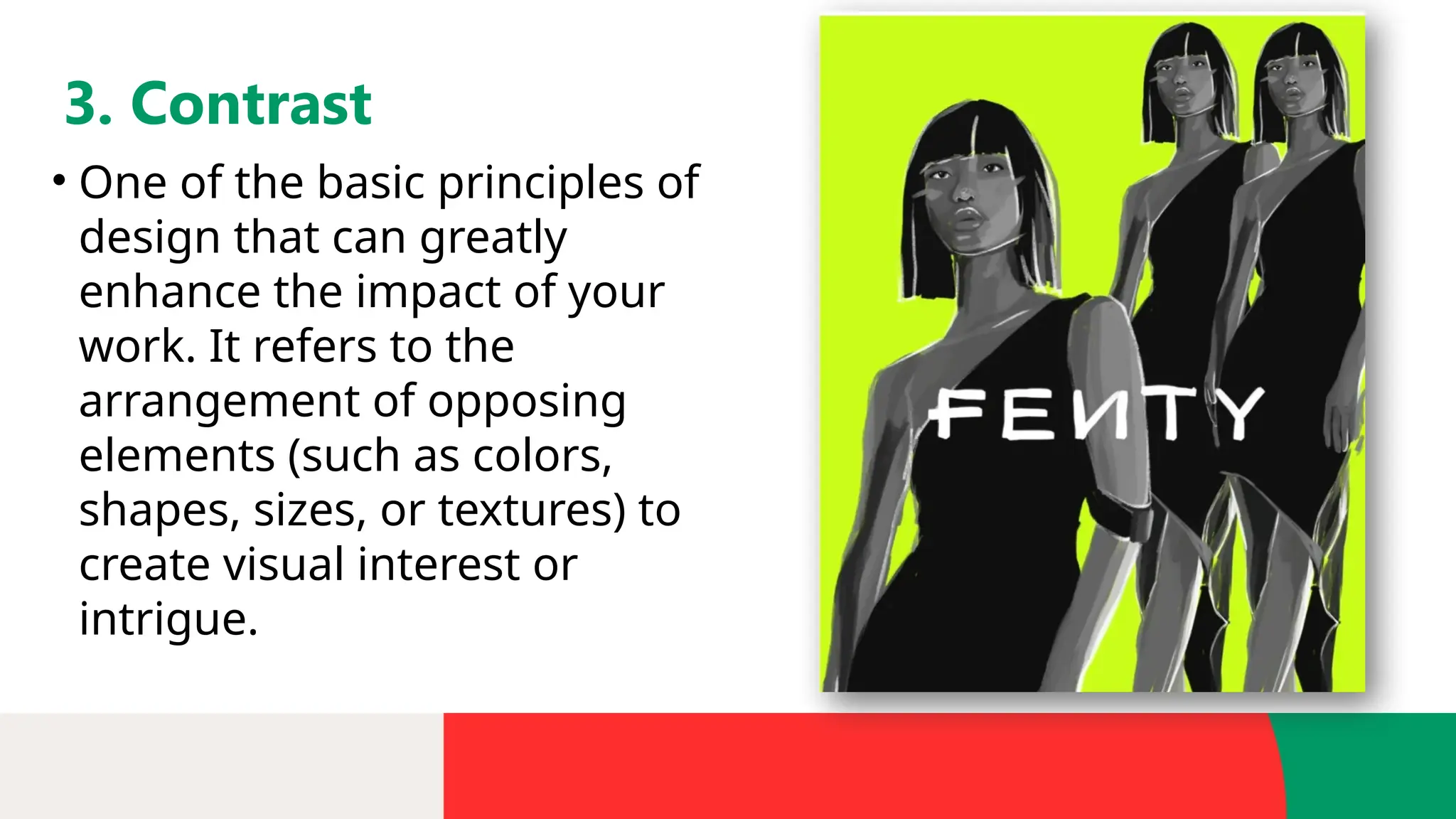
3. Contrast
• One of the basic principles of
design that can greatly
enhance the impact of your
work. It refers to the
arrangement of opposing
elements (such as colors,
shapes, sizes, or textures) to
create visual interest or
intrigue.
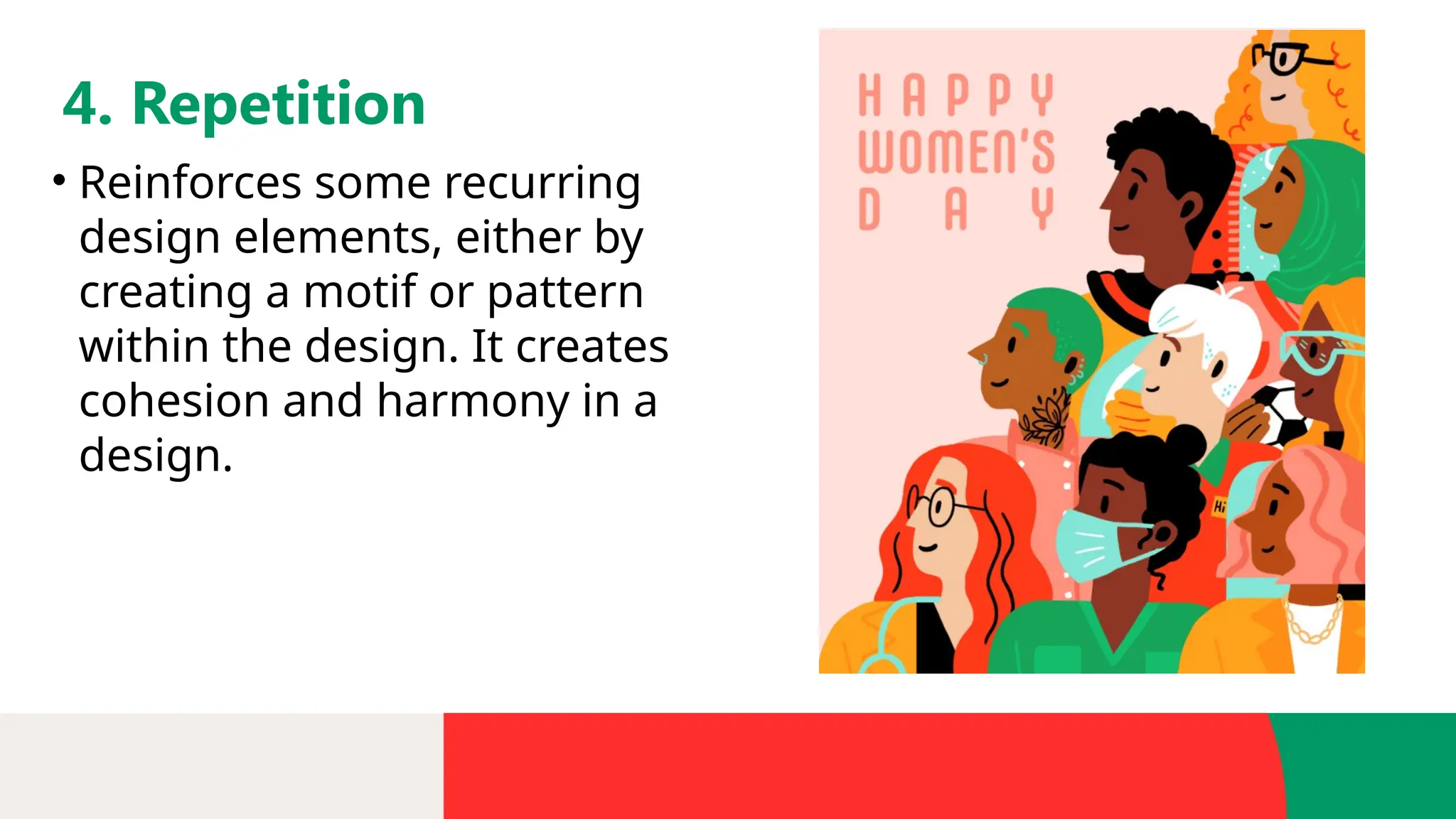
4. Repetition
• Reinforces some recurring
design elements, either by
creating a motif or pattern
within the design. It creates
cohesion and harmony in a
design.
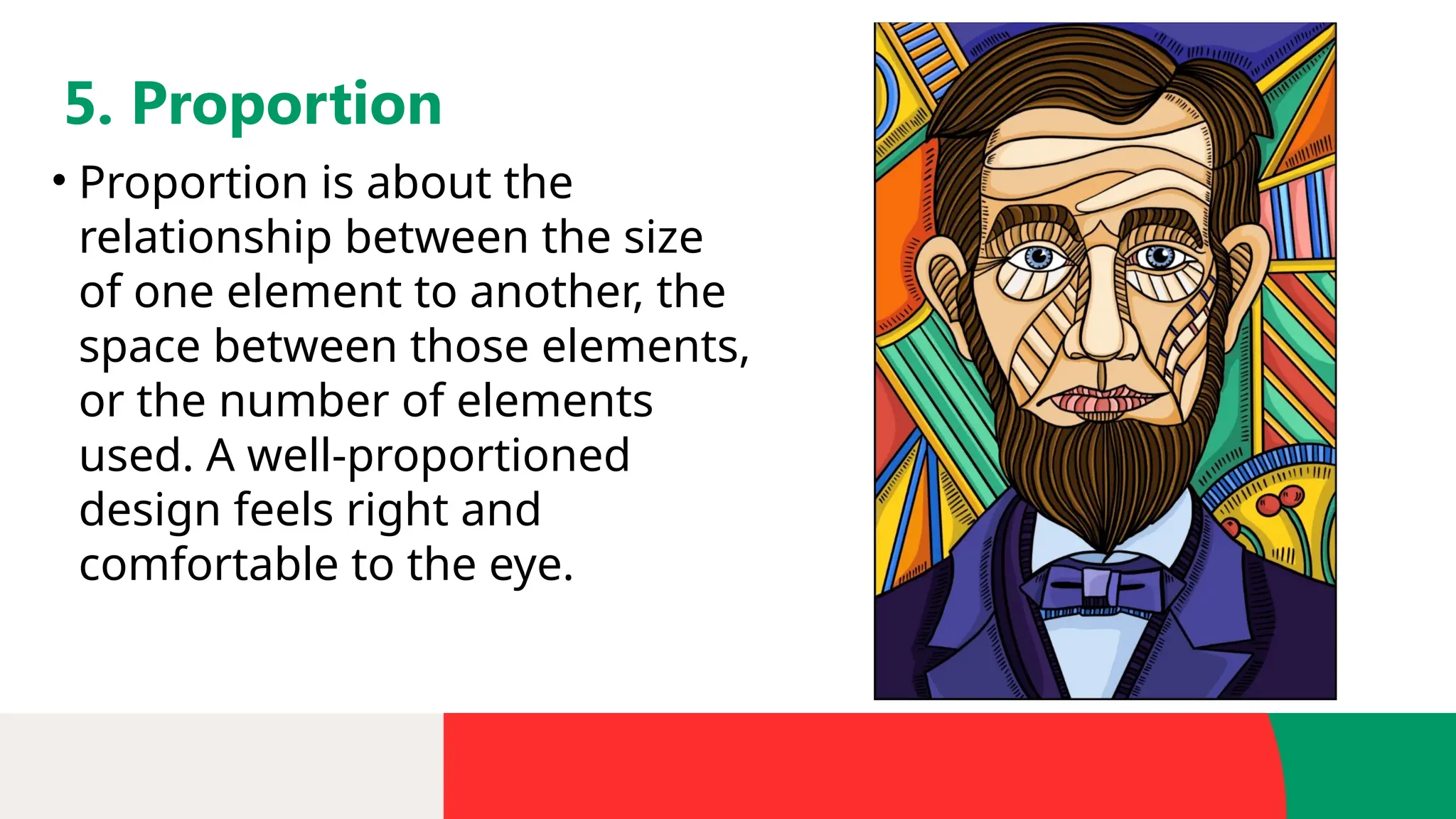
5. Proportion
• Proportion is about the
relationship between the size
of one element to another, the
space between those elements,
or the number of elements
used. A well-proportioned
design feels right and
comfortable to the eye.
6. Movement
• Movement is the way your eye
travels through the design,
guided by lines, shapes, and
colors. It’s like a well-
choreographed dance, leading
the viewer from one point to
another seamlessly.
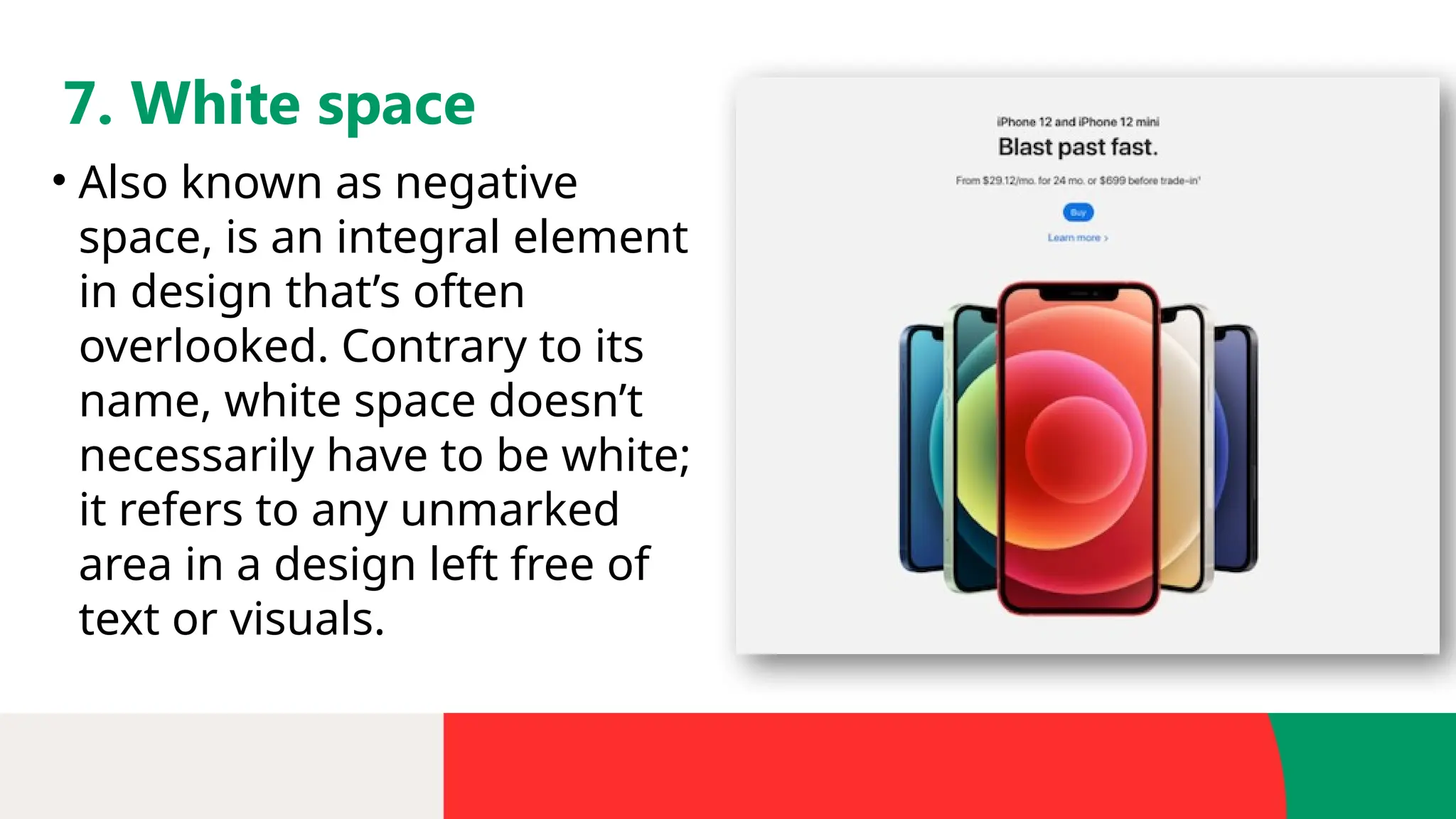
7. White space
• Also known as negative
space, is an integral element
in design that’s often
overlooked. Contrary to its
name, white space doesn’t
necessarily have to be white;
it refers to any unmarked
area in a design left free of
text or visuals.
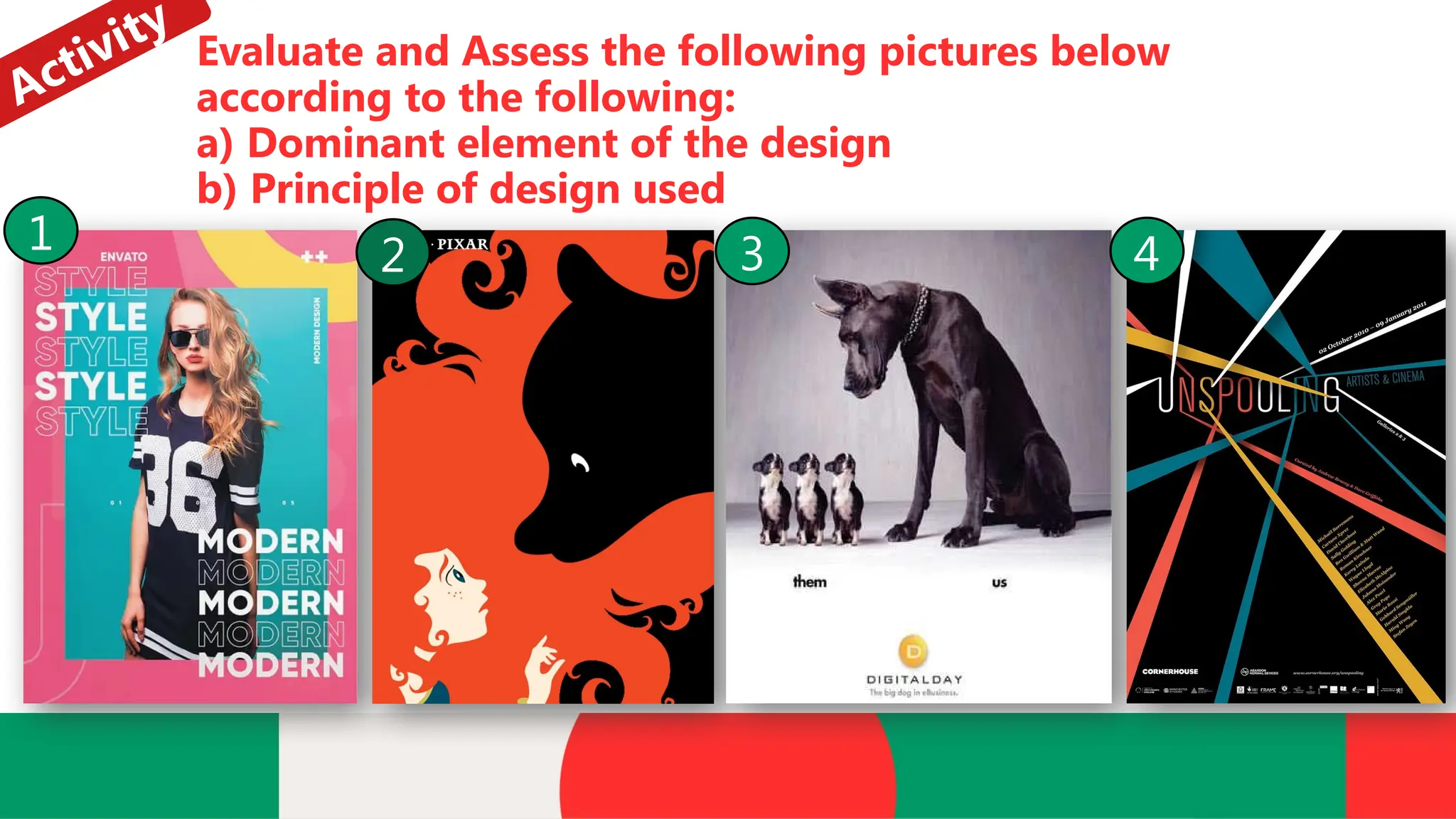
Evaluate and Assess the following pictures below
according to the following:
a) Dominant element of the design
b) Principle of design used
Activity
1 2 3 4
1. Why Visual-Design Principles are important?
2. How do we relate Visual-Design Principles in our lives?
Oral
Recitation
The End.
Thank you for listening.

MIL_Lesson 24_Visual Design Principles.pptx

  • 1.
    4 Pics 1Word Let’s Play! _ O V _ _ N T M O V E M E N T
  • 2.
    4 Pics 1Word Let’s Play! _ O T _ A T C O N T R A S T
  • 3.
    4 Pics 1Word Let’s Play! _ _ O _ O _ _ I O _ P R O P O R T I O N
  • 4.
    4 Pics 1Word Let’s Play! _ E E T _ T _ _ N R E P E T I T I O N
  • 5.
  • 6.
    Objectives 1.Recognize the visualdesign principles. 2.Evaluate and assess a creative visual media form according to the following: a. Dominant element of the design. b.Visual design principle/s. 3.Appreciate the value of a good design and its importance in our lives.
  • 7.
    1. Emphasis • Placesimportance, prominence, or value on specific design elements. It works by making a particular element stand out. • Draws your eye to a specific focal point, then leads it to the rest of the design. It’s the bold headline on a newspaper, the bright red Sale sign in a store.
  • 8.
    2. Balance andalignment • Creates a feeling of equilibrium. It’s all about equalizing the visual weight of elements in a design. Think of it like a seesaw; you need to distribute elements to create a sense of stability. • There are two types of balance: A. Symmetrical balance B. Asymmetrical balance
  • 9.
    Symmetrical balance • knownas formal balance, is when elements are mirrored on either side of a central line, or around a central point. It’s like a butterfly with its identical wings. This type of balance often brings about feelings of stability, formality, and orderliness.
  • 10.
    Asymmetrical balance • alsoknown as informal balance, works by balancing various elements with different visual weights. With asymmetry, the sides are not identical, but the resulting composition is still balanced. Asymmetrical balance tends to create a feeling of modernity, dynamism, and interest.
  • 11.
    3. Contrast • Oneof the basic principles of design that can greatly enhance the impact of your work. It refers to the arrangement of opposing elements (such as colors, shapes, sizes, or textures) to create visual interest or intrigue.
  • 12.
    4. Repetition • Reinforcessome recurring design elements, either by creating a motif or pattern within the design. It creates cohesion and harmony in a design.
  • 13.
    5. Proportion • Proportionis about the relationship between the size of one element to another, the space between those elements, or the number of elements used. A well-proportioned design feels right and comfortable to the eye.
  • 14.
    6. Movement • Movementis the way your eye travels through the design, guided by lines, shapes, and colors. It’s like a well- choreographed dance, leading the viewer from one point to another seamlessly.
  • 15.
    7. White space •Also known as negative space, is an integral element in design that’s often overlooked. Contrary to its name, white space doesn’t necessarily have to be white; it refers to any unmarked area in a design left free of text or visuals.
  • 16.
    Evaluate and Assessthe following pictures below according to the following: a) Dominant element of the design b) Principle of design used Activity 1 2 3 4
  • 17.
    1. Why Visual-DesignPrinciples are important? 2. How do we relate Visual-Design Principles in our lives? Oral Recitation
  • 18.
    The End. Thank youfor listening.

Editor's Notes

  • #17 Knowing the elements and principles of art boosts visual literacy.  Artists and creators make more powerful works when they utilize the principles of art. They become more aware of the details and can better appreciate what they see and the message behind it. In the age of the internet, understanding how and why advertisers make design decisions can empower students with information and make them less susceptible to manipulation.