Ms. Jessica B.Abadies
Pasay City National High
School
MEDIA AND
INFORMATIO
N LITERACY
VISUAL
INFORMATION AND
MEDIA (PART 2)
Visual Design
Principles
2.
LEARNERS WILL
BE ABLETO…
⯈discuss visual design principles
(SSHS);
⯈identify and evaluate visual
design principles used indifferent
visual media (SSHS); and
⯈produce and evaluates a creative
visual-based presentation using
design principles and elements
(MIL11/12-VIM-IVc-10).
LEARNING COMPETENCIES
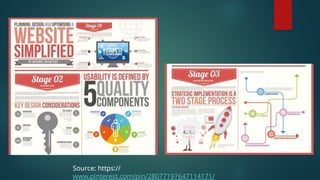
1. CONSISTENCY
• Consistencyof margins, typeface,
typestyle, and colors is
necessary, especially in slide
presentations or documents that
are more than one page.
VISUAL DESIGN PRINCIPLES
Source: p. 130, MIL TG by CHED
2. CENTER OF
INTEREST
•an area that first attracts attention
in a composition
• important objects or elements in a
composition
• can be achieved by contrast of values,
more colors, and placement
VISUAL DESIGN PRINCIPLES
Source: p. 130, MIL TG by CHED
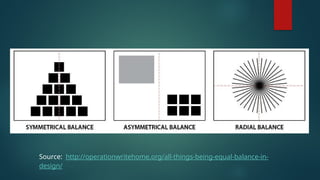
3. BALANCE
•visual equalityin shape, form,
value, color, etc.
•can be symmetrical and evenly
or asymmetrical and unevenly
balanced
VISUAL DESIGN PRINCIPLES
Source: p. 130, MIL TG by CHED
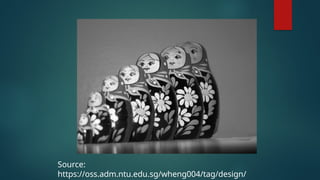
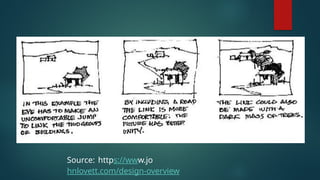
4. HARMONY
• bringstogether a composition with
similar units
• notice how similar harmony is to
unity (some sources list both terms)
VISUAL DESIGN PRINCIPLES
Source: p. 130, MIL TG by CHED
5. CONTRAST
• offerssome change in value creating a visual
discord in a composition
• shows the difference between shapes and
can be used as a
background to bring objects out and forward
in a design
• can also be used to create an area of
emphasis
VISUAL DESIGN PRINCIPLES
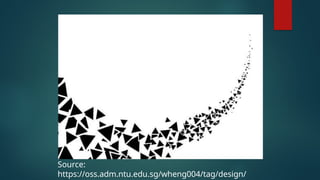
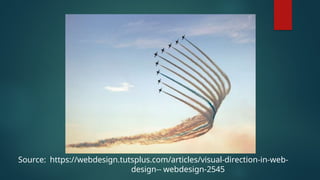
6. DIRECTIONAL MOVEMENT
•a visual flow through the composition
• can be the suggestion of motion in a
design as you move from object toobject
by way placement and position
VISUAL DESIGN PRINCIPLES
Source: p. 130, MIL TG by CHED
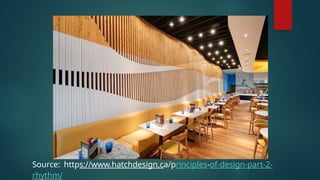
7. RHYTHM
• amovement in which some elements
recur regularly like a dance, it will have a
flow of objects that will seem to be like
the beat of music
VISUAL DESIGN PRINCIPLES
Source: p. 130, MIL TG by CHED
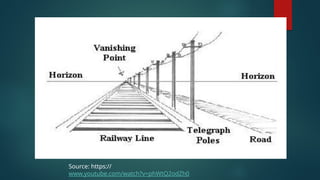
8.
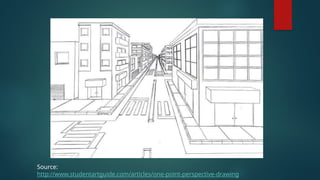
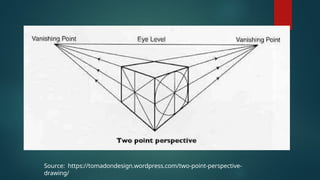
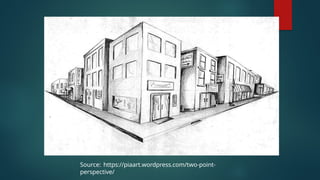
PERSPECTIVE
• created throughthe arrangement of
objects in two dimensional space to look
like they appear in real life
• learned meaning of the relationship
between different objects seen in
space
VISUAL DESIGN PRINCIPLES
Source: p. 130, MIL TG by CHED
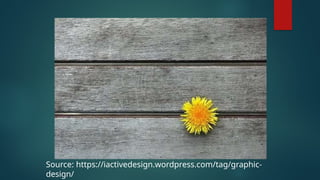
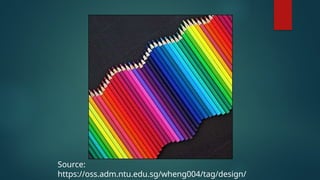
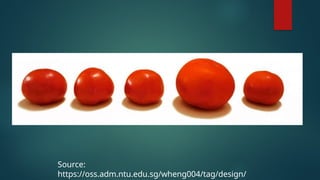
9. DOMINANCE
• givesinterest, counteracting confusion
and monotony
• can be applied to one or more of
the elements to give emphasis
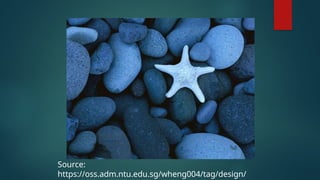
PRINCIPLES OF DESIGN
https://oss.adm.ntu.edu.sg/wheng004/tag/design/
CLASS ACTIVITY: STILLLIFE
PHOTOGRAPHY
⯈Produce a still life photography using
your personal things (watch, phone,
notebook, books, etc.) applying at least
3 of the discussed visual design
principles.
FORMATIVE ASSESSMENT
50.
REFERENCES
Media andInformation Literacy
Curriculum Guide by DepEd
Media and Information Literacy
Teaching Guide by CHED
Media and Information Literacy by
Boots C. Liquigan, Diwa Learning
Systems Inc.
51.
REFERENCES
DESIGN ELEMENTS ANDPRINCIPLES BY CANVA.COM
https://designschool.canva.com/design-
elements- principles/
WILSON’S PORTFOLIO: PRINCIPLES OF DESIGN
https://oss.adm.ntu.edu.sg/wheng004/
tag/design/