MethaneSAT: Towards measuring agricultural
methane emissions from space
Sara Mikaloff-Fletcher1, Beata Bukosa1, Alex Geddes2, Hinrich Schaefer1, David Noone3, Joshua
Benmergui4, Steve Wofsy4, Jonathan Franklin4, Steven Hamburg5, David Pollard2, Dan Smale2,
Gordon Brailsford1, Jocelyn Turnbull6, Darren King7, Louis Schipper8, Jordan Goodrich9, David
Cambell9, Johannes Laubach10, Richard Law11
1National Institute for Water and Atmospheric Research (NIWA), Wellington, New Zealand. 2National Institute for Water and
Atmospheric Research (NIWA), Lauder, New Zealand. 3University of Auckland, Auckland, New Zealand. 4Harvard University, Boston,
USA. 5MethaneSAT LLC/EDF, Boston, USA. 6GNS Science, Lower Hutt, New Zealand. 7National Institute for Water and Atmospheric
Research (NIWA), Nelson, New Zealand. 8University of Waikato, Hamilton, New Zealand. 9Univesity of Waikato, Hamilton, New
Zealand. 10Manaaki Whenua Landcare Reserch, Lincoln, New Zealand. 11Manaaki Whenua Landcare Reserch, Wellington, New Zealand
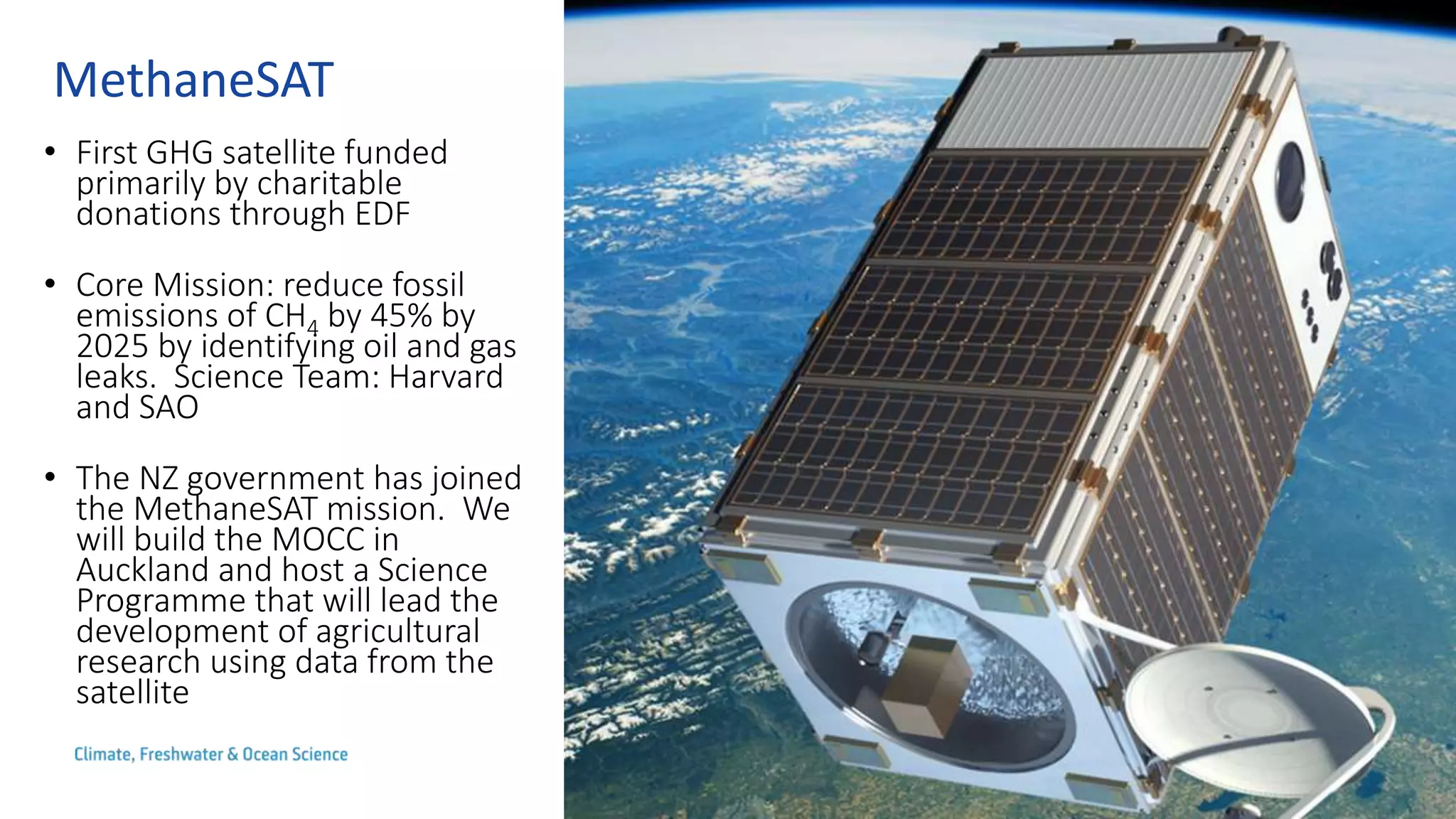
MethaneSAT
• First GHG satellite funded
primarily by charitable
donations through EDF
• Core Mission: reduce fossil
emissions of CH4 by 45% by
2025 by identifying oil and gas
leaks. Science Team: Harvard
and SAO
• The NZ government has joined
the MethaneSAT mission. We
will build the MOCC in
Auckland and host a Science
Programme that will lead the
development of agricultural
research using data from the
satellite
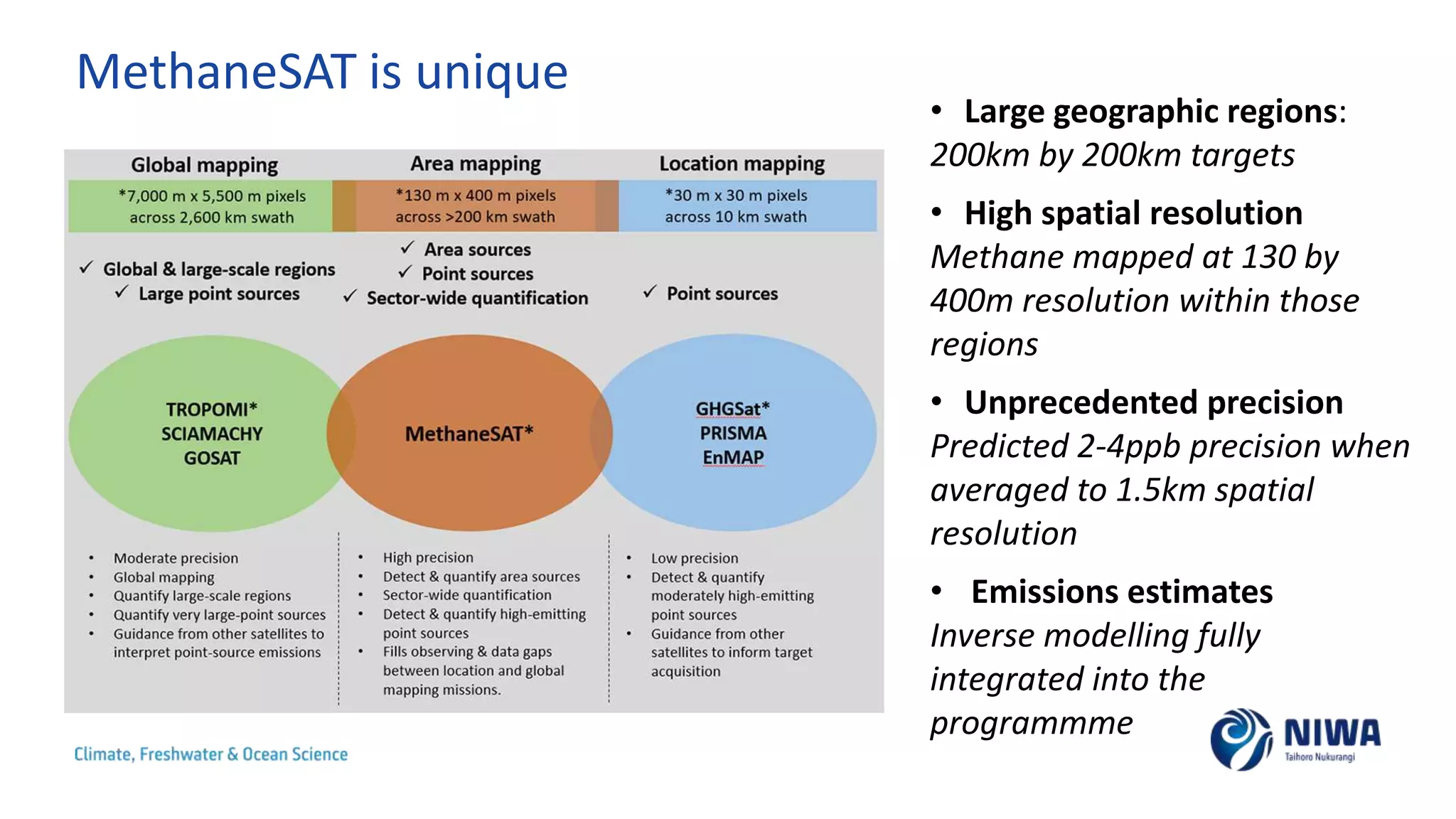
MethaneSAT is unique
• Large geographic regions:
200km by 200km targets
• High spatial resolution
Methane mapped at 130 by
400m resolution within those
regions
• Unprecedented precision
Predicted 2-4ppb precision when
averaged to 1.5km spatial
resolution
• Emissions estimates
Inverse modelling fully
integrated into the
programmme
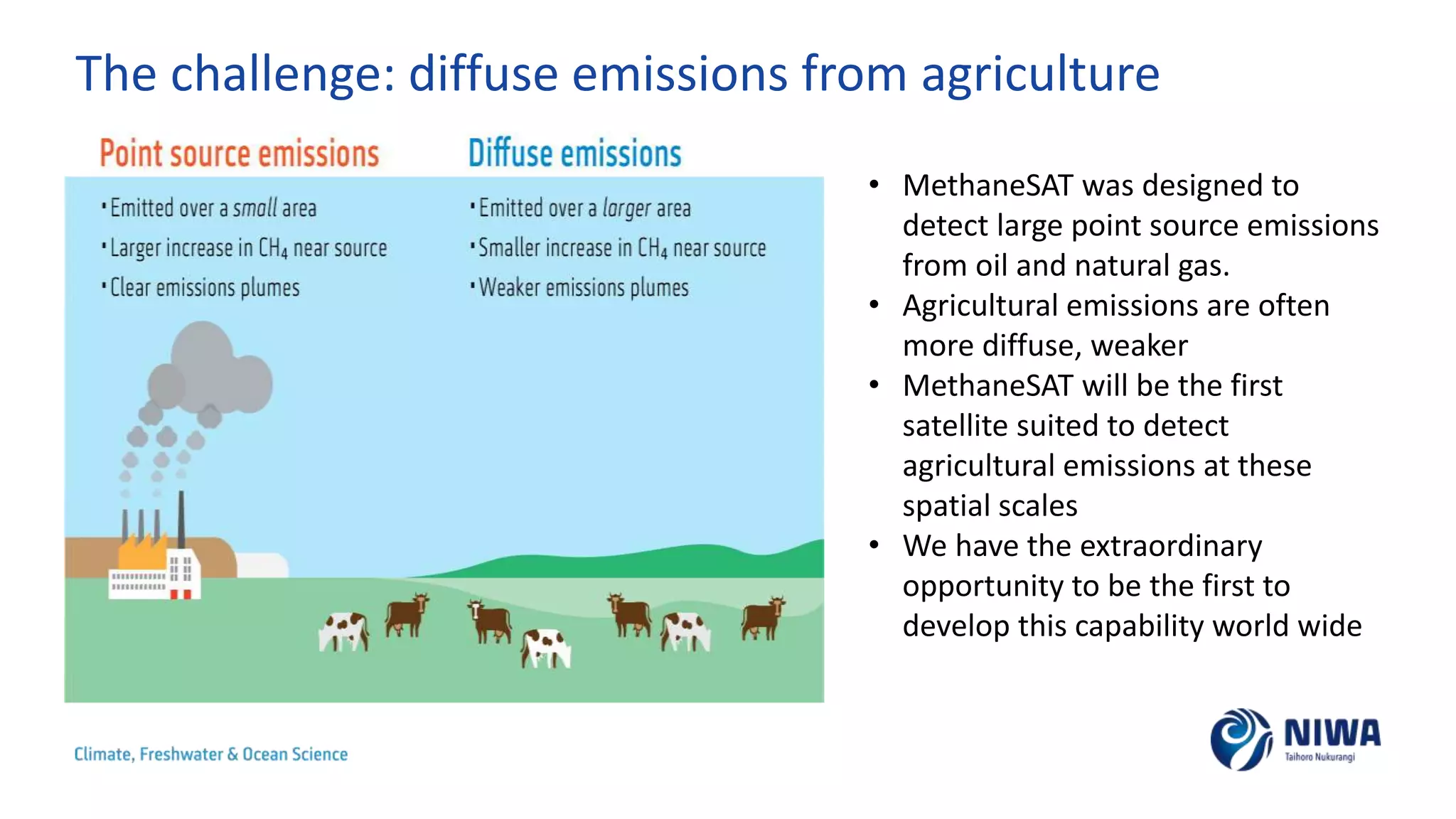
The challenge: diffuse emissions from agriculture
• MethaneSAT was designed to
detect large point source emissions
from oil and natural gas.
• Agricultural emissions are often
more diffuse, weaker
• MethaneSAT will be the first
satellite suited to detect
agricultural emissions at these
spatial scales
• We have the extraordinary
opportunity to be the first to
develop this capability world wide
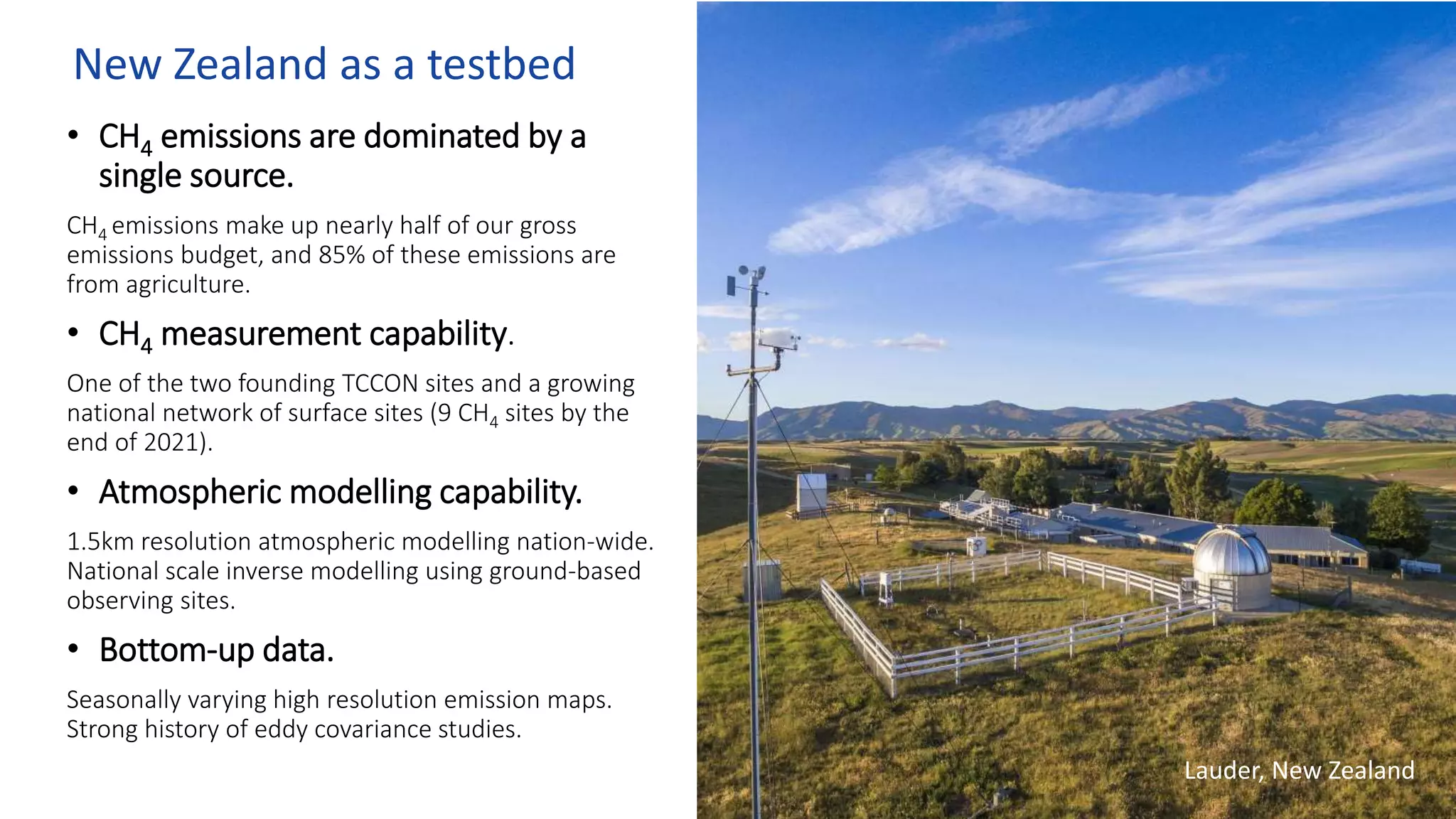
New Zealand as a testbed
• CH4 emissions are dominated by a
single source.
CH4 emissions make up nearly half of our gross
emissions budget, and 85% of these emissions are
from agriculture.
• CH4 measurement capability.
One of the two founding TCCON sites and a growing
national network of surface sites (9 CH4 sites by the
end of 2021).
• Atmospheric modelling capability.
1.5km resolution atmospheric modelling nation-wide.
National scale inverse modelling using ground-based
observing sites.
• Bottom-up data.
Seasonally varying high resolution emission maps.
Strong history of eddy covariance studies.
Lauder, New Zealand
1760
1765
1770
1775
1785
1780
1795
1790
1805
1800
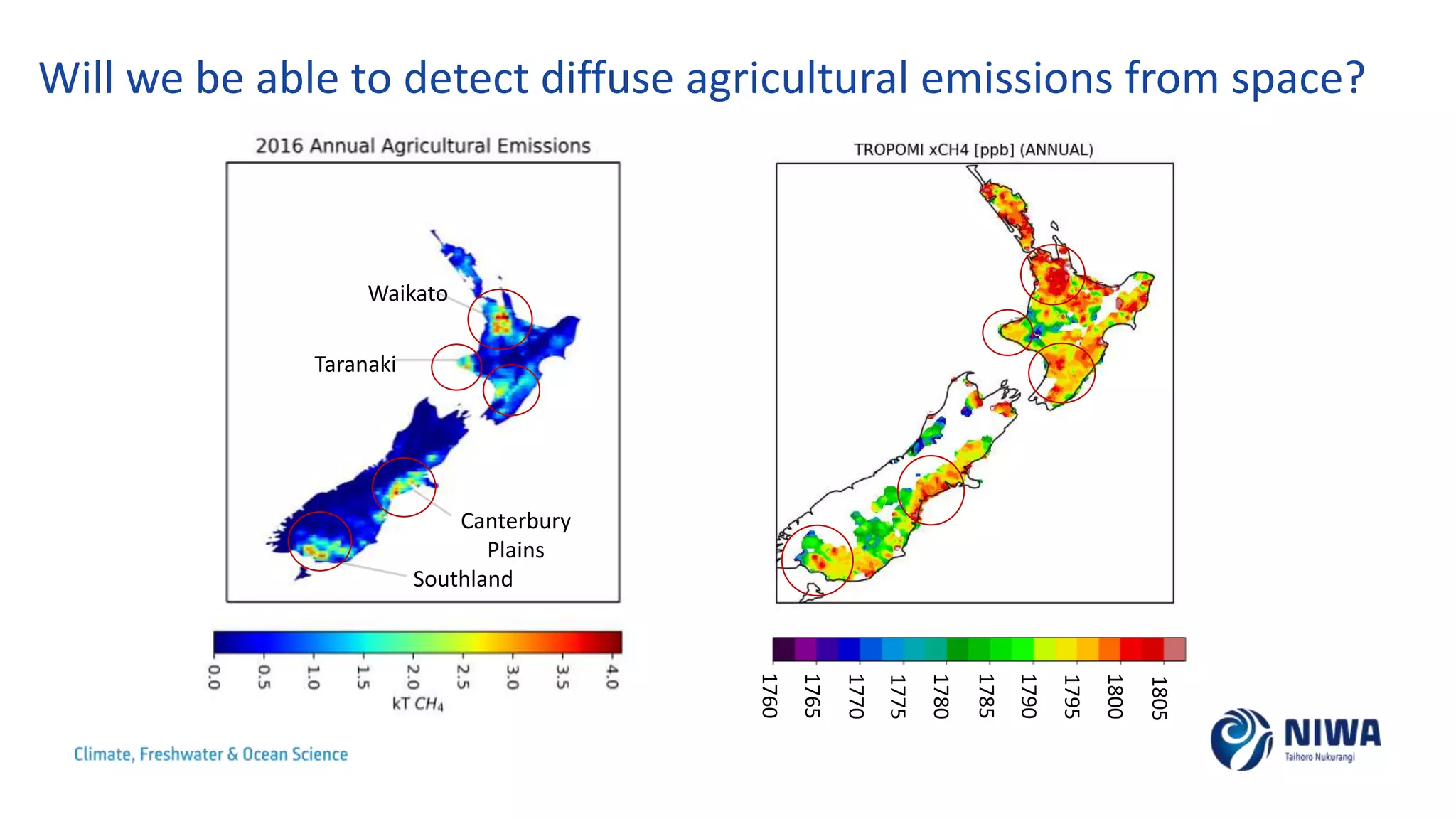
Waikato
Canterbury
Plains
Taranaki
Southland
Will we be able to detect diffuse agricultural emissions from space?
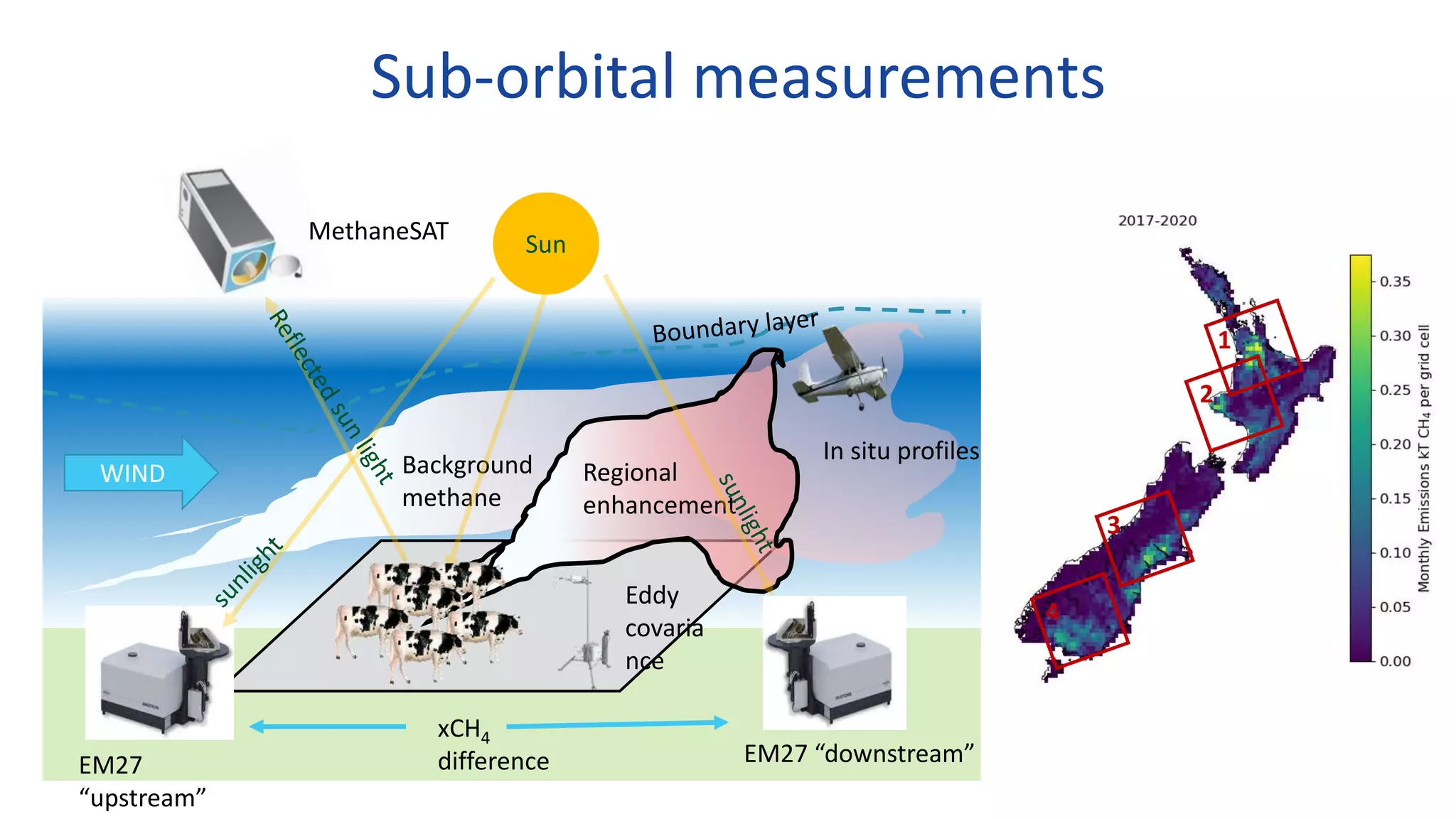
Background
methane
Regional
enhancement
WIND
EM27
“upstream”
EM27 “downstream”
xCH4
difference
MethaneSAT
Eddy
covaria
nce
Sun
In situ profiles
1
2
3
4
Sub-orbital measurements
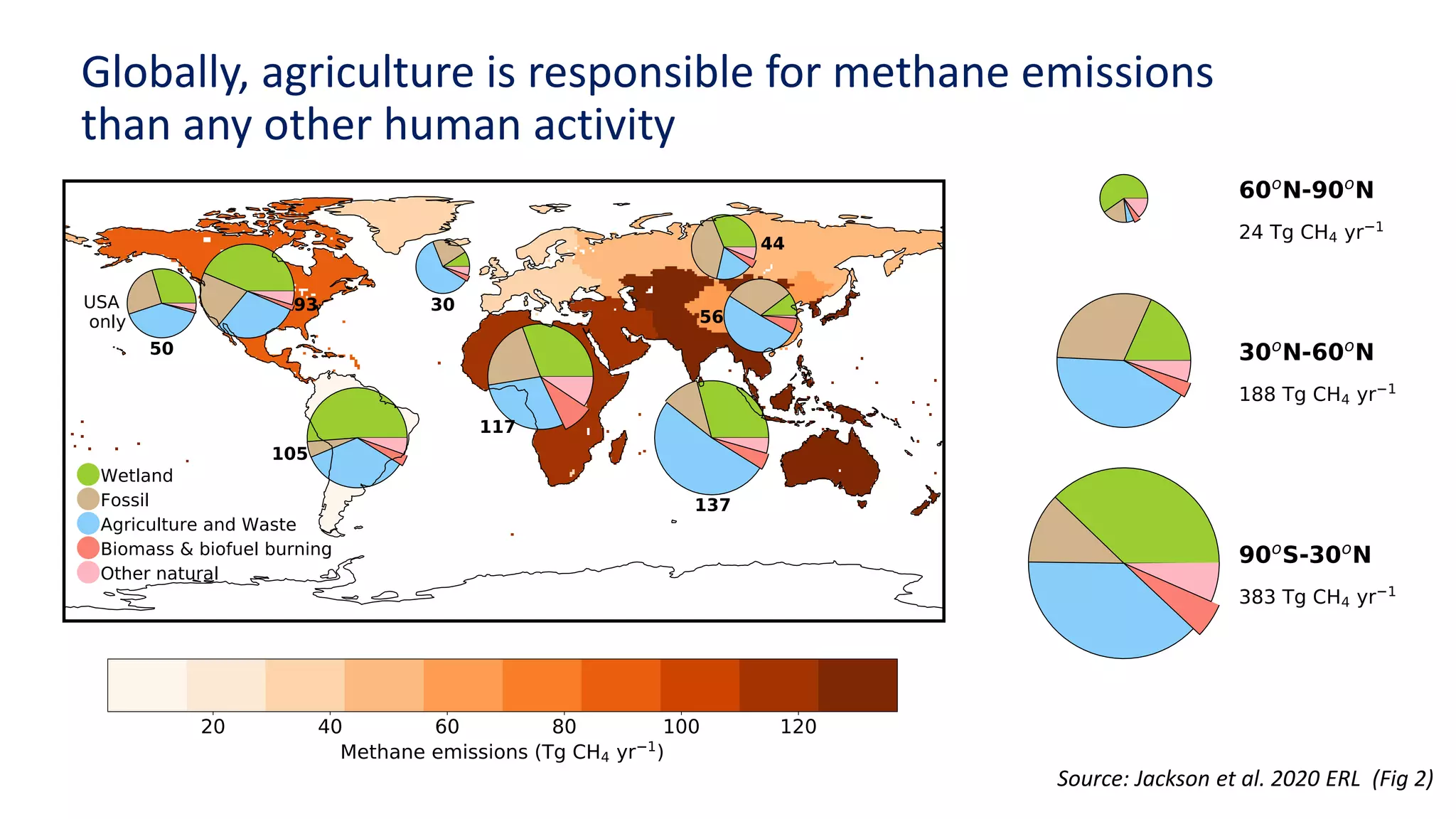
Source: Jackson et al. 2020 ERL (Fig 2)
Globally, agriculture is responsible for methane emissions
than any other human activity
Site Selection
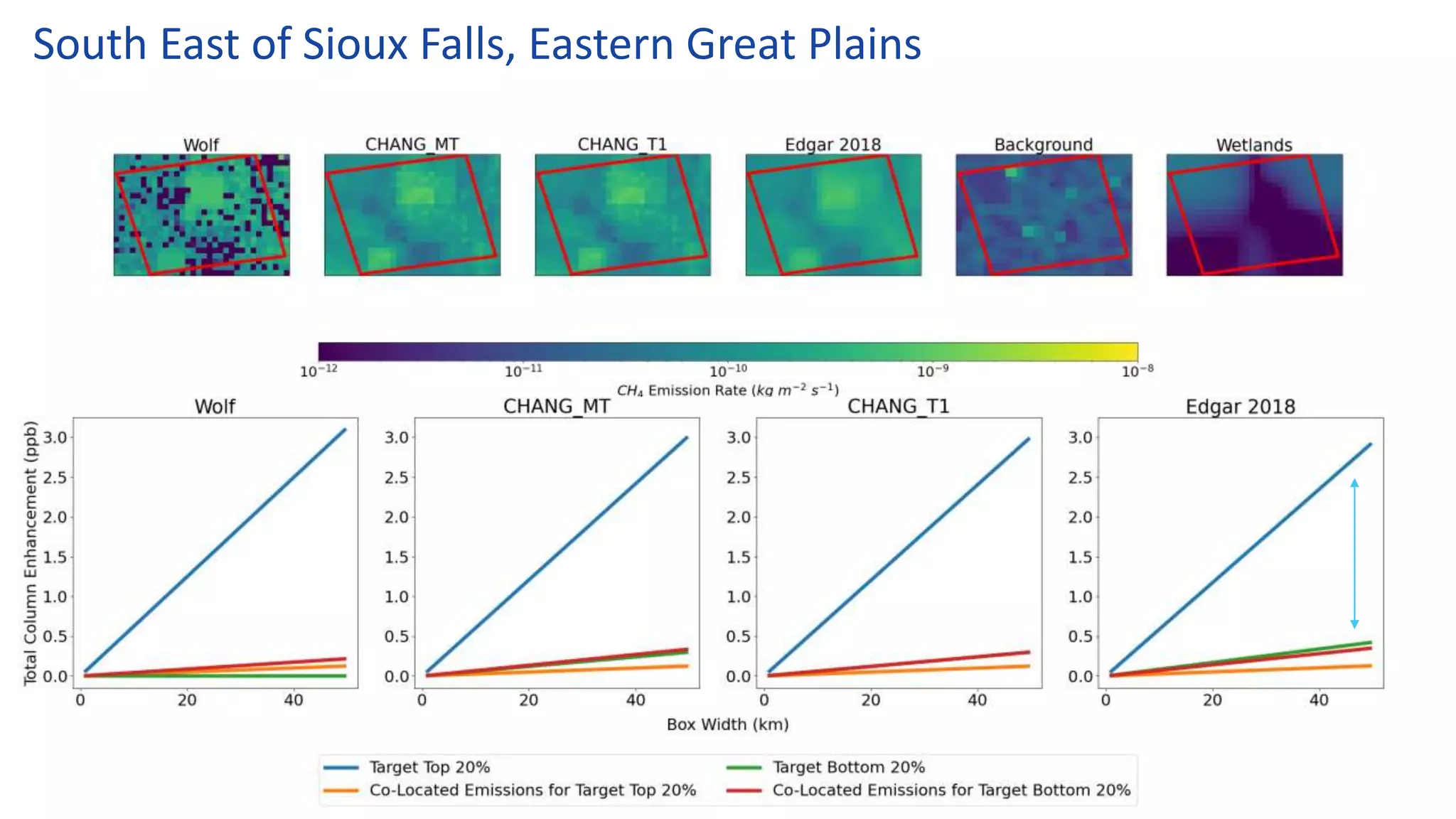
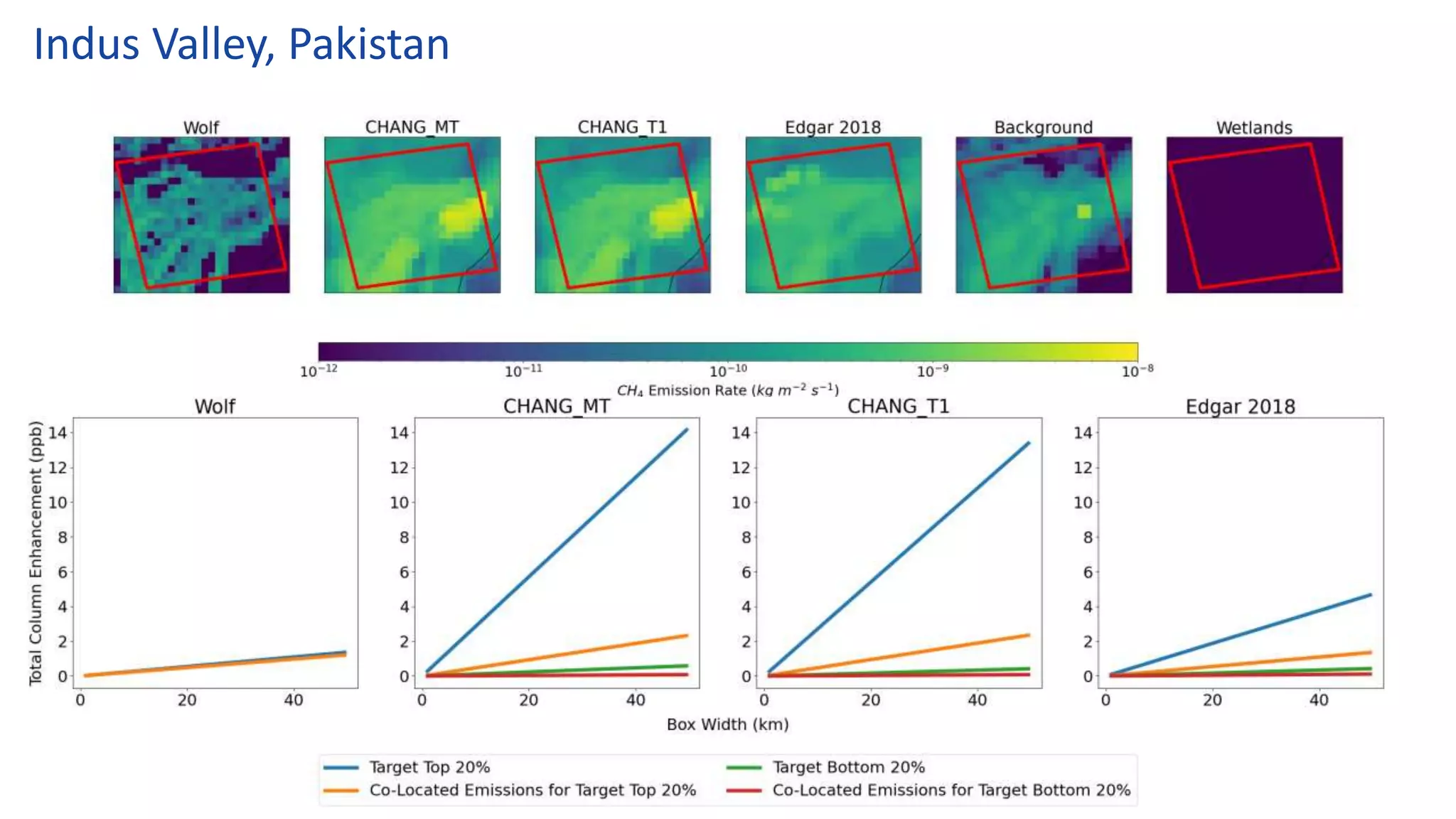
• Are emissions large enough to be detected from space? Is there a clear
spatial gradient in the emissions? (best bottom up maps, meteorological
data, box modelling)
• Are these emissions clearly detectable over other sources? (comparison
with other emissions data)
• Will we be able to collect good quality satellite data often enough?
(Albedo, cloudiness, other meteorological data)
South East of Sioux Falls, Eastern Great Plains
Indus Valley, Pakistan
Summary
• The MethaneSAT mission aims to detect anthropogenic emissions of CH4
around the world and galvanize emissions reductions, especially fossil
emissions. The NZ team is developing the applications of this satellite data
for agricultural emissions.
• We will test this capability in Aotearoa New Zealand with a ground and air-
craft based measurement campaign
• In addition, we are in the process of developing a strategy to target
agricultural emissions from animals and rice around the world and are
interested in developing collaborations with other groups

Mikaloff-Fletcher, Sara: MethaneSAT: Towards detecting agricultural emissions from space

  • 1.
    MethaneSAT: Towards measuringagricultural methane emissions from space Sara Mikaloff-Fletcher1, Beata Bukosa1, Alex Geddes2, Hinrich Schaefer1, David Noone3, Joshua Benmergui4, Steve Wofsy4, Jonathan Franklin4, Steven Hamburg5, David Pollard2, Dan Smale2, Gordon Brailsford1, Jocelyn Turnbull6, Darren King7, Louis Schipper8, Jordan Goodrich9, David Cambell9, Johannes Laubach10, Richard Law11 1National Institute for Water and Atmospheric Research (NIWA), Wellington, New Zealand. 2National Institute for Water and Atmospheric Research (NIWA), Lauder, New Zealand. 3University of Auckland, Auckland, New Zealand. 4Harvard University, Boston, USA. 5MethaneSAT LLC/EDF, Boston, USA. 6GNS Science, Lower Hutt, New Zealand. 7National Institute for Water and Atmospheric Research (NIWA), Nelson, New Zealand. 8University of Waikato, Hamilton, New Zealand. 9Univesity of Waikato, Hamilton, New Zealand. 10Manaaki Whenua Landcare Reserch, Lincoln, New Zealand. 11Manaaki Whenua Landcare Reserch, Wellington, New Zealand
  • 2.
    MethaneSAT • First GHGsatellite funded primarily by charitable donations through EDF • Core Mission: reduce fossil emissions of CH4 by 45% by 2025 by identifying oil and gas leaks. Science Team: Harvard and SAO • The NZ government has joined the MethaneSAT mission. We will build the MOCC in Auckland and host a Science Programme that will lead the development of agricultural research using data from the satellite
  • 3.
    MethaneSAT is unique •Large geographic regions: 200km by 200km targets • High spatial resolution Methane mapped at 130 by 400m resolution within those regions • Unprecedented precision Predicted 2-4ppb precision when averaged to 1.5km spatial resolution • Emissions estimates Inverse modelling fully integrated into the programmme
  • 4.
    The challenge: diffuseemissions from agriculture • MethaneSAT was designed to detect large point source emissions from oil and natural gas. • Agricultural emissions are often more diffuse, weaker • MethaneSAT will be the first satellite suited to detect agricultural emissions at these spatial scales • We have the extraordinary opportunity to be the first to develop this capability world wide
  • 5.
    New Zealand asa testbed • CH4 emissions are dominated by a single source. CH4 emissions make up nearly half of our gross emissions budget, and 85% of these emissions are from agriculture. • CH4 measurement capability. One of the two founding TCCON sites and a growing national network of surface sites (9 CH4 sites by the end of 2021). • Atmospheric modelling capability. 1.5km resolution atmospheric modelling nation-wide. National scale inverse modelling using ground-based observing sites. • Bottom-up data. Seasonally varying high resolution emission maps. Strong history of eddy covariance studies. Lauder, New Zealand
  • 6.
  • 7.
  • 8.
    Source: Jackson etal. 2020 ERL (Fig 2) Globally, agriculture is responsible for methane emissions than any other human activity
  • 9.
    Site Selection • Areemissions large enough to be detected from space? Is there a clear spatial gradient in the emissions? (best bottom up maps, meteorological data, box modelling) • Are these emissions clearly detectable over other sources? (comparison with other emissions data) • Will we be able to collect good quality satellite data often enough? (Albedo, cloudiness, other meteorological data)
  • 10.
    South East ofSioux Falls, Eastern Great Plains
  • 11.
  • 12.
    Summary • The MethaneSATmission aims to detect anthropogenic emissions of CH4 around the world and galvanize emissions reductions, especially fossil emissions. The NZ team is developing the applications of this satellite data for agricultural emissions. • We will test this capability in Aotearoa New Zealand with a ground and air- craft based measurement campaign • In addition, we are in the process of developing a strategy to target agricultural emissions from animals and rice around the world and are interested in developing collaborations with other groups