Microservices in a
Streaming World
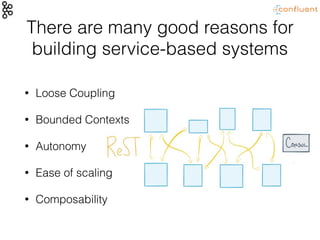
There are many good reasons for
building service-based systems
• Loose Coupling
• Bounded Contexts
• Autonomy
• Ease of scaling
• Composability
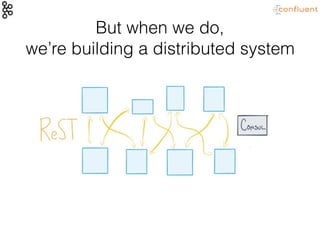
But when we do,
we’re building a distributed system
This can be a bit tricky
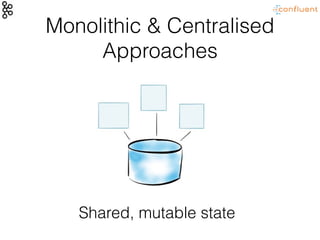
Monolithic & Centralised
Approaches
Shared, mutable state
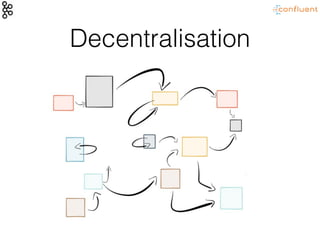
Decentralisation
Stream Processing is
a bit different
batch analytics => real time => at scale => accurately
and comes with an
interesting toolset
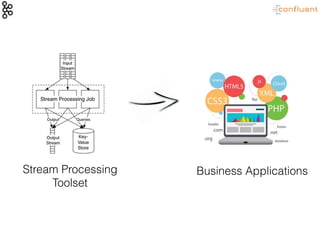
Stream Processing
Toolset
Business Applications
Some fundamental
patterns of distributed
systems
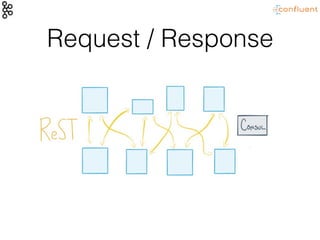
Request / Response
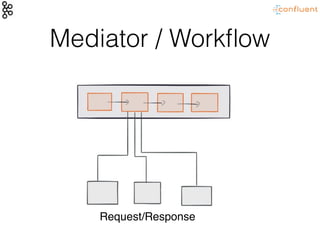
Mediator / Workflow
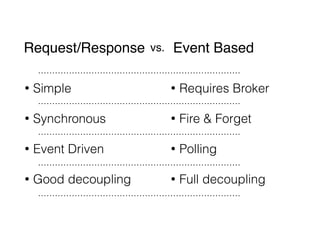
Request/Response
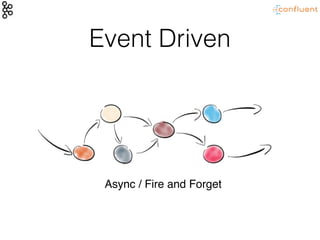
Event Driven
Async / Fire and Forget
Event Based
• Simple
• Synchronous
• Event Driven
• Good decoupling
• Requires Broker
• Fire & Forget
• Polling
• Full decoupling
Request/Response vs.
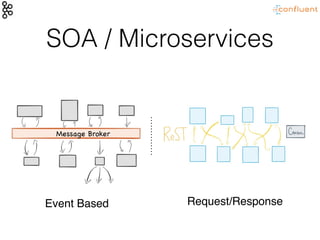
SOA / Microservices
Message Broker
Event Based Request/Response
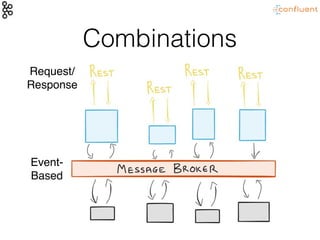
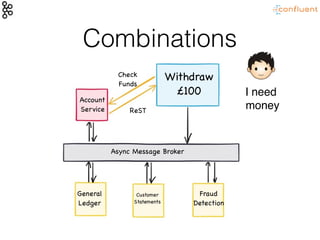
Combinations
Event-
Based
Request/
Response
Combinations
Withdraw 

£100
Account

Service
General

Ledger
Customer

Statements
Fraud

Detection
Check 

Funds
Async Message Broker
I need
moneyReST
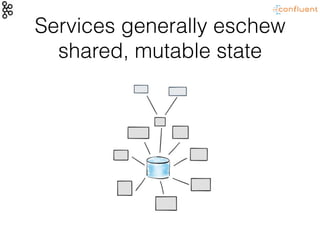
Services generally eschew
shared, mutable state
How do we put these
things together?
Request/Response
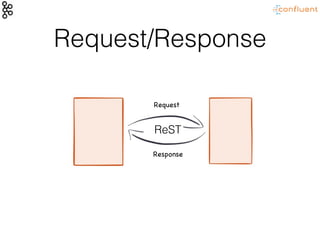
Request/Response
Request
Response
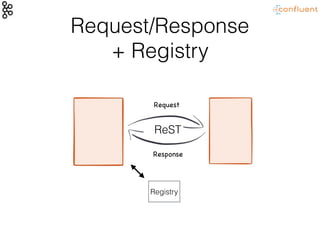
ReST
Request/Response
+ Registry
Registry
Request
Response
ReST
Asynchronous and
Event-Based
Communication
Queues
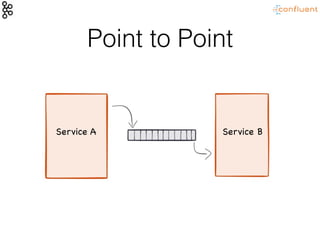
Point to Point
Service A Service B
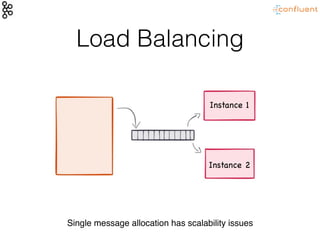
Load Balancing
Instance 2
Instance 1
Single message allocation has scalability issues
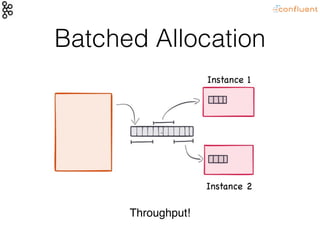
Batched Allocation
Instance 1
Instance 2
Throughput!
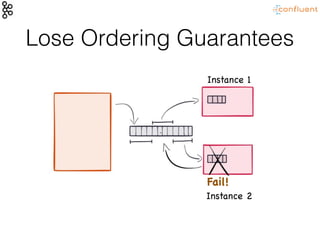
Lose Ordering Guarantees
Fail!
Instance 1
Instance 2
Topics
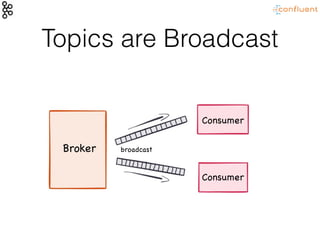
Topics are Broadcast
Consumer
Consumer
Broker broadcast
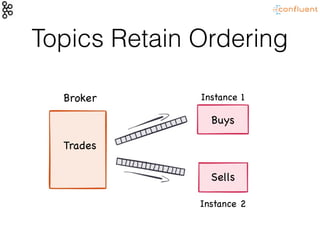
Topics Retain Ordering
Trades
Buys
Sells
Broker Instance 1
Instance 2
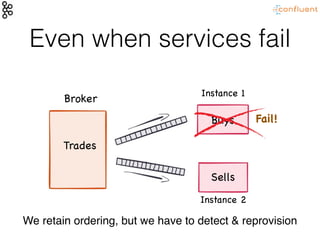
Even when services fail
Trades
Buys
Sells
Fail!
Broker
We retain ordering, but we have to detect & reprovision
Instance 1
Instance 2
A Few Implications
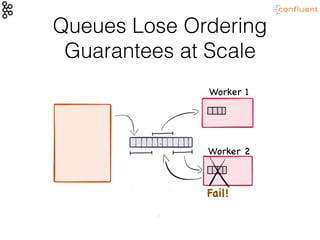
Queues Lose Ordering
Guarantees at Scale
Fail!
Worker 1
Worker 2
Trades
Buys
Sells
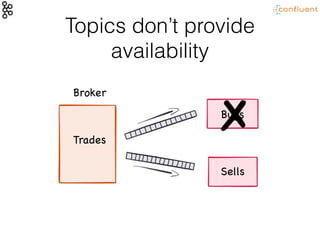
Topics don’t provide
availability
Broker
Trades
Buys
Sells
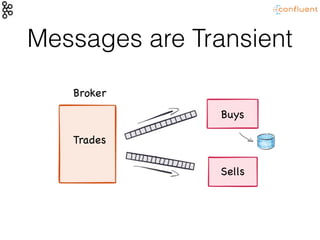
Messages are Transient
Broker
Is there another way?
A Distributed Log
Kafka is one example
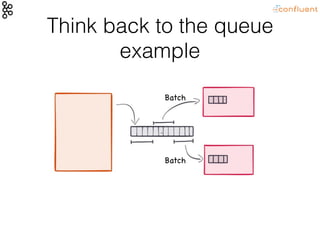
Think back to the queue
example
Batch
Batch
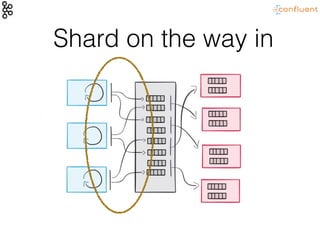
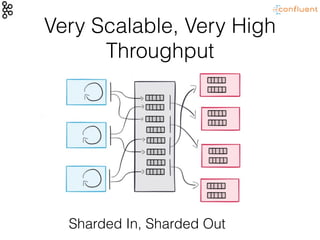
Shard on the way in
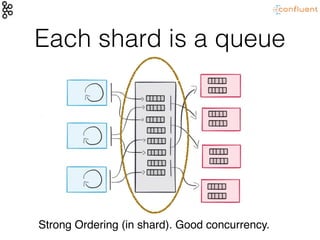
Each shard is a queue
Strong Ordering (in shard). Good concurrency.
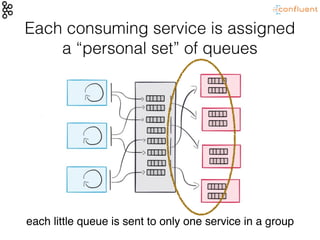
Each consuming service is assigned
a “personal set” of queues
each little queue is sent to only one service in a group
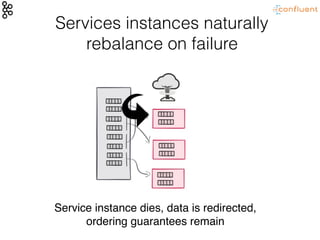
Services instances naturally
rebalance on failure
Service instance dies, data is redirected,
ordering guarantees remain
Very Scalable, Very High
Throughput
Sharded In, Sharded Out
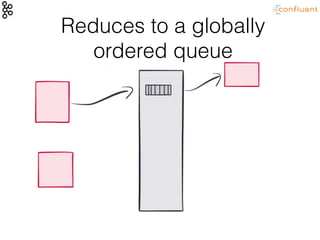
Reduces to a globally
ordered queue
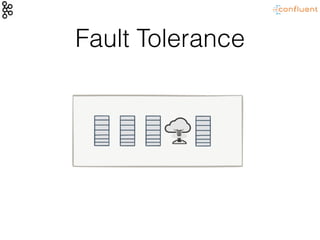
Fault Tolerance
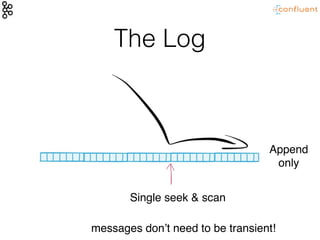
The Log
Single seek & scan
Append
only
messages don’t need to be transient!
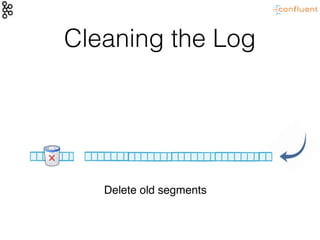
Cleaning the Log
Delete old segments
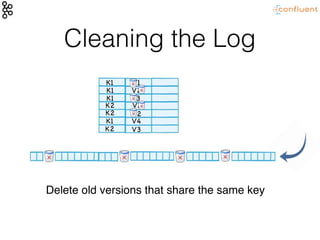
Cleaning the Log
Delete old versions that share the same key
K1
K1
K1
K2
K2
K2
K1
V1
V1
V2
V3
V2
V4
V3
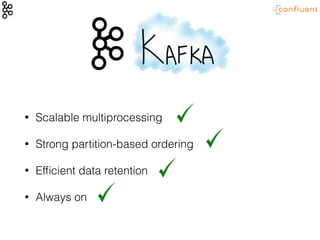
• Scalable multiprocessing
• Strong partition-based ordering
• Efficient data retention
• Always on
So how is this useful
for microservices?
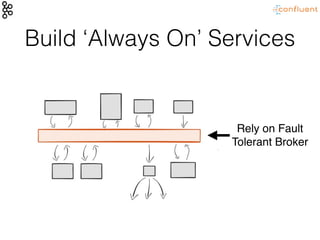
Build ‘Always On’ Services
Rely on Fault
Tolerant Broker
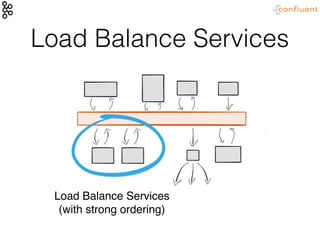
Load Balance Services
(with strong ordering)
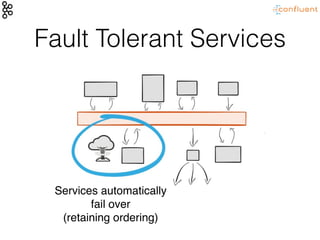
Fault Tolerant Services
Services automatically
fail over
(retaining ordering)
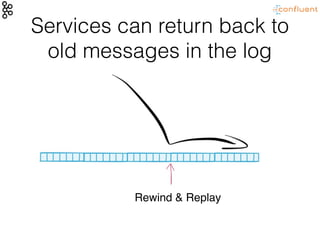
Services can return back to
old messages in the log
Rewind & Replay
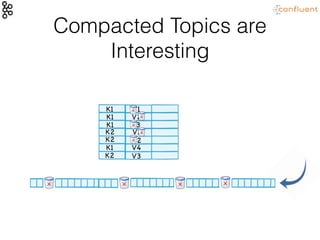
Compacted Topics are
Interesting
K1
K1
K1
K2
K2
K2
K1
V1
V1
V2
V3
V2
V4
V3
Lets take a little
example
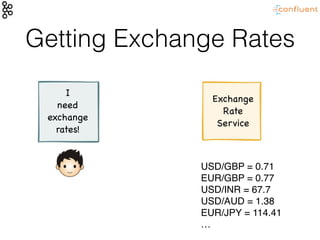
Getting Exchange Rates
Exchange

Rate

Service
USD/GBP = 0.71
EUR/GBP = 0.77
USD/INR = 67.7
USD/AUD = 1.38
EUR/JPY = 114.41
…
I

need 

exchange 

rates!
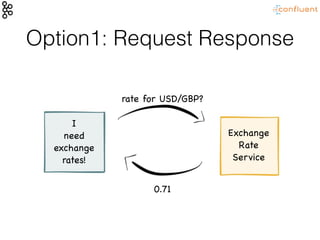
Option1: Request Response
rate for USD/GBP?
0.71
Exchange

Rate

Service
I 

need 

exchange 

rates!
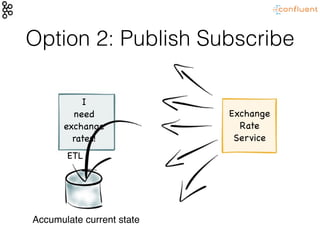
Option 2: Publish Subscribe
Exchange

Rate

Service
Accumulate current state
ETL
I

need 

exchange 

rates!
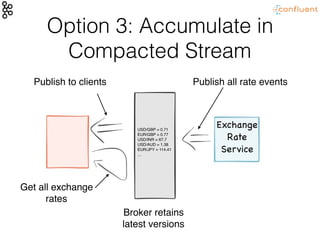
Option 3: Accumulate in
Compacted Stream
Exchange

Rate

Service
Get all exchange
rates
Publish to clients
USD/GBP = 0.71
EUR/GBP = 0.77
USD/INR = 67.7
USD/AUD = 1.38
EUR/JPY = 114.41
…
Broker retains
latest versions
Publish all rate events
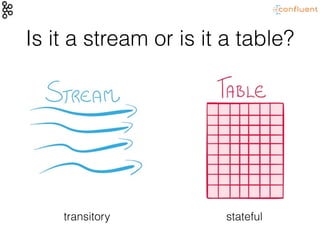
Is it a stream or is it a table?
transitory stateful
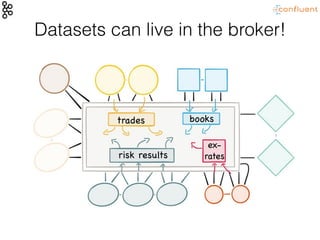
Datasets can live in the broker!
trades books
risk results
ex-

rates
Service Backbone
Scalable, Fault Tolerant, Concurrent, Strongly Ordered, Stateful
… lets add in stream
processing
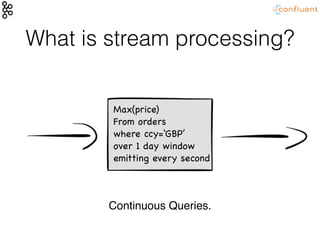
Max(price)

From orders

where ccy=‘GBP’

over 1 day window

emitting every second
What is stream processing?
Continuous Queries.
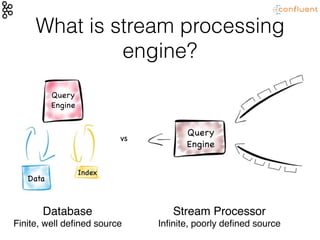
What is stream processing
engine?
Data
Index
Query

Engine
Query

Engine
vs
Database
Finite, well defined source
Stream Processor
Infinite, poorly defined source
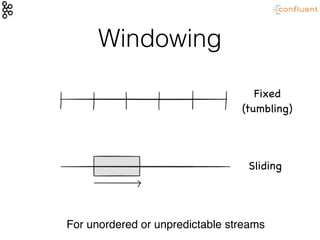
Windowing
For unordered or unpredictable streams
Sliding

Fixed

(tumbling)
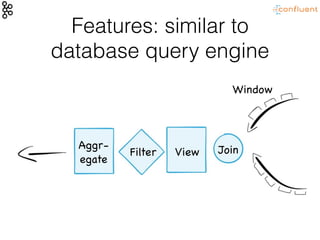
Features: similar to
database query engine
JoinFilter
Aggr-

egate
View
Window
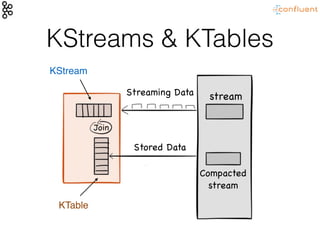
KStreams & KTables
stream
Compacted

stream
Join
Streaming Data
Stored Data
KStream
KTable
A little example…
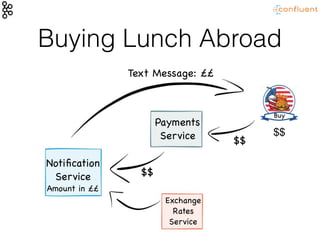
Buying Lunch Abroad
Payments

Service
Exchange

Rates

Service
Buy
Notification 

Service

Amount in ££
$$
$$
Text Message: ££
$$
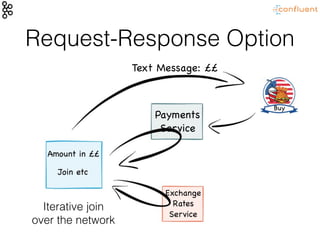
Request-Response Option
Payments

Service
Exchange

Rates

Service
Buy
Amount in ££
Join etc
Text Message: ££
Iterative join
over the network
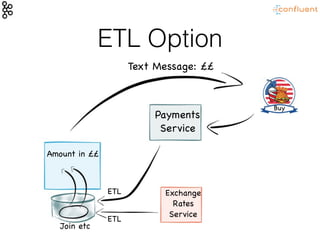
ETL Option
Payments

Service
Exchange

Rates

Service
Buy
Amount in ££
ETL
ETL
Join etc
Text Message: ££
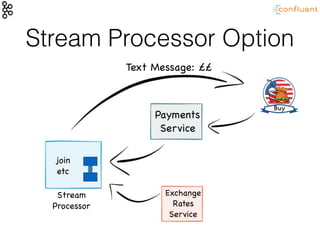
Stream Processor Option
Payments

Service
Exchange

Rates

Service
Buy
Stream

Processor
join

etc
Text Message: ££
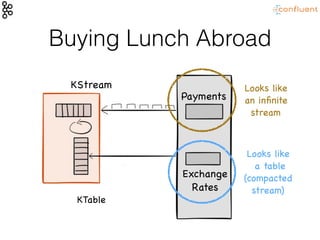
Buying Lunch Abroad
Payments
Exchange

Rates
Looks like

a table

(compacted

stream)
Looks like 

an infinite 

stream
KStream
KTable
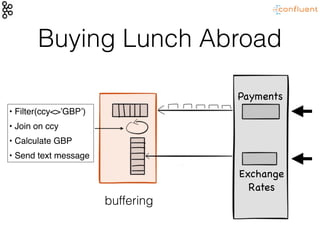
Buying Lunch Abroad
Payments
Exchange

Rates
• Filter(ccy<>’GBP’)
• Join on ccy
• Calculate GBP
• Send text message
buffering
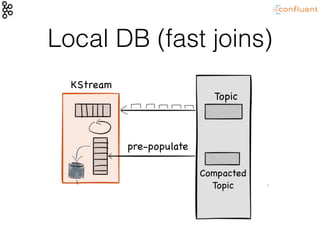
Local DB (fast joins)
Topic
Compacted

Topic
KStream
pre-populate
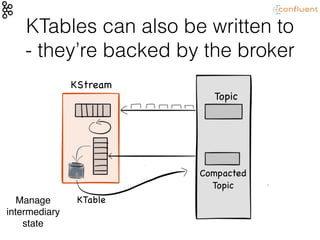
KTables can also be written to
- they’re backed by the broker
Manage
intermediary
state
KStream
KTable
Topic
Compacted

Topic
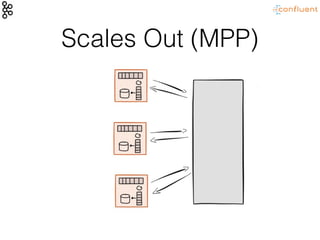
Scales Out (MPP)
These tools are pretty
handy
for managing decentralised services
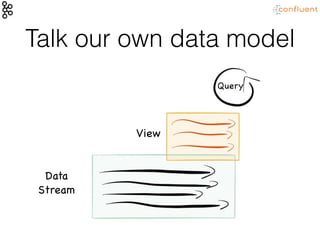
Talk our own data model
Data

Stream
View
Query
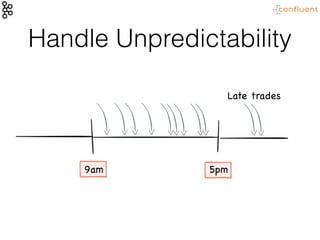
Handle Unpredictability
9am 5pm
Late trades
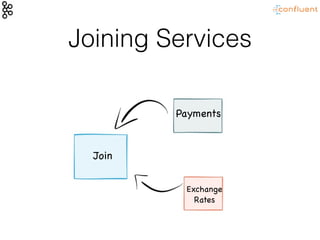
Joining Services
Payments
Exchange

Rates
Join
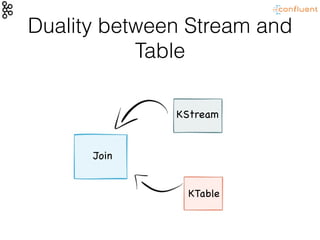
Duality between Stream and
Table
Join
KStream
KTable
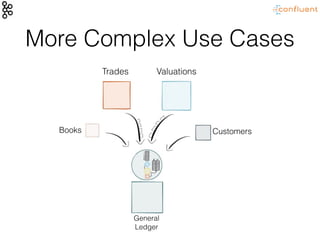
More Complex Use Cases
Trades Valuations
Books Customers
General
Ledger
trades books
risk results
ex-

rates
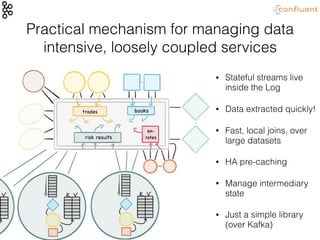
Practical mechanism for managing data
intensive, loosely coupled services
• Stateful streams live
inside the Log
• Data extracted quickly!
• Fast, local joins, over
large datasets
• HA pre-caching
• Manage intermediary
state
• Just a simple library
(over Kafka)
There is much more to
stream processing
it is grounded in the world of big-data analytics
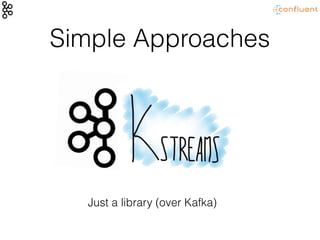
Simple Approaches
Just a library (over Kafka)
Keeping Services
Consistent
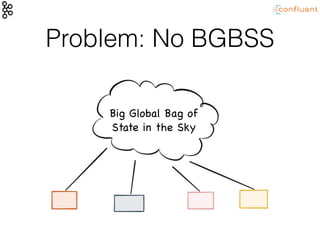
Big Global Bag of 

State in the Sky
Problem: No BGBSS
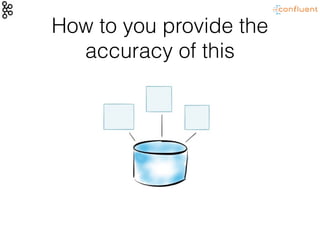
How to you provide the
accuracy of this
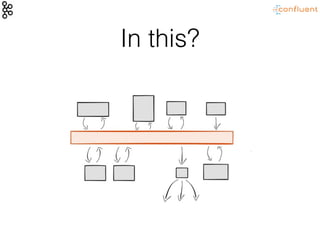
In this?
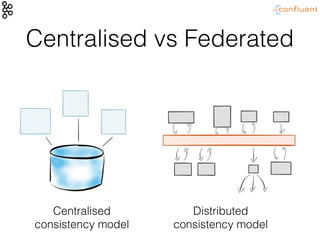
Centralised vs Federated
Centralised
consistency model
Distributed
consistency model
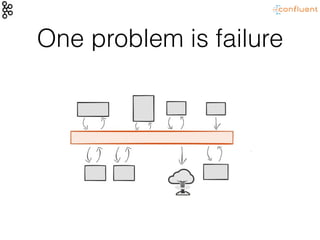
One problem is failure
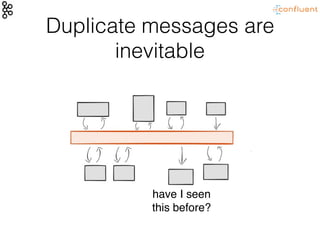
Duplicate messages are
inevitable
have I seen
this before?
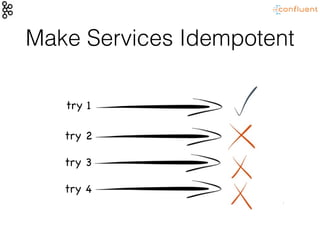
Make Services Idempotent
try 1
try 2
try 3
try 4
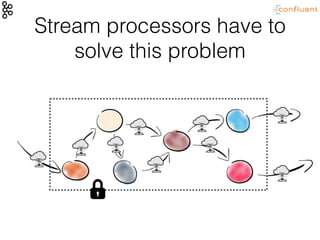
Stream processors have to
solve this problem
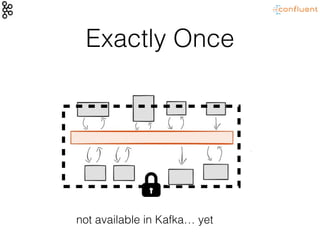
Exactly Once
not available in Kafka… yet
So what do we have?
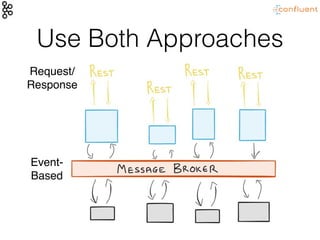
Use Both Approaches
Event-
Based
Request/
Response
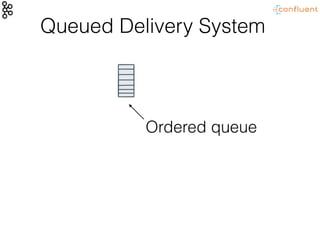
Queued Delivery System
Ordered queue
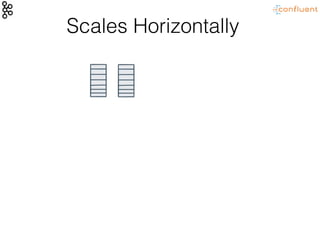
Scales Horizontally
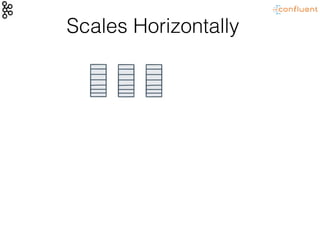
Scales Horizontally
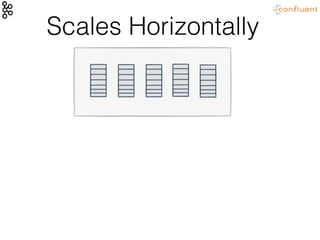
Scales Horizontally
Scales Horizontally
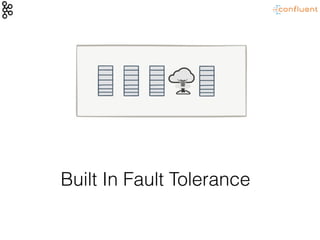
Built In Fault Tolerance
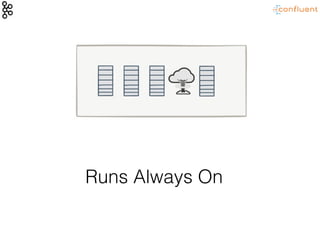
Runs Always On
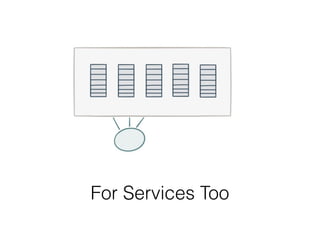
For Services Too
Scales Horizontally
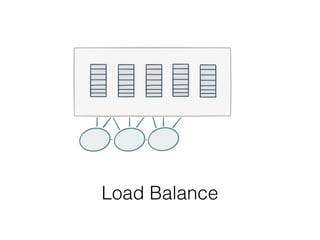
Load Balance
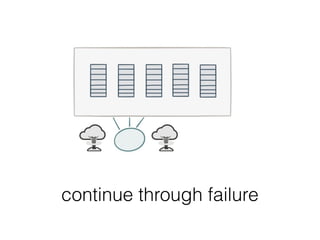
continue through failure
Scales Horizontally
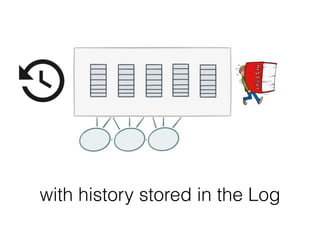
with history stored in the Log
Scales Horizontally
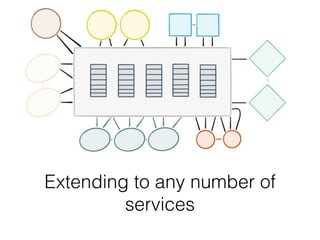
Extending to any number of
services
Scales Horizontally
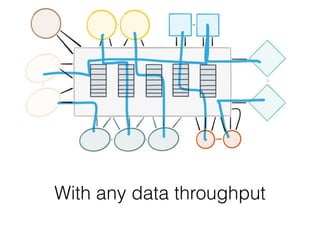
With any data throughput
Scales Horizontally
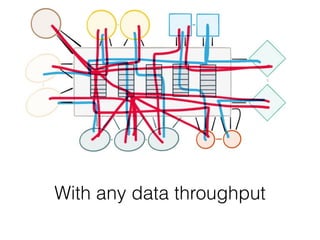
With any data throughput
Scales Horizontally
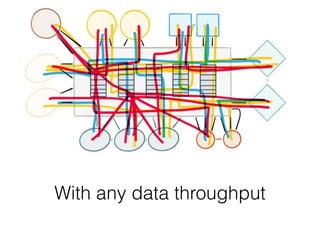
With any data throughput
Scales Horizontally
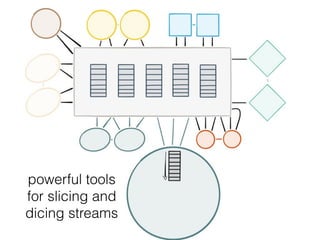
powerful tools
for slicing and
dicing streams
Scales Horizontally
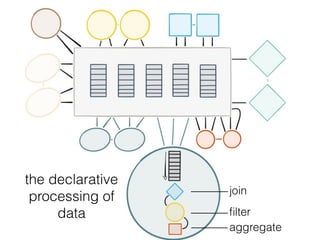
the declarative
processing of
data
join
filter
aggregate
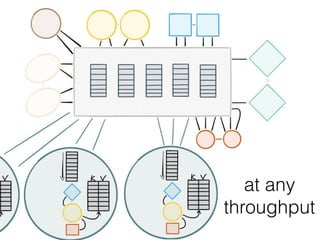
at any
throughput
Scales Horizontally
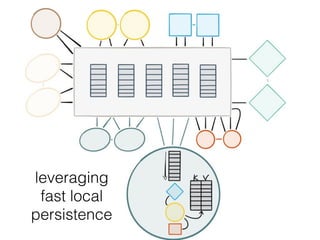
leveraging
fast local
persistence
Scales Horizontally
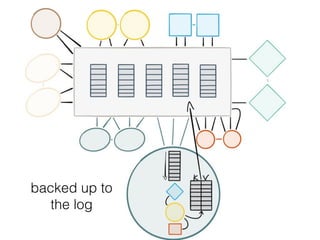
backed up to
the log
Scales Horizontally
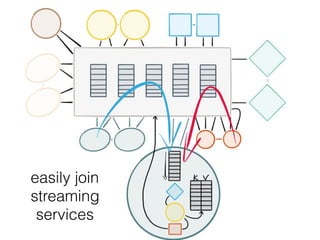
easily join
streaming
services
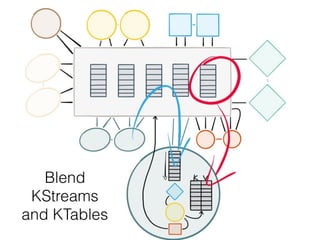
Blend
KStreams
and KTables
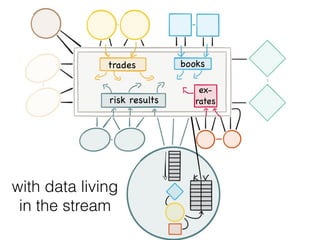
trades books
risk results
ex-

rates
with data living
in the stream
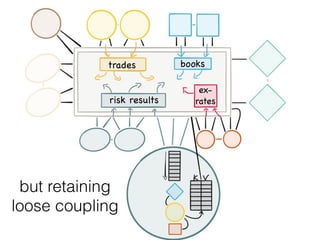
but retaining
loose coupling
trades books
risk results
ex-

rates
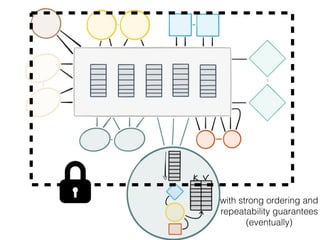
Scales Horizontally
with strong ordering and
repeatability guarantees
(eventually)
so…
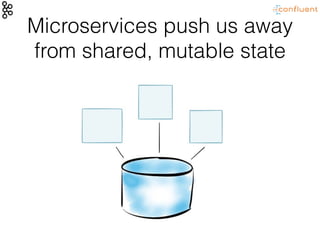
Microservices push us away
from shared, mutable state
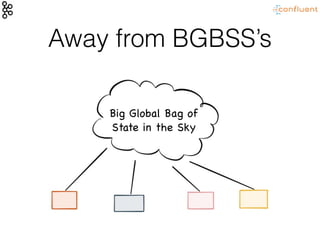
Big Global Bag of 

State in the Sky
Away from BGBSS’s
This means data is
increasingly remote
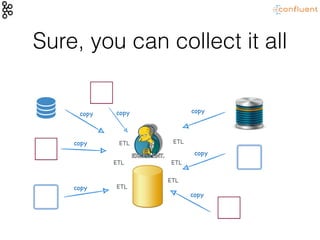
Sure, you can collect it all
copy copy
copy
copy
copy
copy
copy
ETL
ETL
ETL ETL
ETL
ETL
can be a lot of work
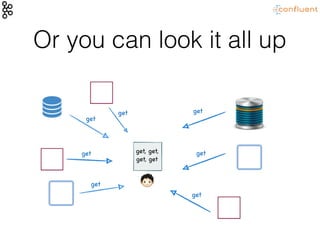
Or you can look it all up
get
get
get
get
get
get
get
get, get, 

get, get
but that doesn’t scale well
(with system complexity or with data throughput)
Better to embrace
decentralistion
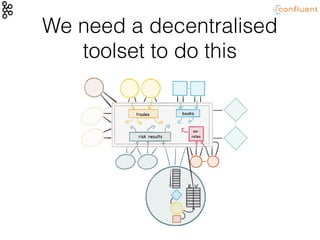
We need a decentralised
toolset to do this
trades books
risk results
ex-

rates
Keep it simple,
Keep it moving

Microservices for a Streaming World