Parts of the Light Microscope
T. Trimpe 2003 http://sciencespot.net/
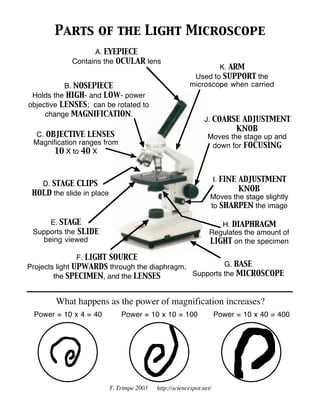
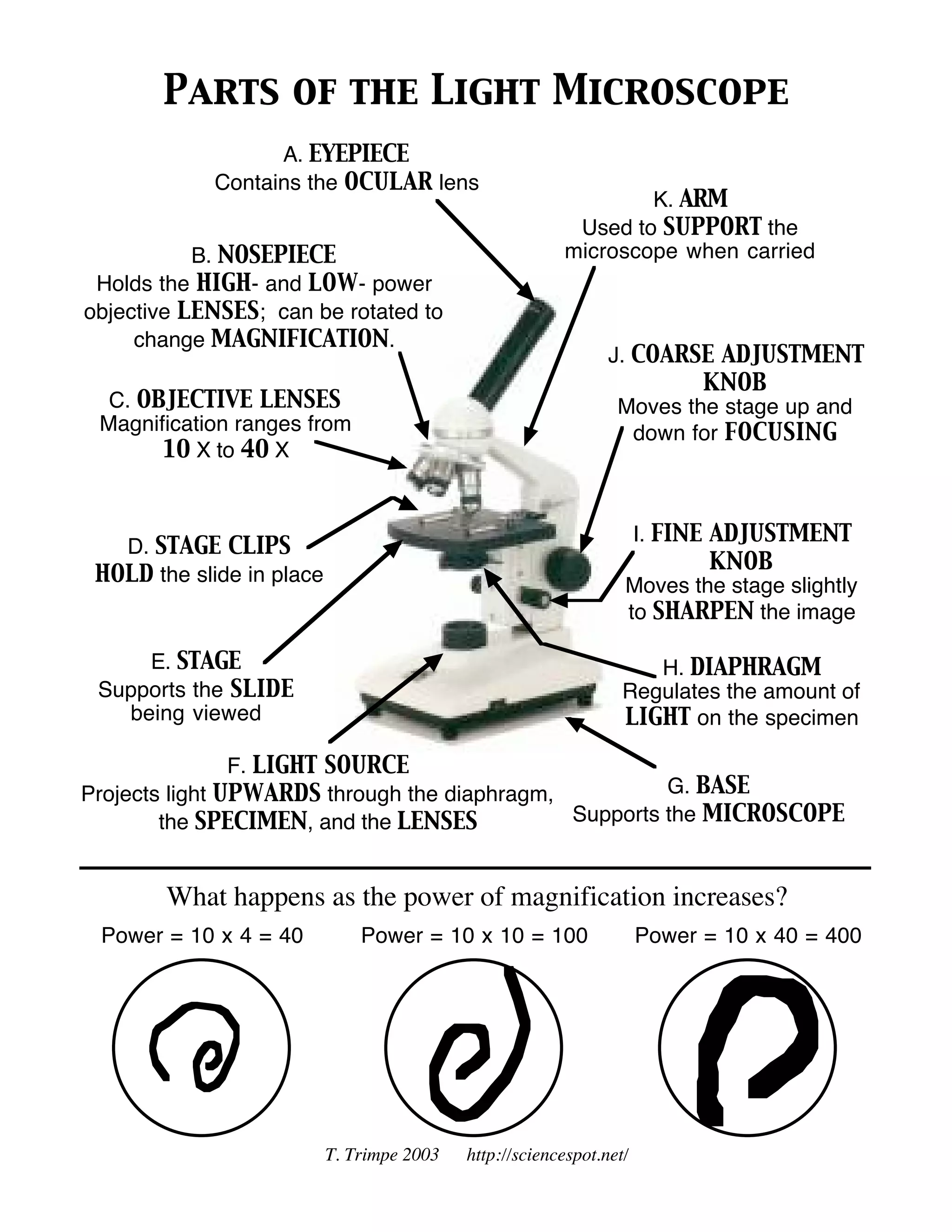
A. EYEPIECE
Contains the OCULAR lens
J. COARSE ADJUSTMENT
KNOB
Moves the stage up and
down for FOCUSING
I. FINE ADJUSTMENT
KNOB
Moves the stage slightly
to SHARPEN the image
G. BASE
Supports the MICROSCOPE
D. STAGE CLIPS
HOLD the slide in place
C. OBJECTIVE LENSES
Magnification ranges from
10 X to 40 X
F. LIGHT SOURCE
Projects light UPWARDS through the diaphragm,
the SPECIMEN, and the LENSES
H. DIAPHRAGM
Regulates the amount of
LIGHT on the specimen
E. STAGE
Supports the SLIDE
being viewed
K. ARM
Used to SUPPORT the
microscope when carriedB. NOSEPIECE
Holds the HIGH- and LOW- power
objective LENSES; can be rotated to
change MAGNIFICATION.
Power = 10 x 4 = 40 Power = 10 x 10 = 100 Power = 10 x 40 = 400
What happens as the power of magnification increases?
Name ______________________________
Compound Light Microscope
Label each part and complete its description.
T. Trimpe 2003 http://sciencespot.net/
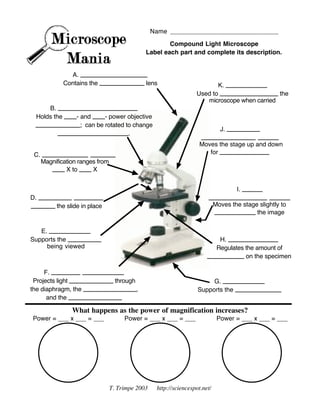
A. ________________
Contains the ___________ lens
J. ________
_____________ _____
Moves the stage up and down
for ____________
I. _____
______________ _____
Moves the stage slightly to
__________ the image
G. __________
Supports the ___________
D. ________ _______
______ the slide in place
C. ___________ ______
Magnification ranges from
___ X to ___ X
F. _______ __________
Projects light ___________ through
the diaphragm, the _____________,
and the _____________
H. ____________
Regulates the amount of
_________ on the specimen
E. __________
Supports the ________
being viewed
K. __________
Used to ______________ the
microscope when carried
B. ___________________
Holds the ___- and ___- power objective
___________; can be rotated to change
_________________.
Power = ___ x ___ = ___ Power = ___ x ___ = ___ Power = ___ x ___ = ___
What happens as the power of magnification increases?

Microscope parts

  • 1.
    Parts of theLight Microscope T. Trimpe 2003 http://sciencespot.net/ A. EYEPIECE Contains the OCULAR lens J. COARSE ADJUSTMENT KNOB Moves the stage up and down for FOCUSING I. FINE ADJUSTMENT KNOB Moves the stage slightly to SHARPEN the image G. BASE Supports the MICROSCOPE D. STAGE CLIPS HOLD the slide in place C. OBJECTIVE LENSES Magnification ranges from 10 X to 40 X F. LIGHT SOURCE Projects light UPWARDS through the diaphragm, the SPECIMEN, and the LENSES H. DIAPHRAGM Regulates the amount of LIGHT on the specimen E. STAGE Supports the SLIDE being viewed K. ARM Used to SUPPORT the microscope when carriedB. NOSEPIECE Holds the HIGH- and LOW- power objective LENSES; can be rotated to change MAGNIFICATION. Power = 10 x 4 = 40 Power = 10 x 10 = 100 Power = 10 x 40 = 400 What happens as the power of magnification increases?
  • 2.
    Name ______________________________ Compound LightMicroscope Label each part and complete its description. T. Trimpe 2003 http://sciencespot.net/ A. ________________ Contains the ___________ lens J. ________ _____________ _____ Moves the stage up and down for ____________ I. _____ ______________ _____ Moves the stage slightly to __________ the image G. __________ Supports the ___________ D. ________ _______ ______ the slide in place C. ___________ ______ Magnification ranges from ___ X to ___ X F. _______ __________ Projects light ___________ through the diaphragm, the _____________, and the _____________ H. ____________ Regulates the amount of _________ on the specimen E. __________ Supports the ________ being viewed K. __________ Used to ______________ the microscope when carried B. ___________________ Holds the ___- and ___- power objective ___________; can be rotated to change _________________. Power = ___ x ___ = ___ Power = ___ x ___ = ___ Power = ___ x ___ = ___ What happens as the power of magnification increases?