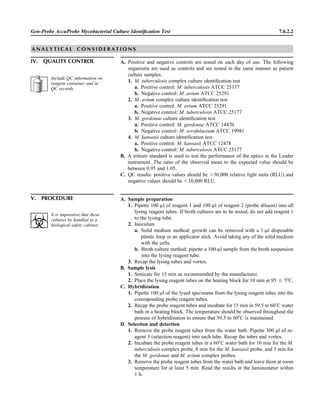
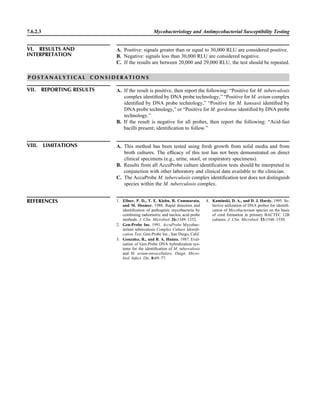
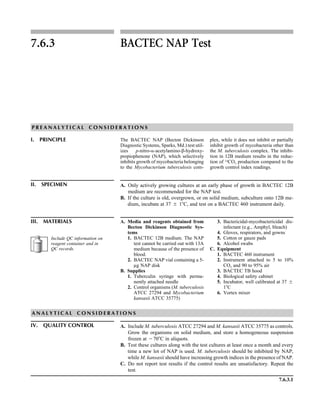
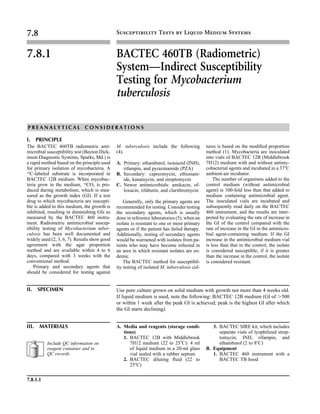
Clinical
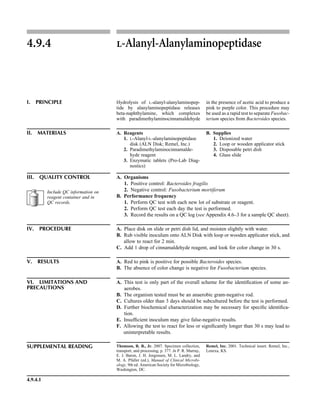
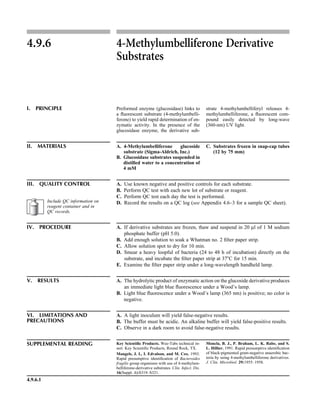
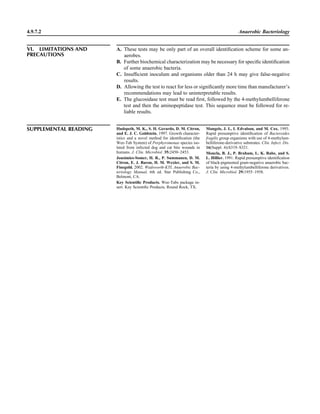
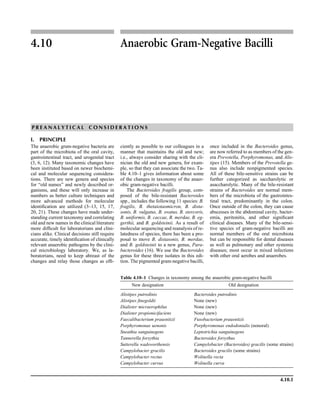
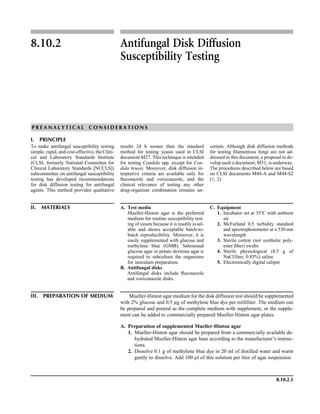
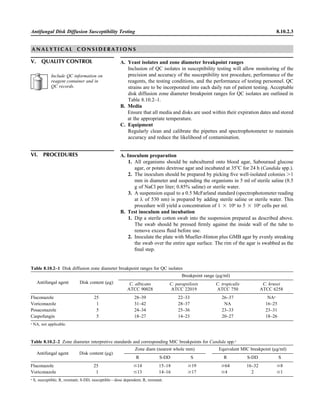
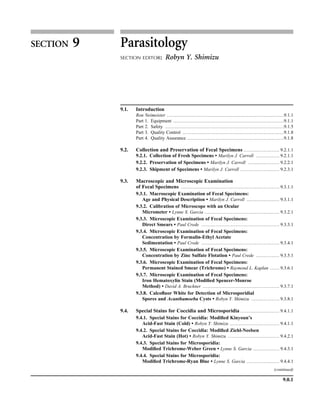
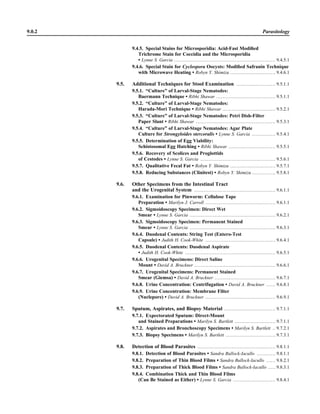
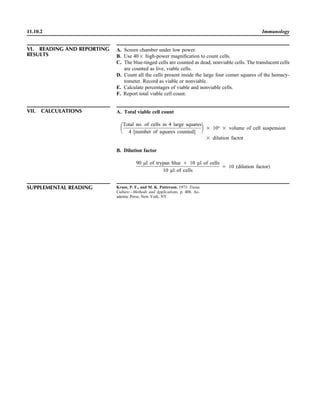
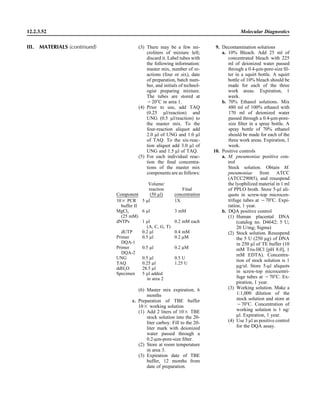
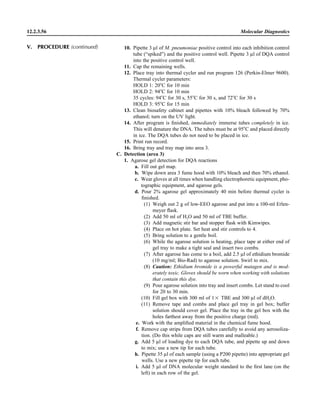
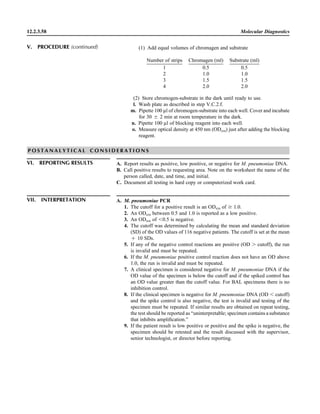
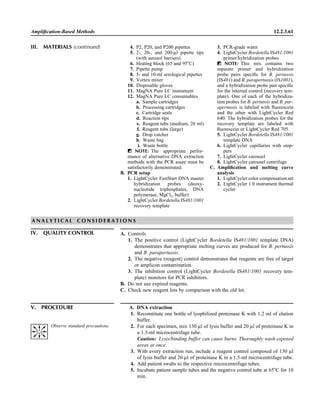
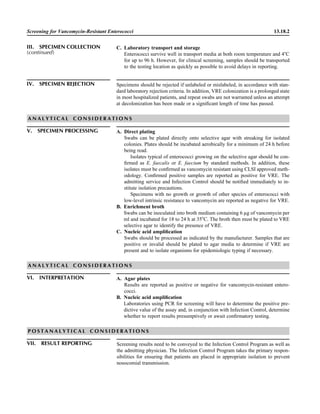
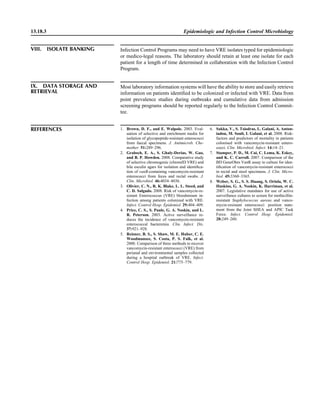
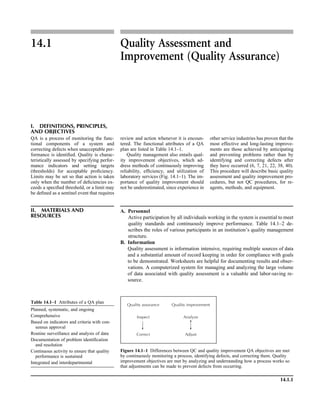
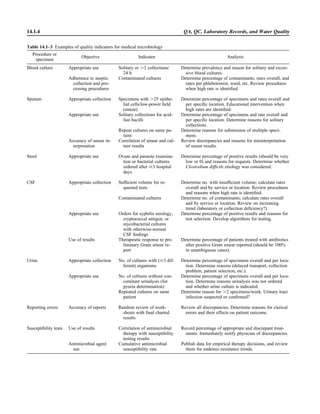
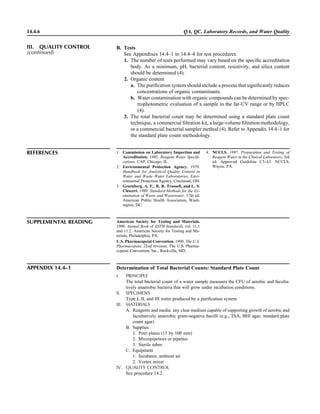
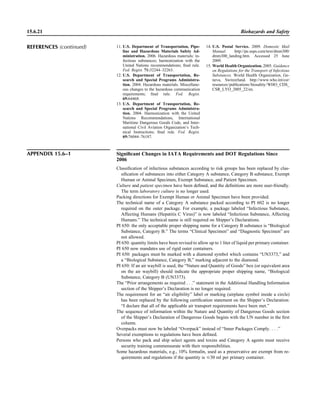
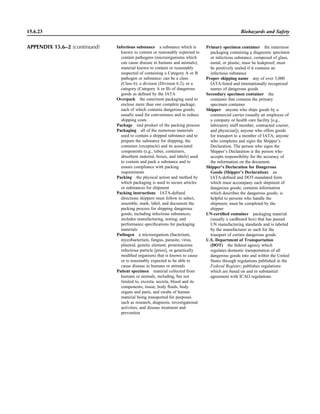
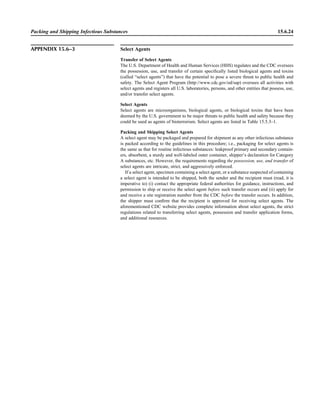
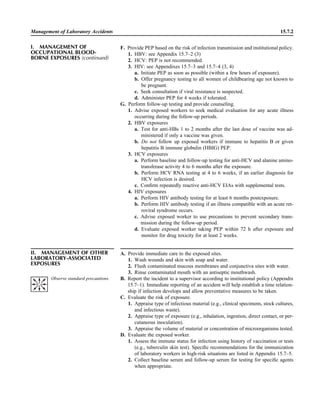
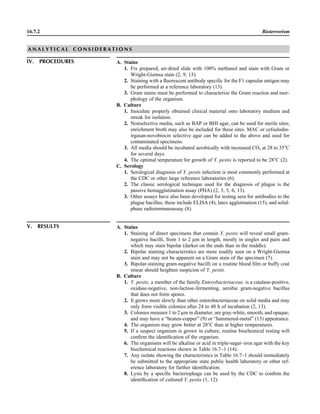
Microbiology
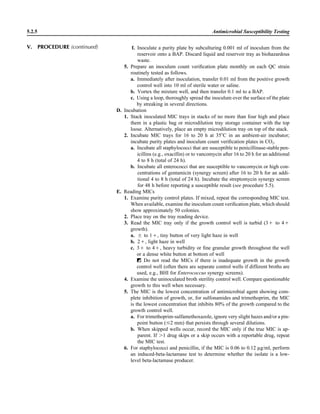
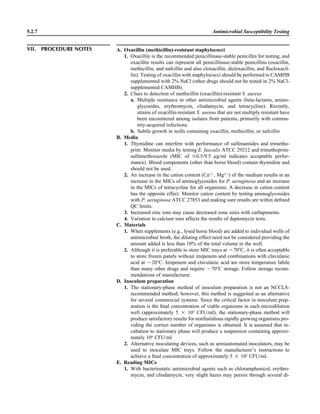
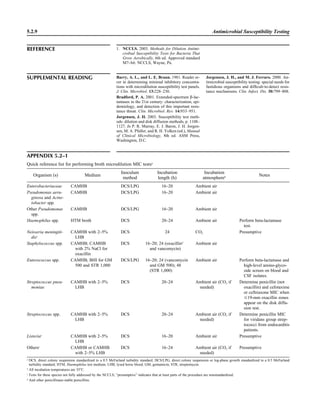
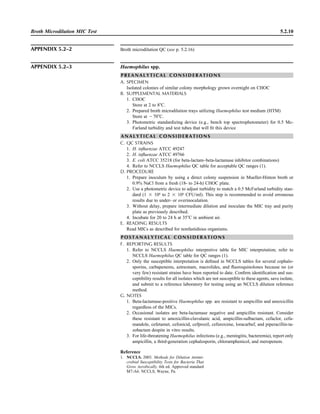
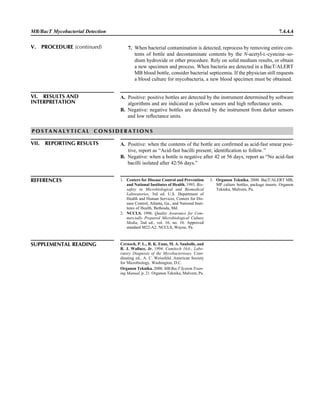
Procedures
Handbook
T H I R D E D I T I O N
VOLUME1
Clinical
Microbiology
Procedures
Handbook
T H I R D E D I T I O N
E D I T O R I N C H I E F, Third Edition and 2007 Update
Lynne S.Garcia
LSG & Associates, Santa Monica, California
E D I T O R I N C H I E F, Original and Second Editions
Henry D. Isenberg
(Deceased)
VOLUME1Washington, DC
Address editorial correspondence to ASM Press, 1752 N St., N.W., Washington, DC
20036-2904, USA
Send orders to ASM Press, P.O. Box 605, Herndon, VA 20172, USA
Phone: 800-546-2416; 703-661-1593
Fax: 703-661-1501
E-mail: books@asmusa.org
Online: http://estore.asm.org
Copyright ᭧ 2010 ASM Press
American Society for Microbiology
1752 N St., N.W.
Washington, DC 20036-2904
Library of Congress Cataloging-in-Publication Data
Clinical microbiology procedures handbook.—3rd ed. / editor in chief, third edition and
2007 update, Lynne S. Garcia.
p. ; cm.
“Editor in chief, original and second editions Henry D. Isenberg.”
Includes bibliographical references and index.
ISBN-13: 978-1-55581-527-1
ISBN-10: 1-55581-527-8
1. Diagnostic microbiology—Laboratory manuals. I. Garcia, Lynne Shore.
II. Isenberg, Henry D.
[DNLM: 1. Microbiological Techniques—methods—Laboratory Manuals.
WQ 25 C6415 2010]
QR67.C555 2010
616.9Ј041—dc22
2010014355
10 9 8 7 6 5 4 3 2 1
All rights reserved
Printed in the United States of America
Dedication
We dedicate the third edition of the Clinical Microbiology Procedures
Handbook to Henry D. Isenberg. Henry was a pioneer in clinical
microbiology who spearheaded the field of microbial diagnosis for more
than a half century. He was a gifted mentor, scholar, and scientist who
inspired several generations of clinical microbiologists. We are very
fortunate to have worked with such an outstanding microbiologist and
colleague.
vii
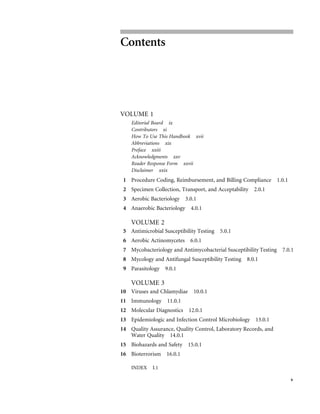
Contents
VOLUME 1
Editorial Board ix
Contributors xi
How To Use This Handbook xvii
Abbreviations xix
Preface xxiii
Acknowledgments xxv
Reader Response Form xxvii
Disclaimer xxix
1 Procedure Coding, Reimbursement, and Billing Compliance 1.0.1
2 Specimen Collection, Transport, and Acceptability 2.0.1
3 Aerobic Bacteriology 3.0.1
4 Anaerobic Bacteriology 4.0.1
VOLUME 2
5 Antimicrobial Susceptibility Testing 5.0.1
6 Aerobic Actinomycetes 6.0.1
7 Mycobacteriology and Antimycobacterial Susceptibility Testing 7.0.1
8 Mycology and Antifungal Susceptibility Testing 8.0.1
9 Parasitology 9.0.1
VOLUME 3
10 Viruses and Chlamydiae 10.0.1
11 Immunology 11.0.1
12 Molecular Diagnostics 12.0.1
13 Epidemiologic and Infection Control Microbiology 13.0.1
14 Quality Assurance, Quality Control, Laboratory Records, and
Water Quality 14.0.1
15 Biohazards and Safety 15.0.1
16 Bioterrorism 16.0.1
INDEX I.1
ix
Editorial Board
SECTION EDITORS
Vickie S. Baselski
Department of Pathology and Laboratory
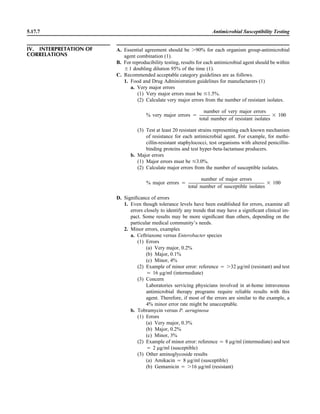
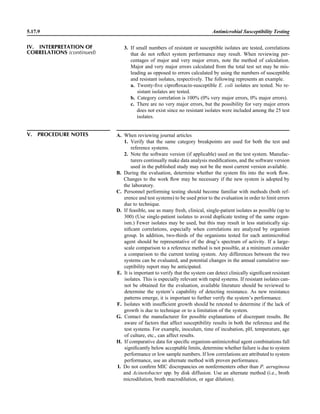
Medicine, University of Tennessee Health
Science Center, 930 Madison Avenue,
Memphis, TN 38163
Kathleen G. Beavis
Stroger Hospital of Cook County, 1901
W. Harrison Street, LL-926, Chicago, IL
60612
Deirdre Church
Division Head, Microbiology, Calgary
Laboratory Services,
9-3535 Research Rd. N.W., Calgary, Alberta
T2L 2K8, Canada
Lorraine Clarke
Biopreparedness Laboratory Response
Network, New York State Department
of Health, Wadsworth Center, P.O. Box 509,
Albany, NY 12201-0509
Judy Daly
Primary Children’s Medical Center,
University of Utah, 100 North Mario
Capecchi Drive, Salt Lake City, UT
84113-1100
Phyllis Della-Latta
Columbia-Presbyterian Medical Center,
Clinical Microbiology Service, CHONY 3S,
622 W. 168th St., New York, NY 10032
Thomas N. Denny
Duke Human Vaccine Institute
and Center for HIV/AIDS Vaccine
Immunology, 106 Research Drive, MSRB II
Building, Room 4077, DUMC Box 103020,
Durham, NC 27710
Gerald A. Denys
Clarian Health Partners, Inc., Clarian
Pathology Laboratory, 350 West 11th Street,
Room 6027B, Indianapolis, IN 46202-4108
Maurice Exner
Focus Diagnostics Inc., 11221 Valley View
Street, Cypress, CA 90630
Lynne S. Garcia
LSG & Associates, 512-12th St.,
Santa Monica, CA 90402-2908
Larry D. Gray
TriHealth Laboratories and Department of
Molecular Genetics, Biochemistry, and
Microbiology, University of Cincinnati
College of Medicine, 619 Oak Street,
Cincinnati, OH 45206
Dan Gregson
Infectious Diseases, Calgary Health Region
Laboratory Services, University of Calgary,
9-3535 Research Rd. NW, Calgary, Alberta
T2L 2K8, Canada
Gerri S. Hall
Clinical Microbiology, Cleveland Clinic,
9500 Euclid Avenue, Cleveland, OH 44195
Kevin C. Hazen
Department of Pathology, University of
Virginia Health System, P.O. Box 800904,
Charlottesville, VA 22908-0904
Janet Fick Hindler
Clinical Microbiology (171315), Department
of Pathology and Laboratory Medicine,
UCLA Medical Center, 10833 LeConte Ave.,
Los Angeles, CA 90095-1713
Susan A. Howell
Mycology, St. John’s Institute of
Dermatology, GSTS Pathology,
St. Thomas’ Hospital, Lambeth Palace Road,
London SE1 7EH, United Kingdom
Stephen G. Jenkins
Department of Pathology, Carolinas Medical
Center, 1000 Blythe Blvd., Charlotte, NC
28203-5871
Amy L. Leber
Department of Laboratory Medicine,
Nationwide Children’s Hospital, Bldg C,
Rm. 1868, 700 Children’s Drive, Columbus,
OH 43205
Andrea J. Linscott
Department of Pathology, Ochsner Medical
Center, 1514 Jefferson Highway,
New Orleans, LA 70121
James I. Mangels
Sutter Medical Center of Santa Rosa,
3325 Chanate Rd., Santa Rosa, CA 95404
J. Michael Miller
Laboratory Response Branch, Bioterrorism
Preparedness and Response Program,
Centers for Disease Control and Prevention,
Mail Stop C-18, Atlanta, GA 30333
Susan Munro
Clinical Microbiology Laboratory, Stanford
University Medical Center, 3375 Hillview
Ave., Room 1600, Palo Alto, CA 94304
Irving Nachamkin
Department of Pathology and
Laboratory Medicine, University of
Pennsylvania Medical Center,
3400 Spruce St., Philadelphia, PA
19104-4283
Susan Novak-Weekley
Clinical Microbiology, Kaiser Regional
Laboratories, 11668 Sherman Way,
N. Hollywood, CA 91605
x Editorial Board
Michael A. Pfaller
Department of Pathology, University of Iowa
College of Medicine, Iowa City, IA 52242
Susan F. Plaeger
Division of AIDS, NIAID, NIH, HHS,
6700-B Rockledge Drive, Room 4101,
Bethesda, MD 20892-7626
Robyn Y. Shimizu
UCLA Health System, Brentwood Annex,
Clinical Microbiology, 11633 San Vicente
Blvd., Rear Building, Los Angeles, CA 90049
James W. Snyder
Department of Pathology, Division of
Laboratory Medicine, University of Louisville
School of Medicine and Hospital, 530 S.
Jackson St., Louisville, KY 40202
Alice S. Weissfeld
Microbiology Specialists Inc., 8911
Interchange Dr., Houston, TX 77054-2507
Gail Woods
Department of Pathology and Lab Services,
UAMS, Mail Slot 502, 4301 West Markham
Street, Little Rock, AR 72205
Mary K. York
MKY Microbiology Consulting, 248 Dantley
Way, Walnut Creek, CA 94598
ASSOCIATE SECTION EDITORS
Michael Bell
Centers for Disease Control and Prevention,
Mail Stop A-26, 1600 Clifton Rd. N.E.,
Atlanta, GA 30333
Angela M. Caliendo
Emory University Hospital and Department of
Pathology and Laboratory Medicine, Emory
University School of Medicine, Atlanta, GA
30322
Susan A. Howell
Mycology, St. John’s Institute of
Dermatology GSTS Pathology, St. Thomas’
Hospital, Lambeth Palace Road, London SE1
7EH, United Kingdom
Susan Novak-Weekley
Clinical Microbiology, Kaiser Regional
Laboratories, 11668 Sherman Way,
N. Hollywood, CA 91605
Kirsten St. George
Laboratory of Viral Diseases, Wadsworth
Center–DAI, New York State Department of
Health, P.O. Box 22002, Albany, NY
12001-2002
James Versalovic
Department of Pathology, Texas Children’s
Hospital and Baylor College of Medicine,
Houston, TX 77030
xi
Cindy D. Bethel
Clinical Microbiology, University of Chicago
Medical Center, 5841 Maryland Ave.,
Chicago, IL 60637
Walter Bond
3366 Station Ct., Lawrenceville, GA 30044
Subhit Boonlayangoor
Clinical Microbiology, University of Chicago
Medical Center, 5841 Maryland Ave.,
Chicago, IL 60637
Philip G. Bowler
Bristol-Myers Squibb, ConvaTec GDC, First
Avenue, Deeside Industrial Park, Deeside,
Flintshire CH5 2NU, United Kingdom
June M. Brown
Meningitis and Special Pathogens Branch,
Division of Bacterial and Mycotic Diseases,
Centers for Disease Control and Prevention,
Bldg. 17, Room 2207, Mail Stop G-34,
Atlanta, GA 30333
David A. Bruckner
Clinical Microbiology (171315), UCLA
Medical Center, Los Angeles, CA 90024
Sandra Bullock-Iacullo
Public Health Practice Program Office,
Division of Laboratory Services, Centers for
Disease Control and Prevention, Mail Stop
A-16, Atlanta, GA 30333
Linda Byrd
Microbiology Department, Parkland Health
and Hospital, Dallas, TX 75235
Angela M. Caliendo
Emory University Hospital and Department of
Pathology and Laboratory Medicine, Emory
University School of Medicine, Atlanta,
GA 30322
Joseph Campos
Department of Laboratory Medicine,
Children’s National Medical Center, 111
Michigan Ave. N.W., Washington, DC 20010
Contributors
Maria E. Aguero-Rosenfeld
Department of Pathology, New York Medical
College and Westchester Medical Center,
Valhalla, NY 10595
Matthew Arduino
Centers for Disease Control and Prevention,
Mail Stop C-16, 1600 Clifton Rd. N.E.,
Atlanta, GA 30333
H. Ruth Ashbee
Mycology Reference Centre, Department of
Microbiology, Leeds General Infirmary,
Leeds LS1 3EX, United Kingdom
Martha Bale
ARUP Laboratories, 500 Chipeta Way, Salt
Lake City, UT 84108
Steve Barriere
Gilead Pharmaceuticals, 333 Lakeside Dr.,
Foster City, CA 94404
Marilyn S. Bartlett
Indiana University School of Medicine,
Medical Sciences Bldg., A 128, 635 Barnhill
Dr., Indianapolis, IN 46202-5120
Richard C. Barton
Mycology Reference Centre, Department of
Microbiology, Leeds General Infirmary,
Leeds LS1 3EX, United Kingdom
Vickie Baselski
Department of Pathology, University of
Tennessee at Memphis, 930 Madison Ave.,
Memphis, TN 38163
Kathleen G. Beavis
Stroger Hospital of Cook County, 1901 W.
Harrison Street, LL-926, Chicago, IL 60612
Michael Bell
Centers for Disease Control and Prevention,
Mail Stop A-26, 1600 Clifton Rd. N.E.,
Atlanta, GA 30333
Kathryn Bernard
National Microbiology Laboratory Health
Canada, 1015 Arlington St., Room H5040,
Winnipeg, Manitoba R3E 3R2, Canada
Karen C. Carroll
Division of Medical Microbiology,
Departments of Pathology and Medicine, The
Johns Hopkins University School of
Medicine, Meyer B1-193, 600 N. Wolfe St.,
Baltimore, MD 21287
Marilyn J. Carroll
J A Turner Diagnostic Parasitology Lab, 519
W. Carson St., Suite 104, Carson, CA 90745
Deirdre Church
Division Head, Microbiology,
Calgary Laboratory Services,
9-3535 Research Rd. N.W.,
Calgary, Alberta T2L 2K8, Canada
Lorraine Clarke
Biopreparedness Laboratory Response
Network, New York State Department of
Health, Wadsworth Center, P.O. Box 509,
Albany, NY 12201-0509
Jill Clarridge III
Veterans Administration Medical Center,
University of Washington, 1660 S.
Columbian Way, Seattle, WA 98108
Judith H. Cook-White
Harbor-UCLA Medical Center,
1000 W. Carson St., Torrance, CA 90509
J. H. Cox
U.S. Military HIV Research Program, Suite
200, 13 Taft Court, Rockville, MD 20850
Paul Crede
Microbiology Unit, State Public Health
Laboratory, 307 W. McCarty St., Jefferson
City, MO 65101(retired)
Judy Daly
Primary Children’s Medical Center,
University of Utah, 100 North Mario
Capecchi Drive, Salt Lake City, UT
84113-1100
Phyllis Della-Latta
Columbia-Presbyterian Medical Center,
Clinical Microbiology Service, CHONY 3S,
622 W. 168th St., New York, NY 10032
Thomas N. Denny
Duke Human Vaccine Institute
and Center for HIV/AIDS Vaccine
Immunology, 106 Research Drive, MSRB II
Building, Room 4077, DUMC Box 103020,
Durham, NC 27710
Gerald A. Denys
Clarian Health Partners, Inc.,Clarian
Pathology Laboratory, 350 West 11th Street,
Room 6027B, Indianapolis, IN 46202-4108
Lynn B. Duffy
Diagnostic Mycoplasma Laboratory BBRB
609, University of Alabama at Birmingham,
845 19th St. S., Birmingham, AL 35294
xii Contributors
J. Stephen Dumler
Division of Medical Microbiology,
Department of Pathology, The Johns Hopkins
Medical Institutions, Meyer B1-193, 600 N.
Wolfe St., Baltimore, MD 21287
W. Michael Dunne, Jr.
Department of Pathology and Immunology,
Division of Laboratory Medicine, Washington
University School of Medicine, 660 S. Euclid,
Box 8118, St. Louis, MO 63110
Paul H. Edelstein
Department of Pathology and Laboratory
Medicine, University of Pennsylvania
Medical Center, 3400 Spruce St.,
Philadelphia, PA 19104-4283
Carolyne B. Ellis
VA Medical Center, 3200 Vine St.,
Cincinnati, OH 45220
Glyn V. Evans
Welsh Mycology Reference Laboratory,
Department of Medical Microbiology and
PHLS, University of Wales College of
Medicine, Heath Park, Cardiff CF14 4XN,
United Kingdom (deceased)
Maurice Exner
Focus Diagnostics Inc., 11221 Valley View
Street, Cypress, CA 90630
Sheila M. Farnham
bioMe´rieux Vitek, Inc., 595 Anglum Dr.
Hazelwood, MO 63042
Guido Ferrari
Department of Surgery and Center for HIV/
AIDS Vaccine Immunology, La Salle Street
ext, SORF Bldg. Room 208, DUMC Box
2926, Durham, NC 27710
Patricia I. Fields
Foodborne and Diarrheal Diseases Branch,
Centers for Disease Control and Prevention,
Atlanta, GA 30333
Thomas R. Fritsche
JMI Laboratories, 345 Beaver Kreek Centre,
Suite A, North Liberty, IA 52317-7110
Ambrosia Garcia-Louzao
Duke University, DHVI—IQA Center,
DUMC 103020, Durham, NC 27710
Zenaida C. Garcia
UMDNJ, New Jersey Medical School,
185 S. Orange Ave., MSB F522, Newark,
NJ 07103
Lynne S. Garcia
LSG & Associates, 512-12th St., Santa
Monica, CA 90402-2908
Cheryl Gedris
Westchester Medical Center, Grasslands
Road, Valhalla, NY 10595
Mahmoud A. Ghannoum
Center for Medical Mycology, University
Hospitals of Cleveland, and Case Western
Reserve University, 11100 Euclid Ave., LKS
5028, Cleveland, OH 44106-5028
Mary J. R. Gilchrist
University Hygienic Laboratory, University of
Iowa, Iowa City, IA 52242
Peter Gilligan
Clinical Microbiology-Immunology
Laboratories, University of North Carolina
Hospitals, UNC Hospitals CB 7600, Chapel
Hill, NC 27514
Steven Glenn
Public Health Practice Program Office,
Centers for Disease Control and Prevention,
Mail Stop A-16, Atlanta, GA 30333
Judith G. Gordon
Gordon Recourses Consultants, Inc., Reston,
Va. (retired)
Eileen Gorss
Bacteriology Laboratory, Children Hospital,
300 Longwood Ave., Boston, MA 02115
Larry D. Gray
TriHealth Laboratories and Department of
Molecular Genetics, Biochemistry, and
Microbiology, University of Cincinnati
College of Medicine, 619 Oak Street,
Cincinnati, OH 45206
Dan Gregson
Infectious Diseases, Calgary Health Region
Laboratory Services, University of Calgary,
9-3535 Research Rd. NW, Calgary, Alberta
T2L 2K8, Canada
Jane Griffin
4605 TVC Infectious Diseases, Vanderbilt
University Medical Center, Nashville,
TN 37232
Beatrice Grinius
bioMe´rieux Vitek, Inc., 595 Anglum Dr.,
Hazelwood, MO 63042
Gerri S. Hall
Clinical Microbiology, Cleveland Clinic, 9500
Euclid Avenue, Cleveland, OH 44195
Nancy H. Hall
Oakdall Hall, University Hygienic
Laboratory, Iowa City, IA 52242
Jay Hardy
Hardy Diagnostics, 1430 W. McCoy Ln.,
Santa Maria, CA 93455
Kevin C. Hazen
Department of Pathology, University of
Virginia Health System, P.O. Box 800904,
Charlottesville, VA 22908-0904
Mary Henry
Clinical Laboratories, University of California
Medical Center, Box 0100, Room L515, San
Francisco, CA 94143
Sharon L. Hillier
Department of Obstetrics, Gynecology, and
Reproductive Sciences, Magee-Womens
Hospital of the University of Pittsburgh
Medical Center, 300 Halket St., Pittsburgh,
PA 15213
Janet Fick Hindler
Clinical Microbiology (171315), Department
of Pathology and Laboratory Medicine,
UCLA Medical Center, 10833 LeConte Ave.,
Los Angeles, CA 90095-1713
Lisa Hochstein
Division of Microbiology, Catholic Medical
Center of Brooklyn and Queens, 88-25 153rd
St., Jamaica, NY 11432
Richard L. Hodinka
Clinical Virology Laboratory, Department of
Pathology, Children Hospital of Philadelphia,
and Department of Pediatrics, University of
Pennsylvania, Philadelphia, PA 19104
Judy Holden
Microbiology Laboratory, Massachusetts
General Hospital, Gray 526, 55 Fruit St.,
Boston, MA 02114
Harvey Holmes
Centers for Disease Control and Prevention,
Mail Stop C-16, 1600 Clifton Rd. N.E.,
Atlanta, GA 30333
Anne Howell
1200 N. Veitch St., 1238, Arlington,
VA 22201
Susan A. Howell
Mycology, St. John’s Institute of
Dermatology, GSTS Pathology, St. Thomas’
Hospital, Lambeth Palace Road, London SE1
7EH, United Kingdom
Henry D. Isenberg
Long Island Jewish Medical Center, 270-05
76th Ave., New Hyde Park, NY 11040
(deceased)
Nancy Isham
Center for Medical Mycology, University
Hospitals of Cleveland, and Case Western
Reserve University, 11100 Euclid Ave., LKS
5028, Cleveland, OH 44106-5028
Robert Jacobson
Bureau of Laboratories, Michigan State
Department of Health, 3350 N. Martin Luther
King Jr. Blvd., P.O. Box 3005, Lansing,
MI 48909-0035
Stephen G. Jenkins
Department of Pathology, Carolinas Medical
Center, 1000 Blythe Blvd., Charlotte, NC
28203-5812
Contributors xiii
Robert C. Jerris
DeKalb Medical Center, 2701 N. Decatur
Rd., Decatur, GA 30033
Cheryl A. Jordan
Clinical Microbiology, University of
Wisconsin Hospital and Clinics, A4 204
Clinical Science Center, 600 Highland Ave.,
Madison, WI 53792
Raymond L. Kaplan
Quest Diagnostics, 1777 Montreal Cir.,
Tucker, GA 30084
Gary Keck
1610 E. Cherry Ln., Bloomington, IN 47401
John L. Kempf
University of Iowa Hygienic Laboratory,
Oakdale Research Campus, Iowa City,
IA 52242
Timothy E. Kiehn
Memorial Sloan-Kettering Cancer Center,
1275 York Ave., New York, NY 10021
Julie D. Kingery
Department of Pathology and Lab Medicine,
Portland VA Medical Center, 3710 SW US
Veterans Hospital Rd. P2PATH, Portland, OR
97239
Brandon Kitchel
Centers for Disease Control and Prevention,
NCEZID/DHQP/CEMB, Antimicrobial
Resistance And Characterization Laboratory,
1600 Clifton Road, NE, Mailstop G-08,
Atlanta, GA 30333
Cynthia Knapp
Trek Diagnostic Systems, 982 Keynote Cir.,
Suite 6, Cleveland, OH 44131
Karen Krisher
The Clinical Microbiology Institute, 9725
S.W. Commerce Cir., Suite A-1, Wilsonville,
OR 97070
Vincent LaBombardi
Microbiology, St. Vincent Hospital and
Medical Center, 153 W. 11th St., New York,
NY 10011
Mark LaRocco
St. Luke Episcopal Hospital, 6720 Bertner
Ave., P.O. Box 20269, MC 4-265, Houston,
TX 77030-2697
Amy L. Leber
Department of Laboratory Medicine,
Nationwide Children’s Hospital, Bldg C, Rm.
1868, 700 Children’s Drive, Columbus,
OH 43205
Lillian V. Lee
BioThreat Response Laboratory, The City of
New York Department of Health and Mental
Hygiene, 455 First Ave., New York,
NY 10016
Andrea J. Linscott
Department of Pathology, Ochsner Medical
Center, 1514 Jefferson Highway, New
Orleans, LA 70121
Michael Loeffelholz
Department of Pathology, 301 University
Blvd., University of Texas Medical Branch,
Galveston, TX 77555-0740
David L. Lonsway
Centers for Disease Control and Prevention,
NCEZID/DHQP/CEMB, Antimicrobial
Resistance And Characterization Laboratory,
1600 Clifton Road, NE, Mailstop G-08,
Atlanta, GA 30333
Raul Louzao
Duke Human Vaccine Institute and Center for
HIV/AIDS Vaccine Immunology,
106 Research Drive, MSRB II Building,
Room 4077, DUMC Box 103020, Durham,
NC 27710
Judith C. Lovchik
Indiana State Department of Health, 550 W.
16th Street, Indianapolis, IN 46202
Dyan Luper
Christus Spohn Health System, 6845 Fawn
Ridge Dr., Corpus Christi, TX 78413-4830
James I. Mangels
Sutter Medical Center of Santa Rosa, 3325
Chanate Rd., Santa Rosa, CA 95404
David McDevitt
University of Pittsburgh Medical Center, 200
Lothrop St., Room A-807, Pittsburgh,
PA 15213
Karin L. McGowan
Children’s Hospital of Philadelphia,
University of Pennsylvania School of
Medicine, Room 5060A Main Bldg., 3400
Civic Center Blvd., Philadelphia, PA 19104
Michael M. McNeil
Epidemiology and Surveillance Division,
National Immunization Program, Centers for
Disease Control and Prevention, Mail Stop
E-61, 1600 Clifton Rd., Atlanta, GA 30333
J. Michael Miller
Laboratory Response Branch, Bioterrorism
Preparedness and Response Program, Centers
for Disease Control and Prevention, Mail Stop
C-18, Atlanta, GA 30333
Julia Moody
Infection Control and Microbiology, Lakeland
Regional Medical Center, 1324 Lakeland
Hills Blvd., Lakeland, FL 33804
Arlene Morton
Clinical Microbiology Laboratory, Stanford
University Hospital, 300 Pasteur Dr.,
Stanford, CA 94305(retired)
Ross M. Mulder
bioMe´rieux Vitek, Inc., 595 Anglum Dr.,
Hazelwood, MO 63042
Susan Munro
Clinical Microbiology Laboratory, Stanford
University Medical Center, 3375 Hillview
Ave., Room 1600, Palo Alto, CA 94304
Irving Nachamkin
Department of Pathology and Laboratory
Medicine, University of Pennsylvania,
Medical Center, 3400 Spruce St.,
Philadelphia, PA 19104-4283
Ron Neimeister
Continuing Education and Technology
Evaluation Section, Division of Laboratory
Improvement, Pennsylvania Department of
Health, P.O. Box 500, Exton, PA 19341
(deceased)
Mabel Ann Nicholson
Foodborne and Diarrheal Diseases Branch,
Centers for Disease Control and Prevention,
Atlanta, GA 30333
Susan Novak-Weekley
Clinical Microbiology, Kaiser Regional
Laboratories, 11668 Sherman Way, N.
Hollywood, CA 91605
Sandra L. Novick
ViroMed Laboratories, Minnetonka,
MN 55343
Michele Paessler
The Children’s Hospital of Philadelphia,
Abramson Research Center 1204K, 34th
Street and Civic Center Blvd., Philadelphia,
PA 19104
A. William Pasculle
University of Pittsburgh Medical Center,
Room A-807, 200 Lothrop St., Pittsburgh,
PA 15213
Ellena Peterson
Department of Pathology, Medical Science,
Bldg., Room D-440, University of California,
Irvine, Irvine, CA 92697-4800
Marie Pezzlo
Medical Microbiology Division, University of
California Irvine Medical Center, 101 The
City Dr. S., Orange, CA 92868
Michael A. Pfaller
Department of Pathology, University of Iowa
College of Medicine, Iowa City, IA 52242
Susan F. Plaeger
Division of AIDS, NIAID, NIH, HHS,
6700-B Rockledge Drive, Room 4101,
Bethesda, MD 20892-7626
Perkins B. Poon
Microbiology Laboratory, Department of
Laboratory Medicine, Huntington Memorial
Hospital, 100 W. California Blvd., Pasadena,
CA 91106 (deceased)
xiv Contributors
Nancy E. Raftery
Department of Immunologic and Infectious
Diseases, The Children’s Hospital of
Philadelphia, 34th Street and Civic Center
Boulevard, Philadelphia, PA 19104
J. Kamile Rasheed
Centers for Disease Control and Prevention,
NCEZID/DHQP/CEMB, Antimicrobial
Resistance
and Characterization Laboratory, 1600 Clifton
Road, NE, Mailstop G-08, Atlanta, GA 30333
Megan E. Reller
Division of Medical Microbiology,
Department of Pathology, The Johns Hopkins
University School of Medicine, 720 Rutland
Avenue, Ross 628, Baltimore, MD 21205
Barbara Robinson-Dunn
Clinical Microbiology Laboratory, William
Beaumont Hospital, 3811 W. Thirteen Mile
Rd., Royal Oak, MI 48073-6769
Patricia Rodrigues-Wong
Clinical Laboratories, University of California
Medical Center, Box 0100, Room L515, San
Francisco, CA 94143
Darcie Roe-Carpenter
DadeBehring MicroScan 4008 P2, 1584
Enterprise Blvd., W. Sacramento, CA 95691
Kathryn L. Ruoff
Dartmouth Hitchcock Medical Center, One
Medical Center Dr., Lebanon, NH 03756
Maria Saragias
TB Laboratory, Columbia-Presbyterian
Medical Center, Clinical Microbiology
Service, CHONY 3S, 622 W. 168th St., New
York, NY 10032
Ron B. Schifman
Diagnostics, Southern Arizona VA Healthcare
System, Tucson, AZ 85723
John L. Schmitz
University of North Carolina Hospitals, 101
Manning Drive, Chapel Hill, NC 27514
Paul C. Schreckenberger
Clinical Microbiology Laboratory, University
of Illinois Medical Center at Chicago,
840 S. Wood St., Room 238 CSB, MC 750,
Chicago, IL 60612
Stephanie B. Schwartz
Respiratory Diseases Branch, Centers for
Disease Control and Prevention, Atlanta,
GA 30333
Lynne Sehulster
Centers for Disease Control and Prevention,
Mail Stop A-35, 1600 Clifton Rd. N.E.,
Atlanta, GA 30333
David L. Sewell
Pathology and Laboratory Medicine Service,
Veterans Affairs Medical Center, and
Department of Pathology, Oregon Health and
Sciences University, Portland, OR 97239
Sandip Shah
Bureau of Laboratories, Michigan State
Department of Health, 3350 N. Martin Luther
King Jr. Blvd., P.O. Box 3005, Lansing,
MI 48909-0035
Gillian S. Shankland
Mycology Laboratory, Robertson Building 56,
Dumbarton Rd., Glasgow G11 6NU, Scotland
Susan E. Sharp
Microbiology, Kaiser Permanente Airport
Way Regional Laboratory, 13705 N.E.
Airport Way, Suite C, Portland, OR 97230
Ribhi Shawar
14732 S.E. 66th St., Bellevue, WA 98006
Yvonne R. Shea
Microbiology Service, Department of
Laboratory Medicine, Warren G. Magnuson
Clinical Center, National Institutes of Health,
Bldg. 10, Room 2C385, 10 Center Dr., MSC
1508, Bethesda, MD 20892-1508
Susan L. Shiflett
Bureau of Laboratories, Michigan State
Department of Health, 3350 N. Martin Luther
King Jr. Blvd., P.O. Box 3005, Lansing, MI
48909-0035
Robyn Y. Shimizu
Clinical Microbiology (171315), UCLA
Medical Center, Los Angeles, CA 90024
Stanford T. Shulman
Department of Pediatrics, The Children’s
Memorial Hospital, The Fineberg School of
Medicine, Northwestern University Medical
School, 2300 Children Plaza No. 20, Chicago,
IL 60614-3394
Susan Shuptar
Diagnostic Microbiology Laboratory,
Memorial Sloan-Kettering Cancer Center,
1275 York Ave., New York, NY 10021
Salman Siddiqi
Becton Dickinson, 7 Loveton Cir., Sparks,
MD 21152
James W. Snyder
Department of Pathology, Division of
Laboratory Medicine, University of Louisville
School of Medicine and Hospital,
530 S. Jackson St., Louisville, KY 40202
Lynne Steele
Division of Healthcare Quality Promotion,
Centers for Disease Control and Prevention,
Atlanta, GA 30333
Dana Stein
Flow Cytometry Core Laboratory, UMDNJ
New Jersey Medical School, 185 S. Orange
Ave., MSB F522, Newark, NJ 07103
Kirsten St. George
Laboratory of Viral Diseases, Wadsworth
Center–DAI, New York State Department of
Health, P.O. Box 22002, Albany, NY
12001-2002
Andrew J. Streifel
Department of Environmental Health and
Safety, University of Minnesota, Minneapolis,
MN 55455
Paula Summanen
Research Service, VA Medical Center West
Los Angeles, Los Angeles, CA 90073
Richard C. Summerbell
Centraalbureau voor Schimmelcultures,
P.O. Box 85167, 3508 AD Utrecht,
The Netherlands
Deborah F. Talkington
Respiratory Diseases Branch, Centers for
Disease Control and Prevention, Atlanta, GA
30333
Lorraine Tamashiro
Department of Pathology and Laboratory
Medicine, UCLA Medical Center, 10833
LeConte Ave., Los Angeles, CA 90095-1713
Richard B. Thomson, Jr.
Department of Pathology and Laboratory
Medicine, Evanston Northwestern Healthcare,
2650 Ridge Ave., Evanston, IL 60201
Melissa M. Traylor
FzioMed, Inc., 231 Bonetti Drive, San Luis
Obispo, CA 93401
Nancy B. Tustin
Department of Immunologic and Infectious
Diseases, 34th Street and Civic Center Blvd.,
Philadelphia, PA 19104
Contributors xv
Richard Tustin III
Department of Immunologic and Infectious
Diseases, The Children’s Hospital of
Philadelphia Research Institute, 34th Street
and Civic Center Blvd., Philadelphia, PA
19104
James Versalovic
Department of Pathology, Texas Children
Hospital, and Baylor College of Medicine,
Houston, TX 77030
Govinda S. Visvesvara
Division of Parasitic Diseases, National
Center for Infectious Diseases, Centers for
Disease Control and Prevention, 4770 Buford
Highway N.E., Atlanta, GA 30341-3724
Ken B. Waites
Department of Pathology, WP 230, University
of Alabama at Birmingham, 619 19th St. S.,
Birmingham, AL 35249-7331
Thomas J. Walsh
Immunocompromised Host Section, Pediatric
Oncology Branch, National Cancer Institute,
Bldg. 10, Room 13N240, Bethesda, MD
20892
Alice S. Weissfeld
Microbiology Specialists Inc., 8911
Interchange Dr., Houston, TX 77054-2507
Irene Weitzman
Columbia University College of Physicians
and Surgeons, New York, NY 10032, and
Department of Microbiology, Arizona State
University, Tempe, AZ 85287
David F. Welch
Laboratory Corporation of America,
7777 Forest Ln., Suite C-350, Dallas, TX
75230
Glennis Westbrook
Division of Healthcare Quality Promotion,
Centers for Disease Control and Prevention,
Atlanta, GA 30333
Portia P. Williams
Centers for Disease Control and Prevention,
Mail Stop C-16, 1600 Clifton Rd. N.E.,
Atlanta, GA 30333
Marie T. Wilson
Department of Immunologic and Infectious
Diseases, The Children Hospital of
Philadelphia, 34th Street and Civic Center
Boulevard, Philadelphia, PA 19104
Frank G. Witebsky
Microbiology Service, Department of
Laboratory Medicine, Warren G. Magnuson
Clinical Center, National Institutes of Health,
Bldg. 10, Room 2C385, 10 Center Dr., MSC
1508, Bethesda, MD 20892-1508
Betty K. Wong
Centers for Disease Control and Prevention,
NCEZID/DHQP/CEMB, Antimicrobial
Resistance And Characterization Laboratory,
1600 Clifton Road, NE, Mailstop G-08,
Atlanta, GA 30333
Gail Woods
Department of Pathology and Lab Services,
UAMS, Mail Slot 502, 4301 West Markham
Street, Little Rock, AR 72205
Mary K. York
MKY Microbiology Consulting, 248 Dantley
Way, Walnut Creek, CA 94598
xvii
How To Use This Handbook
General Format
The third edition of this handbook has been divided into three volumes containing
the front matter, 16 sections (composed of “procedures”), and an index. Volume 1
contains the front matter of the handbook plus sections 1 through 4. Volume 2
contains sections 5 through 9. Volume 3 contains sections 9 through 16 and the
index.
Included at the front of each volume is a short table of contents listing the items
contained in the front and back matter and the 16 sections of the handbook. In
addition to the table of contents for the entire handbook, each section is immediately
preceded by a detailed table of contents for that section, giving the section editors’
names, the procedure titles included in that section, and the authors’ names for each
procedure.
Sections
The content of the handbook has been organized into 16 sections as follows:
Section 1: Procedure Coding, Reimbursement, and Billing Compliance
Section 2: Specimen Collection, Transport, and Acceptability
Section 3: Aerobic Bacteriology
Section 4: Anaerobic Bacteriology
Section 5: Antimicrobial Susceptibility Testing
Section 6: Aerobic Actinomycetes
Section 7: Mycobacteriology and Antimycobacterial Susceptibility Testing
Section 8: Mycology and Antifungal Susceptibility Testing
Section 9: Parasitology
Section 10: Viruses and Chlamydiae
Section 11: Immunology
Section 12: Molecular Diagnostics
Section 13: Epidemiologic and Infection Control Microbiology
Section 14: Quality Assurance, Quality Control, Laboratory Records, and Water
Quality
Section 15: Biohazards and Safety
Section 16: Bioterrorism
Procedures
Each section listed above consists of procedures. The procedures have been num-
bered and are referred to by number in cross-references in the text. The procedure
number consists of the section number plus the number of the procedure (plus the
number of a subprocedure if applicable). For example, “procedure 5.6” is the sixth
procedure in section 5; “procedure 7.4.2” is the second subprocedure of the fourth
procedure in section 7.
Page Numbers
The page number within a procedure is the procedure number followed by the
number of the page within the procedure. Thus, from the examples given above,
“page 5.6.10” is the 10th page within procedure 5.6, and “page 7.4.2.3” is the 3rd
page within procedure 7.4.2. In all cases, the last number is the page number within
a procedure.
The index is numbered beginning with an “I” followed by the number of the
page within the index. For example, “page I.3” is the third page in the index.
xviii How To Use This Handbook
xix
Abbreviations
Abbreviations
In this handbook, most abbreviations have been introduced in parentheses after the
terms they abbreviate on their first occurrence, e.g., “a central nervous system
(CNS) specimen.” Some exceptions to this rule are explained below and given in
Tables 1 to 4.
Because of their frequent use in this handbook and/or their familiarity to readers,
the terms listed in Table 1 have been abbreviated in the procedures; i.e., they have
not been spelled out or introduced. Based on the editorial style for books and
journals published by the American Society for Microbiology (ASM), the abbre-
viations listed in Table 2 have also been used without introduction in this handbook.
Table 3 lists abbreviations that have been used without introduction in the bodies
of tables. Abbreviations for commonly accepted units of measurement have been
used without definition if they appeared with numerical values. Table 4 lists some
common units of measurement appearing in this handbook. These last two items
are also based on ASM style.
As readers use the various procedures in this handbook and see unfamiliar ab-
breviations that are not defined in the procedures themselves, they should refer to
these tables for definitions.
Table 1 Common abbreviations used without introduction in this handbook
Abbreviation Definition
ATCC American Type Culture Collection
BAP (not SBA) 5% Sheep blood agar plate
BHI Brain heart infusion
BSL Biosafety level
CAP College of American Pathologists
CDC Centers for Disease Control and Prevention
CHOC Chocolate agar
CLSI Clinical and Laboratory Standards Institute (formerly NCCLS)
CMPH Clinical Microbiology Procedures Handbook (first edition)
CSF Cerebrospinal fluid
EIA Enzyme immunoassay
ELISA Enzyme-linked immunosorbent assay
EMB Eosin-methylene blue
EPCM Essential Procedures for Clinical Microbiology
GLC Gas-liquid chromatography
JCAHO Joint Commission on Accreditation of Healthcare Organizations
MAC MacConkey agar
MSDS Material safety data sheet
(continued)
Table 1 Common abbreviations used without introduction in this handbook (continued)
Abbreviation Definition
N.A. Numerical aperture
NBS National Bureau of Standards (pertaining to a special calibrated ther-
mometer)
NCCLS National Committee for Clinical Laboratory Standards
NIH National Institutes of Health
OSHA Occupational Safety and Health Administration
PMNs Polymorphonuclear leukocytes
PPE Personal protective equipment
QA Quality assurance
QC Quality control
RBCs Red blood cells or erythrocytes
TCBS Thiosulfate citrate bile salt sucrose agar
THIO Thioglycolate broth
TSA Trypticase soy agar or tryptic soy agar
TSB Trypticase soy broth or tryptic soy broth
WBCs White blood cells or leukocytes
Table 2 Additional abbreviations used without introduction (according to ASM style)
Abbreviation Definition
AIDS Acquired immunodeficiency syndrome
AMP, ADP, ATP,
GTP, dCMP,
ddGTP, etc.
Adenosine 5Ј-monophosphate, adenosine 5Ј-diphosphate, adenosine
5Ј-triphosphate, guanosine 5Ј-triphosphate, deoxycytidine 5Ј-
monophosphate, dideoxyguanosine triphosphate, etc.
ATPase, dGTPase,
etc.
Adenosine triphosphatase, deoxyguanosine triphosphatase, etc.
cDNA Complementary deoxyribonucleic acid
CFU Colony-forming unit(s)
cRNA Complementary ribonucleic acid
DEAE Diethylaminoethyl
DNA Deoxyribonucleic acid
DNase Deoxyribonuclease
EDTA Ethylenediaminetetraacetate, ethylenediaminetetraacetic acid
EGTA Ethylene glycol-bis(b-aminoethyl ethyl)-N,N,NЈ,NЈ-tetraacetic acid
HEPES N-2-hydroxyethylpiperazine-NЈ-2-ethanesulfonic acid
MIC Minimal inhibitory concentration
mRNA Messenger ribonucleic acid
NAD Nicotinamide adenine dinucleotide
NAD‫ם‬
Oxidized nicotinamide adenine dinucleotide
NADH Reduced nicotinamide adenine dinucleotide
NADP Nicotinamide adenine dinucleotide phosphate
NADPH Reduced nicotinamide adenine dinucleotide phosphate
oligo(dT), etc. Oligodeoxythymidylic acid, etc.
PCR Polymerase chain reaction
PFU Plaque-forming unit(s)
poly(A), poly(dT),
etc.
Polyadenylic acid, polydeoxythymidylic acid, etc.
RNA Ribonucleic acid
RNase Ribonuclease
rRNA Ribosomal ribonucleic acid
Tris Tris(hydroxymethyl)aminomethane
tRNA Transfer ribonucleic acid
UV Ultraviolet
xx Abbreviations
Table 3 Abbreviations used without introduction in the bodies of tables
Abbreviation Definition Abbreviation Definition
amt Amount SD Standard deviation
approx Approximately SE Standard error
avg Average SEM Standard error of the mean
concn Concentration sp act Specific activity
diam Diameter sp gr Specific gravity
expt Experiment temp Temperature
exptl Experimental tr Trace
ht Height vol Volume
mo Month vs Versus
mol wt Molecular weight wk Week
no. Number(s) wt Weight
prepn Preparation yr Year
Table 4 Some common units of
measurement used in this handbook
Abbreviation Definition
ЊC Degree Celsius
h Hour
lg Microgram
mg Milligram
min Minute
ml Milliliter
mm Millimeter
mM Millimolar
s Second
Icons
The three icons listed below are used throughout this handbook. The icons direct
the readers to follow important directions as they carry out the procedures. As a
reminder, an explanation of the icon appears next to it at each appearance in the
text.
Abbreviations xxi
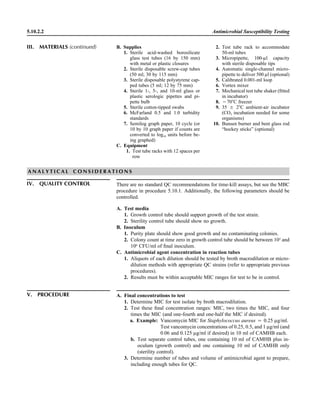
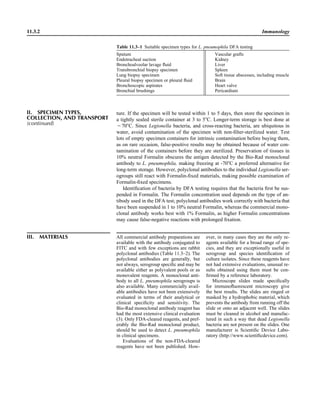
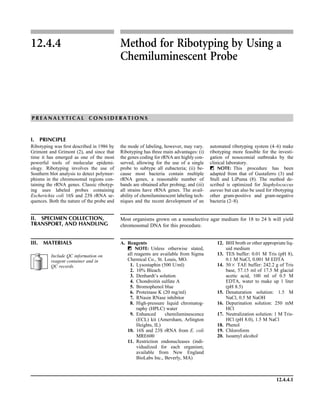
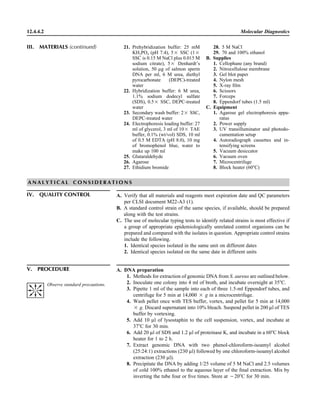
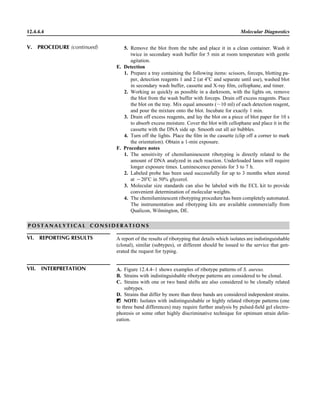
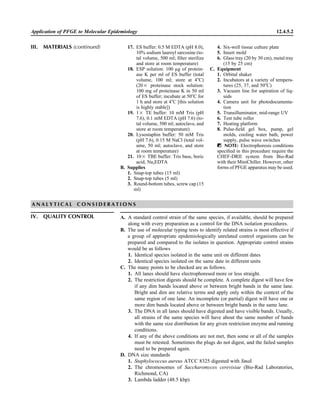
It is imperative that these
cultures be handled in a
biological safety cabinet.
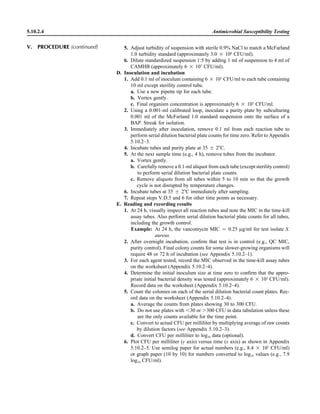
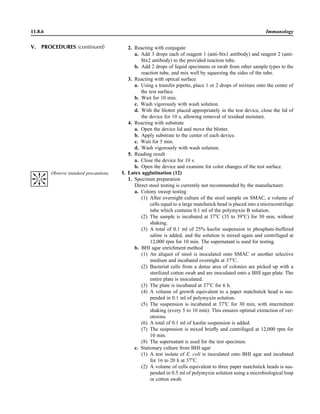
Observe standard precautions.
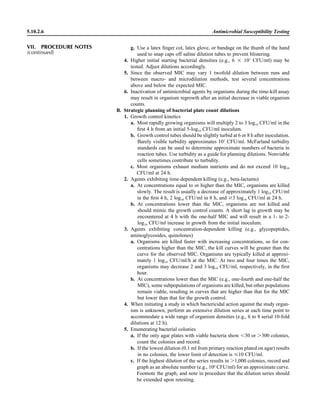
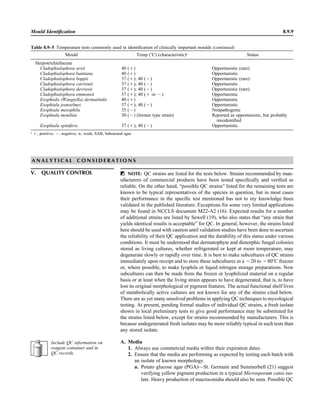
Include QC information on
reagent container and in
QC records.
xxiii
Preface
T
he third edition of the Clinical Microbiology Procedures Handbook
(CMPH) is based on the value and user requirements following the first and
second editions of CMPH, the companion volume Essential Procedures for
Clinical Microbiology, and the 2007 update of the second edition.
Almost all of the sixteen sections of the second edition of CMPH have been
revised and updated; sections that did not require extensive revision will be updated
during the next cycle of changes.
The purpose of the third edition of CMPH remains constant. That is to provide
everyone engaged in the microbiological analysis of clinical specimens with pro-
cedures that will enable them to correctly perform the appropriate tasks. CMPH
remains a cookbook that provides step-by-step descriptions of the numerous pro-
cedures used by workers at the bench.
As with the second edition of CMPH and the 2007 update of the second edition,
there is increased emphasis on molecular approaches, bioterrorism, infectioncontrol
in medical facilities, and the host’s immunological responses to microbial chal-
lenges. Also, continued emphasis is placed on the need to respond to governmental
regulations and fiscal constraints. Highly experienced workers with many years of
bench experience have written these procedures, and the format adheres to CLSI
document GP02-5A (5th ed., 2006).
All procedures have been reviewed extensively by section editors, the editor in
chief, and the ASM Press editors. We continue to encourage the users of these
documents to bring new methods of universal relevance to our attention so they
can be incorporated into the next update and shared with the clinical microbiology
community.
Readers are reminded that naming any specific product in CMPH is not intended
as an endorsement of that specific product or a suggestion to exclude other equally
acceptable products. CMPH is for laboratory use only by qualified, experienced
individuals or by personnel under the direct supervision of qualified, experienced
individuals. Every effort has been made to ensure that the contents of this update
are comprehensive, accurate, reliable, and reproducible.
Not all existing microbiological protocols are included; however, the editors and
authors are familiar with all commonly used protocols. As newer protocols become
more widely accepted and used, they will be incorporated into future CMPH re-
visions.
The third edition of CMPH is available in print, on CD, and as a downloadable
PDF.
Lynne S. Garcia
xxv
Acknowledgments
I
thank each of the section editors and authors for their tremendous efforts in
planning and completing the third edition of CMPH. Special thanks go to
everyone who participated in the original version, the second edition, and the
2007 update of the second edition for their comprehensive contributions in devel-
oping and updating these diagnostic procedures for all microbiologists. Each new
edition and update builds on the expertise of the previous editors and authors, all
of whom provided outstanding contributions to CMPH. We continue to acknowl-
edge and thank the late Dr. Henry D. Isenberg for his outstanding guidance and
leadership during the development and updating of CMPH. All microbiologists owe
him a tremendous debt of gratitude; he will always be known as the “father of
CMPH” and its greatest supporter.
Our editors and authors join me in thanking the officers of ASM, the Publications
Board, and, especially ASM Press. As editor in chief, I particularly want to
acknowledge John Bell, Cathy Balogh, Susan Birch, and Jeff Holtmeier of ASM
Press for their efforts in supporting this and former editions of CMPH.
It has been a great privilege to work with this current group of editors and authors
on the third edition, and we all continue to support CMPH in memory of Dr.
Isenberg.
Lynne S. Garcia
Reader Response Form
Dear Reader:
We solicit your help in improving the Clinical Microbiology Procedures Handbook (CMPH). Updates will be published
periodically to keep CMPH current, accurate, and reliable. Your guidance will play an important role in achieving our objective
of making CMPH the most useful laboratory procedures guide available. Please copy this page for your continued use.
1. Have you found any errors? Please list the section, procedure, and page number; describe the error.
2. Please list procedures that you deem to be outdated, confusing, or inadequately presented. List the section, procedure, and
page number; explain.
3. Indicate the topics that you would like to see added. Please list your reasons for the selection.
4. Additional comments.
Thank you for your help. We are certain that future users will be grateful for your helpful suggestions. Please use extra sheets
as needed.
Name:
Address:
Address:
Phone:
Mail to:
ASM Press
1752 N St., N.W.
Washington, DC 20036-2901
xxix
Disclaimer
Microbiological analysis of clinical specimens is a constantly changing discipline;
new methods and technologies emerge. The contributors to the third edition of
CMPH believe that the procedures and guidelines suggested here are from reliable
sources and in line with the practices accepted at the time of publishing. Readers
are reminded that the naming of any specific product is not intended as an endorse-
ment of that specific product by ASM Press or any other agency, nor is it a sug-
gestion to exclude other equally acceptable products. CMPH is for laboratory use
only by qualified, experienced individuals or by personnel under the direct super-
vision of qualified, experienced individuals. Every effort has been made to ensure
that the contents of this update are comprehensive, accurate, reliable, and repro-
ducible.
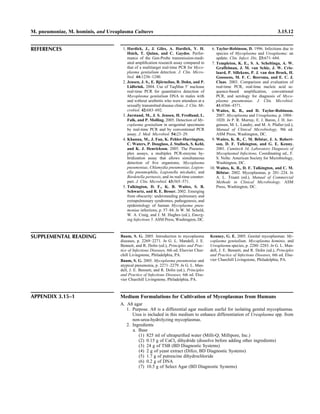
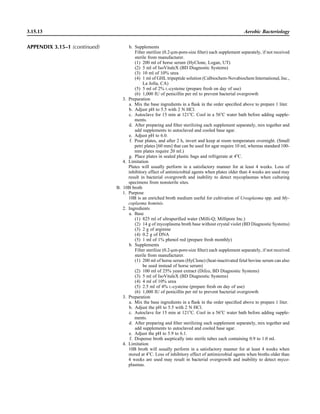
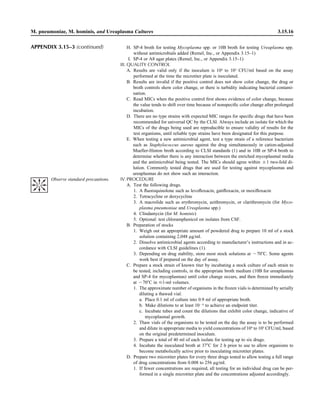
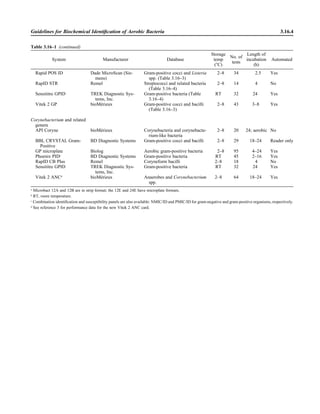
1.0.1
SECTION 1 Procedure Coding,
Reimbursement, and Billing
Compliance
SECTION EDITOR: Alice S. Weissfeld
ASSOCIATE SECTION EDITOR: Vickie S. Baselski
1.1. Introduction
Alice S. Weissfeld and Vickie S. Baselski ............................................1.1.1
1.2. Procedure Coding, Reimbursement, and Billing Compliance
Alice S. Weissfeld and Vickie S. Baselski ............................................1.2.1
1.1.1
1.1 Introduction
When the first edition of this handbook
was published, regulatory billing compli-
ance for laboratory tests was not a major
laboratory issue. Most hospital laborato-
ries generally performed services for their
own inpatients (and, occasionally, affili-
ated outpatients), and tests were billed ac-
cording to a formula established by the
business office. In the setting of prospec-
tive payment (e.g., diagnosis-related
groups), payment credit was allocated
based on a different formula. Today, how-
ever, microbiologists must be aware not
only of the scientific basis of infectious-
disease diagnostics but also of the costing,
coding, billing, and reimbursement for in-
dividual tests for patients seen in a broad
spectrum of health care settings with cov-
erage by an enormous number of health
care plans. Jargon previously unknown in
the clinical laboratory, such as reflex test-
ing, upcoding, downcoding, local cover-
age decision (LCD), and national cover-
age decision (NCD), is now so extensive
that a glossary of common terminology is
included in this section (Appendix 1.1–1).
The goal is to be reimbursed adequately
for all appropriate work performed in a
manner that is in compliance with all reg-
ulations.
The issues discussed in this section are
complex. In keeping with the mission of
this handbook, a model compliance pro-
cedure has been written. As with any pro-
cedure, we expect some customization to
occur. The model procedure deals primar-
ily with some of the more important reg-
ulatory principles. It should not, in any sit-
uation, take the place of guidance
established by your own compliance com-
mittee or of legal advice from your own
institution’s legal counsel. It simply rep-
resents a starting point for review of sa-
lient issues.
A brief historical overview of the eco-
nomic challenges faced by clinical micro-
biology laboratories is provided for back-
ground. This may be reviewed in detail in
the Institute of Medicine’s report Medi-
care Laboratory Payment Policy, Now
and in the Future (2). The history of re-
imbursement and compliance begins with
Title XVIII, commonly known as the So-
cial Security Act. This act outlines the
principles of the Medicare program, spec-
ifying broad benefit categories, including
physician and hospital services. In accor-
dance with section 1862 (a)(1)(A), the
Medicare program provides payment only
for diagnostic laboratory tests “that are
reasonable and necessary for the diagnosis
or treatment of illness or injury.” It does
not, however, authorize payment for
screening diagnostic services. Over the en-
suing 35 years since Title XVIII became
law, the interpretive determination of
whether a test meets the criteria of being
reasonable and necessary to justify pay-
ment by Medicare has become known as
“medical necessity.” Most other third-
party payers have established similar pay-
ment guidelines with which the laboratory
must be familiar. It is notable that both
Medicare and other payers may make spe-
cific exceptions to allow payment for
screening services (e.g., coverage of Pap
smears or prostate-specific antigen test-
ing). In the event that a coveragepolicydis-
allows payment for a service on the basisof
medical necessity, it is possible to transfer
financial liability to the patient providing
an advanced beneficiary notice (ABN) has
been properly executed which informs the
patient of their financial responsibility. In
2009, a laboratory-specific ABN, CMS-R-
131-L, was discontinued and replaced
with a generic ABN, CMS-R-131. Infor-
mation may be accessed at http://www.
cms.hhs.gov/BNI/02_ABN.asp.
The Social Security Act is known as a
statute, i.e., a piece of legislation voted
into law by Congress and signed by the
President. Statutes form the basis for sub-
sequent regulations that are rules estab-
lished by a federal agency in response to
its interpretation of a statute that it is its
duty to enforce. A number of federal agen-
cies are directly or indirectly involved
with laboratory reimbursement and com-
pliance. The CDC is responsible for the
scientific and quality aspects of laboratory
testing under the Clinical Laboratory Im-
provement Act (1967) and Clinical Labo-
ratory Improvement Amendment (CLIA)
(1988). The CDC is advised in this process
by the Clinical Laboratory Improvement
Advisory Committee. The Food and Drug
Administration (FDA) is responsible for
new product clearance and, since 2003, for
test complexity categorization under
CLIA. Medicare regulators have histori-
cally interpreted tests that are subject to
FDA approval or clearance but that have
not obtained, such as “not reasonable or
necessary” for payment purposes. The
FDA is assisted by its Microbiology Medi-
cal Device Advisory Committee. The
Centers for Medicare & Medicaid Ser-
vices (CMS), previously known as the
Health Care Financing Administration
(HCFA), administers the Medicare Pro-
gram. CMS interprets statutes and regu-
lations and issues these interpretations
through a variety of official documents
(e.g., The Medicare Program Integrity
Manual [1], program memoranda and
transmittals, and change requests) to de-
fine coverage criteria, establish national
limitation amounts, and establish national
coverage decisions (NCDs). CMS also
contracts with independent insurers
known generically as contractors and spe-
cifically as carriers (for part B outpatient
services), as fiscal intermediaries (FIs; for
part A inpatient services or part B services
through part A providers), and, more re-
cently, as Medicare administrative con-
tractors (MACs; for part A and part B ser-
vices) to administer claims to reimburse
physicians or laboratories. CMS is advised
in developing coverage policies by the
Medicare Carrier Advisory Committee
(MCAC) and other contractor committees
such as technology assessment groups. In-
dividual carriers, Fls, and MACs may also
set payment policies, known as LCDs, for
their own geographic regions. Examples
of LCDs in infectious-disease diagnostics
include syphilis testing, blood cultures,
antimicrobial susceptibility testing,
TORCH (Toxoplasma, rubella, cytomeg-
alovirus, and herpes simplex virus) test-
ing, and human papillomavirus testing.
Any information on institutional billing
and reimbursement should include a
search for LCDs specific to infectious-dis-
ease diagnostic testing. For this, a specific
website exists at http://www.cms.hhs.gov/
mcd/overview.asp (Appendix 1.1–2).
Medicare generally requires that labora-
tories submit billings electronically, but it
may occasionally accept handwritten bills
on HCFA form 1500 for part B and HCFA
for UB92 for part A, both universal insur-
ance billing forms. Payment denials may
be appealed through a formal process and
ultimately referred to an administrative
law judge. As a result of deliberations by
a Negotiated Rulemaking Committee on
clinical laboratory diagnostic tests man-
dated by the Balanced Budget Act of
1997, 23 NCDs were developed which
take precedence over any existing LCDs
for the same tests. Implementation for
these NCDs occurred in 2002, a process
1.1.2 Procedure Coding, Reimbursement, and Billing Compliance
for review and update was implemented in
2003, and under the Medicare Improve-
ments for Patients and Providers Act of
2008, CMS can now propose new NCDs
for preventive (screening) services. Three
NCDs were developed in infectious-dis-
ease diagnostics by a committee cochaired
by the American Society for Microbiol-
ogy: urine culture, human immunodefi-
ciency virus (HIV) diagnosis, and HIV
monitoring and prognosis. The Negotiated
Rulemaking Committee also developed a
number of administrative policies which
became effective in 2003. A database in-
dex for current NCDs may be accessed at
http://www.cms.hhs.gov/transmittals/
downloads/r17ncd.pdf. Again, billings to
other payers may require submission of
other specific forms, but coverage criteria
are often modeled after Medicare billing
guidelines.
Coding is the process of assigning a
procedure code such as a Current Proce-
dural Terminology (CPT), or a diagnosis
or condition, code, usually the Interna-
tional Classification of Diseases, Clinical
Modification (ICD-9-CM), code, for the
purpose of submitting a claim for reim-
bursement. CPT codes are property of the
American Medical Association but have
been named as the official CMS HCFA
Common Procedure Coding System
(HCPCS). CPT codes are updated an-
nually by a lengthy, systematic process.
Most codes are Category I and represent
generally accepted procedures, but Cate-
gory III codes for emerging technologies
were introduced in 2002. Category III
codes are generally not reimbursable. In
some cases, newer emerging technologies
may also be assigned an interim HCPCS
code. The ICD-9-CM system is a public
domain consensus document developed
by the World Health Organization. It in-
cludes specific diagnoses as well as signs
and symptoms or medical conditions that
represent the physician’s reason for order-
ing a test. It also has a series of preventive-
medicine screening codes (V codes) that
in general do not support medical neces-
sity. It is of note that a major update,
ICD-10, should be implemented by Oc-
tober 2013. Correct coding is the corner-
stone of reimbursement and compliance.
Finally, in 1997, in response to a major
antifraud and abuse campaign in the Medi-
care program (Operation Restore Trust),
the Office of the Inspector General pub-
lished a series of compliance documents,
including one for clinical laboratories.
One such document, the Office of Inspec-
tor General’s Compliance Program Guid-
ance for Clinical Laboratories, published
in August 1998, contains an outline for the
design of individual institutional compli-
ance plans to ensure correct coding, ap-
propriate billing, and honest and ethical
laboratory business practice (3). This doc-
ument, although more than a decade old,
still forms the basis for laboratory billing
compliance and for the model compliance
plan presented in this section.
1. Centers for Medicare and Medicaid Ser-
vices. 2008. Medicare Program Integrity
Manual. Centers for Medicare and Medicaid
Services, Baltimore, MD. http://www.cms.
hhs.gov/manuals/iom/ItemDetail.asp?ItemID‫ס‬
CMS019033.
2. Institute of Medicine. 2000. Medicare Lab-
oratory Payment Policy: Now and in the Fu-
ture. National Academy Press, Washington,
DC.
3. Office of the Inspector General. 1998. Com-
pliance program guidance for clinical labora-
tories. Fed. Regist. 63:45076–45087.
REFERENCES
Introduction 1.1.3
Glossary of Reimbursement and Compliance Terminology and Acronyms
Terminology
Terminology Definition
Abuse Systematically accepting improper payment without knowledge of
illegality (see Fraud)
Add on A test added after the original date of service
Bundling Placing codes together in a panel
Carrier CMS contractor for part B claims
Carve out Exclude from a capitated contract and bill fee-for-service
Code jamming Inserting ICD-9 codes to pass claims review
Code stacking The use of two or more procedural codes to denote a single
reportable test result
Code steering Encouraging ICD-9 code use to satisfy medical necessity
Comparative
effectiveness
Assessment of clinical comparability of procedures that may result
in reimbursement of a new technology at the rate of an older
technology
Composite The use of two or more test codes simultaneously in accordance
with standard of care and not otherwise described as a panel
Contractor Generic term for Medicare claims administrator
Covered lives Population insured by a managed-care contract
Crosswalked Deemed equivalent (see Mapped)
Custom panel User-defined composite of test codes performed simultaneously
which is not a standard of care
Downcoding Using a lower paying code to encourage utilization
E codes Codes for external sources of injury
Fair market value A reasonable payment amount for a specified service
Fraud Knowingly or willingly accepting improper payments with
knowledge of illegality (see Abuse)
Frequency limits Number of times a service may be reimbursed
Gap fill Temporary assignment of reimbursement
Inducement Service or item with monetary value given to encourage utilization
by a purchaser of laboratory services
Kickback Acceptance of an inducement
Mapped Deemed comparable (see Crosswalked)
Medical necessity Determination of ICD-9-CM codes for which a CPT code will be
reimbursed as reasonable and necessary
Modifiers Two-character (numeric for CPT and alpha for HCPCS) units
appended to a CPT code to indicate a condition affecting
payment
Neg Reg Negotiated Rulemaking Committee on diagnostic clinical laboratory
tests
Not medically
necessary
Determination that an ICD-9 CM does not justify payment for a
CPT code
Panel CMS-approved test composite encompassed in a single CPT code
Program integrity Process by which CMS monitors for fraud and abuse
Reasonable charge
methodology
Based on inherent reasonableness, authority to arbitrarily increase or
decrease payment
Reflex Second related test automatically performed when an initial test
result is positive or abnormal
Remittance advice
codes
Provides explanation of any adjustment made to expected payment
for a service; includes claim adjustment reason codes and
remittance advice remark codes
Sink testing Fraudulently reporting results for tests not performed
Standing orders Preapproved set of test codes performed on a regular defined basis
Unbundling Coding individual tests rather than a single defined panel
Upcoding Using a higher-paying code to maximize reimbursement
V codes Generally, health screening codes
Zero tolerance Absolute institutional policy that no fraudulent practice will be
allowed
APPENDIX 1.1–1
1.1.4 Procedure Coding, Reimbursement, and Billing Compliance
Acronyms
Acronym Definition
ABN Advanced beneficiary notice
ALJ Administrative law judge
AMA American Medical Association
APC Ambulatory payment classification in the OPPS
ASR Analyte-specific rule
BBA ’97 Balanced Budget Act of 1997
CAC Carrier Advisory Committee
CAP College of American Pathologists
CCI Correct Coding Initiative (also known as the National Correct Coding
Initiative, NCCI)
CDC Centers for Disease Control and Prevention
CERT Comprehensive Error Rate Testing Program
CLFS Clinical laboratory fee schedule (see NLA)
CLIA ’67 Clinical Laboratory Improvement Act of 1967
CLIA ’88 Clinical Laboratory Improvement Amendments of 1988
CLIAC Clinical Laboratory Improvement Advisory Committee
CMD Contractor medical director
CMS Centers for Medicare and Medicaid Services
CPT Current Procedural Terminology
DRG Diagnosis-related group in the IPPS
EOMB Explanation of medical benefits (also explanation of benefits, EOB)
ESRD End-stage renal disease (dialysis center)
FBI Federal Bureau of Investigation
FDA Food and Drug Administration
FI Fiscal intermediary
FTE Full-time equivalent
HCFA Health Care Financing Administration (now CMS)
HCPAC Health Care Professionals Advisory Committee
HCPCS HCFA Common Procedure Coding System
HIPAA Health Insurance Portability and Accountability Act
ICD-9-CM International Classification of Diseases, 9th ed., Clinical Modification
ICD-10 International Classification of Diseases, 10th ed.
IDE Investigational device exemption
IOM Institute of Medicine
IPPS Inpatient prospective payment system (see DRG)
LCD Local coverage decision (previously known as LMRP)
LMIP Laboratory Management Index Program
LMRP Local medical review policy (now LCD)
MAC Medicare administrative contractor (for A and B claims)
MedPAC Medicare Payment Advisory Council
MIPPA Medicare Improvement for Patients and Providers Act of 2008
MMA ’03 Medicare Modernization Act of 2003
MUE Medically unlikely edit for frequency in the CCI edits
NCD National coverage decision (previously known as NCP)
NCP National coverage policy (now NCD)
NLA National limitation amount in the CLFS
NPI National provider identifier
OCE Outpatient code editor (for OPPS)
OIG Office of the Inspector General
OPPS Outpatient prospective payment system
PCC Pathology coding caucus
PFS Physician fee schedule
PPAC Practicing Physician Advisory Council
RAC Recovery audit contractor
SBT Standardized billable test
SNF Skilled-nursing facility (nursing home)
APPENDIX 1.1–1 (continued)
Introduction 1.1.5
APPENDIX 1.1–2 Websites and Guidance Documents
I. WEBSITES
A. All contractor LCDs, http://www.cms.hhs.gov/mcd/overview.asp
B. CMS website, http://www.cms.hhs.gov (to subscribe to regular updates, go to http://
www.cms.hhs.gov/AboutWebsite/EmailUpdates/list.asp)
C. General Accounting Office, http://www.gao.gov (search “Medicare” for recent re-
ports)
D. FDA, http://www.fda.gov (to subscribe to regular updates, go to http://www.fda.gov/
AboutFDA/ContactFDA/StayInformed/GetEmailUpdates/default.htm)
E. Health Care Compliance Association, http://www.hcca-info.org
F. IOM study on Medicare Laboratory Payment Policy (http://www.iom.edu/iom/iom
home/nsf/pages/clinlab‫ם‬home‫ם‬page)
G. Medicare Clinical laboratory fee schedules, http://www.cms.hhs.gov/ClinicalLab
FeeSched/02_clinlab.asp#TopOfPage
H. Medicare fee schedules: general information, http://www.cms.hhs.gov/Fee
ScheduleGenInfo/
I. Medicare manuals, http://www.cms.hhs.gov/Manuals/01_Overview.asp
J. Medicare physician fee schedule, http://www.cms.hhs.gov/PhysicianFeeSched/
K. Medicare Learning Network, http://www.cms.hhs.gov/MLNGenInfo/
L. Medicare Payment Advisory Commission, http://www.medpac.gov
M. National Center for Health Statistics for ICD-9-CM updates, http://www.cdc.gov/
nchs/icd.htm
N. National Correct Coding Initiative, http://www.cms.hhs.gov/NationalCorrectCod
InitEd/
O. National Technical Information Service for published NCCI edits, http://
www.ntis.gov
P. OIG website for Compliance Program, Fraud Alerts, Advisory Opinions, Red Book,
Work Plan, http://oig.hhs.gov (to subscribe to regular updates, go to http://
oig.hhs.gov/mailinglist.asp)
Q. Strategic Management (previously The American Compliance Institute), http://
www.strategicm.com/
II. OTHER GUIDANCE DOCUMENTS
A. ABN current format and instructions, http://www.cms.hhs.gov/BNI/02_ABN.asp
B. Guidance for industry and FDA staff—commercially distributed analyte-specific re-
agents, frequently asked questions, http://www.fda.gov/MedicalDevices/Device
RegulationandGuidance/GuidanceDocuments/ucm078423.htm
C. Medical devices: classification/reclassification, restricted devices, analyte-specificre-
agents, Fed. Regist. 62:62243–62260 (1997)
D. Medicare: HCFA faces challenges to control improper payments, T-HEHS-00-74, 9
March 2000, http://www.gao.gov
E. Medicare Claims Review Program: NCCI edits, MUEs, CERT, and RAC, Medicare
Learning Network Publication (October 2008), http://www.cms.hhs.gov/MLNProd
ucts/downloads/MCRP_Booklet.pdf
F. Medicare clinical trials policies, http://www.cms.hhs.gov/ClinicalTrialPolicies/
G. Medicare Fraud & Abuse, Medicare Learning Network Publication (January 2009),
http://www.cms.hhs.gov/MLNProducts/downloads/110107_Medicare_Fraud_and_
Abuse_brochure.pdf
H. Medicare program: application of inherent reasonableness to all Medicare part B
services (other than physician services), Fed. Regist. 67:76684–76697 (2002)
I. Medicare Program: criteria and procedures for extending coverage to certain devices
and related services, Fed. Regist. 60:48417–48425 (1995)
J. Medicare program: establishment of procedures that permit public consultation under
the existing process for making coding and payment determinations for clinical lab-
oratory tests and new durable medical equipment, Fed. Regist. 66:58743–58745
(2001)
K. Medicare program: negotiated rulemaking: coverage and administrative policies for
clinical diagnostic laboratory services; final rule, Fed. Regist. 66:58787–58836
(2001)
1.1.6 Procedure Coding, Reimbursement, and Billing Compliance
L. Medicare program: procedures for making national coverage decisions, Fed. Regist.
64:22619–22625 (1999)
M. National Provider Identifier Standard, http://www.cms.hhs.gov/NationalProvIdent
Stand/01_Overview.asp#TopOfPage
N. Physician fee schedules, http://www.cms.hhs.gov/PhysicianFeeSched/01_over
view.asp
APPENDIX 1.1–2 (continued)
1.2.1
1.2 Procedure Coding, Reimbursement,
and Billing Compliance
I. PURPOSE
The Office of the Inspector General (OIG)
of the U.S. Department of Health and Hu-
man Services issued compliance program
guidance for clinical laboratories in Au-
gust 1998 (2). This anti-fraud and abuse
document addresses Medicare and Med-
icaid program integrity, with emphasis on
issues such as coding and billing; medical
necessity; sales and marketing; arrange-
ments with outside providers, suppliers,
and vendors; and auditing and monitoring.
Every clinical laboratory should be com-
mitted to doing business with any client,
governmental or private, in an honest and
trustworthy manner. While this document
covers principles laid out in the federal
compliance program guidance, the issues
of integrity and the prevention of wrong-
doing must be customized for each clinical
laboratory to be compatible with the over-
all institutional compliance program. Spe-
cific details pertaining to elements of the
Medicare program are detailed in Medi-
care Laboratory Payment Policy from the
Institute of Medicine (1).
II. ELEMENTS OF A
COMPREHENSIVE COMPLIANCE
PROGRAM
A. The seven essential elements
At a minimum, a comprehensive compliance program for a clinical laboratory
should include seven key elements.
1. Development of written standards of conduct (detailed in item III.A below)
2. Designation of a CCO and a Compliance Committee
A committee composed of the laboratory director, the laboratory manager,
clinical consultants, the materials manager, the business office manager, and
the technical supervisors of each laboratory section will assist the chief ex-
ecutive officer and the chief compliance officer (CCO) in the surveillance of
the institutional compliance program. Each committee member will be re-
sponsible for day-to-day observation that no fraudulent activities are occur-
ring. However, all employees are responsible for reporting any problems to
the CCO immediately. A zero-tolerance policy should be adopted for dealing
with any individual demonstrated to have engaged in fraudulent activity.
3. Development of regular, effective training and education programs (detailed
in item V below)
4. Development of a process to receive complaints
A dedicated hotline should be established for the reporting of potentially
fraudulent activities. Anonymity should be absolutely assured. No employee
should ever be disciplined for reporting a problem even if the miscreant is
part of upper management.
5. Development of a system to respond to allegations of potentially fraudulent
activities
A systematic investigation of all reports to the compliance officer should
occur, and a report should be made to the Compliance Committee.
6. Establishment of an ongoing system of audits and monitors for compliance
(detailed in item VIII below)
7. Development of a system for investigation and remediation of systemic prob-
lems and for dealing with business associates who are sanctioned
It is the responsibility of the employer to ensure that problems have been
corrected, repayments have been made, and all employees and business as-
sociates are not sanctioned by the Medicare program for previous illegal
activities.
B. Written procedures and policies
All procedures and policies should be developed under the direction of the CCO,
with formal review by the Compliance Committee. All documents should be in
written form and readily available to employees to whom the policies apply.
Additions and revisions should be clearly indicated and expediently commu-
nicated to employees, with documentation maintained.
1.2.2 Procedure Coding, Reimbursement, and Billing Compliance
III. WRITTEN PROCEDURES
AND POLICIES APPLICABLE TO
MICROBIOLOGY
A. Standards of conduct
All laboratory employees are expected to be honest in all their endeavors and
in compliance with all applicable regulatory requirements. Practices such as
sink testing (sending out results but not performing the work), issuing results
when controls are out of range (in conflict with the Clinical Laboratory Im-
provement Amendment [CLIA ’88]), and billing for work which is not ordered
or necessary are major areas of inappropriate practice which should not be
tolerated. In addition, no laboratory professional will induce anyone to send
laboratory work by offering kickbacks or inducements of any kind. This in-
cludes practices such as the provision of free work to clients or their families
or friends. No laboratory employee will induce any client to order a more ex-
pensive test if a less expensive one will suffice to make the clinical diagnosis,
nor will they encourage anyone to order a reflex or composite test(s) if not
medically necessary. No employee will suggest Current Procedural Terminol-
ogy (CPT) coding that systematically results in higher reimbursement, or Inter-
national Classification of Diseases, Clinical Modification (ICD-9-CM), coding
that will guarantee reimbursement if not medically appropriate. In general, if
any employee has to reflect on whether some action is legal or ethical, it is
probably best not to undertake that action. Referral of questionable issues to the
CCO or Compliance Committee is encouraged. It should be emphasized that a
dishonest or unethical practice renders an individual subject to immediate sanc-
tions. Sanctions may include oral or written warning, disciplinary probation,
suspension, demotion, dismissal from employment, or revocation of medical
staff privileges.
B. Medical-necessity issues
Medical necessity as defined by the Centers for Medicare and Medicaid Services
(CMS) is an assessment of whether the clinician’s reason for ordering a test is
covered (i.e., reimbursable) for the diagnosis or treatment of a specific illness
or injury. Examinations or diagnostic procedures performed in the absence of
signs or symptoms (often performed based on a patient’s age and/or family
history) are considered screening tests by the CMS and, with a few statutory
exceptions, are not reimbursed. The physician must provide a narrative diag-
nosis or diagnosis code (ICD-9-CM) so that Medicare or Medicaid and other
contractors can assess the claim for medical necessity as defined by national
coverage decisions (NCDs), local coverage decisions (LCDs), or other published
policies. Any ICD-9-CM code beginning with a “V” designates a screening
procedure and will therefore generally not be reimbursed.
1. Requisition design
a. The requisition should have orderable tests indicated by descriptor or
mnemonic consistent with the menu described in the current laboratory
II. ELEMENTS OF A
COMPREHENSIVE COMPLIANCE
PROGRAM (continued)
service manual. The orderable tests should be only CMS defined (i.e.,
CPT codeable) specific individual tests or CMS-approved panels unless
one of the conditions below applies. The provision of CPT codes on the
requisition is optional if they are readily available elsewhere.
b. The requisition should ensure that the physician has the ability to make
an independent decision with regard to each billed test, e.g., must be able
to order a culture with or without a susceptibility test or direct stain.
c. The requisition should identify reflex situations and offer the option not
to reflex. A reflex test is a second related test performed automatically
when initial results are positive or abnormal, e.g., a quantitative titer on
a cryptococcal antigen if the qualitative screen is positive. A list of some
microbiology reflex tests is shown in Appendix 1.2–1.
d. The requisition should identify situations in which the standard of care
is to provide services which are a composite of two or more CPT codes
and offer the opportunity to order individual tests. A list of common
composites is shown in Appendix 1.2–1.
e. The requisition should require an ICD-9-CM code (preferably) or narra-
tive diagnosis.
f. The requisition should indicate noncovered services (screening tests).
g. The requisition should identify limited-coverage tests (i.e., those having
NCDs or LCDs).
h. The requisition should include or allow for an advanced beneficiary notice
(ABN). An ABN is typically obtained at the time of specimen collection
for a test which the provider believes will be denied as not medically
necessary. It constitutes a waiver of financial liability in which a Medicare
or Medicaid beneficiary acknowledges that he or she will pay for the
service since it does not fulfill the criteria for medical necessity.
i. The date of service on the requisition is the date of specimen collection.
j. All test requests must be in writing, including requests for reflex, com-
posite, or add-on procedures. An add-on is defined as a test requested on
an existing specimen. However, if the sample has been archived for an
extended period, the date of service is the date of retrieval rather than
collection.
k. The requisition should meet all other requirements of licensure (e.g., by
CLIA), voluntary accreditation (e.g., by the CAP), and other regulations,
particularly those relating to privacy and confidentiality (e.g., the Health
Insurance Portability and Accountability Act).
l. The requisition should be accompanied by or supplemented with thorough
instructions for accurate completion (e.g., in a compliance section of a
service manual).
2. Notices to physician clients
Annual notices to physician clients should include all of the following.
a. Each institution should determine if there are any active infectious-disease
LCDs or NCDs. These policies indicate the ICD-9-CM codes which jus-
tify the medical necessity of specific CPT codes. These limited-coverage
policies should be shared with clients if they are not altered in any manner
which might encourage inappropriate utilization or coding.
b. Reflex test protocols and composite test groups should be clearly defined.
(1) For noninstitutional clients, a letter should be sent which clearly iden-
tifies laboratory policies.
(2) For institutional clients, annual medical staff approval will suffice for
documentation.
c. Only CMS-approved panels should be offered unless a composite has
been established as a recognized standard of care.
Procedure Coding, Reimbursement, and Billing Compliance 1.2.3
III. WRITTEN PROCEDURES
AND POLICIES APPLICABLE TO
MICROBIOLOGY (continued)
d. Physician-requested custom panels require a signed physician acknowl-
edgment of the financial and compliance implications of routinely order-
ing the custom panel.
e. The Medicare fee schedule should be provided, along with a statement
that the Medicaid fee schedule will be equal to or less than the Medicare
amounts. Fee schedules should include applicable CPT codes for each
test.
f. The name of the individual who serves as the CLIA Clinical Consultant
in the specialty of microbiology should be publicized, and a phone number
should be provided.
g. A list of standing orders for applicable clients should be reviewed and
renewed at least annually.
3. Physician acknowledgments
a. Specific written acknowledgment of receipt of an annual notice is not
required. However, the laboratory should maintain records of the docu-
mentation and the date sent.
b. Specific written acknowledgment of special request protocols (custom
panels, reflexes, and standing orders) must be obtained and renewed on
a regular basis, at least annually.
4. Use of ABNs
a. ABNs will be used whenever there is a likelihood that an ordered test
will not be covered. Only the format and language currently recom-
mended by CMS will be used.
b. The laboratory should identify tests which require FDA clearance or ap-
proval but which do not have such. These tests are generally considered
not reasonable and necessary by Medicare and require an ABN. “Home
brew” tests using analyte-specific reagents (ASRs) as defined by the FDA
may be covered unless excluded by a specific coverage policy. Coverage
conditions for other payers must be determined on a case-by-case basis.
c. ABNs must specify the specific test and the specific date of service as
well as the anticipated reason for denial and estimated cost to the bene-
ficiary.
d. Because microbiology specimens are usually collected at a location re-
mote from the laboratory by nonlaboratory personnel, it is essential to
verify that an appropriate ABN has been obtained.
e. If an ABN has not been obtained, the ordering provider should be con-
tacted to obtain one. It is essential to educate physicians regarding the
importance of this process.
f. Modifiers should be added to claims to indicate the status of the ABN
(i.e., whether on file or not).
5. Test utilization monitoring
a. The laboratory should monitor yearly the utilization rates for the top 30
tests performed annually. In microbiology, this may include urine cul-
tures, bacterial identification or susceptibility tests, and tests for Neisseria
gonorrhoeae or Chlamydia trachomatis.
b. Any increase of more than 10% should be evaluated to ascertain the cause
and rule out inappropriate utilization.
c. Any other aberrancy noted by the laboratory which might be related to
inappropriate utilization should similarly be investigated.
C. Coding and billing issues
1. CPT selection
a. The laboratory should have access to the American Medical Association
annual updates of the CPT code book. Medicare/Medicaid payment is
based on assigning the most correct code(s) for the work actually per-
1.2.4 Procedure Coding, Reimbursement, and Billing Compliance
III. WRITTEN PROCEDURES
AND POLICIES APPLICABLE TO
MICROBIOLOGY (continued)
formed. A hierarchy of analyte, specific method, generic method, and
unlisted should be followed in that order when assigning a code. Reflex
coding and composite coding should also be considered. Technical input
by a microbiologist is absolutely essential to correct coding.
b. CPT codes should be reviewed annually beginning with the new edition
published each October, with review complete by the end of the year, as
use for Medicare is mandatory beginning January 1.
c. Quarterly review of the Correct Coding Initiative edits should be per-
formed to ensure that mutually exclusive and column 1/column 2 code
edits will not result in denial and to determine code pairs where use of
modifier ‫95מ‬ to override edits may be appropriate.
d. A careful cost analysis and charge review should accompany the CPT
review.
e. Revenue projection adjustments should be made based on the national
limitation amount for each test.
f. All documentation pertaining to the annual CPT review should be ap-
proved by the Compliance Committee.
g. Any changes in coding should be communicated to clients in the annual
notice, or anytime they are made on an interim basis.
2. ICD-9-CM selection
a. The ICD-9-CM is used to document the reason the physician ordered the
test.
b. Test requests should be accompanied by ICD-9-CM code(s).
c. A narrative diagnosis is acceptable and may be translated into a code by
a trained coder.
d. If the clinician does not supply an ICD-9-CM code, or if a narrative
cannot be accurately translated, the laboratory must obtain a diagnosis.
e. The ICD-9-CM code must be specific for a test and date of service. “Code
jamming” (arbitrarily inserting an ICD-9-CM code not meeting this con-
dition) is not acceptable.
f. Avoid “code steering” (the practice of suggesting use of a specific code[s]
that guarantees reimbursement or allows reimbursement for a screening
test).
3. Tests covered by claims
a. The laboratory should ensure that the client understands the specific test
by CPT code that is being ordered, performed, and billed (e.g., Chlamydia
direct fluorescent antibody, EIA, direct probe, amplified probe, or cul-
ture). The requisition and service manual should make this clear.
b. In the case of an ambiguous order (e.g., specimen-test mismatch or in-
sufficient information to assign a test and CPT code[s]), the laboratory
must contact the ordering provider to clarify the request.
c. In the case of a specimen and valid request received but not reported due
to technical issues, the laboratory must not submit a claim for service.
d. Modifiers must be used where appropriate to indicate special claims pro-
cessing conditions. In particular, modifier ‫95מ‬ is used in microbiology
when replicates of the same CPT code are used on the same date of service
on unique specimens from different sources or to override Correct Coding
Initiative edits if allowed and testing is medically necessary.
4. Billing for calculations
Any calculations performed during the course of performing or determining
results of a test are not separately billable.
5. Reflex testing
a. Reflex testing is defined as testing that automatically occurs when an
initial test is outside normal parameters and indicates that a second related
test is medically appropriate and is considered a standard of care.
III. WRITTEN PROCEDURES
AND POLICIES APPLICABLE TO
MICROBIOLOGY (continued)
Procedure Coding, Reimbursement, and Billing Compliance 1.2.5
b. Reflex tests must be clearly described as such on the requisition and in
other laboratory test information resources. The client must have a means
by which the reflex may or may not be performed.
c. Reflex protocols must be reviewed and approved by the Compliance Com-
mittee annually and included in the annual physician notice or approved
annually by an institutional medical staff committee.
d. Composites (a grouping of two or more codes in accordance with stan-
dard-of-care and accreditation or licensure requirements) and confirma-
tions (a second test done to validate an initial positive) should be dealt
with in a manner similar to reflex testing.
D. Standing orders
1. Standing orders are acceptable in connection with situations involving ex-
tended treatment but must have a fixed term of validity and be renewed in
writing with the ordering provider at term. The term should be no more than
1 year.
2. Environments in which standing orders may be applicable include nursing
homes and end-stage renal disease (ESRD) centers. However, microbiology
testing is generally performed in cases of specific signs or symptoms of an
infection and is not commonly a component of standing orders.
E. Compliance with fraud alerts
1. Through the CCO, the laboratory should have access to review all applicable
OIG- and CMS-published documents outlining fraud risk areas.
2. If applicable to microbiology practice, the laboratory should review the alert
and take steps to alter any current practices that are relevant. A full report
of the review and the corrective action plan should be given to the Compli-
ance Committee.
F. Marketing
1. Any marketing information provided for microbiology testing should adhere
to the same principles of clear, correct, nondeceptive, and fully informative
guidance affecting any other section.
2. No free services should be marketed which may be construed as inducement
for the submission of Medicare work. For example, antibiograms that are
provided to external clients (e.g., nursing homes) must be billed at a fair
market rate.
G. Prices charged to physicians and other providers
1. Laboratories should establish fair market value fee schedules that will not
be viewed as inducement for referral of federally reimbursed laboratory
work.
2. In general, a federal charge substantially in excess of a charge to any other
third-party payer cannot be established. Although only the contractor fee
schedule amount for Medicare will be reimbursed, these charges are used in
the calculation of the prevailing charges.
3. Laboratories should review and justify charges if 50% or more of non-Medi-
care work is heavily discounted.
4. Discounts below costs, particularly if done to match competitor pricing, may
be viewed as inducement.
5. The laboratory should review test cost information on at least an annual basis
to ensure that the above conditions are met.
H. Retention of records
All records should be maintained as required by applicable statutes or regula-
tions for use if needed in the investigation of potential fraud. There may also
be additional requirements based on voluntary accreditation standards. Federal
statutes include the following.
1.2.6 Procedure Coding, Reimbursement, and Billing Compliance
III. WRITTEN PROCEDURES
AND POLICIES APPLICABLE TO
MICROBIOLOGY (continued)
1. 42 CFR 482.24(b)(1)
Condition of participation for hospitals; standard form and retention of re-
cords; specifies 5 years.
2. 42 CFR 488.5(a)
Discussion of accreditation standards deemed to meet Medicare conditions
of participation; variable times, but at least 5 years.
3. 42 CFR 493.1105
CLIA ’88; 2 years for test requisitions.
4. 42 CFR 493.1107
CLIA ’88; 2 years for test records.
5. 42 CFR 493.1107 and 1109
CLIA ’88; transfusion medicine records; minimum of 5 years.
6. 42 CFR 493.1257(g)
CLIA ’88; cytology slides for 5 years.
7. 42 CFR 1003.132
Related to civil actions (False Claims Act); may be initiated up to 6 years
after the date of claim presentation.
I. Compliance as an element of a performance plan
Compliance training (initial and annual retraining) should be incorporated into
an employee’s annual performance evaluation and competency assessment. Any
policies specific to microbiology should also be discussed in detail with em-
ployees and incorporated into the competency assessment.
Procedure Coding, Reimbursement, and Billing Compliance 1.2.7
IV. THE CCO AND
COMPLIANCE COMMITTEE
A. The CCO should be known to all members of the laboratory. Any issues specific
to microbiology should be brought to the attention of the CCO or the supervisor
or reported through the hotline.
B. The Compliance Committee for the laboratory should have representation from
all areas of the laboratory, including microbiology. The microbiologist will have
responsibility for providing expertise in the evaluation of any protocols, audits
and monitors, or issues pertaining to the diagnosis of infectious diseases.
V. EDUCATION AND
TRAINING
Compliance training should be conducted during orientation and at least annually
thereafter. Training should emphasize those areas that each individual will deal
with under normal circumstances; e.g., microbiology personnel should receivetrain-
ing in assisting clients in proper microbiology test ordering. CMS and Medicare
contractor fraud alerts, compliance newsletters, minutes of Compliance Committee
meetings, and results of audits and monitors of relevance to microbiology should
be used for continuing education at monthly laboratory meetings.
VI. EFFECTIVE LINES OF
COMMUNICATION
A. Lines of communication for discussion and reporting of potential compliance
issues between employees, the CCO, and other administrative staff should be
open, convenient, and anonymous. Microbiology personnel must be made aware
of the routes of communication. In no case should any person reporting a vio-
lation be ignored or ostracized. Anonymity should be protected, and there
should be no retaliation for coming forward.
B. Communication routes should include an anonymous hotline which is posted in
the laboratory and the inclusion of compliance topics in regular departmental
meeting agendas.
III. WRITTEN PROCEDURES
AND POLICIES APPLICABLE TO
MICROBIOLOGY (continued)
1.2.8 Procedure Coding, Reimbursement, and Billing Compliance
VII. ENFORCING STANDARDS
THROUGH DISCIPLINARY
GUIDELINES
A. Zero tolerance for error applies to all aspects of adherence to compliance pol-
icies.
B. Disciplinary action against an employee found committing fraud should be com-
mensurate with the violation. Employees who make an honest mistake should
be counseled and retrained. Employees showing a consistent pattern of unsavory
practices should be terminated. All violations must be investigated by the Com-
pliance Committee, which should make a recommendation as to the appropriate
disposition of each incident.
C. Hiring of new employees must include a background check to ensure that the
individuals have not previously been restricted from providing service in a fed-
eral health care program.
VIII. AUDITING AND
MONITORING
A. Audits should be conducted on a regular basis whenever necessary to address
specific issues brought forward by in-house individuals, or by knowledgeable
individuals from outside laboratories and/or consulting firms, to ensure adher-
ence to all written compliance policies. Results should be reviewed by the Com-
pliance Committee and reported to all relevant laboratory sections.
B. Examples of audits applicable to microbiology include the following.
1. List the top 30 codes in the laboratory annually, and evaluate any microbi-
ology codes with a Ͼ10% increase.
ᮃ NOTE: The laboratory may also choose to list top codes in microbiology
only and look for trends.
2. Select requisitions and review the entire test process for accuracy through
ordering, testing, determining test results, and billing. Requisitions may be
pulled randomly or in a targeted fashion, but ensure that microbiology CPT
codes are evaluated in the process.
3. Establish a method for systematic review of denials for microbiology testing
and for evaluation of the root cause(s) for the denials.
4. Establish a tracking system for supplies provided for collection of microbi-
ologic test samples. Ensure that specimens are received on an acceptable
percentage basis. An acceptable percentage should be set by each laboratory
on the basis of historical data.
C. Establish an action plan for responding to any discrepancies noted in audits,
and ensure the audit results and plans are reviewed by the Compliance Com-
mittee.
IX. RESPONDING TO
COMPLIANCE ISSUES
A. Be familiar with the laboratory plan for investigating and reporting any finding
representing overpayment or possible violation.
B. Take each and every issue regarding microbiology practice seriously, and re-
spond in accordance with the institutional overall policies.
Procedure Coding, Reimbursement, and Billing Compliance 1.2.9
X. SUMMARY OF AREAS
REQUIRING COMPLIANCE
POLICY DEVELOPMENT
A. ABN use
B. Ambiguous test orders
C. Anonymity and nonretribution
D. Billing for calculations
E. Claims submission and postsubmission review of explanations of medi-
cal benefits and denials
F. Claims submission and presubmission review
G. CLIA regulations
1. Client contracts
2. Provision of and monitoring of client supplies
H. Confidentiality of medical information
I. Contracts with third-party billing companies
J. Cost reporting; laboratory component
K. Courier service
L. CPT coding
M. Custom panels and physician acknowledgment
N. Data summaries as a free service
O. Diagnosis information; translating to ICD-9-CM codes
P. Discounts and special prices
Q. Education and training for customers as inducement
R. Employees, including phlebotomists in client offices
S. ESRD arrangements
T. Excused charges and adjustments
U. Fraud alerts; review and compliance
V. Gifts, including contributions and entertainment
W. Health fairs as inducement
X. Home health service client arrangements
Y. ICD-9-CM codes; obtaining and using
Z. Indigent care services
AA. Medical-necessity policy review
BB. Monitoring utilization of laboratory services by clients
CC. Nonemployment of sanctioned individuals
DD. Notices to physicians
EE. Nursing home client arrangements
FF. OSHA regulations
GG. Placement of equipment or products in client offices
HH. Professional courtesy
II. Record retention
JJ. Reflex and composite testing
KK. Release of test results by phone, fax, and/or other nonroutine methods
LL. Removal of hazardous waste for clients as inducement
MM. Rental or lease of space from health care providers
NN. Reporting compliance issues and open-door policy
OO. Requisition design
PP. Sales and marketing
QQ. Sales proposals
RR. Standing orders
SS. Test not ordered and/or not performed
TT. Test ordering by authorized individuals
UU. Test orders, requisitions, and electronic order review
VV. Verbal and add-on test orders
1.2.10 Procedure Coding, Reimbursement, and Billing Compliance
REFERENCES 1. Institute of Medicine. 2000. Medicare Lab-
oratory Payment Policy: Now and in the Fu-
ture. National Academy Press, Washington,
DC.
2. Office of the Inspector General. 1998. Com-
pliance program guidance for clinical labora-
tories. Fed. Regist. 63:45076–45087.
APPENDIX 1.2–1 Reflex and Composite Scenarios in Microbiology
I. BACTERIOLOGY
Culture (separate charges for Gram stain, presumptive identification for urine isolates,
definitive identification, and antimicrobial susceptibility added if appropriate for source
or a potential pathogen is recovered) and ability to note if any of the following applies
A. Gram stain not desired
B. Identification not desired
C. Susceptibility not desired
II. MYCOLOGY
Culture (separate charges for fungal stains, identification, and susceptibility added if
appropriate for source or a potential pathogen is recovered) and ability to note if any of
the following applies
A. Fungal stain not desired
B. Identification not desired
C. Susceptibility not desired
III. CRYPTOCOCCUS ANTIGEN
Includes additional charge for quantitation if qualitative screen is positive) and ability to
note if quantitation is not desired
IV.MYCOBACTERIOLOGY
Culture (separate charges for acid-fast stain, identification, and susceptibility added if
appropriate for source or a potential pathogen is recovered) and ability to note if any of
the following applies
A. Acid-fast stain not desired
B. Identification not desired
C. Susceptibility not desired
V. VIROLOGY
Culture by tube and shell vial reflex to specific identification, or molecular detection
reflex to typing (separate charges for each component) and ability to note if any of the
following applies
A. Isolate typing not desired
B. Genotyping or sequencing not desired
VI.PARASITOLOGY
Microscopic analysis includes direct wet mount with concentration and permanently
stained smear (e.g., Trichrome). Additional specific requests are appropriate for:
A. Giardia direct fluorescent antibody or enzyme immunoassay
B. Cryptosporidium direct fluorescent antibody or enzyme immunoassay
C. Other special procedures required to detect unique, relevant pathogens (e.g., micro-
sporidia)
2.0.1
SECTION 2 Specimen Collection,
Transport, and Acceptability
SECTION EDITOR: Andrea J. Linscott
2.1. Collection, Transport, and Manipulation of Clinical Specimens
and Initial Laboratory Concerns
Andrea J. Linscott .......................................................................2.1.1
Table 2.1–1. “Rule-Out” Clinical Impressions and Potential
Etiological Agents ...................................................................2.1.3
Table 2.1–2. Collection of Specimens for Bacteriological Analysis .......... 2.1.10
Table 2.1–3. Collection of Specimens To Detect Infrequently Encountered
Organisms ........................................................................... 2.1.17
Table 2.1–4. Laboratory Approaches to Suspected Fungal Infections ........ 2.1.18
Table 2.1–5. Collection of Specimens To Detect Parasites ..................... 2.1.19
Table 2.1–6. Commercially Available Transport Media ........................ 2.1.20
Table 2.1–7. Rejection Criteria for Microbiological Specimens ............... 2.1.21
Table 2.1–8. Procedure for Processing Clinical Specimens
in Microbiology .................................................................... 2.1.23
Table 2.1–9. Panic Values in Microbiology ...................................... 2.1.25
Table 2.1–10. Alert Request ......................................................... 2.1.25
Table 2.1–11. Serodiagnostic Tests ................................................ 2.1.26
2.1.1
2.1 Collection, Transport, and
Manipulation of Clinical Specimens
and Initial Laboratory Concerns
The tables in this section address the initial
events that lead to the accurate, rapid iden-
tification of microorganisms and viruses.
Remember that results can only be as good
as the original specimen. All the long-
established precautions must be observed,
keeping in mind that many specimens are
obtained from anatomic sites that encour-
age specimen contamination with indige-
nous microbiota and results must be eval-
uated accordingly (10).
Table 2.1–1 summarizes the microor-
ganisms, including viruses, involved in
disease production at various anatomic
sites. The term “clinical impression” is
used to indicate the most likely diagnosis
for the patient condition listed. The cor-
responding organisms are those most fre-
quently isolated and that demonstrate
some involvement with the disease mani-
festations in the patients (3, 6, 9). This ta-
ble should be useful in counseling individ-
uals preparing to collect specimens and in
alerting laboratory personnel to choose the
most appropriate means to ensure the iso-
lation of the most likely etiological agents.
Table 2.1–2 summarizes instructions
for the collection of specimens for trans-
port to the laboratory and for bacteriolog-
ical analyses. These instructions are in-
tended to help health care personnel
charged with the responsibility of collect-
ing specimens and to help laboratory per-
sonnel in their effort to ensure that only
specimens properly obtained, placed in
appropriate containers, and of adequate
volume are analyzed. Specimens that do
not meet collection and transport criteria
should be rejected (see Table 2.1–7). The
excuse most often proffered for inade-
quate or mishandled specimens is the in-
ability to secure a correct specimen for re-
peat examination. Decisions about
proceeding with analyses under these cir-
cumstances are the laboratory director’s
responsibility and should be referred to
these individuals whenever possible. A
policy reflecting the laboratory director’s
opinion on such claims and the consequent
action to be taken should be made part of
the instruction manual of the laboratory
and that provided to the clinical staff. In
Table 2.1–2, the column headed “Helpful
clinical information” is intended to
heighten the awareness of all personnel in-
volved that pertinent clinical information
and the patient’s history are indispensable
in the interpretation of microbiological re-
sults. Similarly, the “Comments” column
provides additional information and ca-
veats where needed.
Table 2.1–3 addresses the collection of
specimens to detect infrequently encoun-
tered organisms (10, 11). The column “Or-
ganism(s)” lists some of the more com-
monly requested organisms that are
infrequently encountered. Appropriate
specimen types are listed in the “Specimen
type” column. The “Transport issues and
comments” column lists proper transport
and storage conditions, possible labora-
tory safety hazards, and preferred diag-
nostic test as indicated. This table should
guide the clinician and laboratorian for the
best possible specimen type and transport
conditions for the recovery of these organ-
isms that are not routinely ordered.
Table 2.1–4 provides guidelines for the
collection of fungal specimens. Pityriasis
versicolor usually is not cultured—
microscopic demonstration in scrapings
suffices; therefore, scrapings are best sub-
mitted in sterile tubes or small sterile con-
tainers for direct examination in the labo-
ratory.
Table 2.1–5 lists the requirements for
collecting and transporting clinical speci-
mens for parasite examinations. Blood
smears for the detection of plasmodia are
frequently submitted to the hematology
laboratory. Arrangements between the two
laboratories are advisable, enabling both
to provide input concerning the presence
and identity of these protozoa. For blood
parasites other than the etiological agents
of malaria and babesiosis, note Table 2.1–
5 footnote b and the appropriate references
provided.
A great variety of skin preparations for
obtaining blood, CSF, and other speci-
mens have been advocated. Remember,
the purpose of such preparations is the
elimination of contaminants which can
make interpretation of results difficult for
the laboratorian and yield misleading re-
sults for the clinician.
Table 2.1–6 is an abbreviated listing of
commercially available transport media
that should be used to ensure the integrity
of the specimen from patient to laboratory.
Most of these preparations do not require
refrigeration if the specimens can be de-
livered to the laboratory within 24 h (or,
in some cases, 48 h). Plastic meshes (poly-
urethane) rather than cotton on collection
swabs provide an effective and nontoxic
means for adsorbing, rather than absorb-
ing, microorganisms from clinical material
and can be used for the isolation of anaer-
obic bacteria in casual specimens. For si-
nus tracts, biopsy specimens, deep surgi-
cal or trauma wounds, and body fluids, a
variety of excellent transport media are
available. Microbiologists who still man-
ufacture their own transport media can
consult appropriate sections of this hand-
book for details. While this reference also
addresses the requirements for transport-
ing parasites and ova, even more detailed
advice is provided by Garcia (4, 5). De-
tailed instruction concerning the transport
of viral specimens and the requirements
for shipping specimens to reference labo-
ratories can be found in this handbook.
Likewise, detailed instructions for the col-
lection and transport of clinical specimens
needed for molecular analyses can be
found in this handbook.
Once a specimen arrives in the micro-
biology laboratory, personnel must ascer-
tain that all pertinent information has been
provided, that the specimen has been col-
lected in the proper transport device, and
that all other conditions for an acceptable
specimen have been met. The previously
mentioned need for a policy of rejecting
specimens that do not meet these require-
ments is expanded in Table 2.1–7 in an
effort to provide a sample policy that
should be modified by each individual lab-
oratory to address its particular problems.
Footnote b is a special reminder to all lab-
oratory personnel to be acutely aware that
a record of any and all actions concerning
the lack of acceptibility of a clinical spec-
imen, including the name and location of
the person notified by telephone, must be
documented and maintained. Similarly,
footnote c may seem redundant but is
meant to emphasize that only appropriate
specimens are suitable for anaerobic cul-
tures. To attempt to use unsuitable speci-
mens for this purpose is a waste of mate-
rial and labor and will likely provide
meaningless results.
Table 2.1–8 outlines an example of
how laboratory personnel can proceed to
process specimens. Accessioning varies
greatly from institution to institution, but
the essential steps enumerated in section I
of Table 2.1–8 must be followed. Note that
each specimen receives an identification
number for that particular specimen alone.
Specimens obtained from the same patient
but of different anatomic origins must be
designated separately. Table 2.1–8 does
not mention that smears should be pre-
pared for many of the specimens. While
this step is not needed universally, smears
remain one of the best and most cost-
effective means of providing important in-
formation almost immediately. The smear
also serves as a control for culture results
and permits an informed guess as to the
cellular responses of immunocompetent
patients. The suggestions for media to be
used are just that: suggestions. Many lab-
oratory workers prefer to use the media
they encountered when first introduced to
microbiology. It does not matter which
particular medium is used as long as the
microorganisms presumed to be present as
2.1.2 Specimen Collection, Transport, and Acceptability
pathogens or members of the normal mi-
crobiota can be separated from the clinical
specimen.
The procedure for streaking agar plates
is intended to make the experienced la-
boratorian pause to consider whether
shortcuts have been introduced into this
procedure with time and to guide the neo-
phyte microbiologist to the easiest way to
dilute an inoculum to obtain isolated col-
onies. Urine is singled out, since some
quantitation of the microbial bioload is de-
sirable. Laboratories that use dipstick
technology as a prescreen for culture of
urine must remember that immunocom-
promised patients may not meet a micro-
bial challenge with increased segmented
neutrophils and thus will not react posi-
tively for leukocyte esterase, while many
of the microorganisms other than mem-
bers of the family Enterobacteriaceae do
not reduce nitrate to nitrite. Microbiolo-
gists should keep in mind that a Gram
stain of well-mixed, uncentrifuged urine
showing two or more bacteria per oil im-
mersion field reflects approximately
100,000 CFU/ml.
Time and again, health care personnel
and even an occasional administrator will
inquire about “normal values” for micro-
biology. Confusion and disbelief usually
meet the microbiologist’s assertion that
“normal” in microbiology can be defined
only by the isolation or demonstration of
an “abnormal” representation of the mi-
crobial world, that is, an organism that
should not be found in a particular speci-
men. However, all clinical microbiology
personnel must be aware of the urgent
need to report the observations and isola-
tions listed in Table 2.1–9. This list may
be expanded, shortened, or modified in
accordance with existing conditions and
the emergence or reemergence of poten-
tially pathogenic microorganisms. Exam-
ples of emerging resistance, such as
vancomycin-resistant enterococci, vanco-
mycin-intermediate and -resistant staphy-
lococci, penicillin-tolerant pneumococci,
and gram-negative rods producing carba-
penemases or extended-spectrum beta lac-
tamases, deserve special attention and re-
porting. In addition, the organisms listed
in Table 2.1–10 might be missed unless
the laboratory staff is alerted to the clini-
cian’s suspicion. This “alert request”
should be part of the manual that provides
health care personnel with the require-
ments of the clinical pathology service.
Table 2.1–11 lists the serodiagnostic
tests presently available to be performed
in-house or to be sent to reference labo-
ratories. Unless a laboratory performs a
test routinely (at least once a week on sev-
eral specimens), it is advisable to enlist the
services of an established reference labo-
ratory. It is important that the reference
laboratory provide not only reports of ex-
peditiously performed tests but also the
values obtained with appropriate controls.
These reports should be made part of the
patient’s record, with clear indications that
the test was not performed in the institu-
tional laboratory. Copies of reference lab-
oratory reports should be kept in the mi-
crobiology laboratory files. Table 2.1–11
also lists normal values that represent the
cutoff points generally accepted for these
examinations. However, these interpreta-
tions are subject to the instructions on the
package insert, the variations reported by
the reference laboratory, or the results ob-
tained when the population in a particular
geographic locale is studied. It should also
be pointed out that commercially available
reagents for serologies, particularly those
for parasitic diseases, are difficult to inter-
pret and subject to technical error. Instruc-
tions provided by reference laboratories
concerning the collection and transport for
these examinations must be followed to
the letter. For some tests, refrigerated stor-
age space for acute- and convalescent-
stage specimens should be available un-
less the reference laboratory indicates that
the acute-stage specimen will be held in
its facility. If the tests are performed in-
house, it is advisable to store serum rather
than clotted blood.
Acknowledgments. The tables in this
section have been gleaned from the labo-
ratory manuals used by several of the ed-
itors and authors who participated in pre-
paring this volume. I am indebted to each
and every one of them for their generosity
and assistance.
Collection, Transport, and Manipulation of Clinical Specimens 2.1.3
Table 2.1–1 “Rule-out” clinical impressions and potential etiological agents
Clinical impression Potential etiological agent
Head and neck infections
Gingivitis Spirochetes, Prevotella intermedia, Prevotella oralis
Periodontitis Prevotella melaninogenica, spirochetes
Juvenile Actinobacillus actinomycetemcomitans
Early onset Spirochetes, Porphyromonas gingivalis, Actinobacillus actinomycetemcomitans
Adult Spirochetes, Prevotella melaninogenica, Actinobacillus actinomycetemcomitans
Progressive Bacteroides forsythus, Campylobacter rectus
Peritonsillar abscess (Quinsy) Polymicrobic: Streptococcus pyogenes, aerobic bacteria, plus normal microbiota of the oral cavity
Ludwig’s angina Viridans streptococci, peptostreptococci, Prevotella melaninogenica, Fusobacterium nucleatum
Pterygopalatine, infratemporal Anaerobes, aerobic and facultatively anaerobic gram-negative rods
Para- and retropharyngeal ab-
scesses, temporal fossa in-
fections
Polymicrobic with anaerobes, streptococci, staphylococci, Enterobacteriaceae
Septic jugular thrombophle-
bitis (postanginal sepsis)
Anaerobic streptococci, Prevotella spp., Porphyromonas spp., viridans streptococci, Streptococcus
pyogenes, Streptococcus pneumoniae, Eikenella corrodens
Suppurative parotitis Staphylococcus aureus, anaerobes, Enterobacteriaceae, Pseudomonas aeruginosa, oral microbiota,
Eikenella corrodens
Parotitis (viral) Mumps, coxsackievirus, influenza virus, parainfluenza virus types 1 and 3, lymphocytic choriomenin-
gitis virus, cytomegalovirus
Sinusitis Streptococcus pneumoniae, Haemophilus influenzae, Prevotella spp., Porphyromonas spp.,
Fusobacterium spp., Peptostreptococcus spp., Staphylococcus aureus, Veillonella spp.,
Streptococcus pyogenes, Moraxella catarrhalis, aerobic and facultatively anaerobic gram-negative
rods, microsporidia, free-living amebae, rhinovirus, influenza virus, parainfluenza virus, adenovirus
(children)
Cranial epidural abscess Peptostreptococcus spp., viridans streptococci, Streptococcus milleri group, Bacteroides spp.
(Prevotella spp.), Enterobacteriaceae, Pseudomonas aeruginosa, Staphylococcus aureus
Otitis media Streptococcus pneumoniae, Haemophilus influenzae, Moraxella catarrhalis, Streptococcus pyogenes,
Staphylococcus aureus, Pseudomonas aeruginosa
Chronic suppurative As above plus Staphylococcus epidermidis, Candida spp., Corynebacterium spp., Bacteroides spp.,
Peptostreptococcus spp.
Pharyngitis Streptococcus pyogenes, groups C and G beta-hemolytic streptococci (rare—Corynebacterium
diphtheriae, Corynebacterium ulcerans, Arcanobacterium haemolyticum, Neisseria gonorrhoeae,
mixed anaerobes [Vincent’s angina], Yersinia enterocolitica, Treponema pallidum), rhinovirus, co-
ronavirus, adenovirus, influenza viruses A and B, parainfluenza viruses (less common herpes sim-
plex virus [types 1 and 2], coxsackie A virus [types 2, 4, 5, 6, 8, and 10], Epstein-Barr virus,
cytomegalovirus, human immunodeficiency virus [HIV])
Laryngitis Moraxella catarrhalis, Bordetella pertussis, Bordetella parapertussis, Haemophilus influenzae (may
be secondary invaders), Mycobacterium tuberculosis, Corynebacterium diphtheriae (rare—also
Histoplasma capsulatum, Coccidioides immitis, Blastomyces dermatitidis, Candida spp.,
Treponema pallidum, herpes simplex virus, varicella virus), influenza virus, parainfluenza virus,
rhinovirus, adenovirus
Epiglottitis Haemophilus influenzae serogroup b, Haemophilus parainfluenzae, Streptococcus pneumoniae,
Staphylococcus aureus, Streptococcus spp., non-b Haemophilus influenzae, Pasteurella multocida
Tracheitis Staphylococcus aureus, Streptococcus pyogenes, Haemophilus influenzae b
Thyroiditis
Acute suppurative Oral microbiota, Staphylococcus spp., Streptococcus pneumoniae, anaerobes (needle aspiration); in
immunocompromised patients, Pseudoallescheria boydii, Candida spp., Aspergillus spp.,
Coccidioides immitis, Actinomyces spp.
Subacute granulomatous Mumps virus, rubeola virus, influenza virus, adenovirus, Epstein-Barr virus, coxsackievirus, cytomeg-
alovirus, Yersinia spp.
Common cold Ͼ200 different viruses, including different serotypes of adenoviruses, coronaviruses, influenza virus,
parainfluenza virus, respiratory syncytial virus, rhinovirus, and enterovirus
Pleuropulmonary infections
Acute community-acquired
pneumonia (adults)
Streptococcus pneumoniae, Haemophilus influenzae, Staphylococcus aureus, Legionella pneumophila,
Legionella spp., oral anaerobes (aspiration), Neisseria meningitidis, Moraxella catarrhalis,
Mycoplasma pneumoniae (very rare—Yersinia pestis, Bacillus anthracis, Francisella tularensis,
Pseudomonas pseudomallei), Histoplasma capsulatum, Blastomyces dermatitidis, Coccidioides
immitis, Actinomyces spp., Cryptococcus neoformans, Chlamydophila pneumoniae, Chlamydophila
psittaci, rubeola virus, varicella virus, influenza virus (A, B, C), adenovirus, Nocardia asteroides,
Sporothrix schenckii, Penicillium marneffei, Geotrichum spp., Histoplasma duboisii (rare)
(continued)
Table 2.1–1 “Rule-out” clinical impressions and potential etiological agents (continued)
Clinical impression Potential etiological agent
Pneumonia in immunocom-
promised host
Members of Enterobacteriaceae, Pseudomonas spp., and related obligately aerobic gram-negative
rod-shaped bacteria; Staphylococcus aureus, Streptococcus pneumoniae, Nocardia spp., Legionella
spp., Mycobacterium tuberculosis, Mycobacterium avium-intracellulare, Mycobacterium
haemophilum, Aspergillus spp., zygomycetes, Cryptococcus neoformans, Curvularia lunata,
Fusarium spp., Paecilomyces varioti, Candida spp., Trichosporon spp., Candida glabrata,
Pneumocystis jiroveci, Toxoplasma gondii, Strongyloides stercoralis, Cryptosporidium spp., micro-
sporidia, cytomegalovirus, varicella-zoster virus, herpes simplex virus
Bronchitis Haemophilus influenzae, Haemophilus parainfluenzae, Streptococcus pneumoniae, Moraxella
catarrhalis, Neisseria spp., Klebsiella spp., Pseudomonas spp., obligately aerobic gram-negative
rod-shaped bacteria
Aspiration pneumonia (caused
by microorganisms)
Peptostreptococcus spp., Fusobacterium nucleatum, Porphyromonas asaccharolytica, Prevotella
melaninogenica (Enterobacteriaceae, Pseudomonas spp., and related bacteria in nosocomial aspira-
tion pneumonia)
Lung abscess Peptostreptococcus spp., Fusobacterium nucleatum, Prevotella melaninogenica, Bacteroides fragilis
group, Staphylococcus aureus, Escherichia coli, Klebsiella pneumoniae, Pseudomonas aeruginosa,
Streptococcus pneumoniae
Granulomas, cavities, etc. Mycobacterium tuberculosis, Nocardia spp., Burkholderia pseudomallei, Paracoccidioides
brasiliensis, Paragonimus spp., Chlamydia trachomatis
Miscellaneous Dirofilaria immitis, Hantavirus (especially Sin Nombre)
Cardiovascular infections
Bloodstream infections Streptococcus pneumoniae, Streptococcus pyogenes, Streptococcus agalactiae, Enterococcus spp. (es-
pecially E. faecalis and E. faecium), Streptococcus bovis, Streptococcus serogroup G, viridans
streptococci, Staphylococcus aureus, Staphylococcus epidermidis, other Staphylococcus spp.,
Corynebacterium jeikeium, Listeria monocytogenes, Enterobacteriaceae, Pseudomonas spp.,
Stenotrophomonas maltophilia, Burkholderia cepacia, Acinetobacter spp., Flavobacterium spp.,
Haemophilus spp., Neisseria spp., Moraxella catarrhalis, Bacteroides spp., Fusobacterium spp.,
Prevotella spp., Porphyromonas spp., Peptostreptococcus spp., other anaerobic bacteria,
Mycobacterium spp., Candida spp., Hansenula spp., Malasezzia furfur and Plasmodium spp.,
Leptospira spp., Babesia spp., Trypanosoma spp. (rare), Leishmania donovani (rare), Toxoplasma
gondii (rare), Wuchereria bancrofti (rare), Brugia malayi (rare), Brugia timori (rare), Loa loa (rare)
Septic shock Lactococcus spp., Vagococcus spp. (rare), Globicatella sanguinis (rare), Leuconostoc spp. (rare),
Aerococcus spp. (rare), most gram-negative bacteria, Neisseria meningitidis, Haemophilus
influenzae, Salmonella spp., other Enterobacteriaceae, including Yersinia spp., Vibrio spp.,
Pseudomonas spp., Streptococcus pneumoniae, Mycobacterium spp. (steroids; T-cell abnormali-
ties), zygomycetes (diabetes, neutropenia), Aspergillus spp., Candida spp., Listeria spp. (T-cell ab-
normality), herpes simplex virus (T-cell abnormalities), cytomegalovirus (T-cell abnormalities),
varicella-zoster virus (T-cell abnormalities)
Endocarditis
Native valve Viridans streptococci (Streptococcus sanguinis, Streptococcus salivarius, Streptococcus mutans,
Streptococcus mitis, etc.), Enterococcus faecalis, Enterococcus faecium, Enterococcus durans,
Streptococcus bovis (caveat: colon malignancy), Streptococcus equinus, Streptococcus pyogenes,
Streptococcus agalactiae, Staphylococcus aureus, Staphylococcus lugdunensis, coagulase-negative
staphylococci, Streptococcus pneumoniae, Neisseria gonorrhoeae, Haemophilus spp., Pseudomo-
nas spp., Listeria spp., Corynebacterium spp. (Candida spp., Candida glabrata, and Aspergillus
spp. can produce native valve endocarditis in severe underlying disease, corticosteroid therapy,
prolonged antibiotic use, or cytotoxic therapy)
Intravenous drug abuser Staphylococcus aureus, Streptococcus spp., Enterococcus spp., gram-negative rod-shaped bacteria
(mostly Pseudomonas spp. and Serratia spp.), Candida spp., Plasmodium spp., Leishmania spp.,
Haemophilus spp., Neisseria spp., anaerobic oral bacteria
Prosthetic valve
Early Staphylococcus epidermidis, Staphylococcus aureus, aerobic gram-negative rods, fungi (usually
Candida spp. and/or Aspergillus spp.), Streptococcus spp., Enterococcus spp., Corynebacterium
spp.
Late Viridans streptococci, Staphylococcus spp., Enterococcus spp. (staphylococci, gram-negative rods,
fungi, and corynebacteria are isolated in earlier infections occurring at Ͻ18 months)
Vascular graft infections Staphylococcus aureus, Staphylococcus epidermidis, Streptococcus spp., Escherichia coli, Proteus
mirabilis, Pseudomonas aeruginosa, anaerobic bacteria, Candida spp.
2.1.4 Specimen Collection, Transport, and Acceptability
Table 2.1–1 (continued)
Clinical impression Potential etiological agent
Pericarditis, myocarditis Staphylococcus aureus, Streptococcus pneumoniae, Streptococcus pyogenes, Escherichia coli,
Proteus spp., Pseudomonas aeruginosa, Salmonella spp., Shigella spp., Neisseria meningitidis,
Histoplasma capsulatum, Candida spp., Aspergillus spp., Trypanosoma cruzi, coxsackievirus (es-
pecially B), echoviruses, Mycobacterium tuberculosis, Echinococcus granulosum, Entamoeba his-
tolytica, Toxoplasma gondii, Trichinella spiralis, Mycoplasma pneumoniae
Fevers (viral) Lassa virus
Transfusion-associated sepsis Babesia microti, Bacillus cereus, Borrelia spp., Campylobacter jejuni, Colorado tick fever viruses,
cytomegalovirus, Epstein-Barr virus, hepatitis viruses, HIV, Leishmania spp., parvovirus B19,
Plasmodium spp., Pseudomonas fluorescens/putida, Salmonella spp., Serratia marcescens, coagu-
lase-negative staphylococci, Toxoplasma gondii, Treponema pallidum, Trypanosoma cruzi, Yersi-
nia enterocolitica
Intestinal tract infections
Diarrhea Shigella spp., Salmonella spp., Vibrio cholerae, Escherichia coli, Giardia lamblia, Campylobacter
spp., Entamoeba histolytica, Dientamoeba fragilis, rotavirus, norovirus, toxins of Clostridium diffi-
cile, Staphylococcus aureus, Bacillus cereus, Clostridium perfringens, Yersinia enterocolitica, Ple-
siomonas shigelloides, Cryptosporidium spp., Isospora belli, Sarcocystis hominis, Cyclospora cay-
etanensis, Encephalitozoon spp., Nosema spp., Enterocytozoon spp., Pleistophora spp.,
Microsporidium spp., Balantidium coli, Vibrio parahaemolyticus, Blastocystis hominis
Salmonellosis
Gastroenteritis Salmonella enterica serovar Typhi and S. enterica subsp. enterica
Enteric fever Salmonella enterica serovars Typhi, Paratyphi A, other Salmonella spp., Burkholderia pseudomallei
Bacteremia Salmonella enterica serovars Typhimurium, Cholavasuis, Heidelberg, other Salmonella serovars
Carrier state Salmonella serovars
Escherichia coli diarrheagenic
infections
Enterotoxigenic E. coli, common O serogroups (6, 8, 15, 20, 25, 27, 63, 78, 80, 114, 115, 128ac,
148, 153, 159, 167); enteropathogenic E. coli, common O serogroups (55, 86, 111, 119, 125, 126,
127, 128ab, 142); enteroadherent E. coli, significance not determined; enteroinvasive E. coli, com-
mon O serogroups (28ac, 29, 112, 124, 136, 143, 144, 152, 164, 167); enterohemorrhagic E. coli,
common O serogroups (157:H7; also implicated, 26:H11, 111:H8, 103:H2, 113:H21, 104:H21);
enteroaggregative E. coli, common O serogroups (3:H2, 44:H18) (NOTE: flagellar antigen designa-
tion provided only when required for pathogenic manifestation)
Intestinal campylobacteriosis
(diarrhea)
Campylobacter jejuni, Campylobacter coli, Campylobacter lari, Campylobacter upsaliensis,
Campylobacter fetus
Gastric/duodenal ulcers Helicobacter pylori
Viral gastroenteritis Rotavirus, norovirus, adenovirus (enteric), astrovirus, calicivirus, norovirus-like viruses
Food poisoning (food as vehi-
cle and/or contains toxins)
Bacillus cereus, Campylobacter spp., Clostridium perfringens, Salmonella spp., Shigella spp.,
Staphylococcus aureus, Clostridium botulinum, Escherichia coli, Vibrio parahaemolyticus,
Yersinia enterocolitica, Listeria monocytogenes, Giardia lamblia, microsporidia, Entamoeba
histolytica, Anisakis spp. (raw saltwater fish), Taenia saginata, Taenia solium, Diphyllobothrium
latum, lung and liver trematodes, Trichinella spiralis, hepatitis A virus, norovirus
Intra-abdominal infections Escherichia coli, Klebsiella spp., Proteus spp., Enterobacter spp., Pseudomonas aeruginosa,
Staphylococcus aureus, Enterococcus spp., Bacteroides spp., Fusobacterium spp., Veillonella spp.,
Peptostreptococcus spp., Propionibacterium spp., Staphylococcus spp.
Intra-abdominal abscess, in-
cluding appendicitis, diver-
ticulitis
Escherichia coli, Bacteroides fragilis, Enterococcus spp., Peptostreptococcus spp., Clostridium spp.,
Proteus spp., Fusobacterium spp., Klebsiella spp., Pseudomonas spp., aerobic gram-negative rod-
shaped bacteria, Staphylococcus spp., Eubacterium spp., Streptococcus pyogenes, Streptococcus
spp., Angiostrongylus costaricensis
Liver abscess/infections Streptococcus spp., Escherichia coli, Proteus spp., Peptostreptococcus spp., Fusobacterium spp.,
Bacteroides spp., Entamoeba histolytica, Leishmania donovani, microsporidia, hepatitis viruses
(A–E)
Liver granulomata Mycobacterium tuberculosis, Mycobacterium spp., Brucella spp., Francisella tularensis, Histoplasma
capsulatum, Coccidioides immitis, Coxiella burnetii, Treponema pallidum (secondary syphilis),
Echinococcus spp., Schistosoma spp., cytomegalovirus, Epstein-Barr virus
Bile duct infections Clonorchis sinensis, Opisthorchis felineus, Clostridium spp., Cryptosporidium spp.
Pancreatic infections Escherichia coli, Enterococcus spp., Staphylococcus spp., Klebsiella spp., Proteus spp., Candida
spp., Pseudomonas spp., Streptococcus spp., Candida glabrata, Haemophilus spp.,
Corynebacterium spp., Serratia marcescens
(continued)
Collection, Transport, and Manipulation of Clinical Specimens 2.1.5
Table 2.1–1 “Rule-out” clinical impressions and potential etiological agents (continued)
Clinical impression Potential etiological agent
Splenic abscess Staphylococcus spp., Salmonella spp., Escherichia coli, Enterococcus spp., Streptococcus spp.,
Klebsiella spp., Enterobacter spp., Proteus spp., Pseudomonas spp., Corynebacterium spp.,
Shigella spp., Bacteroides spp., Propionibacterium spp., Clostridium spp., Fusobacterium spp.,
Candida spp., Aspergillus spp., Leishmania donovani, microsporidia, Blastomyces dermatitidis
Intestinal/abdominal parasites Enterobius vermicularis, Fasciola hepatica (liver), Fasciola gigantica (liver), Fasciolopsis buski,
Necatur americanus, Ancylostoma duodenale, Ancylostoma caninum (rare), Hymenolepis nana,
Hymenolepis diminuta, Dypilidium caninum
Genitourinary tract infections
Urinary tract infections Escherichia coli, Staphylococcus saprophyticus, Proteus spp., Klebsiella spp., Enterococcus spp.,
Pseudomonas spp., Candida spp., Staphylococcus spp.
Urethritis
Male Neisseria gonorrhoeae, Chlamydia trachomatis, Ureaplasma urealyticum
Female Escherichia coli, Staphylococcus saprophyticus, Chlamydia trachomatis, Ureaplasma urealyticum
Prostatitis Escherichia coli, other Enterobacteriaceae, Pseudomonas spp., Staphylococcus aureus, Enterococcus
spp., Trichomonas vaginalis
Epididymitis Chlamydia trachomatis, Neisseria gonorrhoeae, Enterobacteriaceae, Pseudomonas spp.
Renal abscess
Cortical Staphylococcus aureus
Corticomedullary Escherichia coli, Klebsiella spp., Proteus spp.
Perinephric Staphylococcus aureus, Escherichia coli, Proteus spp., Klebsiella spp., Pseudomonas spp.,
Streptococcus spp., Enterococcus spp., Mycobacterium spp., Bacteroides spp., Candida spp.
Sexually transmitted diseases
(STD)
Acute pelvic inflammatory
disease
Neisseria gonorrhoeae, Chlamydia trachomatis, Mycoplasma hominis, Peptostreptococcus spp.,
Bacteroides spp., Enterobacteriaceae
Neonatal/perinatal compli-
cations of STD
Neisseria gonorrhoeae, Chlamydia trachomatis, cytomegalovirus, herpes simplex virus, Ureaplasma
urealyticum, Mycoplasma hominis
Potential factors in neoplasia Human papillomavirus, hepatitis B virus, HIV, herpes simplex virus
Mucopurulent cervicitis Chlamydia trachomatis, Neisseria gonorrhoeae, herpes simplex virus
Vaginitis, vulvovaginitis Trichomonas vaginalis, Candida spp., Bacteroides spp., Prevotella bivia, Prevotella disiens,
Prevotella spp., Actinomyces spp., Peptostreptococcus spp., Eubacterium nodatum, Mobiluncus
spp. (Corynebacterium diphtheriae—rare)
Vaginosis Gardnerella vaginalis, Mycoplasma hominis, Mobiluncus spp.
Genital ulcers with lymphade-
nopathy
Treponema pallidum, Haemophilus ducreyi, Chlamydia trachomatis (lymphogranuloma venereum
strains), Calymmatobacterium granulomatis, herpes simplex virus
Endometritis Chlamydia trachomatis, Neisseria gonorrhoeae (Streptococcus agalactiae, Mycoplasma hominis iso-
lated from cervix)
Amniotic fluid infections Ureaplasma urealyticum, Mycoplasma hominis, Bacteroides spp., Gardnerella vaginalis,
Streptococcus agalactiae, Peptostreptococcus spp., Escherichia coli, Enterococcus spp.,
Fusobacterium spp., Bacteroides spp.
Skin and soft tissue infections
Impetigo Streptococcus pyogenes, Staphylococcus aureus (Corynebacterium diphtheriae—rare)
Echthyma Streptococcus pyogenes, Staphylococcus aureus
Blistering distal dactylitis Streptococcus pyogenes, Staphylococcus aureus
Foliculitis Staphylococcus aureus
Euruncles and carbuncles Staphylococcus aureus
Erythema migrans Borrelia burgdorferi
Erysipelas Streptococcus pyogenes (serogroup G, C, and B streptococcus—rare)
Cellulitis, acute Streptococcus pyogenes, Staphylococcus aureus (Haemophilus influenzae, Enterobacteriaceae,
Clostridium spp., Bacillus anthracis, Pasteurella multocida, Erysipelothrix spp., Aeromonas
hydrophila, Vibrio vulnificus, Mycobacterium spp.—rare), Vibrio alginolyticus,Vibrio damsela,
Helcococcus spp.
Fasciitis, necrotizing Streptococcus pyogenes or synergistic infection by facultative and anaerobic bacteria, Apophysomyces
elegans
Nodules, papules, subcutane-
ous, tissue involvement and
sinus, tracts, other skin
manifestations
Mycobacterium leprae, Loa loa, Wuchereria bancrofti, Onchocerca volvulus, Mansonella perstans,
Mansonella streptocerca, molluscipox virus, Nocardia brasiliensis, Nocardia asteroides, other
Nocardia spp., Actinomadura spp., Nocardiopsis dassonvillei, Streptomyces somaliensis,
Madurella spp., Pseudoallescheria boydii, other fungi, Treponema carateum, Yersinia pestis,
Ancylostoma brasielensis, Ancylostoma caninum, Gnathostoma spiniserum
2.1.6 Specimen Collection, Transport, and Acceptability
Table 2.1–1 (continued)
Clinical impression Potential etiological agent
Fournier’s gangrene Escherichia coli, Pseudomonas aeruginosa, Proteus mirabilis, Enterococcus spp., Staphylococcus
spp., Peptostreptococcus spp., Bacteroides spp.
Abscess, cutaneous
Axilla, paronychia, breast,
hands, head, neck, and
trunk
Staphylococcus aureus, Staphylococcus epidermidis, Propionibacterium spp., Peptostreptococcus
spp., Leishmania tropica complex, Leishmania braziliense complex
Perineal, vulvovaginal,
scrotal, perianal, and but-
tocks
Staphylococcus aureus, Staphylococcus epidermidis, Propionibacterium spp., Peptostreptococcus
spp., Streptococcus spp.
Myositis
Bacterial Staphylococcus aureus, Streptococcus spp., influenza virus, coxsackievirus, Epstein-Barr virus, herpes
simplex virus type 2, parainfluenza virus type 3, adenovirus type 21, echovirus type 9
Protozoan Toxoplasma gondii, Trypanosoma spp., microsporidia
Tinea favosa Trichophyton schoenleinii (Trichophyton mentagrophytes, Trichophyton verrucosum, Microsporum
canis—rare)
Piedra
White Trichosporon beigelii (Indonesia, South America, Far East)
Black Piedraia hortae (tropical South America, Africa, Pacific Islands, Far East)
Tinea corporis (ringworm) Trichophyton spp., Microsporum spp., Epidermophyton spp.
Tinea imbricata Trichophyton rubrum, Trichophyton mentagrophytes, Epidermophyton floccosum
Onychomycosis
Dermatophytic Trichophyton rubrum, Trichophyton mentagrophytes (Epidermophyton spp., Microsporum spp.,
Scytalidium spp.—rare)
Nondermatophytic Candida albicans, Geotrichum candidium, Scopulariopsis brevicaulis, Cephalosparium spp.,
Acremonium spp.
Chromomycosis (dornato-
blastomycosis, dermatitis
verrucosa)
Phialophora verrucosa, Fonsecaea pedrosii, Fonsecaea computa, Cladiosporium carrionii,
Rhinocladiella aquaspersa, Botryomyces caespiosus, Exophiala spinifera, Exophiala jeanselmei
Viral skin infections Rubeola rubella virus, varicella virus, herpes simplex virus (types 1 and 2), herpes zoster virus, papil-
lomavirus (warts), parvovirus (erythema infectiosum), human herpesvirus 6-B (roseola); enteroviral
exanthems—hand-foot-mouth syndrome, coxsackievirus A (select types); other types of rashes—
echovirus and coxsackievirus, maculopapular; coxsackievirus and echovirus, petechial (caveat:
hard to differentiate from meningococcemia rash) (maculopapular rash—Marburg virus, Ebola vi-
rus, parapoxviruses [very rare])
Fungal and parasitic soft tis-
sue/skin infections
Dracunculus medinensis, Dirofilaria tenui, Dirofilaria ursi, Dirofilaria repens, Brugia spp. (lymph
nodes), Onchocerca volvulus, Madurella spp., Pseudoallescheria boydii, Scedosporium
apiospernum, Exophiala jeanselmei, Acremonium spp., Paracoccidioides brasiliensis,
Acanthamoeba spp.
Animal bites Acinetobacter spp., Actinobacillus actinomycetemcomitans, Bacteroides spp., Capnocytophaga spp.,
Corynebacterium spp., Eikenella corrodens, Enterococcus spp., Fusobacterium spp., Haemophilus
aphrophilus, Micrococcus luteus, Moraxella spp., Neisseria canis, Neisseria weaveri, Pasteurella
spp., Peptostreptococcus spp., Porphyromonas spp., Prevotella spp., Staphylococcus aureus,
Staphylococcus intermedius, Staphylococcus epidermidis, Streptococcus spp., Veillonella parvula
Burn wounds Acinetobacter baumannii, Enterobacter cloacae, Enterococcus faecalis, Escherichia coli, Klebsiella
pneumoniae, Pseudomonas aeruginosa, Staphylococcus aureus, Staphylococcus epidermidis
Trauma-associated wounds Anaerobes, Aspergillus spp., Enterobacteriaceae, Fusarium spp., Pseudomonas spp., Staphylococcus
spp., Streptococcus spp., zygomycetes, Acanthamoeba spp.
Bone and joint infections
Osteomyelitis
Hematogenous Staphylococcus aureus, Staphylococcus spp., Streptococcus agalactiae, Candida spp., Pseudomonas
aeruginosa, Salmonella serovars, Burkholderia pseudomallei, Echinococcus spp.
Trauma associated Streptococcus spp., Propionibacterium spp., Enterobacteriaceae, Pseudomonas spp., Staphylococcus
spp., anaerobic bacteria
Vascular insufficiency Enterobacteriaceae, anaerobic bacteria
Septic arthritis, nongonococ-
cal arthritis
Neisseria gonorrhoeae, Staphylococcus aureus, Streptococcus pyogenes, Streptococcus pneumoniae,
Streptococcus spp., Enterococcus spp., Enterobacteriaceae, obligately aerobic gram-negative rod-
shaped bacteria
(continued)
Collection, Transport, and Manipulation of Clinical Specimens 2.1.7
Table 2.1–1 “Rule-out” clinical impressions and potential etiological agents (continued)
Clinical impression Potential etiological agent
Rare arthritides Brucella spp., Salmonella spp., rubella virus, mumps virus, coxsackievirus, echovirus (transient), par-
vovirus B19, hepatitis B virus (immune response), Mycobacterium spp., Legionella spp., Fusobac-
terium necrophorum
Infections of the eye
Eyelid Staphylococcus aureus, herpes simplex virus, varicella virus, papillomavirus, Trichophyton spp.,
Microsporum spp., Trichosporon spp.
Styes Staphylococcus aureus
Chalazion Staphylococcus aureus, Moraxella lacunata
Conjunctivitis
Purulent Neisseria gonorrhoeae, Neisseria meningitidis (newborn); Chlamydia trachomatis serovars D–K,
Staphylococcus aureus, Streptococcus pyogenes, Streptococcus pneumoniae, Haemophilus
influenzae (Haemophilus aegyptius), Pseudomonas aeruginosa, Escherichia coli, Moraxella spp.,
Corynebacterium diphtheriae, feline strains of Chlamydophila psittaci
Chronic Moraxella lacunata, Staphylococcus spp.
Parinaud’s oculoglandular Bartonella henselae (or possibly Afipia felis [both possibly agents of cat scratch disease]),
Lymphogranuloma venereum, Mycobacterium tuberculosis, Treponema pallidum, Haemophilus
ducreyi, Francisella tularensis, Epstein-Barr virus, mumps virus
Viral Adenovirus type 8, 19, or 37, usually causing keratoconjunctivitis severe disease types 8, 5, and 19;
serotypes 3, 7, and 4—pharyngoconjunctival fever; herpes simplex viruses, varicella-zoster virus,
Epstein-Barr virus, cytomegalovirus, rubeola virus, mumps virus, influenza virus, Newcastle dis-
ease virus (paramyxovirus)
Corneal infections
Bacterial keratitis Staphylococcus aureus, Staphylococcus spp., Streptococcus pneumoniae, Streptococcus spp.,
Pseudomonas aeruginosa, Bacillus cereus, Enterobacteriaceae, Neisseria spp., Moraxella
lacunata, Mycobacterium fortuitum, Mycobacterium chelonei, anaerobes
Fungal keratosis Fusarium solani, Candida albicans, Aspergillus fumigatus, Alternaria spp., Curvularia spp.,
Acremonium spp.
Viral keratosis Herpes simplex virus, varicella-zoster virus
Protozoan keratitis Acanthamoeba spp.
Lacrimal system infections
Dacryoadenitis Staphylococcus aureus, Streptococcus spp., Neisseria gonorrhoeae, Mycobacterium tuberculosis,
Treponema pallidum, mumps virus, Epstein-Barr virus
Canaliculitis Actinomyces israelii, Streptococcus spp., Candida spp., Aspergillus spp., herpes simplex virus,
varicella-zoster virus
Dacryocystitis Streptococcus pneumoniae, Staphylococcus aureus, Haemophilus influenzae, Pseudomonas
aeruginosa, Proteus mirabilis, Candida albicans, Aspergillus spp.
Retina and choroid infections Cytomegalovirus, Toxoplasma gondii
Endophthalmitis
Exogenous (surgical or
nonsurgical trauma)
Staphylococcus epidermidis, Staphylococcus aureus, Streptococcus spp., Bacillus spp., Pseudomonas
spp., Enterobacteriaceae, Haemophilus influenzae, Propionibacterium spp.
Endogenous Staphylococcus aureus, Neisseria meningitidis, Streptococcus spp., Bacillus cereus,
Enterobacteriaceae, Pseudomonas aeruginosa, Nocardia asteroides
Fungal (endogenous) Candida albicans, Aspergillus fumigatus, Aspergillus flavus
Fungal (exogenous) Candida spp., Aspergillus spp., Cephalosporium spp., Penicillium spp., Curvularia spp.
Orbital infections Staphylococcus aureus, Streptococcus spp., Peptostreptococcus spp., Pseudomonas aeruginosa,
Haemophilus influenzae, Mycobacterium spp., zygomycetes, Aspergillus spp., Echinococcus spp.,
Taenia solium
Nervous system infections
Acute bacterial meningitis Neisseria meningitidis, Streptococcus pneumoniae, Streptococcus agalactiae, Listeria monocytogenes,
Escherichia coli, Enterobacteriaceae, Leptospira spp., Haemophilus influenzae, Staphylococcus
aureus; less commonly, Peptostreptococcus spp., Fusobacterium necrophorum, Prevotella
melaninogenica, Bacteroides fragilis, Clostridium perfringens; rarely (zoonotic) Brucella spp.,
Francisella tularensis, Streptococcus suis, Yersinia pestis
Acute viral meningitis Coxsackievirus, echovirus, poliovirus, herpes simplex viruses 1 and 2, varicella-zoster virus, flavi-
viruses (St. Louis encephalitis), mumps virus, bunyaviruses (California group, La Crosse), rubeola
virus, lymphocytic choriomeningitis virus, adenoviruses
2.1.8 Specimen Collection, Transport, and Acceptability
Table 2.1–1 (continued)
Clinical impression Potential etiological agent
Chronic meningitis Mycobacterium tuberculosis, Brucella spp., Francisella tularensis, Listeria monocytogenes (rare),
Neisseria meningitidis (rare), Tropheryma whipplei (rare), Borrelia burgdorferi, Leptospira spp.
(rare), Treponema pallidum, Actinomyces spp., Nocardia spp., Cryptococcus neoformans,
Coccidioides immitis (rare), Histoplasma capsulatum (rare), Candida spp., Aspergillus spp. (rare),
zygomycetes (rare), Parastrongyloides cantonensis, lymphocytic choriomeningitis virus, mumps
virus, herpes simplex virus, varicella-zoster virus, arbovirus, flavivirus, echovirus, parasites (rare),
Acanthamoeba spp.
Brain abscess Streptococcus spp., Peptostreptococcus spp., Porphyromonas spp., Bacteroides spp., Prevotella spp.,
Fusobacterium spp., Staphylococcus aureus, Enterobacteriaceae, Burkholderia cepacia,
Streptococcus pneumoniae, Neisseria meningitidis, Haemophilus influenzae, Listeria
monocytogenes, Haemophilus aphrophilus, Actinomyces spp., Nocardia spp., zygomycetes,
Mycobacterium spp., Naegleria spp. (primary meningoencephalitis), Acanthamoeba spp.,
Balamuthia mandrillaris (granulomatous encephalitis), Taenia solium
Spinal cord, peripheral and
cranial nerves
Poliomyelitis virus, herpesvirus simiae, human immunodeficiency virus type 1, human T-
lymphotrophic virus type 1; myelitis associated—cytomegalovirus, herpes simplex virus; following
infection with rubeola virus, varicella-zoster virus, influenza virus, mumps virus; Borrelia
burgdorferi, Borrelia recurrentis, Chlamydophila spp.
Epidural abscess Staphylococcus aureus, Escherichia coli, Pseudomonas aeruginosa, Streptococcus spp.,
Peptostreptococcus spp., Salmonella serovars, Staphylococcus spp., Nocardia spp., Actinomyces
spp., Fusobacterium spp., Mycobacterium spp., Aspergillus spp., Brucella spp., Treponema
pallidum
Shunt-associated infections Enterobacteriaceae, Enterococcus spp., Neisseria meningitidis, Propionibacterium acnes, Pseudomo-
nas spp., Staphylococcus aureus, Staphylococcus epidermidis, Staphylococcus warneri, Streptococ-
cus spp.
Ear infections
Otitis externa Staphylococcus aureus, Propionibacterium acnes, Pseudomonas aeruginosa
Otitis media Streptococcus pneumoniae, Haemophilus influenzae, Streptococcus pyogenes, Staphylococcus aureus,
Moraxella catarrhalis, Pseudomonas aeruginosa, Alloiococcus otitidis, respiratory syncytial virus,
influenza virus, enteroviruses, rhinoviruses, Chlamydia trachomatis (infants Ͻ6 months old)
(Corynebacterium diphtheriae, Mycobacterium tuberculosis, Mycobacterium chelonei, Clostridium
tetani, Ascaris lumbricoides—rare)
Encephalitides (7)
Viral
Mosquito borne Japanese encephalitis (JE), western equine encephalitis (WEE), eastern equine encephalitis (EEE), St.
Louis encephalitis (SLE), Murray Valley (MV) encephalitis (Australia), La Crosse, California, Ro-
cio encephalitis, Jamestown Canyon, snowshoe hare viruses
Tick borne Far-Eastern (Russian spring/summer), central European, louping ill, powassan (member of
Flaviviridae) viruses
EEE and WEE (Togaviridae), JE, Kunjin, MV encephalitis, SLE, and Rocio encephalitis viruses
(Flaviviridae), La Crosse, California, Jamestown Canyon, snowshoe hare viruses (Bunyaviridae)
Spongiform Creutzfeldt-Jakob, Creutzfeldt-Jakob variant bovine spongiform encephalitis—prions;
Paramyxoviridae (Hendra and Nipah viruses)
Meningoencephalitis Naegleria fowleri
Granulomatous encephalitis Acanthamoeba spp., Balamuthia mandrillaris
Infections caused by rather recently recognized etiological agents that may or may not be cultured
in routine microbiology laboratories
Bartonellosis Bartonella bacilliformis
Chromobacterium bacteremia Chromobacterium violaceum
Strawberry foot rot (exudative, scabbing dermatitis) Dermatophilus congolensis
Bacterial vaginosis Gardnerella vaginalis, Mobiluncus spp., Mycoplasma spp.
Legionellosis and related diseases Legionella spp.
Chronic nodular skin lesions (joint infections, wound infections) Prototheca spp.
Occasional endocarditis, dialysis Stomatococcus mucilaginosus
Rat bite fever (Haverhill fever) Streptobacillus moniliformis
Rat bite fever (Sodoku) Spirillum minus (Wright stain/dark field)
Cat scratch fever Bartonella henselae (Afipia felis)
Rhinosporidiosis Rhinosporidium seeberi (epithelial cell tissue culture)
Lobomycosis Loboa loboi (histological diagnosis)
Whipple’s disease Tropheryma whipplei
Erythema infectiosum (fifth disease) Parvovirus B19
Hemorrhagic fever Hantavirus (pulmonary and renal [outside northeast Asia])
Collection, Transport, and Manipulation of Clinical Specimens 2.1.9
2.1.10 Specimen Collection, Transport, and Acceptability
Table 2.1–2 Collection of specimens for bacteriological analysisa,b
Specimen Preparation No., type, volume Container
Helpful clinical
information
Comments
Anaerobic
cultures
Actinomycosis Decontaminate
skin.
Aspirated pus Anaerobic TM History of “lumpy
jaw”
Fistulating chronic infec-
tion often in the neck,
jaw, and upper chest
area.
Body fluids
Secretions,
pus
Decontaminate
skin.
Ͼ1 mlc
Anaerobic TM Foul-smelling dis-
charge, abdomi-
nal surgery, ab-
scess aspirate
Do not refrigerate; imme-
diately transport to lab-
oratory.
Respiratory
tract
Transtracheal aspi-
rate, pleural or
empyema fluid
only
Ͼ1 ml Anaerobic TM Foul-smelling spu-
tum, history of
aspiration
Do not submit sputum.
Tissues Surgery 1 cm if possible Anaerobic TM Clinical impression Do not add fluid. Larger
specimens (Ͼ1 cm) tol-
erate short exposure to
air.
Autopsy material
Blood Best collected be-
fore body is han-
dled too much or
opened. Decon-
taminate skin or
sear surface of
heart or other or-
gan before in-
serting needle or
cutting out tissue
block.
10 ml of right-heart
blood
Sterile tube, vacu-
tainer with anti-
coagulant, lysis
centrifugation
tube (Isolator)
Clinical diagnosis,
postmortem in-
terval, autopsy
impression, pre-
vious positive
cultures, sus-
pected infection
Autopsy cultures are of-
ten contaminated with
bacteria from the water
faucet and with enteric
bacteria.
Tissue Same as above 6 cm3
(if possible)
with one serosal
or other surface;
this large size is
preferred be-
cause aseptic
collection of
smaller frag-
ments is diffi-
cult.
Sterile container A block of spleen tissue
may be submitted in
lieu of a blood culture.
(Note: Coccidiomy-
cosis and tuberculosis
are often discovered at
autopsy only.d,e,f,g
)
Blood
Peripheral Skin decontamina-
tion with 70%
alcohol followed
by povidone io-
dine or chlorhex-
idine
10 ml per bottle
(adults and older
child); 1–2 ml
(infants); 3 sam-
ples per 24 h or
4–6 for FUO
Culture bottle for
direct inocula-
tion; vacutainer
with SPS; Isola-
tor tube; desig-
nated containers
for automated
instruments
Clinical diagnosis, antimi-
crobics and chemother-
apy, immune status. In-
oculate and incubate as
soon as possible.
Bone marrow Same as above Ն1 ml Same as above Direct smears should be
made. Recommended
by many authorities for
diagnosis of systemic
histoplasmosis and for
other fungus infections,
also for diagnosis of
miliary TB, brucellosis.
Table 2.1–2 (continued)
Specimen Preparation No., type, volume Container
Helpful clinical
information
Comments
Body fluids (other
than blood,
urine, CSF)
Body fluids may be in-
jected directly into
blood culture bottles or
can be used in addition
to plated media if the
blood culture bottles
have been validated for
use.
Bile Surgery or decon-
taminate skin
area before aspi-
ration
Several ml (first ml
from post-op
drain site often
contains contam-
inants)
Sterile container,
TM
Consider viruses,
fungi, and para-
sites for analysis.
Sample may contain gall-
stones, which should
be examined; duodenal
aspirates sometimes
submitted for special
tests.
Hematomas Skin decontamina-
tion
Several ml Sterile tube, vacu-
tainer, TM
Suspected abscess May clot; when in doubt,
use anticoagulant
(SPS).
Joint fluid Same as above Several ml Same as above History of trauma,
previous surgery,
or infection;
consider GC
chlamydia, etc.,
in analysis.
Often proteinaceous; may
clot. Do not add acetic
acid or other fluid
which may precipitate
protein; this makes cell
evaluation impossible.
Distilled sterile water is
acceptable.
Pericardial fluid Same as above Several ml Sterile jar, tube,
TM
History of TB or
previous surgery
Consider viral etiology,
especially coxsackie-
virus.
Peritoneal fluid Same as above Several ml or more Sterile jar, tube,
TM
History of TB, sur-
gery, or cancer
Same as for joint fluids;
consider also GC; spec-
imen may be peritoneal
dialysis fluid.
Pleural fluid Same as above Several ml or more Sterile tube, jar,
TM
Same as above
Breast milk Skin decontamina-
tion of nipple
Several ml; first
few may be con-
taminated.
Sterile tube, jar,
TM
Suspected abscess Often submitted for pres-
ence of Staphylococcus
aureus and/or hemo-
lytic streptococci.
Catheter tips
Foley catheter Not recommended Foley catheters or tips
should not be cultured
except unused, as ste-
rility check.
Vascular cannu-
lae, venous
access de-
vices, arterial
lines
Skin decontamina-
tion; careful as-
ceptic removal
mandatory
Segment near skin
and tip end
should be used;
use sterile scis-
sors to cut.
Sterile jar or tube History of local in-
fection, signs
and symptoms
Peripheral blood cultures
help with interpreta-
tion.
Central nervous
system, brain
biopsy
Surgery See tissues (under
“Autopsy mate-
rial” above).
As for aerobic and
anerobic cultures
Suspected abscess,
cryptococcosis,
toxoplasmosis,
etc.
Needs coordination with
Pathology. Include vi-
ruses in diagnostic
analysis.
(continued)
Collection, Transport, and Manipulation of Clinical Specimens 2.1.11
Table 2.1–2 Collection of specimens for bacteriological analysisa,b
(continued)
Specimen Preparation No., type, volume Container
Helpful clinical
information
Comments
CSF Skin decontamina-
tion
Several ml if possi-
ble
Sterile, clean,
screw-cap tube
Tentative clinical
diagnosis and/or
suspicion
Since culture yields more
from a larger volume,
an alternate method is
to aseptically pool all
tubes collected (after
cell count). The super-
natant goes to Chemis-
try and Serology, with
aliquot reserved for an-
tigen detection when
indicated. Obtain
smears from precipi-
tate.
Eye
Internal Surgery Volume of speci-
men often sub-
optimal
Sterile tube History of trauma
or postoperative
infection
Since specimen is usually
small and obtained un-
der great difficulty,
speed in transport and
care in handling are
very important.
External Cleanse skin
around eye with
mild antiseptic.
Gently remove
makeup and
ointment with
sterile cotton and
saline.
For most cases,
moistened swabs
are used. For di-
agnosis of viral
or chlamydial in-
fections and for
cytology, con-
junctival and/or
corneal scrapings
are necessary.
Make two slides
per lesion.
Moist sterile swabs
in sterile tubes
with a small
amount of nutri-
ent broth;
alcohol-cleaned
glass slides for
scrapings; sterile
tube for scrap-
ings to be cul-
tured (AFB,
fungi)
History and sus-
pected agent,
e.g., bacterial,
fungal, AFB, in-
clusion bodies
(viral or chla-
mydial), GC
only, allergic
Handle carefully; inocu-
late at bedside (or of-
fice) as culture for
Acanthamoeba on spe-
cial media. Transport to
laboratory immediately.
Often only a few mi-
croorganisms present.
Scraping should be
done by ophthalmolo-
gist. Consult with phy-
sician about use of
terms or the handling
of the specimen
(CD-RIGHT EYE,
OS-LEFT EYE).
Giemsa and Gram
stains are frequently re-
quested.
Genital tract–
female
Amniotic fluid Uncontaminated
fluid
Sterile tube Premature rupture
of membranes
Ͼ24 h
Treat as any other nor-
mally sterile body
fluid; may contain
Neisseria gonorrhoeae.
Cervix (endocer-
vix)
Wipe cervix clean
of vaginal secre-
tion and mucus.
Use speculum
and no lubricant.
Uncontaminated
endocervical se-
cretions; take
two swabs.
Sterile container
with TM; appro-
priate collection
containers for
demonstration of
specific organ-
isms, such as N.
gonorrhoeae,
Chlamydia,
HSV, etc.
Venereal disease,
postpartum in-
fection
Viability of N.
gonorrhoeae held in
Amies or modified
Stuart TM decreases
substantially after sev-
eral h.
Cul de sac (cul-
docentesis)
Surgical procedure Fluid, secretions See “Anaerobic
cultures,” STD
diagnosis (see
Table 2.1–1).
Venereal disease;
pelvic inflamma-
tory disease
Pelvic inflammatory dis-
ease
2.1.12 Specimen Collection, Transport, and Acceptability
Table 2.1–2 (continued)
Specimen Preparation No., type, volume Container
Helpful clinical
information
Comments
Endometrium As for cervix Curettings or aspi-
ration
Sterile container,
anaerobic TM
Postpartum fever,
venereal disease
Likelihood of external
contamination is high
for cultures obtained
through the vagina.
Intrauterine de-
vice
Surgical Entire device plus
secretion, pus
Sterile container History of bleeding Unusual organisms may
be isolated, e.g.,
Actinomyces,
Torulopsis, and other
yeasts.
Lymph nodes
(inguinal)
Skin decontamina-
tion
Biopsy or needle
aspirate
Sterile container History of venereal
disease
May require sending to
reference laboratory.
Products of con-
ception (fetal
tissue, pla-
centa, mem-
branes, lochia)
Surgical Tissue or aspirates Sterile container Occasionally, this type of
specimen is expelled
into toilet and is
grossly contaminated.
Urethra Wipe clean with
sterile gauze or
swab.
Swab with urethral
secretion or free
discharge
TM History of dis-
charge
Discharge may be stimu-
lated by gently strip-
ping and massaging the
urethra against public
symphysis through the
vagina.
Tubes, ovaries Surgical Tissue, aspirates,
or swabs
Sterile container;
see “Anaerobic
cultures.”
Salpingo-oophoritis Consider venereal, fungal,
anaerobic, and AFB in-
fection.
Vagina Use of speculum
without lubricant
Aspirate or swab,
Gram stains, and
wet mounts
Swab with TM,
Transgrow
History of dis-
charge
Ulcerations should be
checked for syphilis,
soft chancre, or genital
herpes. Yeast common.
For GC, cervical speci-
men is preferred. Wet
mount is for yeast and
Trichomonas, “clue
cells,” Gardnerella,
and organisms of vagi-
nosis.
Vaginal cuff Aspirate of abscess See “Anaerobic
cultures.”
Postsurgery
Vulva (including
labia, Bar-
tholin glands)
Do not use alcohol
for mucous
membranes. Skin
prep for regular
skin sites.
Swab or aspirate
(Bartholin gland
abscess)
Swab with TM.
See “Anaerobic
cultures” for as-
pirate.
Discharge Same as above
Lesion (dark
field, for
Treponema
pallidum)
1- to 2-h soaking
with sterile sa-
line on gauze
Several slide prepa-
rations or aspi-
rate fluid into
capillary tube
Slide and coverslip
or capillary tube
Characteristic motility is
seen only on warm ma-
terial. Seal coverslip or
capillary tube with lan-
olin or petrolatum.
Specimen should be
examined within 15
min of collection be-
cause the organism
loses motility as the
temperature decreases.
Genital tract–
male
Lymph nodes Same as for female
genital tract
(continued)
Collection, Transport, and Manipulation of Clinical Specimens 2.1.13
Table 2.1–2 Collection of specimens for bacteriological analysisa,b
(continued)
Specimen Preparation No., type, volume Container
Helpful clinical
information
Comments
Penile lesion Skin prep for regu-
lar skin sites.
Duration of lesion,
pain, discomfort
Special culture/
microscopic techniques
are required for chan-
croid and granuloma
inguinale.
Culture Swab Swab with TM if
pus
Dark field (for T.
pallidum)
Same as for female
genital tract
Prostatic fluid Secretion for smear
and culture
Sterile tube or
swab with TM
History of chronic
UTI
Not recommended for GC
cultures but helpful in
some chronic UTI,
Trichomonas spp.
Urethra Same as for female Secretion, slide,
and/or swab
History and dura-
tion of painful
discharge
In males, diagnosis of
gonorrhea can often be
made by microscopic
examination of a
Gram-stained smear.
Pus/abscess See “Anaerobic
cultures” and
“Skin (deep sup-
purative lesion).”
May be labeled “incision
and drainage” (I & D)
Intestinal
Duodenal con-
tents
Through tube Several ml Sterile tube Travel, food Examine for bacterial
overgrowth, Salmonella
enterica serovar Typhi,
and parasites.
Feces At 1 g, 3 consecu-
tive specimens
Stool preservative,
Culturette for
bacteria, special
transport for par-
asites and ova
Travel, food sus-
pected etiology
See section 9 (Parasitol-
ogy) for further infor-
mation.
Rectal swab 3 consecutive spec-
imens
Swab with TM;
GN broth
Same as above Not useful for the detec-
tion of carriers
Gastric aspirate,
neonate
Enough for smear
and culture
Sterile container History of ruptured
membranes
May visualize and isolate
causative agent of sep-
ticemia before blood
cultures become posi-
tive
Respiratory tract
Throat/pharynx Swab Swab with TM;
commercial kits
for
Streptococcus
Agent suspected
(e.g., group A
streptococci, N.
gonorrhoeae)
Do not touch oral mucosa
or tongue with swab.
Epiglottis Swab TM Suspected bacteria
include
Haemophilus
influenzae
Do not swab throat in
cases of acute epiglotti-
tis unless prepared for
tracheostomy.
Nasal sinuses See “Anaerobic
cultures (Body
fluids).”
Nasopharynx Swab Thin wire or flexi-
ble swab with
TM
Agent suspected
(e.g., Bordetella
pertussis)
Transport to laboratory
immediately or inocu-
late at bedside. Prepare
smear for DFA.
Nose Swab with TM Mainly for staphy-
lococcal carriers
2.1.14 Specimen Collection, Transport, and Acceptability
Collection, Transport, and Manipulation of Clinical Specimens 2.1.15
Table 2.1–2 (continued)
Specimen Preparation No., type, volume Container
Helpful clinical
information
Comments
Oral cavity
Mucosal sur-
face of
gums or
teeth
Rinse mouth. Scraping, swab Swab, tongue de-
pressor, or slide
in sterile con-
tainer
Duration, agent
suspected
Culture for yeast, smear
for yeast or organisms
of Vincent’s angina.
Dental ab-
scess, root
abscess
Rinse mouth; prep
with dry sterile
gauze.
Exudate See “Anaerobic
cultures.”
Predominant pathogens
are anaerobes, includ-
ing Actinomyces and
various streptococci
and gram-negative
rods.
Bronchoscopy Brushings, trans-
bronchial biop-
sies, bronchial
secretions
Sterile container Agent(s) suspected
on clinical im-
pression
Gram stains may help di-
rect culture effort. Pa-
tient’s history impor-
tant. May require
culture for mycobacte-
ria, legionellae in addi-
tion to DFA, stains for
Pneumocystis, culture
for fungi, viruses, and
parasites.
Expectorated
sputum
May require ultra-
sonic nebuliza-
tion, hydration,
physiotherapy,
or postural
drainage.
Sputum, not saliva Sterile container Pneumonia Culture processing must
be preceded by Gram
stain demonstrating
Ͼ25 PMNs and Ͻ10
epithelial cells/lpf. See
section 7 on acid-fast
organisms if submitted
for mycobacteria. May
be refrigerated over-
night.
Trachael aspi-
rate
Sputum Sterile container Pneumonia Cellular composition may
be misleading due to
inflammatory reaction
caused by endotracheal
tube. May be refriger-
ated.
Transtracheal
aspirate
(infra-
laryngeal
aspirate)
Skin is cleansed,
anesthetized, and
decontaminated.
Sterile container.
See “Anaerobic
cultures”
Pneumonia, aspira-
tion, TB
Process immediately. See
“Bronchoscopy.”
Skin
Superficial
wound
Clean wound sur-
face with 70%
alcohol.
Pus, biopsy Aspirate or swab
with transport
medium
Animal bite or
trauma, duration,
travel
Extensive burns,a
decubitus ul-
cer
Clean wound sur-
face with 70%
alcohol.
For quantitative
culture, 3- to 4-
mm dermal
punch
Sterile container Consider quantitative cul-
ture. See section 3. De-
cubitus ulcers should
not be cultured casu-
ally; appropriate de-
bridement and punch
biopsy are required for
quantitative evaluation
of decubitus.
Deep suppura-
tive lesion,
closed abscess
Clean and decon-
taminate.
Pus, Ͼ1 ml if pos-
sible
Syringe or anaero-
bic container
Duration, location See “Anaerobic cultures.”
(continued)
2.1.16 Specimen Collection, Transport, and Acceptability
Table 2.1–2 Collection of specimens for bacteriological analysisa,b
(continued)
Specimen Preparation No., type, volume Container
Helpful clinical
information
Comments
Fistula, sinus
tract
Clean surface; de-
contaminate.
Pus, Ͼ1 ml if pos-
sible
Syringe or swab
with TM
Duration, location Examine stained smear
for guidance on isola-
tion media.
Rash Clean surface with
70% alcohol.
Pus, fluid Syringe
Tissue, surgical,
or biopsy
Surgical 5 to 10 mm3
or as-
pirate
Sterile container
with TM
See “Anaerobic cultures.”
Do not discard leftover
tissue. Freeze in sterile
broth until culture and
pathology are com-
pleted.
a
NOTE: Standard precautions must be observed at all times. When the “Container” column indicates the specimen may be submitted in a syringe, the caveats
of standard precautions must be followed, i.e., the syringe must be capped with a sterile closure; syringes with needles in place are unacceptable. Many
specimens may contain important yeasts, moulds, or viruses. Follow the instructions of the director of the laboratory in concert with Infectious Disease
Advisory Committee which designate such examinations as routine procedures with select specimens or follow the request of the physician of record based
on the patient’s history and clinical impression. Perform smears whenever possible.
b
Abbreviations: TM, transport medium; TB, tuberculosis; SPS, sodium polyanethole sulfonate; GC, gonorrhea; AFB, acid-fast bacillus; STD, sexually
transmitted disease; UTI, urinary tract infection; GN, gram negative; DFA, direct fluorescent-antibody assay; Fuo, fever of unknown origin; HSV, herpes
simplex virus; lpf, low-power field.
c
If copious amounts are available, fill sterile tube.
d
Preparation of smears for Gram (and other) stains at time of autopsy is helpful.
e
Culture for viruses based on clinical impression; inoculate virus transport vial if intended for reference laboratory.
f
Culture for yeasts and moulds if suspected from clinical history or premortem findings.
g
Cultures for mycobacteria and fungus require special attention. See the appropriate sections.
Collection, Transport, and Manipulation of Clinical Specimens 2.1.17
Table 2.1–3 Collection of specimens to detect infrequently encountered organismsa
Organism(s) Specimen type Transport issues and comments
Afipia spp., Bartonella
spp. (cat scratch
fever)
Blood
Tissue
Lymph node aspirate
1 wk at 4ЊC; indefinitely at ‫07מ‬ЊC
Organisms may be seen in or on
erythrocytes using Giemsa stain.
Tissue should be stained with
Warthin-Starry silver stain.
Anaplasma spp. (human
granulocytic ehrlichi-
osis), Ehrlichia spp.
(human monocytic
ehrlichiosis)
Blood smear
Skin biopsy specimen
Blood (heparin or
EDTA)
CSF
Serum
Transport specimen on ice, keeping
tissue sterile and moist.
Hold specimen at 4–20ЊC until
tested or at ‫07מ‬ЊC for shipment.
Serological diagnosis preferred. For
PCR test, transport on ice or
frozen.
Borrelia burgdorferi
(Lyme disease)
Skin biopsy sample
from lesion periphery
Blood
CSF
Keep tissue moist and sterile.
Hand carry specimen to lab if pos-
sible.
As culture yield is low, serology
should be considered in addition.
Borrelia spp. (relapsing
fever)
Blood smear Hand carry specimen to lab if pos-
sible.
Laboratory safety hazard.
Brucella spp. Blood
Bone marrow
Transport at room temp.
Pediatric lysis-centrifugation tube is
helpful.
Blood culture bottles are useful if
held 30 days.
Serological diagnosis is preferred.
Laboratory safety hazard.
Coxiella spp. (Q fever),
Rickettsia spp. (spot-
ted fevers, typhus)
Serum
Tissue
Blood
Serological diagnosis is preferred.
Laboratory safety hazard.
Send to reference lab.
Francisella spp.
(tularemia)
Lymph node aspirate
Scrapings
Lesion biopsy sample
Blood
Sputum
Serological diagnosis is preferred.
Laboratory safety hazard.
Send to reference lab.
Rapid transport to lab or freeze.
Ship on dry ice.
Leptospira spp. Serum
Blood (heparin or so-
dium oxalate)
CSF (first week of ill-
ness)
Urine (after first week
of illness)
Serological diagnosis is preferred.
Blood Ͻ1 h
Urine Ͻ1 h or dilute 1:10 in 1%
bovine serum albumin or neutral-
ize with sodium bicarbonate.
Store at 4–20ЊC.
Streptobacillus spp. (rat
bite fever, Haverhill
fever)
Blood
Joint fluid aspirate
High-volume bottle preferred.
Supplement with blood serum or
ascitic fluid.
Do not refrigerate.
a
Adapted from references 10 and 11.
2.1.18 Specimen Collection, Transport, and Acceptability
Table 2.1–4 Laboratory approaches to suspected fungal infections
Disease Specimen type Culture mediuma
Superficial mycoses
Pityriasis versicolor Scrapings Not necessary
Tinea nigra Skin scrapings SAB-SPEC
Piedra Cut hair SAB
Cutaneous mycoses
Tinea capitis Epilated hair SAB-SPEC, DTM
Tinea corporis Skin scrapings SAB-SPEC
Onychomycosis Nail scrapings SAB-SPEC C
Candidiasis Skin, nail scrapings, mucocutaneous scrapings,
vaginal swab
SAB-SPEC
Subcutaneous mycoses
Chromoblastomycoses Scrapings, crust exudate from lesions SAB-SPEC
Mycetoma Pus from draining sinuses, aspirated fluids, bi-
opsy
SAB, BHI, BHIA with blood
Phaeohyphomycosis Sputum, BW,b
e.g., body fluids, pus, corneal
scrapings
SAB-SPEC C
Sporotrichosis Pus from lesions, aspirated fluids SAB-SPEC
Systemic mycoses
Yeastlike fungi
Candidiasis Sputum, BW, biopsy, CSF, urine, stool, blood SAB-SPEC C, BHIA, blood culture (isolation)
Cryptococcosis CSF, sputum, blood, bone marrow, urine, scrap-
ings from skin lesions, pus from abscesses and
sinus tracts
SAB-SPEC C, birdseed agar
Geotrichosis Sputum, BW, stools SAB-SPEC C
Dimorphic fungi
Blastomycosis Scrapings from edge of lesions
Pus from abscesses and sinus tracts, urine, spu-
tum, BW
SAB-SPEC
BHIA, yeast extract phosphate medium
Paracoccidioidomycosis Scrapings from edges of lesions, mucous mem-
branes, biopsied lymph nodes, sputum, BW
SAB-SPEC, BHIA yeast extract, phosphate agar
Coccidioidomycosis Sputum, BW, CSF, urine scrapings from lesions,
pus from sinuses, abscesses
SAB-SPEC, yeast extract, phosphate agar
Histoplasmosis Blood, bone marrow, sputum, BW, CSF, pus
from sinus tract or ulcer, scrapings from lesion
Yeast extract, phosphate agar, blood agar
Miscellaneous mycoses
Aspergillosis Sputum, BW SAB-SPEC C
Zygomycosis Sputum, BW, biopsy SAB-SPEC C
Hyalohyphomycosis Sputum, BW, nail scrapings, blood, body fluids,
pus, wound scrapings
SAB-SPEC C
External otitis Epithelial scales and detritus SAB-SPEC C
a
SAB, Sabouraud’s agar; SAB-SPEC, Sabouraud’s agar with chloramphenicol and cycloheximide; SAB-SPEC C, Sabouraud’s agar with chloramphenicol
only; DTM, dermatophyte test medium (presumptive); BHIA, BHI agar; blood culture, any approach extant in laboratory is acceptable—however, lysis-
centrifugation (Isolator-Wampole) is preferred. All media required are available commercially (see Appendix A at the end of this handbook). For selected
commercial suppliers, see the mycology section.
b
BW, bronchial wash.
Collection, Transport, and Manipulation of Clinical Specimens 2.1.19
Table 2.1–5 Collection of specimens to detect parasitesa
Site Specimen options Collection method
Blood Smears of whole blood
Anticoagulated bloodb,c
A minimum of four each (separate slides) of thick and thin blood films
Anticoagulant EDTA vacutainer tube (purple top)
Bone marrow Aspirateb,c
Sterile tube
Central nervous system Spinal fluidb,c
Sterile tube
Cutaneous Aspirates from below surface Sterile tube plus air-dried smears
Ulcers Biopsy Sterile tube, nonsterile to Histopathology (formalin acceptable)
Eye Biopsy Sterile tube (in saline), nonsterile tube to Histopathology
Scrapings Sterile tube (in saline)
Contact lens Sterile tube (in saline)
Lens solution Sterile tube
Intestinal tract Fecesd
PVA (polyvinyl alcohol or zinc), 5 or 10% buffered formalin. SAF (sodium
acetate, acetic acid, formalin), single-vial collection system (TOTAL-FIX,
Unifix, ECOFIX)
Sigmoidoscopy Fresh, PVA, or Schaudinn’s smears
Duodenal contents Entero-test or aspirates
Anal impression smear Cellulose tape (pinworm examination)
Adult worm/worm segments Saline, 70% alcohol
Liver, spleen Aspirates
Biopsy
Sterile tube, collected in four separate aliquots (liver)
Sterile tube
Lung Sputum
Induced sputum
BAL
Transbronchial aspirateb,c
Tracheobronchial aspirateb,c
Brush biopsyb,c
Open lung biopsyb,c
Aspirate
True sputum (not saliva)
No preservative (10% formalin if time delay)
Sterile tube (container)
Air-dried smears
Same as above
Same as above
Same as above
Sterile
Muscle Biopsy Fresh, squash preparation, nonsterile, to Histopathology (formalin accept-
able)
Skin Scrapings
Skin snip
Biopsy
Aseptic, smear or vial
No preservative
Sterile (in saline)
Urogenital system Vaginal discharge
Urethral discharge
Prostatic secretions
Urine
Saline swab, transport swab (no charcoal), culture medium, plastic envelope
culture, air-dried smear for FA
Same as above
Same as above
Single unpreserved specimen, 24-h unpreserved specimen, early morning
a
Abbreviations: FA, fluorescent antibody; BAL, bronchoalveolar lavage.
b
Immediate delivery to laboratory desirable; if request is for organisms other than Plasmodium spp., request it be indicated on label and on requisition for
parasites such as filariae (2, 4).
c
Immediate delivery to laboratory desirable; requires prompt processing.
d
Examinations of fresh stool specimens require special attention. Liquid stool specimens for protozoan trophozoites must be examined within 30 min of
passage (not 30 min after arriving at laboratory); soft stools should be examined within 1 h of being passed, although protozoan cysts survive and can be
detected in firm stools within 24 h of being passed. The preserved stool specimens are suitable for examination for Cryptosporidium spp., Isospora spp.,
and related coccidia. NOTE: Stool examinations for ova, parasites, and enteropathogenic bacteria should not be requested if patients have been hospitalized
for 3 days or more.
2.1.20 Specimen Collection, Transport, and Acceptability
Table 2.1–6 Commercially available transport mediaa
Medium Purpose
Stuart’s medium (13) Most aerobic and facultatively anaerobic bacteria
Amies medium (1) Same as above
Amies medium with charcoal Use for transport of gonococci.
Carey-Blair medium (2) Transport of pathogenic stool bacteria, e.g., Salmonella, Shigella, Vibrio, Campylobacter, Yersinia spp.
Buffered glycerol Transport of potentially pathogenic stool bacteria
Anaerobic transport medium Numerous variations are available; objective is to preserve appropriate atmosphere. Use of swabs should
be discouraged; aspirates or tissue in proper transport devices is preferable.
Synthetic mesh Recently made available on plastic shaft in a protective tube; mesh entraps organisms and preserves
them without buffer or medium; can be used for recovery of aerobic and most anaerobic organisms.
Suitable for smear preparation and/or antigen detection when two shafts are provided.
Z-PVA (4) For transport of intestinal parasites; suitable for preparation of slides to be stained; specimens may be
concentrated.
SAF (4) Sodium acetate-acetic acid-formalin as PVA substitute
Single-vial collection system
for parasites
For transport of intestinal parasites; suitable for concentration and permanent staining; may be suitable
for use with enzyme immunoassays (TOTAL-FIX, Unifix, ECOFIX).
Buffered formalin (7) Especially for ova and larvae and for concentrations
Viral transport Contains salt solutions to stabilize viral agents
a
Various commercial suppliers have these transport vials, tubes, and devices available, often packaged with polyester or flocked nylon fiber tips and plastic
shanks (to avoid toxic effects of cotton and wood). Consult section 9 for names of suppliers. Z-PVA, zinc-polyvinyl alcohol.
Collection, Transport, and Manipulation of Clinical Specimens 2.1.21
Table 2.1–7 Rejection criteria for microbiological specimensa,b
Criterionc
Procedure
Clerical errors
Discrepancy between patient identification on requisition
and specimen container label
Notify physician or nurse in charge. Request new specimen or have
physician or nurse correct error in person in the laboratory.
No identification on container Notify physician or charge nurse. Proper label must be brought to
laboratory and specimen identity verified.
Specimen source or type not noted Call physician or charge nurse to ascertain missing information.
Test not indicated on requisition Call physician or charge nurse to ascertain missing information.
General microbiology
Specimen received in fixative (formalin); exception, stool
for parasites and ova
Notify physician or charge nurse and request new specimen; indicate
“received in fixative” on requisition and return.
Foley catheter tip Notify physician or charge nurse that specimen is not suitable for
microbiological analysis. Note rejection on requisition and return.
Containers
Unpreserved urine held in refrigerator for Ͼ24 h
Improper or nonsterile container
Leaking container
Notify physician or nurse in charge and request new specimen. If
contact insists specimen be processed, refer to supervisory person-
nel. Return requisition with appropriate comment.
Dry swab Notify physician or charge nurse and request new specimen, prop-
erly submitted in appropriate transport device. If physician insists
dry swab be cultured, note on laboratory record and report with
caveat: “microorganisms recovered may not reflect actual microbi-
ota.”
More than one specimen of urine, stool, sputum, wound, or
routine throat specimens submitted on the same day from
the same source
Notify physician or charge nurse that as stated in laboratory manual
only one specimen will be processed per day.
Only one swab submitted with multiple requests for various
organisms (bacteria, AFB, fungi, virus, ureoplasmas,
etc.)
Notify physician or charge nurse and request additional material. If
additional material cannot be procured, ask physician to prioritize.
Anaerobes
Specimen for anaerobes not received in appropriate con-
tainer
Notify physician or charge nurse and request properly handled speci-
men. If physician insists specimen be processed, refer to supervi-
sory personnel or comment in laboratory record and in report
form that inappropriate transport may have influenced recovery of
significant anaerobic bacteria.
Anaerobic cultures requested on autopsy material; bronch
wash; decubitus ulcer material (not punch biopsy of tis-
sue beneath eschar); drain; drain site; environment; exu-
date; feces; gastric washing (other than newborn); mid-
stream or catheterized urine; mouth, nose, or prostatic
secretions; sputum material on swabs from ileostomy or
colostomy; fistual or intestinal contents; throat or vaginal
secretions
Inform physician or charge nurse that, as detailed in laboratory man-
ual, these specimens are not cultured for anaerobic bacteria, since
these anatomic sites harbor anaerobes normally and usually. If
physician insists, refer him/her to supervisory personnel.
Aerobic bacteriology
Gram stain for Neisseria gonorrhoeae on specimens from
cervix, vagina, and anal crypts
Notify physician or charge nurse that these smears are not examined
for GC, since these anatomic loci may harbor nongonococcal
neisseriae.
Specimens for GC and/or Chlamydia culture received in
Gen Probe transport medium
Notify physician or charge nurse that the specimens are in a fixative
that kills bacteria; only molecular-probe results may be offered
with this fixed specimen.
Respiratory culture requested on throat specimens of pa-
tients older than 10 yr
Notify physician or charge nurse that a screening culture for group
A streptococci only will be performed. Exceptions are transplant,
cystic fibrosis, and head and neck clinic patients.
Sputum specimen with Ͻ25 WBC, Ͼ10 epithelial cells/lpf Inform physician or charge nurse that specimen is mostly saliva and
is not appropriate for culture. Request a repeat specimen.
Sputum with or without WBC and numerous and varying
tinctorial bacterial morphotypes for Legionella DFA
Notify physician or charge nurse that specimen is unsuitable for
DFA.
(continued)
2.1.22 Specimen Collection, Transport, and Acceptability
Table 2.1–7 Rejection criteria for microbiological specimensa,b
(continued)
Criterionc
Procedure
Stool specimens submitted for culture for inpatients after
third hospital day
Notify physician or charge nurse that specimens submitted after
third day of hospitalization are not acceptable without prior con-
sultation.
More than 2 stool specimens/patient submitted for culture Notify physician or charge nurse that Ͼ2 stool specimens submitted
for culture are not acceptable without prior consultation.
Mycobacteriology/mycology
24-h collection of urine or sputum for AFB or fungus cul-
ture
Inform physician or nurse that according to laboratory manual, three
separate first morning specimens of sputum or of urine are the
best samples for analysis; reject 24-h specimens.
Sputum swabs for AFB or fungi Notify physician or charge nurse that specimen is inadequate in
quantity for the isolation of these microorganisms. Request prop-
erly collected specimens.
Parasitology
Ova and parasites for examination received in only forma-
lin or only PVA
Inform physician or charge nurse that stool in both transport media
required for adequate parasitological analysis; request repeat with
both transport media used.
Stool for Cryptosporidium and/or Isospora spp. received in
PVA only
Notify physician or charge nurse that both PVA and formalin are re-
quired for accurate performance of test; request repeat submission
with both transport media.
Excess barium or oil noted in stool submitted for parasito-
logical examination
Notify physician or charge nurse that the barium and/or oil will ob-
scure the examination and that a specimen should be resubmitted
in 10 days.
Stool for Entamoeba histolytica/E. dispar differentiation by
EIA sent in PVA or formalin
Notify physician or charge nurse that a fresh stool sample is re-
quired; request fresh stool sample to be sent
Virology
Stool specimens received in preservative for viral culture
for detection of C. difficile toxins, rotavirus, or adenovi-
rus 40/41
Notify physician or charge nurse to request new proper specimen;
record on requisition “specimen unsatisfactory; received in preser-
vative.”
Clotted blood for viral culture (serum acceptable when en-
terovirus suspected)
Inform physician or charge nurse that blood has clotted; request new
specimen and admonish to mix blood well to prevent clotting.
a
Abbreviations: GC, gonococcus; AFB, acid-fast bacillus; lpf, low-power field; DFA, direct fluorescent antibody assay; PVA, polyvinyl alcohol.
b
A record for all rejections or discrepancies must be maintained (book, card file, or computer). Note patient demographic information; physician of record;
date and time specimen received; type and source of specimen; examination requested; reason for rejection or discrepancy noted; person contacted by
phone; date, time, and manner of contact (phone, computer, or FAX); and final disposition or resolution. Records should be reviewed by supervisory
personnel at regular intervals.
c
Specimens unsuitable for routine anaerobic cultures: throat swabs; nasopharyngeal swabs; gingival and other internal mouth surface swabs; expectorated
sputum; sputum obtained by nasotracheal or orotracheal suction; bronchial washings or other specimens obtained with bronchoscopy unless procured with
a protected double-lumen catheter or by properly executed bronchoalveolar lavage; gastric and small-bowel contents; large-bowel contents except for
Clostridium difficile, Clostridium botulinum, Anaerobiospirillum succiniciproducens, and other specific causative agents; ileostomy and colostomy effluents;
feces, except for large-bowel contents (as directed above); voided or catheterized urine; vaginal or cervical swabs; female genital tract cultures collected
via vagina, except for suction curettings or other specimens collected with a double-lumen catheter; surface swabs from decubitus ulcers, perirectal abscesses,
foot ulcers, exposed wounds, eschars, or pilonidal and other sinus tracts; any material adjacent to a mucous membrane that has not been adequately
decontaminated.
Collection, Transport, and Manipulation of Clinical Specimens 2.1.23
Table 2.1–8 Procedure for processing clinical specimens in microbiologya
I. Evaluation of the specimen for adequacy
A. The specimen must be properly labeled.
B. The transmittal must be submitted with the specimen, and the information on the trans-
mittal must match the information on the specimen label.
C. The specimen must be submitted in the proper transport container.
D. The specimen volume must be adequate to perform all tests requested.
E. The specimen sent must be appropriate for the test ordered.
NOTE: If any of these requirements are not met, refer to list of rejection criteria in Table
2.1–7.
II. Medium selection and labeling
A. Select appropriate media for the tests ordered.
B. Examine all media for expiration date and contamination before the media are inocu-
lated.
C. Individually label all media with an accession number and date. Do not obscure the
names and expiration dates of the media.
D. All media made in Microbiology must be properly labeled with the name of the medium
and the expiration date.
III. Order of inoculation media. Inoculate the least selective medium first. This prevents any
carryover of an inhibitory substance to another medium. Arrange labeled plates in order
from least to most selective.
A. Routine aerobic culture
1. BAP
2. CHOC
3. MS
4. MAC
5. SEA
6. Nutrient broth
B. Genital culture
1. BAP
2. CHOC
3. MS
4. TM
5. MAC or EMB
C. Stool culture
1. PEA
2. CAMPY
3. MAC or EMB
4. HE
5. GN broth
D. Fungal culture
1. SAB-SEL
2. BHI blood agar with gentamicin and chloramphenicol
3. SAB
4. Dermatophyte test media for hair, skin, and nails
E. Anaerobe culture
1. BRU
2. PEA
3. BBE/LKV (optional)
4. Chopped-meat broth or THIO
F. Urine cultureb
1. BAP
2. MAC or EMB
3. SEA
IV. Procedure for streaking plates for primary isolation
A. Sterilize the inoculating loop in the incinerator for 5 to 10 s. Allow the loop to cool
thoroughly before streaking medium. A sterile plastic loop can be used in place of the
sterile inoculating loop.
B. Pass the cooled loop back and forth through the inoculum in the first quadrant several
times.
C. Do not flame the loop between the quadrants unless necessary.
(continued)
2.1.24 Specimen Collection, Transport, and Acceptability
Table 2.1–8 Procedure for processing clinical specimens in microbiologya
(continued)
D. Turn the plate a quarter turn, and pass the loop through the edge of the first quadrant
approximately four times while streaking into the second quadrant. Continue streaking
in the second quadrant without going back to the first quadrant, approximately four
times.
E. Turn the plate another quarter turn, and pass the loop through the edge of the second
quadrant approximately four times while streaking into the third quadrant. Continue
streaking in the third quadrant without going back into the second quadrant, approxi-
mately four times.
F. Flame the loop between plates to prevent carrying over a possible contaminant from
the previous plate.
G. Continue streaking the rest of the culture media in the same manner.
H. Inoculate suitable nutrient broth with 1 to 2 loopfuls of specimen or swab.
a
Abbreviations: MS, mitis salivarius agar; SEA, selective enterococcus agar; TM, transport medium; PEA,
phenyl ethanol agar; CAMPY, campylobacter agar; HE, Hektoen enteric agar; GN, gram-negative; SAB-
SEL, Sabouraud’s selective agar; BRU, brucella agar; BBE/LKV, bacteroides bile esculin agar/laked
blood-kanamycin-vancomycin agar.
b
Special instructions for processing urine specimens:
1. Do not centrifuge urine before culturing.
2. Mix urine well before culturing.
3. Use 0.001-ml calibrated loop for inoculating media for routine urine.
4. Transfer 1 loopful of urine to BAP.
5. Pull the loop down the surface of the agar to form a single streak in the center of the first quadrant.
6. Spread the inoculum over the first quadrant by streaking the loop back and forth.
7. Streak for isolation in the other quadrants.
8. Transfer 1 loopful of urine to MAC or EMB plate. Repeat procedure using SEA or colistin-nalidixic
acid (CNA) agar.
9. Pull loop down surface of agar to form a single streak that crosses the center of the plate.
10. Cross streak through the initial inoculum streak by moving the loop back and forth at perpendicular
angles to initial streak.
11. To inoculate media for special-collection urines, i.e., suprapubic tap, high and low counts, or ne-
phrostomy, inoculate two sets of plates:
a. 0.001 loop: BAP and MAC (EMB) and SEA (CNA) agars.
b. 0.01 loop: BAP and MAC (EMB) and SEA (CNA) agars.
c. Use the same inoculation procedure outlined above for both the 0.001 loop and the 0.01 loop.
12. If a urine Gram stain is ordered, use a ringed microscope slide.
NOTE: Biplates, commercially available, consisting of MAC and CNA or MAC and SEA may be used
instead of single-agar plates of each.
NOTE: bioMe´rieux-Vitek AMS has urine cards that can be substituted for culture analysis.
Collection, Transport, and Manipulation of Clinical Specimens 2.1.25
Table 2.1–9 Panic values in microbiologya
Organisms seen in CSF
Organisms seen in joint fluids
Positive cryptococcal antigen detection
Positive CSF antigen detection for pneumococci, Streptococcus agalactiae, Neisseria
meningitidis, and Haemophilus influenzae type b (now rare)
Positive AFB smear
Positive blood cultures (not contaminated)
Positive CSF cultures
Positive blood films for Plasmodium spp.
Positive eye cultures growing Pseudomonas aeruginosa or Bacillus spp.
Isolation of Mycobacterium tuberculosis
Isolation of Escherichia coli O157:H7
Isolation of pathogenic neisseriae
Isolation of Streptococcus agalactiae from pregnant women (cultures taken at 35–37 wks’
gestation)
Isolation of the reportable etiological agents of any of the following:
Lymphogranuloma venereum
Malaria Rubella
Meningitis Salmonellosis
Aseptic Shigellosis
Haemophilus spp. Syphilis (specify stage)
Meningococcal Tetanus
Other (specify type) Toxic shock syndrome
Meningococcemia Trichinosis
Mumps Tuberculosis
Pertussis Tularemia
Plague Typhoid
Poliomyelitis Typhus
Psittacosis Varicella
Rabies Yellow fever
Rocky Mountain spotted fever Yersiniosis
Examples of communicable diseases (requiring immediate notification of referring physician
and, for some, governmental agencies)
Amebiasis Giardiasis
Anthrax Gonococcal infection
Babesiosis Granuloma inguinale
Botulism Hemolytic-uremic syndrome
Brucellosis Haemophilus influenzae infection (invasive disease)
Campylobacteriosis Hepatitis (A, B, C)
Chancroid Histoplasmosis
Cholera Legionellosis
Cryptosporidiosis Leprosy
Diphtheria Leptospirosis
Encephalitis Listeriosis
Escherichia coli O157:H7 infections Lyme disease
a
Panic values in microbiology encompass the detection of clinically important microorganisms and viruses
that require notification, immediate action by the physician of record or his/her designate, action by
hospital personnel and visitors, and notification of governmental agencies (this may differ from state to
state). AFB, acid-fast bacterium.
Table 2.1–10 Alert request
Request all physicians to notify the Microbiology Laboratory if
they suspect the following etiological agents in specimens to
be sent to the laboratory:
Bacillus anthracis
Bordetella pertussis
Brucella spp.
Francisella tularensis
Burkholderia pseudomallei
Yersinia pestis
Blastomyces dermatitidis
Coccidioides immitis
Histoplasma capsulatum
Paracoccidioides brasiliensis
2.1.26 Specimen Collection, Transport, and Acceptability
Table 2.1–11 Serodiagnostic testsa
Test name Method(s)b
Normal value(s)
Specimen
requirement(s)c
Adenovirus antibody (IgG) IFA Ͻ1:40 Blood (5 ml)
Amoeba antibody IHA Ͻ1:64 Blood (5 ml)
Amoeba antibody panel IHA, ID Ͻ1:64 negative Blood (5 ml)
Antideoxyribonuclease B EN Ͻ1:170 Blood (5 ml)
Antihyaluronidase titer EN Ͻ1:32 Blood (5 ml)
Antistreptolysin-O titer LPA Ͻ200 Todd units Blood (5 ml)
Arbovirus antibody panel (western equine encephalitis, eastern
equine encephalitis, St. Louis encephalitis, California encepha-
litis)
IFA Ͻ1:16 (IgG)
Ͻ1:10 (IgM)
Blood (5 ml)
CSF (0.5 ml)
Aspergillus antibody (A. fumigatus, A. flavus, A. niger) ID Negative Blood (5 ml)
Bacterial antigen LPA Negative CSF (2 ml)
Detection panel (group B streptococci, Streptococcus pneumo-
niae, Neisseria meningitidis, Haemophilus influenzae type b)
Blastomyces antibody CF Ͻ1:8 (serum)
Ͻ1:2 (CSF)
Blood (5 ml)
Blastomyces antibody panel ID
CF
Negative
Ͻ1:8
Blood (5 ml)
Bordetella pertussis antibody MAT Ͻ1:2 Blood (5 ml)
Borrelia (relapsing fever) IFA Ͻ1:16 Blood (5 ml)
Borrelia burgdorferi antibody (see “Lyme disease antibody”)
Brucella antibody SA Ͻ1:20 Blood (5 ml)
C-reactive protein LPA Ͻ6 mg/liter Blood (5 ml)
California encephalitis antibody IFA Ͻ1:16 (IgG)
Ͻ1:10 (IgM)
Blood (5 ml)
CSF (0.5 ml)
Candida antibody ID Negative Blood (5 ml)
Candida antigen LPA Negative Blood (5 ml)
Chagas’ disease antibody panel (Trypanosoma cruzi) IFA Ͻ1:16 Blood (5 ml)
Chlamydia/Chlamydophila antibody (C. psittaci, C. pneumoniae,
C. trachomatis)
IFA Ͻ1:64 Blood (5 ml)
Coccidioides antibody CF Ͻ1:2 Blood (5 ml) or
CSF (0.5 ml)
Coccidioides antibody panel
Latex agglutination LPA (IDTP) Negative CSF (0.5 ml)
Immunodiffusion IDCF Negative
Complement fixation CF Ͻ1:2
Cold agglutinin titer TA Ͻ1:4 Blood (5 ml)
(Do not refrigerate)
Coxsackie A antibody panel (includes types 7, 9, 10, 21) CF Ͻ1:8 (serum)
Ͻ1:2 (CSF)
Blood (5 ml)
CSF (0.5 ml)
Coxsackie B antibody panel (includes types 1 through 6) CF Ͻ1:8 (serum)
Ͻ1:2 (CSF)
Blood (5 ml)
CSF (0.5 ml)
Cryptococcus antigen LPA Negative Blood (5 ml) or
CSF (1 ml)
Cysticercosis antibody EIA Ͻ1:10 (serum)
Ͻ1:2 (CSF)
Blood (5 ml)
CSF (1 ml)
CMV antibody (IgG) IFA Ͻ1:10 Blood (5 ml)
CMV antibody panel (includes IgG and IgM) IFA Ͻ1:10 (IgG) Blood (7 ml)
Diphtheria antitoxin antibody EIA Ͼ0.01 IU/ml Blood (5 ml)
Eastern equine encephalitis antibody IFA Ͻ1:16 (IgG)
Ͻ1:10 (IgM)
Blood (5 ml) or
CSF (0.5 ml)
Echinococcus antibody IHA Ͻ1:10 Blood (5 ml)
Echovirus antibody panel (includes types 4, 9, 11, 16) CF Ͻ1:8 (serum)
Ͻ1:2 (CSF)
Blood (7 ml)
CSF (0.5 ml)
Collection, Transport, and Manipulation of Clinical Specimens 2.1.27
Table 2.1–11 (continued)
Test name Method(s)b
Normal value(s)
Specimen
requirement(s)c
Epstein-Barr virus antibody panel
Viral capsid IgG IFA Ͼ1:10 Blood (10 ml)
Viral capsid IgM IFA Ͻ1:10
EBNA IgG ACIF Ͼ1:2
Early antigen IgG IFA Ͻ1:40
Febrile agglutinin panel (Salmonella enterica serovar Typhi, S.
enterica serovar Paratyphi A/B, Brucella, Proteus (OX19)
SA, TA Ͻ1:20 Blood (5 ml)
Fluorescent treponemal antibody absorption IFA Nonreactive Blood (5 ml)
Filariasis antibody EIA Ͻ1:160 Blood (5 ml)
Francisella tularensis antibody EIA Ͻ1:20 Blood (5 ml)
Fungal disease antibody panel (Aspergillus, Blastomyces, Cocci-
dioides, Cryptococcus, Histoplasma)
LPA, ID, CF By report Blood (10 ml) or
CSF (2 ml)
Haemophilus influenzae type b vaccine response (polyribose
phosphate antibody)
EIA By report Blood (5 ml)
Herpes simplex virus antibody type 1 (IgG) IFA Ͼ1:10 Blood (5 ml)
Herpes simplex virus antibody (antibody panel includes types 1
and 2, IgG and IgM)
IFA Ͼ1:10 (IgG)
Ͻ1:10 (IgM)
Blood (7 ml)
Heterophile antibody screen LPA Negative Blood (5 ml)
Histoplasma antibody by CF CF Ͻ1:8 (serum)
Ͻ1:2 (CSF)
Blood (5 ml)
CSF (0.5 ml)
Histoplasma antibody panel ID, CF Negative
Ͻ1:0 (serum)
Ͻ1:2 (CSF)
Blood (5 ml)
CSF (0.5 ml)
HIV-1 antibody screen EIA Negative Blood (5 ml)
HIV-1 antibody by Western blotting IB No bands detected (IB) Blood (5 ml)
HIV-1 antigen assay EIA Negative Blood (5 ml)
HTLV-1 antibody EIA Negative Blood (5 ml)
Hypersensitivity pneumonitis (antibody panel includes 9 anti-
gens: 5 thermophilic Actinomyces, 3 Aspergillus, and avian se-
rum proteins)
ID None detected Blood (7 ml)
Influenza virus A and B IgG antibody panel IFA Ͻ1:40 Blood (5 ml)
Influenza virus A and B antibody IFA Ͻ1:40 (IgG) Blood (5 ml)
Legionella pneumophila antibody IFA Ͻ1:64 Blood (5 ml)
Leishmaniasis (visceral) antibody (includes L. donovani, L. mexi-
cana, L. tropica, L. braziliensis)
IFA Ͻ1:16 Blood (5 ml)
Leptospira antibody IHA Ͻ1:50 Blood (5 ml)
Lyme disease antibody IFA Ͻ1:16 Blood (5 ml)
Lymphocytic choriomeningitis antibody CF Ͻ1:8 (serum)
Ͻ1:2 (CSF)
Blood (5 ml)
CSF (0.5 ml)
LGV antibody IFA Ͻ1:64 Blood (5 ml)
Measles (rubeola) IgG antibody IFA Ͼ1:10 Blood (5 ml)
Measles (rubeola) IgG and IgM antibody panel IFA Ͼ1:10 (IgG) Blood (5 ml)
Melioidosis (Pseudomonas pseudomallei) IFA Ͻ1:16 Blood (5 ml)
Mumps virus IgG antibody IFA Ͼ1:10 Blood (5 ml)
Mumps virus IgG and IgM antibody panel IFA Ͼ1:10 (IgG)
Ͻ1:10 (IgM)
Blood (5 ml)
Mycoplasma IgG antibody IFA Ͻ1:40 Blood (5 ml)
Mycoplasma IgG and IgM antibody panel IFA Ͻ1:40 (IgG)
Ͻ1:20 (IgM)
Blood (5 ml)
Paragonimus antibody EIA None detected Blood (5 ml)
Parainfluenza virus IgG antibody panel (includes types 1, 2, 3) IFA Ͻ1:40 Blood (5 ml)
(continued)
2.1.28 Specimen Collection, Transport, and Acceptability
Table 2.1–11 Serodiagnostic testsa
(continued)
Test name Method(s)b
Normal value(s)
Specimen
requirement(s)c
Parainfluenza virus IgG and IgM antibody panel (includes types
1, 2, 3)
IFA Ͻ1:40 (IgG)
Ͻ1:10 (IgM)
Blood (5 ml)
Poliovirus antibody by neutralization NT By report Blood (5 ml)
Poliovirus antibody panel (1, 2, 3) CF Ͻ1:8 Blood (5 ml)
Premarital testing, male RPR Nonreactive Blood (5 ml)
Premarital testing, female
RPR RPR Nonreactive Blood (5 ml)
Rubella LPA Immune
Psittacosis antibody IFA Ͻ1:64 Blood (5 ml)
Q fever (Coxiella burnetii) total antibody IFA Ͻ1:16 Blood (5 ml)
Q fever (Coxiella burnetii) IgG and IgM antibody panel IFA Ͻ1:16 (IgG)
Ͻ1:10 (IgM)
Blood (5 ml)
Respiratory virus IgG and IgM antibody panel, adult influenza A
and B, mycoplasma
IFA Ͻ1:40 (IgG)
Ͻ1:10 (IgM)
Blood (7 ml)
Respiratory syncytial virus IgG antibody IFA Ͻ1:40 Blood (3 ml)
Rickettsial disease total antibody (Rocky Mountain spotted fever,
typhus, Q fever)
IFA Ͻ1:16 Blood (5 ml)
Rickettsial disease IgG and IgM antibody panel (Rocky Moun-
tain spotted fever, typhus, Q fever)
IFA Ͻ1:16 (IgG)
Ͻ1:10 (IgM)
Blood (5 ml)
Rocky Mountain spotted fever total antibody IFA Ͻ1:10 Blood (5 ml)
Rocky Mountain spotted fever IgG and IgM antibody panel IFA Ͻ1:16 (IgG)
Ͻ1:10 (IgM)
Blood (5 ml)
Rotavirus antigen detection EIA None detected Stool (1 g)
Rubella virus IgG antibody LPA Ͼ1:10 Blood (5 ml)
Rubella virus IgG and IgM antibody panel LPA, EIA Ͼ1:10 (IgG)
Negative (IgM)
Blood (5 ml)
Streptococcal antibody panel
Antistreptolysin-O LPA Ͻ1:200 Blood (7 ml),
Peds: blood (3 ml)
Antideoxyribonuclease B EN Ͻ1:170
Syphilis serology (nontreponemal antibody, RPR) RPR Nonreactive Blood (5 ml)
Syphilis serology (nontreponemal antibody, VDRL on CSF) VDRL Nonreactive CSF (1 ml)
Syphilis serology (treponemal antibody, MHA-TP) IHA Nonreactive Blood (5 ml)
Syphilis serology (fluorescent treponemal antibody absorption) IFA Nonreactive Blood (5 ml)
Tetanus antitoxin antibody (referred to outside lab) EIA 0.01–0.05 IU/ml Blood (5 ml)
TORCH IgG antibody panel
Toxoplasma IFA Ͻ1:16 Peds: blood (3 ml)
Rubella virus LPA Ͻ1:10
CMV IFA Ͻ1:10
Herpes simplex virus IFA Ͻ1:10
TORCH IgG and IgM antibody panel
Toxoplasma IFA Ͻ1:16 (IgG)
Ͻ1:10 (IgM)
Peds: blood (3 ml)
Rubella virus LPA, EIA Ͻ1:10 (IgG)
Negative (IgM)
CMV IFA Ͻ1:10 (IgG)
Ͻ1:10 (IgM)
Herpes simplex virus IFA Ͻ1:10 (IgG)
Ͻ1:10 (IgM)
Toxocara antibody EIA Ͻ1:4 Blood (5 ml)
Toxoplasma total antibody IFA Ͻ1:16 Blood (5 ml)
Toxoplasma IgG antibody IFA Ͻ1:16 Blood (5 ml)
Toxoplasma IgG and IgM antibody panel IFA Ͻ1:16 (IgG)
Ͻ1:10 (IgM)
Blood (5 ml)
Collection, Transport, and Manipulation of Clinical Specimens 2.1.29
Table 2.1–11 (continued)
Test name Method(s)b
Normal value(s)
Specimen
requirement(s)c
Trichinosis antibody LPA Ͻ1:5 Blood (5 ml)
Typhus (epidemic, endemic) total antibody IFA Ͻ1:16 Blood (5 ml)
Typhus (epidemic and endemic) IgG and IgM antibody panel IFA Ͻ1:16 (IgG)
Ͻ1:10 (IgM)
Blood (5 ml)
Varicella-zoster virus IgG antibody (immune status) EIA Seropositive
Index Ͼ1.0
Blood (5 ml)
Varicella-zoster virus IgG antibody titer IFA Ͼ1:10 Blood (5 ml)
Varicella-zoster IgG and IgM antibody panel IFA Ͼ1:10 (IgG)
Ͻ1:10 (IgM)
Blood (5 ml)
Western equine encephalitis antibody IFA Ͻ1:16 (IgG) Blood (5 ml)
Yersinia antibody MAT Ͻ1:20 Blood (5 ml)
a
Tests can be performed in the laboratory or sent to a reference laboratory. Abbreviations: IgG, immunoglobulin G; LGV, lymphogranuloma venereum;
MHA-TP, microhemagglutination; CMV, cytomegalovirus; HIV-1, human immunodeficiency virus type 1; HTLV-1, human T-cell leukemia virus type 1.
b
ACIF, anticomplement immunofluorescence; CF, complement fixation; DA, direct agglutination; IB, immunoblot; EIA, enzyme immunoassay; EN, enzyme
neutralization; ID, immunodiffusion; IFA, indirect fluorescent antibody; IHA, indirect hemagglutination; LPA, latex particle agglutination; MAT, microag-
glutination titer; MIF, micro-indirect fluorescence; MC, mucin clot technique; NT, neutralization; PHA, passive hemagglutination; RPR, rapid plasma reagin
test; SA, slide agglutination; VDRL, venereal disease research laboratory; IDTP, immunodiffusion tube precipitin test; IDCF, immunodiffusion complement-
fixing antigen F test; TA, tube agglutinin.
c
Draw blood in red-top tube except when otherwise indicated.
2.1.30 Specimen Collection, Transport, and Acceptability
REFERENCES 1. Amies, C. R. 1967. A modified formula for
the preparation of Stuart’s transport medium.
Am. J. Public Health 58:296–299.
2. Carey, S. G., and E. B. Blair. 1964. New
transport medium for shipment of clinical
specimens. I. Fecal specimens. J. Bacteriol.
88:96–98.
3. Forbes, B. A., D. F. Sahm, and A. S. Weiss-
feld. 2007. Bailey and Scott’s Diagnostic Mi-
crobiology, 12th ed. Mosby, Inc., St. Louis,
MO.
4. Garcia, L. S. 2007. Diagnostic Medical Par-
asitology, 5th ed. ASM Press, Washington,
DC.
5. Garcia, L. S. 2009. Practical Guide to Diag-
nostic Parasitology, 2nd ed. ASM Press,
Washington, DC.
6. Gorbach, S. L., J. G. Barlett, and N. R.
Blacklow. 1992. Infectious Diseases. The
W. B. Saunders Co., Philadelphia, PA.
7. Heymann, D. L. 2008. Control of Communi-
cable Diseases Manual, 19th ed. American
Public Health Association, Washington, DC.
8. Jousimies-Somer, H. R., P. Summanen,
D. M. Citron, E. J. Barron, H. W. Wexler,
and S. M. Finegold. 2002. Wadsworth—KTL
Anaerobic Bacteriology Manual, 6th ed. Star
Publishing Co., Belmont, CA.
9. Mandell, G. L., J. E. Bennett, and R. Dolin.
2005. Principles and Practices of Infectious
Diseases, 6th ed. Elsevier Inc., Philadelphia,
PA.
10. Miller, J. M. 1999. A Guide to Specimen
Management in Clinical Microbiology, 2nd
ed. ASM Press, Washington, DC.
11. Murray, P. R., and T. R. Shea. 2004. Pocket
Guide to Clinical Microbiology, 3rd ed. ASM
Press, Washington, DC.
12. Stuart, R. D., S. R. Tosach, and T. M. Pat-
sula. 1954. The problem of transport for gon-
ococci. Am. J. Public Health 45:73–77.
3.0.1
SECTION 3 Aerobic Bacteriology
SECTION EDITOR: Deirdre L. Church
3.1. Introduction to the Section
Mary K. York and Deirdre L. Church ................................................3.1.1
Appendix 3.1–1. Vendors for Microbiology Supplies and Equipment ..........3.1.2
3.2. Staining Procedures .............................................................. 3.2.1.1
3.2.1. Gram Stain • Mary K. York .............................................. 3.2.1.1
Appendix 3.2.1–1. Preparation of Gram Stain Reagents ..................3.2.1.18
Appendix 3.2.1–2. Rejection Criteria for Sputum and Endotracheal
Aspirates for Culture ....................................3.2.1.20
Appendix 3.2.1–3. Reporting Gram-Stained Vaginal Smears To
Diagnose Bacterial Vaginosis and Vaginitis .........3.2.1.22
3.2.2. Acridine Orange Stain • Mary Henry
and Richard B. Thomson, Jr. ................................................... 3.2.2.1
Appendix 3.2.2–1. Preparation of Acridine Orange Stain ................. 3.2.2.4
3.2.3. Wet Mount for Detection of Leukocytes and
Microorganisms • Mary K. York ............................................. 3.2.3.1
Appendix 3.2.3–1. Demonstration of Treponema pallidum in
Specimens Using Dark-Field Microscopy ............ 3.2.3.5
3.3. Processing, Isolation, Detection, and Interpretation of Aerobic
Bacteriology Cultures ........................................................... 3.3.1.1
3.3.1. Paratechnical Processing of Specimens for Aerobic
Bacteriology • Mary K. York and Deirdre L. Church ..................... 3.3.1.1
3.3.2. Interpretation and Rapid Identification of Bacterial
Growth on Primary Culture Media • Mary K. York ................... 3.3.2.1
3.4. Blood Cultures ..................................................................... 3.4.1.1
3.4.1. General Detection and Interpretation • Mary K. York,
Mary Henry, and Peter Gilligan ............................................... 3.4.1.1
Appendix 3.4.1–1. Specialized Processing of Blood for Detection
of Unusual Microorganisms or Conditions ..........3.4.1.17
Appendix 3.4.1–2. Processing of the Lysis-Centrifugation System
of ISOLATOR ...........................................3.4.1.19
3.4.2. Brucella Cultures • Peter Gilligan, Mary K. York,
and Deirdre L. Church .......................................................... 3.4.2.1
3.4.3. Bartonella Cultures • Mary K. York, Peter Gilligan,
and David F. Welch .............................................................. 3.4.3.1
3.5. Body Fluid Cultures (Excluding Blood, Cerebrospinal Fluid,
and Urine)
Mary K. York and Richard B. Thomson, Jr. .........................................3.5.1
(continued)
3.6. Catheter Tip Cultures
Mary Henry, Mary K. York, Richard B. Thomson, Jr.,
and Deirdre L. Church .................................................................3.6.1
Appendix 3.6–1. Sonication Method for Culture of Catheter Tips ..............3.6.7
3.7. Cerebrospinal Fluid Cultures
Mary K. York and Deirdre L. Church ................................................3.7.1
Appendix 3.7–1. Suggested Policy for Caregivers for Microbiological
Examination of Cerebrospinal Fluid ............................3.7.8
Appendix 3.7–2. Laboratory Safety Practices for Handling CSF Samples
from Patients Suspected or Confirmed To Have
Creutzfeld-Jakob Disease ....................................... 3.7.10
3.8. Fecal and Other Gastrointestinal Cultures and Toxin Assays .... 3.8.1.1
3.8.1. Fecal Culture for Aerobic Pathogens of
Gastroenteritis • Mary K. York, Patricia Rodrigues-Wong,
and Deirdre L. Church .......................................................... 3.8.1.1
Appendix 3.8.1–1. Detection of Somatic O Antigen Serogroups
of Bacteria ................................................3.8.1.21
Appendix 3.8.1–2. Detection of Escherichia coli O157 by Latex
Agglutination .............................................3.8.1.22
3.8.2. Fecal Culture for Campylobacter and Related
Organisms • Robert C. Jerris, Patricia I. Fields,
and Mabel Ann Nicholson ....................................................... 3.8.2.1
Appendix 3.8.2–1. Direct Detection of Campylobacter by
EIA Method (ProSpecT) ................................3.8.2.16
3.8.3. Clostridium difficile Toxin Detection • Mary K. York .............. 3.8.3.1
3.8.4. Helicobacter pylori Cultures • Robert C. Jerris,
Patricia I. Fields, and Mabel Ann Nicholson ................................ 3.8.4.1
Appendix 3.8.4–1. Helicobacter pylori Antigen Assay (HpSA) .......... 3.8.4.5
3.8.5. Screen for Vancomycin-Resistant Enterococci in Fecal
Cultures • Mary K. York ....................................................... 3.8.5.1
3.9. Genital Cultures ................................................................... 3.9.1.1
3.9.1. Guidelines for Performance of Genital
Cultures • Mary K. York, Sharon L. Hillier, and Deirdre L. Church ... 3.9.1.1
Appendix 3.9.1–1. Sample Request Form for Submission of Specimens
for Diagnosis of Genital Infections for Women in
Childbearing Years and Sexually
Active Adults .............................................3.9.1.16
Appendix 3.9.1–2. Quantitative Cultures of Sequential Urine and Prostate
Secretion Specimens in the Localization of Lower
Urinary Tract Infection .................................3.9.1.17
3.9.2. Group B Streptococcus Cultures • Mary K. York,
Sharon L. Hillier, and Deirdre L. Church .................................... 3.9.2.1
3.9.3. Neisseria gonorrhoeae Cultures • W. Michael Dunne, Jr. ......... 3.9.3.1
3.9.4. Haemophilus ducreyi Cultures • Mary K. York ..................... 3.9.4.1
3.10. Ocular Cultures
Gerri S. Hall, Mary K. York, and Deirdre L. Church ............................ 3.10.1
3.11. Respiratory Tract Cultures ..................................................3.11.1.1
3.11.1. Guidelines for Performance of Respiratory Tract
Cultures • Mary K. York and Peter Gilligan ...............................3.11.1.1
3.11.2. Lower Respiratory Tract Cultures • Mary K. York,
Peter Gilligan, and Deirdre L. Church ......................................3.11.2.1
Appendix 3.11.2–1. Quantitative Culture of Protected Specimen
Brush and Bronchoalveolar Lavage Fluid
Specimens ............................................. 3.11.2.17
3.0.2 Aerobic Bacteriology
3.11.3. Respiratory Cultures from Cystic Fibrosis
Patients • Peter Gilligan ......................................................3.11.3.1
3.11.4. Legionella Cultures • A. William Pasculle
and David McDevitt .............................................................3.11.4.1
Appendix 3.11.4–1. Legionella Urinary Antigen Test ................... 3.11.4.10
Appendix 3.11.4–2. Detection of Legionella by Fluorescent
Antibody ............................................... 3.11.4.11
Appendix 3.11.4–3. Phosphate-Buffered Saline, pH 7.5 ‫ע‬ 0.1 ....... 3.11.4.15
3.11.5. Otitis Cultures • Mary K. York and Peter Gilligan ................3.11.5.1
3.11.6. Bordetella Cultures • Karin L. McGowan ..........................3.11.6.1
Appendix 3.11.6–1. Detection of Bordetella pertussis by Direct
Fluorescent Antibody ..................................3.11.6.9
3.11.7. Corynebacterium diphtheriae Cultures
James W. Synder .................................................................3.11.7.1
Appendix 3.11.7–1. Media for Detection of Corynebacterium
diphtheriae ..............................................3.11.7.9
3.11.8. Group A Streptococcus: Culture and Nonculture Tests
• Joseph Campos ................................................................3.11.8.1
3.11.9. Nasal Sinus Cultures • Mary K. York and Peter Gilligan .......3.11.9.1
3.12. Urine Cultures
Marie Pezzlo, Mary K. York, and Deirdre L. Church ............................ 3.12.1
Appendix 3.12–1. Commercial Systems for Evaluation of Pyuria Prior
to Culture .......................................................3.12.15
Appendix 3.12–2. Rapid Urine Screens ..........................................3.12.16
Appendix 3.12–3. Use and Calibration of Microbiological Loops ...........3.12.16
Appendix 3.12–4. Use and Calibration of Pipettors ............................3.12.19
3.13. Wound Cultures ..................................................................3.13.1.1
3.13.1. Wound/Abscess and Soft Tissue Cultures • Mary K. York,
Susan E. Sharp, Philip G. Bowler, and Deirdre L. Church ...............3.13.1.1
3.13.2. Quantitative Cultures of Wound Tissues
Mary K. York .....................................................................3.13.2.1
3.14. Leptospira Culture
Mary K. York and Deirdre L. Church .............................................. 3.14.1
Appendix 3.14–1. Leptospira Ellinghausen-McCullough-Johnson-Harris
Base and Enrichment Medium ............................... 3.14.5
3.15. Mycoplasma pneumoniae, Mycoplasma hominis, and Ureaplasma
Cultures from Clinical Specimens
Ken B. Waites, Lynn B. Duffy, Deborah F. Talkington,
and Stephanie B. Schwartz ........................................................... 3.15.1
Appendix 3.15–1. Medium Formulations for Cultivation of Mycoplasmas
from Humans ...................................................3.15.12
Appendix 3.15–2. Hemadsorption Test for Identification of Mycoplasma
pneumoniae .....................................................3.15.14
Appendix 3.15–3. Performance of Antimicrobial Susceptibility Testing for
Mycoplasmas ...................................................3.15.15
3.16. Guidelines for Biochemical Identification of Aerobic Bacteria
Mary K. York ........................................................................... 3.16.1
Appendix 3.16–1. Preparation of McFarland Turbidity Standards ...........3.16.15
(continued)
Contents 3.0.3
3.17. Biochemical Tests for the Identification of Aerobic Bacteria
Mary K. York, Melissa M. Traylor, Jay Hardy, and Mary Henry ............3.17.1.1
3.17.1. Acetamide Utilization Test ...........................................3.17.1.1
3.17.2. Acetate Utilization Test ...............................................3.17.2.1
3.17.3. ALA (d-Aminolevulinic Acid) Test for Porphyrin
Synthesis .........................................................................3.17.3.1
3.17.4. Antimicrobial Disk Tests for Identification
(Especially of Staphylococci) ...............................................3.17.4.1
3.17.5. Bile-Esculin and Esculin Tests ......................................3.17.5.1
3.17.6. Bile Solubility Test .....................................................3.17.6.1
3.17.7. Butyrate Esterase Test ................................................3.17.7.1
3.17.8. CAMP Factor Tests (Standard and Rapid) and the
Reverse CAMP Test ..........................................................3.17.8.1
3.17.9. Carbohydrate Utilization Tests .....................................3.17.9.1
3.17.10. Catalase Test ......................................................... 3.17.10.1
3.17.11. Cetrimide Test ....................................................... 3.17.11.1
3.17.12. Citrate Utilization Test (Simmons) ............................. 3.17.12.1
3.17.13. Coagulase Test—Protein A/Clumping Factor
Agglutination Method ..................................................... 3.17.13.1
3.17.14. Coagulase Test—Rabbit Plasma Method .................... 3.17.14.1
3.17.15. Decarboxylase-Dihydrolase Tests ............................... 3.17.15.1
3.17.16. DNase Test-Rapid Thermonuclease Test ..................... 3.17.16.1
3.17.17. Fluorescent-Pigment Agars for Pseudomonas
Identification .................................................................. 3.17.17.1
3.17.18. Gelatin Liquefaction ................................................ 3.17.18.1
3.17.19. Glucan and Polysaccharide Production ....................... 3.17.19.1
3.17.20. Gram Reaction Enzymatic Test ................................. 3.17.20.1
3.17.21. Hippurate Hydrolysis Rapid Test .............................. 3.17.21.1
3.17.22. Hydrogen Sulfide Production .................................... 3.17.22.1
3.17.23. Indole Test ............................................................ 3.17.23.1
Appendix 3.17.23–1. Reagent Preparation ................................. 3.17.23.4
3.17.24. Indoxyl Acetate Disk Test ........................................ 3.17.24.1
3.17.25. Kligler’s Iron Agar Test and Triple Sugar Iron
Agar Test ...................................................................... 3.17.25.1
3.17.26. LAP (Leucine Aminopeptidase) Test .......................... 3.17.26.1
3.17.27. Lecithinase and Lipase Detection ............................... 3.17.27.1
Appendix 3.17.27–1. Preparation of Egg Yolk Agar Medium .......... 3.17.27.3
3.17.28. Lipophilism Test for Corynebacterium ........................ 3.17.28.1
3.17.29. Malonate Test ........................................................ 3.17.29.1
3.17.30. MGP (Methyl Glucopyranoside) Test ......................... 3.17.30.1
3.17.31. Motility Tests ......................................................... 3.17.31.1
3.17.32. MRS Broth ............................................................ 3.17.32.1
3.17.33. MR-VP (Methyl Red–Voges-Proskauer) Tests ............. 3.17.33.1
3.17.34. MUG (4-Methylumbelliferyl-b-D-Glucuronide) Test ...... 3.17.34.1
3.17.35. Nitrate/Nitrite Reduction Test ................................... 3.17.35.1
3.17.36. O/129 Disk Susceptibility Testing for Vibrio and
Aeromonas spp. .............................................................. 3.17.36.1
3.17.37. ONPG (o-Nitrophenyl-b-D-Galactopyranoside) Test ...... 3.17.37.1
3.17.38. Optochin Susceptibility Test ..................................... 3.17.38.1
3.17.39. Oxidase Test .......................................................... 3.17.39.1
3.17.40. Phenylalanine Deaminase Test .................................. 3.17.40.1
3.0.4 Aerobic Bacteriology
3.17.41. PYR (L-Pyrrolidonyl-b-Naphthylamide) Test ............... 3.17.41.1
3.17.42. Quellung Reaction for Pneumococci ........................... 3.17.42.1
3.17.43. 6.5% Salt and Temperature Tolerance Test ................ 3.17.43.1
3.17.44. Satellite Test .......................................................... 3.17.44.1
3.17.45. SPS (Sodium Polyanethol Sulfonate) Disk Test ............ 3.17.45.1
3.17.46. SS (Salmonella-Shigella) Agar Test for Growth ............ 3.17.46.1
3.17.47. Starch Hydrolysis Test ............................................. 3.17.47.1
3.17.48. Urea Test .............................................................. 3.17.48.1
3.18. Schemes for Identification of Aerobic Bacteria .......................3.18.1.1
3.18.1. Identification of Gram-Positive Bacteria • Mary K. York,
Kathryn L. Ruoff, Jill Clarridge III, and Kathryn Bernard ...............3.18.1.1
3.18.2. Identification of Gram-Negative Bacteria • Mary K. York,
Paul C. Schreckenberger, and J. Michael Miller ...........................3.18.2.1
I gratefully acknowledge the following clinical microbiologists for their expertise
in providing comments, helpful additions, and review of this section of the hand-
book: Merrie Bass, Holly d’Souza, Manju Mudambi-best, and Nancy Troup of
Stanford Hospitals and Clinics, Stanford, CA; Nancy Bennett of Northridge Hos-
pital Medical Center, Northridge, CA; Michele Holloway of Glendale Memorial
Hospital and Health Center, Glendale, CA; Rohan Nadarajah of University of Cali-
fornia, San Francisco Hospitals and Clinics, San Francisco; Sharon Abbott of De-
partment of Health Services, Richmond, CA; and Caroline I. Mohr of CDC, Atlanta,
GA.
Contents 3.0.5
3.1.1
3.1 Introduction to the Section
The Aerobic Bacteriology section of the
handbook has been reorganized to place
each part of the procedure together, in-
cluding collection, specimen processing,
supplies, QC, and the actual step-by-step
testing. This will allow the user to see an
overview of the entire procedure together.
When several different methods of testing
are acceptable, each option is presented.
The users should not reproduce the pro-
cedural text of this handbook in its entirety
but rather should choose among the vari-
ous options presented to produce practical
procedures applicable to their laboratory.
Procedures are first organized by ana-
tomic site. The user may wish to separate
each section of these procedures, as rec-
ommended in NCCLS document GP2-A4
(NCCLS is now known as the Clinical and
Laboratory Standards Institute [CLSI])
(9). For example, the information in Spec-
imen Collection can be used to provide a
separate nursing manual, the information
in Quality Control can be used for QC pro-
cedure, the information in Materials can
be used for an inventory for reagent prep-
aration and procurement of supplies, and
the information in the beginning of each
Procedure and many of the tables can be
used for a specimen inoculation manual
and a teaching manual for new employees,
etc. Flowcharts and tables within the Pro-
cedure can be used to prepare technical
bench manuals. References are provided
to allow the reader further information for
use in decision making when different op-
tions are being considered for test meth-
ods. Every attempt was made to provide
significant original reviewed articles to
support the recommended procedures. For
procedures 3.3.1 and 3.3.2, general text-
books are listed, which can be purchased
for reference material.
Often the laboratory is requested to
examine a specimen for only one micro-
organism. To avoid duplication, when a
procedure is presented for a specific or-
ganism, the procedure is listed following
the general procedure for the most com-
mon anatomic site of isolation of the or-
ganism. For example, the detection of
Neisseria gonorrhoeae is listed following
the genital culture procedure, although N.
gonorrhoeae may be sought in throat cul-
tures. The procedure for Brucella is found
following the general blood culture pro-
cedure, yet the organism can be found in
a variety of other sterile specimens, such
as joint and spinal fluid.
Following the procedures by anatomic
site are procedures for biochemical test-
ing in alphabetical order. The tests that
are listed are the generally accepted tests
that laboratories should be able to per-
form to identify the clinically important
microorganisms encountered in the labo-
ratory. Smaller laboratories may choose
to perform fewer tests and refer cultures
when less common microorganisms are
found in culture. Procedures for auto-
mated methods and multitest kits are not
presented because the list is extensive and
manufacturers provide updated package
inserts with the details for the perfor-
mance of their products and preparation
of laboratory procedure manuals for their
kits. However, tables comparing these
kits are presented to allow the user to
have information for decision making in
the purchase of such kits (also see refer-
ences 8 and 10). The biochemical tests
selected for inclusion in this handbook
emphasize those that are rapidly per-
formed. Consequently, the X and V factor
procedure is not listed, because laborato-
ries are encouraged to perform the more
rapid d-aminolevulinic acid test in com-
bination with growth on CHOC or the sat-
ellite test for Haemophilus influenzae. If
some media or biochemical tests are now
thought to be less sensitive than other
tests, the less sensitive media or tests are
not listed. For example, V agar is reported
to be less sensitive than human blood
Tween bilayer media (procedure 3.9.1)
for growth of Gardnerella vaginalis and
Burkholderia cepacia selective agar is
more sensitive than Pseudomonas cepa-
cia agar for B. cepacia (procedure
3.11.3). Thus, V agar and P. cepacia agar
are not listed as choices in the procedures.
Lastly, flowcharts are listed for com-
mon and important organisms. These
flowcharts are different from any you will
encounter, because they emphasize differ-
ent levels of identification for different an-
atomic sites and rely on the reported sen-
sitivities and specificities of each test for
decision on the need to confirm the results.
The flowcharts are designed to rapidly de-
tect clinically important microorganisms
with very few tests, but do not yield a spe-
cies level identification unless it would be
clinically relevant. The tables that follow
the flowcharts should help further in the
identification of both common organisms
and those that are of great clinical impor-
tance. Because partial DNA sequencing in
combination with phenotypic methods is
increasingly being used to identify com-
mon pathogens with unusual biochemical
reactions or fastidious or unusual patho-
gens, organism flowcharts and tables have
been updated in procedure 3.18 to include
reference to the recently published CLSI
guideline MM18-1A (2). For more exten-
sive identifications in cases of repeated
isolation of organisms that do not usually
initiate disease and for information on un-
usual organisms, the reader is referred to
other reference material (3–8, 11, 12).
I would like to thank the original au-
thors of the first edition for their phenom-
enal work from which the updated hand-
book was modeled and often duplicated in
this edition. Without their procedures and
the expert editor of the first edition, Marie
Pezzlo, this edition would not have been
possible. I am grateful to the many con-
tributors to the first edition and appreciate
their thoughtful presentation of the mate-
rial, especially Frank Citron for the many
illustrations and Yvonne Ramsay Shea,
Paula J. Malloy (deceased), and Joanne J.
Bradna for the extensive information on
specimen collection and processing,
3.1.2 Aerobic Bacteriology
which is used throughout the procedures.
The contribution of Patricia Kruezak-Fi-
lipov and Roxanne G. Shively to the Gram
stain procedure will be a resource to la-
boratorians for many years. Many of the
tables and figures that they developed
have been retained in this version of the
handbook.
Companies that supply media, re-
agents, and other products tend to change
rapidly. Thus, the products listed from
these suppliers may not always be avail-
able as they are described. Listing is lim-
ited to companies that sell products that
are available in the United States. Rather
than repeat the details of these companies,
a list of common vendors that supply lab-
oratory media and reagents is presented in
Appendix 3.1–1. Other vendors’ addresses
are listed in the specific procedures when
they provide a product used for that pro-
cedure alone.
REFERENCES 1. Forbes, B. A., D. F. Sahm, and A. S. Weiss-
feld. 2007. Bailey and Scott’s Diagnostic Mi-
crobiology, 12th ed. Mosby, St. Louis, MO.
2. Clinical and Laboratory Standards Insti-
tute. 2008. Interpretive Criteria for Identifi-
cation of Bacteria and Fungi by DNA Target
Sequencing. Approved guideline MM18-1A.
CLSI, Wayne, PA.
3. Garrity, G. (ed.). 2001. Bergey’s Manual of
Systematic Bacteriology, vol. 1. Williams &
Wilkins, Baltimore, MD.
4. Garrity, G. (ed.). 2005. Bergey’s Manual of
Systematic Bacteriology, vol. 2. Williams &
Wilkins, Baltimore, MD.
5. Garrity, G. (ed.). 2009. Bergey’s Manual of
Systematic Bacteriology, vol. 4. Williams &
Wilkins, Baltimore, MD.
6. Garrity, G. (ed.). 2009. Bergey’s Manual of
Systematic Bacteriology, vol. 5. Williams &
Wilkins, Baltimore, MD.
7. Holt, J. G., N. R. Krieg, P. H. A. Sneath, J.
T. Staley, and S. T. Williams. 1994. Bergey’s
Manual of Determinative Bacteriology, 9th ed.
Williams & Wilkins, Baltimore, MD.
8. Murray, P. R., E. J. Baron, J. H. Jorgensen,
M. L. Landry, and M. A. Pfaller (ed.). 2007.
Manual of Clinical Microbiology, 9th ed.
ASM Press, Washington, DC.
9. NCCLS/CLSI. 2002. Clinical Laboratory
Technical Procedure Manuals, 4th ed. Ap-
proved guideline GP2-A4. NCCLS/CLSI,
Wayne, PA.
10. Truant, A. L. (ed.). 2002. Manual of Com-
mercial Methods in Microbiology. ASM Press,
Washington, DC.
11. Weyant, R. S., C. W. Moss, R. E. Weaver,
D. G. Hollis, J. G. Jordan, E. C. Cook, and
M. I. Daneshvar. 1996. Identification of Un-
usual Pathogenic Gram-Negative Aerobic and
Facultatively Anaerobic Bacteria, 2nd ed.
Williams & Wilkins, Baltimore, MD.
12. Winn, W. C., Jr., S. D. Allen, W. Janda, E.
Koneman, G. Procop, P. Schreckenberger,
and G. Woods (ed.). 2005. Koneman’s Color
Atlas and Textbook of Diagnostic Microbiol-
ogy, 6th ed. J.B. Lippincott, Philadelphia, PA.
APPENDIX 3.1–1 Vendors for Microbiology Supplies and Equipment
Abbott Diagnostics
100 Abbott Park Rd.
Abbott Park, IL 60064
(847) 937-6100
http://www.abbottdiagnostics.com/
AdvanDx, Inc.
10A Roessier Rd.
Woburn, MA 01801
(781) 376-0009
http://www.advandx.com
BD Diagnostic Systems
7 Loveton Circle
Sparks, MD 21152
(800) 638-8663
http://www.bd.com
Biolog, Inc.
21124 Cabot Blvd.
Hayward, CA 94545
(510) 785-2564
http://www.biolog.com
bioMe´rieux, Inc.
100 Rodolphe St.
Durham, NC 27712
(800) 682-2666
http://www.biomerieux-vitek.com
Biowhittaker/BMA
New name: Cambrex Bio Science
Walkersville, Inc.
8830 Biggs Ford Rd.
Walkersville, MD 21793
(800) 638-8174
http://www.cambrex.com
Cepheid
904 Caribbean Dr.
Sunneyvale, CA 94089
(408) 541-4191
http://www.cepheid.com
EY Laboratories
107-127 N. Amphlett Blvd.
San Mateo, CA 94401
(800) 821-0044
http://www.eylabs.com
Focus Diagnostics, Inc.
5785 Corporate Ave.
Cypress, CA 90630
(800) 445-0185
http://www.focusdx.com
Gen-Probe Incorporated
10210 Genetic Center Dr.
San Diego, CA 92121
(800) 523-5001
http://www.gen-probe.com
Hardy Diagnostics
1430 W McCoy Ln.
Santa Maria, CA 93455
(800) 266-2222
http://www.hardydiagnostics.com
Inverness Medical Professional Diagnostics
2 Research Way
Princeton, NJ 08540
(800) 257-9525
http://www.invernessmedicalpd.com
Invitrogen Corporation
5791 Van Allen Way
Carlsbad, CA 92008
(760) 603-7200
http://www.invitrogen.com
Key Scientific Products
1113 E. Reynolds St.
Stamford, TX 79553
(800) 843-1539
http://www.keyscientific.com
Meridian Bioscience, Inc.
3481 River Hills Dr.
Cincinnati, OH 45244
(513) 271-3700
http://www.meridianbioscience.com
MIDI, Inc.
125 Sandy Dr.
Newark, DE 19713
(800) 276-8068
http://www.midi-inc.com
Oxoid Inc. (part of Thermo Fisher Scientific)
Wade Road
Basingstoke
Hampshire
RG24-8PW, UK
44(0) 1256 841144
http://www.oxoid.com
PML Microbiologicals, Inc. (subsidiary of
bioMe´rieux, Inc.)
27120 S.W. 95th Ave.
Wilsonville, OR 97070
(800) 547-0659
http://www.pmlmicro.com
Introduction to the Section 3.1.3
Pro-Lab Diagnostics
9701 Dessau Rd., Suite 802
Austin, TX 78754-3941
(800) 522-7740
http://www.pro-lab.com
Remel Inc. (part of Thermo Fisher Scientific)
12076 Santa Fe Dr.
Lenexa, KS 66215
(800) 255-6730
http://www.remel.com
E-mail: remel@remel.com
Roche Molecular Systems Inc.
4300 Hacienda Dr.
Pleasanton, CA 94588-2722
(925) 730-8000
http://www.molecular.roche.com
Roche Molecular Systems Inc.
Building 500
1080 U.S. Highway 202
Branchburg, NJ 08876
(908) 253-7200
http://molecular.roche.com
Siemens Healthcare Diagnostics
(Dade Behring, Inc.)
1717 Deerfield Rd.
Deerfield, IL 60015-0778
(847) 267-5300
http://www.diagnostics.siemens.com
Sigma-Aldrich
P.O. Box 14508
St. Louis, MO 63178
(800) 325-3010
http://www.sigmaaldrich.com/united-
states.html
TECHLAB, Inc.
2001 Kraft Dr.
Blacksburg, VA 24060-6358
(800) TechLab (832-4522)
http://www.techlabinc.com
E-mail: techlab@techlab.com
Thermo Fisher Scientific
81 Wyman St.
Waltham, MA 02454
(781) 622-1000
http://www.thermofisher.com
Trek Diagnostic Systems, Inc.
982 Keynote Circle, Suite 6
Cleveland, OH 44131
(800) 871-8909
http://www.trekds.com
APPENDIX 3.1–1 (continued)
3.2.1.1
3.2 Staining Procedures
3.2.1 Gram Stain
P R E A N A L Y T I C A L C O N S I D E R A T I O N S
I. PRINCIPLE
The Gram stain is used to classify bacteria
on the basis of their forms, sizes, cellular
morphologies, and Gram reactions; it is
additionally a critical test for the presump-
tive diagnosis of infectious agents and
serves to assess the quality of clinical
specimens (13, 20, 22). The test was orig-
inally developed by Christian Gram in
1884. The modification currently used for
general bacteriology was developed by
Hucker in 1921; it provides greater re-
agent stability and better differentiation of
organisms. Other modifications have been
specifically developed for staining anaer-
obes (Kopeloff’s modification) and for
weakly staining gram-negative organisms
(Legionella spp., Campylobacter spp.,
Brucella spp., etc.) by using a carbol fuch-
sin or basic fuchsin counterstain (7, 23).
In fact, many laboratories use these coun-
terstains routinely, especially for direct
smears of clinical material.
Bacteria stain either gram positive or
gram negative on the basis of differences
in their cell wall compositions and archi-
tectures. Gram-positive species have a
thick peptidoglycan layer and large
amounts of teichoic acids; they are unaf-
fected by alcohol decolorization and retain
the initial stain, appearing deep violet if
their cell walls are undamaged by age, an-
timicrobial agents, or other factors. Gram-
negative species have a single peptidogly-
can layer attached to an asymmetric
lipopolysaccharide-phospholipid bilayer
outer membrane interspersed with protein;
the outer membrane is damaged by the al-
cohol decolorizer, allowing the crystal vi-
olet-iodine complex to leak out and be re-
placed by the counterstain (2, 7).
Interpretation of Gram-stained smears
involves consideration of staining char-
acteristics and cell size, shape, and ar-
rangement (20). These characteristics may
be influenced by many factors, including
culture age, medium, incubation atmo-
sphere, staining methods (1), and presence
of inhibitory substances. Similar consid-
erations apply to the interpretation of
smears from clinical specimens, but addi-
tional factors include the presence of par-
ticular host cell types and phagocytosis.
II. SPECIMEN COLLECTION,
TRANSPORT, AND HANDLING
A. Specimens
1. Clinical specimens, generally excluding throat swabs, nasal swabs, sputum
from cystic fibrosis patients, fecal material, and prosthetic devices. Direct
smears are particularly useful for wounds, eye lesions, sterile fluids, body
tissues, and certain discharges.
2. Broth and blood cultures to determine growth, Gram reaction, or morphology
of bacteria
3. Colonies growing on solid medium
ᮃ NOTE: Young cultures (Ͻ24 h old) from noninhibitory media and fresh
clinical specimens yield the most favorable results. When morphology is im-
portant (e.g., streptococci and gram-positive rods), broth cultures are preferred.
B. Specimen collection
1. Refer to procedures 3.4 to 3.13 for specimen collection by anatomic type.
2. Generally the smear is made in the laboratory; however, when there is a
concern that transport will be delayed or that the preservative for culture will
alter the specimen, prepare smears and submit slides to the laboratory.
Observe standard precautions.
C. Rejection criteria
1. Gram stains are of little value for direct smears of stool, throat samples, and
urine and for sputum from cystic fibrosis patients. Gram stains are also not
routinely performed on blood cultures due to the low organism density in
most samples. However, a direct blood smear may allow rapid detection of
the bacteremia type in patients with fulminant sepsis where the organism
load is high (e.g., suspected meningococcemia or asplenic patients with sus-
pected pneumococcemia).
2. Stains are not part of standard protocols for evaluation of catheter tip spec-
imens (procedure 3.6).
Gram Stain 3.2.1.2
III. MATERIALS A. Reagents
1. Methanol, absolute
Store in brown bottles or plastic
containers.
2. Crystal violet
a. Hucker’s modification (1, 6, 7)
b. Kopeloff’s crystal violet
3. Iodine
a. Gram’s reagent
b. Kopeloff’s iodine
4. Decolorizers
a. Slowest: ethanol, 95%
b. Intermediate: acetone-alcohol
(1) Mix 50:50.
(2) Combine in brown glass
bottle, label with 1-year ex-
piration date, and store at
room temperature.
c. Fastest: acetone (reagent grade)
Caution: Ethanol and acetone are
flammable.
5. Counterstain
a. Safranin
b. Carbol fuchsin
c. Basic fuchsin (0.8, 0.1, or 0.2%)
d. Kopeloff’s safranin
6. Reagents can be purchased or pre-
pared in-house.
a. Refer to Appendix 3.2.1–1 for
instructions on preparation of
reagents.
b. Generally prepare large vol-
umes and prepare working so-
lutions as needed (this is
efficient and ensures lot unifor-
mity). Decant reagents into
smaller bottles for daily use;
however, replace the smaller
bottles of the crystal violet and
counterstain monthly to avoid
the formation of precipitate on
the slides.
ᮃ Indicate the reagent name, prepa-
ration date, “in use” date, lot number,
expiration date, and storage conditions
on the bottles and in the work record.
It is not necessary to label the working
bottles with this information other than
the name of the reagent, if the “in use”
date is clearly on the stock bottles and
in the control records.
B. Other supplies
1. Wax pencil
2. Precleaned glass slides (25 by 75
mm), frosted ends desirable. Slides
with etched rings are an alternative
for liquid specimens.
3. Sterile 0.85% NaCl (saline), water,
or broth
4. Sterile Pasteur pipettes, wood ap-
plicator sticks, inoculating loops, or
needles
5. Supplies for disposal of biological
waste, including sharps
6. Sterile tubes with caps
7. Sterile scissors, scalpels, and for-
ceps
8. Immersion oil
C. Equipment, depending on specimen
source or laboratory protocol
1. Bacticinerator or flame burner with
automatic shutoff
2. Electric slide warmer, 45 to 60ЊC
3. Cytospin centrifuge
4. Vortex mixer
5. Device for collection of toxic stains
for chemical hazard disposal
II. SPECIMEN COLLECTION,
TRANSPORT, AND HANDLING
(continued)
3.2.1.3 Aerobic Bacteriology
A N A L Y T I C A L C O N S I D E R A T I O N S
IV. QUALITY CONTROL A. Check appearance of reagents daily.
1. If crystal violet has precipitate or crystal sediment, refilter before use.
2. Change working solutions regularly if not depleted with normal use. Evap-
oration may alter effectiveness of reagents.
3. Limit reuse of working stain containers by discarding at least monthly.
ᮃ NOTE: Stains can become contaminated. When contamination is suspected,
use a new lot of stain.
B. Test laboratory staining procedure prior to use of new lots of each staining and
decolorizing reagent and at least weekly thereafter, using a gram-positive and
gram-negative microorganism. For laboratory staff that perform Gram stains
infrequently, it may be appropriate to have them test a positive and negative
control daily or even with each patient specimen tested.
1. Prepare a faintly turbid broth culture of Escherichia coli (ATCC 25922) and
Staphylococcus aureus (ATCC 25923).
2. Make slides using 2 drops per slide spread in the size of a dime.
3. Fix in methanol and store at ‫02מ‬ЊC.
4. Stain by laboratory Gram stain method.
5. Expected results
a. Gram-negative rods, pink
b. Gram-positive cocci, deep violet
6. Alternatively, with a broken applicator stick or toothpick, procure material
from between teeth and apply to the end of slide used for the specimen,
separating this area of the slide with a marker. This method provides a built-
in control with gram-positive and gram-negative representatives.
C. Take corrective action when stained smear preparations show evidence of poor
quality, stains are difficult to interpret, or interpretations are inaccurate. Poor
staining characteristics (e.g., faintly staining gram-positive organisms, retention
of crystal violet by gram-negative organisms, staining only of the edges of a
smear, precipitate on slide, etc.) may be due to specimen preparation, reagents,
or staining procedure. The following are some common causes of poor Gram
stain results.
1. Use of glass slides that have not been precleaned or degreased
2. Smear preparations that are too thick
3. Overheating of smears when heat fixation is used
4. Excessive rinsing during the staining procedure, especially if smear is not
properly fixed
5. Precipitate in reagents
D. Additionally, to ensure accuracy of interpretation, establish a system for re-
viewing Gram stain reports.
1. Review of selected Gram stains by supervisory personnel to determine train-
ing needs and aid in correlating relevant clinical information
2. Compare final culture results with Gram stain reports to check for recovery
of morphologies noted in the Gram stain but not recovered in the culture.
Similarly, review both the smear and the culture when organisms in 3 to 4‫ם‬
quantities are recovered in culture but not observed on the Gram stain.
ᮃ NOTE: An appreciable number of organisms discerned on a smear can
be cultivated. Discrepancies should be investigated for errors in smear eval-
uation or for indications for further culturing methods (e.g., anaerobic, fun-
gal, or acid-fast bacillus [AFB] culture).
3. Maintain a set of reference slides for competency training.
Include QC information on
reagent container and in
QC records.
Gram Stain 3.2.1.4
A. Slide preparation
1. General considerations
a. Place frosted-end glass slides in a container of 95% ethanol (change al-
cohol solution daily).
b. Using a forceps, drain excess alcohol and flame slide prior to use.
c. Label the frosted ends with the information to identify the specimen or
culture. Clinical specimens should be processed and handled in a biosafety
cabinet, including the preparation of Gram stain slides. When working in
a BSL 2 cabinet, personnel protective equipment should be used, includ-
ing gowns and gloves, and laboratory staff should be trained to follow
other BSL 2 recommendations (21).
2. For direct smears, prepare a monolayer of organisms sufficiently dense for
easy visualization but sparse enough to reveal characteristic arrangements.
As a guideline, newspaper print should be visible through the smear.
ᮃ NOTE: When working from the same pipette or swab, always prepare
the Gram stain and then sequentially inoculate culture plates so that the smear
is representative of the original cellular and microbial composition of the
clinical specimen.
a. Body fluids, bronchoalveolar lavage fluid (BAL), and CSF
(1) Place 5 or 6 drops of sample plus 1 drop of 37% formalin into a
cytospin specimen chamber. Follow procedure for operation of cen-
trifuge from manufacturer.
ᮃ NOTE: Use of a cytospin slide centrifuge to concentrate body fluids
increases the Gram stain sensitivity and decreases time of standard cen-
trifugation and examination, for more rapid results (14).
(2) As an alternative when the specimen is viscous or cloudy or the
quantity is not sufficient for concentration, use a Pasteur pipette to
transfer 1 or 2 drops of the specimen directly to the slide, after mark-
ing the location with a wax pencil. Allow the drop(s) to form one
large drop. Do not spread the fluid. Optionally, add a second drop of
fluid to the same area to increase the concentration of fluid for ex-
amination (10).
b. Urine specimens
(1) Place 10 ll of well-mixed, uncentrifuged urine onto a glass slide
marked with a wax pencil to indicate the location of the sample drop.
A ring slide may also be used for ease in locating the specimen.
(2) Air dry without spreading.
c. Specimens received on swabs
(1) Request a separate swab for adequate smear preparation.
ᮃ NOTE: Many culturette systems provide two swabs in the con-
tainer, eliminating problems with sufficient swabs for each test re-
quested.
(2) Roll the swab gently across the slide to avoid destruction of cellular
elements and disruption of bacterial arrangements.
Observe standard precautions.
V. PROCEDURE The Gram stain is initially used to determine the presence of purulence and
bacterial morphotypes in a variety of clinical specimens. Bacterial culture results
should also be correlated to the Gram smear results from the original clinical spec-
imen. Organisms that fail to grow in culture but are seen on the Gram stain are
typically fastidious or anaerobic bacterial species that require specific media and
growth conditions to be viable.
(3) Alternatively, when only one swab is received, place the swab in a
small amount of saline or culture broth, cap tube, and vortex. Squeeze
the swab against the side of the tube, and use swab to prepare smear.
Use the remaining suspension to inoculate culture media.
ᮃ NOTE: Never mix open tube vigorously. Avoid creation of aero-
sols.
d. Specimens not received on swabs: aspirates, exudates, sputa, etc.
(1) Transfer specimen to the cleaned slide.
(a) Specimens received by the laboratory in a syringe with the needle
still attached should be rejected because of the risk of a needless
sharps exposure by laboratory staff. The physician should be im-
mediately phoned to recollect the sample and send it in the proper
container.
ᮃ NOTE: Establish a policy for the proper collection and trans-
port of clinical specimens not collected on swabs. Educate the
physicians that needles must be removed from the syringe and
the syringe cap secured prior to transport to avoid leakage.
(b) Select purulent or blood-tinged portions of pus or sputum with a
sterile applicator stick, pipette, or wire loop.
(c) Spread the sample over a large area of the slide to form a thin
film.
(2) For extremely thick or purulent specimens
(a) Dilute in a drop of saline on the slide for easier smear preparation.
(b) Alternately, place the specimen on one slide, cover it with second
slide, press the slides together, and pull them apart (Fig. 3.2.1–
1). Remove excess material on the side of slides with a disinfec-
tant-soaked paper towel.
e. Dried material or very small amounts of clinical specimen
(1) Emulsify specimen in 0.5 ml of sterile broth. Vortex, if necessary.
(2) Use a sterile Pasteur pipette to transfer 1 drop to a slide.
(3) Use the pipette tip to spread the drop into an even thin film.
f. Biopsy specimens and tissue sections
(1) Touch preparation (Fig. 3.2.1–2)
(a) Place tissue in sterile petri dish, and mince with sterile scissors
or surgical scalpel.
(b) With sterile forceps to hold pieces, touch the sides of one or more
of the minced fragments to a sterile glass slide, grouping the
touches together for easier examination.
(2) Thin-smear preparation (Fig. 3.2.1–1)
(a) When specimen sample is soft tissue or thick exudate, prepare
smear by taking a small portion of tissue, and place it on sterile
slide with a swab or sterile forceps.
3.2.1.5 Aerobic Bacteriology
Figure 3.2.1–1 Thin-smear preparation.
V. PROCEDURE (continued)
(b) Place second sterile slide over sample, and press slides together.
(c) Separate slide by sliding the two away from each other.
(3) If there is no other option, use a ground specimen preparation (see
procedure 3.13.1). Spread 1 drop to the size of a dime.
ᮃ NOTE: Homogenizing or grinding tissue specimens before preparing
the smear will often destroy characteristic cellular entities and bacterial
arrangements.
3. Broth cultures
a. Prepare one smear per slide to avoid washing off of “dried” liquid from
one area to another during staining.
b. Use a sterile Pasteur pipette (or a venting needle or syringe adapter for
containers with septa, such as blood culture bottles, to avoid manipulating
a needle and syringe) to transfer 1 or 2 drops to the slide.
c. Spread drop into an even thin film.
d. For charcoal-containing medium, prepare blood culture smear as for he-
matology blood count, using a second slide at a 45Њ angle to spread a thin
layer of cells on first slide.
4. Colonies from solid media
a. Place a drop of sterile saline or water on slide. Distilled water may distort
cellular morphology of fragile organisms.
b. Transfer a small portion of colony with a sterile applicator stick, wire
needle, or loop.
c. Gently mix to emulsify. The resulting smear should be slightly cloudy
and homogeneous (adjust saline drop size, area of smear, and/or inoculum
to achieve optimum results). If swirl lines are evident as the smear dries,
the inoculum was too heavy, the drop of saline was too small, and/or the
smear was spread over too small an area.
B. Smear fixation
1. Air dry slides in a biosafety cabinet or covered on a slide warmer at 60ЊC
until dry.
2. Heat fixation
a. Pass air-dried slides two or three times through a flame, or hold the slide
against the front of a microincinerator for 5 to 10 s. To avoid distortions,
do not overheat.
b. Allow slide to cool before staining.
3. Alternatively, fix with methanol to prevent the lysis of RBCs, produce a
cleaner background, and prevent washing off of liquid specimens (12).
a. Place a few drops of methanol on air-dried slide for 1 min, drain off
remaining methanol without rinsing, and allow slide to air dry again.
b. Do not use heat before staining.
Gram Stain 3.2.1.6
V. PROCEDURE (continued)
Figure 3.2.1–2 Touch preparation of smear.
C. Staining procedures (see Table 3.2.1–1 for comparison of methods)
ᮃ NOTE: Do not apply stains, water, or decolorizer directly to specimen area.
Apply drops near the frosted end of the slide, allowing reagent to flow over the
remaining surface.
1. Hucker’s modification
ᮃ NOTE: Hucker’s modification is widely used for routine work. The de-
colorizer chosen will alter decolorization times. Acetone-alcohol gives con-
sistent results, but 95% ethanol is preferred for students and less experienced
personnel. Acetone is a more rapid decolorizer with a shorter range of re-
producibility and is recommended for experienced personnel only (1). It is
most useful for specimens containing an appreciable number of host cells.
a. Flood the fixed smear with the crystal violet solution. Allow the stain to
remain for 30 s.
b. Decant crystal violet, and rinse slide gently with running tap water.
ᮃ NOTE: Excessive rinsing in this step could cause crystal violet to be
washed from gram-positive cells. Apply the flow of water to the underside
of the angled slide to ensure a gentle flow across the smeared side.
c. Rinse off excess water with iodine solution, and then flood the slide with
fresh iodine solution. Allow iodine to remain for 30 s.
d. Rinse off iodine gently with flowing tap water.
e. Decolorize by letting the reagent flow over the smear while the slide is
held at an angle. Stop when the runoff becomes clear. Adjust decolori-
zation time to thickness of smear and type of decolorizer used.
f. Remove excess decolorizer with gentle flow of tap water.
g. Flood the slide with counterstain and allow to remain for at least 30 s and
for Ն1 min with fuchsin stains. Use one of the following counterstains.
(1) Safranin
(2) 0.1 to 0.2% basic fuchsin (5, 6)
(3) Carbol fuchsin or 0.1 to 0.8% basic fuchsin counterstain for detecting
faintly staining gram-negative organisms (23). See Table 3.2.1–1 for
decolorizer options.
3.2.1.7 Aerobic Bacteriology
Table 3.2.1–1 Gram stain modifications, recommended reagents, timing, and uses
Hucker’s Carbol fuchsin Kopeloff’s
Stain and use
Reagent Time Reagent Time Reagent Time
Initial stain Crystal violet 30 s Crystal violet 30 s Alkaline crystal violet: flood
with solution A; add 5
drops of solution B
2–3 min
Iodine Gram’s iodine 30 s Gram’s iodine 30 s Kopeloff’s iodine Ն2 min
Decolorizer Acetone-alcohol ϳ1–5 s 95% ethanol ϳ30 s 3:7 acetone-alcohol: rinse
immediately after applying
Counterstain Safranina
30 s Carbol fuchsin or 0.8% basic
fuchsin
Ն1 min Kopeloff’s safranin 10–30 s
Recommended use General bacteriology Bacteroides spp.
Fusobacterium spp.
Legionella spp.
Campylobacter spp.
Brucella spp. and other
faintly staining gram-nega-
tive organisms
Anaerobes
Diagnosis of bacterial vagi-
nosis (Appendix 3.2.1–3)
a
Or, preferably, use 0.1 to 0.2% basic fuchsin as a counterstain (5).
V. PROCEDURE (continued)
h. Remove excess counterstain with a gentle flow of tap water.
i. Drain slide, and air dry it in an upright position, or use a commercial
slide drier.
2. Kopeloff’s modification
ᮃ NOTE: Kopeloff’s modification is recommended for better visualization
and differentiation of anaerobes, which may easily overdecolorize and stain
faintly with Hucker’s modification (7–9). It is recommended for vaginal
smears to diagnose bacterial vaginosis (see Appendix 3.2.1–3).
a. Flood fixed smear with solution A (crystal violet). Add approximately 5
drops of solution B (5% sodium bicarbonate). Blow slide to mix. Then
allow the stain to remain for 15 to 30 s or up to 2 min, but do not allow
it to dry on the slide.
b. Rinse slide gently with Kopeloff’s iodine.
c. Apply fresh Kopeloff’s iodine for at least 2 min.
d. Hold the slide in a slanted position, and apply decolorizer. Rinse imme-
diately.
e. Counterstain with Kopeloff’s safranin for at least 30 s.
f. Gently rinse excess counterstain with running tap water. Drain slide, and
air dry.
ᮃ NOTE: The Gram staining procedure differentiates gram-positive and
gram-negative bacteria due to structural differences between the cell enve-
lopes. The animation in reference 4 shows the molecular interactions that
occur for gram-positive and gram-negative microbial envelopes during step-
wise addition of the Gram stain reagents.
D. Examine the direct smear microscopically.
1. Evaluate the general nature of the smear under low power (defined as 10‫ן‬
objective with 10‫ן‬ eyepiece) (24).
a. Observe for stain crystals.
(1) If an excess of precipitated stain is observed, decolorize and restain
slide.
(2) Alternatively, prepare another Gram-stained smear.
(3) If precipitate continues, use freshly filtered crystal violet or counter-
stain in a clean container.
b. Determine if smear has been properly decolorized.
(1) Depending on the source of the specimen, the background should be
generally clear or gram negative.
(2) If WBCs are present, they should appear completely gram negative.
(3) If slide is overdecolorized, completely decolorize and restain slide.
c. Determine if thickness of smear is appropriate. For proper interpretation,
areas must be no more than one cell thick, with no overlapping of cells.
Prepare new slide if unreadable.
d. For smears prepared from clinical specimens, examine several fields (10
for urine and 20 to 40 for other specimens) under low power for evidence
of inflammation.
(1) Observe distribution of organisms and cells.
(2) Determine areas representative of inflammation or purulence and ar-
eas of apparent contamination with squamous epithelial cells (SECs).
If no purulence is seen, choose areas of apparent necrosis, inflam-
matory cell debris, and mucus.
2. If cells are present, determine the average count of WBCs and epithelial cells
in 20 to 40 representative fields that contain cells.
Gram Stain 3.2.1.8
V. PROCEDURE (continued)
3.2.1.9 Aerobic Bacteriology
Table 3.2.1–2 Gram-positive organisms found in direct smears from some clinical sources
Organism(s) Gram stain morphologya
Frequent sources
Comments and additional tests or
media that may be included
Actinomyces spp. Thin, beaded, branched gram-posi-
tive filaments; may be within sul-
fur granules with peripheral clubs
Cervicofacial, thoracic, abdomi-
nal, and pelvic abscesses and
drainages; pleural fluid; bron-
chial washings
Modified acid-fast stain; if sulfur
granules present, wash and crush
in THIO
Nocardia spp. Long, thin, branching, beaded,
gram-positive or irregularly
staining bacilli; in culture
smears, may be pleomorphic
with branching and coccoid
forms
Sputum, bronchial washings, bi-
opsy material, purulent exu-
dates, CSF, blood
Modified acid-fast stain; if mixed
microbiota, mycobacterial decon-
tamination procedures may be
used; plate incubated at 45ЊC
may enhance recovery; use CYEb
or Thayer-Martin agar.
Mycobacterium
spp.
Gram-positive beaded or gram-neu-
tral bacilli; often found inside
macrophages; bacilli may be
short to long, banded or beaded,
and/or slightly curved; some spe-
cies appear pleomorphic and coc-
coid
Respiratory tract, urine, blood,
biopsy material, CSF
Confirm with acid-fast stain. Add
AFB culture.
Corynebacterium
spp.
Gram-positive pleomorphic, club
shaped, irregularly staining ba-
cilli or coccobacilli with palisad-
ing and/or angular arrangements
Blood, tissue aspirates, skin le-
sions, wounds, indwelling
catheters, prosthetic heart
valves, upper and lower respi-
ratory tracts
Add selective and differential me-
dia for Corynebacterium diphth-
eriae, if suspected.
C. jeikeium Often small coccobacilli resembling
streptococci
Propionibacterium
spp.
Gram-positive, very pleomorphic
“diphtheroid” forms that may
branch
Blood, CSF, other body fluids,
skin lesions
Common skin contaminant during
needle aspiration
Listeria monocyto-
genes
Gram-positive small to medium
coccobacilli that may be pleo-
morphic; occur in short chains or
palisades; may be confused with
corynebacteria or enterococci
CSF, blood, amniotic fluid, pla-
cental or fetal tissue
Direct wet mount for tumbling mo-
tility; if mixed microbiota, cold
enrichment may be used
Erysipelothrix rhu-
siopathiae
In tissue, long, slender, gram-posi-
tive bacilli; in blood, small “cor-
yneforms”
Skin lesions, biopsy material,
tissue aspirates, blood
Associated with occupational or
animal contact
Lactobacillus spp. Medium, straight, uniform gram-
positive bacilli with rounded
ends; may form chains or spirals;
sometimes short and coccobacil-
lary
Usually involved in mixed in-
fections; rarely from blood,
CSF
Recovery may be improved by an-
aerobic incubation; normal vagi-
nal, mouth, and gastrointestinal
tract microbiota
Bacillus spp. Medium to large square-ended
gram-positive bacilli with paral-
lel sides with or without spores;
some species have spores that
swell sides; may stain gram vari-
able or gram negative with age
May be clinically relevant from
any source in compromised
patient or intravenous-drug
abuser; also intraocular
Frequent culture contaminants; may
cause ocular infections
Table 3.2.1–2 (continued)
Organism(s) Gram stain morphologya
Frequent sources
Comments and additional tests or
media that may be included
Clostridium per-
fringens
Gram-positive large “boxcars” with
no spores; may stain gram nega-
tive
Blood, wounds, intra-abdominal Add egg yolk agar incubated anaer-
obically; absence of inflamma-
tory cells may indicate clostridial
myonecrosis; normal gastrointes-
tinal tract microbiota
Clostridium spp. Gram-positive, -variable, or -nega-
tive bacilli with or without
spores; bacilli may be large, slen-
der and short, or long; sometimes
form coils; often smaller than
Bacillus spp.
Blood, intra-abdominal, wounds,
abscesses
Normal gastrointestinal and genital
tract microbiota
S. pneumoniae Gram-positive cocci in pairs, lancet
shapes, short chains
Lower respiratory tract, blood,
CSF, sterile fluids
Quellung test may be used on se-
lected clinical specimens.
Enterococcus spp. Gram-positive cocci in pairs, short
chains; may resemble pneumo-
cocci
Urine, wounds, blood, intra-ab-
dominal abscesses
Normal gastrointestinal tract micro-
biota; common cause of superin-
fections in patients treated with
expanded-spectrum cephalospo-
rins
Streptococcus spp. Round to oval gram-positive cocci,
occasionally elongated; in pairs
and/or short to long chains; nutri-
tionally variant streptococci often
seen as highly pleomorphic,
gram-variable to gram-negative
coccobacilli with pointed ends
and spindle shapes
Blood, CSF, respiratory tract,
multiple other sources
May be difficult to distinguish from
corynebacteria and lactobacilli
Aerococcus viri-
dans
Gram-positive cocci in pairs, tet-
rads, clusters
Blood, CSF
Staphylococcus
spp.
Gram-positive cocci in pairs, tet-
rads, clusters
Abscesses, drainages, wounds,
respiratory tract, blood, tissue,
sterile fluids, indwelling cath-
eters
Normal microbiota, especially skin,
nares
S. aureus May often be characterized by very
uniform, geometric clusters of
small cocci, whereas coagulase-
negative species are often irregu-
lar and more pleomorphic, with
greater size variation
Rothia mucilagi-
nosa
Large gram-positive cocci in pairs,
tetrads
Blood in compromised patients,
peritoneal dialysates
Normal oral microbiota
a
See references 15 to 17 and 20.
b
CYE, charcoal-yeast extract agar.
Gram Stain 3.2.1.10
3.2.1.11 Aerobic Bacteriology
Table 3.2.1–3 Gram-negative organisms seen in direct smears from some clinical sources
Organism(s) Gram stain morphologya
Frequent sources Comments
Enterobacteriaceae Straight thick bacilli; short to me-
dium length with rounded ends;
antimicrobial agent-affected or-
ganisms may be pleomorphic, fil-
amentous, and/or irregularly
staining
Urinary tract, multiple other
sources
Includes organisms that cause gas-
troenteritis and bacterial dysen-
tery; also normal gastrointestinal
tract microbiota; nosocomial
strains may be multiply resistant
to antimicrobial agents
Pseudomonas spp. Thin bacilli; medium length to long
with rounded to pointy ends; of-
ten in pairs; antimicrobial agent-
affected organisms may appear
filamentous, coiled, and/or pleo-
morphic
Lower respiratory tract, wounds,
eyes, multiple sites in com-
promised patients
Nosocomial strains may be multiply
resistant to antimicrobial agents
Haemophilus spp.,
Pasteurella spp.,
fastidious gram-neg-
ative bacilli
Small coccoid to bacillary forms;
pleomorphic; often with filamen-
tous forms; may be faintly stain-
ing
Blood, sterile fluid (including
CSF), lower respiratory tract,
abscesses, wounds, eyes, gen-
ital tract
Inoculate CHOC.
Legionella spp. Pleomorphic slender bacilli of vari-
able lengths that may stain pale;
may not take stain in clinical
specimens
Lower respiratory tract Add special growth media; direct
fluorescent antibody stains and
molecular probes available; acid
wash method may be used to en-
hance recovery from specimens
with mixed microbiota
Fusobacterium nuclea-
tum, Capnocyto-
phaga spp.
Long slender bacilli with tapered to
pointed ends; “needlelike”; may
be in pairs, end to end, or fila-
mentous
Respiratory tract, wounds,
blood, abscesses
Endogenous microbiota
Fusobacterium necro-
phorum, Fusobac-
terium mortiferum,
or Fusobacterium
varium
Highly pleomorphic bacilli with
rounded to tapered ends; pale and
irregularly staining, with bizarre
forms and round bodies
Wounds, blood, abscesses Endogenous microbiota
Bacteroides spp. Pleomorphic straight bacilli with
possible irregular to bipolar
staining
Wounds, blood, abscesses Direct fluorescent antibody stain
available; endogenous microbiota
Vibrio spp. Slightly curved to straight bacilli Stool, wounds If mixed microbiota, selective me-
dium (TCBS) recommended
Campylobacter spp.
(Helicobacter spp.)
Thin, curved bacilli, including S
shapes, gull wings, and long spi-
ral forms
Stool, blood, gastric biopsy
samples
Microaerophilic or capnophilic at-
mosphere required; if mixed mi-
crobiota, 42ЊC incubation recom-
mended for recovery of
thermophilic species
Acinetobacter spp. Medium to large cocci in pairs; oc-
casionally coccoid, bacillary, and
filamentous forms; often resistant
to decolorization
Urine, lower respiratory tract,
blood, sterile fluids, wounds,
abscesses, tissues, stool
Multiple sites in compromised pa-
tients
Neisseria spp., Morax-
ella catarrhalis
Medium to large cocci in pairs and
tetrads, coffee bean shaped; no
bacilli seen
Genital tract, urine, lower respi-
ratory tract, blood, sterile flu-
ids, wounds, abscesses
If mixed microbiota, selective me-
dium may be used to enhance re-
covery of Neisseria gonorrhoeae
Veillonella spp. Tiny cocci in sheets or clumps Wounds, blood Endogenous microbiota
Gram Stain 3.2.1.12
3. In a representative area with a preponderance of inflammation or purulence
using the oil immersion lens (defined as 100‫ן‬ objective with 10‫ן‬ eye-
piece), examine 20 to 40 fields to observe cell morphology and Gram reac-
tion.
a. If rare or no organisms are seen from a normally sterile-site specimen,
but the specimen appears purulent, or the specimen looks suspicious,
perform a more extensive review of the slide.
b. Refer to Tables 3.2.1–2 and 3.2.1–3 for characteristic morphologies that
may be seen in smears from clinical specimens.
4. Preservation of direct smear slides
a. Drain or gently blot excess oil from slide and save slides for further
evaluation for a minimum of 1 week to allow a confirmatory review,
especially if culture or other laboratory test results are inconsistent.
b. Should a slide need to be restained to repeat Gram stain or prepare a
special stain to confirm findings suggested by a Gram stain, remove the
immersion oil with xylene or a xylene substitute and decolorize smear.
Then restain slide.
c. For slide libraries and teaching collections that will be stored for longer
periods, remove immersion oil with xylene and overlay smear with a
sealer to prevent fading.
Table 3.2.1–3 (continued)
Organism(s) Gram stain morphologya
Frequent sources Comments
Pneumocystis cari-
nii
Gram-negative spherical cysts (5–7
lm) often containing rosette of
eight gram-negative intracystic
bodies, or cluster of gram-nega-
tive cysts surrounded by halos in
background of amorphous gram-
negative material
Open lung and transtracheal bi-
opsy materials, bronchial
washings and lavage speci-
mens, sputum
Confirm with Grocott methena-
mine-silver, toluidine blue O,
Gram-Weigert, or direct or indi-
rect fluorescent antibody stain.
Blastomyces der-
matitidis
Gram-variable, broad-based, thick-
walled yeast cell with figure-
eight appearance
Bronchial washings, sputum, pu-
rulent exudates, skin lesions
Microsporidia Gram-variable spherical cells (1–4
lm), thicker at one end
Stool, respiratory, cornea, urine Confirm with chromotrope stain
Cryptococcus neo-
formans
Partially or completely gram-posi-
tive round yeast cell with clear or
red-orange halo; yeast cells may
appear stippled or gram neutral
CSF, blood, biopsy material,
sputum, bronchial washings,
cutaneous lesions
Confirm capsule with India ink; di-
rect antigen detection procedures
may be used on CSF; inoculate
urea slant.
Candida spp. Gram-positive budding yeast cell
with or without pseudohyphae;
may also appear stippled or gram
neutral
Sputum, urine, blood, biopsy
material, vaginal discharge,
upper respiratory tract
Endogenous microbiota
Malassezia furfur Bottle-shaped yeast cells in com-
pact clusters, usually with short
hyphal elements
Skin scrapings, blood drawn
through catheter lines, hyper-
alimentation fluids
Inoculate lipid-enriched medium.
a
See references 18 to 20.
V. PROCEDURE (continued)
3.2.1.13 Aerobic Bacteriology
Gram positive or gram variablea
Rods Coccobacilli Cocci
Branching
filaments (may
be beaded)
Nocardia
Streptomyces
Actinomyces
LactobacillusCorynebacterium
Actinomyces
Less commonly:
Oerslcovia
Kurthia
Rothia
Rhodoccocus
Actinomadura
Arachnia
Propionibacterium
Arcanobacterium
(Other anaerobic
non-spore-forming rods)
Bacillus
(Clostridium)
Pairs and short
chains:
S. pneumoniae
Enterococcusc
Variable-length chains:
Streptococcus spp.
(anaerobic cocci)
Staphylococcus
Micrococcus
Aerococcus
(anaerobic cocci)
Rothia
Listeria
Erysipelothrix
Corynebacterium
Gardnerella
Mycobacteriumb
Nocardia
Rhodococcus
Also consider
Diphtheroid
(coryneform)
Short to medium
with chains
Medium to large
parallel sides
May have short
chains and/or be
pleomorphic
Predominant
pairs, chains
Predominant
clusters and/or
tetrads
a
Most gram-positive species can appear gram variable or even gram negative due to overdecolorization, phagocytosis,
antimicrobial agent effect, age, etc. See references 15 to 17 and 20.
b
Mycobacterium species may stain gram neutral and appear as "ghost" forms: they may also appear beaded, resembling chains of
streptococci.
c
Individual cells in chain vary in size.
Figure 3.2.1–3 Typical Gram stain morphologies of gram-positive and gram-variable
genera.
E. Examination of broth and plate smears
1. Specify Gram stain morphology (e.g., gram-positive cocci in clusters).
2. Specify probable genus or organism group based on Gram stain morphology,
colonial morphology, atmospheric requirements (aerobic or anaerobic), and
results of any rapid biochemical tests (e.g., probable Haemophilus spp. for
small pleomorphic aerobic gram-negative bacilli from transparent colonies
with a “mousy” odor growing only on CHOC).
3. Refer to Fig. 3.2.1–3 and 3.2.1–4 for typical morphological descriptions of
bacterial genera.
F. When discarding stained smears, handle as biological waste. Treat slides as
sharps, since they may puncture biohazard bags. If cardboard boxes are used,
seal with tape prior to discarding.
V. PROCEDURE (continued)
Gram Stain 3.2.1.14
Gram negativea
aSee references 18 to 20.
Figure 3.2.1–4 Typical Gram stain morphologies of gram-negative genera.
P O S T A N A L Y T I C A L C O N S I D E R A T I O N S
VI. INTERPRETATION A. Low-power observations
1. WBCs and RBCs suggest infectious process.
ᮃ NOTE: Neutropenic patients may have few WBCs, but they may have
necrotic debris and protein in the background.
2. SECs, food debris, etc., suggest an improperly collected specimen (see Ap-
pendix 3.2.1–2)
3. Certain microorganisms (parasitic forms, branching hyphae, etc.) indicate
infectious process.
B. Oil immersion observations
1. Observe microorganisms for characteristic morphology and presentation. See
Fig. 3.2.1–3 and 3.2.1–4 for species consistent with each morphology.
2. Gram reaction
a. Gram positive: deep violet
b. Gram negative: pink or red (carbol fuchsin counterstains have a more
intense color)
c. Gram variable: both gram-positive and gram-negative cells with the same
morphology
ᮃ NOTE: This may result from a smear of uneven thickness, incomplete
decolorization, overdecolorization, presence of older cells, damage of cell
walls, or gram-variable nature of the particular organism.
d. Gram neutral: taking up neither the crystal violet nor the counterstain
ᮃ NOTE: These cells appear colorless against a generally gram-negative
background and may be intracellular. This reaction has been seen in
smears of clinical specimens when fungal elements or Mycobacterium
spp. are present (3).
3. Staining characteristics, predominant shapes of microorganisms, relative
sizes, and characteristic arrangements: see Table 3.2.1–4
C. The presence of microorganisms from a normally sterile site is likely to indicate
infection with an organism.
D. Physician offices may perform Gram stains on unspun urine. The presence of
microorganisms is likely to indicate a bacterial count of Ն105
CFU/ml in unspun
urine (procedure 3.12).
E. The presence of large numbers of a single type of microorganism in a nonin-
vasively collected specimen, especially if associated with WBCs, is likely to
indicate infection.
F. Be wary of interpretations made from observing very few organisms (especially
in the absence of inflammation or if the organisms are unevenly distributed),
because collection tubes, slides, and media may harbor nonviable bacteria. For
critical specimens, where the results will define an infectious process (e.g., CSF
smears), prepare a second smear to confirm rare findings of microorganisms.
3.2.1.15 Aerobic Bacteriology
VI. INTERPRETATION
(continued)
Table 3.2.1–4 Common descriptions of bacterial Gram staining characteristics
Bacterial Gram staining
characteristics
Common descriptions
Staining characteristics Even, bipolar, beaded, stippled, barred, irregular
Predominant shapes Round, coccoid, coccobacillary, rod, filament, yeastlike
Ends of cellsa
Rounded, pointed, tapered, flattened, clubbed (swollen),
concave
Sides Parallel, ovoid (bulging), concave, irregular
Axis Straight, curved, spiral
Pleomorphismb
Variation in shape
Relative sizec
Overall Minute or tiny (Ͻ0.3 lm), small (ϳ0.3–0.5 lm), medium,
or large
Length Short (ϳ0.5–1 lm), medium, long, or filamentous
(10–30 lm)
Width Thin, medium, or thick
Pleomorphic Variation in size
Characteristic arrangements Singles, pairs, chains, tetrads, clusters, palisades, Chinese
letters, packets, angular forms (V and L shapes), etc.
a
Swelling of sides can suggest the presence of spores but may also be due to the presence of vacuoles,
inclusions, marked pleomorphism, or irregular staining. Phase-contrast microscopy or a spore stain
may be helpful in observing bacterial endospores.
b
The descriptive term “diphtheroid” or “coryneform” is used to describe gram-positive bacteria that are
pleomorphic, club shaped, or irregularly staining or that have palisading and/or angular arrangements
(V and L shapes).
c
Sizes listed are only guidelines. The average size of an RBC is 7 lm, and cytoplasmic granules in
neutrophils average 0.2 to 0.3 lm.
Gram Stain 3.2.1.16
VII. REPORTING RESULTS
Table 3.2.1–5 Reporting Gram stain resultsa
Enumeration of cells under
low-power objectiveb
Description of the
types of cells to report
Enumeration of bacteria under oil
immersion objectivec
Description of the morphology
of bacteriad
Count each type of cell and report:
1‫ם‬ (rare or occasional): Ͻ1/LPF
2‫ם‬ (few): 1–9/LPF
3‫ם‬ (moderate): 10–25/LPF
4‫ם‬ (heavy): Ͼ25/LPF
ECs
PMNs
RBCs
Host cellular material
Count bacteria and yeasts from
areas associated with cells and
report:
1‫ם‬ (rare or occasional): Ͻ1/OIF
2‫ם‬ (few): 1–5/OIF
3‫ם‬ (moderate): 6–30/OIF
4‫ם‬ (heavy): Ͼ30/OIF
Gram positive
Cocci in pairs (and chains)
Cocci in clusters
Large bacilli
Small bacilli
Branching bacilli
Coryneform bacilli
Gram negative
Diplococci
Bacilli
Bacilli, filamentous
(or pleomorphic)
Gram variable: coccobacilli
Budding yeast cells
Pseudohyphae
a
Determine the number of cells and bacteria in 20 to 40 fields of the smear using an 18- to 22-mm lens field of view. Skip fields where there are no cells
or bacteria, and do not average these fields in the counts if there are fields where cells and/or bacteria are present.
b
The Gram stain is not a stain that demonstrates host cellular morphology, and the main cells routinely enumerated are WBCs (i.e., polymorphonuclear
cells), which determine if the sample is purulent as an indication of infection. For other types of cells, there is no clinically useful reason to report cells
present in amounts of Ͻ10/40 fields from a Gram stain. LPF, low-power field.
c
Ignore one or two microorganisms on the entire slide, unless the results can be reproduced on a second smear and only then if it is from an invasively
collected specimen. OIF, oil immersion field.
d
Microbiologists should be encouraged to specify Gram stain morphology and resemblance to organism group consistent with the source if the presentation
is classic; however, use caution when in doubt, as other species may mimic the typical presentations, including (i) gram-positive cocci in pairs, consistent
with Streptococcus pneumoniae; (ii) small gram-negative coccobacilli, consistent with Haemophilus; (iii) tiny gram-positive bacilli, consistent with Listeria;
and (iv) gram-negative diplococci, consistent with Neisseria.
A. If no organisms or cells are detected in a smear of a clinical specimen, report
“No organisms seen” or “No cells seen,” respectively.
ᮃ NOTE: While there is no scientific basis for a policy on enumeration of cells
and bacteria in stained smears, the following standard is the most applicable to
all specimens and will provide consistency in the laboratories. The enumeration
of cells is based on the publications documenting the relationship between cells
and contaminated respiratory specimens (Appendix 3.2.1–2), and the enumer-
ation of bacteria is based on the publications for counts for female genital spec-
imens (Appendix 3.2.1–3). Counts should be performed only in areas repre-
sentative of inflammation or necrosis, if present.
B. Determine number of cells and bacteria (Table 3.2.1–5).
3.2.1.17 Aerobic Bacteriology
8. Conn, H. J., M. A. Darrow, and V. M. Em-
mel (ed.). 1960. Stains for microorganisms in
smears, p. 226–229. In Staining Procedures
Used by the Biological Stain Commission, 2nd
ed. The Williams & Wilkins Co., Baltimore,
MD.
9. Dowell, V. R., and T. M. Hawkins. 1979.
Laboratory Methods in Anaerobic Bacteriol-
ogy: CDC Laboratory Manual. Center for Dis-
ease Control, Atlanta, GA.
10. Forbes, B. A., D. F. Sahm, and A. S. Weiss-
feld. 2007. Meningitis and other infections of
the central nervous system, p. 828–829. In
Bailey’s & Scott’s Diagnostic Microbiology,
12th ed. Mosby Elsevier, St. Louis, MO.
11. Forbes, B. A., D. F. Sahm, and A. S. Weiss-
feld. 2007. Role of microscopy, p. 78–92. In
Bailey’s & Scott’s Diagnostic Microbiology,
12th ed. Mosby Elsevier, St. Louis, MO.
12. Mangels, J. I., M. E. Cox, and L. H. Lind-
berg. 1984. Methanol fixation: an alternative
to heat fixation of smears before staining.
Diagn. Microbiol. Infect. Dis. 2:129–137.
13. Murray, P. R., and J. A. Washington. 1975.
Microscopic and bacteriologic analysis of spu-
tum. Mayo Clin. Proc. 50:339–344.
VII. REPORTING RESULTS
(continued)
C. Refer to Appendixes 3.2.1–2 and 3.2.1–3 for special reporting of respiratory
specimens and female genital specimens, respectively.
D. Notify the caregiver or physician of record, depending on local policy, of any
clinically significant findings (any bacteria from a normally sterile site). Doc-
ument notification, including date and time of notification.
VIII. LIMITATIONS A. The sensitivity of the Gram stain is 105
cells/ml or 104
/ml if the specimen has
been prepared with the cytocentrifuge (14). This is particularly applicable to the
smear of a drop of urine, where an average of one bacterial cell per field from
an examination of 20 fields corresponds to a count of Ն105
CFU/ml.
B. Gram stain of cytocentrifuged BAL with one or more organisms per OIF cor-
relates with active bacterial pneumonia (20).
C. Use results of Gram stains in conjunction with other clinical and laboratory
findings. Use additional procedures (e.g., special stains, inclusion of selective
media, etc.) to confirm findings suggested by Gram-stained smears (3).
D. Careful adherence to procedure and interpretive criteria is required for accurate
results. Accuracy is highly dependent on the training and skill of microscopists
(22).
E. Additional staining procedures, such as acridine orange (procedure 3.2.2), are
recommended for purulent clinical specimens in which no organisms are ob-
served by the Gram stain method.
F. Gram stain-positive, culture-negative specimens may be the result of contami-
nation of reagents and other supplies, presence of antimicrobial agents, or failure
of organisms to grow under usual culture conditions (medium, atmosphere,etc.).
G. False Gram stain results may be related to inadequately collected specimens or
delays in transit.
REFERENCES 1. Bartholomew, J. W. 1962. Variables influ-
encing results, and the precise definition of
steps in Gram staining as a means of standard-
izing the results obtained. Stain Technol.
37:139–155.
2. Bottone, E. J. 1988. The Gram stain: the cen-
tury-old quintessential rapid diagnostic test.
Lab. Med. 19:288–291.
3. Brown, M. S., and T. C. Wu. 1986. The
Gram stain morphology of fungi, mycobacte-
ria, and Pneumocystis carinii. J. Med. Tech-
nol. 3:495–499.
4. Cavanaugh, D., and M. Keen. 2005. The
Gram Stain: an Animated Approach. http://
www.microbelibrary.org.
5. Chapin, K. 2007. Principles of stains and me-
dia, p. 182–191. In P. R. Murray, E. J. Baron,
J. H. Jorgensen, M. L. Landry, and M. A.
Pfaller (ed.), Manual of Clinical Microbiol-
ogy, 9th ed. ASM Press, Washington, DC.
6. Chapin, K. C., and T.-L. Lauderdale. 2007.
Reagents, stains, and media: bacteriology, p.
334–364, In P. R. Murray, E. J. Baron, J. H.
Jorgensen, M. L. Landry, and M. A. Pfaller
(ed.), Manual of Clinical Microbiology, 9th
ed. ASM Press, Washington, DC.
7. Clarridge, J. E., and J. M. Mullins. 1987.
Microscopy and staining, p. 87–103. In B. J.
Howard (ed.), Clinical and Pathogenic Micro-
biology. The C. V. Mosby Co., St. Louis, MO.
14. Shanholtzer, C. J., P. Schaper, and L. R.
Peterson. 1982. Concentrated Gram stain
smears prepared with a cytospin centrifuge. J.
Clin. Microbiol. 16:1052–1056.
15. Smith, A. C., and M. A. Hussey. 2005. Gram
Stain: Gram-Positive Rods. http://www.
microbelibrary.org.
16. Smith, A. C., and M. A. Hussey. 2005. Gram
Stain: Gram-Variable Rods and Cocci. http://
www.microbelibrary.org.
17. Smith, A. C., and M. A. Hussey. 2005. Gram
Stain: Gram-Positive Cocci. http://www.
microbelibrary.org.
18. Smith, A. C., and M. A. Hussey. 2005. Gram
Stain: Gram-Negative Cocci. http://www.
microbelibrary.org.
19. Smith, A. C., and M. A. Hussey. 2005. Gram
Stain: Gram-Negative Rods. http://www.
microbelibrary.org.
20. Tenover, F., and J. V. Hirschmann (edited
and revised by R. Buxton). 2007. Interpre-
tation of Gram Stains and Other Common Mi-
crobiologic Slide Preparations. http://
www.microbelibrary.org.
Gram Stain 3.2.1.18
21. U.S. Department of Health and Human Ser-
vices. 1999. Biosafety in Microbiology and
Biomedical Laboratories, 4th ed. U.S. De-
partment of Health and Human Services stock
no. 017-040-00547-4. U.S. Government Print-
ing Office, Washington, DC.
22. Washington, J. A. 1986. Rapid diagnosis by
microscopy. Clin. Microbiol. Newsl. 8:135–
137.
23. Weaver, R. E., and J. C. Feeley. 1979. Cul-
tural and biochemical characterization of the
Legionnaires’ disease bacterium, p. 20–25. In
G. L. Jones and G. A. Hebert (ed.), “Legion-
naires”: the Disease, the Bacterium and Meth-
odology. Center for Disease Control, Atlanta,
GA.
24. Wiedbrauk, D. L. 2007. Microscopy, p. 173–
181. In P. R. Murray, E. J. Baron, J. H. Jor-
gensen, M. L. Landry, and M. A. Pfaller (ed.),
Manual of Clinical Microbiology, 9th ed.
ASM Press, Washington, DC.
SUPPLEMENTAL READING Chapin-Robertson, K., S. E. Dahlberg, and S.
C. Edberg. 1992. Clinical and laboratory analyses
of cytospin-prepared Gram stains for recovery and
diagnosis of bacteria from sterile body fluids. J.
Clin. Microbiol. 30:377–380.
Church, D., E. Melnyk, and B. Unger. 2000.
Quantitative Gram stain interpretation criteria
used by microbiology laboratories in Alberta,
Canada. J. Clin. Microbiol. 38:4266–4268.
APPENDIX 3.2.1–1 Preparation of Gram Stain Reagents
A. Hucker’s crystal violet
1. Crystal violet stock solution
crystal violet (90 to 95% dye content) ...40 g
ethanol, 95% ............................... 400 ml
Dissolve (may take overnight) and mix in a glass bottle, label with a 1-year expiration
date, and store at room temperature.
Caution: Ethanol is flammable.
2. Ammonium oxalate solution (1%)
ammonium oxalate (reagent grade) .......16 g
distilled water ............................1,600 ml
Dissolve and mix in a brown glass bottle, label with a 1-year expiration date, and
store at room temperature.
3. Crystal violet working solution
crystal violet stock solution ................40 ml
ammonium oxalate solution (1%) ....... 160 ml
Filter crystal violet stock solution into a glass bottle. Allow to filter completely, and
then filter ammonium oxalate solution. Label with earliest expiration date of stock
solutions.
B. Gram’s iodine
1. Stock Lugol’s iodine solution
iodine crystals (reagent grade) .............25 g
potassium iodide (reagent grade) ..........50 g
distilled water .............................. 500 ml
Mix or let stand until dissolved in a brown glass bottle, label with a 6-month expiration
date, and store at room temperature.
REFERENCES (continued)
Include QC information on
reagent container and in
QC records.
2. Sodium bicarbonate, 5% (wt/vol)
sodium bicarbonate (NaHCO3),
reagent grade ..............................50 g
distilled water ............................1,000 ml
Dissolve in a glass bottle, label with a 1-year expiration date, and store at room
temperature.
3. Gram’s iodine
stock Lugol’s iodine solution ..............60 ml
distilled water .............................. 220 ml
sodium bicarbonate, 5% ....................60 ml
Mix in a brown glass bottle, label with a 6-month expiration date, and store at room
temperature.
Caution: Iodine and potassium iodide are corrosive. Avoid inhalation, ingestion, and
skin contact. Do not store near acids.
C. Counterstains
1. Safranin
a. Safranin stock solution
safranin O (certified) .......................5.0 g
ethanol, 95% ............................... 200 ml
Dissolve in glass bottle, label with a 1-year expiration date, and store at room tem-
perature.
Caution: Ethanol is flammable.
b. Safranin working solution
safranin stock solution ......................20 ml
distilled water .............................. 180 ml
Combine in a glass bottle, label with a 1-year expiration date, and store at room
temperature.
2. Basic fuchsin, 0.1, 0.2, or 0.8% (wt/vol)
basic fuchsin (reagent grade) ..... 1, 2, or 8 g
ethyl alcohol ................................ 100 ml
distilled water .............................. 900 ml
Add basic fuchsin to a brown glass bottle. Slowly add ethyl alcohol and let sit over-
night. Filter through Whatman no. 1 filter paper. Add distilled water. Label with a 1-
year expiration date, and store at room temperature.
3. Carbol fuchsin counterstain
a. Solution A
basic fuchsin (reagent grade) ............... 3 g
ethanol, 95% ............................... 100 ml
b. Solution B
melted phenol crystals ......................50 ml
distilled water .............................. 950 ml
Dissolve basic fuchsin in ethanol in a brown glass bottle (solution A). Add phenol to
distilled water in a separate flask (solution B). Add solution B to solution A, label
with a 1-year expiration date, and store at room temperature.
Caution: Ethanol is flammable, and phenol is corrosive. Avoid inhalation, ingestion,
and skin contact.
D. Kopeloff’s modification (for anaerobes)
1. Alkaline crystal violet
a. Solution A
crystal violet (90 to 95% dye content) ...10 g
distilled water ............................1,000 ml
Dissolve in a glass bottle, label with a 1-year expiration date, and store in glass-
stoppered bottle at room temperature.
3.2.1.19 Aerobic Bacteriology
APPENDIX 3.2.1–1 (continued)
b. Solution B: sodium bicarbonate, 5% (wt/vol)
sodium bicarbonate (NaHCO3),
reagent grade ..............................50 g
distilled water ............................1,000 ml
Dissolve in a glass bottle, label with a 1-year expiration date, and store at room
temperature.
2. Iodine (Kopeloff’s modification)
sodium hydroxide (NaOH),
reagent grade ............................... 4 g
distilled water ................................25 ml
iodine crystals (reagent grade) .............20 g
potassium iodide (reagent grade) ........... 1 g
distilled water .............................. 975 ml
Dissolve NaOH in 25 ml of distilled water in a brown glass bottle. Add iodine and
potassium iodide, and dissolve them well. Gradually add 975 ml of distilled water,
mixing well after each addition.
Caution: Iodine and potassium iodide are corrosive. Avoid inhalation, ingestion, and
skin contact.
3. Decolorizer: 3:7 acetone-alcohol
ethanol, 95% ............................... 700 ml
acetone (reagent grade) ................... 300 ml
Combine and mix in a brown glass bottle, label with a 1-year expiration date, and
store at room temperature.
Caution: Ethanol and acetone are flammable.
4. Safranin counterstain (Kopeloff’s)
safranin O, certified .........................20 g
ethanol, 95% ............................... 100 ml
distilled water ............................1,000 ml
In a 1,000-ml glass bottle, add only enough ethanol to the safranin to dissolve it
(approximately 50 ml). Add distilled water to safranin solution, label with a 1-year
expiration date, and store at room temperature. (Basic fuchsin, 0.8% [wt/vol], may
also be used for counterstain.)
Caution: Ethanol is flammable.
Gram Stain 3.2.1.20
APPENDIX 3.2.1–2 Rejection Criteria for Sputum and Endotracheal Aspirates for Culture
I. RATIONALE
Despite the frequency of lower respiratory tract infection, diagnostic studies to detect and
identify the etiologic agent are insensitive (8). Whether to perform a Gram stain or a
culture has been the topic of repeated studies with conflicting conclusions from profes-
sional societies, particularly for evaluating cases of community-acquired pneumonia (2,
3, 7). Part of the problem with the Gram stain is the variability of sampling for smears
and cultures (1, 6, 9). Everyone does agree that the culture of poorly collected respiratory
specimens is a wasteful use of laboratory resources and can lead to erroneous reporting
and treatment of patients (3, 5, 10). For laboratories that receive respiratory specimens
for smear and culture, the following generally accepted policy should be followed.
II. REJECTION CRITERIA
A. Do not reject sputum and endotracheal aspirates for culture for Legionella or AFB,
or specimens from cystic fibrosis patients.
B. Examine 20 to 40 fields from sputum smears under low power and endotracheal
smears under both low power and oil immersion using an 18- to 22-mm lens field of
view. Average the number of cells in representative fields that contain cells. Reject
the following for culture, as poorly collected or not consistent with a bacterial infec-
tious process.
1. Sputum: Ն10 SECs/LPF (3, 5, 10)
ᮃ NOTE: If the number of WBCs is 10 times the number of SECs and there is
3 to 4‫ם‬ of a single morphotype of bacteria, accept the specimen for culture. Some
APPENDIX 3.2.1–1 (continued)
authors suggest using Ͼ25 SECs/LPF as a criterion, but generally too few sputa
are rejected with this policy (10).
2. Tracheal aspriates from adults: Ն10 SECs/LPF or no organisms seen (4)
3. Tracheal aspriates from pediatric patients: no organisms seen (11)
ᮃ NOTE: if no organisms are seen in a specimen with numerous (4‫)ם‬ WBCs
and cellular debris, it might be useful to flood the smear with acridine orange
(procedure 3.2.2) and observe using fluorescent microscopy to confirm the absence
of organisms in the debris. Both pseudomonads and Haemophilus can be missed
in such smears, because they cannot be distinguished among the cellular debris
(Mary K. York, personal observation). In addition, Legionella can be visualized
with the acridine orange stain, although WBCs are often lacking in this infectious
process.
III. REPORTING
When rejecting the specimen for culture, report one of the following as appropriate.
A. “Smear contains Ն10 squamous epithelial cells per low power field, suggestive of
poor quality; culture not performed. Please recollect if clinically indicated.”
B. “Smear is negative for bacteria after examination of 40 fields; culture not performed.
Contact laboratory if further studies are clinically indicated.”
IV.FOLLOW-UP
A. Notify the caregiver that the specimen will not be cultured.
B. Charge for the smear but not for the culture.
ᮃ NOTE: Particularly for outpatient specimens and those that are grossly purulent, the
culture should be inoculated immediately upon receipt without waiting for the results of the
smear. Plates from rejected specimens can be discarded or separated from the other cultures
and examined later to validate the laboratory policy and staff competency.
References
3.2.1.21 Aerobic Bacteriology
1. Cooper, G. M., J. J. Jones, J. C. Arbique,
G. J. Flowerdew, and K. R. Forward. 2000.
Intra- and inter-technologist variability in the
quality assessment of respiratory tract speci-
mens. Diagn. Microbiol. Infect. Dis. 37:231–
235.
2. Mandell, L. A., T. J. Marrie, R. F. Gross-
man, A. W. Chow, R. H. Hyland, and The
Canadian Community-Acquired Pneumo-
nia Working Group. 2000. Canadian guide-
lines for the initial management of commu-
nity-acquired pneumonia: an evidence-based
update by the Canadian Infectious Diseases
Society and the Canadian Thoracic Society.
Can. Respir. J. 7:371–382.
3. Mandell, L. A., R. G. Wunderink, A. An-
zueto, J. G. Bartlett, G. D. Campbell, N. C.
Dean, S. F. Dowell, T. M. File, Jr., D. M.
Musher, M. S. Niederman, A. Torres, and
C. G. Whitney. 2007. Infectious Diseases So-
ciety of America/American Thoracic Society
consensus guidelines on the management of
community-acquired pneumonia in adults.
Clin. Infect. Dis. 44:S27–S72.
4. Morris, A. J., D. C. Tanner, and L. B.
Reller. 1993. Rejection criteria for endotra-
cheal aspirates from adults. J. Clin. Microbiol.
31:1027–1029.
5. Murray, P. R., and J. A. Washington. 1975.
Microscopic and bacteriologic analysis of spu-
tum. Mayo Clin. Proc. 50:339–344.
6. Nagendra, S., P. Bourbeau, S. Brecher, M.
Dunne, M. LaRocco, and G. Doern. 2001.
Sampling variability in the microbiological
evaluation of expectorated sputa and endotra-
cheal aspirates. J. Clin. Microbiol. 39:2344–
2347.
7. Niederman, M. S., L. A. Mandell, A. An-
zueto, J. B. Bass, W. A. Broughton, G. D.
Campbell, N. Dean, T. File, M. J. Fine, P. A.
Gross, F. Martinez, T. J. Marrie, J. F.
Plouffe, J. Ramirez, G. A. Sarosi, A. Torres,
R. Wilson, and V. L. Yu. 2001. Guidelines
for the management of adults with commu-
nity-acquired pneumonia. Diagnosis, assess-
ment of severity, antimicrobial therapy, and
prevention. Am. J. Respir. Crit. Care Med.
163:1730–1754.
8. Reimer, L. G., and K. C. Carroll. 1998. Role
of the microbiology laboratory in the diagnosis
of lower respiratory tract infections. Clin. In-
fect. Dis. 26:742–748.
9. Roson, B., J. Carratala, R. Verdaguer, J.
Dorca, F. Manresa, and F. Gudiol. 2000.
Prospective study of the usefulness of sputum
Gram stain in the initial approach to commu-
nity-acquired pneumonia requiring hospitali-
zation. Clin. Infect. Dis. 31:869–874.
10. Wong, L. K., A. L. Barry, and S. M. Mor-
gan. 1982. Comparison of six different criteria
for judging the acceptability of sputum speci-
mens. J. Clin. Microbiol. 16:627–631.
11. Zaidi, A. K., and L. B. Reller. 1996. Rejec-
tion criteria for endotracheal aspirates from
pediatric patients. J. Clin. Microbiol. 34:352–
354.
APPENDIX 3.2.1–2 (continued)
Gram Stain 3.2.1.22
APPENDIX 3.2.1–3 Reporting Gram-Stained Vaginal Smears To Diagnose Bacterial Vaginosis
and Vaginitis
I. RATIONALE
Bacterial vaginosis (BV) is a clinical syndrome characterized by an abnormal vaginal
discharge in women in childbearing years accompanied by a rise in pH from 4.5 and an
amine (fishy) smell, especially after addition of KOH to the discharge (6). The microbiota
of the vagina shifts from predominantly lactobacilli to a mixture of Gardnerella vaginalis,
Prevotella spp., Mobiluncus spp., and often other anaerobes and Mycoplasma hominis
(1, 5). Greater than 107
CFU of these microorganisms per g of vaginal fluid are present
with a decrease in the number of lactobacilli, which are no longer the predominant mi-
croorganisms (5). In addition, clue cells, vaginal SECs coated with bacteria such that the
cell borders are obliterated, can also be present. BV is a risk factor for obstetric sequelae
such as low birth weight and premature delivery. The syndrome has been associated with
preterm birth, miscarriage, amniotic infections, and postpartum endometritis (2, 3). Treat-
ment with topical metronidazole or clindamycin is effective, but the syndrome can recur
(1). Preliminary diagnosis is usually made in the physician’s office by checking the pH
of the discharge with an indicator stick and adding KOH to detect the odor, although the
usage of these inexpensive tests is reportedly low. The clinic-based microscopic evalu-
ation of the vaginal fluid by wet mount is the most frequently used test, but laboratory-
based testing is sometimes desired because no microscope is available or the evaluation
of the wet mount is inconclusive.
The Gram stain with scoring of relative amounts of microbial morphotypes is the
definitive laboratory method for diagnosis (4). G. vaginalis is a small gram-negative to
gram-positive pleomorphic bacillus, varying from coccobacillus to longer forms up to 2
to 3 lm; cells can palisade or appear coryneform and irregularly shaped. Mobilucus
organisms are curved gram-negative rods. The relative numbers of lactobacilli (medium
to large gram-positive rods) compared to gram-negative curved rods and gram-variable
coccobacilli aid in the diagnosis of BV.
The Gram stain can be useful in the diagnosis of candidiasis in women, when the
timing does not allow evaluation of the discharge in the physician’s office by wet mount,
pH, and odor. Vaginal culture for yeasts is more sensitive than Gram stain and may be
useful for the detection of yeasts in women with symptoms consistent with yeast vaginitis
whose wet mount examinations are negative. Candidiasis is characterized by a white
discharge and a normal pH below 4.2. The Gram stain is less helpful in the diagnosis of
purulent vaginitis, characterized by a macroscopically yellowish-green, foul-smelling dis-
charge containing Ն30 WBCs per high-power field. The most common etiologic agent
of this infection is Trichomonas vaginalis, which is seen on wet mount but not Gram
stain.
II. SPECIMEN
Collect vaginal secretions from posterior fornix using sterile cotton or Dacron swab.
III. METHOD
Perform the Gram stain with Kopeloff’s modification and 0.1% basic fuchsin counterstain.
After flooding the slide with crystal violet, add 5 drops of sodium bicarbonate and blow
slide to mix. Let stand for 15 s. Continue staining as usual for Gram stain. Examine for
host cells and bacteria in the same manner as for a routine Gram stain, and, additionally,
score as indicated in Table 3.2.1–A1, only for women in childbearing years and post-
menopausal women on estrogen replacement therapy.
IV.QUALITY CONTROL
To ensure that smears are being read correctly, prepare a collection of smears showing a
variety of scores between 0 and 10. Use these smears for competency testing and training.
To determine the accuracy of the interpretation in the teaching collection, perform a
culture of each specimen that shows either a preponderance of lactobacilli (scores of 0
to 3) or a preponderance of Gardnerella (scores of 7 to 10).
A. Inoculate CHOC and incubate for 48 h.
B. Determine the relative amount of lactobacilli (catalase negative, greening of the agar)
compared to Gardnerella (nonhemolytic, catalase-negative, tiny Gram-variable ba-
cilli) in the third and fourth quadrants of the plate.
C. Do not use selective or differential media to perform the correlation.
D. Cultures with 3 to 4‫ם‬ lactobacilli should correlate with scores of 0 to 3. Cultures
with 3 to 4‫ם‬ Gardnerella should correlate with scores of 7 to 10.
V. REPORTING
Follow routine Gram stain reporting method to enumerate and report the following.
A. WBCs and RBCs
B. Clue cells
C. Yeasts
D. Generally pathogenic morphotypes, such as intracellular gram-negative diplococci
consistent with Neisseria spp.
Then report one of the following based on the score in Table 3.2.1–A1: 0 to 3,
“Morphotypes consistent with normal vaginal microbiota”; 4 to 6, “Mixed morpho-
types consistent with transition from normal vaginal microbiota”; or 7 to 10, “Mixed
morphotypes consistent with bacterial vaginosis.”
References
3.2.1.23 Aerobic Bacteriology
Table 3.2.1–A1 Standardized scoring method for evaluation of Gram stains for BV
Points scored per morphotype
Quantitation of bacterial morphotypea
None 1‫ם‬ 2‫ם‬ 3‫ם‬ 4‫ם‬
Medium to large gram-positive rods 4 3 2 1 0
Small gram-negative or -variable rods 0 1 2 3 4
Curved gram-negative or -variable rods 0 1 1 2 2
a
Modified from Nugent et al. (4) using quantitation from the Gram stain procedure. Circle in each row the number
that corresponds to the quantitation visualized in the smear. Add circled numbers to arrive at total score. Interpret as
follows: 0 to 3, normal; 4 to 6, intermediate; and 7 to 10, BV.
1. Hay, P. 2000. Recurrent bacterial vaginosis.
Curr. Infect. Dis. Rep. 2:506–512.
2. Holst, E., A. R. Goffeng, and B. Andersch.
1994. Bacterial vaginosis and vaginal micro-
organisms in idiopathic premature labor and
association with pregnancy outcome. J. Clin.
Microbiol. 32:176–186.
3. Kimberlin, D. F., and W. W. Andrews.
1998. Bacterial vaginosis: association with ad-
verse pregnancy outcome. Semin. Perinatol.
22:242–250.
4. Nugent, R. P., M. A. Krohn, and S. L. Hill-
ier. 1991. Reliability of diagnosing bacterial
vaginosis is improved by a standardized
method of Gram stain interpretation. J. Clin.
Microbiol. 29:297–301.
5. Roy, S., M. Sharma, A. Ayyagari, and S. A.
Malhotra. 1994. A quantitative microbiolog-
ical study of bacterial vaginosis. Indian J.
Med. Res. 100:172–176.
6. Spiegel, C. A. 1999. Bacterial vaginosis:
changes in laboratory practice. Clin. Micro-
biol. Newsl. 21:33–37.
APPENDIX 3.2.1–3 (continued)
3.2.2.1
3.2.2 Acridine Orange Stain
P R E A N A L Y T I C A L C O N S I D E R A T I O N S
I. PRINCIPLE
Acridine orange is a fluorochromatic dye
which binds to nucleic acids of bacteria
and other cells. Under UV light, acridine
orange stains RNA and single-stranded
DNA orange; double-stranded DNA ap-
pears green, as first described by Strugger
and Hilbrich in 1942 (4). When buffered
at pH 3.5 to 4.0, acridine orange differ-
entially stains microorganisms from cel-
lular materials (2). Bacteria and fungi uni-
formly stain bright orange, whereas
human epithelial and inflammatory cells
and background debris stain pale green to
yellow. Nuclei of activated leukocytes
stain yellow, orange, or red due to in-
creased RNA production resulting from
activation. Erythrocytes either do not stain
or appear pale green.
II. SPECIMEN HANDLING ᮃ NOTE: The acridine orange stain is an optional stain that can be helpful in
detecting organisms not visualized by Gram stain, often due to a large amount of
host cellular debris.
A. For apparent plate growth that is not visualized by Gram stain (e.g., Myco-
plasma), prepare smear as for Gram stain.
B. Broths
1. Gram stain-negative blood culture bottles that are detected as positive by the
instrument
2. Broths that look turbid but are negative by Gram stain
C. For direct specimens (urine, CSF, body fluids), when WBCs are seen but no
organisms are seen, or isolated, and physician requests additional studies for a
difficult diagnosis, make a smear from the specimen as for Gram stain.
III. MATERIALS A. Acridine orange stain (see Appendix
3.2.2–1; also available from most mi-
crobiology stain supply vendors)
1. Use the stain directly from the bot-
tle.
2. Store at 15 to 30ЊC in the dark.
B. Methanol, absolute
C. Glass microscope slides
D. Heat block at 45 to 60ЊC (optional)
E. Immersion oil suitable for fluores-
cence
F. Fluorescent microscope with the fol-
lowing
1. Filter system for fluorescein iso-
thiocyanate, i.e., maximum excita-
tion wavelength of 490 nm and
mean emission wavelength of 520
nm
2. ‫000,1ן‬ magnification (‫001ן‬ oil
immersion objective)
Observe standard precautions.
3.2.2.2 Aerobic Bacteriology
A N A L Y T I C A L C O N S I D E R A T I O N S
IV. QUALITY CONTROL A. Examine the acridine orange staining solution for color and clarity. The solution
should be clear, orange, and without evidence of precipitate.
B. Each time of use, stain a prepared slide of known bacteria, such as Escherichia
coli mixed with staphylococci, and examine for the desired results. Record re-
sults and refer out-of-control results to the supervisor.
1. Gram-negative rods and gram-positive cocci are fluorescent (orange) (1).
2. Background is nonfluorescent (green-yellow) (5).
V. PROCEDURE ᮃ NOTE: Acridine orange is a carcinogen when absorbed through the skin. Wear
gloves when working with this stain.
A. Prepare a smear of the specimen on a clean glass slide as for Gram stain (pro-
cedure 3.2.1). Spread specimen thinly with a sterile stick.
B. Allow to air dry.
C. Fix smear with methanol by flooding the slide, draining the excess; allow to air
dry.
D. Flood slide with acridine orange stain for 2 min.
E. Drain the excess stain and rinse thoroughly with tap water.
F. Allow to air dry. The slide may be gently blotted on a clean sheet of filter paper
or paper towel to decrease drying time.
G. Read smear on the fluorescent microscope at ‫004ן‬ to ‫000,1ן‬ (oil immersion).
Look for the distinct morphology of bacteria or fungi. No coverslip is needed.
P O S T A N A L Y T I C A L C O N S I D E R A T I O N S
VI. REPORTING RESULTS A. Record results of stain as negative or positive with the morphology of the or-
ganisms seen.
B. Review Gram stain to see if organisms can be recognized.
C. If organisms are not seen on direct Gram stain, report the following: “Culture
(or specimen) positive for bacteria by acridine orange stain; bacteria not seen
in Gram-stained preparation.”
D. If the acridine orange stain is positive from a blood culture, subculture for the
most likely organism based on the morphology.
E. If the smear is negative from a direct specimen, report “No bacteria seen by
acridine orange-stained smear.”
VII. INTERPRETATION A. Bacteria and fungi fluoresce bright orange. The background appears black to
yellow green. Human epithelial and inflammatory cells and tissue debris fluo-
resce pale green to yellow. Activated leukocytes will fluoresce yellow, orange,
or red, depending on the level of activation and amount of RNA produced,
whereas erythrocytes either do not fluoresce or fluoresce pale green.
B. The presence of one or more organisms per oil immersion field correlates with
a colony count of approximately Ն105
CFU/ml if unconcentrated specimen has
been used to prepare the smear.
C. Ureaplasma and Mycoplasma can be visualized by this method.
Observe standard precautions.
Acridine Orange Stain 3.2.2.3
VIII. LIMITATIONS A. Nuclei or granules from disintegrated activated leukocytes, and certain types of
debris, may fluoresce in acridine orange-stained smears. These may be differ-
entiated from microorganisms on the basis of morphology.
B. Acridine orange staining does not distinguish between gram-negative and gram-
positive organisms. The Gram reaction may be determined by Gram staining
directly over the acridine orange after removal of the immersion oil. Acridine
orange staining may also be done over Gram stain (after removal of oil) if
necessary.
C. Intracellular organisms may be more difficult to see by the acridine orange stain,
due to the staining of cellular nuclei.
D. The acridine orange stain will detect some organisms, especially those that are
gram negative, when they are poorly visualized by Gram stain.
E. The sensitivity of the acridine orange smear is approximately 104
bacteria/ml
(3).
REFERENCES 1. Graham, D. 2002. Escherichia coli O157:H7,
Figure 3. http://www.microbelibrary.org.
2. Kronvall, G., and E. Myhre. 1977. Differ-
ential staining of bacteria in clinical specimens
using acridine orange buffered at low pH. Acta
Pathol. Microbiol. Scand. Sect. B 85:249–254.
3. Lauer, B. A., L. B. Reller, and S. Mirrett.
1981. Comparison of acridine orange and
Gram stains for detection of microorganisms
in cerebrospinal fluid and other clinical spec-
imens. J. Clin. Microbiol. 14:201–205.
4. Strugger, S., and P. Hilbrich. 1942. Die flu-
oreszenzmikroskopische Unterscheidung le-
bender und toten Bakterienzeillen mit Hilfe
des Akridinorangefa¨rbung. Dtsch. Tieraerztl.
Wochenschr. 50:121–130.
5. Wong, A. L. 2002. Food-borne Pathogens
on Surfaces Found in the Food Processing
Industry, Figure 2. http://www.microbeli-
brary.org.
SUPPLEMENTAL READING De Brauwer, E., J. Jacobs, F. Nieman, C. Brug-
geman, and M. Drent. 1999. Test characteristics
of acridine orange, Gram, and May-Gru¨nwald-
Giemsa stains for enumeration of intracellular or-
ganisms in bronchoalveolar lavage fluid. J. Clin.
Microbiol. 37:427–429.
Hoff, R. G., D. E. Newman, and J. L. Stanek.
1985. Bacteriuria screening by use of acridine or-
ange-stained smears. J Clin. Microbiol. 21:513–
516.
Hunter, J. S. 1993. Acridine orange staining as a
replacement for subculturing of false-positive
blood cultures with the BACTEC NR 660. J. Clin.
Microbiol. 31:465–466.
Kasten, F. H. 1967. Cytochemical studies with
acridine orange and the influence of dye contam-
inants in the staining of nucleic acids. Int. Rev.
Cytol. 21:141–202.
Larson, A. M., M. J. Dougherty, D. J. Nowow-
iejski, D. F. Welch, G. M. Matar, B. Swami-
nathan, and M. B. Coyle. 1994. Detection of
Bartonella (Rochalimaea) quintana by routine ac-
ridine orange staining of broth blood cultures. J.
Clin. Microbiol. 32:1492–1496.
3.2.2.4 Aerobic Bacteriology
APPENDIX 3.2.2–1 Preparation of Acridine Orange Stain
I. MATERIALS
A. Acridine orange powder, 20 mg
B. Sodium acetate buffer, 190 ml
1. Solution A: 100 ml of 1 M CH3COONa-3H2O
2. Solution B: 90 ml of 1 M HCl
Caution: Acridine orange is a carcinogen; avoid all contact with skin. Avoid exposure
to powder aerosol by performing reagent preparation in a fume hood and by wearing
gloves.
II. PROCEDURE
A. Acetate buffer: combine solutions A and B.
B. Add additional solution B as necessary to yield pH between 3.5 and 4.
C. Dissolve powder in buffer until solution is clear of precipitate.
D. Store stain away from light (e.g., brown bottle) at 15 to 30ЊC.
ᮃ NOTE: The final acridine orange concentration will be about 100 mg/liter.
Supplemental Reading
Lauer, B. A., L. B. Reller, and S. Mirrett. 1981.
Comparison of acridine orange and Gram stains
for detection of microorganisms in cerebrospinal
fluid and other clinical specimens. J. Clin. Micro-
biol. 14:201–205.
Include QC information on
reagent container and in
QC records.
3.2.3.1
3.2.3 Wet Mount for Detection of
Leukocytes and Microorganisms
P R E A N A L Y T I C A L C O N S I D E R A T I O N S
I. PRINCIPLE
The presence of WBCs is one factor sug-
gestive of an invasive infectious process.
Wet mount examination of noninvasively
collected specimens can be useful for
rapid, inexpensive evaluation for WBCs
and the detection of microorganisms such
as yeasts, campylobacters, and Tricho-
monas vaginalis. The method can be done
without expensive supplies and equip-
ment, allowing rapid intervention into the
disease process in the outpatient setting.
The sensitivity of the technique varies
with the experience of the microscopist
and is generally about 60%.
Fecal leukocytes are produced in re-
sponse to bacteria that invade the colonic
mucosa, e.g., infections caused by Shi-
gella, Campylobacter, some Salmonella
organisms, enteroinvasive Escherichia
coli, and Yersinia. Fecal leukocytes are
also found in cases of ulcerative colitis,
Crohn’s disease, amebic dysentery, and
antimicrobial agent-associated colitis, as-
sociated with Clostridium difficile toxin.
Leukocytes are not associated with E. coli
Shiga toxin infections, which is a useful
characteristic of the presentation of the
disease, since treatment with antimicrobial
agents is contraindicated (6). Because of
the variability in results for the presence
of WBCs in stool and sensitivities of 50 to
60% in gastroenteritis (9) and as low as
14% for C. difficile colitis (10), the test
cannot be used as a screening test but
rather, as one of several tests to evaluate
a patient’s condition. It is most useful in
the outpatient setting for timely evaluation
of the patient, since culture confirmation
of gastroenteritis is usually delayed sev-
eral days. In the test, fecal samples from
patients are examined microscopically at
‫004ן‬ magnification for the presence of
fecal leukocytes. As an alternative, espe-
cially if there is a delay in transport of the
specimen, the LEUKO-TEST, a rapid la-
tex agglutination test for the presence of
elevated levels of lactoferrin, can be done
from stool specimens from adult patients,
children, and infants not being breastfed
(3–5). The latex particles are coated with
antibody to lactoferrin (a breakdown prod-
uct of fecal leukocytes).
Urinary leukocytes are present in in-
fectious processes such as cystitis, glomer-
ulonephritis, and catheter-associated uri-
nary tract infection, and the report of their
presence (pyuria) is helpful in the deter-
mination of disease. When WBCs are
counted in a hemacytometer, the test has
a high sensitivity for disease in infants (8).
Urinary wet mounts can also demonstrate
the presence of motile trichomonads, al-
though the sensitivity is lower than that of
vaginal wet prep or culture (7). Addition-
ally, the detection of WBCs in urine can
be determined by the dipstick for leuko-
cyte esterase (see Appendix 3.12–1 in pro-
cedure 3.12 for detailed method).
The presence of WBCs is one factor
suggestive of an invasive reproductive
tract infectious process, including pelvic
inflammatory disease and cervical infec-
tion due to Chlamydia trachomatis or
Neisseria gonorrhoeae. A wet mount of
vaginal fluid can demonstrate the presence
of leukocytes, specialized epithelial cells
coated with bacteria known as “clue
cells,” T. vaginalis, and yeasts. This rapid
test is useful in the timely detection of bac-
terial vaginosis and vaginitis. Large num-
bers of WBCs are associated with T. va-
ginalis infection. Bacterial vaginosis is a
clinical syndrome characterized by a shift
in the vaginal microbiota from the domi-
nant microbiota of Lactobacillus spp. to a
mixed microbiota of Gardnerella vagin-
alis, Prevotella spp., Mobiluncus spp., and
Mycoplasma hominis. Budding yeasts
and/or pseudohyphae of yeasts can also be
identified in the vaginal fluid and are an
indicator of yeast vaginitis.
II. SPECIMEN COLLECTION,
TRANSPORT, AND HANDLING
ᮃ NOTE: Refer to procedure 3.3.1 for additional details. The following can be
copied for preparation of a specimen collection instruction manual for caregivers.
It is the responsibility of the laboratory director or designee to educate physicians
and other caregivers on proper specimen collection.Observe standard precautions.
3.2.3.2 Aerobic Bacteriology
A. Specimen collection
1. Fresh stool specimen
a. Collect stool specimen for wet mount into a sterile, leakproof wide-
mouthed container (unpreserved).
b. If fresh stool cannot be transported and processed for wet mount within
2 h after collection, place in 10% formalin and/or polyvinyl alcohol (pre-
served). Preserved stool may be indefinitely transported and stored prior
to wet mount exam.
c. Store specimen for lactoferrin assay at 4ЊC for up to 48 h either in no
preservative or in Cary-Blair or similar culture transport system. Dilute
1:50 for testing.
ᮃ NOTE: Stool wet mounts should be discouraged due to their low sen-
sitivity and specificity. A Gram stain or methylene blue stain may be used
to detect leukocytes.
2. Urine
a. Collect urine specimen into a sterile, leakproof widemouthed container
and store at 4ЊC.
b. If fresh urine cannot be transported and processed for wet mount within
2 h after collection, place in a sterile transport tube containing preserva-
tive (boric acid). Preserved urine may be indefinitely transported and
stored prior to wet mount exam.
3. Vaginal fluid
a. Collect vaginal fluid/discharge from the posterior fornix using sterile cot-
ton or Dacron swab.
b. Slides for wet mount must be immediately prepared and examined (within
15 to 20 min after collection) for WBC and trichomonad evaluation.
c. Vaginal swabs for wet mount that cannot be immediately examined
should be placed in Amies’ gel transport system (Copan Diagnostics, Inc.,
Corona, CA) for submission to the laboratory (1).
d. Vaginal swabs for trichomonad evaluation that cannot be immediately
examined by wet mount of smear should be placed in InPouch TV culture
medium for submission to the laboratory (1).
4. For information about InPouch TV culture medium, see reference 2.
B. Rejection criteria
1. Reject fresh stool delayed in transport and received greater than 2 h after
collection.
2. Reject vaginal swabs that are not received in transport media if they are
delayed in transport and received greater than 2 h after collection.
a. Vaginal smears prepared at the time of specimen collection are acceptable
for WBC evaluation for up to 24 h after collection.
b. Vaginal swabs must be submitted in Diamond’s culture medium or they
should be rejected for trichomonad evaluation (1).
III. MATERIALS A. Reagents
1. Saline (0.9% NaCl), preferably at
35ЊC
2. Loeffler’s methylene blue (op-
tional)
a. Dissolve 0.3 g of methylene
blue in 30 ml of ethyl alcohol.
b. Add 100 ml of distilled water.
3. Microscope slides and coverslips
4. LEUKO-TEST (TechLab, Blacks-
burg, VA)—alternative for fecal
specimens
5. Chemstrip LN (Bio-Dynamics, Di-
vision of Boehringer Mannheim
Diagnostics, Indianapolis, IN)—al-
ternative for urine (see Appendix
3.12–1 in procedure 3.12)
B. Equipment
1. Phase-contrast (preferred) or
bright-field microscope
2. Hemacytometer for infant urine
II. SPECIMEN COLLECTION,
TRANSPORT, AND HANDLING
(continued)
Wet Mount for Detection of Leukocytes and Microorganisms 3.2.3.3
A N A L Y T I C A L C O N S I D E R A T I O N S
IV. QUALITY CONTROL A. Controls for methylene blue stain and saline
1. Negative control: each day of use, add 1 drop of saline to 1 drop of methylene
blue and examine at ‫.004ן‬ No bacteria or cells should be visible.
2. Positive control: each day of use, examine 1 drop of buffy coat from an
EDTA-collected blood sample for cellular components.
B. Positive controls are not needed for wet mounts if no reagents are added, but
evaluate competency with an ongoing program using positive and negative
smears showing WBCs, clue cells, and trichomonads. Unfortunately, this is
generally accomplished by viewing a collection of photographs.
C. Follow package insert for controls for the LEUKO-TEST.
V. PROCEDURE A. Specimen preparation
Wear gloves at all times during preparation and reading of smears.
1. Fecal specimens
a. Place 2 drops of saline separated by a wax pencil line on a microscope
slide.
b. Add a small drop of methylene blue to one side and a saline drop to the
other.
c. Mix each drop with a small portion of stool (preferably liquid stool or
sample with blood or mucus).
2. Vaginal and urine specimens
a. Place 1 or 2 drops of specimen onto slide.
b. If vaginal swab is transported in Amies’ gel, suspend into 2 or 3 drops
of saline before placing onto the slide.
3. For urine specimens from pediatric patients, place the drop of urine in a
hemacytometer (8).
B. Apply coverslip and examine by using the high dry objective, preferably under
phase-contrast optics with a 10‫ן‬ eyepiece for a magnification of ‫.004ן‬
C. Observe for and count leukocytes, RBCs, monocytes, and epithelial cells (clue
cells in vaginal specimens) in 10 to 20 fields to get an accurate determination
of the specimen content.
ᮃ NOTE: Clue cells are squamous epithelial cells with bacteria attached to the
top and sides. Clue cells appear as granular cells with an undefined edge.
D. Observe for parasites that are motile, such as trichomonads.
E. In fecal specimens, observe the saline wet prep for bacteria with typical darting
“campylobacter” motility.
F. Observe for budding yeast cells and pseudohyphae in vaginal exudate and urine
but not in fecal specimens, where they are part of the normal microbiota.
G. Dispose of slides in sharps container, wipe microscope with 70% ethanol, and
remove gloves.
H. Follow the package instructions for the latex agglutination procedure for the
LEUKO-TEST.
Observe standard precautions.
P O S T A N A L Y T I C A L C O N S I D E R A T I O N S
VI. REPORTING RESULTS A. Report wet mount results (Table 3.2.3–1).
Include QC information on
reagent container and in
QC records.
3.2.3.4 Aerobic Bacteriology
Table 3.2.3–1 Outline for reporting wet mount results from different specimens
Specimen Cellsa
Microorganisms
Stool Report WBCs/HPF. Report the presence of Campylobacter—
“Motile organisms suggestive of Cam-
pylobacter spp. present.”
Urine Report WBCs/microliter.
Report RBCs/microliter.
Report the presence of bacteria.
Report the presence of budding yeasts and
pseudohyphae.
Vaginalb
Report WBCs/HPF.
ᮃ NOTE: Vaginal infections
with T. vaginalis are usually
accompanied by Ͼ30 WBCs/
HPF.
Report the presence of T. vaginalis (see
procedures 9.6.6 and 9.9.4 for details).
Report the presence of budding yeasts and
pseudohyphae.
Report the presence of clue cells.
a
Report the number of WBCs and RBCs per high-power field (HPF). Average several fields and report
as follows: (i) heavy ‫ס‬ Ն5/HPF, (ii) moderate ‫ס‬ 1 to 4/HPF, (iii) few ‫ס‬ Ͻ1/HPF, and (iv) none ‫ס‬
0/HPF.
b
If the vaginal specimen is negative for parasites and was not preserved, or was not processed within
15 min, report “Unable to determine the presence of Trichomonas vaginalis in unpreserved specimen
or because of delay in transport.”
VII. INTERPRETATION A. Urine
1. Greater than 5/HPF is considered positive for pyuria. Such a result has a
specificity of 90% for predicting catheter-associated infection with greater
than 105
CFU/ml but a sensitivity of only 37% (procedure 3.12).
2. Greater than 10/ll with the hemacytometer method is reported to have a
sensitivity of 84% and a specificity of 90% for predicting pyuria in infants
(8).
B. Fecal WBCs
1. The presence of Ͼ5/HPF had a sensitivity of 63.2% and a specificity of
84.3% in one study (9), but in another study a 52% sensitivity was seen only
if Ͼ1 WBC/HPF was used as the cutoff (10).
2. The results of fecal WBCs were not statistically or clinically significantly
different from those of lactoferrin testing (9).
3. If WBCs are not present and RBCs are present in a stool submitted for
culture, always perform a culture for E. coli O157 or a Shiga toxin test (6).
C. For vaginal specimens, the sensitivity of testing by wet mount for WBCs is not
as important as the examination for clue cells, yeasts, and T. vaginalis, although
T. vaginalis is more common in specimens with WBCs.
1. The presence of budding yeast is associated with candidiasis.
2. The presence of clue cells is indicative of bacterial vaginosis.
VIII. LIMITATIONS A. Activated leukocytes disintegrate easily, decreasing the sensitivity of the assay
with delays in transit.
B. The wet mount is dependent on the expertise of the microscopist, whose work
should be reviewed at frequent intervals.
C. WBCs are often confused with trichomonads that are no longer moving, which
can be avoided by careful examination for the characteristics of the parasite.
D. If there is a question in reading the test, the cells, but not yeasts, will dissolve
with the addition of KOH (see procedure 8.3).
E. Delays in transit decrease the ability to detect trichomonads.
VI. REPORTING RESULTS
(continued)
Wet Mount for Detection of Leukocytes and Microorganisms 3.2.3.5
REFERENCES 1. Beverly, A. L., M. Venglarik, B. Cotton, and
J. R. Schwebke. 1999. Viability of Tricho-
monas vaginalis in transport medium. J. Clin.
Microbiol. 37:3749–3750.
2. Borchardt, K. A., M. Z. Zhang, H. Shing,
and K. Flink. 1997. A comparison of the sen-
sitivity of the InPouchTM
TV, Diamond’s, and
Tichosel media for detection of Trichomonas
vaginalis. Genitourin. Med. 73:297–298.
3. Fine, K. D., F. Ogunji, J. George, M. D. Nie-
haus, and R. L. Guerrant. 1998. Utility of a
rapid fecal latex agglutination test detecting
the neutrophil protein, lactoferrin, for diag-
nosing inflammatory causes of chronic diar-
rhea. Am. J. Gastroenterol. 93:1300–1305.
4. Guerrant, R. L., V. Araujo, E. Soares, K.
Kotoff, A. A. M. Lima, W. H. Cooper, and
A. G. Lee. 1992. Measurement of fecal lac-
toferrin as a marker for fecal leukocytes. J.
Clin. Microbiol. 30:1238–1242.
5. Huicho, L., V. Garaycochea, N. Uchima, R.
Zerpa, and R. L. Guerrant. 1997. Fecal lac-
toferrin, fecal leukocytes and occult blood in
the diagnostic approach to childhood invasive
diarrhea. Pediatr. Infect. Dis. J. 16:644–647.
6. Iida, T., A. Naka, O. Suthienkul, Y. Sakaue,
R. L. Guerrant, and T. Honda. 1997. Mea-
surement of fecal lactoferrin for rapid diag-
nosis of enterohemorrhagic Escherichia coli
infection. Clin. Infect. Dis. 25:167.
7. Lawing, L. F., S. R. Hedges, and J. R.
Schwebke. 2000. Detection of trichomonosis
in vaginal and urine specimens from women
by culture and PCR. J. Clin. Microbiol.
38:3585–3588.
8. Lin, D. S., F. Y. Huang, N. C. Chiu, H. A.
Koa, H. Y. Hung, C. H. Hsu, W. S. Hsieh,
and D. I. Yang. 2000. Comparison of hemo-
cytometer leukocyte counts and standard ur-
inalyses for predicting urinary tract infections
in febrile infants. Pediatr. Infect. Dis. J.
19:223–227.
9. Ruiz-Pelaez, J. G., and S. Mattar. 1999. Ac-
curacy of fecal lactoferrin and other stool tests
for diagnosis of invasive diarrhea at a Colom-
bian pediatric hospital. Pediatr. Infect. Dis. J.
18:342–346.
10. Savola, K. L., E. J. Baron, L. S. Tompkins,
and D. J. Passaro. 2001. Fecal leukocyte stain
has diagnostic value for outpatients but not in-
patients. J. Clin. Microbiol. 39:266–269.
APPENDIX 3.2.3–1 Demonstration of Treponema pallidum in Specimens Using Dark-Field
Microscopy
I. PRINCIPLE
Dark-field microscopy is used to demonstrate the presence of motile Treponema pal-
lidum in lesions or aspirates in early-stage syphilis prior to healing of lesions (1–4).
II. MATERIALS
A. Dark-field microscope with parfocal 10‫,ן‬ 40‫ן‬ to 45‫,ן‬ and 100‫ן‬ oil immersion
objectives, 10‫ן‬ oculars, dark-field immersion condenser (single or double deflect-
ing), and a 6.0- to 6.5-V high-intensity lamp with variable transformer for regulating
light intensity.
B. Microscope slides, 1 by 3 in.
C. Coverslip, 22 by 22 mm
D. Immersion oil, nondrying
III. SPECIMEN
Collect serous fluid from lesion for examination prior to antimicrobial therapy.
A. Clean surface of lesion with saline, and blot dry.
B. Gently remove any crusts, and discard.
C. Abrade superficially until slight bleeding occurs, using a needle, scalpel blade, or
broken glass slide. Irrigate with sterile saline and wipe away the first few drops of
blood, etc.
D. Apply gentle pressure at lesion base, touching clear exudate in ulcer base with a
glass slide.
E. If no exudate is present, add a drop of saline to the lesion or insert a needle and
syringe at lesion base, aspirate, and then draw a drop of saline into the needle.
Express the material onto a slide.
F. Place coverslip immediately, and examine the slide by dark-field microscopy.
IV. MICROSCOPE EXAMINATION PROCEDURE
A. Search entire specimen with high dry objective for spiral organisms.
B. Center suspicious objects, and examine them under oil immersion objective.
C. Upon completion of examination, discard slide into container of appropriate disin-
fectant.
V. INTERPRETATION
A. T. pallidum organisms appear as delicate, corkscrew-shaped, rigid, uniform, tightly
wound, deep spirals; coil appearance is maintained even while organisms are ac-
tively motile.
Observe standard precautions.
3.2.3.6 Aerobic Bacteriology
References
1. Baron, E. J., G. H. Cassell, D. A. Eschen-
bach, J. R. Greenwood, S. M. Harvey, N. E.
Madinger, E. M. Paterson, and K. B. Wai-
tes. 1993. Cumitech 17A, Laboratory Diag-
nosis of Female Genital Tract Infections. Co-
ordinating ed., E. J. Baron. American Society
for Microbiology, Washington, DC.
2. Chapin, K. 2007. Principles of stains and me-
dia, p. 182–191. In P. R. Murray, E. J. Baron,
J. H. Jorgensen, M. L. Landry, and M. A.
Pfaller (ed.), Manual of Clinical Microbiol-
ogy, 9th ed. ASM Press, Washington, DC.
3. Holmes, K. K., P. A. Mardh, P. F. Sparling,
P. J. Wiesner, W. Cates, Jr., S. M. Lemon,
and W. E. Stamm. 1990. Sexually Transmit-
ted Diseases, 2nd ed. McGraw Hill Book Co.,
New York, NY.
4. Pope, V., S. J. Norris, and R. E. Johnson.
2007. Treponema and other human host-as-
sociated spirochetes, p. 987–1003. In P. R.
Murray, E. J. Baron, J. H. Jorgensen, M. L.
Landry, and M. A. Pfaller (ed.), Manual of
Clinical Microbiology, 9th ed. ASM Press,
Washington, DC.
B. Observe for rotational motility around longitudinal base; backward and forward
movement; flexion, bending, or twisting from side to side; and snapping motion.
C. Spirochetes are 6 to 14 lm long, which is slightly longer than the diameter of an
erythrocyte.
VI. REPORTING RESULTS
A. When organisms are seen that have characteristic morphology, shape, and motility
of T. pallidum, report “Treponemas resembling T. pallidum observed.”
B. When no treponemas are observed, report “No treponemas resembling T. pallidum
observed.”
VII. LIMITATIONS
The specimen must be examined immediately (within 20 min) to observe motile or-
ganisms. For optimal sensitivity, up to three separately collected slides should be ex-
amined by dark-field microscopy to rule out T. pallidum. If immediate dark-field ex-
amination is not possible, air dry the slide and submit to a laboratory, such as the CDC
Syphilis Diagnostic Immunology Section (http://www.cdc.gov; STD hotline, 1-800-
232-4636), that has reagents for specific direct fluorescent-antibody examination for
treponemes, or purchase commercial reagents (Virostat, Portland, ME) (4).
APPENDIX 3.2.3–1 (continued)
3.3.1.1
3.3 Processing, Isolation, Detection, and Interpretation of
Aerobic Bacteriology Cultures
3.3.1 Paratechnical Processing of
Specimens for Aerobic Bacteriology
P R E A N A L Y T I C A L C O N S I D E R A T I O N S
I. PRINCIPLE
The initial processing of clinical speci-
mens for bacteriology is a multifaceted en-
deavor involving a number of decision-
making steps, including the need for
processing the specimen for anaerobic
bacteriology, mycology, virology, and
parasitology, depending on the nature of
the specimen. The need for direct tests,
such as Gram stains, must also be consid-
ered. These issues will determine whether
the specimen requires any pretreatment
before inoculation.
First, one must consider the specimen
type and its anatomic origin. The second
step is the selection of primary isolation
media to be used for each specimen type.
The final step is the selection of incubation
temperature and atmosphere. A biological
safety cabinet should be used during the
processing of all specimens. This proce-
dure covers only general processing in-
structions for routine cultures. Refer to the
Specimen Collection, Transport, and Han-
dling portions of procedures 3.4 through
3.15 for processing by specific anatomic
site and the use of specialized media for
processing for specific organisms.
II. SPECIMEN COLLECTION,
TRANSPORT, AND HANDLING
A. Prepare specimen collection instruction manual and make available to physi-
cians and other caregivers for proper collection, timing, and transport of spec-
imens. This can be achieved by copying the Specimen Collection, Transport,
and Handling portions from each of the procedures that follow. It is the re-
sponsibility of the laboratory director or designee to educate physicians and
caregivers on proper specimen collection.
ᮃ NOTE: Proper specimen collection is critical to isolating the causative agent
of infection.
B. Along with the specimen, design a system to provide the following.
1. Demographics of the patient: name, address, age, sex, location in the hospital
or clinic, unique patient identifying number, name of physician of record,
name of the physician who is ordering the test, and ICD9 code or diagnosis.
2. Details of the specimen: type of specimen, anatomic site of collection (if
variable), whether the specimen was collected from an invasive procedure
(e.g., during surgery), and gross description, if variable.
3. Specific culture, stain, and antigen test requests.
C. Provide the above information on each request form, specimen container, and
transport carrier. The patient demographic information, specimen information,
and specific test requests provided on the laboratory requisition should match
those on the specimen container label and the transport carrier.
D. Determine acceptability of specimen labeling and collection. Regulations for
specimen labeling are outlined on the Centers for Medicare and Medicaid Ser-
vices website (http://hcfa.gov). See section 2 of this handbook for general re-
jection criteria and each procedure that follows for specific rejection criteria by
specimen type.
Observe standard precautions.
3.3.1.2 Aerobic Bacteriology
III. MATERIALS A. The media used for common labora-
tory/aerobic cultures in bacteriology
are listed in Table 3.3.1–1.
B. Stain reagents and supplies (see pro-
cedures 3.2.1 to 3.2.3)
C. Other supplies
1. Sterile petri dishes
2. Pasteur pipettes
3. Sterile scissors, forceps, and scal-
pels
4. Sterile test tubes
5. Sterile swabs and sticks
6. Inoculating loops
7. System for grinding tissue
D. Equipment
1. Biological safety cabinet
2. Incubators (35 to 37ЊC; both 5%
CO2 and ambient air)
3. Bacticinerator or flame burner with
automatic shutoff (optional)
Table 3.3.1–1 Common laboratory media used for aerobic culturesa
Medium Abbreviation Typeb
Atmosphere Inhibitor(s) Purpose
Nonselective agars
Chocolate agar CHOC N 5–10% CO2 None To grow most bacteria, includ-
ing N. gonorrhoeae and Haemo-
philus
Trypic soy agar with 5%
defibrinated sheep blood
or Columbia agar with
5% defibrinated sheep
blood
BAP N 5–10% CO2 pre-
ferred; O2 for
special circum-
stances
None To grow most bacteria and deter-
mine the type of hemolysis: al-
pha (green), beta (clear), or
gamma (none). Will not support
N. gonorrhoeae, Haemophilus,
Legionella, or Bordetella pertus-
sis.
Gram-negative rod selective
agars
MacConkey agar MAC S, D O2 Bile salts, crystal vio-
let, lactose, neutral
red
Gram-negative enteric agar that in-
hibits growth of gram-positive
organisms and yeasts and inhibits
the spreading of Proteus. Lac-
tose-positive colonies are pink,
and lactose-negative colonies are
colorless.
Eosin-methylene blue EMB S, D O2 Eosin, methylene blue,
lactose, sucrose
Gram-negative enteric agar that in-
hibits (but does not prevent) the
growth of gram-positive organ-
isms and some yeasts. Enhances
the growth of Candida glabrata
and some molds. Enteric rods
have various colors. Lactose- and
sucrose-fermenting colonies are
dark.
Gram-positive selective agars
Phenylethyl alcohol with
5% defibrinated sheep
blood
PEA S 5–10% CO2 Phenylethyl alcohol Inhibits most gram-negative bacte-
ria. Used for growth of Staphylo-
coccus and Streptococcus in
mixed cultures. Has short shelf
life.
Colistin-nalidixic acid Co-
lumbia agar with 5%
defibrinated sheep blood
CNA S 5–10% CO2 Colistin and nalidixic
acid
Inhibits most gram-negative bacte-
ria. Used for growth of Staphylo-
coccus and Streptococcus in
mixed cultures.
Selective agar for neisseriae
Thayer-Martin TM S 5–10% CO2 Vancomycin, colistin,
nystatin
To select for Neisseria in mixed
cultures. For other related agars,
see procedure 3.9.3.
Table 3.3.1–1 (continued)
Medium Abbreviation Typeb
Atmosphere Inhibitor(s) Purpose
Broths: support the growth of
most aerobic bacteria
Brain heart infusion
Tryptic soy broth
Brucella broth
Thioglycolate
Chopped-meat broth
Fastidious anaerobic broth
(4)
BHI
TSB
BRUB
THIO
CMB
FAB
E Ambient air BHI and TSB can be supplemented
with 0.1% agar to support some
anaerobic growth and with X and
V factor or sheep blood to sup-
port growth of Haemophilus and
other fastidious facultative anaer-
obic organisms. THIO does not
support the growth of fastidious
facultative anaerobic organisms.
a
For enteric selective and differential media used for stool cultures (e.g., Hektoen, XLD, and chromogenic agars), refer to procedure 3.8.1.
b
N, nutrient; D, differential; S, selective; E, enrichment.
Paratechnical Processing of Specimens for Aerobic Bacteriology 3.3.1.3
A N A L Y T I C A L C O N S I D E R A T I O N S
IV. QUALITY CONTROL A. For agar media, inspect each shipment or batch for cracks in media or plastic
petri dishes, thin or unequal fill, hemolysis, evidence of freezing, desiccation,
bubbles, and visible contamination and report deficiencies to manufacturer.
B. Maintain records of date received or prepared, lot number, and expiration date
of each medium.
C. QC media, whether prepared in-house or procured from commercial vendors,
with one or more organisms expected to grow and one or more organisms
expected to be inhibited, if applicable. See Clinical and Laboratory Standards
Institute (CLSI; formerly NCCLS) document M22-A3 (1) and procedure 14.2
for details, including preparation of stock cultures with controlled inocula of
microorganisms.
D. Exception: For media listed in Table 2 of CLSI document M22-A3 (1) and
procured from commercial sources, omit QC and verify that the vendor has
controlled the media according to procedures outlined in document M22-A3.
E. Test each lot of CHOC and TM for QC, whether purchased commercially or
prepared in-house. Refer to procedure 3.9.3 for QC of TM and related selective
agars. For QC of CHOC, use the following positive controls; a negative control
is not needed. Incubate plates for 24 to 48 h in 5 to 7% CO2 at 35ЊC.
Test organism Result
Neisseria gonorrhoeae ATCC 43069 or ATCC 43070 Growth
Haemophilus influenzae ATCC 10211 Growth
F. Check and record incubator temperatures daily; include in records readings of
humidity and CO2 concentrations, if applicable.
G. Set up a QA program to ensure that the specimens received are of the best
possible quality (see section 14). Troubleshoot problems and follow with nec-
essary revisions to existing procedures to improve quality.
H. Prepare an alternative testing policy to be used when the laboratory is unable
to perform testing if reagents, personnel, and methods of communication are
not available. The following are examples.
1. If media cannot be supplied by vendor, contact alternative vendor. . . .
2. If incubator is inoperable, use alternative incubator located at. . . .
3. If computer system is not operable, send manual reports according to details
in the computer crash plan.
Include QC information on
reagent container and in
QC records.
3.3.1.4 Aerobic Bacteriology
V. PROCEDURE A. Timing
The most important specimens must be inoculated to media first. Look through
the cultures and pull out all those that are invasively collected. The preferred
order of setting up cultures is listed in Table 3.3.1–2. The delay of inoculation
and processing of certain specimens can affect the quality of the culture and
ability to isolate pathogens.
B. Specimen pretreatment
1. Work in a biological safety cabinet. Wear gloves, laboratory coat, and other
protective equipment when working with specimens.
2. Verify that the patient demographic information, specimen information, and
specific test requests provided on the laboratory requisition match those on
the specimen container label and the transport carrier. Assign a unique iden-
tifying number to the specimen at the time of accession.
3. Generally, look for the most purulent part of the specimen and use that for
smears and culture.
a. Fluids, except urine
(1) For normally sterile body fluids
(a) Use the cytocentrifuge to concentrate smears from clear fluids.
(b) In addition to plate culture, inoculate broth culture, diluting the
specimen 1:10 in broth.
(c) For joint and peritoneal fluid specimens, culture at least 10 ml of
specimen.
ᮃ NOTE: The culture of large volumes of specimen has been
shown to have a higher yield than centrifugation of specimens
for aerobic bacteria. Generally inoculation of up to 10 ml into
the aerobic and 10 ml into the anaerobic blood culture bottle will
increase the yield of the causative agent from joint and peritoneal
body fluids.
Table 3.3.1–2 Order of specimen processing for bacteriology when multiple specimens
are received at the same time
Order Common tests or specimens Maximum time to processing
1 STATS: specimens from surgery and
normally sterile sites are processed
before STATs from nonsterile body
sites.
20 min after receipt
2 N. gonorrhoeae cultures submitted on
plates or unpreserved swabs
20 min after receipt
3 CSF (treat all as STAT) 20 min after receipt
4 BALa
20 min after receipt
5 Tissues 1 h
6 Other body fluids 1 h
7 Abscesses 1 h
8 Unpreserved stools for culture 30 min after collection, or place in
transport medium immediatelyb
9 Sputum and other lower respiratory
cultures
1 h at room temp, 2 h at 4ЊC
10 Blood 4 h at room temp after collection
11 Swabs in transport tubes 8 h at 4ЊC
12 Urine Up to 24 h at 4ЊC
13 Group A and B streptococcal cultures 8 h at 4ЊC
a
BALs, bronchoalveolar lavage samples.
b
Shigella sp. viability is compromised unless the specimen is placed in transport medium.
Observe standard precautions.
(2) For other liquid specimens, inoculate plates and smears using a swab
or pipette dipped into the liquid.
b. Tissues
Refer to procedure 3.13 for details on preparation of tissues for smear
and culture.
c. Swabs
(1) Reject dry swabs not submitted in transport medium.
(2) Use the swab to streak the first quadrant of the plate. If a second swab
is submitted, use for smear preparation.
(3) If only one swab is received or several plates and smears are to be
prepared, place swab into a small amount of broth and vortex. Ream
swab to expel all fluid and discard. Then use a pipette to inoculate
agar plate media and to prepare smears.
ᮃ NOTE: Use of the CultureSwab EZ II system (BD Diagnostic Sys-
tems) omits the need to extract the organisms from the swab.
d. For prosthesis specimens and other surgical foreign-object specimens
with no visible tissue or purulent fluid that can be cultured, add culture
broth to the sterile specimen container and incubate at 35ЊC for 18 h.
Then subculture broth and perform a Gram stain. Hold broth with rest of
culture. If the object is from a genital source (e.g., intrauterine device),
touch specimen to a CHOC plate and to anaerobic plates prior to adding
broth.
e. For catheter tips, refer to procedure 3.6 for quantitative and semiquanti-
tative methods of culture.
f. Refer to procedure 3.12 for options to inoculate quantitative urine cul-
tures.
4. Saving specimens
a. Hold urine and stool not in preservative only long enough to resolve any
labeling problems. These specimens should be recollected rather than
recultured if there are indications to do so.
b. Hold samples from other nonsterile sites for 1 to 2 days, usually at 4ЊC,
to resolve any problems.
c. Hold specimens from normally sterile sites for 7 days at 4ЊC, if possible.
Rotate specimens such that older ones are discarded in favor of recently
cultured specimens.
d. Freeze CSF at ‫02מ‬ЊC in case PCR testing is requested after evaluation
of cultures.
C. Medium choices
1. Table 3.3.1–1 outlines the common laboratory media used for aerobic cul-
tures, including routinely used incubation atmospheres and medium inhibi-
tors.
2. Inoculate most specimens onto a BAP.
3. In addition, inoculate specimens from normally sterile sites, genital sites, and
respiratory sites to CHOC (or, optionally, horse blood agar for respiratory
specimens).
4. Add additional media based on nosocomially significant microorganisms.
5. For specimens from nonsterile sites, inoculate to either MAC or EMB to
select for these organisms within normal microbiota.
6. Use Columbia colistin-nalidixic acid agar (CNA) or phenylethyl alcohol agar
(PEA) to select for gram-positive organisms in specimens potentially con-
taminated with gram-negative microbiota.
7. Historically, tissues from surgery and fluids from selected normally sterile
sites have been inoculated into broth, but this has been shown to not be
clinically relevant or cost-effective in improving the recovery of pathogenic
organisms from these types of specimens (2, 3).
Paratechnical Processing of Specimens for Aerobic Bacteriology 3.3.1.5
V. PROCEDURE (continued)
8. Refer to Table 3.3.1–3 and the individual procedures that follow for details
of inoculation of stool cultures and cultures for specific organisms to special
media. Table 3.3.1–3 provides recommendations for the initial examination
and plating of clinical specimens to common laboratory media used for aer-
obic culture.
D. Perform Gram stains on most respiratory and wound cultures, all cultures from
normally sterile sites, and urine and genital cultures, on request (Table 3.3.1–
1). Gram stains are not performed on throat, nasal, stool, or catheter tip cultures.
For smear preparation, see procedure 3.2.1.
1. If sterile glass slides are not used for the Gram stain, the culture should be
inoculated first to avoid contamination. Never touch the nonsterile glass slide
with a pipette or swab that will subsequently be used for culture. Alterna-
tively, the Gram stain may be prepared prior to inoculation of the culture if
sterile glass slides are used. Preparation of the Gram stain prior to inoculation
of the culture may provide a better smear that accurately reflects the clinical
cellular and bacterial contents of the original clinical specimen.
2. If there is insufficient specimen, omit the smear rather than the culture.
3. If the smear result indicates a mixed culture and selective medium was not
inoculated, add appropriate selective medium to the culture inoculation.
4. Use a cytocentrifuge to prepare smears from normally sterile body fluids,
especially CSF.
E. Inoculation technique
1. Label plates with at least the identifying number and date of culture. If
convenient, label at least one plate with the anatomic site and patient name.
2. Automated inoculator
Automated specimen processing instruments are available for clinical mi-
crobiology laboratories processing a large volume of specimens and include
the following.
a. The Walk-Away Specimen Processor (WASP) (Copan Diagnostics Inc.)
allows the automatic streaking and planting of swabs, urine samples, and
fecal samples using a single-instrument platform. A total of 180 urine
samples, throat swabs, or nasal swabs can be processed per hour, but it
can also manage complex plate medium sets used for wound swabs, vag-
inal swabs, and fecal samples. The WASP instrument utilizes several
preprogrammed streak patterns, or laboratories may design their own
streaking method for use by the instrument.
b. The Innova (Dynacon, Toronto, Ontario, Canada) instrument allows the
automatic streaking and planting of most types of clinical microbiology
specimens, including liquid-based flocked swabs. The Innova has a ca-
pacity of 200 containers an hour and is preprogrammed with streak pat-
terns, or laboratories may design their own streaking technique for use
by the instrument. Several other automated processors are also available,
including the innoLAB instruments (http://www.dynacon.ca).
3. Manual inoculation
Generally inoculate onto plate by touching specimen to one quadrant with a
swab, pipette, or sterile forceps containing the specimen.
a. Sterilize the inoculating loop in the microincinerator for 5 to 10 s. Allow
to cool. Alternatively, use separate, sterile disposable loops or sticks.
b. Streak with gentle pressure onto one-fourth to one-third of the culture
plate using the sterile loop, or stick, with a back-and-forth motion several
times and without entering the area that was previously streaked. Avoid
touching the sides of the petri dish.
3.3.1.6 Aerobic Bacteriology
V. PROCEDURE (continued)
Paratechnical Processing of Specimens for Aerobic Bacteriology 3.3.1.7
Table3.3.1–3Recommendedaerobicculturemediaforinoculationofcommonclinicalspecimensa,b
Specimentype/sourceGramstainAerobicmediaIncubationComments
Abscesses
Superficial
Deepc
Yes
Yes
BA,CNA,CHOC
MAC
35–37ЊC/CO2
35–37ЊC/O2
Seeprocedure3.13andsection4(AnaerobicBacteriol-
ogy)forfurtherinformationonabscesssamplepro-
cessing.
CathetertipsYes—touchprepSeeprocedure3.6forfurtherinformationoncatheter
tipprocessing.
DialysateYes(iffluid)Dialysatesshouldbedirectlyinoculatedintobloodcul-
turebottlesforthebestyield.
Earswab/externaldrainageYesBA,CNA,CHOC
MAC
35–37ЊC/CO2
35–37ЊC/O2
Eyeswab—conjunctivaYesBA,CHOC,TM/MTM
MAC
35–37ЊC/CO2
35–37ЊC/O2
Genital
Cervix
Intrauterinedevicec
Rectal
Urethra/penis
Vaginal
Vaginal-rectal(groupB
Streptococcusscreen)
Yes
Yes—touchprep
No
Yes
Yes
No
Allurogenitalsamplesplatedto:
BA,CNA,CHOC,TM/MTM,MAC
LIMorcarrotbrothsubculturetoBA
35–37ЊC/CO2
35–37ЊC/O2
Lowerrespiratorytract
BAL
BW
ET
Sputum(routine)
Sputum(CF)
Yes
Yes
Yes
Qscore
Yes
BA,CHOC,MAC,BCYE
BA,CAN,CHOC,MACusedforall
ET/sputumcultures
35–37ЊC/CO2
35–37ЊC/O2
35–37ЊC/CO2
35–37ЊC/O2
BCYEwithandwithoutantimicrobialagentsimproves
recoveryofLegionellaspp.fromBALorBW.
SputawithalowQscore(e.g.,saliva)shouldnotbe
cultured.
Sterilefluids
CSF(LP)
CSF—shuntc
Pericardial
Pleuralc
Peritonealc
Synovial
Vitreous/aqueous
Other
GramstainofCytospin-
preparedslidesonall
sterilefluidsshouldbe
done
BA,CHOCformostfluids
AddCNA,MACforperitoneal,tym-
panocentesis,orvitreous/aqueous
samples.
35–37ЊC/CO2
35–37ЊC/O2
Sterilefluidsmaybeinoculatedintobloodculturebot-
tlesafterappropriatestains(e.g.,Gram,Indiaink,
calcofluorwhite,acid-fast)orothertestsaredone
(e.g.,cryptococcalantigen).
(continued)
3.3.1.8 Aerobic BacteriologyTable3.3.1–3Recommendedaerobicculturemediaforinoculationofcommonclinicalspecimensa,b
(continued)
Specimentype/sourceGramstainAerobicmediaIncubationComments
Tissuesc
Bone
Bonemarrow
Cornealscraping
Liver
Lung
Muscle
Other
Alltissuesshouldbeexam-
inedbyGramstain.
BA,CHOC
MAC
35–37ЊC/CO2
35–37ЊC/O2
Bonemarrowshouldbeinoculatedintobloodculture
bottlesafterappropriatestains(e.g.,Gram,India
ink,calcofluorwhite,acid-fast)areprepared.
Upperrespiratorytract
Gingiva
Nose/nasopharynx
Throat(routine)
Throat(ruleoutGC)
Throat(CF)(pediatrics)
Mouth
Yes
No
No
No
No
Yes
Culturenotdone
BA,MRSACHROMagar
BA‫ם‬TaxosA
AddCHOC,TM/MTM
BA‫ם‬TaxosA,CHOC,MAC,MSA,
BCSA
Culturenotdone
35–37ЊC/O2
35–37ЊC/AnO2
35–37ЊC/CO2
35–37ЊC/AnO2
35–37ЊC/O2
Gramstainonlyisdoneonmouth/gingivalswabs.
SpecializedmediaareneededtorecoverN.gonor-
rhoeae(e.g.,TM/MTM)
SmallchildrenwithCFareunabletoproducesputa.
UrineNoBA,MAC,orchromogenicagar35–37ЊC/O2Allurinetypesareplatedtothesameroutinemedia.
Inoculationmaybedonemanuallyorusinganauto-
matedstreakinginstrument.
Wound
Superficial
Deepb
Yes
Yes
BA,CNA,CHOC
MAC
35–37ЊC/CO2
35–37ЊC/O2
Seeprocedure3.13andsection4(AnaerobicBacteriol-
ogy)forfurtherinformationonwoundsamplepro-
cessing.
a
Seereference5fordetailedrecommendationsforGramstainandaerobicandanaerobicplatingmediaforbacteriologyspecimensororganisms.
b
Abbreviations:BAL,bronchoalveolarlavage;BW,bronchialwash;ET,endotracheal;CF,cysticfibrosis;GC,gonococci;TM,ThayerMartin;MTM,modifiedThayerMartin.
c
Clinicalspecimensthatshouldhaveanaerobicculturealsoperformedprovidedthesampleshavebeenproperlycollectedandtransportedtoensureanaerobiasis.
Paratechnical Processing of Specimens for Aerobic Bacteriology 3.3.1.9
Figure 3.3.1–2 Inoculation of biplate, often used for specimens from sterile sites when
blood agar and CHOC are needed. To avoid cross contamination of media with plate
contaminants, always use a separate loop or flame loop between inoculation of each side
of plate.
Figure 3.3.1–1 Appropriate method to streak plate for isolation of bacteria. Inoculate first
quadrant with a few drops or pieces of specimen or by rolling a swab on a small area.
c. Turn the plate a quarter turn. Pass the loop through the edge of the first
quadrant approximately four times, while streaking into the second quad-
rant. Continue streaking in the second quadrant without going back to the
first quadrant.
d. Rotate the plate another quarter turn and repeat the above procedure until
one or two additional quadrants are streaked, as shown in Fig. 3.3.1–1.
4. For normally sterile specimens, use separate disposable loops, sticks, or nee-
dles for each plate. Alternatively, flame the loop or needle between each
plate inoculation. Use biplates to save handling time and space (Fig. 3.3.1–
2).
5. For inoculation of plates to detect beta-hemolysis, carefully stab the agar
with the same loop both inside and outside the inoculated area to expose the
organism to anaerobic conditions (Fig. 3.3.1–3) (usually done for throat cul-
tures).
6. For urine, catheter tips, and quantitative cultures, do not streak in quadrants.
Refer to the relevant procedures in this section.
V. PROCEDURE (continued)
3.3.1.10 Aerobic Bacteriology
7. Optional: for respiratory specimens or aerobic wound cultures, cross streak
or dot the BAP with coagulase-negative staphylococci after the specimen
has been inoculated to the plate, to allow for recognition of Haemophilus
(Fig. 3.3.1–4). This technique may be done instead of or in addition to the
CHOC plate inoculation. Refer to procedure 3.17.44 for further details.
F. Incubation
1. Separate all inoculated direct plates and broths according to the sorting sys-
tem used in the laboratory (e.g., alphabetical by patient name, by specimen
type, by ward, etc.).
2. Generally place in order by workstation in canisters and incubate in a hu-
midified incubator at 35ЊC.
a. Supply humidity by an automatic humidifier or by placing a large pan of
water at the bottom of the incubator.
b. Check humidity control or water level daily to maintain constant humid-
ity.
3. Provide 5 to 7% CO2 for appropriate cultures, particularly those for possible
isolation of Streptococcus pneumoniae, Haemophilus influenzae, and Neis-
seria gonorrhoeae, especially routine respiratory cultures, genital cultures,
and normally sterile body fluid cultures. CO2 can be supplied as follows.
a. By incubators with special controls and a CO2 gas cylinder
b. By using an Anoxomat Mark II jar connected to a CO2 supply (MART
Microbiology; http://www.anoxomat.com). This method improves the re-
covery of fastidious microaerophiles or oxygen-sensitive organisms due
to its unique rapid system for establishing optimal environmental growth
conditions.
c. By using a gas-generating envelope in an airtight jar (Fig. 3.3.1–5) or
plastic container or
d. By placing the medium in a bag with a CO2-generating ampoule or tablet.
4. Do not incubate the following in increased CO2.
a. Stool culture selective agar
b. Legionella cultures
c. Bordetella pertussis cultures
d. Throat cultures when using BAP without selective media with antimicro-
bial agents
V. PROCEDURE (continued)
Figure 3.3.1–4 Alternative for detection of H. influenzae on BAP (e.g., respiratory
specimens).
Figure 3.3.1–5 GasPak envelopes in
airtight jar, used to produce 5 to 7% CO2
atmosphere.
Figure 3.3.1–3 Optional method of
streaking plate for throat cultures.
Paratechnical Processing of Specimens for Aerobic Bacteriology 3.3.1.11
5. Increased CO2 is optional for the following.
a. MAC or EMB
b. Broths and blood cultures
c. Group B streptococcal cultures
d. Diphtheria cultures
e. Urine cultures
6. Cultures for special organisms have special requirements. See the relevant
procedures (e.g., for Campylobacter, Bartonella, and Haemophilus ducreyi).
7. Incubate anaerobic plates in an anaerobic environment, as discussed in sec-
tion 4 of this handbook.
V. PROCEDURE (continued)
P O S T A N A L Y T I C A L C O N S I D E R A T I O N S
VI. REPORTING SPECIMEN
INFORMATION
A. Document association of specimen identifying number with patient demograph-
ics (name, patient identifier, patient location) and information on the specimen
(anatomic site, date and time of collection, and name of person ordering the
test).
B. Document type, container, and macroscopic description of specimen (e.g., color,
consistency, etc.).
C. Document all problems with specimens, culturing, and test requests in labora-
tory report and notify the collecting location of such problems.
D. If ICD9 code is available, provide access to information to person examining
culture.
REFERENCES 1. Clinical and Laboratory Standards Insti-
tute. 2004. Quality Assurance for Commer-
cially Prepared Microbiological Culture Me-
dia, 3rd ed. Approved standard M22-A3.
Clinical and Laboratory Standards Institute,
Wayne, PA.
2. Meredith, F. T., H. K. Phillips, and L. B.
Reller. 1997. Clinical utility of broth cultures
of cerebrospinal fluid from patients at risk for
shunt infections. J. Clin. Microbiol. 35:3109–
3111.
3. Morris, A. J., S. J. Wilson, C. E. Marx, M.
L. Wilson, S. Mirrett, and L. B. Reller.
1995. Clinical impact of bacteria and fungi re-
covered only from broth cultures. J. Clin. Mi-
crobiol. 33:161–165.
4. Scythes, K. D., M. Louis, and A. E. Simor.
1996. Evaluation of nutritive capacities of 10
broth media. J. Clin. Microbiol. 34:1804–
1807.
5. Thomsen, R. B., Jr. 2007. Specimen collec-
tion, transport, and processing: bacteriology,
p. 291–333. In P. R. Murray, E. J. Baron, J.
H. Jorgensen, M. L. Landry, and M. A. Pfaller
(ed.), Manual of Clinical Microbiology, 9th
ed. ASM Press, Washington, DC.
VII. LIMITATIONS A. False-positive cultures result from specimen mix-up and from contamination of
media used for culture.
B. False-negative results are due to improper collection, delays in culture inocu-
lation, inappropriate medium usage, and inappropriate incubation conditions.
3.3.1.12 Aerobic Bacteriology
SUPPLEMENTAL READING Baron, E. J., G. H. Cassell, D. A. Eschenbach,
J. R. Greenwood, S. M. Harvey, N. E. Madin-
ger, E. M. Paterson, and K. B. Waites. 1993.
Cumitech 17A, Laboratory Diagnosis of Female
Genital Tract Infections. Coordinating ed., E. J.
Baron. American Society for Microbiology,
Washington, DC.
Difco Laboratories. 1984. Difco Manual, 10th
ed., p. 546–551, 1025–1026. Difco Laboratories,
Detroit, MI.
MacFaddin, J. F. 1985. Media for Isolation-Cul-
tivation-Identification-Maintenance of Medical
Bacteria, vol. 1. The Williams & Wilkins Co.,
Baltimore, MD.
Miller, J. M. 1999. A Guide to Specimen Man-
agement in Clinical Microbiology, 2nd ed. Amer-
ican Society for Microbiology, Washington, DC.
Morris, A. J., S. J. Wilson, C. E. Marx, M. L.
Wilson, S. Mirrett, and L. B. Reller. 1995. Clini-
cal impact of bacteria and fungi recovered only
from broth cultures. J. Clin. Microbiol. 33:161–
165.
Ray, C. G., J. A. Smith, B. L. Wasilauskas, and
R. J. Zabransky. 1993. Cumitech 14A, Labora-
tory Diagnosis of Central Nervous System Infec-
tions. Coordinating ed., A. J. Smith. American So-
ciety for Microbiology, Washington, DC.
Runyon, B. A., M. R. Antillon, E. A. Akriviadis,
and J. G. McHutchison. 1990. Bedside inocula-
tion of blood culture bottles with ascitic fluid is
superior to delayed inoculation in the detection of
spontaneous bacterial peritonitis. J. Clin. Micro-
biol. 28:2811–2812.
Sharp, S. E., A. Robinson, M. Saubolle, M.
Santa Cruz, K. Carroll, and B. Baselski. 2003.
Cumitech 7B, Lower Respiratory Tract Infections.
Coordinating ed., S. E. Sharp. American Society
for Microbiology, Washington, DC.
Silletti, R. P., E. Ailey, S. Sun, and D. Tang.
1997. Microbiologic and clinical value of primary
broth cultures of wound specimens collected with
swabs. J. Clin. Microbiol. 35:2003–2006.
Simor, A. E., F. J. Roberts, and J. A. Smith.
1988. Cumitech 23, Infection of the Skin and Sub-
cutaneous Tissues. Coordinating ed., J. A. Smith.
American Society for Microbiology, Washington,
DC.
Waites, K. B., M. A. Saubolle, D. F. Talkington,
S. A. Moser, and V. Baselski. 2005. Cumitech
10A, Laboratory Diagnosis of Upper Respiratory
Tract Infections. Coordinating ed., S. E. Sharp.
American Society for Microbiology, Washington,
DC.
Wilhelmus, K. R., T. J. Liesegang, M. S. Osato,
and D. B. Jones. 1994. Cumitech 13A, Laboratory
Diagnosis of Ocular Infections. Coordinating ed.,
S. C. Specter. American Society for Microbiology,
Washington, DC.
3.3.2.1
3.3.2 Interpretation and Rapid
Identification of Bacterial Growth on
Primary Culture Media
P R E A N A L Y T I C A L C O N S I D E R A T I O N S
I. PRINCIPLE The initial interpretation of bacterial
growth on primary culture media, which
usually follows the first 24 to 48 h of in-
cubation, is an opportunity for the skilled
microbiologist to make a preliminary
identification and to decide what addi-
tional tests and procedures must be per-
formed to arrive at a definitive identifica-
tion. Many of the tables in this procedure
are useful for a staff training manual, but
they need not be a part of the bench man-
uals for daily use.
II. SPECIMEN Cultures of specimens incubated for routine bacterial culture at 35ЊC for 24, 48, or
Ն72 h
III. MATERIALS A. Reagents and biochemical tests
1. Aminolevulinic acid (ALA) test
(procedure 3.17.3)
2. Bile solubility (procedure 3.17.6)
3. Bile-esculin (procedure 3.17.5)
4. Butyrate disk test (procedure
3.17.7)
5. Catalase reagent (procedure
3.17.10)
6. Coagulase and agglutination tests
for detection of coagulase (pro-
cedures 3.17.13 and 3.17.14).
7. Gram stain reagents (procedure
3.2.1)
8. Hippurate test with ninhydrin
(procedure 3.17.21)
9. Indole reagent (procedure
3.17.23)
10. Leucine amino peptidase (LAP)
(procedure 3.17.26)
11. 4-Methylumbelliferyl-b-D-glucu-
ronide (MUG) (procedure
3.17.34)
12. Mueller-Hinton (MH) agar for
growth studies and disks (e.g., no-
vobiocin) (procedure 3.17.4)
13. Optochin (procedure 3.17.38)
14. Ornithine decarboxylase (proce-
dure 3.17.15)
15. Oxidase test reagent (procedure
3.17.39)
16. Pyrrolidonyl-b-naphthylamide
(PYR) (procedure 3.17.41)
17. Urea disks (procedure 3.17.48)
18. Other tests for sugar fermentation,
pigment enhancement, serology,
DNA probes, gelatin, germ tube,
H2S, motility, and various kit
identification systems
B. Supplies
1. Microscope
2. Microscope slides
3. UV (Wood’s) light
4. Petri dishes and sterile sticks and
inoculating loops
3.3.2.2 Aerobic Bacteriology
A N A L Y T I C A L C O N S I D E R A T I O N S
IV. QUALITY CONTROL A. Verify that media meet expiration date and QC parameters per the current Clini-
cal and Laboratory Standards Institute (formerly NCCLS) M22 document. See
procedures 14.2 and 3.3.1 for further procedures, especially for in-house-pre-
pared media.
B. For QC requirements for biochemical tests, refer to the individual tests in pro-
cedure 3.17.
For specimens from lymph nodes and tiny colonies from normally sterile sites,
examine cultures in a biological safety cabinet (7).
A. Initial examination of primary plates
1. Describe colonial morphology for each agar medium.
a. Note the different types of colonies on each agar plate.
(1) When making these initial assessments, look at the culture plates from
different angles and use direct illumination of the plate.
(2) Use a light with a magnifying lens to observe slow-growing or very
small colonies, which are often hidden between the much larger rap-
idly growing colonies.
b. Describe the gross colonial morphology of each colony type. Refer to
Table 3.3.2–1 for a list of terms.
c. Visual images of typical bacterial colony morphology are provided online
at http://microbelibrary.org (1).
2. Enumerate each colony type per the criteria in Table 3.3.2–2.
a. Do not enumerate as CFU in cultures (other than urine, quantitative cul-
tures, and catheter tips) since the specimen has not been quantitatively
sampled.
b. On the work record, note the number of colonies on each of several media
to distinguish suspected plate contamination from true presence of an
organism in a culture.
c. Be careful when one mold colony is larger than several smaller ones. The
smaller ones could have arisen from the larger one; all could be contam-
inants.
3. Interpret colonies on various primary culture media to determine the most
likely genus. Refer to Table 3.3.2–3 for a list of common microorganisms
and their characteristics on primary media. Refer to procedure 3.8.1 for me-
dia specific to the detection of stool pathogens.
a. Note the appearance of organisms on general-purpose primary media.
b. Be aware of organisms that will grow or are inhibited on various selective
primary media. Commonly used primary culture media and the likely
pathogens isolated from each medium are described in Table 3.3.2–4.
c. Observe medium changes in the vicinity of the bacterial colonies that
provide some indication of bacterial activity. Different dyes, sugars, and
other ingredients are incorporated into the media to detect end products
of bacterial enzymatic activity.
d. Note hemolysis, which is helpful in characterizing microorganisms.
(1) Alpha-hemolysis is the reduction of hemoglobin to methemoglobin,
producing a greenish discoloration; RBC membrane is intact on mi-
croscopic inspection.
V. PROCEDURE
Observe standard precautions.
It is imperative that these
cultures be handled in a
biological safety cabinet.
(2) Beta-hemolysis is the lysis of RBCs, resulting in a distinct, clear,
colorless zone surrounding and under the colony. The RBC mem-
brane is destroyed.
(3) Gamma-hemolysis indicates no hemolysis. No destruction of RBCs
occurs, and there is no change in the medium.
Bacterial Growth on Primary Culture Media 3.3.2.3
Table 3.3.2–1 Terms to describe gross colonial morphologya
a
See reference 1.
V. PROCEDURE (continued)
(4) Alpha-prime-hemolysis is a small zone of complete hemolysis that is
surrounded by an area of partial lysis with green discoloration. Alpha-
prime-hemolysis is best seen when magnification is used to observe
the colonies.
e. Check for pigment production. If needed, take a swab and pick up some
colonies to check for pigment against a white background.
(1) Water-soluble pigments produce a discoloration of the surrounding
medium, best seen on colorless agars.
(2) Nondiffusible (carotenoid) pigments are confined to the colonies
themselves.
f. Odor may be important in the evaluation of colonies. Many bacteria have
distinct odors that are strong clues to their presence and/or identification.
(1) Pseudomonas aeruginosa is described as having a fruity, grape-like
odor.
(2) Eikenella corrodens often smells like bleach or crackers.
(3) Proteus species have been described as smelling like devil’s food
cake or burnt chocolate.
ᮃ NOTE: Because of the danger of laboratory-acquired infections with
microorganisms whose aerosols are infectious (7), laboratory personnel
should not directly smell colonies. Plates should be opened at arm’s
length, and odors should be detected by what is obvious during this pro-
cedure. In addition, all cultures suspected of containing an organism that
requires a higher level of containment should be tape sealed and worked
on in a BSL 2 cabinet.
B. Preliminary testing
1. Day 1
a. Gram stain colonies that do not appear to be normal microbiota.
b. Perform initial rapid identification procedures (catalase, oxidase, indole,
etc.) for clinically relevant colony types as correlated with Gram stain
and most likely pathogen. See Table 3.3.2–5 for appropriate testing.
c. Some specimen types will yield mixed cultures of Ͼ3 morphotypes of
bacteria. Depending on the source of the specimen and whether these
colonies represent potential pathogens, report such cultures with morpho-
logic descriptions and minimal workup.
3.3.2.4 Aerobic Bacteriology
Table 3.3.2–2 Enumeration guidelines
Report If the observation is growth
Isolated from broth only In broth only
Scant growth One to five colonies. For one colony of skin microbiota, may
wish to add note regarding possible contamination.
1‫ם‬ or few In first quadrant only, ignoring a few colonies in the second
quadrant
2‫ם‬ or moderate Up to second quadrant, ignoring a few colonies in the next
quadrants
3‫ם‬ or numerous Up to third quadrant, ignoring a few colonies in the fourth
quadrant
4‫ם‬ or numerous Up to fourth quadrant
Number ‫ם‬ CFU/ml For urine and quantitative cultures
Number ‫ם‬ CFU For intravascular catheter tips
V. PROCEDURE (continued)
Bacterial Growth on Primary Culture Media 3.3.2.5
Table 3.3.2–3 Colonial morphology on primary mediaa
Morphology on:
Organism(s)
BAP or CNAb
CHOC MAC/EMBc
Escherichia coli Gray, mucoid, flat or convex, not swarming,
may be beta-hemolyticd
Same as BAP Pink/dark center and
may have green
sheen
Proteus spp. Flat, gray, spreadingd
Same as BAP Colorless
Pseudomonas aeruginosa Flat, gray-green, rough, may have spreading
margins, metallic sheen, may be extremely
mucoidd
Same as BAP Colorless
Neisseria gonorrhoeae Inhibited Small, gray, entire,
sticky
Inhibited
Neisseria meningitidis Medium to large, creamy and gray, alpha-
hemolyticd
Same as BAP, no he-
molysis
Inhibited
Haemophilus spp. Inhibited Gray, raised, smooth,
may be mucoid
Inhibited
Moraxella catarrhalis Whitish, medium to large, raised or dome
shapedd
Same as BAP Inhibited
Staphylococcus aureus Large, convex, white-yellow, creamy,
opaque, may be beta-hemolytic
Same as BAP, no he-
molysis
Inhibited/may be pin-
point
Coagulase-negative staphylo-
cocci
White-gray, raised, creamy Same as BAP Inhibited
Beta-hemolytic streptococci Pinpoint to medium, zone of beta-hemolysis
(clear zone) translucent, dull, gray
Same as BAP, no he-
molysis
Inhibited
Viridans group streptococci Pinpoint to medium, white-gray, caramel
odor, alpha-hemolysis
Same as BAP Inhibited
Enterococcus spp. Gray, medium, usually no hemolysis Same as BAP Inhibited/may be pin-
point
Streptococcus pneumoniae Umbilicate, alpha-hemolysis, transparent,
may be mucoid, flattened, or teardrop
shaped
Same as BAP Inhibited
Listeria monocytogenes Whitish gray similar to group B streptococ-
cus, flat, narrow zones of beta-hemolysis
Same as BAP, no he-
molysis
Inhibited
Corynebacterium spp. White, dry, may be sticky Same as BAP Inhibited
Yeast cells White, creamy, bread odor, “feet” extending
from colony
Same as BAP Inhibited/pinpoint
a
See reference 1.
b
CNA, Columbia colistin-nalidixic acid agar.
c
EMB reaction is listed after MAC reaction separated by a slash, if they differ.
d
Inhibited on CNA.
d. Set up definitive biochemical tests or other identification protocols on
clinically relevant isolates, if sufficient pure culture material is available
and identification from rapid tests is not definitive per Table 3.3.2–5.
ᮃ NOTE: The recommendations in Table 3.3.2–5, except as noted in the
table, include the minimum required to identify the organisms listed with
V. PROCEDURE (continued)
Table 3.3.2–4 Commonly used primary plating mediaa
Medium Expected isolates Comments
CHOC Most microorganisms, in-
cluding Haemophilus
influenzae, Neisseria
gonorrhoeae, and N.
meningitidis
Low agar content provides increased
moisture required by some organisms.
Contains heme and often has enrich-
ments, such as IsoVitaleX and cysteine
for fastidious organisms. (CHOC with-
out enrichment should not be used for
routine cultures.)
BAP with 5%
sheep blood
Gram-positive and gram-
negative organisms
General-purpose medium. Hemolysis can
be observed. Stabbing creates area of
reduced O2, which can demonstrate ox-
ygen-labile hemolysin O.
PEA Gram-positive organisms Inhibits gram-negative bacilli.
CNA with 5%
sheep blood
Gram-positive organisms Colistin inhibits gram-negative organisms,
and nalidixic acid inhibits Proteus spp.
Hemolysis may be observed. Columbia
agar base is enriched for gram-positive
organisms.
EMB Gram-negative enteric ba-
cilli
Differentiates L‫ם‬ or Su‫ם‬ (black, purple,
metallic sheen) from L‫מ‬ or Su‫מ‬ (col-
orless or transparent). Pseudomonas ae-
ruginosa is violet with filamentous mar-
gin. L and/or Su fermenters are
generally normal enteric bacteria.
Gram-positive organisms are inhibited
by EMB. The agar concentration can be
increased to 5% to inhibit swarming of
Proteus spp. Enterococci can appear
pinpoint.
MAC Gram-negative enteric ba-
cilli
Differentiates L‫ם‬ (pink) from L‫מ‬ (color-
less). Gram-positive organisms are in-
hibited by bile salts. The agar concen-
tration can be increased to 5% to inhibit
swarming of Proteus spp.
TM or MTM
agar
Neisseria gonorrhoeae,
Neisseria meningitidis
Vancomycin inhibits gram-positive organ-
isms, colistin inhibits gram-negative or-
ganisms, and nystatin inhibits yeast
cells. Trimethoprim lactate is added to
inhibit Proteus spp. Neisseria lactamica
may grow.
CHROMagar Varies by type of medium Selective and differential CHROMagars
for the isolation of MRSA, VRE, group
B streptococci, E. coli O157, Salmon-
ella spp., uropathogens, and Candida
spp. are commercially available.b
a
Abbreviations: L, lactose; Su, sucrose; TM, Thayer-Martin; MTM, modified Thayer-Martin. For other
abbreviations, refer to Table 3.3.1–1.
b
Chromogenic substrates within the media produce unique colony changes that allow direct identifi-
cation of the pathogen of interest after minimal additional testing from the primary plate (http://
www.chromagar.com).
3.3.2.6 Aerobic Bacteriology
Bacterial Growth on Primary Culture Media 3.3.2.7
Table 3.3.2–5 Common pathogens and rapid and conventional methods to identify them when suspected from colony morphology listed
in Table 3.3.2–3
Organism Presumptive identification
Additional tests for definitive
identificationa Special requirements
Gram-negative rods
Escherichia coli 1. Oxidase negative
2. Indole positive
3. Hemolytic
If not hemolytic, then either lac-
tose positive and PYR nega-
tive or MUG positive
If lactose negative or not
known, PYR will not identify.
Confirm non-lactose ferment-
ing from sterile sites with kit.
Proteus mirabilis 1. Spreading
2. Indole negative
No other testing if ampicillin
susceptible. If ampicillin re-
sistant, could be Proteus
penneri.
If ampicillin resistant, confirm
with positive ornithine or neg-
ative maltose fermentation.
Proteus vulgaris 1. Spreading
2. Indole positive
No other testing for definitive
identification
Pseudomonas aerugi-
nosa
1. Oxidase positive
2. Indole negative
3. Fruity odor of grapes
Odor is definitive. If not fruity
odor, blue-green pigment is
definitive.
If not fruity or blue-green pig-
ment, has green, fluorescent
pigment, and grows at 42ЊC.b
If cystic fibrosis patient,
check colistin or polymyxin
B; must be susceptible.
Pseudomonas fluores-
cens/putidab
1. Oxidase positive
2. Indole negative
Fluorescent but no odor or
growth at 42ЊC
Gelatin or lecithin will separate.
Vibrio/Aeromonasb
1. Oxidase positive
2. Indole positive
3. MAC positive
Do kit and growth on MH agar
with and without salt to iden-
tify (procedure 3.8.1)
If no growth on MAC, could be
Pasteurella (see Table
3.18.2–3)
Eikenella corrodensb
1. Gram-negative rod
2. Oxidase positive
3. Catalase negative
4. No growth on MAC
5. Nonhemolytic
Odor of bleach; ornithine posi-
tive
Haemophilus influenzae 1. Gram-negative coccobacilli
2. Good growth on CHOC in 24
h and not on BAP, or satel-
lite growth on BAP around
staphylococci
Negative ALA test for porphyrin The nonpathogenic Haemophilus
haemolyticus is beta-hemo-
lytic on horse or rabbit blood
agar and often on sheep BAP.
It is ALA negative but often
grows unaided on BAP since
it hemolyzes the blood. Fran-
cisella tularensis takes 48 h
to grow as a smaller colony
on CHOC; it does not grow
on BAP.
Gram-negative cocci
Moraxella catarrhalis 1. Gram-negative diplococci
2. Oxidase positive
3. Colonies on BAP move when
pushed
Positive butyrate test Gram stain morphology of “dip-
lococcus” separates from
other Moraxella organisms,
which are “coccobacilli”
Neisseria gonorrhoeaeb
1. Gram-negative diplococci
2. Oxidase positive
3. No growth on nutrient or MH
agar
4. 4‫ם‬ positive catalase with
30% H2O2
Sugar fermentation positive for
glucose only, or identification
with Neisseria kit, DNA
probe, or serology (see proce-
dure 3.9.3)
More than one test needed to
confirm if negative result or
abuse case
Neisseria meningitidisb
1. Gram-negative diplococci
2. Oxidase positive
3. Growth on BAP
Sugar fermentation positive for
glucose and maltose only, or
identification with Neisseria
kit
(See Table 3.18.2–1.) Use cau-
tion when handling culture.
(continued)
Table 3.3.2–5 Common pathogens and rapid and conventional methods to identify them when suspected from colony morphology listed
in Table 3.3.2–3 (continued)
Organism Presumptive identification
Additional tests for definitive
identificationa Special requirements
Gram-positive cocci
Staphylococcus aureus 1. Catalase positive
2. Gram-positive cocci in clus-
ters
3. Tube or slide coagulase or la-
tex agglutination test positive
No other testing for definitive
identification, except nonhe-
molytic in urine, which need
tube coagulase to confirm ag-
glutination test
For isolates from sterile sites, do
tube coagulase test for further
accuracy.b
See procedure
3.18.1.
Coagulase-negative
staphylococci
1. Catalase positive
2. Gram-positive cocci in clus-
ters
3. Tube or slide coagulase or la-
tex agglutination test nega-
tive
Colony not sticky; check for
Staphylococcus saprophyticus
in urine (novobiocin resistant)
and Staphylococcus lugdunen-
sis in blood (PYR positive;
ornithine positiveb
)
For isolates from sterile sites, do
tube coagulase test with 24 h
of incubation for further accu-
racy.b
Streptococcus pyogenes
(group A)
1. Gram-positive spherical cocci
in pairs
2. Catalase negative
3. Hemolytic
4. Colony of Ͼ0.5 mm in diam
with sharp edges
PYR positive Confirm with serology or nega-
tive bile-esculin, if site is not
respiratory.b
Streptococcus agalac-
tiae (group B)
1. Gram-positive spherical cocci
in pairs
2. Catalase negative
3. Small zone of hemolysis
around translucent colony
CAMP positive or hippurate
positive
If invasively collected specimen
or not hemolytic, confirm hip-
purate with PYR (negative)
and CAMP or serology.b
Viridans group strepto-
coccib
1. Gram-positive cocci in pairs
2. Catalase negative
3. Alpha-hemolytic
4. Bile negative or colony whit-
ish
PYR negative From sterile sites, do LAP and
susceptibility to vancomycin
or kit identification. Other
genera can mimic streptococci
(e.g., Aerococcus and Leucon-
ostoc).b
Enterococcus spp. 1. Gram-positive cocci in pairs
2. Catalase negative
3. Nonhemolytic
PYR positive
Hemolytic colonies could be
group A streptococci. If he-
molytic, enterococci are bile-
esculin positive.b
From sterile sites, do LAP (posi-
tive) to verify genus. Lacto-
coccus cannot be ruled out.b
Do motility to separate spe-
cies and Vagococcus.
Streptococcus pneumo-
niae
1. Gram-positive, lancet-shaped
cocci in pairs
2. Catalase negative
3. Alpha-hemolytic
Bile soluble or Quellung posi-
tive
If bile-resistant but typical colo-
nies, confirm with optochin
susceptibility or DNA probe.b
Gram-positive rods
Bacillus spp. (and re-
lated spore-forming
genera)b
1. Large gram-positive rods
2. Catalase positive
3. Spores present
Motile (nonmotile should be
checked for Bacillus anthra-
cis)
Bacillus cereus group (not B.
anthracis) is beta-hemolytic
and penicillin resistant, with
cells Ͼ1 lm in diam.
Coryneform rodsb
1. Gram-positive rods, not large
2. Catalase positive
3. Nonhemolytic
4. Not pigmented
5. Nonmotile
Not branching, or partially acid-
fast
Kits are useful to identify to the
species level.
See procedure 3.11.7 for Cory-
nebacterium diphtheriae cul-
ture.
Gardnerella vaginalisb
1. Tiny gram-variable rod
2. Catalase negative
3. Tiny nonhemolytic colonies
grow better on CNAc
and
CHOC than BAP
Beta-hemolytic on human blood
or SPSc
sensitive or hippurate
positive
Confirmatory tests not needed
for vaginal samples if direct
Gram stain is consistent (Ap-
pendix 3.2.1–3).
Lactobacillus spp.b
1. Gram-positive rods
2. Catalase negative
3. Alpha-hemolytic
H2S negative, vancomycin resis-
tant
Erysipelothrix is H2S positive
and vancomycin resistant.
Vancomycin susceptible could
be Actinomyces.
3.3.2.8 Aerobic Bacteriology
Table 3.3.2–5 (continued)
Organism Presumptive identification
Additional tests for definitive
identificationa Special requirements
Listeria monocyto-
genesb
1. Tiny gram-positive rods
without chaining
2. Catalase positive
3. Narrow zone of beta-hemoly-
sis
4. Motile (tumbling) in wet
mount
Bile-esculin positive and CAMP
positive
If wet mount motility is ques-
tionable, check motility at
25ЊC but not at 35ЊC in semi-
solid agar.
Yeast cells Budding yeast in smear 1. Yeasts can be presumptively
identified as Candida albi-
cans when there is the ap-
pearance of “feet” on BAP in
Ͻ48 h and/or the germ tube
is positive.
2. Tiny yeasts that are rapid tre-
halose positive or grow better
on EMB are Candida gla-
brata.
Growth at 45ЊC separates C. al-
bicans from Candida dubli-
niensis. See section 8 of this
handbook for test methods
and other identifications.
a
For procedures on biochemical testing, refer to procedure 3.17; for information on multitest biochemical kit tests, refer to procedure 3.18.
b
All testing requirements for identifications are found in NCCLS document M35 (6), except those noted by this footnote, which are taken from the references
listed in Supplemental Reading and in procedures 3.18.1 and 3.18.2. The identifications from the NCCLS document are greater than 95% accurate without
further testing.
c
CNA, Columbia colistin-nalidixic acid agar; SPS, sodium polyanethol sulfonate.
Bacterial Growth on Primary Culture Media 3.3.2.9
a greater than 95% accuracy as presented in the guidelines of CLSI (for-
merly NCCLS) (6). Further testing even from normally sterile sites is not
needed if there is a definite identification from performance of the tests
listed.
e. Set up susceptibility tests as appropriate (references 2 and 3 and section
5).
f. Make subcultures of nonisolated colonies to appropriate media for later
evaluation.
g. Reincubate all primary and subculture media for an additional 8 to 12 h.
h. Examine broth cultures by following the procedure below.
i. Prepare preliminary report.
j. When colonies are too small to determine their characteristics and incu-
bation has been less than 18 h, report as “too young to evaluate.” Reread
plates later in the day.
2. Day 2
a. Read and record reactions and test results from previous day.
b. Reexamine plates and broth for changes and for colony morphologies not
present the previous day.
c. Read anaerobic plates.
(1) Distinguish between organisms that are true anaerobes (i.e., those
which grow markedly better or only under anaerobic conditions) and
those that are facultative anaerobes (i.e., those which grow equally
well aerobically and anaerobically) by performing Gram stains and
comparing colonies on anaerobic plates to those present on aerobic
plates.
(2) Note each colony type of suspected anaerobe, and subculture it to a
section of CHOC and a section of an anaerobic medium; incubate the
CHOC aerobically and the other anaerobically.
V. PROCEDURE (continued)
3.3.2.10 Aerobic Bacteriology
(3) Refer to section 4 of this handbook for further identification protocols
for anaerobic bacteria.
d. Set up additional tests as needed, using references for unusual and diffi-
cult identifications (see procedures 3.18.1 and 3.18.2 and references listed
in Supplemental Reading).
e. Prepare updated or final report, notifying appropriate persons of clinically
or epidemiologically important results.
f. For positive cultures or isolates, whether complete identification is per-
formed or not, hold a representative plate at room temperature for 5 days
in case the clinician notifies the laboratory of the need for further studies.
g. Get immediate help from a supervisor or laboratory director when the
identification or extent of identification is not clear. Delays in identifi-
cation can affect patient care.
h. Perform susceptibility testing (section 5) for those organisms deemed
significant, provided that standard methods are available for testing (2,
3).
i. Send subculture of significant isolates to reference laboratory when un-
able to identify or when confirmation is required or desired. See procedure
15.5 for details for packaging and shipping.
3. For additional days, follow up identification and susceptibility testing pro-
cedures until all relevant isolates have been identified; then send a final
updated report.
ᮃ NOTE: When a culture of a slow-growing organism, e.g., Nocardia, is
requested, media should be held and examined for 7 days. (See section 6 of
this handbook.)
4. Isolates from positive cultures of sterile fluids (i.e., cerebrospinal, pleural,
synovial, peritoneal, and pericardial), blood cultures, and tissues (i.e., bone,
liver, brain, lung, etc.) should be saved for a minimum of 1 year so that
further studies can be performed on the organism(s) if required for clinical
or epidemiological purposes.
a. Save all primary pathogens for each patient.
b. Contaminants recovered from sterile-site cultures such as skin microbiota
do not need to be saved unless their clinical relevance in a particular
infection has not been definitively established.
c. Use one of the following methods for temporary isolate storage.
(1) Inoculate onto semisolid medium, such as sulfide-indole-motilityagar
(procedure 3.17.22) or cysteine Trypticase agar.
(2) Hold strict anaerobes in chopped meat.
(3) Hold fastidious organisms on CHOC slants or deeps overlaid with
mineral oil.
d. For permanent storage, aerobic bacterial isolates should be frozen in TSB
in 15% glycerol or in sterile skim milk at ‫07מ‬ЊC. Anaerobes should be
frozen in rabbit blood or sterile skim milk.
5. Handling of broth cultures
Historically, tissues from surgery and fluids from selected normally sterile
sites have been inoculated into broth, but this practice has been shown to be
clinically neither relevant nor cost-effective in improving the recovery of
pathogenic organisms from these types of specimens (4, 5). Prolonged in-
cubation of broth cultures rarely enhances isolation of a primary pathogen
and may result in overgrowth of commensal skin microbiota. The following
procedure is included for laboratories continuing to perform broth cultures.
a. Incubate at 35ЊC and examine daily for 4 days.
V. PROCEDURE (continued)
P O S T A N A L Y T I C A L C O N S I D E R A T I O N S
VI. REPORTING RESULTS A. Report results of direct smear within 1 h of receipt for specimens from
invasive procedures and 4 h for specimens from other sites.
B. Reporting the presence of pathogens
1. Enumerate each pathogen as indicated in Table 3.3.2–2.
2. Report preliminary results on all cultures, including presumptive identifica-
tions.
3. When reporting identifications that are suggestive but for which not all bio-
chemical testing has been completed, preface the organism name with “prob-
able” or “presumptive.”
4. If the identification changes after further testing, make a note of the change
in the report.
5. If a species identification is not indicated, inform the physician by adding
“NOS” (not otherwise specified) following the genus name and “spp.”
Bacterial Growth on Primary Culture Media 3.3.2.11
b. For broths with apparent growth indicated by turbidity, fronds of growth,
puff balls, pellicles, or sediment in the bottom of an otherwise clear tube,
follow procedure below.
(1) If the direct plates have growth of fewer than three morphologic types
and the broth is turbid, smear the broth for comparison with direct
plates. Subculture if there is any suggestion that a different morpho-
type is present. Use appropriate plates to select for aerobes and an-
aerobes depending on the smear results.
(2) If direct plates are negative, smear and subculture turbid broths to
BAP and CHOC, using care not to contaminate the broth. If the mor-
phology is suggestive of anaerobes, inoculate anaerobic BAP.
(3) If an organism is seen in the broth but not on solid media on sub-
culture, try more nutritious media or special incubation conditions to
isolate the organism. Also, evaluate uninoculated broth for evidence
of “dead” organisms in medium.
(4) If the culture grew coagulase-negative staphylococci and gram-
positive cocci are in the broth, subculture the broth to rule out the
presence of Staphylococcus aureus.
(5) When in doubt, resmear a turbid culture, but a subculture need not
be repeated. Use of acridine orange stain may be helpful. See pro-
cedure 3.2.2.
(6) When broth is entered, record on tube the date and indicate that broth
was smeared and subcultured. This will allow quick evaluation of
broths on subsequent days.
(7) Broth cultures should be incubated and examined for growth for a
minimum of 4 days at 35ЊC. Broth cultures that are positive for a
primary pathogen within this time may be discarded once the culture
report is finalized.
c. Broth cultures that remain negative after 4 days of incubation at 35ЊC
may be held at room temperature for up to 7 days after inoculation and
examined for obvious growth only prior to discard.
ᮃ NOTE: In the case of a clinically important infectious disease for which a path-
ogen has not been detected, refer specimen to a reference laboratory for molecular
studies.
V. PROCEDURE (continued)
6. Use the following guidelines to report repeated isolation of the same organ-
ism.
a. Do not perform full identification and susceptibility testing on microor-
ganisms, if the patient has had a positive culture from the same source
within the last (x) days with what apparently is the same organisms(s)
and full identification and susceptibility testing were done on the previous
isolate(s).
ᮃ NOTE: For determination of (x) days, a good general rule is to repeat
identifications every 7 days, if the morphology is the same. An exception
would be for nonhemolytic staphylococci, all of which should be checked
with a coagulase test. Policies on how often to repeat antimicrobial sus-
ceptibility testing (AST) vary and should be based on evaluation of local
AST results and therapies used to treat disease. General guidelines include
7 days for oxacillin-susceptible staphylococci and most gram-negative
rods, 4 days for P. aeruginosa and selected other gram-negative rods, and
30 days for vancomycin-resistant enterococci. If extended-spectrum beta-
lactamases are present locally, additional susceptibility surveillance may
be indicated.
b. Ensure that the current organism is morphologically consistent with the
previous isolate(s) prior to reporting them as identical. Perform minimal
procedures to confirm the identification (oxidase, indole, catalase, etc.),
if possible.
c. Report the genus and species identification.
d. When referring identification to prior identification, indicate in the report
that the identification is “presumptive” followed by the following com-
ment after the organism name: “Refer to culture from [date] for complete
identification [and susceptibility testing].” Use caution so that referred
cultures are not referred to referred cultures.
e. If susceptibility testing was performed (e.g., not sure it is the same, pre-
vious positive overlooked, etc.), record these results but do not report
them, unless they differ from the prior result. Such reporting can distort
the data in the antibiogram produced by the laboratory for epidemiolog-
ical surveys.
7. Possible plate and broth contaminants
a. Review plates for possible plate contaminants (especially if the broth has
no growth) before reporting.
ᮃ NOTE: If a broth turns positive with a gram-positive organism after
the broth has been sampled, the organism may have been introduced at
the time of sampling.
b. Do not report clear contaminants (those not on the streak).
c. For questionable contaminants, add the following notation to the report:
“[Organism name] present in culture, cannot distinguish true infection
from plate contamination; consider confirmation of isolate with appro-
priate follow-up culture.”
d. Investigate repeated isolation of the same mold or skin microbiota, and
perform cleaning of laboratory equipment to prevent recurrence. Special
attention should be paid to the potential pathogenicity of a “contaminant”
isolated repeatedly from the same or different anatomic sites.
C. Reporting mixed cultures
1. When three or more microorganisms of questionable clinical significance are
isolated, report as a mixed culture.
Example: “Culture yields abundant growth of Ͼ3 colony types of enteric
gram-negative bacilli. Please consult microbiology laboratory if
more definitive studies are clinically indicated.”
3.3.2.12 Aerobic Bacteriology
VI. REPORTING RESULTS
(continued)
Bacterial Growth on Primary Culture Media 3.3.2.13
VII. INTERPRETATION A. Report culture results with emphasis on the clinical importance and relevance
to the diagnosis and treatment of the patient.
B. Reporting normal microbiota, mixed cultures, or questionable contamination
with the same level of detail as done for clinically significant pathogens can
lead to erroneous diagnoses and treatment of the patient.
C. Use the Gram stain of the specimen as a guide to interpretation of results.
D. Bacterial cultures from normally sterile sites typically contain a low number of
organisms so that recovery of isolates from these types of specimens may be
difficult to achieve. The primary specimen Gram stain should be compared to
the morphotypes recovered from culture. Anaerobes or fastidious bacteria may
be present if an organism is seen in the direct Gram stain but is not recovered
on aerobic culture. Other methods may need to be used to isolate the agent,
including incubation of cultures under different atmospheric conditions, the use
of specialized media and stains, and the use of DNA probes and immunological
tests.
2. If only normal microbiota is observed, report as the following.
a. Gastrointestinal
b. Skin
c. Genital
d. Oral-nasal
e. Staphylococcal skin (for wounds with only coagulase-negative staphy-
lococci in adults)
ᮃ NOTE: Reporting coagulase-negative staphylococci may be indicated
for cluster epidemics in neonatal units or intensive care units)
f. Mixed anaerobic microbiota
g. Mixed gram-positive microbiota, NOS (for mixed respiratory microbiota
[staphylococci, diphtheroids, and enterococci] without viridans group
streptococci)
h. Alternatively, report as “No significant microorganisms isolated.”
D. If no growth is observed on all media, send out report as “No growth in x days,”
where “x” is the number of days the culture has been incubated.
1. When the culture has been incubated the number of days required based on
the source, document that the culture report is final.
2. If incubation is continued beyond the final date but no more reports will be
issued unless it turns positive, add the comment “Cultures will be held for
days.”
E. Telephone clinically or epidemiologically critical results to the appropriate per-
sons. Such results include the following.
1. Anything isolated from normally sterile source (blood, CSF, peritoneal fluid,
tissue, etc.)
2. Pathogens of serious clinical or epidemiologic concern, for example, Neis-
seria gonorrhoeae, Streptococcus pyogenes, Clostridium difficile toxin, en-
teric pathogens, and Mycobacterium tuberculosis
3. Take the initiative to immediately call any unusual, impressive finding that
is of critical importance to patient care.
F. Document all testing on a hard copy or computerized work record.
G. Document reference laboratory identification when performed by reporting
“Identification confirmed by” followed by reference laboratory name and ad-
dress.
H. Document all processing and reporting errors in the report, and telephone report
of such errors to the person who ordered the test.
VI. REPORTING RESULTS
(continued)
3.3.2.14 Aerobic Bacteriology
REFERENCES 1. Breakwell, D., R. Robison, C. Adams, K.
Smith, and R. MacDonald. 2007. Colony
Morphology. http://microbelibrary.org.
2. Clinical and Laboratory Standards Insti-
tute. 2006. Methods for Dilution Antimicro-
bial Susceptibility Tests for Bacteria That
Grow Aerobically, 7th ed. Approved standard
M7-A7. Clinical and Laboratory Standards In-
stitute, Wayne, PA.
3. Clinical and Laboratory Standards Insti-
tute. 2006. Performance Standards for Anti-
microbial Disk Susceptibility Tests, 9th ed.
Approved standard M2-A9. Clinical and Lab-
oratory Standards Institute, Wayne, PA.
4. Meredith, F. T., H. K. Phillips, and L. B.
Reller. 1997. Clinical utility of broth cultures
of cerebrospinal fluid from patients at risk for
shunt infections. J. Clin. Microbiol. 35:3109–
3111.
5. Morris, A. J., S. J. Wilson, C. E. Marx, M.
L. Wilson, S. Mirrett, and L. B. Reller.
1995. Clinical impact of bacteria and fungi re-
covered only from broth cultures. J. Clin. Mi-
crobiol. 33:161–165.
6. NCCLS. 2002. Abbreviated Identification of
Bacteria and Yeast. Approved guideline M35-
A. NCCLS, Wayne, PA.
7. U.S. Department of Health and Human Ser-
vices (Public Health Service), Centers for
Disease Control and Prevention, and Na-
tional Institutes of Health. 2007. Biosafety in
Microbiological and Biomedical Laborato-
ries, 5th ed. U.S. Government Printing Office,
Washington, DC.
E. Decisions regarding the performance of susceptibility testing must also consider
the significance of the organism and the ability of the susceptibility testing to
provide information that is not already available; e.g., S. pyogenes organisms
in throat cultures are uniformly susceptible to penicillin, and susceptibility test-
ing for this antimicrobial is not indicated.
VIII. LIMITATIONS A. Accurate reporting of culture results is limited to the expertise of the microbi-
ologist who is able to recognize, evaluate, and pursue significant bacteria in the
culture.
B. False-negative results occur when one of the following occurs.
1. Cultures are delayed in processing.
2. Incorrect atmosphere or temperature of incubation is used.
3. Medium does not support growth of the microorganism.
4. Organisms are present in low numbers or the volume of specimen cultured
is too low to detect them.
5. WBCs and other body defense factors inhibit growth.
6. Collection or transport of the specimen was not optimal.
7. The microorganism cannot be cultured by any method available at the present
time.
C. False-positive results are due to the following.
1. Mix-up of cultures from different patients
2. Reporting of contaminants from the laboratory or collection process as path-
ogens in a culture
D. The lack of isolation of a pathogen does not necessarily mean that the laboratory
was unable to detect the agent, because other diseases can have the same pre-
sentations as infectious diseases.
VI. INTERPRETATION
(continued)
Bacterial Growth on Primary Culture Media 3.3.2.15
SUPPLEMENTAL READING Barrow, G. I., and K. A. Feltham (ed.). 2007.
Cowan and Steel’s Manual for the Identification
of Medical Bacteria, 3rd ed. Cambridge Univer-
sity Press, New York, NY.
Forbes, B. A., D. F. Sahm, and A. S. Weissfeld.
2007. Bailey and Scott’s Diagnostic Microbiol-
ogy, 12th ed. Mosby, St. Louis, MO.
Garrity, G. (ed.). 2001. Bergey’s Manual of Sys-
tematic Bacteriology, vol. 1. Williams & Wilkins,
Baltimore, MD.
Garrity, G. (ed.). 2005. Bergey’s Manual of Sys-
tematic Bacteriology, vol. 2. Williams & Wilkins,
Baltimore, MD.
Garrity, G. (ed.). 2009. Bergey’s Manual of Sys-
tematic Bacteriology, vol. 4. Williams & Wilkins,
Baltimore, MD.
Garrity, G. (ed.). 2009. Bergey’s Manual of Sys-
tematic Bacteriology, vol. 5. Williams & Wilkins,
Baltimore, MD.
Holt, J. G., N. R. Krieg, P. H. A. Sneath, J. T.
Staley, and S. T. Williams. 1994. Bergey’s Man-
ual of Determinative Bacteriology, 9th ed. Wil-
liams & Wilkins, Baltimore, MD.
Horvath, R. S., and M. E. Ropp. 1974. Mecha-
nism of action of eosin-methylene blue agar in the
differentiation of Escherichia coli and Enterobac-
ter aerogenes. Int. J. Syst. Bacteriol. 24:221–224.
MacFaddin, J. (ed.). 1985. Media for Isolation-
Cultivation-Identification-Maintenance of Medi-
cal Bacteria. Williams & Wilkins, Baltimore,
MD.
Murray, P. R., E. J. Baron, J. H. Jorgensen, M.
L. Landry, and M. A. Pfaller (ed.). 2007. Man-
ual of Clinical Microbiology, 9th ed. ASM Press,
Washington, DC.
Parks, L. C. (ed.). 2004. Handbook of Microbi-
ological Media by Ronald Atlas, 3rd ed. CRC
Press, Boca Raton, FL.
Thomsen, R. B., Jr. 2007. Specimen collection,
transport, and processing: bacteriology, p. 291–
333. In P. R. Murray, E. J. Baron, J. H. Jorgensen,
M. L. Landry, and M.A. Pfaller (ed.), Manual of
Clinical Microbiology, 9th ed. ASM Press, Wash-
ington, DC.
Truant, A. L. (ed.). 2002. Manual of Commercial
Methods in Microbiology. ASM Press, Washing-
ton, DC.
Weyant, R. S., C. W. Moss, R. E. Weaver, D. G.
Hollis, J. G. Jordan, E. C. Cook, and M. I.
Daneshvar. 1996. Identification of Unusual
Pathogenic Gram-Negative Aerobic and Facul-
tatively Anaerobic Bacteria, 2nd ed. Williams &
Wilkins, Baltimore, MD.
Winn, W. C., Jr., S. D. Allen, W. Janda, E. Ko-
neman, G. Procop, P. Schreckenberger, and G.
Woods (ed.). 2005. Koneman’s Color Atlas and
Textbook of Diagnostic Microbiology, 6th ed. J.
B. Lippincott, Philadelphia, PA.
3.4.1.1
3.4 Blood Cultures
3.4.1 General Detection and
Interpretation
P R E A N A L Y T I C A L C O N S I D E R A T I O N S
I. PRINCIPLE
When bacteria or fungi overcome the
host’s normal defense mechanisms and
enter the bloodstream through the lym-
phatics or from extravascular sites, they
can quickly disseminate throughout the
body, causing severe illness. In addition,
the by-products of their metabolism can
lead to septic shock, among the most se-
rious complications of infectious diseases.
Rapid recognition and immediate institu-
tion of appropriate treatment are essen-
tial. Laboratory diagnosis of bacteremia
and fungemia depends on blood cultures,
which are probably the most important
cultures performed by the microbiology
laboratory. Because the culture methods
are so sensitive, the procedure must be
carefully controlled beginning at the
preanalytical stage (collection), to avoid
the misinterpretation of a procurement-as-
sociated skin commensal microorganism
as an agent of infection.
One blood culture usually consists of
blood from a single venipuncture inocu-
lated into two separate bottles to accom-
modate the volume of blood removed
(usually 20 ml for adults), since optimal
blood-to-broth ratios are 1:5 to 1:10. The
use of more than one formulation of me-
dium (usually one aerobic and one anaer-
obic bottle) for each blood culture gener-
ally maximizes recovery of all possible
pathogens. Adequate volume is the single
most important factor in the laboratory de-
tection of microorganisms in the blood-
stream; the more blood cultured, the more
likely a culture will be positive (15, 17–
19, 28). In one study of adults, increasing
the total volume cultured from 20 to 40 ml
increased the yield by 19%; increasing the
volume from 40 to 60 ml increased the
yield by an additional 10% (19). The total
volume of blood drawn should be divided
equally between at least two separate ve-
nipunctures, to allow evaluation of the re-
covery of a skin organism in a single posi-
tive set that could have resulted from
contamination of the culture during col-
lection (17). Sodium polyanethol sulfo-
nate (SPS) is added as an anticoagulant,
an antiphagocytic agent that inactivates
complement, and a neutralizing agent to
inhibit effects of many antimicrobial
agents and antibacterial factors in blood
(22). Media should contain 0.025 to 0.05%
SPS; however, even at that level it can in-
hibit the recovery of some bacteria, such
as Neisseria spp., Streptobacillus monili-
formis, Peptostreptococcus, and Gardner-
ella vaginalis (1).
II. SPECIMEN COLLECTION,
TRANSPORT, AND HANDLING
ᮃ NOTE: Refer to procedure 3.3.1 for additional details. This portion can be cop-
ied for preparation of a specimen collection instruction manual for physicians and
caregivers. It is the responsibility of the laboratory director or designee to educate
physicians and caregivers on proper specimen collection.
A. See Appendix 3.4.1–1 for collection and testing for specialized microorganisms.
B. Collect blood aseptically by venipuncture or from previously placed lines.
ᮃ NOTE: Bone marrow culture should be reserved for culture for specific path-
ogens such as Brucella, Salmonella, Listeria, and fungi and mycobacteria; it
adds little to detection of most other bacteria in the blood. Because of the com-
plex nature of the collection procedure, it is more likely to result in a contam-
inated bacterial culture than a diagnostic one (M. K. York, unpublished data).
Thus, routine cultures of bone marrow without a specific indication should be
discouraged.
Observe standard precautions.
C. Recommended total volume and numbers of blood cultures
1. Neonates to 1 year (Ͻ4 kg): 0.5 to 1.5 ml/tube, although at least 1.0 ml is
preferred (18)
ᮃ NOTE: Two separate venipunctures are generally not possible.
2. Children 1 to 6 years old: 1 ml per year of age, divided between two blood
cultures. For example, for a 3-year-old, draw 1.5 ml from each of two sites,
for a total of 3.0 ml of blood. Consult with the physician, who is responsible
for ordering the amount to be collected, especially if the child is below
normal weight or has had previous venipuncture for other reasons.
3. Children weighing 30 to 80 lb: 10 to 20 ml, divided between two blood
cultures
4. Adults and children weighing Ͼ80 lb: 30 to 40 ml, divided between two
blood cultures
ᮃ NOTE: At least 20 to 30 ml of blood in two draws is the minimal re-
quirement (19).
D. Timing of blood cultures
ᮃ NOTE: Although drawing blood cultures before or during the fever spike is
optimal for recovery, volume is more important than timing in the detection of
agents of septicemia.
1. When acute sepsis or another condition (osteomyelitis, meningitis, pneu-
monia, or pyelonephritis) requires immediate institution of antimicrobial
agent therapy, draw two blood cultures of maximum volume consecutively
from different anatomic sites before starting therapy.
2. For fever of unknown origin, subacute bacterial endocarditis, or other con-
tinuous bacteremia or fungemia, draw a maximum of three blood cultures
with maximum volume.
3. When it is appropriate to draw blood cultures from patients on antimicrobial
therapy, they should be drawn when antimicrobial agents are at their lowest
concentration.
ᮃ NOTE: Use of a resin- and/or dematiaceous earth-containing medium
may enhance recovery of microorganisms, especially staphylococci. How-
ever, appropriate dilution and action of some anticoagulants and antifoaming
agents may also diminish the effect of antimicrobial agents. If multiple cul-
tures were drawn prior to the start of therapy, additional blood cultures from
patients on antimicrobial therapy during the same febrile episode should be
discouraged, since they are rarely positive (11).
E. Skin antisepsis and collection of blood from venipuncture
1. Select a different venipuncture site for each blood culture.
a. If poor access requires that blood for culture be drawn through a port in
an indwelling catheter, the second culture must be from a peripheral site,
because cultures drawn through catheters can indicate catheter coloniza-
tion but may not be indicative of sepsis (2).
b. Do not draw blood from a vein into which an intravenous solution is
running.
c. Except from neonates, draw the two blood cultures in succession. If the
phlebotomy must be performed at the same site (usually because of bad
veins), perform the second venipuncture at that site.
2. Prepare the site.
a. Vigorously cleanse with 70% isopropyl or ethyl alcohol to remove surface
dirt and oils. Allow to dry.
b. Swab or wipe concentric circles of tincture of iodine, moving outward
from the center of the site.
Blood Cultures—General Detection and Interpretation 3.4.1.2
II. SPECIMEN COLLECTION,
TRANSPORT, AND HANDLING
(continued)
c. Allow the iodine to dry (about a minute), and avoid touching the site.
ᮃ NOTE: If povidone-iodine is used, it must be allowed to dry com-
pletely (about 2 min); 2% chlorhexidine gluconate in isopropyl alcohol
may be used in place of tincture of iodine.
d. For pediatric patients, omit the iodine step and clean two additional times
with separate preparation pads saturated with 70% isopropyl alcohol or
ethyl alcohol (26).
3. Prepare the septum of the blood culture bottle and the rubber stoppers on
bottles or tubes. Label the bottles with the patient name and the date and
time of draw. Site of draw may also be listed.
4. Vigorously wipe septa with 70% alcohol and allow to dry completely, usu-
ally for 30 to 60 s.
ᮃ NOTE: Wiping the septum with iodine is usually unnecessary but may
be considered if there is a history of problems with Bacillus spores or mold
contamination.
5. While wearing gloves, insert the needle into the vein and withdraw the blood.
Use a new needle if the first attempt is not successful. Do not repalpate the
skin after it is disinfected.
6. Apply a safety device to protect the phlebotomist from needle exposure.
ᮃ NOTE: Safety devices consist of domes with internal needles that attach
either to a syringe or directly to the tubing used in collecting the blood. The
external port of these devices will accommodate a syringe or the end of a
butterfly needle depending on the product (e.g., blood transfer device [cat-
alog no. 364880; Becton Dickinson and Co., Paramus, NJ], BacT/Alert blood
transfer device [bioMe´rieux Inc., Hazelwood, MO], Angel Wing adapter
[Sherwood Davis & Geck, St. Louis, MO]).
7. Inoculate first the aerobic bottle and then the anaerobic bottle with no more
than the manufacturer’s recommended amount of blood.
a. For direct inoculation into the bottles from the needle apparatus, mark
the side of the bottle with the manufacturer’s recommended draw.
b. If using a needle and syringe, use the volume markings on the syringe to
note the volume. Hold the syringe plunger during transfer to avoid trans-
fer of excess blood into bottles having a significant vacuum.
ᮃ NOTE: There is no need to change the safety device between bottle in-
oculations (22).
8. Thoroughly mix bottles to avoid clotting.
9. After phlebotomy, dispose of needles in sharps container and remove resid-
ual tincture of iodine from the patient’s skin by cleansing with alcohol to
avoid development of irritation.
F. Collection of blood from intravascular catheters
ᮃ NOTE: Using either quantitative cultures (Appendix 3.4.1–2) or time to posi-
tive signal of cultures processed on an automated instrument, the comparison
of cultures that are drawn through an indwelling intravenous catheter and
through a peripheral site may be useful for diagnosis of catheter-related sepsis
(2).
1. Label bottles with patient name, site of draw, and date and time of draw.
2. Disinfect the septum of the blood culture bottle and the rubber stoppers on
bottles or tubes with 70% alcohol as for peripheral draw. Allow to dry com-
pletely, usually for 30 to 60 s.
3. Using two separate alcohol preps, scrub catheter hub connection for 15 s
with 70% alcohol. Air dry.
3.4.1.3 Aerobic Bacteriology
II. SPECIMEN COLLECTION,
TRANSPORT, AND HANDLING
(continued)
4. While wearing gloves, disconnect tubing or cap of catheter and attach syringe
to collect discard blood (suggested amounts are 3 ml for adults and 0.2 ml
for pediatric patients), which is not used for culture.
ᮃ NOTE: Avoid drawing from lines within an hour of completion of anti-
microbial agent administration.
5. Using a new syringe, collect blood for culture through the hub. Quickly
reconnect tubing.
6. Connect filled syringe to safety system adapter.
7. Holding the syringe plunger for control, inoculate the bottles with no more
than the amount recommended by the manufacturer.
8. Thoroughly mix bottles to avoid clotting.
G. In addition to labeling the blood culture bottles or tubes with patient demo-
graphic information and collection time, indicate whether the collection was
from a peripheral draw or a catheter draw and the initials of the phlebotomist.
H. Specimen transport
1. Do not refrigerate blood cultures. Generally hold at room temperature until
processed, for a maximum of 4 h.
2. Refer to manufacturer’s instructions for the appropriate method to store cul-
tures prior to incubation in automated culture systems.
3. Provide method of transport that will ensure that bottles are not broken in
transit. Ensure that users follow exactly the instructions for sending blood
culture bottles through pneumatic tube systems.
I. Rejection criteria
1. Reject blood cultures that are received unlabeled.
2. Do not process if the tube or bottle is cracked or broken.
3. Labeled blood cultures are not rejected even if medium is expired, volume
or number of bottles is insufficient, or bottles were received Ͼ12 h after
collection, but develop an education plan to ensure that cultures are collected
appropriately and numbers are not excessive. Document deficiency in report,
as well as the effect on the reliability of the culture results.
Blood Cultures—General Detection and Interpretation 3.4.1.4
III. MATERIALS
(See procedure 3.1 for vendor contact
information.)
A. Media (see references 22 and 29 for
review of literature on comparison of
blood culture media listed below)
1. Usually inoculate one aerobic and
one anaerobic medium for each cul-
ture. In addition, or instead of the
above, inoculate a similar medium
containing resin or dematiaceous
earth to absorb antimicrobial
agents.
ᮃ NOTE: For specialized patients
(e.g., pediatric patients that do not
have an abdominal abnormality),
anaerobic cultures may not be in-
dicated (6, 7, 16, 33). However, al-
ways inoculate at least two bottles
for adults. Always include anaero-
bic cultures for febrile neutropenic
patients and patients with diabetes
or wound infections.
2. Several companies supply media
for automated systems, formulated
to maximize detection based on the
indicator system.
a. Bactec (BD Division Instrument
Systems)
b. ESP (Trek Diagnostics)
c. BacT/Alert (bioMe´rieux Inc.)
ᮃ NOTE: Follow manufacturer’s
instructions for inoculation, special
handling, and incubation of blood
culture media. Most systems ac-
commodate 10 ml per bottle for
adult bottles and less for bottles de-
signed for pediatric use.
II. SPECIMEN COLLECTION,
TRANSPORT, AND HANDLING
(continued)
3. Alternatives to automated systems
a. Broth media in bottles to be ob-
served manually (TSB, supple-
mented peptone, THIO, anaero-
bic BHI)
b. Biphasic media (agar and broth
in one bottle)
(1) BBL Septi-Chek (BD Mi-
crobiology Systems)
(a) Agar consists of
CHOC, MAC, and
malt agar.
(b) Broth options are
BHI, BHI supple-
mented, TSB, TSB
with sucrose, Colum-
bia, THIO, and
Schaedler broth.
(2) PML biphasic (PML Mi-
crobiologicals, Inc.)
(a) Agar consists of
CHOC and BHI agar.
(b) Broth is TSB.
c. Lysis-centrifugation system of
ISOLATOR (Wampole Labo-
ratories)
B. Reagents and media for biochemical
tests
1. Agar plate media listed in Table
3.3.1–1
2. Gram stain reagents
3. Antimicrobial susceptibility test-
ing (AST) system and beta-lacta-
mase test (refer to section 5)
4. d-Aminolevulinic acid (ALA) re-
agent (procedure 3.17.3)
5. Bile-esculin slants (procedure
3.17.5)
6. 10% Bile (sodium desoxycholate
[procedure 3.17.6])
7. Catalase test reagent (procedure
3.17.10)
8. Coagulase rabbit plasma and (op-
tionally) staphylococcal aggluti-
nation tests (procedures 3.17.13
and 3.17.14)
9. Disks (procedure 3.17.4)
a. 10 U of penicillin
b. 30 lg of vancomycin
c. 1 lg of oxacillin
d. Optochin (procedure 3.17.38)
e. 300 U of polymyxin B or 10
lg of colistin
3.4.1.5 Aerobic Bacteriology
10. Spot indole reagent (procedure
3.17.23)
11. Broth for motility (procedure
3.17.31)
12. Ornithine decarboxylase (proce-
dure 3.17.15)
13. Oxidase test reagent (procedure
3.17.39).
14. L-Pyrrolidonyl-b-naphthylamide
(PYR) substrate and developer
(procedure 3.17.41)
15. Multitest gram-negative and
gram-positive commercial auto-
mated, semiautomated, and man-
ual kit identification systems, re-
ferred to as “kits.” For detailed
information on these products, re-
fer to Evangelista et al. (9).
16. Media for identification of yeast
and mold (see section 8)
a. CHROMagar (optional)
b. Calf serum for germ tube
c. India ink
d. Phenol oxidase test (caffeic
acid disk or birdseed agar)
e. Rapid trehalose test (section 8)
f. Urea agar (procedure 3.17.48)
17. Other media as needed for special
identifications
a. Acridine orange stain (proce-
dure 3.2.2)
b. Media for H2S detection (pro-
cedure 3.17.22)
c. Quellung test (procedure
3.17.42)
d. Leucine aminopeptidase
(LAP) (procedure 3.17.26)
e. Salt (6.5%) broth (procedure
3.17.43)
f. Optional: serologic reagents
for grouping Salmonella and
Shigella (Appendix 3.8.1–1) or
grouping beta-hemolytic strep-
tococci into the Lancefield
groups (procedure 3.11.8)
g. Rapid urea disk (procedure
3.17.48)
C. Supplies
1. 3-ml syringes with safety apparatus
or venting needle
2. Alcohol (70 to 95%) and gauze
3. Microscope slides
III. MATERIALS (continued)
Blood Cultures—General Detection and Interpretation 3.4.1.6
A N A L Y T I C A L C O N S I D E R A T I O N S
IV. QUALITY CONTROL A. Verify that plate media meet expiration date and QC parameters per current
Clinical and Laboratory Standards Institute (CLSI; formerly NCCLS) document
M22. See procedures 14.2 and 3.3.1 for further procedures.
B. See individual tests in procedure 3.17 for biochemical test QC.
C. Blood culture bottles
1. For in-house-prepared culture media, verify that each lot of media will sup-
port the growth of bacteria likely to be present in blood cultures, including,
but not limited to, the following microorganisms (as listed in Table 2 of
CLSI document M22-A3 [4]).
a. Aerobic bottles
(1) Pseudomonas aeruginosa (ATCC 27853)
(2) Streptococcus pneumoniae (ATCC 6305)
b. Anaerobic bottles
(1) Bacteroides fragilis (ATCC 25285)
(2) S. pneumoniae (ATCC 6305)
c. Method of testing
(1) Prepare a broth culture of each microorganism equivalent to a 0.5
McFarland standard.
(2) Inoculate each bottle with 0.01 ml (10 ll) of suspension.
(3) Incubate for up to 5 days and observe for visible growth.
2. Maintain records provided by manufacturers of commercial blood culture
systems, documenting their QC testing.
ᮃ NOTE: Regulatory agencies do not require routine QC checks by the user
of commercially purchased blood culture bottles.
D. Check CHOC on biphasic medium paddles for growth of Haemophilus influ-
enzae and Neisseria gonorrhoeae.
E. Prior to institution of a blood culture system, determine that it will support the
growth of a variety of microorganisms, including fastidious gram-negative rods
and cocci. Use bottles supplemented with human blood from volunteers for
testing fastidious microorganisms.
F. Contamination
1. Have a system in place to determine if a culture has been collected from an
intravascular catheter and whether a peripheral collection accompanied the
line collection for adults. Educate clinicians on the need to collect both, to
properly evaluate the culture results (2, 26).
2. Monitor positive blood culture results regularly for skin contamination.
a. For purposes of determination of contamination rate, consider only skin
contaminants from venipuncture as significant. These consist of the fol-
lowing.
(1) Coagulase-negative staphylococci (excluding pediatric and line col-
lections)
(2) Bacillus species
(3) Corynebacterium species
(4) Propionibacterium species
b. Exclude positive cultures as skin contaminants if more than one blood
culture from the same patient is positive for any of the microorganisms
listed above, provided that for coagulase-negative staphylococci the an-
tibiograms are consistent with the isolates being the same strain.
c. Include as skin contaminants all positive cultures, even if both bottles are
positive or only one culture was collected (20).
d. Calculate the contamination rate by dividing the number of cultures con-
taining skin contaminants by the total number of cultures collected by
venipuncture.
Include QC information on
reagent container and in
QC records.
3. Initiate additional training of staff involved with blood collection and pro-
cessing if the contamination rate exceeds the expected rate for the institution.
The rate should generally not exceed 3%, although many institutions have a
goal to decrease the rate below 1% (26, 27) for cultures collected by veni-
puncture. When rates are high, separate calculations can be done for each
phlebotomist and for each collection location.
G. Validate true-positive blood culture rates.
1. Calculate the true-positive culture rate by dividing the number of cultures
positive by the total number of blood cultures received.
2. The rate should be in the 6 to 12% range. If it is too low, too many cultures
might have been drawn; if it is too high, not enough cultures may have been
collected.
H. Perform statistical analysis periodically to determine if the length of incubation
is sufficient or can be decreased without loss of clinically meaningful infor-
mation (3, 6, 8, 12, 23, 32).
1. Tabulate the number of cultures positive on days 4 through 7.
2. Delete those positives that are considered skin contaminants, as defined
above.
3. Delete those positives that are positive in another culture collected within 24
h before or after the delayed positive culture.
4. For the remaining positive cultures, determine from chart review if they were
considered contributing to true bacteremia.
5. Review completed results with the infectious disease service to determine
what is a reasonable incubation period for cost-effective detection of bac-
teremia.
I. Use statistics to determine if bottles in use are appropriate for detection of local
pathogens (14).
J. Monitor compliance with volume and number of bottles submitted and number
of cultures collected from catheter lines without an accompanying peripheral
culture.
3.4.1.7 Aerobic Bacteriology
V. PROCEDURE A. Laboratory processing of blood cultures
1. Safety
a. When working with blood cultures, keep the culture bottles within a bio-
safety cabinet or behind a shield, or wear a face mask.
b. Always wear gloves, because blood cultures contain material from pa-
tients that may harbor blood-borne pathogens.
c. Use needleless transfer devices or safety needles, and never recap them.
d. Dispose of needles and syringes in puncture-proof container.
2. Incubate blood cultures for the predetermined period at 35ЊC (usually 5 days,
unless quality monitors indicate less time). In special circumstances (e.g.,
Brucella cultures), incubate for longer than standard policy. See procedure
3.4.2.
3. Maintain incubation conditions to allow recovery of microorganisms (follow
manufacturer’s instructions) and maintain rotation or agitation of the media
if at all possible.
4. Examine the cultures at least daily, whether detection of positives is by visual
inspection or by an automated system. For visual inspection, observe for
hemolysis, turbidity, gas production, pellicle formation, “puffballs,” and
clotting, which are indicative of microbial growth (Table 3.4.1–1).
IV. QUALITY CONTROL
(continued)
Observe standard precautions.
It is imperative that these
cultures be handled in a
biological safety cabinet.
5. For manual broth systems, perform at least one blind subculture to solid agar
from visually negative bottles. Generally subculture after 72 h of incubation
to detect most pathogens missed by visual inspection.
ᮃ NOTE: Subculture of automated systems has little clinical utility (13).
6. Biphasic systems
a. For systems with agar paddle, remove plastic cap from bottle and securely
attach paddle in biological safety cabinet while wearing gloves.
b. Invert bottle to inoculate agar, and incubate at 35ЊC.
c. Invert twice daily for the first 2 days and then daily for the remaining
days of incubation. Observe broth and paddle for growth prior to each
inversion.
7. In special circumstances when cultures appear to be negative, perform a
Gram stain (procedure 3.2.1), wet mount (procedure 3.2.3), or acridine or-
ange stain (procedure 3.2.2) from the culture or its sediment to determine
the presence of organisms.
8. Discard negative bottles safely in infectious-waste container.
B. Culture methods for positive blood cultures
ᮃ NOTE: Since positive results with biphasic systems and ISOLATOR will be
detected by the presence of colonies, subculture protocols for broth systems
detailed below are not applicable. However, inoculation of biochemical tests for
identification does apply.
1. Gram stain a thin smear from the broth or agar immediately when suggestive
of growth 24 h a day for optimal patient care.
2. Following Table 3.4.1–2, subculture to agar media and biochemical tests
based on the Gram stain results.
ᮃ NOTE: The extent of identification of isolates considered to be procure-
ment-associated skin microorganisms should be determined in consultation
with the institution’s infectious disease specialists.
3. Develop and validate a laboratory protocol to inoculate a kit identification
system for gram-negative rods and direct AST. Follow protocol, as indicated
in Table 3.4.1–2. Examples of methods are listed below.
ᮃ NOTE: RBCs may interfere with some tests.
a. Dilute 2 drops of blood culture in 5 ml of water or saline and inoculate
gram-negative rod manual kit test, such as API 20E, that will support a
low inoculum (9).
ᮃ NOTE: Citrate result is not reliable.
b. Centrifuge in serum separator tube at 1,400 ‫ן‬ g for 10 min, and adjust
pellet on silicone layer equivalent to a 0.5 McFarland standard. Use in-
oculum for gram-negative kit identification system and susceptibility test
system (25).
Blood Cultures—General Detection and Interpretation 3.4.1.8
Table 3.4.1–1 Visible signs of growth caused by organisms commonly encountered in
blood cultures
Microscopic observation Associated microorganisms
Hemolysis Streptococci, staphylococci, Listeria spp., clostridia,
Bacillus spp.
Turbidity Aerobic gram-negative bacilli, staphylococci, Bac-
teroides spp.
Gas formation Aerobic gram-negative bacilli, anaerobes
Pellicle formation Pseudomonas spp., Bacillus spp., yeast cells
Clotting Staphylococcus aureus
Visible colonies (“puffballs”) Staphylococci, streptococci
V. PROCEDURE (continued)
3.4.1.9 Aerobic Bacteriology
Table 3.4.1–2 Initial processing and reporting results from positive blood culture bottlesa
Gram stain result BAP BAP with disksb
CHOC
Anaerobe
plate
Other tests Report
Positive cocci in
clusters
‫ן‬ Oxacillin
Penicillin
Vancomycin
1 or 2 drops to coagulase
plasma at 35ЊCc
; add ASTd
if coagulase positive or
multiple “sets” positive
“Probable Staphylococcus
spp.”; update to “Probable
Staphylococcus aureus”
and notify physician if co-
agulase positive!
Positive cocci in
chains or pairs
‫ן‬ Penicillin
Vancomycin
Optochin
CAMP test
‫ן‬ ‫ן‬ 1 drop to bile-esculin slant at
35ЊCc
; ASTd
if bile-esculin
positive (Optional: Quel-
lung or slide bile solubility
if lancet-shaped pairs)
“Probable Streptococcus
spp.”; update to “Probable
Enterococcus” if bile-escu-
lin positive or “Probable
Streptococcus pneumo-
niae” if Quellung positive
or bile soluble, and notify
physician!
Small positive rods ‫ן‬ Penicillin
Vancomycin
CAMP test
‫ן‬ ‫ן‬ 1 drop to bile-esculin slant at
35ЊCc
; wet mount
“Gram-positive rods”; update
to “Probable Listeria” if
tumbling motile or bile-es-
culin positive
Large positive rods ‫ן‬ Penicillin
Vancomycin
‫ן‬ Only if anaerobic
bottle
For aerobic bottle, wet
mount to rule out B. an-
thracis
“Gram-positive rods”; if
diphtheroid-like or large
and only in anaerobic bot-
tle, report “Probable anaer-
obic gram-positive rods”
Negative rods ‫ן‬ Polymyxin B or
colistin disk
‫ן‬ Only if anaerobic
bottle
MAC or EMB; CNA or
PEA; kitd
; ASTd
; add BAP
microaerobically if mor-
phology is campylobacter-
like
“Gram-negative rods” or
“Probable Campylobacter”
if smear indicates gull
wing shapes, or “Probable
Haemophilus” if morphol-
ogy is consistent
Negative cocci ‫ן‬ Penicillin ‫ן‬ ‫ן‬ Warning: Staphylococci can
appear gram negative; Aci-
netobacter organisms can
appear as cocci.
“Gram-negative cocci” or
“diplococci”; if tiny in
sheets in anaerobic bottle,
“anaerobic gram-negative
cocci”
Yeast ‫ן‬ ‫ן‬ CHROMagar; germ tube
read at 2 h; India ink if
round; 2 drops to urea
slant at 35ЊCc
“Yeast”; update to “Probable
Cryptococcus” if urease
positive or capsules pres-
ent, and notify physician!
Update to “Candida albi-
cans” if germ tube posi-
tive.
a
Incubate aerobic plates in 5% CO2 and anaerobic plates under anaerobic conditions. For any subsequent positive companion bottles or other positive bottles
“collected” within the same 48 h as the first positive bottle, subculture only to BAP unless the Gram stain is different or the original culture did not grow
on BAP. In addition, for subsequent positive cultures, inoculate MAC or EMB and either CNA (Columbia colistin-nalidixic acid agar) or PEA (phenylethyl
alcohol agar) if gram-negative rods are present and a direct coagulase if gram-positive cocci in clusters are present.
b
Disk testing is a screen for identification of Lactobacillus, Erysipelothrix, Bacillus, Leuconostoc, Pediococcus, and vancomycin-resistant and -dependent
Enterococcus or Staphylococcus organisms that are penicillin susceptible (see procedure 3.17.4 for details on potency and QC). Disks will also detect mixed
cultures but are not a substitute for a standard susceptibility test. A streak of S. aureus ATCC 25923 perpendicular to but not touching the line of the initial
inoculum will aid in identification of group B streptococci and Listeria.
c
Read test up to 4 h and update report and notify physician if test result is positive. Remove coagulase from incubator at Յ4 h and incubate at room
temperature for remainder of 24 h.
d
For methods for preparation of inoculum for direct testing of automated or manual commercial multitest kit identification systems and for AST, see text.
c. For MIC microtiter tray, place 1 drop of culture in 0.5 ml of BHI and
incubate at 35ЊC for 3 to 4 h, with shaking; assume that it is equivalent
to a 0.5 McFarland standard when entire volume is added to 5 ml of
inoculation reagent. Check final inoculum with a colony count plate. Re-
peat AST if count is below 3 ‫ן‬ 105
/ml. Refer to section 5 for details on
AST methods.
d. For disk method, add 10 drops of the blood culture or the broth of spec-
imen in the case of a sterile fluid to 5 ml of TSB and inoculate Mueller-
Hinton agar. If growth is not confluent at 18 h, repeat test or confirm with
MIC method.
e. Alternatively, subculture to solid medium and incubate for 5 h. Scrape
sufficient growth from plate to make inoculum for identification and AST.
This method is preferred for AST for S. pneumoniae but not staphylococci.
4. Follow-up workup of positive blood culture isolates
a. Gram-negative rods growing on MAC or EMB
ᮃ NOTE: The presence of these isolates in blood cultures is most com-
monly associated with septic shock. Process and report as quickly as
possible.
(1) As soon as results are available, read kit identification test and report
results if there is a good probability that the result is accurate.
(2) Perform spot indole and oxidase to confirm kit results.
(3) Immediately report AST when available.
(4) Use caution to be sure that the culture is not mixed prior to reporting
AST results (e.g., colistin or polymyxin B resistant). If the culture is
mixed, contact physician to provide some information.
(5) For isolates identified as Salmonella or Shigella, perform serologic
grouping to confirm identification.
b. Haemophilus or other fastidious gram-negative rods that do not grow on
MAC or EMB
ᮃ NOTE: If colistin or polymyxin B resistant, the organism may be a
poorly staining gram-positive rod.
(1) Set up ALA test if growth is only on CHOC—H. influenzae organ-
isms are negative. See Table 3.18.2–2.
(2) Do beta-lactamase test.
(3) Do catalase, oxidase, and rapid urea if growing on both BAP and
CHOC, and see procedure 3.18.2; for Brucella identification, see pro-
cedure 3.4.2.
c. Staphylococci
(1) Do catalase. Should be positive.
(2) Confirm that it is not sticky or bright yellow. If clearly yellow, call
it a Micrococcus sp. See procedure 3.18.1 for other testing. If it is
sticky, see Table 3.18.1–4b for possible Rothia mucilaginosa (Sto-
matococcus mucilaginosus).
(3) If there is a large zone of inhibition (Ͼ20 mm) around the penicillin
disk, perform beta-lactamase test from zone around oxacillin disk.
Omit testing if the AST is available and shows penicillin resistance.
ᮃ NOTE: Penicillin-susceptible coagulase-negative strains may be
Micrococcus (see procedure 3.18.1).
(4) Do latex agglutination test for clumping factor and protein A as a
confirmation of a negative tube coagulase test. See charts for gram-
positive cocci in procedure 3.18.1 if results are discrepant or for other
confirmatory tests.
(5) Do PYR if tube coagulase is negative, regardless of slide coagulase
result. If positive, set up ornithine decarboxylase to rule out Staphy-
lococcus lugdunensis.
Blood Cultures—General Detection and Interpretation 3.4.1.10
V. PROCEDURE (continued)
It is imperative that these
cultures be handled in a
biological safety cabinet.
(6) Molecular methods may be used to rapidly identify staphylococci
from positive blood cultures when the Gram stain is suspicious. The
fluorescence in situ hybridization (FISH) method with peptide nucleic
acid (PNA) probes was shown to have 100% sensitivity and 96%
specificity in rapidly identifying S. aureus isolates within 2.5 h from
positive blood culture bottles that contained gram-positive cocci in
clusters (21). The S. aureus PNA FISH assay (AdvanDx, Woburn,
MA) is based on a fluorescein-labeled PNA probe that targets a spe-
cies-specific sequence of the 16S RNA of S. aureus.
The Xpert MRSA/SA BC (Cepheid, Sunnyvale, CA) is the first
commercial real-time PCR assay available for the rapid identification
of methicillin-susceptible and methicillin-resistant S. aureus from
blood cultures. Several other companies also have molecular real-
time PCR assays in development.
ᮃ NOTE: Isolation of S. lugdunensis is more often associated with
endocarditis and poor outcome than isolation of other coagulase-neg-
ative staphylococci; thus, it should be differentiated from other spe-
cies (24). It is also problematic for susceptibility testing, since the
breakpoints for oxacillin susceptibility of coagulase-negative staph-
ylococci do not correlate well (5). S. lugdunensis is rarely, if ever,
resistant to oxacillin, although the MIC is generally Ն0.5 lg/ml. See
section 5 for options for testing.
(7) Read and report AST.
(8) Check vancomycin disk. If resistant, see procedure 3.18.1 for iden-
tification. If coagulase positive, see section 5 for further AST on
possible vancomycin-intermediate staphylococci.
d. Streptococci and other catalase-negative cocci
(1) S. pneumoniae (should have zones around optochin and vancomycin
disks)
(a) Set up AST.
(b) If the growth is confluent and the zone size is Ͼ20 mm to pen-
icillin, report preliminary result as “Susceptible to penicillin by
nonstandard method.”
(2) If beta-hemolytic
(a) Do catalase—should be negative
(b) Check CAMP. Report “Streptococcus agalactiae” if positive.
(c) Do PYR. If PYR positive and bile-esculin negative, report “Strep-
tococcus pyogenes.”
(d) Otherwise, Lancefield group and report.
(3) Viridans group streptococci (have no zone around the optochin disk
and a zone around the vancomycin disk).
ᮃ NOTE: Leuconostoc and Pediococcus look like streptococci, but
they are vancomycin resistant. See Table 3.18.1–4.
(a) Do catalase—should be negative
(b) A repeat Gram stain from original broth should show chains and
pairs.
(c) Do PYR (result should be negative). If PYR positive, refer to
Table 3.18.1–4.
3.4.1.11 Aerobic Bacteriology
V. PROCEDURE (continued)
(d) Do LAP. If positive, report “Viridans group streptococcus” and
identify further according to laboratory policy. If present in only
one culture, call physician to see if it is a significant isolate for
identification and AST.
ᮃ NOTE: For accuracy, strains may require several subcultures
anaerobically prior to biochemical testing, especially with kit sys-
tems that require preformed enzymes for reactions. They also
tend to present with various morphologies on plate culture. If
there is any question of identification, set up growth at 42ЊC and
6.5% salt.
(e) If there is no zone around the penicillin disk, notify caregiver that
strain may be penicillin resistant. Set up MIC method for sus-
ceptibility to penicillin and an extended-spectrum cephalosporin
(see section 5).
(f) If there is no growth on BAP but growth on CHOC, set up sat-
ellite test (procedure 3.17.44) to determine if it is nutritionally
variant streptococcus.
ᮃ NOTE: Nutritionally variant streptococci satellite around
staphylococci.
(4) Enterococci
(a) Do catalase—should be negative or weakly positive
(b) Do PYR. If positive and bile-esculin was positive, report “En-
terococcus species; identification to follow.”
(c) Set up species identification and AST per policy.
(d) If vancomycin resistant by disk
i. Inoculate broth for motility (procedure 3.17.31) and incubate
at 30ЊC for 2 h to rule out motile species. If nonmotile, report
“Vancomycin resistant by preliminary test.”
ii. Check for yellow pigment by sweeping with a cotton swab
from direct BAP; swab will appear bright yellow.
iii. Confirm vancomycin result with MIC method.
iv. Use kit or sugar fermentation to differentiate Enterococcus
faecium from Enterococcus faecalis.
(e) Molecular methods may be used to rapidly identify Enterococcus
from positive blood cultures when the Gram stain is suspicious.
The FISH method with PNA probes was shown to have 98.6%
sensitivity and 100% specificity in rapidly identifying E. faecalis
and other enterococcal isolates within 2.5 h from positive blood
culture bottles that contained gram-positive cocci (10). The E.
faecalis/OE PNA FISH assay (AdvanDx) is based on a fluores-
cein-labeled PNA probe that targets a species-specific sequence
of the 16S RNA of E. faecalis.
(5) Other cocci: if sticky or vancomycin resistant or PYR positive and
catalase negative or weakly positive and do not look like Enterococ-
cus on Gram stain, see procedure 3.18.1.
e. Gram-positive rods
(1) Do catalase test.
(a) Catalase positive
i. Small rods with small zone of hemolysis and bile-esculin
positive, set up motility tests at 22 and 35ЊC using semisolid
agar. Listeria organisms are motile at 22ЊC. Check CAMP
test. Listeria monocytogenes is positive.
Blood Cultures—General Detection and Interpretation 3.4.1.12
V. PROCEDURE (continued)
ii. Large rods. Check for spores and motility.
ᮃ NOTE: Bacillus cereus is hemolytic and motile; Bacillus
anthracis is nonhemolytic and nonmotile.
iii. If present in only one culture of several collected, limit
workup of diphtheroids (bile-esculin-negative, catalase-posi-
tive rods) unless physician indicates that the isolate may be
significant. If isolate is significant and is penicillin resistant
(no zone around the penicillin disk), notify caregiver, even
though the test is not standard. Identify with commercial kit
and/or biochemical tests (see procedure 3.18.1).
ᮃ NOTE: Corynebacterium jeikeium is associated with
catheter-related sepsis.
(b) Catalase-negative and vancomycin resistant: set up H2S to rule
out Erysipelothrix organisms, which are H2S positive.
ᮃ NOTE: Erysipelothrix and often lactobacilli are vancomycin
resistant. Notify physician of vancomycin result.
(2) Refer to gram-positive rod flowcharts (procedure 3.18.1) for report-
ing and further testing.
f. Potential anaerobic microorganisms: refer to section 4.
g. Yeasts: refer to section 8.
(1) Do phenol oxidase test if urease positive; omit test if patient has
recent positive culture or cryptococcal antigen test.
(2) If urea negative
(a) Repeat germ tube if it was negative or questionable.
i. Call “Candida albicans” if germ tube positive.
ii. If hyphae are seen, call “Candida” species.
iii. If hyphae are not seen and isolate grows better on BAP than
EMB, call “Yeast, not Cryptococcus.”
iv. If growth is better on EMB and the yeast is tiny on smear,
call “Probable Candida glabrata” and set up rapid trehalose
test.
(b) Read CHROMagar at 48 h for species identification, or see sec-
tion 8 for other methods.
h. If there is no growth on initial subculture
(1) Subculture bottle anaerobically if anaerobic plates were not inocu-
lated.
(2) Subculture to buffered charcoal-yeast extract agar for growth of Af-
ipia or other fastidious gram-negative rods.
(3) Subculture to BAP and incubate microaerobically for campylobac-
ters.
i. Hold positive cultures for at least a few weeks for further studies. See
procedure 3.3.2 for methods to freeze isolates.
j. Molecular methods may be used to rapidly identify Candida species from
positive blood cultures when the Gram stain is suspicious. The FISH
method with PNA probes was shown to have 99% sensitivity and 100%
specificity in rapidly identifying C. albicans and non-C. albicans isolates
within 2.5 h from positive blood culture bottles that contained gram-
positive yeast forms (31). The Yeast—C. albicans PNA FISH assay
(AdvanDx) is based on a fluorescein-labeled PNA probe that targets a
species-specific sequence of the 16S RNA of C. albicans (31). Other PNA
FISH assays are also available for rapidly distinguishing C. albicans and
C. glabrata, and the Yeast Traffic Light PNA FISH assay will distinguish
most of the common Candida spp. that cause invasive infections and
candidemia.
3.4.1.13 Aerobic Bacteriology
V. PROCEDURE (continued)
Blood Cultures—General Detection and Interpretation 3.4.1.14
VII. INTERPRETATION A. The report of a positive culture generally means that the patient is bacteremic.
However, skin microbiota may contaminate the culture, causing a false-positive
result or pseudobacteremia. Pseudobacteremias have many other causes.
1. If organisms are seen but not cultured, dead organisms can be found in the
medium components and produce a positive smear.
2. Bacillus or other bacteria can be present on the nonsterile gloves of the
phlebotomist (34).
3. Laboratory contamination of equipment or supplies used in culture may con-
taminate the patient specimens.
P O S T A N A L Y T I C A L C O N S I D E R A T I O N S
VI. REPORTING RESULTS A. For “No growth cultures,” indicate the length of incubation: “No growth after
x days of incubation” for both preliminary and final reports.
B. Positive cultures
1. Immediately report Gram stain results of all positive cultures, or additional
organisms found in previously positive cultures, to the physician of record,
with as much interpretive information as possible (using Table 3.4.1–2 for
guidelines).
2. Follow immediately with a written or computer-generated report including
the following.
a. Number of positive cultures compared with total number of specimens
collected for specific patient.
ᮃ NOTE: There is no justification for telling the physician that one or
both bottles in the set are positive, because the number of positive bottles
in a set does not reliably differentiate contamination from true infection
(20).
b. Date and time of collection and receipt
c. Date and time positive result is reported and whether it was from a catheter
draw or a peripheral draw.
ᮃ NOTE: Such information is useful in the diagnosis of catheter-related
sepsis (2).
d. Name, phone number, and location of person taking report
Example: Positive culture reported to Dr. X on 07/01/09 at 1300 h.
3. For single positive cultures with microorganisms generally considered skin
contaminants (coagulase-negative staphylococci, viridans group strepto-
cocci, corynebacteria, Propionibacterium [30]), perform only minimal iden-
tification and do not perform AST. For single positive cultures with these
potential skin contaminants (30), report result with a comment similar to the
following: “One set of two positive. Isolation does not necessarily mean
infection. No susceptibility tests performed. Contact laboratory for further
information.”
4. Provide genus and species identification as soon as possible, using tests in
Table 3.3.2–5 and charts in procedures 3.18.1 and 3.18.2.
5. For subsequent positive cultures, it is not necessary to repeat biochemical
testing if the microorganism has the same Gram and colony morphology as
the first isolate. Perform a few spot tests (catalase, coagulase, indole, PYR,
etc.) to verify that it is the same strain. Report as “Probable [genus and
species]; refer to prior positive for complete identification and susceptibility
testing.”
3.4.1.15 Aerobic Bacteriology
VIII. LIMITATIONS A. Low levels of organisms may not be detected in the incubation interval of the
culture.
B. The media used may not support the growth of some organisms. Use of multiple
formulations increases the yield.
C. SPS may inhibit the growth and viability of the organism.
D. Other diseases can present similarly to bacteremia, since there are many causes
of fever of unknown origin.
E. Bacterial metabolism may not produce sufficient CO2 for detection in automated
systems.
F. There are a number of fastidious microorganisms that infect the blood that
cannot be grown in routine culture of blood. These are presented further in the
appendixes and other procedures that follow.
REFERENCES 1. Baron, E. J., M. P. Weinstein, W. M. Dunne,
Jr., P. Yagupsky, D. F. Welch, and D. M.
Wilson. 2005. Cumitech 1C, Blood Cultures
IV. Coordinating ed., E. J. Baron. ASM Press,
Washington, DC.
2. Blot, F., G. Nitenberg, E. Chachaty, B. Ray-
nard, N. Germann, S. Antoun, A. Laplan-
che, C. Brun-Buisson, and C. Tancrede.
1999. Diagnosis of catheter-related bacter-
emia: a prospective comparison of the time to
positivity of hub-blood versus peripheral-
blood cultures. Lancet 354:1071–1077.
3. Bourbeau, P. P., and J. K. Pohlman. 2001.
Three days of incubation may be sufficient for
routine blood cultures with BacT/Alert FAN
blood culture bottles. J. Clin. Microbiol.
39:2079–2082.
4. Clinical and Laboratory Standards Insti-
tute. 2004. Quality Assurance for Commer-
cially Prepared Microbiological Culture Me-
dia, 3rd ed. Approved standard M22-A3.
Clinical and Laboratory Standards Institute,
Wayne, PA.
5. Clinical and Laboratory Standards Insti-
tute. 2008. Performance Standards for Anti-
microbial Susceptibility Testing. Eighteenth
informational supplement. Approved standard
M100-S18. Clinical and Laboratory Standards
Institute, Wayne, PA.
6. Cornish, N., B. A. Kirkley, K. A. Easley, and
J. A. Washington. 1998. Reassessment of the
incubation time in a controlled clinical com-
parison of the BacT/Alert aerobic FAN bottle
and standard anaerobic bottle used aerobically
for the detection of bloodstream infections.
Diagn. Microbiol. Infect. Dis. 32:1–7.
7. Cornish, N., B. A. Kirkley, K. A. Easley, and
J. A. Washington. 1999. Reassessment of the
routine anaerobic culture and incubation time
in the BacT/Alert FAN blood culture bottles.
Diagn. Microbiol. Infect. Dis. 35:93–99.
8. Doern, G. V., A. G. Brueggemann, W. M.
Dunne, S. G. Jenkins, D. C. Halstead, and
J. McLaughlin. 1997. Four-day incubation
period for blood culture bottles processed with
the Difco ESP blood culture system. J. Clin.
Microbiol. 35:1290–1292.
9. Evangelista, A. T., A. L. Truant, and P. P.
Bourbeau. 2002. Rapid systems and instru-
ments for the identification of bacteria, p. 22–
49. In A. L. Truant (ed.), Manual of Commer-
cial Methods in Microbiology. ASM Press,
Washington, DC.
10. Forrest, G. N., M. C. Roghmann, L. S.
Toombs, J. K. Johnson, E. Weekes, D. P.
Lincalis, and R. A. Venezia. 2008. Peptide
nucleic acid fluorescent in situ hybridization
for hospital-acquired enterococcal bacteremia:
delivering earlier antimicrobial therapy. Anti-
microb. Agents Chemother. 52:3558–3563.
11. Grace, C. J., J. Lieberman, K. Pierce, and
B. Littenberg. 2001. Usefulness of blood cul-
ture for hospitalized patients who are receiving
antibiotic therapy. Clin. Infect. Dis. 32:1651–
1655.
12. Han, X. Y., and A. L. Truant. 1999. The de-
tection of positive blood cultures by the
AccuMed ESP-384 system: the clinical signif-
icance of three-day testing. Diagn. Microbiol.
Infect. Dis. 33:1–6.
13. Hardy, D. J., B. B. Hulbert, and P. C. Mig-
neault. 1992. Time to detection of positive
BacT/Alert blood cultures and lack of need for
routine subculture of 5- to 7-day negative cul-
tures. J. Clin. Microbiol. 30:2743–2745.
14. Ilstrup, D. M. 1978. Statistical methods em-
ployed in the study of blood culture media, p.
31–39. In J. A. Washington II (ed.), The De-
tection of Septicemia. CRC Press, West Palm
Beach, FL.
B. Mixed cultures can be present and account for a significant number of bacte-
remias. Be aware of this when examining smears and plates.
C. Performance and reporting of AST are critical for timely patient care and in-
crease the chance of appropriate therapy and cure.
VII. INTERPRETATION
(continued)
Blood Cultures—General Detection and Interpretation 3.4.1.16
SUPPLEMENTAL READING Barenfanger, J., C. Drake, and G. Kacich.
1999. Clinical and financial benefits of rapid bac-
terial identification and antimicrobial susceptibil-
ity testing. J. Clin. Microbiol. 37:1415–1418.
Barenfanger, J., M. Short, and A. Groesch.
2001. Improved antimicrobial interventions have
benefits. J. Clin. Microbiol. 39:2823–2828.
Doern, G., R. Vautour, M. Gaudet, and B.
Levy. 1994. Clinical impact of rapid in vitro sus-
ceptibility testing and bacterial identification. J.
Clin. Microbiol. 32:1757–1762.
Dunne, W. M., F. S. Nolte, and M. L. Wilson.
1997. Cumitech 1B, Blood Cultures III. Coordi-
nating ed., J. A. Hindler. American Society for
Microbiology, Washington, DC.
O’Grady, N. P., P. S. Barie, J. G. Bartlett, T.
Bleck, G. Garvey, J. Jacobi, P. Linden, D. G.
Maki, M. Nam, W. Pasculle, M. Pasquale, D. L.
Tribett, and H. Masur. 1998. Practice guidelines
for evaluating new fever in critically ill patients.
Clin. Infect. Dis. 26:1042–1059.
15. Ilstrup, D. M., and J. A. Washington II.
1983. The importance of volume of blood cul-
tured in the detection of bacteremia and fun-
gemia. Diagn. Microbiol. Infect. Dis. 1:107–
110.
16. James, P. A., and K. M. Al-Shafi. 2000.
Clinical value of anaerobic blood culture: a
retrospective analysis of positive patient epi-
sodes. J. Clin. Pathol. 53:231–233.
17. Kellogg, J. A., F. L. Ferrentino, J. Liss, S.
L. Shapiro, and D. A. Bankert. 1994. Justi-
fication and implementation of a policy re-
quiring two blood cultures when one is or-
dered. Lab. Med. 25:323–330.
18. Kellogg, J. A., J. P. Manzella, and D. A.
Bankert. 2000. Frequency of low-level bac-
teremia in children from birth to fifteen years
of age. J. Clin. Microbiol. 38:2181–2185.
19. Li, J., J. J. Plorde, and L. G. Carlson. 1994.
Effects of volume and periodicity on blood
cultures. J. Clin. Microbiol. 32:2829–2831.
20. Mirrett, S., M. P. Weinstein, L. G. Reimer,
M. L. Wilson, and L. B. Reller. 2001. Rele-
vance of the number of positive bottles in de-
termining clinical significance of coagulase-
negative staphylococci in blood cultures. J.
Clin. Microbiol. 39:3279–3281.
21. Oliveira, K., G. W. Procop, D. Wilson, J.
Coull, and H. Stender. 2002. Rapid identifi-
cation of Staphylococcus aureus from blood
cultures by fluorescence in situ hybridization
with peptide nucleic acid probes. J. Clin. Mi-
crobiol. 40:247–251.
22. Reimer, L. G., M. L. Wilson, and M. P.
Weinstein. 1997. Update on detection of bac-
teremia and fungemia. Clin. Microbiol. Rev.
10:444–465.
23. Reisner, B. S., and G. L. Wood. 1999. Times
to detection of bacteria and yeasts in BACTEC
9240 blood culture bottles. J. Clin. Microbiol.
37:2024–2026.
24. Teong, H. H., Y. S. Leo, S. Y. Wong, L. H.
Sng, and Z. P. Ding. 2000. Case report of
Staphylococcus lugdunensis native valve en-
docarditis and review of the literature. Ann.
Acad. Med. Singapore 29:673–677.
25. Waites, K. B., E. S. Brookings, S. A. Moser,
and B. L. Zimmer. 1998. Direct bacterial
identification from positive BacT/Alert blood
cultures using MicroScan overnight and rapid
panels. Diagn. Microbiol. Infect. Dis. 32:21–
26.
26. Waltzman, M. L., and M. Harper. 2001. Fi-
nancial and clinical impact of false-positive
blood culture results. Clin. Infect. Dis.
33:296–299.
27. Weinbaum, F. I., S. Lavie, M. Danek, D. Si-
xsmith, G. F. Heinrich, and S. S. Mills. 1997.
Doing it right the first time: quality improve-
ment and the contaminant blood culture. J.
Clin. Microbiol. 35:563–565.
28. Weinstein, M. P., S. Mirrett, M. L. Wilson,
L. G. Reimer, and L. B. Reller. 1994. Con-
trolled evaluation of 5 versus 10 milliliters of
blood cultured in aerobic BacT/Alert blood
culture bottles. J. Clin. Microbiol. 32:2103–
2106.
29. Weinstein, M. P., and B. Reller. 2002. Com-
mercial blood culture systems and methods, p.
12–21. In A. L. Truant (ed.), Manual of Com-
mercial Methods in Microbiology. ASM Press,
Washington, DC.
30. Weinstein, M. P., M. L. Towns, S. M. Quar-
tey, S. Mirrett, L. G. Reimer, G. Parmigi-
ani, and L. B. Reller. 1997. The clinical sig-
nificance of positive blood cultures in the
1990s: a prospective comprehensive evalua-
tion of the microbiology, epidemiology, and
outcome of bacteremia and fungemia in adults.
Clin. Infect. Dis. 24:584–602.
31. Wilson, D. A., M. J. Joyce, L. S. Hall, L. B.
Reller, G. D. Roberts, G. S. Hall, B. D. Al-
exander, and G. W. Procop. 2005. Multicen-
ter evaluation of a Candida albicans peptide
nucleic acid fluorescent in situ hybridization
probe for characterization of yeast isolates
from blood cultures. J. Clin. Microbiol.
43:2909–2912.
32. Wilson, M. L., S. Mirrett, L. B. Reller, M. P.
Weinstein, and L. G. Reimer. 1993. Re-
covery of clinically important microorganisms
from the BacT/Alert blood culture system does
not require testing for seven days. Diagn. Mi-
crobiol. Infect. Dis. 16:31–33.
33. Wilson, M. L., M. P. Weinstein, S. Mirrett,
L. G. Reimer, R. J. Feldman, C. R. Chuard,
and L. B. Reller. 1995. Controlled evaluation
of BacT/Alert standard anaerobic and FAN an-
aerobic blood culture bottles for detection of
bacteremia and fungemia. J. Clin. Microbiol.
33:2265–2270.
34. York, M. K. 1990. Bacillus species pseudo-
bacteremia in AIDS patients traced to contam-
inated gloves in blood collection. J. Clin. Mi-
crobiol. 28:2114–2116.
REFERENCES (continued)
3.4.1.17 Aerobic Bacteriology
APPENDIX 3.4.1–1 Specialized Processing of Blood for Detection of Unusual Microorganisms or
Conditions
A. Transfusion reactions
Collect blood cultures both from the patient and from the transfused product.
1. See procedure 13.13 for processing transfused blood.
2. Never discard the transfused product; return it to the transfusion service.
3. Always keep good records of what was cultured.
B. If the laboratory is notified that the isolation of unusual pathogens in blood is sought,
perform an acridine orange stain (procedure 3.2.2) from the blood cultures prior to dis-
carding bottles that do not indicate growth.
C. Inoculate special media or perform special testing listed below for the following organ-
isms (listed alphabetically).
1. Bartonella spp. (formerly Rochalimaea)
Collect ISOLATOR tube and see procedure 3.4.3.
2. Borrelia spp. (relapsing fever)
a. Visualize in a Wright or Giemsa smear of citrated blood. Prepare smears as for
malaria (see procedure 9.8). Borrelia organisms are 10 to 20 lm long and 0.2 to
0.5 lm wide, with uneven coils. Scan at ‫004ן‬ and verify identification at ‫000,1ן‬
magnification. Read at least 60 fields on a thin smear and 20 fields on a thick
smear.
b. Look for twisting motion in a dark-field exam.
c. Concentrate by centrifugation at 200 ‫ן‬ g, remove plasma, and examine buffy
coat as described above.
d. Culture and mouse inoculation are done in research laboratories. Blood is gen-
erally shipped cold.
ᮃ NOTE: Borrelia burgdorferi is best detected by PCR analysis of urine, blood,
CSF, or lymph node aspirate.
3. Brucella spp.
Most blood culture systems will grow Brucella if incubation is extended with blind
subculture; see procedure 3.4.2 for optional techniques and details.
4. Ehrlichia
a. This parasite can occasionally be detected as an intracellular morula or intracy-
toplasmic inclusion in the WBCs visualized in a Giemsa or Wright stain of blood
or buffy coat smear.
b. PCR and serologic methods are better tests.
5. Histoplasma (see section 8)
ᮃ NOTE: Although yeast cells are usually detected in aerobic broth systems, cul-
ture using biphasic media, an ISOLATOR tube concentrate, or the buffy coat from
an SPS or heparin tube to specialized fungal media may allow faster and more
extensive recovery of Histoplasma (5). For Cryptococcus, the cryptococcal antigen
test is recommended for rapid diagnosis. The Myco/F lytic bottle (BD Diagnostic
Systems) is designed for enhanced recovery of yeasts and mycobacteria. Bone mar-
row specimens are excellent for recovery of Histoplasma.
6. Legionella spp.
Refer to procedure 3.11.4.
7. Leptospira spp.
Refer to procedure 3.14 prior to collection of specimens.
8. Malassezia furfur (usually seen in catheter-related infections in infants receiving
lipid-rich total parenteral nutrition) (3)
a. Automated systems may not give a positive signal for M. furfur (5).
b. Preferred method: collect a few milliliters of blood from the potentially infected
catheter port.
(1) Prepare slide by spreading blood in a thin film and perform Gram stain.
(2) Streak BAP or noninhibitory fungal medium for isolated colonies.
(3) Add a drop of pure virgin olive oil (sterilization not necessary) the size of a
dime onto the agar surface to provide essential nutrients.
Blood Cultures—General Detection and Interpretation 3.4.1.18
9. Mycobacteria (see section 7)
ᮃ NOTE: Collect specimen in special culture media supplied by the manufacturer
of automated instruments or culture buffy coat from either SPS- or heparin-collected
blood. ISOLATOR can also be used to concentrate the organisms. Testing should
generally be limited to those patients with CD4 counts of less than 200 cells/ll, since
the yield of mycobacteria is low from immunocompetent individuals. However, bone
marrow is an appropriate specimen for culture from all patients.
10. Mycoplasmas (see procedure 3.15)
11. Streptobacillus moniliformis (cause of “rat bite fever” and “Haverhill fever”)
a. The specimens of choice are blood and joint fluid. Because this organism is
inhibited by SPS and requires more blood to grow, inoculate twice the amount of
blood or joint fluid recommended by the manufacturer into the blood culture
bottle. Pediatric bottles are good for this. Growth appears as crumbs in the liquid.
Alternatively, collect citrated blood and inoculate it into several THIO tubes (2
ml/10 ml of THIO).
ᮃ NOTE: Lymph nodes and abscesses are also good specimens for isolation of S.
moniliformis. Inoculate as indicated below for subcultures.
b. Culture specimen or subculture positive blood culture broths as follows.
(1) Prepare agar with 20% rabbit, calf, or horse serum.
(a) Melt 20 ml of BHI, TSA, or heart infusion agar.
(b) Cool to 45 to 50ЊC.
(c) Add 4 to 5 ml of rabbit, calf, or horse serum.
(d) Mix, pour into petri dish, and allow to solidify.
(e) Inoculate with a few drops from the specimen or the positive
culture.
(2) To THIO with 20% rabbit, calf, or horse serum added (2 ml/10 ml
of broth), inoculate with a few drops from the positive culture or up
to 2 ml of the specimen.
c. Incubate plates in high humidity with 5 to 10% CO2.
d. S. moniliformis is gram negative and catalase, indole, nitrate, and oxidase
negative and does not grow on MAC (6). It may be pleomorphic and
show long filaments, chains, and swollen cells in broth culture. It is ar-
ginine positive. Confirmatory identification is usually done in a reference
laboratory.
D. Broad-range PCR
Blood culture results from patients with suspected endocarditis may be falsely
negative when fastidious or noncultivable bacteria are involved or when the
patient has been treated prior to the start of antimicrobial therapy. Broad-range
PCR that detects the 16S rRNA gene (i.e., conserved bacterial sequence) fol-
lowed by nucleic acid sequencing for identification of the pathogen to the genus
or species level may be helpful in these cases. Several broad-range PCR assays,
including real-time quantitative assays, have been reported (1, 2, 4, 7). Real-
time quantitative assays for broad-range PCR may improve the lower limits of
molecular detection to the threshold required by this approach (i.e., blood may
contain only 1 to 2 CFU/ml). In order to perform a broad-range PCR assay if
a blood culture proves culture negative, a minimum 1- to 2-ml aliquot should
be aseptically collected from the earliest set of blood culture bottles and frozen
at ‫68מ‬ЊC.
APPENDIX 3.4.1–1 (continued)
3.4.1.19 Aerobic Bacteriology
References
1. Goldenberger, D., A. Kunzli, P. Vogt, R.
Zbinden, and M. Altwegg. 1997. Molecular
diagnosis of bacterial endocarditis by broad-
range PCR amplification and direct sequenc-
ing. J. Clin. Microbiol. 35:4759–4764.
2. Harris, K. A., and J. C. Hartley. 2003. De-
velopment of broad-range 16S rRNA PCR for
use in the routine diagnostic clinical microbi-
ology service. J. Med. Microbiol. 52:685–691.
3. Marcon, M. J., and D. A. Powell. 1992. Hu-
man infections due to Malassezia spp. Clin.
Microbiol. Rev. 5:101–119.
4. Rantakokko-Jalava, K., S. Nikkari, J. Ja-
lava, E. Eerola, M. Skurnik, O. Meurman,
O. Ruuskanen, A. Alanen, E. Kotilainen, P.
Toivanen, and P. Kotilainen. 2000. Direct
amplification of rRNA genes in diagnosis of
bacterial infection. J. Clin. Microbiol. 38:32–
39.
5. Reimer, L. G., M. L. Wilson, and M. P.
Weinstein. 1997. Update on detection of bac-
teremia and fungemia. Clin. Microbiol. Rev.
10:444–465.
6. Weyant, R. S., C. W. Moss, R. E. Weaver,
D. G. Hollis, J. G. Jordan, E. C. Cook, and
M. I. Daneshvar. 1995. Identification of Un-
usual Pathogenic Gram-Negative Aerobic and
Facultatively Anaerobic Bacteria, 2nd ed.
Williams & Wilkins, Baltimore, MD.
7. Zucol, F., R. A. Ammann, C. Berger, C.
Aebi, M. Altwegg, F. K. Niggli, and D. Na-
dal. 2006. Real-time quantitative broad-range
PCR assay for detection of the 16S rRNA gene
followed by sequencing for species identifi-
cation. J. Clin. Microbiol. 44:2750–2759.
Supplemental Reading
Beebe, J. L., and E. W. Koneman. 1995. Recov-
ery of uncommon bacteria from blood: association
with neoplastic disease. Clin. Microbiol. Rev.
8:336–356.
Brouqui, P., and D. Raoult. 2001. Endocarditis
due to rare and fastidious bacteria. Clin. Micro-
biol. Rev. 14:177–207.
APPENDIX 3.4.1–2 Processing of the Lysis-Centrifugation System of ISOLATOR
I. PRINCIPLE
The ISOLATOR system (Wampole Laboratories, Cranbury, NJ) consists of Vacutainer
tubes for blood collection that contain lysing, antifoaming, and anticoagulating agents.
The lysis of cells followed by centrifugation results in concentration of the microorgan-
isms from the blood specimen into liquid Fluorinert, a water-immiscible substance. The
Fluorinert mixture is cultured on plate media, resulting in simultaneous detection, enu-
meration, and isolation of organisms (2, 3). Because the system utilizes plates, it is not
a sealed system; airborne contamination can be a problem in the inoculation and evalu-
ation of the cultures (1, 4).
II. SPECIMEN
Collect specimen as for other blood cultures, and fill tube after careful disinfection of the
stopper. Process within 8 h of collection.
III. MATERIALS
A. Collection tube contains a lysis fluid of saponin, polypropylene, SPS, Fluorinert, and
EDTA. Draw is either 1.5 ml for pediatric and bone marrow patients or 10 ml for
adults.
B. ISOSTAT press and rack
C. ISOSTAT supernatant and concentrate pipettes and white cap
D. Fixed-angle centrifuge
E. Plate media for desired culture
IV.PROCEDURE
A. Invert the tube several times to ensure adequate mixing at the time of collection.
B. Centrifuge at 3,000 ‫ן‬ g for 30 min in a fixed-angle rotor.
C. Place tube in ISOSTAT press.
D. Wipe spun ISOLATOR tube, especially the top, with alcohol. Be generous with the
alcohol; leave a drop on the top of the cap. Allow to dry. Do not disturb the microbial
concentrate during the transfer. If it is disturbed, respin the tubes for another 30 min
and allow the centrifuge to stop manually.
E. Disinfect ISOSTAT press hammer with alcohol and allow to dry.
F. Aseptically position cap over tube, and press down with ISOSTAT press. Do not
touch top of tube. Gently pull the handle down as far as possible. The spike will
penetrate the stopper and firmly seat the cap.
Blood Cultures—General Detection and Interpretation 3.4.1.20
G. Don gloves and place tube and plates for inoculation in biologic safety cabinet.
H. Aseptically remove a supernatant pipette from the pouch. Squeeze bulb of pipette,
collapsing it completely, and insert pipette into tube through the cap membrane. Do
not touch pipette stem. Release bulb slowly, allowing the supernatant blood to be
drawn into the pipette. When bubbles appear, remove the pipette without squeezing
the bulb, and discard in a biohazardous-waste container. If bubbles were not present
in the pipette, repeat the procedure with another pipette.
I. Vortex the contents for at least 20 s.
J. Aseptically remove a concentrate pipette from the package. Squeeze the pipette bulb,
collapsing it completely, and insert into the tube through the cap membrane so that
the stem reaches the bottom of the tube. Release bulb slowly, allowing the pellet to
be drawn into the pipette.
K. Remove pipette from tube and distribute the entire concentrate equally on media that
will allow recovery of the organism sought. Spread evenly over surface of each plate,
using separate loops or spreaders. Avoid the edges of the plates.
L. If the lysis-centrifugation system is used alone, inoculate a portion of the sediment
onto anaerobic plates or into anaerobic broth for recovery of anaerobes.
M. Incubate the media under the correct conditions and for sufficient time to recover all
pathogens sought.
N. Incubate agar side down for the first 24 h of incubation to maintain contact of the
inoculum with agar and to prevent concentrate from dripping onto the lid. After the
initial incubation, incubate plates agar side up. Generally plates are incubated for 4
days unless unusual fastidious organisms are suspected.
V. INTERPRETATION
A. The ISOLATOR system can be used for quantitative counting of microorganisms in
blood. Use the formula below.
CFU/ml ‫ס‬ total number of CFU on all plates/total number of plates on which or-
ganism is expected to grow ‫(ן‬times) number of plates inoculated per blood volume
Example: Number of colonies: BAP—2; CHOC—3; CHOC—2; CHOC—1;
CHOC—2. Therefore: 10 CFU/5 plates ‫ן‬ 5 plates/1.5 ml ‫ס‬ 7 CFU/ml
(pediatric blood) or BAP—5; CHOC—7; CHOC—7; fungal selective
agar—0. Therefore: 19/3 ‫ן‬ 4/10 ‫ס‬ 2.5 CFU/ml adult (10-ml tube).
B. The number of plate contaminants can be problematic in the interpretation of the
results with this system. Generally one colony of coagulase-negative staphylococci is
ignored, but the laboratory should work to achieve no contamination and monitor the
results to reduce false-positive reporting of larger numbers of skin microbiota.
References
1. Arpi, M., B. Gahrn-Hansen, and V. T. Ros-
dahl. 1988. Contaminating coagulase-nega-
tive staphylococci isolated in a lysis-centrifu-
gation (Isolator) blood culture system.
Application of different epidemiological
markers for deduction of mode of contamina-
tion. APMIS 96:611–617.
2. Henry, N. K., C. A. McLimans, A. J.
Wright, R. L. Thompson, W. R. Wilson, and
J. A. Washington II. 1983. Microbiological
and clinical evaluation of the Isolator lysis-
centrifugation blood culture tube. J. Clin. Mi-
crobiol. 17:864–869.
3. Isenberg, H. D. 1983. Clinical laboratory
comparison of the lysis-centrifugation blood
culture technique with radiometric and broth
approaches, p. 38–54. In A. Balows and A.
Sonnenwirth (ed.), Bacteremia—Laboratory
and Clinical Aspects. Charles C Thomas,
Springfield, IL.
4. Thomson, R. B., Jr., S. J. Vanzo, N. K.
Henry, K. L. Guenther, and J. A. Washing-
ton II. 1984. Contamination of cultures pro-
cessed with the Isolator lysis-centrifugation
blood culture tube. J. Clin. Microbiol. 19:97–
99.
APPENDIX 3.4.1–2 (continued)
It is imperative that these
cultures be handled in a
biological safety cabinet.
3.4.2.1
3.4.2 Brucella Cultures
P R E A N A L Y T I C A L C O N S I D E R A T I O N S
I. PRINCIPLE
Brucella is a fastidious, aerobic, small,
gram-negative coccobacillus that is slow
growing and difficult to isolate. It is zoo-
notic, with four species being recognized
as causing infection in humans: Brucella
abortus (cattle), Brucella melitensis
(goats, sheep, and camels), Brucella suis
(pigs), and Brucella canis (dogs). Al-
though species identification is of interest,
it is not clinically important and is diffi-
cult to perform. Key characteristics of the
species can be found in reference 9.
Infections are seen in essentially two
patient populations. The first group is in-
dividuals who work with animals and who
have not been vaccinated against brucel-
losis. This patient population includes
farmers, veterinarians, and slaughterhouse
workers. B. abortus and B. suis are the
agents most likely to cause infections in
this group of individuals. They become in-
fected either by direct contact or by aero-
sol from infected animal tissues.
Brucellosis is also seen in individuals
who ingest unpasteurized dairy products
contaminated with brucellae. This is most
likely to occur in individuals who travel to
or migrate from rural areas of Latin Amer-
ican and the Middle East where disease is
endemic in dairy animals, particularly
goats and camels. B. melitensis is the most
common agent seen in this patient popu-
lation. Brucellae are included in the mi-
croorganisms at risk for being used in a
bioterrorist event; refer to procedure 16.6
for further information on this agent’s role
in bioterrorism.
II. SPECIMEN COLLECTION,
TRANSPORT, AND HANDLING
A. Aseptically collect blood or bone marrow (from the iliac crest [8]) during a
fever episode.
B. Refer to procedure 3.4.1 for collection. Place specimen immediately in blood
culture bottles.
ᮃ NOTE: CSF, lymph nodes, joint fluid, and liver or spleen biopsy specimens
may be positive for Brucella, which will be detected by routine culture of these
specimens. Follow this procedure to confirm the identification.
III. MATERIALS A. Media
1. Primary media
a. Biphasic blood culture
(1) Septi-Chek (CHOC, MAC,
and malt agar with BHI or
Columbia broth) (BD Di-
agnostic Systems)
(2) PML biphasic media
(CHOC and BHI agar with
TSB) (PML Microbiologi-
cals, Inc.)
(3) Castaneda bottles (TSB or
brucella broth and agar)
(2)
b. Automated blood culture system
ᮃ NOTE: Automated systems
may require subculture to detect
growth. The pediatric lysis-cen-
trifugation method using a vol-
ume of 1.5 ml was not as sen-
sitive as automated methods in
one study (15).
2. Media for blind subculture or for
positive cultures
a. BAP preferably with BHI base
b. CHOC
c. Brucella agar
It is imperative that these
cultures be handled in a
biological safety cabinet.
B. Reagents
1. Gram stain reagents
2. Catalase test (procedure 3.17.10)
3. Oxidase test (procedure 3.17.39)
4. Rapid urea-phenylalanine deami-
nase (PDA) disks (6) (Remel Inc.;
Hardy Diagnostics) (procedures
3.17.40 and 3.17.48)
Brucella Cultures 3.4.2.2
5. 10% Ferric chloride
6. Antiserum to Brucella from febrile
agglutination test
C. Supplies
1. Incubator with 5 to 10% CO2
2. Microscope slides
A N A L Y T I C A L C O N S I D E R A T I O N S
IV. QUALITY CONTROL A. Verify that plate media meet expiration date and QC parameters per current
Clinical and Laboratory Standards Institute (formerly NCCLS) document M22.
See procedure 14.2 and procedure 3.3.1 for further procedures.
B. For QC of blood culture broths, refer to procedure 3.4.1.
C. See individual tests in procedure 3.17 for biochemical test QC.
ᮃ NOTE: Specific QC using Brucella organisms is not recommended because
of the danger to laboratory workers handling such cultures. The confirmation
of the identification of suspicious isolates generally should be done in a refer-
ence laboratory to avoid exposure of laboratory personnel to the organism.
V. PROCEDURE A. Laboratory processing of blood cultures
When working with suspected Brucella isolates, all manipulations of the culture,
including oxidase and catalase tests and Gram staining, should be performed in
a biological safety cabinet to minimize the possibility of exposure to aerosols
of this organism. Gloves should be worn to protect from skin exposure to the
culture. Laboratory-acquired cases of Brucella are not uncommon and include
infections resulting by absorption of culture droplets through intact skin (7, 9,
11).
1. For biphasic systems, invert twice daily for the first 2 days and then daily
for the remaining days of incubation. Incubate for 21 days.
2. Automated broth systems
a. Incubate broths for a minimum of 7 days and a maximum of 10 days.
b. Subculture an aliquot at day 10 to BAP, CHOC, or brucella agar and
incubate plates in 5 to 10% CO2 for at least 72 h.
ᮃ NOTE: When using the BACTEC 9240 system in one study, no positives
were detected by the system after an incubation time of 10 days (1). Sub-
cultures were not done in this study. In a study using Peds Plus medium, all
but 1 of 42 positive cultures were detected by the BACTEC instrument in 6
days; blind subculture yielded only the 1 additional positive (13). The success
of this medium may be due to the decreased amount of sodium polyanethol
sulfonate in the pediatric bottle. In another study with the BacT/Alert system,
a terminal subculture at 10 days detected all but one of the 7 positive cultures
that were not detected by the instrument prior to that time (13).
B. Laboratory processing of positive cultures from any site
1. Brucella is most often isolated from blood cultures and sterile fluids (e.g.,
synovial, cerebrospinal, and pleural fluids) and tissues (e.g., bone marrow,
lymph nodes, and lung). Rarely is Brucella isolated from semen and urine
cultures.
2. Brucella has been listed as a potential agent of bioterrorism by the CDC (see
section 16). Sentinel laboratories (level A laboratories) in the CDC Labo-
ratory Referral Network should follow the identification guidelines outlined
below for the presumptive identification of this organism (3). Brucella iso-
III. MATERIALS (continued)
Observe standard precautions.
It is imperative that these
cultures be handled in a
biological safety cabinet.
lates from any clinical site or source should be immediately referred to a
reference laboratory for further analysis.
3. Brucellae are class 3 organisms, and laboratory staff may acquire infections
when working on positive cultures if the proper containment procedures are
not followed. All cultures suspected or confirmed to contain Brucella spp.
should be opened and handled in a BSL 2 cabinet. Culture plates should
never be smelled. Staff should wear personal protective equipment, including
gloves, gowns, and goggles. Figure 3.4.2–1 outlines the recommended iden-
tification procedures for suspected Brucella spp. from cultures of blood and
other clinical specimens (4, 5).
4. Look for colonies typically showing “dust-like” growth after overnight in-
cubation on BAP and CHOC. Colonies are tiny but smooth, glistening, raised
with an entire edge, and white to cream color at 48 to 72 h.
a. Gram stain suspicious colonies or broth; brucellae are tiny, gram-negative
coccobacilli.
b. Perform catalase, oxidase, and rapid urea tests. Brucellae are positive by
all three tests.
c. Optional: if the urea test is positive and the disk or tablet contains phe-
nylalanine, do the following.
(1) Add 2 drops of 1 N HCl to acidify the alkaline urea reaction (op-
tional).
(2) Perform PDA test by adding ferric chloride to tube. Brucellae are
negative for PDA.
ᮃ NOTE: If a microorganism having the above reactions is isolated from a
normally sterile site and is growing on BAP throughout the inocula, rather
than just satelliting around a colony of staphylococci, it is presumptively
identified as Brucella at this point and the physician should be informed.
5. If the colony is growing only on CHOC, subculture to CHOC, MAC, and
BAP with a spot of Staphylococcus aureus ATCC 25923 added after inoc-
ulation of BAP with the suspected colony. If equivalent growth is seen on
CHOC and BAP, but not on MAC or EMB, and the organism does not
satellite around the staphylococcus, it is likely to be Brucella (procedure
3.17.44).
ᮃ NOTE: The most common organisms misidentified as Brucella spp. are
Haemophilus spp., which will satellite around the staphylococcus on the
BAP. Brucellae grow on the entire BAP without inhibition.
6. Confirm identification with serologic test or send to a reference laboratory
for serologic confirmation.
a. Prepare a suspension of the isolate in 1.0% formalinized saline to match
a no. 2.0 McFarland standard.
b. Let sit overnight to kill the organisms.
c. Set up tube agglutination test using the positive control antiserum from
the febrile agglutinin test and normal rabbit serum as a negative control.
d. As a positive control, test the positive control antiserum with the antigen
in the febrile agglutinin test.
3.4.2.3 Aerobic Bacteriology
P O S T A N A L Y T I C A L C O N S I D E R A T I O N S
VI. INTERPRETATION A. If a gram-negative coccobacillus is isolated from a blood, lymph node, tissue,
or joint culture and meets the following criteria, it is preliminarily identified as
Brucella.
1. Catalase positive
2. Oxidase positive
V. PROCEDURE (continued)
Brucella Cultures 3.4.2.4
Figure 3.4.2–1 Identification flowchart for Brucella spp. from cultures
3.4.2.5 Aerobic Bacteriology
Table3.4.2–1Urea-positivefastidiousgram-negativecoccobacillisimilartoBrucellaa
CharacteristicortestBrucella
EO-2,EO-4
Psychrobacter
immobilis
Psychrobacter
phenylpyruvicus
Oligella
ureolyticab
Actinobacillus
spp.c
Bordetellabronchiseptica,
Ralstoniapaucula
(IVc2)
Bordetella
hinzii
Haemophilus
spp.d
Gramstain
morphology
TinyCCB,
stainsfaintly
SmallCCB,
rods,EO-2inpackets
CCBTinyCCBCCB,rodsCCB,rodsCCB,rodsCCB
Catalase‫ם‬‫ם‬‫ם‬‫ם‬V‫ם‬‫ם‬V
Oxidase‫ם‬‫ם‬‫ם‬‫ם‬‫ם‬‫ם‬‫ם‬V
Ureae
‫ם‬V‫ם‬‫ם‬‫ם‬‫ם‬14%PositiveV
Motility‫מ‬‫מ‬‫מ‬‫,ם‬delayed‫מ‬‫ם‬‫ם‬‫מ‬
PDA‫מ‬‫מ‬‫ם‬‫ם‬‫מ‬V‫מ‬‫מ‬
Nitrate‫ם‬V68%‫ם‬‫ם‬V‫מ‬NA
Nitrite‫מ‬V‫מ‬‫ם‬‫מ‬‫מ‬‫מ‬NA
TSIf
AlkalineAlkalineAlkalineAlkalineAcid/acidAlkalineAlkalineNogrowth
MAC,48h‫,מ‬poor‫,מ‬poor‫,מ‬poor‫,מ‬poor‫,מ‬poor‫ם‬‫ם‬‫מ‬
a
Reactionsextractedfromreferences9and12.NA,notapplicable;V,variable;CCB,coccobacilli.
b
O.ureolyticaisprimarilyauropathogen.
c
A.actinomycetemcomitansisureanegativeandrarelyoxidasepositive.Urea-positiveActinobacillusorganismsarefromanimalsources.
d
GrowsonlyonCHOC,oronbloodagarassociatedwithstaphylococcuscolony.
e
Userapidureatesttoincreasesensitivity.
f
TSI,triplesugarironagar.
Brucella Cultures 3.4.2.6
VII. REPORTING RESULTS A. For negative cultures, indicate the length of incubation: e.g., “No growth of
Brucella after x days of incubation” for both preliminary and final reports, where
“x” indicates the number of days of incubation.
B. Positive cultures
1. Report suspected cases to the physician and to infection control.
2. Report preliminary and final identification to the genus level as soon as
available following the testing listed in this procedure.
3. Since brucellosis is a reportable disease in most states, notify the local or
state health department of a positive culture (also see procedure 16.6).
VIII. LIMITATIONS A. When evaluating patients, leukocyte counts are often within normal limits and
liver function tests are not abnormal. Such a nonspecific presentation makes it
difficult to consider this pathogen.
B. Brucella isolation is often delayed compared to that of other bloodstream path-
ogens, with peak isolation occurring at 3 to 4 days, compared to 6 to 36 h for
most other pathogens.
C. The laboratory diagnosis of brucellosis is made primarily by recovery of or-
ganisms from blood cultures. Overall blood cultures are positive in 50 to 90%
of cases, but the chances of recovery decrease over time. Joint and bone marrow
specimens may also be a good source of Brucella.
D. In suspected cases, serologic testing of serum for Brucella agglutinins is a rapid
method to diagnose brucellosis. Options include agglutination tests (Rose Ben-
gal, Wright’s tube, Wright’s card, and Wright-Coombs), indirect immunofluo-
rescence, complement fixation, and ELISAs. The standard with which all other
methods are compared is Wright’s tube agglutination test. A titer equal to or
greater than 1/160 is considered significant (10). These tests can have variable
sensitivity since there is no standard for antigen preparations and methodology,
even for the “standard” Wright’s tube agglutination test.
E. Antimicrobial susceptibility tests are not necessary and should not be reported,
since they erroneously show susceptibility to some agents. The correct identi-
fication is sufficient information for appropriate therapy. Tetracyclines (gener-
ally doxycycline) are the most active drugs and should be used in combination
with streptomycin (or gentamicin or rifampin, if streptomycin is unavailable) to
prevent relapse.
3. Urea positive (may be delayed), PDA negative
4. Grows on both BAP and CHOC without satelliting around staphylococcus
5. Does not grow on MAC
ᮃ NOTE: If the microorganism is not identified as Brucella by these tests,
consider other fastidious gram-negative rods, such as Haemophilus aphrophilus,
Eikenella, Actinobacillus actinomycetemcomitans, Capnocytophaga, and Kin-
gella kingae (HACEK group), which are urea negative (Tables 3.18.2–4 and
3.18.2–5). However, some brucellae are urea negative.
B. The identification is confirmed if the isolate agglutinates with specific antiserum.
C. Organisms confused with Brucella (see Table 3.4.2–1)
1. If the isolate is from a urine culture, it could be Oligella ureolytica, a uro-
pathogen with the same phenotypic characteristics as Brucella.
2. Psychrobacter phenylpyruvicus has the same phenotypic characteristics but
is rare and is PDA positive.
3. Haemophilus does not grow on BAP without association with a staphylo-
coccus colony.
4. Some Bordetella spp. are urea positive but grow on MAC and are motile.
VI. INTERPRETATION
(continued)
3.4.2.7 Aerobic Bacteriology
REFERENCES 1. Bannatyne, R. M., M. C. Jackson, and Z.
Memish. 1997. Rapid detection of Brucella
bacteremia by using the BACTEC 9240 sys-
tem. J. Clin. Microbiol. 35:2673–2674.
2. Castaneda, M. R. 1947. A practical method
for routine blood culture in brucellosis. Proc.
Soc. Biol. Med. 64:114.
3. Centers for Disease Control and Preven-
tion. 2000. Biological and chemical terrorism:
strategic plan for preparedness and response
(recommendations of the CDC Strategic Plan-
ning Workgroup). MMWR Morb. Mortal.
Wkly. Rep. 49(RR-4):1–14.
4. Centers for Disease Control and Preven-
tion. Basic Protocols for Level A Laboratories
for the Presumptive Identification of Brucella
spp. Centers for Disease Control and Preven-
tion, Atlanta, GA. http://www.cdc.gov.
5. Centers for Disease Control and Preven-
tion, Association of Public Health Labora-
tories. 2002. Presumptive Brucella spp. Iden-
tification and Similar Organisms. Centers for
Disease Control and Prevention, Association
of Public Health Laboratories. http://
www.bt.cdc.gov/agent/agentlist.asp.
6. Ederer, G. M., J. H. Chu, and D. J. Bla-
zevic. 1971. Rapid test for urease and phenyl-
alanine deaminase production. Appl. Micro-
biol. 21:545.
7. Fiori, P. L., S. Mastrandrea, P. Rappelli,
and P. Cappuccenelli, 2000. Brucella abortus
infection acquired in microbiology laborato-
ries. J. Clin. Microbiol. 38:2005–2006.
8. Gotuzzo, E., C. Carrillo, J. Guerra, and L.
Llosa. 1986. An evaluation of diagnostic
methods for brucellosis—the value of bone
marrow culture. J. Infect. Dis. 153:122–125.
9. Lindquist, D., M. C. Chu, and W. S. Pro-
bert. 2007. Francisella and Brucella, p. 815–
834. In P. R. Murray, E. J. Baron, J. H. Jor-
gensen, M. L. Landry, and M. A. Pfaller (ed.),
Manual of Clinical Microbiology, 9th ed.
ASM Press, Washington, DC.
10. Moyer, N. P., G. M. Evins, N. E. Pigott, J. D.
Hudson, C. E. Farshy, J. C. Feeley, and
W. J. Hausler, Jr. 1987. Comparison of se-
rologic screening tests for brucellosis. J. Clin.
Microbiol. 25:1969–1972.
11. Staszkiewicz, J., C. M. Lewis, J. Colvile, M.
Zervos, and J. Band. 1991. Outbreak of Bru-
cella melitensis among microbiology labora-
tory workers in a community hospital. J. Clin.
Microbiol. 29:287–290.
12. Weyant, R. S., C. W. Moss, R. E. Weaver,
D. G. Hollis, J. G. Jordan, E. C. Cook, and
M. I. Daneshvar. 1995. Identification of Un-
usual Pathogenic Gram-Negative Aerobic and
Facultatively Anaerobic Bacteria, 2nd ed.
Williams & Wilkins, Baltimore, MD.
13. Yagupsky, P. 1999. Detection of brucellae in
blood cultures. J. Clin. Microbiol. 37:3437–
3442.
14. Yagupsky, P., and E. J. Baron. 2005. Lab-
oratory exposures to brucellae and implica-
tions for bioterrorism. Emerg. Infect. Dis.
11:1180–1185.
15. Yagupsky, P., N. Peled, J. Press, O. Abram-
son, and M. Abu-Rashid. 1997. Comparison
of BACTEC 9240 Peds Plus medium and Iso-
lator 1.5 microbial tube for detection of Bru-
cella melitensis from blood cultures. J. Clin.
Microbiol. 35:1382–1384.
3.4.3.1
3.4.3 Bartonella Cultures
P R E A N A L Y T I C A L C O N S I D E R A T I O N S
I. PRINCIPLE
The genus Bartonella comprises at least
19 species of gram-negative short (0.25 to
0.75 by 1 to 3 lm) rod-shaped bacteria, 7
of which have been implicated in human
diseases (17). Arthropod vectors transmit
the organism, and cats constitute the major
reservoir of the species most commonly
recognized (Bartonella henselae). B. hen-
selae is the classic agent of cat scratch dis-
ease (CSD) and is globally endemic. It is
also the agent of bacillary angiomatosis
(BA) and peliosis (BP) in immunocom-
promised patients as well as in the im-
munocompetent (1, 7, 14). Bartonella
quintana was historically responsible for
outbreaks of trench fever in World War I,
but it has more recently been found to
cause BA and BP (2, 7). Both species have
been associated with bacteremia and, not
uncommonly, endocarditis. Bartonella eli-
zabethae, Bartonella clarridgeiae, Barto-
nella grahamii, Bartonella vinsonii subsp.
arupensis, and Bartonella vinsonii subsp.
berkhoffii have been rarely associated with
bacteremic or CSD-like illnesses (17).
Bartonellosis (or Carrio´n’s disease),
caused by Bartonella bacilliformis, can be
acquired by persons traveling to the Andes
mountains of Peru, Colombia, and Ecua-
dor. It has been found only in humans and
is associated with exposure to sand fly
vectors found on the western slopes of the
Andes at elevations of approximately
2,500 to 9,000 ft (3). South American bar-
tonellosis occurs in two forms, i.e., Oroya
fever and verruga peruana, or Peruvian
wart. Oroya fever is characterized by a se-
vere acute-onset anemia, at the peak of
which a majority of RBCs are infected
with one to six organisms each, and
massed intracellular bartonellae in vascu-
lar endothelial cells produce a diagnostic
lesion that bulges into the lumen of the
vessel. Verruga peruana is characterized
by cutaneous eruptions ranging from small
disseminated elevations to distinctive red-
purple “cranberries.” Verruga peruana is
visually alarming but is benign and self-
limiting. Conversely, Oroya fever is often
life-threatening, and if not treated (with
oral chloramphenicol), all of the erythro-
cytes become infected by the bacteria (16).
In survivors of Oroya fever, verruga per-
uana may occur after the anemia and bar-
tonellemia have subsided. In areas where
the organism is endemic, verruga peruana
is common but Oroya fever is rarely seen.
The converse is true in areas of nonendem-
icity (3). Asymptomatic human infection
may account for the continued presence of
the disease. This organism remains the
biggest threat to human health of all the
Bartonella species (3). The causative
agent, B. bacilliformis, is found in or on
RBCs and vascular endothelial cells of in-
fected patients. Diagnosis is generally
made by serology, Wright stain of the pe-
ripheral blood, or culture.
Isolation of all Bartonella species is
usually from blood and requires special
procedures and long incubation (7, 10,
14). Contamination of cultures is com-
mon, and efforts must be taken to avoid
loss of cultures from overgrowth with
molds. Diagnosis is more often made ser-
ologically (4) or by histologic examination
of biopsy samples of nodes, skin, or liver.
PCR is also helpful for diagnosis (11).
II. SPECIMENS ᮃ NOTE: Cultures should only be performed by or submitted to a laboratory that
is familiar with the culture and identification of the organism. Freshly prepared
culture media optimize the chance for isolation of Bartonella spp.
A. Process aseptically collected tissues, such as lymph nodes or liver, by direct
smear, by inoculation into endothelial tissue culture cells, or by plating on blood
agar or CHOC. Direct detection of Bartonella using molecular methods is usu-
ally performed in a reference laboratory (11). Smears may also be stained with
Wright or Giemsa stain. Excised verrugae can also be stained or examined with
specific antiserum.
Observe standard precautions.
B. In cases of Oroya fever, collect thick and thin blood smears (preferably before
antimicrobial therapy) from fresh drops of peripheral blood for staining with
Wright or Giemsa stain (procedure 9.8.6 or 9.8.5, respectively).
C. Collect 10 ml of blood for culture into an ISOLATOR tube using sterile tech-
nique (see Appendix 3.4.1–2). Prior antimicrobial treatment negates the ability
to culture the organism. Collection of more than one specimen may increase the
yield of a culture.
ᮃ NOTE: Automated blood culture systems have yielded Bartonella, but the
organism typically does not produce sufficient CO2 to be detected by the in-
strument. On day 8, remove a small aliquot of blood culture broth and stain
with acridine orange (procedure 3.2.2) or observe motile organisms by wet
mount using phase-contrast microscopy. If growth is observed, subculture to
CHOC (14). La Scola and Raoult successfully cultured 1 ml of blood collected
into a Vacutainer tube containing lithium heparin (Becton Dickinson Systems,
Rutherford, NJ) and plated it onto Columbia sheep blood agar (10). The ISO-
LATOR method in combination with rabbit blood agar has the best yield for
most species (5, 8).
3.4.3.2 Aerobic Bacteriology
III. MATERIALS A. ISOLATOR system (Appendix
3.4.1–2)
B. Anaerobic jar or bag and CO2-gen-
erating system
C. Sterile M199 tissue culture medium
(Gibco, Invitrogen, Carlsbad, CA)
for dilutions
D. Media
1. Fresh CHOC (double poured [40
ml per plate] and less than 3 weeks
old has higher yield)
2. Heart infusion agar with 5% rabbit
blood
3. In addition to the media listed
above, the following media have
been used successfully for culture
of B. bacilliformis.
a. Columbia agar with 10% whole
horse, rabbit, or sheep blood (2,
3)
b. Biphasic media consisting of the
following
(1) A solid medium of 10% de-
fibrinated sheep blood, glu-
cose, tryptose, NaCl, and
agar
(2) A liquid RPMI 1640 me-
dium (Mediatech, Fisher
Scientific) enriched with
HEPES buffer, sodium bi-
carbonate, and 10% fetal
bovine serum (9)
ᮃ NOTE: In some cases successful
culture of Bartonella can only be
achieved by initial cultivation in an en-
dothelial tissue culture cell line or in
liquid RPMI 1640 medium (2).
A N A L Y T I C A L C O N S I D E R A T I O N S
IV. QUALITY CONTROL A. Test each medium with a known Bartonella species (e.g., B. henselae ATCC
49793, B. quintana ATCC 51694, B. bacilliformis ATCC 35685 or ATCC
35686) to verify the ability to grow the organism.
B. Check each medium for sterility by incubation of sample plates and animal
blood products prior to culture.
C. Refer to procedure 3.3.1 for other QC requirements.
II. SPECIMENS (continued)
Include QC information on
reagent container and in
QC records.
Bartonella Cultures 3.4.3.3
V. PROCEDURE A. Process ISOLATOR as in Appendix 3.4.1–2, with the following exceptions.
1. Use gloves, and wash gloves with alcohol during each step to avoid contam-
ination of the culture.
2. Centrifuge ISOLATOR tube for 45 min at 3,000 ‫ן‬ g in a fixed-angle rotor.
3. Pop the top of the ISOLATOR tube using alcohol-soaked wipes with plastic
backs for protection.
4. Using the ISOLATOR supernatant pipette, remove all the supernatant blood
without disturbing the Fluorinert. Discard blood in infectious-waste con-
tainer.
5. Add 0.2 ml (4 drops) of M199 to the pellet with a sterile pipette. Mix well
with the pipette.
6. Prior to inoculation, expose the plates and lids to UV light in a biological
safety cabinet while drying completely.
7. Inoculate the plates with the entire volume of Fluorinert. Use 0.3 ml/plate
of chocolate and blood media. Streak for isolation.
8. Place the plates in the anaerobe jar or bag, moisten with sterile water and
sterile gauze, and activate a CO2-generating system.
9. Incubate bag or jar at 37ЊC for most species; however, incubate at 25 to 30ЊC
without increased CO2 for B. bacilliformis and B. clarridgeiae.
B. Examine plates for growth weekly for up to 5 weeks.
1. Wear sterile gloves and swab often with alcohol. Work quickly and subcul-
ture if growth is observed or if contaminants are growing on the plate.
2. Tiny colonies may be visible as early as day 4 under ‫06ן‬ to ‫001ן‬ mag-
nification.
3. B. bacilliformis colonies may be friable, small, dark, and round with an entire
edge and may appear to have a halo under certain lighting conditions. A
second colony type which may also be present is lighter, larger with an
irregular edge, and not friable. Both cause an indentation of the agar under
the center of the colonies (15).
C. If tiny colonies are observed, perform a Gram stain with extended exposure to
safranin or using carbol fuchsin as a counterstain. Examine for the presence of
small, gram-negative, curved bacilli. These will be suggestive of Campylobacter
or Helicobacter in morphology. Colonies visualized with a stereoscope take two
forms: irregular, dry, and cauliflower-like or small, circular, tan, moist colonies
that pit the agar.
D. Perform wet mount motility and observe for twitching motility.
E. Perform catalase and oxidase tests, which are either negative or weakly positive.
Perform urea test, which should be negative (14).
ᮃ NOTE: Bartonella organisms do not ferment or oxidize common carbohy-
drates or grow anaerobically. Other organisms, including Mycobacterium tu-
berculosis, could grow on the media used for culture. They are likely to be
detected by Gram stain or wet mount and should be identified using charts and
tables in other sections of this handbook.
F. Confirm identification, using specific genetic or immunofluorescence tests and
cellular fatty acid analysis.
ᮃ NOTE: There are no Food and Drug Administration-cleared assays to iden-
tify this organism.
It is imperative that these
cultures be handled in a
biological safety cabinet.
3.4.3.4 Aerobic Bacteriology
P O S T A N A L Y T I C A L C O N S I D E R A T I O N S
VI. REPORTING AND
INTERPRETATION OF RESULTS
A. Very slowly growing, small, gram-negative, curved bacilli with twitching mo-
tion, that are catalase and oxidase negative or weakly reacting but are urea
negative, isolated from a blood culture are likely to be one of the Bartonella
spp.
B. Confirm identification usually by submitting the isolate to a reference laboratory.
Serologic testing of the patient may be useful pending confirmation of the iso-
late’s identity.
C. For blood smears stained with Wright or Giemsa stain for B. bacilliformis, a
presumptive diagnosis of bartonellosis can be made if all of the following three
conditions are met.
1. The patient has lived in or visited an area in which the disease is endemic.
2. The patient’s clinical signs are consistent with bartonellosis.
3. Large numbers of RBCs are infected with multiple organisms. The organisms
stain reddish violet and are pleomorphic and may be seen as slender rods
(straight or bent) or as oval to round forms; they may be found singly or in
segmenting chains. Forms range from tiny dots to large irregular shapes and
spindles. Vascular endothelial cells swollen with rounded masses of organ-
isms are diagnostic of Oroya fever.
ᮃ NOTE: Excellent color plates are available in reference 16. The severe ane-
mia is macrocytic and often hypochromic, with various aberrations; Howell-
Jolly bodies and basophilic granules may be seen in addition to the bartonellae.
In verruga peruana, the bartonellae are scattered among young cells and are
definitive in the presence of the distinctive histology of the verrugae.
VII. LIMITATIONS A. Culture is generally unsuccessful if the patient has been treated with macrolide
or aminoglycoside antimicrobial agents.
B. Contamination of cultures is common, and every precaution should be taken to
guard against mold growth. Exposure of plates and equipment to UV light and
wearing gloves during all steps in the culture inoculation and observation of the
cultures are important.
C. Caution must be used in the interpretation of growth on the media, since my-
cobacteria, which are gram positive, and the yeast Histoplasma may be isolated
from patients with similar symptoms.
D. Many species of Bartonella are difficult to grow and identify. See reference 5.
E. Bartonella-like structures due to other pathological conditions and other agents
(e.g., Haemobartonella and Eperythrozoon spp.) may cause confusion in the
diagnosis of Oroya fever. These other causes of RBC inclusions should be
suspected in patients who have had no contact with an area of endemicity.
F. Smears and cultures of specimens taken very early and late in the disease may
be negative.
G. Asymptomatic individuals may yield positive cultures or test positive for Bar-
tonella antibodies.
H. Reference laboratories offer serologic testing by either immunofluorescence as-
say (IFA) or EIA methods. Immunoglobulin G and M antibodies to crude and
partially purified Bartonella antigens have been detected by EIAs. Antigens in
both the IFA and EIA cross-react with Chlamydia and Coxiella antibodies, as
well as with species within the Bartonella genus (6).
I. Reference laboratories offer molecular testing because Bartonella culture is very
slow and has a low sensitivity. The most common types of clinical specimens
referred for Bartonella detection include lymph node and skin tissue and pus or
Bartonella Cultures 3.4.3.5
REFERENCES 1. Adal, K. A., C. J. Cockerell, and W. A.
Petri. 1994. Cat scratch disease, bacillary an-
giomatosis, and other infections due to Ro-
chalimaea. N. Engl. J. Med. 330:1509–1515.
2. Anderson, B. E., and M. A. Neuman. 1997.
Bartonella spp. as emerging human patho-
gens. Clin. Microbiol. Rev. 10:203–219.
3. Birtles, R. J., N. K. Fry, P. Ventosilla, A. G.
Ca´ceres, E. Sa´nchez, H. Vizcarra, and D.
Raoult. 2002. Identification of Bartonella ba-
cilliformis genotypes and their relevance to ep-
idemiological investigations of human barto-
nellosis. J. Clin. Microbiol. 40:3606–3612.
4. Chamberlin, J., L. Laughlin, S. Gordon, S.
Romero, N. Solorzano, and R. L. Regnery.
2000. Serodiagnosis of Bartonella bacillifor-
mis infection by indirect fluorescence antibody
assay: test development and application to a
population in an area of bartonellosis endem-
icity. J. Clin. Microbiol. 38:4269–4271.
5. Chomel, B. B., and J. M. Rolain. 2007. Bar-
tonella, p. 850–861. In P. R. Murray, E. J.
Baron, J. H. Jorgensen, M. A. Landry, and M.
A. Pfaller (ed.), Manual of Clinical Microbi-
ology, 9th ed. ASM Press, Washington, DC.
6. Knobloch, J., L. Solano, O. Alvarez, and E.
Delgado. 1985. Antibodies to Bartonella ba-
cilliformis as determined by fluorescence an-
tibody test, indirect hemagglutination and
ELISA. Trop. Med. Parasitol. 36:183–185.
7. Koehler, J. E. 1996. Bartonella infections.
Adv. Pediatr. Infect. Dis. 11:1–27.
8. Koehler, J. E., F. D. Quinn, T. G. Berger,
P. E. LeBoit, and J. W. Tappero. 1992. Iso-
lation of Rochalimaea species from cutaneous
and osseous lesions of bacillary angiomatosis.
N. Engl. J. Med. 327:1625–1631.
9. Kosek, M., R. Lavarello, R. H. Gilman, J.
Delgado, C. Maguin˜a, M. Verastegui, A. G.
Lescano, V. Mallqui, J. C. Kosek, S. Reca-
varren, and L. Cabrera. 2000. Natural his-
tory of infection with Bartonella bacilliformis
in a non-endemic population. J. Infect. Dis.
182:865–872.
10. La Scola, B., and D. Raoult. 1999. Culture of
Bartonella quintana and Bartonella henselae
from human samples: a 5-year experience
(1993 to 1998). J. Clin. Microbiol. 37:1899–
1905.
11. Matar, G. M., J. E. Koehler, G. Malcolm,
M. A. Lambert-Fair, J. Tappero, S. B.
Hunter, and B. Swaminathan. 1999. Identi-
fication of Bartonella species directly in clini-
cal specimens by PCR-restriction fragment
length polymorphism analysis of a 16S rRNA
gene fragment. J. Clin. Microbiol. 37:4045–
4047.
12. Relman, D. A., J. S. Loutit, T. M. Schmidt,
S. Falkow, and L. S. Tompkins. 1990. The
agent of bacillary angiomatosis. An approach
to the identification of uncultured pathogens.
N. Engl. J. Med. 323:1573–1580.
13. Renesto, P., J. Gouvernet, M. Drancourt, V.
Roux, and D. Raoult. 2001. Use of rpoB gene
analysis for detection and identification of
Bartonella species. J. Clin. Microbiol.
39:430–437.
14. Spach, D. H., A. S. Kanter, M. J. Dougherty,
A. M. Larson, M. B. Coyle, D. J. Brenner,
B. Swaminathan, G. M. Matar, D. F. Welch,
R. K. Root, and W. E. Stamm. 1995. Bar-
tonella (Rochalimaea) quintana bacteremia in
inner-city patients with chronic alcoholism. N.
Engl. J. Med. 332:424–428.
15. Walker, T. S., and H. H. Winkler. 1981.
Bartonella bacilliformis: colonial types and
erythrocyte adherence. Infect. Immun.
31:480–486.
16. Weinman, D. 1981. Bartonellosis and ane-
mias associated with bartonella-like structures,
p. 235–248. In A. Balows and W. J. Hausler,
Jr. (ed.), Diagnostic Procedures for Bacterial,
Mycotic and Parasitic Infections, 6th ed.
American Public Health Association, Wash-
ington, DC.
17. Zeaiter, Z., Z. Liang, and D. Raoult. 2002.
Genetic classification and differentiation of
Bartonella species based on comparison of
partial ftsZ gene sequences. J. Clin. Microbiol.
40:3641–3647.
SUPPLEMENTAL READING Brouqui, P., and D. Raoult. 2001. Endocarditis
due to rare and fastidious bacteria. Clin. Micro-
biol. Rev. 14:177–207.
Daly, J. S., M. G. Worthington, D. J. Brenner,
C. W. Moss, D. G. Hollis, R. S. Weyant, A. G.
Steigerwalt, R. E. Weaver, M. I. Daneshvar,
and S. P. O’Connor. 1993. Rochalimaea eliza-
bethae sp. nov. isolated from a patient with en-
docarditis. J. Clin. Microbiol. 31:872–881.
Ellis, B. A., L. D. Rotz, J. A. D. Leake, F. Sa-
malvides, J. Bernable, G. Ventura, C. Padilla,
P. Villaseca, L. Beati, R. Regnery, J. E. Childs,
J. G. Olsen, and C. P. Carrillo. 1999. An out-
break of acute bartonellosis (Oroya fever) in the
Urubamba region of Peru, 1998. Am. J. Trop. Med.
Hyg. 61:344–349.
fluid from abscesses. The reference nucleic acid amplification method targets
the 16S rRNA gene using a universal primer set that is neither species nor genus
specific. Amplified products are characterized either by nucleic acid sequencing
or hybridization probes (12). Amplification of the rpoB gene followed by re-
striction analysis of the products with three enzymes has also been used to
identify Bartonella species in clinical specimens with the same sensitivity as
the reference method (13).
VII. LIMITATIONS (continued)
3.5.1
3.5 Body Fluid Cultures (Excluding
Blood, Cerebrospinal Fluid, and
Urine)
P R E A N A L Y T I C A L C O N S I D E R A T I O N S
I. PRINCIPLE
Infection of normally sterile body fluids
often results in severe morbidity and mor-
tality; therefore, rapid and accurate micro-
biological assessment of these samples is
important to successful patient manage-
ment. Most organisms infecting these sites
are not difficult to culture, but determining
the significance of low numbers of com-
mensal cutaneous microorganisms does
present a challenge (14). With the in-
creased use of prostheses, immunosup-
pressive therapeutic regimens, and long-
term care of individuals with chronic
debilitating disease, the likelihood of true
infection with commensal organisms has
increased, making accurate diagnoses dif-
ficult. Care must be taken during specimen
collection and transport to ensure that the
specimen is not contaminated. Any micro-
organism found in a normally sterile site
must be considered significant, and all iso-
lates must be reported.
Culture of the specimen should include
the most likely organisms to cause infec-
tion. Joint infections are commonly caused
by Staphylococcus aureus, but Streptococ-
cus pyogenes, Neisseria gonorrhoeae, an-
aerobes, Kingella kingae, and Brucella
spp. may be likely causes of infectious ar-
thritis (2, 6, 13–15, 24, 25). The lysis-cen-
trifugation method (Appendix 3.4.1–2) is
more sensitive than plate culture without
lysis, but automated blood culture systems
have been shown to be faster than lysis-
centrifugation and have a higher yield (13,
22, 24–26). Pediatric bottles have the ad-
vantage of containing less sodium poly-
anethol sulfonate (SPS), which inhibits
some organisms (24, 25). For prosthetic-
joint infections, the importance of preop-
erative joint fluid cultures cannot be over-
emphasized. The diagnosis is increased by
culture of large volumes, by culturing an-
aerobically, and by culturing more than
one specimen (2, 5, 6, 10, 15, 22). Typi-
cally the Gram stain shows inflammation,
without the presence of bacteria. In fact, a
Britishcollaborativestudygrouphasrecom-
mended that Gram stains be abandoned for
evaluation of elective revision arthro-
plasty, since they are not helpful to diag-
nosis (2).
Peritoneal fluid can be contaminated
with numerous mixed gastrointestinal mi-
crobiota in cases of ruptured intestine, but
in patients with chronic ambulatory peri-
toneal dialysis (CAPD) or spontaneous
bacterial peritonitis (SBP), the likely path-
ogen is usually present in very low num-
bers. In CAPD the pathogens are staphy-
lococci; viridans group streptococci;
non-glucose-fermenting, gram-negative
rods; Candida albicans and other Candida
spp.; and fungi (23). Numerous studies
have shown that culture of large volumes
of fluid in blood culture bottles, rather than
concentration by centrifugation, will result
in a higher yield (1, 4, 5, 10, 18, 21, 23).
Blood culture bottles are superior to the
lysis-centrifugation system for diagnosis
of SBP (21).
II. SPECIMEN COLLECTION,
TRANSPORT, AND HANDLING
A. Refer to Table 3.5–1 for commonly submitted body fluids and synonyms.
ᮃ NOTE: Because the body may respond to infections with infiltration of fluid,
some of these sites may have fluid accumulation only during infection.
B. There are many common drainage tubes and other devices that are used clini-
cally. Table 3.5–2 outlines some of the most common types of drainage tubes
in clinical use. All of these tubes and tips are not suitable for culture and should
not be processed. A fresh sample of the fluid draining out of each of these
devices should be collected and sent for culture. There are many commercial
versions of these products, and each laboratory should include a list of the
products used locally in their manual that includes the names for the systems
used locally. Requests for drainage tube or device cultures can cause confusion
and errors in processing because clinicians often use the person or company
inventing or popularizing the drainage device (Axiom sump drain, Shirley sump
Observe standard precautions.
drain, Abramson drain, Chaffin drain, Lakey tube drain, Wheaton tube drain,
Tenckhoff catheter, etc.) rather than the type or location of the device (e.g.,
Wheaton T-tube biliary drain). Calling the departments of surgery and invasive
radiology and communicating with the hospital’s distribution department would
provide the proper names and descriptions of drainage devices used to collect
specimens.
Body Fluid Cultures (Excluding Blood, CSF, and Urine) 3.5.2
Table 3.5–1 Types of body fluids submitted for culture
Fluid Location Synonym Definition of synonym
Joint At the union of two bones Synovial Viscid fluid of the joint cavity
Pleural Within the pleural space between the
membrane surrounding the lungs
and the chest wall
Empyema
Thoracentesis
Fluid with purulent exudate
Fluid collected by aspiration of the pleural space
following puncture of the chest wall
Peritoneal Within the abdominal peritoneal cavity
bounded by the peritoneum
Abdominal
Ascites
Paracentesis
CAPD
PV fluid
Same as peritoneal
Abnormal accumulation of fluid in the cavity
Fluid collected by aspiration following puncture
of the peritoneal cavity
Fluid from the peritoneal cavity of a patient un-
dergoing continuous ambulatory peritoneal di-
alysis (i.e., may be a mixture of peritoneal and
dialysate fluids)
Fluid from the peritoneal cavity of a patient with
a shunt tube inserted from the ventricles of the
brain, under the skin into the peritoneal cavity
Pericardial Within the pericardial sac between the
pericardium and the heart
Cul-de-sac A blind pouch between the anterior
wall of the rectum and the posterior
wall of the uterus
Culdocentesis Fluid obtained by transvaginal puncture and as-
piration of the cul-de-sac
Amniotic Within the amniotic cavity between the
amniotic membrane and the fetus
Amniocentesis Fluid obtained by puncture and aspiration of am-
niotic fluid
II. SPECIMEN COLLECTION,
TRANSPORT, AND HANDLING
(continued)
Table 3.5–2 Common drainage tubes in clinical use
Drainage tube Collected fluid Comments
Biliary tube (T-tube) Bile T-tube used to externally drain biliary ducts
Chest tube Pleural fluid Pleural space drainage tube
Duval catheter tip Peritoneal (intra-abdominal fluid or pus) Large-bore abdominal drainage tube
G-tube Gastric fluid Gastric tube used for feeding
Jackson-Pratt (JP) Peritoneal (intra-abdominal fluid or pus) Vacuum drainage placed at the time of surgery that may be
used to access sterile sites
Penrose drain Peritoneal (intra-abdominal fluid or pus) Nonsterile drain placed into the abdominal cavity during sur-
gery to drain fluid or pus
Reo (Entriflex Dobbhoff) tube Gastric/upper small bowel fluid Nonsterile nasogastric tube for feeding
RRC Peritoneal (intra-abdominal fluid or pus) Nonsterile red rubber catheter used for abdominal drainage
Sump drain Peritoneal (intra-abdominal fluid or pus) Large-bore abdominal drainage tube
Tenckhoff catheter Peritoneal/dialysate Sterile catheter used for continuous peritoneal dialysis access
T-tube Bile Sterile T-shaped tube put into the biliary tree during surgery
to drain off bile and other fluids
C. Specimen collection: body fluid specimens collected by percutaneous aspiration
for pleural, pericardial, peritoneal, amniotic, and synovial fluids
ᮃ NOTE: Refer to procedure 3.3.1 for additional details. The following can be
copied for preparation of a specimen collection instruction manual for physi-
cians and other caregivers. It is the responsibility of the laboratory director or
designee to educate physicians and caregivers on proper specimen collection.
Use care to avoid contamination with commensal microbiota.
1. Clean the needle puncture site with alcohol, and disinfect it with an iodine
solution (1 to 2% tincture of iodine or a 10% solution of povidone-iodine
[1% free iodine]) to prevent introduction of specimen contamination or in-
fection of patient. (If tincture of iodine is used, remove with 70% ethanol
after the procedure to avoid burn.)
2. Aseptically perform percutaneous aspiration with syringe and needle to ob-
tain pleural, pericardial, peritoneal, or synovial fluid. Use safety devices to
protect from needle exposure.
3. Immediately place a portion of the joint fluid or peritoneal fluid collected
from patients with CAPD or SBP into aerobic and anaerobic blood culture
bottles, retaining some (0.5 ml) in syringe for Gram stain and direct plating.
a. Use the minimum and maximum volumes recommended by the bottle
manufacturer (generally up to 10 ml is the maximum for each bottle).
b. Alternatively, inoculate the blood culture bottles after receipt in the lab-
oratory.
4. Submit other fluids and the remainder of specimens placed in blood culture
bottles in one of the following
a. A sterile, gassed-out tube or a sterile blood collection tube without pre-
servative (e.g., sterile Vacutainer brand red-top tube); however, fluids in
such tubes may clot during transport. Alternatively, fluids may be placed
in a purple-top tube containing an anticoagulant such as heparin or SPS,
although some fastidious organisms may be inhibited if the specimen is
delayed in transport. EDTA and citrate anticoagulants are the most likely
to inhibit microorganisms in fluid specimens and should not be used.
b. Anaerobic transport vial (for small-volume specimens)
c. Specimens received by the laboratory in a syringe with the needle still
attached should be rejected because of the risk of a needless sharps ex-
posure by laboratory staff. The physician should be immediately phoned
to recollect the sample and send it in the proper container.
ᮃ NOTE: Establish a policy for the proper collection and transport of
clinical specimens not collected on swabs. Educate the physicians that
needles must be removed from the syringe and the syringe cap secured
prior to transport to avoid leakage.
d. Syringes that have been capped with a Luer-Lok (with needle removed)
prior to transport may be accepted for culture provided the specimen has
not clotted inside the syringe and there is no leakage during transport
which could result in contamination of the culture. The laboratory may
reject specimens that have clotted in a capped syringe because they cannot
be processed for culture without inadvertently contaminating the speci-
men.
D. Specimen transport
1. Submit to laboratory as soon as possible and, if from a normally sterile site,
alert laboratory that specimen has been submitted.
2. Do not refrigerate.
3. Label specimens with patient demographics and date, time, and site of col-
lection: e.g., left knee joint fluid.
4. Record the patient diagnosis for improved processing of specimen.
3.5.3 Aerobic Bacteriology
II. SPECIMEN COLLECTION,
TRANSPORT, AND HANDLING
(continued)
Body Fluid Cultures (Excluding Blood, CSF, and Urine) 3.5.4
III. MATERIALS A. Media
1. BAP
2. CHOC
3. MAC
4. Nonselective anaerobic medium,
e.g., CDC anaerobic sheep blood
agar. See section 4 for media and
methods.
5. Special selective media for recov-
ery of fastidious or unusual organ-
isms (e.g., charcoal-yeast extract
agar for Legionella). Refer to the
table of contents for procedures for
specific microorganisms.
6. Add media selective for gram-neg-
ative or gram-positive organisms
(see Table 3.3.1–1) based on Gram-
stained smear of the specimen,
which shows multiple morpholo-
gies of microorganisms.
7. Broth known to support the growth
of both fastidious aerobic organ-
isms and anaerobes, to detect small
numbers of organisms (6, 14, 15,
17, 19). Common broth culture me-
dia are as follows.
a. Blood culture bottles (added
supplements have not been
shown to be important [5, 10])
b. Anaerobic BHI or TSB with
0.1% agar with or without yeast
extract
c. Fastidious anaerobe broth or fas-
tidious broth (Quelab Laborato-
ries, Inc., Montreal, Quebec,
Canada; Remel, Inc., Lenexa,
KS) (19)
d. Brucella broth
e. THIO is least desirable as a
broth to grow low numbers of
aerobic organisms and yeasts. It
is excellent for anaerobic organ-
isms (17, 19).
8. See procedure 3.17 for biochemical
test reagents and procedure 3.3.1
for medium descriptions.
B. Gram stain reagents
C. Other supplies
1. Cytocentrifuge and holders
2. Cleaned glass slides
3. Sterile Pasteur pipettes
4. CO2-generating system and 35ЊC
incubator
E. Rejection criteria
1. If only blood culture bottles are received, a Gram stain cannot be performed.
2. Collect prior to antimicrobial therapy for greatest diagnostic sensitivity.
3. Do not submit specimens from drains after they have been infused with
antimicrobial agents.
4. Call physician when fluid specimens are received on a swab.
ᮃ NOTE: Swabs afford the least desirable sample for culture of body fluids
and should be discouraged as devices for transport, since the quantity of
sample may not be sufficient to ensure recovery of a small number of or-
ganisms.
5. Contact physician if specimen is insufficient for the number of tests re-
quested.
ᮃ NOTE: Routine bacterial culture is sufficient for culture for Candida spe-
cies, if blood culture bottles are used or specimen is centrifuged. Fungal
cultures of joint and abdominal specimens are occasionally indicated (es-
pecially for Blastomyces dermatitidis and Histoplasma capsulatum) but
should be discouraged routinely. AFB cultures should not be routine but
should be limited to those with a clinical indication.
6. Invasively collected specimens in leaky containers must be processed, but
alert the physician of the possibility of contamination.
II. SPECIMEN COLLECTION,
TRANSPORT, AND HANDLING
(continued)
3.5.5 Aerobic Bacteriology
V. PROCEDURE A. Inoculation
1. Process specimen as soon as it is received.
ᮃ NOTE: Use of biosafety cabinet will avoid contamination of the culture
or specimen as well as protect laboratory processing personnel.
2. Record volume of specimen.
3. Record gross appearance, i.e., color, viscosity, light-transmitting properties,
and presence of a clot.
4. Inoculate BAP and CHOC with 2 or 3 drops of specimen.
a. If only blood culture bottles were received, subculture immediately to
CHOC to isolate microorganisms that prefer agar plates for growth (e.g.,
N. gonorrhoeae).
b. If little specimen is received (1 or 2 drops), inoculate only CHOC and
rinse tube with broth culture medium. Omit Gram stain. Note on report
the volume received.
5. If greater than 0.5 ml of specimen is received, do the following.
a. Inoculate up to 1 ml into 10 ml of broth culture media.
b. For greater than 2 ml of pericardial, peritoneal, amniotic, or synovial fluid
specimens not received in blood culture bottles, inoculate aerobic and, if
there is sufficient volume of specimen, anaerobic blood culture bottles.
Do not add less than the amount recommended by the manufacturer, as
the excess SPS may be inhibitory to growth of the infecting organism.
6. Inoculate anaerobic medium with 2 or 3 drops of specimen, if an anaerobic
broth or blood culture bottle was not inoculated. For pleural fluid or drainage
fluid, perform only on request and if specimen was transported anaerobically,
7. For peritoneal fluid contaminated with bowel contents, add MAC or EMB,
Columbia colistin-nalidixic acid (CNA) or phenylethyl alcohol agar, and
selective media for anaerobic isolation of mixed anaerobic microbiota, and
omit broth cultures.
8. For requests to culture for microorganisms that do not grow on routine lab-
oratory media (e.g., Legionella), inoculate special media as appropriate (refer
to Appendix 3.4.1–1 for details on isolation and detection of these micro-
organisms).
Observe standard precautions.
A N A L Y T I C A L C O N S I D E R A T I O N S
IV. QUALITY CONTROL A. Verify that media meet expiration date and QC parameters per Clinical and
Laboratory Standards Institute (CLSI; formerly NCCLS) document M22-A3
(8). See procedures 14.2 and 3.3.1 for further procedures, especially for in-
house-prepared media.
B. For QC of blood culture broths, refer to procedure 3.4.1.
C. See individual tests in procedure 3.17 for biochemical test QC.
D. Periodically check laboratory processing to ensure there is no break in sterile
technique and that media, stain reagents, collection tubes, slides, and other sup-
plies are not contaminated with dead organisms.
1. Filter sterilize (through a 0.22-lm-pore-size membrane filter) fluid from
saved specimens, and periodically process along with patient samples.
2. No organisms should be detected on Gram stain, and these cultures should
yield no growth.
Include QC information on
reagent container and in
QC records.
Body Fluid Cultures (Excluding Blood, CSF, and Urine) 3.5.6
9. Dispersion of clots
a. Pour the sediment containing clotted material into a sterile tissue grinder.
b. Add a small volume (Ͻ0.5 ml) of sterile broth to the grinder, and gently
homogenize this mixture to disperse the clots and release any trapped
bacteria.
ᮃ NOTE: Do not grind the clots if a fungal culture is also requested for the
sample. Tease the clots apart. Vigorous grinding can kill hyphal filaments.
B. Prepare Gram stain by placing 1 or 2 drops of fluid specimen on an alcohol-
rinsed slide.
1. Allow the drop(s) to form one large drop. Do not spread the fluid.
2. Air dry the slide in a biosafety cabinet or covered on a slide warmer.
3. Fix smear with methanol and stain (see procedure 3.2.1 for staining details).
ᮃ NOTE: The use of a cytocentrifuge for preparation of the Gram stain from
clear aspirates or nonviscous body fluids is highly recommended (20).
C. Incubation
1. Incubate plates at 35 to 37ЊC in 5% CO2. Alternatively, use a CO2-generating
system to provide the proper atmosphere if a CO2 incubator is unavailable.
2. Incubate broths at 35 to 37ЊC in ambient air.
D. Save some specimen at 4ЊC for 1 week for further testing.
E. Gram stain
1. Interpret Gram stains immediately.
2. If positive
a. Notify the physician immediately.
b. For invasively collected specimens, refer to positive blood culture workup
(Table 3.4.1–2) for additional tests that can be performed on the direct
specimen.
c. If mixed morphologies are seen in Gram stain, retrieve the specimen and
inoculate selective aerobic (e.g., MAC and CNA) and anaerobic plates to
select for mixed pathogens.
F. Culture examination
1. Examine all plated and broth media for macroscopic evidence of growth at
24 h.
2. If no visible growth is observed on the culture media, reincubate.
a. Read aerobic plates daily for 4 days for invasively collected specimens
and 2 days for drainage cultures.
ᮃ NOTE: For specific requests or where patient history or clinical state
suggests a slow-growing pathogen (e.g., Brucella), additional incubation
time is appropriate.
b. For broth cultures, refer to procedure 3.3.2 for general guidelines and
incubation.
c. Incubate blood culture bottles for 5 to 7 days. Extend incubation if Bru-
cella culture is requested.
3. Cultures with growth
a. Notify physician of positive culture findings.
b. Correlate culture results with those of the direct Gram stain.
c. Identify all organisms, using the rapid tests listed in Table 3.3.2–5. For
less common pathogens refer to procedures 3.18.1 and 3.18.2.
d. Do not perform complete identification if the physician indicates that the
organism is a probable contaminant or that the isolate is one or two col-
onies of a coagulase-negative staphylococcus on one plate medium with
no growth in the broth.
V. PROCEDURE (continued)
3.5.7 Aerobic Bacteriology
VII. INTERPRETATION A. Generally, a positive culture indicates infection with the organism.
B. WBCs are usually present with infections of body fluids.
e. For peritoneal specimens that contain mixed gastrointestinal microbiota
and no predominant organism, generally group organisms into “enteric,”
“anaerobic,” and “skin” microbiota and do not identify further. However,
screen the culture for the usual fecal pathogens (see procedures 3.8.1 and
3.8.2). Detection of yeasts, S. aureus, Pseudomonas aeruginosa, or, pos-
sibly, vancomycin-resistant enterococci may represent etiologies not cov-
ered by empiric regimens and should be listed individually.
ᮃ NOTE: Empirical antimicrobial therapies are selected for the treat-
ment of gastrointestinal tract microbiota, including anaerobes, enteric
gram-negative bacilli, and enterococci. To attempt to isolate and report
each of these agents is labor-intensive and does not add to the requirement
to treat the patient with agents that are effective against all the usual
microbiota.
f. Perform antimicrobial susceptibility testing as appropriate per CLSI stan-
dards (7).
g. Hold positive culture plates or tubes for at least 7 days or, preferably,
freeze isolates for long-term retrieval.
h. Isolates from broth cultures may be contaminants. Analysis should be
directed by the clinical picture.
G. Broad-range PCR
Culture results for sterile body fluids may be falsely negative when fastidious
or noncultivable bacteria are involved or when the patient has been treated prior
to the start of antimicrobial therapy. Broad-range PCR that detects the 16S
rRNA gene (i.e., conserved bacterial sequence) followed by nucleic acid se-
quencing for identification of the pathogen to the genus or species level may
be helpful in these cases. Several broad-range PCR assays, including real-time
quantitative assays, have been reported (11, 12, 16, 27). Real-time quantitative
assays for broad-range PCR may improve the lower limits of molecular detec-
tion to the threshold required by this approach (i.e., sterile fluids may contain
only 1 to 2 CFU/ml). In order to perform a broad-range PCR assay if a sterile
fluid proves culture negative, a minimum 1- to 2-ml aliquot of the freshly col-
lected sample should be aseptically pipetted into a sterile container at the time
of specimen processing and frozen at ‫68מ‬ЊC.
P O S T A N A L Y T I C A L C O N S I D E R A T I O N S
VI. REPORTING RESULTS A. Refer to procedure 3.3.2 for general reporting procedure.
B. When reporting negative results, indicate the incubation time in the report.
C. If a plate contaminant is suspected, add a notation: “Unable to differentiate
contamination of plate media from true infection; suggest repeat culture of ap-
propriately collected specimen.”
D. Report the probable genus and species as soon as preliminary tests are com-
pleted. For mixed abdominal microbiota, a general statement listing the groups
of organisms may be sufficient, e.g., “Numerous enteric rods, numerous mixed
anaerobic microbiota, including Clostridium perfringens and Staphylococcus
aureus, present.”
E. Document notification of positive findings.
V. PROCEDURE (continued)
Body Fluid Cultures (Excluding Blood, CSF, and Urine) 3.5.8
VIII. LIMITATIONS A. False-positive cultures can result from contamination of the specimen with skin
microbiota.
B. False-negative results can be caused by low numbers of organisms, prior anti-
microbial treatment, or the fastidious nature of the infective organism.
C. Many organisms that cannot be easily cultured cause arthritis. These include
Borrelia burgdorferi, the agent of Lyme disease.
REFERENCES 1. Alfa, M. J., P. Degagne, N. Olson, and G. K.
M. Harding. 1997. Improved detection of
bacterial growth in continuous ambulatory
peritoneal dialysis effluent by the use of BacT/
Alert FAN bottles. J. Clin. Microbiol. 35:862–
866.
2. Atkins, B. L., N. Athanasou, J. J. Deeks, D.
W. M. Crook, H. Simpson, T. E. A. Peto, P.
Mclardy-Smith, A. R. Berendt, and the Osi-
ris Collaborative Study Group. 1998. Pro-
spective evaluation of criteria for microbiolog-
ical diagnosis of prosthetic-joint infection at
revision arthroplasty. J. Clin. Microbiol.
36:2932–2939.
3. Bernard, L., B. Pron, A. Vuagnat, V.
Gleizes, F. Signoret, P. Denormandie, A. Si-
Ali, C. Perrone, J. M. Feron, J. L. Gaillard,
and the Groupe d’Etude sur l’Oste´ite. 2002.
The value of suction drainage fluid culture
during aseptic and septic orthopedic surgery:
a prospective study of 901 patients. Clin. In-
fect. Dis. 34:46–49.
4. Blondeau, J. M., G. B. Pylypchuk, J. E.
Kappel, R. B. Baltzan, Y. Yaschuk, and A.
J. Adolph. 1995. Evaluation of aerobic Bactec
6A non-resin- and 16A resin-containing media
for the recovery of microorganisms causing
peritonitis. Diagn. Microbiol. Infect. Dis.
22:361–368.
5. Bourbeau, P., J. Riley, B. J. Heiter, R. Mas-
ter, C. Young, and C. Pierson. 1998. Use of
the BacT/Alert blood culture system for cul-
ture of sterile body fluids other than blood. J.
Clin. Microbiol. 36:3273–3277.
6. Brook, I., and E. H. Frazier. 1993. Anaero-
bic osteomyelitis and arthritis in a military
hospital: a 10-year experience. Am. J. Med.
94:21–28.
7. Clinical and Laboratory Standards Insti-
tute. 2008. Performance Standards for Anti-
microbial Susceptibility Testing. Eighteenth
informational supplement. Approved standard
M100-S18. Clinical and Laboratory Standards
Institute, Wayne, PA.
8. Clinical and Laboratory Standards Insti-
tute. 2004. Quality Assurance for Commer-
cially Prepared Microbiological Culture Me-
dia, 3rd ed. Approved standard M22-A3.
Clinical and Laboratory Standards Institute,
Wayne, PA.
9. Everts, R. J., J. P. Heneghan, P. O. Adholla,
and L. B. Reller. 2001. Validity of cultures of
fluid collected through drainage catheters ver-
sus those obtained by direct aspiration. J. Clin.
Microbiol. 39:66–68.
10. Fuller, D. D., T. E. Davis, P. C. Kibsey, L.
Rosmus, L. W. Ayers, M. Ott, M. A. Sau-
bolle, and D. L. Sewell. 1994. Comparison of
BACTEC Plus 26 and 27 media with and with-
out fastidious organism supplement with con-
ventional methods for culture of sterile body
fluids. J. Clin. Microbiol. 32:1488–1491.
11. Goldenberger, D., A. Kunzli, P. Vogt, R.
Zbinden, and M. Altwegg. 1997. Molecular
diagnosis of bacterial endocarditis by broad-
range PCR amplification and direct sequenc-
ing. J. Clin. Microbiol. 35:4759–4764.
12. Harris, K. A., and J. C. Hartley. 2003. De-
velopment of broad-range 16S rRNA PCR for
use in the routine diagnostic clinical microbi-
ology service. J. Med. Microbiol. 52:685–691.
13. Lejbkowicz, F., L. Cohn, N. Hashman, and
I. Kassis. 1999. Recovery of Kingella kingae
from blood and synovial fluid of two pediatric
patients by using the BacT/Alert system. J.
Clin. Microbiol. 37:878. (Letter.)
14. Morris, A. J., S. J. Wilson, C. E. Marx, M.
L. Wilson, S. Mirrett, and L. B. Reller.
1995. Clinical impact of bacteria and fungi re-
covered only from broth cultures. J. Clin. Mi-
crobiol. 33:161–165.
15. Nakata, M. M., and R. P. Lewis. 1984. An-
aerobic bacteria in bone and joint infections.
Rev. Infect. Dis. 6(Suppl. 1):S165–S170.
16. Rantakokko-Jalava, K., S. Nikkari, J. Ja-
lava, E. Eerola, M. Skurnik, O. Meurman,
O. Ruuskanen, A. Alanen, E. Kotilainen, P.
Toivanen, and P. Kotilainen. 2000. Direct
amplification of rRNA genes in diagnosis of
bacterial infection. J. Clin. Microbiol. 38:32–
39.
17. Rinehold, C. E., D. J. Nickolai, T. E. Pic-
cinni, B. A. Byford, M. K. York, and G. F.
Brooks. 1988. Evaluation of broth media for
routine culture of cerebrospinal and joint fluid
specimens. Am. J. Clin. Pathol. 89:671–674.
18. Runyon, B. A., M. R. Antillon, E. A. Akri-
viadis, and J. G. McHutchison. 1990. Bed-
side inoculation of blood culture bottles with
ascitic fluid is superior to delayed inoculation
in the detection of spontaneous bacterial per-
itonitis. J. Clin. Microbiol. 28:2811–2812.
19. Scythes, K. D., M. Louis, and A. E. Simor.
1996. Evaluation of nutritive capacities of 10
broth media. J. Clin. Microbiol. 34:1804–
1807.
20. Shanholtzer, C. J., P. J. Schaper, and L. R.
Peterson. 1982. Concentrated Gram stain
smears prepared with a cytospin centrifuge. J.
Clin. Microbiol. 16:1052–1056.
3.5.9 Aerobic Bacteriology
21. Siersema, P. D., S. de Marie, J. H. van Zeijl,
D. J. Bac, and J. H. Wilson. 1992. Blood cul-
ture bottles are superior to lysis-centrifugation
tubes for bacteriological diagnosis of sponta-
neous bacterial peritonitis. J. Clin. Microbiol.
30:667–669.
22. von Essen, R., and A. Holtta. 1986. Im-
proved method of isolating bacteria from joint
fluids by the use of blood culture bottles. Ann.
Rheum. Dis. 45:454–457.
23. von Graevenitz, A., and D. Amsterdam.
1992. Microbiological aspects of peritonitis
associated with continuous ambulatory peri-
toneal dialysis. Clin. Microbiol. Rev. 5:36–48.
24. Yagupsky, P. 1999. Use of blood culture sys-
tems for isolation of Kingella kingae from sy-
novial fluid. J. Clin. Microbiol. 37:3785. (Let-
ter.)
25. Yagupsky, P., N. Peled, and J. Press. 2001.
Use of BACTEC 9240 blood culture system
for detection of Brucella melitensis in synovial
fluid. J. Clin. Microbiol. 39:738–739.
26. Yagupsky, P., and J. Press. 1997. Use of the
Isolator 1.5 microbial tube for culture of sy-
novial fluid from patients with septic arthritis.
J. Clin. Microbiol. 35:2410–2412.
27. Zucol, F., R. A. Ammann, C. Berger, C.
Aebi, M. Altwegg, F. K. Niggli, and D. Na-
dal. 2006. Real-time quantitative broad-range
PCR assay for detection of the 16S rRNA gene
followed by sequencing for species identifi-
cation. J. Clin. Microbiol. 44:2750–2759.
REFERENCES (continued)
SUPPLEMENTAL READING Smith, J. W., and E. A. Pierey. 1995. Infectious
arthritis. Clin. Infect. Dis. 20:225–231.
3.6.1
3.6 Catheter Tip Cultures
P R E A N A L Y T I C A L C O N S I D E R A T I O N S
I. PRINCIPLE
Intravascular (intra-arterial or intrave-
nous) catheter insertions cause a break in
the skin barrier amenable to infection. Ta-
ble 3.6–1 lists the most common types of
vascular and hemodialysis access cathe-
ters used for patient care that the labora-
tory may encounter. The continued pres-
ence of this foreign body predisposes
further to infection, which can result from
either colonization of the catheter by the
cutaneous microbiota or, less commonly,
hematogenous seeding due to hub contam-
ination. Since infected catheters are usu-
ally exposed directly to sterile spaces,
there is a risk that the infection will result
in bacteremia. Intravascular catheter-re-
lated infections are a major cause of mor-
bidity and mortality in the United States.
The Infectious Disease Society of Amer-
ica practice guidelines for management of
these infections include culture of both
catheters and blood (9). Central catheter
infection may manifest as infection at the
skin insertion site, as cellulitis along the
soft tissues overlying the tunneled portion,
or as bacteremia without evidence of ex-
ternal infection at either of these superfi-
cial sites. Bacteremia occurs secondary to
infection of the central catheter or as a
manifestation of more serious complica-
tions, including septic thrombophlebitis or
endocarditis. Laboratory confirmation of
central catheter infection requires recov-
ery of the same organism from a patient’s
blood and from cultures of the catheter tip
and/or intracutaneous catheter segment.
Clinical policy should instruct physicians
to submit both catheter segments and
blood cultures to the laboratory. The most
common infecting organisms are Staphy-
lococcus aureus, enterococci, Candida
spp., Pseudomonas aeruginosa, Entero-
bacteriaceae, and resident skin organisms,
such as coagulase-negative staphylococci
and Corynebacterium spp. The signifi-
cance of this last group of organisms is not
always clear, since the catheter is removed
through the skin.
Several methods have been used to di-
agnose catheter-related sepsis. Semiquan-
titative (roll plate) cultures, catheter flush
cultures, and quantitative (sonication) cul-
tures are more reliable diagnostic methods
than qualitative cultures, where the tip is
cultured in broth and a single contaminat-
ing microbe can give a positive result (9,
14). The semiquantitative technique is re-
ported to distinguish infection from con-
tamination, with counts of Ն15 CFU con-
sidered significant (7). The quantitative
method and flush culture method use Ն102
CFU as the significant count for most or-
ganisms. However, lower counts of partic-
ular organisms, including S. aureus and
Candida albicans, may be clinically sig-
nificant if there is associated bacteremia
(13). If such counts are accompanied by
signs of local or systemic infection, they
are indicative of catheter-related infection
(9). Quantitative and semiquantitative
methods have high specificity in the di-
agnosis of catheter-related septicemia, but
the quantitative sonication method is re-
ported to be 20% more sensitive than the
semiquantitative culture method in the di-
agnosis of catheter-related bloodstream in-
fection (12). Quantitation with sonication
(see Appendix 3.6–1) is thought to be
more sensitive because it is able to detect
lumen colonization. At this time it is un-
clear whether the greater sensitivity of the
quantitative method is clinically signifi-
cant (9). Most laboratories perform the
semiquantitative method, because of its
ease of use and because there is a lack of
scientific studies showing that the quanti-
tative method offers added benefit.
The submission of two blood cultures
(one peripheral and one through the cath-
eter) is an alternate method to diagnose
catheter-related bacteremia without re-
moval of the catheter. A blood culture
from a peripheral site and a blood culture
through the catheter are submitted simul-
taneously, for comparison of time to pos-
itivity. If the culture through the catheter
is positive Ͼ2 h before the peripheral cul-
ture is positive with the same microorgan-
ism, it is likely that the infection is catheter
related (1, 8). Quantitative blood cultures
can also be performed using the ISOLA-
TOR system (Appendix 3.4.1–2). If the
blood collected through the catheter has a
count that is 5- to 10-fold greater than the
count of the same microorganism from the
peripheral vein, there is evidence of cath-
eter-related sepsis (9). Alternatively, for
staphylococci, comparison of the clone
from the catheter and the peripheral site
can also predict catheter-related sepsis.
(See procedure 13.12 for further informa-
tion on catheter cultures from an infection
control perspective.)
3.6.2 Aerobic Bacteriology
Table 3.6–1 Common types of vascular and hemodialysis access cathetersa
Vascular access
devices
Comments
Arterial line Catheter usually inserted into the radial artery for continuous blood pressure monitoring in ICU; other arteries
may be used, including femoral, pedal, or carotid. Arterial lines are used for blood draws for arterial blood
gas monitoring.
Broviac catheter A type of tunnelled CVC that is positioned just above the heart but tunnelled under the skin and brought out on
the chest and thigh away from the site where it enters the vein. A small cuff is located around the catheter
about 1 in. inside the skin at the catheter exit site; it helps to anchor the catheter during long-term use and
prevents infections. Broviac and Hickman catheters are similar types of CVCs. Commonly used for oncology
patients receiving chemotherapy.
CVC A central venous access catheter placed into a large vein in the neck (internal jugular), chest (subclavian vein),
or groin (femoral vein) and used to give transfusions, draw blood for tests, and administer medications, fluids,
and TPN solutions. A single line may provide one or more of these treatment options depending upon the
number of lumens available. Specialized large-bore CVC lines also provide venous access for hemodialysis.
Cook catheter A single-lumen PICC line that is made of minocycline/rifampin-impregnated silicone
(http://www.cookmedical.com)
Cordis Term may be used interchangeably for (i) a CVC line holder device that sits in the vein and comes out through
the skin through which the line is threaded and (ii) Cordis (Johnson & Johnson) (http://www.cordis.com)
makes many types of stents, including coronary artery stents.
Double lumen A type of central venous line with two channels used for blood draws and administration of medications
Fogarty catheter Arterial embolectomy catheter used to remove fresh, soft emboli and thrombi from arteries
Gortex graft Gortex stretch vascular grafts are used in many vascular surgery procedures to replace parts of an artery or
create a prosthetic connection between an artery and vein (e.g., arteriovenous fistula for hemodialysis).
Heparin lock for CVC Central venous line lumens must be heparin sodium locked when not in use or after each intermittent medica-
tion administration to ensure patency. The lumen extension (pigtail) is heparin flushed (sodium heparin,
50 U/50 ml per pigtail), and the lumen is capped with a yellow Luer-lok cap after each use.
Hickman catheter A type of tunnelled CVC that is positioned just above the heart but tunnelled under the skin and brought out on
the chest and thigh away from the site where it enters the vein. A small cuff is located around the catheter
about 1 in. inside the skin at the catheter exit site; it helps to anchor the catheter during long-term use and
prevents infections. Hickman and Broviac catheters are similar types of CVCs. Commonly used for oncology
patients receiving chemotherapy.
IJ line A CVC that is inserted into the internal jugular vein
PICC A PICC (or PICC line) is used for prolonged intravenous access (e.g., chemotherapy, extended antimicrobial
therapy, or TPN). PICC lines are inserted into a peripheral vein such as the cephalic, basilic, or brachial veins
and advanced through increasingly larger veins toward the heart until the tip rests in the distal superior vena
cava or cavoatrial junction. Used as an alternative to central venous lines, which have a higher rate of infec-
tion. “Power” PICC lines are designed to withstand the high pressures associated with radiocontrast studies
and are used in radiology.
Port-A-Cath A type of CVC where the port is implanted entirely under the skin, usually on the upper chest above the heart.
Some implanted ports contain a small reservoir that can be refilled by injection through the skin into the
catheter. Medications are then slowly released into the bloodstream from the reservoir. Port-A-Caths have the
same function as a PICC or tunnelled CVC.
Scribner shunt An artificial Teflon arterial-venous U-shaped connector used for hemodialysis access
Sheldon catheter A large-bore CVC inserted for hemodialysis access or access for large-volume leukapharesis
Swan-Ganz catheter Pulmonary artery catheters inserted in ICU patients to directly and simultaneously measure the pressures of the
right atrium, right ventricle, and pulmonary artery and the filling or “wedge” pressure of the left atrium.
Those measurements allow an accurate clinical monitoring of heart failure and allow fluid and drug therapy
of a variety of conditions that cause shock (sepsis, hypovolemia from acute trauma, etc.).
Triple lumen A type of central venous line with three channels used for transfusions, blood draws, and administration of
medications and TPN
Udall catheter A large-bore CVC placed for hemodialysis access
UVC Single-, double-, and triple-lumen catheters (ARGYLE) (http://www.kendall-ltp.com) inserted into the umbilical
vein of premature infants in neonatal ICUs
a
ICU, intensive care unit; CVC, central venous catheter; TPN, total parenteral nutrition; PICC, peripherally inserted central catheter; IJ, internal jugular;
UVC, umbilical vein catheter.
Catheter Tip Cultures 3.6.3
A. Collect two blood cultures, one through the catheter and one from a peripheral
site at the time the catheter is submitted for culture.
B. Clean the skin with 70% alcohol prior to catheter removal.
C. Observing aseptic technique, hold the exposed end of the catheter and carefully
remove the catheter from the patient with a sterile instrument, taking care to
avoid contact with exposed skin. Holding the distal end over a sterile container,
cut the tip with a sterile scissors, dropping the last 2 to 3 in. into the container.
D. Avoid drying by sealing the tube and submit to the laboratory as soon as pos-
sible.
E. Rejection criteria
1. Do not accept urinary Foley catheter tips, chest tube tips, or abdominal drain-
age tips.
2. Catheter tips should not be placed in saline or transport medium.
3. Smears of catheter tips add little to the diagnosis of catheter-related sepsis.
4. Submit catheter tips for culture only if there are signs of infection, i.e., in-
flammation at the insertion site, fever, signs of sepsis, or documented bac-
teremia in which the source is not apparent. Patients suspected of having a
central line infection should also have blood cultures done (3).
5. For ventricular-peritoneal shunts, peritoneal or spinal fluid is preferred to the
catheter tip. If tip is submitted, culture it, but request submission of fluid.
Refer to procedure 3.7 for workup of such cultures.
6. If there is evidence of pus and local tissue infection at the central catheter
insertion site, the skin surface should be cleansed of debris and pus collected
from the deep wound using a sterile swab. There is rarely enough pus at the
catheter exit site to collect an adequate sample by aspiration. Aspirates of
pus or fluid expressed from an infected subcutaneous catheter tunnel track
may be sent.
III. MATERIALS A. BAP
B. MAC or EMB (optional)
C. Forceps
A N A L Y T I C A L C O N S I D E R A T I O N S
IV. QUALITY CONTROL Verify that media meet expiration date and QC parameters per Clinical and Labo-
ratory Standards Institute (formerly NCCLS) document M22-A3 (4). See proce-
dures 14.2 and 3.3.1 for further procedures, especially for in-house-prepared media.
V. PROCEDURE
Observe standard precautions.
II. SPECIMEN COLLECTION,
TRANSPORT, AND HANDLING
ᮃ NOTE: Refer to procedure 3.3.1 for additional details. This portion can be cop-
ied for preparation of a specimen collection instruction manual for caregivers. It is
the responsibility of the laboratory director or designee to educate physicians and
caregivers on proper specimen collection.
D. Olive oil
Decant olive oil into a sterile container
for use, but there is no need to sterilize
the oil.
Semiquantitative method
A. Using a sterile forceps, remove catheter tip from transport tube.
B. Lay catheter tip on BAP.
C. Roll the tip back and forth across the entire surface of a BAP (and, optionally,
either MAC or EMB, in addition to the BAP) using sterile forceps and exerting
slight downward pressure.
D. If the tip is too long, using sterile scissors, cut the end closest to the top of the
tube (proximal end) prior to rolling on the plates (Fig. 3.6–1). The proximal
end may be rolled on a second plate, if desired.
3.6.4 Aerobic Bacteriology
E. If the specimen is from the total parenteral nutrition or is the catheter tip from
a hyperalimentation line, culture also for Malassezia furfur.
1. Using a sterile pipette, add a small drop of olive oil to the initial area of roll
after inoculation of the blood plate.
2. Do not allow the oil to spread beyond a small area of the plate.
ᮃ NOTE: The diagnosis of catheter infection with M. furfur is difficult with
most blood culture systems. However, the organism load in the catheter is high
and a Gram stain of a drop of blood from the catheter hub will generally dem-
onstrate the infecting organisms, without removal of the catheter.
F. Incubate plates at 35ЊC in CO2.
G. Certain types of catheter tips require prolonged incubation. Cultures from cen-
tral line and vascular catheter tips should be held for up to 4 days, mainly to
look for yeasts, including M. furfur, which grow as pinpoint colonies in 3 days.
Cultures from central nervous system shunt tips (e.g., ventriculoperitoneal and
ventriculoatrial shunts) should be incubated for up to 14 days in order to recover
important slow-growing pathogens such as Propionibacterium acnes.
H. Read the semiquantitative plates at 24, 48, 72, and 96 h.
1. Count each type of colony isolated, comparing growth on each medium.
Only enumerate the growth on the BAP; MAC or EMB is used only to
provide separation of colony types.
2. Identify to at least the genus level any of the following.
a. Each organism present from vascular catheter tips with colony counts of
Ͼ15 CFU, including gram-positive rods.
b. For counts of Ͻ15 CFU, identify only significant pathogens (e.g., Can-
dida albicans, group A streptococci, and gram-negative rods).
3. Save plates with growth for 1 week for comparison in case blood cultures
become positive.
4. Antimicrobial susceptibility testing should be performed on all significant
isolates from vascular catheters or grafts and central nervous system shunts
even when the same organism is identified from the patient’s blood. Since
catheter tip infections are due to the formation of a biofilm on the device,
different morphotypes of the same organism (e.g., two or more species of
coagulase-negative Staphylococcus) may be recovered from the blood and
the device. These morphotypes may have different antimicrobial suscepti-
bility profiles, and antimicrobial therapy should be directed against the most
resistant isolate.
V. PROCEDURE (continued)
Figure 3.6–1 Inoculation of catheter tip to agar plate.
Catheter Tip Cultures 3.6.5
VII. INTERPRETATION A. Antimicrobial susceptibility testing should be performed on isolates both from
blood and from the catheter tip and other segments submitted to the laboratory
for culture. Different bacterial morphotypes isolated from the blood and the
catheter may only be recognized by variations in their antibiogram profiles. If
a central catheter cannot be immediately removed for clinical reasons (e.g., risk
of bleeding), then antimicrobial therapy is directed against the antimicrobial
susceptibility profile of the blood isolate. In cases where the antimicrobial pro-
files of the blood and catheter isolate(s) are different, then antimicrobial therapy
is directed against the most resistant morphotype isolated from either site.
B. The presence of Ͼ15 CFU suggests the catheter as a potential source of bac-
teremia, which occurs with about 10% of colonized catheters.
3. Report minimal identification of pure cultures of skin microbiota, e.g., staph-
ylococci or gram-positive rods.
C. If organisms are too numerous to count, report as “Ͼ100 CFU.”
D. Report preliminary negative cultures as “No growth at x days,” where “x” is the
number of days of incubation. Report final negative cultures as, e.g., “No growth
at 4 days.”
E. If gram-negative rods or S. aureus is isolated and no blood culture was sub-
mitted, add the following note to the report: “Submit blood cultures to diagnose
catheter-related sepsis.”
P O S T A N A L Y T I C A L C O N S I D E R A T I O N S
VI. REPORTING RESULTS A. For any morphotype with a count of Ͼ15 CFU
1. Enter the number of CFU isolated for each organism; i.e., 18 CFU followed
by the organism name, at least to the genus level.
ᮃ NOTE: Organisms are not enumerated in catheter tip cultures as few,
moderate, and numerous.
2. For gram-positive rods, report as “Coryneform rods; not otherwise specified”
if reactions are appropriate per Table 3.3.2–5.
3. If different morphologies of coagulase-negative staphylococci are present,
report “[number] CFU of coagulase-negative staphylococci (mixed mor-
phologies).”
B. If any morphotype has Ͻ15 CFU
1. Report significant pathogens by name.
2. Group together mixed skin microbiota organisms (i.e., coagulase-negative
Staphylococcus, diphtheroids, non-Candida albicans yeasts, Acinetobacter,
or viridans group streptococci) as, e.g., “25 CFU of mixed skin microbiota.”
VIII. LIMITATIONS A. Semiquantitative catheter tip cultures are estimated to have a sensitivity of 85%
in diagnosis of catheter-related bacteremia, but the specificity to diagnose cath-
eter-related sepsis is low (14). Blood cultures collected from peripheral sites are
helpful in confirmation of the diagnosis of catheter-related sepsis (1, 5, 7).
B. Infections of the catheter hub lumen may be missed by culture of only the tip.
C. Efforts to diagnose catheter-related sepsis using unpaired quantitative blood
cultures drawn from the catheter are less sensitive than tip cultures (14).
D. Catheter cultures can be helpful in determination of the cause of fever.
E. Some authors have shown that quantitative catheter tip cultures have a greater
sensitivity and specificity than the semiquantitative method of Maki et al. (7) in
the diagnosis of catheter-related sepsis; however, these methods are more labor-
intensive (2, 6, 10, 12–14). See Appendix 3.6–1 for method.
3.6.6 Aerobic Bacteriology
REFERENCES 1. Blot, F., G. Nitenberg, E. Chachaty, B. Ray-
nard, N. Germann, S. Antoun, A. Laplan-
che, C. Brun-Buisson, and C. Tancrede.
1999. Diagnosis of catheter-related bacter-
emia: a prospective comparison of the time to
positivity of hub-blood versus peripheral-
blood cultures. Lancet 354:1071–1077.
2. Brun-Buisson, C., F. Abrouk, P. Legrand,
Y. Huet, S. Larabi, and M. Rapin. 1987. Di-
agnosis of central venous catheter-related sep-
sis. Critical level of quantitative tip cultures.
Arch. Intern. Med. 147:873–877.
3. Centers for Disease Control and Preven-
tion. 2002. Guidelines for the prevention of
intravascular catheter-related infections.
MMWR Morb. Mortal. Wkly. Rep. 51(RR-
10):1–26.
4. Clinical and Laboratory Standards Insti-
tute. 2004. Quality Assurance for Commer-
cially Prepared Microbiological Culture Me-
dia, 3rd ed. Approved standard M22-A3.
Clinical and Laboratory Standards Institute,
Wayne, PA.
5. Dooley, D. P., A. Garcia, J. W. Kelly, R. N.
Longfield, and L. Harrison. 1996. Validation
of catheter semiquantitative culture technique
for nonstaphylococcal organisms. J. Clin. Mi-
crobiol. 34:409–412.
6. Gutierrez, J., C. Leon, R. Matamoros, C.
Nogales, and E. Martin. 1992. Catheter-re-
lated bacteremia and fungemia. Reliability of
two methods for catheter culture. Diagn. Mi-
crobiol. Infect. Dis. 15:575–578.
7. Maki, D. G., C. E. Weise, and H. W. Sarafin.
1977. A semiquantitative culture method for
identifying intravenous catheter-related infec-
tion. N. Engl. J. Med. 296:1305–1309.
8. Malgrange, V. B., M. C. Escande, and S.
Theobald. 2001. Validity of earlier positivity
of central venous blood cultures in comparison
with peripheral blood cultures for diagnosing
catheter-related bacteremia in cancer patients.
J. Clin. Microbiol. 39:274–278.
9. Mermel, L. A., B. M. Farr, R. J. Sherertz,
I. I. Raad, N. O’Grady, J. S. Harris, and D.
E. Craven. 2001. Guidelines for the manage-
ment of intravascular catheter related infec-
tions. Clin. Infect. Dis. 32:1249–1272.
10. Raad, I. I., M. F. Sabbagh, K. H. Rand, and
R. J. Sherertz. 1992. Quantitative tip culture
methods and the diagnosis of central venous
catheter-related infections. Diagn. Microbiol.
Infect. Dis. 15:13–20.
11. Schmitt, S. K., C. Knapp, G. S. Hall, D. L.
Longworth, J. T. McMahon, and J. A.
Washington. 1996. Impact of chlorhexidine-
silver sulfadiazine-impregnated central venous
catheters on in vitro quantitation of catheter-
associated bacteria. J. Clin. Microbiol.
34:508–511.
12. Sherertz, R. J., S. O. Heard, and I. I. Raad.
1997. Diagnosis of triple-lumen catheter in-
fection: comparison of roll plate, sonication,
and flushing methodologies. J. Clin. Micro-
biol. 35:641–646.
13. Sherertz, R. J., I. I. Raad, A. Belani, L. C.
Koo, K. H. Rand, D. L. Pickett, S. A. Straub,
and L. L. Fauerbach. 1990. Three-year ex-
perience with sonicated vascular catheter cul-
tures in a clinical microbiology laboratory. J.
Clin. Microbiol. 28:76–82.
14. Siegman-Igra, Y., A. M. Anglim, D. E. Sha-
piro, K. A. Adal, B. A. Strain, and B. M.
Farr. 1997. Diagnosis of vascular catheter-re-
lated bloodstream infection: a meta-analysis.
J. Clin. Microbiol. 35:928–936.
F. Siegman-Igra et al. (14) suggest that antimicrobial treatment of patients with
positive catheter tip cultures but negative blood cultures increases medical costs
unnecessarily, because of the low specificity of catheter tip cultures. For this
reason, susceptibility testing of catheter tip isolates is not indicated. If concom-
itant blood cultures are positive, antimicrobial testing of the blood isolate is
appropriate. Exceptions include performing antimicrobial testing when specif-
ically requested by a physician and when testing the catheter tip isolate would
provide more rapid results than waiting for the companion blood culture isolate
to be tested (9).
G. In simulated studies, rolling catheters, impregnated with antiseptics, on a blood
plate inhibited the ability of the organisms to grow on the agar (11). This sug-
gests that alternative methods must be found to diagnose infections in antiseptic-
impregnated catheters.
VIII. LIMITATIONS (continued)
Catheter Tip Cultures 3.6.7
References
1. Sherertz, R. J., I. I. Raad, A. Belani, L. C.
Koo, K. H. Rand, D. L. Pickett, S. A. Straub,
and L. L. Fauerbach. 1990. Three-year ex-
perience with sonicated vascular catheter cul-
tures in a clinical microbiology laboratory. J.
Clin. Microbiol. 28:76–82.
2. Siegman-Igra, Y., A. M. Anglim, D. E. Sha-
piro, K. A. Adal, B. A. Strain, and B. M.
Farr. 1997. Diagnosis of vascular catheter-re-
lated bloodstream infection: a meta-analysis.
J. Clin. Microbiol. 35:928–936.
APPENDIX 3.6–1 Sonication Method for Culture of Catheter Tips (1)
I. PROCEDURE
A. Place catheter tip in 10 ml of TSB.
B. Sonicate for 1 min at 55,000 Hz and 125 W.
C. Vortex for 15 s.
D. Add 0.1 ml of broth to 9.9 ml of saline. Vortex.
E. Drop 0.1 ml of broth and 0.1 ml of saline suspension onto separate BAP and MAC
(or EMB). Spread with spreader (Excel Scientific, Rightwood, CA).
F. Incubate for 48 h in 5% CO2 and count colonies.
II. INTERPRETATION
A. Multiply the number of colonies on the broth culture plate by 102
CFU.
B. If too numerous to count, multiply the number of colonies on the saline culture plate
by 104
CFU.
C. A count of greater than 102
CFU is considered significant for catheter-relatedinfection.
III. REPORTING RESULTS
A. Report the genus and species of organisms present preceded by their count in CFU.
If organisms are too numerous to count on the higher dilution plate, report as “Greater
than 106
CFU.” See item VI in procedure 3.6 for further details.
B. If no organisms are present, report “No growth at 1:100 dilution.”
IV.LIMITATION
Although this method is more reliable than the roll plate method (2), it is not clear whether
the difference is clinically significant. Blood cultures remain a very important part of
detection of catheter-related sepsis.
3.7.1
Table 3.7–1 Common bacterial organisms causing acute meningitis by age or condition
Age or condition Organism(s)
Neonate E. coli, S. agalactiae (group B streptococci), Listeria
monocytogenes
Ͻ2 mo S. agalactiae, L. monocytogenes, E. coli
Ͻ10 yr H. influenzae, S. pneumoniae, N. meningitidis
Young adult N. meningitidis
Adult S. pneumoniae, N. meningitidis
Elderly S. pneumoniae, gram-negative bacilli, L. monocyto-
genes
Central nervous system shunt
infection/ventriculitis
CoNS, S. aureus, Corynebacterium spp., Propionibac-
terium acnes, aerobic gram-negative bacilli, other
anaerobes
3.7 Cerebrospinal Fluid Cultures
P R E A N A L Y T I C A L C O N S I D E R A T I O N S
I. PRINCIPLE
Bacterial meningitis is the result of infec-
tion of the meninges. Identification of the
infecting agents is one of the most impor-
tant functions of the diagnostic microbi-
ology laboratory because acute meningitis
is life-threatening. CSF from a patient sus-
pected of meningitis is an emergency spec-
imen that requires immediate processing
to determine the etiologic agent.
CSF is obtained by transcutaneous as-
piration, and therefore, all organisms re-
covered from the culture are potential
pathogens and must be reported to the
physician immediately. Because the num-
ber of organisms in the CSF can be as low
as 103
CFU/ml (1, 8), concentration of the
Gram stain by cytocentrifugation is im-
portant for rapid diagnosis. Cytospin con-
centration can increase the sensitivity up
to 100-fold compared with both uncentri-
fuged and conventional centrifuged fluid
(14). Concentration for culture is unnec-
essary, since the plate inoculum is suffi-
cient to detect the usual low numbers of
organisms (5, 8, 11).
Aerobic bacteria commonly cause bac-
terial meningitis (Table 3.7–1), but anaer-
obes may be present in CSF when a men-
ingeal abscess or a similar infectious
process is adjacent to the meninges. These
include traumatic head injury or prosthe-
ses, such as metal cranial plates and shunt
drains. Inoculation of anaerobic media is
not recommended for diagnosis of com-
munity-acquired meningitis. Because
slow-growing anaerobic organisms such
as Propionibacterium acnes are common
pathogens of central nervous system shunt
infections, anaerobic cultures of CSF
should be incubated for a minimum of 7
days; the addition of a broth culture that
will grow aerobes and anaerobes may en-
hance isolation in low-number infections
(5, 10). However, growth of low-number
contaminants is also enhanced by CSF
broth culture, so specific comments should
be appended to laboratory reports for iso-
lates from CSF in broth only to aid the
physician in interpreting the clinical rele-
vance of such isolates (10).
Direct antigen testing is rarely per-
formed because the cost-benefit is low.
The sensitivity of testing for certain sero-
groups of Neisseria meningitidis is poor.
While the sensitivity of testing for Hae-
mophilus influenzae serogroup B is high,
the disease has virtually disappeared in
countries with active neonatal vaccination
programs. For streptococcal and Escheri-
chia coli K-12 infections, the Gram stain
is usually positive, except possibly in
cases of partially treated meningitis. To
maintain reagents for the latter indication
is of low benefit. In a study of 103 epi-
sodes of meningitis, antigen tests had a
sensitivity of 9% for Gram stain-negative
specimens, with a 33% sensitivity overall
(7).
CSF Cultures 3.7.2
II. SPECIMEN COLLECTION,
TRANSPORT, AND HANDLING
ᮃ NOTE: Refer to procedure 3.3.1 for additional details. The following can be
copied for preparation of a specimen collection instruction manual for physicians
and other caregivers. It is the responsibility of the laboratory director or designee
to educate physicians and caregivers on proper specimen collection.
A. Specimen collection
ᮃ NOTE: This is a medical procedure that is performed by a physician guided
by appropriate precautions.
1. Lumbar puncture
a. Disinfect the puncture site with antiseptic solution and alcohol in a man-
ner identical to phebotomy skin preparation for blood culture to prevent
specimen contamination and introduction of infection.
b. Insert a needle with stylet at the L3-L4, L4-L5, or L5-S1 interspace. When
the subarachnoid space is reached, remove the stylet; spinal fluid will
appear in the needle hub.
c. Measure the hydrostatic pressure with a manometer.
d. Sequentially collect the CSF into five calibrated sterile tubes labeled
no. 1 to no. 5.
e. Physicians should be instructed to sequentially collect 2.0 ml of CSF into
three sterile calibrated tubes if only routine chemistry (total protein and
glucose), bacteriology (C&S), and hematology (cell count) are required.
f. Table 3.7–2 outlines the collection and test ordering guidelines that
should be used by physicians who collect CSF samples from adults, chil-
dren, and neonates. The laboratory should include specific collection
guidelines for CSF samples in its guide to services, including the minimal
volume of samples required to perform specific tests, including those that
will be referred out. Up to five sequentially collected sterile calibrated
tubes should be collected depending on the extent of CSF testing required.
Physicians should be instructed to collect CSF into a fifth tube if a portion
of the sample needs to be sent to a reference laboratory for specialized
microbiology tests as outlined in Table 3.7–2.
2. Ommaya reservoir fluid or ventricular shunt fluid
a. See Table 3.7–3 for a listing of central nervous system shunts.
b. Clean the reservoir site with antiseptic solution and alcohol prior to re-
moval of fluid to prevent introduction of infection.
c. Remove fluid by aspiration of CSF from the Ommaya reservoir or by
collection from the ventricular drain or shunt. Sequentially collect CSF
into a minimum of three sterile calibrated tubes if only routine chemistry
(total protein and glucose) (tube no. 1), bacteriology (C&S) (tube no. 2),
and hematology (cell count) (tube no. 3) are required.
3. An initial CSF sample should be collected prior to antimicrobial therapy for
highest diagnostic sensitivity. Subsequent CSF samples are then collected
every 2 to 3 days once antimicrobial therapy is started to monitor for reso-
lution of the infection.
Observe standard precautions.
PCR is becoming the method of choice
for rapid, sensitive diagnosis of meningi-
tis, especially for organisms that are pres-
ent in low numbers or for organisms that
are difficult to grow, particularly when the
patient is partially treated with antimicro-
bial agents, e.g., Borrelia, Ehrlichia, My-
cobacterium tuberculosis, Mycoplasma,
and Streptococcus pneumoniae (4, 6, 9).
Unfortunately, many of these tests are not
available commercially.
3.7.3 Aerobic Bacteriology
Table 3.7–2 Collection and test ordering guidelines for CSF specimens
Collection
tube no.
Laboratory tests
performed
Minimum CSF
vol (ml)/test for
adults and
children
Minimum
CSF vol
(ml)/test for
neonates
Comments
1 (chemistry) Total protein
Glucose
Immunoglobulin index
Oligoclonal banding (electro-
phoresis)
0.2
0.2
0.2
3.0
0.1
0.1
NAa
NA
Chemistry immediately performs total protein
and glucose tests and splits the remaining CSF
sample in tube no. 1 as required for the other
tests.
2 (microbiology) Bacterial culture and sensi-
tivity (includes Gram
stain)
Viral culture
Cryptococcal antigen
Fungal culture (includes cal-
cofluor white stain)
1.0
0.5
1.0
3.0
0.5
0.2
NA
NA
Tube no. 2 should be transported STAT to the
clinical microbiology laboratory. A minimum
of 3.0 ml of CSF should be cultured for opti-
mal recovery of fungi from this site. Up to
three separate CSF samples may need to be
submitted for fungal culture from patients sus-
pected of chronic meningitis to definitively
rule out a fungal etiology.
3 (microbiology) AFB culture (includes spe-
cial stains)
3.0 NA AFB culture is usually done by a reference labo-
ratory. A minimum of 3.0 ml of CSF should
be cultured for optimal recovery of AFB from
this site. Up to three separate CSF samples
may need to be submitted for AFB culture
from patients suspected of chronic meningitis
to definitively rule out an AFB infection.
4 (hematology) Cell count
Flow cytometry
Cytology
1.0
2.0–10.0
2.0
0.5
NA
Hematology immediately performs the cell count
and splits the remaining CSF for distribution
to the flow cytometry and cytology laborato-
ries. CSF samples for flow cytometry and/or
cytology testing must be transported STAT
and be received by the laboratory within 1 h
after collection. The CSF cytology sample is
immediately placed in a sterile container with
fixative (e.g., Cytolyt) if transport has been
delayed. A separate portion of the CSF sample
is placed into RPMI/TTM solution for flow
cytometry.
5 (special pathogens) Creutzfeldt-Jakob diseaseb
(14-3-3 protein)
Viral PCR
West Nile virus
Acanthamoeba
Anaerobic culture (includes
Gram stain)
3.0
1.0
1.0
10.0
1.0
NA These tests are usually performed by a reference
laboratory. CSF samples for Acanthamoeba
testing should be placed into a separate sterile
calibrated tube containing Pages Amoeba sa-
line and transported to the laboratory within
1 h of collection. CSF for anaerobic culture
should be placed into a tube containing anaer-
obic transport medium (e.g., prereduced anaer-
obically sterilized media). Specialized viral
tests should not be done unless the patient
CSF total protein and the CSF WBC count are
increased. CSF samples for Creutzfeldt-Jakob
disease, West Nile virus, or viral PCR testing
should each be collected into separate tubes.
Common viral pathogens detected by PCR in-
clude herpesviruses (primarily herpes simplex
virus) and enteroviruses.
a
NA, not applicable.
b
See Appendix 3.7–2.
CSF Cultures 3.7.4
Table 3.7–3 Common types of central nervous system devicesa
Type of CNS device Comments
ICP monitor An intraventricular catheter inserted into the ventricle that moni-
tors intracranial pressure measurements that are recorded by an
external device.
Ommaya reservoir An intraventricular catheter system used to directly deliver drugs
(e.g., chemotherapy) into the CNS
VA shunt A catheter is placed into the ventricles, and CSF is removed
(shunted) from the brain and drains into the heart to relieve ele-
vated intracranial pressure in patients with hydrocephalus. CNS
shunts are rarely placed in this manner.
VP shunt A catheter is placed into the ventricles, and CSF is removed
(shunted) from the brain and drains into the abdominal cavity to
relieve elevated intracranial pressure in patients with hydroceph-
alus. Most CNS shunts are placed in this manner.
a
CNS, central nervous system; ICP, intracranial pressure; VA, ventricular-atrial; VP, ven-
tricular-peritoneal.
B. Specimen transport
1. Submit to laboratory as soon as possible and alert laboratory that specimen
is in transit.
2. Do not refrigerate.
3. Each sterile calibrated tube containing CSF must be properly labeled with
the patient’s name, birthdate, and/or unique identification number, and the
date and time of collection. The laboratory requisition or electronic order
entry system should also request physicians to indicate the site of collections
including lumbar puncture, Ommaya reservoir, ventricular shunt, ventricular
drain, or ventricular puncture.
4. Complete requisition with demographic and specimen collection informa-
tion. Record the patient diagnosis for improved processing of specimen.
5. Limit requests to those reflecting patient’s condition.
C. Rejection criteria
1. Call physician to prioritize requests if there is insufficient volume.
ᮃ NOTE: Fungal and acid-fast bacillus (AFB) cultures of the CSF are in-
frequently indicated in acute community-acquired meningitis. Refer to Ap-
pendix 3.7–1 for a sample laboratory policy to communicate to caregivers.
Since the fungal pathogens in CSF (Cryptococcus neoformans, Coccidioides
immitis, and Histoplasma capsulatum) are best and most rapidly diagnosed
by serologic methods or cultures of other sites, fungal CSF culture should
be discouraged. However, the fungi that cause CSF disease grow well on the
media inoculated for routine culture. For fungal requests, incubate the routine
culture plates for a longer period and inoculate a fungal broth (Sabouraud)
with a large volume of specimen to increase the yield of Cryptococcus and
Coccidioides. M. tuberculosis is best diagnosed by PCR. Refer to sections 7
and 8 of this handbook.
2. Specimens in leaky containers must be processed, but alert the physician of
the possibility of contamination.
3. Direct antigen testing is not recommended.
II. SPECIMEN COLLECTION,
TRANSPORT, AND HANDLING
(continued)
3.7.5 Aerobic Bacteriology
III. MATERIALS A. Media
1. BAP
2. CHOC
3. MAC
4. Broth known to support the growth
of both fastidious aerobic organ-
isms and anaerobes, such as anaer-
obic BHI or TSB with 0.1% agar
and 5% sheep blood or fastidious
anaerobe broth or fastidious broth
(Quelab Laboratories, Inc., Mon-
treal, Quebec, Canada; Remel, Inc.,
Lenexa, KS) (2, 12, 13).
ᮃ NOTE: Since THIO is mainly a
broth for anaerobes and does not
support the growth of the most
common pathogens in CSF, it can-
not be recommended for CSF cul-
ture (12, 13).
5. See procedure 3.3.2 for common
biochemical tests and media and
procedure 3.17 for detailed proce-
dures for biochemical tests.
B. Gram stain reagents
C. Other supplies
1. Cytocentrifuge
2. Sterile Pasteur pipettes
A N A L Y T I C A L C O N S I D E R A T I O N S
IV. QUALITY CONTROL A. Verify that plate media meet expiration date and QC parameters per current
Clinical and Laboratory Standards Institute (formerly NCCLS) document M22.
See procedures 14.2 and 3.3.1 for further procedures, especially for in-house-
prepared media.
B. Periodically check laboratory processing to ensure that there is no break in sterile
technique and that media, stain reagents, collection tubes, slides, and other sup-
plies are not contaminated with dead organisms.
V. PROCEDURE A. Inoculation
1. Process specimen as soon as received.
ᮃ NOTE: Use of a biosafety cabinet will avoid contamination of the culture
or specimen as well as protect laboratory processing personnel.
2. Verify patient name on both label and requisition.
3. Record the following.
a. Volume of CSF
b. Gross appearance of CSF, i.e., clear, bloody, cloudy, xanthochromic
4. Inoculate media.
a. Using a sterile pipette, aspirate fluid from the bottom of the collection
tube.
b. Place 2 or 3 drops each onto BAP, CHOC, and MAC. Streak in quadrants
using a separate loop or flamed loop for streaking each plate.
c. If greater than 1 ml is available for routine culture from a ventricular
source or shunt, inoculate 1 ml to broth. If the site of the collection is
unknown, use the patient location as an aid to determination of the need
for anaerobic culture or use of a backup broth.
(1) Specimens from the emergency department usually are from com-
munity-acquired meningitis.
(2) Specimens from the neurology service likely represent those requir-
ing broth culture.
(3) If large volumes of specimen are received, they usually are from
shunts or reservoirs.
Observe standard precautions.
CSF Cultures 3.7.6
5. If a CSF specimen tube appears to be empty or contains only 1 to 5 drops
of fluid and if more specimen cannot be obtained sterilely from other labo-
ratory departments, proceed as follows.
a. If 1 drop is available, use a sterile Pasteur pipette and prepare a smear
for Gram stain from a portion of the specimen.
b. Using a sterile Pasteur pipette, place about 0.5 ml of broth medium into
the specimen tube. Recap the tube, and invert it to mix the contents.
c. Use all the broth to inoculate media and do smear.
d. Note on report the volume received.
B. Gram stain
1. Place 5 or 6 drops of sample plus 1 drop of 37% formalin into a cytospin
specimen chamber. Follow procedure for operation of centrifuge from man-
ufacturer.
2. As an alternative, when the specimen is cloudy or the quantity is not suffi-
cient for concentration, prepare the smear by placing 1 or 2 drops of CSF
on an alcohol-rinsed slide.
a. Allow the drop(s) to form one large drop. Do not spread the fluid.
b. Air dry the slide in a biosafety cabinet or covered on a slide warmer.
3. Fix smear with methanol. (See procedure 3.2.1 for staining and reading
smear.)
4. Interpret CSF Gram stains immediately.
5. Any bacteria seen are considered significant. However, confirm low numbers
only seen in one or two fields with a second smear. If positive, do the fol-
lowing.
a. Notify the physician immediately.
b. If sufficient specimen is left, refer to blood culture workup of positive
broths (Table 3.4.1–2) for additional tests that can be performed on the
direct specimen.
C. Save some CSF at 4ЊC and/or at ‫02מ‬ЊC for 1 week for PCR or other subsequent
requests.
D. Incubation
1. Incubate plates at 35 to 37ЊC in 5% CO2. Alternatively, use a CO2-generating
system to provide the proper atmosphere if a CO2 incubator is unavailable.
2. Incubate broths at 35 to 37ЊC in ambient air.
E. Culture examination
1. Examine all plate and broth media for macroscopic evidence of growth at
24 h.
2. If no visible growth is observed on the culture media, reincubate.
a. Read aerobic plates daily for 4 days.
b. If the Gram stain is positive and there is no growth on the plates or a
fungal culture was ordered, hold all plates for at least 1 week.
c. Examine broth media daily for 4 days and hold for 7 days before dis-
carding.
d. Refer to procedure 3.3.2 for general guidelines.
3. Cultures with growth
a. Notify physician of positive culture findings.
b. Identify all organisms, using the rapid tests listed in Table 3.3.2–5.
(1) Perform rapid bile solubility spot test (procedure 3.17.6) on all alpha-
hemolytic streptococci to identify S. pneumoniae. If positive, report
S. pneumoniae.
(2) Perform catalase and Gram stain of organisms growing on BAP and/
or CHOC. Identify further according to Gram stain and rapid tests in
Table 3.3.2–5. Listeria and group B streptococci are significant CSF
pathogens.
V. PROCEDURE (continued)
3.7.7 Aerobic Bacteriology
(3) Perform oxidase test on gram-negative diplococci. If positive and
colony is grayish to white, perform commercial kit containing d-
glutamyl-aminopeptidase (see Table 3.18.2–1). If positive, report N.
meningitidis.
(4) For all staphylococci, perform the tube coagulase for confirmation of
slide or latex coagulase results.
(5) For less common pathogens, refer to procedures 3.18.1 and 3.18.2.
(6) Generally determine the probable genus and usually the species iden-
tification of most CSF pathogens within 2 h of visible growth on the
plates.
c. Do not perform complete identification or antimicrobial susceptibility
testing (AST) if the isolate is clearly a plate contaminant or the isolate is
a coagulase-negative staphylococcus (CoNS) isolated from broth only.
ᮃ NOTE: Isolates of CoNS and Corynebacterium are probably contam-
inants in community-acquired infection but may or may not be a cause
of infection in shunt infections and those with head injuries (5, 10, 11).
A few colonies of catalase-positive, gram-positive rods growing only on
CHOC should be subcultured to BAP to check hemolysis and rule out
Listeria before being reported as corynebacteria.
d. Perform AST on enteric and nonfermenting gram-negative rods, entero-
cocci, S. pneumoniae, Staphylococcus aureus, and other significant staph-
ylococci.
(1) For H. influenzae, perform beta-lactamase test. Perform AST to pen-
icillin or ampicillin if beta-lactamase test is negative and either agent
will be used for therapy.
(2) For Listeria, Streptococcus agalactiae, and N. meningitidis, do not
perform AST or beta-lactamase testing, which can lead to erroneous
results. Resistance to penicillin in these isolates is rare; confirm any
non-penicillin-susceptible isolates in a reference laboratory (3). For
the penicillin-allergic patient, consult with the physician to guide
AST.
e. Hold positive culture plates for at least 7 days or, preferably, freeze iso-
lates for long-term retrieval.
V. PROCEDURE (continued)
It is imperative that these
cultures be handled in a
biological safety cabinet.
P O S T A N A L Y T I C A L C O N S I D E R A T I O N S
VI. REPORTING RESULTS A. Report the Gram stain results as soon as possible, usually within 1 h of receipt.
B. Report probable genus and species as soon as preliminary tests are completed.
C. Refer to procedure 3.3.2 for general reporting.
D. Document notification of physician of positive findings.
VII. INTERPRETATION A. Generally a positive culture indicates infection with the organism.
B. Lack of WBCs in CSF does not rule out infection, especially in listeriosis (7).
C. The most common cause of community-acquired bacterial meningitis is S. pneu-
moniae. Performance of the rapid bile solubility spot test (procedure 3.17.6) or
the Quellung test (procedure 3.17.42) on all alpha-hemolytic streptococci seen
in Gram stain is key to rapid diagnosis.
D. Isolation of enterococci from CSF is always a cause for concern. The presence
of the organism may be an indication of strongyloidiasis.
CSF Cultures 3.7.8
VIII. LIMITATIONS A. False-positive results can result from contamination of the specimen or the cul-
ture with skin microbiota.
B. False-negative results can be caused by low numbers of organisms, prior anti-
microbial treatment, or the fastidious nature of the infective organism.
REFERENCES 1. Bingen, E., N. Lambert-Zechovsky, P. Mar-
iani-Kurkdjian, C. Doit, Y. Aujard, F.
Fournieris, and H. Mathieu. 1990. Bacterial
counts in cerebrospinal fluid of children with
meningitis. Eur. J. Clin. Microbiol. Infect. Dis.
9:278–281.
2. Cartwright, C. P., F. Stock, and V. J. Gill.
1994. Improved enrichment broth for cultiva-
tion of fastidious organisms. J. Clin. Micro-
biol. 32:1825–1826.
3. Clinical and Laboratory Standards Insti-
tute. 2008. Performance Standards for Anti-
microbial Susceptibility Testing. Eighteenth
informational supplement. Approved standard
M100-18. Clinical and Laboratory Standards
Institute, Wayne, PA.
4. Dumler, J. S. 2003. Algorithms for identifi-
cation of Mycoplasma, Ureaplasma, and ob-
ligate intracellular bacteria, p. 349–353. In P.
R. Murray, E. J. Baron, J. H. Jorgensen, M. A.
Pfaller, and R. H. Yolken (ed.), Manual of
Clinical Microbiology, 8th ed. ASM Press,
Washington, DC.
5. Dunbar, S. A., R. A. Eason, D. M. Musher,
and J. E. Clarridge. 1998. Microscopic ex-
amination and broth culture of cerebrospinal
fluid in diagnosis of meningitis. J. Clin. Mi-
crobiol. 36:1617–1620.
6. Gillespie, S. H. 1999. The role of the molec-
ular laboratory in the investigation of Strep-
tococcus pneumoniae infections. Semin. Res-
pir. Infect. 14:269–275.
7. Hussein, A. S., and S. D. Shafran. 2000.
Acute bacterial meningitis in adults. A 12-year
review. Medicine (Baltimore) 79:360–368.
8. La Scolea, L. J., Jr., and D. Dryja. 1984.
Quantitation of bacteria in cerebrospinal fluid
and blood of children with meningitis and its
diagnostic significance. J. Clin. Microbiol.
19:187–190.
9. Luft, B. J., C. R. Steinman, H. C. Neimark,
B. Muralidhar, T. Rush, M. F. Finkel, M.
Kunkel, and R. J. Dattwyler. 1992. Invasion
of the central nervous system by Borrelia
burgdorferi in acute disseminated infection.
JAMA 267:1364–1367.
10. Meredith, F. T., H. K. Phillips, and L. B.
Reller. 1997. Clinical utility of broth cultures
of cerebrospinal fluid from patients at risk for
shunt infections. J. Clin. Microbiol. 35:3109–
3111.
11. Morris, A. J., S. J. Wilson, C. E. Marx, M.
L. Wilson, S. Mirrett, and L. B. Reller.
1995. Clinical impact of bacteria and fungi re-
covered only from broth cultures. J. Clin. Mi-
crobiol. 33:161–165.
12. Rinehold, C. E., D. J. Nickolai, T. E. Pic-
cinni, B. A. Byford, M. K. York, and G. F.
Brooks. 1988. Evaluation of broth media for
routine culture of cerebrospinal and joint fluid
specimens. Am. J. Clin. Pathol. 89:671–674.
13. Scythes, K. D., M. Louis, and A. E. Simor.
1996. Evaluation of nutritive capacities of 10
broth media. J. Clin. Microbiol. 34:1804–
1807.
14. Shanholtzer, C. J., P. J. Schaper, and L. R.
Peterson. 1982. Concentrated gram stain
smears prepared with a cytospin centrifuge. J.
Clin. Microbiol. 16:1052–1056.
SUPPLEMENTAL READING Gray, L. D., and D. P. Fedorko. 1992. Labora-
tory diagnosis of bacterial meningitis. Clin. Mi-
crobiol. Rev. 5:130–145.
Mandell, G. 1995. Principles and Practice of In-
fectious Diseases, 4th ed., p. 950–1136. Churchill
Livingstone Inc., New York, NY.
Ray, C. G., J. A. Smith, B. L. Wasilauskas, and
R. J. Zabransky. 1993. Cumitech 14A, Labora-
tory Diagnosis of Central Nervous System Infec-
tions. Coordinating ed., A. J. Smith. American So-
ciety for Microbiology, Washington, DC.
APPENDIX 3.7–1 Suggested Policy for Caregivers for Microbiological Examination of
Cerebrospinal Fluid
I. ROUTINE MICROBIOLOGY CSF TESTS
The following tests should be routinely ordered to detect bacterial meningitis.
A. Total protein and glucose (chemistry)—tube no. 1
B. Bacterial C&S—the laboratory routinely performs a Gram stain using cytospin con-
centration when a bacterial culture is ordered—tube no. 2
C. All CSF samples will be held at 4ЊC for 7 days after receipt by the laboratory for
further testing as clinically required—tube no. 3.
II. RATIONALE FOR SPECIALIZED MICROBIOLOGY CSF TESTS
A. Acute bacterial meningitis is a medically urgent condition that requires prompt insti-
tution of appropriate antimicrobial therapy. CSF abnormalities associated with this
condition typically include an elevated total protein, decreased glucose compared to
3.7.9 Aerobic Bacteriology
the level in serum, an elevated count of WBCs that are predominantly polymorpho-
nuclear cells, and a positive Gram stain and bacterial culture of the CSF. Since this
is the most common type of infection, routine microbiology CSF tests should always
include a bacterial culture. Although anaerobes rarely cause acute bacterialmeningitis,
anaerobic culture of the CSF should be done for patients with a parameningeal infec-
tion, particularly in cases where there has been leak or rupture into the cerebrospinal
space (e.g., brain abscess, suppurative thrombophlebitis, or mycotic aneurysm). CSF
should also be cultured for anaerobes, particularly P. acnes, for patients with central
nervous system shunt infections.
B. Patients with acute aseptic meningitis due to a viral infection may present with a
picture similar to that of patients with a bacterial infection. Viral tests should be done
on the CSF if the total protein and WBC count are elevated and the CSF Gram stain
and bacterial culture are negative. Enterovirus infection occurs during the late summer
and fall months in most temperate climates. CSF viral culture or PCR for enteroviruses
should be done during this period. West Nile virus is a flavivirus that is seasonally
transmitted by infected mosquitoes that has recently been introduced to North America
and causes acute meningitis or encephalitis in susceptible patients during the summer
and early fall months. West Nile virus may be detected in the CSF using a combination
of ELISA and PCR methods. Herpes simplex virus (HSV) encephalitis may produce
hemorrhagic necrosis of the temporal lobe resulting in an increased CSF RBC count.
PCR for HSV should be done for patients suspected of having meningitis or enceph-
alitis.
C. Chronic meningitis due to yeast or fungal infection of the central nervous system is
uncommon, and requests for specialized tests should be restricted to patients with
exposure to systemic fungal pathogens (C. immitis, H. capsulatum, or Blastomyces
dermatitis) and those who are immunocompromised. Cryptococcal meningitis is an
opportunistic infection that indicates that a human immunodeficiency virus-infected
patient has AIDS. Microbiology laboratories should be able to detect the presence of
Cryptococcus on a CSF Gram stain, and a cryptococcal antigen (CRAG) test should
routinely be done in this case and on CSF samples collected from immunocompro-
mised patients. CRAG testing should also be routinely done whenever a yeast or
fungal culture is ordered. The sensitivity of CRAG testing approaches 100% from
serum and 98% from CSF in diagnosing disseminated cryptococcal infection. The
sensitivity of the CSF India ink wet mount stain is only 50%, so laboratories should
be performing CRAG tests. Although CRAG testing may not be performed routinely
as a STAT procedure, it should be urgently done when Cryptococcus meningitis is
clinically suspected in an immunocompromised patient and when Cryptococcus in-
fection is suspected on the basis of CSF Gram stain or India ink wet mount stain. The
sensitivity of CSF fungal culture for systemic mycosis agents is only ϳ30% even
when large volumes of specimen (e.g., 10 ml) are cultured. Serology should be per-
formed on the CSF for C. immitis since it has a sensitivity of 100%.
D. Chronic meningitis due to Mycobacterium tuberculosis infection of the central ner-
vous system is also uncommon, and requests for AFB testing should be restricted to
patients with a history of exposure or risk of M. tuberculosis infection and those with
a positive purified protein derivation skin test, those with miliary tuberculosis (TB),
and immunocompromised patients. The clinical symptoms that suggest TB meningitis
include mental status changes over a period of time, chronic headache and neck
stiffness, and cranial nerve palsy since the infection is mainly located along the base
of the brain. Characteristic CSF abnormalities include an elevated total protein to the
extent that CSF will form a protein precipitate of pellet in a tube, a decreased glucose
compared to levels in serum, and an elevated WBC count that is predominantly lym-
phocytic. The sensitivity of AFB culture is only ϳ30% even if 10 ml of CSF is
submitted for culture, and a result is not available for 4 to 8 weeks. The current
recommendation is to perform a PCR assay if TB meningitis is suspected. The PCR
TB assay has a sensitivity that approaches 100%, it requires a small sample volume
(0.5 ml), and it can be performed within 2 to 4 days of receipt of the sample.
APPENDIX 3.7–1 (continued)
CSF Cultures 3.7.10
E. Acanthamoebic meningitis is a life-threatening condition with a high mortality rate.
CSF tests for detection of Acanthamoeba should be done for patients who develop
acute meningitis and who have a recent history of swimming in freshwater. Differ-
entiation between Naegleria fowleri infection and Acanthamoeba infection requires
wet mount examination and culture of a large volume of CSF.
APPENDIX 3.7–1 (continued)
APPENDIX 3.7–2 Laboratory Safety Practices for Handling CSF Samples from Patients
Suspected or Confirmed To Have Creutzfeldt-Jakob Disease
Creutzfeldt-Jakob disease (CJD) is a transmissible spongiform encephalopathy (TME)
caused by a prion (1). TME agents are highly resistant to heat, radiation, and chemical
inactivation, so sterilization and disinfection procedures for prion-contaminated instruments
and equipment are far more stringent than those for other types of infection. As yet there
are no confirmed cases of laboratory-acquired infection, but the long incubation period for
CJD makes it difficult to accurately associate exposure with disease. Due to the transmissible
nature of prions, particularly in infected central nervous system tissues and fluids, special
biosafety precautions should be taken in the handling and analysis of CSF or central nervous
system tissue specimens from patients suspected or confirmed to have CJD (i.e., positive
CSF test for 14-3-3 protein) as recommended by ISO 15190, the World Health Organization,
and the CDC (2–4). The following precautions are recommended.
A. All handling and analysis procedures should be performed in a BSL 2 cabinet using
BSL 3 procedures.
B. Aerosol production should be minimized. All tests ordered on CSF samples should
be reviewed, and tests that would potentially require extensive manual manipulation
(e.g., CSF immunoelectrophoresis) should not be done pending review of the CJD
test result.
C. PPE should be worn by staff, including eye protection, gowns, and gloves.
D. Formalin-fixed tissues should be regarded as potentially infectious even after pro-
longed exposure.
E. Disposable instruments and equipment should be used because of the problems with
disinfection. Central nervous system and neural or leptomeningeal tissue should not
be ground.
F. All materials, equipment, and waste must be collected and decontaminated, by either
autoclaving or treatment with hypochlorite to achieve a final concentration of 20,000
rpm. Decontamination is done with hypochlorite (20,000 rpm) for at least 1 h, and
repeated wetting with the disinfectant is necessary over the entire decontamination
period. Autoclaving should be carried out at 134ЊC for 18 min as a single cycle, or as
six separate cycles of 3 min each at this temperature.
References
1. Aguzzi, A., and M. Glatzel. 2007. Transmis-
sible spongiform encephalopathies, p. 1660–
1666. In P. R. Murray, E. J. Baron, J. H. Jor-
gensen, M. L. Landry, and M. A. Pfaller (ed.),
Manual of Clinical Microbiology, 9th ed.,
ASM Press, Washington, DC.
2. Centers for Disease Control and Prevention
and National Institutes of Health. 2007. Bio-
safety in Microbiological and Biomedical
Laboratories, 5th ed. U.S. Government Print-
ing Office, Washington, DC.
3. International Organization for Standardi-
zation. 2003. ISO 15190:2003. Medical Lab-
oratories—Requirements for Safety. Interna-
tional Organization for Standardization,
Geneva, Switzerland. http://www.iso.org.
4. World Health Organization. 2003. Labora-
tory Safety Manual. World Health Organiza-
tion, Geneva, Switzerland. http://www.who.
int/publications.
3.8.1.1
3.8 Fecal and Other Gastrointestinal Cultures and Toxin
Assays
3.8.1 Fecal Culture for Aerobic Pathogens
of Gastroenteritis
ᮃ NOTE: For isolation of Campylobacter jejuni/coli, see procedure 3.8.2.
P R E A N A L Y T I C A L C O N S I D E R A T I O N S
I. PRINCIPLE
Gastroenteritis can be caused by bacteria,
parasites, or viruses. With such a wide ar-
ray of pathogens and the need for cost con-
tainment, physician input and practice
guidelines (13) can help the laboratory de-
termine which tests are appropriate for de-
tecting the etiological agent of diarrhea.
Microbiology laboratories should review
the local epidemiology of bacterial entero-
colitis and implement routine stool culture
methods that will allow recovery and de-
tection of all of the major pathogens caus-
ing most of the cases in their geographic
area. All microbiology laboratories should
routinely test for the presence of Salmon-
ella spp., Shigella spp., and Campylobac-
ter spp. on all stool cultures. Other major
pathogens, such as Shiga-toxin-producing
Escherichia coli, particularly E. coli O157
or enterohemorrhagic E. coli (EHEC),
should also be routinely tested for on
bloody stool samples during the spring,
summer, and early fall months in geo-
graphic areas where the prevalence of
these strains has been shown to be in-
creased. Microbiology laboratories situ-
ated in or near coastal communities may
also test for Aeromonas and Vibrio spp.
since the prevalence of these types of in-
fections is increased with exposure to wa-
ter or contaminated food such as shellfish.
Salmonella and Shigella are screened
by using differential and selective direct
plating media (Table 3.8.1–1), which are
based on lactose fermentation and H2S
production (31). However, the use of
CHROMagar for Salmonella spp. im-
proves detection while decreasing the
number of subcultures and biochemical
tests that need to be done using other non-
specialized media (32). Since some non-
pathogenic, gram-negative rods found in
normal feces may give the same reactions
as enteric pathogens, biochemical screen-
ing and agglutination are necessary for
identification. Routinely, culture for Cam-
pylobacter jejuni is performed, but be-
cause the method for isolation is different
from the method to detect other pathogens,
details are presented in a separate proce-
dure (see procedure 3.8.2).
Other pathogens, such as Yersinia en-
terocolitica, Aeromonas spp., Plesiomo-
nas shigelloides, Vibrio cholerae, and
other Vibrio spp., including Vibrio para-
haemolyticus, may be detected in routine
culture, but there is a better chance of de-
tection if the physician specifies the sus-
pect organism. For many of these cultures,
selective media for these agents are inoc-
ulated. If requests for culture for these or-
ganisms are infrequent, a reference or pub-
lic health laboratory may be used for
testing. In addition, several organisms pro-
duce toxin-mediated disease. While the or-
ganism may be detected in culture, detec-
tion of the toxin that is responsible
requires other laboratory tests. These or-
ganisms include verocytotoxin-producing
E. coli (VTEC), enterotoxigenic E. coli,
Clostridium botulinum, Clostridium diffi-
cile, Bacillus cereus, and Staphylococcus
aureus. Commercial tests are available for
VTEC and for C. difficile. For other tox-
ins, testing is available only from public
health or reference laboratories. In addi-
tion, other genera of gram-negative rods
(Hafnia, Edwardsiella, DF-3, and even
Klebsiella) have been implicated in gas-
troenteritis and may be isolated in culture.
VTEC, also known as Shiga toxin-pro-
ducing or EHEC, produces a toxin medi-
ated by a bacteriophage, which has been
implicated in hemorrhagic colitis (HC)
and has been associated with hemolytic-
uremic syndrome (HUS) (18). VTEC is
the fourth leading cause of diarrhea in the
United States, with severe complications
from HUS and HC, especially in children.
Over 60 E. coli serotypes produce the
toxin, but E. coli O157:H7 is responsible
for at least half of the cases (12, 19, 23).
Since it has a unique biotype, E. coli O157
can easily be detected on selective me-
dium (14). A direct assay for the verocy-
totoxin can detect the presence of toxin in
stools infected with other strains or con-
firm that an E. coli O157 strain is a toxin
producer (see procedure 11.8). At a min-
imum, testing for E. coli O157 or, prefer-
ably, verocytotoxin should be performed
routinely on bloody stools from all pa-
tients, especially children. Testing on all
stools sent for diagnosis of diarrhea is pre-
ferred from a public health standpoint but
may not be cost-effective for hospital lab-
oratories if the prevalence of disease is
low (30). Use of CHROMagar improves
detection and work flow efficiency of the
routine detection of E. coli O157 (6).
Fecal cultures should not be performed
for patients being treated with broad-spec-
trum antimicrobial agents, because it is
likely that the antimicrobial therapy is re-
Fecal Culture for Aerobic Pathogens of Gastroenteritis 3.8.1.2
Table 3.8.1–1 Commonly used primary plating and broth media for isolation of Salmonella and Shigellaa
Medium
(abbreviation)
Type Expected isolates
Inhibitors or
indicators
Reactions of
lactose
fermenters
Reactions of
pathogens
Comments
Hektoen enteric
agar (HEK)
(21)
D, S plate Salmonella and
Shigella spp. (es-
pecially for Shi-
gella spp.)
Bile salts, ferric
ammonium cit-
rate, sodium
thiosulfate, lac-
tose, sucrose,
salicin, bromthy-
mol blue, fuch-
sin
Yellow-orange or
salmon pink;
pink precipitate
around colonies,
may have black
centers.
Shigella is green.
Salmonella is
blue or green;
may have black
centers.
Inhibits Citrobac-
ter but is small
and blue-green,
if present. Pro-
teus and Provi-
dencia are yel-
low or green;
may have black
centers. Detects
H2S.
MacConkey
agar (MAC)
D, S plate Gram-negative en-
teric bacilli
Bile salts, crystal
violet, lactose,
neutral red
Pink Colorless or trans-
parent
5% Agar will in-
hibit swarming
of Proteus spp.
Salmonella-shi-
gella agar
(SS)
D, highly S
plate
Salmonella and
Shigella spp. (S.
sonnei inhibited)
Bile salts, lactose,
citrate, thiosul-
fate, ferric cit-
rate, brilliant
green, neutral
red
Pink, red; may
have black cen-
ters.
Colorless or trans-
parent; may have
black centers.
Detects H2S.
Xylose, lysine,
deoxycholate
agar (XLD)
(31)
D, S plate Salmonella and
Shigella spp. (es-
pecially for Shi-
gella spp.)
Deoxycholate, thio-
sulfate, ferric
ammonium cit-
rate, xylose, lac-
tose, sucrose, ly-
sine, phenol red
Yellow; may have
black centers.
Salmonella and
Shigella are red.
Edwardsiella
and Salmonella
may be red with
black centers.
Providencia rett-
geri, Morganella
morganii, and
Proteus spp. are
yellow even
though they are
lactose negative.
Detects H2S.
CHROMagar
Salmonella
D, S Salmonella spp. Chromogenic sub-
strates and inhib-
itory agents
Light blue-green
colony
Salmonella spp.
produce mauve
(rose to purple)
colonies.
Improved detection
with decreased
subculture and
biochemical tests
compared to
nonchromogenic
agars
Gram-negative
(GN) broth
E broth Shigella and possi-
bly Salmonella
spp.
Deoxycholate, cit-
rate, dextrose,
mannitol
Initially enhances
growth of man-
nitol-fermenting
rods
Subculture at 6–8
h.
Selenite-F E broth Salmonella and
Shigella spp.
(some shigellae
may be inhib-
ited)
Selenite, lactose Selenite is toxic to
Escherichia coli
and some other
enteric bacteria.
Subculture at 18–
24 h. Selenite
broth with cys-
tine may inhibit
some salmonel-
lae.
a
Either bile salts, deoxycholate, or Selenite is present in each medium to inhibit gram-positive microbiota. Abbreviations: D, differential; E, enriched; S,
selective. Ferric ammonium citrate reacts with hydrogen sulfide (H2S) from organism to produce black color of colony.
sponsible for the diarrhea (13). They may
have overgrowth with other bacteria, in-
cluding Pseudomonas aeruginosa, and
Candida spp., the role of which in disease
production is not clear. Their presence
may be reported, along with a statement
indicating that the organism was the pre-
dominant organism recovered and that ex-
pected enteric organisms were not present,
suggesting antimicrobial inhibition. In
such cases, the C. difficile toxin assay
(procedure 3.8.3) is more meaningful.
Generally these patients have been hospi-
talized for more than 3 days; after that
time requests for routine stool cultures
should be rejected.
3.8.1.3 Aerobic Bacteriology
II. SPECIMEN COLLECTION,
TRANSPORT, AND HANDLING
A. Specimen collection
1. Have patient obtain stool specimen.
a. Patient should pass the stool into a clean, dry pan or special container
mounted on the toilet for this purpose.
b. Transfer at least 5 ml of diarrheal stool, 1 g of material or a walnut-sized
portion of stool, or the amount of fecal specimen that displaces to the
line of commercial transport vials to one of the following:
(1) Clean, leakproof container with a tight-fitting lid or
(2) Buffered glycerol saline (preferred for Shigella spp. but inhibits Cam-
pylobacter)
(3) Modified Cary-Blair medium (modified to contain 1.6 g of agar per
liter rather than 5 g/liter)
(a) Purchase from most commercial medium sources or
(b) Prepare as follows.
Dispense the following ingredients into 991 ml of H2O.
sodium thioglycolate ..... 1.5 g
disodium phosphate ...... 1.1 g
sodium chloride ........... 5.0 g
phenol red ................0.003 g
agar ........................... 1.6 g
Heat to dissolve and cool to 50ЊC. Then add 9 ml of 1% CaCl2.
Adjust pH to 8.4; dispense in vials and steam for 15 min. Cool
and tighten caps.
(c) Whether purchased or prepared in-house, QC transport medium
to determine if it will support the viability of Shigella and Cam-
pylobacter. See section 14, Table 14.2–2, for details; medium is
listed under “Transport.”
ᮃ NOTE: Do not fill commercial transport vials above indicator line.
Overfilling of transport vial results in improper specimen preserva-
tion.
(4) Stool enrichment broths (see Table 3.8.1–1)
ᮃ NOTE: Generally, fecal specimens are not placed directly into
these broths at collection, but it can be done.
(5) Anaerobic transport tube for C. difficile culture, not toxin assay (cul-
ture is only for epidemiological or nosocomial studies)
ᮃ NOTE: Do not use toilet paper to collect stool, because it may be im-
pregnated with barium salts, which are inhibitory to some fecal pathogens.
The specimen should not be mixed with urine, but semisolid to solid feces
can be scooped out of urine, if necessary.
2. Rectal swabs
a. Pass the tip of a sterile swab approximately 1 in. beyond the anal sphinc-
ter.
b. Carefully rotate the swab to sample the anal crypts, and withdraw the
swab.
c. Send the swab in Cary-Blair medium or buffered glycerol saline.
3. Submit duodenal, colostomy, or ileostomy contents in leakproof cup or trans-
port vial.
B. Timing and transport
1. Submit specimen during the acute stage of infection (usually 5 to 7 days),
because pathogens decrease in number with time.
2. If fresh stool is submitted for culture that is not in transport medium, the
specimen should be transported to laboratory and processed within 2 h after
collection.
Observe standard precautions.
Fecal Culture for Aerobic Pathogens of Gastroenteritis 3.8.1.4
3. If fresh stool is submitted for culture in transport medium, the specimen may
be refrigerated at 4ЊC and transported to the laboratory within 24 h for the
best recovery of pathogens.
4. Studies with adult and pediatric patients have shown that culture of a single
stool specimen has a sensitivity of Ͼ95% for detection of the enteric bacterial
pathogen causing enterocolitis provided the laboratory culture method de-
tects all of the major pathogens prevalent in a given geographic area. If the
initial stool culture is negative, then additional fecal samples may be sub-
mitted for testing provided the patient collects them from different defeca-
tions on successive days.
C. Labeling
1. Provide a place on laboratory order form or computer entry screen to indicate
if the stool is bloody.
2. Information on the laboratory requisition and specimen label must match. In
both places provide the patient’s full name, birthdate, a unique patient iden-
tifier number (i.e., hospital number), physician’s name, type of sample, and
the date and time of collection.
3. Document when specimen is received; if it is liquid, formed, or solid; or if
it contains mucus.
D. Rejection criteria
1. Reject stools not in transport medium received Ͼ2 h after collection, as
changes occur that are detrimental to most Shigella spp. If recollection is
not possible and the doctor requests that the stool be processed, set up the
culture and enter a note: “Delay in specimen receipt by laboratory may
compromise recovery of pathogens.”
2. If specimen in transport medium is delayed for more than 48 h at 4ЊC or is
delayed more than 24 h at 25ЊC, request immediate recollection since the
specimen may be compromised. If another sample cannot be submitted,
then proceed to culture the sample but place a comment on the report stat-
ing, “Culture may be falsely negative because of a delay in transport.”
3. Multiple stool samples should not be cultured from the same patient that
were submitted on the same day.
4. Reject fecal cultures received from adults and pediatric patients hospitalized
for Ͼ3 to 4 days, unless the patient is known to be human immunodefi-
ciency virus positive or in cases of a cluster epidemic within the institution.
Do not reject stool samples from infants and toddlers until after the fourth
day of hospitalization since studies have shown that it may take longer to
collect a stool sample from pediatric patients admitted with gastroenteritis
that are placed on bowel rest and are not eating a normal diet (5).
5. Notify caregiver if transport tube is filled above line, indicating that too
much specimen was submitted in vial.
6. If transport vial indicator has turned yellow, refrigerate it at 4ЊC and notify
the physician that a fresh stool sample should be recollected. If another
sample cannot be submitted, then proceed to culture the sample but place
a comment on the report stating, “Culture may be falsely negative because
of a delay in transport.”
7. Do not process hard, solid stools that cannot be sampled for inoculation.
8. Do not process dry swabs.
9. Do not process stools with barium.
10. Reject more than three stools from the same patient in a 3-week period or
multiple specimens received on the same day.
11. Do not use specimens submitted in bacteriology transport tubes for para-
sitology examination.
II. SPECIMEN COLLECTION,
TRANSPORT, AND HANDLING
(continued)
3.8.1.5 Aerobic Bacteriology
III. MATERIALS A. Media for routine stool culture (see
Table 3.8.1–1 for descriptions and ab-
breviations)
1. BAP
2. MAC
3. Choose one or more (to increase
yield) of the following to select for
Salmonella and Shigella.
a. HEK
b. XLD
c. CHROMagar Salmonella
d. SS (do not use as only selective
medium)
4. Enrichment broth (choose one)
a. Selenite-F (generally for Sal-
monella enrichment)
b. GN broth (for both Salmonella
and Shigella enrichment, but re-
quires subculture at 6 to 8 h)
ᮃ NOTE: The use of enrichment
broths for detecting small numbers
of Salmonella or Shigella spp. can
be justified for culturing stools of
workers in sensitive occupations,
such as day care workers and food
service employees. Laboratories
that have historical data showing
very poor recovery of additional
pathogens not seen on initial plates
can make a case for abandoning
routine use of enrichment broths.
Generally enrichment broth in-
creases the yield of Salmonella and
Shigella by 10%.
5. If selected other pathogens are re-
quested or indicated, choose addi-
tional selective media from Table
3.8.1–2 to enhance recovery of
these stool pathogens. Also use
these media based on prevalence of
disease and public health require-
ments in specific geographic areas
(e.g., use bismuth sulfite agar for
cluster epidemics of Salmonella).
B. Biochemical tests
1. For screening and detection of Sal-
monella, Shigella, and Yersinia
a. Spot indole reagent (procedure
3.17.23)
b. Oxidase reagent (procedure
3.17.39)
ᮃ NOTE: False-negative re-
sults are common if indole or
oxidase test is done from selec-
tive medium. Test only from
BAP.
c. Urea agar slants or disks (pro-
cedure 3.17.48)
d. Kligler’s iron agar (KIA) or tri-
ple sugar iron agar (TSI) slants
(procedures 3.17.22 and
3.17.25)
e. Andrade’s glucose with a Dur-
ham tube for gas production (op-
tional) (procedure 3.17.9)
ᮃ NOTE: This medium allows
easy reading of gas production
and can be used for motility and
Voges-Proskauer (VP) reaction.
f. Pyrrolidonyl-b-naphthylamide
(PYR) (procedure 3.17.41)
g. Semisolid motility medium
(procedure 3.17.31)
h. Kit identification system (API
20E, IDS panel, Vitek GNI Plus
card [bioMe´rieux, Inc.];
MicroScan gram-negative iden-
tification panels [Dade Behring
MicroScan Microbiology Sys-
tems]; BD CRYSTAL [BD Di-
agnostic Systems]; etc.)
i. Acetate for problematic Shi-
gella identifications (procedure
3.17.2)
j. Antisera for grouping (see Ap-
pendix 3.8.1–1)
(1) Salmonella polyvalent and
Vi (optional, A, B, C1, C2,
and D)
(2) Shigella groups A, B, C,
and D or
(3) Salmonella and Shigella
colored latex agglutination
reagents (Wellcolex; Remel
Inc., Lenexa, KS)
2. For Vibrio and Aeromonas
a. O/129 disks–150 lg (procedure
3.17.36)
b. Mueller-Hinton agar (MH) with
and without 4% salt
c. Esculin slants or broth (optional
for identification of Aeromonas
to species level) (procedure
3.17.5)
d. O1 antiserum and toxigenicity
kit (optional)
ᮃ NOTE: Vibrio toxin testing is
performed by latex test, DNA
probe, EIA, or tissue culture. One
source is Unipath Co., Oxoid, Og-
denburg, NY (V. cholerae toxige-
nicity kit, VET-RPLA).
3. For E. coli O157
a. 4-Methylumbelliferyl-b-D-glu-
curonide test (MUG) (procedure
3.17.34)
Fecal Culture for Aerobic Pathogens of Gastroenteritis 3.8.1.6
Table 3.8.1–2 Special highly selective media for specific pathogen requests
Medium Abbreviation Inhibitors or indicators
Pathogen selected and colony
description
Notesa
BAP with ampicil-
lin (20)
BAP-A 20 lg of ampicillin/ml Aeromonas is oxidase positive
and may be hemolytic
Increases the yield of isolation
of pathogen.
Bismuth sulfite Brilliant green, bismuth
sulfite, ferrous sulfate,
dextrose
Salmonella (especially serovar
Typhi) is black, with or
without brownish-black
zones, or green with no
zones.
Especially good for Salmon-
ella serovar Typhi out-
breaks; Morganella is not
inhibited but appears green.
Brilliant green agar Brilliant green, lactose,
sucrose, phenol red
Salmonella is red, pink, or
white surrounded by red
zone.
Fermenters are yellow to yel-
low-green; agar is inhibitory
to Salmonella serovars Ty-
phi and Paratyphi.
Inositol-brilliant
green-bile salt
agar
IBB Brilliant green, bile salts,
inositol
P. shigelloides forms white to
pink colonies (7).
Coliforms are either green or
pink.
Cefsulodin-Irgasan-
novobiocin (20,
27)
CIN Deoxycholate, crystal vio-
let, cefsulodin, Irgasan,
novobiocin, mannitol,
neutral red
Y. enterocolitica, Aeromonas
spp., and other yersiniae
have deep red center with a
transparent margin, or
“bull’s-eye” appearance.
Incubate at 25ЊC for 48 h. Cit-
robacter, Pantoea agglo-
merans, and Serratia lique-
faciens are red.
Enterobacter cloacae and S.
marcescens colonies are
raised and mucoid, with dif-
fuse, pink coloration.
Cycloserine-cefoxi-
tin-egg yolk
agarb
CCEYb
Cycloserine, cefoxitin,
cholic acid, egg yolk,
p-hydroxyphenylacetic
acid, lysed horse or
sheep blood
Clostridium difficile colonies
are large (4 mm) and gray
with whitish centers; they
fluoresce chartreuse under
long-wave UV light on an-
aerobic BAP or CCEY; typ-
ical barnyard odor.
Incubate under anaerobic con-
ditions for 48–72 h; gram-
positive rod with rare
spores.
CHROMagar O157 CHROM-O157 Chromogenic substrates E. coli O157 produces a
mauve colony.
Improves detection and work
flow (6)
MAC-sorbitol with
cefixime and tel-
lurite
CT-SMAC MAC with sorbitol (rather
than lactose), cefixime,
and tellurite
E. coli O157:H7 is colorless;
other coliforms are pink or
inhibited.
Better selection than SMAC,
which can also be used (12).
MAC broth MAC broth MAC without agar VTEC, especially non-O157
strains
Use 50 ll of overnight culture
to perform EHEC EIA. May
incubate at 25ЊC to enrich
for Yersinia (28).
Thiosulfate citrate
bile saltsc
TCBSc
Bile salts, citrate, thiosul-
fate, 1% NaCl, sucrose,
bromthymol blue
V. cholerae is yellow; V. para-
haemolyticus is green or
blue. Some Vibrio spp. are
inhibited.
Proteus is yellow; other en-
teric bacteria are inhibited
but blue to translucent if
they grow. Enterococci may
also grow.
Alkaline peptone
water
APW 1% NaCl, pH 8.5 Vibrios are selected. Subculture to TCBS at 24 h
(22).
a
Incubate at 37ЊC in O2 unless otherwise stated.
b
Since as many as 20% of asymptomatic hospitalized patients may be colonized with C. difficile, tests for the presence of toxin in stool are more specific
for diagnosis of C. difficile-associated diarrhea. Isolation of the organism should only be done for epidemiological studies, with confirmation that the isolated
strain is a toxin producer. CCFA (containing cycloserine, cefoxitin, fructose, egg yolk, and neutral red) can also be used for isolation. Do not use a medium
with neutral red to demonstrate colonial fluorescence (3).
c
Prepare TCBS fresh for use from powder or by melting previously prepared or purchased “deeps.” If made from powder, boil but do not autoclave prior
to use.
3.8.1.7 Aerobic Bacteriology
A N A L Y T I C A L C O N S I D E R A T I O N S
IV. QUALITY CONTROL A. Verify that media meet expiration date and QC parameters per Clinical and
Laboratory Standards Institute (CLSI; formerly NCCLS) document M22-A3
(8). See procedures 14.2 and 3.3.1 for further procedures, especially for in-
house-prepared media.
1. Visual inspection
a. Inspect for cracks in media or plastic petri dishes, unequal fill, hemolysis,
evidence of freezing, bubbles, and contamination.
b. Check XLD; it should be reddish and relatively clear prior to inoculation.
Excessive heating causes precipitation.
c. Record and report deficiencies to manufacturer.
2. Most agar media that are purchased from commercial sources are not re-
quired to have additional user control with microorganisms expected to give
appropriate reactions.
a. These media currently include BAP, CIN, MAC, HEK, XLD, SS, Sele-
nite-F, and GN broth
b. For QC of these media, if prepared in-house, refer to section 14 of this
handbook, except for CIN.
c. For QC of CHROMagar Salmonella, see Table 3.8.1–3.
d. For QC of CIN, see Table 3.8.1–3.
e. Refer to CLSI document M22-A3 (8) or section 14 for instructions on
preparation of QC microorganisms for testing.
3. Each lot of media for specialized organisms must have QC testing with
appropriate microorganisms, regardless of whether it is prepared in-house or
purchased from a commercial source.
a. These media include BAP-A, brilliant green agar, bismuth sulfate, IGBB,
campylobacter agars, CT-SMAC, CHROMagar O157, CHROMagar Sal-
monella, CCFA, and TCBS (see Table 3.8.1–2).
b. Refer to Table 3.8.1–3 for list of QC microorganisms and their reactions.
4. QC each lot of transport media with Campylobacter jejuni ATCC 33291,
Shigella flexneri ATCC 12022, and Y. enterocolitica ATCC 9610 by follow-
ing the method outlined in Table 14.2–2 for QC listed under “Transport.”
B. Test antisera with known positively and negatively reacting organisms or com-
mercial somatic O or H antigens prior to use of each new lot and every 6 months
thereafter. See Appendix 3.8.1–1.
C. For QC of specific reagents or biochemical media, refer to individual proce-
dures.
Include QC information on
reagent container and in
QC records.
b. E. coli O157 (and H7) antiserum
or latex antibody test (see Ap-
pendix 3.8.1–2)
4. For E. coli O157 and non-O157
VTEC
a. MAC broth
b. EHEC EIA (see procedure 11.8)
C. Supplies
1. Incubator at 35ЊC
2. Petri dishes, slides, or disposable
black cards for agglutination tests
3. Sticks and loops
III. MATERIALS (continued)
Fecal Culture for Aerobic Pathogens of Gastroenteritis 3.8.1.8
Table 3.8.1–3 QC of specialized media for detection of fecal pathogens
Inoculation Incubation
Test medium Test organism methoda
Time (h) Temp (ЊC) Atmosphere
Result
BAP-A
Note: Proposed in
2003 for exemption
from user QC for
commercially pre-
pared media (9)
Aeromonas hydrophila
ATCC 7965
Escherichia coli
ATCC 25922
A
B
18–24
18–24
35
35
Aerobic
Aerobic
Growth
Partial to complete inhibition
Bismuth sulfate Salmonella enterica
serovar Enteritidis
ATCC 13076
Escherichia coli
ATCC 25922
A
B
18–24
18–24
35
35
Aerobic
Aerobic
Growth; black with metallic
sheen
Partial inhibition; small
brown to yellow-green
colonies
Brilliant green Salmonella enterica
serovar Enteritidis
ATCC 13076
Escherichia coli
ATCC 25922
Staphylococcus aureus
ATCC 25923
A
B
B
18–24
18–24
18–24
35
35
35
Aerobic
Aerobic
Aerobic
Growth; colorless to light
pink
Partial inhibition; yellow-
green colonies
Inhibition
Campylobacter agars Campylobacter jejuni
ATCC 33291
Escherichia coli
ATCC 25922
A
B
24–48
24–48
42
42
Microaerobic
Microaerobic
Growth
Partial to complete inhibition
CCEY or CCFA Clostridium difficile
ATCC 9689
A 24–48 35 Anaerobic Growth; large, gray (CCEY)
or yellow (CCFA) colo-
nies that fluoresce char-
treuse under UV light
(CCEY only)
CHROMagar O157 E. coli O157 ATCC
35150, E. coli
ATCC 25922, and
E. cloacae ATCC
13047
B 24–48 h 35ЊC Aerobic E. coli O157 grows as a
mauve colony, E. coli
(non-O157) strain growth
is inhibited (partial or
complete), and E. cloacae
grows as blue-green to
blue colonies.
CHROMagar Sal-
monella
S. enterica serovar Ty-
phimurium ATCC
14028, C. freundii
ATCC 8090, and S.
aureus ATCC
25923
B 24–28 h 35ЊC Aerobic Salmonella grows as a
mauve colony, while C.
freundii grows as a light
blue-green colony; S. au-
reus growth is inhibited
(partial or complete).
Clostridium perfrin-
gens ATCC 13124
Bacteroides fragilis
ATCC 25285
Escherichia coli
ATCC 25922
Staphylococcus aureus
ATCC 25923
B
B
B
B
24–48
24–48
24–48
24–48
35
35
35
35
Anaerobic
Anaerobic
Aerobic
Aerobic
Partial to complete inhibition
CIN
Note: Exempt from
user QC for com-
mercially prepared
media (8)
Yersinia enterocolitica
ATCC 9610
Aeromonas hydrophila
ATCC 7965
Enterococcus faecalis
ATCC 29212
Pseudomonas aerugi-
nosa ATCC 27853
Escherichia coli
ATCC 25922
A
A
B
B
B
24–48
24–48
24–48
24–48
24–48
25
35
35
35
35
Aerobic
Aerobic
Aerobic
Aerobic
Aerobic
Growth; red center, transpar-
ent border
Growth; red center, transpar-
ent border
Partial to complete inhibition
(continued)
3.8.1.9 Aerobic Bacteriology
V. PROCEDURE A. Perform wet prep for fecal leukocytes from fresh stools on request from out-
patient specimens (see procedure 3.2.3).
ᮃ NOTE: The presence of WBCs is one factor suggestive of invasive infection
in cases of community-acquired gastroenteritis (see Table 3.8.1–4 for expected
results). They are not helpful for diagnosis from hospitalized inpatients (26).
Placement into transport medium destroys the laboratory’s ability to determine
relative numbers of WBCs or the presence of blood in the stool.
B. Culture methods
1. Inoculation of media
a. Inoculate plates using a swab dipped into the transport tube.
b. Roll swab over one small area of the BAP and MAC media and streak
in quadrants for isolated colonies.
c. Use larger amounts of the specimen for HEK, XLD, and SS agars and
streak with a heavier-handed method to account for the inhibitory activity
of the media.
Observe standard precautions.
Table 3.8.1–4 Microscopic and gross observations of fecal specimens associated with
various infectionsa
Cells seen in smear
Organism or toxin Other observations
PMNs RBCs
Campylobacter Darting motile rods Yes Yes
Clostridium difficile toxin Yes Yes
Escherichia coli O157:H7,
enterohemorrhagic
Watery No Yes
Escherichia coli, enteroinvasive Mucous Yes Yes
Escherichia coli, enterotoxigenic Watery No No
Salmonella spp. Motile rods Few Yes
Shigella spp. Lack of motile rods Yes No
Vibrio cholerae Rice water No No
Staphylococcus toxin No No
Viruses No No
a
Data are only a guideline, and in any infection, observations are variable. For example, only 50% of
C. difficile-associated cases of diarrhea demonstrate the presence of PMNs.
Table 3.8.1–3 QC of specialized media for detection of fecal pathogens (continued)
Inoculation Incubation
Test medium Test organism methoda
Time (h) Temp (ЊC) Atmosphere
Result
CT-SMAC Escherichia coli
O157:H7 ATCC
35150
Escherichia coli
ATCC 25922
Proteus mirabilis
ATCC 12453
A
B
B
24
24
24
35
35
35
Aerobic
Aerobic
Aerobic
Clear colonies seen; no fer-
mentation of sorbitol
Partial to complete inhibi-
tion. Pink colonies seen;
fermentation of sorbitol
Partial to complete inhibition
TCBS
Note: Proposed in
2003 for exemption
from user QC for
commercially pre-
pared media (9)
Vibrio parahaemolyti-
cus ATCC 17802
Vibrio alginolyticus
ATCC 17749
Escherichia coli
ATCC 25922
A
A
B
18–24
18–24
18–24
35
35
35
Aerobic
Aerobic
Aerobic
Growth; blue-green-centered
colonies
Growth, yellow colonies
Partial inhibition; small, clear
colonies
a
Abbreviations are as follows. A, for testing nutritive properties. Inoculate each medium with 10 ll of a 1:100 dilution of standardized cell suspension (0.5
McFarland). If isolated colonies are not obtained, use a 10-fold-lighter inoculum. B, for testing selective properties. Inoculate each medium with 10 ll of
a 1:10 dilution of standardized cell suspension (0.5 McFarland). Although ATCC strains are listed, any organism that will yield the identical result is
acceptable. For medium abbreviations, refer to Table 3.8.1–2.
Fecal Culture for Aerobic Pathogens of Gastroenteritis 3.8.1.10
d. Inoculate Selenite-F or GN broth with the swab that has been heavily
saturated with stool from the transport vial.
e. For bloody stools and stools from pediatric patients, inoculate CT-SMAC
or CHROMagar O157 plate to detect E. coli O157 and/or MAC broth to
detect non-O157 VTEC.
f. Refer to Table 3.8.1–2 for selective media and enrichment broths for
specific organism requests.
2. Incubate all agars, except CIN, in ambient air at 35 to 37ЊC for 24 h.
a. Incubate CIN and MAC broth for Yersinia requests in ambient air at 25ЊC
for 48 h.
b. Incubate Selenite-F for 18 to 24 h in ambient air at 35 to 37ЊC. Then
subculture to selective media, e.g., MAC and HEK or XLD.
c. Incubate GN broth for 6 to 8 h. Then subculture broth to MAC and HEK
or XLD.
ᮃ NOTE: If enrichment broths are incubated for excessive periods, the
nonpathogenic enteric bacteria can overgrow the pathogens and negate
the value of the enrichment procedure. If it is not possible to subculture
broths at the appropriate time interval, subculture as soon as feasible, and
closely monitor recovery rates. Alternatively, test enrichment broth di-
rectly for the presence of Salmonella and Shigella using commercial col-
ored latex agglutination reagents.
d. Incubate MAC broth for 24 h at 35 to 37ЊC for VTEC assay (procedure
11.8).
3. Save all stools in transport vial for 24 to 48 h at 4ЊC in case a toxin assay is
later requested.
C. Examination of culture media
1. BAP and BAP-A
a. Sweep through colonies to test for oxidase production. Pursue all oxidase-
positive colonies, unless colony smells and looks like P. aeruginosa.
ᮃ NOTE: Most Vibrio, Plesiomonas, and Aeromonas organisms, but not
all, are indole positive and beta-hemolytic (15–17). Despite their salt re-
quirement, most vibrios grow on BAP and MAC.
(1) Subculture any oxidase-positive colonies to BAP and either TSI or
KIA.
(2) Identify further all those with TSI or KIA reactions of acid/acid or
alkaline/acid (see Fig. 3.8.1–1).
(3) Set up kit identification (use saline as diluent, if needed, for strains
that require salt for growth).
(4) Inoculate O/129 disks to both MH with and without 4% salt, as
needed to verify identification.
ᮃ NOTE: Kits can misidentify Vibrio vulnificus as V. parahaemo-
lyticus, Aeromonas as Vibrio fluvialis, and Vibrio damselae as V.
cholerae (1). Use O/129 disk tests and salt tolerance to prevent initial
misidentifications and potential public health consequences (see Fig.
3.8.1–1 and Table 3.18.2–8). Aeromonas organisms need not be iden-
tified to the species level, since it is difficult and may not be clinically
important. For complete identifications, see references 15, 16, and
17.
(5) Unless reagents are available, submit V. cholerae to the health de-
partment for O1 serogrouping and toxin testing.
(6) Submit other Vibrio spp. if identification is questionable. Not all Vib-
rio spp. grow on TCBS or are indole positive.
V. PROCEDURE (continued)
3.8.1.11 Aerobic Bacteriology
(7) Perform antimicrobial susceptibility testing (AST) on isolates, since
results are variable. Use disk method with MH with salt if isolate will
not grow in routine method.
b. Identify numerous P. aeruginosa and S. aureus organisms; do not perform
AST.
c. Identify and report any amount of B. cereus organisms, if present.
(1) Screen beta-hemolytic colonies for large spore-forming, gram-posi-
tive rods.
(2) B. cereus is also catalase positive, motile, lecithinase positive, and
penicillin resistant.
(3) B. anthracis may cause gastrointestinal disease when ingested, and
any amount of a Bacillus sp. recovered from stool cultures that is
nonhemolytic and nonmotile should immediately be sent to the local
or state public health laboratory for further testing (see section 16
and procedure 3.18.1) (29).
d. Look for overgrowth of numerous or pure yeast, or other unusual findings
(e.g., DF-3), and report without AST.
ᮃ NOTE: DF-3 has been associated with diarrheal disease (2). It is a
nonhemolytic, catalase-negative, oxidase-negative, indole-negative, non-
motile, gram-negative coccobacillus that does not grow on MAC. It fer-
ments glucose without gas and is nitrate reductase negative.
V. PROCEDURE (continued)
Figure 3.8.1–1 Flowchart for the identification of oxidase-positive stool pathogens from
BAP or from either TCBS or CIN. Most are also indole positive. Biochemical reactions
for species identification are available on many commercial kits. Note: Growth on TCBS
implies that the organism is a Vibrio sp., but not all Vibrio spp. grow on TCBS.
Abbreviations: MH, Mueller-Hinton agar; ID, identification; K, alkaline; A, acid; r/o, rule
out.
Fecal Culture for Aerobic Pathogens of Gastroenteritis 3.8.1.12
e. Note the absence of enteric gram-negative rods.
f. Do not report enterococci in stool.
2. HEK, XLD, CHROMagar Salmonella, SS, and MAC
a. Work up potential pathogens directly from HEK, XLD, CHROMagar
Salmonella, SS, and MAC plates at 24 h and from broth subculture plates
at 36 to 48 h (18 to 24 h of incubation). Screen plates for lactose-negative
and/or H2S-positive colonies. Refer to Table 3.8.1–1 for colony mor-
phologies of stool pathogens.
ᮃ NOTE: On days when stool cultures are not examined, place plates in
refrigerator until they can be examined. After 24 h, alkaline reversion of
colonies may make them appear lactose negative. Do not pick colonies
after 24 h.
b. MAC or SS: pick one representative colony of each morphological type
of colorless colonies.
c. XLD: pick one representative colony of each morphological type of red
to red-orange colony and any colony with a black center.
ᮃ NOTE: Species of Edwardsiella and Salmonella decarboxylate lysine
and ferment xylose but not sucrose or lactose. The xylose/lysine ratio in
XLD permits these organisms to exhaust the xylose and then attack the
lysine, causing a reversion to an alkaline pH, and thus produce red col-
onies (31).
d. HEK: pick one representative colony of each morphological type of green
and blue colonies that are not pinpoint and any colony with a black center.
ᮃ NOTE: Salmonella and Shigella spp., when surrounded by many
bright fermenting Enterobacteriaceae, may appear to be faint pink with
a green tinge, but there is usually a clear halo around the colonies in the
area of precipitated bile. This halo is most apparent when the plates are
held up to a light. The colonies are more translucent than those of other
Enterobacteriaceae (21).
e. CHROMagar Salmonella: pick mauve colonies directly off the plate at 24
h for identification using biochemical typing and serotyping. If the plate
demonstrates only a small amount of growth or is negative at 24 h, the
plate should be reincubated for another day before being read as negative.
Fecal cultures with a low colony count of Salmonella may require 48 h
of incubation to demonstrate growth on CHROMagar.
f. Subculture each colony picked to BAP, KIA or TSI, urea agar (optional;
may use rapid urea disks instead), and Andrade’s glucose (optional).
ᮃ NOTE: For laboratories with few stool culture requests or when the
colony morphology indicates typical Salmonella or Shigella, use of kit
identifications initially, rather than screening, may be more economical.
g. Next day, read biochemical tests. Follow the flowchart in Fig. 3.8.1–2.
h. Test for agglutination for Salmonella and Shigella somatic (O) antigens
when the screening biochemical tests fit. See Appendix 3.8.1–1 for pro-
cedure. Alternatively, use Wellcolex latex kit or send isolate to reference
laboratory for typing.
ᮃ NOTE: Shigella spp. are genetically E. coli. If there is a question
between E. coli and Shigella, 80% of E. coli organisms are acetate posi-
tive; shigellae are 100% negative (11). Shigella spp. are also negative for
motility, citrate, and lysine.
i. If the kit gives a genus and species name, be sure that it corresponds to
the serologic grouping.
j. For Shigella spp., identification to the species level is performed using
the grouping sera, in combination with the kit biochemical tests.
(1) Group A—Shigella dysenteriae
V. PROCEDURE (continued)
3.8.1.13 Aerobic Bacteriology
Figure 3.8.1–2 Flowchart for identification of stool pathogens from routine stool cultures.
Set up either TSI or KIA, BAP, and urea agar (or rapid urea tube) from all lactose-
negative or H2S-positive colonies on enteric selective agars. Reactions of the slant are
listed with a slash before the butt reaction. Optionally for H2S-negative colonies,
Andrade’s glucose tube with Durham tube for gas will eliminate most questionable
production of gas and provide a broth for VP testing. Perform spot tests (indole, oxidase,
PYR) only from BAP. r/o, rule out.
(2) Group B—S. flexneri (often indole positive)
(3) Group C—Shigella boydii
(4) Group D—Shigella sonnei (indole negative and o-nitrophenyl-b-D-
galactopyranoside positive)
k. If the kit identifies the isolate as Salmonella or Shigella, but it fails to
serogroup, repeat typing, using a boiled suspension of the organism in
saline.
l. Check the following.
(1) Mannitol-negative S. flexneri may be identified as S. dysenteriae but
type as group B.
(2) If kit codes as Salmonella serovar Pullorum or Salmonella serovar
Gallinarium, perform additional biochemical tests, including VP at
25ЊC, as these are often Hafnia spp. Serovar Pullorum agglutinates
with Salmonella group D antiserum.
m. Check biochemical reactions and serogroup to determine species iden-
tification of Salmonella serovar Typhi, Salmonella serovar Choleraesuis,
or Salmonella serovar Paratyphi A. Confirm with appropriate tests as
indicated in Table 3.8.1–5.
V. PROCEDURE (continued)
Fecal Culture for Aerobic Pathogens of Gastroenteritis 3.8.1.14
(1) Only serovar Typhi will type in both group D and in Vi antisera, is
ornithine decarboxylase negative, and produces no gas and little H2S
from carbohydrates in KIA or TSI.
ᮃ NOTE: Serovar Paratyphi C will also agglutinate in Vi antiserum.
(2) Serovar Paratyphi A will type in group A antiserum and is citrate and
lysine decarboxylase negative.
(3) Serovar Choleraesuis will type in group C antiserum and is arabinose
and trehalose negative.
n. Submit all Salmonella (and Shigella, if typing is not available or if sub-
mission is required by local policy) isolates to the health department for
confirmatory identification and for typing.
o. Perform AST on all enteric pathogens except E. coli O157, because treat-
ment has been shown to predispose children to HUS (24, 25). Since
enteric bacterial gastroenteritis is a self-limited illness in otherwise
healthy children and adults, AST results should not be routinely reported
except for in the following clinical situations:
(1) At the request of the physician
(2) Patient has disseminated infection with positive urine, blood, or other
sterile fluid cultures.
(3) Salmonella serovar Typhi infection regardless of patient’s age
(4) Shigella infection
(5) Salmonella infection in a child Ͻ1 year of age
(6) Salmonella infection in an adult Ͼ65 years of age
(7) Immunocompromised patients, including human immunodeficiency
virus/AIDS
3. Screen CIN at 24 and 48 h.
a. Look for any colonies with a deep red center with a sharp border sur-
rounded by a translucent zone.
b. Inoculate BAP and identification kit.
c. Check oxidase reaction. If positive, follow Fig. 3.8.1–1 to identify Aero-
monas.
d. If oxidase negative, inoculate Andrade’s glucose (or methyl red-VP [MR-
VP] broth) and motility semisolid medium at both 25 and 35ЊC.
e. Read VP and motility at 24 h to confirm kit identification.
(1) Y. enterocolitica and Yersinia pseudotuberculosis are nonmotile and
VP negative at 35ЊC and motile at 25ЊC (10).
(2) Y. enterocolitica is VP positive at 25ЊC, but Y. pseudotuberculosis is
VP negative.
(3) Both are usually urease positive.
V. PROCEDURE (continued)
Table 3.8.1–5 Biochemical differentiation of selected members of the Salmonella groupa
Test
Serogroup
Choleraesuis
Serogroup
Paratyphi A
Serogroup
Typhi
Other
Salmonella group C A D A–E
Arabinose fermentation ‫מ‬ ‫ם‬ ‫מ‬ ‫ם‬
Citrate utilization V ‫מ‬ ‫מ‬ ‫ם‬
Glucose gas production ‫ם‬ ‫ם‬ ‫מ‬ ‫ם‬
Lysine decarboxylase ‫ם‬ ‫מ‬ ‫ם‬ ‫ם‬
Ornithine decarboxylase ‫ם‬ ‫ם‬ ‫מ‬ ‫ם‬
Rhamnose fermentation ‫ם‬ ‫ם‬ ‫מ‬ ‫ם‬
Trehalose fermentation ‫מ‬ ‫ם‬ ‫ם‬ ‫ם‬
a
Symbols: ‫,מ‬ Յ9% of strains positive; V, 10 to 89% of strains positive; ‫,ם‬ Ն90% of strains positive.
3.8.1.15 Aerobic Bacteriology
(4) See Table 3.18.2–9 for biochemical reactions of significant members
of this genus.
(5) Confirm atypical reactions by submitting species to reference labo-
ratory or health department.
f. Perform AST on Aeromonas and Yersinia spp.
4. Screen TCBS at 24 and 48 h.
a. Look for yellow colonies (potential V. cholerae, V. fluvialis, and Vibrio
furnissii) and blue colonies (potential V. parahaemolyticus, Vibrio mim-
icus, and Vibrio hollisae). Pinpoint colonies should also be examined.
b. Subculture one representative colony of each morphologic type of any
colony to BAP and KIA or TSI.
c. Follow Fig. 3.8.1–1 for identification of oxidase-positive colonies that
ferment glucose.
d. Expediently send cultures with suspected V. cholerae to the local public
health laboratory for typing and toxin testing, unless reagents are avail-
able.
e. Refer to item V.C.1 for other details of testing.
ᮃ NOTE: For outbreaks, TCBS, in conjunction with enrichment in alkaline
peptone water (APW), incubated for 24 h, followed by subculture onto TCBS
significantly increased the yield of V. cholerae. Subculture of APW at 5 h
is not necessary or practical (22).
5. Screen CT-SMAC or CHROMagar O157 plate for E. coli O157 at 24 h of
incubation.
a. Pick at least four sorbitol-negative (transparent or colorless) colonies.
b. Subculture to BAP.
c. If isolate is oxidase negative and indole positive, perform MUG test.
d. If isolate is MUG negative, screen using the E. coli O157 latex aggluti-
nation kit (see Appendix 3.8.1–2).
e. If agglutination positive, confirm as E. coli by kit identification.
ᮃ NOTE: E. coli O157 may be sorbitol positive by the kit tests. Isolation
of E. coli O157 from a diarrhea stool, particularly with the presence of
blood or symptoms typical of HC or HUS, is indicative of a verocyto-
toxin-producing strain.
f. Confirm with H7 flagellum antiserum and/or toxin testing, if symptoms
are not typical of HUS or HC. For toxin testing, submit to the health
department or reference laboratory or see procedure 11.8.
g. Pick mauve colonies off the CHROMagar O157 plate and screen using
E. coli O157 latex agglutination kit (see Appendix 3.8.1–2). If aggluti-
nation positive, confirm with H7 flagellum antiserum and/or toxin testing
by submitting to the health department or reference laboratory, or see
procedure 11.8.
6. Test 50 ll of MAC broth or plate sweep of culture with one of the EHEC
serologic assays 24 h after inoculation with stool. See procedure 11.8.
7. Depending on state requirements, submit V. cholerae, Salmonella spp., Shi-
gella spp., E. coli O157, or other stool pathogens to the health department.
Send repeat isolates of Salmonella spp. per local health department policy.
V. PROCEDURE (continued)
Fecal Culture for Aerobic Pathogens of Gastroenteritis 3.8.1.16
P O S T A N A L Y T I C A L C O N S I D E R A T I O N S
VI. REPORTING RESULTS A. Record biochemical results on colonies being screened on appropriate work-
sheets, noting media sampled and enumeration.
B. Negative cultures
1. For all stool cultures, report a pathogen-negative comment that specifies all
of the enteric bacterial pathogens the laboratory has tested for. For example,
report “No Salmonella, Shigella, or Campylobacter sp. isolate” if these are
the only pathogens routinely tested.
2. If additional pathogens have been ruled out, the comment should be ex-
panded to also list other culture-negative results. Include a comment such as
“No E. coli O157, Yersinia, Aeromonas, or Vibrio detected.”
3. Add “to date” for preliminary reports and delete for final reports.
C. Additional comments
1. If gram-negative enteric microbiota are not present in the culture, add a
comment: “No normal enteric gram-negative rods isolated.”
2. Report overgrowth of predominant S. aureus and P. aeruginosa as “Predom-
inating or pure culture of [organism name].”
ᮃ NOTE: The presence of S. aureus may or may not indicate gastrointes-
tinal disease or food poisoning. Toxin must be detected in stool or food for
disease, which is rarely done.
3. Report yeast, if found in pure or predominating culture, without genus or
species identification.
4. In the setting of diarrhea and no other likely cause, report a pure culture of
unusual microbiota, such as DF-3 or Klebsiella spp.
D. Positive cultures
1. Report presumptive presence of any enteric pathogens listed in Table 3.8.1–
6 with or without quantitation, depending on laboratory’s policy to track
positive cultures from enrichment broth only.
2. Report the pathogen with the preliminary designation as “probable” until the
identification is confirmed by both biochemical testing and serology.
3. Enter preliminary note indicating that “Isolate has been sent for confirmatory
identification to [name and location]” when isolate has been sent for sero-
logic testing.
4. Salmonella reporting
ᮃ NOTE: Salmonella nomenclature is a topic of worldwide debate at the
present time (4). There is only one species of Salmonella that infects humans;
some call this species Salmonella enterica and others refer to it as Salmonella
choleraesuis. In addition, the species is divided into six subspecies and over
2,000 serotypes. Serotypes are grouped into several serogroups noted alpha-
betically as A, B, C1, C2, etc. Serotype names are called either serovars or
serotypes and are not in italics. Some texts capitalize the serotype name and
others do not. Because the long names are cumbersome and laboratory com-
puter systems do not italicize, Salmonella enterica subsp. enterica serotype
Typhimurium is usually called Salmonella typhimurium or Salmonella ser-
ovar Typhimurium on laboratory reports.
a. Report the following to the serotype level: Salmonella serovar Paratyphi
A, Salmonella serovar Choleraesuis, or Salmonella serovar Typhi, using
Table 3.8.1–5.
b. Report isolates that are serologically A, C, or D, but are not biochemically
serovar Paratyphi A, serovar Choleraesuis, or serovar Typhi, as follows.
(1) Salmonella serogroup A—not Paratyphi A
(2) Salmonella serogroup C—not Choleraesuis
(3) Salmonella serogroup D—not Typhi
3.8.1.17 Aerobic Bacteriology
Table 3.8.1–6 Summary of detection media and identification methods for fecal pathogensa
Pathogen(s) Media Initial observation Initial testing Confirmatory Comments
Salmonella and Shigella MAC, HEK,
XLD
See Table 3.8.1–1 Follow Fig. 3.8.1–2 Serology
Yersinia enterocolitica MAC, CIN Red on CIN, color-
less on MAC
Kit Motility and VP at
25 and 35ЊC
Aeromonas spp. BAP, BAP-A,
MAC, CIN
Oxidase positive,
usually indole
positive, red on
CIN
Kit; follow Fig.
3.8.1–1
O/129 disk
Esculin (optional)
Lactose positive or
negative
Plesiomonas shigelloides BAP, MAC Oxidase positive, in-
dole positive
Kit; follow Fig.
3.8.1–1
Lactose negative
Vibrio BAP, MAC,
TCBS
Oxidase positive,
may be colorless
on MAC, yellow
or blue on TCBS
Follow Fig. 3.8.1–1;
kit; may need to
add salt to inocu-
lum.
O/129 disk, salt tol-
erance
V. mimicus is VP
negative, colistin
susceptible; V.
cholerae is VP
positive, colistin
resistant.
Edwardsiella tarda MAC, HEK,
XLD
Colorless on MAC,
black center on
HEK or XLD
Kit; indole positive None
Bacillus anthracis BAP Nonhemolytic Nonmotile Immediate referral to
state laboratory or
CDC
Potential agent of
bioterrorism (see
section 16 and
procedure 3.18.1).
Bacillus cereus BAP Hemolytic Large gram-positive
rods
Catalase positive,
motile, lecithinase
positive, and peni-
cillin resistant
Toxin testing may be
done by health de-
partment.
EHEC CT-SMAC Colorless Kit; MUG negative Serotyping Toxin assay more
sensitive to detect
other strains.
Other E. coli strains
Enteropathogenic
Enteroinvasive
Adherent
Enterotoxigenic
NA NA NA NA Send stool to refer-
ence laboratory or
health department
for toxin, inva-
sion, or adherence
testing.
Clostridium difficile CCEY or
CCFA
Large, gray (CCEY)
or opalescent yel-
low (CCFA) colo-
nies that fluoresce
chartreuse on an-
aerobic BAP or
CCEY
Gram stain showing
large gram-posi-
tive rods, “horse
barn” odor
None Perform toxin test-
ing. (See proce-
dure 3.8.3.)
Clostridium botulinum NA NA NA NA Send stool and se-
rum to public
health department.
a
For Campylobacter species, see procedure 3.8.2. NA, not applicable.
Fecal Culture for Aerobic Pathogens of Gastroenteritis 3.8.1.18
VI. REPORTING RESULTS
(continued)
c. Report other Salmonella isolates by group, if tested, or by genus only
until the species name is available from the reference laboratory.
d. By accepted convention, report final identifications of Salmonella, fol-
lowed by the serovar name only (4).
5. When confirmation is obtained, report V. cholerae, including the serogroup
(O1 or non-O1), serotype of O1 strains (Inaba, Ogawa, and Hikojima), bi-
otype (e.g., classical or El Tor), and presence of toxin.
6. Report sorbitol-negative colonies which show positive agglutination with
O157 latex test reagent and a positive identification of E. coli as “E. coli
serotype O157.” If tested for toxin, report as, e.g., “E. coli O157, toxin
producer.”
7. Other pathogens listed in Table 3.8.1–6 are generally reported without con-
firmation by a reference laboratory, unless there is a question.
E. Notification
1. For hospitalized patients, notify infection control and the nursing care unit
immediately by telephone with presumptive identification (agglutination
positive without biochemical confirmation) of suspicious enteric pathogens
so that proper patient isolation protocols can be instituted.
ᮃ NOTE: Patients shedding pathogens in their stool are placed on both stan-
dard precautions and contact isolation.
2. For patients who have been discharged from the hospital or whose specimens
were received as outpatient specimens, communicate the final result of the
presence of any of the enteric pathogens to the person responsible for the
patient’s care.
3. Because of its life-threatening consequences, contact the physician expedi-
ently if V. cholerae, E. coli O157, Salmonella serovar Typhi, or Salmonella
serovar Paratyphi C is isolated.
4. For hospitalized patients, notify the physician if there will be a delay in
reporting a highly suspicious culture (e.g., problems with agglutination, etc.).
5. Report all reportable enteric pathogens to the appropriate public health
agency as required by the local regulatory and government jurisdictions.
Usually these include Salmonella, Shigella, Yersinia, Vibrio, E. coli O157,
and Campylobacter.
a. Check with local regulations to determine which agents are reportable in
your state.
b. Because of their epidemiological consequences, immediately notify the
local health department of suspected V. cholerae, Salmonella serovar Ty-
phi, Salmonella serovar Paratyphi A, or Salmonella serovar Choleraesuis
and potential cases of gastrointestinal anthrax (i.e., Bacillus anthracis).
F. AST
1. Since enterocolitis is a self-limited infection in otherwise healthy children
and adults, AST should be performed on enteric pathogens but only selec-
tively reported. Patients should not be routinely treated with antimicrobial
agents unless they are Ͻ1 year of age, elderly, or immunocompromised.
2. For Shigella, Salmonella, Aeromonas, Plesiomonas, Edwardsiella, Vibrio,
and Yersinia, report only ampicillin, sulfamethoxazole-trimethoprim, and a
quinolone. For patients with invasive infection (i.e., positive blood cultures)
and those with multiply resistant strains, a third-generation cephalosporin
should also be reported. A comment should be placed on reports of Salmon-
ella and Shigella that first- and second-generation cephalosporins and amino-
glycosides are not appropriate treatment of these pathogens.
3. Suppress quinolone results for children under the age of 14 years, since these
drugs inhibit bone growth.
4. For V. cholerae, also report doxycycline or tetracycline.
3.8.1.19 Aerobic Bacteriology
REFERENCES 1. Abbott, S. L., L. S. Seli, M. Catino, Jr., M.
A. Hartley, and J. M. Janda. 1998. Misiden-
tification of unusual Aeromonas species as
members of the genus Vibrio: a continuing
problem. J. Clin. Microbiol. 36:1103–1104.
2. Blum, R. N., C. D. Berry, M. G. Phillips, D.
L. Hamilos, and E. W. Koneman. 1992.
Clinical illnesses associated with isolation of
dysgonic fermenter 3 from stool samples. J.
Clin. Microbiol. 30:396–400.
3. Brazier, J. S. 1993. Role of the laboratory in
investigations of Clostridium difficile diarrhea.
Clin. Infect. Dis. 16(S4):228–233.
4. Brenner, F. W., R. G. Villar, F. J. Angulo,
R. Tauxe, and B. Swaminathan. 2000. Sal-
monella nomenclature. J. Clin. Microbiol.
38:2465–2467.
5. Church, D. L., G. Cadrain, A. Kabani, T.
Javaji, and C. Trevenen. 1995. Practice
guideline for ordering stool cultures in a pe-
diatric population. Alberta Children’s Hospi-
tal, Calgary, Alberta, Canada. Am. J. Clin.
Pathol. 103:149–153.
6. Church, D. L., D. Emshey, H. Semeniuk, T.
Lloyd, and J. Pitout. 2007. Evaluation of
BBL CHROMagar O157 versus sorbitol-
MacConkey medium for routine detection of
Escherichia coli O157 in a centralized re-
gional microbiology laboratory. J. Clin. Mi-
crobiol. 45:3098–3100.
7. Clark, R. B., and J. M. Janda. 1991. Plesi-
omonas and human disease. Clin. Microbiol.
Newsl. 13:49–52.
8. Clinical and Laboratory Standards Insti-
tute. 2004. Quality Assurance for Commer-
cially Prepared Microbiological Culture Me-
dia, 3rd ed. Approved standard M22-A3.
Clinical and Laboratory Standards Institute,
Wayne, PA.
9. Clinical and Laboratory Standards Insti-
tute. 2008. Performance Standards for Anti-
microbial Susceptibility Testing. Eighteenth
informational supplement. Approved standard
M100-S18. Clinical and Laboratory Standards
Institute, Wayne, PA.
VII. INTERPRETATION A. The isolation of a stool pathogen may not identify the cause of the disease. For
example, Salmonella is present in the carrier state, without disease, and Plesi-
omonas is a questionable pathogen.
B. Isolation of an organism whose toxin is responsible for disease may not indicate
that the organism possesses the genetic ability to produce the toxin or that the
toxin was produced in the patient.
VIII. LIMITATIONS A. Because the media used for culture are highly selective, some pathogens that
should grow may be inhibited. The more media inoculated, the more likely a
pathogen will be isolated.
B. Use of enrichment broth or the use of both XLD and HEK will detect more
pathogens, but the cost-benefit may not make the expense and time practical.
C. Without a specific request for Vibrio or Yersinia, selective medium will not be
inoculated and these pathogens may or may not be detected in culture.
D. Pathogens present in small numbers may not be detected. Testing of two sepa-
rate specimens increases the yield.
E. Many pathogenic E. coli organisms are difficult to detect, since there is no
medium for their selection.
F. CT-SMAC and CHROMagar O157 will not detect VTEC strains other than E.
coli O157.
G. The agent that is causing the patient’s diarrheal disease may not have yet been
recognized as a stool pathogen and will thus go undetected.
H. The physician must consider other agents, such as viruses and parasites, that
can be responsible for disease.
VI. REPORTING RESULTS
(continued)
5. Susceptibility testing is contraindicated for E. coli O157 and other EHEC
organisms, since treatment of enterohemorrhagic colitis with antimicrobial
agents can induce bacterial cell lysis with the release of toxin, which may
increase the risk of developing HUS. Add a comment to the report such as,
“Antimicrobial therapy is not indicated for this pathogen.”
Fecal Culture for Aerobic Pathogens of Gastroenteritis 3.8.1.20
10. Darland, G., W. H. Ewing, and B. R. Davis.
1974. The Biochemical Characteristics of Yer-
sinia enterocolitica and Yersinia pseudotuber-
culosis. Center for Disease Control, Atlanta,
GA.
11. Farmer, J. J., III, B. R. Davis, F. W. Hick-
man-Brenner, A. McWhorter, G. P. Hunt-
ley-Carter, M. A. Asbury, C. Riddle, H. G.
Wathen-Grady, C. Elias, G. R. Fanning, A.
G. Steigerwalt, C. M. O’Hara, G. K. Mor-
ris, P. B. Smith, and D. J. Brenner. 1985.
Biochemical identification of new species and
biogroups of Enterobacteriaceae isolated
from clinical specimens. J. Clin. Microbiol.
21:46–76.
12. Fey, P. D., R. S. Wickert, M. E. Rupp, T. J.
Safranek, and S. H. Hinrichs. 2000. Preva-
lence of non-O157:H7 Shiga toxin-producing
Escherichia coli in diarrheal stool samples
from Nebraska. Emerg. Infect. Dis. 6:530–
533.
13. Guerrant, R. L., T. Van Gilder, T. S.
Steiner, N. M. Thielman, L. Slutsker, R. V.
Tauxe, T. Hennessy, P. M. Griffin, H.
DuPont, R. B. Sack, P. Tarr, M. Neill, I.
Nachamkin, L. B. Reller, M. T. Osterholm,
M. L. Bennish, and L. K. Pickering. 2001.
Practice guidelines for the management of in-
fectious diarrhea. Clin. Infect. Dis. 32:331–
351.
14. Hayes, P. S., K. Blom, P. Feng, J. Lewis,
N. A. Strockbine, and B. Swaminathan.
1995. Isolation and characterization of a b-D-
glucuronidase-producing strain of Escherichia
coli serotype O157:H7 in the United States. J.
Clin. Microbiol. 33:3347–3348.
15. Huys, G., P. Kampfer, M. Altwegg, I. Kers-
ters, A. Lamb, R. Coopman, J. Luthy-Hot-
tenstein, M. Vancanneyt, P. Janssen, and K.
Kersters. 1997. Aeromonas popoffii sp. nov.,
a mesophilic bacterium isolated from drinking
water production plants and reservoirs. Int. J.
Syst. Bacteriol. 47:1165–1171.
16. Janda, J. M., C. Powers, R. G. Bryant, and
S. L. Abbott. 1988. Current perspectives on
the epidemiology and pathogenesis of clini-
cally significant Vibrio spp. Clin. Microbiol.
Rev. 1:245–267.
17. Janda, J. M. 1991. Recent advances in the
study of the taxonomy, pathogenicity, and in-
fectious syndromes associated with the genus
Aeromonas. Clin. Microbiol. Rev. 4:397–410.
18. Karmali, M. 1989. Infection by verocyto-
toxin-producing Escherichia coli. Clin. Micro-
biol. Rev. 2:15–38.
19. Kehl, K. S., P. Havens, C. E. Behnke, and
D. W. Acheson. 1997. Evaluation of the Pre-
mier EHEC assay for detection of Shiga toxin-
producing Escherichia coli. J. Clin. Microbiol.
35:2051–2054.
20. Kelly, M. T., E. M. Stroh, and J. Jessop.
1988. Comparison of blood agar, ampicillin
blood agar, MacConkey-ampicillin-Tween
agar, and modified cefsulodin-Irgasan-novo-
biocin agar for isolation of Aeromonas spp.
from stool specimens. J. Clin. Microbiol.
26:1738–1740.
21. King, S., and W. I. Metzger. 1968. A new
plating medium for the isolation of enteric
pathogens. I. Hektoen enteric agar. Appl. Mi-
crobiol. 16:577–578.
22. Lesmana, M., E. Richie, D. Subekti, C. Si-
manjuntak, and S. E. Walz. 1997. Compar-
ison of direct-plating and enrichment methods
for isolation of Vibrio cholerae from diarrhea
patients. J. Clin. Microbiol. 35:1856–1858.
23. Mackenzie, A. M. R., P. Lebel, E. Orrbine,
P. C. Rowe, L. Hyde, F. Chan, W. Johnson,
P. N. McLaine, and The Synsorb Pk Study
Investigators. 1998. Sensitivities and speci-
ficities of Premier E. coli O157 and Premier
EHEC enzyme immunoassays for diagnosis of
infection with verotoxin (Shiga-like toxin)-
producing Escherichia coli. J. Clin. Microbiol.
36:1608–1611.
24. Molbak, K., P. S. Mead, and P. M. Griffin.
2002. Antimicrobial therapy in patients with
Escherichia coli O157:H7 infection. JAMA
288:1014–1016.
25. Safdar, N., A. Said, R. E. Gangnon, and
D. G. Maki. 2002. Risk of hemolytic uremic
syndrome after antibiotic treatment of Esch-
erichia coli O157:H7. A meta-analysis. JAMA
288:996–1001.
26. Savola, K. L., E. J. Baron, L. S. Tompkins,
and D. J. Passaro. 2001. Fecal leukocyte stain
has diagnostic value for outpatients but not in-
patients. J. Clin. Microbiol. 39:266–269.
27. Schiemann, D. A. 1979. Synthesis of a selec-
tive agar medium for Yersinia enterocolitica.
Can. J. Microbiol. 25:1298.
28. Schiemann, D. A. 1982. Development of a
two-step enrichment procedure for recovery of
Yersinia enterocolitica from food. Appl. En-
viron. Microbiol. 43:14.
29. Sirisanthana, T., and A. E. Brown. 2002.
Anthrax of the gastrointestinal tract. Emerg.
Infect. Dis. 8:649–651.
30. Slutsker, L., A. A. Ries, K. D. Greene, J. G.
Wells, L. Hutwagner, and P. M. Griffin.
1997. Escherichia coli O157:H7 diarrhea in
the United States: clinical and epidemiologic
features. Ann. Intern. Med. 126:505–513.
31. Taylor, W. I. 1965. Isolation of shigellae. I.
Xylose lysine agars: new media for isolation
of enteric pathogens. Am. J. Clin. Pathol.
44:471–475.
32. van Dijk, S., M. J. Bruins, and G. J. H. M.
Ruijs. 2009. Evaluation and implementation
of a chromogenic agar medium for Salmonella
detection in stool in routine laboratory diag-
nostics. J. Clin. Microbiol. 47:456–458.
REFERENCES (continued)
3.8.1.21 Aerobic Bacteriology
APPENDIX 3.8.1–1 Detection of Somatic O Antigen Serogroups of Bacteria
I. PRINCIPLE
Gram-negative rods possess somatic antigens in their cell walls, called O antigens, that
are useful in the identification of specific serovars or serotypes. These antigens are
polysaccharide side chains of endotoxin in the outer membrane of the cell wall. Anti-
body to these antigens will agglutinate a suspension of the organism.
II. SPECIMEN
Prepare milky suspension of pure culture from fresh plate in normal sterile saline. If
culture is not pure, erroneous results can occur.
III. MATERIALS
A. Antisera
1. Salmonella polyvalent, A, B, C1, C2, D, E, etc., and Vi; Shigella groups A, B,
C, and D; E. coli O157; V. cholerae O1, or any other serotype
2. Store antisera at 4ЊC.
B. Petri dishes and either glass slides or disposable cards with black background (pre-
ferred)
IV. QUALITY CONTROL
Test each lot of reagent with a known positively and negatively reacting organism prior
to putting into use it and every 6 months thereafter. Organisms can be stored in formalin
at 4ЊC for QC use.
V. PROCEDURE
Mix drop of antiserum with drop of suspension of organism. Rotate slide for 1 min and
observe for agglutination.
VI. INTERPRETATION
Positive agglutination is an indication that the strain contains O antigen.
VII. REPORTING RESULTS
Report presumptive identification as “[organism name]” followed by serotype alpha and
numeric designation.
VIII. LIMITATIONS
A. Some organisms with either capsules or flagella can give a false-negative result.
Boil the suspension for 5 min or test Salmonella using Vi antigen for the capsule
of this genus.
B. Serological identification should be confirmed with biochemical testing, since se-
rotypes can be shared or cross-react with other species.
Supplemental Reading
Ewing, W. H. 1986. Edwards and Ewing’s Iden-
tification of Enterobacteriaceae, 4th ed. Elsevier
Science Publishing Co., New York, NY.
Observe standard precautions.
SUPPLEMENTAL READING Ewing, W. H. (ed.). 1986. Edwards and Ewing’s
Identification of Enterobacteriaceae, 4th ed. El-
sevier Science Publishing Co., New York, NY.
Gilligan, P. H., J. M. Janda, M. A. Karmali,
and J. M. Miller. 1992. Cumitech 12A, Labora-
tory Diagnosis of Bacterial Diarrhea. Coordinat-
ing ed., F. S. Nolte. American Society for Micro-
biology, Washington, DC.
Jeppesen, C. 1995. Media for Aeromonas spp.,
Plesiomonas shigelloides and Pseudomonas spp.
from food and environment. Int. J. Food Micro-
biol. 26:25–41.
Karch, H., and M. Bielaszewska. 2001. Sorbitol-
fermenting Shiga toxin-producing Escherichia
coli O157:H(‫)מ‬ strains: epidemiology, pheno-
typic and molecular characteristics, and microbi-
ological diagnosis. J. Clin. Microbiol. 39:2043–
2049.
McFaddin, J. F. 1985. Media for Isolation, Cul-
tivation, Identification, and Maintenance of Bac-
teria, vol. I. Williams & Wilkins, Baltimore, MD.
Mead, P. S., L. Slutsker, V. Dietz, L. F. McCaig,
J. S. Bresee, C. Shapiro, P. M. Griffin, and R.
V. Tauxe. 1999. Food-related illness and death in
the United States. Emerg. Infect. Dis. 5:607–625.
Fecal Culture for Aerobic Pathogens of Gastroenteritis 3.8.1.22
APPENDIX 3.8.1–2 Detection of Escherichia coli O157 by Latex Agglutination
I. PRINCIPLE
The Escherichia coli serotype most frequently isolated in cases of HC and HUS is
O157:H7. Detection of this serotype from a strain of E. coli is presumptive for the agent
of HUS and HC. Cytotoxin testing confirms the identification as a strain that produces
verocytotoxin. Colonies are mixed with latex particles coated with antibody against the
cell wall O antigen of E. coli O157. E. coli O157 will bind with the antibody, causing
the latex particles to visibly agglutinate. Bacteria which are not O157 will not bind to
the antiserum and will not result in agglutination (1–3).
II. SPECIMEN
Indole-positive, oxidase-negative, MUG-negative, non-sorbitol-fermenting colonies
from CT-SMAC medium. Test multiple colonies if a negative result is obtained.
III. MATERIALS
A. E. coli O157 kit stored at 2 to 8ЊC. Some suppliers are listed below.
1. Oxoid Incorporated, Ogdenburg, NY
2. Pro-Lab Diagnostics, Austin, TX
3. Remel Microbiology Products, Lenexa, KS
4. Meridian Diagnostics, Cincinnati, OH
B. Kits usually contain the following.
1. One dropper vial of E. coli O157 latex reagent containing latex particles coated
with purified rabbit immunoglobulin G (IgG) which reacts with E. coli somatic
antigen O157
2. One dropper vial of negative control latex containing latex particles coated with
purified rabbit IgG which does not react with E. coli serotype O157
3. One dropper vial of positive control suspension containing E. coli serotype
O157:H7 antigen
4. A negative control E. coli suspension (a culture of E. coli ATCC 25922 can be
used in place of the negative control)
5. Test cards
6. Mixing sticks
IV. QUALITY CONTROL
Check each lot of reagents prior to use and every 6 months thereafter with the suspension
of E. coli O157:H7 (positive control) and a suspension of E. coli (ATCC 25922) (neg-
ative control).
V. PROCEDURE
Follow manufacturer’s instructions and observe for agglutination. An example is below.
A. Bring reagents to room temperature before testing.
B. Resuspend colony in 0.5 ml of normal sterile saline in a culture tube to McFarland
3 to 5.
C. Place 1 drop of E. coli O157 latex reagent onto a test circle.
D. Using a sterile Pasteur pipette, add 1 drop of the colony suspension to the test circle.
Alternatively, add a drop of saline to the card and emulsify the colony directly in
the saline until a smooth suspension is obtained.
E. Mix reagent with the bacterial suspension in the test circle.
F. Rock card gently and examine for agglutination over a 1- to 2-min period.
G. Specimens showing positive agglutination within 2 min must be examined further.
H. Test positive specimens again by repeating the procedure using negative control
latex reagent.
VI. INTERPRETATION
A. Positive agglutination indicates the presence of E. coli serogroup O157 in the rec-
ommended time. Grade the agglutination as follows.
1. 4‫:ם‬ large clumps against a very clear background
2. 3‫:ם‬ large and small clumps against a clear background
3. 2‫:ם‬ small but definite clumps against a slightly clouded background
4. 1‫:ם‬ fine granulation against a milky background
5. Negative: a homogeneous suspension of particles with no visible clumping.
B. A lack of agglutination indicates the absence of E. coli serogroup O157.
3.8.1.23 Aerobic Bacteriology
1. Mackenzie, A. M. R., P. Lebel, E. Orrbine,
P. C. Rowe, L. Hyde, F. Chan, W. Johnson,
P. N. McLaine, and The Synsorb Pk Study
Investigators. 1998. Sensitivities and speci-
ficities of Premier E. coli O157 and Premier
EHEC enzyme immunoassays for diagnosis of
infection with verotoxin (Shiga-like toxin)-
producing Escherichia coli. J. Clin. Microbiol.
36:1608–1611.
2. Sowers, E. G., J. G. Wells, and N. A. Strock-
bine. 1996. Evaluation of commercial latex re-
agents for identification of O157 and H7 an-
tigens of Escherichia coli. J. Clin. Microbiol.
34:1286–1289.
3. Thompson, J. S., D. S. Hodge, and A. A.
Borczyk. 1990. Rapid biochemical test to
identify verocytototoxin-positive strains of
Escherichia coli serotype O157. J. Clin. Mi-
crobiol. 28:2165–2168.
C. Results cannot be interpreted if there is agglutination of both the test and control
latex.
VII. REPORTING RESULTS
A. Report positive agglutination with O157 latex test reagent, no agglutination with
negative control reagent, and identification as E. coli as “E. coli serotype O157.”
B. Testing for the H antigen or VTEC may be needed. See procedure 3.8.1 for further
testing.
VIII. LIMITATIONS
A. Some strains of E. coli are difficult to emulsify in saline and may give a stringy-
type reaction with both the test and the control reagents. If this stringiness is found,
suspend the colony in 0.5 ml of saline. Allow the lumps to settle, and retest the
smooth supernatant.
B. Neither growth of colorless colonies on CT-SMAC nor a positive reaction in the E.
coli O157 latex test will directly confirm the isolate as a toxin-producing strain.
C. The latex test does not confirm the isolate as having the H7 flagellar type or that
the strain is a toxin producer. Further studies are needed to determine these char-
acteristics.
D. Other serotypes which produce verocytotoxin are not detected in this assay.
E. Some strains of Escherichia hermannii may cross-react with E. coli O157 antiserum
and the latex test due to a shared antigen. E. hermannii may be differentiated from
E. coli by the former’s ability to ferment cellobiose and yellow pigmentation, which
may be delayed.
References
APPENDIX 3.8.1–2 (continued)
3.8.2.1
3.8.2 Fecal Culture for Campylobacter and
Related Organisms
P R E A N A L Y T I C A L C O N S I D E R A T I O N S
I. PRINCIPLE
Using recently developed genetic tech-
niques, the genus Campylobacter was di-
vided into three genera based on 16S
rRNA homology tests (22). The groups
Campylobacter, Helicobacter, and Arco-
bacter are microaerobic to anaerobic or-
ganisms. These curved, helical, gram-neg-
ative rods are among the most challenging
bacteria for the clinical microbiologist to
cultivate and identify. In addition, the dis-
ease spectrum with these genera ranges
from “well established” (as in the associ-
ation of Campylobacter jejuni and diar-
rhea) to “speculative” (associated with
clinical strains such as Arcobacter species
that have unproven etiology) to “emerg-
ing” (such as C. upsaliensis and Helico-
bacter rappini [“Flexispira rappini”]).
Table 3.8.2–1 lists the taxonomic po-
sitions, known sources, and common dis-
ease associations for campylobacters, hel-
icobacters, arcobacters, and other,
unrelated genera that are sometimes con-
fused with campylobacters (16). In Table
3.8.2–2, clinical diseases and their possi-
ble causative agents are listed. Because of
diverse growth requirements, such as tem-
perature, atmosphere of incubation, etc.,
most clinical laboratory methods are de-
signed to recover only the most common
pathogenic strains of these genera. While
this procedure focuses on fecal cultures,
these basic methods can be used to iden-
tify campylobacters from most cultures.
For Helicobacter pylori, refer to procedure
3.8.4.
It is estimated that Campylobacter
causes approximately 2.4 million cases of
disease each year in the United States. C.
jejuni is the most commonly identified
bacterial pathogen isolated from fecal cul-
tures, with greater than 90% of campylo-
bacter infections caused by C. jejuni (7).
C. jejuni gastroenteritis is a self-limiting
disease, but severe infections occur in the
young and immunocompromised. The
procedure that follows is designed to de-
tect and identify C. jejuni. Although other
species have been associated with gastro-
enteritis, they are more difficult to isolate
and identify to the species level. Conse-
quently, culture of these other species can-
not be justified in most clinical laborato-
ries.
Because Campylobacter spp. and
Escherichia coli O157:H7 are the major
contributors to blood in the stool, it is
important to detect the presence of the in-
fecting organism, since the use of antimi-
crobial treatment for E. coli O157 infec-
tion is thought to increase the risk of
hemolytic-uremic syndrome. The drug of
choice for treatment of campylobacters
was ciprofloxacin, because it is effective
for both Campylobacter and other enteric
pathogens. The use of quinolones in the
poultry industry has increased resistance
of campylobacters to quinolones, with
rates of 10% (1) to as high as 40% (15).
Erythromycin is returning as the drug of
choice for treatment, although occasional
resistance is also seen with this agent.
Newer macrolides are also effective but
are more expensive.
II. SPECIMEN COLLECTION,
TRANSPORT, AND HANDLING
A. Specimen collection
1. See procedure 3.8.1 for fecal and rectal swab collection.
2. Campylobacter can be isolated from routine anaerobic cultures of blood or
wound specimens. If isolate does not grow on subculture, incubate in a mi-
croaerobic atmosphere at 35ЊC for possible campylobacter or helicobacter
isolation.
Observe standard precautions.
3.8.2.2 Aerobic Bacteriology
Table 3.8.2–1 Taxonomic position, known sources, and common disease associations of Campylobacter, Arcobacter, Helicobacter, and
related speciesa
Disease association(s)
Taxonb
Known source(s)
Human Veterinary
rRNA homology group I
Campylobacter fetus subsp. fetus
(‘Campylobacter fetus subsp. in-
testinalis’)
Cattle, sheep Septicemia, gastroenteritis,
abortion, meningitis
Bovine and ovine spontane-
ous abortion
Campylobacter fetus subsp. vener-
ealis (‘Campylobacter fetus
subsp. fetus’)
Cattle Septicemia Bovine infectious infertility
Campylobacter hyointestinalis
subsp. hyointestinalisc
Pigs, cattle, hamsters, deer Gastroenteritis Porcine and bovine enteritis
Campylobacter hyointestinalis
subsp. lawsoniib
Pigs None at present Unknown
Campylobacter concisus Humans Periodontal disease, gastro-
enteritis
None at present
Campylobacter mucosalis (“Campy-
lobacter sputorum subsp. mucos-
alis”)
Pigs None at present Porcine necrotic enteritis and
ileitis
Campylobacter sputorum bv. Spu-
torum (incorporating bv. Bubu-
lusd
)
Humans, cattle, pigs Abscesses, gastroenteritis None at present
Campylobacter sputorum bv. Faeca-
lis (‘Campylobacter fecalis’)
Sheep, bulls None at present None at present
Campylobacter curvus (“Wolinella
curva”)
Humans Periodontal disease, gastro-
enteritis
None at present
Campylobacter rectus (“Wolinella
recta”)
Humans Periodontal disease None at present
Campylobacter showaeb
(‘Wolinella
curva subsp. intermedius’)
Humans Periodontal disease None at present
Campylobacter gracilisd
(“Bacter-
oides gracilis”)
Humans Periodontal disease, empy-
ema, abscesses
None at present
Campylobacter upsaliensis (‘CNW
Campylobacter’)
Dogs, cats Gastroenteritis, septicemia,
abscesses
Canine and feline gastroen-
teritis
Campylobacter helveticusc
Cats, dogs None at present Feline and canine gastroen-
teritis
Campylobacter hyoileic,h
Pigs None at present Porcine proliferative enteritis
Campylobacter coli Pigs, poultry, bulls, sheep,
birds
Gastroenteritis, septicemia Gastroenteritis
Campylobacter jejuni subsp. jejuni Poultry, pigs, bulls, dogs,
cats, water, birds, mink,
rabbits, insects
Gastroenteritis, septicemia,
meningitis, abortion, proc-
titis, Guillain-Barre´ syn-
drome
Gastroenteritis, avian hepati-
tis
Campylobacter jejuni subsp. doylei
(‘NNC group’)
Humans Gastroenteritis, gastritis, sep-
ticemia
None at present
Campylobacter lari (“Campylobac-
ter laridis.” ‘NARTC’)
Birds (including poultry),
river water and seawater,
dogs, cats, monkeys,
horses, fur seals
Gastroenteritis, septicemia Avian gastroenteritis
Bacteroides [Campylobacter] ureo-
lyticuse
Humans Nongonococcal urethritis, ne-
crotic tissue lesions, in-
fected amniotic fluid,
wound infections
None at present
“rRNA homology group Ia”
Campylobacter-like, unnamed free-
living speciese
Anaerobic sludge None at present None at present
Table 3.8.2–1 (continued)
Disease association(s)
Taxonb
Known source(s)
Human Veterinary
rRNA homology group II
Arcobacter nitrofigilis (“Campylo-
bacter nitrofigilis”)
Plant roots and associated
sediment
None at present None at present
Arcobacter butzleri (“Campylobac-
ter butzleri”)
Pigs, bulls, monkeys, hu-
mans, poultry, drinking
water, river water, sewage,
horses
Gastroenteritis, septicemia Porcine, bovine, and primate
gastroenteritis; porcine
abortion
Arcobacter skirrowii Sheep, bulls, pigs None at present Ovine and bovine gastroen-
teritis, porcine and bovine
abortion
Arcobacter cryaerophilus (“Campy-
lobacter cryaerophila”)
Pigs, bulls, sheep, horses,
sewage
Gastroenteritis, septicemia Porcine, bovine, ovine, and
equine abortion
rRNA homology group III
Wolinella succinogenes (“Vibrio
succinogenes”)
Bulls None at present None at present
Helicobacter pylori (“Campylobac-
ter pylori,” “Campylobacter py-
loridis”)
Humans, nonhuman primates Gastritis, peptic ulcer dis-
ease, gastric lymphoma,
gastric adenocarcinoma
Gastritis in rhesus monkeys
Helicobacter acinonychisc
Cheetahs None at present Gastritis in cheetahs
Helicobacter nemestrinaec
Nonhuman primates None at present Gastritis in macaque mon-
keys
Gastrospirillum lemurc
Lemurs (presumed) Unknown Unknown
Helicobacter heilmannii (“Gastros-
pirillum hominis 1”)f
Humans Gastritis None at present
Helicobacter heilmannii (“Gastros-
pirillum hominis 2”)f
Humans Gastritis None at present
Gastrospirillum suisc
Pigs None at present Porcine gastritis
Helicobacter bizzozeroniig
(“Helico-
bacter bizazzoro”)
Dogs None at present Canine gastritis
Helicobacter felisc
Cats, dogs None at present Feline and canine gastritis
Helicobacter pullorumi
Poultry Gastroenteritis Avian hepatitis
Helicobacter CLO-3 (“CLO-3”) Humans Proctitis None at present
Helicobacter fennelliae (“Campylo-
bacter fennelliae”)
Humans Gastroenteritis, septicemia,
proctocolitis
None at present
Helicobacter sp. strain Mainzc
Humans Septic arthritis None at present
Helicobacter cinaedi (“Campylo-
bacter cinaedi”)
Humans, hamsters Gastroenteritis, septicemia,
proctocolitis
Hamster enteritis
‘Helicobacter westmeadii’ Unknown Bacteremia Unknown
Helicobacter bilisc
Mice None at present Murine chronic hepatitis and
hepatocellular tumors
“Flexispira rappini”c
(“Helicobac-
ter rappini”)
Humans, sheep, mice Gastroenteritis, bacteremia Ovine abortion
Helicobacter canis Dogs Gastroenteritis Canine gastroenteritis
Helicobacter muridarumc
(“Helico-
bacter muridae”)
Rodents None at present Murine gastritis
Helicobacter hepaticusc
Mice None at present Murine necrotizing hepatitis
Helicobacter pametensisc
Birds, pigs None at present None at present
Helicobacter sp. strain Bird-Bc
Birds None at present None at present
Helicobacter sp. strain Bird-Cc
Birds None at present None at present
Helicobacter mustelaee
(“Campylo-
bacter pylori subsp. mustelae”)
Ferrets, mink None at present Gastritis in ferrets
(continued)
Fecal Culture for Campylobacter and Related Organisms 3.8.2.3
Table 3.8.2–1 Taxonomic position, known sources, and common disease associations of Campylobacter, Arcobacter, Helicobacter, and
related speciesa
(continued)
Disease association(s)
Taxonb
Known source(s)
Human Veterinary
Other campylobacter-like organisms
phylogenetically distinct from
rRNA superfamily VI
Anaerobiospirillum succinicipro-
ducens
Dogs Gastroenteritis, septicemia None at present
Anaerobiospirillum sp. strain
Malnick et al. 1983
Dogs, cats Gastroenteritis None at present
Lawsonia intracellularis (“ileal
symbiont intracellularis,”
“Campylobacter intracellu-
lare”)
Pigs, hamsters, ferrets None at present Proliferative enteritis in pigs
and hamsters
a
Table adapted from reference 16.
b
All organisms listed belong to rRNA superfamily VI. Organisms in boldface type are associated wih human sources. Validly published or most commonly
used nomenclature of the taxa described are given priority, with superseded (in quotation marks) or less common nomenclature given in parentheses. Names
that have not been validly published are given in single quotation marks. Abbreviations: CNW, catalase negative—weak; NNC, nitrate-negative Campy-
lobacter; NARTC, NA-resistant thermophilic Campylobacter; CLO, Campylobacter-like organism; IDO, intracellular Desulfovibrio organism.
c
Likely phylogenetic position of taxon in rRNA superfamily VI based on 16S rRNA sequence comparisons or DNA-DNA hybridization data.
d
Biovar descriptions conform with recent suggestions by On (16).
e
Original phylogenetic position in rRNA superfamily VI emended with reference to available 16S rRNA sequence comparisons. Brackets indicate that the
taxon is generically misnamed.
f
The proposed name of ‘H. heilmannii’ did not distinguish between the two phylogenetically distinct taxa referred to as ‘G. hominis 1’ and ‘G. hominis 2.’
g
Taxonomic position based upon marked morphological similarity to ‘Gastrospirillum’ spp.
h
Most current taxonomy indicates C. hyoilei to be indistinguishable from C. coli (23).
i
Helicobacter canadensis is a newly described agent of human gastroenteritis and is closely related to H. pullorum (6).
3.8.2.4 Aerobic Bacteriology
B. Specimen transport
1. Process within 1 to 2 h or place in transport medium.
ᮃ NOTE: C. jejuni is stable in feces for 3 days at 4ЊC and 2 days at 25ЊC
and is unstable at freezing temperatures. It has a similar stability at the re-
spective temperatures in modified Cary-Blair medium, which will inhibit the
growth of normal fecal microbiota (11).
2. Transport in modified Cary-Blair medium (formulation modified with re-
duced agar content of 1.6 g/liter rather than 5 g/liter).
a. Purchase from commercial source or
b. Prepare as follows.
(1) Dispense the following ingredients into 991 ml of H2O.
sodium thioglycolate ...... 1.5 g
disodium phosphate ....... 1.1 g
sodium chloride ............ 5.0 g
phenol red ................0.003 g
agar ............................ 1.6 g
(2) Heat to dissolve and cool to 50ЊC. Then add 9 ml of 1% CaCl2.
(3) Adjust pH to 8.4; dispense in vials and steam for 15 min.
(4) Cool and tighten caps.
3. Avoid phosphate-buffered glycerol transport media.
4. If there is a delay in transport, refrigerate transport vial at 4ЊC.
C. Refer to procedure 3.8.1 for other collection, labeling, transport, QC, and re-
jection criteria.
II. SPECIMEN COLLECTION,
TRANSPORT, AND HANDLING
(continued)
D. Other rejection criteria
1. Reject fecal specimen if it has been frozen.
2. Reject fecal specimen in transport media other than modified Cary-Blair me-
dium.
Fecal Culture for Campylobacter and Related Organisms 3.8.2.5
Table 3.8.2–2 Human disease associations of Campylobacter species by clinical syndrome
Human disease association
Organism(s)
GIa
Bacteremia Meningitis Abortion Periodontitis Wounds/abscesses Other
C. jejuni ‫ן‬ ‫ן‬ ‫ן‬ ‫ן‬ ‫ן‬ Guillain-Barre´ syn-
drome
C. jejuni subsp. doylei ‫ן‬
C. coli ‫ן‬
C. fetus (subsp. fetus
and venerealis)
‫ן‬ ‫ן‬ ‫ן‬ ‫ן‬ ‫ן‬
C. upsaliensis ‫ן‬ ‫ן‬ ‫ן‬
C. hyointestinalis ‫ן‬
C. showae ‫ן‬
C. concisus ‫ן‬ ‫ן‬
C. curvus ‫ן‬
C. mucosalis ‫ן‬
C. rectus ‫ן‬ ‫ן‬
C. sputorum ‫ן‬
C. gracilis (Sutterella
wadsworthensis)
‫ן‬ ‫ן‬
C. lari ‫ן‬ Urinary tract infec-
tions
C. sputorum ‫ן‬
C. ureolytism ‫ן‬
Arcobacter butzleri ‫ן‬ ‫ן‬
A. cryaerophilus ‫ן‬ ‫ן‬
H. fennelliae ‫ן‬ ‫ן‬ Proctocolitis
H. cinaedi ‫ן‬ ‫ן‬ ‫ן‬ Cellulitis, proctocolitis
H. pullorum ‫ן‬
H. canadensis ‫ן‬
H. westmeadii ‫ן‬
H. pylori Duodenal and gastric
ulcer, mucosa-asso-
ciated lymphoid tis-
sue, gastric carci-
noma
“Flexispira rappini” ‫ן‬ ‫ן‬
a
GI, gastrointestinal.
III. MATERIALS to be the preferred antimicrobial agent,
as it inhibits Pseudomonas species and
other gram-negative normal microbi-
ota but does not inhibit growth of cam-
pylobacters
1. Blood-free charcoal contains Co-
lumbia agar, charcoal, pyruvate,
and hemin and cefoperazone, van-
comycin, and amphotericin B (or
cycloheximide) (4).
A. Media
ᮃ NOTE: The use of more than one
type of selective medium increases the
yield from stools by as much as 15%
(4). Cephalothin, colistin, and poly-
myxin B in some selective media are
inhibitory to C. fetus, C. jejuni subsp.
doylei, and C. upsaliensis and may in-
hibit some strains of C. jejuni and C.
coli. Cefoperazone is now considered
II. SPECIMEN COLLECTION,
TRANSPORT, AND HANDLING
(continued)
3.8.2.6 Aerobic Bacteriology
Table 3.8.2–3 Commercial systems for generating microaerobic environments and the
approximate atmospheric content
System Final atmosphere
BBL Campy Pak 6.9% O2, 5.5–7.0% CO2, 0.2% H2
BBL Campy Pouch 7.5–9.0% O2, 11.5–14% CO2, 0.5–1.5% H2
BBL Bio Bag Cfj 10.5–15% O2, 7–15% CO2, 6.5–12.5% H2
Oxoid CampyGena
6% O2, 15% CO2
Mitsubishi Pack-Campyloa
6% O2, 14% CO2
a
This system produces negligible H2 and may not grow H2-requiring species.
2. Blood-free charcoal-cefoperazone-
desoxycholate agar (CCDA) con-
tains desoxycholate, charcoal base
(CM 739; Oxoid), and cefopera-
zone (9).
3. Campy-CVA contains brucella
agar with 5% sheep blood, cefo-
perazone, vancomycin, and ampho-
tericin B.
B. Stain reagents
1. Gram stain (procedure 3.2.1) with
carbol fuchsin or 0.1% basic fuch-
sin for colony smears
2. Acridine orange (procedure 3.2.2)
for problem cultures
3. Wet mount (procedure 3.2.3) for di-
rect specimen
C. Other supplies
1. A microaerobic environment
ᮃ NOTE: Most campylobacters
require a microaerobic environ-
ment of approximately 5% O2 and
85% N2 for optimal growth. In-
creased H2 appears to be a growth
requirement for the more fastidious
campylobacters (C. sputorum, C.
concisus, C. curvus, C. mucosalis,
and some strains of C. hyointestin-
alis). These strains are not of sig-
nificance in fecal cultures, but they
may be isolated from blood and
may require anaerobic incubation
for growth.
a. Use an anaerobic jar, without a
catalyst, and a gas mixture con-
taining 10% CO2–5% H2–bal-
ance N2. Evacuate and fill jar
two times to achieve a final at-
mosphere of 5% O2, 7% CO2,
and 4% H2.
b. Alternatively, use a leakproof
Saranex zipper bag (Associated
Bag Company, [800] 926-6100)
and fill once with 5% O2, 10%
CO2, balance N2 (Campy Gas
Cylinder, catalog no. S0730;
PML Microbiologicals, Inc.,
Wilsonville, OR, [800] 547-
0659, http://www.pmlmicro.
com)
c. See Table 3.8.2–3 for commer-
cial gas systems.
2. Incubator at 42 and 35ЊC
3. Identification—media and bio-
chemical tests
a. Heart infusion agar with 5%
rabbit blood (BBL catalog no.
297472; BD Diagnostic Sys-
tems), BAP, or brucella agar
with 5% sheep blood for disk
tests and temperature growth
tests
b. Heart infusion broth (HIB) or
BHI for inoculum preparation
(BD Diagnostic Systems)
c. Oxidase (procedure 3.17.39)
d. Catalase (3% H2O2) (procedure
3.17.10)
e. Hippurate (procedure 3.17.21
and reference 13)
f. Indoxyl acetate disks (procedure
3.17.24 and reference 19)
g. Rapid urea hydrolysis (proce-
dure 3.17.48 and references 12
and 17)
h. Disks—store at ‫02מ‬ЊC (BD Di-
agnostic Systems; Remel, Inc.).
(1) Nalidixic acid (NA) disks,
30 lg
(2) Cephalothin or cefazolin
(CF [abbreviation stands for
either drug]) disks, 30 lg
(3) Ciprofloxacin, 5 lg, and
erythromycin, 15 lg, disks
(optional)
i. Nitrate test (procedure 3.17.35)
j. Triple sugar iron (TSI) (proce-
dure 3.17.22)
ᮃ NOTE: For use in the iden-
tification of campylobacters,
TSI must be freshly prepared
and used within 1 week (CDC
Campylobacter Reference Lab
Procedure Manual). Incubate
test at 35ЊC for 72 h before call-
ing result negative.
III. MATERIALS (continued)
Fecal Culture for Campylobacter and Related Organisms 3.8.2.7
A N A L Y T I C A L C O N S I D E R A T I O N S
IV. QUALITY CONTROL A. Verify that media meet expiration date and QC parameters per Clinical and
Laboratory Standards Institute (CLSI; formerly NCCLS) document M22-A3
(3). See procedures 14.2 and 3.3.1 for further procedures, especially for in-
house-prepared media.
B. QC test each lot of campylobacter medium for growth requirements and inhi-
bition of fecal microbiota, per CLSI document M22-A3 (3). See Table 3.8.1–3
for QC organisms and testing details.
C. QC each lot of transport media with C. jejuni ATCC 33291 by following the
method outlined in section 14, Table 14.2–2, for QC listed under “Transport.”
D. Test each new lot of CF and NA disks before use in the manner described in
item V.D.6 below.
1. E. coli ATCC 25922; zone size range for NA ‫ס‬ 22 to 28 mm; that for CF
‫ס‬ 15 to 21 mm
2. C. jejuni ATCC 33291; Ͼ20-mm zone for NA; no zone for CF
ᮃ NOTE: QC erythromycin and ciprofloxacin disks as part of the QC for
susceptibility testing, using the usual QC organisms listed in section 5.
E. Test each lot of gas system to ensure that it supports the growth of C. jejuni.
F. For testing the ability of an organism to grow in a microaerobic atmosphere at
various temperatures, perform QC on each incubator or temperature condition,
when put into use for this test, with the following to determine if incubator
temperatures and atmospheric conditions are in control.
1. Arcobacter cryaerophilus ATCC 43158 (aerobic growth; no microaerobic
growth at 42ЊC)
2. C. jejuni ATCC 33291 (no microaerobic growth at 25ЊC)
3. C. fetus subsp. fetus ATCC 27374 (microaerobic growth at 25, 35 to 37, and
42ЊC)
V. PROCEDURE A. Microscopic (rarely performed but can be helpful in isolated cases)
1. Perform Gram stain in selected cases during the acute phase of diarrhea for
visualization of campylobacters (sensitivity, 66 to 94%) (18, 20).
2. Visualize motile campylobacters in wet mounts of very fresh stools (Ͻ30
min old) as darting across the field in a zigzag fashion (procedure 3.2.3).
3. Use acridine orange stain for problem cultures (procedure 3.2.2).
B. Direct antigen detection
ProSpecT Campylobacter microplate assay for stool specimens (Remel, Inc.) is
an EIA for detection of Campylobacter specific antigen found in C. jejuni and
C. coli. There is no differentiation between the two species. The test cross-reacts
with C. upsaliensis but not other species of Campylobacter (8). Performance
analysis demonstrated the assay to be 96 and 89% sensitive and 99% specific
in two independent studies (8, 21), with a cost in excess of that of culture. See
Appendix 3.8.2–1 for details.
C. Culture
ᮃ NOTE: Use of enrichment broth cultures (Preston enrichment, Campy-
THIO, Campylobacter enrichment) has been reported to increase isolation of
campylobacters when specimens are obtained after the acute stage of diarrhea
and the broth is incubated overnight at 42ЊC and subcultured to selective media.
However, the value of these enrichments has not been studied adequately, al-
though the use of two primary media or the addition of the filtration technique
also increases recovery.
1. Feces—routine plating
a. Place 1 to 3 drops of stool or broth from transport vial on one or two of
the following selective agars: blood-free charcoal, CCDA, or Campy-
Observe standard precautions.
Include QC information on
reagent container and in
QC records.
CVA. Alternatively inoculate plates using a swab dipped into the transport
vial, and completely roll the swab on the medium plate in an area the size
of a nickel.
b. Streak in four quadrants.
c. Place the plate immediately in a microaerobic environment.
d. Incubate at 42ЊC for 72 h to screen for thermotolerant Campylobacter
and Helicobacter species.
ᮃ NOTE: If detection of species other than C. jejuni and C. coli is desired,
incubate a second plate at 35 to 37ЊC. Since most species that do not grow
at 42ЊC will grow at 40ЊC, use of a 40ЊC incubator will allow one temperature
to be used for all species.
2. Feces—filtration technique
ᮃ NOTE: This technique has been successful for isolation of campylobac-
ters that are susceptible to antimicrobial agents in media. Passage of motile
campylobacters through the pores of the filter allows for selective separation
of campylobacters from the nonmotile stool constituents. This method will
yield a large variety of Campylobacter species, not all of which have been
clearly linked with disease.
a. Place a sterile cellulose acetate membrane filter, with a 47-mm diameter
and a 0.65-lm pore size (Sartorius Corp., Edgewood, NY, [800] 635-
2906, http://www.sartorius.com), directly on the surface of a BAP.
b. Add 6 to 8 drops of the stool directly on the filter.
c. Incubate for 45 min to 1 h in ambient air at 35 to 37ЊC.
d. Remove filter with sterile forceps, taking care not to allow any residual
stool on the filter to drip on the plate. Do not streak for isolation.
e. Immediately place the plate in a microaerobic environment at 35 to 37ЊC
for a minimum of 72 h or up to 6 days for recovery of fastidious and slow-
growing organisms (5).
D. Identification methods
1. Examine direct plates for growth of campylobacters.
a. On freshly prepared media, colonies are gray, flat, irregular, and spread-
ing; sometimes they may appear mucoid.
b. Some strains will appear as a thin film on the medium and require careful
observation to detect growth (best done by scraping a loop over the sur-
face of the medium). They can also appear as colonies that tail along the
line of streaking.
c. On less fresh medium, colonies, 1 to 2 mm in diameter, appear as gray,
round, convex, and glistening, with little or no spreading.
d. Colonies can be yellowish to gray or pinkish and are nonhemolytic.
e. Helicobacter cinaedi and Helicobacter fennelliae growth on fresh media
in a moist environment may spread as a uniform film over the entire
surface of the plate. H. fennelliae has the distinct odor of hypochlorite.
They require 5 to 10% hydrogen for growth and generally do not grow
at 42ЊC.
f. Check aerobic BAP (procedure 3.8.1) for oxidase-positive colonies at 24
h, which are likely Pseudomonas or Aeromonas. Then reincubate if neg-
ative and recheck at 96 h. If positive at 4 to 5 days and not at 48 h,
Arcobacter could be present.
2. Perform Gram stain on suspicious colonies using basic fuchsin or carbol
fuchsin counterstain promptly after removal from the microaerobic environ-
ment.
a. Look for small gram-negative rods shaped like spirals, gull wings, archery
bows, or commas, consistent with Campylobacter species. Coccoidal
forms may be seen in the Gram stain, especially in older cultures or
cultures exposed to ambient air for prolonged periods.
3.8.2.8 Aerobic Bacteriology
V. PROCEDURE (continued)
b. H. cinaedi and H. fennelliae Gram stain as long, wavy, gram-negative
rods.
c. “Flexispira rappini,” also called Helicobacter sp. strain flexispira, closely
associated with helicobacters, is a long, fusiform, gram-negative rod,
slightly curved.
(1) Perform urea test if Gram stain suggests fusiform rods.
(2) Helicobacter sp. strain flexispira as a cause of gastroenteritis is gen-
erally catalase negative.
(3) Helicobacter sp. strain flexispira grows at 42ЊC and is urea positive.
3. Perform direct wet mount examination for motility (see procedure 3.17.31,
with the following caveats).
a. Emulsify a loopful of 24- to 48-h bacterial growth in broth (not saline or
distilled water).
b. Observe microscopically for darting motility typical of spiral rods or vib-
rio-like organisms.
4. Perform the following rapid assays from colonies isolated at 42ЊC and use
Fig. 3.8.2–1 to identify to the species level.
a. Oxidase (procedure 3.17.39)
b. Catalase (procedure 3.17.10)
c. Hippurate hydrolysis (13); use a 48-h culture if growth is poor at 24 h
(procedure 3.17.21)
5. Incubate a plate aerobically at 35ЊC; C. jejuni should not grow under these
conditions.
6. Perform disk susceptibility tests (14).
a. Prepare a bacterial suspension of a 24- to 48-h culture in HIB or BHI to
a turbidity equal to a McFarland no. 1 standard.
b. Dip cotton- or polyester-tipped swab in the suspension, drain against side
of tube, and inoculate entire surface of BAP.
c. Place NA and CF disks in separate quadrants of the plate surface.
d. It is helpful for both identification and treatment to add a 5-lg ciproflox-
acin and 15-lg erythromycin disk to the plate.
e. Incubate the plate overnight at 40 to 42ЊC (use 35 to 37ЊC if the isolate
does not grow at 40 to 42ЊC) in a microaerobic atmosphere.
f. Read and record presence (susceptible) or absence (resistant) of zone of
inhibition. If background growth is poorly defined, reincubate the plate
and read in 48 h.
g. If species can be determined from Fig. 3.8.2–1, omit further testing.
7. If isolate is hippurate negative, perform rapid indoxyl acetate hydrolysis test
(procedure 3.17.24 and reference 19), and identify using Fig. 3.8.2–1.
8. For all other identifications, inoculate the following biochemical tests and
use Table 3.8.2–4 to identify species.
a. Nitrate (procedure 3.17.35)
b. Urease (procedure 3.17.48)
c. TSI (procedure 3.17.22)
d. Prepare inoculum from a 24- to 48-h culture on heart infusion agar with
5% rabbit blood or BAP at 35 to 37ЊC in a microaerobic atmosphere.
Alternatively, use growth from a 72-h culture, if the organism grows
slowly. If primary isolation was at 42ЊC, the biochemical tests may be
performed at 42ЊC.
e. Test for the ability of an organism to grow in a microaerobic atmosphere
at various temperatures (2).
(1) Prepare a bacterial suspension of a 24- to 48-h culture in HIB or BHI
to a turbidity equal to a McFarland no. 1 standard.
(2) Label four BAPs: microaerobic, 25ЊC; microaerobic, 35ЊC; microae-
robic, 42ЊC; and aerobic, 35ЊC.
Fecal Culture for Campylobacter and Related Organisms 3.8.2.9
V. PROCEDURE (continued)
(3) Mark lines across the bottom of each plate approximately 3/4 in. apart
to indicate where inoculum will be placed. Three cultures can be
streaked on each agar plate. Label lines with culture numbers.
(4) Moisten a cotton swab in the bacterial suspension and make a single
streak across each plate, rotating the swab one-third of a turn before
inoculating the next plate.
(5) Incubate each plate under its stated temperature and atmospheric con-
ditions for 3 days.
(a) Aerobic at 35ЊC (to screen for Arcobacter species)
(b) Microaerobic at 35ЊC (to screen for nonthermotolerant Campy-
lobacter and Helicobacter species)
(c) Microaerobic at 40 to 42ЊC (to screen for thermotolerant Cam-
pylobacter and Helicobacter species)
(d) Microaerobic at 25ЊC (to screen for C. fetus).
3.8.2.10 Aerobic Bacteriology
Figure 3.8.2–1 Campylobacter identification flowchart for minimum identification of C.
jejuni from stool specimens. Abbreviations: R, no zone; S, zone.
V. PROCEDURE (continued)
Fecal Culture for Campylobacter and Related Organisms 3.8.2.11
Table3.8.2–4PhenotypicreactionsofclinicallyimportantCampylobacterandHelicobacterspeciesa
Identificationtest
C.
jejuni
C.jejuni
subsp.
doylei
C.coli/
C.jejuni,
hippurate
negative
C.laribC.fetus
subsp.fetus
C.
upsaliensis
A.cryaerophilus/
A.butzleric
C.
hyointestinalis
H.cinaedi/
CLO1Bd
H.
fennelliaed
H.
pullorum
Oxidase‫ם‬‫ם‬‫ם‬‫ם‬‫ם‬‫ם‬‫ם‬‫ם‬‫ם‬‫ם‬‫ם‬
Catalase‫ם‬V‫ם‬‫ם‬‫ם‬0/WV‫ם‬‫ם‬‫ם‬‫ם‬
Aerobicgrowth,35–37ЊC0000Ve
0‫ם‬0000
Microaerobicgrowth,25ЊC0000V0‫ם‬V000
Microaerobicgrowth,35–37ЊC‫ם‬‫ם‬‫ם‬‫ם‬‫ם‬‫ם‬‫ם‬‫ם‬‫ם‬‫ם‬‫ם‬
Microaerobicgrowth,40–42ЊC‫ם‬V‫ם‬‫ם‬V‫ם‬V‫ם‬VV‫ם‬
Hippuratehydrolysis‫ם‬‫ם‬000000000
Indoxylacetate‫ם‬‫ם‬‫ם‬00‫ם‬‫ם‬00‫ם‬0
NAresistant0f
00f
‫ם‬‫ם‬0f
V‫ם‬000
CFresistant‫ם‬V‫ם‬‫ם‬V0V00V‫ם‬
Nitratereduction‫ם‬0‫ם‬‫ם‬‫ם‬‫ם‬V‫ם‬‫ם‬0‫ם‬
H2SinTSIagar00Vg
V000‫ם‬000
Ureahydrolysish
00000000000
a
‫,ם‬positivereaction;0,negativereaction;w,weaklypositive;V,variablereaction,NA,notavailable.Seeprocedure3.8.4forH.pyloriidentification.
b
Urease-positivethermophiliccampylobactersorC.lari-likestrainsmaybefound(12).
c
Growthat42ЊC;catalasenegativitysuggestsA.butzleri.
d
H.cinaedi/CLO1BcanbeseparatedbyDNAhomologytests.H.cinaedi/CLO1B,H.fennelliae,andH.pyloricanbedefinitivelyidentifiedbycellularfattyacidanalysis(10).
e
RareC.fetussubsp.fetusstrainsareaerobic.
f
ThesespeciesarehistoricallysensitivetoNA;however,resistantstrainsareseeninashighas35%ofisolatesduetoacquiredfluoroquinoloneresistance,whichmaymakethisassaylessusefulin
identification.
g
H2SinTSIsuggestsC.coli.
h
ThereareisolatedreportsofHelicobacterspeciesthatareureaseproducingotherthanH.pylori(24).
(6) Interpretation: record the amount of 72-h growth as follows.
(a) No growth
(b) Trace
(c) 1‫ם‬ (light)
(d) 2‫ם‬ (moderate)
(e) 3‫ם‬ (heavy)
9. Other tests
a. Cellular fatty acid analysis (MIDI Laboratories, Newark, DE, [302] 737-
4297, http://www.midi-inc.com/) (10)
ᮃ NOTE: This method cannot differentiate C. jejuni and C. coli, the two
most common species.
b. Species-specific PCR or 16S rDNA sequencing (CDC Campylobacter
Laboratory, Atlanta, GA; MIDI Laboratories)
c. C. jejuni-specific DNA probe (16) (BioProbe; Enzo Diagnostics, Far-
mingdale, NY, [631] 694-7070, http://www.enzobio.com).
d. AccuProbe Campylobacter culture identification test (Gen-Probe, Inc.,
http://www.gen-probe.com/) for DNA identification of C. jejuni/coli/lari
colonies does not differentiate among these three species.
ᮃ NOTE: The AccuProbe system uses a single-stranded DNA probe
with a chemiluminescent label that recognizes RNA sequences that are
unique to C. jejuni, C. coli, and C. lari. Following the release of the target
RNA, the DNA probe forms a stable DNA:RNA hybrid. A selection
reagent inactivates unhybridized probe and the labeled DNA:RNA hy-
brids are detected in a luminometer.
(1) Label a sufficient number of probe reagent tubes to test the number
of culture isolates and a positive (C. jejuni ATCC 33560) and neg-
ative (C. fetus ATCC 27374) control.
(2) Pipette 50 ll of lysis reagent into all tubes.
(3) Transfer a 1-ll loopful of cells or several small colonies (Ͻ48 h old)
to the tubes and twirl the loop to remove the cells. Test a positively
and negatively reacting organism with each run.
(4) Pipette 50 ll of hybridization buffer into all tubes and mix by vor-
texing.
(5) Incubate tubes for 15 min at 60ЊC in a water bath or dry-heat block.
(6) Remove and cool the tubes. Pipette 300 ll of selection reagent to
each tube and mix by vortexing.
(7) Incubate tubes for 5 min at 60ЊC in a water bath or dry-heat block.
(8) Cool the tubes to room temperature and read results in the lumino-
meter within 30 min. Cutoff values for positive and negative signals
are established by the manufacturer for the type of luminometer used.
ᮃ NOTE: The AccuProbe assay was compared to standard culture and
biochemical identification using 301 isolates of thermophilic Campylo-
bacter species (C. jejuni, C. coli, and C. lari), 41 isolates of other Cam-
pylobacter spp., and 300 other bacterial cultures from 53 genera at three
clinical sites. The sensitivities and specificities were 100 and 99.1%, 100
and 100%, and 100 and 100%, respectively. One false positive was de-
tected with C. hyointestinalis (product insert).
e. Oxoid Dryspot Campylobacter test (latex agglutination), product code
DR0150
ᮃ NOTE: The Oxoid Dryspot Campylobacter test is a latex agglutination
test for the identification of enteropathogenic campylobacters from solid
culture media. C. jejuni, C. lari, C. coli, C. fetus, and C. upsaliensis will
give positive results. Isolates of other Campylobacter spp. such as C. fetus
subsp. fetus will give variable results.
3.8.2.12 Aerobic Bacteriology
V. PROCEDURE (continued)
(1) Test 48-h colonies with morphology suggestive of Campylobacter
spp. from Campylobacter selective media.
(2) Remove the reagents from the refrigerator and allow to reach room
temperature.
(3) Label a sufficient number of reagent tubes to test the number of
culture isolates (and a positive and negative control, which should
be tested with each new lot and every 6 months thereafter).
(4) Add 1 drop of extraction reagent 1 into the extraction tube.
(5) Remove sufficient suspect growth to fill the internal diameter of the
sterile loop.
(6) Thoroughly suspend the cells in the drop of reagent 1. Allow the
loop to stand in reagent 1 for 3 min. Do not discard the loop.
(7) Add 2 drops of extraction reagent 2 to the extract. Mix using the
retained loop.
(8) Using a paddle pipette, place 1 drop (50 ll) of the neutralized extract
onto the test circle and 1 drop onto the control circle.
(9) Using the flat end of the paddle pastette, mix the extract into the
dry control reagent spot until completely resuspended. Spread to
cover the reaction area. Use the same pastette to repeat this proce-
dure for the test reagent.
(10) Pick up and rock the card for 3 min. Look for agglutination under
normal lighting conditions. Do not use a magnifying glass.
(11) Interpretation
A result is positive if agglutination of the latex particles occurs
within 3 min; this indicates the presence of Campylobacter spp. A
negative result is obtained if no agglutination occurs and a smooth
blue suspension remains in the test area after 3 min of mixing. This
indicates that the isolate is not C. jejuni, C. coli, C. upsaliensis, or
C. lari. Reactions occurring after 3 min should be ignored. The test
is uninterpretable if the control reagent shows agglutination. This
indicates that the culture causes autoagglutination.
(12) The performance of the Oxoid Dryspot Campylobacter test was
evaluated at one clinical center in Finland. The sensitivity and spec-
ificity in the study were 100 and 100%, respectively. In addition, a
total of 93 stock cultures and clinical isolates were tested at a clinical
center in the United Kingdom. Strains were cultured on Columbia
blood agar and/or modified CCDA and CAT (charcoal-based me-
dium containing cefoperazone, amphotericin, and teicoplanin) agars
at 37 or 42ЊC, under microaerobic conditions for 48 to 72 h. The
assay detected all C. jejuni, C. coli, C. lari, C. upsaliensis, C. hyoin-
testinalis, and C. mucosalis isolates tested, six of eight C. fetus
subsp. fetus isolates, and one of two H. pylori isolates. Other species
of Campylobacter, Arcobacter, and Helicobacter as well as 23 other
genera of organisms failed to react in the kit.
Fecal Culture for Campylobacter and Related Organisms 3.8.2.13
V. PROCEDURE (continued)
3.8.2.14 Aerobic Bacteriology
P O S T A N A L Y T I C A L C O N S I D E R A T I O N S
VI. REPORTING RESULTS A. Direct smears
1. If Gram stain of fecal specimens demonstrates the presence of gull wing-
shaped, curved, gram-negative rods, report as “Presumptive Campylobacter
species.”
2. If wet mount of stool demonstrates darting motility, report as “Presumptive
Campylobacter species.”
B. Culture
1. All Campylobacter and Helicobacter strains are oxidase positive, vibrio-like,
or spiral gram-negative rods that have darting motility.
2. Report “Presumptive Campylobacter species” if the following criteria are
met.
a. Growth has typical colonial morphology on selective media in a microae-
robic environment incubated at 42ЊC.
b. Curved, gram-negative rods are demonstrated on Gram stain from colony.
c. Organism exhibits darting motility.
d. Organism is oxidase positive and catalase positive.
3. Use the biochemical tests listed in Table 3.8.2–4 and the flowchart in Fig.
3.8.2–1 to differentiate Campylobacter and Helicobacter species of human
importance. Report C. jejuni, C. jejuni subsp. doylei, C. jejuni/coli, C. lari,
or Helicobacter pullorum based on the flowchart in Fig. 3.8.2–1.
4. If isolate is not identified by Fig. 3.8.2–1, report species as denoted by bio-
chemical characterization in Table 3.8.2–4.
5. If unable to identify isolates using the above schemes or to confirm identi-
fication, submit to a reference laboratory. Report “Campylobacter-like or-
ganism; submitted to reference laboratory for definitive identification.”
ᮃ NOTE: For definitive identification, cellular fatty acid analysis and/or
molecular analysis may be required.
C. Susceptibility testing
1. Standardized antimicrobial susceptibility testing methods for testing the sus-
ceptibility of Campylobacter isolates, with the exception of the agar dilution
method, are not available.
2. However, the lack of a zone around either erythromycin or ciprofloxacin
disks indicates that the isolate is likely resistant to the antimicrobial agent.
ᮃ NOTE: In over 200 disk diffusion tests with erythromycin and ciproflox-
acin, there was consistently a bimodal distribution of results, with most re-
sults either at Ն25 mm or showing no zone (6 mm). More recently, zone
sizes have been found to be smaller, but the bimodal distribution is still valid.
No Campylobacter isolates have been found that are susceptible to NA (large
zone) but resistant to ciprofloxacin (no zone) (R. Nadarajah, personal com-
munication).
3. If there is no zone around the ciprofloxacin or erythromycin disk, enter the
following: “By a nonstandard susceptibility test method, isolate is resistant
to [drug].”
4. Do not report any isolate as susceptible, since there are no standardized
interpretive criteria for Campylobacter.
D. Notification
1. Notify caregiver of positive findings.
2. Report Campylobacter in fecal cultures to the local health department, per
local reportable-disease regulations.
Fecal Culture for Campylobacter and Related Organisms 3.8.2.15
VII. INTERPRETATION A. Treatment with hydration and electrolyte balance is the cornerstone of therapy
for C. jejuni. In cases with high fever, bloody stools, and symptoms lasting
greater than 1 week, antimicrobial treatment is indicated and can reduce the
symptoms and severity as well as reduce the likelihood of complications, such
as Guillain-Barre´ syndrome. Because of these complications, resistance to quin-
olones needs to be communicated to the physician.
B. C. jejuni is a major cause of bloody diarrhea that can have serious sequelae.
Isolation of other species in fecal cultures, especially C. upsaliensis, Arcobacter
spp., and H. pullorum, is generally associated with milder diseases.
C. Because campylobacters and helicobacters are biochemically inert bacteria, few
phenotyic tests are available in the clinical laboratory to group them by species.
Most clinical laboratories are capable of characterizing the common species that
are of medical importance.
VIII. LIMITATIONS A. Methods presented here are designed to recover and identify only the most
common pathogenic strains of Campylobacter, with isolation and definitive
identification of C. jejuni, the most common species. The optimal methods to
recover campylobacters from clinical specimens have yet to be determined.
While confidence can be placed in routine methods for detection of the most
common agents in diarrhea (C. jejuni and C. coli), recovery procedures for other
agents are not clearly defined.
B. For recovery of campylobacters from nonfecal specimens, it is essential that
there be communication between the clinician and the laboratory. It is imprac-
tical and unreasonable for a laboratory to routinely plate specimens under mul-
tiple atmospheric conditions and at different temperatures. An understanding of
the critical growth requirements is necessary to establish optimal conditions for
recovery of these organisms in clinical specimens.
C. If C. jejuni is resistant to fluoroquinolones, it will be resistant to NA, and the
disk will not be useful for identification.
D. Other strains of Helicobacter besides H. pylori produce urease, including “Flex-
ispira rappini”; these isolates are best identified with molecular assays (24).
REFERENCES 1. Allos, B. M. 2001. Campylobacter jejuni in-
fections: update on emerging issues and
trends. Clin. Infect. Dis. 32:1201–1206.
2. Barrett, T. J., C. M. Patton, and G. K. Mor-
ris. 1988. Differentiation of Campylobacter
species using phenotypic characterization.
Lab. Med. 19:96–102.
3. Clinical and Laboratory Standards Insti-
tute. 2004. Quality Assurance for Commer-
cially Prepared Microbiological Culture Me-
dia, 3rd ed. Approved Standard M22-A3.
Clinical and Laboratory Standards Institute,
Wayne, PA.
4. Endtz, H. P., G. J. Ruijs, A. H. Zwinder-
man, T. van der Reijden, M. Biever, and R.
P. Mouton. 1991. Comparison of six media,
including semisolid agar, for the isolation of
various Campylobacter species from stool
specimens. J. Clin. Microbiol. 29:1007–1010.
5. Engberg, J., S. L. On, C. S. Harrington, and
P. Gerner-Smidt. 2000. Prevalence of Cam-
pylobacter, Arcobacter, Helicobacter, and
Sutterella spp. in human fecal samples as es-
timated by a reevaluation of isolation methods
for campylobacters. J. Clin. Microbiol.
38:286–291.
6. Fox, J. G., C. C. Chien, F. E. Dewhirst, B.
J. Paster, Z. Shen, P. L. Melito, D. L. Wood-
ward, and F. G. Rogers. 2000. Helicobacter
canadensis sp. nov. isolated from humans with
diarrhea as an example of an emerging path-
ogen. J. Clin. Microbiol. 38:2546–2549.
7. Friedman, C. R., J. Neimann, H. C. Wege-
ner, and R. V. Tauxe. 2000. Epidemiology of
Campylobacter jejuni infections in the United
States and other industrialized nations, p. 121–
138. In I. Nachamkin and M. J. Blaser (ed.),
Campylobacter, 2nd ed. ASM Press, Washing-
ton, DC.
8. Hindiyeh, M., S. Jense, S. Hohmann, H. Be-
nett, C. Edwards, W. Aldeen, A. Croft, J.
Daly, S. Mottice, and K. C. Carroll. 2000.
Rapid detection of Campylobacter jejuni in
stool specimens by enzyme immunoassay and
surveillance for Campylobacter upsaliensis in
the greater Salt Lake City area. J. Clin. Micro-
biol. 38:3076–3079.
9. Hutchinson, D. N., and F. J. Bolton. 1984.
Improved blood free selective medium for the
isolation of Campylobacter jejuni from faecal
specimens. J. Clin. Pathol. 37:956–957.
10. Lambert, M. A., C. M. Patton, T. J. Barrett,
and C. W. Moss. 1987. Differentiation of
Campylobacter and Campylobacter-like or-
ganisms by cellular fatty acid composition. J.
Clin. Microbiol. 25:706–713.
11. Luechtefeld, N. W., W. L. Wang, M. J.
Blaser, and L. B. Reller. 1981. Evaluation of
transport and storage techniques for isolation
of Campylobacter fetus subsp. jejuni from tur-
key cecal specimens. J. Clin. Microbiol.
12:438–443.
12. Megraud, F., D. Chevrier, N. Desplaces, A.
Sedallian, and J. L. Guesdon. 1988. Urease-
positive thermophilic Campylobacter (Cam-
pylobacter laridis variant) isolated from an ap-
pendix and from human feces. J. Clin.
Microbiol. 26:1050–1051.
13. Morris, G. K., M. R. el Sherbeeny, C. M.
Patton, H. Kodaka, G. L. Lombard, P. Ed-
monds, D. G. Hollis, and D. J. Brenner.
1985. Comparison of four hippurate hydroly-
sis methods for identification of thermophilic
Campylobacter spp. J. Clin. Microbiol.
22:714–718.
14. Morris, G. K., and C. M. Patton. 1985. Cam-
pylobacter, p. 302–308. In E. H. Lennette, A.
Balows, W. J. Hausler, Jr., and H. J. Shadomy
(ed.), Manual of Clinical Microbiology, 4th
ed. American Society for Microbiology,
Washington, DC.
15. Nachamkin, I., H. Ung, and M. Li. 2002. In-
creasing fluoroquinolone resistance in Cam-
pylobacter jejuni, Pennsylvania, USA, 1982–
2001. Emerg. Infect. Dis. 8:1501–1503.
16. On, S. L. 1996. Identification methods for
campylobacters, helicobacters, and related or-
ganisms. Clin. Microbiol. Rev. 9:405–422.
17. Owen, R. J., S. R. Martin, and P. Borman.
1985. Rapid urea hydrolysis by gastric cam-
pylobacters. Lancet 1:111.
3.8.2.16 Aerobic Bacteriology
18. Park, C. H., D. L. Hixon, A. S. Polhemus,
C. B. Ferguson, S. L. Hall, C. C. Risheim,
and C. B. Cook. 1983. A rapid diagnosis of
Campylobacter enteritis by direct smear ex-
amination. Am. J. Clin. Pathol. 80:388–390.
19. Popovic-Uroic, T., C. M. Patton, M. A.
Nicholson, and J. A. Kiehlbauch. 1990.
Evaluation of the indoxyl acetate hydrolysis
test for rapid differentiation of Campylobac-
ter, Helicobacter, and Wolinella species. J.
Clin. Microbiol. 28:2335–2339.
20. Sazie, E. S. M., and A. E. Titus. 1982. Rapid
diagnosis of Campylobacter enteritis. Ann. In-
tern. Med. 96:62–63.
21. Tolcin, R., M. M. LaSalvia, B. A. Kirkley,
E. A. Vetter, F. R. Cockerill III, and G. W.
Procop. 2000. Evaluation of the Alexon-
Trend ProSpectT Campylobacter microplate
assay. J. Clin. Microbiol. 38:3853–3855.
22. Vandamme, P., E. Falsen, R. Rossau, B.
Hoste, P. Segers, R. Tytgat, and J. De Ley.
1991. Revision of Campylobacter, Helicobac-
ter, and Wolinella taxonomy: emendation of
generic descriptions and proposal of Arcobac-
ter gen. nov. Int. J. Syst. Bacteriol. 41:88–103.
23. Vandamme, P., L. J. Van Doorn, S. T. al
Rashid, W. G. Quint, J. van der Plas, V. L.
Chan, and S. L. On. 1997. Campylobacter
hyoilei Alderton et al. 1995 and Campylobac-
ter coli Veron and Chatelain 1973 are subjec-
tive synonyms. Int. J. Syst. Bacteriol.
47:1055–1060.
24. Weir, S., B. Cuccherini, A. M. Whitney, M.
L. Ray, J. P. MacGregor, A. Steigerwalt, M.
I. Daneshvar, R. Weyant, B. Wray, J.
Steele, W. Strober, and V. J. Gill. 1999. Re-
current bacteremia caused by a “Flexispira”-
like organism in a patient with X-linked (Bru-
ton’s) agammaglobulinemia. J. Clin.
Microbiol. 37:2439–2445.
SUPPLEMENTAL READING Nachamkin, I. 2003. Campylobacter and Arco-
bacter, p. 902–914. In P. R. Murray, E. J. Baron,
J. H. Jorgensen, M. A. Pfaller, and R. H. Yolken
(ed.), Manual of Clinical Microbiology, 8th ed.
ASM Press, Washington, DC.
Nachamkin, I., and M. J. Blaser (ed.). 2000.
Campylobacter, 2nd ed. ASM Press, Washington,
DC.
Penner, J. L. 1988. The genus Campylobacter: a
decade of progress. Clin. Microbiol. Rev. 1:157–
172.
Versalovic, J., and J. G. Fox. 2003. Helicobac-
ter, p. 915–928. In P. R. Murray, E. J. Baron, J.
H. Jorgensen, M. A. Pfaller, and R. H. Yolken
(ed.), Manual of Clinical Microbiology, 8th ed.
ASM Press, Washington, DC.
APPENDIX 3.8.2–1 Direct Detection of Campylobacter by EIA Method (ProSpecT)
I. PRINCIPLE
Diagnosis of campylobacteriosis by isolation of the organism can take 2 days to a week.
Direct detection of the Campylobacter surface antigen (SA) from fecal specimens in an
EIA can be done the same day the specimen is received. In this test two molecules with
molecular masses of 15 and 66 kDa are detected. Cross-reactivity studies indicate that
the antigens are shared by C. jejuni and C. coli.
The test can be performed directly on extracts of fecal specimens or fecal enriched
broth cultures. Diluted specimens are added to breakaway microplate wells on which
rabbit polyclonal anti-Campylobacter SA antibody is bound. If antigen is present, it is
captured by the bound antibody. When an enzyme conjugate (polyclonal rabbit anti-
REFERENCES (continued)
Observe standard precautions.
Campylobacter SA labeled with horseradish peroxidase enzyme) is added, captured
Campylobacter-specific antigen binds the enzyme conjugate to the well. After the sub-
strate for the enzyme is added, it is converted to a colored reaction product. Color
development can be detected visually or spectrophotometrically. In a negative reaction,
there is no Campylobacter SA or an insufficient amount of antigen present to bind the
enzyme conjugate to the well and no colored reaction product develops.
II. SPECIMEN COLLECTION AND HANDLING
A. Collection of direct stool (feces)
1. Unpreserved stool specimens, specimens in Cary-Blair medium, or specimens
diluted in the ProSpecT bacterial specimen diluent can be stored at 2 to 8ЊC for
up to 72 h, although this storage can be extended to up to 7 days if in Cary-Blair
medium.
2. If testing is to be delayed, store frozen at ‫02מ‬ЊC or lower immediately after
collection.
3. Optimal specimen results will be obtained if the specimen is tested immediately
upon receipt in the laboratory.
B. Specimen preparation for assay
1. Direct method
Dilute unpreserved specimens approximately 1:3 by mixing 1 part specimen with
2 parts bacterial specimen diluent as follows.
a. Add 0.6 ml of bacterial specimen diluent to a clean plastic or glass disposable
tube.
b. Thoroughly mix stool.
c. Using a transfer pipette, remove approximately 0.3 ml of specimen (third mark
from the tip of the pipette). Expel sample into bacterial specimen diluent and
mix by drawing up and down once. Leave transfer pipettes in the tubes.
d. For specimens that will not pipette, use an applicator stick to add 0.3 g (ϳ6
mm in diameter) of specimen. Vigorously stir specimen into bacterial speci-
men diluent. Add a transfer pipette to the tube and mix by drawing up and
down once. Leave transfer pipettes in the tubes.
2. For specimens in Cary-Blair transport, mix well and transfer to the microplate
well.
3. Broth method
a. Inoculate 150 ll or 3 drops of fresh stool or stool in Cary-Blair transport
medium into 5 ml of GN broth (Table 3.8.1–1).
b. Incubate at 35 ‫ע‬ 2ЊC under ambient atmospheric conditions for 18 to 24 h.
c. Add 0.6 ml of bacterial specimen diluent to a clean 12- by 75-mm tube.
d. Transfer 0.3 ml of broth culture into 0.6 ml of bacterial specimen diluent
using a transfer pipette. Leave the transfer pipette in the tube.
III. MATERIALS
A. Reagents
1. The ProSpecT Campylobacter microplate assay (48- or 96-test microplate assay)
catalog no. is 760-96 (Remel, Inc.).
a. 100 ml of bacterial specimen diluent, containing buffered solution with rabbit
serum with 0.02% thimerosal
b. Microwell eight-well strips coated with rabbit polyclonal anti-Campylobacter
SA antibody
c. Positive control containing C. jejuni culture supernatant suspended in negative
control with fetal bovine serum and 0.02% thimerosal
d. Low positive control containing C. jejuni culture supernatant suspended in
negative control with fetal bovine serum and 0.02% thimerosal
e. Negative control containing human fecal material with rabbit serum and
0.02% thimerosal
f. Enzyme conjugate: horseradish peroxidase-labeled rabbit polyclonal anti-
Campylobacter SA and 0.01% thimerosal
g. Wash buffer: 10‫ן‬ concentrated buffered solution with 0.1% thimerosal
h. Color substrate in buffer
i. Stop solution containing 0.5 N hydrochloric acid (corrosive)
2. Store reagents at 2 to 8ЊC until use.
Fecal Culture for Campylobacter and Related Organisms 3.8.2.17
APPENDIX 3.8.2–1 (continued)
3. Preparation of wash buffer
a. Dilute 10‫ן‬ wash buffer concentrate to 1‫ן‬ by adding 1 part concentrate to 9
parts distilled or deionized water.
b. Label diluted wash buffer with 1-month expiration date, and store at 2 to 8ЊC.
B. Materials
1. Disposable applicator sticks
2. Plastic or glass disposable tubes for specimen preparation, ϳ1 to 2-ml capacity
3. 1- to 10-ml pipettes
4. Wash bottle or dispenser for wash buffer or microwell plate washer
5. Deionized or distilled water
6. Plate reader capable of reading at 450 nm or 450 and 630 nm (optional)
7. Vortex mixer with microplate adapter or shaker (optional)
IV. QUALITY CONTROL
A. Test the positive and negative controls each time the test is performed.
B. Optionally, the low positive control may be run when an indeterminate or very low
positive result is repeated. The low positive control may be included in the repeat
run as an indication of the performance of the assay near the cutoff level.
C. The optical density (OD) of the negative control should be Ͻ0.100 at 450 nm or
Ͻ0.070 at 450 and 630 nm. or colorless when read visually. If yellow color equal
to 1‫ם‬ or greater on the procedure card is present in the negative control, the test
should be repeated with careful attention to the wash procedure.
D. The OD of the positive control should be Ͼ0.500 at 450 nm or 450 and 630 nm.
Visually the intensity of color in the positive control should be equal to or greater
than the 2‫ם‬ reaction on the procedure card.
V. PROCEDURE
A. Allow all reagents and specimens to reach room temperature (20 to 25ЊC) before
use.
B. Open the foil pouch, remove the required number of microplate strip wells, and
place into a microplate strip holder. Use one well for the negative control and one
well for the positive control. If using fewer than eight wells, break off the required
number of wells from the strips and return the unused microwells to the foil pouch.
Reseal pouch tightly to exclude moisture and return to the refrigerator.
C. Add 4 drops of negative control to the first well. Add 4 drops of positive control to
a second well. (Optionally, add 4 drops of low positive control to a third well.)
D. Using a transfer pipette, add 4 drops of diluted specimen or enriched broth culture,
or 4 drops of specimen in transport medium per well. Note: Place the opening of
the transfer pipette just inside the well to avoid splashing into adjacent wells.
E. Cover the microplate and incubate at room temperature (20 to 25ЊC) for 60 min.
Begin timing after the addition of the last specimen.
F. Shake out or aspirate the contents of the wells. Wash by completely filling each
well with diluted wash buffer (350 to 400 ll/well) a total of three times. After the
last wash, remove all fluid from the wells.
G. Add 4 drops (200 ll) of enzyme conjugate to each well.
H. Cover the microplate and incubate at room temperature for 30 min.
I. Decant or aspirate. Wash each well five times.
J. Add 4 drops (200 ll) of color substrate to each well.
K. Cover the microplate and incubate at room temperature for 10 min.
L. Add 1 drop (50 ll) of stop solution to each well. Gently tap or vortex the wells until
the yellow color is uniform. Read reactions within 10 min after adding stop solution.
M. Read visually or spectrophotometrically at 450 nm (single wavelength) and/or 450
and 630 to 650 (dual wavelength).
VI. INTERPRETATION
A. Interpretation of visual results: refer to the procedure card for color interpretations.
1. Negative: a colorless reaction is a negative result and indicates that no Campy-
lobacter SA or an undetectable level of Camplyobacter SA is present in the
sample tested.
2. Indeterminate: if faint yellow color that is less than the 1‫ם‬ reaction develops,
the test is indeterminate. Tests with indeterminate results should be repeated.
3.8.2.18 Aerobic Bacteriology
APPENDIX 3.8.2–1 (continued)
3. Positive: if yellow color of at least 1‫ם‬ intensity develops in the test wells, the
sample contains Campylobacter SA and the test is positive.
B. Read spectrophotometric results at the single (450 nm) and/or dual (450 and 630 to
650 nm) wavelength. Tests with indeterminate results should be repeated.
Single wavelength
Transport media Fresh stool
Negative: OD Ͻ 0.100 OD Ͻ 0.130
Indeterminate: OD ‫ס‬ 0.100 to 0.130 OD ‫ס‬ 0.130 to 0.170
Positive: OD Ͼ 0.130 OD Ͼ 0.170
Dual wavelength
Transport media Fresh stool
Negative: OD Ͻ 0.070 OD Ͻ 0.100
Indeterminate: OD ‫ס‬ 0.070 to 0.100 OD ‫ס‬ 0.100 to 0.140
Positive: OD Ͼ 0.100 OD Ͼ 0.140
VII. LIMITATIONS
A. The ProSpecT Campylobacter microplate assay was evaluated in three studies and
was found to have sensitivities of 80, 89, and 96% (1, 2, 3). Specificities were 99%.
B. The overall performance of the ProSpecT Campylobacter microplate assay for broth-
enriched culture was a sensitivity of 90% and specificity of 100%, as indicated in the
package insert.
C. The test detects the presence of Campylobacter SA in diarrheal stools and cultures.
Correlation between the amount of antigen in a sample and clinical presentation has
not been established.
D. A negative test result does not exclude the possibility of the presence of Campylo-
bacter and may occur when the antigen level in the sample is below the detection
level of the test.
E. The ProSpecT Campylobacter microplate assay does not differentiate C. jejuni and
C. coli, and there are other serotypes and subspecies that may or may not be detected.
F. It is not known whether C. upsaliensis, C. hyointestinalis, or C. helveticus cross-reacts.
Fecal Culture for Campylobacter and Related Organisms 3.8.2.19
References
1. Endtz, H. P., C. W. Ang, N. van den Braak,
A. Luijendijk, B. C. Jacobs, P. de Man, J.
M. van Duin, A. van Belkum, and H. A.
Verbrugh. 2000. Evaluation of a new com-
mercial immunoassay for rapid detection of
Campylobacter jejuni in stool samples. Eur. J.
Clin. Microbiol. Infect. Dis. 19:794–797.
2. Hindiyeh, M., S. Jense, S. Hohmann, H. Be-
nett, C. Edwards, W. Aldeen, A. Croft, J.
Daly, S. Mottice, and K. C. Carroll. 2000.
Rapid detection of Campylobacter jejuni in
stool specimens by an enzyme immunoassay
and surveillance for Campylobacter upsalien-
sis in the greater Salt Lake City area. J. Clin.
Microbiol. 38:3076–3079.
3. Tolcin, R., M. M. LaSalvia, B. A. Kirkley,
E. A. Vetter, F. R. Cockerill III, and G. W.
Procop. 2000. Evaluation of the Alexon-
Trend ProSpectT Campylobacter microplate
assay. J. Clin. Microbiol. 38:3853–3855.
APPENDIX 3.8.2–1 (continued)
3.8.3.1
3.8.3 Clostridium difficile Toxin Detection
P R E A N A L Y T I C A L C O N S I D E R A T I O N S
I. PRINCIPLE
Clostridium difficile is an opportunistic
pathogen present in healthy adults and
children and is responsible for 300,000 to
3,000,000 cases of diarrhea and colitis in
hospitalized patients in the United States
every year (12). When the intestinal mi-
crobiota is altered, toxigenic C. difficile
flourishes and toxin production increases.
C. difficile toxin is responsible for 25% of
antimicrobial agent-associated diarrhea
cases and almost all cases of pseudomem-
branous colitis (11). Patients with the lat-
ter present with pseudomembranous nod-
ules or plaques in the distal and sigmoid
colon and rectum, which lead to colonic
dilation (toxic megacolon) or even perfo-
ration. If unrecognized or untreated, it can
be fatal. The definitive diagnosis of pseu-
domembranous colitis is made by the en-
doscopic detection of pseudomembranes
or microabscesses.
For hospitalized patients, C. difficile-
associated diarrhea (CDAD) correlates
with antimicrobial therapy within the last
30 days and either three unformed stools
over a 24-h period or abdominal pain (6).
Although clindamycin and cephalosporin
usage is highly associated with the dis-
ease, any antimicrobial agent can precipi-
tate toxin production, as can various anti-
cancer chemotherapeutic agents and
diseases, such as AIDS. Generally, the im-
plicated antimicrobial agent is discontin-
ued, and treatment with oral vancomycin
or metronidazole may be needed. The lat-
ter agent is preferred to prevent the emer-
gence of vancomycin-resistant entero-
cocci.
Nosocomial spread of C. difficile can
be a problem, particularly in hospitals with
neutropenic patients or long-term- care pa-
tients. The Society for Healthcare Epide-
miology of America (SHEA) and America
College of Gastroenterology have issued
separate guidelines for prevention and
control of C. difficile disease (3, 4). C. dif-
ficile produces two toxins, enterotoxin
(toxin A) and cytotoxin (toxin B). Toxin
A causes extensive tissue damage (le-
sions) to the mucosal wall of the intestine.
Toxin B is a highly potent cytotoxin, with
as little as 1 pg of the toxin causing round-
ing of tissue culture cells (9). The toxins
are very unstable, even at refrigerator tem-
peratures and in the frozen state. Several
immunologic tests are available to detect
the toxin, using antibody to the toxin. Cul-
ture for the organism is very sensitive but
not specific, since it detects colonization
with the organism, even when no toxin is
produced (5). In addition, it takes several
days for a positive result. Hence, it is used
only to collect isolates for an epidemio-
logic investigation (see procedure 3.8.1
for culture methods). A latex agglutination
test detects glutamate dehydrogenase, a
nontoxin protein associated with C. diffi-
cile and other anaerobes that may correlate
with CDAD. This test will yield false-
positive results with non-toxin-producing
isolates of C. difficile, Clostridium botu-
linum, Clostridium sporogenes, Peptos-
treptococcus anaerobius, and Bacteroides
asaccharolyticus (10).
The reference method for laboratory
diagnosis of CDAD has been detection of
toxin B by cytotoxin (tissue culture) assay.
Yet the sensitivity of this “gold standard”
method has recently been reevaluated, and
in some studies, it is reported to be about
85 to 90% (15) compared to cytotoxin as-
say of broth cultures from the organism
isolated from anaerobic fecal cultures on
prereduced selective medium (procedure
3.8.1). EIAs, for either toxin A or toxins
A and B are less sensitive than tissue cul-
ture cytotoxicity (generally 70 to 82% sen-
sitive [13, 15]) but may be more practical,
because of their rapid turnaround time and
the instability of the toxins, especially if a
tissue culture assay must be sent to a ref-
erence laboratory. Many commercial tests
detect toxin A, which is present in greater
concentration. Some also detect toxin B,
and a third type detects toxin A and glu-
tamate dehydrogenase (Triage; Biosite Di-
agnostics, San Diego, CA). Tests that de-
tect only toxin A may miss some isolates
that produce toxin B only (2, 11). How-
ever, since toxin B is present in lower
quantities, tests that detect both toxin A
and toxin B may still not be able to detect
low levels of toxin B in stool specimens
and may not have much advantage over
those tests that detect only toxin A. The
Triage is less likely to miss a positive and
has a reported sensitivity of 97.5% (pack-
age insert) to 89% compared to cytotoxin
assay (15). However, the specificity of the
test is 89%. Thus, those results that are
toxin A negative and glutamate dehydro-
genase positive should be confirmed by a
toxin B assay or reported with a qualifi-
cation that they may not be positive for the
toxin (8). Since procedural methods for
the immunologic tests are available in the
package inserts and the options, sensitivi-
ties, and specificities are discussed else-
where (1, 15), this procedure presents only
the cytotoxin assay. However, the speci-
men collection, reporting, and some limi-
tations apply to all methods.
Cytotoxin B tissue culture assay is
based on the principle that a mixture of a
bacterial-cell-free stool filtrate containing
C. difficile Toxin Detection 3.8.3.2
C. difficile toxin will show cytopathic ef-
fect (CPE) (rounding of the cells) in a sus-
ceptible cell line. The filtrate of C. difficile
toxin mixed with C. difficile antitoxin will
not produce a CPE. The neutralization of
the toxin confirms the presence of C. dif-
ficile cytotoxin in the patient’s stool sam-
ple.
II. SPECIMEN COLLECTION,
TRANSPORT, AND HANDLING
A. Collect stool specimens in leakproof container, and transport and store without
preservative at 2 to 8ЊC until processing (within 24 h of collection).
B. Also acceptable are lumen contents and surgical or autopsy samples of the large
bowel.
C. Rejection criteria
ᮃ NOTE: The SHEA recommends that testing not be performed on asymptom-
atic patients, even for test of cure (4, 5, 6).
1. A rectal swab will not provide enough specimen for the test and therefore is
unacceptable.
2. Reject stools that are not liquid or soft.
3. Request repeat collection if there is not enough specimen for test; 10 to 20
ml of watery, diarrheal stool is preferred, or a minimum of 3 ml or 3 g is
required.
4. Request recollection if test will not be performed within 24 h of receipt.
5. Meconium may interfere with the assay.
6. Discourage testing specimens from infants less than 1 year of age (reference
6 and SHEA guidelines). Include comment on report indicating lack of spec-
ificity of test for this population.
ᮃ NOTE: Infants have been shown to be asymptomatic carriers, with col-
onization rates as high as 50% (7, 16, 17).
7. Limit testing of stools from cystic fibrosis patients (4), because these patients
have been shown to have colonization rates as high as 32% (14).
8. Patients with positive tests should not have repeat testing for cure, unless
they again become symptomatic after completion of therapy (6).
ᮃ NOTE: In one study, limiting the number of stool samples processed for
C. difficile toxin to one per 72 h would have reduced the number of duplicates
by 40%, without adversely affecting the identification of toxin-positive pa-
tients (M. LaRocco, personal communication).
III. MATERIALS A. Minimum essential medium (MEM)
with 2% fetal bovine serum (FBS),
gentamicin (50 lg/ml), vancomycin
(500 lg/ml), and nystatin (10,000 U/
ml) (see procedure 10.3 for details of
preparation of tissue cultures and me-
dia)
B. 96-well flat-bottomed microtiter plate
with monolayer of diploid fibroblasts
(e.g., human fetal foreskin, MRC-5,
Chinese hamster ovary K1 cells) and
0.1 ml of MEM per well
1. Preparation of cell monolayer
a. Make a suspension of cells at a
concentration of 4 ‫ן‬ 104
cells
per ml in growth medium (90%
MEM plus 10% FBS).
b. Inoculate 100 ll of suspension
into each well.
c. Incubate at 35ЊC aerobically
with 5% CO2 for several days
until a monolayer forms.
d. Aspirate growth medium and re-
place with 100 ll of MEM with
2% FBS.
e. To avoid drying of outer wells,
add 200 ll of MEM with 2%
FBS to perimeter wells and do
not use them for the assay if they
do not look healthy.
2. Store at 35ЊC aerobically with 5%
CO2.
Observe standard precautions.
3. Use trays up to 3 weeks after prep-
aration.
ᮃ NOTE: The Bartels (Issaquan,
WA) cytotoxicity assay for C. difficile
toxin utilizes a microtiter tray contain-
ing tissue culture cells, thus allowing
laboratories not equipped for standard
tissue culture to use the assay.
C. C. difficile culture filtrate, lyophilized
(Techlab Inc., Blacksburg, VA)
1. Contains toxins A and B
2. Add 1 ml of sterile distilled water
to vial.
3. Aliquot small volumes (50 to 100
ll) of the reconstituted filtrate in an
airtight container at ‫02מ‬ЊC.
D. C. difficile antitoxin, lyophilized
(Techlab Inc.)
1. Add 3 ml of sterile distilled water
for stock.
2. Aliquot small volumes (50 to 100
ll) of the reconstituted antitoxin in
an airtight container at ‫02מ‬ЊC.
3. Place a 6-month expiration date on
reconstituted antitoxin.
4. For working dilution, dilute stock
1:25 with 98% MEM.
a. Add 0.1 ml of stock to 2.4 ml of
MEM.
b. Prepare fresh every 2 weeks.
c. Store at 2 to 8ЊC.
5. Determine the titer of each new lot
of both toxin and antitoxin before
use.
a. Make 10-fold dilutions from
10‫1מ‬
to 10‫5מ‬
in 98% MEM.
3.8.3.3 Aerobic Bacteriology
b. Remove MEM from right wells
of double rows of microtiter
plate.
c. Inoculate 0.1 ml of working di-
lution of antitoxin into each
right well.
d. Inoculate 0.1 ml of culture fil-
trate into the right and left wells.
e. Incubate in 3 to 5% CO2 at 33 to
37ЊC for 48 h.
f. The titer is the highest dilution
showing typical 4‫ם‬ toxin CPE
and no CPE in the tube with an-
titoxin. The working dilution is
10 times this dilution. (If the
highest dilution showing 4‫ם‬
CPE is 10‫5מ‬
the working dilu-
tion is 10‫4מ‬
.)
E. Materials required but not provided
1. Pipettors that dispense 100 l1
2. Powderless disposable latex or
polypropylene gloves
3. 1-, 5-, and 10-ml sterile pipettes
4. Refrigerated centrifuge, capable
of centrifugation at Ն12,000 ‫ן‬ g
5. 15-ml round-bottomed polypro-
pylene or other appropriate centri-
fuge tubes for specimen dilution
and centrifugation
6. Syringe, 3 ml
7. Repeating pipetting device
8. Millipore 0.45-lm-pore-size fil-
ters
9. Incubator with 5% CO2
10. Inverted microscope
A N A L Y T I C A L C O N S I D E R A T I O N S
IV. QUALITY CONTROL A. Each time the test is run, even if on the same tray, set up the following controls
after aspirating the maintenance medium (see Fig. 3.8.3–1).
1. 100 ll of toxin plus 100 ll of MEM
2. 100 ll of toxin plus 100 ll of antitoxin
B. In addition, set up the following controls once per plate after aspirating the
maintenance medium.
1. 100 ll of antitoxin plus 100 ll of MEM
2. 200 ll of MEM
C. Expected results
1. Well with toxin shows typical CPE within 12 to 18 h. The cells round up
and appear evenly throughout the cell sheet.
2. Well with toxin plus antitoxin shows no CPE.
3. Wells with MEM and wells with antitoxin alone show no CPE.
III. MATERIALS (continued)
Include QC information on
reagent container and in
QC records.
D. Troubleshooting
Problem Corrective action
Positive control shows no CPE. 1. Positive control has deteriorated. Di-
lute new aliquot.
2. Cells insensitive—rerun test with an-
other cell lot.
Toxin-antitoxin well shows CPE. 1. Antitoxin deteriorated. Dilute and use
frozen aliquot of the same lot.
2. Dilute and use different lot of anti-
toxin.
3. Cell sheet contaminated. Try new lot
of cells or reagents.
C. difficile Toxin Detection 3.8.3.4
Day 1 Day 2
A/1 2 3 4 5 6 7 8 9 10 11 12
B Toxin Toxin ‫ם‬ A Patient D
1:20
Patient D
1:20 ‫ם‬ A
Toxin Toxin ‫ם‬ A
C MEM A Patient D
1:100
Patient D
1:100 ‫ם‬ A
Patient F
1:20
Patient F
1:20 ‫ם‬ A
D Patient A
1:20
Patient A
1:20 ‫ם‬ A
Patient E
1:20
Patient E
1:20 ‫ם‬ A
Patient F
1:100
Patient F
1:100 ‫ם‬ A
E Patient A
1:100
Patient A
1:100 ‫ם‬ A
Patient E
1:100
Patient E
1:100 ‫ם‬ A
Patient G
1:20
Patient G
1:20 ‫ם‬ A
F Patient B
1:20
Patient B
1:20 ‫ם‬ A
Patient G
1:100
Patient G
1:100 ‫ם‬ A
G Patient B
1:100
Patient B
1:100 ‫ם‬ A
H
Figure 3.8.3–1 Example of worksheet diagram to accompany a 96-well microtiter tray previously inoculated with a monolayer of
fibroblasts and subsequently inoculated with patient specimen, controls, toxin, and antitoxin. Day 1 is the first date the tray is used. Day 2
illustrates the controls omitted on subsequent days; i.e., MEM and antitoxin control wells are not needed. Patient stool specimens in
dilutions of 1:20 and 1:100 are indicated as patient A, B, C, D, and E, inoculated on day 1, and patients F and G, inoculated on day 2.
Note that outer wells are not used. A, antitoxin.
V. PROCEDURE A. Preparation of stool sample
1. Add 3 ml of 98% MEM to a 15-ml centrifuge tube.
2. Add enough stool sample to bring the level of medium up to the 5-ml mark
(2:5 dilution).
3. Vortex at the highest speed.
4. Centrifuge at 12,000 ‫ן‬ g for 15 min in refrigerated centrifuge.
5. Filter the supernatant into a tube using a 0.45-lm-pore-size filter attached to
a 3-ml syringe.
6. Add 100 ll of supernatant to 300 ll of 98% MEM in a 12- by 75-mm tube
(final dilution, 1:10).
7. Add 100 ll of the 1:10 dilution to 400 ll of 98% MEM in a 23- by 75-mm
tube (final dilution, 1:50)
IV. QUALITY CONTROL
(continued)
Observe standard precautions.
B. Inoculation (see Fig. 3.8.3–1)
1. Remove medium from right wells of double rows.
2. Add 100 ll of working dilution antitoxin to each right well immediately after
medium is removed but before adding patient’s specimen.
3. Add 100 ll of the 1:50 dilution of patient’s specimen to the left and right
wells of the double rows (1:100 dilution).
4. Add 100 ll of the 1:10 dilution of patient’s specimen to the left and right
wells of the double rows (1:20 dilution).
5. The same pipette tip can be used for pipetting both dilutions of the same
specimen if the higher dilution is inoculated first.
6. Save dilutions and stool at 4ЊC for further testing.
7. Inoculate toxin and toxin-antitoxin controls.
C. Incubate the tray for a minimum of 12 to 18 h at 33 to 35ЊC with 3 to 5% CO2.
D. Read for CPE at 24 and 48 h.
3.8.3.5 Aerobic Bacteriology
P O S T A N A L Y T I C A L C O N S I D E R A T I O N S
VI. INTERPRETATION A. If stool filtrate and stool filtrate plus antitoxin are both negative, this is inter-
preted as negative for C. difficile toxin.
B. If stool filtrate is positive and stool filtrate plus antitoxin is negative at the same
dilution, this is interpreted as positive for C. difficile toxin.
C. If stool filtrate and stool filtrate plus antitoxin are both positive, this is an equivo-
cal result.
1. Wells with 1:20 dilution stool extract plus antitoxin can show breakthrough
CPE in a strongly positive specimen. In this case a definite reduction (50%)
in CPE of the 1:100 dilution stool extract plus antitoxin compared to the
1:20 dilution plus antitoxin well suggests presence of C. difficile toxin.
a. If the well with the 1:100 dilution plus antitoxin also shows breakthrough
CPE, set up further dilutions of 1:200, 1:400, etc., with and without the
antitoxin.
b. Use the 1:20 dilution extract to make further dilutions.
c. Determine the highest dilution of stool extract plus antitoxin that shows
no CPE. If the stool extract at that dilution shows CPE, the specimen is
positive for C. difficile toxin.
2. If CPE shows in stool extract-plus-antitoxin well of the highest dilution of
stool extract that shows CPE, the CPE is not due to C. difficile toxin. Request
another sample, since the results cannot be interpreted.
3. If the cell sheet is deteriorating nonspecifically, request another sample, since
these results cannot be interpreted.
VII. REPORTING RESULTS A. Report positive results as “C. difficile toxin positive.”
1. Notify the caregiver who ordered the test.
2. Report positives as soon as neutralized CPE is observed.
B. Report preliminary negative results as “No C. difficile toxin detected at 24 h;
final reading at 48 h.”
C. Report final negative results as “No C. difficile toxin detected.”
V. PROCEDURE (continued)
D. For equivocal results (cells show rounding that is not neutralized by antitoxin),
questionable weak results, or specimens that are toxic to the cell sheet (cell
sheet falls off sides of well), report “Specimen result not interpretable. Suggest
repeat sample.”
1. Notify caregiver to submit another specimen if diarrhea persists.
2. Communicate this result as soon as possible to avoid delays in obtaining a
repeat specimen. It is likely that if the patient has C. difficile toxin, the repeat
specimen will be a strong positive.
C. difficile Toxin Detection 3.8.3.6
VIII. LIMITATIONS A. The etiology of diarrhea caused by microorganisms other than C. difficile will
not be established with this assay.
B. Levels of toxin can be low. A negative result alone may not rule out the pos-
sibility of CDAD.
C. Always evaluate assay result along with clinical signs and patient history.
D. Certain isolates of Clostridium sordellii produce the same type of rounding on
tissue culture cells as toxigenic C. difficile, due to the similarities of the toxins.
C. sordellii has not been detected in patients with antimicrobial agent-associated
diarrhea and colitis. It is also unlikely that C. sordellii will be present in human
fecal specimens.
E. False-positive results are associated with misinterpretation of CPE and its neu-
tralization.
F. Lack of homogeneity in a stool sample may lead to incorrect results. Thorough
mixing of stool specimens is essential to avoid this problem.
G. Stool specimens that appear to have large amounts of fat, mucus, or blood
present are more likely to give toxic results.
H. Healthy newborns are frequently toxin positive.
REFERENCES 1. Allen, S. A., C. L. Emery, and J. A. Siders.
2002. Anaerobic bacteriology, p. 69–76. In A.
L. Truant (ed.), Manual of Commercial Meth-
ods in Microbiology. ASM Press, Washington,
DC.
2. Depitre, C., M. Delmee, V. Avesani, R.
L’Haridon, A. Roels, M. Popoff, and G.
Corthier. 1993. Serogroup F strains of Clos-
tridium difficile produce toxin B but not toxin
A. J. Med. Microbiol. 38:434–441.
3. Fekety, R. 1997. Guidelines for the diagnosis
and management of Clostridium difficile-as-
sociated diarrhea and colitis. American Col-
lege of Gastroenterology, Practice Parameters
Committee. Am. J. Gastroenterol. 92:739–
750.
4. Gerding, D. N., S. Johnson, L. R. Peterson,
M. E. Mulligan, and J. Silva, Jr. 1995. Clos-
tridium difficile-associated diarrhea and coli-
tis. Infect. Control Hosp. Epidemiol. 16:459–
477.
5. Gerding, D. N., M. M. Olson, L. R. Peter-
son, D. G. Teasley, R. L. Gebhard, M. L.
Schwartz, and J. T. Lee, Jr. 1986. Clostrid-
ium difficile-associated diarrhea and colitis in
adults. A prospective case-controlled epide-
miologic study. Arch. Intern. Med. 146:95–
100.
6. Johnson, S., and D. N. Gerding. 1998. Clos-
tridium difficile-associated diarrhea: a review.
Clin. Infect. Dis. 26:1027–1034.
7. Kader, H. A., D. A. Piccoli, A. F. Jawad, K.
L. McGowan, and E. S. Maller. 1998. Single
toxin detection is inadequate to diagnose Clos-
tridium difficile diarrhea in pediatric patients.
Gastroenterology 115:1329–1334.
8. Landry, M. L., J. Topal, D. Ferguson, D.
Giudetti, and Y. Tang. 2001. Evaluation of
Biosite Triage Clostridium difficile panel for
rapid detection of Clostridium difficile in stool
samples. J. Clin. Microbiol. 39:1855–1858.
9. Lyerly, D., H. Krivan, and T. Wilkins. 1988.
Clostridium difficile: its diseases and toxins.
Clin. Microbiol. Rev. 1:1–18.
10. Lyerly, D. M., D. W. Ball, J. Toth, and T.
D. Wilkins. 1988. Characterization of cross-
reactive proteins detected by Culturette brand
rapid latex test for Clostridium difficile. J.
Clin. Microbiol. 26:397–400.
11. Moncrief, J. S., L. Zheng, L. M. Neville, and
D. M. Lyerly. 2000. Genetic characterization
of toxin A-negative, toxin B-positive Clostrid-
ium difficile isolates by PCR. J. Clin. Micro-
biol. 38:3072–3075.
12. Mylonakis, E., E. T. Ryan, and S. B. Cald-
erwood. 2001. Clostridium difficile-associ-
ated diarrhea: a review. Arch. Intern. Med.
161:525–533.
VII. REPORTING RESULTS
(continued)
13. O’Connor, D., P. Hynes, M. Cormican, E.
Collins, G. Corbett-Feeney, and M. Cas-
sidy. 2001. Evaluation of methods for detec-
tion of toxins in specimens of feces submitted
for diagnosis of Clostridium difficile-associ-
ated diarrhea. J. Clin. Microbiol. 39:2846–
2849.
14. Peach, S. L., S. P. Borriello, H. Gaya, F. E.
Barclay, and A. R. Welch. 1986. Asymptom-
atic carriage of Clostridium difficile in patients
with cystic fibrosis. J. Clin. Pathol. 39:1013–
1018.
15. Turgeon, D. K., T. J. Novicki, J. Quick, L.
Carlson, P. Miller, B. Ulness, A. Cent, R.
Ashley, A. Larson, M. Coyle, A. P. Limaye,
B. T. Cookson, and T. R. Fritsche. 2003. Six
rapid tests for direct detection of Clostridium
difficile and its toxins in fecal samples com-
pared with the fibroblast cytotoxicity assay. J.
Clin. Microbiol. 41:667–670.
3.8.3.7 Aerobic Bacteriology
16. Viscidi, R., S. Willey, and J. G. Bartlett.
1981. Isolation rates and toxigenic potential of
Clostridium difficile isolates from various pop-
ulations. Gastroenterology 81:5–9.
17. Wilson, K. H. 1993. The microbiology of
Clostridium difficile. Clin. Infect. Dis.
16(suppl. 4):S214–S218.
REFERENCES (continued)
3.8.4.1
3.8.4 Helicobacter pylori Cultures
P R E A N A L Y T I C A L C O N S I D E R A T I O N S
I. PRINCIPLE
In 1984, a campylobacter-like organism,
Helicobacter pylori, was reported to be
present in high numbers in the deep mucus
layer of the gastric surface epithelium in
patients with chronic active gastritis (11).
Since its discovery, H. pylori has been es-
timated to be present in 50% of the popu-
lation (10, 11), and it is known to be as-
sociated with an increased risk for the
development of peptic ulcer disease, gas-
tric adenocarcinoma, and gastric non-
Hodgkin’s B-cell lymphomas (mucosa-as-
sociated lymphoid tissue) (2). While H.
pylori is the primary agent of disease,
there are increasing reports of evidence of
other spiral organisms (e.g., Helicobacter
heilmannii) present as part of the human
microbiota (1, 2, 14), which are often un-
cultivable but may be responsible for gas-
tritis.
There are a number of tests available
to diagnose H. pylori infection which can
be categorized into invasive (requiring en-
doscopy and biopsy) and noninvasive. The
most common noninvasive test is serology
to determine the presence of antibodies to
the organism (see procedure 11.9). Sero-
logic testing, if positive, for a symptomatic
patient who has not been previously
treated supports the diagnosis of H. pylori.
Caution should be exercised in interpre-
tation in areas of high prevalence of H.
pylori, as antibodies generally remain for
life. These tests have been reviewed by
Laheij et al. (6) and are not discussed fur-
ther here. Another noninvasive test is the
urea breath test (3), which is an accurate
means of identifying the presence of H.
pylori infection before and after antimi-
crobial therapy. The test is labor-intensive
and requires expensive instrumentation for
analysis (scintillation counter or mass
spectroscope), yet for the patient it is sim-
ple, rapid, and relatively inexpensive. A
stool EIA antigen test (Appendix 3.8.4–1)
is also a sensitive noninvasive test that has
been shown to be a good method for initial
diagnosis and for monitoring eradication
after antimicrobial therapy (13). However,
the cost of this assay is high.
There are three tests available to diag-
nose the disease invasively from gastric
biopsy specimens. Because of their ease of
use, rapidity, and cost-effectiveness, rapid
urease biopsy tests are the most common
test. Several commercial tests are ap-
proved for performance by nonlaboratory
scientists (“waived” tests) in the gastro-
enterologists’ offices, with sensitivities of
89 to 98% and specificities of 93 to 98%
(3, 5). Other tests include histologic ex-
amination and culture. Culture is demand-
ing, requires special conditions of trans-
port and incubation, and does not provide
a result in a timely manner, making it use-
ful only in selected cases.
H. pylori organisms appear in gull
wing formation on Gram stain, although
after culture they may form a U shape.
With age or after prolonged exposure to
ambient air, the organisms may appear as
coccoidal forms. Unlike most other cam-
pylobacters, H. pylori organisms possess
abundant amounts of urease. They pro-
duce superoxide dismutase and catalase in
much greater amounts than other campy-
lobacters. The presence of gull wing or U-
shaped gram-negative organisms from a
gastric specimen that are microaerophilic
and urease, catalase, and oxidase positive
makes the diagnosis of H. pylori.
II. SPECIMEN COLLECTION,
TRANSPORT, AND HANDLING
A. Specimen collection
1. Obtain biopsy specimens.
a. Pass an endoscope orally.
b. Obtain specimens through a channel in the endoscope by using one of
the following procedures.
(1) Using biopsy forceps, obtain samples from the stomach or duodenum.
(2) Using a sheathed brush, brush suspicious areas several times to obtain
adequate cellular material.
c. If a gastric ulcer is seen, obtain biopsy samples from the base, the sur-
rounding gastric mucosa, and each of the four quadrants of the margin.
Observe standard precautions.
2. Transport
a. Urease test
(1) Prewarm agar.
(2) Inoculate several biopsy samples by pushing into the urea agar, or
inoculate into broth or other urea test (7).
(3) Seal tube and incubate at 25ЊC or, preferably, at 35ЊC until submitted
to laboratory (8) or agar turns pink.
b. Submit biopsy samples within 3 h in 1 ml of modified Cary-Blair transport
medium or place in saline on ice.
ᮃ NOTE: Prompt submission of biopsy specimens to the laboratory for
homogenization and urease testing has a higher yield than direct inocu-
lation.
c. Label all tubes and specimens with date and time of collection.
3. Optional: collect a stool specimen for direct antigen test. Store at 4ЊC for up
to 72 h or at ‫02מ‬ЊC until tested. Do not freeze-thaw more than two times.
B. Rejection criteria
1. Do not accept specimens in formalin for culture.
2. For specimens not cultured within 3 h, document in the final report that
specimen quality may have been compromised.
3. Gastric washes are not acceptable specimens for culture.
3.8.4.2 Aerobic Bacteriology
III. MATERIALS A. Urease tests—choose from the follow-
ing or use other commercially avail-
able sensitive test for urease detection
(9).
1. Pyloritek urease test (Bard, Inc.,
Billerica, MA)
2. Rapid selective urea agar (Hardy
Diagnostics; Remel, Inc.) (proce-
dure 3.17.48)
3. CLO test (Ballard Medical Prod-
ucts, Draper, UT)
4. HPFAST (GI Supply, Camp Hill,
PA)
5. 0.5 ml of Christensen’s urea solu-
tion without agar (procedure
3.17.48)
B. Optional: Premier Platinum HpSA di-
rect antigen test (Meridian Diagnos-
tics, Cincinnati, OH). See Appendix
3.8.4–1.
C. Media for culture—for best results,
choose one selective and one nonse-
lective medium.
1. Nonselective media: BAP, BHI
with 7% horse blood, brucella agar,
or CHOC
2. Selective media: modifed Thayer-
Martin medium, Campy-CVA, or
Columbia agar with 10% egg yolk
emulsion, 1% Vitox, and 40 mg of
2,3,5-triphenyltetrazolium chloride
per liter with cefsulodin, trimetho-
prim, vancomycin, and amphoteri-
cin B (CEYE)
ᮃ NOTE: CHOC and CEYE were
reported in one study to provide the
best combination (12).
D. Gram stain reagents
E. Other supplies
1. Microaerobic environment (see Ta-
ble 3.8.2–3 in procedure 3.8.2)
2. Catalase (procedure 3.17.10) and
oxidase (procedure 3.17.39) re-
agents
A N A L Y T I C A L C O N S I D E R A T I O N S
IV. QUALITY CONTROL A. Verify that media meet expiration date and QC parameters per Clinical and
Laboratory Standards Institute (CLSI; formerly NCCLS) document M22-A3
(4). See procedures 14.2 and 3.3.1 for further procedures, especially for in-
house-prepared media.
B. Check plate media for ability to support growth of H. pylori ATCC 43504.
II. SPECIMEN COLLECTION,
TRANSPORT, AND HANDLING
(continued)
Include QC information on
reagent container and in
QC records.
H. pylori Cultures 3.8.4.3
C. Urea direct tests
1. Examine each lot visually to determine that no reaction has occurred and
that the test is yellow or straw colored.
2. Prior to each use, make sure there are no signs of contamination or deteri-
oration, (shrinking, cracking, or discoloration) and that the tube is yellow.
Discard any defective tubes and obtain a new one.
3. Check each lot prior to putting it into use with a positively and negatively
reacting organism.
Test organism Result
Proteus mirabilis ATCC 12453 Positive; color change from the original yellow
to pink-red, slower reaction time than
H. pylori
Escherichia coli ATCC 25922 Negative; no color change observed
4. For proficiency, QC, and validation of direct urease test, obtain urease tablets
(Kimberly Clark, Draper, UT). As a positive patient control, insert the tablet
into a negative test, as you would a biopsy sample. After 5 min, inspect for
a positive color change. If the test remains negative, take corrective action.
V. PROCEDURE A. Inoculation
1. Gently homogenize the tissue (refer to procedure 3.13.1 for details on grind-
ing).
ᮃ NOTE: This method of processing results in heavier yields of organisms
compared to either mincing the specimen or direct plating of the specimen.
2. Place several pieces of biopsy material into one of the urea test media and
incubate at 35ЊC under aerobic conditions.
3. Inoculate plate media and immediately incubate under strict microaerophilic
conditions at 35ЊC. When using an airtight jar, add a moistened gauze pad
in the bottom. Use of the Anoxomat system (MART Microbiology) may
improve the yield from H. pylori cultures, since the proper atmospheric con-
ditions are immediately established (http://www.anoxomat.com).
4. Inoculate additional CHOC plate at 35ЊC under aerobic conditions in 5%
CO2.
B. Direct tests
1. Examine the urea test for a pink to magenta color change at 30 min, 4 h,
and 24 h, depending on the manufacturer’s instructions for incubation and
reading.
2. Gram stain and examine for gull wing-shaped, gram-negative rods.
C. Culture methods (also see Campylobacter procedure [3.8.2])
1. Incubate plates at 35 to 37ЊC for 3 to 5 days. Some strains require as long
as 7 days for growth on primary isolation.
2. Examination of culture media
a. Colonies of H. pylori appear as small, gray, and translucent. Some strains
demonstrate weak beta-hemolysis with growth on the microaerobic plates
but not on the aerobically incubated plate.
b. Gram stain suspicious colonies. H. pylori organisms from solid media
appear as slightly curved gram-negative rods.
c. Perform oxidase, catalase, and urea tests from colonies. H. pylori is posi-
tive in all three tests.
IV. QUALITY CONTROL
(continued)
Observe standard precautions.
3.8.4.4 Aerobic Bacteriology
P O S T A N A L Y T I C A L C O N S I D E R A T I O N S
VI. REPORTING RESULTS A. Report direct results.
1. Report results of urea test as “positive” if any pink to magenta color is
observed or “negative” if there is no color change in 24 h.
2. Report results of stool direct antigen test as “positive” or “negative for Hel-
icobacter pylori antigen” per criteria in package insert.
3. If the direct urease is positive (pink) and “gull wings” are seen on Gram
stain, a preliminary culture report can be sent as “Probable Helicobacter
pylori present.”
B. Report culture as “Helicobacter pylori” if the following are true.
1. The colony Gram stain demonstrates curved, gram-negative rods.
2. Oxidase and catalase reactions are positive.
3. Urease reaction is positive (usually within several minutes).
C. Refer to procedure 3.3 for general criteria for reporting.
VII. INTERPRETATION A. The presence of a urease-positive curved rod in a gastric specimen is indicative
of the presence of H. pylori, although there are reports of other urea-positive
curved rods in gastric specimens (14).
B. The presence of H. pylori indicates the need for aggressive treatment of the
infection to eradicate the organism.
C. There are a number of current protocols for therapy of H. pylori. In general,
they consist of agents to decrease acidity to allow healing and multiple anti-
microbial agents to eradicate the organism. Common regimens include amoxi-
cillin, clarithromycin, and omeprazole (triple therapy) and bismuth, tetracycline,
metronidazole and a proton pump inhibitor (quadruple therapy) (10). In addi-
tion, pharmaceutical companies have packaged antihelicobacter therapy in con-
venient dosing formats that include “PrevPak” and “Helidac.” In Ͼ90% of
treated patients, there is healing of the gastric inflammation, prevention and
healing of peptic ulcers, and loss of the symptoms of gastritis (1, 5).
D. Perform antimicrobial susceptibility testing in cases of treatment failures.
VIII. LIMITATIONS A. No one test has 100% sensitivity in detecting H. pylori, and several tests, in-
cluding serologic assays and tests described in this procedure, may be necessary.
B. False-negative urease tests may occur when very low numbers of H. pylori
organisms are present in the stomach or when the bacterium has a patchy dis-
tribution. Testing multiple biopsy samples will increase the likelihood of a posi-
tive test result.
C. The urease test and culture are less sensitive if the patient has recently taken
antimicrobial agents or bismuth. Suppression of H. pylori by these agents makes
the organism difficult to detect by any means. Regrowth of H. pylori may be
patchy in the first 3 weeks after treatment.
D. After treatment, the stool antigen test and the urea breath test are the most
accurate to monitor therapy and cure.
E. Since there are now a number of urease-positive spiral organisms, the prelimi-
nary testing described in this procedure cannot be considered definitive without
further molecular testing (1, 14).
H. pylori Cultures 3.8.4.5
REFERENCES 1. Blaser, M. J. 1998. Helicobacters are indige-
nous to the human stomach: duodenal ulcera-
tion is due to changes in gastric microecology
in the modern era. Gut 43:721–727.
2. Blaser, M. J. 1999. Hypothesis: the changing
relationships of Helicobacter pylori and hu-
mans: implications for health and disease. J.
Infect. Dis. 179:1523–1530.
3. Chey, W. D. 2000. Accurate diagnosis of Hel-
icobacter pylori. 14C-urea breath test. Gas-
troenterol. Clin. N. Am. 29:895–902.
4. Clinical and Laboratory Standards Insti-
tute. 2004. Quality Assurance for Commer-
cially Prepared Microbiological Culture Me-
dia, 3rd ed. Approved standard M22-A3.
Clinical and Laboratory Standards Institute,
Wayne, PA.
5. Dunn, B. E., H. Cohen, and M. J. Blaser.
1997. Helicobacter pylori. Clin. Microbiol.
Rev. 10:720–741.
6. Laheij, R. J. F., H. Straatman, J. B. M. J.
Jansen, and A. L. M. Verbeek. 1998. Eval-
uation of commercially available Helicobacter
pylori serology kits: a review. J. Clin. Micro-
biol. 36:2803–2809.
7. Laine, L., D. Chung, C. Stein, I. El-Beblawi,
V. Sharma, and P. Chandra-Soma. 1996.
The influence of size or number of biopsies on
rapid urease test results: a prospective evalu-
ation. Gastroinest. Endosc. 43:49–53.
8. Laine, L., R. Estrada, D. N. Lewin, and H.
Cohen. 1996. The influence of warming on
rapid urease test results—a prospective eval-
uation. Gastrointest. Endosc. 44:429–432.
9. Laine, L., D. Lewin, W. Naritoku, R. Es-
trada, and H. Cohen. 1996. Prospective com-
parison of commercially available rapid urease
tests for the diagnosis of Helicobacter pylori.
Gastrointest. Endosc. 44:523–526.
10. Leung, W. K., and D. Y. Graham. 2000.
Clarithromycin for Helicobacter pylori infec-
tion. Exp. Opin. Pharmacother. 1:507–514.
11. Marshall, B. J., and J. R. Warren. 1984. Un-
identified curved bacilli in the stomach of pa-
tients with gastritis and peptic ulceration. Lan-
cet i:1311–1315.
12. Piccolomini, R., G. Di Bonaventura, D.
Festi, G. Catamo, F. Laterza, and M. Neri.
1997. Optimal combination of media for pri-
mary isolation of Helicobacter pylori from
gastric biopsy specimens. J. Clin. Microbiol.
35:1541–1544.
13. Vaira, D., P. Malfertheiner, F. Me´graud, A.
T. R. Axon, M. Deltenre, A. M. Hirschl, G.
Gasbarrini, C. O’Morain, J. M. Pajares
Garcia, M. Quina, G. N. J. Tytgat, and the
HpSA European Study Group. 1999. Diag-
nosis of Helicobacter pylori infection with a
new non-invasive antigen-based assay. Lancet
354:30–33.
14. Weir, S., B. Cuccherini, A. M. Whitney, M.
L. Ray, J. P. MacGregor, A. Steigerwalt, M.
I. Daneshvar, R. Weyant, B. Wray, J.
Steele, W. Strober, and V. J. Gill. 1999. Re-
current bacteremia caused by a “Flexispira”-
like organism in a patient with X-linked (Bru-
ton’s) agammaglobulinemia. J. Clin.
Microbiol. 37:2439–2445.
APPENDIX 3.8.4–1 Helicobacter pylori Antigen Assay (HpSA)
I. PRINCIPLE
A microplate EIA is commercially available for the qualitative detection of Helicobacter
pylori antigens in human stool (HpSA) by a noninvasive method (1). The test can
identify current infections and can be used to confirm the eradication of the microor-
ganism after the end of the therapy. Unlike serologic tests (procedure 11.9), which are
unable to differentiate between current and past infections, the HpSA test detects current
infection only. The HpSA EIA is a standard microtiter well assay using polyclonal
antibodies.
II. SPECIMENS
Collect a stool specimen in an empty container.
A. Store for up to 3 days at 2 to 8ЊC before testing.
B. If testing cannot be performed within this time frame, store specimens frozen upon
receipt at ‫02מ‬ to ‫08מ‬ЊC.
III. MATERIALS
Premier Platinum HpSA, catalog no. 601348—48 tests (Meridian Diagnostics, Cincin-
nati, OH).
The kit contains antibody-coated microwells, a positive control and negative control,
sample diluent, wash buffer, enzyme conjugate, substrate, stop solution, transfer pi-
pettes, strip holder, strip sealer, and wooden stick applicators. Store kit at 2 to 8ЊC.
IV. QUALITY CONTROL
Test the positive and negative controls upon receipt of new lots and each time patient
testing is performed.
V. PROCEDURE
A. Emulsify 5- to 6-mm-diameter portion of stool into 200 ll of sample diluent in a
test tube.
Observe standard precautions.
B. Transfer 50 ll of diluted stools and controls in the appropriate wells in the microtiter
plate.
C. Add 1 drop of enzyme conjugate to each well, seal, and incubate at room temperature
for 1 h.
D. Wash five times with the wash buffer.
E. Add 2 drops of substrate to all wells and incubate at room temperature for 10 min.
F. Add 1 drop of stop solution and read at dual wavelength (450 and 630 nm).
VI. INTERPRETATION
Cutoff values (absorbance at 450 nm) for HpSA test are Ն0.160 for positive results,
0.159 to 0.140 for indeterminate results, and Ͻ0.140 for negative results.
VII. LIMITATIONS
A. At present no single test can be relied upon to detect definitely colonization by H.
pylori, and a combination of two is recommended if this is feasible.
B. In a large prospective evaluation comparing the HpSA test to invasive tests, the
sensitivity and the specificity of the HpSA were 94 and 92%, respectively, compared
to biopsy-based tests (3).
C. In an evaluation of eradication (4) on day 35 after antimicrobial therapy, the urea
breath test had a sensitivity of 94% and a specificity of 100%. The stool antigen test
had a sensitivity of 94% and a specificity of 97%. On day 7 after treatment, the
stool antigen test was predictive of eradication (positive predictive value, 100%;
negative predictive value, 91%).
D. The test has been shown to be accurate for pediatrics patients, for whom serology
tests are less sensitive (2).
3.8.4.6 Aerobic Bacteriology
References
1. Evangelista, A. T., A. L. Truant, and P.
Bourbeau. 2002. Rapid systems and instru-
ments for the identification of bacteria, p. 38–
39. In A. L. Truant (ed.), Manual of Commer-
cial Methods in Microbiology. ASM Press,
Washington, DC.
2. Oderda, G., A. Rapa, B. Ronchi, P. Lerro,
M. Pastore, A. Staiano, G. L. de` Angelis,
and P. Strisciuglio. 2000. Detection of Heli-
cobacter pylori in stool specimens by non-in-
vasive antigen enzyme immunoassay in chil-
dren: multicentre Italian study. BMJ 320:347–
348.
3. Vaira, D., P. Malfertheiner, F. Me`graud, A.
Axon, M. Deltenre, A. M. Hirschl, G. Gas-
barrini, C. O’Morain, J. M. Pajares, M.
Quina, G. N. J. Tytgat, and the HpSA Eu-
ropean Study Group. 1999. Diagnosis of
Helicobacter pylori infection with a new non-
invasive antigen-based assay. Lancet 354:30–
33.
4. Vaira, D., N. Vakil, M. Menegatti, B. van
Hoff, C. Ricci, L. Gatta, G. Gasbarrini, and
M. Quina. 2002. The stool antigen test for de-
tection of Helicobacter pylori after eradication
therapy. Ann. Intern. Med. 136:280–287.
APPENDIX 3.8.4–1 (continued)
3.8.5.1
3.8.5 Screen for Vancomycin-Resistant
Enterococci in Fecal Cultures
P R E A N A L Y T I C A L C O N S I D E R A T I O N S
I. PRINCIPLE
Since the first report of enterococci resis-
tant to high concentrations of glycopeptide
antimicrobial agents in 1988, a sudden and
widespread increase in the incidence of in-
fection and colonization with vancomy-
cin-resistant enterococci (VRE) has oc-
curred over the last two decades (7).
Specific classes of antimicrobial agents
appear to be responsible for the spread, in-
cluding extended-spectrum cephalospo-
rins and drugs with activity against anaer-
obic bacteria. The use of vancomycin to
treat Clostridium difficile colitis has also
been implicated (7). Transmission of VRE
can be through patient-to-patient contact,
health care workers, and contaminated en-
vironmental surfaces and patient care
equipment. Control methods include rou-
tine screening for vancomycin resistance
among clinical isolates, active surveillance
for VRE in intensive care units, contact
isolation to minimize person-to-person
transmission, rigorous decontamination of
patient contact areas, and restriction of the
use of vancomycin and other antimicrobial
agents (1, 2). Patients who are colonized
with VRE should be identified so that con-
tact isolation can be instituted. Screening
for VRE may facilitate removal of patients
from isolation if three consecutive fecal
cultures are negative for VRE. This pro-
cedure describes a method to screen for
fecal carriage of VRE.
Various types of vancomycin resis-
tance have been genotypically character-
ized, including vanA, vanB, vanC, vanD,
and vanE. vanA and vanD are most often
seen in Enterococcus faecium. vanB and
vanE are mostly seen in Enterococcus fae-
calis. The mechanism of resistance of
vanA and vanB is a plasmid-mediated
transposon capable of altering the dipep-
tide terminus of peptidoglycan from a D-
alanyl-D-alanine to the depsipeptide D-
alanyl-D-lactate, which then binds
vancomycin with a very low affinity. The
MICs of vancomycin for enterococci with
the vanA or vanB genotype are typically
greater than 32 lg/ml. It is these genotypes
that have been associated with spread of
resistance within hospitals and nursing
homes. Phenotypically, the definition of
VRE includes those E. faecalis, E. fae-
cium, and Enterococcus raffinosus organ-
isms that are resistant to vancomycin with
MICs usually Ն32 lg/ml (3). It does not
include motile enterococci, Enterococcus
gallinarum, and Enterococcus casselifla-
vus, which have intrinsic low-level van-
comycin resistance mediated by vanC.
These species do not account for the
spread of vancomycin resistance and are
generally susceptible to other agents, such
as ampicillin and aminoglycosides. Al-
though most commercially available iden-
tification systems adequately differentiate
E. faecalis from other species of entero-
cocci, additional tests, including motility,
are required to distinguish the motile en-
terococci, E. gallinarum, and E. casselifla-
vus from E. faecium and E. raffinosus (2).
Such identification to the species level is
necessary to limit the reporting of VRE to
only those strains that are of epidemio-
logic concern.
Screening for fecal carriage of VRE is
accomplished by fecal or rectal swab cul-
ture on a selective and differential me-
dium. Most laboratories rely on bile-es-
culin-azide (BEA) agar and broth with
vancomycin, but chromogenic agar is also
available and demonstrates improved
detection and workload by decreased sub-
culture and biochemical testing of colo-
nies (http://www.chromagar.com; avail-
able from bioMe´rieux) (9, 10). Esculin is
included to detect esculin-hydrolyzing en-
terococci, ferric citrate to provide ferric
ions, bile salts to inhibit gram-positive
bacteria other than enterococci, and so-
dium azide to inhibit gram-negative bac-
teria. Esculin forms glucose and esculetin
when hydrolyzed by enterococci. Escule-
tin reacts with the ferric ions to produce
dark brown to black color development in
the medium, allowing recognition of the
enterococci (5). The vancomycin concen-
tration ranges from 6 to 10 lg/ml depend-
ing on the manufacturer; sensitivity and
specificity will vary with the concentration
used (8). CHROMagar VRE contains in-
hibitory and chromogenic substrates that
allow presumptive identification of E. fae-
cium as mauve colonies and E. faecalis as
blue colonies. Also see procedures 5.6 and
13.17.
3.8.5.2 Aerobic Bacteriology
III. MATERIALS A. Media
1. Agar
a. BEA agar with 6 lg of vanco-
mycin per ml (Remel, Inc.) or
b. BEA agar with 10 lg of van-
comycin per ml (Hardy Diag-
nostics) or
c. Vancomycin-supplemented En-
terococcosel agar (BD Diagnos-
tic Systems) with either 6 or 8
lg of vancomycin per ml
ᮃ NOTE: With 10 lg of van-
comycin per ml, BEA agar with
vancomycin is less likely to sup-
port the growth of E. casselifla-
vus and E. gallinarum, owing to
their low-level resistance. True
VRE may be inhibited as well.
d. CHROMagar VRE
2. VRE broth containing BEA broth
with vancomycin
ᮃ NOTE: Use of both broths in
conjunction with agar culture has
been shown to increase the detec-
tion of VRE by 50% but also in-
creases the yield of motile entero-
cocci (6).
3. BAP
4. Store media at 2 to 8ЊC. Allow me-
dia to come to room temperature
before use.
B. Gram stain reagents
C. Other reagents
1. Pyrrolidonyl-b-naphthylamide
(PYR) (procedure 3.17.41)
2. Catalase (procedure 3.17.10)
3. 0.5 ml of BHI broth for motility
(procedure 3.17.31)
4. Methyl glucopyranoside MGP
broth (procedure 3.17.30) (op-
tional)
A N A L Y T I C A L C O N S I D E R A T I O N S
IV. QUALITY CONTROL A. Verify that media meet expiration date and QC parameters per Clinical and
Laboratory Standards Institute (CLSI; formerly NCCLS) document M22-A3
(4). See procedures 14.2 and 3.3.1 for further QC procedures, especially for in-
house-prepared media.
B. BEA broth or agar with vancomycin should appear clear and light amber.
C. Subculture the following QC strains to VRE broth and agar containing vanco-
mycin prior to use, and incubate at 35ЊC aerobically for 18 to 24 h. Verify that
they produce the desired reactions listed. Repeat QC of agar containing van-
comycin at weekly intervals with both enterococcal species (3).
II. SPECIMEN COLLECTION,
TRANSPORT, AND HANDLING
A. Specimen collection
1. Collect fecal specimen and submit immediately or place in VRE broth.
ᮃ NOTE: The yield from feces has been shown to be greater than that from
perirectal swabs that are not soiled with feces (6). Rectal swabs should be
obtained by inserting the swab 1 to 2 in. into the rectal canal and collecting
feces. Rectal swabs for VRE screening that are submitted without visible
fecal soiling should be rejected, and new swabs should be collected.
2. Swabs of wounds or urine may also be submitted.
B. Generally submit three specimens from different days to rule out the presence
of VRE in a patient who was previously positive.
C. Rejection criterion
Reject specimens if VRE were isolated from the patient in other cultures col-
lected in the previous 2 weeks.
Observe standard precautions.
Screen for VRE in Fecal Cultures 3.8.5.3
V. PROCEDURE A. Fecal VRE culture on BEA
1. Inoculation
a. Process specimen not in VRE broth as soon as received.
ᮃ NOTE: Use of biosafety cabinet will avoid contamination of the cul-
ture or specimen as well as protect laboratory processing personnel.
b. Inoculate first quadrant of vancomycin-containing BEA agar heavily with
stool or swab; with a loop, streak in three other quadrants, as illustrated
in Fig. 3.3.1–1.
c. Inoculate VRE broth with a small amount of fecal specimen.
2. Incubate plate and broth at 35ЊC aerobically for up to 72 h.
3. Check agar plates daily.
a. If brown-black color is diffused in medium, then consider it to be bile-
esculin positive. Using a stereoscope, check for different morphotypes.
With a plate marker, number the colonies, and Gram stain each.
b. Subculture only gram-positive cocci to BAP.
c. Incubate subculture at 35ЊC for 24 h.
4. Subculture turbid broth, if black, to vancomycin-containing BEA agar. In-
cubate for 24 h and subculture black colonies to BAP if they are gram-
positive cocci on Gram stain.
5. Perform catalase and PYR tests on suspected colonies from BAP. Because
of exposure to vancomycin, the PYR test might be negative; it should turn
positive on a second subculture.
6. Lightly inoculate each different morphology of catalase-negative, PYR-posi-
tive, gram-positive cocci to 0.5 ml of BHI and incubate at 30ЊC for 2 h.
Observe microscopically at ‫004ן‬ for motile cocci.
a. Nonmotile organisms are considered to be VRE.
b. Optionally, inoculate MGP broth. VRE do not produce a yellow color.
c. A rapid D-xylose tablet test also differentiates E. gallinarum/E. casseli-
flavus from E. faecium/E. faecalis (11).
d. Further species identification and antimicrobial susceptibility testing
(AST) are necessary only if patient has not had a prior positive result (see
Table 3.18.1–3).
e. Notify caregiver of positive culture findings.
f. Hold positive culture plates for at least 7 days.
B. Fecal VRE culture on CHROMagar VRE
1. Process the specimen as soon as received.
ᮃ NOTE: Use of a biosafety cabinet will avoid contamination of the culture
specimen as well as protect laboratory processing personnel.
Observe standard precautions.
Test organism Result
Enterococcus faecalis ATCC 51299 Growth with blackening in medium
surrounding colony or blackening and
turbidity of broth
Enterococcus faecalis ATCC 29212 Inhibition (clear broth or no growth on agar)
Escherichia coli ATCC 25922 Inhibition (clear broth or no growth on agar)
D. Subculture of the following strains should be done with each new lot and ship-
ment of CHROMagar VRE: Enterococcus faecalis ATCC 51299 (growth of
bluish green colonies), Enterococcus faecium ATCC 700221 (growth of mauve-
violet colonies), and Enterococcus gallinarum ATCC 49573 (growth is inhib-
ited).
IV. QUALITY CONTROL
(continued)
3.8.5.4 Aerobic Bacteriology
REFERENCES 1. Centers for Disease Control and Preven-
tion. 1994. Preventing the spread of vanco-
mycin resistance—report from the Hospital
Infection Control Practices Advisory Commit-
tee. Fed. Regist. 59:25758–25763.
2. Centers for Disease Control and Preven-
tion. 1995. Recommendations for preventing
the spread of vancomycin resistance: recom-
mendations of the Hospital Infection Control
Practices Advisory Committee (HICPAC).
MMWR Morb. Mortal. Wkly. Rep. 44(RR-
12):1–13.
3. Clinical and Laboratory Standards Insti-
tute. 2006. Methods for Dilution Antimicro-
bial Susceptibility Tests for Bacteria That
Grow Aerobically, 7th ed. Approved standard
M7-A7. Clinical and Laboratory Standards In-
stitute, Wayne, PA.
4. Clinical and Laboratory Standards Insti-
tute. 2004. Quality Assurance for Commer-
cially Prepared Microbiological Culture Me-
dia, 3rd ed. Approved standard M22-A3.
Clinical and Laboratory Standards Institute,
Wayne, PA.
5. Difco Laboratories. 1984. Difco Manual,
10th ed., p. 129–131. Difco Laboratories, De-
troit, MI.
6. Edberg, C. E., C. J. Hardalo, C. Kontnick,
and S. Campbell. 1994. Rapid detection of
vancomycin-resistant enterococci. J. Clin. Mi-
crobiol. 32:2182–2184.
7. Gold, H. S. 2001. Vancomycin-resistant en-
terococci: mechanisms and clinical observa-
tions. Clin. Infect. Dis. 33:210–219.
VIII. LIMITATIONS A. Organisms other than enterococci (Pediococcus, Leuconostoc, and Weissella)
may grow on these media and produce a positive reaction for esculin. These
genera are PYR negative.
B. False-negative results can be caused by low numbers of organisms or prior
antimicrobial treatment.
P O S T A N A L Y T I C A L C O N S I D E R A T I O N S
VI. REPORTING RESULTS A. If no VRE are present, report “No vancomycin-resistant Enterococcus organ-
isms isolated.”
B. If culture is positive for VRE, report “Vancomycin-resistant Enterococcus pres-
ent.”
C. Document notification to caregiver of positive findings.
VII. INTERPRETATION A. The presence of VRE in fecal specimens is an indication of carriage or colo-
nization with the organism but does not indicate infection, since enterococci are
a part of the normal intestinal microbiota.
B. It is recommended that VRE be confirmed by a CLSI MIC method (3) if the
patient has not previously been positive for VRE.
2. Inoculate the first quadrant of the agar heavily with stool or swab; with a
loop, streak in three other quadrants, as illustrated in Fig. 3.3.1–1.
3. Incubate the chromogenic media for 18 to 24 h at 35ЊC before initially check-
ing the plate for growth of mauve or blue colonies. If there is no growth on
the chromogenic agar at 24 h, it should be reincubated for another day before
reporting as negative for VRE after 48 h.
4. Pick mauve colonies (i.e., presumptive E. faecium) and perform a Gram stain
to confirm as gram-positive cocci. Perform a group D typing and PYR to
confirm as Enterococcus spp.
5. Pick blue-green colonies (i.e., presumptive E. faecalis) and perform a Gram
stain to confirm as gram-positive cocci. Perform a group D typing and PYR
to confirm as Enterococcus spp.
V. PROCEDURE (continued)
Screen for VRE in Fecal Cultures 3.8.5.5
8. Ieven, M., E. Vercauteren, P. Deschee-
maeker, F. van Laer, and H. Goossens.
1999. Comparison of direct plating and broth
enrichment culture for the detection of intes-
tinal colonization by glycopeptide-resistant
enterococci among hospitalized patients. J.
Clin. Microbiol. 37:1436–1440.
9. Landman, D., J. M. Quale, E. Oydna, B.
Willey, V. Ditore, M. Zaman, K. Patel, G.
Saurina, and W. Huang. 1996. Comparison
of five selective media for identifying fecal
carriage of vancomycin-resistant enterococci.
J. Clin. Microbiol. 34:751–752.
SUPPLEMENTAL READING Boyce, J. M. 1997. Vancomycin-resistant enter-
ococcus: detection, epidemiology and control
measures. Infect. Dis. Clin. N. Am. 11:367–368.
10. Ledeboer, N. A., K. Das, M. Eveland, C.
Roger-Dalbert, S. Mailler, S. Chatellier,
and W. M. Dunne. 2007. Evaluation of a
novel chromogenic agar medium for isolation
and differentiation of vancomycin-resistant
Enterococcus faecium and Enterococcus fae-
calis. J. Clin. Microbiol. 44:4561–4563.
11. Willey, B. M., R. N. Jones, A. McGeer, W.
Witte, G. French, R. B. Roberts, S. G. Jen-
kins, H. Nadler, and D. E. Low. 1999. Prac-
tical approach to the identification of clinically
relevant Enterococcus species. Diagn. Micro-
biol. Infect. Dis. 34:165–171.
REFERENCES (continued)
3.9.1.1
3.9 Genital Cultures
3.9.1 Guidelines for Performance of
Genital Cultures
P R E A N A L Y T I C A L C O N S I D E R A T I O N S
I. PRINCIPLE
Specimens from genital sites are sent to
the clinical microbiology laboratory for
detection of microorganisms from females
presenting with clinical syndromes such as
cervicitis, vulvovaginitis, urethritis, bac-
terial vaginosis (BV), salpingitis (pelvic
inflammatory disease [PID]), endometri-
tis, or genital ulcers and from males ex-
hibiting urethritis, epididymitis, prostati-
tis, or genital ulcers (Tables 3.9.1–1 to
3.9.1–3) (3). Specimens are also submitted
from pregnant females to diagnose the
presence of organisms that may cause dis-
ease in the neonate. Less commonly, spec-
imens are sent from children and post-
menopausal women (16, 17, 22, 25, 26).
The syndromes that are associated with
female and male genital tract infections
are listed in Tables 3.9.1–1 to 3.9.1–3,
with the major pathogens for each syn-
drome indicated. For surgically collected
specimens and those from normally sterile
sites, a routine wound and abscess culture
will detect most bacterial pathogens, as
long as selective media for Neisseria gon-
orrhoeae are included. Anaerobic cultures
are often indicated for these specimens
(14), and mycoplasma cultures may be ap-
propriate in selected cases (procedure
3.15).
The human vagina is lined with 25 lay-
ers of epithelium cells. Many indigenous
microorganisms colonize these surfaces.
Accurate diagnosis of genital infections
from the male and female genitalia de-
pends on the separation of microbial path-
ogens from the normal genital microbiota.
The microorganisms colonizing the fe-
male genital tract have been studied exten-
sively and include lactobacilli, Coryne-
bacterium spp., Gardnerella vaginalis,
coagulase-negative staphylococci, Staphy-
lococcus aureus, Streptococcus agalac-
tiae, Enterococcus spp., Escherichia coli,
anaerobes, and yeasts (19). For prepubes-
cent females, diphtheroids and coagulase-
negative staphylococci predominate; lac-
tobacilli predominate in the adult female.
Postmenopausal women are generally col-
onized with fewer lactobacilli but have a
greater number of Enterobacteriaceae
than premenopausal women. They also
lack the presence of yeasts and mycoplas-
mas. Many adult female genital tract in-
fections arise from endogenous microor-
ganisms, the pathogenicity of which has
been activated by host factors and other
microorganisms. Various viruses, includ-
ing herpes simplex virus (HSV), human
papillomavirus (HPV), and human im-
munodeficiency virus, may also influence
the receptivity of the host surface to mi-
croorganisms. The male urethra normally
contains relatively few skin microbiota,
consisting of coagulase-negative staphy-
lococci, micrococci, Corynebacterium
spp., and viridans group streptococci.
Because the agents of disease have di-
verse culture and detection requirements
and selective media are often needed, a
“routine” genital culture, with the intent
to “detect what is there,” rarely has an
indication. Occasionally such specimens
are appropriate for prepubescent or post-
menopausal women. Otherwise, laborato-
ries should provide a special requisition,
such as in Appendix 3.9.1–1, to be used to
request the appropriate tests in the outpa-
tient setting. For certain pathogens, such
as N. gonorrhoeae, Haemophilus ducreyi,
or S. agalactiae (group B streptococcus
[GBS]), cultures are ordered specifically
for those pathogens, with proper collec-
tion and selection media. Because of the
special nature of cultures for these patho-
gens, procedures to detect them are listed
separately in this handbook following this
procedure.
To diagnose vulvovaginitis and BV,
routine bacterial cultures are not helpful
(1, 27). In Table 3.9.1–4, the recom-
mended tests are indicated to make these
diagnoses. Vaginitis is caused by BV, Tri-
chomonas vaginalis, or an overgrowth of
yeasts, typically Candida albicans. Many
laboratories still rely on the Gram stain us-
ing the Nugent scoring system to diagnose
BV (21) (Appendix 3.2.1–3) and to deter-
mine if there is an overgrowth of yeasts.
Rapid tests that detect a high level of sial-
idase produced by organisms associated
with BV are also available and have a sen-
sitivity comparable to that of microscopic
examination. A yeast culture may also be
done if there is a history of recurrent vag-
initis or treatment failure. Wet-mount ex-
amination for detection of T. vaginalis has
a low sensitivity, particularly when spec-
imens are delayed in transit. It should be
noted that performing only a wet mount
without Trichomonas culture may miss
50% of cases (3). Non-culture-based
methods are increasingly being used to
improve detection of T. vaginalis, since
culture requires the maintenance of spe-
cialized media and may also have de-
creased sensitivity when specimens are
delayed in transit (Appendix 9.9.4). Tri-
chomonas rapid antigen and nucleic acid
amplification tests (NAT) are available
and have greater sensitivity for detecting
infection (5, 18). A sensitive DNA probe
assay is also available that combines the
Guidelines for Performance of Genital Cultures 3.9.1.2
Table 3.9.1–1 Female genital infections that are sexually transmitted
Clinical syndrome
Location of
infection
Clinical symptoms/signs Primary pathogen(s) Specimen(s) collected
Bartholinitis Bartholin gland Pain, induration, and redness
of gland area
Chlamydia trachomatis
Neisseria gonorrhoeae
Staphylococcus aureus
Enteric bacteria (e.g., Escheri-
chia coli, Proteus mirabilis,
and other enteric GNBa
)
plus anaerobes
Ureaplasma urealyticum
Aspirate of gland
Swab of abscess pus
Cervicitis Endocervical canal Mucopurulent discharge, pain
with movement of the cer-
vix (dyspareunia). HSV pri-
marily causes blisters and
painful ulcers of the external
cervical os.
Chlamydia trachomatis
Neisseria gonorrhoeae
HSV
If above tests are negative,
then BV and Trichomonas
should be ruled out (7).
Endocervical swab
Ulcer swab for viral cul-
ture
Genital ulcer with
inguinal lymph-
adenopathy
Skin and soft tis-
sues of the geni-
tal area and in-
guinal lymph
nodes
Genital ulcer(s) in syphilis,
LGV,b
and granuloma in-
guinale (donovanosis) are
usually painless. Chancroid
ulcer is typically painful,
with undermined edges. In-
guinal lymphadenopathy
may occur on one or both
sides.
Calymmatobacterium granulo-
matis (donovanosis)
Chlamydia trachomatis—LGV
serovars
Haemophilus ducreyi (chan-
croid)
Treponema pallidum (syphilis)
Ulcer scrapings
Inguinal lymph node aspi-
rate
Dark-field exam
Syphilis serology
LGV serology
Endometritisc
Endometrial lining
of the uterus
Fever, leukocytosis, pelvic
pain, cramps, abnormal
bloody discharge or spotting
Actinomyces spp.
Chlamydia trachomatis
Enteric bacteria (e.g., Escheri-
chia coli, Proteus mirabilis,
and other enteric GNB) plus
anaerobes
Neisseria gonorrhoeae
Streptococcus pyogenes
Transvaginal aspirate or
biopsy sample of endo-
metrium
Salpingitis (PID) Ascending infec-
tion of the fallo-
pian tubes and
peritoneal cavity,
with the forma-
tion of abscesses
Fever, leukocytosis, lower ab-
dominal and pelvic pain as-
sociated with discharge
Chlamydia trachomatis
Neisseria gonorrhoeae
Enteric bacteria (e.g., Escheri-
chia coli, Proteus mirabilis,
and other enteric GNB) plus
anaerobes
Staphylococcus aureus
Streptococcus pyogenes
Culdocentesis
Laparoscopy sample of
fallopian tube and pel-
vic abscesses
Skenitis Skene’s gland Pain, induration, and redness
in the gland area
Neisseria gonorrhoeae
Staphylococcus aureus
Aspirate of gland
Swab of abscess pus
Urethritis, urethral
syndrome
Urethra Dysuria with initiation of uri-
nation, urethral discharge,
and pain. Cystitis should be
ruled out by doing a urine
culture.
Chlamydia trachomatis
Neisseria gonorrhoeae
Mycoplasma genitalium
Ureaplasma urealyticum
Urethral swab
Urine culture
Vaginosis Vagina Vaginal discharge that may be
fishy or foul smelling, pruri-
tus, terminal dysuria, painful
intercourse
Candida spp.
Trichomonas vaginalis
BV (G. vaginalis plus anaer-
obes: Atopobium vaginae,
Mobiluncus, and Prevotella)
Vaginal swab
(continued)
3.9.1.3 Aerobic Bacteriology
Table 3.9.1–1 Female genital infections that are sexually transmitted (continued)
Clinical syndrome
Location of
infection
Clinical symptoms/signs Primary pathogen(s) Specimen(s) collected
Vulvovaginitis Vagina and vulva Pruritus, redness of the skin,
white curd-like discharge,
macerate skin, and terminal
dysuria
Candida spp.
Staphylococcus aureusd
Methicillin-resistant S. aureus
Vaginal swab
Vulval swab
Vulvovaginal, peri-
neal ulcers
Vagina, vulva, per-
ineum
Painful blisters on an erythem-
atous base, ulcers
HSV Ulcer swab for viral cul-
ture
a
GNB, gram-negative bacillus.
b
LGV, lymphogranuloma venereum.
c
Associated with use of intrauterine device.
d
In wounds, TSS, and tampon-associated ulcerations.
Table 3.9.1–2 Female genital infection clinical syndromes associated with intrapartum, postpartum, and postabortal infections
Clinical syndrome
Location of
infection
Clinical symptoms and signs Primary pathogen(s) Specimen(s) collected
Intra-amniotic in-
fection syndrome
Uterus and its con-
tents during
pregnancy, in-
cluding the am-
niotic membrane
and fluid
Fever, leukocytosis, abdominal
pain, uterine tenderness,
premature rupture of mem-
branes, bacteremia.
May cause premature labor
and delivery.
Enteric bacteria (e.g., Escheri-
chia coli, Proteus mirabilis,
and other enteric GNBa
)
plus anaerobes
Listeria monocytogenes
Neisseria gonorrhoeae
Streptococcus agalactiae
Streptococcus pyogenes
Amniotic fluid
Amniotic tissue
Blood cultures
Postpartum endo-
metritis, endo-
myometritis, en-
doparametritis
Endometrium and
uterine muscle
Fever, leukocytosis, abdominal
pain, uterine tenderness,
foul-smelling lochia/dis-
charge, bacteremia
Chlamydia trachomatis
Enteric bacteria (e.g., Escheri-
chia coli, Proteus mirabilis,
and other enteric GNB) plus
anaerobes
Gardnerella vaginalis
Streptococcus agalactiae
Streptococcus pyogenes
Transvaginal aspirate of
endometrium
Endometrial tissue
Blood cultures
Puerperal sepsis/
septic abortion
Endometrium and
uterine muscle
and pelvis
Fever, leukocytosis, abdominal
pain, uterine tenderness,
foul-smelling lochia/dis-
charge, hypotension, bacter-
emia
Clostridium perfringens and
other anaerobes
Enteric bacteria (e.g., Escheri-
chia coli, Proteus mirabilis,
and other enteric GNB)
Streptococcus agalactiae
Streptococcus pyogenes
Transvaginal aspirate of
endometrium
Endometrial tissue
Blood cultures
Septic pelvic
thrombophlebitis
Deep pelvic veins Refractory postpartum fever
and leukocytosis with no
other obvious focus of in-
fection. CTb
scan shows
uterine vein thrombosis.
Enteric bacteria (e.g., Escheri-
chia coli, Proteus mirabilis,
and other enteric GNB) plus
anaerobes
Streptococcus agalactiae
Streptococcus pyogenes
Blood cultures
a
GNB, gram-negative bacillus.
b
CT, computed tomography.
detection of yeasts, T. vaginalis, and G.
vaginalis as a marker for BV (4).
For primary syphilis, a dark-field exam
is useful but is rarely performed (Appen-
dix 3.2.3–1). Calymmatobacterium gran-
ulomatis is detected by demonstration of
Donovan bodies (intracytoplasmic cysts of
enlarged mononuclear cells containing 10
or more deeply staining pleomorphic
rods). These bodies are usually stained ei-
ther by the Giemsa method or by silver
stains of formalin-fixed biopsy material.
(See procedure 9.8.5 for details of Giemsa
stain preparation.) Chlamydia and herpes
viral cultures are also important diagnostic
Guidelines for Performance of Genital Cultures 3.9.1.4
Table 3.9.1–3 Male genital infections
Clinical syndrome
Location of
infection
Clinical symptoms and signs Primary pathogen(s) Specimen(s) collected
Balanoposthitis Head of penis and
foreskin
Pain, swelling, exudates and
pus under foreskin
Enteric bacteria (e.g., Escheri-
chia coli and other Entero-
bacteriaceae) plus anaer-
obes
Streptococcus pyogenes
Staphylococcus aureus
Swab from under foreskin
Epididymitis Epididymus Pain, swelling, tenderness of
scrotum and epididymus
Chlamydia trachomatis
Enteric bacteria (e.g., Escheri-
chia coli and other Entero-
bacteriaceae, Enterococcus
spp., Pseudomonas spp.)
Mycobacterium tuberculosis
Neisseria gonorrhoeae
Urethral swab
Urine culture
Epididymus tissue
Orchitis Testes Pain, swelling, tenderness of
scrotum
Chlamydia trachomatis
Enteric bacteria (e.g., Escheri-
chia coli and other Entero-
bacteriaceae, Enterococcus
spp., Pseudomonas spp.)
Mycobacterium tuberculosis
Neisseria gonorrhoeae
Urethral swab
Urine culture
Testicular tissue
Prostatic abscess Prostate gland Dysuria, frequency, decreased
urinary stream or obstruc-
tion, passing air on urination
if vesiculoenteric fistula
Enteric bacteria (e.g., Escheri-
chia coli and other Entero-
bacteriaceae, Enterococcus
spp., Pseudomonas spp.)
Staphylococcus aureus
Swab abscess
Abscess fluid/pus
Prostatitis Prostate gland Dysuria, frequency, decreased
urinary stream or obstruc-
tion
Enteric bacteria (e.g., Escheri-
chia coli and other Entero-
bacteriaceae, Enterococcus
spp., Pseudomonas spp.)
Neisseria gonorrhoeae
Urine culturea
Urethral swab
Prostatic fluid
Urethritis Urethra Dysuria, mucopurulent dis-
charge, urethral Gram stain
shows Ͼ4 PMNs/per oil im-
mersion field
Chlamydia trachomatis
Neisseria gonorrhoeae
HSV
Mycoplasma genitalium
Ureaplasma urealyticum
Trichomonas vaginalis
Urethral swab
DFAb
/viral culture
Wet mount of urethral se-
cretions
a
See Table 3.9.1–6 and Appendix 3.9.1–2.
b
DFA, direct fluorescent antibody.
tools in the evaluation of sexually trans-
mitted diseases.
For the recognition of toxic shock syn-
drome (TSS), isolation of S. aureus is dif-
ficult and not sufficient for the diagnosis.
Further characterization of the strain is
necessary to confirm the diagnosis. Two
commercial kits are available for testing,
which is usually done in reference labo-
ratories (Toxic Shock ELISA [Toxin
Technologies, Inc., Madison, WI] and
TST-RPLA reverse passive latex aggluti-
nation [Oxoid, Columbia, MD]). Alterna-
tively, testing acute- and convalescent-
phase sera for antibodies to the exotoxin
(TSST-1) in a reference laboratory can be
helpful. Most patients with TSS lack an-
tibodies at the onset of infection but then
produce them in response to the infection.
Greater than 90% of women have antibod-
ies to the exotoxin.
3.9.1.5 Aerobic Bacteriology
A. Specimen collection (see Tables 3.9.1–4 and 3.9.1–5 and Appendix 3.9.1–1 for
options for outpatient testing)
1. Female specimens
a. Amniotic fluid
(1) Aspirate fluid by catheter at cesarean section or at amniocentesis.
(2) Order body fluid culture (procedure 3.5).
b. Bartholin cyst
(1) Decontaminate the skin with povidone-iodine, 3% chloroxylenol, and
3% cocamidopropyl PG-dimonium chloride phosphate (Techni-Care,
Care-Tech, St. Louis, MO) or other surgical disinfectant, and aspirate
material from the duct(s).
ᮃ NOTE: Bartholin glands are small mucus-secreting glands located
beneath the posterior portion of the labia majora.
(2) Order aerobic and anaerobic wound/abscess cultures (procedure
3.13.1).
c. Cervical
(1) Clear away vaginal mucus and exudate with large swab. Moisten
speculum with warm water, not lubricants, which can be antibacterial.
Using a small swab (not cotton or wood shaft) inserted through a
speculum, sample endocervical canal. Avoid the vaginal walls during
collection.
(2) See Table 3.9.1–4 for ordering options.
d. Culdocentesis
(1) After cleaning the vaginal wall with surgical disinfectant, such as
povidone-iodine or 3% chloroxylenol and 3% cocamidopropyl PG-
dimonium chloride phosphate, perform transvaginal puncture of the
cul-de-sac to aspirate fluid.
ᮃ NOTE: The cul-de-sac is the pouch between the anterior wall of
the rectum and the posterior wall of the uterus. Collection is often
done to diagnose PID without more invasive laparoscopy; however,
results may not correlate with more invasive testing.
Observe standard precautions.
Table 3.9.1–4 Diagnostic characteristics for vaginitis and vaginosisa
Disease or
condition
pH
Observation on
wet mount
Amine odorb
Other test(s) for diagnosisc
None (normal) 4–4.5 Long rod form bacteria Absent
Atrophic Ͼ6 Absent
Candidiasis 4–4.5 Pseudohyphae or
budding yeasts
Absent Yeast culture
BV Ͼ4.5 Clue cells Present Gram stain (Nugent’s criteria)
OSOM BV Blue test (Genzyme)
Trichomoniasis 5–6 Flagellated parasitesd
Usually present Trichomonas culture
Rapid antigen test (OSOM Trich [Genzyme])
Nucleic acid amplification test (APTIMA TV [Gen-Probe])
a
Data for table extrapolated from Sobel (27).
b
A drop of 10% KOH is added to vaginal fluid and sniffed for release of fishy or amine odor.
c
These tests are recommended for increased sensitivity and might be offered as a panel by laboratory.
d
Caution: occasional contaminants from the environment, such as Colpoda, while ameboid in motion, may be seen.
ᮃ NOTE: Refer to procedure 3.3.1 for additional details. The following can be
copied for preparation of a specimen collection instruction manual for physicians
and other caregivers. It is the responsibility of the laboratory director or designee
to educate physicians and caregivers on proper specimen collection. In many cases
the procedures to collect the specimens listed below should be performed by qual-
ified physicians with appropriate training.
II. SPECIMEN COLLECTION,
TRANSPORT, AND HANDLING
(2) Order aerobic and anaerobic wound/abscess cultures.
e. Endometrium
(1) Insert endometrial suction curette or catheter-protected Dacron swab
through the cervical os and transfer beyond the cervical opening into
the uterine cavity. Collect sample from within the cavity.
(2) Order aerobic and anaerobic wound/abscess cultures (14).
f. Fallopian tubes and pelvic cavity
(1) Collection: obtain aspirates and biopsy samples during laparoscopy.
Also sample the pelvic peritoneum. Biopsies often yield better di-
agnostic specimens.
(2) Order aerobic and anaerobic wound/abscess cultures (14).
g. Skene’s glands
(1) Decontaminate the skin with surgical disinfectant, and aspirate ma-
terial from the gland(s).
ᮃ NOTE: Skene’s glands are paraurethral glands located at both
sides of the outer end of the urethra.
(2) Order aerobic and N. gonorrhoeae culture.
h. Vagina
(1) Collect fluid from the vagina with sterile pipette or Dacron swab.
Successful self-collection of vaginal swabs can be done (23).
Guidelines for Performance of Genital Cultures 3.9.1.6
II. SPECIMEN COLLECTION,
TRANSPORT, AND HANDLING
(continued)
Table 3.9.1–5 Diagnostic tests for combined detection of Neisseria gonorrhoeae and Chlamydia trachomatisa
Disease or
condition
Collection Order Comments
Cervicitisc
Swab using the specific manufac-
turer’s collection kit.
NATb
Preferred approach due to high sensi-
tivity and combined detection of N.
gonorrhoeae and C. trachomatis
(see section 12).
Swab using Gen-Probe PACE 2
collection kit.
Hybridization probe Provides combined detection of N.
gonorrhoeae and C. trachomatis but
is less sensitive than NAT (see sec-
tion 12)
Take a swab for GC culture plus a
swab for C. trachomatis testing
by another method.
N. gonorrhoeae culture plus C.
trachomatis testing by another
method
N. gonorrhoeae culture done for re-
current infections or a history of
treatment failure
Urethritis, or epi-
didymitis, or
prostatitis
Swab using the specific manufac-
turer’s collection kit or submit
first-void urine in a clean con-
tainer.
NAT Preferred approach due to high sensi-
tivity and combined detection of N.
gonorrhoeae and C. trachomatis
(see section 12).
Swab using Gen-Probe PACE 2
collection kit.
Hybridization probe Provides combined detection of N.
gonorrhoeae and C. trachomatis but
is less sensitive than NAT (see sec-
tion 12).
Take a swab for N. gonorrhoeae
culture plus a swab for C. tra-
chomatis testing by another
method.
N. gonorrhoeae culture plus C.
trachomatis testing by another
method
N. gonorrhoeae culture done for re-
current infections or a history of
treatment failure
a
Because of the high rate of dual infection with both C. trachomatis and N. gonorrhoeae, testing for both pathogens should be routinely performed for
patients suspected of having either urethritis and/or cervicitis.
b
Self-collected vaginal swab FDA cleared by some manufacturers for NAT.
c
If tests for C. trachomatis and/or N. gonorrhoeae and HSV are negative, BV and Trichomonas should be ruled out. Trichomonas culture or a rapid antigen
test or NAT is recommended (7).
(2) See Appendix 3.9.1–1 and Table 3.9.1–4 for ordering options.
ᮃ NOTE: Some manufacturers have been given FDA approval to sub-
mit a self-collected vaginal swab for NAT. Check the manufacturer’s
package insert for the types of specimens approved for testing with their
product kits. A vaginal swab may also be submitted for microscopic ex-
amination to detect leukocytosis. A finding of a WBC count of Ͼ10 cells
in vaginal fluid in the absence of Trichomonas infection might indicate
endocervical inflammation due specifically to Chlamydia trachomatis or
Neisseria gonorrhoeae infection (13, 29).
i. Vulva
(1) Collect only if pain, erythema, or edema is present.
(2) Clean the surface of the lesion with 0.85% NaCl and collect by one
of the methods below.
(a) Sample exudate or area of erythema with swab for yeast culture.
(b) If there is a vesicle present, collect for HSV culture.
i. Unroof vesicle.
ii. Collect fluid with a sterile swab or
iii. Aspirate vesicular fluid with a 26- to 27-gauge needle and
syringe.
iv. Then scrape the base of the vesicle with a sterile scalpelblade,
and collect specimen with a Dacron swab by vigorously rub-
bing the base of the vesicle.
(c) If there is a crust on the lesion, gently remove it.
i. Moisten swab with saline and collect specimen by vigorously
rubbing the base of the lesion for H. ducreyi culture.
ii. Alternatively, gently abrade the lesion with a sterile scalpel
or needle until serous fluid emerges. (Try to avoid bleeding.)
Irrigate with saline.
(i) For H. ducreyi culture, rub the base vigorously with a
sterile swab or aspirate fluid with flamed smoothed Pas-
teur pipette or needle and syringe.
(ii) For Treponema pallidum, wipe away fluid, blood, and
debris with sterile gauze. Apply gentle pressure to the
base of the lesion until clear fluid is expressed. Touch a
slide to the fluid, and cover the fluid on the slide with a
coverslip. If no exudate is present, add a drop of saline
to the lesion or insert a needle and syringe at the lesion
base, aspirate, and then draw a drop of saline into the
needle. Express the material onto a slide (see Appendix
3.2.3–1).
(3) Order T. pallidum dark-field microscopy, H. ducreyi culture, or HSV
culture or request yeast culture for most cases showing only erythema
or edema.
2. Male specimens
a. Epididymitis or testicular abscess
(1) The specimen of choice for diagnosis of an infected epididymis is a
urethral swab or first-void urine submitted for NAT for simultaneous
detection of N. gonorrhoeae and C. trachomatis (see Table 3.9.1–4
and section 12). A midstream urine specimen should also be sub-
mitted for bacterial culture (see section 12).
(2) Fluid/pus will only be collected if there is a testicular abscess. Fluid/
pus is aspirated from the abscess after disinfecting the scrotal skin.
3.9.1.7 Aerobic Bacteriology
II. SPECIMEN COLLECTION,
TRANSPORT, AND HANDLING
(continued)
Guidelines for Performance of Genital Cultures 3.9.1.8
(3) The following tests should be ordered on testicular fluid/pus.
(a) Routine aerobic bacterial culture, most commonly members of
the family Enterobacteriaceae and pseudomonads causing com-
plex urinary tract infection in older men or those with a spinal
cord injury
(b) Although rare, Mycobacterium tuberculosis infection generally
also involves the prostate or seminal vesicles and usually occurs
in immunocompromised patients.
b. Penile lesion or vesicle
(1) Clean the surface of the lesion with 0.85% NaCl and collect by one
of the methods below.
(a) If there is a vesicle present, collect for HSV culture.
i. Unroof vesicle
ii. Collect fluid with a sterile swab or
iii. Aspirate vesicular fluid with a 26- to 27-gauge needle and
syringe.
iv. Then scrape the base of the vesicle with a sterile scalpelblade,
and collect specimen with a Dacron swab by vigorously rub-
bing the base of the vesicle.
(b) If there is a crust on the lesion, gently remove it.
i. Moisten swab with saline and collect specimen by vigorously
rubbing the base of the lesion for H. ducreyi culture.
ii. Alternatively, gently abrade the lesion with a sterile scalpel
or needle until serous fluid emerges. (Try to avoid bleeding.)
Irrigate with saline.
(i) For H. ducreyi culture, rub the base vigorously with a
sterile swab or aspirate fluid with flamed smoothed Pas-
teur pipette or needle and syringe.
(ii) For T. pallidum, wipe away fluid, blood, and debris with
sterile gauze. Apply gentle pressure to the base of the
lesion until clear fluid is expressed. Touch a slide to the
fluid, and cover the fluid on the slide with a coverslip.
If no exudate is present, add a drop of saline to the lesion
or insert a needle and syringe at the lesion base, aspirate,
and then draw a drop of saline into the needle. Express
the material on to a slide (see Appendix 3.2.3–1).
(2) Order T. pallidum dark-field microscopy, H. ducreyi culture, or HSV
culture.
c. Prostate
(1) After the patient urinates, perform a digital massage through the rec-
tum.
(2) Have patient pass prostatic secretions in the urethra by urinating into
a cup. Alternatively, pass the urethral genital wire swab or a bacte-
riological loop several centimeters into the urethra.
(3) Sequential urine cultures may be used to diagnose the location of a
lower urinary tract infection in men (28). Table 3.9.1–6 outlines the
various portions of the urine sample that are quantitatively cultured
(see procedure in Appendix 3.9.1–2) (28). The different urine sam-
ples and the prostatic massage specimen should be clearly labeled by
their clinical designations (e.g., VBS no. 1, etc.). A urethral swab
may also be collected for detection of N. gonorrhoeae and Chlamydia
trachomatis and other urethritis primary pathogens (Table 3.9.1–3).
II. SPECIMEN COLLECTION,
TRANSPORT, AND HANDLING
(continued)
3.9.1.9 Aerobic Bacteriology
3. Male or female testing
a. Rectal tests
(1) To perform an N. gonorrhoeae culture, insert swab past anal sphinc-
ter, move from side to side, allow 10 to 30 s for absorption, and
withdraw. If swab is contaminated with feces, collect new sample.
Order N. gonorrhoeae culture.
(2) To perform a combined NAT for detection of both N. gonorrhoeae
and C. trachomatis, collect a swab according to the specific manu-
facturer’s instructions (see section 12). Order NAT for N. gonor-
rhoeae and C. trachomatis.
b. Throat tests for detection of N. gonorrhoeae
(1) To perform a throat culture, use a routine swab inserted into charcoal
medium.
(2) To perform a throat NAT, use the swab provided in the specific man-
ufacturer’s collection kit.
(3) Depress tongue gently with tongue depressor.
(4) Extend one or two sterile swabs (one for antigen test and one for
culture) between the tonsillar pillars and behind the uvula, avoiding
the tongue, inner cheeks, and uvula.
(5) Sweep the swabs back and forth across the posterior pharynx, ton-
sillar areas, and any inflamed or ulcerated areas to obtain sample.
(6) Order N. gonorrhoeae culture or NAT for N. gonorrhoeae.
c. Urethral tests
(1) To perform a urethral culture, use a routine swab inserted into char-
coal medium.
(2) To perform a urethral NAT, use the swab provided in the specific
manufacturer’s collection kit.
(3) Express exudate onto swab from distal urethra.
(4) If there is no exudate, collect 1 h after urination. Wipe area clean,
insert a urethrogenital swab 2 to 4 cm into the endourethra, gently
rotate the swab, leave it in place for 1 to 2 s, and withdraw it.
(5) Order N. gonorrhoeae culture or NAT for N. gonorrhoeae and Chla-
mydia trachomatis.
4. Abscess material (bubo, lymph node, etc.)
a. Disinfect skin with surgical disinfectant.
b. Aspirate the lesion with needle and syringe (refer to Specimen Collection,
Transport, and Handling in procedure 3.13.1 for other details).
c. Order Gram stain, aerobic and anaerobic wound and abscess cultures, and,
if indicated from a lymph node, Chlamydia or H. ducreyi culture.
II. SPECIMEN COLLECTION,
TRANSPORT, AND HANDLING
(continued)
Table 3.9.1–6 Specimens collected to diagnose the location of a lower urinary tract
infection in mena
Specimen
Clinical
designation
Description
Voided bladder urine no. 1 VBS no. 1 Initial 5–10 ml of urinary stream
Voided bladder urine no. 2 VBS no. 2 Midstream urine specimen
Expressed prostatic specimen EPS Secretions expressed from the prostate
during prostatic massage
Voided bladder urine no. 3 VBS no. 3 First 5–10 ml of urinary stream col-
lected immediately after prostatic
massage
a
Data adapted with permission from T. Stamey. 1980. Pathogenesis and Treatment of Urinary Tract
Infections. Williams & Wilkins, Baltimore, MD.
Guidelines for Performance of Genital Cultures 3.9.1.10
B. Specimen transport
1. Transport medium
a. For transport for specific organisms, refer to the separate procedures. Oth-
erwise, submit swab in Amies transport tube.
b. Place immediately on ice or in the refrigerator until and during transport.
ᮃ NOTE: Previous literature indicates that N. gonorrhoeae does not sur-
vive well at refrigeration temperatures, but recent studies indicate other-
wise (see procedure 3.9.3).
2. Label specimens and accompanying requisition with patient name, hospital
medical record number, room number or clinic location, other patient dem-
ographics, and date, time, and site of collection.
3. Indicate the pathogens sought on requisition or computer entry. Do not order
“routine culture” from sexually active patients. These are rarely indicated
and are performed mostly from prepubescent or postmenopausal females.
C. Rejection criteria
1. Do not accept vaginal swabs from women in childbearing years for “routine
genital culture.” Using a form similar to that in Appendix 3.9.1–1, require
that the disease or agent sought be ordered specifically.
2. Reject specimens not received in transport medium, since the agents of gen-
ital infections lose viability easily.
II. SPECIMEN COLLECTION,
TRANSPORT, AND HANDLING
(continued)
III. MATERIALS A. Media
1. CHOC
2. Thayer-Martin (TM) or similar se-
lective medium for N. gonorrhoeae
3. BAP
4. MAC or EMB
5. Columbia colistin-nalidixic acid
agar (CNA)
6. Selective medium for yeasts (by
separate request only).
ᮃ NOTE: For invasively collected
specimens, refer to other procedures in
this handbook for culture, including
anaerobic cultures.
B. Identification methods
1. Gram stain (procedure 3.2.1)
2. Catalase test (procedure 3.17.10)
3. Oxidase test (procedure 3.17.39)
4. Indole test (procedure 3.17.23)
5. Aminolevulinic acid (ALA) test
(procedure 3.17.3)
6. Pyrrolidonyl-b-naphthylamide
(PYR) (procedure 3.17.41)
7. Sodium polyanethol sulfonate
(SPS) disks (procedure 3.17.45)
8. Identification kits for gram-nega-
tive bacteria
9. Other tests as indicated in proce-
dures 3.3.2, 3.18.1, and 3.18.2
C. Other supplies
1. Incubator at 35ЊC, with 5% CO2 or
ambient air
2. Self-contained CO2-generating sys-
tem for culture incubation if incu-
bator is ambient air
A N A L Y T I C A L C O N S I D E R A T I O N S
IV. QUALITY CONTROL A. Verify that media meet expiration date and QC parameters per Clinical and
Laboratory Standards Institute (CLSI; formerly NCCLS) document M22-A3
(9). See procedures 14.2 and 3.3.1 for further procedures, especially for in-
house-prepared media.
B. See procedures 3.3.1 and 3.9.3 for additional QC of CHOC and TM, respec-
tively.
V. PROCEDURE A. Inoculation
ᮃ NOTE: Use of a biosafety cabinet will avoid contamination of cultures as
well as protect laboratory processing personnel.
1. If the specimen is not received on plates, inoculate plates from the swab in
transport medium.
Observe standard precautions.
3.9.1.11 Aerobic Bacteriology
2. See Appendix 3.9.1–1 for tests for reference to specific organism procedures.
For specimens from wounds, abscesses, and normally sterile sites, refer to
the wound and abscess procedure (3.13.1) or body fluid culture procedure
(3.5).
3. For cervical, vaginal, or other noninvasive genital source specimens sub-
mitted for unusual culture requests, inoculate the first five media listed above.
B. Direct smear
1. Prepare a Gram stain from the swab after plate inoculation.
2. Stain slide (procedure 3.2.1) and, for women in childbearing years, observe
for evidence of BV from vaginal specimens (Appendix 3.2.1–3), for yeasts,
and for evidence of other bacteria associated with WBCs.
C. Incubation
1. Incubate plates at 35ЊC in 5% CO2, or use other CO2-generating system to
provide the proper atmosphere and moisture.
2. Observe for growth after 18 to 24 h of incubation. Hold negative plates for
up to 72 h.
D. Culture examination
1. Observe plates after 24 h for growth of abnormal microbiota.
2. Correlate growth with Gram stain result to determine the extent of workup.
3. Identify the following pathogens if present, using identification kits or meth-
ods described in Table 3.3.2–5.
a. Examine non-lactose-fermenting, gram-negative rods for Shigella spp. or
other enteric pathogens, especially from pediatric patients (20).
ᮃ NOTE: Do not examine cervical or vaginal specimens for other En-
terobacteriaceae, as these microorganisms are normally found in the fe-
male genital tract.
b. Streptococcus pyogenes (25)
c. S. agalactiae (procedure 3.9.2)
d. Listeria monocytogenes
e. N. gonorrhoeae (procedure 3.9.3)
f. Candida albicans. Mention other yeasts. Candida glabrata has been im-
plicated as a cause of vulvovaginitis (27).
4. Identify the following only if the specimen was invasively collected or there
is heavy growth and they are the predominant microorganism in the culture.
a. Haemophilus spp. (8, 15, 30)
b. Gram-negative rods
(1) Enteric gram-negative rods (exception: Enterobacteriaceae are part
of the normal microbiota of the vagina and should not be reported).
(2) Pseudomonas spp. and other non-glucose-fermenting, gram-negative
rods
(3) Pasteurella bettyae (CDC group HB-5). See Table 3.9.1–7.
ᮃ NOTE: P. bettyae has been associated with genital infections, es-
pecially in neonates. It is an indole-positive gram-negative rod, but
unlike E. coli, it is catalase negative and oxidase variable and does
not grow or grows as pinpoint colonies on MAC (2, 31).
(4) Capnocytophaga spp.
ᮃ NOTE: This group of organisms have been associated with genital
infections. They are catalase-negative, oxidase-negative glucose-fer-
menting gram-negative rods that do not grow on MAC. The glucose
reaction may not be seen on triple sugar iron agar (TSI) or Kligler’s
iron agar. They are generally esculin positive (procedure 3.17.5).
(5) Campylobacter fetus (see procedure 3.8.2)
c. S. aureus
d. Streptococcus pneumoniae
V. PROCEDURE (continued)
Guidelines for Performance of Genital Cultures 3.9.1.12
Table 3.9.1–7 Biochemical reactions of Haemophilus and other fastidious gram-negative coccobacilli found in genital microbiotaa
Test
H. influenzae/
haemolyticusb
H. parahaemolyticus/
paraphrophilus/
parainfluenzaeb
H.
ducreyi
Capnocyto-
phaga
DF-1 and
DF-3c
P. bettyae
(HB-5)
C. fetus
Kingella
denitrificansd
Kingella
kingae
Catalase ‫ם‬ V ‫מ‬ ‫מ‬ ‫מ‬ ‫ם‬ ‫מ‬ ‫מ‬
Oxidase V V ‫ם‬ ‫מ‬ V ‫ם‬ ‫ם‬ ‫ם‬
Indole V V ‫מ‬ V ‫ם‬ ‫מ‬ ‫מ‬ ‫מ‬
Motility ‫מ‬ ‫מ‬ ‫מ‬ ‫מ‬ ‫מ‬ ‫ם‬ ‫מ‬ ‫מ‬
Nitrate with gase
NA NA NA V ‫מ/ם‬ ‫ם‬ ‫/ם‬V ‫/מ‬V
Urease V V ‫מ‬ ‫מ‬ ‫מ‬ ‫מ‬ ‫מ‬ ‫מ‬
Growth on BAP
at 35ЊC
Satellite Satellite ‫מ‬ ‫ם‬ ‫ם‬ V ‫ם‬ ‫;ם‬ beta
ALA ‫מ‬ ‫ם‬ ‫מ‬ ‫ם‬ NA NA NA NA
TSIf
NA NA NA Acid slant
and butt
Acid butt only ‫מ‬ ‫מ‬ Rare acid in
slant and butt
a
Strains in this table are characterized by no growth on MAC, with the exception of a rare P. bettyae strain. NA, not applicable; V, variable. This table is
prepared from biochemical tables from Weyant et al. (31).
b
Separate by hemolysis on horse or rabbit blood, if desired; however, H. haemolyticus, H. paraphrophilus, and H. parahaemolyticus generally are not found
in the genital tract.
c
Capnocytophaga spp. (DF-1) are rods with tapered ends and frequently have a yellow pigment; DF-3 is a coccobacillus. They both may hydrolyze esculin.
d
Not generally a pathogen but mimics N. gonorrhoeae; it will grow on BAP, is nitrate positive, and is a coccobacillus.
e
The nitrate reaction is first; if the gas reaction is known, it is listed second, preceded by a slash.
f
May not be able to demonstrate reactions without addition of rabbit serum, if organism is fastidious.
e. Neisseria meningitidis
f. G. vaginalis
(1) For vaginal specimens, do not use selective medium to isolate this
organism, because the importance of its isolation is determined by
the quantity compared to that of lactobacilli in the culture (1, 6). G.
vaginalis grows well on both CNA and CHOC.
(2) When present in quantities less than the other normal microbiota, it
should be included as part of normal vaginal microbiota. However,
for children report its presence regardless of the quantity present.
(3) If it is the predominant microorganism from the female vaginal tract
and is isolated in 3 to 4 ‫ם‬ quantities (third or fourth quadrant on the
plate), report its presence.
(4) Identification
(a) Colonies appear pinpoint and transparent, with no greening of the
agar
(b) Gram-variable to gram-negative small, pleomorphic coccobacilli
that do not elongate into filaments or chains
(c) Catalase negative. To confirm the lack of catalase enzyme, streak
colony on CHOC plate and add a dot of viridans group strepto-
cocci (Streptococcus sanguis ATCC 35557). A clear zone of in-
hibition around a dot of viridans group streptococci confirms the
lack of catalase (24).
(d) SPS sensitive (1, 24) or hippurate positive (procedure 3.17.21)
or beta-hemolytic on human blood agar
ᮃ NOTE: The API CORYNE strip accurately identifies this microor-
ganism (12). It is not necessary to confirm the identification with tests
other than colony morphology, catalase, and smear, if the direct Gram
stain is consistent with diagnosis of BV. Aroutcheva et al. (1) report that
the strains isolated from cases of BV were more likely to have a negative
V. PROCEDURE (continued)
3.9.1.13 Aerobic Bacteriology
hippurate or lipase test reaction than those from patients without BV.
They also showed that the isolation of 3 or 4‫ם‬ G. vaginalis from culture
correlated well with BV, although 26% of the cases diagnosed by Gram
stain were missed on culture using selective human blood-Tween bilayer
media, which is reported to be superior to V agar (1).
E. Susceptibility testing
1. Antimicrobial susceptibility testing should be performed on all aerobic bac-
terial isolates from pelvic or amniotic fluid or tissue specimens that are con-
sidered to be primary pathogens.
2. Anaerobes isolated from pelvic or amniotic fluid or tissue specimens that are
considered to be primary pathogens should have antimicrobial susceptibility
testing done according to CLSI guidelines (10).
3. N. gonorrhoeae isolated from any genital site should be referred for anti-
microbial susceptibility testing (11).
4. Fastidious gram-negative coccobacilli or rods that do not grow on MAC or
EMB should have a beta-lactamase test.
F. Hold positive culture plates for at least 7 days should further testing be indicated.
V. PROCEDURE (continued)
P O S T A N A L Y T I C A L C O N S I D E R A T I O N S
VI. REPORTING RESULTS A. From surgical specimens and those from normally sterile sites, report the path-
ogens isolated. For cultures with mixed microbiotas, grouping of pathogens may
be indicated, e.g., “Mixed enteric rods or mixed anaerobes present.”
B. If no pathogens are isolated but normal microbiota is present, report as “Normal
genital microbiota isolated” for vaginal and cervical specimens and as “Normal
cutaneous microbiota isolated” for male urethral specimens.
1. See item I of this procedure for list of organisms in the normal microbiota
of male and female genitalia.
2. Do not list genera and species of normal microbiota individually.
3. If specific pathogens are requested, report “No [pathogen name] isolated.”
C. Positive reporting
1. Quantitate pathogens (Table 3.3.2–2).
2. Notify physician of pathogens of serious significance in pregnant females
(e.g., L. monocytogenes) or communicable diseases (e.g., N. gonorrhoeae).
3. Notify the local health department of isolation of agents of reportable dis-
eases.
VII. INTERPRETATION A. The presence of any microorganism from a normally sterile site is generally
considered significant.
B. Isolation of sexually transmitted disease pathogens (e.g., N. gonorrhoeae and
H. ducreyi) is considered clinically significant from any genital site. Isolation
of certain organisms such as S. pyogenes and Clostridium perfringens from soft
tissue as well as endometrial tissue or transvaginal fluid samples should also be
considered clinically significant.
C. The presence of other pathogens may or may not be a cause of disease and must
be evaluated with consideration of relative amounts and symptoms or other
conditions (e.g., pregnancy) in the patient.
D. Due to the increasing resistance of many primary pathogens to commonly used
agents, antimicrobial susceptibility testing may have to be performed on clini-
cally significant aerobic and anaerobic isolates as outlined under item V.E.
Guidelines for Performance of Genital Cultures 3.9.1.14
VIII. LIMITATIONS A. Many agents of disease are difficult to culture, and the lack of isolation may
not indicate that the pathogen is not the cause of disease.
B. Communication between the laboratory and the physician is necessary to pro-
vide the appropriate cultures for the disease present, since agents such as Urea-
plasma and H. ducreyi may not grow on routine laboratory media.
C. Unless selective media and incubation are used, a routine genital culture will
not detect carriage of GBS in all cases.
D. BV is best diagnosed by Gram stain using Nugent’s criteria or a rapid test for
sialidase (OSOM BV Blue; Genzyme).
E. Due to the poor sensitivity of a wet-mount examination, another method should
be used for the diagnosis of T. vaginalis infection.
F. The presence of fastidious gram-negative rods in genital specimens may or may
not indicate infection. Cases have been reported, but they are infrequent (2, 8,
15, 30).
REFERENCES 1. Aroutcheva, A. A., J. A. Simoes, K. Beh-
bakht, and S. Faro. 2001. Gardnerella vagin-
alis isolated from patients with bacterial va-
ginosis and from patients with healthy vaginal
ecosystems. Clin. Infect. Dis. 33:1022–1027.
2. Baddour, L. M., M. S. Gelfand, R. E.
Weaver, T. C. Woods, M. Altwegg, L. W.
Mayer, R. A. Kelly, and D. J. Brenner. 1989.
CDC group HB-5 as a cause of genitourinary
infections in adults. J. Clin. Microbiol.
27:801–805.
3. Baron, E. J., G. H. Cassell, D. A. Eschen-
bach, J. R. Greenwood, S. M. Harvey, N. E.
Madinger, E. M. Paterson, and K. B. Wai-
tes. 1993. Cumitech 17A, Laboratory Diag-
nosis of Female Genital Tract Infections. Co-
ordinating ed., E. J. Baron. American Society
for Microbiology, Washington, DC.
4. Brown, H. L., D. D. Fuller, T. E. Davis, J.
R. Schwebke, and S. L. Hillier. 2001. Eval-
uation of the Affirm Ambient Temperature
Transport System for the detection and iden-
tification of Trichomonas vaginalis, Gardner-
ella vaginalis, and Candida species from vag-
inal fluid specimens. J. Clin. Microbiol.
39:3197–3199.
5. Campbell, L., V. Woods, T. Lloyd, S. El-
sayed, and D. L. Church. 2008. Evaluation
of the OSOM Trichomonas rapid test versus
wet preparation examination for detection of
Trichomonas vaginalis vaginitis in specimens
from women with a low prevalence of infec-
tion. J. Clin. Microbiol. 46:3467–3469.
6. Catlin, B. W. 1992. Gardnerella vaginalis:
characteristics, clinical considerations, and
controversies. Clin. Microbiol. Rev. 5:213–
237.
7. Centers for Disease Control and Preven-
tion. 2006. Sexually transmitted diseases treat-
ment guidelines. MMWR Morb. Mortal. Wkly.
Rep. 55(RR-11):1–100
8. Chowdhury, M. N. H., and S. S. Parek.
1983. Urethritis associated with Haemophilus
parainfluenzae: a case report. Sex. Transm.
Dis. 10:45–46.
9. Clinical and Laboratory Standards Insti-
tute. 2004. Quality Assurance for Commer-
cially Prepared Microbiological Culture Me-
dia, 3rd ed. Approved standard M22-A3.
Clinical and Laboratory Standards Institute,
Wayne, PA.
10. Clinical and Laboratory Standards Insti-
tute. 2007. Methods for Antimicrobial Suscep-
tibility Testing of Anaerobic Bacteria, 7th ed.
Approved standard M11-A7. Clinical and
Laboratory Standards Institute, Wayne, PA.
11. Clinical and Laboratory Standards Insti-
tute. 2008. Performance Standards for Anti-
microbial Susceptibility Testing. M100-S18,
18th informational supplement. Clinical and
Laboratory Standards Institute, Wayne, PA.
12. Gavin, S. E., R. B. Leonard, A. M. Brisel-
den, and M. B. Coyle. 1992. Evaluation of
the rapid CORYNE identification system for
Corynebacterium species and other coryne-
forms. J. Clin. Microbiol. 30:1692–1695.
13. Geisler, W. M., S. Yu, M. Wenglarik, and
J. R. Schwebke. 2004. Vaginal leukocyte
counts in women with bacterial vaginosis and
relation to vaginal and cervical infection. Sex.
Transm. Infect. 80:401–405.
14. Hager, W. D., and B. Majudar. 1979. Pelvic
actinomycosis in women using intrauterine
contraceptive devices. Am. J. Gynecol.
133:60–63.
15. Hall, G. D., and J. A. Washington. 1983.
Haemophilus influenzae in genitourinary tract
infections. Diagn. Microbiol. Infect. Dis.
1:65–70.
16. Hammerschlag, M. R., S. Alpert, I. Rosnar,
P. Thurston, D. Semine, D. McComb, and
W. M. McCormack. 1978. Microbiology of
the vagina in children: normal and potentially
pathogenic organisms. Pediatrics 62:57–62.
17. Heller, R. H., J. M. Joseph, and H. J. Davis.
1969. Vulvovaginitis in the premenarcheal
child. J. Pediatr. 74:370–377.
3.9.1.15 Aerobic Bacteriology
18. Huppert, J. S., J. E. Mortensen, J. L. Reed,
J. A. Kahn, W. C. Miller, and M. M. Hobbs.
2007. Rapid antigen testing compares favour-
ably with transcription-mediated amplification
assay for the detection of Trichomonas vagin-
alis in young women. Clin. Infect. Dis.
45:194–198.
19. Larsen, B., and G. R. G. Monif. 2001. Un-
derstanding the bacterial flora of the female
genital tract. Clin. Infect. Dis. 32:e69–e71.
20. Murphy, T. V., and J. D. Nelson. 1979. Shi-
gella vaginitis: report of 38 patients and re-
view of the literature. Pediatrics 63:511–516.
21. Nugent, R. P., M. A. Krohn, and S. L. Hill-
ier. 1991. Reliability of diagnosing bacterial
vaginosis is improved by a standardized
method of Gram stain interpretation. J. Clin.
Microbiol. 29:297–301.
22. Osborne, N. G., R. C. Wright, and L. Gru-
bin. 1979. Genital bacteriology: a comparative
study of premenopausal women with post-
menopausal women. Am. J. Obstet. Gynecol.
135:195–198.
23. Polaneczky, M., C. Quigley, L. Pollock, D.
Dulko, and S. S. Whitkin. 1998. Use of self-
collected vaginal specimens for detection of
Chlamydia trachomatis infection. Obstet. Gy-
necol. 9:375–378.
24. Reimer, L. G., and L. B. Reller. 1985. Use
of a sodium polyanetholesulfate disk for the
identification of Gardnerella vaginalis. J.
Clin. Microbiol. 21:146–149.
25. Schwartz, R. H., R. L. Wientzen, and R. G.
Barsanti. 1982. Vulvovaginitis in prepubertal
girls: the importance of group A streptococ-
cus. South. Med. J. 75:446–447.
26. Singleton, A. F. 1980. Vaginal discharge in
children and adolescents. Clin. Pediatr.
19:799–805.
27. Sobel, J. D. 1997. Vaginitis. N. Engl. J. Med.
337:1896–1903.
28. Stamey, T. 1980. Pathogenesis and Treatment
of Urinary Tract Infections. Williams & Wil-
kins, Baltimore, MD.
29. Steinhandler, L., J. F. Peipert, W. Heber, A.
Montagno, and C. Cruikshank. 2002. Com-
bination of bacterial vaginosis and leukorrhea
as a predictor of cervical chlamydial or gon-
ococcal infection. Obstet. Gynecol. 99:603–
607.
30. Sturm, A. W. 1986. Haemophilus influenzae
and Haemophilus parainfluenzae in nongon-
ococcal urethritis. J. Infect. Dis. 153:165–167.
31. Weyant, R. S., C. W. Moss, R. E. Weaver,
D. G. Hollis, J. G. Jordan, E. C. Cook, and
M. I. Daneshvar. 1995. Identification of Un-
usual Pathogenic Gram-Negative Aerobic and
Facultatively Anaerobic Bacteria, 2nd ed.
Williams & Wilkins, Baltimore, MD.
REFERENCES (continued)
SUPPLEMENTAL READING Casey, B. M., and S. M. Cox. 1997. Chorioam-
nionitis and endometritis. Infect. Dis. Clin. N. Am.
11:203–222.
Hillier, S. L., and R. J. Lau. 1997. Vaginal mi-
croflora in postmenopausal women who have not
received estrogen replacement therapy. Clin. In-
fect. Dis. 25(Suppl. 2):S123–S126.
Holmes, K. K., P. F. Sparling, P. A. Mardh, S.
A. Lemon, W. E. Stamm, P. Piot, and J. M.
Wasserheit. 1999. Sexually Transmitted Dis-
eases, 3rd ed. McGraw Hill Book Co., New York,
NY.
Kent, H. L. 1991. Epidemiology of vaginitis. Am.
J. Obstet. Gynecol. 165:1168–1176.
Landers, D. V., and R. L. Sweet. 1986. Upper
genital tract infections, p. 187–207. In R. P. Gal-
ask and B. Larsen (ed.), Infectious Diseases in the
Female Patient. Springer-Verlag, New York, NY.
Larsen, B. 1986. Intrauterine bacterial infections,
p. 141–162. In R. P. Galask and B. Larsen (ed.),
Infectious Diseases in the Female Patient.
Springer-Verlag, New York, NY.
Lawson, M. A., and M. J. Blythe. 1999. Pelvic
inflammatory disease in adolescents. Pediatr.
Clin. N. Am. 46:767–782.
Guidelines for Performance of Genital Cultures 3.9.1.16
APPENDIX 3.9.1–1 Sample Request Form for Submission of Specimens for Diagnosis of Genital
Infections for Women in Childbearing Years and Sexually Active Adults
Bacterial vaginosisa
: Prepare a smear of vaginal discharge. Place slide in the slide holder and patient label on outside of
holder.
Test: Gram stain (procedure 3.2.1
Candidiasis: Prepare specimen for viewing by placing swab moistened with vaginal fluid (add small amount of saline if
necessary) onto glass slide or submit swab in transport medium.
Test: wet mount for yeast (procedure 3.2.3). Yeast culture done if history of treatment failure.
Chancroid: Submit aspirate and scraping of base of ulcer in transport medium. Contact laboratory prior to collection to
arrange for appropriate transport.
Test: Haemophilus ducreyi culture (procedure 3.9.4).
Chlamydia infectiona
: Submit cervical (females) or urethral (males) swab. First voided 20 ml of urine may be sent
for nucleic acid amplification tests. Test can be done by probe technology if submitted in appropriate transport tube, but this
is not accepted for abuse cases.
Test: chlamydia culture probe test (see procedure 10.6 and Table 12.1–2, respectively).
Trichomonas infectiona
: Submit vaginal swab in InPouch after swirling swab in top portion of broth, or submit swab in
charcoal transport tube.
Test: Trichomonas wet mount and culture (see procedures 3.2.3, 9.6.6, and 9.9.4).
Gonorrheaa
: Submit swab from cervix (females) or urethra (males) or rectum or throat in charcoal transport
medium within 3 h of collection. First voided 20 ml of urine may be sent for nucleic acid amplification tests only.
Test can be done by probe technology if submitted in appropriate transport tube, but this is not accepted for abuse cases or
from throat or rectum.
Test: GC culture probe test (procedure 3.9.3 and Table 12.1–2, respectively).
Herpes infection: Submit aspirate and scraping of base of vesicle.
Test: herpes DFA or PCR (see procedure 10.5). Note: Herpes serology can be used to document past infection.
Genital mycoplasma infection: Vaginal or cervical (females) or urethral (males) swab for culture. Other more
invasive specimens are preferred . This test should only be ordered for symptomatic patients and not as a
screening test.
Test: Ureaplasma culture (procedure 3.15).
Prevention of neonatal group B streptococcal (GBS) disease: Submit swab from vaginal and anal area in tube. Collection
should be at 35 to 37 weeks gestation. Testing for GBS early in pregnancy is not recommended. Laboratory will enrich for
organism in broth culture followed by plate culture.
Test: GBS culture (procedure 3.9.2).
Syphilis: Note: Diagnosis is generally done by serology. Collect lesion scraping and deliver to laboratory immediately.
Test: dark-field exam.
Other: State symptoms and organisms sought.
a
Modify requisition collection and test ordering instructions for alternate methods (see Tables 3.9.1–5 and 3.9.1–6).
3.9.1.17 Aerobic Bacteriology
APPENDIX 3.9.1–2 Quantitative Cultures of Sequential Urine and Prostate Secretion Specimens
in the Localization of Lower Urinary Tract Infection
I. PROCEDURE
A. Urine cultures and expressed prostatic secretions are collected and labeled using the
correct clinical designation as outlined in Table 3.9.1–6.
1. VBS no. 1 is the initial 5 to 10 ml of the urinary stream.
2. VBS no. 2 is the midstream portion of the urinary stream.
3. EPS are secretions expressed from the prostate by digital massage.
4. VBS no. 3 is the first 5 to 10 ml of the urinary stream voided immediately after
prostatic massage.
B. Each specimen is placed in a urine collection tube containing boric acid preservative
and transport to the laboratory within 2 to 4 h after collection.
C. VBS no. 1, 2, and 3 and EPS are quantitatively cultured using a 0.01 loop (10 ll) and
plated onto a blood agar (BA) and MAC plate.
D. Colony counts for each primary urinary tract infection pathogen are determined by
the following formula: colonies on the BA plate ‫ן‬ 102
‫ס‬ CFU/ml.
E. Colony counts should be rounded and reported as a single-digit number ‫ן‬ 10e
CFU/ml.
F. Primary pathogens that should be identified include Enterobacteriaceae; Pseudomo-
nas aeruginosa; Enterococcus spp.; Staphylococcus aureus; group A, B, C, and G
streptococci; and Candida spp.
G. Coagulase-negative staphylococci, Corynebacterium spp., and other potential skin
microbiota should only be worked up if isolated pure or in the same amount as the
primary pathogens.
H. Antibiotic susceptibility testing should be done on all clinically significant isolates.
If the same organism is isolated from more than one sample in the sequence, then the
isolate from only one of the samples needs to have antibiotic susceptibility testing
performed provided the morphotypes are biochemically similar in all of the samples.
II. CLINICAL SIGNIFICANCE
Diagnosis of bacterial prostatitis by the sequential localization testing requires that the
colony count in the midstream urine (VBS no. 2) be increased by at least 10-fold (1 log
unit) in the postprostatic massage urine (VBS no. 3) or EPS compared with the colony
count in the first void urine (VBS no. 1). Chronic bacterial prostatitis patients have only
low numbers of organisms in the gland itself. Quantitative culture of EPS may be par-
ticularly important for these men. EPS should also be examined microscopically to look
for pus and large lipid-laden macrophages that are characteristic of the prostatic inflam-
matory response.
References
1. Kreiger, J. N. 2005. Prostatitis, epididymitis,
and orchitis, p. 1381–1386. In G. L. Mandell,
J. E. Bennett, and R. Dolin (ed.), Principles
and Practice of Infectious Diseases, 6th ed.
Elsevier Churchill Livingstone, Philadelphia,
PA.
2. Stamey, T. 1980. Pathogenesis and Treatment
of Urinary Tract Infections. Williams & Wil-
kins, Baltimore, MD.
3. Thin, R. N. 1997. Diagnosis of chronic pros-
tatitis: do urologists use the four-glass test?
Urology 55:403–407.
3.9.2.1
3.9.2 Group B Streptococcus Cultures
P R E A N A L Y T I C A L C O N S I D E R A T I O N S
I. PRINCIPLE
Group B streptococcus (GBS) (Strepto-
coccus agalactiae) has been recognized as
the leading infectious cause of perinatal
morbidity and mortality in the United
States. In pregnant women, it is associated
with asymptomatic bacteriuria, urinary
tract infection, and amnionitis, and in
women who have recently delivered, it
causes endometritis and wound infection.
Early-onset neonatal disease (during the
first week of life) results from transmis-
sion of GBS during labor or delivery from
mother to infant; late-onset disease (from
1 to 3 months after birth) is thought to be
acquired in the nursery. Both are charac-
terized by septicemia, pneumonia, or men-
ingitis and can result in death or perma-
nent neurological sequelae.
In 1986 Boyer and Gotoff (7), in a
carefully controlled study, demonstrated
that intrapartum ampicillin prophylaxis
can prevent early-onset neonatal GBS dis-
ease in women with positive prenatal cul-
tures for GBS and certain perinatal risk
factors. In 1992 the American Academy of
Pediatrics issued guidelines for prevention
of neonatal GBS disease (1), which in-
cluded prenatal cultures at 26 to 28 weeks’
gestation. In 1996 and 1997, the American
Academy of Pediatrics (2), the American
College of Obstetricians and Gynecolo-
gists (3), and the CDC (8, 9) issued guide-
lines that included a combination of treat-
ing all women in risk groups and/or
culturing at 35 to 37 weeks’ gestation to
identify carriers for whom treatment
would most likely prevent disease. The ra-
tionale for this change in the timing of cul-
turing was that at any given time 20% of
women are colonized with GBS, but it is
colonization at the time of delivery that is
associated with disease. By the end of
1998, it was estimated that in the United
States in that year alone, 3,900 cases of
GBS disease in neonates and 200 deaths
from early-onset GBS disease were pre-
vented by the guidelines (22). In 2002
(10), the CDC issued new guidelines
based on 6 years of experience, stating the
need for doing culture and providing more
exact details for the culture techniques. A
preincubation step in a selective broth
containing antimicrobials was included as
part of the guidelines, because it is the
most sensitive culture method. Newer
commercial molecular and nonmolecular
test systems for detection of GBS in vag-
inal-rectal specimens that have improved
sensitivity, decreased test turnaround time,
and increased test efficiency due to their
ease of performance have recently been
marketed (5, 11). StrepB carrot broth had
sensitivity comparable to that of standard
selective broth but improved test turn-
around time because GBS can be directly
reported based on an orange color change
(11). One-day carrot broth culture with
subsequent rapid PCR has recently been
shown to be highly sensitive for the
prompt detection of GBS (5).
CHROMagar StrepB is a new chromo-
genic medium for screening cultures of S.
agalactiae from vaginal-rectal swabs
(http://www.chromagar.com). Detection
of GBS using peptide nucleic acid in situ
hybridization (AdvanDx) after broth cul-
ture has also recently been shown to be
highly sensitive in enhancing the culture-
based detection of S. agalactiae (20). Sev-
eral commercial real-time PCR tests are
now FDA cleared for rapid screening for
prenatal GBS at 35 to 37 weeks, or during
labor and delivery. Both the BD GeneOhm
Strep B Assay (BD GeneOhm) and the Ce-
pheid Xpert GBS Assay, performed on the
GeneXpert System, detect GBS directly
from vaginal-rectal swabs within 1 to 2 h
after receipt by the laboratory. The
GeneXpert has been shown to be highly
sensitive compared to late antenatal
screening by culture (18).
GBS disease is increasing in nonpreg-
nant adults, especially the elderly and
those with significant underlying disease
(17). Diabetes mellitus, neurological im-
pairment, and cirrhosis appear to be risk
factors. Skin, soft tissue infections, pneu-
monia, and urosepsis are common presen-
tations, although meningitis and endocar-
ditis are reported. Disease is frequently
nosocomial, possibly related to catheter
placement (17). For diagnosis of GBS dis-
ease in nonpregnant adults and in neo-
nates, routine culture of the symptomatic
body site (e.g., blood, CSF, and amniotic
and joint fluid cultures) will detect this
pathogen along with the other potential
pathogens which can be isolated from
those cultures. This procedure addresses
only the perinatal screening culturing
where the physician specifically orders
culture for GBS to detect colonization.
3.9.2.2 Aerobic Bacteriology
II. SPECIMEN COLLECTION,
TRANSPORT, AND HANDLING
ᮃ NOTE: Refer to procedure 3.3.1 for additional details. The following can be
copied for preparation of a specimen collection instruction manual for physicians
and other caregivers. It is the responsibility of the laboratory director or designee
to educate physicians and caregivers on proper specimen collection.
A. Collect specimen at 35 to 37 weeks’ gestation. Using a single swab or two
separate swabs, swab the distal vagina (vaginal introitus), followed by the rec-
tum (i.e., insert swab through the anal sphincter).
ᮃ NOTE: The CDC recommends that women be empirically treated on the
basis of risk factors if GBS test results are not available at the time of delivery.
A vaginal-rectal swab should be immediately collected during labor and delivery
and submitted to the laboratory for STAT GBS testing by a commercial real-
time PCR assay to enable antimicrobial therapy to be selectively given on the
basis of a positive rapid test result. Alternatively, the vaginal-rectal swab can
be collected and submitted for culture in settings where rapid molecular GBS
testing is not available. It is important to determine the mother’s GBS coloni-
zation status at the time of delivery if prenatal testing has not previously been
done, since her colonization status is clinically important in diagnosing subse-
quent disease in the neonate. Rapid GBS antigen tests should not be performed
during labor and delivery or in place of prenatal cultures because they are not
sensitive enough to be used to direct antimicrobial treatment (10).
B. If symptoms of sepsis or amnionitis are present, also submit amniotic fluid
(procedure 3.5), blood, or urine for culture.
C. Specimen transport
1. Submit one or both swabs to the laboratory in a single tube of nonnutritive
transport medium (Amies or Stuart’s). It is not necessary to submit anal and
vaginal swabs separately.
2. Label specimens and accompanying requisition with demographic informa-
tion on the patient (name, identifying number, age, and diagnosis), the date
and site of collection, and the week of gestation.
3. Store at 25ЊC or refrigerate at 4ЊC.
4. Order culture for GBS; if the patient is penicillin allergic, also order testing
for susceptibility to clindamycin and erythromycin.
5. Submit to the laboratory within 4 days of collection.
D. Rejection criteria
ᮃ NOTE: According to an alert from the CDC on 24 March 1997, gravely
erroneous information and potentially fatal misdiagnoses can result from the
use of direct antigen testing to detect GBS directly in urine of pregnant women
or infants.
1. If a direct antigen assay is performed on CSF, always perform a culture for
confirmation of viable organisms.
2. Do not accept urine or vaginal swabs for direct antigen assay.
3. For the neonate, screening cultures (e.g., axilla, throat, etc.) and urinary
antigen tests are not recommended because of their lack of sensitivity and
specificity for diagnosis.
ᮃ NOTE: Collect blood, CSF, and respiratory secretions to diagnose disease
in symptomatic neonates.
Observe standard precautions.
Group B Streptococcus Cultures 3.9.2.3
IV. QUALITY CONTROL A. Verify that media meet expiration date and QC parameters per Clinical and
Laboratory Standards Institute (CLSI; formerly NCCLS) document M22-A3
(13). See procedures 14.2 and 3.3.1 for further procedures, especially for in-
house-prepared media.
B. Test each lot of BAP with a known GBS to verify the ability of the media to
produce a positive CAMP reaction (procedure 3.17.8), or obtain documentation
from medium vendor that each lot is checked for the CAMP reaction.
C. Refer to the individual biochemical test procedures for further QC requirements.
A N A L Y T I C A L C O N S I D E R A T I O N S
III. MATERIALS A. Media
1. Selective streptococcal broth
a. LIM broth: Todd-Hewitt broth
with 10 lg of colistin per ml and
15 lg of nalidixic acid per ml
(available from most medium
vendors)
b. Trans-Vag broth with 5% defi-
brinated sheep blood: Todd-
Hewitt broth with 8 lg of gen-
tamicin per ml and 15 lg of
nalidixic acid per ml (Remel,
Inc.)
ᮃ NOTE: Fackrell and Dick
(16) reported that LIM broth
supported growth of GBS better
than Trans-Vag broth but was
equivalent to Trans-Vag broth
with blood.
c. StrepB carrot broth: modifica-
tion of Granada medium that de-
tects GBS based on a hemolytic
strain’s unique ability to react
with substrates (e.g., starch or
proteose peptone) present in the
broth (Hardy Diagnostics)
2. Agar media
a. BAP
b. NNA: BAP with 30 lg of neo-
mycin per ml and 15 lg of nal-
idixic acid per ml (BD Diagnos-
tic Systems)
c. Selective streptococcal agar:
BAP with neomycin and poly-
myxin B (Remel, Inc.; Hardy
Diagnostics) or colistin and ox-
olinic acid (Remel, Inc.)
d. Columbia colistin-nalidixic acid
agar (CNA)
e. CHROMagar StrepB: a chro-
mogenic medium for the selec-
tive and differential screening
of S. agalactiae (http://www.
chromagar.com)
B. Identification methods
1. Gram stain (procedure 3.2.1)
2. Catalase test (procedure 3.17.10)
3. One of the following
a. Staphylococcus aureus ATCC
25923 for CAMP test (proce-
dure 3.17.8)
b. Rapid hippurate (procedure
3.17.21)
c. AccuProbe GBS RNA probe as-
say (Gen-Probe Inc., San Diego,
CA)
d. Latex or coagglutination sero-
logic test for streptococcal
grouping (see procedure 3.11.8
for options)
4. Other biochemical tests
a. Pyrrolidonyl-b-naphthylamide
(PYR) (procedure 3.17.41)
b. Bile-esculin (procedure 3.17.5)
C. Other supplies/equipment
1. Incubator at 35ЊC with 5% CO2 or
other CO2-generating system
2. Disposable cards for serologic tests
3.9.2.4 Aerobic Bacteriology
IV. QUALITY CONTROL
(continued)
D. Perform QC with each lot of both selective streptococcal broth and agar that
contain antimicrobial agents (excluding CNA). Incubate aerobically overnight
at 35ЊC.
Test organism Result(s)
Streptococcus agalactiae
ATCC 12386
Broth: growth; beta-hemolytic colonies upon subcul-
ture to sheep blood agar. Agar: growth of beta-
hemolytic colonies. StrepB Carrot broth: a positive
reaction produces an orange, red, or brick red pig-
ment. CHROMagar StrepB: a positive reaction
produces mauve to pink colonies.
Proteus mirabilis ATCC
12453
Broth or agar: partial to complete inhibition. StrepB
broth: no color change of carrot broth.
Streptococcus pyogenes
ATCC 19615
Agar: test if agar is used to test for group A strepto-
coccus. Growth of beta-hemolytic colonies.
CHROMagar StrepB: other gram-positive bacteria
may produce a blue color or be inhibited.
ᮃ NOTE: CLSI has proposed elimination of user QC of LIM broth and some
selective streptococcal agars (13) purchased from commercial vendors. Consult with
current regulatory agencies prior to discontinuation of user QC.
V. PROCEDURE A. Inoculation
1. LIM broth
a. Inoculate broth from the swab.
b. Optional, in addition to the broth inoculation: inoculate BAP, CNA, or
selective streptococcal agar with swab immediately upon receipt.
ᮃ NOTE: Dunne and Holland-Staley (15) have shown that the addition
of a selective direct plate to the broth culture increased detection by 15%,
because Enterococcus faecalis can overgrow in the broth cultures and
inhibit the growth of S. agalactiae.
2 StrepB carrot broth
a. Inoculate broth from the swab.
b. Initial subculture to a BAP is not required (see reference 11 for the rec-
ommended work flow for routine use of carrot broth).
B. Incubation
1. LIM broth
a. Incubate selective direct plate at 35 to 37ЊC in 5% CO2 (preferred) or
ambient air. Alternatively, use other CO2-generating system to provide
the 5% CO2.
b. Incubate broth at 35 to 37ЊC in ambient air or in 5% CO2.
c. Subculture the broth after 18 to 24 h of incubation to BAP, if GBS have
not been isolated on the direct plate.
d. Incubate subculture plate at 35 to 37ЊC in ambient air or 5% CO2 for
48 h.
e. Optionally, in addition to subculture, test the broth after 18 to 24 h of
incubation with either of the following.
(1) A streptococcal grouping test that includes an extraction step; this
method is reported to be more sensitive than plate culture (21).
(2) AccuProbe GBS RNA probe assay or PCR method (4, 6) (Table
12.1.4)
2. StrepB carrot broth
a. Incubate broth at 35 to 37ЊC in ambient air.
Observe standard precautions.
Group B Streptococcus Cultures 3.9.2.5
b. Subculture the carrot broth to a BAP after 18 to 24 h if there is no color
change (see reference 11 for the recommended work flow for routine use
of carrot broth).
C. Culture examination
1. Observe plates at 24 and 48 h for large, gray, translucent colonies with a
small zone of beta-hemolysis or no zone of hemolysis.
2. Perform catalase test.
3. Perform Gram stain if catalase negative.
4. Identify gram-positive cocci in pairs and chains as S. agalactiae if they are
catalase negative and demonstrate one of the following reactions.
a. Positive CAMP test
b. Positive with group B streptococcal grouping antisera
c. Positive GenProbe AccuProbe GBS test
d. Positive rapid hippurate
(1) If strain is nonhemolytic, a second test from the above list must be
used for confirmation.
(2) If strain is hemolytic, perform PYR test (procedure 3.17.41). Enter-
ococci are PYR positive but can be hippurate positive and hemolytic.
5. If the isolate is hemolytic and not identified as S. agalactiae, perform PYR
and esculin or bile-esculin test. S. pyogenes is PYR positive, hemolytic, and
esculin negative. Enterococci can be hemolytic and PYR positive but are
esculin positive.
D. Perform disk diffusion testing for susceptibility to clindamycin and erythro-
mycin, on request for penicillin-allergic patients (10) (see procedure 5.1). Place
disks 15 to 26 mm apart.
E. If antimicrobial susceptibility testing (AST) is not performed, hold positive cul-
ture plates for several (3 to 7) days should AST be requested at a later date.
F. Perform a rapid commercial PCR test directly from vaginal-rectal swabs using
the BD GeneOhm GBS or GeneXpert GBS assay according to the manufac-
turer’s instructions.
P O S T A N A L Y T I C A L C O N S I D E R A T I O N S
VI. REPORTING RESULTS A. If the culture is negative, report “No group B streptococci isolated.”
B. Positive reporting
1. Report the presence of S. agalactiae (group B) or S. pyogenes (group A) as
soon as preliminary tests are completed.
2. Do not report any enumeration.
3. If the patient has been admitted to the hospital, notify the physician of posi-
tive results. For other patients, ensure that the results are easily available to
the physician when the patient goes into labor.
ᮃ NOTE: A policy that may be useful for laboratories that lack a readily
accessible computer system is to notify the patients themselves to be sure
they tell their physicians when they go into labor.
4. Document notification of physician.
5. Include in the report the following: “If patient is penicillin allergic, contact
laboratory for alternative susceptibility testing.”
a. Report a zone size of Ն21 mm with the erythromycin disk as susceptible
to erythromycin (12).
b. Report a zone size of Ն19 mm with the clindamycin disk (12) and no
inhibition or flattening with the erythromycin disk as susceptible to clin-
damycin.
V. PROCEDURE (continued)
3.9.2.6 Aerobic Bacteriology
VII. INTERPRETATION A. A positive culture indicates colonization with the organism, which may or may
not indicate infection.
B. Urinary tract infections with S. agalactiae should be treated.
C. Virtually 100% of S. agalactiae strains are susceptible to penicillin (the drug
of choice to treat colonization), negating the need for testing. If testing is per-
formed, resistance should be confirmed in a reference laboratory (12).
D. For penicillin-allergic women, erythromycin or clindamycin is used. Approxi-
mately 6 to 15% of strains are resistant to clindamycin, and 20% are resistant
to erythromycin (19).
VIII. LIMITATIONS A. Although RT-PCR-based methods for the detection of GBS have been shown
to be more rapid and sensitive than culture techniques, a major disadvantage of
this technology is that the isolate is not retrieved in order to perform AST. Due
to the concern about increasing rate of GBS resistance to both clindamycin and
erythromycin, a subsequent culture may need to be performed so that AST can
be done, particularly if there is treatment failure while the patient is on one of
these antimicrobials.
B. False-negative cultures can result from contamination of the specimen with gen-
ital microbiota, especially E. faecalis, or from the inability to recognize non-
hemolytic colonies.
C. False-positive results can be caused by misinterpretation of the confirmatory
tests. Occasionally enterococci can have a positive hippurate test result, but it
usually is not rapid.
D. Listeria colonies can be confused with S. agalactiae, if the Gram stain or cat-
alase test is omitted. Listeria organisms are catalase positive, gram-positiverods
that are hemolytic and CAMP and hippurate positive, but these are rarely seen
in vaginal specimens.
E. For neonates with sepsis, blood and CSF cultures should be performed to di-
agnose GBS disease along with other microorganisms responsible for sepsis,
such as Listeria monocytogenes.
F. While the methods presented here are designed to detect GBS colonization in
pregnant females, disease in nonpregnant adults is increasing (9). The micro-
biologist must be aware of the organism’s significance and report it when present
in clinically significant specimens.
REFERENCES 1. American Academy of Pediatrics. 1992.
Guidelines for prevention of group B strepto-
coccal infection by chemoprophylaxis. Pedi-
atrics 90:775–778.
2. American Academy of Pediatrics and
COID/COFN. 1997. Revised guidelines for
prevention of early-onset group B streptococ-
cal (GBS) infection. Pediatrics 99:489–496.
3. American College of Obstetricians and Gy-
necologists. 1996. Prevention of early-onset
group B streptococcal disease in newborns.
ACOG Comm. Opin. 173:1–8.
4. Bergeron, M. G., D. Ke, C. Menard, F. J.
Francois, M. Gagnon, M. Bernier, M. Ouel-
lette, P. H. Roy, S. Marcoux, and W. D. Fra-
ser. 2000. Rapid detection of group B strep-
tococci in pregnant women at delivery. N.
Engl. J. Med. 343:175–179.
5. Block, T., E. Munson, A. Culver, K.
Vaughan, and J. E. Hryciuk. 2008. Compar-
ison of carrot broth- and selective Todd-Hew-
itt broth-enhanced PCR protocols for real-time
detection of Streptococcus agalactiae in pre-
natal vaginal/anorectal specimens. J. Clin. Mi-
crobiol. 46:3615–3620.
6. Bourbeau, P. P., B. J. Heiter, and M. Fig-
dore. 1997. Use of Gen-Probe AccuProbe
group B streptococcus test to detect group B
streptococci in broth cultures of vaginal-ano-
rectal specimens from pregnant women: com-
parison with traditional culture method. J.
Clin. Microbiol. 35:144–147.
7. Boyer, K. M., and S. P. Gotoff. 1986. Pre-
vention of early-onset group B streptococcal
disease with selective intrapartum chemopro-
phylaxis. N. Engl. J. Med. 314:1665–1669.
Group B Streptococcus Cultures 3.9.2.7
8. Centers for Disease Control and Preven-
tion. 1996. Prevention of perinatal group B
streptococcal disease: a public health perspec-
tive. MMWR Morb. Mortal. Wkly. Rep. 45:1–
24.
9. Centers for Disease Control and Preven-
tion. 1997. Adoption of hospital policies for
prevention of perinatal group B streptococcal
disease—United States. MMWR Morb. Mor-
tal. Wkly. Rep. 47:665–670.
10. Centers for Disease Control and Preven-
tion. 2002. Prevention of perinatal group B
streptococcal disease: revised guidelines from
CDC. Recommendations and Reports. MMWR
Morb. Mortal. Wkly. Rep. 51:1–24.
11. Church, D. L., H. Baxter, T. Lloyd, B.
Miller, and S. Elsayed. 2008. Evaluation of
StrepB carrot broth versus Lim broth for de-
tection of group B streptococcus colonization
status of near-term pregnant women. J. Clin.
Microbiol. 46:2780–2782.
12. Clinical and Laboratory Standards Insti-
tute. 2008. Performance Standards for Anti-
microbial Susceptibility Testing. Eighteenth
informational supplement. Approved standard
M100-S18. Clinical and Laboratory Standards
Institute, Wayne, PA.
13. Clinical and Laboratory Standards Insti-
tute. 2004. Quality Control for Commercially
Prepared Microbiological Culture Media, 3rd
ed. Approved standard M22-A3. Clinical and
Laboratory Standards Institute, Wayne, PA.
14. Davies, H. D., M. A. Miller, S. Faro, D.
Gregson, S. C. Kehl, and J. A. Jordan. 2004.
Multicenter study of a rapid molecular-based
assay for the diagnosis of group B streptococ-
cus colonization in pregnant women. Clin. In-
fect. Dis. 39:1129–1135.
15. Dunne, W. M., Jr., and C. Holland-Staley.
1998. Comparison of NNA agar culture and
selective broth culture for detection of group
B streptococcal colonization in women. J.
Clin. Microbiol. 36:2298–2300.
16. Fackrell, K. C., and N. K. Dick. 2001. Com-
parison of LIM broth and Todd-Hewitt broth
with gentamicin and nalidixic acid for recov-
ery of group B streptococci, abstr. C-107.
Abstr. 101st Gen. Meet. Am. Soc. Microbiol.
American Society for Microbiology, Wash-
ington, DC.
17. Farley, M. M. 2001. Group B streptococcal
disease in nonpregnant adults. Clin. Infect.
Dis. 33:556–561.
18. Helali, E., A. Ly, J. C. Nguyen, Y. Giovan-
grandi, and E. Suvanet. 2008. Intrapartum
screening of group B streptococcus using
GeneXpert real-time PCR versus late antenatal
screening by culture, abstr. P1981. European
Society of Clinical Microbiology and Infec-
tious Diseases, Barcelona, Spain.
19. Lin, F. C., P. H. Azimi, L. E. Weisman, J. B.
Philips III, J. Regan, P. Clark, G. G.
Rhoads, J. Clemens, J. Troendle, E. Pratt,
R. A. Brenner, and V. Gill. 2000. Antibiotic
susceptibility profiles for group B streptococci
isolated from neonates, 1995–1998. Clin. In-
fect. Dis. 31:76–79.
20. Montagne, N. S., T. J. Cleary, O. V. Mar-
tinez, and G. W. Procop. 2008. Detection of
group B streptococci by use of group B strep-
tococcus peptide nucleic acid fluorescent in
situ hybridization and selective and nonselec-
tive agars. J. Clin. Microbiol. 46:3470–3472.
21. Park, C. H., N. M. Vandel, D. K. Ruprai,
E. A. Martin, K. M. Gates, and D. Coker.
2001. Detection of group B streptococcal col-
onization in pregnant women using direct latex
agglutination testing of selective broth. J. Clin.
Microbiol. 39:408–409.
22. Schrag, S. J., S. Zywicki, M. M. Farley,
A. L. Reingold, L. H. Harrison, L. B. Lef-
kowitz, J. L. Hadler, R. Danila, P. R. Cies-
lak, and A. Schuchat. 2000. Group B strep-
tococcal disease in the era of intrapartum
antibiotic prophylaxis. N. Engl. J. Med.
342:15–20.
REFERENCES (continued)
SUPPLEMENTAL READING Schuchat, A. 1998. Epidemiology of group B
streptococcal disease in the United States: shifting
paradigms. Clin. Microbiol. Rev. 11:497–513.
3.9.3.1
3.9.3 Neisseria gonorrhoeae Cultures
P R E A N A L Y T I C A L C O N S I D E R A T I O N S
I. PRINCIPLE
The fastidious and fragile nature of Neis-
seria gonorrhoeae requires careful consid-
eration of proper methods of specimen
collection and transport. A good selective
medium is required for reliable isolation
of gonococci from patient specimens, es-
pecially those that might contain a variety
of microorganisms, including saprophytic
Neisseria spp. Methods for the identifica-
tion of N. gonorrhoeae from extragenital
sites and cultures taken from children must
be chosen and performed with the utmost
care, since a positive report can have far-
reaching psychosocial and medico-legal
implications. In the United States, culture
identification of N. gonorrhoeae is the
only definitive method of diagnosis from
a legal standpoint.
In women, the endocervix is the pri-
mary site of infection, but the organism
can also be recovered from the urethra,
rectum, oropharynx, conjunctiva, and the
ducts of Bartholin’s glands. A vaginal
swab is not considered optimal for the re-
covery of gonococci from women but can
be a valuable specimen for the diagnosis
of gonorrhea in preteen-aged girls. As-
cending genital infection in women can
lead to pelvic inflammatory disease and,
occasionally, perihepatitis. Transmission
of N. gonorrhoeae from mother to new-
born will often present as conjunctivitis
(ophthalmia neonatorum).
The urethra is the primary site of in-
fection in men, but extragenital sites, in-
cluding the rectum, oropharynx, conjunc-
tiva, and epididymis, can act as sources of
N. gonorrhoeae, in addition to first-voided
urine. Extragenital cultures of the rectum,
conjunctivae, and pharynx for N. gonor-
rhoeae are performed only when specifi-
cally requested and samples are procured
by the clinician. Such a request is not un-
common, however, as part of the overall
diagnostic evaluation for gonorrhea.
Culture-independent nucleic acid
probe hybridization and amplification as-
says for the detection of N. gonorrhoeae
from urethral and cervical specimens are
currently available that circumvent prob-
lems associated with specimen transport
and loss of organism viability inherent in
culture-based methods. These assays in-
clude the PCR AMPLICOR CT/NG assay
and the PCR COBAS AMPLICOR CT/
NG assay (Roche Molecular Diagnostics);
the APTIMA COMBO 2 assay, which has
a fully automated version that runs on the
TIGRIS DTS system (Gen-Probe, Inc.);
the BD ProbeTecET system (BD Diag-
nostic Systems); and the ligase chain re-
action assay (Abbott Diagnostics). The
two PCR assays are performed similarly
except that the COBAS instrument auto-
mates the amplification and detection
steps. All of these assays have been given
clearance by the FDA for combined test-
ing for Chlamydia trachomatis and N.
gonorrhoeae in endocervical swabs, male
urethral swabs, and female and male urine
samples, except the two AMPLICOR as-
says, which have not been approved for
female N. gonorrhoeae testing on urine
and testing of urethral swabs from asymp-
tomatic males. All of these assays have
comparable performance for the detection
of genital C. trachomatis and N. gonor-
rhoeae infection. (See section 12 for fur-
ther information on these tests and refer-
ence 20 for evaluation of different systems
for detection of C. trachomatis.)
II. SPECIMEN COLLECTION,
TRANSPORT, AND HANDLING
A. Specimen collection
1. Cervical
a. Do not use lubricant during procedure.
b. Wipe the cervix clean of vaginal secretion and mucus.
c. Rotate a charcoal swab, and obtain exudate from the endocervical glands.
d. If no exudate is seen, insert a charcoal swab into the endocervical canal,
and rotate the swab.
2. Vaginal
a. Insert a charcoal swab into the vagina.
b. Collect discharge or vaginal secretions from the mucosa high in the vag-
inal canal.
Observe standard precautions.
ᮃ NOTE: Vaginal specimens are not considered optimal for the diagnosis
of gonorrhea in women and should be reserved only for the evaluation of
preteen-aged girls with suspected sexually transmitted diseases due to pre-
sumed sexual abuse.
3. Urethral
a. Collect specimen 1 to 2 h or more after patient has urinated.
b. Female: stimulate discharge by gently massaging the urethra against the
pubic symphysis through the vagina.
(1) Collect the discharge with a charcoal swab.
(2) If discharge cannot be obtained, wash external urethra with Betadine
soap and rinse with water. Insert a urethrogenital swab 2 to 4 cm into
the endourethra, gently rotate the swab, leave it in place for 1 to 2 s,
and withdraw it.
c. Male: insert a thin urethrogenital swab 2 to 4 cm into the endourethra,
gently rotate it, leave it in place for 1 to 2 s, and withdraw it.
4. Epididymis
Use a needle and syringe to aspirate material from the epididymis.
5. Pharyngeal
a. Depress tongue gently with tongue depressor.
b. Extend charcoal swab between the tonsillar pillars and behind the uvula.
Avoid touching other surfaces of the mouth.
c. Sweep the swab back and forth across the posterior pharynx, tonsillar
areas, and any inflamed or ulcerated areas to obtain sample.
6. Rectal
a. Pass the tip of a charcoal swab approximately 2 cm beyond the anal
sphincter.
b. Carefully rotate the swab to sample the anal crypts, and withdraw it.
7. Urine
a. Do not collect urine for culture of N. gonorrhoeae.
ᮃ NOTE: Urine cultures provide reasonable sensitivity for men with
gonorrhea provided a first morning-voided specimen is obtained and
plated on appropriate selective and nonselective culture media. Urine cul-
ture is not a sensitive alternative for the diagnosis of gonorrhea in women.
b. Collect no more than 20 ml of first morning-voided urine for nucleic acid
testing.
ᮃ NOTE: In contrast to routine urine cultures, the first part of the voided
urine specimen, rather than the midstream urine, is collected for nucleic
acid testing. The use of urine for the diagnosis of N. gonorrhoeae and/or
C. trachomatis infection by nucleic acid amplification assays has been
successfully adapted for several commercially available diagnostic kits.
However, for females the sensitivity of the urine compared to an endo-
cervical swab is generally 10% lower. Currently, the AMPLICOR CT/
NG assay (Roche Molecular Diagnostics) is not FDA cleared for use with
female urine samples (20).
8. Conjunctivae
a. Collect purulent material on a swab.
(1) Roll charcoal swab over the conjunctiva before topical medications
are applied.
(2) Culture both eyes with separate swabs.
b. Alternatively, obtain material with a sterile spatula and inoculate directly
onto culture media.
B. Specimen transport
1. Direct inoculation
a. Inoculate specimen directly onto the surface of nonselective and selective
medium plates. Roll the swab across one quadrant of the plate and streak
for isolation, or roll swabs across the surface of the plate in a “Z” or “N”
N. gonorrhoeae Cultures 3.9.3.2
II. SPECIMEN COLLECTION,
TRANSPORT, AND HANDLING
(continued)
figure. Plates are cross-streaked for isolation when received by the labo-
ratory.
b. Place inoculated media in a holding jar or other system with a suitable
CO2-enriched (3 to 5%) atmosphere.
c. Transport systems that provide growth medium and an atmosphere-gen-
erating tablet in a self-contained transport pack can be substituted for
direct medium inoculation and the holding-jar method. These include the
following.
(1) JEMBEC (BD Diagnostic Systems)
(2) InTray GC (BioMed Diagnostics, San Jose, CA)
(3) Gono-Pak (BD Diagnostic Systems)
2. If direct medium inoculation is not practical, collect specimens on one of the
following swab-based transport systems.
a. Difco Cultureswab (BD Diagnostic Systems)
b. Copan Venturi Transystem (Copan Italia, Bovezza, Italy)
c. BD Culturette EZ (BD Diagnostic Systems)
d. Starplex Starswab (Starplex Scientific, Inc., Etobicoke, Ontario, Canada)
ᮃ NOTE: The performance of each of these swab-based transport systems
is comparable if specimens are submitted and cultured within 6 h of collec-
tion and either held at ambient temperature or refrigerated. However, recov-
ery rates vary considerably if delivery is delayed (1, 15, 22). At 24 h, the
Copan system held at either room temperature or 4ЊC and the Difco system
held at refrigeration temperatures provide recovery rates of 96% (1). The
addition of charcoal to Amies transport medium does not appear to increase
recovery rates (22).
3. For Gram stain of male urethral discharge or conjunctival exudate, transfer
some of the specimen to a slide and spread in a thin film. Allow to air dry.
ᮃ NOTE: Preparation of the smear at the time of specimen collection will
avoid deterioration of the specimen, which results in false-negative smear
reports. For children, a smear must be accompanied by a culture, since
smears lack the specificity for accurate N. gonorrhoeae diagnosis.
4. For molecular detection assays, use the manufacturer’s product-specific col-
lection devices. These devices cannot be used when culture has been re-
quested.
ᮃ NOTE: While cultures must be performed in all medico-legal cases and
with specimens from prepubescent children, nucleic acid tests can be per-
formed in addition to culture.
5. Once collected, submit specimens for culture to laboratory as soon as pos-
sible. If 24-h laboratory coverage is not provided, alert the laboratory that a
specimen is in transit.
6. Store at ambient or refrigeration temperature after collection and during
transport (1, 25).
7. Ensure that specimens are labeled with demographic information on the pa-
tient and the site and time of collection.
8. Record the patient diagnosis for improved processing of specimen.
C. Rejection criteria
1. Reject specimens on swabs in which significant desiccation has occurred or
when instructions for correct use of the transport system have not been fol-
lowed.
2. Consider rejection of specimens if significant delay (e.g., Ͼ24 h) in trans-
portation and plating occurs. However, a more practical approach might in-
clude a provision for culture in all cases of delayed transportation with an
accompanying comment for cultures negative for N. gonorrhoeae (see item
VI below). Accompany such a provision with active education and revision
of policies to improve transport.
3.9.3.3 Aerobic Bacteriology
II. SPECIMEN COLLECTION,
TRANSPORT, AND HANDLING
(continued)
N. gonorrhoeae Cultures 3.9.3.4
III. MATERIALS A. Media
ᮃ NOTE: For maximum recovery,
culture media for isolation of N. gon-
orrhoeae should include both selective
and nonselective agar formulations ca-
pable of supporting the growth of the
organism. Selective media are de-
signed to prevent overgrowth of con-
taminating normal microbiota. The ad-
dition of a nonselective medium such
as CHOC allows for the growth of a
small percentage of gonococci (ap-
proximately 2%) that are inhibited in
the presence of vancomycin at concen-
trations of 4 lg/ml. Formulations such
as GC-Lect reduce the concentration
of vancomycin to 2 lg/ml (4, 14, 16,
17, 23, 25, 26). In selective medium
formulations, anisomycin has a longer
shelf life than nystatin to inhibit Can-
dida. Trimethoprim is added to inhibit
the growth of Proteus species. (For
vendor information, see procedure
3.1.)
1. CHOC (omit for nasopharyngeal
and rectal sites)
2. One of the following selective me-
dia
a. Modified Thayer-Martin me-
dium (contains vancomycin, co-
listin, nystatin, and trimetho-
prim) is available from most
medium manufacturers.
b. Martin-Lewis medium (contains
vancomycin, colistin, and ani-
somycin) is available from most
medium manufacturers. The
vancomycin concentration is
higher (400 lg/100 ml) in Mar-
tin-Lewis than in Thayer-Martin
medium (300 lg/100 ml).
c. Thayer-Martin improved me-
dium (TM improved) (contains
vancomycin, colistin, anisomy-
cin, and trimethoprim [Remel,
Inc.])
d. TM improved without vanco-
mycin, sold as a biplate with
TM improved (Remel, Inc.)
e. Martin-Lewis medium with lin-
comycin (Hardy Diagnostics)
f. GC-Lect (contains lincomycin,
vancomycin at 200 lg/100 ml,
colistin, trimethoprim, and am-
photericin B) (BD Diagnostic
Systems)
g. New York City medium with
the same antimicrobial agents as
GC-Lect (BD Diagnostic Sys-
tems)
h. The following media provide
both CO2 generation and the
media in a self-contained sys-
tem that promotes survival of N.
gonorrhoeae during transporta-
tion.
(1) JEMBEC (BD Diagnostic
Systems; Remel, Inc.)
(2) Gono-Pak (BD Diagnostic
Systems; Remel, Inc.)
(3) InTray GC (BioMed Diag-
nostics)
3. Biplate formulations containing
both CHOC and selective agar are
available from several manufactur-
ers.
B. Gram stain reagents (procedure
3.2.1)
C. Direct amplification tests
Refer to reference 20.
D. Identification tests
1. Oxidase reagent (see procedure
3.17.39)
2. 30% Hydrogen peroxide (Sigma,
St. Louis, MO) for superoxol test
(2, 24)
3. Nutritionally basic media, such as
nutrient agar, TSA, or Mueller-
Hinton (MH) agar
4. Neisseria identification systems
a. Carbohydrate utilization assay:
cysteine Trypticase agar (CTA)
base with 1% carbohydrates
(glucose, maltose, lactose, and
sucrose) or carbohydrate degra-
dation media with 20% carbo-
hydrates (Remel, Inc.; see pro-
cedure 3.17.9)
b. Coagglutination
(1) Gonogen (New Horizons
Diagnostics; BBL Microbi-
ology, BD Diagnostic Sys-
tems)
(2) Phadebact GC monoclonal
antibody test (Boule Diag-
nostics AB, Huddinge,
Sweden)
c. Monoclonal antibody assay:
GonoGen II (New Horizons Di-
agnostics; BBL Microbiology,
BD Diagnostic Systems)
d. Substrate utilization
(1) RapID NH, BactiCard Neis-
seria, NET (Remel, Inc.)
(2) Gonochek II (EY Labora-
tories, Inc., San Mateo, CA)
(3) Neisseria Screen (Key Sci-
entific Products, Round
Rock, TX)
(4) BBL CRYSTAL (BD Di-
agnostic Systems)
(5) Neisseria/Haemophilus ID
kit, API NH (bioMe´rieux)
e. Fluorescent antibody: Syva
MicroTrak N. gonorrhoeae cul-
3.9.3.5 Aerobic Bacteriology
ture confirmation test (Trinity
Biotech plc., Co. Wicklow, Ire-
land)
f. Probe hybridization: AccuProbe
N. gonorrhoeae culture confir-
mation test (Gen-Probe, Inc.)
A N A L Y T I C A L C O N S I D E R A T I O N S
IV. QUALITY CONTROL A. Verify that media meet expiration date and QC parameters per Clinical and
Laboratory Standards Institute (CLSI; formerly NCCLS) document M22-A3
(10). See procedures 14.2 and 3.3.1 for further procedures, especially for in-
house-prepared media.
B. Test each lot of identification kits and reagents, according to package insert or
procedure 14.2. Generally the following QC organisms are used for sugar or kit
tests. See Table 3.9.3–1 for expected reactions.
1. N. gonorrhoeae ATCC 43069
2. Neisseria meningitidis ATCC 13077
3. Neisseria lactamica ATCC 23970
4. Moraxella catarrhalis ATCC 25240
C. Perform QC of CHOC and selective media by lot; incubate for 24 to 48 h in 5
to 7% CO2 at 35ЊC.
CHOC
Test organism Result
Neisseria gonorrhoeae ATCC 43069 or ATCC 43070 Growth
Haemophilus influenzae ATCC 10211 Growth
Selective media for pathogenic Neisseria spp.
Test organism Result
Neisseria gonorrhoeae ATCC 43069 or
ATCC 43070
Growth
Proteus mirabilis ATCC 43071 Partial inhibition—test only if medium
contains trimethoprim
Staphylococcus epidermidis ATCC 12228 Partial inhibition
V. PROCEDURES A. Direct test
1. Gram stain
a. Perform smears only on male urethra specimens.
b. Roll swab across slide after culture has been inoculated.
c. Fix smear with methanol. (See procedure 3.2.1 for staining and reading
smear.)
2. Direct probe assays (20)
B. Culture methods
1. Inoculation
a. Process specimen as soon as received.
b. Inoculate medium by rolling the swab over one quadrant of the plate and
streaking for isolation. If medium is received that has already been in-
oculated (either in a “Z” streak or down the center of the plate), it is best
to cross-streak for isolation to ensure separation of mixed colony types.
III. MATERIALS (continued)
Observe standard precautions.
Include QC information on
reagent container and in
QC records.
It is imperative that these
cultures be handled in a
biological safety cabinet.
N. gonorrhoeae Cultures 3.9.3.6
Table3.9.3–1BiochemicalreactionsofNeisseriaandrelatedoxidase-positivediplococciandrodsthatmaygrowonThayer-Martinorsimilarselectiveagara
Organism(s)
Superoxol,
30%H2O2
Growthonbasic
agarmediaat
35ЊCc
Colistin
(10lg)disk
GlucoseMaltose
Lactose,
ONPG,orBGAL
SucrosePROGLUTButyrated
Neisseriagonorrhoeae4‫ם‬‫מ‬R‫ם‬‫מ‬
‫מ‬‫מ‬‫מ‬‫ם‬‫מ‬‫מ‬
Neisseriameningitidis2–4‫ם‬VR‫ם‬‫ם‬‫מ‬
‫מ‬‫מ‬V‫ם‬‫מ‬
Neisserialactamica2‫ם‬‫ם‬R‫ם‬‫ם‬‫ם‬‫מ‬‫ם‬‫מ‬‫מ‬
Neisseriacinereab
2‫ם‬‫ם‬VV‫מ‬‫מ‬‫מ‬‫ם‬‫מ‬‫מ‬
Neisseriaflavescensb
2‫ם‬‫ם‬S‫מ‬‫מ‬‫מ‬‫מ‬‫ם‬‫מ‬‫מ‬
Neisseriaelongatab
2‫ם‬‫ם‬S‫מ‬‫מ‬‫מ‬‫מ‬V‫מ‬‫מ‬
OthernonpathogenicNeisseriaspp.b
2‫ם‬‫ם‬V‫ם‬‫ם‬‫מ‬VVV‫מ‬
Moraxellacatarrhalis2‫ם4מ‬‫ם‬V‫מ‬‫מ‬‫מ‬‫מ‬V‫מ‬‫ם‬
Kingellaspecies‫מ‬‫ם‬R‫ם‬V‫מ‬‫מ‬V‫מ‬‫מ‬
a
Abbreviations:PRO,prolyl-iminopeptidase;BGAL,b-galactosidase:GLUT,d-glutamyl-aminopeptidase;V,variablereactions;‫ם‬‫מ‬
,reactionisgenerallypositive,butrarenegativeresultsoccur,
resultingincriticalmisidentificationsifothertestsarenotalsoperformed;R,resistant;S,susceptible.PolymyxinBcanbesubstitutedforcolistin,orsusceptibilitycanusuallybedeterminedbygrowth
orlackofgrowthonThayer-MartinorotherselectiveagarwithcolistinorpolymyxinB.Reactionsarefrompackageinserts,fromhttp://www.CDC.gov/ncidod/dastlr/gcdir/neident/index.html,and
fromreferences19and28.
b
Thisorganism(s)doesnotusuallygrowonselectivemediaforN.gonorrhoeae.N.subflavaandN.flavescenscoloniesareyellow;N.subflavaistheonlyspeciesotherthanN.meningitidistobeGLUT
positive.
c
Nutrientagar,MHagar,orTSAwithoutbloodat35ЊC.
d
Seeprocedure3.17.7.Donotreadaftertimeperiodinpackageinsert,asthisdelaymayresultinfalse-positivereactions.ManyMoraxellaspp.andAcinetobacterspp.arebutyratepositive.Isolate
mustbeadiplococcusforidentificationofM.catarrhalistobeaccurate.
2. Incubation
a. Incubate plates at 35 to 37ЊC in 5% CO2 contained system.
b. Alternatively, use a CO2-generating contained system to provide the
proper atmosphere if a CO2 incubator is unavailable.
c. If no other method is available, place in a jar and light a candle. Seal the
jar quickly. When the candle is extinguished, the atmosphere contains
approximately 3 to 5% CO2.
3. Save specimen in case confirmation of identification is needed.
C. Culture examination
1. Examine all plated media for macroscopic evidence of growth at 24 h.
2. If no visible growth is observed on the culture media
a. Return cultures to incubator quickly to minimize loss of viability in the
absence of CO2.
b. Read aerobic plates daily for a total of 72 h before reporting as negative.
3.9.3.7 Aerobic Bacteriology
Figure 3.9.3–1 Laboratory diagnosis of N. gonorrhoeae by culture.
V. PROCEDURES (continued)
c. Prior to discarding plates, flood plates with oxidase reagent. If a purple
color colony is observed, immediately subculture to CHOC, since oxidase
reagent is toxic to bacteria.
3. Cultures with growth (see Fig. 3.9.3–1)
a. Examine for typical colonies that are small, translucent, raised, gray, and
mucoid with entire margins. When picked from the agar surface, they
tend to come off as whole colonies.
b. Perform a Gram stain and oxidase test on suspicious colonies. If the Gram
stain shows gram-negative diplococci with flattened adjacent sides or
gram-negative cocci in clusters and the oxidase is positive, the isolate is
presumed to be either a Neisseria sp. or M. catarrhalis.
c. If the specimen is sent for diagnosis of carriage of N. meningitidis, ex-
amine CHOC carefully and identify any oxidase-positive, gram-negative
diplococci. These strains may not grow on selective agar.
d. Confirm identification to the species level. If the isolate is from an extra-
genital site or from a child, perform two confirmatory assays that utilize
distinct identification mechanisms (e.g., monoclonal antibody and car-
bohydrate utilization).
(1) Superoxol test (references 2 and 24 and procedure 3.17.10)
(a) Drop 30% hydrogen peroxide reagent onto colony.
(b) N. gonorrhoeae will give immediate, explosive bubbling.
(c) Other species, except some N. meningitidis and M. catarrhalis
strains, show weak reactions. A positive result should only be
considered presumptive for the identification of N. gonorrhoeae.
(2) Subculture typical colonies to a nutritionally basic medium, such as
nutrient agar, TSA, or MH agar, and to CHOC for proof of viability.
Failure of viable organisms to grow on one of these basic media after
overnight incubation at 35ЊC with growth on CHOC indicates a pre-
sumptive pathogenic Neisseria sp.
D. Culture confirmation
Choose one method as the primary method for use in the laboratory.
1. Growth-dependent carbohydrate degradation (procedure 3.17.9)
a. CTA supplemented with 1% carbohydrates
(1) Inoculate tubes containing glucose, maltose, sucrose, and lactose (o-
nitrophenyl-b-D-galactopyranoside [ONPG] may be substituted for
lactose) and a control tube containing no additional carbohydrate
source.
(2) Incubate at least overnight, depending on inoculum density. N. gon-
orrhoeae produces acid only in glucose.
b. Alternatively, use carbohydrate degradation media with 20% carbohy-
drates.
(1) Use a heavy inoculum and incubate for 1 to 4 h, since the test depends
on the presence of preformed enzyme activity and uses a buffered
low-peptone base with 2% glucose, lactose, and sucrose and 0.3%
maltose (29).
(2) Use the same interpretation as for growth carbohydrate degradation
tests.
2. BBL GonoGen
ᮃ NOTE: BBL GonoGen is a monoclonal antibody-based coagglutination
test for the confirmatory identification of N. gonorrhoeae from culture. The
assay is based on the recognition of a major outer membrane protein (protein
I) of the organism.
N. gonorrhoeae Cultures 3.9.3.8
V. PROCEDURES (continued)
It is imperative that these
cultures be handled in a
biological safety cabinet.
a. Suspend several colonies of suspected N. gonorrhoeae from culture me-
dium in a tube containing 0.5 ml of distilled water to the equivalent of a
McFarland no. 3 standard (Appendix 3.16–1).
b. Heat the suspension at 100ЊC for 10 min, cool to room temperature, and
vortex to remove aggregates.
c. Place 1 drop of reagent G on a separate circle of a glass slide for each
test isolate and for positive and negative controls.
d. Add 1 drop of the heat-treated suspension of organism to the drop of
reagent G and mix. Add 1 drop each of the positive and negative control
suspension to separate drops of reagent G and mix.
(1) A positive reaction produces clumping of the reagents with partial or
total clearing of the organism suspension in 2 min or less.
(2) Test positive reactions of test isolates against the staphylococcus con-
trol reagent (reagent S) to verify specificity.
3. Phadebact GC monoclonal test
ᮃ NOTE: The Phadebact GC monoclonal test is a coagglutination assay in
which two pools of monoclonal antibodies directed against a gonococcus-
specific membrane protein (protein I) are coupled to the protein A of non-
viable staphylococci. When the monoclonal antibody reagent is mixed with
a sample containing gonococci, a matrix is formed causing a visible agglu-
tination reaction.
a. Prepare a slightly turbid suspension of cells in 0.5 ml of 0.9% saline from
colonies presumptively identified as N. gonorrhoeae.
b. Heat the suspension in a boiling water bath for at least 5 min.
c. Cool the suspension to room temperature.
d. Place 1 drop of the gonococcal monoclonal reagent on a disposable slide.
e. Add 1 drop of the boiled colony suspension to the gonococcal reagent.
f. Mix the drops thoroughly but gently with a disposable loop.
g. Rock the slide and read the result within 1 min.
h. A positive and negative control should be included in each run.
i. A positive reaction is denoted by the appearance of visible agglutination.
4. GonoGen II
ᮃ NOTE: GonoGen II is a monoclonal antibody-based colorimetric test de-
veloped for the confirmatory identification of N. gonorrhoeae from culture.
The assay is based on the recognition of a major outer membrane protein
(protein I) of the organism.
a. Label a 12- by 75-mm test tube for each isolate to be tested and for a
positive and negative control.
b. Add 500 ll of GonoGen II solubilizing buffer to each tube and prepare
a suspension of the test isolates equivalent to a McFarland no. 1 standard
(Appendix 3.16–1).
c. Add 1 drop of the GonoGen II murine monoclonal antibody solution
(antibody against protein I surface antigens of N. gonorrhoeae) to each
tube, mix well, and incubate at room temperature for at least 5 min.
d. Transfer 2 drops of each test and control suspension into a separate test
reaction well and allow the solution to absorb into the reaction well ma-
trix.
e. A pink to red residual dot in the test well or a color reaction more intense
than the negative control should be interpreted as a positive result.
5. BactiCard Neisseria
ᮃ NOTE: BactiCard Neisseria relies on four chromogenic substrates im-
pregnated in a test reaction card to detect preformed enzymes produced by
pathogenic Neisseria species. Enzyme activity will presumptively differen-
tiate N. gonorrhoeae, N. meningitidis, N. lactamica, and M. catarrhalis (27).
3.9.3.9 Aerobic Bacteriology
V. PROCEDURES (continued)
a. Rehydrate each substrate test circle with 1 drop of BactiCard rehydrating
fluid.
b. From a pure culture 18 to 48 h old, growing on selective medium (not
CHOC), smear several colonies of the isolate onto each substrate test
circle with a wooden applicator stick.
c. Incubate at room temperature for 2 min.
d. Observe each test circle for the production of a blue-green color that
indicates a positive test for enzyme activity or a pink to red color after
addition of the color developer.
(1) N. gonorrhoeae is positive only for prolyl-iminopeptidase and neg-
ative for b-galactosidase, butyrate esterase, and d-glutamyl-amino-
peptidase (Table 3.9.3–1).
(2) Certain strains of Kingella, Neisseria cinerea, and Neisseria subflava
could provide reactions consistent with N. gonorrhoeae. Care must
be taken to only test isolates recovered from selective media that do
not grow on nutrient agar (see Table 3.9.3–1).
6. Gonochek II, NET and Neisseria Screen
ᮃ NOTE: Gonochek II or NET or Neisseria Screen relies on three chro-
mogenic substrates in a test tube to detect preformed enzymes produced by
pathogenic Neisseria species. Enzyme activity will presumptively differen-
tiate N. gonorrhoeae, N. meningitidis, and N. lactamica (28).
a. Dispense 4 drops of reagent buffer into reagent tube.
b. Remove 5 to 10 colonies and emulsify into tube.
c. Incubate at 37ЊC for 30 min.
d. Yellow color is indicative of N. meningitidis (positive for d-glutamyl-
aminopeptidase), and blue color (positive for indolyl-b-D-galactosidase)
is indicative of N. lactamica (Table 3.9.3–1). If the yellow color is faint,
incubate for 60 min to confirm identification.
e. If there is no color change, remove white cap and recap with red cap
(Gonochek II). Invert to allow reagent in cap to mix with solution. (Al-
ternatively, add reagent to the tube for Neisseria Screen and NET.) A red
to pink color (positive for prolyl-iminopeptidase) when returned to the
upright position indicates positivity for N. gonorrhoeae.
f. Certain strains of Kingella, Neisseria cinerea, and Neisseria subflava
could provide reactions consistent with N. gonorrhoeae. Care must be
taken to only test isolates recovered from selective media or from CHOC
that do not grow on nutrient agar (see Table 3.9.3–1).
7. MicroTrak N. gonorrhoeae culture confirmation test
ᮃ NOTE: The MicroTrak test uses a fluorescein-labeled monoclonal anti-
body in a fluorescent microscopy assay to positively identify presumptive
isolates of N. gonorrhoeae.
a. Perform the assay on 18- to 24-h colonies. Subculture colonies older than
24 h before testing.
b. Place 5 ll of distilled or deionized water in a 6-mm slide well.
c. Touch five colonies of the isolate to be tested with a loop and gently
emulsify the cells into the drop of water to form an even suspension on
the slide well. Prepare wells of known positive and negative controls in
a similar fashion.
d. Allow the slide to air dry, and gently heat fix the smear.
e. Stain the slide with MicroTrak N. gonorrhoeae culture confirmation re-
agent (30 ll per well) for 15 min at 37ЊC in a humidified chamber.
f. Remove excess reagent and rinse the slide for 5 to 10 s in a gentle stream
of water. Shake off the excess water, and air dry the smear.
g. Add a drop of mounting fluid and place a coverslip on the well.
N. gonorrhoeae Cultures 3.9.3.10
V. PROCEDURES (continued)
h. Read the slide using a fluorescent microscope with a 100‫ן‬ oil objective.
A positive test will demonstrate apple-green fluorescent diplococci along
with appropriate reactions for the positive and negative control wells.
8. AccuProbe N. gonorrhoeae culture identification test
ᮃ NOTE: The AccuProbe system uses a single-stranded DNA probe with
a chemiluminescent label that recognizes an rRNA sequence of N. gonor-
rhoeae. Following the release of the target RNA, the DNA probe forms a
stable DNA:RNA hybrid. A selection reagent inactivates unhybridized probe
and the labeled DNA:RNA hybrids are detected in a luminometer.
a. Label a sufficient number of probe reagent tubes to test the number of
culture isolates and a positive (N. gonorrhoeae) and negative (N. men-
ingitidis) control.
b. Pipette 50 ll of lysis reagent into all tubes.
c. Transfer a 1-ll loopful of cells or several small colonies (Ͻ48 h old) to
the tubes and twirl the loop to remove the cells.
d. Pipette 50 ll of hybridization buffer into all tubes, and mix by vortexing.
e. Incubate tubes for 15 min at 60ЊC in a water bath or dry-heat block.
f. Remove and cool the tubes. Pipette 300 ll of selection reagent to each
tube and mix by vortexing.
g. Incubate tubes for 5 min at 60ЊC in a water bath or dry-heat block.
h. Cool the tubes to room temperature and read results in the luminometer
within 30 min. Cutoff values for positive and negative signals are estab-
lished by the manufacturer for the type of luminometer used.
ᮃ NOTE: The performance of each confirmatory assay discussed above in
terms of the definitive identification of N. gonorrhoeae varies considerably in
the literature. For example, the reported sensitivity of the fluorescent MicroTrak
N. gonorrhoeae culture confirmation test ranges from 76 to 100%, while the
sensitivity of the AccuProbe N. gonorrhoeae culture identification test has con-
sistently been found to be 100% (3, 5, 11, 18, 19, 27, 30).
Based on these findings, a single negative result produced by any of the
confirmatory tests does not rule out an identification of N. gonorrhoeae. Repeat
testing should be performed on a freshly subcultured isolate in conjunction with
lack of growth on nutrient agar and/or carbohydrate utilization tests (see Table
3.9.3–1). Oxidase-positive, gram-negative diplococci that do not grow on nu-
trient agar but are repeatedly negative by any one assay or are uniformly neg-
ative for carbohydrate utilization should be referred to a reference laboratory
for additional testing or evaluated by another identification method.
ᮃ NOTE: Biochemical and/or enzymatic bacterial identification systems that
contain N. gonorrhoeae in their database but have not been specifically designed
for culture confirmation of N. gonorrhoeae (e.g., API NH [bioMe´rieux], IDS
RapID NH panel [Remel, Inc.], BBL CRYSTAL Neisseria/Haemophilus ID kit
[BD Diagnostic Systems], Vitek NHI card [bioMe´rieux], and Microscan HNID
[Dade Behring]) are reviewed elsewhere (13) but can be useful adjuncts for this
purpose.
3.9.3.11 Aerobic Bacteriology
A. Report the Gram stain results as soon as possible, usually within 1 h of receipt
(procedure 3.2.1).
1. Interpret Gram stain for gram-negative intracellular diplococci.
2. Notify physician if smear is positive.
ᮃ NOTE: In contrast to almost all male urethral discharges with gram-neg-
ative diplococci, such morphotypes in vaginal, cervical, or other specimens
are not diagnostic for N. gonorrhoeae.
P O S T A N A L Y T I C A L C O N S I D E R A T I O N S
VI. REPORTING RESULTS
V. PROCEDURES (continued)
N. gonorrhoeae Cultures 3.9.3.12
B. Refer to procedure 3.3.2 for general reporting guidelines.
C. Report negative cultures as “No Neisseria gonorrhoeae organisms isolated.”
Additionally, a comment can be added as follows.
1. “Specimen overgrown by normal microbiota. Please submit another speci-
men.”
2. “Specimen contaminated with yeast cells, which are inhibitory to Neisseria
gonorrhoeae.”
3. “Specimen received 24 h after collection. Rates of recovery of Neisseria
gonorrhoeae from specimens with delayed transport can be significantly re-
duced.”
D. Report positive cultures with probable genus and species as soon as preliminary
tests are completed.
1. Document notification to physician of positive findings.
2. Generally report N. gonorrhoeae to the local health department.
3. In cases involving children or the possibility of legal intervention, isolates
of N. gonorrhoeae should be frozen for long-term retrieval.
E. Antimicrobial susceptibility testing (AST)
1. Do not perform routine AST of N. gonorrhoeae. Perform AST only in cases
of treatment failure (8) and for antimicrobial agents for which universal
susceptibility has not been established. Refer to CLSI guidelines (9) for
special media and conditions of AST.
2. Do not perform beta-lactamase test, because currently recommended thera-
pies circumvent beta-lactamase production by N. gonorrhoeae (8).
VII. INTERPRETATION A. A positive culture indicates infection with the organism.
B. Because of the labile nature of the organism, a negative culture does not rule
out infection.
VIII. LIMITATIONS A. False-positive reports can result from misidentification of the organism.
B. False-negative results can be caused by delayed or inappropriate transport.
C. A single negative result produced by any of the confirmatory tests does not rule
out an identification of N. gonorrhoeae. Further confirmatory testing should be
performed.
D. When carbohydrate degradation tests are used, a few strains of N. gonorrhoeae
will be glucose negative and a few strains of N. meningitidis will be maltose
negative. A second non-carbohydrate-based method should be used to identify
these discrepant strains.
E. Use reagent-grade carbohydrates if you make your own media to avoid glucose
contamination in other carbohydrate reagents.
F. The growth from a positive CTA glucose utilization test should be examined
by Gram stain to ensure that the reaction is due only to N. gonorrhoeae and not
a contaminant.
G. More than one confirmatory method for identification of N. gonorrhoeae is
essential for potential cases of child abuse, since nearly every method has some
errors.
H. Avoid use of candle jars, since superior products to generate CO2 are available.
If using candle jars, use only white wax candles. Colored candles yield toxic
substances.
I. N. cinerea, usually a saprophyte found in the pharynx, can be an occasional
pathogen. It has been reported in cases of conjunctivitis, bacteremia, and peri-
tonitis. The microorganism gives a positive glucose reaction in some rapid sys-
VI. REPORTING RESULTS
(continued)
tems and is also positive for hydroxyprolylaminopeptidase. Hence, this organ-
ism can be mistaken for N. gonorrhoeae unless additional testing is performed
(6, 12). Further, differentiation of N. cinerea from glucose-negative N. gonor-
rhoeae can be difficult when using substrate-based identification kits (7). N.
cinerea is, however, susceptible to colistin and thus will likely not be recovered
on media containing this agent. In addition, most strains will grow well on
nutritionally basic agar media such as TSA, MH agar, or nutrient agar.
J. Monoclonal antibodies might not react with all strains of N. gonorrhoeae, and
false-positive monoclonal antibody reactions have been reported with N. men-
ingitidis (21).
3.9.3.13 Aerobic Bacteriology
REFERENCES 1. Arbique, J. C., K. R. Forward, and J.
LeBlanc. 2000. Evaluation of four commer-
cial transport media for the survival of Neis-
seria gonorrhoeae. Diagn. Microbiol. Infect.
Dis. 36:163–168.
2. Arko, R. J., and T. Odugbemi. 1984. Supe-
roxol and amylase inhibition tests for distin-
guishing gonococcal and nongonococcal cul-
tures growing on selective media. J. Clin.
Microbiol. 20:1–4.
3. Beebe, J. L., M. P. Rau, S. Flageolle, B. Cal-
hoon, and J. S. Knapp. 1993. Incidence of
Neisseria gonorrhoeae isolates negative by
Syva direct fluorescent-antibody test but posi-
tive by Gen-Probe Accuprobe test in a sexu-
ally transmitted disease clinic population. J.
Clin. Microbiol. 31:2535–2537.
4. Beverly, A., J. R. Bailey-Griffin, and J. R.
Schwebke. 2000. InTray GC medium versus
modified Thayer-Martin agar plates for diag-
nosis of gonorrhea from endocervical speci-
mens. J. Clin. Microbiol. 38:3825–3826.
5. Boehm, D. M., M. Bernhardt, T. A. Kur-
zynski, D. R. Pennell, and R. F. Schell. 1990.
Evaluation of two commercial procedures for
rapid identification of Neisseria gonorrhoeae
using a reference panel of antigenically di-
verse gonococci. J. Clin. Microbiol. 28:2099–
2100.
6. Bourbeau, P., V. Holla, and S. Piemontese.
1990. Ophthalmia neonatorum caused by
Neisseria cinerea. J. Clin. Microbiol.
28:1640–1641.
7. Boyce, J. M., and E. B. Mitchell, Jr. 1985.
Difficulties in differentiating Neisseria ci-
nerea from Neisseria gonorrhoeae in rapid
systems used for identifying pathogenic Neis-
seria species. J. Clin. Microbiol. 22:731–734.
8. Centers for Disease Control and Preven-
tion. 1998. Guidelines for treatment of sexu-
ally transmitted diseases. MMWR Morb. Mor-
tal. Wkly. Rep. 47(RR-1):70–73.
9. Clinical and Laboratory Standards Insti-
tute. 2006. Performance Standards for Anti-
microbial Susceptibility Testing. Sixteenth in-
formational supplement. Approved standard
M100-S16. Clinical and Laboratory Standards
Institute, Wayne, PA.
10. Clinical and Laboratory Standards Insti-
tute. 2004. Quality Control for Commercially
Prepared Microbiological Culture Media, 3rd
ed. Approved standard M22-A3. Clinical and
Laboratory Standards Institute, Wayne, PA.
11. Dillon, J. R., M. Carballo, and M. Pauze.
1988. Evaluation of eight methods for identi-
fication of pathogenic Neisseria species: Neis-
seria-Kwik, RIM-N, Gonobio-Test, Minitek,
Gonochek II, GonoGen, Phadebact Monoclo-
nal GC OMNI Test, and Syva MicroTrak Test.
J. Clin. Microbiol. 26:493–497.
12. Dossett, J. H., P. C. Appelbaum, J. S.
Knapp, and P. A. Totten. 1985. Proctitis as-
sociated with Neisseria cinerea misidentified
as Neisseria gonorrhoeae in a child. J. Clin.
Microbiol. 21:575–577.
13. Evangelista, A. T., A. L. Truant, and P.
Bourbeau. 2002. Rapid systems and instru-
ments for the identification of bacteria, p. 22–
49. In A. L. Truant (ed.), Manual of Commer-
cial Methods in Microbiology. ASM Press,
Washington, DC.
14. Evans, G. L., D. L. Kopyta, and K. Crouse.
1989. New selective medium for the isolation
of Neisseria gonorrhoeae. J. Clin. Microbiol.
27:2471–2474.
15. Farhat, S. E., M. Thibault, and R. Devlin.
2001. Efficacy of a swab transport system in
maintaining viability of Neisseria gonor-
rhoeae and Streptococcus pneumoniae. J.
Clin. Microbiol. 39:2958–2960.
16. Granato, P. A., J. L. Paepke, and L. B. Wei-
ner. 1980. Comparison of modified New York
City medium with Martin-Lewis medium for
recovery of Neisseria gonorrhoeae from clini-
cal specimens. J. Clin. Microbiol. 12:748–
752.
17. Greenwood, J. R., J. Voss, R. F. Smith, H.
Wallace, C. Peter, M. Nachtigal, T. Maier,
J. Wilber, and A. Butsumyo. 1986. Compar-
ative evaluation of New York City and modi-
fied Thayer-Martin media for isolation of
Neisseria gonorrhoeae. J. Clin. Microbiol.
24:1111–1112.
18. Janda, W. M., L. M. Wilcoski, K. L. Man-
del, P. Ruther, and J. M. Stevens. 1993.
Comparison of monoclonal antibody methods
and a ribosomal ribonucleic acid probe test for
Neisseria gonorrhoeae culture. Eur. J. Clin.
Microbiol. Infect. Dis. 12:177–184.
19. Janda, W. M., and J. S. Knapp. 2003. Neis-
seria and Moraxella catarrhalis, p. 585–608.
In P. R. Murray, E. J. Baron, J. H. Jorgensen,
M. A. Pfaller, and R. H. Yolken (ed.), Manual
of Clinical Microbiology, 8th ed. ASM Press,
Washington, DC.
VIII. LIMITATIONS (continued)
20. Jerris, R. C., and C. M. Black. 2002. Chla-
mydia trachomatis, p. 128–200. In A. L. Tru-
ant (ed.), Manual of Commercial Methods in
Microbiology. ASM Press, Washington, DC.
21. Kellogg, J. A., and L. K. Orwig. 1995. Com-
parison of GonoGen, GonoGen II, and
MicroTrak direct fluorescent antibody test
with carbohydrate fermentation for confirma-
tion of culture isolates of Neisseria gonor-
rhoeae. J. Clin. Microbiol. 33:474–476.
22. Olsen, C. C., J. R. Schwebke, W. H. Ben-
jamin, Jr., A. Beverly, and K. B. Waites.
1999. Comparison of direct inoculation and
Copan transport systems for isolation of Neis-
seria gonorrhoeae from endocervical speci-
mens. J. Clin. Microbiol. 37:3583–3585.
23. Reichart, C. A., L. M. Rupkey, W. E. Brady,
and E. W. Hook III. 1989. Comparison of
GC-Lect and modified Thayer-Martin media
for isolation of Neisseria gonorrhoeae. J. Clin.
Microbiol. 27:808–811.
24. Saginur, R., B. Clecner, J. Portnoy, and J.
Mendelson. 1982. Superoxol (catalase) test
for identification of Neisseria gonorrhoeae. J.
Clin. Microbiol. 15:475–477.
25. Sng, E. H., V. S. Rajan, K. L. Yeo, and A.
J. Goh. 1982. The recovery of Neisseria gon-
orrhoeae from clinical specimens: effects of
different temperatures, transport times, and
media. Sex. Transm. Dis. 9:74–78.
N. gonorrhoeae Cultures 3.9.3.14
26. Thayer, J. D., and J. E. Martin. 1966. Im-
proved medium selective for cultivation of N.
gonorrhoeae and N. meningitidis. Public
Health Rep. 81:559–562.
27. Turner, A., K. R. Gough, and A. E. Jeph-
cott. 1995. Comparison of three methods for
culture confirmation of Neisseria gonorrhoeae
strains currently circulating in the UK. J. Clin.
Pathol. 48:919–923.
28. Yajko, D. M., A. Chu, and W. K. Hadley.
1984. Rapid confirmatory identification of
Neisseria gonorrhoeae with lectins and chro-
mogenic substrates. J. Clin. Microbiol.
19:380–382.
29. Yong, D. C. T., and A. Prytula. 1978. Rapid
micro-carbohydrate test for confirmation of
Neisseria gonorrhoeae. J. Clin. Microbiol.
8:643–647.
30. Young, H., and A. Moyes. 1993. Compara-
tive evaluation of AccuProbe culture identifi-
cation test for Neisseria gonorrhoeae and
other rapid methods. J. Clin. Microbiol.
31:1996–1999.
SUPPLEMENTAL READING Centers for Disease Control and Prevention.
2000. Gonorrhea—United States, 1998. MMWR
Morb. Mortal. Wkly. Rep. 49:538–542.
Chapel, T. A., M. Smelter, and R. Dassel. 1976.
The effect of delaying incubation in a CO2-en-
riched environment on gonococci. Health Lab.
Sci. 13:45–48.
Evangelista, A., and H. Beilstein. 1992. Cumi-
tech 4A, Laboratory Diagnosis of Gonorrhea. Co-
ordinating ed., C. Abramson. American Society
for Microbiology, Washington, DC.
Evans, K. D., E. M. Peterson, J. I. Curry, J. R.
Greenwood, and L. M. de la Maza. 1986. Effect
of holding temperature on isolation of Neisseria
gonorrhoeae. J. Clin. Microbiol. 24:1109–1110.
Ingram, D. L., V. D. Everett, L. A. Flick, T. A.
Russell, and S. T. White-Sims. 1997. Vaginal
gonococcal cultures in sexual abuse evaluations:
evaluation of selective criteria for preteenaged
girls. Pediatrics 99:E8.
Iwen, P. C., R. A. Walker, K. L. Warren, D. M.
Kelly, J. Linder, and S. H. Hinrichs. 1996. Ef-
fect of off-site transportation on detection of Neis-
seria gonorrhoeae in endocervical specimens.
Arch. Pathol. Lab. Med. 120:1019–1022.
Koumans, E. H., R. E. Johnson, J. S. Knapp,
and M. E. St. Louis. 1998. Laboratory testing for
Neisseria gonorrhoeae by recently introduced
nonculture tests: a performance review with clini-
cal and public health considerations. Clin. Infect.
Dis. 27:1171–1180.
Palmer, H. M., H. Mallinson, R. L. Wood, and
A. J. Herring. 2003. Evaluation of the specifici-
ties of five DNA amplification methods for the
detection of Neisseria gonorrhoeae. J. Clin. Mi-
crobiol. 41:835–837.
Ratner, J. B., H. Tinsley, R. E. Keller, and C.
W. Stratton. 1985. Comparison of the effect of
refrigerated versus room temperature media on the
isolation of Neisseria gonorrhoeae from genital
specimens. J. Clin. Microbiol. 21:127–128.
Rosey, C. E., and E. M. Britt. 1984. Urine as a
holding medium for Neisseria gonorrhoeae. Sex.
Transm. Dis. 11:301–303.
Shapiro, R. A., C. J. Schubert, and R. M. Siegel.
1999. Neisseria gonorrhea [sic] infections in girls
younger than 12 years of age evaluated for vagi-
nitis. Pediatrics 104:e72.
REFERENCES (continued)
3.9.4.1
3.9.4 Haemophilus ducreyi Cultures
P R E A N A L Y T I C A L C O N S I D E R A T I O N S
I. PRINCIPLE
Haemophilus ducreyi is the etiologic agent
of a sexually transmitted genital ulcer dis-
ease known as chancroid. The disease is
common in Africa, Asia, and Latin Amer-
ica, but there are over 1,000 reported cases
each year in the United States, mostly
from the South and the southeastern re-
gion (12). Chancroid presents as an acute,
localized infection with necrotizing ulcers.
The soft chancre, which contains short
streptobacillary gram-negative rods, can
resemble the ulcers of herpes simplex or
syphilis. Two lesions often appear to-
gether which are soft on palpation, having
a deep ulcerative center (1). In most cases,
the disease is diagnosed clinically, but re-
ports of sensitivities using that method
alone range from 40 to 80% (12). Ruling
out syphilis and other genital infections
can increase the sensitivity. Recently, it
has been noted that human immunodefi-
ciency virus infection prolongs the disease
and can modify its presentation. Gram
stains from the leading edge of the ulcer
can be helpful early in the infection before
the ulcer is contaminated with other mi-
crobiota, but culture is the definitive
method of diagnosis. Unfortunately the or-
ganism is labile and difficult to grow with-
out specialized media. West et al. (13) and
others (12) have used PCR methods to de-
tect the organism.
II. SPECIMEN COLLECTION,
TRANSPORT, AND HANDLING
ᮃ NOTE: Refer to procedure 3.3.1 for additional details. The following can be
copied for preparation of a specimen collection instruction manual for physicians
and caregivers. It is the responsibility of the laboratory director or designee to
educate physicians and caregivers on proper specimen collection.
A. Specimen collection (1)
Refer to procedure 3.9.1 for further details on specimen collection.
1. Prior to collection, obtain two different selective agar plates (see item III.A)
from the laboratory, if they are available.
2. Clean the surface of the lesion with 0.85% NaCl.
a. If there is a crust on the lesion, remove it.
b. Moisten swab with saline and collect specimen by vigorously rubbing the
base of the lesion.
c. Alternatively, scrape the base of the ulcer with a sterile scalpel blade.
(1) Irrigate with sterile saline.
(2) Then rub the base vigorously with a sterile swab, or aspirate fluid
with a flamed smoothed Pasteur pipette or needle and syringe.
3. Abscess
ᮃ NOTE: Intact bubo aspirates are rarely positive for the organism unless
they have ruptured.
a. Disinfect skin with alcohol and iodine.
b. Aspirate fluid with a needle and syringe.
Observe standard precautions.
B. Specimen transport
1. Plates
a. Inoculate selective agar plates (see item III.A) with specimen.
b. Submit to laboratory immediately for incubation.
2. Transport medium
a. Inoculate Amies transport medium or a specially formulated THIO-
hemin-based medium containing L-glutamine and albumin (3).
b. Place immediately on ice or in the refrigerator until and during transport.
ᮃ NOTE: Dangor et al. (3) showed that at room temperature in any transport
medium, the organisms do not survive 24 h. Organisms survived in Amies
medium for 3 days at 4ЊC but were viable for longer periods in specially
formulated THIO.
3. Label specimens with the patient’s demographic information and the site of
collection. Attach requisition listing the patient’s name, address, medical
record number, sex, age, collection location, site of collection, specific test
request, and physician of record.
C. Rejection criteria
1. H. ducreyi is quite labile. Culture should not be attempted unless special
medium is available or specimens can be transported in suitable transport
medium on ice to a laboratory with specialized media.
2. Prior antimicrobial treatment reduces the ability to isolate the organism (4).
H. ducreyi Cultures 3.9.4.2
III. MATERIALS A. Media
Inoculate any two selective media plus
CHOC.
1. Selective media
ᮃ NOTE: Plates that are commer-
cially available are from Remel,
Inc., as CHOC with vancomycin
and CHOC with fetal bovine serum
and vancomycin. Other media
listed below must be prepared in-
house.
a. GC agar base with 1% Iso-
VitaleX (BD Diagnostic Sys-
tems), 5% fetal bovine serum,
1% hemoglobin, and 3 lg of
vancomycin per ml (3, 4)
b. GC agar base with 5% Fildes
enrichment, 5% horse blood,
and 3 lg of vancomycin per ml
c. 5% Fresh rabbit blood agar with
3 lg of vancomycin per ml (11)
d. Mueller-Hinton agar with 5%
chocolatized horse blood, 1%
IsoVitaleX, and 3 lg of vanco-
mycin per ml (3, 4)
ᮃ NOTE: Some isolates will
grow on one medium but not others
(12); some lots of fetal bovine se-
rum are inhibitory. Use of two me-
dia and repeating cultures at 48 h
increased the isolation rate to 92%
for men with ulcers who had no
prior antimicrobial use or evidence
of syphilis (5). Oberhofer and
Black (8) demonstrated that Muel-
ler-Hinton base was clearly supe-
rior to TSA base, although there
was little difference between 5%
sheep blood and supplemented
CHOC. Vancomycin is used to in-
hibit gram-positive microbiota but
may inhibit some strains of H. du-
creyi.
2. Nonselective media: CHOC
B. Identification methods
1. Gram stain (procedure 3.2.1)
2. Catalase test (procedure 3.17.10)
3. Oxidase test (procedure 3.17.39).
Do not use N,N-dimethyl-p-pheny-
lenediamine dihydrochloride.
4. Indole test (procedure 3.17.23)
5. Aminolevulinic acid (ALA) test for
porphyrin synthesis (procedure
3.17.3)
6. Sodium polyanethol sulfonate
(SPS) disk (procedure 3.17.45)
(Remel, Inc.)
7. Optional: one of the following
a. RapID NH (Remel, Inc.) (6)
b. RapID ANA (Remel, Inc.) (10)
C. Other supplies
1. Incubator at 33ЊC
2. CO2-generating bag for culture in-
cubation
II. SPECIMEN COLLECTION,
TRANSPORT, AND HANDLING
(continued)
3.9.4.3 Aerobic Bacteriology
A N A L Y T I C A L C O N S I D E R A T I O N S
IV. QUALITY CONTROL A. Verify that plate media meet expiration date and QC parameters per current
Clinical and Laboratory Standards Institute (formerly NCCLS) document M22.
See procedures 14 and 3.3.1 for further procedures.
B. Perform QC with each lot of selective agar. Incubate aerobically overnight at
33ЊC in an airtight container with a CO2-generating system.
Test organism Result
Haemophilus ducreyi ATCC 33940 Growth in 48 h
Staphylococcus epidermidis ATCC
12228
Inhibition of growth if vancomycin in
agar
V. PROCEDURE A. Inoculation
ᮃ NOTE: Use of biosafety cabinet will avoid contamination of the culture or
specimen as well as protect laboratory processing personnel.
If the specimen is not received on plates, inoculate plates from the swab in
transport medium. Use CHOC without vancomycin and two selective media
with vancomycin.
B. Direct smear
1. Prepare a Gram stain from the swab after plate inoculation.
2. Stain slide (procedure 3.2.1) and observe for gram-negative coccobacilli ar-
ranged in short chains, clumps, or whorls with occasional “rail track” or
“school of fish” arrangements (7).
ᮃ NOTE: Direct exam has a sensitivity of about 60% (4).
C. Incubation
1. Incubate plates at 33 to 34ЊC in 5% CO2, using a CO2-generating system to
provide the proper atmosphere and moisture. Keep plates moist using sterile-
water-moistened filter paper.
ᮃ NOTE: Recovery is substantially increased if the incubation is at 33ЊC
rather than 35ЊC (9).
2. Observe for growth after at least 48 h of incubation. Hold negative plates
for 5 days.
D. Culture examination
1. Observe plates for variable-size, smooth, dome-shaped colonies that are buff-
yellow to gray. Whole colonies move across the agar when touched with a
loop (1, 7). Colonies are often pinpoint at 48 h and increase to 2 mm in
diameter.
2. Perform Gram stain; colonies will clump in saline. Gram-negative cocco-
bacilli should be identified further.
3. Rapidly perform the following tests from a young culture and determine if
the reactions agree with those listed below (7).
a. No growth on MAC
b. Catalase negative
c. Oxidase positive—reaction may be slow and require 15 to 20 s
d. Indole negative
e. ALA negative (no fluorescence or porphyrin production)
4. If the above reactions are consistent with the identification, confirm the iden-
tification as follows.
a. Test with SPS on CHOC.
ᮃ NOTE: H. ducreyi is susceptible, with a zone Ն12 mm; no other Hae-
mophilus species are susceptible. The addition of 0.002% Tween 80 may
aid in dispersion of the cells (10). Capnocytophaga is another genus of
Observe standard precautions.
gram-negative coccobacillus that is reported to be SPS susceptible, but
Capnocytophaga is ALA positive (10).
b. Optional: perform either the RapID NH (6) or the RapID ANA (10) for
further confirmation using enzyme reactions. H. ducreyi is asaccharolytic.
c. Submit to a reference laboratory if further confirmation is desired, espe-
cially until proficiency in the recognition of the colony morphology is
determined.
E. Hold positive culture plates for at least 7 days should antimicrobial susceptibility
testing be needed. Since strains are usually beta-lactamase positive, there is no
need to test for this enzyme (12).
H. ducreyi Cultures 3.9.4.4
P O S T A N A L Y T I C A L C O N S I D E R A T I O N S
VI. REPORTING RESULTS A. If the culture is negative, report “No Haemophilus ducreyi isolated.”
B. Positive reporting
1. H. ducreyi organisms are catalase-negative, oxidase-positive, gram-negative
coccobacilli that are SPS sensitive and ALA negative.
2. Report the presence of H. ducreyi as soon as preliminary tests are completed.
3. Do not report any enumeration.
4. Generally report positive results to the physician and to the local health
department.
5. Document notification of reporting to the physician and health department.
VII. INTERPRETATION A. A positive culture indicates infection in a patient with an ulcerative lesion.
B. The CDC (2) recommends treating H. ducreyi with azithromycin, 1 g orally in
a single dose; ceftriaxone, 250 mg intramuscularly in a single dose; or eryth-
romycin base, 500 mg per os four times a day for 7 days.
C. Mixed infections with other agents known to cause ulcerative sexually trans-
mitted diseases are not uncommon. The presence of H. ducreyi does not rule
out these other infections, which should be considered in the evaluation of the
patient.
VIII. LIMITATIONS A. Methods that employ PCR for the detection of H. ducreyi are more rapid than
culture techniques and may have an increased sensitivity (12).
B. False-negative cultures can result from prior antimicrobial therapy, straingrowth
variability, and sampling and transport techniques. Culture using one medium
can have a sensitivity from 65 to 75% (12); using two media will increase the
sensitivity to more than 84%.
C. False-negative reports can result from misreading the oxidase test as negative.
D. False-positive results can be caused by misinterpretation of the confirmatory
tests.
REFERENCES 1. Baron, E. J., G. H. Cassell, D. A. Eschen-
bach, J. R. Greenwood, S. M. Harvey, N. E.
Madinger, E. M. Paterson, and K. B. Wai-
tes. 1993. Cumitech 17A, Laboratory Diag-
nosis of Female Genital Tract Infections. Co-
ordinating ed., E. J. Baron. American Society
for Microbiology, Washington, DC.
2. Centers for Disease Control and Preven-
tion. 2006. Sexually transmitted disease treat-
ment guidelines. MMWR Morb. Mortal. Wkly.
Rep. 55(RR-11):1–100.
3. Dangor, Y., F. Radebe, and R. C. Ballard.
1993. Transport media for Haemophilus du-
creyi. Sex. Transm. Dis. 20:5–9.
4. Dieng Sarr, A., N. C. Toure Kane, N. D.
Samb, C. S. Boye, I. K. Diaw, G. Diouf, I.
N’Doye, and S. M’Boup. 1994. Importance
of culture media choice in the isolation of Hae-
mophilus ducreyi. Experience in Senegal. Bull.
Soc. Pathol. Exot. 87:22–27. (In French.)
V. PROCEDURE (continued)
5. Dylewski, J., H. Nsanze, G. Maitha, and A.
Ronald. 1986. Laboratory diagnosis of Hae-
mophilus ducreyi: sensitivity of culture media.
Diagn. Microbiol. Infect. Dis. 4:241–245.
6. Hannah, P., and J. R. Greenwood. 1982. Iso-
lation and rapid identification of Haemophilus
ducreyi. J. Clin. Microbiol. 16:861–864.
7. Lubwama, S. W., F. A. Plummer, J. Ndinya-
Achola, H. Nsanze, W. Namaara, L. J.
D’Costa, and A. R. Ronald. 1986. Isolation
and identification of Haemophilus ducreyi in
a clinical laboratory. J. Med. Microbiol.
22:175–178.
8. Oberhofer, T. R., and A. E. Black. 1982. Iso-
lation and cultivation of Haemophilus ducreyi.
J. Clin. Microbiol. 15:625–629.
9. Schmid, G. P., Y. C. Faur, J. A. Valu, S. A.
Sikandar, and M. M. McLaughlin. 1995.
Enhanced recovery of Haemophilus ducreyi
from clinical specimens by incubation at 33
versus 35ЊC. J. Clin. Microbiol. 33:3257–
3259.
3.9.4.5 Aerobic Bacteriology
10. Shawar, R., J. Sepulveda, and J. E. Clar-
ridge. 1990. Use of the RapID-ANA system
and sodium polyanetholesulfonate disk sus-
ceptibility testing in identifying Haemophilus
ducreyi. J. Clin. Microbiol. 28:108–111.
11. Sottnek, F. O., J. W. Biddle, S. J. Kraus, R.
E. Weaver, and J. A. Stewart. 1980. Isola-
tion and identification of Haemophilus ducreyi
in a clinical study. J. Clin. Microbiol. 12:170–
174.
12. Trees, D. L., and S. A. Morse. 1995. Chan-
croid and Haemophilus ducreyi: an update.
Clin. Microbiol. Rev. 8:357–375.
13. West, B., S. M. Wilson, J. Changalucha, S.
Patel, P. Mayaud, R. C. Ballard, and D. Ma-
bey. 1995. Simplified PCR for detection of
Haemophilus ducreyi and diagnosis of chan-
croid. J. Clin. Microbiol. 33:787–790.
SUPPLEMENTAL READING Albritton, W. L. 1989. Biology of Haemophilus
ducreyi. Microbiol. Rev. 53:377–389.
Dangor, Y., R. C. Ballard, S. D. Miller, and H.
J. Koornhof. 1990. Antimicrobial susceptibility
of Haemophilus ducreyi. Antimicrob. Agents Che-
mother. 34:1303–1307.
Hammond, G. W. 1996. A history of the detec-
tion of Haemophilus ducreyi, 1889–1979. Sex.
Transm. Dis. 23:93–96.
Johnson, S. R., D. H. Martin, C. Cammarata,
and S. A. Morse. 1995. Alterations in sample
preparation increase sensitivity of PCR assay for
diagnosis of chancroid. J. Clin. Microbiol.
33:1036–1038.
Kilian, M. 2007. Haemophilus, p. 636–648. In P.
R. Murray, E. J. Baron, J. H. Jorgensen, M. L.
Landry, and M. A. Pfaller (ed.), Manual of Clini-
cal Microbiology, 9th ed. ASM Press, Washing-
ton, DC.
Lagergard, T., A. Frisk, and B. Trollfors. 1996.
Comparison of the Etest with agar dilution for an-
timicrobial susceptibility testing of Haemophilus
ducreyi. J. Antimicrob. Chemother. 38:849–852.
Morse, S. A. 1989. Chancroid and Haemophilus
ducreyi. Clin. Microbiol. Rev. 2:137–157.
REFERENCES (continued)
3.10.1
3.10 Ocular Cultures
P R E A N A L Y T I C A L C O N S I D E R A T I O N S
I. PRINCIPLE
Inflammatory eye conditions may be due
to a variety of diseases, and microorgan-
isms play a major role in both acute and
chronic diseases (Table 3.10–1). The de-
tection of infectious agents depends on
knowledge of the site of infection and the
severity of the process, because a variety
of organisms cause infections of the eye.
Unlike the procedures with other speci-
men types, it may be important for the
physician to inoculate culture media at the
bedside rather than transport the specimen
to the laboratory for processing. This pro-
cedure describes the clinical syndromes
associated with bacterial infections of the
eye, the organisms associated with these
syndromes, and the procedure for isolation
of these infectious agents. In addition to
aerobic bacterial culture, Table 3.10–2 in-
dicates the media to inoculate for anaero-
bic, fungal, and mycobacterial cultures.
Refer to the respective sections of the
handbook for workup of the microorgan-
isms that are not covered in this procedure.
II. SPECIMEN COLLECTION,
TRANSPORT, AND HANDLING
ᮃ NOTE: Most eye specimens are collected by an ophthalmologist. These speci-
mens are inoculated onto culture media at the bedside, in the clinic or the physi-
cian’s office. A variety of techniques are used to collect material from different
parts of the eye. The conjunctiva is constantly contaminated by various bacteria
from the environment and ocular adnexa. Therefore, specimens from the conjunc-
tiva serve as a control when compared with specimens collected by more aggressive
or invasive techniques. See section 2 for general principles of collection.
ᮃ NOTE: Refer to procedure 3.3.1 for additional details on specimen collection.
The following can be copied for preparation of a specimen collection instruction
manual for physicians and other caregivers. It is the responsibility of the laboratory
director or designee to educate physicians and caregivers on proper specimen col-
lection.
A. Provide fresh media to the clinical areas routinely collecting ocular cultures,
and instruct physicians to immediately transport inoculated media and slides to
the laboratory.
B. Obtain viral and chlamydial samples before topical anesthetics are instilled.
1. Obtain samples for chlamydial cultures with calcium alginate swabs.
2. For viral cultures, use Dacron or cotton swabs with nonwood shafts.
C. Collection by anatomic site
ᮃ NOTE: Specimen collection must be performed by a qualified physician.
1. Conjunctiva (bacterial conjunctivitis) and lid margin (if staphylococcal ble-
pharoconjunctivitis is suspected)
a. Obtain the specimen with a sterile, premoistened cotton or calcium algi-
nate swab.
b. Roll the calcium alginate or cotton swab over the conjunctiva before
topical medications are applied.
Observe standard precautions.
3.10.2 Aerobic Bacteriology
Table 3.10–1 Clinical description of common ocular infections
Clinical syndrome Location of infection Predisposing factors Clinical symptoms/signs
Specimen(s)
collected
Conjunctivitis Acute and chronic
inflammation of the
conjunctiva, the mucous
membrane covering the
sclera
Direct inoculation of
organisms from fomites,
hands, and the
environment.
Hematogenous spread may
also occur but is rare.
Reddening of the conjunctival
surface, increased tearing, and
purulent discharge of one or
both eyes
Swab of
conjunctiva
surface/pus
Dacryoadenitis/
dacryocystitis
Dacryoadenitis is infection
of the lacrimal glands.
Dacryocystitis is an
infection of the lacrimal
sac.
Obstruction of the
nasolacrimal duct
Redness of the inner eyelid and
corner of the eye with
induration, pain, and increased
tearing. Pus may be expressed
from the lacrimal duct and a
fistula may form.
Superficial wound
cultures of the
external lacrimal
duct or pus
Canaliculitis Inflammation of the
canaliculus, the passage
that connects the
punctum to the lacrimal
sac
Extension of dacryocystitis
and dacryoadenitis
Swelling, pain, and tenderness at
the corner of the eye. Patients
may also have conjunctivitis
and redness of the eyelid.
Superficial wound
cultures of the
external lacrimal
duct or pus
Bacterial keratitis Acute and chronic
inflammation of the
cornea. May be
superficial infection of
the corneal epithelium or
deep stromal ulceration
that may perforate and
result in anterior
chamber of deeper
infection of the eye.
Prior ocular disease
Contact lens wear
Use of topical
corticosteroids
Burn patients
Alcoholic patients
Immunocompromised
patients
Redness of the eye, inflammation
of the conjunctiva, increased
pain, decreased vision, and
photophobia. Patients may feel
like there is “sand” in the eye
that results in increased
tearing and formation of
exudates. Bacterial keratitis
requires prompt investigation
and therapy to avoid
permanent loss of vision.
Corneal scrapings
Bacterial
endophthalmitis
Inflammation of the ocular
cavities and intraocular
tissue (uvea and retina)
Trauma or injury
Surgery
Corneal perforation due to
keratitis
Bacteremia with seeding of
the eye
Postoperative infection usually
manifest within 72 h after
surgery. Endogenous infection
on the eye occurs secondary to
bacteremia. Endophthalmitis
presents with pain, decreased
vision, lid edema, conjunctival
redness, severe iridocyclitis
(uveitis), and hypopyon (pus
in the eye). Endophthalmitis is
a medical emergency that
requires immediate surgical
debridement, installation of
intraocular antimicrobials, and
prompt treatment with
systemic antimicrobial therapy
to minimize permanent loss of
vision.
Aqueous and
vitreous fluid is
collected by
aspiration.
c. Culture both eyes with separate swabs.
d. Immediately inoculate the material at the bedside onto the media outlined
in Table 3.10–2.
e. Inoculate the swab from the right conjunctiva in horizontal streaks, and
inoculate the swab from the left conjunctiva in vertical streaks, each on
one half of the same agar plate.
f. Inoculate specimens from the right and left lid margins, if collected, by
making an R and an L to represent the respective sites on another agar
plate.
II. SPECIMEN COLLECTION,
TRANSPORT, AND HANDLING
(continued)
Ocular Cultures 3.10.3
Table 3.10–1 (continued)
Clinical syndrome Location of infection Predisposing factors Clinical symptoms/signs
Specimen(s)
collected
Preseptal cellulitis Inflammation of the
periorbital soft tissues
Trauma or injury
Extension of facial
cellulitis
Periorbital cellulitis must be
clinically differentiated from
orbital cellulitis. Periorbital
cellulitis presents with
redness, induration, and pain
in the eyelids and soft tissues
surrounding one or both eyes.
Vision is usually preserved,
except that the patient may not
be able to fully open the eye
due to swelling. Conjunctival
edema and redness may be
present, but there is no
chemosis, proptosis, or
extraocular muscle palsy as
occurs in orbital cellulitis.
Superficial wound
culture
Blood cultures
Orbital cellulitis Infection of the deeper
orbital tissues that may
extend to the retro-
orbital space and brain,
resulting in cavernous
sinus thrombosis and/or
other intracranial
infection
Trauma and injury
Surgery
Extension of sinus or
paranasal infection
Extension of
endophthalmitis
Patients are systemically unwell,
with fever and leukocytosis,
and have gross periorbital
redness, induration, and severe
pain in the eye. Eyelid edema
and chemosis of the
conjunctiva are extensive, and
patients may not be able to
open the eye. Limited ocular
motility occurs due to
swelling, and extension to the
retro-orbital space results in
proptosis. Palsy of one or
more extraocular muscle
movements suggests extension
to the brain. Orbital cellulitis
is a medical emergency that
requires immediate
investigation for underlying
cause and extent of infection,
and prompt treatment with
systemic antibiotic therapy to
minimize permanent loss of
vision.
Superficial wound
culture
Blood cultures
Sinus aspirates
g. Obtain conjunctival scrapings for a smear preparation as follows.
(1) Instill 1 or 2 drops of proparacaine hydrochloride.
(2) Using a Kimura spatula, gently scrape across the lower right tarsal
conjunctiva.
(3) Smear the material in a circular area 1 cm in diameter on a clean
glass slide.
(4) Prepare at least two slides.
(5) Immerse the slides in 95% methyl alcohol or 100% methanol for 5
min.
(6) Repeat steps for the left conjunctiva.
II. SPECIMEN COLLECTION,
TRANSPORT, AND HANDLING
(continued)
3.10.4 Aerobic Bacteriology
Table 3.10–2 Handling of specimens for diagnosis of ocular infections
Clinical condition
Primary isolation
mediaa Primary pathogen(s) Comments
Conjunctivitis BAP
CHOC
MAC (if hospi-
talized patient)
Haemophilus influenzae
Staphylococcus aureus
Streptococcus pneumoniae
Streptococcus pyogenes
Moraxella spp.
Neisseria gonorrhoeae
Enterobacteriaceae and P. aeruginosa may
be important in hospitalized and/or im-
munocompromised patients. DFAb
should also be done for Chlamydia tra-
chomatis in neonates.
Keratitis BAP
CHOC
MAC
Fungal mediac
AFB mediad
Viral culture
Corneal trauma/ulcer
Pseudomonas aeruginosa
S. aureus
S. pneumoniae
Viridans group streptococci
Moraxella spp.
AFB—rapid growers
Nocardia spp.
Herpes simplex and herpes zoster
viruses
Contact lens associated:
Gram-negative bacteria, including
P. aeruginosa, Serratia spp.
Bacillus spp.
Acanthamoeba spp.
Keratitis is caused by a variety of organ-
isms, depending upon the mechanism of
corneal injury. Fungi, AFB, and Nocar-
dia spp. should be ruled out in chronic
infection. Corneal ulcers should have vi-
ral cultures, particularly for patients with
trigeminal herpes zoster infection.
Endophthalmitis BAP
CHOC
MAC
Anaerobic BAP
Fungal mediac
AFB mediad
Viral culture
Postsurgical or traumatic
S. aureus
Coagulase-negative staphylococci
Viridans group streptococci
Bacillus spp.
P. aeruginosa
P. acnes
Anaerobes, including Clostridium spp.
Bacteremia
S. aureus
H. influenzae
S. pneumoniae
N. gonorrhoeae
Neisseria meningitidis
Gram-negative bacteria, including
P. aeruginosa
Any other bacteria or yeasts/fungi caus-
ing bacteremia or fungemia
Endophthalmitis is caused by a variety of
organisms, depending upon the mecha-
nism of infection. Fungi, AFB, and No-
cardia spp. should be ruled out in
chronic postsurgical and traumatic infec-
tions. Viral cultures should be done, par-
ticularly for patients with trigeminal
herpes zoster infection. The inner eye
chambers may be seeded by any bacte-
rial or fungal organism causing bacter-
emia or fungemia, so blood cultures
should be obtained.
Periorbital cellulitis BAP
CHOC
MAC (if secon-
dary to trauma)
Anaerobic BAP
(if secondary
to trauma)
S. aureus
S. pyogenes
H. influenzae
Localized soft tissue infection around the
eye. H. influenzae may be recovered in
infants and young children.
Orbital cellulitis BAP
CHOC
MAC
Anaerobic BAP
Fungal mediac
S. aureus
S. pneumoniae
Gram-negative bacilli, including P. aerugi-
nosa
H. influenzae
S. pyogenes
Anaerobes
Mixed aerobic and anaerobic infection oc-
curs secondary to trauma or sinusitis.
Blood cultures should be obtained.
Fungi, including Aspergillus spp. and
Mucor spp., may be important in dia-
betic or other immunocompromised pa-
tients.
a
Bacterial culture includes a Gram stain, fungal culture includes a calcofluor white stain, and AFB culture includes an auramine-rhodamine or Ziehl-Neelsen
stain.
b
DFA, direct fluorescent antibody testing.
c
Fungal media may include IMA, BHI, or potato flake agar.
d
AFB media may include Lowenstein-Jensen or Middlebrook agar and broth culture.
Ocular Cultures 3.10.5
2. Bacterial keratitis
a. Instill 1 or 2 drops of proparacaine hydrochloride.
b. Obtain conjunctival samples as described above, and then obtain corneal
scrapings from the advancing edge of the ulcer by scraping multiple areas
of ulceration and suppuration with a sterile Kimura spatula, using short,
firm strokes in one direction. (Keep the eyelid open, and be careful not
to touch the eyelashes.)
c. Obtain approximately three to five scrapings per cornea.
d. Inoculate each set of scrapings onto the media outlined in Table 3.10–2,
using a C formation for each scraping.
e. Prepare smears by applying the scrapings in a gentle circular motion over
a clean glass slide or by compressing material between two clean glass
slides and pulling the slides apart (see Fig. 3.2.1–1).
3. Bacterial endophthalmitis
a. Collect an aspirate of the vitreous fluid or perform a paracentesis of the
anterior chamber using a needle aspiration technique to collect intraocular
fluid.
b. Collect specimens for conjunctival cultures along with the fluid to deter-
mine the significance of indigenous microbiota.
c. If a small volume of fluid is collected, inoculate cultures at the bedside
by inoculating 1 or 2 drops of fluid onto culture media (Table 3.10–2).
d. Alternatively, submit in anaerobic transport tube or capped syringe after
replacing the needle with a Luer-Lok.
4. Preseptal cellulitis
a. Cleanse the skin with alcohol and tincture of iodine or iodophor.
b. In the absence of an open wound, the physician makes a stab incision in
either the upper or lower lid with a no. 11 Baird-Parker blade.
c. If there is an open wound, collect the purulent material with a syringe
and needle.
d. Inoculate media (Table 3.10–2), and prepare slides as described above
for conjunctivitis.
e. Inject some material into an anaerobic transport vial, and process speci-
mens for anaerobes as described in section 4 of this handbook.
5. Orbital cellulitis
a. Obtain aspirate or biopsy sample of the wound, and process as described
above for preseptal cellulitis. Additionally, inoculate fungal media or sub-
mit to the laboratory for inoculation (Table 3.10–2).
b. Collect blood cultures.
6. Dacryoadenitis
a. Collect a specimen of the purulent discharge by using a swab, as described
above for conjunctivitis. Inoculate media (Table 3.10–2).
b. Do not perform a needle aspiration of the lacrimal gland.
7. Dacryocystitis
a. Obtain conjunctival cultures.
b. Press the lacrimal sac to remove exudate material for culture and smear,
or collect exudate in a needle and syringe.
c. Place aspirated material in a transport vial, and transport to the laboratory.
II. SPECIMEN COLLECTION,
TRANSPORT, AND HANDLING
(continued)
3.10.6 Aerobic Bacteriology
8. Canaliculitis
a. Compress the inner aspect of the eyelid to express pus.
b. Follow procedure outlined above for conjunctivitis.
c. Inoculate media (Table 3.10–2), and prepare slides as described above for
conjunctivitis.
d. Additionally, inoculate fungal media or submit to the laboratory for in-
oculation (Table 3.10–2).
e. Inject some material into an anaerobic transport vial, and process speci-
mens for anaerobes as described in section 4 of this handbook.
D. Rejection criteria
1. Request that a swabbed specimen of the conjunctiva accompany any speci-
men collected by invasive technique.
2. Even in cases of suspected unilateral conjunctivitis, indicate that bilateral
bacterial cultures are mandatory.
3. When inoculated plates are delayed in transit, notify the physician that the
culture may be compromised or contaminated.
II. SPECIMEN COLLECTION,
TRANSPORT, AND HANDLING
(continued)
III. MATERIALS A. Media
1. BAP
2. CHOC
3. MAC
4. Anaerobic BAP (see section 4 for
options)
5. THIO or other anaerobic broth for
anaerobic culture
6. Media for fungal and mycobacter-
ial cultures as listed in Table 3.10–
2 (see sections 7 and 8)
B. Gram stain reagents and slides
C. Specimen collection devices
1. Kimura platinum spatula
2. Cotton, polyester, or calcium algi-
nate swab
3. Needle and syringe
4. Aerobic swab transport system
5. Anaerobic transport system
6. Topical anesthetic—proparacaine
hydrochloride (0.5%)
A N A L Y T I C A L C O N S I D E R A T I O N S
IV. QUALITY CONTROL A. Verify that media meet expiration date and QC parameters per Clinical and
Laboratory Standards Institute (formerly NCCLS) document M22-A3 (2). See
procedures 14 and 3.3.1 for further procedures, especially for in-house-prepared
media.
B. Swabbed specimens from the conjunctiva are used as a control along with other
specimens collected by more aggressive or invasive techniques.
C. Conjunctival cultures are used to determine the presence of indigenous micro-
biota.
V. PROCEDURE A. Direct smears
1. Gram stain
a. Prepare two or three smears from the clinical material if glass slides do
not accompany the specimen. If cheesy concentrations are present, crush
them onto a slide for Gram stain.
b. Place slides in 95 or 100% methanol for 5 to 10 min to fix material.
c. Perform a Gram stain (see procedure 3.2.1).
Observe standard precautions.
Ocular Cultures 3.10.7
d. Examine the stained smear for the presence of somatic cells and extra-
and intracellular organisms.
(1) The presence of PMNs suggests a bacterial infection.
(2) The presence of mononuclear cells may indicate viral conjunctivitis.
Refer to section 10 of this handbook for detailed viral procedures.
(3) Refer to the Gram stain procedure (3.2.1) for details on interpretation
of various morphologies observed on the smear.
(4) Refer to section 9 for examination for microsporidia.
ᮃ NOTE: Pigment granules that resemble gram-positive cocci may be
present on the Gram-stained smear. They can be differentiated from cocci
because they are large, oval, and brown.
2. Giemsa stain
a. For suspected chlamydial infections, prepare smears and examine them
for intracytoplasmic inclusions.
b. Alternatively, perform direct fluorescent-antibody test or culture for Chla-
mydia (procedures 10.6 and 10.7), PACE 2 nucleic acid probe (Gen-
Probe, Inc.) (procedure 12.2.2, part 1), or a nucleic acid amplification
assay (see section 12) according to the manufacturer’s instructions. The
manufacturer’s package insert should be consulted to determine whether
a specific assay has been approved for testing ocular specimens.
3. Calcofluor white stain
a. Prepare a calcofluor white stain if fungi or Acanthamoeba cysts are sus-
pected.
b. For details, refer to procedure 9.3.8.
B. Culture inoculation, examination, and interpretation
1. Inoculate culture media according to Table 3.10–2, if plates are not received.
Streak in quadrants for isolation of colonies.
a. If a scant specimen of intraocular fluid is submitted in a syringe, use broth
to wash out the syringe by drawing up a small amount of broth.
b. Use the broth to inoculate plate media with 2 drops per plate.
c. Place the balance of the broth and specimen in broth culture tube. Avoid
creating an aerosol.
d. For culture for Acanthamoeba, refer to procedure 9.9.2.
2. Incubate cultures at 35ЊC in 5 to 7% CO2 for 72 h.
3. Refer to procedure 3.3.2 for instructions on incubation and examination of
broth cultures. Hold broth cultures from invasively collected ocular speci-
mens for 10 days (1, 4) to detect infections with Propionibacterium acnes.
4. Examine daily for the presence of microorganisms.
5. Estimate and report the number of each organism on each plate. The presence
of moderate numbers of colonies or many colonies on one or more culture
plates should indicate the bacterial etiology of the infection.
6. For quantitation of C streaks
a. 1‫:ם‬ less than half of the C streaks are positive per plate
b. 2‫:ם‬ more than half of the streaks, but not all, are positive
c. 3‫:ם‬ all streaks are positive for bacteria
7. Identify the organisms by using the tests recommended in procedures 3.3.2,
3.18.1, and 3.18.2.
V. PROCEDURE (continued)
3.10.8 Aerobic Bacteriology
P O S T A N A L Y T I C A L C O N S I D E R A T I O N S
VI. REPORTING RESULTS A. Telephone positive reports from invasively collected specimens to the physician
as soon as possible.
B. Report the relative number and morphology of all microorganisms seen, the
presence and numbers of somatic cells (especially PMNs), and whether the
organisms were observed intracellularly as well as extracellularly.
C. Report the quantity and organism identity for each morphological type observed
on culture media.
D. If indigenous microorganisms are present and it has been determined that they
may be contaminants, include a comment such as “Possible contamination” and/
or “Presence of indigenous conjunctival microbiota.”
VII. INTERPRETATION A. All organisms grown in any amount from critical eye specimens (i.e., aqueous
and vitreous fluid) should be identified and have AST results reported.
B. All organisms present in the direct smear that grow on primary culture plates
are considered clinically significant and should be worked up.
C. The following criteria may assist the laboratory to determine the clinical sig-
nificance of bacterial isolates from critical eye specimens that may otherwise
be considered indigenous microbiota.
1. Isolates of coagulase-negative staphylococci, diphtheroids, P. acnes, or vir-
idans group streptococci that grow on more than one medium are generally
considered significant.
2. Indigenous microbiota isolates may also be clinically significant when
growth occurs only on one medium or in broth. In these cases a comment
may be added to the final report indicating that the clinical significance of
organisms that are part of the skin indigenous microbiota must be determined
by the clinical picture.
8. Consult the physician prior to identifying rare colonies of indigenous micro-
biota from noninvasively collected specimens, including the following.
a. Coagulase-negative staphylococci
b. Diphtheroids
c. Viridans group streptococci
d. Moraxella catarrhalis
e. P. acnes
f. Peptostreptococcus spp.
9. Correlate culture with the Gram stain of the direct smear.
V. PROCEDURE (continued)
Ocular Cultures 3.10.9
REFERENCES 1. Chern, K. C., D. M. Meisler, G. S. Hall, S.
M. Myers, R. E. Foster, Z. N. Zakov, and
C. Y. Lowder. 1996. Bacterial contamination
of anaerobic vitreous cultures: using tech-
niques employed for endophthalmitis. Curr.
Eye Res. 15:697–699.
2. Clinical and Laboratory Standards Insti-
tute. 2004. Quality Assurance for Commer-
cially Prepared Microbiological Culture Me-
dia, 3rd ed. Approved standard M22-A3.
Clinical and Laboratory Standards Institute,
Wayne, PA.
3. Funke, G., M. Pagano-Niederer, and W.
Bernauer. 1998. Corynebacterium macginleyi
has to date been isolated exclusively from con-
junctival swabs. J. Clin. Microbiol. 36:3670–
3673.
4. Hall, G. S., K. Pratt-Rippin, D. M. Meisler,
J. A. Washington, T. J. Roussel, and D.
Miller. 1994. Growth curve for Propionibac-
terium acnes. Curr. Eye Res. 13:465–466.
VIII. LIMITATIONS A. False-positive cultures can result from contamination of the specimen or the
inoculated plates with skin microbiota.
B. Conversely, false-negative reports can result from considering corynebacteria
as contaminating microbiota when they can be pathogens. For example, Cory-
nebacterium macginleyi has been implicated in conjunctivitis and corneal ulcers
(3).
C. False-negative results can occur if antimicrobial agents are given prior to col-
lection of the specimens.
D. Even with the best techniques, culture often fails to yield the infecting organism.
Currently, use of DNA probes is being investigated as a more sensitive alter-
native to culture.
SUPPLEMENTAL READING Armstrong, R. A. 2000. The microbiology of the
eye. Ophthalmic Physiol. Opt. 20:429–441.
Baum, J. 1995. Infections of the eye. Clin. Infect.
Dis. 21:479–486.
Brady, S. E., E. J. Cohen, and D. H. Fischer.
1988. Diagnosis and treatment of chronic post-
operative bacterial endophthalmitis. Ophthalmic
Surg. 19:590–594.
Brook, I. 1980. Anaerobic and aerobic flora of
acute conjunctivitis in children. Arch. Ophthal-
mol. 98:833–835.
Brook, I. 1988. Presence of anaerobic bacteria in
conjunctivitis associated with wearing contact
lenses. Ann. Ophthalmol. 20:397–399.
Donzis, P. B., B. J. Mondino, and B. A. Weiss-
man. 1988. Bacillus keratitis associated with con-
taminated contact lens care systems. Am. J.
Ophthalmol. 105:195–197.
Friedlaender, M. H. 1995. A review of the causes
and treatment of bacterial and allergic conjuncti-
vitis. Clin. Ther. 17:800–810.
Israele, V., and J. D. Nelson. 1987. Periorbital
and orbital cellulitis. Pediatr. Infect. Dis. 6:404–
410.
Joondeph, B. C., H. W. Flynn, D. Miller, and
H. C. Joondeph. 1989. A new culture method for
infectious endophthalmitis. Arch. Ophthalmol.
107:1334–1337.
Kinnear, F. B., and C. M. Kirkness. 1995. Ad-
vances in rapid laboratory diagnosis of infectious
endophthalmitis. J. Hosp. Infect. 30(Suppl):253–
261.
Klotz, S. A., C. C. Penn, G. J. Negvesky, and S.
I. Butrus. 2000. Fungal and parasitic infections of
the eye. Clin. Microbiol. Rev. 13:662–685.
Kresloff, M. S., A. A. Castellarin, and M. A.
Zarbin. 1998. Endophthalmitis. Surv. Ophthal-
mol. 43:193–224.
Mandell, G. L., J. E. Bennett, and R. Dolin
(ed.). 2005. Principles and Practice of Infectious
Diseases, 6th ed. Churchill Livingstone, New
York, NY.
McNatt, J., S. D. Allen, L. A. Wilson, and V. R.
Dowell. 1978. Anaerobic flora of the normal hu-
man conjunctival sac. Arch. Ophthalmol.
96:1448–1450.
Okhravi, N., P. Adamson, and S. Lightman.
2000. Use of PCR in endophthalmitis. Ocul. Im-
munol. Inflamm. 8:189–200.
Perkins, R. E., R. B. Knudsin, M. V. Pratt, I.
Abrahamsen, and H. B. Leibowitz. 1975. Bac-
teriology of normal and infected conjunctiva. J.
Clin. Microbiol. 1:147–149.
Smith, R. E., and J. R. Nobe. 1989. Eye infec-
tions, p. 213–232. In S. M. Finegold and W. L.
George (ed.), Anaerobic Infections in Humans.
Academic Press, Inc., New York, NY.
Smolin, G., K. Tabbara, and J. Witcher. 1984.
Infectious Diseases of the Eye. The Williams &
Wilkins Co., Baltimore, MD.
Weissgold, D. J., and D. J. D’Amico. 1996. Rare
causes of endophthalmitis. Int. Ophthalmol. Clin.
36:163–177.
Wilhelmus, K. R., T. J. Liesegang, M. S. Osato,
and D. B. Jones. 1994. Cumitech 13A, Laboratory
Diagnosis of Ocular Infections. Coordinating ed.,
S. C. Specter. American Society for Microbiology,
Washington, DC.
3.11.1.1
3.11 Respiratory Tract Cultures
3.11.1 Guidelines for Performance of
Respiratory Tract Cultures
Specimens from the upper respiratory tract
(throat specimens, nasopharyngeal swabs,
nasal discharges) can be easily obtained
but are contaminated with resident micro-
biota. In addition, many microorganisms
present in the nares and throat are found
in both the disease and the carrier states
(2, 3, 4). It is estimated that 60% of chil-
dren sporadically carry Streptococcus
pneumoniae in their nasal passages by the
age of 2 years (2). Because of this contam-
ination, these specimens often do not pro-
vide accurate, clinically useful informa-
tion for diagnosis of bacterial respiratory
infection caused by organisms such as S.
pneumoniae, Haemophilus influenzae, and
Moraxella catarrhalis. On the other hand,
these specimens are useful for the diag-
nosis of specific pathogens, whose pres-
ence in symptomatic patients most often
indicates disease (i.e., Streptococcus py-
ogenes, Bordetella pertussis, Corynebac-
terium diphtheriae, and respiratory vi-
ruses). Nasal cultures are also performed
as a part of the infection control of hos-
pitalized patients to detect carriage of ox-
acillin-resistant Staphylococcus aureus or
as part of a staphylococcal outbreak. In the
latter case, nasal carriage by hospital em-
ployees may also be important (procedure
13.17). However, culture of nasopharyn-
geal specimens to detect carriage of poten-
tial pathogens such as Neisseria meningi-
tidis, S. pneumoniae, and H. influenzae
should be discouraged. Since these path-
ogens are all part of the normal oropha-
ryngeal flora, the clinical relevance of cul-
turing them from this site cannot be
determined. In addition, reporting of nor-
mal oropharyngeal flora from this site may
result in the patient receiving an unnec-
essary course of antibiotic therapy, thus
fostering the development of resistance.
Antibiotic prophylaxis of individuals in
close contact with a patient with menin-
gococcemia should be directed by the
CDC guidelines, and should not be with-
held based on the nasopharyngeal culture
result (1). Likewise, nasopharyngeal spec-
imen cultures for yeast or mold coloniza-
tion in otherwise healthy asymptomatic in-
dividuals should be discouraged for
similar reasons. Nasopharyngeal cultures
for the detection of either Aspergillus spp.,
Mucor spp., or other fungi may be war-
ranted for immunocompromised patients
who are suspected of having an invasive
infection.
Thus, a request for “routine” bacterial
culture of noninvasively collected nasal or
throat specimens, usually submitted to the
laboratory on swabs or as a wash, aspirate,
or discharge, should not be processed by
the laboratory (refer to cystic fibrosis pro-
cedure [3.11.3] for exception for deep
pharyngeal cultures from these patients).
It is important that these cultures be done
only when detection of a specific pathogen
is sought and not be performed routinely
to detect any organism that is present.
When requests are received by the labo-
ratory, the caregiver should be contacted
to determine if the specimen was sent for
detection of one of the specific pathogens
(Table 3.11.1–1). If the specimen is being
sent to diagnose a bacterial cause of lower
respiratory disease, otitis media, or sinus-
itis, inform the caregiver that a more
invasive specimen, such as endotracheal
aspirate, maxillary sinus puncture, or tym-
panocentesis fluid, respectively, is needed
to make the diagnosis (see Table 3.11.1–
1 for specific specimens and procedural
references). Procedures that follow in this
portion present collection, processing, and
interpretation to detect individual respira-
tory pathogens and procedures for bacte-
rial etiology of upper and lower respira-
tory disease from specific anatomic sites.
A procedure is also listed specifically for
processing specimens from cystic fibrosis
patients. Refer to Table 3.11.1–1 for the
appropriate specimens and procedures.
REFERENCES 1. Bilukha, O. O., and N. Rosenstein. 2005.
Prevention and control of meningococcal dis-
ease. Recommendations of the Advisory Com-
mittee on Immunization Practices (ACIP).
MMWR Morb. Mortal. Wkly. Rep. 54(RR-
7):1–21.
2. Dagan, R., R. Melamed, M. Muallem, L.
Piglansky, and P. Yagupsky. 1996. Nasopha-
ryngeal colonization in southern Israel with
antibiotic-resistant pneumococci during the
first 2 years of life: relation to serotypes likely
to be included in pneumococcal conjugate
vaccines. J. Infect. Dis. 174:1352–1355.
3. Faden, H., M. Heimerl, G. Goodman, P.
Winkelstein, and C. Varma. 2002. New tech-
nique (the NOW test) for rapid detection of
Streptococcus pneumoniae in the nasophar-
ynx. J. Clin. Microbiol. 40:4748–4749.
4. Robinson, D. A., K. M. Edwards, K. B. Wai-
tes, D. E. Briles, M. J. Crain, and S. K. Holl-
ingshead. 2001. Clones of Streptococcus
pneumoniae isolated from nasopharyngeal
carriage and invasive disease in young chil-
dren in central Tennessee. J. Infect. Dis.
183:1501–1507.
Table 3.11.1–1 Appropriate specimens for diagnosis of bacterial and yeast upper and lower respiratory diseases
Clinical condition Primary pathogen(s) Specimens
Procedure
reference(s)
Candidiasis (oral
thrush)
Candida albicans Swab of buccal mucosa, tongue, or oro-
pharynx
8.3 (KOH, calcofluor
white stain)
Cystic fibrosis Pseudomonas aeruginosa
S. aureus
Burkholderia cepacia
Aspergillus spp.
Deep throat (young children)
Lower respiratorya
3.11.3
Diphtheria C. diphtheriae Nasopharygeal swabb
3.11.7
Epiglottitis H. influenzae Blood culture 3.4.1
Esophagitisc
C. albicans
Herpes simplex virus
Cytomegalovirus
Esophageal biopsy samples should be sent
for yeast and viral culture as well as his-
topathology
8.3, 8.4
Bacterial pharyngitis Group A streptococcus (S. pyogenes)
N. gonorrhoeae
Throat swab (use charcoal if for Neisseria
gonorrhoeae culture)
3.9.3
Laryngitis, bronchio-
litis
Mycoplasma pneumoniae
Respiratory viruses
Lower respiratorya
Nasopharyngeal swab for viruses
3.15
Lemierre’s disease Fusobacterium necrophorum Blood culture 3.4.1
Otitis externa S. aureus
S. pyogenes
P. aeruginosa
Swab of inner ear canal 3.11.5
Otitis media S. pneumoniae
H. influenzae
M. catarrhalis
S. pyogenes
Alloiococcus otitis
Swab of myringotomy tube drainage
Tympanocentesis fluid
3.11.5
Pertussis B. pertussis Nasopharyngeal swab or aspirateb
3.11.6
Chronic bronchitis S. pneumoniae
S. aureus, including MRSAd
H. influenzae
Gram-negative bacilli
Respiratory viruses
Lower respiratorya
3.11.2
Pneumonia Community-acquired pneumonia
S. pneumoniae
S. aureus, including MRSA
H. influenzae
Klebsiella pneumoniae
Anaerobes (if aspiration)
Pasteurella spp.
Legionella spp.
M. pneumoniae
Chlamydia pneumoniae
Chlamydia psittaci
Respiratory viruses
Pneumocystis carinii (PCPe
) (HIVf
risk
factors or seropositive)
Agents of bioterrorism, including Bacil-
lus anthracis, Brucella spp., Franci-
sella tularensis, Yersinia pestis, and
Burkholderia pseudomallei
Mycobacterium tuberculosis
Lower respiratorya
3.11.2, 3.15, 3.11.4
(continued)
Respiratory Tract Cultures 3.11.1.2
3.11.1.3 Aerobic Bacteriology
Table 3.11.1–1 Appropriate specimens for diagnosis of bacterial and yeast upper and lower respiratory diseases (continued)
Clinical condition Primary pathogen(s) Specimens
Procedure
reference(s)
Pneumonia (cont.) Hospital-acquired pneumonia, including
VAPg
S. aureus
Gram-negative bacilli, including P. ae-
ruginosa and other nonfermenters
Anaerobes (if aspiration)
Immunocompromised patient
Primary pathogen(s) listed above
Unusual bacteria such as Rhodococcus
equi
P. carinii (PCP)
Fungi
AFBh
Viruses
Lower respiratorya
3.11.2, 3.15, 3.11.4
Empyema S. aureus
S. pyogenes
S. pneumoniae
Anaerobes
M. tuberculosis
Pleural fluid 3.5
Lung abscess S. aureus
S. pyogenes
K. pneumoniae
P. aeruginosa
Anaerobes
Lung aspirate or biopsy sample 3.5, 3.11.2, 3.13.1
Sinusitis Acute
S. aureus
S. pneumoniae
H. influenzae
M. catarrhalis
Chronic
Agents of acute sinusitis
Gram-negative bacilli, including P. ae-
ruginosa
Anaerobes
Sinus aspirate 3.11.9
Vincent’s angina Borrelia vincentii (spirochetes)
Anaerobes (fusiform rods)
Swab of gingiva 3.2.1 (Gram stain) or
7.2 (Ziehl-Neelsen
stain but dilute
1:10 with water)
Staphylococcal car-
riage
S. aureus, including MRSA Swab of nares 13.11
a
Lower respiratory includes sputa, endotracheal tube aspirates, auger suction samples, lung aspirates, bronchial washings, brochoalveolar lavage specimens,
protected brush specimens, and lung biopsy specimens. Procedures for detection of respiratory viruses (section 10), M. tuberculosis (section 7), aerobic
Actinomyces (section 6), and fungi, such as Histoplasma capsulatum and Coccidioides immitis (section 8), should be included, depending on the patient’s
exposure history and clinical situation and condition.
b
Specimen is also used to diagnose infection caused by respiratory viruses (section 10).
c
Herpes simplex virus and cytomegalovirus are important causes, and biopsy samples should be sent for histopathology and virology testing.
d
MRSA, methicillin-resistant S. aureus.
e
PCP, P. carinii pneumonia.
f
HIV, human immunodeficiency virus.
g
VAP, ventilator-associated pneumonia.
h
AFB, acid-fast bacilli.
3.11.2.1
3.11.2 Lower Respiratory Tract Cultures
P R E A N A L Y T I C A L C O N S I D E R A T I O N S
I. PRINCIPLE
Infections of the lower respiratory tract are
the sixth leading cause of mortality in the
United States, with 2,000,000 to
3,000,000 cases per year, resulting in
500,000 hospitalizations (6). For commu-
nity-acquired pneumonia (CAP) in adults
and the elderly, Streptococcus pneumo-
niae is the cause in 6 to 10% of all cases
and 60% of the bacterial cases (3, 7),
hence the utility of the pneumococcal vac-
cine to prevent this disease.
Culture of lower respiratory secretions
can be helpful, but in reality it is limited,
with no agent isolated in 40 to 60% of
cases (6). This lack of culture sensitivity
may be due to the low sensitivity (50%)
of sputum culture for S. pneumoniae, es-
pecially if specimens are not immediately
processed. In addition, many agents of
pneumonia are difficult to grow (e.g., Le-
gionella, Chlamydia pneumoniae, and
Mycoplasma pneumoniae). It is estimated
that C. pneumoniae is the second most
common cause of pneumonia and that M.
pneumoniae accounts for most cases of
ambulatory CAP identified by serologic
methods (13). Haemophilus influenzae
and Legionella are the third and fourth
most common bacterial causes of CAP re-
quiring hospitalization. In addition to the
difficulty in culturing the pathogens, spec-
imens are easily contaminated with upper
respiratory secretions, which may obscure
the presence of lower respiratory patho-
gens.
The Infectious Disease Society of
America/American Thoracic Society
(IDSA/ATS) has recently published new
consensus guidelines on the management
of CAP in adults (6). Routine diagnostic
tests are not recommended for ambulatory
patients with CAP prior to empirical an-
timicrobial treatment because of the over-
all low yield and infrequent positive im-
pact on clinical care. However, the new
guidelines include a list of clinical indi-
cations for more extensive diagnostic test-
ing for patients admitted to hospital with
more severe disease when the result is
likely to have the highest yield and where
it may change individual antimicrobial
management. Hospitalized patients should
have pretreatment cultures of expectorated
sputum (if there is a productive cough) and
blood if the clinical indications outlined in
Table 5 of the guidelines are met (6).
However, more extensive testing for iden-
tifiable pathogens that cause CAP is indi-
cated for patients with severe CAP, par-
ticularly those who are critically ill and
ventilated in intensive care units (ICUs).
The new IDSA/ATS guidelines also pro-
vide recommendations for the empirical
therapy of CAP based on the severity of
illness and the disease presentation.
The sputum Gram stain has variability
in sensitivity and specificity, depending on
the specimen and the skill of the reader
(11, 14). A great variability and a lack of
reproducibility on repeat smear prepara-
tions were shown by Nagendra et al. (11);
however, there was less variability for cul-
ture of the specimens. Generally smears
are only of value if there are numerous
inflammatory cells and a preponderance of
gram-positive diplococci (57% sensitiv-
ity) or gram-negative rods suggestive of
Haemophilus (82% sensitivity) (14). The
specificity of the diagnosis by Gram stain
can be increased if the Quellung test is
performed on the direct specimen. The
proper evaluation of the specimen by
Gram stain is critical and is used to ensure
that only appropriate specimens are pro-
cessed. Refer to Appendix 3.2.1–2 of the
Gram stain procedure for acceptability cri-
teria.
Nosocomial pneumonia can be caused
by a large number of pathogens, including
anaerobes, as in aspiration pneumonia (7).
The CDC has issued guidelines for the
prevention of nosocomial pneumonia (1).
Staphylococcus aureus and gram-negative
rods are common causes of ventilator-
associated pneumonia (VAP), particularly
in patients that have had a prolonged hos-
pital course. Patients with severe CAP, im-
munocompromised patients with progres-
sive pneumonia, or those with other types
of nosocomial pneumonia (e.g., postoper-
ative or medial hypostatic) may also de-
velop respiratory failure and require ven-
tilator support. Diagnosis of the microbial
pathogens causing VAP requires pulmo-
nologists or intensivists to perform a bron-
choalveolar lavage (BAL) for collection of
samples from the alveoli of the lung, in-
cluding protected brush specimens (PBS)
for anaerobe culture. Quantitative bacte-
rial culture of BAL samples has a sensi-
tivity of 82 to 91% provided that a thresh-
old of Ն104
CFU/ml for primary pathogen
identification is used (8). BAL samples
from immunocompromised patients may
also be tested for Pneumocystis jiroveci
(formerly P. carinii) pneumonia (PCP;
now PJB), fungal culture, acid-fast bacil-
lus (AFB) culture, Legionella culture, and
respiratory viruses. Culture of endotra-
cheal tube (e.g., bronchial secretions and
3.11.2.2 Aerobic Bacteriology
II. SPECIMEN COLLECTION,
TRANSPORT, AND HANDLING
ᮃ NOTE: Refer to procedure 3.3.1 for additional details. The following can be
copied for preparation of a specimen collection instruction manual for physicians
and caregivers. It is the responsibility of the laboratory director or designee to
educate physicians and caregivers on proper specimen collection.
A. Collection of sputa, ET tube aspirates, and auger suction specimens
1. Expectorated sputum
a. Do not have the patient rinse mouth and gargle with nonsterile water prior
to sputum collection, since this can introduce contaminating microbiota.
ᮃ NOTE: Commensal mycobacteria from tap water can contaminate
mycobacterial cultures but are rarely an issue for routine bacteriology
culturing. For specialized cultures (e.g., mycobacteria and legionellae),
supply sterile saline or water to gargle prior to collection.
b. Instruct the patient not to expectorate saliva or postnasal discharge into
the container.
c. Collect expectorated sputum specimens into a sterile container with a
screw cap that is tightly secured prior to transport.
d. The specimen should have a label that provides the sample type (i.e., ET
tube aspirate, auger suction versus expectorated or induced sputa), date
and time of collection, and the same patient demographic information as
that provided on the requisition.
2. Induced sputum
ᮃ NOTE: Induced sputa should only be tested for the presence of Myco-
bacterium tuberculosis and other Mycobacterium spp. (6). Although PJP
(formerly PCP) testing may also be performed by request of the physician,
this test should only be done on induced sputa from human immunodefi-
ciency virus (HIV)-infected/AIDS patients. PJP sputum testing is not diag-
nostic for other types of immunocompromised patients in whom there is a
much lower burden of cysts in the alveoli.
a. Using a wet toothbrush and sterile water or saline, brush the buccal mu-
cosa, tongue, and gums for 5 to 10 min prior to the procedure. Do not
use toothpaste.
b. Rinse the patient’s mouth thoroughly with sterile water or saline.
c. Using an ultrasonic nebulizer, have the patient inhale approximately 20
to 30 ml of 3% NaCl.
d. Collect induced sputum specimens into a sterile container with a screw
cap that is tightly secured prior to transport.
e. The specimen should have a label that provides the sample type (i.e., ET
tube aspirate, auger suction versus expectorated or induced sputa), date
and time of collection, and the same patient demographic information as
that provided on the requisition.
3. ET tube aspirates and auger suction specimen
a. Aspirate the specimen into a sterile sputum trap (i.e., Luken trap) and
aseptically transfer the sputum sample to a sterile screw-cap container
with the cap tightly secured before transport. Luken traps frequently leak
during transport, which contaminates the sample.
Observe standard precautions.
sputa) samples from ventilated patients
may be clinically misleading due to colo-
nization of the bronchus by organisms that
have not been inoculated into the deeper
lung. Primary bacterial pathogens of noso-
comial pneumonia are usually resistant to
one or more commonly used antimicrobial
agents, so microbiology culture results are
essential for directing appropriate therapy
for this serious infection.
b. Neonates, infants, and small children cannot provide an expectorated spu-
tum sample, so a sample is collected from the upper airway using an
auger. Frequently a very small amount of secretions or sputum is obtained
by this method, so the sample may be submitted in the catheter in a sterile
container.
c. The specimen should have a label that provides the sample type (i.e., ET
tube aspirate, auger suction versus expectorated or induced sputa), date
and time of collection, and the same patient demographic information as
that provided on the requisition.
B. Collection of lower lung samples by bronchoscopy—performed by pulmonol-
ogists, intensivists, or other trained physicians. Major clinical contraindications
to bronchoscopy include severe hypoxemia, severe hypocapnia, and thrombo-
cytopenia or other coagulopathy due to the risk of bleeding into the lung.
1. Bronchoscopy specimens include BAL samples, bronchial washings, PBS,
and transbronchial biopsy specimens.
2. BAL specimens and PBS may be cultured semiquantitatively or quantita-
tively for bacterial pathogens. BAL samples and PBS should be quantita-
tively cultured if they are from an ICU patient suspected of having severe
pneumonia, particularly VAP (see Appendix 3.11.2–1 for quantitative
methods).
3. Precautions
a. To avoid excess blood in the recovered fluid, obtain bronchial wash and
BAL specimens before brushing or biopsy specimens. Blood may alter
the concentration of cellular and noncellular components.
b. Avoid suctioning through the working channel before retrieval of speci-
mens to avoid contamination of the specimens.
c. Avoid the injection of topical anesthetic agents as much as possible, as
the injection method may lead to contamination of the specimen. Aerosol
application of anesthetic agents is preferred.
4. Bronchoscopy procedures
ᮃ NOTE: There may be variability in the way individual physicians or
groups of physicians perform a bronchoscopy and collect samples from vari-
ous locations in the lung. A standard procedure should be developed by
physicians collecting bronchoscopy samples in consultation with the labo-
ratory so that an adequate amount of sample is collected for the tests ordered,
and the fractions are clearly labeled according to their lung locations and
order of collection.
a. Bronchial wash samples
ᮃ NOTE: Bronchial wash samples are collected from the major bronchi,
including the main bronchus, at the bifurcation and the right and left
bronchi depending on the extent of disease. This procedure is most com-
monly done to diagnose cancer in patients who have bronchial lesions or
masses. Diagnostic tests for infection may be done concomitantly to rule
out infection, particularly if there is bronchial obstruction and pneumonia
secondary to this complication.
(1) Pass the bronchoscope transnasally or transorally in nonintubated pa-
tients or via the ET tube in intubated patients.
(2) Inject sterile nonbacteriostatic 0.85% NaCl (generally 20- to 30-ml
aliquots in adults and 5-ml aliquots in children) from a syringe
through a biopsy channel of the bronchoscope.
(3) Gently suction the recovered bronchial wash specimen into a sterile
container (e.g., sterile suction trap on the bronchoscope). Due to the
smaller volumes of fluid injected into the bronchus during collection
of a bronchial wash sample, a smaller sample is received by the lab-
oratory than during a BAL collection.
Lower Respiratory Tract Cultures 3.11.2.3
II. SPECIMEN COLLECTION,
TRANSPORT, AND HANDLING
(continued)
(4) Bronchial wash samples are frequently split between the cytopath-
ology and microbiology laboratories.
(5) Bronchial wash samples from different lung locations (e.g., right and
left bronchi) should not be pooled.
b. Transbronchial biopsy samples
Lung biopsy samples may be obtained during bronchoscopy by inserting
a forcep on the biopsy channel of the bronchoscope. Individual samples
are immediately placed into a sterile container with nonbacteriostatic sa-
line for microbiological testing. Additional samples may be placed into
a sterile contained with formalin for histopathological testing, or into a
sterile container with RPMI 1640 for flow cytometry analysis.
c. BAL
ᮃ NOTE: The laboratory will not be able to distinguish a BAL from a
bronchial wash based on the appearance of the container or the fluid in
the container. BAL samples are collected from the distal bronchioles and
alveoli after the bronchoscope has been wedged into the distal airway
lumen in one or more lung segments (e.g., RUL, RML, RLL, LUL, and
LLL) depending on the extent of the infection.
(1) Pass the bronchoscope transnasally or transorally in nonintubated pa-
tients or via the ET tube in intubated patients.
(2) Collect BAL samples by carefully wedging the tip of the broncho-
scope into an airway lumen and instilling as large a volume of 0.85%
nonbacteriostatic saline as possible per aliquot (i.e., 25 to 30 ml for
adults and 5 to 10 ml for children). Several aliquots may be used in
the same lung location to wash the alveoli in order to collect enough
fluid to perform all of the required tests. Each BAL sample returned
from separate lavage of the area contains secretions distal to the bron-
chioles and alveoli.
(3) Gently suction the recovered specimen into a sterile container before
administering the next aliquot. (In general, 50 to 75% of the saline
instilled is recovered in the lavage effluent.) Keep aliquots separate
during collection.
(4) Discard the initial fluid as contaminated and submit the rest for cul-
ture and staining.
ᮃ NOTE: In the laboratory, aliquots from the same site may be com-
bined for microbiology cultures and smears, but aliquots from sepa-
rate sites (for example, right upper lobe and right lower lobe) should
be combined only after consultation with the physician of record.
d. PBS
(1) Instill a brush to collect cellular material from the airway wall. This
is the best specimen for viral culture and cytology studies.
(2) Only a PBS is acceptable for anaerobic bacterial culture. Obtain by
inserting a telescoping double catheter plugged with polyethylene
glycol at the distal end (to prevent contamination of the bronchial
brush) through the biopsy channel of the bronchoscope.
(3) Place the PBS in a sterile vial containing 1 ml of nonbacteriostatic
saline.
5. Lung aspirates
Lung aspiration is performed by a pulmonologist or interventional radiolo-
gist. Pulmonary lesions or abscess cavities that are accessible to aspiration
are located in the periphery of the lung. This procedure must be performed
with caution since a pneumothorax and/or bronchocutaneous fistula may be
created. The presence of thrombocytopenia or a coagulopathy are contrain-
dications to the procedure.
3.11.2.4 Aerobic Bacteriology
II. SPECIMEN COLLECTION,
TRANSPORT, AND HANDLING
(continued)
Lower Respiratory Tract Cultures 3.11.2.5
a. A computed tomography scan is used to direct the aspiration needle
through the chest wall directly into peripheral lung lesion or abscess cav-
ity.
b. Material is aspirated from the lesion or cavity.
c. Multiple samples may be collected if the lesion is large or there are mul-
tiple lesions or cavities that are peripherally accessible.
d. Fluid or pus obtained by aspiration should be immediately transferred to
a sterile container and promptly transported to the laboratory. If anaerobic
culture is required, a portion of the sample should also be placed into a
sterile tube containing prereduced anaerobically sterilized media.
ᮃ NOTE: Syringes with the needle attached are not acceptable for cul-
ture due to the sharp and biohazard risk to laboratory staff. Syringes with
a capped Luer-Lok are also not acceptable because the sample may be
contaminated if the sample leaks during transport or during handling of
the sample by the laboratory (e.g., the sample may congeal in the syringe
during transport and be very difficult or impossible to retrieve without
contamination).
6. OLB samples
Open lung biopsy (OLB) samples are collected by thoracic surgeons during
an operative procedure. Patients undergoing this procedure must be clinically
able to withstand an operative procedure with a minimal risk of bleeding.
a. One or more pieces of tissue are collected from one or more lung segments
depending on the extent of the infection. OLB pieces of 0.5 to 1.0 cm
square are harvested. Larger biopsy samples increase the risk of pulmo-
nary hemorrhage.
b. Multiple OLB pieces may be collected from a large area of disease in a
particular lung segment, or individual OLB pieces may be harvested from
multiple lesions or diseased lung areas.
c. OLB pieces should be immediately placed into a sterile container with
nonbacteriostatic saline for microbiological testing. Individual OLB
pieces should be placed into a sterile container with formalin for histo-
pathological analysis.
7. Pleural fluid—see procedure 3.5
C. Transport of sputa, endotracheal aspirates, and auger suction specimens
1. Since the samples are not placed into buffered transport media, it is important
that they be received and handled by the laboratory as soon after collection
as possible.
2. Store sputum specimens at 2 to 8ЊC until samples can be transported or
processed by the laboratory.
ᮃ NOTE: A delay in processing of more than 2 h may result in a decreased
ability to recover fastidious pathogens, such as S. pneumoniae and H. influ-
enzae, and/or overgrowth of upper respiratory microbiota.
3. Sputum samples should be placed into biohazard bags prior to transport to
minimize contamination of the external environment if leakage occurs during
transport.
D. Transport of bronchoscopy specimens
1. Bronchial wash specimens, BAL specimens, PBS, lung aspirates, and OLB
specimens should be immediately transported and handled by the laboratory
as soon as possible after collection, since saline may be toxic to the recovery
of some primary pathogens.
2. Store specimens at 2 to 8ЊC until samples can be transported or processed
by the laboratory.
ᮃ NOTE: A delay in processing of more than 1 to 2 h may result in a
decreased ability to recover fastidious pathogens, such as S. pneumoniae and
H. influenzae, and/or overgrowth of upper respiratory microbiota.
II. SPECIMEN COLLECTION,
TRANSPORT, AND HANDLING
(continued)
3.11.2.6 Aerobic Bacteriology
3. Bronchial wash specimens, BAL specimens, lung aspirates, and OLB spec-
imens should be placed into biohazard bags prior to transport to minimize
contamination of the external environment if leakage occurs during transport.
4. For bronchial wash, BAL, and OLB specimens, the microbiology laboratory
should assess whether enough sample has been collected to perform all of
the requested tests. Also ensure that samples have been sent to cytopathology
and histopathology if ordered.
5. Bronchial wash, BAL, and OLB specimens are acceptable for testing for
other pneumonia pathogens, including Legionella, viruses, fungi, and my-
cobacteria.
6. BAL and OLB specimens are also acceptable for testing for PJP and my-
coplasmas.
7. If insufficient sample has been collected to perform all of the microbiology
tests ordered on a bronchial wash, BAL, or OLB specimen, then the labo-
ratory must contact the physician to establish the testing priority. Tests
should then be done according to the priority list established with the phy-
sician (i.e., start with the highest-priority test and distribute the sample in
descending order of clinical priority so that as many tests as possible for the
amount of submitted sample are performed).
E. Rejection criteria for sputum and endotracheal aspirate specimens
1. Reject duplicate specimens received on the same day unless the initial sample
was inadequate for culture according to microscopic evaluation.
2. Do not accept repeat cultures at intervals of less than every 48 h.
3. Reject the following specimens for diagnosis of lower respiratory tract dis-
ease.
a. 24-h sputum collection
b. Contaminated sputum and endotracheal specimens per Gram stain rejec-
tion criteria (Appendix 3.2.1–2)
c. Specimens that are visually saliva only
d. Specimens that are visibly contaminated by toothpaste or other substances
e. Nasal washes and aspirates or swabs of nares (see Table 3.11.1–1 and
procedure 3.11.9 for appropriate specimens to diagnose sinusitis)
f. Throat specimens, since they are not diagnostic of lower respiratory tract
infection (5)
g. Anaerobic culture should not be done of sputum samples because they
are highly contaminated with normal anaerobic microbiota of the upper
respiratory tract.
F. Rejection criteria for bronchial wash specimens, BAL specimens, lung as-
pirates, and OLB specimens
1. Bronchial wash specimens, BAL specimens, lung aspirates, and OLB spec-
imens should never be rejected by the laboratory, since the patient has un-
dergone an invasive procedure in order to have them collected.
2. For specimens delayed in transit more than 2 h without refrigeration, indicate
on the report that the delay in transit may compromise the culture results.
3. Bronchial wash samples should not be cultured quantitatively; only a semi-
quantitative bacterial culture result is required.
4. BAL samples should be cultured quantitatively for bacterial pathogens from
patients with suspected VAP.
5. PBS is the preferred sample for anaerobic culture, since both bronchial wash
and BAL samples and transbronchial biopsy samples are contaminated by
respiratory anaerobic microbiota.
6. Anaerobic culture should be performed on lung aspirates, pleural fluid, and
OLB specimens by request or when the original specimen Gram stain dem-
onstrates morphotypes suggestive of anaerobic infection.
II. SPECIMEN COLLECTION,
TRANSPORT, AND HANDLING
(continued)
Lower Respiratory Tract Cultures 3.11.2.7
A N A L Y T I C A L C O N S I D E R A T I O N S
IV. QUALITY CONTROL A. Verify that media meet expiration date and QC parameters per current Clinical
and Laboratory Standards Institute (CLSI; formerly NCCLS) M22 document.
See procedures 14.2 and 3.3.1 for further procedures, especially for in-house-
prepared media.
B. Test each lot of CHOC according to procedure 3.3.1.
C. QC HBA with bacitracin as indicated below; without bacitracin, test only with
H. influenzae. Incubate at 35ЊC in 5% CO2.
Test organism Result
Haemophilus influenzae ATCC 10211 Growth
Staphylococcus epidermidis ATCC 12228 Partial to complete inhibition
D. If used on direct specimen plates, perform QC on each lot or shipment of bac-
itracin (10-IU disk) and optochin disks. Use CHOC for bacitracin and BAP for
optochin. See procedure 3.17.38 for optochin QC. For bacitracin QC, incubate
CHOC at 35ЊC in CO2.
ᮃ NOTE: This is not the bacitracin disk historically used to detect group A
beta-hemolytic streptococci.
Test organism Bacitracin (10 IU) zone size
Haemophilus influenzae ATCC 10211 No zone
Staphylococcus epidermidis ATCC 12228 Ͼ12 mm
V. PROCEDURE A. Processing and culture examination of sputa, auger suctions, and ET as-
pirate specimens
1. Inoculation and incubation
a. Process all specimens as soon after receipt as possible in order to maintain
the viability of the primary pathogen(s).
b. Select the most purulent or blood-tinged portion of the specimen to mi-
croscopically examine.
c. Perform a Gram stain of the specimen as soon after receipt as possible to
microscopically assess cellular and bacterial components.
d. For sputum samples collected from adults and older children, if the spec-
imen is inadequate for culture based on microscopic criteria (see proce-
dure 3.2.1, including Appendix 3.2.1–2, for details about the preparation
It is imperative that these
cultures be handled in a
biological safety cabinet.
III. MATERIALS A. Direct tests
1. Gram stain (procedure 3.2.1)
2. S. pneumoniae antisera (stored at
4ЊC). See Quellung procedure
(3.17.42).
a. Methylene blue—0.3% in water
b. Normal rabbit serum
3. NOW urinary antigen assay (Binax,
Inc., Portland, ME) (9, 10)
B. Primary media
1. BAP
2. CHOC or horse blood agar (HBA),
or HBA with 20,000 IU of bacitra-
cin per liter (HBAB)
3. MAC or EMB
C. Identification methods
Refer to procedure 3.3.2 for supplies
for identification of the common
agents of pneumonia.
D. Other supplies/equipment
1. Incubator at 35ЊC with 5% CO2 or
other CO2-generating system
2. Inoculating sticks and loops
3. Petri dishes and filter paper
4. Bacitracin (10-IU disk) and opto-
chin disks (optional)
Include QC information on
reagent container and in
QC records.
3.11.2.8 Aerobic Bacteriology
and reading of smears), reject the sample and immediately phone the
physician or nursing unit to collect another sample.
e. Perform a Gram stain on auger suction and endotracheal aspirates. Al-
though these types of specimens are analyzed like sputa, microscopic
criteria for specimen adequacy have not been established.
f. If there is a predominance of gram-positive diplococci, perform either a
direct bile test (procedure 3.17.6) or a direct Quellung test (procedure
3.17.42).
g. Process microscopically adequate sputum, auger suction, and endotra-
cheal aspirate specimens in a BSL 2 cabinet, since aerosols can result in
laboratory-acquired infections.
h. Using a sterile swab, stick, or pipette, inoculate specimen to BAP, CHOC
(or HBA or HBAB), and MAC (or EMB). The following biochemical
tests may also be performed at inoculation.
(1) Add a 10-U bacitracin disk (not Taxo A) to CHOC and HBA to
inhibit upper respiratory microbiota and improve detection of H. in-
fluenzae.
(2) Add staphylococcal spots using S. aureus ATCC 25923 to BAP to
demonstrate satelliting of Haemophilus on direct plates.
(3) Add an optochin disk to the second quadrant of BAP to demonstrate
inhibition by S. pneumoniae for direct detection on primary plates.
ᮃ NOTE: Adding an optochin disk is not recommended routinely
but may be helpful for laboratories with a large number of specimens
from patients with CAP.
i. Incubate plates at 35 to 37ЊC in 5% CO2 for a minimum of 48 h; 72 h is
preferred.
2. Culture examination (see procedure 3.3.2 for identification tests and proce-
dure 3.17 for biochemical procedures; additional identification charts are in
procedures 3.18.1 and 3.18.2)
a. Observe plates at 24 h.
b. Incubate plates for an additional 24 to 48 h, which is useful to detect
slow-growing, fastidious gram-negative rods, such as Bordetella spp. or
molds such as Aspergillus spp.
c. Even if there was growth at 24 h, plates should be examined again at
48 h in order to detect additional isolates not found at 24 h.
d. The original specimen Gram stain should be used as a guide to interpret
the culture.
(1) Primary pathogen(s) grown in culture should be present in the origi-
nal specimen Gram smear.
(2) If one or more isolates grow on culture that were not reported from
the original Gram stain, then the smear should be read a second time
by a different person than the one who initially read the slide.
(3) Follow Table 3.11.2–1 for reporting bacterial morphotypes from the
Gram stain that may be primary pathogens.
e. Identify the organisms that grow in significant amounts, defined as bac-
terial morphotypes that are potential primary pathogens that may or not
be part of the normal respiratory microbiota. Table 3.11.2–1 provides
guidelines for the reporting of primary pathogens from these types of
specimens. Significant growth is defined as follows.
(1) Moderate to heavy growth of an isolate in the second or greater quad-
rant of the plate
(2) Small amounts of a primary pathogen in the culture that are consistent
with the predominant morphotype seen in the original specimen Gram
stain associated with PMNs
V. PROCEDURE (continued)
Lower Respiratory Tract Cultures 3.11.2.9
Table 3.11.2–1 Guidelines for reporting of primary pathogens for lower respiratory cultures
Organism
Amount
(semiquantitative)a
Amount (CFU/ml)
(quantitative
PBS/BAL)b
Action Comments
May be part of normal
microbiota
Group A streptococcus,
S. pyogenes
Any Any Identification/no AST AST should be performed for
the penicillin-allergic patient
due to the increasing resis-
tance to erythromycin and
clindamycin; D-test should
be done to detect inducible
resistance.
S. pneumoniae ՅNormal microbi-
otac
Moderate to heavy
and Ͼnormal mi-
crobiota
Ͻ103
Ն103
–104
No identification/report
normal microbiota
Identification/AST
AST should be done to detect
resistance to penicillin and
erythromycin. Levaquin-
resistant strains have also
been reported.
S. aureus ՅNormal microbiota
Moderate to heavy
and Ͼnormal mi-
crobiota
Ͻ103
Ն103
–104
Rule out MRSAd
/report
normal microbiota if no
MRSA
Identification/AST
MRSA should be ruled out. In-
creasing disease due to inva-
sive community-acquired
MRSA.
M. catarrhalis ՅNormal microbiota
Moderate to heavy
and Ͼnormal mi-
crobiota
Ͻ103
Ն103
–104
No identification/report
normal microbiota
Identification/AST
AST should be performed if
strain is beta-lactamase nega-
tive.
H. influenzae ՅNormal microbiota
Moderate to heavy
and Ͼnormal mi-
crobiota
Ͻ103
Ն103
–104
No identification/report
normal microbiota
Identification/AST/beta-
lactamase
Type in neonates, infants, and
small children.
N. meningitidis ՅNormal microbiota
Moderate to heavy
and Ͼnormal mi-
crobiota
Ͻ103
Ն103
–104
No identification/report
normal microbiota
Identification/AST/beta-
lactamase
Type on request.
Group B, C, and G
streptococci
ՅNormal microbiota
Moderate to heavy
and Ͼnormal mi-
crobiota
Ͻ103
Ն103
–104
No identification/report
normal microbiota
Identification/no AST
AST should be performed for
the penicillin-allergic patient
due to the increasing resis-
tance to erythromycin and
clindamycin; D-test should
be done to detect inducible
resistance.
Other normal
microbiotac
NAe
Ͻ103
Ն103
–104
No identification
Identification/AST of or-
ganism present in pure
growth
Reporting of normal microbiota
from lower respiratory cul-
tures may lead to inappropri-
ate antimicrobial treatment.
Coagulase-negative staphylo-
cocci, enterococci, and other
normal microbiota should
only be reported from BAL
or PBS cultures if there is a
heavy amount or pure
growth.
Anaerobes NA PBS only
Ͻ103
Ն103
–104
Limited identification to
list anaerobes present
Identification/AST
Only PBS are acceptable for
anaerobe culture. Anaerobes
are an important cause of as-
piration or obstructive pneu-
monia.
(continued)
3.11.2.10 Aerobic Bacteriology
Table 3.11.2–1 Guidelines for reporting of primary pathogens for lower respiratory cultures (continued)
Organism
Amount
(semiquantitative)a
Amount (CFU/ml)
(quantitative
PBS/BAL)b
Action Comments
Bioterrorism agents
Brucella spp. Any Any Limited identification ac-
cording to CDC algo-
rithm. Cultures should
be handled in a BSL 2
cabinet.
Immediate referral for further
analysis (see section 16)
F. tularensis Any Any Limited identification ac-
cording to CDC algo-
rithm. Cultures should
be handled in a BSL 2
cabinet.
Immediate referral for further
analysis (see section 16)
Y. pestis Any Any Limited identification ac-
cording to CDC algo-
rithm. Cultures should
be handled in a BSL 2
cabinet.
Immediate referral for further
analysis (see section 16)
Bacillus anthracis Any Any Limited identification ac-
cording to CDC algo-
rithm. Cultures should
be handled in a BSL 2
cabinet.
Immediate referral for further
analysis (see section 16)
Gram-negative bacilli
Pasteurella spp. Moderate to heavy
and Ͼnormal mi-
crobiota
Ͻ103
Ն103
–104
Identification/AST Patients usually have contact
with animals, particularly
horses
Enterobacteriaceae One or two types
ՅNormal microbi-
ota
Moderate to heavy
and Ͼnormal
microbiota
Ͻ103
Ն103
–104
No identification/AST un-
less ICU and/or immu-
nocompromised patient
Identification/AST
Klebsiella pneumonia more
common in alcoholics; colo-
nization of the upper airway
with enterics more common
in patients in hospitals. AST
should be done to rule out
ESBLf
-producing or ampC-
carrying strains.
P. aeruginosa Any Any Identification/AST P. aeruginosa pneumonia has a
high mortality rate. AST
should be done to rule out
antimicrobial resistance, in-
cluding screening for
metallo-beta-lactamase-
producing strains in hospital-
ized patients.
Other nonfermenters
(Bordetella bronchi-
septica, Stenotropho-
monas maltophilia,
Acinetobacter spp.,
B. cepacia, etc.)
ՅNormal microbiota
Moderate to heavy
and Ͼnormal mi-
crobiota
Ͻ103
Ն103
–104
Identification/AST B. bronchiseptica is an unusual
cause of CAP. Other nonfer-
menters are important causes
of nosocomial pneumonia.
These organisms may also be
transmitted in the hospital,
and infection control should
be notified about positive
cultures. B. cepacia is mainly
found in CFg
patients (see
procedure 3.11.3).
Lower Respiratory Tract Cultures 3.11.2.11
Table 3.11.2–1 (continued)
Organism
Amount
(semiquantitative)a
Amount (CFU/ml)
(quantitative
PBS/BAL)b
Action Comments
Mixed gram-negative
bacilli, Ͼ2 morpho-
types
ՅNormal microbiota
Moderate to heavy
and Ͼnormal mi-
crobiota
Ͻ103
Ն103
–104
No identification/AST
Limited identification un-
less patient is in ICU or
immunocompromised
List all types of gram-negative
bacilli present (e.g., “Growth
of mixed gram-negative ba-
cilli, including 2 lactose fer-
menters and a non-lactose
fermenter that is not P. aeru-
ginosa”). Include a comment
that the plates will be held if
further analysis is clinically
required.
Gram-positive bacilli
Corynebacterium spp. ՅNormal microbiota
Moderate to heavy
and Ͼnormal mi-
crobiota pure
growth
Ͻ103
Ն103
–104
No identification/report
normal microbiota
Identification/AST
Urea-positive strains such as C.
pseudodiphtheriticum may
cause pneumonia.
R. equi Any Any Identification/AST Important cause of CAP in im-
munocompromised patients,
particularly those with HIV/
AIDS. Patients may have
contact with horses.
Aerobic actinomycetes
(Nocardia spp.,
Streptomyces)
Any Any Identification/AST Important cause of pneumonia
in immunocompromised pa-
tients
Yeasts
Cryptococcus neofor-
mans
Any Any Identification May cause pneumonia in other-
wise healthy and immuno-
compromised patients. Iso-
lates should be subtyped to
rule out C. neoformans sub-
type gattii.
Fungi
Molds not considered
saprophytic contami-
nants (e.g., Aspergillus
spp., Mucor spp.,
agents of systemic my-
coses)
Any Any Identification Important causes of pneumonia
in immunocompromised pa-
tients. CF patients may be
colonized with Aspergillus
spp. (see procedure 3.11.3).
a
The original specimen Gram stain should be correlated with the bacterial morphotypes grown on culture. Significant growth of a primary pathogen is defined
as moderate to heavy growth into the second or greater quadrant of the plate that is more than the background normal microbiota. Smaller amounts of a
primary pathogen may be clinically important if it is an almost pure growth (i.e., little or no growth of normal microbiota) and the bacteria are consistent
with the morphotype seen in the Gram stain associated with PMNs.
b
Counts of Ն103
CFU/ml are considered significant for quantitative PBS cultures, and counts of Ն104
CFU/ml are considered significant for BAL specimens.
c
Normal respiratory tract microbiota is defined as viridans group streptococci, commensal Neisseria spp., N. meningitidis, diphtheroids, coagulase-negative
staphylococci, Rothia, group F streptococci, anaerobes, Haemophilus spp. (not H. influenzae), enterococci, Candida spp., Eikenella, Actinobacillus, Cap-
nocytophaga, and Moraxella.
d
MRSA, methicillin-resistant S. aureus.
e
NA, not applicable.
f
ESBL, extended-spectrum beta-lactamase.
g
CF, cystic fibrosis.
3.11.2.12 Aerobic Bacteriology
(3) Colonies in the first quadrant of the plate provided there is little or
no other normal respiratory microbiota on the plate (i.e., pure growth
of a primary pathogen) and the Gram smear shows purulence (i.e.,
PMNs).
f. Subculture to BAP and/or CHOC to obtain isolated colonies for accurate
identification from mixed cultures.
B. Processing and culture examination of bronchial wash and BAL specimens
1. Inoculation and incubation
a. Process all bronchial wash and BAL specimens immediately after receipt
in order to maintain the viability of primary pathogen(s).
b. Process bronchial wash and BAL specimens in a BSL 2 cabinet, since
aerosols can result in laboratory-acquired infections.
c. Perform a Gram stain of the specimen as soon after receipt as possible to
microscopically assess cellular and bacterial components. See procedure
3.2.1, including Appendix 3.2.1–2, for details on preparation and reading
of smears. Use a cytocentrifuge to prepare BAL specimens for Gram stain.
d. Bronchial wash specimens should be inoculated and incubated using the
same methods as for sputum specimens (see items V.A.1.a to V.A.1.g).
Semiquantitative bacterial culture results may be reported for primary
pathogens.
e. There are two methods for performing quantitative cultures on BAL sam-
ples: the serial dilution method and the calibrated loop method (1, 6).
After incubation, the colonies are counted and multiplied by the appro-
priate dilution factor to determine the number of bacteria present per
milliliter of fluid (see Appendix 3.11.2–1).
f. Identify organisms present in significant amounts in quantitative BAL
culture (defined as Ն104
CFU/ml) and in quantitative PBS (defined as
Ն103
CFU/ml) of a primary pathogen. See Table 3.11.2–1 for guidelines
for reporting primary pathogens from these types of specimens.
g. The original Gram stain result should be used to guide further analysis
of BAL and PBS cultures. A primary pathogen isolated in smaller
amounts as pure growth on the primary plates should also be identified
if a consistent bacterial morphotype was found in the Gram stain.
C. Processing and culture examination of other invasive specimens from the
lower respiratory tract
1. See procedure 3.13 for processing and bacterial culture of lung aspirates.
2. See procedure 3.13 for processing and bacterial culture of lung tissue (e.g.,
transbronchial biopsy and OLB specimens).
3. See procedure 3.5 for processing and bacterial culture of pleural fluid.
D. Identification of primary pathogens of lower respiratory tract infection
The following species are important respiratory pathogens. See Table 3.3.2–5
for rapid identification methods.
1. Streptococcus species
a. Examine for beta-hemolytic colonies and identify catalase-negative
cocci in chains and pairs.
(1) Use pyrrolidonyl-b-naphthylamide (PYR) test to identify S. py-
ogenes, which is reported in any amount.
(2) Examine for colonies with a small zone of hemolysis and identify
group B streptococcus in pediatric patients, if present, in any
amount.
(3) Identify other beta-hemolytic streptococci in significant amounts
only if they are predominant. Do not report small colony types of
beta-hemolytic streptococci or group F streptococci, as they are part
of the upper respiratory microbiota.
V. PROCEDURE (continued)
Lower Respiratory Tract Cultures 3.11.2.13
b. Examine alpha-hemolytic colonies for morphology consistent with S.
pneumoniae. These will be inhibited by optochin.
(1) Add a drop of 10% bile to colonies that resemble pneumococci.
(2) If colony dissolves, report S. pneumoniae.
(3) Quickly pick similar colonies. Perform antimicrobial susceptibility
testing (AST) (see section 5). Confirm purity with optochin disk to
detect contamination of AST results.
(4) If colonies are not dissolved by bile, but still resemble pneumococci,
confirm identification with optochin susceptibility.
ᮃ NOTE: Some pneumococci are bile resistant and others are re-
sistant to optochin (12). No one test is 100% accurate, and the com-
bination of these two tests will prevent erroneous reporting. The
DNA probe (Gen-Probe) is another accurate method to confirm
identification when the optochin zone is less than 14 mm.
2. Fastidious gram-negative rods (these microorganisms grow slowly or not
at all on MAC). Perform spot tests on significant numbers to differentiate
them from normal respiratory microbiota.
a. H. influenzae organisms are coccobacilli that grow on CHOC but not on
BAP, except with staphylococci or other microorganisms to demonstrate
satelliting. Perform ALA (aminolevulinic acid) test (procedure 3.17.3)
to confirm identification and beta-lactamase test for penicillin suscepti-
bility for H. influenzae isolates.
b. Francisella tularensis organisms are coccobacilli that can grow on
CHOC but do not grow on BAP, even with staphylococci for satelliting.
They are weakly catalase positive and oxidase and urease negative. They
are beta-lactamase positive.
c. Legionella organisms are gram-negative rods that may grow on CHOC
but will not grow on BAP, even with staphylococci for satelliting. They
are motile and have a characteristic colony and Gram stain morphology
(see procedure 3.11.4)
d. The major significant Bordetella organisms which grow on BAP are
catalase and urease positive. They may be visible only after 48 h. See
Table 3.11.6–1.
e. Pasteurella organisms are indole and oxidase positive and represent nor-
mal mouth microbiota of animals.
f. Identify Yersinia pestis in any amount. It presents as a non-lactose-
fermenting rod on MAC or EMB, but it may appear as pinpoint colonies
on BAP at 24 h of incubation.
g. Do not identify most other fastidious gram-negative rods, such as Ei-
kenella, unless they are predominant and present in large amounts, since
they are part of the normal upper respiratory microbiota and rarely cause
respiratory disease.
3. Gram-negative diplococci
a. Examine colonies present in significant amounts that move when
pushed. Confirm as Moraxella catarrhalis. Since more than 90% of M.
catarrhalis organisms are beta-lactamase positive, testing is not helpful
to treatment.
b. Examine CHOC for any oxidase-positive colonies that do not grow or
grow poorly on BAP. Confirm identification of Neisseria gonorrhoeae
and N. meningitidis (see Table 3.9.3–1). Do not perform AST.
4. Gram-negative rods that grow well on either MAC or EMB
a. Identify and perform AST on enteric gram-negative rods, particularly
Klebsiella pneumoniae, if there is only one morphology in significant
amounts with no other pathogens in greater amounts.
V. PROCEDURE (continued)
3.11.2.14 Aerobic Bacteriology
b. For inpatients, regardless of the presence of other pathogens, examine
for significant numbers of Pseudomonas aeruginosa, Acinetobacter,
Burkholderia, and Stenotrophomonas organisms because they are typi-
cally resistant to multiple antimicrobials and can be implicated in nos-
ocomial epidemics.
c. If more than one type of other gram-negative rods are present in equal
numbers, perform minimal testing to be able to describe the organisms
(e.g., indole, oxidase, odor and morphology on MAC, colony pigment,
and reaction on Kligler’s iron agar [KIA] or triple sugar iron agar [TSI]).
d. See procedure 3.11.3 for special requirements for cystic fibrosis patients.
5. Staphylococci
a. Identify S. aureus if present in significant amounts.
(1) Perform AST if the Gram stain shows predominant cocci in clusters
associated with WBCs and no other pathogen in significant amounts.
(2) If the patient is an inpatient, based on infection control policy, check
for resistance to oxacillin, even if organism is present in low num-
bers.
b. Identify coagulase-negative staphylococci, without species identification
or AST, only if they are in 90% pure culture. Otherwise include in
respiratory microbiota.
6. Do not report Enterococcus unless the culture is 90% pure and the identi-
fication is confirmed with extensive biochemical tests. See procedure
3.18.1. Many gram-positive cocci in the normal respiratory tract are PYR
positive and even bile-esculin and LAP (leucine aminopeptidase) positive.
7. Gram-positive rods
a. Rule out Nocardia in any amount and Rhodococcus equi (mucoid and
urease positive) from immunocompromised patients (see procedures 6.1
and 6.2 and Table 3.18.1–6).
b. Examine for large, spore-forming, gram-positive rods. If present, iden-
tify Bacillus anthracis and Bacillus cereus.
c. Limit identification of Corynebacterium, using a commercial kit for
gram-positive rods, to those present in numerous and predominant
amounts and when either of the following is true.
(1) The organism is rapid urea positive. (Corynebacterium pseudodi-
phtheriticum is urea positive.)
(2) The specimen is from an intubated patient from an ICU.
d. Generally, do not pursue other gram-positive rods, as they are unlikely
to cause pneumonia.
8. Identify molds (section 8), unless the organism is consistent with a labo-
ratory or environmental contaminant (e.g., Penicillium).
ᮃ NOTE: Biphasic fungi (Histoplasma capsulatum and Coccidioides im-
mitis) can be isolated from plates held for Ͼ48 h, even as the yeast-phase
colony morphology. Use caution in examination of older cultures.
9. Rule out Cryptococcus (section 8) and do not identify other yeasts further.
ᮃ NOTE: Candida organisms are not a cause of pneumonia, except pos-
sibly in oncology (e.g., leukemia) or lung transplant patients or in neonates.
Even in those cases, growth of Candida in lower respiratory specimens,
regardless of species, does not correlate with disease (4). Yeasts are normal
inhabitants of the mouth.
10. If bacteria were seen on smear but did not grow on culture, extend the
incubation and inoculate other media (e.g., for Legionella, Bordetella per-
tussis, and Mycobacterium).
V. PROCEDURE (continued)
It is imperative that these
cultures be handled in a
biological safety cabinet.
Lower Respiratory Tract Cultures 3.11.2.15
P O S T A N A L Y T I C A L C O N S I D E R A T I O N S
VI. REPORTING RESULTS A. Report the presence of cells and bacteria from Gram stains of lower respiratory
specimens as outlined in procedure 3.2.1. If significant bacterial morphotypes
are found in the Gram stain, which do not grow in culture, a comment about
this discrepancy should be provided on the report.
B. Report “No growth of pathogens or normal upper respiratory tract microorgan-
isms” if there is no growth on any plates.
ᮃ NOTE: This may be indicative of antimicrobial inhibition of normal micro-
biota.
C. Positive reporting
1. Report preliminary and final results as “Isolates consistent with microorgan-
isms encountered in the upper respiratory tract” if no pathogens are isolated.
2. Report all pathogens and susceptibility tests performed using Table 3.11.2–
1 as a guide.
3. Provide preliminary reports as indicated in procedure 3.3.2.
4. Report AST in accordance with CLSI guidelines (3) and section 5.
VII. INTERPRETATION A. A positive culture with S. pneumoniae or H. influenzae generally indicates in-
fection with that organism, although carriage of these organisms may lead to
false-positive results.
B. A positive culture with a predominant gram-negative rod or S. aureus generally
indicates infection with that agent if the smear suggests an infectious process
involving the corresponding morphology.
C. A negative bacterial culture does not rule out lower respiratory infection. The
primary pathogen is frequently not recovered from patients with pneumonia,
either because they have already been started on antimicrobial therapy when
samples are taken or because they have infection with another type of organism
(e.g., virus, parasite, fungus, mycoplasma, or mycobacterium) that will not be
recovered by bacterial culture.
D. Although published guidelines by several expert groups are controversial about
the clinical utility of sputum bacterial cultures for the diagnosis of CAP (6),
lower respiratory tract specimens should be collected and analyzed to determine
the microbial cause of infection in patients with nosocomial pneumonia or VAP.
E. CAP guidelines recommend treatment of ambulatory patients with either amox-
icillin or amoxicillin-clavulanate or a macrolide. A fluoroquinolone with en-
hanced activity against penicillin-resistant strains of S. pneumoniae (i.e., levo-
floxacin [Levaquin]) should be used in patients with CAP, particularly those
with severe infection who require admission to a hospital (2, 6).
F. Bacterial isolates from patients with nosocomial pneumonia and VAP are more
likely to have resistance to one of the more commonly used agents. Primary
bacterial pathogens should have AST reported to direct appropriate therapy.
G. Immunocompromised patients with progressive pneumonia are more likely to
have infection due to Legionella or a nonbacterial cause of infection. Lower
respiratory tract specimens (i.e., BAL and/or OLB specimens) should be col-
lected early in the course of the infection in order to optimize the recovery of
unusual pneumonia pathogens, including Legionella, P. jiroveci (formerly
P. carinii), viruses, fungi, mycoplasmas, and mycobacteria. Laboratories should
refer to the specific sections of this handbook that provide detailed procedures
for the analysis of clinical specimens to detect these pathogens.
3.11.2.16 Aerobic Bacteriology
VIII. LIMITATIONS A. Some primary pathogens of pneumonia do not grow in routine bacterial culture.
Laboratories should refer to the specific sections of this handbook that provide
detailed procedures for the analysis of clinical specimens to detect these path-
ogens (e.g., Legionella, viruses, fungi, mycoplasmas, and mycobacteria).
B. False-negative bacterial cultures usually result from improper collection and/or
delayed transport of lower respiratory specimens to the laboratory. Routine bac-
terial culture may also be negative if the specimens were collected after the
patient was started on antimicrobial therapy.
C. False-positive results are usually caused by contamination of the specimen by
normal respiratory flora and its subsequent growth on culture and overinterpre-
tation by the laboratory. Contamination of a lower respiratory sample may also
occur by leakage during transport.
REFERENCES 1. Centers for Disease Control and Preven-
tion. 1997. Guidelines for prevention of nos-
ocomial pneumonia. MMWR Morb. Mortal.
Wkly. Rep. 46(RR-1):1–79.
2. Chow, A. W., C. B. Hall, J. Klein, R. B.
Kammer, R. D. Meyer, and J. S. Reming-
ton. 1992. General guidelines for the evalua-
tion of new anti-infective drugs for the treat-
ment of respiratory tract infections. Clin.
Infect. Dis. 15(Suppl. 1):S62–S88.
3. Clinical and Laboratory Standards Insti-
tute. 2008. Performance Standards for Anti-
microbial Susceptibility Testing. Eighteenth
informational supplement. Approved standard
M100-S18. Clinical and Laboratory Standards
Institute, Wayne, PA.
4. Kontoyiannis, D. P., B. T. Reddy, H. A. Tor-
res, M. Luna, R. E. Lewis, J. Tarrand, G.
P. Bodey, and I. I. Raad. 2002. Pulmonary
candidiasis in patients with cancer: an autopsy
study. Clin. Infect. Dis. 34:400–403.
5. Korppi, M., M. L. Katila, R. Kalliokoski,
and M. Leinonen. 1992. Pneumococcal find-
ing in a sample from upper airways does not
indicate pneumococcal infection of lower air-
ways. Scand. J. Infect. Dis. 24:445–451.
6. Mandell, L. A., R. G. Wunderink, A. An-
zueto, J. G. Bartlett, G. D. Campbell, N. C.
Dean, S. F. Dowell, T. M. File, Jr., D. M.
Musher, M. S. Niederman, A. Terres, and
C. G. Whitney. 2007. Infectious Disease So-
ciety of America/American Thoracic Society
consensus guidelines on the management of
community-acquired pneumonia in adults.
Clin. Infect. Dis. 44(Suppl. 2):S27–S72.
7. Marrie, T. J. 2000. Community-acquired
pneumonia in the elderly. Clin. Infect. Dis.
31:1066–1078.
8. Mayhall, C. G. 2001. Ventilator-associated
pneumonia or not? Contemporary diagnosis.
Emerg. Infect. Dis. 7:200–204.
9. Michelow, I. C., J. Lozano, K. Olsen, C.
Goto, N. K. Rollins, F. Ghaffar, V. Rodri-
guez-Cerrato, M. Leinonen, and G. H.
McCracken, Jr. 2002. Diagnosis of Strepto-
coccus pneumoniae lower respiratory infec-
tion in hospitalized children by culture, poly-
merase chain reaction, serological testing, and
urinary antigen detection. Clin. Infect. Dis.
34:E1–E11.
10. Murdoch, D. R., R. T. Laing, G. D. Mills,
N. C. Karalus, G. I. Town, S. Mirrett, and
L. B. Reller. 2001. Evaluation of a rapid im-
munochromatographic test for detection of
Streptococcus pneumoniae antigen in urine
samples from adults with community-acquired
pneumonia. J. Clin. Microbiol. 39:3495–3498.
11. Nagendra, S., P. Bourbeau, S. Brecher, M.
Dunne, M. LaRocco, and G. Doern. 2001.
Sampling variability in the microbiological
evaluation of expectorated sputa and endotra-
cheal aspirates. J. Clin. Microbiol. 39:2344–
2347.
12. Pikis, A., J. M. Campos, W. J. Rodriguez,
and J. M. Keith. 2001. Optochin resistance in
Streptococcus pneumoniae: mechanism, sig-
nificance, and clinical implications. J. Infect.
Dis. 184:582–590.
13. Principi, N., S. Esposito, F. Blasi, L. Allegra,
and the Mowgli Study Group. 2001. Role of
Mycoplasma pneumoniae and Chlamydia
pneumoniae in children with community-ac-
quired lower respiratory tract infections. Clin.
Infect. Dis. 32:1281–1289.
14. Roso´n, B., J. Carratala`, R. Verdaguer, J.
Dorca, F. Manresa, and F. Gudiol. 2000.
Prospective study of the usefulness of sputum
Gram stain in the initial approach to commu-
nity-acquired pneumonia requiring hospitali-
zation. Clin. Infect. Dis. 31:869–874.
Lower Respiratory Tract Cultures 3.11.2.17
SUPPLEMENTAL READING Carroll, K. C. 2002. Laboratory diagnosis of
lower respiratory tract infections: controversy and
conundrums. J. Clin. Microbiol. 40:3115–3120.
Centers for Disease Control and Prevention.
2000. Preventing pneumococcal disease among
infants and young children: recommendations of
the Advisory Committee on Immunization Prac-
tices (ACIP). MMWR Morb. Mortal. Wkly. Rep.
49(RR-9):1–35.
Sharp, S. E., A. Robinson, M. Saubolle, M.
Santa Cruz, K. Carroll, and B. Baselski. 2003.
Cumitech 7B, Lower Respiratory Tract Infections.
Coordinating ed., S. E. Sharp. American Society
for Microbiology, Washington, DC.
APPENDIX 3.11.2–1 Quantitative Culture of Protected Specimen Brush and Bronchoalveolar
Lavage Fluid Specimens
P R E A N A L Y T I C A L C O N S I D E R A T I O N S
I. PRINCIPLE
Quantitative cultures increase the specificity of the diagnosis, but the sensitivity is
dependent on the threshold chosen for a positive result. Many authors report a colony
count of Ն104
CFU/ml to be consistent with bacterial pneumonia, whereas counts below
104
CFU/ml likely indicate contamination with oronasal microbiota (1, 2, 5–7). This
theory has been validated in numerous clinical studies, and quantitative culture of BAL
fluid specimens has become the reference method for the diagnosis of pneumonia by
BAL (3). For PBS, a colony count of Ն103
CFU/ml is consistent with bacterial pneu-
monia. Taking the dilution factor of both specimen effluents into consideration, this
represents a count of bacteria in the secretions of the lung of 105
to 106
CFU/ml (2).
There are two methods of performing quantitative cultures: the serial dilution method
and the calibrated-loop method (1, 2). After incubation the colonies are counted and
multiplied by the appropriate dilution factor to determine the number of bacteria present
in 1 ml of fluid.
II. MATERIALS
A. Primary media
1. BAP or
2. CHOC
B. Other supplies/equipment
1. Pipette method
a. One 100-ll pipettor with sterile tips
b. Two 16- by 125-mm snap-cap tubes containing 5 ml of sterile phosphate-
buffered saline or suitable broth
2. Loop method
a. 0.001-ml (1-ll)
b. 0.01-ml (10-ll) loop
c. Disposable loops are color coded according to volume delivery.
3. Sterile bent glass or plastic disposable sterile rods (hockey sticks) to spread
inoculum (Excel Scientific, Wrightwood, CA, [760] 249-6371).
4. Petri dish turntable to rotate plates (optional)
5. Incubator at 35ЊC with 5% CO2 or other CO2-generating system
A N A L Y T I C A L C O N S I D E R A T I O N S
III. QUALITY CONTROL
A. For calibrated-pipette QC, refer to Appendix 3.12–4. If calibrated loops are used,
verify that they are accurate by one of the methods in Appendix 3.12–3.
ᮃ NOTE: Jacobs et al. (4) have indicated that actual BAL fluid should be used to
validate the accuracy of the loops. Some, but not all, loops provide accurate results.
B. Refer to procedure 3.11.2 for medium QC testing.
IV. PROCEDURES
A. Inoculation (see Fig. 3.11.2–A1).
1. Vortex specimen vial vigorously for 30 to 60 s.
2. Label a BAP or CHOC for each dilution. Do not use selective medium. If CHOC
contains bacitracin, use BAP. Otherwise use CHOC for quantitative culture. In-
oculate other media according to procedure 3.11.2 for other lower respiratory
tract pathogens.
Observe standard precautions.
It is imperative that these
cultures be handled in a
biological safety cabinet.
3.11.2.18 Aerobic Bacteriology
3. Pipette method
a. Transfer 100 ll of PBS to each plate marked “‫ן‬ 10.” Each colony from this
plate ‫ס‬ 10 CFU/ml.
b. Transfer 10 ll of PBS or BAL specimen to each plate marked “‫ן‬ 100.” Each
colony from this plate ‫ס‬ 100 CFU/ml.
c. For BAL (and PBS, optional), do the following.
(1) Label one tube of 5 ml of phosphate-buffered saline “1:100.”
(2) Transfer 50 ll of “undiluted” fluid from the vial to the tube labeled
“1:100.” Vortex.
(3) Transfer 100 ll of “1:100” dilution to each plate marked “‫ן‬ 103
.” Each
colony from this plate ‫ס‬ 103
CFU/ml.
d. For BAL fluid only, do the following.
(1) Label one tube of 5 ml of phosphate-buffered saline “1:10,000.”
(2) Vortex.
(3) Transfer 50 ll of “1:100” dilution to the tube labeled “1:10,000.”
(4) Transfer 100 ll of the “1:10,000” dilution to each plate marked “‫ן‬ 105
.”
Each colony from this plate ‫ס‬ 105
CFU/ml.
e. Spread the inoculum over the surface of each plate evenly by using a sterile
glass or disposable plastic rod.
(1) Place plate on spinning turntable for even greater distribution of colonies.
(2) Begin with the most dilute inoculum and proceed to the least dilute using
the same sterile rod for each plate.
4. Loop method
a. PBS
(1) Vortex for 30 to 60 s.
(2) Place 100 ll (2 drops) of specimen onto each plate marked “‫ן‬ 10.” Each
colony from this plate ‫ס‬ 10 CFU/ml.
(3) Using a 1:100 loop, place 10 ll on a plate labeled “‫ן‬ 100.” Each colony
from this plate ‫ס‬ 100 CFU/ml.
b. BAL fluid
(1) Vortex for 30 to 60 s.
(2) Using a 1:100 loop, place 10 ll on a plate labeled “‫ן‬ 100.” Each colony
from this plate ‫ס‬ 100 CFU/ml.
(3) Using a 1:1,000 loop, place 1 ll on a plate labeled “‫ן‬ 1,000.” Each
colony from this plate ‫ס‬ 1,000 CFU/ml.
c. Spread the inoculum over the surface of each plate evenly by using a sterile
glass or disposable plastic rod.
Figure 3.11.2–A1 Quantitative culture methods. Serial dilution method is in italics.
Dashed line is optional. Adapted from reference 2.
APPENDIX 3.11.2–1 (continued)
Lower Respiratory Tract Cultures 3.11.2.19
(1) Place plate on spinning turntable for even greater distribution of colonies.
(2) Begin with the most dilute inoculum and proceed to the least dilute using
the same sterile rod for each plate.
(3) Alternatively, spread the inoculum in only half the plate and use the sec-
ond half to streak in two quadrants for isolation of large numbers of
microorganisms.
B. Incubate the aerobic plates in a 5 to 10% CO2, 35ЊC incubator.
C. Inoculate each additional medium with 100 ll of specimen (2 drops) and streak for
isolated colonies, according to procedure 3.11.2 or procedure 3.11.3.
D. Prepare a Gram stain from the BAL sample, using the cytocentrifuge.
E. Centrifuge the rest of the BAL specimen for culture for viruses, mycobacteria, Le-
gionella, and fungi and for smears for viruses, Pneumocystis, AFB, and fungi, on
request. Alternatively, use the unprotected brush as the best specimen for smears, if
it is available.
P O S T A N A L Y T I C A L C O N S I D E R A T I O N S
V. INTERPRETATION
A. Count the colonies from the dilution with the greatest number of colonies without
confluence. Multiply by the dilution factor listed for each dilution (e.g., 40 colonies
on the “‫ן‬ 1,000” plate is 40 ‫ן‬ 103
CFU or 4 ‫ן‬ 104
CFU).
B. Count each morphotype individually.
C. If growth is too numerous to count on the highest dilution, report the count as greater
than that dilution.
D. Counts for BAL fluid of less than 104
are considered to indicate contamination.
E. Counts for PBS of less than 103
are considered to indicate contamination.
VI. REPORTING RESULTS
A. Gram stain—report smear as indicated in procedure 3.2.1. Any organism seen in a
cytocentrifuged smear of BAL fluid is considered indicative of bacterial pneumonia
(6).
B. Quantitative culture: report the amount of each primary pathogen found as CFU per
milliliter of specimen. If the culture count is lower than the threshold, identification
and AST are not routinely performed unless there is a pure growth of a primary
pathogen.
C. Candida species are most often contaminants of the procedure and generally should
not be identified to the species level.
VII. LIMITATIONS
A. Counts near the thresholds may be difficult to interpret accurately.
B. Not all pathogens will grow on the media used and may result in a false negative
culture.
C. Anaerobes are implicated in disease, especially in the elderly or those obtunded with
aspiration pneumonia. Cultures are generally not cost-effective or helpful because
they vary in sensitivity from 20 to 60%, possibly due to aeration during collection
and dilution of the specimen.
D. Loop cultures are not as accurate as pipette cultures, but both are quite sensitive
provided that a rod is used to spread the colonies on the plate. Spreading with the
loop is not as sensitive a method and will underestimate the quantity of organisms
present.
E. Even a single dose of antimicrobial therapy prior to specimen collection can negate
the ability to isolate the causative agent of disease from the specimen.
APPENDIX 3.11.2–1 (continued)
3.11.2.20 Aerobic Bacteriology
References
1. Baselski, V. S., M. El-Torky, J. J. Coalson,
and J. P. Griffin. 1992. The standardization
of criteria for processing and interpreting lab-
oratory specimens in patients with suspected
ventilator-associated pneumonia. Chest
102:571S–579S.
2. Baselski, V. S., and R. G. Wunderink. 1994.
Bronchoscopic diagnosis of pneumonia. Clin.
Microbiol. Rev. 7:533–558.
3. Ewig, S. 1996. Diagnosis of ventilator-asso-
ciated pneumonia: nonroutine tools for routine
practice. Eur. Respir. J. 9:1339–1341.
4. Jacobs, J. A., E. I. G. B. De Brauwer, E. I.
M. Cornelissen, and M. Drent. 2000. Accu-
racy and precision of quantitative calibrated
loops in transfer of bronchoalveolar lavage
fluid. J. Clin. Microbiol. 38:2117–2121.
5. Kahn, F. W., and J. M. Jones. 1988. Analysis
of bronchoalveolar lavage specimens from im-
munocompromised patients with a protocol
applicable in the microbiology laboratory. J.
Clin. Microbiol. 26:1150–1155.
6. Thorpe, J. E., R. P. Baughman, P. T. Frame,
T. A. Wesseler, and J. L. Staneck. 1987.
Bronchoalveolar lavage for diagnosing acute
bacterial pneumonia. J. Infect. Dis. 155:855–
861.
7. Torres, A., J. Puig de la Bellacasa, A. Xau-
bet, J. Gonzalez, R. Rodriguez-Roisin, M. T.
Jimenez de Anta, and A. Agusti Vidal. 1989.
Diagnostic value of quantitative cultures of
bronchoalveolar lavage and telescoping
plugged catheters in mechanically ventilated
patients with bacterial pneumonia. Am. Rev.
Respir. Dis. 140:306–310.
APPENDIX 3.11.2–1 (continued)
3.11.3.1
Table 3.11.3–1 Characteristics of B. cepacia complex and related organismsa
Test
B. cepacia
genomovars I and III
B. multivorans B. stabilis B. vietnamiensis B. gladioli Pandoraea R. pickettii
Oxidase ‫ם‬b
‫ם‬ ‫ם‬ ‫ם‬ ‫מ‬ ‫)ם(מ‬d
‫ם‬
Oxidation of:
Glucose ‫ם‬ ‫ם‬ ‫ם‬ ‫ם‬ ‫ם‬ ‫מ‬ (‫)ם‬ ‫ם‬
Maltose (‫)ם‬c
‫ם‬ ‫ם‬ ‫ם‬ ‫מ‬ ‫מ‬ ‫ם‬
Lactose ‫ם‬ ‫ם‬ ‫ם‬ ‫ם‬ ‫מ‬ ‫מ‬ ‫ם‬
Xylose ‫ם‬ ‫ם‬ ‫ם‬ ‫ם‬ ‫ם‬ ‫מ‬ ‫ם‬
Sucrose ‫ם‬ ‫מ‬ (‫)ם‬ ‫ם‬ ‫מ‬ ‫מ‬ ‫מ‬
Adonitol ‫ם‬ ‫ם‬ ‫ם‬ ‫מ‬ ‫ם‬ ‫מ‬ ‫מ‬
Lysine decarboxylase ‫ם‬ (‫)ם‬ ‫ם‬ ‫ם‬ ‫מ‬ ‫מ‬ ‫מ‬
Ornithine decarboxylase (‫)ם‬ ‫מ‬ ‫ם‬ ‫מ‬ ‫מ‬ ‫מ‬ ‫מ‬
ONPG ‫ם‬ ‫ם‬ ‫מ‬ ‫ם‬ ‫ם‬ ‫מ‬ ‫מ‬
a
Data are from reference 12; all isolates are colistin or polymyxin B resistant.
b
‫,ם‬ Ͼ75% of isolates gave a positive result.
c
(‫,)ם‬ 20 to 75% of isolates gave a positive result.
d
‫מ‬ (‫,)ם‬ Ͻ20% of isolates gave a positive result.
3.11.3 Respiratory Cultures from Cystic
Fibrosis Patients
P R E A N A L Y T I C A L C O N S I D E R A T I O N S
I. PRINCIPLE
Chronic lung infection is responsible for
75 to 85% of deaths in patients with cystic
fibrosis (CF) (6, 8). Life expectancy has
increased steadily over the past 50 years
in large part because of improvements in
management of lung disease in this patient
population. The purpose of the CF culture
is to provide a method for culturing res-
piratory secretions from patients with CF
in order to isolate organisms associated
with pulmonary disease in these patients.
The number of microbial species associ-
ated with CF lung disease is relatively lim-
ited. Emphasis is placed on the recovery
of those organisms, including mucoid and
nonmucoid Pseudomonas aeruginosa,
Staphylococcus aureus, Burkholderia ce-
pacia complex (which includes B. cepacia
genomovars I, III, and VI; Burkholderia
multivorans; Burkholderia stabilis; Burk-
holderia vietnamiensis; Burkholderia am-
bifaria; Burkholderia anthina; and Burk-
holderia pyrrocinia), Stenotrophomonas
maltophilia and other non-glucose-fer-
menting, gram-negative rods, and Hae-
mophilus influenzae and Streptococcus
pneumoniae (6, 8, 12, 14, 17). The vast
majority of B. cepacia complex isolates
that will be recovered from CF patients
will be B. cepacia genomovar III, B. mul-
tivorans, and B. vietnamiensis (Table
3.11.3–1) (10). Nontuberculous mycobac-
teria and Aspergillus spp. may also play a
role in CF lung disease and should be ac-
tively sought at the caregivers’ request in
these patients (8). Common respiratory vi-
ruses such as respiratory syncytial virus in
children and influenza virus in all patients
may also cause respiratory symptoms and
should be considered during periods of
disease activity in the community (8). In
selected centers, lung transplantation is
performed in CF patients. Special culture
needs of this patient population should be
applied to specimens obtained from lung
recipients with CF disease since they con-
tinue to harbor the same types of organ-
isms as they did pretransplantation (18).
Patients with CF may be colonized or
chronically infected with microbiota
which may change little over a long period
of time; therefore, an approach is adopted
which is designed to maximize service to
the patient while minimizing duplication
in the laboratory and assisting in cost con-
tainment.
3.11.3.2 Aerobic Bacteriology
II. SPECIMEN COLLECTION,
TRANSPORT, AND HANDLING
A. Specimen collection
1. Collect the following specimens for culture of respiratory secretions from
CF patients.
a. Deep pharyngeal (also referred to as “cough or gagged” throat specimens)
(1) Place a plastic shaft, Dacron- or rayon-tipped swab in the back of the
throat and induce coughing.
(2) Remove the swab when coughed secretions have been collected.
ᮃ NOTE: This technique is used in children, usually Ͻ10 years of age,
who are unable to produce sputum. Do not use this technique in children
who are able to produce sputum.
b. Sputum
c. Endotracheal aspirates (on ventilated patients)
d. Bronchoscopically obtained specimens, including bronchoalveolar lavage
(BAL) specimens, protected specimen brushings, and transbronchial bi-
opsy specimens. See quantitative culture method (Appendix 3.11.2–1).
2. Use the same transport devices for these specimens obtained from CF pa-
tients that would be used for non-CF patients.
3. If the specimen cannot be transported and processed within 4 h, it may be
held at 4ЊC for up to 24 h without affecting the recovery of the major path-
ogens of interest in CF patients.
B. In addition to specimen labeling which meets good laboratory practices, identify
the specimen as being obtained from a “cystic fibrosis patient” to allow appro-
priate specimen processing and workup.
C. Rejection criteria
1. Since bronchoscopic specimens are obtained at significant expense and some
degree of risk to the patient, all attempts should be made to process these
specimens, even if they are compromised. However, on the final reports,
note that specimen quality may have been compromised.
2. Process no more than one specimen per month from nontransplant CF pa-
tients who are outpatients without physician or other caregiver consultation.
3. Process no more than two specimens per admission for nontransplant CF
patients who are inpatients without physician or caregiver consultation.
4. If a swab is received labeled as a sputum, contact caregiver prior to pro-
cessing, to determine source of specimen. It is likely a deep pharyngeal
specimen.
ᮃ NOTE: The microbiota responsible for chronic lung disease in CF pa-
tients is very stable, with patients being infected with organisms such as S.
aureus or P. aeruginosa for months to years.
5. No guidelines currently exist for frequency of culture from CF lung trans-
plant recipients. Process specimens by request.
6. Do not use culture rejection criteria for sputum or endotracheal aspirates
based on Gram stain quality (Appendix 3.2.1–2), since they are of little value
in CF patients. Specimens from CF patients will grow potential pathogens
Ͼ90% of the time, although approximately 40% would be rejected based on
the Gram stain evaluation (15).
Observe standard precautions.
Respiratory Cultures from Cystic Fibrosis Patients 3.11.3.3
III. MATERIALS A. Media for culture
1. CHOC or horse blood agar with or
without 20,000 U of bacitracin per
liter (6) for recovery of H. influen-
zae (Remel, Inc.; BD Diagnostic
Systems)
ᮃ NOTE: The addition of bacitra-
cin will inhibit most strains of
streptococci, staphylococci, and
Neisseria and Micrococcus species,
but Escherichia coli, some Neis-
seria species, and strains of Can-
dida, Klebsiella, Proteus, and
Pseudomonas spp. as well as other
bacteria may grow on the medium.
2. Mannitol salt agar (MSA) for re-
covery of S. aureus
3. MAC
4. Columbia colistin-nalidixic acid
agar (CNA)
5. B. cepacia selective agar (BCSA)
(Remel, Inc.; Hardy Diagnostics)
(11)
ᮃ NOTE: This medium contains
lactose and sucrose with phenol red
and crystal violet to differentiate
colonies that oxidize these carbo-
hydrates from those that do not, as
well as polymyxin B, gentamicin,
and vancomycin to inhibit most
other bacteria.
B. Biochemical tests
1. See procedures 3.3.2 and 3.18.2 for
standard laboratory tests and flow-
charts helpful in identification of
organisms recovered from CF pa-
tients.
2. For nonfermenting, gram-negative
rods, use a commercial kit designed
to identify them (e.g., Vitek GNI,
GNI Plus, or API 20NE [bio-
Me´rieux, Inc.]; RapID NF Plus or
N/F System [Remel, Inc.]; Micros-
can GNP [Dade-Behring Micros-
can]; Crystal E/NF [BD Diagnostic
Systems]). Refer to procedure 3.1
for vendor contact information.
3. In addition, the following tests are
helpful.
a. Lysine and ornithine decarbox-
ylase (procedure 3.17.15)
b. o-Nitrophenyl-b-D-galactopy-
ranoside (ONPG) (procedure
3.17.37)
c. OF sugars (glucose, lactose,
maltose, mannitol, adonitol, su-
crose, and xylose [procedure
3.17.9])
d. Colistin or polymyxin B disks
(procedure 3.17.4)
e. DNase (procedure 3.17.16)
4. Etests (AB Biodisk, Solna, Swe-
den) for trimethoprim-sulfa-
methoxazole, ticarcillin-clavulanic
acid, and ceftazidime for suscepti-
bility testing of S. maltophilia
5. Antimicrobial disks for susceptibil-
ity testing (procedure 5.1) or micro-
dilution MIC method with over-
night incubation (procedure 5.2)
A N A L Y T I C A L C O N S I D E R A T I O N S
IV. QUALITY CONTROL A. Verify that media meet expiration date and QC parameters per Clinical and
Laboratory Standards Institute (CLSI; formerly NCCLS) document M22-A3
(4). See procedures 14.2 and 3.3.1 for further procedures, especially for in-
house-prepared media.
B. QC the following media by lot when received.
1. Haemophilus media with bacitracin (see procedure 3.11.2 for details)
2. CHOC (see procedure 3.2.1 for details)
3. BCSA
Incubation
Test organism
Time (h) Temp (ЊC) Atmosphere
Result
B. cepacia ATCC 25416 24–72 35 Aerobic Growth
P. aeruginosa ATCC 27853 24 35 Aerobic Partial to complete
inhibition
S. aureus ATCC 25923 24 35 Aerobic Partial to complete
inhibition
3.11.3.4 Aerobic Bacteriology
Table 3.11.3–2 Processing of organisms
Organism
Oropharyngeal
microbiota com-
ponent
Identify Special processing
Mold NAa
Any amount Identify Aspergillus spp.
and other fungi to the
species level on an an-
nual basis.
Enterobacteriaceae Not predominant
or pharyngeal
site
Predominant Perform susceptibility
testing.
S. aureus NA Any amount Perform complete suscep-
tibility testing yearly;
perform oxacillin
screening on each cul-
ture.
H. influenzae Not predominant
or pharyngeal
site
Predominant Perform beta-lactamase
test. If colony is mu-
coid or wet, consult the
lab director regarding
possibly sending out
for serotyping.
S. pneumoniae Not predominant
or pharyngeal
site
Predominant Screen for penicillin re-
sistance with oxacillin
disk. Perform penicillin
Etest upon request.
P. aeruginosa, B. ce-
pacia, other non-
glucose-fermenting,
gram-negative rods
NA Any amount Perform susceptibility
testing.
Rapidly growing my-
cobacterium
NA Any amount Identify to species level.
a
NA, not applicable.
IV. QUALITY CONTROL
(continued)
Observe standard precautions.
C. Perform standard QC for reagents, commercial identification systems, and an-
timicrobial susceptibility testing according to package inserts and CLSI docu-
ments (see sections 5 and 14).
V. PROCEDURE A. Microscopic examination
1. Perform Gram stain on bronchoscopically obtained specimens and report
results according to procedure 3.2.1.
2. Perform Gram stains on deep pharyngeal, sputum, and endotracheal aspirates
by request only.
ᮃ NOTE: Screening for specimen quality is inappropriate since limited or-
ganisms are associated with CF lung disease and their presence on culture
is considered clinically significant regardless of Gram stain findings. See
Table 3.11.3–2 for further details.
3. Perform acid-fast bacillus stains on request for sputum, endotracheal aspi-
rates, and bronchoscopically obtained specimens from CF patients.
4. Perform fungal stains on request from sputum, endotracheal aspirates, and
bronchoscopically obtained specimens from CF patients.
Respiratory Cultures from Cystic Fibrosis Patients 3.11.3.5
B. Culture methods
1. Inoculate each of the five media listed above and incubate CHOC or horse
blood agar and CNA in 5% CO2 at 35ЊC.
a. Incubate MAC, BCSA, and MSA without CO2 at 35ЊC.
b. Inoculate the CHOC or horse blood agar quantitatively, if from bron-
choscopy, according to Appendix 3.11.2–1.
c. For deep throat specimens, omit the CNA and CHOC or horse blood agar,
since the specimen will only be examined for P. aeruginosa, B. cepacia,
and S. aureus.
2. Because of the high rate of P. aeruginosa contamination, decontaminate all
CF specimens in which the detection of acid-fast bacilli is requested using
N-acetyl-L-cysteine–sodium hydroxide decontamination followed by 5% ox-
alic acid decontamination before inoculating standard mycobacterium iso-
lation medium (19). See section 7 for general procedures.
3. Examine all plates at 24, 48, and 72 h of incubation. Examine BCSA plates
also at 96 h for growth.
a. BCSA medium—B. cepacia complex will appear as small to large, pink,
yellow, or metallic colonies. The medium surrounding the colonies will
change from red to yellow. Proceed with identification from growth as
indicated in Fig. 3.11.3–1.
b. MSA—for isolation of S. aureus, which will ferment the mannitol and
produce a yellow zone around the colony
(1) Multiple strains of S. aureus may be present in one specimen; be alert
to subtle differences in colonial morphology.
(2) In particular, thymidine-dependent strains of S. aureus may arise in
patients treated with long-term trimethoprim-sulfamethoxazole;these
strains frequently present with colonies which are somewhat smaller,
flatter, and grayer than the parent strain (9).
(3) Pay close attention to colonial morphology of staphylococci on the
CNA and horse blood agar or CHOC as well as the MSA. Strains of
S. aureus which fail to ferment mannitol, or which do so only after
many days of incubation, have been recovered from CF patients.
c. MAC—identify lactose-positive organisms according to the criteria in
Table 3.11.3–2 and the methods in procedure 3.18.2. Subculture various
morphotypes of non-lactose-fermenting, gram-negative rods from their
primary plate to BAP. This will enable evaluation of their probable spe-
cies morphology based on the following general guidelines.
(1) P. aeruginosa: beta-hemolytic, metallic, grape odor or mucoid colony
morphology, oxidase positive, and indole negative. Both mucoid and
nonmucoid phenotypes of P. aeruginosa should be identified using
odor and colistin susceptibility. Perform further identification using
commercial kits or biochemical tests, if odor is lacking. Refer to
procedures 3.3.2 and 3.18.2.
(2) S. maltophilia: non-hemolytic, slight yellow pigment, and oxidase
negative, at least initially.
ᮃ NOTE: S. maltophilia isolates have been misidentified as B. ce-
pacia, especially strains which are colistin resistant. S. maltophilia
isolates growing on BCSA are colistin resistant. Key biochemical
characteristics of S. maltophilia are an inability to oxidize mannitol,
strong oxidation of maltose, and a positive reaction on DNase agar
after a full 72 h of incubation. Unknown isolates should be considered
DNase negative only after 72 h of incubation (7, 14).
(3) Alcaligenes and Achromobacter spp.: nonhemolytic, small colony
type, oxidase positive, and not grape-like or metallic smelling; may
be sweet smelling.
V. PROCEDURE (continued)
3.11.3.6 Aerobic Bacteriology
(4) B. cepacia complex and related organisms: nonhemolytic, foul odor,
oxidase variable. For details on identification of B. cepacia complex
organisms to the species level by conventional methods, refer to Ta-
ble 3.11.3–1.
ᮃ NOTE: Confirm the identity of any organism from a CF patient
identified by a commercial system as B. cepacia, as a B. cepacia-like
organism, including a Burkholderia sp., B. gladioli, a Pandoraea sp.,
and Ralstonia pickettii, or as an unidentified gram-negative rod by
genotypic means (1, 5, 12, 13). The Cystic Fibrosis Foundation has
V. PROCEDURE (continued)
Figure 3.11.3–1 Flowchart for the identification of B. cepacia complex. GNR, gram-
negative rod.
Respiratory Cultures from Cystic Fibrosis Patients 3.11.3.7
V. PROCEDURE (continued) established a reference laboratory at the University of Michigan for
this purpose. Call (734) 936-9769 or e-mail Jlipuma@umich.edu for
details on submission of isolates.
d. Horse blood agar or CHOC—identify Haemophilus-like colonies from
this medium by following criteria in Table 3.11.3–2 and methods in pro-
cedure 3.3.2.
e. CNA medium—identify S. pneumoniae isolates from this medium by
following criteria in Table 3.11.3–2 and methods in procedure 3.3.2.
f. Molds may grow on BCSA, CNA medium, CHOC, or horse blood agar.
Identify these organism by following criteria in Table 3.11.3–2 on an
annual basis.
g. Rapidly growing mycobacteria may grow on CHOC/horse blood agar or
CNA medium; identify if typical colony morphology is observed.
4. Further workup of positive cultures should follow guidelines in Table
3.11.3–2.
a. For quantitative cultures, identify all organisms and do susceptibility test-
ing for all organisms listed in Table 3.11.3–2 which are found at concen-
trations of Ͼ103
CFU/ml in protected specimen brushings and Ͼ104
CFU/
ml in BAL samples. If multiple potential pathogens (Ն3) are found above
the quantitative cutoff, consult with the physician or caregiver concerning
further workup of the specimen.
b. Susceptibility testing guidelines
(1) S. aureus: complete susceptibility testing of S. aureus isolates should
be done once a year at a minimum and on a more frequent basis as
requested by the physician. Individual isolates should be screened for
oxacillin resistance (procedure 13.17). Isolates should also be con-
firmed as either oxacillin resistant or susceptible (procedure 5.4).
(2) H. influenzae: perform beta-lactamase screening.
(3) P. aeruginosa: CF patients are colonized and may develop infection
from multiple morphotypes of this organism. Each mucoid and non-
mucoid morphotype should be separately identified and tested either
by disk diffusion, Etest, or microdilution MIC determination (2). Pa-
tient isolates should be subjected to AST no more than once a month
for outpatients, and weekly during acute respiratory exacerbations
requiring hospital admission. Automated susceptibility test systems
with an incubation time of less than 24 h should not be used for
testing P. aeruginosa isolates from CF patients.
ᮃ NOTE: The laboratory should keep track of the different morpho-
types of P. aeruginosa isolated from individual CF patients in order
to recognize when new morphotypes that may be more resistant to
antimicrobial agents emerge.
(4) S. maltophilia: test for MIC by either broth microdilution or Etest
(6). The Etest panel can be limited to trimethoprim-sulfamethoxazole,
ticarcillin-clavulanic acid, and ceftazidime.
ᮃ NOTE: Reliable disk diffusion breakpoints to trimethoprim-sulfa-
methoxazole, minocycline, and levofloxacin are available in CLSI
document M100-S18 (3).
(5) B. cepacia complex, Alcaligenes, and related organisms: test either
by disk diffusion or by microdilution MIC testing. Report disk dif-
fusion results using P. aeruginosa breakpoints with the disclaimer
“nonstandardized susceptibility results” (6).
ᮃ NOTE: Reliable disk diffusion breakpoints for B. cepacia to cef-
tazidime, minocycline, and meropenem are available in CLSI docu-
ment M100-S18 (3).
3.11.3.8 Aerobic Bacteriology
P O S T A N A L Y T I C A L C O N S I D E R A T I O N S
VI. REPORTING RESULTS A. If no growth is observed, report “No growth.”
B. If only normal microbiota is observed, report as such.
C. Report all potential pathogens according to criteria listed in Table 3.11.3–2.
1. For deep pharyngeal cultures, report the presence in any amount of S. aureus,
P. aeruginosa, and B. cepacia only.
2. For quantitative cultures, report all potential pathogens (Table 3.11.3–2) that
are in concentrations of Ͼ103
CFU/ml for protected specimen brushings and
Ͼ104
CFU/ml for BAL samples.
3. For colistin-resistant gram-negative rods that are being referred to the CF
reference laboratory, report as “probable XX,” where XX is the most likely
identification from the flowchart. Add a note: “Sent to B. cepacia reference
laboratory for definitive identification.” If the identification is truly in doubt,
report the organism as “Unidentified gram-negative rod” and refer to the CF
reference laboratory.
D. Document all results either as hard copy or by computerized work card.
VII. INTERPRETATION A. The finding of S. aureus, P. aeruginosa, and B. cepacia complex regardless of
quantity is always considered clinically significant (6, 8).
1. Sputum cultures from CF patients have been shown to correlate well with
the presence of these organisms in the lower airways (6, 8, 16).
2. The presence of any of these three organisms in deep pharyngeal cultures
should be reported. Other organisms in Table 3.11.3–2 should not be reported
in pharyngeal cultures since they can be considered part of the oropharyngeal
microbiota.
B. The finding of B. cepacia complex organisms in particular is viewed as impor-
tant in the CF community, since patients with these organisms are often seg-
regated from B. cepacia-negative CF patients both socially and medically. In
addition, infection with these organisms may be considered a contraindication
for lung transplantation, an important life-saving option in the terminal phase
of this disease. Therefore, accurate identification of this complex of bacteria is
critical for patient care, especially in light of the fact that there is not convincing
evidence that the organisms with which it most frequently confused, B. gladioli,
R. pickettii, and Pandoraea spp., play a significant role in CF lung disease (1,
5, 13).
C. Aspergillus spp., especially Aspergillus fumigatus, are associated with allergic
bronchopulmonary aspergillosis (ABPA). ABPA is typically a clinical diagnosis
with the finding of Aspergillus on culture supportive of the diagnosis of ABPA
(8).
D. Other agents listed in Table 3.11.3–2 have been associated with pulmonary
exacerbation of CF and should be reported according to criteria in Table
3.11.3–2.
5. Hold positive culture plates for 7 days at room temperature after laboratory
results have been finalized.
6. Hold specimen for 7 days at 4ЊC to resolve any problem with the specimen.
V. PROCEDURE (continued)
VIII. LIMITATIONS A. Patients with CF who are experiencing pulmonary exacerbation of their lung
disease often respond to combinations of antimicrobials to which their organ-
isms are resistant both individually and in combination by in vitro testing (6,
8).
Respiratory Cultures from Cystic Fibrosis Patients 3.11.3.9
REFERENCES 1. Blecker-Shelly, D., T. Spikler, E. J. Gracely,
T. Coeyne, P. Vandamme, and J. J. Li-
Puma. 2000. Utility of commercial systems
for the identification of Burkholderia cepacia
complex from cystic fibrosis sputum culture.
J. Clin. Microbiol. 38:3112–3115.
2. Burns, J. L., L. Saiman, S. Whittier, D. La-
rone, J. Krzewinski, A. Liu, S. A. Marshall,
and R. N. Jones. 2000. Comparison of agar
diffusion methodologies for antimicrobial sus-
ceptibility testing of Pseudomonas aeruginosa
isolates from cystic fibrosis patients. J. Clin.
Microbiol. 38:1818–1822.
3. Clinical and Laboratory Standards Insti-
tute. 2008. Performance Standards for Anti-
microbial Susceptibility Testing. Eighteenth
informational supplement. Approved standard
M100-S18. Clinical and Laboratory Standards
Institute, Wayne, PA.
4. Clinical and Laboratory Standards Insti-
tute. 2004. Quality Assurance for Commer-
cially Prepared Microbiological Culture Me-
dia, 3rd ed. Approved standard M22-A3.
Clinical and Laboratory Standards Institute,
Wayne, PA.
5. Coenye, T., P. Vandamme, J. R. W. Govan,
and J. J. LiPuma. 2001. Taxonomy and iden-
tification of the Burkholderia cepacia com-
plex. J. Clin. Microbiol. 39:3427–3436.
6. Cystic Fibrosis Foundation. 1994. Microbi-
ology and infectious disease in cystic fibrosis,
p. 1–26. In Cystic Fibrosis Foundation, Con-
cepts of Care, vol. V, section 1. Cystic Fibrosis
Foundation, Bethesda, MD.
7. Denton, M., and K. G. Kerr. 1998. Micro-
biological and clinical aspects of infections as-
sociated with Stenotrophomonas maltophilia.
Clin. Microbiol. Rev. 11:57–80.
8. Gilligan, P. H. 1991. Microbiology of airway
disease in patients with cystic fibrosis. Clin.
Microbiol. Rev. 4:35–51.
9. Gilligan, P. H., P. A. Gage, D. F. Welch,
M. J. Muszynski, and K. R. Wait. 1987.
Prevelance of thymidine-dependent Staphylo-
coccus aureus in patients with cystic fibrosis.
J. Clin. Microbiol. 25:1258–1261.
10. Heath, D. G., K. Hohneker, C. Carriker, K.
Smith, J. Routh, J. J. LiPuma, R. M. Aris,
D. Weber, and P. H. Gilligan. 2002. Six-year
analysis of Burkholderia cepacia complex iso-
lates among cystic fibrosis patients at a referral
center for lung transplantation. J. Clin. Micro-
biol. 40:1188–1193.
11. Henry, D. A., M. Campbell, C. McGimpsey,
A. Clarke, L. Louden, J. L. Burns, M. H.
Roe, P. Vandamme, and D. Speert. 1999.
Comparison of isolation media for the recov-
ery of Burkholderia cepacia complex from
respiratory secretions of patients with cystic
fibrosis. J. Clin. Microbiol. 37:1004–1007.
12. Henry, D. A., E. Mahenthiralingam, P. Van-
damme, T. Coenye, and D. P. Speert. 2001.
Phenotypic methods for determining geno-
movar status of the Burkholderia cepacia
complex. J. Clin. Microbiol. 39:1073–1078.
13. Kiska, D. L., A. Kerr, M. C. Jones, J. A.
Caracciolo, B. Eskridge, M. Jordan, S.
Miller, D. Hughes, N. King, and P. H. Gil-
ligan. 1996. Accuracy of four commercial sys-
tems for identification of Burkholderia cepa-
cia and other gram-negative nonfermenting
bacilli recovered from patients with cystic fi-
brosis. J. Clin. Microbiol. 34:886–891.
14. LiPuma, J. L., B. J. Currie, G. D. Lum, and
P. A. R. Vandamme. 2007. Burkholderia,
Stenotrophomonas, Ralstonia, Cupriavidus,
Pandoraea, Brevundimonas, Comamonas,
Delftia, and Acidovorax, p. 749–769. In P. R.
Murray, E. J. Baron, J. H. Jorgensen, M. L.
Landry, and M. A. Pfaller (ed.), Manual of
Clinical Microbiology, 9th ed. ASM Press,
Washington, DC.
15. Nair, B., J. Stapp, L. Stapp, L. Bugni, J.
Van Dalfsen, and J. L. Burns. 2002. Utility
of Gram staining for evaluation of the quality
of cystic fibrosis sputum samples. J. Clin. Mi-
crobiol. 40:2791–2794.
16. Ramsey, B. W. 1996. What is the role of up-
per airway bacterial cultures in patients with
cystic fibrosis? Pediatr. Pulm. 21:265–266.
17. Shreve, M. R., S. Butler, H. J. Kaplowitz,
H. R. Rabin, D. Stokes, M. Light, and W. E.
Regelmann for North America Scientific
Advisory Group and Investigators of the
Epidemiologic Study of Cystic Fibrosis.
1999. Impact of microbiology practice on cu-
mulative prevalence of respiratory tract bac-
teria in patients with cystic fibrosis. J. Clin.
Microbiol. 37:753–757.
18. Steinbach, S., L. Sun, R.-Z Jiang, P. Flume,
P. Gilligan, T. M. Egan, and R. Goldstein.
1994. Persistent, clonal Pseudomonas cepacia
infection in cystic fibrosis lung transplant re-
cipients and clinical patients. N. Engl. J. Med.
331:981–987.
19. Whittier, S., R. L. Hopfer, M. R. Knowles,
and P. H. Gilligan. 1993. Improved recovery
of mycobacteria from respiratory secretions of
patients with cystic fibrosis. J. Clin. Microbiol.
31:861–864.
B. The interpretation of deep pharyngeal culture results is problematic. The absence
of CF pathogens in these specimens is a good predictor of their absence in the
lower airways. However, the presence of S. aureus, P. aeruginosa, and B. ce-
pacia is not so strong a predictor of their presence in the lower airway. Nev-
ertheless, caregivers of CF patients will treat the finding of these organisms in
this specimen type as clinically significant (16). Other pathogens listed in Table
3.11.3–2 should not be reported from this specimen type.
VIII. LIMITATIONS (continued)
3.11.4.1
3.11.4 Legionella Cultures
P R E A N A L Y T I C A L C O N S I D E R A T I O N S
I. PRINCIPLE
Legionellosis is the collective name used
to refer to (primarily pulmonary) infec-
tions caused by members of the genus Le-
gionella. There are currently 45 named
species in the genus, and several species
contain more than one serotype. Many, but
not all, species have caused human infec-
tion. Legionellae thrive in warm moist en-
vironments, both natural and artificial, and
their multiplication is enhanced by the
presence of free-living amoebae, in which
the organisms multiply in these environ-
ments. Whether the few species which
have not been isolated from humans are of
lower virulence or simply live in environ-
ments with which humans do not come
into contact is unknown. Transmission to
humans typically occurs as aerosols. Le-
gionellosis is not contagious.
Culture of respiratory secretions is
among the most sensitive methods for the
diagnosis of Legionella infection. The le-
gionellae are intracellular pathogens, re-
siding primarily in macrophages within
the alveoli. Like other intracellular path-
ogens, they may not be present in every
sputum sample and, when present, their
numbers may be low. Since many patients
with legionellosis do not produce sputum,
collection of multiple respiratory speci-
mens may be beneficial.
Urinary antigen testing has supplanted
direct immunofluorescence antibody
(DFA) testing of sputum for rapid diag-
nosis of legionellosis (see Appendix
3.11.4–1). Although urine antigen testing
is designed to detect infections due to Le-
gionella pneumophila serogroup 1, pa-
tients with infections due to other species
and serogroups may sometimes have a
positive test (1, 4). While L. pneumophila
serogroup 1 represents the most com-
monly recognized cause of legionellosis,
it may account for as little as 50% of cases
(8, 9); thus, a negative urinary antigen test
is not sufficient to presume that a patient
does not have legionellosis.
Testing for antibodies to Legionella is
not useful in the care of critically ill pa-
tients and is not recommended for routine
use. Most patients with culture-confirmed
legionellosis do not develop detectable an-
tibodies until Ͼ3 weeks after infection,
and some highly immunosuppressed
individuals never produce detectable an-
tibodies (3). Likewise, high titers in acute-
phase serum samples are not, in them-
selves, diagnostic. Many persons have
preexisting antibody from prior (subclini-
cal) Legionella infection. Antibody tests
using paired serum samples may be useful,
however, as a tool in tracking nosocomial
and community outbreaks.
The procedures presented here include
the detection of legionellae by culture of
clinical specimens. Refer to procedure
13.5 for culture of environmental samples
for legionellae.
II. SPECIMEN COLLECTION,
TRANSPORT, AND HANDLING
A. Specimen collection (see procedure 3.11.2 for details on collection of lower
respiratory specimens)
ᮃ NOTE: L. pneumophila survives in up to 3% salt solutions at temperatures
below 30ЊC; in fact, small amounts of salt (0.1 to 0.5%) enhance survival (5).
Saline is not toxic to the organism, as previously thought.
1. Respiratory secretions (sputum, bronchial and tracheal aspirates, and bron-
chial washings)
a. Place expectorated specimen in a sterile screw-cap cup.
b. Specimens collected by bronchoscopy or aspiration may remain in the
Luken trap for transport so long as the free ends of the tubing are securely
joined together to prevent leakage of the specimen during transport.
c. Collect at least 3 ml of specimen for Legionella culture.
Observe standard precautions.
Legionella Cultures 3.11.4.2
2. Bronchoalveolar lavage (BAL) fluid
Submit a minimum of 50 ml of fluid in a sterile container.
3. Sterile body fluids (pleural, pericardial, and peritoneal)
a. Submit at least 5 ml in a sterile tube or in the syringe used for collection.
b. Remove the needle and cap the syringe with a Luer-Lok before transport.
4. Bronchial brushings
a. Cut the brush off at a point about 30 to 40 mm from the end.
b. Place the brush into a small tube containing no more than 0.5 ml of sterile
saline or TSB.
5. Lung tissue
a. Place a piece of tissue approximating the size of a dime onto a gauze
square moistened with sterile nonbacteriostatic saline.
b. Place the gauze square and the tissue into a sterile specimen cup with a
screw cap.
6. Other tissues and wound specimens (including prosthetic heart valves)
a. Perform culture for legionellae on such specimens, especially if routine
bacterial cultures prove to be negative.
ᮃ NOTE: Legionellae survive in the specimen when stored in the refrig-
erator for long periods of time. However, they may also be present in a
backup broth used for culture but will not grow or be detected in the
broth. If the routine culture is negative, and the specimen is no longer
available, subculture the broth to selective medium for legionellae. Post-
surgical wound infections due to use of contaminated water for wound
care have been reported.
b. Collect tissues as for lung tissues.
c. Collect external wound specimens on swabs after cleansing the site with
sterile saline.
7. Blood
There are no reliable methods for recovering legionellae from blood. “Blind
subculture” of “negative” standard blood culture bottles sometimes results
in recovery of the organism. The sensitivity of this method is not sufficient
for routine use.
B. Timing and transport
1. Submit samples in the acute phase of infection, preferably before the begin-
ning of antimicrobial therapy.
2. Transport to laboratory quickly. While legionellae may survive extended
transport, their isolation may be compromised by overgrowth of commensal
bacteria in the specimens.
3. If specimens are being transported to a remote laboratory, place samples on
wet ice for transport.
4. For extended transport times (Ͼ1 day), freeze samples (‫07מ‬ЊC) and trans-
port on dry ice.
C. Rejection criteria
1. Respiratory secretions (sputum, etc.) submitted for routine bacterial culture
are screened for adequacy by Gram stain; do not apply these criteria for
specimens submitted for Legionella culture (6).
ᮃ NOTE: Patients with Legionnaires’ disease typically produce sputum
which is thin and watery and may contain few WBCs. Additionally, only
normal oral bacterial morphotypes may be seen in Gram stains because le-
gionellae do not stain with Gram stain reagents in clinical specimens.
2. BAL specimens should never be rejected, since they are collected by an
invasive procedure. Since Legionella organisms are present in very low num-
bers, as large a volume of sample as possible (i.e., ideally up to 25 to 30 ml)
should be concentrated and centrifuged before culture to optimize the recov-
ery of Legionella.
II. SPECIMEN COLLECTION,
TRANSPORT, AND HANDLING
(continued)
3.11.4.3 Aerobic Bacteriology
3. Do not perform “quantitative BAL cultures” for legionellae; their concen-
tration in such specimens is always low.
4. Pleural fluid specimens of less than 5 ml should be cultured only after alerting
the physician that such specimens are unreliable for the recovery of Legion-
ella.
5. Reject “test-of-cure” cultures, since they should not be used to monitor a
patient’s response to therapy.
III. MATERIALS A. Media
1. Inoculate two media for each cul-
ture.
a. Buffered charcoal-yeast extract
agar (BCYE-␣)
ᮃ NOTE: This nonselective
medium contains ferric pyro-
phosphate, cysteine, ␣-ketoglu-
tarate, and charcoal.
b. BCYE-␣ with polymyxin, ani-
somycin, cefamandole, and ␣-
ketoglutarate (BMPA-␣)
ᮃ NOTE: While useful for
specimens containing other mi-
croorganisms, this medium may
be inhibitory to Legionella spe-
cies (such as Legionella mic-
dadei) which are susceptible to
cefamandole. It should never be
used alone.
2. Store at 4ЊC in sealed bags to keep
it moist. Do not store for any period
out of the bags.
B. Other supplies
1. Inoculating loop
2. Pasteur pipettes
3. Tissue homogenization apparatus
(stomacher or other mechanical ho-
mogenizer) and TSB
4. Centrifuge to allow for 1,500 ‫ן‬ g
and centrifuge tubes for BAL sam-
ples (50 ml) and body fluids (10 to
15 ml)
C. Reagents
1. KCl acid-wash solution, pH 2.2
a. Hydrochloric acid (0.2 M): add
2 ml of 1 M HCl to 8 ml of dis-
tilled water.
b. Potassium chloride (0.2 M): dis-
solve 1.5 g of KCl in 100 ml of
distilled water.
c. Add 3.9 ml of 0.2 M HCl to 25
ml of 0.2 M KCl. Adjust pH to
2.2 ‫ע‬ 0.1 at 25ЊC with HCl or
KCl; filter sterilize.
d. Aseptically dispense 1-ml vol-
umes into sterile screw-cap
tubes containing a few glass
beads. Store at room tempera-
ture. Shelf life is 1 year.
ᮃ NOTE: KCl solution (pH 2.2,
0.2 M) may be purchased from Re-
mel, Inc. (20 tubes/pack, catalog
no. 062621; 100 tubes/case, catalog
no. 062620)
Formula is HCl (0.2 M) at 135 ml
plus potassium chloride (0.2 M) at
865 ml.
2. BCYE without cysteine (Remel,
Inc.)
3. 5% Solution of powdered skim
milk in sterile distilled water
4. Beta-lactamase test (procedure 5.3)
5. Hippurate test (procedure 3.17.21)
6. DFA reagents (see Appendix
3.11.4–2)
A N A L Y T I C A L C O N S I D E R A T I O N S
IV. QUALITY CONTROL A. Verify that media are within expiration period. Do not use if media appear to
have dried, even if they have not passed the expiration date.
ᮃ NOTE: In particular, the effectiveness of BMPA-␣ declines with age as the
antimicrobial agents degrade. Media which are stored for extended periods may
dry out, causing the concentrations of ingredients to rise and making the media
inhibitory.
B. Source of QC organisms
ᮃ NOTE: True QC of Legionella media is difficult, since the organisms rapidly
become adapted to growth on artificial media within one or two passages. Media
which pass internal QC procedures may not be presumed always to be of ade-
quate quality.
II. SPECIMEN C
Microbiology handbook

Microbiology handbook

  • 1.
  • 3.
    Clinical Microbiology Procedures Handbook T H IR D E D I T I O N E D I T O R I N C H I E F, Third Edition and 2007 Update Lynne S.Garcia LSG & Associates, Santa Monica, California E D I T O R I N C H I E F, Original and Second Editions Henry D. Isenberg (Deceased) VOLUME1Washington, DC
  • 4.
    Address editorial correspondenceto ASM Press, 1752 N St., N.W., Washington, DC 20036-2904, USA Send orders to ASM Press, P.O. Box 605, Herndon, VA 20172, USA Phone: 800-546-2416; 703-661-1593 Fax: 703-661-1501 E-mail: books@asmusa.org Online: http://estore.asm.org Copyright ᭧ 2010 ASM Press American Society for Microbiology 1752 N St., N.W. Washington, DC 20036-2904 Library of Congress Cataloging-in-Publication Data Clinical microbiology procedures handbook.—3rd ed. / editor in chief, third edition and 2007 update, Lynne S. Garcia. p. ; cm. “Editor in chief, original and second editions Henry D. Isenberg.” Includes bibliographical references and index. ISBN-13: 978-1-55581-527-1 ISBN-10: 1-55581-527-8 1. Diagnostic microbiology—Laboratory manuals. I. Garcia, Lynne Shore. II. Isenberg, Henry D. [DNLM: 1. Microbiological Techniques—methods—Laboratory Manuals. WQ 25 C6415 2010] QR67.C555 2010 616.9Ј041—dc22 2010014355 10 9 8 7 6 5 4 3 2 1 All rights reserved Printed in the United States of America
  • 5.
    Dedication We dedicate thethird edition of the Clinical Microbiology Procedures Handbook to Henry D. Isenberg. Henry was a pioneer in clinical microbiology who spearheaded the field of microbial diagnosis for more than a half century. He was a gifted mentor, scholar, and scientist who inspired several generations of clinical microbiologists. We are very fortunate to have worked with such an outstanding microbiologist and colleague.
  • 7.
    vii Contents VOLUME 1 Editorial Boardix Contributors xi How To Use This Handbook xvii Abbreviations xix Preface xxiii Acknowledgments xxv Reader Response Form xxvii Disclaimer xxix 1 Procedure Coding, Reimbursement, and Billing Compliance 1.0.1 2 Specimen Collection, Transport, and Acceptability 2.0.1 3 Aerobic Bacteriology 3.0.1 4 Anaerobic Bacteriology 4.0.1 VOLUME 2 5 Antimicrobial Susceptibility Testing 5.0.1 6 Aerobic Actinomycetes 6.0.1 7 Mycobacteriology and Antimycobacterial Susceptibility Testing 7.0.1 8 Mycology and Antifungal Susceptibility Testing 8.0.1 9 Parasitology 9.0.1 VOLUME 3 10 Viruses and Chlamydiae 10.0.1 11 Immunology 11.0.1 12 Molecular Diagnostics 12.0.1 13 Epidemiologic and Infection Control Microbiology 13.0.1 14 Quality Assurance, Quality Control, Laboratory Records, and Water Quality 14.0.1 15 Biohazards and Safety 15.0.1 16 Bioterrorism 16.0.1 INDEX I.1
  • 9.
    ix Editorial Board SECTION EDITORS VickieS. Baselski Department of Pathology and Laboratory Medicine, University of Tennessee Health Science Center, 930 Madison Avenue, Memphis, TN 38163 Kathleen G. Beavis Stroger Hospital of Cook County, 1901 W. Harrison Street, LL-926, Chicago, IL 60612 Deirdre Church Division Head, Microbiology, Calgary Laboratory Services, 9-3535 Research Rd. N.W., Calgary, Alberta T2L 2K8, Canada Lorraine Clarke Biopreparedness Laboratory Response Network, New York State Department of Health, Wadsworth Center, P.O. Box 509, Albany, NY 12201-0509 Judy Daly Primary Children’s Medical Center, University of Utah, 100 North Mario Capecchi Drive, Salt Lake City, UT 84113-1100 Phyllis Della-Latta Columbia-Presbyterian Medical Center, Clinical Microbiology Service, CHONY 3S, 622 W. 168th St., New York, NY 10032 Thomas N. Denny Duke Human Vaccine Institute and Center for HIV/AIDS Vaccine Immunology, 106 Research Drive, MSRB II Building, Room 4077, DUMC Box 103020, Durham, NC 27710 Gerald A. Denys Clarian Health Partners, Inc., Clarian Pathology Laboratory, 350 West 11th Street, Room 6027B, Indianapolis, IN 46202-4108 Maurice Exner Focus Diagnostics Inc., 11221 Valley View Street, Cypress, CA 90630 Lynne S. Garcia LSG & Associates, 512-12th St., Santa Monica, CA 90402-2908 Larry D. Gray TriHealth Laboratories and Department of Molecular Genetics, Biochemistry, and Microbiology, University of Cincinnati College of Medicine, 619 Oak Street, Cincinnati, OH 45206 Dan Gregson Infectious Diseases, Calgary Health Region Laboratory Services, University of Calgary, 9-3535 Research Rd. NW, Calgary, Alberta T2L 2K8, Canada Gerri S. Hall Clinical Microbiology, Cleveland Clinic, 9500 Euclid Avenue, Cleveland, OH 44195 Kevin C. Hazen Department of Pathology, University of Virginia Health System, P.O. Box 800904, Charlottesville, VA 22908-0904 Janet Fick Hindler Clinical Microbiology (171315), Department of Pathology and Laboratory Medicine, UCLA Medical Center, 10833 LeConte Ave., Los Angeles, CA 90095-1713 Susan A. Howell Mycology, St. John’s Institute of Dermatology, GSTS Pathology, St. Thomas’ Hospital, Lambeth Palace Road, London SE1 7EH, United Kingdom Stephen G. Jenkins Department of Pathology, Carolinas Medical Center, 1000 Blythe Blvd., Charlotte, NC 28203-5871
  • 10.
    Amy L. Leber Departmentof Laboratory Medicine, Nationwide Children’s Hospital, Bldg C, Rm. 1868, 700 Children’s Drive, Columbus, OH 43205 Andrea J. Linscott Department of Pathology, Ochsner Medical Center, 1514 Jefferson Highway, New Orleans, LA 70121 James I. Mangels Sutter Medical Center of Santa Rosa, 3325 Chanate Rd., Santa Rosa, CA 95404 J. Michael Miller Laboratory Response Branch, Bioterrorism Preparedness and Response Program, Centers for Disease Control and Prevention, Mail Stop C-18, Atlanta, GA 30333 Susan Munro Clinical Microbiology Laboratory, Stanford University Medical Center, 3375 Hillview Ave., Room 1600, Palo Alto, CA 94304 Irving Nachamkin Department of Pathology and Laboratory Medicine, University of Pennsylvania Medical Center, 3400 Spruce St., Philadelphia, PA 19104-4283 Susan Novak-Weekley Clinical Microbiology, Kaiser Regional Laboratories, 11668 Sherman Way, N. Hollywood, CA 91605 x Editorial Board Michael A. Pfaller Department of Pathology, University of Iowa College of Medicine, Iowa City, IA 52242 Susan F. Plaeger Division of AIDS, NIAID, NIH, HHS, 6700-B Rockledge Drive, Room 4101, Bethesda, MD 20892-7626 Robyn Y. Shimizu UCLA Health System, Brentwood Annex, Clinical Microbiology, 11633 San Vicente Blvd., Rear Building, Los Angeles, CA 90049 James W. Snyder Department of Pathology, Division of Laboratory Medicine, University of Louisville School of Medicine and Hospital, 530 S. Jackson St., Louisville, KY 40202 Alice S. Weissfeld Microbiology Specialists Inc., 8911 Interchange Dr., Houston, TX 77054-2507 Gail Woods Department of Pathology and Lab Services, UAMS, Mail Slot 502, 4301 West Markham Street, Little Rock, AR 72205 Mary K. York MKY Microbiology Consulting, 248 Dantley Way, Walnut Creek, CA 94598 ASSOCIATE SECTION EDITORS Michael Bell Centers for Disease Control and Prevention, Mail Stop A-26, 1600 Clifton Rd. N.E., Atlanta, GA 30333 Angela M. Caliendo Emory University Hospital and Department of Pathology and Laboratory Medicine, Emory University School of Medicine, Atlanta, GA 30322 Susan A. Howell Mycology, St. John’s Institute of Dermatology GSTS Pathology, St. Thomas’ Hospital, Lambeth Palace Road, London SE1 7EH, United Kingdom Susan Novak-Weekley Clinical Microbiology, Kaiser Regional Laboratories, 11668 Sherman Way, N. Hollywood, CA 91605 Kirsten St. George Laboratory of Viral Diseases, Wadsworth Center–DAI, New York State Department of Health, P.O. Box 22002, Albany, NY 12001-2002 James Versalovic Department of Pathology, Texas Children’s Hospital and Baylor College of Medicine, Houston, TX 77030
  • 11.
    xi Cindy D. Bethel ClinicalMicrobiology, University of Chicago Medical Center, 5841 Maryland Ave., Chicago, IL 60637 Walter Bond 3366 Station Ct., Lawrenceville, GA 30044 Subhit Boonlayangoor Clinical Microbiology, University of Chicago Medical Center, 5841 Maryland Ave., Chicago, IL 60637 Philip G. Bowler Bristol-Myers Squibb, ConvaTec GDC, First Avenue, Deeside Industrial Park, Deeside, Flintshire CH5 2NU, United Kingdom June M. Brown Meningitis and Special Pathogens Branch, Division of Bacterial and Mycotic Diseases, Centers for Disease Control and Prevention, Bldg. 17, Room 2207, Mail Stop G-34, Atlanta, GA 30333 David A. Bruckner Clinical Microbiology (171315), UCLA Medical Center, Los Angeles, CA 90024 Sandra Bullock-Iacullo Public Health Practice Program Office, Division of Laboratory Services, Centers for Disease Control and Prevention, Mail Stop A-16, Atlanta, GA 30333 Linda Byrd Microbiology Department, Parkland Health and Hospital, Dallas, TX 75235 Angela M. Caliendo Emory University Hospital and Department of Pathology and Laboratory Medicine, Emory University School of Medicine, Atlanta, GA 30322 Joseph Campos Department of Laboratory Medicine, Children’s National Medical Center, 111 Michigan Ave. N.W., Washington, DC 20010 Contributors Maria E. Aguero-Rosenfeld Department of Pathology, New York Medical College and Westchester Medical Center, Valhalla, NY 10595 Matthew Arduino Centers for Disease Control and Prevention, Mail Stop C-16, 1600 Clifton Rd. N.E., Atlanta, GA 30333 H. Ruth Ashbee Mycology Reference Centre, Department of Microbiology, Leeds General Infirmary, Leeds LS1 3EX, United Kingdom Martha Bale ARUP Laboratories, 500 Chipeta Way, Salt Lake City, UT 84108 Steve Barriere Gilead Pharmaceuticals, 333 Lakeside Dr., Foster City, CA 94404 Marilyn S. Bartlett Indiana University School of Medicine, Medical Sciences Bldg., A 128, 635 Barnhill Dr., Indianapolis, IN 46202-5120 Richard C. Barton Mycology Reference Centre, Department of Microbiology, Leeds General Infirmary, Leeds LS1 3EX, United Kingdom Vickie Baselski Department of Pathology, University of Tennessee at Memphis, 930 Madison Ave., Memphis, TN 38163 Kathleen G. Beavis Stroger Hospital of Cook County, 1901 W. Harrison Street, LL-926, Chicago, IL 60612 Michael Bell Centers for Disease Control and Prevention, Mail Stop A-26, 1600 Clifton Rd. N.E., Atlanta, GA 30333 Kathryn Bernard National Microbiology Laboratory Health Canada, 1015 Arlington St., Room H5040, Winnipeg, Manitoba R3E 3R2, Canada
  • 12.
    Karen C. Carroll Divisionof Medical Microbiology, Departments of Pathology and Medicine, The Johns Hopkins University School of Medicine, Meyer B1-193, 600 N. Wolfe St., Baltimore, MD 21287 Marilyn J. Carroll J A Turner Diagnostic Parasitology Lab, 519 W. Carson St., Suite 104, Carson, CA 90745 Deirdre Church Division Head, Microbiology, Calgary Laboratory Services, 9-3535 Research Rd. N.W., Calgary, Alberta T2L 2K8, Canada Lorraine Clarke Biopreparedness Laboratory Response Network, New York State Department of Health, Wadsworth Center, P.O. Box 509, Albany, NY 12201-0509 Jill Clarridge III Veterans Administration Medical Center, University of Washington, 1660 S. Columbian Way, Seattle, WA 98108 Judith H. Cook-White Harbor-UCLA Medical Center, 1000 W. Carson St., Torrance, CA 90509 J. H. Cox U.S. Military HIV Research Program, Suite 200, 13 Taft Court, Rockville, MD 20850 Paul Crede Microbiology Unit, State Public Health Laboratory, 307 W. McCarty St., Jefferson City, MO 65101(retired) Judy Daly Primary Children’s Medical Center, University of Utah, 100 North Mario Capecchi Drive, Salt Lake City, UT 84113-1100 Phyllis Della-Latta Columbia-Presbyterian Medical Center, Clinical Microbiology Service, CHONY 3S, 622 W. 168th St., New York, NY 10032 Thomas N. Denny Duke Human Vaccine Institute and Center for HIV/AIDS Vaccine Immunology, 106 Research Drive, MSRB II Building, Room 4077, DUMC Box 103020, Durham, NC 27710 Gerald A. Denys Clarian Health Partners, Inc.,Clarian Pathology Laboratory, 350 West 11th Street, Room 6027B, Indianapolis, IN 46202-4108 Lynn B. Duffy Diagnostic Mycoplasma Laboratory BBRB 609, University of Alabama at Birmingham, 845 19th St. S., Birmingham, AL 35294 xii Contributors J. Stephen Dumler Division of Medical Microbiology, Department of Pathology, The Johns Hopkins Medical Institutions, Meyer B1-193, 600 N. Wolfe St., Baltimore, MD 21287 W. Michael Dunne, Jr. Department of Pathology and Immunology, Division of Laboratory Medicine, Washington University School of Medicine, 660 S. Euclid, Box 8118, St. Louis, MO 63110 Paul H. Edelstein Department of Pathology and Laboratory Medicine, University of Pennsylvania Medical Center, 3400 Spruce St., Philadelphia, PA 19104-4283 Carolyne B. Ellis VA Medical Center, 3200 Vine St., Cincinnati, OH 45220 Glyn V. Evans Welsh Mycology Reference Laboratory, Department of Medical Microbiology and PHLS, University of Wales College of Medicine, Heath Park, Cardiff CF14 4XN, United Kingdom (deceased) Maurice Exner Focus Diagnostics Inc., 11221 Valley View Street, Cypress, CA 90630 Sheila M. Farnham bioMe´rieux Vitek, Inc., 595 Anglum Dr. Hazelwood, MO 63042 Guido Ferrari Department of Surgery and Center for HIV/ AIDS Vaccine Immunology, La Salle Street ext, SORF Bldg. Room 208, DUMC Box 2926, Durham, NC 27710 Patricia I. Fields Foodborne and Diarrheal Diseases Branch, Centers for Disease Control and Prevention, Atlanta, GA 30333 Thomas R. Fritsche JMI Laboratories, 345 Beaver Kreek Centre, Suite A, North Liberty, IA 52317-7110 Ambrosia Garcia-Louzao Duke University, DHVI—IQA Center, DUMC 103020, Durham, NC 27710 Zenaida C. Garcia UMDNJ, New Jersey Medical School, 185 S. Orange Ave., MSB F522, Newark, NJ 07103 Lynne S. Garcia LSG & Associates, 512-12th St., Santa Monica, CA 90402-2908 Cheryl Gedris Westchester Medical Center, Grasslands Road, Valhalla, NY 10595 Mahmoud A. Ghannoum Center for Medical Mycology, University Hospitals of Cleveland, and Case Western Reserve University, 11100 Euclid Ave., LKS 5028, Cleveland, OH 44106-5028 Mary J. R. Gilchrist University Hygienic Laboratory, University of Iowa, Iowa City, IA 52242 Peter Gilligan Clinical Microbiology-Immunology Laboratories, University of North Carolina Hospitals, UNC Hospitals CB 7600, Chapel Hill, NC 27514 Steven Glenn Public Health Practice Program Office, Centers for Disease Control and Prevention, Mail Stop A-16, Atlanta, GA 30333 Judith G. Gordon Gordon Recourses Consultants, Inc., Reston, Va. (retired) Eileen Gorss Bacteriology Laboratory, Children Hospital, 300 Longwood Ave., Boston, MA 02115 Larry D. Gray TriHealth Laboratories and Department of Molecular Genetics, Biochemistry, and Microbiology, University of Cincinnati College of Medicine, 619 Oak Street, Cincinnati, OH 45206 Dan Gregson Infectious Diseases, Calgary Health Region Laboratory Services, University of Calgary, 9-3535 Research Rd. NW, Calgary, Alberta T2L 2K8, Canada Jane Griffin 4605 TVC Infectious Diseases, Vanderbilt University Medical Center, Nashville, TN 37232 Beatrice Grinius bioMe´rieux Vitek, Inc., 595 Anglum Dr., Hazelwood, MO 63042 Gerri S. Hall Clinical Microbiology, Cleveland Clinic, 9500 Euclid Avenue, Cleveland, OH 44195 Nancy H. Hall Oakdall Hall, University Hygienic Laboratory, Iowa City, IA 52242 Jay Hardy Hardy Diagnostics, 1430 W. McCoy Ln., Santa Maria, CA 93455 Kevin C. Hazen Department of Pathology, University of Virginia Health System, P.O. Box 800904, Charlottesville, VA 22908-0904
  • 13.
    Mary Henry Clinical Laboratories,University of California Medical Center, Box 0100, Room L515, San Francisco, CA 94143 Sharon L. Hillier Department of Obstetrics, Gynecology, and Reproductive Sciences, Magee-Womens Hospital of the University of Pittsburgh Medical Center, 300 Halket St., Pittsburgh, PA 15213 Janet Fick Hindler Clinical Microbiology (171315), Department of Pathology and Laboratory Medicine, UCLA Medical Center, 10833 LeConte Ave., Los Angeles, CA 90095-1713 Lisa Hochstein Division of Microbiology, Catholic Medical Center of Brooklyn and Queens, 88-25 153rd St., Jamaica, NY 11432 Richard L. Hodinka Clinical Virology Laboratory, Department of Pathology, Children Hospital of Philadelphia, and Department of Pediatrics, University of Pennsylvania, Philadelphia, PA 19104 Judy Holden Microbiology Laboratory, Massachusetts General Hospital, Gray 526, 55 Fruit St., Boston, MA 02114 Harvey Holmes Centers for Disease Control and Prevention, Mail Stop C-16, 1600 Clifton Rd. N.E., Atlanta, GA 30333 Anne Howell 1200 N. Veitch St., 1238, Arlington, VA 22201 Susan A. Howell Mycology, St. John’s Institute of Dermatology, GSTS Pathology, St. Thomas’ Hospital, Lambeth Palace Road, London SE1 7EH, United Kingdom Henry D. Isenberg Long Island Jewish Medical Center, 270-05 76th Ave., New Hyde Park, NY 11040 (deceased) Nancy Isham Center for Medical Mycology, University Hospitals of Cleveland, and Case Western Reserve University, 11100 Euclid Ave., LKS 5028, Cleveland, OH 44106-5028 Robert Jacobson Bureau of Laboratories, Michigan State Department of Health, 3350 N. Martin Luther King Jr. Blvd., P.O. Box 3005, Lansing, MI 48909-0035 Stephen G. Jenkins Department of Pathology, Carolinas Medical Center, 1000 Blythe Blvd., Charlotte, NC 28203-5812 Contributors xiii Robert C. Jerris DeKalb Medical Center, 2701 N. Decatur Rd., Decatur, GA 30033 Cheryl A. Jordan Clinical Microbiology, University of Wisconsin Hospital and Clinics, A4 204 Clinical Science Center, 600 Highland Ave., Madison, WI 53792 Raymond L. Kaplan Quest Diagnostics, 1777 Montreal Cir., Tucker, GA 30084 Gary Keck 1610 E. Cherry Ln., Bloomington, IN 47401 John L. Kempf University of Iowa Hygienic Laboratory, Oakdale Research Campus, Iowa City, IA 52242 Timothy E. Kiehn Memorial Sloan-Kettering Cancer Center, 1275 York Ave., New York, NY 10021 Julie D. Kingery Department of Pathology and Lab Medicine, Portland VA Medical Center, 3710 SW US Veterans Hospital Rd. P2PATH, Portland, OR 97239 Brandon Kitchel Centers for Disease Control and Prevention, NCEZID/DHQP/CEMB, Antimicrobial Resistance And Characterization Laboratory, 1600 Clifton Road, NE, Mailstop G-08, Atlanta, GA 30333 Cynthia Knapp Trek Diagnostic Systems, 982 Keynote Cir., Suite 6, Cleveland, OH 44131 Karen Krisher The Clinical Microbiology Institute, 9725 S.W. Commerce Cir., Suite A-1, Wilsonville, OR 97070 Vincent LaBombardi Microbiology, St. Vincent Hospital and Medical Center, 153 W. 11th St., New York, NY 10011 Mark LaRocco St. Luke Episcopal Hospital, 6720 Bertner Ave., P.O. Box 20269, MC 4-265, Houston, TX 77030-2697 Amy L. Leber Department of Laboratory Medicine, Nationwide Children’s Hospital, Bldg C, Rm. 1868, 700 Children’s Drive, Columbus, OH 43205 Lillian V. Lee BioThreat Response Laboratory, The City of New York Department of Health and Mental Hygiene, 455 First Ave., New York, NY 10016 Andrea J. Linscott Department of Pathology, Ochsner Medical Center, 1514 Jefferson Highway, New Orleans, LA 70121 Michael Loeffelholz Department of Pathology, 301 University Blvd., University of Texas Medical Branch, Galveston, TX 77555-0740 David L. Lonsway Centers for Disease Control and Prevention, NCEZID/DHQP/CEMB, Antimicrobial Resistance And Characterization Laboratory, 1600 Clifton Road, NE, Mailstop G-08, Atlanta, GA 30333 Raul Louzao Duke Human Vaccine Institute and Center for HIV/AIDS Vaccine Immunology, 106 Research Drive, MSRB II Building, Room 4077, DUMC Box 103020, Durham, NC 27710 Judith C. Lovchik Indiana State Department of Health, 550 W. 16th Street, Indianapolis, IN 46202 Dyan Luper Christus Spohn Health System, 6845 Fawn Ridge Dr., Corpus Christi, TX 78413-4830 James I. Mangels Sutter Medical Center of Santa Rosa, 3325 Chanate Rd., Santa Rosa, CA 95404 David McDevitt University of Pittsburgh Medical Center, 200 Lothrop St., Room A-807, Pittsburgh, PA 15213 Karin L. McGowan Children’s Hospital of Philadelphia, University of Pennsylvania School of Medicine, Room 5060A Main Bldg., 3400 Civic Center Blvd., Philadelphia, PA 19104 Michael M. McNeil Epidemiology and Surveillance Division, National Immunization Program, Centers for Disease Control and Prevention, Mail Stop E-61, 1600 Clifton Rd., Atlanta, GA 30333 J. Michael Miller Laboratory Response Branch, Bioterrorism Preparedness and Response Program, Centers for Disease Control and Prevention, Mail Stop C-18, Atlanta, GA 30333 Julia Moody Infection Control and Microbiology, Lakeland Regional Medical Center, 1324 Lakeland Hills Blvd., Lakeland, FL 33804 Arlene Morton Clinical Microbiology Laboratory, Stanford University Hospital, 300 Pasteur Dr., Stanford, CA 94305(retired)
  • 14.
    Ross M. Mulder bioMe´rieuxVitek, Inc., 595 Anglum Dr., Hazelwood, MO 63042 Susan Munro Clinical Microbiology Laboratory, Stanford University Medical Center, 3375 Hillview Ave., Room 1600, Palo Alto, CA 94304 Irving Nachamkin Department of Pathology and Laboratory Medicine, University of Pennsylvania, Medical Center, 3400 Spruce St., Philadelphia, PA 19104-4283 Ron Neimeister Continuing Education and Technology Evaluation Section, Division of Laboratory Improvement, Pennsylvania Department of Health, P.O. Box 500, Exton, PA 19341 (deceased) Mabel Ann Nicholson Foodborne and Diarrheal Diseases Branch, Centers for Disease Control and Prevention, Atlanta, GA 30333 Susan Novak-Weekley Clinical Microbiology, Kaiser Regional Laboratories, 11668 Sherman Way, N. Hollywood, CA 91605 Sandra L. Novick ViroMed Laboratories, Minnetonka, MN 55343 Michele Paessler The Children’s Hospital of Philadelphia, Abramson Research Center 1204K, 34th Street and Civic Center Blvd., Philadelphia, PA 19104 A. William Pasculle University of Pittsburgh Medical Center, Room A-807, 200 Lothrop St., Pittsburgh, PA 15213 Ellena Peterson Department of Pathology, Medical Science, Bldg., Room D-440, University of California, Irvine, Irvine, CA 92697-4800 Marie Pezzlo Medical Microbiology Division, University of California Irvine Medical Center, 101 The City Dr. S., Orange, CA 92868 Michael A. Pfaller Department of Pathology, University of Iowa College of Medicine, Iowa City, IA 52242 Susan F. Plaeger Division of AIDS, NIAID, NIH, HHS, 6700-B Rockledge Drive, Room 4101, Bethesda, MD 20892-7626 Perkins B. Poon Microbiology Laboratory, Department of Laboratory Medicine, Huntington Memorial Hospital, 100 W. California Blvd., Pasadena, CA 91106 (deceased) xiv Contributors Nancy E. Raftery Department of Immunologic and Infectious Diseases, The Children’s Hospital of Philadelphia, 34th Street and Civic Center Boulevard, Philadelphia, PA 19104 J. Kamile Rasheed Centers for Disease Control and Prevention, NCEZID/DHQP/CEMB, Antimicrobial Resistance and Characterization Laboratory, 1600 Clifton Road, NE, Mailstop G-08, Atlanta, GA 30333 Megan E. Reller Division of Medical Microbiology, Department of Pathology, The Johns Hopkins University School of Medicine, 720 Rutland Avenue, Ross 628, Baltimore, MD 21205 Barbara Robinson-Dunn Clinical Microbiology Laboratory, William Beaumont Hospital, 3811 W. Thirteen Mile Rd., Royal Oak, MI 48073-6769 Patricia Rodrigues-Wong Clinical Laboratories, University of California Medical Center, Box 0100, Room L515, San Francisco, CA 94143 Darcie Roe-Carpenter DadeBehring MicroScan 4008 P2, 1584 Enterprise Blvd., W. Sacramento, CA 95691 Kathryn L. Ruoff Dartmouth Hitchcock Medical Center, One Medical Center Dr., Lebanon, NH 03756 Maria Saragias TB Laboratory, Columbia-Presbyterian Medical Center, Clinical Microbiology Service, CHONY 3S, 622 W. 168th St., New York, NY 10032 Ron B. Schifman Diagnostics, Southern Arizona VA Healthcare System, Tucson, AZ 85723 John L. Schmitz University of North Carolina Hospitals, 101 Manning Drive, Chapel Hill, NC 27514 Paul C. Schreckenberger Clinical Microbiology Laboratory, University of Illinois Medical Center at Chicago, 840 S. Wood St., Room 238 CSB, MC 750, Chicago, IL 60612 Stephanie B. Schwartz Respiratory Diseases Branch, Centers for Disease Control and Prevention, Atlanta, GA 30333 Lynne Sehulster Centers for Disease Control and Prevention, Mail Stop A-35, 1600 Clifton Rd. N.E., Atlanta, GA 30333 David L. Sewell Pathology and Laboratory Medicine Service, Veterans Affairs Medical Center, and Department of Pathology, Oregon Health and Sciences University, Portland, OR 97239 Sandip Shah Bureau of Laboratories, Michigan State Department of Health, 3350 N. Martin Luther King Jr. Blvd., P.O. Box 3005, Lansing, MI 48909-0035 Gillian S. Shankland Mycology Laboratory, Robertson Building 56, Dumbarton Rd., Glasgow G11 6NU, Scotland Susan E. Sharp Microbiology, Kaiser Permanente Airport Way Regional Laboratory, 13705 N.E. Airport Way, Suite C, Portland, OR 97230 Ribhi Shawar 14732 S.E. 66th St., Bellevue, WA 98006 Yvonne R. Shea Microbiology Service, Department of Laboratory Medicine, Warren G. Magnuson Clinical Center, National Institutes of Health, Bldg. 10, Room 2C385, 10 Center Dr., MSC 1508, Bethesda, MD 20892-1508 Susan L. Shiflett Bureau of Laboratories, Michigan State Department of Health, 3350 N. Martin Luther King Jr. Blvd., P.O. Box 3005, Lansing, MI 48909-0035 Robyn Y. Shimizu Clinical Microbiology (171315), UCLA Medical Center, Los Angeles, CA 90024 Stanford T. Shulman Department of Pediatrics, The Children’s Memorial Hospital, The Fineberg School of Medicine, Northwestern University Medical School, 2300 Children Plaza No. 20, Chicago, IL 60614-3394 Susan Shuptar Diagnostic Microbiology Laboratory, Memorial Sloan-Kettering Cancer Center, 1275 York Ave., New York, NY 10021 Salman Siddiqi Becton Dickinson, 7 Loveton Cir., Sparks, MD 21152 James W. Snyder Department of Pathology, Division of Laboratory Medicine, University of Louisville School of Medicine and Hospital, 530 S. Jackson St., Louisville, KY 40202 Lynne Steele Division of Healthcare Quality Promotion, Centers for Disease Control and Prevention, Atlanta, GA 30333
  • 15.
    Dana Stein Flow CytometryCore Laboratory, UMDNJ New Jersey Medical School, 185 S. Orange Ave., MSB F522, Newark, NJ 07103 Kirsten St. George Laboratory of Viral Diseases, Wadsworth Center–DAI, New York State Department of Health, P.O. Box 22002, Albany, NY 12001-2002 Andrew J. Streifel Department of Environmental Health and Safety, University of Minnesota, Minneapolis, MN 55455 Paula Summanen Research Service, VA Medical Center West Los Angeles, Los Angeles, CA 90073 Richard C. Summerbell Centraalbureau voor Schimmelcultures, P.O. Box 85167, 3508 AD Utrecht, The Netherlands Deborah F. Talkington Respiratory Diseases Branch, Centers for Disease Control and Prevention, Atlanta, GA 30333 Lorraine Tamashiro Department of Pathology and Laboratory Medicine, UCLA Medical Center, 10833 LeConte Ave., Los Angeles, CA 90095-1713 Richard B. Thomson, Jr. Department of Pathology and Laboratory Medicine, Evanston Northwestern Healthcare, 2650 Ridge Ave., Evanston, IL 60201 Melissa M. Traylor FzioMed, Inc., 231 Bonetti Drive, San Luis Obispo, CA 93401 Nancy B. Tustin Department of Immunologic and Infectious Diseases, 34th Street and Civic Center Blvd., Philadelphia, PA 19104 Contributors xv Richard Tustin III Department of Immunologic and Infectious Diseases, The Children’s Hospital of Philadelphia Research Institute, 34th Street and Civic Center Blvd., Philadelphia, PA 19104 James Versalovic Department of Pathology, Texas Children Hospital, and Baylor College of Medicine, Houston, TX 77030 Govinda S. Visvesvara Division of Parasitic Diseases, National Center for Infectious Diseases, Centers for Disease Control and Prevention, 4770 Buford Highway N.E., Atlanta, GA 30341-3724 Ken B. Waites Department of Pathology, WP 230, University of Alabama at Birmingham, 619 19th St. S., Birmingham, AL 35249-7331 Thomas J. Walsh Immunocompromised Host Section, Pediatric Oncology Branch, National Cancer Institute, Bldg. 10, Room 13N240, Bethesda, MD 20892 Alice S. Weissfeld Microbiology Specialists Inc., 8911 Interchange Dr., Houston, TX 77054-2507 Irene Weitzman Columbia University College of Physicians and Surgeons, New York, NY 10032, and Department of Microbiology, Arizona State University, Tempe, AZ 85287 David F. Welch Laboratory Corporation of America, 7777 Forest Ln., Suite C-350, Dallas, TX 75230 Glennis Westbrook Division of Healthcare Quality Promotion, Centers for Disease Control and Prevention, Atlanta, GA 30333 Portia P. Williams Centers for Disease Control and Prevention, Mail Stop C-16, 1600 Clifton Rd. N.E., Atlanta, GA 30333 Marie T. Wilson Department of Immunologic and Infectious Diseases, The Children Hospital of Philadelphia, 34th Street and Civic Center Boulevard, Philadelphia, PA 19104 Frank G. Witebsky Microbiology Service, Department of Laboratory Medicine, Warren G. Magnuson Clinical Center, National Institutes of Health, Bldg. 10, Room 2C385, 10 Center Dr., MSC 1508, Bethesda, MD 20892-1508 Betty K. Wong Centers for Disease Control and Prevention, NCEZID/DHQP/CEMB, Antimicrobial Resistance And Characterization Laboratory, 1600 Clifton Road, NE, Mailstop G-08, Atlanta, GA 30333 Gail Woods Department of Pathology and Lab Services, UAMS, Mail Slot 502, 4301 West Markham Street, Little Rock, AR 72205 Mary K. York MKY Microbiology Consulting, 248 Dantley Way, Walnut Creek, CA 94598
  • 17.
    xvii How To UseThis Handbook General Format The third edition of this handbook has been divided into three volumes containing the front matter, 16 sections (composed of “procedures”), and an index. Volume 1 contains the front matter of the handbook plus sections 1 through 4. Volume 2 contains sections 5 through 9. Volume 3 contains sections 9 through 16 and the index. Included at the front of each volume is a short table of contents listing the items contained in the front and back matter and the 16 sections of the handbook. In addition to the table of contents for the entire handbook, each section is immediately preceded by a detailed table of contents for that section, giving the section editors’ names, the procedure titles included in that section, and the authors’ names for each procedure. Sections The content of the handbook has been organized into 16 sections as follows: Section 1: Procedure Coding, Reimbursement, and Billing Compliance Section 2: Specimen Collection, Transport, and Acceptability Section 3: Aerobic Bacteriology Section 4: Anaerobic Bacteriology Section 5: Antimicrobial Susceptibility Testing Section 6: Aerobic Actinomycetes Section 7: Mycobacteriology and Antimycobacterial Susceptibility Testing Section 8: Mycology and Antifungal Susceptibility Testing Section 9: Parasitology Section 10: Viruses and Chlamydiae Section 11: Immunology Section 12: Molecular Diagnostics Section 13: Epidemiologic and Infection Control Microbiology Section 14: Quality Assurance, Quality Control, Laboratory Records, and Water Quality Section 15: Biohazards and Safety Section 16: Bioterrorism Procedures Each section listed above consists of procedures. The procedures have been num- bered and are referred to by number in cross-references in the text. The procedure number consists of the section number plus the number of the procedure (plus the number of a subprocedure if applicable). For example, “procedure 5.6” is the sixth procedure in section 5; “procedure 7.4.2” is the second subprocedure of the fourth procedure in section 7.
  • 18.
    Page Numbers The pagenumber within a procedure is the procedure number followed by the number of the page within the procedure. Thus, from the examples given above, “page 5.6.10” is the 10th page within procedure 5.6, and “page 7.4.2.3” is the 3rd page within procedure 7.4.2. In all cases, the last number is the page number within a procedure. The index is numbered beginning with an “I” followed by the number of the page within the index. For example, “page I.3” is the third page in the index. xviii How To Use This Handbook
  • 19.
    xix Abbreviations Abbreviations In this handbook,most abbreviations have been introduced in parentheses after the terms they abbreviate on their first occurrence, e.g., “a central nervous system (CNS) specimen.” Some exceptions to this rule are explained below and given in Tables 1 to 4. Because of their frequent use in this handbook and/or their familiarity to readers, the terms listed in Table 1 have been abbreviated in the procedures; i.e., they have not been spelled out or introduced. Based on the editorial style for books and journals published by the American Society for Microbiology (ASM), the abbre- viations listed in Table 2 have also been used without introduction in this handbook. Table 3 lists abbreviations that have been used without introduction in the bodies of tables. Abbreviations for commonly accepted units of measurement have been used without definition if they appeared with numerical values. Table 4 lists some common units of measurement appearing in this handbook. These last two items are also based on ASM style. As readers use the various procedures in this handbook and see unfamiliar ab- breviations that are not defined in the procedures themselves, they should refer to these tables for definitions. Table 1 Common abbreviations used without introduction in this handbook Abbreviation Definition ATCC American Type Culture Collection BAP (not SBA) 5% Sheep blood agar plate BHI Brain heart infusion BSL Biosafety level CAP College of American Pathologists CDC Centers for Disease Control and Prevention CHOC Chocolate agar CLSI Clinical and Laboratory Standards Institute (formerly NCCLS) CMPH Clinical Microbiology Procedures Handbook (first edition) CSF Cerebrospinal fluid EIA Enzyme immunoassay ELISA Enzyme-linked immunosorbent assay EMB Eosin-methylene blue EPCM Essential Procedures for Clinical Microbiology GLC Gas-liquid chromatography JCAHO Joint Commission on Accreditation of Healthcare Organizations MAC MacConkey agar MSDS Material safety data sheet (continued)
  • 20.
    Table 1 Commonabbreviations used without introduction in this handbook (continued) Abbreviation Definition N.A. Numerical aperture NBS National Bureau of Standards (pertaining to a special calibrated ther- mometer) NCCLS National Committee for Clinical Laboratory Standards NIH National Institutes of Health OSHA Occupational Safety and Health Administration PMNs Polymorphonuclear leukocytes PPE Personal protective equipment QA Quality assurance QC Quality control RBCs Red blood cells or erythrocytes TCBS Thiosulfate citrate bile salt sucrose agar THIO Thioglycolate broth TSA Trypticase soy agar or tryptic soy agar TSB Trypticase soy broth or tryptic soy broth WBCs White blood cells or leukocytes Table 2 Additional abbreviations used without introduction (according to ASM style) Abbreviation Definition AIDS Acquired immunodeficiency syndrome AMP, ADP, ATP, GTP, dCMP, ddGTP, etc. Adenosine 5Ј-monophosphate, adenosine 5Ј-diphosphate, adenosine 5Ј-triphosphate, guanosine 5Ј-triphosphate, deoxycytidine 5Ј- monophosphate, dideoxyguanosine triphosphate, etc. ATPase, dGTPase, etc. Adenosine triphosphatase, deoxyguanosine triphosphatase, etc. cDNA Complementary deoxyribonucleic acid CFU Colony-forming unit(s) cRNA Complementary ribonucleic acid DEAE Diethylaminoethyl DNA Deoxyribonucleic acid DNase Deoxyribonuclease EDTA Ethylenediaminetetraacetate, ethylenediaminetetraacetic acid EGTA Ethylene glycol-bis(b-aminoethyl ethyl)-N,N,NЈ,NЈ-tetraacetic acid HEPES N-2-hydroxyethylpiperazine-NЈ-2-ethanesulfonic acid MIC Minimal inhibitory concentration mRNA Messenger ribonucleic acid NAD Nicotinamide adenine dinucleotide NAD‫ם‬ Oxidized nicotinamide adenine dinucleotide NADH Reduced nicotinamide adenine dinucleotide NADP Nicotinamide adenine dinucleotide phosphate NADPH Reduced nicotinamide adenine dinucleotide phosphate oligo(dT), etc. Oligodeoxythymidylic acid, etc. PCR Polymerase chain reaction PFU Plaque-forming unit(s) poly(A), poly(dT), etc. Polyadenylic acid, polydeoxythymidylic acid, etc. RNA Ribonucleic acid RNase Ribonuclease rRNA Ribosomal ribonucleic acid Tris Tris(hydroxymethyl)aminomethane tRNA Transfer ribonucleic acid UV Ultraviolet xx Abbreviations
  • 21.
    Table 3 Abbreviationsused without introduction in the bodies of tables Abbreviation Definition Abbreviation Definition amt Amount SD Standard deviation approx Approximately SE Standard error avg Average SEM Standard error of the mean concn Concentration sp act Specific activity diam Diameter sp gr Specific gravity expt Experiment temp Temperature exptl Experimental tr Trace ht Height vol Volume mo Month vs Versus mol wt Molecular weight wk Week no. Number(s) wt Weight prepn Preparation yr Year Table 4 Some common units of measurement used in this handbook Abbreviation Definition ЊC Degree Celsius h Hour lg Microgram mg Milligram min Minute ml Milliliter mm Millimeter mM Millimolar s Second Icons The three icons listed below are used throughout this handbook. The icons direct the readers to follow important directions as they carry out the procedures. As a reminder, an explanation of the icon appears next to it at each appearance in the text. Abbreviations xxi It is imperative that these cultures be handled in a biological safety cabinet. Observe standard precautions. Include QC information on reagent container and in QC records.
  • 23.
    xxiii Preface T he third editionof the Clinical Microbiology Procedures Handbook (CMPH) is based on the value and user requirements following the first and second editions of CMPH, the companion volume Essential Procedures for Clinical Microbiology, and the 2007 update of the second edition. Almost all of the sixteen sections of the second edition of CMPH have been revised and updated; sections that did not require extensive revision will be updated during the next cycle of changes. The purpose of the third edition of CMPH remains constant. That is to provide everyone engaged in the microbiological analysis of clinical specimens with pro- cedures that will enable them to correctly perform the appropriate tasks. CMPH remains a cookbook that provides step-by-step descriptions of the numerous pro- cedures used by workers at the bench. As with the second edition of CMPH and the 2007 update of the second edition, there is increased emphasis on molecular approaches, bioterrorism, infectioncontrol in medical facilities, and the host’s immunological responses to microbial chal- lenges. Also, continued emphasis is placed on the need to respond to governmental regulations and fiscal constraints. Highly experienced workers with many years of bench experience have written these procedures, and the format adheres to CLSI document GP02-5A (5th ed., 2006). All procedures have been reviewed extensively by section editors, the editor in chief, and the ASM Press editors. We continue to encourage the users of these documents to bring new methods of universal relevance to our attention so they can be incorporated into the next update and shared with the clinical microbiology community. Readers are reminded that naming any specific product in CMPH is not intended as an endorsement of that specific product or a suggestion to exclude other equally acceptable products. CMPH is for laboratory use only by qualified, experienced individuals or by personnel under the direct supervision of qualified, experienced individuals. Every effort has been made to ensure that the contents of this update are comprehensive, accurate, reliable, and reproducible. Not all existing microbiological protocols are included; however, the editors and authors are familiar with all commonly used protocols. As newer protocols become more widely accepted and used, they will be incorporated into future CMPH re- visions. The third edition of CMPH is available in print, on CD, and as a downloadable PDF. Lynne S. Garcia
  • 25.
    xxv Acknowledgments I thank each ofthe section editors and authors for their tremendous efforts in planning and completing the third edition of CMPH. Special thanks go to everyone who participated in the original version, the second edition, and the 2007 update of the second edition for their comprehensive contributions in devel- oping and updating these diagnostic procedures for all microbiologists. Each new edition and update builds on the expertise of the previous editors and authors, all of whom provided outstanding contributions to CMPH. We continue to acknowl- edge and thank the late Dr. Henry D. Isenberg for his outstanding guidance and leadership during the development and updating of CMPH. All microbiologists owe him a tremendous debt of gratitude; he will always be known as the “father of CMPH” and its greatest supporter. Our editors and authors join me in thanking the officers of ASM, the Publications Board, and, especially ASM Press. As editor in chief, I particularly want to acknowledge John Bell, Cathy Balogh, Susan Birch, and Jeff Holtmeier of ASM Press for their efforts in supporting this and former editions of CMPH. It has been a great privilege to work with this current group of editors and authors on the third edition, and we all continue to support CMPH in memory of Dr. Isenberg. Lynne S. Garcia
  • 27.
    Reader Response Form DearReader: We solicit your help in improving the Clinical Microbiology Procedures Handbook (CMPH). Updates will be published periodically to keep CMPH current, accurate, and reliable. Your guidance will play an important role in achieving our objective of making CMPH the most useful laboratory procedures guide available. Please copy this page for your continued use. 1. Have you found any errors? Please list the section, procedure, and page number; describe the error. 2. Please list procedures that you deem to be outdated, confusing, or inadequately presented. List the section, procedure, and page number; explain. 3. Indicate the topics that you would like to see added. Please list your reasons for the selection. 4. Additional comments. Thank you for your help. We are certain that future users will be grateful for your helpful suggestions. Please use extra sheets as needed. Name: Address: Address: Phone: Mail to: ASM Press 1752 N St., N.W. Washington, DC 20036-2901
  • 29.
    xxix Disclaimer Microbiological analysis ofclinical specimens is a constantly changing discipline; new methods and technologies emerge. The contributors to the third edition of CMPH believe that the procedures and guidelines suggested here are from reliable sources and in line with the practices accepted at the time of publishing. Readers are reminded that the naming of any specific product is not intended as an endorse- ment of that specific product by ASM Press or any other agency, nor is it a sug- gestion to exclude other equally acceptable products. CMPH is for laboratory use only by qualified, experienced individuals or by personnel under the direct super- vision of qualified, experienced individuals. Every effort has been made to ensure that the contents of this update are comprehensive, accurate, reliable, and repro- ducible.
  • 31.
    1.0.1 SECTION 1 ProcedureCoding, Reimbursement, and Billing Compliance SECTION EDITOR: Alice S. Weissfeld ASSOCIATE SECTION EDITOR: Vickie S. Baselski 1.1. Introduction Alice S. Weissfeld and Vickie S. Baselski ............................................1.1.1 1.2. Procedure Coding, Reimbursement, and Billing Compliance Alice S. Weissfeld and Vickie S. Baselski ............................................1.2.1
  • 33.
    1.1.1 1.1 Introduction When thefirst edition of this handbook was published, regulatory billing compli- ance for laboratory tests was not a major laboratory issue. Most hospital laborato- ries generally performed services for their own inpatients (and, occasionally, affili- ated outpatients), and tests were billed ac- cording to a formula established by the business office. In the setting of prospec- tive payment (e.g., diagnosis-related groups), payment credit was allocated based on a different formula. Today, how- ever, microbiologists must be aware not only of the scientific basis of infectious- disease diagnostics but also of the costing, coding, billing, and reimbursement for in- dividual tests for patients seen in a broad spectrum of health care settings with cov- erage by an enormous number of health care plans. Jargon previously unknown in the clinical laboratory, such as reflex test- ing, upcoding, downcoding, local cover- age decision (LCD), and national cover- age decision (NCD), is now so extensive that a glossary of common terminology is included in this section (Appendix 1.1–1). The goal is to be reimbursed adequately for all appropriate work performed in a manner that is in compliance with all reg- ulations. The issues discussed in this section are complex. In keeping with the mission of this handbook, a model compliance pro- cedure has been written. As with any pro- cedure, we expect some customization to occur. The model procedure deals primar- ily with some of the more important reg- ulatory principles. It should not, in any sit- uation, take the place of guidance established by your own compliance com- mittee or of legal advice from your own institution’s legal counsel. It simply rep- resents a starting point for review of sa- lient issues. A brief historical overview of the eco- nomic challenges faced by clinical micro- biology laboratories is provided for back- ground. This may be reviewed in detail in the Institute of Medicine’s report Medi- care Laboratory Payment Policy, Now and in the Future (2). The history of re- imbursement and compliance begins with Title XVIII, commonly known as the So- cial Security Act. This act outlines the principles of the Medicare program, spec- ifying broad benefit categories, including physician and hospital services. In accor- dance with section 1862 (a)(1)(A), the Medicare program provides payment only for diagnostic laboratory tests “that are reasonable and necessary for the diagnosis or treatment of illness or injury.” It does not, however, authorize payment for screening diagnostic services. Over the en- suing 35 years since Title XVIII became law, the interpretive determination of whether a test meets the criteria of being reasonable and necessary to justify pay- ment by Medicare has become known as “medical necessity.” Most other third- party payers have established similar pay- ment guidelines with which the laboratory must be familiar. It is notable that both Medicare and other payers may make spe- cific exceptions to allow payment for screening services (e.g., coverage of Pap smears or prostate-specific antigen test- ing). In the event that a coveragepolicydis- allows payment for a service on the basisof medical necessity, it is possible to transfer financial liability to the patient providing an advanced beneficiary notice (ABN) has been properly executed which informs the patient of their financial responsibility. In 2009, a laboratory-specific ABN, CMS-R- 131-L, was discontinued and replaced with a generic ABN, CMS-R-131. Infor- mation may be accessed at http://www. cms.hhs.gov/BNI/02_ABN.asp. The Social Security Act is known as a statute, i.e., a piece of legislation voted into law by Congress and signed by the President. Statutes form the basis for sub- sequent regulations that are rules estab- lished by a federal agency in response to its interpretation of a statute that it is its duty to enforce. A number of federal agen- cies are directly or indirectly involved with laboratory reimbursement and com- pliance. The CDC is responsible for the scientific and quality aspects of laboratory testing under the Clinical Laboratory Im- provement Act (1967) and Clinical Labo- ratory Improvement Amendment (CLIA) (1988). The CDC is advised in this process by the Clinical Laboratory Improvement Advisory Committee. The Food and Drug Administration (FDA) is responsible for new product clearance and, since 2003, for test complexity categorization under CLIA. Medicare regulators have histori- cally interpreted tests that are subject to FDA approval or clearance but that have not obtained, such as “not reasonable or necessary” for payment purposes. The FDA is assisted by its Microbiology Medi- cal Device Advisory Committee. The Centers for Medicare & Medicaid Ser- vices (CMS), previously known as the Health Care Financing Administration (HCFA), administers the Medicare Pro- gram. CMS interprets statutes and regu- lations and issues these interpretations through a variety of official documents (e.g., The Medicare Program Integrity Manual [1], program memoranda and transmittals, and change requests) to de- fine coverage criteria, establish national limitation amounts, and establish national coverage decisions (NCDs). CMS also contracts with independent insurers known generically as contractors and spe- cifically as carriers (for part B outpatient services), as fiscal intermediaries (FIs; for part A inpatient services or part B services through part A providers), and, more re- cently, as Medicare administrative con- tractors (MACs; for part A and part B ser-
  • 34.
    vices) to administerclaims to reimburse physicians or laboratories. CMS is advised in developing coverage policies by the Medicare Carrier Advisory Committee (MCAC) and other contractor committees such as technology assessment groups. In- dividual carriers, Fls, and MACs may also set payment policies, known as LCDs, for their own geographic regions. Examples of LCDs in infectious-disease diagnostics include syphilis testing, blood cultures, antimicrobial susceptibility testing, TORCH (Toxoplasma, rubella, cytomeg- alovirus, and herpes simplex virus) test- ing, and human papillomavirus testing. Any information on institutional billing and reimbursement should include a search for LCDs specific to infectious-dis- ease diagnostic testing. For this, a specific website exists at http://www.cms.hhs.gov/ mcd/overview.asp (Appendix 1.1–2). Medicare generally requires that labora- tories submit billings electronically, but it may occasionally accept handwritten bills on HCFA form 1500 for part B and HCFA for UB92 for part A, both universal insur- ance billing forms. Payment denials may be appealed through a formal process and ultimately referred to an administrative law judge. As a result of deliberations by a Negotiated Rulemaking Committee on clinical laboratory diagnostic tests man- dated by the Balanced Budget Act of 1997, 23 NCDs were developed which take precedence over any existing LCDs for the same tests. Implementation for these NCDs occurred in 2002, a process 1.1.2 Procedure Coding, Reimbursement, and Billing Compliance for review and update was implemented in 2003, and under the Medicare Improve- ments for Patients and Providers Act of 2008, CMS can now propose new NCDs for preventive (screening) services. Three NCDs were developed in infectious-dis- ease diagnostics by a committee cochaired by the American Society for Microbiol- ogy: urine culture, human immunodefi- ciency virus (HIV) diagnosis, and HIV monitoring and prognosis. The Negotiated Rulemaking Committee also developed a number of administrative policies which became effective in 2003. A database in- dex for current NCDs may be accessed at http://www.cms.hhs.gov/transmittals/ downloads/r17ncd.pdf. Again, billings to other payers may require submission of other specific forms, but coverage criteria are often modeled after Medicare billing guidelines. Coding is the process of assigning a procedure code such as a Current Proce- dural Terminology (CPT), or a diagnosis or condition, code, usually the Interna- tional Classification of Diseases, Clinical Modification (ICD-9-CM), code, for the purpose of submitting a claim for reim- bursement. CPT codes are property of the American Medical Association but have been named as the official CMS HCFA Common Procedure Coding System (HCPCS). CPT codes are updated an- nually by a lengthy, systematic process. Most codes are Category I and represent generally accepted procedures, but Cate- gory III codes for emerging technologies were introduced in 2002. Category III codes are generally not reimbursable. In some cases, newer emerging technologies may also be assigned an interim HCPCS code. The ICD-9-CM system is a public domain consensus document developed by the World Health Organization. It in- cludes specific diagnoses as well as signs and symptoms or medical conditions that represent the physician’s reason for order- ing a test. It also has a series of preventive- medicine screening codes (V codes) that in general do not support medical neces- sity. It is of note that a major update, ICD-10, should be implemented by Oc- tober 2013. Correct coding is the corner- stone of reimbursement and compliance. Finally, in 1997, in response to a major antifraud and abuse campaign in the Medi- care program (Operation Restore Trust), the Office of the Inspector General pub- lished a series of compliance documents, including one for clinical laboratories. One such document, the Office of Inspec- tor General’s Compliance Program Guid- ance for Clinical Laboratories, published in August 1998, contains an outline for the design of individual institutional compli- ance plans to ensure correct coding, ap- propriate billing, and honest and ethical laboratory business practice (3). This doc- ument, although more than a decade old, still forms the basis for laboratory billing compliance and for the model compliance plan presented in this section. 1. Centers for Medicare and Medicaid Ser- vices. 2008. Medicare Program Integrity Manual. Centers for Medicare and Medicaid Services, Baltimore, MD. http://www.cms. hhs.gov/manuals/iom/ItemDetail.asp?ItemID‫ס‬ CMS019033. 2. Institute of Medicine. 2000. Medicare Lab- oratory Payment Policy: Now and in the Fu- ture. National Academy Press, Washington, DC. 3. Office of the Inspector General. 1998. Com- pliance program guidance for clinical labora- tories. Fed. Regist. 63:45076–45087. REFERENCES
  • 35.
    Introduction 1.1.3 Glossary ofReimbursement and Compliance Terminology and Acronyms Terminology Terminology Definition Abuse Systematically accepting improper payment without knowledge of illegality (see Fraud) Add on A test added after the original date of service Bundling Placing codes together in a panel Carrier CMS contractor for part B claims Carve out Exclude from a capitated contract and bill fee-for-service Code jamming Inserting ICD-9 codes to pass claims review Code stacking The use of two or more procedural codes to denote a single reportable test result Code steering Encouraging ICD-9 code use to satisfy medical necessity Comparative effectiveness Assessment of clinical comparability of procedures that may result in reimbursement of a new technology at the rate of an older technology Composite The use of two or more test codes simultaneously in accordance with standard of care and not otherwise described as a panel Contractor Generic term for Medicare claims administrator Covered lives Population insured by a managed-care contract Crosswalked Deemed equivalent (see Mapped) Custom panel User-defined composite of test codes performed simultaneously which is not a standard of care Downcoding Using a lower paying code to encourage utilization E codes Codes for external sources of injury Fair market value A reasonable payment amount for a specified service Fraud Knowingly or willingly accepting improper payments with knowledge of illegality (see Abuse) Frequency limits Number of times a service may be reimbursed Gap fill Temporary assignment of reimbursement Inducement Service or item with monetary value given to encourage utilization by a purchaser of laboratory services Kickback Acceptance of an inducement Mapped Deemed comparable (see Crosswalked) Medical necessity Determination of ICD-9-CM codes for which a CPT code will be reimbursed as reasonable and necessary Modifiers Two-character (numeric for CPT and alpha for HCPCS) units appended to a CPT code to indicate a condition affecting payment Neg Reg Negotiated Rulemaking Committee on diagnostic clinical laboratory tests Not medically necessary Determination that an ICD-9 CM does not justify payment for a CPT code Panel CMS-approved test composite encompassed in a single CPT code Program integrity Process by which CMS monitors for fraud and abuse Reasonable charge methodology Based on inherent reasonableness, authority to arbitrarily increase or decrease payment Reflex Second related test automatically performed when an initial test result is positive or abnormal Remittance advice codes Provides explanation of any adjustment made to expected payment for a service; includes claim adjustment reason codes and remittance advice remark codes Sink testing Fraudulently reporting results for tests not performed Standing orders Preapproved set of test codes performed on a regular defined basis Unbundling Coding individual tests rather than a single defined panel Upcoding Using a higher-paying code to maximize reimbursement V codes Generally, health screening codes Zero tolerance Absolute institutional policy that no fraudulent practice will be allowed APPENDIX 1.1–1
  • 36.
    1.1.4 Procedure Coding,Reimbursement, and Billing Compliance Acronyms Acronym Definition ABN Advanced beneficiary notice ALJ Administrative law judge AMA American Medical Association APC Ambulatory payment classification in the OPPS ASR Analyte-specific rule BBA ’97 Balanced Budget Act of 1997 CAC Carrier Advisory Committee CAP College of American Pathologists CCI Correct Coding Initiative (also known as the National Correct Coding Initiative, NCCI) CDC Centers for Disease Control and Prevention CERT Comprehensive Error Rate Testing Program CLFS Clinical laboratory fee schedule (see NLA) CLIA ’67 Clinical Laboratory Improvement Act of 1967 CLIA ’88 Clinical Laboratory Improvement Amendments of 1988 CLIAC Clinical Laboratory Improvement Advisory Committee CMD Contractor medical director CMS Centers for Medicare and Medicaid Services CPT Current Procedural Terminology DRG Diagnosis-related group in the IPPS EOMB Explanation of medical benefits (also explanation of benefits, EOB) ESRD End-stage renal disease (dialysis center) FBI Federal Bureau of Investigation FDA Food and Drug Administration FI Fiscal intermediary FTE Full-time equivalent HCFA Health Care Financing Administration (now CMS) HCPAC Health Care Professionals Advisory Committee HCPCS HCFA Common Procedure Coding System HIPAA Health Insurance Portability and Accountability Act ICD-9-CM International Classification of Diseases, 9th ed., Clinical Modification ICD-10 International Classification of Diseases, 10th ed. IDE Investigational device exemption IOM Institute of Medicine IPPS Inpatient prospective payment system (see DRG) LCD Local coverage decision (previously known as LMRP) LMIP Laboratory Management Index Program LMRP Local medical review policy (now LCD) MAC Medicare administrative contractor (for A and B claims) MedPAC Medicare Payment Advisory Council MIPPA Medicare Improvement for Patients and Providers Act of 2008 MMA ’03 Medicare Modernization Act of 2003 MUE Medically unlikely edit for frequency in the CCI edits NCD National coverage decision (previously known as NCP) NCP National coverage policy (now NCD) NLA National limitation amount in the CLFS NPI National provider identifier OCE Outpatient code editor (for OPPS) OIG Office of the Inspector General OPPS Outpatient prospective payment system PCC Pathology coding caucus PFS Physician fee schedule PPAC Practicing Physician Advisory Council RAC Recovery audit contractor SBT Standardized billable test SNF Skilled-nursing facility (nursing home) APPENDIX 1.1–1 (continued)
  • 37.
    Introduction 1.1.5 APPENDIX 1.1–2Websites and Guidance Documents I. WEBSITES A. All contractor LCDs, http://www.cms.hhs.gov/mcd/overview.asp B. CMS website, http://www.cms.hhs.gov (to subscribe to regular updates, go to http:// www.cms.hhs.gov/AboutWebsite/EmailUpdates/list.asp) C. General Accounting Office, http://www.gao.gov (search “Medicare” for recent re- ports) D. FDA, http://www.fda.gov (to subscribe to regular updates, go to http://www.fda.gov/ AboutFDA/ContactFDA/StayInformed/GetEmailUpdates/default.htm) E. Health Care Compliance Association, http://www.hcca-info.org F. IOM study on Medicare Laboratory Payment Policy (http://www.iom.edu/iom/iom home/nsf/pages/clinlab‫ם‬home‫ם‬page) G. Medicare Clinical laboratory fee schedules, http://www.cms.hhs.gov/ClinicalLab FeeSched/02_clinlab.asp#TopOfPage H. Medicare fee schedules: general information, http://www.cms.hhs.gov/Fee ScheduleGenInfo/ I. Medicare manuals, http://www.cms.hhs.gov/Manuals/01_Overview.asp J. Medicare physician fee schedule, http://www.cms.hhs.gov/PhysicianFeeSched/ K. Medicare Learning Network, http://www.cms.hhs.gov/MLNGenInfo/ L. Medicare Payment Advisory Commission, http://www.medpac.gov M. National Center for Health Statistics for ICD-9-CM updates, http://www.cdc.gov/ nchs/icd.htm N. National Correct Coding Initiative, http://www.cms.hhs.gov/NationalCorrectCod InitEd/ O. National Technical Information Service for published NCCI edits, http:// www.ntis.gov P. OIG website for Compliance Program, Fraud Alerts, Advisory Opinions, Red Book, Work Plan, http://oig.hhs.gov (to subscribe to regular updates, go to http:// oig.hhs.gov/mailinglist.asp) Q. Strategic Management (previously The American Compliance Institute), http:// www.strategicm.com/ II. OTHER GUIDANCE DOCUMENTS A. ABN current format and instructions, http://www.cms.hhs.gov/BNI/02_ABN.asp B. Guidance for industry and FDA staff—commercially distributed analyte-specific re- agents, frequently asked questions, http://www.fda.gov/MedicalDevices/Device RegulationandGuidance/GuidanceDocuments/ucm078423.htm C. Medical devices: classification/reclassification, restricted devices, analyte-specificre- agents, Fed. Regist. 62:62243–62260 (1997) D. Medicare: HCFA faces challenges to control improper payments, T-HEHS-00-74, 9 March 2000, http://www.gao.gov E. Medicare Claims Review Program: NCCI edits, MUEs, CERT, and RAC, Medicare Learning Network Publication (October 2008), http://www.cms.hhs.gov/MLNProd ucts/downloads/MCRP_Booklet.pdf F. Medicare clinical trials policies, http://www.cms.hhs.gov/ClinicalTrialPolicies/ G. Medicare Fraud & Abuse, Medicare Learning Network Publication (January 2009), http://www.cms.hhs.gov/MLNProducts/downloads/110107_Medicare_Fraud_and_ Abuse_brochure.pdf H. Medicare program: application of inherent reasonableness to all Medicare part B services (other than physician services), Fed. Regist. 67:76684–76697 (2002) I. Medicare Program: criteria and procedures for extending coverage to certain devices and related services, Fed. Regist. 60:48417–48425 (1995) J. Medicare program: establishment of procedures that permit public consultation under the existing process for making coding and payment determinations for clinical lab- oratory tests and new durable medical equipment, Fed. Regist. 66:58743–58745 (2001) K. Medicare program: negotiated rulemaking: coverage and administrative policies for clinical diagnostic laboratory services; final rule, Fed. Regist. 66:58787–58836 (2001)
  • 38.
    1.1.6 Procedure Coding,Reimbursement, and Billing Compliance L. Medicare program: procedures for making national coverage decisions, Fed. Regist. 64:22619–22625 (1999) M. National Provider Identifier Standard, http://www.cms.hhs.gov/NationalProvIdent Stand/01_Overview.asp#TopOfPage N. Physician fee schedules, http://www.cms.hhs.gov/PhysicianFeeSched/01_over view.asp APPENDIX 1.1–2 (continued)
  • 39.
    1.2.1 1.2 Procedure Coding,Reimbursement, and Billing Compliance I. PURPOSE The Office of the Inspector General (OIG) of the U.S. Department of Health and Hu- man Services issued compliance program guidance for clinical laboratories in Au- gust 1998 (2). This anti-fraud and abuse document addresses Medicare and Med- icaid program integrity, with emphasis on issues such as coding and billing; medical necessity; sales and marketing; arrange- ments with outside providers, suppliers, and vendors; and auditing and monitoring. Every clinical laboratory should be com- mitted to doing business with any client, governmental or private, in an honest and trustworthy manner. While this document covers principles laid out in the federal compliance program guidance, the issues of integrity and the prevention of wrong- doing must be customized for each clinical laboratory to be compatible with the over- all institutional compliance program. Spe- cific details pertaining to elements of the Medicare program are detailed in Medi- care Laboratory Payment Policy from the Institute of Medicine (1). II. ELEMENTS OF A COMPREHENSIVE COMPLIANCE PROGRAM A. The seven essential elements At a minimum, a comprehensive compliance program for a clinical laboratory should include seven key elements. 1. Development of written standards of conduct (detailed in item III.A below) 2. Designation of a CCO and a Compliance Committee A committee composed of the laboratory director, the laboratory manager, clinical consultants, the materials manager, the business office manager, and the technical supervisors of each laboratory section will assist the chief ex- ecutive officer and the chief compliance officer (CCO) in the surveillance of the institutional compliance program. Each committee member will be re- sponsible for day-to-day observation that no fraudulent activities are occur- ring. However, all employees are responsible for reporting any problems to the CCO immediately. A zero-tolerance policy should be adopted for dealing with any individual demonstrated to have engaged in fraudulent activity. 3. Development of regular, effective training and education programs (detailed in item V below) 4. Development of a process to receive complaints A dedicated hotline should be established for the reporting of potentially fraudulent activities. Anonymity should be absolutely assured. No employee should ever be disciplined for reporting a problem even if the miscreant is part of upper management. 5. Development of a system to respond to allegations of potentially fraudulent activities A systematic investigation of all reports to the compliance officer should occur, and a report should be made to the Compliance Committee. 6. Establishment of an ongoing system of audits and monitors for compliance (detailed in item VIII below)
  • 40.
    7. Development ofa system for investigation and remediation of systemic prob- lems and for dealing with business associates who are sanctioned It is the responsibility of the employer to ensure that problems have been corrected, repayments have been made, and all employees and business as- sociates are not sanctioned by the Medicare program for previous illegal activities. B. Written procedures and policies All procedures and policies should be developed under the direction of the CCO, with formal review by the Compliance Committee. All documents should be in written form and readily available to employees to whom the policies apply. Additions and revisions should be clearly indicated and expediently commu- nicated to employees, with documentation maintained. 1.2.2 Procedure Coding, Reimbursement, and Billing Compliance III. WRITTEN PROCEDURES AND POLICIES APPLICABLE TO MICROBIOLOGY A. Standards of conduct All laboratory employees are expected to be honest in all their endeavors and in compliance with all applicable regulatory requirements. Practices such as sink testing (sending out results but not performing the work), issuing results when controls are out of range (in conflict with the Clinical Laboratory Im- provement Amendment [CLIA ’88]), and billing for work which is not ordered or necessary are major areas of inappropriate practice which should not be tolerated. In addition, no laboratory professional will induce anyone to send laboratory work by offering kickbacks or inducements of any kind. This in- cludes practices such as the provision of free work to clients or their families or friends. No laboratory employee will induce any client to order a more ex- pensive test if a less expensive one will suffice to make the clinical diagnosis, nor will they encourage anyone to order a reflex or composite test(s) if not medically necessary. No employee will suggest Current Procedural Terminol- ogy (CPT) coding that systematically results in higher reimbursement, or Inter- national Classification of Diseases, Clinical Modification (ICD-9-CM), coding that will guarantee reimbursement if not medically appropriate. In general, if any employee has to reflect on whether some action is legal or ethical, it is probably best not to undertake that action. Referral of questionable issues to the CCO or Compliance Committee is encouraged. It should be emphasized that a dishonest or unethical practice renders an individual subject to immediate sanc- tions. Sanctions may include oral or written warning, disciplinary probation, suspension, demotion, dismissal from employment, or revocation of medical staff privileges. B. Medical-necessity issues Medical necessity as defined by the Centers for Medicare and Medicaid Services (CMS) is an assessment of whether the clinician’s reason for ordering a test is covered (i.e., reimbursable) for the diagnosis or treatment of a specific illness or injury. Examinations or diagnostic procedures performed in the absence of signs or symptoms (often performed based on a patient’s age and/or family history) are considered screening tests by the CMS and, with a few statutory exceptions, are not reimbursed. The physician must provide a narrative diag- nosis or diagnosis code (ICD-9-CM) so that Medicare or Medicaid and other contractors can assess the claim for medical necessity as defined by national coverage decisions (NCDs), local coverage decisions (LCDs), or other published policies. Any ICD-9-CM code beginning with a “V” designates a screening procedure and will therefore generally not be reimbursed. 1. Requisition design a. The requisition should have orderable tests indicated by descriptor or mnemonic consistent with the menu described in the current laboratory II. ELEMENTS OF A COMPREHENSIVE COMPLIANCE PROGRAM (continued)
  • 41.
    service manual. Theorderable tests should be only CMS defined (i.e., CPT codeable) specific individual tests or CMS-approved panels unless one of the conditions below applies. The provision of CPT codes on the requisition is optional if they are readily available elsewhere. b. The requisition should ensure that the physician has the ability to make an independent decision with regard to each billed test, e.g., must be able to order a culture with or without a susceptibility test or direct stain. c. The requisition should identify reflex situations and offer the option not to reflex. A reflex test is a second related test performed automatically when initial results are positive or abnormal, e.g., a quantitative titer on a cryptococcal antigen if the qualitative screen is positive. A list of some microbiology reflex tests is shown in Appendix 1.2–1. d. The requisition should identify situations in which the standard of care is to provide services which are a composite of two or more CPT codes and offer the opportunity to order individual tests. A list of common composites is shown in Appendix 1.2–1. e. The requisition should require an ICD-9-CM code (preferably) or narra- tive diagnosis. f. The requisition should indicate noncovered services (screening tests). g. The requisition should identify limited-coverage tests (i.e., those having NCDs or LCDs). h. The requisition should include or allow for an advanced beneficiary notice (ABN). An ABN is typically obtained at the time of specimen collection for a test which the provider believes will be denied as not medically necessary. It constitutes a waiver of financial liability in which a Medicare or Medicaid beneficiary acknowledges that he or she will pay for the service since it does not fulfill the criteria for medical necessity. i. The date of service on the requisition is the date of specimen collection. j. All test requests must be in writing, including requests for reflex, com- posite, or add-on procedures. An add-on is defined as a test requested on an existing specimen. However, if the sample has been archived for an extended period, the date of service is the date of retrieval rather than collection. k. The requisition should meet all other requirements of licensure (e.g., by CLIA), voluntary accreditation (e.g., by the CAP), and other regulations, particularly those relating to privacy and confidentiality (e.g., the Health Insurance Portability and Accountability Act). l. The requisition should be accompanied by or supplemented with thorough instructions for accurate completion (e.g., in a compliance section of a service manual). 2. Notices to physician clients Annual notices to physician clients should include all of the following. a. Each institution should determine if there are any active infectious-disease LCDs or NCDs. These policies indicate the ICD-9-CM codes which jus- tify the medical necessity of specific CPT codes. These limited-coverage policies should be shared with clients if they are not altered in any manner which might encourage inappropriate utilization or coding. b. Reflex test protocols and composite test groups should be clearly defined. (1) For noninstitutional clients, a letter should be sent which clearly iden- tifies laboratory policies. (2) For institutional clients, annual medical staff approval will suffice for documentation. c. Only CMS-approved panels should be offered unless a composite has been established as a recognized standard of care. Procedure Coding, Reimbursement, and Billing Compliance 1.2.3 III. WRITTEN PROCEDURES AND POLICIES APPLICABLE TO MICROBIOLOGY (continued)
  • 42.
    d. Physician-requested custompanels require a signed physician acknowl- edgment of the financial and compliance implications of routinely order- ing the custom panel. e. The Medicare fee schedule should be provided, along with a statement that the Medicaid fee schedule will be equal to or less than the Medicare amounts. Fee schedules should include applicable CPT codes for each test. f. The name of the individual who serves as the CLIA Clinical Consultant in the specialty of microbiology should be publicized, and a phone number should be provided. g. A list of standing orders for applicable clients should be reviewed and renewed at least annually. 3. Physician acknowledgments a. Specific written acknowledgment of receipt of an annual notice is not required. However, the laboratory should maintain records of the docu- mentation and the date sent. b. Specific written acknowledgment of special request protocols (custom panels, reflexes, and standing orders) must be obtained and renewed on a regular basis, at least annually. 4. Use of ABNs a. ABNs will be used whenever there is a likelihood that an ordered test will not be covered. Only the format and language currently recom- mended by CMS will be used. b. The laboratory should identify tests which require FDA clearance or ap- proval but which do not have such. These tests are generally considered not reasonable and necessary by Medicare and require an ABN. “Home brew” tests using analyte-specific reagents (ASRs) as defined by the FDA may be covered unless excluded by a specific coverage policy. Coverage conditions for other payers must be determined on a case-by-case basis. c. ABNs must specify the specific test and the specific date of service as well as the anticipated reason for denial and estimated cost to the bene- ficiary. d. Because microbiology specimens are usually collected at a location re- mote from the laboratory by nonlaboratory personnel, it is essential to verify that an appropriate ABN has been obtained. e. If an ABN has not been obtained, the ordering provider should be con- tacted to obtain one. It is essential to educate physicians regarding the importance of this process. f. Modifiers should be added to claims to indicate the status of the ABN (i.e., whether on file or not). 5. Test utilization monitoring a. The laboratory should monitor yearly the utilization rates for the top 30 tests performed annually. In microbiology, this may include urine cul- tures, bacterial identification or susceptibility tests, and tests for Neisseria gonorrhoeae or Chlamydia trachomatis. b. Any increase of more than 10% should be evaluated to ascertain the cause and rule out inappropriate utilization. c. Any other aberrancy noted by the laboratory which might be related to inappropriate utilization should similarly be investigated. C. Coding and billing issues 1. CPT selection a. The laboratory should have access to the American Medical Association annual updates of the CPT code book. Medicare/Medicaid payment is based on assigning the most correct code(s) for the work actually per- 1.2.4 Procedure Coding, Reimbursement, and Billing Compliance III. WRITTEN PROCEDURES AND POLICIES APPLICABLE TO MICROBIOLOGY (continued)
  • 43.
    formed. A hierarchyof analyte, specific method, generic method, and unlisted should be followed in that order when assigning a code. Reflex coding and composite coding should also be considered. Technical input by a microbiologist is absolutely essential to correct coding. b. CPT codes should be reviewed annually beginning with the new edition published each October, with review complete by the end of the year, as use for Medicare is mandatory beginning January 1. c. Quarterly review of the Correct Coding Initiative edits should be per- formed to ensure that mutually exclusive and column 1/column 2 code edits will not result in denial and to determine code pairs where use of modifier ‫95מ‬ to override edits may be appropriate. d. A careful cost analysis and charge review should accompany the CPT review. e. Revenue projection adjustments should be made based on the national limitation amount for each test. f. All documentation pertaining to the annual CPT review should be ap- proved by the Compliance Committee. g. Any changes in coding should be communicated to clients in the annual notice, or anytime they are made on an interim basis. 2. ICD-9-CM selection a. The ICD-9-CM is used to document the reason the physician ordered the test. b. Test requests should be accompanied by ICD-9-CM code(s). c. A narrative diagnosis is acceptable and may be translated into a code by a trained coder. d. If the clinician does not supply an ICD-9-CM code, or if a narrative cannot be accurately translated, the laboratory must obtain a diagnosis. e. The ICD-9-CM code must be specific for a test and date of service. “Code jamming” (arbitrarily inserting an ICD-9-CM code not meeting this con- dition) is not acceptable. f. Avoid “code steering” (the practice of suggesting use of a specific code[s] that guarantees reimbursement or allows reimbursement for a screening test). 3. Tests covered by claims a. The laboratory should ensure that the client understands the specific test by CPT code that is being ordered, performed, and billed (e.g., Chlamydia direct fluorescent antibody, EIA, direct probe, amplified probe, or cul- ture). The requisition and service manual should make this clear. b. In the case of an ambiguous order (e.g., specimen-test mismatch or in- sufficient information to assign a test and CPT code[s]), the laboratory must contact the ordering provider to clarify the request. c. In the case of a specimen and valid request received but not reported due to technical issues, the laboratory must not submit a claim for service. d. Modifiers must be used where appropriate to indicate special claims pro- cessing conditions. In particular, modifier ‫95מ‬ is used in microbiology when replicates of the same CPT code are used on the same date of service on unique specimens from different sources or to override Correct Coding Initiative edits if allowed and testing is medically necessary. 4. Billing for calculations Any calculations performed during the course of performing or determining results of a test are not separately billable. 5. Reflex testing a. Reflex testing is defined as testing that automatically occurs when an initial test is outside normal parameters and indicates that a second related test is medically appropriate and is considered a standard of care. III. WRITTEN PROCEDURES AND POLICIES APPLICABLE TO MICROBIOLOGY (continued) Procedure Coding, Reimbursement, and Billing Compliance 1.2.5
  • 44.
    b. Reflex testsmust be clearly described as such on the requisition and in other laboratory test information resources. The client must have a means by which the reflex may or may not be performed. c. Reflex protocols must be reviewed and approved by the Compliance Com- mittee annually and included in the annual physician notice or approved annually by an institutional medical staff committee. d. Composites (a grouping of two or more codes in accordance with stan- dard-of-care and accreditation or licensure requirements) and confirma- tions (a second test done to validate an initial positive) should be dealt with in a manner similar to reflex testing. D. Standing orders 1. Standing orders are acceptable in connection with situations involving ex- tended treatment but must have a fixed term of validity and be renewed in writing with the ordering provider at term. The term should be no more than 1 year. 2. Environments in which standing orders may be applicable include nursing homes and end-stage renal disease (ESRD) centers. However, microbiology testing is generally performed in cases of specific signs or symptoms of an infection and is not commonly a component of standing orders. E. Compliance with fraud alerts 1. Through the CCO, the laboratory should have access to review all applicable OIG- and CMS-published documents outlining fraud risk areas. 2. If applicable to microbiology practice, the laboratory should review the alert and take steps to alter any current practices that are relevant. A full report of the review and the corrective action plan should be given to the Compli- ance Committee. F. Marketing 1. Any marketing information provided for microbiology testing should adhere to the same principles of clear, correct, nondeceptive, and fully informative guidance affecting any other section. 2. No free services should be marketed which may be construed as inducement for the submission of Medicare work. For example, antibiograms that are provided to external clients (e.g., nursing homes) must be billed at a fair market rate. G. Prices charged to physicians and other providers 1. Laboratories should establish fair market value fee schedules that will not be viewed as inducement for referral of federally reimbursed laboratory work. 2. In general, a federal charge substantially in excess of a charge to any other third-party payer cannot be established. Although only the contractor fee schedule amount for Medicare will be reimbursed, these charges are used in the calculation of the prevailing charges. 3. Laboratories should review and justify charges if 50% or more of non-Medi- care work is heavily discounted. 4. Discounts below costs, particularly if done to match competitor pricing, may be viewed as inducement. 5. The laboratory should review test cost information on at least an annual basis to ensure that the above conditions are met. H. Retention of records All records should be maintained as required by applicable statutes or regula- tions for use if needed in the investigation of potential fraud. There may also be additional requirements based on voluntary accreditation standards. Federal statutes include the following. 1.2.6 Procedure Coding, Reimbursement, and Billing Compliance III. WRITTEN PROCEDURES AND POLICIES APPLICABLE TO MICROBIOLOGY (continued)
  • 45.
    1. 42 CFR482.24(b)(1) Condition of participation for hospitals; standard form and retention of re- cords; specifies 5 years. 2. 42 CFR 488.5(a) Discussion of accreditation standards deemed to meet Medicare conditions of participation; variable times, but at least 5 years. 3. 42 CFR 493.1105 CLIA ’88; 2 years for test requisitions. 4. 42 CFR 493.1107 CLIA ’88; 2 years for test records. 5. 42 CFR 493.1107 and 1109 CLIA ’88; transfusion medicine records; minimum of 5 years. 6. 42 CFR 493.1257(g) CLIA ’88; cytology slides for 5 years. 7. 42 CFR 1003.132 Related to civil actions (False Claims Act); may be initiated up to 6 years after the date of claim presentation. I. Compliance as an element of a performance plan Compliance training (initial and annual retraining) should be incorporated into an employee’s annual performance evaluation and competency assessment. Any policies specific to microbiology should also be discussed in detail with em- ployees and incorporated into the competency assessment. Procedure Coding, Reimbursement, and Billing Compliance 1.2.7 IV. THE CCO AND COMPLIANCE COMMITTEE A. The CCO should be known to all members of the laboratory. Any issues specific to microbiology should be brought to the attention of the CCO or the supervisor or reported through the hotline. B. The Compliance Committee for the laboratory should have representation from all areas of the laboratory, including microbiology. The microbiologist will have responsibility for providing expertise in the evaluation of any protocols, audits and monitors, or issues pertaining to the diagnosis of infectious diseases. V. EDUCATION AND TRAINING Compliance training should be conducted during orientation and at least annually thereafter. Training should emphasize those areas that each individual will deal with under normal circumstances; e.g., microbiology personnel should receivetrain- ing in assisting clients in proper microbiology test ordering. CMS and Medicare contractor fraud alerts, compliance newsletters, minutes of Compliance Committee meetings, and results of audits and monitors of relevance to microbiology should be used for continuing education at monthly laboratory meetings. VI. EFFECTIVE LINES OF COMMUNICATION A. Lines of communication for discussion and reporting of potential compliance issues between employees, the CCO, and other administrative staff should be open, convenient, and anonymous. Microbiology personnel must be made aware of the routes of communication. In no case should any person reporting a vio- lation be ignored or ostracized. Anonymity should be protected, and there should be no retaliation for coming forward. B. Communication routes should include an anonymous hotline which is posted in the laboratory and the inclusion of compliance topics in regular departmental meeting agendas. III. WRITTEN PROCEDURES AND POLICIES APPLICABLE TO MICROBIOLOGY (continued)
  • 46.
    1.2.8 Procedure Coding,Reimbursement, and Billing Compliance VII. ENFORCING STANDARDS THROUGH DISCIPLINARY GUIDELINES A. Zero tolerance for error applies to all aspects of adherence to compliance pol- icies. B. Disciplinary action against an employee found committing fraud should be com- mensurate with the violation. Employees who make an honest mistake should be counseled and retrained. Employees showing a consistent pattern of unsavory practices should be terminated. All violations must be investigated by the Com- pliance Committee, which should make a recommendation as to the appropriate disposition of each incident. C. Hiring of new employees must include a background check to ensure that the individuals have not previously been restricted from providing service in a fed- eral health care program. VIII. AUDITING AND MONITORING A. Audits should be conducted on a regular basis whenever necessary to address specific issues brought forward by in-house individuals, or by knowledgeable individuals from outside laboratories and/or consulting firms, to ensure adher- ence to all written compliance policies. Results should be reviewed by the Com- pliance Committee and reported to all relevant laboratory sections. B. Examples of audits applicable to microbiology include the following. 1. List the top 30 codes in the laboratory annually, and evaluate any microbi- ology codes with a Ͼ10% increase. ᮃ NOTE: The laboratory may also choose to list top codes in microbiology only and look for trends. 2. Select requisitions and review the entire test process for accuracy through ordering, testing, determining test results, and billing. Requisitions may be pulled randomly or in a targeted fashion, but ensure that microbiology CPT codes are evaluated in the process. 3. Establish a method for systematic review of denials for microbiology testing and for evaluation of the root cause(s) for the denials. 4. Establish a tracking system for supplies provided for collection of microbi- ologic test samples. Ensure that specimens are received on an acceptable percentage basis. An acceptable percentage should be set by each laboratory on the basis of historical data. C. Establish an action plan for responding to any discrepancies noted in audits, and ensure the audit results and plans are reviewed by the Compliance Com- mittee. IX. RESPONDING TO COMPLIANCE ISSUES A. Be familiar with the laboratory plan for investigating and reporting any finding representing overpayment or possible violation. B. Take each and every issue regarding microbiology practice seriously, and re- spond in accordance with the institutional overall policies.
  • 47.
    Procedure Coding, Reimbursement,and Billing Compliance 1.2.9 X. SUMMARY OF AREAS REQUIRING COMPLIANCE POLICY DEVELOPMENT A. ABN use B. Ambiguous test orders C. Anonymity and nonretribution D. Billing for calculations E. Claims submission and postsubmission review of explanations of medi- cal benefits and denials F. Claims submission and presubmission review G. CLIA regulations 1. Client contracts 2. Provision of and monitoring of client supplies H. Confidentiality of medical information I. Contracts with third-party billing companies J. Cost reporting; laboratory component K. Courier service L. CPT coding M. Custom panels and physician acknowledgment N. Data summaries as a free service O. Diagnosis information; translating to ICD-9-CM codes P. Discounts and special prices Q. Education and training for customers as inducement R. Employees, including phlebotomists in client offices S. ESRD arrangements T. Excused charges and adjustments U. Fraud alerts; review and compliance V. Gifts, including contributions and entertainment W. Health fairs as inducement X. Home health service client arrangements Y. ICD-9-CM codes; obtaining and using Z. Indigent care services AA. Medical-necessity policy review BB. Monitoring utilization of laboratory services by clients CC. Nonemployment of sanctioned individuals DD. Notices to physicians EE. Nursing home client arrangements FF. OSHA regulations GG. Placement of equipment or products in client offices HH. Professional courtesy II. Record retention JJ. Reflex and composite testing KK. Release of test results by phone, fax, and/or other nonroutine methods LL. Removal of hazardous waste for clients as inducement MM. Rental or lease of space from health care providers NN. Reporting compliance issues and open-door policy OO. Requisition design PP. Sales and marketing QQ. Sales proposals RR. Standing orders SS. Test not ordered and/or not performed TT. Test ordering by authorized individuals UU. Test orders, requisitions, and electronic order review VV. Verbal and add-on test orders
  • 48.
    1.2.10 Procedure Coding,Reimbursement, and Billing Compliance REFERENCES 1. Institute of Medicine. 2000. Medicare Lab- oratory Payment Policy: Now and in the Fu- ture. National Academy Press, Washington, DC. 2. Office of the Inspector General. 1998. Com- pliance program guidance for clinical labora- tories. Fed. Regist. 63:45076–45087. APPENDIX 1.2–1 Reflex and Composite Scenarios in Microbiology I. BACTERIOLOGY Culture (separate charges for Gram stain, presumptive identification for urine isolates, definitive identification, and antimicrobial susceptibility added if appropriate for source or a potential pathogen is recovered) and ability to note if any of the following applies A. Gram stain not desired B. Identification not desired C. Susceptibility not desired II. MYCOLOGY Culture (separate charges for fungal stains, identification, and susceptibility added if appropriate for source or a potential pathogen is recovered) and ability to note if any of the following applies A. Fungal stain not desired B. Identification not desired C. Susceptibility not desired III. CRYPTOCOCCUS ANTIGEN Includes additional charge for quantitation if qualitative screen is positive) and ability to note if quantitation is not desired IV.MYCOBACTERIOLOGY Culture (separate charges for acid-fast stain, identification, and susceptibility added if appropriate for source or a potential pathogen is recovered) and ability to note if any of the following applies A. Acid-fast stain not desired B. Identification not desired C. Susceptibility not desired V. VIROLOGY Culture by tube and shell vial reflex to specific identification, or molecular detection reflex to typing (separate charges for each component) and ability to note if any of the following applies A. Isolate typing not desired B. Genotyping or sequencing not desired VI.PARASITOLOGY Microscopic analysis includes direct wet mount with concentration and permanently stained smear (e.g., Trichrome). Additional specific requests are appropriate for: A. Giardia direct fluorescent antibody or enzyme immunoassay B. Cryptosporidium direct fluorescent antibody or enzyme immunoassay C. Other special procedures required to detect unique, relevant pathogens (e.g., micro- sporidia)
  • 49.
    2.0.1 SECTION 2 SpecimenCollection, Transport, and Acceptability SECTION EDITOR: Andrea J. Linscott 2.1. Collection, Transport, and Manipulation of Clinical Specimens and Initial Laboratory Concerns Andrea J. Linscott .......................................................................2.1.1 Table 2.1–1. “Rule-Out” Clinical Impressions and Potential Etiological Agents ...................................................................2.1.3 Table 2.1–2. Collection of Specimens for Bacteriological Analysis .......... 2.1.10 Table 2.1–3. Collection of Specimens To Detect Infrequently Encountered Organisms ........................................................................... 2.1.17 Table 2.1–4. Laboratory Approaches to Suspected Fungal Infections ........ 2.1.18 Table 2.1–5. Collection of Specimens To Detect Parasites ..................... 2.1.19 Table 2.1–6. Commercially Available Transport Media ........................ 2.1.20 Table 2.1–7. Rejection Criteria for Microbiological Specimens ............... 2.1.21 Table 2.1–8. Procedure for Processing Clinical Specimens in Microbiology .................................................................... 2.1.23 Table 2.1–9. Panic Values in Microbiology ...................................... 2.1.25 Table 2.1–10. Alert Request ......................................................... 2.1.25 Table 2.1–11. Serodiagnostic Tests ................................................ 2.1.26
  • 51.
    2.1.1 2.1 Collection, Transport,and Manipulation of Clinical Specimens and Initial Laboratory Concerns The tables in this section address the initial events that lead to the accurate, rapid iden- tification of microorganisms and viruses. Remember that results can only be as good as the original specimen. All the long- established precautions must be observed, keeping in mind that many specimens are obtained from anatomic sites that encour- age specimen contamination with indige- nous microbiota and results must be eval- uated accordingly (10). Table 2.1–1 summarizes the microor- ganisms, including viruses, involved in disease production at various anatomic sites. The term “clinical impression” is used to indicate the most likely diagnosis for the patient condition listed. The cor- responding organisms are those most fre- quently isolated and that demonstrate some involvement with the disease mani- festations in the patients (3, 6, 9). This ta- ble should be useful in counseling individ- uals preparing to collect specimens and in alerting laboratory personnel to choose the most appropriate means to ensure the iso- lation of the most likely etiological agents. Table 2.1–2 summarizes instructions for the collection of specimens for trans- port to the laboratory and for bacteriolog- ical analyses. These instructions are in- tended to help health care personnel charged with the responsibility of collect- ing specimens and to help laboratory per- sonnel in their effort to ensure that only specimens properly obtained, placed in appropriate containers, and of adequate volume are analyzed. Specimens that do not meet collection and transport criteria should be rejected (see Table 2.1–7). The excuse most often proffered for inade- quate or mishandled specimens is the in- ability to secure a correct specimen for re- peat examination. Decisions about proceeding with analyses under these cir- cumstances are the laboratory director’s responsibility and should be referred to these individuals whenever possible. A policy reflecting the laboratory director’s opinion on such claims and the consequent action to be taken should be made part of the instruction manual of the laboratory and that provided to the clinical staff. In Table 2.1–2, the column headed “Helpful clinical information” is intended to heighten the awareness of all personnel in- volved that pertinent clinical information and the patient’s history are indispensable in the interpretation of microbiological re- sults. Similarly, the “Comments” column provides additional information and ca- veats where needed. Table 2.1–3 addresses the collection of specimens to detect infrequently encoun- tered organisms (10, 11). The column “Or- ganism(s)” lists some of the more com- monly requested organisms that are infrequently encountered. Appropriate specimen types are listed in the “Specimen type” column. The “Transport issues and comments” column lists proper transport and storage conditions, possible labora- tory safety hazards, and preferred diag- nostic test as indicated. This table should guide the clinician and laboratorian for the best possible specimen type and transport conditions for the recovery of these organ- isms that are not routinely ordered. Table 2.1–4 provides guidelines for the collection of fungal specimens. Pityriasis versicolor usually is not cultured— microscopic demonstration in scrapings suffices; therefore, scrapings are best sub- mitted in sterile tubes or small sterile con- tainers for direct examination in the labo- ratory. Table 2.1–5 lists the requirements for collecting and transporting clinical speci- mens for parasite examinations. Blood smears for the detection of plasmodia are frequently submitted to the hematology laboratory. Arrangements between the two laboratories are advisable, enabling both to provide input concerning the presence and identity of these protozoa. For blood parasites other than the etiological agents of malaria and babesiosis, note Table 2.1– 5 footnote b and the appropriate references provided. A great variety of skin preparations for obtaining blood, CSF, and other speci- mens have been advocated. Remember, the purpose of such preparations is the elimination of contaminants which can make interpretation of results difficult for the laboratorian and yield misleading re- sults for the clinician. Table 2.1–6 is an abbreviated listing of commercially available transport media that should be used to ensure the integrity of the specimen from patient to laboratory. Most of these preparations do not require refrigeration if the specimens can be de- livered to the laboratory within 24 h (or, in some cases, 48 h). Plastic meshes (poly- urethane) rather than cotton on collection swabs provide an effective and nontoxic means for adsorbing, rather than absorb- ing, microorganisms from clinical material and can be used for the isolation of anaer- obic bacteria in casual specimens. For si- nus tracts, biopsy specimens, deep surgi- cal or trauma wounds, and body fluids, a variety of excellent transport media are available. Microbiologists who still man- ufacture their own transport media can consult appropriate sections of this hand- book for details. While this reference also addresses the requirements for transport- ing parasites and ova, even more detailed advice is provided by Garcia (4, 5). De- tailed instruction concerning the transport of viral specimens and the requirements for shipping specimens to reference labo- ratories can be found in this handbook. Likewise, detailed instructions for the col- lection and transport of clinical specimens needed for molecular analyses can be found in this handbook.
  • 52.
    Once a specimenarrives in the micro- biology laboratory, personnel must ascer- tain that all pertinent information has been provided, that the specimen has been col- lected in the proper transport device, and that all other conditions for an acceptable specimen have been met. The previously mentioned need for a policy of rejecting specimens that do not meet these require- ments is expanded in Table 2.1–7 in an effort to provide a sample policy that should be modified by each individual lab- oratory to address its particular problems. Footnote b is a special reminder to all lab- oratory personnel to be acutely aware that a record of any and all actions concerning the lack of acceptibility of a clinical spec- imen, including the name and location of the person notified by telephone, must be documented and maintained. Similarly, footnote c may seem redundant but is meant to emphasize that only appropriate specimens are suitable for anaerobic cul- tures. To attempt to use unsuitable speci- mens for this purpose is a waste of mate- rial and labor and will likely provide meaningless results. Table 2.1–8 outlines an example of how laboratory personnel can proceed to process specimens. Accessioning varies greatly from institution to institution, but the essential steps enumerated in section I of Table 2.1–8 must be followed. Note that each specimen receives an identification number for that particular specimen alone. Specimens obtained from the same patient but of different anatomic origins must be designated separately. Table 2.1–8 does not mention that smears should be pre- pared for many of the specimens. While this step is not needed universally, smears remain one of the best and most cost- effective means of providing important in- formation almost immediately. The smear also serves as a control for culture results and permits an informed guess as to the cellular responses of immunocompetent patients. The suggestions for media to be used are just that: suggestions. Many lab- oratory workers prefer to use the media they encountered when first introduced to microbiology. It does not matter which particular medium is used as long as the microorganisms presumed to be present as 2.1.2 Specimen Collection, Transport, and Acceptability pathogens or members of the normal mi- crobiota can be separated from the clinical specimen. The procedure for streaking agar plates is intended to make the experienced la- boratorian pause to consider whether shortcuts have been introduced into this procedure with time and to guide the neo- phyte microbiologist to the easiest way to dilute an inoculum to obtain isolated col- onies. Urine is singled out, since some quantitation of the microbial bioload is de- sirable. Laboratories that use dipstick technology as a prescreen for culture of urine must remember that immunocom- promised patients may not meet a micro- bial challenge with increased segmented neutrophils and thus will not react posi- tively for leukocyte esterase, while many of the microorganisms other than mem- bers of the family Enterobacteriaceae do not reduce nitrate to nitrite. Microbiolo- gists should keep in mind that a Gram stain of well-mixed, uncentrifuged urine showing two or more bacteria per oil im- mersion field reflects approximately 100,000 CFU/ml. Time and again, health care personnel and even an occasional administrator will inquire about “normal values” for micro- biology. Confusion and disbelief usually meet the microbiologist’s assertion that “normal” in microbiology can be defined only by the isolation or demonstration of an “abnormal” representation of the mi- crobial world, that is, an organism that should not be found in a particular speci- men. However, all clinical microbiology personnel must be aware of the urgent need to report the observations and isola- tions listed in Table 2.1–9. This list may be expanded, shortened, or modified in accordance with existing conditions and the emergence or reemergence of poten- tially pathogenic microorganisms. Exam- ples of emerging resistance, such as vancomycin-resistant enterococci, vanco- mycin-intermediate and -resistant staphy- lococci, penicillin-tolerant pneumococci, and gram-negative rods producing carba- penemases or extended-spectrum beta lac- tamases, deserve special attention and re- porting. In addition, the organisms listed in Table 2.1–10 might be missed unless the laboratory staff is alerted to the clini- cian’s suspicion. This “alert request” should be part of the manual that provides health care personnel with the require- ments of the clinical pathology service. Table 2.1–11 lists the serodiagnostic tests presently available to be performed in-house or to be sent to reference labo- ratories. Unless a laboratory performs a test routinely (at least once a week on sev- eral specimens), it is advisable to enlist the services of an established reference labo- ratory. It is important that the reference laboratory provide not only reports of ex- peditiously performed tests but also the values obtained with appropriate controls. These reports should be made part of the patient’s record, with clear indications that the test was not performed in the institu- tional laboratory. Copies of reference lab- oratory reports should be kept in the mi- crobiology laboratory files. Table 2.1–11 also lists normal values that represent the cutoff points generally accepted for these examinations. However, these interpreta- tions are subject to the instructions on the package insert, the variations reported by the reference laboratory, or the results ob- tained when the population in a particular geographic locale is studied. It should also be pointed out that commercially available reagents for serologies, particularly those for parasitic diseases, are difficult to inter- pret and subject to technical error. Instruc- tions provided by reference laboratories concerning the collection and transport for these examinations must be followed to the letter. For some tests, refrigerated stor- age space for acute- and convalescent- stage specimens should be available un- less the reference laboratory indicates that the acute-stage specimen will be held in its facility. If the tests are performed in- house, it is advisable to store serum rather than clotted blood. Acknowledgments. The tables in this section have been gleaned from the labo- ratory manuals used by several of the ed- itors and authors who participated in pre- paring this volume. I am indebted to each and every one of them for their generosity and assistance.
  • 53.
    Collection, Transport, andManipulation of Clinical Specimens 2.1.3 Table 2.1–1 “Rule-out” clinical impressions and potential etiological agents Clinical impression Potential etiological agent Head and neck infections Gingivitis Spirochetes, Prevotella intermedia, Prevotella oralis Periodontitis Prevotella melaninogenica, spirochetes Juvenile Actinobacillus actinomycetemcomitans Early onset Spirochetes, Porphyromonas gingivalis, Actinobacillus actinomycetemcomitans Adult Spirochetes, Prevotella melaninogenica, Actinobacillus actinomycetemcomitans Progressive Bacteroides forsythus, Campylobacter rectus Peritonsillar abscess (Quinsy) Polymicrobic: Streptococcus pyogenes, aerobic bacteria, plus normal microbiota of the oral cavity Ludwig’s angina Viridans streptococci, peptostreptococci, Prevotella melaninogenica, Fusobacterium nucleatum Pterygopalatine, infratemporal Anaerobes, aerobic and facultatively anaerobic gram-negative rods Para- and retropharyngeal ab- scesses, temporal fossa in- fections Polymicrobic with anaerobes, streptococci, staphylococci, Enterobacteriaceae Septic jugular thrombophle- bitis (postanginal sepsis) Anaerobic streptococci, Prevotella spp., Porphyromonas spp., viridans streptococci, Streptococcus pyogenes, Streptococcus pneumoniae, Eikenella corrodens Suppurative parotitis Staphylococcus aureus, anaerobes, Enterobacteriaceae, Pseudomonas aeruginosa, oral microbiota, Eikenella corrodens Parotitis (viral) Mumps, coxsackievirus, influenza virus, parainfluenza virus types 1 and 3, lymphocytic choriomenin- gitis virus, cytomegalovirus Sinusitis Streptococcus pneumoniae, Haemophilus influenzae, Prevotella spp., Porphyromonas spp., Fusobacterium spp., Peptostreptococcus spp., Staphylococcus aureus, Veillonella spp., Streptococcus pyogenes, Moraxella catarrhalis, aerobic and facultatively anaerobic gram-negative rods, microsporidia, free-living amebae, rhinovirus, influenza virus, parainfluenza virus, adenovirus (children) Cranial epidural abscess Peptostreptococcus spp., viridans streptococci, Streptococcus milleri group, Bacteroides spp. (Prevotella spp.), Enterobacteriaceae, Pseudomonas aeruginosa, Staphylococcus aureus Otitis media Streptococcus pneumoniae, Haemophilus influenzae, Moraxella catarrhalis, Streptococcus pyogenes, Staphylococcus aureus, Pseudomonas aeruginosa Chronic suppurative As above plus Staphylococcus epidermidis, Candida spp., Corynebacterium spp., Bacteroides spp., Peptostreptococcus spp. Pharyngitis Streptococcus pyogenes, groups C and G beta-hemolytic streptococci (rare—Corynebacterium diphtheriae, Corynebacterium ulcerans, Arcanobacterium haemolyticum, Neisseria gonorrhoeae, mixed anaerobes [Vincent’s angina], Yersinia enterocolitica, Treponema pallidum), rhinovirus, co- ronavirus, adenovirus, influenza viruses A and B, parainfluenza viruses (less common herpes sim- plex virus [types 1 and 2], coxsackie A virus [types 2, 4, 5, 6, 8, and 10], Epstein-Barr virus, cytomegalovirus, human immunodeficiency virus [HIV]) Laryngitis Moraxella catarrhalis, Bordetella pertussis, Bordetella parapertussis, Haemophilus influenzae (may be secondary invaders), Mycobacterium tuberculosis, Corynebacterium diphtheriae (rare—also Histoplasma capsulatum, Coccidioides immitis, Blastomyces dermatitidis, Candida spp., Treponema pallidum, herpes simplex virus, varicella virus), influenza virus, parainfluenza virus, rhinovirus, adenovirus Epiglottitis Haemophilus influenzae serogroup b, Haemophilus parainfluenzae, Streptococcus pneumoniae, Staphylococcus aureus, Streptococcus spp., non-b Haemophilus influenzae, Pasteurella multocida Tracheitis Staphylococcus aureus, Streptococcus pyogenes, Haemophilus influenzae b Thyroiditis Acute suppurative Oral microbiota, Staphylococcus spp., Streptococcus pneumoniae, anaerobes (needle aspiration); in immunocompromised patients, Pseudoallescheria boydii, Candida spp., Aspergillus spp., Coccidioides immitis, Actinomyces spp. Subacute granulomatous Mumps virus, rubeola virus, influenza virus, adenovirus, Epstein-Barr virus, coxsackievirus, cytomeg- alovirus, Yersinia spp. Common cold Ͼ200 different viruses, including different serotypes of adenoviruses, coronaviruses, influenza virus, parainfluenza virus, respiratory syncytial virus, rhinovirus, and enterovirus Pleuropulmonary infections Acute community-acquired pneumonia (adults) Streptococcus pneumoniae, Haemophilus influenzae, Staphylococcus aureus, Legionella pneumophila, Legionella spp., oral anaerobes (aspiration), Neisseria meningitidis, Moraxella catarrhalis, Mycoplasma pneumoniae (very rare—Yersinia pestis, Bacillus anthracis, Francisella tularensis, Pseudomonas pseudomallei), Histoplasma capsulatum, Blastomyces dermatitidis, Coccidioides immitis, Actinomyces spp., Cryptococcus neoformans, Chlamydophila pneumoniae, Chlamydophila psittaci, rubeola virus, varicella virus, influenza virus (A, B, C), adenovirus, Nocardia asteroides, Sporothrix schenckii, Penicillium marneffei, Geotrichum spp., Histoplasma duboisii (rare) (continued)
  • 54.
    Table 2.1–1 “Rule-out”clinical impressions and potential etiological agents (continued) Clinical impression Potential etiological agent Pneumonia in immunocom- promised host Members of Enterobacteriaceae, Pseudomonas spp., and related obligately aerobic gram-negative rod-shaped bacteria; Staphylococcus aureus, Streptococcus pneumoniae, Nocardia spp., Legionella spp., Mycobacterium tuberculosis, Mycobacterium avium-intracellulare, Mycobacterium haemophilum, Aspergillus spp., zygomycetes, Cryptococcus neoformans, Curvularia lunata, Fusarium spp., Paecilomyces varioti, Candida spp., Trichosporon spp., Candida glabrata, Pneumocystis jiroveci, Toxoplasma gondii, Strongyloides stercoralis, Cryptosporidium spp., micro- sporidia, cytomegalovirus, varicella-zoster virus, herpes simplex virus Bronchitis Haemophilus influenzae, Haemophilus parainfluenzae, Streptococcus pneumoniae, Moraxella catarrhalis, Neisseria spp., Klebsiella spp., Pseudomonas spp., obligately aerobic gram-negative rod-shaped bacteria Aspiration pneumonia (caused by microorganisms) Peptostreptococcus spp., Fusobacterium nucleatum, Porphyromonas asaccharolytica, Prevotella melaninogenica (Enterobacteriaceae, Pseudomonas spp., and related bacteria in nosocomial aspira- tion pneumonia) Lung abscess Peptostreptococcus spp., Fusobacterium nucleatum, Prevotella melaninogenica, Bacteroides fragilis group, Staphylococcus aureus, Escherichia coli, Klebsiella pneumoniae, Pseudomonas aeruginosa, Streptococcus pneumoniae Granulomas, cavities, etc. Mycobacterium tuberculosis, Nocardia spp., Burkholderia pseudomallei, Paracoccidioides brasiliensis, Paragonimus spp., Chlamydia trachomatis Miscellaneous Dirofilaria immitis, Hantavirus (especially Sin Nombre) Cardiovascular infections Bloodstream infections Streptococcus pneumoniae, Streptococcus pyogenes, Streptococcus agalactiae, Enterococcus spp. (es- pecially E. faecalis and E. faecium), Streptococcus bovis, Streptococcus serogroup G, viridans streptococci, Staphylococcus aureus, Staphylococcus epidermidis, other Staphylococcus spp., Corynebacterium jeikeium, Listeria monocytogenes, Enterobacteriaceae, Pseudomonas spp., Stenotrophomonas maltophilia, Burkholderia cepacia, Acinetobacter spp., Flavobacterium spp., Haemophilus spp., Neisseria spp., Moraxella catarrhalis, Bacteroides spp., Fusobacterium spp., Prevotella spp., Porphyromonas spp., Peptostreptococcus spp., other anaerobic bacteria, Mycobacterium spp., Candida spp., Hansenula spp., Malasezzia furfur and Plasmodium spp., Leptospira spp., Babesia spp., Trypanosoma spp. (rare), Leishmania donovani (rare), Toxoplasma gondii (rare), Wuchereria bancrofti (rare), Brugia malayi (rare), Brugia timori (rare), Loa loa (rare) Septic shock Lactococcus spp., Vagococcus spp. (rare), Globicatella sanguinis (rare), Leuconostoc spp. (rare), Aerococcus spp. (rare), most gram-negative bacteria, Neisseria meningitidis, Haemophilus influenzae, Salmonella spp., other Enterobacteriaceae, including Yersinia spp., Vibrio spp., Pseudomonas spp., Streptococcus pneumoniae, Mycobacterium spp. (steroids; T-cell abnormali- ties), zygomycetes (diabetes, neutropenia), Aspergillus spp., Candida spp., Listeria spp. (T-cell ab- normality), herpes simplex virus (T-cell abnormalities), cytomegalovirus (T-cell abnormalities), varicella-zoster virus (T-cell abnormalities) Endocarditis Native valve Viridans streptococci (Streptococcus sanguinis, Streptococcus salivarius, Streptococcus mutans, Streptococcus mitis, etc.), Enterococcus faecalis, Enterococcus faecium, Enterococcus durans, Streptococcus bovis (caveat: colon malignancy), Streptococcus equinus, Streptococcus pyogenes, Streptococcus agalactiae, Staphylococcus aureus, Staphylococcus lugdunensis, coagulase-negative staphylococci, Streptococcus pneumoniae, Neisseria gonorrhoeae, Haemophilus spp., Pseudomo- nas spp., Listeria spp., Corynebacterium spp. (Candida spp., Candida glabrata, and Aspergillus spp. can produce native valve endocarditis in severe underlying disease, corticosteroid therapy, prolonged antibiotic use, or cytotoxic therapy) Intravenous drug abuser Staphylococcus aureus, Streptococcus spp., Enterococcus spp., gram-negative rod-shaped bacteria (mostly Pseudomonas spp. and Serratia spp.), Candida spp., Plasmodium spp., Leishmania spp., Haemophilus spp., Neisseria spp., anaerobic oral bacteria Prosthetic valve Early Staphylococcus epidermidis, Staphylococcus aureus, aerobic gram-negative rods, fungi (usually Candida spp. and/or Aspergillus spp.), Streptococcus spp., Enterococcus spp., Corynebacterium spp. Late Viridans streptococci, Staphylococcus spp., Enterococcus spp. (staphylococci, gram-negative rods, fungi, and corynebacteria are isolated in earlier infections occurring at Ͻ18 months) Vascular graft infections Staphylococcus aureus, Staphylococcus epidermidis, Streptococcus spp., Escherichia coli, Proteus mirabilis, Pseudomonas aeruginosa, anaerobic bacteria, Candida spp. 2.1.4 Specimen Collection, Transport, and Acceptability
  • 55.
    Table 2.1–1 (continued) Clinicalimpression Potential etiological agent Pericarditis, myocarditis Staphylococcus aureus, Streptococcus pneumoniae, Streptococcus pyogenes, Escherichia coli, Proteus spp., Pseudomonas aeruginosa, Salmonella spp., Shigella spp., Neisseria meningitidis, Histoplasma capsulatum, Candida spp., Aspergillus spp., Trypanosoma cruzi, coxsackievirus (es- pecially B), echoviruses, Mycobacterium tuberculosis, Echinococcus granulosum, Entamoeba his- tolytica, Toxoplasma gondii, Trichinella spiralis, Mycoplasma pneumoniae Fevers (viral) Lassa virus Transfusion-associated sepsis Babesia microti, Bacillus cereus, Borrelia spp., Campylobacter jejuni, Colorado tick fever viruses, cytomegalovirus, Epstein-Barr virus, hepatitis viruses, HIV, Leishmania spp., parvovirus B19, Plasmodium spp., Pseudomonas fluorescens/putida, Salmonella spp., Serratia marcescens, coagu- lase-negative staphylococci, Toxoplasma gondii, Treponema pallidum, Trypanosoma cruzi, Yersi- nia enterocolitica Intestinal tract infections Diarrhea Shigella spp., Salmonella spp., Vibrio cholerae, Escherichia coli, Giardia lamblia, Campylobacter spp., Entamoeba histolytica, Dientamoeba fragilis, rotavirus, norovirus, toxins of Clostridium diffi- cile, Staphylococcus aureus, Bacillus cereus, Clostridium perfringens, Yersinia enterocolitica, Ple- siomonas shigelloides, Cryptosporidium spp., Isospora belli, Sarcocystis hominis, Cyclospora cay- etanensis, Encephalitozoon spp., Nosema spp., Enterocytozoon spp., Pleistophora spp., Microsporidium spp., Balantidium coli, Vibrio parahaemolyticus, Blastocystis hominis Salmonellosis Gastroenteritis Salmonella enterica serovar Typhi and S. enterica subsp. enterica Enteric fever Salmonella enterica serovars Typhi, Paratyphi A, other Salmonella spp., Burkholderia pseudomallei Bacteremia Salmonella enterica serovars Typhimurium, Cholavasuis, Heidelberg, other Salmonella serovars Carrier state Salmonella serovars Escherichia coli diarrheagenic infections Enterotoxigenic E. coli, common O serogroups (6, 8, 15, 20, 25, 27, 63, 78, 80, 114, 115, 128ac, 148, 153, 159, 167); enteropathogenic E. coli, common O serogroups (55, 86, 111, 119, 125, 126, 127, 128ab, 142); enteroadherent E. coli, significance not determined; enteroinvasive E. coli, com- mon O serogroups (28ac, 29, 112, 124, 136, 143, 144, 152, 164, 167); enterohemorrhagic E. coli, common O serogroups (157:H7; also implicated, 26:H11, 111:H8, 103:H2, 113:H21, 104:H21); enteroaggregative E. coli, common O serogroups (3:H2, 44:H18) (NOTE: flagellar antigen designa- tion provided only when required for pathogenic manifestation) Intestinal campylobacteriosis (diarrhea) Campylobacter jejuni, Campylobacter coli, Campylobacter lari, Campylobacter upsaliensis, Campylobacter fetus Gastric/duodenal ulcers Helicobacter pylori Viral gastroenteritis Rotavirus, norovirus, adenovirus (enteric), astrovirus, calicivirus, norovirus-like viruses Food poisoning (food as vehi- cle and/or contains toxins) Bacillus cereus, Campylobacter spp., Clostridium perfringens, Salmonella spp., Shigella spp., Staphylococcus aureus, Clostridium botulinum, Escherichia coli, Vibrio parahaemolyticus, Yersinia enterocolitica, Listeria monocytogenes, Giardia lamblia, microsporidia, Entamoeba histolytica, Anisakis spp. (raw saltwater fish), Taenia saginata, Taenia solium, Diphyllobothrium latum, lung and liver trematodes, Trichinella spiralis, hepatitis A virus, norovirus Intra-abdominal infections Escherichia coli, Klebsiella spp., Proteus spp., Enterobacter spp., Pseudomonas aeruginosa, Staphylococcus aureus, Enterococcus spp., Bacteroides spp., Fusobacterium spp., Veillonella spp., Peptostreptococcus spp., Propionibacterium spp., Staphylococcus spp. Intra-abdominal abscess, in- cluding appendicitis, diver- ticulitis Escherichia coli, Bacteroides fragilis, Enterococcus spp., Peptostreptococcus spp., Clostridium spp., Proteus spp., Fusobacterium spp., Klebsiella spp., Pseudomonas spp., aerobic gram-negative rod- shaped bacteria, Staphylococcus spp., Eubacterium spp., Streptococcus pyogenes, Streptococcus spp., Angiostrongylus costaricensis Liver abscess/infections Streptococcus spp., Escherichia coli, Proteus spp., Peptostreptococcus spp., Fusobacterium spp., Bacteroides spp., Entamoeba histolytica, Leishmania donovani, microsporidia, hepatitis viruses (A–E) Liver granulomata Mycobacterium tuberculosis, Mycobacterium spp., Brucella spp., Francisella tularensis, Histoplasma capsulatum, Coccidioides immitis, Coxiella burnetii, Treponema pallidum (secondary syphilis), Echinococcus spp., Schistosoma spp., cytomegalovirus, Epstein-Barr virus Bile duct infections Clonorchis sinensis, Opisthorchis felineus, Clostridium spp., Cryptosporidium spp. Pancreatic infections Escherichia coli, Enterococcus spp., Staphylococcus spp., Klebsiella spp., Proteus spp., Candida spp., Pseudomonas spp., Streptococcus spp., Candida glabrata, Haemophilus spp., Corynebacterium spp., Serratia marcescens (continued) Collection, Transport, and Manipulation of Clinical Specimens 2.1.5
  • 56.
    Table 2.1–1 “Rule-out”clinical impressions and potential etiological agents (continued) Clinical impression Potential etiological agent Splenic abscess Staphylococcus spp., Salmonella spp., Escherichia coli, Enterococcus spp., Streptococcus spp., Klebsiella spp., Enterobacter spp., Proteus spp., Pseudomonas spp., Corynebacterium spp., Shigella spp., Bacteroides spp., Propionibacterium spp., Clostridium spp., Fusobacterium spp., Candida spp., Aspergillus spp., Leishmania donovani, microsporidia, Blastomyces dermatitidis Intestinal/abdominal parasites Enterobius vermicularis, Fasciola hepatica (liver), Fasciola gigantica (liver), Fasciolopsis buski, Necatur americanus, Ancylostoma duodenale, Ancylostoma caninum (rare), Hymenolepis nana, Hymenolepis diminuta, Dypilidium caninum Genitourinary tract infections Urinary tract infections Escherichia coli, Staphylococcus saprophyticus, Proteus spp., Klebsiella spp., Enterococcus spp., Pseudomonas spp., Candida spp., Staphylococcus spp. Urethritis Male Neisseria gonorrhoeae, Chlamydia trachomatis, Ureaplasma urealyticum Female Escherichia coli, Staphylococcus saprophyticus, Chlamydia trachomatis, Ureaplasma urealyticum Prostatitis Escherichia coli, other Enterobacteriaceae, Pseudomonas spp., Staphylococcus aureus, Enterococcus spp., Trichomonas vaginalis Epididymitis Chlamydia trachomatis, Neisseria gonorrhoeae, Enterobacteriaceae, Pseudomonas spp. Renal abscess Cortical Staphylococcus aureus Corticomedullary Escherichia coli, Klebsiella spp., Proteus spp. Perinephric Staphylococcus aureus, Escherichia coli, Proteus spp., Klebsiella spp., Pseudomonas spp., Streptococcus spp., Enterococcus spp., Mycobacterium spp., Bacteroides spp., Candida spp. Sexually transmitted diseases (STD) Acute pelvic inflammatory disease Neisseria gonorrhoeae, Chlamydia trachomatis, Mycoplasma hominis, Peptostreptococcus spp., Bacteroides spp., Enterobacteriaceae Neonatal/perinatal compli- cations of STD Neisseria gonorrhoeae, Chlamydia trachomatis, cytomegalovirus, herpes simplex virus, Ureaplasma urealyticum, Mycoplasma hominis Potential factors in neoplasia Human papillomavirus, hepatitis B virus, HIV, herpes simplex virus Mucopurulent cervicitis Chlamydia trachomatis, Neisseria gonorrhoeae, herpes simplex virus Vaginitis, vulvovaginitis Trichomonas vaginalis, Candida spp., Bacteroides spp., Prevotella bivia, Prevotella disiens, Prevotella spp., Actinomyces spp., Peptostreptococcus spp., Eubacterium nodatum, Mobiluncus spp. (Corynebacterium diphtheriae—rare) Vaginosis Gardnerella vaginalis, Mycoplasma hominis, Mobiluncus spp. Genital ulcers with lymphade- nopathy Treponema pallidum, Haemophilus ducreyi, Chlamydia trachomatis (lymphogranuloma venereum strains), Calymmatobacterium granulomatis, herpes simplex virus Endometritis Chlamydia trachomatis, Neisseria gonorrhoeae (Streptococcus agalactiae, Mycoplasma hominis iso- lated from cervix) Amniotic fluid infections Ureaplasma urealyticum, Mycoplasma hominis, Bacteroides spp., Gardnerella vaginalis, Streptococcus agalactiae, Peptostreptococcus spp., Escherichia coli, Enterococcus spp., Fusobacterium spp., Bacteroides spp. Skin and soft tissue infections Impetigo Streptococcus pyogenes, Staphylococcus aureus (Corynebacterium diphtheriae—rare) Echthyma Streptococcus pyogenes, Staphylococcus aureus Blistering distal dactylitis Streptococcus pyogenes, Staphylococcus aureus Foliculitis Staphylococcus aureus Euruncles and carbuncles Staphylococcus aureus Erythema migrans Borrelia burgdorferi Erysipelas Streptococcus pyogenes (serogroup G, C, and B streptococcus—rare) Cellulitis, acute Streptococcus pyogenes, Staphylococcus aureus (Haemophilus influenzae, Enterobacteriaceae, Clostridium spp., Bacillus anthracis, Pasteurella multocida, Erysipelothrix spp., Aeromonas hydrophila, Vibrio vulnificus, Mycobacterium spp.—rare), Vibrio alginolyticus,Vibrio damsela, Helcococcus spp. Fasciitis, necrotizing Streptococcus pyogenes or synergistic infection by facultative and anaerobic bacteria, Apophysomyces elegans Nodules, papules, subcutane- ous, tissue involvement and sinus, tracts, other skin manifestations Mycobacterium leprae, Loa loa, Wuchereria bancrofti, Onchocerca volvulus, Mansonella perstans, Mansonella streptocerca, molluscipox virus, Nocardia brasiliensis, Nocardia asteroides, other Nocardia spp., Actinomadura spp., Nocardiopsis dassonvillei, Streptomyces somaliensis, Madurella spp., Pseudoallescheria boydii, other fungi, Treponema carateum, Yersinia pestis, Ancylostoma brasielensis, Ancylostoma caninum, Gnathostoma spiniserum 2.1.6 Specimen Collection, Transport, and Acceptability
  • 57.
    Table 2.1–1 (continued) Clinicalimpression Potential etiological agent Fournier’s gangrene Escherichia coli, Pseudomonas aeruginosa, Proteus mirabilis, Enterococcus spp., Staphylococcus spp., Peptostreptococcus spp., Bacteroides spp. Abscess, cutaneous Axilla, paronychia, breast, hands, head, neck, and trunk Staphylococcus aureus, Staphylococcus epidermidis, Propionibacterium spp., Peptostreptococcus spp., Leishmania tropica complex, Leishmania braziliense complex Perineal, vulvovaginal, scrotal, perianal, and but- tocks Staphylococcus aureus, Staphylococcus epidermidis, Propionibacterium spp., Peptostreptococcus spp., Streptococcus spp. Myositis Bacterial Staphylococcus aureus, Streptococcus spp., influenza virus, coxsackievirus, Epstein-Barr virus, herpes simplex virus type 2, parainfluenza virus type 3, adenovirus type 21, echovirus type 9 Protozoan Toxoplasma gondii, Trypanosoma spp., microsporidia Tinea favosa Trichophyton schoenleinii (Trichophyton mentagrophytes, Trichophyton verrucosum, Microsporum canis—rare) Piedra White Trichosporon beigelii (Indonesia, South America, Far East) Black Piedraia hortae (tropical South America, Africa, Pacific Islands, Far East) Tinea corporis (ringworm) Trichophyton spp., Microsporum spp., Epidermophyton spp. Tinea imbricata Trichophyton rubrum, Trichophyton mentagrophytes, Epidermophyton floccosum Onychomycosis Dermatophytic Trichophyton rubrum, Trichophyton mentagrophytes (Epidermophyton spp., Microsporum spp., Scytalidium spp.—rare) Nondermatophytic Candida albicans, Geotrichum candidium, Scopulariopsis brevicaulis, Cephalosparium spp., Acremonium spp. Chromomycosis (dornato- blastomycosis, dermatitis verrucosa) Phialophora verrucosa, Fonsecaea pedrosii, Fonsecaea computa, Cladiosporium carrionii, Rhinocladiella aquaspersa, Botryomyces caespiosus, Exophiala spinifera, Exophiala jeanselmei Viral skin infections Rubeola rubella virus, varicella virus, herpes simplex virus (types 1 and 2), herpes zoster virus, papil- lomavirus (warts), parvovirus (erythema infectiosum), human herpesvirus 6-B (roseola); enteroviral exanthems—hand-foot-mouth syndrome, coxsackievirus A (select types); other types of rashes— echovirus and coxsackievirus, maculopapular; coxsackievirus and echovirus, petechial (caveat: hard to differentiate from meningococcemia rash) (maculopapular rash—Marburg virus, Ebola vi- rus, parapoxviruses [very rare]) Fungal and parasitic soft tis- sue/skin infections Dracunculus medinensis, Dirofilaria tenui, Dirofilaria ursi, Dirofilaria repens, Brugia spp. (lymph nodes), Onchocerca volvulus, Madurella spp., Pseudoallescheria boydii, Scedosporium apiospernum, Exophiala jeanselmei, Acremonium spp., Paracoccidioides brasiliensis, Acanthamoeba spp. Animal bites Acinetobacter spp., Actinobacillus actinomycetemcomitans, Bacteroides spp., Capnocytophaga spp., Corynebacterium spp., Eikenella corrodens, Enterococcus spp., Fusobacterium spp., Haemophilus aphrophilus, Micrococcus luteus, Moraxella spp., Neisseria canis, Neisseria weaveri, Pasteurella spp., Peptostreptococcus spp., Porphyromonas spp., Prevotella spp., Staphylococcus aureus, Staphylococcus intermedius, Staphylococcus epidermidis, Streptococcus spp., Veillonella parvula Burn wounds Acinetobacter baumannii, Enterobacter cloacae, Enterococcus faecalis, Escherichia coli, Klebsiella pneumoniae, Pseudomonas aeruginosa, Staphylococcus aureus, Staphylococcus epidermidis Trauma-associated wounds Anaerobes, Aspergillus spp., Enterobacteriaceae, Fusarium spp., Pseudomonas spp., Staphylococcus spp., Streptococcus spp., zygomycetes, Acanthamoeba spp. Bone and joint infections Osteomyelitis Hematogenous Staphylococcus aureus, Staphylococcus spp., Streptococcus agalactiae, Candida spp., Pseudomonas aeruginosa, Salmonella serovars, Burkholderia pseudomallei, Echinococcus spp. Trauma associated Streptococcus spp., Propionibacterium spp., Enterobacteriaceae, Pseudomonas spp., Staphylococcus spp., anaerobic bacteria Vascular insufficiency Enterobacteriaceae, anaerobic bacteria Septic arthritis, nongonococ- cal arthritis Neisseria gonorrhoeae, Staphylococcus aureus, Streptococcus pyogenes, Streptococcus pneumoniae, Streptococcus spp., Enterococcus spp., Enterobacteriaceae, obligately aerobic gram-negative rod- shaped bacteria (continued) Collection, Transport, and Manipulation of Clinical Specimens 2.1.7
  • 58.
    Table 2.1–1 “Rule-out”clinical impressions and potential etiological agents (continued) Clinical impression Potential etiological agent Rare arthritides Brucella spp., Salmonella spp., rubella virus, mumps virus, coxsackievirus, echovirus (transient), par- vovirus B19, hepatitis B virus (immune response), Mycobacterium spp., Legionella spp., Fusobac- terium necrophorum Infections of the eye Eyelid Staphylococcus aureus, herpes simplex virus, varicella virus, papillomavirus, Trichophyton spp., Microsporum spp., Trichosporon spp. Styes Staphylococcus aureus Chalazion Staphylococcus aureus, Moraxella lacunata Conjunctivitis Purulent Neisseria gonorrhoeae, Neisseria meningitidis (newborn); Chlamydia trachomatis serovars D–K, Staphylococcus aureus, Streptococcus pyogenes, Streptococcus pneumoniae, Haemophilus influenzae (Haemophilus aegyptius), Pseudomonas aeruginosa, Escherichia coli, Moraxella spp., Corynebacterium diphtheriae, feline strains of Chlamydophila psittaci Chronic Moraxella lacunata, Staphylococcus spp. Parinaud’s oculoglandular Bartonella henselae (or possibly Afipia felis [both possibly agents of cat scratch disease]), Lymphogranuloma venereum, Mycobacterium tuberculosis, Treponema pallidum, Haemophilus ducreyi, Francisella tularensis, Epstein-Barr virus, mumps virus Viral Adenovirus type 8, 19, or 37, usually causing keratoconjunctivitis severe disease types 8, 5, and 19; serotypes 3, 7, and 4—pharyngoconjunctival fever; herpes simplex viruses, varicella-zoster virus, Epstein-Barr virus, cytomegalovirus, rubeola virus, mumps virus, influenza virus, Newcastle dis- ease virus (paramyxovirus) Corneal infections Bacterial keratitis Staphylococcus aureus, Staphylococcus spp., Streptococcus pneumoniae, Streptococcus spp., Pseudomonas aeruginosa, Bacillus cereus, Enterobacteriaceae, Neisseria spp., Moraxella lacunata, Mycobacterium fortuitum, Mycobacterium chelonei, anaerobes Fungal keratosis Fusarium solani, Candida albicans, Aspergillus fumigatus, Alternaria spp., Curvularia spp., Acremonium spp. Viral keratosis Herpes simplex virus, varicella-zoster virus Protozoan keratitis Acanthamoeba spp. Lacrimal system infections Dacryoadenitis Staphylococcus aureus, Streptococcus spp., Neisseria gonorrhoeae, Mycobacterium tuberculosis, Treponema pallidum, mumps virus, Epstein-Barr virus Canaliculitis Actinomyces israelii, Streptococcus spp., Candida spp., Aspergillus spp., herpes simplex virus, varicella-zoster virus Dacryocystitis Streptococcus pneumoniae, Staphylococcus aureus, Haemophilus influenzae, Pseudomonas aeruginosa, Proteus mirabilis, Candida albicans, Aspergillus spp. Retina and choroid infections Cytomegalovirus, Toxoplasma gondii Endophthalmitis Exogenous (surgical or nonsurgical trauma) Staphylococcus epidermidis, Staphylococcus aureus, Streptococcus spp., Bacillus spp., Pseudomonas spp., Enterobacteriaceae, Haemophilus influenzae, Propionibacterium spp. Endogenous Staphylococcus aureus, Neisseria meningitidis, Streptococcus spp., Bacillus cereus, Enterobacteriaceae, Pseudomonas aeruginosa, Nocardia asteroides Fungal (endogenous) Candida albicans, Aspergillus fumigatus, Aspergillus flavus Fungal (exogenous) Candida spp., Aspergillus spp., Cephalosporium spp., Penicillium spp., Curvularia spp. Orbital infections Staphylococcus aureus, Streptococcus spp., Peptostreptococcus spp., Pseudomonas aeruginosa, Haemophilus influenzae, Mycobacterium spp., zygomycetes, Aspergillus spp., Echinococcus spp., Taenia solium Nervous system infections Acute bacterial meningitis Neisseria meningitidis, Streptococcus pneumoniae, Streptococcus agalactiae, Listeria monocytogenes, Escherichia coli, Enterobacteriaceae, Leptospira spp., Haemophilus influenzae, Staphylococcus aureus; less commonly, Peptostreptococcus spp., Fusobacterium necrophorum, Prevotella melaninogenica, Bacteroides fragilis, Clostridium perfringens; rarely (zoonotic) Brucella spp., Francisella tularensis, Streptococcus suis, Yersinia pestis Acute viral meningitis Coxsackievirus, echovirus, poliovirus, herpes simplex viruses 1 and 2, varicella-zoster virus, flavi- viruses (St. Louis encephalitis), mumps virus, bunyaviruses (California group, La Crosse), rubeola virus, lymphocytic choriomeningitis virus, adenoviruses 2.1.8 Specimen Collection, Transport, and Acceptability
  • 59.
    Table 2.1–1 (continued) Clinicalimpression Potential etiological agent Chronic meningitis Mycobacterium tuberculosis, Brucella spp., Francisella tularensis, Listeria monocytogenes (rare), Neisseria meningitidis (rare), Tropheryma whipplei (rare), Borrelia burgdorferi, Leptospira spp. (rare), Treponema pallidum, Actinomyces spp., Nocardia spp., Cryptococcus neoformans, Coccidioides immitis (rare), Histoplasma capsulatum (rare), Candida spp., Aspergillus spp. (rare), zygomycetes (rare), Parastrongyloides cantonensis, lymphocytic choriomeningitis virus, mumps virus, herpes simplex virus, varicella-zoster virus, arbovirus, flavivirus, echovirus, parasites (rare), Acanthamoeba spp. Brain abscess Streptococcus spp., Peptostreptococcus spp., Porphyromonas spp., Bacteroides spp., Prevotella spp., Fusobacterium spp., Staphylococcus aureus, Enterobacteriaceae, Burkholderia cepacia, Streptococcus pneumoniae, Neisseria meningitidis, Haemophilus influenzae, Listeria monocytogenes, Haemophilus aphrophilus, Actinomyces spp., Nocardia spp., zygomycetes, Mycobacterium spp., Naegleria spp. (primary meningoencephalitis), Acanthamoeba spp., Balamuthia mandrillaris (granulomatous encephalitis), Taenia solium Spinal cord, peripheral and cranial nerves Poliomyelitis virus, herpesvirus simiae, human immunodeficiency virus type 1, human T- lymphotrophic virus type 1; myelitis associated—cytomegalovirus, herpes simplex virus; following infection with rubeola virus, varicella-zoster virus, influenza virus, mumps virus; Borrelia burgdorferi, Borrelia recurrentis, Chlamydophila spp. Epidural abscess Staphylococcus aureus, Escherichia coli, Pseudomonas aeruginosa, Streptococcus spp., Peptostreptococcus spp., Salmonella serovars, Staphylococcus spp., Nocardia spp., Actinomyces spp., Fusobacterium spp., Mycobacterium spp., Aspergillus spp., Brucella spp., Treponema pallidum Shunt-associated infections Enterobacteriaceae, Enterococcus spp., Neisseria meningitidis, Propionibacterium acnes, Pseudomo- nas spp., Staphylococcus aureus, Staphylococcus epidermidis, Staphylococcus warneri, Streptococ- cus spp. Ear infections Otitis externa Staphylococcus aureus, Propionibacterium acnes, Pseudomonas aeruginosa Otitis media Streptococcus pneumoniae, Haemophilus influenzae, Streptococcus pyogenes, Staphylococcus aureus, Moraxella catarrhalis, Pseudomonas aeruginosa, Alloiococcus otitidis, respiratory syncytial virus, influenza virus, enteroviruses, rhinoviruses, Chlamydia trachomatis (infants Ͻ6 months old) (Corynebacterium diphtheriae, Mycobacterium tuberculosis, Mycobacterium chelonei, Clostridium tetani, Ascaris lumbricoides—rare) Encephalitides (7) Viral Mosquito borne Japanese encephalitis (JE), western equine encephalitis (WEE), eastern equine encephalitis (EEE), St. Louis encephalitis (SLE), Murray Valley (MV) encephalitis (Australia), La Crosse, California, Ro- cio encephalitis, Jamestown Canyon, snowshoe hare viruses Tick borne Far-Eastern (Russian spring/summer), central European, louping ill, powassan (member of Flaviviridae) viruses EEE and WEE (Togaviridae), JE, Kunjin, MV encephalitis, SLE, and Rocio encephalitis viruses (Flaviviridae), La Crosse, California, Jamestown Canyon, snowshoe hare viruses (Bunyaviridae) Spongiform Creutzfeldt-Jakob, Creutzfeldt-Jakob variant bovine spongiform encephalitis—prions; Paramyxoviridae (Hendra and Nipah viruses) Meningoencephalitis Naegleria fowleri Granulomatous encephalitis Acanthamoeba spp., Balamuthia mandrillaris Infections caused by rather recently recognized etiological agents that may or may not be cultured in routine microbiology laboratories Bartonellosis Bartonella bacilliformis Chromobacterium bacteremia Chromobacterium violaceum Strawberry foot rot (exudative, scabbing dermatitis) Dermatophilus congolensis Bacterial vaginosis Gardnerella vaginalis, Mobiluncus spp., Mycoplasma spp. Legionellosis and related diseases Legionella spp. Chronic nodular skin lesions (joint infections, wound infections) Prototheca spp. Occasional endocarditis, dialysis Stomatococcus mucilaginosus Rat bite fever (Haverhill fever) Streptobacillus moniliformis Rat bite fever (Sodoku) Spirillum minus (Wright stain/dark field) Cat scratch fever Bartonella henselae (Afipia felis) Rhinosporidiosis Rhinosporidium seeberi (epithelial cell tissue culture) Lobomycosis Loboa loboi (histological diagnosis) Whipple’s disease Tropheryma whipplei Erythema infectiosum (fifth disease) Parvovirus B19 Hemorrhagic fever Hantavirus (pulmonary and renal [outside northeast Asia]) Collection, Transport, and Manipulation of Clinical Specimens 2.1.9
  • 60.
    2.1.10 Specimen Collection,Transport, and Acceptability Table 2.1–2 Collection of specimens for bacteriological analysisa,b Specimen Preparation No., type, volume Container Helpful clinical information Comments Anaerobic cultures Actinomycosis Decontaminate skin. Aspirated pus Anaerobic TM History of “lumpy jaw” Fistulating chronic infec- tion often in the neck, jaw, and upper chest area. Body fluids Secretions, pus Decontaminate skin. Ͼ1 mlc Anaerobic TM Foul-smelling dis- charge, abdomi- nal surgery, ab- scess aspirate Do not refrigerate; imme- diately transport to lab- oratory. Respiratory tract Transtracheal aspi- rate, pleural or empyema fluid only Ͼ1 ml Anaerobic TM Foul-smelling spu- tum, history of aspiration Do not submit sputum. Tissues Surgery 1 cm if possible Anaerobic TM Clinical impression Do not add fluid. Larger specimens (Ͼ1 cm) tol- erate short exposure to air. Autopsy material Blood Best collected be- fore body is han- dled too much or opened. Decon- taminate skin or sear surface of heart or other or- gan before in- serting needle or cutting out tissue block. 10 ml of right-heart blood Sterile tube, vacu- tainer with anti- coagulant, lysis centrifugation tube (Isolator) Clinical diagnosis, postmortem in- terval, autopsy impression, pre- vious positive cultures, sus- pected infection Autopsy cultures are of- ten contaminated with bacteria from the water faucet and with enteric bacteria. Tissue Same as above 6 cm3 (if possible) with one serosal or other surface; this large size is preferred be- cause aseptic collection of smaller frag- ments is diffi- cult. Sterile container A block of spleen tissue may be submitted in lieu of a blood culture. (Note: Coccidiomy- cosis and tuberculosis are often discovered at autopsy only.d,e,f,g ) Blood Peripheral Skin decontamina- tion with 70% alcohol followed by povidone io- dine or chlorhex- idine 10 ml per bottle (adults and older child); 1–2 ml (infants); 3 sam- ples per 24 h or 4–6 for FUO Culture bottle for direct inocula- tion; vacutainer with SPS; Isola- tor tube; desig- nated containers for automated instruments Clinical diagnosis, antimi- crobics and chemother- apy, immune status. In- oculate and incubate as soon as possible. Bone marrow Same as above Ն1 ml Same as above Direct smears should be made. Recommended by many authorities for diagnosis of systemic histoplasmosis and for other fungus infections, also for diagnosis of miliary TB, brucellosis.
  • 61.
    Table 2.1–2 (continued) SpecimenPreparation No., type, volume Container Helpful clinical information Comments Body fluids (other than blood, urine, CSF) Body fluids may be in- jected directly into blood culture bottles or can be used in addition to plated media if the blood culture bottles have been validated for use. Bile Surgery or decon- taminate skin area before aspi- ration Several ml (first ml from post-op drain site often contains contam- inants) Sterile container, TM Consider viruses, fungi, and para- sites for analysis. Sample may contain gall- stones, which should be examined; duodenal aspirates sometimes submitted for special tests. Hematomas Skin decontamina- tion Several ml Sterile tube, vacu- tainer, TM Suspected abscess May clot; when in doubt, use anticoagulant (SPS). Joint fluid Same as above Several ml Same as above History of trauma, previous surgery, or infection; consider GC chlamydia, etc., in analysis. Often proteinaceous; may clot. Do not add acetic acid or other fluid which may precipitate protein; this makes cell evaluation impossible. Distilled sterile water is acceptable. Pericardial fluid Same as above Several ml Sterile jar, tube, TM History of TB or previous surgery Consider viral etiology, especially coxsackie- virus. Peritoneal fluid Same as above Several ml or more Sterile jar, tube, TM History of TB, sur- gery, or cancer Same as for joint fluids; consider also GC; spec- imen may be peritoneal dialysis fluid. Pleural fluid Same as above Several ml or more Sterile tube, jar, TM Same as above Breast milk Skin decontamina- tion of nipple Several ml; first few may be con- taminated. Sterile tube, jar, TM Suspected abscess Often submitted for pres- ence of Staphylococcus aureus and/or hemo- lytic streptococci. Catheter tips Foley catheter Not recommended Foley catheters or tips should not be cultured except unused, as ste- rility check. Vascular cannu- lae, venous access de- vices, arterial lines Skin decontamina- tion; careful as- ceptic removal mandatory Segment near skin and tip end should be used; use sterile scis- sors to cut. Sterile jar or tube History of local in- fection, signs and symptoms Peripheral blood cultures help with interpreta- tion. Central nervous system, brain biopsy Surgery See tissues (under “Autopsy mate- rial” above). As for aerobic and anerobic cultures Suspected abscess, cryptococcosis, toxoplasmosis, etc. Needs coordination with Pathology. Include vi- ruses in diagnostic analysis. (continued) Collection, Transport, and Manipulation of Clinical Specimens 2.1.11
  • 62.
    Table 2.1–2 Collectionof specimens for bacteriological analysisa,b (continued) Specimen Preparation No., type, volume Container Helpful clinical information Comments CSF Skin decontamina- tion Several ml if possi- ble Sterile, clean, screw-cap tube Tentative clinical diagnosis and/or suspicion Since culture yields more from a larger volume, an alternate method is to aseptically pool all tubes collected (after cell count). The super- natant goes to Chemis- try and Serology, with aliquot reserved for an- tigen detection when indicated. Obtain smears from precipi- tate. Eye Internal Surgery Volume of speci- men often sub- optimal Sterile tube History of trauma or postoperative infection Since specimen is usually small and obtained un- der great difficulty, speed in transport and care in handling are very important. External Cleanse skin around eye with mild antiseptic. Gently remove makeup and ointment with sterile cotton and saline. For most cases, moistened swabs are used. For di- agnosis of viral or chlamydial in- fections and for cytology, con- junctival and/or corneal scrapings are necessary. Make two slides per lesion. Moist sterile swabs in sterile tubes with a small amount of nutri- ent broth; alcohol-cleaned glass slides for scrapings; sterile tube for scrap- ings to be cul- tured (AFB, fungi) History and sus- pected agent, e.g., bacterial, fungal, AFB, in- clusion bodies (viral or chla- mydial), GC only, allergic Handle carefully; inocu- late at bedside (or of- fice) as culture for Acanthamoeba on spe- cial media. Transport to laboratory immediately. Often only a few mi- croorganisms present. Scraping should be done by ophthalmolo- gist. Consult with phy- sician about use of terms or the handling of the specimen (CD-RIGHT EYE, OS-LEFT EYE). Giemsa and Gram stains are frequently re- quested. Genital tract– female Amniotic fluid Uncontaminated fluid Sterile tube Premature rupture of membranes Ͼ24 h Treat as any other nor- mally sterile body fluid; may contain Neisseria gonorrhoeae. Cervix (endocer- vix) Wipe cervix clean of vaginal secre- tion and mucus. Use speculum and no lubricant. Uncontaminated endocervical se- cretions; take two swabs. Sterile container with TM; appro- priate collection containers for demonstration of specific organ- isms, such as N. gonorrhoeae, Chlamydia, HSV, etc. Venereal disease, postpartum in- fection Viability of N. gonorrhoeae held in Amies or modified Stuart TM decreases substantially after sev- eral h. Cul de sac (cul- docentesis) Surgical procedure Fluid, secretions See “Anaerobic cultures,” STD diagnosis (see Table 2.1–1). Venereal disease; pelvic inflamma- tory disease Pelvic inflammatory dis- ease 2.1.12 Specimen Collection, Transport, and Acceptability
  • 63.
    Table 2.1–2 (continued) SpecimenPreparation No., type, volume Container Helpful clinical information Comments Endometrium As for cervix Curettings or aspi- ration Sterile container, anaerobic TM Postpartum fever, venereal disease Likelihood of external contamination is high for cultures obtained through the vagina. Intrauterine de- vice Surgical Entire device plus secretion, pus Sterile container History of bleeding Unusual organisms may be isolated, e.g., Actinomyces, Torulopsis, and other yeasts. Lymph nodes (inguinal) Skin decontamina- tion Biopsy or needle aspirate Sterile container History of venereal disease May require sending to reference laboratory. Products of con- ception (fetal tissue, pla- centa, mem- branes, lochia) Surgical Tissue or aspirates Sterile container Occasionally, this type of specimen is expelled into toilet and is grossly contaminated. Urethra Wipe clean with sterile gauze or swab. Swab with urethral secretion or free discharge TM History of dis- charge Discharge may be stimu- lated by gently strip- ping and massaging the urethra against public symphysis through the vagina. Tubes, ovaries Surgical Tissue, aspirates, or swabs Sterile container; see “Anaerobic cultures.” Salpingo-oophoritis Consider venereal, fungal, anaerobic, and AFB in- fection. Vagina Use of speculum without lubricant Aspirate or swab, Gram stains, and wet mounts Swab with TM, Transgrow History of dis- charge Ulcerations should be checked for syphilis, soft chancre, or genital herpes. Yeast common. For GC, cervical speci- men is preferred. Wet mount is for yeast and Trichomonas, “clue cells,” Gardnerella, and organisms of vagi- nosis. Vaginal cuff Aspirate of abscess See “Anaerobic cultures.” Postsurgery Vulva (including labia, Bar- tholin glands) Do not use alcohol for mucous membranes. Skin prep for regular skin sites. Swab or aspirate (Bartholin gland abscess) Swab with TM. See “Anaerobic cultures” for as- pirate. Discharge Same as above Lesion (dark field, for Treponema pallidum) 1- to 2-h soaking with sterile sa- line on gauze Several slide prepa- rations or aspi- rate fluid into capillary tube Slide and coverslip or capillary tube Characteristic motility is seen only on warm ma- terial. Seal coverslip or capillary tube with lan- olin or petrolatum. Specimen should be examined within 15 min of collection be- cause the organism loses motility as the temperature decreases. Genital tract– male Lymph nodes Same as for female genital tract (continued) Collection, Transport, and Manipulation of Clinical Specimens 2.1.13
  • 64.
    Table 2.1–2 Collectionof specimens for bacteriological analysisa,b (continued) Specimen Preparation No., type, volume Container Helpful clinical information Comments Penile lesion Skin prep for regu- lar skin sites. Duration of lesion, pain, discomfort Special culture/ microscopic techniques are required for chan- croid and granuloma inguinale. Culture Swab Swab with TM if pus Dark field (for T. pallidum) Same as for female genital tract Prostatic fluid Secretion for smear and culture Sterile tube or swab with TM History of chronic UTI Not recommended for GC cultures but helpful in some chronic UTI, Trichomonas spp. Urethra Same as for female Secretion, slide, and/or swab History and dura- tion of painful discharge In males, diagnosis of gonorrhea can often be made by microscopic examination of a Gram-stained smear. Pus/abscess See “Anaerobic cultures” and “Skin (deep sup- purative lesion).” May be labeled “incision and drainage” (I & D) Intestinal Duodenal con- tents Through tube Several ml Sterile tube Travel, food Examine for bacterial overgrowth, Salmonella enterica serovar Typhi, and parasites. Feces At 1 g, 3 consecu- tive specimens Stool preservative, Culturette for bacteria, special transport for par- asites and ova Travel, food sus- pected etiology See section 9 (Parasitol- ogy) for further infor- mation. Rectal swab 3 consecutive spec- imens Swab with TM; GN broth Same as above Not useful for the detec- tion of carriers Gastric aspirate, neonate Enough for smear and culture Sterile container History of ruptured membranes May visualize and isolate causative agent of sep- ticemia before blood cultures become posi- tive Respiratory tract Throat/pharynx Swab Swab with TM; commercial kits for Streptococcus Agent suspected (e.g., group A streptococci, N. gonorrhoeae) Do not touch oral mucosa or tongue with swab. Epiglottis Swab TM Suspected bacteria include Haemophilus influenzae Do not swab throat in cases of acute epiglotti- tis unless prepared for tracheostomy. Nasal sinuses See “Anaerobic cultures (Body fluids).” Nasopharynx Swab Thin wire or flexi- ble swab with TM Agent suspected (e.g., Bordetella pertussis) Transport to laboratory immediately or inocu- late at bedside. Prepare smear for DFA. Nose Swab with TM Mainly for staphy- lococcal carriers 2.1.14 Specimen Collection, Transport, and Acceptability
  • 65.
    Collection, Transport, andManipulation of Clinical Specimens 2.1.15 Table 2.1–2 (continued) Specimen Preparation No., type, volume Container Helpful clinical information Comments Oral cavity Mucosal sur- face of gums or teeth Rinse mouth. Scraping, swab Swab, tongue de- pressor, or slide in sterile con- tainer Duration, agent suspected Culture for yeast, smear for yeast or organisms of Vincent’s angina. Dental ab- scess, root abscess Rinse mouth; prep with dry sterile gauze. Exudate See “Anaerobic cultures.” Predominant pathogens are anaerobes, includ- ing Actinomyces and various streptococci and gram-negative rods. Bronchoscopy Brushings, trans- bronchial biop- sies, bronchial secretions Sterile container Agent(s) suspected on clinical im- pression Gram stains may help di- rect culture effort. Pa- tient’s history impor- tant. May require culture for mycobacte- ria, legionellae in addi- tion to DFA, stains for Pneumocystis, culture for fungi, viruses, and parasites. Expectorated sputum May require ultra- sonic nebuliza- tion, hydration, physiotherapy, or postural drainage. Sputum, not saliva Sterile container Pneumonia Culture processing must be preceded by Gram stain demonstrating Ͼ25 PMNs and Ͻ10 epithelial cells/lpf. See section 7 on acid-fast organisms if submitted for mycobacteria. May be refrigerated over- night. Trachael aspi- rate Sputum Sterile container Pneumonia Cellular composition may be misleading due to inflammatory reaction caused by endotracheal tube. May be refriger- ated. Transtracheal aspirate (infra- laryngeal aspirate) Skin is cleansed, anesthetized, and decontaminated. Sterile container. See “Anaerobic cultures” Pneumonia, aspira- tion, TB Process immediately. See “Bronchoscopy.” Skin Superficial wound Clean wound sur- face with 70% alcohol. Pus, biopsy Aspirate or swab with transport medium Animal bite or trauma, duration, travel Extensive burns,a decubitus ul- cer Clean wound sur- face with 70% alcohol. For quantitative culture, 3- to 4- mm dermal punch Sterile container Consider quantitative cul- ture. See section 3. De- cubitus ulcers should not be cultured casu- ally; appropriate de- bridement and punch biopsy are required for quantitative evaluation of decubitus. Deep suppura- tive lesion, closed abscess Clean and decon- taminate. Pus, Ͼ1 ml if pos- sible Syringe or anaero- bic container Duration, location See “Anaerobic cultures.” (continued)
  • 66.
    2.1.16 Specimen Collection,Transport, and Acceptability Table 2.1–2 Collection of specimens for bacteriological analysisa,b (continued) Specimen Preparation No., type, volume Container Helpful clinical information Comments Fistula, sinus tract Clean surface; de- contaminate. Pus, Ͼ1 ml if pos- sible Syringe or swab with TM Duration, location Examine stained smear for guidance on isola- tion media. Rash Clean surface with 70% alcohol. Pus, fluid Syringe Tissue, surgical, or biopsy Surgical 5 to 10 mm3 or as- pirate Sterile container with TM See “Anaerobic cultures.” Do not discard leftover tissue. Freeze in sterile broth until culture and pathology are com- pleted. a NOTE: Standard precautions must be observed at all times. When the “Container” column indicates the specimen may be submitted in a syringe, the caveats of standard precautions must be followed, i.e., the syringe must be capped with a sterile closure; syringes with needles in place are unacceptable. Many specimens may contain important yeasts, moulds, or viruses. Follow the instructions of the director of the laboratory in concert with Infectious Disease Advisory Committee which designate such examinations as routine procedures with select specimens or follow the request of the physician of record based on the patient’s history and clinical impression. Perform smears whenever possible. b Abbreviations: TM, transport medium; TB, tuberculosis; SPS, sodium polyanethole sulfonate; GC, gonorrhea; AFB, acid-fast bacillus; STD, sexually transmitted disease; UTI, urinary tract infection; GN, gram negative; DFA, direct fluorescent-antibody assay; Fuo, fever of unknown origin; HSV, herpes simplex virus; lpf, low-power field. c If copious amounts are available, fill sterile tube. d Preparation of smears for Gram (and other) stains at time of autopsy is helpful. e Culture for viruses based on clinical impression; inoculate virus transport vial if intended for reference laboratory. f Culture for yeasts and moulds if suspected from clinical history or premortem findings. g Cultures for mycobacteria and fungus require special attention. See the appropriate sections.
  • 67.
    Collection, Transport, andManipulation of Clinical Specimens 2.1.17 Table 2.1–3 Collection of specimens to detect infrequently encountered organismsa Organism(s) Specimen type Transport issues and comments Afipia spp., Bartonella spp. (cat scratch fever) Blood Tissue Lymph node aspirate 1 wk at 4ЊC; indefinitely at ‫07מ‬ЊC Organisms may be seen in or on erythrocytes using Giemsa stain. Tissue should be stained with Warthin-Starry silver stain. Anaplasma spp. (human granulocytic ehrlichi- osis), Ehrlichia spp. (human monocytic ehrlichiosis) Blood smear Skin biopsy specimen Blood (heparin or EDTA) CSF Serum Transport specimen on ice, keeping tissue sterile and moist. Hold specimen at 4–20ЊC until tested or at ‫07מ‬ЊC for shipment. Serological diagnosis preferred. For PCR test, transport on ice or frozen. Borrelia burgdorferi (Lyme disease) Skin biopsy sample from lesion periphery Blood CSF Keep tissue moist and sterile. Hand carry specimen to lab if pos- sible. As culture yield is low, serology should be considered in addition. Borrelia spp. (relapsing fever) Blood smear Hand carry specimen to lab if pos- sible. Laboratory safety hazard. Brucella spp. Blood Bone marrow Transport at room temp. Pediatric lysis-centrifugation tube is helpful. Blood culture bottles are useful if held 30 days. Serological diagnosis is preferred. Laboratory safety hazard. Coxiella spp. (Q fever), Rickettsia spp. (spot- ted fevers, typhus) Serum Tissue Blood Serological diagnosis is preferred. Laboratory safety hazard. Send to reference lab. Francisella spp. (tularemia) Lymph node aspirate Scrapings Lesion biopsy sample Blood Sputum Serological diagnosis is preferred. Laboratory safety hazard. Send to reference lab. Rapid transport to lab or freeze. Ship on dry ice. Leptospira spp. Serum Blood (heparin or so- dium oxalate) CSF (first week of ill- ness) Urine (after first week of illness) Serological diagnosis is preferred. Blood Ͻ1 h Urine Ͻ1 h or dilute 1:10 in 1% bovine serum albumin or neutral- ize with sodium bicarbonate. Store at 4–20ЊC. Streptobacillus spp. (rat bite fever, Haverhill fever) Blood Joint fluid aspirate High-volume bottle preferred. Supplement with blood serum or ascitic fluid. Do not refrigerate. a Adapted from references 10 and 11.
  • 68.
    2.1.18 Specimen Collection,Transport, and Acceptability Table 2.1–4 Laboratory approaches to suspected fungal infections Disease Specimen type Culture mediuma Superficial mycoses Pityriasis versicolor Scrapings Not necessary Tinea nigra Skin scrapings SAB-SPEC Piedra Cut hair SAB Cutaneous mycoses Tinea capitis Epilated hair SAB-SPEC, DTM Tinea corporis Skin scrapings SAB-SPEC Onychomycosis Nail scrapings SAB-SPEC C Candidiasis Skin, nail scrapings, mucocutaneous scrapings, vaginal swab SAB-SPEC Subcutaneous mycoses Chromoblastomycoses Scrapings, crust exudate from lesions SAB-SPEC Mycetoma Pus from draining sinuses, aspirated fluids, bi- opsy SAB, BHI, BHIA with blood Phaeohyphomycosis Sputum, BW,b e.g., body fluids, pus, corneal scrapings SAB-SPEC C Sporotrichosis Pus from lesions, aspirated fluids SAB-SPEC Systemic mycoses Yeastlike fungi Candidiasis Sputum, BW, biopsy, CSF, urine, stool, blood SAB-SPEC C, BHIA, blood culture (isolation) Cryptococcosis CSF, sputum, blood, bone marrow, urine, scrap- ings from skin lesions, pus from abscesses and sinus tracts SAB-SPEC C, birdseed agar Geotrichosis Sputum, BW, stools SAB-SPEC C Dimorphic fungi Blastomycosis Scrapings from edge of lesions Pus from abscesses and sinus tracts, urine, spu- tum, BW SAB-SPEC BHIA, yeast extract phosphate medium Paracoccidioidomycosis Scrapings from edges of lesions, mucous mem- branes, biopsied lymph nodes, sputum, BW SAB-SPEC, BHIA yeast extract, phosphate agar Coccidioidomycosis Sputum, BW, CSF, urine scrapings from lesions, pus from sinuses, abscesses SAB-SPEC, yeast extract, phosphate agar Histoplasmosis Blood, bone marrow, sputum, BW, CSF, pus from sinus tract or ulcer, scrapings from lesion Yeast extract, phosphate agar, blood agar Miscellaneous mycoses Aspergillosis Sputum, BW SAB-SPEC C Zygomycosis Sputum, BW, biopsy SAB-SPEC C Hyalohyphomycosis Sputum, BW, nail scrapings, blood, body fluids, pus, wound scrapings SAB-SPEC C External otitis Epithelial scales and detritus SAB-SPEC C a SAB, Sabouraud’s agar; SAB-SPEC, Sabouraud’s agar with chloramphenicol and cycloheximide; SAB-SPEC C, Sabouraud’s agar with chloramphenicol only; DTM, dermatophyte test medium (presumptive); BHIA, BHI agar; blood culture, any approach extant in laboratory is acceptable—however, lysis- centrifugation (Isolator-Wampole) is preferred. All media required are available commercially (see Appendix A at the end of this handbook). For selected commercial suppliers, see the mycology section. b BW, bronchial wash.
  • 69.
    Collection, Transport, andManipulation of Clinical Specimens 2.1.19 Table 2.1–5 Collection of specimens to detect parasitesa Site Specimen options Collection method Blood Smears of whole blood Anticoagulated bloodb,c A minimum of four each (separate slides) of thick and thin blood films Anticoagulant EDTA vacutainer tube (purple top) Bone marrow Aspirateb,c Sterile tube Central nervous system Spinal fluidb,c Sterile tube Cutaneous Aspirates from below surface Sterile tube plus air-dried smears Ulcers Biopsy Sterile tube, nonsterile to Histopathology (formalin acceptable) Eye Biopsy Sterile tube (in saline), nonsterile tube to Histopathology Scrapings Sterile tube (in saline) Contact lens Sterile tube (in saline) Lens solution Sterile tube Intestinal tract Fecesd PVA (polyvinyl alcohol or zinc), 5 or 10% buffered formalin. SAF (sodium acetate, acetic acid, formalin), single-vial collection system (TOTAL-FIX, Unifix, ECOFIX) Sigmoidoscopy Fresh, PVA, or Schaudinn’s smears Duodenal contents Entero-test or aspirates Anal impression smear Cellulose tape (pinworm examination) Adult worm/worm segments Saline, 70% alcohol Liver, spleen Aspirates Biopsy Sterile tube, collected in four separate aliquots (liver) Sterile tube Lung Sputum Induced sputum BAL Transbronchial aspirateb,c Tracheobronchial aspirateb,c Brush biopsyb,c Open lung biopsyb,c Aspirate True sputum (not saliva) No preservative (10% formalin if time delay) Sterile tube (container) Air-dried smears Same as above Same as above Same as above Sterile Muscle Biopsy Fresh, squash preparation, nonsterile, to Histopathology (formalin accept- able) Skin Scrapings Skin snip Biopsy Aseptic, smear or vial No preservative Sterile (in saline) Urogenital system Vaginal discharge Urethral discharge Prostatic secretions Urine Saline swab, transport swab (no charcoal), culture medium, plastic envelope culture, air-dried smear for FA Same as above Same as above Single unpreserved specimen, 24-h unpreserved specimen, early morning a Abbreviations: FA, fluorescent antibody; BAL, bronchoalveolar lavage. b Immediate delivery to laboratory desirable; if request is for organisms other than Plasmodium spp., request it be indicated on label and on requisition for parasites such as filariae (2, 4). c Immediate delivery to laboratory desirable; requires prompt processing. d Examinations of fresh stool specimens require special attention. Liquid stool specimens for protozoan trophozoites must be examined within 30 min of passage (not 30 min after arriving at laboratory); soft stools should be examined within 1 h of being passed, although protozoan cysts survive and can be detected in firm stools within 24 h of being passed. The preserved stool specimens are suitable for examination for Cryptosporidium spp., Isospora spp., and related coccidia. NOTE: Stool examinations for ova, parasites, and enteropathogenic bacteria should not be requested if patients have been hospitalized for 3 days or more.
  • 70.
    2.1.20 Specimen Collection,Transport, and Acceptability Table 2.1–6 Commercially available transport mediaa Medium Purpose Stuart’s medium (13) Most aerobic and facultatively anaerobic bacteria Amies medium (1) Same as above Amies medium with charcoal Use for transport of gonococci. Carey-Blair medium (2) Transport of pathogenic stool bacteria, e.g., Salmonella, Shigella, Vibrio, Campylobacter, Yersinia spp. Buffered glycerol Transport of potentially pathogenic stool bacteria Anaerobic transport medium Numerous variations are available; objective is to preserve appropriate atmosphere. Use of swabs should be discouraged; aspirates or tissue in proper transport devices is preferable. Synthetic mesh Recently made available on plastic shaft in a protective tube; mesh entraps organisms and preserves them without buffer or medium; can be used for recovery of aerobic and most anaerobic organisms. Suitable for smear preparation and/or antigen detection when two shafts are provided. Z-PVA (4) For transport of intestinal parasites; suitable for preparation of slides to be stained; specimens may be concentrated. SAF (4) Sodium acetate-acetic acid-formalin as PVA substitute Single-vial collection system for parasites For transport of intestinal parasites; suitable for concentration and permanent staining; may be suitable for use with enzyme immunoassays (TOTAL-FIX, Unifix, ECOFIX). Buffered formalin (7) Especially for ova and larvae and for concentrations Viral transport Contains salt solutions to stabilize viral agents a Various commercial suppliers have these transport vials, tubes, and devices available, often packaged with polyester or flocked nylon fiber tips and plastic shanks (to avoid toxic effects of cotton and wood). Consult section 9 for names of suppliers. Z-PVA, zinc-polyvinyl alcohol.
  • 71.
    Collection, Transport, andManipulation of Clinical Specimens 2.1.21 Table 2.1–7 Rejection criteria for microbiological specimensa,b Criterionc Procedure Clerical errors Discrepancy between patient identification on requisition and specimen container label Notify physician or nurse in charge. Request new specimen or have physician or nurse correct error in person in the laboratory. No identification on container Notify physician or charge nurse. Proper label must be brought to laboratory and specimen identity verified. Specimen source or type not noted Call physician or charge nurse to ascertain missing information. Test not indicated on requisition Call physician or charge nurse to ascertain missing information. General microbiology Specimen received in fixative (formalin); exception, stool for parasites and ova Notify physician or charge nurse and request new specimen; indicate “received in fixative” on requisition and return. Foley catheter tip Notify physician or charge nurse that specimen is not suitable for microbiological analysis. Note rejection on requisition and return. Containers Unpreserved urine held in refrigerator for Ͼ24 h Improper or nonsterile container Leaking container Notify physician or nurse in charge and request new specimen. If contact insists specimen be processed, refer to supervisory person- nel. Return requisition with appropriate comment. Dry swab Notify physician or charge nurse and request new specimen, prop- erly submitted in appropriate transport device. If physician insists dry swab be cultured, note on laboratory record and report with caveat: “microorganisms recovered may not reflect actual microbi- ota.” More than one specimen of urine, stool, sputum, wound, or routine throat specimens submitted on the same day from the same source Notify physician or charge nurse that as stated in laboratory manual only one specimen will be processed per day. Only one swab submitted with multiple requests for various organisms (bacteria, AFB, fungi, virus, ureoplasmas, etc.) Notify physician or charge nurse and request additional material. If additional material cannot be procured, ask physician to prioritize. Anaerobes Specimen for anaerobes not received in appropriate con- tainer Notify physician or charge nurse and request properly handled speci- men. If physician insists specimen be processed, refer to supervi- sory personnel or comment in laboratory record and in report form that inappropriate transport may have influenced recovery of significant anaerobic bacteria. Anaerobic cultures requested on autopsy material; bronch wash; decubitus ulcer material (not punch biopsy of tis- sue beneath eschar); drain; drain site; environment; exu- date; feces; gastric washing (other than newborn); mid- stream or catheterized urine; mouth, nose, or prostatic secretions; sputum material on swabs from ileostomy or colostomy; fistual or intestinal contents; throat or vaginal secretions Inform physician or charge nurse that, as detailed in laboratory man- ual, these specimens are not cultured for anaerobic bacteria, since these anatomic sites harbor anaerobes normally and usually. If physician insists, refer him/her to supervisory personnel. Aerobic bacteriology Gram stain for Neisseria gonorrhoeae on specimens from cervix, vagina, and anal crypts Notify physician or charge nurse that these smears are not examined for GC, since these anatomic loci may harbor nongonococcal neisseriae. Specimens for GC and/or Chlamydia culture received in Gen Probe transport medium Notify physician or charge nurse that the specimens are in a fixative that kills bacteria; only molecular-probe results may be offered with this fixed specimen. Respiratory culture requested on throat specimens of pa- tients older than 10 yr Notify physician or charge nurse that a screening culture for group A streptococci only will be performed. Exceptions are transplant, cystic fibrosis, and head and neck clinic patients. Sputum specimen with Ͻ25 WBC, Ͼ10 epithelial cells/lpf Inform physician or charge nurse that specimen is mostly saliva and is not appropriate for culture. Request a repeat specimen. Sputum with or without WBC and numerous and varying tinctorial bacterial morphotypes for Legionella DFA Notify physician or charge nurse that specimen is unsuitable for DFA. (continued)
  • 72.
    2.1.22 Specimen Collection,Transport, and Acceptability Table 2.1–7 Rejection criteria for microbiological specimensa,b (continued) Criterionc Procedure Stool specimens submitted for culture for inpatients after third hospital day Notify physician or charge nurse that specimens submitted after third day of hospitalization are not acceptable without prior con- sultation. More than 2 stool specimens/patient submitted for culture Notify physician or charge nurse that Ͼ2 stool specimens submitted for culture are not acceptable without prior consultation. Mycobacteriology/mycology 24-h collection of urine or sputum for AFB or fungus cul- ture Inform physician or nurse that according to laboratory manual, three separate first morning specimens of sputum or of urine are the best samples for analysis; reject 24-h specimens. Sputum swabs for AFB or fungi Notify physician or charge nurse that specimen is inadequate in quantity for the isolation of these microorganisms. Request prop- erly collected specimens. Parasitology Ova and parasites for examination received in only forma- lin or only PVA Inform physician or charge nurse that stool in both transport media required for adequate parasitological analysis; request repeat with both transport media used. Stool for Cryptosporidium and/or Isospora spp. received in PVA only Notify physician or charge nurse that both PVA and formalin are re- quired for accurate performance of test; request repeat submission with both transport media. Excess barium or oil noted in stool submitted for parasito- logical examination Notify physician or charge nurse that the barium and/or oil will ob- scure the examination and that a specimen should be resubmitted in 10 days. Stool for Entamoeba histolytica/E. dispar differentiation by EIA sent in PVA or formalin Notify physician or charge nurse that a fresh stool sample is re- quired; request fresh stool sample to be sent Virology Stool specimens received in preservative for viral culture for detection of C. difficile toxins, rotavirus, or adenovi- rus 40/41 Notify physician or charge nurse to request new proper specimen; record on requisition “specimen unsatisfactory; received in preser- vative.” Clotted blood for viral culture (serum acceptable when en- terovirus suspected) Inform physician or charge nurse that blood has clotted; request new specimen and admonish to mix blood well to prevent clotting. a Abbreviations: GC, gonococcus; AFB, acid-fast bacillus; lpf, low-power field; DFA, direct fluorescent antibody assay; PVA, polyvinyl alcohol. b A record for all rejections or discrepancies must be maintained (book, card file, or computer). Note patient demographic information; physician of record; date and time specimen received; type and source of specimen; examination requested; reason for rejection or discrepancy noted; person contacted by phone; date, time, and manner of contact (phone, computer, or FAX); and final disposition or resolution. Records should be reviewed by supervisory personnel at regular intervals. c Specimens unsuitable for routine anaerobic cultures: throat swabs; nasopharyngeal swabs; gingival and other internal mouth surface swabs; expectorated sputum; sputum obtained by nasotracheal or orotracheal suction; bronchial washings or other specimens obtained with bronchoscopy unless procured with a protected double-lumen catheter or by properly executed bronchoalveolar lavage; gastric and small-bowel contents; large-bowel contents except for Clostridium difficile, Clostridium botulinum, Anaerobiospirillum succiniciproducens, and other specific causative agents; ileostomy and colostomy effluents; feces, except for large-bowel contents (as directed above); voided or catheterized urine; vaginal or cervical swabs; female genital tract cultures collected via vagina, except for suction curettings or other specimens collected with a double-lumen catheter; surface swabs from decubitus ulcers, perirectal abscesses, foot ulcers, exposed wounds, eschars, or pilonidal and other sinus tracts; any material adjacent to a mucous membrane that has not been adequately decontaminated.
  • 73.
    Collection, Transport, andManipulation of Clinical Specimens 2.1.23 Table 2.1–8 Procedure for processing clinical specimens in microbiologya I. Evaluation of the specimen for adequacy A. The specimen must be properly labeled. B. The transmittal must be submitted with the specimen, and the information on the trans- mittal must match the information on the specimen label. C. The specimen must be submitted in the proper transport container. D. The specimen volume must be adequate to perform all tests requested. E. The specimen sent must be appropriate for the test ordered. NOTE: If any of these requirements are not met, refer to list of rejection criteria in Table 2.1–7. II. Medium selection and labeling A. Select appropriate media for the tests ordered. B. Examine all media for expiration date and contamination before the media are inocu- lated. C. Individually label all media with an accession number and date. Do not obscure the names and expiration dates of the media. D. All media made in Microbiology must be properly labeled with the name of the medium and the expiration date. III. Order of inoculation media. Inoculate the least selective medium first. This prevents any carryover of an inhibitory substance to another medium. Arrange labeled plates in order from least to most selective. A. Routine aerobic culture 1. BAP 2. CHOC 3. MS 4. MAC 5. SEA 6. Nutrient broth B. Genital culture 1. BAP 2. CHOC 3. MS 4. TM 5. MAC or EMB C. Stool culture 1. PEA 2. CAMPY 3. MAC or EMB 4. HE 5. GN broth D. Fungal culture 1. SAB-SEL 2. BHI blood agar with gentamicin and chloramphenicol 3. SAB 4. Dermatophyte test media for hair, skin, and nails E. Anaerobe culture 1. BRU 2. PEA 3. BBE/LKV (optional) 4. Chopped-meat broth or THIO F. Urine cultureb 1. BAP 2. MAC or EMB 3. SEA IV. Procedure for streaking plates for primary isolation A. Sterilize the inoculating loop in the incinerator for 5 to 10 s. Allow the loop to cool thoroughly before streaking medium. A sterile plastic loop can be used in place of the sterile inoculating loop. B. Pass the cooled loop back and forth through the inoculum in the first quadrant several times. C. Do not flame the loop between the quadrants unless necessary. (continued)
  • 74.
    2.1.24 Specimen Collection,Transport, and Acceptability Table 2.1–8 Procedure for processing clinical specimens in microbiologya (continued) D. Turn the plate a quarter turn, and pass the loop through the edge of the first quadrant approximately four times while streaking into the second quadrant. Continue streaking in the second quadrant without going back to the first quadrant, approximately four times. E. Turn the plate another quarter turn, and pass the loop through the edge of the second quadrant approximately four times while streaking into the third quadrant. Continue streaking in the third quadrant without going back into the second quadrant, approxi- mately four times. F. Flame the loop between plates to prevent carrying over a possible contaminant from the previous plate. G. Continue streaking the rest of the culture media in the same manner. H. Inoculate suitable nutrient broth with 1 to 2 loopfuls of specimen or swab. a Abbreviations: MS, mitis salivarius agar; SEA, selective enterococcus agar; TM, transport medium; PEA, phenyl ethanol agar; CAMPY, campylobacter agar; HE, Hektoen enteric agar; GN, gram-negative; SAB- SEL, Sabouraud’s selective agar; BRU, brucella agar; BBE/LKV, bacteroides bile esculin agar/laked blood-kanamycin-vancomycin agar. b Special instructions for processing urine specimens: 1. Do not centrifuge urine before culturing. 2. Mix urine well before culturing. 3. Use 0.001-ml calibrated loop for inoculating media for routine urine. 4. Transfer 1 loopful of urine to BAP. 5. Pull the loop down the surface of the agar to form a single streak in the center of the first quadrant. 6. Spread the inoculum over the first quadrant by streaking the loop back and forth. 7. Streak for isolation in the other quadrants. 8. Transfer 1 loopful of urine to MAC or EMB plate. Repeat procedure using SEA or colistin-nalidixic acid (CNA) agar. 9. Pull loop down surface of agar to form a single streak that crosses the center of the plate. 10. Cross streak through the initial inoculum streak by moving the loop back and forth at perpendicular angles to initial streak. 11. To inoculate media for special-collection urines, i.e., suprapubic tap, high and low counts, or ne- phrostomy, inoculate two sets of plates: a. 0.001 loop: BAP and MAC (EMB) and SEA (CNA) agars. b. 0.01 loop: BAP and MAC (EMB) and SEA (CNA) agars. c. Use the same inoculation procedure outlined above for both the 0.001 loop and the 0.01 loop. 12. If a urine Gram stain is ordered, use a ringed microscope slide. NOTE: Biplates, commercially available, consisting of MAC and CNA or MAC and SEA may be used instead of single-agar plates of each. NOTE: bioMe´rieux-Vitek AMS has urine cards that can be substituted for culture analysis.
  • 75.
    Collection, Transport, andManipulation of Clinical Specimens 2.1.25 Table 2.1–9 Panic values in microbiologya Organisms seen in CSF Organisms seen in joint fluids Positive cryptococcal antigen detection Positive CSF antigen detection for pneumococci, Streptococcus agalactiae, Neisseria meningitidis, and Haemophilus influenzae type b (now rare) Positive AFB smear Positive blood cultures (not contaminated) Positive CSF cultures Positive blood films for Plasmodium spp. Positive eye cultures growing Pseudomonas aeruginosa or Bacillus spp. Isolation of Mycobacterium tuberculosis Isolation of Escherichia coli O157:H7 Isolation of pathogenic neisseriae Isolation of Streptococcus agalactiae from pregnant women (cultures taken at 35–37 wks’ gestation) Isolation of the reportable etiological agents of any of the following: Lymphogranuloma venereum Malaria Rubella Meningitis Salmonellosis Aseptic Shigellosis Haemophilus spp. Syphilis (specify stage) Meningococcal Tetanus Other (specify type) Toxic shock syndrome Meningococcemia Trichinosis Mumps Tuberculosis Pertussis Tularemia Plague Typhoid Poliomyelitis Typhus Psittacosis Varicella Rabies Yellow fever Rocky Mountain spotted fever Yersiniosis Examples of communicable diseases (requiring immediate notification of referring physician and, for some, governmental agencies) Amebiasis Giardiasis Anthrax Gonococcal infection Babesiosis Granuloma inguinale Botulism Hemolytic-uremic syndrome Brucellosis Haemophilus influenzae infection (invasive disease) Campylobacteriosis Hepatitis (A, B, C) Chancroid Histoplasmosis Cholera Legionellosis Cryptosporidiosis Leprosy Diphtheria Leptospirosis Encephalitis Listeriosis Escherichia coli O157:H7 infections Lyme disease a Panic values in microbiology encompass the detection of clinically important microorganisms and viruses that require notification, immediate action by the physician of record or his/her designate, action by hospital personnel and visitors, and notification of governmental agencies (this may differ from state to state). AFB, acid-fast bacterium. Table 2.1–10 Alert request Request all physicians to notify the Microbiology Laboratory if they suspect the following etiological agents in specimens to be sent to the laboratory: Bacillus anthracis Bordetella pertussis Brucella spp. Francisella tularensis Burkholderia pseudomallei Yersinia pestis Blastomyces dermatitidis Coccidioides immitis Histoplasma capsulatum Paracoccidioides brasiliensis
  • 76.
    2.1.26 Specimen Collection,Transport, and Acceptability Table 2.1–11 Serodiagnostic testsa Test name Method(s)b Normal value(s) Specimen requirement(s)c Adenovirus antibody (IgG) IFA Ͻ1:40 Blood (5 ml) Amoeba antibody IHA Ͻ1:64 Blood (5 ml) Amoeba antibody panel IHA, ID Ͻ1:64 negative Blood (5 ml) Antideoxyribonuclease B EN Ͻ1:170 Blood (5 ml) Antihyaluronidase titer EN Ͻ1:32 Blood (5 ml) Antistreptolysin-O titer LPA Ͻ200 Todd units Blood (5 ml) Arbovirus antibody panel (western equine encephalitis, eastern equine encephalitis, St. Louis encephalitis, California encepha- litis) IFA Ͻ1:16 (IgG) Ͻ1:10 (IgM) Blood (5 ml) CSF (0.5 ml) Aspergillus antibody (A. fumigatus, A. flavus, A. niger) ID Negative Blood (5 ml) Bacterial antigen LPA Negative CSF (2 ml) Detection panel (group B streptococci, Streptococcus pneumo- niae, Neisseria meningitidis, Haemophilus influenzae type b) Blastomyces antibody CF Ͻ1:8 (serum) Ͻ1:2 (CSF) Blood (5 ml) Blastomyces antibody panel ID CF Negative Ͻ1:8 Blood (5 ml) Bordetella pertussis antibody MAT Ͻ1:2 Blood (5 ml) Borrelia (relapsing fever) IFA Ͻ1:16 Blood (5 ml) Borrelia burgdorferi antibody (see “Lyme disease antibody”) Brucella antibody SA Ͻ1:20 Blood (5 ml) C-reactive protein LPA Ͻ6 mg/liter Blood (5 ml) California encephalitis antibody IFA Ͻ1:16 (IgG) Ͻ1:10 (IgM) Blood (5 ml) CSF (0.5 ml) Candida antibody ID Negative Blood (5 ml) Candida antigen LPA Negative Blood (5 ml) Chagas’ disease antibody panel (Trypanosoma cruzi) IFA Ͻ1:16 Blood (5 ml) Chlamydia/Chlamydophila antibody (C. psittaci, C. pneumoniae, C. trachomatis) IFA Ͻ1:64 Blood (5 ml) Coccidioides antibody CF Ͻ1:2 Blood (5 ml) or CSF (0.5 ml) Coccidioides antibody panel Latex agglutination LPA (IDTP) Negative CSF (0.5 ml) Immunodiffusion IDCF Negative Complement fixation CF Ͻ1:2 Cold agglutinin titer TA Ͻ1:4 Blood (5 ml) (Do not refrigerate) Coxsackie A antibody panel (includes types 7, 9, 10, 21) CF Ͻ1:8 (serum) Ͻ1:2 (CSF) Blood (5 ml) CSF (0.5 ml) Coxsackie B antibody panel (includes types 1 through 6) CF Ͻ1:8 (serum) Ͻ1:2 (CSF) Blood (5 ml) CSF (0.5 ml) Cryptococcus antigen LPA Negative Blood (5 ml) or CSF (1 ml) Cysticercosis antibody EIA Ͻ1:10 (serum) Ͻ1:2 (CSF) Blood (5 ml) CSF (1 ml) CMV antibody (IgG) IFA Ͻ1:10 Blood (5 ml) CMV antibody panel (includes IgG and IgM) IFA Ͻ1:10 (IgG) Blood (7 ml) Diphtheria antitoxin antibody EIA Ͼ0.01 IU/ml Blood (5 ml) Eastern equine encephalitis antibody IFA Ͻ1:16 (IgG) Ͻ1:10 (IgM) Blood (5 ml) or CSF (0.5 ml) Echinococcus antibody IHA Ͻ1:10 Blood (5 ml) Echovirus antibody panel (includes types 4, 9, 11, 16) CF Ͻ1:8 (serum) Ͻ1:2 (CSF) Blood (7 ml) CSF (0.5 ml)
  • 77.
    Collection, Transport, andManipulation of Clinical Specimens 2.1.27 Table 2.1–11 (continued) Test name Method(s)b Normal value(s) Specimen requirement(s)c Epstein-Barr virus antibody panel Viral capsid IgG IFA Ͼ1:10 Blood (10 ml) Viral capsid IgM IFA Ͻ1:10 EBNA IgG ACIF Ͼ1:2 Early antigen IgG IFA Ͻ1:40 Febrile agglutinin panel (Salmonella enterica serovar Typhi, S. enterica serovar Paratyphi A/B, Brucella, Proteus (OX19) SA, TA Ͻ1:20 Blood (5 ml) Fluorescent treponemal antibody absorption IFA Nonreactive Blood (5 ml) Filariasis antibody EIA Ͻ1:160 Blood (5 ml) Francisella tularensis antibody EIA Ͻ1:20 Blood (5 ml) Fungal disease antibody panel (Aspergillus, Blastomyces, Cocci- dioides, Cryptococcus, Histoplasma) LPA, ID, CF By report Blood (10 ml) or CSF (2 ml) Haemophilus influenzae type b vaccine response (polyribose phosphate antibody) EIA By report Blood (5 ml) Herpes simplex virus antibody type 1 (IgG) IFA Ͼ1:10 Blood (5 ml) Herpes simplex virus antibody (antibody panel includes types 1 and 2, IgG and IgM) IFA Ͼ1:10 (IgG) Ͻ1:10 (IgM) Blood (7 ml) Heterophile antibody screen LPA Negative Blood (5 ml) Histoplasma antibody by CF CF Ͻ1:8 (serum) Ͻ1:2 (CSF) Blood (5 ml) CSF (0.5 ml) Histoplasma antibody panel ID, CF Negative Ͻ1:0 (serum) Ͻ1:2 (CSF) Blood (5 ml) CSF (0.5 ml) HIV-1 antibody screen EIA Negative Blood (5 ml) HIV-1 antibody by Western blotting IB No bands detected (IB) Blood (5 ml) HIV-1 antigen assay EIA Negative Blood (5 ml) HTLV-1 antibody EIA Negative Blood (5 ml) Hypersensitivity pneumonitis (antibody panel includes 9 anti- gens: 5 thermophilic Actinomyces, 3 Aspergillus, and avian se- rum proteins) ID None detected Blood (7 ml) Influenza virus A and B IgG antibody panel IFA Ͻ1:40 Blood (5 ml) Influenza virus A and B antibody IFA Ͻ1:40 (IgG) Blood (5 ml) Legionella pneumophila antibody IFA Ͻ1:64 Blood (5 ml) Leishmaniasis (visceral) antibody (includes L. donovani, L. mexi- cana, L. tropica, L. braziliensis) IFA Ͻ1:16 Blood (5 ml) Leptospira antibody IHA Ͻ1:50 Blood (5 ml) Lyme disease antibody IFA Ͻ1:16 Blood (5 ml) Lymphocytic choriomeningitis antibody CF Ͻ1:8 (serum) Ͻ1:2 (CSF) Blood (5 ml) CSF (0.5 ml) LGV antibody IFA Ͻ1:64 Blood (5 ml) Measles (rubeola) IgG antibody IFA Ͼ1:10 Blood (5 ml) Measles (rubeola) IgG and IgM antibody panel IFA Ͼ1:10 (IgG) Blood (5 ml) Melioidosis (Pseudomonas pseudomallei) IFA Ͻ1:16 Blood (5 ml) Mumps virus IgG antibody IFA Ͼ1:10 Blood (5 ml) Mumps virus IgG and IgM antibody panel IFA Ͼ1:10 (IgG) Ͻ1:10 (IgM) Blood (5 ml) Mycoplasma IgG antibody IFA Ͻ1:40 Blood (5 ml) Mycoplasma IgG and IgM antibody panel IFA Ͻ1:40 (IgG) Ͻ1:20 (IgM) Blood (5 ml) Paragonimus antibody EIA None detected Blood (5 ml) Parainfluenza virus IgG antibody panel (includes types 1, 2, 3) IFA Ͻ1:40 Blood (5 ml) (continued)
  • 78.
    2.1.28 Specimen Collection,Transport, and Acceptability Table 2.1–11 Serodiagnostic testsa (continued) Test name Method(s)b Normal value(s) Specimen requirement(s)c Parainfluenza virus IgG and IgM antibody panel (includes types 1, 2, 3) IFA Ͻ1:40 (IgG) Ͻ1:10 (IgM) Blood (5 ml) Poliovirus antibody by neutralization NT By report Blood (5 ml) Poliovirus antibody panel (1, 2, 3) CF Ͻ1:8 Blood (5 ml) Premarital testing, male RPR Nonreactive Blood (5 ml) Premarital testing, female RPR RPR Nonreactive Blood (5 ml) Rubella LPA Immune Psittacosis antibody IFA Ͻ1:64 Blood (5 ml) Q fever (Coxiella burnetii) total antibody IFA Ͻ1:16 Blood (5 ml) Q fever (Coxiella burnetii) IgG and IgM antibody panel IFA Ͻ1:16 (IgG) Ͻ1:10 (IgM) Blood (5 ml) Respiratory virus IgG and IgM antibody panel, adult influenza A and B, mycoplasma IFA Ͻ1:40 (IgG) Ͻ1:10 (IgM) Blood (7 ml) Respiratory syncytial virus IgG antibody IFA Ͻ1:40 Blood (3 ml) Rickettsial disease total antibody (Rocky Mountain spotted fever, typhus, Q fever) IFA Ͻ1:16 Blood (5 ml) Rickettsial disease IgG and IgM antibody panel (Rocky Moun- tain spotted fever, typhus, Q fever) IFA Ͻ1:16 (IgG) Ͻ1:10 (IgM) Blood (5 ml) Rocky Mountain spotted fever total antibody IFA Ͻ1:10 Blood (5 ml) Rocky Mountain spotted fever IgG and IgM antibody panel IFA Ͻ1:16 (IgG) Ͻ1:10 (IgM) Blood (5 ml) Rotavirus antigen detection EIA None detected Stool (1 g) Rubella virus IgG antibody LPA Ͼ1:10 Blood (5 ml) Rubella virus IgG and IgM antibody panel LPA, EIA Ͼ1:10 (IgG) Negative (IgM) Blood (5 ml) Streptococcal antibody panel Antistreptolysin-O LPA Ͻ1:200 Blood (7 ml), Peds: blood (3 ml) Antideoxyribonuclease B EN Ͻ1:170 Syphilis serology (nontreponemal antibody, RPR) RPR Nonreactive Blood (5 ml) Syphilis serology (nontreponemal antibody, VDRL on CSF) VDRL Nonreactive CSF (1 ml) Syphilis serology (treponemal antibody, MHA-TP) IHA Nonreactive Blood (5 ml) Syphilis serology (fluorescent treponemal antibody absorption) IFA Nonreactive Blood (5 ml) Tetanus antitoxin antibody (referred to outside lab) EIA 0.01–0.05 IU/ml Blood (5 ml) TORCH IgG antibody panel Toxoplasma IFA Ͻ1:16 Peds: blood (3 ml) Rubella virus LPA Ͻ1:10 CMV IFA Ͻ1:10 Herpes simplex virus IFA Ͻ1:10 TORCH IgG and IgM antibody panel Toxoplasma IFA Ͻ1:16 (IgG) Ͻ1:10 (IgM) Peds: blood (3 ml) Rubella virus LPA, EIA Ͻ1:10 (IgG) Negative (IgM) CMV IFA Ͻ1:10 (IgG) Ͻ1:10 (IgM) Herpes simplex virus IFA Ͻ1:10 (IgG) Ͻ1:10 (IgM) Toxocara antibody EIA Ͻ1:4 Blood (5 ml) Toxoplasma total antibody IFA Ͻ1:16 Blood (5 ml) Toxoplasma IgG antibody IFA Ͻ1:16 Blood (5 ml) Toxoplasma IgG and IgM antibody panel IFA Ͻ1:16 (IgG) Ͻ1:10 (IgM) Blood (5 ml)
  • 79.
    Collection, Transport, andManipulation of Clinical Specimens 2.1.29 Table 2.1–11 (continued) Test name Method(s)b Normal value(s) Specimen requirement(s)c Trichinosis antibody LPA Ͻ1:5 Blood (5 ml) Typhus (epidemic, endemic) total antibody IFA Ͻ1:16 Blood (5 ml) Typhus (epidemic and endemic) IgG and IgM antibody panel IFA Ͻ1:16 (IgG) Ͻ1:10 (IgM) Blood (5 ml) Varicella-zoster virus IgG antibody (immune status) EIA Seropositive Index Ͼ1.0 Blood (5 ml) Varicella-zoster virus IgG antibody titer IFA Ͼ1:10 Blood (5 ml) Varicella-zoster IgG and IgM antibody panel IFA Ͼ1:10 (IgG) Ͻ1:10 (IgM) Blood (5 ml) Western equine encephalitis antibody IFA Ͻ1:16 (IgG) Blood (5 ml) Yersinia antibody MAT Ͻ1:20 Blood (5 ml) a Tests can be performed in the laboratory or sent to a reference laboratory. Abbreviations: IgG, immunoglobulin G; LGV, lymphogranuloma venereum; MHA-TP, microhemagglutination; CMV, cytomegalovirus; HIV-1, human immunodeficiency virus type 1; HTLV-1, human T-cell leukemia virus type 1. b ACIF, anticomplement immunofluorescence; CF, complement fixation; DA, direct agglutination; IB, immunoblot; EIA, enzyme immunoassay; EN, enzyme neutralization; ID, immunodiffusion; IFA, indirect fluorescent antibody; IHA, indirect hemagglutination; LPA, latex particle agglutination; MAT, microag- glutination titer; MIF, micro-indirect fluorescence; MC, mucin clot technique; NT, neutralization; PHA, passive hemagglutination; RPR, rapid plasma reagin test; SA, slide agglutination; VDRL, venereal disease research laboratory; IDTP, immunodiffusion tube precipitin test; IDCF, immunodiffusion complement- fixing antigen F test; TA, tube agglutinin. c Draw blood in red-top tube except when otherwise indicated.
  • 80.
    2.1.30 Specimen Collection,Transport, and Acceptability REFERENCES 1. Amies, C. R. 1967. A modified formula for the preparation of Stuart’s transport medium. Am. J. Public Health 58:296–299. 2. Carey, S. G., and E. B. Blair. 1964. New transport medium for shipment of clinical specimens. I. Fecal specimens. J. Bacteriol. 88:96–98. 3. Forbes, B. A., D. F. Sahm, and A. S. Weiss- feld. 2007. Bailey and Scott’s Diagnostic Mi- crobiology, 12th ed. Mosby, Inc., St. Louis, MO. 4. Garcia, L. S. 2007. Diagnostic Medical Par- asitology, 5th ed. ASM Press, Washington, DC. 5. Garcia, L. S. 2009. Practical Guide to Diag- nostic Parasitology, 2nd ed. ASM Press, Washington, DC. 6. Gorbach, S. L., J. G. Barlett, and N. R. Blacklow. 1992. Infectious Diseases. The W. B. Saunders Co., Philadelphia, PA. 7. Heymann, D. L. 2008. Control of Communi- cable Diseases Manual, 19th ed. American Public Health Association, Washington, DC. 8. Jousimies-Somer, H. R., P. Summanen, D. M. Citron, E. J. Barron, H. W. Wexler, and S. M. Finegold. 2002. Wadsworth—KTL Anaerobic Bacteriology Manual, 6th ed. Star Publishing Co., Belmont, CA. 9. Mandell, G. L., J. E. Bennett, and R. Dolin. 2005. Principles and Practices of Infectious Diseases, 6th ed. Elsevier Inc., Philadelphia, PA. 10. Miller, J. M. 1999. A Guide to Specimen Management in Clinical Microbiology, 2nd ed. ASM Press, Washington, DC. 11. Murray, P. R., and T. R. Shea. 2004. Pocket Guide to Clinical Microbiology, 3rd ed. ASM Press, Washington, DC. 12. Stuart, R. D., S. R. Tosach, and T. M. Pat- sula. 1954. The problem of transport for gon- ococci. Am. J. Public Health 45:73–77.
  • 81.
    3.0.1 SECTION 3 AerobicBacteriology SECTION EDITOR: Deirdre L. Church 3.1. Introduction to the Section Mary K. York and Deirdre L. Church ................................................3.1.1 Appendix 3.1–1. Vendors for Microbiology Supplies and Equipment ..........3.1.2 3.2. Staining Procedures .............................................................. 3.2.1.1 3.2.1. Gram Stain • Mary K. York .............................................. 3.2.1.1 Appendix 3.2.1–1. Preparation of Gram Stain Reagents ..................3.2.1.18 Appendix 3.2.1–2. Rejection Criteria for Sputum and Endotracheal Aspirates for Culture ....................................3.2.1.20 Appendix 3.2.1–3. Reporting Gram-Stained Vaginal Smears To Diagnose Bacterial Vaginosis and Vaginitis .........3.2.1.22 3.2.2. Acridine Orange Stain • Mary Henry and Richard B. Thomson, Jr. ................................................... 3.2.2.1 Appendix 3.2.2–1. Preparation of Acridine Orange Stain ................. 3.2.2.4 3.2.3. Wet Mount for Detection of Leukocytes and Microorganisms • Mary K. York ............................................. 3.2.3.1 Appendix 3.2.3–1. Demonstration of Treponema pallidum in Specimens Using Dark-Field Microscopy ............ 3.2.3.5 3.3. Processing, Isolation, Detection, and Interpretation of Aerobic Bacteriology Cultures ........................................................... 3.3.1.1 3.3.1. Paratechnical Processing of Specimens for Aerobic Bacteriology • Mary K. York and Deirdre L. Church ..................... 3.3.1.1 3.3.2. Interpretation and Rapid Identification of Bacterial Growth on Primary Culture Media • Mary K. York ................... 3.3.2.1 3.4. Blood Cultures ..................................................................... 3.4.1.1 3.4.1. General Detection and Interpretation • Mary K. York, Mary Henry, and Peter Gilligan ............................................... 3.4.1.1 Appendix 3.4.1–1. Specialized Processing of Blood for Detection of Unusual Microorganisms or Conditions ..........3.4.1.17 Appendix 3.4.1–2. Processing of the Lysis-Centrifugation System of ISOLATOR ...........................................3.4.1.19 3.4.2. Brucella Cultures • Peter Gilligan, Mary K. York, and Deirdre L. Church .......................................................... 3.4.2.1 3.4.3. Bartonella Cultures • Mary K. York, Peter Gilligan, and David F. Welch .............................................................. 3.4.3.1 3.5. Body Fluid Cultures (Excluding Blood, Cerebrospinal Fluid, and Urine) Mary K. York and Richard B. Thomson, Jr. .........................................3.5.1 (continued)
  • 82.
    3.6. Catheter TipCultures Mary Henry, Mary K. York, Richard B. Thomson, Jr., and Deirdre L. Church .................................................................3.6.1 Appendix 3.6–1. Sonication Method for Culture of Catheter Tips ..............3.6.7 3.7. Cerebrospinal Fluid Cultures Mary K. York and Deirdre L. Church ................................................3.7.1 Appendix 3.7–1. Suggested Policy for Caregivers for Microbiological Examination of Cerebrospinal Fluid ............................3.7.8 Appendix 3.7–2. Laboratory Safety Practices for Handling CSF Samples from Patients Suspected or Confirmed To Have Creutzfeld-Jakob Disease ....................................... 3.7.10 3.8. Fecal and Other Gastrointestinal Cultures and Toxin Assays .... 3.8.1.1 3.8.1. Fecal Culture for Aerobic Pathogens of Gastroenteritis • Mary K. York, Patricia Rodrigues-Wong, and Deirdre L. Church .......................................................... 3.8.1.1 Appendix 3.8.1–1. Detection of Somatic O Antigen Serogroups of Bacteria ................................................3.8.1.21 Appendix 3.8.1–2. Detection of Escherichia coli O157 by Latex Agglutination .............................................3.8.1.22 3.8.2. Fecal Culture for Campylobacter and Related Organisms • Robert C. Jerris, Patricia I. Fields, and Mabel Ann Nicholson ....................................................... 3.8.2.1 Appendix 3.8.2–1. Direct Detection of Campylobacter by EIA Method (ProSpecT) ................................3.8.2.16 3.8.3. Clostridium difficile Toxin Detection • Mary K. York .............. 3.8.3.1 3.8.4. Helicobacter pylori Cultures • Robert C. Jerris, Patricia I. Fields, and Mabel Ann Nicholson ................................ 3.8.4.1 Appendix 3.8.4–1. Helicobacter pylori Antigen Assay (HpSA) .......... 3.8.4.5 3.8.5. Screen for Vancomycin-Resistant Enterococci in Fecal Cultures • Mary K. York ....................................................... 3.8.5.1 3.9. Genital Cultures ................................................................... 3.9.1.1 3.9.1. Guidelines for Performance of Genital Cultures • Mary K. York, Sharon L. Hillier, and Deirdre L. Church ... 3.9.1.1 Appendix 3.9.1–1. Sample Request Form for Submission of Specimens for Diagnosis of Genital Infections for Women in Childbearing Years and Sexually Active Adults .............................................3.9.1.16 Appendix 3.9.1–2. Quantitative Cultures of Sequential Urine and Prostate Secretion Specimens in the Localization of Lower Urinary Tract Infection .................................3.9.1.17 3.9.2. Group B Streptococcus Cultures • Mary K. York, Sharon L. Hillier, and Deirdre L. Church .................................... 3.9.2.1 3.9.3. Neisseria gonorrhoeae Cultures • W. Michael Dunne, Jr. ......... 3.9.3.1 3.9.4. Haemophilus ducreyi Cultures • Mary K. York ..................... 3.9.4.1 3.10. Ocular Cultures Gerri S. Hall, Mary K. York, and Deirdre L. Church ............................ 3.10.1 3.11. Respiratory Tract Cultures ..................................................3.11.1.1 3.11.1. Guidelines for Performance of Respiratory Tract Cultures • Mary K. York and Peter Gilligan ...............................3.11.1.1 3.11.2. Lower Respiratory Tract Cultures • Mary K. York, Peter Gilligan, and Deirdre L. Church ......................................3.11.2.1 Appendix 3.11.2–1. Quantitative Culture of Protected Specimen Brush and Bronchoalveolar Lavage Fluid Specimens ............................................. 3.11.2.17 3.0.2 Aerobic Bacteriology
  • 83.
    3.11.3. Respiratory Culturesfrom Cystic Fibrosis Patients • Peter Gilligan ......................................................3.11.3.1 3.11.4. Legionella Cultures • A. William Pasculle and David McDevitt .............................................................3.11.4.1 Appendix 3.11.4–1. Legionella Urinary Antigen Test ................... 3.11.4.10 Appendix 3.11.4–2. Detection of Legionella by Fluorescent Antibody ............................................... 3.11.4.11 Appendix 3.11.4–3. Phosphate-Buffered Saline, pH 7.5 ‫ע‬ 0.1 ....... 3.11.4.15 3.11.5. Otitis Cultures • Mary K. York and Peter Gilligan ................3.11.5.1 3.11.6. Bordetella Cultures • Karin L. McGowan ..........................3.11.6.1 Appendix 3.11.6–1. Detection of Bordetella pertussis by Direct Fluorescent Antibody ..................................3.11.6.9 3.11.7. Corynebacterium diphtheriae Cultures James W. Synder .................................................................3.11.7.1 Appendix 3.11.7–1. Media for Detection of Corynebacterium diphtheriae ..............................................3.11.7.9 3.11.8. Group A Streptococcus: Culture and Nonculture Tests • Joseph Campos ................................................................3.11.8.1 3.11.9. Nasal Sinus Cultures • Mary K. York and Peter Gilligan .......3.11.9.1 3.12. Urine Cultures Marie Pezzlo, Mary K. York, and Deirdre L. Church ............................ 3.12.1 Appendix 3.12–1. Commercial Systems for Evaluation of Pyuria Prior to Culture .......................................................3.12.15 Appendix 3.12–2. Rapid Urine Screens ..........................................3.12.16 Appendix 3.12–3. Use and Calibration of Microbiological Loops ...........3.12.16 Appendix 3.12–4. Use and Calibration of Pipettors ............................3.12.19 3.13. Wound Cultures ..................................................................3.13.1.1 3.13.1. Wound/Abscess and Soft Tissue Cultures • Mary K. York, Susan E. Sharp, Philip G. Bowler, and Deirdre L. Church ...............3.13.1.1 3.13.2. Quantitative Cultures of Wound Tissues Mary K. York .....................................................................3.13.2.1 3.14. Leptospira Culture Mary K. York and Deirdre L. Church .............................................. 3.14.1 Appendix 3.14–1. Leptospira Ellinghausen-McCullough-Johnson-Harris Base and Enrichment Medium ............................... 3.14.5 3.15. Mycoplasma pneumoniae, Mycoplasma hominis, and Ureaplasma Cultures from Clinical Specimens Ken B. Waites, Lynn B. Duffy, Deborah F. Talkington, and Stephanie B. Schwartz ........................................................... 3.15.1 Appendix 3.15–1. Medium Formulations for Cultivation of Mycoplasmas from Humans ...................................................3.15.12 Appendix 3.15–2. Hemadsorption Test for Identification of Mycoplasma pneumoniae .....................................................3.15.14 Appendix 3.15–3. Performance of Antimicrobial Susceptibility Testing for Mycoplasmas ...................................................3.15.15 3.16. Guidelines for Biochemical Identification of Aerobic Bacteria Mary K. York ........................................................................... 3.16.1 Appendix 3.16–1. Preparation of McFarland Turbidity Standards ...........3.16.15 (continued) Contents 3.0.3
  • 84.
    3.17. Biochemical Testsfor the Identification of Aerobic Bacteria Mary K. York, Melissa M. Traylor, Jay Hardy, and Mary Henry ............3.17.1.1 3.17.1. Acetamide Utilization Test ...........................................3.17.1.1 3.17.2. Acetate Utilization Test ...............................................3.17.2.1 3.17.3. ALA (d-Aminolevulinic Acid) Test for Porphyrin Synthesis .........................................................................3.17.3.1 3.17.4. Antimicrobial Disk Tests for Identification (Especially of Staphylococci) ...............................................3.17.4.1 3.17.5. Bile-Esculin and Esculin Tests ......................................3.17.5.1 3.17.6. Bile Solubility Test .....................................................3.17.6.1 3.17.7. Butyrate Esterase Test ................................................3.17.7.1 3.17.8. CAMP Factor Tests (Standard and Rapid) and the Reverse CAMP Test ..........................................................3.17.8.1 3.17.9. Carbohydrate Utilization Tests .....................................3.17.9.1 3.17.10. Catalase Test ......................................................... 3.17.10.1 3.17.11. Cetrimide Test ....................................................... 3.17.11.1 3.17.12. Citrate Utilization Test (Simmons) ............................. 3.17.12.1 3.17.13. Coagulase Test—Protein A/Clumping Factor Agglutination Method ..................................................... 3.17.13.1 3.17.14. Coagulase Test—Rabbit Plasma Method .................... 3.17.14.1 3.17.15. Decarboxylase-Dihydrolase Tests ............................... 3.17.15.1 3.17.16. DNase Test-Rapid Thermonuclease Test ..................... 3.17.16.1 3.17.17. Fluorescent-Pigment Agars for Pseudomonas Identification .................................................................. 3.17.17.1 3.17.18. Gelatin Liquefaction ................................................ 3.17.18.1 3.17.19. Glucan and Polysaccharide Production ....................... 3.17.19.1 3.17.20. Gram Reaction Enzymatic Test ................................. 3.17.20.1 3.17.21. Hippurate Hydrolysis Rapid Test .............................. 3.17.21.1 3.17.22. Hydrogen Sulfide Production .................................... 3.17.22.1 3.17.23. Indole Test ............................................................ 3.17.23.1 Appendix 3.17.23–1. Reagent Preparation ................................. 3.17.23.4 3.17.24. Indoxyl Acetate Disk Test ........................................ 3.17.24.1 3.17.25. Kligler’s Iron Agar Test and Triple Sugar Iron Agar Test ...................................................................... 3.17.25.1 3.17.26. LAP (Leucine Aminopeptidase) Test .......................... 3.17.26.1 3.17.27. Lecithinase and Lipase Detection ............................... 3.17.27.1 Appendix 3.17.27–1. Preparation of Egg Yolk Agar Medium .......... 3.17.27.3 3.17.28. Lipophilism Test for Corynebacterium ........................ 3.17.28.1 3.17.29. Malonate Test ........................................................ 3.17.29.1 3.17.30. MGP (Methyl Glucopyranoside) Test ......................... 3.17.30.1 3.17.31. Motility Tests ......................................................... 3.17.31.1 3.17.32. MRS Broth ............................................................ 3.17.32.1 3.17.33. MR-VP (Methyl Red–Voges-Proskauer) Tests ............. 3.17.33.1 3.17.34. MUG (4-Methylumbelliferyl-b-D-Glucuronide) Test ...... 3.17.34.1 3.17.35. Nitrate/Nitrite Reduction Test ................................... 3.17.35.1 3.17.36. O/129 Disk Susceptibility Testing for Vibrio and Aeromonas spp. .............................................................. 3.17.36.1 3.17.37. ONPG (o-Nitrophenyl-b-D-Galactopyranoside) Test ...... 3.17.37.1 3.17.38. Optochin Susceptibility Test ..................................... 3.17.38.1 3.17.39. Oxidase Test .......................................................... 3.17.39.1 3.17.40. Phenylalanine Deaminase Test .................................. 3.17.40.1 3.0.4 Aerobic Bacteriology
  • 85.
    3.17.41. PYR (L-Pyrrolidonyl-b-Naphthylamide)Test ............... 3.17.41.1 3.17.42. Quellung Reaction for Pneumococci ........................... 3.17.42.1 3.17.43. 6.5% Salt and Temperature Tolerance Test ................ 3.17.43.1 3.17.44. Satellite Test .......................................................... 3.17.44.1 3.17.45. SPS (Sodium Polyanethol Sulfonate) Disk Test ............ 3.17.45.1 3.17.46. SS (Salmonella-Shigella) Agar Test for Growth ............ 3.17.46.1 3.17.47. Starch Hydrolysis Test ............................................. 3.17.47.1 3.17.48. Urea Test .............................................................. 3.17.48.1 3.18. Schemes for Identification of Aerobic Bacteria .......................3.18.1.1 3.18.1. Identification of Gram-Positive Bacteria • Mary K. York, Kathryn L. Ruoff, Jill Clarridge III, and Kathryn Bernard ...............3.18.1.1 3.18.2. Identification of Gram-Negative Bacteria • Mary K. York, Paul C. Schreckenberger, and J. Michael Miller ...........................3.18.2.1 I gratefully acknowledge the following clinical microbiologists for their expertise in providing comments, helpful additions, and review of this section of the hand- book: Merrie Bass, Holly d’Souza, Manju Mudambi-best, and Nancy Troup of Stanford Hospitals and Clinics, Stanford, CA; Nancy Bennett of Northridge Hos- pital Medical Center, Northridge, CA; Michele Holloway of Glendale Memorial Hospital and Health Center, Glendale, CA; Rohan Nadarajah of University of Cali- fornia, San Francisco Hospitals and Clinics, San Francisco; Sharon Abbott of De- partment of Health Services, Richmond, CA; and Caroline I. Mohr of CDC, Atlanta, GA. Contents 3.0.5
  • 87.
    3.1.1 3.1 Introduction tothe Section The Aerobic Bacteriology section of the handbook has been reorganized to place each part of the procedure together, in- cluding collection, specimen processing, supplies, QC, and the actual step-by-step testing. This will allow the user to see an overview of the entire procedure together. When several different methods of testing are acceptable, each option is presented. The users should not reproduce the pro- cedural text of this handbook in its entirety but rather should choose among the vari- ous options presented to produce practical procedures applicable to their laboratory. Procedures are first organized by ana- tomic site. The user may wish to separate each section of these procedures, as rec- ommended in NCCLS document GP2-A4 (NCCLS is now known as the Clinical and Laboratory Standards Institute [CLSI]) (9). For example, the information in Spec- imen Collection can be used to provide a separate nursing manual, the information in Quality Control can be used for QC pro- cedure, the information in Materials can be used for an inventory for reagent prep- aration and procurement of supplies, and the information in the beginning of each Procedure and many of the tables can be used for a specimen inoculation manual and a teaching manual for new employees, etc. Flowcharts and tables within the Pro- cedure can be used to prepare technical bench manuals. References are provided to allow the reader further information for use in decision making when different op- tions are being considered for test meth- ods. Every attempt was made to provide significant original reviewed articles to support the recommended procedures. For procedures 3.3.1 and 3.3.2, general text- books are listed, which can be purchased for reference material. Often the laboratory is requested to examine a specimen for only one micro- organism. To avoid duplication, when a procedure is presented for a specific or- ganism, the procedure is listed following the general procedure for the most com- mon anatomic site of isolation of the or- ganism. For example, the detection of Neisseria gonorrhoeae is listed following the genital culture procedure, although N. gonorrhoeae may be sought in throat cul- tures. The procedure for Brucella is found following the general blood culture pro- cedure, yet the organism can be found in a variety of other sterile specimens, such as joint and spinal fluid. Following the procedures by anatomic site are procedures for biochemical test- ing in alphabetical order. The tests that are listed are the generally accepted tests that laboratories should be able to per- form to identify the clinically important microorganisms encountered in the labo- ratory. Smaller laboratories may choose to perform fewer tests and refer cultures when less common microorganisms are found in culture. Procedures for auto- mated methods and multitest kits are not presented because the list is extensive and manufacturers provide updated package inserts with the details for the perfor- mance of their products and preparation of laboratory procedure manuals for their kits. However, tables comparing these kits are presented to allow the user to have information for decision making in the purchase of such kits (also see refer- ences 8 and 10). The biochemical tests selected for inclusion in this handbook emphasize those that are rapidly per- formed. Consequently, the X and V factor procedure is not listed, because laborato- ries are encouraged to perform the more rapid d-aminolevulinic acid test in com- bination with growth on CHOC or the sat- ellite test for Haemophilus influenzae. If some media or biochemical tests are now thought to be less sensitive than other tests, the less sensitive media or tests are not listed. For example, V agar is reported to be less sensitive than human blood Tween bilayer media (procedure 3.9.1) for growth of Gardnerella vaginalis and Burkholderia cepacia selective agar is more sensitive than Pseudomonas cepa- cia agar for B. cepacia (procedure 3.11.3). Thus, V agar and P. cepacia agar are not listed as choices in the procedures. Lastly, flowcharts are listed for com- mon and important organisms. These flowcharts are different from any you will encounter, because they emphasize differ- ent levels of identification for different an- atomic sites and rely on the reported sen- sitivities and specificities of each test for decision on the need to confirm the results. The flowcharts are designed to rapidly de- tect clinically important microorganisms with very few tests, but do not yield a spe- cies level identification unless it would be clinically relevant. The tables that follow the flowcharts should help further in the identification of both common organisms and those that are of great clinical impor- tance. Because partial DNA sequencing in combination with phenotypic methods is increasingly being used to identify com- mon pathogens with unusual biochemical reactions or fastidious or unusual patho- gens, organism flowcharts and tables have been updated in procedure 3.18 to include reference to the recently published CLSI guideline MM18-1A (2). For more exten- sive identifications in cases of repeated isolation of organisms that do not usually initiate disease and for information on un- usual organisms, the reader is referred to other reference material (3–8, 11, 12). I would like to thank the original au- thors of the first edition for their phenom- enal work from which the updated hand- book was modeled and often duplicated in
  • 88.
    this edition. Withouttheir procedures and the expert editor of the first edition, Marie Pezzlo, this edition would not have been possible. I am grateful to the many con- tributors to the first edition and appreciate their thoughtful presentation of the mate- rial, especially Frank Citron for the many illustrations and Yvonne Ramsay Shea, Paula J. Malloy (deceased), and Joanne J. Bradna for the extensive information on specimen collection and processing, 3.1.2 Aerobic Bacteriology which is used throughout the procedures. The contribution of Patricia Kruezak-Fi- lipov and Roxanne G. Shively to the Gram stain procedure will be a resource to la- boratorians for many years. Many of the tables and figures that they developed have been retained in this version of the handbook. Companies that supply media, re- agents, and other products tend to change rapidly. Thus, the products listed from these suppliers may not always be avail- able as they are described. Listing is lim- ited to companies that sell products that are available in the United States. Rather than repeat the details of these companies, a list of common vendors that supply lab- oratory media and reagents is presented in Appendix 3.1–1. Other vendors’ addresses are listed in the specific procedures when they provide a product used for that pro- cedure alone. REFERENCES 1. Forbes, B. A., D. F. Sahm, and A. S. Weiss- feld. 2007. Bailey and Scott’s Diagnostic Mi- crobiology, 12th ed. Mosby, St. Louis, MO. 2. Clinical and Laboratory Standards Insti- tute. 2008. Interpretive Criteria for Identifi- cation of Bacteria and Fungi by DNA Target Sequencing. Approved guideline MM18-1A. CLSI, Wayne, PA. 3. Garrity, G. (ed.). 2001. Bergey’s Manual of Systematic Bacteriology, vol. 1. Williams & Wilkins, Baltimore, MD. 4. Garrity, G. (ed.). 2005. Bergey’s Manual of Systematic Bacteriology, vol. 2. Williams & Wilkins, Baltimore, MD. 5. Garrity, G. (ed.). 2009. Bergey’s Manual of Systematic Bacteriology, vol. 4. Williams & Wilkins, Baltimore, MD. 6. Garrity, G. (ed.). 2009. Bergey’s Manual of Systematic Bacteriology, vol. 5. Williams & Wilkins, Baltimore, MD. 7. Holt, J. G., N. R. Krieg, P. H. A. Sneath, J. T. Staley, and S. T. Williams. 1994. Bergey’s Manual of Determinative Bacteriology, 9th ed. Williams & Wilkins, Baltimore, MD. 8. Murray, P. R., E. J. Baron, J. H. Jorgensen, M. L. Landry, and M. A. Pfaller (ed.). 2007. Manual of Clinical Microbiology, 9th ed. ASM Press, Washington, DC. 9. NCCLS/CLSI. 2002. Clinical Laboratory Technical Procedure Manuals, 4th ed. Ap- proved guideline GP2-A4. NCCLS/CLSI, Wayne, PA. 10. Truant, A. L. (ed.). 2002. Manual of Com- mercial Methods in Microbiology. ASM Press, Washington, DC. 11. Weyant, R. S., C. W. Moss, R. E. Weaver, D. G. Hollis, J. G. Jordan, E. C. Cook, and M. I. Daneshvar. 1996. Identification of Un- usual Pathogenic Gram-Negative Aerobic and Facultatively Anaerobic Bacteria, 2nd ed. Williams & Wilkins, Baltimore, MD. 12. Winn, W. C., Jr., S. D. Allen, W. Janda, E. Koneman, G. Procop, P. Schreckenberger, and G. Woods (ed.). 2005. Koneman’s Color Atlas and Textbook of Diagnostic Microbiol- ogy, 6th ed. J.B. Lippincott, Philadelphia, PA. APPENDIX 3.1–1 Vendors for Microbiology Supplies and Equipment Abbott Diagnostics 100 Abbott Park Rd. Abbott Park, IL 60064 (847) 937-6100 http://www.abbottdiagnostics.com/ AdvanDx, Inc. 10A Roessier Rd. Woburn, MA 01801 (781) 376-0009 http://www.advandx.com BD Diagnostic Systems 7 Loveton Circle Sparks, MD 21152 (800) 638-8663 http://www.bd.com Biolog, Inc. 21124 Cabot Blvd. Hayward, CA 94545 (510) 785-2564 http://www.biolog.com bioMe´rieux, Inc. 100 Rodolphe St. Durham, NC 27712 (800) 682-2666 http://www.biomerieux-vitek.com Biowhittaker/BMA New name: Cambrex Bio Science Walkersville, Inc. 8830 Biggs Ford Rd. Walkersville, MD 21793 (800) 638-8174 http://www.cambrex.com Cepheid 904 Caribbean Dr. Sunneyvale, CA 94089 (408) 541-4191 http://www.cepheid.com EY Laboratories 107-127 N. Amphlett Blvd. San Mateo, CA 94401 (800) 821-0044 http://www.eylabs.com
  • 89.
    Focus Diagnostics, Inc. 5785Corporate Ave. Cypress, CA 90630 (800) 445-0185 http://www.focusdx.com Gen-Probe Incorporated 10210 Genetic Center Dr. San Diego, CA 92121 (800) 523-5001 http://www.gen-probe.com Hardy Diagnostics 1430 W McCoy Ln. Santa Maria, CA 93455 (800) 266-2222 http://www.hardydiagnostics.com Inverness Medical Professional Diagnostics 2 Research Way Princeton, NJ 08540 (800) 257-9525 http://www.invernessmedicalpd.com Invitrogen Corporation 5791 Van Allen Way Carlsbad, CA 92008 (760) 603-7200 http://www.invitrogen.com Key Scientific Products 1113 E. Reynolds St. Stamford, TX 79553 (800) 843-1539 http://www.keyscientific.com Meridian Bioscience, Inc. 3481 River Hills Dr. Cincinnati, OH 45244 (513) 271-3700 http://www.meridianbioscience.com MIDI, Inc. 125 Sandy Dr. Newark, DE 19713 (800) 276-8068 http://www.midi-inc.com Oxoid Inc. (part of Thermo Fisher Scientific) Wade Road Basingstoke Hampshire RG24-8PW, UK 44(0) 1256 841144 http://www.oxoid.com PML Microbiologicals, Inc. (subsidiary of bioMe´rieux, Inc.) 27120 S.W. 95th Ave. Wilsonville, OR 97070 (800) 547-0659 http://www.pmlmicro.com Introduction to the Section 3.1.3 Pro-Lab Diagnostics 9701 Dessau Rd., Suite 802 Austin, TX 78754-3941 (800) 522-7740 http://www.pro-lab.com Remel Inc. (part of Thermo Fisher Scientific) 12076 Santa Fe Dr. Lenexa, KS 66215 (800) 255-6730 http://www.remel.com E-mail: remel@remel.com Roche Molecular Systems Inc. 4300 Hacienda Dr. Pleasanton, CA 94588-2722 (925) 730-8000 http://www.molecular.roche.com Roche Molecular Systems Inc. Building 500 1080 U.S. Highway 202 Branchburg, NJ 08876 (908) 253-7200 http://molecular.roche.com Siemens Healthcare Diagnostics (Dade Behring, Inc.) 1717 Deerfield Rd. Deerfield, IL 60015-0778 (847) 267-5300 http://www.diagnostics.siemens.com Sigma-Aldrich P.O. Box 14508 St. Louis, MO 63178 (800) 325-3010 http://www.sigmaaldrich.com/united- states.html TECHLAB, Inc. 2001 Kraft Dr. Blacksburg, VA 24060-6358 (800) TechLab (832-4522) http://www.techlabinc.com E-mail: techlab@techlab.com Thermo Fisher Scientific 81 Wyman St. Waltham, MA 02454 (781) 622-1000 http://www.thermofisher.com Trek Diagnostic Systems, Inc. 982 Keynote Circle, Suite 6 Cleveland, OH 44131 (800) 871-8909 http://www.trekds.com APPENDIX 3.1–1 (continued)
  • 90.
    3.2.1.1 3.2 Staining Procedures 3.2.1Gram Stain P R E A N A L Y T I C A L C O N S I D E R A T I O N S I. PRINCIPLE The Gram stain is used to classify bacteria on the basis of their forms, sizes, cellular morphologies, and Gram reactions; it is additionally a critical test for the presump- tive diagnosis of infectious agents and serves to assess the quality of clinical specimens (13, 20, 22). The test was orig- inally developed by Christian Gram in 1884. The modification currently used for general bacteriology was developed by Hucker in 1921; it provides greater re- agent stability and better differentiation of organisms. Other modifications have been specifically developed for staining anaer- obes (Kopeloff’s modification) and for weakly staining gram-negative organisms (Legionella spp., Campylobacter spp., Brucella spp., etc.) by using a carbol fuch- sin or basic fuchsin counterstain (7, 23). In fact, many laboratories use these coun- terstains routinely, especially for direct smears of clinical material. Bacteria stain either gram positive or gram negative on the basis of differences in their cell wall compositions and archi- tectures. Gram-positive species have a thick peptidoglycan layer and large amounts of teichoic acids; they are unaf- fected by alcohol decolorization and retain the initial stain, appearing deep violet if their cell walls are undamaged by age, an- timicrobial agents, or other factors. Gram- negative species have a single peptidogly- can layer attached to an asymmetric lipopolysaccharide-phospholipid bilayer outer membrane interspersed with protein; the outer membrane is damaged by the al- cohol decolorizer, allowing the crystal vi- olet-iodine complex to leak out and be re- placed by the counterstain (2, 7). Interpretation of Gram-stained smears involves consideration of staining char- acteristics and cell size, shape, and ar- rangement (20). These characteristics may be influenced by many factors, including culture age, medium, incubation atmo- sphere, staining methods (1), and presence of inhibitory substances. Similar consid- erations apply to the interpretation of smears from clinical specimens, but addi- tional factors include the presence of par- ticular host cell types and phagocytosis. II. SPECIMEN COLLECTION, TRANSPORT, AND HANDLING A. Specimens 1. Clinical specimens, generally excluding throat swabs, nasal swabs, sputum from cystic fibrosis patients, fecal material, and prosthetic devices. Direct smears are particularly useful for wounds, eye lesions, sterile fluids, body tissues, and certain discharges. 2. Broth and blood cultures to determine growth, Gram reaction, or morphology of bacteria 3. Colonies growing on solid medium ᮃ NOTE: Young cultures (Ͻ24 h old) from noninhibitory media and fresh clinical specimens yield the most favorable results. When morphology is im- portant (e.g., streptococci and gram-positive rods), broth cultures are preferred. B. Specimen collection 1. Refer to procedures 3.4 to 3.13 for specimen collection by anatomic type. 2. Generally the smear is made in the laboratory; however, when there is a concern that transport will be delayed or that the preservative for culture will alter the specimen, prepare smears and submit slides to the laboratory. Observe standard precautions.
  • 91.
    C. Rejection criteria 1.Gram stains are of little value for direct smears of stool, throat samples, and urine and for sputum from cystic fibrosis patients. Gram stains are also not routinely performed on blood cultures due to the low organism density in most samples. However, a direct blood smear may allow rapid detection of the bacteremia type in patients with fulminant sepsis where the organism load is high (e.g., suspected meningococcemia or asplenic patients with sus- pected pneumococcemia). 2. Stains are not part of standard protocols for evaluation of catheter tip spec- imens (procedure 3.6). Gram Stain 3.2.1.2 III. MATERIALS A. Reagents 1. Methanol, absolute Store in brown bottles or plastic containers. 2. Crystal violet a. Hucker’s modification (1, 6, 7) b. Kopeloff’s crystal violet 3. Iodine a. Gram’s reagent b. Kopeloff’s iodine 4. Decolorizers a. Slowest: ethanol, 95% b. Intermediate: acetone-alcohol (1) Mix 50:50. (2) Combine in brown glass bottle, label with 1-year ex- piration date, and store at room temperature. c. Fastest: acetone (reagent grade) Caution: Ethanol and acetone are flammable. 5. Counterstain a. Safranin b. Carbol fuchsin c. Basic fuchsin (0.8, 0.1, or 0.2%) d. Kopeloff’s safranin 6. Reagents can be purchased or pre- pared in-house. a. Refer to Appendix 3.2.1–1 for instructions on preparation of reagents. b. Generally prepare large vol- umes and prepare working so- lutions as needed (this is efficient and ensures lot unifor- mity). Decant reagents into smaller bottles for daily use; however, replace the smaller bottles of the crystal violet and counterstain monthly to avoid the formation of precipitate on the slides. ᮃ Indicate the reagent name, prepa- ration date, “in use” date, lot number, expiration date, and storage conditions on the bottles and in the work record. It is not necessary to label the working bottles with this information other than the name of the reagent, if the “in use” date is clearly on the stock bottles and in the control records. B. Other supplies 1. Wax pencil 2. Precleaned glass slides (25 by 75 mm), frosted ends desirable. Slides with etched rings are an alternative for liquid specimens. 3. Sterile 0.85% NaCl (saline), water, or broth 4. Sterile Pasteur pipettes, wood ap- plicator sticks, inoculating loops, or needles 5. Supplies for disposal of biological waste, including sharps 6. Sterile tubes with caps 7. Sterile scissors, scalpels, and for- ceps 8. Immersion oil C. Equipment, depending on specimen source or laboratory protocol 1. Bacticinerator or flame burner with automatic shutoff 2. Electric slide warmer, 45 to 60ЊC 3. Cytospin centrifuge 4. Vortex mixer 5. Device for collection of toxic stains for chemical hazard disposal II. SPECIMEN COLLECTION, TRANSPORT, AND HANDLING (continued)
  • 92.
    3.2.1.3 Aerobic Bacteriology AN A L Y T I C A L C O N S I D E R A T I O N S IV. QUALITY CONTROL A. Check appearance of reagents daily. 1. If crystal violet has precipitate or crystal sediment, refilter before use. 2. Change working solutions regularly if not depleted with normal use. Evap- oration may alter effectiveness of reagents. 3. Limit reuse of working stain containers by discarding at least monthly. ᮃ NOTE: Stains can become contaminated. When contamination is suspected, use a new lot of stain. B. Test laboratory staining procedure prior to use of new lots of each staining and decolorizing reagent and at least weekly thereafter, using a gram-positive and gram-negative microorganism. For laboratory staff that perform Gram stains infrequently, it may be appropriate to have them test a positive and negative control daily or even with each patient specimen tested. 1. Prepare a faintly turbid broth culture of Escherichia coli (ATCC 25922) and Staphylococcus aureus (ATCC 25923). 2. Make slides using 2 drops per slide spread in the size of a dime. 3. Fix in methanol and store at ‫02מ‬ЊC. 4. Stain by laboratory Gram stain method. 5. Expected results a. Gram-negative rods, pink b. Gram-positive cocci, deep violet 6. Alternatively, with a broken applicator stick or toothpick, procure material from between teeth and apply to the end of slide used for the specimen, separating this area of the slide with a marker. This method provides a built- in control with gram-positive and gram-negative representatives. C. Take corrective action when stained smear preparations show evidence of poor quality, stains are difficult to interpret, or interpretations are inaccurate. Poor staining characteristics (e.g., faintly staining gram-positive organisms, retention of crystal violet by gram-negative organisms, staining only of the edges of a smear, precipitate on slide, etc.) may be due to specimen preparation, reagents, or staining procedure. The following are some common causes of poor Gram stain results. 1. Use of glass slides that have not been precleaned or degreased 2. Smear preparations that are too thick 3. Overheating of smears when heat fixation is used 4. Excessive rinsing during the staining procedure, especially if smear is not properly fixed 5. Precipitate in reagents D. Additionally, to ensure accuracy of interpretation, establish a system for re- viewing Gram stain reports. 1. Review of selected Gram stains by supervisory personnel to determine train- ing needs and aid in correlating relevant clinical information 2. Compare final culture results with Gram stain reports to check for recovery of morphologies noted in the Gram stain but not recovered in the culture. Similarly, review both the smear and the culture when organisms in 3 to 4‫ם‬ quantities are recovered in culture but not observed on the Gram stain. ᮃ NOTE: An appreciable number of organisms discerned on a smear can be cultivated. Discrepancies should be investigated for errors in smear eval- uation or for indications for further culturing methods (e.g., anaerobic, fun- gal, or acid-fast bacillus [AFB] culture). 3. Maintain a set of reference slides for competency training. Include QC information on reagent container and in QC records.
  • 93.
    Gram Stain 3.2.1.4 A.Slide preparation 1. General considerations a. Place frosted-end glass slides in a container of 95% ethanol (change al- cohol solution daily). b. Using a forceps, drain excess alcohol and flame slide prior to use. c. Label the frosted ends with the information to identify the specimen or culture. Clinical specimens should be processed and handled in a biosafety cabinet, including the preparation of Gram stain slides. When working in a BSL 2 cabinet, personnel protective equipment should be used, includ- ing gowns and gloves, and laboratory staff should be trained to follow other BSL 2 recommendations (21). 2. For direct smears, prepare a monolayer of organisms sufficiently dense for easy visualization but sparse enough to reveal characteristic arrangements. As a guideline, newspaper print should be visible through the smear. ᮃ NOTE: When working from the same pipette or swab, always prepare the Gram stain and then sequentially inoculate culture plates so that the smear is representative of the original cellular and microbial composition of the clinical specimen. a. Body fluids, bronchoalveolar lavage fluid (BAL), and CSF (1) Place 5 or 6 drops of sample plus 1 drop of 37% formalin into a cytospin specimen chamber. Follow procedure for operation of cen- trifuge from manufacturer. ᮃ NOTE: Use of a cytospin slide centrifuge to concentrate body fluids increases the Gram stain sensitivity and decreases time of standard cen- trifugation and examination, for more rapid results (14). (2) As an alternative when the specimen is viscous or cloudy or the quantity is not sufficient for concentration, use a Pasteur pipette to transfer 1 or 2 drops of the specimen directly to the slide, after mark- ing the location with a wax pencil. Allow the drop(s) to form one large drop. Do not spread the fluid. Optionally, add a second drop of fluid to the same area to increase the concentration of fluid for ex- amination (10). b. Urine specimens (1) Place 10 ll of well-mixed, uncentrifuged urine onto a glass slide marked with a wax pencil to indicate the location of the sample drop. A ring slide may also be used for ease in locating the specimen. (2) Air dry without spreading. c. Specimens received on swabs (1) Request a separate swab for adequate smear preparation. ᮃ NOTE: Many culturette systems provide two swabs in the con- tainer, eliminating problems with sufficient swabs for each test re- quested. (2) Roll the swab gently across the slide to avoid destruction of cellular elements and disruption of bacterial arrangements. Observe standard precautions. V. PROCEDURE The Gram stain is initially used to determine the presence of purulence and bacterial morphotypes in a variety of clinical specimens. Bacterial culture results should also be correlated to the Gram smear results from the original clinical spec- imen. Organisms that fail to grow in culture but are seen on the Gram stain are typically fastidious or anaerobic bacterial species that require specific media and growth conditions to be viable.
  • 94.
    (3) Alternatively, whenonly one swab is received, place the swab in a small amount of saline or culture broth, cap tube, and vortex. Squeeze the swab against the side of the tube, and use swab to prepare smear. Use the remaining suspension to inoculate culture media. ᮃ NOTE: Never mix open tube vigorously. Avoid creation of aero- sols. d. Specimens not received on swabs: aspirates, exudates, sputa, etc. (1) Transfer specimen to the cleaned slide. (a) Specimens received by the laboratory in a syringe with the needle still attached should be rejected because of the risk of a needless sharps exposure by laboratory staff. The physician should be im- mediately phoned to recollect the sample and send it in the proper container. ᮃ NOTE: Establish a policy for the proper collection and trans- port of clinical specimens not collected on swabs. Educate the physicians that needles must be removed from the syringe and the syringe cap secured prior to transport to avoid leakage. (b) Select purulent or blood-tinged portions of pus or sputum with a sterile applicator stick, pipette, or wire loop. (c) Spread the sample over a large area of the slide to form a thin film. (2) For extremely thick or purulent specimens (a) Dilute in a drop of saline on the slide for easier smear preparation. (b) Alternately, place the specimen on one slide, cover it with second slide, press the slides together, and pull them apart (Fig. 3.2.1– 1). Remove excess material on the side of slides with a disinfec- tant-soaked paper towel. e. Dried material or very small amounts of clinical specimen (1) Emulsify specimen in 0.5 ml of sterile broth. Vortex, if necessary. (2) Use a sterile Pasteur pipette to transfer 1 drop to a slide. (3) Use the pipette tip to spread the drop into an even thin film. f. Biopsy specimens and tissue sections (1) Touch preparation (Fig. 3.2.1–2) (a) Place tissue in sterile petri dish, and mince with sterile scissors or surgical scalpel. (b) With sterile forceps to hold pieces, touch the sides of one or more of the minced fragments to a sterile glass slide, grouping the touches together for easier examination. (2) Thin-smear preparation (Fig. 3.2.1–1) (a) When specimen sample is soft tissue or thick exudate, prepare smear by taking a small portion of tissue, and place it on sterile slide with a swab or sterile forceps. 3.2.1.5 Aerobic Bacteriology Figure 3.2.1–1 Thin-smear preparation. V. PROCEDURE (continued)
  • 95.
    (b) Place secondsterile slide over sample, and press slides together. (c) Separate slide by sliding the two away from each other. (3) If there is no other option, use a ground specimen preparation (see procedure 3.13.1). Spread 1 drop to the size of a dime. ᮃ NOTE: Homogenizing or grinding tissue specimens before preparing the smear will often destroy characteristic cellular entities and bacterial arrangements. 3. Broth cultures a. Prepare one smear per slide to avoid washing off of “dried” liquid from one area to another during staining. b. Use a sterile Pasteur pipette (or a venting needle or syringe adapter for containers with septa, such as blood culture bottles, to avoid manipulating a needle and syringe) to transfer 1 or 2 drops to the slide. c. Spread drop into an even thin film. d. For charcoal-containing medium, prepare blood culture smear as for he- matology blood count, using a second slide at a 45Њ angle to spread a thin layer of cells on first slide. 4. Colonies from solid media a. Place a drop of sterile saline or water on slide. Distilled water may distort cellular morphology of fragile organisms. b. Transfer a small portion of colony with a sterile applicator stick, wire needle, or loop. c. Gently mix to emulsify. The resulting smear should be slightly cloudy and homogeneous (adjust saline drop size, area of smear, and/or inoculum to achieve optimum results). If swirl lines are evident as the smear dries, the inoculum was too heavy, the drop of saline was too small, and/or the smear was spread over too small an area. B. Smear fixation 1. Air dry slides in a biosafety cabinet or covered on a slide warmer at 60ЊC until dry. 2. Heat fixation a. Pass air-dried slides two or three times through a flame, or hold the slide against the front of a microincinerator for 5 to 10 s. To avoid distortions, do not overheat. b. Allow slide to cool before staining. 3. Alternatively, fix with methanol to prevent the lysis of RBCs, produce a cleaner background, and prevent washing off of liquid specimens (12). a. Place a few drops of methanol on air-dried slide for 1 min, drain off remaining methanol without rinsing, and allow slide to air dry again. b. Do not use heat before staining. Gram Stain 3.2.1.6 V. PROCEDURE (continued) Figure 3.2.1–2 Touch preparation of smear.
  • 96.
    C. Staining procedures(see Table 3.2.1–1 for comparison of methods) ᮃ NOTE: Do not apply stains, water, or decolorizer directly to specimen area. Apply drops near the frosted end of the slide, allowing reagent to flow over the remaining surface. 1. Hucker’s modification ᮃ NOTE: Hucker’s modification is widely used for routine work. The de- colorizer chosen will alter decolorization times. Acetone-alcohol gives con- sistent results, but 95% ethanol is preferred for students and less experienced personnel. Acetone is a more rapid decolorizer with a shorter range of re- producibility and is recommended for experienced personnel only (1). It is most useful for specimens containing an appreciable number of host cells. a. Flood the fixed smear with the crystal violet solution. Allow the stain to remain for 30 s. b. Decant crystal violet, and rinse slide gently with running tap water. ᮃ NOTE: Excessive rinsing in this step could cause crystal violet to be washed from gram-positive cells. Apply the flow of water to the underside of the angled slide to ensure a gentle flow across the smeared side. c. Rinse off excess water with iodine solution, and then flood the slide with fresh iodine solution. Allow iodine to remain for 30 s. d. Rinse off iodine gently with flowing tap water. e. Decolorize by letting the reagent flow over the smear while the slide is held at an angle. Stop when the runoff becomes clear. Adjust decolori- zation time to thickness of smear and type of decolorizer used. f. Remove excess decolorizer with gentle flow of tap water. g. Flood the slide with counterstain and allow to remain for at least 30 s and for Ն1 min with fuchsin stains. Use one of the following counterstains. (1) Safranin (2) 0.1 to 0.2% basic fuchsin (5, 6) (3) Carbol fuchsin or 0.1 to 0.8% basic fuchsin counterstain for detecting faintly staining gram-negative organisms (23). See Table 3.2.1–1 for decolorizer options. 3.2.1.7 Aerobic Bacteriology Table 3.2.1–1 Gram stain modifications, recommended reagents, timing, and uses Hucker’s Carbol fuchsin Kopeloff’s Stain and use Reagent Time Reagent Time Reagent Time Initial stain Crystal violet 30 s Crystal violet 30 s Alkaline crystal violet: flood with solution A; add 5 drops of solution B 2–3 min Iodine Gram’s iodine 30 s Gram’s iodine 30 s Kopeloff’s iodine Ն2 min Decolorizer Acetone-alcohol ϳ1–5 s 95% ethanol ϳ30 s 3:7 acetone-alcohol: rinse immediately after applying Counterstain Safranina 30 s Carbol fuchsin or 0.8% basic fuchsin Ն1 min Kopeloff’s safranin 10–30 s Recommended use General bacteriology Bacteroides spp. Fusobacterium spp. Legionella spp. Campylobacter spp. Brucella spp. and other faintly staining gram-nega- tive organisms Anaerobes Diagnosis of bacterial vagi- nosis (Appendix 3.2.1–3) a Or, preferably, use 0.1 to 0.2% basic fuchsin as a counterstain (5). V. PROCEDURE (continued)
  • 97.
    h. Remove excesscounterstain with a gentle flow of tap water. i. Drain slide, and air dry it in an upright position, or use a commercial slide drier. 2. Kopeloff’s modification ᮃ NOTE: Kopeloff’s modification is recommended for better visualization and differentiation of anaerobes, which may easily overdecolorize and stain faintly with Hucker’s modification (7–9). It is recommended for vaginal smears to diagnose bacterial vaginosis (see Appendix 3.2.1–3). a. Flood fixed smear with solution A (crystal violet). Add approximately 5 drops of solution B (5% sodium bicarbonate). Blow slide to mix. Then allow the stain to remain for 15 to 30 s or up to 2 min, but do not allow it to dry on the slide. b. Rinse slide gently with Kopeloff’s iodine. c. Apply fresh Kopeloff’s iodine for at least 2 min. d. Hold the slide in a slanted position, and apply decolorizer. Rinse imme- diately. e. Counterstain with Kopeloff’s safranin for at least 30 s. f. Gently rinse excess counterstain with running tap water. Drain slide, and air dry. ᮃ NOTE: The Gram staining procedure differentiates gram-positive and gram-negative bacteria due to structural differences between the cell enve- lopes. The animation in reference 4 shows the molecular interactions that occur for gram-positive and gram-negative microbial envelopes during step- wise addition of the Gram stain reagents. D. Examine the direct smear microscopically. 1. Evaluate the general nature of the smear under low power (defined as 10‫ן‬ objective with 10‫ן‬ eyepiece) (24). a. Observe for stain crystals. (1) If an excess of precipitated stain is observed, decolorize and restain slide. (2) Alternatively, prepare another Gram-stained smear. (3) If precipitate continues, use freshly filtered crystal violet or counter- stain in a clean container. b. Determine if smear has been properly decolorized. (1) Depending on the source of the specimen, the background should be generally clear or gram negative. (2) If WBCs are present, they should appear completely gram negative. (3) If slide is overdecolorized, completely decolorize and restain slide. c. Determine if thickness of smear is appropriate. For proper interpretation, areas must be no more than one cell thick, with no overlapping of cells. Prepare new slide if unreadable. d. For smears prepared from clinical specimens, examine several fields (10 for urine and 20 to 40 for other specimens) under low power for evidence of inflammation. (1) Observe distribution of organisms and cells. (2) Determine areas representative of inflammation or purulence and ar- eas of apparent contamination with squamous epithelial cells (SECs). If no purulence is seen, choose areas of apparent necrosis, inflam- matory cell debris, and mucus. 2. If cells are present, determine the average count of WBCs and epithelial cells in 20 to 40 representative fields that contain cells. Gram Stain 3.2.1.8 V. PROCEDURE (continued)
  • 98.
    3.2.1.9 Aerobic Bacteriology Table3.2.1–2 Gram-positive organisms found in direct smears from some clinical sources Organism(s) Gram stain morphologya Frequent sources Comments and additional tests or media that may be included Actinomyces spp. Thin, beaded, branched gram-posi- tive filaments; may be within sul- fur granules with peripheral clubs Cervicofacial, thoracic, abdomi- nal, and pelvic abscesses and drainages; pleural fluid; bron- chial washings Modified acid-fast stain; if sulfur granules present, wash and crush in THIO Nocardia spp. Long, thin, branching, beaded, gram-positive or irregularly staining bacilli; in culture smears, may be pleomorphic with branching and coccoid forms Sputum, bronchial washings, bi- opsy material, purulent exu- dates, CSF, blood Modified acid-fast stain; if mixed microbiota, mycobacterial decon- tamination procedures may be used; plate incubated at 45ЊC may enhance recovery; use CYEb or Thayer-Martin agar. Mycobacterium spp. Gram-positive beaded or gram-neu- tral bacilli; often found inside macrophages; bacilli may be short to long, banded or beaded, and/or slightly curved; some spe- cies appear pleomorphic and coc- coid Respiratory tract, urine, blood, biopsy material, CSF Confirm with acid-fast stain. Add AFB culture. Corynebacterium spp. Gram-positive pleomorphic, club shaped, irregularly staining ba- cilli or coccobacilli with palisad- ing and/or angular arrangements Blood, tissue aspirates, skin le- sions, wounds, indwelling catheters, prosthetic heart valves, upper and lower respi- ratory tracts Add selective and differential me- dia for Corynebacterium diphth- eriae, if suspected. C. jeikeium Often small coccobacilli resembling streptococci Propionibacterium spp. Gram-positive, very pleomorphic “diphtheroid” forms that may branch Blood, CSF, other body fluids, skin lesions Common skin contaminant during needle aspiration Listeria monocyto- genes Gram-positive small to medium coccobacilli that may be pleo- morphic; occur in short chains or palisades; may be confused with corynebacteria or enterococci CSF, blood, amniotic fluid, pla- cental or fetal tissue Direct wet mount for tumbling mo- tility; if mixed microbiota, cold enrichment may be used Erysipelothrix rhu- siopathiae In tissue, long, slender, gram-posi- tive bacilli; in blood, small “cor- yneforms” Skin lesions, biopsy material, tissue aspirates, blood Associated with occupational or animal contact Lactobacillus spp. Medium, straight, uniform gram- positive bacilli with rounded ends; may form chains or spirals; sometimes short and coccobacil- lary Usually involved in mixed in- fections; rarely from blood, CSF Recovery may be improved by an- aerobic incubation; normal vagi- nal, mouth, and gastrointestinal tract microbiota Bacillus spp. Medium to large square-ended gram-positive bacilli with paral- lel sides with or without spores; some species have spores that swell sides; may stain gram vari- able or gram negative with age May be clinically relevant from any source in compromised patient or intravenous-drug abuser; also intraocular Frequent culture contaminants; may cause ocular infections
  • 99.
    Table 3.2.1–2 (continued) Organism(s)Gram stain morphologya Frequent sources Comments and additional tests or media that may be included Clostridium per- fringens Gram-positive large “boxcars” with no spores; may stain gram nega- tive Blood, wounds, intra-abdominal Add egg yolk agar incubated anaer- obically; absence of inflamma- tory cells may indicate clostridial myonecrosis; normal gastrointes- tinal tract microbiota Clostridium spp. Gram-positive, -variable, or -nega- tive bacilli with or without spores; bacilli may be large, slen- der and short, or long; sometimes form coils; often smaller than Bacillus spp. Blood, intra-abdominal, wounds, abscesses Normal gastrointestinal and genital tract microbiota S. pneumoniae Gram-positive cocci in pairs, lancet shapes, short chains Lower respiratory tract, blood, CSF, sterile fluids Quellung test may be used on se- lected clinical specimens. Enterococcus spp. Gram-positive cocci in pairs, short chains; may resemble pneumo- cocci Urine, wounds, blood, intra-ab- dominal abscesses Normal gastrointestinal tract micro- biota; common cause of superin- fections in patients treated with expanded-spectrum cephalospo- rins Streptococcus spp. Round to oval gram-positive cocci, occasionally elongated; in pairs and/or short to long chains; nutri- tionally variant streptococci often seen as highly pleomorphic, gram-variable to gram-negative coccobacilli with pointed ends and spindle shapes Blood, CSF, respiratory tract, multiple other sources May be difficult to distinguish from corynebacteria and lactobacilli Aerococcus viri- dans Gram-positive cocci in pairs, tet- rads, clusters Blood, CSF Staphylococcus spp. Gram-positive cocci in pairs, tet- rads, clusters Abscesses, drainages, wounds, respiratory tract, blood, tissue, sterile fluids, indwelling cath- eters Normal microbiota, especially skin, nares S. aureus May often be characterized by very uniform, geometric clusters of small cocci, whereas coagulase- negative species are often irregu- lar and more pleomorphic, with greater size variation Rothia mucilagi- nosa Large gram-positive cocci in pairs, tetrads Blood in compromised patients, peritoneal dialysates Normal oral microbiota a See references 15 to 17 and 20. b CYE, charcoal-yeast extract agar. Gram Stain 3.2.1.10
  • 100.
    3.2.1.11 Aerobic Bacteriology Table3.2.1–3 Gram-negative organisms seen in direct smears from some clinical sources Organism(s) Gram stain morphologya Frequent sources Comments Enterobacteriaceae Straight thick bacilli; short to me- dium length with rounded ends; antimicrobial agent-affected or- ganisms may be pleomorphic, fil- amentous, and/or irregularly staining Urinary tract, multiple other sources Includes organisms that cause gas- troenteritis and bacterial dysen- tery; also normal gastrointestinal tract microbiota; nosocomial strains may be multiply resistant to antimicrobial agents Pseudomonas spp. Thin bacilli; medium length to long with rounded to pointy ends; of- ten in pairs; antimicrobial agent- affected organisms may appear filamentous, coiled, and/or pleo- morphic Lower respiratory tract, wounds, eyes, multiple sites in com- promised patients Nosocomial strains may be multiply resistant to antimicrobial agents Haemophilus spp., Pasteurella spp., fastidious gram-neg- ative bacilli Small coccoid to bacillary forms; pleomorphic; often with filamen- tous forms; may be faintly stain- ing Blood, sterile fluid (including CSF), lower respiratory tract, abscesses, wounds, eyes, gen- ital tract Inoculate CHOC. Legionella spp. Pleomorphic slender bacilli of vari- able lengths that may stain pale; may not take stain in clinical specimens Lower respiratory tract Add special growth media; direct fluorescent antibody stains and molecular probes available; acid wash method may be used to en- hance recovery from specimens with mixed microbiota Fusobacterium nuclea- tum, Capnocyto- phaga spp. Long slender bacilli with tapered to pointed ends; “needlelike”; may be in pairs, end to end, or fila- mentous Respiratory tract, wounds, blood, abscesses Endogenous microbiota Fusobacterium necro- phorum, Fusobac- terium mortiferum, or Fusobacterium varium Highly pleomorphic bacilli with rounded to tapered ends; pale and irregularly staining, with bizarre forms and round bodies Wounds, blood, abscesses Endogenous microbiota Bacteroides spp. Pleomorphic straight bacilli with possible irregular to bipolar staining Wounds, blood, abscesses Direct fluorescent antibody stain available; endogenous microbiota Vibrio spp. Slightly curved to straight bacilli Stool, wounds If mixed microbiota, selective me- dium (TCBS) recommended Campylobacter spp. (Helicobacter spp.) Thin, curved bacilli, including S shapes, gull wings, and long spi- ral forms Stool, blood, gastric biopsy samples Microaerophilic or capnophilic at- mosphere required; if mixed mi- crobiota, 42ЊC incubation recom- mended for recovery of thermophilic species Acinetobacter spp. Medium to large cocci in pairs; oc- casionally coccoid, bacillary, and filamentous forms; often resistant to decolorization Urine, lower respiratory tract, blood, sterile fluids, wounds, abscesses, tissues, stool Multiple sites in compromised pa- tients Neisseria spp., Morax- ella catarrhalis Medium to large cocci in pairs and tetrads, coffee bean shaped; no bacilli seen Genital tract, urine, lower respi- ratory tract, blood, sterile flu- ids, wounds, abscesses If mixed microbiota, selective me- dium may be used to enhance re- covery of Neisseria gonorrhoeae Veillonella spp. Tiny cocci in sheets or clumps Wounds, blood Endogenous microbiota
  • 101.
    Gram Stain 3.2.1.12 3.In a representative area with a preponderance of inflammation or purulence using the oil immersion lens (defined as 100‫ן‬ objective with 10‫ן‬ eye- piece), examine 20 to 40 fields to observe cell morphology and Gram reac- tion. a. If rare or no organisms are seen from a normally sterile-site specimen, but the specimen appears purulent, or the specimen looks suspicious, perform a more extensive review of the slide. b. Refer to Tables 3.2.1–2 and 3.2.1–3 for characteristic morphologies that may be seen in smears from clinical specimens. 4. Preservation of direct smear slides a. Drain or gently blot excess oil from slide and save slides for further evaluation for a minimum of 1 week to allow a confirmatory review, especially if culture or other laboratory test results are inconsistent. b. Should a slide need to be restained to repeat Gram stain or prepare a special stain to confirm findings suggested by a Gram stain, remove the immersion oil with xylene or a xylene substitute and decolorize smear. Then restain slide. c. For slide libraries and teaching collections that will be stored for longer periods, remove immersion oil with xylene and overlay smear with a sealer to prevent fading. Table 3.2.1–3 (continued) Organism(s) Gram stain morphologya Frequent sources Comments Pneumocystis cari- nii Gram-negative spherical cysts (5–7 lm) often containing rosette of eight gram-negative intracystic bodies, or cluster of gram-nega- tive cysts surrounded by halos in background of amorphous gram- negative material Open lung and transtracheal bi- opsy materials, bronchial washings and lavage speci- mens, sputum Confirm with Grocott methena- mine-silver, toluidine blue O, Gram-Weigert, or direct or indi- rect fluorescent antibody stain. Blastomyces der- matitidis Gram-variable, broad-based, thick- walled yeast cell with figure- eight appearance Bronchial washings, sputum, pu- rulent exudates, skin lesions Microsporidia Gram-variable spherical cells (1–4 lm), thicker at one end Stool, respiratory, cornea, urine Confirm with chromotrope stain Cryptococcus neo- formans Partially or completely gram-posi- tive round yeast cell with clear or red-orange halo; yeast cells may appear stippled or gram neutral CSF, blood, biopsy material, sputum, bronchial washings, cutaneous lesions Confirm capsule with India ink; di- rect antigen detection procedures may be used on CSF; inoculate urea slant. Candida spp. Gram-positive budding yeast cell with or without pseudohyphae; may also appear stippled or gram neutral Sputum, urine, blood, biopsy material, vaginal discharge, upper respiratory tract Endogenous microbiota Malassezia furfur Bottle-shaped yeast cells in com- pact clusters, usually with short hyphal elements Skin scrapings, blood drawn through catheter lines, hyper- alimentation fluids Inoculate lipid-enriched medium. a See references 18 to 20. V. PROCEDURE (continued)
  • 102.
    3.2.1.13 Aerobic Bacteriology Grampositive or gram variablea Rods Coccobacilli Cocci Branching filaments (may be beaded) Nocardia Streptomyces Actinomyces LactobacillusCorynebacterium Actinomyces Less commonly: Oerslcovia Kurthia Rothia Rhodoccocus Actinomadura Arachnia Propionibacterium Arcanobacterium (Other anaerobic non-spore-forming rods) Bacillus (Clostridium) Pairs and short chains: S. pneumoniae Enterococcusc Variable-length chains: Streptococcus spp. (anaerobic cocci) Staphylococcus Micrococcus Aerococcus (anaerobic cocci) Rothia Listeria Erysipelothrix Corynebacterium Gardnerella Mycobacteriumb Nocardia Rhodococcus Also consider Diphtheroid (coryneform) Short to medium with chains Medium to large parallel sides May have short chains and/or be pleomorphic Predominant pairs, chains Predominant clusters and/or tetrads a Most gram-positive species can appear gram variable or even gram negative due to overdecolorization, phagocytosis, antimicrobial agent effect, age, etc. See references 15 to 17 and 20. b Mycobacterium species may stain gram neutral and appear as "ghost" forms: they may also appear beaded, resembling chains of streptococci. c Individual cells in chain vary in size. Figure 3.2.1–3 Typical Gram stain morphologies of gram-positive and gram-variable genera. E. Examination of broth and plate smears 1. Specify Gram stain morphology (e.g., gram-positive cocci in clusters). 2. Specify probable genus or organism group based on Gram stain morphology, colonial morphology, atmospheric requirements (aerobic or anaerobic), and results of any rapid biochemical tests (e.g., probable Haemophilus spp. for small pleomorphic aerobic gram-negative bacilli from transparent colonies with a “mousy” odor growing only on CHOC). 3. Refer to Fig. 3.2.1–3 and 3.2.1–4 for typical morphological descriptions of bacterial genera. F. When discarding stained smears, handle as biological waste. Treat slides as sharps, since they may puncture biohazard bags. If cardboard boxes are used, seal with tape prior to discarding. V. PROCEDURE (continued)
  • 103.
    Gram Stain 3.2.1.14 Gramnegativea aSee references 18 to 20. Figure 3.2.1–4 Typical Gram stain morphologies of gram-negative genera. P O S T A N A L Y T I C A L C O N S I D E R A T I O N S VI. INTERPRETATION A. Low-power observations 1. WBCs and RBCs suggest infectious process. ᮃ NOTE: Neutropenic patients may have few WBCs, but they may have necrotic debris and protein in the background. 2. SECs, food debris, etc., suggest an improperly collected specimen (see Ap- pendix 3.2.1–2) 3. Certain microorganisms (parasitic forms, branching hyphae, etc.) indicate infectious process. B. Oil immersion observations 1. Observe microorganisms for characteristic morphology and presentation. See Fig. 3.2.1–3 and 3.2.1–4 for species consistent with each morphology. 2. Gram reaction a. Gram positive: deep violet b. Gram negative: pink or red (carbol fuchsin counterstains have a more intense color) c. Gram variable: both gram-positive and gram-negative cells with the same morphology ᮃ NOTE: This may result from a smear of uneven thickness, incomplete decolorization, overdecolorization, presence of older cells, damage of cell walls, or gram-variable nature of the particular organism.
  • 104.
    d. Gram neutral:taking up neither the crystal violet nor the counterstain ᮃ NOTE: These cells appear colorless against a generally gram-negative background and may be intracellular. This reaction has been seen in smears of clinical specimens when fungal elements or Mycobacterium spp. are present (3). 3. Staining characteristics, predominant shapes of microorganisms, relative sizes, and characteristic arrangements: see Table 3.2.1–4 C. The presence of microorganisms from a normally sterile site is likely to indicate infection with an organism. D. Physician offices may perform Gram stains on unspun urine. The presence of microorganisms is likely to indicate a bacterial count of Ն105 CFU/ml in unspun urine (procedure 3.12). E. The presence of large numbers of a single type of microorganism in a nonin- vasively collected specimen, especially if associated with WBCs, is likely to indicate infection. F. Be wary of interpretations made from observing very few organisms (especially in the absence of inflammation or if the organisms are unevenly distributed), because collection tubes, slides, and media may harbor nonviable bacteria. For critical specimens, where the results will define an infectious process (e.g., CSF smears), prepare a second smear to confirm rare findings of microorganisms. 3.2.1.15 Aerobic Bacteriology VI. INTERPRETATION (continued) Table 3.2.1–4 Common descriptions of bacterial Gram staining characteristics Bacterial Gram staining characteristics Common descriptions Staining characteristics Even, bipolar, beaded, stippled, barred, irregular Predominant shapes Round, coccoid, coccobacillary, rod, filament, yeastlike Ends of cellsa Rounded, pointed, tapered, flattened, clubbed (swollen), concave Sides Parallel, ovoid (bulging), concave, irregular Axis Straight, curved, spiral Pleomorphismb Variation in shape Relative sizec Overall Minute or tiny (Ͻ0.3 lm), small (ϳ0.3–0.5 lm), medium, or large Length Short (ϳ0.5–1 lm), medium, long, or filamentous (10–30 lm) Width Thin, medium, or thick Pleomorphic Variation in size Characteristic arrangements Singles, pairs, chains, tetrads, clusters, palisades, Chinese letters, packets, angular forms (V and L shapes), etc. a Swelling of sides can suggest the presence of spores but may also be due to the presence of vacuoles, inclusions, marked pleomorphism, or irregular staining. Phase-contrast microscopy or a spore stain may be helpful in observing bacterial endospores. b The descriptive term “diphtheroid” or “coryneform” is used to describe gram-positive bacteria that are pleomorphic, club shaped, or irregularly staining or that have palisading and/or angular arrangements (V and L shapes). c Sizes listed are only guidelines. The average size of an RBC is 7 lm, and cytoplasmic granules in neutrophils average 0.2 to 0.3 lm.
  • 105.
    Gram Stain 3.2.1.16 VII.REPORTING RESULTS Table 3.2.1–5 Reporting Gram stain resultsa Enumeration of cells under low-power objectiveb Description of the types of cells to report Enumeration of bacteria under oil immersion objectivec Description of the morphology of bacteriad Count each type of cell and report: 1‫ם‬ (rare or occasional): Ͻ1/LPF 2‫ם‬ (few): 1–9/LPF 3‫ם‬ (moderate): 10–25/LPF 4‫ם‬ (heavy): Ͼ25/LPF ECs PMNs RBCs Host cellular material Count bacteria and yeasts from areas associated with cells and report: 1‫ם‬ (rare or occasional): Ͻ1/OIF 2‫ם‬ (few): 1–5/OIF 3‫ם‬ (moderate): 6–30/OIF 4‫ם‬ (heavy): Ͼ30/OIF Gram positive Cocci in pairs (and chains) Cocci in clusters Large bacilli Small bacilli Branching bacilli Coryneform bacilli Gram negative Diplococci Bacilli Bacilli, filamentous (or pleomorphic) Gram variable: coccobacilli Budding yeast cells Pseudohyphae a Determine the number of cells and bacteria in 20 to 40 fields of the smear using an 18- to 22-mm lens field of view. Skip fields where there are no cells or bacteria, and do not average these fields in the counts if there are fields where cells and/or bacteria are present. b The Gram stain is not a stain that demonstrates host cellular morphology, and the main cells routinely enumerated are WBCs (i.e., polymorphonuclear cells), which determine if the sample is purulent as an indication of infection. For other types of cells, there is no clinically useful reason to report cells present in amounts of Ͻ10/40 fields from a Gram stain. LPF, low-power field. c Ignore one or two microorganisms on the entire slide, unless the results can be reproduced on a second smear and only then if it is from an invasively collected specimen. OIF, oil immersion field. d Microbiologists should be encouraged to specify Gram stain morphology and resemblance to organism group consistent with the source if the presentation is classic; however, use caution when in doubt, as other species may mimic the typical presentations, including (i) gram-positive cocci in pairs, consistent with Streptococcus pneumoniae; (ii) small gram-negative coccobacilli, consistent with Haemophilus; (iii) tiny gram-positive bacilli, consistent with Listeria; and (iv) gram-negative diplococci, consistent with Neisseria. A. If no organisms or cells are detected in a smear of a clinical specimen, report “No organisms seen” or “No cells seen,” respectively. ᮃ NOTE: While there is no scientific basis for a policy on enumeration of cells and bacteria in stained smears, the following standard is the most applicable to all specimens and will provide consistency in the laboratories. The enumeration of cells is based on the publications documenting the relationship between cells and contaminated respiratory specimens (Appendix 3.2.1–2), and the enumer- ation of bacteria is based on the publications for counts for female genital spec- imens (Appendix 3.2.1–3). Counts should be performed only in areas repre- sentative of inflammation or necrosis, if present. B. Determine number of cells and bacteria (Table 3.2.1–5).
  • 106.
    3.2.1.17 Aerobic Bacteriology 8.Conn, H. J., M. A. Darrow, and V. M. Em- mel (ed.). 1960. Stains for microorganisms in smears, p. 226–229. In Staining Procedures Used by the Biological Stain Commission, 2nd ed. The Williams & Wilkins Co., Baltimore, MD. 9. Dowell, V. R., and T. M. Hawkins. 1979. Laboratory Methods in Anaerobic Bacteriol- ogy: CDC Laboratory Manual. Center for Dis- ease Control, Atlanta, GA. 10. Forbes, B. A., D. F. Sahm, and A. S. Weiss- feld. 2007. Meningitis and other infections of the central nervous system, p. 828–829. In Bailey’s & Scott’s Diagnostic Microbiology, 12th ed. Mosby Elsevier, St. Louis, MO. 11. Forbes, B. A., D. F. Sahm, and A. S. Weiss- feld. 2007. Role of microscopy, p. 78–92. In Bailey’s & Scott’s Diagnostic Microbiology, 12th ed. Mosby Elsevier, St. Louis, MO. 12. Mangels, J. I., M. E. Cox, and L. H. Lind- berg. 1984. Methanol fixation: an alternative to heat fixation of smears before staining. Diagn. Microbiol. Infect. Dis. 2:129–137. 13. Murray, P. R., and J. A. Washington. 1975. Microscopic and bacteriologic analysis of spu- tum. Mayo Clin. Proc. 50:339–344. VII. REPORTING RESULTS (continued) C. Refer to Appendixes 3.2.1–2 and 3.2.1–3 for special reporting of respiratory specimens and female genital specimens, respectively. D. Notify the caregiver or physician of record, depending on local policy, of any clinically significant findings (any bacteria from a normally sterile site). Doc- ument notification, including date and time of notification. VIII. LIMITATIONS A. The sensitivity of the Gram stain is 105 cells/ml or 104 /ml if the specimen has been prepared with the cytocentrifuge (14). This is particularly applicable to the smear of a drop of urine, where an average of one bacterial cell per field from an examination of 20 fields corresponds to a count of Ն105 CFU/ml. B. Gram stain of cytocentrifuged BAL with one or more organisms per OIF cor- relates with active bacterial pneumonia (20). C. Use results of Gram stains in conjunction with other clinical and laboratory findings. Use additional procedures (e.g., special stains, inclusion of selective media, etc.) to confirm findings suggested by Gram-stained smears (3). D. Careful adherence to procedure and interpretive criteria is required for accurate results. Accuracy is highly dependent on the training and skill of microscopists (22). E. Additional staining procedures, such as acridine orange (procedure 3.2.2), are recommended for purulent clinical specimens in which no organisms are ob- served by the Gram stain method. F. Gram stain-positive, culture-negative specimens may be the result of contami- nation of reagents and other supplies, presence of antimicrobial agents, or failure of organisms to grow under usual culture conditions (medium, atmosphere,etc.). G. False Gram stain results may be related to inadequately collected specimens or delays in transit. REFERENCES 1. Bartholomew, J. W. 1962. Variables influ- encing results, and the precise definition of steps in Gram staining as a means of standard- izing the results obtained. Stain Technol. 37:139–155. 2. Bottone, E. J. 1988. The Gram stain: the cen- tury-old quintessential rapid diagnostic test. Lab. Med. 19:288–291. 3. Brown, M. S., and T. C. Wu. 1986. The Gram stain morphology of fungi, mycobacte- ria, and Pneumocystis carinii. J. Med. Tech- nol. 3:495–499. 4. Cavanaugh, D., and M. Keen. 2005. The Gram Stain: an Animated Approach. http:// www.microbelibrary.org. 5. Chapin, K. 2007. Principles of stains and me- dia, p. 182–191. In P. R. Murray, E. J. Baron, J. H. Jorgensen, M. L. Landry, and M. A. Pfaller (ed.), Manual of Clinical Microbiol- ogy, 9th ed. ASM Press, Washington, DC. 6. Chapin, K. C., and T.-L. Lauderdale. 2007. Reagents, stains, and media: bacteriology, p. 334–364, In P. R. Murray, E. J. Baron, J. H. Jorgensen, M. L. Landry, and M. A. Pfaller (ed.), Manual of Clinical Microbiology, 9th ed. ASM Press, Washington, DC. 7. Clarridge, J. E., and J. M. Mullins. 1987. Microscopy and staining, p. 87–103. In B. J. Howard (ed.), Clinical and Pathogenic Micro- biology. The C. V. Mosby Co., St. Louis, MO.
  • 107.
    14. Shanholtzer, C.J., P. Schaper, and L. R. Peterson. 1982. Concentrated Gram stain smears prepared with a cytospin centrifuge. J. Clin. Microbiol. 16:1052–1056. 15. Smith, A. C., and M. A. Hussey. 2005. Gram Stain: Gram-Positive Rods. http://www. microbelibrary.org. 16. Smith, A. C., and M. A. Hussey. 2005. Gram Stain: Gram-Variable Rods and Cocci. http:// www.microbelibrary.org. 17. Smith, A. C., and M. A. Hussey. 2005. Gram Stain: Gram-Positive Cocci. http://www. microbelibrary.org. 18. Smith, A. C., and M. A. Hussey. 2005. Gram Stain: Gram-Negative Cocci. http://www. microbelibrary.org. 19. Smith, A. C., and M. A. Hussey. 2005. Gram Stain: Gram-Negative Rods. http://www. microbelibrary.org. 20. Tenover, F., and J. V. Hirschmann (edited and revised by R. Buxton). 2007. Interpre- tation of Gram Stains and Other Common Mi- crobiologic Slide Preparations. http:// www.microbelibrary.org. Gram Stain 3.2.1.18 21. U.S. Department of Health and Human Ser- vices. 1999. Biosafety in Microbiology and Biomedical Laboratories, 4th ed. U.S. De- partment of Health and Human Services stock no. 017-040-00547-4. U.S. Government Print- ing Office, Washington, DC. 22. Washington, J. A. 1986. Rapid diagnosis by microscopy. Clin. Microbiol. Newsl. 8:135– 137. 23. Weaver, R. E., and J. C. Feeley. 1979. Cul- tural and biochemical characterization of the Legionnaires’ disease bacterium, p. 20–25. In G. L. Jones and G. A. Hebert (ed.), “Legion- naires”: the Disease, the Bacterium and Meth- odology. Center for Disease Control, Atlanta, GA. 24. Wiedbrauk, D. L. 2007. Microscopy, p. 173– 181. In P. R. Murray, E. J. Baron, J. H. Jor- gensen, M. L. Landry, and M. A. Pfaller (ed.), Manual of Clinical Microbiology, 9th ed. ASM Press, Washington, DC. SUPPLEMENTAL READING Chapin-Robertson, K., S. E. Dahlberg, and S. C. Edberg. 1992. Clinical and laboratory analyses of cytospin-prepared Gram stains for recovery and diagnosis of bacteria from sterile body fluids. J. Clin. Microbiol. 30:377–380. Church, D., E. Melnyk, and B. Unger. 2000. Quantitative Gram stain interpretation criteria used by microbiology laboratories in Alberta, Canada. J. Clin. Microbiol. 38:4266–4268. APPENDIX 3.2.1–1 Preparation of Gram Stain Reagents A. Hucker’s crystal violet 1. Crystal violet stock solution crystal violet (90 to 95% dye content) ...40 g ethanol, 95% ............................... 400 ml Dissolve (may take overnight) and mix in a glass bottle, label with a 1-year expiration date, and store at room temperature. Caution: Ethanol is flammable. 2. Ammonium oxalate solution (1%) ammonium oxalate (reagent grade) .......16 g distilled water ............................1,600 ml Dissolve and mix in a brown glass bottle, label with a 1-year expiration date, and store at room temperature. 3. Crystal violet working solution crystal violet stock solution ................40 ml ammonium oxalate solution (1%) ....... 160 ml Filter crystal violet stock solution into a glass bottle. Allow to filter completely, and then filter ammonium oxalate solution. Label with earliest expiration date of stock solutions. B. Gram’s iodine 1. Stock Lugol’s iodine solution iodine crystals (reagent grade) .............25 g potassium iodide (reagent grade) ..........50 g distilled water .............................. 500 ml Mix or let stand until dissolved in a brown glass bottle, label with a 6-month expiration date, and store at room temperature. REFERENCES (continued) Include QC information on reagent container and in QC records.
  • 108.
    2. Sodium bicarbonate,5% (wt/vol) sodium bicarbonate (NaHCO3), reagent grade ..............................50 g distilled water ............................1,000 ml Dissolve in a glass bottle, label with a 1-year expiration date, and store at room temperature. 3. Gram’s iodine stock Lugol’s iodine solution ..............60 ml distilled water .............................. 220 ml sodium bicarbonate, 5% ....................60 ml Mix in a brown glass bottle, label with a 6-month expiration date, and store at room temperature. Caution: Iodine and potassium iodide are corrosive. Avoid inhalation, ingestion, and skin contact. Do not store near acids. C. Counterstains 1. Safranin a. Safranin stock solution safranin O (certified) .......................5.0 g ethanol, 95% ............................... 200 ml Dissolve in glass bottle, label with a 1-year expiration date, and store at room tem- perature. Caution: Ethanol is flammable. b. Safranin working solution safranin stock solution ......................20 ml distilled water .............................. 180 ml Combine in a glass bottle, label with a 1-year expiration date, and store at room temperature. 2. Basic fuchsin, 0.1, 0.2, or 0.8% (wt/vol) basic fuchsin (reagent grade) ..... 1, 2, or 8 g ethyl alcohol ................................ 100 ml distilled water .............................. 900 ml Add basic fuchsin to a brown glass bottle. Slowly add ethyl alcohol and let sit over- night. Filter through Whatman no. 1 filter paper. Add distilled water. Label with a 1- year expiration date, and store at room temperature. 3. Carbol fuchsin counterstain a. Solution A basic fuchsin (reagent grade) ............... 3 g ethanol, 95% ............................... 100 ml b. Solution B melted phenol crystals ......................50 ml distilled water .............................. 950 ml Dissolve basic fuchsin in ethanol in a brown glass bottle (solution A). Add phenol to distilled water in a separate flask (solution B). Add solution B to solution A, label with a 1-year expiration date, and store at room temperature. Caution: Ethanol is flammable, and phenol is corrosive. Avoid inhalation, ingestion, and skin contact. D. Kopeloff’s modification (for anaerobes) 1. Alkaline crystal violet a. Solution A crystal violet (90 to 95% dye content) ...10 g distilled water ............................1,000 ml Dissolve in a glass bottle, label with a 1-year expiration date, and store in glass- stoppered bottle at room temperature. 3.2.1.19 Aerobic Bacteriology APPENDIX 3.2.1–1 (continued)
  • 109.
    b. Solution B:sodium bicarbonate, 5% (wt/vol) sodium bicarbonate (NaHCO3), reagent grade ..............................50 g distilled water ............................1,000 ml Dissolve in a glass bottle, label with a 1-year expiration date, and store at room temperature. 2. Iodine (Kopeloff’s modification) sodium hydroxide (NaOH), reagent grade ............................... 4 g distilled water ................................25 ml iodine crystals (reagent grade) .............20 g potassium iodide (reagent grade) ........... 1 g distilled water .............................. 975 ml Dissolve NaOH in 25 ml of distilled water in a brown glass bottle. Add iodine and potassium iodide, and dissolve them well. Gradually add 975 ml of distilled water, mixing well after each addition. Caution: Iodine and potassium iodide are corrosive. Avoid inhalation, ingestion, and skin contact. 3. Decolorizer: 3:7 acetone-alcohol ethanol, 95% ............................... 700 ml acetone (reagent grade) ................... 300 ml Combine and mix in a brown glass bottle, label with a 1-year expiration date, and store at room temperature. Caution: Ethanol and acetone are flammable. 4. Safranin counterstain (Kopeloff’s) safranin O, certified .........................20 g ethanol, 95% ............................... 100 ml distilled water ............................1,000 ml In a 1,000-ml glass bottle, add only enough ethanol to the safranin to dissolve it (approximately 50 ml). Add distilled water to safranin solution, label with a 1-year expiration date, and store at room temperature. (Basic fuchsin, 0.8% [wt/vol], may also be used for counterstain.) Caution: Ethanol is flammable. Gram Stain 3.2.1.20 APPENDIX 3.2.1–2 Rejection Criteria for Sputum and Endotracheal Aspirates for Culture I. RATIONALE Despite the frequency of lower respiratory tract infection, diagnostic studies to detect and identify the etiologic agent are insensitive (8). Whether to perform a Gram stain or a culture has been the topic of repeated studies with conflicting conclusions from profes- sional societies, particularly for evaluating cases of community-acquired pneumonia (2, 3, 7). Part of the problem with the Gram stain is the variability of sampling for smears and cultures (1, 6, 9). Everyone does agree that the culture of poorly collected respiratory specimens is a wasteful use of laboratory resources and can lead to erroneous reporting and treatment of patients (3, 5, 10). For laboratories that receive respiratory specimens for smear and culture, the following generally accepted policy should be followed. II. REJECTION CRITERIA A. Do not reject sputum and endotracheal aspirates for culture for Legionella or AFB, or specimens from cystic fibrosis patients. B. Examine 20 to 40 fields from sputum smears under low power and endotracheal smears under both low power and oil immersion using an 18- to 22-mm lens field of view. Average the number of cells in representative fields that contain cells. Reject the following for culture, as poorly collected or not consistent with a bacterial infec- tious process. 1. Sputum: Ն10 SECs/LPF (3, 5, 10) ᮃ NOTE: If the number of WBCs is 10 times the number of SECs and there is 3 to 4‫ם‬ of a single morphotype of bacteria, accept the specimen for culture. Some APPENDIX 3.2.1–1 (continued)
  • 110.
    authors suggest usingϾ25 SECs/LPF as a criterion, but generally too few sputa are rejected with this policy (10). 2. Tracheal aspriates from adults: Ն10 SECs/LPF or no organisms seen (4) 3. Tracheal aspriates from pediatric patients: no organisms seen (11) ᮃ NOTE: if no organisms are seen in a specimen with numerous (4‫)ם‬ WBCs and cellular debris, it might be useful to flood the smear with acridine orange (procedure 3.2.2) and observe using fluorescent microscopy to confirm the absence of organisms in the debris. Both pseudomonads and Haemophilus can be missed in such smears, because they cannot be distinguished among the cellular debris (Mary K. York, personal observation). In addition, Legionella can be visualized with the acridine orange stain, although WBCs are often lacking in this infectious process. III. REPORTING When rejecting the specimen for culture, report one of the following as appropriate. A. “Smear contains Ն10 squamous epithelial cells per low power field, suggestive of poor quality; culture not performed. Please recollect if clinically indicated.” B. “Smear is negative for bacteria after examination of 40 fields; culture not performed. Contact laboratory if further studies are clinically indicated.” IV.FOLLOW-UP A. Notify the caregiver that the specimen will not be cultured. B. Charge for the smear but not for the culture. ᮃ NOTE: Particularly for outpatient specimens and those that are grossly purulent, the culture should be inoculated immediately upon receipt without waiting for the results of the smear. Plates from rejected specimens can be discarded or separated from the other cultures and examined later to validate the laboratory policy and staff competency. References 3.2.1.21 Aerobic Bacteriology 1. Cooper, G. M., J. J. Jones, J. C. Arbique, G. J. Flowerdew, and K. R. Forward. 2000. Intra- and inter-technologist variability in the quality assessment of respiratory tract speci- mens. Diagn. Microbiol. Infect. Dis. 37:231– 235. 2. Mandell, L. A., T. J. Marrie, R. F. Gross- man, A. W. Chow, R. H. Hyland, and The Canadian Community-Acquired Pneumo- nia Working Group. 2000. Canadian guide- lines for the initial management of commu- nity-acquired pneumonia: an evidence-based update by the Canadian Infectious Diseases Society and the Canadian Thoracic Society. Can. Respir. J. 7:371–382. 3. Mandell, L. A., R. G. Wunderink, A. An- zueto, J. G. Bartlett, G. D. Campbell, N. C. Dean, S. F. Dowell, T. M. File, Jr., D. M. Musher, M. S. Niederman, A. Torres, and C. G. Whitney. 2007. Infectious Diseases So- ciety of America/American Thoracic Society consensus guidelines on the management of community-acquired pneumonia in adults. Clin. Infect. Dis. 44:S27–S72. 4. Morris, A. J., D. C. Tanner, and L. B. Reller. 1993. Rejection criteria for endotra- cheal aspirates from adults. J. Clin. Microbiol. 31:1027–1029. 5. Murray, P. R., and J. A. Washington. 1975. Microscopic and bacteriologic analysis of spu- tum. Mayo Clin. Proc. 50:339–344. 6. Nagendra, S., P. Bourbeau, S. Brecher, M. Dunne, M. LaRocco, and G. Doern. 2001. Sampling variability in the microbiological evaluation of expectorated sputa and endotra- cheal aspirates. J. Clin. Microbiol. 39:2344– 2347. 7. Niederman, M. S., L. A. Mandell, A. An- zueto, J. B. Bass, W. A. Broughton, G. D. Campbell, N. Dean, T. File, M. J. Fine, P. A. Gross, F. Martinez, T. J. Marrie, J. F. Plouffe, J. Ramirez, G. A. Sarosi, A. Torres, R. Wilson, and V. L. Yu. 2001. Guidelines for the management of adults with commu- nity-acquired pneumonia. Diagnosis, assess- ment of severity, antimicrobial therapy, and prevention. Am. J. Respir. Crit. Care Med. 163:1730–1754. 8. Reimer, L. G., and K. C. Carroll. 1998. Role of the microbiology laboratory in the diagnosis of lower respiratory tract infections. Clin. In- fect. Dis. 26:742–748. 9. Roson, B., J. Carratala, R. Verdaguer, J. Dorca, F. Manresa, and F. Gudiol. 2000. Prospective study of the usefulness of sputum Gram stain in the initial approach to commu- nity-acquired pneumonia requiring hospitali- zation. Clin. Infect. Dis. 31:869–874. 10. Wong, L. K., A. L. Barry, and S. M. Mor- gan. 1982. Comparison of six different criteria for judging the acceptability of sputum speci- mens. J. Clin. Microbiol. 16:627–631. 11. Zaidi, A. K., and L. B. Reller. 1996. Rejec- tion criteria for endotracheal aspirates from pediatric patients. J. Clin. Microbiol. 34:352– 354. APPENDIX 3.2.1–2 (continued)
  • 111.
    Gram Stain 3.2.1.22 APPENDIX3.2.1–3 Reporting Gram-Stained Vaginal Smears To Diagnose Bacterial Vaginosis and Vaginitis I. RATIONALE Bacterial vaginosis (BV) is a clinical syndrome characterized by an abnormal vaginal discharge in women in childbearing years accompanied by a rise in pH from 4.5 and an amine (fishy) smell, especially after addition of KOH to the discharge (6). The microbiota of the vagina shifts from predominantly lactobacilli to a mixture of Gardnerella vaginalis, Prevotella spp., Mobiluncus spp., and often other anaerobes and Mycoplasma hominis (1, 5). Greater than 107 CFU of these microorganisms per g of vaginal fluid are present with a decrease in the number of lactobacilli, which are no longer the predominant mi- croorganisms (5). In addition, clue cells, vaginal SECs coated with bacteria such that the cell borders are obliterated, can also be present. BV is a risk factor for obstetric sequelae such as low birth weight and premature delivery. The syndrome has been associated with preterm birth, miscarriage, amniotic infections, and postpartum endometritis (2, 3). Treat- ment with topical metronidazole or clindamycin is effective, but the syndrome can recur (1). Preliminary diagnosis is usually made in the physician’s office by checking the pH of the discharge with an indicator stick and adding KOH to detect the odor, although the usage of these inexpensive tests is reportedly low. The clinic-based microscopic evalu- ation of the vaginal fluid by wet mount is the most frequently used test, but laboratory- based testing is sometimes desired because no microscope is available or the evaluation of the wet mount is inconclusive. The Gram stain with scoring of relative amounts of microbial morphotypes is the definitive laboratory method for diagnosis (4). G. vaginalis is a small gram-negative to gram-positive pleomorphic bacillus, varying from coccobacillus to longer forms up to 2 to 3 lm; cells can palisade or appear coryneform and irregularly shaped. Mobilucus organisms are curved gram-negative rods. The relative numbers of lactobacilli (medium to large gram-positive rods) compared to gram-negative curved rods and gram-variable coccobacilli aid in the diagnosis of BV. The Gram stain can be useful in the diagnosis of candidiasis in women, when the timing does not allow evaluation of the discharge in the physician’s office by wet mount, pH, and odor. Vaginal culture for yeasts is more sensitive than Gram stain and may be useful for the detection of yeasts in women with symptoms consistent with yeast vaginitis whose wet mount examinations are negative. Candidiasis is characterized by a white discharge and a normal pH below 4.2. The Gram stain is less helpful in the diagnosis of purulent vaginitis, characterized by a macroscopically yellowish-green, foul-smelling dis- charge containing Ն30 WBCs per high-power field. The most common etiologic agent of this infection is Trichomonas vaginalis, which is seen on wet mount but not Gram stain. II. SPECIMEN Collect vaginal secretions from posterior fornix using sterile cotton or Dacron swab. III. METHOD Perform the Gram stain with Kopeloff’s modification and 0.1% basic fuchsin counterstain. After flooding the slide with crystal violet, add 5 drops of sodium bicarbonate and blow slide to mix. Let stand for 15 s. Continue staining as usual for Gram stain. Examine for host cells and bacteria in the same manner as for a routine Gram stain, and, additionally, score as indicated in Table 3.2.1–A1, only for women in childbearing years and post- menopausal women on estrogen replacement therapy. IV.QUALITY CONTROL To ensure that smears are being read correctly, prepare a collection of smears showing a variety of scores between 0 and 10. Use these smears for competency testing and training. To determine the accuracy of the interpretation in the teaching collection, perform a culture of each specimen that shows either a preponderance of lactobacilli (scores of 0 to 3) or a preponderance of Gardnerella (scores of 7 to 10). A. Inoculate CHOC and incubate for 48 h. B. Determine the relative amount of lactobacilli (catalase negative, greening of the agar) compared to Gardnerella (nonhemolytic, catalase-negative, tiny Gram-variable ba- cilli) in the third and fourth quadrants of the plate. C. Do not use selective or differential media to perform the correlation.
  • 112.
    D. Cultures with3 to 4‫ם‬ lactobacilli should correlate with scores of 0 to 3. Cultures with 3 to 4‫ם‬ Gardnerella should correlate with scores of 7 to 10. V. REPORTING Follow routine Gram stain reporting method to enumerate and report the following. A. WBCs and RBCs B. Clue cells C. Yeasts D. Generally pathogenic morphotypes, such as intracellular gram-negative diplococci consistent with Neisseria spp. Then report one of the following based on the score in Table 3.2.1–A1: 0 to 3, “Morphotypes consistent with normal vaginal microbiota”; 4 to 6, “Mixed morpho- types consistent with transition from normal vaginal microbiota”; or 7 to 10, “Mixed morphotypes consistent with bacterial vaginosis.” References 3.2.1.23 Aerobic Bacteriology Table 3.2.1–A1 Standardized scoring method for evaluation of Gram stains for BV Points scored per morphotype Quantitation of bacterial morphotypea None 1‫ם‬ 2‫ם‬ 3‫ם‬ 4‫ם‬ Medium to large gram-positive rods 4 3 2 1 0 Small gram-negative or -variable rods 0 1 2 3 4 Curved gram-negative or -variable rods 0 1 1 2 2 a Modified from Nugent et al. (4) using quantitation from the Gram stain procedure. Circle in each row the number that corresponds to the quantitation visualized in the smear. Add circled numbers to arrive at total score. Interpret as follows: 0 to 3, normal; 4 to 6, intermediate; and 7 to 10, BV. 1. Hay, P. 2000. Recurrent bacterial vaginosis. Curr. Infect. Dis. Rep. 2:506–512. 2. Holst, E., A. R. Goffeng, and B. Andersch. 1994. Bacterial vaginosis and vaginal micro- organisms in idiopathic premature labor and association with pregnancy outcome. J. Clin. Microbiol. 32:176–186. 3. Kimberlin, D. F., and W. W. Andrews. 1998. Bacterial vaginosis: association with ad- verse pregnancy outcome. Semin. Perinatol. 22:242–250. 4. Nugent, R. P., M. A. Krohn, and S. L. Hill- ier. 1991. Reliability of diagnosing bacterial vaginosis is improved by a standardized method of Gram stain interpretation. J. Clin. Microbiol. 29:297–301. 5. Roy, S., M. Sharma, A. Ayyagari, and S. A. Malhotra. 1994. A quantitative microbiolog- ical study of bacterial vaginosis. Indian J. Med. Res. 100:172–176. 6. Spiegel, C. A. 1999. Bacterial vaginosis: changes in laboratory practice. Clin. Micro- biol. Newsl. 21:33–37. APPENDIX 3.2.1–3 (continued)
  • 113.
    3.2.2.1 3.2.2 Acridine OrangeStain P R E A N A L Y T I C A L C O N S I D E R A T I O N S I. PRINCIPLE Acridine orange is a fluorochromatic dye which binds to nucleic acids of bacteria and other cells. Under UV light, acridine orange stains RNA and single-stranded DNA orange; double-stranded DNA ap- pears green, as first described by Strugger and Hilbrich in 1942 (4). When buffered at pH 3.5 to 4.0, acridine orange differ- entially stains microorganisms from cel- lular materials (2). Bacteria and fungi uni- formly stain bright orange, whereas human epithelial and inflammatory cells and background debris stain pale green to yellow. Nuclei of activated leukocytes stain yellow, orange, or red due to in- creased RNA production resulting from activation. Erythrocytes either do not stain or appear pale green. II. SPECIMEN HANDLING ᮃ NOTE: The acridine orange stain is an optional stain that can be helpful in detecting organisms not visualized by Gram stain, often due to a large amount of host cellular debris. A. For apparent plate growth that is not visualized by Gram stain (e.g., Myco- plasma), prepare smear as for Gram stain. B. Broths 1. Gram stain-negative blood culture bottles that are detected as positive by the instrument 2. Broths that look turbid but are negative by Gram stain C. For direct specimens (urine, CSF, body fluids), when WBCs are seen but no organisms are seen, or isolated, and physician requests additional studies for a difficult diagnosis, make a smear from the specimen as for Gram stain. III. MATERIALS A. Acridine orange stain (see Appendix 3.2.2–1; also available from most mi- crobiology stain supply vendors) 1. Use the stain directly from the bot- tle. 2. Store at 15 to 30ЊC in the dark. B. Methanol, absolute C. Glass microscope slides D. Heat block at 45 to 60ЊC (optional) E. Immersion oil suitable for fluores- cence F. Fluorescent microscope with the fol- lowing 1. Filter system for fluorescein iso- thiocyanate, i.e., maximum excita- tion wavelength of 490 nm and mean emission wavelength of 520 nm 2. ‫000,1ן‬ magnification (‫001ן‬ oil immersion objective) Observe standard precautions.
  • 114.
    3.2.2.2 Aerobic Bacteriology AN A L Y T I C A L C O N S I D E R A T I O N S IV. QUALITY CONTROL A. Examine the acridine orange staining solution for color and clarity. The solution should be clear, orange, and without evidence of precipitate. B. Each time of use, stain a prepared slide of known bacteria, such as Escherichia coli mixed with staphylococci, and examine for the desired results. Record re- sults and refer out-of-control results to the supervisor. 1. Gram-negative rods and gram-positive cocci are fluorescent (orange) (1). 2. Background is nonfluorescent (green-yellow) (5). V. PROCEDURE ᮃ NOTE: Acridine orange is a carcinogen when absorbed through the skin. Wear gloves when working with this stain. A. Prepare a smear of the specimen on a clean glass slide as for Gram stain (pro- cedure 3.2.1). Spread specimen thinly with a sterile stick. B. Allow to air dry. C. Fix smear with methanol by flooding the slide, draining the excess; allow to air dry. D. Flood slide with acridine orange stain for 2 min. E. Drain the excess stain and rinse thoroughly with tap water. F. Allow to air dry. The slide may be gently blotted on a clean sheet of filter paper or paper towel to decrease drying time. G. Read smear on the fluorescent microscope at ‫004ן‬ to ‫000,1ן‬ (oil immersion). Look for the distinct morphology of bacteria or fungi. No coverslip is needed. P O S T A N A L Y T I C A L C O N S I D E R A T I O N S VI. REPORTING RESULTS A. Record results of stain as negative or positive with the morphology of the or- ganisms seen. B. Review Gram stain to see if organisms can be recognized. C. If organisms are not seen on direct Gram stain, report the following: “Culture (or specimen) positive for bacteria by acridine orange stain; bacteria not seen in Gram-stained preparation.” D. If the acridine orange stain is positive from a blood culture, subculture for the most likely organism based on the morphology. E. If the smear is negative from a direct specimen, report “No bacteria seen by acridine orange-stained smear.” VII. INTERPRETATION A. Bacteria and fungi fluoresce bright orange. The background appears black to yellow green. Human epithelial and inflammatory cells and tissue debris fluo- resce pale green to yellow. Activated leukocytes will fluoresce yellow, orange, or red, depending on the level of activation and amount of RNA produced, whereas erythrocytes either do not fluoresce or fluoresce pale green. B. The presence of one or more organisms per oil immersion field correlates with a colony count of approximately Ն105 CFU/ml if unconcentrated specimen has been used to prepare the smear. C. Ureaplasma and Mycoplasma can be visualized by this method. Observe standard precautions.
  • 115.
    Acridine Orange Stain3.2.2.3 VIII. LIMITATIONS A. Nuclei or granules from disintegrated activated leukocytes, and certain types of debris, may fluoresce in acridine orange-stained smears. These may be differ- entiated from microorganisms on the basis of morphology. B. Acridine orange staining does not distinguish between gram-negative and gram- positive organisms. The Gram reaction may be determined by Gram staining directly over the acridine orange after removal of the immersion oil. Acridine orange staining may also be done over Gram stain (after removal of oil) if necessary. C. Intracellular organisms may be more difficult to see by the acridine orange stain, due to the staining of cellular nuclei. D. The acridine orange stain will detect some organisms, especially those that are gram negative, when they are poorly visualized by Gram stain. E. The sensitivity of the acridine orange smear is approximately 104 bacteria/ml (3). REFERENCES 1. Graham, D. 2002. Escherichia coli O157:H7, Figure 3. http://www.microbelibrary.org. 2. Kronvall, G., and E. Myhre. 1977. Differ- ential staining of bacteria in clinical specimens using acridine orange buffered at low pH. Acta Pathol. Microbiol. Scand. Sect. B 85:249–254. 3. Lauer, B. A., L. B. Reller, and S. Mirrett. 1981. Comparison of acridine orange and Gram stains for detection of microorganisms in cerebrospinal fluid and other clinical spec- imens. J. Clin. Microbiol. 14:201–205. 4. Strugger, S., and P. Hilbrich. 1942. Die flu- oreszenzmikroskopische Unterscheidung le- bender und toten Bakterienzeillen mit Hilfe des Akridinorangefa¨rbung. Dtsch. Tieraerztl. Wochenschr. 50:121–130. 5. Wong, A. L. 2002. Food-borne Pathogens on Surfaces Found in the Food Processing Industry, Figure 2. http://www.microbeli- brary.org. SUPPLEMENTAL READING De Brauwer, E., J. Jacobs, F. Nieman, C. Brug- geman, and M. Drent. 1999. Test characteristics of acridine orange, Gram, and May-Gru¨nwald- Giemsa stains for enumeration of intracellular or- ganisms in bronchoalveolar lavage fluid. J. Clin. Microbiol. 37:427–429. Hoff, R. G., D. E. Newman, and J. L. Stanek. 1985. Bacteriuria screening by use of acridine or- ange-stained smears. J Clin. Microbiol. 21:513– 516. Hunter, J. S. 1993. Acridine orange staining as a replacement for subculturing of false-positive blood cultures with the BACTEC NR 660. J. Clin. Microbiol. 31:465–466. Kasten, F. H. 1967. Cytochemical studies with acridine orange and the influence of dye contam- inants in the staining of nucleic acids. Int. Rev. Cytol. 21:141–202. Larson, A. M., M. J. Dougherty, D. J. Nowow- iejski, D. F. Welch, G. M. Matar, B. Swami- nathan, and M. B. Coyle. 1994. Detection of Bartonella (Rochalimaea) quintana by routine ac- ridine orange staining of broth blood cultures. J. Clin. Microbiol. 32:1492–1496.
  • 116.
    3.2.2.4 Aerobic Bacteriology APPENDIX3.2.2–1 Preparation of Acridine Orange Stain I. MATERIALS A. Acridine orange powder, 20 mg B. Sodium acetate buffer, 190 ml 1. Solution A: 100 ml of 1 M CH3COONa-3H2O 2. Solution B: 90 ml of 1 M HCl Caution: Acridine orange is a carcinogen; avoid all contact with skin. Avoid exposure to powder aerosol by performing reagent preparation in a fume hood and by wearing gloves. II. PROCEDURE A. Acetate buffer: combine solutions A and B. B. Add additional solution B as necessary to yield pH between 3.5 and 4. C. Dissolve powder in buffer until solution is clear of precipitate. D. Store stain away from light (e.g., brown bottle) at 15 to 30ЊC. ᮃ NOTE: The final acridine orange concentration will be about 100 mg/liter. Supplemental Reading Lauer, B. A., L. B. Reller, and S. Mirrett. 1981. Comparison of acridine orange and Gram stains for detection of microorganisms in cerebrospinal fluid and other clinical specimens. J. Clin. Micro- biol. 14:201–205. Include QC information on reagent container and in QC records.
  • 117.
    3.2.3.1 3.2.3 Wet Mountfor Detection of Leukocytes and Microorganisms P R E A N A L Y T I C A L C O N S I D E R A T I O N S I. PRINCIPLE The presence of WBCs is one factor sug- gestive of an invasive infectious process. Wet mount examination of noninvasively collected specimens can be useful for rapid, inexpensive evaluation for WBCs and the detection of microorganisms such as yeasts, campylobacters, and Tricho- monas vaginalis. The method can be done without expensive supplies and equip- ment, allowing rapid intervention into the disease process in the outpatient setting. The sensitivity of the technique varies with the experience of the microscopist and is generally about 60%. Fecal leukocytes are produced in re- sponse to bacteria that invade the colonic mucosa, e.g., infections caused by Shi- gella, Campylobacter, some Salmonella organisms, enteroinvasive Escherichia coli, and Yersinia. Fecal leukocytes are also found in cases of ulcerative colitis, Crohn’s disease, amebic dysentery, and antimicrobial agent-associated colitis, as- sociated with Clostridium difficile toxin. Leukocytes are not associated with E. coli Shiga toxin infections, which is a useful characteristic of the presentation of the disease, since treatment with antimicrobial agents is contraindicated (6). Because of the variability in results for the presence of WBCs in stool and sensitivities of 50 to 60% in gastroenteritis (9) and as low as 14% for C. difficile colitis (10), the test cannot be used as a screening test but rather, as one of several tests to evaluate a patient’s condition. It is most useful in the outpatient setting for timely evaluation of the patient, since culture confirmation of gastroenteritis is usually delayed sev- eral days. In the test, fecal samples from patients are examined microscopically at ‫004ן‬ magnification for the presence of fecal leukocytes. As an alternative, espe- cially if there is a delay in transport of the specimen, the LEUKO-TEST, a rapid la- tex agglutination test for the presence of elevated levels of lactoferrin, can be done from stool specimens from adult patients, children, and infants not being breastfed (3–5). The latex particles are coated with antibody to lactoferrin (a breakdown prod- uct of fecal leukocytes). Urinary leukocytes are present in in- fectious processes such as cystitis, glomer- ulonephritis, and catheter-associated uri- nary tract infection, and the report of their presence (pyuria) is helpful in the deter- mination of disease. When WBCs are counted in a hemacytometer, the test has a high sensitivity for disease in infants (8). Urinary wet mounts can also demonstrate the presence of motile trichomonads, al- though the sensitivity is lower than that of vaginal wet prep or culture (7). Addition- ally, the detection of WBCs in urine can be determined by the dipstick for leuko- cyte esterase (see Appendix 3.12–1 in pro- cedure 3.12 for detailed method). The presence of WBCs is one factor suggestive of an invasive reproductive tract infectious process, including pelvic inflammatory disease and cervical infec- tion due to Chlamydia trachomatis or Neisseria gonorrhoeae. A wet mount of vaginal fluid can demonstrate the presence of leukocytes, specialized epithelial cells coated with bacteria known as “clue cells,” T. vaginalis, and yeasts. This rapid test is useful in the timely detection of bac- terial vaginosis and vaginitis. Large num- bers of WBCs are associated with T. va- ginalis infection. Bacterial vaginosis is a clinical syndrome characterized by a shift in the vaginal microbiota from the domi- nant microbiota of Lactobacillus spp. to a mixed microbiota of Gardnerella vagin- alis, Prevotella spp., Mobiluncus spp., and Mycoplasma hominis. Budding yeasts and/or pseudohyphae of yeasts can also be identified in the vaginal fluid and are an indicator of yeast vaginitis. II. SPECIMEN COLLECTION, TRANSPORT, AND HANDLING ᮃ NOTE: Refer to procedure 3.3.1 for additional details. The following can be copied for preparation of a specimen collection instruction manual for caregivers. It is the responsibility of the laboratory director or designee to educate physicians and other caregivers on proper specimen collection.Observe standard precautions.
  • 118.
    3.2.3.2 Aerobic Bacteriology A.Specimen collection 1. Fresh stool specimen a. Collect stool specimen for wet mount into a sterile, leakproof wide- mouthed container (unpreserved). b. If fresh stool cannot be transported and processed for wet mount within 2 h after collection, place in 10% formalin and/or polyvinyl alcohol (pre- served). Preserved stool may be indefinitely transported and stored prior to wet mount exam. c. Store specimen for lactoferrin assay at 4ЊC for up to 48 h either in no preservative or in Cary-Blair or similar culture transport system. Dilute 1:50 for testing. ᮃ NOTE: Stool wet mounts should be discouraged due to their low sen- sitivity and specificity. A Gram stain or methylene blue stain may be used to detect leukocytes. 2. Urine a. Collect urine specimen into a sterile, leakproof widemouthed container and store at 4ЊC. b. If fresh urine cannot be transported and processed for wet mount within 2 h after collection, place in a sterile transport tube containing preserva- tive (boric acid). Preserved urine may be indefinitely transported and stored prior to wet mount exam. 3. Vaginal fluid a. Collect vaginal fluid/discharge from the posterior fornix using sterile cot- ton or Dacron swab. b. Slides for wet mount must be immediately prepared and examined (within 15 to 20 min after collection) for WBC and trichomonad evaluation. c. Vaginal swabs for wet mount that cannot be immediately examined should be placed in Amies’ gel transport system (Copan Diagnostics, Inc., Corona, CA) for submission to the laboratory (1). d. Vaginal swabs for trichomonad evaluation that cannot be immediately examined by wet mount of smear should be placed in InPouch TV culture medium for submission to the laboratory (1). 4. For information about InPouch TV culture medium, see reference 2. B. Rejection criteria 1. Reject fresh stool delayed in transport and received greater than 2 h after collection. 2. Reject vaginal swabs that are not received in transport media if they are delayed in transport and received greater than 2 h after collection. a. Vaginal smears prepared at the time of specimen collection are acceptable for WBC evaluation for up to 24 h after collection. b. Vaginal swabs must be submitted in Diamond’s culture medium or they should be rejected for trichomonad evaluation (1). III. MATERIALS A. Reagents 1. Saline (0.9% NaCl), preferably at 35ЊC 2. Loeffler’s methylene blue (op- tional) a. Dissolve 0.3 g of methylene blue in 30 ml of ethyl alcohol. b. Add 100 ml of distilled water. 3. Microscope slides and coverslips 4. LEUKO-TEST (TechLab, Blacks- burg, VA)—alternative for fecal specimens 5. Chemstrip LN (Bio-Dynamics, Di- vision of Boehringer Mannheim Diagnostics, Indianapolis, IN)—al- ternative for urine (see Appendix 3.12–1 in procedure 3.12) B. Equipment 1. Phase-contrast (preferred) or bright-field microscope 2. Hemacytometer for infant urine II. SPECIMEN COLLECTION, TRANSPORT, AND HANDLING (continued)
  • 119.
    Wet Mount forDetection of Leukocytes and Microorganisms 3.2.3.3 A N A L Y T I C A L C O N S I D E R A T I O N S IV. QUALITY CONTROL A. Controls for methylene blue stain and saline 1. Negative control: each day of use, add 1 drop of saline to 1 drop of methylene blue and examine at ‫.004ן‬ No bacteria or cells should be visible. 2. Positive control: each day of use, examine 1 drop of buffy coat from an EDTA-collected blood sample for cellular components. B. Positive controls are not needed for wet mounts if no reagents are added, but evaluate competency with an ongoing program using positive and negative smears showing WBCs, clue cells, and trichomonads. Unfortunately, this is generally accomplished by viewing a collection of photographs. C. Follow package insert for controls for the LEUKO-TEST. V. PROCEDURE A. Specimen preparation Wear gloves at all times during preparation and reading of smears. 1. Fecal specimens a. Place 2 drops of saline separated by a wax pencil line on a microscope slide. b. Add a small drop of methylene blue to one side and a saline drop to the other. c. Mix each drop with a small portion of stool (preferably liquid stool or sample with blood or mucus). 2. Vaginal and urine specimens a. Place 1 or 2 drops of specimen onto slide. b. If vaginal swab is transported in Amies’ gel, suspend into 2 or 3 drops of saline before placing onto the slide. 3. For urine specimens from pediatric patients, place the drop of urine in a hemacytometer (8). B. Apply coverslip and examine by using the high dry objective, preferably under phase-contrast optics with a 10‫ן‬ eyepiece for a magnification of ‫.004ן‬ C. Observe for and count leukocytes, RBCs, monocytes, and epithelial cells (clue cells in vaginal specimens) in 10 to 20 fields to get an accurate determination of the specimen content. ᮃ NOTE: Clue cells are squamous epithelial cells with bacteria attached to the top and sides. Clue cells appear as granular cells with an undefined edge. D. Observe for parasites that are motile, such as trichomonads. E. In fecal specimens, observe the saline wet prep for bacteria with typical darting “campylobacter” motility. F. Observe for budding yeast cells and pseudohyphae in vaginal exudate and urine but not in fecal specimens, where they are part of the normal microbiota. G. Dispose of slides in sharps container, wipe microscope with 70% ethanol, and remove gloves. H. Follow the package instructions for the latex agglutination procedure for the LEUKO-TEST. Observe standard precautions. P O S T A N A L Y T I C A L C O N S I D E R A T I O N S VI. REPORTING RESULTS A. Report wet mount results (Table 3.2.3–1). Include QC information on reagent container and in QC records.
  • 120.
    3.2.3.4 Aerobic Bacteriology Table3.2.3–1 Outline for reporting wet mount results from different specimens Specimen Cellsa Microorganisms Stool Report WBCs/HPF. Report the presence of Campylobacter— “Motile organisms suggestive of Cam- pylobacter spp. present.” Urine Report WBCs/microliter. Report RBCs/microliter. Report the presence of bacteria. Report the presence of budding yeasts and pseudohyphae. Vaginalb Report WBCs/HPF. ᮃ NOTE: Vaginal infections with T. vaginalis are usually accompanied by Ͼ30 WBCs/ HPF. Report the presence of T. vaginalis (see procedures 9.6.6 and 9.9.4 for details). Report the presence of budding yeasts and pseudohyphae. Report the presence of clue cells. a Report the number of WBCs and RBCs per high-power field (HPF). Average several fields and report as follows: (i) heavy ‫ס‬ Ն5/HPF, (ii) moderate ‫ס‬ 1 to 4/HPF, (iii) few ‫ס‬ Ͻ1/HPF, and (iv) none ‫ס‬ 0/HPF. b If the vaginal specimen is negative for parasites and was not preserved, or was not processed within 15 min, report “Unable to determine the presence of Trichomonas vaginalis in unpreserved specimen or because of delay in transport.” VII. INTERPRETATION A. Urine 1. Greater than 5/HPF is considered positive for pyuria. Such a result has a specificity of 90% for predicting catheter-associated infection with greater than 105 CFU/ml but a sensitivity of only 37% (procedure 3.12). 2. Greater than 10/ll with the hemacytometer method is reported to have a sensitivity of 84% and a specificity of 90% for predicting pyuria in infants (8). B. Fecal WBCs 1. The presence of Ͼ5/HPF had a sensitivity of 63.2% and a specificity of 84.3% in one study (9), but in another study a 52% sensitivity was seen only if Ͼ1 WBC/HPF was used as the cutoff (10). 2. The results of fecal WBCs were not statistically or clinically significantly different from those of lactoferrin testing (9). 3. If WBCs are not present and RBCs are present in a stool submitted for culture, always perform a culture for E. coli O157 or a Shiga toxin test (6). C. For vaginal specimens, the sensitivity of testing by wet mount for WBCs is not as important as the examination for clue cells, yeasts, and T. vaginalis, although T. vaginalis is more common in specimens with WBCs. 1. The presence of budding yeast is associated with candidiasis. 2. The presence of clue cells is indicative of bacterial vaginosis. VIII. LIMITATIONS A. Activated leukocytes disintegrate easily, decreasing the sensitivity of the assay with delays in transit. B. The wet mount is dependent on the expertise of the microscopist, whose work should be reviewed at frequent intervals. C. WBCs are often confused with trichomonads that are no longer moving, which can be avoided by careful examination for the characteristics of the parasite. D. If there is a question in reading the test, the cells, but not yeasts, will dissolve with the addition of KOH (see procedure 8.3). E. Delays in transit decrease the ability to detect trichomonads. VI. REPORTING RESULTS (continued)
  • 121.
    Wet Mount forDetection of Leukocytes and Microorganisms 3.2.3.5 REFERENCES 1. Beverly, A. L., M. Venglarik, B. Cotton, and J. R. Schwebke. 1999. Viability of Tricho- monas vaginalis in transport medium. J. Clin. Microbiol. 37:3749–3750. 2. Borchardt, K. A., M. Z. Zhang, H. Shing, and K. Flink. 1997. A comparison of the sen- sitivity of the InPouchTM TV, Diamond’s, and Tichosel media for detection of Trichomonas vaginalis. Genitourin. Med. 73:297–298. 3. Fine, K. D., F. Ogunji, J. George, M. D. Nie- haus, and R. L. Guerrant. 1998. Utility of a rapid fecal latex agglutination test detecting the neutrophil protein, lactoferrin, for diag- nosing inflammatory causes of chronic diar- rhea. Am. J. Gastroenterol. 93:1300–1305. 4. Guerrant, R. L., V. Araujo, E. Soares, K. Kotoff, A. A. M. Lima, W. H. Cooper, and A. G. Lee. 1992. Measurement of fecal lac- toferrin as a marker for fecal leukocytes. J. Clin. Microbiol. 30:1238–1242. 5. Huicho, L., V. Garaycochea, N. Uchima, R. Zerpa, and R. L. Guerrant. 1997. Fecal lac- toferrin, fecal leukocytes and occult blood in the diagnostic approach to childhood invasive diarrhea. Pediatr. Infect. Dis. J. 16:644–647. 6. Iida, T., A. Naka, O. Suthienkul, Y. Sakaue, R. L. Guerrant, and T. Honda. 1997. Mea- surement of fecal lactoferrin for rapid diag- nosis of enterohemorrhagic Escherichia coli infection. Clin. Infect. Dis. 25:167. 7. Lawing, L. F., S. R. Hedges, and J. R. Schwebke. 2000. Detection of trichomonosis in vaginal and urine specimens from women by culture and PCR. J. Clin. Microbiol. 38:3585–3588. 8. Lin, D. S., F. Y. Huang, N. C. Chiu, H. A. Koa, H. Y. Hung, C. H. Hsu, W. S. Hsieh, and D. I. Yang. 2000. Comparison of hemo- cytometer leukocyte counts and standard ur- inalyses for predicting urinary tract infections in febrile infants. Pediatr. Infect. Dis. J. 19:223–227. 9. Ruiz-Pelaez, J. G., and S. Mattar. 1999. Ac- curacy of fecal lactoferrin and other stool tests for diagnosis of invasive diarrhea at a Colom- bian pediatric hospital. Pediatr. Infect. Dis. J. 18:342–346. 10. Savola, K. L., E. J. Baron, L. S. Tompkins, and D. J. Passaro. 2001. Fecal leukocyte stain has diagnostic value for outpatients but not in- patients. J. Clin. Microbiol. 39:266–269. APPENDIX 3.2.3–1 Demonstration of Treponema pallidum in Specimens Using Dark-Field Microscopy I. PRINCIPLE Dark-field microscopy is used to demonstrate the presence of motile Treponema pal- lidum in lesions or aspirates in early-stage syphilis prior to healing of lesions (1–4). II. MATERIALS A. Dark-field microscope with parfocal 10‫,ן‬ 40‫ן‬ to 45‫,ן‬ and 100‫ן‬ oil immersion objectives, 10‫ן‬ oculars, dark-field immersion condenser (single or double deflect- ing), and a 6.0- to 6.5-V high-intensity lamp with variable transformer for regulating light intensity. B. Microscope slides, 1 by 3 in. C. Coverslip, 22 by 22 mm D. Immersion oil, nondrying III. SPECIMEN Collect serous fluid from lesion for examination prior to antimicrobial therapy. A. Clean surface of lesion with saline, and blot dry. B. Gently remove any crusts, and discard. C. Abrade superficially until slight bleeding occurs, using a needle, scalpel blade, or broken glass slide. Irrigate with sterile saline and wipe away the first few drops of blood, etc. D. Apply gentle pressure at lesion base, touching clear exudate in ulcer base with a glass slide. E. If no exudate is present, add a drop of saline to the lesion or insert a needle and syringe at lesion base, aspirate, and then draw a drop of saline into the needle. Express the material onto a slide. F. Place coverslip immediately, and examine the slide by dark-field microscopy. IV. MICROSCOPE EXAMINATION PROCEDURE A. Search entire specimen with high dry objective for spiral organisms. B. Center suspicious objects, and examine them under oil immersion objective. C. Upon completion of examination, discard slide into container of appropriate disin- fectant. V. INTERPRETATION A. T. pallidum organisms appear as delicate, corkscrew-shaped, rigid, uniform, tightly wound, deep spirals; coil appearance is maintained even while organisms are ac- tively motile. Observe standard precautions. Observe standard precautions.
  • 122.
    3.2.3.6 Aerobic Bacteriology References 1.Baron, E. J., G. H. Cassell, D. A. Eschen- bach, J. R. Greenwood, S. M. Harvey, N. E. Madinger, E. M. Paterson, and K. B. Wai- tes. 1993. Cumitech 17A, Laboratory Diag- nosis of Female Genital Tract Infections. Co- ordinating ed., E. J. Baron. American Society for Microbiology, Washington, DC. 2. Chapin, K. 2007. Principles of stains and me- dia, p. 182–191. In P. R. Murray, E. J. Baron, J. H. Jorgensen, M. L. Landry, and M. A. Pfaller (ed.), Manual of Clinical Microbiol- ogy, 9th ed. ASM Press, Washington, DC. 3. Holmes, K. K., P. A. Mardh, P. F. Sparling, P. J. Wiesner, W. Cates, Jr., S. M. Lemon, and W. E. Stamm. 1990. Sexually Transmit- ted Diseases, 2nd ed. McGraw Hill Book Co., New York, NY. 4. Pope, V., S. J. Norris, and R. E. Johnson. 2007. Treponema and other human host-as- sociated spirochetes, p. 987–1003. In P. R. Murray, E. J. Baron, J. H. Jorgensen, M. L. Landry, and M. A. Pfaller (ed.), Manual of Clinical Microbiology, 9th ed. ASM Press, Washington, DC. B. Observe for rotational motility around longitudinal base; backward and forward movement; flexion, bending, or twisting from side to side; and snapping motion. C. Spirochetes are 6 to 14 lm long, which is slightly longer than the diameter of an erythrocyte. VI. REPORTING RESULTS A. When organisms are seen that have characteristic morphology, shape, and motility of T. pallidum, report “Treponemas resembling T. pallidum observed.” B. When no treponemas are observed, report “No treponemas resembling T. pallidum observed.” VII. LIMITATIONS The specimen must be examined immediately (within 20 min) to observe motile or- ganisms. For optimal sensitivity, up to three separately collected slides should be ex- amined by dark-field microscopy to rule out T. pallidum. If immediate dark-field ex- amination is not possible, air dry the slide and submit to a laboratory, such as the CDC Syphilis Diagnostic Immunology Section (http://www.cdc.gov; STD hotline, 1-800- 232-4636), that has reagents for specific direct fluorescent-antibody examination for treponemes, or purchase commercial reagents (Virostat, Portland, ME) (4). APPENDIX 3.2.3–1 (continued)
  • 123.
    3.3.1.1 3.3 Processing, Isolation,Detection, and Interpretation of Aerobic Bacteriology Cultures 3.3.1 Paratechnical Processing of Specimens for Aerobic Bacteriology P R E A N A L Y T I C A L C O N S I D E R A T I O N S I. PRINCIPLE The initial processing of clinical speci- mens for bacteriology is a multifaceted en- deavor involving a number of decision- making steps, including the need for processing the specimen for anaerobic bacteriology, mycology, virology, and parasitology, depending on the nature of the specimen. The need for direct tests, such as Gram stains, must also be consid- ered. These issues will determine whether the specimen requires any pretreatment before inoculation. First, one must consider the specimen type and its anatomic origin. The second step is the selection of primary isolation media to be used for each specimen type. The final step is the selection of incubation temperature and atmosphere. A biological safety cabinet should be used during the processing of all specimens. This proce- dure covers only general processing in- structions for routine cultures. Refer to the Specimen Collection, Transport, and Han- dling portions of procedures 3.4 through 3.15 for processing by specific anatomic site and the use of specialized media for processing for specific organisms. II. SPECIMEN COLLECTION, TRANSPORT, AND HANDLING A. Prepare specimen collection instruction manual and make available to physi- cians and other caregivers for proper collection, timing, and transport of spec- imens. This can be achieved by copying the Specimen Collection, Transport, and Handling portions from each of the procedures that follow. It is the re- sponsibility of the laboratory director or designee to educate physicians and caregivers on proper specimen collection. ᮃ NOTE: Proper specimen collection is critical to isolating the causative agent of infection. B. Along with the specimen, design a system to provide the following. 1. Demographics of the patient: name, address, age, sex, location in the hospital or clinic, unique patient identifying number, name of physician of record, name of the physician who is ordering the test, and ICD9 code or diagnosis. 2. Details of the specimen: type of specimen, anatomic site of collection (if variable), whether the specimen was collected from an invasive procedure (e.g., during surgery), and gross description, if variable. 3. Specific culture, stain, and antigen test requests. C. Provide the above information on each request form, specimen container, and transport carrier. The patient demographic information, specimen information, and specific test requests provided on the laboratory requisition should match those on the specimen container label and the transport carrier. D. Determine acceptability of specimen labeling and collection. Regulations for specimen labeling are outlined on the Centers for Medicare and Medicaid Ser- vices website (http://hcfa.gov). See section 2 of this handbook for general re- jection criteria and each procedure that follows for specific rejection criteria by specimen type. Observe standard precautions.
  • 124.
    3.3.1.2 Aerobic Bacteriology III.MATERIALS A. The media used for common labora- tory/aerobic cultures in bacteriology are listed in Table 3.3.1–1. B. Stain reagents and supplies (see pro- cedures 3.2.1 to 3.2.3) C. Other supplies 1. Sterile petri dishes 2. Pasteur pipettes 3. Sterile scissors, forceps, and scal- pels 4. Sterile test tubes 5. Sterile swabs and sticks 6. Inoculating loops 7. System for grinding tissue D. Equipment 1. Biological safety cabinet 2. Incubators (35 to 37ЊC; both 5% CO2 and ambient air) 3. Bacticinerator or flame burner with automatic shutoff (optional) Table 3.3.1–1 Common laboratory media used for aerobic culturesa Medium Abbreviation Typeb Atmosphere Inhibitor(s) Purpose Nonselective agars Chocolate agar CHOC N 5–10% CO2 None To grow most bacteria, includ- ing N. gonorrhoeae and Haemo- philus Trypic soy agar with 5% defibrinated sheep blood or Columbia agar with 5% defibrinated sheep blood BAP N 5–10% CO2 pre- ferred; O2 for special circum- stances None To grow most bacteria and deter- mine the type of hemolysis: al- pha (green), beta (clear), or gamma (none). Will not support N. gonorrhoeae, Haemophilus, Legionella, or Bordetella pertus- sis. Gram-negative rod selective agars MacConkey agar MAC S, D O2 Bile salts, crystal vio- let, lactose, neutral red Gram-negative enteric agar that in- hibits growth of gram-positive organisms and yeasts and inhibits the spreading of Proteus. Lac- tose-positive colonies are pink, and lactose-negative colonies are colorless. Eosin-methylene blue EMB S, D O2 Eosin, methylene blue, lactose, sucrose Gram-negative enteric agar that in- hibits (but does not prevent) the growth of gram-positive organ- isms and some yeasts. Enhances the growth of Candida glabrata and some molds. Enteric rods have various colors. Lactose- and sucrose-fermenting colonies are dark. Gram-positive selective agars Phenylethyl alcohol with 5% defibrinated sheep blood PEA S 5–10% CO2 Phenylethyl alcohol Inhibits most gram-negative bacte- ria. Used for growth of Staphylo- coccus and Streptococcus in mixed cultures. Has short shelf life. Colistin-nalidixic acid Co- lumbia agar with 5% defibrinated sheep blood CNA S 5–10% CO2 Colistin and nalidixic acid Inhibits most gram-negative bacte- ria. Used for growth of Staphylo- coccus and Streptococcus in mixed cultures. Selective agar for neisseriae Thayer-Martin TM S 5–10% CO2 Vancomycin, colistin, nystatin To select for Neisseria in mixed cultures. For other related agars, see procedure 3.9.3.
  • 125.
    Table 3.3.1–1 (continued) MediumAbbreviation Typeb Atmosphere Inhibitor(s) Purpose Broths: support the growth of most aerobic bacteria Brain heart infusion Tryptic soy broth Brucella broth Thioglycolate Chopped-meat broth Fastidious anaerobic broth (4) BHI TSB BRUB THIO CMB FAB E Ambient air BHI and TSB can be supplemented with 0.1% agar to support some anaerobic growth and with X and V factor or sheep blood to sup- port growth of Haemophilus and other fastidious facultative anaer- obic organisms. THIO does not support the growth of fastidious facultative anaerobic organisms. a For enteric selective and differential media used for stool cultures (e.g., Hektoen, XLD, and chromogenic agars), refer to procedure 3.8.1. b N, nutrient; D, differential; S, selective; E, enrichment. Paratechnical Processing of Specimens for Aerobic Bacteriology 3.3.1.3 A N A L Y T I C A L C O N S I D E R A T I O N S IV. QUALITY CONTROL A. For agar media, inspect each shipment or batch for cracks in media or plastic petri dishes, thin or unequal fill, hemolysis, evidence of freezing, desiccation, bubbles, and visible contamination and report deficiencies to manufacturer. B. Maintain records of date received or prepared, lot number, and expiration date of each medium. C. QC media, whether prepared in-house or procured from commercial vendors, with one or more organisms expected to grow and one or more organisms expected to be inhibited, if applicable. See Clinical and Laboratory Standards Institute (CLSI; formerly NCCLS) document M22-A3 (1) and procedure 14.2 for details, including preparation of stock cultures with controlled inocula of microorganisms. D. Exception: For media listed in Table 2 of CLSI document M22-A3 (1) and procured from commercial sources, omit QC and verify that the vendor has controlled the media according to procedures outlined in document M22-A3. E. Test each lot of CHOC and TM for QC, whether purchased commercially or prepared in-house. Refer to procedure 3.9.3 for QC of TM and related selective agars. For QC of CHOC, use the following positive controls; a negative control is not needed. Incubate plates for 24 to 48 h in 5 to 7% CO2 at 35ЊC. Test organism Result Neisseria gonorrhoeae ATCC 43069 or ATCC 43070 Growth Haemophilus influenzae ATCC 10211 Growth F. Check and record incubator temperatures daily; include in records readings of humidity and CO2 concentrations, if applicable. G. Set up a QA program to ensure that the specimens received are of the best possible quality (see section 14). Troubleshoot problems and follow with nec- essary revisions to existing procedures to improve quality. H. Prepare an alternative testing policy to be used when the laboratory is unable to perform testing if reagents, personnel, and methods of communication are not available. The following are examples. 1. If media cannot be supplied by vendor, contact alternative vendor. . . . 2. If incubator is inoperable, use alternative incubator located at. . . . 3. If computer system is not operable, send manual reports according to details in the computer crash plan. Include QC information on reagent container and in QC records.
  • 126.
    3.3.1.4 Aerobic Bacteriology V.PROCEDURE A. Timing The most important specimens must be inoculated to media first. Look through the cultures and pull out all those that are invasively collected. The preferred order of setting up cultures is listed in Table 3.3.1–2. The delay of inoculation and processing of certain specimens can affect the quality of the culture and ability to isolate pathogens. B. Specimen pretreatment 1. Work in a biological safety cabinet. Wear gloves, laboratory coat, and other protective equipment when working with specimens. 2. Verify that the patient demographic information, specimen information, and specific test requests provided on the laboratory requisition match those on the specimen container label and the transport carrier. Assign a unique iden- tifying number to the specimen at the time of accession. 3. Generally, look for the most purulent part of the specimen and use that for smears and culture. a. Fluids, except urine (1) For normally sterile body fluids (a) Use the cytocentrifuge to concentrate smears from clear fluids. (b) In addition to plate culture, inoculate broth culture, diluting the specimen 1:10 in broth. (c) For joint and peritoneal fluid specimens, culture at least 10 ml of specimen. ᮃ NOTE: The culture of large volumes of specimen has been shown to have a higher yield than centrifugation of specimens for aerobic bacteria. Generally inoculation of up to 10 ml into the aerobic and 10 ml into the anaerobic blood culture bottle will increase the yield of the causative agent from joint and peritoneal body fluids. Table 3.3.1–2 Order of specimen processing for bacteriology when multiple specimens are received at the same time Order Common tests or specimens Maximum time to processing 1 STATS: specimens from surgery and normally sterile sites are processed before STATs from nonsterile body sites. 20 min after receipt 2 N. gonorrhoeae cultures submitted on plates or unpreserved swabs 20 min after receipt 3 CSF (treat all as STAT) 20 min after receipt 4 BALa 20 min after receipt 5 Tissues 1 h 6 Other body fluids 1 h 7 Abscesses 1 h 8 Unpreserved stools for culture 30 min after collection, or place in transport medium immediatelyb 9 Sputum and other lower respiratory cultures 1 h at room temp, 2 h at 4ЊC 10 Blood 4 h at room temp after collection 11 Swabs in transport tubes 8 h at 4ЊC 12 Urine Up to 24 h at 4ЊC 13 Group A and B streptococcal cultures 8 h at 4ЊC a BALs, bronchoalveolar lavage samples. b Shigella sp. viability is compromised unless the specimen is placed in transport medium. Observe standard precautions.
  • 127.
    (2) For otherliquid specimens, inoculate plates and smears using a swab or pipette dipped into the liquid. b. Tissues Refer to procedure 3.13 for details on preparation of tissues for smear and culture. c. Swabs (1) Reject dry swabs not submitted in transport medium. (2) Use the swab to streak the first quadrant of the plate. If a second swab is submitted, use for smear preparation. (3) If only one swab is received or several plates and smears are to be prepared, place swab into a small amount of broth and vortex. Ream swab to expel all fluid and discard. Then use a pipette to inoculate agar plate media and to prepare smears. ᮃ NOTE: Use of the CultureSwab EZ II system (BD Diagnostic Sys- tems) omits the need to extract the organisms from the swab. d. For prosthesis specimens and other surgical foreign-object specimens with no visible tissue or purulent fluid that can be cultured, add culture broth to the sterile specimen container and incubate at 35ЊC for 18 h. Then subculture broth and perform a Gram stain. Hold broth with rest of culture. If the object is from a genital source (e.g., intrauterine device), touch specimen to a CHOC plate and to anaerobic plates prior to adding broth. e. For catheter tips, refer to procedure 3.6 for quantitative and semiquanti- tative methods of culture. f. Refer to procedure 3.12 for options to inoculate quantitative urine cul- tures. 4. Saving specimens a. Hold urine and stool not in preservative only long enough to resolve any labeling problems. These specimens should be recollected rather than recultured if there are indications to do so. b. Hold samples from other nonsterile sites for 1 to 2 days, usually at 4ЊC, to resolve any problems. c. Hold specimens from normally sterile sites for 7 days at 4ЊC, if possible. Rotate specimens such that older ones are discarded in favor of recently cultured specimens. d. Freeze CSF at ‫02מ‬ЊC in case PCR testing is requested after evaluation of cultures. C. Medium choices 1. Table 3.3.1–1 outlines the common laboratory media used for aerobic cul- tures, including routinely used incubation atmospheres and medium inhibi- tors. 2. Inoculate most specimens onto a BAP. 3. In addition, inoculate specimens from normally sterile sites, genital sites, and respiratory sites to CHOC (or, optionally, horse blood agar for respiratory specimens). 4. Add additional media based on nosocomially significant microorganisms. 5. For specimens from nonsterile sites, inoculate to either MAC or EMB to select for these organisms within normal microbiota. 6. Use Columbia colistin-nalidixic acid agar (CNA) or phenylethyl alcohol agar (PEA) to select for gram-positive organisms in specimens potentially con- taminated with gram-negative microbiota. 7. Historically, tissues from surgery and fluids from selected normally sterile sites have been inoculated into broth, but this has been shown to not be clinically relevant or cost-effective in improving the recovery of pathogenic organisms from these types of specimens (2, 3). Paratechnical Processing of Specimens for Aerobic Bacteriology 3.3.1.5 V. PROCEDURE (continued)
  • 128.
    8. Refer toTable 3.3.1–3 and the individual procedures that follow for details of inoculation of stool cultures and cultures for specific organisms to special media. Table 3.3.1–3 provides recommendations for the initial examination and plating of clinical specimens to common laboratory media used for aer- obic culture. D. Perform Gram stains on most respiratory and wound cultures, all cultures from normally sterile sites, and urine and genital cultures, on request (Table 3.3.1– 1). Gram stains are not performed on throat, nasal, stool, or catheter tip cultures. For smear preparation, see procedure 3.2.1. 1. If sterile glass slides are not used for the Gram stain, the culture should be inoculated first to avoid contamination. Never touch the nonsterile glass slide with a pipette or swab that will subsequently be used for culture. Alterna- tively, the Gram stain may be prepared prior to inoculation of the culture if sterile glass slides are used. Preparation of the Gram stain prior to inoculation of the culture may provide a better smear that accurately reflects the clinical cellular and bacterial contents of the original clinical specimen. 2. If there is insufficient specimen, omit the smear rather than the culture. 3. If the smear result indicates a mixed culture and selective medium was not inoculated, add appropriate selective medium to the culture inoculation. 4. Use a cytocentrifuge to prepare smears from normally sterile body fluids, especially CSF. E. Inoculation technique 1. Label plates with at least the identifying number and date of culture. If convenient, label at least one plate with the anatomic site and patient name. 2. Automated inoculator Automated specimen processing instruments are available for clinical mi- crobiology laboratories processing a large volume of specimens and include the following. a. The Walk-Away Specimen Processor (WASP) (Copan Diagnostics Inc.) allows the automatic streaking and planting of swabs, urine samples, and fecal samples using a single-instrument platform. A total of 180 urine samples, throat swabs, or nasal swabs can be processed per hour, but it can also manage complex plate medium sets used for wound swabs, vag- inal swabs, and fecal samples. The WASP instrument utilizes several preprogrammed streak patterns, or laboratories may design their own streaking method for use by the instrument. b. The Innova (Dynacon, Toronto, Ontario, Canada) instrument allows the automatic streaking and planting of most types of clinical microbiology specimens, including liquid-based flocked swabs. The Innova has a ca- pacity of 200 containers an hour and is preprogrammed with streak pat- terns, or laboratories may design their own streaking technique for use by the instrument. Several other automated processors are also available, including the innoLAB instruments (http://www.dynacon.ca). 3. Manual inoculation Generally inoculate onto plate by touching specimen to one quadrant with a swab, pipette, or sterile forceps containing the specimen. a. Sterilize the inoculating loop in the microincinerator for 5 to 10 s. Allow to cool. Alternatively, use separate, sterile disposable loops or sticks. b. Streak with gentle pressure onto one-fourth to one-third of the culture plate using the sterile loop, or stick, with a back-and-forth motion several times and without entering the area that was previously streaked. Avoid touching the sides of the petri dish. 3.3.1.6 Aerobic Bacteriology V. PROCEDURE (continued)
  • 129.
    Paratechnical Processing ofSpecimens for Aerobic Bacteriology 3.3.1.7 Table3.3.1–3Recommendedaerobicculturemediaforinoculationofcommonclinicalspecimensa,b Specimentype/sourceGramstainAerobicmediaIncubationComments Abscesses Superficial Deepc Yes Yes BA,CNA,CHOC MAC 35–37ЊC/CO2 35–37ЊC/O2 Seeprocedure3.13andsection4(AnaerobicBacteriol- ogy)forfurtherinformationonabscesssamplepro- cessing. CathetertipsYes—touchprepSeeprocedure3.6forfurtherinformationoncatheter tipprocessing. DialysateYes(iffluid)Dialysatesshouldbedirectlyinoculatedintobloodcul- turebottlesforthebestyield. Earswab/externaldrainageYesBA,CNA,CHOC MAC 35–37ЊC/CO2 35–37ЊC/O2 Eyeswab—conjunctivaYesBA,CHOC,TM/MTM MAC 35–37ЊC/CO2 35–37ЊC/O2 Genital Cervix Intrauterinedevicec Rectal Urethra/penis Vaginal Vaginal-rectal(groupB Streptococcusscreen) Yes Yes—touchprep No Yes Yes No Allurogenitalsamplesplatedto: BA,CNA,CHOC,TM/MTM,MAC LIMorcarrotbrothsubculturetoBA 35–37ЊC/CO2 35–37ЊC/O2 Lowerrespiratorytract BAL BW ET Sputum(routine) Sputum(CF) Yes Yes Yes Qscore Yes BA,CHOC,MAC,BCYE BA,CAN,CHOC,MACusedforall ET/sputumcultures 35–37ЊC/CO2 35–37ЊC/O2 35–37ЊC/CO2 35–37ЊC/O2 BCYEwithandwithoutantimicrobialagentsimproves recoveryofLegionellaspp.fromBALorBW. SputawithalowQscore(e.g.,saliva)shouldnotbe cultured. Sterilefluids CSF(LP) CSF—shuntc Pericardial Pleuralc Peritonealc Synovial Vitreous/aqueous Other GramstainofCytospin- preparedslidesonall sterilefluidsshouldbe done BA,CHOCformostfluids AddCNA,MACforperitoneal,tym- panocentesis,orvitreous/aqueous samples. 35–37ЊC/CO2 35–37ЊC/O2 Sterilefluidsmaybeinoculatedintobloodculturebot- tlesafterappropriatestains(e.g.,Gram,Indiaink, calcofluorwhite,acid-fast)orothertestsaredone (e.g.,cryptococcalantigen). (continued)
  • 130.
    3.3.1.8 Aerobic BacteriologyTable3.3.1–3Recommendedaerobicculturemediaforinoculationofcommonclinicalspecimensa,b (continued) Specimentype/sourceGramstainAerobicmediaIncubationComments Tissuesc Bone Bonemarrow Cornealscraping Liver Lung Muscle Other Alltissuesshouldbeexam- inedbyGramstain. BA,CHOC MAC 35–37ЊC/CO2 35–37ЊC/O2 Bonemarrowshouldbeinoculatedintobloodculture bottlesafterappropriatestains(e.g.,Gram,India ink,calcofluorwhite,acid-fast)areprepared. Upperrespiratorytract Gingiva Nose/nasopharynx Throat(routine) Throat(ruleoutGC) Throat(CF)(pediatrics) Mouth Yes No No No No Yes Culturenotdone BA,MRSACHROMagar BA‫ם‬TaxosA AddCHOC,TM/MTM BA‫ם‬TaxosA,CHOC,MAC,MSA, BCSA Culturenotdone 35–37ЊC/O2 35–37ЊC/AnO2 35–37ЊC/CO2 35–37ЊC/AnO2 35–37ЊC/O2 Gramstainonlyisdoneonmouth/gingivalswabs. SpecializedmediaareneededtorecoverN.gonor- rhoeae(e.g.,TM/MTM) SmallchildrenwithCFareunabletoproducesputa. UrineNoBA,MAC,orchromogenicagar35–37ЊC/O2Allurinetypesareplatedtothesameroutinemedia. Inoculationmaybedonemanuallyorusinganauto- matedstreakinginstrument. Wound Superficial Deepb Yes Yes BA,CNA,CHOC MAC 35–37ЊC/CO2 35–37ЊC/O2 Seeprocedure3.13andsection4(AnaerobicBacteriol- ogy)forfurtherinformationonwoundsamplepro- cessing. a Seereference5fordetailedrecommendationsforGramstainandaerobicandanaerobicplatingmediaforbacteriologyspecimensororganisms. b Abbreviations:BAL,bronchoalveolarlavage;BW,bronchialwash;ET,endotracheal;CF,cysticfibrosis;GC,gonococci;TM,ThayerMartin;MTM,modifiedThayerMartin. c Clinicalspecimensthatshouldhaveanaerobicculturealsoperformedprovidedthesampleshavebeenproperlycollectedandtransportedtoensureanaerobiasis.
  • 131.
    Paratechnical Processing ofSpecimens for Aerobic Bacteriology 3.3.1.9 Figure 3.3.1–2 Inoculation of biplate, often used for specimens from sterile sites when blood agar and CHOC are needed. To avoid cross contamination of media with plate contaminants, always use a separate loop or flame loop between inoculation of each side of plate. Figure 3.3.1–1 Appropriate method to streak plate for isolation of bacteria. Inoculate first quadrant with a few drops or pieces of specimen or by rolling a swab on a small area. c. Turn the plate a quarter turn. Pass the loop through the edge of the first quadrant approximately four times, while streaking into the second quad- rant. Continue streaking in the second quadrant without going back to the first quadrant. d. Rotate the plate another quarter turn and repeat the above procedure until one or two additional quadrants are streaked, as shown in Fig. 3.3.1–1. 4. For normally sterile specimens, use separate disposable loops, sticks, or nee- dles for each plate. Alternatively, flame the loop or needle between each plate inoculation. Use biplates to save handling time and space (Fig. 3.3.1– 2). 5. For inoculation of plates to detect beta-hemolysis, carefully stab the agar with the same loop both inside and outside the inoculated area to expose the organism to anaerobic conditions (Fig. 3.3.1–3) (usually done for throat cul- tures). 6. For urine, catheter tips, and quantitative cultures, do not streak in quadrants. Refer to the relevant procedures in this section. V. PROCEDURE (continued)
  • 132.
    3.3.1.10 Aerobic Bacteriology 7.Optional: for respiratory specimens or aerobic wound cultures, cross streak or dot the BAP with coagulase-negative staphylococci after the specimen has been inoculated to the plate, to allow for recognition of Haemophilus (Fig. 3.3.1–4). This technique may be done instead of or in addition to the CHOC plate inoculation. Refer to procedure 3.17.44 for further details. F. Incubation 1. Separate all inoculated direct plates and broths according to the sorting sys- tem used in the laboratory (e.g., alphabetical by patient name, by specimen type, by ward, etc.). 2. Generally place in order by workstation in canisters and incubate in a hu- midified incubator at 35ЊC. a. Supply humidity by an automatic humidifier or by placing a large pan of water at the bottom of the incubator. b. Check humidity control or water level daily to maintain constant humid- ity. 3. Provide 5 to 7% CO2 for appropriate cultures, particularly those for possible isolation of Streptococcus pneumoniae, Haemophilus influenzae, and Neis- seria gonorrhoeae, especially routine respiratory cultures, genital cultures, and normally sterile body fluid cultures. CO2 can be supplied as follows. a. By incubators with special controls and a CO2 gas cylinder b. By using an Anoxomat Mark II jar connected to a CO2 supply (MART Microbiology; http://www.anoxomat.com). This method improves the re- covery of fastidious microaerophiles or oxygen-sensitive organisms due to its unique rapid system for establishing optimal environmental growth conditions. c. By using a gas-generating envelope in an airtight jar (Fig. 3.3.1–5) or plastic container or d. By placing the medium in a bag with a CO2-generating ampoule or tablet. 4. Do not incubate the following in increased CO2. a. Stool culture selective agar b. Legionella cultures c. Bordetella pertussis cultures d. Throat cultures when using BAP without selective media with antimicro- bial agents V. PROCEDURE (continued) Figure 3.3.1–4 Alternative for detection of H. influenzae on BAP (e.g., respiratory specimens). Figure 3.3.1–5 GasPak envelopes in airtight jar, used to produce 5 to 7% CO2 atmosphere. Figure 3.3.1–3 Optional method of streaking plate for throat cultures.
  • 133.
    Paratechnical Processing ofSpecimens for Aerobic Bacteriology 3.3.1.11 5. Increased CO2 is optional for the following. a. MAC or EMB b. Broths and blood cultures c. Group B streptococcal cultures d. Diphtheria cultures e. Urine cultures 6. Cultures for special organisms have special requirements. See the relevant procedures (e.g., for Campylobacter, Bartonella, and Haemophilus ducreyi). 7. Incubate anaerobic plates in an anaerobic environment, as discussed in sec- tion 4 of this handbook. V. PROCEDURE (continued) P O S T A N A L Y T I C A L C O N S I D E R A T I O N S VI. REPORTING SPECIMEN INFORMATION A. Document association of specimen identifying number with patient demograph- ics (name, patient identifier, patient location) and information on the specimen (anatomic site, date and time of collection, and name of person ordering the test). B. Document type, container, and macroscopic description of specimen (e.g., color, consistency, etc.). C. Document all problems with specimens, culturing, and test requests in labora- tory report and notify the collecting location of such problems. D. If ICD9 code is available, provide access to information to person examining culture. REFERENCES 1. Clinical and Laboratory Standards Insti- tute. 2004. Quality Assurance for Commer- cially Prepared Microbiological Culture Me- dia, 3rd ed. Approved standard M22-A3. Clinical and Laboratory Standards Institute, Wayne, PA. 2. Meredith, F. T., H. K. Phillips, and L. B. Reller. 1997. Clinical utility of broth cultures of cerebrospinal fluid from patients at risk for shunt infections. J. Clin. Microbiol. 35:3109– 3111. 3. Morris, A. J., S. J. Wilson, C. E. Marx, M. L. Wilson, S. Mirrett, and L. B. Reller. 1995. Clinical impact of bacteria and fungi re- covered only from broth cultures. J. Clin. Mi- crobiol. 33:161–165. 4. Scythes, K. D., M. Louis, and A. E. Simor. 1996. Evaluation of nutritive capacities of 10 broth media. J. Clin. Microbiol. 34:1804– 1807. 5. Thomsen, R. B., Jr. 2007. Specimen collec- tion, transport, and processing: bacteriology, p. 291–333. In P. R. Murray, E. J. Baron, J. H. Jorgensen, M. L. Landry, and M. A. Pfaller (ed.), Manual of Clinical Microbiology, 9th ed. ASM Press, Washington, DC. VII. LIMITATIONS A. False-positive cultures result from specimen mix-up and from contamination of media used for culture. B. False-negative results are due to improper collection, delays in culture inocu- lation, inappropriate medium usage, and inappropriate incubation conditions.
  • 134.
    3.3.1.12 Aerobic Bacteriology SUPPLEMENTALREADING Baron, E. J., G. H. Cassell, D. A. Eschenbach, J. R. Greenwood, S. M. Harvey, N. E. Madin- ger, E. M. Paterson, and K. B. Waites. 1993. Cumitech 17A, Laboratory Diagnosis of Female Genital Tract Infections. Coordinating ed., E. J. Baron. American Society for Microbiology, Washington, DC. Difco Laboratories. 1984. Difco Manual, 10th ed., p. 546–551, 1025–1026. Difco Laboratories, Detroit, MI. MacFaddin, J. F. 1985. Media for Isolation-Cul- tivation-Identification-Maintenance of Medical Bacteria, vol. 1. The Williams & Wilkins Co., Baltimore, MD. Miller, J. M. 1999. A Guide to Specimen Man- agement in Clinical Microbiology, 2nd ed. Amer- ican Society for Microbiology, Washington, DC. Morris, A. J., S. J. Wilson, C. E. Marx, M. L. Wilson, S. Mirrett, and L. B. Reller. 1995. Clini- cal impact of bacteria and fungi recovered only from broth cultures. J. Clin. Microbiol. 33:161– 165. Ray, C. G., J. A. Smith, B. L. Wasilauskas, and R. J. Zabransky. 1993. Cumitech 14A, Labora- tory Diagnosis of Central Nervous System Infec- tions. Coordinating ed., A. J. Smith. American So- ciety for Microbiology, Washington, DC. Runyon, B. A., M. R. Antillon, E. A. Akriviadis, and J. G. McHutchison. 1990. Bedside inocula- tion of blood culture bottles with ascitic fluid is superior to delayed inoculation in the detection of spontaneous bacterial peritonitis. J. Clin. Micro- biol. 28:2811–2812. Sharp, S. E., A. Robinson, M. Saubolle, M. Santa Cruz, K. Carroll, and B. Baselski. 2003. Cumitech 7B, Lower Respiratory Tract Infections. Coordinating ed., S. E. Sharp. American Society for Microbiology, Washington, DC. Silletti, R. P., E. Ailey, S. Sun, and D. Tang. 1997. Microbiologic and clinical value of primary broth cultures of wound specimens collected with swabs. J. Clin. Microbiol. 35:2003–2006. Simor, A. E., F. J. Roberts, and J. A. Smith. 1988. Cumitech 23, Infection of the Skin and Sub- cutaneous Tissues. Coordinating ed., J. A. Smith. American Society for Microbiology, Washington, DC. Waites, K. B., M. A. Saubolle, D. F. Talkington, S. A. Moser, and V. Baselski. 2005. Cumitech 10A, Laboratory Diagnosis of Upper Respiratory Tract Infections. Coordinating ed., S. E. Sharp. American Society for Microbiology, Washington, DC. Wilhelmus, K. R., T. J. Liesegang, M. S. Osato, and D. B. Jones. 1994. Cumitech 13A, Laboratory Diagnosis of Ocular Infections. Coordinating ed., S. C. Specter. American Society for Microbiology, Washington, DC.
  • 135.
    3.3.2.1 3.3.2 Interpretation andRapid Identification of Bacterial Growth on Primary Culture Media P R E A N A L Y T I C A L C O N S I D E R A T I O N S I. PRINCIPLE The initial interpretation of bacterial growth on primary culture media, which usually follows the first 24 to 48 h of in- cubation, is an opportunity for the skilled microbiologist to make a preliminary identification and to decide what addi- tional tests and procedures must be per- formed to arrive at a definitive identifica- tion. Many of the tables in this procedure are useful for a staff training manual, but they need not be a part of the bench man- uals for daily use. II. SPECIMEN Cultures of specimens incubated for routine bacterial culture at 35ЊC for 24, 48, or Ն72 h III. MATERIALS A. Reagents and biochemical tests 1. Aminolevulinic acid (ALA) test (procedure 3.17.3) 2. Bile solubility (procedure 3.17.6) 3. Bile-esculin (procedure 3.17.5) 4. Butyrate disk test (procedure 3.17.7) 5. Catalase reagent (procedure 3.17.10) 6. Coagulase and agglutination tests for detection of coagulase (pro- cedures 3.17.13 and 3.17.14). 7. Gram stain reagents (procedure 3.2.1) 8. Hippurate test with ninhydrin (procedure 3.17.21) 9. Indole reagent (procedure 3.17.23) 10. Leucine amino peptidase (LAP) (procedure 3.17.26) 11. 4-Methylumbelliferyl-b-D-glucu- ronide (MUG) (procedure 3.17.34) 12. Mueller-Hinton (MH) agar for growth studies and disks (e.g., no- vobiocin) (procedure 3.17.4) 13. Optochin (procedure 3.17.38) 14. Ornithine decarboxylase (proce- dure 3.17.15) 15. Oxidase test reagent (procedure 3.17.39) 16. Pyrrolidonyl-b-naphthylamide (PYR) (procedure 3.17.41) 17. Urea disks (procedure 3.17.48) 18. Other tests for sugar fermentation, pigment enhancement, serology, DNA probes, gelatin, germ tube, H2S, motility, and various kit identification systems B. Supplies 1. Microscope 2. Microscope slides 3. UV (Wood’s) light 4. Petri dishes and sterile sticks and inoculating loops
  • 136.
    3.3.2.2 Aerobic Bacteriology AN A L Y T I C A L C O N S I D E R A T I O N S IV. QUALITY CONTROL A. Verify that media meet expiration date and QC parameters per the current Clini- cal and Laboratory Standards Institute (formerly NCCLS) M22 document. See procedures 14.2 and 3.3.1 for further procedures, especially for in-house-pre- pared media. B. For QC requirements for biochemical tests, refer to the individual tests in pro- cedure 3.17. For specimens from lymph nodes and tiny colonies from normally sterile sites, examine cultures in a biological safety cabinet (7). A. Initial examination of primary plates 1. Describe colonial morphology for each agar medium. a. Note the different types of colonies on each agar plate. (1) When making these initial assessments, look at the culture plates from different angles and use direct illumination of the plate. (2) Use a light with a magnifying lens to observe slow-growing or very small colonies, which are often hidden between the much larger rap- idly growing colonies. b. Describe the gross colonial morphology of each colony type. Refer to Table 3.3.2–1 for a list of terms. c. Visual images of typical bacterial colony morphology are provided online at http://microbelibrary.org (1). 2. Enumerate each colony type per the criteria in Table 3.3.2–2. a. Do not enumerate as CFU in cultures (other than urine, quantitative cul- tures, and catheter tips) since the specimen has not been quantitatively sampled. b. On the work record, note the number of colonies on each of several media to distinguish suspected plate contamination from true presence of an organism in a culture. c. Be careful when one mold colony is larger than several smaller ones. The smaller ones could have arisen from the larger one; all could be contam- inants. 3. Interpret colonies on various primary culture media to determine the most likely genus. Refer to Table 3.3.2–3 for a list of common microorganisms and their characteristics on primary media. Refer to procedure 3.8.1 for me- dia specific to the detection of stool pathogens. a. Note the appearance of organisms on general-purpose primary media. b. Be aware of organisms that will grow or are inhibited on various selective primary media. Commonly used primary culture media and the likely pathogens isolated from each medium are described in Table 3.3.2–4. c. Observe medium changes in the vicinity of the bacterial colonies that provide some indication of bacterial activity. Different dyes, sugars, and other ingredients are incorporated into the media to detect end products of bacterial enzymatic activity. d. Note hemolysis, which is helpful in characterizing microorganisms. (1) Alpha-hemolysis is the reduction of hemoglobin to methemoglobin, producing a greenish discoloration; RBC membrane is intact on mi- croscopic inspection. V. PROCEDURE Observe standard precautions. It is imperative that these cultures be handled in a biological safety cabinet.
  • 137.
    (2) Beta-hemolysis isthe lysis of RBCs, resulting in a distinct, clear, colorless zone surrounding and under the colony. The RBC mem- brane is destroyed. (3) Gamma-hemolysis indicates no hemolysis. No destruction of RBCs occurs, and there is no change in the medium. Bacterial Growth on Primary Culture Media 3.3.2.3 Table 3.3.2–1 Terms to describe gross colonial morphologya a See reference 1. V. PROCEDURE (continued)
  • 138.
    (4) Alpha-prime-hemolysis isa small zone of complete hemolysis that is surrounded by an area of partial lysis with green discoloration. Alpha- prime-hemolysis is best seen when magnification is used to observe the colonies. e. Check for pigment production. If needed, take a swab and pick up some colonies to check for pigment against a white background. (1) Water-soluble pigments produce a discoloration of the surrounding medium, best seen on colorless agars. (2) Nondiffusible (carotenoid) pigments are confined to the colonies themselves. f. Odor may be important in the evaluation of colonies. Many bacteria have distinct odors that are strong clues to their presence and/or identification. (1) Pseudomonas aeruginosa is described as having a fruity, grape-like odor. (2) Eikenella corrodens often smells like bleach or crackers. (3) Proteus species have been described as smelling like devil’s food cake or burnt chocolate. ᮃ NOTE: Because of the danger of laboratory-acquired infections with microorganisms whose aerosols are infectious (7), laboratory personnel should not directly smell colonies. Plates should be opened at arm’s length, and odors should be detected by what is obvious during this pro- cedure. In addition, all cultures suspected of containing an organism that requires a higher level of containment should be tape sealed and worked on in a BSL 2 cabinet. B. Preliminary testing 1. Day 1 a. Gram stain colonies that do not appear to be normal microbiota. b. Perform initial rapid identification procedures (catalase, oxidase, indole, etc.) for clinically relevant colony types as correlated with Gram stain and most likely pathogen. See Table 3.3.2–5 for appropriate testing. c. Some specimen types will yield mixed cultures of Ͼ3 morphotypes of bacteria. Depending on the source of the specimen and whether these colonies represent potential pathogens, report such cultures with morpho- logic descriptions and minimal workup. 3.3.2.4 Aerobic Bacteriology Table 3.3.2–2 Enumeration guidelines Report If the observation is growth Isolated from broth only In broth only Scant growth One to five colonies. For one colony of skin microbiota, may wish to add note regarding possible contamination. 1‫ם‬ or few In first quadrant only, ignoring a few colonies in the second quadrant 2‫ם‬ or moderate Up to second quadrant, ignoring a few colonies in the next quadrants 3‫ם‬ or numerous Up to third quadrant, ignoring a few colonies in the fourth quadrant 4‫ם‬ or numerous Up to fourth quadrant Number ‫ם‬ CFU/ml For urine and quantitative cultures Number ‫ם‬ CFU For intravascular catheter tips V. PROCEDURE (continued)
  • 139.
    Bacterial Growth onPrimary Culture Media 3.3.2.5 Table 3.3.2–3 Colonial morphology on primary mediaa Morphology on: Organism(s) BAP or CNAb CHOC MAC/EMBc Escherichia coli Gray, mucoid, flat or convex, not swarming, may be beta-hemolyticd Same as BAP Pink/dark center and may have green sheen Proteus spp. Flat, gray, spreadingd Same as BAP Colorless Pseudomonas aeruginosa Flat, gray-green, rough, may have spreading margins, metallic sheen, may be extremely mucoidd Same as BAP Colorless Neisseria gonorrhoeae Inhibited Small, gray, entire, sticky Inhibited Neisseria meningitidis Medium to large, creamy and gray, alpha- hemolyticd Same as BAP, no he- molysis Inhibited Haemophilus spp. Inhibited Gray, raised, smooth, may be mucoid Inhibited Moraxella catarrhalis Whitish, medium to large, raised or dome shapedd Same as BAP Inhibited Staphylococcus aureus Large, convex, white-yellow, creamy, opaque, may be beta-hemolytic Same as BAP, no he- molysis Inhibited/may be pin- point Coagulase-negative staphylo- cocci White-gray, raised, creamy Same as BAP Inhibited Beta-hemolytic streptococci Pinpoint to medium, zone of beta-hemolysis (clear zone) translucent, dull, gray Same as BAP, no he- molysis Inhibited Viridans group streptococci Pinpoint to medium, white-gray, caramel odor, alpha-hemolysis Same as BAP Inhibited Enterococcus spp. Gray, medium, usually no hemolysis Same as BAP Inhibited/may be pin- point Streptococcus pneumoniae Umbilicate, alpha-hemolysis, transparent, may be mucoid, flattened, or teardrop shaped Same as BAP Inhibited Listeria monocytogenes Whitish gray similar to group B streptococ- cus, flat, narrow zones of beta-hemolysis Same as BAP, no he- molysis Inhibited Corynebacterium spp. White, dry, may be sticky Same as BAP Inhibited Yeast cells White, creamy, bread odor, “feet” extending from colony Same as BAP Inhibited/pinpoint a See reference 1. b CNA, Columbia colistin-nalidixic acid agar. c EMB reaction is listed after MAC reaction separated by a slash, if they differ. d Inhibited on CNA. d. Set up definitive biochemical tests or other identification protocols on clinically relevant isolates, if sufficient pure culture material is available and identification from rapid tests is not definitive per Table 3.3.2–5. ᮃ NOTE: The recommendations in Table 3.3.2–5, except as noted in the table, include the minimum required to identify the organisms listed with V. PROCEDURE (continued)
  • 140.
    Table 3.3.2–4 Commonlyused primary plating mediaa Medium Expected isolates Comments CHOC Most microorganisms, in- cluding Haemophilus influenzae, Neisseria gonorrhoeae, and N. meningitidis Low agar content provides increased moisture required by some organisms. Contains heme and often has enrich- ments, such as IsoVitaleX and cysteine for fastidious organisms. (CHOC with- out enrichment should not be used for routine cultures.) BAP with 5% sheep blood Gram-positive and gram- negative organisms General-purpose medium. Hemolysis can be observed. Stabbing creates area of reduced O2, which can demonstrate ox- ygen-labile hemolysin O. PEA Gram-positive organisms Inhibits gram-negative bacilli. CNA with 5% sheep blood Gram-positive organisms Colistin inhibits gram-negative organisms, and nalidixic acid inhibits Proteus spp. Hemolysis may be observed. Columbia agar base is enriched for gram-positive organisms. EMB Gram-negative enteric ba- cilli Differentiates L‫ם‬ or Su‫ם‬ (black, purple, metallic sheen) from L‫מ‬ or Su‫מ‬ (col- orless or transparent). Pseudomonas ae- ruginosa is violet with filamentous mar- gin. L and/or Su fermenters are generally normal enteric bacteria. Gram-positive organisms are inhibited by EMB. The agar concentration can be increased to 5% to inhibit swarming of Proteus spp. Enterococci can appear pinpoint. MAC Gram-negative enteric ba- cilli Differentiates L‫ם‬ (pink) from L‫מ‬ (color- less). Gram-positive organisms are in- hibited by bile salts. The agar concen- tration can be increased to 5% to inhibit swarming of Proteus spp. TM or MTM agar Neisseria gonorrhoeae, Neisseria meningitidis Vancomycin inhibits gram-positive organ- isms, colistin inhibits gram-negative or- ganisms, and nystatin inhibits yeast cells. Trimethoprim lactate is added to inhibit Proteus spp. Neisseria lactamica may grow. CHROMagar Varies by type of medium Selective and differential CHROMagars for the isolation of MRSA, VRE, group B streptococci, E. coli O157, Salmon- ella spp., uropathogens, and Candida spp. are commercially available.b a Abbreviations: L, lactose; Su, sucrose; TM, Thayer-Martin; MTM, modified Thayer-Martin. For other abbreviations, refer to Table 3.3.1–1. b Chromogenic substrates within the media produce unique colony changes that allow direct identifi- cation of the pathogen of interest after minimal additional testing from the primary plate (http:// www.chromagar.com). 3.3.2.6 Aerobic Bacteriology
  • 141.
    Bacterial Growth onPrimary Culture Media 3.3.2.7 Table 3.3.2–5 Common pathogens and rapid and conventional methods to identify them when suspected from colony morphology listed in Table 3.3.2–3 Organism Presumptive identification Additional tests for definitive identificationa Special requirements Gram-negative rods Escherichia coli 1. Oxidase negative 2. Indole positive 3. Hemolytic If not hemolytic, then either lac- tose positive and PYR nega- tive or MUG positive If lactose negative or not known, PYR will not identify. Confirm non-lactose ferment- ing from sterile sites with kit. Proteus mirabilis 1. Spreading 2. Indole negative No other testing if ampicillin susceptible. If ampicillin re- sistant, could be Proteus penneri. If ampicillin resistant, confirm with positive ornithine or neg- ative maltose fermentation. Proteus vulgaris 1. Spreading 2. Indole positive No other testing for definitive identification Pseudomonas aerugi- nosa 1. Oxidase positive 2. Indole negative 3. Fruity odor of grapes Odor is definitive. If not fruity odor, blue-green pigment is definitive. If not fruity or blue-green pig- ment, has green, fluorescent pigment, and grows at 42ЊC.b If cystic fibrosis patient, check colistin or polymyxin B; must be susceptible. Pseudomonas fluores- cens/putidab 1. Oxidase positive 2. Indole negative Fluorescent but no odor or growth at 42ЊC Gelatin or lecithin will separate. Vibrio/Aeromonasb 1. Oxidase positive 2. Indole positive 3. MAC positive Do kit and growth on MH agar with and without salt to iden- tify (procedure 3.8.1) If no growth on MAC, could be Pasteurella (see Table 3.18.2–3) Eikenella corrodensb 1. Gram-negative rod 2. Oxidase positive 3. Catalase negative 4. No growth on MAC 5. Nonhemolytic Odor of bleach; ornithine posi- tive Haemophilus influenzae 1. Gram-negative coccobacilli 2. Good growth on CHOC in 24 h and not on BAP, or satel- lite growth on BAP around staphylococci Negative ALA test for porphyrin The nonpathogenic Haemophilus haemolyticus is beta-hemo- lytic on horse or rabbit blood agar and often on sheep BAP. It is ALA negative but often grows unaided on BAP since it hemolyzes the blood. Fran- cisella tularensis takes 48 h to grow as a smaller colony on CHOC; it does not grow on BAP. Gram-negative cocci Moraxella catarrhalis 1. Gram-negative diplococci 2. Oxidase positive 3. Colonies on BAP move when pushed Positive butyrate test Gram stain morphology of “dip- lococcus” separates from other Moraxella organisms, which are “coccobacilli” Neisseria gonorrhoeaeb 1. Gram-negative diplococci 2. Oxidase positive 3. No growth on nutrient or MH agar 4. 4‫ם‬ positive catalase with 30% H2O2 Sugar fermentation positive for glucose only, or identification with Neisseria kit, DNA probe, or serology (see proce- dure 3.9.3) More than one test needed to confirm if negative result or abuse case Neisseria meningitidisb 1. Gram-negative diplococci 2. Oxidase positive 3. Growth on BAP Sugar fermentation positive for glucose and maltose only, or identification with Neisseria kit (See Table 3.18.2–1.) Use cau- tion when handling culture. (continued)
  • 142.
    Table 3.3.2–5 Commonpathogens and rapid and conventional methods to identify them when suspected from colony morphology listed in Table 3.3.2–3 (continued) Organism Presumptive identification Additional tests for definitive identificationa Special requirements Gram-positive cocci Staphylococcus aureus 1. Catalase positive 2. Gram-positive cocci in clus- ters 3. Tube or slide coagulase or la- tex agglutination test positive No other testing for definitive identification, except nonhe- molytic in urine, which need tube coagulase to confirm ag- glutination test For isolates from sterile sites, do tube coagulase test for further accuracy.b See procedure 3.18.1. Coagulase-negative staphylococci 1. Catalase positive 2. Gram-positive cocci in clus- ters 3. Tube or slide coagulase or la- tex agglutination test nega- tive Colony not sticky; check for Staphylococcus saprophyticus in urine (novobiocin resistant) and Staphylococcus lugdunen- sis in blood (PYR positive; ornithine positiveb ) For isolates from sterile sites, do tube coagulase test with 24 h of incubation for further accu- racy.b Streptococcus pyogenes (group A) 1. Gram-positive spherical cocci in pairs 2. Catalase negative 3. Hemolytic 4. Colony of Ͼ0.5 mm in diam with sharp edges PYR positive Confirm with serology or nega- tive bile-esculin, if site is not respiratory.b Streptococcus agalac- tiae (group B) 1. Gram-positive spherical cocci in pairs 2. Catalase negative 3. Small zone of hemolysis around translucent colony CAMP positive or hippurate positive If invasively collected specimen or not hemolytic, confirm hip- purate with PYR (negative) and CAMP or serology.b Viridans group strepto- coccib 1. Gram-positive cocci in pairs 2. Catalase negative 3. Alpha-hemolytic 4. Bile negative or colony whit- ish PYR negative From sterile sites, do LAP and susceptibility to vancomycin or kit identification. Other genera can mimic streptococci (e.g., Aerococcus and Leucon- ostoc).b Enterococcus spp. 1. Gram-positive cocci in pairs 2. Catalase negative 3. Nonhemolytic PYR positive Hemolytic colonies could be group A streptococci. If he- molytic, enterococci are bile- esculin positive.b From sterile sites, do LAP (posi- tive) to verify genus. Lacto- coccus cannot be ruled out.b Do motility to separate spe- cies and Vagococcus. Streptococcus pneumo- niae 1. Gram-positive, lancet-shaped cocci in pairs 2. Catalase negative 3. Alpha-hemolytic Bile soluble or Quellung posi- tive If bile-resistant but typical colo- nies, confirm with optochin susceptibility or DNA probe.b Gram-positive rods Bacillus spp. (and re- lated spore-forming genera)b 1. Large gram-positive rods 2. Catalase positive 3. Spores present Motile (nonmotile should be checked for Bacillus anthra- cis) Bacillus cereus group (not B. anthracis) is beta-hemolytic and penicillin resistant, with cells Ͼ1 lm in diam. Coryneform rodsb 1. Gram-positive rods, not large 2. Catalase positive 3. Nonhemolytic 4. Not pigmented 5. Nonmotile Not branching, or partially acid- fast Kits are useful to identify to the species level. See procedure 3.11.7 for Cory- nebacterium diphtheriae cul- ture. Gardnerella vaginalisb 1. Tiny gram-variable rod 2. Catalase negative 3. Tiny nonhemolytic colonies grow better on CNAc and CHOC than BAP Beta-hemolytic on human blood or SPSc sensitive or hippurate positive Confirmatory tests not needed for vaginal samples if direct Gram stain is consistent (Ap- pendix 3.2.1–3). Lactobacillus spp.b 1. Gram-positive rods 2. Catalase negative 3. Alpha-hemolytic H2S negative, vancomycin resis- tant Erysipelothrix is H2S positive and vancomycin resistant. Vancomycin susceptible could be Actinomyces. 3.3.2.8 Aerobic Bacteriology
  • 143.
    Table 3.3.2–5 (continued) OrganismPresumptive identification Additional tests for definitive identificationa Special requirements Listeria monocyto- genesb 1. Tiny gram-positive rods without chaining 2. Catalase positive 3. Narrow zone of beta-hemoly- sis 4. Motile (tumbling) in wet mount Bile-esculin positive and CAMP positive If wet mount motility is ques- tionable, check motility at 25ЊC but not at 35ЊC in semi- solid agar. Yeast cells Budding yeast in smear 1. Yeasts can be presumptively identified as Candida albi- cans when there is the ap- pearance of “feet” on BAP in Ͻ48 h and/or the germ tube is positive. 2. Tiny yeasts that are rapid tre- halose positive or grow better on EMB are Candida gla- brata. Growth at 45ЊC separates C. al- bicans from Candida dubli- niensis. See section 8 of this handbook for test methods and other identifications. a For procedures on biochemical testing, refer to procedure 3.17; for information on multitest biochemical kit tests, refer to procedure 3.18. b All testing requirements for identifications are found in NCCLS document M35 (6), except those noted by this footnote, which are taken from the references listed in Supplemental Reading and in procedures 3.18.1 and 3.18.2. The identifications from the NCCLS document are greater than 95% accurate without further testing. c CNA, Columbia colistin-nalidixic acid agar; SPS, sodium polyanethol sulfonate. Bacterial Growth on Primary Culture Media 3.3.2.9 a greater than 95% accuracy as presented in the guidelines of CLSI (for- merly NCCLS) (6). Further testing even from normally sterile sites is not needed if there is a definite identification from performance of the tests listed. e. Set up susceptibility tests as appropriate (references 2 and 3 and section 5). f. Make subcultures of nonisolated colonies to appropriate media for later evaluation. g. Reincubate all primary and subculture media for an additional 8 to 12 h. h. Examine broth cultures by following the procedure below. i. Prepare preliminary report. j. When colonies are too small to determine their characteristics and incu- bation has been less than 18 h, report as “too young to evaluate.” Reread plates later in the day. 2. Day 2 a. Read and record reactions and test results from previous day. b. Reexamine plates and broth for changes and for colony morphologies not present the previous day. c. Read anaerobic plates. (1) Distinguish between organisms that are true anaerobes (i.e., those which grow markedly better or only under anaerobic conditions) and those that are facultative anaerobes (i.e., those which grow equally well aerobically and anaerobically) by performing Gram stains and comparing colonies on anaerobic plates to those present on aerobic plates. (2) Note each colony type of suspected anaerobe, and subculture it to a section of CHOC and a section of an anaerobic medium; incubate the CHOC aerobically and the other anaerobically. V. PROCEDURE (continued)
  • 144.
    3.3.2.10 Aerobic Bacteriology (3)Refer to section 4 of this handbook for further identification protocols for anaerobic bacteria. d. Set up additional tests as needed, using references for unusual and diffi- cult identifications (see procedures 3.18.1 and 3.18.2 and references listed in Supplemental Reading). e. Prepare updated or final report, notifying appropriate persons of clinically or epidemiologically important results. f. For positive cultures or isolates, whether complete identification is per- formed or not, hold a representative plate at room temperature for 5 days in case the clinician notifies the laboratory of the need for further studies. g. Get immediate help from a supervisor or laboratory director when the identification or extent of identification is not clear. Delays in identifi- cation can affect patient care. h. Perform susceptibility testing (section 5) for those organisms deemed significant, provided that standard methods are available for testing (2, 3). i. Send subculture of significant isolates to reference laboratory when un- able to identify or when confirmation is required or desired. See procedure 15.5 for details for packaging and shipping. 3. For additional days, follow up identification and susceptibility testing pro- cedures until all relevant isolates have been identified; then send a final updated report. ᮃ NOTE: When a culture of a slow-growing organism, e.g., Nocardia, is requested, media should be held and examined for 7 days. (See section 6 of this handbook.) 4. Isolates from positive cultures of sterile fluids (i.e., cerebrospinal, pleural, synovial, peritoneal, and pericardial), blood cultures, and tissues (i.e., bone, liver, brain, lung, etc.) should be saved for a minimum of 1 year so that further studies can be performed on the organism(s) if required for clinical or epidemiological purposes. a. Save all primary pathogens for each patient. b. Contaminants recovered from sterile-site cultures such as skin microbiota do not need to be saved unless their clinical relevance in a particular infection has not been definitively established. c. Use one of the following methods for temporary isolate storage. (1) Inoculate onto semisolid medium, such as sulfide-indole-motilityagar (procedure 3.17.22) or cysteine Trypticase agar. (2) Hold strict anaerobes in chopped meat. (3) Hold fastidious organisms on CHOC slants or deeps overlaid with mineral oil. d. For permanent storage, aerobic bacterial isolates should be frozen in TSB in 15% glycerol or in sterile skim milk at ‫07מ‬ЊC. Anaerobes should be frozen in rabbit blood or sterile skim milk. 5. Handling of broth cultures Historically, tissues from surgery and fluids from selected normally sterile sites have been inoculated into broth, but this practice has been shown to be clinically neither relevant nor cost-effective in improving the recovery of pathogenic organisms from these types of specimens (4, 5). Prolonged in- cubation of broth cultures rarely enhances isolation of a primary pathogen and may result in overgrowth of commensal skin microbiota. The following procedure is included for laboratories continuing to perform broth cultures. a. Incubate at 35ЊC and examine daily for 4 days. V. PROCEDURE (continued)
  • 145.
    P O ST A N A L Y T I C A L C O N S I D E R A T I O N S VI. REPORTING RESULTS A. Report results of direct smear within 1 h of receipt for specimens from invasive procedures and 4 h for specimens from other sites. B. Reporting the presence of pathogens 1. Enumerate each pathogen as indicated in Table 3.3.2–2. 2. Report preliminary results on all cultures, including presumptive identifica- tions. 3. When reporting identifications that are suggestive but for which not all bio- chemical testing has been completed, preface the organism name with “prob- able” or “presumptive.” 4. If the identification changes after further testing, make a note of the change in the report. 5. If a species identification is not indicated, inform the physician by adding “NOS” (not otherwise specified) following the genus name and “spp.” Bacterial Growth on Primary Culture Media 3.3.2.11 b. For broths with apparent growth indicated by turbidity, fronds of growth, puff balls, pellicles, or sediment in the bottom of an otherwise clear tube, follow procedure below. (1) If the direct plates have growth of fewer than three morphologic types and the broth is turbid, smear the broth for comparison with direct plates. Subculture if there is any suggestion that a different morpho- type is present. Use appropriate plates to select for aerobes and an- aerobes depending on the smear results. (2) If direct plates are negative, smear and subculture turbid broths to BAP and CHOC, using care not to contaminate the broth. If the mor- phology is suggestive of anaerobes, inoculate anaerobic BAP. (3) If an organism is seen in the broth but not on solid media on sub- culture, try more nutritious media or special incubation conditions to isolate the organism. Also, evaluate uninoculated broth for evidence of “dead” organisms in medium. (4) If the culture grew coagulase-negative staphylococci and gram- positive cocci are in the broth, subculture the broth to rule out the presence of Staphylococcus aureus. (5) When in doubt, resmear a turbid culture, but a subculture need not be repeated. Use of acridine orange stain may be helpful. See pro- cedure 3.2.2. (6) When broth is entered, record on tube the date and indicate that broth was smeared and subcultured. This will allow quick evaluation of broths on subsequent days. (7) Broth cultures should be incubated and examined for growth for a minimum of 4 days at 35ЊC. Broth cultures that are positive for a primary pathogen within this time may be discarded once the culture report is finalized. c. Broth cultures that remain negative after 4 days of incubation at 35ЊC may be held at room temperature for up to 7 days after inoculation and examined for obvious growth only prior to discard. ᮃ NOTE: In the case of a clinically important infectious disease for which a path- ogen has not been detected, refer specimen to a reference laboratory for molecular studies. V. PROCEDURE (continued)
  • 146.
    6. Use thefollowing guidelines to report repeated isolation of the same organ- ism. a. Do not perform full identification and susceptibility testing on microor- ganisms, if the patient has had a positive culture from the same source within the last (x) days with what apparently is the same organisms(s) and full identification and susceptibility testing were done on the previous isolate(s). ᮃ NOTE: For determination of (x) days, a good general rule is to repeat identifications every 7 days, if the morphology is the same. An exception would be for nonhemolytic staphylococci, all of which should be checked with a coagulase test. Policies on how often to repeat antimicrobial sus- ceptibility testing (AST) vary and should be based on evaluation of local AST results and therapies used to treat disease. General guidelines include 7 days for oxacillin-susceptible staphylococci and most gram-negative rods, 4 days for P. aeruginosa and selected other gram-negative rods, and 30 days for vancomycin-resistant enterococci. If extended-spectrum beta- lactamases are present locally, additional susceptibility surveillance may be indicated. b. Ensure that the current organism is morphologically consistent with the previous isolate(s) prior to reporting them as identical. Perform minimal procedures to confirm the identification (oxidase, indole, catalase, etc.), if possible. c. Report the genus and species identification. d. When referring identification to prior identification, indicate in the report that the identification is “presumptive” followed by the following com- ment after the organism name: “Refer to culture from [date] for complete identification [and susceptibility testing].” Use caution so that referred cultures are not referred to referred cultures. e. If susceptibility testing was performed (e.g., not sure it is the same, pre- vious positive overlooked, etc.), record these results but do not report them, unless they differ from the prior result. Such reporting can distort the data in the antibiogram produced by the laboratory for epidemiolog- ical surveys. 7. Possible plate and broth contaminants a. Review plates for possible plate contaminants (especially if the broth has no growth) before reporting. ᮃ NOTE: If a broth turns positive with a gram-positive organism after the broth has been sampled, the organism may have been introduced at the time of sampling. b. Do not report clear contaminants (those not on the streak). c. For questionable contaminants, add the following notation to the report: “[Organism name] present in culture, cannot distinguish true infection from plate contamination; consider confirmation of isolate with appro- priate follow-up culture.” d. Investigate repeated isolation of the same mold or skin microbiota, and perform cleaning of laboratory equipment to prevent recurrence. Special attention should be paid to the potential pathogenicity of a “contaminant” isolated repeatedly from the same or different anatomic sites. C. Reporting mixed cultures 1. When three or more microorganisms of questionable clinical significance are isolated, report as a mixed culture. Example: “Culture yields abundant growth of Ͼ3 colony types of enteric gram-negative bacilli. Please consult microbiology laboratory if more definitive studies are clinically indicated.” 3.3.2.12 Aerobic Bacteriology VI. REPORTING RESULTS (continued)
  • 147.
    Bacterial Growth onPrimary Culture Media 3.3.2.13 VII. INTERPRETATION A. Report culture results with emphasis on the clinical importance and relevance to the diagnosis and treatment of the patient. B. Reporting normal microbiota, mixed cultures, or questionable contamination with the same level of detail as done for clinically significant pathogens can lead to erroneous diagnoses and treatment of the patient. C. Use the Gram stain of the specimen as a guide to interpretation of results. D. Bacterial cultures from normally sterile sites typically contain a low number of organisms so that recovery of isolates from these types of specimens may be difficult to achieve. The primary specimen Gram stain should be compared to the morphotypes recovered from culture. Anaerobes or fastidious bacteria may be present if an organism is seen in the direct Gram stain but is not recovered on aerobic culture. Other methods may need to be used to isolate the agent, including incubation of cultures under different atmospheric conditions, the use of specialized media and stains, and the use of DNA probes and immunological tests. 2. If only normal microbiota is observed, report as the following. a. Gastrointestinal b. Skin c. Genital d. Oral-nasal e. Staphylococcal skin (for wounds with only coagulase-negative staphy- lococci in adults) ᮃ NOTE: Reporting coagulase-negative staphylococci may be indicated for cluster epidemics in neonatal units or intensive care units) f. Mixed anaerobic microbiota g. Mixed gram-positive microbiota, NOS (for mixed respiratory microbiota [staphylococci, diphtheroids, and enterococci] without viridans group streptococci) h. Alternatively, report as “No significant microorganisms isolated.” D. If no growth is observed on all media, send out report as “No growth in x days,” where “x” is the number of days the culture has been incubated. 1. When the culture has been incubated the number of days required based on the source, document that the culture report is final. 2. If incubation is continued beyond the final date but no more reports will be issued unless it turns positive, add the comment “Cultures will be held for days.” E. Telephone clinically or epidemiologically critical results to the appropriate per- sons. Such results include the following. 1. Anything isolated from normally sterile source (blood, CSF, peritoneal fluid, tissue, etc.) 2. Pathogens of serious clinical or epidemiologic concern, for example, Neis- seria gonorrhoeae, Streptococcus pyogenes, Clostridium difficile toxin, en- teric pathogens, and Mycobacterium tuberculosis 3. Take the initiative to immediately call any unusual, impressive finding that is of critical importance to patient care. F. Document all testing on a hard copy or computerized work record. G. Document reference laboratory identification when performed by reporting “Identification confirmed by” followed by reference laboratory name and ad- dress. H. Document all processing and reporting errors in the report, and telephone report of such errors to the person who ordered the test. VI. REPORTING RESULTS (continued)
  • 148.
    3.3.2.14 Aerobic Bacteriology REFERENCES1. Breakwell, D., R. Robison, C. Adams, K. Smith, and R. MacDonald. 2007. Colony Morphology. http://microbelibrary.org. 2. Clinical and Laboratory Standards Insti- tute. 2006. Methods for Dilution Antimicro- bial Susceptibility Tests for Bacteria That Grow Aerobically, 7th ed. Approved standard M7-A7. Clinical and Laboratory Standards In- stitute, Wayne, PA. 3. Clinical and Laboratory Standards Insti- tute. 2006. Performance Standards for Anti- microbial Disk Susceptibility Tests, 9th ed. Approved standard M2-A9. Clinical and Lab- oratory Standards Institute, Wayne, PA. 4. Meredith, F. T., H. K. Phillips, and L. B. Reller. 1997. Clinical utility of broth cultures of cerebrospinal fluid from patients at risk for shunt infections. J. Clin. Microbiol. 35:3109– 3111. 5. Morris, A. J., S. J. Wilson, C. E. Marx, M. L. Wilson, S. Mirrett, and L. B. Reller. 1995. Clinical impact of bacteria and fungi re- covered only from broth cultures. J. Clin. Mi- crobiol. 33:161–165. 6. NCCLS. 2002. Abbreviated Identification of Bacteria and Yeast. Approved guideline M35- A. NCCLS, Wayne, PA. 7. U.S. Department of Health and Human Ser- vices (Public Health Service), Centers for Disease Control and Prevention, and Na- tional Institutes of Health. 2007. Biosafety in Microbiological and Biomedical Laborato- ries, 5th ed. U.S. Government Printing Office, Washington, DC. E. Decisions regarding the performance of susceptibility testing must also consider the significance of the organism and the ability of the susceptibility testing to provide information that is not already available; e.g., S. pyogenes organisms in throat cultures are uniformly susceptible to penicillin, and susceptibility test- ing for this antimicrobial is not indicated. VIII. LIMITATIONS A. Accurate reporting of culture results is limited to the expertise of the microbi- ologist who is able to recognize, evaluate, and pursue significant bacteria in the culture. B. False-negative results occur when one of the following occurs. 1. Cultures are delayed in processing. 2. Incorrect atmosphere or temperature of incubation is used. 3. Medium does not support growth of the microorganism. 4. Organisms are present in low numbers or the volume of specimen cultured is too low to detect them. 5. WBCs and other body defense factors inhibit growth. 6. Collection or transport of the specimen was not optimal. 7. The microorganism cannot be cultured by any method available at the present time. C. False-positive results are due to the following. 1. Mix-up of cultures from different patients 2. Reporting of contaminants from the laboratory or collection process as path- ogens in a culture D. The lack of isolation of a pathogen does not necessarily mean that the laboratory was unable to detect the agent, because other diseases can have the same pre- sentations as infectious diseases. VI. INTERPRETATION (continued)
  • 149.
    Bacterial Growth onPrimary Culture Media 3.3.2.15 SUPPLEMENTAL READING Barrow, G. I., and K. A. Feltham (ed.). 2007. Cowan and Steel’s Manual for the Identification of Medical Bacteria, 3rd ed. Cambridge Univer- sity Press, New York, NY. Forbes, B. A., D. F. Sahm, and A. S. Weissfeld. 2007. Bailey and Scott’s Diagnostic Microbiol- ogy, 12th ed. Mosby, St. Louis, MO. Garrity, G. (ed.). 2001. Bergey’s Manual of Sys- tematic Bacteriology, vol. 1. Williams & Wilkins, Baltimore, MD. Garrity, G. (ed.). 2005. Bergey’s Manual of Sys- tematic Bacteriology, vol. 2. Williams & Wilkins, Baltimore, MD. Garrity, G. (ed.). 2009. Bergey’s Manual of Sys- tematic Bacteriology, vol. 4. Williams & Wilkins, Baltimore, MD. Garrity, G. (ed.). 2009. Bergey’s Manual of Sys- tematic Bacteriology, vol. 5. Williams & Wilkins, Baltimore, MD. Holt, J. G., N. R. Krieg, P. H. A. Sneath, J. T. Staley, and S. T. Williams. 1994. Bergey’s Man- ual of Determinative Bacteriology, 9th ed. Wil- liams & Wilkins, Baltimore, MD. Horvath, R. S., and M. E. Ropp. 1974. Mecha- nism of action of eosin-methylene blue agar in the differentiation of Escherichia coli and Enterobac- ter aerogenes. Int. J. Syst. Bacteriol. 24:221–224. MacFaddin, J. (ed.). 1985. Media for Isolation- Cultivation-Identification-Maintenance of Medi- cal Bacteria. Williams & Wilkins, Baltimore, MD. Murray, P. R., E. J. Baron, J. H. Jorgensen, M. L. Landry, and M. A. Pfaller (ed.). 2007. Man- ual of Clinical Microbiology, 9th ed. ASM Press, Washington, DC. Parks, L. C. (ed.). 2004. Handbook of Microbi- ological Media by Ronald Atlas, 3rd ed. CRC Press, Boca Raton, FL. Thomsen, R. B., Jr. 2007. Specimen collection, transport, and processing: bacteriology, p. 291– 333. In P. R. Murray, E. J. Baron, J. H. Jorgensen, M. L. Landry, and M.A. Pfaller (ed.), Manual of Clinical Microbiology, 9th ed. ASM Press, Wash- ington, DC. Truant, A. L. (ed.). 2002. Manual of Commercial Methods in Microbiology. ASM Press, Washing- ton, DC. Weyant, R. S., C. W. Moss, R. E. Weaver, D. G. Hollis, J. G. Jordan, E. C. Cook, and M. I. Daneshvar. 1996. Identification of Unusual Pathogenic Gram-Negative Aerobic and Facul- tatively Anaerobic Bacteria, 2nd ed. Williams & Wilkins, Baltimore, MD. Winn, W. C., Jr., S. D. Allen, W. Janda, E. Ko- neman, G. Procop, P. Schreckenberger, and G. Woods (ed.). 2005. Koneman’s Color Atlas and Textbook of Diagnostic Microbiology, 6th ed. J. B. Lippincott, Philadelphia, PA.
  • 150.
    3.4.1.1 3.4 Blood Cultures 3.4.1General Detection and Interpretation P R E A N A L Y T I C A L C O N S I D E R A T I O N S I. PRINCIPLE When bacteria or fungi overcome the host’s normal defense mechanisms and enter the bloodstream through the lym- phatics or from extravascular sites, they can quickly disseminate throughout the body, causing severe illness. In addition, the by-products of their metabolism can lead to septic shock, among the most se- rious complications of infectious diseases. Rapid recognition and immediate institu- tion of appropriate treatment are essen- tial. Laboratory diagnosis of bacteremia and fungemia depends on blood cultures, which are probably the most important cultures performed by the microbiology laboratory. Because the culture methods are so sensitive, the procedure must be carefully controlled beginning at the preanalytical stage (collection), to avoid the misinterpretation of a procurement-as- sociated skin commensal microorganism as an agent of infection. One blood culture usually consists of blood from a single venipuncture inocu- lated into two separate bottles to accom- modate the volume of blood removed (usually 20 ml for adults), since optimal blood-to-broth ratios are 1:5 to 1:10. The use of more than one formulation of me- dium (usually one aerobic and one anaer- obic bottle) for each blood culture gener- ally maximizes recovery of all possible pathogens. Adequate volume is the single most important factor in the laboratory de- tection of microorganisms in the blood- stream; the more blood cultured, the more likely a culture will be positive (15, 17– 19, 28). In one study of adults, increasing the total volume cultured from 20 to 40 ml increased the yield by 19%; increasing the volume from 40 to 60 ml increased the yield by an additional 10% (19). The total volume of blood drawn should be divided equally between at least two separate ve- nipunctures, to allow evaluation of the re- covery of a skin organism in a single posi- tive set that could have resulted from contamination of the culture during col- lection (17). Sodium polyanethol sulfo- nate (SPS) is added as an anticoagulant, an antiphagocytic agent that inactivates complement, and a neutralizing agent to inhibit effects of many antimicrobial agents and antibacterial factors in blood (22). Media should contain 0.025 to 0.05% SPS; however, even at that level it can in- hibit the recovery of some bacteria, such as Neisseria spp., Streptobacillus monili- formis, Peptostreptococcus, and Gardner- ella vaginalis (1). II. SPECIMEN COLLECTION, TRANSPORT, AND HANDLING ᮃ NOTE: Refer to procedure 3.3.1 for additional details. This portion can be cop- ied for preparation of a specimen collection instruction manual for physicians and caregivers. It is the responsibility of the laboratory director or designee to educate physicians and caregivers on proper specimen collection. A. See Appendix 3.4.1–1 for collection and testing for specialized microorganisms. B. Collect blood aseptically by venipuncture or from previously placed lines. ᮃ NOTE: Bone marrow culture should be reserved for culture for specific path- ogens such as Brucella, Salmonella, Listeria, and fungi and mycobacteria; it adds little to detection of most other bacteria in the blood. Because of the com- plex nature of the collection procedure, it is more likely to result in a contam- inated bacterial culture than a diagnostic one (M. K. York, unpublished data). Thus, routine cultures of bone marrow without a specific indication should be discouraged. Observe standard precautions.
  • 151.
    C. Recommended totalvolume and numbers of blood cultures 1. Neonates to 1 year (Ͻ4 kg): 0.5 to 1.5 ml/tube, although at least 1.0 ml is preferred (18) ᮃ NOTE: Two separate venipunctures are generally not possible. 2. Children 1 to 6 years old: 1 ml per year of age, divided between two blood cultures. For example, for a 3-year-old, draw 1.5 ml from each of two sites, for a total of 3.0 ml of blood. Consult with the physician, who is responsible for ordering the amount to be collected, especially if the child is below normal weight or has had previous venipuncture for other reasons. 3. Children weighing 30 to 80 lb: 10 to 20 ml, divided between two blood cultures 4. Adults and children weighing Ͼ80 lb: 30 to 40 ml, divided between two blood cultures ᮃ NOTE: At least 20 to 30 ml of blood in two draws is the minimal re- quirement (19). D. Timing of blood cultures ᮃ NOTE: Although drawing blood cultures before or during the fever spike is optimal for recovery, volume is more important than timing in the detection of agents of septicemia. 1. When acute sepsis or another condition (osteomyelitis, meningitis, pneu- monia, or pyelonephritis) requires immediate institution of antimicrobial agent therapy, draw two blood cultures of maximum volume consecutively from different anatomic sites before starting therapy. 2. For fever of unknown origin, subacute bacterial endocarditis, or other con- tinuous bacteremia or fungemia, draw a maximum of three blood cultures with maximum volume. 3. When it is appropriate to draw blood cultures from patients on antimicrobial therapy, they should be drawn when antimicrobial agents are at their lowest concentration. ᮃ NOTE: Use of a resin- and/or dematiaceous earth-containing medium may enhance recovery of microorganisms, especially staphylococci. How- ever, appropriate dilution and action of some anticoagulants and antifoaming agents may also diminish the effect of antimicrobial agents. If multiple cul- tures were drawn prior to the start of therapy, additional blood cultures from patients on antimicrobial therapy during the same febrile episode should be discouraged, since they are rarely positive (11). E. Skin antisepsis and collection of blood from venipuncture 1. Select a different venipuncture site for each blood culture. a. If poor access requires that blood for culture be drawn through a port in an indwelling catheter, the second culture must be from a peripheral site, because cultures drawn through catheters can indicate catheter coloniza- tion but may not be indicative of sepsis (2). b. Do not draw blood from a vein into which an intravenous solution is running. c. Except from neonates, draw the two blood cultures in succession. If the phlebotomy must be performed at the same site (usually because of bad veins), perform the second venipuncture at that site. 2. Prepare the site. a. Vigorously cleanse with 70% isopropyl or ethyl alcohol to remove surface dirt and oils. Allow to dry. b. Swab or wipe concentric circles of tincture of iodine, moving outward from the center of the site. Blood Cultures—General Detection and Interpretation 3.4.1.2 II. SPECIMEN COLLECTION, TRANSPORT, AND HANDLING (continued)
  • 152.
    c. Allow theiodine to dry (about a minute), and avoid touching the site. ᮃ NOTE: If povidone-iodine is used, it must be allowed to dry com- pletely (about 2 min); 2% chlorhexidine gluconate in isopropyl alcohol may be used in place of tincture of iodine. d. For pediatric patients, omit the iodine step and clean two additional times with separate preparation pads saturated with 70% isopropyl alcohol or ethyl alcohol (26). 3. Prepare the septum of the blood culture bottle and the rubber stoppers on bottles or tubes. Label the bottles with the patient name and the date and time of draw. Site of draw may also be listed. 4. Vigorously wipe septa with 70% alcohol and allow to dry completely, usu- ally for 30 to 60 s. ᮃ NOTE: Wiping the septum with iodine is usually unnecessary but may be considered if there is a history of problems with Bacillus spores or mold contamination. 5. While wearing gloves, insert the needle into the vein and withdraw the blood. Use a new needle if the first attempt is not successful. Do not repalpate the skin after it is disinfected. 6. Apply a safety device to protect the phlebotomist from needle exposure. ᮃ NOTE: Safety devices consist of domes with internal needles that attach either to a syringe or directly to the tubing used in collecting the blood. The external port of these devices will accommodate a syringe or the end of a butterfly needle depending on the product (e.g., blood transfer device [cat- alog no. 364880; Becton Dickinson and Co., Paramus, NJ], BacT/Alert blood transfer device [bioMe´rieux Inc., Hazelwood, MO], Angel Wing adapter [Sherwood Davis & Geck, St. Louis, MO]). 7. Inoculate first the aerobic bottle and then the anaerobic bottle with no more than the manufacturer’s recommended amount of blood. a. For direct inoculation into the bottles from the needle apparatus, mark the side of the bottle with the manufacturer’s recommended draw. b. If using a needle and syringe, use the volume markings on the syringe to note the volume. Hold the syringe plunger during transfer to avoid trans- fer of excess blood into bottles having a significant vacuum. ᮃ NOTE: There is no need to change the safety device between bottle in- oculations (22). 8. Thoroughly mix bottles to avoid clotting. 9. After phlebotomy, dispose of needles in sharps container and remove resid- ual tincture of iodine from the patient’s skin by cleansing with alcohol to avoid development of irritation. F. Collection of blood from intravascular catheters ᮃ NOTE: Using either quantitative cultures (Appendix 3.4.1–2) or time to posi- tive signal of cultures processed on an automated instrument, the comparison of cultures that are drawn through an indwelling intravenous catheter and through a peripheral site may be useful for diagnosis of catheter-related sepsis (2). 1. Label bottles with patient name, site of draw, and date and time of draw. 2. Disinfect the septum of the blood culture bottle and the rubber stoppers on bottles or tubes with 70% alcohol as for peripheral draw. Allow to dry com- pletely, usually for 30 to 60 s. 3. Using two separate alcohol preps, scrub catheter hub connection for 15 s with 70% alcohol. Air dry. 3.4.1.3 Aerobic Bacteriology II. SPECIMEN COLLECTION, TRANSPORT, AND HANDLING (continued)
  • 153.
    4. While wearinggloves, disconnect tubing or cap of catheter and attach syringe to collect discard blood (suggested amounts are 3 ml for adults and 0.2 ml for pediatric patients), which is not used for culture. ᮃ NOTE: Avoid drawing from lines within an hour of completion of anti- microbial agent administration. 5. Using a new syringe, collect blood for culture through the hub. Quickly reconnect tubing. 6. Connect filled syringe to safety system adapter. 7. Holding the syringe plunger for control, inoculate the bottles with no more than the amount recommended by the manufacturer. 8. Thoroughly mix bottles to avoid clotting. G. In addition to labeling the blood culture bottles or tubes with patient demo- graphic information and collection time, indicate whether the collection was from a peripheral draw or a catheter draw and the initials of the phlebotomist. H. Specimen transport 1. Do not refrigerate blood cultures. Generally hold at room temperature until processed, for a maximum of 4 h. 2. Refer to manufacturer’s instructions for the appropriate method to store cul- tures prior to incubation in automated culture systems. 3. Provide method of transport that will ensure that bottles are not broken in transit. Ensure that users follow exactly the instructions for sending blood culture bottles through pneumatic tube systems. I. Rejection criteria 1. Reject blood cultures that are received unlabeled. 2. Do not process if the tube or bottle is cracked or broken. 3. Labeled blood cultures are not rejected even if medium is expired, volume or number of bottles is insufficient, or bottles were received Ͼ12 h after collection, but develop an education plan to ensure that cultures are collected appropriately and numbers are not excessive. Document deficiency in report, as well as the effect on the reliability of the culture results. Blood Cultures—General Detection and Interpretation 3.4.1.4 III. MATERIALS (See procedure 3.1 for vendor contact information.) A. Media (see references 22 and 29 for review of literature on comparison of blood culture media listed below) 1. Usually inoculate one aerobic and one anaerobic medium for each cul- ture. In addition, or instead of the above, inoculate a similar medium containing resin or dematiaceous earth to absorb antimicrobial agents. ᮃ NOTE: For specialized patients (e.g., pediatric patients that do not have an abdominal abnormality), anaerobic cultures may not be in- dicated (6, 7, 16, 33). However, al- ways inoculate at least two bottles for adults. Always include anaero- bic cultures for febrile neutropenic patients and patients with diabetes or wound infections. 2. Several companies supply media for automated systems, formulated to maximize detection based on the indicator system. a. Bactec (BD Division Instrument Systems) b. ESP (Trek Diagnostics) c. BacT/Alert (bioMe´rieux Inc.) ᮃ NOTE: Follow manufacturer’s instructions for inoculation, special handling, and incubation of blood culture media. Most systems ac- commodate 10 ml per bottle for adult bottles and less for bottles de- signed for pediatric use. II. SPECIMEN COLLECTION, TRANSPORT, AND HANDLING (continued)
  • 154.
    3. Alternatives toautomated systems a. Broth media in bottles to be ob- served manually (TSB, supple- mented peptone, THIO, anaero- bic BHI) b. Biphasic media (agar and broth in one bottle) (1) BBL Septi-Chek (BD Mi- crobiology Systems) (a) Agar consists of CHOC, MAC, and malt agar. (b) Broth options are BHI, BHI supple- mented, TSB, TSB with sucrose, Colum- bia, THIO, and Schaedler broth. (2) PML biphasic (PML Mi- crobiologicals, Inc.) (a) Agar consists of CHOC and BHI agar. (b) Broth is TSB. c. Lysis-centrifugation system of ISOLATOR (Wampole Labo- ratories) B. Reagents and media for biochemical tests 1. Agar plate media listed in Table 3.3.1–1 2. Gram stain reagents 3. Antimicrobial susceptibility test- ing (AST) system and beta-lacta- mase test (refer to section 5) 4. d-Aminolevulinic acid (ALA) re- agent (procedure 3.17.3) 5. Bile-esculin slants (procedure 3.17.5) 6. 10% Bile (sodium desoxycholate [procedure 3.17.6]) 7. Catalase test reagent (procedure 3.17.10) 8. Coagulase rabbit plasma and (op- tionally) staphylococcal aggluti- nation tests (procedures 3.17.13 and 3.17.14) 9. Disks (procedure 3.17.4) a. 10 U of penicillin b. 30 lg of vancomycin c. 1 lg of oxacillin d. Optochin (procedure 3.17.38) e. 300 U of polymyxin B or 10 lg of colistin 3.4.1.5 Aerobic Bacteriology 10. Spot indole reagent (procedure 3.17.23) 11. Broth for motility (procedure 3.17.31) 12. Ornithine decarboxylase (proce- dure 3.17.15) 13. Oxidase test reagent (procedure 3.17.39). 14. L-Pyrrolidonyl-b-naphthylamide (PYR) substrate and developer (procedure 3.17.41) 15. Multitest gram-negative and gram-positive commercial auto- mated, semiautomated, and man- ual kit identification systems, re- ferred to as “kits.” For detailed information on these products, re- fer to Evangelista et al. (9). 16. Media for identification of yeast and mold (see section 8) a. CHROMagar (optional) b. Calf serum for germ tube c. India ink d. Phenol oxidase test (caffeic acid disk or birdseed agar) e. Rapid trehalose test (section 8) f. Urea agar (procedure 3.17.48) 17. Other media as needed for special identifications a. Acridine orange stain (proce- dure 3.2.2) b. Media for H2S detection (pro- cedure 3.17.22) c. Quellung test (procedure 3.17.42) d. Leucine aminopeptidase (LAP) (procedure 3.17.26) e. Salt (6.5%) broth (procedure 3.17.43) f. Optional: serologic reagents for grouping Salmonella and Shigella (Appendix 3.8.1–1) or grouping beta-hemolytic strep- tococci into the Lancefield groups (procedure 3.11.8) g. Rapid urea disk (procedure 3.17.48) C. Supplies 1. 3-ml syringes with safety apparatus or venting needle 2. Alcohol (70 to 95%) and gauze 3. Microscope slides III. MATERIALS (continued)
  • 155.
    Blood Cultures—General Detectionand Interpretation 3.4.1.6 A N A L Y T I C A L C O N S I D E R A T I O N S IV. QUALITY CONTROL A. Verify that plate media meet expiration date and QC parameters per current Clinical and Laboratory Standards Institute (CLSI; formerly NCCLS) document M22. See procedures 14.2 and 3.3.1 for further procedures. B. See individual tests in procedure 3.17 for biochemical test QC. C. Blood culture bottles 1. For in-house-prepared culture media, verify that each lot of media will sup- port the growth of bacteria likely to be present in blood cultures, including, but not limited to, the following microorganisms (as listed in Table 2 of CLSI document M22-A3 [4]). a. Aerobic bottles (1) Pseudomonas aeruginosa (ATCC 27853) (2) Streptococcus pneumoniae (ATCC 6305) b. Anaerobic bottles (1) Bacteroides fragilis (ATCC 25285) (2) S. pneumoniae (ATCC 6305) c. Method of testing (1) Prepare a broth culture of each microorganism equivalent to a 0.5 McFarland standard. (2) Inoculate each bottle with 0.01 ml (10 ll) of suspension. (3) Incubate for up to 5 days and observe for visible growth. 2. Maintain records provided by manufacturers of commercial blood culture systems, documenting their QC testing. ᮃ NOTE: Regulatory agencies do not require routine QC checks by the user of commercially purchased blood culture bottles. D. Check CHOC on biphasic medium paddles for growth of Haemophilus influ- enzae and Neisseria gonorrhoeae. E. Prior to institution of a blood culture system, determine that it will support the growth of a variety of microorganisms, including fastidious gram-negative rods and cocci. Use bottles supplemented with human blood from volunteers for testing fastidious microorganisms. F. Contamination 1. Have a system in place to determine if a culture has been collected from an intravascular catheter and whether a peripheral collection accompanied the line collection for adults. Educate clinicians on the need to collect both, to properly evaluate the culture results (2, 26). 2. Monitor positive blood culture results regularly for skin contamination. a. For purposes of determination of contamination rate, consider only skin contaminants from venipuncture as significant. These consist of the fol- lowing. (1) Coagulase-negative staphylococci (excluding pediatric and line col- lections) (2) Bacillus species (3) Corynebacterium species (4) Propionibacterium species b. Exclude positive cultures as skin contaminants if more than one blood culture from the same patient is positive for any of the microorganisms listed above, provided that for coagulase-negative staphylococci the an- tibiograms are consistent with the isolates being the same strain. c. Include as skin contaminants all positive cultures, even if both bottles are positive or only one culture was collected (20). d. Calculate the contamination rate by dividing the number of cultures con- taining skin contaminants by the total number of cultures collected by venipuncture. Include QC information on reagent container and in QC records.
  • 156.
    3. Initiate additionaltraining of staff involved with blood collection and pro- cessing if the contamination rate exceeds the expected rate for the institution. The rate should generally not exceed 3%, although many institutions have a goal to decrease the rate below 1% (26, 27) for cultures collected by veni- puncture. When rates are high, separate calculations can be done for each phlebotomist and for each collection location. G. Validate true-positive blood culture rates. 1. Calculate the true-positive culture rate by dividing the number of cultures positive by the total number of blood cultures received. 2. The rate should be in the 6 to 12% range. If it is too low, too many cultures might have been drawn; if it is too high, not enough cultures may have been collected. H. Perform statistical analysis periodically to determine if the length of incubation is sufficient or can be decreased without loss of clinically meaningful infor- mation (3, 6, 8, 12, 23, 32). 1. Tabulate the number of cultures positive on days 4 through 7. 2. Delete those positives that are considered skin contaminants, as defined above. 3. Delete those positives that are positive in another culture collected within 24 h before or after the delayed positive culture. 4. For the remaining positive cultures, determine from chart review if they were considered contributing to true bacteremia. 5. Review completed results with the infectious disease service to determine what is a reasonable incubation period for cost-effective detection of bac- teremia. I. Use statistics to determine if bottles in use are appropriate for detection of local pathogens (14). J. Monitor compliance with volume and number of bottles submitted and number of cultures collected from catheter lines without an accompanying peripheral culture. 3.4.1.7 Aerobic Bacteriology V. PROCEDURE A. Laboratory processing of blood cultures 1. Safety a. When working with blood cultures, keep the culture bottles within a bio- safety cabinet or behind a shield, or wear a face mask. b. Always wear gloves, because blood cultures contain material from pa- tients that may harbor blood-borne pathogens. c. Use needleless transfer devices or safety needles, and never recap them. d. Dispose of needles and syringes in puncture-proof container. 2. Incubate blood cultures for the predetermined period at 35ЊC (usually 5 days, unless quality monitors indicate less time). In special circumstances (e.g., Brucella cultures), incubate for longer than standard policy. See procedure 3.4.2. 3. Maintain incubation conditions to allow recovery of microorganisms (follow manufacturer’s instructions) and maintain rotation or agitation of the media if at all possible. 4. Examine the cultures at least daily, whether detection of positives is by visual inspection or by an automated system. For visual inspection, observe for hemolysis, turbidity, gas production, pellicle formation, “puffballs,” and clotting, which are indicative of microbial growth (Table 3.4.1–1). IV. QUALITY CONTROL (continued) Observe standard precautions. It is imperative that these cultures be handled in a biological safety cabinet.
  • 157.
    5. For manualbroth systems, perform at least one blind subculture to solid agar from visually negative bottles. Generally subculture after 72 h of incubation to detect most pathogens missed by visual inspection. ᮃ NOTE: Subculture of automated systems has little clinical utility (13). 6. Biphasic systems a. For systems with agar paddle, remove plastic cap from bottle and securely attach paddle in biological safety cabinet while wearing gloves. b. Invert bottle to inoculate agar, and incubate at 35ЊC. c. Invert twice daily for the first 2 days and then daily for the remaining days of incubation. Observe broth and paddle for growth prior to each inversion. 7. In special circumstances when cultures appear to be negative, perform a Gram stain (procedure 3.2.1), wet mount (procedure 3.2.3), or acridine or- ange stain (procedure 3.2.2) from the culture or its sediment to determine the presence of organisms. 8. Discard negative bottles safely in infectious-waste container. B. Culture methods for positive blood cultures ᮃ NOTE: Since positive results with biphasic systems and ISOLATOR will be detected by the presence of colonies, subculture protocols for broth systems detailed below are not applicable. However, inoculation of biochemical tests for identification does apply. 1. Gram stain a thin smear from the broth or agar immediately when suggestive of growth 24 h a day for optimal patient care. 2. Following Table 3.4.1–2, subculture to agar media and biochemical tests based on the Gram stain results. ᮃ NOTE: The extent of identification of isolates considered to be procure- ment-associated skin microorganisms should be determined in consultation with the institution’s infectious disease specialists. 3. Develop and validate a laboratory protocol to inoculate a kit identification system for gram-negative rods and direct AST. Follow protocol, as indicated in Table 3.4.1–2. Examples of methods are listed below. ᮃ NOTE: RBCs may interfere with some tests. a. Dilute 2 drops of blood culture in 5 ml of water or saline and inoculate gram-negative rod manual kit test, such as API 20E, that will support a low inoculum (9). ᮃ NOTE: Citrate result is not reliable. b. Centrifuge in serum separator tube at 1,400 ‫ן‬ g for 10 min, and adjust pellet on silicone layer equivalent to a 0.5 McFarland standard. Use in- oculum for gram-negative kit identification system and susceptibility test system (25). Blood Cultures—General Detection and Interpretation 3.4.1.8 Table 3.4.1–1 Visible signs of growth caused by organisms commonly encountered in blood cultures Microscopic observation Associated microorganisms Hemolysis Streptococci, staphylococci, Listeria spp., clostridia, Bacillus spp. Turbidity Aerobic gram-negative bacilli, staphylococci, Bac- teroides spp. Gas formation Aerobic gram-negative bacilli, anaerobes Pellicle formation Pseudomonas spp., Bacillus spp., yeast cells Clotting Staphylococcus aureus Visible colonies (“puffballs”) Staphylococci, streptococci V. PROCEDURE (continued)
  • 158.
    3.4.1.9 Aerobic Bacteriology Table3.4.1–2 Initial processing and reporting results from positive blood culture bottlesa Gram stain result BAP BAP with disksb CHOC Anaerobe plate Other tests Report Positive cocci in clusters ‫ן‬ Oxacillin Penicillin Vancomycin 1 or 2 drops to coagulase plasma at 35ЊCc ; add ASTd if coagulase positive or multiple “sets” positive “Probable Staphylococcus spp.”; update to “Probable Staphylococcus aureus” and notify physician if co- agulase positive! Positive cocci in chains or pairs ‫ן‬ Penicillin Vancomycin Optochin CAMP test ‫ן‬ ‫ן‬ 1 drop to bile-esculin slant at 35ЊCc ; ASTd if bile-esculin positive (Optional: Quel- lung or slide bile solubility if lancet-shaped pairs) “Probable Streptococcus spp.”; update to “Probable Enterococcus” if bile-escu- lin positive or “Probable Streptococcus pneumo- niae” if Quellung positive or bile soluble, and notify physician! Small positive rods ‫ן‬ Penicillin Vancomycin CAMP test ‫ן‬ ‫ן‬ 1 drop to bile-esculin slant at 35ЊCc ; wet mount “Gram-positive rods”; update to “Probable Listeria” if tumbling motile or bile-es- culin positive Large positive rods ‫ן‬ Penicillin Vancomycin ‫ן‬ Only if anaerobic bottle For aerobic bottle, wet mount to rule out B. an- thracis “Gram-positive rods”; if diphtheroid-like or large and only in anaerobic bot- tle, report “Probable anaer- obic gram-positive rods” Negative rods ‫ן‬ Polymyxin B or colistin disk ‫ן‬ Only if anaerobic bottle MAC or EMB; CNA or PEA; kitd ; ASTd ; add BAP microaerobically if mor- phology is campylobacter- like “Gram-negative rods” or “Probable Campylobacter” if smear indicates gull wing shapes, or “Probable Haemophilus” if morphol- ogy is consistent Negative cocci ‫ן‬ Penicillin ‫ן‬ ‫ן‬ Warning: Staphylococci can appear gram negative; Aci- netobacter organisms can appear as cocci. “Gram-negative cocci” or “diplococci”; if tiny in sheets in anaerobic bottle, “anaerobic gram-negative cocci” Yeast ‫ן‬ ‫ן‬ CHROMagar; germ tube read at 2 h; India ink if round; 2 drops to urea slant at 35ЊCc “Yeast”; update to “Probable Cryptococcus” if urease positive or capsules pres- ent, and notify physician! Update to “Candida albi- cans” if germ tube posi- tive. a Incubate aerobic plates in 5% CO2 and anaerobic plates under anaerobic conditions. For any subsequent positive companion bottles or other positive bottles “collected” within the same 48 h as the first positive bottle, subculture only to BAP unless the Gram stain is different or the original culture did not grow on BAP. In addition, for subsequent positive cultures, inoculate MAC or EMB and either CNA (Columbia colistin-nalidixic acid agar) or PEA (phenylethyl alcohol agar) if gram-negative rods are present and a direct coagulase if gram-positive cocci in clusters are present. b Disk testing is a screen for identification of Lactobacillus, Erysipelothrix, Bacillus, Leuconostoc, Pediococcus, and vancomycin-resistant and -dependent Enterococcus or Staphylococcus organisms that are penicillin susceptible (see procedure 3.17.4 for details on potency and QC). Disks will also detect mixed cultures but are not a substitute for a standard susceptibility test. A streak of S. aureus ATCC 25923 perpendicular to but not touching the line of the initial inoculum will aid in identification of group B streptococci and Listeria. c Read test up to 4 h and update report and notify physician if test result is positive. Remove coagulase from incubator at Յ4 h and incubate at room temperature for remainder of 24 h. d For methods for preparation of inoculum for direct testing of automated or manual commercial multitest kit identification systems and for AST, see text.
  • 159.
    c. For MICmicrotiter tray, place 1 drop of culture in 0.5 ml of BHI and incubate at 35ЊC for 3 to 4 h, with shaking; assume that it is equivalent to a 0.5 McFarland standard when entire volume is added to 5 ml of inoculation reagent. Check final inoculum with a colony count plate. Re- peat AST if count is below 3 ‫ן‬ 105 /ml. Refer to section 5 for details on AST methods. d. For disk method, add 10 drops of the blood culture or the broth of spec- imen in the case of a sterile fluid to 5 ml of TSB and inoculate Mueller- Hinton agar. If growth is not confluent at 18 h, repeat test or confirm with MIC method. e. Alternatively, subculture to solid medium and incubate for 5 h. Scrape sufficient growth from plate to make inoculum for identification and AST. This method is preferred for AST for S. pneumoniae but not staphylococci. 4. Follow-up workup of positive blood culture isolates a. Gram-negative rods growing on MAC or EMB ᮃ NOTE: The presence of these isolates in blood cultures is most com- monly associated with septic shock. Process and report as quickly as possible. (1) As soon as results are available, read kit identification test and report results if there is a good probability that the result is accurate. (2) Perform spot indole and oxidase to confirm kit results. (3) Immediately report AST when available. (4) Use caution to be sure that the culture is not mixed prior to reporting AST results (e.g., colistin or polymyxin B resistant). If the culture is mixed, contact physician to provide some information. (5) For isolates identified as Salmonella or Shigella, perform serologic grouping to confirm identification. b. Haemophilus or other fastidious gram-negative rods that do not grow on MAC or EMB ᮃ NOTE: If colistin or polymyxin B resistant, the organism may be a poorly staining gram-positive rod. (1) Set up ALA test if growth is only on CHOC—H. influenzae organ- isms are negative. See Table 3.18.2–2. (2) Do beta-lactamase test. (3) Do catalase, oxidase, and rapid urea if growing on both BAP and CHOC, and see procedure 3.18.2; for Brucella identification, see pro- cedure 3.4.2. c. Staphylococci (1) Do catalase. Should be positive. (2) Confirm that it is not sticky or bright yellow. If clearly yellow, call it a Micrococcus sp. See procedure 3.18.1 for other testing. If it is sticky, see Table 3.18.1–4b for possible Rothia mucilaginosa (Sto- matococcus mucilaginosus). (3) If there is a large zone of inhibition (Ͼ20 mm) around the penicillin disk, perform beta-lactamase test from zone around oxacillin disk. Omit testing if the AST is available and shows penicillin resistance. ᮃ NOTE: Penicillin-susceptible coagulase-negative strains may be Micrococcus (see procedure 3.18.1). (4) Do latex agglutination test for clumping factor and protein A as a confirmation of a negative tube coagulase test. See charts for gram- positive cocci in procedure 3.18.1 if results are discrepant or for other confirmatory tests. (5) Do PYR if tube coagulase is negative, regardless of slide coagulase result. If positive, set up ornithine decarboxylase to rule out Staphy- lococcus lugdunensis. Blood Cultures—General Detection and Interpretation 3.4.1.10 V. PROCEDURE (continued) It is imperative that these cultures be handled in a biological safety cabinet.
  • 160.
    (6) Molecular methodsmay be used to rapidly identify staphylococci from positive blood cultures when the Gram stain is suspicious. The fluorescence in situ hybridization (FISH) method with peptide nucleic acid (PNA) probes was shown to have 100% sensitivity and 96% specificity in rapidly identifying S. aureus isolates within 2.5 h from positive blood culture bottles that contained gram-positive cocci in clusters (21). The S. aureus PNA FISH assay (AdvanDx, Woburn, MA) is based on a fluorescein-labeled PNA probe that targets a spe- cies-specific sequence of the 16S RNA of S. aureus. The Xpert MRSA/SA BC (Cepheid, Sunnyvale, CA) is the first commercial real-time PCR assay available for the rapid identification of methicillin-susceptible and methicillin-resistant S. aureus from blood cultures. Several other companies also have molecular real- time PCR assays in development. ᮃ NOTE: Isolation of S. lugdunensis is more often associated with endocarditis and poor outcome than isolation of other coagulase-neg- ative staphylococci; thus, it should be differentiated from other spe- cies (24). It is also problematic for susceptibility testing, since the breakpoints for oxacillin susceptibility of coagulase-negative staph- ylococci do not correlate well (5). S. lugdunensis is rarely, if ever, resistant to oxacillin, although the MIC is generally Ն0.5 lg/ml. See section 5 for options for testing. (7) Read and report AST. (8) Check vancomycin disk. If resistant, see procedure 3.18.1 for iden- tification. If coagulase positive, see section 5 for further AST on possible vancomycin-intermediate staphylococci. d. Streptococci and other catalase-negative cocci (1) S. pneumoniae (should have zones around optochin and vancomycin disks) (a) Set up AST. (b) If the growth is confluent and the zone size is Ͼ20 mm to pen- icillin, report preliminary result as “Susceptible to penicillin by nonstandard method.” (2) If beta-hemolytic (a) Do catalase—should be negative (b) Check CAMP. Report “Streptococcus agalactiae” if positive. (c) Do PYR. If PYR positive and bile-esculin negative, report “Strep- tococcus pyogenes.” (d) Otherwise, Lancefield group and report. (3) Viridans group streptococci (have no zone around the optochin disk and a zone around the vancomycin disk). ᮃ NOTE: Leuconostoc and Pediococcus look like streptococci, but they are vancomycin resistant. See Table 3.18.1–4. (a) Do catalase—should be negative (b) A repeat Gram stain from original broth should show chains and pairs. (c) Do PYR (result should be negative). If PYR positive, refer to Table 3.18.1–4. 3.4.1.11 Aerobic Bacteriology V. PROCEDURE (continued)
  • 161.
    (d) Do LAP.If positive, report “Viridans group streptococcus” and identify further according to laboratory policy. If present in only one culture, call physician to see if it is a significant isolate for identification and AST. ᮃ NOTE: For accuracy, strains may require several subcultures anaerobically prior to biochemical testing, especially with kit sys- tems that require preformed enzymes for reactions. They also tend to present with various morphologies on plate culture. If there is any question of identification, set up growth at 42ЊC and 6.5% salt. (e) If there is no zone around the penicillin disk, notify caregiver that strain may be penicillin resistant. Set up MIC method for sus- ceptibility to penicillin and an extended-spectrum cephalosporin (see section 5). (f) If there is no growth on BAP but growth on CHOC, set up sat- ellite test (procedure 3.17.44) to determine if it is nutritionally variant streptococcus. ᮃ NOTE: Nutritionally variant streptococci satellite around staphylococci. (4) Enterococci (a) Do catalase—should be negative or weakly positive (b) Do PYR. If positive and bile-esculin was positive, report “En- terococcus species; identification to follow.” (c) Set up species identification and AST per policy. (d) If vancomycin resistant by disk i. Inoculate broth for motility (procedure 3.17.31) and incubate at 30ЊC for 2 h to rule out motile species. If nonmotile, report “Vancomycin resistant by preliminary test.” ii. Check for yellow pigment by sweeping with a cotton swab from direct BAP; swab will appear bright yellow. iii. Confirm vancomycin result with MIC method. iv. Use kit or sugar fermentation to differentiate Enterococcus faecium from Enterococcus faecalis. (e) Molecular methods may be used to rapidly identify Enterococcus from positive blood cultures when the Gram stain is suspicious. The FISH method with PNA probes was shown to have 98.6% sensitivity and 100% specificity in rapidly identifying E. faecalis and other enterococcal isolates within 2.5 h from positive blood culture bottles that contained gram-positive cocci (10). The E. faecalis/OE PNA FISH assay (AdvanDx) is based on a fluores- cein-labeled PNA probe that targets a species-specific sequence of the 16S RNA of E. faecalis. (5) Other cocci: if sticky or vancomycin resistant or PYR positive and catalase negative or weakly positive and do not look like Enterococ- cus on Gram stain, see procedure 3.18.1. e. Gram-positive rods (1) Do catalase test. (a) Catalase positive i. Small rods with small zone of hemolysis and bile-esculin positive, set up motility tests at 22 and 35ЊC using semisolid agar. Listeria organisms are motile at 22ЊC. Check CAMP test. Listeria monocytogenes is positive. Blood Cultures—General Detection and Interpretation 3.4.1.12 V. PROCEDURE (continued)
  • 162.
    ii. Large rods.Check for spores and motility. ᮃ NOTE: Bacillus cereus is hemolytic and motile; Bacillus anthracis is nonhemolytic and nonmotile. iii. If present in only one culture of several collected, limit workup of diphtheroids (bile-esculin-negative, catalase-posi- tive rods) unless physician indicates that the isolate may be significant. If isolate is significant and is penicillin resistant (no zone around the penicillin disk), notify caregiver, even though the test is not standard. Identify with commercial kit and/or biochemical tests (see procedure 3.18.1). ᮃ NOTE: Corynebacterium jeikeium is associated with catheter-related sepsis. (b) Catalase-negative and vancomycin resistant: set up H2S to rule out Erysipelothrix organisms, which are H2S positive. ᮃ NOTE: Erysipelothrix and often lactobacilli are vancomycin resistant. Notify physician of vancomycin result. (2) Refer to gram-positive rod flowcharts (procedure 3.18.1) for report- ing and further testing. f. Potential anaerobic microorganisms: refer to section 4. g. Yeasts: refer to section 8. (1) Do phenol oxidase test if urease positive; omit test if patient has recent positive culture or cryptococcal antigen test. (2) If urea negative (a) Repeat germ tube if it was negative or questionable. i. Call “Candida albicans” if germ tube positive. ii. If hyphae are seen, call “Candida” species. iii. If hyphae are not seen and isolate grows better on BAP than EMB, call “Yeast, not Cryptococcus.” iv. If growth is better on EMB and the yeast is tiny on smear, call “Probable Candida glabrata” and set up rapid trehalose test. (b) Read CHROMagar at 48 h for species identification, or see sec- tion 8 for other methods. h. If there is no growth on initial subculture (1) Subculture bottle anaerobically if anaerobic plates were not inocu- lated. (2) Subculture to buffered charcoal-yeast extract agar for growth of Af- ipia or other fastidious gram-negative rods. (3) Subculture to BAP and incubate microaerobically for campylobac- ters. i. Hold positive cultures for at least a few weeks for further studies. See procedure 3.3.2 for methods to freeze isolates. j. Molecular methods may be used to rapidly identify Candida species from positive blood cultures when the Gram stain is suspicious. The FISH method with PNA probes was shown to have 99% sensitivity and 100% specificity in rapidly identifying C. albicans and non-C. albicans isolates within 2.5 h from positive blood culture bottles that contained gram- positive yeast forms (31). The Yeast—C. albicans PNA FISH assay (AdvanDx) is based on a fluorescein-labeled PNA probe that targets a species-specific sequence of the 16S RNA of C. albicans (31). Other PNA FISH assays are also available for rapidly distinguishing C. albicans and C. glabrata, and the Yeast Traffic Light PNA FISH assay will distinguish most of the common Candida spp. that cause invasive infections and candidemia. 3.4.1.13 Aerobic Bacteriology V. PROCEDURE (continued)
  • 163.
    Blood Cultures—General Detectionand Interpretation 3.4.1.14 VII. INTERPRETATION A. The report of a positive culture generally means that the patient is bacteremic. However, skin microbiota may contaminate the culture, causing a false-positive result or pseudobacteremia. Pseudobacteremias have many other causes. 1. If organisms are seen but not cultured, dead organisms can be found in the medium components and produce a positive smear. 2. Bacillus or other bacteria can be present on the nonsterile gloves of the phlebotomist (34). 3. Laboratory contamination of equipment or supplies used in culture may con- taminate the patient specimens. P O S T A N A L Y T I C A L C O N S I D E R A T I O N S VI. REPORTING RESULTS A. For “No growth cultures,” indicate the length of incubation: “No growth after x days of incubation” for both preliminary and final reports. B. Positive cultures 1. Immediately report Gram stain results of all positive cultures, or additional organisms found in previously positive cultures, to the physician of record, with as much interpretive information as possible (using Table 3.4.1–2 for guidelines). 2. Follow immediately with a written or computer-generated report including the following. a. Number of positive cultures compared with total number of specimens collected for specific patient. ᮃ NOTE: There is no justification for telling the physician that one or both bottles in the set are positive, because the number of positive bottles in a set does not reliably differentiate contamination from true infection (20). b. Date and time of collection and receipt c. Date and time positive result is reported and whether it was from a catheter draw or a peripheral draw. ᮃ NOTE: Such information is useful in the diagnosis of catheter-related sepsis (2). d. Name, phone number, and location of person taking report Example: Positive culture reported to Dr. X on 07/01/09 at 1300 h. 3. For single positive cultures with microorganisms generally considered skin contaminants (coagulase-negative staphylococci, viridans group strepto- cocci, corynebacteria, Propionibacterium [30]), perform only minimal iden- tification and do not perform AST. For single positive cultures with these potential skin contaminants (30), report result with a comment similar to the following: “One set of two positive. Isolation does not necessarily mean infection. No susceptibility tests performed. Contact laboratory for further information.” 4. Provide genus and species identification as soon as possible, using tests in Table 3.3.2–5 and charts in procedures 3.18.1 and 3.18.2. 5. For subsequent positive cultures, it is not necessary to repeat biochemical testing if the microorganism has the same Gram and colony morphology as the first isolate. Perform a few spot tests (catalase, coagulase, indole, PYR, etc.) to verify that it is the same strain. Report as “Probable [genus and species]; refer to prior positive for complete identification and susceptibility testing.”
  • 164.
    3.4.1.15 Aerobic Bacteriology VIII.LIMITATIONS A. Low levels of organisms may not be detected in the incubation interval of the culture. B. The media used may not support the growth of some organisms. Use of multiple formulations increases the yield. C. SPS may inhibit the growth and viability of the organism. D. Other diseases can present similarly to bacteremia, since there are many causes of fever of unknown origin. E. Bacterial metabolism may not produce sufficient CO2 for detection in automated systems. F. There are a number of fastidious microorganisms that infect the blood that cannot be grown in routine culture of blood. These are presented further in the appendixes and other procedures that follow. REFERENCES 1. Baron, E. J., M. P. Weinstein, W. M. Dunne, Jr., P. Yagupsky, D. F. Welch, and D. M. Wilson. 2005. Cumitech 1C, Blood Cultures IV. Coordinating ed., E. J. Baron. ASM Press, Washington, DC. 2. Blot, F., G. Nitenberg, E. Chachaty, B. Ray- nard, N. Germann, S. Antoun, A. Laplan- che, C. Brun-Buisson, and C. Tancrede. 1999. Diagnosis of catheter-related bacter- emia: a prospective comparison of the time to positivity of hub-blood versus peripheral- blood cultures. Lancet 354:1071–1077. 3. Bourbeau, P. P., and J. K. Pohlman. 2001. Three days of incubation may be sufficient for routine blood cultures with BacT/Alert FAN blood culture bottles. J. Clin. Microbiol. 39:2079–2082. 4. Clinical and Laboratory Standards Insti- tute. 2004. Quality Assurance for Commer- cially Prepared Microbiological Culture Me- dia, 3rd ed. Approved standard M22-A3. Clinical and Laboratory Standards Institute, Wayne, PA. 5. Clinical and Laboratory Standards Insti- tute. 2008. Performance Standards for Anti- microbial Susceptibility Testing. Eighteenth informational supplement. Approved standard M100-S18. Clinical and Laboratory Standards Institute, Wayne, PA. 6. Cornish, N., B. A. Kirkley, K. A. Easley, and J. A. Washington. 1998. Reassessment of the incubation time in a controlled clinical com- parison of the BacT/Alert aerobic FAN bottle and standard anaerobic bottle used aerobically for the detection of bloodstream infections. Diagn. Microbiol. Infect. Dis. 32:1–7. 7. Cornish, N., B. A. Kirkley, K. A. Easley, and J. A. Washington. 1999. Reassessment of the routine anaerobic culture and incubation time in the BacT/Alert FAN blood culture bottles. Diagn. Microbiol. Infect. Dis. 35:93–99. 8. Doern, G. V., A. G. Brueggemann, W. M. Dunne, S. G. Jenkins, D. C. Halstead, and J. McLaughlin. 1997. Four-day incubation period for blood culture bottles processed with the Difco ESP blood culture system. J. Clin. Microbiol. 35:1290–1292. 9. Evangelista, A. T., A. L. Truant, and P. P. Bourbeau. 2002. Rapid systems and instru- ments for the identification of bacteria, p. 22– 49. In A. L. Truant (ed.), Manual of Commer- cial Methods in Microbiology. ASM Press, Washington, DC. 10. Forrest, G. N., M. C. Roghmann, L. S. Toombs, J. K. Johnson, E. Weekes, D. P. Lincalis, and R. A. Venezia. 2008. Peptide nucleic acid fluorescent in situ hybridization for hospital-acquired enterococcal bacteremia: delivering earlier antimicrobial therapy. Anti- microb. Agents Chemother. 52:3558–3563. 11. Grace, C. J., J. Lieberman, K. Pierce, and B. Littenberg. 2001. Usefulness of blood cul- ture for hospitalized patients who are receiving antibiotic therapy. Clin. Infect. Dis. 32:1651– 1655. 12. Han, X. Y., and A. L. Truant. 1999. The de- tection of positive blood cultures by the AccuMed ESP-384 system: the clinical signif- icance of three-day testing. Diagn. Microbiol. Infect. Dis. 33:1–6. 13. Hardy, D. J., B. B. Hulbert, and P. C. Mig- neault. 1992. Time to detection of positive BacT/Alert blood cultures and lack of need for routine subculture of 5- to 7-day negative cul- tures. J. Clin. Microbiol. 30:2743–2745. 14. Ilstrup, D. M. 1978. Statistical methods em- ployed in the study of blood culture media, p. 31–39. In J. A. Washington II (ed.), The De- tection of Septicemia. CRC Press, West Palm Beach, FL. B. Mixed cultures can be present and account for a significant number of bacte- remias. Be aware of this when examining smears and plates. C. Performance and reporting of AST are critical for timely patient care and in- crease the chance of appropriate therapy and cure. VII. INTERPRETATION (continued)
  • 165.
    Blood Cultures—General Detectionand Interpretation 3.4.1.16 SUPPLEMENTAL READING Barenfanger, J., C. Drake, and G. Kacich. 1999. Clinical and financial benefits of rapid bac- terial identification and antimicrobial susceptibil- ity testing. J. Clin. Microbiol. 37:1415–1418. Barenfanger, J., M. Short, and A. Groesch. 2001. Improved antimicrobial interventions have benefits. J. Clin. Microbiol. 39:2823–2828. Doern, G., R. Vautour, M. Gaudet, and B. Levy. 1994. Clinical impact of rapid in vitro sus- ceptibility testing and bacterial identification. J. Clin. Microbiol. 32:1757–1762. Dunne, W. M., F. S. Nolte, and M. L. Wilson. 1997. Cumitech 1B, Blood Cultures III. Coordi- nating ed., J. A. Hindler. American Society for Microbiology, Washington, DC. O’Grady, N. P., P. S. Barie, J. G. Bartlett, T. Bleck, G. Garvey, J. Jacobi, P. Linden, D. G. Maki, M. Nam, W. Pasculle, M. Pasquale, D. L. Tribett, and H. Masur. 1998. Practice guidelines for evaluating new fever in critically ill patients. Clin. Infect. Dis. 26:1042–1059. 15. Ilstrup, D. M., and J. A. Washington II. 1983. The importance of volume of blood cul- tured in the detection of bacteremia and fun- gemia. Diagn. Microbiol. Infect. Dis. 1:107– 110. 16. James, P. A., and K. M. Al-Shafi. 2000. Clinical value of anaerobic blood culture: a retrospective analysis of positive patient epi- sodes. J. Clin. Pathol. 53:231–233. 17. Kellogg, J. A., F. L. Ferrentino, J. Liss, S. L. Shapiro, and D. A. Bankert. 1994. Justi- fication and implementation of a policy re- quiring two blood cultures when one is or- dered. Lab. Med. 25:323–330. 18. Kellogg, J. A., J. P. Manzella, and D. A. Bankert. 2000. Frequency of low-level bac- teremia in children from birth to fifteen years of age. J. Clin. Microbiol. 38:2181–2185. 19. Li, J., J. J. Plorde, and L. G. Carlson. 1994. Effects of volume and periodicity on blood cultures. J. Clin. Microbiol. 32:2829–2831. 20. Mirrett, S., M. P. Weinstein, L. G. Reimer, M. L. Wilson, and L. B. Reller. 2001. Rele- vance of the number of positive bottles in de- termining clinical significance of coagulase- negative staphylococci in blood cultures. J. Clin. Microbiol. 39:3279–3281. 21. Oliveira, K., G. W. Procop, D. Wilson, J. Coull, and H. Stender. 2002. Rapid identifi- cation of Staphylococcus aureus from blood cultures by fluorescence in situ hybridization with peptide nucleic acid probes. J. Clin. Mi- crobiol. 40:247–251. 22. Reimer, L. G., M. L. Wilson, and M. P. Weinstein. 1997. Update on detection of bac- teremia and fungemia. Clin. Microbiol. Rev. 10:444–465. 23. Reisner, B. S., and G. L. Wood. 1999. Times to detection of bacteria and yeasts in BACTEC 9240 blood culture bottles. J. Clin. Microbiol. 37:2024–2026. 24. Teong, H. H., Y. S. Leo, S. Y. Wong, L. H. Sng, and Z. P. Ding. 2000. Case report of Staphylococcus lugdunensis native valve en- docarditis and review of the literature. Ann. Acad. Med. Singapore 29:673–677. 25. Waites, K. B., E. S. Brookings, S. A. Moser, and B. L. Zimmer. 1998. Direct bacterial identification from positive BacT/Alert blood cultures using MicroScan overnight and rapid panels. Diagn. Microbiol. Infect. Dis. 32:21– 26. 26. Waltzman, M. L., and M. Harper. 2001. Fi- nancial and clinical impact of false-positive blood culture results. Clin. Infect. Dis. 33:296–299. 27. Weinbaum, F. I., S. Lavie, M. Danek, D. Si- xsmith, G. F. Heinrich, and S. S. Mills. 1997. Doing it right the first time: quality improve- ment and the contaminant blood culture. J. Clin. Microbiol. 35:563–565. 28. Weinstein, M. P., S. Mirrett, M. L. Wilson, L. G. Reimer, and L. B. Reller. 1994. Con- trolled evaluation of 5 versus 10 milliliters of blood cultured in aerobic BacT/Alert blood culture bottles. J. Clin. Microbiol. 32:2103– 2106. 29. Weinstein, M. P., and B. Reller. 2002. Com- mercial blood culture systems and methods, p. 12–21. In A. L. Truant (ed.), Manual of Com- mercial Methods in Microbiology. ASM Press, Washington, DC. 30. Weinstein, M. P., M. L. Towns, S. M. Quar- tey, S. Mirrett, L. G. Reimer, G. Parmigi- ani, and L. B. Reller. 1997. The clinical sig- nificance of positive blood cultures in the 1990s: a prospective comprehensive evalua- tion of the microbiology, epidemiology, and outcome of bacteremia and fungemia in adults. Clin. Infect. Dis. 24:584–602. 31. Wilson, D. A., M. J. Joyce, L. S. Hall, L. B. Reller, G. D. Roberts, G. S. Hall, B. D. Al- exander, and G. W. Procop. 2005. Multicen- ter evaluation of a Candida albicans peptide nucleic acid fluorescent in situ hybridization probe for characterization of yeast isolates from blood cultures. J. Clin. Microbiol. 43:2909–2912. 32. Wilson, M. L., S. Mirrett, L. B. Reller, M. P. Weinstein, and L. G. Reimer. 1993. Re- covery of clinically important microorganisms from the BacT/Alert blood culture system does not require testing for seven days. Diagn. Mi- crobiol. Infect. Dis. 16:31–33. 33. Wilson, M. L., M. P. Weinstein, S. Mirrett, L. G. Reimer, R. J. Feldman, C. R. Chuard, and L. B. Reller. 1995. Controlled evaluation of BacT/Alert standard anaerobic and FAN an- aerobic blood culture bottles for detection of bacteremia and fungemia. J. Clin. Microbiol. 33:2265–2270. 34. York, M. K. 1990. Bacillus species pseudo- bacteremia in AIDS patients traced to contam- inated gloves in blood collection. J. Clin. Mi- crobiol. 28:2114–2116. REFERENCES (continued)
  • 166.
    3.4.1.17 Aerobic Bacteriology APPENDIX3.4.1–1 Specialized Processing of Blood for Detection of Unusual Microorganisms or Conditions A. Transfusion reactions Collect blood cultures both from the patient and from the transfused product. 1. See procedure 13.13 for processing transfused blood. 2. Never discard the transfused product; return it to the transfusion service. 3. Always keep good records of what was cultured. B. If the laboratory is notified that the isolation of unusual pathogens in blood is sought, perform an acridine orange stain (procedure 3.2.2) from the blood cultures prior to dis- carding bottles that do not indicate growth. C. Inoculate special media or perform special testing listed below for the following organ- isms (listed alphabetically). 1. Bartonella spp. (formerly Rochalimaea) Collect ISOLATOR tube and see procedure 3.4.3. 2. Borrelia spp. (relapsing fever) a. Visualize in a Wright or Giemsa smear of citrated blood. Prepare smears as for malaria (see procedure 9.8). Borrelia organisms are 10 to 20 lm long and 0.2 to 0.5 lm wide, with uneven coils. Scan at ‫004ן‬ and verify identification at ‫000,1ן‬ magnification. Read at least 60 fields on a thin smear and 20 fields on a thick smear. b. Look for twisting motion in a dark-field exam. c. Concentrate by centrifugation at 200 ‫ן‬ g, remove plasma, and examine buffy coat as described above. d. Culture and mouse inoculation are done in research laboratories. Blood is gen- erally shipped cold. ᮃ NOTE: Borrelia burgdorferi is best detected by PCR analysis of urine, blood, CSF, or lymph node aspirate. 3. Brucella spp. Most blood culture systems will grow Brucella if incubation is extended with blind subculture; see procedure 3.4.2 for optional techniques and details. 4. Ehrlichia a. This parasite can occasionally be detected as an intracellular morula or intracy- toplasmic inclusion in the WBCs visualized in a Giemsa or Wright stain of blood or buffy coat smear. b. PCR and serologic methods are better tests. 5. Histoplasma (see section 8) ᮃ NOTE: Although yeast cells are usually detected in aerobic broth systems, cul- ture using biphasic media, an ISOLATOR tube concentrate, or the buffy coat from an SPS or heparin tube to specialized fungal media may allow faster and more extensive recovery of Histoplasma (5). For Cryptococcus, the cryptococcal antigen test is recommended for rapid diagnosis. The Myco/F lytic bottle (BD Diagnostic Systems) is designed for enhanced recovery of yeasts and mycobacteria. Bone mar- row specimens are excellent for recovery of Histoplasma. 6. Legionella spp. Refer to procedure 3.11.4. 7. Leptospira spp. Refer to procedure 3.14 prior to collection of specimens. 8. Malassezia furfur (usually seen in catheter-related infections in infants receiving lipid-rich total parenteral nutrition) (3) a. Automated systems may not give a positive signal for M. furfur (5). b. Preferred method: collect a few milliliters of blood from the potentially infected catheter port. (1) Prepare slide by spreading blood in a thin film and perform Gram stain. (2) Streak BAP or noninhibitory fungal medium for isolated colonies. (3) Add a drop of pure virgin olive oil (sterilization not necessary) the size of a dime onto the agar surface to provide essential nutrients.
  • 167.
    Blood Cultures—General Detectionand Interpretation 3.4.1.18 9. Mycobacteria (see section 7) ᮃ NOTE: Collect specimen in special culture media supplied by the manufacturer of automated instruments or culture buffy coat from either SPS- or heparin-collected blood. ISOLATOR can also be used to concentrate the organisms. Testing should generally be limited to those patients with CD4 counts of less than 200 cells/ll, since the yield of mycobacteria is low from immunocompetent individuals. However, bone marrow is an appropriate specimen for culture from all patients. 10. Mycoplasmas (see procedure 3.15) 11. Streptobacillus moniliformis (cause of “rat bite fever” and “Haverhill fever”) a. The specimens of choice are blood and joint fluid. Because this organism is inhibited by SPS and requires more blood to grow, inoculate twice the amount of blood or joint fluid recommended by the manufacturer into the blood culture bottle. Pediatric bottles are good for this. Growth appears as crumbs in the liquid. Alternatively, collect citrated blood and inoculate it into several THIO tubes (2 ml/10 ml of THIO). ᮃ NOTE: Lymph nodes and abscesses are also good specimens for isolation of S. moniliformis. Inoculate as indicated below for subcultures. b. Culture specimen or subculture positive blood culture broths as follows. (1) Prepare agar with 20% rabbit, calf, or horse serum. (a) Melt 20 ml of BHI, TSA, or heart infusion agar. (b) Cool to 45 to 50ЊC. (c) Add 4 to 5 ml of rabbit, calf, or horse serum. (d) Mix, pour into petri dish, and allow to solidify. (e) Inoculate with a few drops from the specimen or the positive culture. (2) To THIO with 20% rabbit, calf, or horse serum added (2 ml/10 ml of broth), inoculate with a few drops from the positive culture or up to 2 ml of the specimen. c. Incubate plates in high humidity with 5 to 10% CO2. d. S. moniliformis is gram negative and catalase, indole, nitrate, and oxidase negative and does not grow on MAC (6). It may be pleomorphic and show long filaments, chains, and swollen cells in broth culture. It is ar- ginine positive. Confirmatory identification is usually done in a reference laboratory. D. Broad-range PCR Blood culture results from patients with suspected endocarditis may be falsely negative when fastidious or noncultivable bacteria are involved or when the patient has been treated prior to the start of antimicrobial therapy. Broad-range PCR that detects the 16S rRNA gene (i.e., conserved bacterial sequence) fol- lowed by nucleic acid sequencing for identification of the pathogen to the genus or species level may be helpful in these cases. Several broad-range PCR assays, including real-time quantitative assays, have been reported (1, 2, 4, 7). Real- time quantitative assays for broad-range PCR may improve the lower limits of molecular detection to the threshold required by this approach (i.e., blood may contain only 1 to 2 CFU/ml). In order to perform a broad-range PCR assay if a blood culture proves culture negative, a minimum 1- to 2-ml aliquot should be aseptically collected from the earliest set of blood culture bottles and frozen at ‫68מ‬ЊC. APPENDIX 3.4.1–1 (continued)
  • 168.
    3.4.1.19 Aerobic Bacteriology References 1.Goldenberger, D., A. Kunzli, P. Vogt, R. Zbinden, and M. Altwegg. 1997. Molecular diagnosis of bacterial endocarditis by broad- range PCR amplification and direct sequenc- ing. J. Clin. Microbiol. 35:4759–4764. 2. Harris, K. A., and J. C. Hartley. 2003. De- velopment of broad-range 16S rRNA PCR for use in the routine diagnostic clinical microbi- ology service. J. Med. Microbiol. 52:685–691. 3. Marcon, M. J., and D. A. Powell. 1992. Hu- man infections due to Malassezia spp. Clin. Microbiol. Rev. 5:101–119. 4. Rantakokko-Jalava, K., S. Nikkari, J. Ja- lava, E. Eerola, M. Skurnik, O. Meurman, O. Ruuskanen, A. Alanen, E. Kotilainen, P. Toivanen, and P. Kotilainen. 2000. Direct amplification of rRNA genes in diagnosis of bacterial infection. J. Clin. Microbiol. 38:32– 39. 5. Reimer, L. G., M. L. Wilson, and M. P. Weinstein. 1997. Update on detection of bac- teremia and fungemia. Clin. Microbiol. Rev. 10:444–465. 6. Weyant, R. S., C. W. Moss, R. E. Weaver, D. G. Hollis, J. G. Jordan, E. C. Cook, and M. I. Daneshvar. 1995. Identification of Un- usual Pathogenic Gram-Negative Aerobic and Facultatively Anaerobic Bacteria, 2nd ed. Williams & Wilkins, Baltimore, MD. 7. Zucol, F., R. A. Ammann, C. Berger, C. Aebi, M. Altwegg, F. K. Niggli, and D. Na- dal. 2006. Real-time quantitative broad-range PCR assay for detection of the 16S rRNA gene followed by sequencing for species identifi- cation. J. Clin. Microbiol. 44:2750–2759. Supplemental Reading Beebe, J. L., and E. W. Koneman. 1995. Recov- ery of uncommon bacteria from blood: association with neoplastic disease. Clin. Microbiol. Rev. 8:336–356. Brouqui, P., and D. Raoult. 2001. Endocarditis due to rare and fastidious bacteria. Clin. Micro- biol. Rev. 14:177–207. APPENDIX 3.4.1–2 Processing of the Lysis-Centrifugation System of ISOLATOR I. PRINCIPLE The ISOLATOR system (Wampole Laboratories, Cranbury, NJ) consists of Vacutainer tubes for blood collection that contain lysing, antifoaming, and anticoagulating agents. The lysis of cells followed by centrifugation results in concentration of the microorgan- isms from the blood specimen into liquid Fluorinert, a water-immiscible substance. The Fluorinert mixture is cultured on plate media, resulting in simultaneous detection, enu- meration, and isolation of organisms (2, 3). Because the system utilizes plates, it is not a sealed system; airborne contamination can be a problem in the inoculation and evalu- ation of the cultures (1, 4). II. SPECIMEN Collect specimen as for other blood cultures, and fill tube after careful disinfection of the stopper. Process within 8 h of collection. III. MATERIALS A. Collection tube contains a lysis fluid of saponin, polypropylene, SPS, Fluorinert, and EDTA. Draw is either 1.5 ml for pediatric and bone marrow patients or 10 ml for adults. B. ISOSTAT press and rack C. ISOSTAT supernatant and concentrate pipettes and white cap D. Fixed-angle centrifuge E. Plate media for desired culture IV.PROCEDURE A. Invert the tube several times to ensure adequate mixing at the time of collection. B. Centrifuge at 3,000 ‫ן‬ g for 30 min in a fixed-angle rotor. C. Place tube in ISOSTAT press. D. Wipe spun ISOLATOR tube, especially the top, with alcohol. Be generous with the alcohol; leave a drop on the top of the cap. Allow to dry. Do not disturb the microbial concentrate during the transfer. If it is disturbed, respin the tubes for another 30 min and allow the centrifuge to stop manually. E. Disinfect ISOSTAT press hammer with alcohol and allow to dry. F. Aseptically position cap over tube, and press down with ISOSTAT press. Do not touch top of tube. Gently pull the handle down as far as possible. The spike will penetrate the stopper and firmly seat the cap.
  • 169.
    Blood Cultures—General Detectionand Interpretation 3.4.1.20 G. Don gloves and place tube and plates for inoculation in biologic safety cabinet. H. Aseptically remove a supernatant pipette from the pouch. Squeeze bulb of pipette, collapsing it completely, and insert pipette into tube through the cap membrane. Do not touch pipette stem. Release bulb slowly, allowing the supernatant blood to be drawn into the pipette. When bubbles appear, remove the pipette without squeezing the bulb, and discard in a biohazardous-waste container. If bubbles were not present in the pipette, repeat the procedure with another pipette. I. Vortex the contents for at least 20 s. J. Aseptically remove a concentrate pipette from the package. Squeeze the pipette bulb, collapsing it completely, and insert into the tube through the cap membrane so that the stem reaches the bottom of the tube. Release bulb slowly, allowing the pellet to be drawn into the pipette. K. Remove pipette from tube and distribute the entire concentrate equally on media that will allow recovery of the organism sought. Spread evenly over surface of each plate, using separate loops or spreaders. Avoid the edges of the plates. L. If the lysis-centrifugation system is used alone, inoculate a portion of the sediment onto anaerobic plates or into anaerobic broth for recovery of anaerobes. M. Incubate the media under the correct conditions and for sufficient time to recover all pathogens sought. N. Incubate agar side down for the first 24 h of incubation to maintain contact of the inoculum with agar and to prevent concentrate from dripping onto the lid. After the initial incubation, incubate plates agar side up. Generally plates are incubated for 4 days unless unusual fastidious organisms are suspected. V. INTERPRETATION A. The ISOLATOR system can be used for quantitative counting of microorganisms in blood. Use the formula below. CFU/ml ‫ס‬ total number of CFU on all plates/total number of plates on which or- ganism is expected to grow ‫(ן‬times) number of plates inoculated per blood volume Example: Number of colonies: BAP—2; CHOC—3; CHOC—2; CHOC—1; CHOC—2. Therefore: 10 CFU/5 plates ‫ן‬ 5 plates/1.5 ml ‫ס‬ 7 CFU/ml (pediatric blood) or BAP—5; CHOC—7; CHOC—7; fungal selective agar—0. Therefore: 19/3 ‫ן‬ 4/10 ‫ס‬ 2.5 CFU/ml adult (10-ml tube). B. The number of plate contaminants can be problematic in the interpretation of the results with this system. Generally one colony of coagulase-negative staphylococci is ignored, but the laboratory should work to achieve no contamination and monitor the results to reduce false-positive reporting of larger numbers of skin microbiota. References 1. Arpi, M., B. Gahrn-Hansen, and V. T. Ros- dahl. 1988. Contaminating coagulase-nega- tive staphylococci isolated in a lysis-centrifu- gation (Isolator) blood culture system. Application of different epidemiological markers for deduction of mode of contamina- tion. APMIS 96:611–617. 2. Henry, N. K., C. A. McLimans, A. J. Wright, R. L. Thompson, W. R. Wilson, and J. A. Washington II. 1983. Microbiological and clinical evaluation of the Isolator lysis- centrifugation blood culture tube. J. Clin. Mi- crobiol. 17:864–869. 3. Isenberg, H. D. 1983. Clinical laboratory comparison of the lysis-centrifugation blood culture technique with radiometric and broth approaches, p. 38–54. In A. Balows and A. Sonnenwirth (ed.), Bacteremia—Laboratory and Clinical Aspects. Charles C Thomas, Springfield, IL. 4. Thomson, R. B., Jr., S. J. Vanzo, N. K. Henry, K. L. Guenther, and J. A. Washing- ton II. 1984. Contamination of cultures pro- cessed with the Isolator lysis-centrifugation blood culture tube. J. Clin. Microbiol. 19:97– 99. APPENDIX 3.4.1–2 (continued) It is imperative that these cultures be handled in a biological safety cabinet.
  • 170.
    3.4.2.1 3.4.2 Brucella Cultures PR E A N A L Y T I C A L C O N S I D E R A T I O N S I. PRINCIPLE Brucella is a fastidious, aerobic, small, gram-negative coccobacillus that is slow growing and difficult to isolate. It is zoo- notic, with four species being recognized as causing infection in humans: Brucella abortus (cattle), Brucella melitensis (goats, sheep, and camels), Brucella suis (pigs), and Brucella canis (dogs). Al- though species identification is of interest, it is not clinically important and is diffi- cult to perform. Key characteristics of the species can be found in reference 9. Infections are seen in essentially two patient populations. The first group is in- dividuals who work with animals and who have not been vaccinated against brucel- losis. This patient population includes farmers, veterinarians, and slaughterhouse workers. B. abortus and B. suis are the agents most likely to cause infections in this group of individuals. They become in- fected either by direct contact or by aero- sol from infected animal tissues. Brucellosis is also seen in individuals who ingest unpasteurized dairy products contaminated with brucellae. This is most likely to occur in individuals who travel to or migrate from rural areas of Latin Amer- ican and the Middle East where disease is endemic in dairy animals, particularly goats and camels. B. melitensis is the most common agent seen in this patient popu- lation. Brucellae are included in the mi- croorganisms at risk for being used in a bioterrorist event; refer to procedure 16.6 for further information on this agent’s role in bioterrorism. II. SPECIMEN COLLECTION, TRANSPORT, AND HANDLING A. Aseptically collect blood or bone marrow (from the iliac crest [8]) during a fever episode. B. Refer to procedure 3.4.1 for collection. Place specimen immediately in blood culture bottles. ᮃ NOTE: CSF, lymph nodes, joint fluid, and liver or spleen biopsy specimens may be positive for Brucella, which will be detected by routine culture of these specimens. Follow this procedure to confirm the identification. III. MATERIALS A. Media 1. Primary media a. Biphasic blood culture (1) Septi-Chek (CHOC, MAC, and malt agar with BHI or Columbia broth) (BD Di- agnostic Systems) (2) PML biphasic media (CHOC and BHI agar with TSB) (PML Microbiologi- cals, Inc.) (3) Castaneda bottles (TSB or brucella broth and agar) (2) b. Automated blood culture system ᮃ NOTE: Automated systems may require subculture to detect growth. The pediatric lysis-cen- trifugation method using a vol- ume of 1.5 ml was not as sen- sitive as automated methods in one study (15). 2. Media for blind subculture or for positive cultures a. BAP preferably with BHI base b. CHOC c. Brucella agar It is imperative that these cultures be handled in a biological safety cabinet.
  • 171.
    B. Reagents 1. Gramstain reagents 2. Catalase test (procedure 3.17.10) 3. Oxidase test (procedure 3.17.39) 4. Rapid urea-phenylalanine deami- nase (PDA) disks (6) (Remel Inc.; Hardy Diagnostics) (procedures 3.17.40 and 3.17.48) Brucella Cultures 3.4.2.2 5. 10% Ferric chloride 6. Antiserum to Brucella from febrile agglutination test C. Supplies 1. Incubator with 5 to 10% CO2 2. Microscope slides A N A L Y T I C A L C O N S I D E R A T I O N S IV. QUALITY CONTROL A. Verify that plate media meet expiration date and QC parameters per current Clinical and Laboratory Standards Institute (formerly NCCLS) document M22. See procedure 14.2 and procedure 3.3.1 for further procedures. B. For QC of blood culture broths, refer to procedure 3.4.1. C. See individual tests in procedure 3.17 for biochemical test QC. ᮃ NOTE: Specific QC using Brucella organisms is not recommended because of the danger to laboratory workers handling such cultures. The confirmation of the identification of suspicious isolates generally should be done in a refer- ence laboratory to avoid exposure of laboratory personnel to the organism. V. PROCEDURE A. Laboratory processing of blood cultures When working with suspected Brucella isolates, all manipulations of the culture, including oxidase and catalase tests and Gram staining, should be performed in a biological safety cabinet to minimize the possibility of exposure to aerosols of this organism. Gloves should be worn to protect from skin exposure to the culture. Laboratory-acquired cases of Brucella are not uncommon and include infections resulting by absorption of culture droplets through intact skin (7, 9, 11). 1. For biphasic systems, invert twice daily for the first 2 days and then daily for the remaining days of incubation. Incubate for 21 days. 2. Automated broth systems a. Incubate broths for a minimum of 7 days and a maximum of 10 days. b. Subculture an aliquot at day 10 to BAP, CHOC, or brucella agar and incubate plates in 5 to 10% CO2 for at least 72 h. ᮃ NOTE: When using the BACTEC 9240 system in one study, no positives were detected by the system after an incubation time of 10 days (1). Sub- cultures were not done in this study. In a study using Peds Plus medium, all but 1 of 42 positive cultures were detected by the BACTEC instrument in 6 days; blind subculture yielded only the 1 additional positive (13). The success of this medium may be due to the decreased amount of sodium polyanethol sulfonate in the pediatric bottle. In another study with the BacT/Alert system, a terminal subculture at 10 days detected all but one of the 7 positive cultures that were not detected by the instrument prior to that time (13). B. Laboratory processing of positive cultures from any site 1. Brucella is most often isolated from blood cultures and sterile fluids (e.g., synovial, cerebrospinal, and pleural fluids) and tissues (e.g., bone marrow, lymph nodes, and lung). Rarely is Brucella isolated from semen and urine cultures. 2. Brucella has been listed as a potential agent of bioterrorism by the CDC (see section 16). Sentinel laboratories (level A laboratories) in the CDC Labo- ratory Referral Network should follow the identification guidelines outlined below for the presumptive identification of this organism (3). Brucella iso- III. MATERIALS (continued) Observe standard precautions. It is imperative that these cultures be handled in a biological safety cabinet.
  • 172.
    lates from anyclinical site or source should be immediately referred to a reference laboratory for further analysis. 3. Brucellae are class 3 organisms, and laboratory staff may acquire infections when working on positive cultures if the proper containment procedures are not followed. All cultures suspected or confirmed to contain Brucella spp. should be opened and handled in a BSL 2 cabinet. Culture plates should never be smelled. Staff should wear personal protective equipment, including gloves, gowns, and goggles. Figure 3.4.2–1 outlines the recommended iden- tification procedures for suspected Brucella spp. from cultures of blood and other clinical specimens (4, 5). 4. Look for colonies typically showing “dust-like” growth after overnight in- cubation on BAP and CHOC. Colonies are tiny but smooth, glistening, raised with an entire edge, and white to cream color at 48 to 72 h. a. Gram stain suspicious colonies or broth; brucellae are tiny, gram-negative coccobacilli. b. Perform catalase, oxidase, and rapid urea tests. Brucellae are positive by all three tests. c. Optional: if the urea test is positive and the disk or tablet contains phe- nylalanine, do the following. (1) Add 2 drops of 1 N HCl to acidify the alkaline urea reaction (op- tional). (2) Perform PDA test by adding ferric chloride to tube. Brucellae are negative for PDA. ᮃ NOTE: If a microorganism having the above reactions is isolated from a normally sterile site and is growing on BAP throughout the inocula, rather than just satelliting around a colony of staphylococci, it is presumptively identified as Brucella at this point and the physician should be informed. 5. If the colony is growing only on CHOC, subculture to CHOC, MAC, and BAP with a spot of Staphylococcus aureus ATCC 25923 added after inoc- ulation of BAP with the suspected colony. If equivalent growth is seen on CHOC and BAP, but not on MAC or EMB, and the organism does not satellite around the staphylococcus, it is likely to be Brucella (procedure 3.17.44). ᮃ NOTE: The most common organisms misidentified as Brucella spp. are Haemophilus spp., which will satellite around the staphylococcus on the BAP. Brucellae grow on the entire BAP without inhibition. 6. Confirm identification with serologic test or send to a reference laboratory for serologic confirmation. a. Prepare a suspension of the isolate in 1.0% formalinized saline to match a no. 2.0 McFarland standard. b. Let sit overnight to kill the organisms. c. Set up tube agglutination test using the positive control antiserum from the febrile agglutinin test and normal rabbit serum as a negative control. d. As a positive control, test the positive control antiserum with the antigen in the febrile agglutinin test. 3.4.2.3 Aerobic Bacteriology P O S T A N A L Y T I C A L C O N S I D E R A T I O N S VI. INTERPRETATION A. If a gram-negative coccobacillus is isolated from a blood, lymph node, tissue, or joint culture and meets the following criteria, it is preliminarily identified as Brucella. 1. Catalase positive 2. Oxidase positive V. PROCEDURE (continued)
  • 173.
    Brucella Cultures 3.4.2.4 Figure3.4.2–1 Identification flowchart for Brucella spp. from cultures
  • 174.
    3.4.2.5 Aerobic Bacteriology Table3.4.2–1Urea-positivefastidiousgram-negativecoccobacillisimilartoBrucellaa CharacteristicortestBrucella EO-2,EO-4 Psychrobacter immobilis Psychrobacter phenylpyruvicus Oligella ureolyticab Actinobacillus spp.c Bordetellabronchiseptica, Ralstoniapaucula (IVc2) Bordetella hinzii Haemophilus spp.d Gramstain morphology TinyCCB, stainsfaintly SmallCCB, rods,EO-2inpackets CCBTinyCCBCCB,rodsCCB,rodsCCB,rodsCCB Catalase‫ם‬‫ם‬‫ם‬‫ם‬V‫ם‬‫ם‬V Oxidase‫ם‬‫ם‬‫ם‬‫ם‬‫ם‬‫ם‬‫ם‬V Ureae ‫ם‬V‫ם‬‫ם‬‫ם‬‫ם‬14%PositiveV Motility‫מ‬‫מ‬‫מ‬‫,ם‬delayed‫מ‬‫ם‬‫ם‬‫מ‬ PDA‫מ‬‫מ‬‫ם‬‫ם‬‫מ‬V‫מ‬‫מ‬ Nitrate‫ם‬V68%‫ם‬‫ם‬V‫מ‬NA Nitrite‫מ‬V‫מ‬‫ם‬‫מ‬‫מ‬‫מ‬NA TSIf AlkalineAlkalineAlkalineAlkalineAcid/acidAlkalineAlkalineNogrowth MAC,48h‫,מ‬poor‫,מ‬poor‫,מ‬poor‫,מ‬poor‫,מ‬poor‫ם‬‫ם‬‫מ‬ a Reactionsextractedfromreferences9and12.NA,notapplicable;V,variable;CCB,coccobacilli. b O.ureolyticaisprimarilyauropathogen. c A.actinomycetemcomitansisureanegativeandrarelyoxidasepositive.Urea-positiveActinobacillusorganismsarefromanimalsources. d GrowsonlyonCHOC,oronbloodagarassociatedwithstaphylococcuscolony. e Userapidureatesttoincreasesensitivity. f TSI,triplesugarironagar.
  • 175.
    Brucella Cultures 3.4.2.6 VII.REPORTING RESULTS A. For negative cultures, indicate the length of incubation: e.g., “No growth of Brucella after x days of incubation” for both preliminary and final reports, where “x” indicates the number of days of incubation. B. Positive cultures 1. Report suspected cases to the physician and to infection control. 2. Report preliminary and final identification to the genus level as soon as available following the testing listed in this procedure. 3. Since brucellosis is a reportable disease in most states, notify the local or state health department of a positive culture (also see procedure 16.6). VIII. LIMITATIONS A. When evaluating patients, leukocyte counts are often within normal limits and liver function tests are not abnormal. Such a nonspecific presentation makes it difficult to consider this pathogen. B. Brucella isolation is often delayed compared to that of other bloodstream path- ogens, with peak isolation occurring at 3 to 4 days, compared to 6 to 36 h for most other pathogens. C. The laboratory diagnosis of brucellosis is made primarily by recovery of or- ganisms from blood cultures. Overall blood cultures are positive in 50 to 90% of cases, but the chances of recovery decrease over time. Joint and bone marrow specimens may also be a good source of Brucella. D. In suspected cases, serologic testing of serum for Brucella agglutinins is a rapid method to diagnose brucellosis. Options include agglutination tests (Rose Ben- gal, Wright’s tube, Wright’s card, and Wright-Coombs), indirect immunofluo- rescence, complement fixation, and ELISAs. The standard with which all other methods are compared is Wright’s tube agglutination test. A titer equal to or greater than 1/160 is considered significant (10). These tests can have variable sensitivity since there is no standard for antigen preparations and methodology, even for the “standard” Wright’s tube agglutination test. E. Antimicrobial susceptibility tests are not necessary and should not be reported, since they erroneously show susceptibility to some agents. The correct identi- fication is sufficient information for appropriate therapy. Tetracyclines (gener- ally doxycycline) are the most active drugs and should be used in combination with streptomycin (or gentamicin or rifampin, if streptomycin is unavailable) to prevent relapse. 3. Urea positive (may be delayed), PDA negative 4. Grows on both BAP and CHOC without satelliting around staphylococcus 5. Does not grow on MAC ᮃ NOTE: If the microorganism is not identified as Brucella by these tests, consider other fastidious gram-negative rods, such as Haemophilus aphrophilus, Eikenella, Actinobacillus actinomycetemcomitans, Capnocytophaga, and Kin- gella kingae (HACEK group), which are urea negative (Tables 3.18.2–4 and 3.18.2–5). However, some brucellae are urea negative. B. The identification is confirmed if the isolate agglutinates with specific antiserum. C. Organisms confused with Brucella (see Table 3.4.2–1) 1. If the isolate is from a urine culture, it could be Oligella ureolytica, a uro- pathogen with the same phenotypic characteristics as Brucella. 2. Psychrobacter phenylpyruvicus has the same phenotypic characteristics but is rare and is PDA positive. 3. Haemophilus does not grow on BAP without association with a staphylo- coccus colony. 4. Some Bordetella spp. are urea positive but grow on MAC and are motile. VI. INTERPRETATION (continued)
  • 176.
    3.4.2.7 Aerobic Bacteriology REFERENCES1. Bannatyne, R. M., M. C. Jackson, and Z. Memish. 1997. Rapid detection of Brucella bacteremia by using the BACTEC 9240 sys- tem. J. Clin. Microbiol. 35:2673–2674. 2. Castaneda, M. R. 1947. A practical method for routine blood culture in brucellosis. Proc. Soc. Biol. Med. 64:114. 3. Centers for Disease Control and Preven- tion. 2000. Biological and chemical terrorism: strategic plan for preparedness and response (recommendations of the CDC Strategic Plan- ning Workgroup). MMWR Morb. Mortal. Wkly. Rep. 49(RR-4):1–14. 4. Centers for Disease Control and Preven- tion. Basic Protocols for Level A Laboratories for the Presumptive Identification of Brucella spp. Centers for Disease Control and Preven- tion, Atlanta, GA. http://www.cdc.gov. 5. Centers for Disease Control and Preven- tion, Association of Public Health Labora- tories. 2002. Presumptive Brucella spp. Iden- tification and Similar Organisms. Centers for Disease Control and Prevention, Association of Public Health Laboratories. http:// www.bt.cdc.gov/agent/agentlist.asp. 6. Ederer, G. M., J. H. Chu, and D. J. Bla- zevic. 1971. Rapid test for urease and phenyl- alanine deaminase production. Appl. Micro- biol. 21:545. 7. Fiori, P. L., S. Mastrandrea, P. Rappelli, and P. Cappuccenelli, 2000. Brucella abortus infection acquired in microbiology laborato- ries. J. Clin. Microbiol. 38:2005–2006. 8. Gotuzzo, E., C. Carrillo, J. Guerra, and L. Llosa. 1986. An evaluation of diagnostic methods for brucellosis—the value of bone marrow culture. J. Infect. Dis. 153:122–125. 9. Lindquist, D., M. C. Chu, and W. S. Pro- bert. 2007. Francisella and Brucella, p. 815– 834. In P. R. Murray, E. J. Baron, J. H. Jor- gensen, M. L. Landry, and M. A. Pfaller (ed.), Manual of Clinical Microbiology, 9th ed. ASM Press, Washington, DC. 10. Moyer, N. P., G. M. Evins, N. E. Pigott, J. D. Hudson, C. E. Farshy, J. C. Feeley, and W. J. Hausler, Jr. 1987. Comparison of se- rologic screening tests for brucellosis. J. Clin. Microbiol. 25:1969–1972. 11. Staszkiewicz, J., C. M. Lewis, J. Colvile, M. Zervos, and J. Band. 1991. Outbreak of Bru- cella melitensis among microbiology labora- tory workers in a community hospital. J. Clin. Microbiol. 29:287–290. 12. Weyant, R. S., C. W. Moss, R. E. Weaver, D. G. Hollis, J. G. Jordan, E. C. Cook, and M. I. Daneshvar. 1995. Identification of Un- usual Pathogenic Gram-Negative Aerobic and Facultatively Anaerobic Bacteria, 2nd ed. Williams & Wilkins, Baltimore, MD. 13. Yagupsky, P. 1999. Detection of brucellae in blood cultures. J. Clin. Microbiol. 37:3437– 3442. 14. Yagupsky, P., and E. J. Baron. 2005. Lab- oratory exposures to brucellae and implica- tions for bioterrorism. Emerg. Infect. Dis. 11:1180–1185. 15. Yagupsky, P., N. Peled, J. Press, O. Abram- son, and M. Abu-Rashid. 1997. Comparison of BACTEC 9240 Peds Plus medium and Iso- lator 1.5 microbial tube for detection of Bru- cella melitensis from blood cultures. J. Clin. Microbiol. 35:1382–1384.
  • 177.
    3.4.3.1 3.4.3 Bartonella Cultures PR E A N A L Y T I C A L C O N S I D E R A T I O N S I. PRINCIPLE The genus Bartonella comprises at least 19 species of gram-negative short (0.25 to 0.75 by 1 to 3 lm) rod-shaped bacteria, 7 of which have been implicated in human diseases (17). Arthropod vectors transmit the organism, and cats constitute the major reservoir of the species most commonly recognized (Bartonella henselae). B. hen- selae is the classic agent of cat scratch dis- ease (CSD) and is globally endemic. It is also the agent of bacillary angiomatosis (BA) and peliosis (BP) in immunocom- promised patients as well as in the im- munocompetent (1, 7, 14). Bartonella quintana was historically responsible for outbreaks of trench fever in World War I, but it has more recently been found to cause BA and BP (2, 7). Both species have been associated with bacteremia and, not uncommonly, endocarditis. Bartonella eli- zabethae, Bartonella clarridgeiae, Barto- nella grahamii, Bartonella vinsonii subsp. arupensis, and Bartonella vinsonii subsp. berkhoffii have been rarely associated with bacteremic or CSD-like illnesses (17). Bartonellosis (or Carrio´n’s disease), caused by Bartonella bacilliformis, can be acquired by persons traveling to the Andes mountains of Peru, Colombia, and Ecua- dor. It has been found only in humans and is associated with exposure to sand fly vectors found on the western slopes of the Andes at elevations of approximately 2,500 to 9,000 ft (3). South American bar- tonellosis occurs in two forms, i.e., Oroya fever and verruga peruana, or Peruvian wart. Oroya fever is characterized by a se- vere acute-onset anemia, at the peak of which a majority of RBCs are infected with one to six organisms each, and massed intracellular bartonellae in vascu- lar endothelial cells produce a diagnostic lesion that bulges into the lumen of the vessel. Verruga peruana is characterized by cutaneous eruptions ranging from small disseminated elevations to distinctive red- purple “cranberries.” Verruga peruana is visually alarming but is benign and self- limiting. Conversely, Oroya fever is often life-threatening, and if not treated (with oral chloramphenicol), all of the erythro- cytes become infected by the bacteria (16). In survivors of Oroya fever, verruga per- uana may occur after the anemia and bar- tonellemia have subsided. In areas where the organism is endemic, verruga peruana is common but Oroya fever is rarely seen. The converse is true in areas of nonendem- icity (3). Asymptomatic human infection may account for the continued presence of the disease. This organism remains the biggest threat to human health of all the Bartonella species (3). The causative agent, B. bacilliformis, is found in or on RBCs and vascular endothelial cells of in- fected patients. Diagnosis is generally made by serology, Wright stain of the pe- ripheral blood, or culture. Isolation of all Bartonella species is usually from blood and requires special procedures and long incubation (7, 10, 14). Contamination of cultures is com- mon, and efforts must be taken to avoid loss of cultures from overgrowth with molds. Diagnosis is more often made ser- ologically (4) or by histologic examination of biopsy samples of nodes, skin, or liver. PCR is also helpful for diagnosis (11). II. SPECIMENS ᮃ NOTE: Cultures should only be performed by or submitted to a laboratory that is familiar with the culture and identification of the organism. Freshly prepared culture media optimize the chance for isolation of Bartonella spp. A. Process aseptically collected tissues, such as lymph nodes or liver, by direct smear, by inoculation into endothelial tissue culture cells, or by plating on blood agar or CHOC. Direct detection of Bartonella using molecular methods is usu- ally performed in a reference laboratory (11). Smears may also be stained with Wright or Giemsa stain. Excised verrugae can also be stained or examined with specific antiserum. Observe standard precautions.
  • 178.
    B. In casesof Oroya fever, collect thick and thin blood smears (preferably before antimicrobial therapy) from fresh drops of peripheral blood for staining with Wright or Giemsa stain (procedure 9.8.6 or 9.8.5, respectively). C. Collect 10 ml of blood for culture into an ISOLATOR tube using sterile tech- nique (see Appendix 3.4.1–2). Prior antimicrobial treatment negates the ability to culture the organism. Collection of more than one specimen may increase the yield of a culture. ᮃ NOTE: Automated blood culture systems have yielded Bartonella, but the organism typically does not produce sufficient CO2 to be detected by the in- strument. On day 8, remove a small aliquot of blood culture broth and stain with acridine orange (procedure 3.2.2) or observe motile organisms by wet mount using phase-contrast microscopy. If growth is observed, subculture to CHOC (14). La Scola and Raoult successfully cultured 1 ml of blood collected into a Vacutainer tube containing lithium heparin (Becton Dickinson Systems, Rutherford, NJ) and plated it onto Columbia sheep blood agar (10). The ISO- LATOR method in combination with rabbit blood agar has the best yield for most species (5, 8). 3.4.3.2 Aerobic Bacteriology III. MATERIALS A. ISOLATOR system (Appendix 3.4.1–2) B. Anaerobic jar or bag and CO2-gen- erating system C. Sterile M199 tissue culture medium (Gibco, Invitrogen, Carlsbad, CA) for dilutions D. Media 1. Fresh CHOC (double poured [40 ml per plate] and less than 3 weeks old has higher yield) 2. Heart infusion agar with 5% rabbit blood 3. In addition to the media listed above, the following media have been used successfully for culture of B. bacilliformis. a. Columbia agar with 10% whole horse, rabbit, or sheep blood (2, 3) b. Biphasic media consisting of the following (1) A solid medium of 10% de- fibrinated sheep blood, glu- cose, tryptose, NaCl, and agar (2) A liquid RPMI 1640 me- dium (Mediatech, Fisher Scientific) enriched with HEPES buffer, sodium bi- carbonate, and 10% fetal bovine serum (9) ᮃ NOTE: In some cases successful culture of Bartonella can only be achieved by initial cultivation in an en- dothelial tissue culture cell line or in liquid RPMI 1640 medium (2). A N A L Y T I C A L C O N S I D E R A T I O N S IV. QUALITY CONTROL A. Test each medium with a known Bartonella species (e.g., B. henselae ATCC 49793, B. quintana ATCC 51694, B. bacilliformis ATCC 35685 or ATCC 35686) to verify the ability to grow the organism. B. Check each medium for sterility by incubation of sample plates and animal blood products prior to culture. C. Refer to procedure 3.3.1 for other QC requirements. II. SPECIMENS (continued) Include QC information on reagent container and in QC records.
  • 179.
    Bartonella Cultures 3.4.3.3 V.PROCEDURE A. Process ISOLATOR as in Appendix 3.4.1–2, with the following exceptions. 1. Use gloves, and wash gloves with alcohol during each step to avoid contam- ination of the culture. 2. Centrifuge ISOLATOR tube for 45 min at 3,000 ‫ן‬ g in a fixed-angle rotor. 3. Pop the top of the ISOLATOR tube using alcohol-soaked wipes with plastic backs for protection. 4. Using the ISOLATOR supernatant pipette, remove all the supernatant blood without disturbing the Fluorinert. Discard blood in infectious-waste con- tainer. 5. Add 0.2 ml (4 drops) of M199 to the pellet with a sterile pipette. Mix well with the pipette. 6. Prior to inoculation, expose the plates and lids to UV light in a biological safety cabinet while drying completely. 7. Inoculate the plates with the entire volume of Fluorinert. Use 0.3 ml/plate of chocolate and blood media. Streak for isolation. 8. Place the plates in the anaerobe jar or bag, moisten with sterile water and sterile gauze, and activate a CO2-generating system. 9. Incubate bag or jar at 37ЊC for most species; however, incubate at 25 to 30ЊC without increased CO2 for B. bacilliformis and B. clarridgeiae. B. Examine plates for growth weekly for up to 5 weeks. 1. Wear sterile gloves and swab often with alcohol. Work quickly and subcul- ture if growth is observed or if contaminants are growing on the plate. 2. Tiny colonies may be visible as early as day 4 under ‫06ן‬ to ‫001ן‬ mag- nification. 3. B. bacilliformis colonies may be friable, small, dark, and round with an entire edge and may appear to have a halo under certain lighting conditions. A second colony type which may also be present is lighter, larger with an irregular edge, and not friable. Both cause an indentation of the agar under the center of the colonies (15). C. If tiny colonies are observed, perform a Gram stain with extended exposure to safranin or using carbol fuchsin as a counterstain. Examine for the presence of small, gram-negative, curved bacilli. These will be suggestive of Campylobacter or Helicobacter in morphology. Colonies visualized with a stereoscope take two forms: irregular, dry, and cauliflower-like or small, circular, tan, moist colonies that pit the agar. D. Perform wet mount motility and observe for twitching motility. E. Perform catalase and oxidase tests, which are either negative or weakly positive. Perform urea test, which should be negative (14). ᮃ NOTE: Bartonella organisms do not ferment or oxidize common carbohy- drates or grow anaerobically. Other organisms, including Mycobacterium tu- berculosis, could grow on the media used for culture. They are likely to be detected by Gram stain or wet mount and should be identified using charts and tables in other sections of this handbook. F. Confirm identification, using specific genetic or immunofluorescence tests and cellular fatty acid analysis. ᮃ NOTE: There are no Food and Drug Administration-cleared assays to iden- tify this organism. It is imperative that these cultures be handled in a biological safety cabinet.
  • 180.
    3.4.3.4 Aerobic Bacteriology PO S T A N A L Y T I C A L C O N S I D E R A T I O N S VI. REPORTING AND INTERPRETATION OF RESULTS A. Very slowly growing, small, gram-negative, curved bacilli with twitching mo- tion, that are catalase and oxidase negative or weakly reacting but are urea negative, isolated from a blood culture are likely to be one of the Bartonella spp. B. Confirm identification usually by submitting the isolate to a reference laboratory. Serologic testing of the patient may be useful pending confirmation of the iso- late’s identity. C. For blood smears stained with Wright or Giemsa stain for B. bacilliformis, a presumptive diagnosis of bartonellosis can be made if all of the following three conditions are met. 1. The patient has lived in or visited an area in which the disease is endemic. 2. The patient’s clinical signs are consistent with bartonellosis. 3. Large numbers of RBCs are infected with multiple organisms. The organisms stain reddish violet and are pleomorphic and may be seen as slender rods (straight or bent) or as oval to round forms; they may be found singly or in segmenting chains. Forms range from tiny dots to large irregular shapes and spindles. Vascular endothelial cells swollen with rounded masses of organ- isms are diagnostic of Oroya fever. ᮃ NOTE: Excellent color plates are available in reference 16. The severe ane- mia is macrocytic and often hypochromic, with various aberrations; Howell- Jolly bodies and basophilic granules may be seen in addition to the bartonellae. In verruga peruana, the bartonellae are scattered among young cells and are definitive in the presence of the distinctive histology of the verrugae. VII. LIMITATIONS A. Culture is generally unsuccessful if the patient has been treated with macrolide or aminoglycoside antimicrobial agents. B. Contamination of cultures is common, and every precaution should be taken to guard against mold growth. Exposure of plates and equipment to UV light and wearing gloves during all steps in the culture inoculation and observation of the cultures are important. C. Caution must be used in the interpretation of growth on the media, since my- cobacteria, which are gram positive, and the yeast Histoplasma may be isolated from patients with similar symptoms. D. Many species of Bartonella are difficult to grow and identify. See reference 5. E. Bartonella-like structures due to other pathological conditions and other agents (e.g., Haemobartonella and Eperythrozoon spp.) may cause confusion in the diagnosis of Oroya fever. These other causes of RBC inclusions should be suspected in patients who have had no contact with an area of endemicity. F. Smears and cultures of specimens taken very early and late in the disease may be negative. G. Asymptomatic individuals may yield positive cultures or test positive for Bar- tonella antibodies. H. Reference laboratories offer serologic testing by either immunofluorescence as- say (IFA) or EIA methods. Immunoglobulin G and M antibodies to crude and partially purified Bartonella antigens have been detected by EIAs. Antigens in both the IFA and EIA cross-react with Chlamydia and Coxiella antibodies, as well as with species within the Bartonella genus (6). I. Reference laboratories offer molecular testing because Bartonella culture is very slow and has a low sensitivity. The most common types of clinical specimens referred for Bartonella detection include lymph node and skin tissue and pus or
  • 181.
    Bartonella Cultures 3.4.3.5 REFERENCES1. Adal, K. A., C. J. Cockerell, and W. A. Petri. 1994. Cat scratch disease, bacillary an- giomatosis, and other infections due to Ro- chalimaea. N. Engl. J. Med. 330:1509–1515. 2. Anderson, B. E., and M. A. Neuman. 1997. Bartonella spp. as emerging human patho- gens. Clin. Microbiol. Rev. 10:203–219. 3. Birtles, R. J., N. K. Fry, P. Ventosilla, A. G. Ca´ceres, E. Sa´nchez, H. Vizcarra, and D. Raoult. 2002. Identification of Bartonella ba- cilliformis genotypes and their relevance to ep- idemiological investigations of human barto- nellosis. J. Clin. Microbiol. 40:3606–3612. 4. Chamberlin, J., L. Laughlin, S. Gordon, S. Romero, N. Solorzano, and R. L. Regnery. 2000. Serodiagnosis of Bartonella bacillifor- mis infection by indirect fluorescence antibody assay: test development and application to a population in an area of bartonellosis endem- icity. J. Clin. Microbiol. 38:4269–4271. 5. Chomel, B. B., and J. M. Rolain. 2007. Bar- tonella, p. 850–861. In P. R. Murray, E. J. Baron, J. H. Jorgensen, M. A. Landry, and M. A. Pfaller (ed.), Manual of Clinical Microbi- ology, 9th ed. ASM Press, Washington, DC. 6. Knobloch, J., L. Solano, O. Alvarez, and E. Delgado. 1985. Antibodies to Bartonella ba- cilliformis as determined by fluorescence an- tibody test, indirect hemagglutination and ELISA. Trop. Med. Parasitol. 36:183–185. 7. Koehler, J. E. 1996. Bartonella infections. Adv. Pediatr. Infect. Dis. 11:1–27. 8. Koehler, J. E., F. D. Quinn, T. G. Berger, P. E. LeBoit, and J. W. Tappero. 1992. Iso- lation of Rochalimaea species from cutaneous and osseous lesions of bacillary angiomatosis. N. Engl. J. Med. 327:1625–1631. 9. Kosek, M., R. Lavarello, R. H. Gilman, J. Delgado, C. Maguin˜a, M. Verastegui, A. G. Lescano, V. Mallqui, J. C. Kosek, S. Reca- varren, and L. Cabrera. 2000. Natural his- tory of infection with Bartonella bacilliformis in a non-endemic population. J. Infect. Dis. 182:865–872. 10. La Scola, B., and D. Raoult. 1999. Culture of Bartonella quintana and Bartonella henselae from human samples: a 5-year experience (1993 to 1998). J. Clin. Microbiol. 37:1899– 1905. 11. Matar, G. M., J. E. Koehler, G. Malcolm, M. A. Lambert-Fair, J. Tappero, S. B. Hunter, and B. Swaminathan. 1999. Identi- fication of Bartonella species directly in clini- cal specimens by PCR-restriction fragment length polymorphism analysis of a 16S rRNA gene fragment. J. Clin. Microbiol. 37:4045– 4047. 12. Relman, D. A., J. S. Loutit, T. M. Schmidt, S. Falkow, and L. S. Tompkins. 1990. The agent of bacillary angiomatosis. An approach to the identification of uncultured pathogens. N. Engl. J. Med. 323:1573–1580. 13. Renesto, P., J. Gouvernet, M. Drancourt, V. Roux, and D. Raoult. 2001. Use of rpoB gene analysis for detection and identification of Bartonella species. J. Clin. Microbiol. 39:430–437. 14. Spach, D. H., A. S. Kanter, M. J. Dougherty, A. M. Larson, M. B. Coyle, D. J. Brenner, B. Swaminathan, G. M. Matar, D. F. Welch, R. K. Root, and W. E. Stamm. 1995. Bar- tonella (Rochalimaea) quintana bacteremia in inner-city patients with chronic alcoholism. N. Engl. J. Med. 332:424–428. 15. Walker, T. S., and H. H. Winkler. 1981. Bartonella bacilliformis: colonial types and erythrocyte adherence. Infect. Immun. 31:480–486. 16. Weinman, D. 1981. Bartonellosis and ane- mias associated with bartonella-like structures, p. 235–248. In A. Balows and W. J. Hausler, Jr. (ed.), Diagnostic Procedures for Bacterial, Mycotic and Parasitic Infections, 6th ed. American Public Health Association, Wash- ington, DC. 17. Zeaiter, Z., Z. Liang, and D. Raoult. 2002. Genetic classification and differentiation of Bartonella species based on comparison of partial ftsZ gene sequences. J. Clin. Microbiol. 40:3641–3647. SUPPLEMENTAL READING Brouqui, P., and D. Raoult. 2001. Endocarditis due to rare and fastidious bacteria. Clin. Micro- biol. Rev. 14:177–207. Daly, J. S., M. G. Worthington, D. J. Brenner, C. W. Moss, D. G. Hollis, R. S. Weyant, A. G. Steigerwalt, R. E. Weaver, M. I. Daneshvar, and S. P. O’Connor. 1993. Rochalimaea eliza- bethae sp. nov. isolated from a patient with en- docarditis. J. Clin. Microbiol. 31:872–881. Ellis, B. A., L. D. Rotz, J. A. D. Leake, F. Sa- malvides, J. Bernable, G. Ventura, C. Padilla, P. Villaseca, L. Beati, R. Regnery, J. E. Childs, J. G. Olsen, and C. P. Carrillo. 1999. An out- break of acute bartonellosis (Oroya fever) in the Urubamba region of Peru, 1998. Am. J. Trop. Med. Hyg. 61:344–349. fluid from abscesses. The reference nucleic acid amplification method targets the 16S rRNA gene using a universal primer set that is neither species nor genus specific. Amplified products are characterized either by nucleic acid sequencing or hybridization probes (12). Amplification of the rpoB gene followed by re- striction analysis of the products with three enzymes has also been used to identify Bartonella species in clinical specimens with the same sensitivity as the reference method (13). VII. LIMITATIONS (continued)
  • 182.
    3.5.1 3.5 Body FluidCultures (Excluding Blood, Cerebrospinal Fluid, and Urine) P R E A N A L Y T I C A L C O N S I D E R A T I O N S I. PRINCIPLE Infection of normally sterile body fluids often results in severe morbidity and mor- tality; therefore, rapid and accurate micro- biological assessment of these samples is important to successful patient manage- ment. Most organisms infecting these sites are not difficult to culture, but determining the significance of low numbers of com- mensal cutaneous microorganisms does present a challenge (14). With the in- creased use of prostheses, immunosup- pressive therapeutic regimens, and long- term care of individuals with chronic debilitating disease, the likelihood of true infection with commensal organisms has increased, making accurate diagnoses dif- ficult. Care must be taken during specimen collection and transport to ensure that the specimen is not contaminated. Any micro- organism found in a normally sterile site must be considered significant, and all iso- lates must be reported. Culture of the specimen should include the most likely organisms to cause infec- tion. Joint infections are commonly caused by Staphylococcus aureus, but Streptococ- cus pyogenes, Neisseria gonorrhoeae, an- aerobes, Kingella kingae, and Brucella spp. may be likely causes of infectious ar- thritis (2, 6, 13–15, 24, 25). The lysis-cen- trifugation method (Appendix 3.4.1–2) is more sensitive than plate culture without lysis, but automated blood culture systems have been shown to be faster than lysis- centrifugation and have a higher yield (13, 22, 24–26). Pediatric bottles have the ad- vantage of containing less sodium poly- anethol sulfonate (SPS), which inhibits some organisms (24, 25). For prosthetic- joint infections, the importance of preop- erative joint fluid cultures cannot be over- emphasized. The diagnosis is increased by culture of large volumes, by culturing an- aerobically, and by culturing more than one specimen (2, 5, 6, 10, 15, 22). Typi- cally the Gram stain shows inflammation, without the presence of bacteria. In fact, a Britishcollaborativestudygrouphasrecom- mended that Gram stains be abandoned for evaluation of elective revision arthro- plasty, since they are not helpful to diag- nosis (2). Peritoneal fluid can be contaminated with numerous mixed gastrointestinal mi- crobiota in cases of ruptured intestine, but in patients with chronic ambulatory peri- toneal dialysis (CAPD) or spontaneous bacterial peritonitis (SBP), the likely path- ogen is usually present in very low num- bers. In CAPD the pathogens are staphy- lococci; viridans group streptococci; non-glucose-fermenting, gram-negative rods; Candida albicans and other Candida spp.; and fungi (23). Numerous studies have shown that culture of large volumes of fluid in blood culture bottles, rather than concentration by centrifugation, will result in a higher yield (1, 4, 5, 10, 18, 21, 23). Blood culture bottles are superior to the lysis-centrifugation system for diagnosis of SBP (21). II. SPECIMEN COLLECTION, TRANSPORT, AND HANDLING A. Refer to Table 3.5–1 for commonly submitted body fluids and synonyms. ᮃ NOTE: Because the body may respond to infections with infiltration of fluid, some of these sites may have fluid accumulation only during infection. B. There are many common drainage tubes and other devices that are used clini- cally. Table 3.5–2 outlines some of the most common types of drainage tubes in clinical use. All of these tubes and tips are not suitable for culture and should not be processed. A fresh sample of the fluid draining out of each of these devices should be collected and sent for culture. There are many commercial versions of these products, and each laboratory should include a list of the products used locally in their manual that includes the names for the systems used locally. Requests for drainage tube or device cultures can cause confusion and errors in processing because clinicians often use the person or company inventing or popularizing the drainage device (Axiom sump drain, Shirley sump Observe standard precautions.
  • 183.
    drain, Abramson drain,Chaffin drain, Lakey tube drain, Wheaton tube drain, Tenckhoff catheter, etc.) rather than the type or location of the device (e.g., Wheaton T-tube biliary drain). Calling the departments of surgery and invasive radiology and communicating with the hospital’s distribution department would provide the proper names and descriptions of drainage devices used to collect specimens. Body Fluid Cultures (Excluding Blood, CSF, and Urine) 3.5.2 Table 3.5–1 Types of body fluids submitted for culture Fluid Location Synonym Definition of synonym Joint At the union of two bones Synovial Viscid fluid of the joint cavity Pleural Within the pleural space between the membrane surrounding the lungs and the chest wall Empyema Thoracentesis Fluid with purulent exudate Fluid collected by aspiration of the pleural space following puncture of the chest wall Peritoneal Within the abdominal peritoneal cavity bounded by the peritoneum Abdominal Ascites Paracentesis CAPD PV fluid Same as peritoneal Abnormal accumulation of fluid in the cavity Fluid collected by aspiration following puncture of the peritoneal cavity Fluid from the peritoneal cavity of a patient un- dergoing continuous ambulatory peritoneal di- alysis (i.e., may be a mixture of peritoneal and dialysate fluids) Fluid from the peritoneal cavity of a patient with a shunt tube inserted from the ventricles of the brain, under the skin into the peritoneal cavity Pericardial Within the pericardial sac between the pericardium and the heart Cul-de-sac A blind pouch between the anterior wall of the rectum and the posterior wall of the uterus Culdocentesis Fluid obtained by transvaginal puncture and as- piration of the cul-de-sac Amniotic Within the amniotic cavity between the amniotic membrane and the fetus Amniocentesis Fluid obtained by puncture and aspiration of am- niotic fluid II. SPECIMEN COLLECTION, TRANSPORT, AND HANDLING (continued) Table 3.5–2 Common drainage tubes in clinical use Drainage tube Collected fluid Comments Biliary tube (T-tube) Bile T-tube used to externally drain biliary ducts Chest tube Pleural fluid Pleural space drainage tube Duval catheter tip Peritoneal (intra-abdominal fluid or pus) Large-bore abdominal drainage tube G-tube Gastric fluid Gastric tube used for feeding Jackson-Pratt (JP) Peritoneal (intra-abdominal fluid or pus) Vacuum drainage placed at the time of surgery that may be used to access sterile sites Penrose drain Peritoneal (intra-abdominal fluid or pus) Nonsterile drain placed into the abdominal cavity during sur- gery to drain fluid or pus Reo (Entriflex Dobbhoff) tube Gastric/upper small bowel fluid Nonsterile nasogastric tube for feeding RRC Peritoneal (intra-abdominal fluid or pus) Nonsterile red rubber catheter used for abdominal drainage Sump drain Peritoneal (intra-abdominal fluid or pus) Large-bore abdominal drainage tube Tenckhoff catheter Peritoneal/dialysate Sterile catheter used for continuous peritoneal dialysis access T-tube Bile Sterile T-shaped tube put into the biliary tree during surgery to drain off bile and other fluids
  • 184.
    C. Specimen collection:body fluid specimens collected by percutaneous aspiration for pleural, pericardial, peritoneal, amniotic, and synovial fluids ᮃ NOTE: Refer to procedure 3.3.1 for additional details. The following can be copied for preparation of a specimen collection instruction manual for physi- cians and other caregivers. It is the responsibility of the laboratory director or designee to educate physicians and caregivers on proper specimen collection. Use care to avoid contamination with commensal microbiota. 1. Clean the needle puncture site with alcohol, and disinfect it with an iodine solution (1 to 2% tincture of iodine or a 10% solution of povidone-iodine [1% free iodine]) to prevent introduction of specimen contamination or in- fection of patient. (If tincture of iodine is used, remove with 70% ethanol after the procedure to avoid burn.) 2. Aseptically perform percutaneous aspiration with syringe and needle to ob- tain pleural, pericardial, peritoneal, or synovial fluid. Use safety devices to protect from needle exposure. 3. Immediately place a portion of the joint fluid or peritoneal fluid collected from patients with CAPD or SBP into aerobic and anaerobic blood culture bottles, retaining some (0.5 ml) in syringe for Gram stain and direct plating. a. Use the minimum and maximum volumes recommended by the bottle manufacturer (generally up to 10 ml is the maximum for each bottle). b. Alternatively, inoculate the blood culture bottles after receipt in the lab- oratory. 4. Submit other fluids and the remainder of specimens placed in blood culture bottles in one of the following a. A sterile, gassed-out tube or a sterile blood collection tube without pre- servative (e.g., sterile Vacutainer brand red-top tube); however, fluids in such tubes may clot during transport. Alternatively, fluids may be placed in a purple-top tube containing an anticoagulant such as heparin or SPS, although some fastidious organisms may be inhibited if the specimen is delayed in transport. EDTA and citrate anticoagulants are the most likely to inhibit microorganisms in fluid specimens and should not be used. b. Anaerobic transport vial (for small-volume specimens) c. Specimens received by the laboratory in a syringe with the needle still attached should be rejected because of the risk of a needless sharps ex- posure by laboratory staff. The physician should be immediately phoned to recollect the sample and send it in the proper container. ᮃ NOTE: Establish a policy for the proper collection and transport of clinical specimens not collected on swabs. Educate the physicians that needles must be removed from the syringe and the syringe cap secured prior to transport to avoid leakage. d. Syringes that have been capped with a Luer-Lok (with needle removed) prior to transport may be accepted for culture provided the specimen has not clotted inside the syringe and there is no leakage during transport which could result in contamination of the culture. The laboratory may reject specimens that have clotted in a capped syringe because they cannot be processed for culture without inadvertently contaminating the speci- men. D. Specimen transport 1. Submit to laboratory as soon as possible and, if from a normally sterile site, alert laboratory that specimen has been submitted. 2. Do not refrigerate. 3. Label specimens with patient demographics and date, time, and site of col- lection: e.g., left knee joint fluid. 4. Record the patient diagnosis for improved processing of specimen. 3.5.3 Aerobic Bacteriology II. SPECIMEN COLLECTION, TRANSPORT, AND HANDLING (continued)
  • 185.
    Body Fluid Cultures(Excluding Blood, CSF, and Urine) 3.5.4 III. MATERIALS A. Media 1. BAP 2. CHOC 3. MAC 4. Nonselective anaerobic medium, e.g., CDC anaerobic sheep blood agar. See section 4 for media and methods. 5. Special selective media for recov- ery of fastidious or unusual organ- isms (e.g., charcoal-yeast extract agar for Legionella). Refer to the table of contents for procedures for specific microorganisms. 6. Add media selective for gram-neg- ative or gram-positive organisms (see Table 3.3.1–1) based on Gram- stained smear of the specimen, which shows multiple morpholo- gies of microorganisms. 7. Broth known to support the growth of both fastidious aerobic organ- isms and anaerobes, to detect small numbers of organisms (6, 14, 15, 17, 19). Common broth culture me- dia are as follows. a. Blood culture bottles (added supplements have not been shown to be important [5, 10]) b. Anaerobic BHI or TSB with 0.1% agar with or without yeast extract c. Fastidious anaerobe broth or fas- tidious broth (Quelab Laborato- ries, Inc., Montreal, Quebec, Canada; Remel, Inc., Lenexa, KS) (19) d. Brucella broth e. THIO is least desirable as a broth to grow low numbers of aerobic organisms and yeasts. It is excellent for anaerobic organ- isms (17, 19). 8. See procedure 3.17 for biochemical test reagents and procedure 3.3.1 for medium descriptions. B. Gram stain reagents C. Other supplies 1. Cytocentrifuge and holders 2. Cleaned glass slides 3. Sterile Pasteur pipettes 4. CO2-generating system and 35ЊC incubator E. Rejection criteria 1. If only blood culture bottles are received, a Gram stain cannot be performed. 2. Collect prior to antimicrobial therapy for greatest diagnostic sensitivity. 3. Do not submit specimens from drains after they have been infused with antimicrobial agents. 4. Call physician when fluid specimens are received on a swab. ᮃ NOTE: Swabs afford the least desirable sample for culture of body fluids and should be discouraged as devices for transport, since the quantity of sample may not be sufficient to ensure recovery of a small number of or- ganisms. 5. Contact physician if specimen is insufficient for the number of tests re- quested. ᮃ NOTE: Routine bacterial culture is sufficient for culture for Candida spe- cies, if blood culture bottles are used or specimen is centrifuged. Fungal cultures of joint and abdominal specimens are occasionally indicated (es- pecially for Blastomyces dermatitidis and Histoplasma capsulatum) but should be discouraged routinely. AFB cultures should not be routine but should be limited to those with a clinical indication. 6. Invasively collected specimens in leaky containers must be processed, but alert the physician of the possibility of contamination. II. SPECIMEN COLLECTION, TRANSPORT, AND HANDLING (continued)
  • 186.
    3.5.5 Aerobic Bacteriology V.PROCEDURE A. Inoculation 1. Process specimen as soon as it is received. ᮃ NOTE: Use of biosafety cabinet will avoid contamination of the culture or specimen as well as protect laboratory processing personnel. 2. Record volume of specimen. 3. Record gross appearance, i.e., color, viscosity, light-transmitting properties, and presence of a clot. 4. Inoculate BAP and CHOC with 2 or 3 drops of specimen. a. If only blood culture bottles were received, subculture immediately to CHOC to isolate microorganisms that prefer agar plates for growth (e.g., N. gonorrhoeae). b. If little specimen is received (1 or 2 drops), inoculate only CHOC and rinse tube with broth culture medium. Omit Gram stain. Note on report the volume received. 5. If greater than 0.5 ml of specimen is received, do the following. a. Inoculate up to 1 ml into 10 ml of broth culture media. b. For greater than 2 ml of pericardial, peritoneal, amniotic, or synovial fluid specimens not received in blood culture bottles, inoculate aerobic and, if there is sufficient volume of specimen, anaerobic blood culture bottles. Do not add less than the amount recommended by the manufacturer, as the excess SPS may be inhibitory to growth of the infecting organism. 6. Inoculate anaerobic medium with 2 or 3 drops of specimen, if an anaerobic broth or blood culture bottle was not inoculated. For pleural fluid or drainage fluid, perform only on request and if specimen was transported anaerobically, 7. For peritoneal fluid contaminated with bowel contents, add MAC or EMB, Columbia colistin-nalidixic acid (CNA) or phenylethyl alcohol agar, and selective media for anaerobic isolation of mixed anaerobic microbiota, and omit broth cultures. 8. For requests to culture for microorganisms that do not grow on routine lab- oratory media (e.g., Legionella), inoculate special media as appropriate (refer to Appendix 3.4.1–1 for details on isolation and detection of these micro- organisms). Observe standard precautions. A N A L Y T I C A L C O N S I D E R A T I O N S IV. QUALITY CONTROL A. Verify that media meet expiration date and QC parameters per Clinical and Laboratory Standards Institute (CLSI; formerly NCCLS) document M22-A3 (8). See procedures 14.2 and 3.3.1 for further procedures, especially for in- house-prepared media. B. For QC of blood culture broths, refer to procedure 3.4.1. C. See individual tests in procedure 3.17 for biochemical test QC. D. Periodically check laboratory processing to ensure there is no break in sterile technique and that media, stain reagents, collection tubes, slides, and other sup- plies are not contaminated with dead organisms. 1. Filter sterilize (through a 0.22-lm-pore-size membrane filter) fluid from saved specimens, and periodically process along with patient samples. 2. No organisms should be detected on Gram stain, and these cultures should yield no growth. Include QC information on reagent container and in QC records.
  • 187.
    Body Fluid Cultures(Excluding Blood, CSF, and Urine) 3.5.6 9. Dispersion of clots a. Pour the sediment containing clotted material into a sterile tissue grinder. b. Add a small volume (Ͻ0.5 ml) of sterile broth to the grinder, and gently homogenize this mixture to disperse the clots and release any trapped bacteria. ᮃ NOTE: Do not grind the clots if a fungal culture is also requested for the sample. Tease the clots apart. Vigorous grinding can kill hyphal filaments. B. Prepare Gram stain by placing 1 or 2 drops of fluid specimen on an alcohol- rinsed slide. 1. Allow the drop(s) to form one large drop. Do not spread the fluid. 2. Air dry the slide in a biosafety cabinet or covered on a slide warmer. 3. Fix smear with methanol and stain (see procedure 3.2.1 for staining details). ᮃ NOTE: The use of a cytocentrifuge for preparation of the Gram stain from clear aspirates or nonviscous body fluids is highly recommended (20). C. Incubation 1. Incubate plates at 35 to 37ЊC in 5% CO2. Alternatively, use a CO2-generating system to provide the proper atmosphere if a CO2 incubator is unavailable. 2. Incubate broths at 35 to 37ЊC in ambient air. D. Save some specimen at 4ЊC for 1 week for further testing. E. Gram stain 1. Interpret Gram stains immediately. 2. If positive a. Notify the physician immediately. b. For invasively collected specimens, refer to positive blood culture workup (Table 3.4.1–2) for additional tests that can be performed on the direct specimen. c. If mixed morphologies are seen in Gram stain, retrieve the specimen and inoculate selective aerobic (e.g., MAC and CNA) and anaerobic plates to select for mixed pathogens. F. Culture examination 1. Examine all plated and broth media for macroscopic evidence of growth at 24 h. 2. If no visible growth is observed on the culture media, reincubate. a. Read aerobic plates daily for 4 days for invasively collected specimens and 2 days for drainage cultures. ᮃ NOTE: For specific requests or where patient history or clinical state suggests a slow-growing pathogen (e.g., Brucella), additional incubation time is appropriate. b. For broth cultures, refer to procedure 3.3.2 for general guidelines and incubation. c. Incubate blood culture bottles for 5 to 7 days. Extend incubation if Bru- cella culture is requested. 3. Cultures with growth a. Notify physician of positive culture findings. b. Correlate culture results with those of the direct Gram stain. c. Identify all organisms, using the rapid tests listed in Table 3.3.2–5. For less common pathogens refer to procedures 3.18.1 and 3.18.2. d. Do not perform complete identification if the physician indicates that the organism is a probable contaminant or that the isolate is one or two col- onies of a coagulase-negative staphylococcus on one plate medium with no growth in the broth. V. PROCEDURE (continued)
  • 188.
    3.5.7 Aerobic Bacteriology VII.INTERPRETATION A. Generally, a positive culture indicates infection with the organism. B. WBCs are usually present with infections of body fluids. e. For peritoneal specimens that contain mixed gastrointestinal microbiota and no predominant organism, generally group organisms into “enteric,” “anaerobic,” and “skin” microbiota and do not identify further. However, screen the culture for the usual fecal pathogens (see procedures 3.8.1 and 3.8.2). Detection of yeasts, S. aureus, Pseudomonas aeruginosa, or, pos- sibly, vancomycin-resistant enterococci may represent etiologies not cov- ered by empiric regimens and should be listed individually. ᮃ NOTE: Empirical antimicrobial therapies are selected for the treat- ment of gastrointestinal tract microbiota, including anaerobes, enteric gram-negative bacilli, and enterococci. To attempt to isolate and report each of these agents is labor-intensive and does not add to the requirement to treat the patient with agents that are effective against all the usual microbiota. f. Perform antimicrobial susceptibility testing as appropriate per CLSI stan- dards (7). g. Hold positive culture plates or tubes for at least 7 days or, preferably, freeze isolates for long-term retrieval. h. Isolates from broth cultures may be contaminants. Analysis should be directed by the clinical picture. G. Broad-range PCR Culture results for sterile body fluids may be falsely negative when fastidious or noncultivable bacteria are involved or when the patient has been treated prior to the start of antimicrobial therapy. Broad-range PCR that detects the 16S rRNA gene (i.e., conserved bacterial sequence) followed by nucleic acid se- quencing for identification of the pathogen to the genus or species level may be helpful in these cases. Several broad-range PCR assays, including real-time quantitative assays, have been reported (11, 12, 16, 27). Real-time quantitative assays for broad-range PCR may improve the lower limits of molecular detec- tion to the threshold required by this approach (i.e., sterile fluids may contain only 1 to 2 CFU/ml). In order to perform a broad-range PCR assay if a sterile fluid proves culture negative, a minimum 1- to 2-ml aliquot of the freshly col- lected sample should be aseptically pipetted into a sterile container at the time of specimen processing and frozen at ‫68מ‬ЊC. P O S T A N A L Y T I C A L C O N S I D E R A T I O N S VI. REPORTING RESULTS A. Refer to procedure 3.3.2 for general reporting procedure. B. When reporting negative results, indicate the incubation time in the report. C. If a plate contaminant is suspected, add a notation: “Unable to differentiate contamination of plate media from true infection; suggest repeat culture of ap- propriately collected specimen.” D. Report the probable genus and species as soon as preliminary tests are com- pleted. For mixed abdominal microbiota, a general statement listing the groups of organisms may be sufficient, e.g., “Numerous enteric rods, numerous mixed anaerobic microbiota, including Clostridium perfringens and Staphylococcus aureus, present.” E. Document notification of positive findings. V. PROCEDURE (continued)
  • 189.
    Body Fluid Cultures(Excluding Blood, CSF, and Urine) 3.5.8 VIII. LIMITATIONS A. False-positive cultures can result from contamination of the specimen with skin microbiota. B. False-negative results can be caused by low numbers of organisms, prior anti- microbial treatment, or the fastidious nature of the infective organism. C. Many organisms that cannot be easily cultured cause arthritis. These include Borrelia burgdorferi, the agent of Lyme disease. REFERENCES 1. Alfa, M. J., P. Degagne, N. Olson, and G. K. M. Harding. 1997. Improved detection of bacterial growth in continuous ambulatory peritoneal dialysis effluent by the use of BacT/ Alert FAN bottles. J. Clin. Microbiol. 35:862– 866. 2. Atkins, B. L., N. Athanasou, J. J. Deeks, D. W. M. Crook, H. Simpson, T. E. A. Peto, P. Mclardy-Smith, A. R. Berendt, and the Osi- ris Collaborative Study Group. 1998. Pro- spective evaluation of criteria for microbiolog- ical diagnosis of prosthetic-joint infection at revision arthroplasty. J. Clin. Microbiol. 36:2932–2939. 3. Bernard, L., B. Pron, A. Vuagnat, V. Gleizes, F. Signoret, P. Denormandie, A. Si- Ali, C. Perrone, J. M. Feron, J. L. Gaillard, and the Groupe d’Etude sur l’Oste´ite. 2002. The value of suction drainage fluid culture during aseptic and septic orthopedic surgery: a prospective study of 901 patients. Clin. In- fect. Dis. 34:46–49. 4. Blondeau, J. M., G. B. Pylypchuk, J. E. Kappel, R. B. Baltzan, Y. Yaschuk, and A. J. Adolph. 1995. Evaluation of aerobic Bactec 6A non-resin- and 16A resin-containing media for the recovery of microorganisms causing peritonitis. Diagn. Microbiol. Infect. Dis. 22:361–368. 5. Bourbeau, P., J. Riley, B. J. Heiter, R. Mas- ter, C. Young, and C. Pierson. 1998. Use of the BacT/Alert blood culture system for cul- ture of sterile body fluids other than blood. J. Clin. Microbiol. 36:3273–3277. 6. Brook, I., and E. H. Frazier. 1993. Anaero- bic osteomyelitis and arthritis in a military hospital: a 10-year experience. Am. J. Med. 94:21–28. 7. Clinical and Laboratory Standards Insti- tute. 2008. Performance Standards for Anti- microbial Susceptibility Testing. Eighteenth informational supplement. Approved standard M100-S18. Clinical and Laboratory Standards Institute, Wayne, PA. 8. Clinical and Laboratory Standards Insti- tute. 2004. Quality Assurance for Commer- cially Prepared Microbiological Culture Me- dia, 3rd ed. Approved standard M22-A3. Clinical and Laboratory Standards Institute, Wayne, PA. 9. Everts, R. J., J. P. Heneghan, P. O. Adholla, and L. B. Reller. 2001. Validity of cultures of fluid collected through drainage catheters ver- sus those obtained by direct aspiration. J. Clin. Microbiol. 39:66–68. 10. Fuller, D. D., T. E. Davis, P. C. Kibsey, L. Rosmus, L. W. Ayers, M. Ott, M. A. Sau- bolle, and D. L. Sewell. 1994. Comparison of BACTEC Plus 26 and 27 media with and with- out fastidious organism supplement with con- ventional methods for culture of sterile body fluids. J. Clin. Microbiol. 32:1488–1491. 11. Goldenberger, D., A. Kunzli, P. Vogt, R. Zbinden, and M. Altwegg. 1997. Molecular diagnosis of bacterial endocarditis by broad- range PCR amplification and direct sequenc- ing. J. Clin. Microbiol. 35:4759–4764. 12. Harris, K. A., and J. C. Hartley. 2003. De- velopment of broad-range 16S rRNA PCR for use in the routine diagnostic clinical microbi- ology service. J. Med. Microbiol. 52:685–691. 13. Lejbkowicz, F., L. Cohn, N. Hashman, and I. Kassis. 1999. Recovery of Kingella kingae from blood and synovial fluid of two pediatric patients by using the BacT/Alert system. J. Clin. Microbiol. 37:878. (Letter.) 14. Morris, A. J., S. J. Wilson, C. E. Marx, M. L. Wilson, S. Mirrett, and L. B. Reller. 1995. Clinical impact of bacteria and fungi re- covered only from broth cultures. J. Clin. Mi- crobiol. 33:161–165. 15. Nakata, M. M., and R. P. Lewis. 1984. An- aerobic bacteria in bone and joint infections. Rev. Infect. Dis. 6(Suppl. 1):S165–S170. 16. Rantakokko-Jalava, K., S. Nikkari, J. Ja- lava, E. Eerola, M. Skurnik, O. Meurman, O. Ruuskanen, A. Alanen, E. Kotilainen, P. Toivanen, and P. Kotilainen. 2000. Direct amplification of rRNA genes in diagnosis of bacterial infection. J. Clin. Microbiol. 38:32– 39. 17. Rinehold, C. E., D. J. Nickolai, T. E. Pic- cinni, B. A. Byford, M. K. York, and G. F. Brooks. 1988. Evaluation of broth media for routine culture of cerebrospinal and joint fluid specimens. Am. J. Clin. Pathol. 89:671–674. 18. Runyon, B. A., M. R. Antillon, E. A. Akri- viadis, and J. G. McHutchison. 1990. Bed- side inoculation of blood culture bottles with ascitic fluid is superior to delayed inoculation in the detection of spontaneous bacterial per- itonitis. J. Clin. Microbiol. 28:2811–2812. 19. Scythes, K. D., M. Louis, and A. E. Simor. 1996. Evaluation of nutritive capacities of 10 broth media. J. Clin. Microbiol. 34:1804– 1807. 20. Shanholtzer, C. J., P. J. Schaper, and L. R. Peterson. 1982. Concentrated Gram stain smears prepared with a cytospin centrifuge. J. Clin. Microbiol. 16:1052–1056.
  • 190.
    3.5.9 Aerobic Bacteriology 21.Siersema, P. D., S. de Marie, J. H. van Zeijl, D. J. Bac, and J. H. Wilson. 1992. Blood cul- ture bottles are superior to lysis-centrifugation tubes for bacteriological diagnosis of sponta- neous bacterial peritonitis. J. Clin. Microbiol. 30:667–669. 22. von Essen, R., and A. Holtta. 1986. Im- proved method of isolating bacteria from joint fluids by the use of blood culture bottles. Ann. Rheum. Dis. 45:454–457. 23. von Graevenitz, A., and D. Amsterdam. 1992. Microbiological aspects of peritonitis associated with continuous ambulatory peri- toneal dialysis. Clin. Microbiol. Rev. 5:36–48. 24. Yagupsky, P. 1999. Use of blood culture sys- tems for isolation of Kingella kingae from sy- novial fluid. J. Clin. Microbiol. 37:3785. (Let- ter.) 25. Yagupsky, P., N. Peled, and J. Press. 2001. Use of BACTEC 9240 blood culture system for detection of Brucella melitensis in synovial fluid. J. Clin. Microbiol. 39:738–739. 26. Yagupsky, P., and J. Press. 1997. Use of the Isolator 1.5 microbial tube for culture of sy- novial fluid from patients with septic arthritis. J. Clin. Microbiol. 35:2410–2412. 27. Zucol, F., R. A. Ammann, C. Berger, C. Aebi, M. Altwegg, F. K. Niggli, and D. Na- dal. 2006. Real-time quantitative broad-range PCR assay for detection of the 16S rRNA gene followed by sequencing for species identifi- cation. J. Clin. Microbiol. 44:2750–2759. REFERENCES (continued) SUPPLEMENTAL READING Smith, J. W., and E. A. Pierey. 1995. Infectious arthritis. Clin. Infect. Dis. 20:225–231.
  • 191.
    3.6.1 3.6 Catheter TipCultures P R E A N A L Y T I C A L C O N S I D E R A T I O N S I. PRINCIPLE Intravascular (intra-arterial or intrave- nous) catheter insertions cause a break in the skin barrier amenable to infection. Ta- ble 3.6–1 lists the most common types of vascular and hemodialysis access cathe- ters used for patient care that the labora- tory may encounter. The continued pres- ence of this foreign body predisposes further to infection, which can result from either colonization of the catheter by the cutaneous microbiota or, less commonly, hematogenous seeding due to hub contam- ination. Since infected catheters are usu- ally exposed directly to sterile spaces, there is a risk that the infection will result in bacteremia. Intravascular catheter-re- lated infections are a major cause of mor- bidity and mortality in the United States. The Infectious Disease Society of Amer- ica practice guidelines for management of these infections include culture of both catheters and blood (9). Central catheter infection may manifest as infection at the skin insertion site, as cellulitis along the soft tissues overlying the tunneled portion, or as bacteremia without evidence of ex- ternal infection at either of these superfi- cial sites. Bacteremia occurs secondary to infection of the central catheter or as a manifestation of more serious complica- tions, including septic thrombophlebitis or endocarditis. Laboratory confirmation of central catheter infection requires recov- ery of the same organism from a patient’s blood and from cultures of the catheter tip and/or intracutaneous catheter segment. Clinical policy should instruct physicians to submit both catheter segments and blood cultures to the laboratory. The most common infecting organisms are Staphy- lococcus aureus, enterococci, Candida spp., Pseudomonas aeruginosa, Entero- bacteriaceae, and resident skin organisms, such as coagulase-negative staphylococci and Corynebacterium spp. The signifi- cance of this last group of organisms is not always clear, since the catheter is removed through the skin. Several methods have been used to di- agnose catheter-related sepsis. Semiquan- titative (roll plate) cultures, catheter flush cultures, and quantitative (sonication) cul- tures are more reliable diagnostic methods than qualitative cultures, where the tip is cultured in broth and a single contaminat- ing microbe can give a positive result (9, 14). The semiquantitative technique is re- ported to distinguish infection from con- tamination, with counts of Ն15 CFU con- sidered significant (7). The quantitative method and flush culture method use Ն102 CFU as the significant count for most or- ganisms. However, lower counts of partic- ular organisms, including S. aureus and Candida albicans, may be clinically sig- nificant if there is associated bacteremia (13). If such counts are accompanied by signs of local or systemic infection, they are indicative of catheter-related infection (9). Quantitative and semiquantitative methods have high specificity in the di- agnosis of catheter-related septicemia, but the quantitative sonication method is re- ported to be 20% more sensitive than the semiquantitative culture method in the di- agnosis of catheter-related bloodstream in- fection (12). Quantitation with sonication (see Appendix 3.6–1) is thought to be more sensitive because it is able to detect lumen colonization. At this time it is un- clear whether the greater sensitivity of the quantitative method is clinically signifi- cant (9). Most laboratories perform the semiquantitative method, because of its ease of use and because there is a lack of scientific studies showing that the quanti- tative method offers added benefit. The submission of two blood cultures (one peripheral and one through the cath- eter) is an alternate method to diagnose catheter-related bacteremia without re- moval of the catheter. A blood culture from a peripheral site and a blood culture through the catheter are submitted simul- taneously, for comparison of time to pos- itivity. If the culture through the catheter is positive Ͼ2 h before the peripheral cul- ture is positive with the same microorgan- ism, it is likely that the infection is catheter related (1, 8). Quantitative blood cultures can also be performed using the ISOLA- TOR system (Appendix 3.4.1–2). If the blood collected through the catheter has a count that is 5- to 10-fold greater than the count of the same microorganism from the peripheral vein, there is evidence of cath- eter-related sepsis (9). Alternatively, for staphylococci, comparison of the clone from the catheter and the peripheral site can also predict catheter-related sepsis. (See procedure 13.12 for further informa- tion on catheter cultures from an infection control perspective.)
  • 192.
    3.6.2 Aerobic Bacteriology Table3.6–1 Common types of vascular and hemodialysis access cathetersa Vascular access devices Comments Arterial line Catheter usually inserted into the radial artery for continuous blood pressure monitoring in ICU; other arteries may be used, including femoral, pedal, or carotid. Arterial lines are used for blood draws for arterial blood gas monitoring. Broviac catheter A type of tunnelled CVC that is positioned just above the heart but tunnelled under the skin and brought out on the chest and thigh away from the site where it enters the vein. A small cuff is located around the catheter about 1 in. inside the skin at the catheter exit site; it helps to anchor the catheter during long-term use and prevents infections. Broviac and Hickman catheters are similar types of CVCs. Commonly used for oncology patients receiving chemotherapy. CVC A central venous access catheter placed into a large vein in the neck (internal jugular), chest (subclavian vein), or groin (femoral vein) and used to give transfusions, draw blood for tests, and administer medications, fluids, and TPN solutions. A single line may provide one or more of these treatment options depending upon the number of lumens available. Specialized large-bore CVC lines also provide venous access for hemodialysis. Cook catheter A single-lumen PICC line that is made of minocycline/rifampin-impregnated silicone (http://www.cookmedical.com) Cordis Term may be used interchangeably for (i) a CVC line holder device that sits in the vein and comes out through the skin through which the line is threaded and (ii) Cordis (Johnson & Johnson) (http://www.cordis.com) makes many types of stents, including coronary artery stents. Double lumen A type of central venous line with two channels used for blood draws and administration of medications Fogarty catheter Arterial embolectomy catheter used to remove fresh, soft emboli and thrombi from arteries Gortex graft Gortex stretch vascular grafts are used in many vascular surgery procedures to replace parts of an artery or create a prosthetic connection between an artery and vein (e.g., arteriovenous fistula for hemodialysis). Heparin lock for CVC Central venous line lumens must be heparin sodium locked when not in use or after each intermittent medica- tion administration to ensure patency. The lumen extension (pigtail) is heparin flushed (sodium heparin, 50 U/50 ml per pigtail), and the lumen is capped with a yellow Luer-lok cap after each use. Hickman catheter A type of tunnelled CVC that is positioned just above the heart but tunnelled under the skin and brought out on the chest and thigh away from the site where it enters the vein. A small cuff is located around the catheter about 1 in. inside the skin at the catheter exit site; it helps to anchor the catheter during long-term use and prevents infections. Hickman and Broviac catheters are similar types of CVCs. Commonly used for oncology patients receiving chemotherapy. IJ line A CVC that is inserted into the internal jugular vein PICC A PICC (or PICC line) is used for prolonged intravenous access (e.g., chemotherapy, extended antimicrobial therapy, or TPN). PICC lines are inserted into a peripheral vein such as the cephalic, basilic, or brachial veins and advanced through increasingly larger veins toward the heart until the tip rests in the distal superior vena cava or cavoatrial junction. Used as an alternative to central venous lines, which have a higher rate of infec- tion. “Power” PICC lines are designed to withstand the high pressures associated with radiocontrast studies and are used in radiology. Port-A-Cath A type of CVC where the port is implanted entirely under the skin, usually on the upper chest above the heart. Some implanted ports contain a small reservoir that can be refilled by injection through the skin into the catheter. Medications are then slowly released into the bloodstream from the reservoir. Port-A-Caths have the same function as a PICC or tunnelled CVC. Scribner shunt An artificial Teflon arterial-venous U-shaped connector used for hemodialysis access Sheldon catheter A large-bore CVC inserted for hemodialysis access or access for large-volume leukapharesis Swan-Ganz catheter Pulmonary artery catheters inserted in ICU patients to directly and simultaneously measure the pressures of the right atrium, right ventricle, and pulmonary artery and the filling or “wedge” pressure of the left atrium. Those measurements allow an accurate clinical monitoring of heart failure and allow fluid and drug therapy of a variety of conditions that cause shock (sepsis, hypovolemia from acute trauma, etc.). Triple lumen A type of central venous line with three channels used for transfusions, blood draws, and administration of medications and TPN Udall catheter A large-bore CVC placed for hemodialysis access UVC Single-, double-, and triple-lumen catheters (ARGYLE) (http://www.kendall-ltp.com) inserted into the umbilical vein of premature infants in neonatal ICUs a ICU, intensive care unit; CVC, central venous catheter; TPN, total parenteral nutrition; PICC, peripherally inserted central catheter; IJ, internal jugular; UVC, umbilical vein catheter.
  • 193.
    Catheter Tip Cultures3.6.3 A. Collect two blood cultures, one through the catheter and one from a peripheral site at the time the catheter is submitted for culture. B. Clean the skin with 70% alcohol prior to catheter removal. C. Observing aseptic technique, hold the exposed end of the catheter and carefully remove the catheter from the patient with a sterile instrument, taking care to avoid contact with exposed skin. Holding the distal end over a sterile container, cut the tip with a sterile scissors, dropping the last 2 to 3 in. into the container. D. Avoid drying by sealing the tube and submit to the laboratory as soon as pos- sible. E. Rejection criteria 1. Do not accept urinary Foley catheter tips, chest tube tips, or abdominal drain- age tips. 2. Catheter tips should not be placed in saline or transport medium. 3. Smears of catheter tips add little to the diagnosis of catheter-related sepsis. 4. Submit catheter tips for culture only if there are signs of infection, i.e., in- flammation at the insertion site, fever, signs of sepsis, or documented bac- teremia in which the source is not apparent. Patients suspected of having a central line infection should also have blood cultures done (3). 5. For ventricular-peritoneal shunts, peritoneal or spinal fluid is preferred to the catheter tip. If tip is submitted, culture it, but request submission of fluid. Refer to procedure 3.7 for workup of such cultures. 6. If there is evidence of pus and local tissue infection at the central catheter insertion site, the skin surface should be cleansed of debris and pus collected from the deep wound using a sterile swab. There is rarely enough pus at the catheter exit site to collect an adequate sample by aspiration. Aspirates of pus or fluid expressed from an infected subcutaneous catheter tunnel track may be sent. III. MATERIALS A. BAP B. MAC or EMB (optional) C. Forceps A N A L Y T I C A L C O N S I D E R A T I O N S IV. QUALITY CONTROL Verify that media meet expiration date and QC parameters per Clinical and Labo- ratory Standards Institute (formerly NCCLS) document M22-A3 (4). See proce- dures 14.2 and 3.3.1 for further procedures, especially for in-house-prepared media. V. PROCEDURE Observe standard precautions. Observe standard precautions. II. SPECIMEN COLLECTION, TRANSPORT, AND HANDLING ᮃ NOTE: Refer to procedure 3.3.1 for additional details. This portion can be cop- ied for preparation of a specimen collection instruction manual for caregivers. It is the responsibility of the laboratory director or designee to educate physicians and caregivers on proper specimen collection. D. Olive oil Decant olive oil into a sterile container for use, but there is no need to sterilize the oil. Semiquantitative method A. Using a sterile forceps, remove catheter tip from transport tube. B. Lay catheter tip on BAP. C. Roll the tip back and forth across the entire surface of a BAP (and, optionally, either MAC or EMB, in addition to the BAP) using sterile forceps and exerting slight downward pressure. D. If the tip is too long, using sterile scissors, cut the end closest to the top of the tube (proximal end) prior to rolling on the plates (Fig. 3.6–1). The proximal end may be rolled on a second plate, if desired.
  • 194.
    3.6.4 Aerobic Bacteriology E.If the specimen is from the total parenteral nutrition or is the catheter tip from a hyperalimentation line, culture also for Malassezia furfur. 1. Using a sterile pipette, add a small drop of olive oil to the initial area of roll after inoculation of the blood plate. 2. Do not allow the oil to spread beyond a small area of the plate. ᮃ NOTE: The diagnosis of catheter infection with M. furfur is difficult with most blood culture systems. However, the organism load in the catheter is high and a Gram stain of a drop of blood from the catheter hub will generally dem- onstrate the infecting organisms, without removal of the catheter. F. Incubate plates at 35ЊC in CO2. G. Certain types of catheter tips require prolonged incubation. Cultures from cen- tral line and vascular catheter tips should be held for up to 4 days, mainly to look for yeasts, including M. furfur, which grow as pinpoint colonies in 3 days. Cultures from central nervous system shunt tips (e.g., ventriculoperitoneal and ventriculoatrial shunts) should be incubated for up to 14 days in order to recover important slow-growing pathogens such as Propionibacterium acnes. H. Read the semiquantitative plates at 24, 48, 72, and 96 h. 1. Count each type of colony isolated, comparing growth on each medium. Only enumerate the growth on the BAP; MAC or EMB is used only to provide separation of colony types. 2. Identify to at least the genus level any of the following. a. Each organism present from vascular catheter tips with colony counts of Ͼ15 CFU, including gram-positive rods. b. For counts of Ͻ15 CFU, identify only significant pathogens (e.g., Can- dida albicans, group A streptococci, and gram-negative rods). 3. Save plates with growth for 1 week for comparison in case blood cultures become positive. 4. Antimicrobial susceptibility testing should be performed on all significant isolates from vascular catheters or grafts and central nervous system shunts even when the same organism is identified from the patient’s blood. Since catheter tip infections are due to the formation of a biofilm on the device, different morphotypes of the same organism (e.g., two or more species of coagulase-negative Staphylococcus) may be recovered from the blood and the device. These morphotypes may have different antimicrobial suscepti- bility profiles, and antimicrobial therapy should be directed against the most resistant isolate. V. PROCEDURE (continued) Figure 3.6–1 Inoculation of catheter tip to agar plate.
  • 195.
    Catheter Tip Cultures3.6.5 VII. INTERPRETATION A. Antimicrobial susceptibility testing should be performed on isolates both from blood and from the catheter tip and other segments submitted to the laboratory for culture. Different bacterial morphotypes isolated from the blood and the catheter may only be recognized by variations in their antibiogram profiles. If a central catheter cannot be immediately removed for clinical reasons (e.g., risk of bleeding), then antimicrobial therapy is directed against the antimicrobial susceptibility profile of the blood isolate. In cases where the antimicrobial pro- files of the blood and catheter isolate(s) are different, then antimicrobial therapy is directed against the most resistant morphotype isolated from either site. B. The presence of Ͼ15 CFU suggests the catheter as a potential source of bac- teremia, which occurs with about 10% of colonized catheters. 3. Report minimal identification of pure cultures of skin microbiota, e.g., staph- ylococci or gram-positive rods. C. If organisms are too numerous to count, report as “Ͼ100 CFU.” D. Report preliminary negative cultures as “No growth at x days,” where “x” is the number of days of incubation. Report final negative cultures as, e.g., “No growth at 4 days.” E. If gram-negative rods or S. aureus is isolated and no blood culture was sub- mitted, add the following note to the report: “Submit blood cultures to diagnose catheter-related sepsis.” P O S T A N A L Y T I C A L C O N S I D E R A T I O N S VI. REPORTING RESULTS A. For any morphotype with a count of Ͼ15 CFU 1. Enter the number of CFU isolated for each organism; i.e., 18 CFU followed by the organism name, at least to the genus level. ᮃ NOTE: Organisms are not enumerated in catheter tip cultures as few, moderate, and numerous. 2. For gram-positive rods, report as “Coryneform rods; not otherwise specified” if reactions are appropriate per Table 3.3.2–5. 3. If different morphologies of coagulase-negative staphylococci are present, report “[number] CFU of coagulase-negative staphylococci (mixed mor- phologies).” B. If any morphotype has Ͻ15 CFU 1. Report significant pathogens by name. 2. Group together mixed skin microbiota organisms (i.e., coagulase-negative Staphylococcus, diphtheroids, non-Candida albicans yeasts, Acinetobacter, or viridans group streptococci) as, e.g., “25 CFU of mixed skin microbiota.” VIII. LIMITATIONS A. Semiquantitative catheter tip cultures are estimated to have a sensitivity of 85% in diagnosis of catheter-related bacteremia, but the specificity to diagnose cath- eter-related sepsis is low (14). Blood cultures collected from peripheral sites are helpful in confirmation of the diagnosis of catheter-related sepsis (1, 5, 7). B. Infections of the catheter hub lumen may be missed by culture of only the tip. C. Efforts to diagnose catheter-related sepsis using unpaired quantitative blood cultures drawn from the catheter are less sensitive than tip cultures (14). D. Catheter cultures can be helpful in determination of the cause of fever. E. Some authors have shown that quantitative catheter tip cultures have a greater sensitivity and specificity than the semiquantitative method of Maki et al. (7) in the diagnosis of catheter-related sepsis; however, these methods are more labor- intensive (2, 6, 10, 12–14). See Appendix 3.6–1 for method.
  • 196.
    3.6.6 Aerobic Bacteriology REFERENCES1. Blot, F., G. Nitenberg, E. Chachaty, B. Ray- nard, N. Germann, S. Antoun, A. Laplan- che, C. Brun-Buisson, and C. Tancrede. 1999. Diagnosis of catheter-related bacter- emia: a prospective comparison of the time to positivity of hub-blood versus peripheral- blood cultures. Lancet 354:1071–1077. 2. Brun-Buisson, C., F. Abrouk, P. Legrand, Y. Huet, S. Larabi, and M. Rapin. 1987. Di- agnosis of central venous catheter-related sep- sis. Critical level of quantitative tip cultures. Arch. Intern. Med. 147:873–877. 3. Centers for Disease Control and Preven- tion. 2002. Guidelines for the prevention of intravascular catheter-related infections. MMWR Morb. Mortal. Wkly. Rep. 51(RR- 10):1–26. 4. Clinical and Laboratory Standards Insti- tute. 2004. Quality Assurance for Commer- cially Prepared Microbiological Culture Me- dia, 3rd ed. Approved standard M22-A3. Clinical and Laboratory Standards Institute, Wayne, PA. 5. Dooley, D. P., A. Garcia, J. W. Kelly, R. N. Longfield, and L. Harrison. 1996. Validation of catheter semiquantitative culture technique for nonstaphylococcal organisms. J. Clin. Mi- crobiol. 34:409–412. 6. Gutierrez, J., C. Leon, R. Matamoros, C. Nogales, and E. Martin. 1992. Catheter-re- lated bacteremia and fungemia. Reliability of two methods for catheter culture. Diagn. Mi- crobiol. Infect. Dis. 15:575–578. 7. Maki, D. G., C. E. Weise, and H. W. Sarafin. 1977. A semiquantitative culture method for identifying intravenous catheter-related infec- tion. N. Engl. J. Med. 296:1305–1309. 8. Malgrange, V. B., M. C. Escande, and S. Theobald. 2001. Validity of earlier positivity of central venous blood cultures in comparison with peripheral blood cultures for diagnosing catheter-related bacteremia in cancer patients. J. Clin. Microbiol. 39:274–278. 9. Mermel, L. A., B. M. Farr, R. J. Sherertz, I. I. Raad, N. O’Grady, J. S. Harris, and D. E. Craven. 2001. Guidelines for the manage- ment of intravascular catheter related infec- tions. Clin. Infect. Dis. 32:1249–1272. 10. Raad, I. I., M. F. Sabbagh, K. H. Rand, and R. J. Sherertz. 1992. Quantitative tip culture methods and the diagnosis of central venous catheter-related infections. Diagn. Microbiol. Infect. Dis. 15:13–20. 11. Schmitt, S. K., C. Knapp, G. S. Hall, D. L. Longworth, J. T. McMahon, and J. A. Washington. 1996. Impact of chlorhexidine- silver sulfadiazine-impregnated central venous catheters on in vitro quantitation of catheter- associated bacteria. J. Clin. Microbiol. 34:508–511. 12. Sherertz, R. J., S. O. Heard, and I. I. Raad. 1997. Diagnosis of triple-lumen catheter in- fection: comparison of roll plate, sonication, and flushing methodologies. J. Clin. Micro- biol. 35:641–646. 13. Sherertz, R. J., I. I. Raad, A. Belani, L. C. Koo, K. H. Rand, D. L. Pickett, S. A. Straub, and L. L. Fauerbach. 1990. Three-year ex- perience with sonicated vascular catheter cul- tures in a clinical microbiology laboratory. J. Clin. Microbiol. 28:76–82. 14. Siegman-Igra, Y., A. M. Anglim, D. E. Sha- piro, K. A. Adal, B. A. Strain, and B. M. Farr. 1997. Diagnosis of vascular catheter-re- lated bloodstream infection: a meta-analysis. J. Clin. Microbiol. 35:928–936. F. Siegman-Igra et al. (14) suggest that antimicrobial treatment of patients with positive catheter tip cultures but negative blood cultures increases medical costs unnecessarily, because of the low specificity of catheter tip cultures. For this reason, susceptibility testing of catheter tip isolates is not indicated. If concom- itant blood cultures are positive, antimicrobial testing of the blood isolate is appropriate. Exceptions include performing antimicrobial testing when specif- ically requested by a physician and when testing the catheter tip isolate would provide more rapid results than waiting for the companion blood culture isolate to be tested (9). G. In simulated studies, rolling catheters, impregnated with antiseptics, on a blood plate inhibited the ability of the organisms to grow on the agar (11). This sug- gests that alternative methods must be found to diagnose infections in antiseptic- impregnated catheters. VIII. LIMITATIONS (continued)
  • 197.
    Catheter Tip Cultures3.6.7 References 1. Sherertz, R. J., I. I. Raad, A. Belani, L. C. Koo, K. H. Rand, D. L. Pickett, S. A. Straub, and L. L. Fauerbach. 1990. Three-year ex- perience with sonicated vascular catheter cul- tures in a clinical microbiology laboratory. J. Clin. Microbiol. 28:76–82. 2. Siegman-Igra, Y., A. M. Anglim, D. E. Sha- piro, K. A. Adal, B. A. Strain, and B. M. Farr. 1997. Diagnosis of vascular catheter-re- lated bloodstream infection: a meta-analysis. J. Clin. Microbiol. 35:928–936. APPENDIX 3.6–1 Sonication Method for Culture of Catheter Tips (1) I. PROCEDURE A. Place catheter tip in 10 ml of TSB. B. Sonicate for 1 min at 55,000 Hz and 125 W. C. Vortex for 15 s. D. Add 0.1 ml of broth to 9.9 ml of saline. Vortex. E. Drop 0.1 ml of broth and 0.1 ml of saline suspension onto separate BAP and MAC (or EMB). Spread with spreader (Excel Scientific, Rightwood, CA). F. Incubate for 48 h in 5% CO2 and count colonies. II. INTERPRETATION A. Multiply the number of colonies on the broth culture plate by 102 CFU. B. If too numerous to count, multiply the number of colonies on the saline culture plate by 104 CFU. C. A count of greater than 102 CFU is considered significant for catheter-relatedinfection. III. REPORTING RESULTS A. Report the genus and species of organisms present preceded by their count in CFU. If organisms are too numerous to count on the higher dilution plate, report as “Greater than 106 CFU.” See item VI in procedure 3.6 for further details. B. If no organisms are present, report “No growth at 1:100 dilution.” IV.LIMITATION Although this method is more reliable than the roll plate method (2), it is not clear whether the difference is clinically significant. Blood cultures remain a very important part of detection of catheter-related sepsis.
  • 198.
    3.7.1 Table 3.7–1 Commonbacterial organisms causing acute meningitis by age or condition Age or condition Organism(s) Neonate E. coli, S. agalactiae (group B streptococci), Listeria monocytogenes Ͻ2 mo S. agalactiae, L. monocytogenes, E. coli Ͻ10 yr H. influenzae, S. pneumoniae, N. meningitidis Young adult N. meningitidis Adult S. pneumoniae, N. meningitidis Elderly S. pneumoniae, gram-negative bacilli, L. monocyto- genes Central nervous system shunt infection/ventriculitis CoNS, S. aureus, Corynebacterium spp., Propionibac- terium acnes, aerobic gram-negative bacilli, other anaerobes 3.7 Cerebrospinal Fluid Cultures P R E A N A L Y T I C A L C O N S I D E R A T I O N S I. PRINCIPLE Bacterial meningitis is the result of infec- tion of the meninges. Identification of the infecting agents is one of the most impor- tant functions of the diagnostic microbi- ology laboratory because acute meningitis is life-threatening. CSF from a patient sus- pected of meningitis is an emergency spec- imen that requires immediate processing to determine the etiologic agent. CSF is obtained by transcutaneous as- piration, and therefore, all organisms re- covered from the culture are potential pathogens and must be reported to the physician immediately. Because the num- ber of organisms in the CSF can be as low as 103 CFU/ml (1, 8), concentration of the Gram stain by cytocentrifugation is im- portant for rapid diagnosis. Cytospin con- centration can increase the sensitivity up to 100-fold compared with both uncentri- fuged and conventional centrifuged fluid (14). Concentration for culture is unnec- essary, since the plate inoculum is suffi- cient to detect the usual low numbers of organisms (5, 8, 11). Aerobic bacteria commonly cause bac- terial meningitis (Table 3.7–1), but anaer- obes may be present in CSF when a men- ingeal abscess or a similar infectious process is adjacent to the meninges. These include traumatic head injury or prosthe- ses, such as metal cranial plates and shunt drains. Inoculation of anaerobic media is not recommended for diagnosis of com- munity-acquired meningitis. Because slow-growing anaerobic organisms such as Propionibacterium acnes are common pathogens of central nervous system shunt infections, anaerobic cultures of CSF should be incubated for a minimum of 7 days; the addition of a broth culture that will grow aerobes and anaerobes may en- hance isolation in low-number infections (5, 10). However, growth of low-number contaminants is also enhanced by CSF broth culture, so specific comments should be appended to laboratory reports for iso- lates from CSF in broth only to aid the physician in interpreting the clinical rele- vance of such isolates (10). Direct antigen testing is rarely per- formed because the cost-benefit is low. The sensitivity of testing for certain sero- groups of Neisseria meningitidis is poor. While the sensitivity of testing for Hae- mophilus influenzae serogroup B is high, the disease has virtually disappeared in countries with active neonatal vaccination programs. For streptococcal and Escheri- chia coli K-12 infections, the Gram stain is usually positive, except possibly in cases of partially treated meningitis. To maintain reagents for the latter indication is of low benefit. In a study of 103 epi- sodes of meningitis, antigen tests had a sensitivity of 9% for Gram stain-negative specimens, with a 33% sensitivity overall (7).
  • 199.
    CSF Cultures 3.7.2 II.SPECIMEN COLLECTION, TRANSPORT, AND HANDLING ᮃ NOTE: Refer to procedure 3.3.1 for additional details. The following can be copied for preparation of a specimen collection instruction manual for physicians and other caregivers. It is the responsibility of the laboratory director or designee to educate physicians and caregivers on proper specimen collection. A. Specimen collection ᮃ NOTE: This is a medical procedure that is performed by a physician guided by appropriate precautions. 1. Lumbar puncture a. Disinfect the puncture site with antiseptic solution and alcohol in a man- ner identical to phebotomy skin preparation for blood culture to prevent specimen contamination and introduction of infection. b. Insert a needle with stylet at the L3-L4, L4-L5, or L5-S1 interspace. When the subarachnoid space is reached, remove the stylet; spinal fluid will appear in the needle hub. c. Measure the hydrostatic pressure with a manometer. d. Sequentially collect the CSF into five calibrated sterile tubes labeled no. 1 to no. 5. e. Physicians should be instructed to sequentially collect 2.0 ml of CSF into three sterile calibrated tubes if only routine chemistry (total protein and glucose), bacteriology (C&S), and hematology (cell count) are required. f. Table 3.7–2 outlines the collection and test ordering guidelines that should be used by physicians who collect CSF samples from adults, chil- dren, and neonates. The laboratory should include specific collection guidelines for CSF samples in its guide to services, including the minimal volume of samples required to perform specific tests, including those that will be referred out. Up to five sequentially collected sterile calibrated tubes should be collected depending on the extent of CSF testing required. Physicians should be instructed to collect CSF into a fifth tube if a portion of the sample needs to be sent to a reference laboratory for specialized microbiology tests as outlined in Table 3.7–2. 2. Ommaya reservoir fluid or ventricular shunt fluid a. See Table 3.7–3 for a listing of central nervous system shunts. b. Clean the reservoir site with antiseptic solution and alcohol prior to re- moval of fluid to prevent introduction of infection. c. Remove fluid by aspiration of CSF from the Ommaya reservoir or by collection from the ventricular drain or shunt. Sequentially collect CSF into a minimum of three sterile calibrated tubes if only routine chemistry (total protein and glucose) (tube no. 1), bacteriology (C&S) (tube no. 2), and hematology (cell count) (tube no. 3) are required. 3. An initial CSF sample should be collected prior to antimicrobial therapy for highest diagnostic sensitivity. Subsequent CSF samples are then collected every 2 to 3 days once antimicrobial therapy is started to monitor for reso- lution of the infection. Observe standard precautions. PCR is becoming the method of choice for rapid, sensitive diagnosis of meningi- tis, especially for organisms that are pres- ent in low numbers or for organisms that are difficult to grow, particularly when the patient is partially treated with antimicro- bial agents, e.g., Borrelia, Ehrlichia, My- cobacterium tuberculosis, Mycoplasma, and Streptococcus pneumoniae (4, 6, 9). Unfortunately, many of these tests are not available commercially.
  • 200.
    3.7.3 Aerobic Bacteriology Table3.7–2 Collection and test ordering guidelines for CSF specimens Collection tube no. Laboratory tests performed Minimum CSF vol (ml)/test for adults and children Minimum CSF vol (ml)/test for neonates Comments 1 (chemistry) Total protein Glucose Immunoglobulin index Oligoclonal banding (electro- phoresis) 0.2 0.2 0.2 3.0 0.1 0.1 NAa NA Chemistry immediately performs total protein and glucose tests and splits the remaining CSF sample in tube no. 1 as required for the other tests. 2 (microbiology) Bacterial culture and sensi- tivity (includes Gram stain) Viral culture Cryptococcal antigen Fungal culture (includes cal- cofluor white stain) 1.0 0.5 1.0 3.0 0.5 0.2 NA NA Tube no. 2 should be transported STAT to the clinical microbiology laboratory. A minimum of 3.0 ml of CSF should be cultured for opti- mal recovery of fungi from this site. Up to three separate CSF samples may need to be submitted for fungal culture from patients sus- pected of chronic meningitis to definitively rule out a fungal etiology. 3 (microbiology) AFB culture (includes spe- cial stains) 3.0 NA AFB culture is usually done by a reference labo- ratory. A minimum of 3.0 ml of CSF should be cultured for optimal recovery of AFB from this site. Up to three separate CSF samples may need to be submitted for AFB culture from patients suspected of chronic meningitis to definitively rule out an AFB infection. 4 (hematology) Cell count Flow cytometry Cytology 1.0 2.0–10.0 2.0 0.5 NA Hematology immediately performs the cell count and splits the remaining CSF for distribution to the flow cytometry and cytology laborato- ries. CSF samples for flow cytometry and/or cytology testing must be transported STAT and be received by the laboratory within 1 h after collection. The CSF cytology sample is immediately placed in a sterile container with fixative (e.g., Cytolyt) if transport has been delayed. A separate portion of the CSF sample is placed into RPMI/TTM solution for flow cytometry. 5 (special pathogens) Creutzfeldt-Jakob diseaseb (14-3-3 protein) Viral PCR West Nile virus Acanthamoeba Anaerobic culture (includes Gram stain) 3.0 1.0 1.0 10.0 1.0 NA These tests are usually performed by a reference laboratory. CSF samples for Acanthamoeba testing should be placed into a separate sterile calibrated tube containing Pages Amoeba sa- line and transported to the laboratory within 1 h of collection. CSF for anaerobic culture should be placed into a tube containing anaer- obic transport medium (e.g., prereduced anaer- obically sterilized media). Specialized viral tests should not be done unless the patient CSF total protein and the CSF WBC count are increased. CSF samples for Creutzfeldt-Jakob disease, West Nile virus, or viral PCR testing should each be collected into separate tubes. Common viral pathogens detected by PCR in- clude herpesviruses (primarily herpes simplex virus) and enteroviruses. a NA, not applicable. b See Appendix 3.7–2.
  • 201.
    CSF Cultures 3.7.4 Table3.7–3 Common types of central nervous system devicesa Type of CNS device Comments ICP monitor An intraventricular catheter inserted into the ventricle that moni- tors intracranial pressure measurements that are recorded by an external device. Ommaya reservoir An intraventricular catheter system used to directly deliver drugs (e.g., chemotherapy) into the CNS VA shunt A catheter is placed into the ventricles, and CSF is removed (shunted) from the brain and drains into the heart to relieve ele- vated intracranial pressure in patients with hydrocephalus. CNS shunts are rarely placed in this manner. VP shunt A catheter is placed into the ventricles, and CSF is removed (shunted) from the brain and drains into the abdominal cavity to relieve elevated intracranial pressure in patients with hydroceph- alus. Most CNS shunts are placed in this manner. a CNS, central nervous system; ICP, intracranial pressure; VA, ventricular-atrial; VP, ven- tricular-peritoneal. B. Specimen transport 1. Submit to laboratory as soon as possible and alert laboratory that specimen is in transit. 2. Do not refrigerate. 3. Each sterile calibrated tube containing CSF must be properly labeled with the patient’s name, birthdate, and/or unique identification number, and the date and time of collection. The laboratory requisition or electronic order entry system should also request physicians to indicate the site of collections including lumbar puncture, Ommaya reservoir, ventricular shunt, ventricular drain, or ventricular puncture. 4. Complete requisition with demographic and specimen collection informa- tion. Record the patient diagnosis for improved processing of specimen. 5. Limit requests to those reflecting patient’s condition. C. Rejection criteria 1. Call physician to prioritize requests if there is insufficient volume. ᮃ NOTE: Fungal and acid-fast bacillus (AFB) cultures of the CSF are in- frequently indicated in acute community-acquired meningitis. Refer to Ap- pendix 3.7–1 for a sample laboratory policy to communicate to caregivers. Since the fungal pathogens in CSF (Cryptococcus neoformans, Coccidioides immitis, and Histoplasma capsulatum) are best and most rapidly diagnosed by serologic methods or cultures of other sites, fungal CSF culture should be discouraged. However, the fungi that cause CSF disease grow well on the media inoculated for routine culture. For fungal requests, incubate the routine culture plates for a longer period and inoculate a fungal broth (Sabouraud) with a large volume of specimen to increase the yield of Cryptococcus and Coccidioides. M. tuberculosis is best diagnosed by PCR. Refer to sections 7 and 8 of this handbook. 2. Specimens in leaky containers must be processed, but alert the physician of the possibility of contamination. 3. Direct antigen testing is not recommended. II. SPECIMEN COLLECTION, TRANSPORT, AND HANDLING (continued)
  • 202.
    3.7.5 Aerobic Bacteriology III.MATERIALS A. Media 1. BAP 2. CHOC 3. MAC 4. Broth known to support the growth of both fastidious aerobic organ- isms and anaerobes, such as anaer- obic BHI or TSB with 0.1% agar and 5% sheep blood or fastidious anaerobe broth or fastidious broth (Quelab Laboratories, Inc., Mon- treal, Quebec, Canada; Remel, Inc., Lenexa, KS) (2, 12, 13). ᮃ NOTE: Since THIO is mainly a broth for anaerobes and does not support the growth of the most common pathogens in CSF, it can- not be recommended for CSF cul- ture (12, 13). 5. See procedure 3.3.2 for common biochemical tests and media and procedure 3.17 for detailed proce- dures for biochemical tests. B. Gram stain reagents C. Other supplies 1. Cytocentrifuge 2. Sterile Pasteur pipettes A N A L Y T I C A L C O N S I D E R A T I O N S IV. QUALITY CONTROL A. Verify that plate media meet expiration date and QC parameters per current Clinical and Laboratory Standards Institute (formerly NCCLS) document M22. See procedures 14.2 and 3.3.1 for further procedures, especially for in-house- prepared media. B. Periodically check laboratory processing to ensure that there is no break in sterile technique and that media, stain reagents, collection tubes, slides, and other sup- plies are not contaminated with dead organisms. V. PROCEDURE A. Inoculation 1. Process specimen as soon as received. ᮃ NOTE: Use of a biosafety cabinet will avoid contamination of the culture or specimen as well as protect laboratory processing personnel. 2. Verify patient name on both label and requisition. 3. Record the following. a. Volume of CSF b. Gross appearance of CSF, i.e., clear, bloody, cloudy, xanthochromic 4. Inoculate media. a. Using a sterile pipette, aspirate fluid from the bottom of the collection tube. b. Place 2 or 3 drops each onto BAP, CHOC, and MAC. Streak in quadrants using a separate loop or flamed loop for streaking each plate. c. If greater than 1 ml is available for routine culture from a ventricular source or shunt, inoculate 1 ml to broth. If the site of the collection is unknown, use the patient location as an aid to determination of the need for anaerobic culture or use of a backup broth. (1) Specimens from the emergency department usually are from com- munity-acquired meningitis. (2) Specimens from the neurology service likely represent those requir- ing broth culture. (3) If large volumes of specimen are received, they usually are from shunts or reservoirs. Observe standard precautions.
  • 203.
    CSF Cultures 3.7.6 5.If a CSF specimen tube appears to be empty or contains only 1 to 5 drops of fluid and if more specimen cannot be obtained sterilely from other labo- ratory departments, proceed as follows. a. If 1 drop is available, use a sterile Pasteur pipette and prepare a smear for Gram stain from a portion of the specimen. b. Using a sterile Pasteur pipette, place about 0.5 ml of broth medium into the specimen tube. Recap the tube, and invert it to mix the contents. c. Use all the broth to inoculate media and do smear. d. Note on report the volume received. B. Gram stain 1. Place 5 or 6 drops of sample plus 1 drop of 37% formalin into a cytospin specimen chamber. Follow procedure for operation of centrifuge from man- ufacturer. 2. As an alternative, when the specimen is cloudy or the quantity is not suffi- cient for concentration, prepare the smear by placing 1 or 2 drops of CSF on an alcohol-rinsed slide. a. Allow the drop(s) to form one large drop. Do not spread the fluid. b. Air dry the slide in a biosafety cabinet or covered on a slide warmer. 3. Fix smear with methanol. (See procedure 3.2.1 for staining and reading smear.) 4. Interpret CSF Gram stains immediately. 5. Any bacteria seen are considered significant. However, confirm low numbers only seen in one or two fields with a second smear. If positive, do the fol- lowing. a. Notify the physician immediately. b. If sufficient specimen is left, refer to blood culture workup of positive broths (Table 3.4.1–2) for additional tests that can be performed on the direct specimen. C. Save some CSF at 4ЊC and/or at ‫02מ‬ЊC for 1 week for PCR or other subsequent requests. D. Incubation 1. Incubate plates at 35 to 37ЊC in 5% CO2. Alternatively, use a CO2-generating system to provide the proper atmosphere if a CO2 incubator is unavailable. 2. Incubate broths at 35 to 37ЊC in ambient air. E. Culture examination 1. Examine all plate and broth media for macroscopic evidence of growth at 24 h. 2. If no visible growth is observed on the culture media, reincubate. a. Read aerobic plates daily for 4 days. b. If the Gram stain is positive and there is no growth on the plates or a fungal culture was ordered, hold all plates for at least 1 week. c. Examine broth media daily for 4 days and hold for 7 days before dis- carding. d. Refer to procedure 3.3.2 for general guidelines. 3. Cultures with growth a. Notify physician of positive culture findings. b. Identify all organisms, using the rapid tests listed in Table 3.3.2–5. (1) Perform rapid bile solubility spot test (procedure 3.17.6) on all alpha- hemolytic streptococci to identify S. pneumoniae. If positive, report S. pneumoniae. (2) Perform catalase and Gram stain of organisms growing on BAP and/ or CHOC. Identify further according to Gram stain and rapid tests in Table 3.3.2–5. Listeria and group B streptococci are significant CSF pathogens. V. PROCEDURE (continued)
  • 204.
    3.7.7 Aerobic Bacteriology (3)Perform oxidase test on gram-negative diplococci. If positive and colony is grayish to white, perform commercial kit containing d- glutamyl-aminopeptidase (see Table 3.18.2–1). If positive, report N. meningitidis. (4) For all staphylococci, perform the tube coagulase for confirmation of slide or latex coagulase results. (5) For less common pathogens, refer to procedures 3.18.1 and 3.18.2. (6) Generally determine the probable genus and usually the species iden- tification of most CSF pathogens within 2 h of visible growth on the plates. c. Do not perform complete identification or antimicrobial susceptibility testing (AST) if the isolate is clearly a plate contaminant or the isolate is a coagulase-negative staphylococcus (CoNS) isolated from broth only. ᮃ NOTE: Isolates of CoNS and Corynebacterium are probably contam- inants in community-acquired infection but may or may not be a cause of infection in shunt infections and those with head injuries (5, 10, 11). A few colonies of catalase-positive, gram-positive rods growing only on CHOC should be subcultured to BAP to check hemolysis and rule out Listeria before being reported as corynebacteria. d. Perform AST on enteric and nonfermenting gram-negative rods, entero- cocci, S. pneumoniae, Staphylococcus aureus, and other significant staph- ylococci. (1) For H. influenzae, perform beta-lactamase test. Perform AST to pen- icillin or ampicillin if beta-lactamase test is negative and either agent will be used for therapy. (2) For Listeria, Streptococcus agalactiae, and N. meningitidis, do not perform AST or beta-lactamase testing, which can lead to erroneous results. Resistance to penicillin in these isolates is rare; confirm any non-penicillin-susceptible isolates in a reference laboratory (3). For the penicillin-allergic patient, consult with the physician to guide AST. e. Hold positive culture plates for at least 7 days or, preferably, freeze iso- lates for long-term retrieval. V. PROCEDURE (continued) It is imperative that these cultures be handled in a biological safety cabinet. P O S T A N A L Y T I C A L C O N S I D E R A T I O N S VI. REPORTING RESULTS A. Report the Gram stain results as soon as possible, usually within 1 h of receipt. B. Report probable genus and species as soon as preliminary tests are completed. C. Refer to procedure 3.3.2 for general reporting. D. Document notification of physician of positive findings. VII. INTERPRETATION A. Generally a positive culture indicates infection with the organism. B. Lack of WBCs in CSF does not rule out infection, especially in listeriosis (7). C. The most common cause of community-acquired bacterial meningitis is S. pneu- moniae. Performance of the rapid bile solubility spot test (procedure 3.17.6) or the Quellung test (procedure 3.17.42) on all alpha-hemolytic streptococci seen in Gram stain is key to rapid diagnosis. D. Isolation of enterococci from CSF is always a cause for concern. The presence of the organism may be an indication of strongyloidiasis.
  • 205.
    CSF Cultures 3.7.8 VIII.LIMITATIONS A. False-positive results can result from contamination of the specimen or the cul- ture with skin microbiota. B. False-negative results can be caused by low numbers of organisms, prior anti- microbial treatment, or the fastidious nature of the infective organism. REFERENCES 1. Bingen, E., N. Lambert-Zechovsky, P. Mar- iani-Kurkdjian, C. Doit, Y. Aujard, F. Fournieris, and H. Mathieu. 1990. Bacterial counts in cerebrospinal fluid of children with meningitis. Eur. J. Clin. Microbiol. Infect. Dis. 9:278–281. 2. Cartwright, C. P., F. Stock, and V. J. Gill. 1994. Improved enrichment broth for cultiva- tion of fastidious organisms. J. Clin. Micro- biol. 32:1825–1826. 3. Clinical and Laboratory Standards Insti- tute. 2008. Performance Standards for Anti- microbial Susceptibility Testing. Eighteenth informational supplement. Approved standard M100-18. Clinical and Laboratory Standards Institute, Wayne, PA. 4. Dumler, J. S. 2003. Algorithms for identifi- cation of Mycoplasma, Ureaplasma, and ob- ligate intracellular bacteria, p. 349–353. In P. R. Murray, E. J. Baron, J. H. Jorgensen, M. A. Pfaller, and R. H. Yolken (ed.), Manual of Clinical Microbiology, 8th ed. ASM Press, Washington, DC. 5. Dunbar, S. A., R. A. Eason, D. M. Musher, and J. E. Clarridge. 1998. Microscopic ex- amination and broth culture of cerebrospinal fluid in diagnosis of meningitis. J. Clin. Mi- crobiol. 36:1617–1620. 6. Gillespie, S. H. 1999. The role of the molec- ular laboratory in the investigation of Strep- tococcus pneumoniae infections. Semin. Res- pir. Infect. 14:269–275. 7. Hussein, A. S., and S. D. Shafran. 2000. Acute bacterial meningitis in adults. A 12-year review. Medicine (Baltimore) 79:360–368. 8. La Scolea, L. J., Jr., and D. Dryja. 1984. Quantitation of bacteria in cerebrospinal fluid and blood of children with meningitis and its diagnostic significance. J. Clin. Microbiol. 19:187–190. 9. Luft, B. J., C. R. Steinman, H. C. Neimark, B. Muralidhar, T. Rush, M. F. Finkel, M. Kunkel, and R. J. Dattwyler. 1992. Invasion of the central nervous system by Borrelia burgdorferi in acute disseminated infection. JAMA 267:1364–1367. 10. Meredith, F. T., H. K. Phillips, and L. B. Reller. 1997. Clinical utility of broth cultures of cerebrospinal fluid from patients at risk for shunt infections. J. Clin. Microbiol. 35:3109– 3111. 11. Morris, A. J., S. J. Wilson, C. E. Marx, M. L. Wilson, S. Mirrett, and L. B. Reller. 1995. Clinical impact of bacteria and fungi re- covered only from broth cultures. J. Clin. Mi- crobiol. 33:161–165. 12. Rinehold, C. E., D. J. Nickolai, T. E. Pic- cinni, B. A. Byford, M. K. York, and G. F. Brooks. 1988. Evaluation of broth media for routine culture of cerebrospinal and joint fluid specimens. Am. J. Clin. Pathol. 89:671–674. 13. Scythes, K. D., M. Louis, and A. E. Simor. 1996. Evaluation of nutritive capacities of 10 broth media. J. Clin. Microbiol. 34:1804– 1807. 14. Shanholtzer, C. J., P. J. Schaper, and L. R. Peterson. 1982. Concentrated gram stain smears prepared with a cytospin centrifuge. J. Clin. Microbiol. 16:1052–1056. SUPPLEMENTAL READING Gray, L. D., and D. P. Fedorko. 1992. Labora- tory diagnosis of bacterial meningitis. Clin. Mi- crobiol. Rev. 5:130–145. Mandell, G. 1995. Principles and Practice of In- fectious Diseases, 4th ed., p. 950–1136. Churchill Livingstone Inc., New York, NY. Ray, C. G., J. A. Smith, B. L. Wasilauskas, and R. J. Zabransky. 1993. Cumitech 14A, Labora- tory Diagnosis of Central Nervous System Infec- tions. Coordinating ed., A. J. Smith. American So- ciety for Microbiology, Washington, DC. APPENDIX 3.7–1 Suggested Policy for Caregivers for Microbiological Examination of Cerebrospinal Fluid I. ROUTINE MICROBIOLOGY CSF TESTS The following tests should be routinely ordered to detect bacterial meningitis. A. Total protein and glucose (chemistry)—tube no. 1 B. Bacterial C&S—the laboratory routinely performs a Gram stain using cytospin con- centration when a bacterial culture is ordered—tube no. 2 C. All CSF samples will be held at 4ЊC for 7 days after receipt by the laboratory for further testing as clinically required—tube no. 3. II. RATIONALE FOR SPECIALIZED MICROBIOLOGY CSF TESTS A. Acute bacterial meningitis is a medically urgent condition that requires prompt insti- tution of appropriate antimicrobial therapy. CSF abnormalities associated with this condition typically include an elevated total protein, decreased glucose compared to
  • 206.
    3.7.9 Aerobic Bacteriology thelevel in serum, an elevated count of WBCs that are predominantly polymorpho- nuclear cells, and a positive Gram stain and bacterial culture of the CSF. Since this is the most common type of infection, routine microbiology CSF tests should always include a bacterial culture. Although anaerobes rarely cause acute bacterialmeningitis, anaerobic culture of the CSF should be done for patients with a parameningeal infec- tion, particularly in cases where there has been leak or rupture into the cerebrospinal space (e.g., brain abscess, suppurative thrombophlebitis, or mycotic aneurysm). CSF should also be cultured for anaerobes, particularly P. acnes, for patients with central nervous system shunt infections. B. Patients with acute aseptic meningitis due to a viral infection may present with a picture similar to that of patients with a bacterial infection. Viral tests should be done on the CSF if the total protein and WBC count are elevated and the CSF Gram stain and bacterial culture are negative. Enterovirus infection occurs during the late summer and fall months in most temperate climates. CSF viral culture or PCR for enteroviruses should be done during this period. West Nile virus is a flavivirus that is seasonally transmitted by infected mosquitoes that has recently been introduced to North America and causes acute meningitis or encephalitis in susceptible patients during the summer and early fall months. West Nile virus may be detected in the CSF using a combination of ELISA and PCR methods. Herpes simplex virus (HSV) encephalitis may produce hemorrhagic necrosis of the temporal lobe resulting in an increased CSF RBC count. PCR for HSV should be done for patients suspected of having meningitis or enceph- alitis. C. Chronic meningitis due to yeast or fungal infection of the central nervous system is uncommon, and requests for specialized tests should be restricted to patients with exposure to systemic fungal pathogens (C. immitis, H. capsulatum, or Blastomyces dermatitis) and those who are immunocompromised. Cryptococcal meningitis is an opportunistic infection that indicates that a human immunodeficiency virus-infected patient has AIDS. Microbiology laboratories should be able to detect the presence of Cryptococcus on a CSF Gram stain, and a cryptococcal antigen (CRAG) test should routinely be done in this case and on CSF samples collected from immunocompro- mised patients. CRAG testing should also be routinely done whenever a yeast or fungal culture is ordered. The sensitivity of CRAG testing approaches 100% from serum and 98% from CSF in diagnosing disseminated cryptococcal infection. The sensitivity of the CSF India ink wet mount stain is only 50%, so laboratories should be performing CRAG tests. Although CRAG testing may not be performed routinely as a STAT procedure, it should be urgently done when Cryptococcus meningitis is clinically suspected in an immunocompromised patient and when Cryptococcus in- fection is suspected on the basis of CSF Gram stain or India ink wet mount stain. The sensitivity of CSF fungal culture for systemic mycosis agents is only ϳ30% even when large volumes of specimen (e.g., 10 ml) are cultured. Serology should be per- formed on the CSF for C. immitis since it has a sensitivity of 100%. D. Chronic meningitis due to Mycobacterium tuberculosis infection of the central ner- vous system is also uncommon, and requests for AFB testing should be restricted to patients with a history of exposure or risk of M. tuberculosis infection and those with a positive purified protein derivation skin test, those with miliary tuberculosis (TB), and immunocompromised patients. The clinical symptoms that suggest TB meningitis include mental status changes over a period of time, chronic headache and neck stiffness, and cranial nerve palsy since the infection is mainly located along the base of the brain. Characteristic CSF abnormalities include an elevated total protein to the extent that CSF will form a protein precipitate of pellet in a tube, a decreased glucose compared to levels in serum, and an elevated WBC count that is predominantly lym- phocytic. The sensitivity of AFB culture is only ϳ30% even if 10 ml of CSF is submitted for culture, and a result is not available for 4 to 8 weeks. The current recommendation is to perform a PCR assay if TB meningitis is suspected. The PCR TB assay has a sensitivity that approaches 100%, it requires a small sample volume (0.5 ml), and it can be performed within 2 to 4 days of receipt of the sample. APPENDIX 3.7–1 (continued)
  • 207.
    CSF Cultures 3.7.10 E.Acanthamoebic meningitis is a life-threatening condition with a high mortality rate. CSF tests for detection of Acanthamoeba should be done for patients who develop acute meningitis and who have a recent history of swimming in freshwater. Differ- entiation between Naegleria fowleri infection and Acanthamoeba infection requires wet mount examination and culture of a large volume of CSF. APPENDIX 3.7–1 (continued) APPENDIX 3.7–2 Laboratory Safety Practices for Handling CSF Samples from Patients Suspected or Confirmed To Have Creutzfeldt-Jakob Disease Creutzfeldt-Jakob disease (CJD) is a transmissible spongiform encephalopathy (TME) caused by a prion (1). TME agents are highly resistant to heat, radiation, and chemical inactivation, so sterilization and disinfection procedures for prion-contaminated instruments and equipment are far more stringent than those for other types of infection. As yet there are no confirmed cases of laboratory-acquired infection, but the long incubation period for CJD makes it difficult to accurately associate exposure with disease. Due to the transmissible nature of prions, particularly in infected central nervous system tissues and fluids, special biosafety precautions should be taken in the handling and analysis of CSF or central nervous system tissue specimens from patients suspected or confirmed to have CJD (i.e., positive CSF test for 14-3-3 protein) as recommended by ISO 15190, the World Health Organization, and the CDC (2–4). The following precautions are recommended. A. All handling and analysis procedures should be performed in a BSL 2 cabinet using BSL 3 procedures. B. Aerosol production should be minimized. All tests ordered on CSF samples should be reviewed, and tests that would potentially require extensive manual manipulation (e.g., CSF immunoelectrophoresis) should not be done pending review of the CJD test result. C. PPE should be worn by staff, including eye protection, gowns, and gloves. D. Formalin-fixed tissues should be regarded as potentially infectious even after pro- longed exposure. E. Disposable instruments and equipment should be used because of the problems with disinfection. Central nervous system and neural or leptomeningeal tissue should not be ground. F. All materials, equipment, and waste must be collected and decontaminated, by either autoclaving or treatment with hypochlorite to achieve a final concentration of 20,000 rpm. Decontamination is done with hypochlorite (20,000 rpm) for at least 1 h, and repeated wetting with the disinfectant is necessary over the entire decontamination period. Autoclaving should be carried out at 134ЊC for 18 min as a single cycle, or as six separate cycles of 3 min each at this temperature. References 1. Aguzzi, A., and M. Glatzel. 2007. Transmis- sible spongiform encephalopathies, p. 1660– 1666. In P. R. Murray, E. J. Baron, J. H. Jor- gensen, M. L. Landry, and M. A. Pfaller (ed.), Manual of Clinical Microbiology, 9th ed., ASM Press, Washington, DC. 2. Centers for Disease Control and Prevention and National Institutes of Health. 2007. Bio- safety in Microbiological and Biomedical Laboratories, 5th ed. U.S. Government Print- ing Office, Washington, DC. 3. International Organization for Standardi- zation. 2003. ISO 15190:2003. Medical Lab- oratories—Requirements for Safety. Interna- tional Organization for Standardization, Geneva, Switzerland. http://www.iso.org. 4. World Health Organization. 2003. Labora- tory Safety Manual. World Health Organiza- tion, Geneva, Switzerland. http://www.who. int/publications.
  • 208.
    3.8.1.1 3.8 Fecal andOther Gastrointestinal Cultures and Toxin Assays 3.8.1 Fecal Culture for Aerobic Pathogens of Gastroenteritis ᮃ NOTE: For isolation of Campylobacter jejuni/coli, see procedure 3.8.2. P R E A N A L Y T I C A L C O N S I D E R A T I O N S I. PRINCIPLE Gastroenteritis can be caused by bacteria, parasites, or viruses. With such a wide ar- ray of pathogens and the need for cost con- tainment, physician input and practice guidelines (13) can help the laboratory de- termine which tests are appropriate for de- tecting the etiological agent of diarrhea. Microbiology laboratories should review the local epidemiology of bacterial entero- colitis and implement routine stool culture methods that will allow recovery and de- tection of all of the major pathogens caus- ing most of the cases in their geographic area. All microbiology laboratories should routinely test for the presence of Salmon- ella spp., Shigella spp., and Campylobac- ter spp. on all stool cultures. Other major pathogens, such as Shiga-toxin-producing Escherichia coli, particularly E. coli O157 or enterohemorrhagic E. coli (EHEC), should also be routinely tested for on bloody stool samples during the spring, summer, and early fall months in geo- graphic areas where the prevalence of these strains has been shown to be in- creased. Microbiology laboratories situ- ated in or near coastal communities may also test for Aeromonas and Vibrio spp. since the prevalence of these types of in- fections is increased with exposure to wa- ter or contaminated food such as shellfish. Salmonella and Shigella are screened by using differential and selective direct plating media (Table 3.8.1–1), which are based on lactose fermentation and H2S production (31). However, the use of CHROMagar for Salmonella spp. im- proves detection while decreasing the number of subcultures and biochemical tests that need to be done using other non- specialized media (32). Since some non- pathogenic, gram-negative rods found in normal feces may give the same reactions as enteric pathogens, biochemical screen- ing and agglutination are necessary for identification. Routinely, culture for Cam- pylobacter jejuni is performed, but be- cause the method for isolation is different from the method to detect other pathogens, details are presented in a separate proce- dure (see procedure 3.8.2). Other pathogens, such as Yersinia en- terocolitica, Aeromonas spp., Plesiomo- nas shigelloides, Vibrio cholerae, and other Vibrio spp., including Vibrio para- haemolyticus, may be detected in routine culture, but there is a better chance of de- tection if the physician specifies the sus- pect organism. For many of these cultures, selective media for these agents are inoc- ulated. If requests for culture for these or- ganisms are infrequent, a reference or pub- lic health laboratory may be used for testing. In addition, several organisms pro- duce toxin-mediated disease. While the or- ganism may be detected in culture, detec- tion of the toxin that is responsible requires other laboratory tests. These or- ganisms include verocytotoxin-producing E. coli (VTEC), enterotoxigenic E. coli, Clostridium botulinum, Clostridium diffi- cile, Bacillus cereus, and Staphylococcus aureus. Commercial tests are available for VTEC and for C. difficile. For other tox- ins, testing is available only from public health or reference laboratories. In addi- tion, other genera of gram-negative rods (Hafnia, Edwardsiella, DF-3, and even Klebsiella) have been implicated in gas- troenteritis and may be isolated in culture. VTEC, also known as Shiga toxin-pro- ducing or EHEC, produces a toxin medi- ated by a bacteriophage, which has been implicated in hemorrhagic colitis (HC) and has been associated with hemolytic- uremic syndrome (HUS) (18). VTEC is the fourth leading cause of diarrhea in the United States, with severe complications from HUS and HC, especially in children. Over 60 E. coli serotypes produce the toxin, but E. coli O157:H7 is responsible for at least half of the cases (12, 19, 23). Since it has a unique biotype, E. coli O157 can easily be detected on selective me- dium (14). A direct assay for the verocy- totoxin can detect the presence of toxin in stools infected with other strains or con- firm that an E. coli O157 strain is a toxin producer (see procedure 11.8). At a min- imum, testing for E. coli O157 or, prefer- ably, verocytotoxin should be performed routinely on bloody stools from all pa- tients, especially children. Testing on all stools sent for diagnosis of diarrhea is pre- ferred from a public health standpoint but may not be cost-effective for hospital lab- oratories if the prevalence of disease is low (30). Use of CHROMagar improves detection and work flow efficiency of the routine detection of E. coli O157 (6). Fecal cultures should not be performed for patients being treated with broad-spec- trum antimicrobial agents, because it is likely that the antimicrobial therapy is re-
  • 209.
    Fecal Culture forAerobic Pathogens of Gastroenteritis 3.8.1.2 Table 3.8.1–1 Commonly used primary plating and broth media for isolation of Salmonella and Shigellaa Medium (abbreviation) Type Expected isolates Inhibitors or indicators Reactions of lactose fermenters Reactions of pathogens Comments Hektoen enteric agar (HEK) (21) D, S plate Salmonella and Shigella spp. (es- pecially for Shi- gella spp.) Bile salts, ferric ammonium cit- rate, sodium thiosulfate, lac- tose, sucrose, salicin, bromthy- mol blue, fuch- sin Yellow-orange or salmon pink; pink precipitate around colonies, may have black centers. Shigella is green. Salmonella is blue or green; may have black centers. Inhibits Citrobac- ter but is small and blue-green, if present. Pro- teus and Provi- dencia are yel- low or green; may have black centers. Detects H2S. MacConkey agar (MAC) D, S plate Gram-negative en- teric bacilli Bile salts, crystal violet, lactose, neutral red Pink Colorless or trans- parent 5% Agar will in- hibit swarming of Proteus spp. Salmonella-shi- gella agar (SS) D, highly S plate Salmonella and Shigella spp. (S. sonnei inhibited) Bile salts, lactose, citrate, thiosul- fate, ferric cit- rate, brilliant green, neutral red Pink, red; may have black cen- ters. Colorless or trans- parent; may have black centers. Detects H2S. Xylose, lysine, deoxycholate agar (XLD) (31) D, S plate Salmonella and Shigella spp. (es- pecially for Shi- gella spp.) Deoxycholate, thio- sulfate, ferric ammonium cit- rate, xylose, lac- tose, sucrose, ly- sine, phenol red Yellow; may have black centers. Salmonella and Shigella are red. Edwardsiella and Salmonella may be red with black centers. Providencia rett- geri, Morganella morganii, and Proteus spp. are yellow even though they are lactose negative. Detects H2S. CHROMagar Salmonella D, S Salmonella spp. Chromogenic sub- strates and inhib- itory agents Light blue-green colony Salmonella spp. produce mauve (rose to purple) colonies. Improved detection with decreased subculture and biochemical tests compared to nonchromogenic agars Gram-negative (GN) broth E broth Shigella and possi- bly Salmonella spp. Deoxycholate, cit- rate, dextrose, mannitol Initially enhances growth of man- nitol-fermenting rods Subculture at 6–8 h. Selenite-F E broth Salmonella and Shigella spp. (some shigellae may be inhib- ited) Selenite, lactose Selenite is toxic to Escherichia coli and some other enteric bacteria. Subculture at 18– 24 h. Selenite broth with cys- tine may inhibit some salmonel- lae. a Either bile salts, deoxycholate, or Selenite is present in each medium to inhibit gram-positive microbiota. Abbreviations: D, differential; E, enriched; S, selective. Ferric ammonium citrate reacts with hydrogen sulfide (H2S) from organism to produce black color of colony. sponsible for the diarrhea (13). They may have overgrowth with other bacteria, in- cluding Pseudomonas aeruginosa, and Candida spp., the role of which in disease production is not clear. Their presence may be reported, along with a statement indicating that the organism was the pre- dominant organism recovered and that ex- pected enteric organisms were not present, suggesting antimicrobial inhibition. In such cases, the C. difficile toxin assay (procedure 3.8.3) is more meaningful. Generally these patients have been hospi- talized for more than 3 days; after that time requests for routine stool cultures should be rejected.
  • 210.
    3.8.1.3 Aerobic Bacteriology II.SPECIMEN COLLECTION, TRANSPORT, AND HANDLING A. Specimen collection 1. Have patient obtain stool specimen. a. Patient should pass the stool into a clean, dry pan or special container mounted on the toilet for this purpose. b. Transfer at least 5 ml of diarrheal stool, 1 g of material or a walnut-sized portion of stool, or the amount of fecal specimen that displaces to the line of commercial transport vials to one of the following: (1) Clean, leakproof container with a tight-fitting lid or (2) Buffered glycerol saline (preferred for Shigella spp. but inhibits Cam- pylobacter) (3) Modified Cary-Blair medium (modified to contain 1.6 g of agar per liter rather than 5 g/liter) (a) Purchase from most commercial medium sources or (b) Prepare as follows. Dispense the following ingredients into 991 ml of H2O. sodium thioglycolate ..... 1.5 g disodium phosphate ...... 1.1 g sodium chloride ........... 5.0 g phenol red ................0.003 g agar ........................... 1.6 g Heat to dissolve and cool to 50ЊC. Then add 9 ml of 1% CaCl2. Adjust pH to 8.4; dispense in vials and steam for 15 min. Cool and tighten caps. (c) Whether purchased or prepared in-house, QC transport medium to determine if it will support the viability of Shigella and Cam- pylobacter. See section 14, Table 14.2–2, for details; medium is listed under “Transport.” ᮃ NOTE: Do not fill commercial transport vials above indicator line. Overfilling of transport vial results in improper specimen preserva- tion. (4) Stool enrichment broths (see Table 3.8.1–1) ᮃ NOTE: Generally, fecal specimens are not placed directly into these broths at collection, but it can be done. (5) Anaerobic transport tube for C. difficile culture, not toxin assay (cul- ture is only for epidemiological or nosocomial studies) ᮃ NOTE: Do not use toilet paper to collect stool, because it may be im- pregnated with barium salts, which are inhibitory to some fecal pathogens. The specimen should not be mixed with urine, but semisolid to solid feces can be scooped out of urine, if necessary. 2. Rectal swabs a. Pass the tip of a sterile swab approximately 1 in. beyond the anal sphinc- ter. b. Carefully rotate the swab to sample the anal crypts, and withdraw the swab. c. Send the swab in Cary-Blair medium or buffered glycerol saline. 3. Submit duodenal, colostomy, or ileostomy contents in leakproof cup or trans- port vial. B. Timing and transport 1. Submit specimen during the acute stage of infection (usually 5 to 7 days), because pathogens decrease in number with time. 2. If fresh stool is submitted for culture that is not in transport medium, the specimen should be transported to laboratory and processed within 2 h after collection. Observe standard precautions.
  • 211.
    Fecal Culture forAerobic Pathogens of Gastroenteritis 3.8.1.4 3. If fresh stool is submitted for culture in transport medium, the specimen may be refrigerated at 4ЊC and transported to the laboratory within 24 h for the best recovery of pathogens. 4. Studies with adult and pediatric patients have shown that culture of a single stool specimen has a sensitivity of Ͼ95% for detection of the enteric bacterial pathogen causing enterocolitis provided the laboratory culture method de- tects all of the major pathogens prevalent in a given geographic area. If the initial stool culture is negative, then additional fecal samples may be sub- mitted for testing provided the patient collects them from different defeca- tions on successive days. C. Labeling 1. Provide a place on laboratory order form or computer entry screen to indicate if the stool is bloody. 2. Information on the laboratory requisition and specimen label must match. In both places provide the patient’s full name, birthdate, a unique patient iden- tifier number (i.e., hospital number), physician’s name, type of sample, and the date and time of collection. 3. Document when specimen is received; if it is liquid, formed, or solid; or if it contains mucus. D. Rejection criteria 1. Reject stools not in transport medium received Ͼ2 h after collection, as changes occur that are detrimental to most Shigella spp. If recollection is not possible and the doctor requests that the stool be processed, set up the culture and enter a note: “Delay in specimen receipt by laboratory may compromise recovery of pathogens.” 2. If specimen in transport medium is delayed for more than 48 h at 4ЊC or is delayed more than 24 h at 25ЊC, request immediate recollection since the specimen may be compromised. If another sample cannot be submitted, then proceed to culture the sample but place a comment on the report stat- ing, “Culture may be falsely negative because of a delay in transport.” 3. Multiple stool samples should not be cultured from the same patient that were submitted on the same day. 4. Reject fecal cultures received from adults and pediatric patients hospitalized for Ͼ3 to 4 days, unless the patient is known to be human immunodefi- ciency virus positive or in cases of a cluster epidemic within the institution. Do not reject stool samples from infants and toddlers until after the fourth day of hospitalization since studies have shown that it may take longer to collect a stool sample from pediatric patients admitted with gastroenteritis that are placed on bowel rest and are not eating a normal diet (5). 5. Notify caregiver if transport tube is filled above line, indicating that too much specimen was submitted in vial. 6. If transport vial indicator has turned yellow, refrigerate it at 4ЊC and notify the physician that a fresh stool sample should be recollected. If another sample cannot be submitted, then proceed to culture the sample but place a comment on the report stating, “Culture may be falsely negative because of a delay in transport.” 7. Do not process hard, solid stools that cannot be sampled for inoculation. 8. Do not process dry swabs. 9. Do not process stools with barium. 10. Reject more than three stools from the same patient in a 3-week period or multiple specimens received on the same day. 11. Do not use specimens submitted in bacteriology transport tubes for para- sitology examination. II. SPECIMEN COLLECTION, TRANSPORT, AND HANDLING (continued)
  • 212.
    3.8.1.5 Aerobic Bacteriology III.MATERIALS A. Media for routine stool culture (see Table 3.8.1–1 for descriptions and ab- breviations) 1. BAP 2. MAC 3. Choose one or more (to increase yield) of the following to select for Salmonella and Shigella. a. HEK b. XLD c. CHROMagar Salmonella d. SS (do not use as only selective medium) 4. Enrichment broth (choose one) a. Selenite-F (generally for Sal- monella enrichment) b. GN broth (for both Salmonella and Shigella enrichment, but re- quires subculture at 6 to 8 h) ᮃ NOTE: The use of enrichment broths for detecting small numbers of Salmonella or Shigella spp. can be justified for culturing stools of workers in sensitive occupations, such as day care workers and food service employees. Laboratories that have historical data showing very poor recovery of additional pathogens not seen on initial plates can make a case for abandoning routine use of enrichment broths. Generally enrichment broth in- creases the yield of Salmonella and Shigella by 10%. 5. If selected other pathogens are re- quested or indicated, choose addi- tional selective media from Table 3.8.1–2 to enhance recovery of these stool pathogens. Also use these media based on prevalence of disease and public health require- ments in specific geographic areas (e.g., use bismuth sulfite agar for cluster epidemics of Salmonella). B. Biochemical tests 1. For screening and detection of Sal- monella, Shigella, and Yersinia a. Spot indole reagent (procedure 3.17.23) b. Oxidase reagent (procedure 3.17.39) ᮃ NOTE: False-negative re- sults are common if indole or oxidase test is done from selec- tive medium. Test only from BAP. c. Urea agar slants or disks (pro- cedure 3.17.48) d. Kligler’s iron agar (KIA) or tri- ple sugar iron agar (TSI) slants (procedures 3.17.22 and 3.17.25) e. Andrade’s glucose with a Dur- ham tube for gas production (op- tional) (procedure 3.17.9) ᮃ NOTE: This medium allows easy reading of gas production and can be used for motility and Voges-Proskauer (VP) reaction. f. Pyrrolidonyl-b-naphthylamide (PYR) (procedure 3.17.41) g. Semisolid motility medium (procedure 3.17.31) h. Kit identification system (API 20E, IDS panel, Vitek GNI Plus card [bioMe´rieux, Inc.]; MicroScan gram-negative iden- tification panels [Dade Behring MicroScan Microbiology Sys- tems]; BD CRYSTAL [BD Di- agnostic Systems]; etc.) i. Acetate for problematic Shi- gella identifications (procedure 3.17.2) j. Antisera for grouping (see Ap- pendix 3.8.1–1) (1) Salmonella polyvalent and Vi (optional, A, B, C1, C2, and D) (2) Shigella groups A, B, C, and D or (3) Salmonella and Shigella colored latex agglutination reagents (Wellcolex; Remel Inc., Lenexa, KS) 2. For Vibrio and Aeromonas a. O/129 disks–150 lg (procedure 3.17.36) b. Mueller-Hinton agar (MH) with and without 4% salt c. Esculin slants or broth (optional for identification of Aeromonas to species level) (procedure 3.17.5) d. O1 antiserum and toxigenicity kit (optional) ᮃ NOTE: Vibrio toxin testing is performed by latex test, DNA probe, EIA, or tissue culture. One source is Unipath Co., Oxoid, Og- denburg, NY (V. cholerae toxige- nicity kit, VET-RPLA). 3. For E. coli O157 a. 4-Methylumbelliferyl-b-D-glu- curonide test (MUG) (procedure 3.17.34)
  • 213.
    Fecal Culture forAerobic Pathogens of Gastroenteritis 3.8.1.6 Table 3.8.1–2 Special highly selective media for specific pathogen requests Medium Abbreviation Inhibitors or indicators Pathogen selected and colony description Notesa BAP with ampicil- lin (20) BAP-A 20 lg of ampicillin/ml Aeromonas is oxidase positive and may be hemolytic Increases the yield of isolation of pathogen. Bismuth sulfite Brilliant green, bismuth sulfite, ferrous sulfate, dextrose Salmonella (especially serovar Typhi) is black, with or without brownish-black zones, or green with no zones. Especially good for Salmon- ella serovar Typhi out- breaks; Morganella is not inhibited but appears green. Brilliant green agar Brilliant green, lactose, sucrose, phenol red Salmonella is red, pink, or white surrounded by red zone. Fermenters are yellow to yel- low-green; agar is inhibitory to Salmonella serovars Ty- phi and Paratyphi. Inositol-brilliant green-bile salt agar IBB Brilliant green, bile salts, inositol P. shigelloides forms white to pink colonies (7). Coliforms are either green or pink. Cefsulodin-Irgasan- novobiocin (20, 27) CIN Deoxycholate, crystal vio- let, cefsulodin, Irgasan, novobiocin, mannitol, neutral red Y. enterocolitica, Aeromonas spp., and other yersiniae have deep red center with a transparent margin, or “bull’s-eye” appearance. Incubate at 25ЊC for 48 h. Cit- robacter, Pantoea agglo- merans, and Serratia lique- faciens are red. Enterobacter cloacae and S. marcescens colonies are raised and mucoid, with dif- fuse, pink coloration. Cycloserine-cefoxi- tin-egg yolk agarb CCEYb Cycloserine, cefoxitin, cholic acid, egg yolk, p-hydroxyphenylacetic acid, lysed horse or sheep blood Clostridium difficile colonies are large (4 mm) and gray with whitish centers; they fluoresce chartreuse under long-wave UV light on an- aerobic BAP or CCEY; typ- ical barnyard odor. Incubate under anaerobic con- ditions for 48–72 h; gram- positive rod with rare spores. CHROMagar O157 CHROM-O157 Chromogenic substrates E. coli O157 produces a mauve colony. Improves detection and work flow (6) MAC-sorbitol with cefixime and tel- lurite CT-SMAC MAC with sorbitol (rather than lactose), cefixime, and tellurite E. coli O157:H7 is colorless; other coliforms are pink or inhibited. Better selection than SMAC, which can also be used (12). MAC broth MAC broth MAC without agar VTEC, especially non-O157 strains Use 50 ll of overnight culture to perform EHEC EIA. May incubate at 25ЊC to enrich for Yersinia (28). Thiosulfate citrate bile saltsc TCBSc Bile salts, citrate, thiosul- fate, 1% NaCl, sucrose, bromthymol blue V. cholerae is yellow; V. para- haemolyticus is green or blue. Some Vibrio spp. are inhibited. Proteus is yellow; other en- teric bacteria are inhibited but blue to translucent if they grow. Enterococci may also grow. Alkaline peptone water APW 1% NaCl, pH 8.5 Vibrios are selected. Subculture to TCBS at 24 h (22). a Incubate at 37ЊC in O2 unless otherwise stated. b Since as many as 20% of asymptomatic hospitalized patients may be colonized with C. difficile, tests for the presence of toxin in stool are more specific for diagnosis of C. difficile-associated diarrhea. Isolation of the organism should only be done for epidemiological studies, with confirmation that the isolated strain is a toxin producer. CCFA (containing cycloserine, cefoxitin, fructose, egg yolk, and neutral red) can also be used for isolation. Do not use a medium with neutral red to demonstrate colonial fluorescence (3). c Prepare TCBS fresh for use from powder or by melting previously prepared or purchased “deeps.” If made from powder, boil but do not autoclave prior to use.
  • 214.
    3.8.1.7 Aerobic Bacteriology AN A L Y T I C A L C O N S I D E R A T I O N S IV. QUALITY CONTROL A. Verify that media meet expiration date and QC parameters per Clinical and Laboratory Standards Institute (CLSI; formerly NCCLS) document M22-A3 (8). See procedures 14.2 and 3.3.1 for further procedures, especially for in- house-prepared media. 1. Visual inspection a. Inspect for cracks in media or plastic petri dishes, unequal fill, hemolysis, evidence of freezing, bubbles, and contamination. b. Check XLD; it should be reddish and relatively clear prior to inoculation. Excessive heating causes precipitation. c. Record and report deficiencies to manufacturer. 2. Most agar media that are purchased from commercial sources are not re- quired to have additional user control with microorganisms expected to give appropriate reactions. a. These media currently include BAP, CIN, MAC, HEK, XLD, SS, Sele- nite-F, and GN broth b. For QC of these media, if prepared in-house, refer to section 14 of this handbook, except for CIN. c. For QC of CHROMagar Salmonella, see Table 3.8.1–3. d. For QC of CIN, see Table 3.8.1–3. e. Refer to CLSI document M22-A3 (8) or section 14 for instructions on preparation of QC microorganisms for testing. 3. Each lot of media for specialized organisms must have QC testing with appropriate microorganisms, regardless of whether it is prepared in-house or purchased from a commercial source. a. These media include BAP-A, brilliant green agar, bismuth sulfate, IGBB, campylobacter agars, CT-SMAC, CHROMagar O157, CHROMagar Sal- monella, CCFA, and TCBS (see Table 3.8.1–2). b. Refer to Table 3.8.1–3 for list of QC microorganisms and their reactions. 4. QC each lot of transport media with Campylobacter jejuni ATCC 33291, Shigella flexneri ATCC 12022, and Y. enterocolitica ATCC 9610 by follow- ing the method outlined in Table 14.2–2 for QC listed under “Transport.” B. Test antisera with known positively and negatively reacting organisms or com- mercial somatic O or H antigens prior to use of each new lot and every 6 months thereafter. See Appendix 3.8.1–1. C. For QC of specific reagents or biochemical media, refer to individual proce- dures. Include QC information on reagent container and in QC records. b. E. coli O157 (and H7) antiserum or latex antibody test (see Ap- pendix 3.8.1–2) 4. For E. coli O157 and non-O157 VTEC a. MAC broth b. EHEC EIA (see procedure 11.8) C. Supplies 1. Incubator at 35ЊC 2. Petri dishes, slides, or disposable black cards for agglutination tests 3. Sticks and loops III. MATERIALS (continued)
  • 215.
    Fecal Culture forAerobic Pathogens of Gastroenteritis 3.8.1.8 Table 3.8.1–3 QC of specialized media for detection of fecal pathogens Inoculation Incubation Test medium Test organism methoda Time (h) Temp (ЊC) Atmosphere Result BAP-A Note: Proposed in 2003 for exemption from user QC for commercially pre- pared media (9) Aeromonas hydrophila ATCC 7965 Escherichia coli ATCC 25922 A B 18–24 18–24 35 35 Aerobic Aerobic Growth Partial to complete inhibition Bismuth sulfate Salmonella enterica serovar Enteritidis ATCC 13076 Escherichia coli ATCC 25922 A B 18–24 18–24 35 35 Aerobic Aerobic Growth; black with metallic sheen Partial inhibition; small brown to yellow-green colonies Brilliant green Salmonella enterica serovar Enteritidis ATCC 13076 Escherichia coli ATCC 25922 Staphylococcus aureus ATCC 25923 A B B 18–24 18–24 18–24 35 35 35 Aerobic Aerobic Aerobic Growth; colorless to light pink Partial inhibition; yellow- green colonies Inhibition Campylobacter agars Campylobacter jejuni ATCC 33291 Escherichia coli ATCC 25922 A B 24–48 24–48 42 42 Microaerobic Microaerobic Growth Partial to complete inhibition CCEY or CCFA Clostridium difficile ATCC 9689 A 24–48 35 Anaerobic Growth; large, gray (CCEY) or yellow (CCFA) colo- nies that fluoresce char- treuse under UV light (CCEY only) CHROMagar O157 E. coli O157 ATCC 35150, E. coli ATCC 25922, and E. cloacae ATCC 13047 B 24–48 h 35ЊC Aerobic E. coli O157 grows as a mauve colony, E. coli (non-O157) strain growth is inhibited (partial or complete), and E. cloacae grows as blue-green to blue colonies. CHROMagar Sal- monella S. enterica serovar Ty- phimurium ATCC 14028, C. freundii ATCC 8090, and S. aureus ATCC 25923 B 24–28 h 35ЊC Aerobic Salmonella grows as a mauve colony, while C. freundii grows as a light blue-green colony; S. au- reus growth is inhibited (partial or complete). Clostridium perfrin- gens ATCC 13124 Bacteroides fragilis ATCC 25285 Escherichia coli ATCC 25922 Staphylococcus aureus ATCC 25923 B B B B 24–48 24–48 24–48 24–48 35 35 35 35 Anaerobic Anaerobic Aerobic Aerobic Partial to complete inhibition Partial to complete inhibition Partial to complete inhibition Partial to complete inhibition CIN Note: Exempt from user QC for com- mercially prepared media (8) Yersinia enterocolitica ATCC 9610 Aeromonas hydrophila ATCC 7965 Enterococcus faecalis ATCC 29212 Pseudomonas aerugi- nosa ATCC 27853 Escherichia coli ATCC 25922 A A B B B 24–48 24–48 24–48 24–48 24–48 25 35 35 35 35 Aerobic Aerobic Aerobic Aerobic Aerobic Growth; red center, transpar- ent border Growth; red center, transpar- ent border Partial to complete inhibition Partial to complete inhibition Partial to complete inhibition (continued)
  • 216.
    3.8.1.9 Aerobic Bacteriology V.PROCEDURE A. Perform wet prep for fecal leukocytes from fresh stools on request from out- patient specimens (see procedure 3.2.3). ᮃ NOTE: The presence of WBCs is one factor suggestive of invasive infection in cases of community-acquired gastroenteritis (see Table 3.8.1–4 for expected results). They are not helpful for diagnosis from hospitalized inpatients (26). Placement into transport medium destroys the laboratory’s ability to determine relative numbers of WBCs or the presence of blood in the stool. B. Culture methods 1. Inoculation of media a. Inoculate plates using a swab dipped into the transport tube. b. Roll swab over one small area of the BAP and MAC media and streak in quadrants for isolated colonies. c. Use larger amounts of the specimen for HEK, XLD, and SS agars and streak with a heavier-handed method to account for the inhibitory activity of the media. Observe standard precautions. Table 3.8.1–4 Microscopic and gross observations of fecal specimens associated with various infectionsa Cells seen in smear Organism or toxin Other observations PMNs RBCs Campylobacter Darting motile rods Yes Yes Clostridium difficile toxin Yes Yes Escherichia coli O157:H7, enterohemorrhagic Watery No Yes Escherichia coli, enteroinvasive Mucous Yes Yes Escherichia coli, enterotoxigenic Watery No No Salmonella spp. Motile rods Few Yes Shigella spp. Lack of motile rods Yes No Vibrio cholerae Rice water No No Staphylococcus toxin No No Viruses No No a Data are only a guideline, and in any infection, observations are variable. For example, only 50% of C. difficile-associated cases of diarrhea demonstrate the presence of PMNs. Table 3.8.1–3 QC of specialized media for detection of fecal pathogens (continued) Inoculation Incubation Test medium Test organism methoda Time (h) Temp (ЊC) Atmosphere Result CT-SMAC Escherichia coli O157:H7 ATCC 35150 Escherichia coli ATCC 25922 Proteus mirabilis ATCC 12453 A B B 24 24 24 35 35 35 Aerobic Aerobic Aerobic Clear colonies seen; no fer- mentation of sorbitol Partial to complete inhibi- tion. Pink colonies seen; fermentation of sorbitol Partial to complete inhibition TCBS Note: Proposed in 2003 for exemption from user QC for commercially pre- pared media (9) Vibrio parahaemolyti- cus ATCC 17802 Vibrio alginolyticus ATCC 17749 Escherichia coli ATCC 25922 A A B 18–24 18–24 18–24 35 35 35 Aerobic Aerobic Aerobic Growth; blue-green-centered colonies Growth, yellow colonies Partial inhibition; small, clear colonies a Abbreviations are as follows. A, for testing nutritive properties. Inoculate each medium with 10 ll of a 1:100 dilution of standardized cell suspension (0.5 McFarland). If isolated colonies are not obtained, use a 10-fold-lighter inoculum. B, for testing selective properties. Inoculate each medium with 10 ll of a 1:10 dilution of standardized cell suspension (0.5 McFarland). Although ATCC strains are listed, any organism that will yield the identical result is acceptable. For medium abbreviations, refer to Table 3.8.1–2.
  • 217.
    Fecal Culture forAerobic Pathogens of Gastroenteritis 3.8.1.10 d. Inoculate Selenite-F or GN broth with the swab that has been heavily saturated with stool from the transport vial. e. For bloody stools and stools from pediatric patients, inoculate CT-SMAC or CHROMagar O157 plate to detect E. coli O157 and/or MAC broth to detect non-O157 VTEC. f. Refer to Table 3.8.1–2 for selective media and enrichment broths for specific organism requests. 2. Incubate all agars, except CIN, in ambient air at 35 to 37ЊC for 24 h. a. Incubate CIN and MAC broth for Yersinia requests in ambient air at 25ЊC for 48 h. b. Incubate Selenite-F for 18 to 24 h in ambient air at 35 to 37ЊC. Then subculture to selective media, e.g., MAC and HEK or XLD. c. Incubate GN broth for 6 to 8 h. Then subculture broth to MAC and HEK or XLD. ᮃ NOTE: If enrichment broths are incubated for excessive periods, the nonpathogenic enteric bacteria can overgrow the pathogens and negate the value of the enrichment procedure. If it is not possible to subculture broths at the appropriate time interval, subculture as soon as feasible, and closely monitor recovery rates. Alternatively, test enrichment broth di- rectly for the presence of Salmonella and Shigella using commercial col- ored latex agglutination reagents. d. Incubate MAC broth for 24 h at 35 to 37ЊC for VTEC assay (procedure 11.8). 3. Save all stools in transport vial for 24 to 48 h at 4ЊC in case a toxin assay is later requested. C. Examination of culture media 1. BAP and BAP-A a. Sweep through colonies to test for oxidase production. Pursue all oxidase- positive colonies, unless colony smells and looks like P. aeruginosa. ᮃ NOTE: Most Vibrio, Plesiomonas, and Aeromonas organisms, but not all, are indole positive and beta-hemolytic (15–17). Despite their salt re- quirement, most vibrios grow on BAP and MAC. (1) Subculture any oxidase-positive colonies to BAP and either TSI or KIA. (2) Identify further all those with TSI or KIA reactions of acid/acid or alkaline/acid (see Fig. 3.8.1–1). (3) Set up kit identification (use saline as diluent, if needed, for strains that require salt for growth). (4) Inoculate O/129 disks to both MH with and without 4% salt, as needed to verify identification. ᮃ NOTE: Kits can misidentify Vibrio vulnificus as V. parahaemo- lyticus, Aeromonas as Vibrio fluvialis, and Vibrio damselae as V. cholerae (1). Use O/129 disk tests and salt tolerance to prevent initial misidentifications and potential public health consequences (see Fig. 3.8.1–1 and Table 3.18.2–8). Aeromonas organisms need not be iden- tified to the species level, since it is difficult and may not be clinically important. For complete identifications, see references 15, 16, and 17. (5) Unless reagents are available, submit V. cholerae to the health de- partment for O1 serogrouping and toxin testing. (6) Submit other Vibrio spp. if identification is questionable. Not all Vib- rio spp. grow on TCBS or are indole positive. V. PROCEDURE (continued)
  • 218.
    3.8.1.11 Aerobic Bacteriology (7)Perform antimicrobial susceptibility testing (AST) on isolates, since results are variable. Use disk method with MH with salt if isolate will not grow in routine method. b. Identify numerous P. aeruginosa and S. aureus organisms; do not perform AST. c. Identify and report any amount of B. cereus organisms, if present. (1) Screen beta-hemolytic colonies for large spore-forming, gram-posi- tive rods. (2) B. cereus is also catalase positive, motile, lecithinase positive, and penicillin resistant. (3) B. anthracis may cause gastrointestinal disease when ingested, and any amount of a Bacillus sp. recovered from stool cultures that is nonhemolytic and nonmotile should immediately be sent to the local or state public health laboratory for further testing (see section 16 and procedure 3.18.1) (29). d. Look for overgrowth of numerous or pure yeast, or other unusual findings (e.g., DF-3), and report without AST. ᮃ NOTE: DF-3 has been associated with diarrheal disease (2). It is a nonhemolytic, catalase-negative, oxidase-negative, indole-negative, non- motile, gram-negative coccobacillus that does not grow on MAC. It fer- ments glucose without gas and is nitrate reductase negative. V. PROCEDURE (continued) Figure 3.8.1–1 Flowchart for the identification of oxidase-positive stool pathogens from BAP or from either TCBS or CIN. Most are also indole positive. Biochemical reactions for species identification are available on many commercial kits. Note: Growth on TCBS implies that the organism is a Vibrio sp., but not all Vibrio spp. grow on TCBS. Abbreviations: MH, Mueller-Hinton agar; ID, identification; K, alkaline; A, acid; r/o, rule out.
  • 219.
    Fecal Culture forAerobic Pathogens of Gastroenteritis 3.8.1.12 e. Note the absence of enteric gram-negative rods. f. Do not report enterococci in stool. 2. HEK, XLD, CHROMagar Salmonella, SS, and MAC a. Work up potential pathogens directly from HEK, XLD, CHROMagar Salmonella, SS, and MAC plates at 24 h and from broth subculture plates at 36 to 48 h (18 to 24 h of incubation). Screen plates for lactose-negative and/or H2S-positive colonies. Refer to Table 3.8.1–1 for colony mor- phologies of stool pathogens. ᮃ NOTE: On days when stool cultures are not examined, place plates in refrigerator until they can be examined. After 24 h, alkaline reversion of colonies may make them appear lactose negative. Do not pick colonies after 24 h. b. MAC or SS: pick one representative colony of each morphological type of colorless colonies. c. XLD: pick one representative colony of each morphological type of red to red-orange colony and any colony with a black center. ᮃ NOTE: Species of Edwardsiella and Salmonella decarboxylate lysine and ferment xylose but not sucrose or lactose. The xylose/lysine ratio in XLD permits these organisms to exhaust the xylose and then attack the lysine, causing a reversion to an alkaline pH, and thus produce red col- onies (31). d. HEK: pick one representative colony of each morphological type of green and blue colonies that are not pinpoint and any colony with a black center. ᮃ NOTE: Salmonella and Shigella spp., when surrounded by many bright fermenting Enterobacteriaceae, may appear to be faint pink with a green tinge, but there is usually a clear halo around the colonies in the area of precipitated bile. This halo is most apparent when the plates are held up to a light. The colonies are more translucent than those of other Enterobacteriaceae (21). e. CHROMagar Salmonella: pick mauve colonies directly off the plate at 24 h for identification using biochemical typing and serotyping. If the plate demonstrates only a small amount of growth or is negative at 24 h, the plate should be reincubated for another day before being read as negative. Fecal cultures with a low colony count of Salmonella may require 48 h of incubation to demonstrate growth on CHROMagar. f. Subculture each colony picked to BAP, KIA or TSI, urea agar (optional; may use rapid urea disks instead), and Andrade’s glucose (optional). ᮃ NOTE: For laboratories with few stool culture requests or when the colony morphology indicates typical Salmonella or Shigella, use of kit identifications initially, rather than screening, may be more economical. g. Next day, read biochemical tests. Follow the flowchart in Fig. 3.8.1–2. h. Test for agglutination for Salmonella and Shigella somatic (O) antigens when the screening biochemical tests fit. See Appendix 3.8.1–1 for pro- cedure. Alternatively, use Wellcolex latex kit or send isolate to reference laboratory for typing. ᮃ NOTE: Shigella spp. are genetically E. coli. If there is a question between E. coli and Shigella, 80% of E. coli organisms are acetate posi- tive; shigellae are 100% negative (11). Shigella spp. are also negative for motility, citrate, and lysine. i. If the kit gives a genus and species name, be sure that it corresponds to the serologic grouping. j. For Shigella spp., identification to the species level is performed using the grouping sera, in combination with the kit biochemical tests. (1) Group A—Shigella dysenteriae V. PROCEDURE (continued)
  • 220.
    3.8.1.13 Aerobic Bacteriology Figure3.8.1–2 Flowchart for identification of stool pathogens from routine stool cultures. Set up either TSI or KIA, BAP, and urea agar (or rapid urea tube) from all lactose- negative or H2S-positive colonies on enteric selective agars. Reactions of the slant are listed with a slash before the butt reaction. Optionally for H2S-negative colonies, Andrade’s glucose tube with Durham tube for gas will eliminate most questionable production of gas and provide a broth for VP testing. Perform spot tests (indole, oxidase, PYR) only from BAP. r/o, rule out. (2) Group B—S. flexneri (often indole positive) (3) Group C—Shigella boydii (4) Group D—Shigella sonnei (indole negative and o-nitrophenyl-b-D- galactopyranoside positive) k. If the kit identifies the isolate as Salmonella or Shigella, but it fails to serogroup, repeat typing, using a boiled suspension of the organism in saline. l. Check the following. (1) Mannitol-negative S. flexneri may be identified as S. dysenteriae but type as group B. (2) If kit codes as Salmonella serovar Pullorum or Salmonella serovar Gallinarium, perform additional biochemical tests, including VP at 25ЊC, as these are often Hafnia spp. Serovar Pullorum agglutinates with Salmonella group D antiserum. m. Check biochemical reactions and serogroup to determine species iden- tification of Salmonella serovar Typhi, Salmonella serovar Choleraesuis, or Salmonella serovar Paratyphi A. Confirm with appropriate tests as indicated in Table 3.8.1–5. V. PROCEDURE (continued)
  • 221.
    Fecal Culture forAerobic Pathogens of Gastroenteritis 3.8.1.14 (1) Only serovar Typhi will type in both group D and in Vi antisera, is ornithine decarboxylase negative, and produces no gas and little H2S from carbohydrates in KIA or TSI. ᮃ NOTE: Serovar Paratyphi C will also agglutinate in Vi antiserum. (2) Serovar Paratyphi A will type in group A antiserum and is citrate and lysine decarboxylase negative. (3) Serovar Choleraesuis will type in group C antiserum and is arabinose and trehalose negative. n. Submit all Salmonella (and Shigella, if typing is not available or if sub- mission is required by local policy) isolates to the health department for confirmatory identification and for typing. o. Perform AST on all enteric pathogens except E. coli O157, because treat- ment has been shown to predispose children to HUS (24, 25). Since enteric bacterial gastroenteritis is a self-limited illness in otherwise healthy children and adults, AST results should not be routinely reported except for in the following clinical situations: (1) At the request of the physician (2) Patient has disseminated infection with positive urine, blood, or other sterile fluid cultures. (3) Salmonella serovar Typhi infection regardless of patient’s age (4) Shigella infection (5) Salmonella infection in a child Ͻ1 year of age (6) Salmonella infection in an adult Ͼ65 years of age (7) Immunocompromised patients, including human immunodeficiency virus/AIDS 3. Screen CIN at 24 and 48 h. a. Look for any colonies with a deep red center with a sharp border sur- rounded by a translucent zone. b. Inoculate BAP and identification kit. c. Check oxidase reaction. If positive, follow Fig. 3.8.1–1 to identify Aero- monas. d. If oxidase negative, inoculate Andrade’s glucose (or methyl red-VP [MR- VP] broth) and motility semisolid medium at both 25 and 35ЊC. e. Read VP and motility at 24 h to confirm kit identification. (1) Y. enterocolitica and Yersinia pseudotuberculosis are nonmotile and VP negative at 35ЊC and motile at 25ЊC (10). (2) Y. enterocolitica is VP positive at 25ЊC, but Y. pseudotuberculosis is VP negative. (3) Both are usually urease positive. V. PROCEDURE (continued) Table 3.8.1–5 Biochemical differentiation of selected members of the Salmonella groupa Test Serogroup Choleraesuis Serogroup Paratyphi A Serogroup Typhi Other Salmonella group C A D A–E Arabinose fermentation ‫מ‬ ‫ם‬ ‫מ‬ ‫ם‬ Citrate utilization V ‫מ‬ ‫מ‬ ‫ם‬ Glucose gas production ‫ם‬ ‫ם‬ ‫מ‬ ‫ם‬ Lysine decarboxylase ‫ם‬ ‫מ‬ ‫ם‬ ‫ם‬ Ornithine decarboxylase ‫ם‬ ‫ם‬ ‫מ‬ ‫ם‬ Rhamnose fermentation ‫ם‬ ‫ם‬ ‫מ‬ ‫ם‬ Trehalose fermentation ‫מ‬ ‫ם‬ ‫ם‬ ‫ם‬ a Symbols: ‫,מ‬ Յ9% of strains positive; V, 10 to 89% of strains positive; ‫,ם‬ Ն90% of strains positive.
  • 222.
    3.8.1.15 Aerobic Bacteriology (4)See Table 3.18.2–9 for biochemical reactions of significant members of this genus. (5) Confirm atypical reactions by submitting species to reference labo- ratory or health department. f. Perform AST on Aeromonas and Yersinia spp. 4. Screen TCBS at 24 and 48 h. a. Look for yellow colonies (potential V. cholerae, V. fluvialis, and Vibrio furnissii) and blue colonies (potential V. parahaemolyticus, Vibrio mim- icus, and Vibrio hollisae). Pinpoint colonies should also be examined. b. Subculture one representative colony of each morphologic type of any colony to BAP and KIA or TSI. c. Follow Fig. 3.8.1–1 for identification of oxidase-positive colonies that ferment glucose. d. Expediently send cultures with suspected V. cholerae to the local public health laboratory for typing and toxin testing, unless reagents are avail- able. e. Refer to item V.C.1 for other details of testing. ᮃ NOTE: For outbreaks, TCBS, in conjunction with enrichment in alkaline peptone water (APW), incubated for 24 h, followed by subculture onto TCBS significantly increased the yield of V. cholerae. Subculture of APW at 5 h is not necessary or practical (22). 5. Screen CT-SMAC or CHROMagar O157 plate for E. coli O157 at 24 h of incubation. a. Pick at least four sorbitol-negative (transparent or colorless) colonies. b. Subculture to BAP. c. If isolate is oxidase negative and indole positive, perform MUG test. d. If isolate is MUG negative, screen using the E. coli O157 latex aggluti- nation kit (see Appendix 3.8.1–2). e. If agglutination positive, confirm as E. coli by kit identification. ᮃ NOTE: E. coli O157 may be sorbitol positive by the kit tests. Isolation of E. coli O157 from a diarrhea stool, particularly with the presence of blood or symptoms typical of HC or HUS, is indicative of a verocyto- toxin-producing strain. f. Confirm with H7 flagellum antiserum and/or toxin testing, if symptoms are not typical of HUS or HC. For toxin testing, submit to the health department or reference laboratory or see procedure 11.8. g. Pick mauve colonies off the CHROMagar O157 plate and screen using E. coli O157 latex agglutination kit (see Appendix 3.8.1–2). If aggluti- nation positive, confirm with H7 flagellum antiserum and/or toxin testing by submitting to the health department or reference laboratory, or see procedure 11.8. 6. Test 50 ll of MAC broth or plate sweep of culture with one of the EHEC serologic assays 24 h after inoculation with stool. See procedure 11.8. 7. Depending on state requirements, submit V. cholerae, Salmonella spp., Shi- gella spp., E. coli O157, or other stool pathogens to the health department. Send repeat isolates of Salmonella spp. per local health department policy. V. PROCEDURE (continued)
  • 223.
    Fecal Culture forAerobic Pathogens of Gastroenteritis 3.8.1.16 P O S T A N A L Y T I C A L C O N S I D E R A T I O N S VI. REPORTING RESULTS A. Record biochemical results on colonies being screened on appropriate work- sheets, noting media sampled and enumeration. B. Negative cultures 1. For all stool cultures, report a pathogen-negative comment that specifies all of the enteric bacterial pathogens the laboratory has tested for. For example, report “No Salmonella, Shigella, or Campylobacter sp. isolate” if these are the only pathogens routinely tested. 2. If additional pathogens have been ruled out, the comment should be ex- panded to also list other culture-negative results. Include a comment such as “No E. coli O157, Yersinia, Aeromonas, or Vibrio detected.” 3. Add “to date” for preliminary reports and delete for final reports. C. Additional comments 1. If gram-negative enteric microbiota are not present in the culture, add a comment: “No normal enteric gram-negative rods isolated.” 2. Report overgrowth of predominant S. aureus and P. aeruginosa as “Predom- inating or pure culture of [organism name].” ᮃ NOTE: The presence of S. aureus may or may not indicate gastrointes- tinal disease or food poisoning. Toxin must be detected in stool or food for disease, which is rarely done. 3. Report yeast, if found in pure or predominating culture, without genus or species identification. 4. In the setting of diarrhea and no other likely cause, report a pure culture of unusual microbiota, such as DF-3 or Klebsiella spp. D. Positive cultures 1. Report presumptive presence of any enteric pathogens listed in Table 3.8.1– 6 with or without quantitation, depending on laboratory’s policy to track positive cultures from enrichment broth only. 2. Report the pathogen with the preliminary designation as “probable” until the identification is confirmed by both biochemical testing and serology. 3. Enter preliminary note indicating that “Isolate has been sent for confirmatory identification to [name and location]” when isolate has been sent for sero- logic testing. 4. Salmonella reporting ᮃ NOTE: Salmonella nomenclature is a topic of worldwide debate at the present time (4). There is only one species of Salmonella that infects humans; some call this species Salmonella enterica and others refer to it as Salmonella choleraesuis. In addition, the species is divided into six subspecies and over 2,000 serotypes. Serotypes are grouped into several serogroups noted alpha- betically as A, B, C1, C2, etc. Serotype names are called either serovars or serotypes and are not in italics. Some texts capitalize the serotype name and others do not. Because the long names are cumbersome and laboratory com- puter systems do not italicize, Salmonella enterica subsp. enterica serotype Typhimurium is usually called Salmonella typhimurium or Salmonella ser- ovar Typhimurium on laboratory reports. a. Report the following to the serotype level: Salmonella serovar Paratyphi A, Salmonella serovar Choleraesuis, or Salmonella serovar Typhi, using Table 3.8.1–5. b. Report isolates that are serologically A, C, or D, but are not biochemically serovar Paratyphi A, serovar Choleraesuis, or serovar Typhi, as follows. (1) Salmonella serogroup A—not Paratyphi A (2) Salmonella serogroup C—not Choleraesuis (3) Salmonella serogroup D—not Typhi
  • 224.
    3.8.1.17 Aerobic Bacteriology Table3.8.1–6 Summary of detection media and identification methods for fecal pathogensa Pathogen(s) Media Initial observation Initial testing Confirmatory Comments Salmonella and Shigella MAC, HEK, XLD See Table 3.8.1–1 Follow Fig. 3.8.1–2 Serology Yersinia enterocolitica MAC, CIN Red on CIN, color- less on MAC Kit Motility and VP at 25 and 35ЊC Aeromonas spp. BAP, BAP-A, MAC, CIN Oxidase positive, usually indole positive, red on CIN Kit; follow Fig. 3.8.1–1 O/129 disk Esculin (optional) Lactose positive or negative Plesiomonas shigelloides BAP, MAC Oxidase positive, in- dole positive Kit; follow Fig. 3.8.1–1 Lactose negative Vibrio BAP, MAC, TCBS Oxidase positive, may be colorless on MAC, yellow or blue on TCBS Follow Fig. 3.8.1–1; kit; may need to add salt to inocu- lum. O/129 disk, salt tol- erance V. mimicus is VP negative, colistin susceptible; V. cholerae is VP positive, colistin resistant. Edwardsiella tarda MAC, HEK, XLD Colorless on MAC, black center on HEK or XLD Kit; indole positive None Bacillus anthracis BAP Nonhemolytic Nonmotile Immediate referral to state laboratory or CDC Potential agent of bioterrorism (see section 16 and procedure 3.18.1). Bacillus cereus BAP Hemolytic Large gram-positive rods Catalase positive, motile, lecithinase positive, and peni- cillin resistant Toxin testing may be done by health de- partment. EHEC CT-SMAC Colorless Kit; MUG negative Serotyping Toxin assay more sensitive to detect other strains. Other E. coli strains Enteropathogenic Enteroinvasive Adherent Enterotoxigenic NA NA NA NA Send stool to refer- ence laboratory or health department for toxin, inva- sion, or adherence testing. Clostridium difficile CCEY or CCFA Large, gray (CCEY) or opalescent yel- low (CCFA) colo- nies that fluoresce chartreuse on an- aerobic BAP or CCEY Gram stain showing large gram-posi- tive rods, “horse barn” odor None Perform toxin test- ing. (See proce- dure 3.8.3.) Clostridium botulinum NA NA NA NA Send stool and se- rum to public health department. a For Campylobacter species, see procedure 3.8.2. NA, not applicable.
  • 225.
    Fecal Culture forAerobic Pathogens of Gastroenteritis 3.8.1.18 VI. REPORTING RESULTS (continued) c. Report other Salmonella isolates by group, if tested, or by genus only until the species name is available from the reference laboratory. d. By accepted convention, report final identifications of Salmonella, fol- lowed by the serovar name only (4). 5. When confirmation is obtained, report V. cholerae, including the serogroup (O1 or non-O1), serotype of O1 strains (Inaba, Ogawa, and Hikojima), bi- otype (e.g., classical or El Tor), and presence of toxin. 6. Report sorbitol-negative colonies which show positive agglutination with O157 latex test reagent and a positive identification of E. coli as “E. coli serotype O157.” If tested for toxin, report as, e.g., “E. coli O157, toxin producer.” 7. Other pathogens listed in Table 3.8.1–6 are generally reported without con- firmation by a reference laboratory, unless there is a question. E. Notification 1. For hospitalized patients, notify infection control and the nursing care unit immediately by telephone with presumptive identification (agglutination positive without biochemical confirmation) of suspicious enteric pathogens so that proper patient isolation protocols can be instituted. ᮃ NOTE: Patients shedding pathogens in their stool are placed on both stan- dard precautions and contact isolation. 2. For patients who have been discharged from the hospital or whose specimens were received as outpatient specimens, communicate the final result of the presence of any of the enteric pathogens to the person responsible for the patient’s care. 3. Because of its life-threatening consequences, contact the physician expedi- ently if V. cholerae, E. coli O157, Salmonella serovar Typhi, or Salmonella serovar Paratyphi C is isolated. 4. For hospitalized patients, notify the physician if there will be a delay in reporting a highly suspicious culture (e.g., problems with agglutination, etc.). 5. Report all reportable enteric pathogens to the appropriate public health agency as required by the local regulatory and government jurisdictions. Usually these include Salmonella, Shigella, Yersinia, Vibrio, E. coli O157, and Campylobacter. a. Check with local regulations to determine which agents are reportable in your state. b. Because of their epidemiological consequences, immediately notify the local health department of suspected V. cholerae, Salmonella serovar Ty- phi, Salmonella serovar Paratyphi A, or Salmonella serovar Choleraesuis and potential cases of gastrointestinal anthrax (i.e., Bacillus anthracis). F. AST 1. Since enterocolitis is a self-limited infection in otherwise healthy children and adults, AST should be performed on enteric pathogens but only selec- tively reported. Patients should not be routinely treated with antimicrobial agents unless they are Ͻ1 year of age, elderly, or immunocompromised. 2. For Shigella, Salmonella, Aeromonas, Plesiomonas, Edwardsiella, Vibrio, and Yersinia, report only ampicillin, sulfamethoxazole-trimethoprim, and a quinolone. For patients with invasive infection (i.e., positive blood cultures) and those with multiply resistant strains, a third-generation cephalosporin should also be reported. A comment should be placed on reports of Salmon- ella and Shigella that first- and second-generation cephalosporins and amino- glycosides are not appropriate treatment of these pathogens. 3. Suppress quinolone results for children under the age of 14 years, since these drugs inhibit bone growth. 4. For V. cholerae, also report doxycycline or tetracycline.
  • 226.
    3.8.1.19 Aerobic Bacteriology REFERENCES1. Abbott, S. L., L. S. Seli, M. Catino, Jr., M. A. Hartley, and J. M. Janda. 1998. Misiden- tification of unusual Aeromonas species as members of the genus Vibrio: a continuing problem. J. Clin. Microbiol. 36:1103–1104. 2. Blum, R. N., C. D. Berry, M. G. Phillips, D. L. Hamilos, and E. W. Koneman. 1992. Clinical illnesses associated with isolation of dysgonic fermenter 3 from stool samples. J. Clin. Microbiol. 30:396–400. 3. Brazier, J. S. 1993. Role of the laboratory in investigations of Clostridium difficile diarrhea. Clin. Infect. Dis. 16(S4):228–233. 4. Brenner, F. W., R. G. Villar, F. J. Angulo, R. Tauxe, and B. Swaminathan. 2000. Sal- monella nomenclature. J. Clin. Microbiol. 38:2465–2467. 5. Church, D. L., G. Cadrain, A. Kabani, T. Javaji, and C. Trevenen. 1995. Practice guideline for ordering stool cultures in a pe- diatric population. Alberta Children’s Hospi- tal, Calgary, Alberta, Canada. Am. J. Clin. Pathol. 103:149–153. 6. Church, D. L., D. Emshey, H. Semeniuk, T. Lloyd, and J. Pitout. 2007. Evaluation of BBL CHROMagar O157 versus sorbitol- MacConkey medium for routine detection of Escherichia coli O157 in a centralized re- gional microbiology laboratory. J. Clin. Mi- crobiol. 45:3098–3100. 7. Clark, R. B., and J. M. Janda. 1991. Plesi- omonas and human disease. Clin. Microbiol. Newsl. 13:49–52. 8. Clinical and Laboratory Standards Insti- tute. 2004. Quality Assurance for Commer- cially Prepared Microbiological Culture Me- dia, 3rd ed. Approved standard M22-A3. Clinical and Laboratory Standards Institute, Wayne, PA. 9. Clinical and Laboratory Standards Insti- tute. 2008. Performance Standards for Anti- microbial Susceptibility Testing. Eighteenth informational supplement. Approved standard M100-S18. Clinical and Laboratory Standards Institute, Wayne, PA. VII. INTERPRETATION A. The isolation of a stool pathogen may not identify the cause of the disease. For example, Salmonella is present in the carrier state, without disease, and Plesi- omonas is a questionable pathogen. B. Isolation of an organism whose toxin is responsible for disease may not indicate that the organism possesses the genetic ability to produce the toxin or that the toxin was produced in the patient. VIII. LIMITATIONS A. Because the media used for culture are highly selective, some pathogens that should grow may be inhibited. The more media inoculated, the more likely a pathogen will be isolated. B. Use of enrichment broth or the use of both XLD and HEK will detect more pathogens, but the cost-benefit may not make the expense and time practical. C. Without a specific request for Vibrio or Yersinia, selective medium will not be inoculated and these pathogens may or may not be detected in culture. D. Pathogens present in small numbers may not be detected. Testing of two sepa- rate specimens increases the yield. E. Many pathogenic E. coli organisms are difficult to detect, since there is no medium for their selection. F. CT-SMAC and CHROMagar O157 will not detect VTEC strains other than E. coli O157. G. The agent that is causing the patient’s diarrheal disease may not have yet been recognized as a stool pathogen and will thus go undetected. H. The physician must consider other agents, such as viruses and parasites, that can be responsible for disease. VI. REPORTING RESULTS (continued) 5. Susceptibility testing is contraindicated for E. coli O157 and other EHEC organisms, since treatment of enterohemorrhagic colitis with antimicrobial agents can induce bacterial cell lysis with the release of toxin, which may increase the risk of developing HUS. Add a comment to the report such as, “Antimicrobial therapy is not indicated for this pathogen.”
  • 227.
    Fecal Culture forAerobic Pathogens of Gastroenteritis 3.8.1.20 10. Darland, G., W. H. Ewing, and B. R. Davis. 1974. The Biochemical Characteristics of Yer- sinia enterocolitica and Yersinia pseudotuber- culosis. Center for Disease Control, Atlanta, GA. 11. Farmer, J. J., III, B. R. Davis, F. W. Hick- man-Brenner, A. McWhorter, G. P. Hunt- ley-Carter, M. A. Asbury, C. Riddle, H. G. Wathen-Grady, C. Elias, G. R. Fanning, A. G. Steigerwalt, C. M. O’Hara, G. K. Mor- ris, P. B. Smith, and D. J. Brenner. 1985. Biochemical identification of new species and biogroups of Enterobacteriaceae isolated from clinical specimens. J. Clin. Microbiol. 21:46–76. 12. Fey, P. D., R. S. Wickert, M. E. Rupp, T. J. Safranek, and S. H. Hinrichs. 2000. Preva- lence of non-O157:H7 Shiga toxin-producing Escherichia coli in diarrheal stool samples from Nebraska. Emerg. Infect. Dis. 6:530– 533. 13. Guerrant, R. L., T. Van Gilder, T. S. Steiner, N. M. Thielman, L. Slutsker, R. V. Tauxe, T. Hennessy, P. M. Griffin, H. DuPont, R. B. Sack, P. Tarr, M. Neill, I. Nachamkin, L. B. Reller, M. T. Osterholm, M. L. Bennish, and L. K. Pickering. 2001. Practice guidelines for the management of in- fectious diarrhea. Clin. Infect. Dis. 32:331– 351. 14. Hayes, P. S., K. Blom, P. Feng, J. Lewis, N. A. Strockbine, and B. Swaminathan. 1995. Isolation and characterization of a b-D- glucuronidase-producing strain of Escherichia coli serotype O157:H7 in the United States. J. Clin. Microbiol. 33:3347–3348. 15. Huys, G., P. Kampfer, M. Altwegg, I. Kers- ters, A. Lamb, R. Coopman, J. Luthy-Hot- tenstein, M. Vancanneyt, P. Janssen, and K. Kersters. 1997. Aeromonas popoffii sp. nov., a mesophilic bacterium isolated from drinking water production plants and reservoirs. Int. J. Syst. Bacteriol. 47:1165–1171. 16. Janda, J. M., C. Powers, R. G. Bryant, and S. L. Abbott. 1988. Current perspectives on the epidemiology and pathogenesis of clini- cally significant Vibrio spp. Clin. Microbiol. Rev. 1:245–267. 17. Janda, J. M. 1991. Recent advances in the study of the taxonomy, pathogenicity, and in- fectious syndromes associated with the genus Aeromonas. Clin. Microbiol. Rev. 4:397–410. 18. Karmali, M. 1989. Infection by verocyto- toxin-producing Escherichia coli. Clin. Micro- biol. Rev. 2:15–38. 19. Kehl, K. S., P. Havens, C. E. Behnke, and D. W. Acheson. 1997. Evaluation of the Pre- mier EHEC assay for detection of Shiga toxin- producing Escherichia coli. J. Clin. Microbiol. 35:2051–2054. 20. Kelly, M. T., E. M. Stroh, and J. Jessop. 1988. Comparison of blood agar, ampicillin blood agar, MacConkey-ampicillin-Tween agar, and modified cefsulodin-Irgasan-novo- biocin agar for isolation of Aeromonas spp. from stool specimens. J. Clin. Microbiol. 26:1738–1740. 21. King, S., and W. I. Metzger. 1968. A new plating medium for the isolation of enteric pathogens. I. Hektoen enteric agar. Appl. Mi- crobiol. 16:577–578. 22. Lesmana, M., E. Richie, D. Subekti, C. Si- manjuntak, and S. E. Walz. 1997. Compar- ison of direct-plating and enrichment methods for isolation of Vibrio cholerae from diarrhea patients. J. Clin. Microbiol. 35:1856–1858. 23. Mackenzie, A. M. R., P. Lebel, E. Orrbine, P. C. Rowe, L. Hyde, F. Chan, W. Johnson, P. N. McLaine, and The Synsorb Pk Study Investigators. 1998. Sensitivities and speci- ficities of Premier E. coli O157 and Premier EHEC enzyme immunoassays for diagnosis of infection with verotoxin (Shiga-like toxin)- producing Escherichia coli. J. Clin. Microbiol. 36:1608–1611. 24. Molbak, K., P. S. Mead, and P. M. Griffin. 2002. Antimicrobial therapy in patients with Escherichia coli O157:H7 infection. JAMA 288:1014–1016. 25. Safdar, N., A. Said, R. E. Gangnon, and D. G. Maki. 2002. Risk of hemolytic uremic syndrome after antibiotic treatment of Esch- erichia coli O157:H7. A meta-analysis. JAMA 288:996–1001. 26. Savola, K. L., E. J. Baron, L. S. Tompkins, and D. J. Passaro. 2001. Fecal leukocyte stain has diagnostic value for outpatients but not in- patients. J. Clin. Microbiol. 39:266–269. 27. Schiemann, D. A. 1979. Synthesis of a selec- tive agar medium for Yersinia enterocolitica. Can. J. Microbiol. 25:1298. 28. Schiemann, D. A. 1982. Development of a two-step enrichment procedure for recovery of Yersinia enterocolitica from food. Appl. En- viron. Microbiol. 43:14. 29. Sirisanthana, T., and A. E. Brown. 2002. Anthrax of the gastrointestinal tract. Emerg. Infect. Dis. 8:649–651. 30. Slutsker, L., A. A. Ries, K. D. Greene, J. G. Wells, L. Hutwagner, and P. M. Griffin. 1997. Escherichia coli O157:H7 diarrhea in the United States: clinical and epidemiologic features. Ann. Intern. Med. 126:505–513. 31. Taylor, W. I. 1965. Isolation of shigellae. I. Xylose lysine agars: new media for isolation of enteric pathogens. Am. J. Clin. Pathol. 44:471–475. 32. van Dijk, S., M. J. Bruins, and G. J. H. M. Ruijs. 2009. Evaluation and implementation of a chromogenic agar medium for Salmonella detection in stool in routine laboratory diag- nostics. J. Clin. Microbiol. 47:456–458. REFERENCES (continued)
  • 228.
    3.8.1.21 Aerobic Bacteriology APPENDIX3.8.1–1 Detection of Somatic O Antigen Serogroups of Bacteria I. PRINCIPLE Gram-negative rods possess somatic antigens in their cell walls, called O antigens, that are useful in the identification of specific serovars or serotypes. These antigens are polysaccharide side chains of endotoxin in the outer membrane of the cell wall. Anti- body to these antigens will agglutinate a suspension of the organism. II. SPECIMEN Prepare milky suspension of pure culture from fresh plate in normal sterile saline. If culture is not pure, erroneous results can occur. III. MATERIALS A. Antisera 1. Salmonella polyvalent, A, B, C1, C2, D, E, etc., and Vi; Shigella groups A, B, C, and D; E. coli O157; V. cholerae O1, or any other serotype 2. Store antisera at 4ЊC. B. Petri dishes and either glass slides or disposable cards with black background (pre- ferred) IV. QUALITY CONTROL Test each lot of reagent with a known positively and negatively reacting organism prior to putting into use it and every 6 months thereafter. Organisms can be stored in formalin at 4ЊC for QC use. V. PROCEDURE Mix drop of antiserum with drop of suspension of organism. Rotate slide for 1 min and observe for agglutination. VI. INTERPRETATION Positive agglutination is an indication that the strain contains O antigen. VII. REPORTING RESULTS Report presumptive identification as “[organism name]” followed by serotype alpha and numeric designation. VIII. LIMITATIONS A. Some organisms with either capsules or flagella can give a false-negative result. Boil the suspension for 5 min or test Salmonella using Vi antigen for the capsule of this genus. B. Serological identification should be confirmed with biochemical testing, since se- rotypes can be shared or cross-react with other species. Supplemental Reading Ewing, W. H. 1986. Edwards and Ewing’s Iden- tification of Enterobacteriaceae, 4th ed. Elsevier Science Publishing Co., New York, NY. Observe standard precautions. SUPPLEMENTAL READING Ewing, W. H. (ed.). 1986. Edwards and Ewing’s Identification of Enterobacteriaceae, 4th ed. El- sevier Science Publishing Co., New York, NY. Gilligan, P. H., J. M. Janda, M. A. Karmali, and J. M. Miller. 1992. Cumitech 12A, Labora- tory Diagnosis of Bacterial Diarrhea. Coordinat- ing ed., F. S. Nolte. American Society for Micro- biology, Washington, DC. Jeppesen, C. 1995. Media for Aeromonas spp., Plesiomonas shigelloides and Pseudomonas spp. from food and environment. Int. J. Food Micro- biol. 26:25–41. Karch, H., and M. Bielaszewska. 2001. Sorbitol- fermenting Shiga toxin-producing Escherichia coli O157:H(‫)מ‬ strains: epidemiology, pheno- typic and molecular characteristics, and microbi- ological diagnosis. J. Clin. Microbiol. 39:2043– 2049. McFaddin, J. F. 1985. Media for Isolation, Cul- tivation, Identification, and Maintenance of Bac- teria, vol. I. Williams & Wilkins, Baltimore, MD. Mead, P. S., L. Slutsker, V. Dietz, L. F. McCaig, J. S. Bresee, C. Shapiro, P. M. Griffin, and R. V. Tauxe. 1999. Food-related illness and death in the United States. Emerg. Infect. Dis. 5:607–625.
  • 229.
    Fecal Culture forAerobic Pathogens of Gastroenteritis 3.8.1.22 APPENDIX 3.8.1–2 Detection of Escherichia coli O157 by Latex Agglutination I. PRINCIPLE The Escherichia coli serotype most frequently isolated in cases of HC and HUS is O157:H7. Detection of this serotype from a strain of E. coli is presumptive for the agent of HUS and HC. Cytotoxin testing confirms the identification as a strain that produces verocytotoxin. Colonies are mixed with latex particles coated with antibody against the cell wall O antigen of E. coli O157. E. coli O157 will bind with the antibody, causing the latex particles to visibly agglutinate. Bacteria which are not O157 will not bind to the antiserum and will not result in agglutination (1–3). II. SPECIMEN Indole-positive, oxidase-negative, MUG-negative, non-sorbitol-fermenting colonies from CT-SMAC medium. Test multiple colonies if a negative result is obtained. III. MATERIALS A. E. coli O157 kit stored at 2 to 8ЊC. Some suppliers are listed below. 1. Oxoid Incorporated, Ogdenburg, NY 2. Pro-Lab Diagnostics, Austin, TX 3. Remel Microbiology Products, Lenexa, KS 4. Meridian Diagnostics, Cincinnati, OH B. Kits usually contain the following. 1. One dropper vial of E. coli O157 latex reagent containing latex particles coated with purified rabbit immunoglobulin G (IgG) which reacts with E. coli somatic antigen O157 2. One dropper vial of negative control latex containing latex particles coated with purified rabbit IgG which does not react with E. coli serotype O157 3. One dropper vial of positive control suspension containing E. coli serotype O157:H7 antigen 4. A negative control E. coli suspension (a culture of E. coli ATCC 25922 can be used in place of the negative control) 5. Test cards 6. Mixing sticks IV. QUALITY CONTROL Check each lot of reagents prior to use and every 6 months thereafter with the suspension of E. coli O157:H7 (positive control) and a suspension of E. coli (ATCC 25922) (neg- ative control). V. PROCEDURE Follow manufacturer’s instructions and observe for agglutination. An example is below. A. Bring reagents to room temperature before testing. B. Resuspend colony in 0.5 ml of normal sterile saline in a culture tube to McFarland 3 to 5. C. Place 1 drop of E. coli O157 latex reagent onto a test circle. D. Using a sterile Pasteur pipette, add 1 drop of the colony suspension to the test circle. Alternatively, add a drop of saline to the card and emulsify the colony directly in the saline until a smooth suspension is obtained. E. Mix reagent with the bacterial suspension in the test circle. F. Rock card gently and examine for agglutination over a 1- to 2-min period. G. Specimens showing positive agglutination within 2 min must be examined further. H. Test positive specimens again by repeating the procedure using negative control latex reagent. VI. INTERPRETATION A. Positive agglutination indicates the presence of E. coli serogroup O157 in the rec- ommended time. Grade the agglutination as follows. 1. 4‫:ם‬ large clumps against a very clear background 2. 3‫:ם‬ large and small clumps against a clear background 3. 2‫:ם‬ small but definite clumps against a slightly clouded background 4. 1‫:ם‬ fine granulation against a milky background 5. Negative: a homogeneous suspension of particles with no visible clumping. B. A lack of agglutination indicates the absence of E. coli serogroup O157.
  • 230.
    3.8.1.23 Aerobic Bacteriology 1.Mackenzie, A. M. R., P. Lebel, E. Orrbine, P. C. Rowe, L. Hyde, F. Chan, W. Johnson, P. N. McLaine, and The Synsorb Pk Study Investigators. 1998. Sensitivities and speci- ficities of Premier E. coli O157 and Premier EHEC enzyme immunoassays for diagnosis of infection with verotoxin (Shiga-like toxin)- producing Escherichia coli. J. Clin. Microbiol. 36:1608–1611. 2. Sowers, E. G., J. G. Wells, and N. A. Strock- bine. 1996. Evaluation of commercial latex re- agents for identification of O157 and H7 an- tigens of Escherichia coli. J. Clin. Microbiol. 34:1286–1289. 3. Thompson, J. S., D. S. Hodge, and A. A. Borczyk. 1990. Rapid biochemical test to identify verocytototoxin-positive strains of Escherichia coli serotype O157. J. Clin. Mi- crobiol. 28:2165–2168. C. Results cannot be interpreted if there is agglutination of both the test and control latex. VII. REPORTING RESULTS A. Report positive agglutination with O157 latex test reagent, no agglutination with negative control reagent, and identification as E. coli as “E. coli serotype O157.” B. Testing for the H antigen or VTEC may be needed. See procedure 3.8.1 for further testing. VIII. LIMITATIONS A. Some strains of E. coli are difficult to emulsify in saline and may give a stringy- type reaction with both the test and the control reagents. If this stringiness is found, suspend the colony in 0.5 ml of saline. Allow the lumps to settle, and retest the smooth supernatant. B. Neither growth of colorless colonies on CT-SMAC nor a positive reaction in the E. coli O157 latex test will directly confirm the isolate as a toxin-producing strain. C. The latex test does not confirm the isolate as having the H7 flagellar type or that the strain is a toxin producer. Further studies are needed to determine these char- acteristics. D. Other serotypes which produce verocytotoxin are not detected in this assay. E. Some strains of Escherichia hermannii may cross-react with E. coli O157 antiserum and the latex test due to a shared antigen. E. hermannii may be differentiated from E. coli by the former’s ability to ferment cellobiose and yellow pigmentation, which may be delayed. References APPENDIX 3.8.1–2 (continued)
  • 231.
    3.8.2.1 3.8.2 Fecal Culturefor Campylobacter and Related Organisms P R E A N A L Y T I C A L C O N S I D E R A T I O N S I. PRINCIPLE Using recently developed genetic tech- niques, the genus Campylobacter was di- vided into three genera based on 16S rRNA homology tests (22). The groups Campylobacter, Helicobacter, and Arco- bacter are microaerobic to anaerobic or- ganisms. These curved, helical, gram-neg- ative rods are among the most challenging bacteria for the clinical microbiologist to cultivate and identify. In addition, the dis- ease spectrum with these genera ranges from “well established” (as in the associ- ation of Campylobacter jejuni and diar- rhea) to “speculative” (associated with clinical strains such as Arcobacter species that have unproven etiology) to “emerg- ing” (such as C. upsaliensis and Helico- bacter rappini [“Flexispira rappini”]). Table 3.8.2–1 lists the taxonomic po- sitions, known sources, and common dis- ease associations for campylobacters, hel- icobacters, arcobacters, and other, unrelated genera that are sometimes con- fused with campylobacters (16). In Table 3.8.2–2, clinical diseases and their possi- ble causative agents are listed. Because of diverse growth requirements, such as tem- perature, atmosphere of incubation, etc., most clinical laboratory methods are de- signed to recover only the most common pathogenic strains of these genera. While this procedure focuses on fecal cultures, these basic methods can be used to iden- tify campylobacters from most cultures. For Helicobacter pylori, refer to procedure 3.8.4. It is estimated that Campylobacter causes approximately 2.4 million cases of disease each year in the United States. C. jejuni is the most commonly identified bacterial pathogen isolated from fecal cul- tures, with greater than 90% of campylo- bacter infections caused by C. jejuni (7). C. jejuni gastroenteritis is a self-limiting disease, but severe infections occur in the young and immunocompromised. The procedure that follows is designed to de- tect and identify C. jejuni. Although other species have been associated with gastro- enteritis, they are more difficult to isolate and identify to the species level. Conse- quently, culture of these other species can- not be justified in most clinical laborato- ries. Because Campylobacter spp. and Escherichia coli O157:H7 are the major contributors to blood in the stool, it is important to detect the presence of the in- fecting organism, since the use of antimi- crobial treatment for E. coli O157 infec- tion is thought to increase the risk of hemolytic-uremic syndrome. The drug of choice for treatment of campylobacters was ciprofloxacin, because it is effective for both Campylobacter and other enteric pathogens. The use of quinolones in the poultry industry has increased resistance of campylobacters to quinolones, with rates of 10% (1) to as high as 40% (15). Erythromycin is returning as the drug of choice for treatment, although occasional resistance is also seen with this agent. Newer macrolides are also effective but are more expensive. II. SPECIMEN COLLECTION, TRANSPORT, AND HANDLING A. Specimen collection 1. See procedure 3.8.1 for fecal and rectal swab collection. 2. Campylobacter can be isolated from routine anaerobic cultures of blood or wound specimens. If isolate does not grow on subculture, incubate in a mi- croaerobic atmosphere at 35ЊC for possible campylobacter or helicobacter isolation. Observe standard precautions.
  • 232.
    3.8.2.2 Aerobic Bacteriology Table3.8.2–1 Taxonomic position, known sources, and common disease associations of Campylobacter, Arcobacter, Helicobacter, and related speciesa Disease association(s) Taxonb Known source(s) Human Veterinary rRNA homology group I Campylobacter fetus subsp. fetus (‘Campylobacter fetus subsp. in- testinalis’) Cattle, sheep Septicemia, gastroenteritis, abortion, meningitis Bovine and ovine spontane- ous abortion Campylobacter fetus subsp. vener- ealis (‘Campylobacter fetus subsp. fetus’) Cattle Septicemia Bovine infectious infertility Campylobacter hyointestinalis subsp. hyointestinalisc Pigs, cattle, hamsters, deer Gastroenteritis Porcine and bovine enteritis Campylobacter hyointestinalis subsp. lawsoniib Pigs None at present Unknown Campylobacter concisus Humans Periodontal disease, gastro- enteritis None at present Campylobacter mucosalis (“Campy- lobacter sputorum subsp. mucos- alis”) Pigs None at present Porcine necrotic enteritis and ileitis Campylobacter sputorum bv. Spu- torum (incorporating bv. Bubu- lusd ) Humans, cattle, pigs Abscesses, gastroenteritis None at present Campylobacter sputorum bv. Faeca- lis (‘Campylobacter fecalis’) Sheep, bulls None at present None at present Campylobacter curvus (“Wolinella curva”) Humans Periodontal disease, gastro- enteritis None at present Campylobacter rectus (“Wolinella recta”) Humans Periodontal disease None at present Campylobacter showaeb (‘Wolinella curva subsp. intermedius’) Humans Periodontal disease None at present Campylobacter gracilisd (“Bacter- oides gracilis”) Humans Periodontal disease, empy- ema, abscesses None at present Campylobacter upsaliensis (‘CNW Campylobacter’) Dogs, cats Gastroenteritis, septicemia, abscesses Canine and feline gastroen- teritis Campylobacter helveticusc Cats, dogs None at present Feline and canine gastroen- teritis Campylobacter hyoileic,h Pigs None at present Porcine proliferative enteritis Campylobacter coli Pigs, poultry, bulls, sheep, birds Gastroenteritis, septicemia Gastroenteritis Campylobacter jejuni subsp. jejuni Poultry, pigs, bulls, dogs, cats, water, birds, mink, rabbits, insects Gastroenteritis, septicemia, meningitis, abortion, proc- titis, Guillain-Barre´ syn- drome Gastroenteritis, avian hepati- tis Campylobacter jejuni subsp. doylei (‘NNC group’) Humans Gastroenteritis, gastritis, sep- ticemia None at present Campylobacter lari (“Campylobac- ter laridis.” ‘NARTC’) Birds (including poultry), river water and seawater, dogs, cats, monkeys, horses, fur seals Gastroenteritis, septicemia Avian gastroenteritis Bacteroides [Campylobacter] ureo- lyticuse Humans Nongonococcal urethritis, ne- crotic tissue lesions, in- fected amniotic fluid, wound infections None at present “rRNA homology group Ia” Campylobacter-like, unnamed free- living speciese Anaerobic sludge None at present None at present
  • 233.
    Table 3.8.2–1 (continued) Diseaseassociation(s) Taxonb Known source(s) Human Veterinary rRNA homology group II Arcobacter nitrofigilis (“Campylo- bacter nitrofigilis”) Plant roots and associated sediment None at present None at present Arcobacter butzleri (“Campylobac- ter butzleri”) Pigs, bulls, monkeys, hu- mans, poultry, drinking water, river water, sewage, horses Gastroenteritis, septicemia Porcine, bovine, and primate gastroenteritis; porcine abortion Arcobacter skirrowii Sheep, bulls, pigs None at present Ovine and bovine gastroen- teritis, porcine and bovine abortion Arcobacter cryaerophilus (“Campy- lobacter cryaerophila”) Pigs, bulls, sheep, horses, sewage Gastroenteritis, septicemia Porcine, bovine, ovine, and equine abortion rRNA homology group III Wolinella succinogenes (“Vibrio succinogenes”) Bulls None at present None at present Helicobacter pylori (“Campylobac- ter pylori,” “Campylobacter py- loridis”) Humans, nonhuman primates Gastritis, peptic ulcer dis- ease, gastric lymphoma, gastric adenocarcinoma Gastritis in rhesus monkeys Helicobacter acinonychisc Cheetahs None at present Gastritis in cheetahs Helicobacter nemestrinaec Nonhuman primates None at present Gastritis in macaque mon- keys Gastrospirillum lemurc Lemurs (presumed) Unknown Unknown Helicobacter heilmannii (“Gastros- pirillum hominis 1”)f Humans Gastritis None at present Helicobacter heilmannii (“Gastros- pirillum hominis 2”)f Humans Gastritis None at present Gastrospirillum suisc Pigs None at present Porcine gastritis Helicobacter bizzozeroniig (“Helico- bacter bizazzoro”) Dogs None at present Canine gastritis Helicobacter felisc Cats, dogs None at present Feline and canine gastritis Helicobacter pullorumi Poultry Gastroenteritis Avian hepatitis Helicobacter CLO-3 (“CLO-3”) Humans Proctitis None at present Helicobacter fennelliae (“Campylo- bacter fennelliae”) Humans Gastroenteritis, septicemia, proctocolitis None at present Helicobacter sp. strain Mainzc Humans Septic arthritis None at present Helicobacter cinaedi (“Campylo- bacter cinaedi”) Humans, hamsters Gastroenteritis, septicemia, proctocolitis Hamster enteritis ‘Helicobacter westmeadii’ Unknown Bacteremia Unknown Helicobacter bilisc Mice None at present Murine chronic hepatitis and hepatocellular tumors “Flexispira rappini”c (“Helicobac- ter rappini”) Humans, sheep, mice Gastroenteritis, bacteremia Ovine abortion Helicobacter canis Dogs Gastroenteritis Canine gastroenteritis Helicobacter muridarumc (“Helico- bacter muridae”) Rodents None at present Murine gastritis Helicobacter hepaticusc Mice None at present Murine necrotizing hepatitis Helicobacter pametensisc Birds, pigs None at present None at present Helicobacter sp. strain Bird-Bc Birds None at present None at present Helicobacter sp. strain Bird-Cc Birds None at present None at present Helicobacter mustelaee (“Campylo- bacter pylori subsp. mustelae”) Ferrets, mink None at present Gastritis in ferrets (continued) Fecal Culture for Campylobacter and Related Organisms 3.8.2.3
  • 234.
    Table 3.8.2–1 Taxonomicposition, known sources, and common disease associations of Campylobacter, Arcobacter, Helicobacter, and related speciesa (continued) Disease association(s) Taxonb Known source(s) Human Veterinary Other campylobacter-like organisms phylogenetically distinct from rRNA superfamily VI Anaerobiospirillum succinicipro- ducens Dogs Gastroenteritis, septicemia None at present Anaerobiospirillum sp. strain Malnick et al. 1983 Dogs, cats Gastroenteritis None at present Lawsonia intracellularis (“ileal symbiont intracellularis,” “Campylobacter intracellu- lare”) Pigs, hamsters, ferrets None at present Proliferative enteritis in pigs and hamsters a Table adapted from reference 16. b All organisms listed belong to rRNA superfamily VI. Organisms in boldface type are associated wih human sources. Validly published or most commonly used nomenclature of the taxa described are given priority, with superseded (in quotation marks) or less common nomenclature given in parentheses. Names that have not been validly published are given in single quotation marks. Abbreviations: CNW, catalase negative—weak; NNC, nitrate-negative Campy- lobacter; NARTC, NA-resistant thermophilic Campylobacter; CLO, Campylobacter-like organism; IDO, intracellular Desulfovibrio organism. c Likely phylogenetic position of taxon in rRNA superfamily VI based on 16S rRNA sequence comparisons or DNA-DNA hybridization data. d Biovar descriptions conform with recent suggestions by On (16). e Original phylogenetic position in rRNA superfamily VI emended with reference to available 16S rRNA sequence comparisons. Brackets indicate that the taxon is generically misnamed. f The proposed name of ‘H. heilmannii’ did not distinguish between the two phylogenetically distinct taxa referred to as ‘G. hominis 1’ and ‘G. hominis 2.’ g Taxonomic position based upon marked morphological similarity to ‘Gastrospirillum’ spp. h Most current taxonomy indicates C. hyoilei to be indistinguishable from C. coli (23). i Helicobacter canadensis is a newly described agent of human gastroenteritis and is closely related to H. pullorum (6). 3.8.2.4 Aerobic Bacteriology B. Specimen transport 1. Process within 1 to 2 h or place in transport medium. ᮃ NOTE: C. jejuni is stable in feces for 3 days at 4ЊC and 2 days at 25ЊC and is unstable at freezing temperatures. It has a similar stability at the re- spective temperatures in modified Cary-Blair medium, which will inhibit the growth of normal fecal microbiota (11). 2. Transport in modified Cary-Blair medium (formulation modified with re- duced agar content of 1.6 g/liter rather than 5 g/liter). a. Purchase from commercial source or b. Prepare as follows. (1) Dispense the following ingredients into 991 ml of H2O. sodium thioglycolate ...... 1.5 g disodium phosphate ....... 1.1 g sodium chloride ............ 5.0 g phenol red ................0.003 g agar ............................ 1.6 g (2) Heat to dissolve and cool to 50ЊC. Then add 9 ml of 1% CaCl2. (3) Adjust pH to 8.4; dispense in vials and steam for 15 min. (4) Cool and tighten caps. 3. Avoid phosphate-buffered glycerol transport media. 4. If there is a delay in transport, refrigerate transport vial at 4ЊC. C. Refer to procedure 3.8.1 for other collection, labeling, transport, QC, and re- jection criteria. II. SPECIMEN COLLECTION, TRANSPORT, AND HANDLING (continued)
  • 235.
    D. Other rejectioncriteria 1. Reject fecal specimen if it has been frozen. 2. Reject fecal specimen in transport media other than modified Cary-Blair me- dium. Fecal Culture for Campylobacter and Related Organisms 3.8.2.5 Table 3.8.2–2 Human disease associations of Campylobacter species by clinical syndrome Human disease association Organism(s) GIa Bacteremia Meningitis Abortion Periodontitis Wounds/abscesses Other C. jejuni ‫ן‬ ‫ן‬ ‫ן‬ ‫ן‬ ‫ן‬ Guillain-Barre´ syn- drome C. jejuni subsp. doylei ‫ן‬ C. coli ‫ן‬ C. fetus (subsp. fetus and venerealis) ‫ן‬ ‫ן‬ ‫ן‬ ‫ן‬ ‫ן‬ C. upsaliensis ‫ן‬ ‫ן‬ ‫ן‬ C. hyointestinalis ‫ן‬ C. showae ‫ן‬ C. concisus ‫ן‬ ‫ן‬ C. curvus ‫ן‬ C. mucosalis ‫ן‬ C. rectus ‫ן‬ ‫ן‬ C. sputorum ‫ן‬ C. gracilis (Sutterella wadsworthensis) ‫ן‬ ‫ן‬ C. lari ‫ן‬ Urinary tract infec- tions C. sputorum ‫ן‬ C. ureolytism ‫ן‬ Arcobacter butzleri ‫ן‬ ‫ן‬ A. cryaerophilus ‫ן‬ ‫ן‬ H. fennelliae ‫ן‬ ‫ן‬ Proctocolitis H. cinaedi ‫ן‬ ‫ן‬ ‫ן‬ Cellulitis, proctocolitis H. pullorum ‫ן‬ H. canadensis ‫ן‬ H. westmeadii ‫ן‬ H. pylori Duodenal and gastric ulcer, mucosa-asso- ciated lymphoid tis- sue, gastric carci- noma “Flexispira rappini” ‫ן‬ ‫ן‬ a GI, gastrointestinal. III. MATERIALS to be the preferred antimicrobial agent, as it inhibits Pseudomonas species and other gram-negative normal microbi- ota but does not inhibit growth of cam- pylobacters 1. Blood-free charcoal contains Co- lumbia agar, charcoal, pyruvate, and hemin and cefoperazone, van- comycin, and amphotericin B (or cycloheximide) (4). A. Media ᮃ NOTE: The use of more than one type of selective medium increases the yield from stools by as much as 15% (4). Cephalothin, colistin, and poly- myxin B in some selective media are inhibitory to C. fetus, C. jejuni subsp. doylei, and C. upsaliensis and may in- hibit some strains of C. jejuni and C. coli. Cefoperazone is now considered II. SPECIMEN COLLECTION, TRANSPORT, AND HANDLING (continued)
  • 236.
    3.8.2.6 Aerobic Bacteriology Table3.8.2–3 Commercial systems for generating microaerobic environments and the approximate atmospheric content System Final atmosphere BBL Campy Pak 6.9% O2, 5.5–7.0% CO2, 0.2% H2 BBL Campy Pouch 7.5–9.0% O2, 11.5–14% CO2, 0.5–1.5% H2 BBL Bio Bag Cfj 10.5–15% O2, 7–15% CO2, 6.5–12.5% H2 Oxoid CampyGena 6% O2, 15% CO2 Mitsubishi Pack-Campyloa 6% O2, 14% CO2 a This system produces negligible H2 and may not grow H2-requiring species. 2. Blood-free charcoal-cefoperazone- desoxycholate agar (CCDA) con- tains desoxycholate, charcoal base (CM 739; Oxoid), and cefopera- zone (9). 3. Campy-CVA contains brucella agar with 5% sheep blood, cefo- perazone, vancomycin, and ampho- tericin B. B. Stain reagents 1. Gram stain (procedure 3.2.1) with carbol fuchsin or 0.1% basic fuch- sin for colony smears 2. Acridine orange (procedure 3.2.2) for problem cultures 3. Wet mount (procedure 3.2.3) for di- rect specimen C. Other supplies 1. A microaerobic environment ᮃ NOTE: Most campylobacters require a microaerobic environ- ment of approximately 5% O2 and 85% N2 for optimal growth. In- creased H2 appears to be a growth requirement for the more fastidious campylobacters (C. sputorum, C. concisus, C. curvus, C. mucosalis, and some strains of C. hyointestin- alis). These strains are not of sig- nificance in fecal cultures, but they may be isolated from blood and may require anaerobic incubation for growth. a. Use an anaerobic jar, without a catalyst, and a gas mixture con- taining 10% CO2–5% H2–bal- ance N2. Evacuate and fill jar two times to achieve a final at- mosphere of 5% O2, 7% CO2, and 4% H2. b. Alternatively, use a leakproof Saranex zipper bag (Associated Bag Company, [800] 926-6100) and fill once with 5% O2, 10% CO2, balance N2 (Campy Gas Cylinder, catalog no. S0730; PML Microbiologicals, Inc., Wilsonville, OR, [800] 547- 0659, http://www.pmlmicro. com) c. See Table 3.8.2–3 for commer- cial gas systems. 2. Incubator at 42 and 35ЊC 3. Identification—media and bio- chemical tests a. Heart infusion agar with 5% rabbit blood (BBL catalog no. 297472; BD Diagnostic Sys- tems), BAP, or brucella agar with 5% sheep blood for disk tests and temperature growth tests b. Heart infusion broth (HIB) or BHI for inoculum preparation (BD Diagnostic Systems) c. Oxidase (procedure 3.17.39) d. Catalase (3% H2O2) (procedure 3.17.10) e. Hippurate (procedure 3.17.21 and reference 13) f. Indoxyl acetate disks (procedure 3.17.24 and reference 19) g. Rapid urea hydrolysis (proce- dure 3.17.48 and references 12 and 17) h. Disks—store at ‫02מ‬ЊC (BD Di- agnostic Systems; Remel, Inc.). (1) Nalidixic acid (NA) disks, 30 lg (2) Cephalothin or cefazolin (CF [abbreviation stands for either drug]) disks, 30 lg (3) Ciprofloxacin, 5 lg, and erythromycin, 15 lg, disks (optional) i. Nitrate test (procedure 3.17.35) j. Triple sugar iron (TSI) (proce- dure 3.17.22) ᮃ NOTE: For use in the iden- tification of campylobacters, TSI must be freshly prepared and used within 1 week (CDC Campylobacter Reference Lab Procedure Manual). Incubate test at 35ЊC for 72 h before call- ing result negative. III. MATERIALS (continued)
  • 237.
    Fecal Culture forCampylobacter and Related Organisms 3.8.2.7 A N A L Y T I C A L C O N S I D E R A T I O N S IV. QUALITY CONTROL A. Verify that media meet expiration date and QC parameters per Clinical and Laboratory Standards Institute (CLSI; formerly NCCLS) document M22-A3 (3). See procedures 14.2 and 3.3.1 for further procedures, especially for in- house-prepared media. B. QC test each lot of campylobacter medium for growth requirements and inhi- bition of fecal microbiota, per CLSI document M22-A3 (3). See Table 3.8.1–3 for QC organisms and testing details. C. QC each lot of transport media with C. jejuni ATCC 33291 by following the method outlined in section 14, Table 14.2–2, for QC listed under “Transport.” D. Test each new lot of CF and NA disks before use in the manner described in item V.D.6 below. 1. E. coli ATCC 25922; zone size range for NA ‫ס‬ 22 to 28 mm; that for CF ‫ס‬ 15 to 21 mm 2. C. jejuni ATCC 33291; Ͼ20-mm zone for NA; no zone for CF ᮃ NOTE: QC erythromycin and ciprofloxacin disks as part of the QC for susceptibility testing, using the usual QC organisms listed in section 5. E. Test each lot of gas system to ensure that it supports the growth of C. jejuni. F. For testing the ability of an organism to grow in a microaerobic atmosphere at various temperatures, perform QC on each incubator or temperature condition, when put into use for this test, with the following to determine if incubator temperatures and atmospheric conditions are in control. 1. Arcobacter cryaerophilus ATCC 43158 (aerobic growth; no microaerobic growth at 42ЊC) 2. C. jejuni ATCC 33291 (no microaerobic growth at 25ЊC) 3. C. fetus subsp. fetus ATCC 27374 (microaerobic growth at 25, 35 to 37, and 42ЊC) V. PROCEDURE A. Microscopic (rarely performed but can be helpful in isolated cases) 1. Perform Gram stain in selected cases during the acute phase of diarrhea for visualization of campylobacters (sensitivity, 66 to 94%) (18, 20). 2. Visualize motile campylobacters in wet mounts of very fresh stools (Ͻ30 min old) as darting across the field in a zigzag fashion (procedure 3.2.3). 3. Use acridine orange stain for problem cultures (procedure 3.2.2). B. Direct antigen detection ProSpecT Campylobacter microplate assay for stool specimens (Remel, Inc.) is an EIA for detection of Campylobacter specific antigen found in C. jejuni and C. coli. There is no differentiation between the two species. The test cross-reacts with C. upsaliensis but not other species of Campylobacter (8). Performance analysis demonstrated the assay to be 96 and 89% sensitive and 99% specific in two independent studies (8, 21), with a cost in excess of that of culture. See Appendix 3.8.2–1 for details. C. Culture ᮃ NOTE: Use of enrichment broth cultures (Preston enrichment, Campy- THIO, Campylobacter enrichment) has been reported to increase isolation of campylobacters when specimens are obtained after the acute stage of diarrhea and the broth is incubated overnight at 42ЊC and subcultured to selective media. However, the value of these enrichments has not been studied adequately, al- though the use of two primary media or the addition of the filtration technique also increases recovery. 1. Feces—routine plating a. Place 1 to 3 drops of stool or broth from transport vial on one or two of the following selective agars: blood-free charcoal, CCDA, or Campy- Observe standard precautions. Include QC information on reagent container and in QC records.
  • 238.
    CVA. Alternatively inoculateplates using a swab dipped into the transport vial, and completely roll the swab on the medium plate in an area the size of a nickel. b. Streak in four quadrants. c. Place the plate immediately in a microaerobic environment. d. Incubate at 42ЊC for 72 h to screen for thermotolerant Campylobacter and Helicobacter species. ᮃ NOTE: If detection of species other than C. jejuni and C. coli is desired, incubate a second plate at 35 to 37ЊC. Since most species that do not grow at 42ЊC will grow at 40ЊC, use of a 40ЊC incubator will allow one temperature to be used for all species. 2. Feces—filtration technique ᮃ NOTE: This technique has been successful for isolation of campylobac- ters that are susceptible to antimicrobial agents in media. Passage of motile campylobacters through the pores of the filter allows for selective separation of campylobacters from the nonmotile stool constituents. This method will yield a large variety of Campylobacter species, not all of which have been clearly linked with disease. a. Place a sterile cellulose acetate membrane filter, with a 47-mm diameter and a 0.65-lm pore size (Sartorius Corp., Edgewood, NY, [800] 635- 2906, http://www.sartorius.com), directly on the surface of a BAP. b. Add 6 to 8 drops of the stool directly on the filter. c. Incubate for 45 min to 1 h in ambient air at 35 to 37ЊC. d. Remove filter with sterile forceps, taking care not to allow any residual stool on the filter to drip on the plate. Do not streak for isolation. e. Immediately place the plate in a microaerobic environment at 35 to 37ЊC for a minimum of 72 h or up to 6 days for recovery of fastidious and slow- growing organisms (5). D. Identification methods 1. Examine direct plates for growth of campylobacters. a. On freshly prepared media, colonies are gray, flat, irregular, and spread- ing; sometimes they may appear mucoid. b. Some strains will appear as a thin film on the medium and require careful observation to detect growth (best done by scraping a loop over the sur- face of the medium). They can also appear as colonies that tail along the line of streaking. c. On less fresh medium, colonies, 1 to 2 mm in diameter, appear as gray, round, convex, and glistening, with little or no spreading. d. Colonies can be yellowish to gray or pinkish and are nonhemolytic. e. Helicobacter cinaedi and Helicobacter fennelliae growth on fresh media in a moist environment may spread as a uniform film over the entire surface of the plate. H. fennelliae has the distinct odor of hypochlorite. They require 5 to 10% hydrogen for growth and generally do not grow at 42ЊC. f. Check aerobic BAP (procedure 3.8.1) for oxidase-positive colonies at 24 h, which are likely Pseudomonas or Aeromonas. Then reincubate if neg- ative and recheck at 96 h. If positive at 4 to 5 days and not at 48 h, Arcobacter could be present. 2. Perform Gram stain on suspicious colonies using basic fuchsin or carbol fuchsin counterstain promptly after removal from the microaerobic environ- ment. a. Look for small gram-negative rods shaped like spirals, gull wings, archery bows, or commas, consistent with Campylobacter species. Coccoidal forms may be seen in the Gram stain, especially in older cultures or cultures exposed to ambient air for prolonged periods. 3.8.2.8 Aerobic Bacteriology V. PROCEDURE (continued)
  • 239.
    b. H. cinaediand H. fennelliae Gram stain as long, wavy, gram-negative rods. c. “Flexispira rappini,” also called Helicobacter sp. strain flexispira, closely associated with helicobacters, is a long, fusiform, gram-negative rod, slightly curved. (1) Perform urea test if Gram stain suggests fusiform rods. (2) Helicobacter sp. strain flexispira as a cause of gastroenteritis is gen- erally catalase negative. (3) Helicobacter sp. strain flexispira grows at 42ЊC and is urea positive. 3. Perform direct wet mount examination for motility (see procedure 3.17.31, with the following caveats). a. Emulsify a loopful of 24- to 48-h bacterial growth in broth (not saline or distilled water). b. Observe microscopically for darting motility typical of spiral rods or vib- rio-like organisms. 4. Perform the following rapid assays from colonies isolated at 42ЊC and use Fig. 3.8.2–1 to identify to the species level. a. Oxidase (procedure 3.17.39) b. Catalase (procedure 3.17.10) c. Hippurate hydrolysis (13); use a 48-h culture if growth is poor at 24 h (procedure 3.17.21) 5. Incubate a plate aerobically at 35ЊC; C. jejuni should not grow under these conditions. 6. Perform disk susceptibility tests (14). a. Prepare a bacterial suspension of a 24- to 48-h culture in HIB or BHI to a turbidity equal to a McFarland no. 1 standard. b. Dip cotton- or polyester-tipped swab in the suspension, drain against side of tube, and inoculate entire surface of BAP. c. Place NA and CF disks in separate quadrants of the plate surface. d. It is helpful for both identification and treatment to add a 5-lg ciproflox- acin and 15-lg erythromycin disk to the plate. e. Incubate the plate overnight at 40 to 42ЊC (use 35 to 37ЊC if the isolate does not grow at 40 to 42ЊC) in a microaerobic atmosphere. f. Read and record presence (susceptible) or absence (resistant) of zone of inhibition. If background growth is poorly defined, reincubate the plate and read in 48 h. g. If species can be determined from Fig. 3.8.2–1, omit further testing. 7. If isolate is hippurate negative, perform rapid indoxyl acetate hydrolysis test (procedure 3.17.24 and reference 19), and identify using Fig. 3.8.2–1. 8. For all other identifications, inoculate the following biochemical tests and use Table 3.8.2–4 to identify species. a. Nitrate (procedure 3.17.35) b. Urease (procedure 3.17.48) c. TSI (procedure 3.17.22) d. Prepare inoculum from a 24- to 48-h culture on heart infusion agar with 5% rabbit blood or BAP at 35 to 37ЊC in a microaerobic atmosphere. Alternatively, use growth from a 72-h culture, if the organism grows slowly. If primary isolation was at 42ЊC, the biochemical tests may be performed at 42ЊC. e. Test for the ability of an organism to grow in a microaerobic atmosphere at various temperatures (2). (1) Prepare a bacterial suspension of a 24- to 48-h culture in HIB or BHI to a turbidity equal to a McFarland no. 1 standard. (2) Label four BAPs: microaerobic, 25ЊC; microaerobic, 35ЊC; microae- robic, 42ЊC; and aerobic, 35ЊC. Fecal Culture for Campylobacter and Related Organisms 3.8.2.9 V. PROCEDURE (continued)
  • 240.
    (3) Mark linesacross the bottom of each plate approximately 3/4 in. apart to indicate where inoculum will be placed. Three cultures can be streaked on each agar plate. Label lines with culture numbers. (4) Moisten a cotton swab in the bacterial suspension and make a single streak across each plate, rotating the swab one-third of a turn before inoculating the next plate. (5) Incubate each plate under its stated temperature and atmospheric con- ditions for 3 days. (a) Aerobic at 35ЊC (to screen for Arcobacter species) (b) Microaerobic at 35ЊC (to screen for nonthermotolerant Campy- lobacter and Helicobacter species) (c) Microaerobic at 40 to 42ЊC (to screen for thermotolerant Cam- pylobacter and Helicobacter species) (d) Microaerobic at 25ЊC (to screen for C. fetus). 3.8.2.10 Aerobic Bacteriology Figure 3.8.2–1 Campylobacter identification flowchart for minimum identification of C. jejuni from stool specimens. Abbreviations: R, no zone; S, zone. V. PROCEDURE (continued)
  • 241.
    Fecal Culture forCampylobacter and Related Organisms 3.8.2.11 Table3.8.2–4PhenotypicreactionsofclinicallyimportantCampylobacterandHelicobacterspeciesa Identificationtest C. jejuni C.jejuni subsp. doylei C.coli/ C.jejuni, hippurate negative C.laribC.fetus subsp.fetus C. upsaliensis A.cryaerophilus/ A.butzleric C. hyointestinalis H.cinaedi/ CLO1Bd H. fennelliaed H. pullorum Oxidase‫ם‬‫ם‬‫ם‬‫ם‬‫ם‬‫ם‬‫ם‬‫ם‬‫ם‬‫ם‬‫ם‬ Catalase‫ם‬V‫ם‬‫ם‬‫ם‬0/WV‫ם‬‫ם‬‫ם‬‫ם‬ Aerobicgrowth,35–37ЊC0000Ve 0‫ם‬0000 Microaerobicgrowth,25ЊC0000V0‫ם‬V000 Microaerobicgrowth,35–37ЊC‫ם‬‫ם‬‫ם‬‫ם‬‫ם‬‫ם‬‫ם‬‫ם‬‫ם‬‫ם‬‫ם‬ Microaerobicgrowth,40–42ЊC‫ם‬V‫ם‬‫ם‬V‫ם‬V‫ם‬VV‫ם‬ Hippuratehydrolysis‫ם‬‫ם‬000000000 Indoxylacetate‫ם‬‫ם‬‫ם‬00‫ם‬‫ם‬00‫ם‬0 NAresistant0f 00f ‫ם‬‫ם‬0f V‫ם‬000 CFresistant‫ם‬V‫ם‬‫ם‬V0V00V‫ם‬ Nitratereduction‫ם‬0‫ם‬‫ם‬‫ם‬‫ם‬V‫ם‬‫ם‬0‫ם‬ H2SinTSIagar00Vg V000‫ם‬000 Ureahydrolysish 00000000000 a ‫,ם‬positivereaction;0,negativereaction;w,weaklypositive;V,variablereaction,NA,notavailable.Seeprocedure3.8.4forH.pyloriidentification. b Urease-positivethermophiliccampylobactersorC.lari-likestrainsmaybefound(12). c Growthat42ЊC;catalasenegativitysuggestsA.butzleri. d H.cinaedi/CLO1BcanbeseparatedbyDNAhomologytests.H.cinaedi/CLO1B,H.fennelliae,andH.pyloricanbedefinitivelyidentifiedbycellularfattyacidanalysis(10). e RareC.fetussubsp.fetusstrainsareaerobic. f ThesespeciesarehistoricallysensitivetoNA;however,resistantstrainsareseeninashighas35%ofisolatesduetoacquiredfluoroquinoloneresistance,whichmaymakethisassaylessusefulin identification. g H2SinTSIsuggestsC.coli. h ThereareisolatedreportsofHelicobacterspeciesthatareureaseproducingotherthanH.pylori(24).
  • 242.
    (6) Interpretation: recordthe amount of 72-h growth as follows. (a) No growth (b) Trace (c) 1‫ם‬ (light) (d) 2‫ם‬ (moderate) (e) 3‫ם‬ (heavy) 9. Other tests a. Cellular fatty acid analysis (MIDI Laboratories, Newark, DE, [302] 737- 4297, http://www.midi-inc.com/) (10) ᮃ NOTE: This method cannot differentiate C. jejuni and C. coli, the two most common species. b. Species-specific PCR or 16S rDNA sequencing (CDC Campylobacter Laboratory, Atlanta, GA; MIDI Laboratories) c. C. jejuni-specific DNA probe (16) (BioProbe; Enzo Diagnostics, Far- mingdale, NY, [631] 694-7070, http://www.enzobio.com). d. AccuProbe Campylobacter culture identification test (Gen-Probe, Inc., http://www.gen-probe.com/) for DNA identification of C. jejuni/coli/lari colonies does not differentiate among these three species. ᮃ NOTE: The AccuProbe system uses a single-stranded DNA probe with a chemiluminescent label that recognizes RNA sequences that are unique to C. jejuni, C. coli, and C. lari. Following the release of the target RNA, the DNA probe forms a stable DNA:RNA hybrid. A selection reagent inactivates unhybridized probe and the labeled DNA:RNA hy- brids are detected in a luminometer. (1) Label a sufficient number of probe reagent tubes to test the number of culture isolates and a positive (C. jejuni ATCC 33560) and neg- ative (C. fetus ATCC 27374) control. (2) Pipette 50 ll of lysis reagent into all tubes. (3) Transfer a 1-ll loopful of cells or several small colonies (Ͻ48 h old) to the tubes and twirl the loop to remove the cells. Test a positively and negatively reacting organism with each run. (4) Pipette 50 ll of hybridization buffer into all tubes and mix by vor- texing. (5) Incubate tubes for 15 min at 60ЊC in a water bath or dry-heat block. (6) Remove and cool the tubes. Pipette 300 ll of selection reagent to each tube and mix by vortexing. (7) Incubate tubes for 5 min at 60ЊC in a water bath or dry-heat block. (8) Cool the tubes to room temperature and read results in the lumino- meter within 30 min. Cutoff values for positive and negative signals are established by the manufacturer for the type of luminometer used. ᮃ NOTE: The AccuProbe assay was compared to standard culture and biochemical identification using 301 isolates of thermophilic Campylo- bacter species (C. jejuni, C. coli, and C. lari), 41 isolates of other Cam- pylobacter spp., and 300 other bacterial cultures from 53 genera at three clinical sites. The sensitivities and specificities were 100 and 99.1%, 100 and 100%, and 100 and 100%, respectively. One false positive was de- tected with C. hyointestinalis (product insert). e. Oxoid Dryspot Campylobacter test (latex agglutination), product code DR0150 ᮃ NOTE: The Oxoid Dryspot Campylobacter test is a latex agglutination test for the identification of enteropathogenic campylobacters from solid culture media. C. jejuni, C. lari, C. coli, C. fetus, and C. upsaliensis will give positive results. Isolates of other Campylobacter spp. such as C. fetus subsp. fetus will give variable results. 3.8.2.12 Aerobic Bacteriology V. PROCEDURE (continued)
  • 243.
    (1) Test 48-hcolonies with morphology suggestive of Campylobacter spp. from Campylobacter selective media. (2) Remove the reagents from the refrigerator and allow to reach room temperature. (3) Label a sufficient number of reagent tubes to test the number of culture isolates (and a positive and negative control, which should be tested with each new lot and every 6 months thereafter). (4) Add 1 drop of extraction reagent 1 into the extraction tube. (5) Remove sufficient suspect growth to fill the internal diameter of the sterile loop. (6) Thoroughly suspend the cells in the drop of reagent 1. Allow the loop to stand in reagent 1 for 3 min. Do not discard the loop. (7) Add 2 drops of extraction reagent 2 to the extract. Mix using the retained loop. (8) Using a paddle pipette, place 1 drop (50 ll) of the neutralized extract onto the test circle and 1 drop onto the control circle. (9) Using the flat end of the paddle pastette, mix the extract into the dry control reagent spot until completely resuspended. Spread to cover the reaction area. Use the same pastette to repeat this proce- dure for the test reagent. (10) Pick up and rock the card for 3 min. Look for agglutination under normal lighting conditions. Do not use a magnifying glass. (11) Interpretation A result is positive if agglutination of the latex particles occurs within 3 min; this indicates the presence of Campylobacter spp. A negative result is obtained if no agglutination occurs and a smooth blue suspension remains in the test area after 3 min of mixing. This indicates that the isolate is not C. jejuni, C. coli, C. upsaliensis, or C. lari. Reactions occurring after 3 min should be ignored. The test is uninterpretable if the control reagent shows agglutination. This indicates that the culture causes autoagglutination. (12) The performance of the Oxoid Dryspot Campylobacter test was evaluated at one clinical center in Finland. The sensitivity and spec- ificity in the study were 100 and 100%, respectively. In addition, a total of 93 stock cultures and clinical isolates were tested at a clinical center in the United Kingdom. Strains were cultured on Columbia blood agar and/or modified CCDA and CAT (charcoal-based me- dium containing cefoperazone, amphotericin, and teicoplanin) agars at 37 or 42ЊC, under microaerobic conditions for 48 to 72 h. The assay detected all C. jejuni, C. coli, C. lari, C. upsaliensis, C. hyoin- testinalis, and C. mucosalis isolates tested, six of eight C. fetus subsp. fetus isolates, and one of two H. pylori isolates. Other species of Campylobacter, Arcobacter, and Helicobacter as well as 23 other genera of organisms failed to react in the kit. Fecal Culture for Campylobacter and Related Organisms 3.8.2.13 V. PROCEDURE (continued)
  • 244.
    3.8.2.14 Aerobic Bacteriology PO S T A N A L Y T I C A L C O N S I D E R A T I O N S VI. REPORTING RESULTS A. Direct smears 1. If Gram stain of fecal specimens demonstrates the presence of gull wing- shaped, curved, gram-negative rods, report as “Presumptive Campylobacter species.” 2. If wet mount of stool demonstrates darting motility, report as “Presumptive Campylobacter species.” B. Culture 1. All Campylobacter and Helicobacter strains are oxidase positive, vibrio-like, or spiral gram-negative rods that have darting motility. 2. Report “Presumptive Campylobacter species” if the following criteria are met. a. Growth has typical colonial morphology on selective media in a microae- robic environment incubated at 42ЊC. b. Curved, gram-negative rods are demonstrated on Gram stain from colony. c. Organism exhibits darting motility. d. Organism is oxidase positive and catalase positive. 3. Use the biochemical tests listed in Table 3.8.2–4 and the flowchart in Fig. 3.8.2–1 to differentiate Campylobacter and Helicobacter species of human importance. Report C. jejuni, C. jejuni subsp. doylei, C. jejuni/coli, C. lari, or Helicobacter pullorum based on the flowchart in Fig. 3.8.2–1. 4. If isolate is not identified by Fig. 3.8.2–1, report species as denoted by bio- chemical characterization in Table 3.8.2–4. 5. If unable to identify isolates using the above schemes or to confirm identi- fication, submit to a reference laboratory. Report “Campylobacter-like or- ganism; submitted to reference laboratory for definitive identification.” ᮃ NOTE: For definitive identification, cellular fatty acid analysis and/or molecular analysis may be required. C. Susceptibility testing 1. Standardized antimicrobial susceptibility testing methods for testing the sus- ceptibility of Campylobacter isolates, with the exception of the agar dilution method, are not available. 2. However, the lack of a zone around either erythromycin or ciprofloxacin disks indicates that the isolate is likely resistant to the antimicrobial agent. ᮃ NOTE: In over 200 disk diffusion tests with erythromycin and ciproflox- acin, there was consistently a bimodal distribution of results, with most re- sults either at Ն25 mm or showing no zone (6 mm). More recently, zone sizes have been found to be smaller, but the bimodal distribution is still valid. No Campylobacter isolates have been found that are susceptible to NA (large zone) but resistant to ciprofloxacin (no zone) (R. Nadarajah, personal com- munication). 3. If there is no zone around the ciprofloxacin or erythromycin disk, enter the following: “By a nonstandard susceptibility test method, isolate is resistant to [drug].” 4. Do not report any isolate as susceptible, since there are no standardized interpretive criteria for Campylobacter. D. Notification 1. Notify caregiver of positive findings. 2. Report Campylobacter in fecal cultures to the local health department, per local reportable-disease regulations.
  • 245.
    Fecal Culture forCampylobacter and Related Organisms 3.8.2.15 VII. INTERPRETATION A. Treatment with hydration and electrolyte balance is the cornerstone of therapy for C. jejuni. In cases with high fever, bloody stools, and symptoms lasting greater than 1 week, antimicrobial treatment is indicated and can reduce the symptoms and severity as well as reduce the likelihood of complications, such as Guillain-Barre´ syndrome. Because of these complications, resistance to quin- olones needs to be communicated to the physician. B. C. jejuni is a major cause of bloody diarrhea that can have serious sequelae. Isolation of other species in fecal cultures, especially C. upsaliensis, Arcobacter spp., and H. pullorum, is generally associated with milder diseases. C. Because campylobacters and helicobacters are biochemically inert bacteria, few phenotyic tests are available in the clinical laboratory to group them by species. Most clinical laboratories are capable of characterizing the common species that are of medical importance. VIII. LIMITATIONS A. Methods presented here are designed to recover and identify only the most common pathogenic strains of Campylobacter, with isolation and definitive identification of C. jejuni, the most common species. The optimal methods to recover campylobacters from clinical specimens have yet to be determined. While confidence can be placed in routine methods for detection of the most common agents in diarrhea (C. jejuni and C. coli), recovery procedures for other agents are not clearly defined. B. For recovery of campylobacters from nonfecal specimens, it is essential that there be communication between the clinician and the laboratory. It is imprac- tical and unreasonable for a laboratory to routinely plate specimens under mul- tiple atmospheric conditions and at different temperatures. An understanding of the critical growth requirements is necessary to establish optimal conditions for recovery of these organisms in clinical specimens. C. If C. jejuni is resistant to fluoroquinolones, it will be resistant to NA, and the disk will not be useful for identification. D. Other strains of Helicobacter besides H. pylori produce urease, including “Flex- ispira rappini”; these isolates are best identified with molecular assays (24). REFERENCES 1. Allos, B. M. 2001. Campylobacter jejuni in- fections: update on emerging issues and trends. Clin. Infect. Dis. 32:1201–1206. 2. Barrett, T. J., C. M. Patton, and G. K. Mor- ris. 1988. Differentiation of Campylobacter species using phenotypic characterization. Lab. Med. 19:96–102. 3. Clinical and Laboratory Standards Insti- tute. 2004. Quality Assurance for Commer- cially Prepared Microbiological Culture Me- dia, 3rd ed. Approved Standard M22-A3. Clinical and Laboratory Standards Institute, Wayne, PA. 4. Endtz, H. P., G. J. Ruijs, A. H. Zwinder- man, T. van der Reijden, M. Biever, and R. P. Mouton. 1991. Comparison of six media, including semisolid agar, for the isolation of various Campylobacter species from stool specimens. J. Clin. Microbiol. 29:1007–1010. 5. Engberg, J., S. L. On, C. S. Harrington, and P. Gerner-Smidt. 2000. Prevalence of Cam- pylobacter, Arcobacter, Helicobacter, and Sutterella spp. in human fecal samples as es- timated by a reevaluation of isolation methods for campylobacters. J. Clin. Microbiol. 38:286–291. 6. Fox, J. G., C. C. Chien, F. E. Dewhirst, B. J. Paster, Z. Shen, P. L. Melito, D. L. Wood- ward, and F. G. Rogers. 2000. Helicobacter canadensis sp. nov. isolated from humans with diarrhea as an example of an emerging path- ogen. J. Clin. Microbiol. 38:2546–2549. 7. Friedman, C. R., J. Neimann, H. C. Wege- ner, and R. V. Tauxe. 2000. Epidemiology of Campylobacter jejuni infections in the United States and other industrialized nations, p. 121– 138. In I. Nachamkin and M. J. Blaser (ed.), Campylobacter, 2nd ed. ASM Press, Washing- ton, DC. 8. Hindiyeh, M., S. Jense, S. Hohmann, H. Be- nett, C. Edwards, W. Aldeen, A. Croft, J. Daly, S. Mottice, and K. C. Carroll. 2000. Rapid detection of Campylobacter jejuni in stool specimens by enzyme immunoassay and surveillance for Campylobacter upsaliensis in the greater Salt Lake City area. J. Clin. Micro- biol. 38:3076–3079. 9. Hutchinson, D. N., and F. J. Bolton. 1984. Improved blood free selective medium for the isolation of Campylobacter jejuni from faecal specimens. J. Clin. Pathol. 37:956–957.
  • 246.
    10. Lambert, M.A., C. M. Patton, T. J. Barrett, and C. W. Moss. 1987. Differentiation of Campylobacter and Campylobacter-like or- ganisms by cellular fatty acid composition. J. Clin. Microbiol. 25:706–713. 11. Luechtefeld, N. W., W. L. Wang, M. J. Blaser, and L. B. Reller. 1981. Evaluation of transport and storage techniques for isolation of Campylobacter fetus subsp. jejuni from tur- key cecal specimens. J. Clin. Microbiol. 12:438–443. 12. Megraud, F., D. Chevrier, N. Desplaces, A. Sedallian, and J. L. Guesdon. 1988. Urease- positive thermophilic Campylobacter (Cam- pylobacter laridis variant) isolated from an ap- pendix and from human feces. J. Clin. Microbiol. 26:1050–1051. 13. Morris, G. K., M. R. el Sherbeeny, C. M. Patton, H. Kodaka, G. L. Lombard, P. Ed- monds, D. G. Hollis, and D. J. Brenner. 1985. Comparison of four hippurate hydroly- sis methods for identification of thermophilic Campylobacter spp. J. Clin. Microbiol. 22:714–718. 14. Morris, G. K., and C. M. Patton. 1985. Cam- pylobacter, p. 302–308. In E. H. Lennette, A. Balows, W. J. Hausler, Jr., and H. J. Shadomy (ed.), Manual of Clinical Microbiology, 4th ed. American Society for Microbiology, Washington, DC. 15. Nachamkin, I., H. Ung, and M. Li. 2002. In- creasing fluoroquinolone resistance in Cam- pylobacter jejuni, Pennsylvania, USA, 1982– 2001. Emerg. Infect. Dis. 8:1501–1503. 16. On, S. L. 1996. Identification methods for campylobacters, helicobacters, and related or- ganisms. Clin. Microbiol. Rev. 9:405–422. 17. Owen, R. J., S. R. Martin, and P. Borman. 1985. Rapid urea hydrolysis by gastric cam- pylobacters. Lancet 1:111. 3.8.2.16 Aerobic Bacteriology 18. Park, C. H., D. L. Hixon, A. S. Polhemus, C. B. Ferguson, S. L. Hall, C. C. Risheim, and C. B. Cook. 1983. A rapid diagnosis of Campylobacter enteritis by direct smear ex- amination. Am. J. Clin. Pathol. 80:388–390. 19. Popovic-Uroic, T., C. M. Patton, M. A. Nicholson, and J. A. Kiehlbauch. 1990. Evaluation of the indoxyl acetate hydrolysis test for rapid differentiation of Campylobac- ter, Helicobacter, and Wolinella species. J. Clin. Microbiol. 28:2335–2339. 20. Sazie, E. S. M., and A. E. Titus. 1982. Rapid diagnosis of Campylobacter enteritis. Ann. In- tern. Med. 96:62–63. 21. Tolcin, R., M. M. LaSalvia, B. A. Kirkley, E. A. Vetter, F. R. Cockerill III, and G. W. Procop. 2000. Evaluation of the Alexon- Trend ProSpectT Campylobacter microplate assay. J. Clin. Microbiol. 38:3853–3855. 22. Vandamme, P., E. Falsen, R. Rossau, B. Hoste, P. Segers, R. Tytgat, and J. De Ley. 1991. Revision of Campylobacter, Helicobac- ter, and Wolinella taxonomy: emendation of generic descriptions and proposal of Arcobac- ter gen. nov. Int. J. Syst. Bacteriol. 41:88–103. 23. Vandamme, P., L. J. Van Doorn, S. T. al Rashid, W. G. Quint, J. van der Plas, V. L. Chan, and S. L. On. 1997. Campylobacter hyoilei Alderton et al. 1995 and Campylobac- ter coli Veron and Chatelain 1973 are subjec- tive synonyms. Int. J. Syst. Bacteriol. 47:1055–1060. 24. Weir, S., B. Cuccherini, A. M. Whitney, M. L. Ray, J. P. MacGregor, A. Steigerwalt, M. I. Daneshvar, R. Weyant, B. Wray, J. Steele, W. Strober, and V. J. Gill. 1999. Re- current bacteremia caused by a “Flexispira”- like organism in a patient with X-linked (Bru- ton’s) agammaglobulinemia. J. Clin. Microbiol. 37:2439–2445. SUPPLEMENTAL READING Nachamkin, I. 2003. Campylobacter and Arco- bacter, p. 902–914. In P. R. Murray, E. J. Baron, J. H. Jorgensen, M. A. Pfaller, and R. H. Yolken (ed.), Manual of Clinical Microbiology, 8th ed. ASM Press, Washington, DC. Nachamkin, I., and M. J. Blaser (ed.). 2000. Campylobacter, 2nd ed. ASM Press, Washington, DC. Penner, J. L. 1988. The genus Campylobacter: a decade of progress. Clin. Microbiol. Rev. 1:157– 172. Versalovic, J., and J. G. Fox. 2003. Helicobac- ter, p. 915–928. In P. R. Murray, E. J. Baron, J. H. Jorgensen, M. A. Pfaller, and R. H. Yolken (ed.), Manual of Clinical Microbiology, 8th ed. ASM Press, Washington, DC. APPENDIX 3.8.2–1 Direct Detection of Campylobacter by EIA Method (ProSpecT) I. PRINCIPLE Diagnosis of campylobacteriosis by isolation of the organism can take 2 days to a week. Direct detection of the Campylobacter surface antigen (SA) from fecal specimens in an EIA can be done the same day the specimen is received. In this test two molecules with molecular masses of 15 and 66 kDa are detected. Cross-reactivity studies indicate that the antigens are shared by C. jejuni and C. coli. The test can be performed directly on extracts of fecal specimens or fecal enriched broth cultures. Diluted specimens are added to breakaway microplate wells on which rabbit polyclonal anti-Campylobacter SA antibody is bound. If antigen is present, it is captured by the bound antibody. When an enzyme conjugate (polyclonal rabbit anti- REFERENCES (continued) Observe standard precautions.
  • 247.
    Campylobacter SA labeledwith horseradish peroxidase enzyme) is added, captured Campylobacter-specific antigen binds the enzyme conjugate to the well. After the sub- strate for the enzyme is added, it is converted to a colored reaction product. Color development can be detected visually or spectrophotometrically. In a negative reaction, there is no Campylobacter SA or an insufficient amount of antigen present to bind the enzyme conjugate to the well and no colored reaction product develops. II. SPECIMEN COLLECTION AND HANDLING A. Collection of direct stool (feces) 1. Unpreserved stool specimens, specimens in Cary-Blair medium, or specimens diluted in the ProSpecT bacterial specimen diluent can be stored at 2 to 8ЊC for up to 72 h, although this storage can be extended to up to 7 days if in Cary-Blair medium. 2. If testing is to be delayed, store frozen at ‫02מ‬ЊC or lower immediately after collection. 3. Optimal specimen results will be obtained if the specimen is tested immediately upon receipt in the laboratory. B. Specimen preparation for assay 1. Direct method Dilute unpreserved specimens approximately 1:3 by mixing 1 part specimen with 2 parts bacterial specimen diluent as follows. a. Add 0.6 ml of bacterial specimen diluent to a clean plastic or glass disposable tube. b. Thoroughly mix stool. c. Using a transfer pipette, remove approximately 0.3 ml of specimen (third mark from the tip of the pipette). Expel sample into bacterial specimen diluent and mix by drawing up and down once. Leave transfer pipettes in the tubes. d. For specimens that will not pipette, use an applicator stick to add 0.3 g (ϳ6 mm in diameter) of specimen. Vigorously stir specimen into bacterial speci- men diluent. Add a transfer pipette to the tube and mix by drawing up and down once. Leave transfer pipettes in the tubes. 2. For specimens in Cary-Blair transport, mix well and transfer to the microplate well. 3. Broth method a. Inoculate 150 ll or 3 drops of fresh stool or stool in Cary-Blair transport medium into 5 ml of GN broth (Table 3.8.1–1). b. Incubate at 35 ‫ע‬ 2ЊC under ambient atmospheric conditions for 18 to 24 h. c. Add 0.6 ml of bacterial specimen diluent to a clean 12- by 75-mm tube. d. Transfer 0.3 ml of broth culture into 0.6 ml of bacterial specimen diluent using a transfer pipette. Leave the transfer pipette in the tube. III. MATERIALS A. Reagents 1. The ProSpecT Campylobacter microplate assay (48- or 96-test microplate assay) catalog no. is 760-96 (Remel, Inc.). a. 100 ml of bacterial specimen diluent, containing buffered solution with rabbit serum with 0.02% thimerosal b. Microwell eight-well strips coated with rabbit polyclonal anti-Campylobacter SA antibody c. Positive control containing C. jejuni culture supernatant suspended in negative control with fetal bovine serum and 0.02% thimerosal d. Low positive control containing C. jejuni culture supernatant suspended in negative control with fetal bovine serum and 0.02% thimerosal e. Negative control containing human fecal material with rabbit serum and 0.02% thimerosal f. Enzyme conjugate: horseradish peroxidase-labeled rabbit polyclonal anti- Campylobacter SA and 0.01% thimerosal g. Wash buffer: 10‫ן‬ concentrated buffered solution with 0.1% thimerosal h. Color substrate in buffer i. Stop solution containing 0.5 N hydrochloric acid (corrosive) 2. Store reagents at 2 to 8ЊC until use. Fecal Culture for Campylobacter and Related Organisms 3.8.2.17 APPENDIX 3.8.2–1 (continued)
  • 248.
    3. Preparation ofwash buffer a. Dilute 10‫ן‬ wash buffer concentrate to 1‫ן‬ by adding 1 part concentrate to 9 parts distilled or deionized water. b. Label diluted wash buffer with 1-month expiration date, and store at 2 to 8ЊC. B. Materials 1. Disposable applicator sticks 2. Plastic or glass disposable tubes for specimen preparation, ϳ1 to 2-ml capacity 3. 1- to 10-ml pipettes 4. Wash bottle or dispenser for wash buffer or microwell plate washer 5. Deionized or distilled water 6. Plate reader capable of reading at 450 nm or 450 and 630 nm (optional) 7. Vortex mixer with microplate adapter or shaker (optional) IV. QUALITY CONTROL A. Test the positive and negative controls each time the test is performed. B. Optionally, the low positive control may be run when an indeterminate or very low positive result is repeated. The low positive control may be included in the repeat run as an indication of the performance of the assay near the cutoff level. C. The optical density (OD) of the negative control should be Ͻ0.100 at 450 nm or Ͻ0.070 at 450 and 630 nm. or colorless when read visually. If yellow color equal to 1‫ם‬ or greater on the procedure card is present in the negative control, the test should be repeated with careful attention to the wash procedure. D. The OD of the positive control should be Ͼ0.500 at 450 nm or 450 and 630 nm. Visually the intensity of color in the positive control should be equal to or greater than the 2‫ם‬ reaction on the procedure card. V. PROCEDURE A. Allow all reagents and specimens to reach room temperature (20 to 25ЊC) before use. B. Open the foil pouch, remove the required number of microplate strip wells, and place into a microplate strip holder. Use one well for the negative control and one well for the positive control. If using fewer than eight wells, break off the required number of wells from the strips and return the unused microwells to the foil pouch. Reseal pouch tightly to exclude moisture and return to the refrigerator. C. Add 4 drops of negative control to the first well. Add 4 drops of positive control to a second well. (Optionally, add 4 drops of low positive control to a third well.) D. Using a transfer pipette, add 4 drops of diluted specimen or enriched broth culture, or 4 drops of specimen in transport medium per well. Note: Place the opening of the transfer pipette just inside the well to avoid splashing into adjacent wells. E. Cover the microplate and incubate at room temperature (20 to 25ЊC) for 60 min. Begin timing after the addition of the last specimen. F. Shake out or aspirate the contents of the wells. Wash by completely filling each well with diluted wash buffer (350 to 400 ll/well) a total of three times. After the last wash, remove all fluid from the wells. G. Add 4 drops (200 ll) of enzyme conjugate to each well. H. Cover the microplate and incubate at room temperature for 30 min. I. Decant or aspirate. Wash each well five times. J. Add 4 drops (200 ll) of color substrate to each well. K. Cover the microplate and incubate at room temperature for 10 min. L. Add 1 drop (50 ll) of stop solution to each well. Gently tap or vortex the wells until the yellow color is uniform. Read reactions within 10 min after adding stop solution. M. Read visually or spectrophotometrically at 450 nm (single wavelength) and/or 450 and 630 to 650 (dual wavelength). VI. INTERPRETATION A. Interpretation of visual results: refer to the procedure card for color interpretations. 1. Negative: a colorless reaction is a negative result and indicates that no Campy- lobacter SA or an undetectable level of Camplyobacter SA is present in the sample tested. 2. Indeterminate: if faint yellow color that is less than the 1‫ם‬ reaction develops, the test is indeterminate. Tests with indeterminate results should be repeated. 3.8.2.18 Aerobic Bacteriology APPENDIX 3.8.2–1 (continued)
  • 249.
    3. Positive: ifyellow color of at least 1‫ם‬ intensity develops in the test wells, the sample contains Campylobacter SA and the test is positive. B. Read spectrophotometric results at the single (450 nm) and/or dual (450 and 630 to 650 nm) wavelength. Tests with indeterminate results should be repeated. Single wavelength Transport media Fresh stool Negative: OD Ͻ 0.100 OD Ͻ 0.130 Indeterminate: OD ‫ס‬ 0.100 to 0.130 OD ‫ס‬ 0.130 to 0.170 Positive: OD Ͼ 0.130 OD Ͼ 0.170 Dual wavelength Transport media Fresh stool Negative: OD Ͻ 0.070 OD Ͻ 0.100 Indeterminate: OD ‫ס‬ 0.070 to 0.100 OD ‫ס‬ 0.100 to 0.140 Positive: OD Ͼ 0.100 OD Ͼ 0.140 VII. LIMITATIONS A. The ProSpecT Campylobacter microplate assay was evaluated in three studies and was found to have sensitivities of 80, 89, and 96% (1, 2, 3). Specificities were 99%. B. The overall performance of the ProSpecT Campylobacter microplate assay for broth- enriched culture was a sensitivity of 90% and specificity of 100%, as indicated in the package insert. C. The test detects the presence of Campylobacter SA in diarrheal stools and cultures. Correlation between the amount of antigen in a sample and clinical presentation has not been established. D. A negative test result does not exclude the possibility of the presence of Campylo- bacter and may occur when the antigen level in the sample is below the detection level of the test. E. The ProSpecT Campylobacter microplate assay does not differentiate C. jejuni and C. coli, and there are other serotypes and subspecies that may or may not be detected. F. It is not known whether C. upsaliensis, C. hyointestinalis, or C. helveticus cross-reacts. Fecal Culture for Campylobacter and Related Organisms 3.8.2.19 References 1. Endtz, H. P., C. W. Ang, N. van den Braak, A. Luijendijk, B. C. Jacobs, P. de Man, J. M. van Duin, A. van Belkum, and H. A. Verbrugh. 2000. Evaluation of a new com- mercial immunoassay for rapid detection of Campylobacter jejuni in stool samples. Eur. J. Clin. Microbiol. Infect. Dis. 19:794–797. 2. Hindiyeh, M., S. Jense, S. Hohmann, H. Be- nett, C. Edwards, W. Aldeen, A. Croft, J. Daly, S. Mottice, and K. C. Carroll. 2000. Rapid detection of Campylobacter jejuni in stool specimens by an enzyme immunoassay and surveillance for Campylobacter upsalien- sis in the greater Salt Lake City area. J. Clin. Microbiol. 38:3076–3079. 3. Tolcin, R., M. M. LaSalvia, B. A. Kirkley, E. A. Vetter, F. R. Cockerill III, and G. W. Procop. 2000. Evaluation of the Alexon- Trend ProSpectT Campylobacter microplate assay. J. Clin. Microbiol. 38:3853–3855. APPENDIX 3.8.2–1 (continued)
  • 250.
    3.8.3.1 3.8.3 Clostridium difficileToxin Detection P R E A N A L Y T I C A L C O N S I D E R A T I O N S I. PRINCIPLE Clostridium difficile is an opportunistic pathogen present in healthy adults and children and is responsible for 300,000 to 3,000,000 cases of diarrhea and colitis in hospitalized patients in the United States every year (12). When the intestinal mi- crobiota is altered, toxigenic C. difficile flourishes and toxin production increases. C. difficile toxin is responsible for 25% of antimicrobial agent-associated diarrhea cases and almost all cases of pseudomem- branous colitis (11). Patients with the lat- ter present with pseudomembranous nod- ules or plaques in the distal and sigmoid colon and rectum, which lead to colonic dilation (toxic megacolon) or even perfo- ration. If unrecognized or untreated, it can be fatal. The definitive diagnosis of pseu- domembranous colitis is made by the en- doscopic detection of pseudomembranes or microabscesses. For hospitalized patients, C. difficile- associated diarrhea (CDAD) correlates with antimicrobial therapy within the last 30 days and either three unformed stools over a 24-h period or abdominal pain (6). Although clindamycin and cephalosporin usage is highly associated with the dis- ease, any antimicrobial agent can precipi- tate toxin production, as can various anti- cancer chemotherapeutic agents and diseases, such as AIDS. Generally, the im- plicated antimicrobial agent is discontin- ued, and treatment with oral vancomycin or metronidazole may be needed. The lat- ter agent is preferred to prevent the emer- gence of vancomycin-resistant entero- cocci. Nosocomial spread of C. difficile can be a problem, particularly in hospitals with neutropenic patients or long-term- care pa- tients. The Society for Healthcare Epide- miology of America (SHEA) and America College of Gastroenterology have issued separate guidelines for prevention and control of C. difficile disease (3, 4). C. dif- ficile produces two toxins, enterotoxin (toxin A) and cytotoxin (toxin B). Toxin A causes extensive tissue damage (le- sions) to the mucosal wall of the intestine. Toxin B is a highly potent cytotoxin, with as little as 1 pg of the toxin causing round- ing of tissue culture cells (9). The toxins are very unstable, even at refrigerator tem- peratures and in the frozen state. Several immunologic tests are available to detect the toxin, using antibody to the toxin. Cul- ture for the organism is very sensitive but not specific, since it detects colonization with the organism, even when no toxin is produced (5). In addition, it takes several days for a positive result. Hence, it is used only to collect isolates for an epidemio- logic investigation (see procedure 3.8.1 for culture methods). A latex agglutination test detects glutamate dehydrogenase, a nontoxin protein associated with C. diffi- cile and other anaerobes that may correlate with CDAD. This test will yield false- positive results with non-toxin-producing isolates of C. difficile, Clostridium botu- linum, Clostridium sporogenes, Peptos- treptococcus anaerobius, and Bacteroides asaccharolyticus (10). The reference method for laboratory diagnosis of CDAD has been detection of toxin B by cytotoxin (tissue culture) assay. Yet the sensitivity of this “gold standard” method has recently been reevaluated, and in some studies, it is reported to be about 85 to 90% (15) compared to cytotoxin as- say of broth cultures from the organism isolated from anaerobic fecal cultures on prereduced selective medium (procedure 3.8.1). EIAs, for either toxin A or toxins A and B are less sensitive than tissue cul- ture cytotoxicity (generally 70 to 82% sen- sitive [13, 15]) but may be more practical, because of their rapid turnaround time and the instability of the toxins, especially if a tissue culture assay must be sent to a ref- erence laboratory. Many commercial tests detect toxin A, which is present in greater concentration. Some also detect toxin B, and a third type detects toxin A and glu- tamate dehydrogenase (Triage; Biosite Di- agnostics, San Diego, CA). Tests that de- tect only toxin A may miss some isolates that produce toxin B only (2, 11). How- ever, since toxin B is present in lower quantities, tests that detect both toxin A and toxin B may still not be able to detect low levels of toxin B in stool specimens and may not have much advantage over those tests that detect only toxin A. The Triage is less likely to miss a positive and has a reported sensitivity of 97.5% (pack- age insert) to 89% compared to cytotoxin assay (15). However, the specificity of the test is 89%. Thus, those results that are toxin A negative and glutamate dehydro- genase positive should be confirmed by a toxin B assay or reported with a qualifi- cation that they may not be positive for the toxin (8). Since procedural methods for the immunologic tests are available in the package inserts and the options, sensitivi- ties, and specificities are discussed else- where (1, 15), this procedure presents only the cytotoxin assay. However, the speci-
  • 251.
    men collection, reporting,and some limi- tations apply to all methods. Cytotoxin B tissue culture assay is based on the principle that a mixture of a bacterial-cell-free stool filtrate containing C. difficile Toxin Detection 3.8.3.2 C. difficile toxin will show cytopathic ef- fect (CPE) (rounding of the cells) in a sus- ceptible cell line. The filtrate of C. difficile toxin mixed with C. difficile antitoxin will not produce a CPE. The neutralization of the toxin confirms the presence of C. dif- ficile cytotoxin in the patient’s stool sam- ple. II. SPECIMEN COLLECTION, TRANSPORT, AND HANDLING A. Collect stool specimens in leakproof container, and transport and store without preservative at 2 to 8ЊC until processing (within 24 h of collection). B. Also acceptable are lumen contents and surgical or autopsy samples of the large bowel. C. Rejection criteria ᮃ NOTE: The SHEA recommends that testing not be performed on asymptom- atic patients, even for test of cure (4, 5, 6). 1. A rectal swab will not provide enough specimen for the test and therefore is unacceptable. 2. Reject stools that are not liquid or soft. 3. Request repeat collection if there is not enough specimen for test; 10 to 20 ml of watery, diarrheal stool is preferred, or a minimum of 3 ml or 3 g is required. 4. Request recollection if test will not be performed within 24 h of receipt. 5. Meconium may interfere with the assay. 6. Discourage testing specimens from infants less than 1 year of age (reference 6 and SHEA guidelines). Include comment on report indicating lack of spec- ificity of test for this population. ᮃ NOTE: Infants have been shown to be asymptomatic carriers, with col- onization rates as high as 50% (7, 16, 17). 7. Limit testing of stools from cystic fibrosis patients (4), because these patients have been shown to have colonization rates as high as 32% (14). 8. Patients with positive tests should not have repeat testing for cure, unless they again become symptomatic after completion of therapy (6). ᮃ NOTE: In one study, limiting the number of stool samples processed for C. difficile toxin to one per 72 h would have reduced the number of duplicates by 40%, without adversely affecting the identification of toxin-positive pa- tients (M. LaRocco, personal communication). III. MATERIALS A. Minimum essential medium (MEM) with 2% fetal bovine serum (FBS), gentamicin (50 lg/ml), vancomycin (500 lg/ml), and nystatin (10,000 U/ ml) (see procedure 10.3 for details of preparation of tissue cultures and me- dia) B. 96-well flat-bottomed microtiter plate with monolayer of diploid fibroblasts (e.g., human fetal foreskin, MRC-5, Chinese hamster ovary K1 cells) and 0.1 ml of MEM per well 1. Preparation of cell monolayer a. Make a suspension of cells at a concentration of 4 ‫ן‬ 104 cells per ml in growth medium (90% MEM plus 10% FBS). b. Inoculate 100 ll of suspension into each well. c. Incubate at 35ЊC aerobically with 5% CO2 for several days until a monolayer forms. d. Aspirate growth medium and re- place with 100 ll of MEM with 2% FBS. e. To avoid drying of outer wells, add 200 ll of MEM with 2% FBS to perimeter wells and do not use them for the assay if they do not look healthy. 2. Store at 35ЊC aerobically with 5% CO2. Observe standard precautions.
  • 252.
    3. Use traysup to 3 weeks after prep- aration. ᮃ NOTE: The Bartels (Issaquan, WA) cytotoxicity assay for C. difficile toxin utilizes a microtiter tray contain- ing tissue culture cells, thus allowing laboratories not equipped for standard tissue culture to use the assay. C. C. difficile culture filtrate, lyophilized (Techlab Inc., Blacksburg, VA) 1. Contains toxins A and B 2. Add 1 ml of sterile distilled water to vial. 3. Aliquot small volumes (50 to 100 ll) of the reconstituted filtrate in an airtight container at ‫02מ‬ЊC. D. C. difficile antitoxin, lyophilized (Techlab Inc.) 1. Add 3 ml of sterile distilled water for stock. 2. Aliquot small volumes (50 to 100 ll) of the reconstituted antitoxin in an airtight container at ‫02מ‬ЊC. 3. Place a 6-month expiration date on reconstituted antitoxin. 4. For working dilution, dilute stock 1:25 with 98% MEM. a. Add 0.1 ml of stock to 2.4 ml of MEM. b. Prepare fresh every 2 weeks. c. Store at 2 to 8ЊC. 5. Determine the titer of each new lot of both toxin and antitoxin before use. a. Make 10-fold dilutions from 10‫1מ‬ to 10‫5מ‬ in 98% MEM. 3.8.3.3 Aerobic Bacteriology b. Remove MEM from right wells of double rows of microtiter plate. c. Inoculate 0.1 ml of working di- lution of antitoxin into each right well. d. Inoculate 0.1 ml of culture fil- trate into the right and left wells. e. Incubate in 3 to 5% CO2 at 33 to 37ЊC for 48 h. f. The titer is the highest dilution showing typical 4‫ם‬ toxin CPE and no CPE in the tube with an- titoxin. The working dilution is 10 times this dilution. (If the highest dilution showing 4‫ם‬ CPE is 10‫5מ‬ the working dilu- tion is 10‫4מ‬ .) E. Materials required but not provided 1. Pipettors that dispense 100 l1 2. Powderless disposable latex or polypropylene gloves 3. 1-, 5-, and 10-ml sterile pipettes 4. Refrigerated centrifuge, capable of centrifugation at Ն12,000 ‫ן‬ g 5. 15-ml round-bottomed polypro- pylene or other appropriate centri- fuge tubes for specimen dilution and centrifugation 6. Syringe, 3 ml 7. Repeating pipetting device 8. Millipore 0.45-lm-pore-size fil- ters 9. Incubator with 5% CO2 10. Inverted microscope A N A L Y T I C A L C O N S I D E R A T I O N S IV. QUALITY CONTROL A. Each time the test is run, even if on the same tray, set up the following controls after aspirating the maintenance medium (see Fig. 3.8.3–1). 1. 100 ll of toxin plus 100 ll of MEM 2. 100 ll of toxin plus 100 ll of antitoxin B. In addition, set up the following controls once per plate after aspirating the maintenance medium. 1. 100 ll of antitoxin plus 100 ll of MEM 2. 200 ll of MEM C. Expected results 1. Well with toxin shows typical CPE within 12 to 18 h. The cells round up and appear evenly throughout the cell sheet. 2. Well with toxin plus antitoxin shows no CPE. 3. Wells with MEM and wells with antitoxin alone show no CPE. III. MATERIALS (continued) Include QC information on reagent container and in QC records.
  • 253.
    D. Troubleshooting Problem Correctiveaction Positive control shows no CPE. 1. Positive control has deteriorated. Di- lute new aliquot. 2. Cells insensitive—rerun test with an- other cell lot. Toxin-antitoxin well shows CPE. 1. Antitoxin deteriorated. Dilute and use frozen aliquot of the same lot. 2. Dilute and use different lot of anti- toxin. 3. Cell sheet contaminated. Try new lot of cells or reagents. C. difficile Toxin Detection 3.8.3.4 Day 1 Day 2 A/1 2 3 4 5 6 7 8 9 10 11 12 B Toxin Toxin ‫ם‬ A Patient D 1:20 Patient D 1:20 ‫ם‬ A Toxin Toxin ‫ם‬ A C MEM A Patient D 1:100 Patient D 1:100 ‫ם‬ A Patient F 1:20 Patient F 1:20 ‫ם‬ A D Patient A 1:20 Patient A 1:20 ‫ם‬ A Patient E 1:20 Patient E 1:20 ‫ם‬ A Patient F 1:100 Patient F 1:100 ‫ם‬ A E Patient A 1:100 Patient A 1:100 ‫ם‬ A Patient E 1:100 Patient E 1:100 ‫ם‬ A Patient G 1:20 Patient G 1:20 ‫ם‬ A F Patient B 1:20 Patient B 1:20 ‫ם‬ A Patient G 1:100 Patient G 1:100 ‫ם‬ A G Patient B 1:100 Patient B 1:100 ‫ם‬ A H Figure 3.8.3–1 Example of worksheet diagram to accompany a 96-well microtiter tray previously inoculated with a monolayer of fibroblasts and subsequently inoculated with patient specimen, controls, toxin, and antitoxin. Day 1 is the first date the tray is used. Day 2 illustrates the controls omitted on subsequent days; i.e., MEM and antitoxin control wells are not needed. Patient stool specimens in dilutions of 1:20 and 1:100 are indicated as patient A, B, C, D, and E, inoculated on day 1, and patients F and G, inoculated on day 2. Note that outer wells are not used. A, antitoxin. V. PROCEDURE A. Preparation of stool sample 1. Add 3 ml of 98% MEM to a 15-ml centrifuge tube. 2. Add enough stool sample to bring the level of medium up to the 5-ml mark (2:5 dilution). 3. Vortex at the highest speed. 4. Centrifuge at 12,000 ‫ן‬ g for 15 min in refrigerated centrifuge. 5. Filter the supernatant into a tube using a 0.45-lm-pore-size filter attached to a 3-ml syringe. 6. Add 100 ll of supernatant to 300 ll of 98% MEM in a 12- by 75-mm tube (final dilution, 1:10). 7. Add 100 ll of the 1:10 dilution to 400 ll of 98% MEM in a 23- by 75-mm tube (final dilution, 1:50) IV. QUALITY CONTROL (continued) Observe standard precautions.
  • 254.
    B. Inoculation (seeFig. 3.8.3–1) 1. Remove medium from right wells of double rows. 2. Add 100 ll of working dilution antitoxin to each right well immediately after medium is removed but before adding patient’s specimen. 3. Add 100 ll of the 1:50 dilution of patient’s specimen to the left and right wells of the double rows (1:100 dilution). 4. Add 100 ll of the 1:10 dilution of patient’s specimen to the left and right wells of the double rows (1:20 dilution). 5. The same pipette tip can be used for pipetting both dilutions of the same specimen if the higher dilution is inoculated first. 6. Save dilutions and stool at 4ЊC for further testing. 7. Inoculate toxin and toxin-antitoxin controls. C. Incubate the tray for a minimum of 12 to 18 h at 33 to 35ЊC with 3 to 5% CO2. D. Read for CPE at 24 and 48 h. 3.8.3.5 Aerobic Bacteriology P O S T A N A L Y T I C A L C O N S I D E R A T I O N S VI. INTERPRETATION A. If stool filtrate and stool filtrate plus antitoxin are both negative, this is inter- preted as negative for C. difficile toxin. B. If stool filtrate is positive and stool filtrate plus antitoxin is negative at the same dilution, this is interpreted as positive for C. difficile toxin. C. If stool filtrate and stool filtrate plus antitoxin are both positive, this is an equivo- cal result. 1. Wells with 1:20 dilution stool extract plus antitoxin can show breakthrough CPE in a strongly positive specimen. In this case a definite reduction (50%) in CPE of the 1:100 dilution stool extract plus antitoxin compared to the 1:20 dilution plus antitoxin well suggests presence of C. difficile toxin. a. If the well with the 1:100 dilution plus antitoxin also shows breakthrough CPE, set up further dilutions of 1:200, 1:400, etc., with and without the antitoxin. b. Use the 1:20 dilution extract to make further dilutions. c. Determine the highest dilution of stool extract plus antitoxin that shows no CPE. If the stool extract at that dilution shows CPE, the specimen is positive for C. difficile toxin. 2. If CPE shows in stool extract-plus-antitoxin well of the highest dilution of stool extract that shows CPE, the CPE is not due to C. difficile toxin. Request another sample, since the results cannot be interpreted. 3. If the cell sheet is deteriorating nonspecifically, request another sample, since these results cannot be interpreted. VII. REPORTING RESULTS A. Report positive results as “C. difficile toxin positive.” 1. Notify the caregiver who ordered the test. 2. Report positives as soon as neutralized CPE is observed. B. Report preliminary negative results as “No C. difficile toxin detected at 24 h; final reading at 48 h.” C. Report final negative results as “No C. difficile toxin detected.” V. PROCEDURE (continued)
  • 255.
    D. For equivocalresults (cells show rounding that is not neutralized by antitoxin), questionable weak results, or specimens that are toxic to the cell sheet (cell sheet falls off sides of well), report “Specimen result not interpretable. Suggest repeat sample.” 1. Notify caregiver to submit another specimen if diarrhea persists. 2. Communicate this result as soon as possible to avoid delays in obtaining a repeat specimen. It is likely that if the patient has C. difficile toxin, the repeat specimen will be a strong positive. C. difficile Toxin Detection 3.8.3.6 VIII. LIMITATIONS A. The etiology of diarrhea caused by microorganisms other than C. difficile will not be established with this assay. B. Levels of toxin can be low. A negative result alone may not rule out the pos- sibility of CDAD. C. Always evaluate assay result along with clinical signs and patient history. D. Certain isolates of Clostridium sordellii produce the same type of rounding on tissue culture cells as toxigenic C. difficile, due to the similarities of the toxins. C. sordellii has not been detected in patients with antimicrobial agent-associated diarrhea and colitis. It is also unlikely that C. sordellii will be present in human fecal specimens. E. False-positive results are associated with misinterpretation of CPE and its neu- tralization. F. Lack of homogeneity in a stool sample may lead to incorrect results. Thorough mixing of stool specimens is essential to avoid this problem. G. Stool specimens that appear to have large amounts of fat, mucus, or blood present are more likely to give toxic results. H. Healthy newborns are frequently toxin positive. REFERENCES 1. Allen, S. A., C. L. Emery, and J. A. Siders. 2002. Anaerobic bacteriology, p. 69–76. In A. L. Truant (ed.), Manual of Commercial Meth- ods in Microbiology. ASM Press, Washington, DC. 2. Depitre, C., M. Delmee, V. Avesani, R. L’Haridon, A. Roels, M. Popoff, and G. Corthier. 1993. Serogroup F strains of Clos- tridium difficile produce toxin B but not toxin A. J. Med. Microbiol. 38:434–441. 3. Fekety, R. 1997. Guidelines for the diagnosis and management of Clostridium difficile-as- sociated diarrhea and colitis. American Col- lege of Gastroenterology, Practice Parameters Committee. Am. J. Gastroenterol. 92:739– 750. 4. Gerding, D. N., S. Johnson, L. R. Peterson, M. E. Mulligan, and J. Silva, Jr. 1995. Clos- tridium difficile-associated diarrhea and coli- tis. Infect. Control Hosp. Epidemiol. 16:459– 477. 5. Gerding, D. N., M. M. Olson, L. R. Peter- son, D. G. Teasley, R. L. Gebhard, M. L. Schwartz, and J. T. Lee, Jr. 1986. Clostrid- ium difficile-associated diarrhea and colitis in adults. A prospective case-controlled epide- miologic study. Arch. Intern. Med. 146:95– 100. 6. Johnson, S., and D. N. Gerding. 1998. Clos- tridium difficile-associated diarrhea: a review. Clin. Infect. Dis. 26:1027–1034. 7. Kader, H. A., D. A. Piccoli, A. F. Jawad, K. L. McGowan, and E. S. Maller. 1998. Single toxin detection is inadequate to diagnose Clos- tridium difficile diarrhea in pediatric patients. Gastroenterology 115:1329–1334. 8. Landry, M. L., J. Topal, D. Ferguson, D. Giudetti, and Y. Tang. 2001. Evaluation of Biosite Triage Clostridium difficile panel for rapid detection of Clostridium difficile in stool samples. J. Clin. Microbiol. 39:1855–1858. 9. Lyerly, D., H. Krivan, and T. Wilkins. 1988. Clostridium difficile: its diseases and toxins. Clin. Microbiol. Rev. 1:1–18. 10. Lyerly, D. M., D. W. Ball, J. Toth, and T. D. Wilkins. 1988. Characterization of cross- reactive proteins detected by Culturette brand rapid latex test for Clostridium difficile. J. Clin. Microbiol. 26:397–400. 11. Moncrief, J. S., L. Zheng, L. M. Neville, and D. M. Lyerly. 2000. Genetic characterization of toxin A-negative, toxin B-positive Clostrid- ium difficile isolates by PCR. J. Clin. Micro- biol. 38:3072–3075. 12. Mylonakis, E., E. T. Ryan, and S. B. Cald- erwood. 2001. Clostridium difficile-associ- ated diarrhea: a review. Arch. Intern. Med. 161:525–533. VII. REPORTING RESULTS (continued)
  • 256.
    13. O’Connor, D.,P. Hynes, M. Cormican, E. Collins, G. Corbett-Feeney, and M. Cas- sidy. 2001. Evaluation of methods for detec- tion of toxins in specimens of feces submitted for diagnosis of Clostridium difficile-associ- ated diarrhea. J. Clin. Microbiol. 39:2846– 2849. 14. Peach, S. L., S. P. Borriello, H. Gaya, F. E. Barclay, and A. R. Welch. 1986. Asymptom- atic carriage of Clostridium difficile in patients with cystic fibrosis. J. Clin. Pathol. 39:1013– 1018. 15. Turgeon, D. K., T. J. Novicki, J. Quick, L. Carlson, P. Miller, B. Ulness, A. Cent, R. Ashley, A. Larson, M. Coyle, A. P. Limaye, B. T. Cookson, and T. R. Fritsche. 2003. Six rapid tests for direct detection of Clostridium difficile and its toxins in fecal samples com- pared with the fibroblast cytotoxicity assay. J. Clin. Microbiol. 41:667–670. 3.8.3.7 Aerobic Bacteriology 16. Viscidi, R., S. Willey, and J. G. Bartlett. 1981. Isolation rates and toxigenic potential of Clostridium difficile isolates from various pop- ulations. Gastroenterology 81:5–9. 17. Wilson, K. H. 1993. The microbiology of Clostridium difficile. Clin. Infect. Dis. 16(suppl. 4):S214–S218. REFERENCES (continued)
  • 257.
    3.8.4.1 3.8.4 Helicobacter pyloriCultures P R E A N A L Y T I C A L C O N S I D E R A T I O N S I. PRINCIPLE In 1984, a campylobacter-like organism, Helicobacter pylori, was reported to be present in high numbers in the deep mucus layer of the gastric surface epithelium in patients with chronic active gastritis (11). Since its discovery, H. pylori has been es- timated to be present in 50% of the popu- lation (10, 11), and it is known to be as- sociated with an increased risk for the development of peptic ulcer disease, gas- tric adenocarcinoma, and gastric non- Hodgkin’s B-cell lymphomas (mucosa-as- sociated lymphoid tissue) (2). While H. pylori is the primary agent of disease, there are increasing reports of evidence of other spiral organisms (e.g., Helicobacter heilmannii) present as part of the human microbiota (1, 2, 14), which are often un- cultivable but may be responsible for gas- tritis. There are a number of tests available to diagnose H. pylori infection which can be categorized into invasive (requiring en- doscopy and biopsy) and noninvasive. The most common noninvasive test is serology to determine the presence of antibodies to the organism (see procedure 11.9). Sero- logic testing, if positive, for a symptomatic patient who has not been previously treated supports the diagnosis of H. pylori. Caution should be exercised in interpre- tation in areas of high prevalence of H. pylori, as antibodies generally remain for life. These tests have been reviewed by Laheij et al. (6) and are not discussed fur- ther here. Another noninvasive test is the urea breath test (3), which is an accurate means of identifying the presence of H. pylori infection before and after antimi- crobial therapy. The test is labor-intensive and requires expensive instrumentation for analysis (scintillation counter or mass spectroscope), yet for the patient it is sim- ple, rapid, and relatively inexpensive. A stool EIA antigen test (Appendix 3.8.4–1) is also a sensitive noninvasive test that has been shown to be a good method for initial diagnosis and for monitoring eradication after antimicrobial therapy (13). However, the cost of this assay is high. There are three tests available to diag- nose the disease invasively from gastric biopsy specimens. Because of their ease of use, rapidity, and cost-effectiveness, rapid urease biopsy tests are the most common test. Several commercial tests are ap- proved for performance by nonlaboratory scientists (“waived” tests) in the gastro- enterologists’ offices, with sensitivities of 89 to 98% and specificities of 93 to 98% (3, 5). Other tests include histologic ex- amination and culture. Culture is demand- ing, requires special conditions of trans- port and incubation, and does not provide a result in a timely manner, making it use- ful only in selected cases. H. pylori organisms appear in gull wing formation on Gram stain, although after culture they may form a U shape. With age or after prolonged exposure to ambient air, the organisms may appear as coccoidal forms. Unlike most other cam- pylobacters, H. pylori organisms possess abundant amounts of urease. They pro- duce superoxide dismutase and catalase in much greater amounts than other campy- lobacters. The presence of gull wing or U- shaped gram-negative organisms from a gastric specimen that are microaerophilic and urease, catalase, and oxidase positive makes the diagnosis of H. pylori. II. SPECIMEN COLLECTION, TRANSPORT, AND HANDLING A. Specimen collection 1. Obtain biopsy specimens. a. Pass an endoscope orally. b. Obtain specimens through a channel in the endoscope by using one of the following procedures. (1) Using biopsy forceps, obtain samples from the stomach or duodenum. (2) Using a sheathed brush, brush suspicious areas several times to obtain adequate cellular material. c. If a gastric ulcer is seen, obtain biopsy samples from the base, the sur- rounding gastric mucosa, and each of the four quadrants of the margin. Observe standard precautions.
  • 258.
    2. Transport a. Ureasetest (1) Prewarm agar. (2) Inoculate several biopsy samples by pushing into the urea agar, or inoculate into broth or other urea test (7). (3) Seal tube and incubate at 25ЊC or, preferably, at 35ЊC until submitted to laboratory (8) or agar turns pink. b. Submit biopsy samples within 3 h in 1 ml of modified Cary-Blair transport medium or place in saline on ice. ᮃ NOTE: Prompt submission of biopsy specimens to the laboratory for homogenization and urease testing has a higher yield than direct inocu- lation. c. Label all tubes and specimens with date and time of collection. 3. Optional: collect a stool specimen for direct antigen test. Store at 4ЊC for up to 72 h or at ‫02מ‬ЊC until tested. Do not freeze-thaw more than two times. B. Rejection criteria 1. Do not accept specimens in formalin for culture. 2. For specimens not cultured within 3 h, document in the final report that specimen quality may have been compromised. 3. Gastric washes are not acceptable specimens for culture. 3.8.4.2 Aerobic Bacteriology III. MATERIALS A. Urease tests—choose from the follow- ing or use other commercially avail- able sensitive test for urease detection (9). 1. Pyloritek urease test (Bard, Inc., Billerica, MA) 2. Rapid selective urea agar (Hardy Diagnostics; Remel, Inc.) (proce- dure 3.17.48) 3. CLO test (Ballard Medical Prod- ucts, Draper, UT) 4. HPFAST (GI Supply, Camp Hill, PA) 5. 0.5 ml of Christensen’s urea solu- tion without agar (procedure 3.17.48) B. Optional: Premier Platinum HpSA di- rect antigen test (Meridian Diagnos- tics, Cincinnati, OH). See Appendix 3.8.4–1. C. Media for culture—for best results, choose one selective and one nonse- lective medium. 1. Nonselective media: BAP, BHI with 7% horse blood, brucella agar, or CHOC 2. Selective media: modifed Thayer- Martin medium, Campy-CVA, or Columbia agar with 10% egg yolk emulsion, 1% Vitox, and 40 mg of 2,3,5-triphenyltetrazolium chloride per liter with cefsulodin, trimetho- prim, vancomycin, and amphoteri- cin B (CEYE) ᮃ NOTE: CHOC and CEYE were reported in one study to provide the best combination (12). D. Gram stain reagents E. Other supplies 1. Microaerobic environment (see Ta- ble 3.8.2–3 in procedure 3.8.2) 2. Catalase (procedure 3.17.10) and oxidase (procedure 3.17.39) re- agents A N A L Y T I C A L C O N S I D E R A T I O N S IV. QUALITY CONTROL A. Verify that media meet expiration date and QC parameters per Clinical and Laboratory Standards Institute (CLSI; formerly NCCLS) document M22-A3 (4). See procedures 14.2 and 3.3.1 for further procedures, especially for in- house-prepared media. B. Check plate media for ability to support growth of H. pylori ATCC 43504. II. SPECIMEN COLLECTION, TRANSPORT, AND HANDLING (continued) Include QC information on reagent container and in QC records.
  • 259.
    H. pylori Cultures3.8.4.3 C. Urea direct tests 1. Examine each lot visually to determine that no reaction has occurred and that the test is yellow or straw colored. 2. Prior to each use, make sure there are no signs of contamination or deteri- oration, (shrinking, cracking, or discoloration) and that the tube is yellow. Discard any defective tubes and obtain a new one. 3. Check each lot prior to putting it into use with a positively and negatively reacting organism. Test organism Result Proteus mirabilis ATCC 12453 Positive; color change from the original yellow to pink-red, slower reaction time than H. pylori Escherichia coli ATCC 25922 Negative; no color change observed 4. For proficiency, QC, and validation of direct urease test, obtain urease tablets (Kimberly Clark, Draper, UT). As a positive patient control, insert the tablet into a negative test, as you would a biopsy sample. After 5 min, inspect for a positive color change. If the test remains negative, take corrective action. V. PROCEDURE A. Inoculation 1. Gently homogenize the tissue (refer to procedure 3.13.1 for details on grind- ing). ᮃ NOTE: This method of processing results in heavier yields of organisms compared to either mincing the specimen or direct plating of the specimen. 2. Place several pieces of biopsy material into one of the urea test media and incubate at 35ЊC under aerobic conditions. 3. Inoculate plate media and immediately incubate under strict microaerophilic conditions at 35ЊC. When using an airtight jar, add a moistened gauze pad in the bottom. Use of the Anoxomat system (MART Microbiology) may improve the yield from H. pylori cultures, since the proper atmospheric con- ditions are immediately established (http://www.anoxomat.com). 4. Inoculate additional CHOC plate at 35ЊC under aerobic conditions in 5% CO2. B. Direct tests 1. Examine the urea test for a pink to magenta color change at 30 min, 4 h, and 24 h, depending on the manufacturer’s instructions for incubation and reading. 2. Gram stain and examine for gull wing-shaped, gram-negative rods. C. Culture methods (also see Campylobacter procedure [3.8.2]) 1. Incubate plates at 35 to 37ЊC for 3 to 5 days. Some strains require as long as 7 days for growth on primary isolation. 2. Examination of culture media a. Colonies of H. pylori appear as small, gray, and translucent. Some strains demonstrate weak beta-hemolysis with growth on the microaerobic plates but not on the aerobically incubated plate. b. Gram stain suspicious colonies. H. pylori organisms from solid media appear as slightly curved gram-negative rods. c. Perform oxidase, catalase, and urea tests from colonies. H. pylori is posi- tive in all three tests. IV. QUALITY CONTROL (continued) Observe standard precautions.
  • 260.
    3.8.4.4 Aerobic Bacteriology PO S T A N A L Y T I C A L C O N S I D E R A T I O N S VI. REPORTING RESULTS A. Report direct results. 1. Report results of urea test as “positive” if any pink to magenta color is observed or “negative” if there is no color change in 24 h. 2. Report results of stool direct antigen test as “positive” or “negative for Hel- icobacter pylori antigen” per criteria in package insert. 3. If the direct urease is positive (pink) and “gull wings” are seen on Gram stain, a preliminary culture report can be sent as “Probable Helicobacter pylori present.” B. Report culture as “Helicobacter pylori” if the following are true. 1. The colony Gram stain demonstrates curved, gram-negative rods. 2. Oxidase and catalase reactions are positive. 3. Urease reaction is positive (usually within several minutes). C. Refer to procedure 3.3 for general criteria for reporting. VII. INTERPRETATION A. The presence of a urease-positive curved rod in a gastric specimen is indicative of the presence of H. pylori, although there are reports of other urea-positive curved rods in gastric specimens (14). B. The presence of H. pylori indicates the need for aggressive treatment of the infection to eradicate the organism. C. There are a number of current protocols for therapy of H. pylori. In general, they consist of agents to decrease acidity to allow healing and multiple anti- microbial agents to eradicate the organism. Common regimens include amoxi- cillin, clarithromycin, and omeprazole (triple therapy) and bismuth, tetracycline, metronidazole and a proton pump inhibitor (quadruple therapy) (10). In addi- tion, pharmaceutical companies have packaged antihelicobacter therapy in con- venient dosing formats that include “PrevPak” and “Helidac.” In Ͼ90% of treated patients, there is healing of the gastric inflammation, prevention and healing of peptic ulcers, and loss of the symptoms of gastritis (1, 5). D. Perform antimicrobial susceptibility testing in cases of treatment failures. VIII. LIMITATIONS A. No one test has 100% sensitivity in detecting H. pylori, and several tests, in- cluding serologic assays and tests described in this procedure, may be necessary. B. False-negative urease tests may occur when very low numbers of H. pylori organisms are present in the stomach or when the bacterium has a patchy dis- tribution. Testing multiple biopsy samples will increase the likelihood of a posi- tive test result. C. The urease test and culture are less sensitive if the patient has recently taken antimicrobial agents or bismuth. Suppression of H. pylori by these agents makes the organism difficult to detect by any means. Regrowth of H. pylori may be patchy in the first 3 weeks after treatment. D. After treatment, the stool antigen test and the urea breath test are the most accurate to monitor therapy and cure. E. Since there are now a number of urease-positive spiral organisms, the prelimi- nary testing described in this procedure cannot be considered definitive without further molecular testing (1, 14).
  • 261.
    H. pylori Cultures3.8.4.5 REFERENCES 1. Blaser, M. J. 1998. Helicobacters are indige- nous to the human stomach: duodenal ulcera- tion is due to changes in gastric microecology in the modern era. Gut 43:721–727. 2. Blaser, M. J. 1999. Hypothesis: the changing relationships of Helicobacter pylori and hu- mans: implications for health and disease. J. Infect. Dis. 179:1523–1530. 3. Chey, W. D. 2000. Accurate diagnosis of Hel- icobacter pylori. 14C-urea breath test. Gas- troenterol. Clin. N. Am. 29:895–902. 4. Clinical and Laboratory Standards Insti- tute. 2004. Quality Assurance for Commer- cially Prepared Microbiological Culture Me- dia, 3rd ed. Approved standard M22-A3. Clinical and Laboratory Standards Institute, Wayne, PA. 5. Dunn, B. E., H. Cohen, and M. J. Blaser. 1997. Helicobacter pylori. Clin. Microbiol. Rev. 10:720–741. 6. Laheij, R. J. F., H. Straatman, J. B. M. J. Jansen, and A. L. M. Verbeek. 1998. Eval- uation of commercially available Helicobacter pylori serology kits: a review. J. Clin. Micro- biol. 36:2803–2809. 7. Laine, L., D. Chung, C. Stein, I. El-Beblawi, V. Sharma, and P. Chandra-Soma. 1996. The influence of size or number of biopsies on rapid urease test results: a prospective evalu- ation. Gastroinest. Endosc. 43:49–53. 8. Laine, L., R. Estrada, D. N. Lewin, and H. Cohen. 1996. The influence of warming on rapid urease test results—a prospective eval- uation. Gastrointest. Endosc. 44:429–432. 9. Laine, L., D. Lewin, W. Naritoku, R. Es- trada, and H. Cohen. 1996. Prospective com- parison of commercially available rapid urease tests for the diagnosis of Helicobacter pylori. Gastrointest. Endosc. 44:523–526. 10. Leung, W. K., and D. Y. Graham. 2000. Clarithromycin for Helicobacter pylori infec- tion. Exp. Opin. Pharmacother. 1:507–514. 11. Marshall, B. J., and J. R. Warren. 1984. Un- identified curved bacilli in the stomach of pa- tients with gastritis and peptic ulceration. Lan- cet i:1311–1315. 12. Piccolomini, R., G. Di Bonaventura, D. Festi, G. Catamo, F. Laterza, and M. Neri. 1997. Optimal combination of media for pri- mary isolation of Helicobacter pylori from gastric biopsy specimens. J. Clin. Microbiol. 35:1541–1544. 13. Vaira, D., P. Malfertheiner, F. Me´graud, A. T. R. Axon, M. Deltenre, A. M. Hirschl, G. Gasbarrini, C. O’Morain, J. M. Pajares Garcia, M. Quina, G. N. J. Tytgat, and the HpSA European Study Group. 1999. Diag- nosis of Helicobacter pylori infection with a new non-invasive antigen-based assay. Lancet 354:30–33. 14. Weir, S., B. Cuccherini, A. M. Whitney, M. L. Ray, J. P. MacGregor, A. Steigerwalt, M. I. Daneshvar, R. Weyant, B. Wray, J. Steele, W. Strober, and V. J. Gill. 1999. Re- current bacteremia caused by a “Flexispira”- like organism in a patient with X-linked (Bru- ton’s) agammaglobulinemia. J. Clin. Microbiol. 37:2439–2445. APPENDIX 3.8.4–1 Helicobacter pylori Antigen Assay (HpSA) I. PRINCIPLE A microplate EIA is commercially available for the qualitative detection of Helicobacter pylori antigens in human stool (HpSA) by a noninvasive method (1). The test can identify current infections and can be used to confirm the eradication of the microor- ganism after the end of the therapy. Unlike serologic tests (procedure 11.9), which are unable to differentiate between current and past infections, the HpSA test detects current infection only. The HpSA EIA is a standard microtiter well assay using polyclonal antibodies. II. SPECIMENS Collect a stool specimen in an empty container. A. Store for up to 3 days at 2 to 8ЊC before testing. B. If testing cannot be performed within this time frame, store specimens frozen upon receipt at ‫02מ‬ to ‫08מ‬ЊC. III. MATERIALS Premier Platinum HpSA, catalog no. 601348—48 tests (Meridian Diagnostics, Cincin- nati, OH). The kit contains antibody-coated microwells, a positive control and negative control, sample diluent, wash buffer, enzyme conjugate, substrate, stop solution, transfer pi- pettes, strip holder, strip sealer, and wooden stick applicators. Store kit at 2 to 8ЊC. IV. QUALITY CONTROL Test the positive and negative controls upon receipt of new lots and each time patient testing is performed. V. PROCEDURE A. Emulsify 5- to 6-mm-diameter portion of stool into 200 ll of sample diluent in a test tube. Observe standard precautions.
  • 262.
    B. Transfer 50ll of diluted stools and controls in the appropriate wells in the microtiter plate. C. Add 1 drop of enzyme conjugate to each well, seal, and incubate at room temperature for 1 h. D. Wash five times with the wash buffer. E. Add 2 drops of substrate to all wells and incubate at room temperature for 10 min. F. Add 1 drop of stop solution and read at dual wavelength (450 and 630 nm). VI. INTERPRETATION Cutoff values (absorbance at 450 nm) for HpSA test are Ն0.160 for positive results, 0.159 to 0.140 for indeterminate results, and Ͻ0.140 for negative results. VII. LIMITATIONS A. At present no single test can be relied upon to detect definitely colonization by H. pylori, and a combination of two is recommended if this is feasible. B. In a large prospective evaluation comparing the HpSA test to invasive tests, the sensitivity and the specificity of the HpSA were 94 and 92%, respectively, compared to biopsy-based tests (3). C. In an evaluation of eradication (4) on day 35 after antimicrobial therapy, the urea breath test had a sensitivity of 94% and a specificity of 100%. The stool antigen test had a sensitivity of 94% and a specificity of 97%. On day 7 after treatment, the stool antigen test was predictive of eradication (positive predictive value, 100%; negative predictive value, 91%). D. The test has been shown to be accurate for pediatrics patients, for whom serology tests are less sensitive (2). 3.8.4.6 Aerobic Bacteriology References 1. Evangelista, A. T., A. L. Truant, and P. Bourbeau. 2002. Rapid systems and instru- ments for the identification of bacteria, p. 38– 39. In A. L. Truant (ed.), Manual of Commer- cial Methods in Microbiology. ASM Press, Washington, DC. 2. Oderda, G., A. Rapa, B. Ronchi, P. Lerro, M. Pastore, A. Staiano, G. L. de` Angelis, and P. Strisciuglio. 2000. Detection of Heli- cobacter pylori in stool specimens by non-in- vasive antigen enzyme immunoassay in chil- dren: multicentre Italian study. BMJ 320:347– 348. 3. Vaira, D., P. Malfertheiner, F. Me`graud, A. Axon, M. Deltenre, A. M. Hirschl, G. Gas- barrini, C. O’Morain, J. M. Pajares, M. Quina, G. N. J. Tytgat, and the HpSA Eu- ropean Study Group. 1999. Diagnosis of Helicobacter pylori infection with a new non- invasive antigen-based assay. Lancet 354:30– 33. 4. Vaira, D., N. Vakil, M. Menegatti, B. van Hoff, C. Ricci, L. Gatta, G. Gasbarrini, and M. Quina. 2002. The stool antigen test for de- tection of Helicobacter pylori after eradication therapy. Ann. Intern. Med. 136:280–287. APPENDIX 3.8.4–1 (continued)
  • 263.
    3.8.5.1 3.8.5 Screen forVancomycin-Resistant Enterococci in Fecal Cultures P R E A N A L Y T I C A L C O N S I D E R A T I O N S I. PRINCIPLE Since the first report of enterococci resis- tant to high concentrations of glycopeptide antimicrobial agents in 1988, a sudden and widespread increase in the incidence of in- fection and colonization with vancomy- cin-resistant enterococci (VRE) has oc- curred over the last two decades (7). Specific classes of antimicrobial agents appear to be responsible for the spread, in- cluding extended-spectrum cephalospo- rins and drugs with activity against anaer- obic bacteria. The use of vancomycin to treat Clostridium difficile colitis has also been implicated (7). Transmission of VRE can be through patient-to-patient contact, health care workers, and contaminated en- vironmental surfaces and patient care equipment. Control methods include rou- tine screening for vancomycin resistance among clinical isolates, active surveillance for VRE in intensive care units, contact isolation to minimize person-to-person transmission, rigorous decontamination of patient contact areas, and restriction of the use of vancomycin and other antimicrobial agents (1, 2). Patients who are colonized with VRE should be identified so that con- tact isolation can be instituted. Screening for VRE may facilitate removal of patients from isolation if three consecutive fecal cultures are negative for VRE. This pro- cedure describes a method to screen for fecal carriage of VRE. Various types of vancomycin resis- tance have been genotypically character- ized, including vanA, vanB, vanC, vanD, and vanE. vanA and vanD are most often seen in Enterococcus faecium. vanB and vanE are mostly seen in Enterococcus fae- calis. The mechanism of resistance of vanA and vanB is a plasmid-mediated transposon capable of altering the dipep- tide terminus of peptidoglycan from a D- alanyl-D-alanine to the depsipeptide D- alanyl-D-lactate, which then binds vancomycin with a very low affinity. The MICs of vancomycin for enterococci with the vanA or vanB genotype are typically greater than 32 lg/ml. It is these genotypes that have been associated with spread of resistance within hospitals and nursing homes. Phenotypically, the definition of VRE includes those E. faecalis, E. fae- cium, and Enterococcus raffinosus organ- isms that are resistant to vancomycin with MICs usually Ն32 lg/ml (3). It does not include motile enterococci, Enterococcus gallinarum, and Enterococcus casselifla- vus, which have intrinsic low-level van- comycin resistance mediated by vanC. These species do not account for the spread of vancomycin resistance and are generally susceptible to other agents, such as ampicillin and aminoglycosides. Al- though most commercially available iden- tification systems adequately differentiate E. faecalis from other species of entero- cocci, additional tests, including motility, are required to distinguish the motile en- terococci, E. gallinarum, and E. casselifla- vus from E. faecium and E. raffinosus (2). Such identification to the species level is necessary to limit the reporting of VRE to only those strains that are of epidemio- logic concern. Screening for fecal carriage of VRE is accomplished by fecal or rectal swab cul- ture on a selective and differential me- dium. Most laboratories rely on bile-es- culin-azide (BEA) agar and broth with vancomycin, but chromogenic agar is also available and demonstrates improved detection and workload by decreased sub- culture and biochemical testing of colo- nies (http://www.chromagar.com; avail- able from bioMe´rieux) (9, 10). Esculin is included to detect esculin-hydrolyzing en- terococci, ferric citrate to provide ferric ions, bile salts to inhibit gram-positive bacteria other than enterococci, and so- dium azide to inhibit gram-negative bac- teria. Esculin forms glucose and esculetin when hydrolyzed by enterococci. Escule- tin reacts with the ferric ions to produce dark brown to black color development in the medium, allowing recognition of the enterococci (5). The vancomycin concen- tration ranges from 6 to 10 lg/ml depend- ing on the manufacturer; sensitivity and specificity will vary with the concentration used (8). CHROMagar VRE contains in- hibitory and chromogenic substrates that allow presumptive identification of E. fae- cium as mauve colonies and E. faecalis as blue colonies. Also see procedures 5.6 and 13.17.
  • 264.
    3.8.5.2 Aerobic Bacteriology III.MATERIALS A. Media 1. Agar a. BEA agar with 6 lg of vanco- mycin per ml (Remel, Inc.) or b. BEA agar with 10 lg of van- comycin per ml (Hardy Diag- nostics) or c. Vancomycin-supplemented En- terococcosel agar (BD Diagnos- tic Systems) with either 6 or 8 lg of vancomycin per ml ᮃ NOTE: With 10 lg of van- comycin per ml, BEA agar with vancomycin is less likely to sup- port the growth of E. casselifla- vus and E. gallinarum, owing to their low-level resistance. True VRE may be inhibited as well. d. CHROMagar VRE 2. VRE broth containing BEA broth with vancomycin ᮃ NOTE: Use of both broths in conjunction with agar culture has been shown to increase the detec- tion of VRE by 50% but also in- creases the yield of motile entero- cocci (6). 3. BAP 4. Store media at 2 to 8ЊC. Allow me- dia to come to room temperature before use. B. Gram stain reagents C. Other reagents 1. Pyrrolidonyl-b-naphthylamide (PYR) (procedure 3.17.41) 2. Catalase (procedure 3.17.10) 3. 0.5 ml of BHI broth for motility (procedure 3.17.31) 4. Methyl glucopyranoside MGP broth (procedure 3.17.30) (op- tional) A N A L Y T I C A L C O N S I D E R A T I O N S IV. QUALITY CONTROL A. Verify that media meet expiration date and QC parameters per Clinical and Laboratory Standards Institute (CLSI; formerly NCCLS) document M22-A3 (4). See procedures 14.2 and 3.3.1 for further QC procedures, especially for in- house-prepared media. B. BEA broth or agar with vancomycin should appear clear and light amber. C. Subculture the following QC strains to VRE broth and agar containing vanco- mycin prior to use, and incubate at 35ЊC aerobically for 18 to 24 h. Verify that they produce the desired reactions listed. Repeat QC of agar containing van- comycin at weekly intervals with both enterococcal species (3). II. SPECIMEN COLLECTION, TRANSPORT, AND HANDLING A. Specimen collection 1. Collect fecal specimen and submit immediately or place in VRE broth. ᮃ NOTE: The yield from feces has been shown to be greater than that from perirectal swabs that are not soiled with feces (6). Rectal swabs should be obtained by inserting the swab 1 to 2 in. into the rectal canal and collecting feces. Rectal swabs for VRE screening that are submitted without visible fecal soiling should be rejected, and new swabs should be collected. 2. Swabs of wounds or urine may also be submitted. B. Generally submit three specimens from different days to rule out the presence of VRE in a patient who was previously positive. C. Rejection criterion Reject specimens if VRE were isolated from the patient in other cultures col- lected in the previous 2 weeks. Observe standard precautions.
  • 265.
    Screen for VREin Fecal Cultures 3.8.5.3 V. PROCEDURE A. Fecal VRE culture on BEA 1. Inoculation a. Process specimen not in VRE broth as soon as received. ᮃ NOTE: Use of biosafety cabinet will avoid contamination of the cul- ture or specimen as well as protect laboratory processing personnel. b. Inoculate first quadrant of vancomycin-containing BEA agar heavily with stool or swab; with a loop, streak in three other quadrants, as illustrated in Fig. 3.3.1–1. c. Inoculate VRE broth with a small amount of fecal specimen. 2. Incubate plate and broth at 35ЊC aerobically for up to 72 h. 3. Check agar plates daily. a. If brown-black color is diffused in medium, then consider it to be bile- esculin positive. Using a stereoscope, check for different morphotypes. With a plate marker, number the colonies, and Gram stain each. b. Subculture only gram-positive cocci to BAP. c. Incubate subculture at 35ЊC for 24 h. 4. Subculture turbid broth, if black, to vancomycin-containing BEA agar. In- cubate for 24 h and subculture black colonies to BAP if they are gram- positive cocci on Gram stain. 5. Perform catalase and PYR tests on suspected colonies from BAP. Because of exposure to vancomycin, the PYR test might be negative; it should turn positive on a second subculture. 6. Lightly inoculate each different morphology of catalase-negative, PYR-posi- tive, gram-positive cocci to 0.5 ml of BHI and incubate at 30ЊC for 2 h. Observe microscopically at ‫004ן‬ for motile cocci. a. Nonmotile organisms are considered to be VRE. b. Optionally, inoculate MGP broth. VRE do not produce a yellow color. c. A rapid D-xylose tablet test also differentiates E. gallinarum/E. casseli- flavus from E. faecium/E. faecalis (11). d. Further species identification and antimicrobial susceptibility testing (AST) are necessary only if patient has not had a prior positive result (see Table 3.18.1–3). e. Notify caregiver of positive culture findings. f. Hold positive culture plates for at least 7 days. B. Fecal VRE culture on CHROMagar VRE 1. Process the specimen as soon as received. ᮃ NOTE: Use of a biosafety cabinet will avoid contamination of the culture specimen as well as protect laboratory processing personnel. Observe standard precautions. Test organism Result Enterococcus faecalis ATCC 51299 Growth with blackening in medium surrounding colony or blackening and turbidity of broth Enterococcus faecalis ATCC 29212 Inhibition (clear broth or no growth on agar) Escherichia coli ATCC 25922 Inhibition (clear broth or no growth on agar) D. Subculture of the following strains should be done with each new lot and ship- ment of CHROMagar VRE: Enterococcus faecalis ATCC 51299 (growth of bluish green colonies), Enterococcus faecium ATCC 700221 (growth of mauve- violet colonies), and Enterococcus gallinarum ATCC 49573 (growth is inhib- ited). IV. QUALITY CONTROL (continued)
  • 266.
    3.8.5.4 Aerobic Bacteriology REFERENCES1. Centers for Disease Control and Preven- tion. 1994. Preventing the spread of vanco- mycin resistance—report from the Hospital Infection Control Practices Advisory Commit- tee. Fed. Regist. 59:25758–25763. 2. Centers for Disease Control and Preven- tion. 1995. Recommendations for preventing the spread of vancomycin resistance: recom- mendations of the Hospital Infection Control Practices Advisory Committee (HICPAC). MMWR Morb. Mortal. Wkly. Rep. 44(RR- 12):1–13. 3. Clinical and Laboratory Standards Insti- tute. 2006. Methods for Dilution Antimicro- bial Susceptibility Tests for Bacteria That Grow Aerobically, 7th ed. Approved standard M7-A7. Clinical and Laboratory Standards In- stitute, Wayne, PA. 4. Clinical and Laboratory Standards Insti- tute. 2004. Quality Assurance for Commer- cially Prepared Microbiological Culture Me- dia, 3rd ed. Approved standard M22-A3. Clinical and Laboratory Standards Institute, Wayne, PA. 5. Difco Laboratories. 1984. Difco Manual, 10th ed., p. 129–131. Difco Laboratories, De- troit, MI. 6. Edberg, C. E., C. J. Hardalo, C. Kontnick, and S. Campbell. 1994. Rapid detection of vancomycin-resistant enterococci. J. Clin. Mi- crobiol. 32:2182–2184. 7. Gold, H. S. 2001. Vancomycin-resistant en- terococci: mechanisms and clinical observa- tions. Clin. Infect. Dis. 33:210–219. VIII. LIMITATIONS A. Organisms other than enterococci (Pediococcus, Leuconostoc, and Weissella) may grow on these media and produce a positive reaction for esculin. These genera are PYR negative. B. False-negative results can be caused by low numbers of organisms or prior antimicrobial treatment. P O S T A N A L Y T I C A L C O N S I D E R A T I O N S VI. REPORTING RESULTS A. If no VRE are present, report “No vancomycin-resistant Enterococcus organ- isms isolated.” B. If culture is positive for VRE, report “Vancomycin-resistant Enterococcus pres- ent.” C. Document notification to caregiver of positive findings. VII. INTERPRETATION A. The presence of VRE in fecal specimens is an indication of carriage or colo- nization with the organism but does not indicate infection, since enterococci are a part of the normal intestinal microbiota. B. It is recommended that VRE be confirmed by a CLSI MIC method (3) if the patient has not previously been positive for VRE. 2. Inoculate the first quadrant of the agar heavily with stool or swab; with a loop, streak in three other quadrants, as illustrated in Fig. 3.3.1–1. 3. Incubate the chromogenic media for 18 to 24 h at 35ЊC before initially check- ing the plate for growth of mauve or blue colonies. If there is no growth on the chromogenic agar at 24 h, it should be reincubated for another day before reporting as negative for VRE after 48 h. 4. Pick mauve colonies (i.e., presumptive E. faecium) and perform a Gram stain to confirm as gram-positive cocci. Perform a group D typing and PYR to confirm as Enterococcus spp. 5. Pick blue-green colonies (i.e., presumptive E. faecalis) and perform a Gram stain to confirm as gram-positive cocci. Perform a group D typing and PYR to confirm as Enterococcus spp. V. PROCEDURE (continued)
  • 267.
    Screen for VREin Fecal Cultures 3.8.5.5 8. Ieven, M., E. Vercauteren, P. Deschee- maeker, F. van Laer, and H. Goossens. 1999. Comparison of direct plating and broth enrichment culture for the detection of intes- tinal colonization by glycopeptide-resistant enterococci among hospitalized patients. J. Clin. Microbiol. 37:1436–1440. 9. Landman, D., J. M. Quale, E. Oydna, B. Willey, V. Ditore, M. Zaman, K. Patel, G. Saurina, and W. Huang. 1996. Comparison of five selective media for identifying fecal carriage of vancomycin-resistant enterococci. J. Clin. Microbiol. 34:751–752. SUPPLEMENTAL READING Boyce, J. M. 1997. Vancomycin-resistant enter- ococcus: detection, epidemiology and control measures. Infect. Dis. Clin. N. Am. 11:367–368. 10. Ledeboer, N. A., K. Das, M. Eveland, C. Roger-Dalbert, S. Mailler, S. Chatellier, and W. M. Dunne. 2007. Evaluation of a novel chromogenic agar medium for isolation and differentiation of vancomycin-resistant Enterococcus faecium and Enterococcus fae- calis. J. Clin. Microbiol. 44:4561–4563. 11. Willey, B. M., R. N. Jones, A. McGeer, W. Witte, G. French, R. B. Roberts, S. G. Jen- kins, H. Nadler, and D. E. Low. 1999. Prac- tical approach to the identification of clinically relevant Enterococcus species. Diagn. Micro- biol. Infect. Dis. 34:165–171. REFERENCES (continued)
  • 268.
    3.9.1.1 3.9 Genital Cultures 3.9.1Guidelines for Performance of Genital Cultures P R E A N A L Y T I C A L C O N S I D E R A T I O N S I. PRINCIPLE Specimens from genital sites are sent to the clinical microbiology laboratory for detection of microorganisms from females presenting with clinical syndromes such as cervicitis, vulvovaginitis, urethritis, bac- terial vaginosis (BV), salpingitis (pelvic inflammatory disease [PID]), endometri- tis, or genital ulcers and from males ex- hibiting urethritis, epididymitis, prostati- tis, or genital ulcers (Tables 3.9.1–1 to 3.9.1–3) (3). Specimens are also submitted from pregnant females to diagnose the presence of organisms that may cause dis- ease in the neonate. Less commonly, spec- imens are sent from children and post- menopausal women (16, 17, 22, 25, 26). The syndromes that are associated with female and male genital tract infections are listed in Tables 3.9.1–1 to 3.9.1–3, with the major pathogens for each syn- drome indicated. For surgically collected specimens and those from normally sterile sites, a routine wound and abscess culture will detect most bacterial pathogens, as long as selective media for Neisseria gon- orrhoeae are included. Anaerobic cultures are often indicated for these specimens (14), and mycoplasma cultures may be ap- propriate in selected cases (procedure 3.15). The human vagina is lined with 25 lay- ers of epithelium cells. Many indigenous microorganisms colonize these surfaces. Accurate diagnosis of genital infections from the male and female genitalia de- pends on the separation of microbial path- ogens from the normal genital microbiota. The microorganisms colonizing the fe- male genital tract have been studied exten- sively and include lactobacilli, Coryne- bacterium spp., Gardnerella vaginalis, coagulase-negative staphylococci, Staphy- lococcus aureus, Streptococcus agalac- tiae, Enterococcus spp., Escherichia coli, anaerobes, and yeasts (19). For prepubes- cent females, diphtheroids and coagulase- negative staphylococci predominate; lac- tobacilli predominate in the adult female. Postmenopausal women are generally col- onized with fewer lactobacilli but have a greater number of Enterobacteriaceae than premenopausal women. They also lack the presence of yeasts and mycoplas- mas. Many adult female genital tract in- fections arise from endogenous microor- ganisms, the pathogenicity of which has been activated by host factors and other microorganisms. Various viruses, includ- ing herpes simplex virus (HSV), human papillomavirus (HPV), and human im- munodeficiency virus, may also influence the receptivity of the host surface to mi- croorganisms. The male urethra normally contains relatively few skin microbiota, consisting of coagulase-negative staphy- lococci, micrococci, Corynebacterium spp., and viridans group streptococci. Because the agents of disease have di- verse culture and detection requirements and selective media are often needed, a “routine” genital culture, with the intent to “detect what is there,” rarely has an indication. Occasionally such specimens are appropriate for prepubescent or post- menopausal women. Otherwise, laborato- ries should provide a special requisition, such as in Appendix 3.9.1–1, to be used to request the appropriate tests in the outpa- tient setting. For certain pathogens, such as N. gonorrhoeae, Haemophilus ducreyi, or S. agalactiae (group B streptococcus [GBS]), cultures are ordered specifically for those pathogens, with proper collec- tion and selection media. Because of the special nature of cultures for these patho- gens, procedures to detect them are listed separately in this handbook following this procedure. To diagnose vulvovaginitis and BV, routine bacterial cultures are not helpful (1, 27). In Table 3.9.1–4, the recom- mended tests are indicated to make these diagnoses. Vaginitis is caused by BV, Tri- chomonas vaginalis, or an overgrowth of yeasts, typically Candida albicans. Many laboratories still rely on the Gram stain us- ing the Nugent scoring system to diagnose BV (21) (Appendix 3.2.1–3) and to deter- mine if there is an overgrowth of yeasts. Rapid tests that detect a high level of sial- idase produced by organisms associated with BV are also available and have a sen- sitivity comparable to that of microscopic examination. A yeast culture may also be done if there is a history of recurrent vag- initis or treatment failure. Wet-mount ex- amination for detection of T. vaginalis has a low sensitivity, particularly when spec- imens are delayed in transit. It should be noted that performing only a wet mount without Trichomonas culture may miss 50% of cases (3). Non-culture-based methods are increasingly being used to improve detection of T. vaginalis, since culture requires the maintenance of spe- cialized media and may also have de- creased sensitivity when specimens are delayed in transit (Appendix 9.9.4). Tri- chomonas rapid antigen and nucleic acid amplification tests (NAT) are available and have greater sensitivity for detecting infection (5, 18). A sensitive DNA probe assay is also available that combines the
  • 269.
    Guidelines for Performanceof Genital Cultures 3.9.1.2 Table 3.9.1–1 Female genital infections that are sexually transmitted Clinical syndrome Location of infection Clinical symptoms/signs Primary pathogen(s) Specimen(s) collected Bartholinitis Bartholin gland Pain, induration, and redness of gland area Chlamydia trachomatis Neisseria gonorrhoeae Staphylococcus aureus Enteric bacteria (e.g., Escheri- chia coli, Proteus mirabilis, and other enteric GNBa ) plus anaerobes Ureaplasma urealyticum Aspirate of gland Swab of abscess pus Cervicitis Endocervical canal Mucopurulent discharge, pain with movement of the cer- vix (dyspareunia). HSV pri- marily causes blisters and painful ulcers of the external cervical os. Chlamydia trachomatis Neisseria gonorrhoeae HSV If above tests are negative, then BV and Trichomonas should be ruled out (7). Endocervical swab Ulcer swab for viral cul- ture Genital ulcer with inguinal lymph- adenopathy Skin and soft tis- sues of the geni- tal area and in- guinal lymph nodes Genital ulcer(s) in syphilis, LGV,b and granuloma in- guinale (donovanosis) are usually painless. Chancroid ulcer is typically painful, with undermined edges. In- guinal lymphadenopathy may occur on one or both sides. Calymmatobacterium granulo- matis (donovanosis) Chlamydia trachomatis—LGV serovars Haemophilus ducreyi (chan- croid) Treponema pallidum (syphilis) Ulcer scrapings Inguinal lymph node aspi- rate Dark-field exam Syphilis serology LGV serology Endometritisc Endometrial lining of the uterus Fever, leukocytosis, pelvic pain, cramps, abnormal bloody discharge or spotting Actinomyces spp. Chlamydia trachomatis Enteric bacteria (e.g., Escheri- chia coli, Proteus mirabilis, and other enteric GNB) plus anaerobes Neisseria gonorrhoeae Streptococcus pyogenes Transvaginal aspirate or biopsy sample of endo- metrium Salpingitis (PID) Ascending infec- tion of the fallo- pian tubes and peritoneal cavity, with the forma- tion of abscesses Fever, leukocytosis, lower ab- dominal and pelvic pain as- sociated with discharge Chlamydia trachomatis Neisseria gonorrhoeae Enteric bacteria (e.g., Escheri- chia coli, Proteus mirabilis, and other enteric GNB) plus anaerobes Staphylococcus aureus Streptococcus pyogenes Culdocentesis Laparoscopy sample of fallopian tube and pel- vic abscesses Skenitis Skene’s gland Pain, induration, and redness in the gland area Neisseria gonorrhoeae Staphylococcus aureus Aspirate of gland Swab of abscess pus Urethritis, urethral syndrome Urethra Dysuria with initiation of uri- nation, urethral discharge, and pain. Cystitis should be ruled out by doing a urine culture. Chlamydia trachomatis Neisseria gonorrhoeae Mycoplasma genitalium Ureaplasma urealyticum Urethral swab Urine culture Vaginosis Vagina Vaginal discharge that may be fishy or foul smelling, pruri- tus, terminal dysuria, painful intercourse Candida spp. Trichomonas vaginalis BV (G. vaginalis plus anaer- obes: Atopobium vaginae, Mobiluncus, and Prevotella) Vaginal swab (continued)
  • 270.
    3.9.1.3 Aerobic Bacteriology Table3.9.1–1 Female genital infections that are sexually transmitted (continued) Clinical syndrome Location of infection Clinical symptoms/signs Primary pathogen(s) Specimen(s) collected Vulvovaginitis Vagina and vulva Pruritus, redness of the skin, white curd-like discharge, macerate skin, and terminal dysuria Candida spp. Staphylococcus aureusd Methicillin-resistant S. aureus Vaginal swab Vulval swab Vulvovaginal, peri- neal ulcers Vagina, vulva, per- ineum Painful blisters on an erythem- atous base, ulcers HSV Ulcer swab for viral cul- ture a GNB, gram-negative bacillus. b LGV, lymphogranuloma venereum. c Associated with use of intrauterine device. d In wounds, TSS, and tampon-associated ulcerations. Table 3.9.1–2 Female genital infection clinical syndromes associated with intrapartum, postpartum, and postabortal infections Clinical syndrome Location of infection Clinical symptoms and signs Primary pathogen(s) Specimen(s) collected Intra-amniotic in- fection syndrome Uterus and its con- tents during pregnancy, in- cluding the am- niotic membrane and fluid Fever, leukocytosis, abdominal pain, uterine tenderness, premature rupture of mem- branes, bacteremia. May cause premature labor and delivery. Enteric bacteria (e.g., Escheri- chia coli, Proteus mirabilis, and other enteric GNBa ) plus anaerobes Listeria monocytogenes Neisseria gonorrhoeae Streptococcus agalactiae Streptococcus pyogenes Amniotic fluid Amniotic tissue Blood cultures Postpartum endo- metritis, endo- myometritis, en- doparametritis Endometrium and uterine muscle Fever, leukocytosis, abdominal pain, uterine tenderness, foul-smelling lochia/dis- charge, bacteremia Chlamydia trachomatis Enteric bacteria (e.g., Escheri- chia coli, Proteus mirabilis, and other enteric GNB) plus anaerobes Gardnerella vaginalis Streptococcus agalactiae Streptococcus pyogenes Transvaginal aspirate of endometrium Endometrial tissue Blood cultures Puerperal sepsis/ septic abortion Endometrium and uterine muscle and pelvis Fever, leukocytosis, abdominal pain, uterine tenderness, foul-smelling lochia/dis- charge, hypotension, bacter- emia Clostridium perfringens and other anaerobes Enteric bacteria (e.g., Escheri- chia coli, Proteus mirabilis, and other enteric GNB) Streptococcus agalactiae Streptococcus pyogenes Transvaginal aspirate of endometrium Endometrial tissue Blood cultures Septic pelvic thrombophlebitis Deep pelvic veins Refractory postpartum fever and leukocytosis with no other obvious focus of in- fection. CTb scan shows uterine vein thrombosis. Enteric bacteria (e.g., Escheri- chia coli, Proteus mirabilis, and other enteric GNB) plus anaerobes Streptococcus agalactiae Streptococcus pyogenes Blood cultures a GNB, gram-negative bacillus. b CT, computed tomography. detection of yeasts, T. vaginalis, and G. vaginalis as a marker for BV (4). For primary syphilis, a dark-field exam is useful but is rarely performed (Appen- dix 3.2.3–1). Calymmatobacterium gran- ulomatis is detected by demonstration of Donovan bodies (intracytoplasmic cysts of enlarged mononuclear cells containing 10 or more deeply staining pleomorphic rods). These bodies are usually stained ei- ther by the Giemsa method or by silver stains of formalin-fixed biopsy material. (See procedure 9.8.5 for details of Giemsa stain preparation.) Chlamydia and herpes viral cultures are also important diagnostic
  • 271.
    Guidelines for Performanceof Genital Cultures 3.9.1.4 Table 3.9.1–3 Male genital infections Clinical syndrome Location of infection Clinical symptoms and signs Primary pathogen(s) Specimen(s) collected Balanoposthitis Head of penis and foreskin Pain, swelling, exudates and pus under foreskin Enteric bacteria (e.g., Escheri- chia coli and other Entero- bacteriaceae) plus anaer- obes Streptococcus pyogenes Staphylococcus aureus Swab from under foreskin Epididymitis Epididymus Pain, swelling, tenderness of scrotum and epididymus Chlamydia trachomatis Enteric bacteria (e.g., Escheri- chia coli and other Entero- bacteriaceae, Enterococcus spp., Pseudomonas spp.) Mycobacterium tuberculosis Neisseria gonorrhoeae Urethral swab Urine culture Epididymus tissue Orchitis Testes Pain, swelling, tenderness of scrotum Chlamydia trachomatis Enteric bacteria (e.g., Escheri- chia coli and other Entero- bacteriaceae, Enterococcus spp., Pseudomonas spp.) Mycobacterium tuberculosis Neisseria gonorrhoeae Urethral swab Urine culture Testicular tissue Prostatic abscess Prostate gland Dysuria, frequency, decreased urinary stream or obstruc- tion, passing air on urination if vesiculoenteric fistula Enteric bacteria (e.g., Escheri- chia coli and other Entero- bacteriaceae, Enterococcus spp., Pseudomonas spp.) Staphylococcus aureus Swab abscess Abscess fluid/pus Prostatitis Prostate gland Dysuria, frequency, decreased urinary stream or obstruc- tion Enteric bacteria (e.g., Escheri- chia coli and other Entero- bacteriaceae, Enterococcus spp., Pseudomonas spp.) Neisseria gonorrhoeae Urine culturea Urethral swab Prostatic fluid Urethritis Urethra Dysuria, mucopurulent dis- charge, urethral Gram stain shows Ͼ4 PMNs/per oil im- mersion field Chlamydia trachomatis Neisseria gonorrhoeae HSV Mycoplasma genitalium Ureaplasma urealyticum Trichomonas vaginalis Urethral swab DFAb /viral culture Wet mount of urethral se- cretions a See Table 3.9.1–6 and Appendix 3.9.1–2. b DFA, direct fluorescent antibody. tools in the evaluation of sexually trans- mitted diseases. For the recognition of toxic shock syn- drome (TSS), isolation of S. aureus is dif- ficult and not sufficient for the diagnosis. Further characterization of the strain is necessary to confirm the diagnosis. Two commercial kits are available for testing, which is usually done in reference labo- ratories (Toxic Shock ELISA [Toxin Technologies, Inc., Madison, WI] and TST-RPLA reverse passive latex aggluti- nation [Oxoid, Columbia, MD]). Alterna- tively, testing acute- and convalescent- phase sera for antibodies to the exotoxin (TSST-1) in a reference laboratory can be helpful. Most patients with TSS lack an- tibodies at the onset of infection but then produce them in response to the infection. Greater than 90% of women have antibod- ies to the exotoxin.
  • 272.
    3.9.1.5 Aerobic Bacteriology A.Specimen collection (see Tables 3.9.1–4 and 3.9.1–5 and Appendix 3.9.1–1 for options for outpatient testing) 1. Female specimens a. Amniotic fluid (1) Aspirate fluid by catheter at cesarean section or at amniocentesis. (2) Order body fluid culture (procedure 3.5). b. Bartholin cyst (1) Decontaminate the skin with povidone-iodine, 3% chloroxylenol, and 3% cocamidopropyl PG-dimonium chloride phosphate (Techni-Care, Care-Tech, St. Louis, MO) or other surgical disinfectant, and aspirate material from the duct(s). ᮃ NOTE: Bartholin glands are small mucus-secreting glands located beneath the posterior portion of the labia majora. (2) Order aerobic and anaerobic wound/abscess cultures (procedure 3.13.1). c. Cervical (1) Clear away vaginal mucus and exudate with large swab. Moisten speculum with warm water, not lubricants, which can be antibacterial. Using a small swab (not cotton or wood shaft) inserted through a speculum, sample endocervical canal. Avoid the vaginal walls during collection. (2) See Table 3.9.1–4 for ordering options. d. Culdocentesis (1) After cleaning the vaginal wall with surgical disinfectant, such as povidone-iodine or 3% chloroxylenol and 3% cocamidopropyl PG- dimonium chloride phosphate, perform transvaginal puncture of the cul-de-sac to aspirate fluid. ᮃ NOTE: The cul-de-sac is the pouch between the anterior wall of the rectum and the posterior wall of the uterus. Collection is often done to diagnose PID without more invasive laparoscopy; however, results may not correlate with more invasive testing. Observe standard precautions. Table 3.9.1–4 Diagnostic characteristics for vaginitis and vaginosisa Disease or condition pH Observation on wet mount Amine odorb Other test(s) for diagnosisc None (normal) 4–4.5 Long rod form bacteria Absent Atrophic Ͼ6 Absent Candidiasis 4–4.5 Pseudohyphae or budding yeasts Absent Yeast culture BV Ͼ4.5 Clue cells Present Gram stain (Nugent’s criteria) OSOM BV Blue test (Genzyme) Trichomoniasis 5–6 Flagellated parasitesd Usually present Trichomonas culture Rapid antigen test (OSOM Trich [Genzyme]) Nucleic acid amplification test (APTIMA TV [Gen-Probe]) a Data for table extrapolated from Sobel (27). b A drop of 10% KOH is added to vaginal fluid and sniffed for release of fishy or amine odor. c These tests are recommended for increased sensitivity and might be offered as a panel by laboratory. d Caution: occasional contaminants from the environment, such as Colpoda, while ameboid in motion, may be seen. ᮃ NOTE: Refer to procedure 3.3.1 for additional details. The following can be copied for preparation of a specimen collection instruction manual for physicians and other caregivers. It is the responsibility of the laboratory director or designee to educate physicians and caregivers on proper specimen collection. In many cases the procedures to collect the specimens listed below should be performed by qual- ified physicians with appropriate training. II. SPECIMEN COLLECTION, TRANSPORT, AND HANDLING
  • 273.
    (2) Order aerobicand anaerobic wound/abscess cultures. e. Endometrium (1) Insert endometrial suction curette or catheter-protected Dacron swab through the cervical os and transfer beyond the cervical opening into the uterine cavity. Collect sample from within the cavity. (2) Order aerobic and anaerobic wound/abscess cultures (14). f. Fallopian tubes and pelvic cavity (1) Collection: obtain aspirates and biopsy samples during laparoscopy. Also sample the pelvic peritoneum. Biopsies often yield better di- agnostic specimens. (2) Order aerobic and anaerobic wound/abscess cultures (14). g. Skene’s glands (1) Decontaminate the skin with surgical disinfectant, and aspirate ma- terial from the gland(s). ᮃ NOTE: Skene’s glands are paraurethral glands located at both sides of the outer end of the urethra. (2) Order aerobic and N. gonorrhoeae culture. h. Vagina (1) Collect fluid from the vagina with sterile pipette or Dacron swab. Successful self-collection of vaginal swabs can be done (23). Guidelines for Performance of Genital Cultures 3.9.1.6 II. SPECIMEN COLLECTION, TRANSPORT, AND HANDLING (continued) Table 3.9.1–5 Diagnostic tests for combined detection of Neisseria gonorrhoeae and Chlamydia trachomatisa Disease or condition Collection Order Comments Cervicitisc Swab using the specific manufac- turer’s collection kit. NATb Preferred approach due to high sensi- tivity and combined detection of N. gonorrhoeae and C. trachomatis (see section 12). Swab using Gen-Probe PACE 2 collection kit. Hybridization probe Provides combined detection of N. gonorrhoeae and C. trachomatis but is less sensitive than NAT (see sec- tion 12) Take a swab for GC culture plus a swab for C. trachomatis testing by another method. N. gonorrhoeae culture plus C. trachomatis testing by another method N. gonorrhoeae culture done for re- current infections or a history of treatment failure Urethritis, or epi- didymitis, or prostatitis Swab using the specific manufac- turer’s collection kit or submit first-void urine in a clean con- tainer. NAT Preferred approach due to high sensi- tivity and combined detection of N. gonorrhoeae and C. trachomatis (see section 12). Swab using Gen-Probe PACE 2 collection kit. Hybridization probe Provides combined detection of N. gonorrhoeae and C. trachomatis but is less sensitive than NAT (see sec- tion 12). Take a swab for N. gonorrhoeae culture plus a swab for C. tra- chomatis testing by another method. N. gonorrhoeae culture plus C. trachomatis testing by another method N. gonorrhoeae culture done for re- current infections or a history of treatment failure a Because of the high rate of dual infection with both C. trachomatis and N. gonorrhoeae, testing for both pathogens should be routinely performed for patients suspected of having either urethritis and/or cervicitis. b Self-collected vaginal swab FDA cleared by some manufacturers for NAT. c If tests for C. trachomatis and/or N. gonorrhoeae and HSV are negative, BV and Trichomonas should be ruled out. Trichomonas culture or a rapid antigen test or NAT is recommended (7).
  • 274.
    (2) See Appendix3.9.1–1 and Table 3.9.1–4 for ordering options. ᮃ NOTE: Some manufacturers have been given FDA approval to sub- mit a self-collected vaginal swab for NAT. Check the manufacturer’s package insert for the types of specimens approved for testing with their product kits. A vaginal swab may also be submitted for microscopic ex- amination to detect leukocytosis. A finding of a WBC count of Ͼ10 cells in vaginal fluid in the absence of Trichomonas infection might indicate endocervical inflammation due specifically to Chlamydia trachomatis or Neisseria gonorrhoeae infection (13, 29). i. Vulva (1) Collect only if pain, erythema, or edema is present. (2) Clean the surface of the lesion with 0.85% NaCl and collect by one of the methods below. (a) Sample exudate or area of erythema with swab for yeast culture. (b) If there is a vesicle present, collect for HSV culture. i. Unroof vesicle. ii. Collect fluid with a sterile swab or iii. Aspirate vesicular fluid with a 26- to 27-gauge needle and syringe. iv. Then scrape the base of the vesicle with a sterile scalpelblade, and collect specimen with a Dacron swab by vigorously rub- bing the base of the vesicle. (c) If there is a crust on the lesion, gently remove it. i. Moisten swab with saline and collect specimen by vigorously rubbing the base of the lesion for H. ducreyi culture. ii. Alternatively, gently abrade the lesion with a sterile scalpel or needle until serous fluid emerges. (Try to avoid bleeding.) Irrigate with saline. (i) For H. ducreyi culture, rub the base vigorously with a sterile swab or aspirate fluid with flamed smoothed Pas- teur pipette or needle and syringe. (ii) For Treponema pallidum, wipe away fluid, blood, and debris with sterile gauze. Apply gentle pressure to the base of the lesion until clear fluid is expressed. Touch a slide to the fluid, and cover the fluid on the slide with a coverslip. If no exudate is present, add a drop of saline to the lesion or insert a needle and syringe at the lesion base, aspirate, and then draw a drop of saline into the needle. Express the material onto a slide (see Appendix 3.2.3–1). (3) Order T. pallidum dark-field microscopy, H. ducreyi culture, or HSV culture or request yeast culture for most cases showing only erythema or edema. 2. Male specimens a. Epididymitis or testicular abscess (1) The specimen of choice for diagnosis of an infected epididymis is a urethral swab or first-void urine submitted for NAT for simultaneous detection of N. gonorrhoeae and C. trachomatis (see Table 3.9.1–4 and section 12). A midstream urine specimen should also be sub- mitted for bacterial culture (see section 12). (2) Fluid/pus will only be collected if there is a testicular abscess. Fluid/ pus is aspirated from the abscess after disinfecting the scrotal skin. 3.9.1.7 Aerobic Bacteriology II. SPECIMEN COLLECTION, TRANSPORT, AND HANDLING (continued)
  • 275.
    Guidelines for Performanceof Genital Cultures 3.9.1.8 (3) The following tests should be ordered on testicular fluid/pus. (a) Routine aerobic bacterial culture, most commonly members of the family Enterobacteriaceae and pseudomonads causing com- plex urinary tract infection in older men or those with a spinal cord injury (b) Although rare, Mycobacterium tuberculosis infection generally also involves the prostate or seminal vesicles and usually occurs in immunocompromised patients. b. Penile lesion or vesicle (1) Clean the surface of the lesion with 0.85% NaCl and collect by one of the methods below. (a) If there is a vesicle present, collect for HSV culture. i. Unroof vesicle ii. Collect fluid with a sterile swab or iii. Aspirate vesicular fluid with a 26- to 27-gauge needle and syringe. iv. Then scrape the base of the vesicle with a sterile scalpelblade, and collect specimen with a Dacron swab by vigorously rub- bing the base of the vesicle. (b) If there is a crust on the lesion, gently remove it. i. Moisten swab with saline and collect specimen by vigorously rubbing the base of the lesion for H. ducreyi culture. ii. Alternatively, gently abrade the lesion with a sterile scalpel or needle until serous fluid emerges. (Try to avoid bleeding.) Irrigate with saline. (i) For H. ducreyi culture, rub the base vigorously with a sterile swab or aspirate fluid with flamed smoothed Pas- teur pipette or needle and syringe. (ii) For T. pallidum, wipe away fluid, blood, and debris with sterile gauze. Apply gentle pressure to the base of the lesion until clear fluid is expressed. Touch a slide to the fluid, and cover the fluid on the slide with a coverslip. If no exudate is present, add a drop of saline to the lesion or insert a needle and syringe at the lesion base, aspirate, and then draw a drop of saline into the needle. Express the material on to a slide (see Appendix 3.2.3–1). (2) Order T. pallidum dark-field microscopy, H. ducreyi culture, or HSV culture. c. Prostate (1) After the patient urinates, perform a digital massage through the rec- tum. (2) Have patient pass prostatic secretions in the urethra by urinating into a cup. Alternatively, pass the urethral genital wire swab or a bacte- riological loop several centimeters into the urethra. (3) Sequential urine cultures may be used to diagnose the location of a lower urinary tract infection in men (28). Table 3.9.1–6 outlines the various portions of the urine sample that are quantitatively cultured (see procedure in Appendix 3.9.1–2) (28). The different urine sam- ples and the prostatic massage specimen should be clearly labeled by their clinical designations (e.g., VBS no. 1, etc.). A urethral swab may also be collected for detection of N. gonorrhoeae and Chlamydia trachomatis and other urethritis primary pathogens (Table 3.9.1–3). II. SPECIMEN COLLECTION, TRANSPORT, AND HANDLING (continued)
  • 276.
    3.9.1.9 Aerobic Bacteriology 3.Male or female testing a. Rectal tests (1) To perform an N. gonorrhoeae culture, insert swab past anal sphinc- ter, move from side to side, allow 10 to 30 s for absorption, and withdraw. If swab is contaminated with feces, collect new sample. Order N. gonorrhoeae culture. (2) To perform a combined NAT for detection of both N. gonorrhoeae and C. trachomatis, collect a swab according to the specific manu- facturer’s instructions (see section 12). Order NAT for N. gonor- rhoeae and C. trachomatis. b. Throat tests for detection of N. gonorrhoeae (1) To perform a throat culture, use a routine swab inserted into charcoal medium. (2) To perform a throat NAT, use the swab provided in the specific man- ufacturer’s collection kit. (3) Depress tongue gently with tongue depressor. (4) Extend one or two sterile swabs (one for antigen test and one for culture) between the tonsillar pillars and behind the uvula, avoiding the tongue, inner cheeks, and uvula. (5) Sweep the swabs back and forth across the posterior pharynx, ton- sillar areas, and any inflamed or ulcerated areas to obtain sample. (6) Order N. gonorrhoeae culture or NAT for N. gonorrhoeae. c. Urethral tests (1) To perform a urethral culture, use a routine swab inserted into char- coal medium. (2) To perform a urethral NAT, use the swab provided in the specific manufacturer’s collection kit. (3) Express exudate onto swab from distal urethra. (4) If there is no exudate, collect 1 h after urination. Wipe area clean, insert a urethrogenital swab 2 to 4 cm into the endourethra, gently rotate the swab, leave it in place for 1 to 2 s, and withdraw it. (5) Order N. gonorrhoeae culture or NAT for N. gonorrhoeae and Chla- mydia trachomatis. 4. Abscess material (bubo, lymph node, etc.) a. Disinfect skin with surgical disinfectant. b. Aspirate the lesion with needle and syringe (refer to Specimen Collection, Transport, and Handling in procedure 3.13.1 for other details). c. Order Gram stain, aerobic and anaerobic wound and abscess cultures, and, if indicated from a lymph node, Chlamydia or H. ducreyi culture. II. SPECIMEN COLLECTION, TRANSPORT, AND HANDLING (continued) Table 3.9.1–6 Specimens collected to diagnose the location of a lower urinary tract infection in mena Specimen Clinical designation Description Voided bladder urine no. 1 VBS no. 1 Initial 5–10 ml of urinary stream Voided bladder urine no. 2 VBS no. 2 Midstream urine specimen Expressed prostatic specimen EPS Secretions expressed from the prostate during prostatic massage Voided bladder urine no. 3 VBS no. 3 First 5–10 ml of urinary stream col- lected immediately after prostatic massage a Data adapted with permission from T. Stamey. 1980. Pathogenesis and Treatment of Urinary Tract Infections. Williams & Wilkins, Baltimore, MD.
  • 277.
    Guidelines for Performanceof Genital Cultures 3.9.1.10 B. Specimen transport 1. Transport medium a. For transport for specific organisms, refer to the separate procedures. Oth- erwise, submit swab in Amies transport tube. b. Place immediately on ice or in the refrigerator until and during transport. ᮃ NOTE: Previous literature indicates that N. gonorrhoeae does not sur- vive well at refrigeration temperatures, but recent studies indicate other- wise (see procedure 3.9.3). 2. Label specimens and accompanying requisition with patient name, hospital medical record number, room number or clinic location, other patient dem- ographics, and date, time, and site of collection. 3. Indicate the pathogens sought on requisition or computer entry. Do not order “routine culture” from sexually active patients. These are rarely indicated and are performed mostly from prepubescent or postmenopausal females. C. Rejection criteria 1. Do not accept vaginal swabs from women in childbearing years for “routine genital culture.” Using a form similar to that in Appendix 3.9.1–1, require that the disease or agent sought be ordered specifically. 2. Reject specimens not received in transport medium, since the agents of gen- ital infections lose viability easily. II. SPECIMEN COLLECTION, TRANSPORT, AND HANDLING (continued) III. MATERIALS A. Media 1. CHOC 2. Thayer-Martin (TM) or similar se- lective medium for N. gonorrhoeae 3. BAP 4. MAC or EMB 5. Columbia colistin-nalidixic acid agar (CNA) 6. Selective medium for yeasts (by separate request only). ᮃ NOTE: For invasively collected specimens, refer to other procedures in this handbook for culture, including anaerobic cultures. B. Identification methods 1. Gram stain (procedure 3.2.1) 2. Catalase test (procedure 3.17.10) 3. Oxidase test (procedure 3.17.39) 4. Indole test (procedure 3.17.23) 5. Aminolevulinic acid (ALA) test (procedure 3.17.3) 6. Pyrrolidonyl-b-naphthylamide (PYR) (procedure 3.17.41) 7. Sodium polyanethol sulfonate (SPS) disks (procedure 3.17.45) 8. Identification kits for gram-nega- tive bacteria 9. Other tests as indicated in proce- dures 3.3.2, 3.18.1, and 3.18.2 C. Other supplies 1. Incubator at 35ЊC, with 5% CO2 or ambient air 2. Self-contained CO2-generating sys- tem for culture incubation if incu- bator is ambient air A N A L Y T I C A L C O N S I D E R A T I O N S IV. QUALITY CONTROL A. Verify that media meet expiration date and QC parameters per Clinical and Laboratory Standards Institute (CLSI; formerly NCCLS) document M22-A3 (9). See procedures 14.2 and 3.3.1 for further procedures, especially for in- house-prepared media. B. See procedures 3.3.1 and 3.9.3 for additional QC of CHOC and TM, respec- tively. V. PROCEDURE A. Inoculation ᮃ NOTE: Use of a biosafety cabinet will avoid contamination of cultures as well as protect laboratory processing personnel. 1. If the specimen is not received on plates, inoculate plates from the swab in transport medium. Observe standard precautions.
  • 278.
    3.9.1.11 Aerobic Bacteriology 2.See Appendix 3.9.1–1 for tests for reference to specific organism procedures. For specimens from wounds, abscesses, and normally sterile sites, refer to the wound and abscess procedure (3.13.1) or body fluid culture procedure (3.5). 3. For cervical, vaginal, or other noninvasive genital source specimens sub- mitted for unusual culture requests, inoculate the first five media listed above. B. Direct smear 1. Prepare a Gram stain from the swab after plate inoculation. 2. Stain slide (procedure 3.2.1) and, for women in childbearing years, observe for evidence of BV from vaginal specimens (Appendix 3.2.1–3), for yeasts, and for evidence of other bacteria associated with WBCs. C. Incubation 1. Incubate plates at 35ЊC in 5% CO2, or use other CO2-generating system to provide the proper atmosphere and moisture. 2. Observe for growth after 18 to 24 h of incubation. Hold negative plates for up to 72 h. D. Culture examination 1. Observe plates after 24 h for growth of abnormal microbiota. 2. Correlate growth with Gram stain result to determine the extent of workup. 3. Identify the following pathogens if present, using identification kits or meth- ods described in Table 3.3.2–5. a. Examine non-lactose-fermenting, gram-negative rods for Shigella spp. or other enteric pathogens, especially from pediatric patients (20). ᮃ NOTE: Do not examine cervical or vaginal specimens for other En- terobacteriaceae, as these microorganisms are normally found in the fe- male genital tract. b. Streptococcus pyogenes (25) c. S. agalactiae (procedure 3.9.2) d. Listeria monocytogenes e. N. gonorrhoeae (procedure 3.9.3) f. Candida albicans. Mention other yeasts. Candida glabrata has been im- plicated as a cause of vulvovaginitis (27). 4. Identify the following only if the specimen was invasively collected or there is heavy growth and they are the predominant microorganism in the culture. a. Haemophilus spp. (8, 15, 30) b. Gram-negative rods (1) Enteric gram-negative rods (exception: Enterobacteriaceae are part of the normal microbiota of the vagina and should not be reported). (2) Pseudomonas spp. and other non-glucose-fermenting, gram-negative rods (3) Pasteurella bettyae (CDC group HB-5). See Table 3.9.1–7. ᮃ NOTE: P. bettyae has been associated with genital infections, es- pecially in neonates. It is an indole-positive gram-negative rod, but unlike E. coli, it is catalase negative and oxidase variable and does not grow or grows as pinpoint colonies on MAC (2, 31). (4) Capnocytophaga spp. ᮃ NOTE: This group of organisms have been associated with genital infections. They are catalase-negative, oxidase-negative glucose-fer- menting gram-negative rods that do not grow on MAC. The glucose reaction may not be seen on triple sugar iron agar (TSI) or Kligler’s iron agar. They are generally esculin positive (procedure 3.17.5). (5) Campylobacter fetus (see procedure 3.8.2) c. S. aureus d. Streptococcus pneumoniae V. PROCEDURE (continued)
  • 279.
    Guidelines for Performanceof Genital Cultures 3.9.1.12 Table 3.9.1–7 Biochemical reactions of Haemophilus and other fastidious gram-negative coccobacilli found in genital microbiotaa Test H. influenzae/ haemolyticusb H. parahaemolyticus/ paraphrophilus/ parainfluenzaeb H. ducreyi Capnocyto- phaga DF-1 and DF-3c P. bettyae (HB-5) C. fetus Kingella denitrificansd Kingella kingae Catalase ‫ם‬ V ‫מ‬ ‫מ‬ ‫מ‬ ‫ם‬ ‫מ‬ ‫מ‬ Oxidase V V ‫ם‬ ‫מ‬ V ‫ם‬ ‫ם‬ ‫ם‬ Indole V V ‫מ‬ V ‫ם‬ ‫מ‬ ‫מ‬ ‫מ‬ Motility ‫מ‬ ‫מ‬ ‫מ‬ ‫מ‬ ‫מ‬ ‫ם‬ ‫מ‬ ‫מ‬ Nitrate with gase NA NA NA V ‫מ/ם‬ ‫ם‬ ‫/ם‬V ‫/מ‬V Urease V V ‫מ‬ ‫מ‬ ‫מ‬ ‫מ‬ ‫מ‬ ‫מ‬ Growth on BAP at 35ЊC Satellite Satellite ‫מ‬ ‫ם‬ ‫ם‬ V ‫ם‬ ‫;ם‬ beta ALA ‫מ‬ ‫ם‬ ‫מ‬ ‫ם‬ NA NA NA NA TSIf NA NA NA Acid slant and butt Acid butt only ‫מ‬ ‫מ‬ Rare acid in slant and butt a Strains in this table are characterized by no growth on MAC, with the exception of a rare P. bettyae strain. NA, not applicable; V, variable. This table is prepared from biochemical tables from Weyant et al. (31). b Separate by hemolysis on horse or rabbit blood, if desired; however, H. haemolyticus, H. paraphrophilus, and H. parahaemolyticus generally are not found in the genital tract. c Capnocytophaga spp. (DF-1) are rods with tapered ends and frequently have a yellow pigment; DF-3 is a coccobacillus. They both may hydrolyze esculin. d Not generally a pathogen but mimics N. gonorrhoeae; it will grow on BAP, is nitrate positive, and is a coccobacillus. e The nitrate reaction is first; if the gas reaction is known, it is listed second, preceded by a slash. f May not be able to demonstrate reactions without addition of rabbit serum, if organism is fastidious. e. Neisseria meningitidis f. G. vaginalis (1) For vaginal specimens, do not use selective medium to isolate this organism, because the importance of its isolation is determined by the quantity compared to that of lactobacilli in the culture (1, 6). G. vaginalis grows well on both CNA and CHOC. (2) When present in quantities less than the other normal microbiota, it should be included as part of normal vaginal microbiota. However, for children report its presence regardless of the quantity present. (3) If it is the predominant microorganism from the female vaginal tract and is isolated in 3 to 4 ‫ם‬ quantities (third or fourth quadrant on the plate), report its presence. (4) Identification (a) Colonies appear pinpoint and transparent, with no greening of the agar (b) Gram-variable to gram-negative small, pleomorphic coccobacilli that do not elongate into filaments or chains (c) Catalase negative. To confirm the lack of catalase enzyme, streak colony on CHOC plate and add a dot of viridans group strepto- cocci (Streptococcus sanguis ATCC 35557). A clear zone of in- hibition around a dot of viridans group streptococci confirms the lack of catalase (24). (d) SPS sensitive (1, 24) or hippurate positive (procedure 3.17.21) or beta-hemolytic on human blood agar ᮃ NOTE: The API CORYNE strip accurately identifies this microor- ganism (12). It is not necessary to confirm the identification with tests other than colony morphology, catalase, and smear, if the direct Gram stain is consistent with diagnosis of BV. Aroutcheva et al. (1) report that the strains isolated from cases of BV were more likely to have a negative V. PROCEDURE (continued)
  • 280.
    3.9.1.13 Aerobic Bacteriology hippurateor lipase test reaction than those from patients without BV. They also showed that the isolation of 3 or 4‫ם‬ G. vaginalis from culture correlated well with BV, although 26% of the cases diagnosed by Gram stain were missed on culture using selective human blood-Tween bilayer media, which is reported to be superior to V agar (1). E. Susceptibility testing 1. Antimicrobial susceptibility testing should be performed on all aerobic bac- terial isolates from pelvic or amniotic fluid or tissue specimens that are con- sidered to be primary pathogens. 2. Anaerobes isolated from pelvic or amniotic fluid or tissue specimens that are considered to be primary pathogens should have antimicrobial susceptibility testing done according to CLSI guidelines (10). 3. N. gonorrhoeae isolated from any genital site should be referred for anti- microbial susceptibility testing (11). 4. Fastidious gram-negative coccobacilli or rods that do not grow on MAC or EMB should have a beta-lactamase test. F. Hold positive culture plates for at least 7 days should further testing be indicated. V. PROCEDURE (continued) P O S T A N A L Y T I C A L C O N S I D E R A T I O N S VI. REPORTING RESULTS A. From surgical specimens and those from normally sterile sites, report the path- ogens isolated. For cultures with mixed microbiotas, grouping of pathogens may be indicated, e.g., “Mixed enteric rods or mixed anaerobes present.” B. If no pathogens are isolated but normal microbiota is present, report as “Normal genital microbiota isolated” for vaginal and cervical specimens and as “Normal cutaneous microbiota isolated” for male urethral specimens. 1. See item I of this procedure for list of organisms in the normal microbiota of male and female genitalia. 2. Do not list genera and species of normal microbiota individually. 3. If specific pathogens are requested, report “No [pathogen name] isolated.” C. Positive reporting 1. Quantitate pathogens (Table 3.3.2–2). 2. Notify physician of pathogens of serious significance in pregnant females (e.g., L. monocytogenes) or communicable diseases (e.g., N. gonorrhoeae). 3. Notify the local health department of isolation of agents of reportable dis- eases. VII. INTERPRETATION A. The presence of any microorganism from a normally sterile site is generally considered significant. B. Isolation of sexually transmitted disease pathogens (e.g., N. gonorrhoeae and H. ducreyi) is considered clinically significant from any genital site. Isolation of certain organisms such as S. pyogenes and Clostridium perfringens from soft tissue as well as endometrial tissue or transvaginal fluid samples should also be considered clinically significant. C. The presence of other pathogens may or may not be a cause of disease and must be evaluated with consideration of relative amounts and symptoms or other conditions (e.g., pregnancy) in the patient. D. Due to the increasing resistance of many primary pathogens to commonly used agents, antimicrobial susceptibility testing may have to be performed on clini- cally significant aerobic and anaerobic isolates as outlined under item V.E.
  • 281.
    Guidelines for Performanceof Genital Cultures 3.9.1.14 VIII. LIMITATIONS A. Many agents of disease are difficult to culture, and the lack of isolation may not indicate that the pathogen is not the cause of disease. B. Communication between the laboratory and the physician is necessary to pro- vide the appropriate cultures for the disease present, since agents such as Urea- plasma and H. ducreyi may not grow on routine laboratory media. C. Unless selective media and incubation are used, a routine genital culture will not detect carriage of GBS in all cases. D. BV is best diagnosed by Gram stain using Nugent’s criteria or a rapid test for sialidase (OSOM BV Blue; Genzyme). E. Due to the poor sensitivity of a wet-mount examination, another method should be used for the diagnosis of T. vaginalis infection. F. The presence of fastidious gram-negative rods in genital specimens may or may not indicate infection. Cases have been reported, but they are infrequent (2, 8, 15, 30). REFERENCES 1. Aroutcheva, A. A., J. A. Simoes, K. Beh- bakht, and S. Faro. 2001. Gardnerella vagin- alis isolated from patients with bacterial va- ginosis and from patients with healthy vaginal ecosystems. Clin. Infect. Dis. 33:1022–1027. 2. Baddour, L. M., M. S. Gelfand, R. E. Weaver, T. C. Woods, M. Altwegg, L. W. Mayer, R. A. Kelly, and D. J. Brenner. 1989. CDC group HB-5 as a cause of genitourinary infections in adults. J. Clin. Microbiol. 27:801–805. 3. Baron, E. J., G. H. Cassell, D. A. Eschen- bach, J. R. Greenwood, S. M. Harvey, N. E. Madinger, E. M. Paterson, and K. B. Wai- tes. 1993. Cumitech 17A, Laboratory Diag- nosis of Female Genital Tract Infections. Co- ordinating ed., E. J. Baron. American Society for Microbiology, Washington, DC. 4. Brown, H. L., D. D. Fuller, T. E. Davis, J. R. Schwebke, and S. L. Hillier. 2001. Eval- uation of the Affirm Ambient Temperature Transport System for the detection and iden- tification of Trichomonas vaginalis, Gardner- ella vaginalis, and Candida species from vag- inal fluid specimens. J. Clin. Microbiol. 39:3197–3199. 5. Campbell, L., V. Woods, T. Lloyd, S. El- sayed, and D. L. Church. 2008. Evaluation of the OSOM Trichomonas rapid test versus wet preparation examination for detection of Trichomonas vaginalis vaginitis in specimens from women with a low prevalence of infec- tion. J. Clin. Microbiol. 46:3467–3469. 6. Catlin, B. W. 1992. Gardnerella vaginalis: characteristics, clinical considerations, and controversies. Clin. Microbiol. Rev. 5:213– 237. 7. Centers for Disease Control and Preven- tion. 2006. Sexually transmitted diseases treat- ment guidelines. MMWR Morb. Mortal. Wkly. Rep. 55(RR-11):1–100 8. Chowdhury, M. N. H., and S. S. Parek. 1983. Urethritis associated with Haemophilus parainfluenzae: a case report. Sex. Transm. Dis. 10:45–46. 9. Clinical and Laboratory Standards Insti- tute. 2004. Quality Assurance for Commer- cially Prepared Microbiological Culture Me- dia, 3rd ed. Approved standard M22-A3. Clinical and Laboratory Standards Institute, Wayne, PA. 10. Clinical and Laboratory Standards Insti- tute. 2007. Methods for Antimicrobial Suscep- tibility Testing of Anaerobic Bacteria, 7th ed. Approved standard M11-A7. Clinical and Laboratory Standards Institute, Wayne, PA. 11. Clinical and Laboratory Standards Insti- tute. 2008. Performance Standards for Anti- microbial Susceptibility Testing. M100-S18, 18th informational supplement. Clinical and Laboratory Standards Institute, Wayne, PA. 12. Gavin, S. E., R. B. Leonard, A. M. Brisel- den, and M. B. Coyle. 1992. Evaluation of the rapid CORYNE identification system for Corynebacterium species and other coryne- forms. J. Clin. Microbiol. 30:1692–1695. 13. Geisler, W. M., S. Yu, M. Wenglarik, and J. R. Schwebke. 2004. Vaginal leukocyte counts in women with bacterial vaginosis and relation to vaginal and cervical infection. Sex. Transm. Infect. 80:401–405. 14. Hager, W. D., and B. Majudar. 1979. Pelvic actinomycosis in women using intrauterine contraceptive devices. Am. J. Gynecol. 133:60–63. 15. Hall, G. D., and J. A. Washington. 1983. Haemophilus influenzae in genitourinary tract infections. Diagn. Microbiol. Infect. Dis. 1:65–70. 16. Hammerschlag, M. R., S. Alpert, I. Rosnar, P. Thurston, D. Semine, D. McComb, and W. M. McCormack. 1978. Microbiology of the vagina in children: normal and potentially pathogenic organisms. Pediatrics 62:57–62. 17. Heller, R. H., J. M. Joseph, and H. J. Davis. 1969. Vulvovaginitis in the premenarcheal child. J. Pediatr. 74:370–377.
  • 282.
    3.9.1.15 Aerobic Bacteriology 18.Huppert, J. S., J. E. Mortensen, J. L. Reed, J. A. Kahn, W. C. Miller, and M. M. Hobbs. 2007. Rapid antigen testing compares favour- ably with transcription-mediated amplification assay for the detection of Trichomonas vagin- alis in young women. Clin. Infect. Dis. 45:194–198. 19. Larsen, B., and G. R. G. Monif. 2001. Un- derstanding the bacterial flora of the female genital tract. Clin. Infect. Dis. 32:e69–e71. 20. Murphy, T. V., and J. D. Nelson. 1979. Shi- gella vaginitis: report of 38 patients and re- view of the literature. Pediatrics 63:511–516. 21. Nugent, R. P., M. A. Krohn, and S. L. Hill- ier. 1991. Reliability of diagnosing bacterial vaginosis is improved by a standardized method of Gram stain interpretation. J. Clin. Microbiol. 29:297–301. 22. Osborne, N. G., R. C. Wright, and L. Gru- bin. 1979. Genital bacteriology: a comparative study of premenopausal women with post- menopausal women. Am. J. Obstet. Gynecol. 135:195–198. 23. Polaneczky, M., C. Quigley, L. Pollock, D. Dulko, and S. S. Whitkin. 1998. Use of self- collected vaginal specimens for detection of Chlamydia trachomatis infection. Obstet. Gy- necol. 9:375–378. 24. Reimer, L. G., and L. B. Reller. 1985. Use of a sodium polyanetholesulfate disk for the identification of Gardnerella vaginalis. J. Clin. Microbiol. 21:146–149. 25. Schwartz, R. H., R. L. Wientzen, and R. G. Barsanti. 1982. Vulvovaginitis in prepubertal girls: the importance of group A streptococ- cus. South. Med. J. 75:446–447. 26. Singleton, A. F. 1980. Vaginal discharge in children and adolescents. Clin. Pediatr. 19:799–805. 27. Sobel, J. D. 1997. Vaginitis. N. Engl. J. Med. 337:1896–1903. 28. Stamey, T. 1980. Pathogenesis and Treatment of Urinary Tract Infections. Williams & Wil- kins, Baltimore, MD. 29. Steinhandler, L., J. F. Peipert, W. Heber, A. Montagno, and C. Cruikshank. 2002. Com- bination of bacterial vaginosis and leukorrhea as a predictor of cervical chlamydial or gon- ococcal infection. Obstet. Gynecol. 99:603– 607. 30. Sturm, A. W. 1986. Haemophilus influenzae and Haemophilus parainfluenzae in nongon- ococcal urethritis. J. Infect. Dis. 153:165–167. 31. Weyant, R. S., C. W. Moss, R. E. Weaver, D. G. Hollis, J. G. Jordan, E. C. Cook, and M. I. Daneshvar. 1995. Identification of Un- usual Pathogenic Gram-Negative Aerobic and Facultatively Anaerobic Bacteria, 2nd ed. Williams & Wilkins, Baltimore, MD. REFERENCES (continued) SUPPLEMENTAL READING Casey, B. M., and S. M. Cox. 1997. Chorioam- nionitis and endometritis. Infect. Dis. Clin. N. Am. 11:203–222. Hillier, S. L., and R. J. Lau. 1997. Vaginal mi- croflora in postmenopausal women who have not received estrogen replacement therapy. Clin. In- fect. Dis. 25(Suppl. 2):S123–S126. Holmes, K. K., P. F. Sparling, P. A. Mardh, S. A. Lemon, W. E. Stamm, P. Piot, and J. M. Wasserheit. 1999. Sexually Transmitted Dis- eases, 3rd ed. McGraw Hill Book Co., New York, NY. Kent, H. L. 1991. Epidemiology of vaginitis. Am. J. Obstet. Gynecol. 165:1168–1176. Landers, D. V., and R. L. Sweet. 1986. Upper genital tract infections, p. 187–207. In R. P. Gal- ask and B. Larsen (ed.), Infectious Diseases in the Female Patient. Springer-Verlag, New York, NY. Larsen, B. 1986. Intrauterine bacterial infections, p. 141–162. In R. P. Galask and B. Larsen (ed.), Infectious Diseases in the Female Patient. Springer-Verlag, New York, NY. Lawson, M. A., and M. J. Blythe. 1999. Pelvic inflammatory disease in adolescents. Pediatr. Clin. N. Am. 46:767–782.
  • 283.
    Guidelines for Performanceof Genital Cultures 3.9.1.16 APPENDIX 3.9.1–1 Sample Request Form for Submission of Specimens for Diagnosis of Genital Infections for Women in Childbearing Years and Sexually Active Adults Bacterial vaginosisa : Prepare a smear of vaginal discharge. Place slide in the slide holder and patient label on outside of holder. Test: Gram stain (procedure 3.2.1 Candidiasis: Prepare specimen for viewing by placing swab moistened with vaginal fluid (add small amount of saline if necessary) onto glass slide or submit swab in transport medium. Test: wet mount for yeast (procedure 3.2.3). Yeast culture done if history of treatment failure. Chancroid: Submit aspirate and scraping of base of ulcer in transport medium. Contact laboratory prior to collection to arrange for appropriate transport. Test: Haemophilus ducreyi culture (procedure 3.9.4). Chlamydia infectiona : Submit cervical (females) or urethral (males) swab. First voided 20 ml of urine may be sent for nucleic acid amplification tests. Test can be done by probe technology if submitted in appropriate transport tube, but this is not accepted for abuse cases. Test: chlamydia culture probe test (see procedure 10.6 and Table 12.1–2, respectively). Trichomonas infectiona : Submit vaginal swab in InPouch after swirling swab in top portion of broth, or submit swab in charcoal transport tube. Test: Trichomonas wet mount and culture (see procedures 3.2.3, 9.6.6, and 9.9.4). Gonorrheaa : Submit swab from cervix (females) or urethra (males) or rectum or throat in charcoal transport medium within 3 h of collection. First voided 20 ml of urine may be sent for nucleic acid amplification tests only. Test can be done by probe technology if submitted in appropriate transport tube, but this is not accepted for abuse cases or from throat or rectum. Test: GC culture probe test (procedure 3.9.3 and Table 12.1–2, respectively). Herpes infection: Submit aspirate and scraping of base of vesicle. Test: herpes DFA or PCR (see procedure 10.5). Note: Herpes serology can be used to document past infection. Genital mycoplasma infection: Vaginal or cervical (females) or urethral (males) swab for culture. Other more invasive specimens are preferred . This test should only be ordered for symptomatic patients and not as a screening test. Test: Ureaplasma culture (procedure 3.15). Prevention of neonatal group B streptococcal (GBS) disease: Submit swab from vaginal and anal area in tube. Collection should be at 35 to 37 weeks gestation. Testing for GBS early in pregnancy is not recommended. Laboratory will enrich for organism in broth culture followed by plate culture. Test: GBS culture (procedure 3.9.2). Syphilis: Note: Diagnosis is generally done by serology. Collect lesion scraping and deliver to laboratory immediately. Test: dark-field exam. Other: State symptoms and organisms sought. a Modify requisition collection and test ordering instructions for alternate methods (see Tables 3.9.1–5 and 3.9.1–6).
  • 284.
    3.9.1.17 Aerobic Bacteriology APPENDIX3.9.1–2 Quantitative Cultures of Sequential Urine and Prostate Secretion Specimens in the Localization of Lower Urinary Tract Infection I. PROCEDURE A. Urine cultures and expressed prostatic secretions are collected and labeled using the correct clinical designation as outlined in Table 3.9.1–6. 1. VBS no. 1 is the initial 5 to 10 ml of the urinary stream. 2. VBS no. 2 is the midstream portion of the urinary stream. 3. EPS are secretions expressed from the prostate by digital massage. 4. VBS no. 3 is the first 5 to 10 ml of the urinary stream voided immediately after prostatic massage. B. Each specimen is placed in a urine collection tube containing boric acid preservative and transport to the laboratory within 2 to 4 h after collection. C. VBS no. 1, 2, and 3 and EPS are quantitatively cultured using a 0.01 loop (10 ll) and plated onto a blood agar (BA) and MAC plate. D. Colony counts for each primary urinary tract infection pathogen are determined by the following formula: colonies on the BA plate ‫ן‬ 102 ‫ס‬ CFU/ml. E. Colony counts should be rounded and reported as a single-digit number ‫ן‬ 10e CFU/ml. F. Primary pathogens that should be identified include Enterobacteriaceae; Pseudomo- nas aeruginosa; Enterococcus spp.; Staphylococcus aureus; group A, B, C, and G streptococci; and Candida spp. G. Coagulase-negative staphylococci, Corynebacterium spp., and other potential skin microbiota should only be worked up if isolated pure or in the same amount as the primary pathogens. H. Antibiotic susceptibility testing should be done on all clinically significant isolates. If the same organism is isolated from more than one sample in the sequence, then the isolate from only one of the samples needs to have antibiotic susceptibility testing performed provided the morphotypes are biochemically similar in all of the samples. II. CLINICAL SIGNIFICANCE Diagnosis of bacterial prostatitis by the sequential localization testing requires that the colony count in the midstream urine (VBS no. 2) be increased by at least 10-fold (1 log unit) in the postprostatic massage urine (VBS no. 3) or EPS compared with the colony count in the first void urine (VBS no. 1). Chronic bacterial prostatitis patients have only low numbers of organisms in the gland itself. Quantitative culture of EPS may be par- ticularly important for these men. EPS should also be examined microscopically to look for pus and large lipid-laden macrophages that are characteristic of the prostatic inflam- matory response. References 1. Kreiger, J. N. 2005. Prostatitis, epididymitis, and orchitis, p. 1381–1386. In G. L. Mandell, J. E. Bennett, and R. Dolin (ed.), Principles and Practice of Infectious Diseases, 6th ed. Elsevier Churchill Livingstone, Philadelphia, PA. 2. Stamey, T. 1980. Pathogenesis and Treatment of Urinary Tract Infections. Williams & Wil- kins, Baltimore, MD. 3. Thin, R. N. 1997. Diagnosis of chronic pros- tatitis: do urologists use the four-glass test? Urology 55:403–407.
  • 285.
    3.9.2.1 3.9.2 Group BStreptococcus Cultures P R E A N A L Y T I C A L C O N S I D E R A T I O N S I. PRINCIPLE Group B streptococcus (GBS) (Strepto- coccus agalactiae) has been recognized as the leading infectious cause of perinatal morbidity and mortality in the United States. In pregnant women, it is associated with asymptomatic bacteriuria, urinary tract infection, and amnionitis, and in women who have recently delivered, it causes endometritis and wound infection. Early-onset neonatal disease (during the first week of life) results from transmis- sion of GBS during labor or delivery from mother to infant; late-onset disease (from 1 to 3 months after birth) is thought to be acquired in the nursery. Both are charac- terized by septicemia, pneumonia, or men- ingitis and can result in death or perma- nent neurological sequelae. In 1986 Boyer and Gotoff (7), in a carefully controlled study, demonstrated that intrapartum ampicillin prophylaxis can prevent early-onset neonatal GBS dis- ease in women with positive prenatal cul- tures for GBS and certain perinatal risk factors. In 1992 the American Academy of Pediatrics issued guidelines for prevention of neonatal GBS disease (1), which in- cluded prenatal cultures at 26 to 28 weeks’ gestation. In 1996 and 1997, the American Academy of Pediatrics (2), the American College of Obstetricians and Gynecolo- gists (3), and the CDC (8, 9) issued guide- lines that included a combination of treat- ing all women in risk groups and/or culturing at 35 to 37 weeks’ gestation to identify carriers for whom treatment would most likely prevent disease. The ra- tionale for this change in the timing of cul- turing was that at any given time 20% of women are colonized with GBS, but it is colonization at the time of delivery that is associated with disease. By the end of 1998, it was estimated that in the United States in that year alone, 3,900 cases of GBS disease in neonates and 200 deaths from early-onset GBS disease were pre- vented by the guidelines (22). In 2002 (10), the CDC issued new guidelines based on 6 years of experience, stating the need for doing culture and providing more exact details for the culture techniques. A preincubation step in a selective broth containing antimicrobials was included as part of the guidelines, because it is the most sensitive culture method. Newer commercial molecular and nonmolecular test systems for detection of GBS in vag- inal-rectal specimens that have improved sensitivity, decreased test turnaround time, and increased test efficiency due to their ease of performance have recently been marketed (5, 11). StrepB carrot broth had sensitivity comparable to that of standard selective broth but improved test turn- around time because GBS can be directly reported based on an orange color change (11). One-day carrot broth culture with subsequent rapid PCR has recently been shown to be highly sensitive for the prompt detection of GBS (5). CHROMagar StrepB is a new chromo- genic medium for screening cultures of S. agalactiae from vaginal-rectal swabs (http://www.chromagar.com). Detection of GBS using peptide nucleic acid in situ hybridization (AdvanDx) after broth cul- ture has also recently been shown to be highly sensitive in enhancing the culture- based detection of S. agalactiae (20). Sev- eral commercial real-time PCR tests are now FDA cleared for rapid screening for prenatal GBS at 35 to 37 weeks, or during labor and delivery. Both the BD GeneOhm Strep B Assay (BD GeneOhm) and the Ce- pheid Xpert GBS Assay, performed on the GeneXpert System, detect GBS directly from vaginal-rectal swabs within 1 to 2 h after receipt by the laboratory. The GeneXpert has been shown to be highly sensitive compared to late antenatal screening by culture (18). GBS disease is increasing in nonpreg- nant adults, especially the elderly and those with significant underlying disease (17). Diabetes mellitus, neurological im- pairment, and cirrhosis appear to be risk factors. Skin, soft tissue infections, pneu- monia, and urosepsis are common presen- tations, although meningitis and endocar- ditis are reported. Disease is frequently nosocomial, possibly related to catheter placement (17). For diagnosis of GBS dis- ease in nonpregnant adults and in neo- nates, routine culture of the symptomatic body site (e.g., blood, CSF, and amniotic and joint fluid cultures) will detect this pathogen along with the other potential pathogens which can be isolated from those cultures. This procedure addresses only the perinatal screening culturing where the physician specifically orders culture for GBS to detect colonization.
  • 286.
    3.9.2.2 Aerobic Bacteriology II.SPECIMEN COLLECTION, TRANSPORT, AND HANDLING ᮃ NOTE: Refer to procedure 3.3.1 for additional details. The following can be copied for preparation of a specimen collection instruction manual for physicians and other caregivers. It is the responsibility of the laboratory director or designee to educate physicians and caregivers on proper specimen collection. A. Collect specimen at 35 to 37 weeks’ gestation. Using a single swab or two separate swabs, swab the distal vagina (vaginal introitus), followed by the rec- tum (i.e., insert swab through the anal sphincter). ᮃ NOTE: The CDC recommends that women be empirically treated on the basis of risk factors if GBS test results are not available at the time of delivery. A vaginal-rectal swab should be immediately collected during labor and delivery and submitted to the laboratory for STAT GBS testing by a commercial real- time PCR assay to enable antimicrobial therapy to be selectively given on the basis of a positive rapid test result. Alternatively, the vaginal-rectal swab can be collected and submitted for culture in settings where rapid molecular GBS testing is not available. It is important to determine the mother’s GBS coloni- zation status at the time of delivery if prenatal testing has not previously been done, since her colonization status is clinically important in diagnosing subse- quent disease in the neonate. Rapid GBS antigen tests should not be performed during labor and delivery or in place of prenatal cultures because they are not sensitive enough to be used to direct antimicrobial treatment (10). B. If symptoms of sepsis or amnionitis are present, also submit amniotic fluid (procedure 3.5), blood, or urine for culture. C. Specimen transport 1. Submit one or both swabs to the laboratory in a single tube of nonnutritive transport medium (Amies or Stuart’s). It is not necessary to submit anal and vaginal swabs separately. 2. Label specimens and accompanying requisition with demographic informa- tion on the patient (name, identifying number, age, and diagnosis), the date and site of collection, and the week of gestation. 3. Store at 25ЊC or refrigerate at 4ЊC. 4. Order culture for GBS; if the patient is penicillin allergic, also order testing for susceptibility to clindamycin and erythromycin. 5. Submit to the laboratory within 4 days of collection. D. Rejection criteria ᮃ NOTE: According to an alert from the CDC on 24 March 1997, gravely erroneous information and potentially fatal misdiagnoses can result from the use of direct antigen testing to detect GBS directly in urine of pregnant women or infants. 1. If a direct antigen assay is performed on CSF, always perform a culture for confirmation of viable organisms. 2. Do not accept urine or vaginal swabs for direct antigen assay. 3. For the neonate, screening cultures (e.g., axilla, throat, etc.) and urinary antigen tests are not recommended because of their lack of sensitivity and specificity for diagnosis. ᮃ NOTE: Collect blood, CSF, and respiratory secretions to diagnose disease in symptomatic neonates. Observe standard precautions.
  • 287.
    Group B StreptococcusCultures 3.9.2.3 IV. QUALITY CONTROL A. Verify that media meet expiration date and QC parameters per Clinical and Laboratory Standards Institute (CLSI; formerly NCCLS) document M22-A3 (13). See procedures 14.2 and 3.3.1 for further procedures, especially for in- house-prepared media. B. Test each lot of BAP with a known GBS to verify the ability of the media to produce a positive CAMP reaction (procedure 3.17.8), or obtain documentation from medium vendor that each lot is checked for the CAMP reaction. C. Refer to the individual biochemical test procedures for further QC requirements. A N A L Y T I C A L C O N S I D E R A T I O N S III. MATERIALS A. Media 1. Selective streptococcal broth a. LIM broth: Todd-Hewitt broth with 10 lg of colistin per ml and 15 lg of nalidixic acid per ml (available from most medium vendors) b. Trans-Vag broth with 5% defi- brinated sheep blood: Todd- Hewitt broth with 8 lg of gen- tamicin per ml and 15 lg of nalidixic acid per ml (Remel, Inc.) ᮃ NOTE: Fackrell and Dick (16) reported that LIM broth supported growth of GBS better than Trans-Vag broth but was equivalent to Trans-Vag broth with blood. c. StrepB carrot broth: modifica- tion of Granada medium that de- tects GBS based on a hemolytic strain’s unique ability to react with substrates (e.g., starch or proteose peptone) present in the broth (Hardy Diagnostics) 2. Agar media a. BAP b. NNA: BAP with 30 lg of neo- mycin per ml and 15 lg of nal- idixic acid per ml (BD Diagnos- tic Systems) c. Selective streptococcal agar: BAP with neomycin and poly- myxin B (Remel, Inc.; Hardy Diagnostics) or colistin and ox- olinic acid (Remel, Inc.) d. Columbia colistin-nalidixic acid agar (CNA) e. CHROMagar StrepB: a chro- mogenic medium for the selec- tive and differential screening of S. agalactiae (http://www. chromagar.com) B. Identification methods 1. Gram stain (procedure 3.2.1) 2. Catalase test (procedure 3.17.10) 3. One of the following a. Staphylococcus aureus ATCC 25923 for CAMP test (proce- dure 3.17.8) b. Rapid hippurate (procedure 3.17.21) c. AccuProbe GBS RNA probe as- say (Gen-Probe Inc., San Diego, CA) d. Latex or coagglutination sero- logic test for streptococcal grouping (see procedure 3.11.8 for options) 4. Other biochemical tests a. Pyrrolidonyl-b-naphthylamide (PYR) (procedure 3.17.41) b. Bile-esculin (procedure 3.17.5) C. Other supplies/equipment 1. Incubator at 35ЊC with 5% CO2 or other CO2-generating system 2. Disposable cards for serologic tests
  • 288.
    3.9.2.4 Aerobic Bacteriology IV.QUALITY CONTROL (continued) D. Perform QC with each lot of both selective streptococcal broth and agar that contain antimicrobial agents (excluding CNA). Incubate aerobically overnight at 35ЊC. Test organism Result(s) Streptococcus agalactiae ATCC 12386 Broth: growth; beta-hemolytic colonies upon subcul- ture to sheep blood agar. Agar: growth of beta- hemolytic colonies. StrepB Carrot broth: a positive reaction produces an orange, red, or brick red pig- ment. CHROMagar StrepB: a positive reaction produces mauve to pink colonies. Proteus mirabilis ATCC 12453 Broth or agar: partial to complete inhibition. StrepB broth: no color change of carrot broth. Streptococcus pyogenes ATCC 19615 Agar: test if agar is used to test for group A strepto- coccus. Growth of beta-hemolytic colonies. CHROMagar StrepB: other gram-positive bacteria may produce a blue color or be inhibited. ᮃ NOTE: CLSI has proposed elimination of user QC of LIM broth and some selective streptococcal agars (13) purchased from commercial vendors. Consult with current regulatory agencies prior to discontinuation of user QC. V. PROCEDURE A. Inoculation 1. LIM broth a. Inoculate broth from the swab. b. Optional, in addition to the broth inoculation: inoculate BAP, CNA, or selective streptococcal agar with swab immediately upon receipt. ᮃ NOTE: Dunne and Holland-Staley (15) have shown that the addition of a selective direct plate to the broth culture increased detection by 15%, because Enterococcus faecalis can overgrow in the broth cultures and inhibit the growth of S. agalactiae. 2 StrepB carrot broth a. Inoculate broth from the swab. b. Initial subculture to a BAP is not required (see reference 11 for the rec- ommended work flow for routine use of carrot broth). B. Incubation 1. LIM broth a. Incubate selective direct plate at 35 to 37ЊC in 5% CO2 (preferred) or ambient air. Alternatively, use other CO2-generating system to provide the 5% CO2. b. Incubate broth at 35 to 37ЊC in ambient air or in 5% CO2. c. Subculture the broth after 18 to 24 h of incubation to BAP, if GBS have not been isolated on the direct plate. d. Incubate subculture plate at 35 to 37ЊC in ambient air or 5% CO2 for 48 h. e. Optionally, in addition to subculture, test the broth after 18 to 24 h of incubation with either of the following. (1) A streptococcal grouping test that includes an extraction step; this method is reported to be more sensitive than plate culture (21). (2) AccuProbe GBS RNA probe assay or PCR method (4, 6) (Table 12.1.4) 2. StrepB carrot broth a. Incubate broth at 35 to 37ЊC in ambient air. Observe standard precautions.
  • 289.
    Group B StreptococcusCultures 3.9.2.5 b. Subculture the carrot broth to a BAP after 18 to 24 h if there is no color change (see reference 11 for the recommended work flow for routine use of carrot broth). C. Culture examination 1. Observe plates at 24 and 48 h for large, gray, translucent colonies with a small zone of beta-hemolysis or no zone of hemolysis. 2. Perform catalase test. 3. Perform Gram stain if catalase negative. 4. Identify gram-positive cocci in pairs and chains as S. agalactiae if they are catalase negative and demonstrate one of the following reactions. a. Positive CAMP test b. Positive with group B streptococcal grouping antisera c. Positive GenProbe AccuProbe GBS test d. Positive rapid hippurate (1) If strain is nonhemolytic, a second test from the above list must be used for confirmation. (2) If strain is hemolytic, perform PYR test (procedure 3.17.41). Enter- ococci are PYR positive but can be hippurate positive and hemolytic. 5. If the isolate is hemolytic and not identified as S. agalactiae, perform PYR and esculin or bile-esculin test. S. pyogenes is PYR positive, hemolytic, and esculin negative. Enterococci can be hemolytic and PYR positive but are esculin positive. D. Perform disk diffusion testing for susceptibility to clindamycin and erythro- mycin, on request for penicillin-allergic patients (10) (see procedure 5.1). Place disks 15 to 26 mm apart. E. If antimicrobial susceptibility testing (AST) is not performed, hold positive cul- ture plates for several (3 to 7) days should AST be requested at a later date. F. Perform a rapid commercial PCR test directly from vaginal-rectal swabs using the BD GeneOhm GBS or GeneXpert GBS assay according to the manufac- turer’s instructions. P O S T A N A L Y T I C A L C O N S I D E R A T I O N S VI. REPORTING RESULTS A. If the culture is negative, report “No group B streptococci isolated.” B. Positive reporting 1. Report the presence of S. agalactiae (group B) or S. pyogenes (group A) as soon as preliminary tests are completed. 2. Do not report any enumeration. 3. If the patient has been admitted to the hospital, notify the physician of posi- tive results. For other patients, ensure that the results are easily available to the physician when the patient goes into labor. ᮃ NOTE: A policy that may be useful for laboratories that lack a readily accessible computer system is to notify the patients themselves to be sure they tell their physicians when they go into labor. 4. Document notification of physician. 5. Include in the report the following: “If patient is penicillin allergic, contact laboratory for alternative susceptibility testing.” a. Report a zone size of Ն21 mm with the erythromycin disk as susceptible to erythromycin (12). b. Report a zone size of Ն19 mm with the clindamycin disk (12) and no inhibition or flattening with the erythromycin disk as susceptible to clin- damycin. V. PROCEDURE (continued)
  • 290.
    3.9.2.6 Aerobic Bacteriology VII.INTERPRETATION A. A positive culture indicates colonization with the organism, which may or may not indicate infection. B. Urinary tract infections with S. agalactiae should be treated. C. Virtually 100% of S. agalactiae strains are susceptible to penicillin (the drug of choice to treat colonization), negating the need for testing. If testing is per- formed, resistance should be confirmed in a reference laboratory (12). D. For penicillin-allergic women, erythromycin or clindamycin is used. Approxi- mately 6 to 15% of strains are resistant to clindamycin, and 20% are resistant to erythromycin (19). VIII. LIMITATIONS A. Although RT-PCR-based methods for the detection of GBS have been shown to be more rapid and sensitive than culture techniques, a major disadvantage of this technology is that the isolate is not retrieved in order to perform AST. Due to the concern about increasing rate of GBS resistance to both clindamycin and erythromycin, a subsequent culture may need to be performed so that AST can be done, particularly if there is treatment failure while the patient is on one of these antimicrobials. B. False-negative cultures can result from contamination of the specimen with gen- ital microbiota, especially E. faecalis, or from the inability to recognize non- hemolytic colonies. C. False-positive results can be caused by misinterpretation of the confirmatory tests. Occasionally enterococci can have a positive hippurate test result, but it usually is not rapid. D. Listeria colonies can be confused with S. agalactiae, if the Gram stain or cat- alase test is omitted. Listeria organisms are catalase positive, gram-positiverods that are hemolytic and CAMP and hippurate positive, but these are rarely seen in vaginal specimens. E. For neonates with sepsis, blood and CSF cultures should be performed to di- agnose GBS disease along with other microorganisms responsible for sepsis, such as Listeria monocytogenes. F. While the methods presented here are designed to detect GBS colonization in pregnant females, disease in nonpregnant adults is increasing (9). The micro- biologist must be aware of the organism’s significance and report it when present in clinically significant specimens. REFERENCES 1. American Academy of Pediatrics. 1992. Guidelines for prevention of group B strepto- coccal infection by chemoprophylaxis. Pedi- atrics 90:775–778. 2. American Academy of Pediatrics and COID/COFN. 1997. Revised guidelines for prevention of early-onset group B streptococ- cal (GBS) infection. Pediatrics 99:489–496. 3. American College of Obstetricians and Gy- necologists. 1996. Prevention of early-onset group B streptococcal disease in newborns. ACOG Comm. Opin. 173:1–8. 4. Bergeron, M. G., D. Ke, C. Menard, F. J. Francois, M. Gagnon, M. Bernier, M. Ouel- lette, P. H. Roy, S. Marcoux, and W. D. Fra- ser. 2000. Rapid detection of group B strep- tococci in pregnant women at delivery. N. Engl. J. Med. 343:175–179. 5. Block, T., E. Munson, A. Culver, K. Vaughan, and J. E. Hryciuk. 2008. Compar- ison of carrot broth- and selective Todd-Hew- itt broth-enhanced PCR protocols for real-time detection of Streptococcus agalactiae in pre- natal vaginal/anorectal specimens. J. Clin. Mi- crobiol. 46:3615–3620. 6. Bourbeau, P. P., B. J. Heiter, and M. Fig- dore. 1997. Use of Gen-Probe AccuProbe group B streptococcus test to detect group B streptococci in broth cultures of vaginal-ano- rectal specimens from pregnant women: com- parison with traditional culture method. J. Clin. Microbiol. 35:144–147. 7. Boyer, K. M., and S. P. Gotoff. 1986. Pre- vention of early-onset group B streptococcal disease with selective intrapartum chemopro- phylaxis. N. Engl. J. Med. 314:1665–1669.
  • 291.
    Group B StreptococcusCultures 3.9.2.7 8. Centers for Disease Control and Preven- tion. 1996. Prevention of perinatal group B streptococcal disease: a public health perspec- tive. MMWR Morb. Mortal. Wkly. Rep. 45:1– 24. 9. Centers for Disease Control and Preven- tion. 1997. Adoption of hospital policies for prevention of perinatal group B streptococcal disease—United States. MMWR Morb. Mor- tal. Wkly. Rep. 47:665–670. 10. Centers for Disease Control and Preven- tion. 2002. Prevention of perinatal group B streptococcal disease: revised guidelines from CDC. Recommendations and Reports. MMWR Morb. Mortal. Wkly. Rep. 51:1–24. 11. Church, D. L., H. Baxter, T. Lloyd, B. Miller, and S. Elsayed. 2008. Evaluation of StrepB carrot broth versus Lim broth for de- tection of group B streptococcus colonization status of near-term pregnant women. J. Clin. Microbiol. 46:2780–2782. 12. Clinical and Laboratory Standards Insti- tute. 2008. Performance Standards for Anti- microbial Susceptibility Testing. Eighteenth informational supplement. Approved standard M100-S18. Clinical and Laboratory Standards Institute, Wayne, PA. 13. Clinical and Laboratory Standards Insti- tute. 2004. Quality Control for Commercially Prepared Microbiological Culture Media, 3rd ed. Approved standard M22-A3. Clinical and Laboratory Standards Institute, Wayne, PA. 14. Davies, H. D., M. A. Miller, S. Faro, D. Gregson, S. C. Kehl, and J. A. Jordan. 2004. Multicenter study of a rapid molecular-based assay for the diagnosis of group B streptococ- cus colonization in pregnant women. Clin. In- fect. Dis. 39:1129–1135. 15. Dunne, W. M., Jr., and C. Holland-Staley. 1998. Comparison of NNA agar culture and selective broth culture for detection of group B streptococcal colonization in women. J. Clin. Microbiol. 36:2298–2300. 16. Fackrell, K. C., and N. K. Dick. 2001. Com- parison of LIM broth and Todd-Hewitt broth with gentamicin and nalidixic acid for recov- ery of group B streptococci, abstr. C-107. Abstr. 101st Gen. Meet. Am. Soc. Microbiol. American Society for Microbiology, Wash- ington, DC. 17. Farley, M. M. 2001. Group B streptococcal disease in nonpregnant adults. Clin. Infect. Dis. 33:556–561. 18. Helali, E., A. Ly, J. C. Nguyen, Y. Giovan- grandi, and E. Suvanet. 2008. Intrapartum screening of group B streptococcus using GeneXpert real-time PCR versus late antenatal screening by culture, abstr. P1981. European Society of Clinical Microbiology and Infec- tious Diseases, Barcelona, Spain. 19. Lin, F. C., P. H. Azimi, L. E. Weisman, J. B. Philips III, J. Regan, P. Clark, G. G. Rhoads, J. Clemens, J. Troendle, E. Pratt, R. A. Brenner, and V. Gill. 2000. Antibiotic susceptibility profiles for group B streptococci isolated from neonates, 1995–1998. Clin. In- fect. Dis. 31:76–79. 20. Montagne, N. S., T. J. Cleary, O. V. Mar- tinez, and G. W. Procop. 2008. Detection of group B streptococci by use of group B strep- tococcus peptide nucleic acid fluorescent in situ hybridization and selective and nonselec- tive agars. J. Clin. Microbiol. 46:3470–3472. 21. Park, C. H., N. M. Vandel, D. K. Ruprai, E. A. Martin, K. M. Gates, and D. Coker. 2001. Detection of group B streptococcal col- onization in pregnant women using direct latex agglutination testing of selective broth. J. Clin. Microbiol. 39:408–409. 22. Schrag, S. J., S. Zywicki, M. M. Farley, A. L. Reingold, L. H. Harrison, L. B. Lef- kowitz, J. L. Hadler, R. Danila, P. R. Cies- lak, and A. Schuchat. 2000. Group B strep- tococcal disease in the era of intrapartum antibiotic prophylaxis. N. Engl. J. Med. 342:15–20. REFERENCES (continued) SUPPLEMENTAL READING Schuchat, A. 1998. Epidemiology of group B streptococcal disease in the United States: shifting paradigms. Clin. Microbiol. Rev. 11:497–513.
  • 292.
    3.9.3.1 3.9.3 Neisseria gonorrhoeaeCultures P R E A N A L Y T I C A L C O N S I D E R A T I O N S I. PRINCIPLE The fastidious and fragile nature of Neis- seria gonorrhoeae requires careful consid- eration of proper methods of specimen collection and transport. A good selective medium is required for reliable isolation of gonococci from patient specimens, es- pecially those that might contain a variety of microorganisms, including saprophytic Neisseria spp. Methods for the identifica- tion of N. gonorrhoeae from extragenital sites and cultures taken from children must be chosen and performed with the utmost care, since a positive report can have far- reaching psychosocial and medico-legal implications. In the United States, culture identification of N. gonorrhoeae is the only definitive method of diagnosis from a legal standpoint. In women, the endocervix is the pri- mary site of infection, but the organism can also be recovered from the urethra, rectum, oropharynx, conjunctiva, and the ducts of Bartholin’s glands. A vaginal swab is not considered optimal for the re- covery of gonococci from women but can be a valuable specimen for the diagnosis of gonorrhea in preteen-aged girls. As- cending genital infection in women can lead to pelvic inflammatory disease and, occasionally, perihepatitis. Transmission of N. gonorrhoeae from mother to new- born will often present as conjunctivitis (ophthalmia neonatorum). The urethra is the primary site of in- fection in men, but extragenital sites, in- cluding the rectum, oropharynx, conjunc- tiva, and epididymis, can act as sources of N. gonorrhoeae, in addition to first-voided urine. Extragenital cultures of the rectum, conjunctivae, and pharynx for N. gonor- rhoeae are performed only when specifi- cally requested and samples are procured by the clinician. Such a request is not un- common, however, as part of the overall diagnostic evaluation for gonorrhea. Culture-independent nucleic acid probe hybridization and amplification as- says for the detection of N. gonorrhoeae from urethral and cervical specimens are currently available that circumvent prob- lems associated with specimen transport and loss of organism viability inherent in culture-based methods. These assays in- clude the PCR AMPLICOR CT/NG assay and the PCR COBAS AMPLICOR CT/ NG assay (Roche Molecular Diagnostics); the APTIMA COMBO 2 assay, which has a fully automated version that runs on the TIGRIS DTS system (Gen-Probe, Inc.); the BD ProbeTecET system (BD Diag- nostic Systems); and the ligase chain re- action assay (Abbott Diagnostics). The two PCR assays are performed similarly except that the COBAS instrument auto- mates the amplification and detection steps. All of these assays have been given clearance by the FDA for combined test- ing for Chlamydia trachomatis and N. gonorrhoeae in endocervical swabs, male urethral swabs, and female and male urine samples, except the two AMPLICOR as- says, which have not been approved for female N. gonorrhoeae testing on urine and testing of urethral swabs from asymp- tomatic males. All of these assays have comparable performance for the detection of genital C. trachomatis and N. gonor- rhoeae infection. (See section 12 for fur- ther information on these tests and refer- ence 20 for evaluation of different systems for detection of C. trachomatis.) II. SPECIMEN COLLECTION, TRANSPORT, AND HANDLING A. Specimen collection 1. Cervical a. Do not use lubricant during procedure. b. Wipe the cervix clean of vaginal secretion and mucus. c. Rotate a charcoal swab, and obtain exudate from the endocervical glands. d. If no exudate is seen, insert a charcoal swab into the endocervical canal, and rotate the swab. 2. Vaginal a. Insert a charcoal swab into the vagina. b. Collect discharge or vaginal secretions from the mucosa high in the vag- inal canal. Observe standard precautions.
  • 293.
    ᮃ NOTE: Vaginalspecimens are not considered optimal for the diagnosis of gonorrhea in women and should be reserved only for the evaluation of preteen-aged girls with suspected sexually transmitted diseases due to pre- sumed sexual abuse. 3. Urethral a. Collect specimen 1 to 2 h or more after patient has urinated. b. Female: stimulate discharge by gently massaging the urethra against the pubic symphysis through the vagina. (1) Collect the discharge with a charcoal swab. (2) If discharge cannot be obtained, wash external urethra with Betadine soap and rinse with water. Insert a urethrogenital swab 2 to 4 cm into the endourethra, gently rotate the swab, leave it in place for 1 to 2 s, and withdraw it. c. Male: insert a thin urethrogenital swab 2 to 4 cm into the endourethra, gently rotate it, leave it in place for 1 to 2 s, and withdraw it. 4. Epididymis Use a needle and syringe to aspirate material from the epididymis. 5. Pharyngeal a. Depress tongue gently with tongue depressor. b. Extend charcoal swab between the tonsillar pillars and behind the uvula. Avoid touching other surfaces of the mouth. c. Sweep the swab back and forth across the posterior pharynx, tonsillar areas, and any inflamed or ulcerated areas to obtain sample. 6. Rectal a. Pass the tip of a charcoal swab approximately 2 cm beyond the anal sphincter. b. Carefully rotate the swab to sample the anal crypts, and withdraw it. 7. Urine a. Do not collect urine for culture of N. gonorrhoeae. ᮃ NOTE: Urine cultures provide reasonable sensitivity for men with gonorrhea provided a first morning-voided specimen is obtained and plated on appropriate selective and nonselective culture media. Urine cul- ture is not a sensitive alternative for the diagnosis of gonorrhea in women. b. Collect no more than 20 ml of first morning-voided urine for nucleic acid testing. ᮃ NOTE: In contrast to routine urine cultures, the first part of the voided urine specimen, rather than the midstream urine, is collected for nucleic acid testing. The use of urine for the diagnosis of N. gonorrhoeae and/or C. trachomatis infection by nucleic acid amplification assays has been successfully adapted for several commercially available diagnostic kits. However, for females the sensitivity of the urine compared to an endo- cervical swab is generally 10% lower. Currently, the AMPLICOR CT/ NG assay (Roche Molecular Diagnostics) is not FDA cleared for use with female urine samples (20). 8. Conjunctivae a. Collect purulent material on a swab. (1) Roll charcoal swab over the conjunctiva before topical medications are applied. (2) Culture both eyes with separate swabs. b. Alternatively, obtain material with a sterile spatula and inoculate directly onto culture media. B. Specimen transport 1. Direct inoculation a. Inoculate specimen directly onto the surface of nonselective and selective medium plates. Roll the swab across one quadrant of the plate and streak for isolation, or roll swabs across the surface of the plate in a “Z” or “N” N. gonorrhoeae Cultures 3.9.3.2 II. SPECIMEN COLLECTION, TRANSPORT, AND HANDLING (continued)
  • 294.
    figure. Plates arecross-streaked for isolation when received by the labo- ratory. b. Place inoculated media in a holding jar or other system with a suitable CO2-enriched (3 to 5%) atmosphere. c. Transport systems that provide growth medium and an atmosphere-gen- erating tablet in a self-contained transport pack can be substituted for direct medium inoculation and the holding-jar method. These include the following. (1) JEMBEC (BD Diagnostic Systems) (2) InTray GC (BioMed Diagnostics, San Jose, CA) (3) Gono-Pak (BD Diagnostic Systems) 2. If direct medium inoculation is not practical, collect specimens on one of the following swab-based transport systems. a. Difco Cultureswab (BD Diagnostic Systems) b. Copan Venturi Transystem (Copan Italia, Bovezza, Italy) c. BD Culturette EZ (BD Diagnostic Systems) d. Starplex Starswab (Starplex Scientific, Inc., Etobicoke, Ontario, Canada) ᮃ NOTE: The performance of each of these swab-based transport systems is comparable if specimens are submitted and cultured within 6 h of collec- tion and either held at ambient temperature or refrigerated. However, recov- ery rates vary considerably if delivery is delayed (1, 15, 22). At 24 h, the Copan system held at either room temperature or 4ЊC and the Difco system held at refrigeration temperatures provide recovery rates of 96% (1). The addition of charcoal to Amies transport medium does not appear to increase recovery rates (22). 3. For Gram stain of male urethral discharge or conjunctival exudate, transfer some of the specimen to a slide and spread in a thin film. Allow to air dry. ᮃ NOTE: Preparation of the smear at the time of specimen collection will avoid deterioration of the specimen, which results in false-negative smear reports. For children, a smear must be accompanied by a culture, since smears lack the specificity for accurate N. gonorrhoeae diagnosis. 4. For molecular detection assays, use the manufacturer’s product-specific col- lection devices. These devices cannot be used when culture has been re- quested. ᮃ NOTE: While cultures must be performed in all medico-legal cases and with specimens from prepubescent children, nucleic acid tests can be per- formed in addition to culture. 5. Once collected, submit specimens for culture to laboratory as soon as pos- sible. If 24-h laboratory coverage is not provided, alert the laboratory that a specimen is in transit. 6. Store at ambient or refrigeration temperature after collection and during transport (1, 25). 7. Ensure that specimens are labeled with demographic information on the pa- tient and the site and time of collection. 8. Record the patient diagnosis for improved processing of specimen. C. Rejection criteria 1. Reject specimens on swabs in which significant desiccation has occurred or when instructions for correct use of the transport system have not been fol- lowed. 2. Consider rejection of specimens if significant delay (e.g., Ͼ24 h) in trans- portation and plating occurs. However, a more practical approach might in- clude a provision for culture in all cases of delayed transportation with an accompanying comment for cultures negative for N. gonorrhoeae (see item VI below). Accompany such a provision with active education and revision of policies to improve transport. 3.9.3.3 Aerobic Bacteriology II. SPECIMEN COLLECTION, TRANSPORT, AND HANDLING (continued)
  • 295.
    N. gonorrhoeae Cultures3.9.3.4 III. MATERIALS A. Media ᮃ NOTE: For maximum recovery, culture media for isolation of N. gon- orrhoeae should include both selective and nonselective agar formulations ca- pable of supporting the growth of the organism. Selective media are de- signed to prevent overgrowth of con- taminating normal microbiota. The ad- dition of a nonselective medium such as CHOC allows for the growth of a small percentage of gonococci (ap- proximately 2%) that are inhibited in the presence of vancomycin at concen- trations of 4 lg/ml. Formulations such as GC-Lect reduce the concentration of vancomycin to 2 lg/ml (4, 14, 16, 17, 23, 25, 26). In selective medium formulations, anisomycin has a longer shelf life than nystatin to inhibit Can- dida. Trimethoprim is added to inhibit the growth of Proteus species. (For vendor information, see procedure 3.1.) 1. CHOC (omit for nasopharyngeal and rectal sites) 2. One of the following selective me- dia a. Modified Thayer-Martin me- dium (contains vancomycin, co- listin, nystatin, and trimetho- prim) is available from most medium manufacturers. b. Martin-Lewis medium (contains vancomycin, colistin, and ani- somycin) is available from most medium manufacturers. The vancomycin concentration is higher (400 lg/100 ml) in Mar- tin-Lewis than in Thayer-Martin medium (300 lg/100 ml). c. Thayer-Martin improved me- dium (TM improved) (contains vancomycin, colistin, anisomy- cin, and trimethoprim [Remel, Inc.]) d. TM improved without vanco- mycin, sold as a biplate with TM improved (Remel, Inc.) e. Martin-Lewis medium with lin- comycin (Hardy Diagnostics) f. GC-Lect (contains lincomycin, vancomycin at 200 lg/100 ml, colistin, trimethoprim, and am- photericin B) (BD Diagnostic Systems) g. New York City medium with the same antimicrobial agents as GC-Lect (BD Diagnostic Sys- tems) h. The following media provide both CO2 generation and the media in a self-contained sys- tem that promotes survival of N. gonorrhoeae during transporta- tion. (1) JEMBEC (BD Diagnostic Systems; Remel, Inc.) (2) Gono-Pak (BD Diagnostic Systems; Remel, Inc.) (3) InTray GC (BioMed Diag- nostics) 3. Biplate formulations containing both CHOC and selective agar are available from several manufactur- ers. B. Gram stain reagents (procedure 3.2.1) C. Direct amplification tests Refer to reference 20. D. Identification tests 1. Oxidase reagent (see procedure 3.17.39) 2. 30% Hydrogen peroxide (Sigma, St. Louis, MO) for superoxol test (2, 24) 3. Nutritionally basic media, such as nutrient agar, TSA, or Mueller- Hinton (MH) agar 4. Neisseria identification systems a. Carbohydrate utilization assay: cysteine Trypticase agar (CTA) base with 1% carbohydrates (glucose, maltose, lactose, and sucrose) or carbohydrate degra- dation media with 20% carbo- hydrates (Remel, Inc.; see pro- cedure 3.17.9) b. Coagglutination (1) Gonogen (New Horizons Diagnostics; BBL Microbi- ology, BD Diagnostic Sys- tems) (2) Phadebact GC monoclonal antibody test (Boule Diag- nostics AB, Huddinge, Sweden) c. Monoclonal antibody assay: GonoGen II (New Horizons Di- agnostics; BBL Microbiology, BD Diagnostic Systems) d. Substrate utilization (1) RapID NH, BactiCard Neis- seria, NET (Remel, Inc.) (2) Gonochek II (EY Labora- tories, Inc., San Mateo, CA) (3) Neisseria Screen (Key Sci- entific Products, Round Rock, TX)
  • 296.
    (4) BBL CRYSTAL(BD Di- agnostic Systems) (5) Neisseria/Haemophilus ID kit, API NH (bioMe´rieux) e. Fluorescent antibody: Syva MicroTrak N. gonorrhoeae cul- 3.9.3.5 Aerobic Bacteriology ture confirmation test (Trinity Biotech plc., Co. Wicklow, Ire- land) f. Probe hybridization: AccuProbe N. gonorrhoeae culture confir- mation test (Gen-Probe, Inc.) A N A L Y T I C A L C O N S I D E R A T I O N S IV. QUALITY CONTROL A. Verify that media meet expiration date and QC parameters per Clinical and Laboratory Standards Institute (CLSI; formerly NCCLS) document M22-A3 (10). See procedures 14.2 and 3.3.1 for further procedures, especially for in- house-prepared media. B. Test each lot of identification kits and reagents, according to package insert or procedure 14.2. Generally the following QC organisms are used for sugar or kit tests. See Table 3.9.3–1 for expected reactions. 1. N. gonorrhoeae ATCC 43069 2. Neisseria meningitidis ATCC 13077 3. Neisseria lactamica ATCC 23970 4. Moraxella catarrhalis ATCC 25240 C. Perform QC of CHOC and selective media by lot; incubate for 24 to 48 h in 5 to 7% CO2 at 35ЊC. CHOC Test organism Result Neisseria gonorrhoeae ATCC 43069 or ATCC 43070 Growth Haemophilus influenzae ATCC 10211 Growth Selective media for pathogenic Neisseria spp. Test organism Result Neisseria gonorrhoeae ATCC 43069 or ATCC 43070 Growth Proteus mirabilis ATCC 43071 Partial inhibition—test only if medium contains trimethoprim Staphylococcus epidermidis ATCC 12228 Partial inhibition V. PROCEDURES A. Direct test 1. Gram stain a. Perform smears only on male urethra specimens. b. Roll swab across slide after culture has been inoculated. c. Fix smear with methanol. (See procedure 3.2.1 for staining and reading smear.) 2. Direct probe assays (20) B. Culture methods 1. Inoculation a. Process specimen as soon as received. b. Inoculate medium by rolling the swab over one quadrant of the plate and streaking for isolation. If medium is received that has already been in- oculated (either in a “Z” streak or down the center of the plate), it is best to cross-streak for isolation to ensure separation of mixed colony types. III. MATERIALS (continued) Observe standard precautions. Include QC information on reagent container and in QC records. It is imperative that these cultures be handled in a biological safety cabinet.
  • 297.
    N. gonorrhoeae Cultures3.9.3.6 Table3.9.3–1BiochemicalreactionsofNeisseriaandrelatedoxidase-positivediplococciandrodsthatmaygrowonThayer-Martinorsimilarselectiveagara Organism(s) Superoxol, 30%H2O2 Growthonbasic agarmediaat 35ЊCc Colistin (10lg)disk GlucoseMaltose Lactose, ONPG,orBGAL SucrosePROGLUTButyrated Neisseriagonorrhoeae4‫ם‬‫מ‬R‫ם‬‫מ‬ ‫מ‬‫מ‬‫מ‬‫ם‬‫מ‬‫מ‬ Neisseriameningitidis2–4‫ם‬VR‫ם‬‫ם‬‫מ‬ ‫מ‬‫מ‬V‫ם‬‫מ‬ Neisserialactamica2‫ם‬‫ם‬R‫ם‬‫ם‬‫ם‬‫מ‬‫ם‬‫מ‬‫מ‬ Neisseriacinereab 2‫ם‬‫ם‬VV‫מ‬‫מ‬‫מ‬‫ם‬‫מ‬‫מ‬ Neisseriaflavescensb 2‫ם‬‫ם‬S‫מ‬‫מ‬‫מ‬‫מ‬‫ם‬‫מ‬‫מ‬ Neisseriaelongatab 2‫ם‬‫ם‬S‫מ‬‫מ‬‫מ‬‫מ‬V‫מ‬‫מ‬ OthernonpathogenicNeisseriaspp.b 2‫ם‬‫ם‬V‫ם‬‫ם‬‫מ‬VVV‫מ‬ Moraxellacatarrhalis2‫ם4מ‬‫ם‬V‫מ‬‫מ‬‫מ‬‫מ‬V‫מ‬‫ם‬ Kingellaspecies‫מ‬‫ם‬R‫ם‬V‫מ‬‫מ‬V‫מ‬‫מ‬ a Abbreviations:PRO,prolyl-iminopeptidase;BGAL,b-galactosidase:GLUT,d-glutamyl-aminopeptidase;V,variablereactions;‫ם‬‫מ‬ ,reactionisgenerallypositive,butrarenegativeresultsoccur, resultingincriticalmisidentificationsifothertestsarenotalsoperformed;R,resistant;S,susceptible.PolymyxinBcanbesubstitutedforcolistin,orsusceptibilitycanusuallybedeterminedbygrowth orlackofgrowthonThayer-MartinorotherselectiveagarwithcolistinorpolymyxinB.Reactionsarefrompackageinserts,fromhttp://www.CDC.gov/ncidod/dastlr/gcdir/neident/index.html,and fromreferences19and28. b Thisorganism(s)doesnotusuallygrowonselectivemediaforN.gonorrhoeae.N.subflavaandN.flavescenscoloniesareyellow;N.subflavaistheonlyspeciesotherthanN.meningitidistobeGLUT positive. c Nutrientagar,MHagar,orTSAwithoutbloodat35ЊC. d Seeprocedure3.17.7.Donotreadaftertimeperiodinpackageinsert,asthisdelaymayresultinfalse-positivereactions.ManyMoraxellaspp.andAcinetobacterspp.arebutyratepositive.Isolate mustbeadiplococcusforidentificationofM.catarrhalistobeaccurate.
  • 298.
    2. Incubation a. Incubateplates at 35 to 37ЊC in 5% CO2 contained system. b. Alternatively, use a CO2-generating contained system to provide the proper atmosphere if a CO2 incubator is unavailable. c. If no other method is available, place in a jar and light a candle. Seal the jar quickly. When the candle is extinguished, the atmosphere contains approximately 3 to 5% CO2. 3. Save specimen in case confirmation of identification is needed. C. Culture examination 1. Examine all plated media for macroscopic evidence of growth at 24 h. 2. If no visible growth is observed on the culture media a. Return cultures to incubator quickly to minimize loss of viability in the absence of CO2. b. Read aerobic plates daily for a total of 72 h before reporting as negative. 3.9.3.7 Aerobic Bacteriology Figure 3.9.3–1 Laboratory diagnosis of N. gonorrhoeae by culture. V. PROCEDURES (continued)
  • 299.
    c. Prior todiscarding plates, flood plates with oxidase reagent. If a purple color colony is observed, immediately subculture to CHOC, since oxidase reagent is toxic to bacteria. 3. Cultures with growth (see Fig. 3.9.3–1) a. Examine for typical colonies that are small, translucent, raised, gray, and mucoid with entire margins. When picked from the agar surface, they tend to come off as whole colonies. b. Perform a Gram stain and oxidase test on suspicious colonies. If the Gram stain shows gram-negative diplococci with flattened adjacent sides or gram-negative cocci in clusters and the oxidase is positive, the isolate is presumed to be either a Neisseria sp. or M. catarrhalis. c. If the specimen is sent for diagnosis of carriage of N. meningitidis, ex- amine CHOC carefully and identify any oxidase-positive, gram-negative diplococci. These strains may not grow on selective agar. d. Confirm identification to the species level. If the isolate is from an extra- genital site or from a child, perform two confirmatory assays that utilize distinct identification mechanisms (e.g., monoclonal antibody and car- bohydrate utilization). (1) Superoxol test (references 2 and 24 and procedure 3.17.10) (a) Drop 30% hydrogen peroxide reagent onto colony. (b) N. gonorrhoeae will give immediate, explosive bubbling. (c) Other species, except some N. meningitidis and M. catarrhalis strains, show weak reactions. A positive result should only be considered presumptive for the identification of N. gonorrhoeae. (2) Subculture typical colonies to a nutritionally basic medium, such as nutrient agar, TSA, or MH agar, and to CHOC for proof of viability. Failure of viable organisms to grow on one of these basic media after overnight incubation at 35ЊC with growth on CHOC indicates a pre- sumptive pathogenic Neisseria sp. D. Culture confirmation Choose one method as the primary method for use in the laboratory. 1. Growth-dependent carbohydrate degradation (procedure 3.17.9) a. CTA supplemented with 1% carbohydrates (1) Inoculate tubes containing glucose, maltose, sucrose, and lactose (o- nitrophenyl-b-D-galactopyranoside [ONPG] may be substituted for lactose) and a control tube containing no additional carbohydrate source. (2) Incubate at least overnight, depending on inoculum density. N. gon- orrhoeae produces acid only in glucose. b. Alternatively, use carbohydrate degradation media with 20% carbohy- drates. (1) Use a heavy inoculum and incubate for 1 to 4 h, since the test depends on the presence of preformed enzyme activity and uses a buffered low-peptone base with 2% glucose, lactose, and sucrose and 0.3% maltose (29). (2) Use the same interpretation as for growth carbohydrate degradation tests. 2. BBL GonoGen ᮃ NOTE: BBL GonoGen is a monoclonal antibody-based coagglutination test for the confirmatory identification of N. gonorrhoeae from culture. The assay is based on the recognition of a major outer membrane protein (protein I) of the organism. N. gonorrhoeae Cultures 3.9.3.8 V. PROCEDURES (continued) It is imperative that these cultures be handled in a biological safety cabinet.
  • 300.
    a. Suspend severalcolonies of suspected N. gonorrhoeae from culture me- dium in a tube containing 0.5 ml of distilled water to the equivalent of a McFarland no. 3 standard (Appendix 3.16–1). b. Heat the suspension at 100ЊC for 10 min, cool to room temperature, and vortex to remove aggregates. c. Place 1 drop of reagent G on a separate circle of a glass slide for each test isolate and for positive and negative controls. d. Add 1 drop of the heat-treated suspension of organism to the drop of reagent G and mix. Add 1 drop each of the positive and negative control suspension to separate drops of reagent G and mix. (1) A positive reaction produces clumping of the reagents with partial or total clearing of the organism suspension in 2 min or less. (2) Test positive reactions of test isolates against the staphylococcus con- trol reagent (reagent S) to verify specificity. 3. Phadebact GC monoclonal test ᮃ NOTE: The Phadebact GC monoclonal test is a coagglutination assay in which two pools of monoclonal antibodies directed against a gonococcus- specific membrane protein (protein I) are coupled to the protein A of non- viable staphylococci. When the monoclonal antibody reagent is mixed with a sample containing gonococci, a matrix is formed causing a visible agglu- tination reaction. a. Prepare a slightly turbid suspension of cells in 0.5 ml of 0.9% saline from colonies presumptively identified as N. gonorrhoeae. b. Heat the suspension in a boiling water bath for at least 5 min. c. Cool the suspension to room temperature. d. Place 1 drop of the gonococcal monoclonal reagent on a disposable slide. e. Add 1 drop of the boiled colony suspension to the gonococcal reagent. f. Mix the drops thoroughly but gently with a disposable loop. g. Rock the slide and read the result within 1 min. h. A positive and negative control should be included in each run. i. A positive reaction is denoted by the appearance of visible agglutination. 4. GonoGen II ᮃ NOTE: GonoGen II is a monoclonal antibody-based colorimetric test de- veloped for the confirmatory identification of N. gonorrhoeae from culture. The assay is based on the recognition of a major outer membrane protein (protein I) of the organism. a. Label a 12- by 75-mm test tube for each isolate to be tested and for a positive and negative control. b. Add 500 ll of GonoGen II solubilizing buffer to each tube and prepare a suspension of the test isolates equivalent to a McFarland no. 1 standard (Appendix 3.16–1). c. Add 1 drop of the GonoGen II murine monoclonal antibody solution (antibody against protein I surface antigens of N. gonorrhoeae) to each tube, mix well, and incubate at room temperature for at least 5 min. d. Transfer 2 drops of each test and control suspension into a separate test reaction well and allow the solution to absorb into the reaction well ma- trix. e. A pink to red residual dot in the test well or a color reaction more intense than the negative control should be interpreted as a positive result. 5. BactiCard Neisseria ᮃ NOTE: BactiCard Neisseria relies on four chromogenic substrates im- pregnated in a test reaction card to detect preformed enzymes produced by pathogenic Neisseria species. Enzyme activity will presumptively differen- tiate N. gonorrhoeae, N. meningitidis, N. lactamica, and M. catarrhalis (27). 3.9.3.9 Aerobic Bacteriology V. PROCEDURES (continued)
  • 301.
    a. Rehydrate eachsubstrate test circle with 1 drop of BactiCard rehydrating fluid. b. From a pure culture 18 to 48 h old, growing on selective medium (not CHOC), smear several colonies of the isolate onto each substrate test circle with a wooden applicator stick. c. Incubate at room temperature for 2 min. d. Observe each test circle for the production of a blue-green color that indicates a positive test for enzyme activity or a pink to red color after addition of the color developer. (1) N. gonorrhoeae is positive only for prolyl-iminopeptidase and neg- ative for b-galactosidase, butyrate esterase, and d-glutamyl-amino- peptidase (Table 3.9.3–1). (2) Certain strains of Kingella, Neisseria cinerea, and Neisseria subflava could provide reactions consistent with N. gonorrhoeae. Care must be taken to only test isolates recovered from selective media that do not grow on nutrient agar (see Table 3.9.3–1). 6. Gonochek II, NET and Neisseria Screen ᮃ NOTE: Gonochek II or NET or Neisseria Screen relies on three chro- mogenic substrates in a test tube to detect preformed enzymes produced by pathogenic Neisseria species. Enzyme activity will presumptively differen- tiate N. gonorrhoeae, N. meningitidis, and N. lactamica (28). a. Dispense 4 drops of reagent buffer into reagent tube. b. Remove 5 to 10 colonies and emulsify into tube. c. Incubate at 37ЊC for 30 min. d. Yellow color is indicative of N. meningitidis (positive for d-glutamyl- aminopeptidase), and blue color (positive for indolyl-b-D-galactosidase) is indicative of N. lactamica (Table 3.9.3–1). If the yellow color is faint, incubate for 60 min to confirm identification. e. If there is no color change, remove white cap and recap with red cap (Gonochek II). Invert to allow reagent in cap to mix with solution. (Al- ternatively, add reagent to the tube for Neisseria Screen and NET.) A red to pink color (positive for prolyl-iminopeptidase) when returned to the upright position indicates positivity for N. gonorrhoeae. f. Certain strains of Kingella, Neisseria cinerea, and Neisseria subflava could provide reactions consistent with N. gonorrhoeae. Care must be taken to only test isolates recovered from selective media or from CHOC that do not grow on nutrient agar (see Table 3.9.3–1). 7. MicroTrak N. gonorrhoeae culture confirmation test ᮃ NOTE: The MicroTrak test uses a fluorescein-labeled monoclonal anti- body in a fluorescent microscopy assay to positively identify presumptive isolates of N. gonorrhoeae. a. Perform the assay on 18- to 24-h colonies. Subculture colonies older than 24 h before testing. b. Place 5 ll of distilled or deionized water in a 6-mm slide well. c. Touch five colonies of the isolate to be tested with a loop and gently emulsify the cells into the drop of water to form an even suspension on the slide well. Prepare wells of known positive and negative controls in a similar fashion. d. Allow the slide to air dry, and gently heat fix the smear. e. Stain the slide with MicroTrak N. gonorrhoeae culture confirmation re- agent (30 ll per well) for 15 min at 37ЊC in a humidified chamber. f. Remove excess reagent and rinse the slide for 5 to 10 s in a gentle stream of water. Shake off the excess water, and air dry the smear. g. Add a drop of mounting fluid and place a coverslip on the well. N. gonorrhoeae Cultures 3.9.3.10 V. PROCEDURES (continued)
  • 302.
    h. Read theslide using a fluorescent microscope with a 100‫ן‬ oil objective. A positive test will demonstrate apple-green fluorescent diplococci along with appropriate reactions for the positive and negative control wells. 8. AccuProbe N. gonorrhoeae culture identification test ᮃ NOTE: The AccuProbe system uses a single-stranded DNA probe with a chemiluminescent label that recognizes an rRNA sequence of N. gonor- rhoeae. Following the release of the target RNA, the DNA probe forms a stable DNA:RNA hybrid. A selection reagent inactivates unhybridized probe and the labeled DNA:RNA hybrids are detected in a luminometer. a. Label a sufficient number of probe reagent tubes to test the number of culture isolates and a positive (N. gonorrhoeae) and negative (N. men- ingitidis) control. b. Pipette 50 ll of lysis reagent into all tubes. c. Transfer a 1-ll loopful of cells or several small colonies (Ͻ48 h old) to the tubes and twirl the loop to remove the cells. d. Pipette 50 ll of hybridization buffer into all tubes, and mix by vortexing. e. Incubate tubes for 15 min at 60ЊC in a water bath or dry-heat block. f. Remove and cool the tubes. Pipette 300 ll of selection reagent to each tube and mix by vortexing. g. Incubate tubes for 5 min at 60ЊC in a water bath or dry-heat block. h. Cool the tubes to room temperature and read results in the luminometer within 30 min. Cutoff values for positive and negative signals are estab- lished by the manufacturer for the type of luminometer used. ᮃ NOTE: The performance of each confirmatory assay discussed above in terms of the definitive identification of N. gonorrhoeae varies considerably in the literature. For example, the reported sensitivity of the fluorescent MicroTrak N. gonorrhoeae culture confirmation test ranges from 76 to 100%, while the sensitivity of the AccuProbe N. gonorrhoeae culture identification test has con- sistently been found to be 100% (3, 5, 11, 18, 19, 27, 30). Based on these findings, a single negative result produced by any of the confirmatory tests does not rule out an identification of N. gonorrhoeae. Repeat testing should be performed on a freshly subcultured isolate in conjunction with lack of growth on nutrient agar and/or carbohydrate utilization tests (see Table 3.9.3–1). Oxidase-positive, gram-negative diplococci that do not grow on nu- trient agar but are repeatedly negative by any one assay or are uniformly neg- ative for carbohydrate utilization should be referred to a reference laboratory for additional testing or evaluated by another identification method. ᮃ NOTE: Biochemical and/or enzymatic bacterial identification systems that contain N. gonorrhoeae in their database but have not been specifically designed for culture confirmation of N. gonorrhoeae (e.g., API NH [bioMe´rieux], IDS RapID NH panel [Remel, Inc.], BBL CRYSTAL Neisseria/Haemophilus ID kit [BD Diagnostic Systems], Vitek NHI card [bioMe´rieux], and Microscan HNID [Dade Behring]) are reviewed elsewhere (13) but can be useful adjuncts for this purpose. 3.9.3.11 Aerobic Bacteriology A. Report the Gram stain results as soon as possible, usually within 1 h of receipt (procedure 3.2.1). 1. Interpret Gram stain for gram-negative intracellular diplococci. 2. Notify physician if smear is positive. ᮃ NOTE: In contrast to almost all male urethral discharges with gram-neg- ative diplococci, such morphotypes in vaginal, cervical, or other specimens are not diagnostic for N. gonorrhoeae. P O S T A N A L Y T I C A L C O N S I D E R A T I O N S VI. REPORTING RESULTS V. PROCEDURES (continued)
  • 303.
    N. gonorrhoeae Cultures3.9.3.12 B. Refer to procedure 3.3.2 for general reporting guidelines. C. Report negative cultures as “No Neisseria gonorrhoeae organisms isolated.” Additionally, a comment can be added as follows. 1. “Specimen overgrown by normal microbiota. Please submit another speci- men.” 2. “Specimen contaminated with yeast cells, which are inhibitory to Neisseria gonorrhoeae.” 3. “Specimen received 24 h after collection. Rates of recovery of Neisseria gonorrhoeae from specimens with delayed transport can be significantly re- duced.” D. Report positive cultures with probable genus and species as soon as preliminary tests are completed. 1. Document notification to physician of positive findings. 2. Generally report N. gonorrhoeae to the local health department. 3. In cases involving children or the possibility of legal intervention, isolates of N. gonorrhoeae should be frozen for long-term retrieval. E. Antimicrobial susceptibility testing (AST) 1. Do not perform routine AST of N. gonorrhoeae. Perform AST only in cases of treatment failure (8) and for antimicrobial agents for which universal susceptibility has not been established. Refer to CLSI guidelines (9) for special media and conditions of AST. 2. Do not perform beta-lactamase test, because currently recommended thera- pies circumvent beta-lactamase production by N. gonorrhoeae (8). VII. INTERPRETATION A. A positive culture indicates infection with the organism. B. Because of the labile nature of the organism, a negative culture does not rule out infection. VIII. LIMITATIONS A. False-positive reports can result from misidentification of the organism. B. False-negative results can be caused by delayed or inappropriate transport. C. A single negative result produced by any of the confirmatory tests does not rule out an identification of N. gonorrhoeae. Further confirmatory testing should be performed. D. When carbohydrate degradation tests are used, a few strains of N. gonorrhoeae will be glucose negative and a few strains of N. meningitidis will be maltose negative. A second non-carbohydrate-based method should be used to identify these discrepant strains. E. Use reagent-grade carbohydrates if you make your own media to avoid glucose contamination in other carbohydrate reagents. F. The growth from a positive CTA glucose utilization test should be examined by Gram stain to ensure that the reaction is due only to N. gonorrhoeae and not a contaminant. G. More than one confirmatory method for identification of N. gonorrhoeae is essential for potential cases of child abuse, since nearly every method has some errors. H. Avoid use of candle jars, since superior products to generate CO2 are available. If using candle jars, use only white wax candles. Colored candles yield toxic substances. I. N. cinerea, usually a saprophyte found in the pharynx, can be an occasional pathogen. It has been reported in cases of conjunctivitis, bacteremia, and peri- tonitis. The microorganism gives a positive glucose reaction in some rapid sys- VI. REPORTING RESULTS (continued)
  • 304.
    tems and isalso positive for hydroxyprolylaminopeptidase. Hence, this organ- ism can be mistaken for N. gonorrhoeae unless additional testing is performed (6, 12). Further, differentiation of N. cinerea from glucose-negative N. gonor- rhoeae can be difficult when using substrate-based identification kits (7). N. cinerea is, however, susceptible to colistin and thus will likely not be recovered on media containing this agent. In addition, most strains will grow well on nutritionally basic agar media such as TSA, MH agar, or nutrient agar. J. Monoclonal antibodies might not react with all strains of N. gonorrhoeae, and false-positive monoclonal antibody reactions have been reported with N. men- ingitidis (21). 3.9.3.13 Aerobic Bacteriology REFERENCES 1. Arbique, J. C., K. R. Forward, and J. LeBlanc. 2000. Evaluation of four commer- cial transport media for the survival of Neis- seria gonorrhoeae. Diagn. Microbiol. Infect. Dis. 36:163–168. 2. Arko, R. J., and T. Odugbemi. 1984. Supe- roxol and amylase inhibition tests for distin- guishing gonococcal and nongonococcal cul- tures growing on selective media. J. Clin. Microbiol. 20:1–4. 3. Beebe, J. L., M. P. Rau, S. Flageolle, B. Cal- hoon, and J. S. Knapp. 1993. Incidence of Neisseria gonorrhoeae isolates negative by Syva direct fluorescent-antibody test but posi- tive by Gen-Probe Accuprobe test in a sexu- ally transmitted disease clinic population. J. Clin. Microbiol. 31:2535–2537. 4. Beverly, A., J. R. Bailey-Griffin, and J. R. Schwebke. 2000. InTray GC medium versus modified Thayer-Martin agar plates for diag- nosis of gonorrhea from endocervical speci- mens. J. Clin. Microbiol. 38:3825–3826. 5. Boehm, D. M., M. Bernhardt, T. A. Kur- zynski, D. R. Pennell, and R. F. Schell. 1990. Evaluation of two commercial procedures for rapid identification of Neisseria gonorrhoeae using a reference panel of antigenically di- verse gonococci. J. Clin. Microbiol. 28:2099– 2100. 6. Bourbeau, P., V. Holla, and S. Piemontese. 1990. Ophthalmia neonatorum caused by Neisseria cinerea. J. Clin. Microbiol. 28:1640–1641. 7. Boyce, J. M., and E. B. Mitchell, Jr. 1985. Difficulties in differentiating Neisseria ci- nerea from Neisseria gonorrhoeae in rapid systems used for identifying pathogenic Neis- seria species. J. Clin. Microbiol. 22:731–734. 8. Centers for Disease Control and Preven- tion. 1998. Guidelines for treatment of sexu- ally transmitted diseases. MMWR Morb. Mor- tal. Wkly. Rep. 47(RR-1):70–73. 9. Clinical and Laboratory Standards Insti- tute. 2006. Performance Standards for Anti- microbial Susceptibility Testing. Sixteenth in- formational supplement. Approved standard M100-S16. Clinical and Laboratory Standards Institute, Wayne, PA. 10. Clinical and Laboratory Standards Insti- tute. 2004. Quality Control for Commercially Prepared Microbiological Culture Media, 3rd ed. Approved standard M22-A3. Clinical and Laboratory Standards Institute, Wayne, PA. 11. Dillon, J. R., M. Carballo, and M. Pauze. 1988. Evaluation of eight methods for identi- fication of pathogenic Neisseria species: Neis- seria-Kwik, RIM-N, Gonobio-Test, Minitek, Gonochek II, GonoGen, Phadebact Monoclo- nal GC OMNI Test, and Syva MicroTrak Test. J. Clin. Microbiol. 26:493–497. 12. Dossett, J. H., P. C. Appelbaum, J. S. Knapp, and P. A. Totten. 1985. Proctitis as- sociated with Neisseria cinerea misidentified as Neisseria gonorrhoeae in a child. J. Clin. Microbiol. 21:575–577. 13. Evangelista, A. T., A. L. Truant, and P. Bourbeau. 2002. Rapid systems and instru- ments for the identification of bacteria, p. 22– 49. In A. L. Truant (ed.), Manual of Commer- cial Methods in Microbiology. ASM Press, Washington, DC. 14. Evans, G. L., D. L. Kopyta, and K. Crouse. 1989. New selective medium for the isolation of Neisseria gonorrhoeae. J. Clin. Microbiol. 27:2471–2474. 15. Farhat, S. E., M. Thibault, and R. Devlin. 2001. Efficacy of a swab transport system in maintaining viability of Neisseria gonor- rhoeae and Streptococcus pneumoniae. J. Clin. Microbiol. 39:2958–2960. 16. Granato, P. A., J. L. Paepke, and L. B. Wei- ner. 1980. Comparison of modified New York City medium with Martin-Lewis medium for recovery of Neisseria gonorrhoeae from clini- cal specimens. J. Clin. Microbiol. 12:748– 752. 17. Greenwood, J. R., J. Voss, R. F. Smith, H. Wallace, C. Peter, M. Nachtigal, T. Maier, J. Wilber, and A. Butsumyo. 1986. Compar- ative evaluation of New York City and modi- fied Thayer-Martin media for isolation of Neisseria gonorrhoeae. J. Clin. Microbiol. 24:1111–1112. 18. Janda, W. M., L. M. Wilcoski, K. L. Man- del, P. Ruther, and J. M. Stevens. 1993. Comparison of monoclonal antibody methods and a ribosomal ribonucleic acid probe test for Neisseria gonorrhoeae culture. Eur. J. Clin. Microbiol. Infect. Dis. 12:177–184. 19. Janda, W. M., and J. S. Knapp. 2003. Neis- seria and Moraxella catarrhalis, p. 585–608. In P. R. Murray, E. J. Baron, J. H. Jorgensen, M. A. Pfaller, and R. H. Yolken (ed.), Manual of Clinical Microbiology, 8th ed. ASM Press, Washington, DC. VIII. LIMITATIONS (continued)
  • 305.
    20. Jerris, R.C., and C. M. Black. 2002. Chla- mydia trachomatis, p. 128–200. In A. L. Tru- ant (ed.), Manual of Commercial Methods in Microbiology. ASM Press, Washington, DC. 21. Kellogg, J. A., and L. K. Orwig. 1995. Com- parison of GonoGen, GonoGen II, and MicroTrak direct fluorescent antibody test with carbohydrate fermentation for confirma- tion of culture isolates of Neisseria gonor- rhoeae. J. Clin. Microbiol. 33:474–476. 22. Olsen, C. C., J. R. Schwebke, W. H. Ben- jamin, Jr., A. Beverly, and K. B. Waites. 1999. Comparison of direct inoculation and Copan transport systems for isolation of Neis- seria gonorrhoeae from endocervical speci- mens. J. Clin. Microbiol. 37:3583–3585. 23. Reichart, C. A., L. M. Rupkey, W. E. Brady, and E. W. Hook III. 1989. Comparison of GC-Lect and modified Thayer-Martin media for isolation of Neisseria gonorrhoeae. J. Clin. Microbiol. 27:808–811. 24. Saginur, R., B. Clecner, J. Portnoy, and J. Mendelson. 1982. Superoxol (catalase) test for identification of Neisseria gonorrhoeae. J. Clin. Microbiol. 15:475–477. 25. Sng, E. H., V. S. Rajan, K. L. Yeo, and A. J. Goh. 1982. The recovery of Neisseria gon- orrhoeae from clinical specimens: effects of different temperatures, transport times, and media. Sex. Transm. Dis. 9:74–78. N. gonorrhoeae Cultures 3.9.3.14 26. Thayer, J. D., and J. E. Martin. 1966. Im- proved medium selective for cultivation of N. gonorrhoeae and N. meningitidis. Public Health Rep. 81:559–562. 27. Turner, A., K. R. Gough, and A. E. Jeph- cott. 1995. Comparison of three methods for culture confirmation of Neisseria gonorrhoeae strains currently circulating in the UK. J. Clin. Pathol. 48:919–923. 28. Yajko, D. M., A. Chu, and W. K. Hadley. 1984. Rapid confirmatory identification of Neisseria gonorrhoeae with lectins and chro- mogenic substrates. J. Clin. Microbiol. 19:380–382. 29. Yong, D. C. T., and A. Prytula. 1978. Rapid micro-carbohydrate test for confirmation of Neisseria gonorrhoeae. J. Clin. Microbiol. 8:643–647. 30. Young, H., and A. Moyes. 1993. Compara- tive evaluation of AccuProbe culture identifi- cation test for Neisseria gonorrhoeae and other rapid methods. J. Clin. Microbiol. 31:1996–1999. SUPPLEMENTAL READING Centers for Disease Control and Prevention. 2000. Gonorrhea—United States, 1998. MMWR Morb. Mortal. Wkly. Rep. 49:538–542. Chapel, T. A., M. Smelter, and R. Dassel. 1976. The effect of delaying incubation in a CO2-en- riched environment on gonococci. Health Lab. Sci. 13:45–48. Evangelista, A., and H. Beilstein. 1992. Cumi- tech 4A, Laboratory Diagnosis of Gonorrhea. Co- ordinating ed., C. Abramson. American Society for Microbiology, Washington, DC. Evans, K. D., E. M. Peterson, J. I. Curry, J. R. Greenwood, and L. M. de la Maza. 1986. Effect of holding temperature on isolation of Neisseria gonorrhoeae. J. Clin. Microbiol. 24:1109–1110. Ingram, D. L., V. D. Everett, L. A. Flick, T. A. Russell, and S. T. White-Sims. 1997. Vaginal gonococcal cultures in sexual abuse evaluations: evaluation of selective criteria for preteenaged girls. Pediatrics 99:E8. Iwen, P. C., R. A. Walker, K. L. Warren, D. M. Kelly, J. Linder, and S. H. Hinrichs. 1996. Ef- fect of off-site transportation on detection of Neis- seria gonorrhoeae in endocervical specimens. Arch. Pathol. Lab. Med. 120:1019–1022. Koumans, E. H., R. E. Johnson, J. S. Knapp, and M. E. St. Louis. 1998. Laboratory testing for Neisseria gonorrhoeae by recently introduced nonculture tests: a performance review with clini- cal and public health considerations. Clin. Infect. Dis. 27:1171–1180. Palmer, H. M., H. Mallinson, R. L. Wood, and A. J. Herring. 2003. Evaluation of the specifici- ties of five DNA amplification methods for the detection of Neisseria gonorrhoeae. J. Clin. Mi- crobiol. 41:835–837. Ratner, J. B., H. Tinsley, R. E. Keller, and C. W. Stratton. 1985. Comparison of the effect of refrigerated versus room temperature media on the isolation of Neisseria gonorrhoeae from genital specimens. J. Clin. Microbiol. 21:127–128. Rosey, C. E., and E. M. Britt. 1984. Urine as a holding medium for Neisseria gonorrhoeae. Sex. Transm. Dis. 11:301–303. Shapiro, R. A., C. J. Schubert, and R. M. Siegel. 1999. Neisseria gonorrhea [sic] infections in girls younger than 12 years of age evaluated for vagi- nitis. Pediatrics 104:e72. REFERENCES (continued)
  • 306.
    3.9.4.1 3.9.4 Haemophilus ducreyiCultures P R E A N A L Y T I C A L C O N S I D E R A T I O N S I. PRINCIPLE Haemophilus ducreyi is the etiologic agent of a sexually transmitted genital ulcer dis- ease known as chancroid. The disease is common in Africa, Asia, and Latin Amer- ica, but there are over 1,000 reported cases each year in the United States, mostly from the South and the southeastern re- gion (12). Chancroid presents as an acute, localized infection with necrotizing ulcers. The soft chancre, which contains short streptobacillary gram-negative rods, can resemble the ulcers of herpes simplex or syphilis. Two lesions often appear to- gether which are soft on palpation, having a deep ulcerative center (1). In most cases, the disease is diagnosed clinically, but re- ports of sensitivities using that method alone range from 40 to 80% (12). Ruling out syphilis and other genital infections can increase the sensitivity. Recently, it has been noted that human immunodefi- ciency virus infection prolongs the disease and can modify its presentation. Gram stains from the leading edge of the ulcer can be helpful early in the infection before the ulcer is contaminated with other mi- crobiota, but culture is the definitive method of diagnosis. Unfortunately the or- ganism is labile and difficult to grow with- out specialized media. West et al. (13) and others (12) have used PCR methods to de- tect the organism. II. SPECIMEN COLLECTION, TRANSPORT, AND HANDLING ᮃ NOTE: Refer to procedure 3.3.1 for additional details. The following can be copied for preparation of a specimen collection instruction manual for physicians and caregivers. It is the responsibility of the laboratory director or designee to educate physicians and caregivers on proper specimen collection. A. Specimen collection (1) Refer to procedure 3.9.1 for further details on specimen collection. 1. Prior to collection, obtain two different selective agar plates (see item III.A) from the laboratory, if they are available. 2. Clean the surface of the lesion with 0.85% NaCl. a. If there is a crust on the lesion, remove it. b. Moisten swab with saline and collect specimen by vigorously rubbing the base of the lesion. c. Alternatively, scrape the base of the ulcer with a sterile scalpel blade. (1) Irrigate with sterile saline. (2) Then rub the base vigorously with a sterile swab, or aspirate fluid with a flamed smoothed Pasteur pipette or needle and syringe. 3. Abscess ᮃ NOTE: Intact bubo aspirates are rarely positive for the organism unless they have ruptured. a. Disinfect skin with alcohol and iodine. b. Aspirate fluid with a needle and syringe. Observe standard precautions.
  • 307.
    B. Specimen transport 1.Plates a. Inoculate selective agar plates (see item III.A) with specimen. b. Submit to laboratory immediately for incubation. 2. Transport medium a. Inoculate Amies transport medium or a specially formulated THIO- hemin-based medium containing L-glutamine and albumin (3). b. Place immediately on ice or in the refrigerator until and during transport. ᮃ NOTE: Dangor et al. (3) showed that at room temperature in any transport medium, the organisms do not survive 24 h. Organisms survived in Amies medium for 3 days at 4ЊC but were viable for longer periods in specially formulated THIO. 3. Label specimens with the patient’s demographic information and the site of collection. Attach requisition listing the patient’s name, address, medical record number, sex, age, collection location, site of collection, specific test request, and physician of record. C. Rejection criteria 1. H. ducreyi is quite labile. Culture should not be attempted unless special medium is available or specimens can be transported in suitable transport medium on ice to a laboratory with specialized media. 2. Prior antimicrobial treatment reduces the ability to isolate the organism (4). H. ducreyi Cultures 3.9.4.2 III. MATERIALS A. Media Inoculate any two selective media plus CHOC. 1. Selective media ᮃ NOTE: Plates that are commer- cially available are from Remel, Inc., as CHOC with vancomycin and CHOC with fetal bovine serum and vancomycin. Other media listed below must be prepared in- house. a. GC agar base with 1% Iso- VitaleX (BD Diagnostic Sys- tems), 5% fetal bovine serum, 1% hemoglobin, and 3 lg of vancomycin per ml (3, 4) b. GC agar base with 5% Fildes enrichment, 5% horse blood, and 3 lg of vancomycin per ml c. 5% Fresh rabbit blood agar with 3 lg of vancomycin per ml (11) d. Mueller-Hinton agar with 5% chocolatized horse blood, 1% IsoVitaleX, and 3 lg of vanco- mycin per ml (3, 4) ᮃ NOTE: Some isolates will grow on one medium but not others (12); some lots of fetal bovine se- rum are inhibitory. Use of two me- dia and repeating cultures at 48 h increased the isolation rate to 92% for men with ulcers who had no prior antimicrobial use or evidence of syphilis (5). Oberhofer and Black (8) demonstrated that Muel- ler-Hinton base was clearly supe- rior to TSA base, although there was little difference between 5% sheep blood and supplemented CHOC. Vancomycin is used to in- hibit gram-positive microbiota but may inhibit some strains of H. du- creyi. 2. Nonselective media: CHOC B. Identification methods 1. Gram stain (procedure 3.2.1) 2. Catalase test (procedure 3.17.10) 3. Oxidase test (procedure 3.17.39). Do not use N,N-dimethyl-p-pheny- lenediamine dihydrochloride. 4. Indole test (procedure 3.17.23) 5. Aminolevulinic acid (ALA) test for porphyrin synthesis (procedure 3.17.3) 6. Sodium polyanethol sulfonate (SPS) disk (procedure 3.17.45) (Remel, Inc.) 7. Optional: one of the following a. RapID NH (Remel, Inc.) (6) b. RapID ANA (Remel, Inc.) (10) C. Other supplies 1. Incubator at 33ЊC 2. CO2-generating bag for culture in- cubation II. SPECIMEN COLLECTION, TRANSPORT, AND HANDLING (continued)
  • 308.
    3.9.4.3 Aerobic Bacteriology AN A L Y T I C A L C O N S I D E R A T I O N S IV. QUALITY CONTROL A. Verify that plate media meet expiration date and QC parameters per current Clinical and Laboratory Standards Institute (formerly NCCLS) document M22. See procedures 14 and 3.3.1 for further procedures. B. Perform QC with each lot of selective agar. Incubate aerobically overnight at 33ЊC in an airtight container with a CO2-generating system. Test organism Result Haemophilus ducreyi ATCC 33940 Growth in 48 h Staphylococcus epidermidis ATCC 12228 Inhibition of growth if vancomycin in agar V. PROCEDURE A. Inoculation ᮃ NOTE: Use of biosafety cabinet will avoid contamination of the culture or specimen as well as protect laboratory processing personnel. If the specimen is not received on plates, inoculate plates from the swab in transport medium. Use CHOC without vancomycin and two selective media with vancomycin. B. Direct smear 1. Prepare a Gram stain from the swab after plate inoculation. 2. Stain slide (procedure 3.2.1) and observe for gram-negative coccobacilli ar- ranged in short chains, clumps, or whorls with occasional “rail track” or “school of fish” arrangements (7). ᮃ NOTE: Direct exam has a sensitivity of about 60% (4). C. Incubation 1. Incubate plates at 33 to 34ЊC in 5% CO2, using a CO2-generating system to provide the proper atmosphere and moisture. Keep plates moist using sterile- water-moistened filter paper. ᮃ NOTE: Recovery is substantially increased if the incubation is at 33ЊC rather than 35ЊC (9). 2. Observe for growth after at least 48 h of incubation. Hold negative plates for 5 days. D. Culture examination 1. Observe plates for variable-size, smooth, dome-shaped colonies that are buff- yellow to gray. Whole colonies move across the agar when touched with a loop (1, 7). Colonies are often pinpoint at 48 h and increase to 2 mm in diameter. 2. Perform Gram stain; colonies will clump in saline. Gram-negative cocco- bacilli should be identified further. 3. Rapidly perform the following tests from a young culture and determine if the reactions agree with those listed below (7). a. No growth on MAC b. Catalase negative c. Oxidase positive—reaction may be slow and require 15 to 20 s d. Indole negative e. ALA negative (no fluorescence or porphyrin production) 4. If the above reactions are consistent with the identification, confirm the iden- tification as follows. a. Test with SPS on CHOC. ᮃ NOTE: H. ducreyi is susceptible, with a zone Ն12 mm; no other Hae- mophilus species are susceptible. The addition of 0.002% Tween 80 may aid in dispersion of the cells (10). Capnocytophaga is another genus of Observe standard precautions.
  • 309.
    gram-negative coccobacillus thatis reported to be SPS susceptible, but Capnocytophaga is ALA positive (10). b. Optional: perform either the RapID NH (6) or the RapID ANA (10) for further confirmation using enzyme reactions. H. ducreyi is asaccharolytic. c. Submit to a reference laboratory if further confirmation is desired, espe- cially until proficiency in the recognition of the colony morphology is determined. E. Hold positive culture plates for at least 7 days should antimicrobial susceptibility testing be needed. Since strains are usually beta-lactamase positive, there is no need to test for this enzyme (12). H. ducreyi Cultures 3.9.4.4 P O S T A N A L Y T I C A L C O N S I D E R A T I O N S VI. REPORTING RESULTS A. If the culture is negative, report “No Haemophilus ducreyi isolated.” B. Positive reporting 1. H. ducreyi organisms are catalase-negative, oxidase-positive, gram-negative coccobacilli that are SPS sensitive and ALA negative. 2. Report the presence of H. ducreyi as soon as preliminary tests are completed. 3. Do not report any enumeration. 4. Generally report positive results to the physician and to the local health department. 5. Document notification of reporting to the physician and health department. VII. INTERPRETATION A. A positive culture indicates infection in a patient with an ulcerative lesion. B. The CDC (2) recommends treating H. ducreyi with azithromycin, 1 g orally in a single dose; ceftriaxone, 250 mg intramuscularly in a single dose; or eryth- romycin base, 500 mg per os four times a day for 7 days. C. Mixed infections with other agents known to cause ulcerative sexually trans- mitted diseases are not uncommon. The presence of H. ducreyi does not rule out these other infections, which should be considered in the evaluation of the patient. VIII. LIMITATIONS A. Methods that employ PCR for the detection of H. ducreyi are more rapid than culture techniques and may have an increased sensitivity (12). B. False-negative cultures can result from prior antimicrobial therapy, straingrowth variability, and sampling and transport techniques. Culture using one medium can have a sensitivity from 65 to 75% (12); using two media will increase the sensitivity to more than 84%. C. False-negative reports can result from misreading the oxidase test as negative. D. False-positive results can be caused by misinterpretation of the confirmatory tests. REFERENCES 1. Baron, E. J., G. H. Cassell, D. A. Eschen- bach, J. R. Greenwood, S. M. Harvey, N. E. Madinger, E. M. Paterson, and K. B. Wai- tes. 1993. Cumitech 17A, Laboratory Diag- nosis of Female Genital Tract Infections. Co- ordinating ed., E. J. Baron. American Society for Microbiology, Washington, DC. 2. Centers for Disease Control and Preven- tion. 2006. Sexually transmitted disease treat- ment guidelines. MMWR Morb. Mortal. Wkly. Rep. 55(RR-11):1–100. 3. Dangor, Y., F. Radebe, and R. C. Ballard. 1993. Transport media for Haemophilus du- creyi. Sex. Transm. Dis. 20:5–9. 4. Dieng Sarr, A., N. C. Toure Kane, N. D. Samb, C. S. Boye, I. K. Diaw, G. Diouf, I. N’Doye, and S. M’Boup. 1994. Importance of culture media choice in the isolation of Hae- mophilus ducreyi. Experience in Senegal. Bull. Soc. Pathol. Exot. 87:22–27. (In French.) V. PROCEDURE (continued)
  • 310.
    5. Dylewski, J.,H. Nsanze, G. Maitha, and A. Ronald. 1986. Laboratory diagnosis of Hae- mophilus ducreyi: sensitivity of culture media. Diagn. Microbiol. Infect. Dis. 4:241–245. 6. Hannah, P., and J. R. Greenwood. 1982. Iso- lation and rapid identification of Haemophilus ducreyi. J. Clin. Microbiol. 16:861–864. 7. Lubwama, S. W., F. A. Plummer, J. Ndinya- Achola, H. Nsanze, W. Namaara, L. J. D’Costa, and A. R. Ronald. 1986. Isolation and identification of Haemophilus ducreyi in a clinical laboratory. J. Med. Microbiol. 22:175–178. 8. Oberhofer, T. R., and A. E. Black. 1982. Iso- lation and cultivation of Haemophilus ducreyi. J. Clin. Microbiol. 15:625–629. 9. Schmid, G. P., Y. C. Faur, J. A. Valu, S. A. Sikandar, and M. M. McLaughlin. 1995. Enhanced recovery of Haemophilus ducreyi from clinical specimens by incubation at 33 versus 35ЊC. J. Clin. Microbiol. 33:3257– 3259. 3.9.4.5 Aerobic Bacteriology 10. Shawar, R., J. Sepulveda, and J. E. Clar- ridge. 1990. Use of the RapID-ANA system and sodium polyanetholesulfonate disk sus- ceptibility testing in identifying Haemophilus ducreyi. J. Clin. Microbiol. 28:108–111. 11. Sottnek, F. O., J. W. Biddle, S. J. Kraus, R. E. Weaver, and J. A. Stewart. 1980. Isola- tion and identification of Haemophilus ducreyi in a clinical study. J. Clin. Microbiol. 12:170– 174. 12. Trees, D. L., and S. A. Morse. 1995. Chan- croid and Haemophilus ducreyi: an update. Clin. Microbiol. Rev. 8:357–375. 13. West, B., S. M. Wilson, J. Changalucha, S. Patel, P. Mayaud, R. C. Ballard, and D. Ma- bey. 1995. Simplified PCR for detection of Haemophilus ducreyi and diagnosis of chan- croid. J. Clin. Microbiol. 33:787–790. SUPPLEMENTAL READING Albritton, W. L. 1989. Biology of Haemophilus ducreyi. Microbiol. Rev. 53:377–389. Dangor, Y., R. C. Ballard, S. D. Miller, and H. J. Koornhof. 1990. Antimicrobial susceptibility of Haemophilus ducreyi. Antimicrob. Agents Che- mother. 34:1303–1307. Hammond, G. W. 1996. A history of the detec- tion of Haemophilus ducreyi, 1889–1979. Sex. Transm. Dis. 23:93–96. Johnson, S. R., D. H. Martin, C. Cammarata, and S. A. Morse. 1995. Alterations in sample preparation increase sensitivity of PCR assay for diagnosis of chancroid. J. Clin. Microbiol. 33:1036–1038. Kilian, M. 2007. Haemophilus, p. 636–648. In P. R. Murray, E. J. Baron, J. H. Jorgensen, M. L. Landry, and M. A. Pfaller (ed.), Manual of Clini- cal Microbiology, 9th ed. ASM Press, Washing- ton, DC. Lagergard, T., A. Frisk, and B. Trollfors. 1996. Comparison of the Etest with agar dilution for an- timicrobial susceptibility testing of Haemophilus ducreyi. J. Antimicrob. Chemother. 38:849–852. Morse, S. A. 1989. Chancroid and Haemophilus ducreyi. Clin. Microbiol. Rev. 2:137–157. REFERENCES (continued)
  • 311.
    3.10.1 3.10 Ocular Cultures PR E A N A L Y T I C A L C O N S I D E R A T I O N S I. PRINCIPLE Inflammatory eye conditions may be due to a variety of diseases, and microorgan- isms play a major role in both acute and chronic diseases (Table 3.10–1). The de- tection of infectious agents depends on knowledge of the site of infection and the severity of the process, because a variety of organisms cause infections of the eye. Unlike the procedures with other speci- men types, it may be important for the physician to inoculate culture media at the bedside rather than transport the specimen to the laboratory for processing. This pro- cedure describes the clinical syndromes associated with bacterial infections of the eye, the organisms associated with these syndromes, and the procedure for isolation of these infectious agents. In addition to aerobic bacterial culture, Table 3.10–2 in- dicates the media to inoculate for anaero- bic, fungal, and mycobacterial cultures. Refer to the respective sections of the handbook for workup of the microorgan- isms that are not covered in this procedure. II. SPECIMEN COLLECTION, TRANSPORT, AND HANDLING ᮃ NOTE: Most eye specimens are collected by an ophthalmologist. These speci- mens are inoculated onto culture media at the bedside, in the clinic or the physi- cian’s office. A variety of techniques are used to collect material from different parts of the eye. The conjunctiva is constantly contaminated by various bacteria from the environment and ocular adnexa. Therefore, specimens from the conjunc- tiva serve as a control when compared with specimens collected by more aggressive or invasive techniques. See section 2 for general principles of collection. ᮃ NOTE: Refer to procedure 3.3.1 for additional details on specimen collection. The following can be copied for preparation of a specimen collection instruction manual for physicians and other caregivers. It is the responsibility of the laboratory director or designee to educate physicians and caregivers on proper specimen col- lection. A. Provide fresh media to the clinical areas routinely collecting ocular cultures, and instruct physicians to immediately transport inoculated media and slides to the laboratory. B. Obtain viral and chlamydial samples before topical anesthetics are instilled. 1. Obtain samples for chlamydial cultures with calcium alginate swabs. 2. For viral cultures, use Dacron or cotton swabs with nonwood shafts. C. Collection by anatomic site ᮃ NOTE: Specimen collection must be performed by a qualified physician. 1. Conjunctiva (bacterial conjunctivitis) and lid margin (if staphylococcal ble- pharoconjunctivitis is suspected) a. Obtain the specimen with a sterile, premoistened cotton or calcium algi- nate swab. b. Roll the calcium alginate or cotton swab over the conjunctiva before topical medications are applied. Observe standard precautions.
  • 312.
    3.10.2 Aerobic Bacteriology Table3.10–1 Clinical description of common ocular infections Clinical syndrome Location of infection Predisposing factors Clinical symptoms/signs Specimen(s) collected Conjunctivitis Acute and chronic inflammation of the conjunctiva, the mucous membrane covering the sclera Direct inoculation of organisms from fomites, hands, and the environment. Hematogenous spread may also occur but is rare. Reddening of the conjunctival surface, increased tearing, and purulent discharge of one or both eyes Swab of conjunctiva surface/pus Dacryoadenitis/ dacryocystitis Dacryoadenitis is infection of the lacrimal glands. Dacryocystitis is an infection of the lacrimal sac. Obstruction of the nasolacrimal duct Redness of the inner eyelid and corner of the eye with induration, pain, and increased tearing. Pus may be expressed from the lacrimal duct and a fistula may form. Superficial wound cultures of the external lacrimal duct or pus Canaliculitis Inflammation of the canaliculus, the passage that connects the punctum to the lacrimal sac Extension of dacryocystitis and dacryoadenitis Swelling, pain, and tenderness at the corner of the eye. Patients may also have conjunctivitis and redness of the eyelid. Superficial wound cultures of the external lacrimal duct or pus Bacterial keratitis Acute and chronic inflammation of the cornea. May be superficial infection of the corneal epithelium or deep stromal ulceration that may perforate and result in anterior chamber of deeper infection of the eye. Prior ocular disease Contact lens wear Use of topical corticosteroids Burn patients Alcoholic patients Immunocompromised patients Redness of the eye, inflammation of the conjunctiva, increased pain, decreased vision, and photophobia. Patients may feel like there is “sand” in the eye that results in increased tearing and formation of exudates. Bacterial keratitis requires prompt investigation and therapy to avoid permanent loss of vision. Corneal scrapings Bacterial endophthalmitis Inflammation of the ocular cavities and intraocular tissue (uvea and retina) Trauma or injury Surgery Corneal perforation due to keratitis Bacteremia with seeding of the eye Postoperative infection usually manifest within 72 h after surgery. Endogenous infection on the eye occurs secondary to bacteremia. Endophthalmitis presents with pain, decreased vision, lid edema, conjunctival redness, severe iridocyclitis (uveitis), and hypopyon (pus in the eye). Endophthalmitis is a medical emergency that requires immediate surgical debridement, installation of intraocular antimicrobials, and prompt treatment with systemic antimicrobial therapy to minimize permanent loss of vision. Aqueous and vitreous fluid is collected by aspiration. c. Culture both eyes with separate swabs. d. Immediately inoculate the material at the bedside onto the media outlined in Table 3.10–2. e. Inoculate the swab from the right conjunctiva in horizontal streaks, and inoculate the swab from the left conjunctiva in vertical streaks, each on one half of the same agar plate. f. Inoculate specimens from the right and left lid margins, if collected, by making an R and an L to represent the respective sites on another agar plate. II. SPECIMEN COLLECTION, TRANSPORT, AND HANDLING (continued)
  • 313.
    Ocular Cultures 3.10.3 Table3.10–1 (continued) Clinical syndrome Location of infection Predisposing factors Clinical symptoms/signs Specimen(s) collected Preseptal cellulitis Inflammation of the periorbital soft tissues Trauma or injury Extension of facial cellulitis Periorbital cellulitis must be clinically differentiated from orbital cellulitis. Periorbital cellulitis presents with redness, induration, and pain in the eyelids and soft tissues surrounding one or both eyes. Vision is usually preserved, except that the patient may not be able to fully open the eye due to swelling. Conjunctival edema and redness may be present, but there is no chemosis, proptosis, or extraocular muscle palsy as occurs in orbital cellulitis. Superficial wound culture Blood cultures Orbital cellulitis Infection of the deeper orbital tissues that may extend to the retro- orbital space and brain, resulting in cavernous sinus thrombosis and/or other intracranial infection Trauma and injury Surgery Extension of sinus or paranasal infection Extension of endophthalmitis Patients are systemically unwell, with fever and leukocytosis, and have gross periorbital redness, induration, and severe pain in the eye. Eyelid edema and chemosis of the conjunctiva are extensive, and patients may not be able to open the eye. Limited ocular motility occurs due to swelling, and extension to the retro-orbital space results in proptosis. Palsy of one or more extraocular muscle movements suggests extension to the brain. Orbital cellulitis is a medical emergency that requires immediate investigation for underlying cause and extent of infection, and prompt treatment with systemic antibiotic therapy to minimize permanent loss of vision. Superficial wound culture Blood cultures Sinus aspirates g. Obtain conjunctival scrapings for a smear preparation as follows. (1) Instill 1 or 2 drops of proparacaine hydrochloride. (2) Using a Kimura spatula, gently scrape across the lower right tarsal conjunctiva. (3) Smear the material in a circular area 1 cm in diameter on a clean glass slide. (4) Prepare at least two slides. (5) Immerse the slides in 95% methyl alcohol or 100% methanol for 5 min. (6) Repeat steps for the left conjunctiva. II. SPECIMEN COLLECTION, TRANSPORT, AND HANDLING (continued)
  • 314.
    3.10.4 Aerobic Bacteriology Table3.10–2 Handling of specimens for diagnosis of ocular infections Clinical condition Primary isolation mediaa Primary pathogen(s) Comments Conjunctivitis BAP CHOC MAC (if hospi- talized patient) Haemophilus influenzae Staphylococcus aureus Streptococcus pneumoniae Streptococcus pyogenes Moraxella spp. Neisseria gonorrhoeae Enterobacteriaceae and P. aeruginosa may be important in hospitalized and/or im- munocompromised patients. DFAb should also be done for Chlamydia tra- chomatis in neonates. Keratitis BAP CHOC MAC Fungal mediac AFB mediad Viral culture Corneal trauma/ulcer Pseudomonas aeruginosa S. aureus S. pneumoniae Viridans group streptococci Moraxella spp. AFB—rapid growers Nocardia spp. Herpes simplex and herpes zoster viruses Contact lens associated: Gram-negative bacteria, including P. aeruginosa, Serratia spp. Bacillus spp. Acanthamoeba spp. Keratitis is caused by a variety of organ- isms, depending upon the mechanism of corneal injury. Fungi, AFB, and Nocar- dia spp. should be ruled out in chronic infection. Corneal ulcers should have vi- ral cultures, particularly for patients with trigeminal herpes zoster infection. Endophthalmitis BAP CHOC MAC Anaerobic BAP Fungal mediac AFB mediad Viral culture Postsurgical or traumatic S. aureus Coagulase-negative staphylococci Viridans group streptococci Bacillus spp. P. aeruginosa P. acnes Anaerobes, including Clostridium spp. Bacteremia S. aureus H. influenzae S. pneumoniae N. gonorrhoeae Neisseria meningitidis Gram-negative bacteria, including P. aeruginosa Any other bacteria or yeasts/fungi caus- ing bacteremia or fungemia Endophthalmitis is caused by a variety of organisms, depending upon the mecha- nism of infection. Fungi, AFB, and No- cardia spp. should be ruled out in chronic postsurgical and traumatic infec- tions. Viral cultures should be done, par- ticularly for patients with trigeminal herpes zoster infection. The inner eye chambers may be seeded by any bacte- rial or fungal organism causing bacter- emia or fungemia, so blood cultures should be obtained. Periorbital cellulitis BAP CHOC MAC (if secon- dary to trauma) Anaerobic BAP (if secondary to trauma) S. aureus S. pyogenes H. influenzae Localized soft tissue infection around the eye. H. influenzae may be recovered in infants and young children. Orbital cellulitis BAP CHOC MAC Anaerobic BAP Fungal mediac S. aureus S. pneumoniae Gram-negative bacilli, including P. aerugi- nosa H. influenzae S. pyogenes Anaerobes Mixed aerobic and anaerobic infection oc- curs secondary to trauma or sinusitis. Blood cultures should be obtained. Fungi, including Aspergillus spp. and Mucor spp., may be important in dia- betic or other immunocompromised pa- tients. a Bacterial culture includes a Gram stain, fungal culture includes a calcofluor white stain, and AFB culture includes an auramine-rhodamine or Ziehl-Neelsen stain. b DFA, direct fluorescent antibody testing. c Fungal media may include IMA, BHI, or potato flake agar. d AFB media may include Lowenstein-Jensen or Middlebrook agar and broth culture.
  • 315.
    Ocular Cultures 3.10.5 2.Bacterial keratitis a. Instill 1 or 2 drops of proparacaine hydrochloride. b. Obtain conjunctival samples as described above, and then obtain corneal scrapings from the advancing edge of the ulcer by scraping multiple areas of ulceration and suppuration with a sterile Kimura spatula, using short, firm strokes in one direction. (Keep the eyelid open, and be careful not to touch the eyelashes.) c. Obtain approximately three to five scrapings per cornea. d. Inoculate each set of scrapings onto the media outlined in Table 3.10–2, using a C formation for each scraping. e. Prepare smears by applying the scrapings in a gentle circular motion over a clean glass slide or by compressing material between two clean glass slides and pulling the slides apart (see Fig. 3.2.1–1). 3. Bacterial endophthalmitis a. Collect an aspirate of the vitreous fluid or perform a paracentesis of the anterior chamber using a needle aspiration technique to collect intraocular fluid. b. Collect specimens for conjunctival cultures along with the fluid to deter- mine the significance of indigenous microbiota. c. If a small volume of fluid is collected, inoculate cultures at the bedside by inoculating 1 or 2 drops of fluid onto culture media (Table 3.10–2). d. Alternatively, submit in anaerobic transport tube or capped syringe after replacing the needle with a Luer-Lok. 4. Preseptal cellulitis a. Cleanse the skin with alcohol and tincture of iodine or iodophor. b. In the absence of an open wound, the physician makes a stab incision in either the upper or lower lid with a no. 11 Baird-Parker blade. c. If there is an open wound, collect the purulent material with a syringe and needle. d. Inoculate media (Table 3.10–2), and prepare slides as described above for conjunctivitis. e. Inject some material into an anaerobic transport vial, and process speci- mens for anaerobes as described in section 4 of this handbook. 5. Orbital cellulitis a. Obtain aspirate or biopsy sample of the wound, and process as described above for preseptal cellulitis. Additionally, inoculate fungal media or sub- mit to the laboratory for inoculation (Table 3.10–2). b. Collect blood cultures. 6. Dacryoadenitis a. Collect a specimen of the purulent discharge by using a swab, as described above for conjunctivitis. Inoculate media (Table 3.10–2). b. Do not perform a needle aspiration of the lacrimal gland. 7. Dacryocystitis a. Obtain conjunctival cultures. b. Press the lacrimal sac to remove exudate material for culture and smear, or collect exudate in a needle and syringe. c. Place aspirated material in a transport vial, and transport to the laboratory. II. SPECIMEN COLLECTION, TRANSPORT, AND HANDLING (continued)
  • 316.
    3.10.6 Aerobic Bacteriology 8.Canaliculitis a. Compress the inner aspect of the eyelid to express pus. b. Follow procedure outlined above for conjunctivitis. c. Inoculate media (Table 3.10–2), and prepare slides as described above for conjunctivitis. d. Additionally, inoculate fungal media or submit to the laboratory for in- oculation (Table 3.10–2). e. Inject some material into an anaerobic transport vial, and process speci- mens for anaerobes as described in section 4 of this handbook. D. Rejection criteria 1. Request that a swabbed specimen of the conjunctiva accompany any speci- men collected by invasive technique. 2. Even in cases of suspected unilateral conjunctivitis, indicate that bilateral bacterial cultures are mandatory. 3. When inoculated plates are delayed in transit, notify the physician that the culture may be compromised or contaminated. II. SPECIMEN COLLECTION, TRANSPORT, AND HANDLING (continued) III. MATERIALS A. Media 1. BAP 2. CHOC 3. MAC 4. Anaerobic BAP (see section 4 for options) 5. THIO or other anaerobic broth for anaerobic culture 6. Media for fungal and mycobacter- ial cultures as listed in Table 3.10– 2 (see sections 7 and 8) B. Gram stain reagents and slides C. Specimen collection devices 1. Kimura platinum spatula 2. Cotton, polyester, or calcium algi- nate swab 3. Needle and syringe 4. Aerobic swab transport system 5. Anaerobic transport system 6. Topical anesthetic—proparacaine hydrochloride (0.5%) A N A L Y T I C A L C O N S I D E R A T I O N S IV. QUALITY CONTROL A. Verify that media meet expiration date and QC parameters per Clinical and Laboratory Standards Institute (formerly NCCLS) document M22-A3 (2). See procedures 14 and 3.3.1 for further procedures, especially for in-house-prepared media. B. Swabbed specimens from the conjunctiva are used as a control along with other specimens collected by more aggressive or invasive techniques. C. Conjunctival cultures are used to determine the presence of indigenous micro- biota. V. PROCEDURE A. Direct smears 1. Gram stain a. Prepare two or three smears from the clinical material if glass slides do not accompany the specimen. If cheesy concentrations are present, crush them onto a slide for Gram stain. b. Place slides in 95 or 100% methanol for 5 to 10 min to fix material. c. Perform a Gram stain (see procedure 3.2.1). Observe standard precautions.
  • 317.
    Ocular Cultures 3.10.7 d.Examine the stained smear for the presence of somatic cells and extra- and intracellular organisms. (1) The presence of PMNs suggests a bacterial infection. (2) The presence of mononuclear cells may indicate viral conjunctivitis. Refer to section 10 of this handbook for detailed viral procedures. (3) Refer to the Gram stain procedure (3.2.1) for details on interpretation of various morphologies observed on the smear. (4) Refer to section 9 for examination for microsporidia. ᮃ NOTE: Pigment granules that resemble gram-positive cocci may be present on the Gram-stained smear. They can be differentiated from cocci because they are large, oval, and brown. 2. Giemsa stain a. For suspected chlamydial infections, prepare smears and examine them for intracytoplasmic inclusions. b. Alternatively, perform direct fluorescent-antibody test or culture for Chla- mydia (procedures 10.6 and 10.7), PACE 2 nucleic acid probe (Gen- Probe, Inc.) (procedure 12.2.2, part 1), or a nucleic acid amplification assay (see section 12) according to the manufacturer’s instructions. The manufacturer’s package insert should be consulted to determine whether a specific assay has been approved for testing ocular specimens. 3. Calcofluor white stain a. Prepare a calcofluor white stain if fungi or Acanthamoeba cysts are sus- pected. b. For details, refer to procedure 9.3.8. B. Culture inoculation, examination, and interpretation 1. Inoculate culture media according to Table 3.10–2, if plates are not received. Streak in quadrants for isolation of colonies. a. If a scant specimen of intraocular fluid is submitted in a syringe, use broth to wash out the syringe by drawing up a small amount of broth. b. Use the broth to inoculate plate media with 2 drops per plate. c. Place the balance of the broth and specimen in broth culture tube. Avoid creating an aerosol. d. For culture for Acanthamoeba, refer to procedure 9.9.2. 2. Incubate cultures at 35ЊC in 5 to 7% CO2 for 72 h. 3. Refer to procedure 3.3.2 for instructions on incubation and examination of broth cultures. Hold broth cultures from invasively collected ocular speci- mens for 10 days (1, 4) to detect infections with Propionibacterium acnes. 4. Examine daily for the presence of microorganisms. 5. Estimate and report the number of each organism on each plate. The presence of moderate numbers of colonies or many colonies on one or more culture plates should indicate the bacterial etiology of the infection. 6. For quantitation of C streaks a. 1‫:ם‬ less than half of the C streaks are positive per plate b. 2‫:ם‬ more than half of the streaks, but not all, are positive c. 3‫:ם‬ all streaks are positive for bacteria 7. Identify the organisms by using the tests recommended in procedures 3.3.2, 3.18.1, and 3.18.2. V. PROCEDURE (continued)
  • 318.
    3.10.8 Aerobic Bacteriology PO S T A N A L Y T I C A L C O N S I D E R A T I O N S VI. REPORTING RESULTS A. Telephone positive reports from invasively collected specimens to the physician as soon as possible. B. Report the relative number and morphology of all microorganisms seen, the presence and numbers of somatic cells (especially PMNs), and whether the organisms were observed intracellularly as well as extracellularly. C. Report the quantity and organism identity for each morphological type observed on culture media. D. If indigenous microorganisms are present and it has been determined that they may be contaminants, include a comment such as “Possible contamination” and/ or “Presence of indigenous conjunctival microbiota.” VII. INTERPRETATION A. All organisms grown in any amount from critical eye specimens (i.e., aqueous and vitreous fluid) should be identified and have AST results reported. B. All organisms present in the direct smear that grow on primary culture plates are considered clinically significant and should be worked up. C. The following criteria may assist the laboratory to determine the clinical sig- nificance of bacterial isolates from critical eye specimens that may otherwise be considered indigenous microbiota. 1. Isolates of coagulase-negative staphylococci, diphtheroids, P. acnes, or vir- idans group streptococci that grow on more than one medium are generally considered significant. 2. Indigenous microbiota isolates may also be clinically significant when growth occurs only on one medium or in broth. In these cases a comment may be added to the final report indicating that the clinical significance of organisms that are part of the skin indigenous microbiota must be determined by the clinical picture. 8. Consult the physician prior to identifying rare colonies of indigenous micro- biota from noninvasively collected specimens, including the following. a. Coagulase-negative staphylococci b. Diphtheroids c. Viridans group streptococci d. Moraxella catarrhalis e. P. acnes f. Peptostreptococcus spp. 9. Correlate culture with the Gram stain of the direct smear. V. PROCEDURE (continued)
  • 319.
    Ocular Cultures 3.10.9 REFERENCES1. Chern, K. C., D. M. Meisler, G. S. Hall, S. M. Myers, R. E. Foster, Z. N. Zakov, and C. Y. Lowder. 1996. Bacterial contamination of anaerobic vitreous cultures: using tech- niques employed for endophthalmitis. Curr. Eye Res. 15:697–699. 2. Clinical and Laboratory Standards Insti- tute. 2004. Quality Assurance for Commer- cially Prepared Microbiological Culture Me- dia, 3rd ed. Approved standard M22-A3. Clinical and Laboratory Standards Institute, Wayne, PA. 3. Funke, G., M. Pagano-Niederer, and W. Bernauer. 1998. Corynebacterium macginleyi has to date been isolated exclusively from con- junctival swabs. J. Clin. Microbiol. 36:3670– 3673. 4. Hall, G. S., K. Pratt-Rippin, D. M. Meisler, J. A. Washington, T. J. Roussel, and D. Miller. 1994. Growth curve for Propionibac- terium acnes. Curr. Eye Res. 13:465–466. VIII. LIMITATIONS A. False-positive cultures can result from contamination of the specimen or the inoculated plates with skin microbiota. B. Conversely, false-negative reports can result from considering corynebacteria as contaminating microbiota when they can be pathogens. For example, Cory- nebacterium macginleyi has been implicated in conjunctivitis and corneal ulcers (3). C. False-negative results can occur if antimicrobial agents are given prior to col- lection of the specimens. D. Even with the best techniques, culture often fails to yield the infecting organism. Currently, use of DNA probes is being investigated as a more sensitive alter- native to culture. SUPPLEMENTAL READING Armstrong, R. A. 2000. The microbiology of the eye. Ophthalmic Physiol. Opt. 20:429–441. Baum, J. 1995. Infections of the eye. Clin. Infect. Dis. 21:479–486. Brady, S. E., E. J. Cohen, and D. H. Fischer. 1988. Diagnosis and treatment of chronic post- operative bacterial endophthalmitis. Ophthalmic Surg. 19:590–594. Brook, I. 1980. Anaerobic and aerobic flora of acute conjunctivitis in children. Arch. Ophthal- mol. 98:833–835. Brook, I. 1988. Presence of anaerobic bacteria in conjunctivitis associated with wearing contact lenses. Ann. Ophthalmol. 20:397–399. Donzis, P. B., B. J. Mondino, and B. A. Weiss- man. 1988. Bacillus keratitis associated with con- taminated contact lens care systems. Am. J. Ophthalmol. 105:195–197. Friedlaender, M. H. 1995. A review of the causes and treatment of bacterial and allergic conjuncti- vitis. Clin. Ther. 17:800–810. Israele, V., and J. D. Nelson. 1987. Periorbital and orbital cellulitis. Pediatr. Infect. Dis. 6:404– 410. Joondeph, B. C., H. W. Flynn, D. Miller, and H. C. Joondeph. 1989. A new culture method for infectious endophthalmitis. Arch. Ophthalmol. 107:1334–1337. Kinnear, F. B., and C. M. Kirkness. 1995. Ad- vances in rapid laboratory diagnosis of infectious endophthalmitis. J. Hosp. Infect. 30(Suppl):253– 261. Klotz, S. A., C. C. Penn, G. J. Negvesky, and S. I. Butrus. 2000. Fungal and parasitic infections of the eye. Clin. Microbiol. Rev. 13:662–685. Kresloff, M. S., A. A. Castellarin, and M. A. Zarbin. 1998. Endophthalmitis. Surv. Ophthal- mol. 43:193–224. Mandell, G. L., J. E. Bennett, and R. Dolin (ed.). 2005. Principles and Practice of Infectious Diseases, 6th ed. Churchill Livingstone, New York, NY. McNatt, J., S. D. Allen, L. A. Wilson, and V. R. Dowell. 1978. Anaerobic flora of the normal hu- man conjunctival sac. Arch. Ophthalmol. 96:1448–1450. Okhravi, N., P. Adamson, and S. Lightman. 2000. Use of PCR in endophthalmitis. Ocul. Im- munol. Inflamm. 8:189–200. Perkins, R. E., R. B. Knudsin, M. V. Pratt, I. Abrahamsen, and H. B. Leibowitz. 1975. Bac- teriology of normal and infected conjunctiva. J. Clin. Microbiol. 1:147–149. Smith, R. E., and J. R. Nobe. 1989. Eye infec- tions, p. 213–232. In S. M. Finegold and W. L. George (ed.), Anaerobic Infections in Humans. Academic Press, Inc., New York, NY. Smolin, G., K. Tabbara, and J. Witcher. 1984. Infectious Diseases of the Eye. The Williams & Wilkins Co., Baltimore, MD. Weissgold, D. J., and D. J. D’Amico. 1996. Rare causes of endophthalmitis. Int. Ophthalmol. Clin. 36:163–177. Wilhelmus, K. R., T. J. Liesegang, M. S. Osato, and D. B. Jones. 1994. Cumitech 13A, Laboratory Diagnosis of Ocular Infections. Coordinating ed., S. C. Specter. American Society for Microbiology, Washington, DC.
  • 320.
    3.11.1.1 3.11 Respiratory TractCultures 3.11.1 Guidelines for Performance of Respiratory Tract Cultures Specimens from the upper respiratory tract (throat specimens, nasopharyngeal swabs, nasal discharges) can be easily obtained but are contaminated with resident micro- biota. In addition, many microorganisms present in the nares and throat are found in both the disease and the carrier states (2, 3, 4). It is estimated that 60% of chil- dren sporadically carry Streptococcus pneumoniae in their nasal passages by the age of 2 years (2). Because of this contam- ination, these specimens often do not pro- vide accurate, clinically useful informa- tion for diagnosis of bacterial respiratory infection caused by organisms such as S. pneumoniae, Haemophilus influenzae, and Moraxella catarrhalis. On the other hand, these specimens are useful for the diag- nosis of specific pathogens, whose pres- ence in symptomatic patients most often indicates disease (i.e., Streptococcus py- ogenes, Bordetella pertussis, Corynebac- terium diphtheriae, and respiratory vi- ruses). Nasal cultures are also performed as a part of the infection control of hos- pitalized patients to detect carriage of ox- acillin-resistant Staphylococcus aureus or as part of a staphylococcal outbreak. In the latter case, nasal carriage by hospital em- ployees may also be important (procedure 13.17). However, culture of nasopharyn- geal specimens to detect carriage of poten- tial pathogens such as Neisseria meningi- tidis, S. pneumoniae, and H. influenzae should be discouraged. Since these path- ogens are all part of the normal oropha- ryngeal flora, the clinical relevance of cul- turing them from this site cannot be determined. In addition, reporting of nor- mal oropharyngeal flora from this site may result in the patient receiving an unnec- essary course of antibiotic therapy, thus fostering the development of resistance. Antibiotic prophylaxis of individuals in close contact with a patient with menin- gococcemia should be directed by the CDC guidelines, and should not be with- held based on the nasopharyngeal culture result (1). Likewise, nasopharyngeal spec- imen cultures for yeast or mold coloniza- tion in otherwise healthy asymptomatic in- dividuals should be discouraged for similar reasons. Nasopharyngeal cultures for the detection of either Aspergillus spp., Mucor spp., or other fungi may be war- ranted for immunocompromised patients who are suspected of having an invasive infection. Thus, a request for “routine” bacterial culture of noninvasively collected nasal or throat specimens, usually submitted to the laboratory on swabs or as a wash, aspirate, or discharge, should not be processed by the laboratory (refer to cystic fibrosis pro- cedure [3.11.3] for exception for deep pharyngeal cultures from these patients). It is important that these cultures be done only when detection of a specific pathogen is sought and not be performed routinely to detect any organism that is present. When requests are received by the labo- ratory, the caregiver should be contacted to determine if the specimen was sent for detection of one of the specific pathogens (Table 3.11.1–1). If the specimen is being sent to diagnose a bacterial cause of lower respiratory disease, otitis media, or sinus- itis, inform the caregiver that a more invasive specimen, such as endotracheal aspirate, maxillary sinus puncture, or tym- panocentesis fluid, respectively, is needed to make the diagnosis (see Table 3.11.1– 1 for specific specimens and procedural references). Procedures that follow in this portion present collection, processing, and interpretation to detect individual respira- tory pathogens and procedures for bacte- rial etiology of upper and lower respira- tory disease from specific anatomic sites. A procedure is also listed specifically for processing specimens from cystic fibrosis patients. Refer to Table 3.11.1–1 for the appropriate specimens and procedures. REFERENCES 1. Bilukha, O. O., and N. Rosenstein. 2005. Prevention and control of meningococcal dis- ease. Recommendations of the Advisory Com- mittee on Immunization Practices (ACIP). MMWR Morb. Mortal. Wkly. Rep. 54(RR- 7):1–21. 2. Dagan, R., R. Melamed, M. Muallem, L. Piglansky, and P. Yagupsky. 1996. Nasopha- ryngeal colonization in southern Israel with antibiotic-resistant pneumococci during the first 2 years of life: relation to serotypes likely to be included in pneumococcal conjugate vaccines. J. Infect. Dis. 174:1352–1355. 3. Faden, H., M. Heimerl, G. Goodman, P. Winkelstein, and C. Varma. 2002. New tech- nique (the NOW test) for rapid detection of Streptococcus pneumoniae in the nasophar- ynx. J. Clin. Microbiol. 40:4748–4749. 4. Robinson, D. A., K. M. Edwards, K. B. Wai- tes, D. E. Briles, M. J. Crain, and S. K. Holl- ingshead. 2001. Clones of Streptococcus pneumoniae isolated from nasopharyngeal carriage and invasive disease in young chil- dren in central Tennessee. J. Infect. Dis. 183:1501–1507.
  • 321.
    Table 3.11.1–1 Appropriatespecimens for diagnosis of bacterial and yeast upper and lower respiratory diseases Clinical condition Primary pathogen(s) Specimens Procedure reference(s) Candidiasis (oral thrush) Candida albicans Swab of buccal mucosa, tongue, or oro- pharynx 8.3 (KOH, calcofluor white stain) Cystic fibrosis Pseudomonas aeruginosa S. aureus Burkholderia cepacia Aspergillus spp. Deep throat (young children) Lower respiratorya 3.11.3 Diphtheria C. diphtheriae Nasopharygeal swabb 3.11.7 Epiglottitis H. influenzae Blood culture 3.4.1 Esophagitisc C. albicans Herpes simplex virus Cytomegalovirus Esophageal biopsy samples should be sent for yeast and viral culture as well as his- topathology 8.3, 8.4 Bacterial pharyngitis Group A streptococcus (S. pyogenes) N. gonorrhoeae Throat swab (use charcoal if for Neisseria gonorrhoeae culture) 3.9.3 Laryngitis, bronchio- litis Mycoplasma pneumoniae Respiratory viruses Lower respiratorya Nasopharyngeal swab for viruses 3.15 Lemierre’s disease Fusobacterium necrophorum Blood culture 3.4.1 Otitis externa S. aureus S. pyogenes P. aeruginosa Swab of inner ear canal 3.11.5 Otitis media S. pneumoniae H. influenzae M. catarrhalis S. pyogenes Alloiococcus otitis Swab of myringotomy tube drainage Tympanocentesis fluid 3.11.5 Pertussis B. pertussis Nasopharyngeal swab or aspirateb 3.11.6 Chronic bronchitis S. pneumoniae S. aureus, including MRSAd H. influenzae Gram-negative bacilli Respiratory viruses Lower respiratorya 3.11.2 Pneumonia Community-acquired pneumonia S. pneumoniae S. aureus, including MRSA H. influenzae Klebsiella pneumoniae Anaerobes (if aspiration) Pasteurella spp. Legionella spp. M. pneumoniae Chlamydia pneumoniae Chlamydia psittaci Respiratory viruses Pneumocystis carinii (PCPe ) (HIVf risk factors or seropositive) Agents of bioterrorism, including Bacil- lus anthracis, Brucella spp., Franci- sella tularensis, Yersinia pestis, and Burkholderia pseudomallei Mycobacterium tuberculosis Lower respiratorya 3.11.2, 3.15, 3.11.4 (continued) Respiratory Tract Cultures 3.11.1.2
  • 322.
    3.11.1.3 Aerobic Bacteriology Table3.11.1–1 Appropriate specimens for diagnosis of bacterial and yeast upper and lower respiratory diseases (continued) Clinical condition Primary pathogen(s) Specimens Procedure reference(s) Pneumonia (cont.) Hospital-acquired pneumonia, including VAPg S. aureus Gram-negative bacilli, including P. ae- ruginosa and other nonfermenters Anaerobes (if aspiration) Immunocompromised patient Primary pathogen(s) listed above Unusual bacteria such as Rhodococcus equi P. carinii (PCP) Fungi AFBh Viruses Lower respiratorya 3.11.2, 3.15, 3.11.4 Empyema S. aureus S. pyogenes S. pneumoniae Anaerobes M. tuberculosis Pleural fluid 3.5 Lung abscess S. aureus S. pyogenes K. pneumoniae P. aeruginosa Anaerobes Lung aspirate or biopsy sample 3.5, 3.11.2, 3.13.1 Sinusitis Acute S. aureus S. pneumoniae H. influenzae M. catarrhalis Chronic Agents of acute sinusitis Gram-negative bacilli, including P. ae- ruginosa Anaerobes Sinus aspirate 3.11.9 Vincent’s angina Borrelia vincentii (spirochetes) Anaerobes (fusiform rods) Swab of gingiva 3.2.1 (Gram stain) or 7.2 (Ziehl-Neelsen stain but dilute 1:10 with water) Staphylococcal car- riage S. aureus, including MRSA Swab of nares 13.11 a Lower respiratory includes sputa, endotracheal tube aspirates, auger suction samples, lung aspirates, bronchial washings, brochoalveolar lavage specimens, protected brush specimens, and lung biopsy specimens. Procedures for detection of respiratory viruses (section 10), M. tuberculosis (section 7), aerobic Actinomyces (section 6), and fungi, such as Histoplasma capsulatum and Coccidioides immitis (section 8), should be included, depending on the patient’s exposure history and clinical situation and condition. b Specimen is also used to diagnose infection caused by respiratory viruses (section 10). c Herpes simplex virus and cytomegalovirus are important causes, and biopsy samples should be sent for histopathology and virology testing. d MRSA, methicillin-resistant S. aureus. e PCP, P. carinii pneumonia. f HIV, human immunodeficiency virus. g VAP, ventilator-associated pneumonia. h AFB, acid-fast bacilli.
  • 323.
    3.11.2.1 3.11.2 Lower RespiratoryTract Cultures P R E A N A L Y T I C A L C O N S I D E R A T I O N S I. PRINCIPLE Infections of the lower respiratory tract are the sixth leading cause of mortality in the United States, with 2,000,000 to 3,000,000 cases per year, resulting in 500,000 hospitalizations (6). For commu- nity-acquired pneumonia (CAP) in adults and the elderly, Streptococcus pneumo- niae is the cause in 6 to 10% of all cases and 60% of the bacterial cases (3, 7), hence the utility of the pneumococcal vac- cine to prevent this disease. Culture of lower respiratory secretions can be helpful, but in reality it is limited, with no agent isolated in 40 to 60% of cases (6). This lack of culture sensitivity may be due to the low sensitivity (50%) of sputum culture for S. pneumoniae, es- pecially if specimens are not immediately processed. In addition, many agents of pneumonia are difficult to grow (e.g., Le- gionella, Chlamydia pneumoniae, and Mycoplasma pneumoniae). It is estimated that C. pneumoniae is the second most common cause of pneumonia and that M. pneumoniae accounts for most cases of ambulatory CAP identified by serologic methods (13). Haemophilus influenzae and Legionella are the third and fourth most common bacterial causes of CAP re- quiring hospitalization. In addition to the difficulty in culturing the pathogens, spec- imens are easily contaminated with upper respiratory secretions, which may obscure the presence of lower respiratory patho- gens. The Infectious Disease Society of America/American Thoracic Society (IDSA/ATS) has recently published new consensus guidelines on the management of CAP in adults (6). Routine diagnostic tests are not recommended for ambulatory patients with CAP prior to empirical an- timicrobial treatment because of the over- all low yield and infrequent positive im- pact on clinical care. However, the new guidelines include a list of clinical indi- cations for more extensive diagnostic test- ing for patients admitted to hospital with more severe disease when the result is likely to have the highest yield and where it may change individual antimicrobial management. Hospitalized patients should have pretreatment cultures of expectorated sputum (if there is a productive cough) and blood if the clinical indications outlined in Table 5 of the guidelines are met (6). However, more extensive testing for iden- tifiable pathogens that cause CAP is indi- cated for patients with severe CAP, par- ticularly those who are critically ill and ventilated in intensive care units (ICUs). The new IDSA/ATS guidelines also pro- vide recommendations for the empirical therapy of CAP based on the severity of illness and the disease presentation. The sputum Gram stain has variability in sensitivity and specificity, depending on the specimen and the skill of the reader (11, 14). A great variability and a lack of reproducibility on repeat smear prepara- tions were shown by Nagendra et al. (11); however, there was less variability for cul- ture of the specimens. Generally smears are only of value if there are numerous inflammatory cells and a preponderance of gram-positive diplococci (57% sensitiv- ity) or gram-negative rods suggestive of Haemophilus (82% sensitivity) (14). The specificity of the diagnosis by Gram stain can be increased if the Quellung test is performed on the direct specimen. The proper evaluation of the specimen by Gram stain is critical and is used to ensure that only appropriate specimens are pro- cessed. Refer to Appendix 3.2.1–2 of the Gram stain procedure for acceptability cri- teria. Nosocomial pneumonia can be caused by a large number of pathogens, including anaerobes, as in aspiration pneumonia (7). The CDC has issued guidelines for the prevention of nosocomial pneumonia (1). Staphylococcus aureus and gram-negative rods are common causes of ventilator- associated pneumonia (VAP), particularly in patients that have had a prolonged hos- pital course. Patients with severe CAP, im- munocompromised patients with progres- sive pneumonia, or those with other types of nosocomial pneumonia (e.g., postoper- ative or medial hypostatic) may also de- velop respiratory failure and require ven- tilator support. Diagnosis of the microbial pathogens causing VAP requires pulmo- nologists or intensivists to perform a bron- choalveolar lavage (BAL) for collection of samples from the alveoli of the lung, in- cluding protected brush specimens (PBS) for anaerobe culture. Quantitative bacte- rial culture of BAL samples has a sensi- tivity of 82 to 91% provided that a thresh- old of Ն104 CFU/ml for primary pathogen identification is used (8). BAL samples from immunocompromised patients may also be tested for Pneumocystis jiroveci (formerly P. carinii) pneumonia (PCP; now PJB), fungal culture, acid-fast bacil- lus (AFB) culture, Legionella culture, and respiratory viruses. Culture of endotra- cheal tube (e.g., bronchial secretions and
  • 324.
    3.11.2.2 Aerobic Bacteriology II.SPECIMEN COLLECTION, TRANSPORT, AND HANDLING ᮃ NOTE: Refer to procedure 3.3.1 for additional details. The following can be copied for preparation of a specimen collection instruction manual for physicians and caregivers. It is the responsibility of the laboratory director or designee to educate physicians and caregivers on proper specimen collection. A. Collection of sputa, ET tube aspirates, and auger suction specimens 1. Expectorated sputum a. Do not have the patient rinse mouth and gargle with nonsterile water prior to sputum collection, since this can introduce contaminating microbiota. ᮃ NOTE: Commensal mycobacteria from tap water can contaminate mycobacterial cultures but are rarely an issue for routine bacteriology culturing. For specialized cultures (e.g., mycobacteria and legionellae), supply sterile saline or water to gargle prior to collection. b. Instruct the patient not to expectorate saliva or postnasal discharge into the container. c. Collect expectorated sputum specimens into a sterile container with a screw cap that is tightly secured prior to transport. d. The specimen should have a label that provides the sample type (i.e., ET tube aspirate, auger suction versus expectorated or induced sputa), date and time of collection, and the same patient demographic information as that provided on the requisition. 2. Induced sputum ᮃ NOTE: Induced sputa should only be tested for the presence of Myco- bacterium tuberculosis and other Mycobacterium spp. (6). Although PJP (formerly PCP) testing may also be performed by request of the physician, this test should only be done on induced sputa from human immunodefi- ciency virus (HIV)-infected/AIDS patients. PJP sputum testing is not diag- nostic for other types of immunocompromised patients in whom there is a much lower burden of cysts in the alveoli. a. Using a wet toothbrush and sterile water or saline, brush the buccal mu- cosa, tongue, and gums for 5 to 10 min prior to the procedure. Do not use toothpaste. b. Rinse the patient’s mouth thoroughly with sterile water or saline. c. Using an ultrasonic nebulizer, have the patient inhale approximately 20 to 30 ml of 3% NaCl. d. Collect induced sputum specimens into a sterile container with a screw cap that is tightly secured prior to transport. e. The specimen should have a label that provides the sample type (i.e., ET tube aspirate, auger suction versus expectorated or induced sputa), date and time of collection, and the same patient demographic information as that provided on the requisition. 3. ET tube aspirates and auger suction specimen a. Aspirate the specimen into a sterile sputum trap (i.e., Luken trap) and aseptically transfer the sputum sample to a sterile screw-cap container with the cap tightly secured before transport. Luken traps frequently leak during transport, which contaminates the sample. Observe standard precautions. sputa) samples from ventilated patients may be clinically misleading due to colo- nization of the bronchus by organisms that have not been inoculated into the deeper lung. Primary bacterial pathogens of noso- comial pneumonia are usually resistant to one or more commonly used antimicrobial agents, so microbiology culture results are essential for directing appropriate therapy for this serious infection.
  • 325.
    b. Neonates, infants,and small children cannot provide an expectorated spu- tum sample, so a sample is collected from the upper airway using an auger. Frequently a very small amount of secretions or sputum is obtained by this method, so the sample may be submitted in the catheter in a sterile container. c. The specimen should have a label that provides the sample type (i.e., ET tube aspirate, auger suction versus expectorated or induced sputa), date and time of collection, and the same patient demographic information as that provided on the requisition. B. Collection of lower lung samples by bronchoscopy—performed by pulmonol- ogists, intensivists, or other trained physicians. Major clinical contraindications to bronchoscopy include severe hypoxemia, severe hypocapnia, and thrombo- cytopenia or other coagulopathy due to the risk of bleeding into the lung. 1. Bronchoscopy specimens include BAL samples, bronchial washings, PBS, and transbronchial biopsy specimens. 2. BAL specimens and PBS may be cultured semiquantitatively or quantita- tively for bacterial pathogens. BAL samples and PBS should be quantita- tively cultured if they are from an ICU patient suspected of having severe pneumonia, particularly VAP (see Appendix 3.11.2–1 for quantitative methods). 3. Precautions a. To avoid excess blood in the recovered fluid, obtain bronchial wash and BAL specimens before brushing or biopsy specimens. Blood may alter the concentration of cellular and noncellular components. b. Avoid suctioning through the working channel before retrieval of speci- mens to avoid contamination of the specimens. c. Avoid the injection of topical anesthetic agents as much as possible, as the injection method may lead to contamination of the specimen. Aerosol application of anesthetic agents is preferred. 4. Bronchoscopy procedures ᮃ NOTE: There may be variability in the way individual physicians or groups of physicians perform a bronchoscopy and collect samples from vari- ous locations in the lung. A standard procedure should be developed by physicians collecting bronchoscopy samples in consultation with the labo- ratory so that an adequate amount of sample is collected for the tests ordered, and the fractions are clearly labeled according to their lung locations and order of collection. a. Bronchial wash samples ᮃ NOTE: Bronchial wash samples are collected from the major bronchi, including the main bronchus, at the bifurcation and the right and left bronchi depending on the extent of disease. This procedure is most com- monly done to diagnose cancer in patients who have bronchial lesions or masses. Diagnostic tests for infection may be done concomitantly to rule out infection, particularly if there is bronchial obstruction and pneumonia secondary to this complication. (1) Pass the bronchoscope transnasally or transorally in nonintubated pa- tients or via the ET tube in intubated patients. (2) Inject sterile nonbacteriostatic 0.85% NaCl (generally 20- to 30-ml aliquots in adults and 5-ml aliquots in children) from a syringe through a biopsy channel of the bronchoscope. (3) Gently suction the recovered bronchial wash specimen into a sterile container (e.g., sterile suction trap on the bronchoscope). Due to the smaller volumes of fluid injected into the bronchus during collection of a bronchial wash sample, a smaller sample is received by the lab- oratory than during a BAL collection. Lower Respiratory Tract Cultures 3.11.2.3 II. SPECIMEN COLLECTION, TRANSPORT, AND HANDLING (continued)
  • 326.
    (4) Bronchial washsamples are frequently split between the cytopath- ology and microbiology laboratories. (5) Bronchial wash samples from different lung locations (e.g., right and left bronchi) should not be pooled. b. Transbronchial biopsy samples Lung biopsy samples may be obtained during bronchoscopy by inserting a forcep on the biopsy channel of the bronchoscope. Individual samples are immediately placed into a sterile container with nonbacteriostatic sa- line for microbiological testing. Additional samples may be placed into a sterile contained with formalin for histopathological testing, or into a sterile container with RPMI 1640 for flow cytometry analysis. c. BAL ᮃ NOTE: The laboratory will not be able to distinguish a BAL from a bronchial wash based on the appearance of the container or the fluid in the container. BAL samples are collected from the distal bronchioles and alveoli after the bronchoscope has been wedged into the distal airway lumen in one or more lung segments (e.g., RUL, RML, RLL, LUL, and LLL) depending on the extent of the infection. (1) Pass the bronchoscope transnasally or transorally in nonintubated pa- tients or via the ET tube in intubated patients. (2) Collect BAL samples by carefully wedging the tip of the broncho- scope into an airway lumen and instilling as large a volume of 0.85% nonbacteriostatic saline as possible per aliquot (i.e., 25 to 30 ml for adults and 5 to 10 ml for children). Several aliquots may be used in the same lung location to wash the alveoli in order to collect enough fluid to perform all of the required tests. Each BAL sample returned from separate lavage of the area contains secretions distal to the bron- chioles and alveoli. (3) Gently suction the recovered specimen into a sterile container before administering the next aliquot. (In general, 50 to 75% of the saline instilled is recovered in the lavage effluent.) Keep aliquots separate during collection. (4) Discard the initial fluid as contaminated and submit the rest for cul- ture and staining. ᮃ NOTE: In the laboratory, aliquots from the same site may be com- bined for microbiology cultures and smears, but aliquots from sepa- rate sites (for example, right upper lobe and right lower lobe) should be combined only after consultation with the physician of record. d. PBS (1) Instill a brush to collect cellular material from the airway wall. This is the best specimen for viral culture and cytology studies. (2) Only a PBS is acceptable for anaerobic bacterial culture. Obtain by inserting a telescoping double catheter plugged with polyethylene glycol at the distal end (to prevent contamination of the bronchial brush) through the biopsy channel of the bronchoscope. (3) Place the PBS in a sterile vial containing 1 ml of nonbacteriostatic saline. 5. Lung aspirates Lung aspiration is performed by a pulmonologist or interventional radiolo- gist. Pulmonary lesions or abscess cavities that are accessible to aspiration are located in the periphery of the lung. This procedure must be performed with caution since a pneumothorax and/or bronchocutaneous fistula may be created. The presence of thrombocytopenia or a coagulopathy are contrain- dications to the procedure. 3.11.2.4 Aerobic Bacteriology II. SPECIMEN COLLECTION, TRANSPORT, AND HANDLING (continued)
  • 327.
    Lower Respiratory TractCultures 3.11.2.5 a. A computed tomography scan is used to direct the aspiration needle through the chest wall directly into peripheral lung lesion or abscess cav- ity. b. Material is aspirated from the lesion or cavity. c. Multiple samples may be collected if the lesion is large or there are mul- tiple lesions or cavities that are peripherally accessible. d. Fluid or pus obtained by aspiration should be immediately transferred to a sterile container and promptly transported to the laboratory. If anaerobic culture is required, a portion of the sample should also be placed into a sterile tube containing prereduced anaerobically sterilized media. ᮃ NOTE: Syringes with the needle attached are not acceptable for cul- ture due to the sharp and biohazard risk to laboratory staff. Syringes with a capped Luer-Lok are also not acceptable because the sample may be contaminated if the sample leaks during transport or during handling of the sample by the laboratory (e.g., the sample may congeal in the syringe during transport and be very difficult or impossible to retrieve without contamination). 6. OLB samples Open lung biopsy (OLB) samples are collected by thoracic surgeons during an operative procedure. Patients undergoing this procedure must be clinically able to withstand an operative procedure with a minimal risk of bleeding. a. One or more pieces of tissue are collected from one or more lung segments depending on the extent of the infection. OLB pieces of 0.5 to 1.0 cm square are harvested. Larger biopsy samples increase the risk of pulmo- nary hemorrhage. b. Multiple OLB pieces may be collected from a large area of disease in a particular lung segment, or individual OLB pieces may be harvested from multiple lesions or diseased lung areas. c. OLB pieces should be immediately placed into a sterile container with nonbacteriostatic saline for microbiological testing. Individual OLB pieces should be placed into a sterile container with formalin for histo- pathological analysis. 7. Pleural fluid—see procedure 3.5 C. Transport of sputa, endotracheal aspirates, and auger suction specimens 1. Since the samples are not placed into buffered transport media, it is important that they be received and handled by the laboratory as soon after collection as possible. 2. Store sputum specimens at 2 to 8ЊC until samples can be transported or processed by the laboratory. ᮃ NOTE: A delay in processing of more than 2 h may result in a decreased ability to recover fastidious pathogens, such as S. pneumoniae and H. influ- enzae, and/or overgrowth of upper respiratory microbiota. 3. Sputum samples should be placed into biohazard bags prior to transport to minimize contamination of the external environment if leakage occurs during transport. D. Transport of bronchoscopy specimens 1. Bronchial wash specimens, BAL specimens, PBS, lung aspirates, and OLB specimens should be immediately transported and handled by the laboratory as soon as possible after collection, since saline may be toxic to the recovery of some primary pathogens. 2. Store specimens at 2 to 8ЊC until samples can be transported or processed by the laboratory. ᮃ NOTE: A delay in processing of more than 1 to 2 h may result in a decreased ability to recover fastidious pathogens, such as S. pneumoniae and H. influenzae, and/or overgrowth of upper respiratory microbiota. II. SPECIMEN COLLECTION, TRANSPORT, AND HANDLING (continued)
  • 328.
    3.11.2.6 Aerobic Bacteriology 3.Bronchial wash specimens, BAL specimens, lung aspirates, and OLB spec- imens should be placed into biohazard bags prior to transport to minimize contamination of the external environment if leakage occurs during transport. 4. For bronchial wash, BAL, and OLB specimens, the microbiology laboratory should assess whether enough sample has been collected to perform all of the requested tests. Also ensure that samples have been sent to cytopathology and histopathology if ordered. 5. Bronchial wash, BAL, and OLB specimens are acceptable for testing for other pneumonia pathogens, including Legionella, viruses, fungi, and my- cobacteria. 6. BAL and OLB specimens are also acceptable for testing for PJP and my- coplasmas. 7. If insufficient sample has been collected to perform all of the microbiology tests ordered on a bronchial wash, BAL, or OLB specimen, then the labo- ratory must contact the physician to establish the testing priority. Tests should then be done according to the priority list established with the phy- sician (i.e., start with the highest-priority test and distribute the sample in descending order of clinical priority so that as many tests as possible for the amount of submitted sample are performed). E. Rejection criteria for sputum and endotracheal aspirate specimens 1. Reject duplicate specimens received on the same day unless the initial sample was inadequate for culture according to microscopic evaluation. 2. Do not accept repeat cultures at intervals of less than every 48 h. 3. Reject the following specimens for diagnosis of lower respiratory tract dis- ease. a. 24-h sputum collection b. Contaminated sputum and endotracheal specimens per Gram stain rejec- tion criteria (Appendix 3.2.1–2) c. Specimens that are visually saliva only d. Specimens that are visibly contaminated by toothpaste or other substances e. Nasal washes and aspirates or swabs of nares (see Table 3.11.1–1 and procedure 3.11.9 for appropriate specimens to diagnose sinusitis) f. Throat specimens, since they are not diagnostic of lower respiratory tract infection (5) g. Anaerobic culture should not be done of sputum samples because they are highly contaminated with normal anaerobic microbiota of the upper respiratory tract. F. Rejection criteria for bronchial wash specimens, BAL specimens, lung as- pirates, and OLB specimens 1. Bronchial wash specimens, BAL specimens, lung aspirates, and OLB spec- imens should never be rejected by the laboratory, since the patient has un- dergone an invasive procedure in order to have them collected. 2. For specimens delayed in transit more than 2 h without refrigeration, indicate on the report that the delay in transit may compromise the culture results. 3. Bronchial wash samples should not be cultured quantitatively; only a semi- quantitative bacterial culture result is required. 4. BAL samples should be cultured quantitatively for bacterial pathogens from patients with suspected VAP. 5. PBS is the preferred sample for anaerobic culture, since both bronchial wash and BAL samples and transbronchial biopsy samples are contaminated by respiratory anaerobic microbiota. 6. Anaerobic culture should be performed on lung aspirates, pleural fluid, and OLB specimens by request or when the original specimen Gram stain dem- onstrates morphotypes suggestive of anaerobic infection. II. SPECIMEN COLLECTION, TRANSPORT, AND HANDLING (continued)
  • 329.
    Lower Respiratory TractCultures 3.11.2.7 A N A L Y T I C A L C O N S I D E R A T I O N S IV. QUALITY CONTROL A. Verify that media meet expiration date and QC parameters per current Clinical and Laboratory Standards Institute (CLSI; formerly NCCLS) M22 document. See procedures 14.2 and 3.3.1 for further procedures, especially for in-house- prepared media. B. Test each lot of CHOC according to procedure 3.3.1. C. QC HBA with bacitracin as indicated below; without bacitracin, test only with H. influenzae. Incubate at 35ЊC in 5% CO2. Test organism Result Haemophilus influenzae ATCC 10211 Growth Staphylococcus epidermidis ATCC 12228 Partial to complete inhibition D. If used on direct specimen plates, perform QC on each lot or shipment of bac- itracin (10-IU disk) and optochin disks. Use CHOC for bacitracin and BAP for optochin. See procedure 3.17.38 for optochin QC. For bacitracin QC, incubate CHOC at 35ЊC in CO2. ᮃ NOTE: This is not the bacitracin disk historically used to detect group A beta-hemolytic streptococci. Test organism Bacitracin (10 IU) zone size Haemophilus influenzae ATCC 10211 No zone Staphylococcus epidermidis ATCC 12228 Ͼ12 mm V. PROCEDURE A. Processing and culture examination of sputa, auger suctions, and ET as- pirate specimens 1. Inoculation and incubation a. Process all specimens as soon after receipt as possible in order to maintain the viability of the primary pathogen(s). b. Select the most purulent or blood-tinged portion of the specimen to mi- croscopically examine. c. Perform a Gram stain of the specimen as soon after receipt as possible to microscopically assess cellular and bacterial components. d. For sputum samples collected from adults and older children, if the spec- imen is inadequate for culture based on microscopic criteria (see proce- dure 3.2.1, including Appendix 3.2.1–2, for details about the preparation It is imperative that these cultures be handled in a biological safety cabinet. III. MATERIALS A. Direct tests 1. Gram stain (procedure 3.2.1) 2. S. pneumoniae antisera (stored at 4ЊC). See Quellung procedure (3.17.42). a. Methylene blue—0.3% in water b. Normal rabbit serum 3. NOW urinary antigen assay (Binax, Inc., Portland, ME) (9, 10) B. Primary media 1. BAP 2. CHOC or horse blood agar (HBA), or HBA with 20,000 IU of bacitra- cin per liter (HBAB) 3. MAC or EMB C. Identification methods Refer to procedure 3.3.2 for supplies for identification of the common agents of pneumonia. D. Other supplies/equipment 1. Incubator at 35ЊC with 5% CO2 or other CO2-generating system 2. Inoculating sticks and loops 3. Petri dishes and filter paper 4. Bacitracin (10-IU disk) and opto- chin disks (optional) Include QC information on reagent container and in QC records.
  • 330.
    3.11.2.8 Aerobic Bacteriology andreading of smears), reject the sample and immediately phone the physician or nursing unit to collect another sample. e. Perform a Gram stain on auger suction and endotracheal aspirates. Al- though these types of specimens are analyzed like sputa, microscopic criteria for specimen adequacy have not been established. f. If there is a predominance of gram-positive diplococci, perform either a direct bile test (procedure 3.17.6) or a direct Quellung test (procedure 3.17.42). g. Process microscopically adequate sputum, auger suction, and endotra- cheal aspirate specimens in a BSL 2 cabinet, since aerosols can result in laboratory-acquired infections. h. Using a sterile swab, stick, or pipette, inoculate specimen to BAP, CHOC (or HBA or HBAB), and MAC (or EMB). The following biochemical tests may also be performed at inoculation. (1) Add a 10-U bacitracin disk (not Taxo A) to CHOC and HBA to inhibit upper respiratory microbiota and improve detection of H. in- fluenzae. (2) Add staphylococcal spots using S. aureus ATCC 25923 to BAP to demonstrate satelliting of Haemophilus on direct plates. (3) Add an optochin disk to the second quadrant of BAP to demonstrate inhibition by S. pneumoniae for direct detection on primary plates. ᮃ NOTE: Adding an optochin disk is not recommended routinely but may be helpful for laboratories with a large number of specimens from patients with CAP. i. Incubate plates at 35 to 37ЊC in 5% CO2 for a minimum of 48 h; 72 h is preferred. 2. Culture examination (see procedure 3.3.2 for identification tests and proce- dure 3.17 for biochemical procedures; additional identification charts are in procedures 3.18.1 and 3.18.2) a. Observe plates at 24 h. b. Incubate plates for an additional 24 to 48 h, which is useful to detect slow-growing, fastidious gram-negative rods, such as Bordetella spp. or molds such as Aspergillus spp. c. Even if there was growth at 24 h, plates should be examined again at 48 h in order to detect additional isolates not found at 24 h. d. The original specimen Gram stain should be used as a guide to interpret the culture. (1) Primary pathogen(s) grown in culture should be present in the origi- nal specimen Gram smear. (2) If one or more isolates grow on culture that were not reported from the original Gram stain, then the smear should be read a second time by a different person than the one who initially read the slide. (3) Follow Table 3.11.2–1 for reporting bacterial morphotypes from the Gram stain that may be primary pathogens. e. Identify the organisms that grow in significant amounts, defined as bac- terial morphotypes that are potential primary pathogens that may or not be part of the normal respiratory microbiota. Table 3.11.2–1 provides guidelines for the reporting of primary pathogens from these types of specimens. Significant growth is defined as follows. (1) Moderate to heavy growth of an isolate in the second or greater quad- rant of the plate (2) Small amounts of a primary pathogen in the culture that are consistent with the predominant morphotype seen in the original specimen Gram stain associated with PMNs V. PROCEDURE (continued)
  • 331.
    Lower Respiratory TractCultures 3.11.2.9 Table 3.11.2–1 Guidelines for reporting of primary pathogens for lower respiratory cultures Organism Amount (semiquantitative)a Amount (CFU/ml) (quantitative PBS/BAL)b Action Comments May be part of normal microbiota Group A streptococcus, S. pyogenes Any Any Identification/no AST AST should be performed for the penicillin-allergic patient due to the increasing resis- tance to erythromycin and clindamycin; D-test should be done to detect inducible resistance. S. pneumoniae ՅNormal microbi- otac Moderate to heavy and Ͼnormal mi- crobiota Ͻ103 Ն103 –104 No identification/report normal microbiota Identification/AST AST should be done to detect resistance to penicillin and erythromycin. Levaquin- resistant strains have also been reported. S. aureus ՅNormal microbiota Moderate to heavy and Ͼnormal mi- crobiota Ͻ103 Ն103 –104 Rule out MRSAd /report normal microbiota if no MRSA Identification/AST MRSA should be ruled out. In- creasing disease due to inva- sive community-acquired MRSA. M. catarrhalis ՅNormal microbiota Moderate to heavy and Ͼnormal mi- crobiota Ͻ103 Ն103 –104 No identification/report normal microbiota Identification/AST AST should be performed if strain is beta-lactamase nega- tive. H. influenzae ՅNormal microbiota Moderate to heavy and Ͼnormal mi- crobiota Ͻ103 Ն103 –104 No identification/report normal microbiota Identification/AST/beta- lactamase Type in neonates, infants, and small children. N. meningitidis ՅNormal microbiota Moderate to heavy and Ͼnormal mi- crobiota Ͻ103 Ն103 –104 No identification/report normal microbiota Identification/AST/beta- lactamase Type on request. Group B, C, and G streptococci ՅNormal microbiota Moderate to heavy and Ͼnormal mi- crobiota Ͻ103 Ն103 –104 No identification/report normal microbiota Identification/no AST AST should be performed for the penicillin-allergic patient due to the increasing resis- tance to erythromycin and clindamycin; D-test should be done to detect inducible resistance. Other normal microbiotac NAe Ͻ103 Ն103 –104 No identification Identification/AST of or- ganism present in pure growth Reporting of normal microbiota from lower respiratory cul- tures may lead to inappropri- ate antimicrobial treatment. Coagulase-negative staphylo- cocci, enterococci, and other normal microbiota should only be reported from BAL or PBS cultures if there is a heavy amount or pure growth. Anaerobes NA PBS only Ͻ103 Ն103 –104 Limited identification to list anaerobes present Identification/AST Only PBS are acceptable for anaerobe culture. Anaerobes are an important cause of as- piration or obstructive pneu- monia. (continued)
  • 332.
    3.11.2.10 Aerobic Bacteriology Table3.11.2–1 Guidelines for reporting of primary pathogens for lower respiratory cultures (continued) Organism Amount (semiquantitative)a Amount (CFU/ml) (quantitative PBS/BAL)b Action Comments Bioterrorism agents Brucella spp. Any Any Limited identification ac- cording to CDC algo- rithm. Cultures should be handled in a BSL 2 cabinet. Immediate referral for further analysis (see section 16) F. tularensis Any Any Limited identification ac- cording to CDC algo- rithm. Cultures should be handled in a BSL 2 cabinet. Immediate referral for further analysis (see section 16) Y. pestis Any Any Limited identification ac- cording to CDC algo- rithm. Cultures should be handled in a BSL 2 cabinet. Immediate referral for further analysis (see section 16) Bacillus anthracis Any Any Limited identification ac- cording to CDC algo- rithm. Cultures should be handled in a BSL 2 cabinet. Immediate referral for further analysis (see section 16) Gram-negative bacilli Pasteurella spp. Moderate to heavy and Ͼnormal mi- crobiota Ͻ103 Ն103 –104 Identification/AST Patients usually have contact with animals, particularly horses Enterobacteriaceae One or two types ՅNormal microbi- ota Moderate to heavy and Ͼnormal microbiota Ͻ103 Ն103 –104 No identification/AST un- less ICU and/or immu- nocompromised patient Identification/AST Klebsiella pneumonia more common in alcoholics; colo- nization of the upper airway with enterics more common in patients in hospitals. AST should be done to rule out ESBLf -producing or ampC- carrying strains. P. aeruginosa Any Any Identification/AST P. aeruginosa pneumonia has a high mortality rate. AST should be done to rule out antimicrobial resistance, in- cluding screening for metallo-beta-lactamase- producing strains in hospital- ized patients. Other nonfermenters (Bordetella bronchi- septica, Stenotropho- monas maltophilia, Acinetobacter spp., B. cepacia, etc.) ՅNormal microbiota Moderate to heavy and Ͼnormal mi- crobiota Ͻ103 Ն103 –104 Identification/AST B. bronchiseptica is an unusual cause of CAP. Other nonfer- menters are important causes of nosocomial pneumonia. These organisms may also be transmitted in the hospital, and infection control should be notified about positive cultures. B. cepacia is mainly found in CFg patients (see procedure 3.11.3).
  • 333.
    Lower Respiratory TractCultures 3.11.2.11 Table 3.11.2–1 (continued) Organism Amount (semiquantitative)a Amount (CFU/ml) (quantitative PBS/BAL)b Action Comments Mixed gram-negative bacilli, Ͼ2 morpho- types ՅNormal microbiota Moderate to heavy and Ͼnormal mi- crobiota Ͻ103 Ն103 –104 No identification/AST Limited identification un- less patient is in ICU or immunocompromised List all types of gram-negative bacilli present (e.g., “Growth of mixed gram-negative ba- cilli, including 2 lactose fer- menters and a non-lactose fermenter that is not P. aeru- ginosa”). Include a comment that the plates will be held if further analysis is clinically required. Gram-positive bacilli Corynebacterium spp. ՅNormal microbiota Moderate to heavy and Ͼnormal mi- crobiota pure growth Ͻ103 Ն103 –104 No identification/report normal microbiota Identification/AST Urea-positive strains such as C. pseudodiphtheriticum may cause pneumonia. R. equi Any Any Identification/AST Important cause of CAP in im- munocompromised patients, particularly those with HIV/ AIDS. Patients may have contact with horses. Aerobic actinomycetes (Nocardia spp., Streptomyces) Any Any Identification/AST Important cause of pneumonia in immunocompromised pa- tients Yeasts Cryptococcus neofor- mans Any Any Identification May cause pneumonia in other- wise healthy and immuno- compromised patients. Iso- lates should be subtyped to rule out C. neoformans sub- type gattii. Fungi Molds not considered saprophytic contami- nants (e.g., Aspergillus spp., Mucor spp., agents of systemic my- coses) Any Any Identification Important causes of pneumonia in immunocompromised pa- tients. CF patients may be colonized with Aspergillus spp. (see procedure 3.11.3). a The original specimen Gram stain should be correlated with the bacterial morphotypes grown on culture. Significant growth of a primary pathogen is defined as moderate to heavy growth into the second or greater quadrant of the plate that is more than the background normal microbiota. Smaller amounts of a primary pathogen may be clinically important if it is an almost pure growth (i.e., little or no growth of normal microbiota) and the bacteria are consistent with the morphotype seen in the Gram stain associated with PMNs. b Counts of Ն103 CFU/ml are considered significant for quantitative PBS cultures, and counts of Ն104 CFU/ml are considered significant for BAL specimens. c Normal respiratory tract microbiota is defined as viridans group streptococci, commensal Neisseria spp., N. meningitidis, diphtheroids, coagulase-negative staphylococci, Rothia, group F streptococci, anaerobes, Haemophilus spp. (not H. influenzae), enterococci, Candida spp., Eikenella, Actinobacillus, Cap- nocytophaga, and Moraxella. d MRSA, methicillin-resistant S. aureus. e NA, not applicable. f ESBL, extended-spectrum beta-lactamase. g CF, cystic fibrosis.
  • 334.
    3.11.2.12 Aerobic Bacteriology (3)Colonies in the first quadrant of the plate provided there is little or no other normal respiratory microbiota on the plate (i.e., pure growth of a primary pathogen) and the Gram smear shows purulence (i.e., PMNs). f. Subculture to BAP and/or CHOC to obtain isolated colonies for accurate identification from mixed cultures. B. Processing and culture examination of bronchial wash and BAL specimens 1. Inoculation and incubation a. Process all bronchial wash and BAL specimens immediately after receipt in order to maintain the viability of primary pathogen(s). b. Process bronchial wash and BAL specimens in a BSL 2 cabinet, since aerosols can result in laboratory-acquired infections. c. Perform a Gram stain of the specimen as soon after receipt as possible to microscopically assess cellular and bacterial components. See procedure 3.2.1, including Appendix 3.2.1–2, for details on preparation and reading of smears. Use a cytocentrifuge to prepare BAL specimens for Gram stain. d. Bronchial wash specimens should be inoculated and incubated using the same methods as for sputum specimens (see items V.A.1.a to V.A.1.g). Semiquantitative bacterial culture results may be reported for primary pathogens. e. There are two methods for performing quantitative cultures on BAL sam- ples: the serial dilution method and the calibrated loop method (1, 6). After incubation, the colonies are counted and multiplied by the appro- priate dilution factor to determine the number of bacteria present per milliliter of fluid (see Appendix 3.11.2–1). f. Identify organisms present in significant amounts in quantitative BAL culture (defined as Ն104 CFU/ml) and in quantitative PBS (defined as Ն103 CFU/ml) of a primary pathogen. See Table 3.11.2–1 for guidelines for reporting primary pathogens from these types of specimens. g. The original Gram stain result should be used to guide further analysis of BAL and PBS cultures. A primary pathogen isolated in smaller amounts as pure growth on the primary plates should also be identified if a consistent bacterial morphotype was found in the Gram stain. C. Processing and culture examination of other invasive specimens from the lower respiratory tract 1. See procedure 3.13 for processing and bacterial culture of lung aspirates. 2. See procedure 3.13 for processing and bacterial culture of lung tissue (e.g., transbronchial biopsy and OLB specimens). 3. See procedure 3.5 for processing and bacterial culture of pleural fluid. D. Identification of primary pathogens of lower respiratory tract infection The following species are important respiratory pathogens. See Table 3.3.2–5 for rapid identification methods. 1. Streptococcus species a. Examine for beta-hemolytic colonies and identify catalase-negative cocci in chains and pairs. (1) Use pyrrolidonyl-b-naphthylamide (PYR) test to identify S. py- ogenes, which is reported in any amount. (2) Examine for colonies with a small zone of hemolysis and identify group B streptococcus in pediatric patients, if present, in any amount. (3) Identify other beta-hemolytic streptococci in significant amounts only if they are predominant. Do not report small colony types of beta-hemolytic streptococci or group F streptococci, as they are part of the upper respiratory microbiota. V. PROCEDURE (continued)
  • 335.
    Lower Respiratory TractCultures 3.11.2.13 b. Examine alpha-hemolytic colonies for morphology consistent with S. pneumoniae. These will be inhibited by optochin. (1) Add a drop of 10% bile to colonies that resemble pneumococci. (2) If colony dissolves, report S. pneumoniae. (3) Quickly pick similar colonies. Perform antimicrobial susceptibility testing (AST) (see section 5). Confirm purity with optochin disk to detect contamination of AST results. (4) If colonies are not dissolved by bile, but still resemble pneumococci, confirm identification with optochin susceptibility. ᮃ NOTE: Some pneumococci are bile resistant and others are re- sistant to optochin (12). No one test is 100% accurate, and the com- bination of these two tests will prevent erroneous reporting. The DNA probe (Gen-Probe) is another accurate method to confirm identification when the optochin zone is less than 14 mm. 2. Fastidious gram-negative rods (these microorganisms grow slowly or not at all on MAC). Perform spot tests on significant numbers to differentiate them from normal respiratory microbiota. a. H. influenzae organisms are coccobacilli that grow on CHOC but not on BAP, except with staphylococci or other microorganisms to demonstrate satelliting. Perform ALA (aminolevulinic acid) test (procedure 3.17.3) to confirm identification and beta-lactamase test for penicillin suscepti- bility for H. influenzae isolates. b. Francisella tularensis organisms are coccobacilli that can grow on CHOC but do not grow on BAP, even with staphylococci for satelliting. They are weakly catalase positive and oxidase and urease negative. They are beta-lactamase positive. c. Legionella organisms are gram-negative rods that may grow on CHOC but will not grow on BAP, even with staphylococci for satelliting. They are motile and have a characteristic colony and Gram stain morphology (see procedure 3.11.4) d. The major significant Bordetella organisms which grow on BAP are catalase and urease positive. They may be visible only after 48 h. See Table 3.11.6–1. e. Pasteurella organisms are indole and oxidase positive and represent nor- mal mouth microbiota of animals. f. Identify Yersinia pestis in any amount. It presents as a non-lactose- fermenting rod on MAC or EMB, but it may appear as pinpoint colonies on BAP at 24 h of incubation. g. Do not identify most other fastidious gram-negative rods, such as Ei- kenella, unless they are predominant and present in large amounts, since they are part of the normal upper respiratory microbiota and rarely cause respiratory disease. 3. Gram-negative diplococci a. Examine colonies present in significant amounts that move when pushed. Confirm as Moraxella catarrhalis. Since more than 90% of M. catarrhalis organisms are beta-lactamase positive, testing is not helpful to treatment. b. Examine CHOC for any oxidase-positive colonies that do not grow or grow poorly on BAP. Confirm identification of Neisseria gonorrhoeae and N. meningitidis (see Table 3.9.3–1). Do not perform AST. 4. Gram-negative rods that grow well on either MAC or EMB a. Identify and perform AST on enteric gram-negative rods, particularly Klebsiella pneumoniae, if there is only one morphology in significant amounts with no other pathogens in greater amounts. V. PROCEDURE (continued)
  • 336.
    3.11.2.14 Aerobic Bacteriology b.For inpatients, regardless of the presence of other pathogens, examine for significant numbers of Pseudomonas aeruginosa, Acinetobacter, Burkholderia, and Stenotrophomonas organisms because they are typi- cally resistant to multiple antimicrobials and can be implicated in nos- ocomial epidemics. c. If more than one type of other gram-negative rods are present in equal numbers, perform minimal testing to be able to describe the organisms (e.g., indole, oxidase, odor and morphology on MAC, colony pigment, and reaction on Kligler’s iron agar [KIA] or triple sugar iron agar [TSI]). d. See procedure 3.11.3 for special requirements for cystic fibrosis patients. 5. Staphylococci a. Identify S. aureus if present in significant amounts. (1) Perform AST if the Gram stain shows predominant cocci in clusters associated with WBCs and no other pathogen in significant amounts. (2) If the patient is an inpatient, based on infection control policy, check for resistance to oxacillin, even if organism is present in low num- bers. b. Identify coagulase-negative staphylococci, without species identification or AST, only if they are in 90% pure culture. Otherwise include in respiratory microbiota. 6. Do not report Enterococcus unless the culture is 90% pure and the identi- fication is confirmed with extensive biochemical tests. See procedure 3.18.1. Many gram-positive cocci in the normal respiratory tract are PYR positive and even bile-esculin and LAP (leucine aminopeptidase) positive. 7. Gram-positive rods a. Rule out Nocardia in any amount and Rhodococcus equi (mucoid and urease positive) from immunocompromised patients (see procedures 6.1 and 6.2 and Table 3.18.1–6). b. Examine for large, spore-forming, gram-positive rods. If present, iden- tify Bacillus anthracis and Bacillus cereus. c. Limit identification of Corynebacterium, using a commercial kit for gram-positive rods, to those present in numerous and predominant amounts and when either of the following is true. (1) The organism is rapid urea positive. (Corynebacterium pseudodi- phtheriticum is urea positive.) (2) The specimen is from an intubated patient from an ICU. d. Generally, do not pursue other gram-positive rods, as they are unlikely to cause pneumonia. 8. Identify molds (section 8), unless the organism is consistent with a labo- ratory or environmental contaminant (e.g., Penicillium). ᮃ NOTE: Biphasic fungi (Histoplasma capsulatum and Coccidioides im- mitis) can be isolated from plates held for Ͼ48 h, even as the yeast-phase colony morphology. Use caution in examination of older cultures. 9. Rule out Cryptococcus (section 8) and do not identify other yeasts further. ᮃ NOTE: Candida organisms are not a cause of pneumonia, except pos- sibly in oncology (e.g., leukemia) or lung transplant patients or in neonates. Even in those cases, growth of Candida in lower respiratory specimens, regardless of species, does not correlate with disease (4). Yeasts are normal inhabitants of the mouth. 10. If bacteria were seen on smear but did not grow on culture, extend the incubation and inoculate other media (e.g., for Legionella, Bordetella per- tussis, and Mycobacterium). V. PROCEDURE (continued) It is imperative that these cultures be handled in a biological safety cabinet.
  • 337.
    Lower Respiratory TractCultures 3.11.2.15 P O S T A N A L Y T I C A L C O N S I D E R A T I O N S VI. REPORTING RESULTS A. Report the presence of cells and bacteria from Gram stains of lower respiratory specimens as outlined in procedure 3.2.1. If significant bacterial morphotypes are found in the Gram stain, which do not grow in culture, a comment about this discrepancy should be provided on the report. B. Report “No growth of pathogens or normal upper respiratory tract microorgan- isms” if there is no growth on any plates. ᮃ NOTE: This may be indicative of antimicrobial inhibition of normal micro- biota. C. Positive reporting 1. Report preliminary and final results as “Isolates consistent with microorgan- isms encountered in the upper respiratory tract” if no pathogens are isolated. 2. Report all pathogens and susceptibility tests performed using Table 3.11.2– 1 as a guide. 3. Provide preliminary reports as indicated in procedure 3.3.2. 4. Report AST in accordance with CLSI guidelines (3) and section 5. VII. INTERPRETATION A. A positive culture with S. pneumoniae or H. influenzae generally indicates in- fection with that organism, although carriage of these organisms may lead to false-positive results. B. A positive culture with a predominant gram-negative rod or S. aureus generally indicates infection with that agent if the smear suggests an infectious process involving the corresponding morphology. C. A negative bacterial culture does not rule out lower respiratory infection. The primary pathogen is frequently not recovered from patients with pneumonia, either because they have already been started on antimicrobial therapy when samples are taken or because they have infection with another type of organism (e.g., virus, parasite, fungus, mycoplasma, or mycobacterium) that will not be recovered by bacterial culture. D. Although published guidelines by several expert groups are controversial about the clinical utility of sputum bacterial cultures for the diagnosis of CAP (6), lower respiratory tract specimens should be collected and analyzed to determine the microbial cause of infection in patients with nosocomial pneumonia or VAP. E. CAP guidelines recommend treatment of ambulatory patients with either amox- icillin or amoxicillin-clavulanate or a macrolide. A fluoroquinolone with en- hanced activity against penicillin-resistant strains of S. pneumoniae (i.e., levo- floxacin [Levaquin]) should be used in patients with CAP, particularly those with severe infection who require admission to a hospital (2, 6). F. Bacterial isolates from patients with nosocomial pneumonia and VAP are more likely to have resistance to one of the more commonly used agents. Primary bacterial pathogens should have AST reported to direct appropriate therapy. G. Immunocompromised patients with progressive pneumonia are more likely to have infection due to Legionella or a nonbacterial cause of infection. Lower respiratory tract specimens (i.e., BAL and/or OLB specimens) should be col- lected early in the course of the infection in order to optimize the recovery of unusual pneumonia pathogens, including Legionella, P. jiroveci (formerly P. carinii), viruses, fungi, mycoplasmas, and mycobacteria. Laboratories should refer to the specific sections of this handbook that provide detailed procedures for the analysis of clinical specimens to detect these pathogens.
  • 338.
    3.11.2.16 Aerobic Bacteriology VIII.LIMITATIONS A. Some primary pathogens of pneumonia do not grow in routine bacterial culture. Laboratories should refer to the specific sections of this handbook that provide detailed procedures for the analysis of clinical specimens to detect these path- ogens (e.g., Legionella, viruses, fungi, mycoplasmas, and mycobacteria). B. False-negative bacterial cultures usually result from improper collection and/or delayed transport of lower respiratory specimens to the laboratory. Routine bac- terial culture may also be negative if the specimens were collected after the patient was started on antimicrobial therapy. C. False-positive results are usually caused by contamination of the specimen by normal respiratory flora and its subsequent growth on culture and overinterpre- tation by the laboratory. Contamination of a lower respiratory sample may also occur by leakage during transport. REFERENCES 1. Centers for Disease Control and Preven- tion. 1997. Guidelines for prevention of nos- ocomial pneumonia. MMWR Morb. Mortal. Wkly. Rep. 46(RR-1):1–79. 2. Chow, A. W., C. B. Hall, J. Klein, R. B. Kammer, R. D. Meyer, and J. S. Reming- ton. 1992. General guidelines for the evalua- tion of new anti-infective drugs for the treat- ment of respiratory tract infections. Clin. Infect. Dis. 15(Suppl. 1):S62–S88. 3. Clinical and Laboratory Standards Insti- tute. 2008. Performance Standards for Anti- microbial Susceptibility Testing. Eighteenth informational supplement. Approved standard M100-S18. Clinical and Laboratory Standards Institute, Wayne, PA. 4. Kontoyiannis, D. P., B. T. Reddy, H. A. Tor- res, M. Luna, R. E. Lewis, J. Tarrand, G. P. Bodey, and I. I. Raad. 2002. Pulmonary candidiasis in patients with cancer: an autopsy study. Clin. Infect. Dis. 34:400–403. 5. Korppi, M., M. L. Katila, R. Kalliokoski, and M. Leinonen. 1992. Pneumococcal find- ing in a sample from upper airways does not indicate pneumococcal infection of lower air- ways. Scand. J. Infect. Dis. 24:445–451. 6. Mandell, L. A., R. G. Wunderink, A. An- zueto, J. G. Bartlett, G. D. Campbell, N. C. Dean, S. F. Dowell, T. M. File, Jr., D. M. Musher, M. S. Niederman, A. Terres, and C. G. Whitney. 2007. Infectious Disease So- ciety of America/American Thoracic Society consensus guidelines on the management of community-acquired pneumonia in adults. Clin. Infect. Dis. 44(Suppl. 2):S27–S72. 7. Marrie, T. J. 2000. Community-acquired pneumonia in the elderly. Clin. Infect. Dis. 31:1066–1078. 8. Mayhall, C. G. 2001. Ventilator-associated pneumonia or not? Contemporary diagnosis. Emerg. Infect. Dis. 7:200–204. 9. Michelow, I. C., J. Lozano, K. Olsen, C. Goto, N. K. Rollins, F. Ghaffar, V. Rodri- guez-Cerrato, M. Leinonen, and G. H. McCracken, Jr. 2002. Diagnosis of Strepto- coccus pneumoniae lower respiratory infec- tion in hospitalized children by culture, poly- merase chain reaction, serological testing, and urinary antigen detection. Clin. Infect. Dis. 34:E1–E11. 10. Murdoch, D. R., R. T. Laing, G. D. Mills, N. C. Karalus, G. I. Town, S. Mirrett, and L. B. Reller. 2001. Evaluation of a rapid im- munochromatographic test for detection of Streptococcus pneumoniae antigen in urine samples from adults with community-acquired pneumonia. J. Clin. Microbiol. 39:3495–3498. 11. Nagendra, S., P. Bourbeau, S. Brecher, M. Dunne, M. LaRocco, and G. Doern. 2001. Sampling variability in the microbiological evaluation of expectorated sputa and endotra- cheal aspirates. J. Clin. Microbiol. 39:2344– 2347. 12. Pikis, A., J. M. Campos, W. J. Rodriguez, and J. M. Keith. 2001. Optochin resistance in Streptococcus pneumoniae: mechanism, sig- nificance, and clinical implications. J. Infect. Dis. 184:582–590. 13. Principi, N., S. Esposito, F. Blasi, L. Allegra, and the Mowgli Study Group. 2001. Role of Mycoplasma pneumoniae and Chlamydia pneumoniae in children with community-ac- quired lower respiratory tract infections. Clin. Infect. Dis. 32:1281–1289. 14. Roso´n, B., J. Carratala`, R. Verdaguer, J. Dorca, F. Manresa, and F. Gudiol. 2000. Prospective study of the usefulness of sputum Gram stain in the initial approach to commu- nity-acquired pneumonia requiring hospitali- zation. Clin. Infect. Dis. 31:869–874.
  • 339.
    Lower Respiratory TractCultures 3.11.2.17 SUPPLEMENTAL READING Carroll, K. C. 2002. Laboratory diagnosis of lower respiratory tract infections: controversy and conundrums. J. Clin. Microbiol. 40:3115–3120. Centers for Disease Control and Prevention. 2000. Preventing pneumococcal disease among infants and young children: recommendations of the Advisory Committee on Immunization Prac- tices (ACIP). MMWR Morb. Mortal. Wkly. Rep. 49(RR-9):1–35. Sharp, S. E., A. Robinson, M. Saubolle, M. Santa Cruz, K. Carroll, and B. Baselski. 2003. Cumitech 7B, Lower Respiratory Tract Infections. Coordinating ed., S. E. Sharp. American Society for Microbiology, Washington, DC. APPENDIX 3.11.2–1 Quantitative Culture of Protected Specimen Brush and Bronchoalveolar Lavage Fluid Specimens P R E A N A L Y T I C A L C O N S I D E R A T I O N S I. PRINCIPLE Quantitative cultures increase the specificity of the diagnosis, but the sensitivity is dependent on the threshold chosen for a positive result. Many authors report a colony count of Ն104 CFU/ml to be consistent with bacterial pneumonia, whereas counts below 104 CFU/ml likely indicate contamination with oronasal microbiota (1, 2, 5–7). This theory has been validated in numerous clinical studies, and quantitative culture of BAL fluid specimens has become the reference method for the diagnosis of pneumonia by BAL (3). For PBS, a colony count of Ն103 CFU/ml is consistent with bacterial pneu- monia. Taking the dilution factor of both specimen effluents into consideration, this represents a count of bacteria in the secretions of the lung of 105 to 106 CFU/ml (2). There are two methods of performing quantitative cultures: the serial dilution method and the calibrated-loop method (1, 2). After incubation the colonies are counted and multiplied by the appropriate dilution factor to determine the number of bacteria present in 1 ml of fluid. II. MATERIALS A. Primary media 1. BAP or 2. CHOC B. Other supplies/equipment 1. Pipette method a. One 100-ll pipettor with sterile tips b. Two 16- by 125-mm snap-cap tubes containing 5 ml of sterile phosphate- buffered saline or suitable broth 2. Loop method a. 0.001-ml (1-ll) b. 0.01-ml (10-ll) loop c. Disposable loops are color coded according to volume delivery. 3. Sterile bent glass or plastic disposable sterile rods (hockey sticks) to spread inoculum (Excel Scientific, Wrightwood, CA, [760] 249-6371). 4. Petri dish turntable to rotate plates (optional) 5. Incubator at 35ЊC with 5% CO2 or other CO2-generating system A N A L Y T I C A L C O N S I D E R A T I O N S III. QUALITY CONTROL A. For calibrated-pipette QC, refer to Appendix 3.12–4. If calibrated loops are used, verify that they are accurate by one of the methods in Appendix 3.12–3. ᮃ NOTE: Jacobs et al. (4) have indicated that actual BAL fluid should be used to validate the accuracy of the loops. Some, but not all, loops provide accurate results. B. Refer to procedure 3.11.2 for medium QC testing. IV. PROCEDURES A. Inoculation (see Fig. 3.11.2–A1). 1. Vortex specimen vial vigorously for 30 to 60 s. 2. Label a BAP or CHOC for each dilution. Do not use selective medium. If CHOC contains bacitracin, use BAP. Otherwise use CHOC for quantitative culture. In- oculate other media according to procedure 3.11.2 for other lower respiratory tract pathogens. Observe standard precautions. It is imperative that these cultures be handled in a biological safety cabinet.
  • 340.
    3.11.2.18 Aerobic Bacteriology 3.Pipette method a. Transfer 100 ll of PBS to each plate marked “‫ן‬ 10.” Each colony from this plate ‫ס‬ 10 CFU/ml. b. Transfer 10 ll of PBS or BAL specimen to each plate marked “‫ן‬ 100.” Each colony from this plate ‫ס‬ 100 CFU/ml. c. For BAL (and PBS, optional), do the following. (1) Label one tube of 5 ml of phosphate-buffered saline “1:100.” (2) Transfer 50 ll of “undiluted” fluid from the vial to the tube labeled “1:100.” Vortex. (3) Transfer 100 ll of “1:100” dilution to each plate marked “‫ן‬ 103 .” Each colony from this plate ‫ס‬ 103 CFU/ml. d. For BAL fluid only, do the following. (1) Label one tube of 5 ml of phosphate-buffered saline “1:10,000.” (2) Vortex. (3) Transfer 50 ll of “1:100” dilution to the tube labeled “1:10,000.” (4) Transfer 100 ll of the “1:10,000” dilution to each plate marked “‫ן‬ 105 .” Each colony from this plate ‫ס‬ 105 CFU/ml. e. Spread the inoculum over the surface of each plate evenly by using a sterile glass or disposable plastic rod. (1) Place plate on spinning turntable for even greater distribution of colonies. (2) Begin with the most dilute inoculum and proceed to the least dilute using the same sterile rod for each plate. 4. Loop method a. PBS (1) Vortex for 30 to 60 s. (2) Place 100 ll (2 drops) of specimen onto each plate marked “‫ן‬ 10.” Each colony from this plate ‫ס‬ 10 CFU/ml. (3) Using a 1:100 loop, place 10 ll on a plate labeled “‫ן‬ 100.” Each colony from this plate ‫ס‬ 100 CFU/ml. b. BAL fluid (1) Vortex for 30 to 60 s. (2) Using a 1:100 loop, place 10 ll on a plate labeled “‫ן‬ 100.” Each colony from this plate ‫ס‬ 100 CFU/ml. (3) Using a 1:1,000 loop, place 1 ll on a plate labeled “‫ן‬ 1,000.” Each colony from this plate ‫ס‬ 1,000 CFU/ml. c. Spread the inoculum over the surface of each plate evenly by using a sterile glass or disposable plastic rod. Figure 3.11.2–A1 Quantitative culture methods. Serial dilution method is in italics. Dashed line is optional. Adapted from reference 2. APPENDIX 3.11.2–1 (continued)
  • 341.
    Lower Respiratory TractCultures 3.11.2.19 (1) Place plate on spinning turntable for even greater distribution of colonies. (2) Begin with the most dilute inoculum and proceed to the least dilute using the same sterile rod for each plate. (3) Alternatively, spread the inoculum in only half the plate and use the sec- ond half to streak in two quadrants for isolation of large numbers of microorganisms. B. Incubate the aerobic plates in a 5 to 10% CO2, 35ЊC incubator. C. Inoculate each additional medium with 100 ll of specimen (2 drops) and streak for isolated colonies, according to procedure 3.11.2 or procedure 3.11.3. D. Prepare a Gram stain from the BAL sample, using the cytocentrifuge. E. Centrifuge the rest of the BAL specimen for culture for viruses, mycobacteria, Le- gionella, and fungi and for smears for viruses, Pneumocystis, AFB, and fungi, on request. Alternatively, use the unprotected brush as the best specimen for smears, if it is available. P O S T A N A L Y T I C A L C O N S I D E R A T I O N S V. INTERPRETATION A. Count the colonies from the dilution with the greatest number of colonies without confluence. Multiply by the dilution factor listed for each dilution (e.g., 40 colonies on the “‫ן‬ 1,000” plate is 40 ‫ן‬ 103 CFU or 4 ‫ן‬ 104 CFU). B. Count each morphotype individually. C. If growth is too numerous to count on the highest dilution, report the count as greater than that dilution. D. Counts for BAL fluid of less than 104 are considered to indicate contamination. E. Counts for PBS of less than 103 are considered to indicate contamination. VI. REPORTING RESULTS A. Gram stain—report smear as indicated in procedure 3.2.1. Any organism seen in a cytocentrifuged smear of BAL fluid is considered indicative of bacterial pneumonia (6). B. Quantitative culture: report the amount of each primary pathogen found as CFU per milliliter of specimen. If the culture count is lower than the threshold, identification and AST are not routinely performed unless there is a pure growth of a primary pathogen. C. Candida species are most often contaminants of the procedure and generally should not be identified to the species level. VII. LIMITATIONS A. Counts near the thresholds may be difficult to interpret accurately. B. Not all pathogens will grow on the media used and may result in a false negative culture. C. Anaerobes are implicated in disease, especially in the elderly or those obtunded with aspiration pneumonia. Cultures are generally not cost-effective or helpful because they vary in sensitivity from 20 to 60%, possibly due to aeration during collection and dilution of the specimen. D. Loop cultures are not as accurate as pipette cultures, but both are quite sensitive provided that a rod is used to spread the colonies on the plate. Spreading with the loop is not as sensitive a method and will underestimate the quantity of organisms present. E. Even a single dose of antimicrobial therapy prior to specimen collection can negate the ability to isolate the causative agent of disease from the specimen. APPENDIX 3.11.2–1 (continued)
  • 342.
    3.11.2.20 Aerobic Bacteriology References 1.Baselski, V. S., M. El-Torky, J. J. Coalson, and J. P. Griffin. 1992. The standardization of criteria for processing and interpreting lab- oratory specimens in patients with suspected ventilator-associated pneumonia. Chest 102:571S–579S. 2. Baselski, V. S., and R. G. Wunderink. 1994. Bronchoscopic diagnosis of pneumonia. Clin. Microbiol. Rev. 7:533–558. 3. Ewig, S. 1996. Diagnosis of ventilator-asso- ciated pneumonia: nonroutine tools for routine practice. Eur. Respir. J. 9:1339–1341. 4. Jacobs, J. A., E. I. G. B. De Brauwer, E. I. M. Cornelissen, and M. Drent. 2000. Accu- racy and precision of quantitative calibrated loops in transfer of bronchoalveolar lavage fluid. J. Clin. Microbiol. 38:2117–2121. 5. Kahn, F. W., and J. M. Jones. 1988. Analysis of bronchoalveolar lavage specimens from im- munocompromised patients with a protocol applicable in the microbiology laboratory. J. Clin. Microbiol. 26:1150–1155. 6. Thorpe, J. E., R. P. Baughman, P. T. Frame, T. A. Wesseler, and J. L. Staneck. 1987. Bronchoalveolar lavage for diagnosing acute bacterial pneumonia. J. Infect. Dis. 155:855– 861. 7. Torres, A., J. Puig de la Bellacasa, A. Xau- bet, J. Gonzalez, R. Rodriguez-Roisin, M. T. Jimenez de Anta, and A. Agusti Vidal. 1989. Diagnostic value of quantitative cultures of bronchoalveolar lavage and telescoping plugged catheters in mechanically ventilated patients with bacterial pneumonia. Am. Rev. Respir. Dis. 140:306–310. APPENDIX 3.11.2–1 (continued)
  • 343.
    3.11.3.1 Table 3.11.3–1 Characteristicsof B. cepacia complex and related organismsa Test B. cepacia genomovars I and III B. multivorans B. stabilis B. vietnamiensis B. gladioli Pandoraea R. pickettii Oxidase ‫ם‬b ‫ם‬ ‫ם‬ ‫ם‬ ‫מ‬ ‫)ם(מ‬d ‫ם‬ Oxidation of: Glucose ‫ם‬ ‫ם‬ ‫ם‬ ‫ם‬ ‫ם‬ ‫מ‬ (‫)ם‬ ‫ם‬ Maltose (‫)ם‬c ‫ם‬ ‫ם‬ ‫ם‬ ‫מ‬ ‫מ‬ ‫ם‬ Lactose ‫ם‬ ‫ם‬ ‫ם‬ ‫ם‬ ‫מ‬ ‫מ‬ ‫ם‬ Xylose ‫ם‬ ‫ם‬ ‫ם‬ ‫ם‬ ‫ם‬ ‫מ‬ ‫ם‬ Sucrose ‫ם‬ ‫מ‬ (‫)ם‬ ‫ם‬ ‫מ‬ ‫מ‬ ‫מ‬ Adonitol ‫ם‬ ‫ם‬ ‫ם‬ ‫מ‬ ‫ם‬ ‫מ‬ ‫מ‬ Lysine decarboxylase ‫ם‬ (‫)ם‬ ‫ם‬ ‫ם‬ ‫מ‬ ‫מ‬ ‫מ‬ Ornithine decarboxylase (‫)ם‬ ‫מ‬ ‫ם‬ ‫מ‬ ‫מ‬ ‫מ‬ ‫מ‬ ONPG ‫ם‬ ‫ם‬ ‫מ‬ ‫ם‬ ‫ם‬ ‫מ‬ ‫מ‬ a Data are from reference 12; all isolates are colistin or polymyxin B resistant. b ‫,ם‬ Ͼ75% of isolates gave a positive result. c (‫,)ם‬ 20 to 75% of isolates gave a positive result. d ‫מ‬ (‫,)ם‬ Ͻ20% of isolates gave a positive result. 3.11.3 Respiratory Cultures from Cystic Fibrosis Patients P R E A N A L Y T I C A L C O N S I D E R A T I O N S I. PRINCIPLE Chronic lung infection is responsible for 75 to 85% of deaths in patients with cystic fibrosis (CF) (6, 8). Life expectancy has increased steadily over the past 50 years in large part because of improvements in management of lung disease in this patient population. The purpose of the CF culture is to provide a method for culturing res- piratory secretions from patients with CF in order to isolate organisms associated with pulmonary disease in these patients. The number of microbial species associ- ated with CF lung disease is relatively lim- ited. Emphasis is placed on the recovery of those organisms, including mucoid and nonmucoid Pseudomonas aeruginosa, Staphylococcus aureus, Burkholderia ce- pacia complex (which includes B. cepacia genomovars I, III, and VI; Burkholderia multivorans; Burkholderia stabilis; Burk- holderia vietnamiensis; Burkholderia am- bifaria; Burkholderia anthina; and Burk- holderia pyrrocinia), Stenotrophomonas maltophilia and other non-glucose-fer- menting, gram-negative rods, and Hae- mophilus influenzae and Streptococcus pneumoniae (6, 8, 12, 14, 17). The vast majority of B. cepacia complex isolates that will be recovered from CF patients will be B. cepacia genomovar III, B. mul- tivorans, and B. vietnamiensis (Table 3.11.3–1) (10). Nontuberculous mycobac- teria and Aspergillus spp. may also play a role in CF lung disease and should be ac- tively sought at the caregivers’ request in these patients (8). Common respiratory vi- ruses such as respiratory syncytial virus in children and influenza virus in all patients may also cause respiratory symptoms and should be considered during periods of disease activity in the community (8). In selected centers, lung transplantation is performed in CF patients. Special culture needs of this patient population should be applied to specimens obtained from lung recipients with CF disease since they con- tinue to harbor the same types of organ- isms as they did pretransplantation (18). Patients with CF may be colonized or chronically infected with microbiota which may change little over a long period of time; therefore, an approach is adopted which is designed to maximize service to the patient while minimizing duplication in the laboratory and assisting in cost con- tainment.
  • 344.
    3.11.3.2 Aerobic Bacteriology II.SPECIMEN COLLECTION, TRANSPORT, AND HANDLING A. Specimen collection 1. Collect the following specimens for culture of respiratory secretions from CF patients. a. Deep pharyngeal (also referred to as “cough or gagged” throat specimens) (1) Place a plastic shaft, Dacron- or rayon-tipped swab in the back of the throat and induce coughing. (2) Remove the swab when coughed secretions have been collected. ᮃ NOTE: This technique is used in children, usually Ͻ10 years of age, who are unable to produce sputum. Do not use this technique in children who are able to produce sputum. b. Sputum c. Endotracheal aspirates (on ventilated patients) d. Bronchoscopically obtained specimens, including bronchoalveolar lavage (BAL) specimens, protected specimen brushings, and transbronchial bi- opsy specimens. See quantitative culture method (Appendix 3.11.2–1). 2. Use the same transport devices for these specimens obtained from CF pa- tients that would be used for non-CF patients. 3. If the specimen cannot be transported and processed within 4 h, it may be held at 4ЊC for up to 24 h without affecting the recovery of the major path- ogens of interest in CF patients. B. In addition to specimen labeling which meets good laboratory practices, identify the specimen as being obtained from a “cystic fibrosis patient” to allow appro- priate specimen processing and workup. C. Rejection criteria 1. Since bronchoscopic specimens are obtained at significant expense and some degree of risk to the patient, all attempts should be made to process these specimens, even if they are compromised. However, on the final reports, note that specimen quality may have been compromised. 2. Process no more than one specimen per month from nontransplant CF pa- tients who are outpatients without physician or other caregiver consultation. 3. Process no more than two specimens per admission for nontransplant CF patients who are inpatients without physician or caregiver consultation. 4. If a swab is received labeled as a sputum, contact caregiver prior to pro- cessing, to determine source of specimen. It is likely a deep pharyngeal specimen. ᮃ NOTE: The microbiota responsible for chronic lung disease in CF pa- tients is very stable, with patients being infected with organisms such as S. aureus or P. aeruginosa for months to years. 5. No guidelines currently exist for frequency of culture from CF lung trans- plant recipients. Process specimens by request. 6. Do not use culture rejection criteria for sputum or endotracheal aspirates based on Gram stain quality (Appendix 3.2.1–2), since they are of little value in CF patients. Specimens from CF patients will grow potential pathogens Ͼ90% of the time, although approximately 40% would be rejected based on the Gram stain evaluation (15). Observe standard precautions.
  • 345.
    Respiratory Cultures fromCystic Fibrosis Patients 3.11.3.3 III. MATERIALS A. Media for culture 1. CHOC or horse blood agar with or without 20,000 U of bacitracin per liter (6) for recovery of H. influen- zae (Remel, Inc.; BD Diagnostic Systems) ᮃ NOTE: The addition of bacitra- cin will inhibit most strains of streptococci, staphylococci, and Neisseria and Micrococcus species, but Escherichia coli, some Neis- seria species, and strains of Can- dida, Klebsiella, Proteus, and Pseudomonas spp. as well as other bacteria may grow on the medium. 2. Mannitol salt agar (MSA) for re- covery of S. aureus 3. MAC 4. Columbia colistin-nalidixic acid agar (CNA) 5. B. cepacia selective agar (BCSA) (Remel, Inc.; Hardy Diagnostics) (11) ᮃ NOTE: This medium contains lactose and sucrose with phenol red and crystal violet to differentiate colonies that oxidize these carbo- hydrates from those that do not, as well as polymyxin B, gentamicin, and vancomycin to inhibit most other bacteria. B. Biochemical tests 1. See procedures 3.3.2 and 3.18.2 for standard laboratory tests and flow- charts helpful in identification of organisms recovered from CF pa- tients. 2. For nonfermenting, gram-negative rods, use a commercial kit designed to identify them (e.g., Vitek GNI, GNI Plus, or API 20NE [bio- Me´rieux, Inc.]; RapID NF Plus or N/F System [Remel, Inc.]; Micros- can GNP [Dade-Behring Micros- can]; Crystal E/NF [BD Diagnostic Systems]). Refer to procedure 3.1 for vendor contact information. 3. In addition, the following tests are helpful. a. Lysine and ornithine decarbox- ylase (procedure 3.17.15) b. o-Nitrophenyl-b-D-galactopy- ranoside (ONPG) (procedure 3.17.37) c. OF sugars (glucose, lactose, maltose, mannitol, adonitol, su- crose, and xylose [procedure 3.17.9]) d. Colistin or polymyxin B disks (procedure 3.17.4) e. DNase (procedure 3.17.16) 4. Etests (AB Biodisk, Solna, Swe- den) for trimethoprim-sulfa- methoxazole, ticarcillin-clavulanic acid, and ceftazidime for suscepti- bility testing of S. maltophilia 5. Antimicrobial disks for susceptibil- ity testing (procedure 5.1) or micro- dilution MIC method with over- night incubation (procedure 5.2) A N A L Y T I C A L C O N S I D E R A T I O N S IV. QUALITY CONTROL A. Verify that media meet expiration date and QC parameters per Clinical and Laboratory Standards Institute (CLSI; formerly NCCLS) document M22-A3 (4). See procedures 14.2 and 3.3.1 for further procedures, especially for in- house-prepared media. B. QC the following media by lot when received. 1. Haemophilus media with bacitracin (see procedure 3.11.2 for details) 2. CHOC (see procedure 3.2.1 for details) 3. BCSA Incubation Test organism Time (h) Temp (ЊC) Atmosphere Result B. cepacia ATCC 25416 24–72 35 Aerobic Growth P. aeruginosa ATCC 27853 24 35 Aerobic Partial to complete inhibition S. aureus ATCC 25923 24 35 Aerobic Partial to complete inhibition
  • 346.
    3.11.3.4 Aerobic Bacteriology Table3.11.3–2 Processing of organisms Organism Oropharyngeal microbiota com- ponent Identify Special processing Mold NAa Any amount Identify Aspergillus spp. and other fungi to the species level on an an- nual basis. Enterobacteriaceae Not predominant or pharyngeal site Predominant Perform susceptibility testing. S. aureus NA Any amount Perform complete suscep- tibility testing yearly; perform oxacillin screening on each cul- ture. H. influenzae Not predominant or pharyngeal site Predominant Perform beta-lactamase test. If colony is mu- coid or wet, consult the lab director regarding possibly sending out for serotyping. S. pneumoniae Not predominant or pharyngeal site Predominant Screen for penicillin re- sistance with oxacillin disk. Perform penicillin Etest upon request. P. aeruginosa, B. ce- pacia, other non- glucose-fermenting, gram-negative rods NA Any amount Perform susceptibility testing. Rapidly growing my- cobacterium NA Any amount Identify to species level. a NA, not applicable. IV. QUALITY CONTROL (continued) Observe standard precautions. C. Perform standard QC for reagents, commercial identification systems, and an- timicrobial susceptibility testing according to package inserts and CLSI docu- ments (see sections 5 and 14). V. PROCEDURE A. Microscopic examination 1. Perform Gram stain on bronchoscopically obtained specimens and report results according to procedure 3.2.1. 2. Perform Gram stains on deep pharyngeal, sputum, and endotracheal aspirates by request only. ᮃ NOTE: Screening for specimen quality is inappropriate since limited or- ganisms are associated with CF lung disease and their presence on culture is considered clinically significant regardless of Gram stain findings. See Table 3.11.3–2 for further details. 3. Perform acid-fast bacillus stains on request for sputum, endotracheal aspi- rates, and bronchoscopically obtained specimens from CF patients. 4. Perform fungal stains on request from sputum, endotracheal aspirates, and bronchoscopically obtained specimens from CF patients.
  • 347.
    Respiratory Cultures fromCystic Fibrosis Patients 3.11.3.5 B. Culture methods 1. Inoculate each of the five media listed above and incubate CHOC or horse blood agar and CNA in 5% CO2 at 35ЊC. a. Incubate MAC, BCSA, and MSA without CO2 at 35ЊC. b. Inoculate the CHOC or horse blood agar quantitatively, if from bron- choscopy, according to Appendix 3.11.2–1. c. For deep throat specimens, omit the CNA and CHOC or horse blood agar, since the specimen will only be examined for P. aeruginosa, B. cepacia, and S. aureus. 2. Because of the high rate of P. aeruginosa contamination, decontaminate all CF specimens in which the detection of acid-fast bacilli is requested using N-acetyl-L-cysteine–sodium hydroxide decontamination followed by 5% ox- alic acid decontamination before inoculating standard mycobacterium iso- lation medium (19). See section 7 for general procedures. 3. Examine all plates at 24, 48, and 72 h of incubation. Examine BCSA plates also at 96 h for growth. a. BCSA medium—B. cepacia complex will appear as small to large, pink, yellow, or metallic colonies. The medium surrounding the colonies will change from red to yellow. Proceed with identification from growth as indicated in Fig. 3.11.3–1. b. MSA—for isolation of S. aureus, which will ferment the mannitol and produce a yellow zone around the colony (1) Multiple strains of S. aureus may be present in one specimen; be alert to subtle differences in colonial morphology. (2) In particular, thymidine-dependent strains of S. aureus may arise in patients treated with long-term trimethoprim-sulfamethoxazole;these strains frequently present with colonies which are somewhat smaller, flatter, and grayer than the parent strain (9). (3) Pay close attention to colonial morphology of staphylococci on the CNA and horse blood agar or CHOC as well as the MSA. Strains of S. aureus which fail to ferment mannitol, or which do so only after many days of incubation, have been recovered from CF patients. c. MAC—identify lactose-positive organisms according to the criteria in Table 3.11.3–2 and the methods in procedure 3.18.2. Subculture various morphotypes of non-lactose-fermenting, gram-negative rods from their primary plate to BAP. This will enable evaluation of their probable spe- cies morphology based on the following general guidelines. (1) P. aeruginosa: beta-hemolytic, metallic, grape odor or mucoid colony morphology, oxidase positive, and indole negative. Both mucoid and nonmucoid phenotypes of P. aeruginosa should be identified using odor and colistin susceptibility. Perform further identification using commercial kits or biochemical tests, if odor is lacking. Refer to procedures 3.3.2 and 3.18.2. (2) S. maltophilia: non-hemolytic, slight yellow pigment, and oxidase negative, at least initially. ᮃ NOTE: S. maltophilia isolates have been misidentified as B. ce- pacia, especially strains which are colistin resistant. S. maltophilia isolates growing on BCSA are colistin resistant. Key biochemical characteristics of S. maltophilia are an inability to oxidize mannitol, strong oxidation of maltose, and a positive reaction on DNase agar after a full 72 h of incubation. Unknown isolates should be considered DNase negative only after 72 h of incubation (7, 14). (3) Alcaligenes and Achromobacter spp.: nonhemolytic, small colony type, oxidase positive, and not grape-like or metallic smelling; may be sweet smelling. V. PROCEDURE (continued)
  • 348.
    3.11.3.6 Aerobic Bacteriology (4)B. cepacia complex and related organisms: nonhemolytic, foul odor, oxidase variable. For details on identification of B. cepacia complex organisms to the species level by conventional methods, refer to Ta- ble 3.11.3–1. ᮃ NOTE: Confirm the identity of any organism from a CF patient identified by a commercial system as B. cepacia, as a B. cepacia-like organism, including a Burkholderia sp., B. gladioli, a Pandoraea sp., and Ralstonia pickettii, or as an unidentified gram-negative rod by genotypic means (1, 5, 12, 13). The Cystic Fibrosis Foundation has V. PROCEDURE (continued) Figure 3.11.3–1 Flowchart for the identification of B. cepacia complex. GNR, gram- negative rod.
  • 349.
    Respiratory Cultures fromCystic Fibrosis Patients 3.11.3.7 V. PROCEDURE (continued) established a reference laboratory at the University of Michigan for this purpose. Call (734) 936-9769 or e-mail Jlipuma@umich.edu for details on submission of isolates. d. Horse blood agar or CHOC—identify Haemophilus-like colonies from this medium by following criteria in Table 3.11.3–2 and methods in pro- cedure 3.3.2. e. CNA medium—identify S. pneumoniae isolates from this medium by following criteria in Table 3.11.3–2 and methods in procedure 3.3.2. f. Molds may grow on BCSA, CNA medium, CHOC, or horse blood agar. Identify these organism by following criteria in Table 3.11.3–2 on an annual basis. g. Rapidly growing mycobacteria may grow on CHOC/horse blood agar or CNA medium; identify if typical colony morphology is observed. 4. Further workup of positive cultures should follow guidelines in Table 3.11.3–2. a. For quantitative cultures, identify all organisms and do susceptibility test- ing for all organisms listed in Table 3.11.3–2 which are found at concen- trations of Ͼ103 CFU/ml in protected specimen brushings and Ͼ104 CFU/ ml in BAL samples. If multiple potential pathogens (Ն3) are found above the quantitative cutoff, consult with the physician or caregiver concerning further workup of the specimen. b. Susceptibility testing guidelines (1) S. aureus: complete susceptibility testing of S. aureus isolates should be done once a year at a minimum and on a more frequent basis as requested by the physician. Individual isolates should be screened for oxacillin resistance (procedure 13.17). Isolates should also be con- firmed as either oxacillin resistant or susceptible (procedure 5.4). (2) H. influenzae: perform beta-lactamase screening. (3) P. aeruginosa: CF patients are colonized and may develop infection from multiple morphotypes of this organism. Each mucoid and non- mucoid morphotype should be separately identified and tested either by disk diffusion, Etest, or microdilution MIC determination (2). Pa- tient isolates should be subjected to AST no more than once a month for outpatients, and weekly during acute respiratory exacerbations requiring hospital admission. Automated susceptibility test systems with an incubation time of less than 24 h should not be used for testing P. aeruginosa isolates from CF patients. ᮃ NOTE: The laboratory should keep track of the different morpho- types of P. aeruginosa isolated from individual CF patients in order to recognize when new morphotypes that may be more resistant to antimicrobial agents emerge. (4) S. maltophilia: test for MIC by either broth microdilution or Etest (6). The Etest panel can be limited to trimethoprim-sulfamethoxazole, ticarcillin-clavulanic acid, and ceftazidime. ᮃ NOTE: Reliable disk diffusion breakpoints to trimethoprim-sulfa- methoxazole, minocycline, and levofloxacin are available in CLSI document M100-S18 (3). (5) B. cepacia complex, Alcaligenes, and related organisms: test either by disk diffusion or by microdilution MIC testing. Report disk dif- fusion results using P. aeruginosa breakpoints with the disclaimer “nonstandardized susceptibility results” (6). ᮃ NOTE: Reliable disk diffusion breakpoints for B. cepacia to cef- tazidime, minocycline, and meropenem are available in CLSI docu- ment M100-S18 (3).
  • 350.
    3.11.3.8 Aerobic Bacteriology PO S T A N A L Y T I C A L C O N S I D E R A T I O N S VI. REPORTING RESULTS A. If no growth is observed, report “No growth.” B. If only normal microbiota is observed, report as such. C. Report all potential pathogens according to criteria listed in Table 3.11.3–2. 1. For deep pharyngeal cultures, report the presence in any amount of S. aureus, P. aeruginosa, and B. cepacia only. 2. For quantitative cultures, report all potential pathogens (Table 3.11.3–2) that are in concentrations of Ͼ103 CFU/ml for protected specimen brushings and Ͼ104 CFU/ml for BAL samples. 3. For colistin-resistant gram-negative rods that are being referred to the CF reference laboratory, report as “probable XX,” where XX is the most likely identification from the flowchart. Add a note: “Sent to B. cepacia reference laboratory for definitive identification.” If the identification is truly in doubt, report the organism as “Unidentified gram-negative rod” and refer to the CF reference laboratory. D. Document all results either as hard copy or by computerized work card. VII. INTERPRETATION A. The finding of S. aureus, P. aeruginosa, and B. cepacia complex regardless of quantity is always considered clinically significant (6, 8). 1. Sputum cultures from CF patients have been shown to correlate well with the presence of these organisms in the lower airways (6, 8, 16). 2. The presence of any of these three organisms in deep pharyngeal cultures should be reported. Other organisms in Table 3.11.3–2 should not be reported in pharyngeal cultures since they can be considered part of the oropharyngeal microbiota. B. The finding of B. cepacia complex organisms in particular is viewed as impor- tant in the CF community, since patients with these organisms are often seg- regated from B. cepacia-negative CF patients both socially and medically. In addition, infection with these organisms may be considered a contraindication for lung transplantation, an important life-saving option in the terminal phase of this disease. Therefore, accurate identification of this complex of bacteria is critical for patient care, especially in light of the fact that there is not convincing evidence that the organisms with which it most frequently confused, B. gladioli, R. pickettii, and Pandoraea spp., play a significant role in CF lung disease (1, 5, 13). C. Aspergillus spp., especially Aspergillus fumigatus, are associated with allergic bronchopulmonary aspergillosis (ABPA). ABPA is typically a clinical diagnosis with the finding of Aspergillus on culture supportive of the diagnosis of ABPA (8). D. Other agents listed in Table 3.11.3–2 have been associated with pulmonary exacerbation of CF and should be reported according to criteria in Table 3.11.3–2. 5. Hold positive culture plates for 7 days at room temperature after laboratory results have been finalized. 6. Hold specimen for 7 days at 4ЊC to resolve any problem with the specimen. V. PROCEDURE (continued) VIII. LIMITATIONS A. Patients with CF who are experiencing pulmonary exacerbation of their lung disease often respond to combinations of antimicrobials to which their organ- isms are resistant both individually and in combination by in vitro testing (6, 8).
  • 351.
    Respiratory Cultures fromCystic Fibrosis Patients 3.11.3.9 REFERENCES 1. Blecker-Shelly, D., T. Spikler, E. J. Gracely, T. Coeyne, P. Vandamme, and J. J. Li- Puma. 2000. Utility of commercial systems for the identification of Burkholderia cepacia complex from cystic fibrosis sputum culture. J. Clin. Microbiol. 38:3112–3115. 2. Burns, J. L., L. Saiman, S. Whittier, D. La- rone, J. Krzewinski, A. Liu, S. A. Marshall, and R. N. Jones. 2000. Comparison of agar diffusion methodologies for antimicrobial sus- ceptibility testing of Pseudomonas aeruginosa isolates from cystic fibrosis patients. J. Clin. Microbiol. 38:1818–1822. 3. Clinical and Laboratory Standards Insti- tute. 2008. Performance Standards for Anti- microbial Susceptibility Testing. Eighteenth informational supplement. Approved standard M100-S18. Clinical and Laboratory Standards Institute, Wayne, PA. 4. Clinical and Laboratory Standards Insti- tute. 2004. Quality Assurance for Commer- cially Prepared Microbiological Culture Me- dia, 3rd ed. Approved standard M22-A3. Clinical and Laboratory Standards Institute, Wayne, PA. 5. Coenye, T., P. Vandamme, J. R. W. Govan, and J. J. LiPuma. 2001. Taxonomy and iden- tification of the Burkholderia cepacia com- plex. J. Clin. Microbiol. 39:3427–3436. 6. Cystic Fibrosis Foundation. 1994. Microbi- ology and infectious disease in cystic fibrosis, p. 1–26. In Cystic Fibrosis Foundation, Con- cepts of Care, vol. V, section 1. Cystic Fibrosis Foundation, Bethesda, MD. 7. Denton, M., and K. G. Kerr. 1998. Micro- biological and clinical aspects of infections as- sociated with Stenotrophomonas maltophilia. Clin. Microbiol. Rev. 11:57–80. 8. Gilligan, P. H. 1991. Microbiology of airway disease in patients with cystic fibrosis. Clin. Microbiol. Rev. 4:35–51. 9. Gilligan, P. H., P. A. Gage, D. F. Welch, M. J. Muszynski, and K. R. Wait. 1987. Prevelance of thymidine-dependent Staphylo- coccus aureus in patients with cystic fibrosis. J. Clin. Microbiol. 25:1258–1261. 10. Heath, D. G., K. Hohneker, C. Carriker, K. Smith, J. Routh, J. J. LiPuma, R. M. Aris, D. Weber, and P. H. Gilligan. 2002. Six-year analysis of Burkholderia cepacia complex iso- lates among cystic fibrosis patients at a referral center for lung transplantation. J. Clin. Micro- biol. 40:1188–1193. 11. Henry, D. A., M. Campbell, C. McGimpsey, A. Clarke, L. Louden, J. L. Burns, M. H. Roe, P. Vandamme, and D. Speert. 1999. Comparison of isolation media for the recov- ery of Burkholderia cepacia complex from respiratory secretions of patients with cystic fibrosis. J. Clin. Microbiol. 37:1004–1007. 12. Henry, D. A., E. Mahenthiralingam, P. Van- damme, T. Coenye, and D. P. Speert. 2001. Phenotypic methods for determining geno- movar status of the Burkholderia cepacia complex. J. Clin. Microbiol. 39:1073–1078. 13. Kiska, D. L., A. Kerr, M. C. Jones, J. A. Caracciolo, B. Eskridge, M. Jordan, S. Miller, D. Hughes, N. King, and P. H. Gil- ligan. 1996. Accuracy of four commercial sys- tems for identification of Burkholderia cepa- cia and other gram-negative nonfermenting bacilli recovered from patients with cystic fi- brosis. J. Clin. Microbiol. 34:886–891. 14. LiPuma, J. L., B. J. Currie, G. D. Lum, and P. A. R. Vandamme. 2007. Burkholderia, Stenotrophomonas, Ralstonia, Cupriavidus, Pandoraea, Brevundimonas, Comamonas, Delftia, and Acidovorax, p. 749–769. In P. R. Murray, E. J. Baron, J. H. Jorgensen, M. L. Landry, and M. A. Pfaller (ed.), Manual of Clinical Microbiology, 9th ed. ASM Press, Washington, DC. 15. Nair, B., J. Stapp, L. Stapp, L. Bugni, J. Van Dalfsen, and J. L. Burns. 2002. Utility of Gram staining for evaluation of the quality of cystic fibrosis sputum samples. J. Clin. Mi- crobiol. 40:2791–2794. 16. Ramsey, B. W. 1996. What is the role of up- per airway bacterial cultures in patients with cystic fibrosis? Pediatr. Pulm. 21:265–266. 17. Shreve, M. R., S. Butler, H. J. Kaplowitz, H. R. Rabin, D. Stokes, M. Light, and W. E. Regelmann for North America Scientific Advisory Group and Investigators of the Epidemiologic Study of Cystic Fibrosis. 1999. Impact of microbiology practice on cu- mulative prevalence of respiratory tract bac- teria in patients with cystic fibrosis. J. Clin. Microbiol. 37:753–757. 18. Steinbach, S., L. Sun, R.-Z Jiang, P. Flume, P. Gilligan, T. M. Egan, and R. Goldstein. 1994. Persistent, clonal Pseudomonas cepacia infection in cystic fibrosis lung transplant re- cipients and clinical patients. N. Engl. J. Med. 331:981–987. 19. Whittier, S., R. L. Hopfer, M. R. Knowles, and P. H. Gilligan. 1993. Improved recovery of mycobacteria from respiratory secretions of patients with cystic fibrosis. J. Clin. Microbiol. 31:861–864. B. The interpretation of deep pharyngeal culture results is problematic. The absence of CF pathogens in these specimens is a good predictor of their absence in the lower airways. However, the presence of S. aureus, P. aeruginosa, and B. ce- pacia is not so strong a predictor of their presence in the lower airway. Nev- ertheless, caregivers of CF patients will treat the finding of these organisms in this specimen type as clinically significant (16). Other pathogens listed in Table 3.11.3–2 should not be reported from this specimen type. VIII. LIMITATIONS (continued)
  • 352.
    3.11.4.1 3.11.4 Legionella Cultures PR E A N A L Y T I C A L C O N S I D E R A T I O N S I. PRINCIPLE Legionellosis is the collective name used to refer to (primarily pulmonary) infec- tions caused by members of the genus Le- gionella. There are currently 45 named species in the genus, and several species contain more than one serotype. Many, but not all, species have caused human infec- tion. Legionellae thrive in warm moist en- vironments, both natural and artificial, and their multiplication is enhanced by the presence of free-living amoebae, in which the organisms multiply in these environ- ments. Whether the few species which have not been isolated from humans are of lower virulence or simply live in environ- ments with which humans do not come into contact is unknown. Transmission to humans typically occurs as aerosols. Le- gionellosis is not contagious. Culture of respiratory secretions is among the most sensitive methods for the diagnosis of Legionella infection. The le- gionellae are intracellular pathogens, re- siding primarily in macrophages within the alveoli. Like other intracellular path- ogens, they may not be present in every sputum sample and, when present, their numbers may be low. Since many patients with legionellosis do not produce sputum, collection of multiple respiratory speci- mens may be beneficial. Urinary antigen testing has supplanted direct immunofluorescence antibody (DFA) testing of sputum for rapid diag- nosis of legionellosis (see Appendix 3.11.4–1). Although urine antigen testing is designed to detect infections due to Le- gionella pneumophila serogroup 1, pa- tients with infections due to other species and serogroups may sometimes have a positive test (1, 4). While L. pneumophila serogroup 1 represents the most com- monly recognized cause of legionellosis, it may account for as little as 50% of cases (8, 9); thus, a negative urinary antigen test is not sufficient to presume that a patient does not have legionellosis. Testing for antibodies to Legionella is not useful in the care of critically ill pa- tients and is not recommended for routine use. Most patients with culture-confirmed legionellosis do not develop detectable an- tibodies until Ͼ3 weeks after infection, and some highly immunosuppressed individuals never produce detectable an- tibodies (3). Likewise, high titers in acute- phase serum samples are not, in them- selves, diagnostic. Many persons have preexisting antibody from prior (subclini- cal) Legionella infection. Antibody tests using paired serum samples may be useful, however, as a tool in tracking nosocomial and community outbreaks. The procedures presented here include the detection of legionellae by culture of clinical specimens. Refer to procedure 13.5 for culture of environmental samples for legionellae. II. SPECIMEN COLLECTION, TRANSPORT, AND HANDLING A. Specimen collection (see procedure 3.11.2 for details on collection of lower respiratory specimens) ᮃ NOTE: L. pneumophila survives in up to 3% salt solutions at temperatures below 30ЊC; in fact, small amounts of salt (0.1 to 0.5%) enhance survival (5). Saline is not toxic to the organism, as previously thought. 1. Respiratory secretions (sputum, bronchial and tracheal aspirates, and bron- chial washings) a. Place expectorated specimen in a sterile screw-cap cup. b. Specimens collected by bronchoscopy or aspiration may remain in the Luken trap for transport so long as the free ends of the tubing are securely joined together to prevent leakage of the specimen during transport. c. Collect at least 3 ml of specimen for Legionella culture. Observe standard precautions.
  • 353.
    Legionella Cultures 3.11.4.2 2.Bronchoalveolar lavage (BAL) fluid Submit a minimum of 50 ml of fluid in a sterile container. 3. Sterile body fluids (pleural, pericardial, and peritoneal) a. Submit at least 5 ml in a sterile tube or in the syringe used for collection. b. Remove the needle and cap the syringe with a Luer-Lok before transport. 4. Bronchial brushings a. Cut the brush off at a point about 30 to 40 mm from the end. b. Place the brush into a small tube containing no more than 0.5 ml of sterile saline or TSB. 5. Lung tissue a. Place a piece of tissue approximating the size of a dime onto a gauze square moistened with sterile nonbacteriostatic saline. b. Place the gauze square and the tissue into a sterile specimen cup with a screw cap. 6. Other tissues and wound specimens (including prosthetic heart valves) a. Perform culture for legionellae on such specimens, especially if routine bacterial cultures prove to be negative. ᮃ NOTE: Legionellae survive in the specimen when stored in the refrig- erator for long periods of time. However, they may also be present in a backup broth used for culture but will not grow or be detected in the broth. If the routine culture is negative, and the specimen is no longer available, subculture the broth to selective medium for legionellae. Post- surgical wound infections due to use of contaminated water for wound care have been reported. b. Collect tissues as for lung tissues. c. Collect external wound specimens on swabs after cleansing the site with sterile saline. 7. Blood There are no reliable methods for recovering legionellae from blood. “Blind subculture” of “negative” standard blood culture bottles sometimes results in recovery of the organism. The sensitivity of this method is not sufficient for routine use. B. Timing and transport 1. Submit samples in the acute phase of infection, preferably before the begin- ning of antimicrobial therapy. 2. Transport to laboratory quickly. While legionellae may survive extended transport, their isolation may be compromised by overgrowth of commensal bacteria in the specimens. 3. If specimens are being transported to a remote laboratory, place samples on wet ice for transport. 4. For extended transport times (Ͼ1 day), freeze samples (‫07מ‬ЊC) and trans- port on dry ice. C. Rejection criteria 1. Respiratory secretions (sputum, etc.) submitted for routine bacterial culture are screened for adequacy by Gram stain; do not apply these criteria for specimens submitted for Legionella culture (6). ᮃ NOTE: Patients with Legionnaires’ disease typically produce sputum which is thin and watery and may contain few WBCs. Additionally, only normal oral bacterial morphotypes may be seen in Gram stains because le- gionellae do not stain with Gram stain reagents in clinical specimens. 2. BAL specimens should never be rejected, since they are collected by an invasive procedure. Since Legionella organisms are present in very low num- bers, as large a volume of sample as possible (i.e., ideally up to 25 to 30 ml) should be concentrated and centrifuged before culture to optimize the recov- ery of Legionella. II. SPECIMEN COLLECTION, TRANSPORT, AND HANDLING (continued)
  • 354.
    3.11.4.3 Aerobic Bacteriology 3.Do not perform “quantitative BAL cultures” for legionellae; their concen- tration in such specimens is always low. 4. Pleural fluid specimens of less than 5 ml should be cultured only after alerting the physician that such specimens are unreliable for the recovery of Legion- ella. 5. Reject “test-of-cure” cultures, since they should not be used to monitor a patient’s response to therapy. III. MATERIALS A. Media 1. Inoculate two media for each cul- ture. a. Buffered charcoal-yeast extract agar (BCYE-␣) ᮃ NOTE: This nonselective medium contains ferric pyro- phosphate, cysteine, ␣-ketoglu- tarate, and charcoal. b. BCYE-␣ with polymyxin, ani- somycin, cefamandole, and ␣- ketoglutarate (BMPA-␣) ᮃ NOTE: While useful for specimens containing other mi- croorganisms, this medium may be inhibitory to Legionella spe- cies (such as Legionella mic- dadei) which are susceptible to cefamandole. It should never be used alone. 2. Store at 4ЊC in sealed bags to keep it moist. Do not store for any period out of the bags. B. Other supplies 1. Inoculating loop 2. Pasteur pipettes 3. Tissue homogenization apparatus (stomacher or other mechanical ho- mogenizer) and TSB 4. Centrifuge to allow for 1,500 ‫ן‬ g and centrifuge tubes for BAL sam- ples (50 ml) and body fluids (10 to 15 ml) C. Reagents 1. KCl acid-wash solution, pH 2.2 a. Hydrochloric acid (0.2 M): add 2 ml of 1 M HCl to 8 ml of dis- tilled water. b. Potassium chloride (0.2 M): dis- solve 1.5 g of KCl in 100 ml of distilled water. c. Add 3.9 ml of 0.2 M HCl to 25 ml of 0.2 M KCl. Adjust pH to 2.2 ‫ע‬ 0.1 at 25ЊC with HCl or KCl; filter sterilize. d. Aseptically dispense 1-ml vol- umes into sterile screw-cap tubes containing a few glass beads. Store at room tempera- ture. Shelf life is 1 year. ᮃ NOTE: KCl solution (pH 2.2, 0.2 M) may be purchased from Re- mel, Inc. (20 tubes/pack, catalog no. 062621; 100 tubes/case, catalog no. 062620) Formula is HCl (0.2 M) at 135 ml plus potassium chloride (0.2 M) at 865 ml. 2. BCYE without cysteine (Remel, Inc.) 3. 5% Solution of powdered skim milk in sterile distilled water 4. Beta-lactamase test (procedure 5.3) 5. Hippurate test (procedure 3.17.21) 6. DFA reagents (see Appendix 3.11.4–2) A N A L Y T I C A L C O N S I D E R A T I O N S IV. QUALITY CONTROL A. Verify that media are within expiration period. Do not use if media appear to have dried, even if they have not passed the expiration date. ᮃ NOTE: In particular, the effectiveness of BMPA-␣ declines with age as the antimicrobial agents degrade. Media which are stored for extended periods may dry out, causing the concentrations of ingredients to rise and making the media inhibitory. B. Source of QC organisms ᮃ NOTE: True QC of Legionella media is difficult, since the organisms rapidly become adapted to growth on artificial media within one or two passages. Media which pass internal QC procedures may not be presumed always to be of ade- quate quality. II. SPECIMEN C