

Intro to Microbiology Andrew Fergus
What is microbiology? The study of Microorganism biology. Microorganisms are organisms that cannot be seen with the naked eye. Tools like microscopes are essential to observe them. Microbiology is a general science just like Biology. It can encompass microorganism ecology, and much more.
Why should we study Microbiology? Disease Commercial Application Food Production Model Species
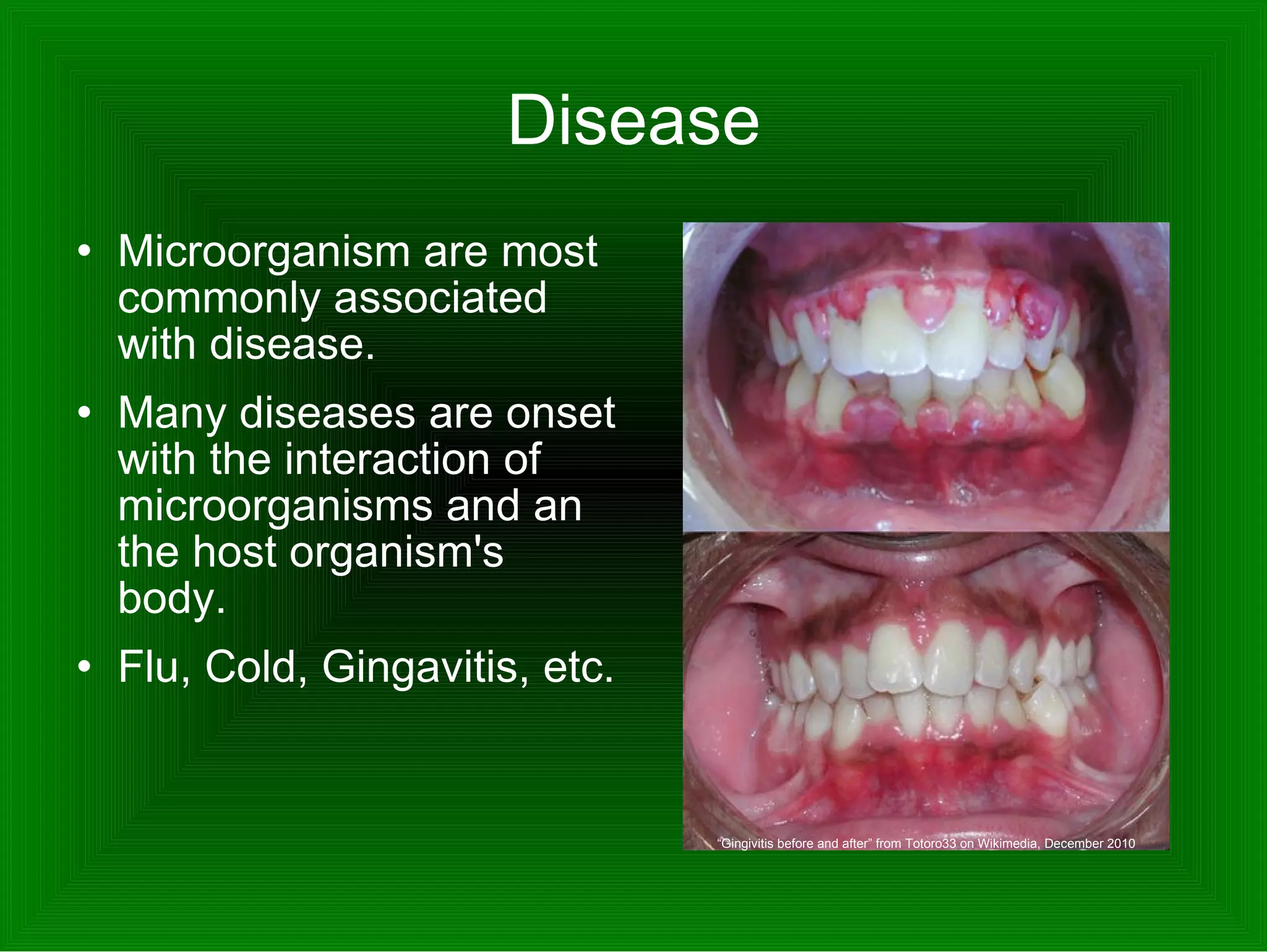
Disease Microorganism are most commonly associated with disease.  Many diseases are onset with the interaction of microorganisms and an the host organism's body.  Flu, Cold, Gingavitis, etc.  “ Gingivitis before and after” from Totoro33 on Wikimedia, December 2010
Commercial Application Synthesis of commercial chemicals. Ex: Vitamins, Enzymes, Fermentation products.  Food preservation. Pasteurization.  Paper mills use several enzymes to create their product.  “ InternationalPaper6413” from Pollinator on Wikimedia, February, 2006
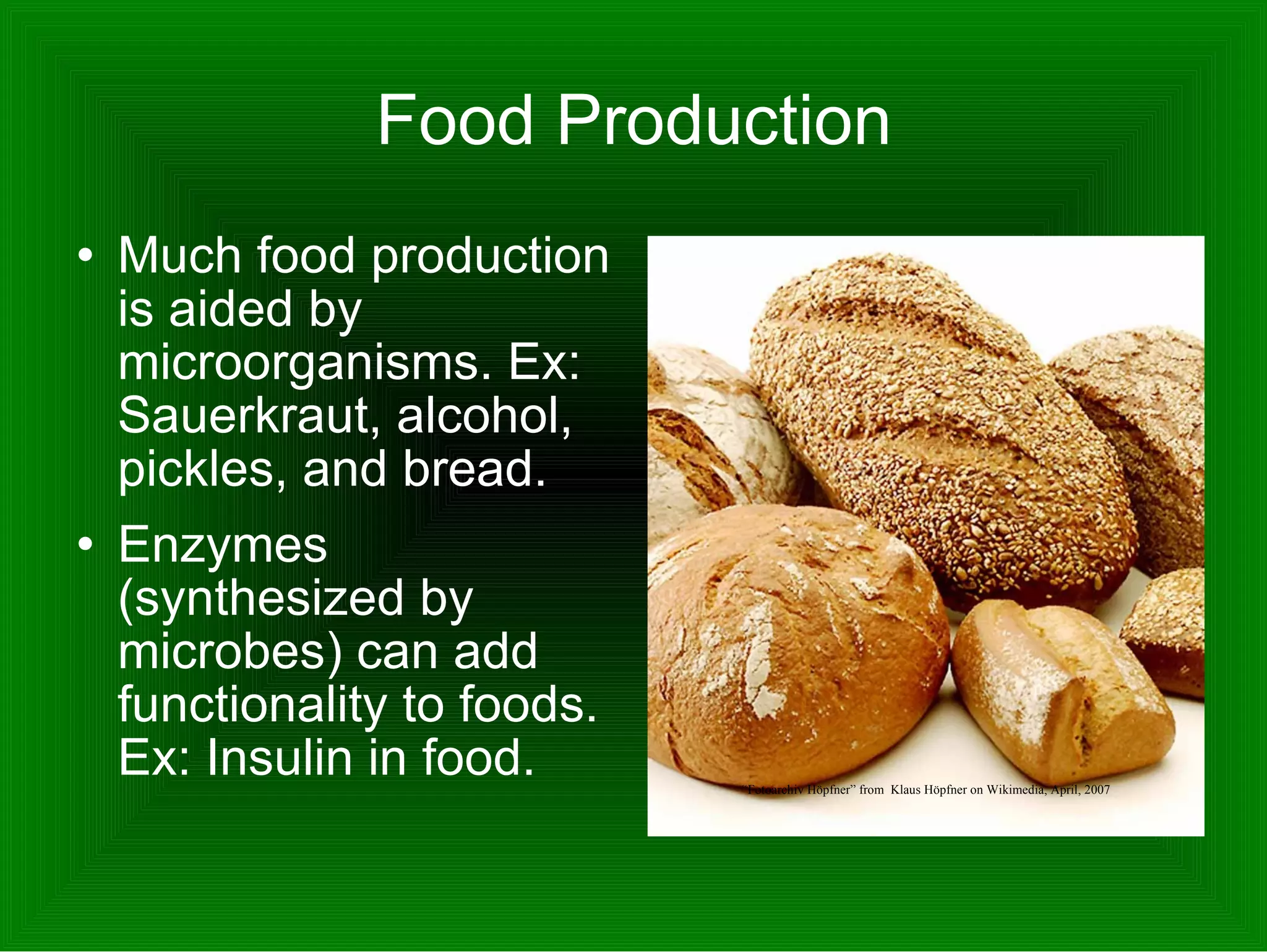
Food Production Much food production is aided by microorganisms. Ex: Sauerkraut, alcohol, pickles, and bread.  Enzymes (synthesized by microbes) can add functionality to foods. Ex: Insulin in food.  “ Fotoarchiv Höpfner” from  Klaus Höpfner on Wikimedia, April, 2007
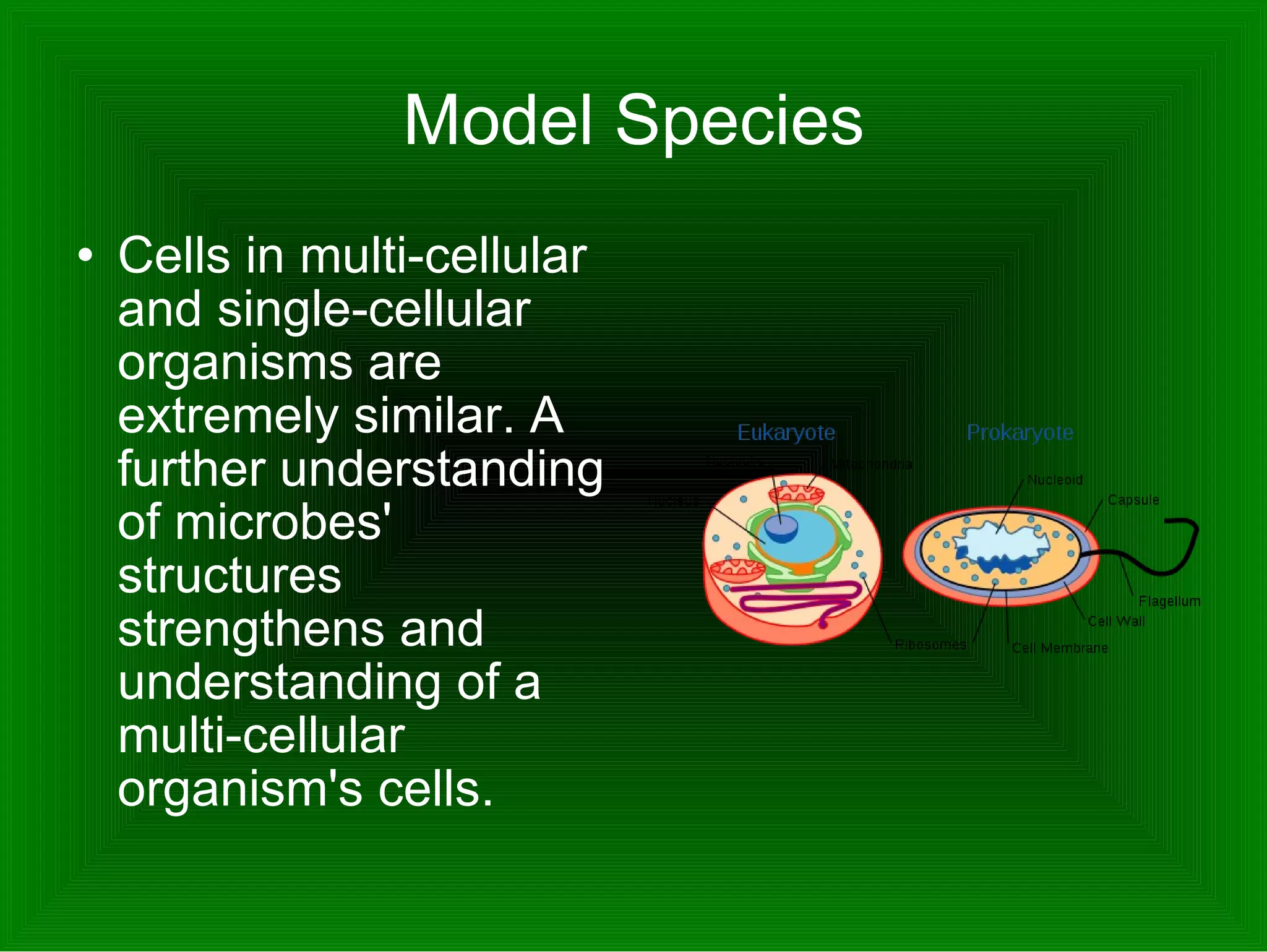
Model Species Cells in multi-cellular and single-cellular organisms are extremely similar. A further understanding of microbes' structures strengthens and understanding of a multi-cellular organism's cells.
What types of microbes are there? Bacteria Archaea Fungi Protozoa Algae Viruses  Multi-cellular Parasites
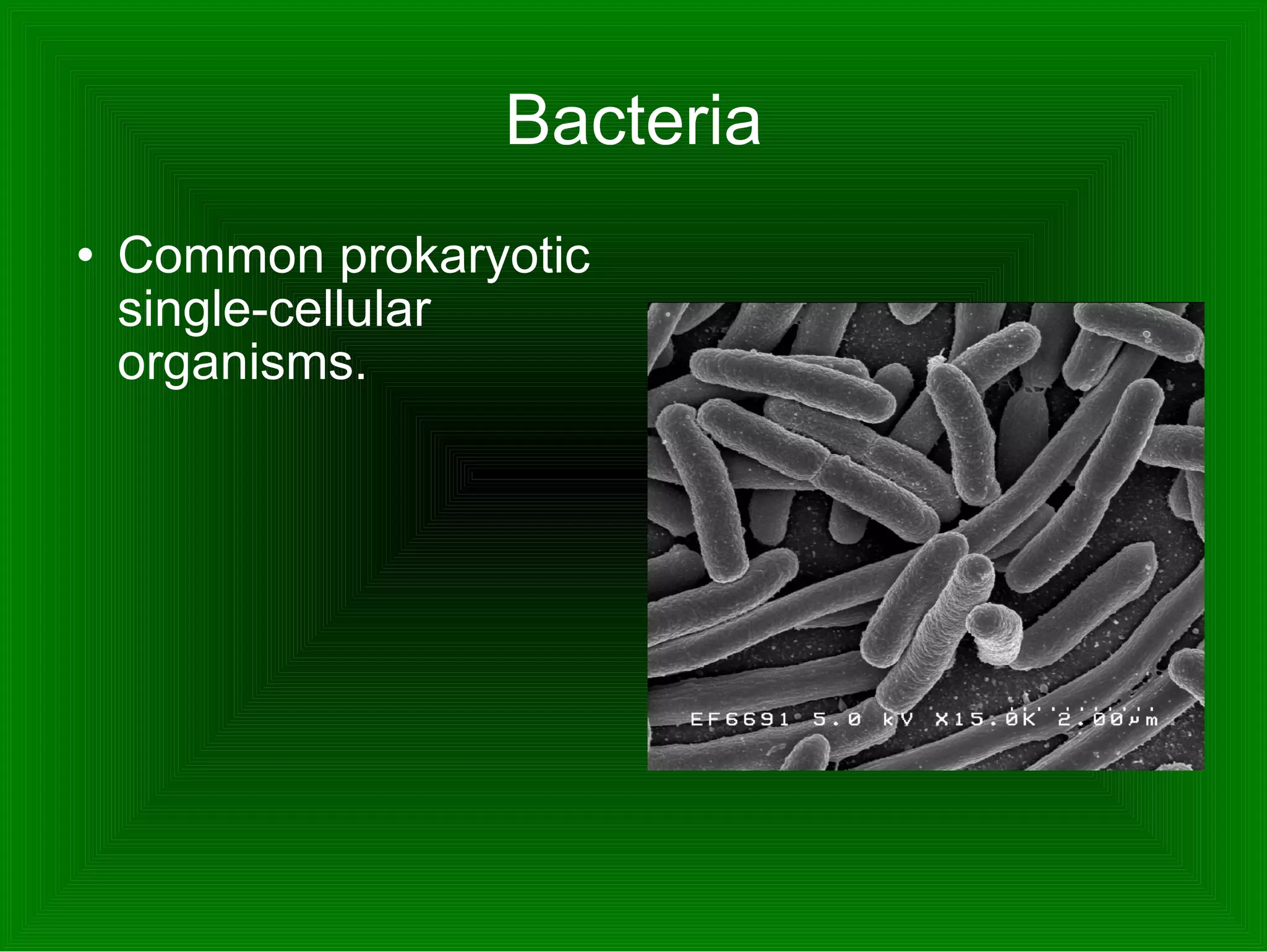
Bacteria Common prokaryotic single-cellular organisms.
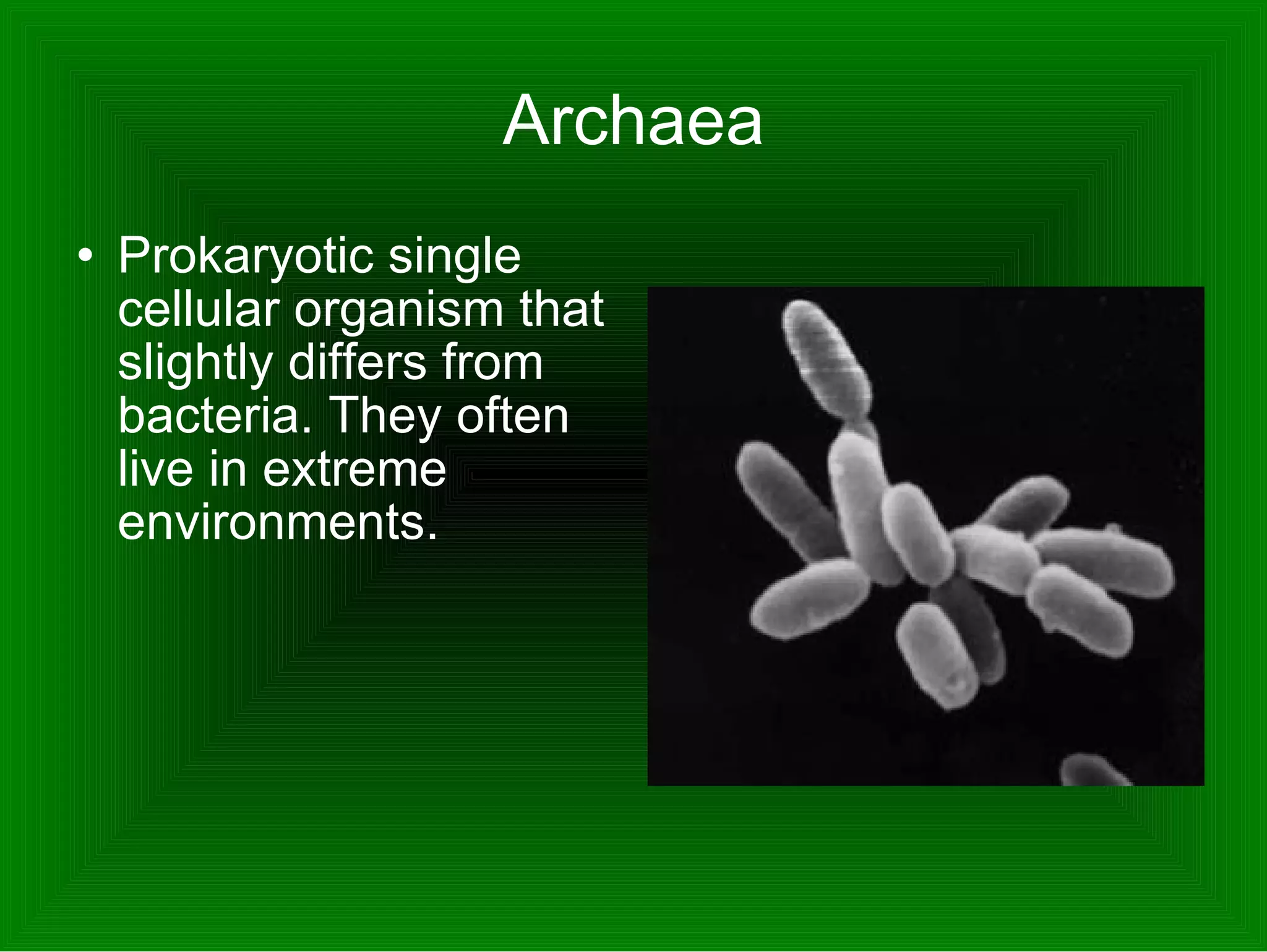
Archaea Prokaryotic single cellular organism that slightly differs from bacteria. They often live in extreme environments.
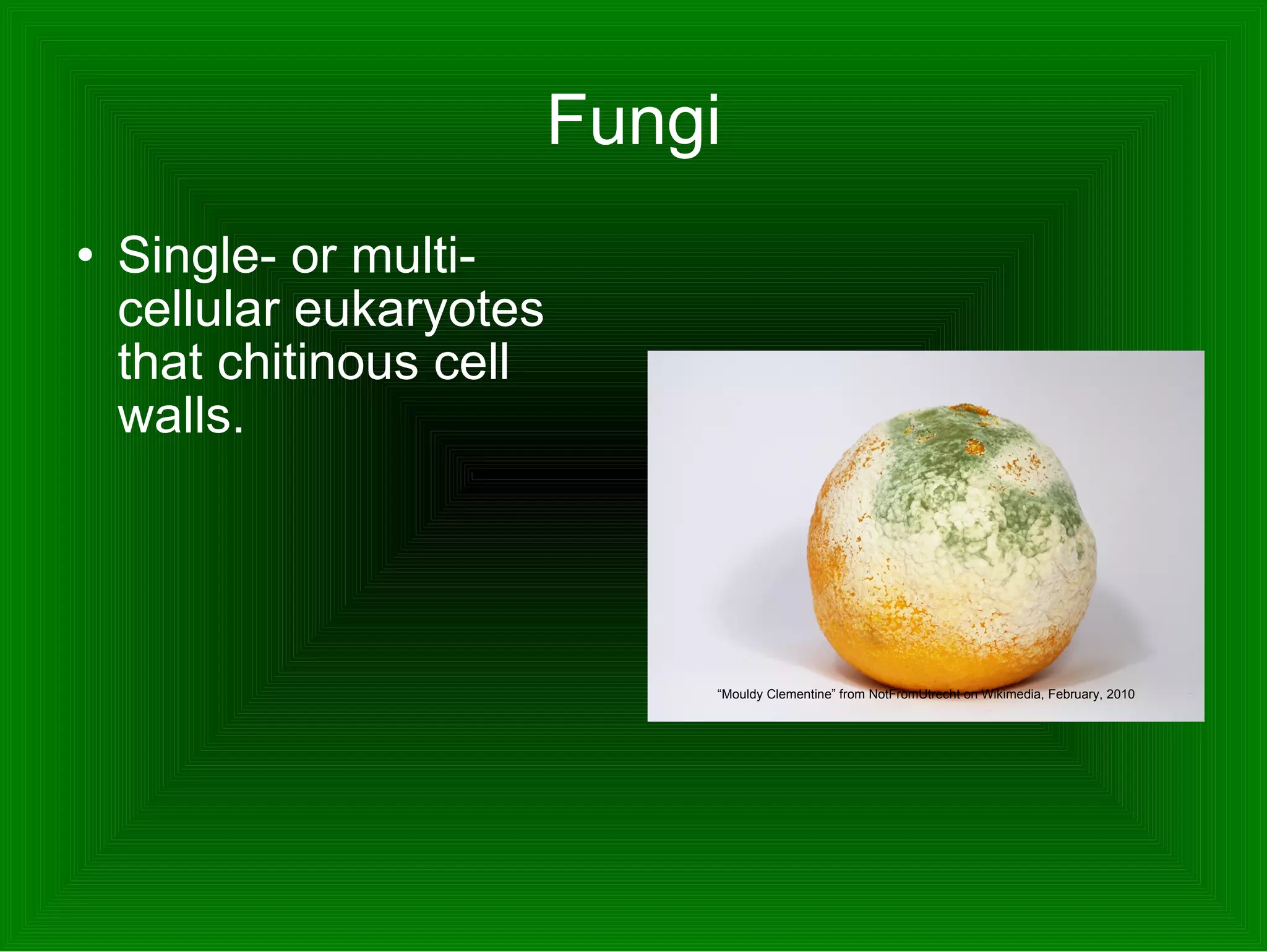
Fungi Single- or multi-cellular eukaryotes that chitinous cell walls. “ Mouldy Clementine” from NotFromUtrecht on Wikimedia, February, 2010
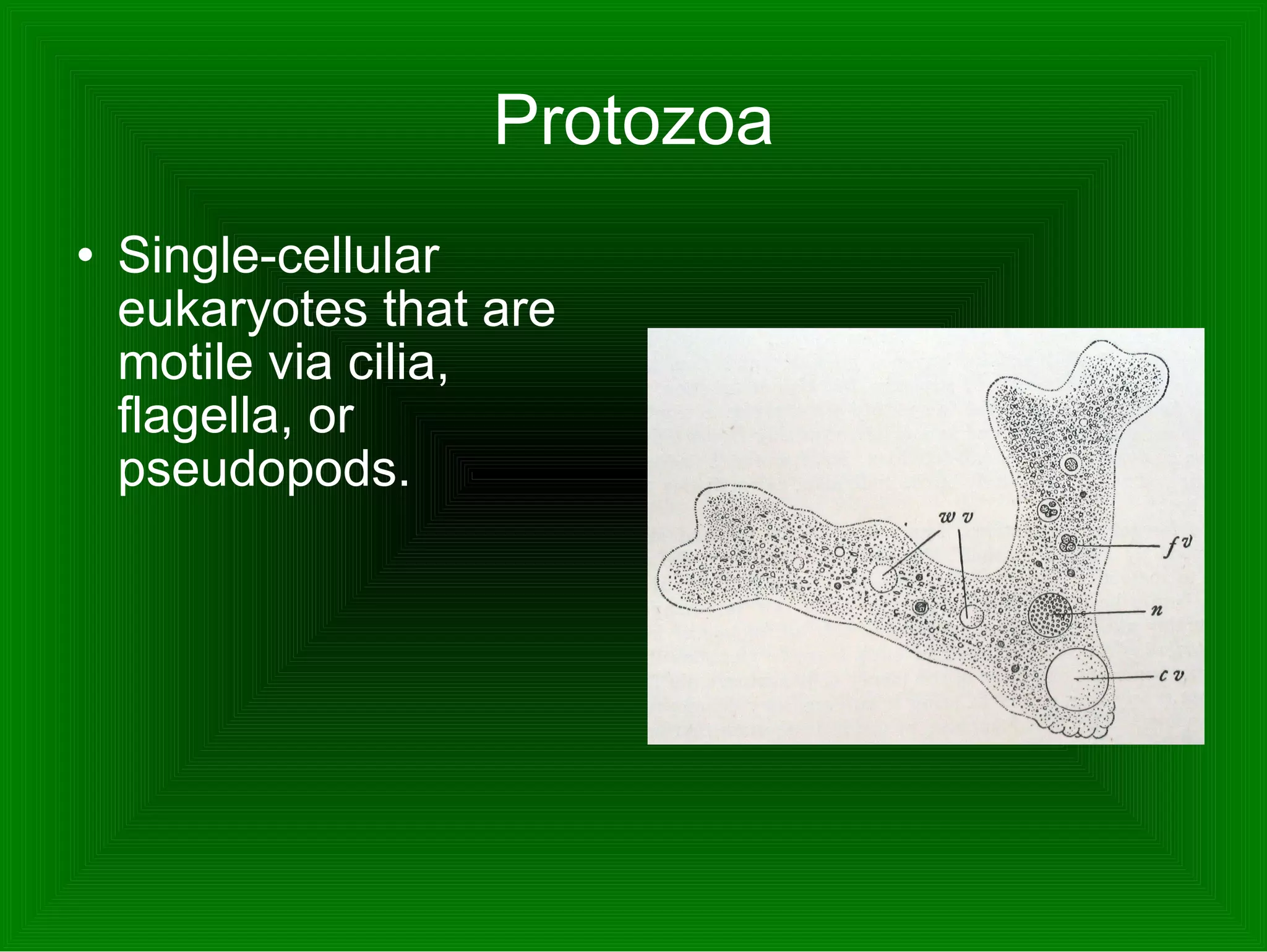
Protozoa Single-cellular eukaryotes that are motile via cilia, flagella, or pseudopods.
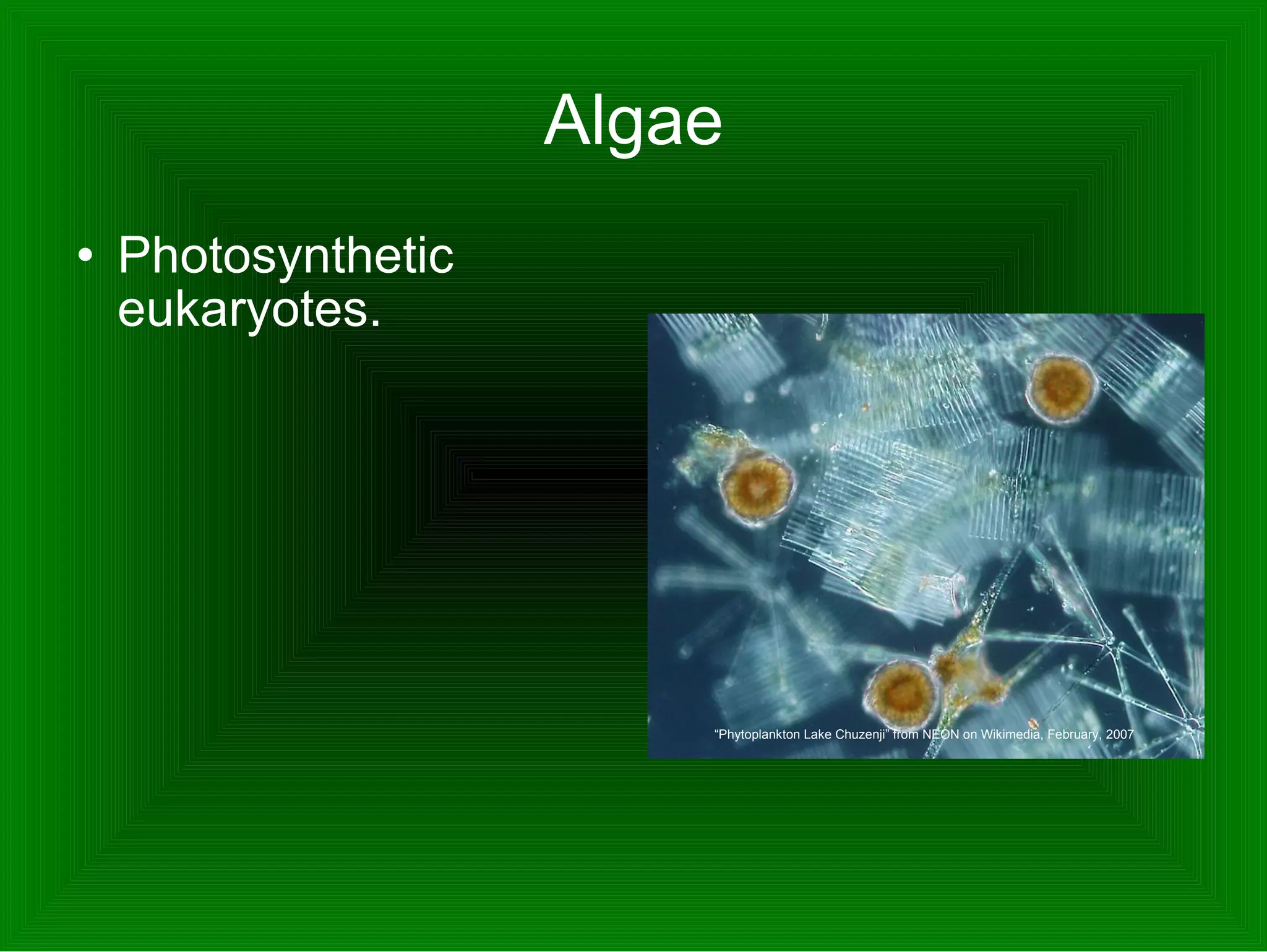
Algae Photosynthetic eukaryotes.  “ Phytoplankton Lake Chuzenji” from NEON on Wikimedia, February, 2007
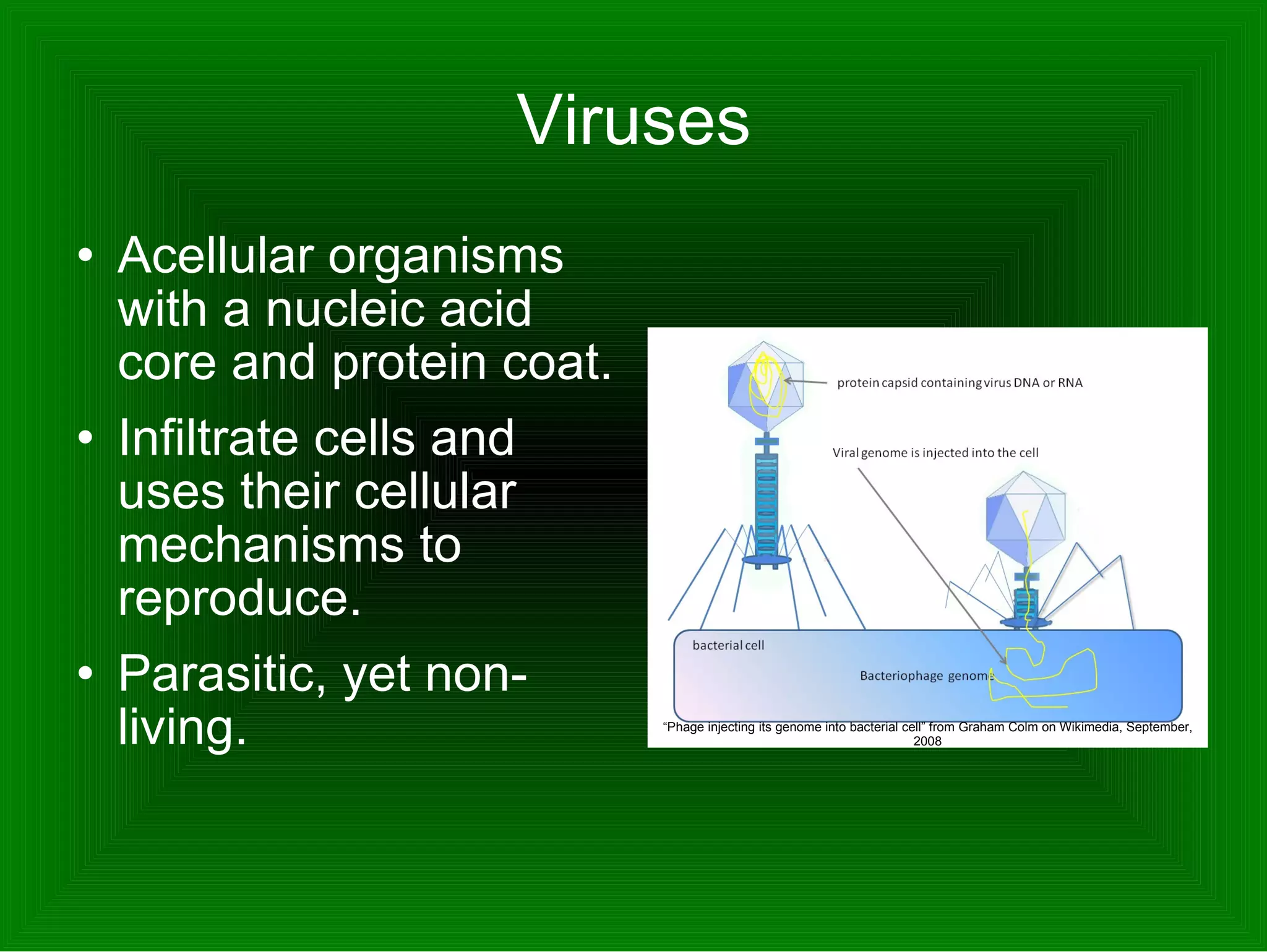
Viruses Acellular organisms with a nucleic acid core and protein coat.  Infiltrate cells and uses their cellular mechanisms to reproduce.  Parasitic, yet non-living. “ Phage injecting its genome into bacterial cell” from Graham Colm on Wikimedia, September, 2008
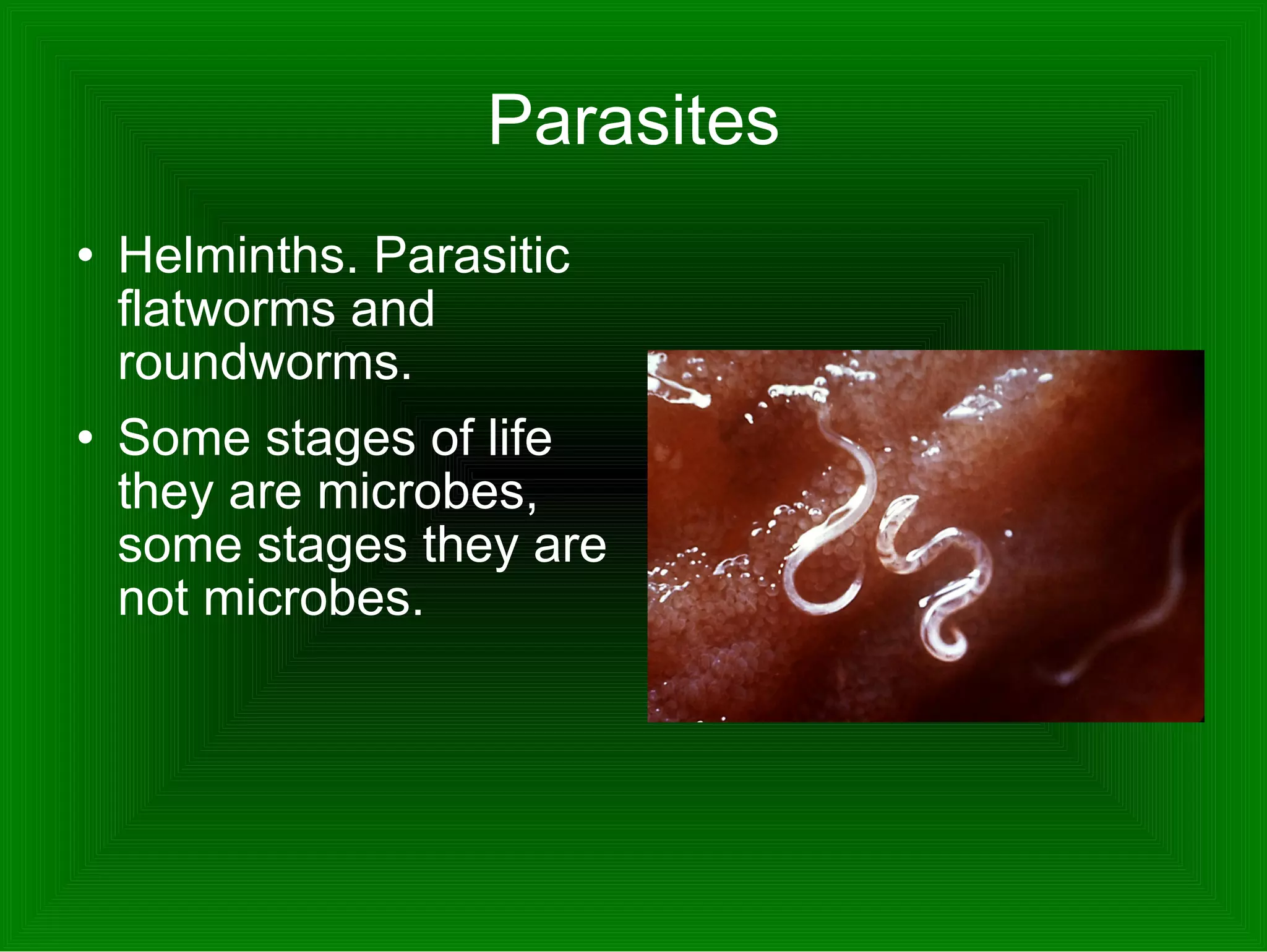
Parasites Helminths. Parasitic flatworms and roundworms.  Some stages of life they are microbes, some stages they are not microbes.
Brief nomenclature Nomenclature is the system in which scientists use to name organisms. Nomenclature assigns two names to an organism depending on their classifications. The genus (capitalized and italicized) and then the species (italicized).  Nomenclature can be based on an organisms structure or appearance.  Staphylococcus aureus  has the prefix Staphylo-, which describes clustered colonies, and aureus, which means golden in Latin, because  Staphylococcus aureus  is a gold colored bacterium found in clustered colonies.
References Tortora, G. J., Funke, B. R., & Case, C. L. (2010). Chapter 1: The Microbial World and You.  Microbiology: an introduction (10 ed., pp. 1-25). San Francisco, CA: Pearson Benjamin  Cummings. All photos are public domain unless noted otherwise.

Microbio2

  • 1.
    Intro to MicrobiologyAndrew Fergus
  • 2.
    What is microbiology?The study of Microorganism biology. Microorganisms are organisms that cannot be seen with the naked eye. Tools like microscopes are essential to observe them. Microbiology is a general science just like Biology. It can encompass microorganism ecology, and much more.
  • 3.
    Why should westudy Microbiology? Disease Commercial Application Food Production Model Species
  • 4.
    Disease Microorganism aremost commonly associated with disease. Many diseases are onset with the interaction of microorganisms and an the host organism's body. Flu, Cold, Gingavitis, etc. “ Gingivitis before and after” from Totoro33 on Wikimedia, December 2010
  • 5.
    Commercial Application Synthesisof commercial chemicals. Ex: Vitamins, Enzymes, Fermentation products. Food preservation. Pasteurization. Paper mills use several enzymes to create their product. “ InternationalPaper6413” from Pollinator on Wikimedia, February, 2006
  • 6.
    Food Production Muchfood production is aided by microorganisms. Ex: Sauerkraut, alcohol, pickles, and bread. Enzymes (synthesized by microbes) can add functionality to foods. Ex: Insulin in food. “ Fotoarchiv Höpfner” from Klaus Höpfner on Wikimedia, April, 2007
  • 7.
    Model Species Cellsin multi-cellular and single-cellular organisms are extremely similar. A further understanding of microbes' structures strengthens and understanding of a multi-cellular organism's cells.
  • 8.
    What types ofmicrobes are there? Bacteria Archaea Fungi Protozoa Algae Viruses Multi-cellular Parasites
  • 9.
    Bacteria Common prokaryoticsingle-cellular organisms.
  • 10.
    Archaea Prokaryotic singlecellular organism that slightly differs from bacteria. They often live in extreme environments.
  • 11.
    Fungi Single- ormulti-cellular eukaryotes that chitinous cell walls. “ Mouldy Clementine” from NotFromUtrecht on Wikimedia, February, 2010
  • 12.
    Protozoa Single-cellular eukaryotesthat are motile via cilia, flagella, or pseudopods.
  • 13.
    Algae Photosynthetic eukaryotes. “ Phytoplankton Lake Chuzenji” from NEON on Wikimedia, February, 2007
  • 14.
    Viruses Acellular organismswith a nucleic acid core and protein coat. Infiltrate cells and uses their cellular mechanisms to reproduce. Parasitic, yet non-living. “ Phage injecting its genome into bacterial cell” from Graham Colm on Wikimedia, September, 2008
  • 15.
    Parasites Helminths. Parasiticflatworms and roundworms. Some stages of life they are microbes, some stages they are not microbes.
  • 16.
    Brief nomenclature Nomenclatureis the system in which scientists use to name organisms. Nomenclature assigns two names to an organism depending on their classifications. The genus (capitalized and italicized) and then the species (italicized). Nomenclature can be based on an organisms structure or appearance. Staphylococcus aureus has the prefix Staphylo-, which describes clustered colonies, and aureus, which means golden in Latin, because Staphylococcus aureus is a gold colored bacterium found in clustered colonies.
  • 17.
    References Tortora, G.J., Funke, B. R., & Case, C. L. (2010). Chapter 1: The Microbial World and You. Microbiology: an introduction (10 ed., pp. 1-25). San Francisco, CA: Pearson Benjamin Cummings. All photos are public domain unless noted otherwise.